Article

Impact of Clogging on the Infiltration Performance of Porous Asphalt Mixtures Under a GIS–USLE-Based Multiscale Assessment of Peri-Urban Sediment Loads: A Case Study in Boyacá, Colombia

by
Andres Silva-Balaguera
1,2,*,
Julian Villate-Corredor
1,
Jessica Betancourt-Gonzalez
1,
Karen Fuquene-Saenz
1 and
Luis Ángel Sañudo-Fontaneda
2
1
GIISAG—Grupo de Investigación en Ingeniería Sísmica y Amenazas Geoambientales, Escuela de Ingeniería Civil, Universidad Pedagógica y Tecnológica de Colombia, Tunja 150001, Colombia
2
Civil, Environmental and Geomatics Engineering Research Group (CEGE), Department of Construction and Manufacturing Engineering, Polytechnic School of Mieres, University of Oviedo, 33600 Mieres, Spain
*
Author to whom correspondence should be addressed.
Water 2026, 18(6), 669; https://doi.org/10.3390/w18060669
Submission received: 7 February 2026 / Revised: 25 February 2026 / Accepted: 28 February 2026 / Published: 13 March 2026
(This article belongs to the Special Issue Urban Drainage Systems and Stormwater Management, 2nd Edition)

Abstract

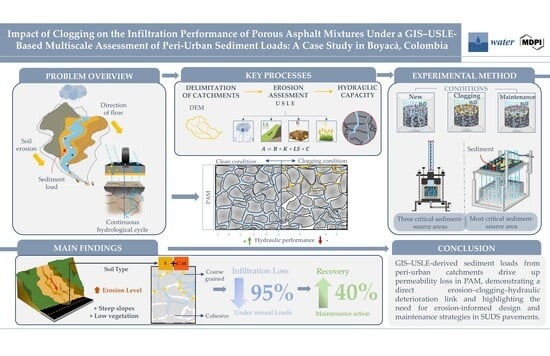
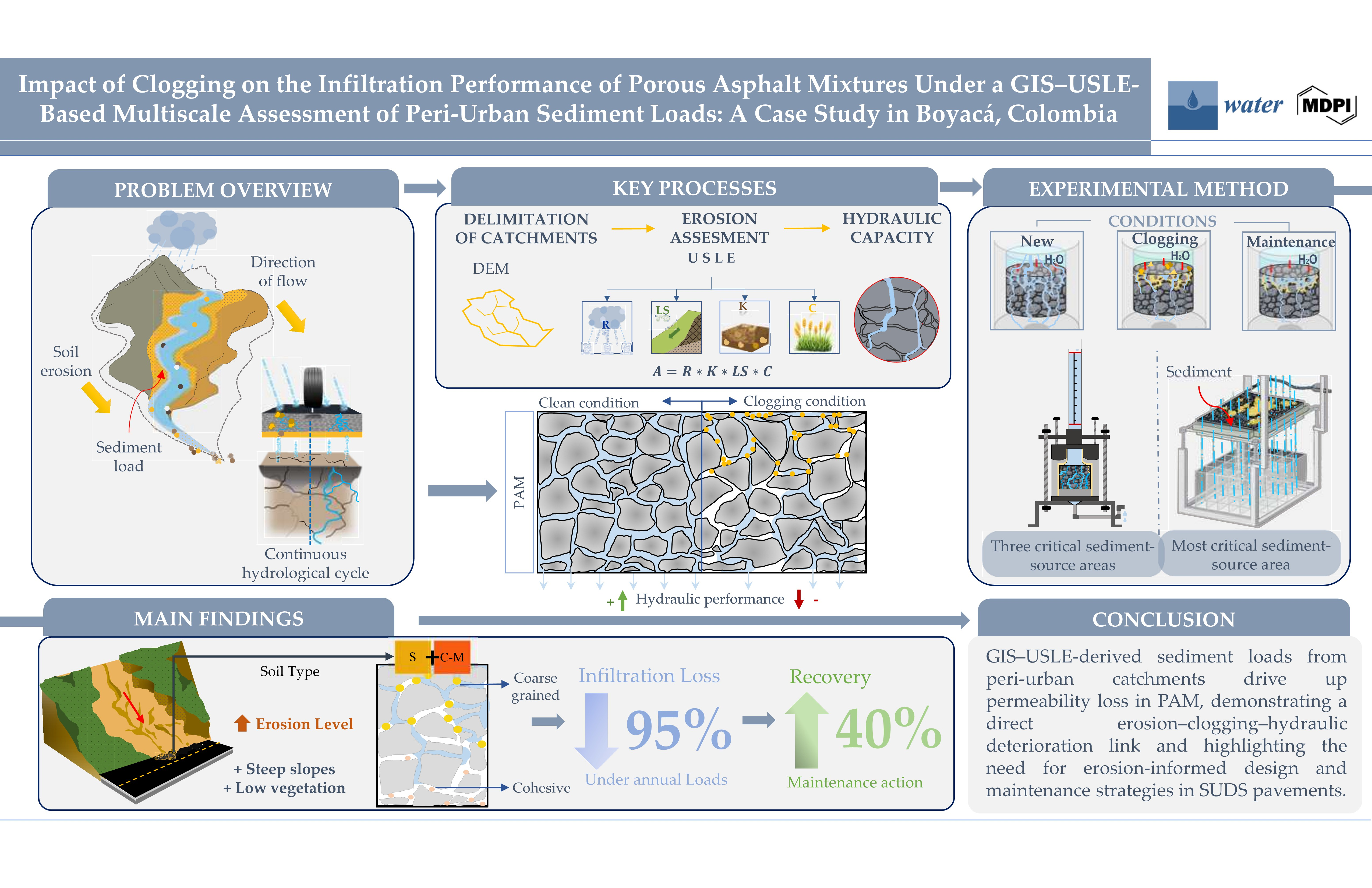
Clogging is the main mechanism that deteriorates the hydraulic functionality of permeable pavements, particularly in porous asphalt mixtures (PAM). This study evaluated the hydraulic impact of sediments from three peri-urban micro-watersheds in the Boyacá region of Colombia on the infiltration capacity of PAM. Road infrastructure and drainage conditions were analysed using orthophotos and field inspections to identify geomorphological factors that favour sediment transport toward the roadway. Annual erosion rates were estimated using the Universal Soil Loss Equation (USLE), and sediments were characterized both within the watersheds and at their outlet onto the road. Hydraulic performance was assessed through laboratory tests using a Falling Head Permeameter, complemented by field infiltration measurements with a Modified Cantabrian Infiltrometer (0.25 m2). Results showed erosion rates of up to 7.9 t/ha·year and infiltration losses above 90% under clogged conditions. A partial hydraulic recovery of around 40% was observed after maintenance, particularly when sediments exhibited a higher sand fraction. These findings demonstrate that combining USLE-based erosion modelling with controlled hydraulic testing provides a robust framework for evaluating clogging risks in peri-urban roads and offers new evidence on the hydraulic behaviour of PAM exposed to non-urban sediments in the design and maintenance of sustainable pavements.

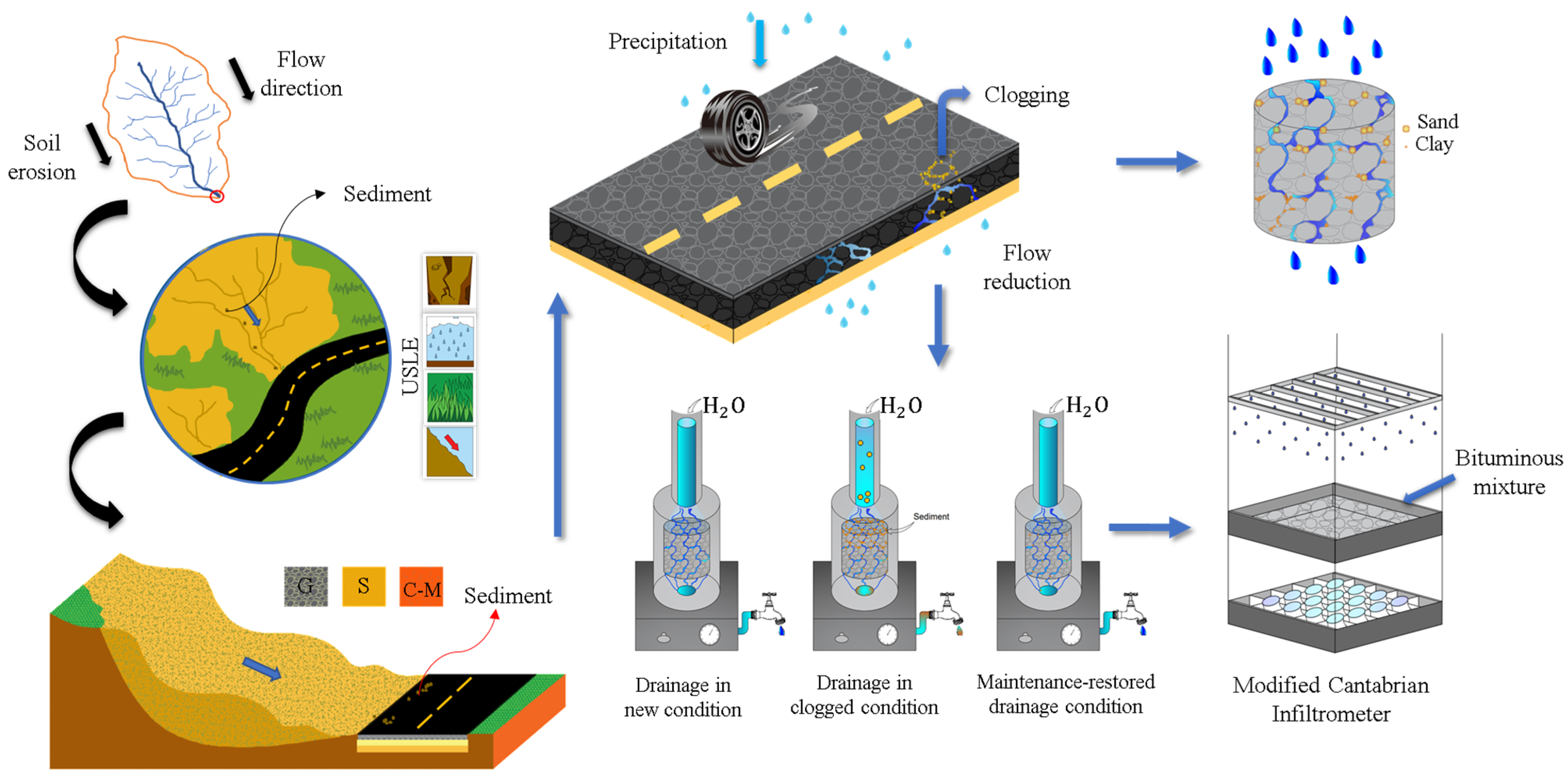
Graphical Abstract

1. Introduction

The functional and structural condition of roads is mainly affected by traffic loads and climatic conditions, generating cracking and failures in the surface material; effects that are intensified in flood-prone areas, as highlighted by Chen et al. [1]. Road drainage is designed under two fundamental objectives: (1) to create safe driving surfaces; and (2) to increase pavement resilience and durability [2]. In response to this problem in the field of highway engineering and with the aim of improving the management of the urban hydrological cycle, thereby increasing system resilience, the implementation of Sustainable Urban Drainage Systems (SUDS) has been promoted. These systems include technologies such as Permeable Pavements (PP) [3] and Highway Filter Drains [4,5]. These solutions have gained prominence for their ability to mitigate environmental impacts, improve stormwater runoff capture and retention, and increase the climate change resilience of urban infrastructure [6].
In this context, PP have gained widespread recognition due to their dual functionality: on the one hand, they allow for efficient management of pollutants carried by stormwater runoff, contributing to environmental impact mitigation [7]; while, on the other hand, they offer adequate hydraulic capacity and structural resistance to support vehicular traffic. Among the materials most used for PP surfaces are PAM, valued for their high initial permeability (>2.500 mm/h), low implementation cost, and structural compatibility with light urban traffic [8]. These qualities have driven numerous studies focused on clogging processes, which progressively affect their hydraulic performance. This deterioration is mainly due to the infiltration and accumulation of sedimentary particles of diverse granulometry and origin, which partially or completely obstruct the interconnected pore network [8]. Hydraulic conductivity in PAM is controlled by effective porosity and void connectivity; therefore, clogging-induced reductions in interconnected air-voids may also modify internal stress transfer mechanisms. Previous experimental research on PA-16 mixtures has shown that changes in void structure and connectivity influence both permeability and mechanical response, highlighting that hydraulic deterioration should be interpreted within a broader functional framework of mixture performance [9]. The behaviour of PAM is strongly conditioned by the characteristics of the affluent micro-watershed. In particular, urban micro-watersheds generate runoff with smaller sediments and a higher concentration of pollutants, including heavy metals, which significantly increase clogging and reduce system permeability. This effect is more pronounced compared to pavements installed in peri-urban environments [10,11,12].
A key aspect in the discussion of hydraulic behaviour, which is the focus of this study, is the sediment load that porous pavement surface can withstand during rainfall events throughout its service life. Clogging in porous pavements is directly related to the type, size, and spatial distribution of sediments deposited by urban runoff [13]. These sediments include fine sands, silts, organic matter, heavy metals, hydrocarbons, and tire wear particles (TRWPs), with sizes ranging from 2.36 mm to 10 µm [13]. Meng et al. [14] determined that more than 97% of the sediments collected on active urban roads are concentrated between 0.15 and 2.36 mm, a range that allows for their transport and infiltration into the porous system under gravity flow conditions. The distribution of these sediments is highly dependent on their size: coarser particles are preferentially deposited on the surface and in marginal areas, while fine fractions (<0.6 mm) penetrate the surface layer, critically affecting the connectivity between voids in the pavement. Zhang et al. [15] observed that with loads as low as 0.5 kg/m2, permeability can be reduced by between 37% and 43%, depending on the void content. This demonstrates that clogging can develop in the early stages of the pavement’s life cycle [15]. It is important to note that clogging evolves in three phases: (1) the localized onset; (2) the expansion and (3) the stabilization, which contributes to a progressive reduction in porosity and infiltration capacity. In mixtures with lower internal connectivity, this hydraulic loss is intensified by the accumulation of fines at depth. Therefore, it is essential to consider both the granulometry of the sediments and the microstructure of the mixture in its design and maintenance [14]. In this regard, the research developed by Winston et al. [16] in Ohio, USA, is particularly relevant, demonstrating that the greater the ratio between the impervious urban area contributing surface runoff (drained area) and the area of the receiving permeable pavement (drainage area), the greater the sediment load it receives, with loading rates varying between 1.3 and 7.9 kg/m2 per year, depending on the location and land use, with the higher values being critical for clogging in less than 12 months of operation under direct runoff conditions. Similarly, Rodríguez-Hernández [17] and Sañudo-Fontaneda [8] determined that PA-16 type PAMs, in accordance with Spanish regulations [18], exhibit a critical clogging capacity of around 2 kg/m2. This capacity was subsequently confirmed in laboratory studies by Goya-Heredia [19] and García-Haba [10], who identified operational clogging ranges between 1 and 4 kg/m2, marking a relevant threshold for the functional design of these systems.
To evaluate this problem, two contrasting methodologies have been developed. The first consists of using infiltrometers that allow the simulation of rainfall events of various intensities, such as the Fixed Cantabrian Infiltrometer (ICF), designed by Rodríguez-Hernández [17] and, subsequently, the Modified ICF (ICFM) by Sañudo-Fontaneda [8]. This instrument allows for laboratory experimentation on 50 cm × 50 cm sample under controlled conditions of surface runoff from impervious surfaces, a variable sediment loading ratio, and controlled rainfall intensity. This instrument, associated with a methodology validated by both authors, makes it possible to simulate the real operating and maintenance conditions of PP, evaluating changes in permeability under various clogging conditions. Another methodologic employed involves the “falling head” permeability test on Marshall-type PAM samples [20]. These tests have shown that clogging induced with materials such as clayey soils, residual sands, and urban dust with particles smaller than 75 µm can reduce permeability by more than 85% compared to its original condition [21]. Furthermore, the simulation of point pollutant loads with hydrocarbons showed an additional reduction in hydraulic capacity, confirming that the interaction between fine sediments and liquid pollutants can accelerate obstruction and modify void connectivity [22].
A central aspect in this line of analysis is the characterization of the sediment load generated in erosible urban and peri-urban contexts. The review by Benavidez et al. [23] highlights the potential of the USLE for estimating water erosion rates through the integrated analysis of factors such as slope, soil cover, precipitation intensity, and land use. This approach has been validated in urban environments by Lisboa et al. [24], who integrated stochastic simulation in watersheds with high spatial heterogeneity; and by Mattheus et al. [25], comparing the predictions of an integrated Geographic Information Systems (GIS)-USLE model with real measurements of sediments accumulated in retention ponds, confirming its applicability in small-scale, high-slope urban watersheds.
Although USLE has traditionally been used in erosion studies in agricultural watersheds, supported by GIS tools and variables such as rainfall patterns, topography, soil type, and management practices [26,27], its application has recently been extended to urban and semi-urban contexts. In these environments, a significant increase in erosion rates has been documented due to the loss of vegetation cover, soil compaction, and the scarce implementation of conservation strategies, factors that considerably increase the value of the runoff coefficient (C) [28,29,30]. These findings provide a basis for using USLE as a tool to evaluate the influence of the erosion rate in peri-urban micro-watersheds.
Recent reviews such as that by Terkura [31] underscore the need for sustainable and multivariate approaches that integrate hydraulic parameters, maintenance criteria, accessibility, and local materials. This perspective is relevant in intermediate Andean cities like Tunja, where morphological, geological, and climatic conditions (Average annual precipitation 1.000 mm [32]) generate urban surfaces prone to erosion. Scarce vegetation cover, steep slopes, and surface flow favour the transport of fine particles and organic pollutants, which increases the susceptibility of drainage structures to clogging. In this context, localized studies such as that by Sousa et al. [13] are key to establishing design and maintenance strategies adapted to the environment.
This study adopts an integrated methodological framework that links watershed-scale sediment generation with laboratory hydraulic performance of PAM. The approach combines GIS-based micro-watershed delineation, USLE modelling for real sediment load estimation, physical characterization of source and deposited sediments, and dual-scale hydraulic testing (Florida permeameter and Modified Cantabrian Infiltrometer) to simulate both annual critical clogging and monthly progressive sediment accumulation under realistic peri-urban runoff conditions. This approach will allow the development of more precise design and maintenance criteria, based on real conditions in erosible urban and peri-urban environments, serving as a support tool for academics and professionals.

2. Materials and Methods

The research method follows a sequential multiscale design composed of four stages (see Figure 1): (i) spatial identification of semi-impermeable micro-watersheds using DEM and thematic GIS layers; (ii) estimation of sediment yield through USLE considering R, K, LS and C factors; (iii) granulometric and geotechnical characterization of sediments at source and road deposition zones; and (iv) hydraulic evaluation of PAM under controlled clogging using real sediment charges derived from watershed erosion rates, using two complementary techniques: the ICFM and a falling head permeameter.

2.1. Location of the Study Micro-Watersheds

The selection of the micro-watersheds focused on identifying areas located in the peripheral zones of the city (peri-urban micro-watersheds) that exhibit specific characteristics for hydrological analysis, such as: being located outside highly urbanized sectors and not being situated in areas declared as architectural or archaeological heritage of the city of Tunja, which is used as the case study. This process began by considering the municipality’s Territorial Planning Plan, prioritizing micro-watersheds under a series of specific considerations detailed below:
  • Micro-watersheds located in areas with high imperviousness, typical of consolidated urban environments, were discarded, since these present significant limitations for natural water infiltration [33,34]. Although they may generate a greater volume of surface runoff, the associated physical phenomenon of erosion is primarily due to the renewal of the urban surface and the transport of sediments from parks and gardens [35].
  • Similarly, micro-watersheds with moderate or high slopes were sought, considering the direct relationship between this variable and sediment transport [36,37].
  • Additionally, micro-watersheds that do not have a natural or artificial drainage oriented towards the urban roads were excluded.
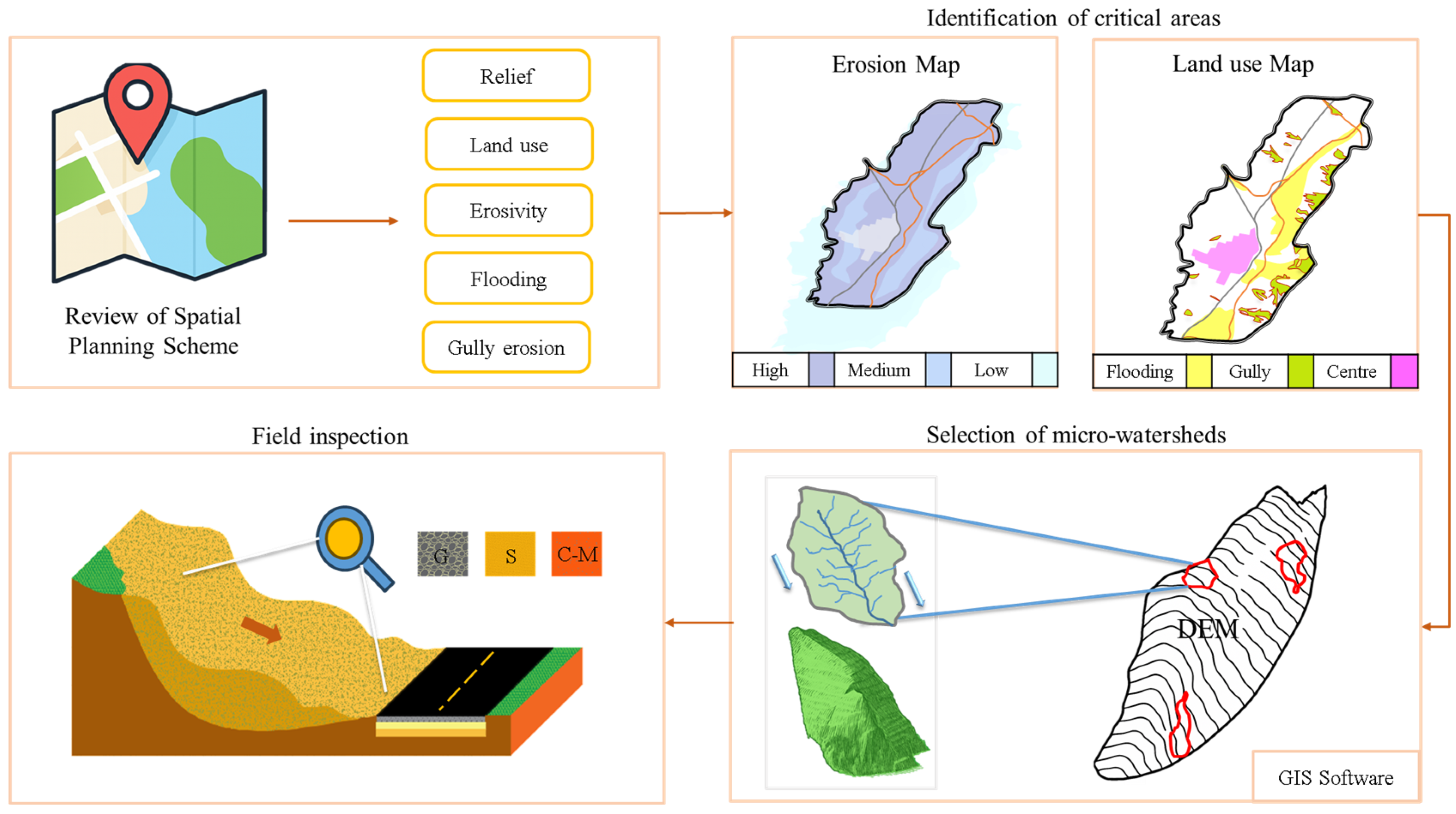
Complementing this evaluation, a detailed historical analysis was conducted with the objective of identifying specific sectors of the road network that have been recurrently affected by the transport of solid materials, as well as by processes of accumulation and stagnation of runoff water. This analysis included the review of technical records, field inspections, and local consultations, which allowed for the identification of impact patterns in different areas of the city. The multi-criteria selection process for the study micro-watersheds is detailed in Figure 2.

2.2. Calculation of Sediment Transport Rate in Semi-Impervious Micro-Watersheds

The sediment transport rate indicates the annual quantity of particles carried towards the lower part of the micro-watersheds due to different aspects such as surface runoff, rainfall, or slope [29]. To determine this, two procedures were executed: the first consisted of applying the USLE to calculate the annual sediment load transported based on surface runoff and the specific characteristics of each micro-watershed; while the second procedure involved a verification of flow continuity and, therefore, of the sediments, by evaluating their obstruction due to the presence of physical infrastructure that could impede or redirect the flow. Both aspects were relevant for estimating the amount of sediment transported and directed towards the outlet of each micro-watershed.

2.3. Methodology and Application of USLE Using GIS

The outlet of each analysed micro-watershed was located at a paved road, where the sediment transport rate was calculated using the USLE, defined to estimate sheet erosion in micro-watersheds due to soil degradation from environmental characteristics [29]. USLE is based on the evaluation of parameters such as precipitation, slope, and cover. The methodology GIS-based was implemented in ArcGIS Pro 3.6 [38]. This equation is expressed as follows (see Equation (1)):
A = R × K × L S × C
where A: Erosion rate (Ton/Ha × year), R: Rainfall erosivity (mm/Ha/h), K: Susceptibility to erosion (Ton × Ha), LS: Slope, C: Vegetation cover.
The Rainfall Erosivity Factor (R) was determined from information obtained from the Weather Atlas based on the average monthly number of rainy days, while precipitation intensity was obtained from the Institute of Hydrology, Meteorology and Environmental Studies (IDEAM). The Soil Erodibility (K) was defined using Williams’ equations [39], considering the percentage of sand, clay, silt, and organic matter in the soils of the micro-watersheds analysed in the city of Tunja.
For the Slope Factor (LS), a Digital Elevation Model (DEM) was used to establish a raster representing the slopes for each of the micro-watersheds studied. Values were categorized as 0% to 25% (low), 25% to 85% (moderate), and greater than 85% (high) [40]. The Cover and Management Factor (C) was estimated according to Pacheco et al. (2019) [41], considering land use, low vegetation cover, and evidence of gully erosion, consistent with values reported in watershed with similar degradation conditions.

2.4. Evaluation of Sediment Flow Obstruction

Sediment transport involves movement from the highest point to the outlet of the micro-watershed. However, continuous flow cannot be guaranteed due to the cover and land use in the urban and peri-urban environment. To define this obstruction, an analysis of the flow direction was carried out using field visits and high-resolution orthophoto analysis of the city of Tunja (provided by the Tunja Municipal Mayor’s Office 2022) [42]. The purpose was to establish the percentage of the micro-watershed area that does not contribute sediments directly towards the outlet.
To discretize the micro-watershed area that contributes to the production and transport of particles toward the road and to establish the sediment rate that can cause pavement clogging, elements such as roads and physical infrastructure are identified. Their orientation can cause erosion-carried sediments to be retained or diverted to another point in the micro-watershed. This process is necessary because, in terms of flow obstruction, the USLE only accounts for vegetation cover, making it necessary to identify additional obstacles in a peri-urban environment.
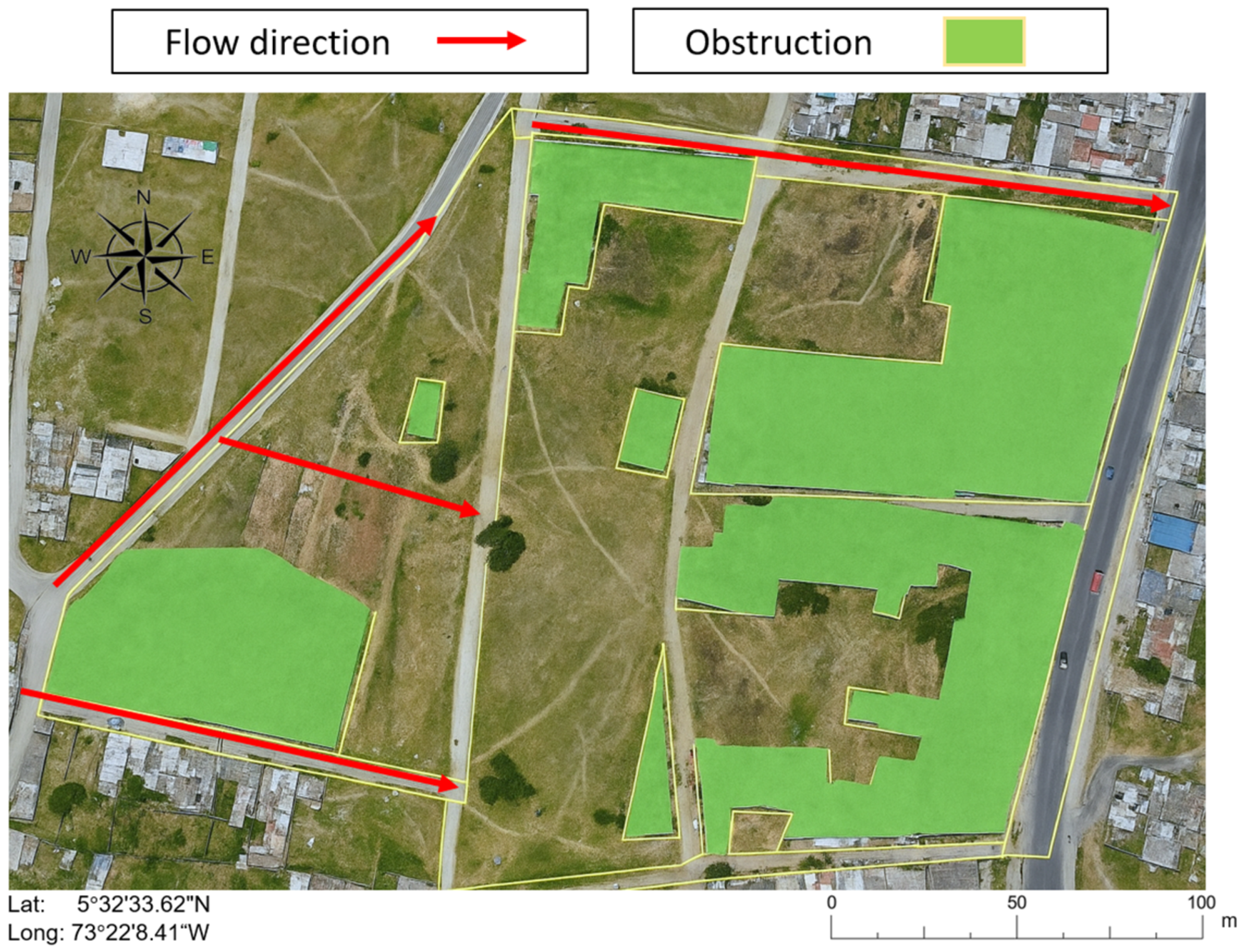
Figure 3 illustrates the procedure used to identify the elements that redirect the sediment flow in the study micro-watershed (Altamira micro-watershed, Tunja), where the obstruction area was found to be close to 36% of the total study surface (see areas highlighted in green in Figure 3). Field inspections confirmed that sediment accumulation patterns were consistent with the mapped preferential flow directions, indicating that slope orientation and hydrological connectivity may override simple obstruction percentages in determining effective sediment delivery.

2.5. Characterization of Surface Material in Micro-Watersheds and Material Transported to the Road Infrastructure

In each selected micro-watershed, three sediment samples were collected from the exposed soil, taken at different locations and at a depth of 20 cm, following geomorphological representativeness criteria. At the mouth of each micro-watershed, in the accumulation zones along the road, five surface sediment samples were obtained through controlled excavation. Each sample considered both the free load (CL) and the fixed load (CF) of sediments, using a 0.50 m2 delimitation frame to standardize the collection area [43]. These samples represent the material in its natural state and the sediment transported by runoff, which ultimately contributes to the clogging of the PAM [15]. The characterization of the material began with the determination of the particle size distribution using granulometric analysis (ASTM C136 [44]) and the evaluation of the fine fraction content (<0.075 mm) using the washing method (ASTM C117 [45]). Atterberg limits (ASTM D4318 [46]) were measured to assess the plasticity and fluidity of fine-grained sediments, while the soil shrinkage factor (ASTM D427 [47]) provided information on volume change characteristics. This aligns with the findings of Johnston et al. (2024) [48], who highlighted the usefulness of these tests for anticipating internal erosion problems in granular soils, a condition analogous to the loss of hydraulic capacity due to clogging in porous asphalt mixtures. The sediment was classified using the ASTM, AASHTO, USCS, and MIT systems, and key granulometric parameters such as D10, D30, and D60, as well as curvature (Cc) and uniformity (Cu) coefficients, were calculated [49]. The collected data were used to parameterize sediment transport, comparing the material found on the road with the natural or source material from the micro-watersheds [50].

2.6. Characterization of the Porous Asphalt Mixture

In this study, a PAM was used according to Spanish regulations [18] (PA-16), composed of aggregates in sizes from 0.075 to 16 mm (see Table 1 for granulometry data and Table 2 for standardized properties), and polymer-modified bitumen PG 76-22 (Penetration grade 55/70, softening point 59 °C, density 1.01 g/cm3 at 20 °C, and torsional elastic recovery 66.6% at 25 °C), supplied by Colbitumen S.A.S., Barrancabermeja, Colombia, added at a content of 5% by weight of the total mass of the mixture.
The aggregates and bitumen were heated to 170 °C for 24 h and 2 h, respectively, before mixing. Each 1000 g sample was prepared by adding the coarse aggregate first, then the fine aggregate, followed by the bitumen, and finally the filler. The materials were mixed for approximately 5 min at 170 °C. After mixing, the uniformity of the bitumen coverage was visually verified. The mixture was then poured into a preheated mold for the Superpave rotary compactor and compacted with 70 rotations at 160 °C to achieve a void content close to 20%. The samples were cooled to room temperature (approximately 20 °C) for 24 h, resulting in samples with a diameter of 100 mm and a height of 62 mm.
The heating, addition, and mixing process of the raw material was replicated to manufacture 31.6 kg test sample under the same temperature conditions. To ensure ideal dimensions for the infiltration equipment, the mixture was poured into a pre-greased 50 cm × 50 cm mold. Then, when the mixture reached 162 °C, compaction began using a vibratory plate compactor for 75 s with 90° rotations, ensuring uniform compaction. Finally, before demolding the sample, it was allowed to cool for 2 h and, after demolding, for 24 h at room temperature.

2.7. Hydraulic Permeability of Porous Asphalt with Different Sediment States

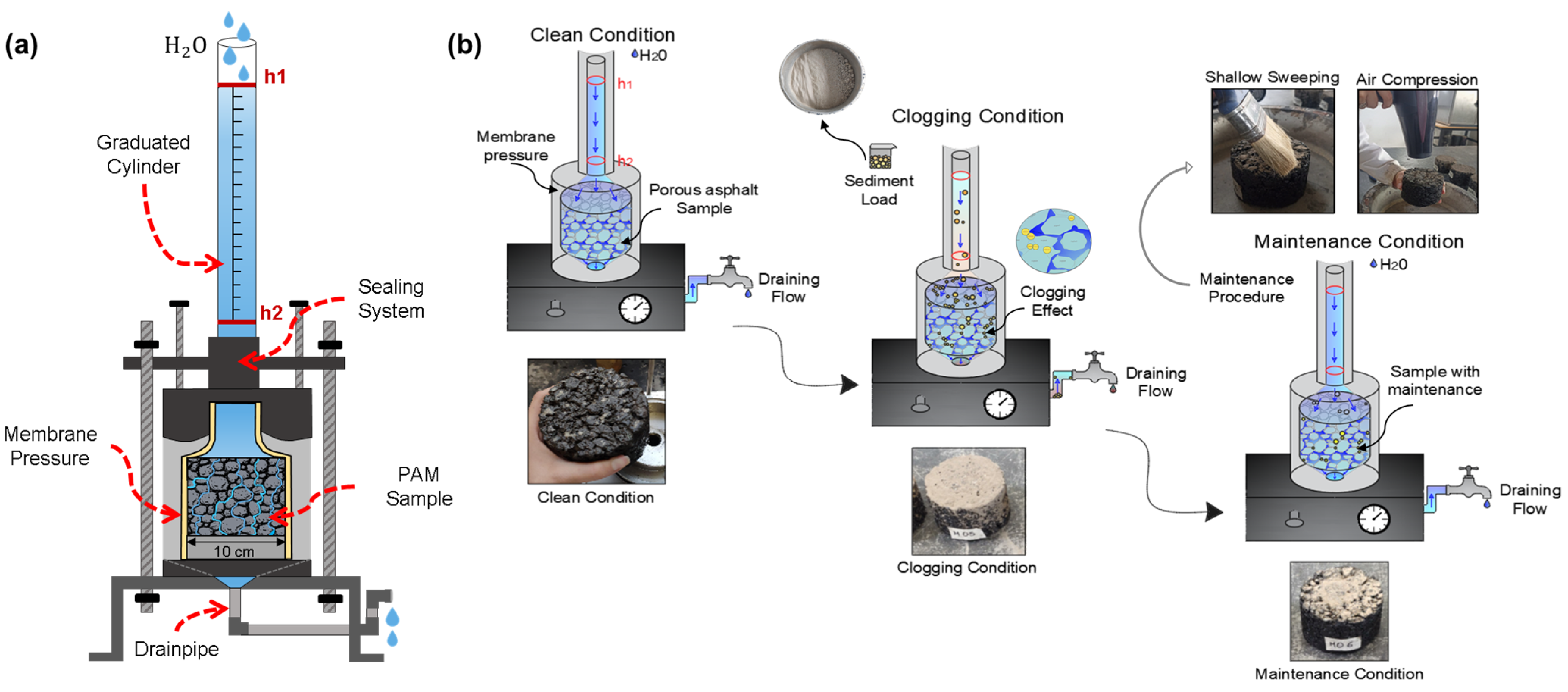
The permeability test associated with the infiltration rate of the PAM is adapted from the Florida Method’s falling-head procedure, involving the use of a falling-head infiltrometer to measure the permeability of the PAM samples, as specified in ASTM D5084 [58]. This method evaluates the intrinsic hydraulic conductivity (k) of the mixture under confined vertical flow conditions, allowing a controlled and repeatable quantification of permeability loss under critical annual sediment loads. However, it does not reproduce surface runoff or slope effects. The experimental setup is illustrated in Figure 4. The samples were centred in a sealing cylinder and assembled in the equipment. Subsequently, a latex membrane was inflated to 65 kPa to confine the samples. The time it took for 500 mL of water to pass through the samples was recorded, and consistent results were required to be within a margin of ±4.0% in three tests. This repeatability criteria ensured internal measurement reliability in accordance with standardized Florida test [20], strengthening the experimental robustness of the permeability results. The hydraulic conductivity (k), expressed in (×10−5) cm/s, was calculated using Darcy’s law, considering factors such as the cross-sectional area of the graduated cylinder and the test sample, as well as the elapsed time and the initial and final measurements of the water load.
The evaluation process consisted of three phases: the first simulated a new, clean pavement, the second a clogged pavement, and the third a post-maintenance condition. To analyse the clogged pavement, three sequential sediment loading stages were established, in which a specific proportion of material from each micro-watershed was added to the water until the total calculated amount of clogging agent was reached. This quantification was based on the correlation between the annual erosion estimated using the USLE and the effective exposure area of the standardized sample (100 mm in diameter), allowing for the replication of the actual sediment accumulation on the pavement surface.
After clogging, in the third phase of the process, the samples underwent maintenance, reflecting real operating conditions, to prevent pavement aging. Due to the high sand content and low fine material content in the clogging agent, compressed air was applied by drying and surface cleaning with a brush, simulating pavement sweeping, as recommended by Sandoval et al. [59], to remove obstructive particles from the pavement pores.
For each micro-watershed analysis, the permeability evolution was determined from the average of the k obtained in three standardized sample per phase, which allowed for a representative evaluation of the hydraulic behaviour of the material under initial, clogged, and maintenance conditions.

2.8. Measurement of Hydraulic Permeability in Porous Asphalt Under Various Sediment Conditions Using a Laboratory Infiltrometer

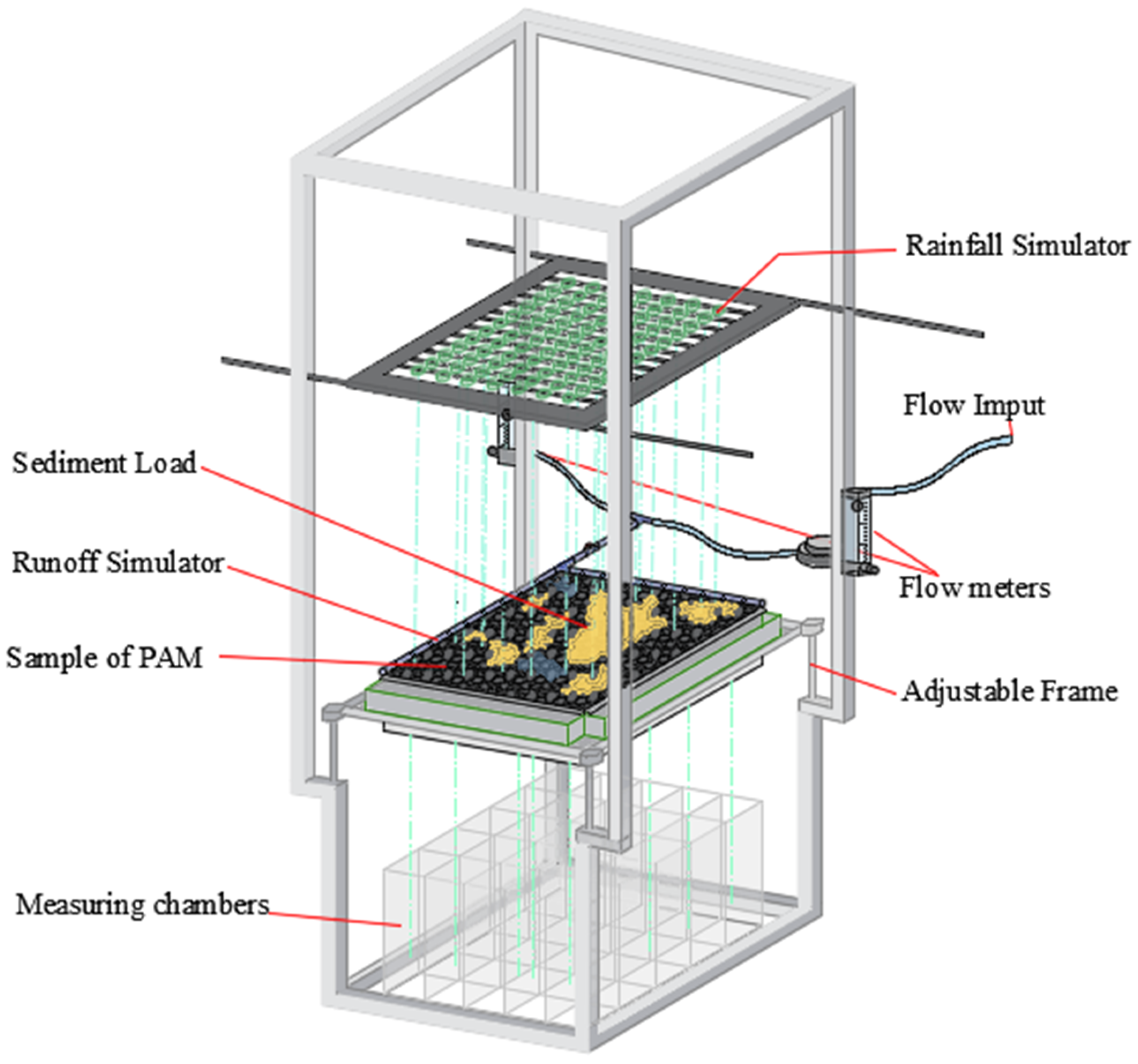
The ICF and ICFM, designed by the University of Cantabria [17], evaluate the infiltration capacity of a 0.25 cm2 PAM sample by simulating rainfall, runoff, and road slope. It was modified by Sañudo-Fontaneda [8], who implemented flow meters and a direct runoff inlet. The equipment used for this study was manufactured by the researchers at UPTC (Tunja, Colombia) [60], and its experimental setup is illustrated in Figure 5. It features a modification to the ICFM regarding the transverse slope. Unlike the falling-head test, the ICFM-UPTC reproduces rainfall intensity, longitudinal and transverse slopes, and surface runoff, enabling the evaluation of progressive clogging and spatial drainage behaviour under operational conditions. Nevertheless, it provides relative drainage performance rather than intrinsic hydraulic conductivity values. The infiltration capacity of this equipment is determined by analysing the flow rate entering the system, the volume of surface runoff (both longitudinal and transverse), and the infiltrated precipitation flow rate per 100 cm2 of sample surface.
The equipment simulates precipitation with an intensity calibrated for a 20-year return period, which, based on maximum precipitation records from the UPTC hydro meteorological station, corresponds to a flow rate of 55 Lph. It also has a runoff system with a perforated pipe flow rate of 45 Lph, so the flow meters installed must ensure these readings.
A longitudinal slope of 3% and a transverse slope of 2% were applied, in accordance with the ranges defined for plain terrain and normal cross slope in road designs in Colombia [40] and Spain [61]. These slopes ensure efficient surface runoff on straight roadways and are compatible with established drainage practices for porous pavements. Subsequently, the porous asphalt sample was placed in the equipment, and the edges were sealed. Clogging was simulated using monthly erosion estimates, based on the USLE correlation with the sample area. The clogging process was evaluated in three scenarios: the first representing a new pavement, the second simulating a clogging condition (4.1 kg/m2 of sediment for La Maria), and the final stage representing a maintenance scenario where a cleaning procedure with pressurized air and surface sweeping was used [59]. Each scenario had a duration of 25 min of rainfall, including 5 min of initial saturation. The infiltration capacity was determined by comparing the inflow volume (33.33 L) with the volumes collected in the measuring chambers discretized every 10 cm of precipitation and runoff.

3. Results and Discussion

3.1. Spatial Evaluation of the Semi-Impermeable Micro-Watersheds of the City of Tunja

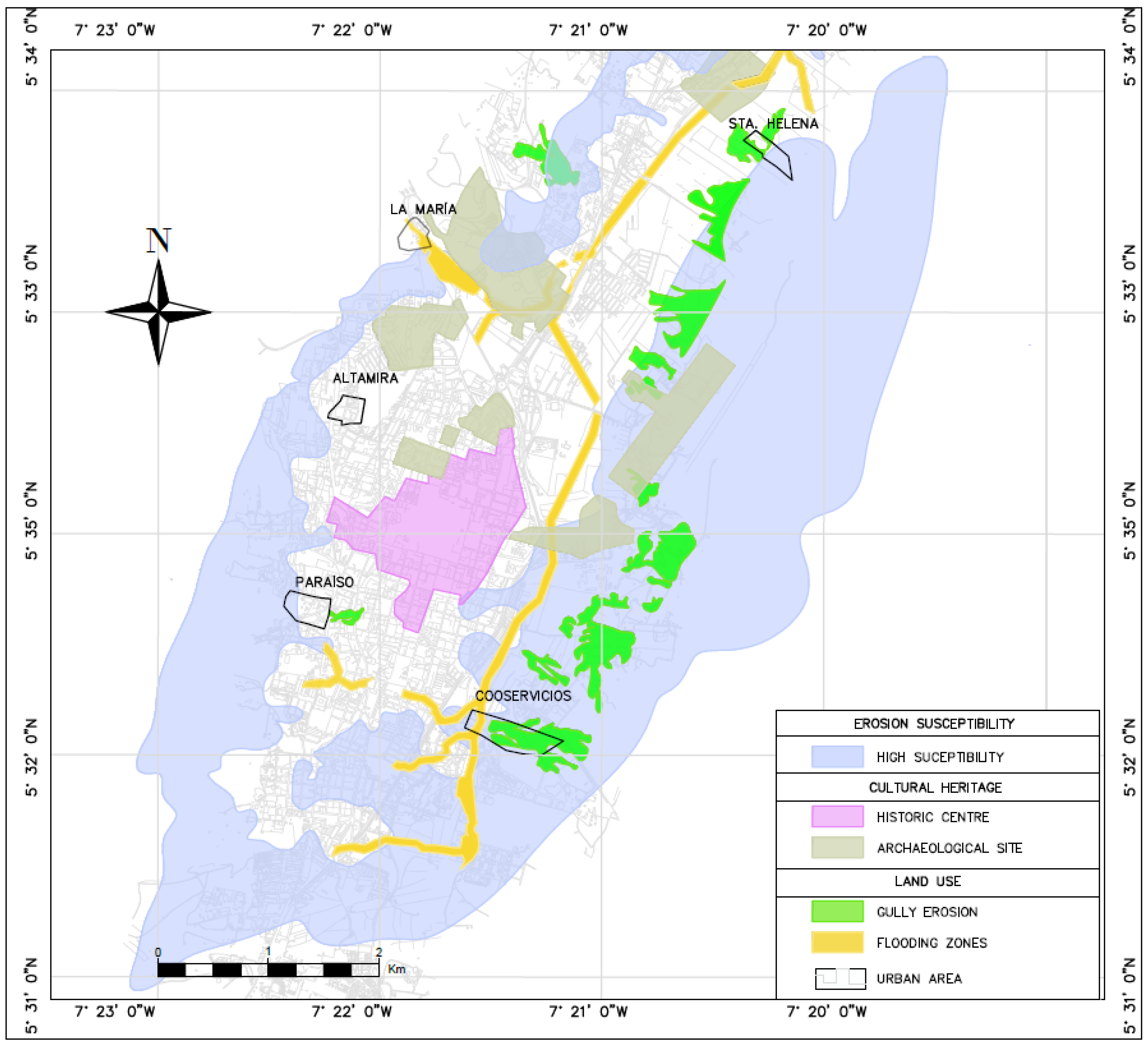
The evaluation of the micro-watersheds was based on a spatial analysis of the topographic characteristics, land use, and land cover of the city of Tunja, using thematic layers such as the urban cultural heritage map, erosion susceptibility, and areas prone to linear erosion and flooding. The spatial distribution of these variables is shown in Figure 6, which reveals that the city’s urban development follows a southwest-northeast direction, with a highly impermeable historic centre. Areas highly susceptible to erosion and extensive archaeological sites are concentrated on the eastern and western flanks, which represents restrictions for future interventions. Furthermore, the eastern flank shows a higher incidence of erosion and flooding, many of which are associated with strategic road corridors for the city’s mobility [62].
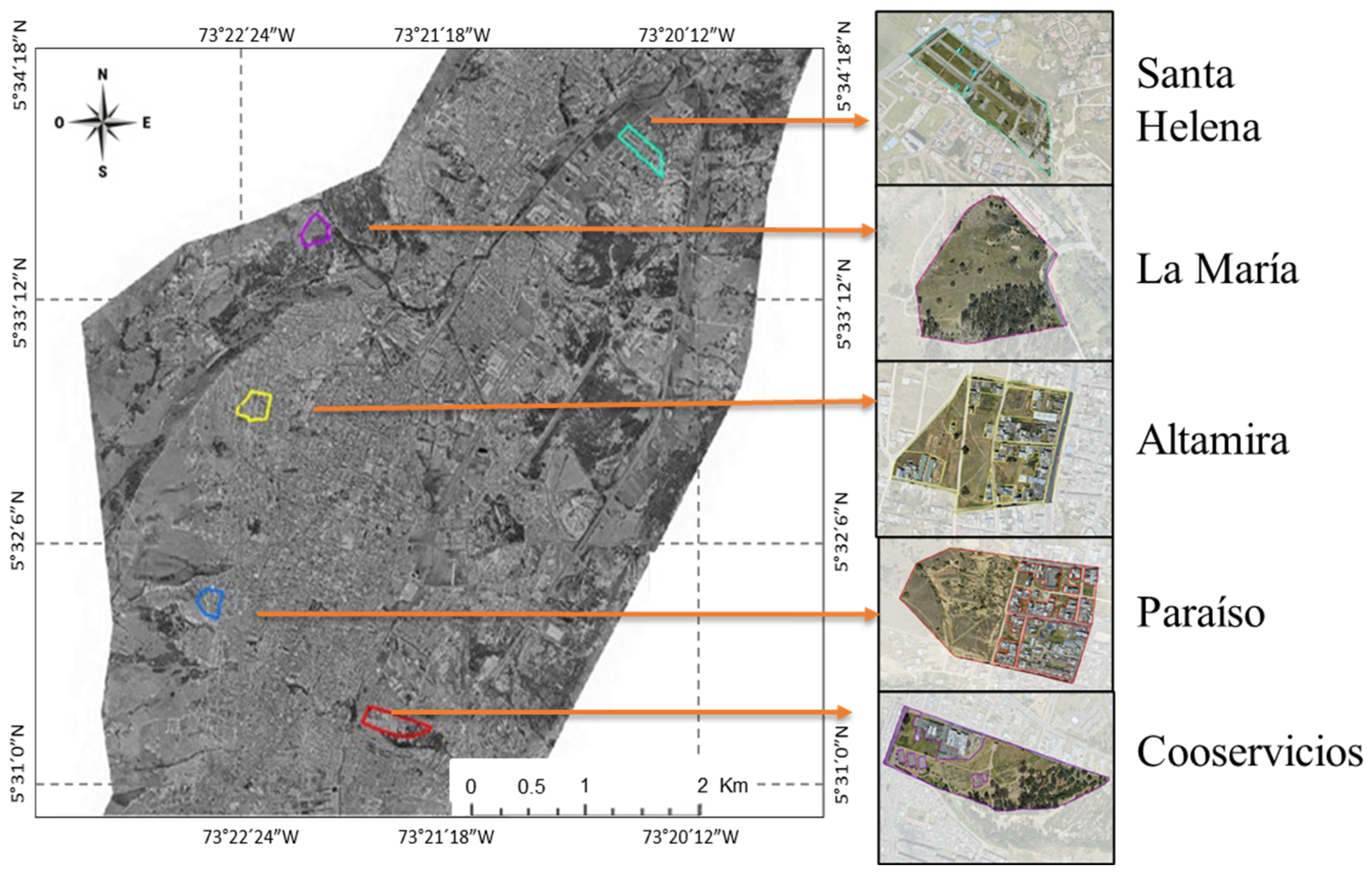
Based on this information and using a DEM, a multi-criteria delineation methodology was applied to identify critical runoff zones. As a result, five representative micro-watersheds located in the neighbourhoods of La María, Santa Helena, Paraíso, Cooservicios, and Altamira were selected (Figure 7), prioritized according to three key variables: terrain slope, evidence of active gullies, and propensity for erosion or flooding, all of which are determinants in the process of sediment transport and deposition on road infrastructure.
The technical field inspection validated the conditions observed in the spatial analysis (Table 3). It was found that La María, Altamira, and Paraíso, despite being located within the urban area, have steep slopes (>85%), low vegetation cover, and unpaved areas, conditions that favour surface erosion and increase the potential sediment load on the road. These conditions significantly increase the risk of particulate matter deposition on the road surface, which would represent a critical threat to the hydraulic functionality of the PP. Conversely, the Cooservicios and Altamira micro-watersheds show less vulnerability due to moderate slopes (>25%) and denser vegetation cover, which reduces or interrupts sediment transport.
Finally, the selection of these micro-watersheds was based on a methodological integration that considered topographic variables, land use, and active geomorphological processes. This approach allowed for the precise identification of critical runoff and sediment accumulation zones, which are fundamental for assessing the risk of clogging in future PP and SUDS proposals.

3.2. Impact of Peri-Urban Micro-Watershed Characteristics on Sediment Generation, Transport, and Accumulation

The USLE was used to assess rainfall erosivity for the year 2019, which recorded an annual precipitation of 621 mm, a value close to the historical average of 670 mm according to data from the UPTC station (2000–2024). During that year, the highest concentration of rainfall occurred between April and October, with more than 25 days of precipitation events [63], significantly contributing to sediment transport along the study roads.
The USLE results for the studied micro-watersheds are summarized in Table 4, along with the values of the factors that make up the equation. The estimation of R factor was based on a synthetic reconstruction of rainfall intensity derived from historical precipitation series from the UPTC weather station (Unique with direct influence on the study area) and the Weather Atlas. This process required the disaggregation of monthly precipitation into daily data, as well as the modelling of 24 h rainfall distribution to establish the cumulative precipitation percentage at 30 min. Subsequently, the unit energy (defined as a function of rainfall intensity) was determined using the Wischneier—Snith equation. Finally, based on the unit energy, total monthly precipitation and rainfall intensity, the R factor was determined to be 154.45 MJ × mm/ha × h × year.
Susceptibility to erosion (K factor) was calculated using William’s equations defining the percentages of, sand, clay, silt and organic matter from soil samples collected in the studied micro-watersheds at a depth of 20 cm. These samples were analysed in the laboratory to determine their grain size distribution and Atterberg Limits, identifying greater vulnerability in the Santa Helena and La María micro-watershed, where silts and sands predominate. In contrast, Altamira and Paraíso have soils with a higher proportion of clays, which reduces their susceptibility to erosion.
The slope factor and slope length (SL) were determined through spatial analysis in ArcGIS Pro, using a DEM, flow accumulation, and morphology data for each micro-watershed. The results revealed significant differences: Paraíso and La María exhibit steep slopes (>85%) across a combined area of 81,000 m2, increasing their erosive potential. Conversely, the Santa Helena and Cooservicios micro-watersheds, with a total area of 140,760 m2, show gentle slopes (<25%, SL = 2.0), thus reducing their impact on erosion processes.
Finally, the vegetation cover value C was defined according to Pacheco et al. [41], weighting the cover type (grassland, degraded areas, urban area, forest). The results show that La María presents the highest annual erosion rate, reaching 7.9 ton/ha·year, a value strongly influenced by its steep slopes and soil characteristics. As a peri-urban micro-watershed, La María is also affected by vegetation loss, changes in land use, and the presence of infrastructure works, all of which intensify sediment yield [64,65]. Altamira and Paraíso also exhibit elevated erosion levels due to their slope conditions, while Santa Helena shows high textural susceptibility, consistent with the behaviour reported in similar peri-urban environments.
However, calculating the USLE alone does not determine the actual volume of sediment reaching the road by the peri-urban watersheds. For this reason, the obstruction of flow toward the road was evaluated. Table 5 shows the obstruction percentages according to infrastructure cover. Specifically, Altamira presents a 36% obstruction, while Santa Helena and La María register less than 5%, implying a more direct connection between runoff and the road.
Although Paraíso reaches a 32% obstruction rate, filed inspections established that due to the high longitudinal and transversal slopes, the flow possesses sufficient energy to overtop or bypass barriers. Furthermore, due to the geomorphology of the area and the layout of the barriers, there is not interruptions of the hydrological connectivity from the upper to the watershed outlet, allowing sediments to reach the road without significant interference. Conversely, the Cooservicios micro-watershed was excluded from the study due to its high vegetation cover and low sediment contribution, while Altamira was excluded because it has a physical barrier in its lower part that interrupts sediment transport.
Consequently, the obstruction analysis considered not only the area isolated by the barriers found within the micro-watersheds but also a hydrological connectivity analysis. This approach accounts for flow continuity and the subsequent sediment transport toward the asphalt surfaces [35,36].
Therefore, the Paraíso, Santa Helena, and La María micro-watershed were selected for further laboratory testing. The granulometric compatibility between the surface soil and the material deposited on the road was evaluated, revealing that the fines content decreased significantly during transport, with the smallest reduction occurring in La María. According to Table 6, Santa Helena and Paraíso showed reductions of 61% and 68% in fines content, respectively, reflecting lower mobility of cohesive particles. In contrast, La María showed only a 27% reduction, suggesting more efficient sediment transport to the road. These results indicate that textural distribution directly influences transport capacity, coarse fractions exhibit higher mobility under concentrated runoff conditions in sloped catchments [35,36]. The Atterberg limits showed a loss of plasticity in the accumulated soils, suggesting that the cohesion of the fines hinders their efficient transport, while sand dominates the final deposit on the road surface.
A significant difference in texture is observed between the watershed soils and the sediments deposited on the road, suggesting a selective transport mechanism where cohesive fine materials are retained by vegetation and existing infrastructure. Furthermore, differential settling occurs due to the higher settling velocity of sands, favouring their deposition on the road surface, while finer materials are transported in suspension by the flow. On the other hand, the reduction in the plasticity index may be attributed to a loss of cohesion and potential flocculation caused by the chemical and physical interaction between the runoff flow and cementing materials, such as road infrastructure and organic matter [66,67]. In summary, the María, Paraíso, and Santa Helena micro-watershed have been identified as exhibiting geomorphological and textural conditions that favour sediment transport toward the road, with La María being the most critical due to its steep slope, low obstruction, and reduced loss of fines. Integrating the USLE with soil obstruction and compatibility analysis allowed for the selection of representative areas for sedimentation tests, validating the methodology used to estimate realistic sediment loads in peri-urban runoff scenarios.

3.3. Effect of Sediments from Peri-Urban Micro-Watershed on the Hydraulic Permeability of Porous Asphalt Mixtures

The permeability of the PAMs was assessed through two complementary tests, with the propose of analysing the differential impact of sediment based on the temporal rate of sediment accumulation. On the one hand, the ICFM allowed for the simulation of a scenario of progressive permeability loss as a result of surface sediment deposition monthly. Furthermore, the Florida Permeameter allowed for the simulation of scenarios associated with annual conditions, characterized by high sediment loads, typical of intensified erosion events in the evaluated micro-watershed.
The estimation of the clogging load applied to each sample was based on the results obtained using the USLE, integrating the estimated erosion area in the micro-watershed, the closure area defined by the adjacent road, and the specific surface area of each sample, according to the corresponding hydraulic test type. Specifically, the annual soil loss values (t/ha·year) were converted into mass per unit surface (g/cm2·year) used to simulate in the ICFM-UPTC, considering the contributing watershed area and the effective pavement exposure area. These values were then scaled to the 100 mm diameter specimen used in the Florida test, ensuring that the laboratory clogging loads correspond to physically realistic sediment deposition scenarios derived from the micro-watershed analysis. Table 7 summarizes the sediment loads assigned to each of the analysed micro-watershed. The methodological coherence between watershed-scale sediment yield estimation using the USLE [23] and the laboratory-applied clogging loads provides internal validation of the adopted multiscale framework. Similar GIS–USLE integrations have demonstrated consistency between predicted and measured sediment deposition in urban catchments [25].
The evaluation of annual permeability loss in the initial phase (new state) revealed permeability coefficient (k) values between 0.07 and 0.12 cm/s, confirming the high drainage capacity of the porous mixtures under initial conditions. However, in the silted state, La María showed a 95% loss of permeability, dropping to 0.0002 cm/s, while Paraíso and Santa Helena registered losses of 87% and 43%, respectively (see Table 8). These results are directly associated with the sediment load identified in each micro-watershed: La María presented the highest accumulated amount (2.8 g/cm2), followed by Paraíso (1.5 g/cm2), while Santa Helena registered only 0.2 g/cm2.
However, after the application of the maintenance protocol, it was possible to partially recover hydraulic functionality: La María achieved a 32% recovery, Paraíso 40%, and Santa Helena 38%, with k values between 0.036 and 0.061 cm/s. These results demonstrate that, while areas with high sediment loads experience greater losses, they also offer a greater margin for hydraulic recovery, highlighting the importance of maintenance practices to prolong the functionality of the PAMs in the face of differentiated clogging processes according to micro-watershed characteristics.
Based on the results from the Florida Test, the La María micro-watershed was selected for hydraulic evaluation by the ICFM-UPTC, as it registered the greatest permeability loss (95%) and the highest annual sediment load (2.8 g/cm2) among the evaluated micro-watershed. The critical monthly sediment load was estimated using the USLE, under a high precipitation scenario corresponding to the 75th percentile of the multi-year monthly average for Tunja, representing one of the rainiest months in the historical record.
From this scenario, a critical monthly erosion load of 1036 g was calculated, which was used as a reference for the laboratory clogging tests. This figure represents approximately 15% of the 7000 g estimated as the total annual expected load for a 50 × 50 cm2 sample, allowing for the simulation of realistic conditions of progressive obstruction under intense rainfall events. This load was distributed according to the particle size distribution curve, identifying 84% sand (425 µm) and 16% fine material (75 µm). These results coincide with previous studies that highlight the differences in the behaviour of sands and clays [68], since, in long-distance transport, only sands and fines reach the sedimentary deposits of the road.
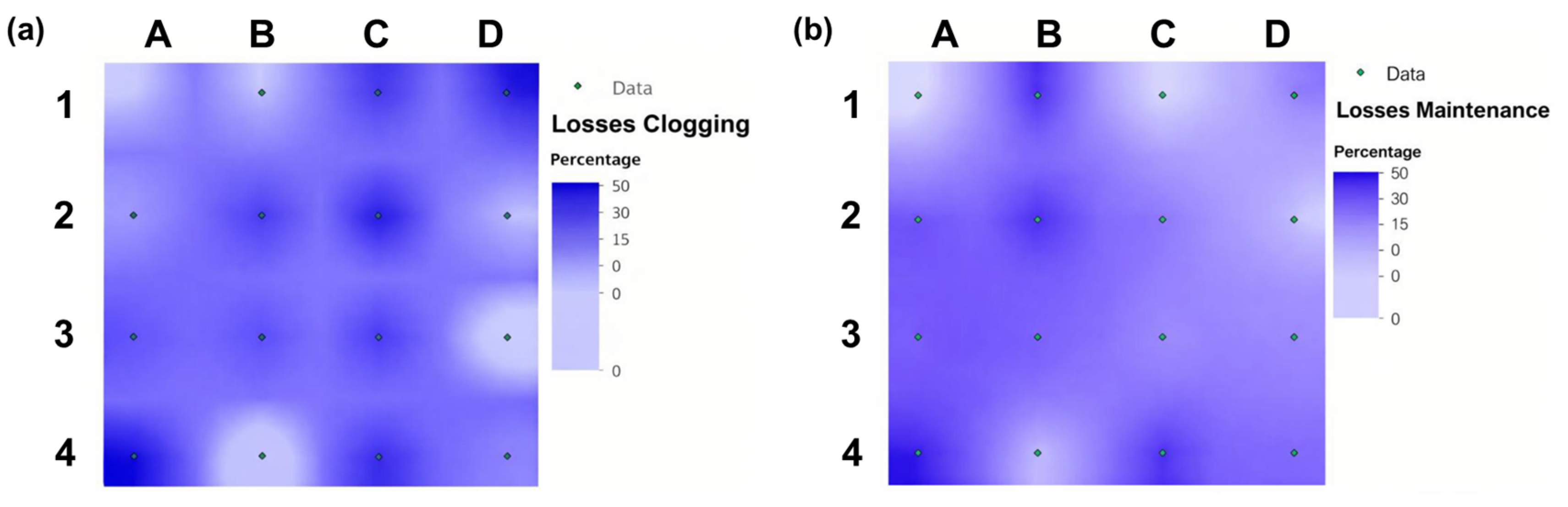
Figure 8 shows the spatial distribution of the loss in infiltration capacity of a PAM under clogging conditions (a) and after surface maintenance (b), using the ICFM-UPTC. During the clogging phase (Figure 8a), a marked loss of permeability is observed along diagonal A4–D1, where the most affected areas are concentrated, reaching reductions of up to 50%. This alignment suggests the existence of preferential infiltration routes; a phenomenon previously identified in mesoscopic analyses of sediment transport over pervious pavements [69]. That, during the ICFM-UPTC test, facilitate the accumulation of fine sediments and, therefore, localized clogging. Significant losses (30–45%) are also evident in the central core of the sample, possibly associated with localized surface flow convergence and hydraulic gradient concentration during clogging, which may promote preferential sediment accumulation. Although minor compaction variability cannot be entirely excluded, the persistence of this pattern under controlled testing conditions suggests that flow-driven redistribution mechanisms are the dominant cause. In contrast, the peripheral ends show less damage (<10%), indicating a non-uniform redistribution pattern. These findings reinforce the importance of considering spatial variations in the hydraulic assessment of PAM and suggest adjusting the mix design to avoid areas of structural and hydraulic vulnerability.
After applying a maintenance procedure to the sample, Figure 8b shows a partial recovery of hydraulic permeability, evidenced by a generalized decrease in recorded losses. The magnitude of recovery was heterogeneous across the surface, with peripheral regions and corners exhibiting areas with losses exceeding 30%, particularly in the upper left and centre-left portions of the matrix. This distribution suggests that, while the maintenance was effective in removing some of the surface sediment, it did not fully restore the most affected infiltration paths, possibly due to internal clogging or the retention of fine material in the narrower pores. Compared to the high-loss diagonal observed in the clogging state (from A4 to D1), the maintenance substantially reduced this critical strip, although areas of residual loss persist at the edges. This pattern highlights the importance of combining surface cleaning methods with internal regeneration strategies to improve maintenance efficiency in porous pavements exposed to high sediment loads.
Additionally, the overall results obtained through the ICFM-UPTC (Table 9) showed that clogging resulted in an average loss of 6.5% in drainage capacity, while maintenance allowed for a recovery of approximately 3.5%. This correlation confirms that the areas most affected, as observed visually—such as diagonal A4–D1 and the central core—correspond to the overall behaviour quantified by the ICFM-UPTC. Thus, the spatial map does not represent a different phenomenon, but rather a detailed distribution of a hydraulic loss already characterized in the laboratory, reinforcing the validity of the methodological approach.
Surface runoff revealed a 116% increase in water volume after clogging (Table 10), attributed to the progressive loss of surface permeability and the partial sealing of pores by sedimentary material, which reduces effective infiltration. This obstruction increases surface runoff, especially down steeper slopes, where flow velocity increases. After maintenance, a 91.5% decrease was observed compared to the clogging state, indicating a partial recovery of drainage function (Figure 8), although preferential flow paths persist. The relationship between drainage recovery and runoff reduction must be analysed in terms of absolute volumetric balance. After maintenance, the increase in drainage volume (1031 mL) closely matches the reduction in surface runoff volume (1038 mL). Although this recovery represents only a 3.5% increase in the total drainage capacity (given its high baseline of 30,000 mL), it accounts for a 42.3% reduction in the runoff collected. This volumetric equivalence demonstrates that even minor restorations of internal connectivity can effectively mitigate surface flooding. Therefore, monitoring surface runoff provides a higher resolution for evaluating the immediate success of cleaning protocols compared to bulk infiltration tests.
Considering a constant flow rate of 100 L/h and a test duration of 20 min, a total application volume of 33 L was obtained on the test surface. Splash losses were minimal, ranging from 2% to 5%, confirming the reliability of the runoff application and collection system. It was observed that the volume of surface runoff varies directly with the system’s slope, being higher in the longitudinal configuration (3%) compared to the transverse one (2%), due to a higher runoff velocity and shorter effective infiltration time. These values reflect a small but measurable decrease in the efficiency of the porous system under simulated monthly sediment loading conditions, constituting a representative scenario for calibrating the evaluation protocol. Moreover, the magnitude of permeability reduction observed in this study is consistent with previously reported clogging behaviour in surfaces materials pavement subjected to controlled sediment loads [10,15], supporting the external validity of the experimental trends identified.
Overall, the laboratory tests confirmed that sediment-induced clogging in PAM can cause severe losses in drainage and infiltration capacity, both at point and surface scales, depending on the magnitude and frequency of sediment loading. The hydraulic response of the mixtures was strongly conditioned by the micro-watershed of origin, in agreement with previous studies showing that sediment granulometry and load magnitude control permeability reduction patterns in porous asphalt systems [10,15]. In the peri-urban watersheds studied, the predominant sediment reaching the pavement surface consisted mainly of sand, producing permeability losses greater than 90%, consistent with severe clogging scenarios reported under high sediment loading conditions [15,19]. Findings reported by Sandoval et al. (2022) [59], where sandy sediments generate surface-level obstructions that are simpler to remove compared with the internal clogging caused by silts and clays. Following maintenance, the PAMs exhibited a hydraulic recovery of approximately 40%, confirming that the clogging observed was largely superficial.
The high percentage of permeability loss is directly related to the strong sediment transport capacity of these watersheds, driven by their steep slopes and the predominance of coarse material. This, combined with the limited hydraulic capacity of the road surface, leads to substantial sand accumulation on the pavement, causing surface obstruction consistent with mesoscopic observations of sediment transport over pervious pavements. Maintenance operations enabled partial functional restoration, validating the combined use of the Florida Permeameter and the ICFM-UPTC as a robust methodological framework to simulate, measure, and compare real clogging and recovery scenarios in permeable pavements [69].
This study provides quantitative estimates of erosion rates in three peri-urban micro-watersheds in Tunja and the associated loss of infiltration capacity in porous asphalt pavements; however, these results are not directly extrapolable to other watersheds. The erosion rates and sediment loads are controlled by local soil texture, mean rainfall and watershed-specific geomorphology, as well as by the configuration of semi-urban drainage, flow obstructions and sediment pathways represented in the USLE-based GIS analysis. In addition, the hydraulic response and post-maintenance recovery are specific to the PA-16 porous asphalt mixture produced with a single aggregate source and polymer-modified binder and evaluated under controlled laboratory boundary conditions. The effectiveness of the adopted cleaning strategy (compressed air and surface sweeping) and the degree of hydraulic recovery observed are linked to the predominance of low-fines mineral sediments; under alternative clogging scenarios involving organic matter or fine silty–clayey particles, different maintenance methods and recovery levels would be expected.


4. Conclusions

The combination of GIS tools and field data allowed for the identification of peri-urban micro-watersheds in Tunja with a high risk of erosion and sediment deposits. La María, Paraíso, and Santa Helena stand out due to their steep slopes, low vegetation cover, and minimal surface obstruction—critical factors for the design and location of potential PP.
The USLE model applied at the local scale showed that slope (LS factor) and soil texture (K factor) are the main drivers of potential erosion, with maximum values in La María (7.9 t/ha × year) and Altamira (6.5 t/ha × year). However, the actual erosion potential is modulated by existing infrastructure. Integrating spatial analysis with obstruction and cover assessments is crucial for more effective urban planning.
The comparison of material between gullies and road deposits validated the selection of micro-watersheds by revealing significant losses of fines and cohesion, especially in Santa Helena and Paraíso. La María, with low clogging, showed more efficient transport and greater particle size similarity. These findings reinforce the usefulness of the monthly/annual approach for anticipating clogging risks and guiding design and maintenance decisions in urban permeable pavements.
Clogging by sediment drastically reduces the permeability of porous asphalt mixtures, reaching losses of up to 95% under annual loads of 7.9 tons/ha×year, which significantly compromises their infiltration capacity and hydraulic control. Surface maintenance using air pressure proved to be partially effective, allowing the recovery of between 30% and 40% of the drainage and infiltration capacity, although with spatial variability that reveals preferential clogging routes. This behaviour makes the use of these types of pavements unadvisable in roads with high sediment loads, as premature clogging occurs, turning the structure into an impermeable surface that negates the environmental and safety benefits by being unable to capture and retain surface runoff. Otherwise, a mixture design adjustment is required to mitigate the formation of preferential clogging routes through the creation of interconnected macropores that allow sediment transport by both hydraulic flow and the compressed air used during maintenance.
The combined methodology of the Florida Test and the ICFM-UPTC allowed for the accurate evaluation of hydraulic loss and recovery of the permeable asphalt mixtures, considering annual and monthly sediment load scenarios. This multiscale approach offers a robust tool to dynamically characterize hydraulic deterioration and plan differentiated maintenance strategies according to the intensity and frequency of clogging in vulnerable areas.

5. Future Research

Future research should extend this framework to a wider spectrum of catchment typologies, climatic regimes and land-use patterns, explicitly including watershed dominated by organic debris and fine cohesive sediments. Comparative studies of alternative porous asphalt gradations, binders and layer configurations, combined with different cleaning and maintenance strategies, are needed to clarify how mix design and sediment typology jointly control clogging and hydraulic recovery. In addition, pore-scale or DEM-based modelling approaches should be incorporated to better elucidate sediment–void interaction mechanisms and optimize maintenance strategies beyond functional-scale evaluation. Long-term field monitoring that incorporates traffic loading, ageing, temperature cycles, sub-surface clogging and pollutant retention will also be essential to validate and refine the laboratory-scale findings reported in this study.

Author Contributions

A.S.-B.: Conceptualization, Project administration, Methodology, Validation, Writing—review & editing. J.V.-C.: Conceptualization, Supervision, Methodology, Validation, Writing—review & editing. J.B.-G.: Investigation, Writing—original draft. K.F.-S.: Investigation, Writing—original draft. L.Á.S.-F.: Conceptualization, Validation, Supervision, Writing—review & editing. All authors have read and agreed to the published version of the manuscript.

Funding

This research was funded by the Universidad Pedagógica y Tecnológica de Colombia under project reference SGI 3472.

Data Availability Statement

The original contributions presented in this study are included in the article. The data that support the findings of this study are available from the corresponding author, (A.S.-B.), upon reasonable request.

Acknowledgments

The authors would like to acknowledge the technical support of Jose Manuel Sierra and Nicolas Arrazola Ruiz from the Engineering Laboratory at the Universidad Pedagógica y Tecnológica de Colombia.

Conflicts of Interest

The authors declare that they have no known competing financial interests or personal relationships that could have influenced the work reported in this paper.

References

  1. Chen, Q.; Zhang, Z.; Gaspard, K. Case Study on the Impact of Flooding and Inundation on Pavement Performance. Transp. Res. Rec. 2023, 2677, 157–168. [Google Scholar] [CrossRef]
  2. Sañudo-Fontaneda, L.A.; Allende-Prieto, C.; Rey-Mahía, C.; Roces-García, J. Exploring Long-Term Hydrologic Design Variables in Sustainable Drainage Systems for Climate-Resilient Highway Infrastructure: A Case Study in Asturias. In Proceedings of the XVI Conference on Transport Engineering (CIT2025), Zaragoza, Spain, 18–20 June 2025. [Google Scholar]
  3. Sañudo-Fontaneda, L.A.; Andres-Valeri, V.C.; Costales-Campa, C.; Cabezon-Jimenez, I.; Cadenas-Fernandez, F. The Long-Term Hydrological Performance of Permeable Pavement Systems in Northern Spain: An Approach to the “End-of-Life” Concept. Water 2018, 10, 497. [Google Scholar] [CrossRef]
  4. Sañudo-Fontaneda, L.A.; Jato-Espino, D.; Lashford, C.; Coupe, S.J. Simulation of the Hydraulic Performance of Highway Filter Drains through Laboratory Models and Stormwater Management Tools. Environ. Sci. Pollut. Res. 2018, 25, 19228–19237. [Google Scholar] [CrossRef] [PubMed]
  5. Sañudo-Fontaneda, L.A.; Coupe, S.J.; Charlesworth, S.M.; Rowlands, E.G. Exploring the Effects of Geotextiles in the Performance of Highway Filter Drains. Geotext. Geomembr. 2018, 46, 559–565. [Google Scholar] [CrossRef]
  6. Fathollahi, A.; Coupe, S.J.; Sañudo-Fontaneda, L.A. Chapter 10—Sustainable Drainage Systems in Highway Drainage. In Sustainable Water Engineering; Charlesworth, S., Ed.; Elsevier: Amsterdam, The Netherlands, 2020; pp. 165–184. [Google Scholar]
  7. Yu, Z.; Gan, H.; Xiao, M.; Huang, B.; Zhu, D.Z.; Zhang, Z.; Wang, H.; Lin, Y.; Hou, Y.; Peng, S.; et al. Performance of Permeable Pavement Systems on Stormwater Permeability and Pollutant Removal. Environ. Sci. Pollut. Res. 2021, 28, 28571–28584. [Google Scholar] [CrossRef]
  8. Sañudo-Fontaneda, L.A.; Rodriguez-Hernandez, J.; Calzada-Pérez, M.A.; Castro-Fresno, D. Infiltration Behaviour of Polymer-Modified Porous Concrete and Porous Asphalt Surfaces Used in SuDS Techniques. CLEAN–Soil Air Water 2014, 42, 139–145. [Google Scholar] [CrossRef]
  9. Silva-Balaguera, A.; Concha, J.L.; Chavez-Delgado, M.; Sañudo-Fontaneda, L.A.; Johnston, R.; Norambuena-Contreras, J. Multifunctional Porous Asphalt Mixture Containing Metallic Blast Furnace Dust for Self-Healing Permeable Pavements. Mater. Struct. 2026, 59, 97. [Google Scholar] [CrossRef]
  10. García-Haba, E.; Naves, J.; Hernández-Crespo, C.; Goya-Heredia, A.; Suárez, J.; Anta, J.; Andrés-Doménech, I. Influence of Sediment Characteristics on Long-Term Hydrology and Water Quality Behaviour during the Clogging Process of a Permeable Asphalt. J. Water Process Eng. 2023, 53, 103658. [Google Scholar] [CrossRef]
  11. Soltaninia, S.; Taghavi, L.; Hosseini, S.A.; Motamedvaziri, B.; Eslamian, S. The Effect of Land-Use Type and Climatic Conditions on Heavy Metal Pollutants in Urban Runoff in a Semi-Arid Region. J. Water Reuse Desalin. 2022, 12, 384–402. [Google Scholar] [CrossRef]
  12. Wang, Q.; Zhang, Q.; Wang, X.C.; Ge, Y. Size Distributions and Heavy Metal Pollution of Urban Road-Deposited Sediments (RDS) Related to Traffic Types. Environ. Sci. Pollut. Res. 2020, 27, 34199–34210. [Google Scholar] [CrossRef]
  13. Sousa, M.; Dinis Almeida, M.; Fael, C.; Bentes, I. Permeable Asphalt Pavements (PAP): Benefits, Clogging Factors and Methods for Evaluation and Maintenance—A Review. Materials 2024, 17, 6063. [Google Scholar] [CrossRef]
  14. Meng, A.; Xing, C.; Tan, Y.; Li, G.; Li, J.; Lv, H. Investigation on the Distributing Behaviors of Clogging Particles in Permeable Asphalt Mixtures from the Microstructure Perspective. Constr. Build. Mater. 2020, 263, 120531. [Google Scholar] [CrossRef]
  15. Zhang, Z.; Xuan, D.L.; Qiao, Y.; Giustozzi, F. Investigation of the Effect of Sediment Clogging on the Hydraulic Conductivity of Porous Asphalt Mixes Using CFD and DEM Methods. Constr. Build. Mater. 2024, 431, 136566. [Google Scholar] [CrossRef]
  16. Winston, R.J.; Witter, J.D.; Tirpak, R.A. Measuring Sediment Loads and Particle Size Distribution in Road Runoff: Implications for Sediment Removal by Stormwater Control Measures. Sci. Total Environ. 2023, 902, 166071. [Google Scholar] [CrossRef] [PubMed]
  17. Rodriguez-Hernandez, J.; Castro-Fresno, D.; Fernández-Barrera, A.H.; Vega-Zamanillo, Á. Characterization of Infiltration Capacity of Permeable Pavements with Porous Asphalt Surface Using Cantabrian Fixed Infiltrometer. J. Hydrol. Eng. 2012, 17, 597–603. [Google Scholar] [CrossRef]
  18. Bustos Pretel, G.; Pérez Ibáñez, E. Pliego de Prescripciones Técnicas Generales Para Obras de Carreteras y Puentes, 5th ed.; Ediciones Liteam: Madrid, Spain, 2007. [Google Scholar]
  19. Goya-Heredia, A.; Naves, J.; Suárez, J.; Anta, J. Large-Scale Clogging Experiments Assessing the Hydraulic Performance of Porous Asphalt during Their Service Life. Blue-Green Syst. 2025, 7, 110–123. [Google Scholar] [CrossRef]
  20. FDOT. FM 5-565; Measurement of Water Permeability of Compacted Asphalt Paving Mixtures. FDOT: Gainesville, FL, USA, 2014.
  21. Koshy, S.A.; Salini, U. Experimental Investigation on the Clogging and De-Clogging Behaviour of Open Graded Friction Course Mixes. Int. J. Pavement Res. Technol. 2024, 19, 153–169. [Google Scholar] [CrossRef]
  22. Autelitano, F.; Petrolo, D.; Chiapponi, L.; Giuliani, F.; Longo, S. Temporary Clogging Effects Induced by a Sustainable Anti-Icing Hydrogel on the Hydraulic Conductivity and Inertia Coefficient of Open-Graded Asphalt Pavements. Constr. Build. Mater. 2022, 361, 129495. [Google Scholar] [CrossRef]
  23. Benavidez, R.; Jackson, B.; Maxwell, D.; Norton, K. A Review of the (Revised) Universal Soil Loss Equation ((R)USLE): With a View to Increasing Its Global Applicability and Improving Soil Loss Estimates. Hydrol. Earth Syst. Sci. 2018, 22, 6059–6086. [Google Scholar] [CrossRef]
  24. Lisboa, E.G.; Blanco, C.J.C.; Maia, R.O.P.; Bello, L.A.L. A Stochastic Estimation of Sediment Production in an Urban Catchment Using the USLE Model. Hydrol. Sci. J. 2017, 62, 2571–2586. [Google Scholar] [CrossRef]
  25. Mattheus, C.R.; Norton, M.S. Comparison of Pond-Sedimentation Data with a GIS-Based USLE Model of Sediment Yield for a Small Forested Urban Watershed. Anthropocene 2013, 2, 89–101. [Google Scholar] [CrossRef]
  26. Khairunnisa, F.; Tambunan, M.P.; Marko, K. Estimation of Soil Erosion by USLE Model Using GIS Technique (A Case Study of Upper Citarum Watershed). In Proceedings of the IOP Conference Series: Earth and Environmental Science; IOP Publishing Ltd.: Bristol, UK, 2020; Volume 561. [Google Scholar]
  27. Pham, T.G.; Degener, J.; Kappas, M. Integrated Universal Soil Loss Equation (USLE) and Geographical Information System (GIS) for Soil Erosion Estimation in A Sap Basin: Central Vietnam. Int. Soil Water Conserv. Res. 2018, 6, 99–110. [Google Scholar] [CrossRef]
  28. Sathiyamurthi, S.; Ramya, M.; Saravanan, S.; Subramani, T. Estimation of Soil Erosion for a Semi-Urban Watershed in Tamil Nadu, India Using RUSLE and Geospatial Techniques. Urban Clim. 2023, 48, 101424. [Google Scholar] [CrossRef]
  29. Tilahun, A.; Desta, H. Soil Erosion Modeling and Sediment Transport Index Analysis Using USLE and GIS Techniques in Ada’a Watershed, Awash River Basin, Ethiopia. Geosci. Lett. 2023, 10, 57. [Google Scholar] [CrossRef]
  30. Wondrade, N. Integrated Use of GIS, RS and USLE Model for LULC Change Analysis and Soil Erosion Risk Mapping in the Lake Hawassa Watershed, Southern Ethiopia. Geocarto Int. 2023, 38, 2210106. [Google Scholar] [CrossRef]
  31. Terkura, S.A.; Akib, S. Performance of Permeable Pavement Systems: A Review and Future Solutions. arXiv 2024. [Google Scholar] [CrossRef]
  32. Peñaloza-Rueda, M.F.; Rojas-Mesa, J.K.; Leguizamón-Barreto, L.C. A Case Study for the Estimation of the Hazard Produced by Landslides Triggered by Rainfall and Seismic Activity between Tunja and Guateque, Colombia. Dyna 2023, 90, 73–82. [Google Scholar] [CrossRef]
  33. Yahyavi Rahimi, A.; Ebrahimian, A. Urban Impervious Cover Characterization for Rainfall-Runoff Analysis: Impacts of Data Availability and Resolution. J. Hydrol. 2024, 641, 131807. [Google Scholar] [CrossRef]
  34. Zhou, H.; Liu, J.; Ou, S.; Gao, C.; Zhou, Y.; Shi, L.; Zhou, K. Impact of Effective Impervious Surface Disconnection on Urban Hydrographs: A Multi-Scenario Modeling Study at the Catchment Scale. J. Hydrol. 2024, 630, 130656. [Google Scholar] [CrossRef]
  35. Russell, K.L.; Vietz, G.J.; Fletcher, T.D. Global Sediment Yields from Urban and Urbanizing Watersheds. Earth. Sci. Rev. 2017, 168, 73–80. [Google Scholar] [CrossRef]
  36. Deng, L.; Sun, T.; Fei, K.; Zhang, L.; Fan, X.; Wu, Y.; Ni, L. Effects of Erosion Degree, Rainfall Intensity and Slope Gradient on Runoff and Sediment Yield for the Bare Soils from the Weathered Granite Slopes of SE China. Geomorphology 2020, 352, 106997. [Google Scholar] [CrossRef]
  37. Guerra, A.J.T.; Fullen, M.A.; Jorge, M.d.C.O.; Bezerra, J.F.R.; Shokr, M.S. Slope Processes, Mass Movement and Soil Erosion: A Review. Pedosphere 2017, 27, 27–41. [Google Scholar] [CrossRef]
  38. Rengifo-Rengifo, I.-Y.; Muñoz-Gomez, F.-A.; Toro-Trochez, O.-A. USLE Model to Estimate Water Erosion in Seven Municipalities of the Colombian Andean Zone. Biotecnol. Sect. Agropecu. Agroind. 2022, 20, 29–44. [Google Scholar] [CrossRef]
  39. Fermin, C.A.; Sinichenko, E.K.; Gritsuk, I.I. Evaluation of Potential Water Erosion of Hydrographic Demarcation of Manabi, Ecuador. RUDN J. Eng. Res. 2017, 18, 192–203. [Google Scholar] [CrossRef][Green Version]
  40. Instituto Nacional de Vías INVIAS. Manual de Diseño Geométrico de Carreteras; Instituto Nacional de Vías INVIAS: Bogotá, Colombia, 2008. [Google Scholar]
  41. Pacheco, H.A.; Cevallos, R.X.; Vinces, C.J. Calculation of RUSLE C Factor in Carache River Basin, Trujillo, Venezuela Satellite Images Using Miranda VRSS-1. Rev. Espac. 2019, 40, 6. [Google Scholar]
  42. Instituto Geográfico Agustín Codazzi (IGAC). Ortoimagen. Departamento de Boyacá. Resolución 3 m (Año 2022). Portal de Información Geoespacial “Colombia en Mapas”. 2022. Available online: https://www.colombiaenmapas.gov.co/?u=0&t=23&servicio=6242 (accessed on 20 February 2026).
  43. Zafra-Mejía, C.; Rondón-Quintana, H.; Gutiérrez-Malaxechebarria, Á. Heavy Metal Contribution by Runoff in a High-Altitude Megacity: A Method Based on the Road-Deposited Sediment Characterization. Dyna 2018, 85, 85–94. [Google Scholar] [CrossRef]
  44. ASTM C136/C136M-25; Standard Test Method for Sieve Analysis of Fine and Coarse Aggregates. ASTM International: West Conshohocken, PA, USA, 2025.
  45. ASTM C117-23; Standard Test Method for Materials Finer than 75-μm (No. 200) Sieve in Mineral Aggregates by Washing. ASTM International: West Conshohocken, PA, USA, 2023.
  46. ASTM D4318-17e1; Standard Test Methods for Liquid Limit, Plastic Limit, and Plasticity Index of Soils. ASTM International: West Conshohocken, PA, USA, 2017.
  47. ASTM D427-04; Standard Test Method for Shrinkage Factors of Soils by the Mercury Method. ASTM International: West Conshohocken, PA, USA, 2004.
  48. Johnston, I.; Murphy, W.; Holden, J. The Effects of Internal Erosion on Granular Soils Used in Transport Embankments. Soils Found. 2024, 64, 101424. [Google Scholar] [CrossRef]
  49. Mao, J.; Li, J.; Li, L.; Zhao, H. Characterization of Road-Deposited Sediment Wash-off and Accurate Splitting of Initial Runoff Pollution in Heterogeneous Urban Spaces. Environ. Pollut. 2024, 347, 123766. [Google Scholar] [CrossRef]
  50. Goerke, M.; Bersuck, F.; Torunski, S.; Anta, J.; Suárez, J.; Naves, J. CoUDlabs_WP8_T812_IKT_001 Permeable Pavement Assessment Using Sediments with Different Properties; Zenodo: Geneva, Switzerland, 2023. [Google Scholar]
  51. ASTM C131/C131M-20; Standard Test Method for Resistance to Degradation of Small-Size Coarse Aggregate by Abrasion and Impact in the Los Angeles Machine. ASTM International: West Conshohocken, PA, USA, 2020.
  52. ASTM D6928-06; Standard Test Method for Resistance of Coarse Aggregate to Degradation by Abrasion in the Micro-Deval Apparatus. ASTM International: West Conshohocken, PA, USA, 2006.
  53. SABS. Standard Method for FACT Value (10 Percent Fines Aggregate Crushing Value) of Coarse Aggregates; Method 842 (Rev. ed.); South African Bureau of Standards (SABS): Pretoria, South Africa, 1994. [Google Scholar]
  54. ASTM D3625/D3625M-20; Standard Practice for Effect of Water on Asphalt-Coated Aggregate Using Boiling Water. ASTM International: West Conshohocken, PA, USA, 2020.
  55. ASTM C88/C88M-24; Standard Test Method for Soundness of Aggregates by Use of Sodium Sulfate or Magnesium Sulfate. ASTM International: West Conshohocken, PA, USA, 2024.
  56. ASTM D5821-13R17; Standard Test Method for Determining the Percentage of Fractured Particles in Coarse Aggregate. ASTM International: West Conshohocken, PA, USA, 2017.
  57. ASTM C127-25; Standard Test Method for Relative Density (Specific Gravity) and Absorption of Coarse Aggregate. ASTM International: West Conshohocken, PA, USA, 2025.
  58. ASTM-D5084-24; Test Methods for Measurement of Hydraulic Conductivity of Saturated Porous Materials Using a Flexible Wall Permeameter. ASTM International: West Conshohocken, PA, USA, 2024.
  59. Sandoval, G.F.; Pieralisi, R.; de Souza Risson, K.D.B.; de Moura, A.C.; Toralles, B.M. Clogging Phenomenon in Pervious Concrete (PC): A Systematic Literature Review. J. Clean. Prod. 2022, 365, 132579. [Google Scholar] [CrossRef]
  60. López, M.; Serrano, D. Development of an Optimal Infiltrometer for Use in Permeable Pavements; Universidad Pedagógica y Tecnológica de Colombia: Tunja, Colombia, 2023. [Google Scholar]
  61. Ministerio de Fomento España. Norma 3.1-IC: Trazado; Ministerio de Fomento España: Madrid, Spain, 2016. [Google Scholar]
  62. Concejo Municipal de Tunja. Acuerdo Municipal No. 0016 de 2014: Por Medio del Cual se Modifican Excepcionalmente las Normas Urbanísticas del Plan de Ordenamiento Territorial (POT) Adoptado Mediante el Acuerdo Municipal No. 0014 de 2001; Concejo Municipal de Tunja: Tunja, Colombia, 2014. [Google Scholar]
  63. Weather Atlas Clima y Previsión Meteorológica Mensual Tunja, Colombia. Available online: https://www.weather-atlas.com/es (accessed on 20 February 2026).
  64. Funke, F.; Reinstaller, S.; Kleidorfer, M. Impact of Urban Drainage System Malfunctions on Pluvial Flooding—Peri-Urban Study Site in Austria. J. Hydrol. Reg. Stud. 2025, 60, 102592. [Google Scholar] [CrossRef]
  65. García Montoya, J.P.; Giraldez Cervera, J.V.; Vanwalleghem, T. Climate and Land Use Change Effects on Sediment Production in a Dry Tropical Forest Catchment. Water 2021, 13, 2233. [Google Scholar] [CrossRef]
  66. Li, J.; Luo, B.; Wei, X.; Ci, E.; Ni, J.; Wei, C.; Zhong, S. Transportation of Fine Particles Controlled by Particles Flocculation Is a Key Feature of Soil Erosion on Gentle Slope Land. Catena 2023, 232, 107382. [Google Scholar] [CrossRef]
  67. Konduri, M.K.R.; Fatehi, P. Influence of PH and Ionic Strength on Flocculation of Clay Suspensions with Cationic Xylan Copolymer. Colloids Surf. A Physicochem. Eng. Asp. 2017, 530, 20–32. [Google Scholar] [CrossRef]
  68. Sandoval, G.F.B.; Inocente Jussiani, E.; Campos de Moura, A.; Casanova Andrello, A.; Toralles, B.M. Hydraulic and Morphological Characterization of Clogged Pervious Concrete (PC). Constr. Build. Mater. 2022, 322, 126464. [Google Scholar] [CrossRef]
  69. Zhang, J.; Dupont, P.; Hellou, M. Sediment Transport over a Pervious Pavement under Surface Runoff: Mesoscopic Experiment and Modeling. J. Test. Eval. 2020, 49, 147–159. [Google Scholar] [CrossRef]
Figure 1. Methodology for Studying Clogging in Peri-urban Micro-watersheds.
Water 18 00669 g001
Figure 2. Multi-criteria selection process for micro-watersheds through spatial analysis of relief, land use, erosivity, flooding, and gully erosion.
Water 18 00669 g002
Figure 3. Identification of infrastructure obstruction in the Altamira micro-watershed, Tunja.
Water 18 00669 g003
Figure 4. (a) Florida Permeameter Schematic; (b) Evaluation phases: natural condition, clogging and maintenance.
Water 18 00669 g004
Figure 5. Schematic of the laboratory infiltrometer ICFM-UPTC used in this study.
Water 18 00669 g005
Figure 6. Spatial analysis of erosion susceptibility, cultural heritage and land use of the studied watershed.
Water 18 00669 g006
Figure 7. Plan view of the five selected micro-watershed.
Water 18 00669 g007
Figure 8. Spatial distribution of capacity loss and infiltration in the PAM for the La María micro-watershed, in the clogging phase (a) and maintenance phase (b).
Water 18 00669 g008
Table 1. Particle Size Distribution of Aggregates Used for PA-16 Mixture Fabrication.
Sieve Size (mm)% PassingWeight Retained (g)
161000
12.585142.5
1062.5213.5
4.7523.5370.5
214.585.5
0.4258.557
0.074533.5
Sieve panN/A47.5
Table 2. Physical and Mechanical Properties of Coarse Aggregate.
PropertyUnitResultRequirementsTest Standard
Resistance to Wear
L.A. Abrasion%20.5<25ASTM C131 [51]
Micro-Deval Abrasion%11.8<20ASTM D6928 [52]
Mechanical Properties
Mechanical Resistance (10% fines)kN156/82.3>110/>75SABS Method 842 [53]
Adhesivity ReportOriginalASTM D3625 [54]
Durability
Stability (Na2SO4)%2<18ASTM C88 [55]
Particle characteristics
Fractured particles%100>85ASTM D5821 [56]
Density and absorption
Gsb-2.62-ASTM C127 [57]
Gss-2.64--
Gsa-2.67--
Absorption%0.72--
Note: Gsb: Bulk specific gravity; Gss: Saturated surface-dry specific gravity; Gsa: Apparent specific gravity.
Table 3. Consolidated technical review in the studied micro-watershed.
Micro-WatershedSlopeErosion PropensityEvidence of Gully ErosionSediment TransportMaterial TypeVegetation Cover
La MaríaHighHighHighDirectSand-ClayLow
Santa HelenaModerateModerateModerateIndirectSand-ClayLow
AltamiraHighLowModerateIndirectClay-SiltModerate
ParaísoHighHighHighDirectSand-ClayLow
CooserviciosModerateModerateLowNon-existentSiltHigh
Table 4. Results of USLE assessment in the studied micro-watershed.
Micro-WatershedR (mj.mm/ha × h × Year)KSLCSoil Erosion (Ton/ha/Year)
(Ton/mj × mm × h)
Santa Helena154.450.0362.440.141.90
La María154.450.03010.010.177.88
Altamira154.450.0268.090.26.50
Paraíso154.450.02210.760.176.22
Cooservicios154.45-2.29-
Table 5. Flow obstruction assessment results for the studied areas.
Zone% Infrastructure% Road% Obstruction
Santa Helena 2 22 4
La María 0 3 0.3
Altamira381136
Cooservicios19217
Paraíso35432
Table 6. Soil classification in the studied micro-watershed.
Micro-Watershed MaterialRoad-Deposited SedimentDifference
La María% Fine Soil 53% 26% 27%
LL 27% 20% 6%
LP17%16%0.8%
IP 10% 4% 6%
LC 4% 3% 1%
Soil TypeSandy Clay/Sandy Silt with Low Plasticity Sandy Clay with Medium Plasticity/Sandy Silt with Low Plasticity
Santa Helena% Fine Soil 75% 14% 61%
LL 28% 18% 10%
LP 14% 12% 2%
IP 14% 5% 8%
LC 4% 6% 2%
Soil TypeSandy Clay with Medium PlasticitySandy Clay/Sandy Silt with Low Plasticity
Paraíso% Fine Soil83%15% 68%
LL 28% 22% 6%
LP 16% 17% 1%
IP 10% 4% 6%
LC 10% 9% 1%
Soil Type:Sandy Clay with Medium Plasticity;Sandy Clay/Sandy Silt with Low Plasticity
Table 7. Determination of annual sediment loads of the studied micro-watershed.
Micro-WatershedUSLE (Ton/ha × Year)Sediment Load (g/cm2 × Year)Sediment Load for the Florida Test (g)
La María7.92.8223.9
Paraíso6.21.5115.4
Sta Helena1.90.216.2
Table 8. Hydraulic permeability results in the new, silted and maintained states of the studied micro-watershed.
Comparative Permeability K (cm/s)
Micro-WatershedNew (A)Clogged (B)Restored (C)Loss A/B (%)Loss A/C (%)
La María0.1140.00020.0369568
Sta. Helena0.0990.05660.0614338
Paraíso0.1110.01490.0458760
Table 9. Effect of clogging and maintenance on the drainage capacity of the MAP using the ICFM-UPTC.
ConditionNew (mL) (A)Clogging (mL) (B)Restored (mL) (C)% Decrease from A to B% Decrease from A to C% Recovered from C to B
Drainage31,30229,27230,3036.5%3.2%3.5%
Table 10. Effect of clogging and maintenance on surface runoff in MAP using ICFM-UPTC.
ConditionNew (mL) (A)Clogging (mL) (B)Restored (mL) (C)% Increase from A to B% Increase from A to C% Reduction from B to C
Surface runoff113524531415116%24.6%42.3%
Disclaimer/Publisher’s Note: The statements, opinions and data contained in all publications are solely those of the individual author(s) and contributor(s) and not of MDPI and/or the editor(s). MDPI and/or the editor(s) disclaim responsibility for any injury to people or property resulting from any ideas, methods, instructions or products referred to in the content.