


Abstract
Groundwater management increasingly relies on participatory governance, yet most existing participatory frameworks lack mechanisms for iterative learning and continuous improvement and further lack structured operational indicators, systematic monitoring–feedback integration, and institutionalized mechanisms that embed participation within measurable governance cycles rather than treating it as a one-time procedural input. Conversely, Lean thinking, particularly the Plan–Do–Check–Act (PDCA)-based continuous improvement principles, offers systematic methods for feedback and adaptation, but remains underexplored in environmental governance contexts. This paper bridges these traditions by conceptualizing participatory groundwater governance as a continuous improvement system, thus aligning community participation with PDCA logic in order to enhance adaptive management and sustainability outcomes. This study introduces a novel conceptual synthesis that integrates Lean management principles into participatory groundwater governance. In the current research, a methodological framework is proposed for integrating Lean thinking, particularly the Plan–Do–Check–Act cycle, with participatory groundwater governance, thus producing a Lean–participatory groundwater governance (Lean–PGG) framework. To conceptualize the framework, a set of eight rubric-based indicators was developed from a literature matrix of 54 peer-reviewed case studies selected through predefined inclusion criteria and multi-stage screening procedures, in order to evaluate participation, governance readiness, tool application, data use, monitoring, learning, and institutionalization. Each variable indicator was then scored on a three-point scale and categorized into the PDCA maturity levels The findings suggest a consistent heuristic trend across cases, characterized by comparatively stronger performance in the planning and implementation stages. A clear majority of studies scored in the moderate-to-high range (≥2.5/3) for the Plan and Do dimensions, whereas only a limited proportion demonstrated structured Check mechanisms and fewer still exhibited institutionalized Act processes. This asymmetry indicates persistent gaps in the consolidation of evaluation and feedback within participatory groundwater governance systems. This Lean–PGG framework thus demonstrates how continuous improvement mechanisms, i.e., feedback loops, reflection, and adaptive standardization, can strengthen participatory groundwater governance. The proposed framework offers a replicable and practical model for integrating continuous improvement into environmental and groundwater governance, fostering adaptive management, resource efficiency, and sustainability outcomes.
1. Introduction
Water security has become one of the major global challenges in the twenty-first century. Though surface water is available, which is a visible and easily available resource of the hydrological system, there is a need to explore the groundwater due to the rapid population growth, as well as industrialization and urbanization. Groundwater is available beneath the surface in large quantities; however, there is still a scarcity of usable water resources. Groundwater has thus become the backbone of sustainability, supporting billions of people worldwide. Though the groundwater need is critical, it is still often an overlooked component of the hydrological cycle [1]. Despite its great importance and demand, it remains highly vulnerable to contamination from industries, agricultural and urban activities, and is generally under-governed. In many situations, this groundwater is still treated as a secondary resource and is managed and treated with lesser significance than the surface water. Thus, this sustainable groundwater management has become one of the complex and critical tasks in environmental governance, especially in regions where the aquifers are essential for domestic, agricultural, and industrial use. Several factors have created constraints on establishing an effective governance framework for groundwater management, including over-extraction of the resource, increasing pollution, and weak institutional oversight, resulting in damage to both ecological integrity and human well-being. Similarly, limited data availability, inadequate planning, fragmented responsibilities, weak coordination among the agencies, unpredictable rainfall patterns, and increasing droughts thus add further to the weak governance [2]. Although there exist a legal model and regulatory frameworks, the enforcement of these bodies remains limited, thus underscoring the need for a stronger participatory and collaborative governance approach in groundwater management [3].
The traditional and standard regulatory models of water management systems do not fully capture the adaptive, collaborative, equity-driven challenges that are critical for the long-term sustainability of water management. The existing management approach in groundwater governance rarely adopts a process-oriented improvement model, which is capable of learning from the outcomes and thus continuously refining the decisions and principles. Groundwater governance is dependent on various external as well as internal parameters [1]. For instance, the authors Ananda and Aheeyar [4] highlighted that the lack of formal institutional mechanisms governing groundwater management, together with the absence of clearly defined tenure arrangements for the wells, constitutes a key constraint in order to achieve sustainable groundwater utilization in India. Similarly, Molle et al. [5] identified that institutional fragmentation and the weak technical capacity are the principal constraints for ineffective groundwater governance in Lebanon. Thus, it is evident that most current groundwater governance frameworks lack the built-in mechanisms for iterative learning and performance evaluation [6,7]. Participatory initiatives often lack structured mechanisms for measuring, evaluating, and institutionalizing improvement [8,9,10]. Systematic evaluation of groundwater management practices is pivotal for assessing the performance of existing governance frameworks and identifying gaps and opportunities for strengthening groundwater governance.
While numerous groundwater governance studies highlight stakeholder inclusion and deliberative processes, a systematic review of implementation cases reveals a limited formal integration of monitoring–feedback loops and institutionalized corrective mechanisms [3,5,9,10]. Most of the existing frameworks describe participation as a deliberative stage rather than as a structured governance cycle thus incorporating performance review and adaptive standardization. Although the existing literature predominantly evaluates participatory governance through dimensions such as inclusiveness, legitimacy, and collaboration quality, it seldom interrogates whether these participatory systems are embedded within structured performance cycles capable of detecting inefficiencies, institutional drift, and governance stagnation. Thus, a conceptual disconnect persists between social engagement theory and operational governance optimization. This observation aligns with broader critiques in the adaptive governance literature while emphasizing the implementation gap between collaborative design and institutional learning.
Lean and continuous improvement methodologies, though highly structured and process-oriented models, are rarely applied in public environmental contexts. The disconnection between technical process improvement and social participation limits the progress towards sustainable and equitable water governance management. With the literature analyzed [11,12,13,14,15,16,17,18,19,20,21,22,23,24,25,26], it is evident that there is previous research that has explored the Lean applications in the environmental management and participatory frameworks in resource governance; however, there does not exist any integrated framework that connects the iterative logic of Lean’s continuous improvement tool (CI) with the inclusiveness of participatory groundwater governance (PGG) to enhance adaptive governance in the groundwater systems. The absence of such a synthesis restricts both theoretical advancement and practical implementation.
While the participatory groundwater governance literature consistently underscores stakeholder inclusion and collaborative deliberation, it offers comparatively limited guidance on how this participation can be integrated within structured and measurable governance processes. Existing frameworks often emphasize how deeply and inclusively stakeholders are engaged, but offer comparatively limited guidance on how such engagement is monitored, evaluated, and systematically translated into adaptive governance adjustments. Participation is thus frequently positioned as a front-end design principle rather than as an iterative function sustained across monitoring, evaluation, and policy refinement stages. This reveals a structural misalignment between normative engagement ideals and the operational logic of continuous process improvement, leaving a theoretical and procedural gap in systematically linking participatory governance with institutionalized learning cycles.
Based on the literature studied [17,20,21,24], it is evident that the Lean thinking is not just limited to the PDCA cycle but is grounded in five core principles: value identification, value stream mapping, flow optimization, waste elimination, and continuous improvement [2,3,8,9]. In the context of groundwater governance, “value” corresponds to sustainable resource allocation, participatory legitimacy, transparency, and adaptive resilience. Accordingly, “waste” in governance does not refer to material inefficiency but to systemic inefficiencies such as redundant participation processes, fragmented institutional mandates, procedural delays, information asymmetry, and weak feedback loops. By interpreting governance challenges through this lens, Lean thinking provides a structured mechanism for diagnosing and improving process-level inefficiencies within participatory groundwater governance systems. Thus, in the current study, the research focuses on bridging this gap and developing a systematic and sustainable framework for participatory groundwater governance.
The objective of this current research is to develop and conceptually examine a Lean–PGG conceptual framework that shows how the Lean continuous improvement principles, particularly Plan–Do–Check–Act (PDCA), can be integrated within the participatory groundwater management systems. The study here utilizes the secondary data that are synthesized from the existing literature to develop a systematic indicator rubric framework, providing a structured basis for evaluating the institutional readiness, stakeholder participation, and adaptive capacity.
To build this integrated Lean–PGG conceptual framework, the study relies on two main categories of literature selection:
- (a)
- Participatory and groundwater governance papers that provide insights on stakeholder engagement, collective actions, and institutional design:
- (b)
- Papers related to Lean and continuous improvement that inform the process structures, feedback mechanisms, and learning loops.
The proposed framework thus assesses both the governance context and the procedural efficiency, creating a practical foundation for the Lean–PGG continuous improvement model. The resulting framework provides a structured analytical basis for future empirical testing and validation in groundwater governance.
2. Materials and Methods
In the current research, a mixed-method, secondary data analysis approach is adopted to design the proposed conceptual Lean–PGG framework. The purpose of this study is to synergize the analytical discipline of Lean principles, specifically the PDCA cycle, with the participatory groundwater governance scenario to ensure continuous improvement and the smooth operation of the governance system. The methodology adopted here is structured in such a way that it ensures transparency, reproducibility, and conceptual strength by systematically mapping the existing literature into a structured literature matrix that links the case characteristics, participatory dimensions, and continuous improvement attributes. The research approach adopted here proceeds through the following four interrelated stages:
- (a)
- Collection of the relevant literature;
- (b)
- Construction of a literature matrix to extract and analyze each variable for the study;
- (c)
- Analyzing these descriptors using multi-criteria evaluation to identify the operational patterns;
- (d)
- Developing the conceptual Lean–PGG framework from the synthesis of these inputs.
A structured literature review protocol was adopted following PRISMA-inspired screening logic. Database searches were conducted using predefined keyword strings combining “groundwater governance”, “participatory management”, “adaptive governance”, and “stakeholder engagement”. Inclusion criteria required: (i) peer-reviewed journal articles, (ii) explicit groundwater governance focus, (iii) documented participatory mechanisms, and (iv) sufficient methodological transparency for indicator scoring. Gray literature, opinion papers, and purely hydrological modeling studies without governance components were excluded. The screening process involved title review, abstract filtering, and full-text eligibility assessment, resulting in 54 studies for final analysis.
Thus, this design enables a cross-validation between the qualitative thematic synthesis and the quantitative rubric indicator scoring. This provides an evidence-based foundation for the proposed framework formulation while acknowledging the diversity of governance contexts in which the groundwater management operates [1,2,11,27,28,29,30,31,32]. To ensure scoring reliability, indicators were applied using a standardized rubric. A subset of studies was independently re-evaluated after initial scoring to verify internal consistency, and discrepancies were reconciled through iterative calibration. This process reduced subjective bias and strengthened interpretative consistency. Thus, this methodology helps to bridge the gap between the organizational CI logic and the participatory governance research tradition, thus aligning both under a PDCA-oriented continuous learning approach.
2.1. Study Area/Geographic Locations
The secondary data for this present study were collected from a detailed review of fifty-four peer-reviewed papers that had been published since 2003. The relevant papers were taken from various online research platforms like ScienceDirect, Scopus, Web of Science, Google Scholar, and Research Gate. The selection of these papers was focused on areas such as groundwater governance, participatory environmental management, Lean principles in environmental settings, and the application of continuous improvement. Most of these sources were derived from the major academic publishers, including Elsevier, Springer, Taylor & Francis, and Wiley Online.
The resulting literature matrix spans fifty-four studies from a wide range of regions, like Asia, Europe, Africa, North America, and Oceania, thus allowing for a comparison of regional differences in participatory groundwater governance and Lean implementations. To ensure consistency across the dataset, all location-related information was standardized using the country ISO codes and regional classifications. Of the 54 selected studies, 46% were conducted in Asia and 22% in Europe. Single-country studies from North America (4%), Africa (2%), and Oceania (2%) were comparatively limited. In addition, 24% of the reviewed literature employed multi-country and cross-boundary governance designs that did not correspond to a single national context. This distribution reflects both the regional concentration of participatory groundwater scholarship and the presence of transnational analytical perspectives within the evidence base. The key dimensions extracted from these literature studies, including publication details, geographic distribution, study design, time span, participation levels, and governance themes, were then used in the subsequent analysis and to develop the proposed framework.
2.2. Research Approach
The current research adopts a conceptual–analytical approach that synthesizes both theory and a structured mapping logic of the literature data to develop the transferable Lean–PGG framework. The framework is constructed and conceptually examined using the secondary evidence. The work here consists of integrating the Lean continuous improvement principle into the participatory governance context. The framework has been developed through an operational rubric that captures the empirical patterns. The method is guided by the following three considerations:
- (1)
- Theoretical evidence integration: A literature matrix was generated through the secondary data analysis (SDA analysis) [31,32], thus ensuring that the conceptual model is based on the empirical patterns and therefore gains both methodological robustness and relevance [11,30].
- (2)
- Reproducible operational framework: The indicator rubric here helps to translate the key governance constructs like participation, governance readiness, CI maturity, etc., into measurable indicators, thus enabling comparison assessment [28].
- (3)
- Feasibility and scope: Secondary analysis permits broad coverage across geographies and study types, which is preferable when the primary fieldwork is beyond the immediate scope and when synthesizing diverse case evidence [33].
Detailed literature-based research was conducted, and this methodological choice is found to be consistent with the prior high-impact studies that developed an analytical framework through the evidence synthesis and conceptually examined it using indicator-based coding [12,28]. By employing such an indicator-driven review of the peer-reviewed literature, the approach not only enables a systematic interpretation of secondary evidence but also supports the framework development without relying on primary field investigations. The use of secondary analysis is well established in environmental methodology for framework building and for conceptual refinement [28,33]. In this study, a secondary literature analysis is particularly suitable because it provides insights into how PDCA elements are represented across different governance contexts and helps to identify the recurring gaps in monitoring and institutional learning, the issues that are frequently highlighted in previous research [31,32].
The method was selected to (i) capture the diversity across documented governance settings, (ii) ensure reproducibility through transparent and clearly defined coding criteria, and (iii) provide an evidence-based foundation for the conceptual claims in the absence of primary field data. In this research, reproducibility is strengthened through the clear indicator definitions and a consistent scoring procedure, while empirical grounding comes from the structured synthesis of fifty-four peer-reviewed studies, which translates the observed governance practices into a comparable analytical dimension.
2.3. Data Collection and Analysis
In this current study, the literature matrix is created by collecting various analytical dimensions from the peer-reviewed literature, thus gathering a set of secondary data for the analysis [32]. Relevant publications were identified through systematic searches from various scientific platforms by using the keyword combinations such as “participatory groundwater,” “groundwater governance,” “continuous improvement,” “Lean,” “PDCA,” “environmental management,” “groundwater management,” and “stakeholder participation”, etc. The search window began from the early 2000s in order to capture the two decades of evolution in participatory governance, continuous improvement practices, and groundwater management approaches. Each of the selected papers were then systematically reviewed, derived a set of analytical dimensions, including the geographical spread, study type (conceptual, empirical, review), level of participation, thematic emphasis, Lean or PDCA elements (if present in the case studies), methodological or governance tools used, improvement focus, data source types, indicators reported, linkages to CI/PDCA processes, limitations, key findings, and future research directions, etc. These dimensions collectively formed the empirical foundation for the indicator rubric and thus aligned with the PDCA-oriented structuring logic applied in the subsequent analysis for developing the framework. The extracted dimensions were then operationalized as evaluative indicators, thus forming a structured rubric that is used to assess the performance and maturity of the participatory and continuous improvement features across the cases.
Literature Identification and Screening Protocol
To ensure transparency and reproducibility, the literature identification process followed a structured multi-stage screening sequence consistent with systematic review logic. As outlined in Section 2.3, database searches were conducted in Scopus and Web of Science using predefined keyword combinations related to participatory groundwater governance and PDCA-oriented continuous improvement.
The initial search returned n = 127 records. After removing duplicates (n = 21), 106 unique records remained for screening. Title and abstract screening resulted in the exclusion of 38 studies that did not sufficiently address groundwater governance, participatory mechanisms, and institutional dimensions. The remaining 68 articles underwent full-text assessment.
During full-text review, 14 articles were excluded due to insufficient empirical governance detail or the absence of operational participatory mechanisms. The final analytical sample therefore comprised 54 peer-reviewed studies, which formed the evidence base for the structured literature matrix and subsequent PDCA phase mapping.
The screening procedure was systematic and explicitly documented; however, it was not formally registered under PRISMA protocols and is therefore described as PRISMA-inspired rather than fully compliant.
2.4. Operational Components and Indicators
The operational components and the indicators are discussed that act as the foundation for building the framework. Integrating participatory governance into the Lean–PGG approach requires clarity on how stakeholders engage across each phase of the improvement cycle. The matrix here operationalizes the integration of participatory governance into continuous improvement by mapping the five participation levels, i.e., Inform, Consult, Collaborate, Co-produce, and Empower, onto the four stages of the Plan–Do–Check–Act cycle of the Lean principle. The structure supports the systematic identification of stakeholder roles, engagement intensity, and governance inputs across each phase of the Lean–PGG process.
The operational matrix here provides a structured foundation for integrating the anticipatory governance and Lean continuous improvement methodology into a Lean–PGG model. By aligning the five levels of stakeholder participation with each phase of the PDCA cycle, the proposed framework helps to clarify who contributes, when they contribute, and what degree of influence is present. This is an essential part of the current study because it converts the broad governance principles into an actionable operational component that can be systematically applied across planning, implementation, monitoring, and refinement activities. This matrix ensures that the public sector improvement efforts are not only technically efficient and sound but also are socially legitimate, transparent, and developed collaboratively with the key stakeholders. Thus, this helps to bridge the gap between Lean’s continuous improvement tools and the participatory governance principles, which is the core contribution of this current research. The indicators extracted from the reviewed literature and their alignment with the PDCA stages of the Lean–PGG framework are summarized in Table 1.
Table 1.
Mapping of literature-derived indicators to PDCA stages in the Lean–PGG framework.
Each of the dimensions that were extracted from the reviewed literature was converted into an evaluative indicator on a three-point ordinal scale to enable the cross-case comparison [30,31,32,33,34,35,36]. For example, the participation indicator (“Part_Score”) was derived by classifying the reported engagement levels into 1 = Inform, 2 = Consult, and 3 = Collaborate/Co-produce/Empower, thus reflecting the widely used typologies in the participatory governance literature [11,24,28,30,34]. Similar coding logics were applied to the other dimensions, including governance readiness, methodological tools, data sources, monitoring indicators, links to CI/PDCA processes, adaptive learning, and the institutionalization potential. Each of these indicators was then matched to the PDCA stage corresponding to its conceptual role. Indicators relating to stakeholder engagement and institutional preparedness were grouped under the “Plan” category because these elements influence the framing of problems and the legitimacy of planning decisions. Similarly, the methodological tools and the data sources were grouped into “Do”, thus reflecting their operational role in enabling the implementation. Monitoring indicators and references to continuous improvement logic were assigned to “Check”, which evaluates the performance against the expectations. Indicators reflecting learning, institutional strengthening, and future scope were assigned to “Act”, which aligns with the corrective actions needed and the systematic adaptation. In this current study, the institutional readiness is not conceptualized as a preliminary planning condition but rather as an adaptive institutional capacity emerging after evaluation. This reflects the system’s ability to absorb learning, formalize improvements into governance structures, and thus sustain iterative cycles of participatory groundwater management. Thus, it aligns with the “Act” phase as institutionalization rather than pre-implementation preparation. This distinction differentiates Lean–PGG from conventional governance readiness models that treat readiness solely as an antecedent condition.
For each of the cases, stage-level maturity scores were calculated as the means of their respective indicators, and thus an overall PDCA maturity index was obtained by averaging the four stage scores. Indicative thresholds used to heuristically categorize cases into high (≥2.5), moderate (1.8–2.49), and low (<1.8) maturity were followed, thus establishing a convention in the maturity-based assessment frameworks [35,36], where the higher values indicate more institutionalized, systematic, and repeatable governance practices. These scores should be interpreted as comparative analytical indicators rather than precise statistical measurements. The three-point ordinal scoring process followed structured rubric definitions derived from established groundwater governance and participation dimensions. To minimize interpretive variability, each article was reviewed systematically and subjected to iterative internal calibration and cross-verification within the research team. Coding discrepancies were resolved through consensus discussion to ensure interpretative consistency. Content validity was strengthened by aligning scoring indicators with widely recognized governance performance dimensions, including participation depth, monitoring mechanisms, adaptive capacity, and institutional embedding. Formal inter-rater reliability statistics (e.g., Cohen’s kappa) were not calculated due to the structured single-team coding design; therefore, the resulting maturity scores should be interpreted as analytical proxies rather than statistically validated measurements. The three-level structure was selected in this study because it is the most widely used format in governance maturity assessment (e.g., low–medium–high), compared to the five-point and seven-point scales, which are typically used in psychometric measurement and analysis. This structured rubric allows a transparent comparison across the heterogeneous studies and provides a reproducible basis for developing the proposed Lean–PGG framework.
2.5. Development of the Conceptualized Framework and Development (Lean–PGG Framework)
The Lean–PGG framework developed in this current study conceptualizes groundwater governance as a continuous improvement system that is structured around the PDCA cycle of the Lean principle. The proposed framework was derived entirely from the operational indicators coded across 54 peer-reviewed studies, which were systematically mapped to the four PDCA stages. During the analysis, the “Plan” stage captured the degree of stakeholder participation and institutional readiness, the “Do” stage reflected the methodological and operational execution, the “Check” stage assessed the presence of monitoring indicators and explicit continuous improvement logic, and the “Act” stage evaluated the adaptive learning and institutional strengthening.
Figure 1 illustrates the steps taken to develop the Lean–PGG conceptual model. The framework was developed through the following three structured steps:
Figure 1.
Flow diagram—development of the Lean–PGG framework.
Step 1: Conceptual Alignment
Lean’s continuous improvement logic was aligned with participatory governance and the theory of groundwater governance. The PDCA cycle was chosen because the governance operates through iterative planning, action, monitoring, and adaptation cycles.
Figure 2 presents the dynamic process architecture of the Lean–PGG framework. Each quadrant corresponds to a phase of the adaptive governance cycle—Plan, Do, Check, and Act—operationalized through practice-oriented indicators reflecting participatory structuring, implementation rigor, monitoring discipline, and institutional learning capacity. The forward directional flow illustrates the sequential progression from strategic planning to execution, performance evaluation, and institutional consolidation. The feedback linkage from Check to Plan represents performance-informed recalibration, while the transition from Act to Plan captures the embedding of governance reforms into subsequent planning cycles. The lower maturity gradient depicts iterative escalation across repeated cycles, highlighting how sustained PDCA integration progressively strengthens participatory depth, monitoring integration, and adaptive resilience. The model therefore conceptualizes Lean–PGG not as a static alignment of participation within PDCA stages, but as a cumulative governance reinforcement mechanism operating through structured iteration and institutional learning.
Figure 2.
Dynamic Lean–participatory groundwater governance (PDCA–PGG) process model illustrating sequential progression, feedback-based recalibration, and iterative governance maturity enhancement.
Step 2: Operationalization into Rubrics
The analytical dimensions derived from the literature matrix were converted into ordinal indicators, thus enabling a structured pattern to compare the governance performance across the diverse contexts.
Step 3: Analytical Examination and Conceptual Mapping
After reviewing all 54 studies, the analysis of the PDCA maturity scores highlighted the following trends in the global literature:
- Relatively stronger “Plan” performance;
- Moderate “Do”;
- Weak “Check”;
- Weakest “Act”.
These are consistent with known governance gaps in water management [30,37,38].
This derived pattern from the analysis provides analytical support for the internal coherence of the proposed framework and thus pinpoints the area where the continuous improvement cycle fails in the real groundwater governance setting.
This analytical examination provides conceptual substantiation of the framework through systematic synthesis and cross-case mapping; however, it remains grounded in secondary evidence. The Lean–PGG framework is therefore established at a conceptual–analytical level, and its performance in operational groundwater governance contexts warrants empirical assessment through future field-based application.
Thus, the final proposed Lean–PGG framework is a PDCA-aligned conceptual model that summarizes both of the following:
- (1)
- Operational components that are derived from the empirical literature;
- (2)
- Their underlying weakness identified through the rubric scores.
Table 2 presents the eight operational indicators derived from the literature review and shows how each indicator corresponds to a specific stage of the PDCA cycle. These indicators form the analytical basis for assessing governance maturity within the Lean–PGG framework.
Table 2.
Operationalization of governance dimensions into PDCA-aligned indicators.
The proposed Lean–PGG framework, as shown in Figure 3, integrates the continuous improvement logic (PDCA) with participatory governance mechanisms to strengthen the planning, implementation, monitoring, and adaptive action in groundwater management across diverse institutional contexts.
Figure 3.
Conceptual Lean–PGG continuous improvement framework for sustainable groundwater governance.
2.6. Implementation Roadmap for the Lean–PGG Framework
In this section, the actionable steps for implementing the proposed framework are listed. Firstly, a Lean–PGG decision tree is provided as a practical tool for this implementation, and later the implementation roadmap is provided on how to operationalize this framework in the empirical settings. Figure 4 provides a Lean–PGG decision support logic that can be used as a user-oriented tool to guide practitioners, policymakers, and researchers on how to apply the proposed Lean–PGG framework to real cases.
Figure 4.
Lean–PGG decision tree (decision support tool for Lean–PGG) for framework application.
In contexts characterized by low institutional trust, fragmented authority structures, or political sensitivity, establishing even a minimum participation base (e.g., Inform/Consult levels) may constitute a gradual and resource-intensive governance process. Rather than representing a procedural adjustment, this phase often reflects a foundational restructuring of stakeholder relationships and institutional norms. Such transformation may require sustained trust-building efforts, capacity development, and incremental institutional reform before iterative progression within the PDCA cycle can be realistically operationalized.
The decision tree here provides a structured mechanism in order to guide practitioners through the sequential choices that are involved in applying the Lean–PGG framework in an empirical setting. Since the governance contexts vary widely across regions, institutions, and stakeholder arrangements, the decision tree here translates the conceptual model into an actionable diagnostic tool. It helps the users determine the starting point of analysis, identify which indicators require prioritization, and select the appropriate Lean or participatory strategies that are aligned with the observed maturity level. The branching logic here follows the PDCA sequencing: it first assesses whether adequate participation and governance readiness exist (Plan); if not, the model directs the user towards participatory strengthening measures. In the case of weak core implementation mechanisms, such as tools and data systems (Do), the decision tree here recommends better operational enhancements. Where the monitoring gaps are identified (Check), it suggests the user towards the indicator development and feedback loop consolidation. Finally, in the case where the learning mechanisms and institutional supports are insufficient (Act), then the logic here directs the user’s attention towards policy reinforcement and long-term integration of the continuous improvement routines. Thus, this structured decision-making tree not only enhances transparency in the process and ensures a consistent application across diverse groundwater cases but also guides practitioners to tailor the interventions to identified maturity gaps rather than relying on generic solutions.
To clarify the operational application of the decision pathway presented in Figure 4, we retrospectively apply the logic to one of the reviewed cases [59]. Based on the PDCA maturity assessment conducted in this study (Plan = 2.5; Do = 2.5; Check = 2.0; Act = 1.5), the case enters the decision tree through the structured participatory planning and implementation pathway. The relatively strong planning and execution components reflect formal stakeholder integration and cross-sectoral governance design. However, the moderate “Check” score indicates partial monitoring–feedback mechanisms, while the lower “Act” score suggests limited institutional embedding of adaptive governance processes. When interpreted through Figure 4, the decision logic identifies institutionalization and adaptive reinforcement as priority strengthening areas. This illustrative mapping demonstrates how the Lean–PGG decision pathway translates literature-derived maturity assessments into structured governance diagnostics without implying independent empirical validation.
The roadmap is a structured six-step sequence that can be directly applied in the practical scenario in the governance system. This roadmap begins by identifying the governance context, classifying the stakeholder configurations, institutional constraints, and problem drivers. As the second stage, it involves a systematic construction of the indicator rubric and the PDCA scoring profile, which together help to diagnose the governance maturity and identify the bottlenecks. In the third and fourth stages of this roadmap, it translates the diagnostic outcomes from the previous stage into a targeted improvement process by combining the Lean tools and participatory governance instruments. Finally, the roadmap concludes with a structured adaptation and institutionalization phase that ensures that the proposed improvements move beyond short-term actions and thus become an integral part of the governance system. The implementation roadmap presented in Table 3 is analytically derived from cross-case thematic synthesis of the 54 reviewed studies and is structured as a practitioner-oriented governance enhancement matrix. In the revised version, each step is further complemented with indicative timeframes, resource requirements, institutional constraints, and feasibility considerations to strengthen its real-world applicability rather than positioning it as a prescriptive consultancy template.
Table 3.
Practitioner-oriented six-step implementation roadmap for the Lean–PGG framework.
The timeframe estimates and feasibility considerations presented above are indicative and context dependent. They are intended to guide governance planning while allowing flexibility across varying institutional maturity levels, regulatory environments, and socio-political contexts. The developed action plan in Table 3 enhances the replicability of the process by directly aligning each of the interventions with the maturity thresholds that were derived from the literature-based rubric. This helps to translate the governance assessment from a largely descriptive exercise to a structured, improvement-oriented model.
Though the traditional groundwater governance frameworks such as Integrated Water Resources Management (IWRM) and participatory co-management emphasize institutional coordination and stakeholder engagement, these approaches often lack structured mechanisms for iterative process refinement. The proposed Lean–PGG framework in this study complements these models by introducing a PDCA-based process improvement logic that systematically integrates planning, implementation, monitoring, and adaptive correction. Rather than functioning in isolation, this Lean–PGG framework here serves as a meta-governance diagnostic overlay that strengthens feedback integration and continuous institutional learning. Thus, by integrating the Lean procedural principles with the participatory governance concept, the roadmap here offers a scalable approach to strengthening the groundwater governance system. This action plan also proved that the improvement process can be achieved even when the primary source of data is unavailable for the evaluation.
To improve the practical implementability of the Lean–PGG framework, stakeholder responsibilities were mapped across the PDCA stages. Given that participatory groundwater governance inherently involves multiple actors, clarifying role allocation enhances operational clarity and reduces ambiguity during framework application. Table 4 below outlines the core functional responsibilities of key stakeholder groups across the Plan, Do, Check, and Act stages.
Table 4.
Stakeholder role allocation across PDCA stages in the Lean–PGG framework.
Roles identified in Table 4 represent functional contributions within the PDCA-based Lean–PGG framework and are conceptual allocations that are derived from governance synthesis rather than prescriptive mandates. The matrix illustrates that governance maturity depends not only on participatory inclusion but also on structured responsibility allocation and coordinated feedback integration across actors.
The adopted methodology clearly reveals how the synthesized model from the secondary data can be operationalized into a structured step-by-step program for the real governance system enhancement. Thus, the above provided six steps from the roadmap bridge the gap between conceptual theorization and actionable practice. The process here not only identifies what needs to be changed, but also clarifies how, when, and through whom such a change can be brought into practice.
3. Results and Discussion
Through the detailed literature matrix analysis of the 54 peer-reviewed papers, the study shows the clear differences in how groundwater governance is practiced in different sectors across the globe. The structured analysis of the reviewed literature reveals a clear asymmetry between participatory governance depth and process-oriented continuous improvement mechanisms. The quantitative aggregation of PDCA scores across the 54 cases further confirms this asymmetry. The mean score for the Plan stage was 2.62, followed by Do at 2.48, whereas Check averaged 1.94 and Act 1.71. This distribution indicates a statistically observable concentration of governance strength in early-stage planning and implementation, with comparatively weaker institutionalization and feedback integration mechanisms. While a substantial proportion of groundwater governance studies demonstrated moderate to high levels of stakeholder engagement, particularly through consultation, collaboration, and co-production, explicit integration of iterative improvement logics such as PDCA, feedback loops, or learning cycles remains limited. Conversely, studies rooted in Lean and continuous improvement traditions exhibit strong process discipline and performance orientation but largely operate in non-participatory or expert-driven contexts. This bifurcation highlights a systematic disconnect between social engagement and process optimization within the existing body of groundwater governance literature.
The rubric indicator-based assessment used in the current research on PDCA maturity highlighted the uneven distribution of strengths across the governance functions. Most of the reviewed studies cluster within the upper mid-range of relevance, thus indicating a strong conceptual alignment with participatory governance and continuous improvement principles, but rarely both simultaneously. High scores in the “Plan” stage reflect an emphasis on stakeholder identification, problem diagnosis, and assessment mechanisms. In contrast, comparatively weaker representation of the “Check” and “Act” stages suggests limited evidence of the need for better performance and monitoring systems, sufficient feedback loops, institutionalized learning, adaptive reform, or sustained iterative improvement within groundwater governance practices. This analytical correspondence provides structured interpretative support for the internal coherence of the framework; however, it does not constitute statistical validation based on primary empirical data.
The PDCA maturity profile shown in Figure 5 demonstrates a clear downward progression from the “Plan” to the “Act” stage. While participatory readiness and governance structuring appear relatively well institutionalized (mean = 2.62), and operational execution remains moderately strong (mean = 2.48), the transition to performance verification (mean = 1.94) and adaptive institutionalization (mean = 1.71) is comparatively weak. The steepest decline is observed between the “Do” and “Check” stages, indicating that monitoring systems and formalized feedback loops are not consistently embedded within participatory groundwater governance practices. This quantitative pattern substantiates the structural asymmetry identified through the rubric analysis and provides analytical support for the Lean–PGG framework’s emphasis on strengthening continuous improvement mechanisms in the later PDCA phases. The bar graph representation further confirms the uneven distribution of governance maturity across PDCA stages. The visual separation between the Plan/Do and Check/Act stages quantitatively illustrates the imbalance between participatory planning depth and institutionalized adaptive governance capacity. This supports the study’s argument that current groundwater governance frameworks emphasize engagement design but insufficiently institutionalize performance monitoring and structured learning cycles.
Figure 5.
PDCA maturity profile across 54 groundwater governance cases.
To examine potential contextual variation, a cross-regional descriptive comparison was conducted using the PDCA maturity scores derived from the reviewed dataset (Table 5). While the overall dataset demonstrates a clear downward progression from Plan to Act (Figure 5), regional variation is observed in the magnitude of this decline. Asian cases (n = 25) and European cases (n = 12) demonstrate relatively structured planning and implementation maturity, although institutional consolidation in the Act phase remains comparatively weaker. The limited number of single-country studies from North America, Africa, and Oceania constrains broader generalization, and these averages should therefore be interpreted cautiously. Multi-country and cross-boundary studies (n = 13), while analytically heterogeneous, exhibit a similar attenuation between execution and adaptive institutionalization stages. Overall, despite contextual variation, the structural asymmetry between participatory execution and institutionalized adaptive consolidation remains consistently visible across the dataset.
Table 5.
Cross-regional PDCA maturity averages derived from the reviewed dataset (n = 54).
The current research on the Lean–PGG maturity model was conducted by checking whether the rubric scoring reflected the patterns that were already visible in the literature. The results showed clear differentiation between cases with well-defined institutional arrangements and those functioning through loosely coordinated or temporary structures. The PDCA maturity scores also corresponded closely with the qualitative descriptions: studies documenting active co-production, use of monitoring indicators, and periodic adaptation tended to exhibit higher maturity levels. Moreover, several cases showed both high planning capacity and strong evidence of institutional learning, even when their monitoring systems were incomplete. This recurring pattern supports the internal logic of the model and demonstrates that it can reliably interpret governance capabilities based on secondary data. In a few cases, the frequent co-occurrence of strong “Plan” and “Act” performance was observed, despite the weaker monitoring arrangements, indicating that the framework captures a realistic sequence in which the planning efforts often stimulate the policy adjustments, even when the evaluation systems remain underdeveloped. Specifically, 63% of cases scoring ≥2.5 in the Plan dimension also demonstrated Act scores above 2.3, indicating a patterned association between early-stage planning robustness and subsequent institutional consolidation, even when monitoring systems remained underdeveloped. Collectively, these results provide a sound basis for conceptual validation.
Thus, through the study conducted, which was achieved through the analysis of a set of secondary data obtained from the literature base, the results indicate that the proposed Lean–PGG framework provides a systematic and transparent approach for diagnosing the strengths and weaknesses in the groundwater governance. Its capacity to distinguish the maturity levels across diverse institutional contexts supports its conceptual validity and also shows its potential as a practical tool for further evidence-based governance assessment in the practical setting.
Several structural imbalances have been observed in the current groundwater governance approach based on the detailed literature review and on analyzing the rubric scoring in the present work. It has been found that participation is widely acknowledged as an essential feature in the governance context; however, its engagement often remains procedural rather than being transformative. In many cases, consultation during planning was employed, but in reality, it does not sustain collaborative and co-productive arrangements throughout their implementation and evaluation. Such fragmentation thus weakens the transition from stakeholder input to institutionalized improvements. Thus, the current proposed conceptual Lean–PGG frameworks help to address these challenges by offering an integrative structure linking the participatory quality with Lean’s continuous improvement ideology.
As discussed in the earlier sections, by operationalizing the participatory dimensions through the PDCA stages, this framework helps to identify where the governance systems fall short. From the analyzed set of literature, it was found that close attention is required towards the monitoring and adaptive stages, suggesting a redesign in these scenarios [38,39,40,41,42,43,44,45,46,47,48,49,50,51,52,53,54,55,56,57,60,61,62,63,64,65,66,67,68,69,70,71,72,73,74,75,76,77]. The result also revealed that the improvement capability is not just a technical function, but rather is a governance competency that is shaped with the help of participation depth, institutional learning, and also the indicator discipline. Thus, this conceptual framework helps in contributing towards interpreting the Lean principles in the participatory governance settings. This demonstrates that process-based thinking is compatible with participatory decision-making. This research suggests that advancing groundwater sustainability requires integrating an iterative learning cycle within the participatory structure, instead of treating the participation as just a one-time input for the governance. This integrated approach of Lean–PGG thus helps to bridge this gap and suggests how participatory governance can be improved. The results of the literature-based analysis yield the following key observations relevant to the design and application of the Lean–PGG framework:
- The analysis demonstrates that current groundwater governance practices tend to privilege either participatory engagement or procedural efficiency, but rarely integrate both within a single governance architecture. This finding highlights a structural gap that limits the translation of stakeholder inputs into sustained institutional learning and reform.
- The rubric-based PDCA assessment reveals that governance maturity is not evenly distributed across stages, with planning capacities often outpacing monitoring and adaptive response mechanisms. This imbalance suggests that governance failures are less about a lack of intent and more about weak feedback and learning infrastructures.
- The Lean–PGG framework offers a systematic way to diagnose governance capacity using the secondary literature by linking qualitative governance descriptions with structured process indicators. This allows governance strengths and weaknesses to be assessed transparently, even in data-constrained contexts.
- By embedding participation across all PDCA stages, the framework reframes participation as a continuous governance function rather than a one-time consultative activity. This shifts participatory groundwater governance from procedural compliance to adaptive, performance-oriented practice.
- The framework provides a transferable analytical logic that can support comparative assessment, institutional self-evaluation, and future empirical testing, thereby strengthening the bridge between governance theory and practical implementation.
The present study thus offers a conceptual and analytical grounding; however, the framework has not yet undergone independent empirical validation using primary field data. In addition, the analysis is based on the structured secondary literature retrieved through predefined databases and search criteria, which may not fully capture regionally documented and non-indexed groundwater governance experiences. Although a standardized ordinal rubric was systematically applied, maturity scoring remains interpretative in nature and may involve residual analytical subjectivity. While this framework primarily operationalizes the PDCA cycle, broader Lean tools such as visual management boards for water-level tracking, A3 structured problem-solving reports for conflict resolution, and standardized operating procedures for data collection could further enhance groundwater governance implementation in applied settings.
In practice, maintaining high-intensity stakeholder engagement across all PDCA stages may not be feasible. Participation intensity may naturally peak during planning and deliberative phases, while monitoring and technical evaluation phases may involve more focused expert-driven processes with periodic stakeholder feedback loops. Recognizing this fluctuation prevents stakeholder fatigue and enhances the long-term sustainability of engagement. Future research should therefore undertake applied case-based validation to assess the contextual adaptability and operational robustness of the proposed Lean–PGG framework.
4. Implications for Policy and Practice
The proposed conceptual Lean–PGG framework is a dual-use framework that is designed to help both policymakers and practitioners develop a well-structured, organized, and practical approach to strengthening groundwater governance. The maturity scores act as clear diagnostic tools that help to identify where the governance systems are underperforming, whether in participatory design, operational processes, monitoring functions, or adaptive decision-making. The proposed framework helps to shift the practice from uncoordinated, ad hoc interventions to an organized and continuous improvement cycle that is based on establishing the quality management principles. This concept also helps the agencies to move beyond the basic consultation approach and invest in deeper, more meaningful forms of participation, thus linking the stakeholder engagement to measurable improvements in performance and institutional learning. Thus, this proposed framework acts as a guiding tool for policymakers that could help towards a better and future-oriented approach in the sustainability of groundwater governance.
In the case of practitioners, this framework acts as a reference guide to design, evaluate, and also refine the governance arrangements by using the primary/secondary source of data and the process improvement tools. This framework clearly helps to differentiate and enable practitioners to understand the role of participatory planning approaches within the “Plan” stage, using the Lean-based tools for process mapping to streamline the actions in the “Do” stage, developing shared monitoring indicators for the “Check” stage, and also establishing a multi-actor review mechanism during the “Act” stage. Similar to the benefits highlighted above for the policymakers, by adopting the scoring system used in the framework for maturity scoring, for the practitioners as well, this enables them to benchmark their governance maturity. This essentially helps the systems to understand where they are strong or weak and thereby concentrate their capacity-building efforts on the areas that need the most support. For instance, if the “Check” score is low, it highlights that there is a need for stronger monitoring systems, while a low “Act” score indicates that there are insufficient learning loops and weak institutional feedback mechanisms.
From this current study, it is evident that by integrating the participatory inputs with the structured process improvement methods, the proposed conceptual Lean–PGG framework developed here supports enhancing the governance system that is socially responsive and procedurally robust. This integrated approach thus provides transparency, clarification towards the institutional responsibilities, and strengthened accountability, ultimately contributing towards a more adaptive and sustainable groundwater governance system.
5. Conclusions
This current conceptual framework developed and applied the Lean–PGG framework as a structured approach for assessing groundwater governance maturity through the integration of participatory principles and Lean’s continuous improvement thinking. By systematically reviewing fifty-four peer-reviewed studies and converting their qualitative descriptions into an indicator-based scoring rubric, the study here demonstrated how the secondary evidence can be organized, classified, and interpreted using a transparent and repeatable method. The coded evaluation dataset enabled the comparison of cases across the full PDCA cycle, revealing clearer patterns in governance performance. Thus, current findings indicate that, although the participatory process during the planning stage was relatively well established, the essential components for long-term governance resilience consistently showed weaknesses in monitoring, feedback loops, and adaptive redesign.
The proposed conceptual framework here addresses these gaps by offering an operational structure that connects the stakeholder engagement with the routine functions of diagnosis, implementation, performance checking, and adaptive action. The scoring pattern adopted in the framework helps to identify where the governance systems are functioning effectively and where the institutional investments are most needed. By consolidating the empirical inputs from the literature, the framework presented here translates the scattered qualitative insights into a structured and clear path for improving the process discipline, promoting shared accountability, and supporting the governance systems towards continuous learning.
A primary limitation of the present study is the absence of empirical field-based validation. The Lean–PGG framework has been analytically examined using the secondary literature data, but it has not yet been statistically tested in real-world groundwater governance settings. Future research should be built on this foundational work by validating this proposed framework with empirical field data and also by testing the maturity rubric in different hydro-social settings. By integrating the quantitative hydrological indicators, digital monitoring tools, and community-based data collection platforms, etc., this could also help to enhance the precision and usability of the model. Expanding the framework beyond the groundwater to other natural-resource sectors, such as surface water, coastal systems, and watershed management, etc., would also further demonstrate its versatility. This research highlights that combining participatory governance concepts with Lean-inspired continuous improvement tools offers a promising pathway for diagnosing and strengthening groundwater governance systems in a systematic and scalable manner.
Author Contributions
Conceptualization, A.N.; methodology, A.N.; software, A.N.; validation, A.N.; formal analysis, A.N.; investigation, A.N.; resources, A.N.; data curation, A.N.; writing—original draft preparation, A.N., A.M.N., and G.P.; writing—review and editing, A.N., A.M.N., D.I.N., and G.P.; visualization, G.P.; supervision, G.P.; project administration, G.P. All authors have read and agreed to the published version of the manuscript.
Funding
This research received no external funding.
Data Availability Statement
The original contributions presented in this study are included in the article. Further inquiries can be directed to the corresponding author.
Acknowledgments
We would like to express our deep gratitude to the world-renowned humanitarian, Mata Amritanandamayi Devi, popularly known as Amma. Her inspired mentorship facilitates unique opportunities for a seamless blend of personal integrity and spiritual development. The authors used ChatGPT v3 (OpenAI) for English language editing and grammatical refinement. The authors take full responsibility for the content of the manuscript.
Conflicts of Interest
The authors declare that there are no conflicts of interest. The authors declare that we have no known competing financial interests or personal relationships that could have appeared to influence the work reported in this paper.
References
- Ayeta, E.G.; Yafetto, L.; Lutterodt, G.; Ogbonna, J.F.; Miyittah, M. Groundwater governance and a snapshot of associated issues in selected coastal communities in Ghana. Groundw. Sustain. Dev. 2024, 25, 101164. [Google Scholar] [CrossRef] [Scilit]
- Endo, T.; Momose, M. Applying a transdisciplinary approach to sustainable groundwater governance: Experience of Azumino City, Japan. Innov. Eur. J. Soc. Sci. Res. 2025, 38, 1425–1444. [Google Scholar] [CrossRef] [Scilit]
- Perrone, D.; Rohde, M.M.; Hammond Wagner, C.; Anderson, R.; Arthur, S.; Atume, N.; Brown, M.; Esaki-Kua, L.; Gonzalez Fernandez, M.; Garvey, K.A.; et al. Stakeholder integration predicts better outcomes from groundwater sustainability policy. Nat. Commun. 2023, 14, 3793. [Google Scholar] [CrossRef] [Scilit]
- Ananda, J.; Aheeyar, M. An evaluation of groundwater institutions in India: A property rights perspective. Environ. Dev. Sustain. 2020, 22, 5731–5749. [Google Scholar] [CrossRef] [Scilit]
- Molle, F.; Nassif, M.H.; Jaber, B.; Closas, A.; Baydoun, S. Groundwater Governance in Lebanon: The Case of Central Beqaa; A Policy White Paper; International Water Management Institute: Colombo, Sri Lanka, 2016. [Google Scholar]
- ul Hasan, F.; Dare, L.; Sinclair, D. Governing groundwater in the Indus Basin: Barriers to effective groundwater management and pathways for reform. Environ. Sci. Policy 2025, 173, 104247. [Google Scholar] [CrossRef] [Scilit]
- Tanbi, F.A.; Kabir, A.; Amin, M.N.; Hasan, M.M.; Hossain, M.S. Navigating Groundwater Management in the Lower Ganges Basin: A Participatory Transdisciplinary Approach to Addressing Water Scarcity. Groundw. Sustain. Dev. 2025, 31, 101515. [Google Scholar] [CrossRef] [Scilit]
- Renn, O. Participatory processes for designing environmental policies. Land Use Policy 2006, 23, 34–43. [Google Scholar] [CrossRef] [Scilit]
- Cuadrado-Quesada, G.; Joy, K.J. The Need for Co-evolution of Groundwater Law and Community Practices for Groundwater Justice and Sustainability: Insights from Maharashtra, India. Water Altern. 2021, 14, 717–733. [Google Scholar]
- Cuadrado-Quesada, G.; Schwartz, K. Governing groundwater excess: Insights from a failed collaborative process in Delft, the Netherlands. Int. J. Water Resour. Dev. 2022, 38, 388–402. [Google Scholar] [CrossRef] [Scilit]
- Reed, M.S. Stakeholder participation for environmental management: A literature review. Biol. Conserv. 2008, 141, 2417–2431. [Google Scholar] [CrossRef] [Scilit]
- Reed, M.S.; Kenter, J.; Bonn, A.; Broad, K.; Burt, T.P.; Fazey, I.R.; Fraser, E.D.; Hubacek, K.; Nainggolan, D.; Quinn, C.H.; et al. Participatory scenario development for environmental management: A methodological framework illustrated with experience from the UK uplands. J. Environ. Manag. 2013, 128, 345–362. [Google Scholar] [CrossRef] [Scilit]
- Fraser, E.D.; Dougill, A.J.; Mabee, W.E.; Reed, M.; McAlpine, P. Bottom up and top down: Analysis of participatory processes for sustainability indicator identification as a pathway to community empowerment and sustainable environmental management. J. Environ. Manag. 2006, 78, 114–127. [Google Scholar] [CrossRef] [Scilit]
- Perdikaki, M.; Makropoulos, C.; Kallioras, A. Participatory groundwater modeling for managed aquifer recharge as a tool for water resources management of a coastal aquifer in Greece. Hydrogeol. J. 2022, 30, 37–58. [Google Scholar] [CrossRef] [Scilit]
- Samadi-Foroushani, M.; Keyhanpour, M.J.; Musavi-Jahromi, S.H.; Ebrahimi, H. Integrated water resources management based on water governance and water-food-energy nexus through system dynamics and social network analyzing approaches. Water Resour. Manag. 2022, 36, 6093–6113. [Google Scholar] [CrossRef] [Scilit]
- Halbe, J.; Holtz, G.; Ruutu, S. Participatory modeling for transition governance: Linking methods to process phases. Environ. Innov. Soc. Transit. 2020, 35, 60–76. [Google Scholar] [CrossRef] [Scilit]
- Nsafon, B.E.; Butu, H.M.; Owolabi, A.B.; Roh, J.W.; Suh, D.; Huh, J.S. Integrating multi-criteria analysis with PDCA cycle for sustainable energy planning in Africa: Application to hybrid mini-grid system in Cameroon. Sustain. Energy Technol. Assess. 2020, 37, 100628. [Google Scholar] [CrossRef] [Scilit]
- Xia, L. Optimization of performance management for commercial companies by integrating ROF and light GBM algorithms. In Proceedings of the 2023 International Conference on Ambient Intelligence, Knowledge Informatics and Industrial Electronics (AIKIIE), Ballari, India, 2–3 November 2023; pp. 1–6. [Google Scholar]
- Chandramohan, A.; Thiyagarajan, R.; Kumar, P.S. Quality Assurance Management Design Approach for Construction Project Management Special reference to Soil Testing works. Glob. J. Enterp. Inf. System 2024, 16, 31–40. [Google Scholar]
- Deshmukh, M.; Gangele, A.; Gope, D.K.; Dewangan, S. Study and implementation of lean manufacturing strategies: A literature review. Mater. Today Proc. 2022, 62, 1489–1495. [Google Scholar] [CrossRef] [Scilit]
- Kumar, N.; Hasan, S.S.; Srivastava, K.; Akhtar, R.; Yadav, R.K.; Choubey, V.K. Lean manufacturing techniques and its implementation: A review. Mater. Today Proc. 2022, 64, 1188–1192. [Google Scholar] [CrossRef] [Scilit]
- Siegel, R.; Antony, J.; Govindan, K.; Garza-Reyes, J.A.; Lameijer, B.; Samadhiya, A. A framework for the systematic implementation of Green-Lean and sustainability in SMEs. Prod. Plan. Control 2024, 35, 71–89. [Google Scholar] [CrossRef] [Scilit]
- Barot, R.S.; Raval, K.; Beravala, H.; Patel, A. Implementation of lean practices in water heater manufacturing industry. Mater. Today Proc. 2021, 38, 2227–2234. [Google Scholar] [CrossRef] [Scilit]
- Caldera, H.T.; Desha, C.; Dawes, L. Exploring the role of lean thinking in sustainable business practice: A systematic literature review. J. Clean. Prod. 2017, 167, 1546–1565. [Google Scholar] [CrossRef] [Scilit]
- Ferrazzi, M.; Li, W.; Tortorella, G.L.; Costa, F.; Portioli-Staudacher, A. Assessing the environmental benefits of lean practices in the manufacturing industry: An Interpretive Ranking Process analysis. J. Clean. Prod. 2025, 525, 146405. [Google Scholar] [CrossRef] [Scilit]
- Dieste, M.; Panizzolo, R.; Garza-Reyes, J.A.; Anosike, A. The relationship between lean and environmental performance: Practices and measures. J. Clean. Prod. 2019, 224, 120–131. [Google Scholar] [CrossRef] [Scilit]
- Kc, S.; Kc, S.; Pokhrel, A.; Paudel, S.; Mishra, A.; Buchy, M.; Khadka, M.; Aryal, A. Nexus governance in practice: A stakeholder-driven framework for groundwater sustainability in Barahathawa Municipality, Madhesh Province. In Sustainability Nexus Forum Sustain; Springer: Berlin/Heidelberg, Germany, 2025; p. 20. [Google Scholar]
- Haddaway, N.R.; Kohl, C.; Rebelo da Silva, N.; Schiemann, J.; Spök, A.; Stewart, R.; Sweet, J.B.; Wilhelm, R. A framework for stakeholder engagement during systematic reviews and maps in environmental management. Environ. Evid. 2017, 6, 11. [Google Scholar] [CrossRef] [Scilit]
- Newig, J.; Challies, E.; Jager, N.W.; Kochskaemper, E.; Adzersen, A. The environmental performance of participatory and collaborative governance: A framework of causal mechanisms. Policy Stud. J. 2018, 46, 269–297. [Google Scholar] [CrossRef] [Scilit] [PubMed]
- Pahl-Wostl, C. A conceptual framework for analysing adaptive capacity and multi-level learning processes in resource governance regimes. Glob. Environ. Change 2009, 19, 354–365. [Google Scholar] [CrossRef] [Scilit]
- Heaton, J. Secondary analysis of qualitative data: An overview. Hist. Soc. Res. Hist. Sozialforschung 2008, 33, 33–45. [Google Scholar]
- Wickham, R.J. Secondary analysis research. J. Adv. Pract. Oncol. 2019, 10, 395. [Google Scholar]
- Bennett, N.J.; Satterfield, T. Environmental governance: A practical framework to guide design, evaluation, and analysis. Conserv. Lett. 2018, 11, e12600. [Google Scholar] [CrossRef] [Scilit]
- Arnstein, S.R. A ladder of citizen participation. J. Am. Inst. Plan. 1969, 35, 216–224. [Google Scholar] [CrossRef] [Scilit]
- Brookhart, S.M. Appropriate criteria: Key to effective rubrics. Front. Educ. 2018, 3, 22. [Google Scholar] [CrossRef] [Scilit]
- Poeppelbuss, J.; Niehaves, B.; Simons, A.; Becker, J. Maturity models in information systems research: Literature search and analysis. Commun. Assoc. Inf. Syst. 2011, 29, 27. [Google Scholar] [CrossRef] [Scilit]
- Pahl-Wostl, C.; Knieper, C.; Lukat, E.; Meergans, F.; Schoderer, M.; Schütze, N.; Schweigatz, D.; Dombrowsky, I.; Lenschow, A.; Stein, U.; et al. Enhancing the capacity of water governance to deal with complex management challenges: A framework of analysis. Environ. Sci. Policy 2020, 107, 23–35. [Google Scholar] [CrossRef] [Scilit]
- Razzaque, J.; Visseren-Hamakers, I.; Prasad Gautam, A.; Gerber, L.; Islar, M.; Saiful Karim, M.; Kelemen, E.; Liu, J.; Lui, G.; McElwee, P.; et al. Options for decision makers. In Global Assessment Report on Biodiversity and Ecosystem Services of the Intergovernmental Science-Policy Platform on Biodiversity and Ecosystem Services; Intergovernmental Science-Policy Platform on Biodiversity and Ecosystem Services (IPBES): Bonn, Germany, 2019. [Google Scholar]
- Zwarteveen, M.; Kuper, M.; Olmos-Herrera, C.; Dajani, M.; Kemerink-Seyoum, J.; Frances, C.; Beckett, L.; Lu, F.; Kulkarni, S.; Kulkarni, H.; et al. Transformations to groundwater sustainability: From individuals and pumps to communities and aquifers. Curr. Opin. Environ. Sustain. 2021, 49, 88–97. [Google Scholar] [CrossRef] [Scilit]
- Sarami-Foroushani, T.; Balali, H.; Movahedi, R.; Kurban, A.; Värnik, R.; Stamenkovska, I.J.; Azadi, H. Importance of good groundwater governance in economic development: The case of western Iran. Groundw. Sustain. Dev. 2023, 21, 100892. [Google Scholar] [CrossRef] [Scilit]
- Matham, P.K.; Kolagani, N.; Pattanayak, S.; Shankari, U. Developing a community based participatory model for efficient and sustainable use of groundwater–An exploratory research using system dynamics in a village in south India. Groundw. Sustain. Dev. 2023, 23, 100977. [Google Scholar] [CrossRef] [Scilit]
- Kumar, P.; Gupta, E.; Somanathan, E. Removing rationing: Power consumption and groundwater monitoring in South India. J. Environ. Econ. Manag. 2025, 135, 103244. [Google Scholar] [CrossRef] [Scilit]
- Nath, S.; Kirschke, S. Groundwater monitoring through citizen science: A review of project designs and results. Groundwater 2023, 61, 481–493. [Google Scholar] [CrossRef] [Scilit]
- Zhang, L.; Dai, Y.; Han, J.; Li, X.; Lin, J.; Li, W.; Feng, S. Assessing the effects of climate and land use change on nitrate loads using the SWAT-MODFLOW-RT3D model. J. Hydrol. 2025, 664, 134422. [Google Scholar] [CrossRef] [Scilit]
- Akavarapu, S.V. A systematic literature review furthering the participatory futures and governance debate to capacities. Futures 2025, 173, 103670. [Google Scholar] [CrossRef] [Scilit]
- Zhang, L.; Bai, X.; Bai, Y.; Liu, J.; Cai, R.; Zhang, Y. Optimization of the Water Conservation Standard System Based on the PS-PDCA Method. Water Cycle 2026, 7, 194–202. [Google Scholar] [CrossRef] [Scilit]
- Hassenforder, E.; Ferjani, A.; Trabelsi, F. Participatory modeling of past, current and future groundwater governance: An experiment in Aousja Ghar El Melh, Tunisia. Futures 2024, 155, 103281. [Google Scholar] [CrossRef] [Scilit]
- Santos, M.R.; Carvalho, L.C. AI-driven participatory environmental management: Innovations, applications, and future prospects. J. Environ. Manag. 2025, 373, 123864. [Google Scholar] [CrossRef] [Scilit]
- de Carvalho, A.C.; Cassânego, V.M.; Moralles, H.F.; de Mattos Nascimento, D.L. From Collaboration to Capability: The Role of NGO Partnerships in Enhancing Operational Environmental Management. Technol. Soc. 2025, 84, 103107. [Google Scholar] [CrossRef] [Scilit]
- Raut, S.M.; Sarma, K.; Lataye, D.H.; Kumar, S.; Tarate, S.B.; Sonu, V.K.; Darla, U.R.; Shukla, S.P.; Singh, I.S.; Sahni, R.K.; et al. Arsenic in Aquatic Ecosystems: Sources, Risks, Remediation, and Governance in India with Respect to Global Significance. Water Air Soil Pollut. 2025, 236, 1012. [Google Scholar] [CrossRef] [Scilit]
- Karrasch, L.; Grothmann, T.; Michel, T.A.; Wesselow, M.; Wolter, H.; Unger, A.; Wegner, A.; Giebels, D.; Siebenhüner, B. Integrating knowledge within and between knowledge types in transdisciplinary sustainability research: Seven case studies and an indicator framework. Environ. Sci. Policy 2022, 131, 14–25. [Google Scholar] [CrossRef] [Scilit]
- Stanghellini, P.S. Stakeholder involvement in water management: The role of the stakeholder analysis within participatory processes. Water Policy 2010, 12, 675–694. [Google Scholar] [CrossRef] [Scilit]
- Prasad, G.; Ramesh, M.V.; Thomas, G.M. Changing profile of natural organic matter in groundwater of a Ramsar site in Kerala implications for sustainability. Case Stud. Chem. Environ. Eng. 2023, 8, 100390. [Google Scholar] [CrossRef] [Scilit]
- Akshay, P.; Shreekanth, S.; Rajesh, R.; Prasad, G. Portable and efficient graphene-oxide based multistage filtration unit for water purification. Mater. Today Proc. 2020, 26, 2344–2350. [Google Scholar] [CrossRef] [Scilit]
- Prasad, G.; Thomas, G.M.; Ramesh, M.V. Trace metal analysis of pre-flood and post-flood drinking water at Alappuzha District, Southern Kerala, India. Mater. Today Proc. 2021, 46, 2911–2918. [Google Scholar] [CrossRef] [Scilit]
- Williams, G.; Veron, R.; Corbridge, S.; Srivastava, M. Participation and power: Poor people’s engagement with India’s employment assurance scheme. Dev. Change 2003, 34, 163–192. [Google Scholar] [CrossRef] [Scilit]
- Omeka, M.E.; Ezugwu, A.L.; Agbasi, J.C.; Egbueri, J.C.; Abugu, H.O.; Aralu, C.C.; Ucheana, I.A. A review of the status, challenges, trends, and prospects of groundwater quality assessment in Nigeria: An evidence-based meta-analysis approach. Environ. Sci. Pollut. Res. 2024, 31, 22284–22307. [Google Scholar] [CrossRef] [Scilit]
- Navaneeth, A.; Sreeda, P.; Maya, T.V.; Surendran, U.; Harikumar, P.S. Unlocking sustainable groundwater governance in secondary cities: Lessons from the assessment of groundwater vulnerability in a Coastal City of India. Urban Clim. 2024, 57, 102116. [Google Scholar] [CrossRef] [Scilit]
- Ghafoori-Kharanagh, S.; Banihabib, M.E.; Javadi, S.; Randhir, T.O. Participatory water-food-energy nexus approach for evaluation and design of groundwater governance. Water Resour. Manag. 2021, 35, 3481–3495. [Google Scholar] [CrossRef] [Scilit]
- Gajurel, S.; Maheshwari, B.; Hagare, D.; Ward, J.; Singh, P.K. Evolving research on groundwater governance and collective action for water security: A Global bibliometric analysis. Groundw. Sustain. Dev. 2024, 26, 101224. [Google Scholar] [CrossRef] [Scilit]
- Taghilou, A.A. A framework resilient social-ecological system (SES) for groundwater governance and public and private rights. Groundw. Sustain. Dev. 2022, 18, 100788. [Google Scholar] [CrossRef] [Scilit]
- Shalsi, S.; Ordens, C.M.; Curtis, A.; Simmons, C.T. Coming together: Insights from an Australian example of collective action to co-manage groundwater. J. Hydrol. 2022, 608, 127658. [Google Scholar] [CrossRef] [Scilit]
- Mannix, D.H.; Birkenholtz, T.L.; Abrams, D.B.; Cullen, C. Uncertain Waters: Participatory groundwater modelling in Chicago’s suburbs. Geoforum 2022, 132, 182–194. [Google Scholar] [CrossRef] [Scilit]
- Rouillard, J.; Neverre, N.; Rinaudo, J.D. Initiating collective action for the management of deep confined aquifer systems: Application of a participatory scenario approach in France. Hydrogeol. J. 2022, 30, 21–36. [Google Scholar] [CrossRef] [Scilit]
- Calliera, M.; Capri, E. Multi-actor approaches and engagement strategies to promote the adoption of best groundwater management practices. Curr. Opin. Environ. Sci. Health 2022, 27, 100351. [Google Scholar] [CrossRef] [Scilit]
- Kuzdas, C.; Wiek, A.; Warner, B.; Vignola, R.; Morataya, R. Integrated and participatory analysis of water governance regimes: The case of the Costa Rican dry tropics. World Dev. 2015, 66, 254–268. [Google Scholar] [CrossRef] [Scilit]
- Bosco, C.; Seglem, K.N.; Sivertsen, E.; Jovanović, O.; Helness, H. Developing a framework to assess water smartness and sustainability of circular economy solutions in the water sector. J. Clean. Prod. 2025, 517, 145874. [Google Scholar] [CrossRef] [Scilit]
- Lee, M.; Yoon, J.H.; Yang, J.E.; Namkoong, S.; Kim, H. Stakeholder analysis for effective implementation of water management system: Case of groundwater charge in South Korea. Heliyon 2024, 10, e24699. [Google Scholar] [CrossRef] [Scilit]
- Shunglu, R.; Köpke, S.; Kanoi, L.; Nissanka, T.S.; Withanachchi, C.R.; Gamage, D.U.; Dissanayake, H.R.; Kibaroglu, A.; Ünver, O.; Withanachchi, S.S. Barriers in participative water Governance: A critical analysis of community development approaches. Water 2022, 14, 762. [Google Scholar] [CrossRef] [Scilit]
- Lee, G.Y.; Hickie, I.B.; Occhipinti, J.A.; Song, Y.J.; Skinner, A.; Camacho, S.; Lawson, K.; Hilber, A.M.; Freebairn, L. Presenting a comprehensive multi-scale evaluation framework for participatory modelling programs: A scoping review. PLoS ONE 2022, 17, e0266125. [Google Scholar] [CrossRef] [Scilit]
- Van Der Jagt, A.P.; Buijs, A.; Dobbs, C.; van Lierop, M.; Pauleit, S.; Randrup, T.B.; Wild, T. An action framework for the participatory assessment of nature-based solutions in cities. Ambio 2023, 52, 54–67. [Google Scholar] [CrossRef] [Scilit] [PubMed]
- Antwi, S.H.; Stephens, C.G.; Rolston, A.; Getty, D.; Linnane, S. Public participation in environmental decision-making: A water sector perspective. Environ. Sustain. Indic. 2025, 26, 100656. [Google Scholar] [CrossRef] [Scilit]
- Roux, D.J.; Taplin, M.; Smit, I.P.; Novellie, P.; Russell, I.; Nel, J.L.; Freitag, S.; Rosenberg, E. Co-Producing narratives and indicators as catalysts for adaptive governance of a common-pool resource within a protected area. Environ. Manag. 2023, 72, 1111–1127. [Google Scholar] [CrossRef] [Scilit] [PubMed]
- Pöppelbuß, J.; Röglinger, M. What makes a useful maturity model? A framework of general design principles for maturity models and its demonstration in business process management. In Proceedings of the ECIS 2011 Proceedings, Helsinki, Finland, 9–11 June 2011; AIS Electronic Library (AISeL): Atlanta, GA, USA, 2011. [Google Scholar]
- Burdett, T. Community engagement, public participation and social impact assessment. In Handbook of Social Impact Assessment and Management; Edward Elgar Publishing: Cheltenham, UK, 2024; pp. 308–324. [Google Scholar]
- Chu, Z.; Bian, C.; Yang, J. How can public participation improve environmental governance in China? A policy simulation approach with multi-player evolutionary game. Environ. Impact Assess. Rev. 2022, 95, 106782. [Google Scholar] [CrossRef] [Scilit]
- Karrasch, L.; Siebenhüner, B.; Seibert, S.L. Groundwater salinization in northwestern Germany: A case of anticipatory governance in the field of climate adaptation? Earth Syst. Gov. 2023, 17, 100179. [Google Scholar] [CrossRef] [Scilit]
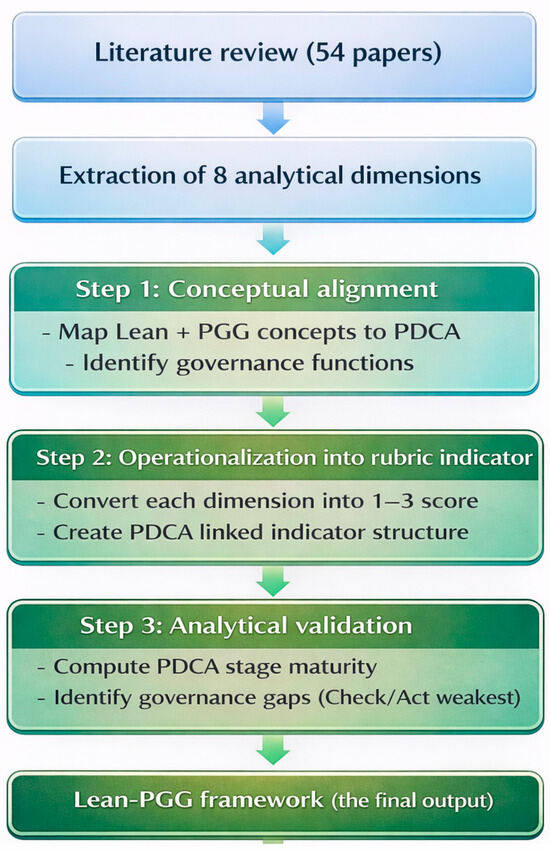
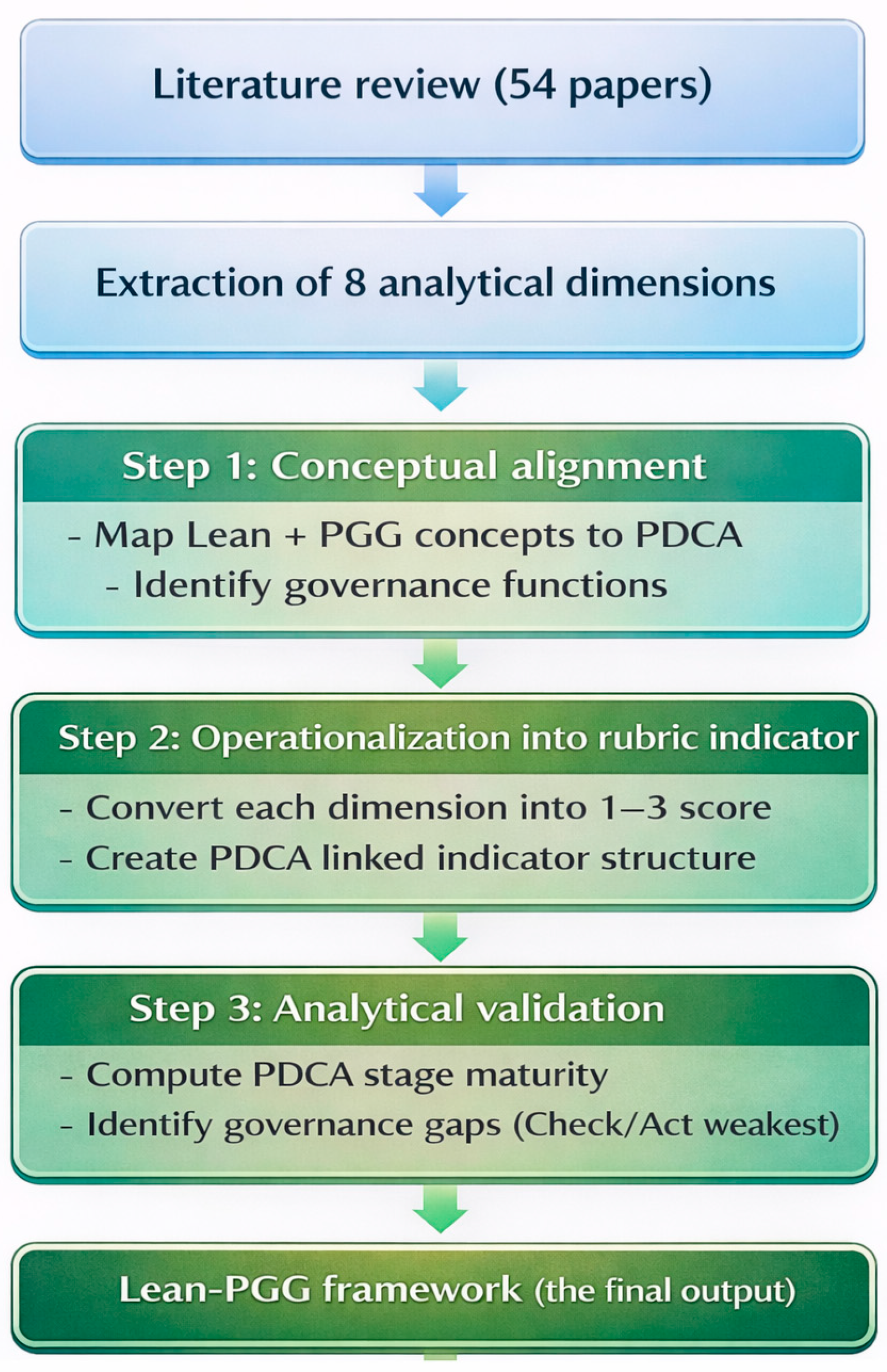
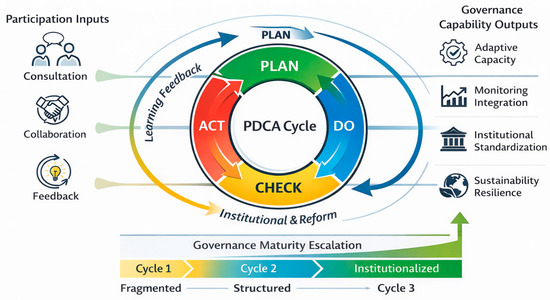
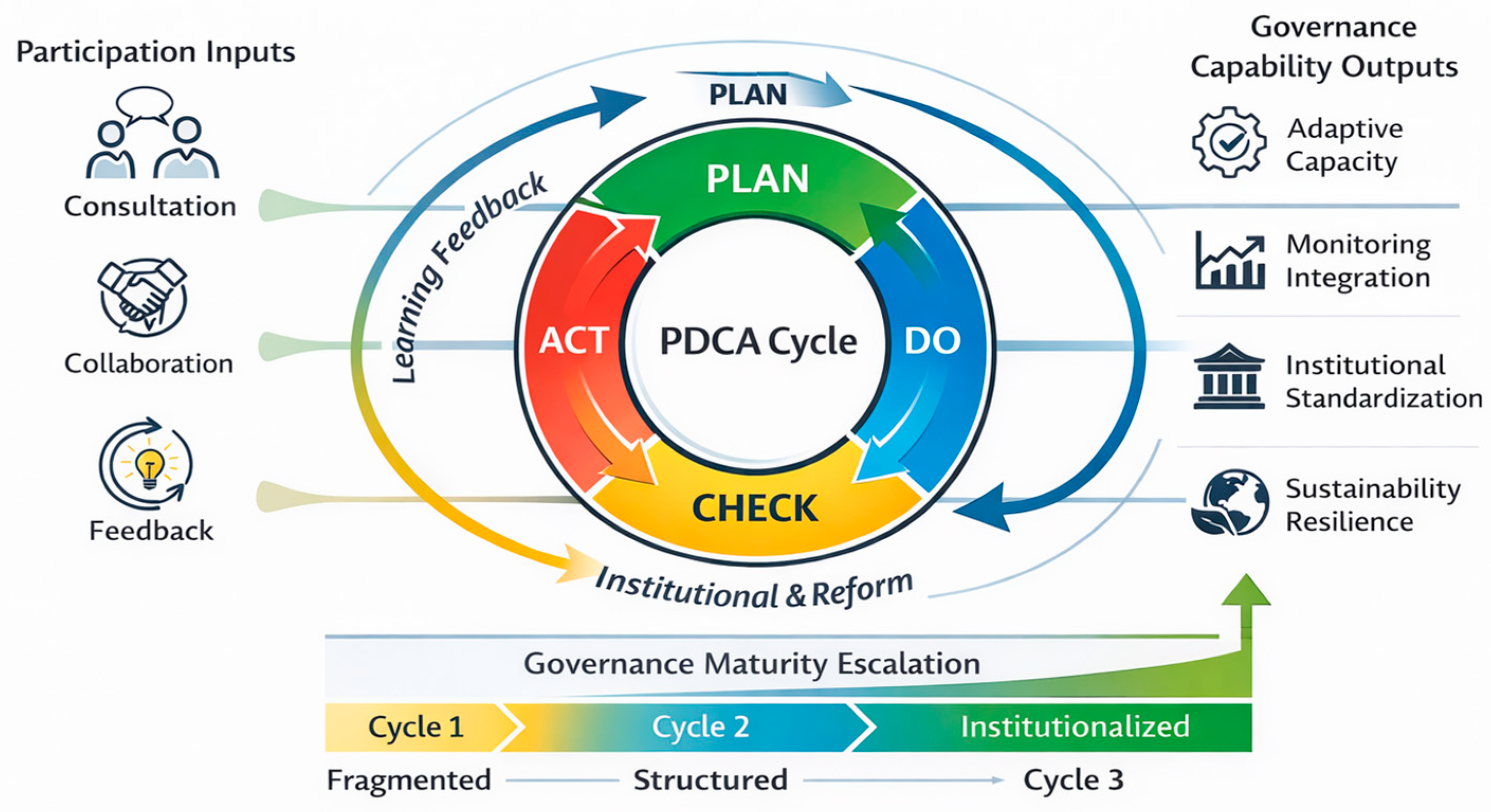
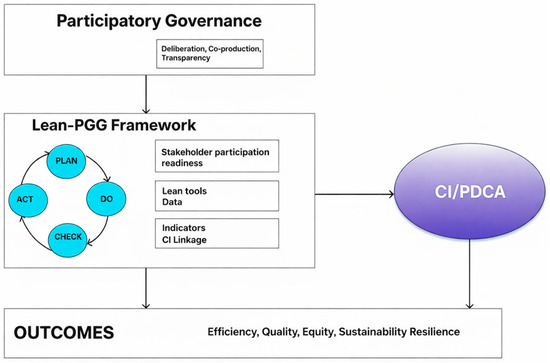
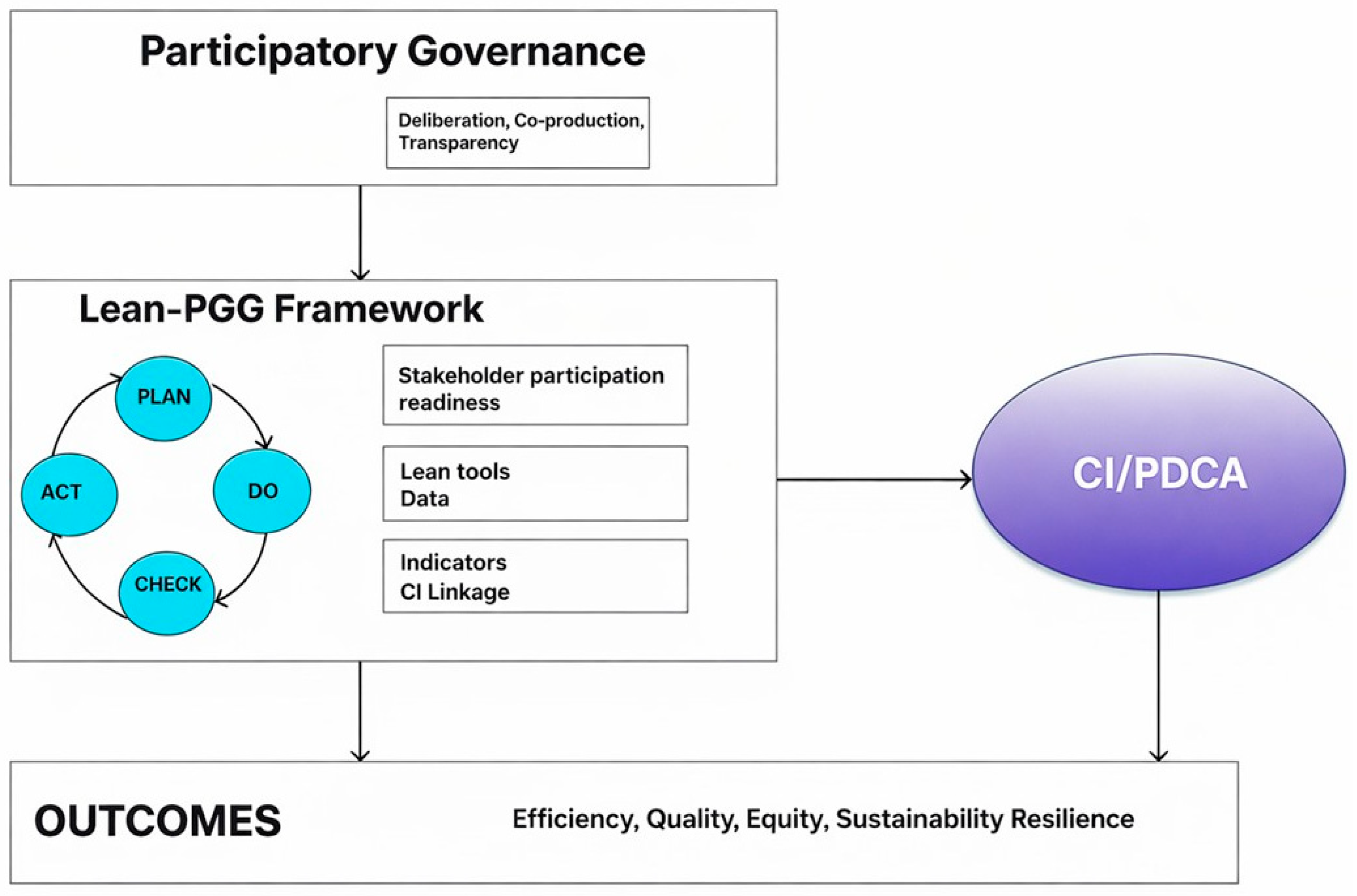
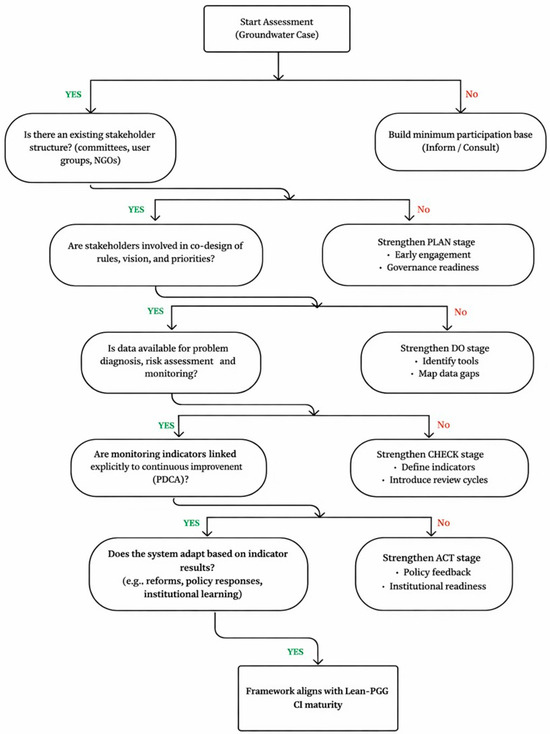
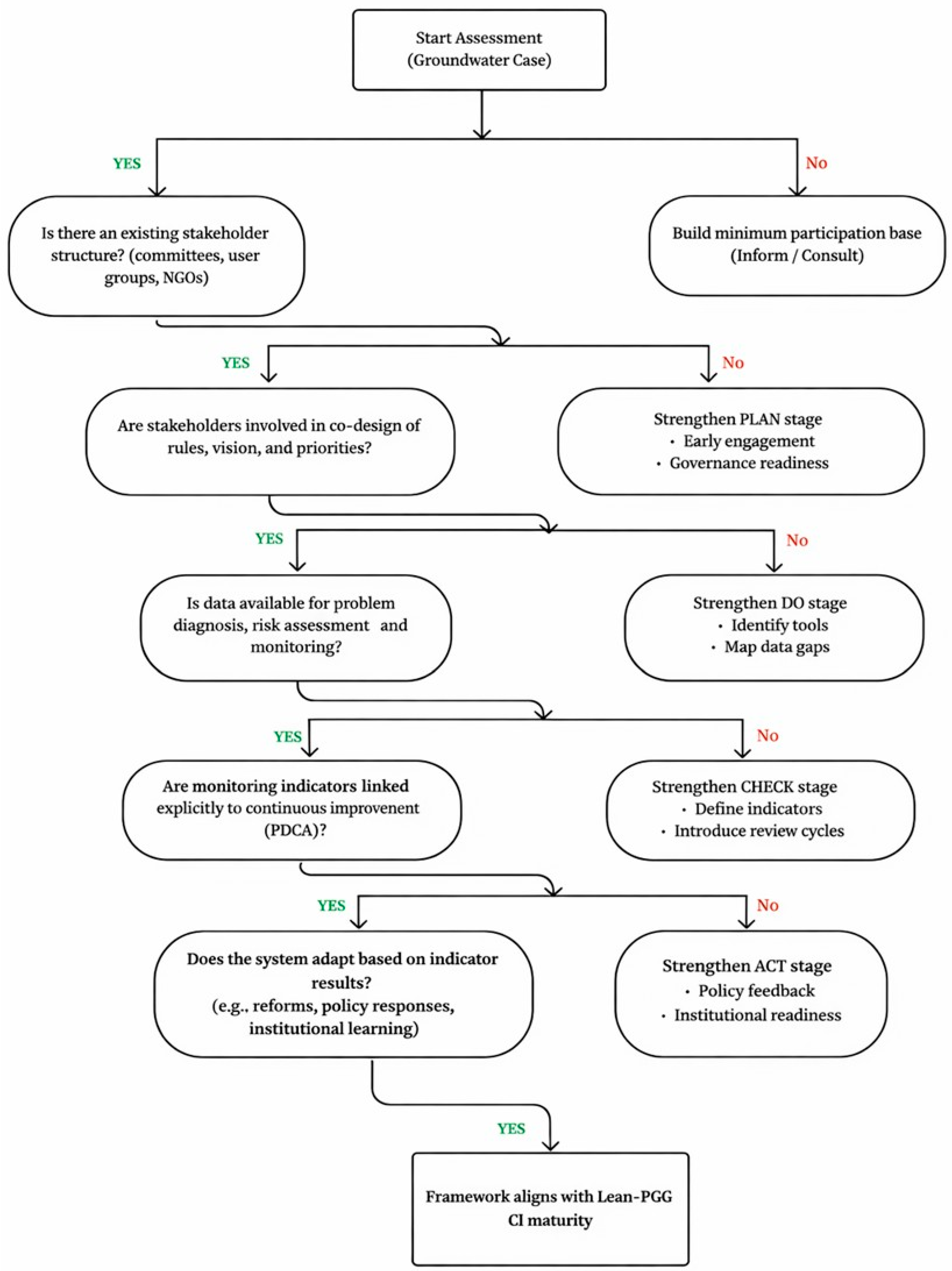
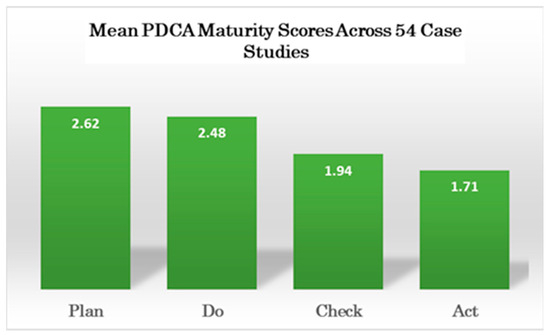
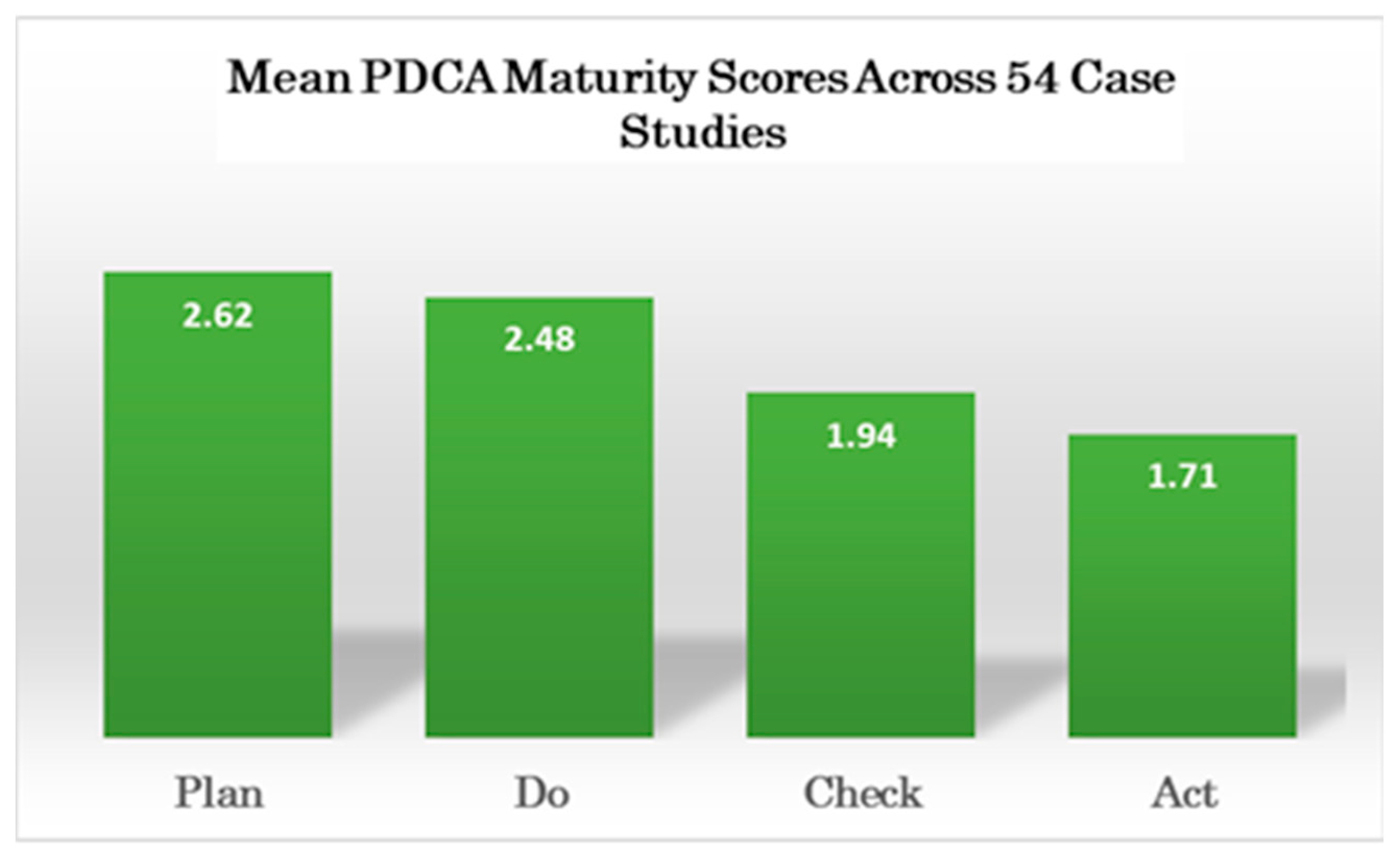

Disclaimer/Publisher’s Note: The statements, opinions and data contained in all publications are solely those of the individual author(s) and contributor(s) and not of MDPI and/or the editor(s). MDPI and/or the editor(s) disclaim responsibility for any injury to people or property resulting from any ideas, methods, instructions or products referred to in the content. |
© 2026 by the authors. Licensee MDPI, Basel, Switzerland. This article is an open access article distributed under the terms and conditions of the Creative Commons Attribution (CC BY) license.