Research on Coordinated Technology for Coal Mining Progress and Roof Water Drainage at the Working Face

Highlights
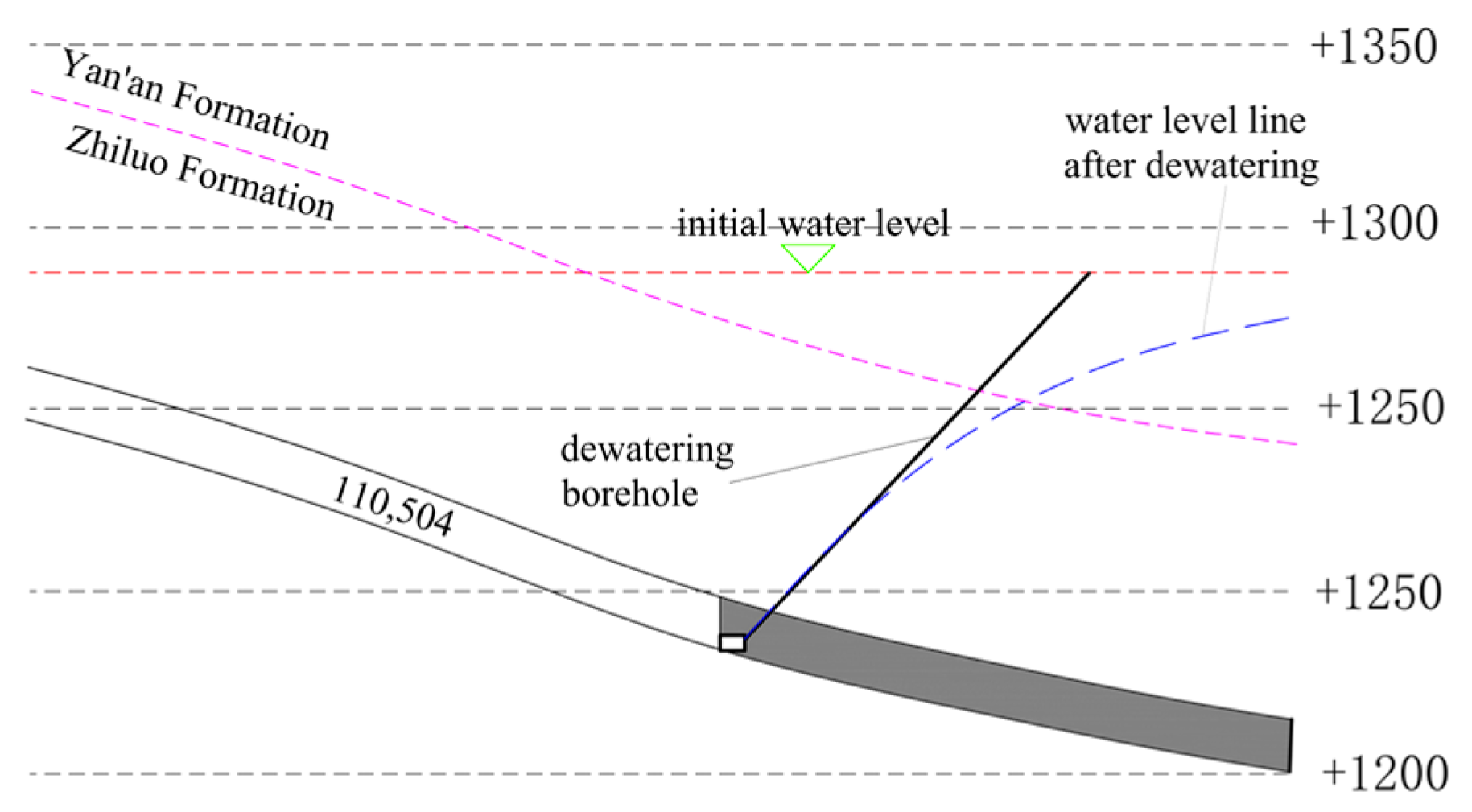
- An innovative coordinated technology of “segmented dewatering and simultane-ous mining dewatering” is proposed. By optimizing borehole layout and section division, dynamic coupling between mining and dewatering is realized, which effectively solves the problem of roof water hazard prevention and control under monocline structure.
- Key parameters are determined based on the Theis equation and on-site tests, with a stable dewatering time of 95 days and an advanced dewatering distance of 300 m, providing quantitative basis for coordinated operations.
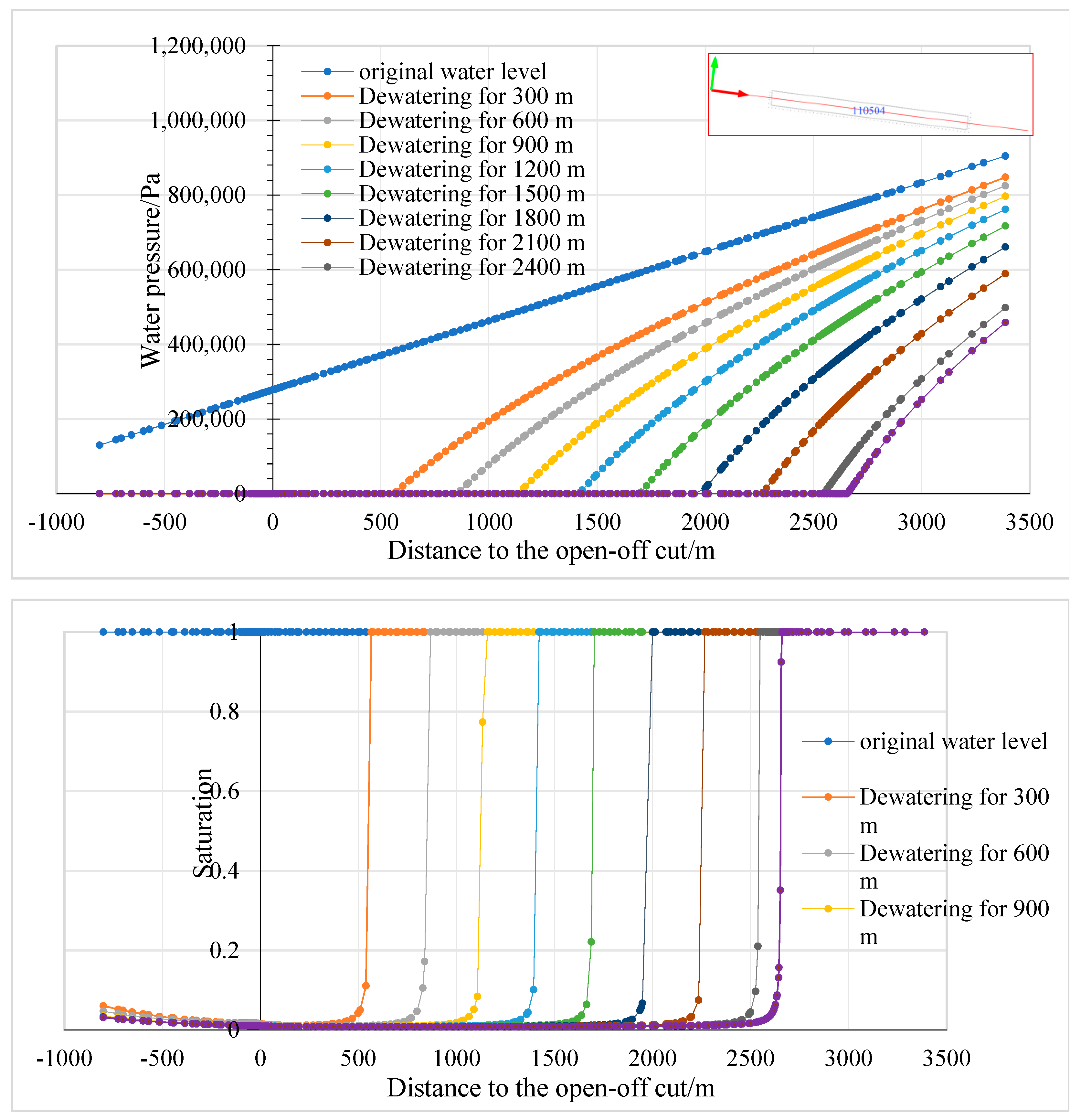
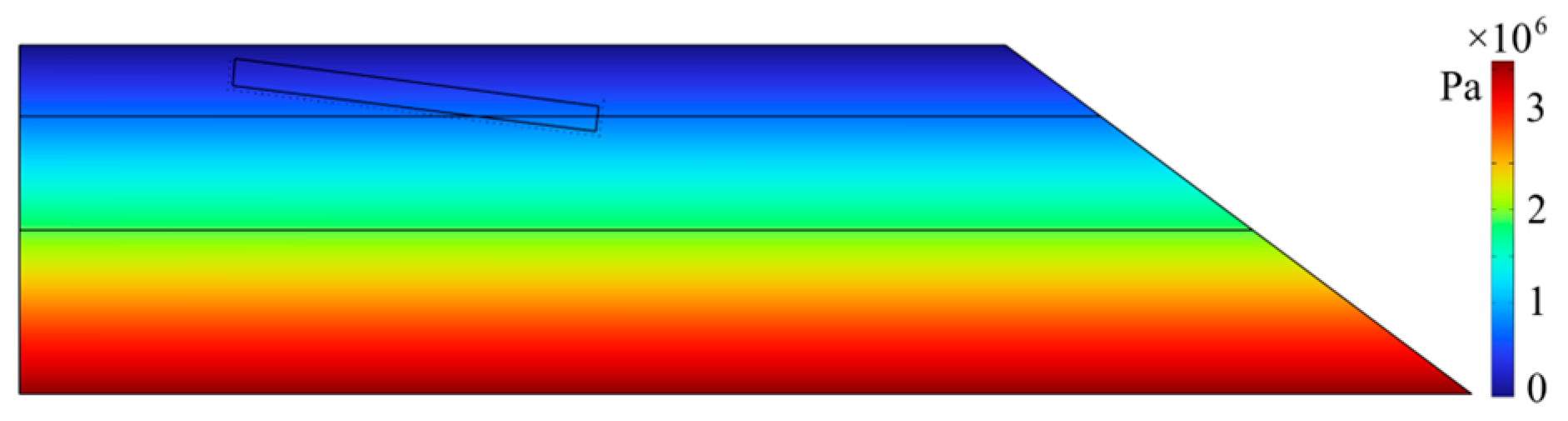
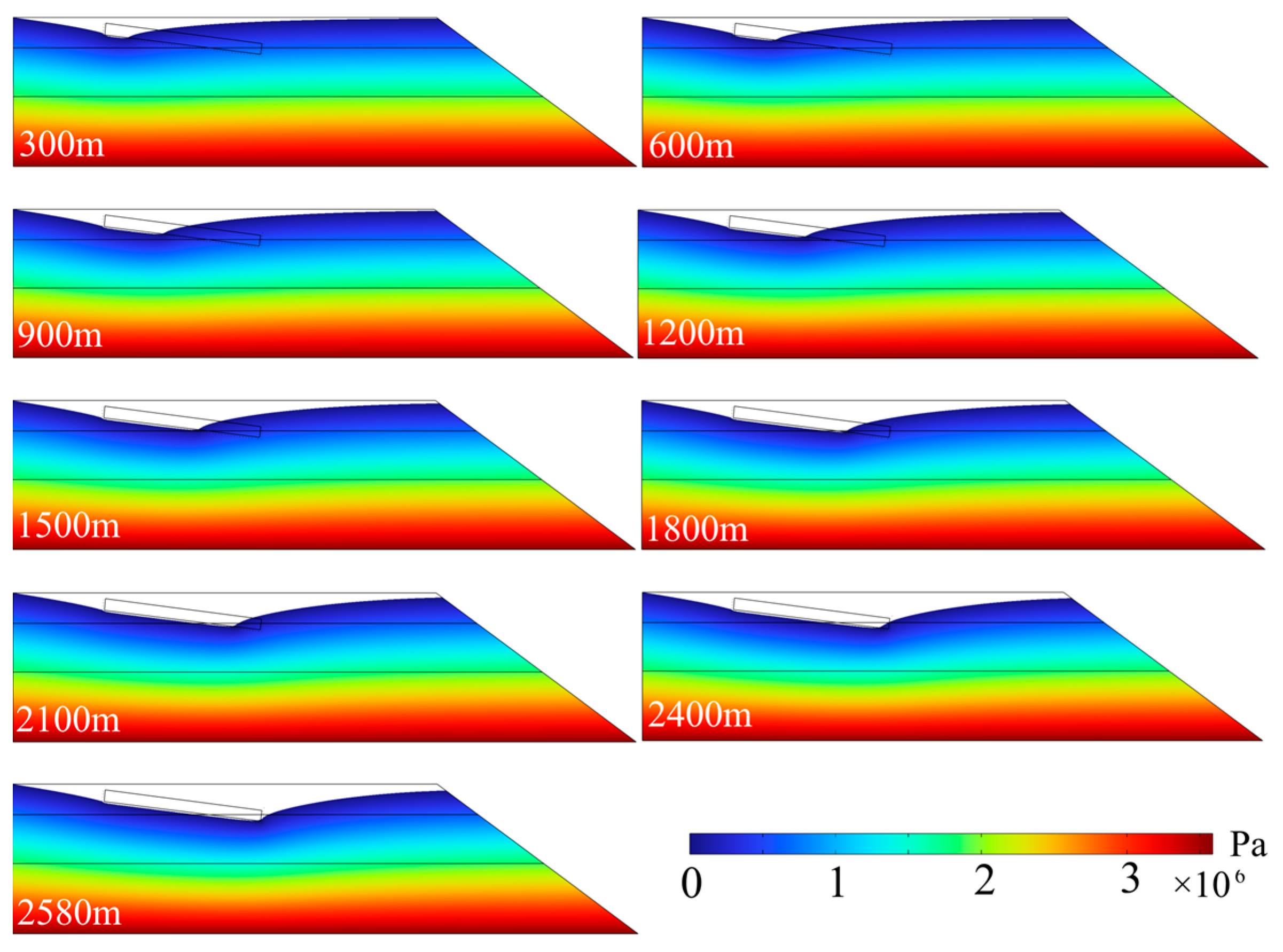
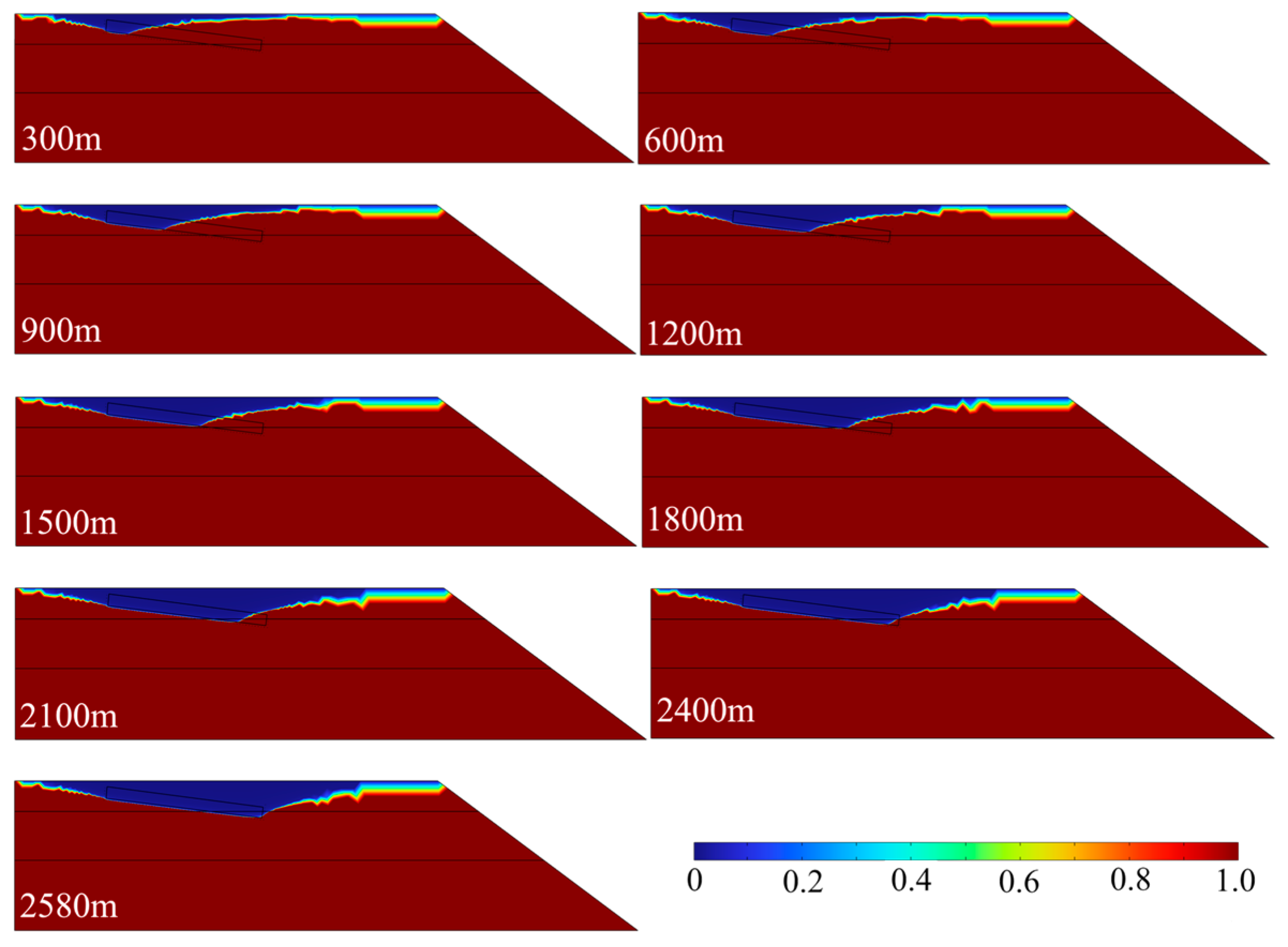
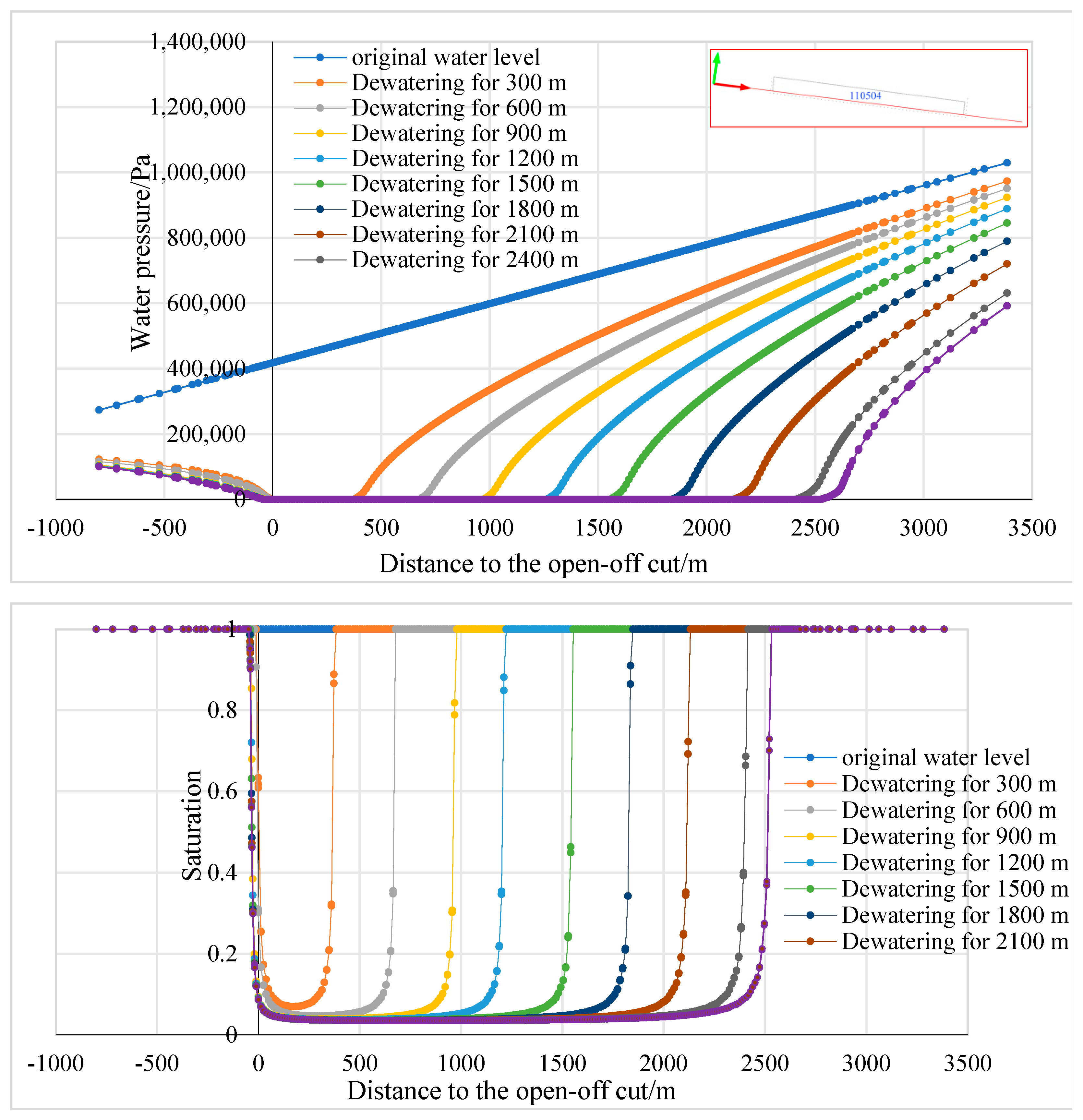
- Numerical simulation is conducted to verify the effect of coordinated dewatering, and the results show that the segmented dewatering mode can uniformly reduce the water pressure and saturation of the aquifer, ensuring safe mining.
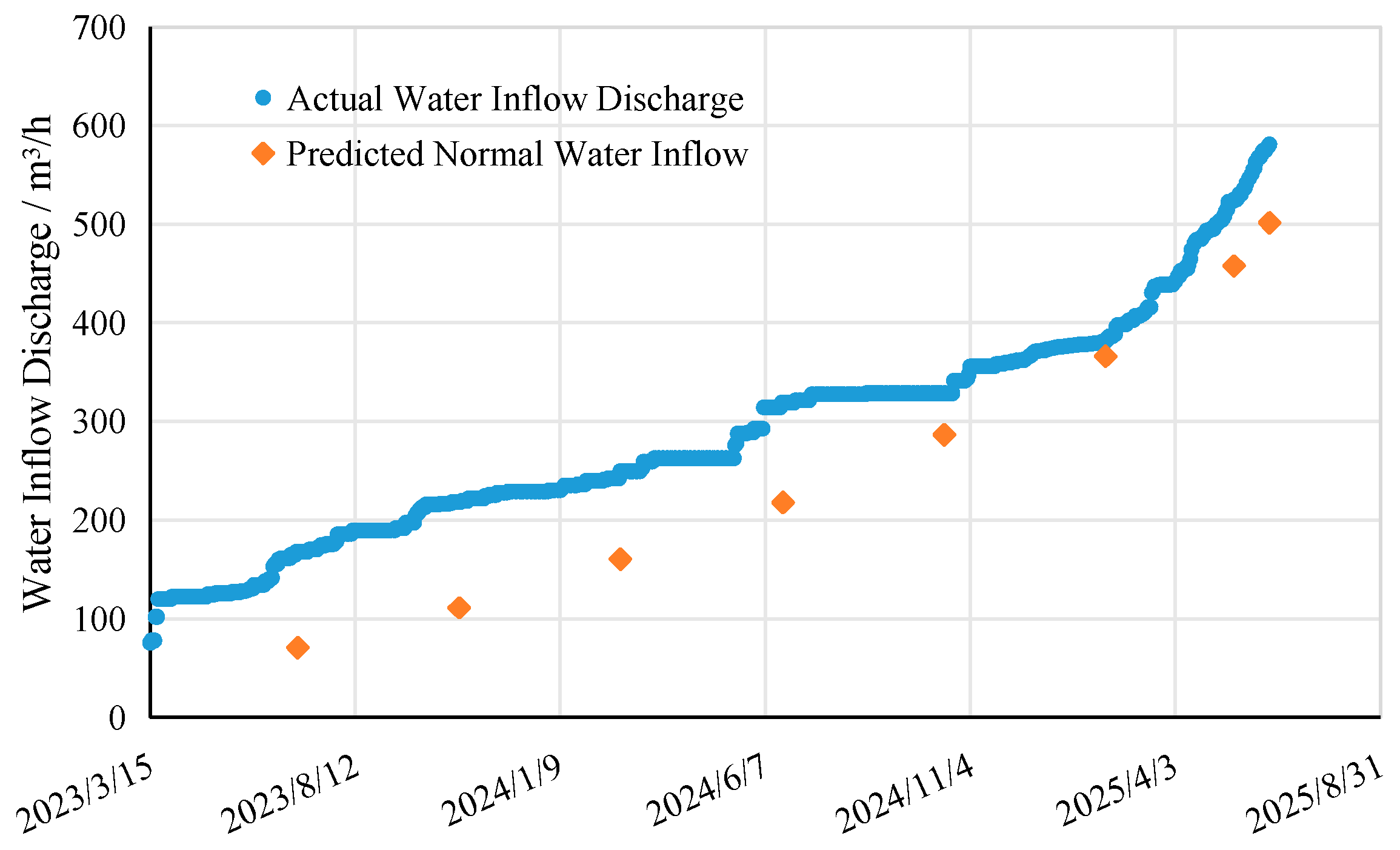
- Field application has achieved remarkable results: the average water inflow is re-duced by 283.22 m3/h, and the cumulative dewatering cost is saved by 22.756 million yuan, demonstrating prominent economic and safety benefits.
- This study provides a technical model for similar geological conditions, and has promotion value for water hazard prevention and control and green mining prac-tice of coal seams with water-bearing roofs under monocline structure.
Abstract
1. Introduction
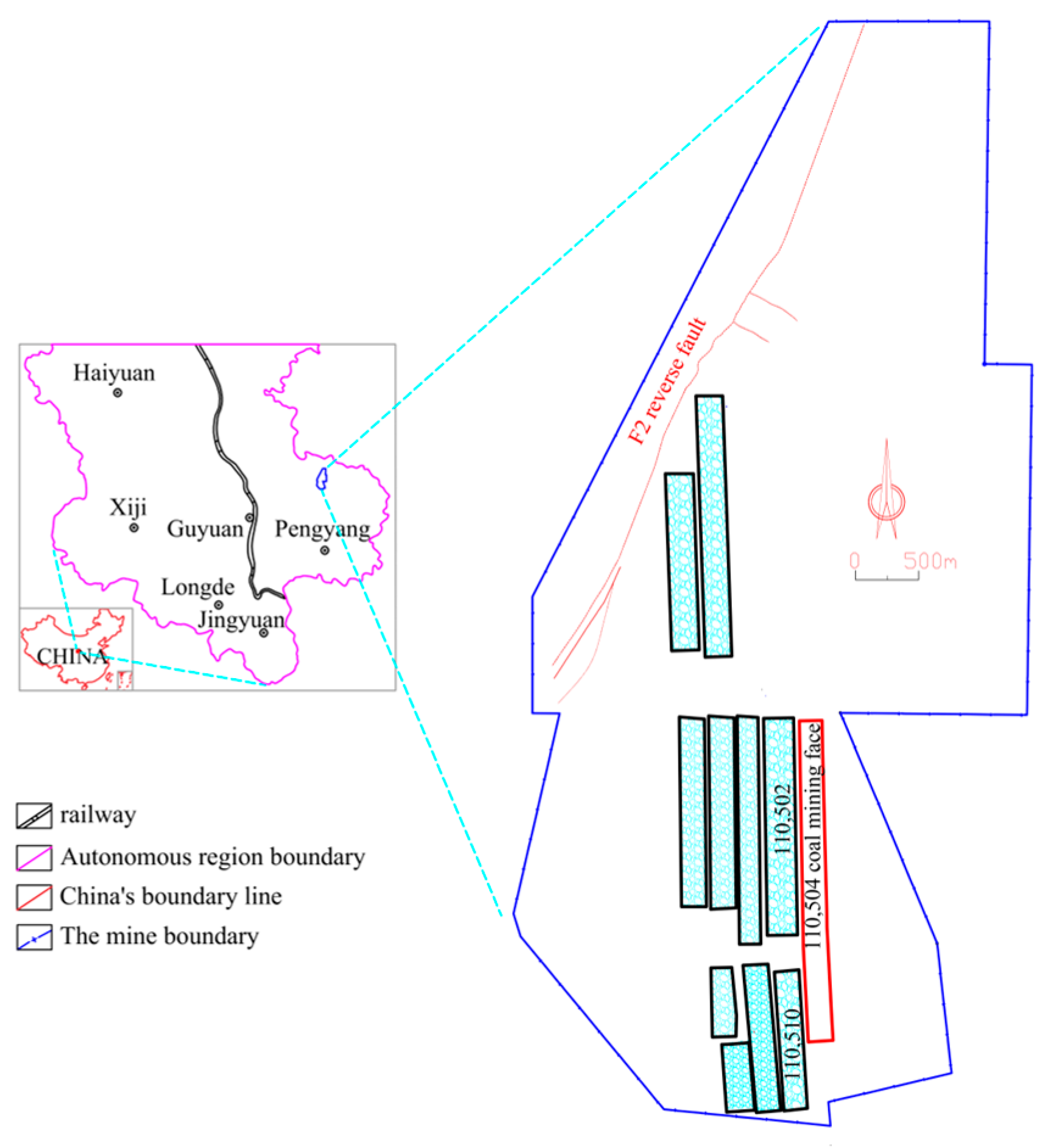
2. Geological and Hydrogeological Conditions of the 110,504 Working Face
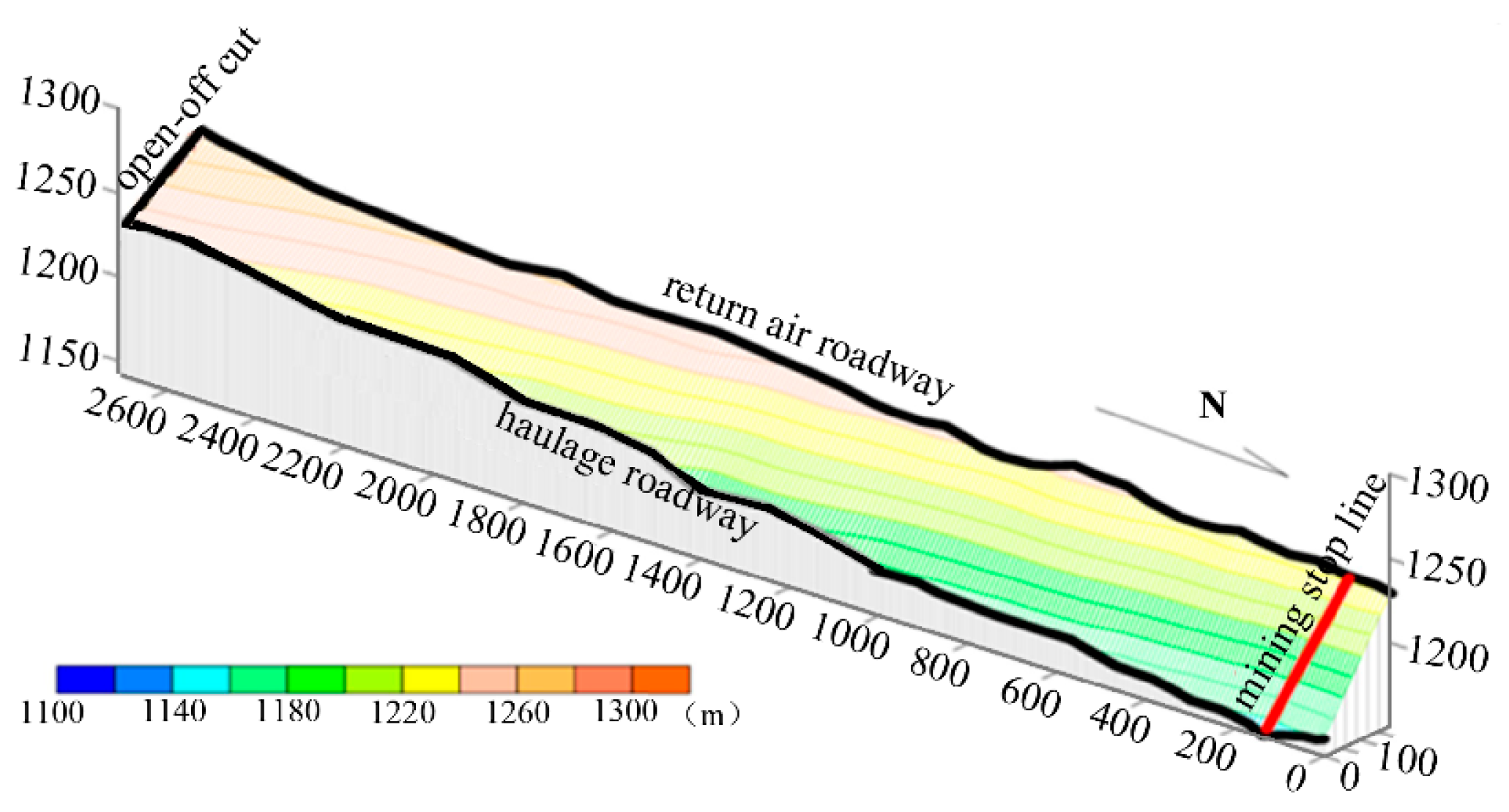
2.1. Working Face Overview
2.2. Hydrogeological Conditions
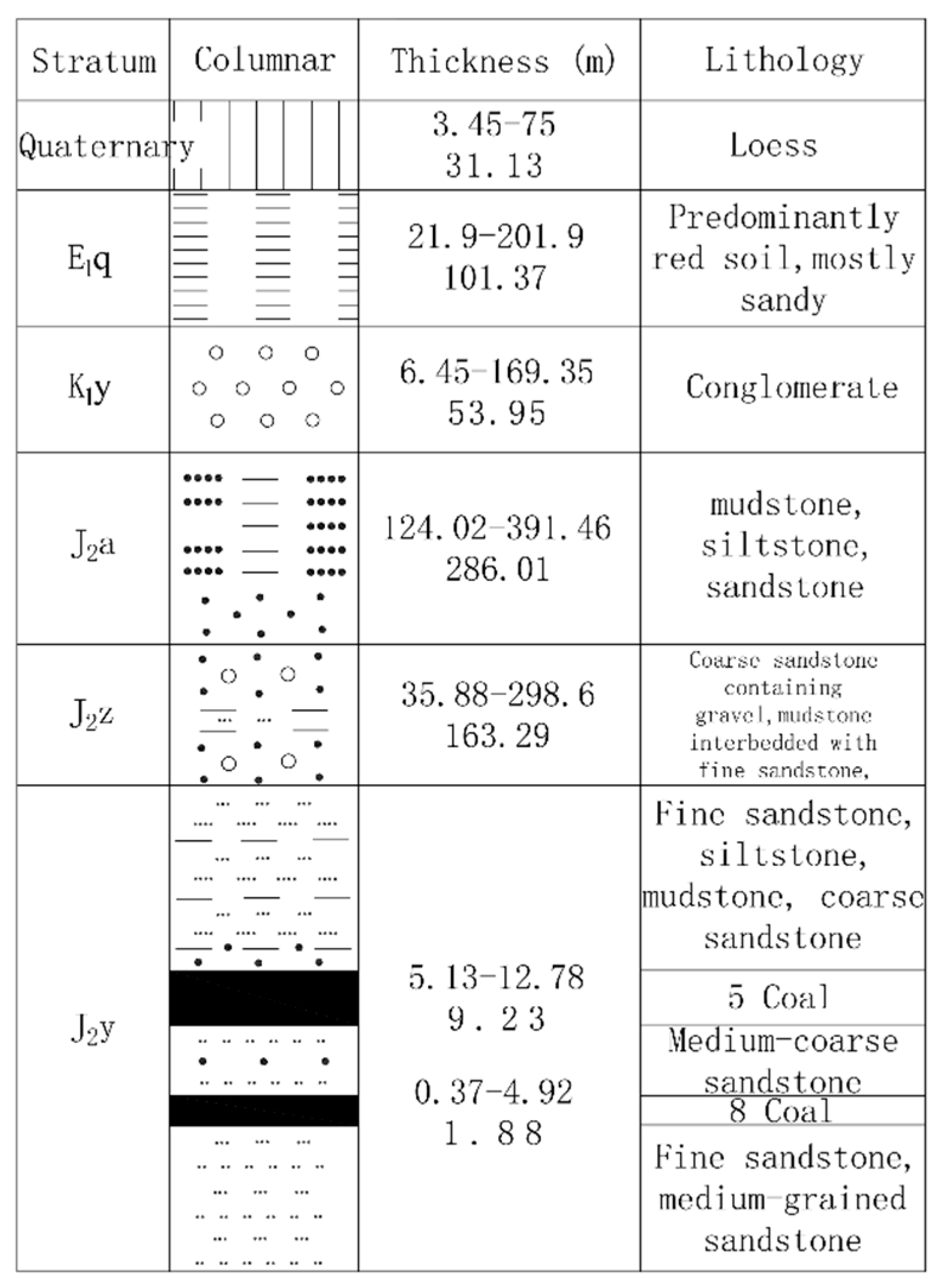
2.2.1. Aquifer Characteristics
2.2.2. Hydraulic Connection of Aquifers
2.3. Structural Conditions and Development Characteristics of Aquifer Fracture Zones
3. Cooperative Mechanism and Technical Solution for Water Extraction and Drainage
3.1. Research on Collaborative Mechanisms
3.1.1. Method for Determining Drainage Intervals
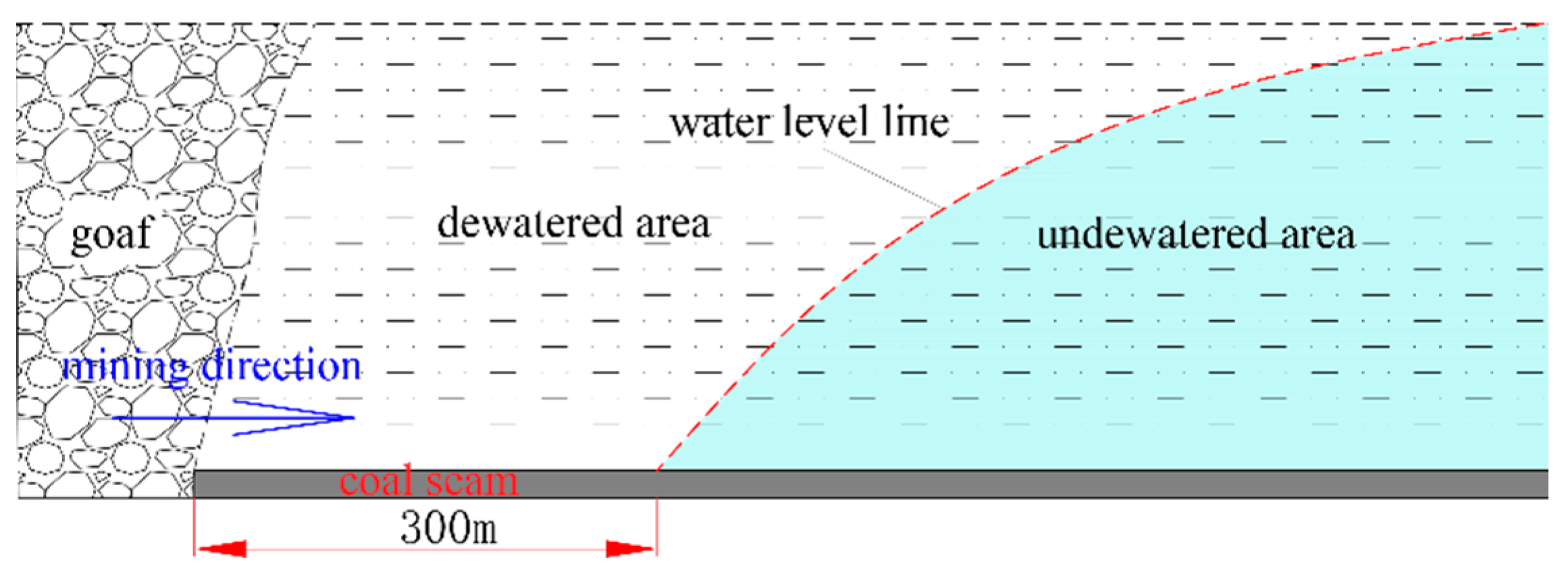
3.1.2. Determination of Advance Clearance Distance
3.2. Collaborative Technical Solution Design
3.2.1. Spacing of Water Drill Holes
3.2.2. Open-Cut Section Division
3.2.3. Collaborative Workflow
- (1)
- Based on the above segmented dewatering pattern, a coordinated operation process of “mining dewatering” is formulated, which is divided into five stages. The operation requirements and key points of each stage are as follows:
- (2)
- First-section advanced dewatering stage: A total of 95 days before the official mining of the working face, open all boreholes in the first 300 m dewatering section and start advanced dewatering operations. Simultaneously deploy real-time monitoring devices for water level, water pressure and water inflow to dynamically grasp the law of aquifer drawdown and ensure that the dewatering effect meets the preset safety standards.
- (3)
- Simultaneous mining and dewatering coordination stage: After the dewatering of the first aquifer section reaches a stable state, start the first-section mining operation of the working face. At the same time, open all boreholes in the second 300 m dewatering section to realize the synchronous operation mode of “mining the current section and dewatering the next section”. Strictly control the operation sequence to ensure that when the mining of the first section is completed, the dewatering duration of the second section is exactly 95 days, and the dewatering effect fully meets the mining safety conditions.
- (4)
- Step-by-step cycle advancement stage: Subsequent operations are carried out in a cyclic manner in accordance with the fixed mode of “mining the nth section + dewatering the (n + 1)th section” (n = 1, 2, …, 6). Always keep the working face mining operations within the safe section where effective dewatering has been completed, and eliminate water hazard risks from the source.
- (5)
- Final stage: When the working face is mined to the penultimate dewatering section, simultaneously open all boreholes in the last 480 m dewatering section to carry out dewatering operations. Ensure that when the working face advances to the final section, the aquifer in this area has completed the dewatering work for the specified duration, the dewatering effect meets the standards, and the safe and efficient advancement of the final mining operation of the working face is guaranteed.
4. Numerical Simulation Analysis of Synergistic Dilution Effects
4.1. Numerical Model Construction
4.2. Numerical Analysis Results
5. Field Application and Effect Evaluation
5.1. Field Application
5.2. Application Effect Evaluation
5.2.1. Effectiveness of Water Inflow Control
5.2.2. Economic Effectiveness Evaluation
6. Conclusions
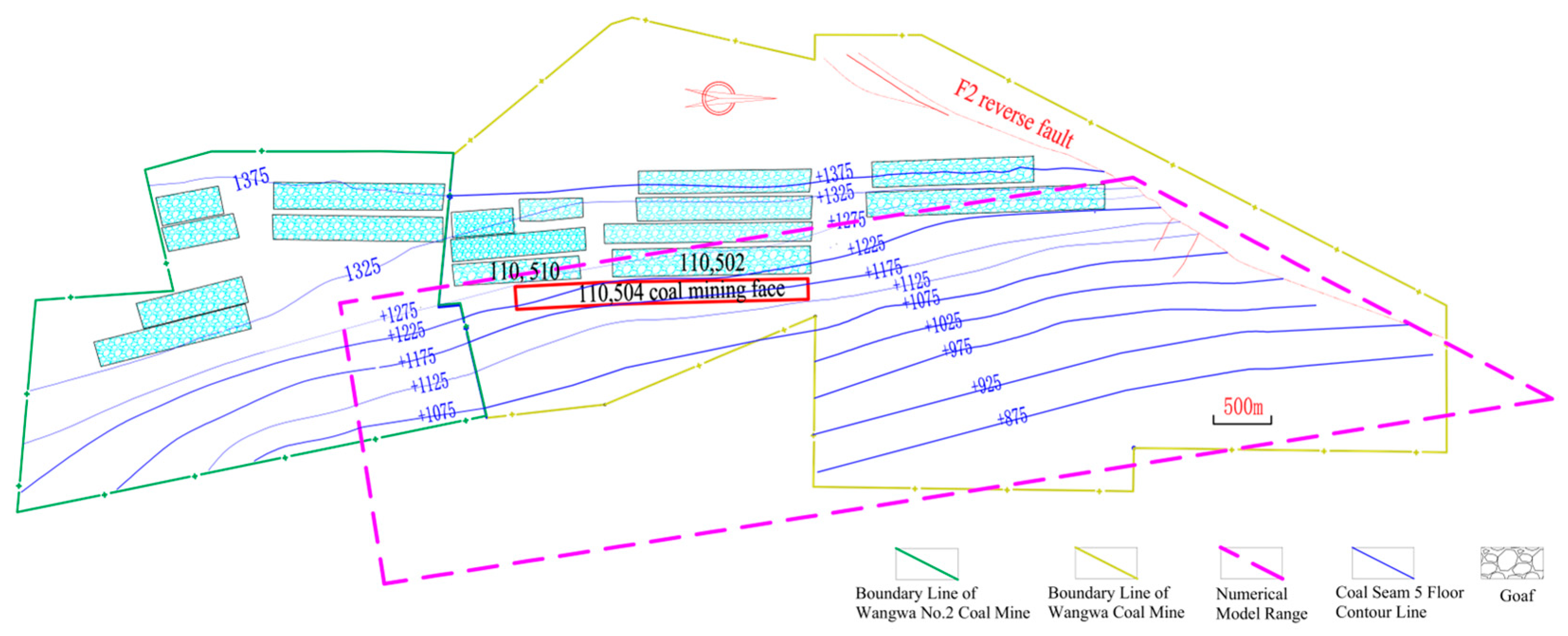
- The height of the water-conducting fracture zone at Panel 110,504 of Wangwa Coal Mine reaches 228 m, completely penetrating the Yan’an Formation and entering the sandstone aquifer of the Zhiluo Formation. The two aquifers are closely connected hydraulically, forming a unified composite water-filling source, which is the key target of roof water hazard control.
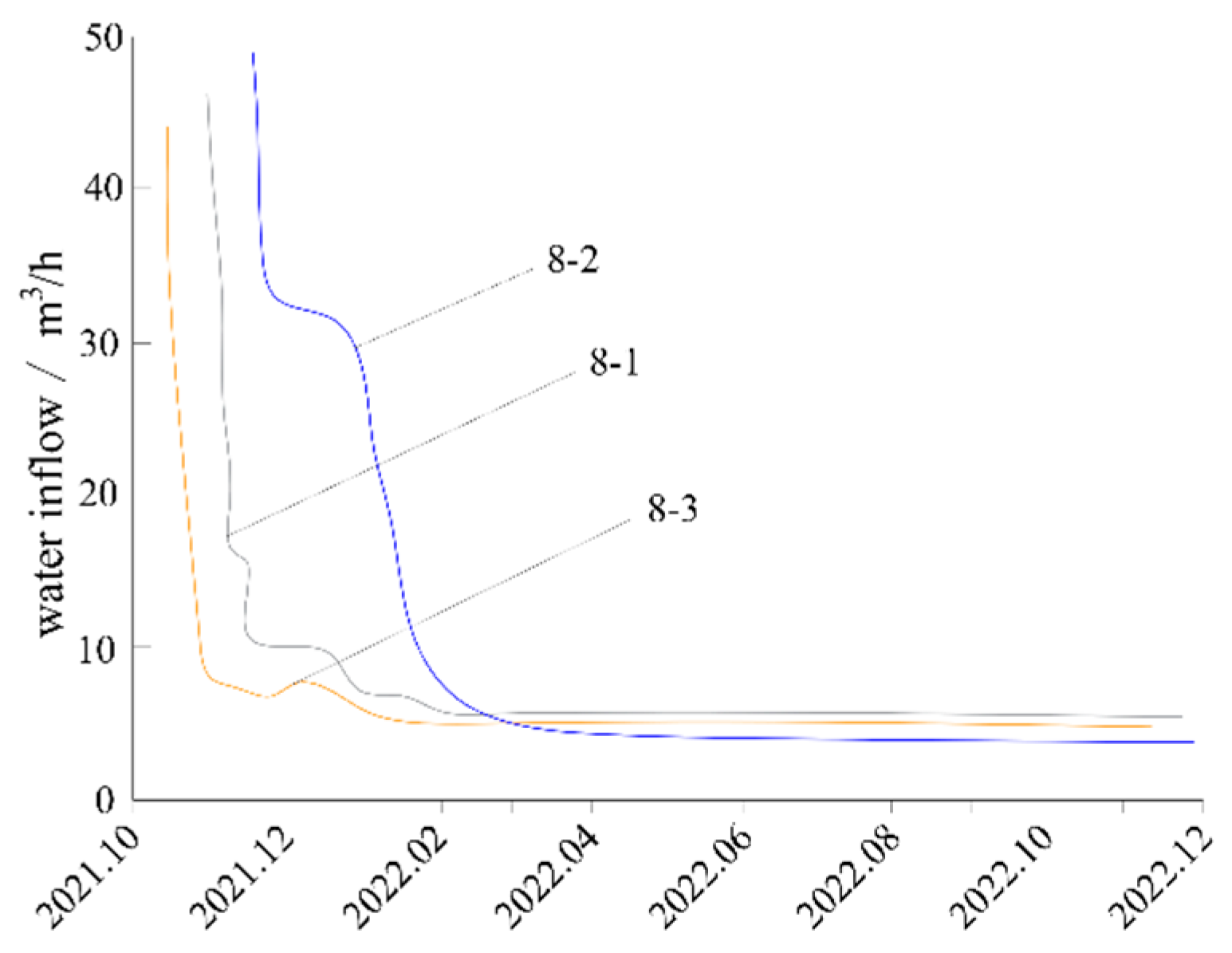
- By combining theoretical calculation using the Theis equation with verification through underground water-release tests, the stable drainage time for the roof aquifer of the panel was determined to be 95 d. Together with the designed mining speed of 3.05 m/d, the advance drainage distance was calculated as 300 m, providing key quantitative parameters for formulating the coordinated technical scheme.
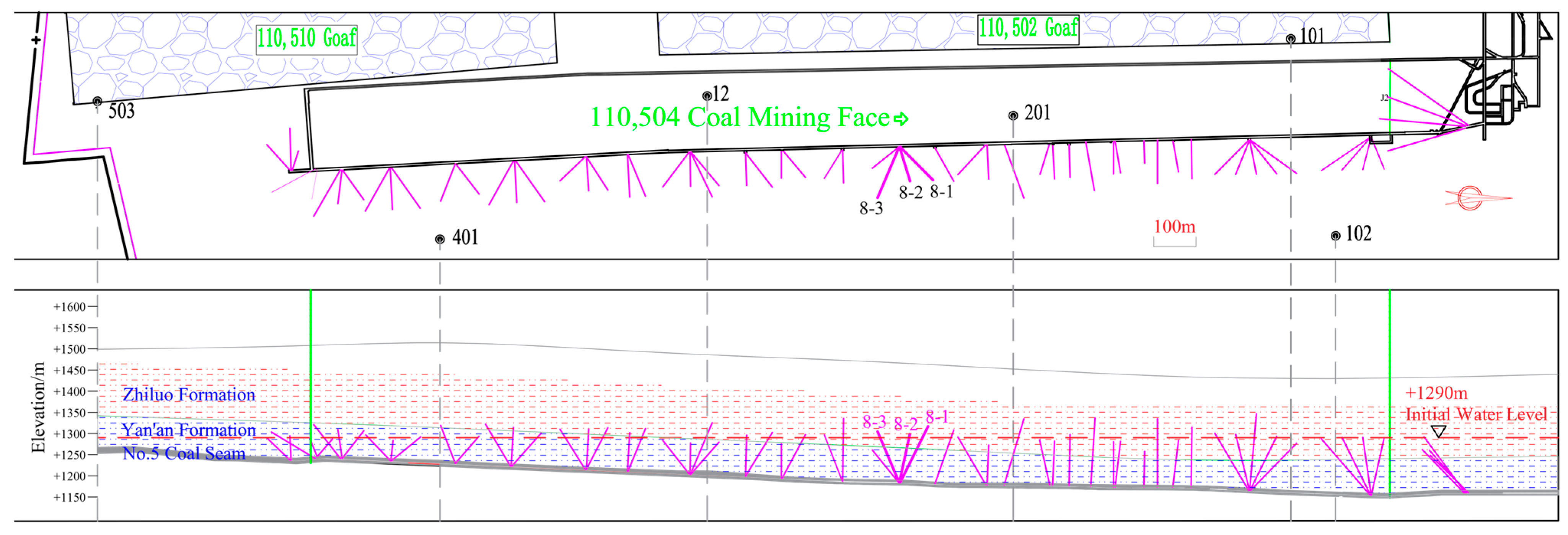
- A coordinated technical scheme of “sectional drainage while mining” was proposed, dividing the panel along the strike into nine drainage sections. Drainage boreholes were arranged along the haulage roadway, and the operation was advanced following the mode of “mining the nth section + draining the (n + 1)th section”. This achieves the goal of 300 m advance drainage for the working face, effectively avoiding ineffective drainage.
- Field application results show that this coordinated technology can reduce the average water inflow of the panel by 255.94 m3/h compared with the traditional full-panel drainage mode, saving a cumulative drainage volume of 5.1413 million m3 and reducing drainage costs by 20.5652 million CNY. No water inrush or sudden water inflow occurred during the entire panel extraction process, achieving the dual goals of safe mining and cost-effective efficiency improvement.
Author Contributions
Funding
Data Availability Statement
Acknowledgments
Conflicts of Interest
References
- Lian, H.Q.; Yan, T.; Yin, S.X.; Xu, B.; Kang, J.; Zhou, W.; Yan, G. Research on early warning of roof water inrush in working faces based on a transparent hydrogeological model. Coal Sci. Technol. 2025, 53, 259–271. [Google Scholar]
- Shi, L.; Qu, X.; Qiu, M.; Han, J.; Zhang, W. Water-inrush mechanism from the head-on working face roof in a Jurassic coal seam in the Ordos Basin. PLoS ONE 2024, 19, e0298399. [Google Scholar] [CrossRef] [PubMed]
- Cui, M.; Hou, E.; Feng, D.; Che, X.; Xie, X.; Hou, P. Identification of the water inrush source based on the deep learning model for mines in Shanxi, China. Mine Water Environ. 2025, 44, 133–148. [Google Scholar] [CrossRef]
- Zeng, Y.F.; Zhu, H.C.; Wu, Q.; Wang, H.; Guo, X.; Cui, F.; Pang, Z.; Liu, S.; Yang, W. Disaster-causing mechanism and prevention and control path of different types of coal seam roof water disasters in China. J. China Coal Soc. 2024, 49, 1539–1555. [Google Scholar]
- Zhou, Z.F.; Dong, S.N.; Wang, H.; Jin, D.; Wang, X.; Dong, Y.; Chen, S.; Li, D.; Dong, X.; Shang, H. Dynamic characteristics of water inflow from a coal mine’s roof aquifer. Mine Water Environ. 2022, 41, 764–774. [Google Scholar] [CrossRef]
- Lyv, Y.G.; Qiao, W.; Chen, W.C.; Cheng, X.; Liu, M.; Liu, Y. Quantifying the impact of coal mining on underground water in arid and semi-arid area: A case study of the New Shanghai No. 1 coal mine, Ordos Basin, China. Water 2023, 15, 1765. [Google Scholar] [CrossRef]
- Zhou, Z.F. Derivation and application of analytical model for engineering optimization of drainage well hole in coal seam roof aquifer. Saf. Coal Mines 2025, 56, 188–196. [Google Scholar]
- Wang, H.Z.; Wang, Y. Study on regional control technology for ultra-thick sandstone aquifer of Jurassic coal seam roof in Ordos coalfield. Coal Eng. 2019, 51, 96–101. [Google Scholar]
- Jin, D.W.; Liu, J.; Xu, F.; Wang, Z.; Pang, N. Method of determining of pre-drainage standard in water-decrease mining of shallow seam in Yushen mining area. J. China Coal Soc. 2021, 46, 220–229. [Google Scholar]
- Ji, Y.; Dong, D.L.; Gao, J.; Wei, Z.; Ding, J.; Hu, Z. Source discrimination of mine water inrush based on spectral data and EGA–PNN model: A case study of Huangyuchuan mine. Mine Water Environ. 2022, 41, 583–593. [Google Scholar] [CrossRef]
- Wang, H.R.; Cao, X.Y.; Bai, D.; Qian, Z. Advanced dredging measures for weakly cemented water-rich strata in gently inclined working face roof. Coal Technol. 2022, 43, 62–66. [Google Scholar]
- Yang, L.; Lei, F.C.; Hou, E.K.; Lu, B.; Feng, D.; Zhao, K. Zoned prediction of water inflow after dewatering of working face based onwaterrichness zoning of aquifer. Coal Geol. Explor. 2023, 51, 114–123. [Google Scholar]
- Zhao, C.H.; Wang, S.D. Time and space effect of water gushing from drainage borehole in coal mine and controlling drainage to prevent roof water disaster in coal seam. J. Min. Saf. Eng. 2023, 40, 313–321. [Google Scholar]
- Wang, L.C.; Xue, Y.; Zhu, L.; Cao, X.; Li, X.; Ranjith, P. Fracture evolution of granite under cyclic thermal shocks: Effects of liquid nitrogen cooling on strength, toughness, and acoustic emission characteristics. Therm. Sci. Eng. Prog. 2026, 70, 104507. [Google Scholar] [CrossRef]
- Zhang, Y.X.; Tu, S.H.; Bai, Q.S.; Li, J. Overburden fracture evolution laws and water-controlling technologies in mining very thick coal seam under water-rich roof. Int. J. Min. Sci. Technol. 2013, 23, 693–700. [Google Scholar] [CrossRef]
- Zeng, Y.F.; Meng, S.H.; Lv, Y.; Wu, Q.; Hua, Z.; Yu, C.; Pang, K.; Cheng, Y. Advanced drainage technology based on multi-objective constraint of mine safety and water resources protection. J. China Coal Soc. 2022, 47, 3091–3100. [Google Scholar]
- Hu, W.Y.; Ji, Y.D.; Huang, H. Mine water inflow modes and scientific design of drainage boreholes in roof confined aquifer of coal seam. Coal Geol. Explor. 2021, 49, 139–146. [Google Scholar]
- Guo, W.B.; Bai, E.H.; Zhang, P.; Hou, J.; Zhang, Y.; Li, M. Safe and green mining of thick coal seam under Neogene aquifer and clean utilization of water resources. Coal Sci. Technol. 2022, 50, 30–37. [Google Scholar]
- Bai, E.H.; Guo, W.B.; Tan, Y.; Wu, D.; Zhang, Y.; Wen, P.; Ma, Z. Green coal mining and water clean utilization under Neogene aquifer in Zhaojiazhai coalmine of central China. J. Clean. Prod. 2022, 368, 133134. [Google Scholar] [CrossRef]









| Aquifer | Permeability Coefficient (m/d) | Transmissivity (m2/d) | Storage Coefficient | Specific Yield | Unit Water Inflow (L/(s·m)) | Water-Bearing Capacity |
|---|---|---|---|---|---|---|
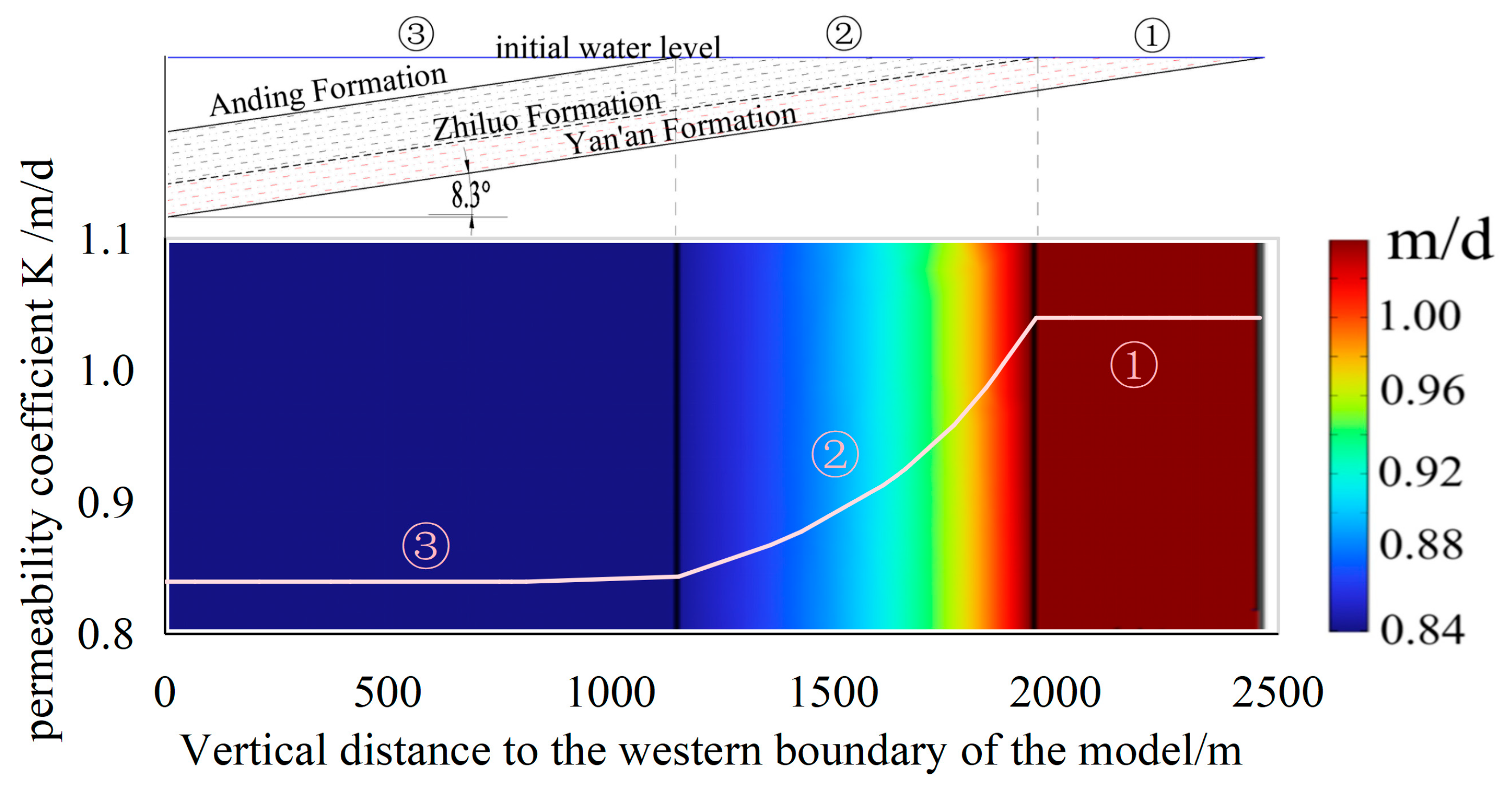
| Yan’an Fm | 0.329~1.75 | 12.0~31.5 | 2.06~2.87 × 10⁻⁴ | 0.065~0.123 | 0.13 | moderate to strong |
| Zhiluo Fm | 0.48~0.951 | 18.5~36.6 | 1.62 × 10⁻⁴ | 0.166 | 0.167 | moderate |
| Serial Number of Dewatering Section | Total Effective Span (m) | Total Water Inflow of Goaf and Dewatering Boreholes (m3/h) | Reduced Water Inflow Compared with Traditional Mode (m3/h) |
|---|---|---|---|
| 1 | 300 | 38.22 | 463.31 |
| 2 | 600 | 70.64 | 430.89 |
| 3 | 900 | 111.09 | 390.44 |
| 4 | 1200 | 160.44 | 341.09 |
| 5 | 1500 | 217.91 | 283.62 |
| 6 | 1800 | 286.54 | 214.99 |
| 7 | 2100 | 366.08 | 135.45 |
| 8 | 2400 | 457.86 | 43.67 |
| 9 | 2580 | 501.53 | 0 |
| Mean | 245.59 | 255.94 |
Disclaimer/Publisher’s Note: The statements, opinions and data contained in all publications are solely those of the individual author(s) and contributor(s) and not of MDPI and/or the editor(s). MDPI and/or the editor(s) disclaim responsibility for any injury to people or property resulting from any ideas, methods, instructions or products referred to in the content. |
© 2026 by the authors. Licensee MDPI, Basel, Switzerland. This article is an open access article distributed under the terms and conditions of the Creative Commons Attribution (CC BY) license.
Share and Cite
Qian, Z.; Lu, C.; Cao, X.; Wu, X.; Zheng, H. Research on Coordinated Technology for Coal Mining Progress and Roof Water Drainage at the Working Face. Water 2026, 18, 664. https://doi.org/10.3390/w18060664
Qian Z, Lu C, Cao X, Wu X, Zheng H. Research on Coordinated Technology for Coal Mining Progress and Roof Water Drainage at the Working Face. Water. 2026; 18(6):664. https://doi.org/10.3390/w18060664
Chicago/Turabian StyleQian, Ziwei, Cunjin Lu, Xiaoyuan Cao, Xianshuai Wu, and Haobo Zheng. 2026. "Research on Coordinated Technology for Coal Mining Progress and Roof Water Drainage at the Working Face" Water 18, no. 6: 664. https://doi.org/10.3390/w18060664
APA StyleQian, Z., Lu, C., Cao, X., Wu, X., & Zheng, H. (2026). Research on Coordinated Technology for Coal Mining Progress and Roof Water Drainage at the Working Face. Water, 18(6), 664. https://doi.org/10.3390/w18060664