Article

Thermophilic Anaerobic Fermentation of Sludge: Effect of Zero-Valent Iron (ZVI) in Methane Production
1
State Key Lab of Urban Water Resource and Environment, School of Civil and Environmental Engineering, Harbin Institute of Technology (Shenzhen), Shenzhen 518055, China
2
Shenzhen Engineering Laboratory of Microalgal Bioenergy, Harbin Institute of Technology (Shenzhen), Shenzhen 518055, China
*
Author to whom correspondence should be addressed.
Water 2026, 18(6), 654; https://doi.org/10.3390/w18060654
Submission received: 4 February 2026 / Revised: 4 March 2026 / Accepted: 6 March 2026 / Published: 10 March 2026

Abstract

In this study, the impact of zero-valent iron (ZVI) on methane production during sludge thermophilic anaerobic fermentation was investigated. The results showed that ZVI addition significantly enhanced cumulative methane production, with an optimum concentration of 5 g/L increasing the biochemical methane potential by 51.4% compared to the control. ZVI primarily promoted the acidogenesis and methanogenesis stages rather than hydrolysis, as indicated by the enhanced production of short-chain fatty acids and increased activities of key enzymes. Specifically, the activity of the methanogenic enzyme F420 increased by 28.09%, which contributed to a higher methane yield. Moreover, the synergistic effect of ZVI and its decomposition products (Fe2+ > Fe3+) facilitated a more reduced environment. Furthermore, ZVI addition enriched acetate-utilizing methanogens, i.e., Methanosarcina, which helps rapidly degrade organic acids, thereby stabilizing the fermentation process. These findings demonstrated the potential of ZVI to improve methane recovery and process stability in thermophilic anaerobic fermentation systems.

1. Introduction

Sludge management poses a major operational and financial challenge for wastewater treatment plants (WWTPs), with costs for its treatment and disposal often accounting for 40–60% of the total budget [1]. The continuous increase in sludge production drives an urgent need for strategies that not only reduce sludge volume but also recover valuable resources to offset processing costs. Anaerobic fermentation serves this purpose by stabilizing sludge and producing methane, which can be utilized as fuel or as a feedstock for hydrogen production, thereby improving the economic sustainability of WWTPs [2,3]. To improve the efficiency of anaerobic fermentation, various pretreatments, including chemical [4], thermal [5], and mechanical [6] methods, have been investigated.
Recent studies have shown that adding zero-valent iron (ZVI), a cost-effective material with strong reducibility, to anaerobic fermentation can improve process stability and methane production under mesophilic conditions [7]. ZVI serves as a reducing agent, lowers the system oxidation–reduction potential, and can act as an electron donor for methanogens via hydrogen released from its decomposition [8]. Suaon et al. [9] reported that adding both nano-ZVI (nZVI) and iron powder enhanced methane production in an anaerobic fermentation system maintained at 37 ± 1 °C. Shi et al. [10] found that ZVI composite carriers may accelerate the symbiotic production of short-chain fatty acids (SCFAs) and methane during the anaerobic hydrolysis acidification of dairy wastewater. Cheng et al. [11] added waste rusted iron filings to a mixture of food wastes and urban sludge during anaerobic fermentation, and the addition can effectively promote the methanogenic activity of the system. Men et al. [12] demonstrated that ZVI effectively facilitated the liquid biomass separated from cow manure, but the solid biomass was inhibited, indicating that ZVI enhanced the easily biodegradable organics but inhibited the biodegradation of lignocellulose. While Zhou et al. [13] found that nZVI significantly an increased methane production during anaerobic digestion of high solid sludge, which was attributed to rapid hydrogen evolution from nZVI corrosion, reducing hydrogen partial pressure and facilitating propionic acid conversion. Furthermore, recent mechanistic insights indicated that ZVI reinforces microbial electron bifurcation and promotes direct interspecies electron transfer (DIET) between syntrophic partners, providing a more efficient pathway for electron flow within the microbial community [14].
Thermophilic anaerobic fermentation operates at elevated temperatures, typically 50–60 °C. Compared with mesophilic systems, the rate of sludge hydrolysis and acidification is significantly accelerated [5]. However, methanogenic bacteria grow more slowly, unable to rapidly degrade organic acids, decreasing the system pH, further inhibiting methanogen activity, and destabilizing the system. Consequently, the methanogenesis stage is also considered the rate-limiting step in thermophilic anaerobic fermentation [15]. Li et al. [16] found that in mesophilic anaerobic fermentation systems, the hydrolysis and acidification stages were rate-limiting steps, while the acetogenesis process was the rate-limiting step in thermophilic anaerobic fermentation systems. Chen et al. [17] investigated that the addition of nano-ZVI, micron-ZVI, and iron scrap enhanced the cumulative methane yield under both mesophilic and thermophilic anaerobic digestion of sludge. Despite these promising findings, the role of ZVI on methane production in thermophilic anaerobic fermentation remains poorly understood.
This study aims to evaluate the effect of ZVI in promoting methane production during thermophilic anaerobic fermentation. Firstly, the effect of ZVI addition at different concentrations (0–20 g/L) on methane production was evaluated. Then, the effects of ZVI on different stages of anaerobic digestion were investigated through batch experiments. Finally, the key enzyme activity, the contributions of ZVI decomposition products, and the archaeal community structure were explored for further mechanistic insight. The findings of this study may provide new perspectives for enhancing methane recovery in thermophilic anaerobic fermentation systems, thereby improving the economic feasibility of sludge treatment.

2. Material and Methods

2.1. Sludge Source and Properties

The sludge was obtained from the secondary sedimentation tank of a full-scale municipal WWTP in Shenzhen, China. The treatment capacity of the WWTP is 736,000 m3/d, and the pollutant discharge standard is set at the first-level A standard using the activated sludge method. The sample was filtered by a stainless-steel mesh (2.0 mm) and naturally settled at 4 °C for 24 h. The inoculum sludge used in the biochemical methane potential (BMP) experiment was sourced from a thermophilic anaerobic digester operated in the laboratory. After undergoing thermophilic anaerobic fermentation for 30 days, it was removed and reserved as digested sludge. The main properties of the raw sludge and digested sludge are shown in Table 1.

2.2. Experimental Procedures

The experiment utilized blue-cap bottles (500 mL) as reactors, which were vertically placed in a constant-temperature thermostatic water bath shaker at 55 °C and 150 rpm to ensure thorough mixing of ZVI powder within the system (Figure 1). Each reactor was equipped with a sampling port and a gas collection port on the top. The gas collection port was connected to a gas bag for subsequent measurement. All connections were sealed to maintain strictly anaerobic conditions. Fifteen reactors were used for BMP tests, with triplicates for each condition. Based on an inoculum–substrate VSS ratio of 3:1, a total sludge volume of 360 mL was added to each bottle. Different amounts of ZVI powder were then added with concentrations of 0, 1, 5, 10, and 20 g/L (corresponding to 0, 0.056, 0.28, 0.56, and 1.12 g/g VSS). Subsequently, nitrogen purging was conducted for 5 min for anaerobic conditions. The experiment lasted for 40 days, with the following sampling frequency: daily from days 1–8, every 2 days from days 8–16, every 3 days from days 16–25, and every 4 days from days 25–40. The group without ZVI addition (0 g/L) served as the control. The cumulative methane production, pH and ORP were measured accordingly in each reactor.
To investigate the effects of ZVI and its primary decomposition products, Fe2+ and Fe3+, on the thermophilic anaerobic fermentation, a batch experiment was conducted. Four groups were established (control, ZVI, Fe2+ and Fe3+), each with three replicates. The additions of Fe2+ and Fe3+ were based on the maximum concentrations detected in the supernatant during preliminary tests (31.0 mg/L and 14.1 mg/L, respectively). Using concentrated sludge as the substrate, the fermentation was carried out under thermophilic conditions for 32 days. The cumulative methane production, VSS and VSS reduction rate were measured accordingly in each reactor.

2.3. Analytical Methods

The cumulative volumes of H2 and CH4 were calculated according to Equation (1).
V H , i = V H , i 1 + C H , i × V G , i C H , i 1 × V G , i 1
where VH,i is the cumulative volume of CH4 at the current time; VG,i is the total volume of CH4 at the current time; CH,i is the ratio of CH4 in the total gas volume at the current time. The CH4 was quantified using an Agilent 7890B gas chromatograph (GC) equipped with a thermal conductivity detector (TCD) and a 2 m stainless-steel column packed with activated carbon (60–80 mesh). Nitrogen was used as the carrier gas. The operating temperatures were set as follows: injector 60 °C, detector 110 °C, and column oven 100 °C. Before sample injection, 5–10 mL of the sampled gas was passed through the column to minimize measurement error. The CH4 concentration was determined by the external standard method based on the obtained peak area. A first-order kinetic model was used to fit the methane production potential, thereby evaluating the two parameters, hydrolysis rate (k) and biochemical methane potential (B0) [18]. This experiment employed a single-substrate model, as shown in Equation (2).
B ( t ) = B 0 × 1 e kt
where B(t) is methane production potential at time t, mL CH4/g VSS; k is the first-order kinetic rate, d−1. The degradation extent (Y0) was evaluated using B0, by Equation (3).
Y = B 0 / 380 × R   WAS  
where B0 is methane production potential at time t, mL CH4/g VSS.
TSS, VSS, and COD analyses were performed following standard methods. Soluble protein and carbohydrate content were measured via the rapid Lowry method and anthrone–sulfuric acid method, respectively. Fe2+ and Fe3+ concentrations in the supernatant were analyzed by the 1,10-phenanthroline method. 3D-EEM fluorescence spectra were measured using a luminescence spectrometry (F-4500, Hitachi, Tokyo, Japan). The EEM spectra were recorded with excitation (Ex) wavelengths from 200 to 400 nm and emission (Em) wavelengths from 250 to 500 nm, using a 2.5 nm increment for both.
Samples for archaeal community structure and key enzyme activity were collected from semi-batch thermophilic anaerobic fermenters during long-term operation. Measurements were conducted after methane production from each fermenter reached its maximum and stabilized. After collection from the long-term systems, samples were immediately frozen and stored at −80 °C. The key enzymes included protease, acetate kinase (AK), butyrate kinase (BK), [FeFe] hydrogenase ([FeFe]), CoA-transferase (CoA-), carbon monoxide dehydrogenase (CODH) and coenzyme F420 (F420). DNA was extracted using the Quant-iT PicoGreen dsDNA Assay Kit, followed by amplification with the primers 524F10extF (TGYCAGCCGCCGCGGTAA) and Arch958RmodR (YCCGGCGTTGAVTCCAATT) targeting the archaeal V4–V5 regions. Qualified DNA samples were subjected to PCR amplification and sequencing, and the data were analyzed via Illumina MiSeq sequencing.

3. Results and Discussion

3.1. Methane Production from Thermophilic Anaerobic Fermentation with Different ZVI Additions

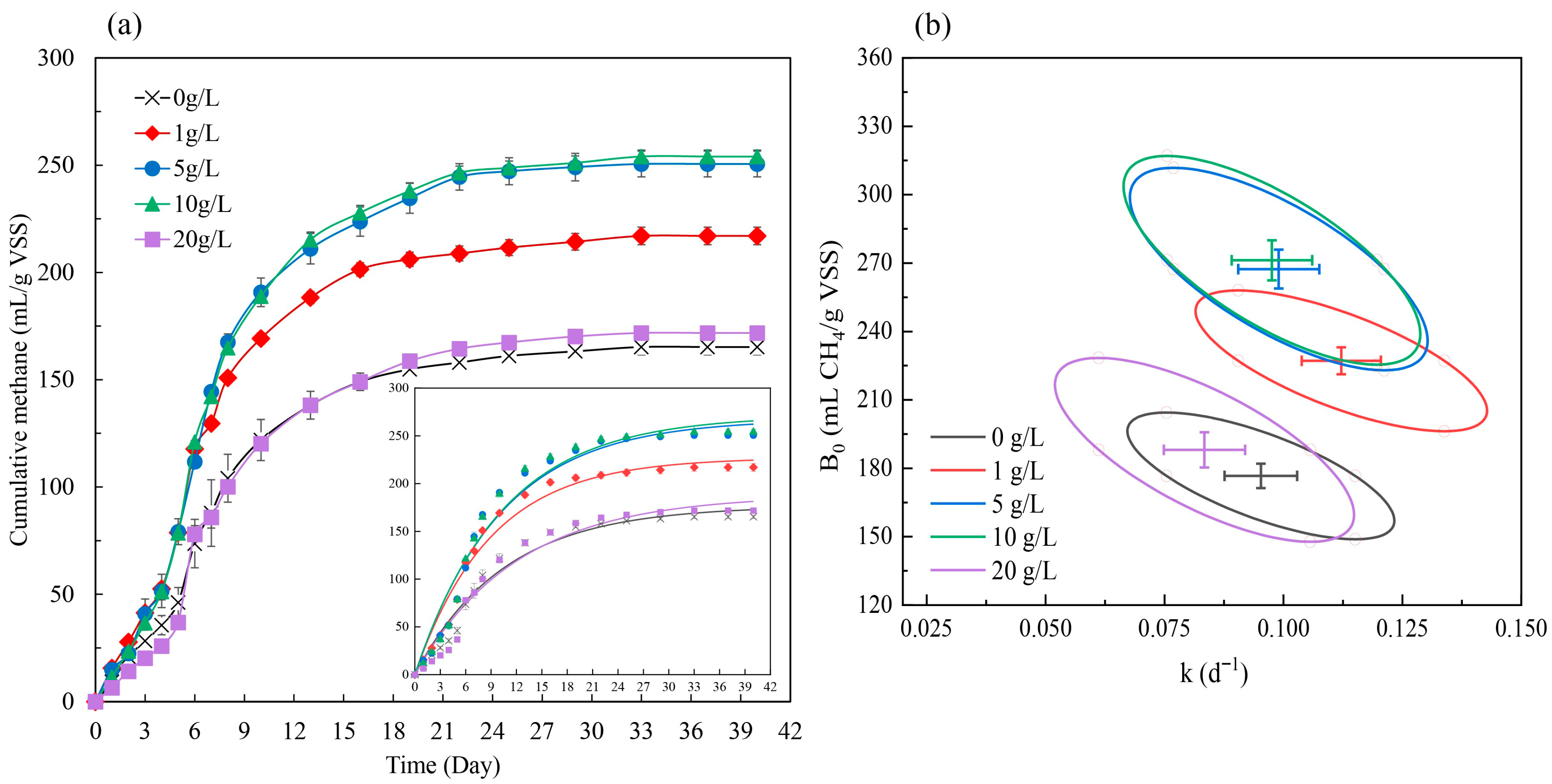
Figure 2a shows the measured and simulated cumulative methane production in various ZVI addition systems from thermophilic anaerobic fermentation. Under different ZVI concentrations, the cumulative methane production showed an increasing trend over time, with a certain lag period observed in the early stages. This may be related to the adaptation of the bacteria–archaea system to the new environment during the initial phase of the thermophilic anaerobic fermentation system [19]. At ZVI concentrations ranging from 1 g/L to 10 g/L, the total methane production increased steadily with rising ZVI concentrations. After 40 days, the methane accumulation reached maximum values of 217.02 mL/g VSS, 250.56 mL/g VSS, and 254.03 mL/g VSS for the systems with addition concentrations of 1 g/L, 5 g/L, and 10 g/L, respectively. The trends in cumulative methane production at 5 g/L and 10 g/L ZVI were similar, showing no significant difference (p > 0.05) during the 40 days. When the ZVI concentration was further increased to 20 g/L, the cumulative methane production decreased, remaining consistently lower than that observed in systems with 5 g/L and 10 g/L ZVI. This may be due to the addition of high-concentration ZVI inhibiting hydrogen and acetate production, as acetate is a key substrate involved in methane synthesis [20]. The results indicated that the addition of ZVI effectively increased the total methane production during thermophilic anaerobic fermentation. Subsequent experiments determined 5 g/L as the optimal addition.
The cumulative methane production was simulated using a one-substrate model, and the kinetic parameters, hydrolysis rate (k) and biochemical methane potential (B0) for different ZVI additions, were presented in Table 2. All ZVI concentrations achieved higher B0 than the control group, but k showed little difference. At ZVI concentrations of 1 g/L, 5 g/L, and 10 g/L, B0 increased by 28.58%, 51.36%, and 54.53%, respectively, compared to the control group, indicating that ZVI addition positively enhanced the methane production potential of anaerobic fermentation. The 95% confidence regions for k and B0 were shown in Figure 2b. When the ZVI addition ranged from 1 g/L to 10 g/L, the methane production potential gradually increased with higher ZVI concentrations. Notably, at 5 g/L and 10 g/L ZVI, B0 were nearly identical, indicating that these two concentrations yielded almost equivalent methane production effects. However, different ZVI concentrations had little effect on the hydrolysis coefficient of the system, indicating that ZVI exhibits minimal influence on the hydrolysis process in thermophilic anaerobic fermentation. This is consistent with Luo et al. [21], suggesting that the addition of ZVI enhances methane production by increasing the methanogenic potential in the system.
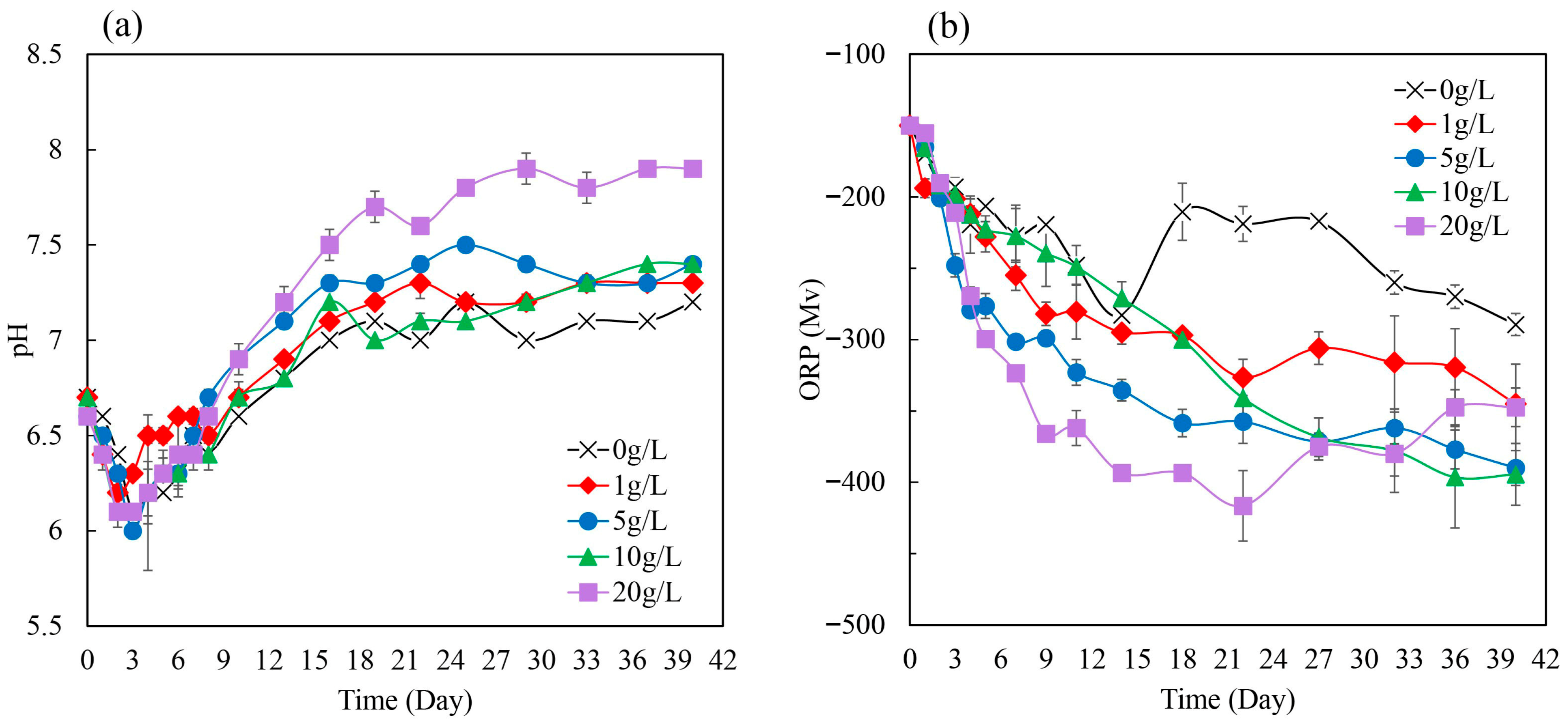
Figure 3 illustrated the changes in pH and ORP over time under different ZVI concentrations, with these two indicators reflecting the system stability. The pH in the control group rapidly decreased, reaching 6.1 by day 4. After adding different concentrations of ZVI, the system pH further decreased to 5.8–6.0, primarily due to the continuous generation of organic acids within the system and the delayed decomposition by methanogens. As organic acids were continuously converted into methane, the pH gradually increased. The groups except ZVI 20 g/L maintained pH within the range of 6.5–7.2, meeting the optimal pH requirements for methanogenic bacteria. When the ZVI concentration reached 20 g/L, the pH significantly exceeded the optimal range for methane production, leading to deteriorated system stability and correspondingly lower cumulative methane production.
Through the thermophilic anaerobic fermentation process, the ORP of all systems showed a decreasing trend. However, on day 18, the ORP of the control group system increased to −210 mV, exceeding the optimal ORP range for methanogens. The experimental groups with ZVI maintained ORP levels fluctuating between −300 and −400 mV, meeting the requirements for a reducing environment of methanogens and providing a suitable growth environment for their metabolism [22]. After 22 days, the ORP with 20 g/L ZVI showed an increasing trend, indicating a certain degree of system deterioration.

3.2. Effect of ZVI on Solubilization, Hydrolysis and Acidogenesis

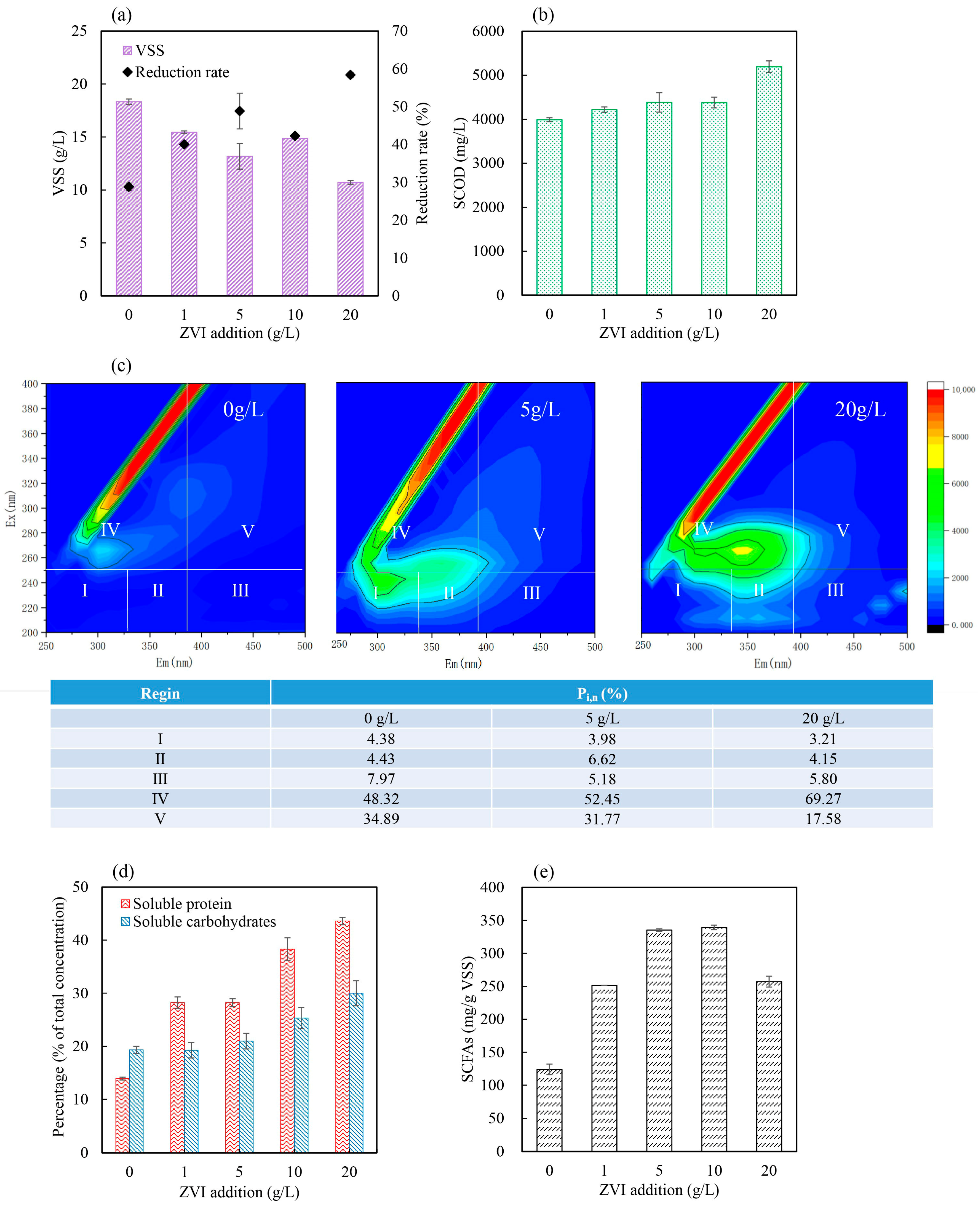
After adding digested sludge, VSS and SCOD were used as key indicators to evaluate the effect of different ZVI dosages on solubilization. Figure 4a showed the effect of different ZVI concentrations on the VSS reduction rate in thermophilic anaerobic fermentation. The VSS degradation rate of the control group was 28.83%, which represented the activity of the original microorganisms. As the ZVI concentration increased from 1 g/L to 20 g/L, the VSS degradation rate also increased, reaching 40.05%, 48.83%, 42.28%, and 58.40%, respectively. Compared to the control group, these rates increased by 38.89%, 69.39%, 46.63%, and 102.53%, indicating that ZVI addition further promotes sludge reduction. Figure 4b showed the effect of different ZVI concentrations on SCOD. The SCOD concentration of the control group was 3987.76 mg/L. When the ZVI increased from 1 g/L to 20 g/L, the SCOD concentration increased by 5.78%, 9.9%, 9.8%, and 30.2%, respectively, compared to the control group. This indicated that the increased ZVI concentration promoted greater release of SCOD, enhancing the cell solubilization performance during thermophilic anaerobic fermentation and providing more reactive substrates for subsequent processes. To further demonstrate the effect of dissolved insoluble substances on the cell solubilization process, 3D-EEM spectra and Pi,n of five regions in the thermophilic anaerobic fermentation with different ZVI additions are shown in Figure 4c. The percentages of fluorescence responses of regions I and IV were 4.38% and 48.32% in the control, 3.98% and 52.45% with 5 g/L ZVI addition, and 3.21% and 69.27% with 20 g/L ZVI addition, respectively. This indicated that the addition of ZVI enhanced the biodegradability of organic substances released from sludge cells for the thermophilic anaerobic fermentation process.
Since digested sludge was added as inoculum, samples were collected at the gas production inflection point (i.e., day 5). Preliminary experiments have revealed that high concentrations of model compounds pose hazards to methanogenic bacteria. The impact of ZVI addition on hydrolysis during thermophilic anaerobic fermentation was investigated by analyzing the utilization of soluble proteins and carbohydrates by various microorganisms during the mid-stage of fermentation, as shown in Figure 4d. The percentages of soluble protein to total proteins and soluble polysaccharides to total polysaccharides increased with increased ZVI concentrations. When the ZVI increased from 0 g/L to 20 g/L, the soluble protein ratios were 13.90%, 28.21%, 28.95%, 38.28%, and 43.58%, respectively, while soluble polysaccharides accounted for 19.31%, 19.24%, 20.95%, 25.30%, and 29.98%, respectively. ZVI addition exerted a greater influence on soluble proteins than on polysaccharides. Considering the hydrolysis coefficient k, ZVI addition moderately promoted hydrolysis in the system, though the effect was limited.
Figure 4e shows the effect of different ZVI concentrations on the SCFAs production during the thermophilic anaerobic fermentation. When ZVI concentrations were 1 g/L, 5 g/L, and 10 g/L, the SCFAs concentrations were 251.39 mg/g VSS, 335.09 mg/g VSS, and 339.25 mg/g VSS, respectively. Compared to the control group’s SCFAs concentration of 123.82 mg/g VSS, these increased by 103.04%, 170.64%, and 174.00%, respectively. However, at ZVI 20 g/L, the SCFAs concentration decreased to 257.01 mg/g VSS. This indicated that an appropriate ZVI concentration promoted acidification in thermophilic anaerobic fermentation by decomposing more SCFAs to provide substrates for subsequent methane production.

3.3. The Relative Activities of Key Enzymes with Different ZVI Additions

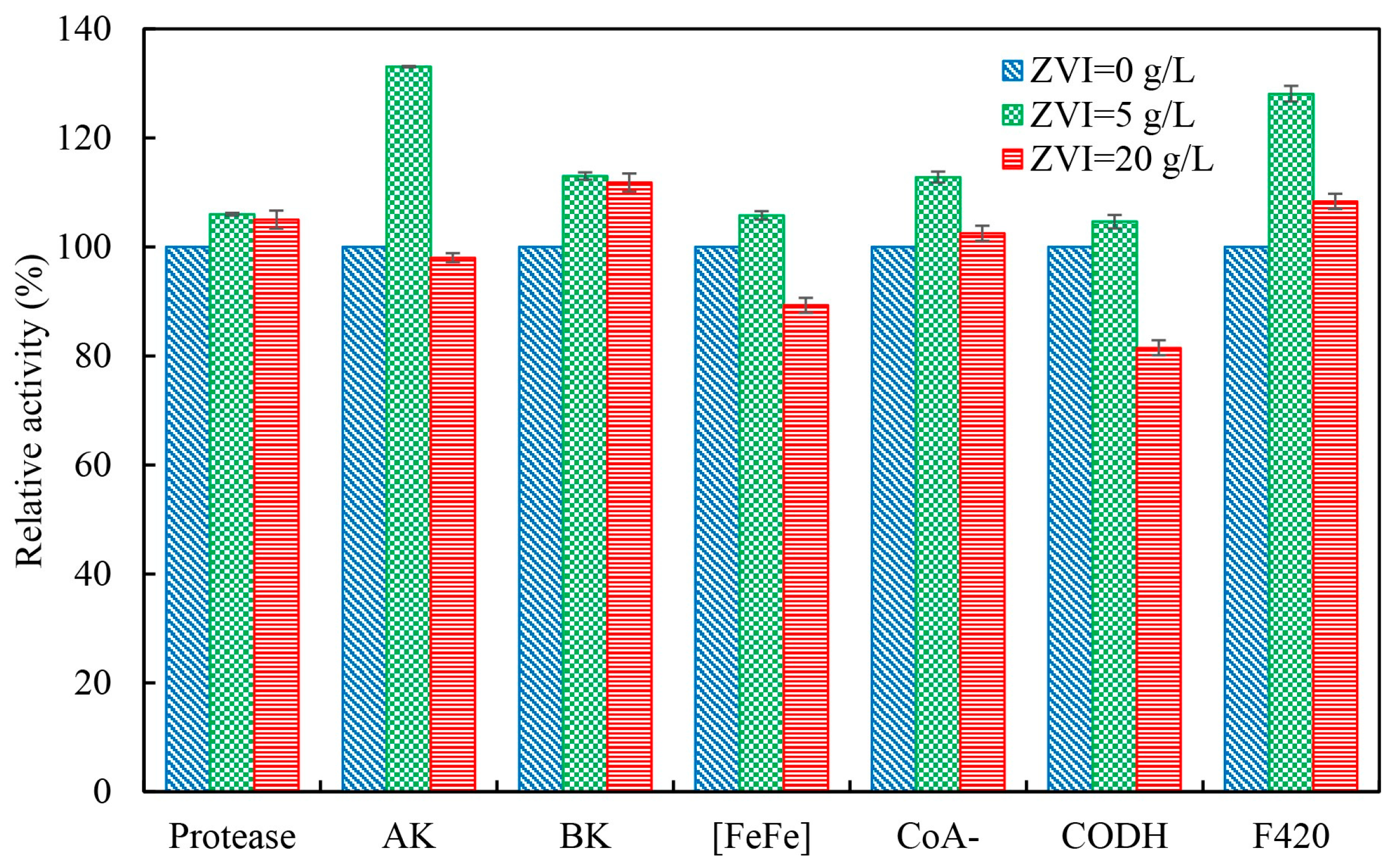
The relative activities of key enzymes at each stage of thermophilic anaerobic fermentation after adding digested sludge were investigated, as shown in Figure 5. Compared to the control group, protease activity increased by 6.0% and 5.0% at ZVI of 5 g/L and 20 g/L, respectively, without a significant difference. When the ZVI concentration was 5 g/L, the relative activities of AK, BK, and FeFe associated with acidification promotion, as well as CODH and CoA-, linked to hydrogen and acetate production, were all enhanced. This indicated that SCFAs accumulation was promoted, providing substrates for the methanogenesis process. Notably, the addition of ZVI not only promoted acid accumulation but also accelerated acidification to some extent during hydrogen and acetate production. This may be attributed to the inoculation of methanogens enhancing acid consumption, thereby expediting the acidification process [23]. The ZVI addition of 5 g/L also promoted the methanogenesis process in the system. Compared to the control group, F420 enzyme activity increased by 28.09%, resulting in a higher methane production. However, at a ZVI concentration of 20 g/L, while the activities of BK, CoA-, and F420 were enhanced, the activities of other acid-producing enzymes were inhibited accordingly, which resulted in reduced acid production and consequently decreased methane accumulation. ZVI, as a reducing agent, promotes the formation of a reducing atmosphere, modulates the ORP value within the system, and facilitates butyrate fermentation in acidogenic systems. This alleviates propionate accumulation issues and significantly enhances methanogenesis rates [24]. The addition of ZVI further enhances enzyme activity within the system, increasing the activity of butyrate kinase and propionate kinase. Consequently, it provides a substantial substrate supply for the methanogenic system and further enhances the [Fe-S] clusters in converting CO2 and H2 into CH4 with F420, thereby increasing the cumulative methane yield in the system [25].

3.4. Contributions of ZVI and Its Decomposition Products to Methane Production

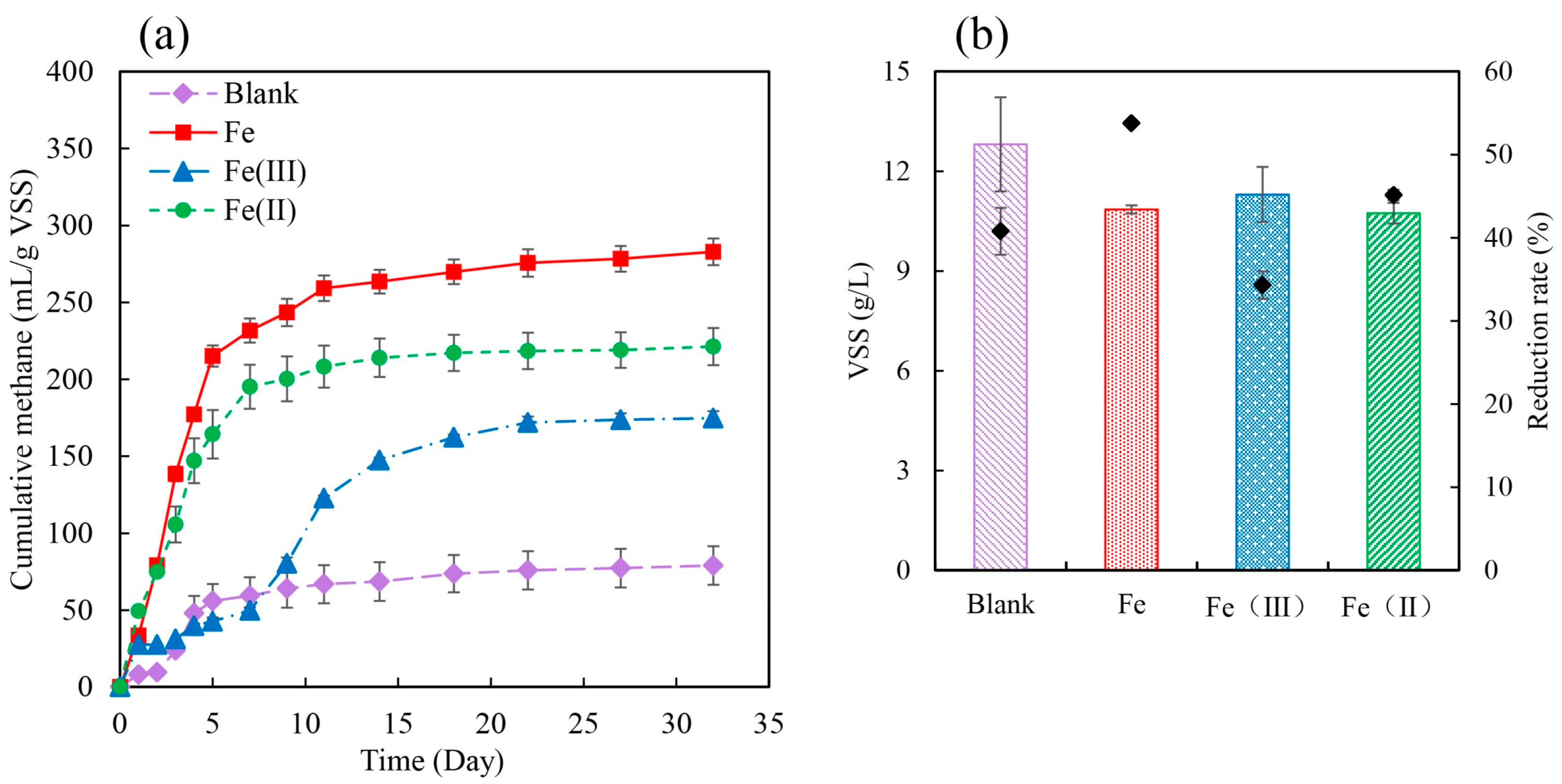
After adding ZVI to the thermophilic anaerobic fermentation system, the primary decomposition products were Fe2+ and Fe3+. Figure 6 illustrated the effects of ZVI and its decomposition products on cumulative methane production and VSS reduction. In the Fe3+ added system, methane production remained consistently lower than that of the control group during the first 7 days. However, it rapidly increased on day 8 and ultimately stabilized at 174.71 mL/g VSS by day 32. This indicated that the contribution of Fe3+ to the system increased in the later stages, which may be because Fe3+ is insoluble under neutral conditions and can be reduced to Fe2+ as an electron acceptor, thereby enhancing the methanogenesis process [26]. Fe3+ can directly interact with reductase enzymes on the cell membrane, oxidizing macromolecular organic compounds into smaller molecules. Concurrently, Fe3+ effectively enriched methanogenic bacteria, thereby enhancing methane production efficiency in later stages. The VSS reduction rate in the Fe3+ added system was 34.30%, slightly lower than that of the control group. The Fe3+ addition contributes inorganic matter, increasing the total solids content of sludge and correspondingly decreasing the VSS removal rate [27]. Therefore, the contribution of Fe3+ to the thermophilic anaerobic fermentation system primarily promoted methane production in the later stages.
In the Fe2+ added system, Fe2+ significantly enhanced methane production efficiency in the thermophilic anaerobic fermentation compared to the control group. During the 32 days, the cumulative methane in the Fe2+ system was significantly higher than that in the control group (p < 0.05). The VSS reduction rate reached 45.13%. The effect of ZVI decomposition products primarily acted in the following order: Fe2+ > Fe3+. Notably, the cumulative methane and VSS removal rate in the ZVI system was both higher than the corresponding values measured in each decomposition product system, which indicated that the promotion of methane production by ZVI resulted from the synergistic effects of various decomposition products.

3.5. Effect of ZVI on the Archaeal Community Structure

Changes at different stages of the thermophilic anaerobic fermentation system for methane production are closely associated with the archaeal community structure. The alpha diversity for the archaeal community of the control and ZVI addition (0 g/L and 5 g/L) groups was analyzed in Table 3. Compared to the control group, the abundance of archaea decreased after anaerobic fermentation began, and further decreased following the addition of ZVI. This indicated that the thermophilic anaerobic fermentation system selectively enriched archaeal communities. The Shannon index represented diversity, increased from 0.681 to 1.097 after adding 5 g/L of ZVI, indicating that ZVI can also enhance the archaeal community diversity and improve the system stability.
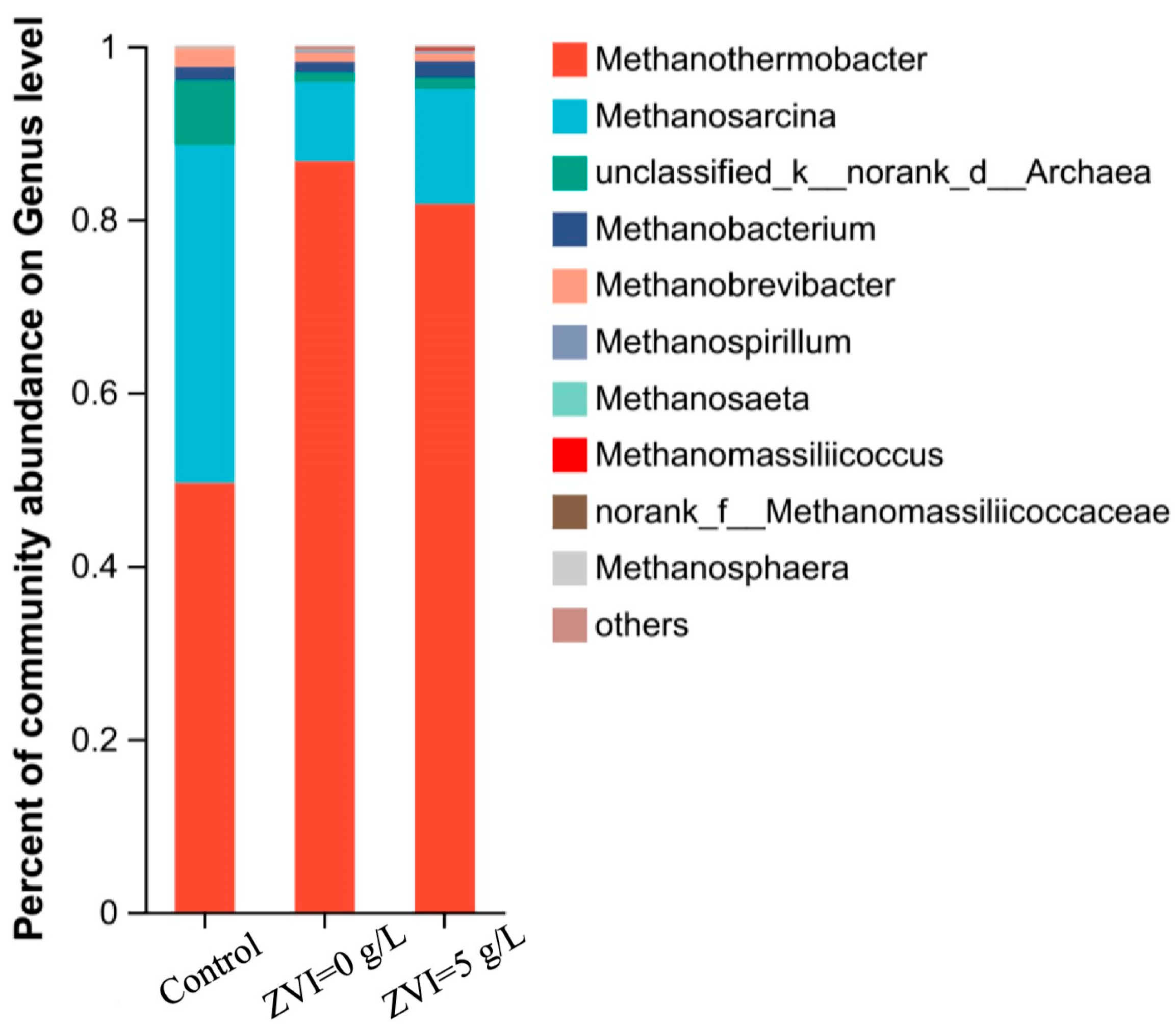
Figure 7 shows the archaeal community abundance on the genus level for different groups during thermophilic anaerobic fermentation. The dominant archaea in the raw sludge sample primarily include Methanothermobacter (49.51%) and Methanosarcina (39.12%). After the thermophilic anaerobic fermentation began, the archaeal community structure exhibited significant changes. The relative abundance of Methanothermobacter increased to 86.69%. As a hydrogen-fermenting methanogen, it is widely present in thermophilic anaerobic systems with an optimal temperature range of 55~70 °C. This demonstrated that the hydrogen and acetate production processes were intensified during thermophilic anaerobic fermentation, accelerating H2 utilization and promoting organic acid production. However, this may also lead to further accumulation of organic acids, causing system instability and disruption [28]. Compared to the system without ZVI addition, the relative abundance of Methanothermobacter decreased to 81.74% after ZVI addition, while the relative abundance of Methanosarcina increased from 9.12% to 13.31%. This indicated that ZVI assisted in screening Methanosarcina, which is an acetate-fermenting methanogen capable of utilizing abundant substrates (e.g., acetate, methanol, monomethylamine, dimethylamine, H2 and CO2) [29]. Methanosarcina can rapidly degrade organic acids during thermophilic anaerobic fermentation, thereby maintaining the equilibrium and stability of the substrate environment within the system [30].

3.6. Insights into ZVI Enhancement in Methane Production

This study demonstrated that the optimal ZVI dosage of 5 g/L significantly increased methane production by stabilizing the physicochemical environment and facilitating microbial metabolic flux. Kinetic modeling revealed that ZVI primarily improved the methanogenic potential (B0) rather than the hydrolysis rate (k), suggesting its role as a metabolic facilitator. The decomposition of ZVI provided a critical pH buffer and maintained a highly reductive environment, indicating ZVI as a key electron buffer in anaerobic systems [31]. Enzymatic analysis and microbial community changes further elucidated the mechanisms. The 28.09% increase in F420 enzyme activity and the relative abundance of Methanosarcina (from 9.12% to 13.31%) indicate an intensified methanogenesis pathway. ZVI and its decomposition products act as biological conduits, accelerating the conversion of organic acids into methane using DIET [32].
Despite its potential to enhance methane production, the application of ZVI in thermophilic anaerobic fermentation faces several constraints for further investigation. A primary technical limitation is the surface passivation of ZVI particles, as the inevitable accumulation of iron sulfides creates a physical barrier that degrades electron transfer efficiency [33]. Additionally, achieving a homogeneous distribution of ZVI particles in further large-scale reactors remains an engineering challenge, as rapid settling may lead to inefficient contact. Future research should prioritize the development of ZVI-based composites (e.g., ZVI/biochar) to mitigate passivation and enhance material characteristics [34,35]. Additionally, the environmental safety of iron-rich sludge waste must be evaluated to avoid secondary risks during long-term land application.

4. Conclusions

ZVI effectively enhanced methane production during thermophilic anaerobic fermentation, with an optimal concentration of 5 g/L. The improvement was primarily attributed to the promotion of the acidogenic and methanogenic stages, rather than hydrolysis. ZVI maintained a favorable low oxidation–reduction potential, increased the production of SCFAs, and stimulated the activity of methanogenic enzyme F420. Additionally, its decomposition products, particularly Fe2+, contributed to this enhancement. Archaeal community analysis revealed that ZVI addition enriched acetate-utilizing methanogens like Methanosarcina, which helps maintain system stability by utilizing various substrates, including accumulated acids. Therefore, appropriate ZVI addition represents a viable strategy to enhance methane production in thermophilic anaerobic fermentation, offering a promising approach to improve both energy balance and economic feasibility.

Author Contributions

Conceptualization, X.Z.; Methodology, W.D. and R.L.; Formal analysis, R.L.; Investigation, W.D., R.L. and X.Z.; Writing—original draft, W.D. and R.L.; Writing—review and editing, X.Z.; Supervision, X.Z. All authors have read and agreed to the published version of the manuscript.

Funding

This work was supported by the Shenzhen Science and Technology Innovation Committee (EF2023-00072-FST) and the State Key Laboratory of Urban-rural Water Resources and Environment (Harbin Institute of Technology) (No. 2025TS35).

Data Availability Statement

The data are not publicly available due to privacy.

Conflicts of Interest

The authors declare no conflicts of interest.

References

  1. He, D.; Xiao, J.; Wang, D.; Liu, X.; Fu, Q.; Li, Y.; Du, M.; Yang, Q.; Liu, Y.; Wang, Q.; et al. Digestion liquid based alkaline pretreatment of waste activated sludge promotes methane production from anaerobic digestion. Water Res. 2021, 199, 117198. [Google Scholar] [CrossRef] [Scilit]
  2. Wang, H.; Li, H.; Zhu, L.; Yang, X.; Zhang, Q.; Wang, Y.; Wang, D. Effect and mechanism of benzalkonium bromide on short chain fatty acid production from anaerobic sludge fermentation process. J. Environ. Manag. 2023, 343, 118203. [Google Scholar] [CrossRef] [Scilit]
  3. Zhao, Z.; Wu, H.; An, Y.; Zhang, Y.; Huang, F.; Wang, K.; Zhang, G. Insights into mechanisms of red mud promoting biogas production from waste activated sludge anaerobic digestion. Renew. Energy 2024, 232, 121071. [Google Scholar] [CrossRef] [Scilit]
  4. Wang, F.; Zou, Z.; He, Z.; Tang, C.; Zhou, A.; Liu, W.; Ren, Y.; Li, Z.; Wang, A. Revealing methane production potential from waste activated sludge through citric acid-assisted hydrogen corrosion of zero valent iron. Chem. Eng. J. 2023, 473, 145195. [Google Scholar] [CrossRef] [Scilit]
  5. Kakar, F.L.; Aqeel, H.; Liss, S.N.; Elbeshbishy, E. Impact of hydrothermal pretreatment parameters on mesophilic and thermophilic fermentation and anaerobic digestion of municipal sludge. Fermentation 2023, 9, 508. [Google Scholar] [CrossRef] [Scilit]
  6. Wang, X.; Xie, Y.; Qi, X.; Chen, T.; Zhang, Y.; Gao, C.; Zhang, A.; Ren, W. A new mechanical cutting pretreatment approach towards the improvement of primary sludge fermentation and anaerobic digestion. J. Environ. Chem. Eng. 2022, 10, 107163. [Google Scholar] [CrossRef] [Scilit]
  7. Yang, Y.; Guo, J.; Hu, Z. Impact of nano zero valent iron (nzvi) on methanogenic activity and population dynamics in anaerobic digestion. Water Res. 2013, 47, 6790–6800. [Google Scholar] [CrossRef] [Scilit]
  8. Liu, L.; Chen, Y.; Qi, J.; Sun, J.; Zhang, L. The role of sulfidated zero-valent iron in enhancing anaerobic digestion of waste activated sludge. J. Environ. Manag. 2025, 375, 124283. [Google Scholar] [CrossRef] [Scilit]
  9. Suanon, F.; Sun, Q.; Li, M.; Cai, X.; Zhang, Y.; Yan, Y.; Yu, C. Application of nanoscale zero valent iron and iron powder during sludge anaerobic digestion: Impact on methane yield and pharmaceutical and personal care products degradation. J. Hazard. Mater. 2017, 321, 47–53. [Google Scholar] [CrossRef] [Scilit]
  10. Shi, Y.; Liu, T.; Chen, S.; Quan, X. Accelerating anaerobic hydrolysis acidification of dairy wastewater in integrated floating-film and activated sludge (iffas) by using zero-valent iron (zvi) composite carriers. Biochem. Eng. J. 2022, 177, 108226. [Google Scholar] [CrossRef] [Scilit]
  11. Cheng, J.; Zhu, C.; Zhu, J.; Jing, X.; Kong, F.; Zhang, C. Effects of waste rusted iron shavings on enhancing anaerobic digestion of food wastes and municipal sludge. J. Clean. Prod. 2020, 242, 118195. [Google Scholar] [CrossRef] [Scilit]
  12. Men, Y.; Zheng, L.; Zhang, L.; Li, Z.; Wang, X.; Zhou, X.; Cheng, S.; Bao, W. Effects of adding zero valent iron on the anaerobic digestion of cow manure and lignocellulose. Front. Bioeng. Biotechnol. 2020, 8, 590200. [Google Scholar] [CrossRef] [Scilit]
  13. Zhou, J.; You, X.; Niu, B.; Yang, X.; Gong, L.; Zhou, Y.; Wang, J.; Zhang, H. Enhancement of methanogenic activity in anaerobic digestion of high solids sludge by nano zero-valent iron. Sci. Total Environ. 2020, 703, 135532. [Google Scholar] [PubMed]
  14. Zhang, P.; Zhang, J.; Zhang, T.; Zhang, L.; He, Y. Zero-valent iron enhanced methane production of anaerobic digestion by reinforcing microbial electron bifurcation coupled with direct inter-species electron transfer. Water Res. 2024, 255, 121428. [Google Scholar] [PubMed]
  15. Ge, H.; Jensen, P.D.; Batstone, D.J. Increased temperature in the thermophilic stage in temperature phased anaerobic digestion (tpad) improves degradability of waste activated sludge. J. Hazard. Mater. 2011, 187, 355–361. [Google Scholar] [CrossRef] [Scilit] [PubMed]
  16. Li, Q.; Qiao, W.; Wang, X.; Takayanagi, K.; Shofie, M.; Li, Y. Kinetic characterization of thermophilic and mesophilic anaerobic digestion for coffee grounds and waste activated sludge. Waste Manag. 2015, 36, 77–85. [Google Scholar] [CrossRef] [Scilit]
  17. Chen, J.; Li, W.; Pang, L.; Chatzisymeon, E.; Lu, Y.; Yang, P. Using metagenomics to reveal the effects of zero-valent iron with different sizes on the mesophilic and thermophilic anaerobic digestion of sludge. Biochem. Eng. J. 2025, 217, 109688. [Google Scholar] [CrossRef] [Scilit]
  18. He, H.; Xin, X.; Qiu, W.; Li, D.; Liu, Z.; Ma, J. Waste sludge disintegration, methanogenesis and final disposal via various pretreatments: Comparison of performance and effectiveness. Environ. Sci. Ecotechnol. 2021, 8, 100132. [Google Scholar]
  19. Enokida, C.H.; Tapparo, D.C.; Antes, F.G.; Steinmetz, R.L.R.; Magrini, F.E.; Sophiatti, I.V.M.; Paesi, S.; Kunz, A. Anaerobic codigestion of livestock manure and agro-industrial waste in a cstr reactor: Operational aspects, digestate characteristics, and microbial community dynamics. Renew. Energy 2025, 238, 121865. [Google Scholar]
  20. Guan, Y.; Guo, H.; Wang, H.; Jian, K.; Chen, Z.; Zhang, B. Synergistic methane production via anaerobic co-digestion of coal slime and sawdust: From substrate interactions to microbial functional responses. Renew. Energy 2026, 258, 124968. [Google Scholar]
  21. Luo, J.; Feng, L.; Chen, Y.; Li, X.; Chen, H.; Xiao, N.; Wang, D. Stimulating short-chain fatty acids production from waste activated sludge by nano zero-valent iron. J. Biotechnol. 2014, 187, 98–105. [Google Scholar]
  22. Khanal, S.K.; Huang, J. Orp-based oxygenation for sulfide control in anaerobic treatment of high-sulfate wastewater. Water Res. 2003, 37, 2053–2062. [Google Scholar]
  23. Dong, H.; Cheng, J.; Li, H.; Yue, L.; Xia, R.; Zhou, J. Electron transfer from Geobacter sulfurreducens to mixed methanogens improved methane production with feedstock gases of H2 and CO2. Bioresour. Technol. 2022, 347, 126680. [Google Scholar] [CrossRef] [Scilit] [PubMed]
  24. Nikitina, A.A.; Kallistova, A.Y.; Grouzdev, D.S.; Kolganova, T.Y.V.; Kovalev, A.A.; Kovalev, D.A.; Panchenko, V.; Zekker, I.; Nozhevnikova, A.N.; Litti, Y.V. Syntrophic butyrate-oxidizing consortium mitigates acetate inhibition through a shift from acetoclastic to hydrogenotrophic methanogenesis and alleviates vfa stress in thermophilic anaerobic digestion. Appl. Sci. 2023, 13, 173. [Google Scholar] [CrossRef] [Scilit]
  25. Deng, Y.; Li, W.; Ruan, W.; Huang, Z. Applying EEM-PARAFAC analysis with quantitative real-time PCR to monitor methanogenic activity of high-solid anaerobic digestion of rice straw. Front. Microbiol. 2021, 12, 600126. [Google Scholar]
  26. Honetschlägerová, L.; Škarohlíd, R.; Martinec, M.; Šír, M.; Luciano, V. Interactions of nanoscale zero valent iron and iron reducing bacteria in remediation of trichloroethene. Int. Biodeterior. Biodegrad. 2018, 127, 241–246. [Google Scholar]
  27. Wang, X.; Gong, Y.; Sun, C.; Wang, Z.; Sun, Y.; Yu, Q.; Zhang, Y. New insights into inhibition of high Fe(iii) content on anaerobic digestion of waste-activated sludge. Sci. Total Environ. 2024, 916, 170147. [Google Scholar]
  28. Tian, Z.; Zhang, Y.; Li, Y.; Chi, Y.; Yang, M. Rapid establishment of thermophilic anaerobic microbial community during the one-step startup of thermophilic anaerobic digestion from a mesophilic digester. Water Res. 2015, 69, 9–19. [Google Scholar] [CrossRef] [Scilit]
  29. Zhao, C.; Khan, A.; Wei, Z.; Jinghong, W.; Fangzheng, Z.; Guinan, S.; Yanhua, H.; Dan, W.; Zongjun, C.; Weidong, W. Metabolic pathway analysis of methane from methanol as substrate in microbial consortium. Bioresour. Technol. 2024, 413, 131517. [Google Scholar] [CrossRef] [Scilit]
  30. Lee, J.T.E.; Lim, E.Y.; Zhang, L.; Tsui, T.; Tian, H.; Yan, M.; Lim, S.; Majid, M.B.A.; Jong, M.; Zhang, J.; et al. Methanosarcina thermophila bioaugmentation and its synergy with biochar growth support particles versus polypropylene microplastics in thermophilic food waste anaerobic digestion. Bioresour. Technol. 2022, 360, 127531. [Google Scholar] [CrossRef] [Scilit]
  31. He, J.; Cui, X.; Chu, Z.; Jiang, Z.; Pang, H.; Xin, X.; Duan, S.; Zhong, Y. Effect of zero-valent iron (ZVI) and biogas slurry reflux on methane production by anaerobic digestion of waste activated sludge. Water Environ. Res. 2024, 96, e10994. [Google Scholar] [CrossRef] [Scilit]
  32. Zhang, S.; Ma, X.; Xie, D.; Guan, W.; Yang, M.; Zhao, P.; Gao, M.; Wang, Q.; Wu, C. Adding activated carbon to the system with added zero-valent iron further improves anaerobic digestion performance by alleviating ammonia inhibition and promoting diet. J. Environ. Chem. Eng. 2021, 9, 106616. [Google Scholar] [CrossRef] [Scilit]
  33. He, Z.; Zou, Z.; Ren, Y.; Tang, C.; Zhou, A.; Liu, W.; Wang, L.; Li, Z.; Wang, A. Roles of zero-valent iron in anaerobic digestion: Mechanisms, advances and perspectives. Sci. Total Environ. 2022, 852, 158420. [Google Scholar] [CrossRef] [Scilit]
  34. Yuan, T.; Shi, X.; Sun, R.; Ko, J.H.; Xu, Q. Simultaneous addition of biochar and zero-valent iron to improve food waste anaerobic digestion. J. Clean. Prod. 2021, 278, 123627. [Google Scholar] [CrossRef] [Scilit]
  35. Liang, J.; Luo, L.; Li, D.; Wang, H.; Wong, J.W.C. Conductive materials supplement alters digestate dewaterability during anaerobic co-digestion of food waste and sewage sludge and promotes follow-up indigenous peroxides activation. Chem. Eng. J. 2022, 431, 133875. [Google Scholar] [CrossRef] [Scilit]
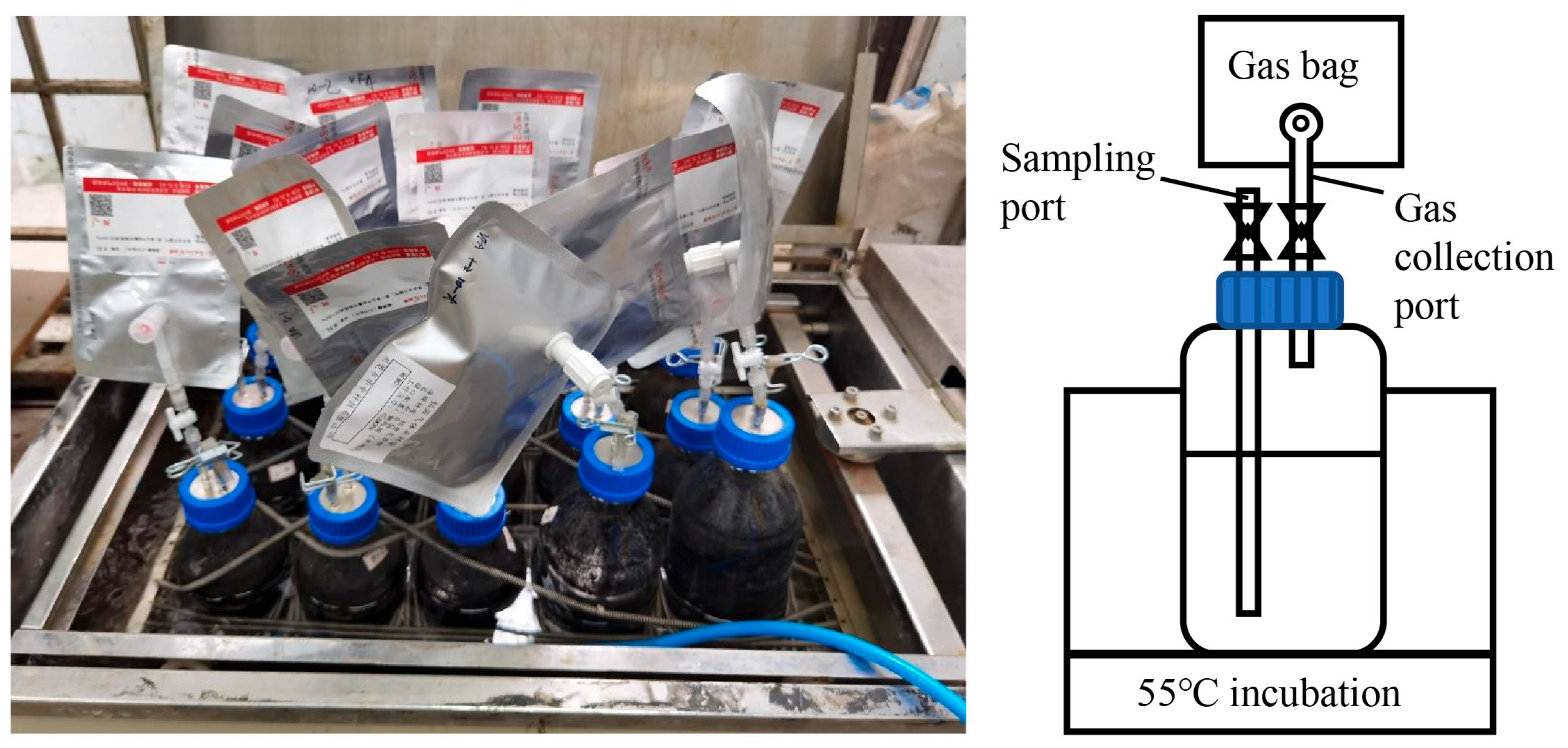
Figure 1. The picture of sludge thermophilic anaerobic fermentation systerm.
Water 18 00654 g001
Figure 2. Measured and simulated methane production (a) and 95% confidence regions for hydrolysis rate (k) and biochemical methane potential (B0) (b) in various ZVI addition systems from sludge thermophilic anaerobic fermentation. Error bars represent standard errors.
Water 18 00654 g002
Figure 3. pH (a) and ORP (b) in various ZVI addition systems from sludge thermophilic anaerobic fermentation.
Water 18 00654 g003
Figure 4. Effect of ZVI on VSS and VSS reduction (a), soluble COD (b), 3D-EEM spectra and Pi,n of the soluble organics (c), soluble proteins and carbohydrates (d), and total SCFAs production (e) in sludge thermophilic anaerobic fermentation.
Water 18 00654 g004
Figure 5. Effect of ZVI on the relative activity of key enzymes. AK: acetate kinase; BK: butyrate kinase; CoA-: CoA-transferase; CODH: carbon monoxide dehydrogenase; F420: coenzyme F420; [FeFe]: [FeFe] hydrogenase.
Water 18 00654 g005
Figure 6. Effect of ZVI decomposition products on the cumulative methane (a), VSS and VSS reduction rate (b).
Water 18 00654 g006
Figure 7. Percent of archaeal community abundance on genus level for the control and ZVI addition (0 g/L and 5 g/L) groups.
Water 18 00654 g007
Table 1. Main properties of raw sludge and digested sludge.
ParameterRaw SludgeDigested Sludge
pH6.8 ± 0.1
TSS (mg/L)41,510 ± 37523,940 ± 85
VSS (mg/L)19,820 ± 7411,700 ± 37
TCOD (mg/L)18,400 ± 14330,520 ± 420
SCOD (mg/L)287 ± 48894 ± 120
Total carbohydrate (mg COD/L)1460 ± 35
Total protein (mg COD/L)4860 ± 11
Note(s): Results are mean values of three measurements ± standard deviation.
Table 2. Determined hydrolysis rate (k), biochemical methane potential (B0) and degradation extent (Y) of sludge thermophilic anaerobic fermentation with different ZVI additions using one-substrate model (with standard errors).
ZVI Addition
(g/L)
k
(d−1)
B0
(mL CH4/g VSS)
Y
00.0953 ± 0.01176.65 ± 0.040.339 ± 0.01
10.1121 ± 0.01227.13 ± 0.030.436 ± 0.01
50.0990 ± 0.01267.37 ± 0.050.514 ± 0.02
100.0976 ± 0.01271.21 ± 0.080.521 ± 0.02
200.0834 ± 0.01188.07 ± 0.050.361 ± 0.01
Table 3. Alpha diversity for archaeal community analysis of the control and ZVI addition (0 g/L and 5 g/L) groups.
SampleChaolShannonSimpsonCoverage
Control1330.5630.7600.99
ZVI = 0 g/L1270.6810.6861.00
ZVI = 5 g/L1361.0970.4030.99
Disclaimer/Publisher’s Note: The statements, opinions and data contained in all publications are solely those of the individual author(s) and contributor(s) and not of MDPI and/or the editor(s). MDPI and/or the editor(s) disclaim responsibility for any injury to people or property resulting from any ideas, methods, instructions or products referred to in the content.