Article

Innovative Fabrication of Highly Efficient Cu2ZnSnS4-TiO2/TiO2 Nanotube Array Heterostructure for Efficient Organic Degradation in Basic Dye Wastewater: Experimental and RSM Approaches


1
Department of Chemistry, College of Science, King Khalid University, Abha 61421, Saudi Arabia
2
Department of Physics, Faculty of Sciences at Bisha, University of Bisha, P.O. BOX 199, Bisha 61922, Saudi Arabia
3
Mining Research Center, Northern Border University, Arar 73213, Saudi Arabia
4
Department of Civil Engineering, College of Engineering, University of Diyala, Baqubah 10047, Iraq
5
Department of Chemical Engineering, College of Engineering, King Khalid University, Abha 61411, Saudi Arabia
6
Department of Civil Engineering Science, School of Civil Engineering, and the Built Environment, Faculty of Engineering and the Built Environment, University of Johannesburg, Kingsway Campus, Aukland Park, P.O. Box 524, Johannesburg 2006, South Africa
7
Directorate of Engineering the Future, School of Science, Engineering and Environment, The University of Salford, Newton Building, Greater Manchester, Salford M5 4WT, UK
8
Department of Town Planning, Engineering Networks and Systems, South Ural State University (National Research University), 76, Lenin Prospekt, Chelyabinsk 454080, Russia
9
Nexus by Sweden, Skepparbacken 5, 722 11 Västerås, Sweden
*
Authors to whom correspondence should be addressed.
Water 2026, 18(5), 632; https://doi.org/10.3390/w18050632
Submission received: 2 July 2025 / Revised: 23 July 2025 / Accepted: 25 July 2025 / Published: 7 March 2026
(This article belongs to the Section Water Resources Management, Policy and Governance)

Abstract

Titanium dioxide (TiO2) nanotube arrays (NTAs) were constructed on Ti foil to immobilize Cu2ZnSnS4-TiO2 (CZTS-T/NTAs) via the sol–gel dip-coating technique. The films were characterized by X-ray diffraction (XRD) patterns, field-emission scanning electron microscope–energy dispersive spectroscopy (FESEM-EDX), ultraviolet–visible diffuse reflectance spectra (UV–Vis/DRS), and electrochemical impedance spectroscopy (EIS) techniques. The photocatalytic property of CZTS-T/NTAs was evaluated by the photodegradation of Basic Blue 41 under visible light irradiation. We show that CZTS-T/NTAs have an energy band gap of 2.23 eV, which leads to excellent potential trapping or facilitates the transition of charge carriers under visible light. The parameters R0 and C0 of the experimental EIS data, by fitting the proposed electrical circuit, were also discussed. Decreasing R0 led to an increase in cell capacitance, which resulted in increased carrier generation at the interface between the catalyst and solution and thus an increased photodegradation yield. The response surface methodology (RSM) and central composite rotatable design (CCRD) were used to optimize the effects of the experimental parameters in the degradation process by four key variables (pH, dye concentration, irradiation time, and hydrogen peroxide (H2O2) concentration). As a result, the optimized conditions attained a considerable degradation of 95.25%. We also proposed the possible photodegradation mechanism of the photocatalyst. Notably, the proposed catalyst after six consecutive reuse runs retained activity.

1. Introduction

In the last decade, research into the organic pollutants in wastewater and the removal of contaminants in water has become a formidable challenge for science [1,2]. The textile industry accounts for 1–20% of the total world production of dyes, and about 2.8 × 10⁵ tons of wastewater containing pigments and/or different synthetic dye categories are released into the environment. This industry often generates effluents that damage the environment and human health. Among the most common dyes used in the textile industry, the largest group is azo dyes that have one or more azo bonds (-N=N-) in their structure and cover 60–70% of the total dyes produced [1,2,3,4,5]. Azo dyes, due to their wide application, are usually blamed for producing a large amount of organic pollutants in wastewater, causing serious environmental problems [3]. Basic Blue 41 is widely used in the textile industry, which assigns a large part of the wastewater in the intinction processes and cannot be quickly degraded [3]. Many researchers have used the photocatalytic process, which has become very significant in removing pollutants from water. This is attributed to its simplicity, cost-effectiveness, high removal efficiency, minimal generation of secondary pollutants, and environmentally benign characteristics [4]. To date, a considerable number of semiconductor materials have been evidenced as effective in the photocatalysis process. The photocatalytic degradation of semiconductors by using solar energy has been considered an economical and safe solution to the problem of organic pollutants in wastewater [5,6,7]. Among the available technologies, attention has focused on the expansion of commercially viable, low-cost, and highly efficient photocatalytic materials. Many semiconductor materials have already proven to be active photocatalysts for photocatalytic performance [8,9,10]. Notably, the vertically oriented NTAs prepared by electrochemical anodization on a titanium foil have been studied as one of the nanostructured TiO2 materials and are in great demand [11,12]. Researchers have studied extensively the manufacture of NTAs, which have a higher electron lifetime and photocurrent density, and feature an increased light absorption capability due to the inhibitory effect of multiple reflections from nanotube walls on the escape of photons from the nanotubes compared to nanoparticles. These highly ordered NTAs with smooth surfaces possess an advantageous one-dimensional (1D) geometry, exhibit unique electrical properties, possess significantly shorter charge carrier diffusion paths along TNA walls, and facilitate charge transfer and higher stability against photo-corrosion [13,14,15]. Furthermore, the well-suited large specific surface area of NTAs plays a key role in their uniqueness. This particular feature facilitates the availability of a large number of active sites for the chemical reactions, and many ions in the solution can gain access to the photogenerated charge carriers [15,16]. In supported systems, not only are dispersed species prevented from aggregating, but dispersed species can also capture more photons, resulting in higher charge carrier production [17]. In addition, due to the larger effective surface area of these dispersed species compared to the aggregated species, more pollutant molecules can attain the catalyst surface, leading to a higher probability of collision between the pollutant molecules and the surface of the catalyst and so a higher photodegradation efficiency. In this case, the separation of the charge carriers is supported by the interaction of the electric field with the electron-hole pairs, which shows a distribution of the photoinduced electrons before the electron-hole recombination process [11,15,18].
However, a major limitation associated with the photocatalysis process is that typical semiconductors (e.g., TiO2 and ZnO) have a narrow light absorption capacity of sunlight [Absorbing ultraviolet (UV) light with a wavelength shorter than 380 nm only] [6,13,14,19]. The solar spectrum accounts for ~50% and ~45% of the visible and near-infrared regions, respectively. The effective use of solar radiation is still a difficult task for photocatalysis performance. Nowadays, CZTS is an effective photocatalyst that has attracted intense attention in photocatalytic processes due to its strong oxidation and reduction capabilities [20,21]. This is due to the abundant and inexpensive elements, an excellent absorption coefficient (>104 cm1), and a lower direct band gap (1.4–1.6 eV). In addition, the excellent photocatalytic performance of CZTS is due to the metal elements in CZTS, which have a d10 electron configuration [22,23]. Thus, the research and development of thin films of CZTS as a visible-light-sensitive photocatalyst for pollution photodegradation has been initiated [24,25]. Y. Li et al. [24] prepared Cu2ZnSnS4@TiO2 via a facile two-step hydrothermal method. The results showed that the photocatalyst has efficiently extended the spectral sensitivity, increased the specific surface area for the photocatalytic reaction, and improved the photoinduced separation efficiency of photogenerated holes (h+) and electrons (e), thereby promoting the visible light-driven photocatalytic performance of the photocatalysts. Assaker et al. [26] have successfully synthesized heterojunction CZTS/TiO2 (NRs) by combining sol-gel and electrodeposition methods. Experimental results showed that the photocatalytic activity of CZTS/TiO2 (NRs) was higher than that of TiO2 (NRs) alone in the degradation rate of Methylene Blue under visible light radiation. R. Poolla et al. [27] reported the photocatalytic and electrocatalytic applications of solvothermally Cu2ZnSnS4 nanoparticles. The results show that the Cu2ZnSnS4 nanoparticles degrade RhB in the presence of visible light by about 83%. R. Yuvakkumar et al. [28] synthesized hexamethylenetetramine (HMT) on Cu2ZnSnS4 supports by an effective hydrothermal method. They investigated the degradation of RhB dye under visible light irradiation. The results show the 0.4 M HMT-Cu2ZnSnS4 sample reached a higher efficiency of 84% with a rate constant of 0.014 min−1. Y. Li et al. [29] prepared a p-n heterostructured nano-photocatalyst of Cu2ZnSnS4/ZnFe2O4. The obtained results demonstrate that p-n heterostructures led to an efficient interfacial charge carrier separation, efficiently developed the spectral sensitivity, and enhanced the specific surface area for photocatalytic performance. The Cu2ZnSnS4/ZnFe2O4 exhibited significantly enhanced photocatalytic performance for the degradation of methyl orange upon the visible light region, with the available degradation efficiency reaching up to 91% during 120 min. In this work, we synthesize a novel composite combining three innovative components for photocatalytic degradation: CZTS, TiO2 nanoparticles, and TiO2 nanotube arrays. However, to the best of our knowledge, there are no reports on CZTS-TiO2/TiO2 nanotube arrays, and only a few reports exist on CZTS-TiO2 nanotubes for the photodegradation of azo dyes from aqueous solutions. Moreover, the synthesis and photocatalytic performance of CZTS-TiO2/nanotube arrays (CZTS-T/NTAs) for degrading pollutants like azo dyes have never been reported in the literature.
In this paper, heterostructure photocatalysts based on CZTS-T/NTAs were synthe-sized by a simple and robust process. The structural, morphological, and optical proper-ties, as well as the elemental composition of the synthesis samples were investigated and measured using different characterization procedures. In addition, the photocatalytic performance of the prepared samples using the dye Basic Blue 41 as a model pollutant under visible light irradiation was investigated. In addition, RSM, by experimental design based on statistical and experimental strategy, was employed to optimize the experimental conditions for maximizing Basic Blue 41 degradation and the interactions between the variables on the response. The interactions between the experimental influencing variables to reach optimized photodegradation were studied. In this study, a possible photocatalytic degradation mechanism of CZTS-T/NTAs was also proposed.

2. Materials and Experimental Details

Copper(II) chloride dihydrate (CuCl2·2H2O, 99%), Tin(IV) chloride pentahydrate. (SnCl4 H2O, 97%), thiourea (SC(NH2)2, 99%), ethylene glycol (C2H6O2, 99%), zinc chloride (ZnCl2; 99%), ethanol (C2H5OH, 96%), tetrabutyl orthotitanate (Ti(OC4H9)4) 98%), ammonium fluoride (NH4F, 98%), hydrochloric acid (HCl, 38% wt), Basic Blue 41 (BB41, 1-amino-6-methoxybenzotiazole, C20H26N4O6S2) were purchased from Merck and Sigma-Aldrich Co., Ltd. All chemicals in the experiments were used as received, without purification or further modification. Table 1 illustrates some properties of Basic Blue 41. A titanium plate (99% pure) with a size of 1 × 6 cm2 and a thickness of 1 mm was used as a substrate.

2.1. Fabrication of TiO2/NTAs Films

NTAs were fabricated using an anodic oxidation method applied to a solution containing ethylene glycol-fluorine, according to literature [30]. Before anodizing, the titanium sheet was polished by using 100 and 600-grit sandpapers and was sequentially ultrasonically prepared and cleaned for 10 min in ethanol, acetone, and deionized water, respectively, and afterward dried in air. The anodizing of Ti was performed in an electrolytic solution mixed with ethylene glycol and 0.5% wt NH4F. The Ti film was employed as the anode, and the platinum was selected as the cathode in the anodization device, and the gap between the cathode and anode was 10 mm. To lead to the formation of NTAs, the sample was anodized at a voltage of 20 V for 120 min under magnetic stirring. The temperature of the electrolyte was kept at 25 °C. Finally, to make the NTAs film into a crystalline anatase phase, the samples were crystallized by annealing at a temperature of 500 °C for 1 h [31].
To prepare TiO2, the sol-gel method was used to prepare titanium sols, according to the procedure reported by J. Xu [12]. TBOT was employed as a precursor for TiO2. Ethanol and distillate water were used as solvents and ammonium hydroxide was utilized as a catalyst for hydrolysis. Briefly, tetrabutyl orthotitanate (2.5 mL) was dispersed in ethanol (10 mL) and acetylacetone (2.5 mL), then for 10 min under magnetic stirring. Afterward, the deionized water (2.5 mL) and HCl were added dropwise to start the hydrolysis was added and then kept stirring for another 2 h. For the fabrication of TiO2/NTAs (T/NTAs), the synthesized NTAs underwent immersion for 10 min in TiO2 sol, then dried at ambient temperature. The processes of immersion and subsequent drying were executed 3 times. The annealing of the TiO2/TNAs film was carried out at a temperature of 500 °C for a period of 1 h.

2.2. Synthesis of CZTS Nanocrystals on the T/NTAs

CZTS films were synthesized through the dip-coating method in an ethylene glycol-based solution [22,24]. To form a CZTS precursor solution, in general, CuCl2 (1.07 g), ZnCl2 (0.54 g), SnCl2 (1.02 g), and SC (NH2)2 (2.4 g) were solvated in ethylene glycol (20 mL) at room temperature. After stirring for several hours, a uniform sol–gel precursor solution with a light yellow color was obtained. CZTS was deposited onto T/NTAs using the dip-coating method. The T/NTAs films were immersed in 25 mL of the precursor solution of CZTS for 10 min, followed by drying in the ambient air. This operation cycle was repeated 5 times to prepare CZTS-T/NTAs.

2.3. Characterization of Prepared Samples

The composition and the crystalline structure of the samples were investigated by X-ray diffractometer (XRD) (a Philips 3040 XPert PRO, Philips, Amsterdam, The Netherlands). The surface morphology and the morphology of the prepared films were observed by field emission scanning electron microscopy with energy dispersive analysis of X-ray (FESEM-EDX) (TES-CAN MIRA3, TESCAN, Brno, Czech Republic). Diffuse reflectance UV–vis spectrophotometry (DRS) (Shimadzu UV-3101PC, Shimadzu Corporation, Kyoto, Japan) was used to obtain a band-structure diagram in the wavelength range of 200–700 nm. The electrochemical impedance spectroscopy (EIS) of samples was used by an electrochemical analyzer (IEC 61326, IEC, Delft, The Netherlands).

2.4. Photocatalytic Activity Measurement

The photocatalytic activity of the heterostructure photocatalysts was evaluated by photodegradation of the aqueous solution of Basic Blue 41 (15.30 mg/L) at ambient temperature. A visible light source (a 150 W Xe lamp equipped with a 400–780 nm bandpass filter (500 mW/cm2) was utilized as a visible light source for the CZTS-T/NTAs heterostructure photocatalysts. To study the photocatalytic kinetics, a heterostructured film of catalyst (CZTS-T/NTAs) was placed in Basic Blue 41 aqueous solution (100 mL). The irradiation time at different time intervals (50–250 min) was set. Before performing irradiation, each sample underwent continuous agitation in the dark for 30 min to reach the adsorption-desorption equilibrium. To ascertain the degradation rate using the Beer-Lambert Law, the Basic Blue 41 concentration was measured by a UV-Vis Spectrophotometer at a wavelength of 617 nm over a variety of time intervals. The degradation percent was calculated according to the following Equation (1). Most dyes undergo photocatalytic degradation, matching the Langmuir–Hinshelwood (L–H) model. To estimate the photocatalytic degradation efficiency of CZTS-T/NTAs and rate of reaction constants, a plot of ln Co/C vs. t for the first-order kinetic model was calculated according to the following Equation (2) [25,32]:
ɳ = C 0 C f C 0 × 100
l n C 0 C = k 1 t
where t is the reaction time (min), ɳ is the Basic Blue 41 degradation efficiency (%), k1 is the kinetic rate constant (min−1), C0 is the initial concentration of Basic Blue 41 (mg/L), and Cf is the concentration of Basic Blue 41 at reaction time t (mg/L).
The chemical oxygen demand (COD) value, which ensures the destruction of pollutants in the wastewater sample as one of the standard methods for measuring the concentration of organic substances in wastewater, was employed to further confirm the novel photocatalyst in the photodegradation of aqueous solution Basic Blue 41. According to the standard method for wastewater and water analysis, the determination of COD was carried out using the closed reflux dichromate colorimetric method 5220 D (Standard Methods for Water and Wastewater Analysis) [4].

2.5. Experimental Design

In this research, RSM-based CCRD (Minitab software (Minitab Inc., State College, PA, USA) Release 16.0.) was applied for the study of the effects of key experimental variables on the photodegradation efficiency and the optimization of photocatalytic degradation of Basic Blue 41. For RSM analysis by designing the experiments, the selected key variables were considered to be factors of A, B, C, and D with the coded values of −2, −1, 0, +1, and +2, respectively, shown in Table 1. Therefore, in the current investigation the influence of independent variables such as the pH of dye at five levels equal to pH 2.5–10.5 (A) Initial dye concentration at five levels equal to 6–26 (mg/L) (B) visible irradiation time ranging from 50 to 250 min (C), and the H2O2 concentration at five levels equal to 25–125 (D) on the photodegradation efficiency of Basic Blue 41 are studied. Based on CCRD-RSM, the analysis of variance (ANOVA), and graphical analysis, adequate models and adequacy study of the proposed models were obtained.

3. Results and Discussion

3.1. Photocatalyst Characteristics

3.1.1. X-Ray Diffraction Analysis

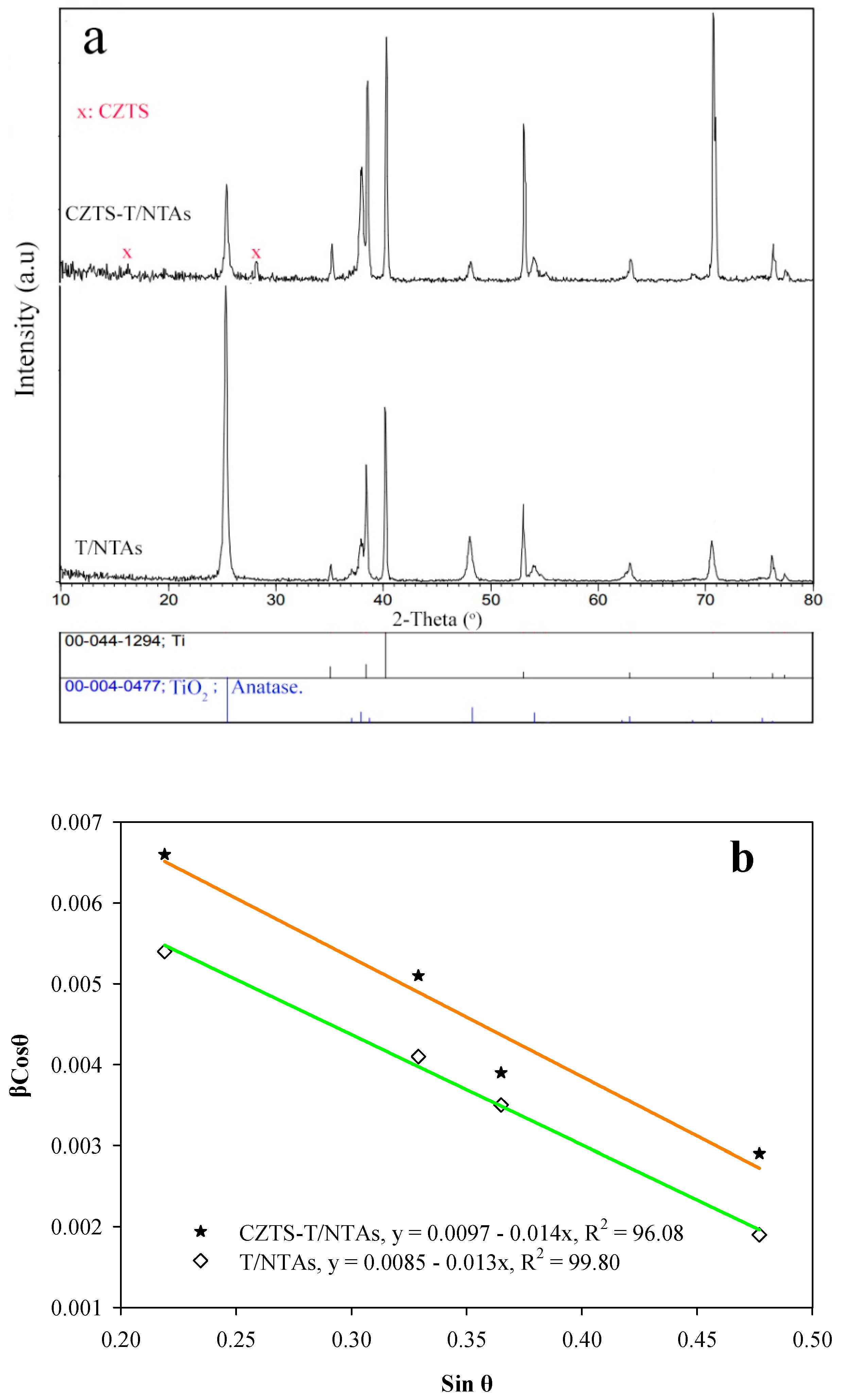
Figure 1a illustrates the XRD patterns from T/NTAs and CZTS-T/NTAs film. The diffraction peaks obtained from XRD patterns of both samples observed at 2θ = 25.34°, 38.00°, 38.51°, 47.99°, 54.08°, and 62.83° ascribed to the (101), (004), (112), (200), (105), and (204) the diffraction peaks were assigned to the lattice structures of TiO2 in the anatase phase [21,24,25,27,28]. The phase analysis was carried out with the use of a PDF card (PDF card No. 00-004-0477) [2,32]. Figure 1a exhibits distinct diffraction peaks at 2θ = 35.90° and 54.10°, which are due to the reflecting planes [101] and [102], respectively, that can be indexed to rutile phase TiO2 (JCPDS No. 21-1276) [32]. However, the diffraction peaks observed in the XRD pattern correspond to metallic Ti phase. The XRD pattern of CZTS-T/NTAs film synthesized (Figure 1b) shows peaks at 16.22°, 28.10°, and 37.9°, which can be equivalent to (002), (112), and (211) of Cu2ZnSnS4 (JCPDS no. 26-0575) [12,26,33]. The overlapping of the CZTS diffraction lines at 37.90 with the diffraction peaks observed at 38.00 for TiO2 led to an amplification of the peak intensities due to the incorporation of the loaded CZTS [23,24]. However, the weak new CZTS peaks were observed in the XRD pattern of CSTS-T/NTAs, probably due to the smaller size and good dispersion of CZTS on the surface. It is important to point out that the overlap of the CZTS lines with the diffraction peaks of NTAs may cause the disappearance of the lines from low-stressed samples [34]. The obtained result in this work is in agreement with the results in the previous literature [21,28,35].The average crystallite size of the synthesized CZTS-T/NTAs film was employed by Debye–Scherrer (Equation (3)) [3,36,37]:
D = K λ / β c o s θ
where K represents the spherical crystal, typically approximated as 0.9, β signifies the full-width at half-maximum (FWHM) intensity of the diffraction peak, λ is the wavelength of radiation used, and θ indicates the diffraction angle related to the main peak of the studied phase. The average crystallite size of T/NTAs and CZTS-T/NTAs was estimated at 22.64 nm and 21.42 nm.
The Williamson–Hall (W-H) method is a simplified integral broadening technique that considers the peak width as a function of 2θ in which the size-induced and lattice strain broadening of nanomaterials are separated [20,22,33]. The average crystallite size in the T/NTAs and CZTS-T/NTAs films on the diffraction patterns was estimated at 16.23 nm and 14.22 nm using the Williamson–Hall (W-H) plot method. The W-H equation is demonstrated by Equation (4):
β c o s θ = N λ D + 4 ε   s i n θ
where D, ε, λ, θ, and N are the grain size, the internal strain, wavelength of the X-ray source, the Bragg’s angle (peak position) [4,34], and the Scherrer’s constant, respectively [1,3]. After plotting with sinθ values along the x-axis and βcosθ values along the y-axis (see Figure 1b), the y-intercept and the slope of the plot that represents the crystallite size (D) and the lattice strain (ε) were calculated. A comparison of the crystallite size values calculated with the Scherrer method and the W-H method indicates that the crystallite size determined with the Scherrer method is substantially bigger than the value determined with the W-H method. The observed results are in agreement with the literature [4,38]. The crystallite size determined with the Scherrer method is larger than the actual crystallite size, as the lattice strain (main factor of the broadening peak) is not taken into account in the Scherrer method. Consequently, the W-H method provides relatively more accurate values than the Scherrer method, as it takes into account both the crystallite size and the lattice strain [38].

3.1.2. Morphological Analysis

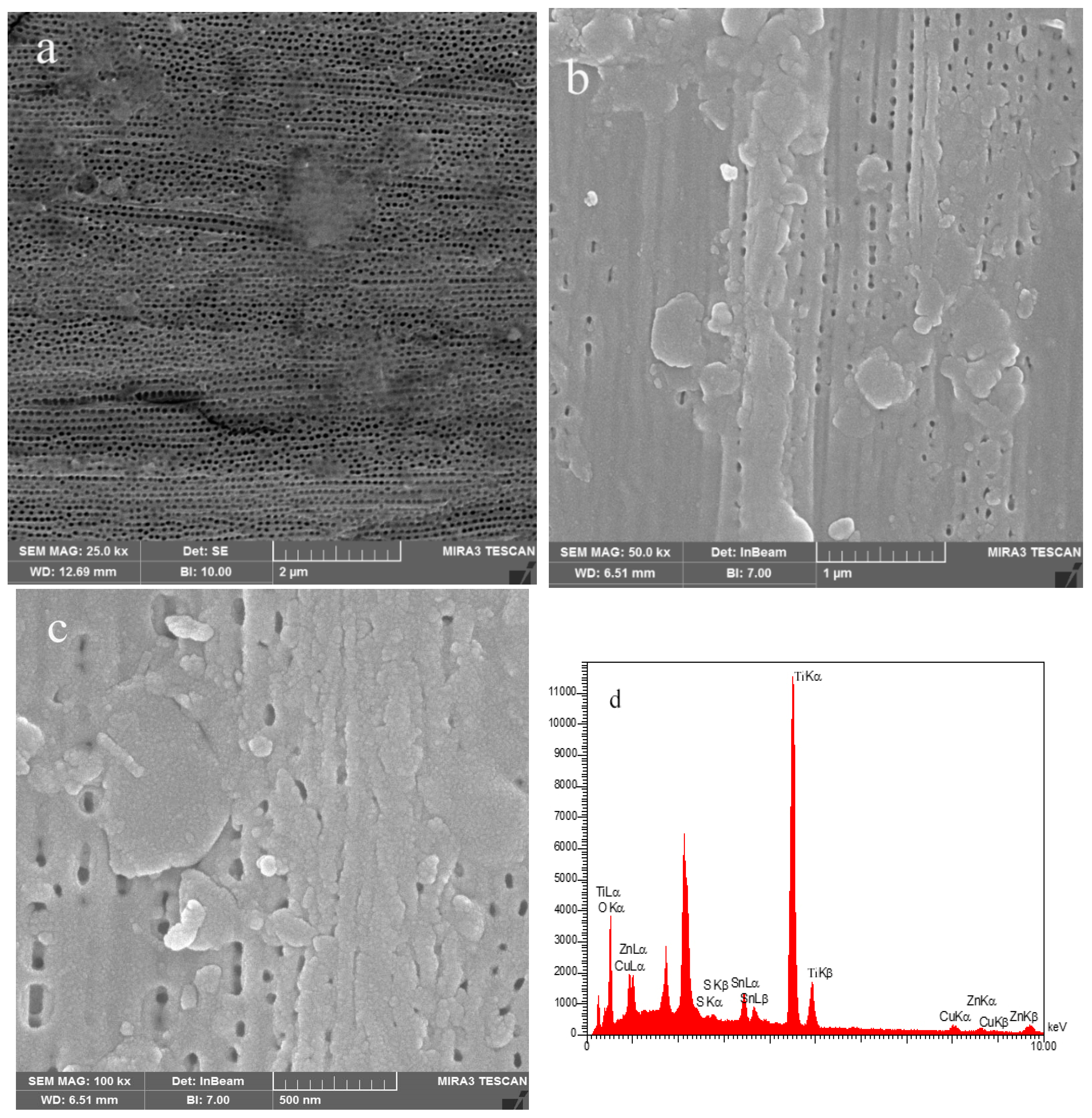
The morphology of T/NTAs and CZTS-T/NTAs was studied by FESEM, and the top-surface images are shown in Figure 2. The FESEM micrographs show that TiO2 nanotubes (Figure 2a) were formed with anodizing times in ethylene glycol with the addition of 0.5% wt NH4F under 20 V anodizing voltage. Figure 2b,c shows the images of the CZTS-T/NTAs heterostructure film. It can be seen that the nanotube areas are densely filled. On the titanium (Ti) substrate, well-ordered TiO2 nanotube arrays (NTAs) are vertically arranged, which have become an emerging structure for the photocatalytic activity of TiO2 [8,9,27,29,39,40]. The EDX spectrum of CZTS-T/NTAs (Figure 2d) shows Ti, O, Cu, Zn, Sn, and S. The FE-SEM-EDS result indicates that the TiO2 and CZTS layers are covered on the surface of the nanotube arrays.

3.1.3. Optical Properties and Band Gap Studies

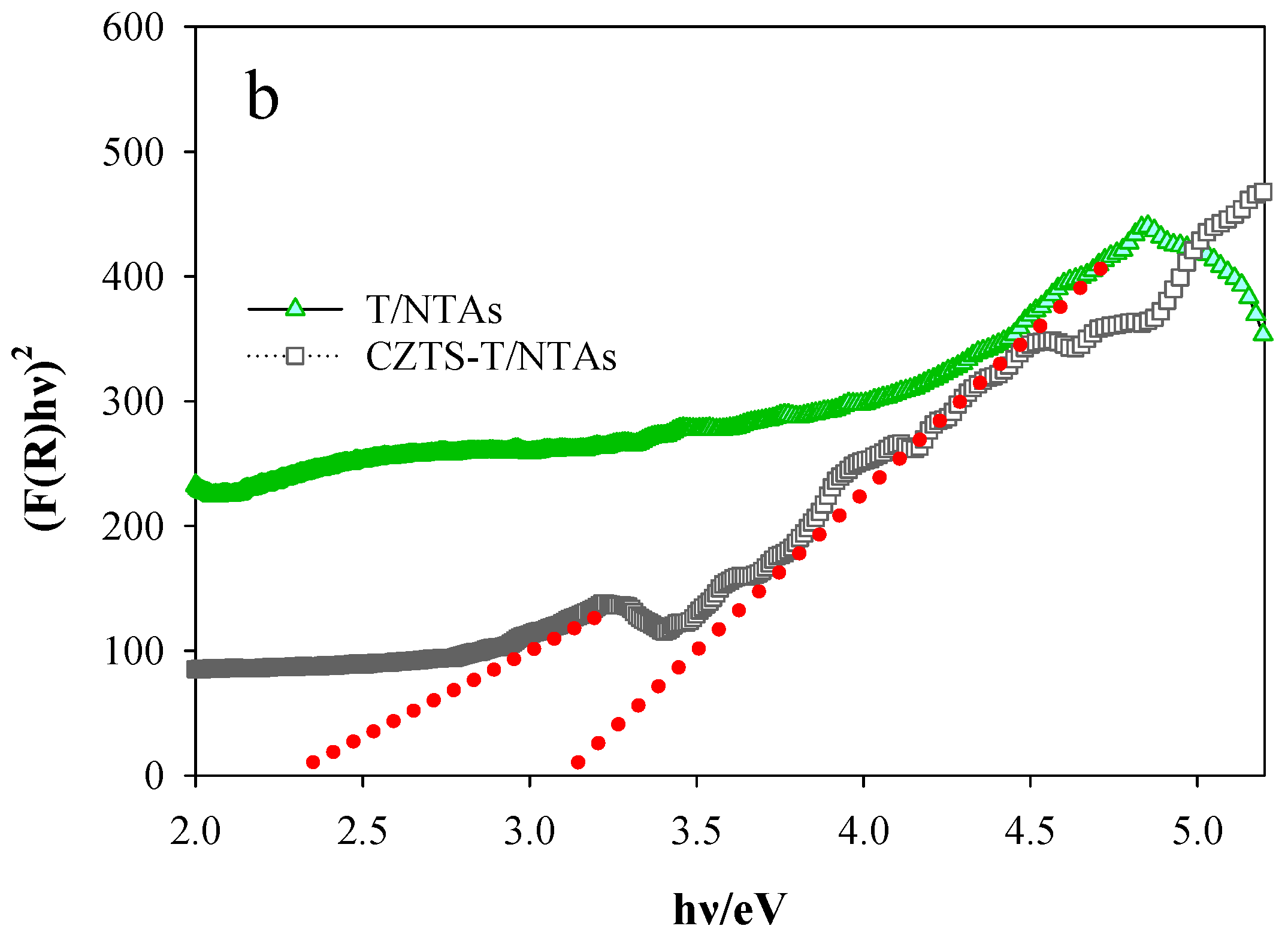
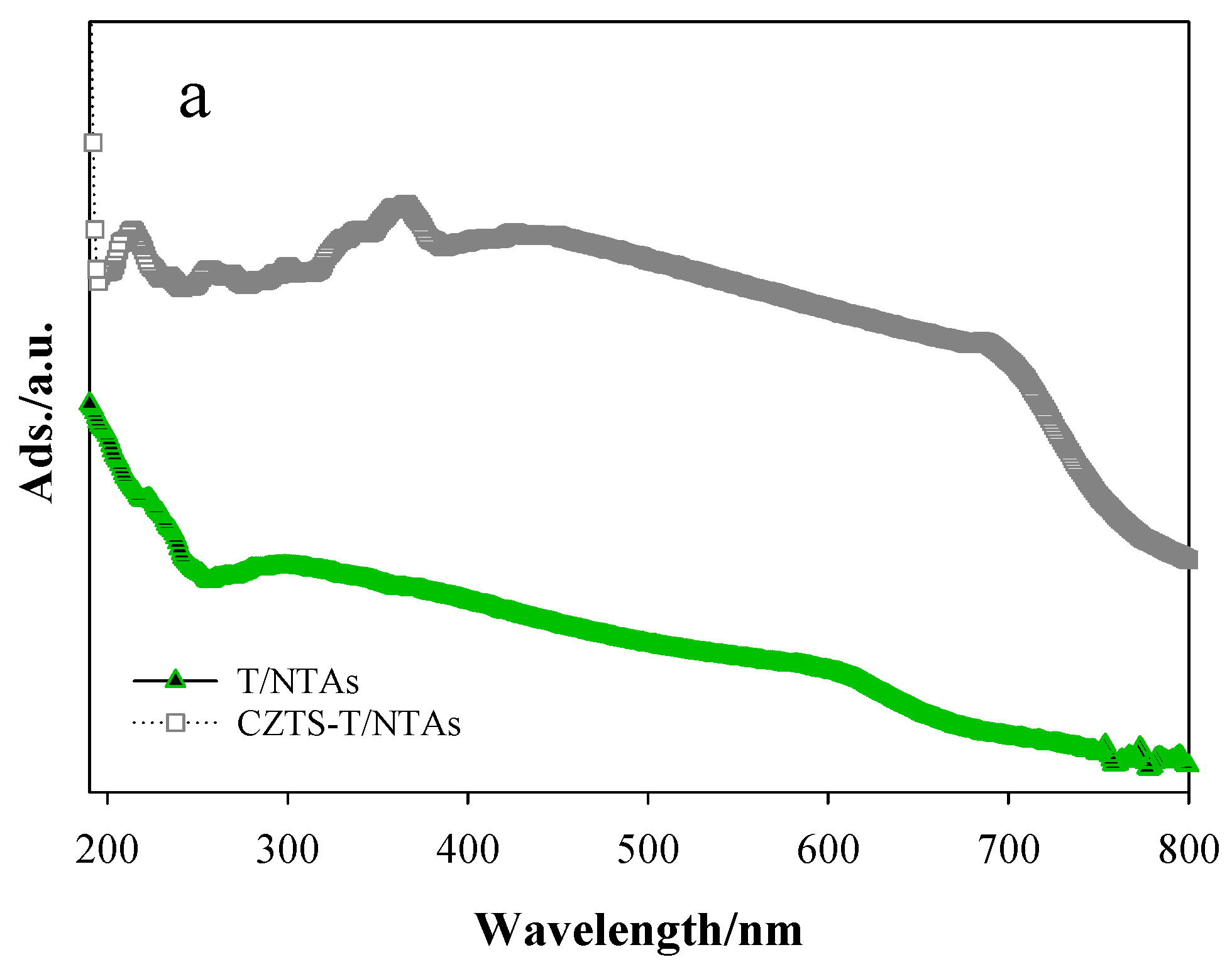
Figure 3a,b illustrates the DRS measurements and the estimated band gap of the prepared T/NTAs and CZTS-T/NTAs samples. As shown, T/NTAs exhibit significant absorption primarily in the ultraviolet region (400 nm) [41,42], which would originate from the intrinsic characteristics of NTAs and the presence of titanium in octahedral coordination and correspond to the transitions of electrons from the valence band (VB) to the conduction band (CB) in TiO2. According to Figure 3b, the CZTS-T/NTAs show a clear shift to the visible light region, exhibiting the high photo-absorption ability of CZTS in the visible region. Moreover, CZTS can easily generate electron–hole pairs due to the narrow band gap and effective absorption of visible light, and thus the photocatalytic performance [28]. The CZTS-T/NTAs heterojunction photocatalyst has the sufficiency to make an adequate strong electric field at the interfaces of CZTS and TiO2, thereby facilitating the photogenerated charge separation efficiencies [23,27]. Figure 3b shows the optical band gaps for T/NTAs and CZTS-T/NTAs using Tauc plot Equation (5):
( α h ν ) 2 = B ( h ν E g )
where B, α, Eg, h and ν represent the proportional constant, absorption coefficient (that relates to A (the absorbance of the sample)), band gap, Planck’s constant (6.62 × 10⁻³⁴ J s) and light frequency, respectively [27,28,32] that evaluated by extrapolating of (αhν)2 vs. photon energy plot to the α = 0 point. As can be seen from Figure 3b, the band gap of T/NTAs is estimated at 3.15 eV. The band gap of CZTS-T/NTAs was measured to be 2.32 eV, evidencing that the CZTS nanoparticles significantly improve the absorption range of the photocatalysts for absorbing much stronger visible light and consequently enhance photocatalytic activity [23,24].

3.1.4. Electrochemical Impedance Spectroscopy (EIS) Measurements

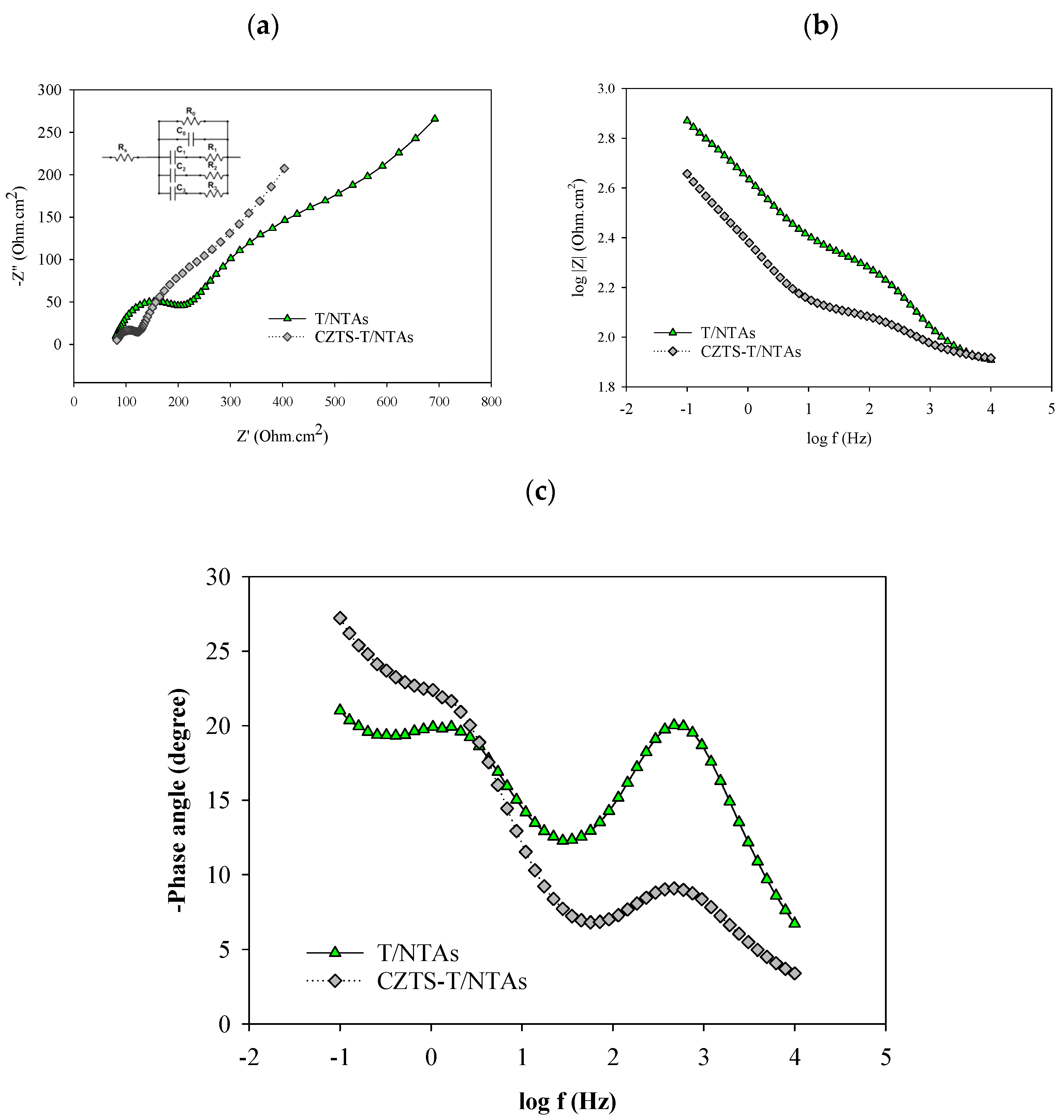
To further validate the photo-induced charge recombination and separation, the electrochemical impedance spectroscopy (EIS) was investigated, and Nyquist impedance was plotted for T/NTAs and CZTS-T/NTAs (Figure 4a). Whereas, the Nyquist impedance arc reflects a semicircle of a small diameter, indicating that the charge transfer resistance decreases across the electrode interface [33]. It is generally known that the smaller semicircle radius is attributed to lower resistance at the electrode interface and consequently, the effective charge transfer and more efficient photocatalytic degradation after CZTS composition [25]. The equivalent model was obtained by fitting the proposed electrical circuit to the experimental EIS data; the parameters R0 and C0 were determined using Zsimp win 3.22d program (E-Chem Software v2.2.5) program and are shown in Table 2. The R0 value of the series resistance that is clearly illustrated by CZTS-T/NTAs is low, indicating the smallest amount of resistance between the two materials. So, confirms that space charge capacitance allows efficient charge separation of electron/hole pairs, and the electrons can effectively transfer to the surface of the photocatalyst to react with pollutants. To evidence the lower electron/hole recombination at CZTS-T/NTAs, the electron lifetime (t) at the depletion layer of samples was determined using the values for the charge transfer resistance and the space charge capacity (t = R0 C0) [4]. As seen in Table 2, the T/NTAs show a shorter electron lifetime compared to CZTS-T/NTAs. Indeed, an extended electron lifetime is correlated with a reduction in the recombination of photogenerated carriers and an increased electron transport rate on the surface for producing radicals that will react with the dye pollutants [18]. The Bode diagram of log |Z| and the phase shift as a function of frequency, displayed in Figure 4b,c, is also very useful to characterize the CZTS-T/NTAs performances. The Bode plots have the low-frequency domain that represents the charge transfer resistance (R0) that takes place in photoelectrochemical systems. In Figure 4b,c, it appears that the EIS bode plot of CZTS-T/NTAs has impedance less than that of the T/NTAs, which demonstrates that CZTS-T/NTAs have superior photocatalytic activity, thereby suggesting a diminished recombination rate and an extended electron lifetime [14,43].

3.2. Photodegradation Study

3.2.1. Photodegradation Performance of Azo Dye

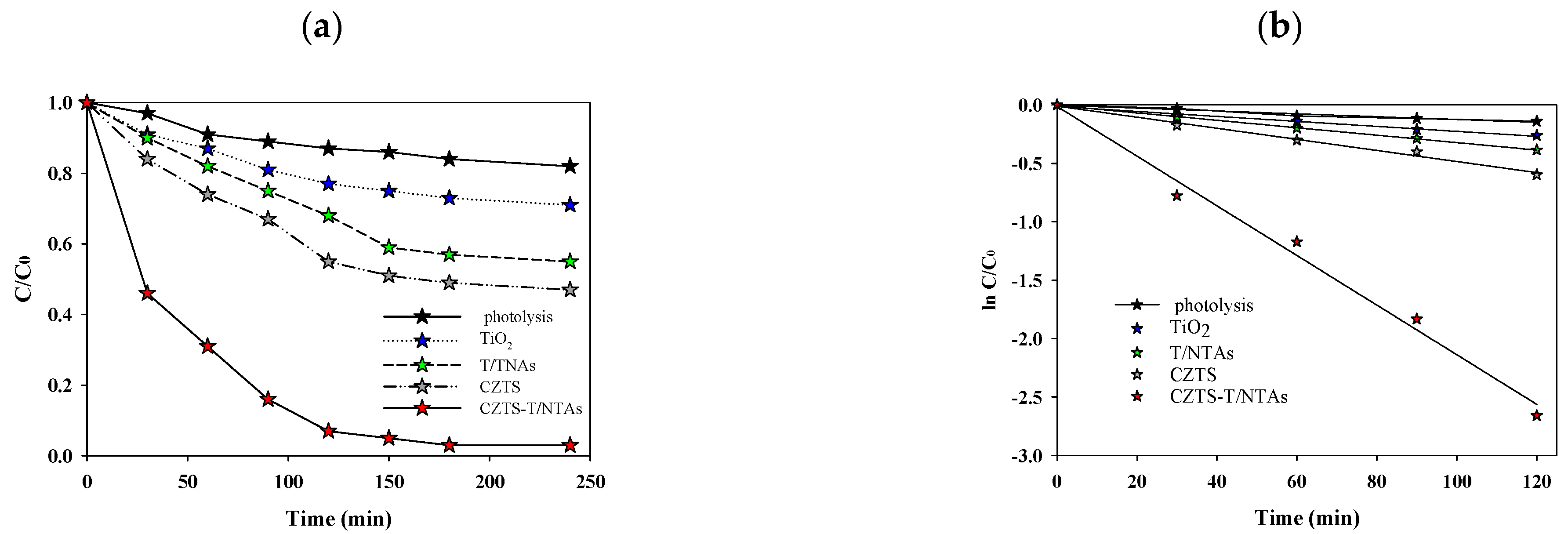
The results of the degradation efficiency of azo dye (Basic Blue 41) tested under visible light irradiation (λ > 420 nm) using various photocatalysts, including pure TiO2, T/NTAs, CZTS, and CZTS-T/NTAs, are shown in Figure 5a,b. First, dark experiments were carried out for 30 min in the absence of a photocatalyst, and the experiments demonstrated that the adsorption of the Basic Blue 41 was negligible onto the photocatalyst surface [7,15]. Additionally, the degradation of Basic Blue 41 was tested under visible light irradiation in the absence of a photocatalyst, evidencing a low degradation rate of about 18% after 250 min. For the degradation of Basic Blue 41under visible light irradiation, photolysis is insufficient. It is evident that the photodegradation of Basic Blue 41 azo dye obeys the first-order kinetics model, and Figure 5b indicates the kinetic curves of various photocatalysts in the photodegradation of azo dye. In addition, the degradation of Basic Blue 41 using pure TiO2 and T/NTAs was compared. The results showed that T/NTAs (0.0021 min1) have a better photocatalytic degradation rate than pure TiO2 (0.0012 min1), indicating that NTAs play an important role in photocatalytic activity and the degradation of dyes. In particular, the photodegradation rate of the CZTS-T/NTAs improved from 0.0047 to 0.021 min1 compared with CZTS, and the reason for this result could be that the photoelectrons generated by CZTS-TiO2 have the lowest recombination rate for the photogenerated electrons and holes in photocatalytic reactions, which improves the performance of photocatalytic degradation [15,16,44]. This behavior in photocatalytic performance is due to the efficient separation rate of electron–hole pairs and the decelerated band gap after composition with CZTS [20,25]. On the other hand, TiO2 nanostructures, particularly the substrate-anchored one-dimensional TiO2 nanotube arrays, exhibit enhanced charge transport characteristics due to the direct conduction pathways present within the nanotube walls, in contrast to the electron hopping mechanisms observed in nanoparticle systems [33]. Hence, these structures offer a substantial active surface area along with numerous diffusion pathways for reactant species. Consequently, one-dimensional T/NTAs demonstrate remarkable photocatalytic properties and present significant promise for the photodegradation of environmental pollutants [45]. The results of the dye degradation efficiency with various photocatalysts are shown in Table 3.

3.2.2. Possible Photodegradation Mechanism of the CZTS-T/NTAs Film

To suggest the plausible photocatalytic mechanism for the superior photocatalytic performance of CZTS-T/NTAs, the energy band structure and the position of the conduction band (ECB) and valence band (EVB) of the photocatalyst were estimated by Equations (6) and (7), respectively [22,23,52].
E C B = χ E e 0.5 E g
E V B = E C B + E g ,
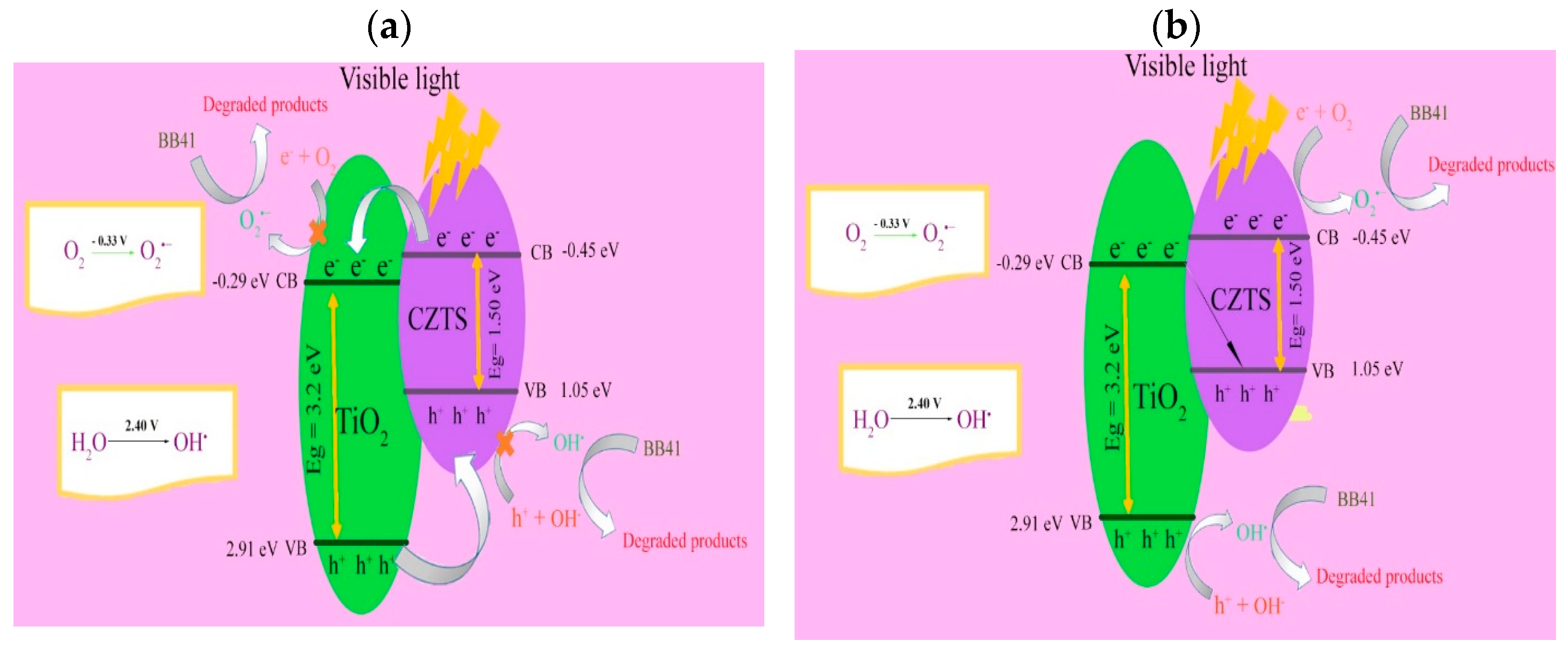
where ECB, EVB, χ, Ee, and Eg are the conduction band potential, the valence band edge potential, the absolute electronegativity of the semiconductor (χTiO2 = 6.39 eV and χCZTS = 4.80 eV), the energy of free electrons (about 4.5 eV vs. NHE), and the semiconductor band gap energy, respectively [53]. It was estimated that ECB (TiO2) = −0.29 eV, EVB (TiO2) = 2.91 eV and ECB (CZTS) = −0.45 eV, EVB (CZTS) = 1.05 eV. The calculated band potentials will be used for constructing a type II and Z-schematic heterojunction to illustrate the charge carriers’ separation and the photodegradation pathways [6,12,18]. The photocatalytic degradation of Basic Blue 41 via the type II heterojunction CZTS-T/NTA photocatalyst has been schematically shown in Figure 6a. By irradiation of visible light to the prepared sample, electrons and holes in the CZTS and TiO2 surface are produced, which act as powerful oxidizing and reducing agents, respectively. The above result suggests that the photogenerated electrons are transferred from the conduction band of CZTS to the conduction band of TiO2 because the CZTS conduction band is more negative than TiO2’s. On the other hand, holes are transferred from the valence band of TiO2 to the valence band of CZTS because of the more positive valence band of TiO2. In this situation, we have the accumulation of holes and electrons in the valence band of CZTS and the conduction band of TiO2, respectively [23]. But water oxidation to form hydroxyl radicals, HO (H2O/OH: 2.40 eV vs. NHE), and reduction of dissolved molecular oxygen to create superoxide O2⦁− (O2/O2⦁−: −0.33 eV vs. NHE) would not be accomplished on the valence band of CZTS and the conduction band of TiO2, respectively.
The “type II heterojunction” mechanism is not feasible to explain the enhanced photocatalytic efficiency, and it limits the charge separation. Under visible light illumination, in the “type II heterojunction”, all of the photogenerated electron–hole pairs would be collected on the TiO2 and CZTS, which does not improve the photocatalytic efficiency [23,41,54]. Thus, another option, put forward to display the increase in the photocatalytic degradation rate, is the Z-scheme mechanism displayed in Figure 6b. Upon irradiation, electrons that are excited transfer from the valence band of CZTS and TiO2 to the conduction bands. While the electrons in the conduction band of CZTS do not move into the conduction band of TiO2, the fast transfer between the electrons of TiO2 in the conduction band and the holes of CZTS is accomplished; on the other hand, the electrons in the conduction band of CZTS and the holes in the valence band of TiO2 can be reserved [55,56]. Because of the more negative conduction band of CZTS and the more positive valence band of TiO2, O2⦁− and OH radicals can be sufficiently produced by CZTS-T/NTAs film. The direct Z-scheme has shown that it has the potential to enhance photocatalytic efficiency and maximize the redox potential of the photocatalytic system by promoting the separation of photogenerated charge carriers [18,23].
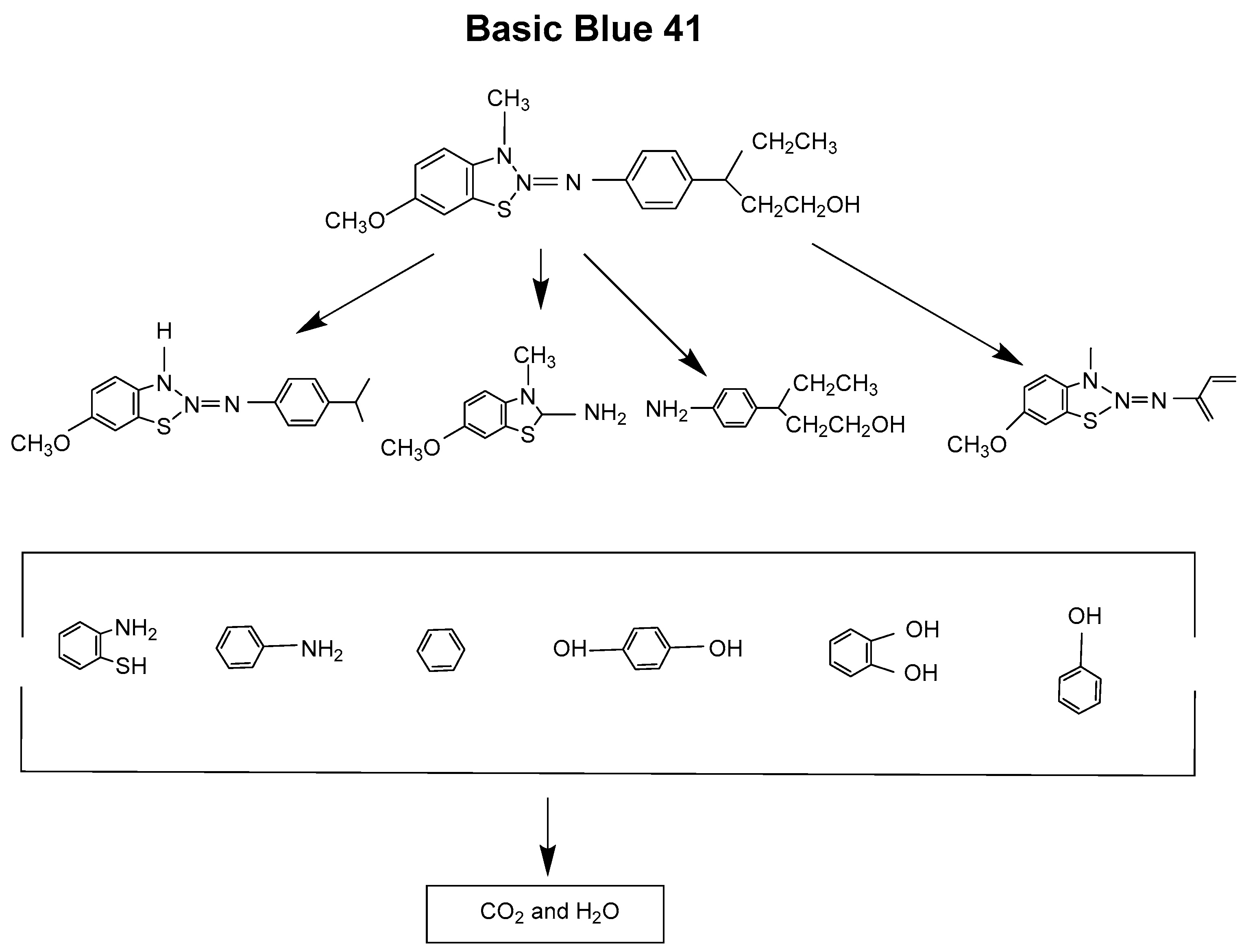
Free radicals, such as hydroxyl radicals, holes, and superoxide radicals, are widely acknowledged to be within the framework of photocatalytic systems and play a pivotal role in the photocatalytic degradation of various dyes [6]. Q. Wang et al. [6,57] studied the electron spin resonance (ESR) data in the degradation processes of methylene blue and rhodamine B, which indicates the significant involvement of OH and O2⦁−. They conducted an investigation of radical formation in a Bi/CdS/TiO2 nanotube arrays photocatalyst, utilizing ESR analysis. The results confirm the generation of both OH and O2⦁−. The O2⦁− is the predominant active species in the photocatalytic process. The ESR technique for Sn3O4/TiO2 nanotube array was employed to investigate the formation of radicals. The assessment of photocatalytic performance after the addition of scavenging reagents signifies that OH and O2⦁− radicals have the dominant role in dye photodegradation and are pivotal species for MB degradation [58]. Wang et al. [12] exhibited a synergistic effect of OH and O2⦁− free radicals on the degradation of organic pollutants using ESR technology. The results indicated that OH and O2⦁− are both active radicals in the degradation of pollutants. Similar results were obtained in photocatalytic performance with Bi2S3-BiOBr/TiO2 NTA for the degradation of dyes and Cr (VI). According to previous reports [4,38], Figure 7 displays the possible pathways and mechanisms of Basic blue 41 degradation by the photocatalytic process.

3.3. Photodegradation Process Optimization via RSM

3.3.1. General Aspects

RSM includes an appropriate approximation to detect the relationship between the set of independent variables and the dependent variable [28,31,59]. In this part, the photodegradation efficiency of the CZTS-T/NTAs photocatalyst was established with the effects of individual parameters and their interactions on an experimental design based on the RSM methodology [59,60]. The optimization of the process parameters was selected as the main influencing factor with the mentioned values (A) pH of the dye solution (2.5–10.5), (B) dye concentration (6–26 mg/L), (C) irradiation time (50–250 min), and (D) the H2O2 concentration (25–125 mmol/L). The values, including 3, replicates were entered into the Minitab software, and 27 runs were proposed using the software (utilizing CCRD based on RSM). After the experiments were carried out, the degradation of Basic Blue 41 was imported into laboratory findings into the software and was calculated as the response variable Y. The following regression equation for explaining the behavior of the system was applied to model the response Equation (8) [31,61]:
y = β 0 + i = 1 k β i x i + i = 1 k β i i x i 2 + i = 1 k j = 1 k β i j x i x j
where y is the expected response (the percentage of degradation), β0 represents the intercept term, xi and xj represent the coded values of variables, and βi, βii, and βij are the linear, quadratic, and interaction coefficients, respectively [4,41,62]. The mathematical model (Equation (9)) is based on the coded values provided for the degradation of Basic Blue 41 [43,63,64].
Y B a s i c   B l u e   41 = 91.19 + 7.23 A + 1.94 B 7.06 C + 2.97 D 10.83 A 2 12.67 B 2 12.38 C 2 9.96 D 2 2.63 A B 2.94 A C + 7.53 A D 1.34 B C 4.77 B D 7.84 C D
The results of the ANOVA (Table 4) were used to test the adequacy of fit for the model with a 95% confidence level. A comparison of the model’s degree of freedom values (F-value) of 50.07 with the critical value acknowledges the quadratic model is a statistically notable outcome, signifying its significance and the importance of the model for the photocatalytic process. Also, the p-value of less than 0.05 in the ANOVA table indicates that the noise of the results obtained by the model is less than 0.01%, confirming that the variables have a statistically significant effect on the response and indicates the technique-designed significance of an effect at a confidence level of 95% [4]. Table 4 presents the LOF p-value of 0.75. The lack-of-fit F-value (LOF) is not significant relative to pure error and establishes that the fitted model can fit the data well [34,41,62]. The R-squared is a high value of the coefficient of determination that indicates the validity and quality of the model. Larger values for R-squared and a high proximity to the Adj R-squared value indicate a high agreement between the experimental and predicted values of the fitted models. In this study, the values of the coefficient of determination for R-squared and Adj R-squared were established to be 0.9832 and 0.9635, respectively. This implies that there are negligible differences between the observed experimental and predicted responses, thereby indicating the high validity of the proposed models. Table 5 shows that the predicted results of the RSM optimization at optimal operating conditions closely match the experimental results, confirming the accuracy of the predicted models for the decomposition of Basic Blue 41.
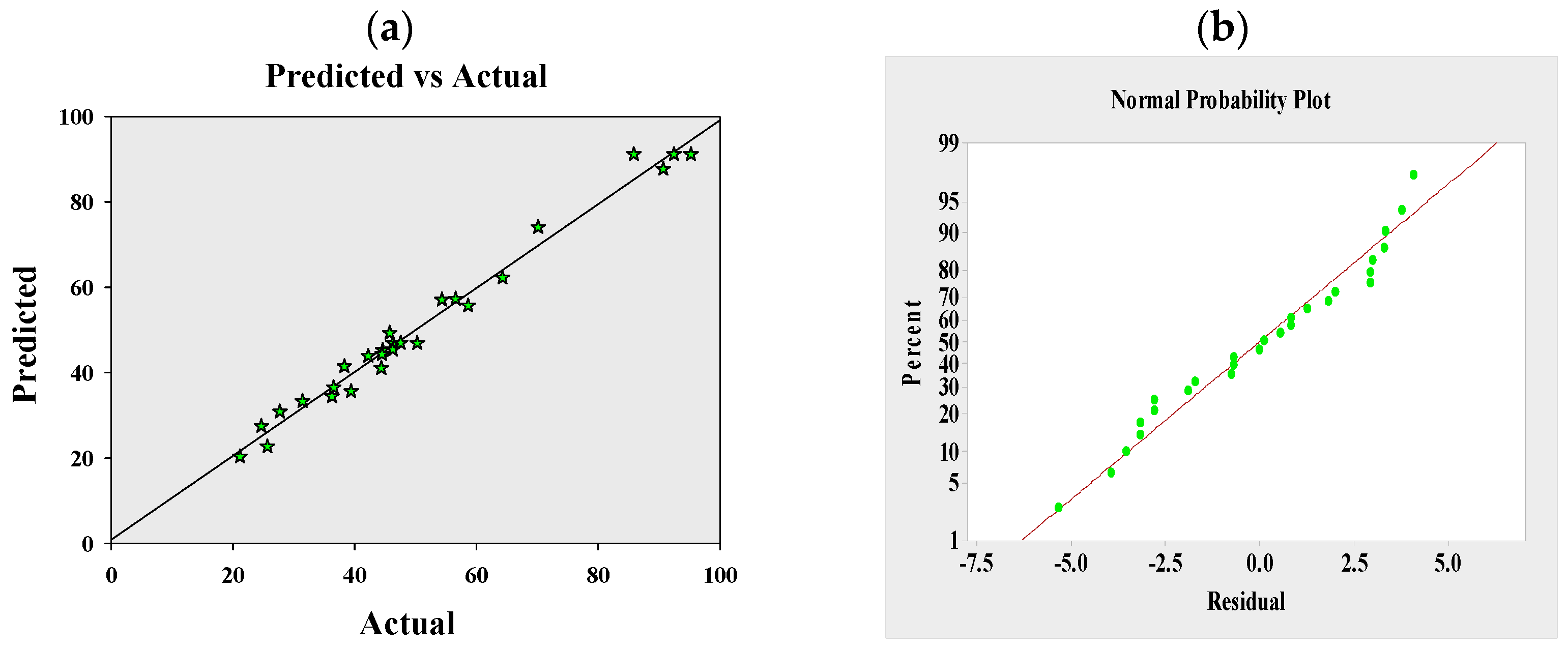
Figure 8a illustrates the relationship between the predicted values and actual values in the photodegradation of Basic Blue 41 (% degradation). There is a high correlation (R2 = 0.9832) between the predicted values and actual values, representing a reasonable agreement between them (Table 5). This suggests that the data fit the model well and shows a good correlation between the effective parameters for the photocatalytic performance of CZTS-T/NTAs in the degradation of Basic Blue 41, and in the experimental range studied, providing an ensured estimate of the response for the photocatalytic system [41]. The normal plot of residual around the diagonal for the photocatalytic activity of CZTS-T/NTAs in the degradation of Basic Blue 41 is represented in Figure 8b. According to Figure 8b, the locations of the points on the straight line with some scatter confirm that the residuals follow a normal distribution, and the differences between the observed and predicted response follow a normal distribution. Thus, these figures confirm the normal distribution of errors and a suitable agreement between the experimental data and calculated results in the proposed model [4,62].

3.3.2. Effects of Interactions Between Variables

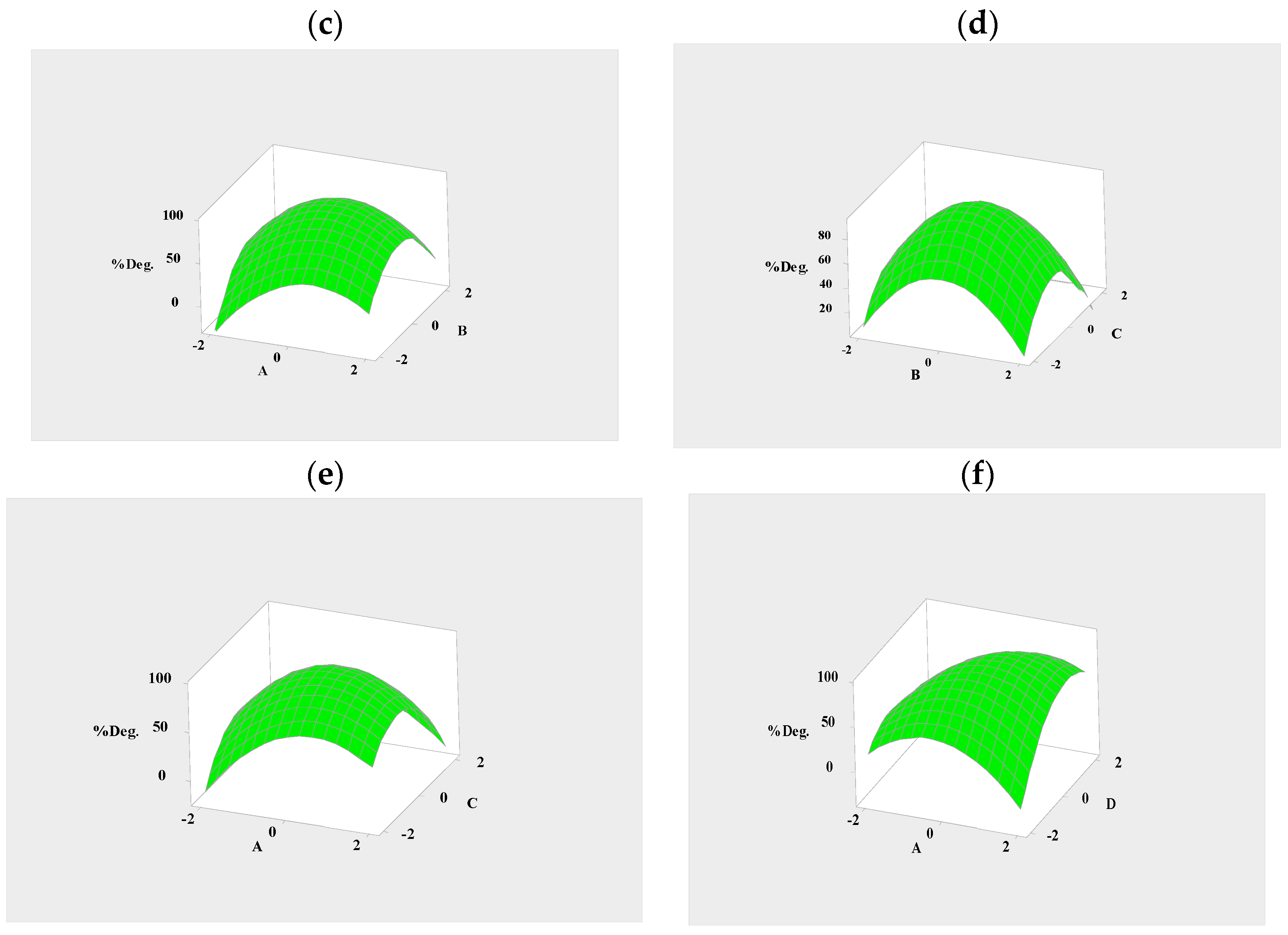
Figure 8c–f illustrates surface (3D) plots to visualize the simultaneous effect of interactions of factors on the response variable in the degradation of Basic Blue 41. 3D surface plot representations facilitate and achieve maximum dye degradation efficiency and estimate the effects of studied experimental variables [4,34,41,44,62].
Figure 8c shows the influence of initial pH (A) and dye concentration (B) on the photodegradation of Basic Blue 41 by CZTS-T/NTAs. An enhancement in both pH and dye concentration was reached to maximize the degradation of Basic Blue 41 dye under optimum conditions, which shows the best response at a pH of about 7.75 over the whole range at the dye concentration (15.3 mg/L). As is clear from the data in Figure 8c, with the pH increasing from 2.50 to 7.75, the degradation decreases. This can be attributed to the structure of dyes whose surfaces are positively charged. Indeed, the surface of the catalyst is therefore positively charged at acidic pH, and due to the excess of H+ ions competing with the functional groups of the dye for the adsorption sites, the adsorption yield at acidic pH is slight. However, at basic pH values, the negatively charged surface of the CZTS-T/NTAs catalyst adsorbed dye by electrostatic attraction, resulting in high degradation [65]. However, dye degradation can occur at different pH values by electrons in the conduction band, holes in the valence band, and hydroxyl radicals. According to the results under strongly alkaline conditions (pH values of 8.0 to 10.50), a significant decrease in efficiency was observed. It is to be anticipated that at basic pH values, the presence of many hydroxyl anions can lead to the formation of more hydroxyl radicals and a higher degradation of the pollutant [8]. Although strong adsorption of the cationic dye occurred at basic pH values, the excessive adsorption of the dye blocks the availability of visible light to the catalyst surface, resulting in a hindrance to the subsequent photoexcitation process of holes and electrons due to reduced light intensity at the surface. In addition, due to the reaction of hydroxyl radicals with hydroxyl anions at high OH concentrations, the concentration of hydroxyl radicals was reduced at high pH, which in turn decreased photodegradation [8,35]. These results are consistent with the findings of other researchers [8]. According to Figure 8d, the best degradation performance was achieved at a concentration of Basic Blue 41, which was changed from 6.00 to 15.30 mg/L when the time was 121 min. In general, the reactive superoxide and hydroxyl radicals have shortened their lifetime and are very unstable. Therefore, increasing the collision possibility between Basic Blue 41 molecules and hydroxyl radicals leads to an increase in the activity of the system [66]. At low concentrations, the light penetrating to the surface of the catalyst is decreased, and the collision probability with the surface is low, resulting in a reduced concentration of hydroxyl radicals, as the active sites are occupied by the dye molecules [1,2,27,43,67]. The effects of the dye concentration and the time in Figure 8e show that a 121 min contacting time is sufficient to achieve the maximum degradation efficiency in the concentration range of about 15.30 mg/L. The interactions between the pH of the dye solution and the H2O2 concentration are shown in Figure 8f. Increasing the initial concentration of hydrogen peroxide from 25 to 91.50 mmol/L at a constant dye concentration (15.30 mg/L) indeed leads to an increased efficiency of the process. After 240 min of irradiation, the percentage of dye degradation increases to 95%. These are in good agreement with the results reported in the literature [5,63,68], where it was shown that increasing the hydrogen peroxide concentration improves the efficiency of the photodegradation process. The results of the numerical optimization are shown in Table 5.

3.4. COD Results

The photodegradation of Basic Blue 41 by the CZTS-T/NTAs catalyst was confirmed with the COD analysis technique. A photodegradation experiment was performed under optimal RSM conditions, and the photodegraded solution was used for COD analysis. Some photodegraded Basic Blue 41 solutions with different irradiation times were subjected to COD analysis to estimate the extent of mineralization of Basic Blue 41 and the by-products of dye photodegradation. The results are summarized in Table 6, which confirms that after 200 min of the photodegradation experiment, approximately 80% of Basic Blue 41 or its degradation intermediates were mineralized [7,8,9,69].

3.5. Reusability of the CZTS-T/NTAs Catalyst

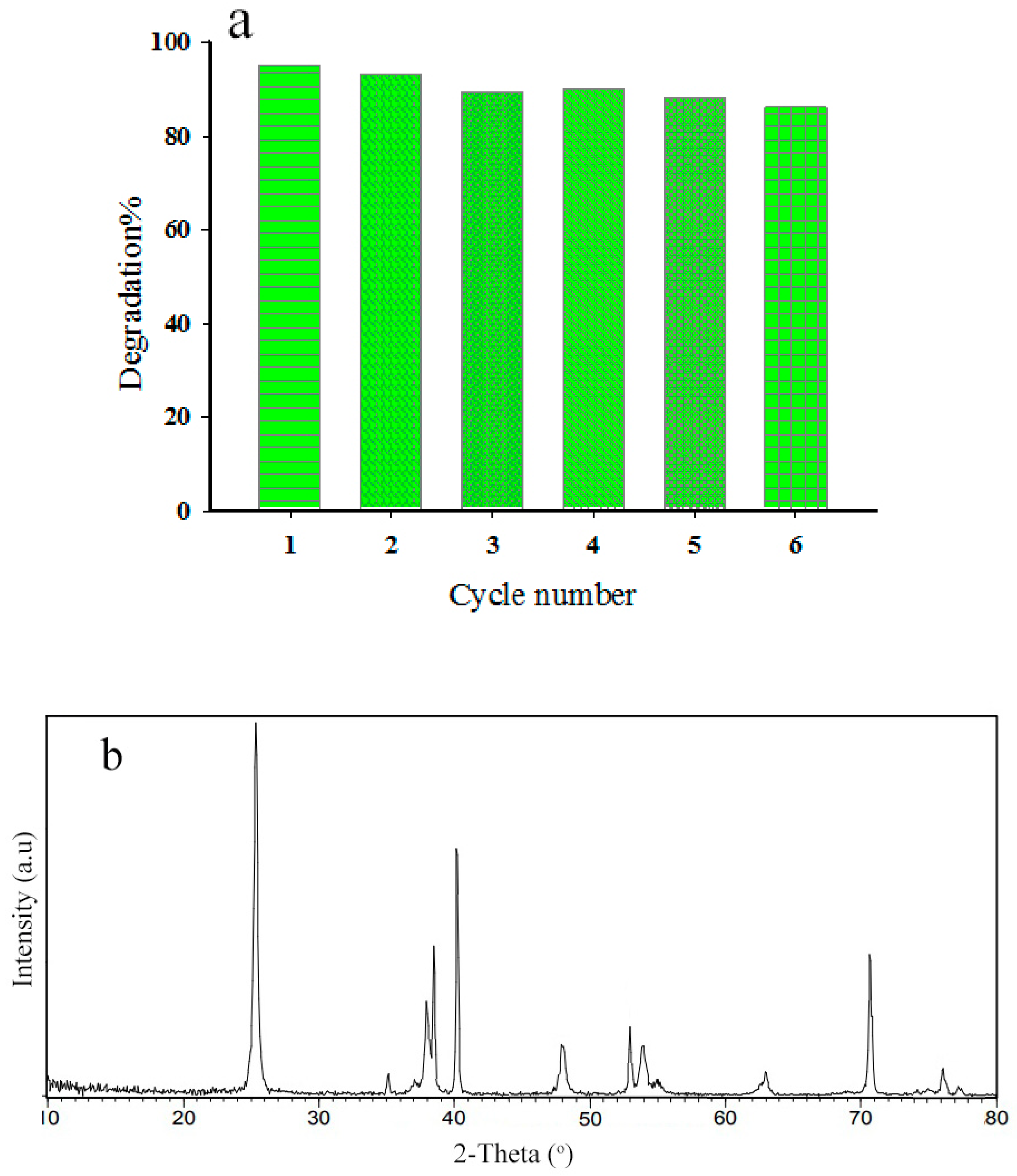
Reusability study of CZTS-T/NTAs as a photocatalyst, CZTS-T/NTAs performance was estimated under visible light during six cycle tests under optimal RSM conditions. The catalyst was recovered after every cycle, washed, dried, and reused in the next experiment under the new conditions. The findings are demonstrated in Figure 9a. The XRD patterns of the CZTS-T/NTAs photocatalyst are illustrated in Figure 9b. Clearly, the crystal structure of the used CZTS-T/NTAs photocatalyst did not change after the photocatalytic process. It is noted that the negligible decline in photocatalytic activity is due to the adsorption of the degradation products on the surface. So, the overall photocatalytic decrease after the 6th consecutive run shows that this stable catalyst is cost-effective and can be used in practical applications in the photocatalytic processes.

4. Conclusions

RSM was used for evaluating the significance of each of the variables in the photodegradation of Basic Blue 41. The results show that pH and visible irradiation time have considerable effects on the photocatalytic performance of samples. As a result, the optimal values of parameters for the degradation of the dye were delineated as follows: pH 7.75, 15.30 mg/L dye concentration, at an irradiation time of 121 min. The degradation of Basic Blue 41 molecules was confirmed by COD analysis. This study opens a new strategy to manufacture TiO2 nanotube array-based photocatalysts with wonderful photocatalytic ability in the degradation of dye and stability of photocatalyst, with the photodegradation percentage reaching 85.3% after six cycles.

Author Contributions

Conceptualization, A.A. (Amal Abdulrahman); data curation, N.G. and A.A. (Abdelfattah Amari); formal analysis, N.G.; funding acquisition, M.S.; investigation, Z.A., S.S.S. and M.S.; methodology, A.A. (Amal Abdulrahman); project administration, M.S.; resources, N.G., S.S.S. and A.A. (Abdelfattah Amari); supervision, M.S.; validation, A.A. (Amal Abdulrahman), Z.A. and A.A. (Abdelfattah Amari); visualization, S.S.S.; writing—original draft, A.A. (Amal Abdulrahman) and Z.A.; writing—review and editing, N.G., A.A. (Abdelfattah Amari) and M.S. All authors have read and agreed to the published version of the manuscript.

Funding

This research was funded by the Deanship of Research and Graduate Studies at King Khalid University under grant number RGP.2/243/46 and by Northern Border University under the project number NBU-FFMRA-2025-2105-08.

Data Availability Statement

Data are available from the corresponding author upon reasonable request.

Acknowledgments

The authors extend their appreciation to the Deanship of Research and Graduate Studies at King Khalid University for funding this work through Large Research Project under grant number RGP.2/243/46. The authors extend their appreciation to the Deanship of Scientific Research at Northern Border University, Arar, KSA for funding this research work through the project number “NBU-FFMRA-2025-2105-08”.

Conflicts of Interest

The authors declare no conflicts of interest.

References

  1. Saravanan, R.; Karthikeyan, S.; Gupta, V.; Sekaran, G.; Narayanan, V.; Stephen, A. Enhanced photocatalytic activity of ZnO/CuO nanocomposite for the degradation of textile dye on visible light illumination. Mater. Sci. Eng. C 2013, 33, 91–98. [Google Scholar] [CrossRef]
  2. Mohammed, N.A.; Alwared, A.I.; Salman, M.S. Photocatalytic degradation of reactive yellow dye in wastewater using H2O2/TiO2/UV technique. Iraqi J. Chem. Pet. Eng. 2020, 21, 15–21. [Google Scholar] [CrossRef]
  3. Nezamzadeh-Ejhieh, A.; Karimi-Shamsabadi, M. Comparison of photocatalytic efficiency of supported CuO onto micro and nano particles of zeolite X in photodecolorization of Methylene blue and Methyl orange aqueous mixture. Appl. Catal. A Gen. 2014, 477, 83–92. [Google Scholar] [CrossRef]
  4. Karimi-Shamsabadi, M.; Behpour, M. Comparing photocatalytic activity consisting of Sb2S3 and Ag2S on the TiO2–SiO2/TiO2 nanotube arrays-support for improved visible-light-induced photocatalytic degradation of a binary mixture of basic blue 41 and basic red 46 dyes. Int. J. Hydrogen Energy 2021, 46, 26989–27013. [Google Scholar] [CrossRef]
  5. Helmy, E.T.; Nemr, A.E.; Arafa, E.; Eldafrawy, S.; Mousa, M. Photocatalytic degradation of textile dyeing wastewater under visible light irradiation using green synthesized mesoporous non-metal-doped TiO2. Bull. Mater. Sci. 2021, 44, 1–11. [Google Scholar] [CrossRef]
  6. Wang, Q.; Zhu, S.; Zhao, S.; Li, C.; Wang, R.; Cao, D.; Liu, G. Construction of Bi-assisted modified CdS/TiO2 nanotube arrays with ternary S-scheme heterojunction for photocatalytic wastewater treatment and hydrogen production. Fuel 2022, 322, 124163. [Google Scholar] [CrossRef]
  7. Adarsha, J.; Ravishankar, T.; Ananda, A.; Manjunatha, C.; Shilpa, B.; Ramakrishnappa, T. Hydrothermal synthesis of novel heterostructured Ag/TiO2/CuFe2O4 nanocomposite: Characterization, enhanced photocatalytic degradation of methylene blue dye, and efficient antibacterial studies. Water Environ. Res. 2022, 94, e10744. [Google Scholar] [CrossRef]
  8. Dihom, H.R.; Al-Shaibani, M.M.; Mohamed, R.M.S.R.; Al-Gheethi, A.A.; Sharma, A.; Khamidun, M.H.B. Photocatalytic degradation of disperse azo dyes in textile wastewater using green zinc oxide nanoparticles synthesized in plant extract: A critical review. J. Water Process Eng. 2022, 47, 102705. [Google Scholar] [CrossRef]
  9. Zhu, Q.; Song, J.; Liu, Z.; Wu, K.; Li, X.; Chen, Z.; Pang, H. Photothermal catalytic degradation of textile dyes by laccase immobilized on Fe3O4@ SiO2 nanoparticles. J. Colloid Interface Sci. 2022, 623, 992–1001. [Google Scholar] [CrossRef]
  10. Nguyen, L.T.; Vo, D.-V.N.; Nguyen, L.T.; Duong, A.T.; Nguyen, H.Q.; Chu, N.M.; Nguyen, D.T.C.; Van Tran, T. Synthesis, characterization, and application of ZnFe2O4@ ZnO nanoparticles for photocatalytic degradation of Rhodamine B under visible-light illumination. Environ. Technol. Innov. 2022, 25, 102130. [Google Scholar] [CrossRef]
  11. Dong, Z.; Ding, D.; Li, T.; Ning, C. Black Si-doped TiO2 nanotube photoanode for high-efficiency photoelectrochemical water splitting. RSC Adv. 2018, 8, 5652–5660. [Google Scholar] [CrossRef]
  12. Yan, Z.; Wang, W.; Du, L.; Zhu, J.; Phillips, D.L.; Xu, J. Interpreting the enhanced photoactivities of 0D/1D heterojunctions of CdS quantum dots/TiO2 nanotube arrays using femtosecond transient absorption spectroscopy. Appl. Catal. B Environ. 2020, 275, 119151. [Google Scholar] [CrossRef]
  13. Suhag, M.H.; Tateishi, I.; Furukawa, M.; Katsumata, H.; Khatun, A.; Kaneco, S. Application of Rh/TiO2 nanotube array in photocatalytic hydrogen production from formic acid solution. J. Compos. Sci. 2022, 6, 327. [Google Scholar] [CrossRef]
  14. Dong, W.; Gao, H.; Dong, Z.; Zheng, Z.; Wu, Y.; Zhu, X.; Cheng, Z.; Liu, Y.; Wang, Y.; Wang, Y. Photocatalytic applications of heterostructure Ag2S/TiO2 nanotube arrays for U(VI) reduction and phenol degradation. J. Solid State Chem. 2022, 310, 123010. [Google Scholar] [CrossRef]
  15. Wang, Q.; Zhao, Y.; Zhang, Z.; Liao, S.; Deng, Y.; Wang, X.; Ye, Q.; Wang, K. Hydrothermal preparation of Sn3O4/TiO2 nanotube arrays as effective photocatalysts for boosting photocatalytic dye degradation and hydrogen production. Ceram. Int. 2023, 49, 5977–5985. [Google Scholar] [CrossRef]
  16. Meftahi, M.; Jafari, S.H.; Habibi-Rezaei, M. Fabrication of Mo-doped TiO2 nanotube arrays photocatalysts: The effect of Mo dopant addition time to an aqueous electrolyte on the structure and photocatalytic activity. Ceram. Int. 2023, 49, 11411–11422. [Google Scholar] [CrossRef]
  17. Sherly, R.A.; Padma, C.; Raja, D.H.; Sindhusha, S.; Almansour, A.I.; Dhas, S.S.J. H2O2-assisted photo-electrocatalytic and photocatalytic degradation of methyl violet by CuO-modified TiO2 nanotube arrays. Opt. Mater. 2024, 155, 115870. [Google Scholar] [CrossRef]
  18. Yan, H.; Wang, R.; Liu, R.; Xu, T.; Sun, J.; Liu, L.; Wang, J. Recyclable and reusable direct Z-scheme heterojunction CeO2/TiO2 nanotube arrays for photocatalytic water disinfection. Appl. Catal. B Environ. 2021, 291, 120096. [Google Scholar] [CrossRef]
  19. McCormick, W.J.; McCrudden, D.; Skillen, N.; Robertson, P.K. Electrochemical monitoring of the photocatalytic degradation of the insecticide emamectin benzoate using TiO2 and ZnO materials. Appl. Catal. A Gen. 2023, 660, 119201. [Google Scholar] [CrossRef]
  20. Fu, X.; Ji, Z.; Li, C.; Zhou, Z. Electrochemical method for synthesis of Cu2ZnSnS4 Nanorod/TiO2 nanotube arrays hybrid structure with enhanced photoelectrochemical properties. J. Alloys Compd. 2016, 688, 1013–1018. [Google Scholar] [CrossRef]
  21. Jayakumar, A.; Krishnan, A. Electrodeposited CZTS loaded titania nanotubes for photocatalytic water splitting. IOP Conf. Ser. Mater. Sci. Eng. 2023, 1291, 012006. [Google Scholar] [CrossRef]
  22. Kim, K.; Razzaq, A.; Sorcar, S.; Park, Y.; Grimes, C.A.; In, S.-I. Hybrid mesoporous Cu2ZnSnS4 (CZTS)–TiO2 photocatalyst for efficient photocatalytic conversion of CO2 into CH4 under solar irradiation. RSC Adv. 2016, 6, 38964–38971. [Google Scholar] [CrossRef]
  23. Zubair, M.; Razzaq, A.; Grimes, C.A.; In, S.-I. Cu2ZnSnS4 (CZTS)-ZnO: A noble metal-free hybrid Z-scheme photocatalyst for enhanced solar-spectrum photocatalytic conversion of CO2 to CH4. J. CO2 Util. 2017, 20, 301–311. [Google Scholar] [CrossRef]
  24. Gan, T.; Li, Y.; Wang, X.-Z.; Wang, X.-T.; Wang, C.-W. Cu2ZnSnS4@ TiO2 pn heterostructured nanosheet arrays: Controllable hydrothermal synthesis and enhanced visible light-driven photocatalytic activity. Appl. Surf. Sci. 2017, 408, 60–67. [Google Scholar] [CrossRef]
  25. Covei, M.; Bogatu, C.; Perniu, D.; Cisse, S.; Duta, A. Comparative study of the electrical properties of CZTS-TiO2 and CZTS-ZnO heterojunctions for PV applications. In Proceedings of the 2018 International Semiconductor Conference (CAS), Sinaia, Romania, 10–12 October 2018; pp. 311–314. [Google Scholar]
  26. Wadhene, R.; Lamouchi, A.; Assaker, I.B.; Naceur, J.B.; Martínez-Huerta, M.; Chtourou, R. Electrodeposition of Cu2ZnSnS4 thin films onto TiO2 nanorods for photocatalytic application: Effect of deposition time. Inorg. Chem. Commun. 2020, 122, 108298. [Google Scholar] [CrossRef]
  27. Zaman, M.B.; Mir, R.A.; Poolla, R. Growth and properties of solvothermally derived highly crystalline Cu2ZnSnS4 nanoparticles for photocatalytic and electrocatalytic applications. Int. J. Hydrogen Energy 2019, 44, 23023–23033. [Google Scholar] [CrossRef]
  28. Keerthana, S.; Yuvakkumar, R.; Ravi, G.; Celcia, J.B.; Metha, S.A.; Velauthapillai, D. Synthesis of surfactant assisted Cu2ZnSnS4 (CZTS) photocatalysts for removal of dyes from wastewater. Sustain. Energy Technol. Assess. 2024, 65, 103778. [Google Scholar] [CrossRef]
  29. Wang, X.-T.; Li, Y.; Zhang, X.-Q.; Li, J.-F.; Luo, Y.-N.; Wang, C.-W. Fabrication of a magnetically separable Cu2ZnSnS4/ZnFe2O4 pn heterostructured nano-photocatalyst for synergistic enhancement of photocatalytic activity combining with photo-Fenton reaction. Appl. Surf. Sci. 2019, 479, 86–95. [Google Scholar] [CrossRef]
  30. Ikreedeegh, R.R.; Hossen, M.A.; Tahir, M.; Abd Aziz, A. A comprehensive review on anodic TiO2 nanotube arrays (TNTAs) and their composite photocatalysts for environmental and energy applications: Fundamentals, recent advances and applications. Coord. Chem. Rev. 2024, 499, 215495. [Google Scholar] [CrossRef]
  31. Ikreedeegh, R.R.; Tahir, M.; Madi, M. Modified-TiO2 nanotube arrays as a proficient photo-catalyst nanomaterial for energy and environmental applications. J. Sol. Energy Sustain. Dev. 2024, 13, 133–144. [Google Scholar] [CrossRef]
  32. Hunge, Y.; Yadav, A.; Liu, S.; Mathe, V. Sonochemical synthesis of CZTS photocatalyst for photocatalytic degradation of phthalic acid. Ultrason. Sonochem. 2019, 56, 284–289. [Google Scholar] [CrossRef]
  33. Wang, P.; Li, X.; Fang, J.; Li, D.; Chen, J.; Zhang, X.; Shao, Y.; He, Y. A facile synthesis of CdSe quantum dots-decorated anatase TiO2 with exposed {0 0 1} facets and its superior photocatalytic activity. Appl. Catal. B Environ. 2016, 181, 838–847. [Google Scholar] [CrossRef]
  34. Shamsabadi, M.K.; Behpour, M. Fabricated CuO–ZnO/nanozeolite X heterostructure with enhanced photocatalytic performance: Mechanism investigation and degradation pathway. Mater. Sci. Eng. B 2021, 269, 115170. [Google Scholar] [CrossRef]
  35. Mondal, N.J.; Sonkar, R.; Barman, M.; Ghosh, M.P.; Chowdhury, D. Quaternary Cu2ZnSnS4 and Cu2ZnSnS4-WS2 composite for enhanced antioxidant, antibacterial, and photocatalyst for degradation of sulfamethoxazole. J. Photochem. Photobiol. A Chem. 2024, 457, 115907. [Google Scholar] [CrossRef]
  36. Nezamzadeh-Ejhieh, A.; Karimi-Shamsabadi, M. Decolorization of a binary azo dyes mixture using CuO incorporated nanozeolite-X as a heterogeneous catalyst and solar irradiation. Chem. Eng. J. 2013, 228, 631–641. [Google Scholar] [CrossRef]
  37. Karimi-Shamsabadi, M.; Nezamzadeh-Ejhieh, A. Comparative study on the increased photoactivity of coupled and supported manganese-silver oxides onto a natural zeolite nano-particles. J. Mol. Catal. A Chem. 2016, 418, 103–114. [Google Scholar] [CrossRef]
  38. Karimi-Shamsabadi, M.; Behpour, M.; Khoobi, A. The promoted photodegradation of mixture of textile dyes under visible-light using CdS-SiO2-TiO2/TiO2 nanotube arrays heterojunction–Studying photocatalyst properties and determinants influencing efficiency. J. Water Process Eng. 2025, 70, 106897. [Google Scholar] [CrossRef]
  39. Covei, M.; Perniu, D.; Bogatu, C.; Duta, A. CZTS-TiO2 thin film heterostructures for advanced photocatalytic wastewater treatment. Catal. Today 2019, 321, 172–177. [Google Scholar] [CrossRef]
  40. Semalti, P.; Sharma, V.; Sharma, S.N. A solution-route processed multicomponent Cu2ZnSn (S1-x Sex)4 nanocrystals: A potential low-cost photocatalyst. J. Clean. Prod. 2022, 365, 132750. [Google Scholar] [CrossRef]
  41. Pradheepa, R.; Manimehan, D.I.; Muruganantham, N.; Rajesh, A.; VIJI, A.; Manimaran, S.; Ravichandran, K. Simultaneous Incorporation of F-and Ce3+ Ions into Sno2 Lattice: A Co-Doping Approach, For Enhanced Photocatalytic Dye Detoxification. Available online: https://ssrn.com/abstract=5226774 (accessed on 20 April 2025).
  42. Sun, Y.-Y.; Huang, Q.; Zhou, J.; Yu, X.-M.; Gu, M.-Y.; Xu, L.-R.; Yang, B.; Li, D.-W.; Chen, M.-D.; Tao, T. Nanostructured TiO2 co-modified with silver and bismuth for formaldehyde degradation under visible light. Appl. Catal. A Gen. 2023, 663, 119310. [Google Scholar] [CrossRef]
  43. Kweinor Tetteh, E.; Obotey Ezugbe, E.; Asante-Sackey, D.; Armah, E.K.; Rathilal, S. Response surface methodology: Photocatalytic degradation kinetics of basic blue 41 dye using activated carbon with TiO2. Molecules 2021, 26, 1068. [Google Scholar] [CrossRef]
  44. AbdulKareem, E.A.; Mahmoud, Z.H.; Khadom, A.A. Sunlight assisted photocatalytic mineralization of organic pollutants over rGO impregnated TiO2 nanocomposite: Theoretical and experimental study. Case Stud. Chem. Environ. Eng. 2023, 8, 100446. [Google Scholar] [CrossRef]
  45. Sahu, A.; Poler, J.C. Removal and degradation of dyes from textile industry wastewater: Benchmarking recent advancements, toxicity assessment and cost analysis of treatment processes. J. Environ. Chem. Eng. 2024, 12, 113754. [Google Scholar] [CrossRef]
  46. Sadeghzadeh-Attar, A. Binary Zn-doped SnO2/Al2O3 nanotube composites for visible-light-driven photocatalytic degradation of basic blue 41. ACS Appl. Nano Mater. 2020, 3, 9931–9942. [Google Scholar] [CrossRef]
  47. Nouri, L.; Hemidouche, S.; Boudjemaa, A.; Kaouah, F.; Sadaoui, Z.; Bachari, K. Elaboration and characterization of photobiocomposite beads, based on titanium (IV) oxide and sodium alginate biopolymer, for basic blue 41 adsorption/photocatalytic degradation. Int. J. Biol. Macromol. 2020, 151, 66–84. [Google Scholar] [CrossRef] [PubMed]
  48. Kartiko Widi, R.; Suciani, I.; Savitri, E.; Reynaldi, R.; Budhyantoro, A. Photocatalytic decolorization of Basic Blue 41 using TiO2-Fe3O4-bentonite coating applied to ceramic in continuous system. Chem. Eng. Commun. 2020, 207, 203–212. [Google Scholar] [CrossRef]
  49. Hashim, F.S.; Alkaim, A.F.; Mahdi, S.M.; Alkhayatt, A.H.O. Photocatalytic degradation of GRL dye from aqueous solutions in the presence of ZnO/Fe2O3 nanocomposites. Compos. Commun. 2019, 16, 111–116. [Google Scholar] [CrossRef]
  50. Dehaghi, R.F.; Behpour, M.; Mir, N. Purification of textile wastewater by using coated Sr/S/N doped TiO2 nanolayers on glass orbs. Korean J. Chem. Eng. 2018, 35, 1441–1449. [Google Scholar] [CrossRef]
  51. Behpour, M.; Foulady-Dehaghi, R.; Mir, N. Considering photocatalytic activity of N/F/S-doped TiO2 thin films in degradation of textile waste under visible and sunlight irradiation. Sol. Energy 2017, 158, 636–643. [Google Scholar] [CrossRef]
  52. Adday, A.S.; Al-Jubouri, S.M. Photocatalytic oxidative removal of the organic pollutant from wastewater using recyclable Ag2O@ CRA heterojunction photocatalyst. Case Stud. Chem. Environ. Eng. 2024, 10, 100852. [Google Scholar] [CrossRef]
  53. Ahmad, M.I.; Liu, Y.; Wang, Y.; Cao, P.; Yu, H.; Li, H.; Chen, S.; Quan, X. Enhanced Photocatalytic Synthesis of Urea from co-Reduction of N2 and CO2 on Z-Schematic SrTiO3-FeS-CoWO4 Heterostructure. Angew. Chem. 2025, 137, e202419628. [Google Scholar] [CrossRef]
  54. Hasanvandian, F.; Salmasi, M.Z.; Moradi, M.; Saei, S.F.; Kakavandi, B.; Setayesh, S.R. Enhanced spatially coupling heterojunction assembled from CuCo2S4 yolk-shell hollow sphere capsulated by Bi-modified TiO2 for highly efficient CO2 photoreduction. Chem. Eng. J. 2022, 444, 136493. [Google Scholar] [CrossRef]
  55. Qi, K.; Imparato, C.; Almjasheva, O.; Khataee, A.; Zheng, W. TiO2-based photocatalysts from type-II to S-scheme heterojunction and their applications. J. Colloid Interface Sci. 2024, 675, 150–191. [Google Scholar] [CrossRef]
  56. Bilal, M.; Alfaifi, M.Q.; Ahmed, S.B.; Abduljawad, M.M.; Alrashed, Y.I.; Aldurahim, E.S.; Alassmy, Y.A. A review of strategies to switch heterojunction system from type-II to S-scheme for photocatalytic applications. Mater. Sci. Semicond. Process. 2025, 186, 109051. [Google Scholar] [CrossRef]
  57. Wang, Q.; Zhao, S.; Zhao, Y.; Deng, Y.; Yang, W.; Ye, Y.; Wang, K. Construction of Z-scheme Bi2O3/CeO2 heterojunction for enhanced photocatalytic capacity of TiO2 NTs. Spectrochim. Acta Part A Mol. Biomol. Spectrosc. 2024, 304, 123405. [Google Scholar] [CrossRef]
  58. Thambiliyagodage, C. Activity enhanced TiO2 nanomaterials for photodegradation of dyes-A review. Environ. Nanotechnol. Monit. Manag. 2021, 16, 100592. [Google Scholar] [CrossRef]
  59. Kusworo, T.D.; Puspa, M.B.; Kumoro, A.C.; Sutapa, I.D.A.; Utomo, D.P. Novel photosensitive La@ TiO2 nanocomposite: A breakthrough in visible-light photocatalysis for oil field water treatment. Case Stud. Chem. Environ. Eng. 2024, 10, 100884. [Google Scholar] [CrossRef]
  60. Elbadawy, H.A.; Elhusseiny, A.F.; Hussein, S.M.; Sadik, W.A. Sustainable and energy-efficient photocatalytic degradation of textile dye assisted by ecofriendly synthesized silver nanoparticles. Sci. Rep. 2023, 13, 2302. [Google Scholar] [CrossRef]
  61. Hasanah, M.; Manalu, A.; Puspitasari, D.; Zahar, I.; Zhulyan, R.; Mushlih, N.; Marlina, H.A. Sustainable photocatalyst fabrication from Silau River-derived SiO2: PVA/TiO2/SiO2 for water purification. Case Stud. Chem. Environ. Eng. 2025, 11, 101059. [Google Scholar] [CrossRef]
  62. Bahmanzadegan, F.; Ghaemi, A. Exploring the effect of zeolite’s structural parameters on the CO2 capture efficiency using RSM and ANN methodologies. Case Stud. Chem. Environ. Eng. 2024, 9, 100595. [Google Scholar] [CrossRef]
  63. Machreki, M.; Chouki, T.; Martelanc, M.; Butinar, L.; Vodopivec, B.M.; Emin, S. Preparation of porous α-Fe2O3 thin films for efficient photoelectrocatalytic degradation of basic blue 41 dye. J. Environ. Chem. Eng. 2021, 9, 105495. [Google Scholar] [CrossRef]
  64. Kul, A.R.; Aldemir, A.; Koyuncu, H. An investigation of natural and modified diatomite performance for adsorption of Basic Blue 41: Isotherm, kinetic, and thermodynamic studies. Desalination Water Treat. 2021, 229, 384–394. [Google Scholar] [CrossRef]
  65. Yildiz, S.; Kaya, S.; Canbaz, G.T.; Maslov, M.M. Elucidating the mechanisms of AV17 and BB41 dye degradation through combined computational and applied analyses. J. Mol. Struct. 2024, 1308, 138054. [Google Scholar] [CrossRef]
  66. Seyyedbagheri, H.; Alizadeh, R.; Mirzayi, B. Visible-light-driven impressive activation of persulfate by Bi5O7Br-modified ZnO for photodegradation of tetracycline: Facile synthesis, kinetic and mechanism study. J. Mol. Liq. 2022, 365, 120176. [Google Scholar] [CrossRef]
  67. Hasanpour, M.; Hatami, M. Photocatalytic performance of aerogels for organic dyes removal from wastewaters: Review study. J. Mol. Liq. 2020, 309, 113094. [Google Scholar] [CrossRef]
  68. da Silva, M.D.C.R.; Druzian, D.M.; Brum, L.F.W.; dos Santos, C.; Pavoski, G.; Espinosa, D.C.R.; Ruiz, Y.P.M.; Galembeck, A.; da Silva, W.L. Green synthesis of ZrO2/PdO-NPs for photodegradation of anionic dyes: Photocatalytic activity and machine learning modelling. J. Mol. Liq. 2024, 410, 125581. [Google Scholar] [CrossRef]
  69. Alijani, H.; Abdouss, M.; Khataei, H. Efficient photocatalytic degradation of toxic dyes over BiFeO3/CdS/rGO nanocomposite under visible light irradiation. Diam. Relat. Mater. 2022, 122, 108817. [Google Scholar] [CrossRef]
Figure 1. (a) XRD pattern of T/NTAs and CZTS-T/NTAs and (b) Williamson-Hall analysis of T/NTAs and CZTS-T/NTAs.
Water 18 00632 g001
Figure 2. (a) Typical FESEM picture for T/NTAs, (b,c) CZTS-T/NTAs, and (d) EDX spectrum for CZTS-T/NTA sample.
Water 18 00632 g002
Figure 3. (a) DRS (b) and Kubelka–Munk plots of T/NTAs and CZTS-T/NTAs.
Water 18 00632 g003aWater 18 00632 g003b
Figure 4. (a) Nyquist diagram (b,c) Bode plots in the log |Z| and the phase shift as a function of frequency of T/NTAs and CZTS-T/NTAs.
Water 18 00632 g004
Figure 5. (a) Degradation effect of Basic Blue 41, and (b) fitting curve by comparing photocatalytic activities of the different catalysts (pH: 7.75, C: 15.30 mg/L, irradiation time: 121 min).
Water 18 00632 g005
Figure 6. Schematic of the charge carrier separation and transfer in surface CZTS-T/NTAs photocatalyst (a) type II (b) typical direct Z-scheme heterojunction.
Water 18 00632 g006
Figure 7. Pathways and mechanism of basic blue 41 degradation by the photocatalytic process.
Water 18 00632 g007
Figure 8. (a) Actual versus predicted (b) normal probability (cf) Response surface plots for photodegradation of Basic Blue 41 by CZTS-T/NTAs catalyst.
Water 18 00632 g008aWater 18 00632 g008b
Figure 9. (a) Recycling runs of CZTS-T/NTAs for Basic Blue 41 photodegradation (pH: 7.75, C: 15.30 mg/L, irradiation time: 121 min); (b) XRD patterns of CZTS-T/NTAs after the photocatalytic recycling test.
Water 18 00632 g009
Table 1. Characteristics of Basic Blue 41 dye, Range and level values of experimental design matrix for independent variables.
Name and CAS NumberStructureMolecular Weightλmax (nm)
Basic Blue 41, 12270-13-2Water 18 00632 i001482.57 g mole−1617 nm
FactorsLevels
−2−1Central (0)+1+2
A: pH2.54.56.58.510.5
B: Dye concentration (mg/L)611162126
C: Irradiation time (min)50100150200250
D: H2O2 (mmol/L)255075100125
Table 2. Parameters of equivalent circuit scheme for CZTS-T/NTAs.
SampleRs (ohm.cm2)C0 (μF/cm2)R0 (Ω.cm2)t (μF.Ω)
T/NTAs80.32.37790.51873.4
CZTS-T/NTAs82.66.36612.93898.04
Table 3. The comparison of the Basic Blue 41 dye degradation efficiency with various photocatalysts.
PhtocatalystsTime (min)Light SourceDye Concentration (mg/L)Degradation
(%)
Ref.
Zn-SnO2/Al2O3 100UV light2098%[46]
CdS-SiO2-TiO2/TiO2 nanotube arrays480Visible light irradiation1395%[38]
TiO2/CaAlg210Direct sunlight3096%[47]
TiO2-Fe3O4-bentonite120UV light18100%[48]
ZnO/Fe2O3 nanocomposite210UV light1081%[49]
Sr/S/N doped TiO2 nanolayers on glass orbs480 Visible light irradiation2596%[50]
N/F/S-doped TiO2360Visible light irradiation5097%[51]
Cu2ZnSnS4-TiO2/TiO2 nanotube arrays240Visible light irradiation15.3095.25%This work
Table 4. ANOVA results of the quadratic model for Basic Blue 41 degradation by CZTS-T/NTAs.
SourceDFSum of SquaresF-Valuep-Value
Model1411,080.550.070.000
Linear42760.743.660.000
A11258.679.610.000
B192.05.820.033
C11199.675.880.000
D1210.513.320.003
Square45774.491.320.000
A*A12510.3158.790.000
B*B13432.7217.140.000
C*C13278.2207.370.000
D*D12113.1133.670.000
2-Way Interaction62545.426.840.000
A*B1111.97.080.021
A*C1139.58.820.012
A*D1910.557.600.000
B*C129.31.850.198
B*D1366.323.170.000
C*D1987.862.490.000
Error12189.7
Lack-of-Fit10143.20.620.755
Pure Error246.5
Total2611,270.2
R-squared = 98.32%, R-squared (adj) = 96.35%, R-squared (pred)= 91.75 %.
Table 5. Design matrix of CCRD actual values of four independent variables indicated in coded units for Basic Blue 41 photodegradation efficiency (%), and comparison of values observed and predicted during the degradation of Basic Blue 41.
RunsFactorsReponses,
Y (%)
Actual Variables’
Values
pHC
(mg/L)
Irradiation Time (min)H2O2
(mmol/L)
Yobs.Ypre.
18.521.0100.0100.070.1574.10
26.516.050.075.058.6555.74
34.511.0200.0100.021.1420.33
42.516.0150.075.031.4133.31
58.521.0100.050.046.2646.95
66.516.0150.075.085.8691.18
74.521.0100.050.050.2846.93
86.516.0150.025.046.2645.45
94.511.0100.050.027.6930.87
106.516.0150.075.095.2591.18
118.511.0100.050.038.2841.46
128.521.0200.0100.044.3541.05
134.521.0100.0100.042.2143.92
144.521.0200.050.054.3257.12
1510.516.0150.075.064.2862.28
164.521.0200.0100.025.6522.67
178.521.0200.050.044.5745.32
186.526.0150.075.024.6527.46
194.511.0100.0100.047.5446.99
206.526.0150.075.044.4744.36
216.516.0150.0125.056.5957.30
224.511.0200.050.039.3935.64
238.511.0200.050.036.2534.42
248.511.0100.0100.090.6887.75
256.516.0150.075.092.4591.18
268.511.0200.0100.045.7449.29
276.56.0150.075.036.5236.53
Optimal conditions for the photocatalytic degradation of Basic Blue 41 according to RSM
Parameter
DyeABCD
CodedActual CodedActual
(mg/L)
CodedActual
(min)
Coded
Actual (mmol/L)
Basic Blue 410.627.74−0.1415.30−0.581210.6691.50
Table 6. Results of the COD analysis of the solution of Basic Blue 41 during photodegradation by CZTS-T/NTAs.
Time (min)COD in mg/LDegradation %
501750
1006562
1504774
2003480
Disclaimer/Publisher’s Note: The statements, opinions and data contained in all publications are solely those of the individual author(s) and contributor(s) and not of MDPI and/or the editor(s). MDPI and/or the editor(s) disclaim responsibility for any injury to people or property resulting from any ideas, methods, instructions or products referred to in the content.