3.1. Intra- and Inter-Annual Changes of Runoff and Sediment Flux
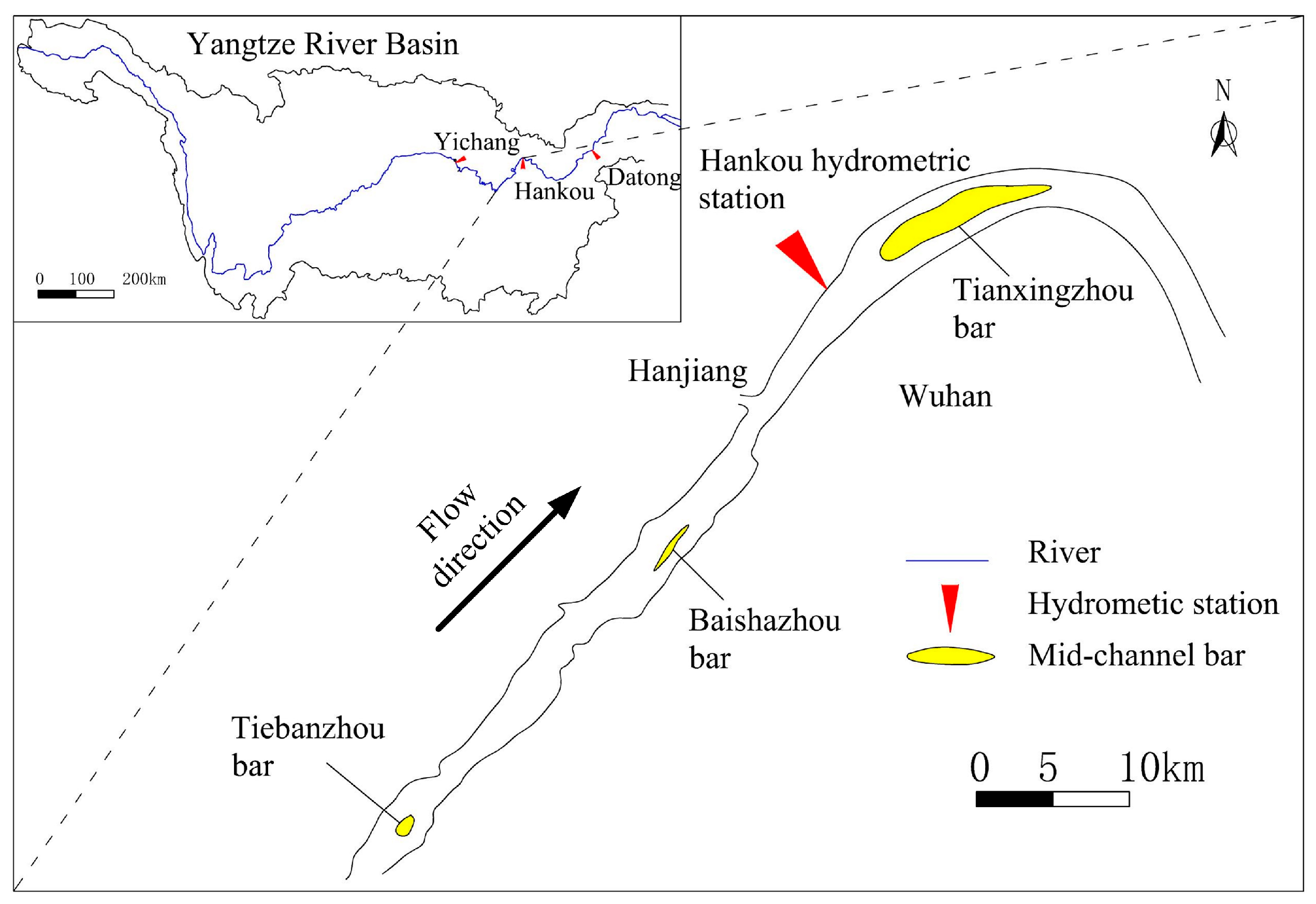
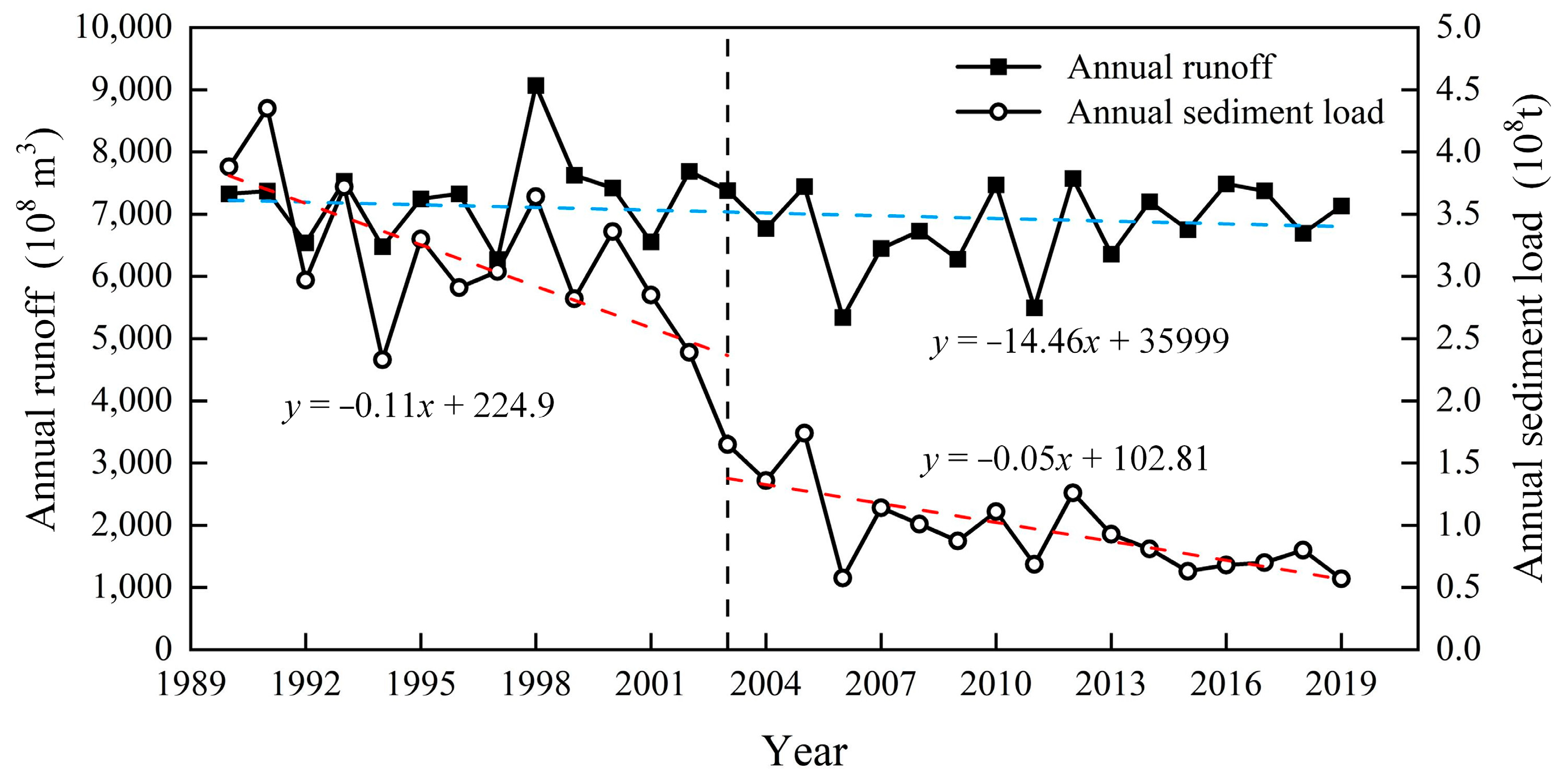
Interannual variations of runoff and sediment load at the Hankou hydrometric station from 1990 to 2019 reflect the water and sediment supply conditions for Baishazhou bar and Tianxingzhou bar in the Wuhan reach of the middle Yangtze River (
Figure 2). According to measured data at the Hankou hydrometric station, before operation of the TGD, the multi-year (1990–2003) mean runoff at Hankou was 7273.50 × 10
8 m
3, and the multi-year mean sediment load was 3.09 × 10
8 t. After operation, the multi-year (2004–2019) mean runoff was 6784.55 × 10
8 m
3, and the multi-year mean sediment load was 0.93 × 10
8 t.
Linear fitting of the trends in the Hankou runoff and sediment series shows that during 1990–2019, the annual runoff at Hankou decreased at an average rate of 14.46 × 10⁸ m3 per year. Taking 2003 (the start of the TGD operation) as the dividing point, the pre-operation annual sediment load decreased at an average rate of 0.11 × 10⁸ t per year, while the post-operation annual sediment load decreased at an average rate of 0.05 × 10⁸ t per year. Overall, during 1990–2019, the mean annual runoff and sediment load at Hankou were 7012.73 × 108 m3 and 1.94 × 10⁸ t, respectively. The post-operation period shows a decrease of 488.95 × 10⁸ m3 (6.72%) in runoff and a decrease of 2.16 × 10⁸ t (69.88%) in sediment load compared with the pre-operation period. These results suggest that TGD operation had a limited influence on runoff in the Wuhan reach, but it substantially reduced sediment supply. Before the operation, several dams had already been completed in the upstream reaches, resulting in a decline in sediment supply. TGD, in turn, drastically accelerated this downward trend.
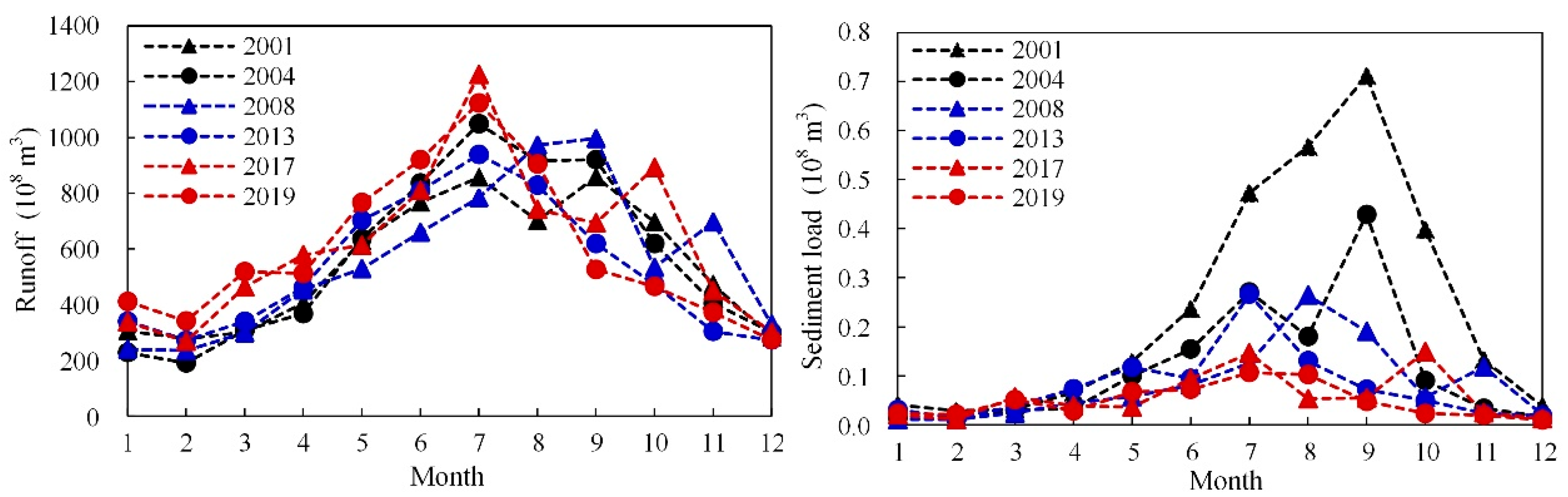
Monthly runoff and sediment load distributions in typical years (2001, 2004, 2008, 2013, 2017, and 2019) at the Hankou hydrometric station are shown in
Figure 3. The flood season in the Yangtze River Basin is mainly concentrated from April–October, while other months are considered the dry season. During 2001–2019, flood-season runoff was high and showed limited interannual variability. In contrast, sediment load exhibited clear interannual differences: sediment load was the highest in 2001 and decreased significantly during 2004–2019, especially in the flood season. Runoff and sediment load during flood and dry seasons for these typical years are summarized in
Table S1. For the six selected years, the mean flood-season runoff was 5130.69 × 10
8 m
3, accounting for 75.26% of the annual runoff. The smallest proportion of dry-season runoff occurred in 2004 (21.13%). The mean flood-season sediment load was 1.08 × 10
8 t, accounting for 85.17% of the annual sediment load. The smallest proportion of dry-season sediment load occurred in 2004 (7.78%), whereas the largest occurred in 2019 (21.86%).
3.2. Terrestrial Habitat Health of Baishazhou Bar
Baishazhou bar is located on the south side of the main channel of the Yangtze River in western Wuhan City. It trends northeast–southwest, with a length of about 1.5 km and a width of about 200 m. In the Baishazhou bar area, bedrock is mostly concealed beneath Quaternary soils. The Quaternary loose deposits mainly consist of Holocene alluvial layers; the overlying strata are mainly Quaternary strata and mudstone, while limestone bedrock is widely distributed. Karst development in the region is moderate to strong. The region lies in a subtropical humid climate zone with abundant solar radiation, heat, and precipitation; synchronized water and heat; distinct seasons; and a long frost-free period.
Based on field surveys (
Figure S2), satellite image interpretation, and relevant historical records, the number of days when the ecotone of Baishazhou bar is exposed over 50% is 217 d on average. Vegetation on Baishazhou bar is luxuriant and dominated by reeds and willows; the bar is also a productive area for various vegetables. In terms of wildlife, the nationally protected Class I black stork (Ciconia nigra) has been observed inhabiting the bar, and migratory birds such as grebes, wild ducks, and swans also occur. A total of 233 bird species have been recorded in the area. Amphibians, reptiles, insects, and mammals are also diverse, indicating high biodiversity. Vegetation cover derived from the 2022 dry-season image is about 92%.
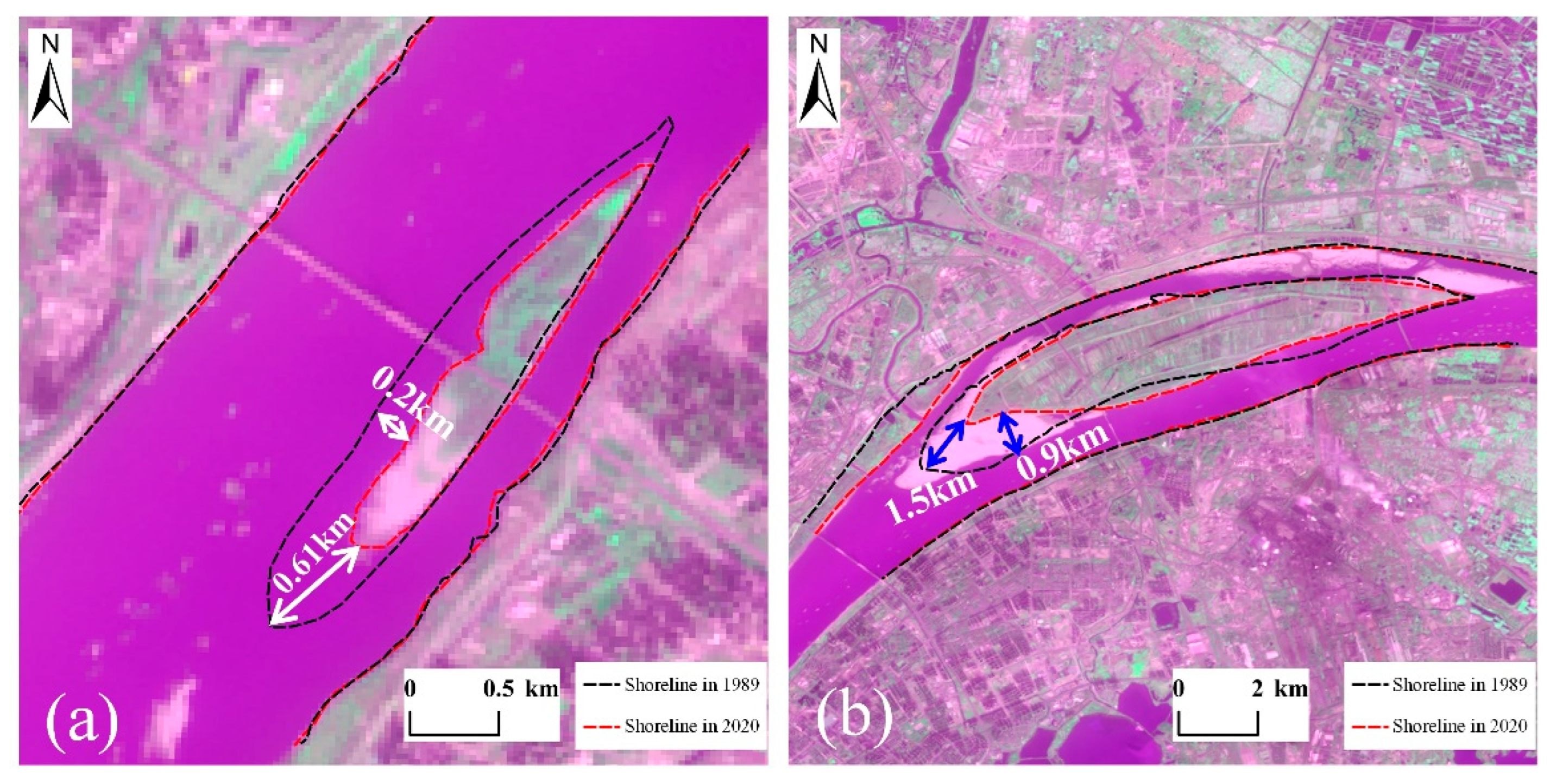
Based on Baishazhou bar remote sensing images from 1989 to 2020, the bar experienced an overall shrinkage of about 43.83%. There are no large-scale man-made structures on the bar itself, and the bar is largely in a natural state. Downstream of the bar, the Wuqiao navigation regulation project in the middle Yangtze River has been constructed to stabilize the downstream submerged bar morphology and constrain the main channel flow. Water quality was evaluated using the monitoring values of Baishazhou Water Treatment Plant in May 2025, which corresponds to Class II water quality.
Based on the assigned scores of each indicator and the combined weights obtained using the combined weighting approach, the terrestrial habitat health of Baishazhou bar was comprehensively evaluated (
Table 6). The natural attribute score is 92.97, indicating a very healthy condition. The social attribute score is 43.26, indicating a sub-healthy condition. This is mainly because Baishazhou bar has experienced significant area change and severe shrinkage, leading to a reduction in habitat area and related social service functions. The overall score is 76.32, placing Baishazhou bar in the healthy class.
3.3. Morphological Evolution of Baishazhou Bar
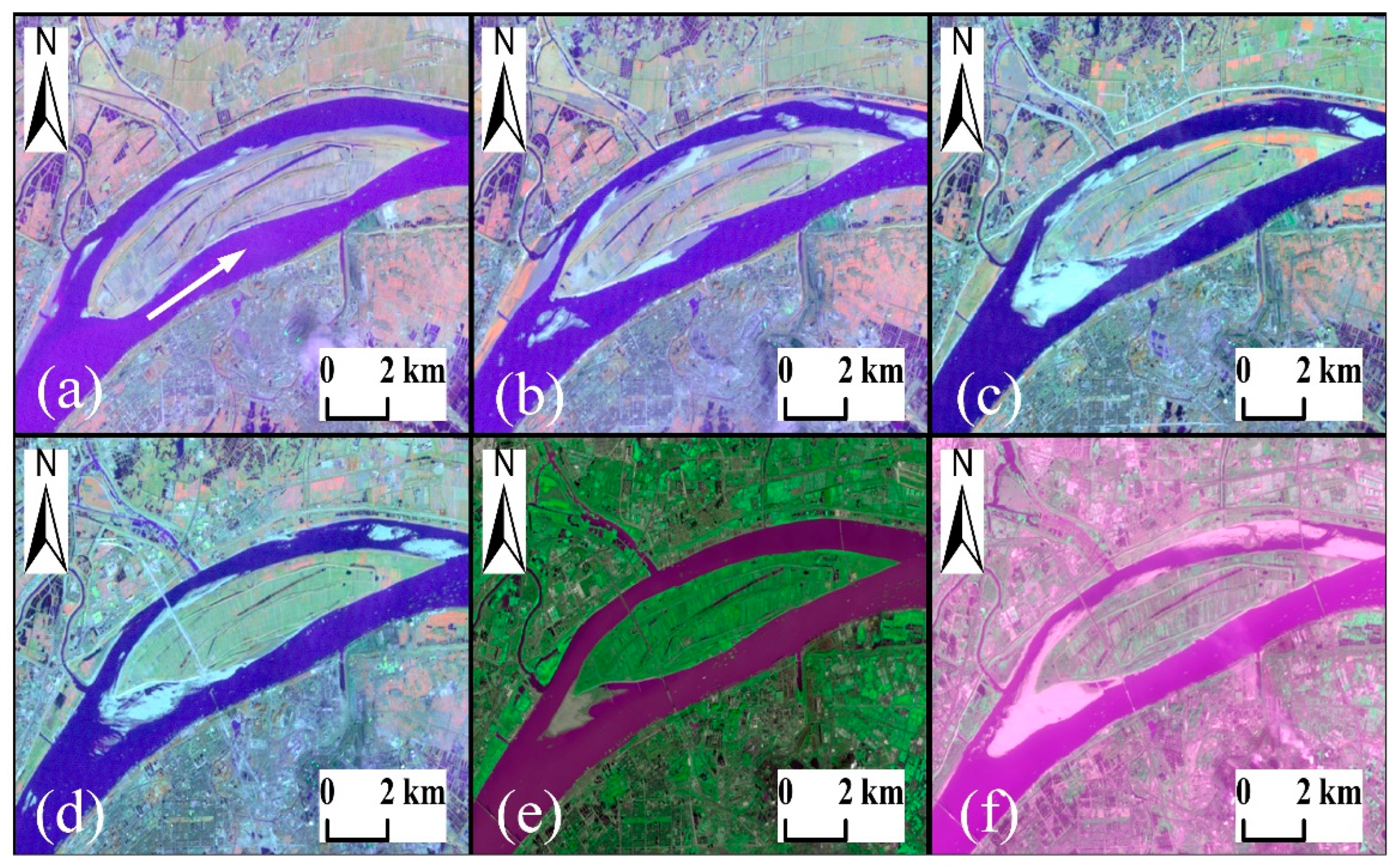
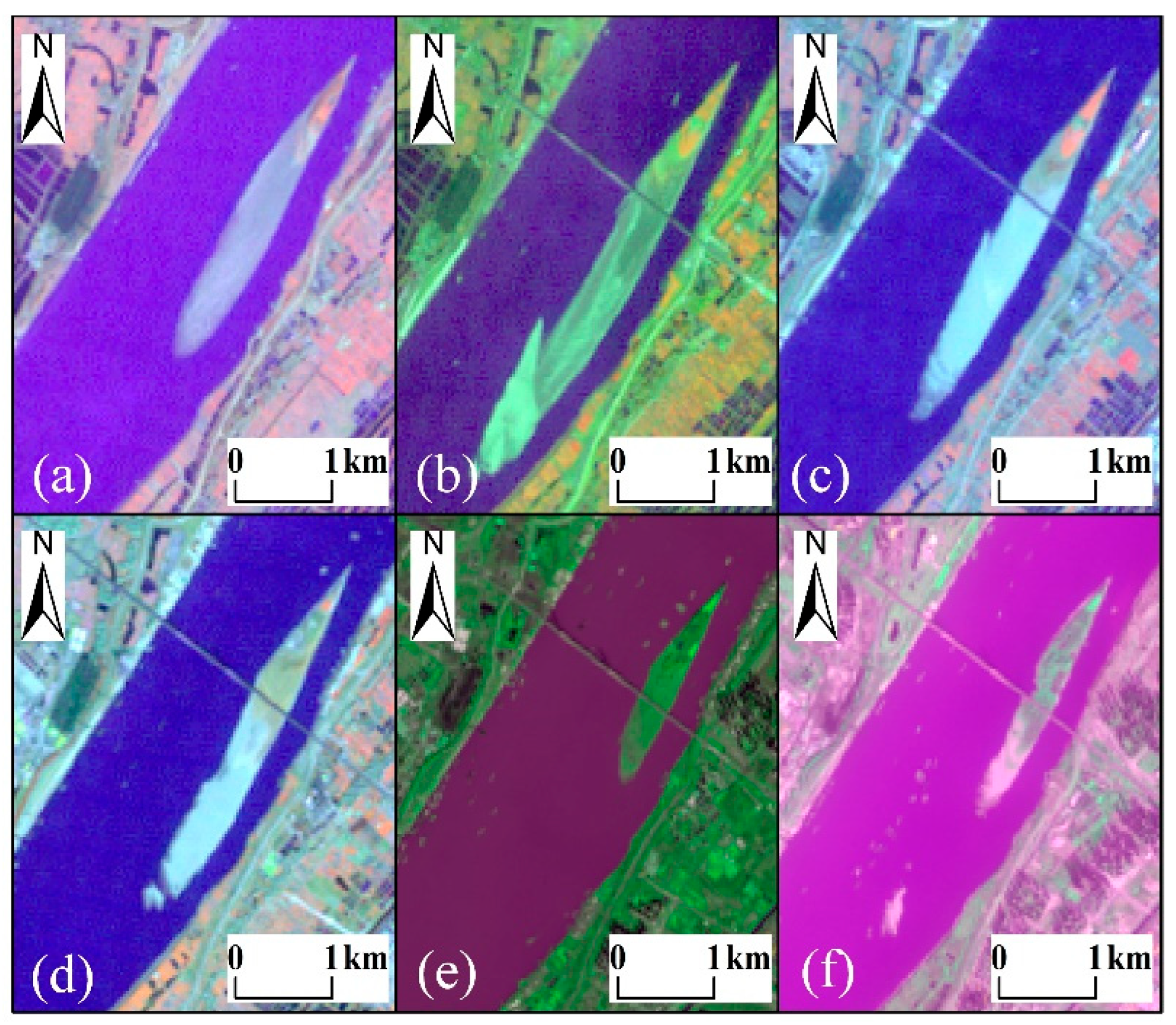
To analyze the development, shrinkage, and scouring processes of Baishazhou bar over more than three decades (1989–2020), six dry-season remote sensing images were selected to examine its morphological changes (
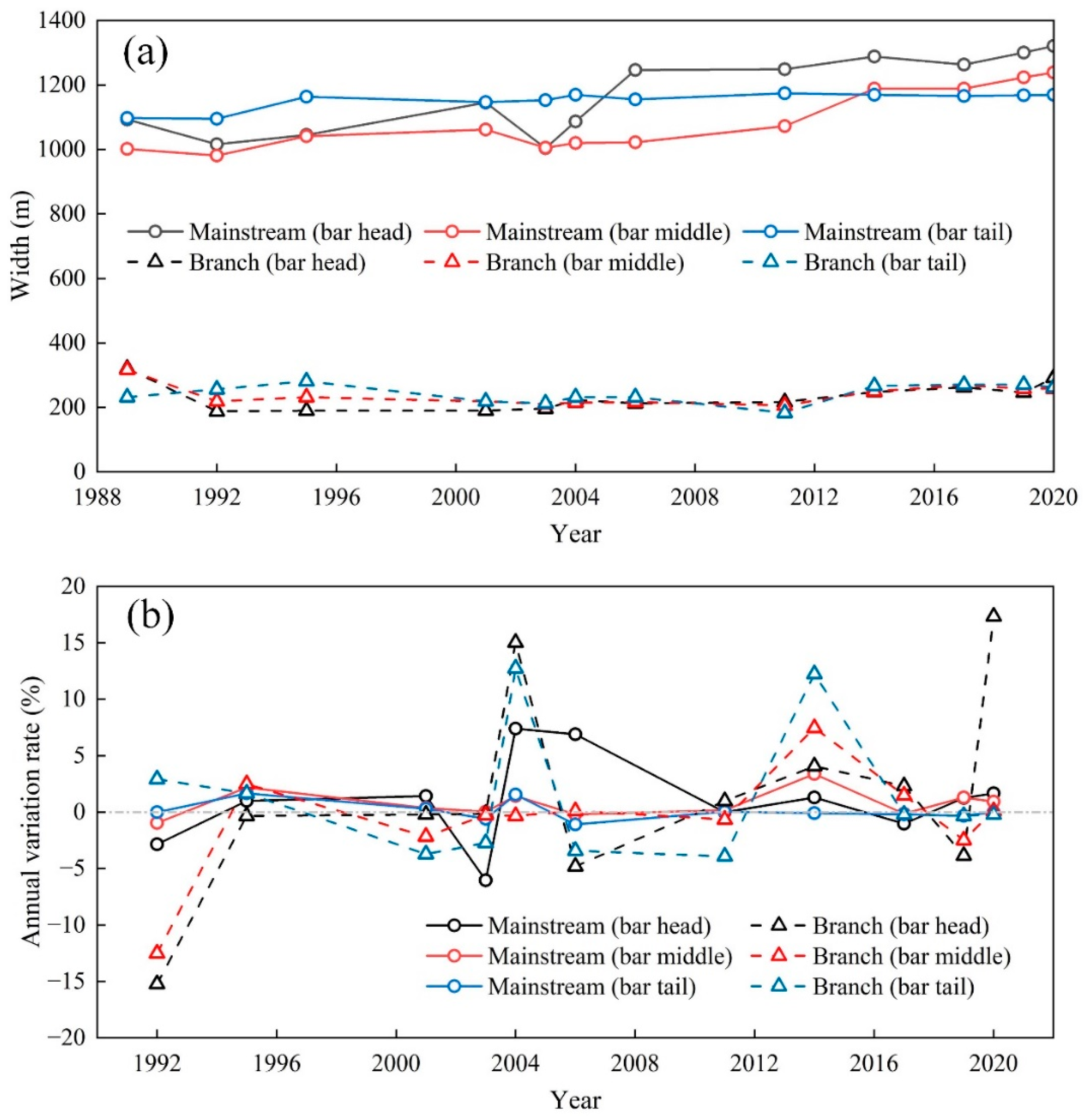
Figure 4), and twelve dry-season remote sensing images were used to measure the widths of the mainstream (left anabranch) and branch channel (right anabranch) at three locations—the bar head, middle, and tail (
Figure S2). Channel width change trends are presented in
Figure 5a, and annual change rates are illustrated in
Figure 5b. A positive annual change rate indicates channel widening (bar retreat/erosion), whereas a negative rate indicates channel narrowing (bar accretion).
During 1989–2001, Baishazhou bar was in a natural development stage, with the bar area increasing by 0.73 km
2. The bar head grew upstream, and the bar length increased by 39.70%. The 2001 image (
Figure S1) shows that sediment deposition occurred at the bar head, forming a sand spit. By 2004, the bar area decreased from 2.02 km
2 to 1.42 km
2 (i.e., 70.44% of the 2001 area), with reductions in length (by approximately 0.9 km), width, and area compared to 2001. The sand spit migrated downstream during 2001–2004 and extended to the middle of the bar by 13 December 2004 (
Figure 4c).
In 2003, the mainstream width at the bar head decreased noticeably, a phenomenon explained by the sand spit reaching the measurement section (
Figure S1) by that year. In 2004, the sediment load and runoff at Hankou Station decreased by 17.58% and 8.22%, respectively, compared with 2003. Under reduced sediment supply, Baishazhou bar experienced enhanced erosion and shrinkage, with widths at all three measurement locations increasing—most significantly at the bar head.
From 2001 to 2015, the bar continued to shrink: bar length and width decreased to 53.95% and 39.94% of their 2001 values, respectively, and the exposed area in 2015 (
Figure 4e) was only 30.90% of that in 2001. According to data from Hankou Hydrometric Station, the sediment load in 2015 (0.63 × 10
8 t) decreased by 77.89% compared with 2001 (2.85 × 10
8 t), which is a key driver of intensified erosion and shrinkage of mid-channel bars in the middle and lower Yangtze River. From 2004 to 2020, the annual change rates of mainstream width at the head and middle locations were mostly positive, consistent with continuous bar retreat driven by persistent sediment reduction. From 1989 to 2020, the mainstream width at the middle location increased by 22.26%, with local retreat exceeding 200 m.
During 2015–2020, the exposed area of Baishazhou bar increased slightly from 0.62 km
2 to 0.72 km
2 (
Figure 4f), showing a modest rebound with limited magnitude. This rebound is attributed to two factors: lower water levels in 2020 than in 2015, exposing more of the bar; and downstream bed incision induced by TGD operation, which lowered water levels under comparable discharges. Additionally, the bar-head shoal partitions upstream inflow into the left anabranch, the head shoal, and the right anabranch, functioning as a key water–sediment partitioning zone. Its adverse slope and blocking effects can promote local deposition at the head, facilitating slight upstream extension under certain conditions. However, remote sensing evidence confirms that post-TGD clear-water scour under low sediment concentrations has caused continuous erosion and retreat of the bar head, maintaining a long-term shrinking trend.
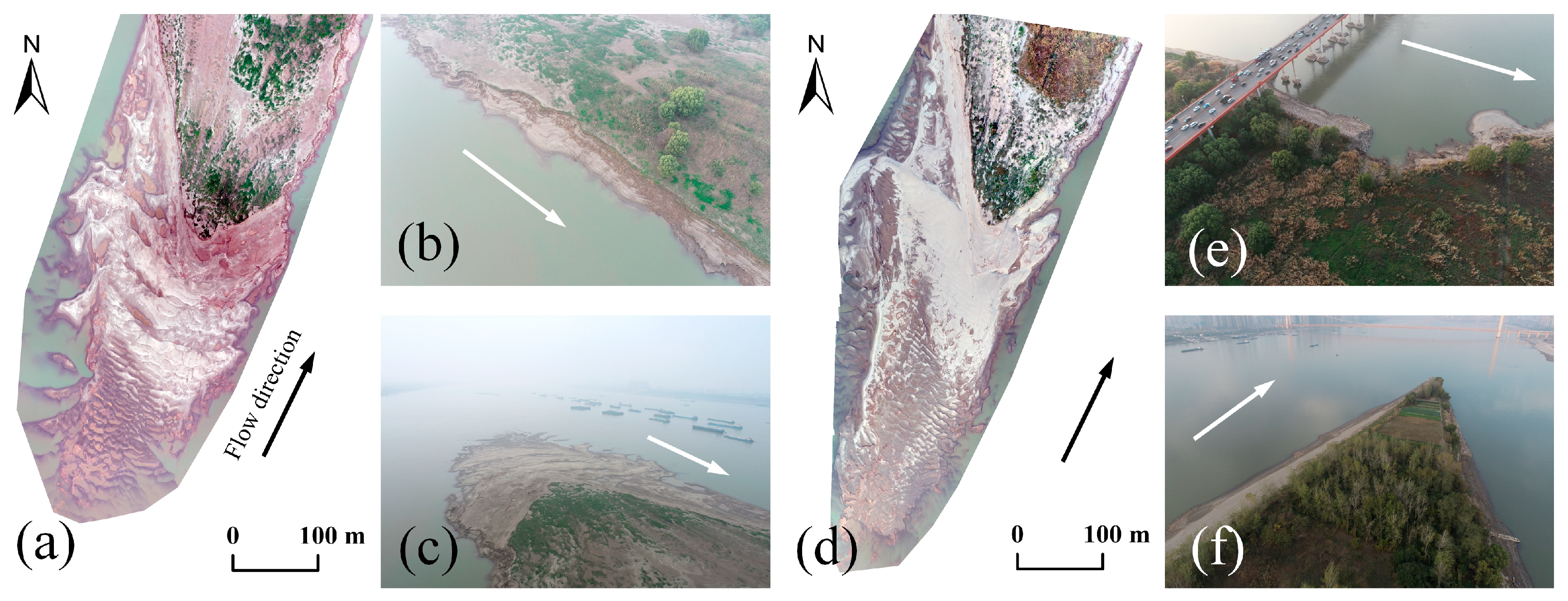
Local UAV images acquired in November 2020 and December 2021 (
Figure 6) provide detailed insights into the bar head’s state. In the dry season, the shallow shoal at the bar head is exposed, and vortex-shaped sand pits of varying sizes form after flood recession. Comparative analysis of same-scale panoramas for the same region shows a slight decrease in the exposed area of the head shoal and a 35 m retreat of the vegetated zone. Severe bank collapse occurred along the right side, with exposed reed roots and steep slopes. The middle portion of the bar along the mainstream side suffered intense scouring; under the Baishazhou Bridge piers, substantial erosional retreat and obvious local collapse pits were observed. This confirms that post-TGD clear-water scour intensified mainstream side erosion, while bridge piers induced local backwater and flow diversion, further enhancing scour and collapse.
Over the past 30 years, the bar tail has been covered by vegetation, resulting in minimal morphological changes and relative stability without downstream extension. In contrast, the bar head and mainstream side middle section underwent significant scouring and retreat, with rapid shrinkage of the bar head driving overall area reduction. From 1989 to 2020, the exposed area of Baishazhou bar decreased by 0.57 km2, corresponding to an overall shrinkage of approximately 43.83%. Without effective protection measures, the bar may continue to shrink, with acceleration under persistent clear-water scour.
Overall, the mainstream widths at the head, middle, and tail locations of Baishazhou bar showed an increasing trend from 1989–2020, with the greatest increase at the bar head. In contrast, the branch-channel widths increased only slightly. The bar-head shoal partitions the upstream flow into the left anabranch, the head shoal, and the right anabranch, functioning as a key zone for water–sediment partitioning. The bar head and lateral margins are identified as the main zones subject to scouring.
3.4. Terrestrial Habitat Health of Tianxingzhou Bar
Tianxingzhou is located in the middle of the Yangtze River between Qingshan Town (Qingshan District) and Chenjiaji (Jiang’an District) in Wuhan, with an area of about 22 km2. It is composed of Holocene alluvial deposits: the upper layer mainly consists of silt, fine sand, and sandy loam, while the lower layer consists of medium–coarse sand and gravel, locally interbedded with muddy siltstone. The region belongs to a subtropical humid climate zone, featuring sufficient solar radiation, abundant heat and rainfall, synchronized water and heat, distinct seasons, clear wet–dry seasonality, and a long frost-free period.
Based on field surveys (
Figure S3), satellite image interpretation, and historical records, the number of days when the ecotone of Tianxingzhou bar is exposed over 50% is 193 d on average. Vegetation on the bar includes herbaceous plants, shrubs, and trees. Tianxingzhou bar is also an important fruit and vegetable production base in Wuhan, producing watermelons, muskmelons, pumpkins, winter melon, pak choi, cabbage, amaranth, cotton, and other crops. In terms of wildlife, 219 wild bird species have been recorded, including 27 key protected species of national Class II or above and 49 provincially protected species. In addition, 14 reptile species, 7 amphibian species, 282 insect species, and 12 mammal species have been recorded, indicating high overall biodiversity and diversified landscape patches. Vegetation cover derived from the 2022 dry-season image is about 83.50%.
Based on Tianxingzhou bar remote sensing images from 1992 to 2022, the bar area decreased by about 26.33%. During 2013–2017, the Ministry of Transport approved and implemented the navigation regulation project for the Tianxingzhou bar reach. Rock dumping revetments were constructed along the scenic road at the bar head, and concrete blocks were laid along the embankments on both sides. According to the completion acceptance in 2017 and field surveys, the protection works show good stability without deformation or failure, and no soil erosion was observed; the permeability is moderate. Water quality was evaluated using the monitoring values at the Yangsigang section in March 2024, which corresponds to Class II water quality.
Based on the assigned scores of each indicator and the combined weights obtained using the combined weighting approach, a comprehensive terrestrial habitat health score for Tianxingzhou bar was calculated (
Table 7). The natural attribute score is 91.14, indicating a very healthy condition, whereas the social attribute score is 36.44, indicating an unhealthy condition. This is mainly because Tianxingzhou bar experienced significant area change (area reduction rate of about 26%), and the permeability of rock-based protection works is relatively poor. The overall score is 72.81, placing Tianxingzhou bar in the healthy class.
3.5. Morphological Evolution of Tianxingzhou Bar
Tianxingzhou bar is a crescent-shaped mid-channel bar located in a mildly curved reach, where the left anabranch serves as a branch channel and the right anabranch as the mainstream. Remote sensing images from 1989 to 2020 (
Figure 7) indicate that the bar head underwent significant changes over the past three decades, while the bar tail remained relatively stable with minimal alterations. Hydrological data from Hankou Station show that after the operation of the Three Gorges Dam (TGD) in 2003, the annual sediment load decreased gradually. During the post-operation period (2004–2019), the multi-year mean annual runoff was slightly lower than that in the pre-operation period (1990–2003), whereas the sediment load dropped sharply. Under such clear-water conditions, scouring on Tianxingzhou bar was mainly concentrated at the bar head and along the right margin.
Before 2003, Tianxingzhou bar was generally in a natural development stage. Annual runoff during 1990–2003 was relatively stable with limited interannual variability: the maximum annual runoff occurred in 1998 (9068 × 10
8 m
3), while in other years, the maximum and minimum values were 7687 × 10
8 m
3 (2002) and 6272 × 10
8 m
3 (1997), respectively, with a multi-year mean runoff of 7273.50 × 10
8 m
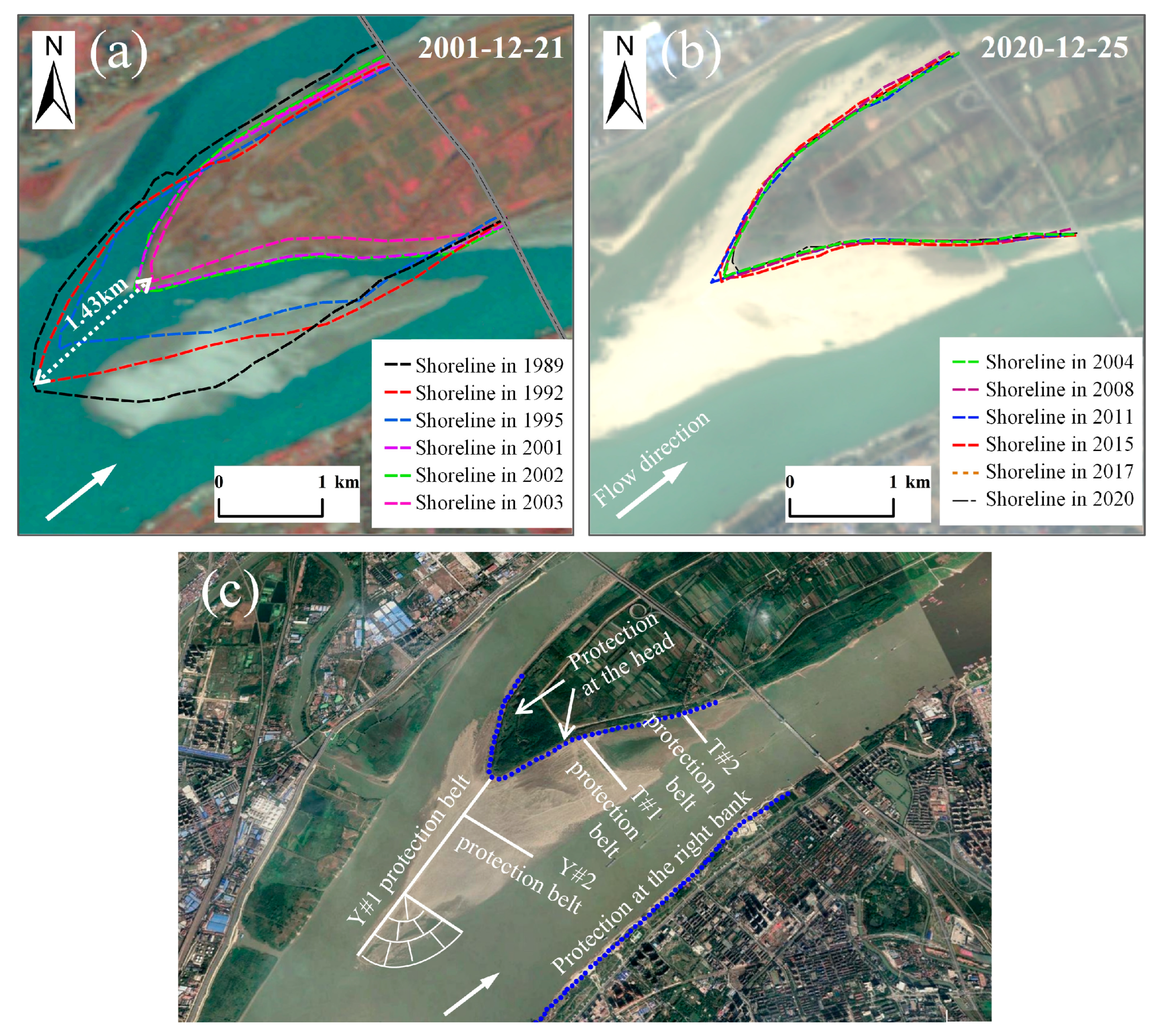
3. Morphologically, the bar head was rounded without a shallow shoal during 1989–1995. By 2003, a large shallow shoal emerged at the bar head, and the vegetated area at the head formed a sharp triangular shape that retreated downstream; the side adjacent to the main flow experienced pronounced scouring and became concave. During 1989–2003, the head and left/right margin shorelines of Tianxingzhou bar also exhibited continuous retreat, particularly at the head tip and along the right margin. The head tip retreated by 1.43 km, and the bar head morphology transformed from blunt to sharply pointed. Retreat was especially rapid during 1995–2001, with an average annual retreat exceeding 100 m, and the bar head continued to retreat by 150 m while the right margin retreated by 170 m during 2001–2003. Correspondingly, the dry-season exposed area tended to decrease during this period, which was consistent with the observed shoreline retreat. The image acquired on 27 December 2003 (
Figure 7c) corresponds to the early stage of subsequent revetment construction and is thus classified as part of the pre-protection period.
To mitigate TGD-induced scouring on mid-channel bars in the middle and lower Yangtze River, government agencies implemented protection measures. From December 2003 to May 2004, prior to the construction of the Wuhan Tianxingzhou Yangtze River Bridge, a 3870 m revetment was built along the right bank, and a 3279 m revetment was constructed along the Tianxingzhou bar head and right margin (
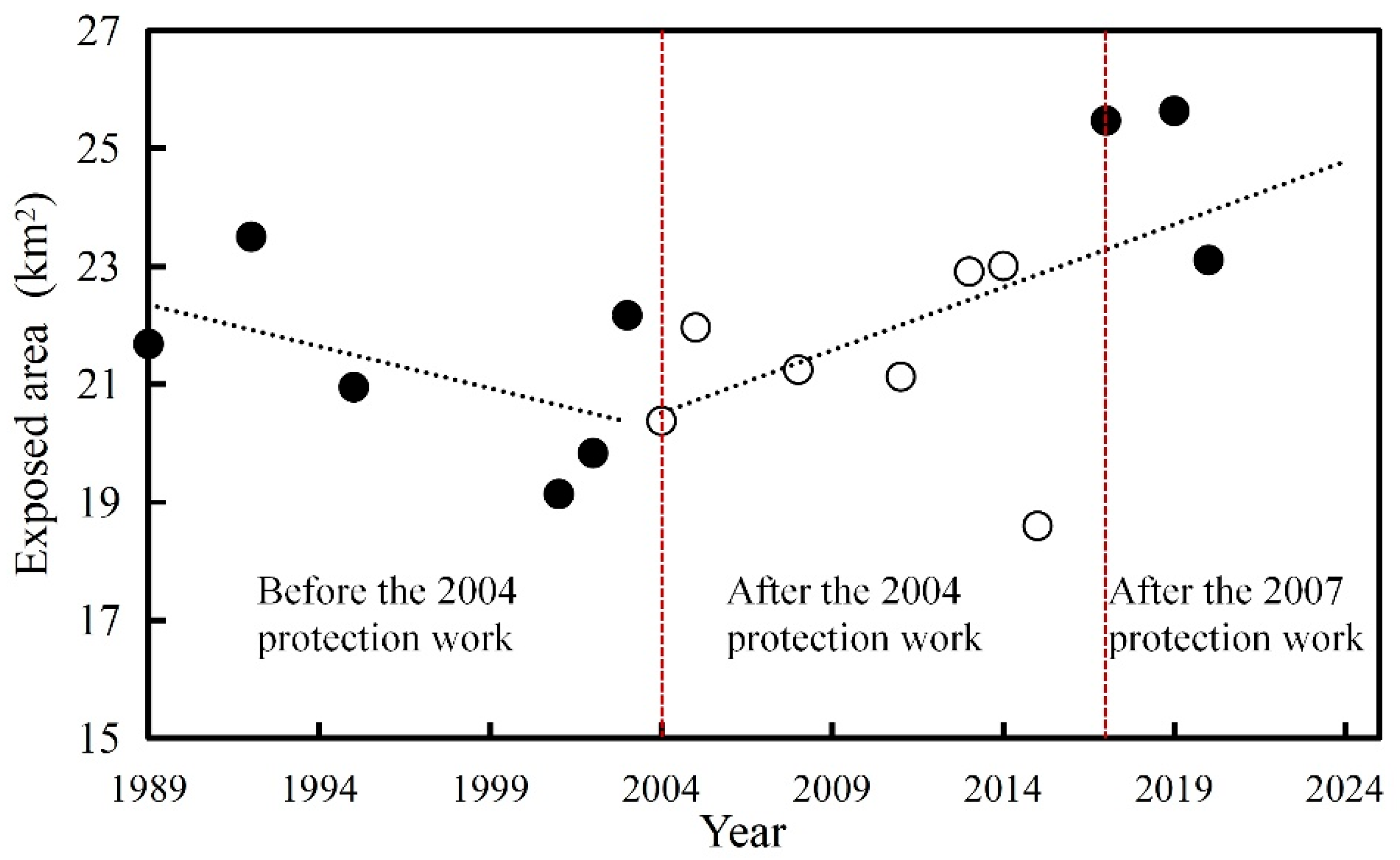
Figure 8). This 2003–2004 bar-head protection project helped stabilize the bar head and the right-margin shoreline: after the completion of the 2004 revetment, shoreline retreat was effectively suppressed, with no obvious retreat observed by 2020. The exposed area of the bar also increased after the revetment, reaching 23 km
2 in 2014 (
Figure 9).
In January 2013, additional protection works were launched to further strengthen the Tianxingzhou bar head and right margin, and the fishbone-dike regulation project was completed by 2017. Two fishbone-shaped protection belts (Y#1 and Y#2) were constructed on the head low bar, combined with fan-shaped protection at the bar head (
Figure 8c). Y#1 was arranged longitudinally, with its front end extending 800 m underwater; it integrates onshore and underwater protection, has a total length of 2062 m, and connects smoothly to the 3279 m revetment built in 2003. Y#2 was arranged transversely with a length of 873 m, and the fan-shaped head protection has a maximum width of 883 m. On the right-margin low bar, two strip-shaped protection belts (T#1 and T#2) were constructed, with lengths of 698 m and 314 m, respectively. These works effectively mitigated bar-head retreat under clear-water scour and contributed to a relatively stable head shoreline.
Notably, the exposed area decreased sharply in 2015 compared with 2014, dropping from 24.84 km
2 to 18.59 km
2. This reduction was attributed to water-level differences—the water level in 2015 was higher than in 2014, resulting in less bar exposure during dry-season image acquisition. Following the strengthening of revetments and the construction of protection belts, the exposed area increased again and exceeded 25 km
2 in 2017 (
Figure 9). By 2020, the bar length continued to increase, reaching 13.694 km; the bar head developed a long, narrow shallow shoal with low relief, and the length of this shallow shoal reached approximately 2.35 km. During 2001–2019, the bar width increased slightly while the bar length increased by 2.232 km. In 2020, both the tail shoal and the left-bank point bar elongated, and the area of the left anabranch (branch channel) decreased. Overall, changes in the area and morphology of Tianxingzhou bar are dominated by the bar head, mainly manifested by the formation and expansion of the large shallow shoal.