


Abstract
Precise forecasting and physical elucidation of seepage behavior are crucial for maintaining the operational safety of concrete dams. Nonetheless, current monitoring methodologies frequently fail to adequately encompass nonlinear temporal relationships in seepage processes and exhibit a deficiency in straightforward interpretability. This paper provides an explainable monitoring approach that combines an alpha-evolution Bidirectional Gated Recurrent Unit (AE-BiGRU) with Shapley Additive Explanations (SHAP)-based interpretability analysis to solve these shortcomings. An AE-BiGRU prediction model is first developed, in which the BiGRU architecture exploits bidirectional temporal dependencies to enhance prediction accuracy and robustness. The alpha-evolution algorithm is then employed to optimize key hyperparameters of the neural network, thereby further improving model performance. Subsequently, SHAP interpretability analysis is applied to quantify the contribution of individual input variables and to elucidate the physical drivers of seepage variation. Validation utilizing long-term seepage monitoring data from a roller-compacted concrete (RCC) gravity dam indicates that the proposed AE-BiGRU model substantially surpasses benchmark models, including LSTM and traditional GRU variations. Furthermore, SHAP interpretability analysis reveals the predominant influences of reservoir water level fluctuations and cumulative temporal factors on seepage evolution patterns. The suggested approach attains high-precision seepage prediction while ensuring physically meaningful interpretability, thus providing a dependable foundation for safety evaluation and intelligent monitoring of concrete dams.
1. Introduction
Seepage behavior constitutes a primary diagnostic indicator for evaluating the hydraulic structural integrity and long-term performance of concrete dams. Deviations in seepage are frequently implicated in internal erosion, fracture propagation, and progressive degradation of dam foundations and interfaces [1]. Consequently, a monitoring framework capable of delivering both accurate predictions of seepage evolution and interpretation of its governing physical mechanisms is indispensable for informing safety assessment, early-warning initiatives, and lifecycle management of large-scale hydraulic infrastructure [2,3,4]. The seepage process is intrinsically nonlinear and temporally heterogeneous, shaped jointly by hydraulic coupling and path-dependent memory effects inherent in porous materials. These characteristics pose substantial challenges to conventional modeling approaches attempting to balance stability and interpretability [5,6].
Seepage monitoring models are commonly classified into two main categories: statistical data-driven and physics mechanism-based approaches. Among them, physics mechanism-based models are grounded in Darcy’s law and mass conservation principles and are often implemented using numerical methods such as finite element analysis. These models explicitly simulate pore pressure distribution and hydraulic gradients within the dam body and its foundation. The key physical processes governing seepage phenomena include hydraulic gradient variation driven by reservoir level fluctuations, transient pore pressure diffusion within the dam foundation, permeability heterogeneity, and potential delayed or hysteretic responses associated with material aging and seepage path evolution. However, applications of physics mechanism-based models in practice are frequently limited by uncertainties in hydraulic parameters, spatial heterogeneity, and incomplete boundary information. Consequently, data-driven methods have emerged as complementary tools that can leverage monitoring data to capture complex nonlinear behaviors when full physical characterization is unavailable. Traditional seepage monitoring models based on statistics reconstruct seepage responses through a decomposition presentation of hydraulic loading, seasonal variability, and aging effects-related components [7,8,9]. Their transparency and physical grounding have supported widespread adoption in engineering practices. Nevertheless, the fixed functional structures embedded in these models limit their capacity to accommodate highly nonlinear hydrological forcing, abrupt reservoir-level transitions, and multi-timescale interactions. Moreover, seepage signals increasingly exhibit complex behaviors such as hysteresis, delayed responses, and superimposed short and long-memory dynamics, which cannot be faithfully captured by linear or quasi-linear statistical formulations [10,11]. As a result, prediction accuracy and robustness deteriorate under nonstationary operating conditions, precisely when reliable forecasting is most critical for dam safety assurance.
Over the past two decades, the rapid expansion of artificial intelligence (AI) and machine-learning (ML) methodologies within civil and hydraulic engineering has substantially broadened the analytical tools available for dam-safety assessment [12]. Early data-driven attempts primarily relied on Artificial Neural Networks (ANNs), which provided enhanced nonlinear approximation capability relative to classical statistical formulations [13,14]. However, their feed-forward structure limited their ability to capture the intrinsic temporal dependencies of hydrological and structural processes. This limitation catalyzed a methodological transition toward Recurrent Neural Networks (RNNs) [15,16], whose recursive architecture allows sequential dependence to be explicitly modeled. Subsequent innovations included Long Short-Term Memory (LSTM) networks [17,18,19] and Gated Recurrent Units (GRU) [20,21,22], which introduced gating mechanisms to selectively retain salient temporal information and mitigate vanishing-gradient effects. These improvements enhanced the representation of delayed, cumulative, and hysteretic behaviors commonly observed in dam seepage. Bidirectional extensions of these sequence models further strengthened predictive power by simultaneously exploiting forward- and backward-propagating temporal cues, enabling more faithful reconstruction of complex hydrological response patterns. Together, these developments delineate a progressive evolution of ML techniques toward models that are increasingly adept at representing nonlinear, multiscale, and temporally entangled seepage dynamics.
In deep learning models, prediction performance depends strongly on hyperparameters such as the number of hidden neurons and the learning rate. These parameters are not directly determined by theory and must therefore be selected through a systematic search process [23]. Hyperparameter selection remains a persistent challenge for RNN-based architectures, as model performance depends sensitively on network depth, hidden-unit dimensionality, learning rates, and temporal window configuration. Traditional tuning approaches such as grid search, random search, particle swarm optimization (PSO) [24,25,26,27], and genetic algorithms (GA) [28,29] enable structured exploration but often suffer from slow convergence and vulnerability to local minima in high-dimensional nonconvex search spaces. More recent bio-inspired optimizers, including grey-wolf, whale, and ant-colony algorithms [30,31,32,33,34], broaden the search framework but continue to exhibit inconsistent performance under heterogeneous and nonstationary hydrological conditions typical of dam monitoring datasets.
Despite these advances, two key gaps remain:
- (i).
- deep sequence models provide limited interpretability regarding the physical drivers of seepage behavior;
- (ii).
- existing hyperparameter optimization strategies struggle to achieve reliable, globally convergent tuning of complex neural architectures under real-world hydrological variability.
These gaps underscore the need for an integrated monitoring framework that couples a high-capacity sequence model with an efficient and robust optimizer while ensuring transparent, engineering-relevant interpretability.
Motivated by these gaps, this study proposes an interpretable and high-fidelity seepage monitoring framework that couples an Alpha-evolution–optimized Bidirectional Gated Recurrent Unit (AE-BiGRU) [35,36] model with Shapley Additive Explanations (SHAP) [37] for attribution analysis. A BiGRU model is first designed to leverage bidirectional temporal dependencies for enhanced robustness and predictive precision. The Alpha-evolution algorithm is further incorporated to optimize critical hyperparameters governing the neural architecture, substantially improving convergence efficiency and out-of-sample generalization. Application to long-term monitoring data from a roller-compacted concrete (RCC) gravity dam demonstrates that the proposed AE-BiGRU model achieves considerable gains over benchmark approaches including LSTM and conventional GRU models. Furthermore, the SHAP-based interpretability assessment reveals the dominant roles of reservoir-level dynamics, rainfall influences, and cumulative temporal effects in governing seepage evolution, thereby reinforcing the physical credibility and engineering utility of the proposed framework.
The remainder of this article is organized as follows. Section 2 outlines the classical statistical model. Section 3 presents the construction and optimization of the AE-BiGRU architecture, and the SHAP interpretability principles. Section 4 introduces the study dataset, prediction results, comparative analyses, and interpretability findings. Section 5 summarizes the conclusions and discusses implications for intelligent dam monitoring and safety management.
2. Conventional Statistical Model of Seepage Pressure Prediction
Statistical models establish the relationship between dependent and independent variables through the analysis of monitoring data using statistical techniques. Based on previous studies, factors such as upstream water pressure, temperature, and temporal effects are recognized as key contributors to seepage behavior in dams. Accordingly, the seepage pressure can be represented by the following statistical formulation [38]:
where Y denotes the seepage pressure of the dam; YHu, YT, and represent the water pressure, temperature, and time-effect components of seepage pressure, respectively; represents the upstream water level, i the polynomial order in the hydraulic component; a, b, and c signify the pending coefficients; θ and ln θ represent the time-effect factors, where θ = t/100, with t representing the number of days elapsed from the initial monitoring date t0 to the current monitoring date; denotes the upstream water level at the initial monitoring date t0.
3. Prediction Method Based on Optimized GRU Modelling and SHAP Analysis
3.1. Seepage Prediction Model Based on AE-BIGRU
3.1.1. LSTM Model and Bidirectional Gated Recurrent Unit
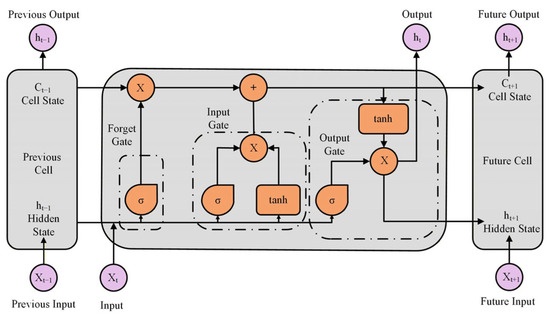
The Long Short-Term Memory (LSTM) network, a specialized kind of recurrent neural network (RNN), was introduced to address the vanishing gradient issue present in conventional RNNs. Figure 1 depicts the network architecture of LSTM unit, which consists of three fundamental gates: the input gate, the forget gate, and the output gate. These operations are mathematically expressed as follows:
where denotes the input vector at time step t; ft, it, and ot denote the forget, input, and output gates, respectively; Ct represents the cell state; denotes the candidate cell state; ht and ht−1 denote the hidden state at time step t and t − 1, respectively; σ and tanh are the sigmoid and hyperbolic tangent activation functions; are weight metrices, are bias vectors; and ⊙ denotes element-wise multiplication.
Figure 1.
Network architecture of LSTM unit.
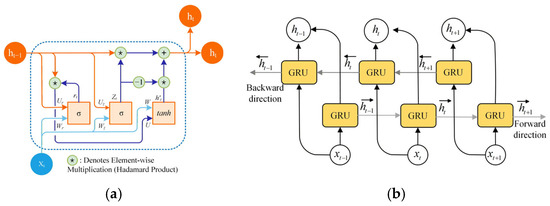
The Gated Recurrent Unit (GRU) is a simplified version of Long Short-Term Memory (LSTM) networks, consisting solely of reset and update gates. In comparison to LSTM, the GRU design features a reduced number of parameters and an accelerated convergence rate, rendering it more computationally efficient for processing sequential input. The internal information dissemination method of a GRU cell is articulated as follows:
where and denote the outputs of the reset gate and update gate, respectively; W and U denote the weight matrices; represents the bias vectors; and denote the candidate hidden state and final hidden state at time t, respectively; and the meanings of the remaining variables are the same as those in Equation (2).
The Bidirectional Gated Recurrent Unit (BiGRU) is an advanced variant of the conventional GRU that utilizes two parallel GRU layers to analyze sequential data in both forward and backward temporal directions. The two GRU components function separately, and their results are collectively integrated to provide the final prediction. The BiGRU architecture more successfully captures temporal dependencies in monitoring data by concurrently utilizing past and future contextual information, compared to the unidirectional GRU. Consequently, BiGRU typically attains enhanced predictive efficacy in time-series forecasting endeavors. Figure 2 depicts the comprehensive design of the BiGRU network.
Figure 2.
Network architecture of (a) unit of GRU and (b) BIGRU.
3.1.2. Principle of Alpha-Evolution Algorithm
The Alpha-evolution (AE) algorithm was created by Gao and Zhang [36]. An innovative optimization approach has been developed to actualize value via the Alpha operator. The enhancement of the existing solution eliminates the intricacy of numerous operators in the conventional approach. The fundamental concept of the AE algorithm is to integrate the adaptive basis vector, random step size, and adaptive step size to equilibrate the exploration (global search) and exploitation (local optimization) of the algorithm, employing a non-metaphorical design that leverages the attributes of the adaptive mechanism and high convergence precision.
To enable the AE algorithm to address the positive integer scheduling in this paper. The initial solution generation, random step size, and boundary conditions are executed for the issue. Constraints and additional facets of enhancement, enhanced AE algorithm (designated as AE algorithm). The particular principle is as follows.
- (1)
- initialization
In the standard AE algorithm, the generation process of the initial candidate solution is as: N represents the population size, D represents the problem dimension, then in D candidate the initial solution of N × D can be generated in the dimension search space. The generating formula of the matrix elements is shown in Equation (4).
In the formula, i = 1, 2, ⋯, N, is the i-th candidate feasible solution, and is the lower bound and upper bound of the search space; represents 1 × D dimensionally 1 matrix; generates 1 × D random moments. The elements of the matrix are uniformly distributed in the interval (0, 1).
- (2)
- Alpha evolution operation
Initially, N substitutions are executed on the primary candidate solution to derive the evolution matrix E, which serves as a submatrix of X, illustrating their relationship as demonstrated in Equation (5).
This method exclusively depends on the operator. For effective search, a singular evolutionary operation inherently encompasses both the extraction and application of evolutionary information. Ultimately, it is derived based on each parameter. The operator’s mathematical model is presented in Equation (6).
In Equation (6), is the i-th evolutionary solution at the t + 1-th iteration, is the i-th involution at the t-th iteration; is the base vector; is the attenuation factor, is the i-th random step; is the control factor; and are solutions in X, where .
The adaptive basis vector P determines in the process of updating the solution. There are two ways to calculate the starting point, as follows:
and are the learning factors of and , respectively; is a D × D di agonal square matrix intercepted from matrix , is a K × D matrix generated by randomly sampling K rows from matrix X without substitution sampling, where and . is weight, and its calculation formula is
where is the fitness function.
The random step size provides the function of global exploration, and is a nonlinear attenuation value, which is closely related to the perturbation matrix . The calculation formula of is
is defined as a disturbance that gradually weakens under the influence of . It is used to realize the process of the algorithm from exploration to development. The left side (distributive matrix) and the right side (time flexibility matrix) of need to be calculated separately. The calculation formula is
In Equation (10), the function of is to weigh the disturbance and generate dimension. In the following, with randi, the superscript matrices are random integer matrices with elements of 0 or 1. The function of and is to produce disturbances, and their calculation formulas are
In the scheduling problem of this paper, the number of drones is a positive integer. The precondition determines that the value of random step length cannot be small. Therefore, in the AE algorithm, for the element in the random step size , a rounding improvement was made to obtain .
Adaptive step size can realize the department of exploration. and are solutions in matrix , which satisfy . is an uncertain control variable. The calculation formula of is
- (3)
- Border restrictions
The typical AE algorithm employs a bisection approach to guarantee that the algorithm operates within the effective space. However, given the timing of this post, the issue cannot accommodate remedies outside the parameters. Consequently, the AE algorithm employs the periodic boundary restriction method, with its boundary limitation defined as
where is the j-th element of the i-th evolutionary solution in the evolution matrix . Periodic boundary conditions exhibit translational symmetry, and super-resolution is addressed through evolution. Once the upper and lower limits of the search space are established, the surplus portion of the progressive solution corresponds to a return from an alternative boundary. The boundary is constrained to guarantee that the progressive solution remains within limits. Although outside the upper and lower limits, the progressive answer is preserved in an alternative format, which facilitates the study and advancement of the algorithm.
- (4)
- Selection strategy
During the algorithm’s evolutionary process, the randomness of the step size may result in a likelihood of generating infeasible solutions, therefore affecting the evolution’s generation. Following the solution, the viability of the progressive solution must be assessed; if the progressive solution is viable, the evolutionary solution is maintained; if the resolution is unfeasible, the original solution is preserved.
Finally, all evolutionary solutions are re-evaluated, the objective function is computed, and the best solutions are recorded. The formula for updating the best solution record is:
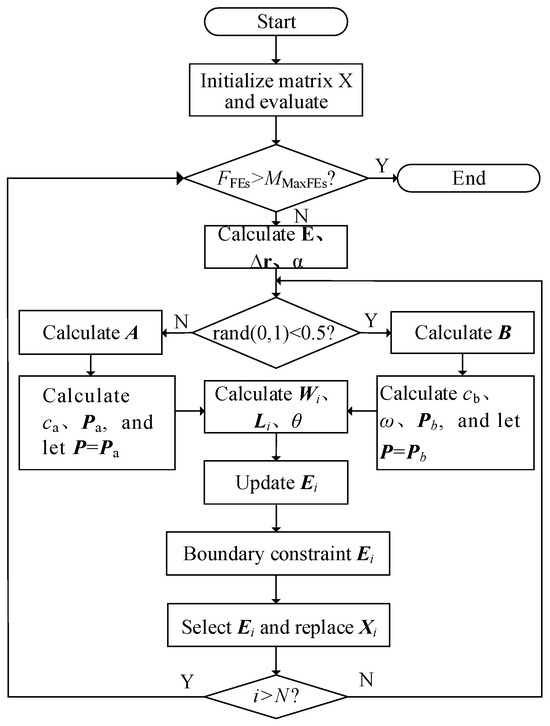
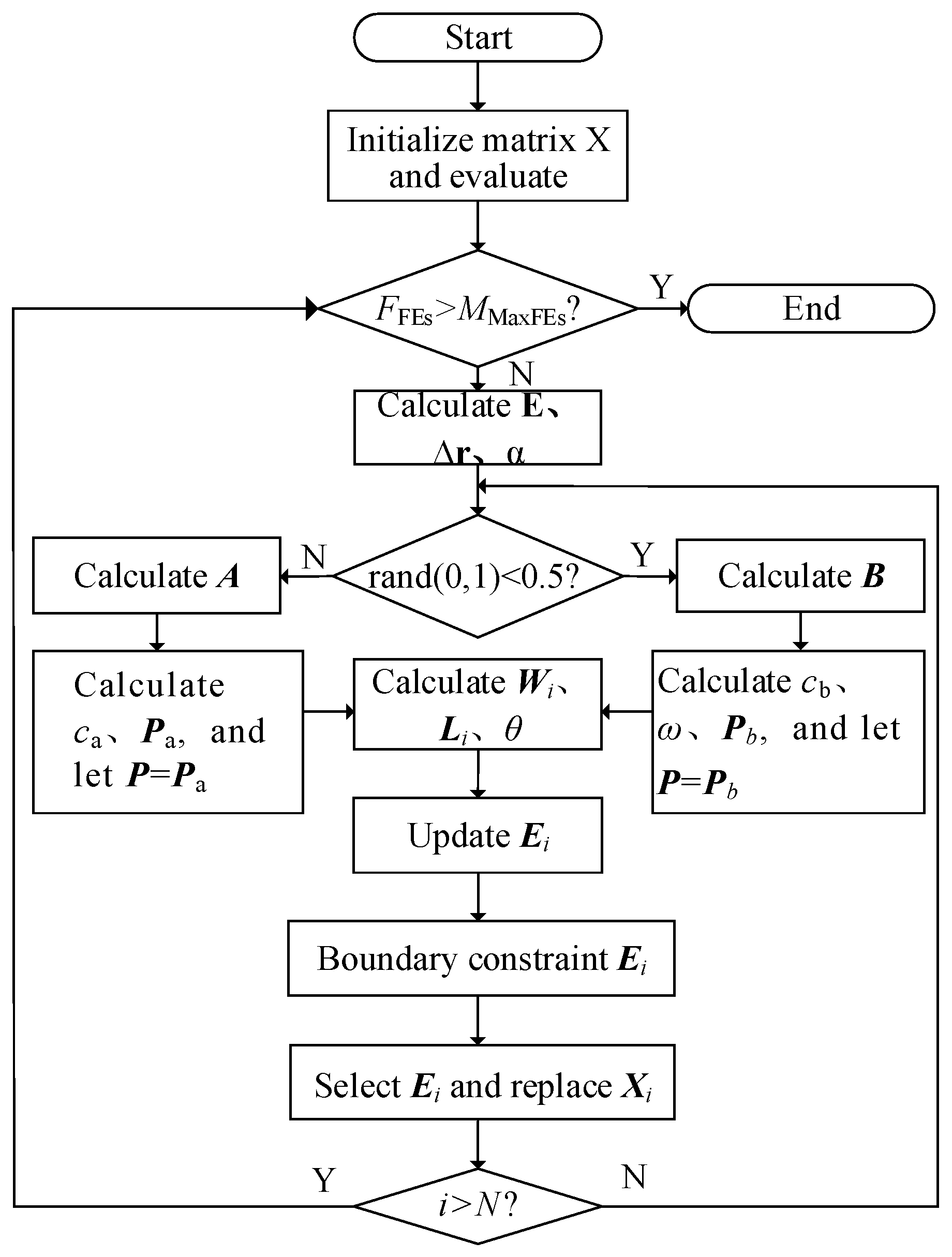
The pseudocode of the AE algorithm is presented in Appendix A, and its specific procedure is depicted in Figure 3.
Figure 3.
Flowchart of alpha evolutionary algorithm.
3.2. Principle of SHAP Interpretability Method
Shapley Additive Explanations (SHAP) is adopted to interpret the prediction mechanism of the AE-BiGRU model by providing a quantitative explanation of feature contributions. By expressing the model output as a linear aggregation of individual input variables, SHAP evaluates the marginal effect of each feature on the predicted results. This approach enhances the transparency of the AE-BiGRU model and alleviates the inherent “black-box” nature commonly associated with traditional machine learning methods. The SHAP-based interpretation can be mathematically expressed as
where denotes the base value of the model output, represents the marginal contribution of the -th feature to the prediction of sample , and the calculation of SHAP values accounts for all possible feature combinations .
where is the total number of input features, denotes all possible subsets of features excluding feature i; f(S) represents the model output when only features in subset S are considered, and denotes the model output when feature iii is added to subset S.
This work utilizes the TreeSHAP method to calculate SHAP values for the efficient interpretation of the AE-BiGRU model. Globally, SHAP is employed to assess feature significance and determine the primary elements affecting seepage behavior. At the local level, it offers sample-specific elucidations for individual predictions, while at the interaction level, it discloses the nonlinear interrelations among influencing factors, so augmenting the interpretability of the provided model.
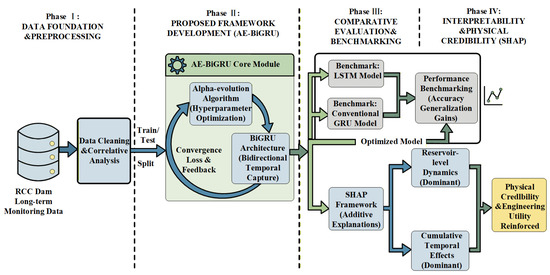
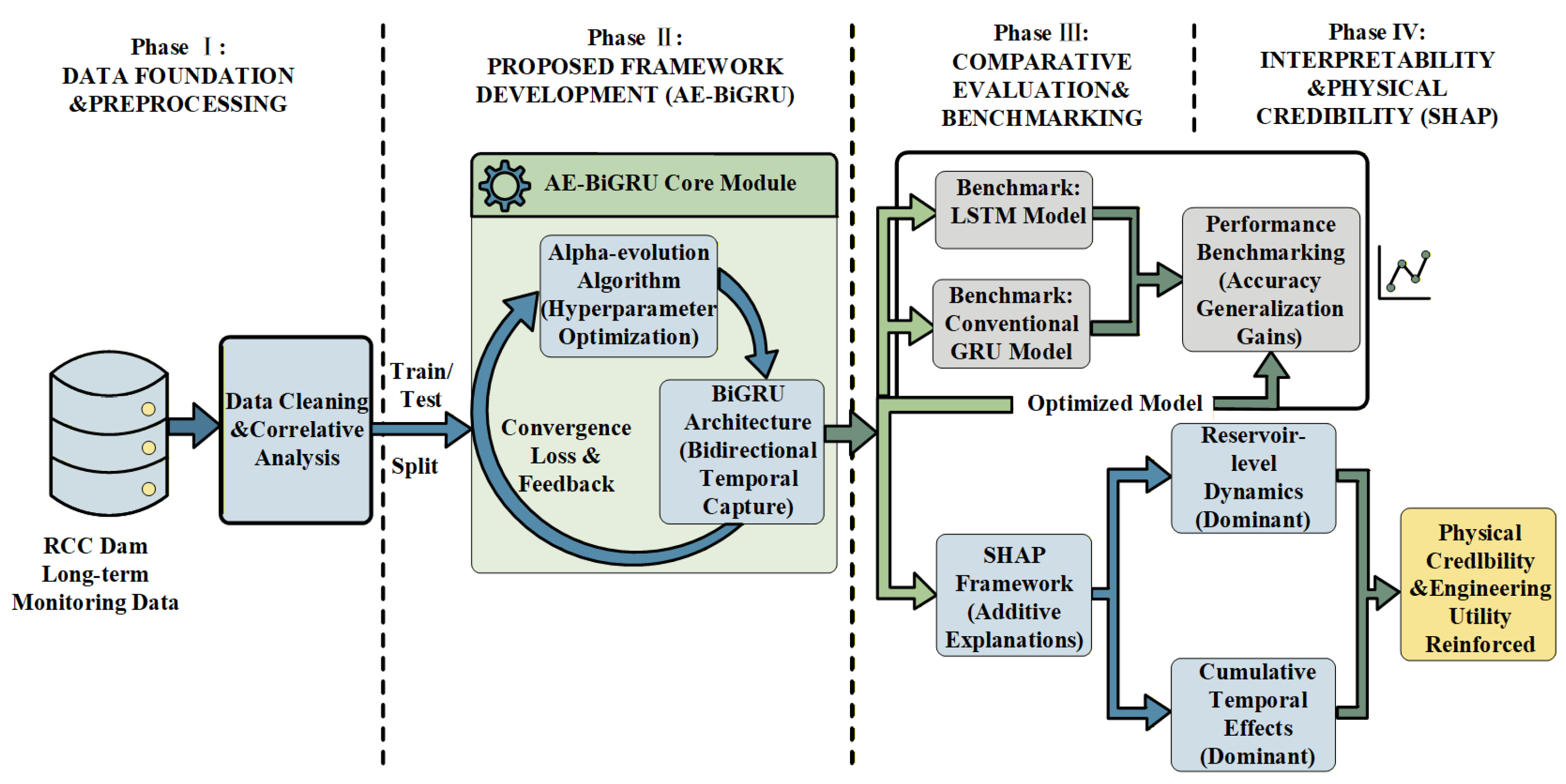
To consolidate the technical details discussed in Section 3.1 and Section 3.2, Figure 4 provides a comprehensive technical roadmap illustrating the complete workflow of the proposed methodology.
Figure 4.
Overall framework of the proposed AE-BiGRU-based modeling and evaluation workflow.
4. Case Study
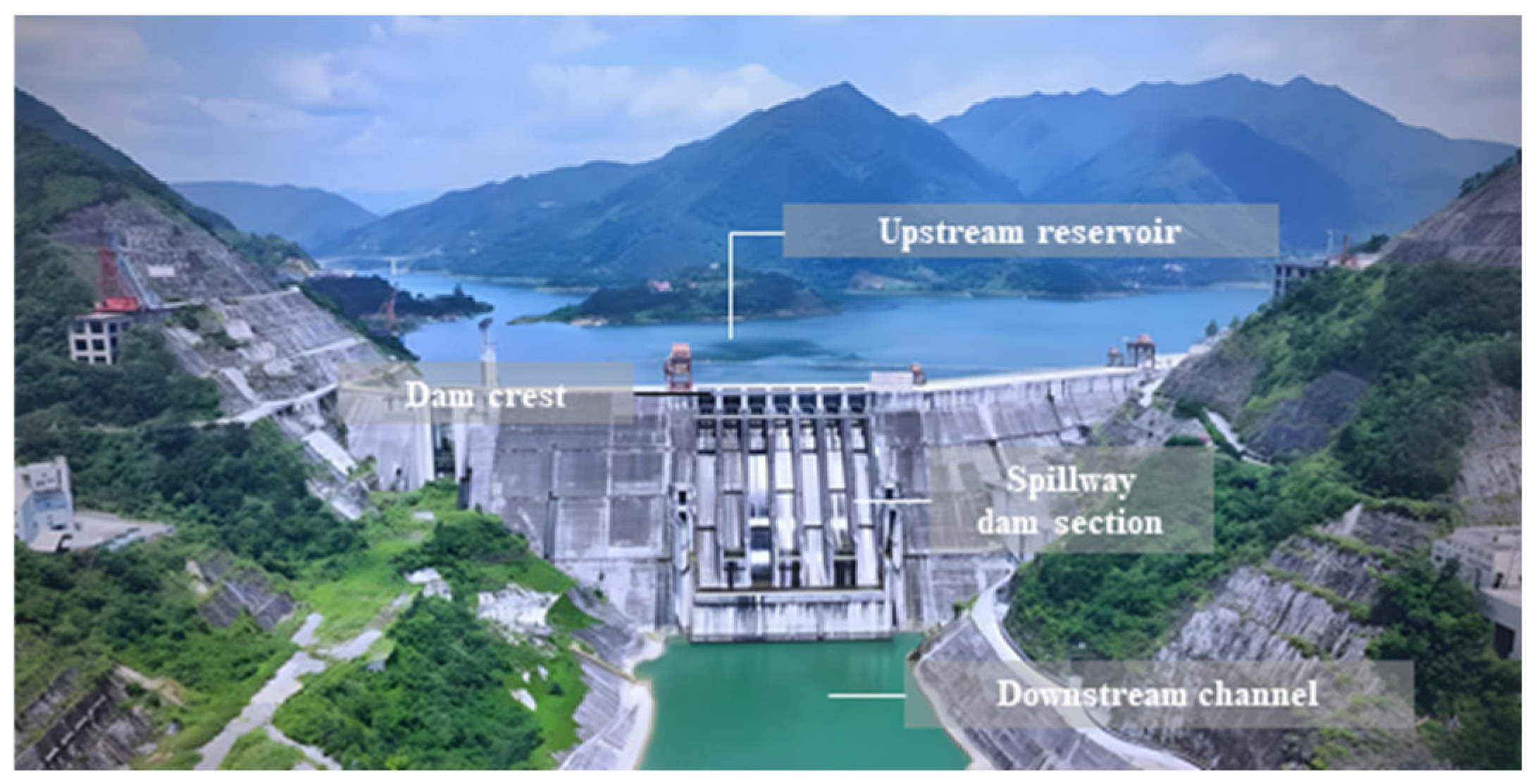
The Longtan Hydropower Station is located on the primary channel of the Hongshui River, around 15 km upstream from the administrative center of Tian’e in the Guangxi Zhuang Autonomous Region. The primary function of the project is hydroelectric power generation, flood mitigation, navigation, and other related activities. The drainage basin regulated at the dam site covers an area of 98,500 km2, and the facility has a total installed capacity of 4900 MW. The Longtan Project, designated as a Grade I hydraulic initiative with a large-scale (Type I) configuration, includes a water-retaining system, flood discharge structures, water diversion mechanisms, and power generation facilities. The water-retaining structure is a gravity dam constructed of roller-compacted concrete (RCC). The dam’s crest elevation is 382.00 m, with a maximum structural height of 192.00 m and a crest length of 761.26 m; the parapet wall attains an elevation of 383.40 m. Figure 5 presents a comprehensive depiction of the project layout and key structures.
Figure 5.
Engineering overview of Longtan hydropower station.
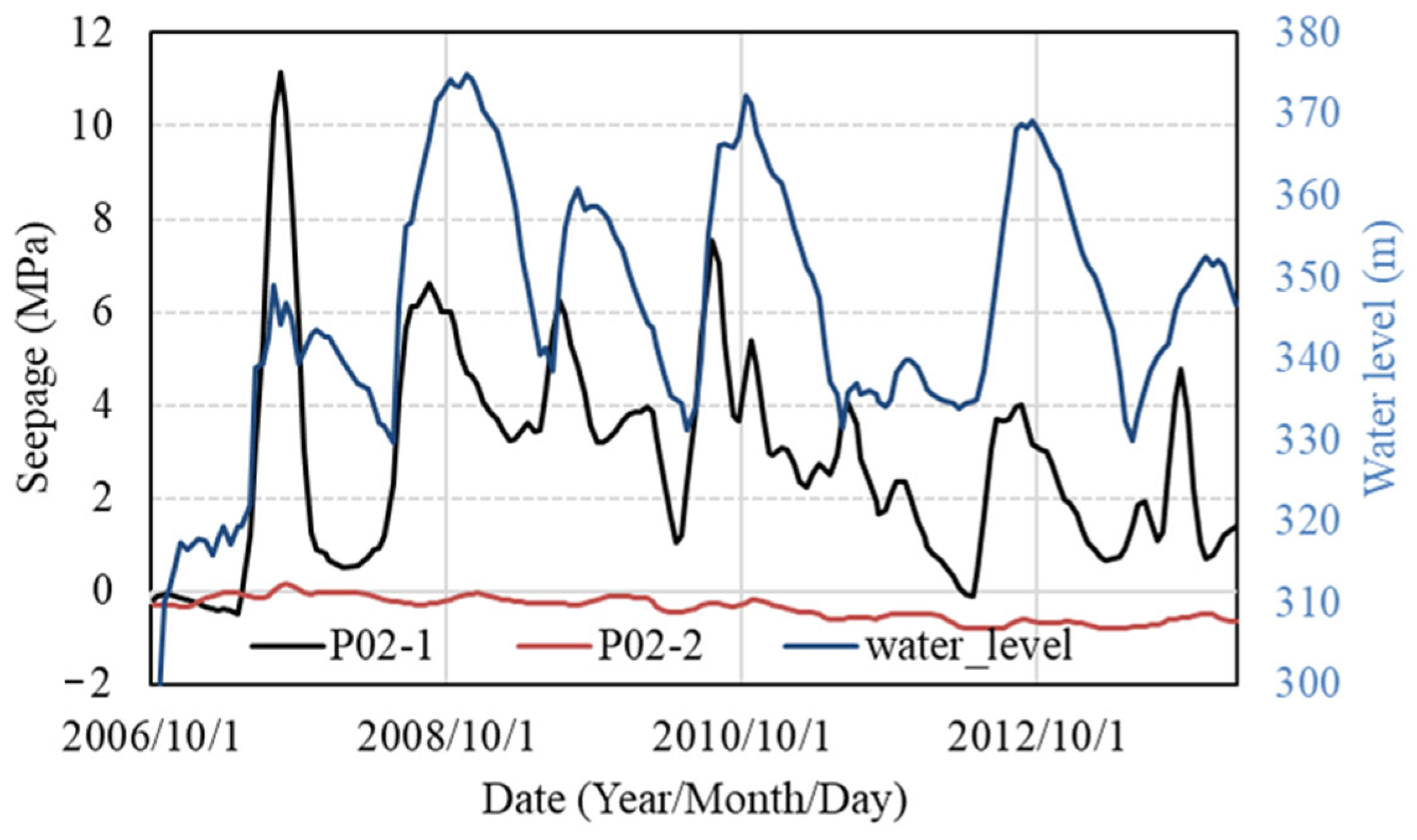
P02-1 and P02-2 are monitoring points arranged at the monitoring section at dam station 0 + 228.586 m on the right bank, located at the plug head of the right-bank diversion tunnel, specifically at the left sidewall and the left arch foot, respectively. Figure 6 depicts the longitudinal monitoring data of seepage pressure at P02-1 and P02-2 alongside the associated reservoir water level at the Longtan Hydropower Station from October 2006 to October 2013. The reservoir water level demonstrates significant seasonal variations due to impoundment and operational management, typically ranging from about 300 m to 380 m. The seepage pressure recorded at point P02-1 exhibits significant temporal variability, characterized by multiple distinct peaks during intervals of rapid water level increase, signifying a robust hydraulic connection between reservoir loading and seepage dynamics within the dam foundation. Conversely, the seepage pressure at P02-2 remains consistently low and stable during the monitoring period, indicating efficient drainage performance and less vulnerability to fluctuations in external water levels. The observed trends indicate that seepage pressure at the Longtan RCC gravity dam is predominantly influenced by fluctuations in reservoir water levels, while spatial variations among monitoring points illustrate the heterogeneity of seepage pathways and drainage conditions within the dam-foundation system.
Figure 6.
Temporal variations of seepage pressure at monitoring points P02-1 and P02-2 and reservoir water level.
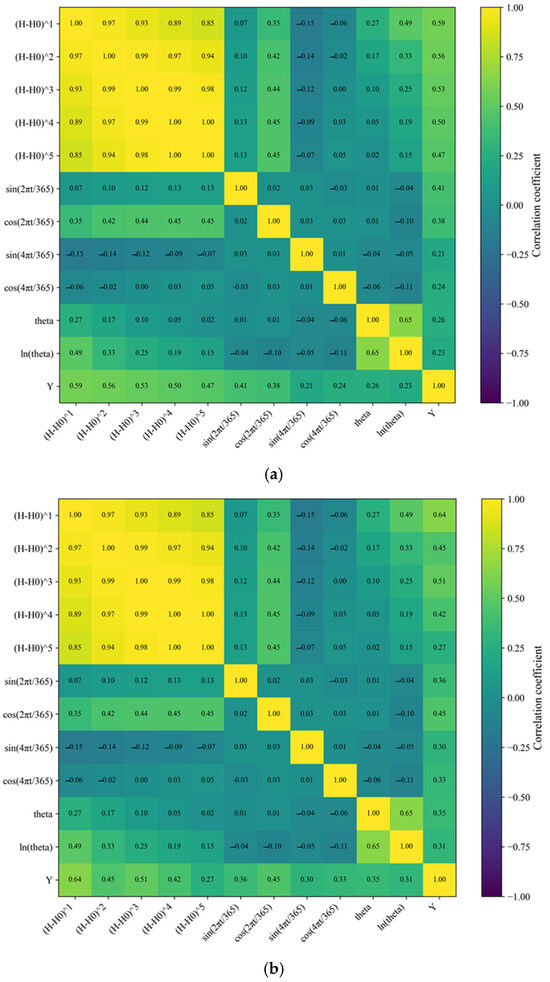
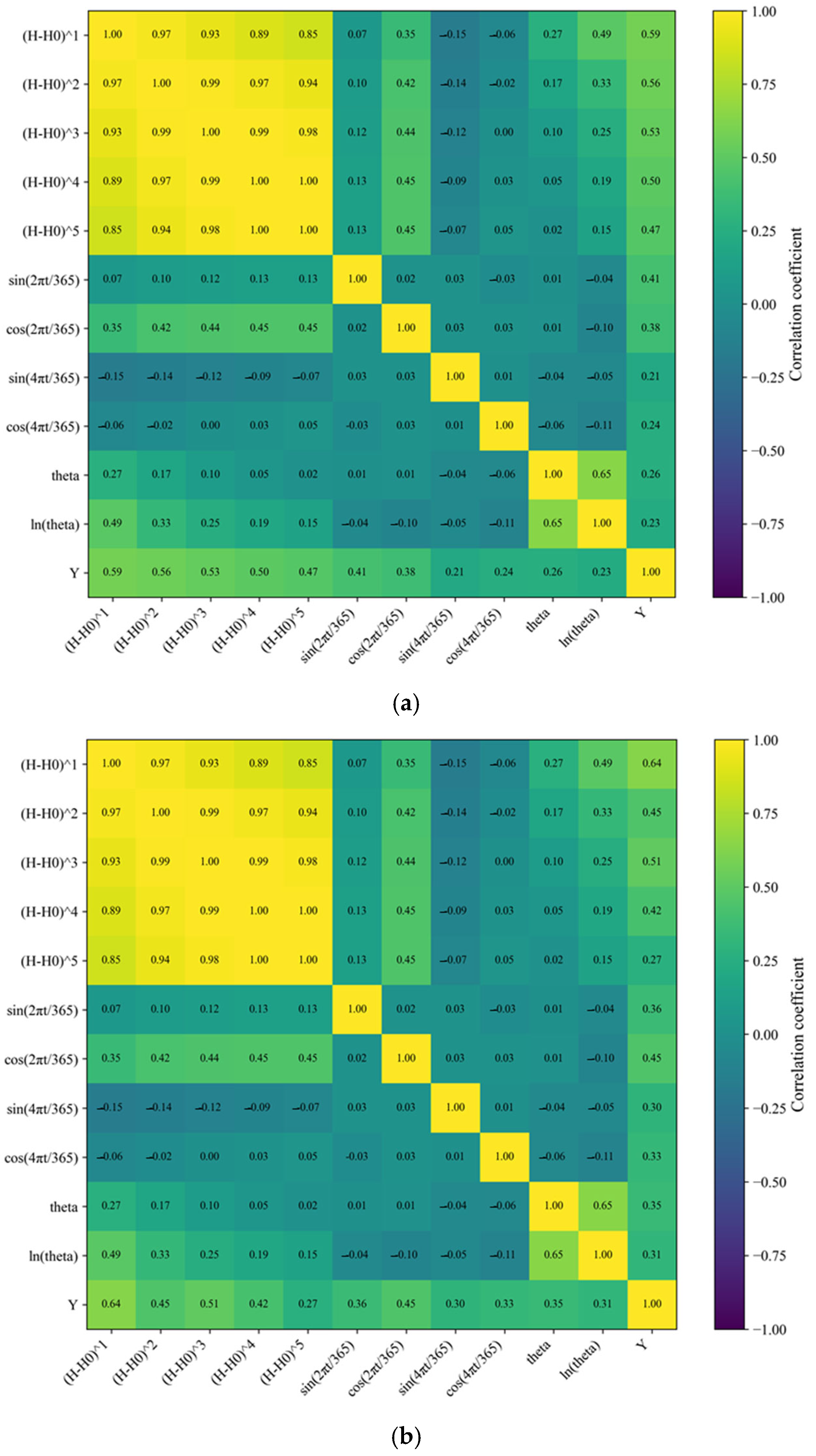
To further examine the relationship between seepage pressure and the selected influencing factors, correlation analysis was conducted. Figure 7 illustrates the Pearson correlation matrices between seepage pressure and the influencing variables at two representative monitoring points, P02-1 and P02-2. As shown in Figure 7a, the seepage pressure at P02-1 exhibits a clear correlation with the reservoir water level, particularly with the linear term and the cubic term, indicating a strong hydraulic response and pronounced nonlinear seepage behavior under varying reservoir loads. The annual periodic components also show noticeable correlations, reflecting the influence of seasonal reservoir operation. Meanwhile, strong intercorrelations among the polynomial water level terms reveal significant multicollinearity, which is characteristic of nonlinear seepage processes in RCC gravity dam foundations. In contrast, Figure 7b demonstrates that the seepage pressure at P02-2 shows generally weak correlations with both the water level terms and periodic components. The overall magnitude of the correlation coefficients is substantially lower than that observed at P02-1, suggesting that seepage pressure at P02-2 is much less sensitive to reservoir water level fluctuations. This behavior can be attributed to more effective drainage conditions or a relatively isolated seepage path at this location. The distinct correlation patterns between P02-1 and P02-2 highlight the spatial heterogeneity of the seepage field within the dam–foundation system and justify the necessity of establishing location-specific seepage pressure models.
Figure 7.
Pearson correlation heatmaps between seepage pressure and influencing variables at monitoring points (a) P02-1 and (b) P02-2.
4.1. Results of AE-BiGRU Model
This study utilizes long-term monitoring data from the Longtan Hydropower Project to validate the proposed seepage prediction approach, as shown in Figure 6. The dataset consists of 174 sets of seepage pressure measurements collected from 4 October 2006 to 7 February 2014, covering multiple reservoir operation cycles and hydrological conditions. To ensure a robust evaluation of model performance, 80% of the dataset is randomly selected as the training set for model calibration, while the remaining 20% is reserved as the testing set for independent validation.
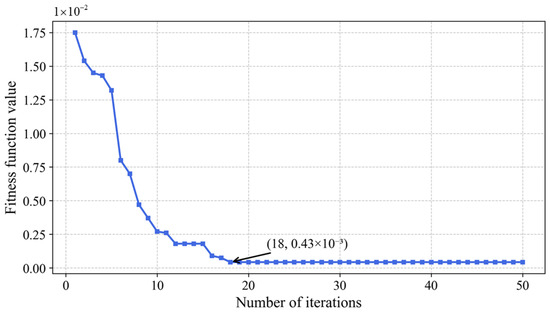
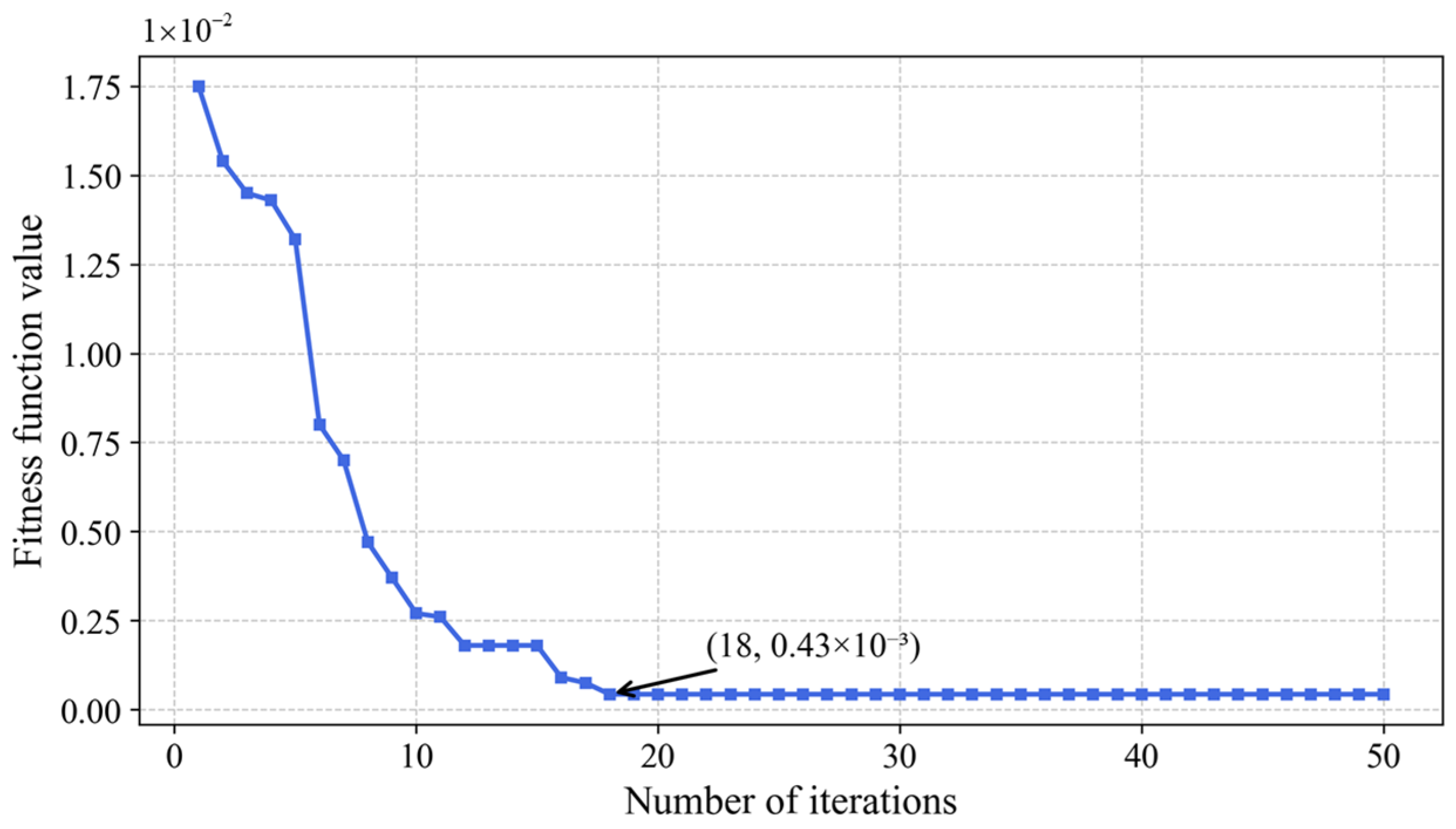
Based on the selected influencing factors, a seepage pressure prediction model is subsequently established. As described in Section 3, the proposed framework adopts the alpha-evolution (AE) optimization strategy to automatically tune the hyperparameters of the BiGRU network, with the minimization of the training root mean square error (RMSE) defined as the optimization objective. Following common practices in time-series neural network modeling, the key hyperparameters considered in the optimization process including the population size N is set to 30, and the problem dimension D is set to 2, corresponding to the number of hidden neurons and the learning rate of the BiGRU model, the number of hidden neurons, ranging from 32 to 256, and the learning rate, set within the interval of 1 × 10⁻⁵ to 1 × 10⁻³. The initial population is generated using uniform random sampling within predefined search intervals and the AE optimization procedure terminates when either 50 iterations are completed or the optimization error falls below 1 × 10⁻³, thereby balancing computational efficiency with convergence reliability. Figure 8 illustrates the convergence behavior of the fitness function during the AE optimization process.
Figure 8.
Convergence curve of the fitness function during AE optimization.
In this study, the fitness function is defined as the Root Mean Square Error (RMSE) of the training data. As shown in Figure 8, the value of fitness function decreases rapidly in the initial iterations, indicating that the algorithm efficiently explores the solution space and quickly identifies promising regions. A pronounced reduction is observed within the first 10 iterations, demonstrating strong global search capability. Subsequently, the convergence rate gradually slows as the algorithm transitions to local exploitation, and the fitness function stabilizes at approximately 4.3 × 10⁻⁴ after 18 iterations. Beyond this point, only minor fluctuations are observed, suggesting that the optimization process has reached a stable and optimal solution. The smooth convergence trend and early stabilization confirm the effectiveness and robustness of the AE algorithm in tuning the hyperparameters of the BiGRU model, while also ensuring computational efficiency by avoiding unnecessary iterations.
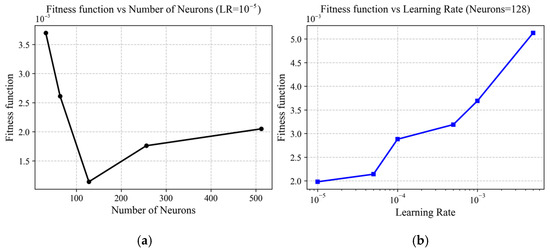
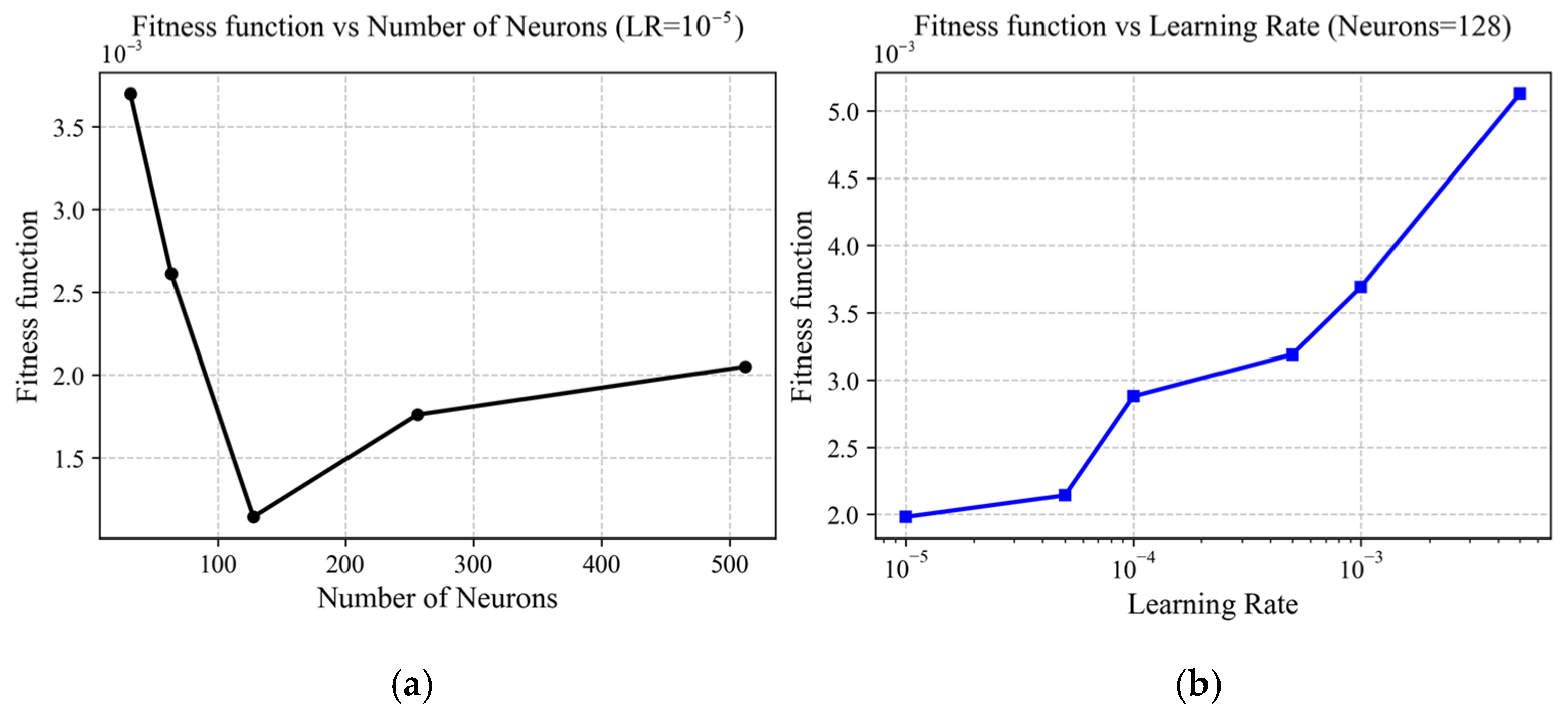
Figure 9 illustrates the sensitivity analysis of the BiGRU model’s performance about the number of neurons and the learning rate. Figure 9a illustrates a substantial decline in the fitness function as the number of neurons escalates from 32 to 128, suggesting that an inadequate number of neurons constrains the model’s representational capacity. The smallest fitness value occurs at 128 neurons, indicating an ideal equilibrium between model complexity and generalization performance. As the number of neurons increases, the fitness value ascends steadily, suggesting potential overfitting or superfluous network capacity that undermines prediction accuracy. Figure 9b depicts the effect of the learning rate on model performance while maintaining the number of neurons at 128. The fitness function demonstrates an upward trend as the learning rate escalates, with the minimum error observed at 1 × 10⁻⁵. Increased learning rates result in elevated fitness values, signifying diminished training stability and inadequate convergence behavior.
Figure 9.
Sensitivity analysis of the fitness function with respect to the number of neurons and learning rate: (a) effect of neuron number on model fitness under a fixed learning rate; (b) effect of learning rate on model fitness with a fixed number of neurons.
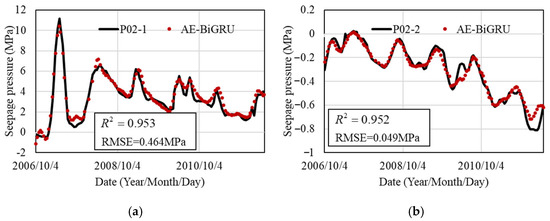
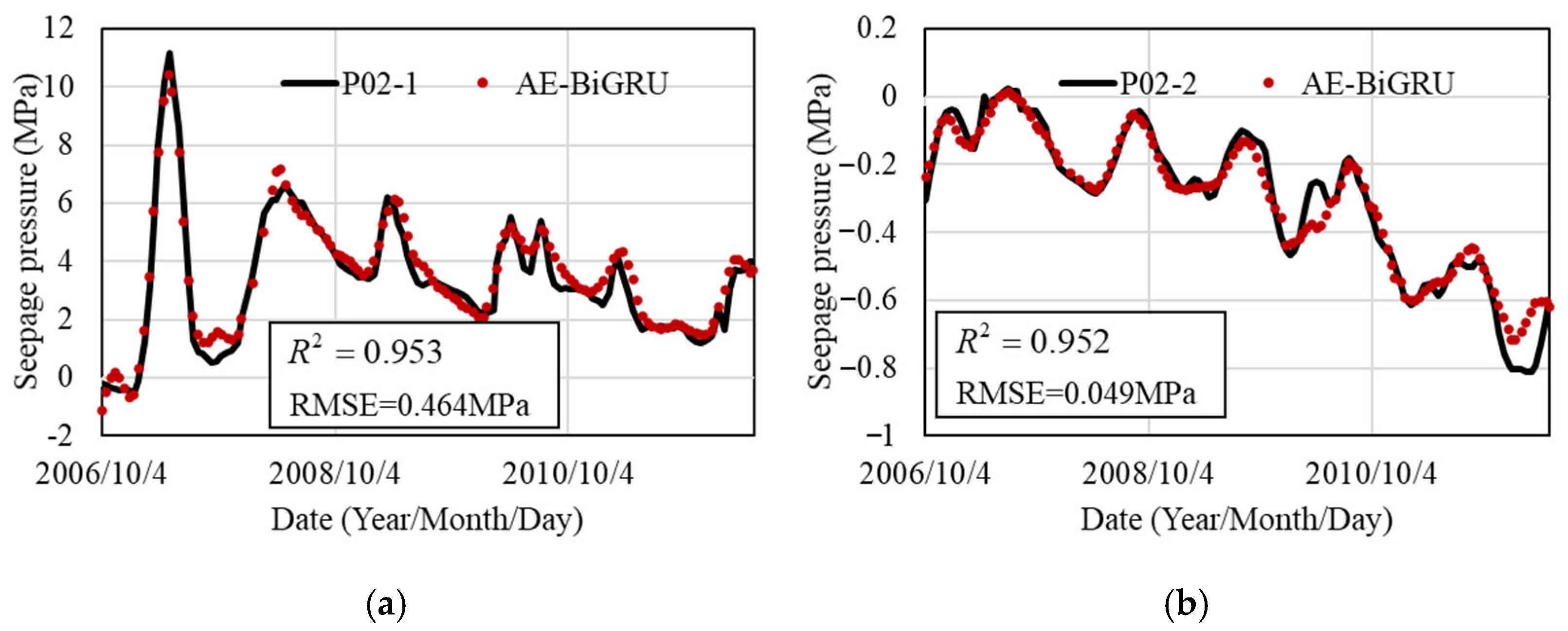
Based on the optimized hyperparameters obtained through the AE algorithm, the proposed seepage pressure prediction model was established and subsequently applied to the monitoring data. Figure 10 presents the fitting results of seepage pressure at monitoring points P02-1 and P02-2 using the proposed model. It can be observed that the simulated seepage pressure series closely follow the measured data during the training stage, indicating a high fitting accuracy. Moreover, the prediction results in the testing period show good agreement with the observed seepage pressure, demonstrating the model’s strong predictive capability and robustness under varying hydraulic conditions.
Figure 10.
Fitting results of seepage pressure at monitoring points (a) P02-1 and (b) P02-2.
Figure 10 presents a comparison between the AE-BiGRU model predictions and the measured seepage pressure at monitoring points P02-1 and P02-2. The predicted curves closely match the observed data, indicating that the model effectively captures both the overall temporal trends and local fluctuations of seepage pressure. Based on the fitting results of monitoring point P02-1, the AE-BiGRU model accurately reproduces the major peaks and variations in seepage pressure, achieving a R2 of 0.953 and a RMSE of 0.464 MPa. For monitoring point P02-2, despite the smaller amplitude of seepage pressure variations, the predicted results remain in good agreement with the measurements, with an R2 of 0.952 and an RMSE of 0.049 MPa. In summary, results demonstrate that the proposed AE-BiGRU model provides reliable and accurate seepage pressure predictions for different monitoring points.
4.2. Comparison of Different Models
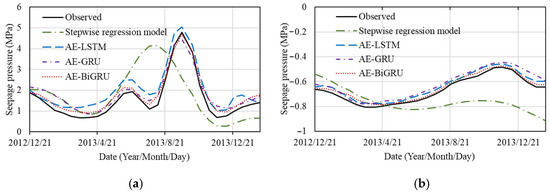
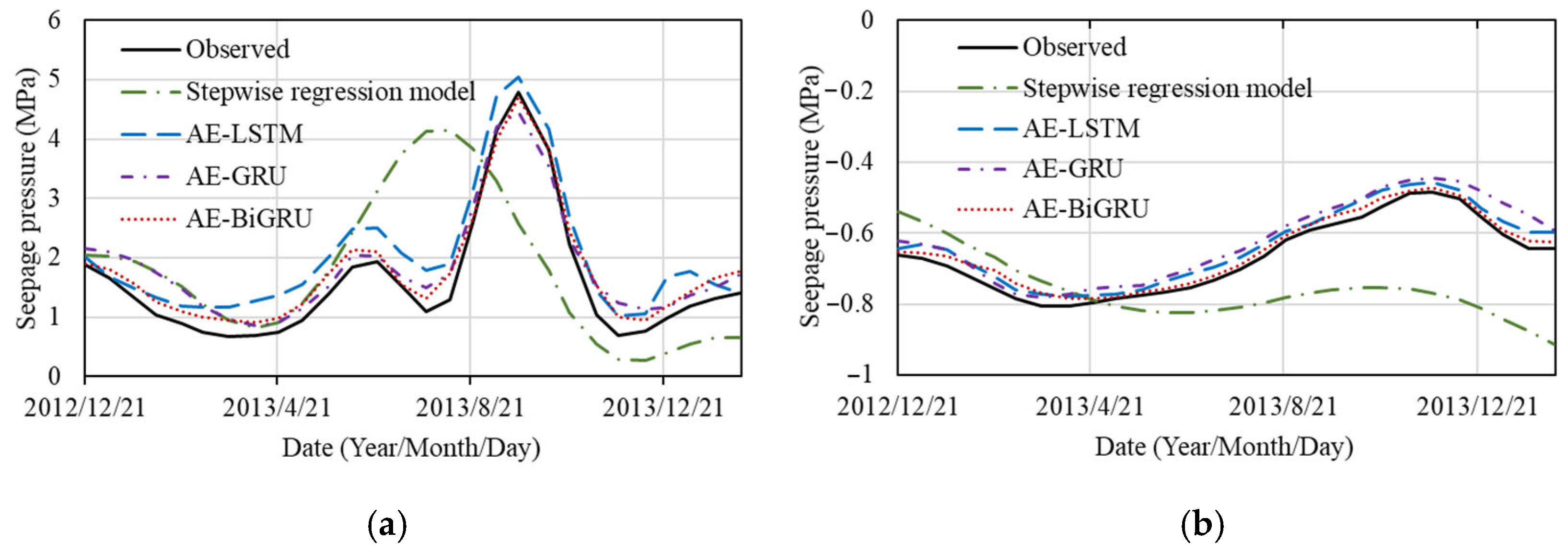
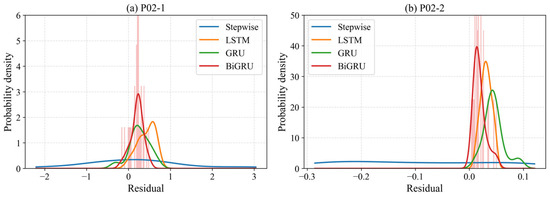
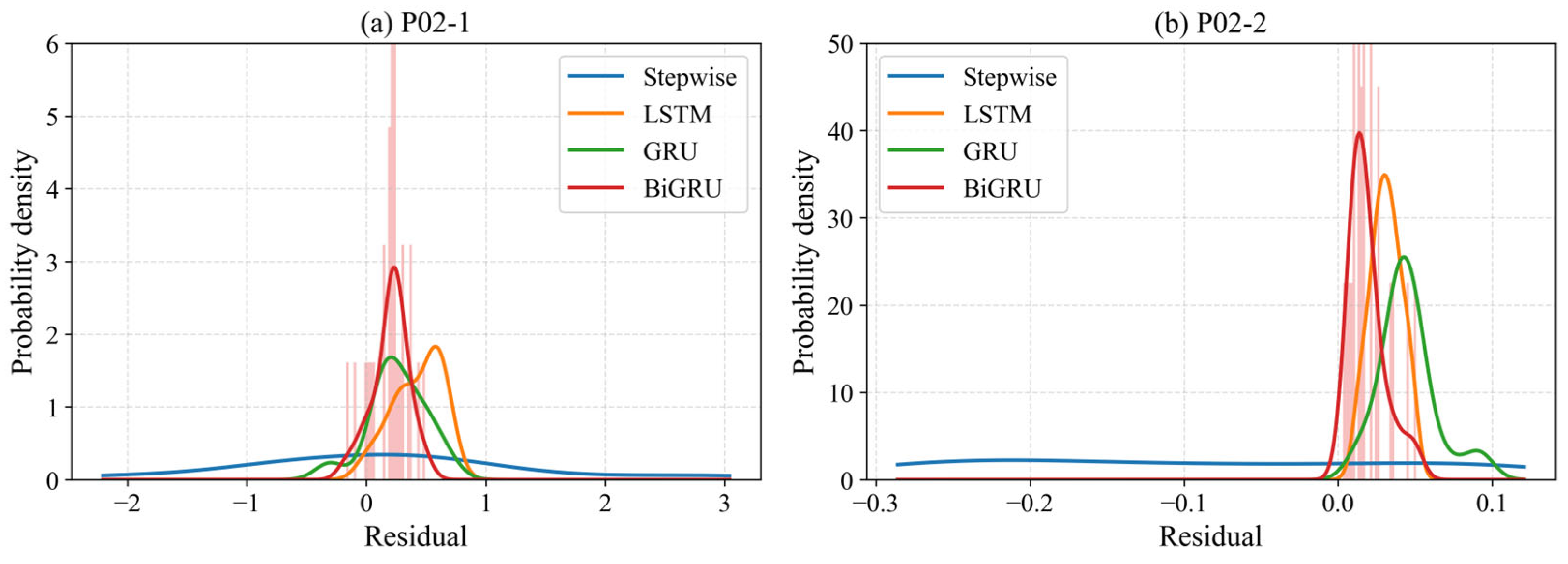
To verify the effectiveness of the proposed approach, a comparative evaluation was conducted using several benchmark models. Specifically, the stepwise regression model was selected as a representative traditional statistical method commonly applied in dam seepage monitoring and LSTM and GRU models were chosen as benchmark deep learning architectures due to their widespread application in time-series prediction. By comparing AE-BiGRU with AE-LSTM and AE-GRU under the same optimization framework, the contribution of bidirectional temporal modeling can be directly evaluated. These models represent traditional statistical techniques and commonly adopted deep learning architectures for time-series prediction. Figure 11 presents a comparison between the observed seepage pressure and the prediction results obtained from different models at two monitoring points. Furthermore, Figure 12 compares the residual probability density distributions of four prediction models at monitoring points P02-1 and P02-2.
Figure 11.
Prediction results of seepage pressure at monitoring points (a) P02-1 and (b) P02-2.
Figure 12.
Residual probability density distributions of different prediction models at monitoring points. The red area represents the residual results of the BiGRU model.
In Figure 11, the AE-based deep learning models provide a closer match to the measured seepage pressure than the stepwise regression model, particularly in reproducing the temporal variation patterns and peak responses. For both two monitoring points, the stepwise regression model exhibits noticeable deviations from the observed data, especially during periods of rapid seepage pressure variation, where peak values and trend changes are not accurately captured. In contrast, the AE-LSTM and AE-GRU models show improved predictive capability by more effectively tracking the rising and falling trends of seepage pressure. Among all the models considered, the proposed AE-BiGRU model yields the most accurate predictions, with predicted curves closely following the observed measurements in terms of both magnitude and phase. This demonstrates that incorporating bidirectional temporal information significantly enhances the model’s ability to characterize the complex and nonlinear seepage pressure behavior of the RCC dam.
In Figure 12, the stepwise regression model exhibits the widest residual spread and the lowest peak density, indicating large dispersion and limited predictive accuracy, whereas the AE-based deep learning models produce more concentrated residual distributions centered near zero. The AE-BiGRU model shows the narrowest distribution and the highest peak density at both P02-1 and P02-2, demonstrating the smallest prediction errors and the most stable performance.
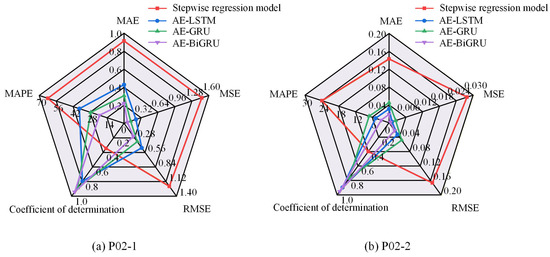
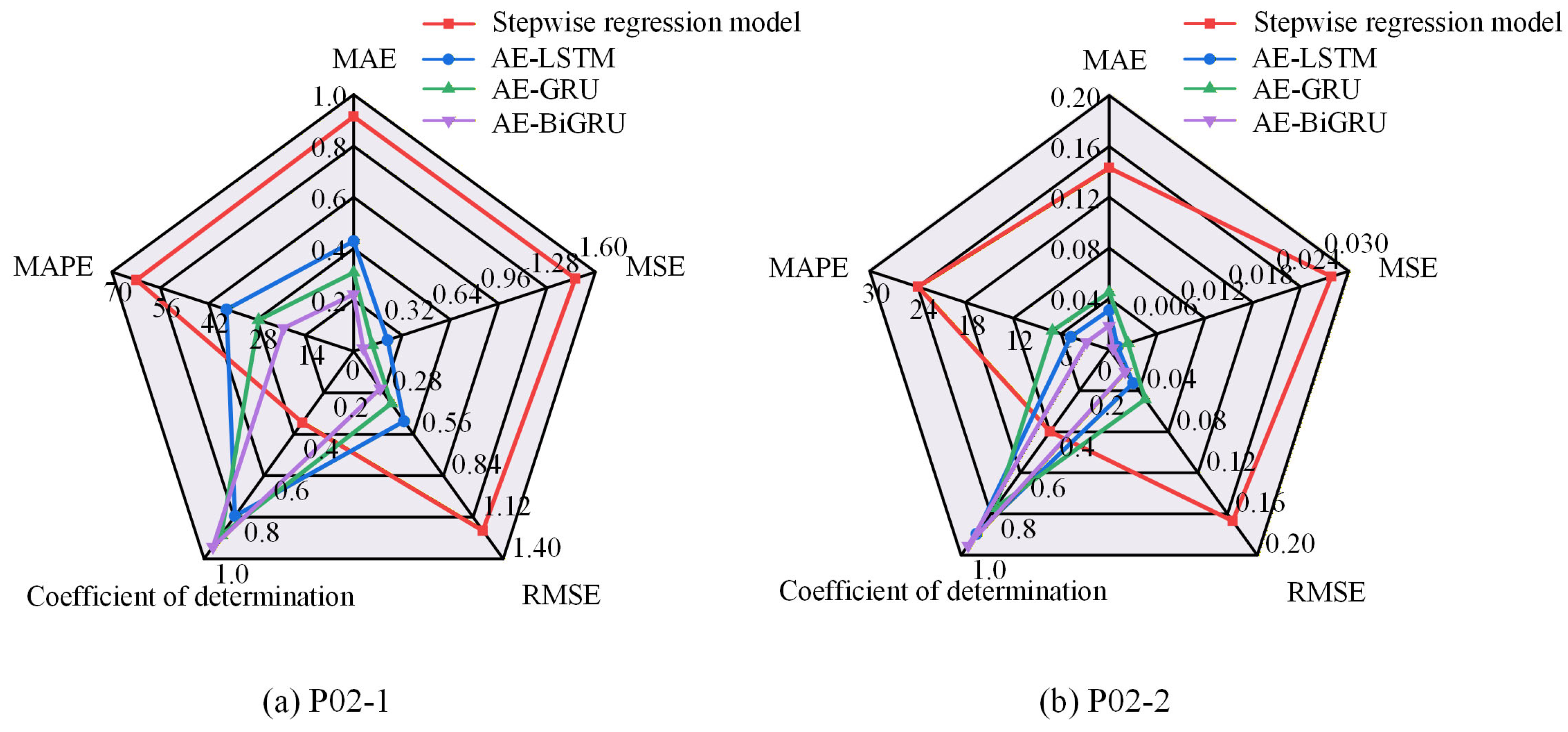
In addition to the coefficient of determination (R2) and the root mean square error (RMSE), the mean absolute error (MAE), mean squared error (MSE), and mean absolute percentage error (MAPE) were also employed to comprehensively assess the predictive performance of the models, as exhibited in Figure 13. The corresponding formulations of these evaluation metrics are given as follows:
Figure 13.
Comparison of prediction performance metrics for different models at monitoring points.
Figure 13 compares the performance of various models at monitoring points P02-1 and P02-2 utilizing assessment measures including MAE, MSE, RMSE, MAPE, and the coefficient of determination. At both monitoring points, the stepwise regression model exhibits the least effective performance, characterized by substantial prediction errors and low R2 values, signifying restricted predictive capacity. The AE-based deep learning models markedly enhance predictive accuracy. At monitoring point P02-1, the AE-LSTM and AE-GRU models decrease the MAE to 0.430 MPa and 0.306 MPa, with corresponding R2 values of 0.795 and 0.886, respectively. Comparable enhancements are noted at monitoring site P02-2; among all models, the suggested model attains superior outcomes at both monitoring locations, producing the minimal error values and the highest coefficients of determination. AE-BiGRU achieves a R2 of 0.942 at P02-1 and 0.954 at P02-2, along with the lowest MAE, RMSE, and MAPE. The results validate the enhanced accuracy and stability of the AE-BiGRU model for predicting seepage pressure in the RCC dam.
4.3. Shap Analysis
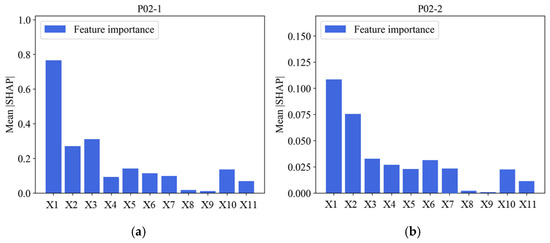
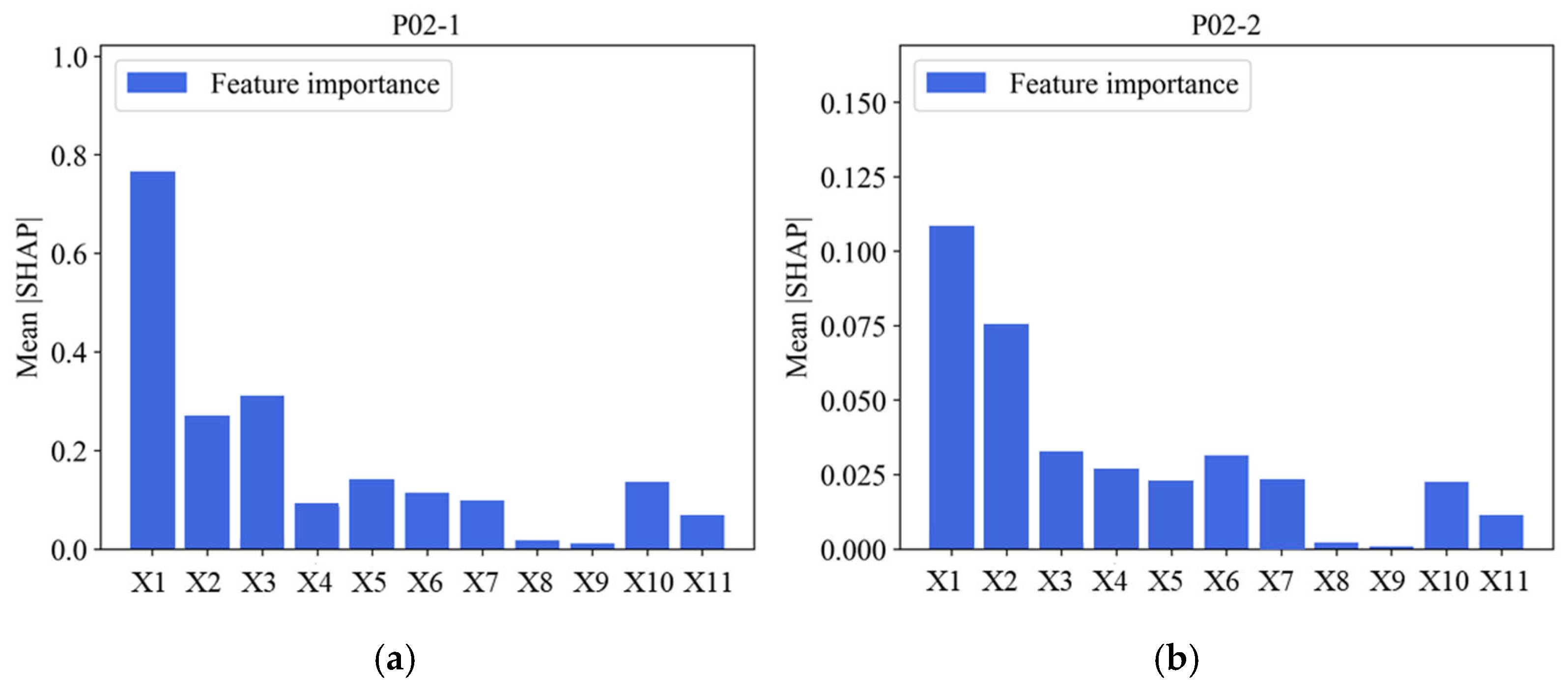
To clarify the underlying prediction mechanism and the relative contributions of input variables in the developed deformation prediction model, SHAP analysis was adopted. SHAP provides a unified and theoretically grounded approach for quantifying the marginal effect of each input feature on the model output, thereby facilitating the identification of key factors governing slope deformation. Unlike conventional sensitivity analysis methods, SHAP enables both global and local interpretability by evaluating overall feature importance as well as the influence of individual variables on specific predictions, offering a transparent and physically meaningful understanding of the data-driven model. Based on the SHAP framework, the contributions of different influencing factors to the seepage pressure predictions of the RCC gravity dam were further investigated. Figure 14 and Figure 15 present the SHAP-based feature importance and distribution characteristics for monitoring points P02-1 and P02-2, respectively.
Figure 14.
Global feature importance based on mean absolute SHAP values at monitoring points (a) P02-1 and (b) P02-2.
Figure 15.
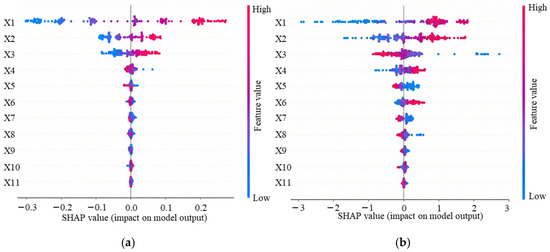
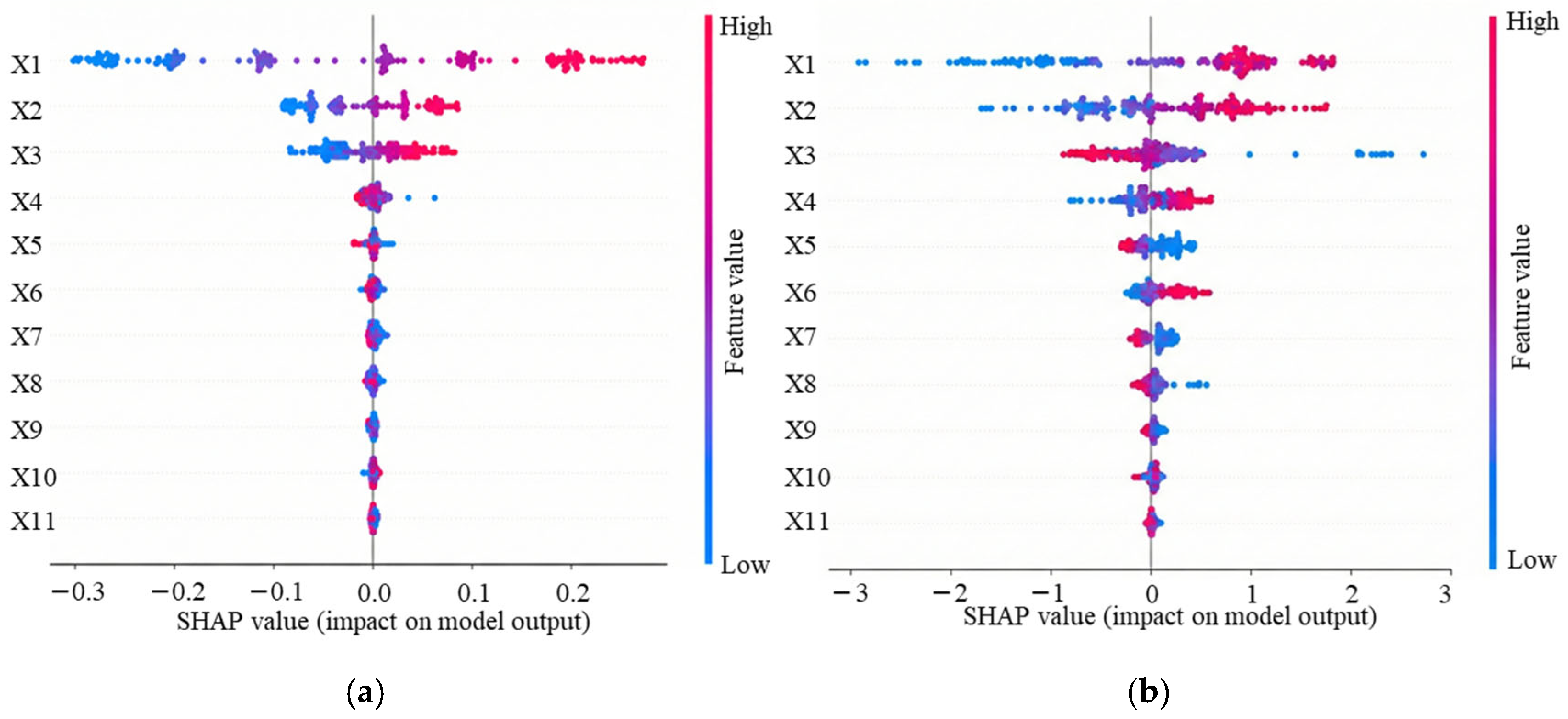
SHAP summary plots illustrating the distribution and impact of input features on deformation predictions at monitoring points (a) P02-1 and (b) P02-2.
Figure 14 represents the global feature importance derived from mean absolute SHAP values for the two monitoring points. It can be observed that water level-related variables (X1–X5 represent ) dominate the seepage pressure predictions at both P02-1 and P02-2, indicating that reservoir water level fluctuations are the primary driving factor controlling seepage pressure in the RCC dam. This finding is consistent with the fundamental seepage mechanism of gravity dams, where changes in upstream water level directly alter the hydraulic gradient and pore pressure distribution within the dam body and foundation. Time-related variables (X10–X11 represent and ) also exhibit noticeable contributions, particularly at P02-1, suggesting that the seepage pressure response is influenced by long-term effects such as material aging, gradual adjustment of seepage paths, and time-dependent hydraulic responses in the RCC structure. In contrast, temperature-related variables (X6–X9 represent , , and ) exhibit comparatively lower importance, implying that temperature effects mainly play an indirect or secondary role in seepage pressure evolution, for example through their influence on concrete thermal deformation or joint opening. The differences in feature importance patterns between the two monitoring points further reflect spatial variability in seepage conditions and local structural characteristics of the RCC dam.
Figure 15 displays the SHAP summary plots for P02-1 and P02-2, illustrating the distribution of SHAP values and their correlation with feature magnitudes. The extensive range of SHAP values for water level-related variables (X1–X5) signifies significant and nonlinear influences on seepage pressure predictions. Elevated reservoir water levels are typically linked to greater positive SHAP values, indicating heightened seepage pressure within the dam, while diminished water levels generally lead to a reduction in the predicted seepage pressure. This nonlinear response illustrates the intricate hydraulic behavior of seepage flow in RCC dams under fluctuating reservoir conditions. Time-related variables (X10–X11) display unique SHAP patterns, underscoring their cumulative impact on seepage pressure evolution and indicating potential delayed or hysteretic effects in the seepage process. In contrast, temperature-related variables (X6–X9) exhibit SHAP values predominantly near zero, indicating their very minor role in predicting seepage pressure. The SHAP results indicate that seepage pressure in the RCC dam is primarily influenced by variations in reservoir water levels, with time-dependent effects serving a supplementary function, while temperature impacts are secondary.
4.4. Physical Mechanism Interpretation of SHAP Results
To further strengthen the interpretability and engineering applicability of the proposed AE-BiGRU model, the SHAP-based feature attribution results are analyzed in conjunction with the fundamental seepage physical mechanisms of RCC gravity dams.
According to Darcy’s law, seepage discharge and pore water pressure within the dam foundation are directly governed by the hydraulic gradient, which is primarily controlled by upstream reservoir water level fluctuations. The dominant SHAP contributions of water level-related variables (X1–X5) therefore physically correspond to variations in hydraulic head difference across the dam body and foundation. Rapid reservoir impoundment or drawdown alters the hydraulic gradient, leading to transient redistribution of pore water pressure and seepage pathways. This explains the strong nonlinear SHAP patterns observed for these variables. The time-dependent variables (X10–X11) represent cumulative temporal effects, which may be associated with long-term material aging, gradual evolution of seepage channels, and creep-related structural adjustments. In RCC dams, progressive development of micro-cracks and slight changes in joint permeability may induce delayed or hysteretic seepage responses. The moderate SHAP contributions of time-related variables are therefore consistent with the physical process of seepage path adaptation and hydraulic memory effects. Temperature-related variables (X6–X9), although less influential globally, can affect seepage behavior indirectly through thermal expansion and contraction of concrete, which may alter joint aperture and local permeability. Their relatively small SHAP values suggest that, under the studied hydraulic conditions, thermal effects play a secondary role compared to hydraulic loading.
In summary, the SHAP interpretation is not merely statistical but aligns well with established seepage theory and hydraulic behavior of gravity dams. This consistency between data-driven feature importance and physical seepage mechanisms enhances the credibility and engineering applicability of the AE-BiGRU framework.
5. Conclusions
The suggested explainable monitoring framework, which combines a Bidirectional Gated Recurrent Unit (BiGRU) model with an Alpha-evolution (AE) optimization algorithm and SHAP interpretability analysis, exhibits significant benefits for seepage prediction in concrete dams. The bidirectional recurrent architecture adeptly captures both forward and backward temporal dependencies, allowing the model to learn cumulative, hysteretic, and multi-timescale seepage responses with enhanced accuracy. Secondly, the AE algorithm markedly reduces the hyperparameter sensitivity characteristic of deep sequence models by facilitating rapid, globally convergent exploration of high-dimensional parameter spaces. The AE-BiGRU model has superior stability, generalization performance, and convergence efficiency compared to untuned or traditionally tuned models. The integration of SHAP interpretability provides clear, engineering-relevant explanations for the model’s predictions. The attribution analysis highlights reservoir-level variation, rainfall contribution, and cumulative temporal impacts as the primary determinants of seepage dynamics, thereby enhancing the physical validity and operational applicability of the methodology. Comparative tests utilizing long-term monitoring data from an RCC gravity dam demonstrate that the suggested method routinely surpasses AE-LSTM, AE-GRU, and conventional statistical models in predicting accuracy.
Notwithstanding these advantages, certain limits must be recognized. The system necessitates adequately dense and continuous monitoring records to fully leverage bi-directional temporal modeling and provide stable hyperparameter optimization, potentially limiting its applicability to locations with sparse or irregular datasets. While SHAP improves transparency, its interpretability is fundamentally correlation-based, and causal inference is indirect relative to fully physics-based seepage models. Furthermore, although the AE algorithm enhances tuning efficiency, its efficacy may still be contingent upon the design of the search area and the availability of computer resources for extensive, dam applications.
Future research may explore these constraints through other promising avenues. Developing hybrid physics-informed neural architectures that include seepage-flow principles—such as (i) Darcy-based response functions or hydraulic-gradient constraints—into the AE-BiGRU framework to enhance causal interpretability and expand generalizability. (ii) Expanding the model to incorporate multi-source and multi-modal monitoring datasets (e.g., uplift pressure, leakage discharge, temperature, piezometric levels) to capture more comprehensive hydro-mechanical interactions.
Author Contributions
Conceptualization, J.X. and Y.S.; methodology, J.X., Y.S. and J.L.; software, J.X., J.L. and Z.J.; validation, C.F.; formal analysis, C.S. and Y.X.; investigation, J.X. and Y.S.; resources, Y.S.; data curation, Y.X. and Y.H.; writing—original draft preparation, J.X. and Y.S.; writing—review and editing, C.S. and Y.X.; supervision, J.X. and Y.S.; funding acquisition, J.X. and Y.S. All authors have read and agreed to the published version of the manuscript.
Funding
The research project was supported by the Project on the Development and Application of a Digital Twin Dam Model for Longtan Hydropower Plant, Guangxi Guiguan (Grant No. CDT-LTHPC-X-3109), the National Key Research and Development Program of China (Grant No. 2024YFC3210703), the Fundamental Research Funds for the Central Universities (Grant No. B250201005), Jiangsu Young Science and Technological Talents Support Project (Grant No. JSTJ-2024-185).
Data Availability Statement
The data presented in this study are available on request from the corresponding author. The data used in this study contain sensitive information related to the dam and cannot be shared publicly due to privacy and authority restrictions.
Conflicts of Interest
Authors Jinji Xie, Yuan Shao and Junzhuo Li were employed by the company Guangxi Guiguan Electric Power Co., Ltd. The remaining authors declare that the research was conducted in the absence of any commercial or financial relationships that could be construed as a potential conflict of interest.
Appendix A. Fitting and Predicting Results of Other Monitoring Points
The complete implementation procedure of the improved Alpha evolutionary algorithm is summarized in Algorithm A1.
| Algorithm A1 Improved alpha evolutionary algorithm |
| Input: |
| Output: Global Best Solution |
| 1: Initialize the candidate solution matrix . |
| 2: |
| 3: |
| 4: |
| 5: |
| 6: |
| 7: |
| 8: |
| 9: |
| 10: |
| 11: |
| 12: |
| 13: |
| 14: |
| 15: |
| 16: |
| 17: |
| 18: |
| 19: |
| 20: |
| 21: |
| 22: |
| 23: |
| 24: |
| 25: |
| 26: |
| 27: |
| 28: |
| 29: |
| 30: |
| 31: |
| 32: |
| 33: |
| 34: |
| 35: |
| 36: |
| 37: |
| 38: Constraint Handling |
| 39: Solution Re-evaluation |
| 40: Archive Update |
| 41: |
| 42: |
References
- Ren, J.; Nan, S.H.; Zhang, J.J.; Zhang, S.F. A deep learning approach driven by raw monitoring data for earth/rockfill dam seepage prediction and safety assessment. J. Civ. Struct. Health Monit. 2025, 15, 2017–2036. [Google Scholar]
- Lei, L.; Zhou, Y.Q.; Huang, H.J.; Luo, Q.F. Extreme Learning Machine Using Improved Gradient-Based Optimizer for Dam Seepage Prediction. Arab. J. Sci. Eng. 2022, 48, 9693–9712. [Google Scholar] [CrossRef] [Scilit]
- Li, D.Q.; Kang, Q.; Wang, R.H.; He, J.P.; Liu, Y. Application of artificial intelligence models in the seepage flow prediction of dam: A case study of Shenzhen reservoir. Georisk Assess. Manag. Risk Eng. Syst. Geohazards 2025, 19, 944–965. [Google Scholar]
- Hu, Y.T.; Wang, Y.; Wei, B.W.; Meng, Z.Z.; Yuan, D.Y.; Jin, T. An interpretable dynamic evaluation framework fusing multi-dimensional data for assessing the operational safety of concrete dams. Expert Syst. Appl. 2026, 299, 130225. [Google Scholar] [CrossRef] [Scilit]
- Zhang, X.; Chen, X.D.; Li, J.J. Improving Dam Seepage Prediction Using Back-Propagation Neural Network and Genetic Algorithm. Math. Probl. Eng. 2020, 2020, 1404295. [Google Scholar] [CrossRef] [Scilit]
- Liu, B.; Cen, W.J.; Zheng, C.H.; Li, D.J.; Wang, L.B. A combined optimization prediction model for earth-rock dam seepage pressure using multi-machine learning fusion with decomposition data-driven. Expert Syst. Appl. 2024, 242, 122798. [Google Scholar]
- Zhu, Y.T.; Zhang, Z.D.; Gu, C.S.; Li, Y.T.; Zhang, K.; Xie, M.X. A Coupled Model for Dam Foundation Seepage Behavior Monitoring and Forecasting Based on Variational Mode Decomposition and Improved Temporal Convolutional Network. Struct. Control Health Monit. 2023, 2023, 3879096. [Google Scholar] [CrossRef] [Scilit]
- Hou, W.Y.; Wen, Y.F.; Deng, G.; Zhang, Y.Y.; Wang, X.N. A multi-target prediction model for dam seepage field. Front. Earth Sci. 2023, 11, 1156114. [Google Scholar] [CrossRef] [Scilit]
- Ishfaque, M.; Dai, Q.W.; ul Haq, N.; Jadoon, K.; Shahzad, S.M.; Janjuhah, H.T. Use of Recurrent Neural Network with Long Short-Term Memory for Seepage Prediction at Tarbela Dam, KP, Pakistan. Energies 2022, 15, 3123. [Google Scholar] [CrossRef] [Scilit]
- Shu, Y.K.; Shen, Z.Z.; Xu, L.Q.; Duan, J.R.; Ju, L.Y.; Liu, Q. Inverse Modeling of Seepage Parameters Based on an Improved Gray Wolf Optimizer. Appl. Sci. 2022, 12, 8519. [Google Scholar] [CrossRef] [Scilit]
- Shafieiganjeh, R.; Schneider-Muntau, B.; Ostermann, M.; Gems, B. Seepage process understanding at long-existing landslide dams through numerical analysis and hydrological measurements. Eng. Geol. 2024, 335, 107524. [Google Scholar] [CrossRef] [Scilit]
- Wei, B.W.; Zheng, Z.F.; Hu, Y.T.; Yuan, D.Y.; Chi, Y.F.; Qiu, C.W. Underwater concrete crack detection of dams via CycleGAN-based data enhancement and optimized multi-scale YOLO11. Constr. Build. Mater. 2026, 514, 145497. [Google Scholar]
- Arslan, C.A.; Al-Jalabi, F.A. Artificial intelligence models for seepage analysis through embankment dam-case study: Khasa Chi Dam. Earth Sci. Inform. 2025, 18, 550. [Google Scholar] [CrossRef] [Scilit]
- Duong, N.T.; Tran, K.Q. Estimation of seepage velocity and piping resistance of fiber-reinforced soil by using artificial neural network-based approach. Neural Comput. Appl. 2023, 35, 2443–2455. [Google Scholar]
- Dai, Q.W.; Zhou, W.; He, R.; Yang, J.S.; Zhang, B.; Lei, Y. A Data Assimilation Methodology to Analyze the Unsaturated Seepage of an Earth-Rockfill Dam Using Physics-Informed Neural Networks Based on Hybrid Constraints. Water 2024, 16, 1041. [Google Scholar] [CrossRef] [Scilit]
- An, L.; Carvajal, C.; Dias, D.; Peyras, L.; Jenck, O.; Breul, P.; Zhang, T.T. Adaptive Bayesian inversion of pore water pressures based on artificial neural network: An earth dam case study. J. Cent. South Univ. 2025, 31, 3930–3947. [Google Scholar] [CrossRef] [Scilit]
- Liang, X.Y.; Zhang, L.Z.; Zhao, J.Q. AT-LSTM-CUSUM Digital Intelligent Model for Seepage Safety Prediction of Concrete Dam. Struct. Control Health Monit. 2025, 2025, 8518538. [Google Scholar] [CrossRef] [Scilit]
- Chen, X.D.; Xu, Y.; Guo, H.D.; Hu, S.W.; Gu, C.S.; Hu, J.; Qin, X.N.; Guo, J.J. Comprehensive evaluation of dam seepage safety combining deep learning with Dempster-Shafer evidence theory. Measurement 2024, 226, 114172. [Google Scholar] [CrossRef] [Scilit]
- Yu, Q.T.; Tolson, B.A.; Shen, H.R.; Han, M.; Mai, J.; Lin, J. Enhancing long short-term memory (LSTM)-based streamflow prediction with a spatially distributed approach. Hydrol. Earth Syst. Sci. 2024, 28, 2107–2122. [Google Scholar]
- Hua, G.W.; Wang, S.J.; Xiao, M.; Hu, S.H. Research on the Uplift Pressure Prediction of Concrete Dams Based on the CNN-GRU Model. Water 2023, 15, 319. [Google Scholar] [CrossRef] [Scilit]
- Zheng, C.H.; Cen, W.J.; Liu, B.; Qian, J.H.; Ding, Y.X.; Mo, C.X. Hybrid optimization and AI-driven surrogate model for seepage parameters inversion in complex dam foundations. J. Hydrol. 2026, 664, 134484. [Google Scholar] [CrossRef] [Scilit]
- Ji, Y.C.; Zhang, L.M. A method for analyzing interwell connectivity based on gated recurrent network with knowledge interaction. Front. Earth Sci. 2025, 13, 1678611. [Google Scholar] [CrossRef] [Scilit]
- Wang, Y.Q.; Zhu, L.; Xue, Y. A comprehensive review on dual-pathway utilization of coal gangue concrete: Aggregate substitution, cementitious activity activation, and performance optimization. Buildings 2026, 16, 302. [Google Scholar] [CrossRef] [Scilit]
- Tanhapour, M.; Soltani, J.; Shakibian, H.; Malekmohammadi, B.; Hlavcova, K.; Kohnova, S. Development of a Multi-objective Optimal Operation Model of a Dam using Meteorological Ensemble Forecasts for Flood Control. Water Resour. Manag. 2025, 39, 2743–2761. [Google Scholar] [CrossRef] [Scilit]
- Chen, X.Y.; Guo, Y.G. Prediction of earthquake damage of reservoir dam based on RS-XGBoost. Nat. Hazards 2025, 121, 20489–20512. [Google Scholar] [CrossRef] [Scilit]
- Yu, J.; Shen, Z.Z.; Li, H.X.; Li, F.Z.; Huang, Z.X. An artificial intelligence optimization method of back analysis of unsteady-steady seepage field for the dam site under complex geological condition. Bull. Eng. Geol. Environ. 2024, 83, 127. [Google Scholar] [CrossRef] [Scilit]
- Tan, J.C.; Xu, L.Q.; Zhang, K.L.; Yang, C. A Biological Immune Mechanism-Based Quantum PSO Algorithm and Its Application in Back Analysis for Seepage Parameters. Bull. Eng. Geol. Environ. 2020, 2020, 2191079. [Google Scholar]
- Peng, J.Y.; Shen, Z.Z.; Xu, L.Q.; Gan, L.; Tan, J.C. A New Method for Inversion of Dam Foundation Hydraulic Conductivity Using an Improved Genetic Algorithm Coupled with an Unsaturated Equivalent Continuum Model and Its Application. Materials 2023, 16, 1662. [Google Scholar] [CrossRef] [Scilit] [PubMed]
- Li, J.R.; Chen, C.; Wu, Z.Y.; Chen, J.K. Multi-source data-driven unsaturated seepage parameter inversion: Application to a high core rockfill dam. J. Hydrol. 2023, 617, 129171. [Google Scholar] [CrossRef] [Scilit]
- Yin, Q.G.; Li, Y.L.; Li, W.W.; Wen, L.F.; Zhang, Y.; Wang, T.; Yang, T.; Zhou, T. Intelligent inversion analysis of seepage parameters for deep overburden dam foundations based on an improved grey wolf optimization algorithm. Comput. Geotech. 2025, 188, 107595. [Google Scholar] [CrossRef] [Scilit]
- Zhang, K.; Gu, C.S.; Zhu, Y.T.; Chen, S.Y.; Dai, B.; Li, Y.T.; Shu, X.S. A Novel Seepage Behavior Prediction and Lag Process Identification Method for Concrete Dams Using HGWO-XGBoost Model. IEEE Access 2021, 9, 23311–23325. [Google Scholar] [CrossRef] [Scilit]
- Li, H.X.; Shen, Z.Z.; Sun, Y.Q.; Wu, Y.J.; Xu, L.Q.; Shu, Y.K.; Tan, J.C. A New Approach for Seepage Parameters Inversion Analysis Using Improved Whale Optimization Algorithm and Support Vector Regression. Appl. Sci. 2023, 13, 10479. [Google Scholar] [CrossRef] [Scilit]
- Huang, Z.H.; Shen, Z.Z.; Xu, L.Q.; Sun, Y.Q.; Li, H.X.; Liu, D.T. Seepage characteristics of core rockfill dam foundation with double cutoff walls in deep overburden: A case study. Case Stud. Constr. Mater. 2024, 21, e03576. [Google Scholar] [CrossRef] [Scilit]
- Yang, Y.T.; Wu, W.N.; Zhang, J.H.; Zheng, H.; Xu, D.D. Determination of critical slip surface and safety factor of slope using the vector sum numerical manifold method and MAX-MIN ant colony optimization algorithm. Eng. Anal. Bound. Elem. 2021, 127, 64–74. [Google Scholar] [CrossRef] [Scilit]
- Cho, K.; Van Merriënboer, B.; Gulçehre, Ç.; Bahdanau, D.; Bougares, F.; Schwenk, H.; Bengio, Y. Learning phrase representations using RNN encoder–decoder for statistical machine translation. In Proceedings of the 2014 Conference on Empirical Methods in Natural Language Processing (EMNLP), Doha, Qatar, 25–29 October 2014; pp. 1724–1734. [Google Scholar]
- Gao, H.; Zhang, Q.K. Alpha evolution: An efficient evolutionary algorithm with evolution path adaptation and matrix generation. Eng. Appl. Artif. Intell. 2024, 137, 109202. [Google Scholar] [CrossRef] [Scilit]
- Lundberg, S.M.; Lee, S.-I. A unified approach to interpreting model predictions. Adv. Neural Inf. Process. Syst. 2017, 30, 4765–4774. [Google Scholar]
- Sun, X.R.; Peng, J.H.; Zhang, C.L.; Zheng, S. Prediction of sluice seepage based on impact factor screening and the IKOA-BiGRU model. Water 2025, 17, 1850. [Google Scholar]
Disclaimer/Publisher’s Note: The statements, opinions and data contained in all publications are solely those of the individual author(s) and contributor(s) and not of MDPI and/or the editor(s). MDPI and/or the editor(s) disclaim responsibility for any injury to people or property resulting from any ideas, methods, instructions or products referred to in the content. |
© 2026 by the authors. Licensee MDPI, Basel, Switzerland. This article is an open access article distributed under the terms and conditions of the Creative Commons Attribution (CC BY) license.