Article

The Vertical Profile and Diversity Within the Bacterioplankton Assemblages in a Deep Freshwater Lake (Lake Biwa, Japan)


1
Department of Biology and the Center for Sustainability and the Environment, Albion College, 611 East Porter Street, Albion, MI 49224, USA
2
Department of Zoology, Trinity Centre for the Environment, School of Natural Sciences, Trinity College Dublin, D02 PN40 Dublin, Ireland
3
Center for Ecological Research, Kyoto University, Hirano 2-509-3, Otsu 520-2113, Shiga, Japan
*
Author to whom correspondence should be addressed.
Water 2026, 18(5), 546; https://doi.org/10.3390/w18050546
Submission received: 28 December 2025 / Revised: 9 February 2026 / Accepted: 19 February 2026 / Published: 26 February 2026
(This article belongs to the Special Issue Microbial Diversity in Freshwater Ecosystems)

Abstract

Holomictic mesotrophic lakes, characterized by oxygenated hypolimnion due to seasonal mixing of their water layers, host microbial assemblages with diversity and community compositions strongly shaped by the constant recycling of nutrients. However, other studies showed occurrences of hypolimnion-specific lineages, distinct from adjacent epilimnion in such lakes. The study focused on Lake Biwa, a tectonic mesotrophic lake in Japan, to spatially elucidate bacterial assemblages between the epilimnion and oxygenated hypolimnion. 16S rRNA gene analysis revealed dominance of bacterial members belonging to Pseudomonadota, Bacillota and Bacteroidota throughout the water column, while other lineages such as Bdellovibrionota, Kapabacteria and WGS were not detected in the epilimnion and were solely hypolimnion-specific in their occurrences. This study serves to further corroborate earlier investigations that have shown bacterioplankton community differences in the vertical distribution of deep-water lakes.

1. Introduction

Lake Biwa, a mesotrophic lake, is one of the oldest lakes in the world, formed about 4 million years ago. The lake has a surface area of about 670 km2; a maximum depth of 104 m and a shoreline of around 235 km [1]. The lake has a pH range between 7.7 and 8.4; total nitrogen concentrations between 0.15 and 0.32 mg L−1 and total phosphorus concentrations between 0.005 and 0.009 mg L−1 [2]. Additionally, the lake is monomictic, in that its water layers are not permanently stratified, mixing vertically during winter and keeping the hypolimnion oxygenated throughout the year. The oxygenated hypolimnion in deep holomictic lakes makes up the larger portion of the water volume and is of significant ecological importance, given that this is where countless microbial enzymatic activities occur [3] and it harbors distinct bacterioplankton assemblages [4,5].
Several past studies have utilized the 16S rRNA gene sequencing approach to examine the seasonal dominance and vertical partitioning [6] of, as well as spatiotemporal differences in, the diversity [7] within the bacterioplankton assemblages in Lake Biwa, revealing distinct bacteria phyla between the upper epilimnion layer and the deep hypolimnion of the lake. Previous studies have shown that during the stratified period, the epilimnion of Lake Biwa is dominated by Bacteroidetes and Actinobacteria [6] under nutrient-limited [8] and DOC-rich [9,10] environments. In contrast, Chloroflexi and Planctomycetes dominate in the hypolimnion [6], with high accumulation of semi-labile [9] or humic-like [10] refractory DOM during the stratified period in the lake. Specifically, results from Okazaki et al. [11] using combinations of 16S rRNA gene sequencing and fluorescence in situ hybridization (FISH) revealed the dominance of the CL500-11 cluster, a member of the Chloroflexi phylum, in the oxygenated hypolimnion of the lake over two annual cycles. These results were further corroborated in other follow-up studies that also utilized FISH to quantitatively implicate the hypolimnion-specific lineages of CL500-11, belonging to Chloroflexi, and CL500-3, CL500-37, and CL500-15, all members of the Planctomycetes and Thaumarchaeota of Marine Group 1 [2,6,7]. However, there is still a paucity of information regarding the dominance of, vertical distribution of, and spatiotemporal differences in the diversity of bacterioplankton communities in Lake Biwa, given that only relatively few previous studies have been done on these areas, and therefore more information will be needed for a better understanding of the microbial ecology of the lake.
The present study examined the vertical profiles and diversity within the bacterioplankton assemblages in Lake Biwa during the early stage of the stratified period using the 16S rRNA gene sequencing approach, with the goal of delineating the community composition from the epilimnion and the hypolimnetic locations as well as to implicate, revalidate and confirm the presence of any site-specific bacterial lineages that may be present as previously reported using combinations of high-throughput sequencing depth and multivariate analyses.

2. Materials and Methods

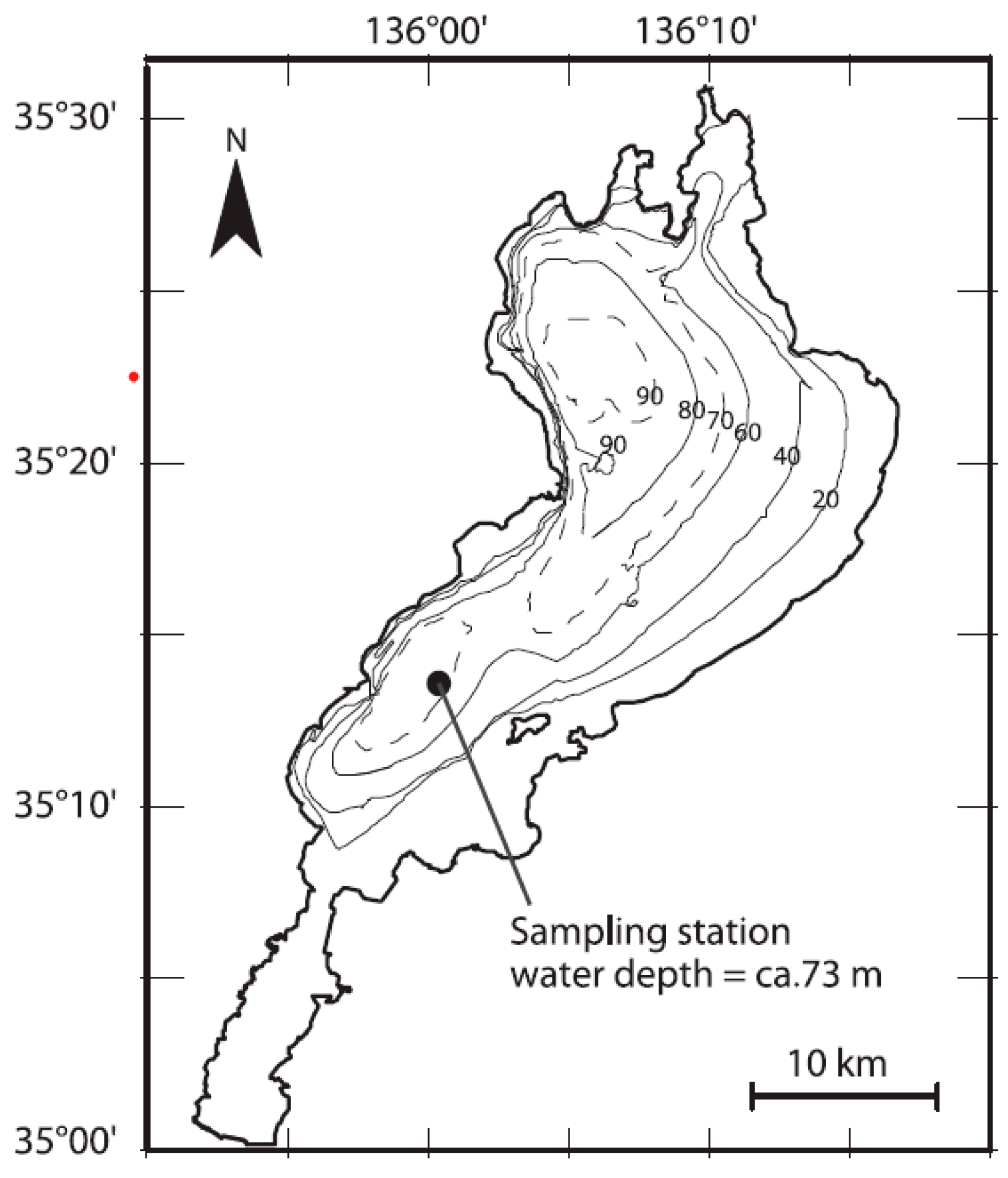
Water samples (~1000 mls) were collected on 20 May 2025 at the center location of Lake Biwa (coordinates: 35°12′58″ N; 135°59′55″ E, Figure A1), starting from the epilimnion at around 5 m depth and then heading vertically downwards to the bottom of the lake (~70 m) using a CTD profiler (SBE-911plus; Sea Bird Electronics, Sealogger, WA, USA). The collected samples were aseptically transferred into labeled, sterile falcon tubes and stored on ice at around 4 °C until they were returned to the laboratory for subsequent analyses. The collected water samples for DNA extraction were concentrated using 0.2 µm filters (Nuclepore Track-Etch Membrane, Whatman) and preserved for sequencing analysis as done previously [12]. Various water chemistry properties were also measured vertically (see Table 1).
Community DNA was extracted from the filters using the FastDNA SPIN Extraction kit (MP Biomedicals, Solon, OH, USA) and eluted in 50 μL of sterile deionized water according to the vendor’s instructions. Determination of DNA quantity was then carried out with a NanoDrop Spectrophotometer (NanoDrop 2000, Thermo Scientific, Waltham, MA, USA). The quality of extracted DNA was further assessed by amplification with the 16S rRNA universal primer sets, 27F (5′ AGA GTT GTA TCM TGG CTC AG 3′) and 1492R (5′GGT TAC CTT GTT ACG ACT T3′), as previously described [13]. The Illumina’s 16S metagenomic sequencing library preparation protocol was used to generate amplicon libraries with paired-end reads using universal primer pairs that consisted of an Illumina-specific overhang sequence and a locus-specific sequence as previously described [14]: 926wF_Illum: 5′-TCGTCGGCAGCGTCAGATGTGTATAAGAGACA and GAAACTYAAAKGAATTGRCGG, and 1392R_Illum: 5′-GTCTCGTGGGCTCGGAGATGTGTATAAGAGACAG-ACGGGCGGTGWGTRC-3′. Sequencing libraries were created by amplifying the V3–V4 regions of the 16S rRNA gene. Amplification was performed using the Phusion Taq master mix (1X, ThermoFisher, MA, USA) with 3% dimethylsulfoxide (DMSO), 0.4 µM of each primer and 5 µL of genomic DNA. Cycling conditions were initial denaturation at 98 °C for 30 s; 30 cycles of denaturation at 98 °C for 30 s, annealing at 58 °C for 15 s, and elongation at 72 °C for 15 s; followed by a final elongation step at 72 °C for 60 s. Mothur (Mothur v. 1.36.1; http://www.mothur.org, accessed on 9 September 2025), an open-source software program, was used to process and analyze the raw sequencing data as described by [14] before all unknown sequences, i.e., those with less than 300 base pairs as well as those with a less than average quality score (value of 25 or less), were filtered out and deleted using the EzBioCloud pipeline based on the EzBioCloud PKSSU5.0 database [15]. If a sequence matches a reference sequence with >97% similarity, it is assigned to a species and also not labeled as a chimera, as the EzBioCloud 16S database is also checked by a rigorous quality control process that includes chimera detection. The chimera removal summary is shown in Table A1. The remaining query NGS reads are checked by the UCHIME tool. The sequences generated were then clustered into OTUs after setting a 97% distance limit or cutoff similarity value, and the CLR-transformed data were processed using a pseudocount method of min (relative abundance)/2 to exact zero relative abundance entries in the OTU table before taking the logarithm values and then analyzed for alpha and beta diversity calculations using the R packages microbiome, vegan, and phyloseq (version 2.7-2) according to [16]. We also used multivariate similarities to compare species composition between the lake depths examined, i.e., the Sørensen coefficient (Sørensen’s Index (2*C)/A + B, where C is the number of species shared between the two samples and A and B are the richness of each sample) [17]. Additionally, unweighted pair group method with arithmetic mean {UPGMA} Fast UniFrac analysis was used to cluster the sequenced microbial communities based on phylogenetic relationship and abundance in order to generate a dendrogram based on [18], while the multi-dimensional UniFrac distance matrixes were then converted into vectors using principal component analysis (PCA) as described by [19]. Canonical correspondence analysis (CCA) was also used to analyze and examine which of the bacterial assemblages corresponded to the independent environmental variables that were measured at the study sites according to [20].
The nucleotide sequences obtained from this study were deposited in the National Center for Biotechnology Information (NCBI) under the Bioproject ID PRJNA 1327415.

3. Results

3.1. Environmental Variables

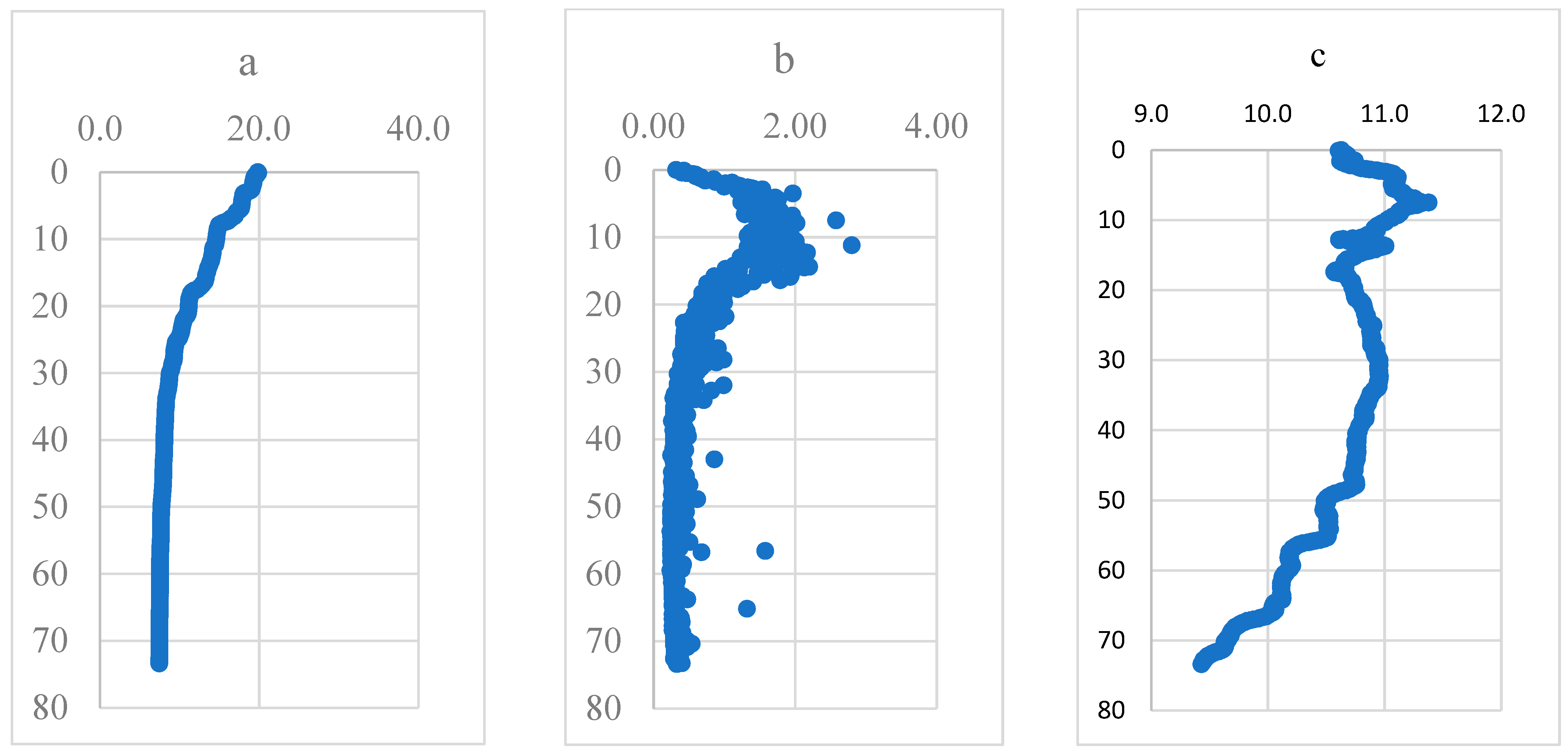
The temperature profile recorded in May 2025 during the sampling of the pelagic site of Lake Biwa showed that the lake was thermally partly stratified (Figure A2). While the water temperature averaged around 18.8 °C in the epilimnion (0 to 5 m), it ranged between 7.5 °C and 8.8 °C in the hypolimnion (30 to 73 m; Table 1). There were also clear differences in Chl a concentration between the epilimnion and the hypolimnion, while dissolved oxygen measurement was vertically uniform throughout the lake depth.

3.2. Bacterial Abundance and Diversity

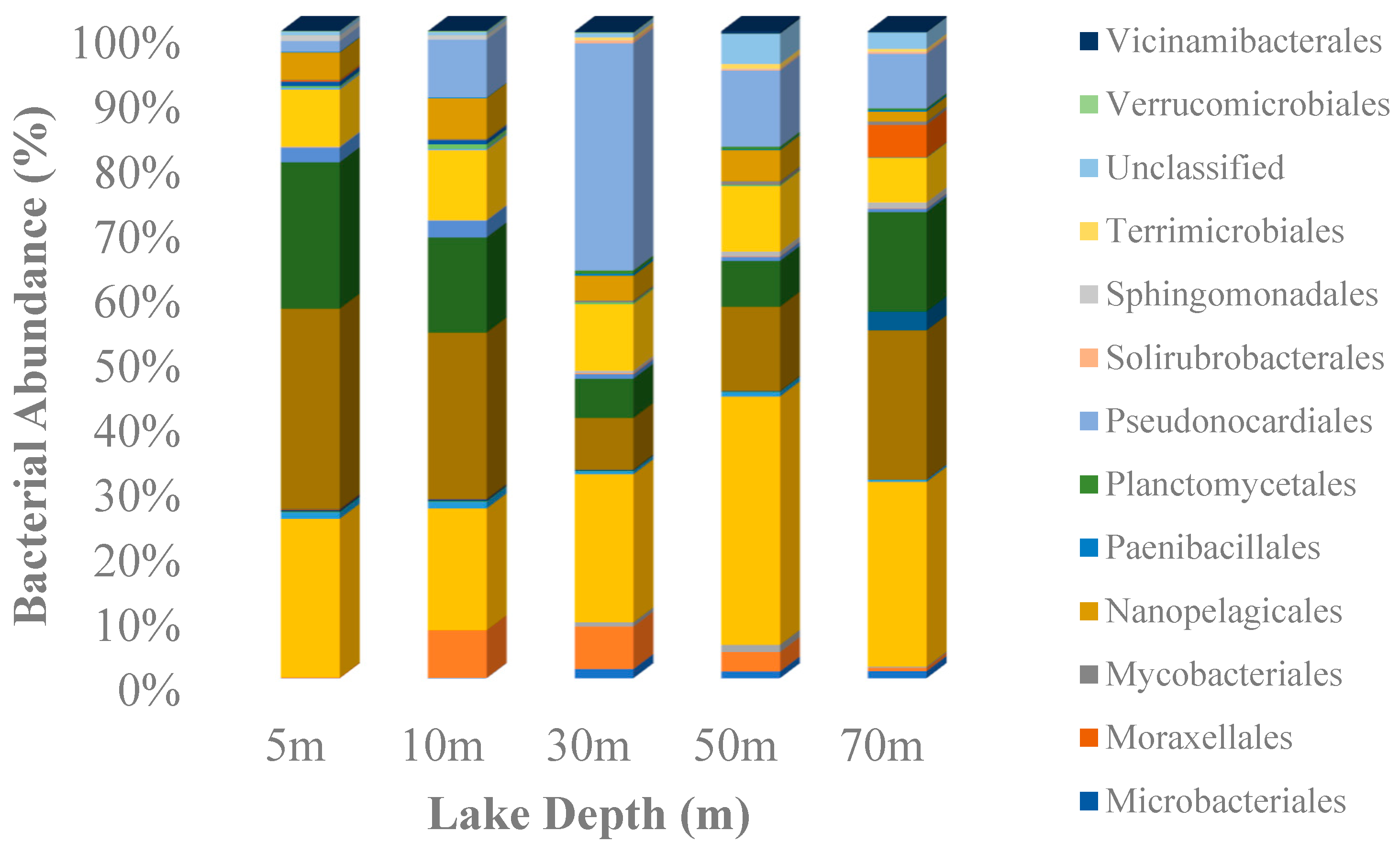
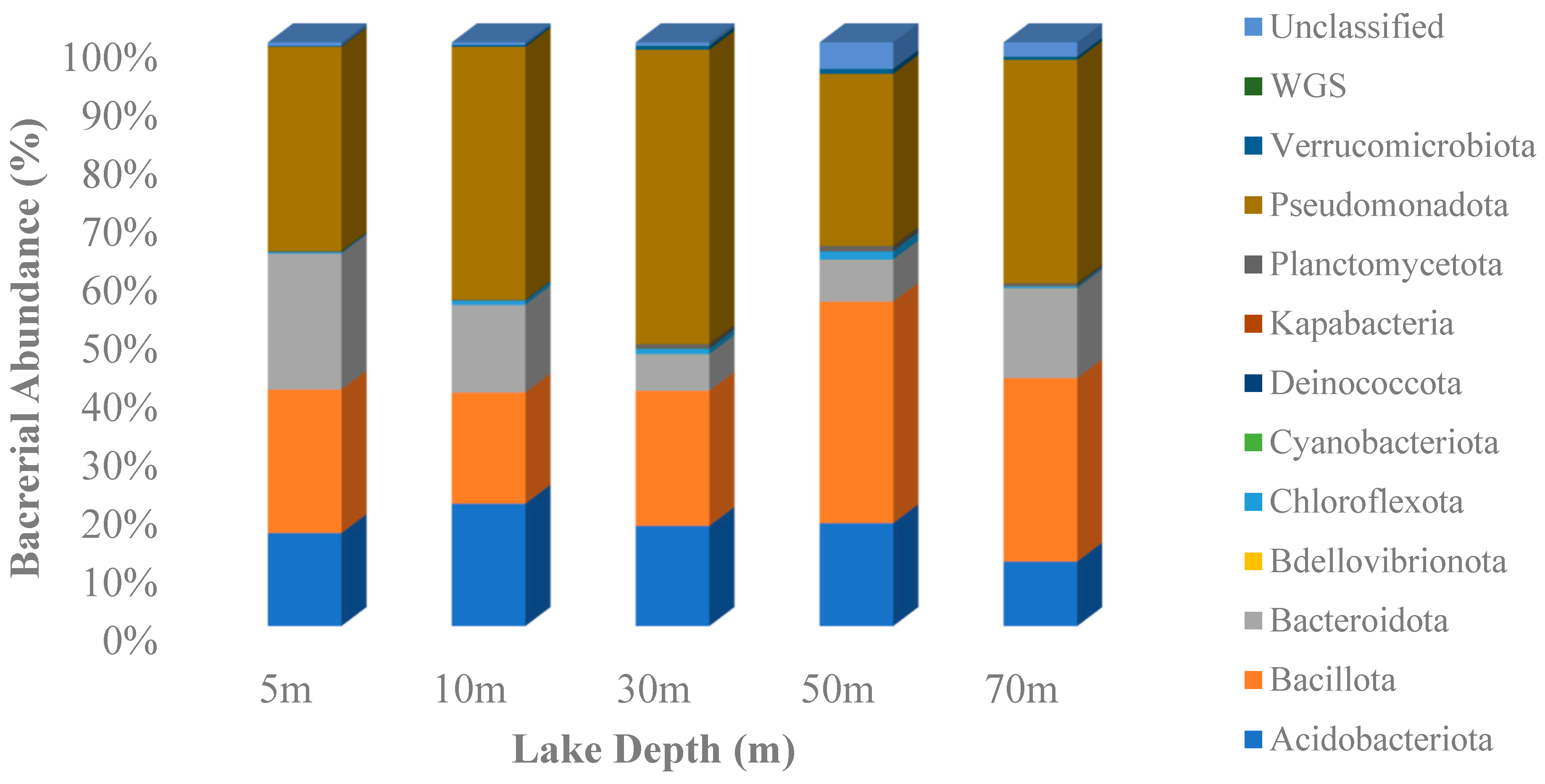
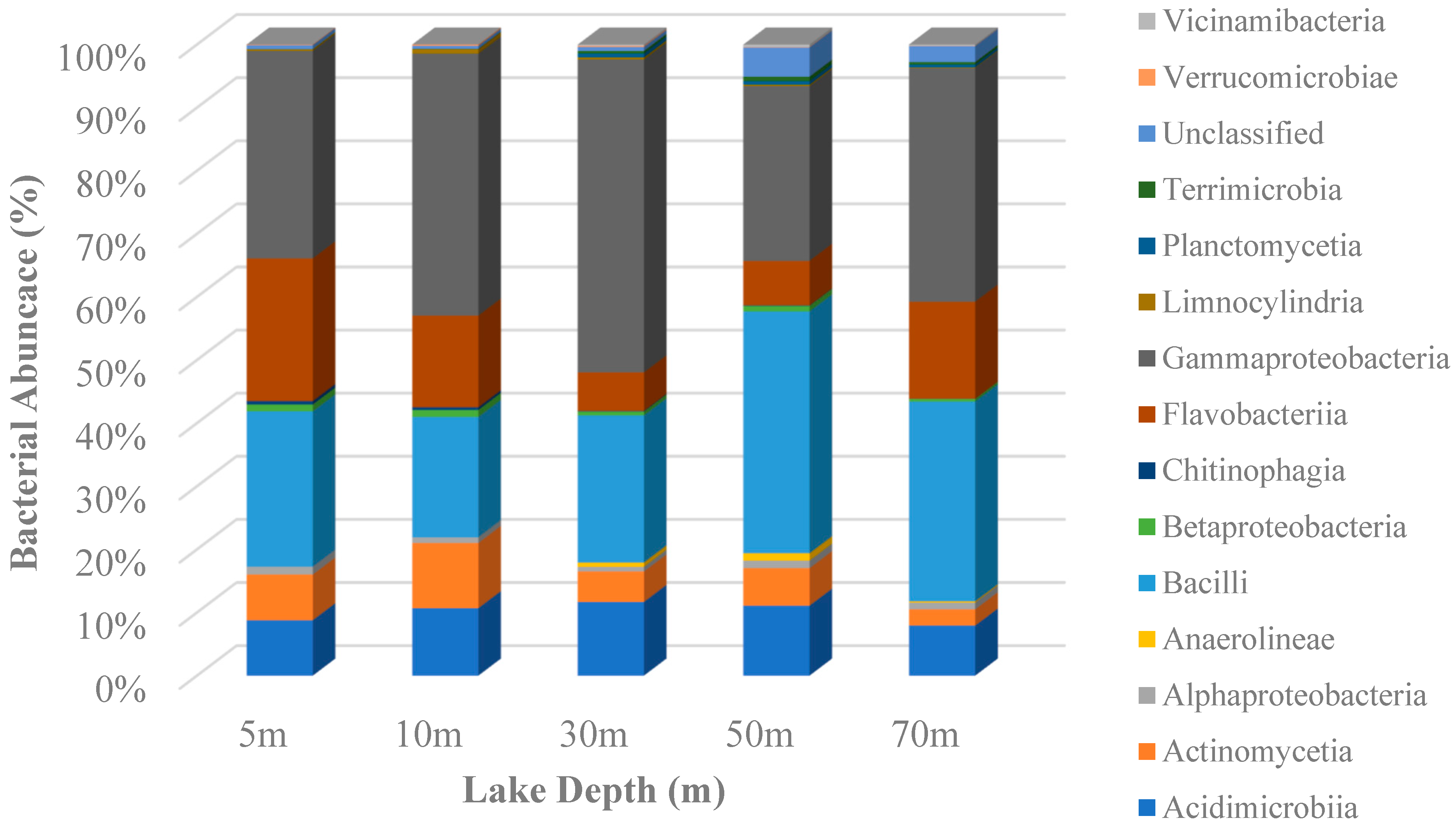
16S rRNA gene sequencing generated a total of 9,678,516 reads from the five sampling locations of the lake. At the phylum level, Pseudomonadota (29 to 50%), Bacteroidota (6 to 24%), Acidobacteriota (11 to 21%) and Bacillota (19 to 38%) were the most dominant throughout the water column, while Bdellovibrionota, WS5 and Kapabacteria only occurred preferentially in the hypolimnion (Figure A3). At the class-level of resolution, members of Gammaproteobacteria (27 to 49%), Bacilli (19 to 38%), Flavobacteria (6 to 23%), Acidimicrobia (8 to 12%) and Actinomycetia (3 to 10%) were well represented throughout the assemblages examined. Some sequences belonging to members of Anaerolinea and Vicinamibacteria were harbored exclusively within the hypolimnion (Figure A4), and this same trend was also observed with the disparate representations by some bacterial members between the epilimnion and hypolimnion sections of the lake when the order taxonomic level was examined (Figure 1).
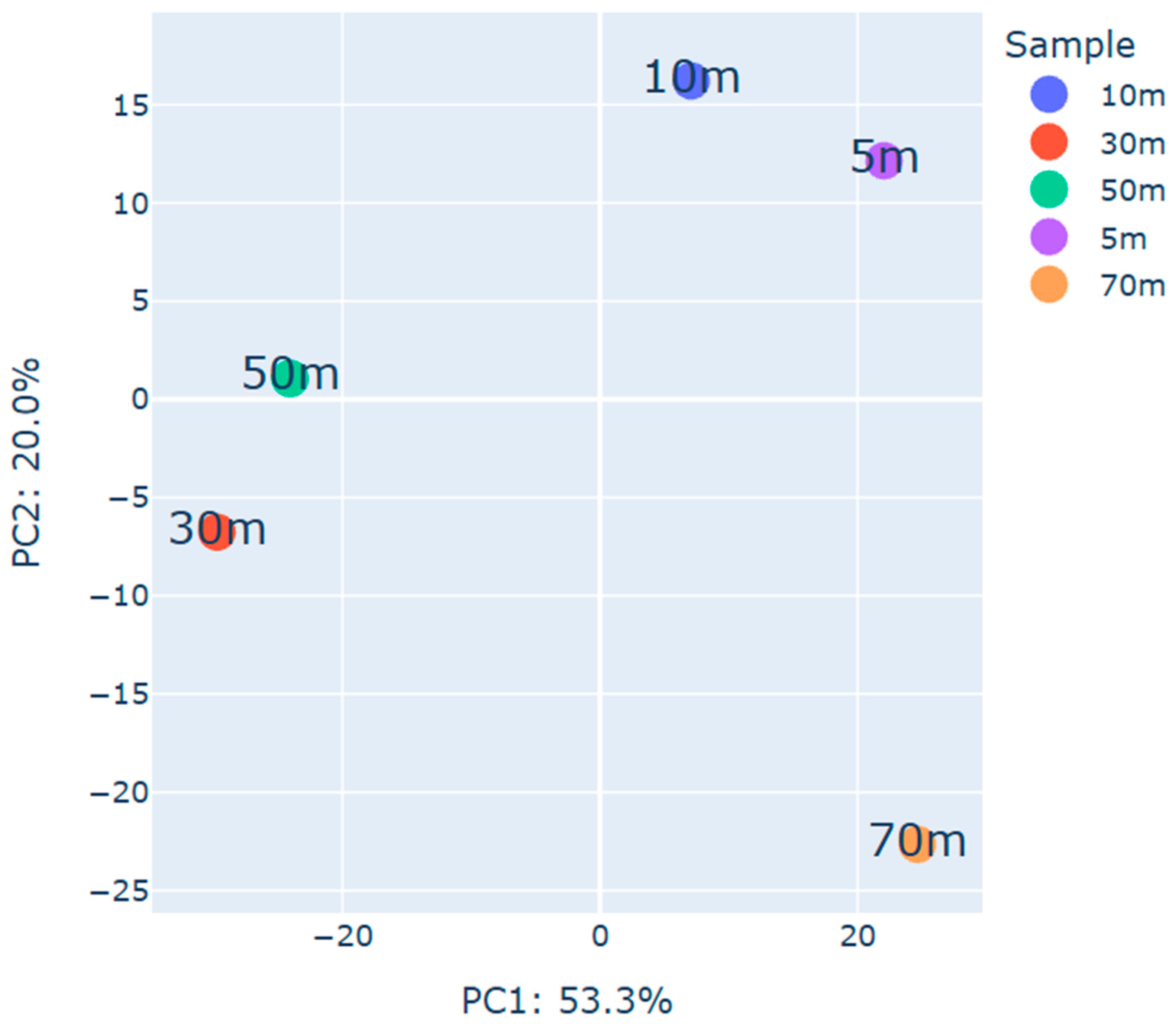
The alpha diversity analysis revealed that the Shannon diversity index of each sample examined was quite similar between the epilimnion and the hypolimnion (Table 2). A similar result was revealed for the inverse Simpson analysis, an indication that the species richness and evenness of the bacterioplankton assemblages of the pelagic site were generally comparable. In contrast, beta diversity analyses using the Aitchison Distance approach of transformed data to compare bacterial taxa within the bacterioplankton assemblages through their abundance ratios among the lake depths showed that the bacterial community compositions in the epilimnion and the hypolimnion of the lake’s pelagic site examined were markedly different (Figure 2). While the samples from 5 m and 10 m (epilimnion) were plotted separately, those from 30 m and 50 m were very close together and further from the 70 m depth, suggesting that they are clearly distinct in composition. These distinct aggregations in species compositions were also reflected in the Sørensen coefficient indices between the lake depths (Table A2).
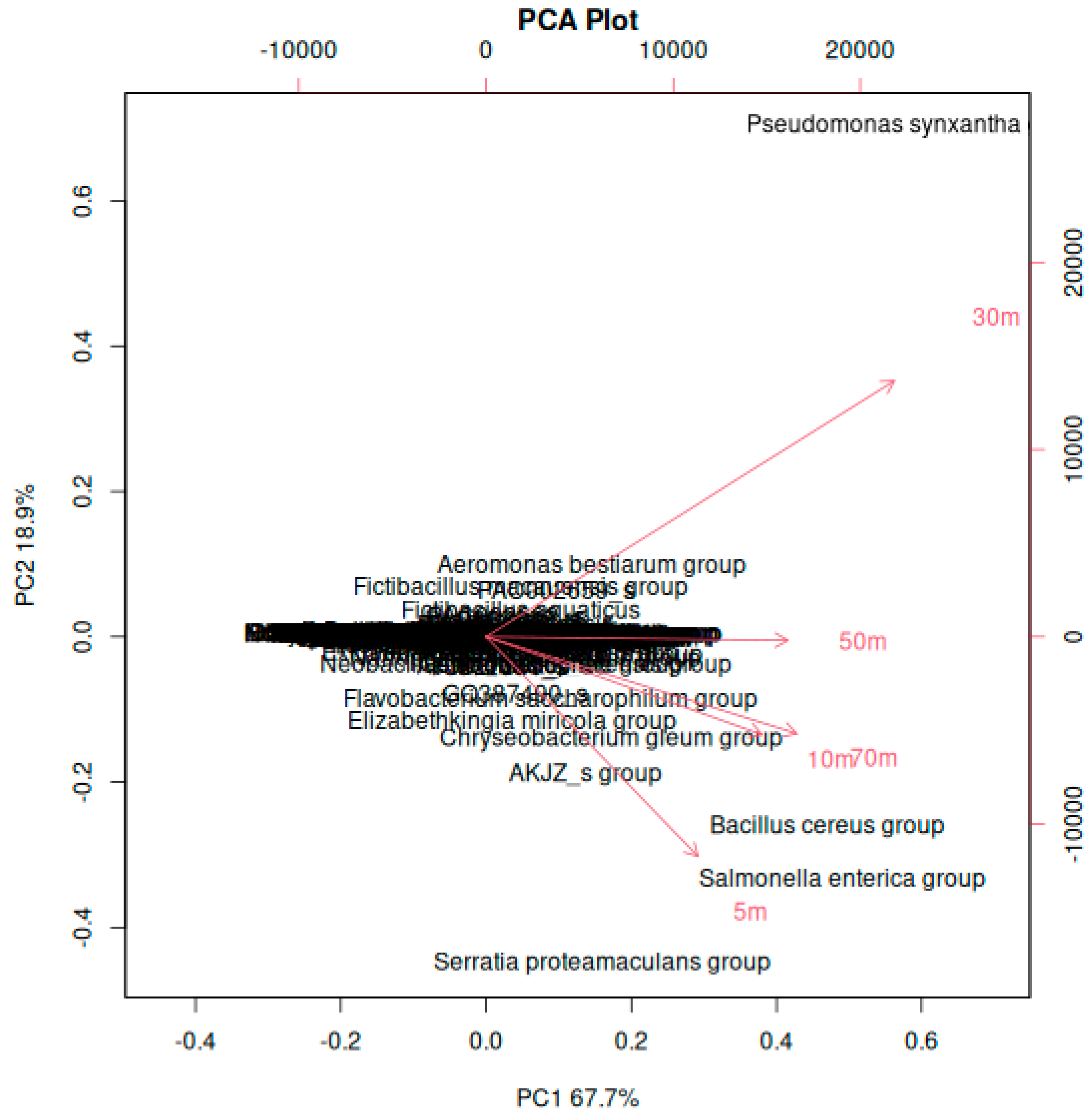
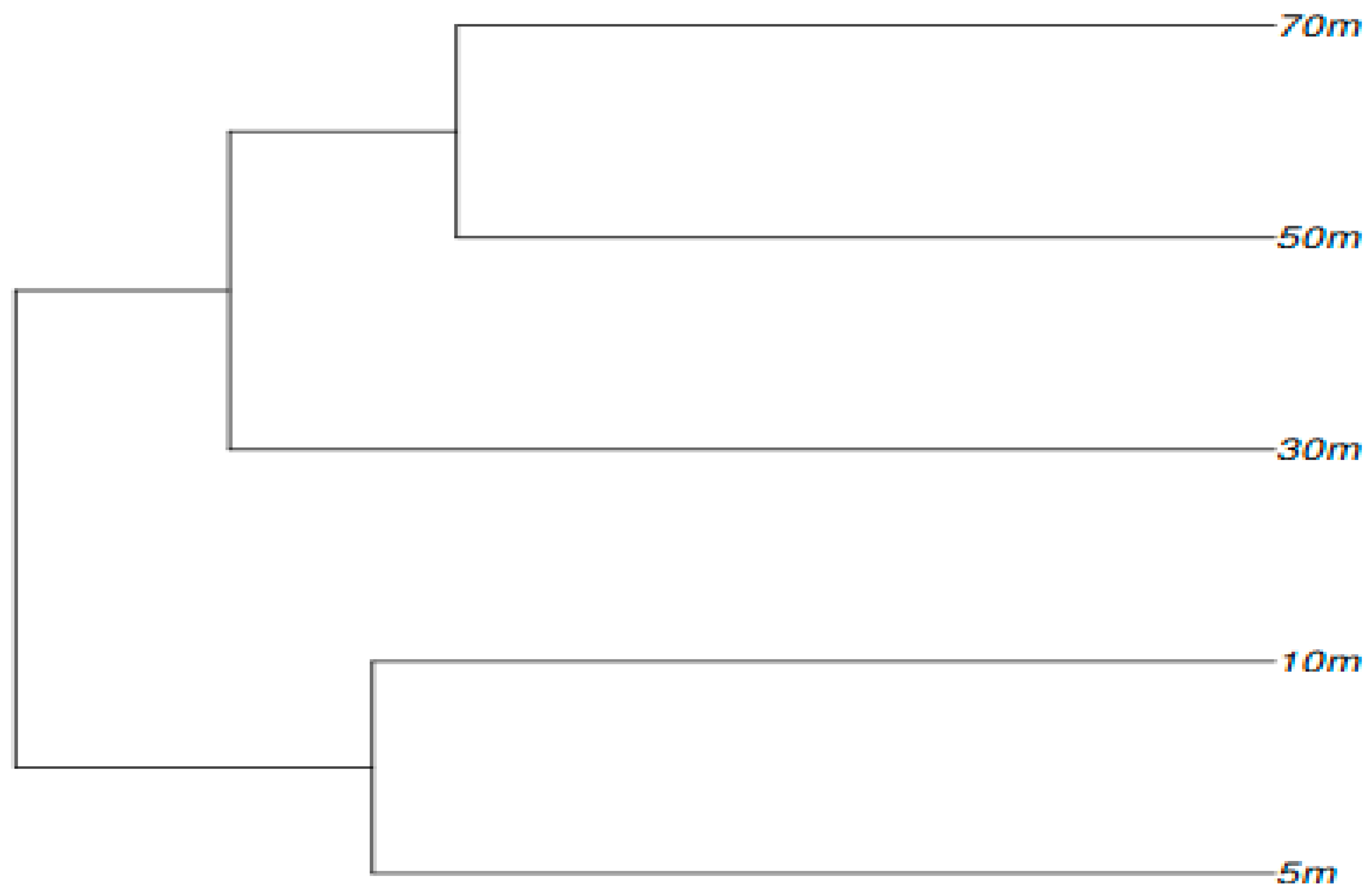
An unweighted pair group method with arithmetic mean (UPGMA) dendrogram was generated using a hierarchical clustering method based on the Fast UniFrac distance matrix and showed that the bacterial assemblages within the upper 5 m (i.e., epilimnion) and the 10 m depths had very similar communities, while those assemblages within the 30 m, 50 m and 70 m depths were distinctly similar to each other and different from those in the epilimnion (Figure A5). Principal component analysis (PCA), carried out to further explain the total variance in the bacterioplankton compositions between the five lake depths examined, extracted two axes that together explained 86.6% of the observed variance and showed a similar clustering pattern as that revealed by the UPGMA dendrogram generated between the lake depths (Figure A6).
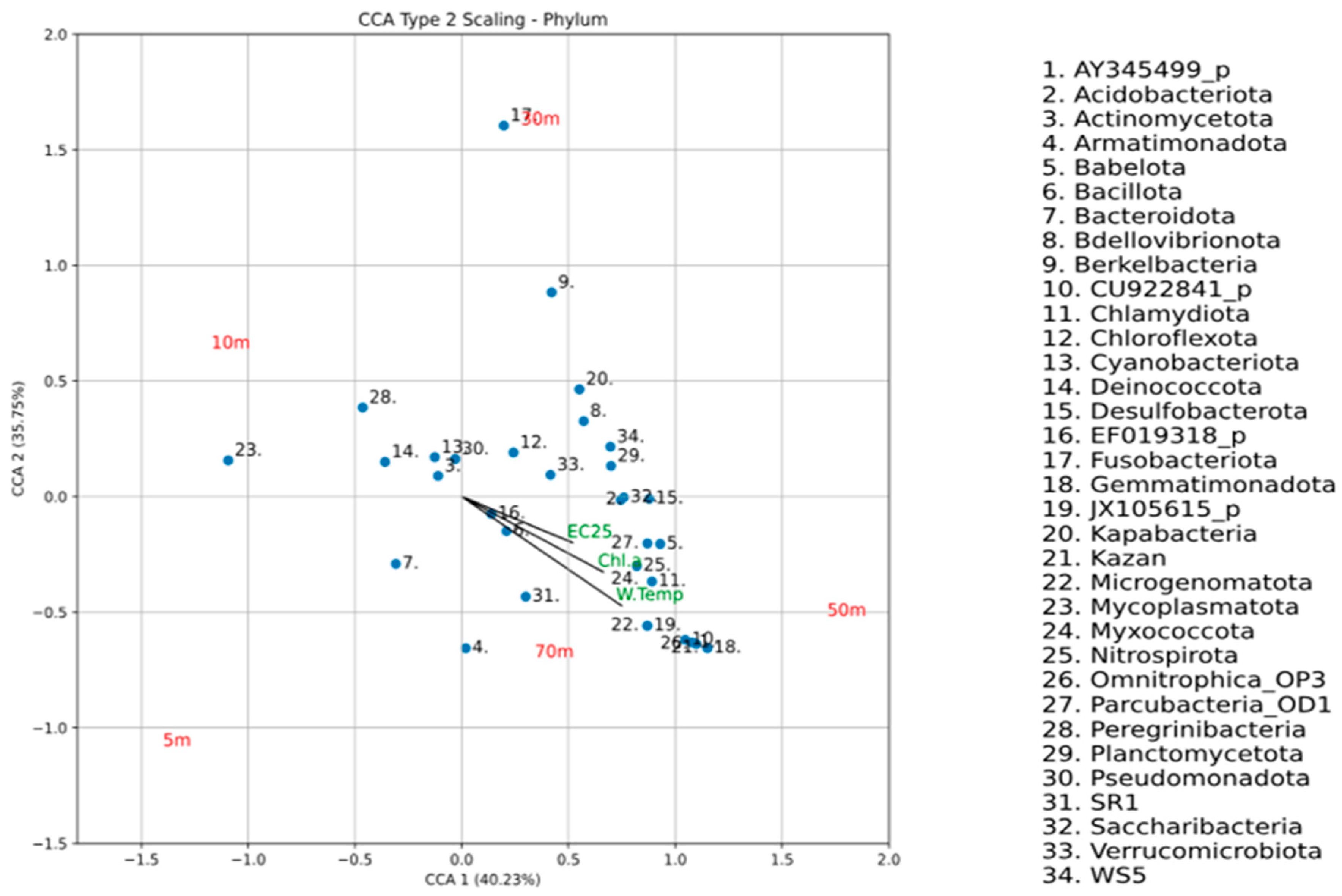
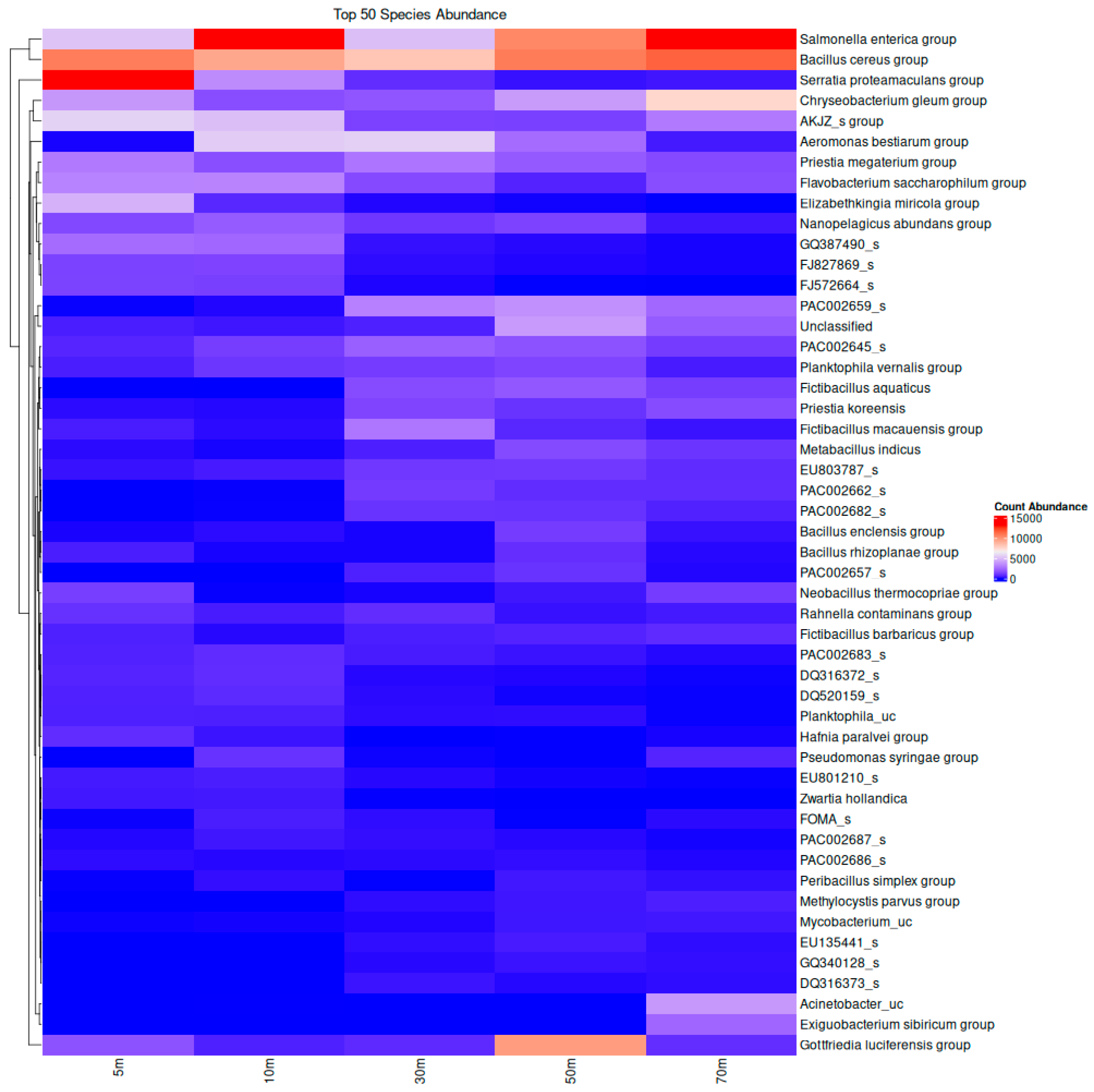
To further investigate the differences in the bacterioplankton assemblages between the epilimnetic and hypolimnetic zones of the lake, a heat map was constructed to show the clustering of the top 50 dominant OTUs at each depth of the lake that was examined (Figure A7). The dominant bacterial groups reflected by the heat map strongly corroborated those also revealed by the PCA results between the lake depths. CCA was carried out to understand bacterial distribution patterns, especially regarding the various water chemistry parameters (including water temperature, Chl a, PAR and dissolved oxygen) that were measured by depth. The water chemistry parameters, especially water temperature and Chl a, in the two CCA axes together explained more than 76% of total variations in the bacterial abundance distribution (Figure 3). A permutation (PERMANOVA) test under a reduced model with water temperature and PAR revealed the lowest p value = 0.3.

4. Discussion

Our study assessed the vertical profiles and diversity of bacterioplankton assemblages in Lake Biwa, confirming it to be a holomictic, mesotrophic lake with a relatively warm (>7 °C) hypolimnion (Table 1 and Figure 2) that was still colder on average than the upper epilimnetic layer. The numerical dominance of the bacterial members affiliated with Pseudomonadota (Pseudomonas), Bacteroidota and Bacillota (Firmicutes) throughout the water column of the lake conforms to trends regarding their global distributions in freshwater systems, e.g., [12,21,22]. In particular, Glockner et al. [21], using combinations of phylogenetic and FISH analyses, found high representations of bacterial members from primarily freshwater and soil origins including Actinobacteria and Gram-positive high GC bacteria in their lakes, while the majority of the sequences from three (i.e., Lakes Michigan, Huron and Erie) Laurentian Great Lakes using the pyrosequencing approach were found to have clustered into four main bacterial groups, i.e., Proteobacteria, Bacteroidetes, Actinobacteria and Cyanobacteria [12].
While alpha diversity metrics showed similar and comparable bacterial community compositions throughout the lake’s water column, analysis of beta diversity showed that the bacterioplankton assemblages within the hypolimnion were disparate and distinctively different from those of the epilimnion. For instance, at the phylum level, we found Acidobacteriota, Percubacteria and WS5 exclusively in the hypolimnion and they were totally absent in the top layer of the lake. When the bacterioplankton assemblages were examined at the class-level of phylogenetic resolution, the exclusive list of minor bacterial lineages that were found mostly in the hypolimnion included Planktomycetia, Terrimicrobia, Thermophilia, Vicinamibacteria, Tepidiformia, Tissierellia, OM190_C and Phycisphaerae. It is worth mentioning that the rare occurrence of OM190_C class in this study supports a similar trend previously reported, in which only three sequences of the CL500-15 of the uncultured OM190_class were found within the oxygenated hypolimnion of the lakes studied [2]. This type of disparate bacterial occurrence found in the present study within the hypolimnion was also reported earlier in the same lake [2,6,7]. These studies observed members of Chloroflexi and Planctomycetes (e.g., CL500-11, CL500-15 and CL500-37) among the hypolimnion specialists and partly attributed the occurrences of the hypolimnion-specific clusters to stronger factors such as local environments or genetic drift within the freshwater environment [7,23]. Comparatively, differences in the genetic structure and community DNA within the assemblages in other lakes using 16S rRNA-based and community DNA hybridization techniques have also been well documented [24]. In both of these two studies [i.e.,7 & 23], the bacterioplankton assemblages from the lakes were collected and examined during the summer months when the lakes had already become stratified. Similarly, when the diversity and community composition of bacteria along a vertical gradient were examined in Lake Issyk Kul, Kyrgyzstan, members of Planctomycetes and Chloroflexi were found to be dominant in the deepest layers, between 128 and 600 m, of the lake relative to the epilimnion and the authors attributed this disparity, based on machine learning analysis results, to both lake depth and water temperature as the two most important influencing environmental factors [25]. Also, significant vertical gradients were demonstrated in bacterial community compositions of Lake Tanganyika using denaturing gradient gel electrophoresis analysis of PCR-amplified 16S RNA fragments, revealing the presence of Actinobacteria and Gammaproteobacteria in the epilimnion, as compared to members of Gammaproteobacteria, Nitrospirae, green nonsulfur bacteria, Actinobacteria, Deltaproteobacteria, and Firmicutes that were observed in the hypolimnion. These gradients were related to vertical differences in oxygen and nutrient concentrations [26].
The preferential occurrence of Bdellovibrionota solely within the hypolimnion of Lake Biwa corroborates earlier studies that also observed significant variations in the abundance and distributions of members of Bdellovibrio and like organisms (BALOs) with depth, season and location in freshwater environments [27,28,29]. According to Paix et al. [27], BALOs often prefer deeper locations where there are parts of biofilms and sediments or prefer enclosed environments where prey is more concentrated, rather than the open water in lakes. The Kapabacteria class of bacteria documented in this study typically constitute a minor portion of overall bacterial assemblages, accounting for about 1.3% of total identified phyla in aquatic systems, and are mostly found in anoxic sub-surface regions or associated with lake sediments [29], while the Anaerolinaeles and Vicinamibacteria classes of bacteria also thrive within these same oxygen-limited habitats, where they serve as decomposers of organic matter and transformers of nutrients, especially in eutrophic lakes [30,31]. Also, the Gaielles group within Actinobacteria thrive in lake sediments, influencing the release or removal of elements such as nitrogen and phosphorus in sediment–water interfaces, while contributing to the breakdown of dead organic material and releasing essential nutrients back into the lake water column [30].
The present study utilized CCA to further show the importance of various environmental and water chemistry variables for the occurrences, distribution and diversity of bacterioplankton assemblages in a freshwater lake, as previously done [12,32,33,34,35,36]. Therefore, the micro-diversification between the epilimnion and the hypolimnion in the present study, in corroboration with other similar results from earlier studies on the lake, may be attributable to the nutrient-deficient but dissolved organic carbon (DOC)-rich epilimnion, especially during the mid-summer months when the lake is strongly stratified by the thermocline from the lower hypolimnetic layer [8,9]. Also, the oxygenated hypolimnion comprises DOC that is laden with semi-labile fractions, making it very easily assimilable by microbes within this region of the lake [9]. Similarly, Wang et al. [36], while examining the vertical characteristics of the bacterial community in sediments of a shallow lake, observed high connectivity and interactions between the communities and DOC components.

5. Conclusions

In conclusion, the present study examined the vertical occurrences and diversity in the bacterioplankton assemblages of Lake Biwa and the relationship with the water chemistry characteristics, which were measured on a single summer day at the center location of the lake. Beta diversity analysis showed that the bacterioplankton assemblages within the hypolimnion of the lake are disparate and distinctively different from those of the epilimnion, with some hypolimnion-specific lineages identified within the assemblages.
Finally, we successfully revealed the dominance of, vertical distribution of, and spatiotemporal differences in the diversity of bacterioplankton communities in Lake Biwa, which is of interest since there are only relatively few previous studies. The relationship observed between the bacterial assemblages and water chemistry characteristics may suggest a stronger relationship in the hypolimnion than in the shallower layers of the lake. Therefore, the main finding from the study was that depth plays a key role in the occurrences and distributions of bacterial assemblages in this deep holomictic lake. The results from this study further corroborate earlier similar studies on the bacterial vertical distribution and diversity in lakes as well as provide additional perspectives on the ecology in deep freshwater systems.

Author Contributions

Conceptualization, O.A.O. and S.-i.N.; methodology, O.A.O. and S.-i.N.; software, O.A.O.; validation, O.A.O., S.-i.N. and J.J.P.; formal analysis, O.A.O.; investigation, O.A.O., S.-i.N. and J.J.P.; resources, O.A.O. and S.-i.N.; data curation, O.A.O.; writing—original draft preparation, O.A.O.; writing—review and editing, O.A.O., S.-i.N. and J.J.P.; visualization, O.A.O. and S.-i.N.; supervision, S.-i.N.; project administration, S.-i.N.; funding acquisition, O.A.O. and S.-i.N. All authors have read and agreed to the published version of the manuscript.

Funding

This work was supported by KAKENHI, Grants-in-Aid for Scientific Research, under Grant number 22H00382 from the Japan Society for the Promotion of Science to S.N. and the Great Lakes College Association (GLCA)-travel to Japan grant, as well as the Chickering Endowed Professorship award to O.A.O. by Albion College.

Data Availability Statement

The nucleotide sequences obtained from this study were deposited in the National Center for Biotechnology Information (NCBI) under the Bioproject ID PRJNA 1327415.

Acknowledgments

The authors appreciate the support and assistance of Drs Goda and T. Akatsuka during the sampling expedition with the research vessel “Hasu” on the lake through the Center for Ecological Research, Kyoto University, a Joint Usage/Research Center. Thanks to Midori Yoshii, Simon Gray and the Great Lakes College Association (GLCA)-travel to Japan grant, as well as the Chickering Endowed Professorship award to OAO by Albion College. The authors have reviewed and edited the output and take full responsibility for the content of this publication.

Conflicts of Interest

The authors declare no conflicts of interest. The funders had no role in the design of the study; in the collection, analyses, or interpretation of data; in the writing of the manuscript; or in the decision to publish the results.

Abbreviations

The following abbreviations are used in this manuscript:
CCACanonical correspondence analysis
DOCDissolved organic carbon
PCAPrincipal component analysis
UPGMAUnweighted pair group method with arithmetic mean

Appendix A

Figure A1. Map of Lake Biwa, Japan, showing the sampling location.
Water 18 00546 g0a1
Figure A2. Vertical profiles of water chemistry parameters: (a)—water temperature (°C); (b)—chlorophyl; (a,c)—dissolved oxygen (mg/L) at the deepest location in Lake Biwa, Japan.
Water 18 00546 g0a2
Figure A3. Taxonomic composition by phylum within the bacterioplankton assemblages from the five sampled depths of the lake. The bacterial phyla presented occurred at ≥1% among the microbial assemblages.
Water 18 00546 g0a3
Figure A4. Taxonomic composition by class within the bacterioplankton assemblages from the five sampled depths of the lake.
Water 18 00546 g0a4
Figure A5. Unweighted pair group method with arithmetic mean (UPGMA) dendrogram showing the clustering of the bacterioplankton assemblages within the lake depths studied.
Water 18 00546 g0a5
Figure A6. Principal component analysis (PCA) of the dominant bacterial taxa within the bacterioplankton assemblages at each depth of the lake.
Water 18 00546 g0a6
Figure A7. Heat map showing the clustering of dominant taxa within the bacterioplankton assemblages at each depth of the lake.
Water 18 00546 g0a7
Table A1. Quality control (QC) chimera removal summary for the 16S rRNA sequences.
Depth
(m)
Pre-Filter ReadsRemoved Low Quality
Length (bp)
Removed Non-Target AmpliconRemoved Chimeric AmpliconPost-Filter Reads
595,41125881412,79880,011
1090,73540281010,69975,998
3096,848194068786886,972
5097,0132185135769187,002
7095,86330997710,35482,333
Table A2. Sørensen coefficient values for comparison of species diversity between the lake depths examined.
Depth
(m)
Total Number of Species
A
Total Number of Species
B
Number of Species in Both
C
SD
Index
5 vs. 101214120.923
5 vs. 301217100.690
5 vs. 501218110.733
5 vs. 701218120.800
10 vs. 30 1417120.774
10 vs. 501418130.813
10 vs. 701418140.875
30 vs. 501717170.971
30 vs. 701718160.941
50 vs. 701818170.944

References

  1. Mori, K.; Sato, Y. Japanese Lakes; Asakura Publishing: Tokyo, Japan, 2015. [Google Scholar]
  2. Okazaki, Y.; Fujinaga, S.; Tanaka, A.; Kohzu, A.; Oyagi, H.; Nakano, S. Ubiquity and quantitative significance of bacterioplankton lineages inhabiting the oxygenated hypolimnion of deep freshwater lakes. ISME J. 2017, 11, 2279–2293. [Google Scholar] [CrossRef]
  3. Wetzel, R.G. Limnology: Lake and River Ecosystems, 3rd ed.; Academic Press: San Diego, CA, USA, 2001. [Google Scholar]
  4. Pollett, T.; Tadonleke, R.D.; Humbert, J.F. Spatio-temporal changes in the structure and composition of a less-abundant bacterial phylum (plantomycetes) in two perialpine lakes. Appl. Environ. Microbiol. 2011, 77, 4811–4821. [Google Scholar] [CrossRef]
  5. Callieri, C.; Hernadenz-Aviles, S.; Salcher, M.M.; Fontaneto, D.; Bertoni, R. Distribution patterns and environmental correlates of thaumarchaeota abundance in six deep subalpine lakes. Aquat. Sci. 2015, 78, 215–225. [Google Scholar] [CrossRef]
  6. Okazaki, Y.; Nakano, S. Vertical partitioning of freshwater bacterioplankton community in a deep mesotrophic lake with a fully oxygenated hypolimnion (Lake Biwa, Japan). Environ. Microbiol. Rep. 2016, 8, 780–788. [Google Scholar] [CrossRef]
  7. Okazaki, Y.; Fujinaga, S.; Salcher, M.M.; Calleri, C.; Tanaka, A.; Kohzu, A.; Oyagi, H.; Tamaki, H.; Nakano, S. Microdiversity and phylogeographic diversification of bacterioplankton in pelagic freshwater systems revealed through long-read amplicon sequencing. Microbiome 2021, 9, 24. [Google Scholar] [CrossRef]
  8. Kim, C.; Nishimura, Y.; Nagata, T. Role of dissolved organic matter in hypolimnetic mineralization of carbon and nitrogen in a large, monomictic lake. Limnol. Oceanogr. 2006, 51, 70–78. [Google Scholar] [CrossRef]
  9. Maki, K.; Kim, C.; Yoshimizu, C.; Tayasu, I.; Miyajima, T.; Ngata, T. Autochthonous origin of semi-labile dissolved organic carbon in a large monomictic lake (Lake Biwa): Carbon stable evidence. Limnology 2010, 11, 143–153. [Google Scholar] [CrossRef]
  10. Thottathil, S.D.; Hayakawa, K.; Hodoki, Y.; Yoshimizu, C.; Kobayashi, Y.; Nakano, S. Biogeochemical control on fluorescent dissolved organic matter dynamics in a large freshwater lake (Lake Biwa, Japan). Limnol. Oceanogr. 2013, 58, 2262–2278. [Google Scholar] [CrossRef]
  11. Okazaki, Y.; Hodoki, Y.; Nakano, S. Seasonal dominance of CL500-11 bacterioplankton (phylum Chloroflexi) in the oxygenated hypolimnion of Lake Biwa, Japan. FEMS Microbiol. Ecol. 2012, 83, 82–92. [Google Scholar] [CrossRef]
  12. Olapade, O. Community composition and diversity of coastal bacterioplankton assemblages in Lakes Michigan, Erie and Huron. Microb. Ecol. 2017, 75, 598–608. [Google Scholar] [CrossRef]
  13. Olapade, O.A. Bacterial community composition and diversity along the southern coastlines of the Atlantic Ocean in cape Town, South Africa. Afr. J. Microbiol. Res. 2020, 14, 471–480. [Google Scholar] [CrossRef]
  14. Schloss, P.D.; Westcott, S.L.; Ryabin, T.; Hall, J.R.; Hartman, M.; Hollister, E.B.; Lesniewski, R.A.; Oakley, B.B.; Parks, D.H.; Robinson, C.J.; et al. Introducing mothur: Open-source-, platform-independent, community-supported software for describing and comparing microbial communities. Appl. Environ. Microbiol. 2009, 75, 7537–7541. [Google Scholar] [CrossRef]
  15. Chalita, M.; Kim, Y.O.; Park, S.; Oh, H.S.; Cho, J.H.; Moon, J.; Baek, N.; Moon, C.; Lee, K.; Yang, J.; et al. EzBioCloud: A genome-driven database and platform for microbiome identification and discovery. Int. J. Syst. Evol. Microbiol. 2024, 74, 006421. [Google Scholar] [CrossRef]
  16. Whittaker, R.H. Evolution and measurement of species diversity. Taxon 1972, 21, 213–251. [Google Scholar] [CrossRef]
  17. Legendre, P.; Legendre, L. Numerical Ecology, 2nd ed.; Elsevier Science: Amsterdam, The Netherlands, 1998. [Google Scholar]
  18. Hamady, M.; Lozupone, C.; Knight, R. Fast UniFrac: Facilitating high-throughput phylogenetic analyses of microbial communities including analysis of pyrosequencing and PhyloChip data. Int. Soc. Microb. Ecol. J. 2010, 4, 17–27. [Google Scholar] [CrossRef]
  19. Jolliffe, I.T. Principal Component Analysis, 2nd ed.; Springer: New York, NY, USA, 2002. [Google Scholar]
  20. Ter Braak, C.J.F.; Verdonschot, P.F.M. Canonical correspondence analysis and related multivariate methods in aquatic ecology. Aquat. Sci. 1995, 57, 255–289. [Google Scholar] [CrossRef]
  21. Glockner, F.O.; Zaichikov, E.; Belova, N.; Denissova, L.; Pernthaler, J.; Pernthaler, A.; Amann, R. Comparative 16S rRNA analysis of Lake Bacterioplankton reveals globally distributed phylogenetic clusters including an abundant group of Actinobacteria. Appl. Environ. Microbiol. 2000, 66, 5053–5065. [Google Scholar] [CrossRef]
  22. Newton, R.J.; Jones, S.E.; Eiler, A.; McMahon, K.D.; Bertilsson, S. A guide to the natural history of freshwater lake bacteria. Microbiol. Mol. Biol. Rev. 2011, 75, 14–49. [Google Scholar] [CrossRef]
  23. Storesund, J.E.; Lanzèn, A.; Nordmann, E.L.; Armo, H.R.; Lage, O.M.; Øvreås, L. Planctomycetes as a Vital Constituent of the Microbial Communities Inhabiting Different Layers of the Meromictic Lake Sælenvannet (Norway). Microorganisms 2020, 8, 1150. [Google Scholar] [CrossRef]
  24. Pascoe, D.A.; Hicks, R.E. Genetic structure and community DNA similarity of picoplanton communities from the Laurentian Great Lakes. J. Great Lakes Res. 2004, 30, 185–195. [Google Scholar] [CrossRef]
  25. Rojas-Jimenez, K.; Araya-Lobo, A.; Quesada-Perez, F.; Akerman-Sanchez, J.; Delgado-Duran, B.; Ganzert, L.; Zavialov, P.O.; Alymkulov, S.; Kirillin, G.; Grossart, H.P. Variation of Bacterial Communities along the Vertical Gradient in Lake Issyk Kul, Kyrgyzstan. Environ. Microbiol. Rep. 2021, 13, 337–347. [Google Scholar] [CrossRef]
  26. De Wever, A.; Muylaert, K.; Van der Gucht, K.; Pirlot, S.; Cocquyt, C.; Descy, J.P.; Plisnier, P.D.; Vyverman, W. Bacterial community composition in Lake Tanganyika: Vertical and horizontal heterogeneity. Appl. Environ. Microbiol. 2005, 71, 5029–5037. [Google Scholar] [CrossRef] [PubMed] [PubMed Central]
  27. Paix, B.; Ezzedine, J.A.; Jacquet, S. Diversity, dynamics and distribution of Bdellovibrio and like organisms in peri-alpine lakes. Appl. Environ. Microbiol. 2019, 85, e02494-18. [Google Scholar] [CrossRef]
  28. Ezzedine, J.A.; Jacas, L.; Desdevises, Y.; Jacquet, S. Bdellovibrio and like organisms in Lake Geneva. An unseen Elephant in the room? Front. Microbiol. 2020, 11, 98. [Google Scholar] [CrossRef]
  29. Kadnikov, V.V.; Mardanov, A.V.; Beletsky, A.V.; Karnachuk, O.V.; Ravin, N.V. Microbial Life in the Deep Subsurface Aquifer Illuminated by Metagenomics. Front. Microbiol. 2020, 11, 572252. [Google Scholar] [CrossRef]
  30. Lauro, F.M.; DeMaere, M.Z.; Yau, S.; Brown, M.V.; Ng, C.; Wilkins, D.; Raftery, M.J.; Gibson, J.A.; Andrews-Pfannkoch, C.; Lewis, M.; et al. An integrative study of a meromictic lake ecosystem in Antarctica. Int. Soc. Microb. Ecol. 2010, 5, 879–895. [Google Scholar] [CrossRef]
  31. Zhang, L.; Bai, J.; Zhang, K.; Wei, Z.; Wang, Y.; Liu, H.; Xiao, R.; Jorquera, M.A. Characterizing bacterial communities in Phragmites australis rhizosphere and non-rhizosphere sediments under pressure of antibiotics in a shallow lake. Front. Microbiol. 2022, 13, 1092854. [Google Scholar] [CrossRef]
  32. Cuevas, M.; Franscico, I.; Diaz-Gonzalez, F.; Diaz, M.; Quatrini, R.; Beamud, G.; Pedrozo, F.; Temporetti, P. Nutrient structure dynamics and microbial communities at the water-sediment interface in an extremely acidic lake in northern Patagonia. Front. Microbiol. 2024, 15, 1335978. [Google Scholar] [CrossRef]
  33. Lindström, E.S. Bacterioplankton community composition in five lakes differing in trophic status and humic content. Microb. Ecol. 2000, 40, 104–113. [Google Scholar] [CrossRef]
  34. Yannarell, A.C.; Triplett, E.W. Within- and between-lake variability in the composition of bacterioplankton communities: Investigations using multiple spatial scales. Appl. Environ. Microbiol. 2004, 70, 214–223. [Google Scholar] [CrossRef]
  35. Yannarell, A.C.; Triplett, E.W. Geographic and environmental sources of variation in lake bacterial community composition. Appl. Environ. Microbiol. 2005, 71, 227–239. [Google Scholar] [CrossRef] [PubMed]
  36. Wang, W.; Zhang, W.; Liu, A.; Jin, Z.; Zhang, Z.; Feng, C.; Bai, Y. Vertical characteristics of bacterial community and the interaction of dissolved organic matter in sediments of a shallow lake, China. J. Environ. Chem. Eng. 2025, 13, 116415. [Google Scholar] [CrossRef]
Figure 1. Taxonomic composition by order within the bacterioplankton assemblages from the five sampled depths of the lake.
Water 18 00546 g001
Figure 2. Beta diversity based on Aitchison Distance using centered log-ratio (CLR)-transformed data to compare taxa through their abundance ratios among the lake depths.
Water 18 00546 g002
Figure 3. Canonical correspondence analysis (CCA) of the bacterioplankton assemblages reflected in relationship to the water chemistry variables measured at each depth of the lake.
Water 18 00546 g003
Table 1. Average water chemistry characteristics measured at the 5 lake depths during the study period.
DepthTempConductivityEC25Chl aPARDO
(m)(°C)(mS/cm)(mS/cm)(µg/L)(Einsteins/s/m)(mg/L)
518.60.1131.11.6633.211.5
1016.10.1131.92.617811.8
3011.60.1134.11.420.711.7
508.10.1136.30.40.811.7
707.50.1136.60.3011.1
Table 2. Community (alpha) diversity analysis of the 16S rRNA gene clone sequences from the bacterioplankton assemblages at the five lake depths examined.
DepthTotal Sequence ReadMean SequenceObserved Otu NumberInverse SimpsonShannon
(m)(Read)Length (bp)RichnessIndexIndex
51,565,416250.9938311.383.165
101,889,168250.99835913.0033.273
301,957,276250.9463797.0062.984
502,134,284250.97346915.1333.42
702,132,372250.97651411.6863.275
Disclaimer/Publisher’s Note: The statements, opinions and data contained in all publications are solely those of the individual author(s) and contributor(s) and not of MDPI and/or the editor(s). MDPI and/or the editor(s) disclaim responsibility for any injury to people or property resulting from any ideas, methods, instructions or products referred to in the content.