Article

Environmental Patterns of Phytoplankton Community Composition Across Lentic and Lotic Systems in Ecuador


1
Centro de Investigación de la Biodiversidad y Cambio Climático (BioCamb), Facultad de Ciencias de Medio Ambiente, Universidad Tecnológica Indoamérica, Quito 170103, Ecuador
2
Departamento de Planificación Estratégica, Universidad Metropolitana del Ecuador, Quito 170517, Ecuador
3
Fundación Museos del Ecuador, Yaku Parque Museo del Agua, Quito 170407, Ecuador
*
Author to whom correspondence should be addressed.
Water 2026, 18(4), 496; https://doi.org/10.3390/w18040496
Submission received: 4 December 2025 / Revised: 8 January 2026 / Accepted: 15 January 2026 / Published: 15 February 2026
(This article belongs to the Special Issue Algal Diversity and Its Importance in Ecological Processes)

Abstract

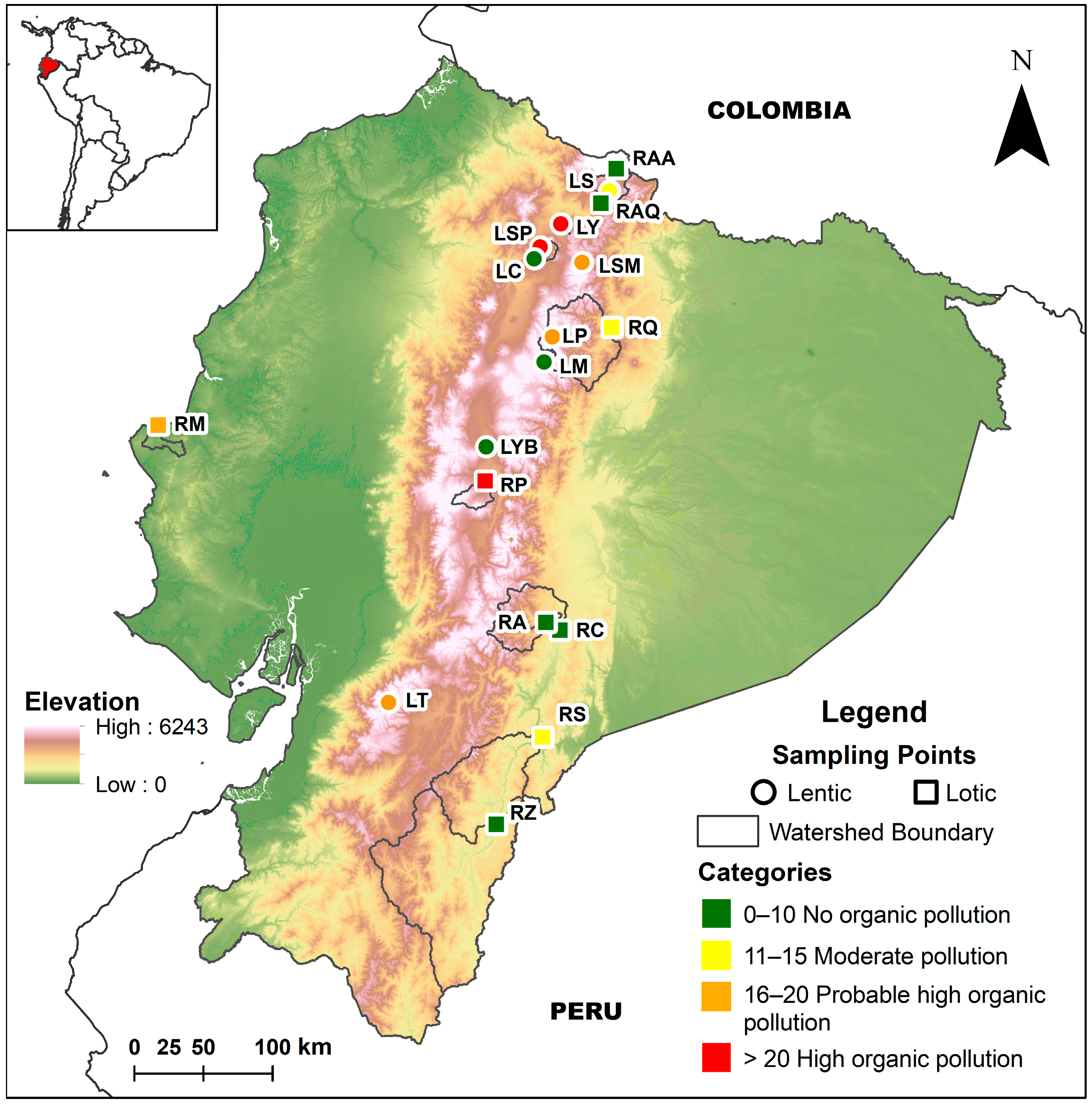
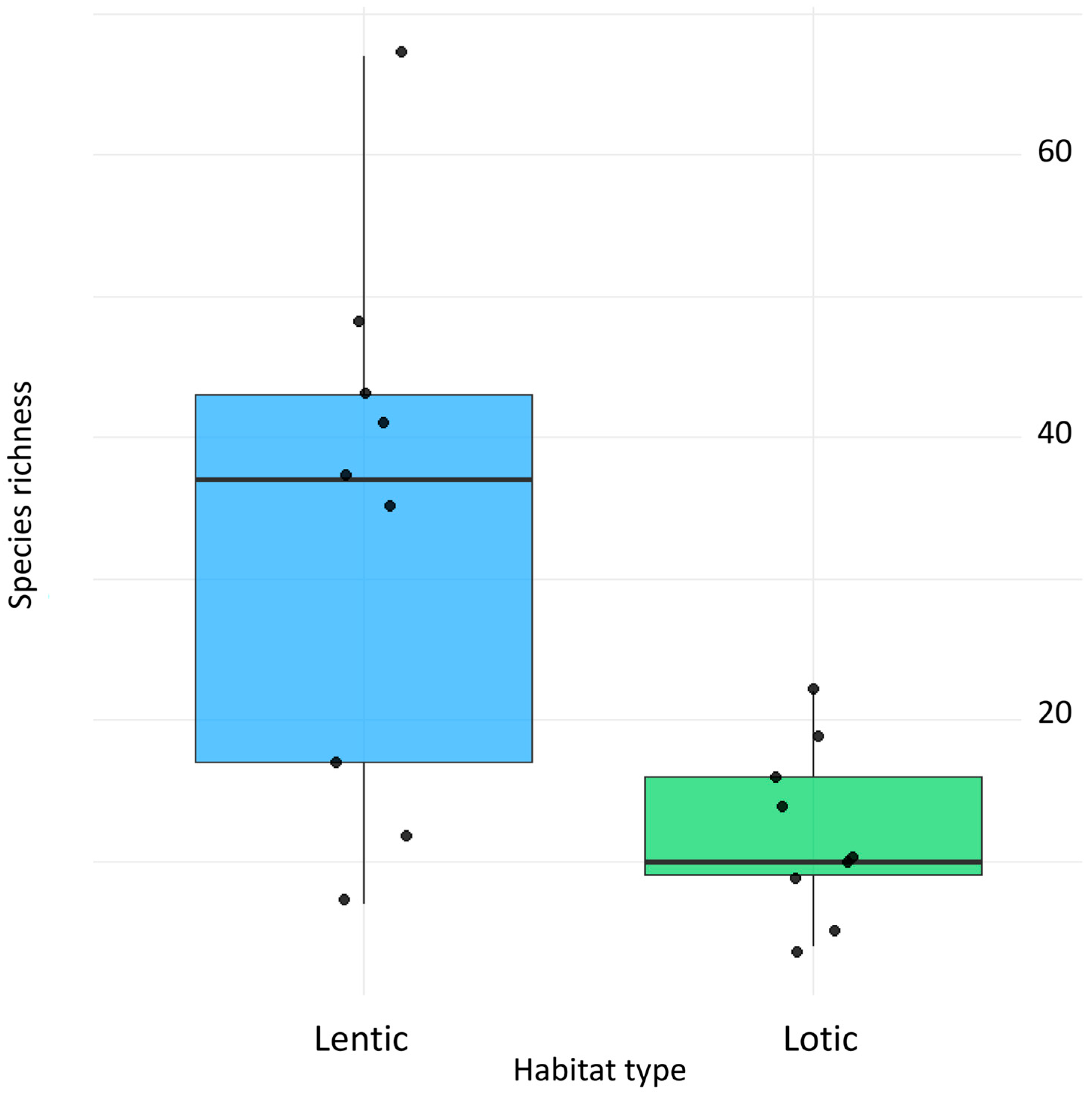
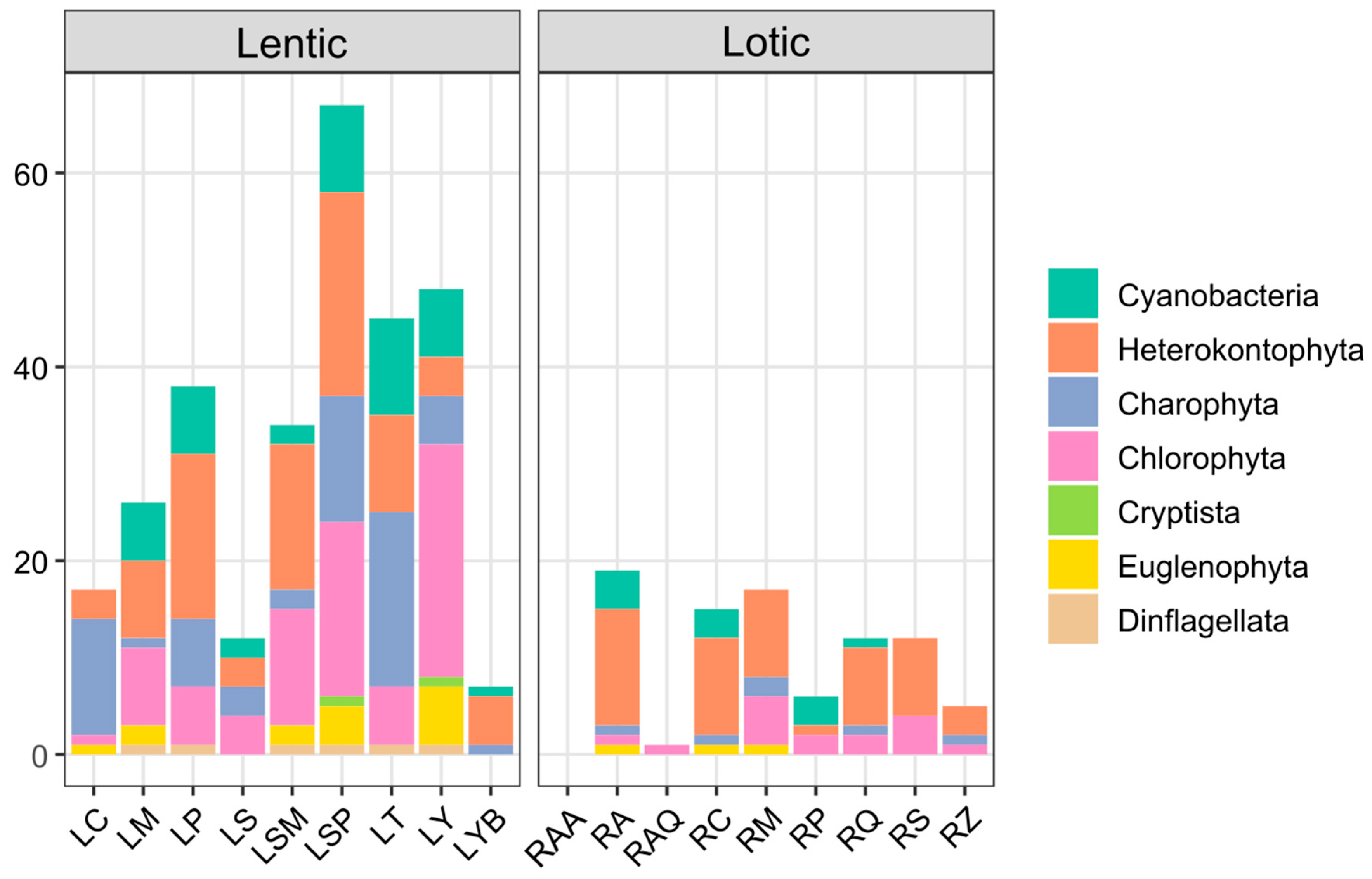
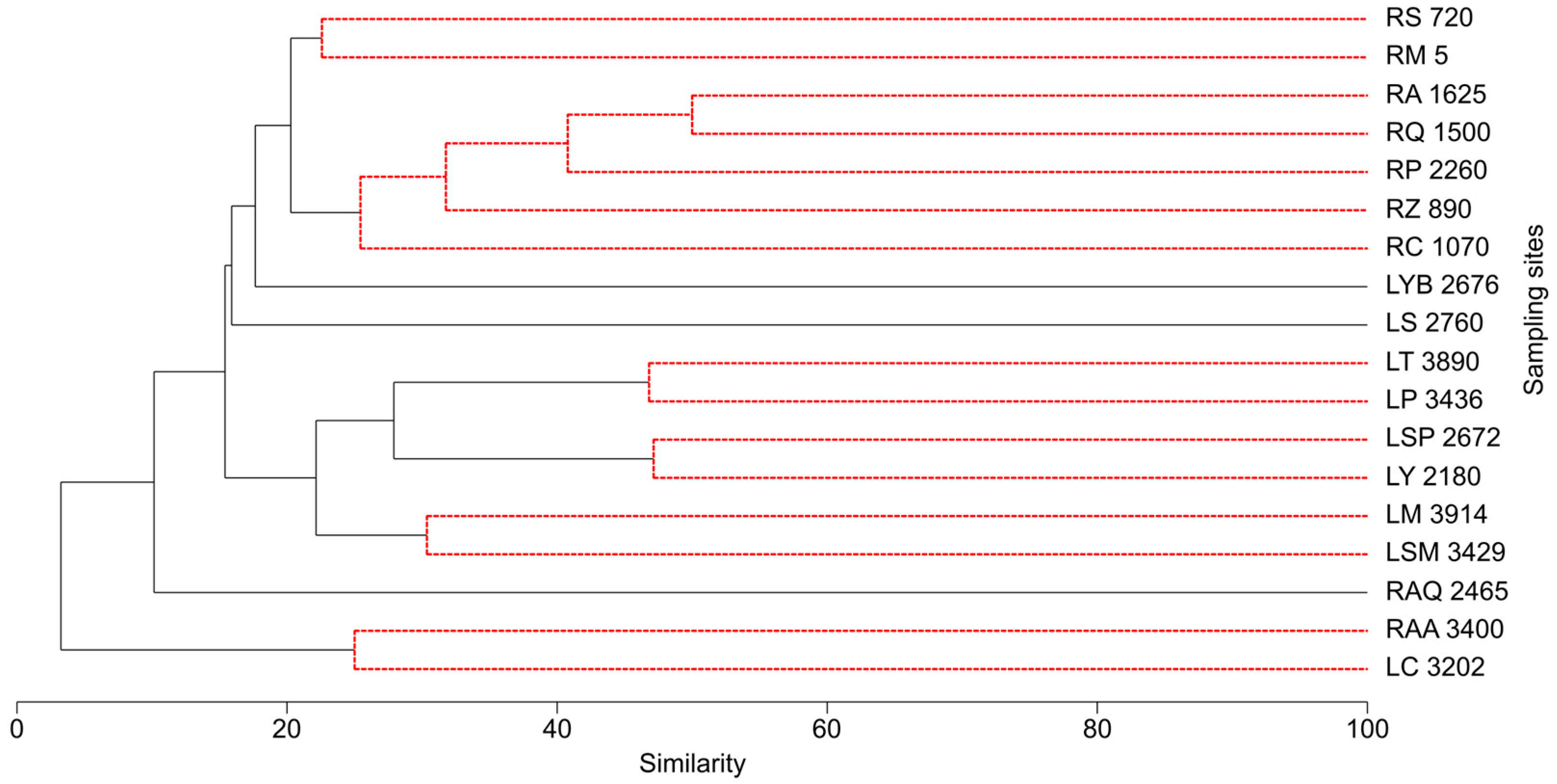
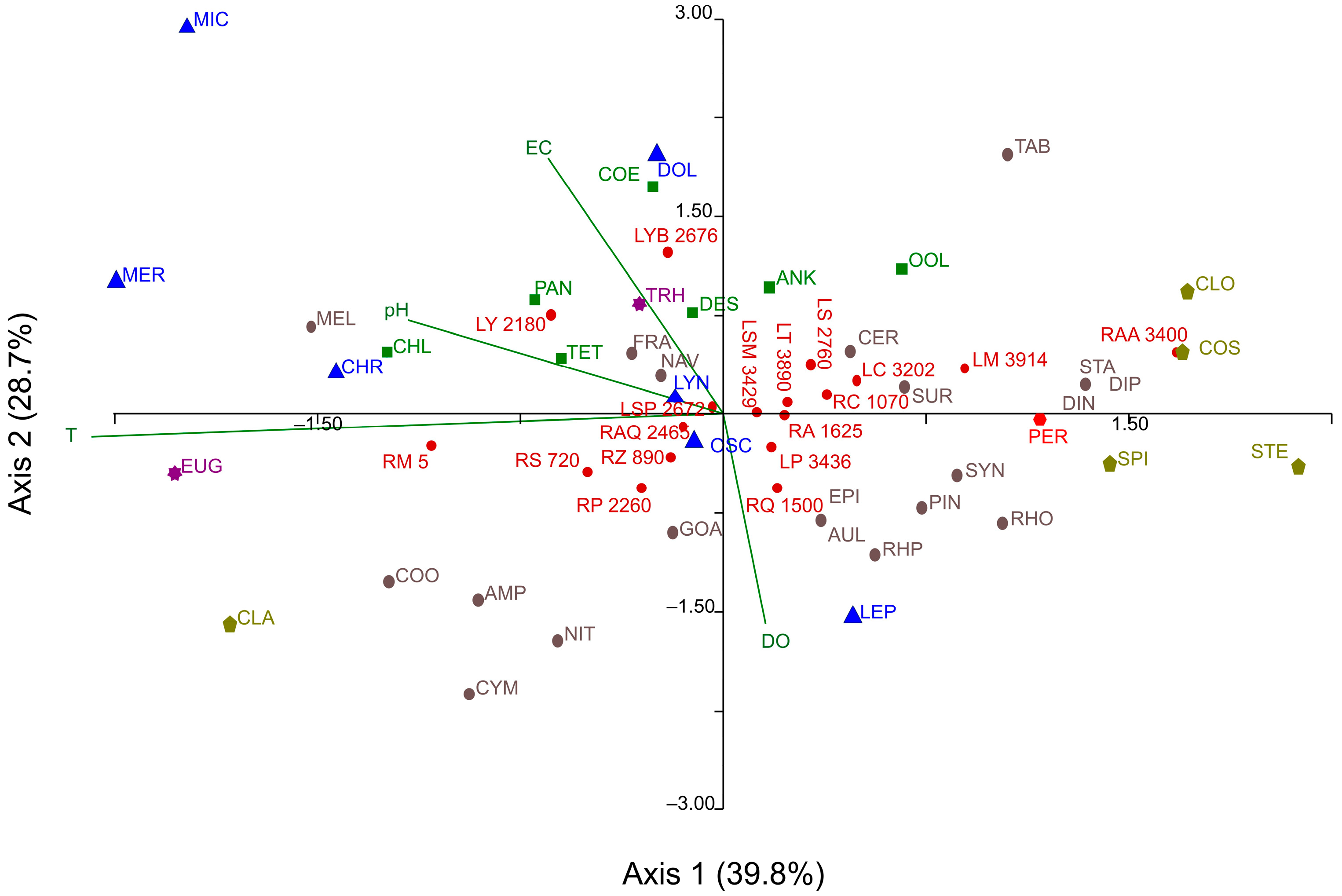
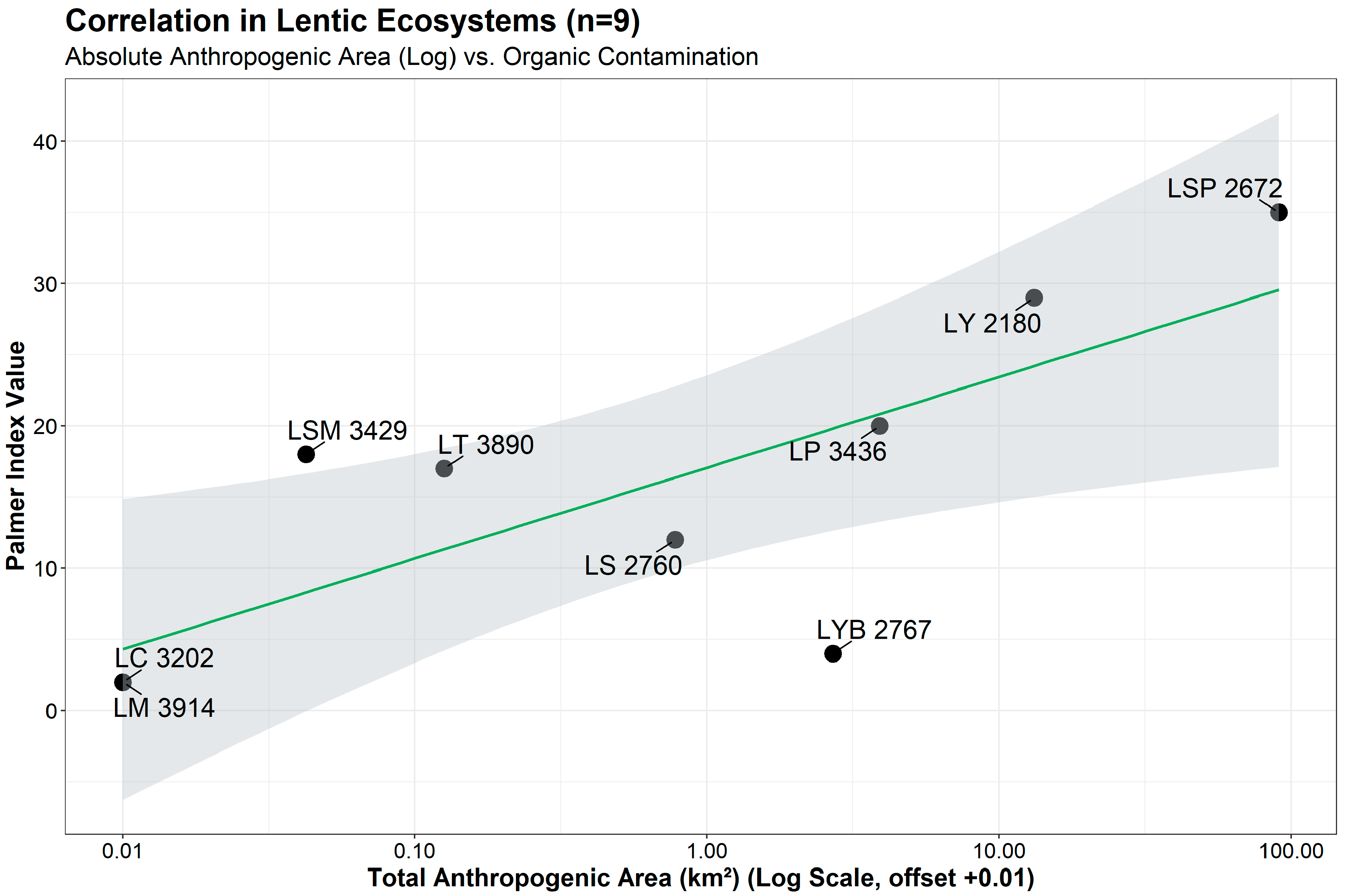
Phytoplankton are key indicators of water quality and low-cost tools for freshwater monitoring, yet their diversity and ecological drivers remain poorly documented in the Tropical Andes. This study provides the first national-scale, multi-ecosystem assessment of net phytoplanktonic communities (including microalgae and cyanobacteria), across Ecuador, integrating physicochemical, multivariate, and geospatial analyses. Eighteen lakes and rivers from three biogeographic regions and a wide altitudinal gradient were surveyed, yielding 129 taxa, 77 identified at species level, the most comprehensive checklist reported to date for Ecuador. Community structure showed a clear lentic–lotic differentiation driven by hydrodynamic contrasts, while the absence of distance–decay patterns indicated high dispersal and environmental filtering pattern rather than spatial structuring. Anthropogenic pressure acted as a secondary gradient: pristine high-Andean lakes were dominated by desmids and diatoms, whereas agricultural and urban basins showed chlorophyte and potentially toxic cyanobacterial assemblages. Palmer’s Index detected organic pollution but underestimated eutrophication in endorheic, geochemically enriched lakes. Land-use effects presented strong basin-scale signals in lakes but weak correlations in rivers due to overriding hydromorphological constraints. These findings establish a robust spatial baseline for freshwater bioassessment in the Andes, demonstrating the value of phytoplankton as effective, low-cost indicators readily applicable to national water-quality assessment programs.
Keywords: cyanobacteria; tropical Andes; microalgae; bioindicators; high-altitude lakes; Palmer organic pollution index; land-use impacts cyanobacteria; tropical Andes; microalgae; bioindicators; high-altitude lakes; Palmer organic pollution index; land-use impacts