Article

Metagenomic Analysis Reveals Adaptive Responses of Intestinal Microbial Community in Penaeus vannamei to Hypersaline Conditions

1
The Key Laboratory of Mariculture, Ocean University of China, Ministry of Education, Qingdao 266003, China
2
Laboratory for Marine Fisheries Science and Food Production Processes, Qingdao Marine Science and Technology Center, Qingdao 266237, China
*
Author to whom correspondence should be addressed.
Water 2026, 18(3), 366; https://doi.org/10.3390/w18030366
Submission received: 19 December 2025 / Revised: 22 January 2026 / Accepted: 30 January 2026 / Published: 31 January 2026
(This article belongs to the Special Issue Aquaculture, Fisheries, Ecology and Environment)

Abstract

The intestinal microbiota plays a vital role in host health and environmental adaptation. However, the response of the gut microbial community in Penaeus vannamei to hypersaline conditions remains poorly understood. In this study, we used metagenomic sequencing to compare the structural and functional profiles of intestinal bacteria in shrimp reared in the L-, M- and H-salinity groups. Alpha-diversity increased significantly with salinity, and PCoA revealed clear separation of microbial communities among groups. Core species analysis showed that five of the seven shared core taxa belonged to Vibrio. Microbial source tracking indicated that the proportion of environmentally derived bacteria increased with salinity. Co-occurrence networks under M and H salinities were more complex but maintained stability comparable to L. Notably, the low-salinity group was enriched with potential pathogens (e.g., Vibrio, Chryseobacterium) and infection-related functions. Functional analysis revealed that the high-salt H group exhibited enrichment of enzymes such as proline dehydrogenase (PutB), glutamate-cysteine ligase (GshA), and methyltransferases (HpnR). These enzymes interconnect compatible solutes including L-proline, L-glutamate, betaine, dimethylglycine, and glutathione, playing a crucial role in enhancing microbial osmoprotection. Furthermore, shared functions across salinities were associated with energy metabolism, protein synthesis, osmoprotection, and antioxidation. These findings, for the first time, simultaneously reveal the potential pathogenic characteristics of the L-salinity group and the adaptation mechanisms of the H-salinity group to hypersaline environments from both structural and functional perspectives of shrimp intestinal microbiota, providing insights for health management in high-salinity aquaculture.

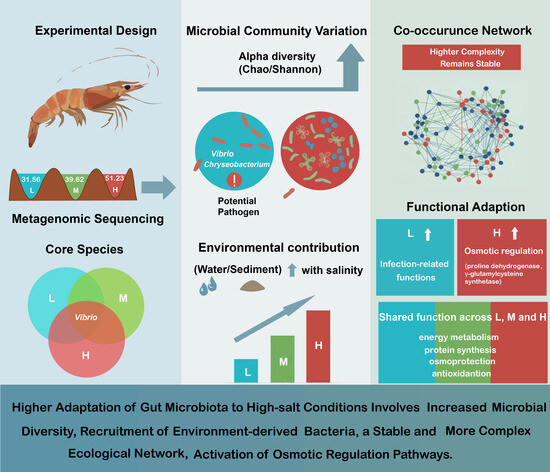
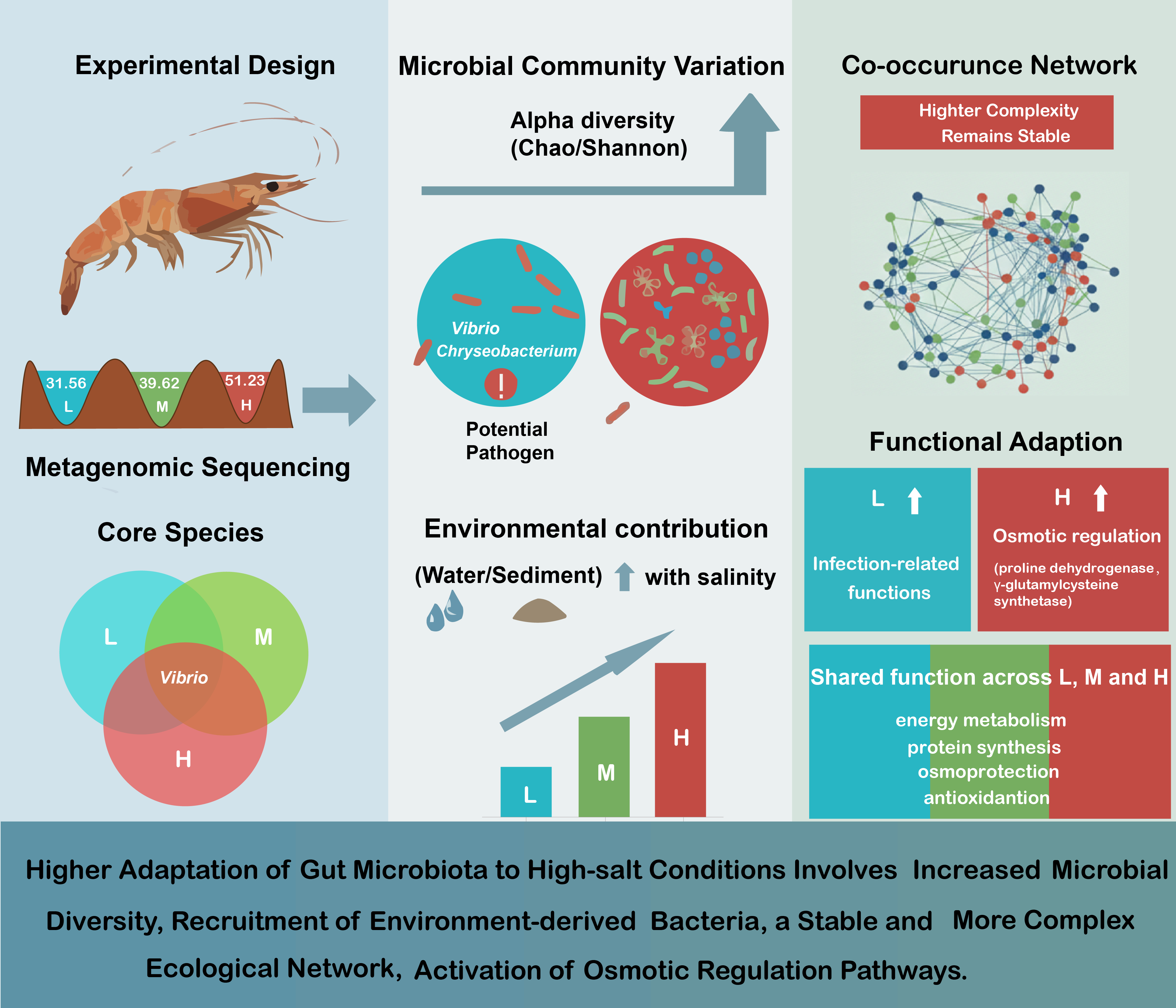
Graphical Abstract

1. Introduction

Penaeus vannamei, commonly known as the Pacific white shrimp, is native to the tropical Pacific coast of South America. Because of its rapid growth rate, high feed efficiency, strong stress tolerance, and broad salinity adaptability, this species has been extensively cultured worldwide and holds substantial economic value [1,2]. Despite these advantages, frequent outbreaks of bacterial diseases have seriously constrained the sustainable development of the P. vannamei aquaculture industry, resulting in significant economic losses. Among these diseases, acute hepatopancreatic necrosis disease (AHPND), hepatopancreatic necrosis syndrome (HPNS), and white feces syndrome (WFS) are the most prevalent and destructive [1,3,4,5]. Accumulating evidence further indicates that imbalances in the intestinal microbiota—particularly disruptions of core microbial taxa—are closely associated with the onset and progression of bacterial infections in P. vannamei [6,7,8].
The intestinal microbiota, as a vital symbiotic system of the host, plays crucial roles in nutrient absorption, physiological regulation, immune defense, and the maintenance of osmotic balance [9,10,11,12]. In aquatic animals, gut microbial communities are shaped by a complex interplay of both biotic and abiotic factors. However, previous studies have predominantly focused on dietary composition, trophic level, and biotic influences, such as developmental stage and pathogen exposure [4,13,14]. In contrast, growing evidence indicates that salinity represents a key environmental driver of intestinal microbial diversity and community structure [15,16] and consequently exerts a significant influence on host health [1,4,17]. Beyond shaping community composition, salinity can also profoundly remodel gut microbial metabolic pathways, including carbohydrate, lipid, and amino acid metabolism; energy conversion [12,17,18,19]; DNA replication and transcription; protein synthesis and modification [20]; and the biosynthesis of osmoprotectants (e.g., proline, glutamate, and betaine) and antioxidants (e.g., glutathione and peroxidases) [12,17,21,22]. Despite these advances, existing studies on the intestinal microbiota of bivalves and crustaceans have largely concentrated on low-salinity (<35‰) or brackish water conditions [17,23,24,25,26]. By comparison, research conducted under high-salinity environments remains limited and has relied almost exclusively on 16S rRNA gene sequencing [27,28], which primarily enables robust characterization of microbial community structure. As a result, functional investigations of these microbial communities based on metagenomic have been reported scarcely.
In northern coastal China, the use of primary salt-evaporation ponds for P. vannamei culture has enhanced the integrated utilization of coastal salt fields along the Yellow and Bohai Seas. These ponds, commonly referred to in China as “Dawangzi” (large salt-pan ponds), are characterized by extensive farming areas and relatively low shrimp stocking densities. However, the persistently high salinity in these ponds often leads to reduced shrimp yields, thereby constraining economic returns. The gut microbiota plays a pivotal role in shrimp growth, immune function, and disease resistance; yet, the ecological and functional responses of intestinal microbial communities to high-salinity stress remain poorly understood. To address this knowledge gap, metagenomic sequencing was employed in the present study, for the first time, to comprehensively characterize the structural and functional profiles of the intestinal bacterial communities of P. vannamei under high-salinity conditions. Specifically, this study aimed to: (i) elucidate variations in gut bacterial community structure under hypersaline conditions; (ii) explore the relationships between gut microbial features and host health under hypersaline stress; and (iii) uncover the adaptive mechanisms by which intestinal bacteria respond to hypersaline environments. Overall, this study provides new insights into the regulatory effects of salinity on the gut microbiota of P. vannamei and offers a scientific basis for promoting healthy and sustainable shrimp aquaculture under high-salinity conditions.

2. Materials and Methods

2.1. Sample Collection and Measurement of Physicochemical Parameters

Sampling was conducted in July 2021 in Bohai Seafoods Co., Ltd., Binzhou, Shandong Province, China (38.03–38.06° N, 117.56–118.01° E). Intestinal samples of P. vannamei were collected from three ponds (i.e., L, M and H) with different salinity levels: 31.56 ± 0.85 psu (Practical Salinity Unit), 39.62 ± 1.23 psu, and 51.23 ± 0.46 psu, with areas of L (106.7 ha), M (133 ha), and H (167 ha). The stocking density was consistently maintained at 150,000 individuals per hectare. Each pond included three sampling sites, and five shrimp were collected at each site [29]. In addition, 1 L of water was sampled at a depth of 0.5 m at each site. All shrimp originated from the same batch, were reared for the same duration, and had comparable average body weights. Shrimp intestines were dissected using sterilized surgical instruments and immediately transferred into a sterile 2 mL centrifuge tube. All samples were flash-frozen in liquid nitrogen and stored at −80 °C until genomic DNA extraction. Some water samples were directly analyzed for total nitrogen (TN) and total phosphorus (TP), whereas others were filtered through 0.45 μm glass fiber membranes using a vacuum filtration pump. The resulting filtrates were used to determine total ammonia nitrogen (NH4+-N), nitrate nitrogen (NO3-N), nitrite nitrogen (NO2-N), sulfide, and orthophosphate (PO43−-P). All parameters were quantified using an automatic discrete analyzer (Model CleverChem 380, DeChem-Tech, Hamburg, Germany). In addition, some water samples were filtered through pre-combusted (450 °C for 4 h) Whatman GF/F filters, and the filtrates were analyzed for dissolved organic carbon (DOC) with a TOC analyzer (Multi N/C 2100s, Analytik Jena, Jena, Germany). In situ measurements of temperature, pH, DO (dissolved oxygen), and salinity were obtained using a YSI handheld multi-parameter instrument(Model YSI ProPlus, YSI Incorporated, St. Petersburg, FL, USA).

2.2. DNA Extraction, Library Construction, and Sequencing

Total intestinal DNA was extracted using the QIAamp DNA Microbiome Kit (Qiagen, Germantown, MD, USA) following the manufacturer’s instructions. DNA concentration was quantified with a Quantus Fluorometer (PicoGreen, Eugene, OR, USA), and integrity was verified by agarose gel electrophoresis. DNA samples with concentrations > 10 ng µL−1 were transferred into sterile centrifuge tubes and stored at −80 °C until further analysis. Metagenomic libraries were prepared using the NEXTFLEX® Rapid DNA-Seq Kit (Bioo Scientific, Austin, TX, USA). Briefly, genomic DNA was randomly sheared, and ~400 bp fragments were selected for end repair and adapter ligation. The ligated products were then PCR-amplified and purified to obtain the final libraries. For each sample, triplicate PCR systems were set up for amplification with the following conditions: initial denaturation at 98 °C for 2 min, 10 cycles at 98 °C for 30 s, 65 °C for 30 s, 72 °C for 60 s, and final extension at 72 °C for 4 min. Then the triplicate amplifications of each sample were pooled and purified with a PCR fragment purification kit from Takara (Kusatsu, Japan). Library concentration was determined using a Qubit fluorometer and quantitative real-time PCR (qPCR), while fragment size distribution was assessed using a bioanalyzer. The qualified libraries were sequenced on the Illumina NovaSeq 6000 platform by Majorbio Bio-pharm Technology Co., Ltd. (Shanghai, China). The raw sequencing data for each sample all exceed 14 Gbp. Raw sequence data were submitted to the NCBI Sequence Read Archive (SRA) database under accession number PRJNA1356844.

2.3. Metagenomic Data Processing

Raw reads of sequencing data were processed using Fastp (v0.20.0) for quality control to obtain high-quality clean reads. The steps included: (a) removal of adapter sequences from both 3′ and 5′ ends; (b) elimination of reads shorter than 50 bp; and (c) exclusion of reads with an average Phred quality score < 20 and containing ambiguous bases (N). High-quality reads were then aligned to the P. vannamei reference genome (https://www.ncbi.nlm.nih.gov/datasets/genome/GCF_042767895.1/, accessed on 8 August 2025) using BWA (v0.7.17) to remove host-derived sequences, yielding clean reads for downstream analysis. De novo assembly was performed with MEGAHIT (v1.1.2), and contigs ≥ 300 bp were retained. Open reading frames (ORFs) were predicted using Prodigal (v2.6.3), with ORFs shorter than 100 nt filtered out. The predicted gene sequences were clustered using CD-HIT (v4.6.1) with thresholds of 90% sequence identity and 90% coverage, and the longest sequence from each cluster was selected as the representative to construct a non-redundant gene catalog. Subsequently, SOAPaligner (v2.21) was used to map clean reads from each sample to the non-redundant gene catalog (95% identity threshold), and read counts for each gene were calculated. Genes with fewer than two mapped reads were removed, resulting in a final set of non-redundant unigenes for taxonomic and functional annotation. Taxonomic annotation was performed using DIAMOND (v0.8.35) by aligning unigenes against the NCBI NR database. Based on the alignment results and gene abundance profiles, the relative abundances of taxa at various taxonomic ranks (domain, kingdom, phylum, class, order, family, genus, and species) were calculated to generate community composition profiles. For functional annotation, the amino acid sequences of unigenes were aligned against the KEGG database (version 94.2) using DIAMOND (v0.8.35), identifying corresponding KEGG Orthology (KO) terms, KEGG Enzymes (EC numbers), and KEGG Pathways. Functional abundances were quantified by integrating annotation and gene abundance data to support downstream function analysis.

2.4. Bioinformatic and Statistical Analysis

Based on the results of normality and homogeneity of variance tests, one-way analysis of variance (ANOVA) or the Kruskal–Wallis test was applied to evaluate differences in physicochemical parameters, alpha-diversity indices, taxonomic abundance, and functional profiles among groups. Statistical significance was set at p < 0.05. LEfSe (Linear Discriminant Analysis Effect Size) was employed to identify group-specific microbial taxa and functional biomarkers [30]. Principal coordinate analysis (PCoA) and redundancy analysis (RDA) were performed in R (v4.4.0) using the vegan package. The statistical significance of PCoA was assessed by PERMANOVA, and that of RDA was evaluated using the envfit test. Core microbiota were defined as taxa present in all samples with a relative abundance ≥ 0.5% [31]. The origins of intestinal bacteria were traced using FEAST [32]. At the species level, significant correlations (Spearman’s |r| > 0.8, p < 0.001) were used to construct bacterial co-occurrence networks [33], which were visualized with Gephi (v0.10.1). Network complexity was quantified using the igraph package (v1.3.4) in R, including metrics such as node number, edge number, positive/negative correlation ratio, average degree, network density, and modularity. Modularity was used to assess the degree of network partitioning into distinct modules [34].

3. Results

3.1. Microbial Diversity Analysis

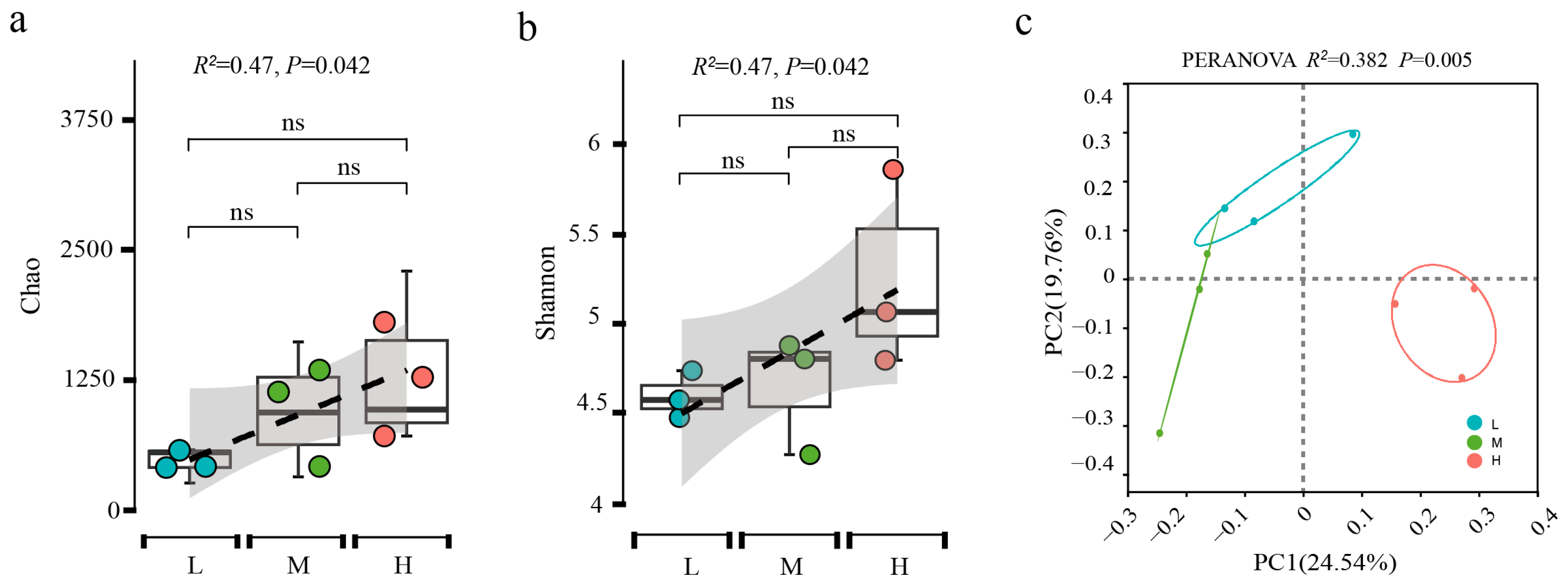
The alpha-diversity analysis revealed the effects of salinity on the intestinal bacterial communities (Figure 1a,b). Both the Chao (R2 = 0.47, p = 0.042) and Shannon (R2 = 0.47, p = 0.042) indices increased significantly with rising salinity (Figure 1a,b). The PCoA demonstrated a clear separation of gut samples among the L, M, and H salinity groups (PERMANOVA, R2 = 0.382, p = 0.005) (Figure 1c).

3.2. Correlation Analysis of Environmental Factors

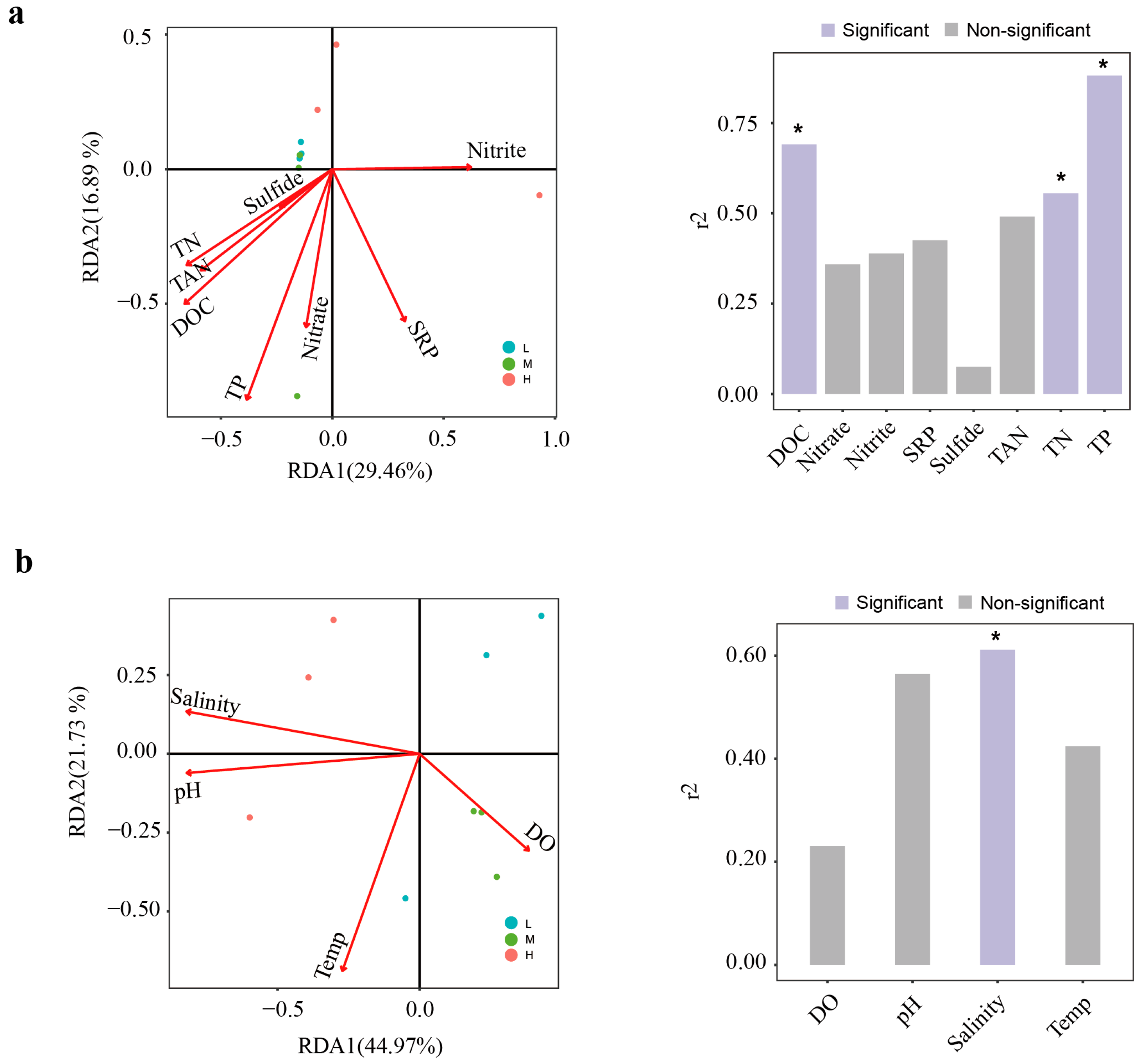
Salinity showed an increasing trend across the three ponds (L, M, and H) and differed significantly among them (p < 0.05). The physicochemical parameters of the water varied along the salinity gradient (Table 1). Total ammonia nitrogen (TAN) and sulfide concentrations decreased with increasing salinity, with significantly higher levels observed at salinity L compared to the others (p < 0.05). In contrast, nitrite and pH increased with salinity, reaching the highest values at salinity H, which were significantly greater than those at salinity L and M (p < 0.05). The salinity M exhibited the highest concentrations of dissolved organic carbon (DOC), nitrate, total nitrogen (TN), total phosphorus (TP), dissolved oxygen (DO), and temperature (Temp), among which, DOC, nitrate, and DO were significantly higher than those of other salinity groups (p < 0.05), and TN was significantly higher than that of salinity H. Eight chemical and four physical factors were included in the redundancy analysis (Figure 2). Among them, DOC (R2 = 0.69, p = 0.0023), TN (R2 = 0.56, p = 0.032), TP (R2 = 0.88, p = 0.02), and salinity (R2 = 0.61, p = 0.046) were significantly correlated with the intestinal bacterial community structure of P. vannamei. These results indicate that TP, DOC, TN, and salinity are the key environmental factors shaping the bacterial composition in the shrimp intestine.

3.3. Taxonomic Composition and Variations

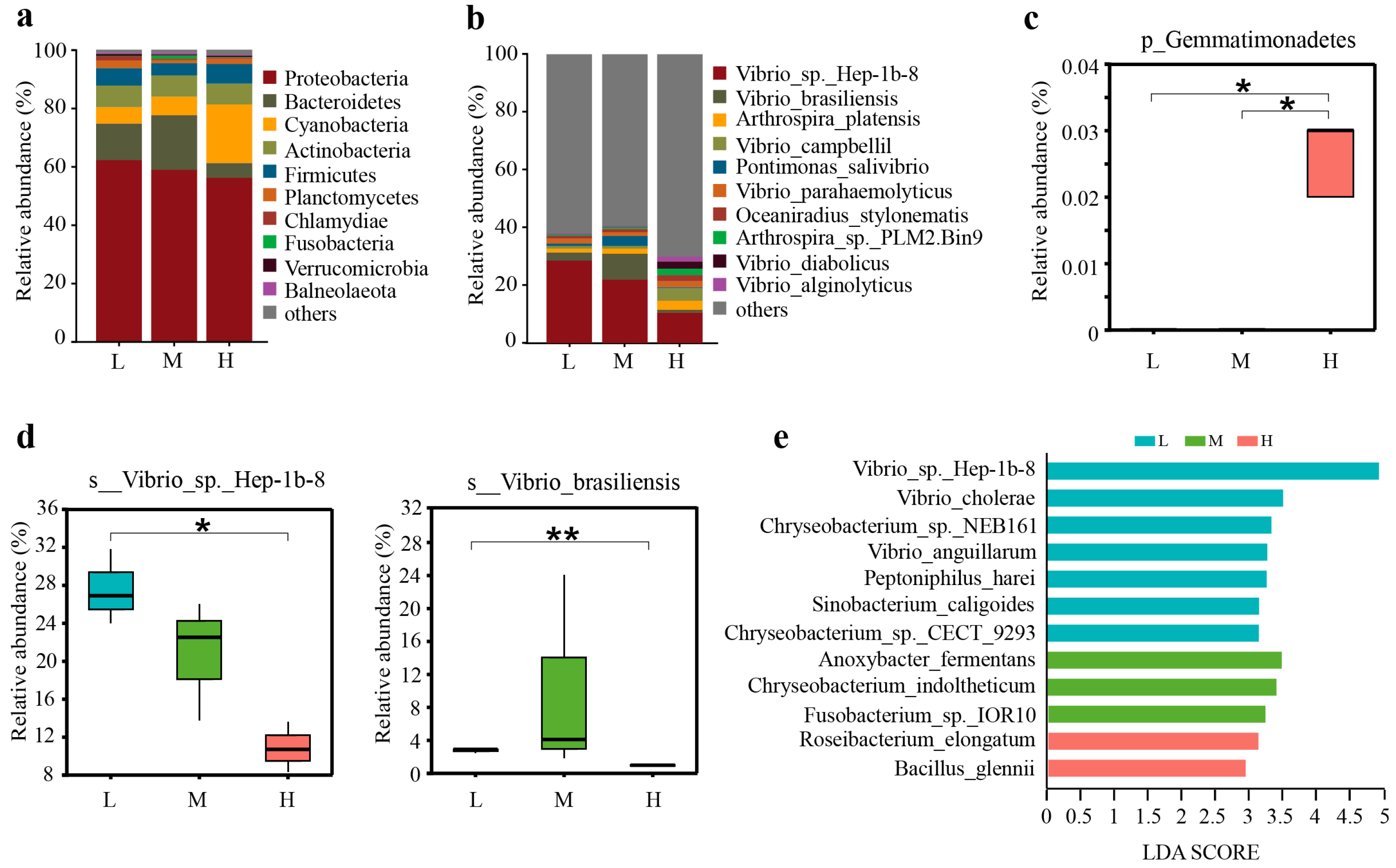
To further characterize the structural features and differences in intestinal bacterial communities under different salinities, taxonomic composition and comparative analysis were performed at both the phylum and genus levels (Figure 3). At the phylum level, Proteobacteria was the most dominant taxon in the shrimp gut, with an average relative abundance of 58.70%. Furthermore, the relative abundance of Proteobacteria decreased with increasing salinity (62.24%, 58.68%, and 55.19%), whereas Cyanobacteria increased (5.57%, 6.61%, and 20.67%). In addition to Proteobacteria and Cyanobacteria, Bacteroidetes and Actinobacteria were also abundant. Gemmatimonadetes was significantly enriched at salinity H (0.00%, 0.00%, and 0.02%, p < 0.05). At the species level, the dominant intestinal bacterial species included Vibrio sp. Hep-1b-8 (19.71%), Vibrio brasiliensis (4.54%), Arthrospira platensis (2.08%), and Vibrio campbellii (2.04%). The relative abundance of Vibrio sp. Hep-1b-8 decreased with salinity (27.55%, 20.73%, and 10.85%), while A. platensis (0.73%, 0.76%, and 4.76%), V. campbellii (1.28%, 1.75%, and 3.10%), Oceaniradius stylonematis (0.87%, 1.37%, and 2.11%), and Arthrospira sp. PLM2.Bin9 (0.38%, 0.50%, and 2.46%) showed increasing trends. The abundances of Vibrio sp. Hep-1b-8 and V. brasiliensis were significantly lower at salinity H compared with the salinity L (p < 0.05).
Furthermore, based on intergroup comparison analysis and LEfSe analysis, biomarker species were identified for each salinity group by selecting taxa that simultaneously exhibited high relative abundance and high LDA scores. At salinity L, seven biomarker species were identified: Vibrio sp. Hep-1b-8 (27.55%, 20.73%, and 10.85%), Vibrio cholerae (0.88%, 0.53%, and 0.30%), Sinobacterium caligoides (0.44%, 0.18%, and 0.29%), Chryseobacterium sp. NEB161 (0.41%, 0.32%, and 0.00%), Peptoniphilus harei (0.44%, 0.10%, and 0.16%), Vibrio anguillarum (0.40%, 0.15%, and 0.06%), and Chryseobacterium sp. CECT 9293 (0.28%, 0.19%, and 0.02%). At salinity M, three biomarker species were detected: Anoxybacter fermentans (0.04%, 0.58%, and 0.00%), Chryseobacterium indoltheticum (0.04%, 0.42%, and 0.00%), and Fusobacterium sp. IOR10 (0.00%, 0.31%, and 0.00%). At salinity H, two biomarker species were identified: Bacillus glennii (0.08%, 0.10%, and 0.23%) and Roseibacterium elongatum (0.01%, 0.04%, and 0.28%).

3.4. Core Species Analysis

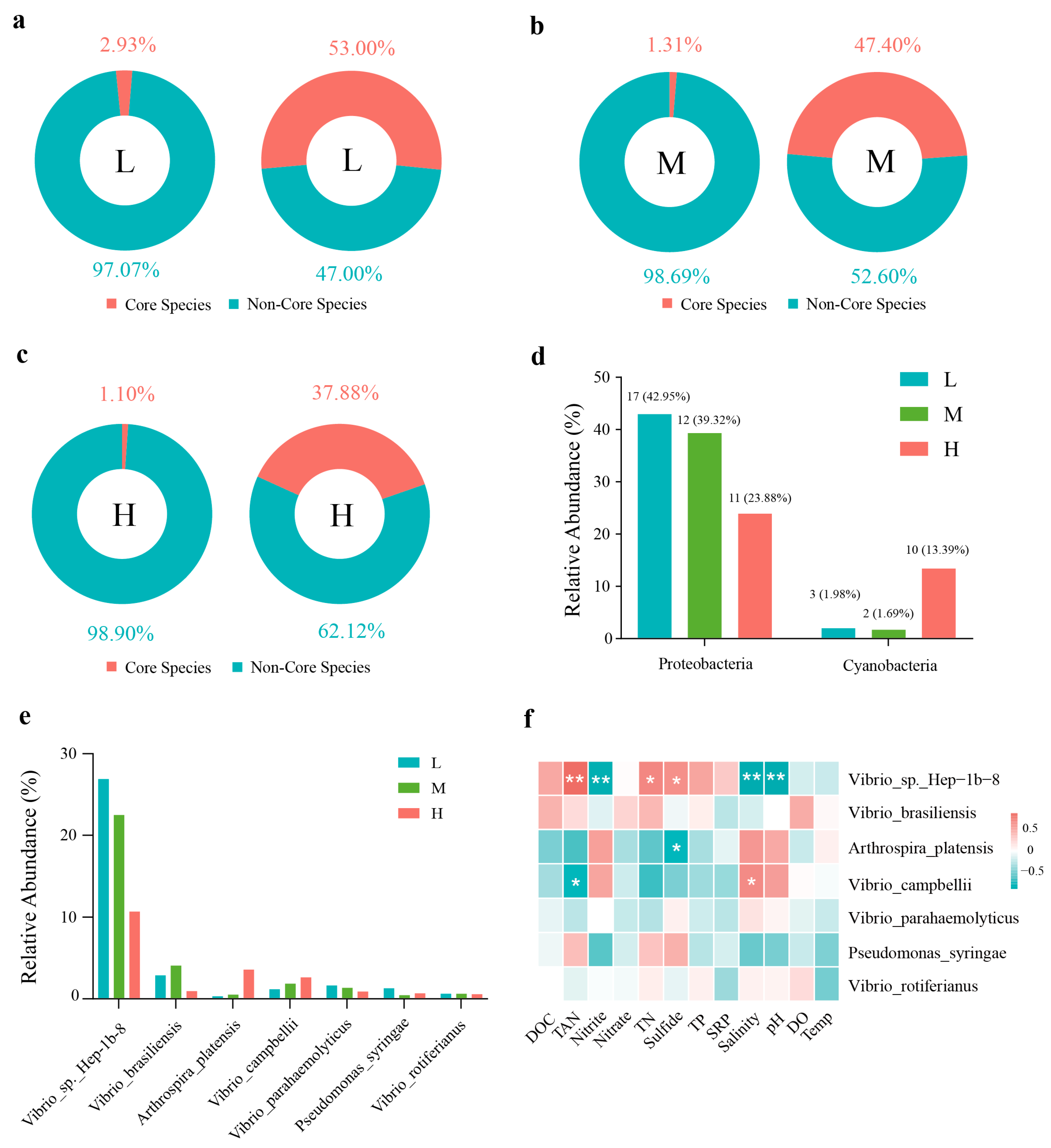
Core species in the intestinal bacterial communities across the three salinity groups were identified based on species occurrence frequency and relative abundance (Figure 4). The numbers of core bacterial species in the L, M, and H groups were 29, 20, and 22, accounting for 2.93%, 1.31%, and 1.10% of the total species, respectively, showing a decreasing trend with increasing salinity. Similarly, the total relative abundance of core species declined with salinity, from 53.00% at salinity L to 47.40% at salinity M and 37.88% at salinity H. At salinity L, core bacteria species were primarily affiliated with Proteobacteria (17, 42.95%), Actinobacteria (3, 3.16%), and Cyanobacteria (3, 1.98%); At salinity M, they were mainly associated with Proteobacteria (12, 39.32%), Bacteroidetes (4, 2.76%), and Cyanobacteria (2, 1.69%); At salinity H, core taxa were dominated by Proteobacteria (11, 23.88%) and Cyanobacteria (10, 13.39%). Across all three salinity groups, seven core species were shared: Vibrio sp. Hep-1b-8 (19.71%), V. brasiliensis (4.54%), A. platensis (2.08%), V. campbellii (2.04%), Vibrio parahaemolyticus (1.70%), Pseudomonas syringae (0.89%), and Vibrio rotiferianus (0.56%). The total relative abundances of these seven shared core species were 35.74%, 35.80%, and 23.00% in the L, M, and H groups, respectively. In addition, the relative abundance of V. sp. Hep-1b-8 showed a significantly positive correlation with TAN, TN, and Sulfide (p < 0.05), and a significantly negative correlation with Nitrite, Salinity, and pH (p < 0.05). The relative abundance of A. platensis was significantly negatively correlated with Sulfide (p < 0.05). The relative abundance of V. campbellii exhibited a significantly positive correlation with Salinity (p < 0.05) and a significantly negative correlation with TAN (p < 0.05).

3.5. Source Analysis of Intestinal Microbiota

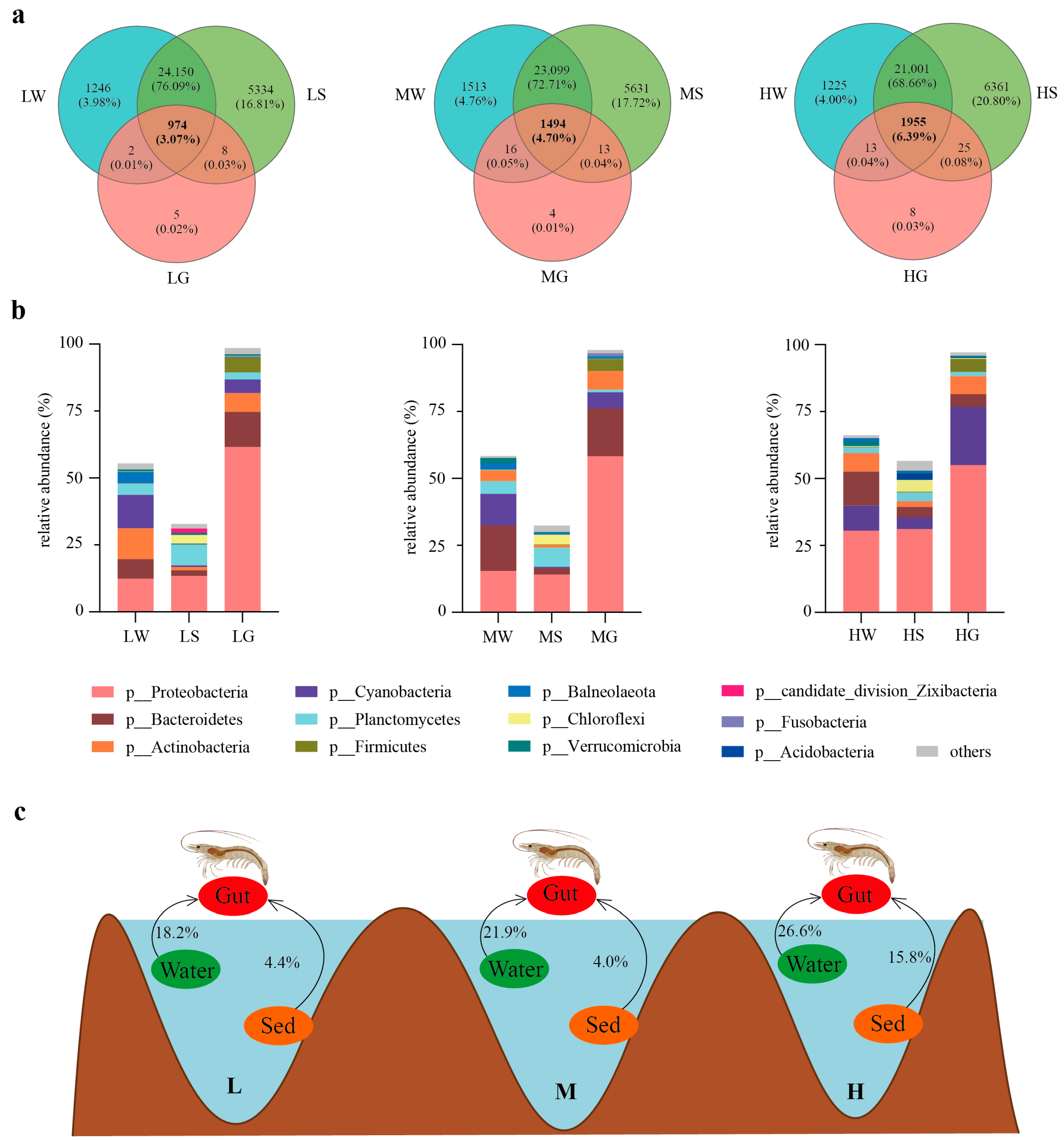
Source tracking analysis was employed to assess the proportion of environmental-derived bacteria in the intestine of shrimp (Figure 5). The number (974, 1494, and 1955) and proportion (3.07%, 4.70%, and 6.39%) of shared species among water, sediment, and gut increased with rising salinity. The total relative abundance of these shared species varied greatly across habitats at salinity L and M, whereas differences among habitats were smaller at salinity H. Moreover, although the dominant phyla of shared species differed substantially among habitats under L and M salinities, these differences were less pronounced under H salinity. These results suggest that the shrimp intestine under high salinity conditions harbors a greater proportion of bacteria derived from environments, including water and sediment. To verify this, microbial source tracking analysis was conducted. The analysis confirmed that, relative to the low- and medium-salinity groups, the high-salinity H group contained more water-derived and sediment-derived bacteria in the shrimp intestine. Specifically, the total contribution of environmental bacteria (water and sediment) to the shrimp intestinal microbiota showed a marked increase with rising salinity, reaching 22.6%, 25.9%, and 42.4% in the L, M, and H groups, respectively.

3.6. Co-Occurrence Network Analysis

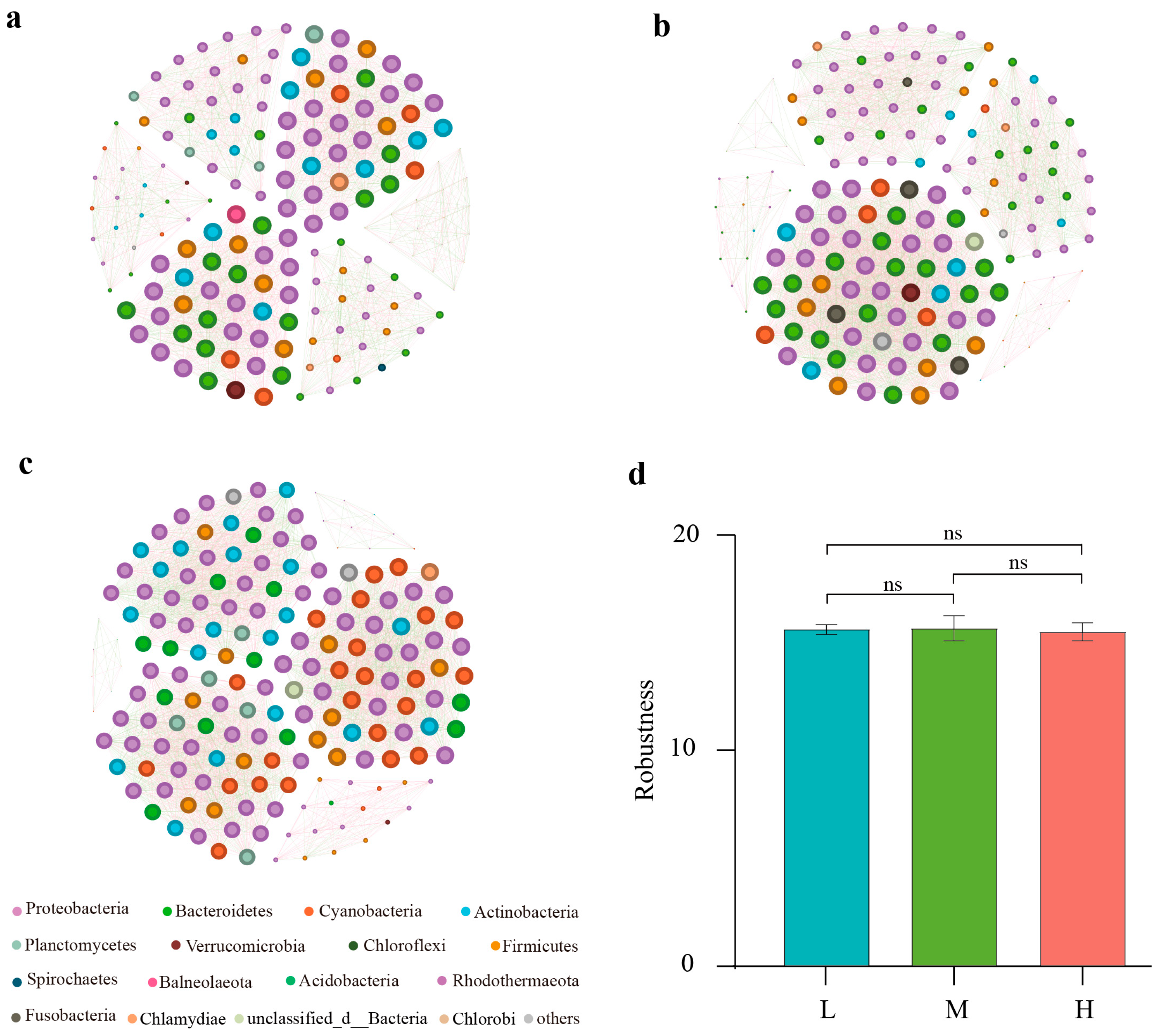
Co-occurrence network and robustness analysis revealed that the M and H groups exhibited slightly higher values in total links, portion of negative links, average degree, and network density compared with the L group (Table 2; Figure 6). However, it showed a marginally lower modularity. The robustness values were comparable among the three salinity groups, indicating no substantial differences in overall network stability.

3.7. Metagenomic Insights into Microbial Functional Potential

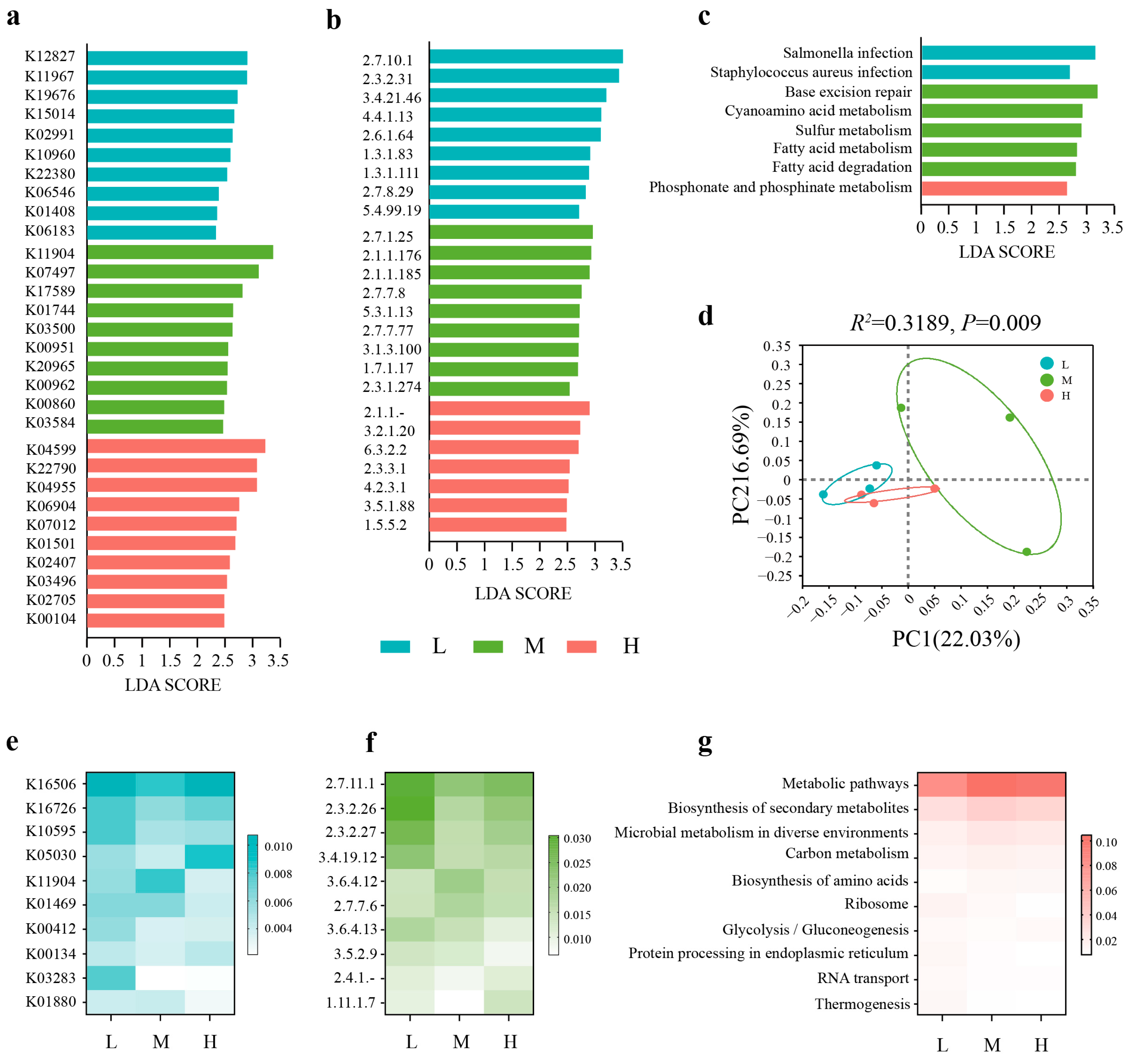
To elucidate the functional implications of microbial community variation, metagenomic sequencing were conducted. Sequencing of the nine samples yielded 134.36 Gbp of raw reads, enabling the prediction of 224,912 genes (Supplementary Table S1). After redundancy removal, nonredundant genes (unigenes) were obtained. These unigenes were functionally annotated against the KEGG Pathway, KEGG Orthology (KO), and KEGG Enzyme databases (Figure 7).
PCoA based on enzyme functional annotations revealed significant differentiation in the intestinal bacterial communities among the L, M, and H salinities (PERMANOVA, R2 = 0.3189, p = 0.009). In the salinity L, enriched orthologous genes from the KEGG Orthology database included K12827, K11967, K19676, K15014, K02991, K10960, K22380, K06546, K01408, and K06183, enriched enzymes from the KEGG Enzyme database included EC 2.7.10.1, 2.3.2.31, 3.4.21.46, 4.4.1.13, 2.6.1.64, 1.3.1.83, 1.3.1.111, 2.7.8.29, and 5.4.99.19, and the major enriched function pathways at level 3 from the KEGG Pathway database were Salmonella infection and Staphylococcus aureus infection. In the M-salinity group, enriched orthologous genes included K11904, K07497, K17589, K01744, K03500, K00951, K20965, K00962, K00860, and K03584, enriched enzymes included EC 2.7.1.25, 2.1.1.176, 2.1.1.185, 2.7.7.8, 5.3.1.13, 2.7.7.77, 3.1.3.100, 1.7.1.17, and 2.3.1.274, and the dominant KEGG Pathway level 3 functions included Cyanoamino acid metabolism, Fatty acid metabolism, Sulfur metabolism, Base excision repair, and Fatty acid degradation. In the H-salinity group, enriched orthologous genes included K04599, K22790, K04955, K06904, K07012, K01501, K02407, K03496, K02705, and K00104, enriched enzymes included EC 2.1.1.-, 3.2.1.20, 6.3.2.2, 2.3.3.1, 4.2.3.1, 3.5.1.88, and 1.5.5.2, and the key enriched KEGG Pathway level 3 function was Phosphonate and phosphinate metabolism. Based on occurrence frequency and relative abundance, the shared top 10 orthologous genes, enzymes, and function pathways at level 3 across different salinities were identified and visualized in a heatmap. The shared top 10 orthologous genes included K16506, K16726, K10595, K05030, K11904, K01469, K00412, K00134, K03283, and K01880. The shared top 10 enzymes were EC 2.7.11.1, 2.3.2.26, 2.3.2.27, 3.4.19.12, 3.6.4.12, 2.7.7.6, 3.6.4.13, 3.5.2.9, 2.4.1.-, and 1.11.1.7. The shared top 10 function pathway at level 3 included Metabolic pathways, Biosynthesis of secondary metabolites, Microbial metabolism in diverse environments, Carbon metabolism, Biosynthesis of amino acids, Ribosome, Glycolysis/Gluconeogenesis, Protein processing in endoplasmic reticulum, RNA transport, and Thermogenesis.

4. Discussion

The relationship between the intestinal microbiota and host health has received considerable attention [4,9,12]. In the present study, we demonstrate that salinity exerts a significant influence on both the structural and functional composition of intestinal bacterial communities in P. vannamei. Principal coordinates analysis (PCoA) revealed a clear separation of samples across the three salinity treatments (L, M, and H), confirming salinity as a key environmental factor shaping intestinal microbial composition. Furthermore, redundancy analysis (RDA) showed that salinity, together with other physicochemical variables—including total phosphorus (TP), dissolved organic carbon (DOC), and total nitrogen (TN)—collectively influences the structure of the intestinal microbiota in P. vannamei. From an ecological perspective, community diversity is closely associated with ecosystem stability. Higher diversity generally provides greater functional redundancy and versatility, thereby enhancing the capacity of microbial communities to maintain stability under environmental disturbances [35,36]. Consistent with this ecological framework, the α-diversity of intestinal bacteria (as reflected by the Chao and Shannon indices) increased with salinity in the present study, in agreement with previous reports [17,37]. However, in contrast to these findings, other studies have reported higher bacterial diversity in the gut of freshwater shrimp compared with marine shrimp [38]. Such discrepancies among studies may stem from differences in salinity ranges, diversity metrics (e.g., weighted versus unweighted indices), and sequencing depth [1], all of which can substantially influence diversity estimates. Notably, the observed increase in α-diversity with rising salinity in this study may reflect host-mediated adjustments in intestinal selective pressures under high-salinity conditions. These adjustments could facilitate the colonization of environmentally derived, salt-adapted microorganisms, thereby contributing to enhanced functional stability of the intestinal ecosystem [4,39]. Supporting this interpretation, source-tracking analysis revealed that the proportion of intestinal bacteria originating from environmental sources (water and sediment) increased with salinity.
The phylum Proteobacteria exhibit strong environmental adaptability and play essential roles in nutrient acquisition and osmotic regulation [40,41]. Within this phylum, members of the family Rhodobacteraceae are able to synthesize vitamin B12, which is essential for shrimp growth [42], while simultaneously inhibiting pathogen proliferation through the production of tropodithietic acid (TDA) [43]. In addition, certain Gammaproteobacteria can synthesize compatible solutes, such as betaine and ectoine, thereby enhancing microbial tolerance to osmotic stress under fluctuating salinity conditions [40]. Similarly, the phylum Bacteroidetes harbors a wide array of carbohydrate-active enzymes involved in the degradation of dietary polysaccharides and carbohydrate metabolism [44,45], thereby partially compensating for the host’s limited capacity for carbohydrate utilization [46,47]. By contrast, members of the phylum Cyanobacteria, in addition to serving as a potential nutritional source, may also function as probiotic microorganisms that participate in intestinal metabolic processes [48]. Notably, some cyanobacteria possess trk-type K+ transporter genes (trkG) [41] or synthesize osmoprotectants such as betaine [49,50], both of which contribute to the maintenance of osmotic balance. Furthermore, within the phylum Actinobacteria, members of the family Cellulomonadaceae secrete a broad spectrum of hydrolytic enzymes, including amylases, xylanases, and cellulases [43]. Moreover, certain genera, such as Actinotalea, are capable of producing short-chain fatty acids (e.g., acetate), which exhibit antagonistic activity against pathogenic Vibrio species in shrimp [51,52]. Collectively, these functional attributes underscore the potential contributions of dominant bacterial taxa to host nutrition, intestinal health, and environmental adaptation. Consistent with these functional roles, the intestinal bacterial community of P. vannamei in the present study was dominated by Proteobacteria, Bacteroidetes, Cyanobacteria, and Actinobacteria, in agreement with previous reports [17,24,29,44].
In the present study, the L-salinity treatment was characterized by an enrichment of several potentially pathogenic bacteria, including Vibrio sp. Hep-1b-8, V. brasiliensis, V. anguillarum, V. cholerae, Chryseobacterium sp. NEB161, and Chryseobacterium sp. CECT 9293. Notably, numerous members of the genus Vibrio have been widely documented as causative agents of diseases in marine animals [17,53,54]. For example, V. brasiliensis has been associated with black gill disease in P. vannamei [55], whereas V. cholerae is of particular concern due to its recognized zoonotic potential [56,57]. Similarly, several species within the genus Chryseobacterium, such as C. chaponense, C. gleum, and C. indologenes, are known to cause infections in economically important fish species, including Atlantic salmon, rainbow trout, and Nile tilapia [58,59,60,61]. Taken together, the enrichment of these taxa indicates that P. vannamei reared under L-salinity conditions may be exposed to an elevated risk of bacterial infection. Consequently, under suboptimal management practices, such microbial shifts could pose a substantial threat not only to shrimp health but also to the overall stability of the culture system.
Microorganisms that are consistently present in the host are defined as the core microbiota [62,63,64]. The presence of a core microbiome has been widely documented across diverse host systems, including mammals, insects, and fish [65,66,67,68], and is generally regarded as a key component in maintaining the structural and functional stability of the intestinal microbial community [69,70]. Previous studies have shown that, although core species constitute only a small proportion of the total intestinal microbiota in shrimp, they typically exhibit high relative abundance, which tends to increase with salinity [4]. In the present study, core species accounted for less than 5% of the total community but contributed more than 35% of the overall relative abundance, which is consistent with previous observations. However, in contrast to earlier findings, both the proportion and the overall relative abundance of core species declined with increasing salinity. This discrepancy may be attributable to differences in the salinity ranges examined. At the same time, this pattern suggests that high-salinity conditions impose substantial environmental stress on the shrimp gut ecosystem, thereby markedly reshaping the composition of core microbial members. Among these core taxa, vibrios are widely distributed in marine environments and are characterized by remarkable metabolic versatility. Specifically, they can utilize a broad range of organic carbon sources, including chitin, alginate, agar, cellobiose, and fructose [71]. For example, certain strains of V. parahaemolyticus, V. fluvialis, V. mimicus, and V. alginolyticus are capable of hydrolyzing starch, proteins, lipids, gelatin, lecithin, and chitin [71,72]. Moreover, vibrios exhibit extremely short generation times; notably, the doubling time of V. parahaemolyticus can be as brief as approximately 10 min [71]. In addition, vibrios have been shown to respond rapidly and intensively to episodic nutrient inputs, such as organic matter derived from algal blooms or iron supplied by desert dust deposition [71]. Consequently, they play a pivotal role in marine carbon cycling and biogeochemical processes. Meanwhile, vibrios are capable of producing a range of digestive enzymes and play a significant role in host nutrient metabolism [29]. For example, Vibrio spp. have been shown to produce α-amylase and lipase in sea bass larvae [73], and V. parahaemolyticus can secrete extracellular proteases [74], all of which enhance host energy harvest. However, as previously discussed, many Vibrio species are opportunistic pathogens capable of inducing diseases in marine animals [17,53,54,55,56,57]. Pathogenic Vibrios exhibit a significant negative correlation with beneficial bacteria. Probiotics (i.e., Lactobacillus and Rhodovulum, etc.) colonizing the digestive tract of fish and shrimp demonstrate antimicrobial properties that can inhibit pathogens including Vibrio [17]. Furthermore, infection by Vibrio may promote the proliferation of other potential pathogens in the host intestine, such as Photobacterium, Sphingomonas, Atopostipes, Staphylococcus, and Acinetobacter. These pathogens compete with beneficial bacteria for nutrients and colonization sites, thereby reducing intestinal microbial diversity and destabilizing the community structure, which, in turn, weakens the host’s resistance to pathogenic bacteria [75,76]. Generally, disease may occur when an imbalance in the structure and function appears in intestinal microbiota, especially, between those pathogenic bacteria including Vibrio and beneficial bacteria. It has been found that elevated abundance of Vibrio is closely associated with disease progression in shrimp, lobster, and crab [17]. Additionally, the dynamics of vibrio populations are regulated by various environmental parameters, particularly temperature, salinity, and dissolved organic carbon [71]. Therefore, rational management of vibrios in shrimp aquaculture is essential. This can be achieved through measures such as appropriate feeding to control the organic load in water strictly, probiotic supplementation to enhance gut resilience and occupy ecological niches, and regular monitoring of pathogen loads, thereby maintaining vibrio abundance within a reasonable range. In summary, an optimal balance should be struck between utilizing the metabolic functions of vibrios and preventing their disease risks, ultimately achieving both ecological stability of the culture system and healthy shrimp cultivation.
Microbial co-occurrence networks are widely used to elucidate complex intra-community interactions and to identify potential keystone taxa [77]. In general, high network modularity indicates the formation of distinct subcommunities and reflects pronounced ecological niche differentiation [78]. In the present study, the reduced modularity observed in the M- and H-salinity networks suggests a partial loss of niche differentiation under high-salinity conditions compared with the L-salinity group. In such networks, nodes and links represent microbial taxa and their interactions, respectively, encompassing both negative relationships (e.g., competition, parasitism, and predation) and positive associations (e.g., mutualism) [77,79]. Previous studies have reported that increasing salinity in shrimp gut ecosystems tends to increase the number of nodes and connections, while simultaneously reducing overall network complexity and the proportion of negative correlations [4]. Consistent with these reports, the M- and H-salinity groups in the present study exhibited higher numbers of nodes and links than the L-salinity group. However, in contrast to earlier findings, both network complexity and the proportion of negative interactions were also higher under elevated salinity in this study. Moreover, network robustness did not differ significantly among salinity treatments. From an ecological perspective, networks characterized by higher connectivity and greater structural complexity are generally considered more stable and more resistant to external disturbances [80]. In addition, an increased proportion of negative interactions may further enhance network stability by limiting excessive dominance of individual taxa and promoting competitive balance [81]. Taken together, these results indicate that the shrimp gut microbiota under high-salinity conditions maintains strong structural stability and adaptive capacity despite increased environmental stress.
From a functional perspective, the metabolic capacity of the gut microbiota exhibited pronounced adaptation to salinity gradients. Notably, the PCoA based on predicted bacterial functions was consistent with that based on community structure, indicating that functional differentiation closely paralleled taxonomic shifts across different salinity conditions. Accumulating evidence suggests that intestinal microorganisms play critical roles in regulating host immune function. For instance, immune developmental defects observed in germ-free animals can be partially restored through colonization with gut microbiota [82]. In this context, previous studies have demonstrated that the potentially pathogenic bacterium V. parahaemolyticus can enhance its tolerance to salinity stress by reducing energy expenditure and strengthening oxidative stress resistance [83]. Moreover, salinity stress has been shown to regulate the expression of the pirA gene in V. parahaemolyticus, thereby modulating its virulence [84]. Furthermore, simultaneous exposure to salinity stress and V. parahaemolyticus challenge can disrupt gut microbial functions, leading to pronounced alterations in lipopolysaccharide biosynthesis pathways [85]. In addition, toxin secretion systems of pathogenic V. parahaemolyticus mediate both intra- and interspecific competition, which may further shape shrimp gut microbial diversity and community composition [86]. Consistent with these mechanisms, the L-salinity group in the present study was enriched in pathways associated with bacterial infections (e.g., Salmonella and Staphylococcus aureus infections). Correspondingly, shrimp reared under L-salinity conditions harbored multiple opportunistic pathogens, predominantly belonging to the genera Vibrio and Chryseobacterium. In contrast, no potential pathogenic taxa or disease-associated functional pathways were detected in the M- and H-salinity groups. Taken together, these results suggest that high-salinity environments may suppress the proliferation of opportunistic pathogens, thereby providing shrimp with a natural microbial defense barrier and ultimately reducing disease risk.
In this study, the fatty acid metabolism pathway, amino acid metabolism pathway, aspA (K01744, encoding aspartate ammonia lyase), recO (K03584, encoding recombination mediator protein), the base excision repair pathway, rsmB/RsmB (K03500/EC 2.1.1.176, encoding 16S rRNA methyltransferase), RlmB (EC 2.1.1.185, encoding 23S rRNA methyltransferase), and pnp/Pnp (K00962/EC 2.7.7.8, encoding polyribonucleotide nucleotidyltransferase, PNPase) were significantly enriched in the M-salinity group. Notably, previous studies have demonstrated that certain bacterial taxa can promote shrimp growth and enhance immunity and disease resistance through the production of essential nutrients, particularly fatty acids and amino acids [87]. In this context, short-chain fatty acids (SCFAs), which are primarily generated via the fermentation of indigestible carbohydrates (e.g., dietary fiber) in the gut, play crucial roles in competitive exclusion, immune modulation, and the activation of host defense responses [88]. Moreover, SCFAs have been shown to regulate the expression of ion transporter genes, thereby modulating epithelial permeability and ion absorption [12]. Similarly, amino acids are indispensable for animal growth [89,90] and are also critically involved in immune function [55,91,92], antioxidant defense [93,94], and osmotic regulation [95,96]. Importantly, L-aspartate functions as a precursor for compatible solutes such as ectoine and 5-hydroxyectoine [21] and undergoes reversible deamination catalyzed by aspartate ammonia lyase [97], highlighting its role in microbial osmoadaptation. In addition, the RecO protein participates not only in DNA repair processes [98] but also in maintaining lactate dehydrogenase stability under salt stress, thereby enhancing cellular tolerance to high-salinity conditions [99]. Consistent with this, the base excision repair pathway plays a fundamental role in correcting DNA damage induced by oxidation, alkylation, and deamination [100]. Furthermore, RsmB and RlmB are involved in rRNA methylation, which is essential for maintaining ribosomal integrity and translational fidelity [101,102,103,104]. Meanwhile, polynucleotide phosphorylase (PNPase) contributes to multiple cellular processes, including RNA turnover, DNA repair, virulence regulation, and biofilm formation [105,106,107,108]. Taken together, the enrichment of these functional pathways and genes suggests that the shrimp gut microbiota under M salinity conditions may enhance microbial adaptability to saline environments through coordinated mechanisms. These include optimizing fatty acid and amino acid metabolism, strengthening DNA repair and RNA processing systems, and maintaining ribosomal stability and translational accuracy, thereby collectively supporting microbial resilience and host–microbe homeostasis under salinity stress.
In the H-salinity group, glcD (K00104, encoding the D subunit of glycolate oxidase), MalZ (EC 3.2.1.20, α-glucosidase), GltA (EC 2.3.3.1, citrate synthase), PutB (EC 1.5.5.2, proline dehydrogenase), GshA (EC 6.3.2.2, glutamate–cysteine ligase), and HpnR (EC 2.1.1.-, methyltransferase) were significantly enriched. Glycolate oxidase catalyzes the oxidation of glycolate to glyoxylate, thereby linking glycolate metabolism with central energy metabolism [109]. Accordingly, the enrichment of these metabolic enzymes suggests an increased capacity for energy acquisition under high-salinity conditions. In parallel, osmotic regulation emerges as another key functional feature of the H-salinity microbiota. L-proline and L-glutamate function as major compatible solutes that support cellular growth and division under osmotic and other environmental stresses [21]. Moreover, glycine undergoes sequential methylation via various methyltransferases to generate betaine and dimethylglycine, which act not only as effective osmoprotectants but also as important precursors for glutathione biosynthesis [21,102]. Notably, glutathione can be directly utilized by halophilic bacteria such as Vibrio to enhance resistance to osmotic stress and to function as a key intracellular reductant for scavenging reactive oxygens, thereby maintaining redox homeostasis [21,110]. In this context, proline dehydrogenase catalyzes the oxidation of proline to pyrroline-5-carboxylate (P5C), which is subsequently converted to glutamate, thus linking proline metabolism with both osmotic balance and energy metabolism [111]. Meanwhile, glutamate–cysteine ligase, the rate-limiting enzyme in glutathione biosynthesis, functionally integrates glutamate, glycine, and glutathione metabolism [21,110]. Taken together, the enrichment of these genes and enzymes in the H-salinity group indicates a coordinated enhancement of microbial functions related to energy acquisition, compatible solute synthesis, and antioxidant defense. Consequently, the gut microbiota under high-salinity conditions exhibit strengthened energy metabolism, improved osmotic regulation, and elevated oxidative stress resistance, collectively reflecting their functional adaptation to hypersaline environments.
In addition, the glycolysis/gluconeogenesis pathways, along with petB (K00412, encoding the cytochrome b subunit of ubiquinol–cytochrome c reductase) and gapA (K00134, encoding glyceraldehyde-3-phosphate dehydrogenase), were shared across all salinity groups. Glycolysis and gluconeogenesis jointly maintain cellular glucose homeostasis [112]. Meanwhile, the cytochrome b subunit, a core component of electron transport chain complex III, plays a central role in oxidative phosphorylation [113], whereas glyceraldehyde-3-phosphate dehydrogenase catalyzes a key energy-yielding step in glycolysis [114]. In parallel, glycine functions as a precursor for key osmoprotectants such as betaine and for the antioxidant glutathione [12,21]. Collectively, the conservation of these pathways and genes across salinity groups indicates that gut microbial communities maintain a high level of metabolic activity related to energy production under different salinity conditions. Moreover, glyS1 (K01880, encoding glycyl-tRNA synthetase), Mcm8 (EC 3.6.4.12, DNA helicase), DbpA (EC 3.6.4.13, RNA helicase), and RpoZ (EC 2.7.7.6, RNA polymerase subunit omega), as well as the amino acid biosynthesis and ribosome pathways, were consistently shared among the three salinity ponds. The co-occurrence of these genes and pathways suggests that gut microbial communities retain an active capacity for transcription, translation, and protein synthesis across varying salinity regimes. In addition, oplAH/OplAH (K01469/EC 3.5.2.9, encoding 5-oxoprolinase) and Vpo1 (EC 1.11.1.7, peroxidase) were also conserved among all groups. 5-Oxoprolinase catalyzes the hydrolysis of 5-oxo-L-proline to L-glutamate, thereby linking metabolic pathways associated with osmoprotectants and antioxidants, including proline, aspartate, and glutathione [21,110]. Concurrently, peroxidases contribute to the detoxification of reactive oxygen species (ROS), playing a crucial role in alleviating oxidative stress [115]. Overall, the shared functional profiles across salinity gradients indicate that shrimp gut microbial communities maintain homeostasis through coordinated energy metabolism, sustained protein synthesis, and effective osmoprotective and antioxidant mechanisms. Consequently, these findings provide both theoretical and practical insights for optimizing shrimp aquaculture strategies in high-salinity pond systems and for the development of novel probiotic applications.
Previous studies have shown that variations in salinity can enhance microbial energy expenditure and metabolic pathways to regulate osmoadaptation of intestinal bacteria, thereby affecting both community function and bacterial survival [17,116,117,118,119,120]. Consistent with our findings, a study on P. monodon demonstrated that under high-salinity stress—compared to its optimal growth salinity—the functional profiles of its intestinal microbiota showed significant upregulation in metabolic pathways related to amino acids and carbohydrates [25]. However, this study did not observe the marked enhancement in antioxidant stress-related functional pathways found in present research. In addition, integrated analysis of the gut microbiota and intestinal transcriptome of P. monodon revealed elevated expression of NADH dehydrogenase and NADH cytochrome reductase, who are involved in multiple energy and metabolic pathways, under high salinity [121]. Enriched metabolic activity may supply the additional energy required for osmotic adjustment following salinity changes [122]. In this study, shrimp gut microbiota exhibited distinct response patterns under different levels of salinity stress. The M-salinity group appeared to enhance adaptability through multiple mechanisms, whereas the H-salinity group, exposed to stronger osmotic pressure, showed enrichment of functions associated with osmotic adjustment. Despite these differences, the shared functional characteristics across salinity gradients suggest that microorganisms consistently require elevated energy metabolism and protein synthesis to sustain normal growth and reproduction while simultaneously allocating part of their energy to deal with osmotic and oxidative stresses, which align with previous findings [17,116,117,118,119,120]. In addition, host-microbiome interactions play a crucial role in salinity tolerance [123], with microbiome responses to salinity stress being highly species-specific [124]. In this study, the high-salinity group exhibited enrichment of B. glennii and R. elongatum, both of which are reported to produce catalase and oxidase under salinities as high as 50‰ [125,126], and the host shrimp also needs to enhance energy metabolism for osmotic regulation [124]. Therefore, the bacteria enriched in the high-salinity group may contribute to enhanced host adaptation to high-salinity environments. The present findings that shrimp gut microbiota exhibit distinct alterations in their metabolic functions across varying salt conditions suggest that gut microbiota may establish functional complementarity with the host, thereby enhancing adaptation of shrimp to hypersaline aquaculture environments.
This study systematically elucidated the structural characteristics and adaptive mechanisms of the intestinal bacterial community of P. vannamei under hypersaline conditions. Nonetheless, several limitations should be acknowledged. The present work relied primarily on metagenomic and correlation-based analysis and therefore lacked experimental validation of key metabolic pathways and functional genes. To address this limitation, future studies should integrate quantitative PCR, metatranscriptomic, metabolomic, and isotopic tracing approaches to clarify the underlying regulatory mechanisms. Overall, this study provides a comprehensive framework for understanding the adaptive strategies of shrimp gut microbiota in hypersaline environments. However, further integrative multi-omics analyses combined with targeted experimental validation remain essential to substantiate and refine these adaptive mechanisms, thereby supporting the optimization of healthy and sustainable aquaculture practices in hypersaline systems.

5. Conclusions

In summary, this study systematically characterized the structural and functional features of the intestinal bacterial community of P. vannamei under hypersaline aquaculture conditions, revealing significant differences across salinity gradients. Bacterial alpha-diversity increased with salinity, accompanied by distinct shifts in community composition and functional profiles. Proteobacteria was the dominant phylum, with Vibrio sp. Hep-1b-8 and V. brasiliensis as the predominant species. The L-salinity group was enriched with potential opportunistic pathogens (e.g., Vibrio and Chryseobacterium) and bacterial infection-related functional pathways, while the proportion of environmentally derived bacteria increased with salinity. The M- and H-salinity groups exhibited higher network complexity but comparable stability to the L-salinity group, indicating enhanced adaptation to high-salinity environments. Functional enrichment in the H-salinity group highlighted strengthened osmotic regulation capabilities. The bacterial functions shared across salinities were primarily associated with energy metabolism, protein synthesis, osmoprotection, and antioxidant defense. Overall, these findings advance the understanding of how shrimp intestinal bacterial communities adapt structurally and functionally to hypersaline conditions, providing valuable insights for developing health-oriented and sustainable aquaculture strategies for P. vannamei in high-salinity environments.

Supplementary Materials

The following supporting information can be downloaded at: https://www.mdpi.com/article/10.3390/w18030366/s1, Table S1: Basic Information on Metagenomic Sequencing.

Author Contributions

Conceptualization, methodology, and writing—original draft preparation, X.T. and M.W.; investigation, G.Q.; formal analysis, M.W. and B.W.; visualization, Y.L. and K.L.; data curation and project administration, M.W. and B.W.; writing—review and editing, validation, resources, supervision and funding acquisition, X.T. All authors have read and agreed to the published version of the manuscript.

Funding

This research was funded by the National Natural Science Foundation of China (No. 42476105), the National Key Research and Development Program of China (No. 2020YFD0900201, 2023YFD2401705), the Key Technology Research Program for Marine Industry of Qingdao (No. 24-1-3-hygg-26-hy) and the Science and Technology Support Program of Taizhou (No. TN202510).

Data Availability Statement

The original contributions presented in this study are included in the article and Supplementary Material. Further inquiries can be directed to the corresponding author.

Acknowledgments

We thank all the students whom participated the field works and laboratory analysis.

Conflicts of Interest

The authors declare no conflicts of interest.

References

  1. Xiong, J.-B.; Sha, H.-N.; Chen, J. Updated Roles of the Gut Microbiota in Exploring Shrimp Etiology, Polymicrobial Pathogens, and Disease Incidence. Zool. Res. 2024, 45, 910–923. [Google Scholar] [CrossRef] [PubMed]
  2. Agriculture Organization of the United Nations; Fisheries Department. The State of World Fisheries and Aquaculture 2024; FAO: Rome, Italy, 2024; ISBN 978-92-5-138763-4. [Google Scholar]
  3. Zhou, K.; Liu, P.; Yao, J.; Vasta, G.R.; Wang, J.; Wang, X. Shrimp Intestinal Microbiota Homeostasis: Dynamic Interplay Between the Microbiota and Host Immunity. Rev. Aquac. 2025, 17, e12986. [Google Scholar] [CrossRef]
  4. Hou, D.; Zhou, R.; Zeng, S.; Wei, D.; Deng, X.; Xing, C.; Yu, L.; Deng, Z.; Wang, H.; Weng, S.; et al. Intestine Bacterial Community Composition of Shrimp Varies Under Low- and High-Salinity Culture Conditions. Front. Microbiol. 2020, 11, 589164. [Google Scholar] [CrossRef] [PubMed]
  5. Zakaria, M.; Francisco, M.E.; Sanyal, S.K.; Hossain, A.; Mandal, S.C.; Haque, M.I. A Review on Modulation of Gut Microbiome Interaction for the Management of Shrimp Aquaculture and Proposal of the Introduction of Deep Learning-Based Approach for Shrimp Disease Detection. Microbe 2025, 7, 100299. [Google Scholar] [CrossRef]
  6. Dai, W.; Sheng, Z.; Chen, J.; Xiong, J. Shrimp Disease Progression Increases the Gut Bacterial Network Complexity and Abun dances of Keystone Taxa. Aquaculture 2020, 517, 734802. [Google Scholar] [CrossRef]
  7. Huang, Z.; Zeng, S.; Xiong, J.; Hou, D.; Zhou, R.; Xing, C.; Wei, D.; Deng, X.; Yu, L.; Wang, H.; et al. Microecological Koch’s Postulates Reveal That Intestinal Microbiota Dysbiosis Contributes to Shrimp White Feces Syndrome. Microbiome 2020, 8, 32. [Google Scholar] [CrossRef]
  8. Zeng, S.; Zhou, R.; Bao, S.; Li, X.; Deng, Z.; Hou, D.; Weng, S.; He, J.; Huang, Z. Identification of Multigene Biomarker for Shrimp White Feces Syndrome by Full-Length Transcriptome Sequencing. Front. Genet. 2020, 11, 71. [Google Scholar] [CrossRef]
  9. Ciavoni, E.; Schrama, J.W.; Radhakrishnan, G.; Sæle, Ø.; Prabhu Philip, A.J. Salinity Induced Changes in the Progression of Water, Ion and Nutrient Fluxes along the Gastrointestinal Tract of Atlantic Salmon Smolt (Salmo salar). Aquaculture 2024, 580, 740331. [Google Scholar] [CrossRef]
  10. Deng, Y.; Cheng, C.; Xie, J.; Liu, S.; Ma, H.; Feng, J.; Su, Y.; Guo, Z. Coupled Changes of Bacterial Community and Function in the Gut of Mud Crab (Scylla paramamosain) in Response to Baimang Disease. AMB Expr. 2019, 9, 18. [Google Scholar] [CrossRef]
  11. Holt, C.C.; Bass, D.; Stentiford, G.D.; Van Der Giezen, M. Understanding the Role of the Shrimp Gut Microbiome in Health and Disease. J. Invertebr. Pathol. 2021, 186, 107387. [Google Scholar] [CrossRef]
  12. Mkulo, E.M.; Iddrisu, L.; Yohana, M.A.; Zheng, A.; Zhong, J.; Jin, M.; Danso, F.; Wang, L.; Zhang, H.; Tang, B.; et al. Exploring Salinity Adaptation in Teleost Fish, Focusing on Omics Perspectives on Osmoregulation and Gut Microbiota. Front. Mar. Sci. 2025, 12, 1559871. [Google Scholar] [CrossRef]
  13. Wilkes Walburn, J.; Wemheuer, B.; Thomas, T.; Copeland, E.; O’Connor, W.; Booth, M.; Fielder, S.; Egan, S. Diet and Diet-associated Bacteria Shape Early Microbiome Development in Yellowtail Kingfish (Seriola lalandi). Microb. Biotechnol. 2019, 12, 275–288. [Google Scholar] [CrossRef] [PubMed]
  14. Xiong, J.; Zhu, J.; Dai, W.; Dong, C.; Qiu, Q.; Li, C. Integrating Gut Microbiota Immaturity and Disease-discriminatory Taxa to Diagnose the Initiation and Severity of Shrimp Disease. Environ. Microbiol. 2017, 19, 1490–1501. [Google Scholar] [CrossRef] [PubMed]
  15. Lai, K.P.; Lin, X.; Tam, N.; Ho, J.C.H.; Wong, M.K.; Gu, J.; Chan, T.F.; Tse, W.K.F. Osmotic Stress Induces Gut Microbiota Community Shift in Fish. Environ. Microbiol. 2020, 22, 3784–3802. [Google Scholar] [CrossRef] [PubMed]
  16. Tolas, I.; Zhou, Z.; Zhang, Z.; Teame, T.; Olsen, R.E.; Ringø, E.; Rønnestad, I. A Fishy Gut Feeling—Current Knowledge on Gut Microbiota in Teleosts. Front. Mar. Sci. 2025, 11, 1495373. [Google Scholar] [CrossRef]
  17. Deris, Z.M.; Iehata, S.; Gan, H.M.; Ikhwanuddin, M.; Najiah, M.; Asaduzzaman, M.; Wang, M.; Liang, Y.; Danish-Daniel, M.; Sung, Y.Y.; et al. Understanding the Effects of Salinity and Vibrio Harveyi on the Gut Microbiota Profiles of Litopenaeus vannamei. Front. Mar. Sci. 2022, 9, 974217. [Google Scholar] [CrossRef]
  18. Hamilton, E.F.; Element, G.; Van Coeverden De Groot, P.; Engel, K.; Neufeld, J.D.; Shah, V.; Walker, V.K. Anadromous Arctic Char Microbiomes: Bioprospecting in the High Arctic. Front. Bioeng. Biotechnol. 2019, 7, 32. [Google Scholar] [CrossRef]
  19. Liu, B.; Guo, H.; Zhu, K.; Guo, L.; Liu, B.; Zhang, N.; Jiang, S.; Zhang, D. Salinity Effect on Intestinal Microbiota in Golden Pompano Trachinotus ovatus (Linnaeus, 1758). Isr. J. Aquac. Bamidgeh 2019, 71, 7. [Google Scholar] [CrossRef]
  20. Sun, S.; Gong, C.; Deng, C.; Yu, H.; Zheng, D.; Wang, L.; Sun, J.; Song, F.; Luo, J. Effects of Salinity Stress on the Growth Performance, Health Status, and Intestinal Microbiota of Juvenile Micropterus Salmoides. Aquaculture 2023, 576, 739888. [Google Scholar] [CrossRef]
  21. Gregory, G.J.; Boyd, E.F. Stressed out: Bacterial Response to High Salinity Using Compatible Solute Biosynthesis and Uptake Systems, Lessons from Vibrionaceae. Comput. Struct. Biotechnol. J. 2021, 19, 1014–1027. [Google Scholar] [CrossRef]
  22. Li, Y.; Li, Y.; Lai, Q.; Yao, Z.; Zhou, K.; Niu, D. Proline Metabolism and Its Osmotic Regulatory Role in Enhancing Hypersalinity Tolerance of the Razor Clam (Sinonovacula constricta). Aquaculture 2024, 589, 741019. [Google Scholar] [CrossRef]
  23. Cheng, Y.; Ge, C.; Li, W.; Yao, H. The Intestinal Bacterial Community and Functional Potential of Litopenaeus vannamei in the Coastal Areas of China. Microorganisms 2021, 9, 1793. [Google Scholar] [CrossRef] [PubMed]
  24. Zhu, X.; Xing, Y.; Zheng, X.; Huang, J.; Qin, J.; Zhang, J. The Effects of Thermal Stress on the Morphology, Physiological Func tions, Gut Microbiota, and Metabolism of Penaeus vannamei under Seawater and Low-Salinity Conditions. Aquaculture 2026, 612, 743188. [Google Scholar] [CrossRef]
  25. Wang, Y.; Lu, Y.; Qiu, Q.; Xiong, J. Abnormal Salinity Levels Increase Shrimp Penaeus Monodon Disease Risk: Insights from the Disrupted Gut Microbiota. J. Ocean Limnol. 2025, 43, 2002–2018. [Google Scholar] [CrossRef]
  26. Liu, L.; Liu, L.; Zhuang, H.; Li, A.; Liu, Z.; Jiao, M.; Li, J.; Xue, S.; Li, J.; Ren, Y.; et al. Intestinal Microbiota Responses to Environmental Microbiomes and Factors across Populations of the Manila Clam Ruditapes philippinarum. Mar. Environ. Res. 2025, 210, 107296. [Google Scholar] [CrossRef]
  27. Wang, B.; Liu, Y.; Wu, X.; Liu, Y.; Li, Z.; Wang, J.; Lian, Y.; Tang, J.; Yun, B.; Tian, X. Characteristics of Gut Microbiota in Penaeus vannamei Shifted with Elevated Salinity. Front. Microbiol. 2025, 16, 1665547. [Google Scholar] [CrossRef]
  28. Dai, W.; Zhang, Z.; Dong, Y.; He, L.; Xue, Q.; Lin, Z. Acute Salinity Stress Disrupts Gut Microbiota Homeostasis and Reduces Network Connectivity and Cooperation in Razor Clam Sinonovacula constricta. Mar. Biotechnol. 2023, 25, 1147–1157. [Google Scholar] [CrossRef]
  29. Gao, S.; Pan, L.; Huang, F.; Song, M.; Tian, C.; Zhang, M. Metagenomic Insights into the Structure and Function of Intestinal Microbiota of the Farmed Pacific White Shrimp (Litopenaeus vannamei). Aquaculture 2019, 499, 109–118. [Google Scholar] [CrossRef]
  30. Segata, N.; Izard, J.; Waldron, L.; Gevers, D.; Miropolsky, L.; Garrett, W.S.; Huttenhower, C. Metagenomic Biomarker Discovery and Explanation. Genome Biol. 2011, 12, R60. [Google Scholar] [CrossRef]
  31. Wu, L.; Ning, D.; Zhang, B.; Li, Y.; Zhang, P.; Shan, X.; Zhang, Q.; Brown, M.R.; Li, Z.; Van Nostrand, J.D.; et al. Global Diversity and Biogeography of Bacterial Communities in Wastewater Treatment Plants. Nat. Microbiol. 2019, 4, 1183–1195. [Google Scholar] [CrossRef]
  32. Shenhav, L.; Thompson, M.; Joseph, T.A.; Briscoe, L.; Furman, O.; Bogumil, D.; Mizrahi, I.; Pe’er, I.; Halperin, E. FEAST: Fast Expectation-Maximization for Microbial Source Tracking. Nat. Methods 2019, 16, 627–632. [Google Scholar] [CrossRef] [PubMed]
  33. Jiao, S.; Qi, J.; Jin, C.; Liu, Y.; Wang, Y.; Pan, H.; Chen, S.; Liang, C.; Peng, Z.; Chen, B.; et al. Core Phylotypes Enhance the Resistance of Soil Microbiome to Environmental Changes to Maintain Multifunctionality in Agricultural Ecosystems. Glob. Change Biol. 2022, 28, 6653–6664. [Google Scholar] [CrossRef] [PubMed]
  34. Yuan, M.M.; Guo, X.; Wu, L.; Zhang, Y.; Xiao, N.; Ning, D.; Shi, Z.; Zhou, X.; Wu, L.; Yang, Y.; et al. Climate Warming Enhances Microbial Network Complexity and Stability. Nat. Clim. Change 2021, 11, 343–348. [Google Scholar] [CrossRef]
  35. Cadotte, M.W.; Dinnage, R.; Tilman, D. Phylogenetic Diversity Promotes Ecosystem Stability. Ecology 2012, 93, S223–S233. [Google Scholar] [CrossRef]
  36. Wang, S.; Loreau, M. Ecosystem Stability in Space: α, β and γ Variability. Ecol. Lett. 2014, 17, 891–901. [Google Scholar] [CrossRef]
  37. Chen, J.; Wang, H.; Yuan, H.; Hu, N.; Zou, F.; Li, C.; Shi, L.; Tan, B.; Zhang, S. Effects of Dietary Clostridium Autoethanogenum Protein on the Growth, Disease Resistance, Intestinal Digestion, Immunity and Microbiota Structure of Litopenaeus vannamei Reared at Different Water Salinities. Front. Immunol. 2022, 13, 1034994. [Google Scholar] [CrossRef]
  38. Cornejo-Granados, F.; Gallardo-Becerra, L.; Leonardo-Reza, M.; Ochoa-Romo, J.P.; Ochoa-Leyva, A. A Meta-Analysis Reveals the Environmental and Host Factors Shaping the Structure and Function of the Shrimp Microbiota. PeerJ 2018, 6, e5382. [Google Scholar] [CrossRef]
  39. McFall-Ngai, M.; Hadfield, M.G.; Bosch, T.C.G.; Carey, H.V.; Domazet-Lošo, T.; Douglas, A.E.; Dubilier, N.; Eberl, G.; Fukami, T.; Gilbert, S.F.; et al. Animals in a Bacterial World, a New Imperative for the Life Sciences. Proc. Natl. Acad. Sci. USA 2013, 110, 3229–3236. [Google Scholar] [CrossRef]
  40. Imhoff, J.F.; Rahn, T.; Künzel, S.; Keller, A.; Neulinger, S.C. Osmotic Adaptation and Compatible Solute Biosynthesis of Phototrophic Bacteria as Revealed from Genome Analyses. Microorganisms 2020, 9, 46. [Google Scholar] [CrossRef]
  41. Wu, Z.; Li, M.; Qu, L.; Zhang, C.; Xie, W. Metagenomic Insights into Microbial Adaptation to the Salinity Gradient of a Typical Short Residence-Time Estuary. Microbiome 2024, 12, 115. [Google Scholar] [CrossRef]
  42. Sañudo-Wilhelmy, S.A.; Gómez-Consarnau, L.; Suffridge, C.; Webb, E.A. The Role of B Vitamins in Marine Biogeochemistry. Annu. Rev. Mar. Sci. 2014, 6, 339–367. [Google Scholar] [CrossRef] [PubMed]
  43. Garibay-Valdez, E.; Cicala, F.; Martinez-Porchas, M.; Gómez-Reyes, R.; Vargas-Albores, F.; Gollas-Galván, T.; Martínez-Córdova, L.R.; Calderón, K. Longitudinal Variations in the Gastrointestinal Microbiome of the White Shrimp, Litopenaeus vannamei. PeerJ 2021, 9, e11827. [Google Scholar] [CrossRef] [PubMed]
  44. Li, E.; Xu, C.; Wang, X.; Wang, S.; Zhao, Q.; Zhang, M.; Qin, J.G.; Chen, L. Gut Microbiota and Its Modulation for Healthy Farming of Pacific White Shrimp Litopenaeus vannamei. Rev. Fish. Sci. Aquac. 2018, 26, 381–399. [Google Scholar] [CrossRef]
  45. Li, S.; Zhang, B.; Hu, J.; Zhong, Y.; Sun, Y.; Nie, S. Utilization of Four Galactans by Bacteroides thetaiotaomicron A4 Based on Transcriptome. Food Front. 2021, 2, 218–231. [Google Scholar] [CrossRef]
  46. Daniel, H.; Gholami, A.M.; Berry, D.; Desmarchelier, C.; Hahne, H.; Loh, G.; Mondot, S.; Lepage, P.; Rothballer, M.; Walker, A.; et al. High-Fat Diet Alters Gut Microbiota Physiology in Mice. ISME J. 2014, 8, 295–308. [Google Scholar] [CrossRef]
  47. Wu, S.; Wang, G.; Angert, E.R.; Wang, W.; Li, W.; Zou, H. Composition, Diversity, and Origin of the Bacterial Community in Grass Carp Intestine. PLoS ONE 2012, 7, e30440. [Google Scholar] [CrossRef]
  48. Markou, G.; Kougia, E.; Arapoglou, D.; Chentir, I.; Andreou, V.; Tzovenis, I. Production of Arthrospira platensis: Effects on Growth and Biochemical Composition of Long-Term Acclimatization at Different Salinities. Bioengineering 2023, 10, 233. [Google Scholar] [CrossRef]
  49. Laloknam, S.; Tanaka, K.; Buaboocha, T.; Waditee, R.; Incharoensakdi, A.; Hibino, T.; Tanaka, Y.; Takabe, T. Halotolerant Cy anobacterium Aphanothece halophytica Contains a Betaine Transporter Active at Alkaline pH and High Salinity. Appl. Env. Microbiol. 2006, 72, 6018–6026. [Google Scholar] [CrossRef]
  50. Waditee, R.; Tanaka, Y.; Aoki, K.; Hibino, T.; Jikuya, H.; Takano, J.; Takabe, T.; Takabe, T. Isolation and Functional Character ization of N-Methyltransferases That Catalyze Betaine Synthesis from Glycine in a Halotolerant Photosynthetic Organism Aphanothece Halophytica. J. Biol. Chem. 2003, 278, 4932–4942. [Google Scholar] [CrossRef]
  51. Rosenberg, E.; DeLong, E.F.; Lory, S.; Stackebrandt, E.; Thompson, F. (Eds.) The Prokaryotes: Actinobacteria; Springer: Berlin/Heidelberg, Germany, 2014; ISBN 978-3-642-30137-7. [Google Scholar]
  52. Da Silva, B.C.; Vieira, F.D.N.; Mouriño, J.L.P.; Ferreira, G.S.; Seiffert, W.Q. Salts of Organic Acids Selection by Multiple Char acteristics for Marine Shrimp Nutrition. Aquaculture 2013, 384–387, 104–110. [Google Scholar] [CrossRef]
  53. Muthukrishnan, S.; Shariff, M.; Ina-Salwany, M.Y.; Yusoff, F.M.; Natrah, I. Expression of AHPND Toxin Genes (pirAB), Quorum Sensing Master Regulator Gene (luxR) and Transmembrane Transcriptional Regulator Gene (toxR) in Vibrio parahaemolyticus and Vibrio harveyi during Infection of Penaeus vannamei (Bonne, 1931). Aquaculture 2022, 551, 737895. [Google Scholar] [CrossRef]
  54. Zhang, X.-H.; He, X.; Austin, B. Vibrio Harveyi: A Serious Pathogen of Fish and Invertebrates in Mariculture. Mar. Life Sci. Technol. 2020, 2, 231–245. [Google Scholar] [CrossRef] [PubMed]
  55. Li, G.; Xie, G.; Wang, H.; Wan, X.; Li, X.; Shi, C.; Wang, Z.; Gong, M.; Li, T.; Wang, P.; et al. Characterization of a Novel Shrimp Pathogen, Vibrio Brasiliensis, Isolated from Pacific White Shrimp, Penaeus vannamei. J. Fish. Dis. 2021, 44, 1543–1552. [Google Scholar] [CrossRef] [PubMed]
  56. Haque, Z.F.; Islam, M.S.; Sabuj, A.A.M.; Pondit, A.; Sarkar, A.K.; Hossain, M.G.; Saha, S. Molecular Detection and Antibiotic Resistance of Vibrio Cholerae, Vibrio Parahaemolyticus, and Vibrio Alginolyticus from Shrimp (Penaeus monodon) and Shrimp Environments in Bangladesh. Aquac. Res. 2023, 2023, 5436552. [Google Scholar] [CrossRef]
  57. Rahman, M.T.; Sobur, M.A.; Islam, M.S.; Ievy, S.; Hossain, M.J.; El Zowalaty, M.E.; Rahman, A.T.; Ashour, H.M. Zoonotic Diseases: Etiology, Impact, and Control. Microorganisms 2020, 8, 1405. [Google Scholar] [CrossRef]
  58. Hugo, C.; Bernardet, J.; Nicholson, A.; Kämpfer, P. C hryseobacterium. In Bergey’s Manual of Systematics of Archaea and Bacteria; Whitman, W.B., Ed.; Wiley: Hoboken, NJ, USA, 2019; pp. 1–107. ISBN 978-1-118-96060-8. [Google Scholar]
  59. Kämpfer, P.; Fallschissel, K.; Avendaño-Herrera, R. Chryseobacterium chaponense Sp. Nov., Isolated from Farmed Atlantic Salmon (Salmo salar). Int. J. Syst. Evol. Microbiol. 2011, 61, 497–501. [Google Scholar] [CrossRef]
  60. Loch, T.; Faisal, M. Polyphasic Characterization Reveals the Presence of Novel Fish-Associated Chryseobacterium Spp. in the Great Lakes of North America. Dis. Aquat. Org. 2015, 113, 113–125. [Google Scholar] [CrossRef]
  61. Malick, R.C.; Das, B.K.; Pal, B.B.; Bera, A.K.; Maurye, P.; Sahoo, A.K. Molecular Identification, Whole-Cell Protein Profiling, Antibiotics Sensitivity and Pathogenicity of Chryseobacterium gleum Recovered from Diseased Fishes of Freshwater Wetlands in India. Aquaculture 2022, 559, 738411. [Google Scholar] [CrossRef]
  62. Kokou, F.; Sasson, G.; Friedman, J.; Eyal, S.; Ovadia, O.; Harpaz, S.; Cnaani, A.; Mizrahi, I. Core Gut Microbial Communities Are Maintained by Beneficial Interactions and Strain Variability in Fish. Nat. Microbiol. 2019, 4, 2456–2465. [Google Scholar] [CrossRef]
  63. Roeselers, G.; Mittge, E.K.; Stephens, W.Z.; Parichy, D.M.; Cavanaugh, C.M.; Guillemin, K.; Rawls, J.F. Evidence for a Core Gut Microbiota in the Zebrafish. ISME J. 2011, 5, 1595–1608. [Google Scholar] [CrossRef]
  64. Zhang, M.; Sun, Y.; Liu, Y.; Qiao, F.; Chen, L.; Liu, W.-T.; Du, Z.; Li, E. Response of Gut Microbiota to Salinity Change in Two Euryhaline Aquatic Animals with Reverse Salinity Preference. Aquaculture 2016, 454, 72–80. [Google Scholar] [CrossRef]
  65. Sekelja, M.; Berget, I.; Næs, T.; Rudi, K. Unveiling an Abundant Core Microbiota in the Human Adult Colon by a Phylogroup-Independent Searching Approach. ISME J. 2011, 5, 519–531. [Google Scholar] [CrossRef] [PubMed]
  66. Shetty, S.A.; Hugenholtz, F.; Lahti, L.; Smidt, H.; De Vos, W.M. Intestinal Microbiome Landscaping: Insight in Community Assemblage and Implications for Microbial Modulation Strategies. FEMS Microbiol. Rev. 2017, 41, 182–199. [Google Scholar] [CrossRef] [PubMed]
  67. Turnbaugh, P.J.; Hamady, M.; Yatsunenko, T.; Cantarel, B.L.; Duncan, A.; Ley, R.E.; Sogin, M.L.; Jones, W.J.; Roe, B.A.; Affourtit, J.P.; et al. A Core Gut Microbiome in Obese and Lean Twins. Nature 2009, 457, 480–484. [Google Scholar] [CrossRef] [PubMed]
  68. Mao, J.; Lu, J.; Chen, J.; Xiong, J. Consistent Features of the Gut Microbiota in Response to Diverse Shrimp Litopenaeus vannamei Diseases: A Meta-analysis. Fish Fish. 2023, 24, 1103–1117. [Google Scholar] [CrossRef]
  69. Shade, A.; Handelsman, J. Beyond the Venn Diagram: The Hunt for a Core Microbiome. Environ. Microbiol. 2012, 14, 4–12. [Google Scholar] [CrossRef]
  70. Yao, Z.; Yang, K.; Huang, L.; Huang, X.; Qiuqian, L.; Wang, K.; Zhang, D. Disease Outbreak Accompanies the Dispersive Structure of Shrimp Gut Bacterial Community with a Simple Core Microbiota. AMB Expr. 2018, 8, 120. [Google Scholar] [CrossRef]
  71. Zhang, X.; Lin, H.; Wang, X.; Austin, B. Significance of Vibrio Species in the Marine Organic Carbon Cycle—A Review. Sci. China Earth Sci. 2018, 61, 1357–1368. [Google Scholar] [CrossRef]
  72. Bunpa, S.; Sermwittayawong, N.; Vuddhakul, V. Extracellular Enzymes Produced by Vibrio alginolyticus Isolated from Envi ronments and Diseased Aquatic Animals. Procedia Chem. 2016, 18, 12–17. [Google Scholar] [CrossRef]
  73. Gatesoupe, F.J.; Infante, J.L.Z.; Cahu, C.; Quazuguel, P. Early Weaning of Seabass Larvae, Dicentrarchus Lab-Ax: The Effect on Microbiota, with Particular Attention to Iron Supply and Exoenzymes. Aquaculture 1997, 158, 117–127. [Google Scholar] [CrossRef]
  74. Lee, C.-Y.; Cheng, M.-F.; Yu, M.-S.; Pan, M.-J. Purification and Characterization of a Putative Virulence Factor, Serine Protease, from Vibrio Parahaemolyticus. FEMS Microbiol. Lett. 2002, 209, 31–37. [Google Scholar] [CrossRef]
  75. Deng, Y.; Zhang, Y.; Chen, H.; Xu, L.; Wang, Q.; Feng, J. Gut–Liver Immune Response and Gut Microbiota Profiling Reveal the Pathogenic Mechanisms of Vibrio Harveyi in Pearl Gentian Grouper (Epinephelus lanceolatus ♂ × E. fuscoguttatus ♀). Front. Immunol. 2020, 11, 607754. [Google Scholar] [CrossRef] [PubMed]
  76. Joe, J.T.X.; Tseng, Y.-C.; Wu, J.-L.; Lu, M.-W. The Alteration of Intestinal Microbiota Profile and Immune Response in Epinephelus Coioides during Pathogen Infection. Life 2021, 11, 99. [Google Scholar] [CrossRef] [PubMed]
  77. Faust, K.; Raes, J. Microbial Interactions: From Networks to Models. Nat. Rev. Microbiol. 2012, 10, 538–550. [Google Scholar] [CrossRef] [PubMed]
  78. Siles, J.A.; García-Sánchez, M.; Gómez-Brandón, M. Studying Microbial Communities through Co-Occurrence Network Analyses during Processes of Waste Treatment and in Organically Amended Soils: A Review. Microorganisms 2021, 9, 1165. [Google Scholar] [CrossRef]
  79. Deng, Y.; Jiang, Y.-H.; Yang, Y.; He, Z.; Luo, F.; Zhou, J. Molecular Ecological Network Analyses. BMC Bioinform. 2012, 13, 113. [Google Scholar] [CrossRef]
  80. Santolini, M.; Barabási, A.-L. Predicting Perturbation Patterns from the Topology of Biological Networks. Proc. Natl. Acad. Sci. USA 2018, 115, E6375–E6383. [Google Scholar] [CrossRef]
  81. Coyte, K.Z.; Schluter, J.; Foster, K.R. The Ecology of the Microbiome: Networks, Competition, and Stability. Science 2015, 350, 663–666. [Google Scholar] [CrossRef]
  82. Macpherson, A.J.; Harris, N.L. Interactions between Commensal Intestinal Bacteria and the Immune System. Nat. Rev. Immunol. 2004, 4, 478–485. [Google Scholar] [CrossRef]
  83. Song, Z.; Chen, L.; Tang, S.; Pan, Y.; Xie, Q.; Zhao, Y.; Liu, H. Effects of Low-salt Stress on Biological Characteristics and Transcriptomic Profiles of Vibrio parahaemolyticus. Int. J. Food Microbiol. 2025, 430, 111047. [Google Scholar] [CrossRef]
  84. López-Cervantes, G.; Álvarez-Ruiz, P.; Luna-Suárez, S.; Luna-González, A.; Esparza-Leal, H.M.; Castro-Martínez, C.; Gámez-Jiménez, C.; Soto-Alcalá, J. Temperature and Salinity Modulate Virulence and PirA Gene Expression of Vibrio parahaemolyticus, the Causative Agent of AHPND. Aquacult. Int. 2021, 29, 743–756. [Google Scholar] [CrossRef]
  85. Chang, Y.-T.; Huang, W.-T.; Wu, P.-L.; Kumar, R.; Wang, H.-C.; Lu, H.-P. Low Salinity Stress Increases the Risk of Vibrio Parahaemolyticus Infection and Gut Microbiota Dysbiosis in Pacific White Shrimp. BMC Microbiol. 2024, 24, 275. [Google Scholar] [CrossRef]
  86. Soto-Rodriguez, S.A.; Lozano-Olvera, R.; Ramos-Clamont Montfort, G.; Zenteno, E.; Sánchez-Salgado, J.L.; Vibanco-Pérez, N.; Aguilar Rendón, K.G. New Insights into the Mechanism of Action of PirAB from Vibrio parahaemolyticus. Toxins 2022, 14, 243. [Google Scholar] [CrossRef]
  87. Amiin, M.K.; Lahay, A.F.; Putriani, R.B.; Reza, M.; Putri, S.M.E.; Sumon, M.A.; Jamal, M.T.; Santanumurti, M.B. The Role of Probiotics in Vannamei Shrimp Aquaculture Performance—A Review. Vet. World 2023, 16, 638–649. [Google Scholar] [CrossRef] [PubMed]
  88. Nazir, F.; Fariduddin, Q.; Khan, T.A. Hydrogen Peroxide as a Signalling Molecule in Plants and Its Crosstalk with Other Plant Growth Regulators under Heavy Metal Stress. Chemosphere 2020, 252, 126486. [Google Scholar] [CrossRef] [PubMed]
  89. Qi, C.; Wang, X.; Han, F.; Jia, Y.; Lin, Z.; Wang, C.; Lu, J.; Yang, L.; Wang, X.; Li, E.; et al. Arginine Supplementation Improves Growth, Antioxidant Capacity, Immunity and Disease Resistance of Juvenile Chinese Mitten Crab, Eriocheir sinensis. Fish Shellfish. Immunol. 2019, 93, 463–473. [Google Scholar] [CrossRef]
  90. Xie, S.; Tian, L.; Jin, Y.; Yang, H.; Liang, G.; Liu, Y. Effect of Glycine Supplementation on Growth Performance, Body Compo sition and Salinity Stress of Juvenile Pacific White Shrimp, Litopenaeus vannamei Fed Low Fishmeal Diet. Aquaculture 2014, 418–419, 159–164. [Google Scholar] [CrossRef]
  91. Li, P.; Yin, Y.-L.; Li, D.; Woo Kim, S.; Wu, G. Amino Acids and Immune Function. Br. J. Nutr. 2007, 98, 237–252. [Google Scholar] [CrossRef]
  92. Trichet, V.V. Nutrition and Immunity: An Update. Aquac. Res. 2010, 41, 356–372. [Google Scholar] [CrossRef]
  93. Dong, J.; Cheng, R.; Yang, Y.; Zhao, Y.; Wu, G.; Zhang, R.; Zhu, X.; Li, L.; Li, X. Effects of Dietary Taurine on Growth, Non-Specific Immunity, Anti-Oxidative Properties and Gut Immunity in the Chinese Mitten Crab Eriocheir sinensis. Fish Shellfish. Immunol. 2018, 82, 212–219. [Google Scholar] [CrossRef]
  94. Fang, Y.-Z.; Yang, S.; Wu, G. Free Radicals, Antioxidants, and Nutrition. Nutrition 2002, 18, 872–879. [Google Scholar] [CrossRef]
  95. Chakrapani, V.; Rasal, K.D.; Mohapatra, S.D.; Rasal, A.R.; Jayasankar, P.; Barman, H.K. Molecular Characterization, Computational Analysis and Transcript Profiling of Glutamate Dehydrogenase (Gdh) Gene of Macrobrachium rosenbergii Exposed to Saline Water. Gene Rep. 2017, 8, 37–44. [Google Scholar] [CrossRef]
  96. Liu, Z.; Zhou, Z.; Wang, L.; Li, M.; Wang, W.; Yi, Q.; Huang, S.; Song, L. Dopamine and Serotonin Modulate Free Amino Acids Production and Na+/K+ Pump Activity in Chinese Mitten Crab Eriocheir sinensis Under Acute Salinity Stress. Front. Physiol. 2018, 9, 1080. [Google Scholar] [CrossRef] [PubMed]
  97. Fibriansah, G.; Veetil, V.P.; Poelarends, G.J.; Thunnissen, A.-M.W.H. Structural Basis for the Catalytic Mechanism of Aspartate Ammonia Lyase. Biochemistry 2011, 50, 6053–6062. [Google Scholar] [CrossRef] [PubMed]
  98. Shinn, M.K.; Chaturvedi, S.K.; Kozlov, A.G.; Lohman, T.M. Allosteric Effects of E. coli SSB and RecR Proteins on RecO Protein Binding to DNA. Nucleic Acids Res. 2023, 51, 2284–2297. [Google Scholar] [CrossRef]
  99. Wu, C.; Zhang, J.; Du, G.; Chen, J. Heterologous Expression of Lactobacillus Casei RecO Improved the Multiple-Stress Toler ance and Lactic Acid Production in Lactococcus lactis NZ9000 during Salt Stress. Bioresour. Technol. 2013, 143, 238–241. [Google Scholar] [CrossRef]
  100. Van Der Veen, S.; Tang, C.M. The BER Necessities: The Repair of DNA Damage in Human-Adapted Bacterial Pathogens. Nat. Rev. Microbiol. 2015, 13, 83–94. [Google Scholar] [CrossRef]
  101. Ero, R.; Leppik, M.; Reier, K.; Liiv, A.; Remme, J. Ribosomal RNA Modification Enzymes Stimulate Large Ribosome Subunit Assembly in E. coli. Nucleic Acids Res. 2024, 52, 6614–6628. [Google Scholar] [CrossRef]
  102. Gu, X.R.; Gustafsson, C.; Ku, J.; Yu, M.; Santi, D.V. Identification of the 16S rRNA m5 C967 Methyltransferase from Escherichia coli. Biochemistry 1999, 38, 4053–4057. [Google Scholar] [CrossRef]
  103. Huang, S.; Aleksashin, N.A.; Loveland, A.B.; Klepacki, D.; Reier, K.; Kefi, A.; Szal, T.; Remme, J.; Jaeger, L.; Vázquez-Laslop, N.; et al. Ribosome Engineering Reveals the Importance of 5S rRNA Autonomy for Ribosome Assembly. Nat. Commun. 2020, 11, 2900. [Google Scholar] [CrossRef]
  104. Salaikumaran, M.R.; Badiger, V.P.; Burra, V.L.S.P. 16S rRNA Methyltransferases as Novel Drug Targets Against Tuberculosis. Protein J. 2022, 41, 97–130. [Google Scholar] [CrossRef] [PubMed]
  105. Carzaniga, T.; Antoniani, D.; Dehò, G.; Briani, F.; Landini, P. The RNA Processing Enzyme Polynucleotide Phosphorylase Negatively Controls Biofilm Formation by Repressing Poly-N-Acetylglucosamine (PNAG) Production in Escherichia coli C. BMC Microbiol. 2012, 12, 270. [Google Scholar] [CrossRef] [PubMed]
  106. Kim, S.-H.; Wei, C.-I. Molecular Characterization of Biofilm Formation and Attachment of Salmonella Enterica Serovar Typhi murium DT104 on Food Contact Surfaces. J. Food Prot. 2009, 72, 1841–1847. [Google Scholar] [CrossRef] [PubMed]
  107. Pobre, V.; Arraiano, C.M. Next Generation Sequencing Analysis Reveals That the Ribonucleases RNase II, RNase R and PNPase Affect Bacterial Motility and Biofilm Formation in E. coli. BMC Genom. 2015, 16, 72. [Google Scholar] [CrossRef]
  108. Rosenzweig, J.A.; Chopra, A.K. The Exoribonuclease Polynucleotide Phosphorylase Influences the Virulence and Stress Responses of Yersiniae and Many Other Pathogens. Front. Cell. Infect. Microbiol. 2013, 3, 81. [Google Scholar] [CrossRef]
  109. Roccor, R.; Wolf, M.E.; Liu, J.; Eltis, L.D. The Catabolism of Ethylene Glycol by Rhodococcus jostii RHA1 and Its Dependence on Mycofactocin. Appl. Environ. Microbiol. 2024, 90, e00416–e00424. [Google Scholar] [CrossRef]
  110. Vašková, J.; Kočan, L.; Vaško, L.; Perjési, P. Glutathione-Related Enzymes and Proteins: A Review. Molecules 2023, 28, 1447. [Google Scholar] [CrossRef]
  111. Hosseinifard, M.; Stefaniak, S.; Ghorbani Javid, M.; Soltani, E.; Wojtyla, Ł.; Garnczarska, M. Contribution of Exogenous Proline to Abiotic Stresses Tolerance in Plants: A Review. Int. J. Mol. Sci. 2022, 23, 5186. [Google Scholar] [CrossRef]
  112. Schink, S.J.; Christodoulou, D.; Mukherjee, A.; Athaide, E.; Brunner, V.; Fuhrer, T.; Bradshaw, G.A.; Sauer, U.; Basan, M. Gly colysis/Gluconeogenesis Specialization in Microbes Is Driven by Biochemical Constraints of Flux Sensing. Mol. Syst. Biol. 2022, 18, e10704. [Google Scholar] [CrossRef]
  113. Xia, D.; Esser, L.; Tang, W.-K.; Zhou, F.; Zhou, Y.; Yu, L.; Yu, C.-A. Structural Analysis of Cytochrome Bc1 Complexes: Impli cations to the Mechanism of Function. Biochim. Biophys. Acta (BBA)-Bioenerg. 2013, 1827, 1278–1294. [Google Scholar] [CrossRef]
  114. Wang, J.; Li, Y.; Pan, L.; Li, J.; Yu, Y.; Liu, B.; Zubair, M.; Wei, Y.; Pillay, B.; Olaniran, A.O.; et al. Glyceraldehyde-3-Phosphate Dehydrogenase (GAPDH) Moonlights as an Adhesin in Mycoplasma Hyorhinis Adhesion to Epithelial Cells as Well as a Plasminogen Receptor Mediating Extracellular Matrix Degradation. Vet. Res. 2021, 52, 80. [Google Scholar] [CrossRef]
  115. Seixas, A.F.; Quendera, A.P.; Sousa, J.P.; Silva, A.F.Q.; Arraiano, C.M.; Andrade, J.M. Bacterial Response to Oxidative Stress and RNA Oxidation. Front. Genet. 2022, 12, 821535. [Google Scholar] [CrossRef]
  116. Niu, M.; Li, X.; Chen, Y.; Qin, K.; Liang, G.; Hu, Y.; Jiang, X.; Wang, H.; Zhu, R.; Wang, C.; et al. Response of Intestinal Micro biota to Saline-Alkaline Water in Mud Crab (Scylla paramamosain) Based on Multiple Low Salinity Culture Modes. Front. Mar. Sci. 2023, 10, 1153326. [Google Scholar] [CrossRef]
  117. Oren, A. The Bioenergetic Basis for the Decrease in Metabolic Diversity at Increasing Salt Concentrations: Implications for the Functioning of Salt Lake Ecosystems. Hydrobiologia 2001, 466, 61–72. [Google Scholar] [CrossRef]
  118. Hou, D.; Huang, Z.; Zeng, S.; Liu, J.; Wei, D.; Deng, X.; Weng, S.; He, Z.; He, J. Environmental Factors Shape Water Microbial Community Structure and Function in Shrimp Cultural Enclosure Ecosystems. Front. Microbiol. 2017, 8, 2359. [Google Scholar] [CrossRef] [PubMed]
  119. Huang, L.; Huang, L.; Zhao, L.; Qin, Y.; Su, Y.; Yan, Q. The Regulation of Oxidative Phosphorylation Pathway on Vibrio algi nolyticus Adhesion under Adversities. MicrobiologyOpen 2019, 8, e00805. [Google Scholar] [CrossRef] [PubMed]
  120. Oren, A. Thermodynamic Limits to Microbial Life at High Salt Concentrations. Environ. Microbiol. 2011, 13, 1908–1923. [Google Scholar] [CrossRef]
  121. Chaiyapechara, S.; Uengwetwanit, T.; Arayamethakorn, S.; Bunphimpapha, P.; Phromson, M.; Jangsutthivorawat, W.; Tala, S.; Karoonuthaisiri, N.; Rungrassamee, W. Understanding the Host-Microbe-Environment Interactions: Intestinal Microbiota and Transcriptomes of Black Tiger Shrimp Penaeus Monodon at Different Salinity Levels. Aquaculture 2022, 546, 737371. [Google Scholar] [CrossRef]
  122. Gong, J.; Xu, F.; Li, Y.; He, Y.; Liang, Z.; Chen, X.; Zhang, X.; Liu, L.; Zhou, L.; Huang, X. Metagenomic Analysis of Intestinal Microbial Function and Key Genes Responsive to Acute High-Salinity Stress in Nile Tilapia (Oreochromis niloticus). Gene 2024, 913, 148371. [Google Scholar] [CrossRef]
  123. Qiao, R.; Sheng, C.; Lu, Y.; Zhang, Y.; Ren, H.; Lemos, B. Microplastics Induce Intestinal Inflammation, Oxidative Stress, and Disorders of Metabolome and Microbiome in Zebrafish. Sci. Total Environ. 2019, 662, 246–253. [Google Scholar] [CrossRef]
  124. Dildar, T.; Cui, W.; Ikhwanuddin, M.; Ma, H. Aquatic Organisms in Response to Salinity Stress: Ecological Impacts, Adaptive Mechanisms, and Resilience Strategies. Biology 2025, 14, 667. [Google Scholar] [CrossRef]
  125. Seuylemezian, A.; Ott, L.; Wolf, S.; Fragante, J.; Yip, O.; Pukall, R.; Schumann, P.; Vaishampayan, P. Bacillus glennii Sp. Nov. and Bacillus saganii Sp. Nov., Isolated from the Vehicle Assembly Building at Kennedy Space Center Where the Viking Spacecraft Were Assembled. Int. J. Syst. Evol. Microbiol. 2020, 70, 71–76. [Google Scholar] [CrossRef]
  126. Suzuki, T.; Mori, Y.; Nishimura, Y. Roseibacterium Elongatum Gen. Nov., Sp. Nov., an Aerobic, Bacteriochlorophyll-Containing Bacterium Isolated from the West Coast of Australia. Int. J. Syst. Evol. Microbiol. 2006, 56, 417–421. [Google Scholar] [CrossRef][Green Version]
Figure 1. Alpha- and beta- diversity of intestinal bacterial communities of different salinities. (a) Chao index; (b) Shannon index; (c) The principal co-ordinates analysis (PCoA) based on Bray–Curtis distances. Note: L: low-salinity pond; M: medium-salinity pond; H: high-salinity pond. The box plots display the median (center line), the interquartile range–IQR (box), and the range of the data within 1.5× IQR (whiskers); ns denotes not significant.
Water 18 00366 g001
Figure 2. Redundancy analysis (RDA) based on the species data and environmental factors. (a) Chemical factors; (b) Physical factors. Note: L: low-salinity pond; M: medium-salinity pond; H: high-salinity pond; Arrows indicate the direction and magnitude of environmental factors related to microbial communities. The length of an arrow-line indicates the strength of relationship between microbial community and environmental variable. Dots of the same color represent the microbial communities in the same group. * 0.01 < p < 0.05.
Water 18 00366 g002
Figure 3. Taxonomic composition and differential species among different salinities. (a) Taxonomic composition at the phylum level; (b) Taxonomic composition at the species level; (c) Differential taxa among different salinities at the phylum level; (d) Differential taxa among different salinities at the genus level; (e) Biomarker taxa of each group. Note: L: low-salinity pond; M: medium-salinity pond; H: high-salinity pond; * 0.01 < p < 0.05, ** 0.001 < p ≤ 0.01.
Water 18 00366 g003
Figure 4. Proportion and relative abundance of core bacterial species in shrimp intestine of different salinities. (a) Salinity L group; (b) Salinity M group; (c) Salinity H group; (d) Distribution (number and relative abundance) of core species at the phylum level; (e) Relative abundance of seven shared core species in salinity L, M and H group; (f) Correlation heatmap between the shared core species and environmental factors. Note: L: low-salinity pond; M: medium-salinity pond; H: high-salinity pond; * 0.01 < p < 0.05, ** 0.001 < p ≤ 0.01.
Water 18 00366 g004
Figure 5. The richness, portion and composition of shared bacterial taxa, as well as source tracking analysis of bacteria in shrimp intestine of different salinities. (a) Shared taxa among water, sediment, and gut; (b) Top 10 shared taxa at the phylum level; (c) Source tracking analysis using FEAST. Note: L: low-salinity pond; M: medium-salinity pond; H: high-salinity pond; LW represents the water of salinity L pond, LS represents the sediment of salinity L pond, and LG represents the gut of salinity L pond, as with the salinity M and salinity H groups.
Water 18 00366 g005
Figure 6. Co-occurrence network analysis of bacterial communities in shrimp intestine of different salinities. (a) Salinity L; (b) Salinity M; (c) Salinity H; (d) Robustness of bacterial network of bacteria in shrimp intestine. Note: L: low-salinity pond; M: medium-salinity pond; H: high-salinity pond. ns denotes not significant.
Water 18 00366 g006
Figure 7. Functional analysis of different salinities based on the KEGG database. LEfSe analysis: (a) Based on the KEGG Orthology database; (b) Based on the KEGG Enzyme database; (c) Based on the KEGG Pathway Level 3 database. (d) PCoA analysis based on enzymes from KEGG Enzyme database. Heatmap analysis: (e) Top 10 KOs based on the KEGG Orthology database; (f) Top 10 enzymes based on the KEGG Enzyme database; (g) Top 10 Level 3 functions based on the KEGG Pathway database. Note: L: low-salinity pond; M: medium-salinity pond; H: high-salinity pond.
Water 18 00366 g007
Table 1. Physical and chemical properties in water of different salinities (Mean ± S.E.).
ParametersLMH
DOC (mg/L)13.73 ± 0.97 b16.18 ± 0.25 c12.05 ± 0.91 a
TAN (mg/L)0.91 ± 0.03 c0.75 ± 0.06 b0.2 ± 0.03 a
Nitrite (mg/L)0.014 ± 0.001 a0.037 ± 0.003 b0.054 ± 0.006 c
Nitrate (mg/L)0.033 ± 0.015 a0.087 ± 0.015 b0.040 ± 0.016 a
TN (mg/L)8.29 ± 0.42 b8.34 ± 0.17 b6.10 ± 0.26 a
Sulfide (mg/L)0.060 ± 0.000 b0.050 ± 0.000 a0.047 ± 0.006 a
TP (mg/L)0.15 ± 0.06 a0.23 ± 0.14 a0.06 ± 0.0 a
SRP (mg/L)0.02 ± 0.01 a0.01 ± 0.01 a0.01 ± 0.01 a
Salinity (psu)31.56 ± 0.85 a39.62 ± 1.23 b51.23 ± 0.46 c
pH8.07 ± 0.15 a8.23 ± 0.06 a8.43 ± 0.06 b
DO (mg/L)7.03 ± 0.26 a8.3 ± 0.17 b7.33 ± 0.13 a
Temp (°C)28.57 ± 0.25 a28.9 ± 0.1 a28.8 ± 0.1 a
Note: L: low-salinity pond; M: medium-salinity pond; H: high-salinity pond; DOC: dissolved organic carbon; TAN: total ammonia nitrogen; Nitrite: nitrite nitrogen; Nitrate: nitrate nitrogen; TN: total nitrogen; TP: total phosphorus; SRP: soluble reactive phosphorus; DO: dissolved oxygen; Temp: temperature; Within a row, different letters denote significant differences (p < 0.05), and the same letter indicates no significant difference.; W Data are expressed as mean ± standard error, n = 3.
Table 2. Topological properties of bacterial networks in shrimp intestine of different salinities.
Network AttributesLMH
Nodes165164174
Total links235632723443
Portion of positive links (%)61.2956.8258.93
Portion of negative links (%)38.7143.1841.07
Average degree28.5639.9039.57
network density0.170.240.23
Modularity0.7870.5800.699
Note: L: low-salinity pond; M: medium-salinity pond; H: high-salinity pond.
Disclaimer/Publisher’s Note: The statements, opinions and data contained in all publications are solely those of the individual author(s) and contributor(s) and not of MDPI and/or the editor(s). MDPI and/or the editor(s) disclaim responsibility for any injury to people or property resulting from any ideas, methods, instructions or products referred to in the content.