
Article

Assessing Economic Vulnerability from Urban Flooding: A Case Study of Catu, a Commerce-Based City in Brazil

by
Lais Das Neves Santana
1,
Alarcon Matos de Oliveira
1,*,
Lusanira Nogueira Aragão de Oliveira
2 and
Fabricio Ribeiro Garcia
1
1
Department of Exact and Earth Sciences II (DCET II), Campus II, State University of Bahia (UNEB), Rodovia Alagoinhas/Salvador, BR 110, Km 03, Alagoinhas 48000-000, BA, Brazil
2
Department of Geography, Faculty of Philosophy, Letters, and Human Sciences (FFLCH), University of São Paulo (USP), Avenida Professor Lineu Prestes, 338, Cidade Universitária, São Paulo 05508-000, SP, Brazil
*
Author to whom correspondence should be addressed.
Water 2026, 18(2), 282; https://doi.org/10.3390/w18020282 (registering DOI)
Submission received: 15 September 2025 / Revised: 19 November 2025 / Accepted: 25 November 2025 / Published: 22 January 2026
(This article belongs to the Special Issue Water-Soil-Vegetation Interactions in Changing Climate)

Abstract

Flooding is a recurrent problem in many Brazilian cities, resulting in significant losses that affect health, assets, finance, and the environment. The uncertainty regarding extreme rainfall events due to climate change makes this challenge even more severe, compounded by inadequate urban planning and the occupation of risk areas, particularly for the municipality of Catu, in the state of Bahia, which also suffers from recurrent floods. Critical hotspots include the Santa Rita neighborhood and its surroundings, the main supply center, and the city center—the municipality’s commercial hub. The focus of this research is the unprecedented quantification of the socioeconomic impact of these floods on the low-income population and the region’s informal sector (street vendors). This research focused on analyzing and modeling the destructive potential of intense rainfall in the Santa Rita region (Supply Center) of Catu, Bahia, and its effects on the local economy across different recurrence intervals. A hydrological simulation software suite based on computational and geoprocessing technologies—specifically HEC-RAS 6.4, HEC-HMS 4.11, and QGIS— 3.16 was utilized. Two-dimensional (2D) modeling was applied to assess the flood-prone areas. For the socioeconomic impact assessment, a loss procedure based on linear regression was developed, which correlated the different return periods of extreme events with the potential losses. This methodology, which utilizes validated, indirect data, establishes a replicable framework adaptable to other regions facing similar socioeconomic and drainage challenges. The results revealed that the area becomes impassable during flood events, preventing commercial activities and causing significant economic losses, particularly for local market vendors. The total financial damage for the 100-year extreme event is approximately US $30,000, with the loss model achieving an R2 of 0.98. The research concludes that urgent measures are necessary to mitigate flood impacts, particularly as climate change reduces the return period of extreme events. The implementation of adequate infrastructure, informed by the presented risk modeling, and public awareness are essential for reducing vulnerability.

1. Introduction

Natural hazards are events or phenomena of natural origin with the potential to cause damage and losses to society and the environment. Among these, extreme hydrological events like floods and flash floods stand out as the most severe, resulting in substantial economic losses and human casualties [1]. Globally, natural disasters caused over 1.6 million deaths and economic losses estimated at between US $260 billion and US $310 billion [2]. In Brazil, between 2013 and 2023, 3667 deaths and a total loss (public and private) of US $160 billion were recorded [3]. Specifically in the state of Bahia, natural disasters, almost exclusively of hydrological origin, were responsible for 77 deaths in the same period, with total losses of US $12.4 billion [3]. The recurrence of these events in the state and, in particular, in the municipality of Catu highlights the importance of investigations that serve as a basis for planning and mitigating these disasters.
The scenario of urban flooding is a recurrent challenge in various Brazilian cities, resulting in significant social and economic damages. The municipality of Catu is no exception, facing frequent flooding events in several areas, especially in local commercial zones and peripheral neighborhoods. This problem tends to be aggravated by a combination of unplanned urban growth and climate change, which makes extreme rainfall events more frequent and intense [4,5]. According to official records [6], during the period between 1991 and 2021, the municipality of Catu experienced thirteen extreme events, resulting in 2306 displaced, 4 injured, and 2310 affected people. The accumulated financial damage is significant: the reported total reaches approximately USD 11.94 million, of which USD 4.17 million specifically refers to direct material damages.
While the literature offers diverse hydrological modeling studies in large urban centers, a significant gap remains in integrated risk studies for small and medium-sized Brazilian cities, such as Catu, which have a portion of their economy based on local and informal commerce. In these areas, the absence of efficient drainage planning and the susceptibility to extreme events directly impact the low-income population and small traders (street vendors), who depend on daily commercial activity for their livelihood. Most studies focus on assessing infrastructure and property losses, neglecting the quantification of the direct socioeconomic damage to this more vulnerable population.
Given the increasing complexity of water risks in urban environments, modern watershed management requires the adoption of innovative and integrated adaptation measures. Such strategies aim to increase resilience and reduce vulnerability, ranging from digital updates in drainage devices for optimizing forced retention (which could increase the retention capacity of the upstream dam in the Catu urban area) [7,8] to the incorporation of Nature-based Solutions (NbSs), such as green roofs, permeable pavements, and urban wetlands [8]. Accurate modeling of flood peaks and inundation areas, as proposed in this study, is fundamental for the effective planning and dimensioning of these solutions.
The scientific justification for this investigation lies in its integrated methodological approach. This work fills a gap in the literature by robustly connecting the simulation of extreme events, two-dimensional hydraulic modeling, and the assessment of socioeconomic losses within a single study. The research contributes to science by demonstrating the application of a complete flood risk model in a data-scarce environment, a common reality in many urban basins in Brazil. By using indirect data and a validated methodology, the study offers a replicable framework that can be applied in other regions with similar challenges. Furthermore, the in-depth analysis of impacts on the informal economy and vulnerable populations adds a crucial social dimension to risk assessment, enriching the scientific understanding of the complex interaction between natural phenomena, urbanization, and social inequality.
Given this scenario, the objective of this investigation is to analyze the relationship between extreme rainfall events and the socioeconomic impacts in the region of the Municipal Supply Center in Catu. To this end, the research seeks to model flood peaks and risk areas for different recurrence time scenarios, quantify the financial losses for the economically most vulnerable population, including street vendors, and determine the influence of climate change on the potentiation of these events and the region’s vulnerability.
To achieve the proposed objectives, we employed an integrated methodology that combined hydrological and two-dimensional (2D) hydraulic modeling with economic analysis. Initially, the modeling was conducted for extreme rainfall scenarios defined by return periods (10, 25, 50, and 100 years), using software such as HEC-RAS 6.4 and HEC-HMS 4.11 to simulate the inundation footprints. Subsequently, the hydraulic results were combined with data on business interruption and financial damage, generating an economic loss model for each return period. Finally, the loss estimates were adjusted considering the potential reduction in recurrence intervals due to climate change, as evidenced in recent studies.
To achieve the proposed objectives, the research employed an integrated, multi-step methodology. Initially, we defined the study scenarios based on the recurrence times of 10, 25, 50, and 100 years. For each scenario, the Intensity–Duration–Frequency (IDF) Curve equation was calculated, which allowed for the generation of design hydrographs. Subsequently, this input data was entered into a two-dimensional hydraulic model in HEC-RAS, along with parameters such as the Manning’s coefficient, the average basin slope, and land use. The model returned the flood inundation maps for each recurrence time, which were overlaid onto a land use map to delimit the affected area.
Based on the duration of the flood and documentary research on the days of interruption, we used a loss model based on days of interruption to estimate the economic losses. The combination of days of interruption and the different recurrence times allowed for the construction of an economic loss model. Finally, we adjusted the loss estimates based on the potential reduction in recurrence times, as suggested by studies like that of [9] on the impact of climate change.
This study demonstrated that the increase in recurrence times for flood events in the Catu River Basin results in a significant elevation of flood risks. The simulations revealed that, between the 10- and 100-year scenarios, flood peaks can vary by more than 100%, with the flooded area expanding from 89,000 m2 to 157,000 m2 and the water depth rising more than one meter.
The economic analysis associated with this phenomenon indicates a linear growth in financial losses, with a disproportionately severe impact on the socioeconomically vulnerable population. For the street vendors and the local community, who depend directly on commerce, the losses are catastrophic. It is concluded that floods not only cause material damage but also exacerbate existing social inequalities. Finally, the research points out that, given climate change projections, the frequency of extreme events tends to increase, underscoring the urgency of adaptation measures for the city.
The assessment of risks associated with extreme events, such as urban flooding, requires the use of robust and high-precision tools. In this context, hydrological and two-dimensional (2D) hydraulic modeling has proven indispensable. Models such as HEC-RAS (Hydrologic Engineering Center–River Analysis System) and HEC-HMS are widely recognized and employed internationally by water resource management agencies and the scientific community. This preference is due to their proven ability to accurately simulate the flood wave propagation across complex surfaces [10]. The robustness of HEC-HMS, for example, has been shown to be useful for terrestrial water resource management in semi-arid environments [10], besides being reliable for simulating runoff in unmonitored tropical watersheds, a characteristic that justifies its application in the Catu River basin [11].
The main advantage of 2D modeling, as provided by HEC-RAS, lies in its capacity to meticulously map the extent (footprint) and depth of inundation for different return period scenarios. This precision is fundamental for the population and for managers, as it allows for the exact delimitation of risk areas, the planning of evacuation routes, and the development of structural mitigation measures. By identifying critical impact areas, these analyses transform risk uncertainty into concrete data for decision-making [10,12].

2. Materials and Methods

2.1. Materials

For the execution of this study, topographic data from the Digital Terrain Model (DTM), obtained through the ALOS PALSAR sensor from the Japan Aerospace Exploration Agency [13] with a spatial resolution of 12.5 m, were used. Geoprocessing operations, including the delineation of the basin and sub-basins, the characterization of land use and cover, and the identification of flood-prone areas with the overlay of vector and raster layers, were executed with the aid of the QGIS 3.16.13 software. Collection 10 [14] was used for land use and cover identification.
Hydrological modeling was conducted using the HEC-HMS software. Subsequently, the two-dimensional (2D) hydraulic model was implemented in HEC-RAS. The scope of HEC-RAS use was limited to the simulation of unsteady flow and the mapping of flood depths and extents in the urban area of the Supply Center. Climatic data from [15] were utilized for the generation of the hydrological and hydrodynamic models and the definition of return periods.
The socioeconomic analysis was based on data from the latest census by the Brazilian Institute of Geography and Statistics [16]. Complementary data were obtained from the Brazilian Service of Support for Micro and Small Enterprises [17] and InfoSANBAS (Basic Sanitation Information) [18]. Economic information regarding the profile and losses of the street vendors was provided by the Association of Street Vendors of the Catu Supply Center. Finally, high-resolution images from Google Earth (Maxar Technologies), dated 30 November 2019, were used for visualization and contextualization of the study area.

2.2. Methods

2.2.1. Socio-Environmental Characterization of Catu

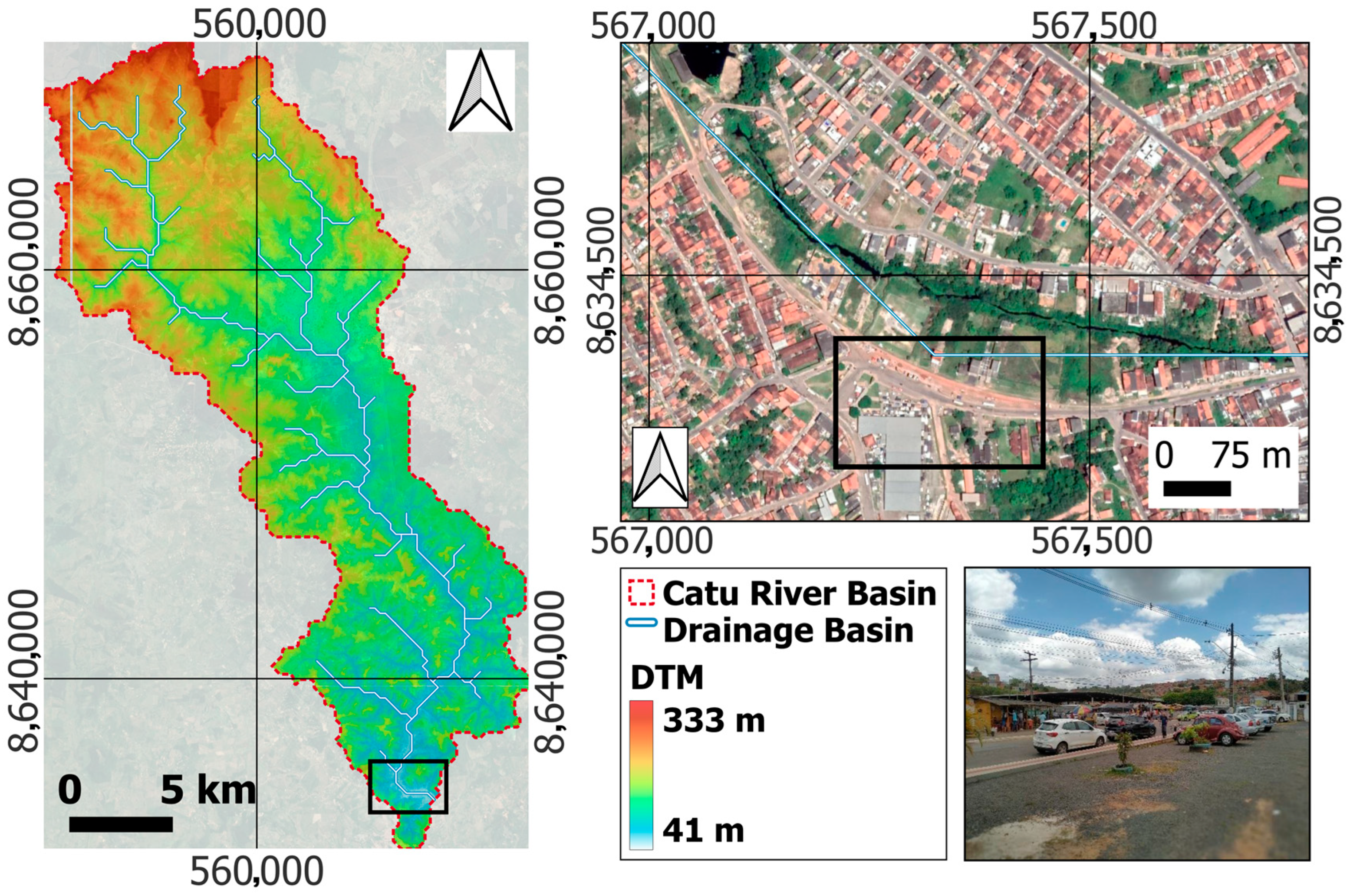
The territory of the current municipality of Catu was originally inhabited by the Pataxó and Tupiniquim peoples and was part of the Sesmarias of the Count of Ponte. The colonization of the area began in 1872, leading to its administrative division into three districts: Catu, São Miguel, and Sítio Novo [16]. Currently, Catu covers a territorial area of approximately 426.955 km2 and is located about 70.13 km from Salvador, the capital of Bahia state. Its population is estimated at 48,148 inhabitants, with a demographic density of 112.77 inhabitants/km2 (Figure 1), according to the latest demographic census.
Based on data from the Brazilian Institute of Geography and Statistics [16], the municipality’s professional profile reveals an average monthly salary of 2.4 minimum wages. However, only 22.64% of the population is part of the Economically Active Population (EAP). Another relevant indicator is that 47.9% of the population has a monthly income of up to half a minimum wage, which points to significant inequality and income concentration. In contrast, educational indicators show a remarkable advance. The schooling rate for the 6-to-14 age group was 93.7% in 2010. In the following years, the Basic Education Development Index (IDEB) reached 5.1 in the initial years (equivalent to 98.1%) and 3.9 in the final years, indicating a significant improvement in the education sector compared to the previous decade [16].
Based on data from the [16], the municipality’s Gross Domestic Product (GDP) is US $139,078,200 with a GDP per capita of US $2518.53 [16]. The Human Development Index (HDI) of 0.677 is considered low, and the municipality faces a high inequality index, reflected by a Gini value of 0.55. Income concentration is even more evident when observing that 13% of the population lives in extreme poverty, while 28% are classified as poor. Furthermore, 52% of Catu’s population is considered vulnerable to poverty [19], indicating a high socioeconomic vulnerability reflected in the dependence of part of the population on the open-air market for family sustenance.
The socioeconomic vulnerability of the municipality is exacerbated by the physical exposure of the economically active population (EAP) that depends on the municipal Supply Center. The street vendors, who represent a significant portion of the local EAP, are among the most affected by extreme rainfall events. This occurs because the area of the open-air market is located directly within the high-risk flood zone, becoming inundated during extreme events, as illustrated and detailed in Figure 2.
Catu’s territory is located within the Pojuca River hydrographic basin, cut by its main tributaries which are the Catu, Pitanga, Una, and Quiricó Pequeno rivers, in addition to the Pojuca River, which borders the municipality of São Sebastião do Passé [20]. The predominant vegetation in the municipality of Catu is a dense ombrophilous forest. Although high temperatures, with an average of 24.7 °C, and high precipitation are distributed throughout the year, the dry period can vary from 0 to 60 days [20,21].
The municipality’s climate is classified as humid to sub-humid and, according to the Köppen–Geiger classification [22], it corresponds to the Af type, with average temperatures above 18 °C. The average annual temperature in the studied region is 24.7 °C, with average annual rainfall varying between 1200 and 1800 mm [21]. The landscape of the region is composed of a dense ombrophilous forest, of the Atlantic Forest type. There are also transition areas to savanna formation, with varied canopy, and the presence of extensive eucalyptus silviculture matrices [21].
The pedological formation is predominated by Latossols and Argisols. Latossols are deep and well-drained but have low natural fertility due to intense leaching. Argisols, in turn, have leached superficial horizons and subsoils rich in clay, which makes them more susceptible to erosive processes [21]. Geologically, the area is characterized by a diversity of sedimentary rocks from the Recôncavo Basin and more recent sediments from the Barreiras Group, in addition to alluvial deposits and terraces [23].

2.2.2. Hydrological Characteristics of the Catu River Basin

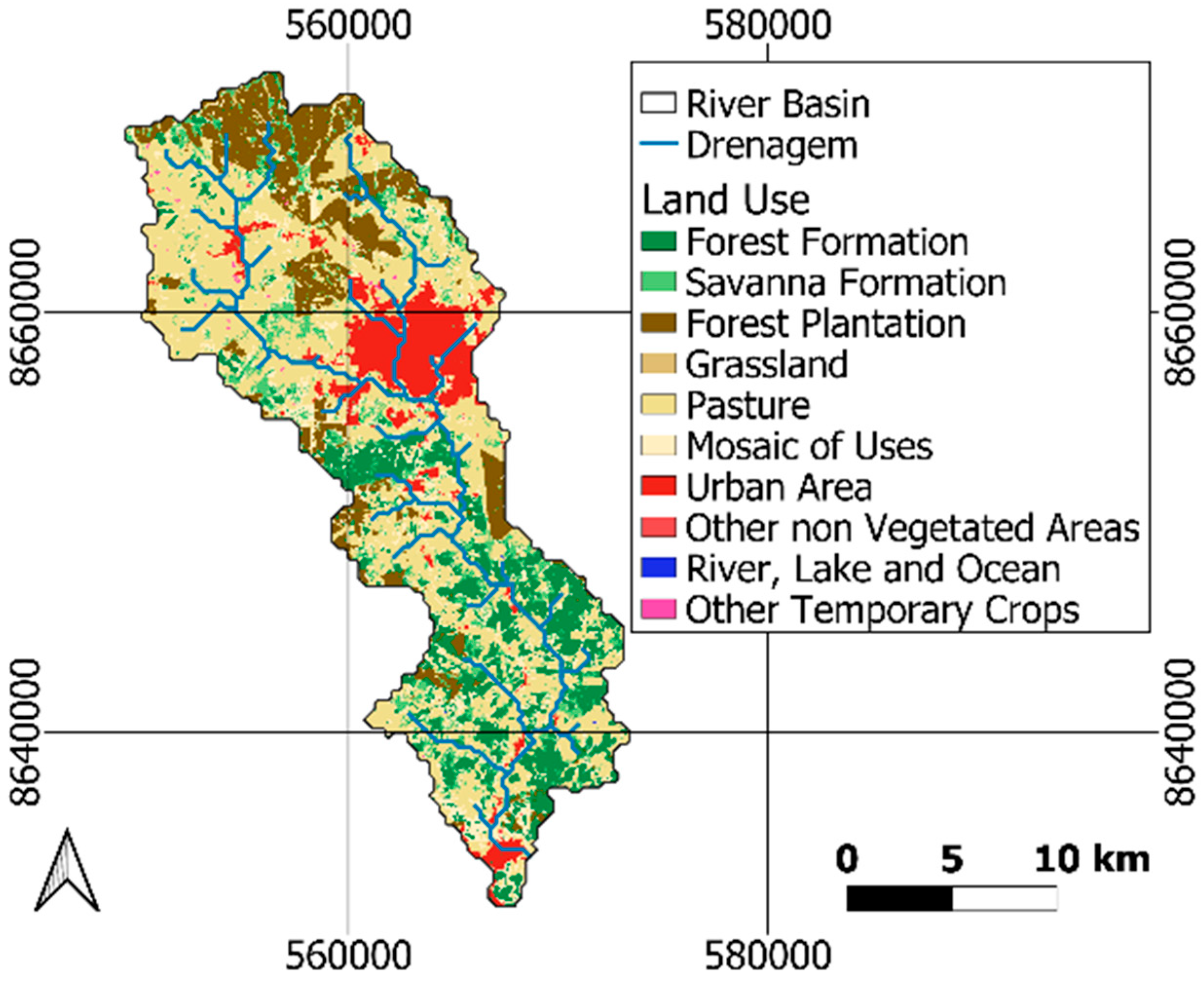
The analysis of land use and land cover in the study’s hydrographic basin (Figure 3), based on data from MapBiomas Collection 10, identified ten distinct classes (Table 1). The Pasture class is the most predominant, occupying 40% of the basin’s total area. Following this, Forest Formation and Forest Plantation stand out, with 15% and 13% of the area, respectively. The Grassland class corresponds to the smallest proportion, with only 0.007% of the territory. In addition to its vegetation cover, the basin is home to important urban centers, including the municipalities of Alagoinhas and Catu.
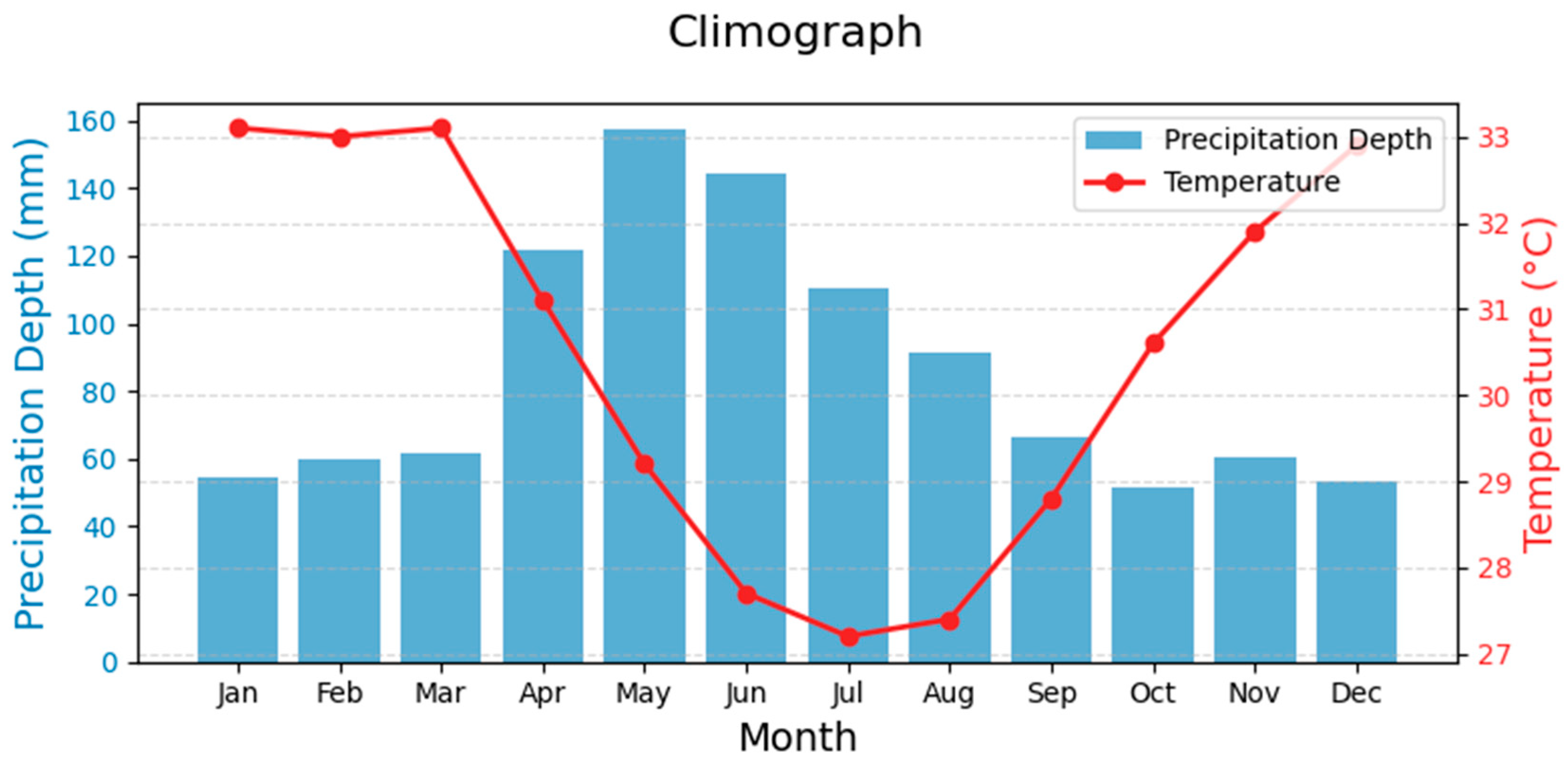
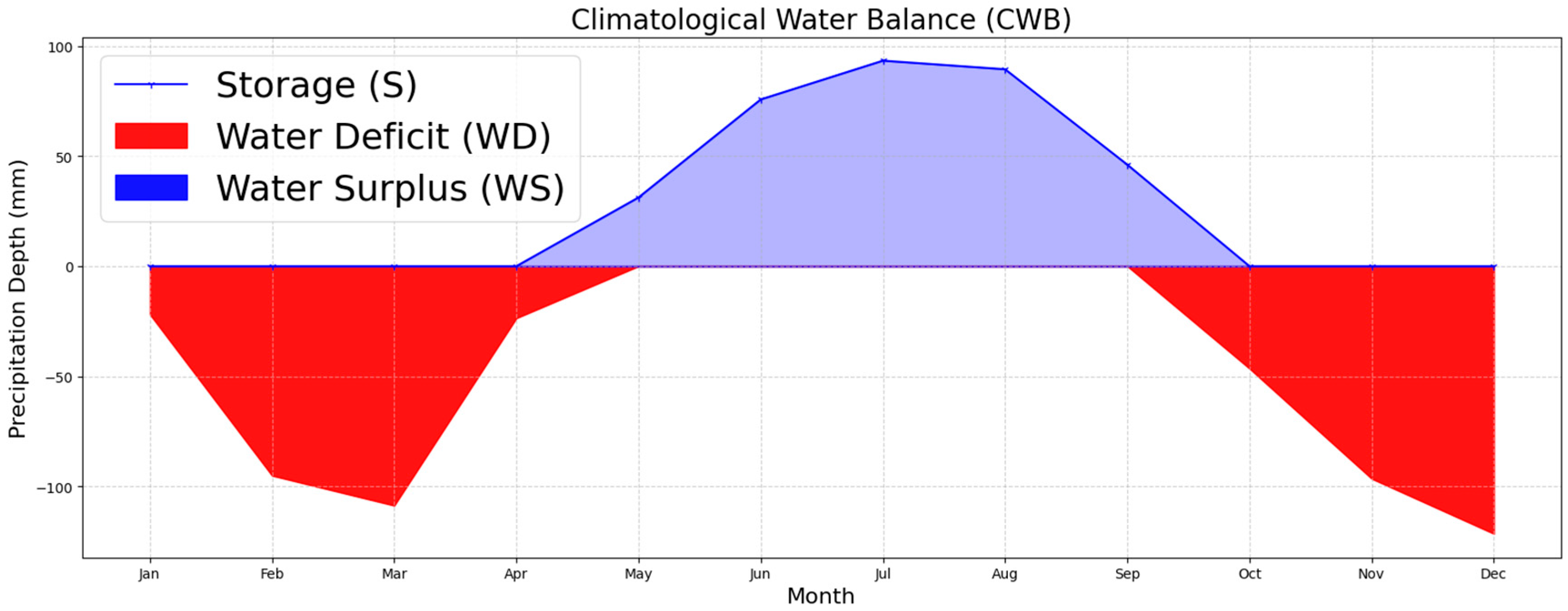
An analysis of its climatological normals points to a change in climate. Recent data (Figure 4), from the period 1991 to 2020, shows an average annual precipitation of 1032.4 mm/year, while actual evapotranspiration reaches 1646.2 mm/year, resulting in a significant water deficit. In stark contrast, the period from 1943 to 1983 showed an average precipitation of 1234.1 mm and an actual evapotranspiration of 1096.2 mm, generating a water surplus of approximately 137.9 mm/year [24]. This inversion in the water balance, from a state of surplus to one of deficit, indicates the need for a deeper investigation into the effects of these climatic changes in the region. The discrepancy between the two periods reinforces the area’s vulnerability and the need for more in-depth studies on its hydrological implications.
The Catu River, a perennial watercourse, flows into the Pojuca River and has a length of approximately 49 km, with a drainage area of about 440 km2 [25,26]. The basin stands out in a hydrogeological context for housing the São Sebastião Aquifer, an important underground water reserve. This reserve extends over a large part of the region and is protected by the Marizal Formation, which plays a crucial role in the conservation of this water source [27].
In terms of water balance, the basin shows a deficit trend during spring and summer, with water replenishment occurring starting in April (Figure 5). It is notable that this period coincides with the season of highest incidence of floods in the study area. Although flood events are often exacerbated by the anthropization of the region, local vulnerability shows that the phenomenon can occur at other times of the year.

2.2.3. Hyetograph Determination

The model that establishes the relationship between rainfall intensity, its duration, and the frequency of occurrence of rainfall events is called the Intensity–Duration–Frequency (IDF) curve [29]. The IDF curve graphically represents the probability of a given precipitation event occurring within a specific period. It is important to note that this relationship is expressed mathematically by an equation that connects intensity (I), duration (D), and the return period (T) for a given location.
According to the literature, the IDF equation is frequently characterized by a quotient of power functions, in which the numerator depends on the return period (T) and the denominator on the duration (D) [30,31,32]. For this investigation, the scarcity of long-term pluviometric data makes a meticulous adjustment of the equation’s parameters essential to ensure its suitability for the reality of the study area.
Therefore, we adopted the IDF equation proposed by [30,31,32,33], which can be written as follows:
I D F = K T r a t + b c
IDF represents the average maximum rainfall intensity in mm/h; Tr is the return period in years; t is the rainfall duration in minutes. K, a, b, and c are parameters adjusted based on the pluviometric data of each location.
The adjustment of the IDF equation parameters was performed using non-linear multiple regression, employing the Generalized Reduced Gradient (GRG) method, according to the methodology of [33]. The quality of the fit was evaluated based on the coefficient of determination (R2) and by analyzing the linear regression between the observed values and the estimated data, focusing on the angular coefficient of the regression line. This adjustment and evaluation process constitutes the calibration of the IDF model for the studied basin, which is crucial for ensuring the accuracy of the design hydrographs.
Thus, after the parameters were adjusted based on the location, as performed by [33], the parameters were K = 829.668, a = 0.1666, b = 12.856, and c = 0.777. The adjusted IDF equation for the studied basin was:
I D F = 829.668   T r 0.1660 t + 12.856 0.777
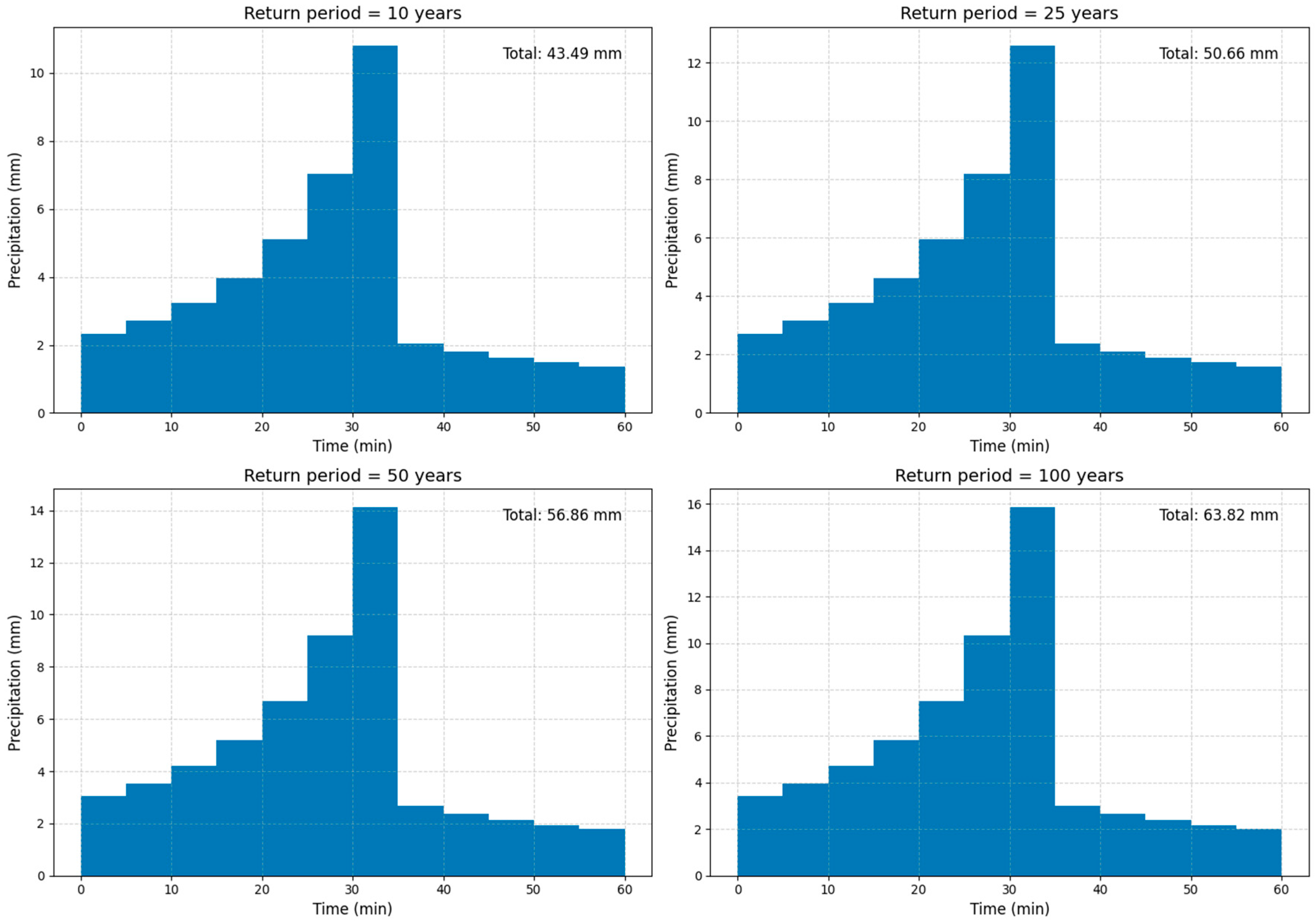
The temporal distribution of this precipitation was modeled using the Alternating Block Method, an approach recognized for its simplicity, robustness, and relevance in hydrology [34]. This method disaggregates rainfall totals into discrete intervals and rearranges them into a specific sequence: the block with the highest precipitation increment is positioned at the center of the event’s duration, and the other blocks are arranged alternately to the right and left in decreasing order, forming a symmetric hyetograph.
Thus, to obtain the results, the rainfall duration (t) was defined as 60 min, with 5 min intervals for each block. The rainfall intensity, expressed in millimeters per hour, was calculated based on the IDF curve, which allowed for the determination of the accumulated precipitation over the period.
In this study, the return periods of 10, 25, 50, and 100 years were selected. The adoption of these periods is not arbitrary; they represent a consolidated and widely accepted standard in hydrological literature and civil engineering.
The hyetograph’s result indicates the amount of rainfall in millimeters that can occur each minute, generating an accumulated water depth over the considered time. Thus, in Figure 6, we present the resulting hyetographs for the return periods adopted in this investigation.

2.2.4. Methods for Hydrograph Determination

Basin Characterization and Input Data
For the determination of the hydrograph, various data sources were used. Land use and land cover classification was based on MapBiomas Collection 7 [14], a collaborative network that provides geospatial data on Brazilian territory. As illustrated in Figure 3, the original classes were aggregated into five main categories for this study: forest, non-forest natural formation, agriculture, non-vegetated area, and water body. The basin’s soil characterization was performed based on the Embrapa classification, which places them in the Red-Yellow Argisol (PVA) category [36]. These soils, developed from crystalline rocks, have a clay accumulation horizon (Bt) with reddish to yellowish colors [36].
It is imperative to acknowledge the absence of observed streamflow data for the calibration and direct validation of the HEC-HMS hydrological model, a common limitation in studies of small urban basins in the Brazilian Northeast. Thus, the indirect validation of the model was established through two approaches: (1) The use of IDF curve parameters adjusted by non-linear regression, based on robust regional studies [35]; and (2) The rigorous parameterization of surface runoff by the CN-SCS Method, where the weighted Curve Number (CN) was precisely calculated from the overlay of land use mappings (MapBiomas) and soil type (Embrapa). This empirical and parameterized approach, although indirect, ensures that the basin’s hydrological response is consistent with its physical and climatological characteristics.

2.2.5. Hydrological Modeling and Calculation Methods

The hydrograph was constructed using HEC-HMS software [37], which is structured into three components: the Basin Model, the Meteorological Model, and the Control Specifications. After inserting the basin input data and meteorological information, methods were selected for calculating losses, rainfall-runoff transformation, baseflow composition, and stream routing, considering parameters such as sub-basin areas, time of concentration, and infiltration and evapotranspiration factors.
The direct surface runoff (Q) was calculated using the Curve Number–Soil Conservation Service (CN-SCS) Method. This empirical rainfall-runoff model estimates the potential for water storage in the soil based on a key parameter: the Curve Number (CN). The CN reflects land cover conditions, the soil’s physical and hydrological attributes, and antecedent moisture [38,39,40]. Given that the study basin has three sub-basins, the following parameters were calculated individually for each one (Table 2): total area, main river length, highest and lowest elevation points, slope, time of concentration, and lag time.
To calculate the Curve Number (CN), a value was assigned to each of the following land use and land cover classes: water, urbanization, agriculture, dense vegetation, and low-lying vegetation, using values from [41]. This step is fundamental for the flood inundation simulation, as the CN is a key parameter that reflects the soil’s infiltration capacity and, therefore, its propensity to generate surface runoff [38,40,41]. The CN values used for each class are detailed in Table 3 according to [41,42].
To generate the hydrograph, the time of concentration (Tc) was a fundamental parameter, as it indicates the moment of peak flow and the hydrograph’s shape [43,44]. This parameter is defined as the time required for the entire hydrographic basin area to contribute to surface runoff at the outlet section [43,44].
Considering the characteristics of the study basin, with an area of less than 3000 km2, the methodology proposed by [45] was adopted, using the following equation to calculate the time of concentration:
t c = 0.3 L 0.76 I 0.25
where tc is the time of concentration in hours (h), L corresponds to the length of the main thalweg (km), and I represents the average slope (km/m).
Based on the calculated value, it was possible to quantify the volume of surface runoff, which is a fundamental factor for the formation of the flood inundation area, a subsequent step in this investigation. This step establishes the basis of the hydrological model, allowing for an understanding of the runoff processes and, consequently, the flood simulation. From there, the hydrographs were used for a more precise and detailed analysis of the flood scenarios in the study area.

2.2.6. Hydraulic Modeling for Flood Inundation Simulation

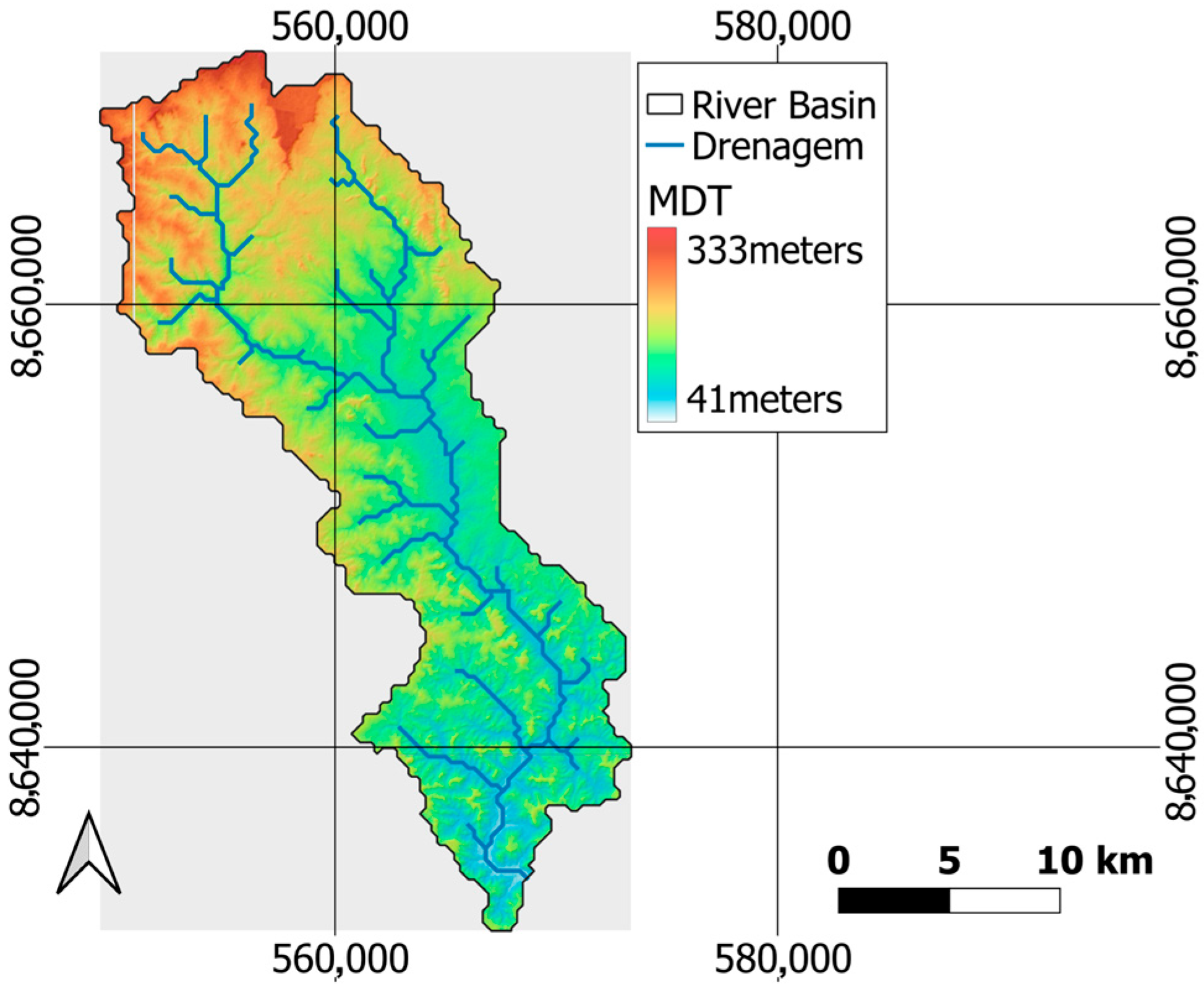
Obtaining the flood inundation area required a series of hydraulic modeling steps. Initially, the geometry of the study basin was defined using a Digital Terrain Model (DTM) with a 12.5 m resolution (Figure 7), which accurately represents the relief and watercourses of the region. To calculate the flow resistance across different surfaces, Manning’s roughness coefficients were used, which were pre-defined based on land use data [14].
The simulation of a flood wave, resulting from an extreme precipitation event, was conducted using HEC-RAS software. Since initial attempts with the one-dimensional (1D) model showed limitations, a two-dimensional (2D) model was chosen to achieve greater accuracy in the cross-sections. Boundary conditions, such as flood elevations, were considered to determine the maximum extent of the affected area. The model was processed on a 12.5 m grid, with the computational dimension being the main limiting factor for adopting an even higher resolution.
The previously generated hyetographs and hydrographs were the main input data for the water flow simulation, allowing for the determination of the flood inundation extent. The resulting flood inundation areas were then exported to QGIS software, where thematic maps were created to detail the areas affected by the flood event.

2.3. Quantification of Economic Losses

Risks from floods represent significant threats due to their destructive impacts, especially on residences [46], commercial buildings, and open-air markets. Economic loss estimates can be made by assessing impacted sectors such as housing, industry, and agriculture [46]. While it is common to use flood wave depth to estimate losses from these events, it is also possible to estimate economic losses by determining the flood duration [46]. Here, we used the concept of days of interruption.
The quantification of economic losses caused by floods in the municipality of Catu was carried out using a simplified approach, based on the estimation of Damage per Days of Interruption (DDI). This methodology assesses the financial impact on the local economy by measuring losses resulting from the interruption of commercial activities and the cessation of labor. Based on the flood duration in each area, the damages were calculated using the models of [47,48] according to the following equation:
D D P = L M I N D P O P · D I
where DDP represents the damage relative to the days of interruption in the affected areas (in USD); LMI is the average weekly profit per individual (USD/week) obtained from the local street vendors association; ND corresponds to the number of days in the week; POP is the number of people affected by the flood; DI indicates the duration of the flood (in days).

3. Results and Discussion

3.1. Flood Peaks

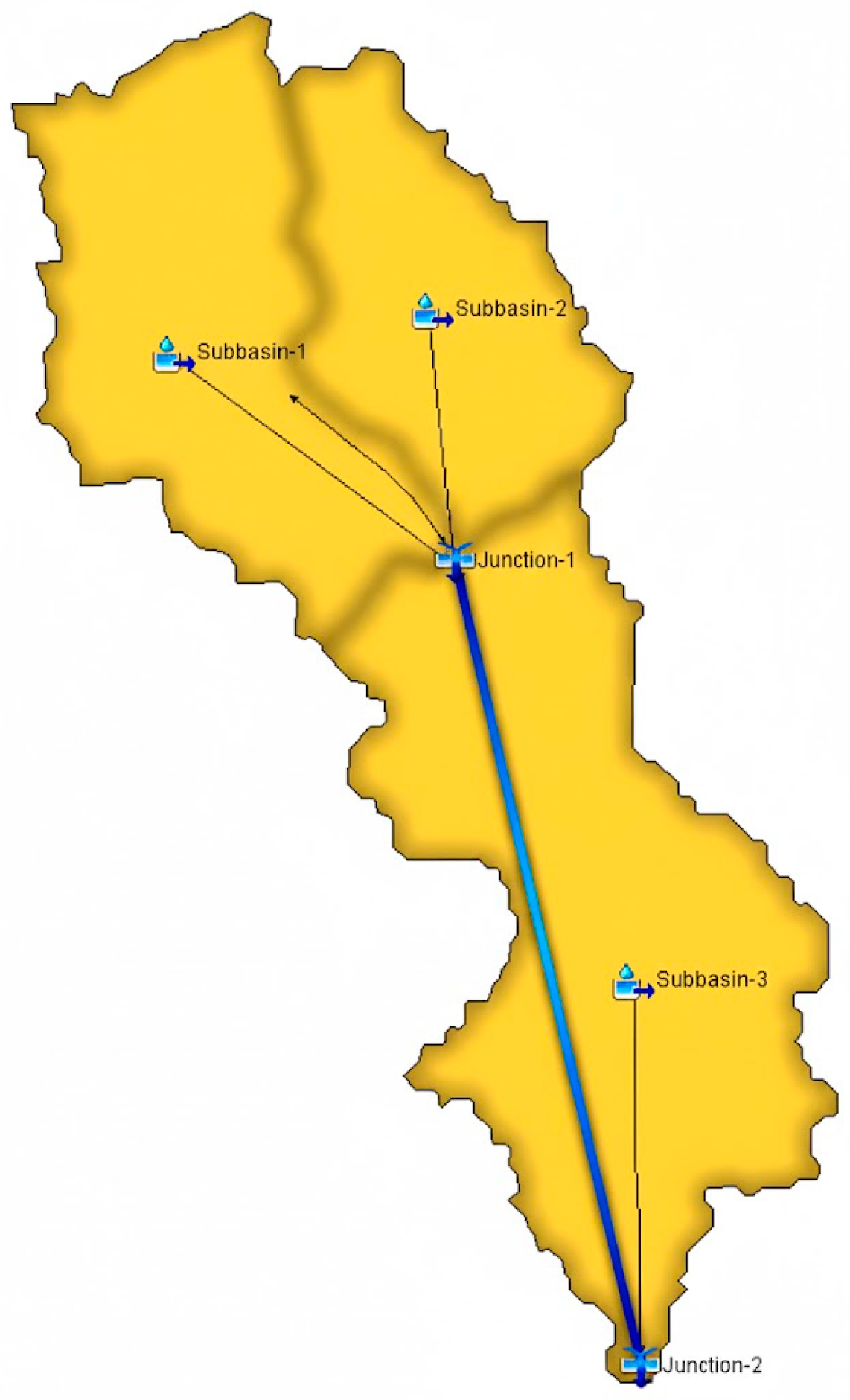
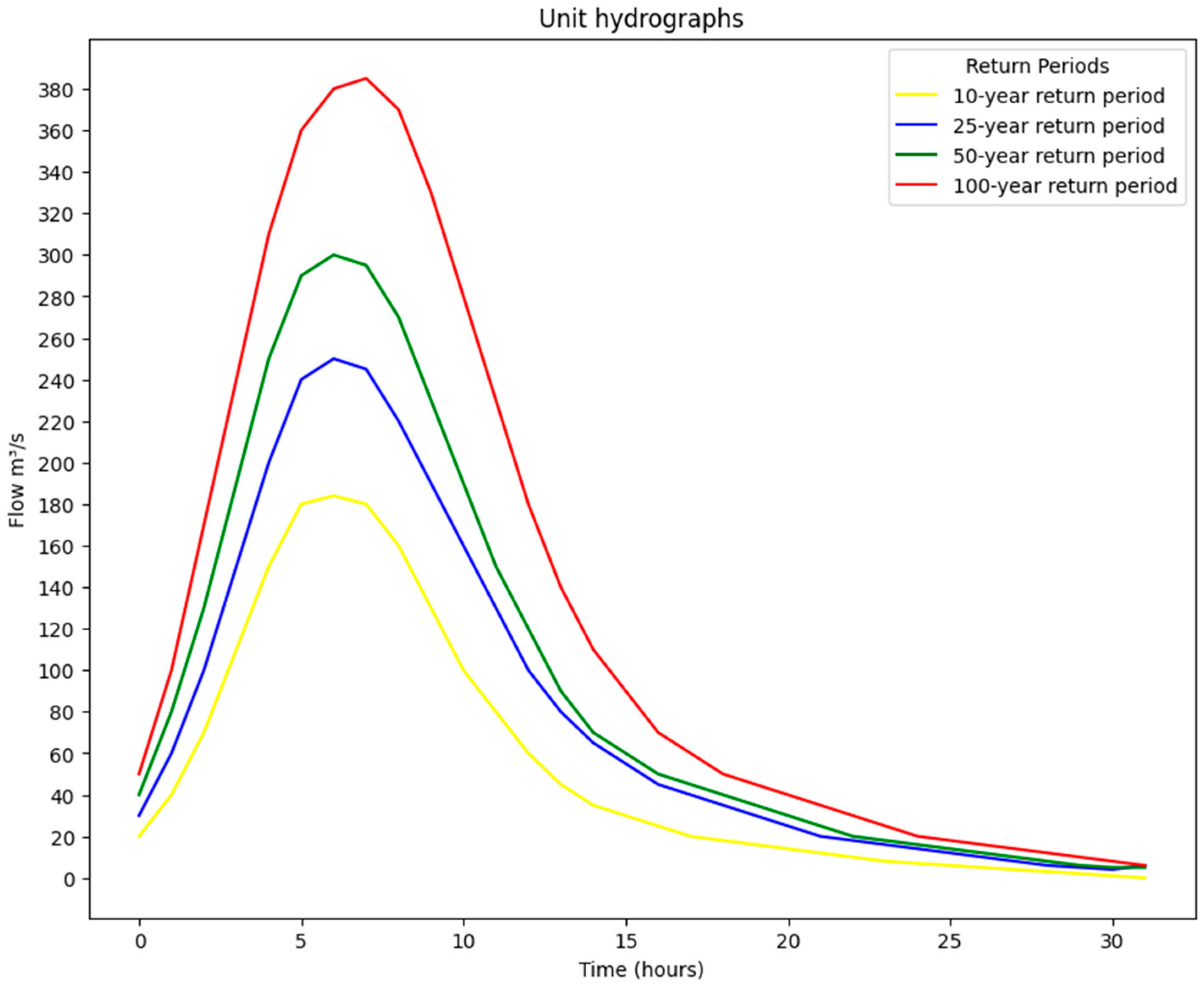
The hydrograph was modeled by combining the flows from the three sub-basins, generating a continuous flow curve, as illustrated in Figure 8. The flow at Junction 1 is a critical factor for triggering floods in the study area, as this point centralizes the reception of all water volume originating from the sub-basins. We emphasize that this is precisely the region where Catu’s commercial center is located.
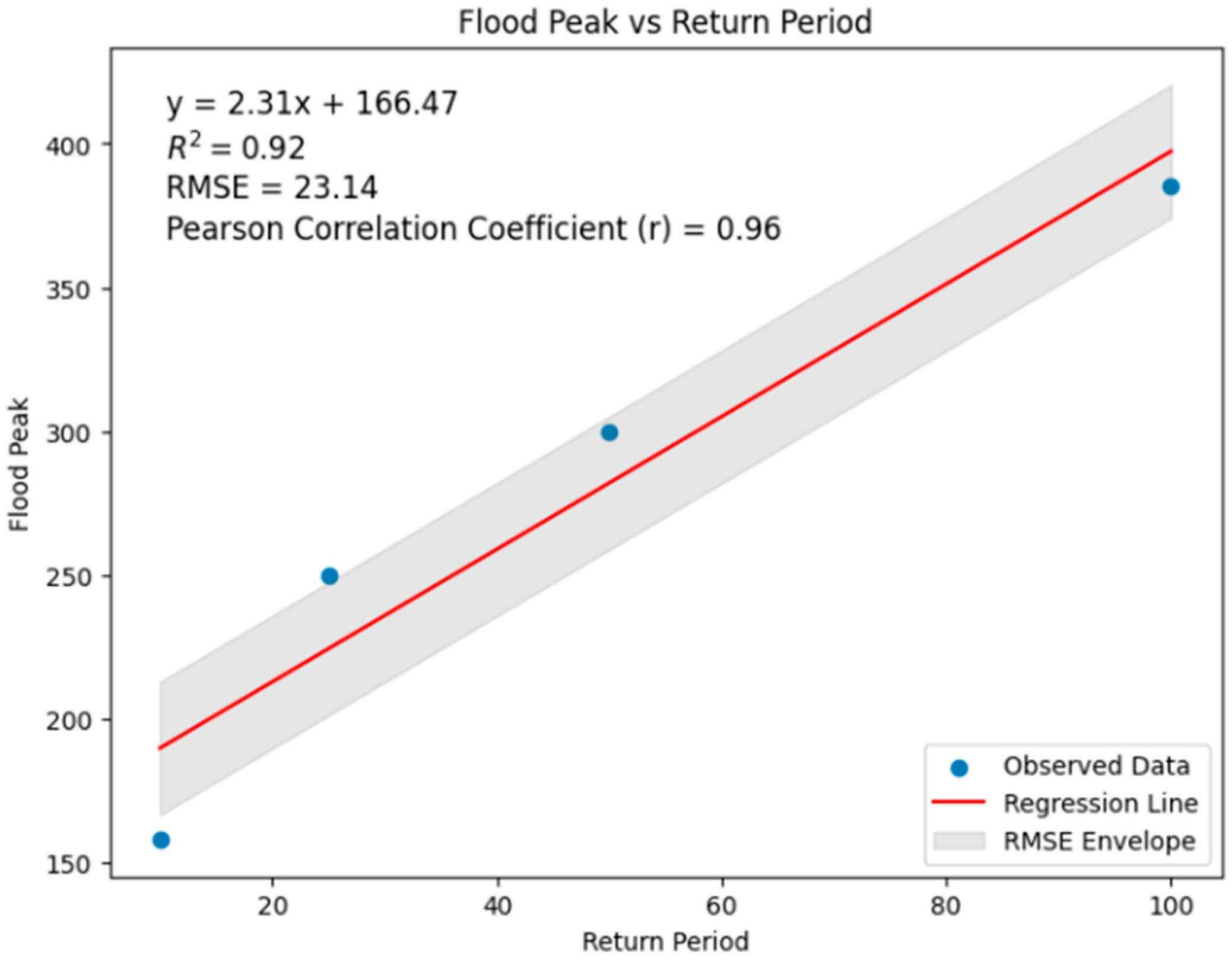
Table 4 presents the flood peaks in the urban area, specifically at the junction point, for different return periods. It is observed that the flood peak increases almost linearly as the return periods increase. This is corroborated by a correlation coefficient of 0.96 between the data, indicating a strong linear relationship.
The data presented in Table 4 reflect the discrete values obtained for the different return periods; however, the linear relationship between frequency and economic impact is formally demonstrated by the linear regression that correlates the return periods with the flood peaks through the statistical model y = 2.31x + 166.47, where x corresponds to the return periods. As illustrated in Figure 9, the linear fit achieved a Coefficient of Determination (R2) of 0.92, a low RMSE, and a Pearson’s Coefficient close to 1, which sustains the hypothesis of a linear relationship for this study.
Based on these results, we developed a statistical model to predict flood peaks as a function of the return period, as shown in Figure 9. With an accuracy of 92%, the model indicates a clear growth trend in flood peaks as the return period increases. This suggests that the flood peak for millennial flood events could be extremely devastating. Furthermore, the effects of climate change could make them more intense, frequent, prolonged, and temporally sensitive [49,50,51].
The RMSE (Root Mean Squared Error), as it is known, measures the average magnitude of a model’s errors in its predictions, demonstrating how far the model’s predictions are from the observed values [52]. The RMSE of 23.14 that we found can be considered high for short return periods; however, for larger return periods, this value becomes relatively small.
However, the main function of determining flood peaks here was the construction of unit hydrographs. The hydrograph’s concept is based on the perspective that the hydrographic basin behaves in a linear manner, thus representing the direct runoff response at its outlet resulting from a given volume of uniform rainfall over the entire system at a constant rate [53,54]. A hydrograph was built for each segment, and then a junction was performed to generate the overall hydrograph for the studied region. Thus, four hydrographs were created for each return period (Figure 10).
The generated hydrographs allowed for the delineation of the flood inundation area in the study area. This data is essential for characterizing the region’s flow, considering the specific return periods. Notably, the 100-year return period presented the highest pluviometric index, which correlates with high-intensity rainfall and a high risk of flood events.
A comparative analysis of the hydrographs demonstrated a progressive increase in flow rates (m3/s) in consonance with the increase in return periods. This understanding of the behavior and intensification of flow rates in the face of larger magnitude events is indispensable for flood risk assessment and for proposing mitigation measures, such as the redesign of drainage infrastructures and the implementation of containment barriers.
Therefore, hydrograph modeling and flow analysis represent critical tools for deepening the understanding of hydrological processes, playing a central role in hydraulic engineering and sustainable water resource management.

3.2. Flood Inundation Map

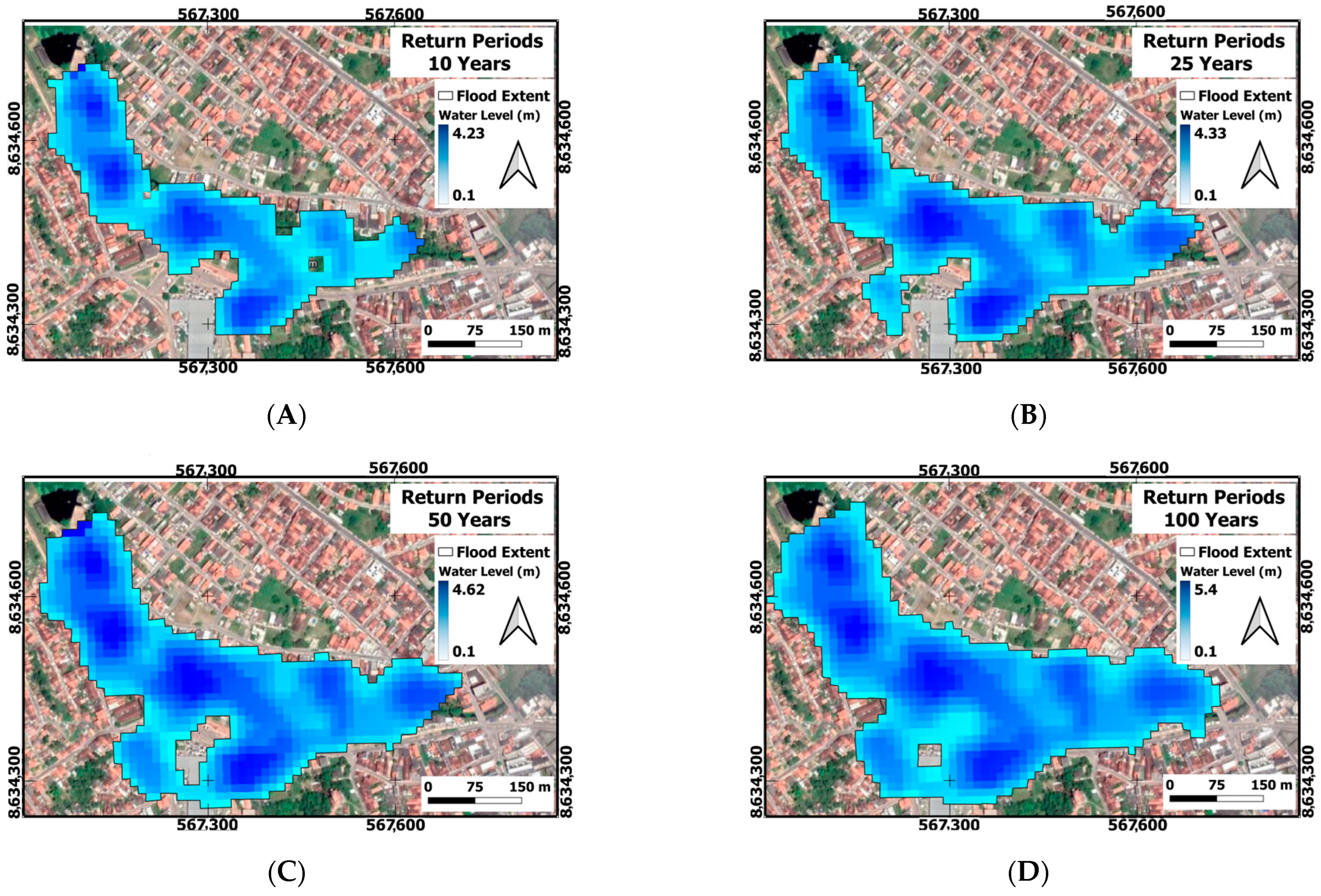
Based on the hydrograph data, flood inundation maps were generated, which delineate the affected areas in the case of extreme events. These flood inundation areas were modeled using software that simulates the hydrodynamic behavior of water [55]. Four distinct maps were generated, each corresponding to one of the four studied return periods (Figure 11).
The results for the 10- and 25-year return period scenarios indicate a progression in the flood inundation areas (Figure 11). While a 10-year return period scenario returned an area of approximately 89,000 m2 and a maximum depth of 4.23 m, the 25-year scenario shows an expansion of the area to about 119,000 m2, with the maximum depth rising to 4.33 m. This represents an increase of approximately 133% in area. However, the variation in water depth is 102.3%, as can be observed in Table 5.
The analysis of the 50- and 100-year return period scenarios reveals that the magnitude of the flood intensifies significantly, varying both horizontally (in area) and vertically (in depth). As detailed in Table 5, a 50-year return period results in an inundated area of 140,000 m2 and a maximum depth of 4.62 m. For a 100-year event, the area expands to 157,000 m2, with the water depth reaching 5.40 m. The results demonstrate that the flood inundation area expands significantly with the increase in the return period. The 50-year scenario, for example, represents a 57.3% increase in the inundated area compared to the 10-year scenario. This trend continues, with the 100-year scenario showing an increase of 76.4% relative to the 10-year scenario and 12.1% relative to the 50-year scenario.
The runoff volume showed a positive and consistent increase with the rise in the return period. The volume of the 25-year event was about 2% higher than that of the 10-year event. For the 50-year return period, the volume expanded by approximately 9% relative to the 10-year event and by 6% relative to the 25-year event. Finally, for the 100-year return period, the volume was 27% greater than that of the 10-year event, representing an increase of 16% relative to the volume of the 50-year event.
Similar results were obtained from the application of hydrological modeling, which was coupled with the ACCESS-CM2 and EC-ARTH3 climate change projection models, considering the Shared Socioeconomic Pathway (SSP) scenarios SSP2-4.5 and SSP5-8.5. The study focused on the height and dimension of the inundation footprint in the Bagmati River basin, Nepal, employing the HEC-RAS software. The main conclusion is a significant increase in areas vulnerable to flooding in the short and medium term [56]. Although they did not utilize the return period as a methodology, they identified problems like our findings.
It is clear that an increase in the return period leads to a progressively larger volume of water, which, in turn, requires a more prolonged runoff time [57]. This longer duration of water in the area is not only an indicator of greater flood severity but also implies a more lasting interruption of commercial and economic activities.
In short, modeling the different return periods allowed us to characterize the evolution of the flood inundation area and its growing scope. The information generated is fundamental for a detailed assessment of hydrological risks in the study region, serving as an indispensable tool for urban planning and for decision-making related to the prevention and mitigation of floods.

3.3. Economic Loss Model

Before constructing the economic loss model, it was necessary to verify the consistency of the inundated area and water level models as a function of return periods. The models’ consistency was tested using RMSE and R2.
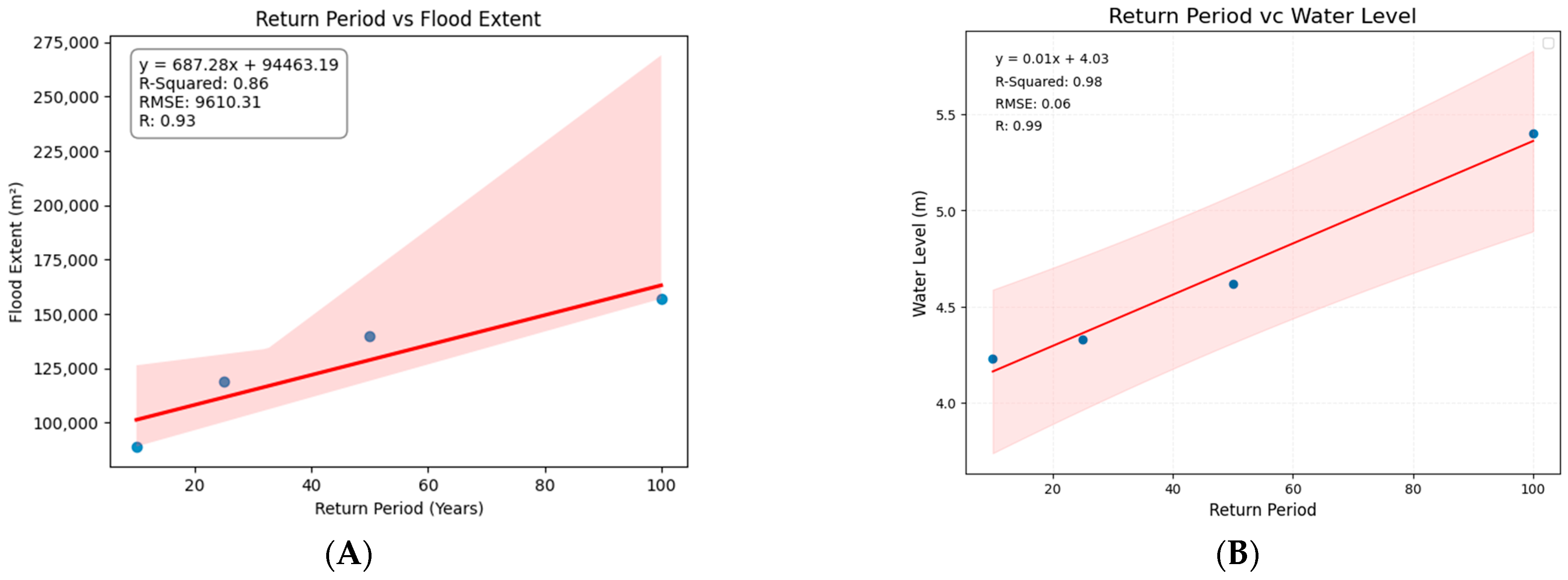
Linear regression analyses were performed to model the relationship between the inundated area and return periods (Figure 12), with the goal of generating equations to estimate and quantify the impacts of floods in different scenarios. The regression model’s consistency is corroborated by a coefficient of determination (R2) of 0.86. The model’s accuracy was evaluated using the Root Mean Squared Error (RMSE), a metric that compares estimated values with observed ones [52,58]. The RMSE found was 9610, a value that can be considered high for smaller return periods. However, for more severe flood events, this value is not considered high, which confirms the model’s consistency in estimating impacts in more critical scenarios.
The model that correlates water level as a function of return periods (Figure 12) showed an even more robust performance. The model obtained a coefficient of determination (R2) of 0.98 and an RMSE of only 0.06, which indicates high accuracy in estimating water levels. This model consistency is crucial because it allows for a reliable prediction of the flood inundation area’s persistence. The ability to predict the duration of submersion directly implies difficulties for the street vendors to return to work, accentuating losses for the local population and, consequently, impacting municipal revenue.
The high adherence of the data to the regression line, demonstrated by a Coefficient of Determination (R2) of 0.98 for the water level model and the low error magnitude of the RMSE (Root Mean Square Error) at only 0.99, ratifies the choice of the linear function as the most adequate to represent the relationship between the variables. This consistency thus supports the predictive capability and statistical validity of the models. Figure 12A,B, which illustrate the linear regression of the loss model, also demonstrate the precision of the fit. The pink shaded area around the regression line represents the Confidence Interval (CI) of the model, at 86% for Figure 12A and 98% for Figure 12B. This interval demonstrates the degree of uncertainty or the range within which the true mean of the dependent variable (Economic Loss) is expected to lie for each value of the independent variable (Return Period), confirming the precision of the fit.
The Catu open-air market is a vital socioeconomic component for the survival of its community, especially in this small town. Approximately 200 street vendors depend on the income generated from selling their products. The average weekly income per vendor is about $50.00 USD, resulting in a total weekly economic turnover of approximately $10,000.00 USD. The market’s importance is reinforced by its connection to the local agricultural sector, which is mainly based on small-scale producers. The Federal Institute of Bahia in Catu, for example, offers technical courses in agriculture, promoting innovation in family farming and strengthening the market’s supplier base. Most of the vendors live in rural or peri-urban areas where they cultivate products like vegetables, fruits, and flour, solidifying the market’s role in the family farming production chain.
The market operates from Monday to Saturday, with peak sales occurring on Fridays and Saturdays. The individual income of each vendor is modest, so any interruption in sales causes a significant impact on their lives, potentially jeopardizing their families’ food security and overall subsistence. Therefore, floods, which affect part of the market during heavy rains, have become a risk factor, interrupting sales and resulting in direct economic losses for the community. In other words, a socioeconomic loss implies that one risk factor can trigger others, or multiple risks, as proposed by [59,60,61].
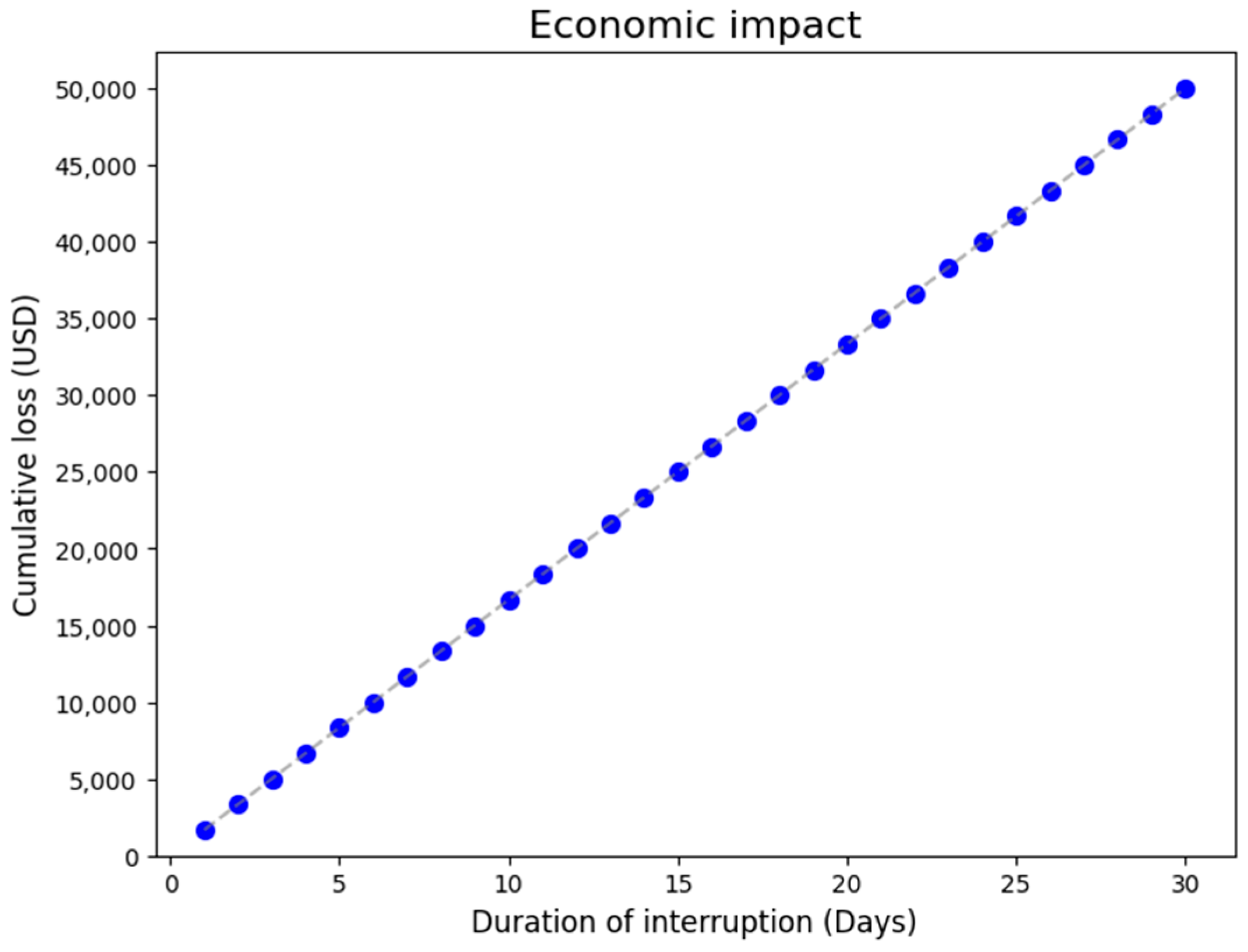
Based on current data on the number of street vendors and their average weekly profit, the estimated total economic loss over a 30-day interruption (DDI) of the market due to floods could reach $50,000.00 USD. This value, illustrated in Figure 13, quantifies the severe financial impact of flood events on the local economy.
With a per capita GDP of $2200.75 USD [62], Catu’s population that depends on the open-air market, composed of about 200 street vendors, represents an economically active fraction of 16.9% of the municipality’s employed population. The income generated by this group contributes significantly to the local economy, highlighting the market’s social and economic relevance.
Based on the analysis of the inundated areas corresponding to the 10-, 25-, 50-, and 100-year return periods, floods at the market were classified into four damage levels: small, for the 10-year return period with a duration of four days of interruption; medium, for the 25-year period with seven days; large, for the 50-year period with ten days; and finally, extreme, for the 100-year period with twenty days of interruption, as per Table 6. We highlight that for each of these categories, a hypothetical number of days of interruption (DDI) was established for the calculation of economic loss. The quantification of the days of interruption was based on the expertise of the researchers, who performed detailed empirical observations in situ. The precision of this data was then validated through a complementary analysis of reports from local news websites and newspapers, ensuring reliability.
The correlation between the Return Period and the Interruption Days (Table 6) was established through a synthetic approach, aligning with Depth-Damage Function methodologies, as can be found in [63]. Considering the vulnerability of the market infrastructure and the complexity of cleaning and repair associated with higher magnitude floods, the downtime was conservatively scaled. Floods with greater depth (associated with 50- and 100-year return periods) result in more severe damage to equipment and structures, requiring longer periods of inactivity for reconstruction, a pattern consistent with business interruption models in urban areas, as can be found in [64].
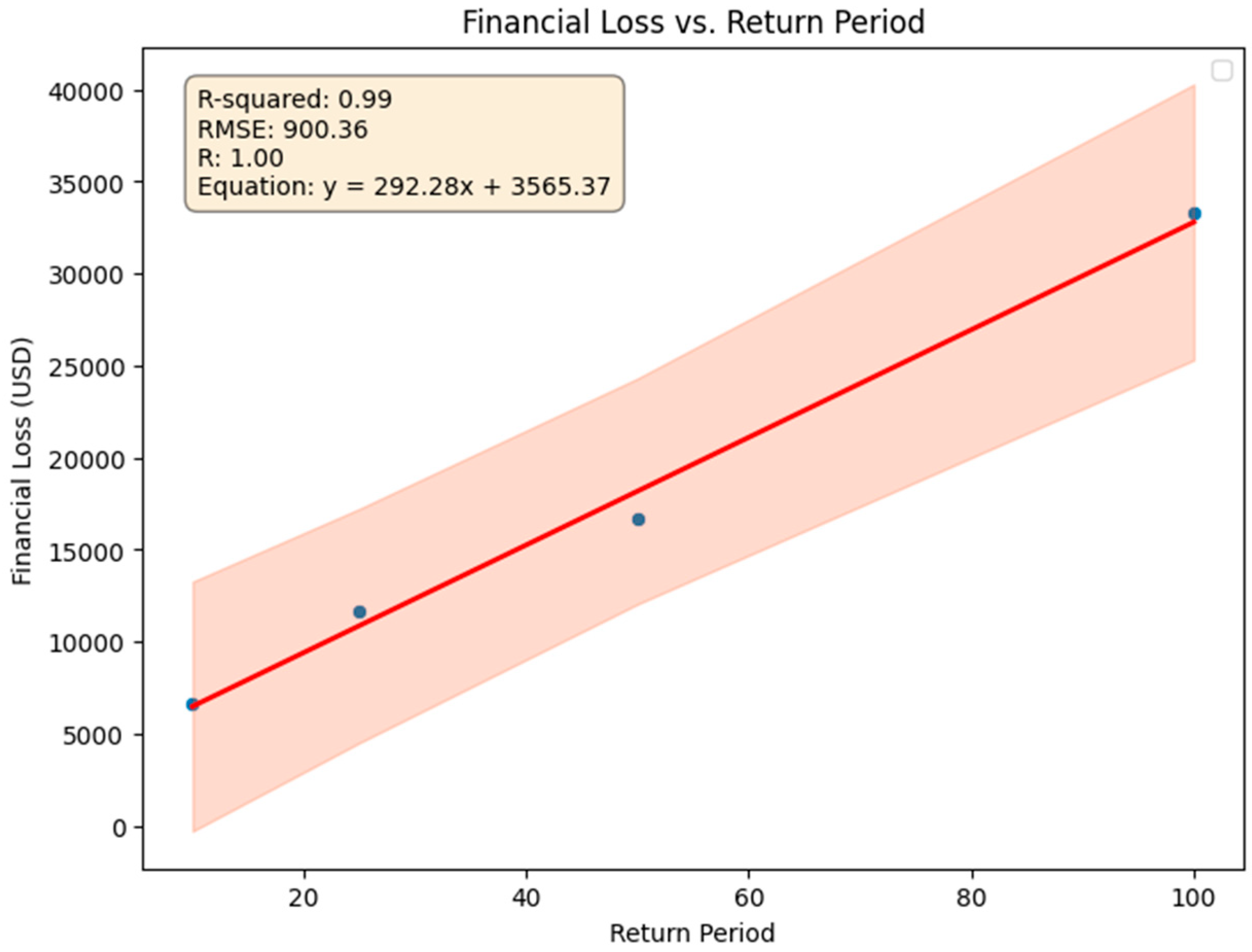
We adjusted the data on days of interruption to create the economic loss model as a function of return periods (Figure 14). This adjustment resulted in a correlation of 0.99 between the return period and economic losses, demonstrating a strong correlation between the variables. Therefore, we propose the mathematical model adjusted to the linear regression line.
The model’s consistency was confirmed through performance metrics. The coefficient of determination (R2) of 0.98 indicates that the model explains 98% of the data’s variability, which is considered excellent performance. The Root Mean Squared Error (RMSE), which measures the differences between a model’s predicted values and the actual observed values [65], had a value of approximately 1568. Although this value is relatively high for short return periods, it demonstrates the model’s consistency in predicting the magnitude of more extreme events, where the values are more significant.
Considering the proposed model, for a flood scenario with a 75-year return period, the model predicts that the market would be affected by a flooded area of 146,000 m2, with a maximum water depth of 5.03 m. The estimated financial losses for this situation would be $127.40 USD per street vendor, totaling a loss of $25,486.40 USD for all the vendors.
Based on the adopted models, the estimate for a millennial flood is that the inundated area would reach approximately 781,743 m2, with the water level potentially rising up to 14 m. For this scenario, the total financial loss is estimated at $307,742.11 USD, which represents a loss of about $1538.71 USD per street vendor. Knowing that Catu’s GDP is $139,078,200 USD according to [17], this amount represents only 0.22% of that total.
Considering an average weekly income of $50.00 USD per street vendor, recovering the $1538.71 USD loss (from the millennial flood) would require a period of approximately 31 weeks of work. This calculation demonstrates the prolonged financial impact of an extreme flood event on the local population’s subsistence.
It is fundamental to recognize that the economic loss quantification based on the simplified Loss per Days Interrupted (LDI) model represents the lower bound of the total flood damages in Catu. This methodology primarily focuses on the interruption of economic activity and the loss of income for the most vulnerable Economically Active Population (EAP) (street vendors and small merchants), which is the central focus of this study.
However, by simplifying the analysis, our model excludes significant costs that, in a comprehensive economic survey, would increase the total reported damage. Such non-quantified costs include: direct physical damages to buildings and merchandise, post-disaster cleanup costs, damage to urban infrastructure (streets, drainage), and intangible costs (such as impacts on the population’s mental health and interruption of public services). The inclusion of such variables would require detailed damage curves, which are not available for this regional context, reinforcing the need for future studies to deepen cost–benefit analyses for flood mitigation.
The quantification of economic losses in Catu’s informal sector, although using a simplified model, is consistent with the urgency of focusing on subsistence impacts in contexts of structural economic vulnerability [66,67]. Studies conducted in other urban areas of Brazil [67] and in developing countries [2] frequently indicate that income losses for the informal EAP and the cost of interrupting subsistence activities are significantly more disruptive than infrastructure replacement costs, especially in municipalities with a low Human Development Index (HDI). Our finding that the interruption of the open-air market can cause annual losses on the order of US $1366.67 for a 100-year return period underscores the necessity for mitigation policies that prioritize socioeconomic resilience over merely the protection of material assets. Furthermore, the integration of 2D hydrological modeling with economic loss analysis reflects an international trend [2], moving away from purely hydrological risk assessments. By providing a monetary result directly linked to social vulnerability, this work offers municipal managers a tangible metric to justify investments in adaptation and risk management in a format that is scarce in the literature concerning small and medium-sized Brazilian cities.

3.4. Climate Change, Return Periods, and Uncertainties

Climate change, driven by human activities and, in particular, by CO2 emissions, has caused a continuous increase in global temperature. Between 2011 and 2020, this warming reached 1.1 °C above the levels of the 1850–1900 period. Furthermore, the continuous release of greenhouse gases will inexorably intensify the planet’s warming [68], making climate change one of the most critical global problems today [69].
In this context, most environmental disasters have been of hydrometeorological origin [69,70]. Global floods alone are responsible for 60% of casualties and 30% of socioeconomic losses caused by natural disasters [69,71]. The influences of climate change are manifested in the increasing frequency of extreme events [69,72], a direct consequence of the intensification of the hydrological cycle, which results in droughts or extreme rainfall [4,73].
The spatial distribution of extreme rainfall varies according to regional geographic diversities. In humid areas, for example, the expansion of atmospheric water vapor convergence exacerbates extreme pluviometric impacts [4]. In contrast, in arid regions, the increase in precipitation can be offset by higher evaporation rates [1,4]. The relationship between extreme rainfall trends and flood flow may not be proportional, as other flood-generating mechanisms—such as soil moisture, the rate of soil imperviousness [4,5], land cover, changes in river channels, and evapotranspiration—interact in a complex manner, altering the hydrological system’s response to precipitation [4,9].
Anthropogenic changes, such as the emission of greenhouse gases and changes in land use and land cover, have significantly modified the dynamics of urban floods, generating uncertainties regarding the stability of return periods. A study conducted by [9], using data from the 1970s onwards, demonstrated these changes globally. To do this, the researchers calculated the magnitude of flood flows for 20-, 50-, and 100-year return periods, employing non-stationary models. They then quantified the changes in the return periods, revealing the extent to which stationary models underestimate these occurrences. The grouping of study locations was performed based on the five climatic regions proposed by Köppen–Geiger, as adjusted by [22].
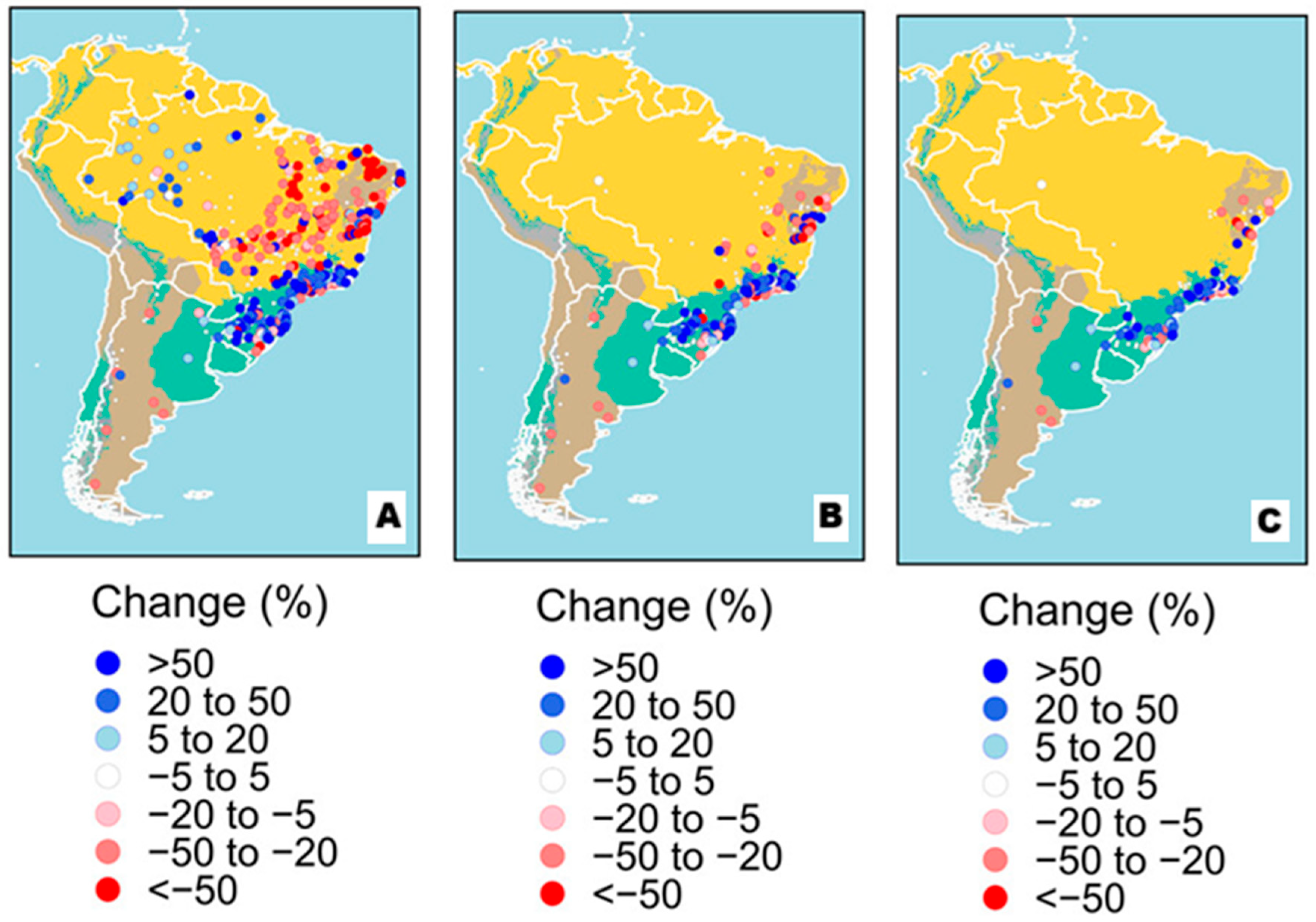
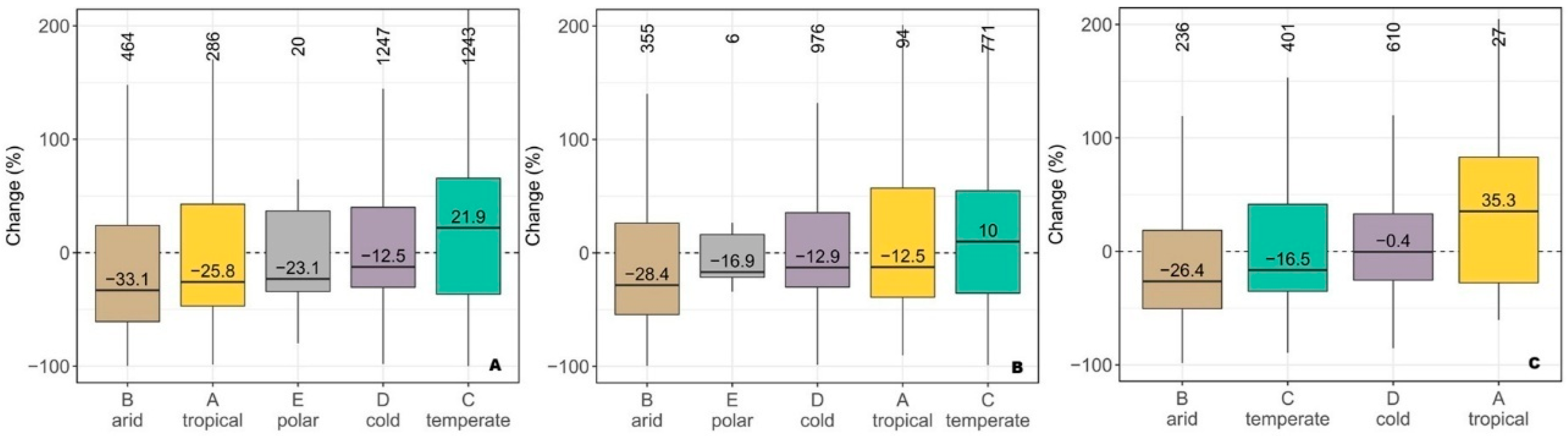
Using a non-stationary model, researchers discovered that the magnitude of floods in tropical regions shows a decreasing trend, with a median of −25.8%. This decrease is particularly noticeable in the Brazilian Northeast [9]. However, for the specific region of our study, data from the same model (Figure 15) indicate a positive change trend, with an increase in flood magnitude of between 20% and 50% for the 20- and 50-year return periods [9]. For a 100-year return period, the change is even more significant, exceeding 50% [9].
Figure 16 demonstrates a precise evaluation of changes in flood magnitude in tropical regions. For a 20-year return period, the magnitude shows a decreasing trend of −25.8%. For 50 years, this reduction is less pronounced, reaching −12.5%. However, for the 100-year return period, the trend reverses, with a significant increase of +35.3%. This data indicates that the effects of anthropogenic actions tend to increase the magnitude of extreme events, resulting in a reduction in the 100-year return period; in other words, the probability of extreme floods is becoming more frequent.
A possible explanation for the reduction in flood magnitude for return periods between 20 and 50 years would be the decrease in soil moisture, where drier antecedent conditions can offset the impact of extreme precipitation [9,74,75]. However, studies such as [5] demonstrate a growth trend in extreme events due to climate change, especially in the northern coast region of Bahia.
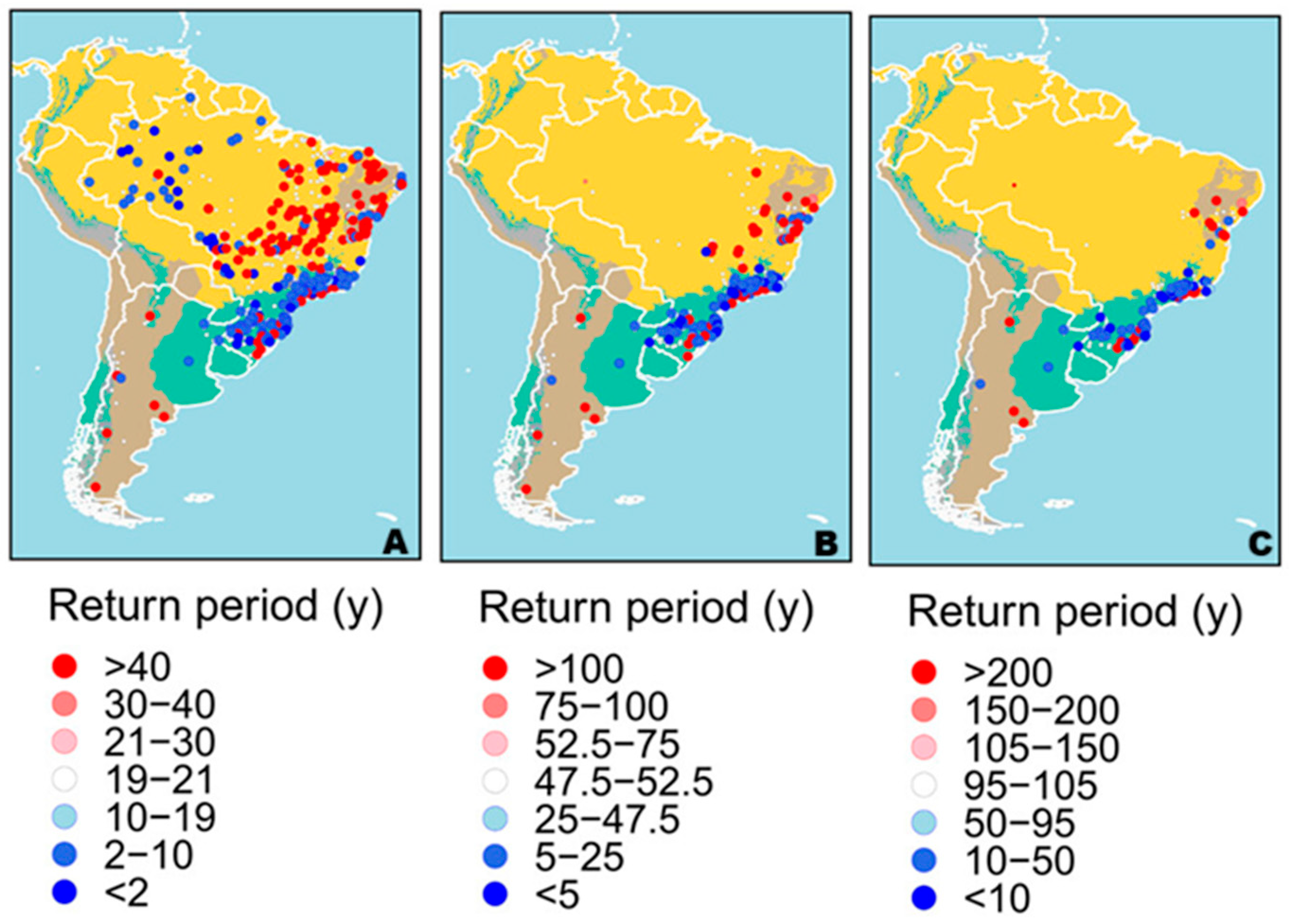
The quantification of changes in return periods was also calculated by [9]. These researchers estimated the magnitude of floods for 20-, 50-, and 100-year return periods and thus pointed to changes in flood recurrence. Reference [8] found that floods with a recurrence of 20, 50, and 100 years were now approximately 41, 152, and 358 years, respectively. A possible explanation for this counter-intuitive variation may be due to flood control measures, climate change, and reservoir construction, among other mitigating measures [9,65].
When we vary the scales of analysis from global to local, focusing on the Catu River basin—which is in a tropical region according to the Köppen–Geiger classification [22]–distinct trends are observed in the return periods. Figure 17A, referring to the 20-year return period, indicates that flood recurrence increased by more than 40 years, becoming at least 60 years. In contrast, for a 50-year event (Figure 17B), the recurrence shows a reduction of 5 to 25 years, meaning the event would now occur between 25 and 45 years. For the 100-year period (Figure 17C), the recurrence in the studied region decreases significantly, varying from 10 to 50 years. This implies that floods historically expected for a centennial event could now occur within a range of 50 to 90 years.

3.5. Climatological Perspective and Economic Impact

The concern regarding the non-stationarity of Return Periods in the Northeast region [9] is corroborated by the local INMET climate data analyzed in this study. Although we did not perform a long-term statistical trend analysis, Catu’s climatic observations indicate a reduction in mean precipitation and an increase in the evapotranspiration rate. This alteration demonstrates a shift in the regional Water Balance, characterized by a more prolonged drought regime, which, paradoxically, has been associated with a higher incidence of short, extremely intense precipitation events. Such concentrated events are the primary driver of urban flooding, which fully justifies our approach in modeling the design hydrographs under the lens of climatic uncertainty.
From a climatological perspective, the changes in return periods point to a concerning scenario: a trend toward short-term droughts interspersed with intense, concentrated rainfall. This climatic dynamic promotes a “sudden” hydrological response, where already dry soil has its water absorption capacity drastically reduced. With rain concentrated in short intervals, surface runoff is accelerated, overloading urban drainage infrastructure and generating fast-forming floods.
These climatological observations have direct consequences for the local economy. The increased frequency of extreme events causes significant damage and economic losses, directly impacting Catu’s municipal center. For street vendors, vulnerability is heightened: floods not only damage goods and the physical structure of their stalls but also interrupt commercial activities for weeks, resulting in a prolonged loss of income and difficulty in financial recovery. Thus, the change in climatic patterns is not just a theoretical issue; it is a concrete threat to the local community’s subsistence and economic stability.
Based on the adjustments to the economic loss model proposed in this study, and assuming the worst-case scenario for damage levels, we can estimate the losses expected over the next 100 years. The reduction in return periods predicts the occurrence of four 50-year events (with their recurrence reduced to 25 years) and two 100-year events (with their recurrence reduced to 50 years). According to the economic loss model (Figure 14), this would result in four events with an estimated cost of $16,666.66 USD each and two events with a cost of $35,000.00 USD each. The sum of these losses would total $136,666.64 USD, resulting from 80 days of interruption caused by these climatic events.

4. Conclusions

The main contribution of this investigation lies in the development and application of an integrated procedure that uniquely correlates two-dimensional hydrodynamic modeling (HEC-RAS 2D) with the assessment of direct socioeconomic risks in contexts of urban vulnerability. This methodology establishes a robust and replicable scientific basis for improving urban planning and risk management, especially in small and medium-sized Brazilian cities with a strong presence of informal commerce, where the scarcity of hydrological data and the absence of specific risk studies are critical factors.
The essence of this approach is its ability to transcend a purely physical analysis of flooding. It is a fundamental finding that floods not only cause material damage to infrastructure and assets but also significantly exacerbate existing socioeconomic inequalities, resulting in disproportionately severe losses for the vulnerable population. The study demonstrated that for groups like street vendors, who depend on the uninterrupted functionality of public space for their livelihood, the cessation of activities results in catastrophic and prolonged financial damages.
Concerning the concrete results obtained from the application of the integrated procedure in the Catu-BA case study, the investigation provides substantial evidence for local risk management. The hydrodynamic modeling revealed a large and concerning variation in flood peaks as a function of return periods. Specifically, the study demonstrated that the variation in flood peaks for a return period between 10 and 100 years is greater than 100%, reinforcing the urgency of considering extreme scenarios, previously deemed improbable, for the development of urban mitigation and resilience strategies. The recurrence of these events in Catu justifies the importance of this analysis, offering essential tools for informed decision-making.
This finding is confirmed by the analysis of the inundated area and water depth across different scenarios: the flooded area expanded from 89,000 m2 to 157,000 m2, indicating an increase of nearly 80% in the spatial extent between the 10- and 100-year return period simulations. Similarly, the maximum water depth increased from 4.23 m to 5.4 m, representing an increment of over one meter. These results underscore the growing and projected destructive impact of these events. The consequences of this spatial expansion and increased water depth are directly reflected in the economic damages within the basin, where simulations indicate a robust linear growth trend in financial losses as a function of the variation in return periods between 10 and 100 years, validating the high predictive accuracy of the linear regression model.
It is necessary to consider that climate change, in turn, tends to significantly exacerbate this flooding scenario. Although the simulations in this study were based on hypothetical return periods (10, 25, 50, and 100 years), current projections indicate that extreme events may occur with greater frequency than expected. This scenario of imminent risk implies an increase in the social, economic, and environmental vulnerability of the region, which underscores the urgent need for the city to adapt to the challenges imposed by climate change.

Limitations and Recommendations

It is crucial to recognize the methodological limitations and challenges of this investigation, as they are fundamental for interpreting the results and serve as a guide for refining the procedure. The main limitation lies in the availability and quality of input data. The absence of observed streamflow and rainfall intensity data for the Catu River watershed required the adoption of indirect information, which inherently introduces a degree of uncertainty into the hydrological and climate models. Other modeling limitations include the 30 m resolution of the MapBiomas images, which may generate inconsistencies in determining the Manning coefficient, and the generalist nature of the climate models used for rainfall intensity, which may not capture local specificities. In the scope of economic forecasting, the simplified model focused exclusively on Loss per Days Interrupted, without quantifying other significant damages, such as cleanup costs and physical infrastructure damage, stemming from the difficulty in obtaining detailed data from the informal commerce sector.
Finally, we suggest the following measures of coexistence with these events to public authorities: Construction of Retention Basins: Create areas to temporarily retain the excess volume of rainwater during extreme events, reducing the peak flow and mitigating the impact on downstream urban areas. Adoption of Permeable Pavements: Encourage the use of materials that allow rainwater infiltration on sidewalks and parking lots, reducing surface runoff volume and alleviating the load on the drainage system. Contingency Plan: Develop a detailed emergency plan, including the demarcation of evacuation routes, the location of temporary shelters, and the coordination of rescue teams.
Knowing that the most susceptible population is the most economically vulnerable, we also suggest: Microcredit and Subsidy Program: Establish a fund to offer agile financial assistance to merchants and residents who lose their goods or have their homes damaged. This is especially relevant for the most vulnerable population, including street vendors. Use of Social Cartography, i.e., Community Risk Mapping: Translate the scientific results into easily understandable maps for the local population. The information must be clear and accessible so that the communities themselves can adopt self-protection measures.

Author Contributions

Conceptualization, L.D.N.S. and A.M.d.O.; methodology, L.D.N.S., A.M.d.O. and F.R.G.; software, F.R.G. and A.M.d.O.; validation, L.D.N.S., L.N.A.d.O. and A.M.d.O.; formal analysis, L.N.A.d.O.; investigation, L.D.N.S.; resources, A.M.d.O. and F.R.G.; data curation, A.M.d.O.; writing—original draft preparation, L.D.N.S.; writing—review and editing, L.N.A.d.O. and A.M.d.O.; visualization, L.N.A.d.O.; supervision, A.M.d.O.; project administration, L.D.N.S. and A.M.d.O.; funding acquisition, A.M.d.O. All authors have read and agreed to the published version of the manuscript.

Funding

This research received no external funding and the APC was funded by Universidade do Estado da Bahia (UNEB).

Data Availability Statement

The data presented in this study are available within the article and its corresponding references. The datasets used for the analysis of economic vulnerability and urban flooding in Catu, Brazil, were obtained from public institutional repositories, specifically the Brazilian Institute of Geography and Statistics (IBGE) and the Superintendency of Economic and Social Studies of Bahia (SEI). No new primary data were created or analyzed in this study that are not already in the public domain.

Conflicts of Interest

The authors declare no conflict of interest.

References

  1. Zhu, W.; Wang, S.; Luo, P.; Zha, X.; Cao, Z.; Lyu, J.; Zhou, M.; He, B.; Nover, D. A Quantitative Analysis of the Influence of Temperature Change on the Extreme Precipitation. Atmosphere 2022, 13, 612. [Google Scholar] [CrossRef]
  2. Ward, P.J.; Blauhut, V.; Bloemendaal, N.; Daniell, J.E.; de Ruiter, M.C.; Duncan, M.J.; Emberson, R.; Jenkins, S.F.; Kirschbaum, D.; Kunz, M.; et al. Review Article: Natural Hazard Risk Assessments at the Global Scale. Nat. Hazards Earth Syst. Sci. 2020, 20, 1069–1096. [Google Scholar] [CrossRef]
  3. CNM. Panorama Desastres Brasil 2013 a 2023; CNM: Brasília, Brazil, 2024; p. 30. [Google Scholar]
  4. Gao, G.; Li, J.; Feng, P.; Liu, J.; Wang, Y. Impacts of Climate and Land-Use Change on Flood Events with Different Return Periods in a Mountainous Watershed of North China. J. Hydrol. Reg. Stud. 2024, 55, 101943. [Google Scholar] [CrossRef]
  5. Tabari, H. Climate Change Impact on Flood and Extreme Precipitation Increases with Water Availability. Sci. Rep. 2020, 10, 13768. [Google Scholar] [CrossRef]
  6. BRASIL Atlas Digital de Desastres no Brasil. Available online: https://app.powerbi.com/view?r=eyJrIjoiYTFkYjk0ZDAtN2NiZi00YWRkLWFlMjItYzllMTY5MDNmYzYyIiwidCI6Ijk2MTFlY2UxLTM0MTQtNGMzNS1hM2YwLTdkMTAwNDI5MGNkNiJ9 (accessed on 27 October 2025).
  7. Hlal, M.; Baraka Munyaka, J.-C.; Chenal, J.; Azmi, R.; Diop, E.B.; Bounabi, M.; Ebnou Abdem, S.A.; Almouctar, M.A.S.; Adraoui, M. Digital Twin Technology for Urban Flood Risk Management: A Systematic Review of Remote Sensing Applications and Early Warning Systems. Remote Sens. 2025, 17, 3104. [Google Scholar] [CrossRef]
  8. Liu, J.; Sun, L.; Tian, Z.; Ye, Q.; Wu, S.; Zhang, S. Editorial: Nature-Based Solutions for Urban Water Management. Front. Environ. Sci. 2023, 11, 1228154. [Google Scholar] [CrossRef]
  9. Slater, L.; Villarini, G.; Archfield, S.; Faulkner, D.; Lamb, R.; Khouakhi, A.; Yin, J. Global Changes in 20-Year, 50-Year, and 100-Year River Floods. Geophys. Res. Lett. 2021, 48, e2020GL091824. [Google Scholar] [CrossRef]
  10. Hagras, A. Modeling of Rainfall-Runoff and Flooding Using HEC-HMS Model through GIS in an Arid Environment: A Case Study in the Safaga Valley Basin, West Safaga City, Egypt. J. Afr. Earth Sci. 2026, 233, 105867. [Google Scholar] [CrossRef]
  11. Halwatura, D.; Najim, M.M.M. Application of the HEC-HMS Model for Runoff Simulation in a Tropical Catchment. Environ. Model. Softw. 2013, 46, 155–162. [Google Scholar] [CrossRef]
  12. García Martínez, M.; Osornio Berthet, L.J.; Meléndez Estrada, J.; Cruz Castro, O. Identification of Flood-Prone Areas Using the HEC-RAS 2D Model in a Region of the Valley of Mexico. Chemosphere 2025, 386, 144609. [Google Scholar] [CrossRef] [PubMed]
  13. JAXA ASF Data Search. Available online: https://search.asf.alaska.edu/#/ (accessed on 27 October 2025).
  14. MapBiomas Project Collection 10 of Annual Land Use and Land Cover Maps of Brazil. Available online: https://plataforma.brasil.mapbiomas.org/ (accessed on 27 August 2025).
  15. INMET Instituto Nacional de Meteorologia—INMET. Available online: https://portal.inmet.gov.br/normais (accessed on 18 August 2025).
  16. IBGE. Censo Demográfico. Available online: https://cidades.ibge.gov.br/brasil/ba/catu/panorama (accessed on 8 August 2025).
  17. SEBRAE Catu: Emprego, Ocupações, Empresas, Dados Demográficos e Educação. Observatório DataMPE Brasil. Available online: https://datampe.sebrae.com.br/profile/geo/catu (accessed on 8 August 2025).
  18. EITA; FUNASA; UFMG. Início. Available online: https://infosanbas.org.br/ (accessed on 27 October 2025).
  19. PNUD. Atlas Do Desenvolvimento Humano No Brasil. Available online: http://www.atlasbrasil.org.br/consulta/map (accessed on 14 August 2025).
  20. Menezes, M.A.D.A. Educação Profissional, Agricultura Familiar e Desenvolvimento Local e Regional: O Instituto Federal de Educação Baiano Campus Catu; Universidade Salvador: Salvador, Brazil, 2011. [Google Scholar]
  21. de Oliveira, A.M.; Barros de Matos, M.R.; Figueiredo, M.B.; de Oliveira, L.N.A. The Importance of Dunnian Runoff in Atlantic Forest Remnants: An Integrated Analysis Between Machine Learning and Spectral Indices. Appl. Sci. 2025, 15, 3977. [Google Scholar] [CrossRef]
  22. Beck, H.E.; Zimmermann, N.E.; McVicar, T.R.; Vergopolan, N.; Berg, A.; Wood, E.F. Present and Future Köppen-Geiger Climate Classification Maps at 1-Km Resolution. Sci. Data 2018, 5, 180214. [Google Scholar] [CrossRef]
  23. Borges, P.G. Estudo Hidroquímico das Águas Subterrâneas do Município de Catu-Bahia Universidade Federal da Bahia Instituto de Geociências Departamento de Geologia; Universidade Federal da Bahia: Salvador, Brazil, 2015; Available online: https://nehma.ufba.br/sites/nehma.ufba.br/files/PEDRO_2015_1.pdf (accessed on 24 November 2025).
  24. Santana, L.D.N. Modelagem Econômica do Potencial Destrutivo em Decorrência dos Eventos Extremos de Chuvas Universidade do Estado da Bahia Departamento de Ciências Extas e da Terrda Programa de Pós-Graduação em Modelagem e Simulação de Biossistemas. Master’s Thesis, Universidade do Estado da Bahia, Alagoinhas, Brazil, 2023. [Google Scholar]
  25. da Silva, M.S.L.; de Oliveira Neto, M.B. Latossolos Amarelos—Portal Embrapa. Available online: https://www.embrapa.br/agencia-de-informacao-tecnologica/territorios/territorio-mata-sul-pernambucana/caracteristicas-do-territorio/recursos-naturais/solos/latossolos-amarelos (accessed on 5 April 2024).
  26. de Lima Sebadelhe Valério, E.; Fontes, A.S.; Goldenfum, J.A.; Monte, B.E.O. Avaliação dos Efeitos de Mudanças Climáticas na Bacia do rio Catu-BA. In Proceedings of the XXI SBRH—Simpósio Brasileiro de Recursos Hídricos, Brasília, Brazil, 22 November 2015; Volume 1, pp. 1–8. [Google Scholar]
  27. de Jesus Porciúncula, R.; de Lima, O.A.L.; Leal, L.R.B. Método Geoelétrico—Potencial Instrumento Para Auxílio da Gestão do Solo e Dos Recursos Hídricos Subterrâneos: Estudos de Caso, Alagoinhas, Bahia. Águas Subterrâneas 2016. Available online: https://aguassubterraneas.abas.org/asubterraneas/article/view/28709 (accessed on 24 November 2025).
  28. Agakpe, M.D.; Nyatuame, M.; Ampiaw, F. Development of Intensity—Duration—Frequency Curves Using Combined Rain Gauge and Remote Sense Datasets for Weta Traditional Area in Ghana. HydroResearch 2024, 7, 109–121. [Google Scholar] [CrossRef]
  29. Barbosa, A.d.G.; de Souza Neto, I.R.; Costa, V.A.F.; Mendes, L.A. Assessing Intensity-Duration-Frequency Equations and Spatialization Techniques across the Grande River Basin in the State of Bahia, Brazil. RBRH 2022, 27, e43. [Google Scholar] [CrossRef]
  30. Escobar-González, D.; Singaña-Chasi, M.S.; González-Vergara, J.; Erazo, B.; Zambrano, M.; Acosta, D.; Villacís, M.; Guallpa, M.; Lahuatte, B.; Peluffo-Ordóñez, D.H. Intensity-Duration-Frequency Curve for Extreme Rainfall Event Characterization, in the High Tropical Andes. Water 2022, 14, 2998. [Google Scholar] [CrossRef]
  31. Koutsoyiannis, D.; Kozonis, D.; Manetas, A. A Mathematical Framework for Studying Rainfall Intensity-Duration-Frequency Relationships. J. Hydrol. 1998, 206, 118–135. [Google Scholar] [CrossRef]
  32. Moreira, P.G.; da Silva, J.B.L.; Bento, N.L.; da Silva, D.P.; de Souza, B.S. Estimativa dos Parâmetros de Equações de Intensidade-Duração-Frequência de Chuvas Intensas para o Estado da Bahia, Brasil. REDE Rev. Eletrônica PRODEMA 2021, 1, 151–164. [Google Scholar]
  33. de Abreu, F.G.; Sobrinha, L.A.; Brandão, J.L.B. Análise da distribuição temporal das chuvas em eventos hidrológicos extremos. Eng. Sanit. Ambient. 2017, 22, 239–250. [Google Scholar] [CrossRef]
  34. Moreira, J.F.M. Acidentes na Indústria de Petróleo e Seus Impactos na Segurança Operacional e Preservação Ambiental; Universidade Federal Fluminense: Niteroi, Brazil, 2017. [Google Scholar]
  35. dos Santos, H.G.; Jacomine, P.K.T.; dos Anjos, L.H.C.; de Oliveira, V.Á.; Lumbreras, J.F.; Coelho, M.R.; de Almeida, J.A.; de Araújo Filho, J.C.; Lima, H.N.; Marques, F.A.; et al. Sistema Brasileiro de Classificação de Solos, 6th ed.; Embrapa: Brasília, Brazil, 2025; ISBN 978-65-5467-104-0. [Google Scholar]
  36. U.S. Army Corps of Engineers; Hydrologic Engineering Center. HEC Newsletter, Spring 2008; U.S. Army Corps of Engineers: Davis, CA, USA, 2008. Available online: https://www.hec.usace.army.mil/newsletters/HEC_Newsletter_Spring2008.pdf (accessed on 24 November 2025).
  37. Durán-Barroso, P.; González, J.; Valdés, J.B. Improvement of the Integration of Soil Moisture Accounting into the NRCS-CN Model. J. Hydrol. 2016, 542, 809–819. [Google Scholar] [CrossRef]
  38. Verma, S.; Singh, P.K.; Mishra, S.K.; Singh, V.P.; Singh, V.; Singh, A. Activation Soil Moisture Accounting (ASMA) for Runoff Estimation Using Soil Conservation Service Curve Number (SCS-CN) Method. J. Hydrol. 2020, 589, 125114. [Google Scholar] [CrossRef]
  39. Zhang, C.; Li, F.; Li, J.; Xing, J.; Yang, J.; Guo, J.; Du, S. Recognition of land use on open-pit coal mining area based on DeepLabv3+ and GF-2 high-resolution images based on DeepLabv3+and GF-2 Land use classification of open-pit coal mining areas based on high-resolution imagery. Meitiandizhi Yu Kantan/Coal Geol. Explor. 2022, 50, 94–103. [Google Scholar] [CrossRef]
  40. Mishra, S.K.; Singh, V.P. SCS-CN Method. In Soil Conservation Service Curve Number (SCS-CN) Methodology; Mishra, S.K., Singh, V.P., Eds.; Springer Netherlands: Dordrecht, The Netherlands, 2003; pp. 84–146. ISBN 978-94-017-0147-1. [Google Scholar]
  41. Khattab, M.I.; Fadl, M.E.; Megahed, H.A.; Saleem, A.M.; El-Saadawy, O.; Drosos, M.; Scopa, A.; Selim, M.K. Evaluation of the Soil Conservation Service Curve Number (SCS-CN) Method for Flash Flood Runoff Estimation in Arid Regions: A Case Study of Central Eastern Desert, Egypt. Hydrology 2025, 12, 54. [Google Scholar] [CrossRef]
  42. de Farias Júnior, J.E.F. Análise Comparativa Do Tempo de Concentração: Um Estudo de Caso Na Bacia Do Rio Cônego, Município de Nova Friburgo/RJ. In Proceedings of the XIX Simpósio Brasileiro de Recursos Hídricos, Maceió, Brazil, 27 November 2011. [Google Scholar]
  43. Zolghadr, M.; Rafiee, M.R.; Esmaeilmanesh, F.; Fathi, A.; Tripathi, R.P.; Rathnayake, U.; Gunakala, S.R.; Azamathulla, H.M. Computation of Time of Concentration Based on Two-Dimensional Hydraulic Simulation. Water 2022, 14, 3155. [Google Scholar] [CrossRef]
  44. Temez, J.R. Cálculo Hidrometeorológico de Caudales Máximos en Peaueñas Cuencas Naturales, Direccion General de Carreteras, 12th ed.; Ministério de Obras Publicas y Urbanismo (MOPU): Madrid, Spain, 1978; Volume 1. [Google Scholar]
  45. Farid, M.; Dewi, N.T.; Adityawan, M.B.; Nugroho, E.O.; Alhamid, A.K.; Wahid, A.N.; Sihombing, Y.I. Probabilistic Urban Flood Risk Assessment of Multi-Sectoral Economic Losses Due to Levee Overtopping. Results Eng. 2025, 27, 106260. [Google Scholar] [CrossRef]
  46. Duarte, E. Determinação da Cota de Inundação Severa com Base no Critério de Prejuízos Econômicos Associados: Aplicação ao Município de São Sebastião do Caí—RS. In Proceedings of the XXIV SBRH—Simpósio Brasileiro de Recursos Hídricos, Belo Horizonte, Brazil, 21 November 2021. [Google Scholar]
  47. Tachini, M. Avaliação de Danos Associados às Inundações No Município de Blumenau. Ph.D. Thesis, Universidade Federal de Santa Catarina, Florianópolis, Brazil, 2010. [Google Scholar]
  48. Boers, N.; Goswami, B.; Rheinwalt, A.; Bookhagen, B.; Hoskins, B.; Kurths, J. Complex Networks Reveal Global Pattern of Extreme-Rainfall Teleconnections. Nature 2019, 566, 373–377. [Google Scholar] [CrossRef] [PubMed]
  49. Li, Z.; Guo, L.; Sha, Y.; Yang, K. Knowledge Map and Global Trends in Extreme Weather Research from 1980 to 2019: A Bibliometric Analysis. Environ. Sci. Pollut. Res. 2021, 28, 49755–49773. [Google Scholar] [CrossRef] [PubMed]
  50. Nhamo, G.; Chapungu, L.; Mutanda, G.W. Trends and Impacts of Climate-Induced Extreme Weather Events in South Africa (1920–2023). Environ. Dev. 2025, 55, 101183. [Google Scholar] [CrossRef]
  51. Villasante, A.; Fernández-Serrano, Á.; Osuna-Sequera, C.; Hermoso, E. Methodology for Stiffness Prediction in Structural Timber Using Cross-Validation RMSE Analysis. J. Build. Eng. 2025, 107, 112767. [Google Scholar] [CrossRef]
  52. Perez, G.; Gomez-Velez, J.D.; Chen, X.; Scheibe, T. The Directional Unit Hydrograph Model: Connecting Streamflow Response to Storm Dynamics. J. Hydrol. 2023, 627, 130422. [Google Scholar] [CrossRef]
  53. Shih, S.-S.; Hsu, Y.-W. Unit Hydrographs for Estimating Surface Runoff and Refining the Water Budget Model of a Mountain Wetland. Ecol. Eng. 2021, 173, 106435. [Google Scholar] [CrossRef]
  54. Wan, H.-H.; Lee, H.; Thuy Du, T.L.; Rostami, A.; Chang, C.-H.; Markert, K.N.; Nelson, E.J.; Williams, G.P.; Li, S.; Straka, W.; et al. An Interpretable and Scalable Model for Rapid Flood Extent Forecasting Using Satellite Imagery and Machine Learning with Rotated EOF Analysis. Environ. Model. Softw. 2025, 192, 106562. [Google Scholar] [CrossRef]
  55. Malla, S.; Ohgushi, K. Evaluation of Climate Change Impact on Future Flood in the Bagmati River Basin, Nepal Using CMIP6 Climate Projections and HEC-RAS Modeling. Water Cycle 2026, 7, 164–180. [Google Scholar] [CrossRef]
  56. Barna, D.M.; Engeland, K.; Thorarinsdottir, T.L.; Xu, C.-Y. Flexible and Consistent Flood–Duration–Frequency Modeling: A Bayesian Approach. J. Hydrol. 2023, 620, 129448. [Google Scholar] [CrossRef]
  57. Alexander, D.L.J.; Tropsha, A.; Winkler, D.A. Beware of R2: Simple, Unambiguous Assessment of the Prediction Accuracy of QSAR and QSPR Models. J. Chem. Inf. Model. 2015, 55, 1316–1322. [Google Scholar] [CrossRef]
  58. Curt, C. Multirisk: What Trends in Recent Works?—A Bibliometric Analysis. Sci. Total Environ. 2021, 763, 142951. [Google Scholar] [CrossRef] [PubMed]
  59. Gill, J.C.; Duncan, M.; Ciurean, R.; Smale, L.; Stuparu, D.; Schlumberger, J.; de Ruiter, M.; Tiggeloven, T.; Torresan, S.; Gottardo, S.; et al. Handbook of Multi-Hazard, Multi-Risk Definitions and Concepts; British Geological Survey: Keyworth, UK, 2022. [Google Scholar]
  60. Tilloy, A.; Malamud, B.D.; Winter, H.; Joly-Laugel, A. A Review of Quantification Methodologies for Multi-Hazard Interrelationships. Earth-Sci. Rev. 2019, 196, 102881. [Google Scholar] [CrossRef]
  61. IBGE. Available online: https://www.ibge.gov.br/cidades-e-estados/ba/catu.html (accessed on 7 August 2025).
  62. Dutta, D.; Herath, S.; Musiake, K. A Mathematical Model for Flood Loss Estimation. J. Hydrol. 2003, 277, 24–49. [Google Scholar] [CrossRef]
  63. Yang, J.; Jung, K. Economic Assessment of Flood Damage in South Korea: An Object-Based Comparative Study of National and Local Rivers. Environ. Impact Assess. Rev. 2026, 116, 108121. [Google Scholar] [CrossRef]
  64. Sharma, D.K.; Chatterjee, M.; Kaur, G.; Vavilala, S. Deep Learning Applications for Disease Diagnosis. In Deep Learning for Medical Applications with Unique Data; Gupta, D., Kose, U., Khanna, A., Balas, V.E., Eds.; Academic Press: Cambridge, MA, USA, 2022; pp. 31–51. ISBN 978-0-12-824145-5. [Google Scholar]
  65. Pleninger, R. Impact of Natural Disasters on the Income Distribution. World Dev. 2022, 157, 105936. [Google Scholar] [CrossRef]
  66. Wagner, P. The Hole Dug Deeper: Flash Floods, Income Disparities, and Labor Informality in Brazil. Ecol. Econ. 2025, 237, 108689. [Google Scholar] [CrossRef]
  67. IPCC. Summary for Policymakers. Available online: https://www.ipcc.ch/report/ar6/syr/summary-for-policymakers (accessed on 11 August 2025).
  68. Ganaie, D.B.; Sajjad, H.; Ali, R.; Sharma, A.; Rahaman, M.H.; Masroor, M. Climate Change Induced Storm Surge Flood: A Systematic Review for Future Research Progression. Reg. Stud. Mar. Sci. 2025, 89, 104374. [Google Scholar] [CrossRef]
  69. Akter, A.; Dayem, A. Tropical Cyclone Risk Mapping for a Coastal City Using Geospatial Techniques. J. Coast. Conserv. 2021, 25, 1. [Google Scholar] [CrossRef]
  70. Narimani, R.; Jun, C.; Shahzad, S.; Oh, J.; Park, K. Application of a Novel Hybrid Method for Flood Susceptibility Mapping with Satellite Images: A Case Study of Seoul, Korea. Remote Sens. 2021, 13, 2786. [Google Scholar] [CrossRef]
  71. Mayo, T.L.; Lin, N. Climate Change Impacts to the Coastal Flood Hazard in the Northeastern United States. Weather. Clim. Extrem. 2022, 36, 100453. [Google Scholar] [CrossRef]
  72. Franzke, C.L.E. Changing Temporal Volatility of Precipitation Extremes Due to Global Warming. Int. J. Climatol. 2022, 42, 8971–8983. [Google Scholar] [CrossRef]
  73. Slater, L.J.; Villarini, G. Recent Trends in U.S. Flood Risk. Geophys. Res. Lett. 2016, 43, 12428–12436. [Google Scholar] [CrossRef]
  74. Wasko, C.; Nathan, R. Influence of Changes in Rainfall and Soil Moisture on Trends in Flooding. J. Hydrol. 2019, 575, 432–441. [Google Scholar] [CrossRef]
  75. Rodell, M.; Famiglietti, J.S.; Wiese, D.N.; Reager, J.T.; Beaudoing, H.K.; Landerer, F.W.; Lo, M.-H. Emerging Trends in Global Freshwater Availability. Nature 2018, 557, 651–659. [Google Scholar] [CrossRef] [PubMed]
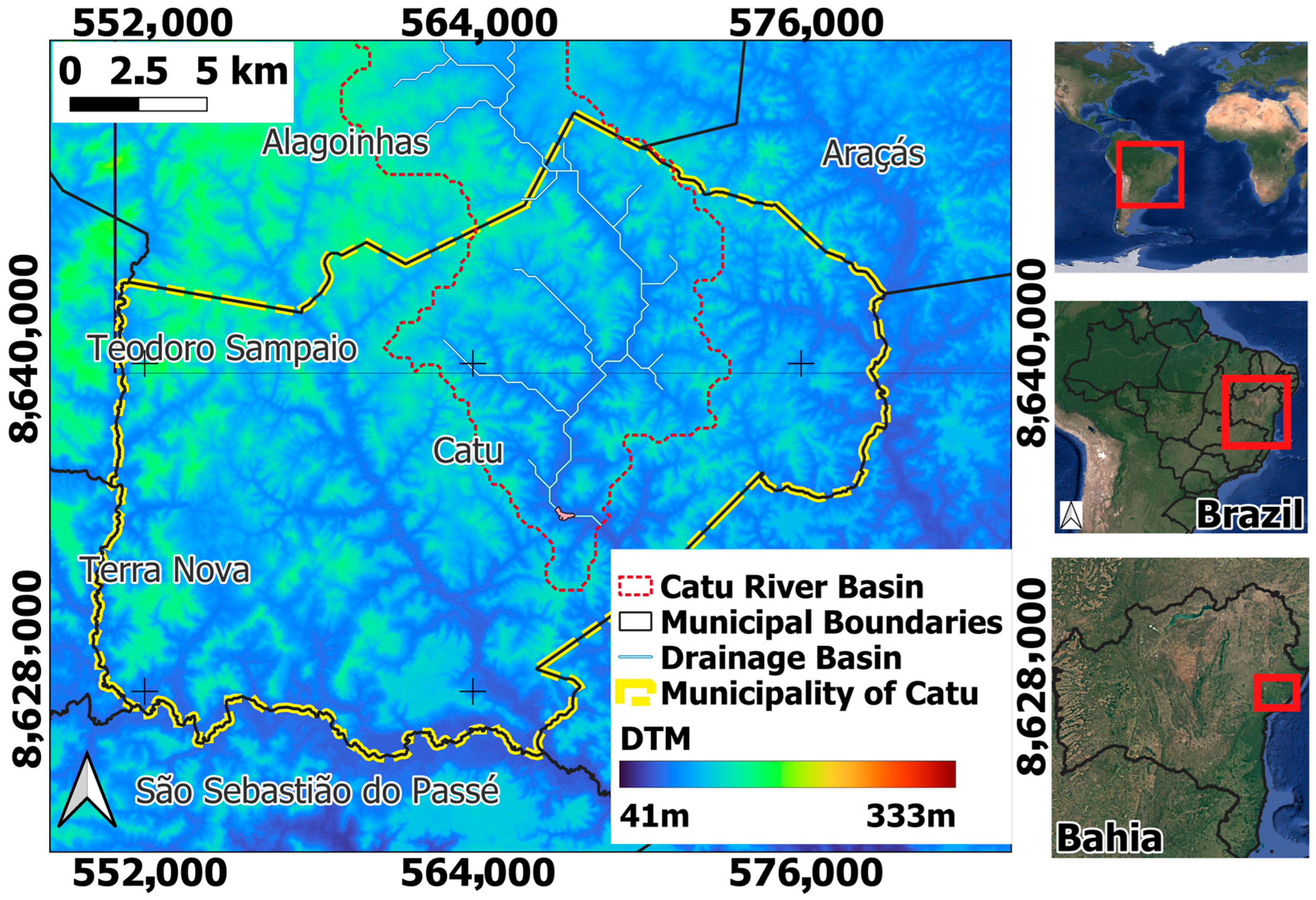
Figure 1. Location Map of the Municipality of Catu, overlaid on the Digital Terrain Model, as well as the municipal boundaries.
Water 18 00282 g001
Figure 2. Location of the Catu River Basin and the area where the flood inundation maps were simulated.
Water 18 00282 g002
Figure 3. Land Use and Land Cover Map in 2023 based on 2023 data from [11].
Water 18 00282 g003
Figure 4. Climograph for the Alagoinhas climatological station. The climograph represents the monthly mean temperature and precipitation for the Alagoinhas station, which is the closest to the studied river basin. The data are from the National Institute of Meteorology [15] and correspond to the climatological normal for the period from 1991 to 2020.
Water 18 00282 g004
Figure 5. Climatological water balance according to data from the Alagoinhas climatological station, for the climatological normals between 1991 and 2020, with data from [28]. The data indicate that there are no longer water surpluses, only replenishment in the system. It is worth noting that the previous water balance showed a surplus of 137 mm/year. We also highlight that an Available Water Capacity (AWC) of 100 mm was used for this calculation.
Water 18 00282 g005
Figure 6. Hyetographs generated for different return periods. The data are in accordance with the parameters proposed by [35].
Water 18 00282 g006
Figure 7. Digital Terrain Model of the Catu River Basin, with an overlay of the surface roughness model.
Water 18 00282 g007
Figure 8. Confluence of the three sub-basins, resulting in the final hydrograph. This illustrates the core problem, as the commercial economic activities of Catu are located precisely at the junction of these three sub-basins.
Water 18 00282 g008
Figure 9. Relationship between flood peaks and return periods, derived from a statistical model. This figure graphically demonstrates the behavior of flood peaks in response to different return periods, as predicted by the proposed statistical model.
Water 18 00282 g009
Figure 10. This figure presents a summary of the unit hydrographs used to generate the runoff for different return periods. It is clear that the water volume for the 100-year return period is quite high, which requires a longer time for the runoff.
Water 18 00282 g010
Figure 11. Simulated flood inundation maps for different return periods. Figure (A) corresponds to the flood inundation map for the 10-year return period. Figure (B) illustrates the 25-year scenario, Figure (C) the 50-year one, and, finally, Figure (D) the 100-year one.
Water 18 00282 g011
Figure 12. (A) Linear regression model for the inundated area as a function of return periods. An increasing trend is observed between the return periods and the inundated area, highlighting the growing risk. In (B), the regression model for the return period and water level is presented. The statistical indicators for this model were more robust.
Water 18 00282 g012
Figure 13. Relationship between days of interruption and accumulated economic loss. The graph shows that economic damage increases directly with the number of days the market remains closed due to flooding.
Water 18 00282 g013
Figure 14. Linear regression model for financial losses as a function of return periods. The model proved to be consistent; additionally, for the 100-year return period, the loss is approximately thirty thousand dollars. The area shaded in pink corresponds to the model’s confidence interval.
Water 18 00282 g014
Figure 15. Adapted from [9], this figure illustrates the changes in flood magnitude for different return periods. Panel (A) presents the results for a 20-year period, Panel (B) for 50 years, and Panel (C) for 100 years. In this figure, blue and red circles indicate stream gauges where floods have increased or decreased, respectively, by more than 5%, 20%, and 50% in relation to the considered return period.
Water 18 00282 g015
Figure 16. Distribution of the percentage change in flood magnitude by climatic region. Adapted from [9], the boxplots illustrate the percentage change distribution for non-stationary records in each Köppen–Geiger climatic region [22]. The body of the boxplot represents the interquartile range, with the lower and upper hinges corresponding to the first and third quartiles, respectively. The whiskers extend to the minimum/maximum value, with a limit of 1.5 times the interquartile range from the hinge. The median values are indicated by the horizontal lines inside the boxes, and the number of locations is specified above each boxplot. Panel (A) corresponds to the 20-year return period, Panel (B) to 50 years, and Panel (C) to 100 years.
Water 18 00282 g016
Figure 17. Changes in Flood Return Periods adapted from [9]. The figure illustrates the changes in return periods for flood events of 20 years (A), 50 years (B), and 100 years (C). In these panels, the circles represent stream gauges: red circles indicate an increase in return periods (making events less frequent), blue circles indicate a decrease in return periods (making events more frequent), and white circles indicate that the time series remains stationary [9].
Water 18 00282 g017
Table 1. Land Use and Land Cover Data for the Catu River Basin, based on data from [14].
Land UseArea (km2)Percentage (%)
Grassland0.0310.07
Water0.0910.023
Other non-Vegetated Area0.2380.061
Other Temporary Crops0.6300.161
Savanna Formation34.5738.864
Urban Area35.2129.028
Mosaic of Uses47.02812.058
Forest Plantation51.82513.287
Forest Formation61.19815.697
Pasture159.18840.815
Table 2. Physical parameters of the Catu River Basin’s sub-basins, used as input data for hydraulic modeling in HEC-RAS, morphometric parameters e DTM data.
Basin Physical CharacteristicsSub-Basins
SUB1SUB2SUB3
Total Area (km2)118.7583.21189.62
Main River Length (km)23.4516.4229.76
Maximum Elevation (m)330.00245111
Minimum Elevation (m)112.0010858
Elevation Difference (m)218.0013753
Slope (%)0.0092963750.0083434840.001780914
Time of Concentration (h)8.0250958026.24811252213.16619006
Lag Time (h)4.8150574813.7488675137.899714036
Table 3. Curve Number (CN) Values and their relationship with land use and land cover classes in the river basin.
ClassArea (m2)Area (km2)CNA × CN
Water101.440.10143610010.1436
Urban Area27,546.8327.546828902479.21452
Agriculture283,319.80283.3197997822,098.9443
Dense Vegetation78,534.9078.534903705497.44321
Low Vegetation500.190.5001937537.514475
Total390,003.16390.00 30,123.26
Weighted CN77.2385029
Table 4. Return Periods and Peak Discharges resulting from the hydrological simulation for the Catu River Basin.
Return PeriodFlood Peak (m3/s)
10158
25250
50300
100385
Table 5. Variation in inundation area as well as the water depth as a function of the different return periods used in the model to build the various flood scenarios.
Return PeriodInundated Area (m2)Area Variation (%)Total Depth (m)Depth Variation (%)
1089,000-4.23-
25119,00033.70%4.332.40%
50140,00017.60%4.626.70%
100157,00012.10%5.416.90%
Table 6. Hypothetical flood classification for the market based on return periods and days of interruption.
Retorn PeriodWater LevelDays of Interruption
10Small4
25Medium7
50Large10
100Extreme20
Disclaimer/Publisher’s Note: The statements, opinions and data contained in all publications are solely those of the individual author(s) and contributor(s) and not of MDPI and/or the editor(s). MDPI and/or the editor(s) disclaim responsibility for any injury to people or property resulting from any ideas, methods, instructions or products referred to in the content.