
Article

Divergent Pathways and Converging Trends: A Century of Beach Nourishment in the United States Versus Three Decades in China

1
Coastal Research Institute, Ludong University, Yantai 264025, China
2
Shandong Key Laboratory of Estuary and Coast & Nuclear Environment, Yantai 264025, China
3
Yantai Institute of Coastal Zone Research, Chinese Academy of Sciences, Yantai 264003, China
*
Author to whom correspondence should be addressed.
Water 2026, 18(2), 283; https://doi.org/10.3390/w18020283 (registering DOI)
Submission received: 22 December 2025 / Revised: 13 January 2026 / Accepted: 19 January 2026 / Published: 22 January 2026
(This article belongs to the Special Issue Coastal Engineering and Fluid–Structure Interactions, 2nd Edition)

Abstract

Beach nourishment has become a globally adopted “soft” engineering measure to mitigate coastal erosion and sustain beach functions. This study conducts a systematic comparative analysis of beach nourishment practices between China and the United States, focusing on extensive project data and historical records. The research examines differences in historical development trajectories, spatial distribution patterns, restoration philosophies, funding mechanisms, and key technologies. The results reveal that the U.S., with over a century of experience, exhibits large-scale, high-frequency nourishment projects supported by diversified funding and long-term maintenance strategies. In contrast, China, despite a later start (circa 1992), has achieved rapid progress in both project scale and technical innovation, though its approach remains more government-led and structurally oriented. This study also identifies converging trends in resource concentration between the two countries, as measured by a proposed “beach nourishment primacy” index. Based on these findings, the work offers strategic recommendations for the coastal management of China, including the establishment of a national nourishment database, adoption of Regional Sediment Management, and greater integration of ecological engineering principles. This comparative analysis provides valuable insights for coastal nations seeking to optimize beach nourishment strategies in the face of growing climatic and anthropogenic pressures; to further advance these efforts, future research could explore the integration of interdisciplinary approaches and intelligent technologies, aiming to deepen our understanding of coastal system complexity and support the development of dynamic adaptive management.

1. Introduction

Beaches are precious natural resources [1,2,3] as they are not only important places for coastal tourism but also play an irreplaceable role in coastal protection [4]. However, under the dual influence of global climate change and anthropogenic activities, sandy coastal erosion has become a common problem faced by coastal countries [5,6,7]. Sandy coastlines are crucial ecological and economic assets that face severe global threats. While assessments indicate that only approximately 15.5% of the world’s coastlines remain intact, the pressure on sandy shores is particularly acute: about 24% of them are eroding at rates exceeding 0.5 m per year [8]. This widespread stress is reflected at the national scale, with studies suggesting that approximately 66% of the U.S. coastline and over 70% of China’s coastline are experiencing erosion [9]. As a ‘soft’ way to protect sandy coasts, beach nourishment has been applied and developed rapidly in the past decades [10,11,12].
Unlike stiff engineering structures such as seawalls, beach nourishment is a natural or “green” coastal protection measure [13,14]. Beach and dune systems are the first line of defense when severe storms threaten the coast. It provides important ecosystem service benefits and habitat for threatened and endangered species including sea turtles and shorebirds, which contributes to a thriving tourism industry [15,16]. Although beach nourishment is widely used for beach conservation and is considered as a viable strategy to mitigate climate change [9,17], there is a lack of systematic consideration of one aspect in the research process [18]. A realistic assessment is required for potential borrow area sand volume, native beach compatibility, and construction costs, all vulnerable geomorphic elements of the coastal zone and its environmental impacts [19]. While beach nourishment is a widely adopted soft engineering measure, its implementation can entail significant environmental trade-offs. Negative impacts may include the short-term smothering of benthic communities at both the borrow and placement sites, alterations to native sediment composition which can affect habitat suitability, and temporary increases in turbidity affecting water quality and photosynthetic activity. Furthermore, the placement of disproportionate volumes of sand can modify nearshore bathymetry, potentially alter wave patterns, and lead to unexpected downdrift erosion. Conversely, successfully executed projects can enhance habitat for endangered species like sea turtles and shorebirds, rebuild natural storm buffers in the form of dunes, and contribute to the recovery of submerged aquatic vegetation by improving water clarity over the long term. A holistic assessment that balances these potential impacts against socio-economic benefits is therefore crucial [18,19].
The U.S. has a history of beach nourishment going back a hundred years, with a large number of beach nourishment projects at a high scale and frequency, and a complete beach nourishment and restoration technology system [20,21,22,23]. Although beach nourishment initiatives started relatively late in China, significant systematic progress has been achieved through technology assimilation and independent innovation [24,25,26,27]. Specifically, a distinctive engineering system has been developed to address complex coastal conditions, such as low-energy muddy coasts [28]. Enhanced capabilities in numerical modeling and field monitoring now underpin more scientifically robust project design. Comparing the beach nourishment practices of the two countries is suitable and useful for the development of beach nourishment and restoration in coastal countries.
Beyond China and the United States, beach nourishment has been widely adopted as a global coastal protection and restoration strategy in regions such as Europe, Australia, Japan, and Southeast Asia. Different countries have developed diverse approaches based on their unique physical settings, socio-economic structures, and governance frameworks. For example, European countries such as the Netherlands advocate the “Building with Nature” concept and have implemented large-scale dynamic nourishment projects like the “Sand Engine” [22]. In Asia, Japan has gradually shifted from hard structures toward hybrid engineering and ecological restoration [13], whereas Southeast Asian countries such as Thailand and Malaysia focus more on tourism-oriented periodic nourishment [29]. Australia, meanwhile, balances protection, recreation, and ecological objectives in its nourishment projects and has established relatively systematic monitoring and community-engagement mechanisms [17]. These global practices collectively reflect a general trend of moving from hard engineering toward nature-based solutions, emphasizing multi-objective synergy, and addressing common challenges such as sand-resource scarcity and sea-level rise [30].
Examining the beach nourishment practices of China and the United States within this global context helps to identify the specificity and universality of their experiences. The objectives of the present study are twofold. First, it aims to compare the differences in beach nourishment between China and the U.S. in detail, based on a large amount of data on beach nourishment practices in the two countries. Second, it seeks to offer some recommendations for the development of beach nourishment in China. The remainder of the paper is organized as follows. Section 2 presents the sources of beach nourishment data in China and the U.S. Section 3 examines the development and spatial patterns of beach nourishment in China and the U.S., comparing key aspects including restoration approaches, funding mechanisms, disparities in regulatory and permitting processes, and coastline assessment techniques. Section 4 analyzes the drivers of disparities covering geographical, policy, and economic factors, examines convergence trends, and offers recommendations for China on database development, sediment management, and ecological engineering. The conclusion of this study is presented in Section 5.

2. Materials and Methods

2.1. Data Source

The American Shore and Beach Preservation Association (ASBPA) National Beach Nourishment Database has been compiled over the past two decades [31,32]. Its foundational information has been derived from Duke University’s (DU) beach nourishment database that has been adopted and maintained by Western Carolina University [33]. The database is currently updated annually by ASBPA membership using the interactive website application. This database provides the project name, total project number, and detailed nourishment information of each project, including the project date, sand volume, coast, and the length of beach nourished. Large projects are broken down into smaller community- or local municipality-level projects if possible; the date that the nourishment project was originally conducted (initial event) and the dates of subsequent renourishment events are also given.
There is no specialized beach nourishment database in China, but the Ministry of Natural Resources (MNR) carries out marine beach nourishment every year and publishes a list of supported marine beach nourishment projects [34]. The data in the present article comes from the project data updated by the MNR and is collated and analyzed in conjunction with data from the relevant literature [26,35]. Due to the lack of a systematic database to support it, there may be omissions in the data collection in this paper. However, these omissions are negligible and do not significantly impact the analytical results of this study.

2.2. Methods

This study employs a systematic comparative framework, integrating quantitative and qualitative analytical approaches to examine the practices and disparities in beach nourishment between China and the United States. Specifically, the research methodology comprises the following components: First, historical trend analysis is conducted by compiling and visualizing time-series data on the number of projects, cumulative sand volume, and nourished coastline length in both countries, aiming to elucidate their respective developmental trajectories and evolving trends. Second, spatial statistical analysis, combined with Geographic Information System mapping techniques, is applied to characterize the spatial distribution patterns of beach nourishment projects and assess their regional concentration and imbalance. Third, an in-depth comparative analysis is carried out across three core dimensions—nourishment philosophy, funding mechanisms, and key technologies—to identify fundamental differences in strategic orientation and implementation pathways. Finally, to quantify resource aggregation effects, a “ beach nourishment primacy “ is innovatively introduced and calculated, supplemented by case studies of representative projects.
“Urban primacy” originally refers to the agglomeration degree of urban development elements in the largest cities [36], which can be calculated as the ratio of the development element of the first city to that of the second city [37]. To quantitatively analyze the spatial agglomeration characteristics of beach nourishment practices at a regional scale, this study adapts this geographical concept and innovatively introduces the “beach nourishment primacy” index. This index is calculated by comparing data such as the number of projects between the region with the largest scale of beach nourishment and the region with the second-largest scale within a given area (e.g., province or state). It aims to scientifically characterize the spatial clustering of beach nourishment activities across coastal provinces/states, thereby revealing regional differences and commonalities in coastal management strategies between China and the United States. The “ beach nourishment primacy” index is defined as following equation:
I up = P f / P s
where Iup represents urban primacy of beach nourishment, Pf is the beach nourishment project quantity of the province/state with the highest number of beach nourishment projects, Ps is the beach nourishment project quantity of the province/state with the second-highest number of beach nourishment projects.
This study applies the “beach nourishment primacy” to coastal engineering analysis for the first time. This index can, to some extent, reflect the spatial agglomeration characteristics of beach nourishment practices in coastal provinces/states of both China and the United States. However, its applicability and explanatory power across different geographical scales and coastal types require further validation.

3. Results

3.1. Historical Development

3.1.1. The Development of Beach Nourishment in the U.S.

The earliest recorded beach nourishment project in the U.S. began in 1919 in San Pedro, southern California, where nourishment sand was taken from a temporary stockpile of sand dredged from a waterway [38,39]. The U.S. Army Corps of Engineers then conducted decades of research on coastal erosion protection under the auspices of the U.S. Congress. Coupled with the support of a series of beach erosion control projects, the scale of beach nourishment in the U.S. has increased considerably. In 2002, the United States published Shore Protection Manual [40], marking the formation of a relatively complete theory and technical system of beach nourishment.
As of 2020, about 3200 beach nourishment and restoration projects had been carried out in the U.S., with a cumulative nourished beach length of 15,993 km and around 1.2 × 10⁹ m3 of filled sand volume (Table 1). The growth in filled sand volume has been exponential over the last century (Figure 1), indicating that beach nourishment volume in the U.S. will continue with an upward trend. During the ten-year period from 2011 to 2020, the average annual filled sand volume on U.S. beaches increased to 29 million m3. The peak in the 1940s is related to the large harbor dredging efforts [41]. These beach nourishment projects have largely slowed coast erosion, effectively reduced the impacts of hurricanes, and provided sufficient space for the development of coastal tourism [31].

3.1.2. The Development of Beach Nourishment in China

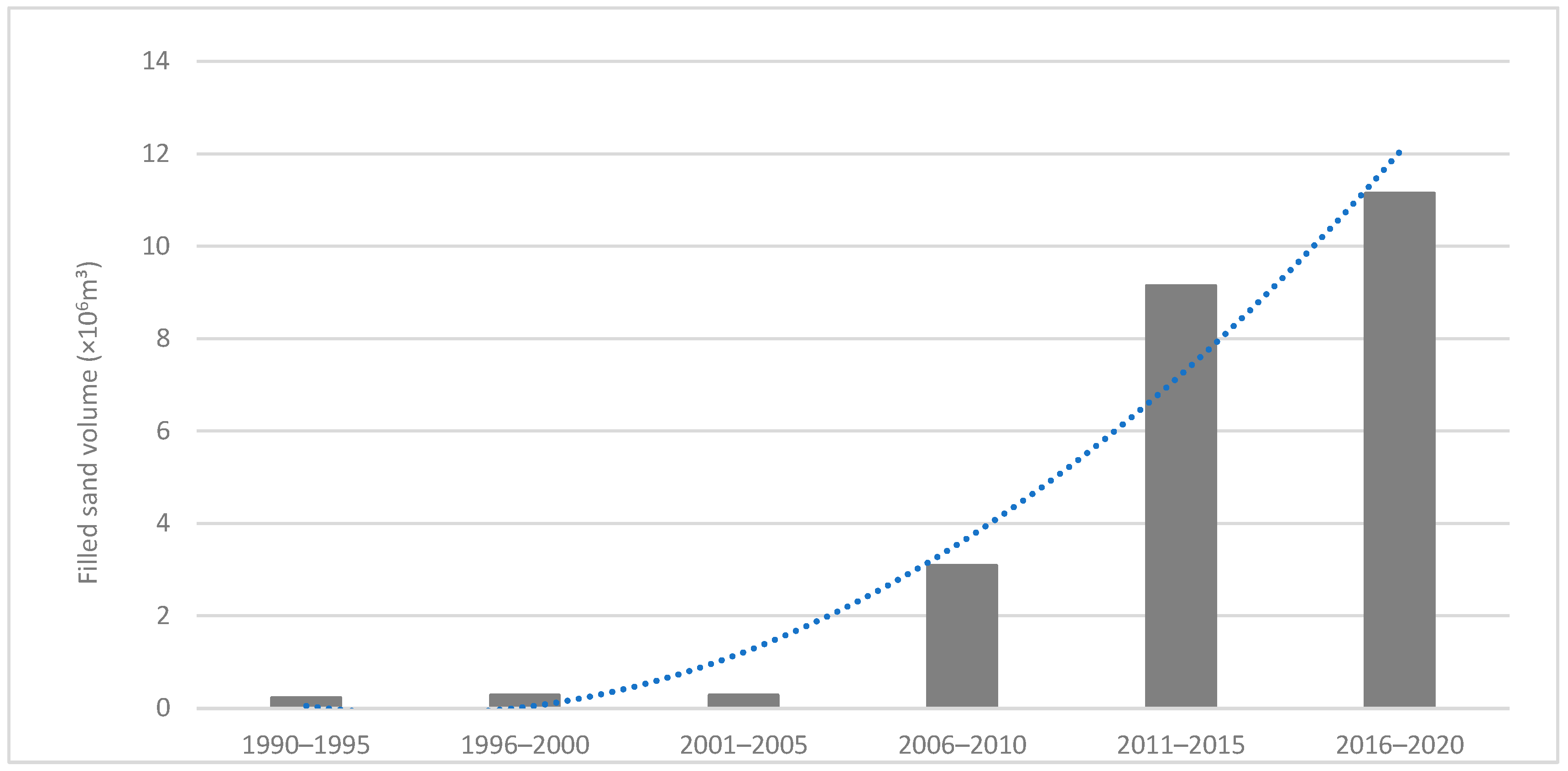
The first beach nourishment project in China was in Repulse Bay on the south coast of Hong Kong in 1992 [26]. After that, beach nourishment was conducted on a small scale until 2007, when Xiamen Guanyinshan Beach became the first large-scale beach nourishment project on the mainland [41]. The nourishment volume was 84 × 104 cubic meters. Since then, with the rapid development of both the economy and coastal tourism, China has seen a big boom in beach nourishment [26] (Figure 2). In 2015, Cai Feng published the Chinese Beach Nourishment Manual, marking the basic maturity of China’s beach nourishment technology system [42]. In recent years, with the implementation of coastal protection and restoration projects such as Blue Bay and Coastal Protection and Restoration in China, the beach nourishment volume across the country continued to increase rapidly. As of December 2020, China had performed about 113 beach nourishment projects, with a cumulative nourished beach length of 117 km and about 26 million m3 of filled sand volume (Table 1). Although China’s beach nourishment started late and had a much lower beach nourishment quantity, nourished coastal length, and filled sand volume, it has since experienced rapid development (Figure 2). Before 2005, the amount of filled sand was extremely small, but it has increased substantially since then. In the past 5 years, the volume of filled sand has reached 11 million m3, almost half the cumulative filled sand volume, and the annual average volume of filled sand has exceeded 2 million m3.
Notably, the U.S. has a 100-year history of beach nourishment, while China’s is only 30 years (Table 1), and thus it is to be expected that the U.S. has implemented a larger quantity of projects, a longer cumulative length of nourished beach, and a greater cumulative volume of filled sand. In earlier beach nourishment records, the total filled sand volume in the U.S. has been about 50 times that in China, but this gap has narrowed to 15 times in the recent 10 years. This suggests that the recent development of beach nourishment in China has been extremely rapid.

3.2. Spatial Imbalance

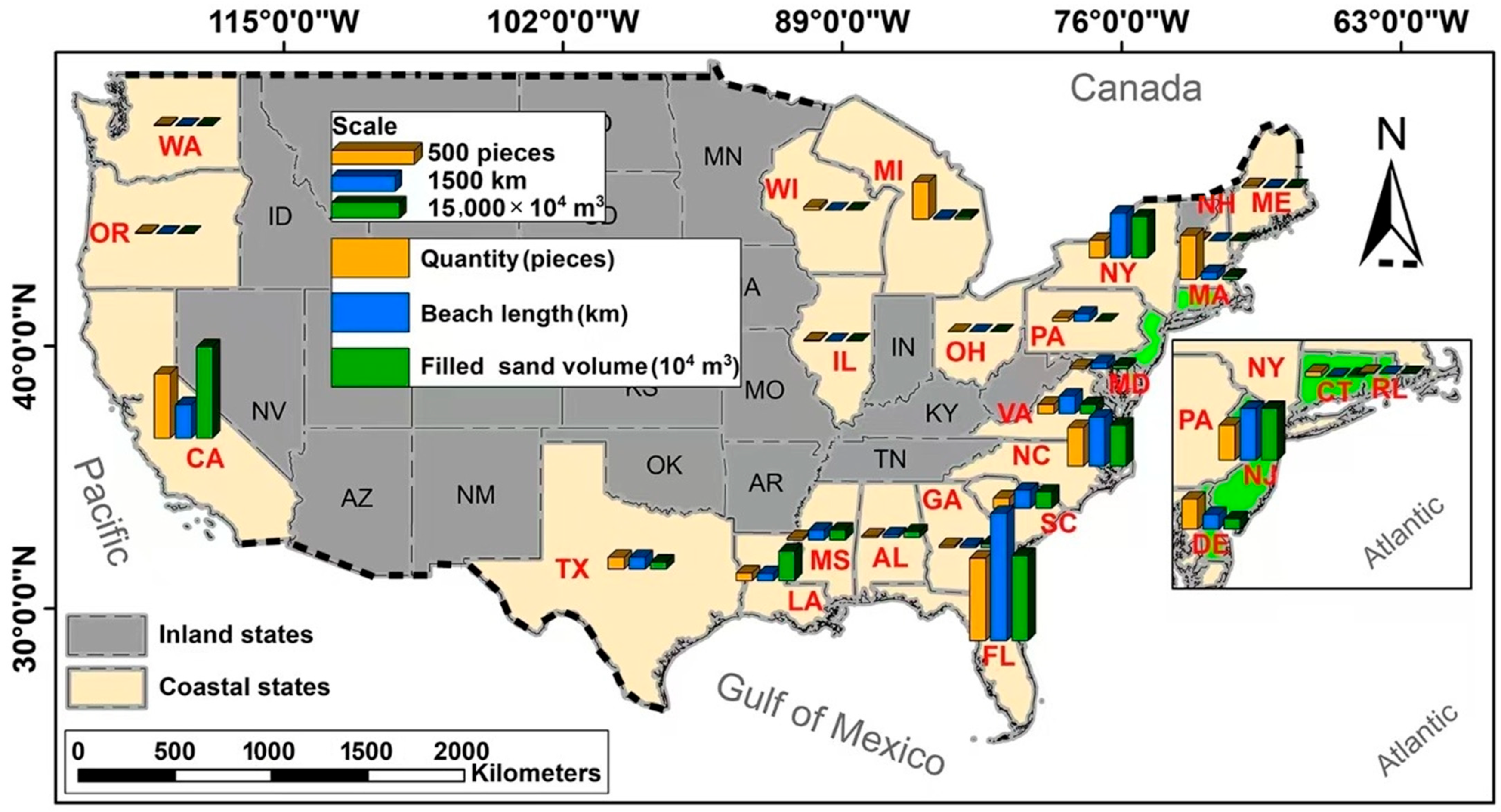
Figure 3 gives the distribution of beach nourishment across the U.S. In this figure, the brown, blue, and green columns represent project quantity, nourished beach length, and filled sand volume, respectively [43,44].
Beach nourishment in the U.S. is widely distributed across all coastal states, except for Indiana and Pennsylvania, which have almost no coastlines, and Michigan and New York, which also have “lake shores”. From the perspective of spatial distribution, beach nourishment in the U.S. is extremely unbalanced. With the exception of California, the majority of beach nourishment projects have occurred along the East and Gulf Coasts. Florida has the largest number of beach nourishment projects (688, accounting for 21.5% of the national total), the longest nourished beach length (4898 km, representing 30.62%), and the greatest filled sand volume (259.37 million m3, constituting 21.61%). The coastal states that have conducted the least beach nourishment are Washington, Oregon, Ohio, and Alaska (Figure 3).
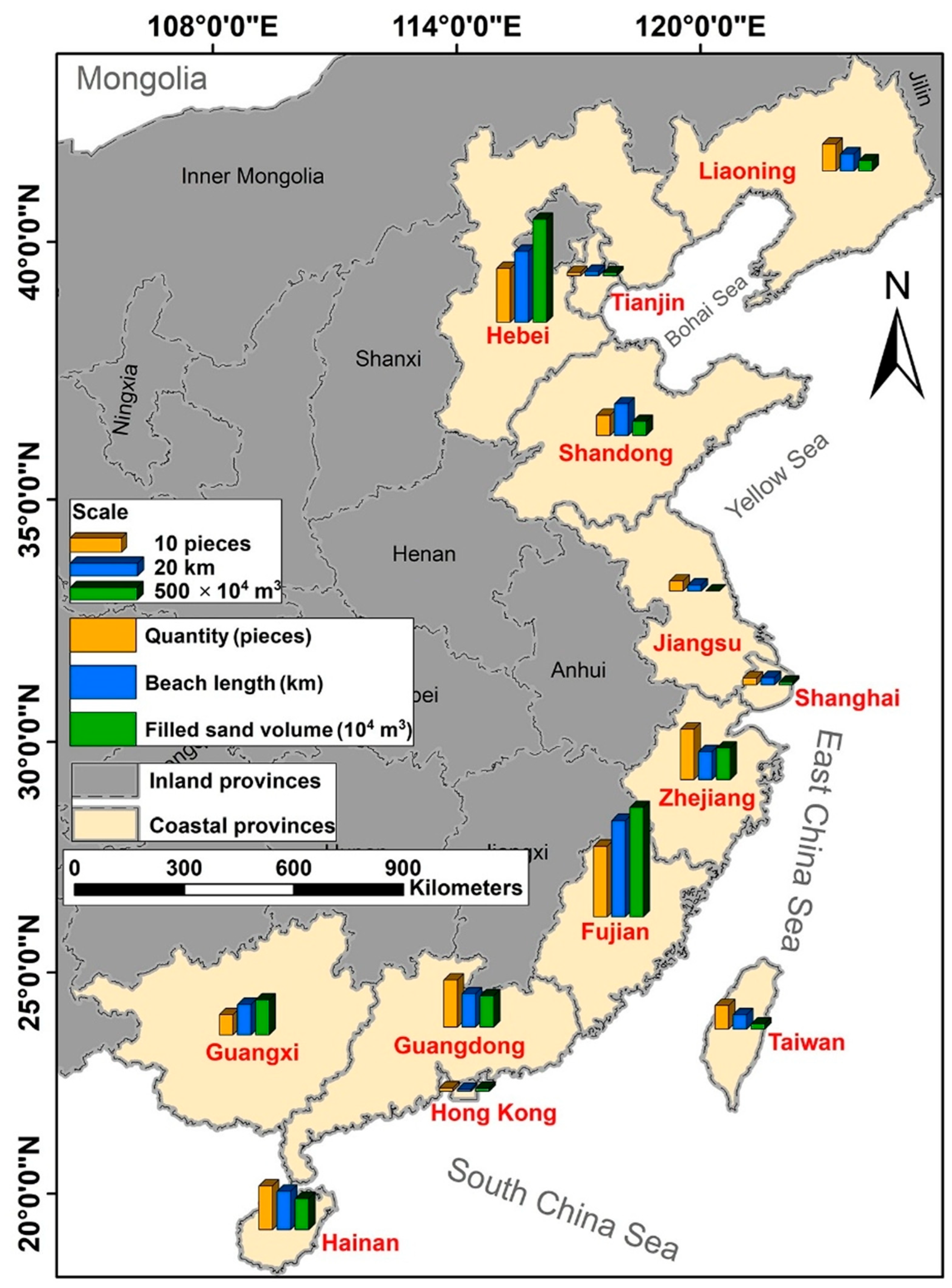
All coastal provinces/cities of China have conducted beach nourishment (Figure 4) [45,46]. Similar to that in the U.S., the spatial distribution of Chinese beach nourishment is also extremely unbalanced, showing the feature of being “more in the north and south and less in the middle”. Fujian Province, located in the south part of China, has the largest number of beach nourishment projects (21, accounting for 18.58% of the national total), the longest nourished beach length (29.7 km, representing 30.62%), and the greatest filled sand volume (7.44 million m3, constituting 21.61%). The coastal provinces/cities that conduct the least beach nourishment are Tianjin and Shanghai.
Although beach nourishment practices in both China and the United States exhibit significant spatial disparities, the underlying driving forces differ markedly. In the United States, restoration activities are heavily concentrated along the East Coast/Gulf of Mexico, a spatial pattern shaped primarily by dense coastal populations, frequent hurricane exposure, and chronic coastal erosion. U.S. restoration objectives emphasize hazard mitigation and asset protection, reflecting a risk-responsive management logic. In contrast, beach nourishment projects in China are clustered mainly in the southeastern coastal region, the Bohai Rim area, and the Yangtze River Delta. The spatial distribution here is influenced more strongly by tourism-driven economic incentives, national beach nourishment initiatives, and varying restoration feasibility across coastal types. This approach reflects a multi-objective management strategy oriented toward development–ecological synergy and ecological enhancement. This comparison not only highlights differences in coastal management goals and developmental stages between the two countries but also illustrates the interactive mechanisms between natural conditions and socio-economic systems in shaping restoration practices.

3.3. Converging Trends

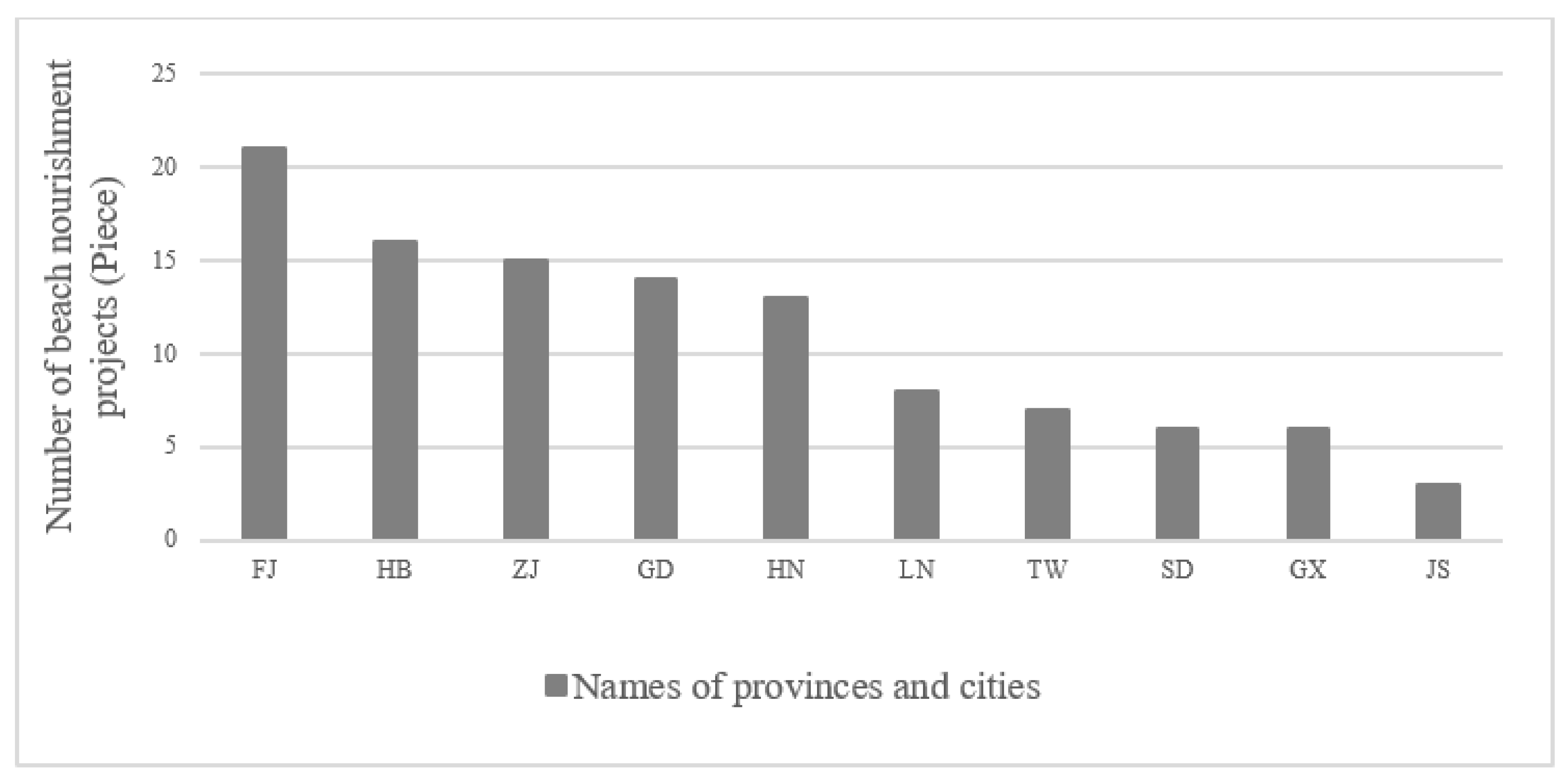
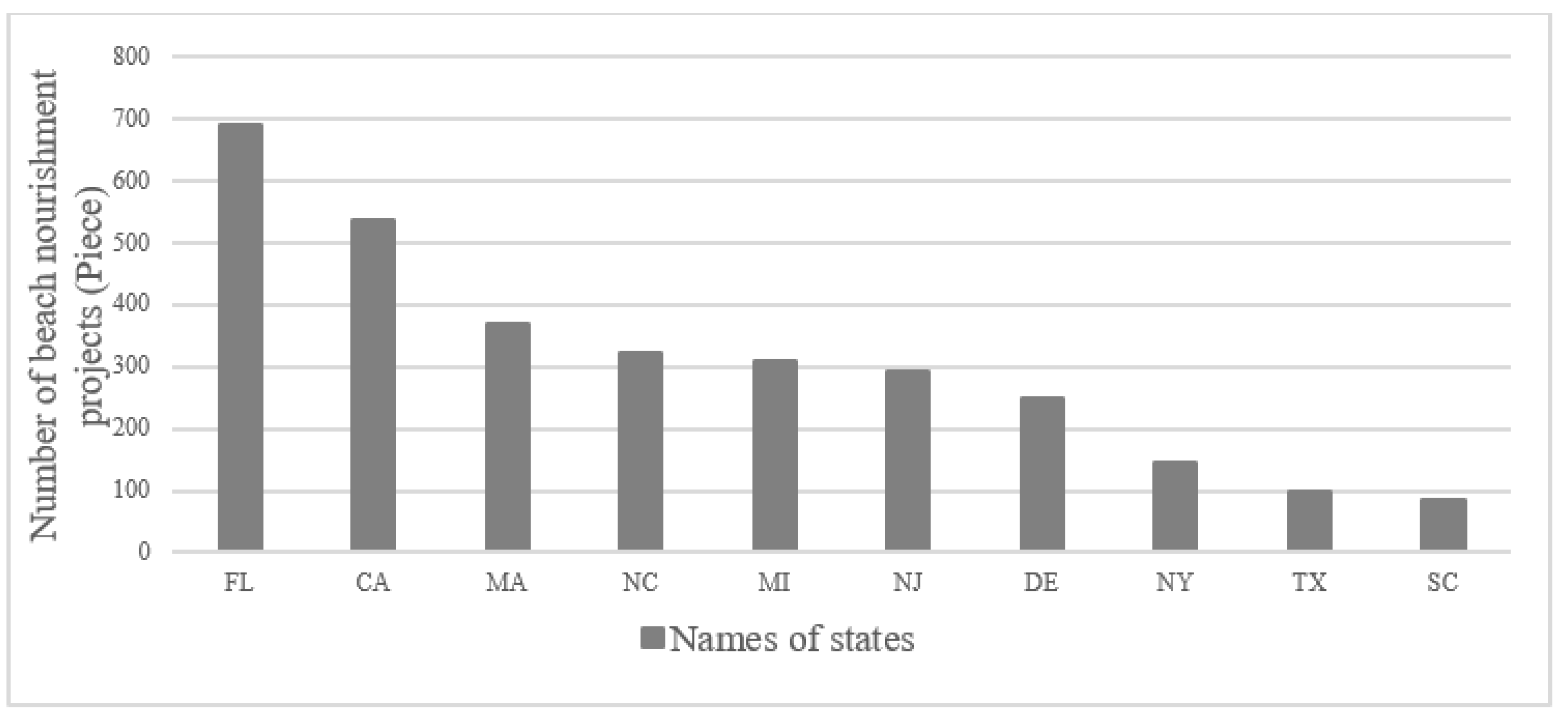
Figure 5 and Figure 6 give the number of beach nourishment projects ranked by province/state for the U.S. and China, respectively. The results show that Florida and California have the largest number beach nourishment projects, with 688 and 536, respectively, while in China, Fujian and Hebei have the largest numbers, with 21 and 16, respectively. Although China’s two largest provinces have seen a much smaller number of beach nourishment projects than the United States, the “beach nourishment primacy” index is extremely similar, at 1.31 and 1.28 for China (1990–2020) and the U.S. (1921–2020), respectively. These similar indexes indicate that the agglomeration of resources, technology, and talent related to beach nourishment may be similar in China and the U.S. Although the applicability of beach nourishment primacy needs to be further discussed, after nearly three decades of development, the gap between China and the U.S. in the beach nourishment distribution pattern and technical capabilities has been gradually narrowing.

3.4. Comparisons Between China and U.S. Regarding Beach Nourishment

3.4.1. Beach Nourishment Philosophy

Currently, a large number of beach nourishment projects in U.S. states apply a super-long design cycle of 50 years [31,47,48,49]. During these 50 years, beach nourishment may be carried out more than once, in line with the background erosion rate or sudden disaster events [34]. The periodic renourishment is an expected element of a long-term beach nourishment program. The average renourishment time for a beach on the East Coast in the U.S. is 3.7 years [50]. This value still needs further discussion and verification in subsequent scientific research and studies. For example, to reduce the damage from storms, Carolina Beach in the U.S. has implemented a 50-year coastal protection plan since 1964. During these 50 years, Carolina Beach has experienced 10 typhoons and 14 tropical storms, has implemented two beach renourishments, in 1967 and 1971, respectively, and has continued to carry out renourishment projects approximately every 3 years since 1993. The long design cycle involving long-term maintenance has reduced storm damage by 78% over 50 years [31,51,52].
Chinese beach nourishment strategy usually focuses on the short-term sediment loss rate, and each nourishment/renourishment project is usually considered as an individual case. Beidaihe Beach, which has the largest number of nourishment projects, was nourished only three times [53]. In China, the use of a whole-process maintenance plan on a long design cycle is extremely rare [54], primarily due to the different restoration philosophy.
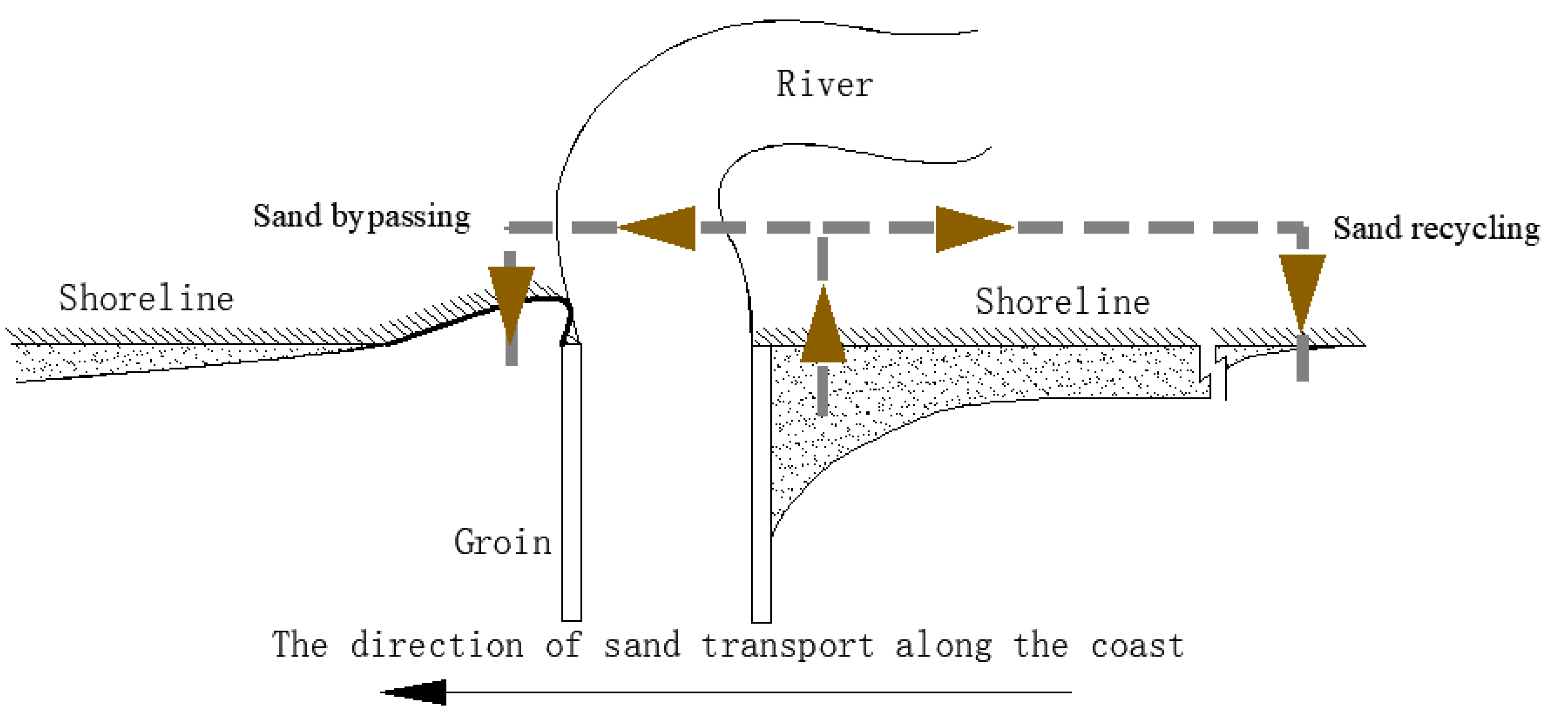
The idea of a “nature-based solution” (NBS) was introduced early in the United States [55,56]. It is a more eco-friendly solution, including concepts such as “Building with Nature”, “Living Shorelines”, “Engineering with Nature”, and “ecological engineering” [57,58]. Currently, the authorities of the U.S. prefer to respect nature in beach nourishment and do not deliberately pursue absolute stability. For example, the construction of long barriers (such as jetties on both sides of river estuaries) on coasts with background sand transport can block longshore sediment transport, resulting in an unbalanced regional sediment distribution and the erosion of adjacent shore beaches [59,60] (Figure 7). The traditional restoration method can involve building a large number of offshore breakwaters to limit sand from being transported along the coast. In NBSs, sand bypassing and sand recycling represent better approaches and do not require the building of additional structures [61,62].
For a long time, China’s beach nourishment practice has paid too much attention to beach stability, with a tendency to use hard structures (such as breakwaters) to construct static headlands; this reduces the beach renourishment period but also has a greater impact on the surrounding marine environment. In other words, beach nourishment in China focuses too much on localized areas to be restored and lacks Regional Sediment Management (RSM) including adjacent areas [63]. In recent years, with the strengthening of nature-based coastal protection methods and concepts, China has begun to try the NBS approach. For example, the beach nourishment in Haikou, Hainan, has adopted a sand recycling plan [64].

3.4.2. Funding Mechanism

In terms of funding sources, the U.S. adopts a multi-channel investment model [65]. And it has established a virtuous situation where federal government investment is dominant (around 60%), with active input from state and local governments and extensive participation of social capital [50,66]. Its diversified investment model benefits from its balanced development stage of beach management [44]. For example, in 2014, the restoration of Miami Beach directly benefited from USD 9.3 billion in terms of international visitors, a figure that is 3300 times its annual maintenance costs (USD 2.78 million). The high rate of return on beach nourishment has led to extensive social capital investment in beach nourishment [67]. In recent years, the total amount of capital invested in beach nourishment in the United States has gradually increased [31].
A large number of beach nourishment projects in China are initiated by local governments and can receive financial support from the central government after passing a rigorous assessment [68]. However, the central government tends to support public interest projects based on the need for coastal erosion protection and disaster prevention and mitigation, which limits the number and scale of beach nourishment and the motivation of social capital participation. To further promote the participation of social capital in ecological construction, in 2021, the Chinese government issued relevant documents to encourage social capital to participate in the whole process of investment, design, restoration and management of ecological protection and restoration projects and to allow social capital to receive reasonable returns from ecological protection and restoration practices [69].

3.4.3. Disparities in Regulatory and Permitting Processes

Beyond their macro-level governance frameworks, beach nourishment projects in the two countries encounter fundamentally different micro-level environments of environmental permitting and regulation, which profoundly shape their implementation pathways and underlying rationales.
In the United States, project execution must navigate a multi-agency, participatory review process centered on the National Environmental Policy Act (NEPA) [70]. Projects are required to secure multiple independent permits from federal (e.g., U.S. Army Corps of Engineers, U.S. Fish and Wildlife Service) and state agencies, involving comprehensive environmental impact assessments and public consultation [71]. This review-based model aims to minimize environmental risks and legal disputes but results in lengthy approval cycles, high upfront costs, and significant uncertainty. Consequently, nourishment resources are more concentrated on coastlines with clearly defined legal risks and exceptionally high economic value.
In contrast, projects in China follow a centralized and efficient administrative approval-based process, governed primarily by the Environmental Impact Assessment Law and the Sea Area Use Management Law. Approval authority is concentrated within natural resources and ecological-environment departments. The process is standardized and closely aligned with national strategic plans, such as the “Blue Bay” initiative. This model significantly enhances the speed and predictability of project implementation, providing strong support for the development-oriented nourishment strategy that favors large-scale, rapid deployment in priority regions. Areas for ongoing improvement include the long-term monitoring of ecological performance and the depth of public participation.

3.4.4. Techniques for Predicting and Evaluating the Evolution of the Coastline

For years, the U.S. has maintained its edge in the core technology of beach nourishment. The U.S. Army Corps of Engineers (USACE) started conducting large wave tank (LWT) experiments as early as 1956. These experiments systematically tested the relationship between the profile evolution and the incident wavelength, wave height, and particle size, as well as the initial slope of the coast [72]. Subsequently, with the rapid development of computer technology, high-precision beach nourishment numerical models have been increasingly developed and applied. For example, the GENESIS [73] model developed by the U.S. Army Corps of Engineers and Litpack model implemented in MIKE [74] are used in shoreline evolution in various design scenarios. In addition, 2D and 3D models coupled with higher computational efficiency, such as XBeach [75], have been successively developed to widely simulate the evolution of coastlines and beach profiles [76,77]. Recently, the roller/undertow effect has been considered in sediment transport processes of FUNWAVE-TVD [77,78], which is a total-variation-diminishing (TVD) version of the fully nonlinear Boussinesq wave model [79]. Additionally, the United States has extensively studied the process of allowing beaches to reshape themselves freely under the influence of waves, tides, and wind through preliminary conservation measures [80].
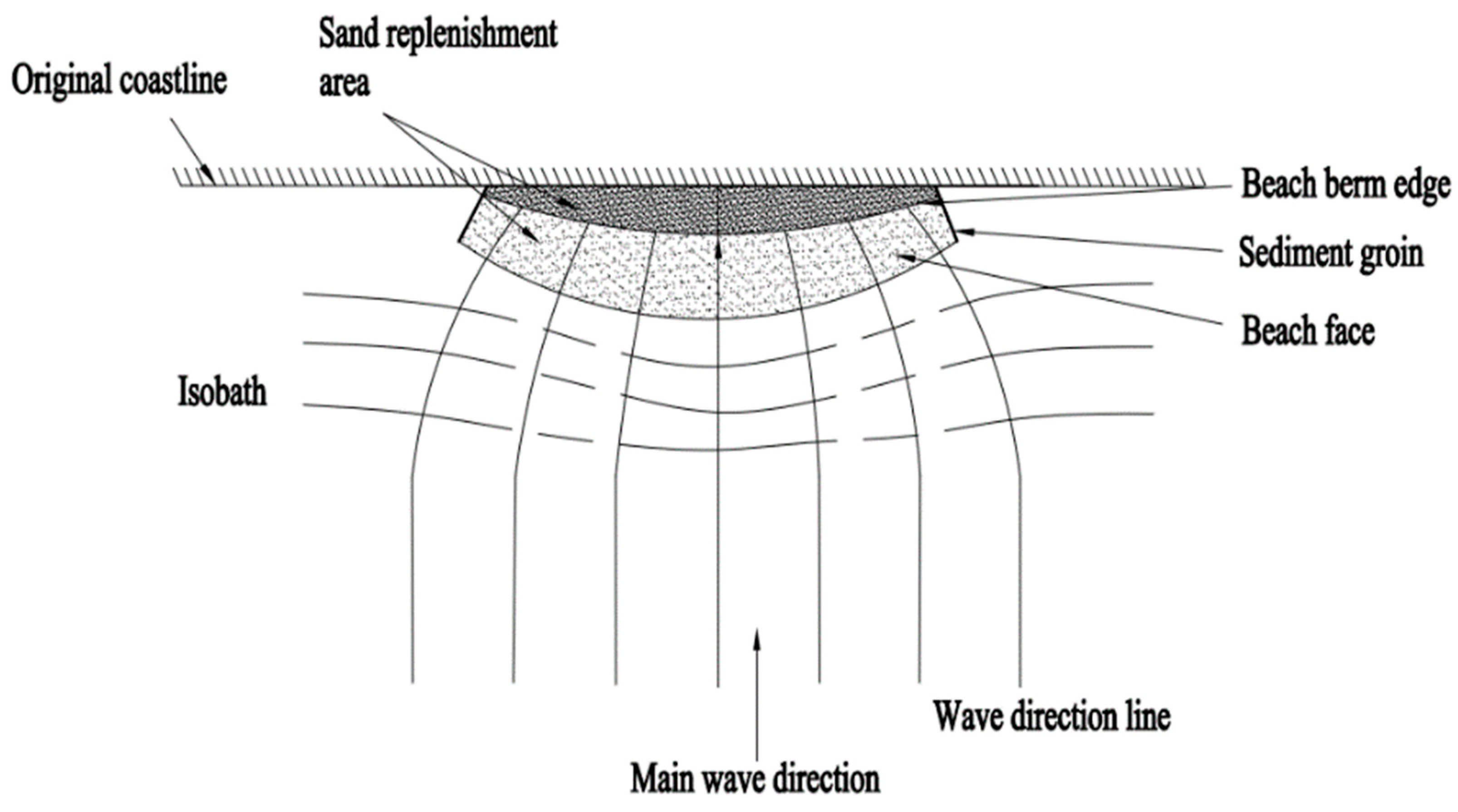
Relative to the U.S., China lacks typical achievements in the development of original theories and numerical models of beach nourishment. However, China has begun to attach importance to basic theoretical research. The Tianjin Research Institute for Water Transport Engineering, Ministry of Transport, built a super-large wave tank with a length of 456 m, a width of 5 m, and a depth of 8~12 m, which can produce 3.5 m wave height and 20 m3/s water flow and can simulate the beach evolution process under a 16 m wave height with a large scale of 1:1–1:5. China proposed innovative restoration ideas and technical concepts in the process of beach nourishment and restoration. For example, sandy beaches are generally absent on low-energy coasts, which are usually dominated by silt sediment. Recently, Zhu et al. [28] utilized the feature of the convergence effect of the wave energy on the headland and artificially constructed a convex headland-shaped beach berm, which could effectively increase the wave energy at the restoration site and improve the muddy situation of low-energy coastal regions (Figure 8). This approach has been put into practice in the case of Shajing Beach, Guangxi Province, which has demonstrated that the alongshore-averaged wave energy increased by 63.0% compared with the pre-nourishment value [81]. In addition to the low-energy coastal [82] beach nourishment method, there are a number of other innovative technologies, such as numerical simulation technology for the evolution of beach profiles with macro-tides [25] and layered nourishment technology for pebble beaches on strongly eroded coasts [83,84], which all contribute to the field of beach nourishment in China [34].

4. Discussion

4.1. Drivers of Disparities

The notable differences in beach nourishment practices between China and the United States stem from their distinct physical geographical conditions, policy and regulatory frameworks, and socio-economic contexts. These factors interact to shape the two countries’ divergent approaches and models in beach nourishment.

4.1.1. Constraints of Physical Geography and Coastal Geomorphology

Coastal type and sediment supply are fundamental factors determining the feasibility and technical pathways of beach nourishment. The United States possesses more extensively distributed sandy coasts and relatively abundant nearshore sand sources, providing the necessary sedimentary foundation for large-scale, high-frequency beach nourishment projects [85]. In contrast, China’s coastal geomorphology is more complex, with muddy coasts accounting for a significant proportion, particularly in areas adjacent to large river estuaries such as the Yangtze River and Yellow River (e.g., coastal regions of Jiangsu and Shanghai) [34]. These coasts not only lack suitable sand sources for nourishment but also face severe challenges in maintaining the stability of sandy beaches due to their high suspended sediment concentrations and unique sedimentary dynamic environments [28]. This fundamental geomorphological difference has led to a divergence in technical approaches: the U.S. focuses on periodic maintenance of existing sandy beaches, while China must undertake “artificial reconstruction” and stability enhancement of beaches under numerous unfavorable conditions.

4.1.2. Shaping by Policy Regulations and Governance Systems

Policy frameworks and governance structures are key institutional factors influencing the development trajectory of beach nourishment. The United States published its landmark Shore Protection Manual as early as 1975, marking the systematization of its beach nourishment theory and technical system [40]. Its governance model exhibits characteristics of “federal guidance and local leadership,” where the federal government provides major funding and sets technical standards through projects like those of the Army Corps of Engineers, while state and local governments play a core role in project initiation and management [31]. This multi-level governance structure enables projects to effectively respond to local needs, particularly those from coastal communities and the tourism industry. In contrast, China’s beach nourishment development is closely integrated into the national macro-strategic framework. Projects are mostly initiated by local governments and obtain financial support through strict evaluation by the central government [54]. Although this centralized governance model can efficiently mobilize resources and promote rapid project implementation, it also tends to orient projects more towards serving national strategies and public welfare goals, to some extent limiting the participation of market mechanisms.

4.1.3. Drivers of Economic Dynamics and Investment Mechanisms

Economic benefits and investment return mechanisms are core factors explaining the differences in the scale and frequency of beach nourishment between the two countries. In the United States, particularly in major tourist states like Florida, beaches are regarded as important economic assets, with clear expected economic returns on nourishment investments [49]. For instance, the tourism revenue generated by the Miami Beach nourishment project in 2014 was thousands of times its annual maintenance costs, forming a market value-oriented virtuous investment cycle [67]. This high rate of return significantly stimulates the enthusiasm of local governments and social capital for investment. In China, the economic valuation of beach nourishment is more comprehensive, with benefits more reflected in social aspects such as enhancing city image and improving the ecological environment. The direct economic return mechanism is not yet well-established, leading to primary reliance on government fiscal funding for projects and insufficient activation of market mechanisms [26].
In summary, physical geographical conditions form the material foundation of beach nourishment practices in both countries, policy and regulations shape their institutional frameworks, and economic dynamics ultimately determine their development scale and sustainability. The interaction of these three factors collectively constitutes the underlying mechanism for the disparities in beach nourishment between China and the United States.

4.2. Strategic Recommendations for China

4.2.1. National Nourishment Database

Over the past 20 years, each U.S. state has maintained the National Beach Nourishment Database besides NOAA and USGS, which contains relevant information (location, length, volume, investment, etc.) on all beach nourishment projects in each U.S. state. In addition, long-term follow-up monitoring data (including shoreline, profile, sediment, etc.) regarding beach nourishment is essential to analyze beach stability and evaluate beach nourishment effectiveness. The database helps to understand the impact of human factors on the long-term changes along the coast and advances the research capacity of beach nourishment technology. Although beach nourishment in China has developed rapidly in recent years, no beach nourishment database has been established yet. This lack has seriously affected the scientific management and information maintenance of beach resources and has restricted the scientific research on beach nourishment in China. In light of this, it is necessary to learn from the management experience of the U.S., establish a unified national beach nourishment database forthwith, and produce a whole-process management planning mechanism for unified use control, planning, monitoring, protection, and restoration.

4.2.2. Regional Sediment Management (RSM) Implementation

China should pay more attention to RSM, which is an integrated approach to analyze all coastal works related to sediment transport in a region from a systems perspective to enable more efficient use of sediment [43,63]. The essence of beach nourishment is the anthropogenic redistribution of coastal-zone sediments, and therefore beach nourishment can be integrated into the context of coastal-zone sediment management. By extending the consideration of beach nourishment from the damaged shoreline to the entire sediment unit system, the redistribution process of beach nourishment sediments and its overall restoration benefits can be analyzed from the perspective of regional sediment transport and sediment balance. Beach nourishment based on sediment management is a way of achieving restoration of sandy coastal systems that can address the root causes of coastal damage and reduce the negative impacts that may result [83].

4.2.3. Ecological Engineering Integration

China’s beach nourishment practices require a fundamental shift from traditional hard protection structures to nature-based ecological approaches. Future beach nourishment projects should systematically integrate ecological engineering concepts and widely adopt nature-based solutions (NBSs) to establish a more sustainable coastal protection system. In terms of structural design, we recommend promoting eco-friendly installations such as ecological seawalls and permeable breakwaters integrated with artificial reef functions. These structures not only effectively dissipate wave energy and stabilize beach sediments but also enhance marine biodiversity by creating diverse habitats, achieving synergistic benefits between coastal protection and ecological services. For sediment management strategies, priority should be given to dynamic maintenance techniques including sand bypassing and sediment recycling. These approaches can better simulate natural coastal processes while minimizing disruption to coastal sediment systems, embodying the “Building with Nature” philosophy for sustainable development [86]. Furthermore, the recently introduced concept of “Dynamic Coastlines” in China advocates for an ecological engineering approach aimed at harmonizing dynamic interactions [87,88]. This comprehensive ecological engineering methodology will facilitate the organic integration of coastal geomorphological systems with ecosystems, ultimately achieving a balance between coastal conservation and utilization and promoting a high-quality coastal development model characterized by harmonious coexistence between humans and nature.

4.3. Future Outlook, Challenges, and Limitations

Building on the comparative analysis, our perspective on the future trajectory of beach nourishment in both countries highlights intersecting opportunities and formidable challenges. Future pathways may see a strategic convergence: the U.S. could seek greater efficiency and ecological integration in its risk-driven model to address climate change urgently, while China might increasingly formalize long-term ecological performance monitoring and community engagement within its development-driven framework.
Both nations, however, face shared emerging threats that transcend their current models. The looming global sand resource deficit threatens the economic and physical feasibility of large-scale nourishment. Furthermore, accelerating sea-level rise and changing storm regimes may outpace the design life of existing projects, demanding more adaptive, possibly retreat-aligned, long-term strategies.
Finally, we acknowledge limitations of this study that define frontiers for future research. Our comparative framework, while systematic, relies on nationally aggregated data which may mask important sub-national variations. Furthermore, the long-term (decadal) socio-economic performance and community perceptions of nourishment projects in China remain an under-studied area crucial for evaluating its “development–synergy” model. Addressing these gaps will be essential for advancing evidence-based, sustainable coastal management globally.

5. Conclusions

This study provides a comprehensive comparative analysis of beach nourishment practices in China and the United States, highlighting distinct developmental pathways shaped by physical, institutional, and economic contexts. The U.S. demonstrates a mature, large-scale, and frequently maintained nourishment system, driven by multi-channel funding, long-term design cycles, and a strong orientation toward nature-based solutions. China, while starting decades later, has achieved remarkable growth in nourishment volume and technical capability yet remains characterized by shorter-term project horizons, centralized funding, and a historical reliance on hard structures for stability.
Key disparities arise from differences in coastal geomorphology, policy frameworks, and economic valuation of beaches. Nevertheless, the convergence in “beach nourishment primacy” between the two countries suggests similar patterns of resource and expertise concentration, indicating that China is gradually narrowing the gap in technical and spatial planning sophistication.
To advance its beach nourishment practice, China is advised to (1) establish a unified national nourishment database to enhance data-driven management, (2) implement Regional Sediment Management to optimize sediment use across coastal systems, and (3) integrate ecological engineering and nature-based solutions to promote sustainable and resilient shorelines. These steps would align China’s beach nourishment efforts more closely with international best practices while addressing its unique geographical and socio-economic conditions.
Overall, this comparison not only elucidates the contrasting models of two major coastal nations but also offers a forward-looking framework for enhancing beach nourishment strategies worldwide in an era of increasing coastal vulnerability.
It should be noted that, due to the absence of a unified national beach nourishment database in China, the data used in this study were compiled from project records updated by the Ministry of Natural Resources and supplemented with information from the relevant literature. This approach imposes certain constraints on data completeness and systematic consistency. Furthermore, variations in data collection criteria, monitoring protocols, and nourishment standards across different regions may affect the comparability and accuracy of the dataset. Moving forward, establishing a standardized, openly accessible data platform will be essential to support more robust scientific research and evidence-based policy-making in this field.

Author Contributions

M.J.: Writing—original draft. J.Z.: Conceptualization, Writing—original draft. F.S.: Data curation, Writing—original draft. M.M.: Conceptualization, Funding acquisition. P.D. and C.Z.: Investigation. X.Z. and G.L.: Methodology. X.D., X.J., and X.W.: Data curation. All authors have read and agreed to the published version of the manuscript.

Funding

This research was funded by the National Natural Science Foundation of China (52571296) and the Shandong Provincial Lab and Talent Program (“Double Hundred Plan for Oversees Experts” Talent Category, No. WSR2023026).

Data Availability Statement

The original contributions presented in this study are included in the article. Further inquiries can be directed to the corresponding author.

Conflicts of Interest

The authors declare that they have no known competing financial interests or personal relationships that could have appeared to influence the work reported in this paper.

References

  1. Yang, Y.X.; Zhang, J.B.; Liu, S.T. What we have learnt from the beach nourishment project in Qinhuangdao. Mar. Geol. Front. 2014, 30, 1–15. [Google Scholar] [CrossRef]
  2. Astuti, Y.; Widayati, C. The Natural Resources Governance as a Moderation for the Effect of Natural Environment on Community Based Empowerment (Case study in Ringgung Beach Bandar Lampung). J. Econ. Sustain. Dev. 2019, 10, 100–106. [Google Scholar] [CrossRef]
  3. Ariffin, E.H.; Zulfakar, M.S.Z.; Redzuan, N.S.; Mathew, M.J.; Akhir, M.F.; Baharim, N.B.; Baharim, N.B.; Awang, N.A.; Mokhtar, N.A. Evaluating the effects of beach nourishment on littoral morphodynamics at Kuala Nerus, Terengganu (Malaysia). J. Sustain. Sci. Manag. 2020, 15, 29–42. [Google Scholar] [CrossRef]
  4. Yaacob, R.; Shaari, H.; Sapon, N.; Ahmad, M.F.; Arifin, E.H.; Zakariya, R.; Hussain, M.L. Annual changes of beach profile and nearshore sediment distribution off Dungun-Kemaman, Terengganu, Malaysia. J. Teknol. 2018, 80. [Google Scholar] [CrossRef]
  5. Chen, W.C.; Zhuang, Z.Y.; Cao, L.H.; Zhou, J. Influence of an artificial headland on bathing beach: A case from the Moon Bay Beach, Longkou. Mar. Geol. Front. 2014, 30, 80–86. [Google Scholar] [CrossRef]
  6. Cherdvong, S. Willingness to restore jetty-created erosion at a famous tourism beach. Ocean Coast. Manag. 2019, 178, 104817. [Google Scholar] [CrossRef]
  7. Feng, Z.Q.; Zhuang, Z.Y.; Feng, X.L.; Zhang, Y.H. An effective artificial beach on muddy coast: The case of Jinshan City Beach of Shanghai. Mar. Geol. Front. 2020, 36, 19–25. [Google Scholar] [CrossRef]
  8. Donovan, R. Just 15.5% of Global Coastline Remains Intact. Eos. 21 March 2022. Available online: https://eos.org/articles/just-15-5-of-global-coastline-remains-intact (accessed on 18 October 2025).
  9. Defeo, O.; McLachlan, A.; Schoeman, D.S.; Schlacher, T.A.; Dugan, J.; Jones, A.; Lastra, M.; Scapini, F. Threats to sandy beach ecosystems: A review. Estuar. Coast. Shelf Sci. 2009, 81, 1–12. [Google Scholar] [CrossRef]
  10. Speybroeck, J.; Bonte, D.; Courtens, W.; Gheskiere, T.; Grootaert, P.; Maelfait, J.P.; Mathys, M.; Provoost, S.; Sabbe, K.; Stienen, E.W.; et al. Beach nourishment: An ecologically sound coastal defence alternative? A review. Aquat. Conserv. Mar. Freshw. Ecosyst. 2006, 16, 419–435. [Google Scholar] [CrossRef]
  11. Mo, W.Y.; Ji, G.H.; Xie, L.; Wang, D.R. Artificial sand beaches design in Sanmei Bay and Luhuitou Bay, Sanya. Mar. Geol. Front. 2014, 30, 34–37. [Google Scholar]
  12. Pranzini, E. Shore protection in Italy: From hard to soft engineering … and back. Ocean Coast. Manag. 2017, 156, 43–57. [Google Scholar] [CrossRef]
  13. Hanson, H.; Brampton, A.; Capobianco, M.; Dette, H.H.; Lamm, L.; Laustrup, C.; Lechuga, A.; Spanhoff, R. Beach nourishment projects, practices, and objectives—A European overview. Coast. Eng. 2002, 47, 81–111. [Google Scholar] [CrossRef]
  14. Pinto, C.A.; Silveira, T.M.; Teixeira, S.B. Beach nourishment practice in mainland Portugal (1950–2017): Overview and retrospective. Ocean Coast. Manag. 2020, 192, 105211. [Google Scholar] [CrossRef]
  15. Peterson, C.H.; Bishop, M.J.; Johnson, G.A.; D’Anna, L.M.; Manning, L.M. Exploiting beach filling as an unaffordable experiment: Benthic intertidal impacts propagating upwards to shorebirds. J. Exp. Mar. Biol. Ecol. 2006, 338, 205–221. [Google Scholar] [CrossRef]
  16. Brand, E.; Ramaekers, G.; Lodder, Q. Dutch experience with sand nourishments for dynamic coastline conservation—An operational overview. Ocean Coast. Manag. 2022, 217, 106008. [Google Scholar] [CrossRef]
  17. Cooke, C.B.; Jones, R.A.; Goodwin, D.I.; Bishop, M.J. Nourishment practices on Australian sandy beaches: A review. J. Environ. Manag. 2012, 113, 319–327. [Google Scholar] [CrossRef]
  18. Parkinson, W.R.; Ogurcak, E.D. Beach nourishment is not a sustainable strategy to mitigate climate change. Estuar. Coast. Shelf Sci. 2018, 212, 203–209. [Google Scholar] [CrossRef]
  19. Cherdvong, S.; Enzo, P.; Helmy, E.A.; Shin, L.Y. Jeopardizing the environment with beach nourishment. Sci. Total Environ. 2023, 868, 161485. [Google Scholar] [CrossRef]
  20. Leonard, L.; Dixon, K.; Pilkey, O.H. A Comparison of Beach Replenishment on the U.S. Atlantic, Pacific, and Gulf Coasts. J. Coast. Res. 1990, 6, 127–140. [Google Scholar]
  21. Castelle, B.; Turner, I.L.; Bertin, X.; Tomlinson, R. Beach nourishments at Coolangatta Bay over the period 1987–2005: Impacts and lessons. Coast. Eng. 2009, 56, 940–950. [Google Scholar] [CrossRef]
  22. Stive, J.M.; Schipper, D.A.M.; Luijendijk, P.A.; Aarninkhof, S.G.J.; Gelder-Maas, C.; Vries, J.S.M.T.; de Vries, S.; Henriquez, M.; Marx, S.; Ranasinghe, R. A New Alternative to Saving Our Beaches from Sea-Level Rise: The Sand Engine. J. Coast. Res. 2020, 29, 1001–1008. [Google Scholar] [CrossRef]
  23. Matthieu, S.D.; Bonnie, L.; Britt, R.; Arjen, L.; Thomas, S. Beach nourishment has complex implications for the future of sandy shores. Nat. Rev. Earth Environ. 2020, 2, 70–84. [Google Scholar] [CrossRef]
  24. Cai, F.; Dean, R.G.; Liu, J. Beach nourishment in China: Status and prospects. Coast. Eng. Proc. 2011, 1, management.31. [Google Scholar] [CrossRef]
  25. Shi, F.Y.; Cai, F.; Kirby, J.T.; Zheng, J.X. Morphological modeling of a nourished bayside beach with a low tide terrace. Coast. Eng. 2013, 78, 23–34. [Google Scholar] [CrossRef]
  26. Liu, G.; Cai, F.; Qi, H.S.; Liu, J.; Lei, G.; Zhu, J.; Cao, H.; Zheng, J.; Zhao, S.; Yu, F. A summary of beach nourishment in China: The past decade of practices. Shore Beach 2020, 88, 64–73. [Google Scholar] [CrossRef]
  27. Zhu, J.; Wang, Q.; Zhan, C.; Sun, F.J.; Hua, W.H.; Liu, J.H.; Qi, H.; Yang, Y. Different responses of two adjacent artificial beaches to Typhoon Hato in Zhuhai, China. J. Oceanol. Limnol. 2024, 42, 511–521. [Google Scholar] [CrossRef]
  28. Zhu, J.; Cai, F.; Qi, H.S.; Lei, G.; Liu, J.H.; Zheng, J.H.; Zheng, J.; Zhang, C.; Cao, H. Low-Energy Coastal Beach Restoration Method. U.S. Patent 11,519,147 B2, 6 December 2022. [Google Scholar]
  29. Somphong, C.; Udo, K.; Ritphring, S.; Shirakawa, H. Beach Nourishment as an Adaptation to Future Sandy Beach Loss Owing to Sea-Level Rise in Thailand. J. Mar. Sci. Eng. 2020, 8, 659. [Google Scholar] [CrossRef]
  30. Staudt, F.; Gijsman, R.; Ganal, C.; Mielck, F.; Wolbring, J.; Hass, H.; Goseberg, N.; Schüttrumpf, H.; Schlurmann, T.; Schimmels, S. The sustainability of beach nourishments: A review of nourishment and environmental monitoring practice. J. Coast. Conserv. 2021, 25, 34. [Google Scholar] [CrossRef]
  31. Elko, N.; Briggs, T.R.; Benedet, L.; Robertson, Q.; Gordon, T.; Webb, B.M.; Garvey, K. A century of U.S. beach nourishment. Ocean Coast. Manag. 2021, 199, 105406. [Google Scholar] [CrossRef]
  32. APTIM. ASBPA National Beach Nourishment Database. 2020. Available online: https://asbpa.org/national-beach-nourishment-database/ (accessed on 1 May 2020).
  33. WCU. Program for the Study of Developed Shorelines. Western Carolina University, 2020. Available online: http://beachnourishment.wcu.edu/ (accessed on 27 May 2020).
  34. Cai, F.; Liu, G. Beach nourishment development and technological innovations in China: An overview. J. Appl. Oceanogr. 2019, 38, 452–463. [Google Scholar]
  35. Zhu, J.; Cai, F.; Liu, J.; Liu, G.; Qi, H.; Lei, G.; Zheng, J.; Cao, H. Application of groin system in beach nourishment. Ocean Eng. 2021, 39, 152–165. [Google Scholar] [CrossRef]
  36. Lei, Z.M.; Kang, J.J. Evaluation Theory of Urban Primacy: Theoretical Framework and Empirical Analysis. Urban Stud. 2010, 17, 33–38. (In Chinese) [Google Scholar] [CrossRef]
  37. Lakshmana, R.S.M. Measuring Urbanisation, Growth of Urban Agglomeration, Urban Growth Sustainability and Role of Urban Primacy in India. J. Asian Afr. Stud. 2024, 59, 377–390. [Google Scholar] [CrossRef]
  38. Herron, W.J. Artificial beaches in Southern California. Shore Beach 1980, 48, 3–12. Available online: https://pascal-francis.inist.fr/vibad/index.php?action=getRecordDetail&idt=PASCALBTP8080286386 (accessed on 18 October 2025).
  39. Dean, R.G. Beach Nourishment: Theory and Practice; World Scientific Publishing Co. Pte. Ltd.: Singapore, 2003. [Google Scholar] [CrossRef]
  40. U.S. Army Corps of Engineers. Shore Protection Manual; Department of the Army, U.S. Army Corps of Engineers: Washington, DC, USA, 1975.
  41. Cao, H.M.; Cai, F.; Chen, F. Discussion on the conservation of Xiamen coastal beach and the development of marine tourism. Ocean Dev. Manag. 2009, 26, 58–62. [Google Scholar] [CrossRef]
  42. Cai, F. Chinese Beach Nourishment Manual; Ocean Press: Beijing, China, 2015. [Google Scholar]
  43. Howd, P. Beach processes and sedimentation, second edition. Eos Trans. Am. Geophys. Union 1998, 79, 231. [Google Scholar] [CrossRef]
  44. Zheng, W.; Cai, F.; Chen, S.; Zhu, J.; Qi, H.S.; Cao, H.T.; Zhao, S. Beach management strategy for small islands: Case studies of China. Ocean Coast. Manag. 2019, 184, 104908. [Google Scholar] [CrossRef]
  45. Gad, S.E.; Gad, S.C. National Environmental Policy Act, USA. Encycl. Toxicol. (Second Ed.) 2005, 65, 897–902. [Google Scholar] [CrossRef]
  46. Berke, P.; Roeseler, W.G. State Response to the Coastal Zone Management Act of 1972. In Coastal Zone ’83; ASCE: Reston, VA, USA, 2010. [Google Scholar]
  47. Froede, R.C. Significant beach nourishment project underway at Dauphin Island, Alabama (USA). J. Coast. Res. 2007, 2007, 807–808. [Google Scholar] [CrossRef]
  48. Dally, R.W.; Osiecki, A.D. Evaluating the Impact of Beach Nourishment on Surfing: Surf City, Long Beach Island, New Jersey, USA. J. Coast. Res. 2018, 34, 793–805. [Google Scholar] [CrossRef]
  49. Houston, J.R. The economic value of beaches—A 2013 update. Shore Beach 2013, 81, 3–10. [Google Scholar]
  50. Campbell, T.J.; Benedet, L. Beach nourishment magnitudes and trends in the U.S. J. Coast. Res. 2006, 39, 57–64. [Google Scholar]
  51. Kana, T.W.; Mohan, R.K. Analysis of Nourished Profile Stability following the Fifth Hunting Island (SC) Beach Nourishment Project. Coast. Eng. 1998, 33, 117–136. [Google Scholar] [CrossRef]
  52. Browder, A.E.; Dean, R.G. Monitoring and comparison to predictive models of the Perdido Key beach nourishment project, Florida, USA. Coast. Eng. 2000, 39, 173–191. [Google Scholar] [CrossRef]
  53. Qiu, R.F.; Zhuang, Z.Y.; Zhao, Y.P.; Liu, J.M. Beidaihe beach nourishment: A case study of beach nourishment project in Beidaihe. Mar. Geol. Front. 2014, 30, 26–33. [Google Scholar]
  54. Liu, G.; Cai, F.; Qi, H.S.; Zhu, J.; Lei, G.; Cao, H.M.; Zheng, J. A method to nourished beach stability assessment: The case of China. Ocean Coast. Manag. 2019, 177, 166–178. [Google Scholar] [CrossRef]
  55. Pontee, N. Nature-based solutions: Lessons from around the world. Proc. Inst. Civ. Eng.—Marit. Eng. 2016, 169, 29–36. [Google Scholar] [CrossRef]
  56. Slobbe, E.V.; Vriend, H.; Aarninkhof, S.; Lulofs, K.; Vries, M.; Dircke, P. Building with Nature: In search of resilient storm surge protection strategies. Nat. Hazards 2013, 66, 1461–1480. [Google Scholar] [CrossRef]
  57. Borsje, B.W.; Wesenbeeck, B.; Dekker, F.; Paalvast, P.; Bouma, T.J.; Katwijk, M.M.; de Vries, M.B. How ecological engineering can serve in coastal protection. Ecol. Eng. 2011, 37, 113–122. [Google Scholar] [CrossRef]
  58. Chapman, M.G.; Underwood, A.J. Evaluation of ecological engineering of ‘armoured’ shorelines to improve their value as habitat. J. Exp. Mar. Biol. Ecol. 2011, 400, 302–313. [Google Scholar] [CrossRef]
  59. Quadrado, G.P.; Dillenbug, S.R.; Goulart, E.S.; Barboza, E.G. Historical and geological assessment of shoreline changes at an urbanized embayed sandy system in Garopaba, Southern Brazil. Reg. Stud. Mar. Sci. 2021, 42, 101622. [Google Scholar] [CrossRef]
  60. Saengsupavanich, C.; Yun, L.S.; Lee, L.H.; Sanitwong-Na-Ayutthaya, S. Intertidal intercepted sediment at jetties along the Gulf of Thailand. Front. Mar. Sci. 2022, 9, 970592. [Google Scholar] [CrossRef]
  61. King, E.V.; Conley, D.C.; Masselink, G.; Leonardi, N.; MxCarroll, R.J.; Scott, T.; Valiente, N.G. Wave, Tide and Topographical Controls on Headland Sand Bypassing. J. Geophys. Res. Ocean 2021, 126, e2020JC017053. [Google Scholar] [CrossRef]
  62. Mohammad, K.; Jack, A.P.; Jeffrey, G.; Nathaniel, G.P. Beach response to a fixed sand bypassing system. Coast. Eng. 2013, 73, 28–42. [Google Scholar] [CrossRef]
  63. Palaparthi, J.; Briggs, R.T. Regional Sediment Management in US Coastal States: Historical Trends and Future Predictions. J. Mar. Sci. Eng. 2024, 12, 528. [Google Scholar] [CrossRef]
  64. He, Y.Y.; Zhu, J.; Qi, H.S.; Liu, G.; Lei, G.; Zhao, S.H.; Zheng, J. Beach restoration strategy influenced by artificial island: A case study on the west coast of Haikou. J. Appl. Oceanogr. 2021, 40, 2–11. [Google Scholar] [CrossRef]
  65. Zhang, Z.K. The practice and law system studies on coastal-ocean management of America. Mar. Geol. Lett. 2022, 18, 23–27. (In Chinese) [Google Scholar]
  66. Finkl, C.W.; Benedet, L.; Campbell, T.J. Beach nourishment experience in the United States: Status and trends in the 20th century. Shore Beach 2006, 74, 8–16. [Google Scholar] [CrossRef]
  67. Ren, H.; Yang, T.; Zhang, Z.K.; Jiang, D.L.; Ren, Z.P.; Xie, L. Development of Beach Nourishment and Beach Economy in the United States and Its Implications for China’s Coastal Tourism. Trop. Geogr. 2016, 36, 253–259. [Google Scholar] [CrossRef]
  68. Zhuang, Z.Y.; Cao, L.H.; Li, B.; Gao, W. An overview of beach nourishment in China. Mar. Geol. Quat. Geol. 2011, 31, 133–139. [Google Scholar] [CrossRef]
  69. Cai, F.; Liu, S.S.; Qi, H.S.; Buitrago, N.R.; Liu, J.H. From beach resources to law: An examination of legal instruments for beach management in China. Ocean Coast. Manag. 2024, 253, 107–147. [Google Scholar] [CrossRef]
  70. Flick, R.E. The myth and reality of southern California beaches. Shore Beach 1993, 61, 3–13. [Google Scholar]
  71. Leatherman, S.P. Shoreline stabilization approaches in response to sea level rise: U.S. experience and implications for Pacific Island and Asian nations. Water Air Soil Pollut. 1996, 92, 149–157. [Google Scholar] [CrossRef]
  72. Fang, K.Z.; Wang, H.; Sun, J.W.; Zhang, J.B.; Liu, Z.B. Including Wave Diffraction in XBeach: Model Extension and Validation. J. Coast. Res. 2019, 36, 116–127. [Google Scholar] [CrossRef]
  73. Hargono, S.; Augusto, E.; Wiranto, A.P.; Pramana, R. Simulation of shoreline change related coastal structure. Adv. Sci. Lett. 2018, 24, 9089–9093. [Google Scholar] [CrossRef]
  74. Townsend, K.E.; Thomas, R.C.; Frey, A.E. Shoreline Change Modeling Using One-Line Models: Application and Comparison of GenCade, Unibest, and Litpak; ERDC/CHL CHETN-IV-102; U.S. Army Engineer Research and Development Center: Vicksburg, MS, USA, 2014. [Google Scholar]
  75. Roelvink, D.; McCall, R.; Mehvar, S.; Nederhoff, K.; Dastgheib, A. Improving predictions of swash dynamics in XBeach: The role of groupiness and incident-band runup. Coast. Eng. 2018, 134, 103–123. [Google Scholar] [CrossRef]
  76. Fernández-Montblanc, T.; Duo, E.; Ciavola, P. Dune reconstruction and revegetation as a potential measure to decrease coastal erosion and flooding under extreme storm conditions. Ocean Coast. Manag. 2020, 188, 105075. [Google Scholar] [CrossRef]
  77. Zhu, J.; Cai, F.; Shi, F.Y.; Qi, H.S.; Lei, G.; Liu, J.H.; Cao, H.; Zheng, J. Beach response to breakwater layouts of drainage pipe outlets during beach nourishment. Estuar. Coast. Shelf Sci. 2019, 228, 106354. [Google Scholar] [CrossRef]
  78. Zhu, J.; Shi, F.Y.; Cai, F.; Wang, Q.; Qi, H.S.; Zhan, C.; Liu, J.; Liu, G.; Lei, G. Influences of beach berm height on beach response to storms: A numerical study. Appl. Ocean Res. 2022, 121, 103090. [Google Scholar] [CrossRef]
  79. Shi, F.Y.; Kirby, J.T.; Harris, J.C.; Geiman, J.D.; Grilli, S.T. A high-order adaptive time-stepping TVD solver for Boussinesq modeling of breaking waves and coastal inundation. Ocean. Model. 2012, 43–44, 36–51. [Google Scholar] [CrossRef]
  80. Huisman, B.J.; Wijsman, J.W.; Arens, S.M.; Vertegaal, C.T.M.; Valk, L.; Donk, S.C.; Vreugdenhil, H.S.I.; Taal, M.D. 10-Years Evaluation of the Sand Motor: Results of the Monitoring-and Evaluation Program (MEP) for the Period 2011 to 2021; Deltares: Delft, The Netherlands, 2021. [Google Scholar]
  81. Wen, C.L.; Zhu, J.; Cai, F.; Wang, L.H.; Qi, H.S.; Liu, J.H.; Lei, G.; Zhao, S. Spatial and Temporal distribution of wave energy on low energy coasts under the effect of beach restoration project. Oceanol. Limnol. Sin. 2021, 52, 75–85. [Google Scholar] [CrossRef]
  82. Jackson, N.L.; Nordstrom, K.F.; Eliot, I.; Masselink, G. ‘Low energy’ sandy beaches in marine and estuarine environments: A review. Geomorphology 2002, 48, 147–162. [Google Scholar] [CrossRef]
  83. Qi, H.S.; Cai, F.; Lei, G. A Design Method for Beach Nourishment in Strongly Eroded Bare Shore Sections. China ZL201810198175.6, 29 June 2021. [Google Scholar]
  84. Shu, F.F.; Cai, F.; Qi, H.S.; Liu, J.H.; Lei, G.; Zheng, J.X. Morphodynamics of an Artificial Cobble Beach in Tianquan Bay, Xiamen, China. J. Ocean Univ. China 2019, 18, 868–882. [Google Scholar] [CrossRef]
  85. Dean, R.G.; Dalrymple, R.A. Coastal Processes with Engineering Applications; Cambridge University Press: Cambridge, UK, 2001; pp. 3–20. [Google Scholar] [CrossRef]
  86. Luijendijk, A.P.; Borsje, B.W.; Aarninkhof, S.G.J. Building with nature in the coastal environment and field applications. Environ. Coast. Offshore 2013, 36–45. Available online: https://cdn.coverstand.com/9890/143864/143864.2.pdf (accessed on 18 October 2025).
  87. Morales, J.A. The Rocky Coastlines of the Canary Islands. In The Spanish Coastal Systems (Dynamic Processes, Sediments and Management); Chapter 8; Springer: Cham, Switzerland, 2019; pp. 167–185. [Google Scholar] [CrossRef]
  88. Gallagher, L. Sand and Sustainability: Finding New Solutions for Environmental Governance of Global Sand Resources; United Nations Environment Programme: Nairobi, Kenya, 2019. [Google Scholar] [CrossRef]
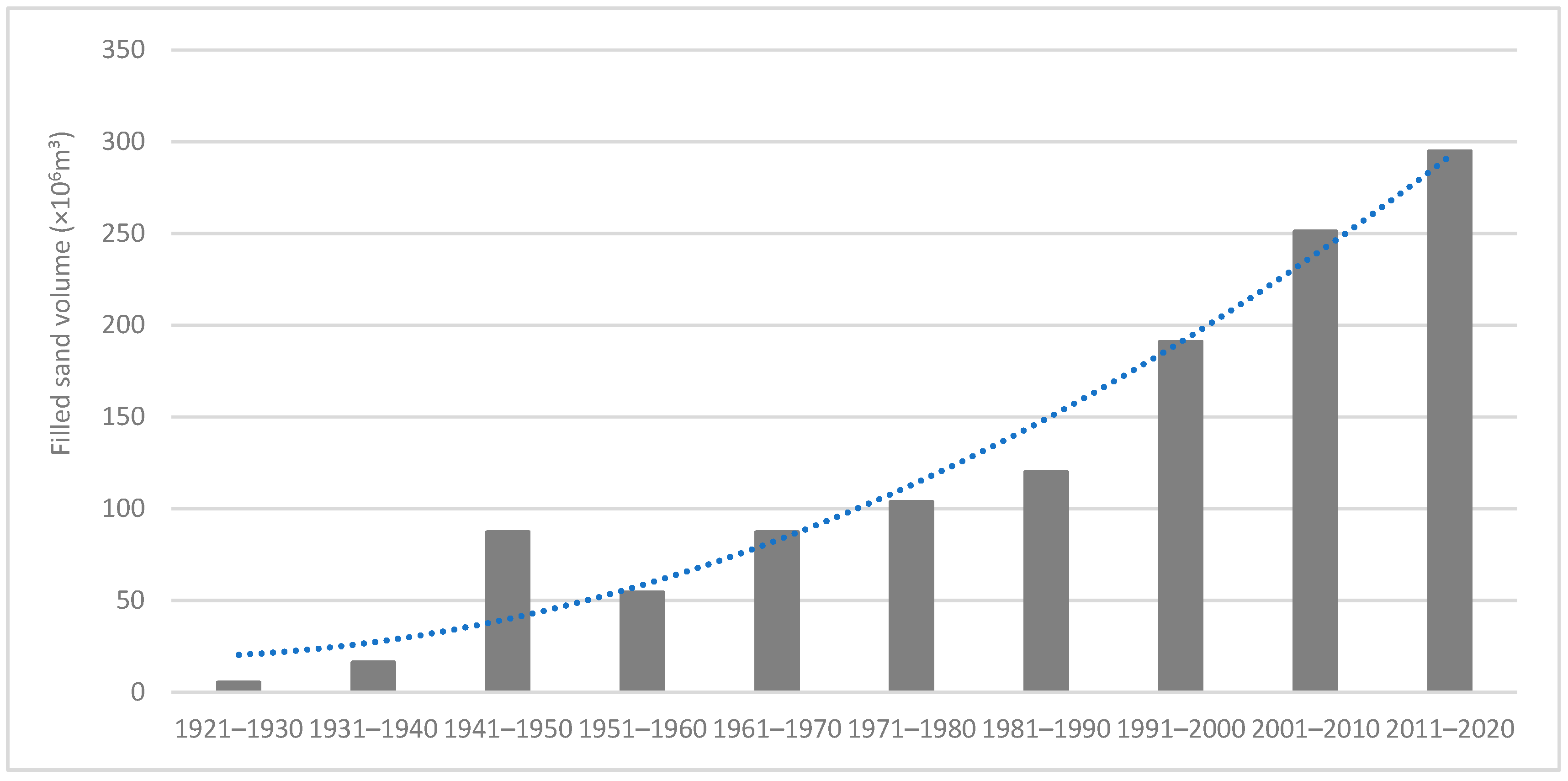
Figure 1. The trend of beach nourishment volume in the U.S. (the x-axis takes 10 years as the period; the y-axis takes 50 × 106 m3 as the period).
Water 18 00283 g001
Figure 2. The trend of beach nourishment volume in China (the x-axis takes 5 years as the period; the y-axis takes 2 × 10⁶ m3 as the period).
Water 18 00283 g002
Figure 3. The state of beach nourishment across the U.S. In the histogram, the brown, blue, and green columns represent project quantity, nourished beach length, and filled sand volume, respectively.
Water 18 00283 g003
Figure 4. The state of beach nourishment across China. In the histogram, the brown, blue, and green columns represent project quantity, nourished beach length, and filled sand volume, respectively.
Water 18 00283 g004
Figure 5. The top ten U.S. states in terms of the number of beach nourishment projects (the y-axis takes 100 as the period).
Water 18 00283 g005
Figure 6. The top ten Chinese provinces in terms of the number of beach nourishment projects (the y-axis takes 5 as the period).
Water 18 00283 g006
Figure 7. Sketch of sand bypassing and sand recycling during beach nourishment.
Water 18 00283 g007
Figure 8. Sketch of low-energy coastal beach nourishment.
Water 18 00283 g008
Table 1. Summary of the practices of beach nourishment projects in China and the U.S.
CountryEarliest Recorded Nourishment YearTotal Length of Coastline
(km)
Statistics Cut-Off YearNumber of Nourishment ProjectsTotal Nourished Beach Length (km)Total Filled Sand Volume
(104 m3)
Filled Sand Volume over the Last Decade (104 m3)
U.S.1919199,9242020320015,993120,00029,507
China199217726202011311726002028
Disclaimer/Publisher’s Note: The statements, opinions and data contained in all publications are solely those of the individual author(s) and contributor(s) and not of MDPI and/or the editor(s). MDPI and/or the editor(s) disclaim responsibility for any injury to people or property resulting from any ideas, methods, instructions or products referred to in the content.