


Abstract
The widespread use of antibiotics has led to the persistence of antibiotic-resistant bacteria (ARB) and antibiotic resistance genes (ARGs) in drinking water systems, posing potential public health risks at the point of use. In this study, a residential secondary water supply system (SWSS) in eastern China was investigated over one year to characterize microbial communities, ARB and ARG occurrence, and their associations with water quality in bulk water and biofilms. Culture-based methods, flow cytometry, quantitative PCR, and high-throughput 16S rRNA and ITS sequencing were applied. Although conventional treatment removed 94.8% of total bacteria, significant microbial regrowth occurred during secondary distribution, with the highest heterotrophic plate counts observed in rooftop storage tanks (up to 4718 CFU/mL). ARG concentrations increased along the distribution line, and the class 1 integron intI1 was enriched in downstream locations, indicating enhanced horizontal gene transfer potential. Sulfonamide resistance genes dominated the resistome, accounting for more than 60% of total ARG abundance in water samples. Seasonally, ARG levels were higher in autumn and winter, coinciding with elevated disinfectant residuals and lower temperatures. Chlorine was negatively associated with total bacterial abundance, while positive correlations were observed with the relative abundance of several ARGs when normalized to bacterial biomass, suggesting selective pressure under oxidative stress. Turbidity and bacterial abundance were positively correlated with ARB, particularly sulfonamide-resistant bacteria. Biofilms exhibited more stable microbial communities and provided microhabitats that facilitated microbial persistence. Notably, fungal abundance showed strong positive correlations with multiple ARGs, implying that microbial interactions may indirectly contribute to ARG persistence in SWSSs. These findings highlight the role of secondary distribution conditions, disinfectant pressure, and microbial interactions in shaping resistance risks in residential water supply systems, and provide insights for improving microbial risk management at the point of consumption.
1. Introduction
Antibiotics are widely detected across surface water, groundwater, drinking water, and wastewater due to misuse and continuous inputs from domestic and industrial effluents [1,2]. When residual levels exceed assimilative capacity, selection pressures foster antibiotic-resistant bacteria (ARB) and antibiotic resistance genes (ARGs), now recognized by WHO as a major health challenge [3]. In drinking water treatment plants, clarification removes attachment-prone particulates and disinfection generally lowers the absolute abundance of ARGs, yet increases in relative abundance are often observed [4,5]. Once water enters distribution, >90% of microorganisms reside as biofilms, creating hotspots for horizontal gene transfer (HGT) and elevating resistance risks [6,7,8,9]. These risks are intensified in secondary water supply systems (SWSSs)—building-scale storage and distribution common in high-rise residences—where long hydraulic retention, stagnation, and intermittent operation degrade microbiological quality [10,11]. Recent studies have suggested that fungal communities, as integral components of drinking water biofilms in SWSSs, may indirectly influence microbial interactions and resistance persistence [12]. SWSSs are also the final interface before the tap, making the coupling of water vs. biofilm resistomes operationally critical [13,14,15].
ARG dissemination in aquatic systems is dominated by HGT, with conjugation the principal pathway alongside transformation and transduction [16]; antibiotic usage remains a key driver [17]. Additional pressures reshape resistomes: heavy metals and algal toxins induce cross-resistance [18,19]; chlorination can restructure communities and enrich specific ARB/ARGs [20,21,22]; and biofilms stabilized by extracellular polymeric substances (EPS) provide protective niches and sorption sites that enhance gene exchange [23,24]. Control is complicated by taxon-specific tolerances and the higher vulnerability of extracellular versus intracellular ARGs to oxidants and UV [25]. Across sources and treatment, ARG occurrence shows pronounced spatial/seasonal patterns and depends on water quality [26,27]. Coagulation-sedimentation reduces turbidity-associated ARGs; granular filtration can later enrich ARGs as media biofilms establish [28,29]. Biologically activated carbon may enrich ARGs via HGT and alter downstream communities, increasing transmission risk in networks [30]. For terminal disinfection, appropriate chlorine/chloramine CT values reduce absolute ARG levels, but community shifts can raise relative abundance, and suboptimal doses may stimulate HGT and select chlorine-tolerant determinants [31]; UV alone is often insufficient [32,33], and ozonation can be matrix-limited [34,35]. However, antibiotic resistance dynamics within building-scale secondary water supply systems, particularly the comparative behavior of resistomes in bulk water and pipe-wall biofilms and the potential involvement of fungal communities, remain insufficiently understood.
This study targets a residential SWSS in East China, asking how secondary distribution conditions structure ARB/ARGs across bulk water and pipe biofilms. We integrate culture-based enumeration, flow cytometry, and quantitative PCR to quantify total bacteria, ARB, ARGs, and intI1; apply high-throughput 16S rRNA and ITS sequencing to resolve bacterial and fungal communities; and relate resistome metrics to routine water-quality parameters (temperature, total chlorine, turbidity, dissolved organic carbon (DOC)/assimilable organic carbon (AOC)/bacterial regrowth potential (BRP)). Laboratory simulations of intermittent tank operation probe biofilm accumulation of ARB/ARGs under realistic SWSS regimes. We hypothesize that (i) microbiomes and resistomes in bulk water and biofilms may exhibit decoupled patterns. Here, “decoupling” is defined in an operational sense as divergent resistome composition, relative abundance, or environmental associations between these two compartments, rather than complete independence or the absence of exchange; (ii) residual disinfectants, temperature, particulate niches, and nutrients jointly govern ARG burden and HGT potential; and (iii) fungal assemblages act as measurable co-drivers in building-scale systems. Findings aim to deliver mechanistic insight and actionable guidance—residual management, tank cleaning, and biofilm control—to safeguard microbiological quality at the point of use.
In this context, the present study provides several novel contributions to the understanding of antibiotic resistance in drinking water systems. First, unlike most previous studies focusing on treatment plants or large-scale distribution networks, this work investigates ARB and ARGs at the building-scale secondary water supply system, which represents the final barrier before point-of-use exposure. Second, by simultaneously analyzing bulk water, pipe-wall biofilms, and fungal communities, this study integrates bacterial and fungal ecology into a unified framework to explore their potential joint roles in ARG persistence. Third, the combined assessment of seasonal variation, disinfectant residuals, and tank-cleaning disturbance enables a more comprehensive evaluation of how operational and environmental factors interact to shape resistance risks in secondary water supply systems.
2. Materials and Methods
2.1. Sampling Strategy and Frequency
This study investigated an old residential community in Shanghai, East China, focusing on its SWSS over one year. The residential community is located in a subtropical monsoon climate zone. During the study period, the average ambient air temperatures were approximately 10–15 °C in spring, 25–30 °C in summer, 15–20 °C in autumn, and 5–10 °C in winter, while the corresponding source water temperatures ranged from 12–18 °C, 24–28 °C, 16–20 °C, and 6–10 °C, respectively. Sampling points included the drinking water treatment plant, municipal network, and community SWSS (Figure S1). The site is about 10 km from the plant, with a hydraulic retention time of 20 h, and underwent SWSS renovation in 2021. The six-story building is supplied directly by the municipal network on floors 1–3 and by a pump-roof tank system on floors 4–6. Both the roof tank and riser pipes are 304 stainless steel. The tanks were rinsed with dilute hydrochloric acid. The treatment plant uses surface water and employs conventional treatment plus ozonation-biological activated carbon (O3-BAC).
Sampling was conducted seasonally at fixed intervals of approximately three months (spring, summer, autumn, and winter). At each seasonal campaign, samples were collected once from all predefined sampling points to characterize system-wide conditions at the building scale. This sampling design was intended to capture temporal variability across seasons rather than short-term fluctuations at individual locations. Before sampling, the inside of faucets were disinfected with alcohol-soaked cotton balls and flushed for 1 min. For microbiological testing, 250 mL water samples were collected in sterile glass bottles; for DNA and chemical analyses, 10 L samples were gathered in plastic containers pre-cleaned with hypochlorous acid solution.
Biofilm samples were collected using a detachable device of four 304 stainless steel pipe sections. After rinsing, the inner surfaces were swabbed with sterile cotton, transferred into PBS buffer, and processed by vortexing, ultrasonication, and settling. Biofilm suspensions were stored at 4 °C until analysis.
2.2. Determination of Antibiotic Resistance Levels
2.2.1. Detection of Antibiotic-Resistant Bacteria
Five R2A (Hopebio, Qingdao, China) media were prepared: one antibiotic-free and four supplemented with tetracycline, sulfamethoxazole, clarithromycin, or norfloxacin. These antibiotics were selected to represent major resistance classes frequently reported in drinking-water-related environments and to enable standardized cultivation-based comparison across sampling points. The antibiotic-free medium served as the control for heterotrophic plate counts. At present, routine monitoring data on trace antibiotic concentrations in regional drinking water sources are scarce, and no long-term publicly available dataset exists for the study area. Therefore, antibiotic stock solutions were prepared according to minimum inhibitory concentrations (MICs), as specified in the pharmacopeia published by CLSI [36] (Table S1). The MIC-based concentrations were applied as standardized selection thresholds for cultivation-based comparison, rather than to simulate environmentally relevant antibiotic concentrations.
Media were sterilized at 121 °C for 20 min, cooled to 50–55 °C, and mixed with 0.22 µm-filtered antibiotic stocks. To suppress fungi, 200 mg L−1 cycloheximide was added to all media.
Water samples were serially diluted tenfold with PBS, and 1 mL of each dilution was plated on the five media types. Plates were incubated at 22 °C for 7 days, and colonies were counted in triplicate.
2.2.2. Quantification of Antibiotic Resistance Genes
Microorganisms from 10 L water samples were concentrated by filtration through 0.22 μm membranes. Filters were collected with sterile forceps, placed in 5 mL tubes, and stored at −80 °C. DNA was extracted using the FastDNA Spin Kit (MP Biomedicals, Santa Ana, CA, USA), and concentration and purity were determined with a NanoDrop spectrophotometer (Thermo Fisher Scientific, Waltham, MA, USA). Extracted DNA was used for ARG quantification by qPCR and for 16S rRNA sequencing (Gene Denovo Biotechnology, Guangzhou, China). For bulk water samples, ARG abundances were quantified as gene copy numbers per milliliter of water (copies/mL). For biofilm samples, ARG abundances were expressed as gene copy numbers normalized to pipe surface area (copies/cm2), reflecting spatially attached biomass.
ARGs were quantified using real-time qPCR on an ABI 7500 system (Applied Biosystems, Thermo Fisher Scientific, Waltham, MA, USA). Each 20 μL reaction contained 10 μL TB Green mix, 0.4 μL ROX dye, 0.8 μL of each primer, 6 μL ddH2O, and 2 μL template DNA. The program included 95 °C for 30 s, followed by 40 cycles of 95 °C for 5 s, annealing for 30 s, and 72 °C for 30 s, with fluorescence detection at each cycle. A melting curve (55–95 °C) confirmed specificity. Ct values were converted to gene copy numbers using standard curves generated from known concentrations. Detailed primer sequences and amplification conditions are provided in Table S2, and all qPCR analyses were performed in triplicate to ensure analytical reliability.
2.3. Microbial Community Analysis
Extracted DNA was analyzed by Gene Denovo Biotechnology (Guangzhou, China) using Illumina sequencing. The V3-V4 region of the 16S rRNA gene and the ITS2 region were amplified with barcoded primers (Table S3). Purified amplicons were ligated with adapters to construct sequencing libraries. After sequencing, raw reads were filtered, merged, and de-chimerized to obtain high-quality tags. Operational taxonomic units (OTUs) were clustered at 97% sequence similarity, and representative sequences were used for community analysis.
2.4. Biological Water Quality Indicators
2.4.1. Determination of Assimilable Organic Carbon
LLA medium (composition in Table S4) was used, and all glassware was carbon-free treated and sterilized at 121 °C for 20 min. Pure strains were pre-cultured in 0.2 μm-filtered sterile water at 25 °C for 7 days, then 100 μL of acclimated inoculum was transferred into a 2000 μg/L acetate-carbon solution and incubated to stationary phase. Cell density was determined by plate counting, and inocula were stored at 4 °C in the dark for up to three months.
Residual chlorine was neutralized with sodium thiosulfate (10 mg/L, excessive dosage). Forty milliliters of each sample were filtered through a 0.45 μm membrane, transferred to carbon-free glass flasks, and pasteurized at 70 °C for 30 min. After cooling, samples were aseptically inoculated with bacterial suspensions (104 CFU/mL).
Pseudomonas fluorescens P17 was first incubated at 25 °C in the dark for 3 days, followed by plate counting and repasteurization. Spirillum NOX was then inoculated, incubated under the same conditions for 4 days, and enumerated. All experiments were performed in triplicate. Pseudomonas fluorescens P17 and Spirillum NOX were obtained from the China Center of Industrial Culture Collection (CICC).
2.4.2. Measurement of Bacterial Regrowth Potential
R2A medium (composition in Table S5) with PBS as diluent was prepared using carbon-free glassware (Anpel, Shanghai, China) sterilized at 121 °C for 20 min. Indigenous bacteria were enriched from source water filtered through a 2 μm glass fiber membrane and incubated at 22 °C in the dark for 5–7 days to reach the stationary phase. The inoculum was stored at 4 °C for up to three months.
Immediately after sampling, residual chlorine was neutralized with sodium thiosulfate (10 mg/L, excessive dosage). A 100 mL water sample was pasteurized at 70 °C for 30 min, cooled, and inoculated with 1 mL bacterial suspension. Samples were incubated at 22 °C for five days, serially diluted, and plated for enumeration. All tests were performed in triplicate, and BRP values were expressed as CFU/mL.
2.4.3. Heterotrophic Plate Count
Microbial counts were determined by inoculating water samples onto R2A agar and incubating at 25 ± 1 °C for 7 days. Each sample was analyzed in triplicate. For influent samples with high microbial loads, serial dilutions were performed prior to plating. To prevent fungal interference during incubation, actidione (200 mg/L) was added to all media.
2.4.4. Flow Cytometry Analysis
An aliquot of 200 μL of each water sample was transferred into a 2 mL microcentrifuge tube. Under dark conditions, 10 μL of SYTO 9 and 10 μL of propidium iodide (PI) working solutions were added, yielding final dilutions of 1:20,000 and 1:50,000, respectively. Samples were mixed thoroughly using a vortex mixer and incubated in the dark at 37 °C for 20 min. Before flow cytometric analysis, samples were gently vortexed to ensure uniform cell distribution.
2.5. Physicochemical Water Quality Parameters
Residual chlorine and temperature were measured on-site, while all other physicochemical parameters were analyzed within 24 h in the laboratory. The instruments used for each measurement are listed in Table S6.
2.6. Statistical Analysis
Statistical analyses were performed to evaluate differences among seasons and sampling points. Data were first assessed for normality and homoscedasticity prior to group comparisons. When assumptions were met, parametric tests were applied; otherwise, non-parametric tests were used. Correlations between water quality parameters, microbial indicators, and ARGs were evaluated using Spearman’s rank correlation analysis. Statistical significance was determined at p ≤ 0.05, p ≤ 0.01, and p ≤ 0.001, as indicated in the corresponding figures.
3. Results and Discussion
3.1. Occurrence of Antibiotic Resistance
3.1.1. Abundance of Antibiotic-Resistant Bacteria
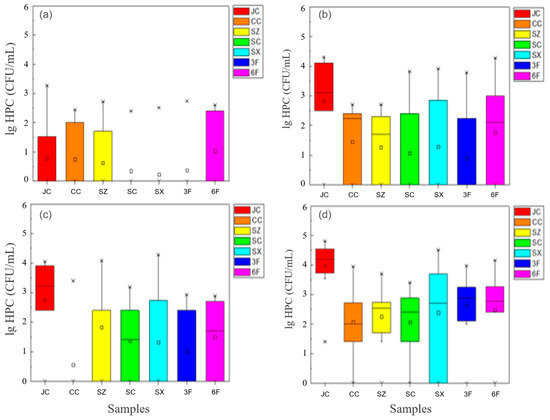
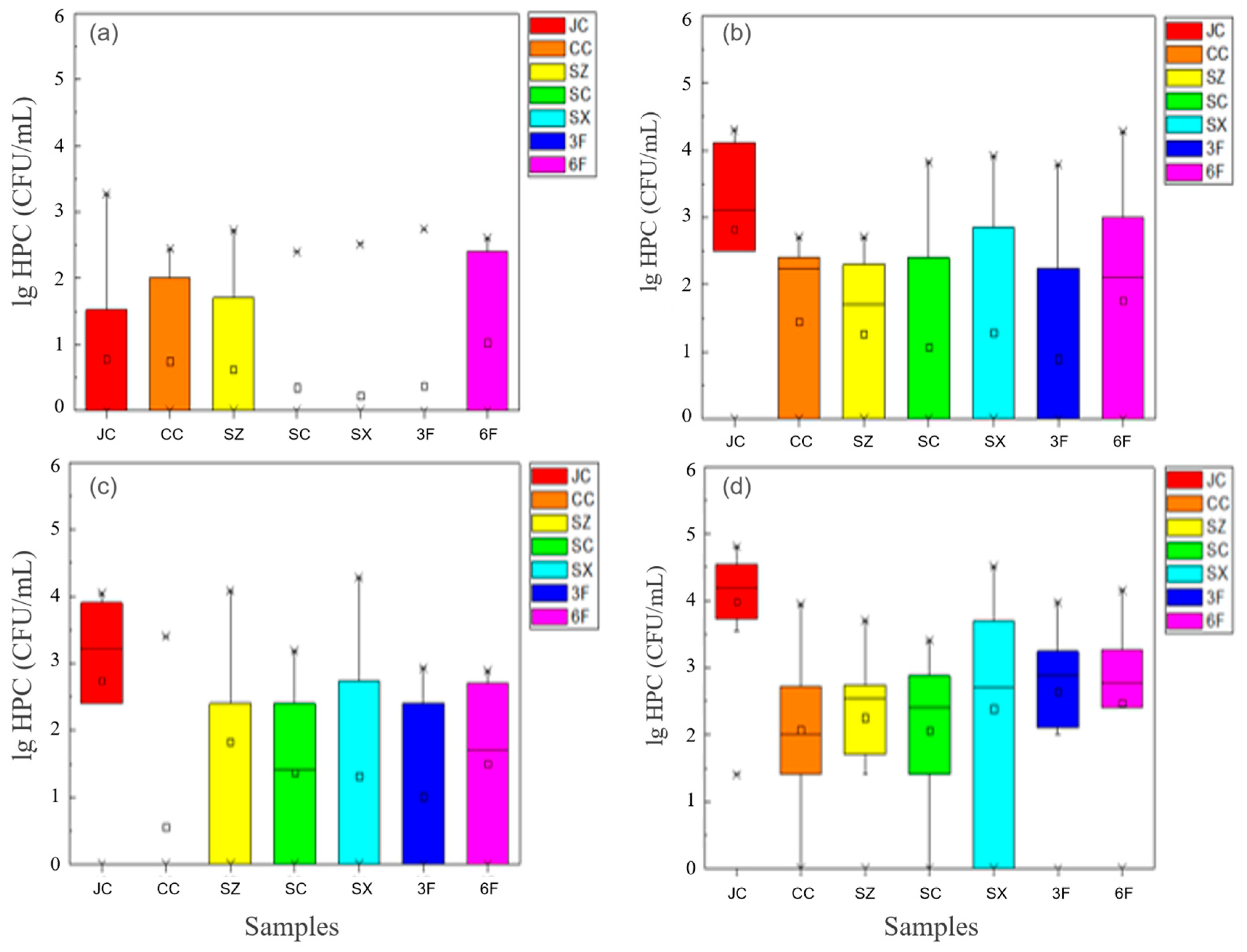
As shown in Figure 1, heterotrophic plate counts for ARB in influent water exhibited the following mean order: clarithromycin-resistant bacteria (19,000 CFU/mL) > sulfonamide-resistant bacteria (5690 CFU/mL) > norfloxacin-resistant bacteria (3618 CFU/mL) > tetracycline-resistant bacteria (197 CFU/mL). Seasonal variation was insignificant for sulfonamide, norfloxacin, and clarithromycin, but significant for tetracycline, suggesting that tetracycline-resistant species were more strongly affected by temperature.
Figure 1.
Comparison of heterotrophic plate count (HPC) variations on antibiotic-containing media among sampling points: (a) tetracycline, (b) sulfonamide, (c) norfloxacin, (d) clarithromycin.
Statistical analyses were performed to evaluate differences among seasons and sampling points. Data were first assessed for normality and homoscedasticity prior to group comparisons. When assumptions were met, parametric tests were applied; otherwise, non-parametric tests were used. Correlations between environmental parameters, microbial indicators, and ARGs were assessed using Spearman’s rank correlation analysis. Among sampling points, tetracycline (p = 0.677 > 0.05) and norfloxacin (p = 0.072 > 0.05) resistance showed no significant difference, while sulfonamide (p = 0.012 < 0.05) and clarithromycin (p = 0.000 < 0.01) resistance varied significantly. This indicates that tetracycline and norfloxacin exert relatively stable inactivation and selection effects on bacterial communities across locations—implying low pollution levels of these antibiotics. In contrast, high ARB levels for sulfonamides and clarithromycin suggest greater environmental influence of these antibiotics in source waters.
3.1.2. Abundance of Antibiotic Resistance Genes
Statistical analyses indicated that seasonal variation had a stronger influence on ARG occurrence than spatial location, as reflected by the larger number of genes showing significant temporal differences (Table S7). It was shown that there were no significant spatial differences for intI1 and nine ARGs; only 16S rRNA and ampC showed significant variation among locations. In contrast, 16S rRNA, intI1, and seven ARGs exhibited significant seasonal differences, while tetA, sulII, and ampC did not.
Average ARG concentrations at each sampling point (Table S8) revealed that 16S rRNA levels generally increased along the distribution line, indicating microbial regrowth as a major risk source. The class 1 integron intI1 also increased along the pipeline and was positively correlated with 16S rRNA (r = 0.63), demonstrating active HGT in the secondary system, particularly where microbial abundance is higher.
Sulfonamide resistance genes (sulI, sulII) and the β-lactam gene ampC exhibited relatively high levels at all points, suggesting prevalent resistance mechanisms against sulfonamides and β-lactams in the system.
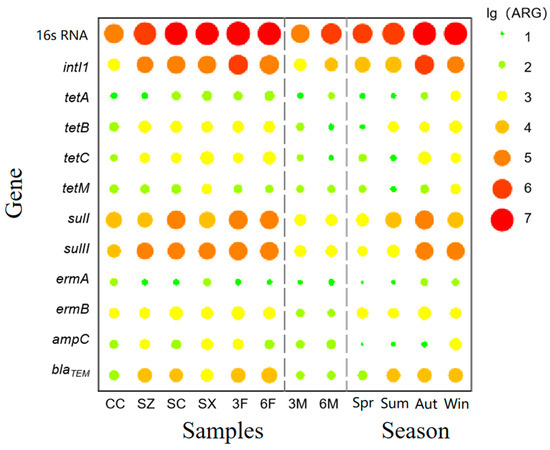
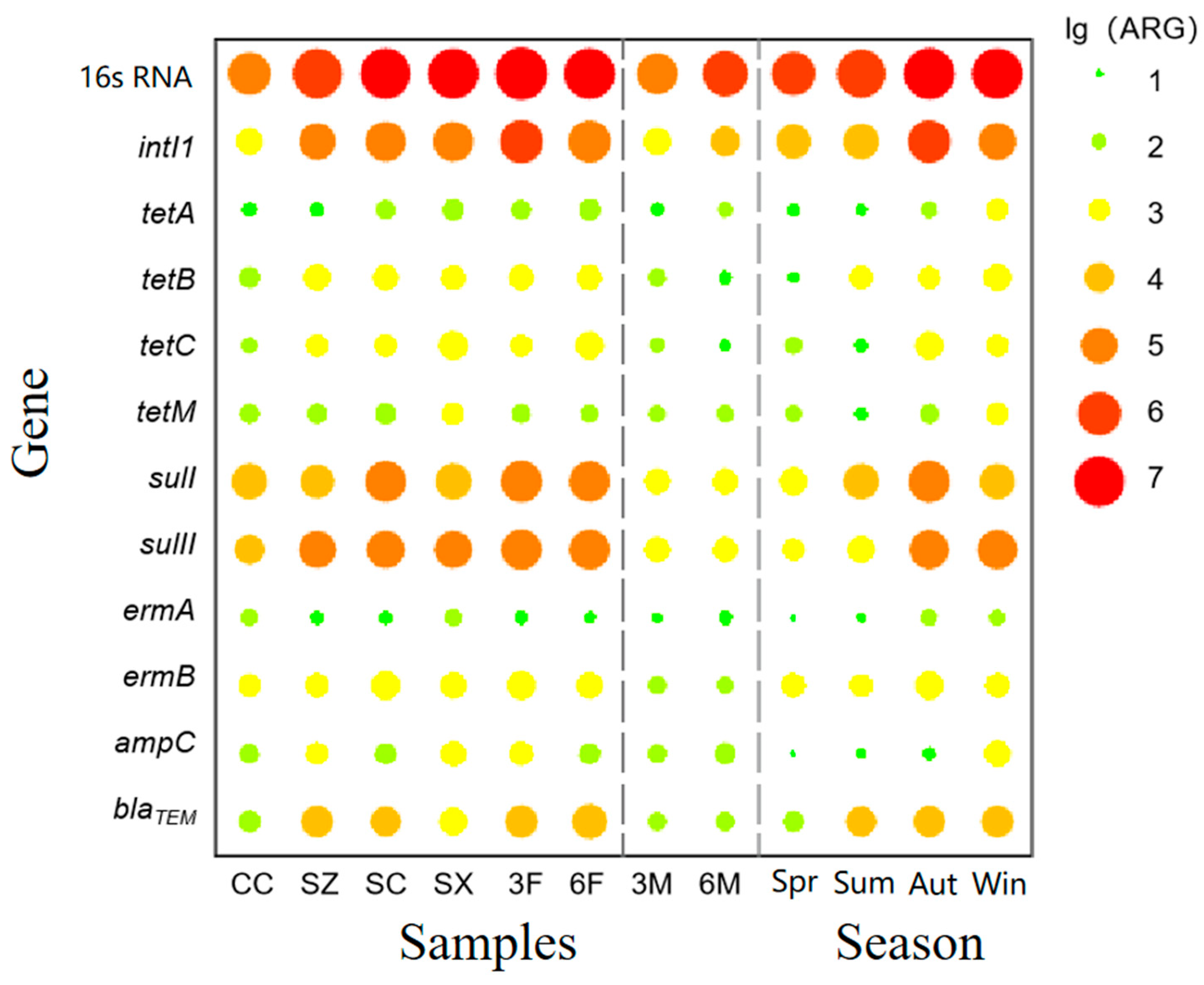
Spatial patterns (Figure 2) showed gradual increases in all ARGs from the treatment plant to system endpoints, with sulfonamides dominating the resistome (63.10% for sulI; 79.43% for sulII), while all other genes remained below 2%. This indicates that sulfonamides are key drivers of resistance in drinking water systems.
Figure 2.
Variations in the average concentrations of ARGs along the secondary water supply system.
In biofilms, ARG distribution was more balanced and overall lower than in water samples, this pattern may be influenced by differences in biomass recovery and DNA extraction efficiency from biofilm matrices, and therefore should not be interpreted as evidence for the absence of ARG retention in biofilms.
Seasonally, ARG concentrations followed the pattern Spring/Summer < Autumn/Winter. Macrolides peaked in autumn, while β-lactams peaked in winter. Combined with total chlorine data, this suggests that higher disinfectant levels in cold seasons impose selective pressure that promotes ARG proliferation and accelerates HGT.
3.2. Drivers of Antibiotic Resistance and Environmental Factors
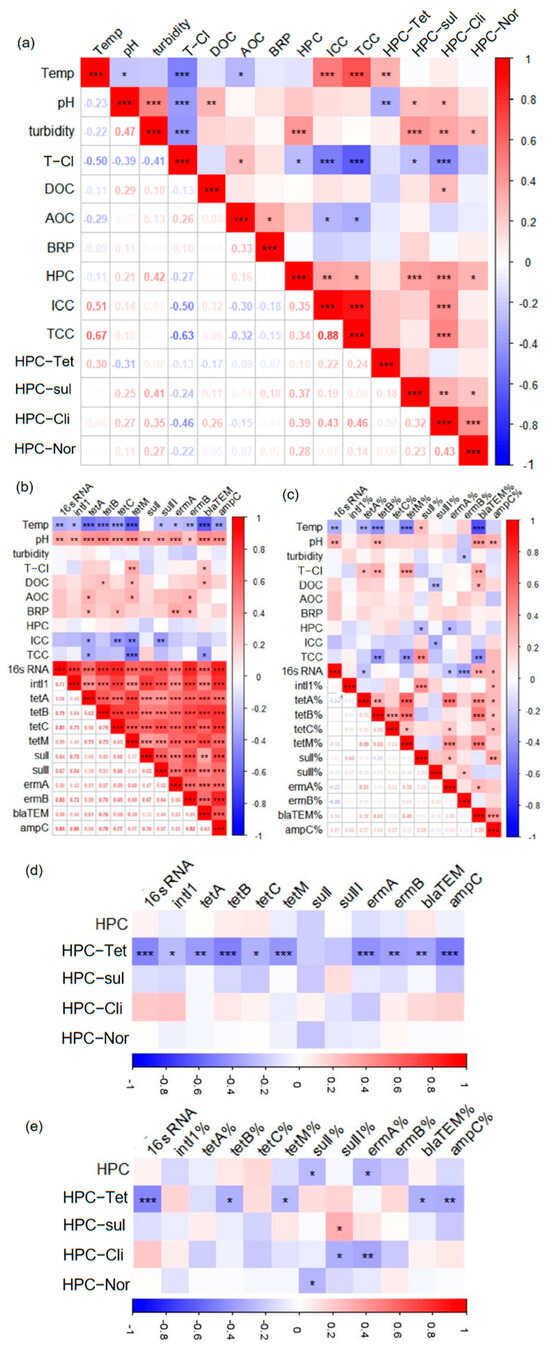
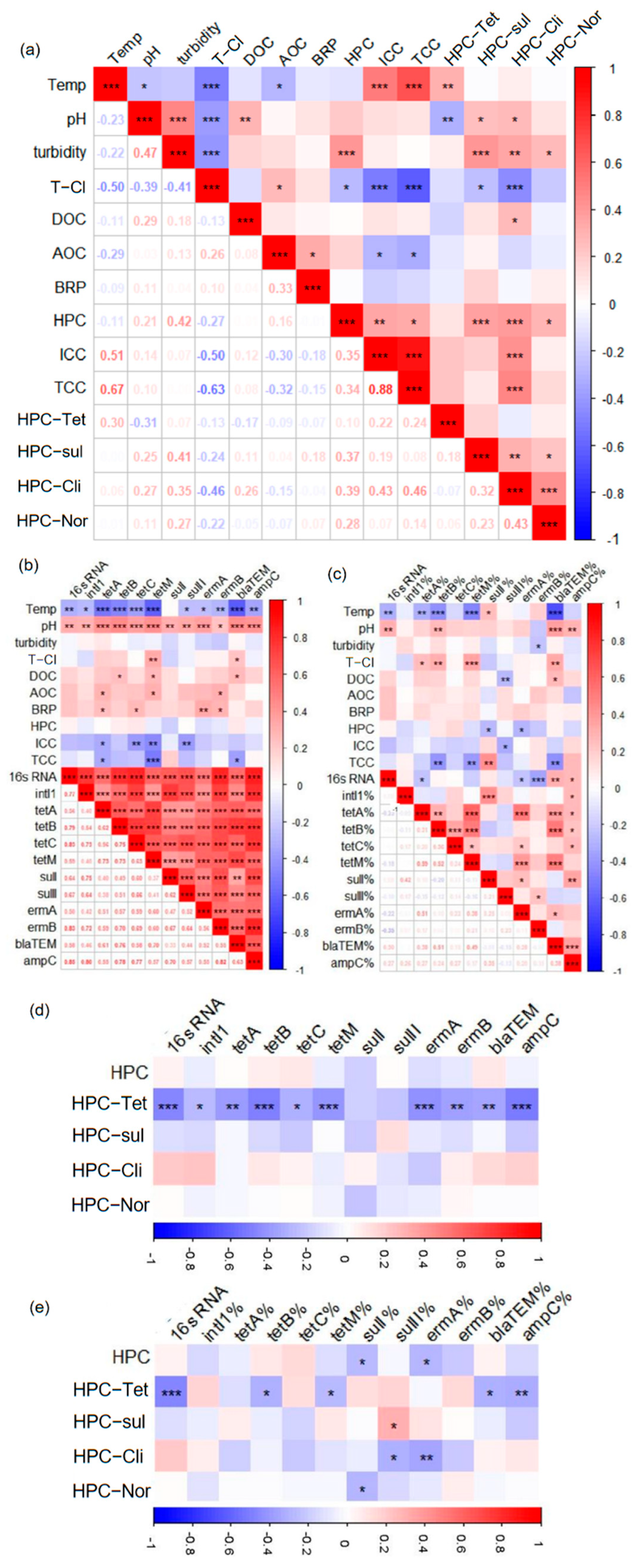
Figure S2 summarizes the water quality parameters across sampling points. To explore potential associations between water quality parameters and antibiotic resistance, correlation analyses were conducted, and the results are summarized in Figure 3. Figure 3 presents the correlations between water quality indicators and (a) ARB, (b) ARG concentrations, (c) ARG relative abundances, as well as correlations between ARB and (d) ARG concentrations and (e) ARG relative abundances.
Figure 3.
Spearman correlation analysis between water quality indicators and (a) ARB, (b) ARG concentrations, (c) ARG relative abundances, and between ARB and (d) ARG concentrations, (e) ARG relative abundances. Color intensity indicates the strength of correlation. Statistical significance is indicated by asterisks, where * denotes p ≤ 0.05, ** denotes p ≤ 0.01, and *** denotes p ≤ 0.001.
As shown in Figure 3a, water temperature exhibited significant positive correlations with total cell counts (TCC) and intact cell counts (ICC), indicating that temperature plays a key role in promoting microbial growth. Total chlorine residual showed significant negative correlations with temperature, pH, turbidity, heterotrophic plate count (HPC), ICC, TCC, and clarithromycin-resistant bacteria, suggesting that maintaining adequate disinfectant levels effectively suppresses microbial abundance, and low temperatures contribute to chlorine stability. Turbidity showed significant positive correlations with HPC and several ARB types (sulfonamide-, clarithromycin-, and norfloxacin-resistant bacteria), indicating that suspended particles may provide attachment surfaces and protective microenvironments for microorganisms, reducing disinfection efficiency. AOC showed negative correlations with temperature, ICC, and TCC, but positive correlations with total chlorine and BRP, suggesting that strong disinfectant pressure reduces microbial activity and carbon consumption, thereby increasing AOC and BRP.
The correlations between various water quality parameters and ARGs are shown in Figure 3b,c. Water temperature showed significant negative correlations with the concentrations of ten ARGs, whereas pH was generally positively correlated with twelve ARGs, indicating that lower temperatures and higher pH (i.e., longer distribution distances) correspond to elevated ARG concentrations and higher resistance risks in the water supply system.
Total chlorine exhibited gene-specific effects: absolute concentrations of tetM and blaTEM were positively correlated with total chlorine, and the relative abundances of tetA, tetB, tetM, and blaTEM also showed significant positive correlations, suggesting strong adaptive potential under disinfectant pressure. ICC and TCC were generally negatively correlated with ARGs, indicating that ARG enrichment is more likely to occur under low-biomass, high-stress conditions. Notably, increases in relative ARG abundance under low-biomass conditions may partly reflect normalization effects; therefore, both absolute microbial abundance and relative resistance composition should be considered together. Nutrient indicators (DOC, AOC, BRP) were positively correlated with most ARGs, implying that nutrient availability supports resistance development. Strong positive correlations were observed among absolute ARG concentrations; however, the relative abundances of tetA, ermA, and ermB were negatively correlated with 16S rRNA, indicating potential survival advantages in low-bacterial-abundance environments.
Figure 3d,e show generally weak correlations between ARB counts and corresponding ARG concentrations. Tetracycline-resistant bacteria were significantly negatively correlated with four tetracycline resistance genes, suggesting that total bacterial abundance strongly influences ARB levels. Under antibiotic or environmental pressure, higher microbial abundance may facilitate HGT and enable bacteria to acquire resistance genes.
3.3. Microbial Community Composition and Its Association with Antibiotic Resistance
3.3.1. Bacterial Community Composition and Analysis
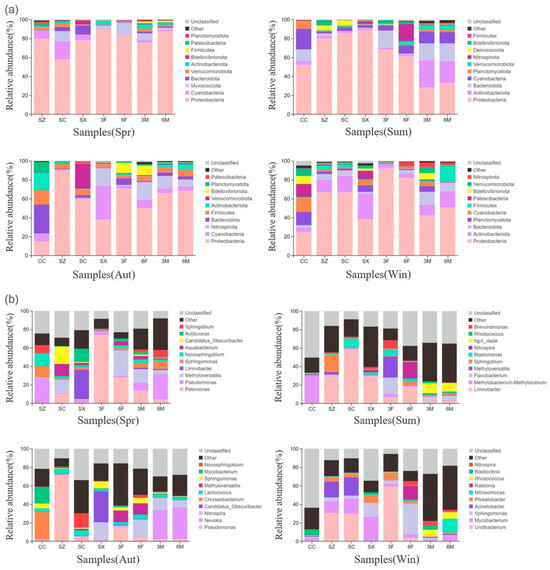
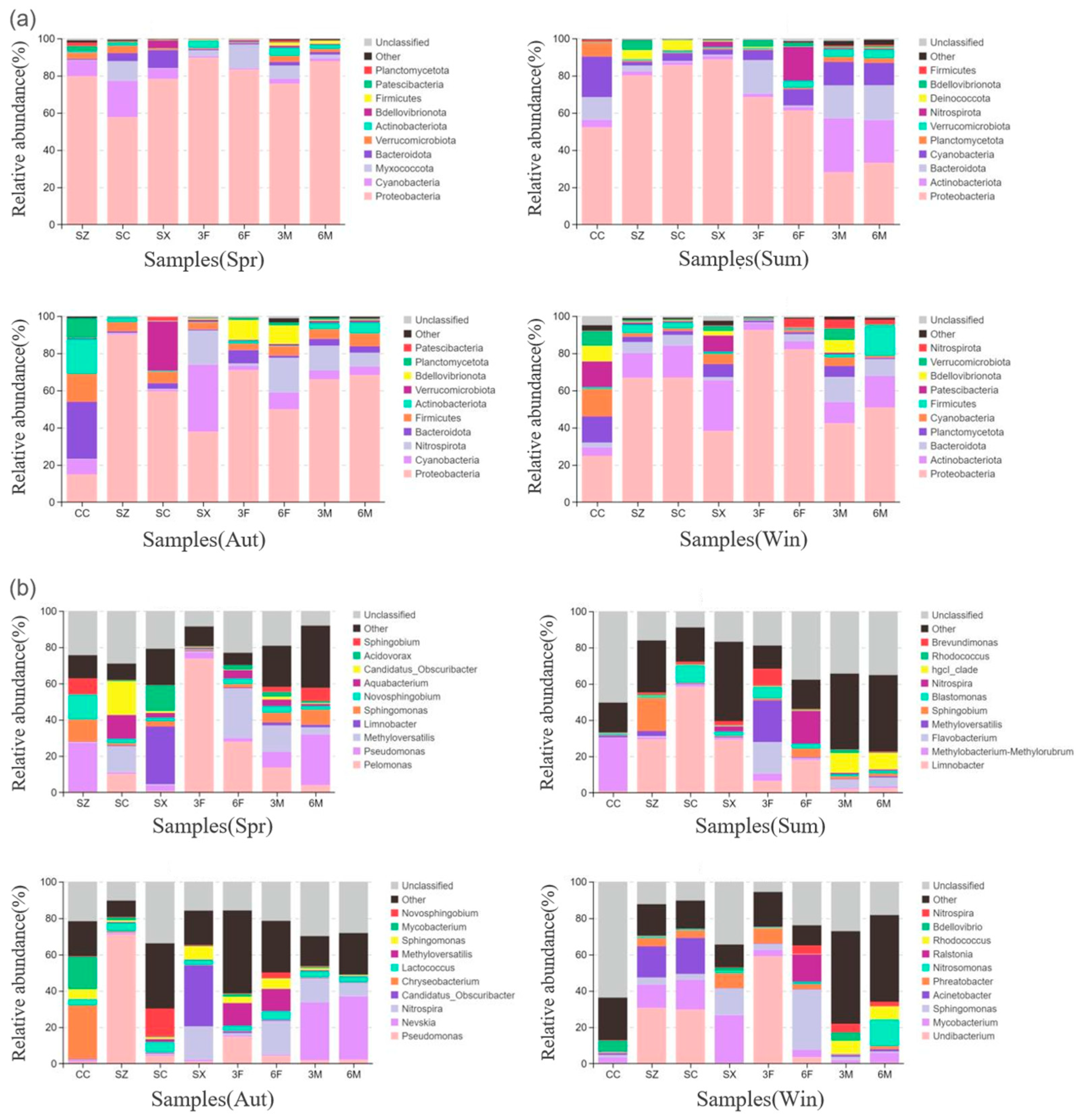
High-throughput 16S rRNA sequencing was performed on water and biofilm samples collected across four seasons to analyze community structure. Based on species abundance rankings, the top 10 phyla and genera were selected to construct stacked bar charts, with the remaining taxa classified as other. It should be noted that the dominance of certain genera does not necessarily indicate that they are direct ARG hosts. In this study, taxonomic profiles are used to describe community structure, any links between dominant genera and ARG occurrence should be interpreted cautiously.
At the phylum level (Figure 4a), Proteobacteria exhibited the highest relative abundance in all water samples except for the water-treatment effluent in autumn. After tank cleaning in autumn, the abundance of Proteobacteria decreased, while Cyanobacteria and Nitrospirota increased, indicating that cleaning significantly altered the microbial community structure of the tank and connected pipelines. In spring and autumn, Proteobacteria showed higher abundance in biofilms than in water samples, whereas the opposite trend appeared in summer and winter. The community structure of summer biofilms was complex, mainly composed of Proteobacteria, Actinobacteria, Bacteroidota, and Cyanobacteria. Winter communities were similar but with slightly lower Cyanobacteria abundance, which is likely related to lower light availability and temperature, which limit Cyanobacteria activity. Nitrospirota showed lower abundance in spring but increased to 2.92% and 18.19% in tank water and 6th-floor tap water, respectively, during summer; in autumn, it increased to 10.3% in biofilms and remained at 4.60% in winter. This may be attributed to the fact that Nitrospirota includes nitrite-oxidizing bacteria adapted to oligotrophic and low-temperature conditions; in winter water supply systems, nitrification-related niches remain viable, and thus this phylum may exhibit stronger persistence.
Figure 4.
Seasonal stacked bar charts of bacterial community composition at sampling points at the (a) phylum and (b) genus levels. Only the top 10 taxa are shown, and remaining taxa are grouped as “Others”.
At the genus level (Figure 4b), dominant genera included Pseudomonas, Nitrospira, and Sphingobium. Some genera exhibited distinct seasonality: Pseudomonas saccharophila accounted for 73.63% of spring tap water; Lacibacter dominated summer pump-outlet samples (58.27%); autumn municipal influent was dominated by Pseudomonas, and winter samples were dominated by Undibacterium. In biofilms, Nevskia, Rhodococcus, Nitrosomonas, and the hgcl_clade showed significant seasonality. Overall, the sum of relative abundances of the top 10 genera was higher and more evenly distributed in water samples than in biofilms, whereas dominant genera were more pronounced in biofilms.
Alpha diversity indices (Table S9) indicated that species richness decreased and then increased with distribution distance. The Shannon and Simpson indices were generally higher in biofilms than in water samples, indicating more even community distribution. Tank cleaning in autumn reduced biofilm alpha diversity.
Beta diversity (NMDS based on Bray–Curtis distance, Figure S3) revealed that municipal influent, pump outlet, and tap water samples clustered closely, while tank water and biofilm samples deviated markedly, reflecting the influence of cleaning and pipeline environments on microbial structure. Biofilm samples showed strong similarity among themselves and partially overlapped with corresponding water samples, suggesting dynamic exchange between waterborne and biofilm-associated microorganisms.
Overall, these results indicate that bacterial community composition in secondary water supply systems is shaped by the combined effects of seasonal conditions, hydraulic environment, and operational interventions such as tank cleaning.
3.3.2. Fungal Community Composition and Analysis
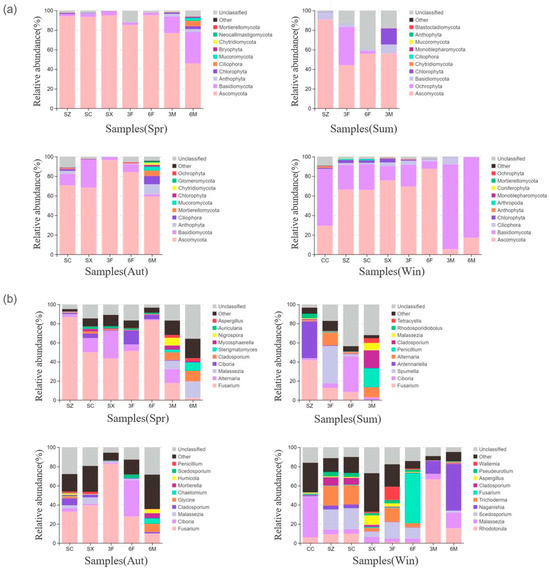
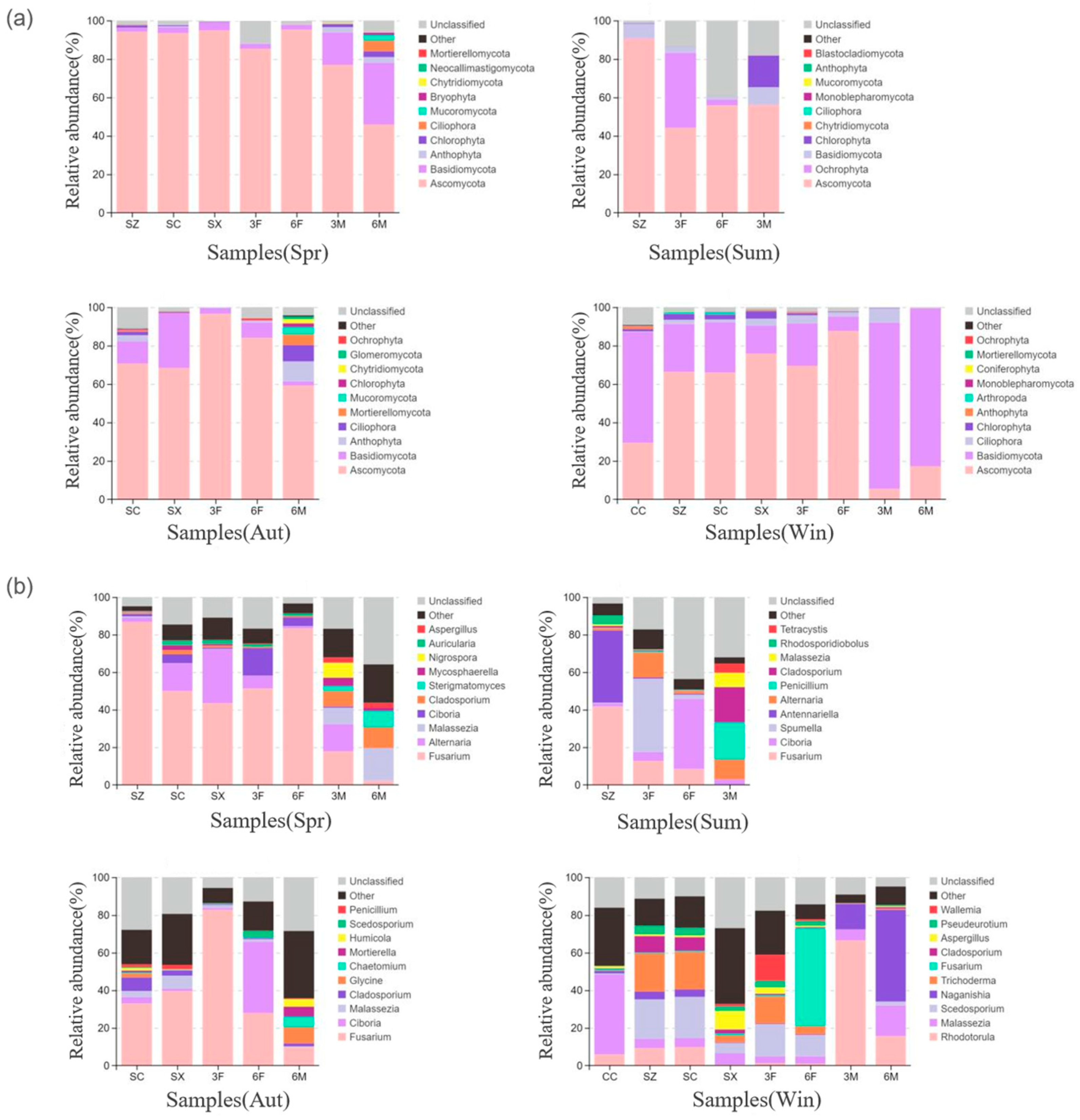
Fungi form an important component of biofilms in secondary water supply systems, and fungal communities may co-vary with ARG occurrence through indirect mechanisms, such as contributing to biofilm structure, modifying microhabitat conditions. To explore fungal community structure, ITS high-throughput sequencing was conducted on water and biofilm samples across four seasons. Due to construction activities, some sampling points lacked data in summer and autumn.
At the phylum level (Figure 5a), Ascomycota and Basidiomycota were dominant, accounting for 78.39–99.08% of total abundance. Ascomycota dominated most samples, whereas Basidiomycota showed higher abundance in winter effluent and winter biofilms. Chytridiomycota, Mucoromycota, and Mortierellomycota appeared in all seasons, while some low-abundance phyla (e.g., Neocallimastigomycota, Glomeromycota) appeared seasonally. Ascomycota abundance decreased sharply in autumn tank water, likely due to cleaning. Biofilms in spring and autumn contained more fungal taxa than water samples, whereas in winter, dominant phyla differed between water and biofilms.
Figure 5.
Seasonal stacked bar charts of fungal community composition at sampling points at the (a) phylum and (b) genus levels. Only the top 10 taxa are shown, and remaining taxa are grouped as “Others”.
At the genus level (Figure 5b), Fusarium, Malassezia, and Cladosporium were dominant and detected in all four seasons. Seasonal variation included: Fusarium dominance in spring and autumn; Alternaria and Peziza in summer water samples; and Rhodotorula, Scedosporium, and Trichoderma in winter. Biofilm samples showed more even distributions of dominant genera, with higher proportions of unclassified groups in spring, summer, and autumn, whereas a single genus dominated in winter. The dominant genus in the 3rd-floor biofilms was Rhodotorula, while that in the 6th-floor biofilms was Naganishia.
Alpha diversity indices (Table S10) indicated that in spring and winter, fungal richness decreased and then increased along the distribution line. Tank water exhibited the highest richness in autumn and winter. Biofilms generally showed lower richness (Chao1 index) than water samples. Shannon and Simpson indices varied among seasons: lowest diversity was observed in spring municipal influent; biofilm diversity exceeded that of water samples in summer and autumn; in winter, tank water had the highest diversity, while 3rd- and 6th-floor biofilms differed markedly, likely due to fungal–bacterial community restructuring after cleaning.
Beta diversity analysis of the fungal community (Figure S4) revealed that the communities in the municipal pipe network exhibited similar clustering patterns, whereas those in the tank water and biofilm samples showed distinct divergence characteristics.
In general, the observed seasonal variability highlights the dynamic nature of fungal communities in secondary water supply systems and their potential sensitivity to both environmental and operational factors.
3.3.3. Correlation Between Microbial Communities and Antibiotic Resistance
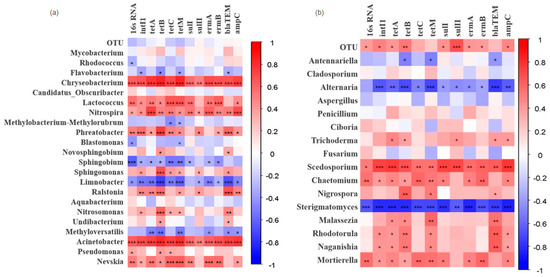
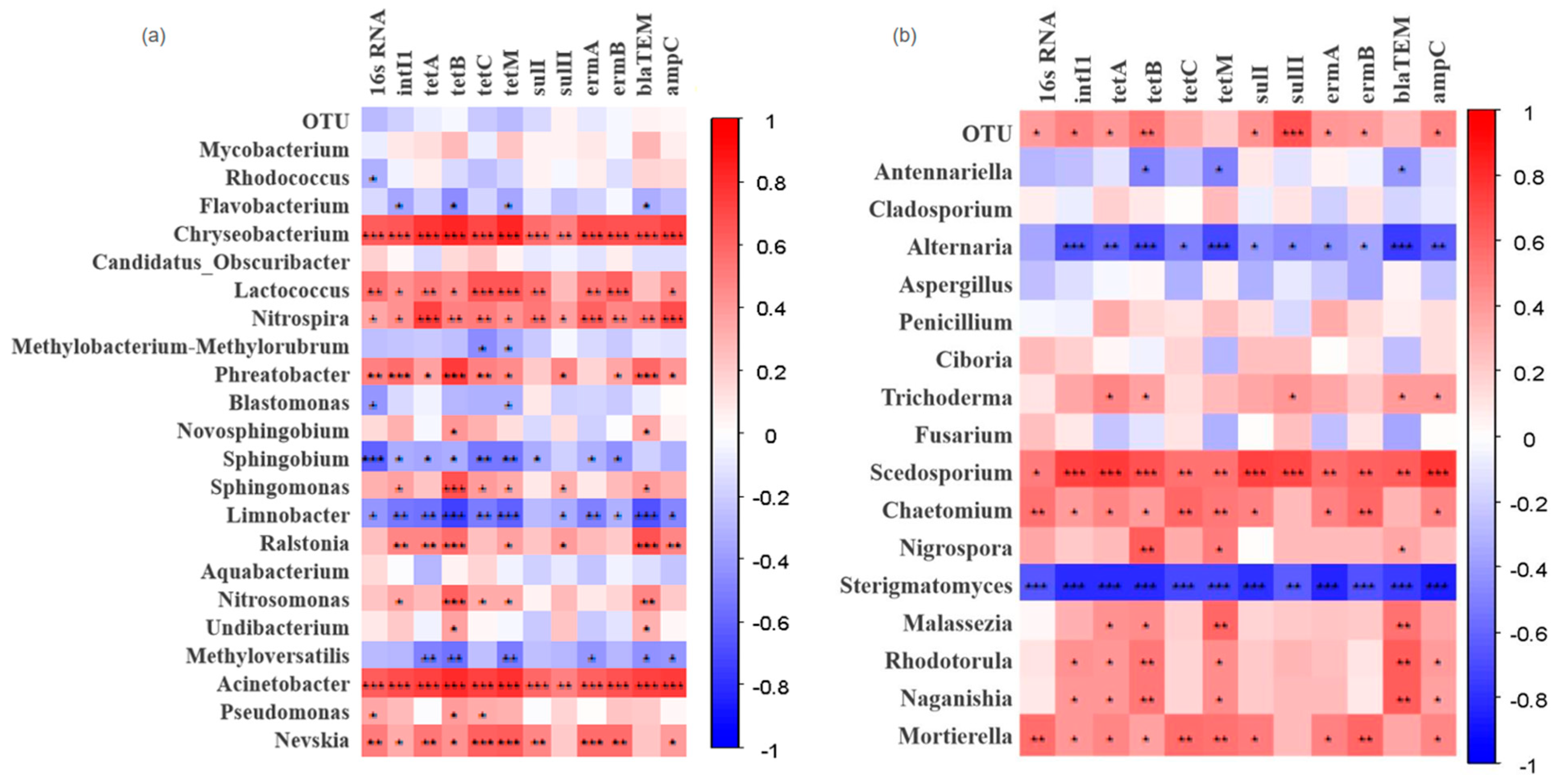
The correlations between different bacterial and fungal taxa and ARG concentrations at corresponding sampling points are shown in Figure 6. Correlation analyses were conducted using Spearman’s rank correlation. Because this analysis is exploratory, p-values were not adjusted for multiple testing.
Figure 6.
Heatmaps showing the Spearman correlation between (a) bacterial taxa and antibiotic resistance genes (ARGs) and (b) fungal taxa and ARGs. Color intensity indicates the strength of the correlation. Statistical significance is indicated by asterisks, where * denotes p ≤ 0.05, ** denotes p ≤ 0.01, and *** denotes p ≤ 0.001.
In Figure 6a, the number of bacterial OTUs showed weak correlations with ARG concentrations. Flavobacterium, Lactococcus, Nitrospira, Hydrogenophaga, Acinetobacter, and Nevskia exhibited significant positive correlations with multiple ARGs, whereas Sphingobium and Lacibacter showed significant negative correlations. This indicates that the development of antibiotic resistance and ARG production in secondary water supply systems primarily originate from specific bacterial taxa, and that horizontal transfer of ARGs is only weakly associated with overall bacterial taxonomy.
Figure 6b shows that most fungal taxa, except for Sterigmatomyces, Alternaria, and several closely related groups, displayed positive correlations with ARG concentrations. The stronger correlations observed for fungal OTUs compared with bacterial OTUs do not necessarily imply a direct causal role of fungi in ARG proliferation. One possible explanation is that fungal communities may be associated with ARG occurrence through indirect ecological interactions, such as modification of microhabitat conditions or competitive relationships within biofilms, rather than through direct causative effects. These interpretations remain hypotheses and should be validated by functional or genome-resolved approaches in future studies.
4. Conclusions and Outlook
This study investigated the occurrence and distribution of ARB, ARGs, and microbial communities in a residential secondary water supply system in eastern China. By integrating culture-based methods, flow cytometry, quantitative PCR, and high-throughput sequencing, the characteristics of ARB, ARGs, and bacterial and fungal communities were systematically analyzed in bulk water and pipe-wall biofilms, together with their associations with environmental and operational factors.
The results showed that sulfonamide-resistant bacteria and sulfonamide resistance genes were dominant in the system, indicating widespread resistance potential against sulfonamides in drinking water environments. Along the secondary distribution system, the increased abundance of 16S rRNA genes and the enrichment of the class 1 integron intI1 suggested active microbial regrowth and enhanced horizontal gene transfer potential. Seasonal variation played a key role in shaping resistance patterns, with higher ARG levels observed in autumn and winter, likely associated with lower temperatures and higher disinfectant stability.
Regarding resistance-driving factors, water temperature and residual chlorine exhibited contrasting effects on microbial abundance and ARG occurrence. While chlorination effectively suppressed total bacterial counts, positive associations between residual chlorine and specific ARGs suggested that selective pressure under oxidative stress may contribute to ARG persistence under low-biomass conditions. Turbidity and nutrient-related indicators were positively associated with ARB and ARGs, highlighting the role of particulate niches and resource availability in resistance development.
The observed community shifts before and after the autumn tank cleaning may be attributed to the physical removal of accumulated sediments and biofilms, followed by recolonization under residual disinfectant pressure. Seasonal temperature and hydraulic conditions are likely to influence recolonization dynamics; therefore, community recovery patterns may differ if cleaning were conducted in spring when higher temperatures and nutrient availability could promote faster microbial regrowth.
Microbial community analysis revealed clear differences between bulk water and biofilms, reflecting habitat-specific selection and attachment processes. Bacterial community composition showed pronounced seasonal dynamics, whereas fungal communities exhibited strong correlations with ARG concentrations. These associations suggest that fungal–bacterial interactions may indirectly influence resistance persistence by modifying microhabitat conditions within biofilms, although causal relationships cannot be confirmed based on correlation analysis alone.
Overall, this study highlights the importance of secondary distribution conditions, including seasonal variation, disinfectant pressure, and operational disturbances, in shaping antibiotic resistance risks at the point of use. The findings provide empirical evidence for improving microbial risk management in residential water supply systems, such as optimizing disinfectant strategies and tank maintenance practices. Future studies incorporating metagenomic or functional approaches are needed to further elucidate the mechanisms underlying ARG dissemination and to assess potential health risks under different secondary water supply configurations.
Supplementary Materials
The following supporting information can be downloaded at: https://www.mdpi.com/article/10.3390/w18020281/s1, Table S1: Types of Antibiotics Used for ARB Detection; Table S2: Types of ARGs Selected in the Study and Corresponding Primers; Table S3: Primer Sequences; Table S4: Components of LLA Medium; Table S5: Components of R2A Medium; Table S6: Detection Indicators and Corresponding Methods; Table S7: Spatiotemporal Distribution and Variation Range of ARGs; Table S8: Logarithm of Average ARG Concentration at Each Sampling Point; Table S9: Bacterial Alpha Diversity Index; Table S10: Fungal Alpha Diversity Index; Figure S1:Sampling locations; Figure S2: Water Quality Indicators; Figure S3: NMDS Analysis of Bacterial Community; Figure S4: NMDS Analysis of Fungal Community.
Author Contributions
H.T.: Conceptualization, Methodology, Writing—original draft. Y.Z.: Writing—review and editing, Validation. D.Z.: Investigation, Formal analysis, W.L.: Writing—review and editing, Supervision, Resources. All authors have read and agreed to the published version of the manuscript.
Funding
This study was supported by National Key R & D Program of China (2024YFC3810901-03) and Wuxi Water Group Co., Ltd. (kh0040020240152).
Data Availability Statement
The original contributions presented in this study are included in the article/Supplementary Material. Further inquiries can be directed to the corresponding author.
Conflicts of Interest
The authors declare that they have no known competing financial interests or personal relationships that could have appeared to influence the work reported in this paper. The authors declare that this study received funding from Wuxi Water Group Co., Ltd. The funder was not involved in the study design, collection, analysis, interpretation of data, the writing of this article or the decision to submit it for publication.
References
- Ben, Y.J.; Fu, C.X.; Hu, M.; Liu, L.; Wong, M.H.; Zheng, C.M. Human health risk assessment of antibiotic resistance associated with antibiotic residues in the environment: A review. Environ. Res. 2019, 169, 483–493. [Google Scholar] [CrossRef] [Scilit] [PubMed]
- Flach, K.A.; Bones, U.A.; Wolff, D.B.; De Oliveira Silveira, A.; Da Rosa, G.M.; Carissimi, E.; Silvestri, S. Antibiotic resistant bacteria and genes (ARB and ARG) in water and sewage treatment units: A review. Environ. Nanotechnol. Monit. Manag. 2024, 21, 100941. [Google Scholar] [CrossRef] [Scilit]
- Zhou, Z.Y.; Ma, W.C.; Zhong, D. The stress response mechanisms and resistance change of chlorine-resistant microbial community at multi-phase interface under residual antibiotics in drinking water distribution system. J. Clean. Prod. 2024, 438, 9. [Google Scholar]
- Miao, X.; Liu, C.; Liu, M.; Han, X.; Zhu, L.; Bai, X. The role of pipe biofilms on dissemination of viral pathogens and virulence factor genes in a full-scale drinking water supply system. J. Hazard. Mater. 2022, 432, 128694. [Google Scholar] [CrossRef] [Scilit] [PubMed]
- Gu, Q.H.; Sun, M.; Lin, T.; Zhang, Y.X.; Wei, X.H.; Wu, S.; Zhang, S.H.; Pang, R.; Wang, J.; Ding, Y.; et al. Characteristics of Antibiotic Resistance Genes and Antibiotic-Resistant Bacteria in Full-Scale Drinking Water Treatment System Using Metagenomics and Culturing. Front. Microbiol. 2022, 12, 798442. [Google Scholar] [CrossRef] [Scilit]
- Xi, C.W.; Zhang, Y.L.; Marrs, C.F.; Ye, W.; Simon, C.; Foxman, B.; Nriagu, J. Prevalence of Antibiotic Resistance in Drinking Water Treatment and Distribution Systems. Appl. Environ. Microbiol. 2009, 75, 5714–5718. [Google Scholar] [CrossRef] [Scilit]
- Chen, J.P.; Li, W.Y.; Zhang, J.P.; Qi, W.Q.; Li, Y.; Chen, S.; Zhou, W. Prevalence of antibiotic resistance genes in drinking water and biofilms: The correlation with the microbial community and opportunistic pathogens. Chemosphere 2020, 259, 127483. [Google Scholar] [CrossRef] [Scilit]
- Li, S.; Ondon, B.S.; Ho, S.-H.; Zhou, Q.; Li, F. Drinking water sources as hotspots of antibiotic-resistant bacteria (ARB) and antibiotic resistance genes (ARGs): Occurrence, spread, and mitigation strategies. J. Water Process Eng. 2023, 53, 103907. [Google Scholar] [CrossRef] [Scilit]
- Gholipour, S.; Shamsizadeh, Z.; Gwenzi, W.; Nikaeen, M. The bacterial biofilm resistome in drinking water distribution systems: A systematic review. Chemosphere 2023, 329, 138642. [Google Scholar] [CrossRef] [Scilit] [PubMed]
- Aggarwal, S.; Gomez-Smith, C.K.; Jeon, Y.; LaPara, T.M.; Waak, M.B.; Hozalski, R.M. Effects of Chloramine and Coupon Material on Biofilm Abundance and Community Composition in Bench-Scale Simulated Water Distribution Systems and Comparison with Full-Scale Water Mains. Environ. Sci. Technol. 2018, 52, 13077–13088. [Google Scholar]
- Dong, F.L.; Zhu, J.N.; Li, J.Z.; Fu, C.Y.; He, G.L.; Lin, Q.F.; Li, C.; Song, S. The occurrence, formation and transformation of disinfection byproducts in the water distribution system: A review. Sci. Total Environ. 2023, 867, 161497. [Google Scholar] [CrossRef] [Scilit]
- Cai, X.C.; Hu, Y.X.; Zhou, S.; Meng, D.; Xia, S.Q.; Wang, H. Unraveling bacterial and eukaryotic communities in secondary water supply systems: Dynamics, assembly, and health implications. Water Res. 2023, 245, 120597. [Google Scholar] [CrossRef] [Scilit]
- Fish, K.E.; Osborn, A.M.; Boxall, J. Characterising and understanding the impact of microbial biofilms and the extracellular polymeric substance (EPS) matrix in drinking water distribution systems. Environ. Sci.-Water Res. Technol. 2016, 2, 614–630. [Google Scholar] [CrossRef] [Scilit]
- Chan, S.; Pullerits, K.; Keucken, A.; Perssonz, K.M.; Paul, C.J.; Rådström, P. Bacterial release from pipe biofilm in a full-scale drinking water distribution system. npj Biofilms Microbiomes 2019, 5, 9. [Google Scholar] [CrossRef] [Scilit]
- Babic, M.N.; Gunde-Cimerman, N. Water-Transmitted Fungi Are Involved in Degradation of Concrete Drinking Water Storage Tanks. Microorganisms 2021, 9, 160. [Google Scholar] [CrossRef] [Scilit]
- Wang, C.; Yang, H.; Liu, H.; Zhang, X.-X.; Ma, L. Anthropogenic contributions to antibiotic resistance gene pollution in household drinking water revealed by machine-learning-based source-tracking. Water Res. 2023, 246, 120682. [Google Scholar] [CrossRef] [Scilit] [PubMed]
- Lerminiaux, N.A.; Cameron, A.D.S. Horizontal transfer of antibiotic resistance genes in clinical environments. Can. J. Microbiol. 2019, 65, 34–44. [Google Scholar] [CrossRef] [Scilit]
- Zhong, D.; Zhou, Z.Y.; Ma, W.C.; Ma, J.; Feng, W.A.; Li, J.X.; Du, X. Antibiotic enhances the spread of antibiotic resistance among chlorine-resistant bacteria in drinking water distribution system. Environ. Res. 2022, 211, 9. [Google Scholar] [CrossRef] [Scilit] [PubMed]
- Tiwari, A.; Gomez-Alvarez, V.; Siponen, S.; Sarekoski, A.; Hokajarvi, A.M.; Kauppinen, A.; Torvinen, E.; Miettinen, I.T.; Pitkanen, T. Bacterial Genes Encoding Resistance Against Antibiotics and Metals in Well-Maintained Drinking Water Distribution Systems in Finland. Front. Microbiol. 2022, 12, 803094. [Google Scholar] [CrossRef] [Scilit] [PubMed]
- Jin, M.; Liu, L.; Wang, D.-N.; Yang, D.; Liu, W.-L.; Yin, J.; Yang, Z.-W.; Wang, H.-R.; Qiu, Z.-G.; Shen, Z.-Q. Chlorine disinfection promotes the exchange of antibiotic resistance genes across bacterial genera by natural transformation. ISME J. 2020, 14, 1847–1856. [Google Scholar] [CrossRef] [Scilit]
- Wan, Q.Q.; Wen, G.; Cui, Y.H.; Cao, R.H.; Xu, X.Q.; Wu, G.H.; Wang, J.Y.; Huang, T.L. Occurrence and control of fungi in water: New challenges in biological risk and safety assurance. Sci. Total Environ. 2023, 860, 12. [Google Scholar] [CrossRef] [Scilit]
- Zhao, W.; Hou, Y.; Wei, L.; Wei, W.; Zhang, K.; Duan, H.; Ni, B.-J. Chlorination-induced spread of antibiotic resistance genes in drinking water systems. Water Res. 2025, 274, 123092. [Google Scholar] [CrossRef] [Scilit]
- Yu, H.Q. Molecular Insights into Extracellular Polymeric Substances in Activated Sludge. Environ. Sci. Technol. 2020, 54, 7742–7750. [Google Scholar] [CrossRef] [Scilit] [PubMed]
- Asmara, A.A.; Wacano, D.; Wong, Y.J.; Im, D.; Nishimura, F. Determining the contribution of stream morphometry and microbial extracellular polymeric substances in the spread patterns of antimicrobial resistance. Water Res. 2026, 288, 124583. [Google Scholar] [CrossRef] [Scilit] [PubMed]
- Zhang, T.Y.; Hu, Y.R.; Jiang, L.; Yao, S.J.; Lin, K.F.; Zhou, Y.B.; Cui, C.Z. Removal of antibiotic resistance genes and control of horizontal transfer risk by UV, chlorination and UV/chlorination treatments of drinking water. Chem. Eng. J. 2019, 358, 589–597. [Google Scholar] [CrossRef] [Scilit]
- Wang, J.; Sha, X.N.; Chen, X.F.; Zhuo, H.H.; Xie, W.M.; Zhou, Z.; He, X.M.; Wu, L.; Li, B.L. Removal and distribution of antibiotics and resistance genes in conventional and advanced drinking water treatment processes. J. Water Process Eng. 2022, 50, 9. [Google Scholar] [CrossRef] [Scilit]
- Tsholo, K.; Molale-Tom, L.G.; Horn, S.; Bezuidenhout, C.C. Distribution of antibiotic resistance genes and antibiotic residues in drinking water production facilities: Links to bacterial community. PLoS ONE 2024, 19, e0299247. [Google Scholar] [CrossRef] [Scilit]
- Xu, L.; Zhou, Z.C.; Zhu, L.; Han, Y.; Lin, Z.J.; Feng, W.Q.; Liu, Y.; Shuai, X.Y.; Chen, H. Antibiotic resistance genes and microcystins in a drinking water treatment plant. Environ. Pollut. 2020, 258, 8. [Google Scholar] [CrossRef] [Scilit]
- Wan, K.; Lin, W.F.; Zhu, S.; Zhang, S.H.; Yu, X. Biofiltration and disinfection codetermine the bacterial antibiotic resistome in drinking water: A review and meta-analysis. Front. Environ. Sci. Eng. 2020, 14, 10. [Google Scholar] [CrossRef] [Scilit]
- Wan, K.; Guo, L.Z.; Ye, C.S.; Zhu, J.W.; Zhang, M.L.; Yu, X. Accumulation of antibiotic resistance genes in full-scale drinking water biological activated carbon (BAC) filters during backwash cycles. Water Res. 2021, 190, 11. [Google Scholar] [CrossRef] [Scilit]
- Bertelli, C.; Courtois, S.; Rosikiewicz, M.; Piriou, P.; Aeby, S.; Robert, S.; Loret, J.F.; Greub, G. Reduced Chlorine in Drinking Water Distribution Systems Impacts Bacterial Biodiversity in Biofilms. Front. Microbiol. 2018, 9, 2520. [Google Scholar] [CrossRef] [Scilit]
- Chen, Y.; Li, Y.; Yang, S.; Chiang, T.Y.; Zhu, X.; Hu, J. Controlling Biofilm Growth and Its Antibiotic Resistance in Drinking Water by Combined UV and Chlorination Processes. Water 2022, 14, 3643. [Google Scholar] [CrossRef] [Scilit]
- Wang, H.B.; Hu, H.T.; Chen, S.S.; Schwarz, C.; Yin, H.; Hu, C.S.; Li, G.W.; Shi, B.Y.; Huang, J.G. UV pretreatment reduced biofouling of ultrafiltration and controlled opportunistic pathogens in secondary water supply systems. Desalination 2023, 548, 10. [Google Scholar] [CrossRef] [Scilit]
- Liu, Y.J.; Cai, Y.W.; Li, G.Y.; Wang, W.J.; Wong, P.K.; An, T.C. Response mechanisms of different antibiotic-resistant bacteria with different resistance action targets to the stress from photocatalytic oxidation. Water Res. 2022, 218, 11. [Google Scholar] [CrossRef] [Scilit] [PubMed]
- Wang, Y.J.; Yu, G. Challenges and pitfalls in the investigation of the catalytic ozonation mechanism: A critical review. J. Hazard. Mater. 2022, 436, 129157. [Google Scholar] [CrossRef] [Scilit] [PubMed]
- Cockerill, F.R.; Clinical & Laboratory Standards Institute. Performance Standards for Antimicrobial Susceptibility Testing: Twenty-Third Informational Supplement; Clinical and Laboratory Standards Institute: Wayne, PA, USA, 2013. [Google Scholar]
Disclaimer/Publisher’s Note: The statements, opinions and data contained in all publications are solely those of the individual author(s) and contributor(s) and not of MDPI and/or the editor(s). MDPI and/or the editor(s) disclaim responsibility for any injury to people or property resulting from any ideas, methods, instructions or products referred to in the content. |
© 2026 by the authors. Licensee MDPI, Basel, Switzerland. This article is an open access article distributed under the terms and conditions of the Creative Commons Attribution (CC BY) license.