Article

Enhancing Osmotic Power Generation and Water Conservation with High-Performance Thin-Film Nanocomposite Membranes for the Mining Industry

by
Sara Pakdaman
and
Catherine N. Mulligan
*
Department of Building, Civil and Environmental Engineering, Concordia University, Montreal, QC H3G 1M8, Canada
*
Author to whom correspondence should be addressed.
Water 2026, 18(2), 248; https://doi.org/10.3390/w18020248 (registering DOI)
Submission received: 3 December 2025 / Revised: 6 January 2026 / Accepted: 13 January 2026 / Published: 17 January 2026

Abstract

Recycling water offers a powerful way to lower the environmental water impact of mining activities. Pressure-retarded osmosis (PRO) represents a promising pathway for simultaneous water reuse and clean energy generation from salinity gradients. In this study, the performance of a thin-film nanocomposite (TFN) membrane containing functionalized multi-walled carbon nanotubes (fMWCNTs) within a polyacrylonitrile (PAN) support layer, followed by polydopamine (PDA) surface modification, was investigated under a PRO operation using pretreated gold mining wastewater as the feed solution. Unlike most previous studies that rely on synthetic feeds, this work evaluates the membrane performance under a PRO operation using a real mining wastewater stream. The membrane with fMWCNTs and PDA exhibited a maximum power density of 25.22 W/m2 at 12 bar, representing performance improvements of 23% and 68% compared with the pristine thin-film composite (TFC) and commercial cellulose triacetate (CTA) membranes, respectively. A high water flux of 75.6 L·m−2·h−1 was also obtained, attributed to enhanced membrane hydrophilicity and reduced internal concentration polarization. The optimized membrane, containing 0.3 wt% fMWCNTs in the support layer and a PDA coating on the active layer, produced a synergistic enhancement in the PRO performance, resulting in a lower reverse salt flux and an improved flux–selectivity trade-off. Furthermore, the ultrafiltration (UF) and nanofiltration (NF) pretreatment effectively reduced the hardness and ionic content, enabling a stable PRO operation with real mining wastewater over a longer period of time. Overall, this study demonstrates the feasibility of achieving both reusable water and enhanced osmotic power generation using modified TFN membranes under realistic mining wastewater conditions.

1. Introduction

The rapid expansion of both the population and industrial activities has greatly increased the worldwide need for clean water, not only for drinking but also for farming, livestock, and industrial purposes, which have all become essential for human survival. Moreover, by increasing the global population, a greater demand for energy is expected, as most of the world’s energy consumption still depends on fossil fuels like coal, oil, and natural gas, emphasizing the need for renewable alternatives [1,2,3]. To address this challenge, researchers are developing innovative renewable energy sources along with advanced desalination and wastewater treatment technologies [4].
Osmotic membrane processes, particularly pressure-retarded osmosis (PRO), have recently gained attention as efficient and sustainable alternatives, offering a higher water flux and lower energy consumption than conventional methods [5,6]. In practical PRO systems, the osmotic energy from a salinity gradient is partially transformed into hydraulic power [7]. PRO uses the osmotic pressure difference to drive water from a low-salinity feed (e.g., river, brackish, or wastewater) to a high-salinity draw solution (e.g., seawater or brine) through a semipermeable membrane, while external hydraulic pressure is applied to the draw side [8,9,10]. However, PRO still faces the challenge of developing suitable membranes that offer high water permeability, low salt leakage, minimal fouling and internal concentration polarization (ICP), and strong mechanical stability. Typically, thin-film composite (TFC) membranes with polyamide (PA) selective layers are employed for this purpose [1,11,12]. Early commercial cellulose acetate membranes showed poor performance in PRO, mainly because of their low water flux and resulting low power density [13]. Therefore, to overcome these limitations, researchers have focused on developing TFC membranes, which provide higher water permeability and better solute selectivity, making them key to improving osmotic filtration efficiency [14,15]. After the introduction of TFC membranes, extensive studies have aimed at enhancing their physicochemical properties by improving water permeability and solute rejection through methods such as the modification of the support layer, surface functionalization, the incorporation of additives, and the introduction of interlayers [16,17,18,19,20,21]. To improve cost efficiency and membrane performance, nanoparticles have been integrated into TFC membranes, resulting in the development of thin-film nanocomposite (TFN) membranes [22]. Moreover, various studies have shown that TFN membranes exhibit greater fouling resistance than TFC membranes due to the enhanced surface hydrophilicity provided by the incorporated nanomaterials [23].
As porous nanomaterials with unique hollow tubular structures, carbon nanotubes (CNTs) possess exceptional mechanical, thermal, chemical, and electrical properties that make them highly effective for enhancing membrane performance [24,25,26]. In a study [27], a TFC mixed matrix membrane incorporating functionalized carbon nanotubes (fCNTs) into the polyethersulfone support layer was developed and applied to an integrated seawater desalination and wastewater reclamation forward osmosis (FO) process. This achieved a significantly higher water flux and superior antifouling performance due to the enhanced hydrophilicity and electrostatic repulsion imparted by fCNTs [27].
Dopamine undergoes self-polymerization to form a uniform and hydrophilic polydopamine (PDA) coating on the membrane surface. Due to its multiple reactive functional groups, PDA can adhere to the surface and simultaneously interact with other compounds, thereby improving the water permeability of the modified membrane [28,29]. In one study, silver nanoparticles and PDA were applied to improve membrane performance in the FO process. Characterization results revealed that the modified membrane exhibited higher hydrophilicity and enhanced fouling resistance during municipal wastewater treatments [30].
Membrane fouling, which refers to the accumulation of unwanted materials on the membrane surface or within its pores, is one of the main challenges in membrane-based systems for water and energy applications. Fouling decreases the permeate flux, deteriorates water quality, increases operational costs, and shortens the membrane lifespan. It can also significantly alter the membrane’s surface properties and morphology, reducing its hydrophilicity and overall performance [31,32]. The pretreatment of wastewater before utilizing it as a feed solution with membrane-based methods is another effective approach to minimize fouling and extend membrane lifespans during osmotic-driven processes [33,34,35]. Wan et al. [36] demonstrated that with a PRO process using seawater brine and wastewater retentate, fouling significantly impacted the performance, but applying UF and NF pretreatments improved the power density to 6.6 W/m2 and 8.9 W/m2, respectively [36].
In this study, mining wastewater was selected as a real feed source for the PRO process. To mitigate fouling and improve the feed quality, a multi-stage pretreatment sequence including UF and NF was first utilized, and the permeate from the NF stage was used as the feed solution. Additionally, TFN membranes were fabricated by adding different loadings of fMWCNTs into the porous support layer to determine the optimal concentration that provides the best trade-off between water permeability and selectivity. To further enhance the interfacial properties and the system efficiency, the optimized TFN membrane surface was modified with a PDA coating to improve the hydrophilicity of the membrane. Unlike most previous studies that evaluate membrane performance under controlled laboratory conditions using synthetic feed solutions, this work investigates membrane performance under PRO conditions using real mining wastewater as the feed solution. By integrating fMWCNTs within the support layer and applying a PDA surface modification, this study provides a more representative assessment of the membrane behavior and energy generation potential under realistic feed water conditions. The membranes were characterized and evaluated under PRO conditions to assess their performance in sustainable osmotic energy generation using real mining wastewater. In addition, the stability of the power density during extended PRO operations provides insight into the fouling propensity and the effectiveness of the UF/NF pretreatment. The overall objective of this work was to develop and evaluate high-performance membranes capable of providing a stable PRO operation with enhanced energy generation while preventing fouling-related performance deterioration under the applied pretreatment strategy. This was achieved by determining the membrane structure and surface properties that maximize water flux, selectivity, and hydrophilicity while enabling the effective reuse of mining wastewater in osmotic processes.

2. Experimental Methods

2.1. Materials

Polyacrylonitrile (PAN, MW ≈ 150,000), carboxyl-functionalized multi-walled carbon nanotubes (MWCNTs), and tris(hydroxymethyl)aminomethane (Tris) were obtained from Sigma-Aldrich (Oakville, ON, Canada). To fabricate the polyamide (PA) selective layer, trimesoylchloride (TMC, ≥99%) and m-phenylenediamine (MPD, ≥99%) were also purchased from Sigma-Aldrich. N,N-dimethylformamide (DMF, 99.5%) and n-hexane were supplied by VWR (Mississauga, ON, Canada) as solvents. Ammonium carbonate ((NH4)2CO3) from Fisher Scientific (Markham, ON, Canada) was used as the draw solution in the PRO experiments. Deionized (DI) water with a resistivity of 18.2 MΩ·cm at 23 °C was produced using a Millipore Sigma water purification system (Burlington, MA, USA). A commercial NF membrane (pore size/Molecular Weight Cut-Off (MWCO) 300–500 Da), a UF membrane (pore size/MWCO 5000 Da), and an FO cellulose triacetate (CTA) membrane were supplied by Sterlitech Co. (Auburn, WA, USA). The mining wastewater sample was supplied by a mining company and was collected from a tailings pond.

2.2. Preparation of Thin-Film Nanocomposite Membrane with Functionalized Carbon Nanotubes (fMWCNTs)

The TFC membranes were fabricated utilizing the phase inversion method. A 16% PAN solution was prepared in DMF as the casting solution. Initially, different wt% of fMWCNTs (based on the polymer weight) were dispersed in DMF using an ultrasonic bath (VWR, Mississauga, ON, Canada) for 1 h to achieve uniform dispersion. Subsequently, the PAN polymer was gradually added to the homogenous mixture and stirred with a mechanical mixer (Hei-TORQUE Ultimate 100 OH Mixer, Heidolph North America (Wood Dale, IL, USA)) at 70 °C. The resulting doping solution was degassed to eliminate trapped air bubbles. The prepared solution was then cast onto a clean glass plate using a homemade casting knife with a thickness of 150 µm. The cast film was immediately immersed in a deionized (DI) water coagulation bath for about 30 min, and the formed membrane was stored in DI water.

2.3. Preparation of Polydopamine Coating and Polyamide Layer

For the surface modification of the TFN membrane containing fMWCNTs in the support layer, 2 g of PDA was dissolved in 1 L of 10 mM Tris buffer. The pH of the solution was adjusted to 8.5 using HCl and stirred for approximately 30 min. The membrane was then immersed in the prepared PDA solution, which was continuously shaken for about 3 h to prevent PDA aggregation on the membrane surface. Finally, the coated membrane was thoroughly rinsed with DI water to remove excess PDA particles.
After that, the polyamide selective layer was formed through an interfacial polarization method to form the thin selective layer on the top surface of the membrane. The synthetic support layer was fixed within custom-made acrylic frames, secured by using a plate gasket and binder clips. Moreover, 50 mL of DI water containing 3 wt% MPD was poured into the frame and allowed to react for 5 min. Excess MPD was then removed using a rubber roller. Subsequently, 0.15 wt% TMC was dissolved in n-hexane, air-dried for 2 min at room temperature, and then stored in DI water for further testing. Table 1 summarizes the composition of different synthesized membranes.

2.4. The Characterization of the Membranes

For the characterization of membrane surface properties, several analytical techniques were employed. To identify the functional groups on the membrane surface, Fourier transform infrared (FTIR-ART) spectroscopy (Bruker Optics, Ettlingen, Germany) was utilized within the range of 400–4000 cm−1 and with a resolution of 4 cm−1. The membrane surface and cross-section morphologies were examined by using a field emission scanning electron microscope (FE-SEM, Hitachi SU8230, Tokyo, Japan). For cross-section imaging, samples were fractured in liquid nitrogen and then sputter coated with gold before analysis. The surface roughness of the membranes was determined by atomic force microscopy (AFM, Tosca 400, Anton Paar, Graz, Austria) operated in non-contact mode. Surface hydrophilicity was assessed using an optical contact angle goniometer (VCA Optima, AST Products, Billerica, MA, USA) by placing a DI water droplet on the fully dried active layer at room temperature.

2.5. Assessment of Membrane Performance

The separation performance of the membranes, including the water and salt permeability and salt rejection, was evaluated by using a crossflow filtration setup in RO mode. The tests were conducted at 20 °C under an applied pressure of 12 bar, which was controlled by a chiller (VWR, Mississauga, ON, Canada). The effective membrane area was 33 cm2, and the permeate was collected and weighed over time. The water permeability (A, L·m−2·h−1·bar−1 or LMH·bar−1) of the membranes was obtained by dividing the pure water flux ( J , L M H ) by the applied pressure difference ( P , b a r ) . In addition, the salt rejection (R) of fabricated membranes was determined by utilizing the following equation:
R = C f C p C f × 100 %
where Cf and Cp represent the concentration of the feed and permeate water, respectively. Moreover, salt permeability (B) was then derived from the flux and salt rejection values according to Equation (2):
B = J × ( 1 R 1 )
Here J refers to the pure water flux, and R refers to salt rejection.

2.6. Pretreatment of Mining Wastewater for the PRO Process

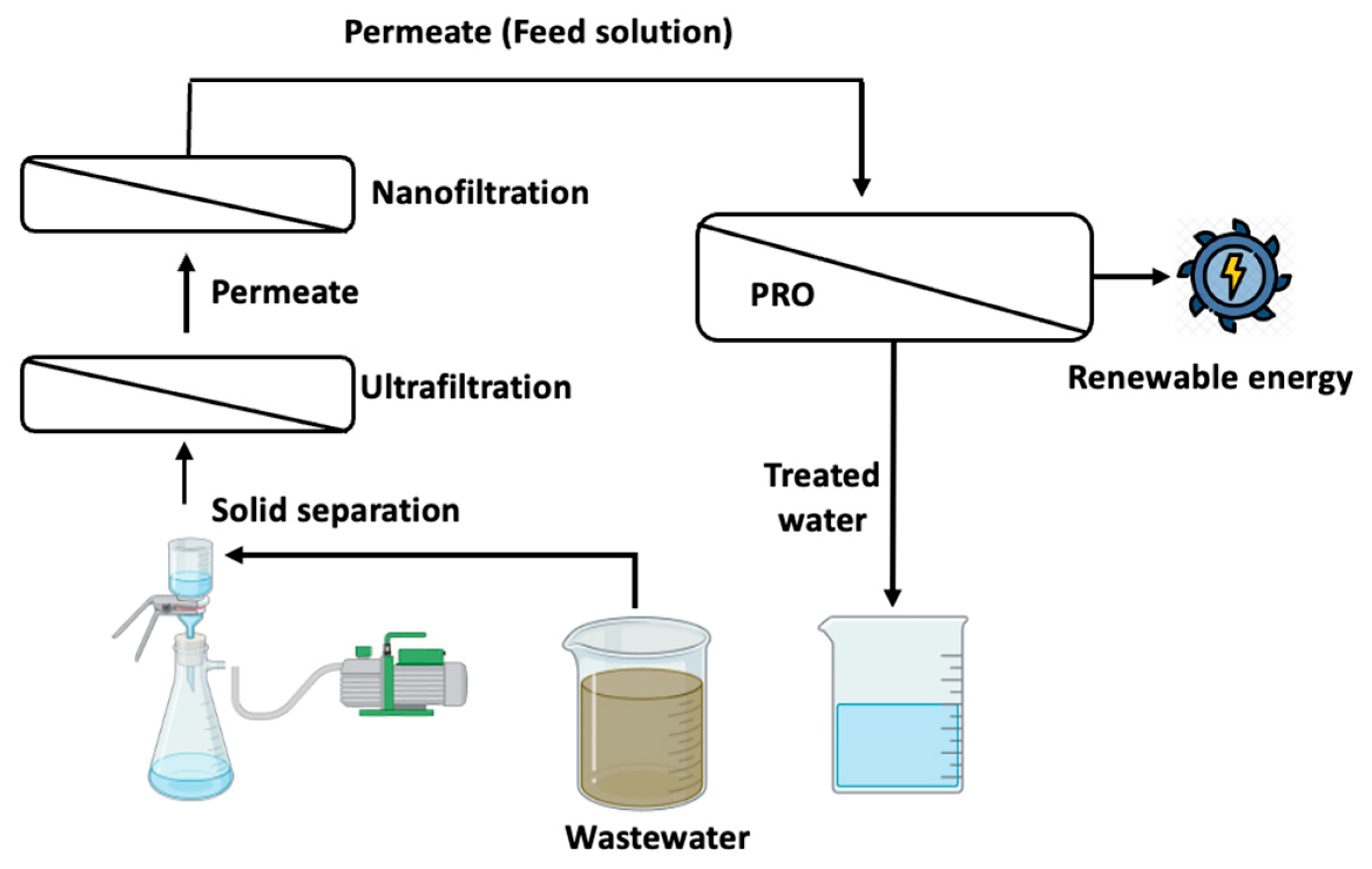
A polyamide microfilter with a pore size of 0.45 μm was used in combination with a vacuum filtration setup to remove coarse suspended solids that could block subsequent membranes and contribute to fouling in the following treatment stages.
Next, UF was conducted at an operating pressure of 8 bar with a flow rate of 1.0 LPM. The resulting permeate was collected and used as the feed for the subsequent nanofiltration (NF) setup. During the NF process, the pressure was maintained at 20 bar, and the flow rate was kept constant at 1.0 LPM using a flow meter. The permeate obtained from the NF was then collected and employed as the feed solution for the PRO experiments.
The purpose of the UF process was to eliminate suspended solids, colloid particles, and large organic molecules from the wastewater and prepare the water for the following treatment stage. The subsequent NF process targeted the removal of monovalent and multivalent ions, including chloride and sulfate. The concentrations of anions and cations were analyzed by utilizing ion chromatography (Metrohm 930 Compact IC Flex, Mississauga, ON, Canada) according to APHA standard methods. These pretreatment steps were essential for enhancing the membrane performance, minimizing fouling, and effectively preparing the feed solution for the PRO process.

2.7. Evaluation of PRO Performance

The performance of the synthesized membranes was evaluated in PRO mode, while the support layer of the membrane faced the feed solution, and the active layer was oriented toward the draw solution. The NF permeate served as the feed, while 3M ammonium carbonate was used as the draw solution. In this study, ammonium carbonate was selected as the draw solution due to its favorable properties for PRO applications, particularly its volatility and reported potential for regeneration. These characteristics have been widely discussed in the literature as key advantages for energy generation in PRO systems [37,38].
The feed solution was circulated using a variable flow gear pump (Cole-Parmer Instrument Company, Vernon Hills, IL, USA) at a flow rate of 1.0 LPM. The draw solution was continuously circulated and pressurized with a 2SF CAT Pump (Burnsville, MN, USA), maintaining an operating pressure of 12 bar and a flow rate of 0.8 LPM throughout the PRO experiments.
During the UF, NF, and PRO experiments, the permeate was continuously collected and weighed at one-minute intervals using a precision balance (VWR-2102TC, Mississauga, ON, Canada). To ensure a constant temperature for the operations, a recirculating chiller was employed. Figure 1 represents the schematic of the overall process.
At the end of the experiment, the power density (W) was determined based on the measured water flux (Jw) and the applied hydraulic pressure (ΔP) on the draw solution, as expressed in Equation (3):
W = J w × P
Moreover, the water flux (Jw) was calculated by Equation (4) by using the feed water weight throughout the test, where Δm is the mass of the permeate collected, ρ represents the water density, Δm is the effective membrane area, and Δt refers to the filtration time.
J w = m ρ × A m × t
The reverse salt flux (Js) was determined based on the variation in the salt concentration within the feed and expressed by the following equation. Here, C2 and V2 represent the final concentration and volume of the feed solution, respectively, while C1 and V1 correspond to their initial values at the beginning of the process.
J s = V 2 × C 2 V 1 × C 1 A m × t
The structural parameter (S) of the synthesized membranes was estimated from the experimentally measured water flux (Jw) and specific reverse salt flux (Js/Jw) obtained under the PRO operation using Equation (6).
S = D J v ln ( C d J v + A × P / A β R T + J s / J w C f + J s / J w )
where D is the salt diffusion coefficient (taken as 1.61 × 10⁻⁹ m2/s), and C f and C d are the salt concentration of the feed and draw solution, respectively. β is the van’t Hoff factor, R is the universal gas constant, and T is the temperature.
All permeability, water contact angle, and PRO performance measurements (water flux, power density, and reverse salt flux) were performed at least three times under identical operating conditions. The reported values represent the mean ± standard deviation, and error bars shown in the figures indicate the experimental variability.

3. Results and Discussion

3.1. Characterization of Fabricated Membranes

3.1.1. FTIR Analysis of Fabricated Membranes

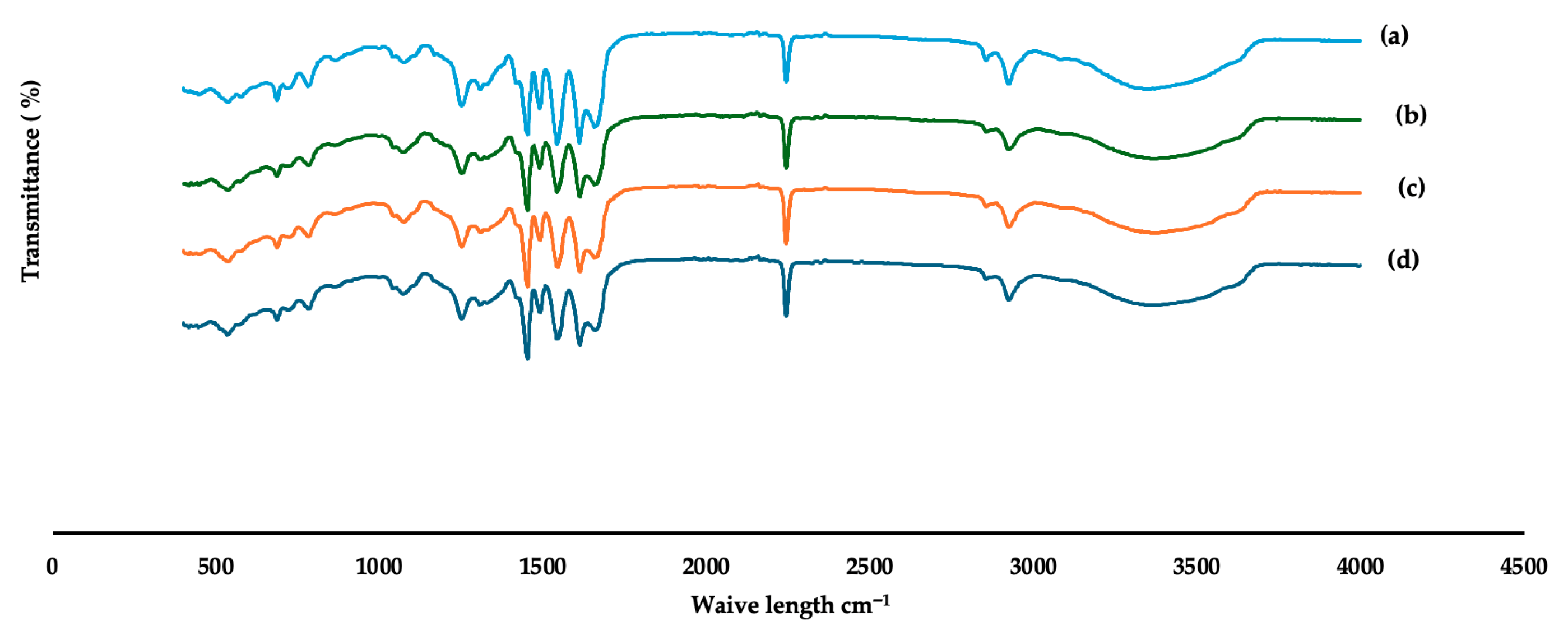
For the investigation of functional groups of the fMWCNT-incorporated PAN support layer, an FTIR analysis was used. The FTIR analysis was carried out to identify the functional groups present on the fCNT with the peaks of fMWCNTs at ~1380 cm−1 (–COOH), ~3440 cm−1 (–OH), ~1540–1560 (asymmetric COO carboxylate vibrations), and ~1630 (>C=O) [39,40]. Also, we present the PAN spectrum, indicating a peak at 1452 cm−1, which corresponds to the characteristic C–H stretching band of methylene. Additionally, the average vibration observed at 2923 cm−1 represents the C–H stretching vibration. Furthermore, the vibration detected at 2244 cm−1 is associated with the C≡N functional group [41]. The analysis revealed that, after the incorporation of the fMWCNTs into the membrane matrix, the characteristic peaks of the functional groups became less distinct because of the overlap with the polymer’s absorption and the low CNT content (Figure 2). Nonetheless, the presence of hydrophilic groups, such as carbonyl (>C=O), hydroxyl groups (–OH), and carboxyl (–COOH), can promote a higher hydrophilicity of the membrane which fCNT-modified membranes [39].

3.1.2. Morphology of Fabricated Membranes

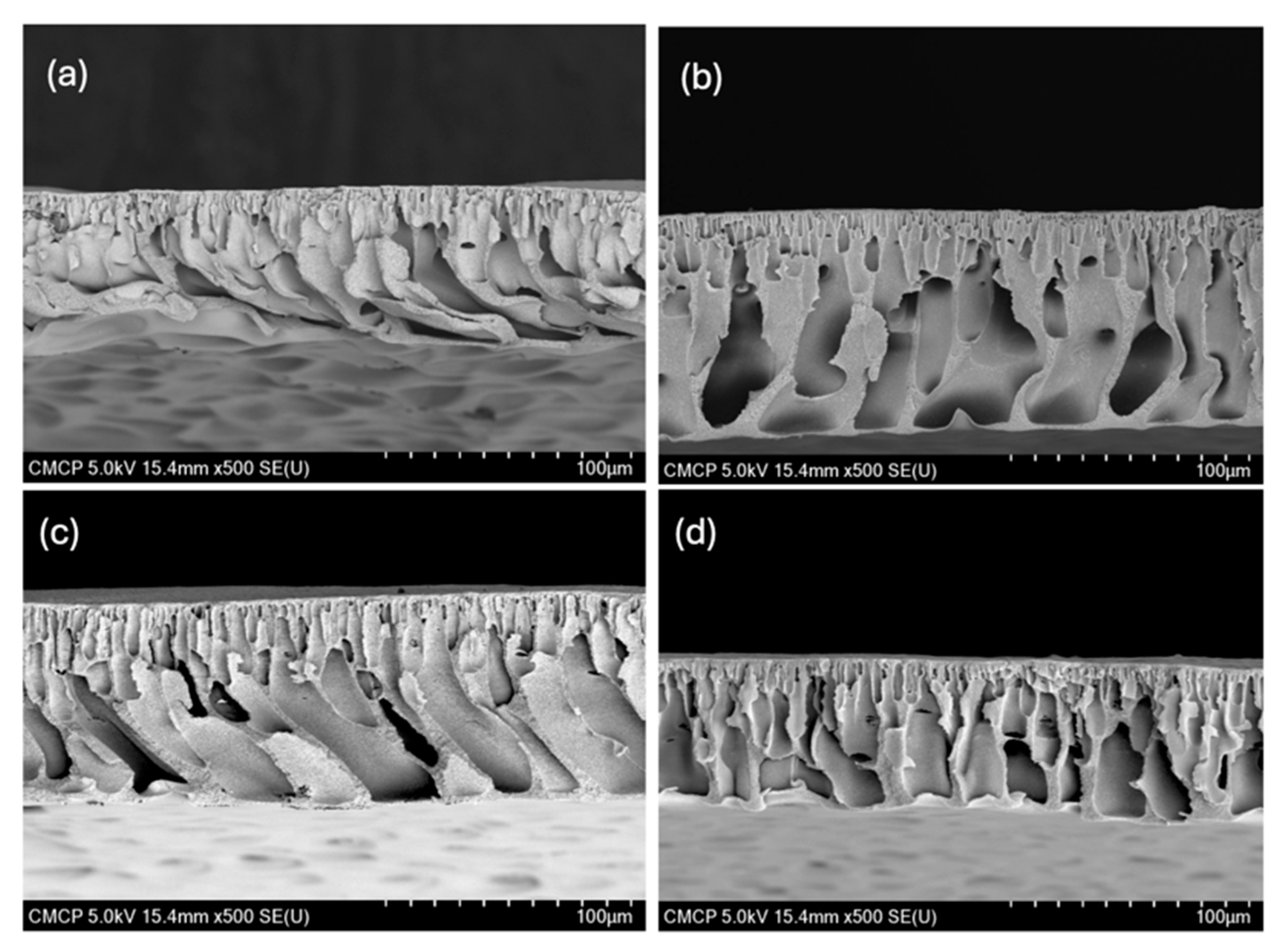
Figure 3 illustrates the FESEM images of the cross-sections of the unmodified TFC membrane and modified TFC membranes with different wt% of fMWCNTs. All synthesized membranes showed a typical asymmetric morphology with numerous finger-like pores separated by a sponge-like porous layer with a PA layer on the top surface of the membrane. Compared with the pristine TFC membrane, TFN membranes experienced slightly delayed demixing due to the presence of fMWCNTs, which slowed the phase inversion rate and resulted in the formation of larger finger-like pores that improved the water flux. However, when the nanomaterial increased to 0.5 wt% of FMWCNTs, the morphology changed again, and the pores became larger and irregular, due to the higher viscosity of the polymer solution, which led to a slower phase inversion process and particle aggregation [42]. It is generally accepted that membranes with a more regular and porous structure reduce the ICP in the PRO process and lead to the uniform formation of the PA layer on the membrane surface [43,44].
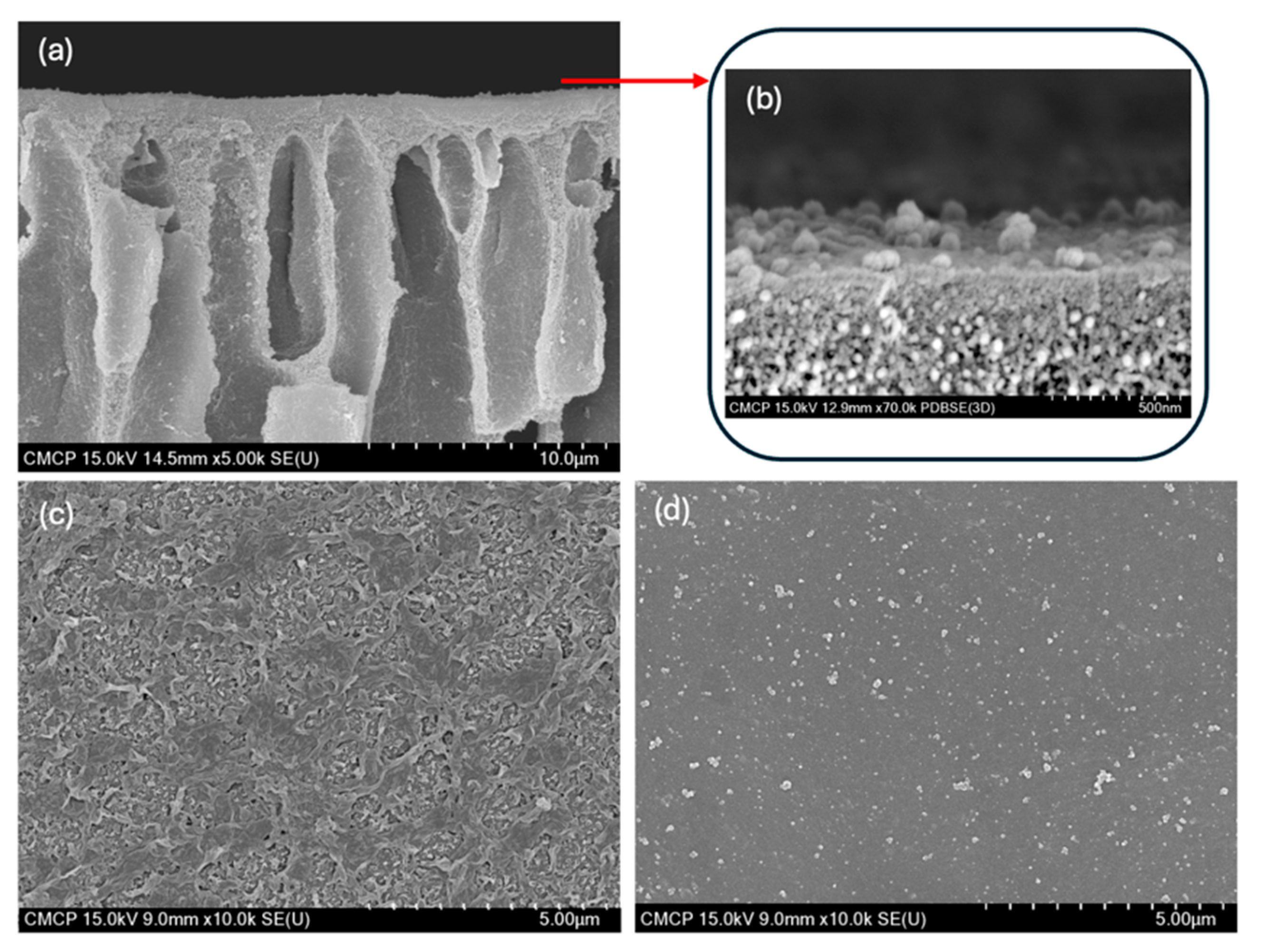
In addition, Figure 4a,b show the cross-section of the FESEM images of the PDA-coated TFN membrane, and Figure 4c,d show the top surface of the membrane before and after the PDA coating. These images show a uniformly deposited PDA layer across the membrane surface. A dense and continuous coating is clearly visible, indicating a successful modification that is expected to influence the membrane’s physicochemical properties and overall PRO performance.

3.1.3. AFM Analysis of the Roughness of the Fabricated Membranes

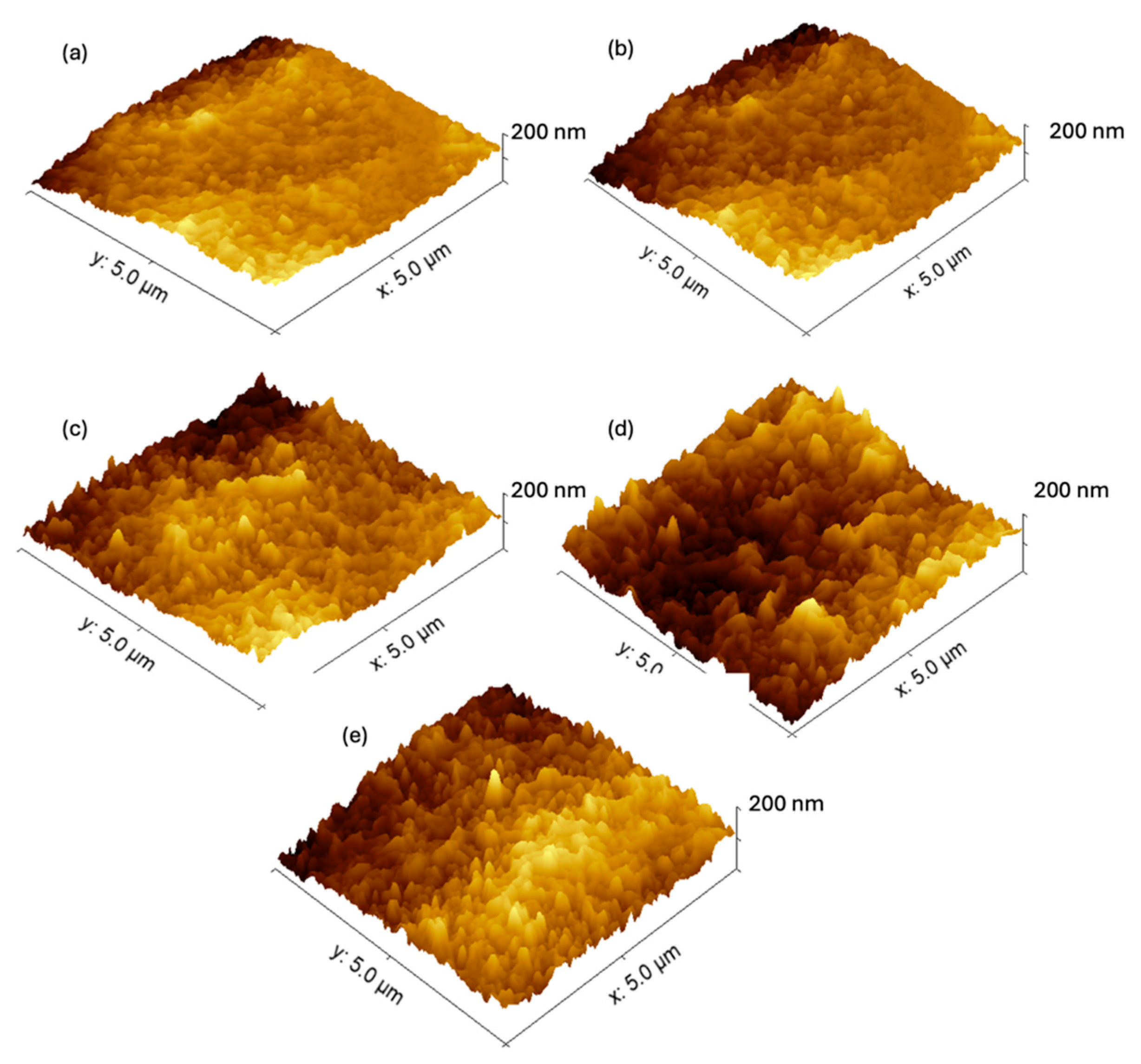
Surface roughness is a key factor influencing the antifouling performance of the prepared membranes. The membrane surface roughness was evaluated through an AFM analysis, with 3D images shown in Figure 5, and the roughness data are provided in Table 2. Based on the root mean square roughness (Sq) and the average roughness (Sa), which represent the key surface roughness parameters, it is evident that the pristine PAN membrane, without any additives, has a smoother surface than the other samples. However, when the nanoparticles are added the surface roughness increases significantly. These findings suggest that the nanomaterials likely moved along the membrane surface during the phase inversion [45]. These hydrophilic nanomaterials tend to move towards the membrane surface during phase inversion, and the rapid process of phase inversion limits their movement, trapping the nanotubes near the surface and finally increasing the membrane’s surface roughness [46]. In addition, the PDA coating on the membrane with 0.3 wt% fMWCNTs, increased the membrane surface roughness from 18.36 nm to 27.48 nm. This observation is consistent with some studies, which found that PDA deposition can enhance the roughness of the polymeric membrane surface and that an optimized rougher support layer promotes the formation of a more textured PA active layer [47].

3.1.4. The Hydrophilicity of the Fabricated Membranes

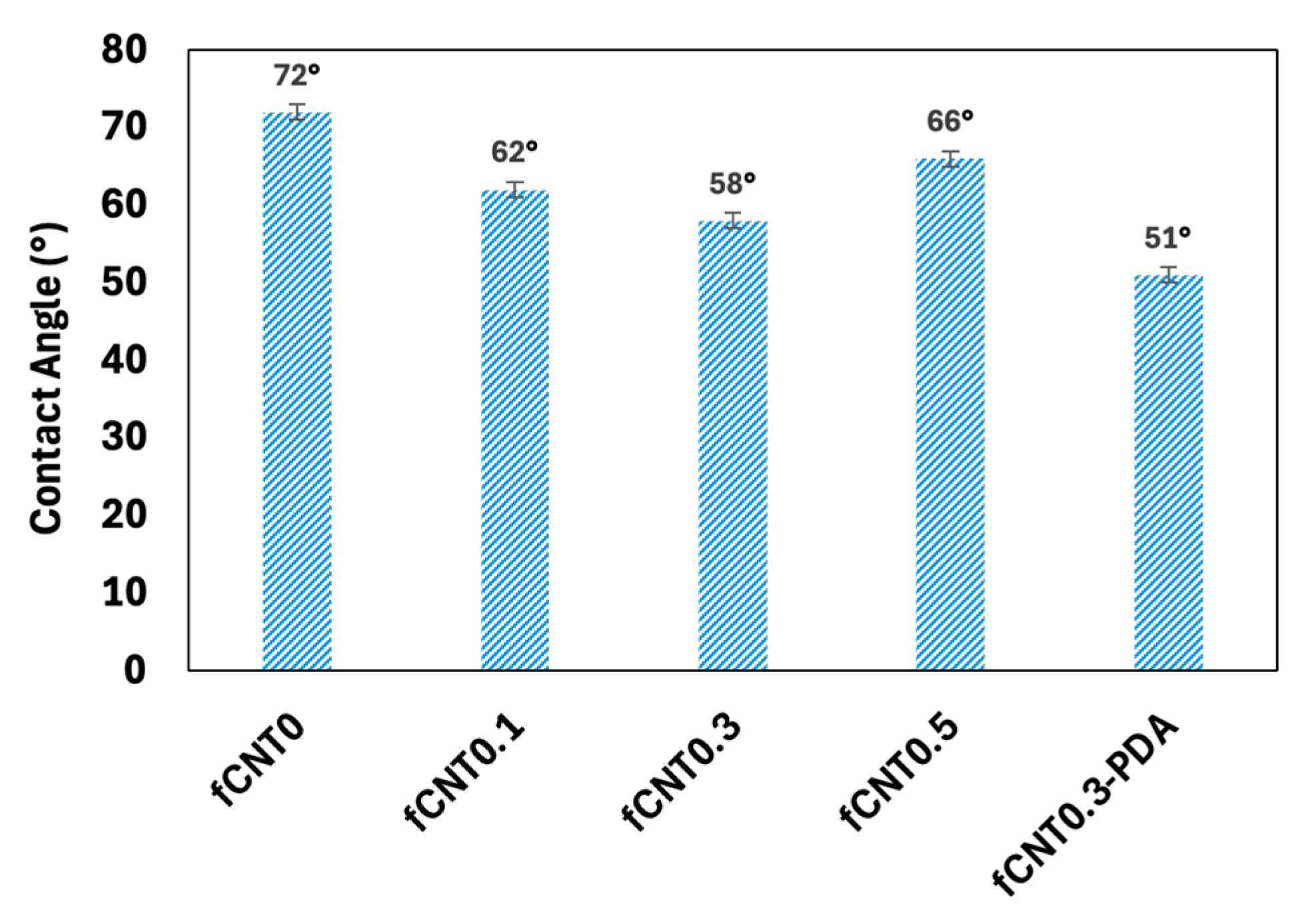
One of the key parameters in the design and fabrication of the membrane is hydrophilicity, as it directly influences water flux behavior. As the number of available sites for water molecule adsorption within the PA selective layer increases, the membrane water permeability is expected to improve. The water contact angle of the membranes was measured, and the results are presented in Figure 6. As the concentration of fMWCNTs increased, the hydrophilicity of the membrane improved due to the presence of carboxyl and hydroxyl functional groups [48,49]. Furthermore, the wettability of the membranes is directly influenced by the effective dispersion of nanomaterials, which can further enhance the hydrophilicity [50]. At an fMWCNT concentration of 0.3 wt%, the nanotubes were well distributed, resulting in higher hydrophilicity. When the fMWCNT concentration increased to 0.5 wt%, the nanomaterials began to aggregate and then reduced their uniform distribution within the support layer.

3.1.5. Intrinsic Separation Properties of the Membranes

Table 3 summarizes the intrinsic transport properties of the prepared membranes. According to the results, the water permeability increased when fMWCNTs were added into the support layer and PDA was coated onto the top surface of the fCNT0.3-PDA membrane. The water permeability increased from 4.18 L·m−2·h−1·bar−1 for fCNT0 to 5.29 L·m−2·h−1·bar−1 at 0.3 wt% fCNT loading and further to 5.65 L·m−2·h−1·bar−1 after the PDA modification. The combined effect of the fMWCNTs and the hydrophilic PDA coating could improve the surface roughness and wettability, facilitating water transport and solubilization through the membrane [1,44]. However, the water permeability with the highest amount of fMWCNTs decreased, likely because excessive nanomaterials led to an irregular distribution within the membrane substrate [51]. The B/A ratio, which is defined as the salt permeability (B) divided by water permeability (A), was used to evaluate membrane selectivity, where lower values indicate higher selectivity. As the salt permeability decreased with increasing fMWCNT contents and PDA coatings, the B/A ratio declined, demonstrating that the modified membranes exhibited improved selectivity. Among all samples, the fCNT0.3-PDA membrane showed the highest salt rejection (99.05%) and the most favorable transport properties, highlighting the synergistic effect of the fMWCNT incorporation and PDA surface modification.
Moreover, the simultaneous increase in water permeability, decrease in salt permeability, and reduction in the S value for the fCNT0.3-PDA membrane confirm the synergistic role of the optimized fMWCNT incorporation and PDA surface modification in minimizing ICP while maintaining high selectivity. For comparison, a commercial CTA membrane was also evaluated under the same conditions. As shown in Table 3, the CTA membrane exhibited a significantly higher S value (627 µm) and lower water permeability compared to the modified membranes, indicating stronger ICP and higher mass transfer resistance in the support layer. Compared to the commercial CTA membrane, which typically exhibits a higher S value that can contribute to stronger ICP, the developed TFC membranes showed substantially lower S values and higher water permeability. Similar observations were reported by Tian et al. [26], where nanofibrous TFC membranes outperformed CTA membranes in terms of pressure endurance and power density, highlighting the importance of support layer engineering for scalable PRO applications.

3.2. Pretreatment Tests Results

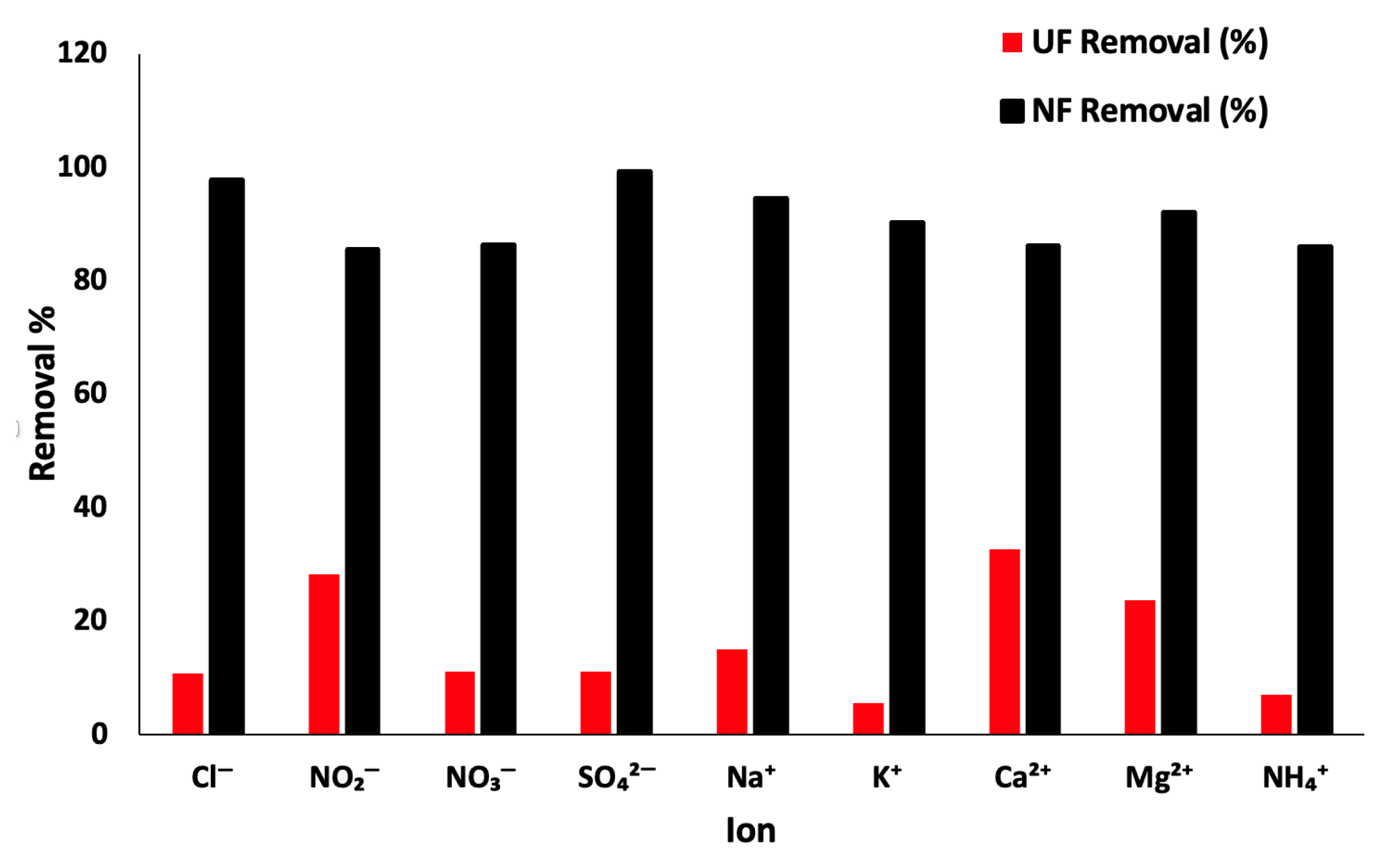
Based on the results, there are significant reductions in ion concentrations after UF and NF treatments because of the membrane separation properties. In UF, suspended solids and large colloids were removed, which were not separated in the microfiltration in the first step. In this process, UF membranes are able to block colloidal particles and larger organic molecules which precipitate or adsorb onto filtered particulates. For example, chloride (Cl) and sulfate (SO42−) show a 10.8% and 11.1% removal rate, indicating that this process is not highly effective and confirming that they remain in the solution after the UF process. However, divalent cations, including calcium (Ca2+) and magnesium (Mg2+), are more effectively removed, at 32% and 23%, respectively, which highlights the UF membrane’s ability to reduce the hardness of water before the NF treatment. Consequently, the UF process is necessary to reduce the NF membrane fouling and maintenance cost for the next steps.
NF membranes are able to remove the monovalent and multivalent ions [34]. These membranes selectively reject ions based on their size and charge. In this step, the Cl and sodium (Na+) removal increased to 97% and 94%, which shows that NF is effective at removing monovalent ions and reducing the water salinity. Additionally, the SO42− removal was 99%, which ensured a significant reduction in scaling within the PRO process. Moreover, Ca2+ and Mg2+ were effectively removed with 90% and 93% reductions, respectively, which is critical to reduce the concerns related to the hardness of water. Then, the high-quality permeate of the NF process was used as a feed solution in the PRO process.
Consequently, the results (Figure 7) demonstrate that both the UF and NF improved the water quality and achieved high removal rates for major ions. The UF membrane helped in the removal of suspended solids and large particulates, and the NF membrane was responsible for substantial reductions in dissolved salts. The findings confirm that the combination of UF and NF is an effective method for the treatment of water for reuse or safe discharge into the environment [52]. Also, high sulfate and hardness removal levels prevent scaling and fouling through the PRO process.

3.3. PRO Test Results

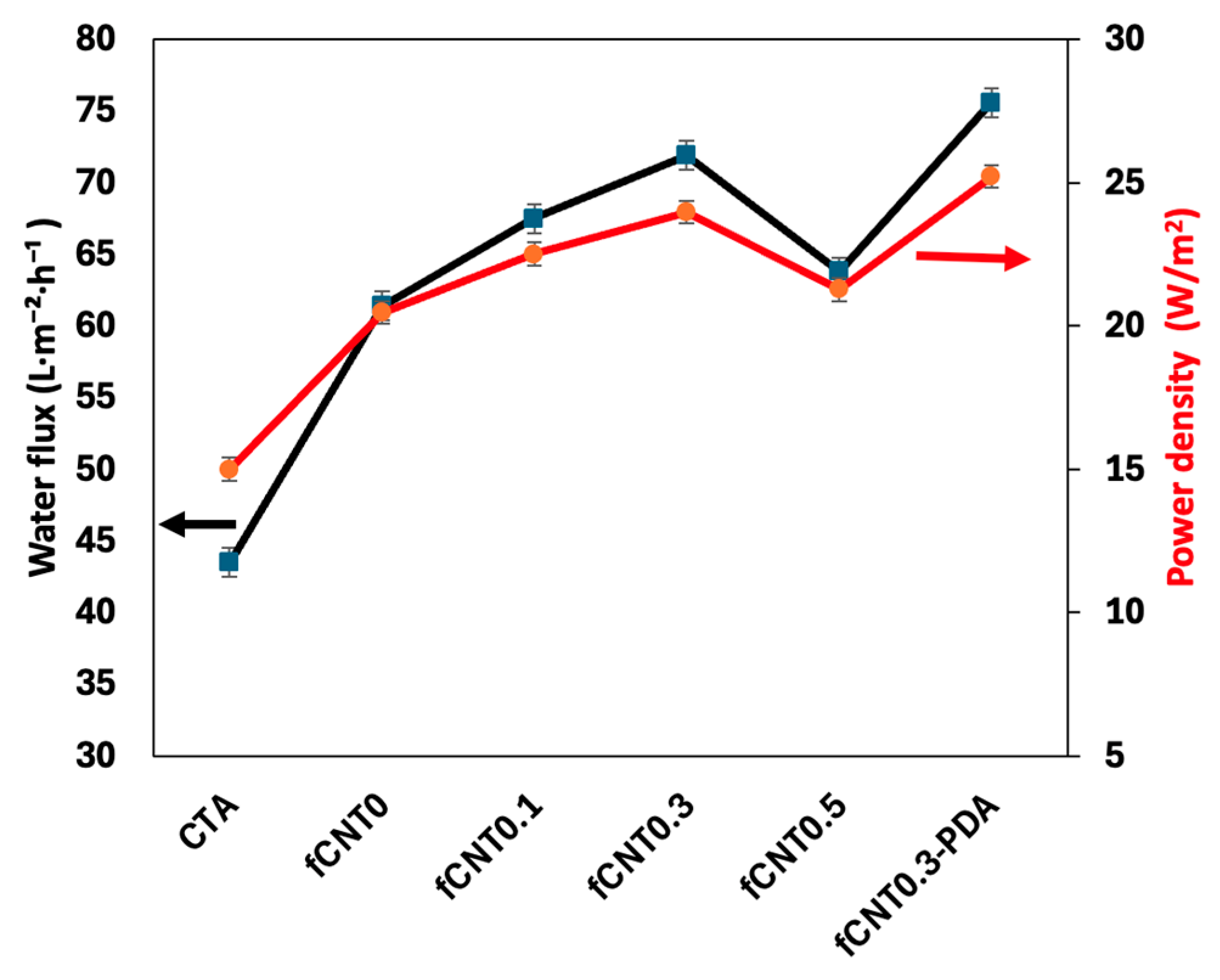
The performance of the prepared membranes was evaluated within the PRO process, while the treated wastewater after the NF process and (NH4)2CO3 were used as the feed and draw solutions, respectively. Figure 8 illustrates the power density and water flux of the unmodified, modified, and commercial cellulose triacetate (CTA) membrane. According to the results (Figure 8), adding a small amount of fMWCNTs (0.1 wt%) enhanced the water flux from 61.4 L·m−2·h−1 for fCNT0, which is 41% higher than the commercial membrane, to 67.5 L·m−2·h−1, representing an improvement of 10% and 55% compared to fCNT0 and CTA, respectively. By increasing the nanomaterials to 0.3 wt%, a water flux of 71.9 L·m−2·h−1 was achieved, which corresponds to the highest performance compared to the TFC and CTA membranes. The power density of fCNT0.3 increased to 23.98 W/m2, and this improvement is related to the increased hydrophilicity, better pore connectivity, and the formation of a more permeable PA selective layer, which collectively reduces ICP. However, further increasing the CNT concentration to 0.5 wt% likely caused aggregation within the support layer and hindered the internal mass transfer and decreased the performance of the membrane. When the optimal fCNT0.3 membrane was additionally coated with PDA, the flux reached 75.6 L·m−2·h−1, which is 23% higher than fCNT0 and 74% higher than CTA due to its strong hydrophilicity, increasing the number of water-adsorption sites and smoother water passages across the active layer.
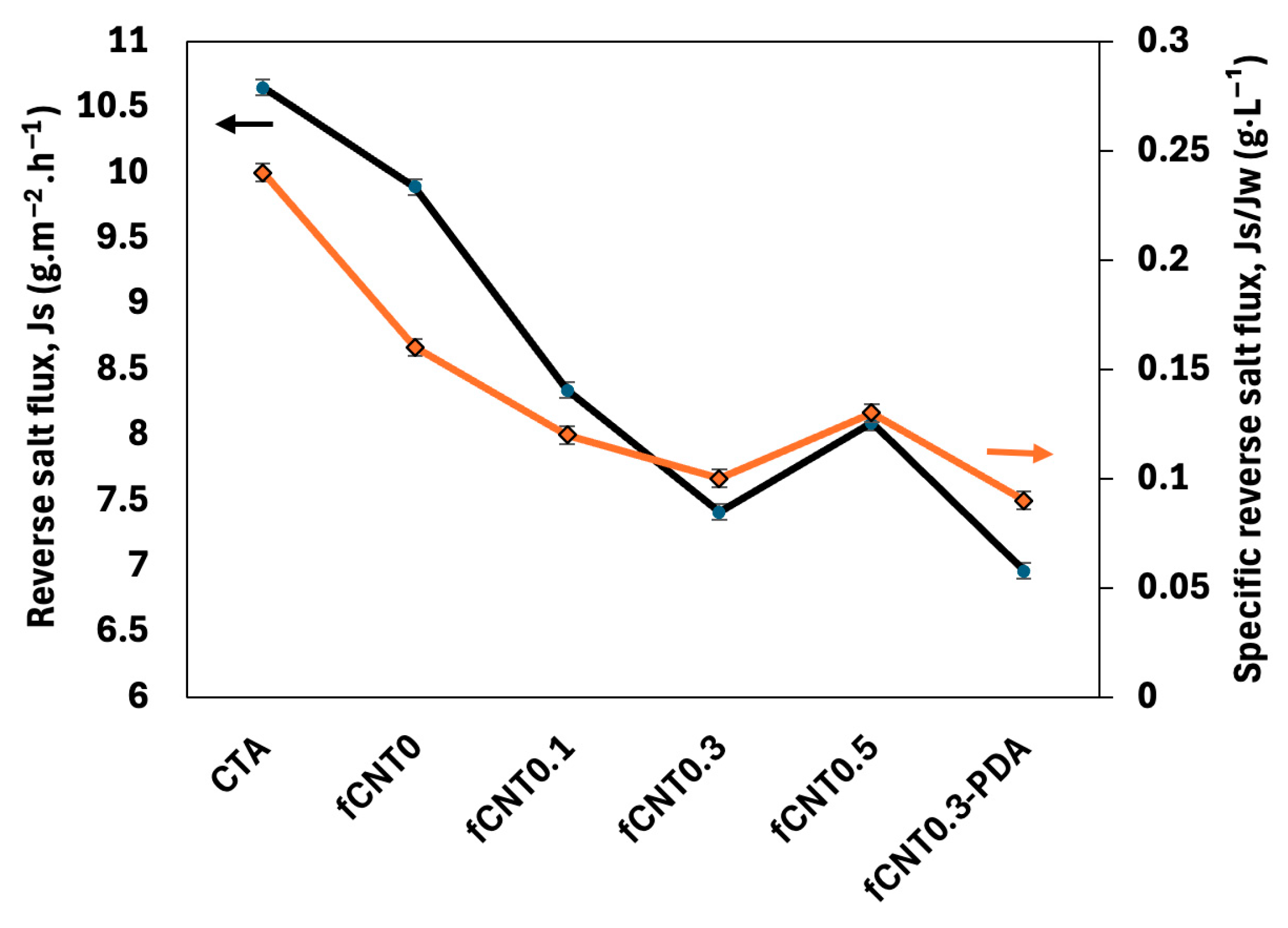
Figure 9 presents the Js and specific reverse salt flux (Js/Jw) of the commercial CTA and synthesized membranes. Compared to the CTA membrane, all modified membranes exhibited lower Js and significantly reduced Js/Jw values, indicating enhanced membrane selectivity. The lowest Js/Jw was achieved for the fCNT0.3-PDA membrane (0.09 g·L−1), corresponding to a ~63% reduction compared to CTA. These results demonstrate an improved balance between the water permeability and salt rejection. Although increasing the CNT loading to 0.5 wt% led to a partial deterioration in both Js and Js/Jw due to CNT aggregation, the optimized fCNT0.3 and fCNT0.3-PDA membranes successfully minimized the salt leakage while maintaining a high water flux and power density.
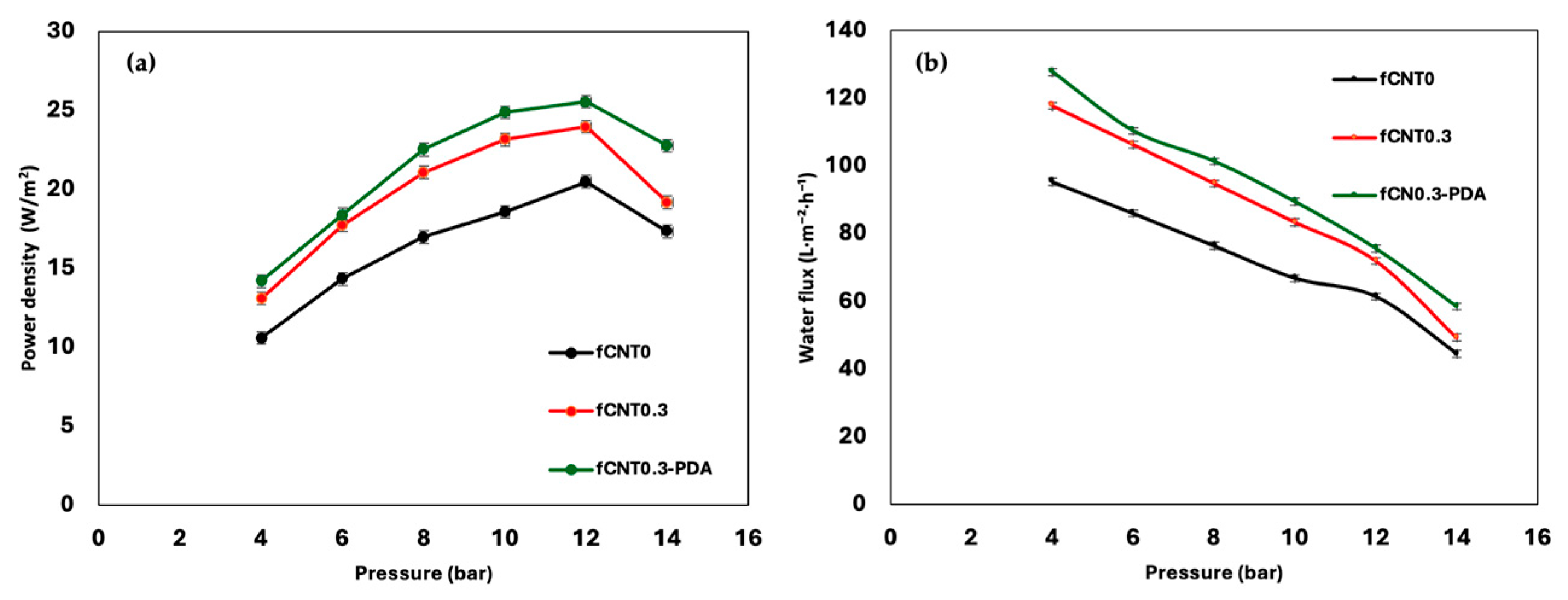
Figure 10 illustrates the variation in the measured power density and water flux as a function of the applied hydraulic pressure for fCNT0, fCNT0.3, and fCNT0.3-PDA. The power density increased with pressure and reached a maximum at 12 bar for all membranes. Further increasing the pressure to 14 bar led to a decline in power density due to the reduced effective osmotic driving force and mechanical limitations, which may lead to membrane compaction and reduced water flux under elevated hydraulic pressures [53]. Therefore, 12 bar was selected as the optimal operating pressure that maximizes the power density while ensuring a stable membrane performance under PRO conditions.
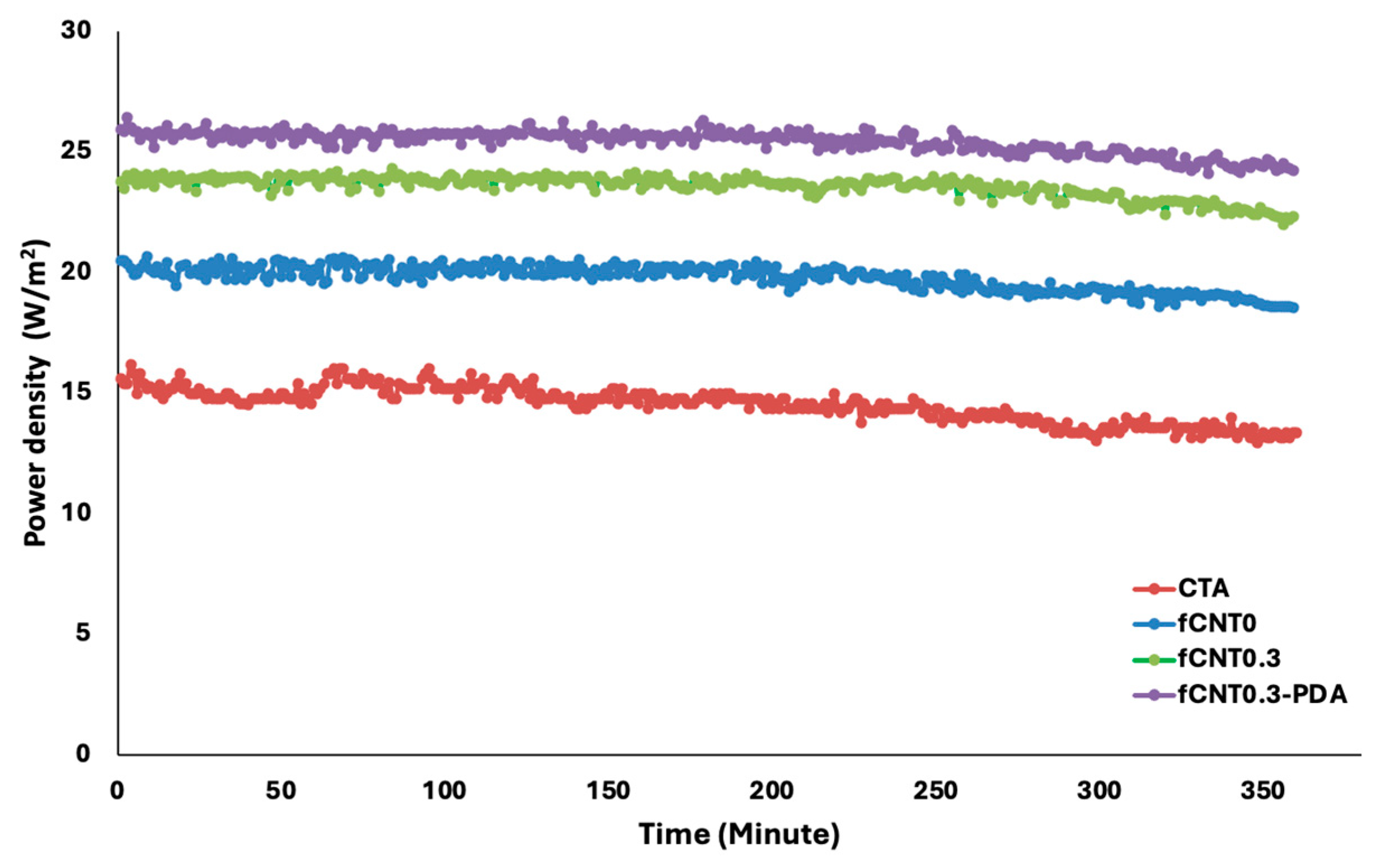
Figure 11 demonstrates that the commercial CTA and the prepared fCNT0, fCNT0.3, and fCNT0.3-PDA membranes maintain relatively stable power density values of approximately 15.0 ± 0.4 W/m2, 20.48 ± 0.4 W/m2, 23.98 ± 0.4 W/m2, and 25.22 ± 0.4 W/m2, respectively, over a prolonged PRO operation (360 min) at a hydraulic pressure of 12 bar. This performance stability suggests a limited fouling tendency under the tested conditions. The observed behavior can be attributed to reduced internal concentration polarization associated with lower structural parameter values, as well as the enhanced surface hydrophilicity of the modified membranes. In particular, the fCNT0.3-PDA membrane exhibits the highest stability, reflecting the combined structural and surface-related benefits of the optimized fCNT incorporation and PDA surface modification.
Moreover, to better contextualize the present work within the recent literature, Table 4 summarizes selected FO and PRO studies reported in the literature, highlighting differences in membrane materials and types, feed and draw solutions, and power density values, which are reported only when explicitly provided in the referenced studies.

4. Conclusions

This study demonstrates the potential of TFN membranes modified with fMWCNTs and subsequently coated with PDA for PRO operations using treated real mining wastewater as the feed solution. According to the results, the surface functional groups of fMWCNTs contributed to a better dispersion of nanomaterials in the polymeric solution and were associated with enhanced membrane hydrophilicity and water flux. The optimal loading of 0.3 wt% fMWCNTs yielded the most favorable balance between dispersion and viscosity, producing an asymmetric structure with straighter finger-like pores and improved hydrophilicity, as confirmed by the FESEM analysis. Furthermore, the PDA coating enhanced membrane water interactions, contributing to higher water permeability and reduced salt transport under the tested PRO conditions. In addition, the application of UF and NF pretreatments played an important role in producing a stable feed solution with improved performance stability during the PRO operation. The removal of suspended solids and hardness ions helped maintain a stable membrane performance during the PRO operation. These findings highlight the feasibility of modified TFN membranes with real mining wastewater streams to achieve both water reuse and osmotic energy recovery. From an industrial perspective, the membrane fabrication approach adopted in this study aligns with fabrication strategies previously reported to be compatible with established TFC membrane manufacturing processes [39]. The observed stable performance under PRO hydraulic pressures during extended operations suggests adequate mechanical integrity. This approach provides a promising method for sustainable resource utilization in mining operations and supports the advancement of PRO as a viable hybrid water–energy technology.

Author Contributions

Methodology S.P.; Writing—Original Draft Preparation S.P.; Writing—Review and Editing, C.N.M.; Supervision, C.N.M.; Project Administration, C.N.M.; Funding Acquisition, C.N.M. All authors have read and agreed to the published version of the manuscript.

Funding

This research was funded by the Natural Sciences and Engineering Research Council of Canada (NSERC), ALLRP 570493-2021, and the Fonds de recherche de Quebec (Nature et Technologies), 322730.

Data Availability Statement

The original contributions presented in this study are included in the article. Further inquiries can be directed to the corresponding author.

Conflicts of Interest

The authors declare no conflicts of interest.

References

  1. Su, Z.; Malankowska, M.; Brigsted, J.S.; Popkov, A.; Guo, H.; Pedersen, L.S.; Pinelo, M. Novel Membrane Coating Methods Involving Use of Graphene Oxide and Polyelectrolytes for Development of Sustainable Energy Production: Pressure Retarded Osmosis (PRO) and Enzymatic Membrane Reactor (EMR). Chem. Eng. Res. Des. 2024, 204, 418–426. [Google Scholar] [CrossRef]
  2. Li, D.; Mo, Z.; She, Q. Comparison of Energy Efficiency between Atmospheric Batch Pressure-Retarded Osmosis and Single-Stage Pressure-Retarded Osmosis. Membranes 2023, 13, 354. [Google Scholar] [CrossRef]
  3. Liew, Z.-S.; Ho, Y.-C.; Lau, W.J.; Nordin, N.A.H.M.; Lai, S.-O.; Ma, J. Altering Substrate Properties of Thin Film Nanocomposite Membrane by Al2O3 Nanoparticles for Engineered Osmosis Process. Environ. Technol. 2024, 45, 1052–1065. [Google Scholar] [CrossRef] [PubMed]
  4. Jones, E.; Qadir, M.; Van Vliet, M.T.H.; Smakhtin, V.; Kang, S. The State of Desalination and Brine Production: A Global Outlook. Sci. Total Environ. 2019, 657, 1343–1356. [Google Scholar] [CrossRef]
  5. Abdelkader, B.A.; Navas, D.R.; Sharqawy, M.H. A Novel Spiral Wound Module Design for Harvesting Salinity Gradient Energy Using Pressure Retarded Osmosis. Renew. Energy 2023, 203, 542–553. [Google Scholar] [CrossRef]
  6. Straub, A.P.; Deshmukh, A.; Elimelech, M. Pressure-Retarded Osmosis for Power Generation from Salinity Gradients: Is It Viable? Energy Environ. Sci. 2016, 9, 31–48. [Google Scholar] [CrossRef]
  7. Chintalacheruvu, S.; Ren, Y.; Maisonneuve, J. Effectively Using Heat to Thermally Enhance Pressure Retarded Osmosis. Desalination 2023, 556, 116570. [Google Scholar] [CrossRef]
  8. Al-Zainati, N.; Ibrar, I.; Altaee, A.; Subbiah, S.; Zhou, J. Multiple Staging of Pressure Retarded Osmosis: Impact on the Energy Generation. Desalination 2024, 573, 117199. [Google Scholar] [CrossRef]
  9. Liang, Y.Y. Review of Analytical and Numerical Modeling for Pressure Retarded Osmosis Membrane Systems. Desalination 2023, 560, 116655. [Google Scholar] [CrossRef]
  10. Lee, B.; Wang, L.; Wang, Z.; Cooper, N.J.; Elimelech, M. Directing the Research Agenda on Water and Energy Technologies with Process and Economic Analysis. Energy Environ. Sci. 2023, 16, 714–722. [Google Scholar] [CrossRef]
  11. Liang, H.-Q.; Hung, W.-S.; Yu, H.-H.; Hu, C.-C.; Lee, K.-R.; Lai, J.-Y.; Xu, Z.-K. Forward Osmosis Membranes with Unprecedented Water Flux. J. Membr. Sci. 2017, 529, 47–54. [Google Scholar] [CrossRef]
  12. Binger, Z.M.; Achilli, A. Forward Osmosis and Pressure Retarded Osmosis Process Modeling for Integration with Seawater Reverse Osmosis Desalination. Desalination 2020, 491, 114583. [Google Scholar] [CrossRef]
  13. Kwon, S.J.; Park, K.; Kim, D.Y.; Zhan, M.; Hong, S.; Lee, J.-H. High-Performance and Durable Pressure Retarded Osmosis Membranes Fabricated Using Hydrophilized Polyethylene Separators. J. Membr. Sci. 2021, 619, 118796. [Google Scholar] [CrossRef]
  14. Sarp, S.; Li, Z.; Saththasivam, J. Pressure Retarded Osmosis (PRO): Past Experiences, Current Developments, and Future Prospects. Desalination 2016, 389, 2–14. [Google Scholar] [CrossRef]
  15. Tong, X.; Wang, X.; Liu, S.; Gao, H.; Xu, C.; Crittenden, J.; Chen, Y. A Freestanding Graphene Oxide Membrane for Efficiently Harvesting Salinity Gradient Power. Carbon 2018, 138, 410–418. [Google Scholar] [CrossRef]
  16. Lu, D.; Yao, Z.; Jiao, L.; Waheed, M.; Sun, Z.; Zhang, L. Separation Mechanism, Selectivity Enhancement Strategies and Advanced Materials for Mono-/Multivalent Ion-Selective Nanofiltration Membrane. Adv. Membr. 2022, 2, 100032. [Google Scholar] [CrossRef]
  17. Ji, C.; Zhai, Z.; Jiang, C.; Hu, P.; Zhao, S.; Xue, S.; Yang, Z.; He, T.; Niu, Q.J. Recent Advances in High-Performance TFC Membranes: A Review of the Functional Interlayers. Desalination 2021, 500, 114869. [Google Scholar] [CrossRef]
  18. Goh, P.S.; Ismail, A.F. Chemically Functionalized Polyamide Thin Film Composite Membranes: The Art of Chemistry. Desalination 2020, 495, 114655. [Google Scholar] [CrossRef]
  19. Siahtiri, S.; Sahraei, A.A.; Mokarizadeh, A.H.; Baghani, M.; Bodaghi, M.; Baniassadi, M. Influence of Curing Agents Molecular Structures on Interfacial Characteristics of Graphene/Epoxy Nanocomposites: A Molecular Dynamics Framework. Macromol. Mater. Eng. 2023, 308, 2300030. [Google Scholar] [CrossRef]
  20. Shen, H.; Wang, S.; Xu, H.; Zhou, Y.; Gao, C. Preparation of Polyamide Thin Film Nanocomposite Membranes Containing Silica Nanoparticles via an In-Situ Polymerization of SiCl4 in Organic Solution. J. Membr. Sci. 2018, 565, 145–156. [Google Scholar] [CrossRef]
  21. Gong, G.; Wang, P.; Zhou, Z.; Hu, Y. New Insights into the Role of an Interlayer for the Fabrication of Highly Selective and Permeable Thin-Film Composite Nanofiltration Membrane. ACS Appl. Mater. Interfaces 2019, 11, 7349–7356. [Google Scholar] [CrossRef]
  22. Nambi Krishnan, J.; Venkatachalam, K.R.; Ghosh, O.; Jhaveri, K.; Palakodeti, A.; Nair, N. Review of Thin Film Nanocomposite Membranes and Their Applications in Desalination. Front. Chem. 2022, 10, 781372. [Google Scholar] [CrossRef] [PubMed]
  23. Shadravan, A.; Goh, P.S.; Ismail, A.F.; Amani, M. Fouling in thin film nanocomposite membranes for power generation through pressure retarded osmosis. arXiv 2021, arXiv:2112.02503. [Google Scholar] [CrossRef]
  24. Jain, H.; Garg, M.C. Fabrication of Polymeric Nanocomposite Forward Osmosis Membranes for Water Desalination—A Review. Environ. Technol. Innov. 2021, 23, 101561. [Google Scholar] [CrossRef]
  25. Samieirad, S.; Mousavi, S.M.; Saljoughi, E. Alignment of Functionalized Multiwalled Carbon Nanotubes in Forward Osmosis Membrane Support Layer Induced by Electric and Magnetic Fields. Powder Technol. 2020, 364, 538–552. [Google Scholar] [CrossRef]
  26. Tian, M.; Wang, R.; Goh, K.; Liao, Y.; Fane, A.G. Synthesis and Characterization of High-Performance Novel Thin Film Nanocomposite PRO Membranes with Tiered Nanofiber Support Reinforced by Functionalized Carbon Nanotubes. J. Membr. Sci. 2015, 486, 151–160. [Google Scholar] [CrossRef]
  27. Choi, H.; Son, M.; Choi, H. Integrating Seawater Desalination and Wastewater Reclamation Forward Osmosis Process Using Thin-Film Composite Mixed Matrix Membrane with Functionalized Carbon Nanotube Blended Polyethersulfone Support Layer. Chemosphere 2017, 185, 1181–1188. [Google Scholar] [CrossRef]
  28. Su, Z.; Malankowska, M.; Marschall Thostrup, T.; DeMartini, M.; Khajavi, P.; Guo, H.; Storm Pedersen, L.; Pinelo, M. Comparison of 2D and 3D Materials on Membrane Modification for Improved Pressure Retarded Osmosis (PRO) Process. Chem. Eng. Sci. 2024, 285, 119638. [Google Scholar] [CrossRef]
  29. Abdullah, W.N.A.S.; Mohd Nawi, N.S.; Lau, W.J.; Ho, Y.C.; Aziz, F.; Ismail, A.F. Enhancing Physiochemical Substrate Properties of Thin-Film Composite Membranes for Water and Wastewater Treatment via Engineered Osmosis Process. Polymers 2023, 15, 1665. [Google Scholar] [CrossRef]
  30. Sun, Y.; Zheng, L.; Feng, Q.; Xie, X.; Yong, Z.; He, J.; Yang, L.; Zhao, X. In Situ Surface Modification of Forward Osmosis Membrane by Polydopamine/Polyethyleneimine-Silver Nanoparticle for Anti-Fouling Improvement in Municipal Wastewater Treatment. Water Sci. Technol. 2023, 87, 2195–2209. [Google Scholar] [CrossRef]
  31. AlZainati, N.; Saleem, H.; Altaee, A.; Zaidi, S.J.; Mohsen, M.; Hawari, A.; Millar, G.J. Pressure Retarded Osmosis: Advancement, Challenges and Potential. J. Water Process Eng. 2021, 40, 101950. [Google Scholar] [CrossRef]
  32. Samavati, Z.; Samavati, A.; Goh, P.S.; Fauzi Ismail, A.; Sohaimi Abdullah, M. A Comprehensive Review of Recent Advances in Nanofiltration Membranes for Heavy Metal Removal from Wastewater. Chem. Eng. Res. Des. 2023, 189, 530–571. [Google Scholar] [CrossRef]
  33. Peters, C.D.; Rantissi, T.; Gitis, V.; Hankins, N.P. Retention of Natural Organic Matter by Ultrafiltration and the Mitigation of Membrane Fouling through Pre-Treatment, Membrane Enhancement, and Cleaning—A Review. J. Water Process Eng. 2021, 44, 102374. [Google Scholar] [CrossRef]
  34. Koli, M.M.; Singh, S.P. Surface-Modified Ultrafiltration and Nanofiltration Membranes for the Selective Removal of Heavy Metals and Inorganic Groundwater Contaminants: A Review. Environ. Sci. Water Res. Technol. 2023, 9, 2803–2829. [Google Scholar] [CrossRef]
  35. Yang, T.; Wan, C.F.; Xiong, J.Y.; Chung, T.-S. Pre-Treatment of Wastewater Retentate to Mitigate Fouling on the Pressure Retarded Osmosis (PRO) Process. Sep. Purif. Technol. 2019, 215, 390–397. [Google Scholar] [CrossRef]
  36. Wan, C.F.; Chung, T.-S. Osmotic Power Generation by Pressure Retarded Osmosis Using Seawater Brine as the Draw Solution and Wastewater Retentate as the Feed. J. Membr. Sci. 2015, 479, 148–158. [Google Scholar] [CrossRef]
  37. Zadeh, A.E.; Touati, K.; Mulligan, C.N.; McCutcheon, J.R.; Rahaman, M.S. Closed-Loop Pressure Retarded Osmosis Draw Solutions and Their Regeneration Processes: A Review. Renew. Sustain. Energy Rev. 2022, 159, 112191. [Google Scholar] [CrossRef]
  38. Nouri, G.; Mulligan, C.N.; Nasiri, F.; Neculita, C.M. Application of Pressure Retarded Osmosis Technology for Sustainable Mining Wastewater Treatment and Energy Generation. In Canadian Society of Civil Engineering Annual Conference; Springer: Cham, Switzerland, 2024; pp. 75–87. [Google Scholar]
  39. Son, M.; Park, H.; Liu, L.; Choi, H.; Kim, J.H.; Choi, H. Thin-Film Nanocomposite Membrane with CNT Positioning in Support Layer for Energy Harvesting from Saline Water. Chem. Eng. J. 2016, 284, 68–77. [Google Scholar] [CrossRef]
  40. Son, M.; Choi, H.; Liu, L.; Celik, E.; Park, H.; Choi, H. Efficacy of Carbon Nanotube Positioning in the Polyethersulfone Support Layer on the Performance of Thin-Film Composite Membrane for Desalination. Chem. Eng. J. 2015, 266, 376–384. [Google Scholar] [CrossRef]
  41. Paşaoğlu, M.E.; Koyuncu, İ. Fabrication, Characterization and Application of Flat Sheet PAN/CNC Nanocomposite Nanofiber Pressure-Retarded Osmosis (PRO) Membrane. Desalination Water Treat. 2021, 211, 369–381. [Google Scholar] [CrossRef]
  42. Idris, S.N.A.; Jullok, N.; Lau, W.J.; Ma’Radzi, A.H.; Ong, H.L.; Ramli, M.M.; Dong, C.-D. Modification of Thin Film Composite Pressure Retarded Osmosis Membrane by Polyethylene Glycol with Different Molecular Weights. Membranes 2022, 12, 282. [Google Scholar] [CrossRef]
  43. Gonzales, R.R.; Abdel-Wahab, A.; Adham, S.; Han, D.S.; Phuntsho, S.; Suwaileh, W.; Hilal, N.; Shon, H.K. Salinity Gradient Energy Generation by Pressure Retarded Osmosis: A Review. Desalination 2021, 500, 114841. [Google Scholar] [CrossRef]
  44. Amini, M.; Jahanshahi, M.; Rahimpour, A. Synthesis of Novel Thin Film Nanocomposite (TFN) Forward Osmosis Membranes Using Functionalized Multi-Walled Carbon Nanotubes. J. Membr. Sci. 2013, 435, 233–241. [Google Scholar] [CrossRef]
  45. Kumari, P.; Modi, A.; Bellare, J. Enhanced Flux and Antifouling Property on Municipal Wastewater of Polyethersulfone Hollow Fiber Membranes by Embedding Carboxylated Multi-Walled Carbon Nanotubes and a Vitamin E Derivative. Sep. Purif. Technol. 2020, 235, 116199. [Google Scholar] [CrossRef]
  46. Iranpoury, A.; Mehrnia, M.R.; Jafari, S.H.; Najmi, M. Improvement of Fouling Resistance and Mechanical Reinforcement of Polyacrylonitrile Membranes by Amino-functionalized Multiwalled Carbon Nanotubes for Membrane Bioreactors Applications. J. Appl. Polym. Sci. 2022, 139, e52733. [Google Scholar] [CrossRef]
  47. Kim, H.W.; McCloskey, B.D.; Choi, T.H.; Lee, C.; Kim, M.-J.; Freeman, B.D.; Park, H.B. Oxygen Concentration Control of Dopamine-Induced High Uniformity Surface Coating Chemistry. ACS Appl. Mater. Interfaces 2013, 5, 233–238. [Google Scholar] [CrossRef]
  48. Choi, H.; Son, M.; Yoon, S.; Celik, E.; Kang, S.; Park, H.; Park, C.H.; Choi, H. Alginate Fouling Reduction of Functionalized Carbon Nanotube Blended Cellulose Acetate Membrane in Forward Osmosis. Chemosphere 2015, 136, 204–210. [Google Scholar] [CrossRef]
  49. Son, M.; Novotny, V.; Choi, H. Thin-Film Nanocomposite Membrane with Vertically Embedded Carbon Nanotube for Forward Osmosis. Desalination Water Treat. 2016, 57, 26670–26679. [Google Scholar] [CrossRef]
  50. Kubiak, K.J.; Wilson, M.C.T.; Mathia, T.G.; Carval, P. Wettability versus Roughness of Engineering Surfaces. Wear 2011, 271, 523–528. [Google Scholar] [CrossRef]
  51. Idris, S.N.A.; Jullok, N.; Lau, W.J.; Ong, H.L.; Dong, C.-D. Graphene Oxide Incorporated Polysulfone Substrate for Flat Sheet Thin Film Nanocomposite Pressure Retarded Osmosis Membrane. Membranes 2020, 10, 416. [Google Scholar] [CrossRef] [PubMed]
  52. Pakdaman, S.; Nouri, G.; Mulligan, C.N.; Nasiri, F. Integration of Membrane-Based Pretreatment Methods with Pressure-Retarded Osmosis for Performance Enhancement: A Review. Materials 2025, 18, 1020. [Google Scholar] [CrossRef] [PubMed]
  53. Aghapour Aktij, S.; Dadashi Firouzjaei, M.; Haddadi, S.A.; Karami, P.; Taghipour, A.; Yassari, M.; Asad, A.A.; Pilevar, M.; Jafarian, H.; Arjmand, M.; et al. Metal-Organic Frameworks’ Latent Potential as High-Efficiency Osmotic Power Generators in Thin-Film Nanocomposite Membranes. Chem. Eng. J. 2024, 481, 148384. [Google Scholar] [CrossRef]
  54. Chen, Y.; Yu, W.; Cao, H. Arginine-Functionalized Thin Film Composite Forward Osmosis Membrane Integrating Antifouling and Antibacterial Effects. Membranes 2023, 13, 760. [Google Scholar] [CrossRef]
  55. Karami, P.; Haque Mizan, M.M.; Khorshidi, B.; Aghapour Aktij, S.; Rahimpour, A.; Soares, J.B.P.; Sadrzadeh, M. Novel Forward Osmosis Membranes Engineered with Polydopamine/Graphene Oxide Interlayers: Synergistic Impact of Monomer Reactivity and Hydrophilic Interlayers. Ind. Eng. Chem. Res. 2023, 62, 11965–11976. [Google Scholar] [CrossRef]
Figure 1. A schematic of the entire process.
Water 18 00248 g001
Figure 2. FTIR analysis of (a) fCNT0, (b) fCNT0.1, (c) fCNT0.3, and (d) fCNT0.5.
Water 18 00248 g002
Figure 3. FESEM images of the cross-sections of the TFC and TFN membranes: (a) fCNT0, (b) fCNT0.1, (c) fCNT0.3, and (d) fCNT0.5.
Water 18 00248 g003
Figure 4. FESEM images of (a,b) cross-sections of the PDA-coated membrane with 0.3 wt% of fMWCNTs (fCNT0.3-PDA), (c) top surface of fCNT0.3, and (d) top surface of fCNT0.3-PDA.
Water 18 00248 g004
Figure 5. Three-dimensional AFM images of the membranes: (a) fCNT0, (b) fCNT0.1, (c) fCNT0.3, (d) fCNT0.5, and (e) fCNT0.3-PDA.
Water 18 00248 g005
Figure 6. The water contact angle measurement on the prepared membrane. All measurements were conducted in triplicate.
Water 18 00248 g006
Figure 7. Removal percentage based on IC results for UF and NF permeates.
Water 18 00248 g007
Figure 8. Water flux and power density performance of commercial and synthesized membranes tested in PRO mode at an applied pressure of 12 bar using pretreated mining wastewater as the feed solution and 3M ((NH4)2CO3) as the draw solution. Error bars represent the standard deviation of triplicate measurements.
Water 18 00248 g008
Figure 9. Reverse salt flux (Js) and specific reverse salt flux (Js/Jw) of the commercial and synthesized membranes evaluated under PRO conditions at 12 bar using pretreated mining wastewater as the feed solution and 3 M (NH4)2CO3 as the draw solution. Error bars indicate the standard deviation of three independent experiments.
Water 18 00248 g009
Figure 10. Measured (a) power density and (b) water flux of the fCNT0, fCNT0.3, and fCNT0.3-PDA membranes as a function of applied hydraulic pressure (4–14 bar) under the PRO operation. In this process, pretreated mining wastewater and 3M ((NH4)2CO3) were used as feed and draw solutions, respectively.
Water 18 00248 g010
Figure 11. The power density variation with time for commercial CTA and synthesized TFC, fCNT0, fCNT0.3, and fCNT0.3-PDA membranes during 360 min of continuous PRO operation at 12 bar, using pretreated mining wastewater as the feed solution and 3M ((NH4)2CO3) as the draw solution.
Water 18 00248 g011
Table 1. Composition of fabricated membranes.
SamplesPAN (wt%)DMF (wt%)fMWCNTs (wt%)PDA
fCNT01684--
fCNT0.116840.1-
fCNT0.316840.3-
fCNT0.516840.5-
fCNT0.3-PDA16840.3+
Table 2. Surface roughness parameters of the prepared membranes.
SampleSq (nm)Sa (nm)
fCNT025.7518.36
fCNT0.129.6122.43
fCNT0.331.5424.60
fCNT0.535.6529.16
fCNT0.3-PDA33.5227.48
Table 3. Intrinsic transport properties of the membranes.
SampleWater Permeability
(A, L·m−2·h−1·bar−1)
Salt Permeability
(B, L·m−2·h−1)
B/A
(bar)
Salt Rejection
(%)
Structural Parameter
(S, µm)
fCNT04.18 ± 0.081.98 ± 0.040.4795.46556
fCNT0.14.48 ± 0.061.28 ± 0.020.2897.21529
fCNT0.35.29 ± 0.080.83 ± 0.050.1698.45511
fCNT0.54.33 ± 0.091.51 ± 0.040.3596.62557
fCNT0.3-PDA5.65 ± 0.150.54 ± 0.030.199.05494
CTA3.12 ± 0.052.31 ± 0.050.7493.1627
Table 4. Comparison of recent studies employing modified membranes under different feed and draw solution conditions.
SampleType of MaterialType of MembraneFSDSPower Density
(W/m2)
Ref.
1PAN + fMWCNTs + PDAFlat sheet PROGold mining wastewater3.0 M (NH4)2CO325.22This study
2CTA + PDA + Polyetherimide (PEI)Flat sheet FORaw municipal wastewaterSynthetic seawaterNot applicable (FO study)[30]
3Polyethersulfone + Zwitterionic
arginine
Flat sheet FODeionized water/model oily wastewater (emulsified oil)1.0 M
NaCl
Not applicable (FO study)[54]
4PAN + polyphenylsulfone substrate and PDA + graphene oxide (GO) coatingFlat sheet FO/PROAerobically treated palm oil mill effluent4.0 M MgCl2Not reported[29]
5PolyethersulfoneHollow fiber PROWastewater retentateSynthetic seawater brine7.3–8.4[35]
6PDA + polyelectrolytes + GOFlat sheet PRODeionized water17.5 wt% NaCl2.64[1]
7Polyphenylsulfone + cellulose acetate phthalate + fMWCNTsFlat sheet FODeionized waterNot applicableNot applicable (FO study)[25]
8PEI + fMWCNTsNanofibrous TFCDeionized water1.0 NaCl17.3[26]
9Triaminopyrimidine monomer + PDA/GOCommercial flat sheetDeionized water1.0 M NaClNot reported[55]
Disclaimer/Publisher’s Note: The statements, opinions and data contained in all publications are solely those of the individual author(s) and contributor(s) and not of MDPI and/or the editor(s). MDPI and/or the editor(s) disclaim responsibility for any injury to people or property resulting from any ideas, methods, instructions or products referred to in the content.