A Hybrid Inorganic–Organic Schiff Base-Functionalised Porous Platform for the Remediation of WEEE Polluted Effluents

 ,
,  ,
,  , , , and
Abstract
1. Introduction
2. Materials and Methods
2.1. Chemicals
2.2. Characterisation
2.3. Synthesis of Schiff’s Base DHB
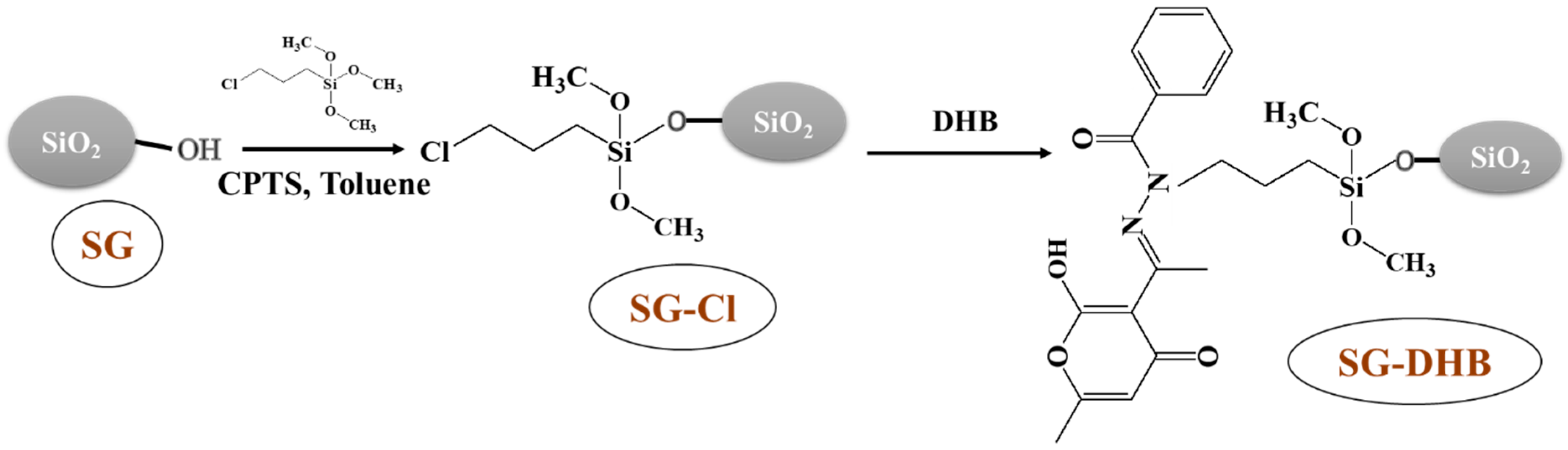
2.4. Preparation of CPTS Modified Silica Gel (SG-Cl)
2.5. Immobilisation of DHB on the Silica Gel (SG-DHB)
2.6. Adsorption Study Methodology
3. Results and Discussion
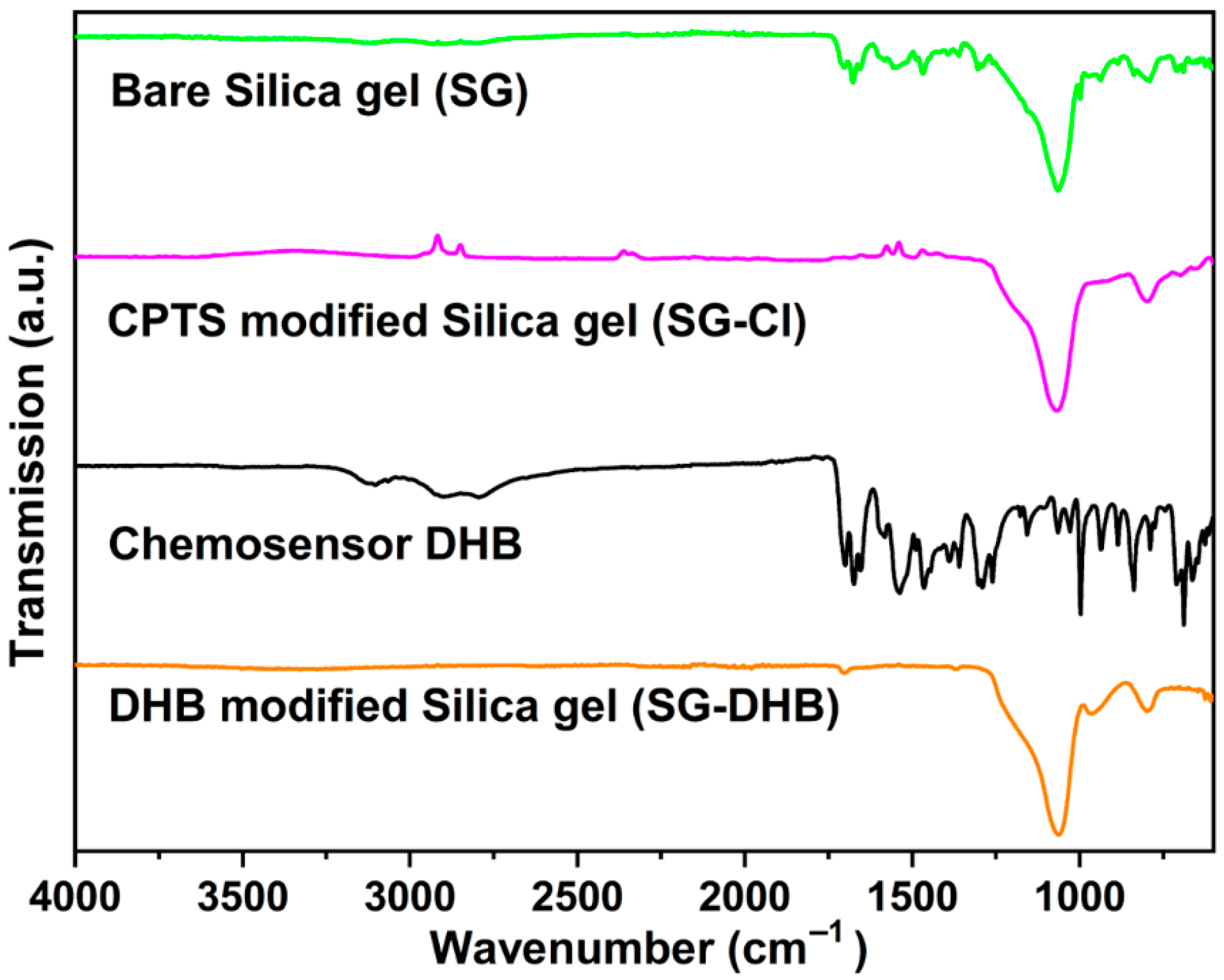
3.1. Characterisation of Adsorbent SG-DHB
3.2. Elemental Analyses
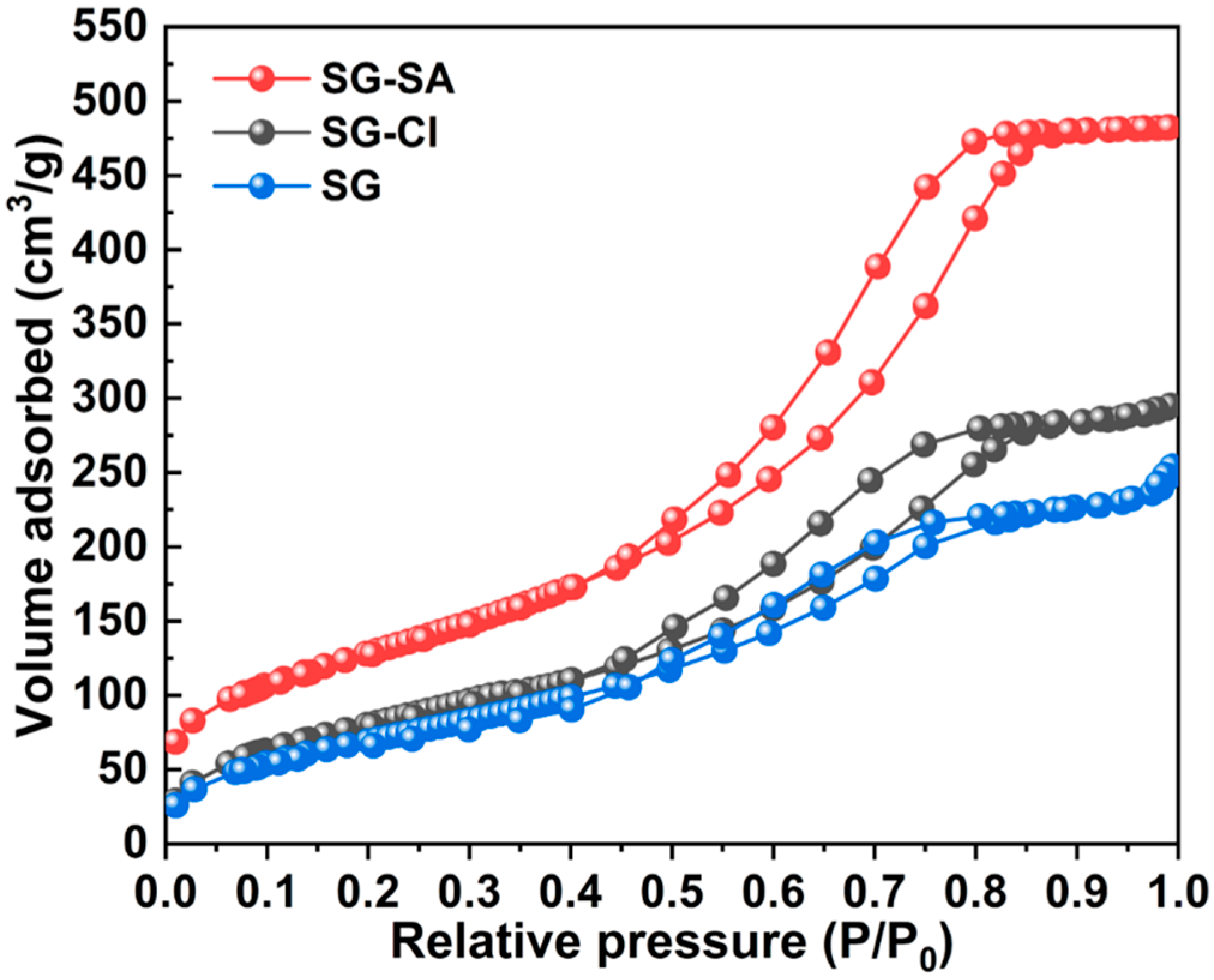
3.3. Porous Structure Analysis
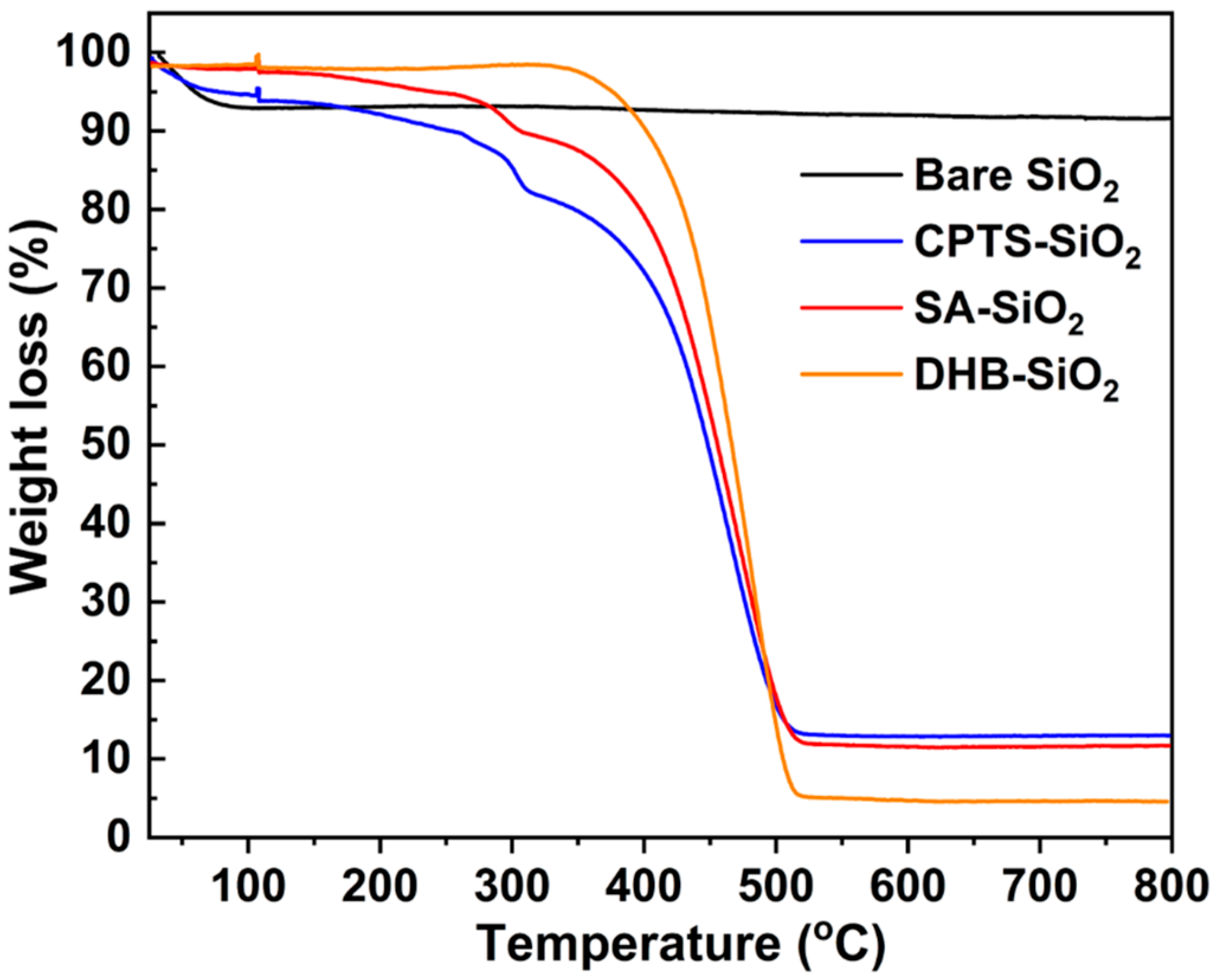
3.4. TGA Analyses
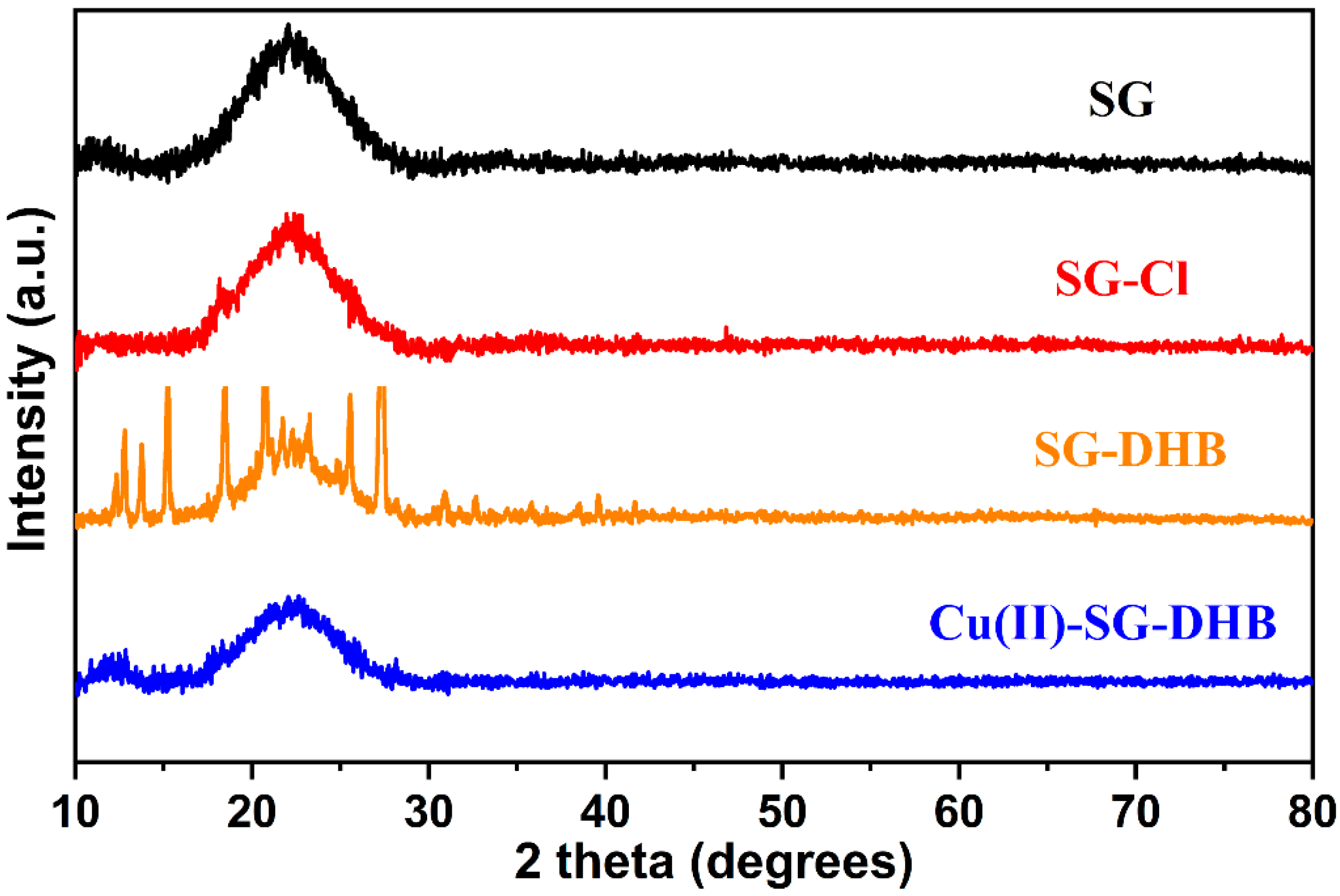
3.5. PXRD Analyses
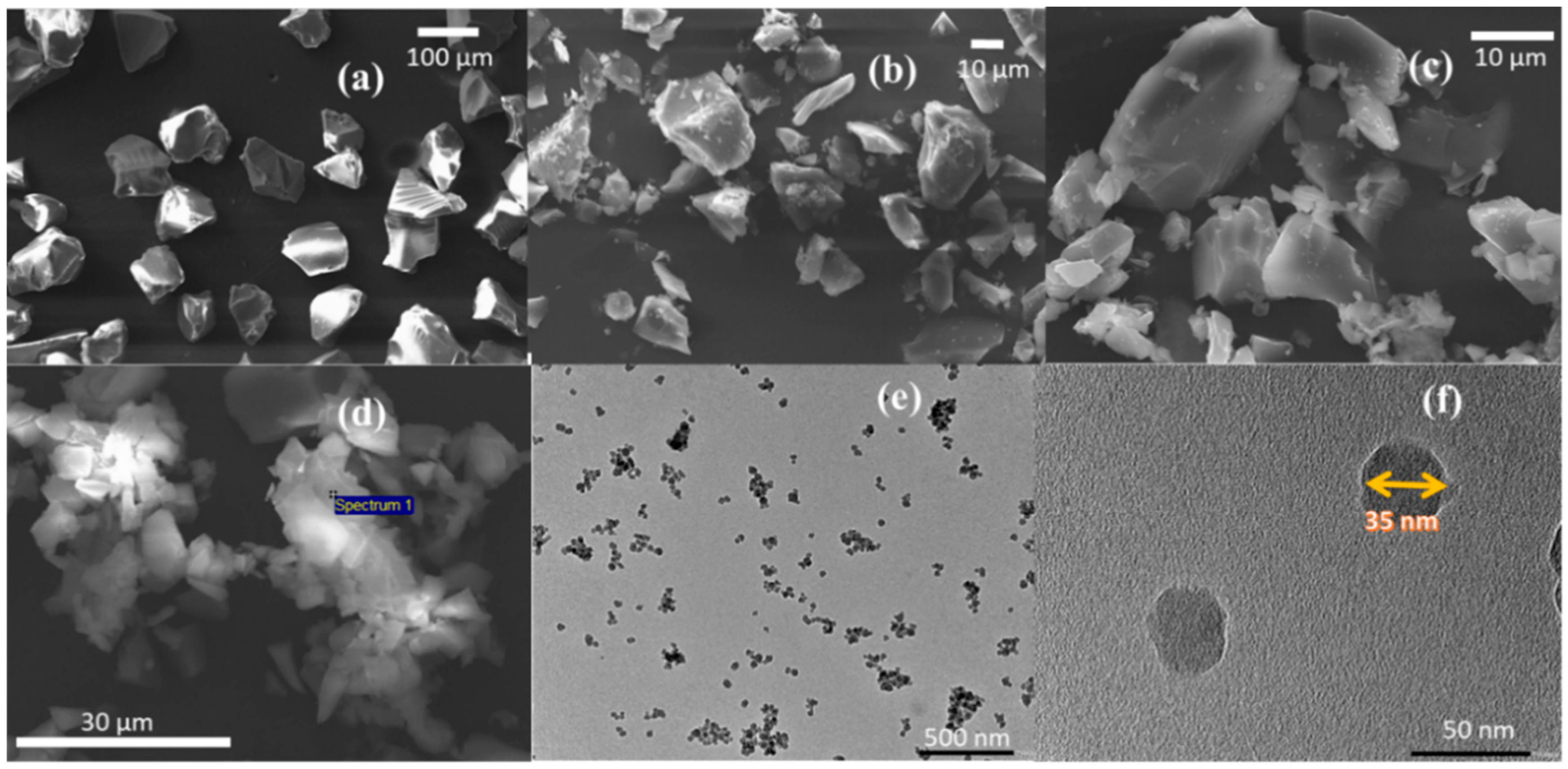
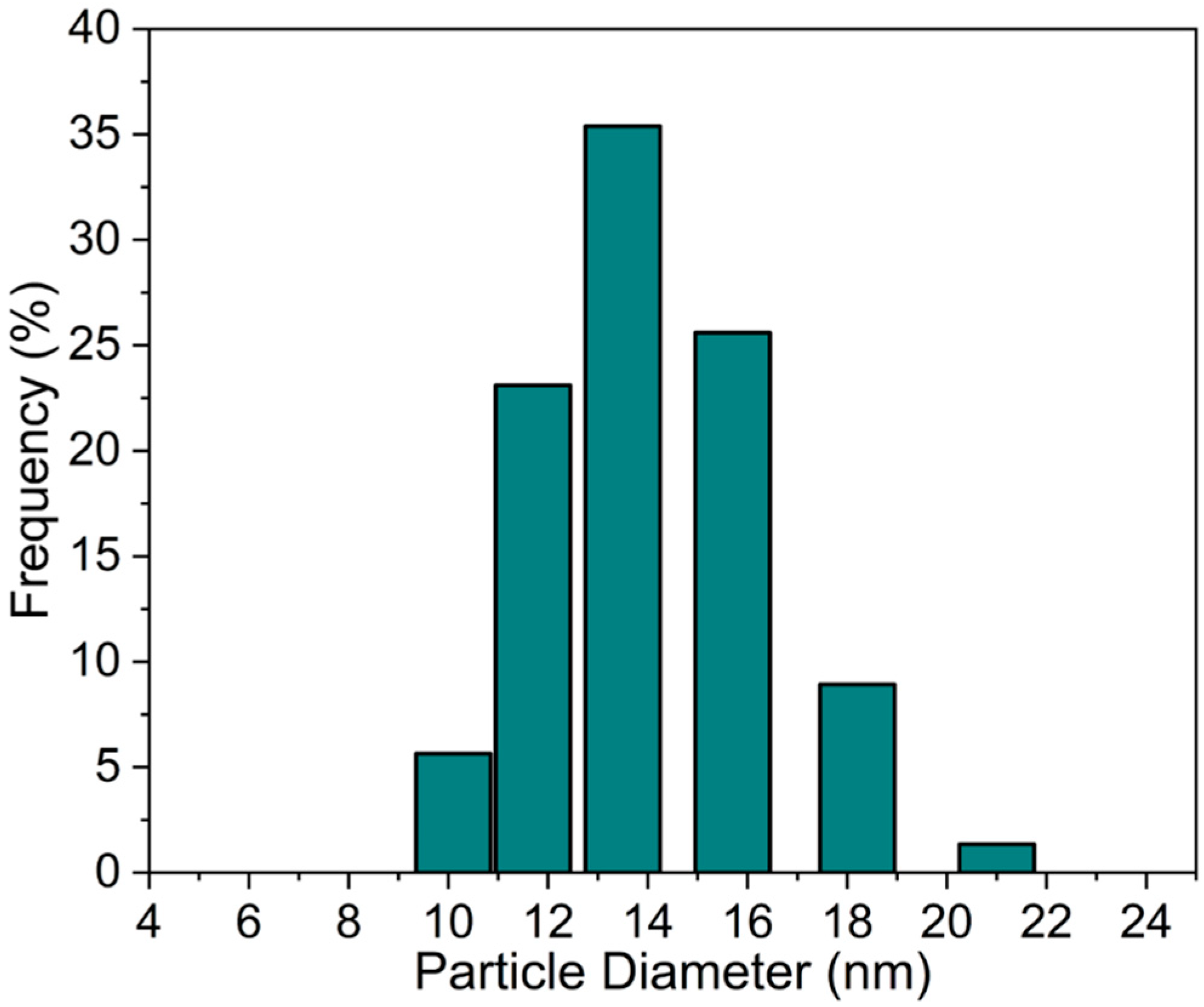
3.6. Electron Microscopy
4. Adsorption Studies
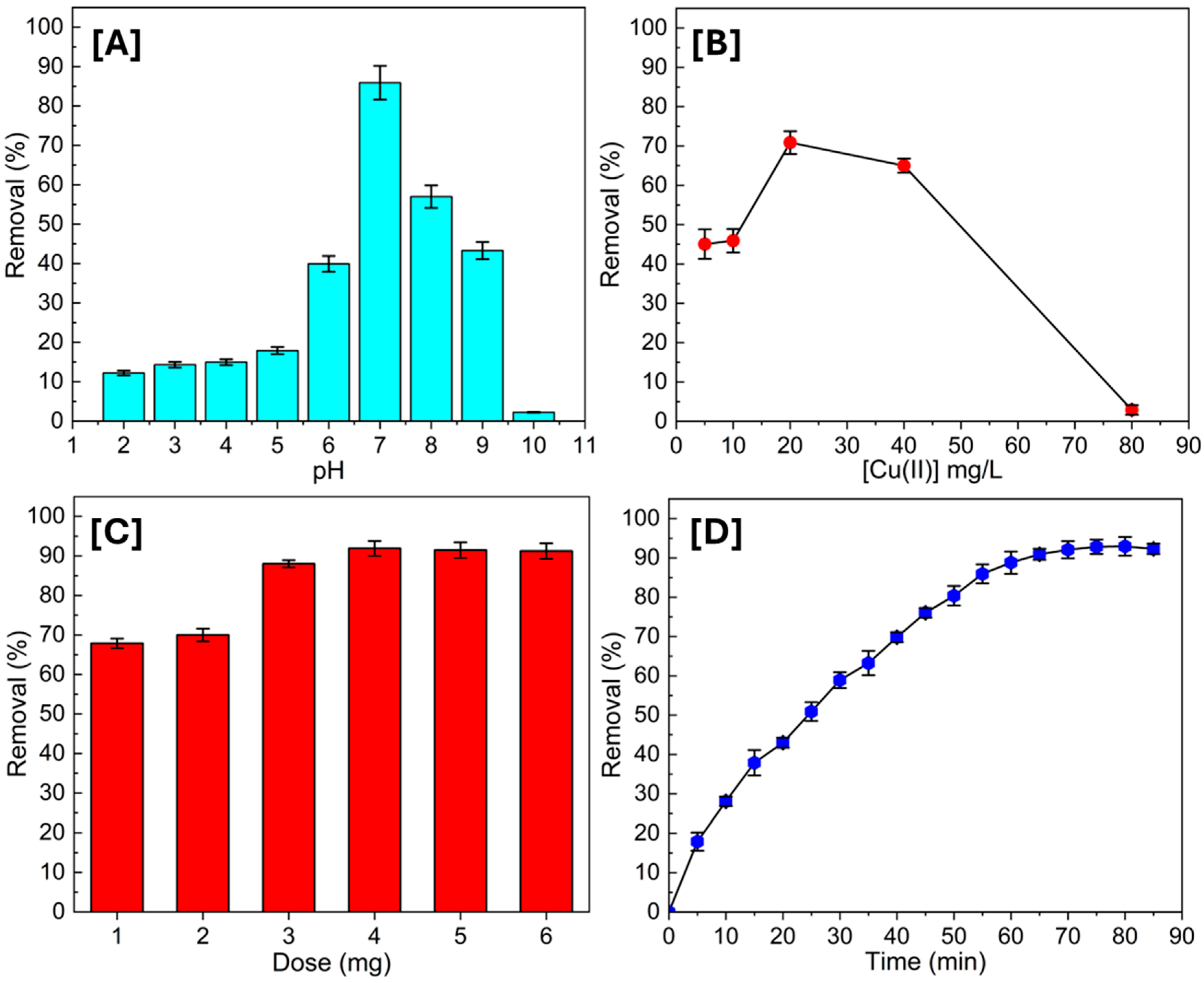
4.1. pH Optimisation
4.2. Effect of Initial Concentration
4.3. Effect of Adsorbent Dosage
4.4. Effect of Contact Time
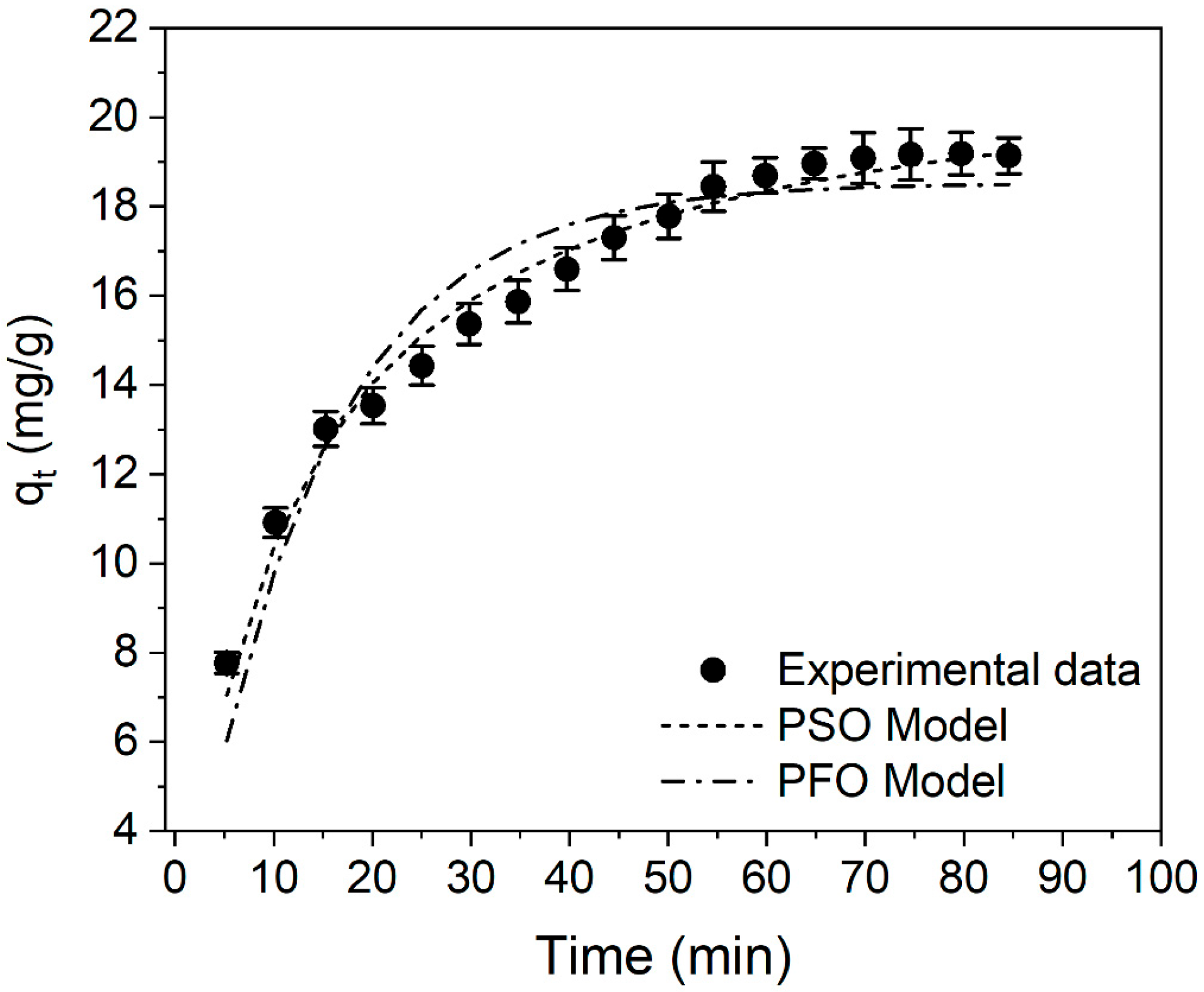
4.5. Kinetic Studies
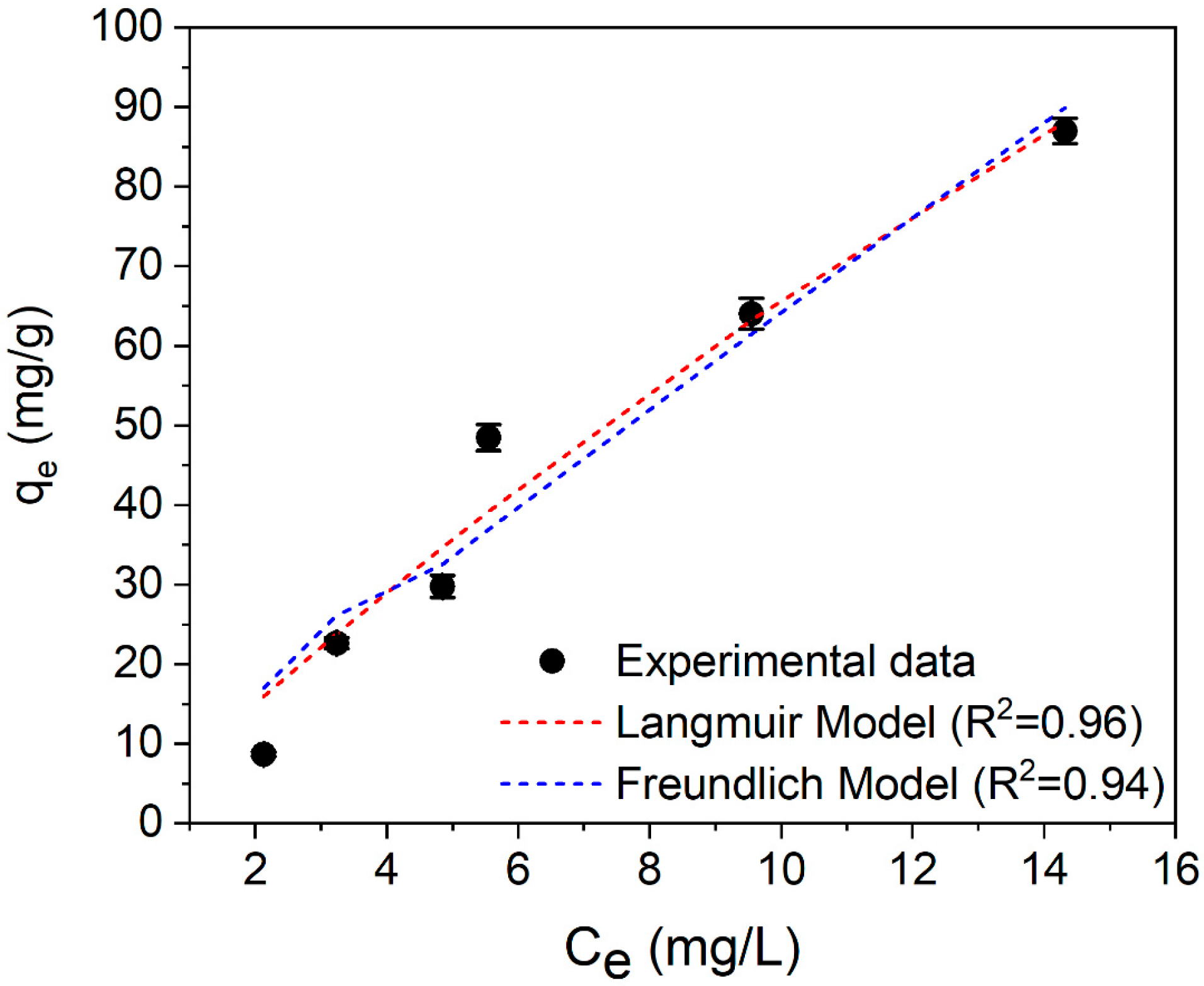
4.6. Adsorption Isotherms
5. Conclusions
Supplementary Materials
Author Contributions
Funding
Data Availability Statement
Acknowledgments
Conflicts of Interest
References
- Nagar, V.; Verma, R.K.; Awasthi, G.; Pandit, P.P.; Chopde, R.L.; Sankhla, M.S.; Singh, A.; Sharma, A.; Awasthi, K.K.; Aseri, V.; et al. Heavy Metal Contamination of Water and Their Toxic Effect on Living Organisms. In The Toxicity of Environmental Pollutants; Junqueira Dorta, D., Palma de Oliveira, D., Eds.; IntechOpen: London, UK, 2022. [Google Scholar]
- Zhang, H.; Li, H.; Gao, D.; Yu, H. Source identification of surface water pollution using multivariate statistics combined with physicochemical and socioeconomic parameters. Sci. Total Environ. 2022, 806, 151274. [Google Scholar] [CrossRef] [Scilit]
- Fu, Z.; Xi, S. The effects of heavy metals on human metabolism. Toxicol. Mech. Methods 2020, 30, 167–176. [Google Scholar] [CrossRef] [Scilit]
- Sarker, A.; Masud, M.A.A.; Deepo, D.M.; Das, K.; Nandi, R.; Ansary, M.W.R.; Islam, A.R.M.T.; Islam, T. Biological and green remediation of heavy metal contaminated water and soils: A state-of-the-art review. Chemosphere 2023, 332, 138861. [Google Scholar] [CrossRef] [Scilit]
- Balaram, V.; Santosh, M. New challenges of critical minerals for energy security: Impacts on environment and human health, and remediation strategies for sustainability. Gondwana Res. 2025; in press. [CrossRef] [Scilit]
- Šajn, R.; Alijagić, J.; Stafilov, T. Impact of Historical Mining and Metallurgical Technologies on Soil and Sediment Composition Along the Ibar River. Minerals 2025, 15, 955. [Google Scholar] [CrossRef] [Scilit]
- Chakraborty, S.C.; Qamruzzaman, M.; Zaman, M.W.U.; Alam, M.M.; Hossain, M.D.; Pramanik, B.K.; Nguyen, L.N.; Nghiem, L.D.; Ahmed, M.F.; Zhou, J.L.; et al. Metals in e-waste: Occurrence, fate, impacts and remediation technologies. Process Saf. Environ. Prot. 2022, 162, 230–252. [Google Scholar] [CrossRef] [Scilit]
- Liu, Y.; Wang, H.; Cui, Y.; Chen, N. Removal of Copper Ions from Wastewater: A Review. Int. J. Environ. Res. Public Health 2023, 20, 3885. [Google Scholar] [CrossRef] [Scilit] [PubMed]
- Komilis, D.; Tataki, V.; Tsakmakis, T. Leaching of Heavy Metals from Personal Computer Components: Comparison of TCLP with a European Leaching Test. J. Environ. Eng. 2013, 139, 1375–1381. [Google Scholar] [CrossRef] [Scilit]
- Vashisht, D.; Sharma, S.; Kumar, R.; Saini, V.; Saini, V.; Ibhadon, A.; Sahoo, S.C.; Sharma, S.; Mehta, S.K.; Kataria, R. Dehydroacetic acid derived Schiff base as selective and sensitive colorimetric chemosensor for the detection of Cu(II) ions in aqueous medium. Microchem. J. 2020, 155, 104705. [Google Scholar] [CrossRef] [Scilit]
- Parihar, K.; Sankhla, M.S.; Kumar, R.; Singh, A. Assessment of copper and iron concentration in water of Yamuna River, Delhi, India. Lett. Appl. NanoBioSci. 2020, 10, 2251–2257. [Google Scholar] [CrossRef] [Scilit]
- Qasem, N.A.A.; Mohammed, R.H.; Lawal, D.U. Removal of heavy metal ions from wastewater: A comprehensive and critical review. Npj Clean Water 2021, 4, 36. [Google Scholar] [CrossRef] [Scilit]
- Hossain, M.; Patra, P.K. Water pollution index—A new integrated approach to rank water quality. Ecol. Indic. 2020, 117, 106668. [Google Scholar] [CrossRef] [Scilit]
- Hube, S.; Eskafi, M.; Hrafnkelsdóttir, K.F.; Bjarnadóttir, B.; Bjarnadóttir, M.Á.; Axelsdóttir, S.; Wu, B. Direct membrane filtration for wastewater treatment and resource recovery: A review. Sci. Total Environ. 2020, 710, 136375. [Google Scholar] [CrossRef] [Scilit]
- Waqas, S.; Harun, N.Y.; Bilad, M.R.; Samsuri, T.; Nordin, N.A.; Shamsuddin, N.; Nandiyanto, A.B.; Huda, N.; Roslan, J. Response Surface Methodology for Optimization of Rotating Biological Contactor Combined with External Membrane Filtration for Wastewater Treatment. Membranes 2022, 12, 271. [Google Scholar] [CrossRef] [Scilit] [PubMed]
- Kinrade, J.D.; Van Loon, J.C. Solvent extraction for use with flame atomic absorption spectrometry. Anal. Chem. 1974, 46, 1894–1898. [Google Scholar] [CrossRef] [Scilit]
- Muhammad, S.; Javed, M.N.; Gill, K.A.; Ali, F.I.; Henderson, W.; Bari, A.; Musharraf, S.G.; Baig, J.A.; Hashmi, I.A. Selective extraction of heavy metals (Fe, Co, Ni) from their aqueous mixtures by Task-Specific salicylate functionalized imidazolium based ionic liquid. J. Clean. Prod. 2022, 344, 131119. [Google Scholar] [CrossRef] [Scilit]
- Tang, X.; Zheng, H.; Teng, H.; Sun, Y.; Guo, J.; Xie, W.; Yang, Q.; Chen, W. Chemical coagulation process for the removal of heavy metals from water: A review. Desalination Water Treat. 2016, 57, 1733–1748. [Google Scholar] [CrossRef] [Scilit]
- Borklu Budak, T. Removal of Heavy Metals from Wastewater Using Synthetic Ion Exchange Resin. Asian J. Chem. 2013, 25, 4207–4210. [Google Scholar] [CrossRef] [Scilit]
- Wang, Q.; Gao, W.; Liu, Y.; Yuan, J.; Xu, Z.; Zeng, Q.; Li, Y.; Schröder, M. Simultaneous adsorption of Cu(II) and SO42− ions by a novel silica gel functionalized with a ditopic zwitterionic Schiff base ligand. Chem. Eng. J. 2014, 250, 55–65. [Google Scholar] [CrossRef] [Scilit]
- de Haan, A.B.; Bartels, P.V.; de Graauw, J. Extraction of metal ions from waste water. Modelling of the mass transfer in a supportedliquid-membrane process. J. Membr. Sci. 1989, 45, 281–297. [Google Scholar] [CrossRef] [Scilit]
- Rodrigues, G.D.; da Silva, M.d.C.H.; da Silva, L.H.M.; Paggioli, F.J.; Minim, L.A.; Reis Coimbra, J.S.d. Liquid–liquid extraction of metal ions without use of organic solvent. Sep. Purif. Technol. 2008, 62, 687–693. [Google Scholar] [CrossRef] [Scilit]
- Mane, S.; Ponrathnam, S.; Chavan, N. Selective solid-phase extraction of metal for water decontamination. J. Appl. Polym. Sci. 2016, 133, 42849. [Google Scholar] [CrossRef] [Scilit]
- Kayan, A. Inorganic-organic hybrid materials and their adsorbent properties. Adv. Compos. Hybrid Mater. 2019, 2, 34–45. [Google Scholar] [CrossRef] [Scilit]
- Dashtian, K.; Zare-Dorabei, R. An easily organic–inorganic hybrid optical sensor based on dithizone impregnation on mesoporous SBA-15 for simultaneous detection and removal of Pb(II) ions from water samples: Response-surface methodology. Appl. Organomet. Chem. 2017, 31, e3842. [Google Scholar] [CrossRef] [Scilit]
- Cimen, A.; Bilgic, A.; Yilmaz, I.; Cukurovali, A. Chemical modification of silica gel surface with a carbothioamide Schiff base for removal of Cr(III) ions from wastewater samples. Desalination Water Treat. 2020, 183, 222–232. [Google Scholar] [CrossRef] [Scilit]
- Zhang, Y.; Zhu, T.; Wang, H.; Zheng, L.; Chen, M.; Wang, W. Preparation of a bis-Schiff base immobilized mesoporous SBA-15 nanosensor for the fluorogenic sensing and adsorption of Cu2+. Dalton Trans. 2022, 51, 7210–7222. [Google Scholar] [CrossRef] [Scilit] [PubMed]
- Maqinana, S.; Kowenje, C.O.; Ojwach, S.O. Effective adsorption of Cd(II), Cr(VI) and Pb(II) ions from aqueous solutions using silica immobilized (pyridine)/(phenoxy)imine chelating agents. Next Mater. 2025, 9, 101142. [Google Scholar] [CrossRef] [Scilit]
- Radi, S.; Toubi, Y.; Bacquet, M.; Degoutin, S.; Mabkhot, Y.N.; Garcia, Y. An inorganic–organic hybrid material made of a silica-immobilized Schiff base receptor and its preliminary use in heavy metal removal. RSC Adv. 2016, 6, 34212–34218. [Google Scholar] [CrossRef] [Scilit]
- Qu, R.; Niu, Y.; Liu, J.; Sun, C.; Zhang, Y.; Chen, H.; Ji, C. Adsorption and desorption behaviors of Pd(II) on silica-gel functionalized with ester- and amino-terminated dendrimer-like polyamidoamine polymers. React. Funct. Polym. 2008, 68, 1272–1280. [Google Scholar] [CrossRef] [Scilit]
- Zhang, Y.; Qu, R.; Sun, C.; Qu, B.; Sun, X.; Ji, C. End-group protection as a novel strategy to prepare silica-gel supported diethylenetriamine with high adsorption capacities for metal ions. J. Non-Cryst. Solids 2009, 355, 453–457. [Google Scholar] [CrossRef] [Scilit]
- Qu, R.; Zhang, Y.; Qu, W.; Sun, C.; Chen, J.; Ping, Y.; Chen, H.; Niu, Y. Mercury adsorption by sulfur- and amidoxime-containing bifunctional silica gel based hybrid materials. Chem. Eng. J. 2013, 219, 51–61. [Google Scholar] [CrossRef] [Scilit]
- Freni, A.; Calabrese, L.; Malara, A.; Frontera, P.; Bonaccorsi, L. Silica gel microfibres by electrospinning for adsorption chillers. Energy 2019, 187, 115971. [Google Scholar] [CrossRef] [Scilit]
- Akl, M.A.A.; Kenawy, I.M.M.; Lasheen, R.R. Organically modified silica gel and flame atomic absorption spectrometry: Employment for separation and preconcentration of nine trace heavy metals for their determination in natural aqueous systems. Microchem. J. 2004, 78, 143–156. [Google Scholar] [CrossRef] [Scilit]
- Aydin, F.; Çakmak, R.; Levent, A.; Soylak, M. Silica Gel-Immobilized 5-aminoisophthalohydrazide: A novel sorbent for solid phase extraction of Cu, Zn and Pb from natural water samples. Appl. Organomet. Chem. 2020, 34, e5481. [Google Scholar] [CrossRef] [Scilit]
- Ahmed, M.O.; Shrpip, A.; Mansoor, M. Synthesis and Characterization of New Schiff Base/Thiol-Functionalized Mesoporous Silica: An Efficient Sorbent for the Removal of Pb(II) from Aqueous Solutions. Processes 2020, 8, 246. [Google Scholar] [CrossRef] [Scilit]
- Radi, S.; Toubi, Y.; El-Massaoudi, M.; Bacquet, M.; Degoutin, S.; Mabkhot, Y.N. Efficient extraction of heavy metals from aqueous solution by novel hybrid material based on silica particles bearing new Schiff base receptor. J. Mol. Liq. 2016, 223, 112–118. [Google Scholar] [CrossRef] [Scilit]
- Kursunlu, A.N.; Guler, E.; Dumrul, H.; Kocyigit, O.; Gubbuk, I.H. Chemical modification of silica gel with synthesized new Schiff base derivatives and sorption studies of cobalt (II) and nickel (II). Appl. Surf. Sci. 2009, 255, 8798–8803. [Google Scholar] [CrossRef] [Scilit]
- Tokay, F.; Bağdat, S. Schiff base functionalized silica gel for simultaneous separation and preconcentration of Cu (II), Ni (II), and Cd (II) in pharmaceuticals and water samples. Turk. J. Chem. 2022, 46, 459–474. [Google Scholar] [CrossRef] [Scilit]
- Chen, Y.; Shi, H.; Guo, H.; Ling, C.; Yuan, X.; Li, P. Hydrated titanium oxide nanoparticles supported on natural rice straw for Cu (II) removal from water. Environ. Technol. Innov. 2020, 20, 101143. [Google Scholar] [CrossRef] [Scilit]
- Wu, Y.; Fan, Y.; Zhang, M.; Ming, Z.; Yang, S.; Arkin, A.; Fang, P. Functionalized agricultural biomass as a low-cost adsorbent: Utilization of rice straw incorporated with amine groups for the adsorption of Cr(VI) and Ni(II) from single and binary systems. Biochem. Eng. J. 2016, 105, 27–35. [Google Scholar] [CrossRef] [Scilit]
- Yao, C.; Zhu, C. A new multi-mechanism adsorption kinetic model and its relation to mass transfer coefficients. Surf. Interfaces 2021, 26, 101422. [Google Scholar] [CrossRef] [Scilit]
- Mähler, J.; Persson, I. A Study of the Hydration of the Alkali Metal Ions in Aqueous Solution. Inorg. Chem. 2012, 51, 425–438. [Google Scholar] [CrossRef] [Scilit]
- Kalam, S.; Abu-Khamsin, S.A.; Kamal, M.S.; Patil, S. Surfactant Adsorption Isotherms: A Review. ACS Omega 2021, 6, 32342–32348. [Google Scholar] [CrossRef] [Scilit]
- Langmuir, I. The construction and fundamental properties of solids and liquids part ii liquids. J. Am. Chem. Soc. 1848, 39, 1. [Google Scholar]
- Freundlich, H. Über die adsorption in lösungen. Z. Für Phys. Chem. 1907, 57, 385–470. [Google Scholar] [CrossRef] [Scilit]
- Ngeontae, W.; Aeungmaitrepirom, W.; Tuntulani, T. Chemically modified silica gel with aminothioamidoanthraquinone for solid phase extraction and preconcentration of Pb(II), Cu(II), Ni(II), Co(II) and Cd(II). Talanta 2017, 71, 1075–1082. [Google Scholar] [CrossRef] [Scilit] [PubMed]
- Kocjan, R. Retention of Some Metal Ions and Their Separation on Silica Gel Modified with Acid Red 88. Microchim. Acta 1999, 131, 153–158. [Google Scholar] [CrossRef] [Scilit]
- Gübbük, I.H.; Hatay, I.; Coşkun, A.; Ersöz, M. Immobilization of oxime derivative on silica gel for the preparation of new adsorbent. J. Hazard. Mater. 2009, 172, 1532–1537. [Google Scholar] [CrossRef] [Scilit]
- Filho, N.L.D.; Costa, R.M.; Marangoni, F. Adsorption of transition-metal ions in ethanol solution by a nanomaterial based on modified silsesquioxane. Colloids Surf. A Physicochem. Eng. Asp. 2008, 317, 625–635. [Google Scholar] [CrossRef] [Scilit]






| Sample | C (wt.%) | H (wt.%) | N (wt.%) | Surface Area (m2 g−1) ** | Pore vol. (cm3 g−1) | Pore Diameter (nm) |
|---|---|---|---|---|---|---|
| Bare SG * | 0.13 | - | - | 463.88 | 0.70 | 4.96 |
| SG-Cl | 7.00 | 1.00 | - | 311.52 | 0.40 | 4.60 |
| SG-DHB | 21.44 | 1.72 | 2.68 | 262.76 | 0.34 | 4.72 |
| First Order Kinetics | Second Order Kinetics | Experimental Equilibrium Adsorption Capacity | ||||
|---|---|---|---|---|---|---|
| (mg g−1) | k1 (min−1) | R2 | (mg g−1) | k2 (g mg−1 min−1) | R2 | (mg g−1) |
| 18.5 | 0.075 | 0.9245 | 21.7 | 0.004 | 0.9829 | 16.14 |
| Langmuir | Freundlich | ||||
|---|---|---|---|---|---|
| qmax (mg g−1) | kL (L/mg) | R2 | n | kF (L/mg) | R2 |
| 422.24 | 0.0184 | 0.9603 | 1.065 | 7.394 | 0.9433 |
Disclaimer/Publisher’s Note: The statements, opinions and data contained in all publications are solely those of the individual author(s) and contributor(s) and not of MDPI and/or the editor(s). MDPI and/or the editor(s) disclaim responsibility for any injury to people or property resulting from any ideas, methods, instructions or products referred to in the content. |
© 2026 by the authors. Licensee MDPI, Basel, Switzerland. This article is an open access article distributed under the terms and conditions of the Creative Commons Attribution (CC BY) license.
Share and Cite
Vashisht, D.; Taylor, M.J.; Al-Gailani, A.; Priyanka; Vashisht, A.; Ibhadon, A.O.; Kataria, R.; Sharma, S.; Mehta, S.K. A Hybrid Inorganic–Organic Schiff Base-Functionalised Porous Platform for the Remediation of WEEE Polluted Effluents. Water 2026, 18, 247. https://doi.org/10.3390/w18020247
Vashisht D, Taylor MJ, Al-Gailani A, Priyanka, Vashisht A, Ibhadon AO, Kataria R, Sharma S, Mehta SK. A Hybrid Inorganic–Organic Schiff Base-Functionalised Porous Platform for the Remediation of WEEE Polluted Effluents. Water. 2026; 18(2):247. https://doi.org/10.3390/w18020247
Chicago/Turabian StyleVashisht, Devika, Martin J. Taylor, Amthal Al-Gailani, Priyanka, Aseem Vashisht, Alex O. Ibhadon, Ramesh Kataria, Shweta Sharma, and Surinder Kumar Mehta. 2026. "A Hybrid Inorganic–Organic Schiff Base-Functionalised Porous Platform for the Remediation of WEEE Polluted Effluents" Water 18, no. 2: 247. https://doi.org/10.3390/w18020247
APA StyleVashisht, D., Taylor, M. J., Al-Gailani, A., Priyanka, Vashisht, A., Ibhadon, A. O., Kataria, R., Sharma, S., & Mehta, S. K. (2026). A Hybrid Inorganic–Organic Schiff Base-Functionalised Porous Platform for the Remediation of WEEE Polluted Effluents. Water, 18(2), 247. https://doi.org/10.3390/w18020247