1. Introduction
As the fundamental source of life, water is the indispensable driver of productive activities and the cornerstone of all ecological systems, through which it ultimately secures the stable development of the western frontier. The stark ecological dynamic in arid zones—where water presence creates an oasis and its absence results in a desert—directly validates the time-honored strategic axiom of frontier governance: “to secure a region, one must first secure its water”.
However, the world is currently facing dual pressures from rapid socio-economic development and continuous population growth, making freshwater scarcity a critical global issue that demands urgent solutions [
1]. The Xinjiang region presents a quintessential case of arid inland hydrology; it accounts for 16.67% of the national territory but only 3% of its water resources, experiencing average annual precipitation less than 25% of the national mean while facing evaporation rates that are 10–20 times the local precipitation volume. More critically, agriculture in the region consumes 80–90% of its water resources. Coupled with the uneven spatial and temporal distribution of water, this has led to a complex crisis characterized by seasonal, infrastructural, and structural water shortages. To effectively alleviate the increasing pressure on freshwater resources, it is essential to utilize non-conventional water sources for agricultural irrigation [
2].
Agriculture accounts for over 90% of global human water demand. In China, agricultural development has entered a phase of rigid water constraints, meaning that agricultural activities must be planned and carried out in accordance with water availability and within water resource limits [
3]. In February 2024, the General Office of the Ministry of Water Resources issued the “Key Points of Water Conservation Work in the Water Conservancy System for 2024”, which underscored the need to expand both the scope and scale of reclaimed water utilization, including conducting studies on its potential application in agricultural irrigation [
4]. Reclaimed water reuse serves as a dual-function strategy critical for the new era, simultaneously addressing pressing water scarcity and facilitating the coordinated management of water resources and the water environment [
5].
As an unconventional water resource, reclaimed water refers to treated municipal or industrial wastewater that meets designated quality standards for reuse. It is characterized by reliable availability in large quantities and consistent quality, offering considerable potential for various applications [
5]. A notable feature of reclaimed water is its high salt content, which can adversely affect soil permeability. Irrigation with such water may degrade soil physical properties, promote salt accumulation in the root zone, and induce structural changes in the soil [
6,
7]. Up to now, many countries, including the United States, Israel, Australia, France, and Japan have taken reclaimed water reuse as an important measure to alleviate the shortage of freshwater resources [
8]. Compared to freshwater resources, reclaimed water encompasses a spectrum of constituents, including beneficial inorganic nutrients (N, P, K) and dissolved organic matter, while also containing substances of concern such as high salt ions and residual pollutants (e.g., heavy metals and organic pollutants). Studies indicate that irrigation with reclaimed water offers multiple agronomic benefits, including reduced consumption of freshwater and inorganic fertilizers, alongside enhanced plant physiological performance that positively influences vegetative growth, leaf photosynthetic product accumulation, and fruit development [
9]. As a pivotal strategy for achieving tri-system coordination (water resources, environment, and ecology), reclaimed water reuse not only enhances water resource utilization efficiency by more than 35% but also facilitates the construction of a coordinated and differentiated “conventional–unconventional” water supply framework. This thereby enables a fundamental transition in water environmental governance from terminal pollution interception to process-oriented pollution control.
Numerous studies have demonstrated that the use of brackish water for irrigation can effectively reduce surface salt accumulation in saline-alkali soils and promote crop growth, thereby increasing yield [
10]. Zhang et al. [
11] found that soil infiltration capacity is positively correlated with the salinity level of irrigation water, meaning that higher salinity leads to stronger infiltration. Guo et al. [
12] reported that under brackish water irrigation, an appropriate salinity level can accelerate soil water movement, resulting in greater penetration depth and lateral spread. Research by Wu et al. [
13] indicates that enhanced salt leaching at specific soil depths, along with improved soil water retention, is achievable with brackish water at an appropriate salinity level. Conversely, infiltration using water with excessively high salinity inhibits this leaching process. The one-dimensional vertical infiltration tests conducted by Liu et al. [
14] revealed that key infiltration metrics—cumulative infiltration and wetting front depth—increased in response to higher brackish water salinity, albeit at a gradually decreasing rate, and that soil moisture content concurrently rose with increasing salinity [
14].
Extensive research has been conducted globally on the effects of reclaimed water irrigation on plant growth and development. Some studies indicate that reclaimed water irrigation does not adversely affect plant growth; on the contrary, the presence of abundant nutrients in reclaimed water can promote plant development. The study by He et al. found that reclaimed water irrigation enhanced the distribution of dry matter to plant stems, leaves, and disks, while simultaneously significantly elevating the concentrations of key nutritional components in grains, including crude protein, unsaturated fatty acids, and saturated fatty acids [
15,
16]. Wang et al. [
16] demonstrated the viability of reclaimed water for urban greening through a golf course irrigation study, which showed significant turf quality improvement and no major growth inhibition. They concluded that water with moderate salinity can be beneficially used in this context, since appropriate salinity promotes photosynthesis by providing a conducive low-salinity environment for its chemical processes. However, beyond a certain concentration, salt stress leads to negative effects, including inhibition of chlorophyll biosynthesis, degradation of photosynthetic pigments, reduced enzyme activity, and disruption of photosynthetic processes. Furthermore, root system morphology and structure vary significantly among crops with different salt tolerance levels. For instance, highly salt-tolerant crops, such as cotton and sunflower, develop more robust root systems capable of reaching deeper soil layers, whereas salt-sensitive crops, like rice and soybean, tend to have roots concentrated in surface or shallow layers, making their growth more susceptible to inhibition under saline conditions [
17,
18]. Conversely, irrigation with high-salinity reclaimed water may impair crop growth potential and, in severe cases, lead to plant mortality. Although previous research has shed light on plant responses to reclaimed water irrigation, the water and solute transport processes in Xinjiang’s distinctive saline-alkali soils under such irrigation remain poorly understood. Given the region’s severe soil salinization, which leads to fundamentally different water and salt dynamics compared to other areas, addressing this gap is crucial. Consequently, this study investigates the impact of saline reclaimed water irrigation on soil moisture and salt distribution. The results are expected to provide a mechanistic basis for future work on plant tolerance and the development of sustainable irrigation strategies, offering significant theoretical and practical value for water resource management in arid zones.
It is worth noting that reclaimed water (treated municipal or industrial wastewater), as a sustainable and increasingly important alternative water source, plays a key role in artificial aquifer recharge, especially in arid and semi-arid areas where water resources are scarce. The recycling of reclaimed water through artificial aquifer recharge can not only alleviate the water supply pressure and increase the groundwater reserve, but also further purify the water quality through the soil-aquifer system during the infiltration process and realize the value-added recovery of water resources. This practice has been applied and studied in many parts of the world. For example, in Castellana Grotte in southeastern Italy, reclaimed water is artificially recharged through a cluster of permeable basins, and its operating efficiency is optimized by means of a dynamic model [
19]. Studies in Australia and other places have shown that reclaimed water recharge can improve groundwater quality, but it is necessary to pay attention to its geochemical changes during the migration of vadose zone [
20]; the relevant assessment in California also pointed out that reclaimed water is one of the important potential water sources for artificial aquifer recharge projects, although its large-scale application still faces challenges such as water quality regulation, regulatory licensing, and public acceptance [
21]. Therefore, incorporating reclaimed water into the water source system of artificial aquifer recharge is not only a manifestation of technical feasibility, but also an important strategy to realize the recycling of water resources and enhance the resilience of the system.
Most studies have focused on a single salinity effect or a specific crop response, lacking systematic identification of salinity thresholds and in-depth analysis of their regulatory mechanisms on soil hydraulic parameters [
22]. This is particularly evident under the typical sandy loam conditions of Xinjiang, where the nonlinear response mechanism of reclaimed water salinity to soil sorptivity (
S) and saturated hydraulic conductivity (
KS) remains unclear. Moreover, existing research has predominantly emphasized short-term infiltration behavior, with insufficient coupling assessment between salt redistribution characteristics and crop root-zone safety depth [
23]. To address these gaps, this study examined typical saline-alkali soil in Xinjiang by systematically testing five salinity gradients (0–4 g L
−1) of reclaimed water in combination with Green–Ampt and Philip infiltration models. The objectives were to (1) reveal the influence mechanism of salinity on soil water–salt distribution, (2) clarify the effects of different salinity levels on soil infiltration capacity and water–salt migration patterns, and (3) evaluate corresponding impacts on plant growth and physiological traits, thereby identifying suitable reclaimed water irrigation salinity levels. For the first time in Xinjiang sandy loam, 2 g L
−1 was identified as the optimal salinity threshold. This condition not only significantly enhanced infiltration performance (cumulative infiltration increased by 22.73%) but also achieved efficient root-zone desalination (desalination rate > 60%). The findings provide a salinity management window with both theoretical and practical value for reclaimed water reuse in arid regions, while offering a scientific basis for water recycling and sustainable water management in Xinjiang and similar areas worldwide [
24].
2. Materials and Methods
2.1. Experimental Materials
Soil samples were collected from the 0–40 cm tillage layer of a reclaimed water experimental field located in the Economic and Technological Development Zone of Hu yang he City, Seventh Division, Xinjiang Production and Construction Corps (44°46′33″ E, 84°54′17″ N; average elevation 264.8 m), where the mean soil bulk density was 1.47 g cm
−3. After collection, the samples were air-dried, ground, freed of impurities, and sieved through a 2 mm mesh. The soil mechanical composition was determined using a laser particle size analyzer, which revealed volume ratios of 6.15% clay, 4.47% silt, and 79.38% sand. Based on the International Soil Texture Classification System [
1], the soil is classified as sandy loam. The initial and saturated volumetric soil moisture contents were 0.058 cm
3 cm
−3 and 0.397 cm
3 cm
−3, respectively. The initial soil salt content was 7.6 g kg
−1, with a pH of 7.9.
The reclaimed water used in the experiment had a salinity level of 4.32 g L−1 and a pH of 7.9. Its primary ionic composition included Na+, Ca2+, Mg2+, Cl−, and SO42−. Different salinity levels of irrigation water were prepared by mixing this reclaimed water with pure water at various ratios. The experiment included five treatments: pure water (control, 0 g L−1) and four reclaimed water salinity levels (1, 2, 3, and 4 g L−1).
2.2. Experimental Methods
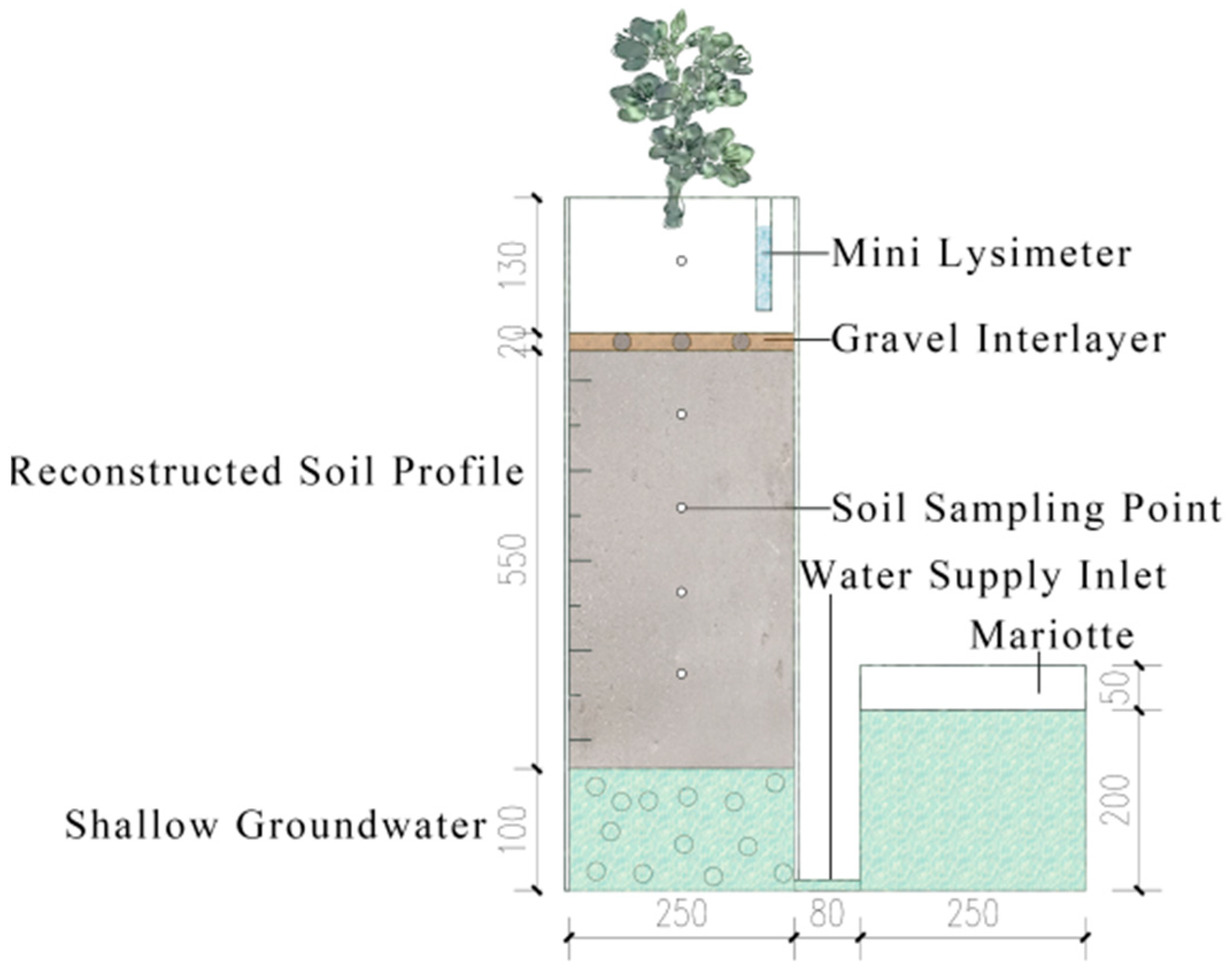
The experiment was conducted on 2 May 2024, at the Water-Saving Irrigation Experimental Station and Hydraulic Engineering Hall of Shihezi University. A vertical infiltration simulation system was employed, as illustrated in
Figure 1. The study aimed to investigate the soil water infiltration characteristics and water–salt transport under different irrigation water salinity levels (1, 2, 3, and 4 g L
−1 for reclaimed water, labeled as ‘M’) and pure water (labeled as ‘CKM’). Each treatment was replicated three times, resulting in a total of 15 soil columns. In order to ensure the reliability of the final test data, three preliminary repeated pre-tests were carried out by treating the reclaimed water with a salinity level of 2 g L
−1. After analysis, the results of these pre-tests showed a low error, which confirmed the high reliability and consistency of the test steps.
The vertical infiltration simulation test system consisted primarily of a soil column and a water supply unit. The soil column was constructed from 5 mm thick plexiglass with an inner diameter of 5 cm, a total height of 80 cm, and a soil layer height of 70 cm. A scale attached to the outside of the column allowed monitoring of wetting front migration. The water supply system maintained a constant head on the soil surface using a Mariotte bottle with a cross-sectional area of 314 cm2 and a height of 80 cm. The soil sample was divided into 15 layers at 5 cm thickness per layer, with the bulk density of each layer controlled at 1.47 g cm−3, and interlayer roughening was applied to enhance hydraulic connectivity between successive soil layers. After the filling of the soil sample is completed, the top layer of the soil column is covered with filter paper to prevent the impact on the soil surface during the water infiltration process.
The soil columns were positioned horizontally on the experimental bench. A total of 15 columns, representing five treatments in triplicate, were tested sequentially in three groups. During the experiment operation stage, the water level in the water supply and transportation system was kept constant at 5 cm, and the dense to sparse recording method was adopted to record the water infiltration time, the movement process of the wetting front, and the water level of the Markov bottle in detail. When the infiltration depth reaches about two-thirds of the length of the soil column (24.3 cm above the bottom of the soil column), the water source is immediately closed and the accumulated water in the upper layer of the soil column is quickly cleaned. After the experiment, the soil column was sectioned and sampled in layers from the surface downward at depth intervals of 0–5, 5–10, 10–15, 15–20, 20–25, 25–30, 30–35, 35–40, 40–45, and 45–50 cm for the analysis of infiltration characteristics and soil water–salt distribution.
2.3. Water and Salt Indicators and Measurement Methods
2.3.1. Soil Moisture Content
where
is the soil mass water content, %;
is the wet soil weight, g; and
is the dry soil weight, g.
2.3.2. Soil Salt Content
where
is the soil salt content, g kg
−1;
is the electrical conductivity of the soil water extract (1:5 ratio by weight) at 25 °C; and a and b are empirical coefficients, ms cm
−1.
2.3.3. Soil Water Storage
where
is the soil water storage, mm;
is the volumetric water content of the
i-th layer, cm;
is the thickness of the
i-th layer; and
n is the total number of layers, cm
3·cm
−3.
2.3.4. Soil Salt Storage
where
is the soil salt storage, kg ha
−1;
denotes the average salt content across soil layers g;
represents the salt content within a specific soil layer, g kg
−1;
is the layer index;
denotes the soil bulk density, g cm
−3; and
is the depth of the soil layer, m.
2.3.5. Desalination Rate
where
is the desalination rate, %;
initial is the initial soil salt content, 7.6 g kg
−1; and
is the final soil salt content after infiltration, g kg
−1.
2.3.6. Desalination Depth Coefficient
where
is the depth of the soil layer with a salt content lower than the initial value.
is the wetting front depth at the end of infiltration.
2.3.7. Qualified Desalination Depth Coefficient
In order to quantitatively evaluate the changes in soil salt distribution indexes, we introduced several salt distribution indexes. In the formula, Ds reflects the vertical depth of salt leaching, Dss represents the safe depth of crop root zone (based on salt tolerance threshold), and τDS and τDSS quantify the distribution efficiency of salt in the profile.
2.3.8. Assay Method
The soil pH value was measured by pH meter, and the water–soil mass ratio was 1:2.5.
2.4. Infiltration Formulas
Currently, there are numerous soil infiltration formulas available both domestically and internationally. Among them, the Philip and Green–Ampt infiltration formulas are widely used in soil water infiltration studies due to their computational simplicity and clear physical significance.
The Philip infiltration formula is expressed as [
25]
where
is the cumulative infiltration, cm;
is the sorptivity, cm min
−0.5; and
is the infiltration time, min; the short-term infiltration approximate
At term can be ignored.
The Green–Ampt infiltration formula was developed by Green et al. in 1911. It is expressed as [
26,
27]
where
is the infiltration rate, cm min
−1;
is the effective saturated hydraulic conductivity, cm min
−1;
is the depth of ponding water on the soil surface, cm;
is the wetting front suction head, cm; and
is the generalized wetting front depth, cm.
2.4.1. Soil Saturated Hydraulic Conductivity
Soil saturated hydraulic conductivity is one of the important soil hydraulic parameters, which must be considered in the simulation of soil water movement.
refers to the soil hydraulic conductivity rate when the soil is saturated, that is, when the soil pores are fully filled with water, and its value is similar to the stable infiltration rate of the soil. The size of
is the main factor determining the infiltration and redistribution of soil water, which is very important for the effective storage, transformation, and utilization of precipitation in arid and semi-arid areas. The calculation formula is as follows:
is the saturated hydraulic conductivity of soil, cm min−1; is the capillary hydraulic conductivity related to saturation, cm min−1; is the retained moisture content of soil, cm3 cm−3; is the effective saturation of soil; is the parameter related to soil pore connectivity; is the shape coefficient of the Brooks–Corey model, which is related to soil pore characteristics; is the surface tension coefficient, kg min−2; is the density of water, kg cm−3; is the hydrodynamic viscosity coefficient, kg (cm·min)−1; is the acceleration of gravity, kg (cm2·min2)−1; and is the suction of soil intake, cm.
2.4.2. Maximum Capillary Rising Height
is the maximum capillary rising height, cm; is the equivalent pore diameter, cm; and is the surface tension coefficient, dyn cm−1.
2.4.3. Imbibition Rate
Soil infiltration rate is a measure of the ability of soil to absorb or release liquid by capillary force, and it is one of the important parameters of soil hydraulics. Accurate measurement and calculation of soil infiltration rate not only promote the theoretical study of water movement process in unsaturated soil zone, but also provide a scientific basis for reasonably determining the technical parameters of farmland irrigation and drainage. The calculation formula is as follows:
is the infiltration absorptivity, %; is the soil characterization saturated hydraulic conductivity, cm min−1; is the Wetting front suction, cm; is the saturated soil moisture content, cm3 cm−3; and is the Soil retention water content, cm3 cm−3.
In the study, the infiltration rate in the Philip model and the saturated hydraulic conductivity and wetting front suction in the Green–Ampt model were obtained by fitting the experimental data; specifically, 1. infiltration rate: by fitting the linear relationship between cumulative infiltration and the square root of time, and the slope is the value; 2. saturated hydraulic conductivity and wetting front suction: by substituting the measured infiltration rate, wetting front depth and constant water head into the Green–Ampt formula, the nonlinear least squares method is used to perform joint inversion fitting to obtain the optimal parameter value.
2.5. Statistical Analysis
By using the Philip formula and Green–Ampt formula, we analyzed and evaluated the influence of salinity level on soil infiltration rate and saturated hydraulic conductivity, as well as the changes in soil cumulative infiltration and wetting front migration depth. According to the analysis of soil desalination rate after irrigation with reclaimed water at different salinity levels, the optimal salinity level of reclaimed water was determined for irrigation, and then the origin 2024 was used to draw the change trend and analyze the data.
4. Discussion
The influence mechanism of reclaimed water salinity on infiltration process may be related to the change in physical and chemical properties of solution. Irrigation with reclaimed water at an appropriate salinity can significantly enhance soil infiltration and promote salt leaching in the plow layer. This approach holds particular practical significance for regions like Xinjiang that face severe water scarcity.
This study did not directly measure soil pore structure parameters and exchangeable ion content, but it is generally believed that the way in which salinity changes affect soil hydraulic parameters is related to changes in the chemical properties of soil solutions and, thus, affect soil structure. The significant increase in and in this study may be due to the coagulation effect of electrolytes (such as Ca2+, Mg2+) in irrigation water, which helps to inhibit clay dispersion and stabilize soil aggregates, thus improving pore connectivity and promoting water transport. When salinity continued to rise (>3 g L−1), and decreased, suggesting that the dominant mechanism may change. The high concentration of Na+ at this stage may lead to an increase in sodium adsorption ratio (SAR), causing clay dispersion and expansion, thereby clogging soil pores and deteriorating water conduction pathways. Although this study did not directly measure SAR or pore distribution, the decrease in SAR and the slowing down of the wetting front advance rate can be used as indirect macro evidence of possible negative changes in soil structure. Under the conditions of this experiment, it may correspond to the critical point that the positive effect of electrolyte on stabilizing soil structure reaches the maximum, while the negative effect of sodium ion dispersion has not yet appeared significantly.
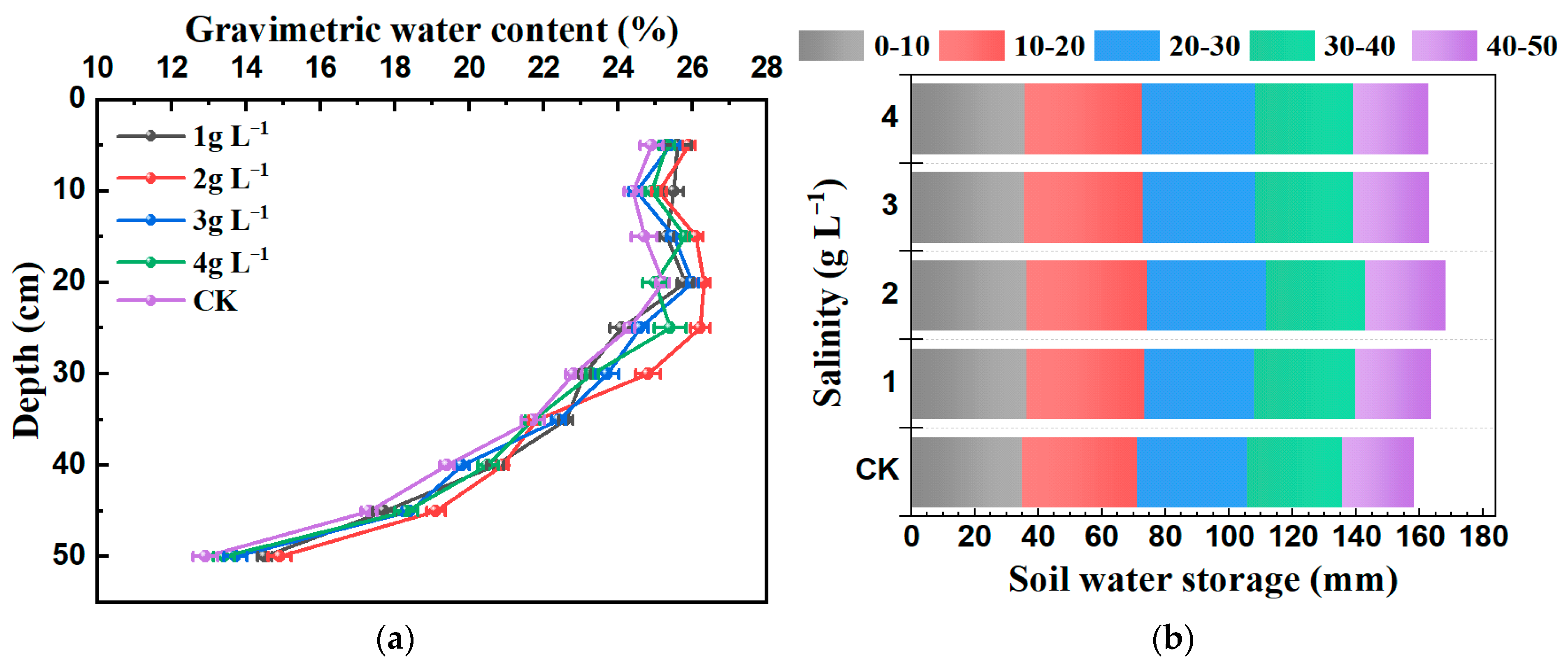
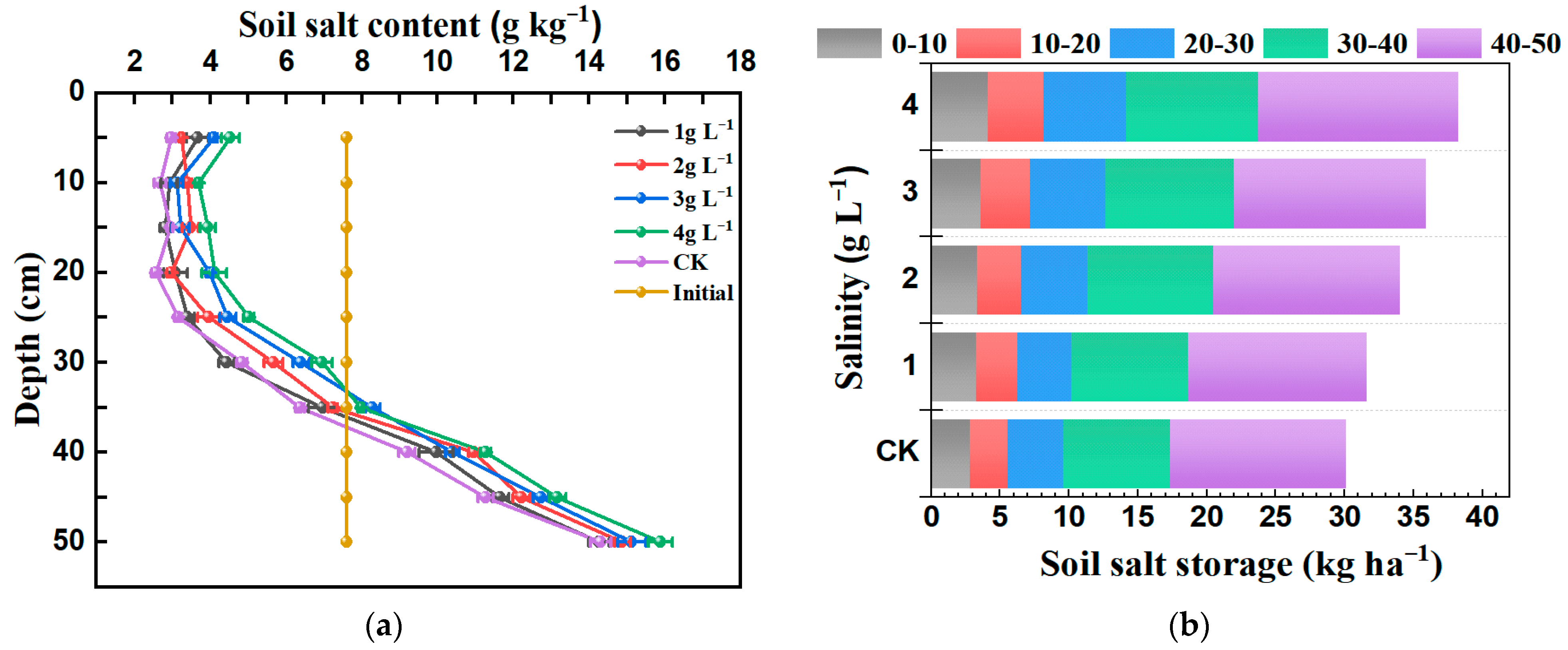
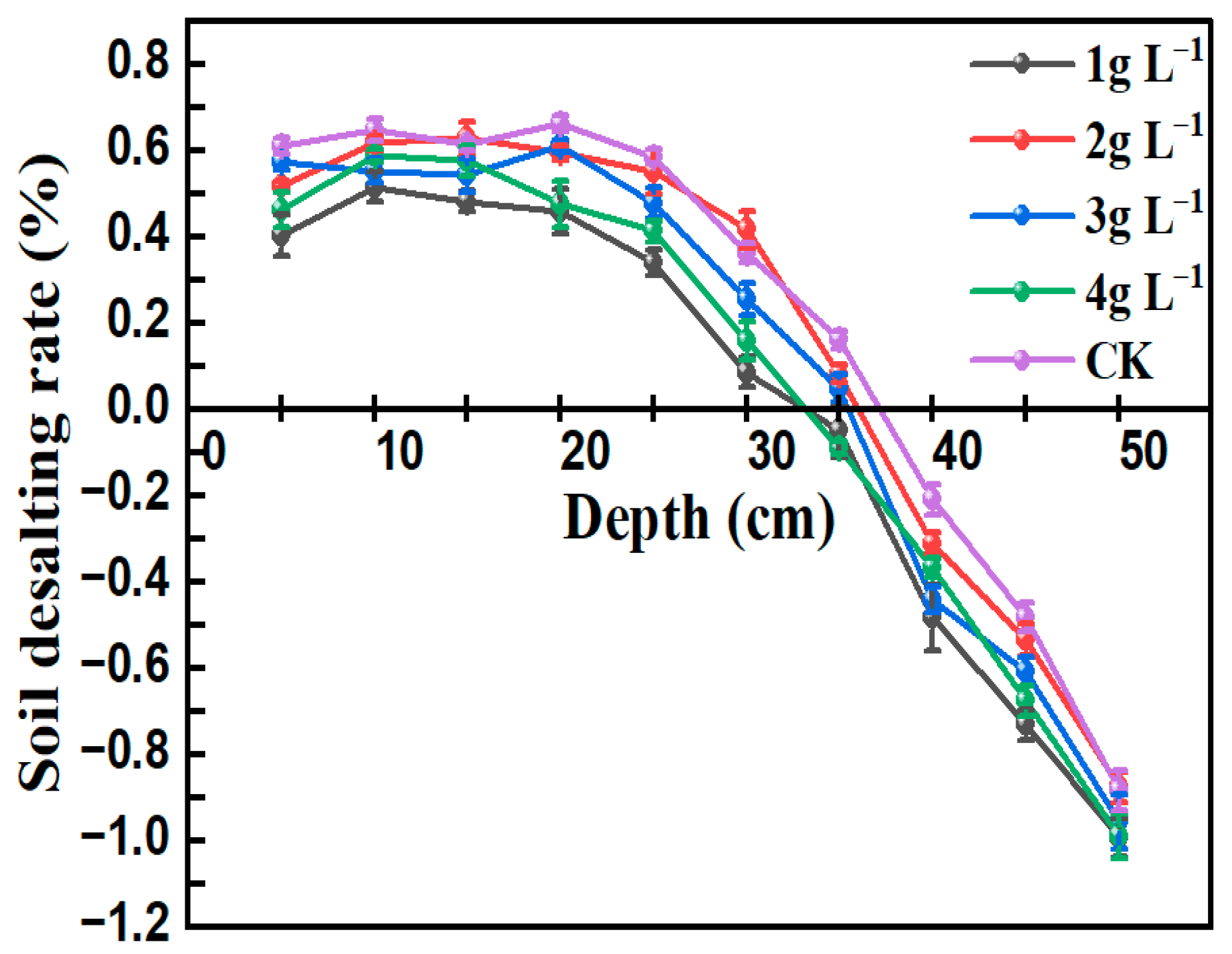
The infiltration of reclaimed water significantly changed the vertical distribution characteristics of soil water and salt. As expected and observed, as soil moisture migrates from the upper soil layer to the lower soil layer, soil salinity also moves and accumulates with the soil moisture, and finally forms a typical distribution pattern of “desalting in the upper layer and salt accumulation in the lower layer” (
Figure 5). In this study, the 2 g L
−1 treatment showed excellent performance in
Ds and other indicators, indicating that the efficiency of water carrying salt downward migration was the highest at this salinity, which could effectively leach salt from root zone to deeper soil layer, which was corresponding to the optimal infiltration performance.
Reclaimed water infiltration can effectively reduce the salinity within the 0~30 cm soil layer (
Figure 5,
Table 1). This depth range just covers the main root active layer of various salt-tolerant crops (such as Suaeda salsa [
27]). Therefore, the research results can provide an important theoretical basis for evaluating the feasibility of saline water for irrigation of salt-tolerant plants such as Suaeda salsa.
It should be noted that excessive or inappropriate application of saline reclaimed water may lead to salt accumulation in the cultivated soil layer [
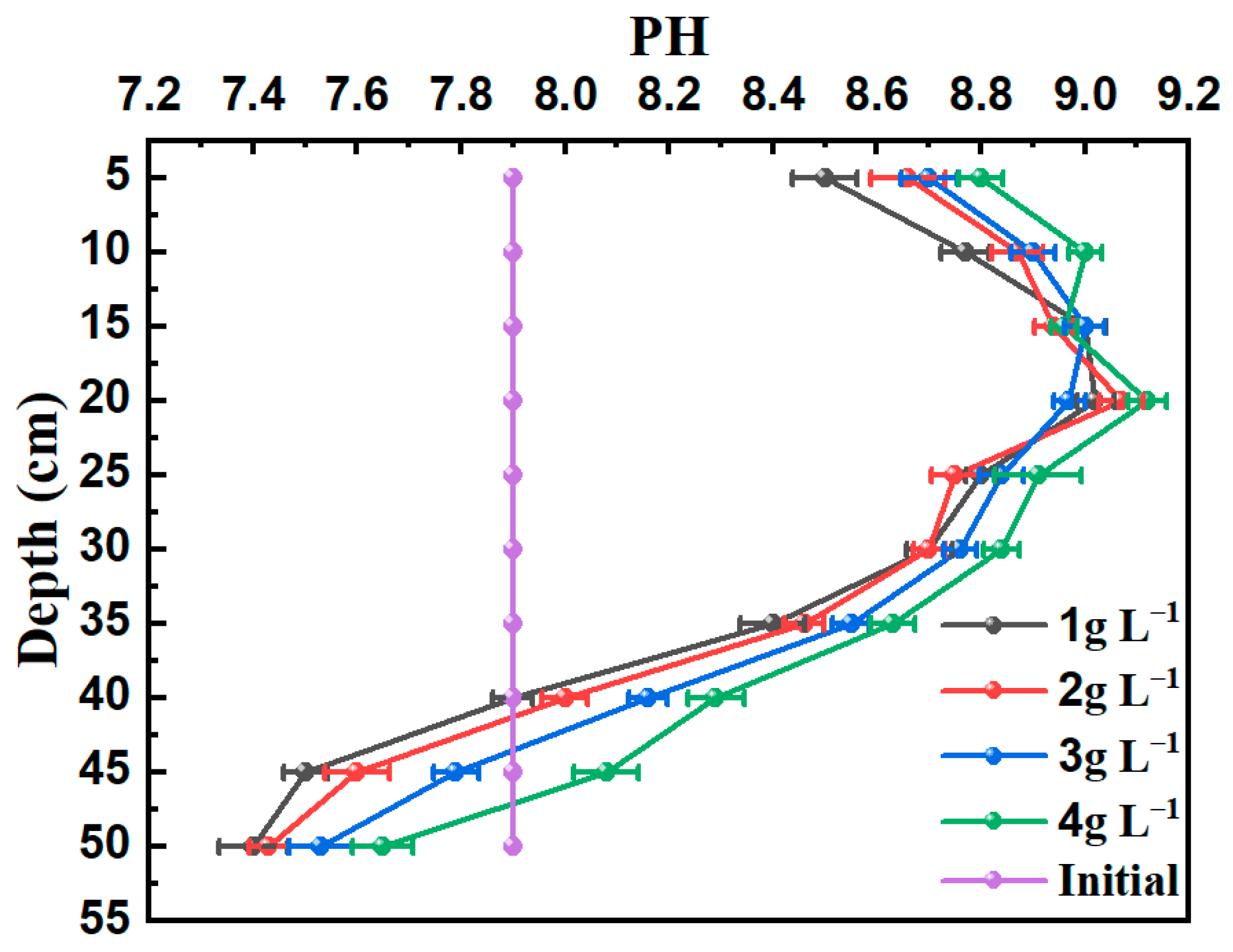
28]. The results of the pH study indicate that the application of reclaimed water with different salinity levels led to systematic changes in soil pH along the profile, which is closely associated with the transport, adsorption, and exchange processes of salt ions in the soil. Such vertical differentiation in soil acidity and alkalinity is not merely an accompanying effect of salt leaching and redistribution, but also has significant implications for soil nutrient availability, root-zone microenvironment, and crop salt tolerance. Therefore, when assessing the feasibility of reclaimed water irrigation, it is essential to consider both water–salt transport and pH dynamics as synergistic influencing factors, with particular attention paid to the long-term effects on crop growth that may arise from root-zone alkalinization or subsoil acidification during the salt leaching process.
At present, there is a lack of research on the mechanism of reclaimed water irrigation. During the irrigation process of saline reclaimed water, a variety of soluble salt ions will exchange with the original ions in the soil [
29], which will affect the migration process of soil solution in the vertical soil column, resulting in changes in its infiltration characteristics and soil water and salt distribution [
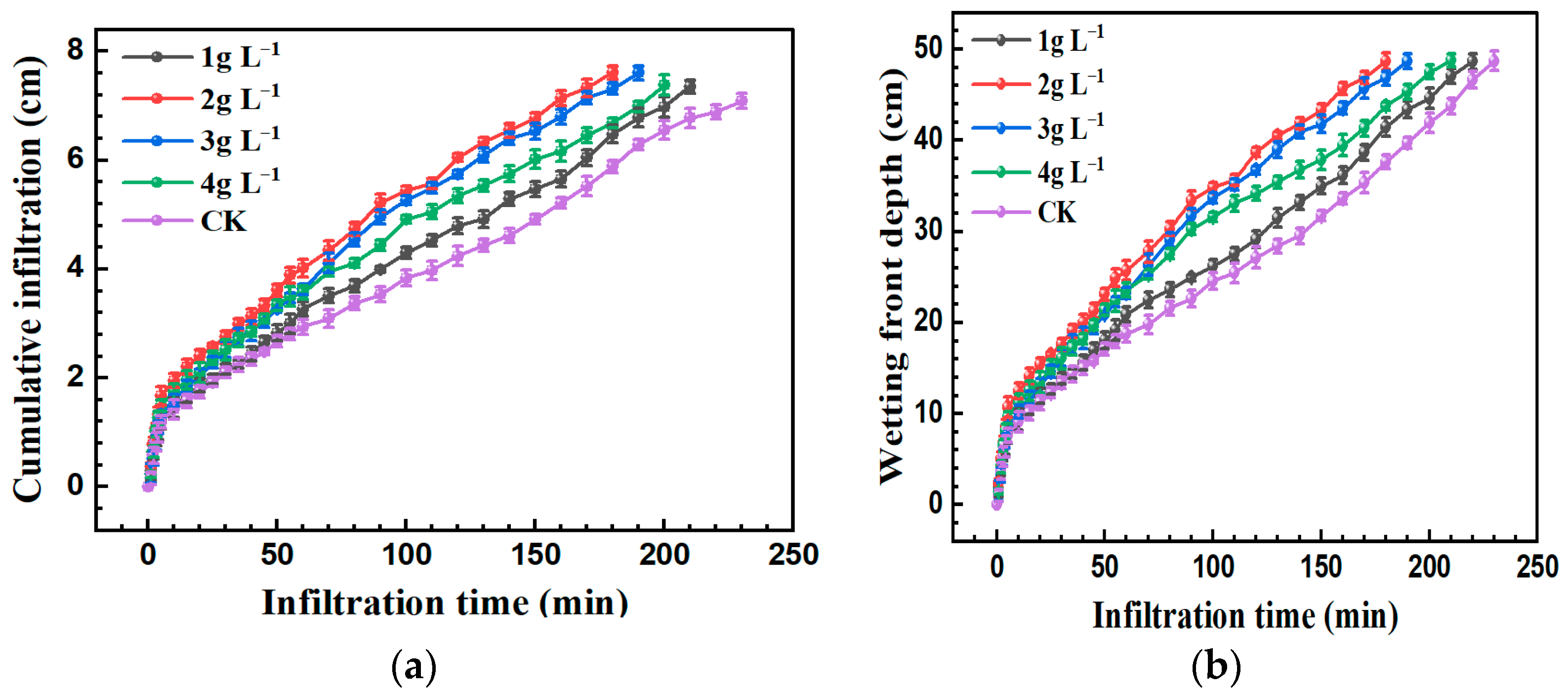
30]. Based on the one-dimensional vertical infiltration experiment, this paper aims to find a reasonable salinity level for reclaimed water reuse. The infiltration results are analyzed by Green–Ampt and Philip infiltration formulas, and the effects of reclaimed water on soil infiltration characteristics are quantitatively analyzed in combination with cumulative water infiltration and wetting front migration depth. Previous studies have shown that different salinity treatments can change the infiltration properties of soil [
31]. It may help to break the tension of soil surface, promote the dispersion of soil particles, increase the porosity, and improve the saturated hydraulic conductivity, which is conducive to water infiltration [
1] when the salinity is not more than the tolerance of plants to salinity and moderate salinity, and can be used for urban greening. However, with the further increase in salinity, after exceeding a certain threshold, it may cause the increase in soil salinity, resulting in the deterioration of soil structure, the reduction in porosity, the deterioration of permeability, and the decrease in permeability and saturated hydraulic conductivity [
29]. This article mainly reflects the effects of reclaimed water salinity on soil infiltration characteristics and water–salt transport under idealized settings. In contrast, water and salt migration processes in field conditions are considerably more complex. Field soils are commonly subjected to frequent wetting–drying cycles and strong evaporative demand, which may enhance capillary rise and promote the upward movement of salts from deeper layers to the soil surface, thereby increasing the risk of secondary salinization. Under such circumstances, even reclaimed water with moderate salinity that exhibits favorable infiltration and leaching performance under laboratory conditions may still result in surface salt re-accumulation if irrigation scheduling and water application are not properly managed [
32]. Moreover, the complex structure and relatively high macroporosity of natural soils can induce preferential flow, leading to water and salt transport pathways that differ markedly from the relatively homogeneous infiltration processes observed in recompacted soil columns, thereby affecting infiltration efficiency and salt leaching effectiveness [
33,
34]. Under long-term or repeated application of saline reclaimed water, the continuous accumulation of salts below the root zone should also be considered; in the absence of effective drainage or periodic freshwater leaching, accumulated salts may migrate upward during subsequent evaporation or irrigation events, posing potential stress to crop growth.
Therefore, the water–salt transport characteristics identified in this study are more applicable to conditions with limited evaporation, adequate drainage capacity, and appropriate irrigation management. Future research should focus on long-term field experiments to evaluate the long-term impacts of reclaimed water reuse on soil structure, fertility, and ecosystem health, and to investigate potential soil structural degradation induced by reclaimed water irrigation, such as reduced aggregate stability, decreased hydraulic conductivity, and altered soil water flow patterns [
35]. In addition, systematic assessments of the combined effects of wetting–drying cycles, evaporation, natural soil structure, and drainage measures on the performance of saline reclaimed water irrigation are required. Further studies should also extend to soils with different textures, elucidate the interactions between dominant cations in reclaimed water and soil colloids, and explore irrigation strategies—such as blending or rotational irrigation with freshwater—to mitigate the risk of long-term salt accumulation.
5. Conclusions
This paper systematically analyzes the influence of saline water infiltration on soil infiltration characteristics and water– salt transport in Xinjiang.
(1) The salinity of reclaimed water significantly affected soil infiltration characteristics, with an optimal salinity threshold identified at 2 g L−1. At this salinity level, both the soil infiltration rate and saturated hydraulic conductivity reached their peak values. Specifically, the cumulative infiltration amount after 180 min increased by 22.73% compared to freshwater, while the wetting front migration speed accelerated, resulting in a 27.78% increase in infiltration depth within the same period. These results indicate that an appropriate salinity significantly improves infiltration performance by modifying soil hydraulic parameters.
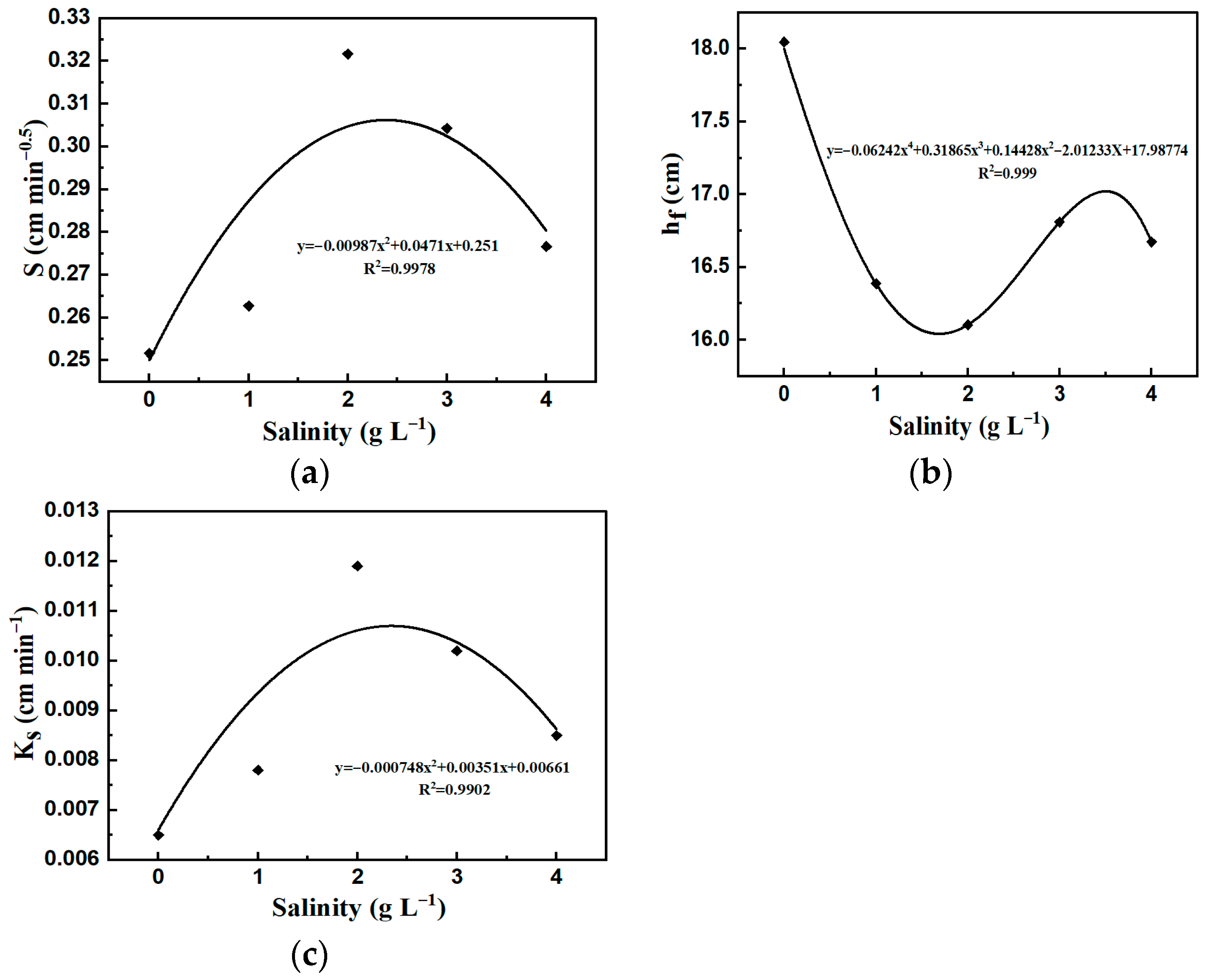
(2) The infiltration process is regulated by the salinity of reclaimed water, which affects soil hydraulic parameters. As salinity increases, the soil infiltration rate (S) and saturated hydraulic conductivity (Ks) initially increase and then decrease, with a peak observed at a salinity of 2.37 g L−1. This pattern aligns with the observed influence of reclaimed water on soil infiltration capacity, revealing the underlying mechanism by which salinity impacts soil hydraulic properties and explaining the emergence of optimal infiltration performance.
(3) In this study, Green–Ampt and Philip infiltration formulas were used to quantitatively analyze the characteristics of water and salt transport under different salinities by combining cumulative water infiltration and wetting front migration depth, which provided an effective model and method for evaluating salt water infiltration.
(4) The conclusions of this study are derived primarily from indoor one-dimensional soil column experiments. While the results provide meaningful insights into the influence of reclaimed water salinity on soil infiltration performance, it should be noted that the proposed optimum salinity represents an indicative range observed under specific experimental conditions—including soil texture, initial water content, and constant head infiltration. This study does not account for dynamic changes in soil structure, such as aggregate stability and porosity evolution, nor does it consider the potential effects of long-term cyclic irrigation. Future work should therefore incorporate field-scale trials and include a variety of soil types to further validate the general applicability of the findings.
(5) This study provides an important theoretical basis and practical guidance for the reuse of reclaimed water in Xinjiang and other arid areas. By optimizing the salinity level of reclaimed water, it can effectively improve the soil infiltration performance, improve the soil structure of saline-alkali land, and promote the efficient utilization of water resources, which has important ecological and agricultural application significance.