Article

Dynamic Modeling and Performance Assessment of Khorshed Wastewater Treatment Plant Using GPS-X: A Case Study, Alexandria, Egypt


1
Environmental Sciences Department, Faculty of Science, Alexandria University, Alexandria 21511, Egypt
2
Department of Hydraulics, Faculty of Technology, University of Tlemcen, P.O. Box 230, Tlemcen 13000, Algeria
3
Basics and Applied Sciences Department, College of Engineering and Technology, Arab Academy for Science Technology and Maritime Transport, Alexandria 21511, Egypt
4
Division of Ecology and Natural Resources Management, Center for Development Research (ZEF), University of Bonn, Genscherallee 3, 53113 Bonn, Germany
*
Author to whom correspondence should be addressed.
Water 2026, 18(2), 174; https://doi.org/10.3390/w18020174
Submission received: 30 November 2025 / Revised: 30 December 2025 / Accepted: 6 January 2026 / Published: 8 January 2026

Abstract

Water scarcity continues to challenge arid regions such as Egypt, where growing population demands, climate change impacts, and increasing agricultural pressures intensify the need for sustainable water management. Treated wastewater has emerged as a viable alternative resource, provided that the effluent meets stringent quality standards for safe reuse. The purpose of this study was to develop a comprehensive model of the Khorshed Wastewater Treatment Plant (KWWTP) to depict the processes used for biological nutrient removal. Operational data was gathered and examined over a period of 18 months to describe the quality of wastewater discharged by the Advanced Sequencing Batch Reactor (ASBR) of the plant, using specific physicochemical parameters like TSS, COD, BOD5, and N-NO3. A process flow diagram integrating the Activated Sludge Model No. 1 (ASM1) for biological nutrient removal was created using the GPS-X. The study determined the parameters influencing the nutrient removal efficiency by analyzing the responsiveness of kinetic and stoichiometric parameters. Variables related to denitrification, autotrophic growth, and yield for heterotrophic biomass were the main focus of the calibration modifications. The results showed that the Root Mean Square Error (RMSE) for the dynamic-state was COD (0.02), BOD5 (0.07), N-NO3 (0.75), and TSS (0.82), and for the steady state was COD (0.04), BOD5 (0.11), N-NO3 (0.67), and TSS (0.10). Since the model’s accuracy was deemed acceptable, it provides a validated foundation for future scenario analysis and operational decision support that produces a trustworthy model for predicting effluent data for the concentrations of TSS, COD, BOD5, and N-NO3 in steady state conditions. Dynamic validation further confirmed model reliability, despite modest discrepancies in TSS and nitrate predictions; addressing this issue necessitates further research.

1. Introduction

Water is one of the essential elements of life, supporting all living beings in the ecosystem [1]. There are a number of current and upcoming water crises in terms of water quantity as well quality, caused by pollution, climate change, misuse, over-exploitation and inadequate resource management [2]. Large volumes of wastewater are produced as a result of the growing population, and appropriate treatment must be applied to these materials before they are discharged into the environment [3]. The environment, and particularly water resources, is polluted by municipal and industrial wastewaters. When entering surface waterways (and potentially in turn linked groundwater aquifers), these contaminants affect the environment, causing biological damage for animals and plants and human health [4]. This indicates that industrial expansion and human activities have taken precedence over environmental concerns and plans for sustainable development [5].
Ensuring sufficient access to water resources is crucial for sustainable progress, as global freshwater is limited. Climate change, microbial biomass growth, and economic expansion have contributed to and are continuing to further aggravate this problem [6]. The Middle East and North Africa (MENA) region, and particularly Egypt, faces severe water scarcity due to an arid climate [7]. Irregular rainfall patterns and climate change-induced droughts are considered to be big challenges for water availability and management, and in turn affect the agricultural sector in Egypt, which is by far the major water consumer [8].
To address the water shortage, Egypt’s new Vision 2030 initiative promotes conservation of the environment and natural resources, offering incentives for more cutting-edge methods for water conservation and resource protection through dedicated treated water as an alternative source for irrigation water. Utilizing treated wastewater for irrigation offers a promising solution to lower water scarcity challenges, but only if the treated effluent meets strict quality standards to protect human health and safeguard agricultural productivity [9]. Consequently, the effectiveness of wastewater reuse strategies critically depends on the operational performance and calibration of kinetic and stoichiometric parameters of existing wastewater treatment plants (WWTPs), many of which were designed under different loading and regulatory conditions and now face increasing hydraulic and organic stresses. In addition, wastewater contains nitrogen in several oxidation states, which makes its removal both challenging and complex. Compared to conventional methods such as adsorption and co-precipitation, biological treatments have proven highly effective in removing nitrogen compounds from contaminated water [10]. In addition, Activated Sludge Systems (ASS) have become the most commonly used biological wastewater treatment technology, designed to improve the overall efficiency of nutrient removal [11]. Due to improvements in operational techniques and procedures in the wastewater treatment industry, these systems have been developed to include more complicated operations. The need to remove carbonated components alongside nitrogenous and phosphorus ones has significantly enhanced this complexity. Consequently, an understanding of how to operate the treatment facility, carry out sludge recirculation and maintain a certain amount of biomass in the reactor, as well as how to cut costs while improving treatability, is aided by the simulation of biological wastewater treatment [12].
The treatment of activated sludge consists of two main parts: (1) the clarifier, which mostly uses physical processes to separate cleaned water from biomass and other particle matter, and (2) the reactor, which decomposes pollution nearby, primarily through biological means. However, the dynamic physical properties of activated sludge processes and the fluctuation of the pollutant load of raw wastewater cause these processes to become complex [13]. This makes it abundantly evident that modeling and simulations are necessary to both define and improve the many stages and procedures of the treatment process and to generate forecasts under various management scenarios [14].
Mathematical modeling has proven to be a cost-effective method to understand and optimize the treatment process to meet the required effluent standard. In this context, activated sludge models (ASMs) are among the several dynamic and steady-state mathematical expressions and models that define the Activated Sludge Process (ASP). They provide a powerful tool for design, operational assistance, forecasting future behavior and control of the process [15]. They have been most frequently utilized for the design, operation, and calibration of kinetic and stoichiometric parameters of biological wastewater treatment plants that have been approved by the International Water Association (IWA). Modeling processes like carbon oxidation, nitrification/denitrification, and biological phosphorus removal have proven to be quite successful with the ASM1, ASM2, and ASM3 models under different operating conditions [11]. Commercial simulation programs including BioWin 5.1 (Biodegradation Probability Program, EnviroSim Associates Ltd., Hamilton, ON, Canada), GPS-X 8 (General Purpose Simulator, Hydromantis Environmental Software Solutions, Hamilton, ON, Canada), WEST (Wastewater treatment plant Engines for Simulation and Training), and DESAS 7.1 (Design and Simulation of Activated Sludge Systems, CALAGUA Research Group, Universitat Politècnica de València, Valencia, Spain) have integrated these models [16].
The nitrogen and phosphorus removal processes have recently been modeled and optimized using the GPS-X 8 simulation software. A study conducted by Tiar et al. [17] demonstrated the successful implementation of a plant-wide modeling approach for the Maghnia Wastewater Treatment Plant (WWTP) in Algeria. To capture temporal variations in water quality, 56 influent and effluent samples were collected and analyzed for their physico-chemical parameters. The characterization of the wastewater was performed in accordance with the CEMAGREF protocol. The GPS-X 8 simulation environment, which was based on the IWA ASM1 model for the activated sludge process, was put into use by means of a methodical, step-by-step process that involved modifying specific kinetic and stoichiometric parameters of the model. The ASM1 model was successful in accurately forecasting the steady-state behavior of parameters like COD, TSS, and NH4-N removal processes at the WWTP [17].
The Khorshed Wastewater Treatment Plant (KWWTP) represents a medium-scale municipal WWTP typical of coastal Mediterranean cities, characterized by highly variable influent loads, limited operational flexibility, energy-intensive aeration requirements and reliance on conventional biological treatment technologies. While the global transition toward sustainable water management highlights the promise of treated wastewater reuse, its practical implementation is often hindered by the operational rigidity of present facilities like the KWWTP. Existing operational control at KWWTP is largely based on empirical adjustments rather than predictive, model-based decision support tools. Currently, many such plants rely on empirical adjustments that fail to account for the complex, dynamic fluctuations in influent loads typical of coastal Mediterranean urban centers. This limits the plant’s ability to anticipate performance under varying operating conditions and to systematically optimize biological nutrient removal processes. Although similar modeling approaches have been applied to other wastewater treatment plants, most existing studies focus on conventional configurations and different climatic and regulatory contexts. Therefore, the main objective of this study is to emphasize the significance of making sure that the treated effluent satisfies the strict requirements set by the Egyptian government and the Food and Agriculture Organization (FAO) for wastewater, which can then be used again for irrigation. Developing a plant-specific dynamic model for an ASBR-based operating system tailored to KWWTP is essential to bridge the gap between theoretical modeling and day-to-day operational optimization. Operational parameters and the ASM1 model with GPS-X software will be used to evaluate the quality of discharged effluent, enhance process understanding, and support the data-driven calibration of kinetic and stoichiometric parameters for sustainable wastewater reuse under water-scarce conditions. The novelty lies in the integration of long-term operational data, local effluent reuse requirements, and systematic kinetic–stoichiometric calibration to produce a decision-support model tailored to daily operational optimization. This approach provides practical engineering value beyond generic modeling studies and offers a transferable framework for similar WWTPs in arid and semi-arid regions.

2. Materials and Methods

2.1. Study Area

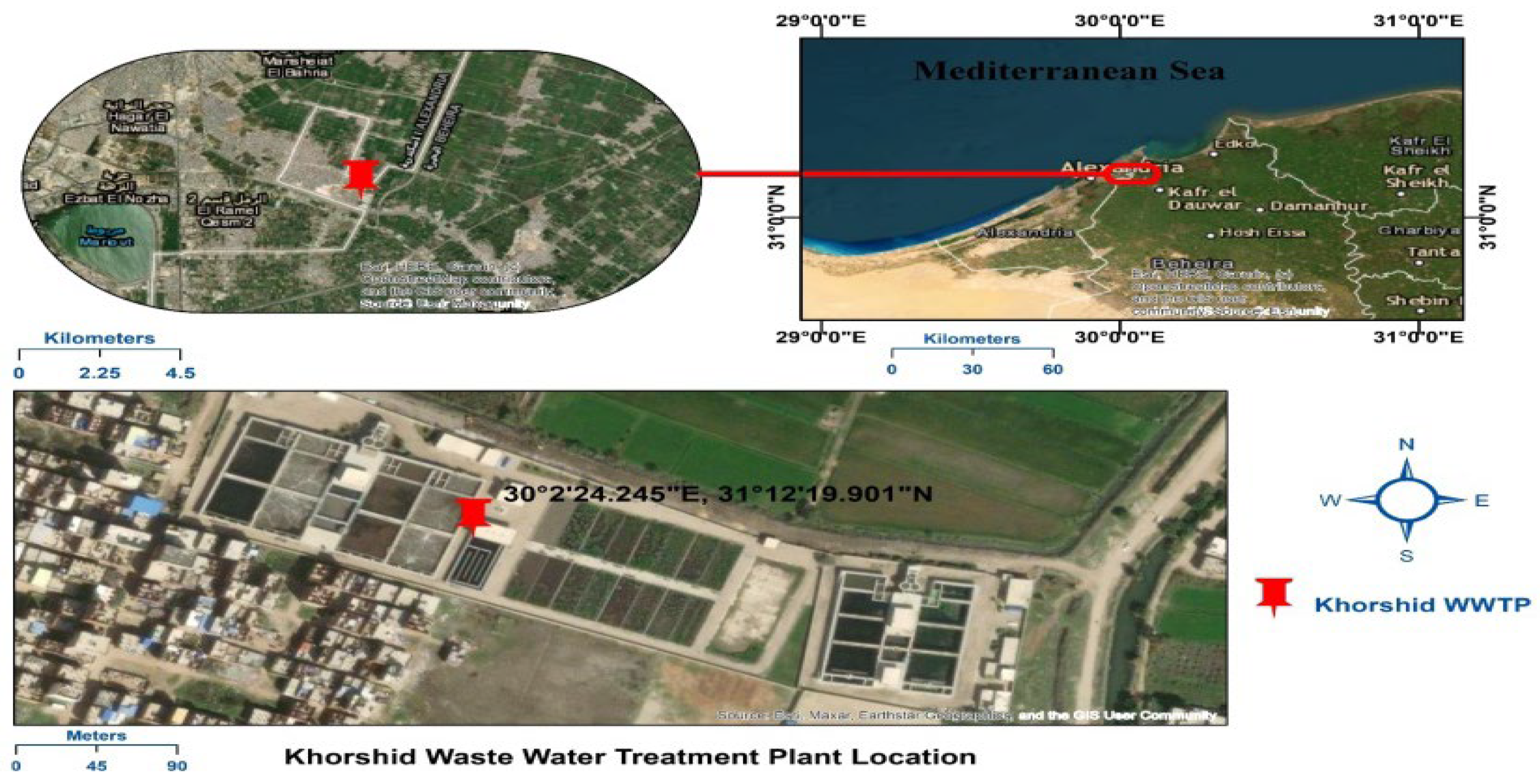
The study area is Khorshed Sewage Wastewater Treatment Plant (KWWTP), which is located in Al-Montazah district, west of the Alexandria governorate, Egypt. The coordinates are (31°12′19.7″ N, 30°02′26.8″ E) (Figure 1). The total area of the Al-Montazah district is 92 km2, with a population of about 1,536,311, expected to reach two million during the next ten years. It occupies the first place in terms of population out of the six districts of the Alexandria Governorate. Its location is specifically on the Mediterranean Sea in the western part of the Nile River Delta, about 183 kilometers northwest of Cairo.
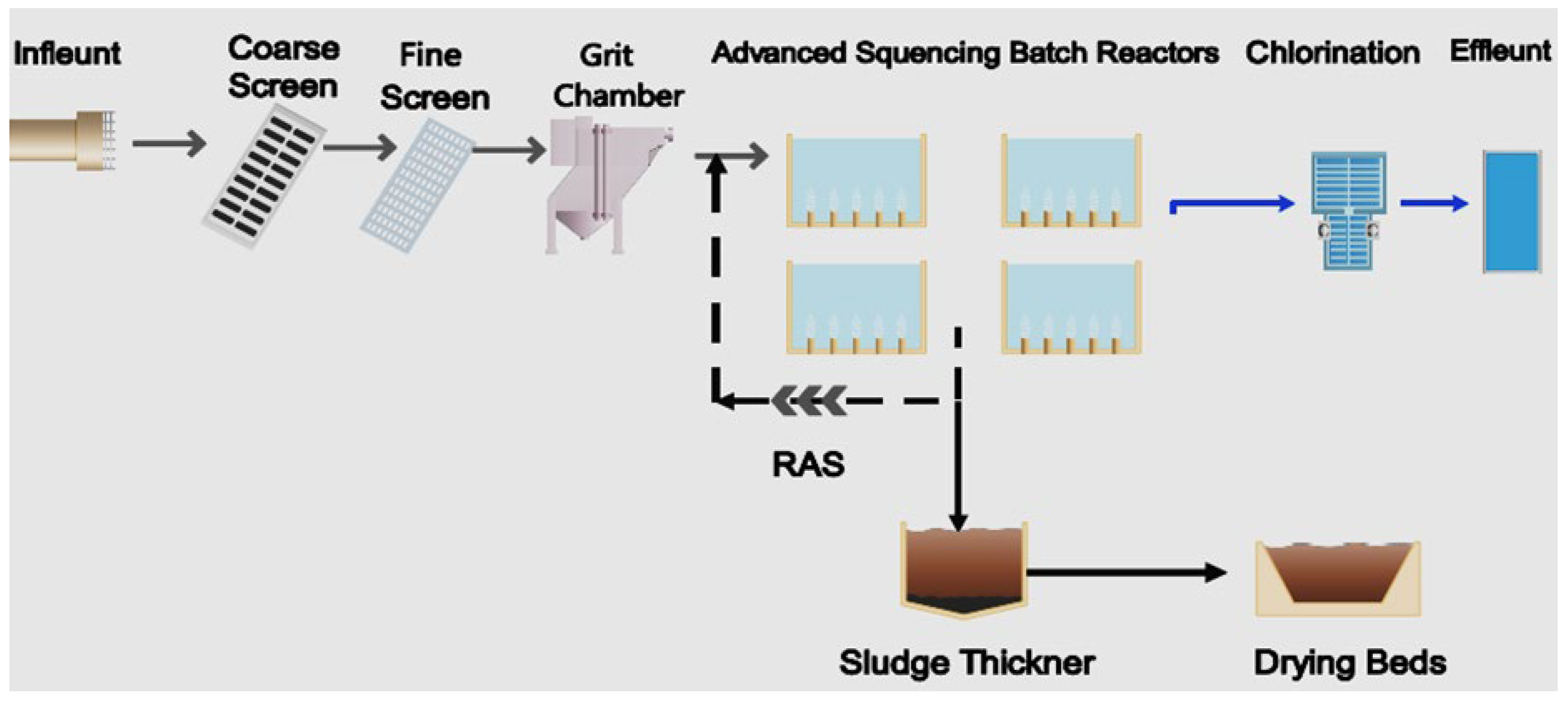
The Khorshed Sewage Wastewater Treatment Plant (KWWTP) is one of five plants dedicated to the Al-Montazah district, and has a treatment capacity of 35,000 m3 wastewater per day. It is managed by Alexandria Sanitation Company and began operating in 2014. It consists of primary, secondary, and tertiary treatment systems (Figure 2). The wastewater flow enters the plant via gravity sewers, then through wastewater pumping stations from four areas: Aldakatra, Alkharuea, Aljaziraa and Alnakhal residential areas. Screenings and grit removal units were designed for preliminary treatment. The screened and de-gritted wastewater flow is distributed by aeration in the beginning and then enters the Advanced Sequencing Batch Reactor (ASBR), where the biological stabilization of organic matter is accomplished by an ASBR system that it is dependent on time-based cycles, each one consisting of several stages (filling, reaction, deposition, production, and rest). The time for each stage can be changed according to the needs of the treatment process. The surplus activated sludge is drawn off from the returned activated sludge line (RAS) and sent to a sludge concentration system. The effluent flows to the chlorination and disinfection unit for tertiary treatment, while the final effluent is discharged into the El Amia drain, and then into Abu Qir Bay. Table 1 summarizes the design and nominal operating parameters of the Khorshed Wastewater Treatment Plant, as reported in the plant documentation, whereas Table 2 and Table 3 present measured influent and effluent wastewater quality data, statistically analyzed from samples collected between January 2022 and July 2023.

2.2. Data Collection and Analysis

To obtain the essential information regarding the influent and effluent quality parameters of Khorshed Wastewater Treatment Plant (KWWTP), a review was conducted of the physicochemical parameters, in addition to laboratory data analyses and daily operational bulletins. Between 1 January 2022 and 31 July 2023, 150 samples were taken at a defined frequency of monitoring varying from ten to twelve times each month. The analysis of physical parameters such as pH, temperature, total suspended solids (TSS), total dissolved salts (TDS) and dissolved oxygen (DO) is typically performed on a daily basis at the treatment facility. However, the assessments of chemical oxygen demand (COD), biochemical oxygen demand (BOD5), and nitrate ions (N-NO3), are conducted weekly. Regarding data pre-processing, abnormal samples were identified using a standard deviation-based criterion. For each parameter, values outside mean ±2 standard deviations (±2σ) were classified as outliers. After filtering, 50 samples were removed from the 150 samples collected. This process preceded the statistical analysis aimed at assessing the wastewater treatment plant (WWTP)’s effectiveness in treating and eliminating pollutants, including BOD5, COD, TSS, TDS, N-NO3 and pH levels. The average data collected over a one-and-a-half-year period was used to calculate the WWTP’s pollution removal efficiency. The principal parameters of the influent and effluent samples from the KWWTP were evaluated through descriptive statistical methods, including the calculation of the mean, median, standard deviation (SD), minimum (Min), maximum (Max) and removal efficiency (RE), as indicated in Equation (1) [18] and Table 2 and Table 3.
RE = C   in C   out C   in   100
Cin = Concentration of influent and COut = concentration of effluent.

2.3. Methodology

This study follows a structured research design consisting of (i) long-term full-scale data acquisition (18 months), (ii) development of a plant-specific ASM1-based dynamic model within the GPS-X environment, (iii) systematic collection, screening for outliers, and statistical characterization of influent and effluent data prior to model implementation, (iv) steady-state calibration using averaged operational data, and (v) independent steady-state and dynamic validation using separate datasets together with quantitative evaluation metrics (RMSE and R2), to ensure that the described methods adequately capture the biological treatment behavior. This stepwise framework ensures methodological rigor, reproducibility, and robust performance assessment of the Khorshed wastewater treatment process.

Model Development

The GPS-X software used in this investigation (version 8) was created by Hydromantis Environmental Software Solutions, Inc. (Hamilton, ON, Canada), a Canadian company based in Ontario [19]. Wastewater treatment plant management, simulation, optimization, and mathematical modeling was performed using GPS-X. It works by balancing the materials of each state variable in the Activated Sludge Model (ASM) among the process units. Along with the designated generating or consumption rates, this also includes the flow rates that enter and exit the process units [17,20].
A full standalone model that incorporates biological wastewater treatment processes for anaerobic digestion systems (ADS) and ASP, along with numerous additional processes that necessitate physical and chemical interactions, is also commonly used. ASM1 was revised by the Mantis model integrated into the GPS-X program, which also included certain changes regarding additional growth stages relevant to heterotrophic and autotrophic species. The Mantis model’s list of components also included aerobic denitrification [21].
The Mantis and simple1d clarifier models, as well as a customized components library for carbon and nitrogen, were used to create the ASP model utilized in this investigation in the GPS-X software. More than 60 composite and state variables, as well as more than 30 stoichiometric and 24 kinetic input and output factors, were among the many libraries of expressions that describe the processes included in the model. The activated sludge process was modeled using the IWA Activated Sludge Model No. 1 (ASM1), which describes biological carbon removal and nitrification–denitrification through a set of mass balance equations of the general form
dCi/dt = Qin × Cin – Qout × Ci + Σ(rj × νij)
where Ci represents the concentration of state variable i, Q denotes flow rates, rj are process rates, and νij are stoichiometric coefficients.
It should be noted that total nitrogen (TN) and total phosphorus (TP) were not explicitly simulated or calibrated in this study. The applied ASM1 framework represents nitrogen through individual species (N-NH4+ and N-NO3) rather than as aggregated TN, and it does not include a phosphorus state variable. Consequently, the model results can be interpreted as an assessment of biological carbon removal and nitrogen transformation performance, rather than a complete evaluation of overall nutrient (TN/TP) removal at the plant. This is in agreement with the research carried out by Mu’azu et al. [11], who stated that the modeling method employed by ASM1 is used for carbon degradation, nitrification, and denitrification and focuses on eliminating COD, BOD5, and nitrogen components (i.e., N-NO2, N-NO3, N-NH3). Significant increases in nitrification and denitrification rates were the outcome of their identification of these six crucial factors for the adjustment of dissolved oxygen (DO) concentrations in biological units and the solid retention time (SRT), leading to a 17.9% reduction in energy consumption [13]. The results of the aforementioned research are used as a guide for modeling studies of WWTPs in various locations, especially when modeling nitrogen, phosphorus, or mixed nutrient removal processes using GPS-X software. Consequently, in order to produce pertinent insights for the plant’s nutrient removal performance, the Khorshed Sewage Wastewater Treatment Plant (KWWTP) modeling study attempts to duplicate parts of these research methodologies while tailoring them to local conditions.

2.4. Model Assumptions

The following assumptions are made for the model’s creation in this work, using model constraints as ASM1 [22]:
  • ASP runs at a steady temperature.
  • The reactor’s dissolved oxygen (DO) concentration is kept steady, and there is adequate mixing.
  • pH is constant and close to neutral.
  • The model’s coefficients are taken to be constants for any influent characteristics.
  • Enough inorganic nutrients are present to guarantee adequate microbial biomass growth (heterotrophic and autotrophic).
  • It is anticipated that organic and nitrogenous chemicals will hydrolyze simultaneously.

2.5. GPS-X Modeling Approach

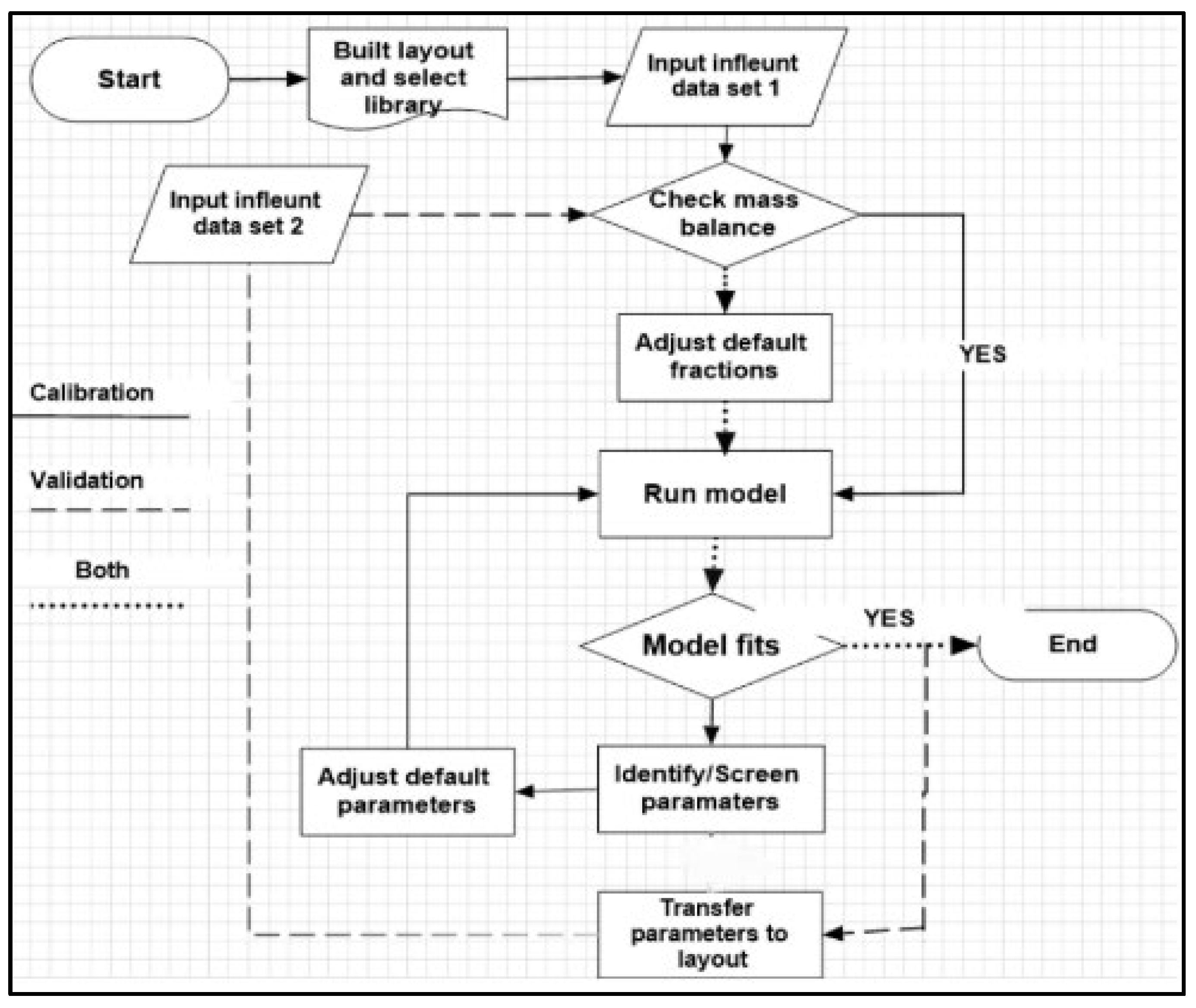
The overall modeling framework, including the implementation of the ASM1 processes and the ASBR operational cycle within the GPS-X environment, is illustrated in Figure 3. The following procedures were used in the GPS-X environment to simulate the modeling in this study utilizing the data from KWWTP:
  • Gathering the bare minimum of actual KWWTP data needed for GPS-X modeling.
  • Using physical and influent data from the central unit’s activities to depict the current KWWTP.
  • Model items chosen by building the KWWTP layout representation in the GPS-X environment.
  • Characterization of the quality characteristics of KWWTP influent wastewater (including the necessary values for the easily measured components, such as N-NO3, BOD5, COD, and TSS).
  • Modifying and establishing the COD and nitrogen components’ influent fractionation using the GPS-X influent adviser to a satisfactory level and mass balance of composite factors.
  • Executing the model and calibrating it by modifying kinetic, stoichiometric, and other pertinent parameters to fit the model and obtain the greatest possible match between the model’s output and the real plant effluent quality data.
  • Using a separate set of KWWTP wastewater quality data to validate the calibrated model.
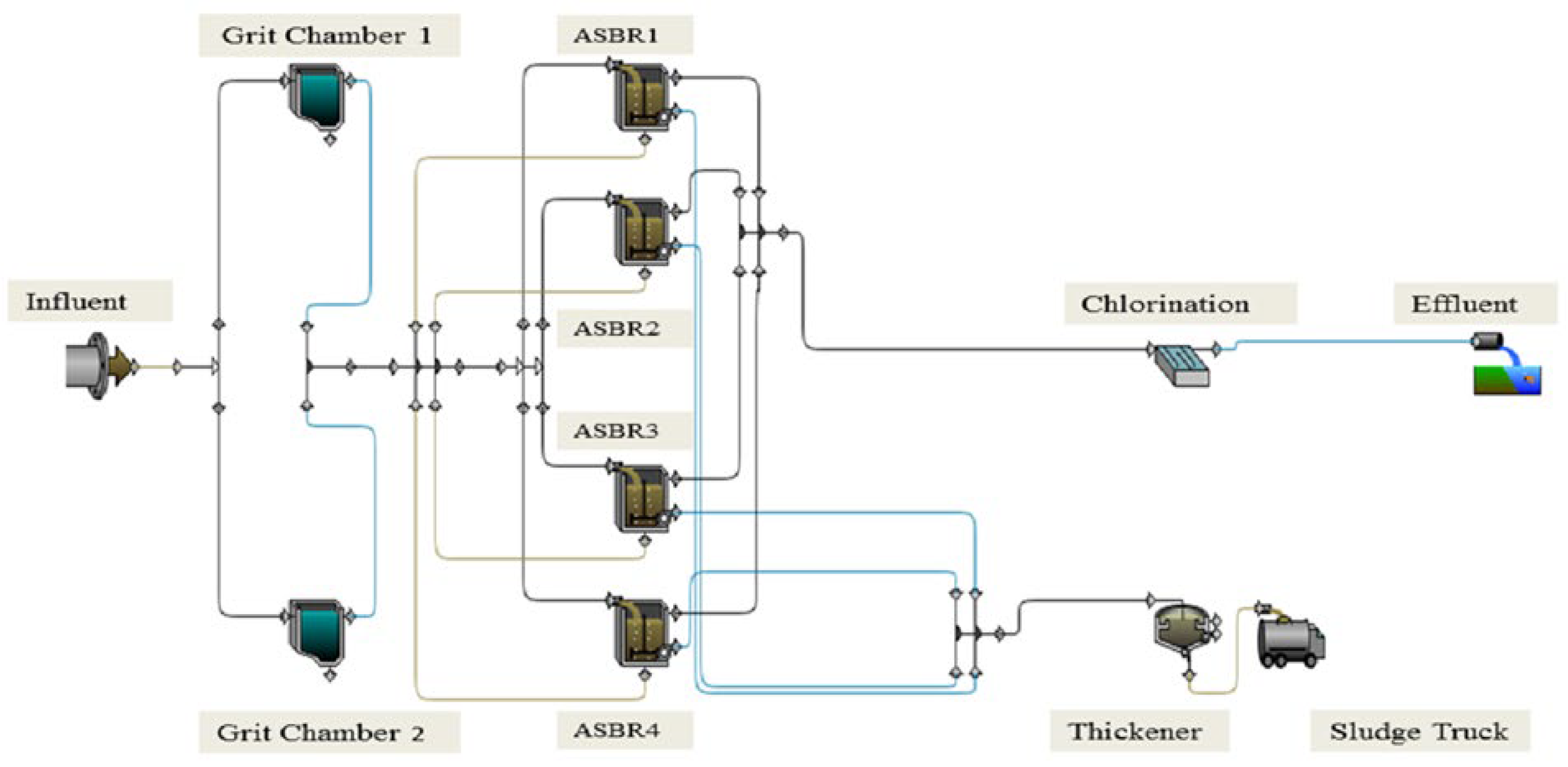
The KWWTP activated sludge process (ASP) flow diagram was created using the process unit icons from GPS-X’s unit process library’s process table. The WWTP’s process flow diagram, as depicted in Figure 4, was constructed by connecting several components, including the thickener, ASBR, grit chamber, influent, thickener, and outlet, with flow routes. The ASBR was implemented in GPS-X as a time-controlled sequencing reactor. The operating cycle consisted of sequential fill, react, settle, and decant phases, each defined by fixed time durations derived from plant operational records. The initial step was to choose the right library (a group of wastewater process models that use a set of fundamental wastewater components or state variables that are continually integrated across time) before starting to characterize each unit process. Since the GPS-X provides nine libraries with default values and expressions for calculating state variables, a library containing the ASM1 model was selected. Because it incorporates biological nitrification–denitrification processes, the ASM1 model was selected from the Carbon and Nitrogen library (CNLIB) [19]. Each process unit’s data was gathered from the KWWTP operating plant reference in order to calibrate the physical and operational data of the facility (Table 4).

2.6. Model Calibration

A model can be visually or numerically calibrated by a simulation program. It was not feasible to perform a mathematical simulation for real-world parameter identification issues due to the intricacy of the ASM1 model and the dearth of precise data needed for the automatic calibration [17]. As a result, we chose to manually and visually change the parameters of the experimental measurements. Statistical techniques that could evaluate the agreement between simulated and observed values were used to support the visual evaluation of that agreement. This study employed the root mean square error (RMSE) to test the model and verify that it reliably reflected reality [23]. RMSE was calculated using normalized observed and simulated concentrations, obtained by dividing each value by the corresponding mean observed concentration; therefore, RMSE values are dimensionless and reflect relative model error rather than absolute concentration differences.
      R M S E = 1 n i = 1 n r i 2
where ri = residual = OI − Pi, Oi = observed values, and Pi = predicted values.
The model calibration of ASM1 is usually based on a step-by-step process and by adjusting a small number of many kinetic and stoichiometric parameters [24]. In this context, this default parameter configuration for prevalent municipal scenarios typically yields a realistic and good description [22].
To improve wastewater characterization, the model in this study relies on chemical oxygen demand (COD) fractions and several stoichiometric coefficients, such as the soluble fraction of total COD, the heterotrophic yield coefficient (YH), the autotrophic yield coefficient (YA), and the volatile suspended solids/total suspended solids (VSS/TSS) ratio. Hydromantis CO developed the Influent Advisor for this purpose, and the average of the observed concentration values of the BOD5, COD, TSS, and N-NO3 parameters was entered into it.
The influent flow was characterized in this study using the averaged COD, TSS, N-NO3, pH, and temperature values for 100 samples (after deleting data from outliers) provided by the plant laboratory between 1 January 2022 and 31 July 2023. The model was adjusted to fit the data on average effluent concentrations over the given time frame. In terms of COD, mass balance was performed. This led to the first use of default settings for stoichiometric, kinetic, and other parameters related to biochemical and clarifying thickening processes, as well as the expression of concentrations of all organic constituents, including biomass, in COD units [22]. These parameters can be found directly through tests conducted under particular circumstances [25] or indirectly through numerical model calibration using experimental data gathered from the treatment procedure. By contrasting calculated concentrations with measured values, several of the parameters are ascertained [26].
The initial step in calibrating the model is to average the KWWTP data, assuming that the calculated average is representative of a steady-state operational condition. After that, the model is adjusted to reflect the average effluent data for the 18-month period. Aligning the simulated values for each variable with the mean values derived from the KWWTP is the main objective of steady-state model calibration. Numerous studies have employed this method to assess the effectiveness of activated sludge systems on a broad scale comparable to KWWTP [17,20]. The simulation was run after input data, including flow rate, COD, BOD5, TSS, pH, and N-NO3, had been entered. Using a trial-and-error approach, various parameters were adjusted using the influent advisor to reach the TSS and BOD5 in order to maximize the match between the influent data and the model. The model’s calibrated parameters are displayed in Table 5. In the calibration of models based on dynamic data, achieving a reliable estimation of the saturation constant (Ks) is of critical importance, and there was one stoichiometric coefficient (heterotrophic yield coefficient, YH), the maximum specific microbial biomass growth rate (μ-max.H), and heterotrophic biomass decay coefficient (bH). When predicting dynamic scenarios, these factors are the most important [27].
The three steps of the steady-state simulation methodology are designed to approximate the simulation line to the experimental data, as follows:
  • Use a range of settings for μ–max H (heterotrophic coefficient decay) to improve the mathematical reaction to COD output and dynamic variables, while keeping other parameters at their default values to lessen dynamism [28].
  • Once the simulation line and experimental data of COD coincide, the specific microbial biomass growth rate (μ-max H) can be determined by modifying XBH-related factors, such as the yield for heterotrophic biomass (YH) and heterotrophic decay coefficient (bH) [29].
  • After noting the discrepancies between the expected and observed values, parameter values were adjusted until an effective match was achieved. Correlating the model’s prediction with the experiment’s outcomes is the aim of the model calibration process.

2.7. Model Validation

Validation was the following step after the successful calibration of the plant. When the model’s predictions, within reasonable bounds, accord well with a separate data set that was not used during the model’s construction and calibration phase, this is referred to as model validation [11]. This procedure is performed to evaluate the model’s capability to predict additional potential scenarios or events related to the treatment plant.
Data from 100 samples were used to validate the model, and the accuracy was evaluated using the root mean squared error (RMSE) criterion (Equation (3)). The maximum likelihood estimator of model prediction variance under normal distribution, or RMSE, highlights larger errors and shows the average size of errors without compensation.

3. Results and Discussion

3.1. Waste Water Characterization

Table 2 and Table 3 display descriptive data, including mean, median, standard deviation (SD), minimum (Min), maximum (Max), first quartile (Q1), third quartile (Q3), and removal efficiency (RE).

3.1.1. Total Suspended Solids (TSS)

Because of their quantity and size distribution, total suspended solids, which are made up of insoluble organic and mineral small particles, are the cause of wastewater’s turbidity [30]. They hinder the microbial biomass growth of aquatic life, reduce the amount of dissolved oxygen in the water, and restrict the amount of light that may enter the water. It was found that significant TSS levels were present in both the influent and effluent, suggesting the presence of both organic and inorganic particle matter. The effectiveness of the primary and secondary treatment procedures is suggested by the exceptionally high removal efficiency (RE) of 95.29%.

3.1.2. Chemical Oxygen Demand (COD)

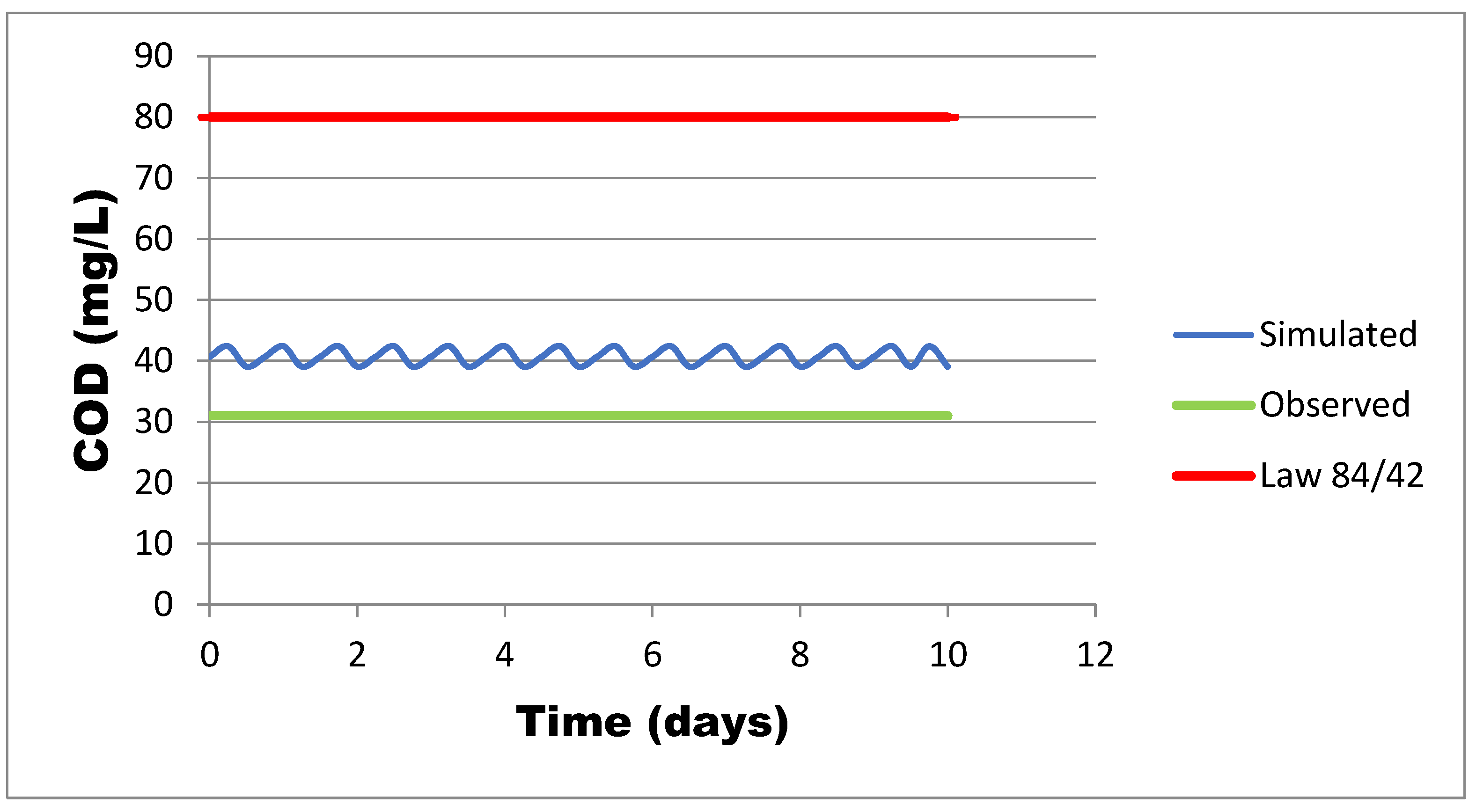
The amount of oxygen needed to chemically stabilize carbonaceous organic matter in acidic environments with potent oxidizing agents is known as the chemical oxygen requirement [30]. The amount of biological matter present can thus be inferred indirectly from the results obtained. The COD test has a few advantages over the BOD5 test, one of which is that it only takes two to three hours. The water quality of any aquatic habitat can thus be conveniently characterized for operational control. As with TSS, a significant organic matter load is indicated by the high influent COD values (Table 3). The effective removal of organic contaminants is confirmed by the remarkable removal efficiency (RE) of 92.43%. The maximum COD value of 48 mg.L−1 in the KWWTP effluent discharge (Table 4) is less than the 80 mg.L−1 regulatory value established by the Egyptian government for water meant for release to aquatic ecosystems.

3.1.3. Biochemical Oxygen Demand (BOD5)

BOD5, which is measured in a lab, is an indicator of the presence of organic pollutants and the amount of oxygen consumed by bacteria during the biochemical decomposition of organic substances in wastewater [30]. A significant biological oxygen demand is shown by the influent BOD5 (Table 3), which also reveals a high level of organic matter that is easily biodegradable by microbes. The biological treatment methods appear to be effective based on the RE of 93.58%. However, influent BOD5 had a maximum concentration of 288 mg.L−1. This suggests that the wastewater contains a significant amount of organic material that decomposes readily [20].

3.1.4. Nitrate-Nitrogen (N-NO3)

Since nitrate is the end product of nitrogen compound oxidation in natural waters, nitrogen is one of the physiologically significant components in aquatic environments. However, nitrates are a vital source of nitrogen for plants and frequently seem to be the main nutrient that limits the microbial biomass growth of phytoplankton. Due to the high efficiency of nitrifying and denitrifying bacteria during the biological treatment process, the concentration of N–NO3 ions in the influent (ranging from 1.1 to 1.8 mg.L−1) and the effluent (ranging from 3.6 to 5.4 mg.L−1) demonstrated an effective nitrification and potential denitrification processes. The average effluent value of 4.66 mg.L−1 is less than the 45 mg.L−1 regulatory amount that the Egyptian government has established for water allowed to be discharged to aquatic environments.

3.2. Steady-State Simulation

Simulation of the KWWTP under steady-state conditions was performed using essential input data, including flow rate, COD, BOD5, TSS, and NO3 concentrations. The influent and effluent samples’ temperatures barely changed. Sophisticated methods including respirometric batch studies and lab-scale procedures carried out under strictly regulated circumstances are used to determine the COD fractions. Simple chemical analyses do not give access to these fractions, hence intelligent approaches are required. Additionally, automated equipment is needed to control and regulate experimental settings [31].
As mentioned before, CEMAGREF’s default parameters were used to generate the adjustment fractions, as shown in Table 6. The effluent COD ratio for SI (Soluble Inert substrate) was calculated using the approach suggested by [32]. The SI fraction was determined to have a mean value of 0.05. The proportion for SS (Soluble Biodegradable Substrate) was 0.2. With a mean value of 0.13, the inert particulate fraction (XI) was also obtained using CEMAGREF settings. The biodegradable substrate (XS) is defined as the remaining 0.62 of the COD.
The initial step in calibrating the model is to average the KWWTP data, assuming that this average is representative of a steady state condition. The average effluent data is then used to adjust the model [35]. Comparing the simulated outputs of each variable with the mean values derived from the KWWTP is the main objective of the steady-state model calibration in this study. The performance of activated sludge systems on a wide scale comparable to the KWWTP has been assessed using this method in numerous studies [13,17,20,36]. The simulation was run after the input data (flow rate, COD, BOD5, TSS, and NO3) was entered. In order to maximize the match between the model and influent data, a few parameters were adjusted using the GPSX (V8) Influent Advisor through a trial-and-error process in order to obtain the TSS and BOD5 (Table 5).

3.3. Steady-State Simulation Calibration

Using steady-state data on treatment plant operations, the ASM1 model was calibrated, with a focus on COD, BOD5, TSS, and NO3 values. The ASM1 kinetic and stoichiometric parameters were the primary determinants of the COD calibration. Two stoichiometric coefficients, Yield for Heterotrophic Biomass (YH) and Particulate COD to Total COD (XCOD/VSS1), as well as one kinetic parameter, Half Saturation Constant (Ks), were adjusted to calibrate the model. The calibrated parameters and their default settings for the ASM1 are displayed in Table 7. The default ASM1 values were kept for the remaining parameters since it was anticipated that they would not significantly affect the model’s output [24].
The particulate COD to total COD ratio (XCOD/VSS1) and the calibrated heterotrophic biomass yield (YH = 0.011 g COD/g COD) differed considerably from the default value and values documented in the literature (Table 7). Nonetheless, as seen in Table 7, the autotrophic biomass yield (YA) remained at its default value of 0.24 g COD/gCOD. The half-saturation constant, Ks = 2.4 mg3 COD/L, however, differed considerably from the usual values. However, with the default option, the calibrated values for the heterotrophic decay coefficient (bH = 0.62 d−1) and maximum heterotrophic growth rate (μ–max H = 6 d−1) stayed the same (Table 7).
Since the model calculates suspended solids using the ratio of soluble (S) and particulate (X) COD to total COD, the calibration of TSS mostly depended on the accuracy of wastewater characterization. Therefore, the precise fractionation of total COD is crucial [37,38].
Aligning the simulated value for each variable with the corresponding mean values derived from KWWTP data gathered during measurements is the main goal of steady-state model calibration. Numerous studies have employed this steady-state calibration approach to evaluate the performance of large-scale activated sludge processes [13,17,20,36]. The GPS-X software receives the influent COD once it has been measured at the plant.
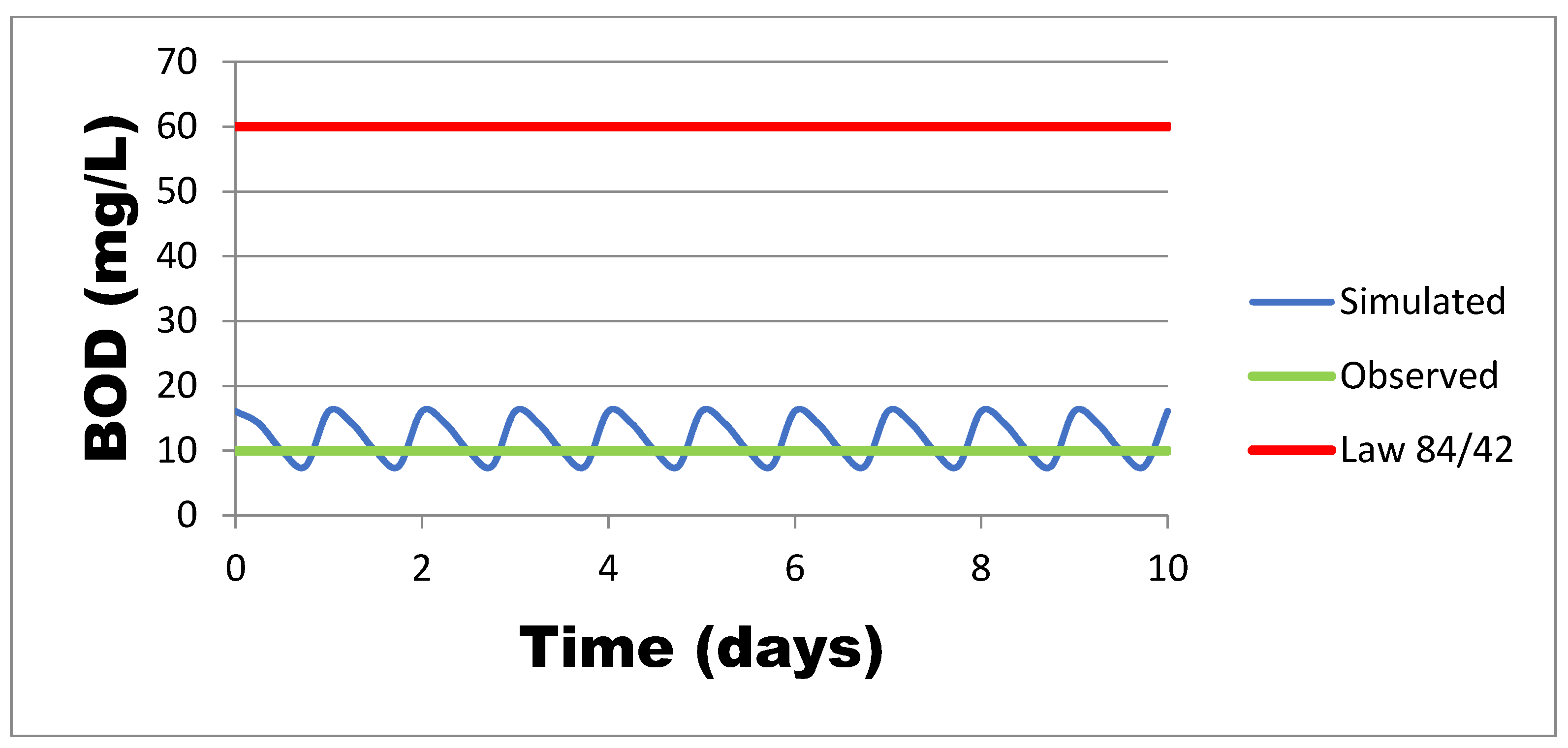
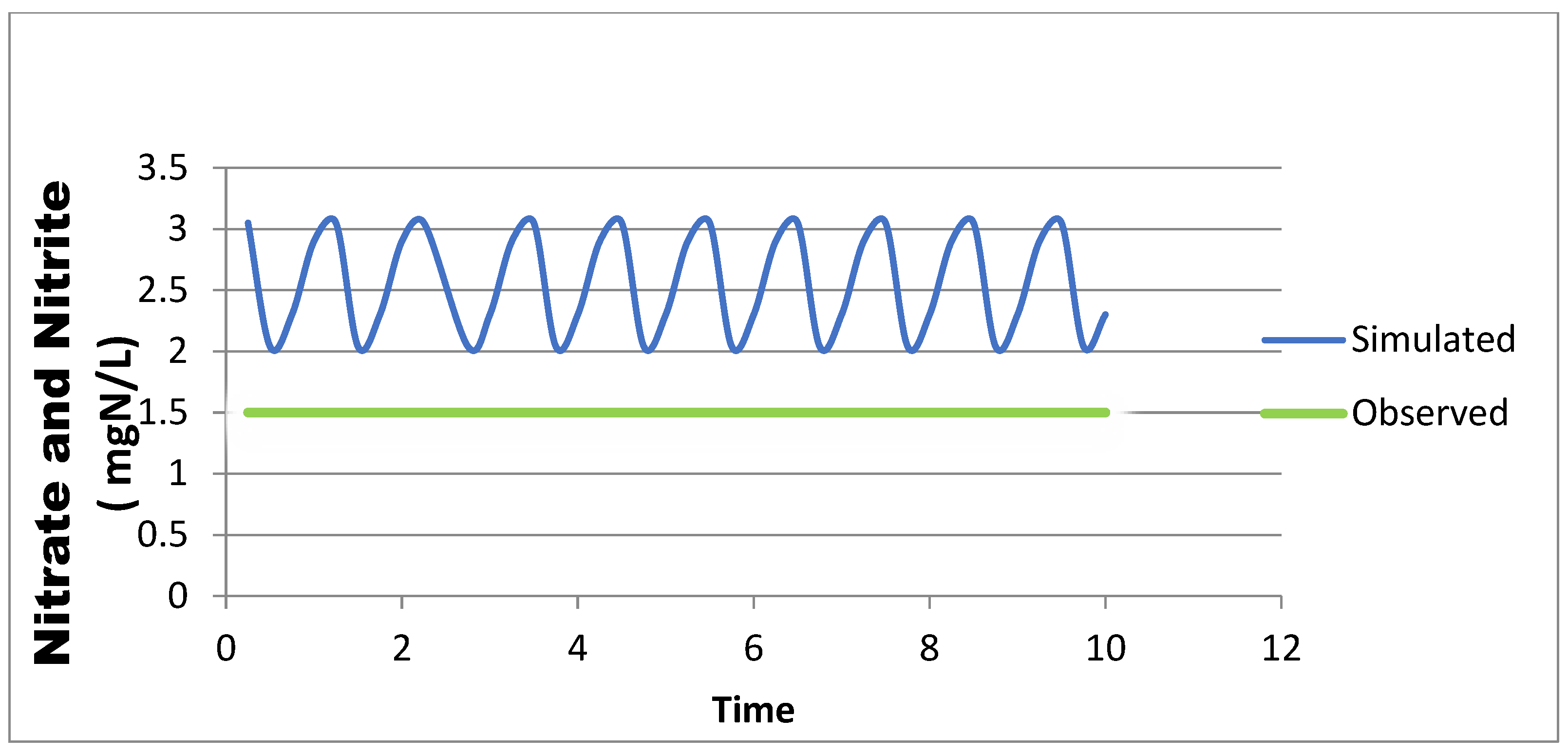
The ASM1 model’s efficient depiction of KWWTP performance for COD, BOD5, N-NO3, and TSS is illustrated in Figure 5, Figure 6, Figure 7 and Figure 8.
To assess the model’s performance under steady-state conditions, statistical indicators such as Root Mean Squared Error (RMSE) were used (Table 8). It was found that the RMSE values for COD, BOD5, N-NO3 and TSS were 0.04, 0.11, 0.10 and 0.67, respectively. These findings indicate that the simulated results closely align with the observed values, demonstrating only a slight deviation pointing to a low level of discrepancy, as depicted in Figure 5, Figure 6, Figure 7 and Figure 8. This is in agreement with the research carried out by Tiar et al. [17], on WWTP of Maghnia City, Algeria, using the ASM1 model and GPS-X simulation, which indicated good alignment with COD and less with TSS.

3.4. Dynamic Model Validation

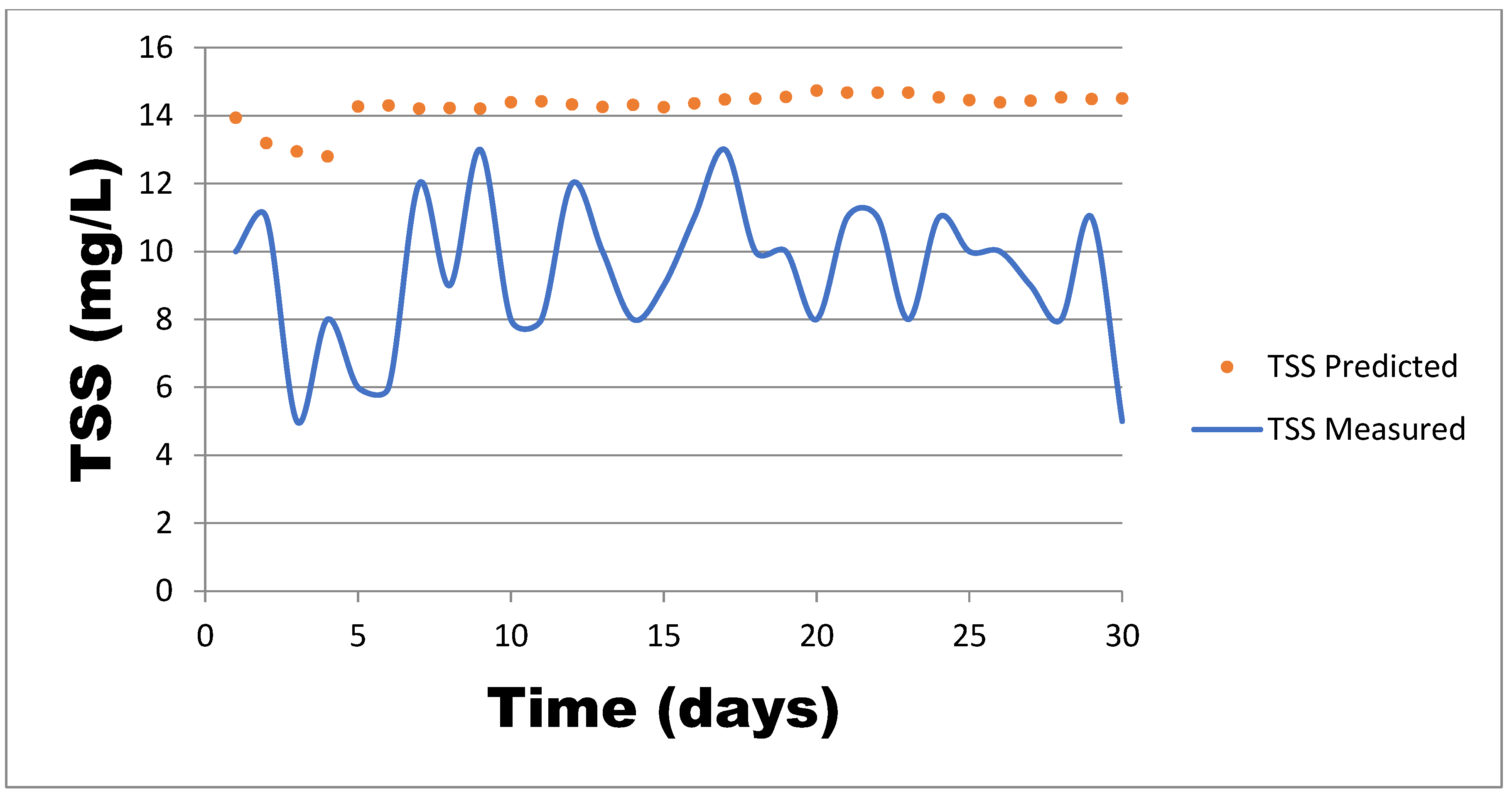
Following the calibration procedure, data from a 30-point dataset collected over a one-year period (2023) was used to dynamically validate the model’s performance, similar to the studies conducted by Rathore [39] and Petersen et al. [40], who employed the same procedures and achieved effective results. Using the same parameters as in the steady-state analysis, this modeling replicated the system’s response for 30 days. We utilized comparable techniques, using a 30-day dataset that was within one standard deviation, to validate the results through dynamic modeling since it shows the treatment plant’s normal state.
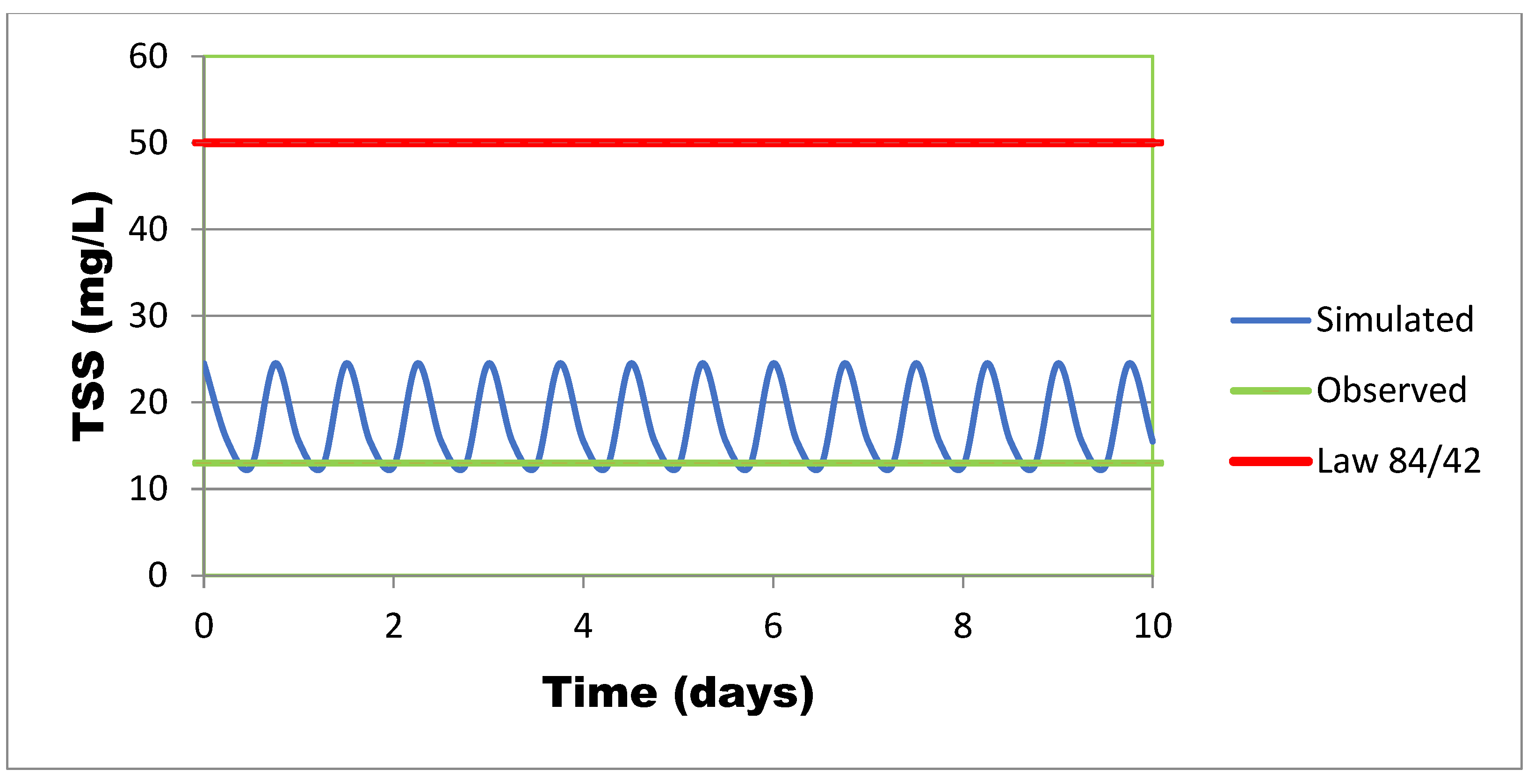
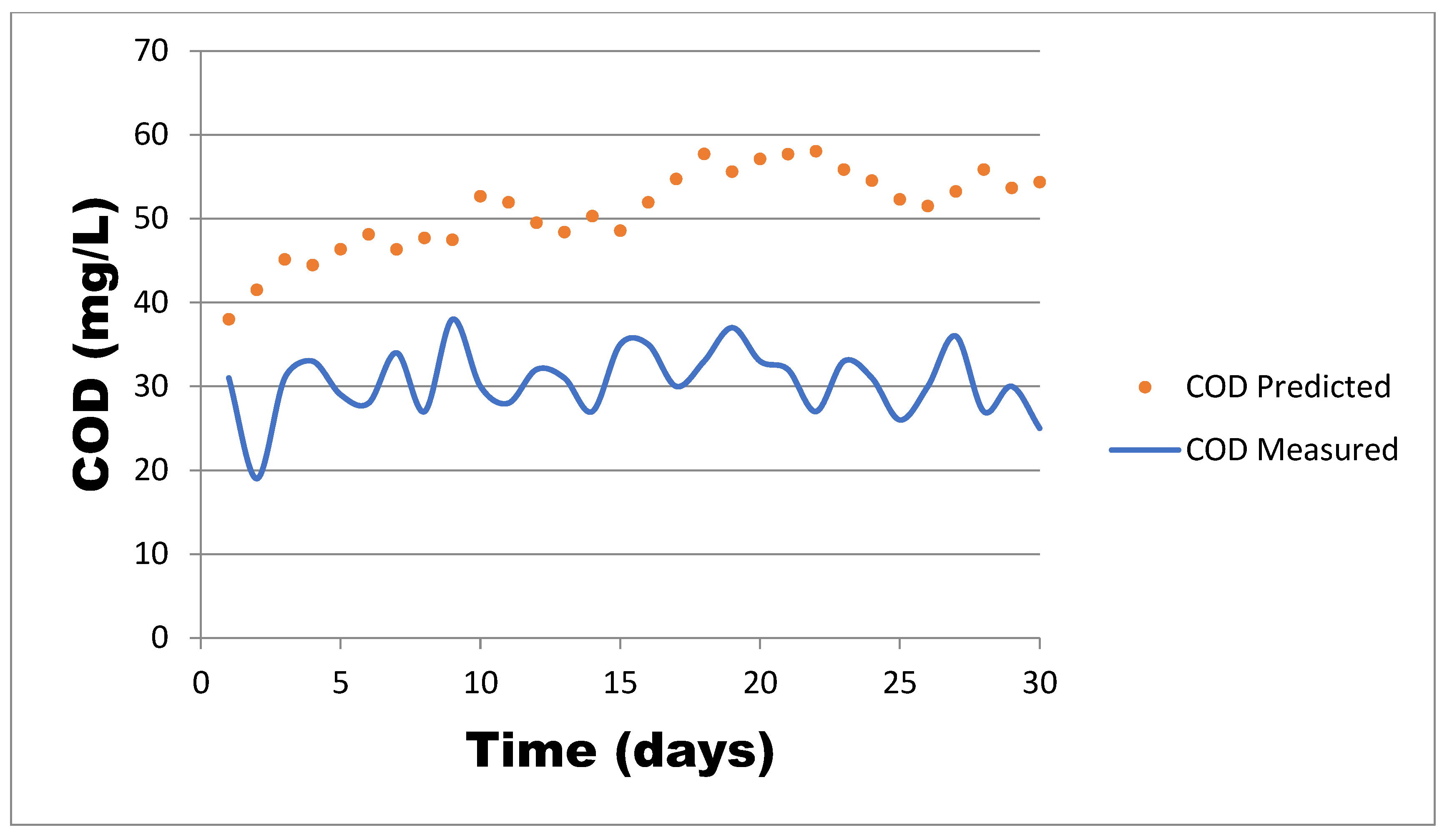
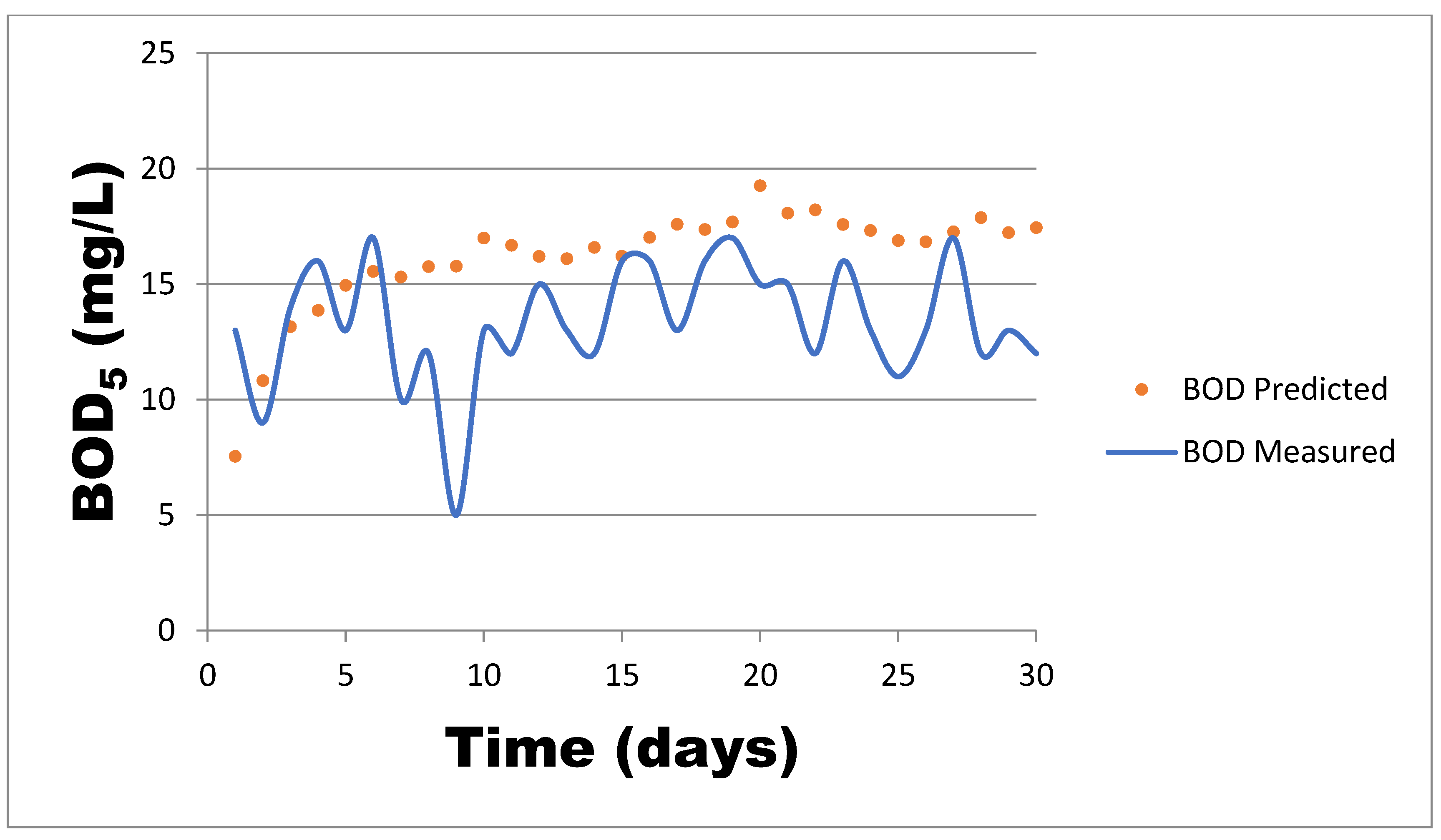
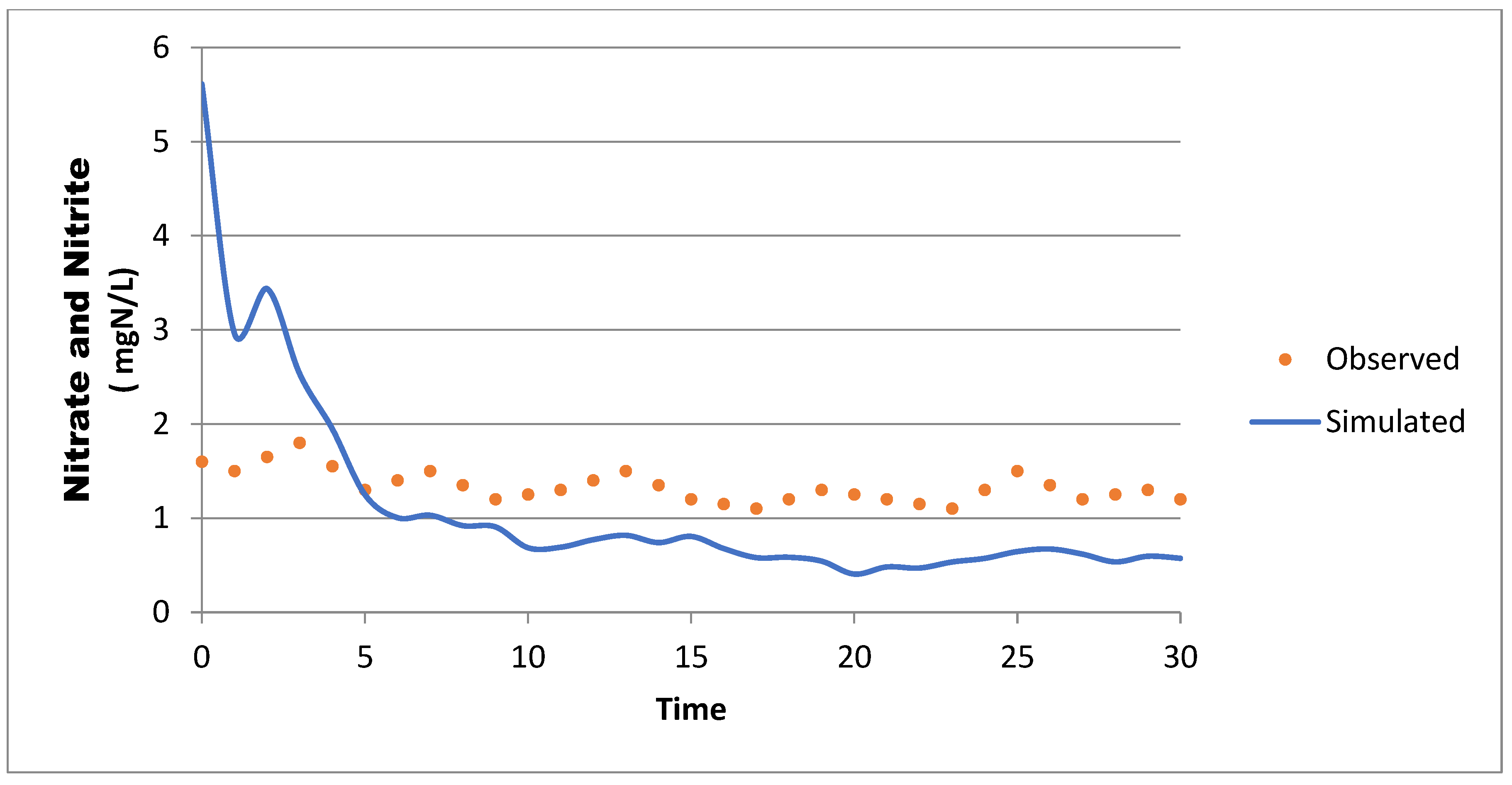
To further quantify the goodness of fit between simulated and observed data, coefficients of determination (R2) were calculated for each monitored parameter during the dynamic validation period (2023). The model exhibited strong agreement for COD and BOD5 over the majority of the simulation period (Figure 9 and Figure 10), with R2 values exceeding 0.85 for approximately 9–10 months, indicating stable and reliable performance. Reduced fitting quality was primarily observed during the summer months (July–September), coinciding with increased hydraulic and organic load fluctuations, which particularly affected TSS and NO3 predictions. These temporal variations explain the higher RMSE values reported for these parameters under dynamic conditions—COD (0.02), BOD5 (0.07), N-NO3 (0.75) and TSS (0.82), COD (0.02), BOD5 (0.07), N-NO3 (0.75) and TSS (0.82)—that provide additional support for this assessment. Both the accurate description of the detailed influent waste fluids characteristics (SS, XS, SI, and XI) and the modification of the µ-max H value are in line with the insights offered by Elshorbagy and Shawaqfah [41]. They conducted research to create a dynamic simulation model based on ASM1 for the activated sludge process of a significant sewage treatment facility in the United Arab Emirates. Their results showed that there was a fair amount of consistency between the measurements and the simulated COD, TSS, and N-NH4 values. In our research, the behavior of TSS and N-NO3 in the effluent discharge is, however, depicted with comparatively less accuracy, as shown in Figure 11 and Figure 12, and Table 9. The recorded uncertainties related to the observed TSS and N-NO3 effluent may be the cause of the detected disparities. These results are in line with those of several authors, including Tiar et al. [17], who worked on a WWTP in Maghnia City, North-West Algeria; El-Hoz and Gerges [13], who studied a waste water treatment plant at the University of Balamand, North Lebanon; and Sabri et al. [36], who worked on a sewage treatment plant in the Souk-Ahras region, North-Eastern Algeria. The dynamic simulation results showed comparatively poor congruence with the observed N-NO3 and TSS in every case.
Generally, the comparative analysis of steady-state and dynamic simulations provides critical insights into the model’s robustness. While the steady-state calibration confirmed the model’s ability to replicate the plant’s average performance with a high degree of accuracy, the dynamic validation served as a more rigorous test of its predictive power against real-world operational variability. The excellent fit for COD and BOD5 under both conditions (R2 > 0.85) establishes the model as a reliable tool for predicting organic matter removal. However, the increased deviation for TSS and N-NO3 during dynamic simulations, especially during high-load summer months, highlights the inherent complexity and sensitivity of solids handling and nitrification/denitrification processes.

4. Conclusions

In this study, a dynamic simulation model of the Khorshed Wastewater Treatment Plant (KWWTP) was developed using the GPS-X simulation environment based on the Activated Sludge Model No. 1 (ASM1). The model was calibrated and validated using operational data collected over an 18-month monitoring period, demonstrating satisfactory predictive performance for key effluent quality parameters, including COD, BOD5, TSS, and N-NO3 under both steady-state and dynamic conditions. The steady-state simulations showed strong agreement between simulated and observed effluent concentrations, as indicated by low RMSE values, confirming that the model adequately represents the biological treatment processes of the ASBR system. Dynamic validation, performed using representative 30-day datasets extracted from a one-year observation period, further confirmed the model’s reliability, particularly for COD and BOD5. Comparatively higher deviations were observed for TSS and N-NO3 under dynamic conditions, reflecting the sensitivity of these parameters to short-term operational and influent fluctuations. Beyond an accuracy assessment, the validated model provides clear engineering relevance. It can be applied as a decision-support tool for the daily operational calibration of kinetic and stoichiometric parameters at KWWTP by evaluating the effects of adjusting key control variables—such as aeration intensity, cycle duration, and sludge retention time (SRT)—on treatment efficiency and effluent compliance. This enables plant operators to anticipate process responses, improve operational stability, and support compliance with wastewater reuse regulations. Overall, the developed modeling framework offers a robust basis for process optimization, scenario analysis, and operator training that informed decision-making to support cost-effective and environmentally sustainable wastewater management in Egypt and beyond related to similar settings in terms of wastewater purification plants. Also, this study can be considered a useful training tool for plant operators to help in handling problems head-on and making strategic plans for future improvements supporting long-term sustainability.
Future work should focus on extending dynamic simulations to longer continuous datasets, incorporating real-time influent monitoring, and evaluating model performance under stress and disturbance scenarios. The integration of automated parameter calibration, uncertainty analysis, and energy-efficiency assessment would further enhance the applicability of the model as an advanced operational and management tool for wastewater treatment plants.

Author Contributions

All authors contributed to the study conception and design, material preparation, data collection and analysis. Methodology, A.H.E.H., N.B.E., C.A. and M.Y.O.; software, N.B.E., C.A. and M.Y.O.; validation, M.A.A. and M.E.-N.; formal analysis, A.H.E.H. and N.B.E.; investigation, M.Y.O. and C.A.; resources, A.H.E.H. and N.B.E.; data curation, N.B.E. and M.E.-N.; writing—original draft preparation, A.H.E.H. and N.B.E.; writing—review and editing, M.E.-N., B.T., N.K. and M.Y.O.; visualization, M.Y.O. and M.A.A.; supervision, N.B.E., M.Y.O., M.A.A. and M.E.-N. All authors have read and agreed to the published version of the manuscript.

Funding

This research received no external funding.

Data Availability Statement

The original contributions presented in this study are included in the article. Further inquiries can be directed to the corresponding author.

Conflicts of Interest

The authors declare that they have no financial or non-financial competing interests.

References

  1. Faroque, S.; South, N. Water pollution and environmental injustices in Bangladesh. Int. J. Crime Justice Soc. Democr. 2022, 11, 1–13. [Google Scholar] [CrossRef]
  2. Lintern, A.; Webb, J.A.; Ryu, D.; Liu, S.; Bende-Michl, U.; Waters, D.; Leahy, P.; Wilson, P.; Western, A.W. Key factors influencing differences in stream water quality across space. WIREs Water 2018, 5, e1260. [Google Scholar] [CrossRef]
  3. Obidike, L.; Madigoe, E. Development and optimization of sewage wastewater treatment program. Appl. Water Sci. 2021, 11, 187. [Google Scholar] [CrossRef]
  4. Eslami, H.; Talebi Hematabadi, P.; Ghelmani, S.V.; Salehi Vaziri, A.; Derakhshan, Z. The performance of advanced sequencing batch reactor in wastewater treatment plant to remove organic materials and linear alkyl benzene sulfonates. Jundishapur J. Health Sci. 2015, 7, 27–33. [Google Scholar] [CrossRef]
  5. Machingura, F.; Nyamwanza, A.; Hulme, D.; Stuart, E. Climate information services, integrated knowledge systems and the 2030 Agenda for Sustainable Development. Sustain. Earth 2018, 1, 1. [Google Scholar] [CrossRef]
  6. Mishra, R.K. Fresh water availability and its global challenge. Br. J. Multidiscip. Adv. Stud. 2023, 4, 1–78. [Google Scholar] [CrossRef]
  7. Waha, K.; Krummenauer, L.; Adams, S.; Aich, V.; Baarsch, F.; Coumou, D.; Fader, M.; Hoff, H.; Jobbins, G.; Marcus, R.; et al. Climate change impacts in the Middle East and Northern Africa (MENA) region and their implications for vulnerable population groups. Reg. Environ. Change 2017, 17, 1623–1638. [Google Scholar] [CrossRef]
  8. Mehrim, A.I.; Refaey, M.M. An Overview of the Implication of Climate Change on Fish Farming in Egypt. Sustainability 2023, 15, 1679. [Google Scholar] [CrossRef]
  9. Moussaoui, N.E.; Lamkaddem, A.; El Alami, Y.; El Hammoudani, Y.; Talbi, S.; Faraji, M.; Lakrad, F.; Mrabti, T.; Faize, A.; Baghaz, E. Renewable energy research in Africa: A bibliometric review (1979–2022). Int. J. Sustain. Dev. Plan. 2024, 19, 457–467. [Google Scholar] [CrossRef]
  10. Rahimi, S.; Modin, O.; Mijakovic, I. Technologies for biological removal and recovery of nitrogen from wastewater. Biotechnol. Adv. 2020, 43, 107570. [Google Scholar] [CrossRef]
  11. Mu’azu, N.D.; Alagha, O.; Anil, I. Systematic Modeling of Municipal Wastewater Activated Sludge Process and Treatment Plant Capacity Analysis Using GPS-X. Sustainability 2020, 12, 8182. [Google Scholar] [CrossRef]
  12. McHarg, A.M. Optimisation of Municipal Wastewater Biological Nutrient Removal Using Computer Simulation. Master’s Thesis, University of Ottawa, Ottawa, ON, Canada, 2002. [Google Scholar]
  13. El-Hoz, M.; Gerges, N. Simulation Study to Improve Wastewater Treatment Plant Operation and Upgrading. In Proceedings of the Proceedings of the International Conference on Environmental Pollution and Remediation, Toronto, ON, Canada, 15–17 July 2013; Volume 8, pp. 184–195. [Google Scholar]
  14. Han, H.-G.; Qiao, J.-F. Prediction of activated sludge bulking based on a self-organizing RBF neural network. J. Proc. Contr. 2012, 22, 1103–1112. [Google Scholar] [CrossRef]
  15. Olsson, G.; Newell, B. Wastewater Treatment Systems: Modelling, Diagnosis and Control; IWA Publishing: New York, NY, USA, 2005. [Google Scholar]
  16. Ruano, M.V.; Serralta, J.; Ribes, J.; Garcia-Usach, F.; Bouzas, A.; Barat, R.; Seco, A.; Ferrer, J. Application of the general model ‘Biological Nutrient Removal Model No. 1’ to upgrade two full-scale WWTPs. Environ. Technol. 2012, 33, 1005–1012. [Google Scholar] [CrossRef][Green Version]
  17. Tiar, S.M.; Bessedik, M.; Abdelbaki, C.; ElSayed, N.B.; Badraoui, A.; Slimani, A.; Kumar, N. Steady-State and Dynamic Simulation for Wastewater Treatment Plant Management: Case Study of Maghnia City, North-West Algeria. Water 2024, 16, 269. [Google Scholar] [CrossRef]
  18. Von Sperling, M.; Verbyla, M.; Oliveira, S. Removal efficiencies. In Assessment of Treatment Plant Performance and Water Quality Data: A Guide for Students, Researchers and Practitioners; IWA Publishing: London, UK, 2020; pp. 181–206. [Google Scholar]
  19. Hydromantis. GPS-X Technical Reference—v8.0: Modelling Fundamentals; Hydromantis Environmental Software Solutions, Inc.: Hamilton, ON, Canada, 2019; Available online: https://www.hydromantis.com/help/GPS-X/docs/8.0/Technical/index.html (accessed on 1 July 2023).
  20. Aliyu, A.; Mohamed, T.S.; ElSayed, N.B.; Abdelbaki, C.; Bessedik, M.; Kumar, N. Modeling Biological Nutrients Removal for Wastewater Treatment Plant (WWTP) Management: A Case Study of Ain El Houtz WWTP (Algeria). Water Air Soil Pollut. 2024, 236, 72. [Google Scholar] [CrossRef]
  21. Pereira, S.F. Modelling of a Wastewater Treatment Plant Using GPS-X. Master’s Thesis, Universidade NOVA de Lisboa, Caparica, Portugal, 2014. [Google Scholar]
  22. Henze, M.; Gujer, W.; Mino, T.; van Loosedrecht, M. Activated Sludge Models ASM1, ASM2, ASM2d AND ASM3; IWA Publishing: New York, NY, USA, 2006. [Google Scholar]
  23. Power, M. The predictive validation of ecological and environmental models. Ecol. Model. 1993, 68, 33–50. [Google Scholar] [CrossRef]
  24. Vanrolleghem, P.A.; Insel, G.; Petersen, B.; Sin, G.; De Pauw, D.; Nopens, I.; Dovermann, H.; Weijers, S.; Gernaey, K. A comprehensive model calibration procedure for activated sludge models. In Proceedings of the 76th Annual Conference of the Water Environment Federation, Los Angeles, CA, USA, 11–15 October 2003; Volume 1, pp. 210–237. [Google Scholar]
  25. Maurer, M.; Gujer, W. Dynamic modelling of enhanced biological phosphorus and nitrogen removal in activated sludge systems. Water Sci. Technol. 1998, 38, 203–210. [Google Scholar] [CrossRef]
  26. Van Veldhuizen, H.M.; van Loosdrecht, M.C.M.; Heijnen, J.J. Modelling biological phosphorus and nitrogen removal in a full scale activated sludge process. Water Res. 1999, 33, 3459–3468. [Google Scholar] [CrossRef]
  27. Henze, M.; Gujer, W.; Mino, T.; Matsuo, T.; Wentzel, M.C.; Marais, G.v.R.; Van Loosdrecht, M.C.M. Activated Sludge Model No.2d, ASM2D. Water Sci. Technol. 1999, 39, 165–182. [Google Scholar] [CrossRef]
  28. Sharifi, S.; Murthy, S.; Takács, I.; Massoudieh, A. Probabilistic parameter estimation of activated sludge processes using Markov Chain Monte Carlo. Water Res. 2014, 50, 254–266. [Google Scholar] [CrossRef]
  29. Costa, C. A Comprehensive View of the ASM1 Dynamic Model: Study on a Practical Case. Water 2022, 14, 1046. [Google Scholar] [CrossRef]
  30. Bajpai, P. Biermann’s Handbook of Pulp and Paper: Volume 1: Raw Material and Pulp Making; Elsevier: London, UK, 2018. [Google Scholar]
  31. Choubert, J.; Bello, M.; Ranganathan, P.; Brennan, F.; Solimeno, A.; García, J.; Choubert, J. Towards a better understanding of kinetic interactions between microalgae and bacteria. Sci. Total Environ. 2002, 9, 607–608. [Google Scholar]
  32. Siegrist, H.; Tschui, M. Interpretation of experimental data with regard to the activated sludge model no. 1 and calibration of the model for municipal wastewater treatment plants. Water Sci. Technol. 1992, 25, 167–183. [Google Scholar] [CrossRef]
  33. Choubert, J.-M.; Racault, Y.; Grasmick, A.; Beck, C.; Heduit, A. Nitrogen removal from urban wastewater by activated sludge process operated over the conventional carbon loading rate limit at low temperature. Water SA 2005, 31, 503–510. [Google Scholar] [CrossRef][Green Version]
  34. Marquot, A.; Stricker, A.E.; Racault, Y. ASM1 dynamic calibration and long-term validation for an intermittently aerated WWTP. Water Sci. Technol. 2006, 53, 247–256. [Google Scholar] [CrossRef]
  35. Novak, R.; Fabiyi, M.; Connery, K.; de Gracia, M.; Goel, R. Development of a New Open Basin High Purity Oxygen Module in the GPS-Xtm Software for Wastewater Treatment Simulation; Water Environment Federation: Alexandria, VA, USA, 2013. [Google Scholar]
  36. Sabri, D.; Yassine, D.; Yahia, H.; Dounia, M. Dynamic simulation for wastewater treatment plants management: Case of Souk-Ahras region, north-eastern Algeria. J. Water Land Dev. 2017, 34, 221. [Google Scholar] [CrossRef]
  37. Elawwad, A.; Matta, M.; Abo-Zaid, M.; Abdel-Halim, H. Plant-wide modeling and optimization of a large-scale WWTP using BioWin’s ASDM model. J. Water Proc. Eng. 2019, 31, 100819. [Google Scholar] [CrossRef]
  38. Barker, P.S.; Dold, P.L. General Model for Biological Nutrient Removal Activated-Sludge Systems: Model Application. Water Environ. Res. 1997, 69, 985–991. [Google Scholar] [CrossRef]
  39. Rathore, K. Dynamic Modeling of an Advanced Wastewater Treatment Plant. Ph.D. Thesis, University of South Florida, Tampa, FL, USA, 2018. [Google Scholar]
  40. Petersen, B.; Gernaey, K.; Henze, M.; Vanrolleghem, P.A. Calibration of activated sludge models: A critical review of experimental designs. In Biotechnology for the Environment: Wastewater Treatment and Modeling, Waste Gas Handling; Springer: Dordrecht, The Netherlands, 2003; pp. 101–186. [Google Scholar]
  41. Elshorbagy, W.E.; Shawaqfah, M. Development of an ASM1 dynamic simulation model for an activated sludge process in United Arab Emirates. Desalin. Water Treat. 2015, 54, 15–27. [Google Scholar] [CrossRef]
Figure 1. Geographic location of Khorshed wastewater treatment plant (KWWTP).
Water 18 00174 g001
Figure 2. Flow chart of Khorshed WWTP.
Water 18 00174 g002
Figure 3. The flow chart for the biological treatment units and phases of WWTP representation in the GPS-X environment [11].
Water 18 00174 g003
Figure 4. A schematic flow diagram for KWWTP activated sludge process (ASP) representation in GPS-X (v 8).
Water 18 00174 g004
Figure 5. Steady-state calibration results for the effluent COD.
Water 18 00174 g005
Figure 6. Steady-state calibration results for the effluent BOD5.
Water 18 00174 g006
Figure 7. Steady-state calibration results for the effluent TSS.
Water 18 00174 g007
Figure 8. Steady-state calibration results for the effluent N-NO3.
Water 18 00174 g008
Figure 9. Dynamic-state validation result for COD.
Water 18 00174 g009
Figure 10. Dynamic-state validation result for BOD5.
Water 18 00174 g010
Figure 11. Dynamic-state validation result for TSS.
Water 18 00174 g011
Figure 12. Dynamic-state validation result for N-NO3.
Water 18 00174 g012
Table 1. Design and nominal operating parameters of Khorshed Wastewater Treatment Plant (KWWTP).
ParametersUnitKWWTP
Populationinhabitants1,536,311
Sewage type domestic raw
Average design flow ratem3d−135,000
BOD5 concentrationmg O2 L−1500
Peak flowm3 h−12500
BOD5 loadmg d−110,000
Suspended solidsmg L−1600
Retention timeh24
Suspended solids loadkg d−121,000
Table 2. Statistical summary of measured influent wastewater characteristics at KWWTP (2022–2023).
ParametersUnitMeanMinMaxMedianSD
TSSmg.L−1182.141.20440.00183.0057.05
TDSmg.L−1844.59120.001310.00870.00187.73
CODmg COD.L−1405.07287.00580.00394.0050
BOD5mg O2.L−1189.25114.00288.00184.0031.1
N-NO3mg N.L−11.341.101.801.300.20
Table 3. Statistical summary of measured effluent wastewater characteristics at KWWTP (2022–2023).
ParametersUnitMeanMinMaxMedianSD% Removal
Efficiency (RE)
Egyptian Standards Law 48/82
TSSmg.L−18.573.0019.008.002.4295.29%50 mg.L−1
TDSmg.L−1741.075.001163.00780.00199.3112.25%5000 mg.L−1
CODmg COD.L−130.6419.0048.0031.005.4192.43%80 mg.L−1
BOD5mgO2.L−112.145.0018.0012.002.2293.58%60 mg.L−1
N-NO3mg N.L−14.663.605.404.750.6071.24%45 mg.L−1
Table 4. Physical and operational input data of KWWTP used for the model GPS-X (V8).
Process UnitPhysical Input DataValueOperational
Input Data
ValueModel Selected
Water 18 00174 i001 Flow Data35,000 m3COD states
Water 18 00174 i002 Grit Production per Flow20 mg.L−1Empiric
Water 18 00174 i003Number of tanks4Flow per tank364.58 m3.hr−1.ASM1
Number of reactors
(in each tank)
4
Maximum Water Level (Height)6.3 mNo. of decanting processes4–6 times/day
Surface Area1050 m2
Water 18 00174 i004Volume30 m3 Empiric
Chlorine Dosage5 mg.L−1
pH in Contact Tank7
Table 5. Influent and calibrated value for calibration process of KWWTP.
S/NParameters Influent Value Calibrated Value
1COD 385385
2BOD5171171
3TSS189188.8
4N-NO34.44.4
Table 6. Parameters related to the organic matter fractionations (COD).
Parameter FractionSymbolRatio Value g COD/m3Ratio of References
Soluble biodegradable
substrate
Ss0.277[33,34]0.32
Soluble inert substrateSI0.0519.3[32]0.056
Particulate
biodegradable substrate
XS0.62238.7Own Study [XS = TCOD − (Ss + SI + XI)]
Particulate inert substrateXI0.1350.1[33,34]0.05
BOD5/BOD5 ultimate ratiofBOD50.5415 Own Study
VSS/TSS ratioivt0.8498 Own Study
Table 7. Kinetic and stoichiometric parameters at neutral pH with calibrated and typical values.
ParametersSymbolUnitRangeDefault
Values
Calibrated
Values
References
Stoichiometric Parameters
Yield for heterotrophic
biomass
YHg COD/g COD(0.57–0.67)0.670.01[17]
Yield for autotrophic
biomass
YAg COD/g COD(0.15–0.24)0.240.24[11]
Particulate COD to total CODXCOD/VSS1g COD/g VSS 1.480.17[17]
Kinetic Parameters
Maximum specific growth rate for heterotrophic biomassμ–max Hd−1(0.6–13.2)66[37,38]
Heterotrophic decay ratebHd−1(0.3–1.2)0.620.62[17]
Half saturation constantKsmg COD/L(10–40)202.4[37,38]
Table 8. Steady-state value for Root Mean Squared Error (RMSE).
S/NVariablesSimulated ValuesObserved ValuesRMSE
1COD40.68310.04
2BOD516.08100.11
3TSS15.5130.10
4N-NO32.31.50.67
Table 9. Dynamic model value for Root Mean Squared Error (RMSE).
S/NVariableAverage Simulated ValueAverage Observed ValueRMSE
1COD51.0330.600.02
2BOD516.1713.400.07
3TSS14.279.400.82
4N-NO31.121.340.75
Notes: S = Subject, N = Number.
Disclaimer/Publisher’s Note: The statements, opinions and data contained in all publications are solely those of the individual author(s) and contributor(s) and not of MDPI and/or the editor(s). MDPI and/or the editor(s) disclaim responsibility for any injury to people or property resulting from any ideas, methods, instructions or products referred to in the content.