Article

LëtzREUSE: Decision-Support Tool Integrating Technology Selection, Treatment Performance, and Ecotoxicological Risk for the Reuse of Diverse Urban Water Sources


1
TR-Engineering, 86 Rue de l’Égalité, L-1456 Luxembourg, Luxembourg
2
Chair of Urban Water Management, University of Luxembourg, 6, rue Coudenhove-Kalergi, L-1359 Luxembourg, Luxembourg
3
Independent Researcher, L-2353 Luxembourg, Luxembourg
*
Author to whom correspondence should be addressed.
Water 2026, 18(15), 1797; https://doi.org/10.3390/w18151797
Submission received: 17 June 2026 / Revised: 7 July 2026 / Accepted: 17 July 2026 / Published: 24 July 2026
(This article belongs to the Special Issue Innovative Technologies for Urban Water Treatment)

Abstract

The implementation of water reuse strategies requires robust Decision-Support Tools (DSTs) capable of integrating legal, environmental, site-specific, and technological aspects. However, existing approaches are often limited by fragmented methodologies or high data and modelling requirements, restricting their applicability in early-stage planning. This study presents the development and validation of LëtzREUSE, a DST designed to support the selection of treatment technologies for the reuse of urban water sources, including rainwater, stormwater, light greywater, and wastewater treatment plant (WWTP) effluents. The tool is based on a parameter-driven framework that combines (i) regulatory compliance as a first filtering step, (ii) technology applicability defined through operational thresholds linked to water quality parameters, and (iii) prediction of treatment performance along treatment trains. In contrast to multi-criteria approaches, the methodology avoids subjective weighting by directly linking input water quality to process feasibility and expected effluent characteristics. Additionally, ecotoxicological risk is quantified through risk quotient (RQ) reduction, enabling the evaluation of environmental relevance alongside technical performance. The DST was validated using experimental data from the Bleesbruck WWTP, where measured influent characteristics were used to assess the performance of the tool. The results demonstrate that the tool successfully identifies feasible technologies, with Granular Activated Carbon (GAC) + UV (Ultraviolet light) and UV/H2O2 + GAC emerging as the most suitable options. By providing the expected quality parameters, both treatment trains can be compared. The final decision should be based on other parameters such as operational complexity.

1. Introduction

Water systems are undergoing a progressive shift from linear resource use towards more integrated and circular approaches. Traditionally, urban water management has been based on a sequence of abstraction, use, treatment, and discharge, with limited consideration of resource recovery. However, increasing environmental pressures combined with the need to enhance system resilience have led to a redefinition of wastewater as a valuable resource rather than a residual stream [1]. Within this evolving paradigm, water reuse plays a central role by enabling the recovery of water, nutrients, and energy, contributing to the closure of urban water cycles and supporting circular economy strategies [2].
This transition reflects a growing recognition of the capacity of non-conventional water sources to contribute to water supply systems. WWTP effluents, rainwater, and greywater are increasingly considered as alternative resources capable of reducing the pressure on freshwater bodies. In this context, WWTPs have become a key component of circular systems contributing to water recovery and reducing environmental pressures [3], as they provide a constant flow even during droughts, ensuring a permanent supply. At the same time, decentralised approaches, such as rainwater harvesting and greywater reuse, are gaining relevance, particularly in urban settings where they can reduce dependency on centralised supply systems and improve local water security [4].
Despite these opportunities, the implementation of water reuse remains a complex process conditioned by local factors [5,6]. One of the main challenges lies in the intrinsic variability of water sources. The quality of rainwater, greywater, and treated wastewater differs significantly in terms of physical–chemical composition, bacteria content, and the presence of emerging contaminants. For example, greywater often contains high organic loads, because it is an untreated wastewater stream, but contains fewer pathogens and micropollutants as personal care products. Conversely, WWTP effluents, having undergone a treatment that significantly reduces the organic matter, still carry pathogens and a huge variety of micropollutants [7] such as pharmaceuticals, pesticides, herbicides, flame retardants, or personal care products. This variability directly affects the feasibility of reuse applications and requires treatment strategies adapted to the specific combination of water source and intended reuse application.
From a technological perspective, significant advances have been made in recent decades, with a wide range of treatment processes available, including membrane filtration [8], adsorption with Granular Activated Carbon (GAC) [9], biological processes such as Constructed Wetlands (CWs) [10,11], and advanced oxidation [12] systems. These technologies are capable of achieving high removal efficiencies for different classes of pollutants, but their performance is strongly dependent on the characteristics of the influent water and operational conditions [13]. As a result, treatment design requires the integration of technologies into coherent treatment trains capable of addressing specific contamination profiles while complying with target effluent standards.
The main bottleneck, therefore, is not the availability of technologies, but the ability to select appropriate combinations under real-world conditions. This decision-making process involves balancing multiple dimensions, including regulatory requirements, expected treatment performance, and practical constraints such as energy demand, operational complexity, and spatial footprint. In addition, these decisions are often made in contexts characterised by limited data availability and high uncertainty, particularly at early planning stages. Under these conditions, the selection of treatment solutions becomes a challenging task that requires both technical understanding and the ability to evaluate advantages and disadvantages between different options.
In practice, this complexity can hinder the adoption of water reuse systems. Although water reuse has clear environmental and economic benefits, its implementation is often limited by technical, regulatory, and organisational barriers. These barriers are also related to the difficulty of integrating reuse solutions into existing water systems and decision-making frameworks. Moreover, regulatory fragmentation and the lack of harmonised standards for certain contaminants further complicate the design and approval of reuse schemes [14].
DSTs have been developed to facilitate the evaluation of water reuse options and support planning processes. These tools typically rely on multi-criteria analysis, economic evaluation, or scoring approaches to compare alternative solutions. While they provide useful guidance, their capacity to support operational decision-making is often limited. In many cases, they do not explicitly link water quality characteristics to treatment performance and therefore cannot fully capture how specific treatment configurations will behave under given conditions. In addition, practical constraints such as energy consumption and land requirements are not always systematically integrated, which can lead to solutions that are difficult to implement in practice. As highlighted in the literature, the adoption of water reuse technologies depends not only on technical feasibility, but also on operational, economic, and institutional factors that are often insufficiently addressed in existing decision-support approaches [15].
Another important limitation is the accessibility and manageability of existing DST. Many approaches require detailed input data and a high level of expertise in water chemistry and treatment processes. However, early-stage decisions are frequently taken by engineers and practitioners who may not be specialised in these areas. This creates a gap between the complexity of available tools and the needs of users, potentially leading to incorrect technology selection or system oversizing. This limitation is particularly relevant in emerging contexts such as Luxembourg and the Greater Region, where water reuse is still developing and decision-making frameworks are not yet fully established. There is therefore a need for approaches that can make the implications of treatment decisions more transparent and accessible, while remaining adaptable to evolving regulatory and technological conditions.
In this context, the present study introduces LëtzREUSE, a DST developed and designed to support integrated water resource management by assisting in the selection of treatment solutions for water reuse across different urban water sources, including rainwater, light greywater, and WWTP effluents. The tool is conceived as an intermediate layer between simplified screening methods and detailed process modelling. It translates water quality characteristics into expected treatment outcomes, allowing users to evaluate the performance of different treatment trains in relation to regulatory requirements. It incorporates the current EU quality requirements of Regulation 741/2020 [16] and the Luxembourgish national guide for rainwater and light greywater reuse [17], thereby ensuring that users can make decisions based on compliance with current legislation. At the same time, it incorporates user-defined constraints such as energy availability and spatial limitations, ensuring that the proposed solutions are not only technically sound but also practically feasible.
By structuring the decision process around performance, feasibility, and compliance, LëtzREUSE offers a clear and accessible framework for selecting water reuse treatment options. The objective is to support engineers and practitioners in making informed and transparent decisions without requiring advanced expertise in water chemistry or microbiology. In this way, the tool provides a consistent basis for comparing alternatives, contributing to more practical and transparent decision-making in water reuse planning.

2. Materials and Methods

2.1. DST Conceptualization and Architecture

The structure of the LëtzREUSE DST is based on a stepwise evaluation framework designed to support the selection of treatment technologies for non-potable water reuse. The tool is organised around a hierarchical filtering approach that progressively narrows down feasible options by considering regulatory requirements, technological constraints, and ecotoxicological aspects. This logic is implemented through three consecutive analytical modules (Figure 1):
(i)
Regulatory screening, which evaluates whether a specific reuse scenario is permitted under existing legislation.
(ii)
Technology applicability assessment, which identifies the most suitable treatment technologies based on target physical–chemical water characteristics, the operational constraints of the technology and the energy and space available on site for the reuse facility.
(iii)
Treatment performance prediction with the associated ecological risk evaluation. The expected performance of a selected treatment train is calculated as well as the possible ecotoxicological risk reduction.
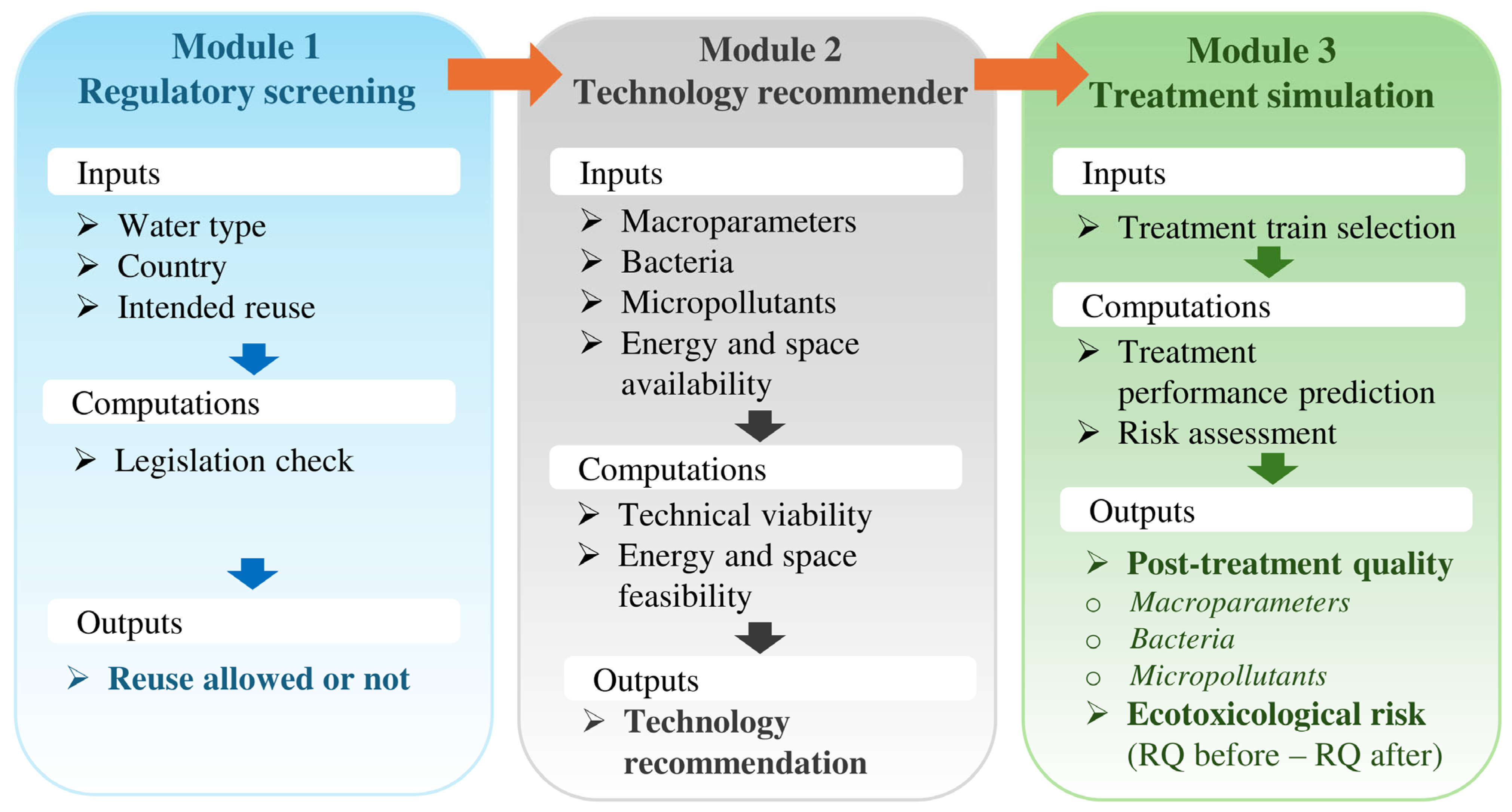
Figure 1. Schematic representation of the main components of LëtzREUSE.
Water 18 01797 g001
Treatment performance is estimated using removal efficiencies and bacterial log reduction values from experimental studies and published data [18], and based on that, the efficiency of the treatment trains and reductions in ecotoxicological risks is calculated. It does not include dynamic process modelling, hydraulic simulations, reaction kinetics, or specific operational data, and the aim is not to provide detailed engineering design or economic optimisation. Consequently, the results should be interpreted at the feasibility study level, while further assessment of resources, systems and the specific site are necessary before the final implementation.

2.2. Data Sources

2.2.1. Regulatory Screening Module

The first module evaluates whether a specific water reuse scenario is permitted under the regulatory framework currently applicable. The objective of this module is to ensure that potential reuse options comply with national legislation before evaluating treatment technologies. In the present work, the DST considered the Luxembourg context. For rainwater from rooftops and light greywater, the “Guide: Recommandations pour les installations de récupération des eaux de pluie issues des toitures et de récupération des eaux grises issues des douches, des lavabos et des baignoires, pour une utilisation à des fins domestiques” of the Water Management Agency is applicable [17]. For stormwater (meaning urban run-off) and WWTP effluents there is no specific national regulation; therefore, following a conservative approach, the Regulation 2020/741 minimum requirements for water reuse [16] were considered the regulatory framework for both water sources. Based on these sources, a regulatory Table 1 was built compiling the reuse conditions and allowed scenarios according to combinations of water source and intended reuse.

2.2.2. Technology Recommender Module

The criteria used in the technology recommendation module were defined for each treatment technology based on operational constraints reported in the literature and engineering design guidelines.
The selection of treatment trains to achieve the required reuse quality was based on the type of water source and treatment objectives [19]. No additional treatment was considered necessary for rainwater from rooftops in the Luxembourgish context. For stormwater and light greywater, a combination of CW + UV was selected. For WWTP effluents from plants serving populations below 150,000 PE, UV disinfection as standalone was considered sufficient, as micropollutant removal is required only in specific cases under the Urban Wastewater Treatment Directive [20] of the European Union. For WWTPs serving populations above 150,000 PE, where micropollutant removal is required, treatment trains combining advanced oxidation or adsorption processes with disinfection were evaluated. In some cases, these processes also contribute to microbial inactivation. The configurations assessed were CW + UV, GAC + UV, UV/H2O2 + CW, UV/H2O2 + GAC, O3 + CW, and O3 + GAC.

Technology Viability

CWs were considered technically feasible for waters characterised by moderate organic loads and suspended solids concentrations below 100 mg L−1, to avoid clogging issues [21]. To ensure adequate performance and stability of bacterial communities and vegetation, the pH of the water must be in the neutral range, between 6.5 and 8.5.
GAC was evaluated based on parameters influencing operational performance and treatment efficiency. Elevated TSS concentrations may lead to column clogging and increased backwashing requirements. The presence of ammonium can reduce treatment efficiency and increase operational costs, as it competes with micropollutants for the adsorbent [22]. To ensure suitable and cost-effective operation, threshold values were defined for these parameters. In accordance with previous recommendations [22], TSS concentrations were limited to a maximum of 20 mg L−1, and NH4–N concentrations were recommended to remain below 2 mg L−1.
The feasibility of UV disinfection was evaluated using parameters that govern UV light penetration and microbial inactivation. In particular, UV transmittance at 254 nm and TSS were considered key factors influencing treatment performance. According to DWA-M 205 [23], the TSS of the target water must not exceed 20 mg L−1 to ensure suitable conditions for UV disinfection. When transmittance measurements were not available, the value was estimated using the empirical model described in Equation (1), based on experimental data collected from a WWTP in the north of Luxembourg. The dataset [24] includes measurements of transmittance, TSS and COD (n = 31), and the resulting model achieved an R2 value of 0.78.
T % = 76.8   e ( 0.00287   C O D + 0.0025   T S S )
The suitability of UV/H2O2 advanced oxidation was evaluated based on parameters influencing hydroxyl radical (OH) generation and scavenging reactions. As in UV disinfection, process efficiency depends on UV radiation penetration, in the form of transmittance; thus the same minimum threshold of 70% was applied [23]. In addition, the main contributors to water hardness, bicarbonate and carbonate, were reported as key radical scavengers. To ensure effective process performance, a maximum concentration of 150 mg L−1 was established [25].
The applicability of ozonation was evaluated based on water quality conditions influencing ozone reactivity, treatment performance, and by-product formation. Particular attention was given to bromide, as its presence may lead to the formation of bromate, a highly toxic by-product. Therefore, WWTPs considering ozonation as a treatment alternative should include bromide analysis and provide bromide concentration data as part of the input parameters. A maximum bromide concentration of <0.15 mg L−1 was established [26]. The tool flags ozonation as unfeasible when bromide data are absent. Threshold values for the remaining parameters were defined according to the literature: pH < 8 [27], TSS ≤ 20 mg L−1, and NO2–N < 1 mg L−1 [22]. Ozonation was considered technically feasible when these conditions were met.
A comprehensive summary of all indicators, threshold values, and corresponding literature sources used for each technology is provided in Supplementary Information (Table S1).
In addition to defining operational thresholds, parameters were weighted according to their relative influence on treatment performance. Critical parameters, such as TSS or transmittance (for UV-based treatments) were assigned a weight of 2, while the rest had a weight of 1. The resulting weighting matrix is provided in Supplementary Information (Table S2).

Energy and Space

Operational feasibility was evaluated based on the availability of energy and physical space at the treatment site. Users define both parameters using three qualitative levels (high, medium, low) depending on the characteristics of the installation site. Low availability indicates that only compact treatment systems with minimal infrastructure requirements can be accommodated. Medium availability corresponds to facilities that can accommodate conventional quaternary treatment technologies, but not land-intensive or highly energy-demanding systems. High availability indicates that neither space nor electrical infrastructure imposes practical limitations on the implementation of the treatment technologies considered in the DST.
Each technology was assigned corresponding energy and space requirements using the same qualitative scale. Energy requirements reflect typical electrical demand (e.g., pumping, ozone generation, lamp consumption), while space requirements refer to the surface area required on site to install the treatment train.
The classification was established based on engineering design criteria and a review of technical specifications from commercially available systems. A qualitative approach was adopted due to the variability of site-specific conditions and the lack of directly comparable quantitative data across technologies. The resulting matrix (Table 2) is used to screen technologies by matching user-defined availability with technology requirements.

2.2.3. Treatment Efficiency Simulation Module

For the treatment efficiency simulation, final water quality parameters for each proposed treatment train were estimated based on experimental data obtained from lab and pilot tests conducted on real effluents in Luxembourg. Removal efficiencies, expressed as the percentage reduction in physicochemical parameters and micropollutant concentrations achieved by each treatment process, were determined under representative operating conditions. Bacterial removal was estimated using log reduction values (LRVs), which quantify microbial inactivation on a logarithmic scale and allow the prediction of pathogen reduction across treatment trains. For micropollutants, the RQ was calculated based on predicted no-effect concentrations (PNEC) to assess residual environmental risk after treatment. These data reflected treatment behaviour under real effluent conditions and were therefore considered reliable for estimation purposes. The complete experimental dataset [18] and methodology are presented in a previous study carried out within the framework of the LëtzREUSE project.

2.3. Computations

The computational workflow described in this section follows the sequence illustrated in Figure 1. The following subsections detail the mathematical implementation of each computational step.

2.3.1. Legislation Check

The regulatory assessment is based on three user inputs: (i) the type of water source, including rainwater from rooftops, stormwater, greywater, or WWTP effluent; (ii) the regulatory jurisdiction; and (iii) the intended reuse application, such as toilet flushing, car washing, irrigation or other uses.
Based on the regulatory database compiled in Table S1, each combination of these inputs is encoded as a binary indicator defined as:
L = 1 , if   the   reuse   scenario   is   legally   permitted 0 , otherwise
Accordingly, if the selected combination is allowed under the national regulatory framework (L = 1), the intended reuse is classified as legally feasible and indicated by a green message. Conversely, when the scenario is identified as non-permitted (L = 0) a message is displayed in red.
Although the current version of the DST focuses on Luxembourg, the structure of the regulatory database allows the integration of additional or different regulatory frameworks, enabling future expansion of the DST to other countries.

2.3.2. Technical Viability

The technical viability of the proposed treatment technologies was assessed by comparing influent water quality parameters defined by the user with the specific ranges of technology applicability described in Section 2.2.2. These ranges define the operational conditions under which each technology is expected to perform effectively.
For each technology and each relevant parameter, a binary suitability indicator was assigned:
S = 1 , if   the   parameter   value   is   within   the   applicable   range 0 , otherwise
To account for the different influences of each parameter on process performance, a discrete weighting scheme was applied, where each parameter was assigned a weight of 1 or 2, where w = 2 corresponds to parameters with greater impact on feasibility. The technical viability score was then calculated as follows (Equation (2)):
V = ( w S ) w × 100
This formulation provides a normalised percentage score reflecting the proportion of satisfied criteria while giving greater importance to the most influential parameters, allowing a proper comparison of technologies with different numbers of constraints.
Additionally, a specific restriction related to bromate formation was incorporated for ozone processes. When the influent bromide concentration fell outside the acceptable range, the viability score was still calculated; however, the technology was flagged as not recommended due to bromide constraints. This ensures that potentially feasible options are transparently reported while explicitly accounting for associated health and regulatory risks.

2.3.3. Energy and Space Feasibility

Energy and space feasibility were evaluated by comparing user-defined availability with the requirements of each treatment technology. Users select the availability level for both parameters using three qualitative categories: low, medium, and high, which are internally encoded as 1, 2, and 3, respectively.
Each technology has assigned corresponding requirement levels for energy and space as described in Table 2. Feasibility is first assessed independently for each parameter by comparing technology requirements with availability selected by the user. If the technology requirement is lower than or equal to the defined level, the condition is considered satisfied (Yes); otherwise, it is not satisfied (No).
The final feasibility outcome is then determined by combining the results of energy and space. When both energy and space requirements are satisfied, the technology is classified as feasible. If only one of the two conditions is satisfied, the technology is considered feasible with constraints, specifying whether the limitation is related to energy or space. If neither condition is satisfied, the technology is classified as not recommended. A detailed description is shown in Table S3.

2.3.4. Technology Recommendation

The final technology recommendation was determined by combining the technical performance score with the energy and space feasibility assessment. Technologies were classified into three performance ranges based on their technical score: high suitability (>80%), moderate suitability (60–79%), and low suitability (<60%). These categories were then combined with energy and space feasibility results to derive the final recommendation.
When energy and space conditions were fully satisfied, technologies with high technical scores were classified as recommended, while those with moderate scores were considered acceptable. If constraints in energy or space were identified, high-performing technologies were classified as recommended with constraints, and moderate-performing technologies as having limited suitability. Technologies with low technical scores (<60%) were classified as not recommended, regardless of feasibility conditions. The resulting classification (Table 3) provides a simplified decision framework that integrates treatment performance with practical implementation constraints.

2.3.5. Treatment Efficiency Simulation

The treatment simulation module estimates the performance of selected treatment trains using removal efficiencies determined experimentally. The evaluated configurations correspond to those identified as optimal for each water type in a previous work, where technologies were validated using real water matrices from Luxembourg.
The simulation follows a deterministic, mass-balance-based approach in which removal efficiencies are applied sequentially along the treatment train. Removal values are assumed to be constant for each process and independent between treatment steps.
Micropollutant Removal Prediction
Micropollutant concentrations are estimated using Equation (3):
C out = C in ( 1 R )
where C in and C out are the influent and effluent concentrations, respectively, and R is the removal efficiency.
For treatment trains consisting of multiple processes, the total removal efficiency is first defined for the complete treatment, implicitly accounting for interactions and synergies between processes. The contribution of individual treatment steps is then derived by partitioning the overall removal, where the removal assigned to each step is calculated as the difference between the total removal and that attributed to preceding technologies. This approach avoids assuming independent or additive removal efficiencies for individual processes.
Bacterial Removal
Bacterial removal is estimated using LRV (Equation (4)):
C out = C in 10 LRV
The overall log removal is calculated by summing the LRVs of the individual treatment steps, considering the independent removal by each process.
Ecotoxicological Risk Assessment
Ecotoxicological risk is assessed using the RQ of each micropollutant (Equation (5)):
R Q = M E C P N E C
where MEC is the value of the measured environmental concentration and PNEC is obtained from the NORMAN database [28]. For influent conditions, MEC corresponds to the measured concentration of each compound, while for treated effluent it is defined as the predicted concentration after treatment ( C out ).
Risk reduction is evaluated by comparing RQ values before and after treatment. This assessment does not account for mixture effects or transformation products.

2.4. Case Study

The LëtzREUSE DST was tested and validated using a case study based on the Bleesbruck WWTP (north of Luxembourg), designed for 130,000 PE. This facility has been investigated previously in the context of water reuse, assessing the effects of effluent diversion on the hydrological and ecological status of the receiving water body, the Sûre River [29].
The evaluation of potential treatment trains was based on water quality data provided by the Syndicat Intercommunal de Dépollution des Eaux Résiduaires du Nord (SIDEN), Luxembourg. The dataset includes physical–chemical characteristics of the treated effluent prior to discharge for the period 2015–2023. Micropollutant concentrations were obtained from a previous report evaluating the implementation of a quaternary treatment step at Bleesbruck WWTP [30]. The data are summarised in Table 4.
This WWTP comprises mechanical pre-treatment followed by conventional activated sludge technology with longitudinal clarifiers. No disinfection step is currently implemented, while space is available for future quaternary treatment. Accordingly, space availability was classified as medium, while energy availability was high, considering both the current energy demand of the plant and the capacity of the external power supply, with no identified limitations.

3. Results

User Interface and Output Visualisation: Bleesbruck WWTP Case Study

The LëtzREUSE DST is designed to enable rapid and intuitive evaluation of reuse scenarios through a user-friendly, low-complexity interface, requiring a limited set of input parameters that are commonly monitored in WWTPs. While the overall workflow is presented in Figure 1, this section focuses on how users interact with the tool and its application to a real case study.
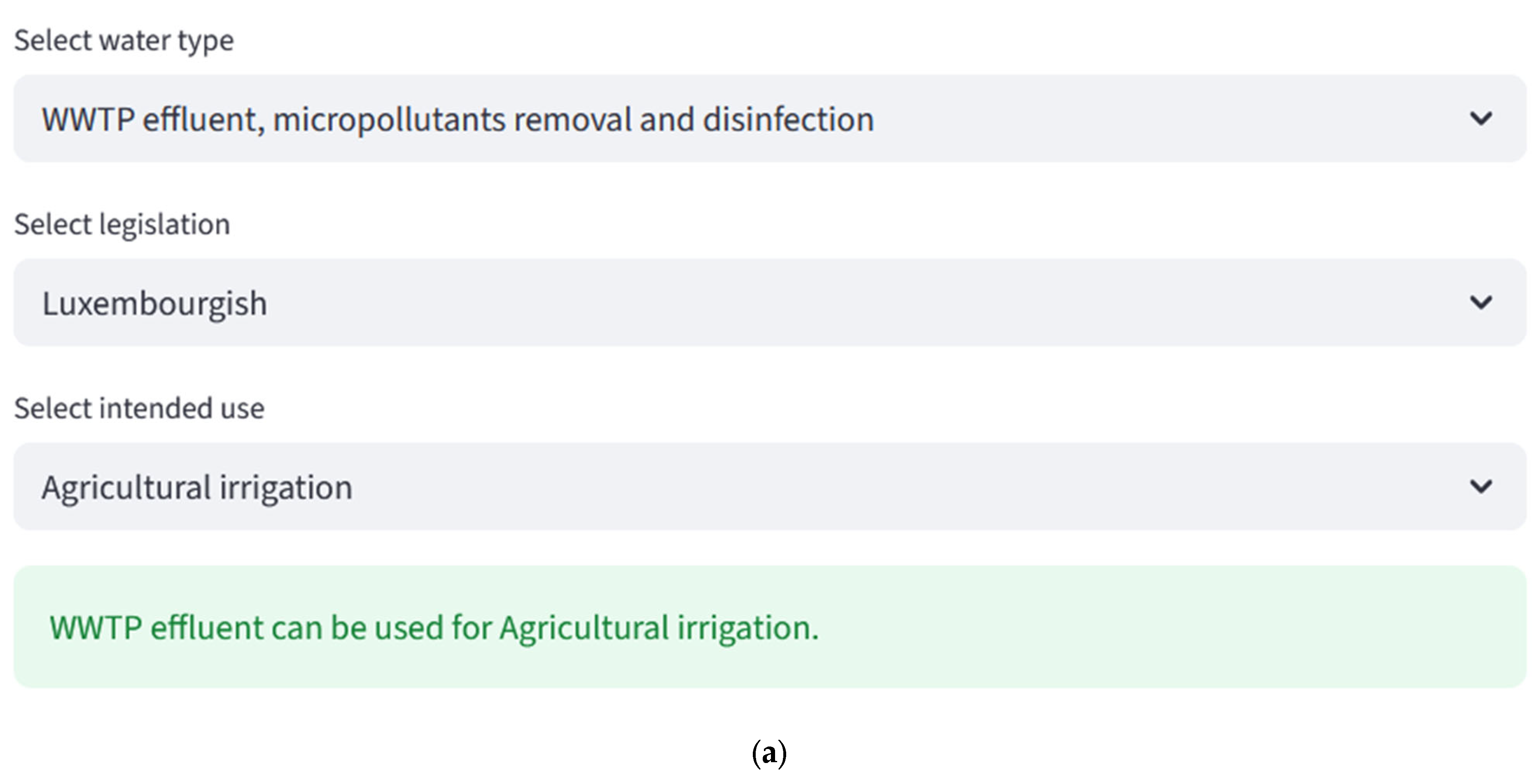
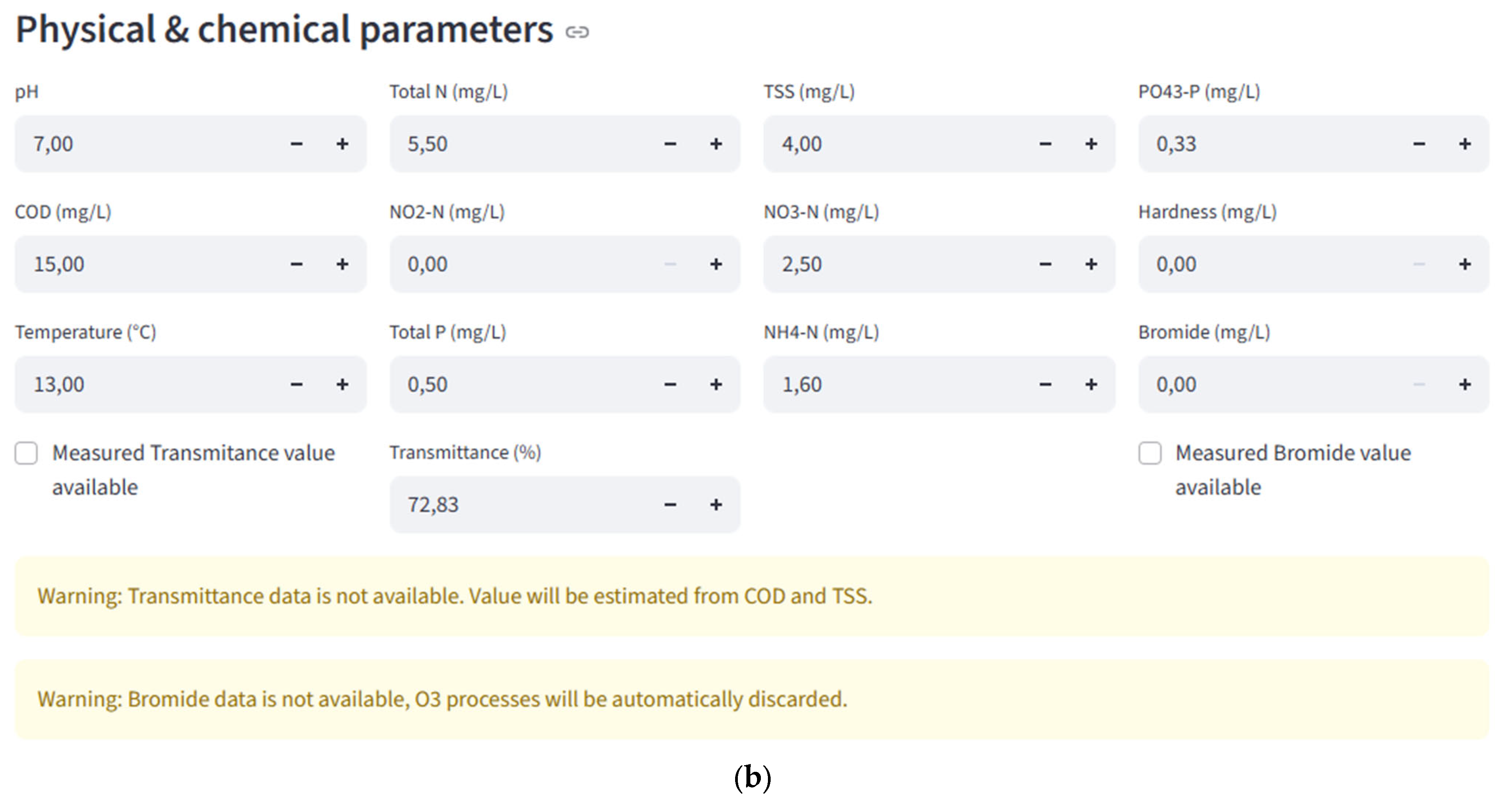
The main user interface, shown in Figure 2, allows the definition of the reuse scenario, including the treatment objectives in the case of WWTP effluents (e.g., micropollutant removal and disinfection), as well as the input of key water quality parameters. The tool is designed to accommodate incomplete datasets, enabling users to proceed with the evaluation even when certain variables are not directly available. For transmittance, which is a critical parameter for UV-based processes, an internal estimation is performed according to Equation (1) to ensure an accurate analysis. At this stage, the tool provides a preliminary screening of applicable reuse options based on the defined inputs and regulatory constraints and should not be interpreted as a final treatment recommendation.
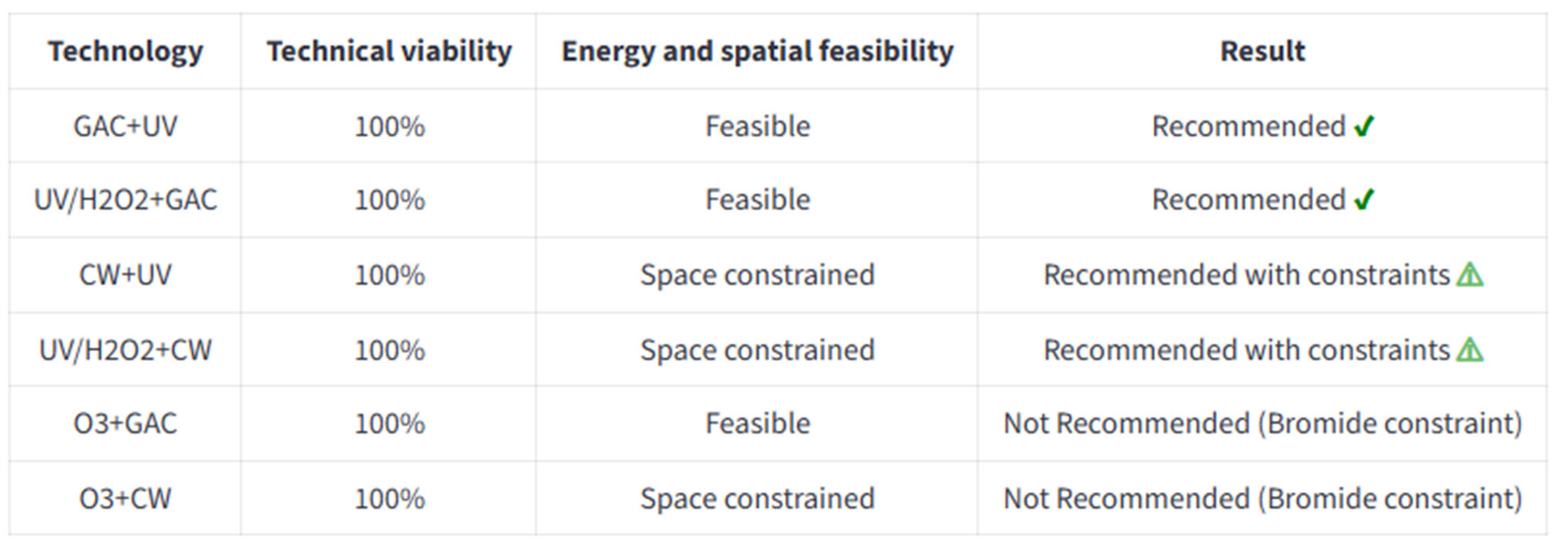
Following data input, the results are presented in a structured format that facilitates direct comparison between treatment options. As illustrated in Figure 3, technologies are categorised according to their suitability, allowing users to immediately identify recommended configurations as well as those subject to operational constraints. This classification is directly interpretable and does not require further processing.
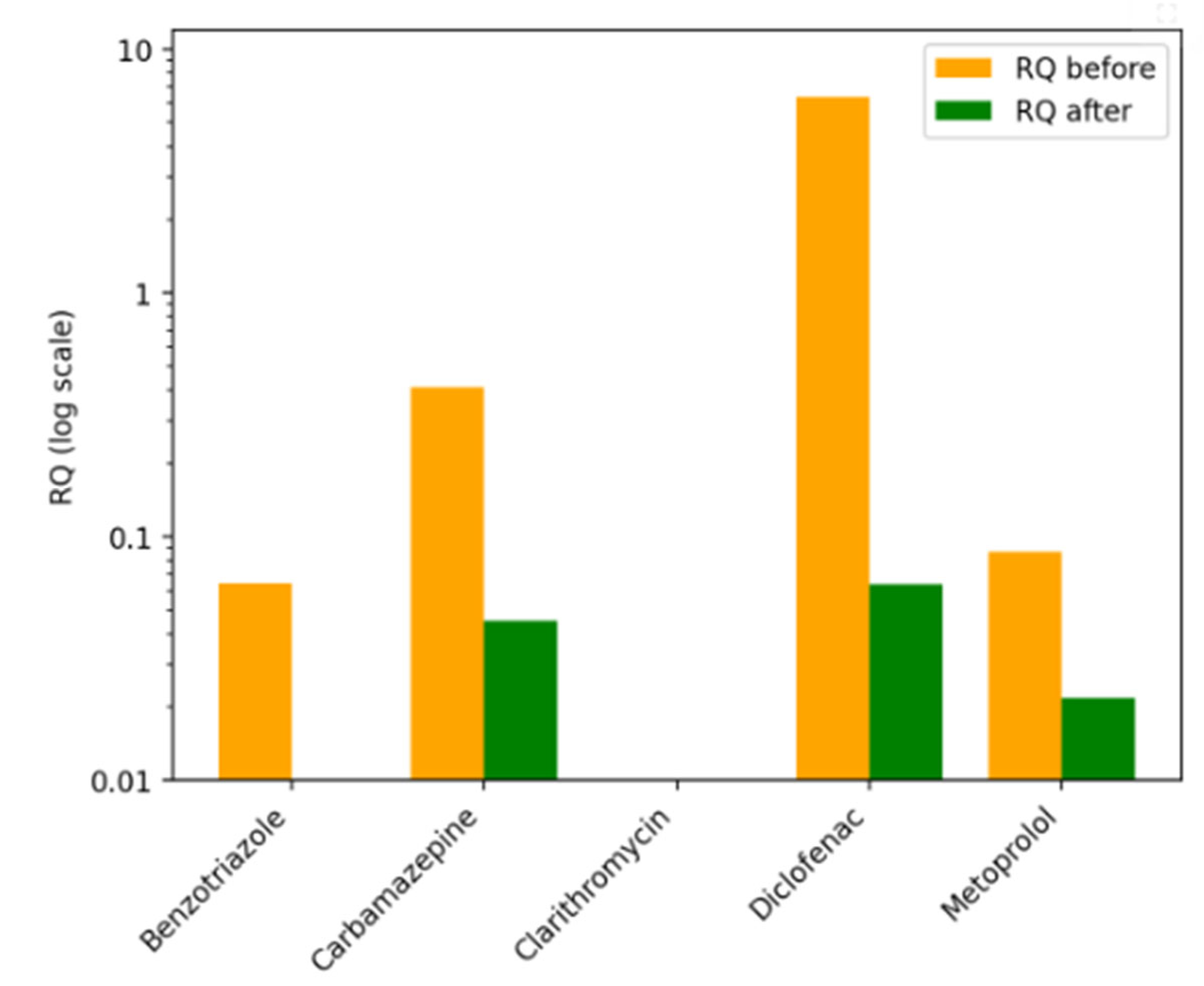
For selected treatment configurations, the DST provides quantitative outputs describing expected treatment performance. In addition to tabulated results, the tool includes graphical representations of ecotoxicological risk. As shown in Figure 4, the comparison of risk quotients before and after treatment enables a direct visual assessment of the effectiveness of each configuration in reducing environmental impact.
The combination of structured outputs (Figure 3) and graphical risk visualisations (Figure 4) allows users to evaluate both technical suitability and environmental performance within a single interface, supporting informed decision-making.
Furthermore, the tool includes a reporting function that automatically compiles input data and results into a downloadable document. This feature facilitates communication of outcomes and supports their integration into planning and feasibility studies.
The applicability and robustness of the developed DST were evaluated through its application to the Bleesbruck WWTP case study, using the boundary conditions and input data described in Section 2. The tool identified no technical limitations for the evaluated treatment trains, with all options showing 100% technical viability. Consequently, the selection was primarily driven by spatial availability. Under these conditions, two treatment trains were prioritised as recommended solutions: GAC + UV, and UV/H2O2 + GAC. The O3 + GAC alternative was excluded from further evaluation due to the absence of bromide data in the WWTP effluent, which is a critical parameter for assessing the potential for bromate formation and, therefore, for ensuring process safety. Accordingly, a proper evaluation of ozonation requires prior analysis of bromide in the WWTP effluent.
Both recommended treatment trains were simulated using the DST, to quantify the final concentrations of bacteria and micropollutants in the treated effluent. For the GAC + UV configuration, the tool predicts no reduction in E. coli concentration after GAC filtration; however, the concentration is reduced to 2.7 MPN 100 mL−1 after UV disinfection. This final concentration complies with the most restrictive quality requirements (Class A) for agricultural irrigation established in EU Regulation 2020/741. Simulated pollutant concentrations in the treated effluent indicate that benzotriazole (12 ng L−1), carbamazepine (113 ng L−1), and diclofenac (26 ng L−1) are expected to be in very low concentration, while clarithromycin and metoprolol are fully removed. As a result, the overall treatment achieves a substantial decrease in ecotoxicological risk. Notably, all evaluated compounds reach a no-risk level after treatment, which is particularly relevant for diclofenac, initially classified as presenting a medium risk (Figure 4).
In the case of the UV/H2O2 + GAC configuration, E. coli concentrations are reduced to 2.1 MPN 100 mL−1 after UV/H2O2 and further decreased to below 1 MPN 100 mL−1 after GAC filtration. This also ensures compliance with Class A reuse standards, with a slightly higher microbiological removal efficiency compared to GAC + UV. The final concentrations of benzotriazole (168 ng L−1), carbamazepine (77 ng L−1), and diclofenac (51 ng L−1), while clarithromycin and metoprolol are completely removed, demonstrate the effectiveness of the combined process. An additional advantage of this configuration is the potential removal of oxidation by-products by GAC filtration; however, this effect was not quantified in the present study. The resulting ecotoxicological risk reduction is comparable to that achieved with GAC + UV, with all compounds reaching no-risk levels.
From a practical perspective, both solutions are viable for implementation at the Bleesbruck WWTP. The final selection between them may therefore depend on additional criteria not explicitly addressed in this validation step, such as operational complexity, maintenance requirement as well as investment and operational costs.
Overall, the results demonstrate that the LëtzREUSE provides consistent and technically robust recommendations, successfully identifying feasible treatment trains and predicting their performance under specific conditions. This confirms the suitability of the developed DST as a reliable instrument for supporting the design and optimisation of water reuse schemes in real applications.

4. Discussion

DSTs for water reuse have been widely developed to assist in treatment selection and planning. However, most available tools tend to address specific components of the decision process rather than providing a fully integrated approach. Risk-based approaches, particularly those developed for potable reuse, typically incorporate quantitative microbial risk assessment (QMRA) and define required log removal values. However, they are mainly used to verify compliance with predefined targets rather than to compare alternative treatment configurations [31]. In contrast, LëtzREUSE supports technology selection by integrating microbiological performance within a broader evaluation framework that also considers predicted treatment performance. Approaches based on life cycle assessment (LCA) provide insights into environmental impacts, such as energy use or climate change [32]. However, LCA does not predict whether a treatment train is capable of meeting the required effluent quality or reuse objectives. LëtzREUSE complements these assessments by estimating treatment performance and verifying whether the proposed technologies are technically capable of achieving the reuse standards before environmental optimisation is considered. The literature recognises that the combined use of microbiological risk assessment (MRA), LCA, and Multi-Criteria Decision Analysis (MCDA) is necessary to simultaneously address public health, environmental, and economic dimensions, but these approaches are rarely implemented within a single tool [33]. In line with this need for integration, the proposed DST links these complementary evaluation levels into a single decision-support workflow. Some recent studies aim to integrate these approaches through multi-objective optimisation or resource recovery analysis [34]. While these methods provide a comprehensive perspective, they often require detailed input data and relatively complex modelling [35], which can limit their applicability in early-stage assessments or in scenarios with scarce data availability. By comparison, the proposed DST was specifically designed as a practical screening tool requiring only routinely monitored water quality parameters, making it suitable for preliminary feasibility studies where data availability is often limited. Broader studies also highlight ongoing challenges related to regulation, public acceptance, and the lack of standardised evaluation approaches, which limit the use of more advanced DSTs. In this context, the role of LëtzREUSE is not to replace detailed engineering, environmental or risk assessment methods, but to serve as a first screening step to identify technically feasible treatment trains before more detailed evaluations are carried out.
Multi-criteria decision-making (MCDM) methods based on Analytic Hierarchy Process (AHP), fuzzy AHP, or TOPSIS are widely used for selecting wastewater treatment technologies [36]. These approaches are typically based on key performance indicators (KPIs) covering technical, environmental, economic, and social aspects, which are then weighted and combined to produce a ranking of alternatives. The model proposed by Filho et al., for instance, applies a fuzzy AHP approach to calculate a reuse feasibility index based on a set of predefined parameters [37].
While these methods offer a structured way to incorporate different evaluation criteria, they depend strongly on the assignment of weights and on the selection of indicators. This introduces a level of subjectivity that can influence the outcome of the analysis, while inconsistencies in indicator definition and alignment with policy objectives can further complicate interpretation of the results [36]. In contrast, LëtzREUSE does not use an MCDM approach because the suitability of each treatment technology depends on operational requirements that must be satisfied rather than weighted. Therefore, the recommendation is based on process applicability, together with energy and space constraints, instead of ranking alternatives through subjective weighting of indicators.
Tools such as the Water Reuse Calculator [38] follow a different approach, providing technology recommendations based on predefined criteria and user inputs. These tools support the screening of suitable treatment options and generate structured outputs to guide decision-making. However, the evaluation remains dependent on the internal criteria of the tool and does not explicitly represent the expected effluent quality of each configuration. As a result, the comparison between alternatives is not directly linked to treatment performance.
A major additional contribution of LëtzREUSE is the incorporation of ecotoxicological risk assessment as a quantitative output, expressed through RQ reduction. While most existing DSTs focus on compliance with quality standards or environmental indicators, linking treatment performance directly to ecotoxicological risk provides a more meaningful measure of environmental impact. This strengthens the connection between technology selection and ecological outcomes, which remains under-represented in many current approaches.
It is important to note the simplified structure of the tool, which does not rely on complex modelling or extensive datasets. Instead, it uses experimentally derived treatment performance data obtained from real effluents in Luxembourg, ensuring that predictions reflect realistic operating conditions based on lab and/or pilot studies. This enhances the practical relevance of the tool, particularly when compared to approaches based solely on the literature values or theoretical assumptions.
Finally, the DST is designed to be complementary to broader environmental assessment tools, such as STREAM [29], which evaluate the impact of reuse on receiving water bodies. The combined use of both tools enables a broader assessment, from treatment selection to environmental consequences at the local scale. This integrated perspective provides decision-makers with a more comprehensive understanding of reuse implications without requiring detailed engineering or feasibility studies. This is particularly valuable for engineers and decision-makers, as it supports a more objective understanding of the software performance, facilitates the interpretation of results, and increases user confidence, thereby promoting the adoption of the tool and supporting the implementation of water reuse projects.

5. Conclusions, Recommendations, and Perspective

The LëtzREUSE DST demonstrates that a simplified framework can effectively support early-stage decision-making in water reuse without relying on complex modelling or extensive data requirements. By structuring the decision process around regulatory feasibility, technology applicability, and predicted treatment performance, the tool provides a coherent and operational pathway from scenario definition to treatment selection. This approach ensures that only legally compliant reuse options are considered, while maintaining a clear link between water quality characteristics, technological constraints, and expected outcomes.
The use of operational thresholds is a key factor for a clear identification of the limiting factors for each technology, thereby avoiding the subjectivity associated with expert-based evaluations. At the same time, the incorporation of removal efficiencies obtained from real effluents ensures that predicted performance remains representative of realistic operating conditions at a lab and/or pilot scale. This balance between simplicity and reliability constitutes one of the main strengths of the framework, allowing rapid screening while preserving technical credibility.
The estimation of effluent quality and associated ecotoxicological risk represents a significant advancement compared to existing tools that rely on qualitative indicators, establishing a direct link between treatment configuration and environmental impact. This allows decision-makers to evaluate alternatives based on their predicted performance in achieving reuse objectives and reduce ecological pressure instead of adopting oversimplified generic evaluation approaches.
The validation through the Bleesbruck WWTP case study confirms the robustness and practical relevance of the system. The tool successfully identified feasible treatment configurations under real conditions. The results show that different treatment trains are suitable for implementation, indicating that the final selection may depend on additional factors such as financial, operational and maintenance requirements. This confirms that the tool is particularly well suited for feasibility analysis and comparative evaluation of reuse scenarios, where rapid and transparent decision support is required.
Future developments should focus on expanding the regulatory database to incorporate additional national frameworks, thereby enhancing the transferability of the tool beyond the Luxembourg context. Further work is also needed to address current limitations in ecotoxicological assessment, particularly with regard to mixture effects and transformation products, which may influence the overall environmental risk.
Although the treatment performance predictions are based on experimental data obtained under representative operating conditions using real effluents, the current framework does not account for specific circumstances that may influence full-scale performance. The current version includes the treatment technologies for urban water reuse that are most commonly recommended according to the current literature, while future updates may incorporate additional emerging or hybrid technologies. Furthermore, although the DST supports technology screening and comparison, it does not incorporate a detailed techno-economic assessment, which should be considered during later stages of the project. Addressing these aspects will further enhance the applicability and robustness of the framework.
From this perspective, LëtzREUSE should be understood as a flexible and extensible platform that can evolve towards a more comprehensive decision-support system. Its current formulation already provides a robust basis for supporting water reuse planning, while its modular structure offers clear opportunities for future refinement and integration with complementary assessment tools.

Supplementary Materials

The following supporting information can be downloaded at https://www.mdpi.com/article/10.3390/w18151797/s1: Table S1. Summary of indicators and the related threshold values used for technology evaluation. Table S2. Parameter weighting matrix based on relative influence on treatment performance. Table S3. Decision matrix for energy and space feasibility.

Author Contributions

I.S.: Conceptualization, methodology, project administration, validation, and writing—original draft. R.R.-G.: Conceptualization, software, and writing—review and editing. R.T.: Software. M.B.: Supervision. J.H.: Supervision and writing—review and editing. All authors have read and agreed to the published version of the manuscript.

Funding

This research was funded by Luxembourg National Research Fund (FNR), grant number [18120744].

Data Availability Statement

The data supporting this study are openly available in the Zenodo repository, with DOI 10.5281/zenodo.19231360. The repository includes the source code of the software developed in Python 3.12.6.

Acknowledgments

The presented outcomes are part of the LëtzREUSE project (Industrial Fellowship, grant number 18120744) which is funded by the Luxembourg National Research Fund (FNR). The authors are especially thankful to SIDEN and TR-Engineering for their collaboration. During the preparation of this manuscript, the authors used ChatGPT-5.5 (OpenAI) to assist with language editing. After using this tool, the authors reviewed and edited the content as needed and take full responsibility for the content of the published article.

Conflicts of Interest

Irene Salmerón was affiliated with TR-Engineering and the University of Luxembourg (Luxembourg), and conducted this work within an FNR Industrial Fellowship project involving collaboration between both institutions. Martin Biehler is an employee of TR-Engineering. Rafael Romero-Gamero is employed by ArcelorMittal but contributed to this work in his personal capacity; ArcelorMittal had no role in the study, the preparation of the manuscript, or the decision to publish. Reza Tashakkori and Joachim Hansen are employees of the University of Luxembourg. The authors declare that these affiliations did not influence the design, conduct, interpretation, or reporting of the study and that they have no competing financial or personal interests that could have appeared to influence the work reported in this paper. The research was conducted in the absence of any commercial or financial relationships that could be construed as a potential conflict of interest.

References

  1. United Nations. The United Nations World Water Development Report 2017. Wastewater—The Untapped Resource; UNESCO Publications: Paris, France, 2017; Available online: https://www.un-ilibrary.org/content/books/9789210047197 (accessed on 9 February 2026).
  2. Mannina, G.; Gulhan, H.; Ni, B.J. Water reuse from wastewater treatment: The transition towards circular economy in the water sector. Bioresour. Technol. 2022, 363, 127951. [Google Scholar] [CrossRef] [PubMed]
  3. Bellver-Domingo, Á.; Hernández-Sancho, F. Circular economy and payment for ecosystem services: A framework proposal based on water reuse. J. Environ. Manag. 2022, 305, 114416. [Google Scholar] [CrossRef] [PubMed]
  4. Maniam, G.; Zakaria, N.A.; Leo, C.P.; Vassilev, V.; Blay, K.B.; Behzadian, K.; Poh, P.E. An assessment of technological development and applications of decentralized water reuse: A critical review and conceptual framework. Wiley Interdiscip. Rev. Water. 2022, 9, e1588. [Google Scholar] [CrossRef]
  5. Sardana, P.; Javernick-Will, A.; Cook, S.M. Facilitators and Barriers of Global Water Reuse: A Systematic Literature Review. ACS EST Water 2024, 5, 3–19. [Google Scholar] [CrossRef]
  6. Stathatou, P.-M.; Kampragou, E.; Grigoropoulou, H.; Assimacopoulos, D.; Karavitis, C.; Gironás, J. Creating an enabling environment for WR&R implementation. Water Sci. Technol. 2017, 76, 1555–1564. [Google Scholar] [CrossRef] [PubMed]
  7. Tran, N.H.; Reinhard, M.; Gin, K.Y.H. Occurrence and fate of emerging contaminants in municipal wastewater treatment plants from different geographical regions-a review. Water Res. 2018, 133, 182–207. [Google Scholar] [CrossRef] [PubMed]
  8. Miralles-Cuevas, S.; Oller, I.; Pérez, J.A.S.; Malato, S. Removal of pharmaceuticals from MWTP effluent by nanofiltration and solar photo-Fenton using two different iron complexes at neutral pH. Water Res. 2014, 64, 23–31. [Google Scholar] [CrossRef] [PubMed]
  9. Núñez-Tafalla, P.; Salmerón, I.; Venditti, S.; Hansen, J. Exploring large pilot-scale applications of advanced oxidation and GAC filtration for removing micropollutants: Assessment of elimination efficiency and risk reduction. Process Saf. Environ. Prot. 2025, 197, 106956. [Google Scholar] [CrossRef]
  10. Hernández-Zanoletty, A.; Berruti, I.; Jambrina-Hernández, E.; Oller, I.; Polo-López, M.I.; Simón, P.; Plaza-Bolaños, P.; Agüera, A. Assessment of a novel sequential treatment train based on natural and low-cost technologies for wastewater reclamation at demonstrative scale: A multiparametric analysis of EU regulated indicators. Sci. Total Environ. 2025, 1005, 180839. [Google Scholar] [CrossRef] [PubMed]
  11. Venditti, S.; Salmeron, I.; Tafalla, P.N.; Hobus, I.; Kolisch, G.; Hansen, J. Biochar from recovered cellulose as new admixture in constructed wetlands for micropollutant removal: A circular approach. Sci. Total Environ. 2024, 927, 172055. [Google Scholar] [CrossRef] [PubMed]
  12. Salmerón, I.; Oller, I.; Malato, S. Solar photo-assisted electrochemical processes applied to actual industrial and urban wastewaters: A practical approach based on recent literature. Chemosphere 2021, 279, 130560. [Google Scholar] [CrossRef] [PubMed]
  13. Ahmed, M.; Mavukkandy, M.O.; Giwa, A.; Elektorowicz, M.; Katsou, E.; Khelifi, O.; Naddeo, V.; Hasan, S.W. Recent developments in hazardous pollutants removal from wastewater and water reuse within a circular economy. npj Clean. Water 2022, 5, 12. [Google Scholar] [CrossRef]
  14. Cipolletta, G.; Ozbayram, E.G.; Eusebi, A.L.; Akyol, Ç.; Malamis, S.; Mino, E.; Fatone, F. Policy and legislative barriers to close water-related loops in innovative small water and wastewater systems in Europe: A critical analysis. J. Clean. Prod. 2021, 288, 125604. [Google Scholar] [CrossRef]
  15. Cagno, E.; Garrone, P.; Negri, M.; Rizzuni, A. Adoption of water reuse technologies: An assessment under different regulatory and operational scenarios. J. Environ. Manag. 2022, 317, 115389. [Google Scholar] [CrossRef] [PubMed]
  16. European Commission. Regulation EU 2020/741, Minimum Requirements for Water Reuse, 2019 (2020) (EU 2020/741). Available online: https://eur-lex.europa.eu/legal-content/EN/TXT/PDF/?uri=CELEX:32020R0741&from=EN (accessed on 24 February 2025).
  17. Administration de la Gestion de L’eau, Recommandations Pour les Installations de Récupération des Eaux de Pluie Issues des Toitures et de Récupération des Eaux Grises Issues des Douches, des Lavabos et des Baignoires, Pour une Utilisation à des Fins Domestiques. 2025. Available online: https://eau.gouvernement.lu/fr/publications/guiden/guide-de-recommandations-pour-les-installations.html (accessed on 24 February 2025).
  18. Salmerón, I. Dataset: Multi-Barrier Treatments Integrating Constructed Wetlands for the Reuse of Stormwater, Greywater and Wastewater. 2026. Available online: https://zenodo.org/records/19093876 (accessed on 16 July 2026).
  19. Salmerón, I.; Venditti, S.; Núñez-Tafalla, P.; Biehler, M.; Hansen, J. Promotion of Water Reuse Applications: Development of a DST to Facilitate the Selection of the Best Purification Treatment. In Proceedings of the 7th IWA International Conference on Ecotechnologies for Wastewater Treatment (ecoSTP2025), Stockholm, Sweden, 23–26 June 2025; ISBN 978-91-7485-724-5. [Google Scholar] [CrossRef]
  20. European Commission. Directive (EU) 2024/3019 of the European Parliament and the Council of 27 November 2024 Concerning Urban Wastewater Treatment. 2024. Available online: http://data.europa.eu/eli/C/2023/250/oj (accessed on 25 March 2025).
  21. Winter, K.J.; Goetz, D. The impact of sewage composition on the soil clogging phenomena of vertical flow constructued wetlands. Water Sci. Technol. 2003, 48, 9–14. [Google Scholar] [CrossRef]
  22. Pistocchi, A.; Andersen, H.R.; Bertanza, G.; Brander, A.; Choubert, J.M.; Cimbritz, M.; Drewes, J.E.; Koehler, C.; Krampe, J.; Launay, M.; et al. Treatment of micropollutants in wastewater: Balancing effectiveness, costs and implications. Sci. Total Environ. 2022, 850, 157593. [Google Scholar] [CrossRef] [PubMed]
  23. German Association for Water Wastewater and Waste (DWA). DWA-M 205 Disinfection of Biologically Treated Wastewater; DWA: Hennef, Germany, 2013. [Google Scholar]
  24. Coimbra Gama, D. Determining the Applicability of Advanced Oxidation Processes: A Study of Key Operational Parameters and Field Measurements in Wastewater Treatment Plants in the North of Luxembourg; University of Luxembourg: Esch-sur-Alzette, Luxembourg, 2025. [Google Scholar]
  25. Maniakova, G.; Salmerón, I.; Nahim-Granados, S.; Malato, S.; Oller, I.; Rizzo, L.; Polo-López, M.I. Sunlight advanced oxidation processes vs ozonation for wastewater disinfection and safe reclamation. Sci. Total Environ. 2021, 787, 147531. [Google Scholar] [CrossRef] [PubMed]
  26. German Association for Water Wastewater and Waste (DWA). DWA-M 285-3 Removal of Trace Substances at Municipal Wastewater Treatment Plants—Part 3: Ozonation—Process Principles and Design; DWA: Hennef, Germany, 2026. [Google Scholar]
  27. Hewes, C.G.; Davison, R.R. Kinetics of ozone decomposition and reaction with organics in water. AIChE J. 1971, 17, 141–147. [Google Scholar] [CrossRef]
  28. NORMAN Network. NORMAN Ecotoxicology Database. Available online: https://www.norman-network.com/nds/ecotox/ (accessed on 5 February 2026).
  29. Salmerón, I.; Schroeder, J.; Hansen, J. STREAM-Support Tool for Reuse Evaluation and Management. (Version 1.0) [Computer Software]. Zenodo. 2025. Available online: https://zenodo.org/records/17581578 (accessed on 16 July 2026).
  30. Hobus, I.; Kolisch, G. Dynamische Simulation einer Mikroschadstoffelimination auf der KA Bleesbrück des SIDEN; Technical Report; SIDEN: Bleesbrück, Luxembourg, 2015. [Google Scholar]
  31. Jeffrey, P.; Yang, Z.; Judd, S.J. The status of potable water reuse implementation. Water Res. 2022, 214, 118198. [Google Scholar] [CrossRef] [PubMed]
  32. Kalboussi, N.; Biard, Y.; Pradeleix, L.; Rapaport, A.; Sinfort, C.; Ait-mouheb, N. Life cycle assessment as decision support tool for water reuse in agriculture irrigation. Sci. Total Environ. 2022, 836, 155486. [Google Scholar] [CrossRef] [PubMed]
  33. Sampaio, V.; Santos, A.S.P.; Lima, M.M. Decision support tools for water reuse: A systematic review. Water Sci. Technol. 2024, 90, 2713–2733. [Google Scholar] [CrossRef] [PubMed]
  34. Sucu, S.; van Schaik, M.O.; Esmeli, R.; Ouelhadj, D.; Holloway, T.; Williams, J.B.; Cruddas, P.; Martinson, D.B.; Chen, W.S.; Cappon, H.J. A conceptual framework for a multi-criteria decision support tool to select technologies for resource recovery from urban wastewater. J. Environ. Manag. 2021, 300, 113608. [Google Scholar] [CrossRef] [PubMed]
  35. Candido, L.A.; Coêlho, G.A.G.; de Moraes, M.M.G.A.; Florêncio, L. Review of Decision Support Systems and Allocation Models for Integrated Water Resources Management Focusing on Joint Water Quantity-Quality. J. Water Resour. Plan. Manag. 2022, 148, 03121001. [Google Scholar] [CrossRef]
  36. Renfrew, D.; Vasilaki, V.; Katsou, E. Indicator based multi-criteria decision support systems for wastewater treatment plants. Sci. Total Environ. 2024, 915, 169903. [Google Scholar] [CrossRef] [PubMed]
  37. Filho, E.H.C.; Stefanutti, R.; de Oliveira, U.C.; Matos, J.S. Water Reuse: Contribution of a Decision Support Model. Sustainability 2025, 17, 692. [Google Scholar] [CrossRef]
  38. ReNutriWater Project. WaterSafe Tool [Online Decision Support Tool]. Interreg Baltic Sea Region. Available online: https://kuopiowatercluster.com/kwc-home/watersafetool/ (accessed on 23 March 2026).
Figure 2. The main user interface of the tool for defining (a) reuse scenarios and (b) the input of water quality parameters. Grey boxes represent user input fields, whereas green, yellow, and red boxes are automatically generated messages. Note: Decimal commas are displayed according to the software’s regional settings.
Water 18 01797 g002aWater 18 01797 g002b
Figure 3. Example of the technology recommendation table.
Water 18 01797 g003
Figure 4. Decrease in ecotoxicological risk in the Bleesbruck WWTP case study, showing RQ before and after treatment.
Water 18 01797 g004
Table 1. Allowed scenarios combining water sources and intended reuse applications in Luxembourg. Compiled from relevant regulations [16,17].
Type of UseRainwater (Rooftops)Light GreywaterStormwaterWWTP Effluent
Alimentary useNoNoNoNo
Washing foodNoNoNoNo
Washing of objects in direct and long-standing contact with foodNoNoNoNo
Human body washNoNoNoNo
Flushing toiletsYesYes. If quality criteria are metNoNo
Washing of objects in direct and long-standing contact with human body (laundry)Yes. For private owners for their own use *NoNoNo
Irrigation of landscapesYesNoNoNo
Irrigation of vegetable gardensYesNoNoNo
Cleaning of indoor floorsYes **NoNoNo
Cleaning of outdoor floors and car washingYes **NoNoNo
Groundwater rechargeCase-by-caseCase-by-caseCase-by-caseCase-by-case
Agricultural irrigationNot definedNot definedYesYes
Notes: * Not recommended for children under 2 years of age and vulnerable persons. Not recommended, for places of general care (including the home if home care). ** Except for facilities caring for vulnerable people, facilities caring for children under the age of two, or healthcare facilities.
Table 2. Qualitative technology classification based on engineering design criteria and commercial specifications.
TechnologyEnergySpace
UVMediumLow
GAC + UVMediumMedium
CW + UVMediumHigh
UV/H2O2 + GACHighMedium
UV/H2O2 + CWHighHigh
O3 + GACHighMedium
O3 + CWHighHigh
Table 3. Classification of technologies based on technical performance and feasibility constraints, defining their suitability for implementation.
Technical ScoreEnergy and SpaceResult
>80%FeasibleRecommended
>80%Feasible with constraintsRecommended with constrains
60–79%FeasibleAcceptable
60–79%Feasible with constraintsLimited suitability
<60%AnyNot recommended
Table 4. Most relevant parameters used to assess the feasibility of the treatment trains.
Bacteria and MacroparametersValueMicropollutantsValue
E. coli
(CFU 100 mL−1)
18,400Corrosion Inhibitors
Temperature (°C)13Benzotriazole1220 ng L−1
pH8
COD (mg L−1)15Pharmaceuticals
PO4-P (mg L−1)0.33Carbamazepine1030 ng L−1
P total (mg L−1)0.5ClarithromycinN.A.
NH4-N (mg L−1)1.6Diclofenac2550 ng L−1
NO3-N (mg L−1)2.5Metoprolol750 ng L−1
N total (mg L−1)5.5
TSS (mg L−1)4
Note: N.A., not available.
Disclaimer/Publisher’s Note: The statements, opinions and data contained in all publications are solely those of the individual author(s) and contributor(s) and not of MDPI and/or the editor(s). MDPI and/or the editor(s) disclaim responsibility for any injury to people or property resulting from any ideas, methods, instructions or products referred to in the content.