Article

Selective Removal of Sulfachloropyridazine by Natural Manganese Sand via Mn–N Coordinative Adsorption Coupled with Mn(III)/Mn(IV) Surface Oxidation


School of Life and Environmental Sciences, Guilin University of Electronic Technology, Guilin 541004, China
*
Author to whom correspondence should be addressed.
Water 2026, 18(13), 1600; https://doi.org/10.3390/w18131600
Submission received: 14 May 2026 / Revised: 25 June 2026 / Accepted: 30 June 2026 / Published: 1 July 2026
(This article belongs to the Section Wastewater Treatment and Reuse)

Abstract

Sulfachloropyridazine (SCP) is a sulfonamide antibiotic widely detected in aquatic environments. Its terminal pyridazine ring contains vicinal pyridinic nitrogen atoms (=N–N=) with strong metal-complexing ability, which may cause distinct interactions with metal-oxide filter media. Here, we systematically investigated the removal of sulfonamide antibiotics by natural manganese sand (NMS), a representative filtration medium in water treatment. NMS exhibited pronounced selectivity toward SCP, while showing negligible removal of sulfadiazine (SD) and sulfamethoxazole (SMX). Under optimal conditions (NMS = 5 g·L−1, pH 3), 99.38% of SCP (5 mg·L−1) was removed within 6 h; the TOC reduction only reached 42.65%, suggesting the partial transformation of SCP. Mechanistic evidence suggests that the vicinal pyridinic N–N motif of SCP provides dual electron-donating sites, enabling inner-sphere Mn–N complexation on NMS. This coordination-driven adsorption is strongly pH-dependent and is inhibited under neutral to alkaline conditions (pH > 5) due to electrostatic repulsion. After selective binding, surface Mn(III)/Mn(IV) species can act as electron acceptors, driving the surface oxidation of SCP. Although NMS induced mild oxidative transformation of SCP, some degradation products still exhibited potential ecotoxicity and therefore require further attention in practical water treatment applications. These findings link terminal functional-group structure to selective abiotic removal on Mn-oxide media and inform targeted control of sulfonamide micropollutants in filtration-based water treatment.

1. Introduction

The large-scale production and extensive use of sulfonamide antibiotics have made them an emerging global environmental issue and may therefore be considered representative emerging organic pollutants [1]. Among them, Sulfachloropyridazine (SCP) is a widely used veterinary sulfonamide for treating bacterial infections in poultry and livestock. Its relatively high chemical stability and strong antibacterial activity contribute to environmental persistence, leading to frequent detection in the aquatic environment [2]. The chemical structures of sulfonamide antibiotics strongly govern their environmental mobility and transformation as well as their treatability in water treatment processes [3]. Structurally, SCP comprises an aniline ring linked to a sulfonamide group and a chlorinated pyridazine moiety (Table 1). The terminal pyridazine ring contains vicinal pyridinic nitrogen atoms (=N–N=), which provide electron-donating sites capable of forming stable inner-sphere complexes with transition-metal centers [4]. This structural feature suggests that the migration, transformation, and fate of SCP may be tightly coupled to mineral–water interfacial reactions in both natural and engineered systems. However, how the pyridazine structure controls SCP behavior during water treatment processes remains insufficiently understood.
Natural manganese sand (NMS), a granular media consisting of quartz grains coated with manganese oxides (MnOx) and associated mineral phases, is commonly present in rapid sand filters for enhanced water treatment performance [5]. MnOx are important redox-active minerals owing to their high surface area, variable oxidation states, and oxidative capacity [6]. The MnOx coatings enable NMS to synergistically remove trace organic micropollutants through multiple processes such as physical screening, adsorption, and chemical oxidation by iron and manganese oxides [7]. In addition, in drinking water treatment and distribution systems, dissolved Mn(II) and Fe(II) can be oxidized by dissolved oxygen and/or disinfectants, leading to the formation of Mn/Fe (hydr)oxide coatings on filter media and pipe surfaces, which also represent reactive mineral interfaces with the potential to transform organic micropollutants [8]. In recent years, researchers have primarily focused on the degradation mechanisms of pollutants by synthetic crystalline or colloidal MnOx [9,10,11]. However, the interfacial reactions of antibiotics on real NMS filter media under water-treatment-relevant conditions remain much less explored.
For sulfonamide antibiotics, interactions with MnOx surfaces are expected to be strongly structure-dependent, particularly with respect to heterocycle type and nitrogen functionality. Many sulfonamides (e.g., SMX and SD) are commonly reported by non-covalent interactions with mineral surfaces, such as hydrogen bonding, π–π interactions, and electrostatic attraction [12,13]. By contrast, SCP contains a distinctive vicinal pyridinic motif that may form diverse coordination structures with surface metal centers. Previous studies have shown that organic ligands containing pyridinic N can not only significantly enhance the complexation rate and stability with transition metals (e.g., Mn and Fe) [14], but also have a regulatory effect on the redox behavior of metals [15]. It is hypothesized that SCP can selectively coordinate with manganese sites on the MnOx surface of NMS, thereby promoting electron transfer and triggering specific oxidative degradation pathways. Following this hypothesis, differences in the spatial configuration and the number of pyridyl nitrogen atoms among sulfonamide antibiotics are likely critical molecular-scale factors governing their adsorption affinity, interfacial reactivity, and transformation pathways with NMS.
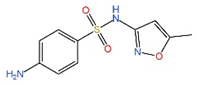
Based on the above context, this study selected SCP as the target contaminant and systematically investigated its transport and transformation behavior in water treatment processes employing NMS as the filter medium. Sulfonamide antibiotics exhibiting distinct spatial configurations and different numbers of pyridinic nitrogen atoms (Table 1) were compared with SCP to clarify how these structural features influence the associated transport and transformation mechanisms. Batch removal experiments and spectroscopic and surface analytical techniques were conducted to elucidate the interfacial binding characteristics and subsequent oxidative degradation pathways of SCP on the NMS surface. This study provides insights into the transport and transformation behavior of SCP at manganese oxide-rich mineral interfaces and highlights the potential and limitations of NMS as a reactive filtration medium, offering mechanistic guidance for further optimizing antibiotic control under more environmentally relevant treatment conditions.

2. Materials and Methods

2.1. Materials and Reagents

Natural manganese sand (NMS, 1–2 mm particle size) was obtained from Yungou Joint-operated Filter Material Factory in Gongyi, Henan Province, China. Prior to use, the NMS was repeatedly rinsed with deionized (DI) water to remove surface impurities, and then oven-dried to constant weight. Sulfachloropyridazine (SCP), sulfadiazine (SD), sulfamethoxazole (SMX), sodium hydroxide (NaOH), hydrochloric acid (HCl), humic acid (HA), tert-butanol (t-BuOH), p-benzoquinone (PBQ), sodium chloride (NaCl), sodium sulfate (Na2SO4), sodium nitrate (NaNO3), and sodium dihydrogen phosphate (NaH2PO4) were purchased from Sinopharm Chemical Reagent Co., Ltd. (Shanghai, China) and used as received. All solutions were prepared using DI water.

2.2. Characterization

X-ray diffraction (XRD, SmartLab SE, Rigaku, Tokyo, Japan) was employed to identify the crystalline phases of NMS using Cu Kα radiation as the X-ray source (40 kV). Diffraction patterns were recorded over the 2θ range of 10–80° at a scan rate of 2°·min−1, and the resulting data were analyzed with MDI Jade 6.5 software. The surface morphology and elemental distribution of NMS were characterized by scanning electron microscopy coupled with energy-dispersive spectroscopy (SEM/EDS, MIRA LMS, TESCAN, Brno, Czech Republic). Samples were sputter-coated with gold prior to imaging and analyzed under secondary electron mode. The surface elemental composition and Mn chemical states of NMS were analyzed by X-ray photoelectron spectroscopy (XPS, K-Alpha, Thermo Fisher Scientific, Waltham, MA, USA). Spectral data were processed with software Avantage (version 5.5.22) for charge correction, background subtraction, and peak fitting. The specific surface area and pore structure of NMS were determined from N2 adsorption–desorption isotherms at 77 K using a surface area and porosity analyzer (Kubo-X1000, Beijing Beiyoude Electronic Technology Co., Ltd., Beijing, China). Approximately 200 mg of NMS was degassed at 200 °C under vacuum (<10−3 Pa) for 6 h before analysis, and the BET method was applied to calculate surface area and pore parameters of NMS. The point of zero charge (pH_PZC) of NMS was determined by measuring the zeta potential across a pH range of 3–10 using a Malvern Zetasizer Nano ZS90 nanoparticle size and zeta potential analyzer (Malvern Panalytical, Malvern, Worcestershire, UK). Fourier transform infrared spectroscopy (FTIR, Nicolet iS20, Thermo Fisher Scientific, USA) was used to probe the surface functional groups of NMS in the range of 400–4000 cm−1, with 32 scans per sample. The total organic carbon (TOC) concentration of the reaction solution was determined using a TOC analyzer (TOC-L CPH/CPN, Shimadzu, Kyoto, Japan). The leached Mn ions were measured by inductively coupled plasma–mass spectrometry (ICP-MS, Agilent 7900, Agilent Technologies, Santa Clara, CA, USA).

2.3. Removal of Sulfonamide Antibiotics by NMS

Batch experiments were conducted in 250 mL Erlenmeyer flasks containing 150 mL of sulfonamide solution (SCP, SD, or SMX). The initial pH was adjusted using 0.1 M HCl or 0.1 M NaOH. To suppress microbial activity, NaN3 (20 mM) was added to all systems. A specified dose of NMS was then added, and the flasks were shaken in a temperature-controlled incubator shaker for 6 h. At predetermined time intervals, 1.0 mL aliquots were withdrawn and immediately filtered through a 0.45 μm PTFE membrane into 2 mL autosampler vials for analysis. To investigate the effects of coexisting species, certain concentration of NaCl, Na2SO4, NaNO3, NaH2PO4, or humic acid (HA) was added to the reaction solutions as required. All experiments were performed in triplicate, and average values are reported. Sulfonamide concentrations were determined by high-performance liquid chromatography (HPLC; LC-2030C 3D Plus, Shimadzu, Kyoto, Japan) equipped with a C18 column (Shim-pack GIST C18, 5 μm, 4.6 mm × 250 mm). Details of the ultra-performance liquid chromatograph (UPLC) method for measurement of target sulfonamide micropollutants (SCP, SD, SMX) concentrations are listed in Table S1, and the relative calibration curve is shown in Figure S1.

2.4. Transformation Products Identification and Ecotoxicity Assessment

Transformation products formed during SCP degradation were identified using liquid chromatography–high-resolution mass spectrometry (LC-HRMS; Vanquish–Orbitrap Exploris 120, Thermo Fisher Scientific, USA) equipped with an electrospray ionization (ESI) source. Chromatographic separation was achieved using an Agilent SB-C18 column (2.1 × 100 mm, 1.8 μm) (Agilent Technologies, Santa Clara, CA, USA)). The mobile phases were (A) 0.1% (v/v) formic acid in water and (B) methanol. The gradient program was as follows: the mobile phase was maintained at 5% B from 0 to 0.5 min, increased to 90% B from 0.5 to 7 min, held at 90% B from 7 to 12 min, and then returned to 5% B at 12.01 min, followed by a 5 min re-equilibration. The flow rate was 0.25 mL·min−1, the column temperature was 40 °C, and the injection volume was 10 μL. Mass spectra were acquired in positive ion mode. Chemical structures of SCP and the identified products were processed using ChemDraw 2022. Ecotoxicity (acute and chronic) of SCP and its transformation products was predicted using the EcoSAR program (version 2.2).

3. Results and Discussion

3.1. Characterization of Natural Manganese Sand (NMS)

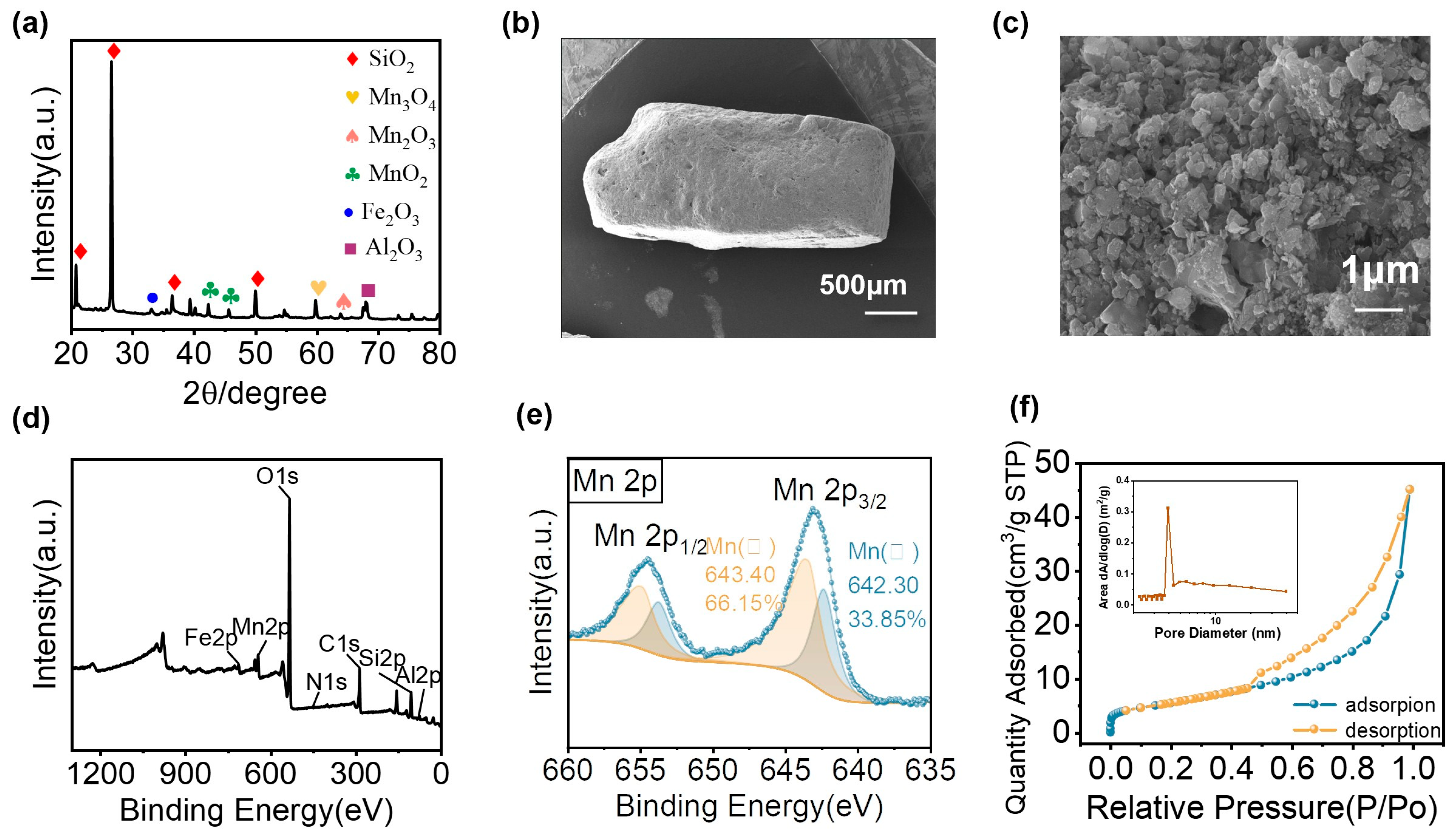
The mineralogical composition of NMS was characterized by XRD (Figure 1a). The strong diffraction peaks observed at 20.8°, 26.5°, and 50.0° in NMS match well with SiO2 (JCPDS 79-1906), indicating that quartz is the major component of NMS. Furthermore, the characteristic peaks at 42.4° and 45.7°, along with the diffraction peaks at 64.0° and 59.9°, correspond to MnO2 (JCPDS 12-0716), Mn2O3 (JCPDS 02-0909), and Mn3O4 (JCPDS 16-0154), respectively, indicating that manganese in NMS coexists as oxides with multiple valence states. Additionally, the characteristic peaks near 33.0° and 68.0° can be attributed to Fe2O3 (JCPDS 85-0987) and Al2O3 (JCPDS 71-1123). The surface morphology and elemental distribution of NMS were investigated by SEM/EDS. As shown in SEM images (Figure 1b,c), NMS particles exhibit a rough and porous surface, formed by the aggregation of numerous fine particles into a loosely packed coating structure. EDS analysis (Figure S2) indicates that the main elements of NMS are Mn, O, and Si, with atomic percentages of 14.36%, 41.13%, and 27.24%, respectively. Additionally, Mn, Si, and O are distributed relatively uniformly across the particle surface, suggesting that MnOx forms a continuous and homogeneous coating layer on the quartz matrix. The trace amounts of Fe, Al, and C were also detected, which aligns with the typical composition reported for NMS [7].
XPS spectra were used to analyze the surface elemental composition and valence states of NMS (Figure 1d). The survey spectrum indicates that the material surface is predominantly composed of Mn, O, and Si, with minor amounts of Fe, Al, and C, which is consistent with the results from XRD and EDS analyses. In the high-resolution Mn 2p spectrum (Figure 1e), the peaks located at 642.51 eV and 654.0 eV correspond to Mn 2p3/2 and Mn 2p1/2, respectively. The two strong peaks observed at 643.40 eV and 654.87 eV are attributed to Mn(IV), while the peaks at 642.30 eV and 653.72 eV correspond to Mn(III) [16]. The relative proportions of Mn(IV) and Mn(III) are approximately 66.15% and 33.85%, respectively. Although the XRD results indicated the presence of a small amount of Mn3O4, suggesting that Mn(II)-bearing manganese oxide may also exist in the initial NMS, no distinct Mn(II) component was resolved in the high-resolution Mn 2p spectrum. This discrepancy may be attributed to the relatively low abundance of Mn3O4, resulting in the overlap of Mn(II) signals from other valence states. Therefore, the surface of pristine NMS is dominated by Mn(III)/Mn(IV) species, while a minor fraction of Mn(II)-bearing Mn3O4 may also be present in the bulk or near-surface mineral phase. Overall, the multivalent MnOx is expected to provide electron buffering and redox modulation capabilities during pollutant removal processes [9].
The textural properties of NMS were explored by nitrogen adsorption–desorption isotherm (Figure 1f); NMS exhibits a typical type IV isotherm with an H3 hysteresis loop, indicating that NMS possesses a mesoporous structure [17]. BET analysis results reveal that NMS has a specific surface area of 15.33 m2·g−1, an average pore diameter of 9.12 nm, and a pore volume of 0.07 cm3·g−1, suggesting that NMS possesses a certain degree of porosity and relatively well-developed mesoporous channels. In summary, NMS is composed of quartz sands coated with multivalent MnOx and accompanied by minor amounts of Fe2O3 and Al2O3. It also possesses a relatively high specific surface area and mesoporous structural characteristics. This composite structure provides abundant reaction sites and a favorable microenvironment for the interfacial interaction of organic pollutants on the NMS surface.

3.2. Selective Removal of SCP by NMS

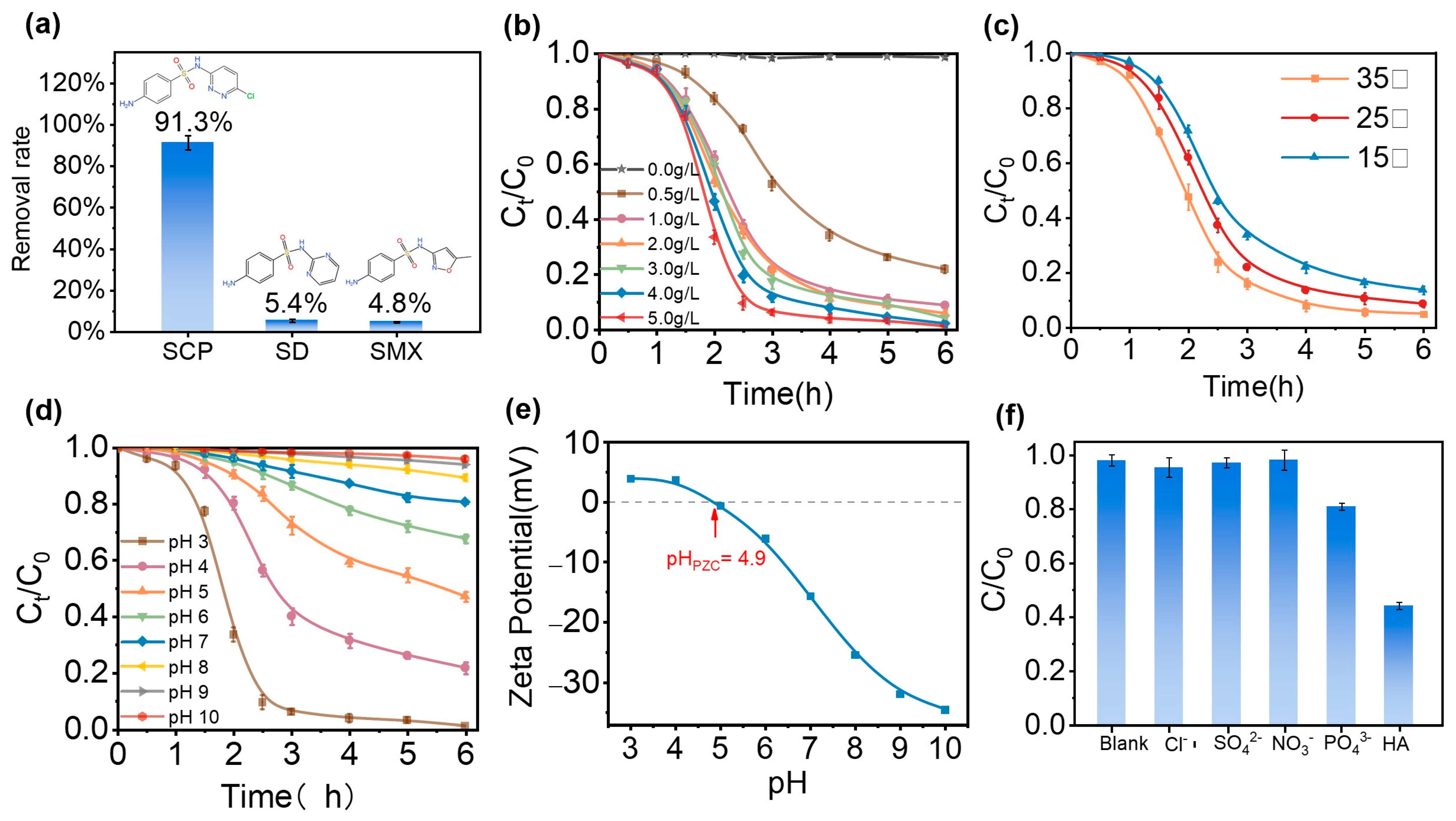
To investigate the structural specificity of SCP migration in the presence of NMS, the removal kinetics of NMS toward SCP were compared with SD and SMX (Figure 2a). The results show that under identical conditions, the removal rates for SD and SMX were both below 5%, whereas SCP was effectively removed by over 90% after 6 h. This clearly demonstrates that NMS exhibits distinct structural selectivity in the removal of SCP. The concentration of SCP decreased gradually within the first hour, followed by a rapid decline between 1 and 2.5 h, after which the reaction rate slowed and eventually reached equilibrium. Hence, the kinetic curve of SCP toward NMS cannot be accurately described by typical adsorption or degradation kinetic models (e.g., pseudo first/second order kinetic model) reported in previous studies [18,19], suggesting that multiple processes with distinct rates may be occurring simultaneously.
More investigations were carried out to study the influences of reaction parameters on the SCP degradation by NMS. In experiments with different NMS dosages (Figure 2b), the SCP removal efficiency significantly increased with a higher NMS dosage. When the dosage increased from 0.5 g L−1 to 1.0 g L−1, the SCP removal rate rose from 78.39% to 91.16%, indicating a marked improvement. As the NMS dosage was further increased to 5 g L−1, the removal rate only increased gradually from 91.16% to 99.38%, and the rate of improvement slowed. At a dosage of 5 g L−1, NMS only achieved a TOC removal efficiency of 42.65% (blank-corrected) for SCP, indicating that degradation is involved in this process with a portion of SCP being transformed into small-molecule intermediates [20]. As shown in Figure 2c, the removal efficiency of SCP by NMS exhibited a clear positive correlation with reaction temperature. As the temperature increased from 15 °C to 35 °C, the SCP removal efficiency rose from 86.10% to 95.08%; this endothermic behavior suggested that the chemical reaction is possibly the dominant process [21].
As a critical environmental factor, pH governs the interfacial charge state, redox potential, and pollutant speciation [22]. The experimental results (Figure 2d) show that the SCP removal by NMS was highly pH-dependent. Under acidic conditions (pH = 3), the removal efficiency of SCP reached 99.38%. In contrast, at neutral pH (pH = 7), the removal efficiency after 6 h was only 19.50%. When the initial pH was further adjusted to an alkaline value (pH = 10), the removal efficiency dropped to 4.04%, indicating that alkaline conditions substantially suppress the removal capability of NMS. Considering that the solution pH affects the surface charge properties of NMS, zeta potential measurements were conducted (Figure 2e). The results show that the point of zero charge (pH PZC) of NMS is 4.9. When the pH is below 4.9, its surface is positively charged, whereas it becomes negatively charged when the pH exceeds 4.9. Meanwhile, pH also influences the protonation/deprotonation state of organic pollutants. The pKa1 and pKa2 values of SCP are 1.87 ± 0.3 and 5.45 ± 0.06, respectively. This indicates that SCP exists predominantly as a protonated cation at pH < 1.87, as a neutral molecule within the pH range of 1.87–5.45, and as a deprotonated anion at pH > 5.45 [23]. Therefore, under conditions where pH > 5.45, both NMS and the deprotonated anionic form of SCP carry negative charges. This suggests that the adsorption process may be a key step in the selective removal of SCP by NMS, in which electrostatic repulsion is likely the reason for the inhibited removal efficiency observed under alkaline conditions [22]. Notably, the concentration of total Mn ions in the post-reaction solution under pH = 3–10 remained within the range of 0.004–0.03 mg L−1; the highest Mn release was observed under pH 3. This concentration is below the permissible limit of Mn (0.1 mg L−1) in source water regulated by the U.S. Environmental Protection Agency [24], indicating that NMS poses a low risk of secondary pollution during SCP removal under acidic conditions.
Furthermore, under the optimal reaction condition (pH = 3), the surface of NMS is positively charged. Theoretically, coexisting anions in the solution may compete with SCP for the surface sites of NMS through electrostatic interactions. However, the results of coexisting anion experiments (Figure 2f) show that 1 mM of chloride (Cl), sulfate (SO42−), and nitrate (NO3) ions had only minor effects on SCP removal efficiency, with variations within ±5%. In contrast, 1 mM of phosphate (PO43−) significantly suppressed SCP removal by approximately 20%, likely due to its ability to form inner-sphere complexes with Mn/Fe sites [25]. Humic acid (HA), used as a model coexisting dissolved organic matter (DOM), reduced SCP removal to 50% at 20 mg·L−1. Considering that manganese oxides are broad-spectrum adsorptive and oxidative media in natural and engineered environments, maintaining a 50% removal efficiency under such a high DOM background still indicates a relatively high selectivity of NMS toward SCP.

3.3. Mechanism of Selective Removal of SCP by NMS

3.3.1. Selective Adsorption via Mn–N Coordination

The above experiments have shown that NMS exhibits significant selective removal of SCP, which is a process involving a multi-step coupling mechanism with obvious pH-dependence. Furthermore, the TOC removal rate of SCP by NMS exceeds 40%. This notable difference suggests the possible existence of a more efficient conversion pathway. Therefore, adsorption might be considered an essential and non-negligible process in this system.
To further investigate the role and contribution of adsorption in SCP removal by NMS, elution treatments were performed on NMS after SCP adsorption. Methanol was used to desorb weakly bound organic species because it can dissolve SCP and disrupt weak interactions (e.g., van der Waals forces and hydrogen bonding) [26]. HCl was used to dissolve the metal oxide layer on the NMS surface, thereby releasing adsorbates retained by stronger interactions (e.g., coordination). As shown in Figure S3, methanol elution did not lead to a significant release of SCP, while approximately 25.56% of SCP was desorbed after HCl elution, demonstrating that the efficient removal of SCP by NMS primarily relies on strong coordinative adsorption. In addition, TOC analysis of the HCl eluate revealed that about 45.31% of the removed TOC was released back into the solution, suggesting that this process is accompanied by partial mineralization or structural transformation of SCP. From the perspective of molecular structure, the pyridazine ring (1,4-diazabenzene) in SCP contains two nitrogen atoms at the 1,2-adjacent positions, forming an aromatic structure with relatively low π-conjugation, which facilitates the pyridine-type nitrogen atoms to provide lone pair electrons for chelation with metal centers [27]. The heterocyclic structures of SD and SMX may suffer from insufficient coordination sites or significant steric hindrance, making it difficult to form similarly stable chelate structures. This structural difference is likely the key reason why NMS exhibits higher selectivity and removal efficiency for SCP.
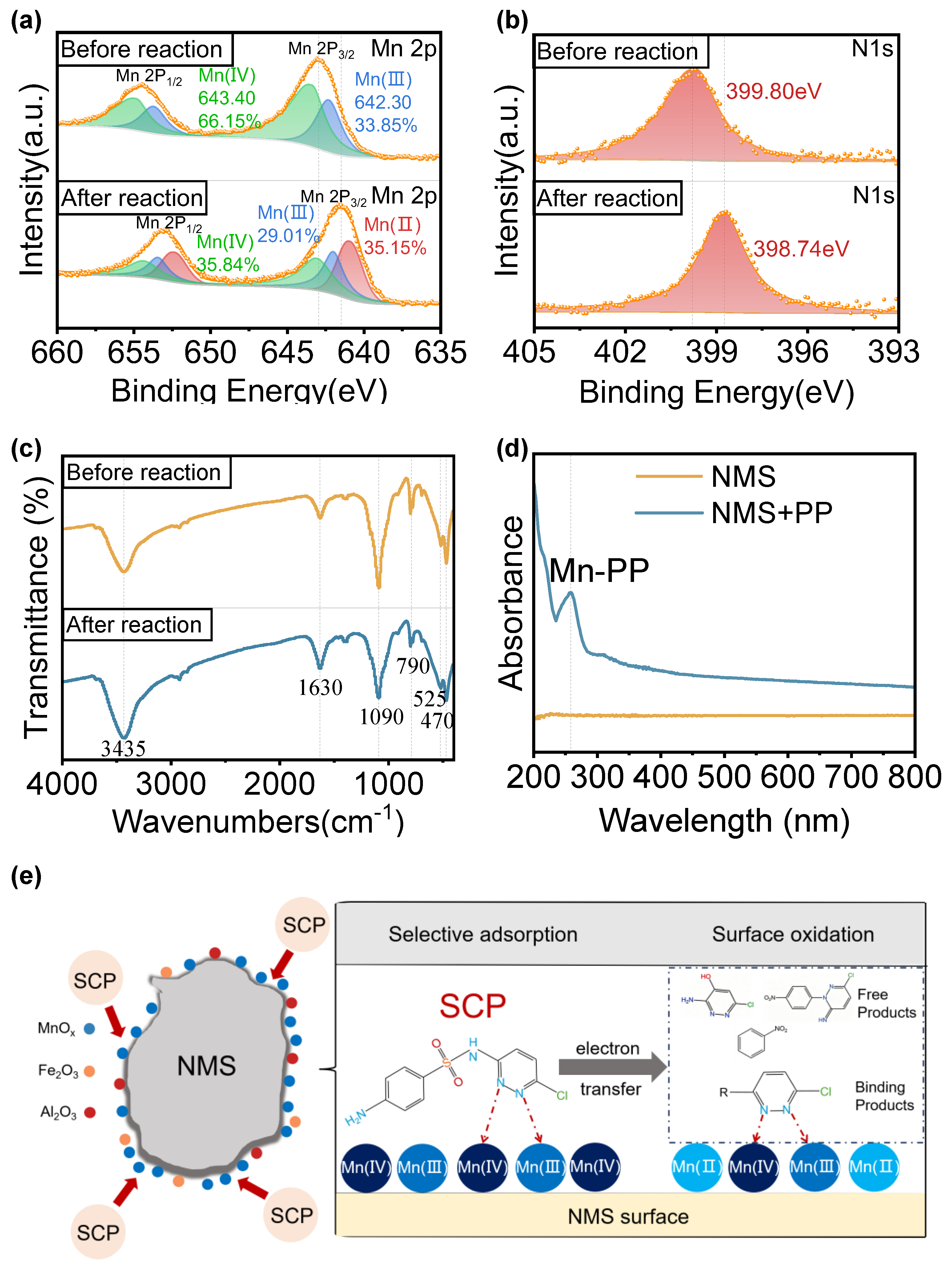
To further verify the characteristic coordination process involving the vicinal pyridinic nitrogen atoms in SCP, a comparative analysis of the high-resolution XPS spectra of Mn 2p and N 1s for NMS before and after the reaction was conducted. The results (Figure 3a) show that the Mn 2p3/2 binding energy shifted markedly from 642.95 eV to 641.50 eV after the reaction, indicating the formation of an electron-rich Mn center [28]. The vicinal pyridinic nitrogen atoms on the pyridazine ring of SCP act as Lewis basic sites, donating lone-pair electrons to the Mn species on the NMS surface to form Mn–N coordination bonds. During coordination, electron transfer from the ligand to the metal center alters the chemical environments of Mn 2p and N 1s, leading to the overall negative shift in binding energy. In addition, the N 1s signal of pristine NMS appeared at 399.80 eV (Figure 3b), which may originate from native nitrogen-containing species on the surface of natural manganese sand. After reaction with SCP, the N 1s binding energy decreased to 398.74 eV, indicating that the surface N species on NMS underwent changes in their chemical environment. This shift may be associated with the formation of Mn–N coordination bonds between SCP-derived pyridinic N and surface Mn sites. The FTIR spectra of NMS before and after the reaction (Figure 3c) showed a weakening of the characteristic peaks at 470 cm−1, 525 cm−1, and 790 cm−1, which are attributed to the stretching vibrations of Mn–O [29]. This also suggests that Mn-O participated in SCP removal and was associated with surface coordination.

3.3.2. Oxidative Degradation Driven by Surface Mn(III)/Mn(IV)

Based on the preceding discussion, the removal of SCP by NMS involves not only structure-selective adsorption but is also accompanied by partial mineralization or structural transformation. To further elucidate the oxidation process involved, radical quenching experiments were first employed. Previous studies have shown that MnOx can activate dissolved oxygen in aqueous environments to generate hydroxyl radicals (·OH) and superoxide radicals (·O2). To determine whether the transformation involves a radical-dominated oxidation pathway, tert-butanol (t-BuOH) and p-benzoquinone (p-BQ) were introduced as specific quenchers for ·OH and ·O2, respectively [30]. The results indicated that the addition of either quencher did not affect the removal efficiency of SCP (Figure S4), suggesting that another oxidation mechanism should dominate the transformation of SCP on the surface of NMS.
Figure 3. (a) Mn 2p XPS spectra; (b) N 1s XPS spectra; (c) FTIR patterns of NMS before and after SCP removal; (d) UV–vis spectra of NMS and NMS-PP system; (e) proposed mechanism of selective removal of SCP by NMS.
Water 18 01600 g003
The surface oxidation capability of MnOx is closely related to the valence state distribution of its surface elements. To further elucidate the underlying mechanism, changes in the chemical states of manganese were analyzed by comparing the high-resolution XPS spectra of Mn 2p for NMS before and after the reaction (Figure 3a). Compared with the pre-reaction state, the post-reaction Mn 2p spectra revealed that the manganese valence distribution evolved from an initial Mn(III)/Mn(IV) dual-valence system into a coexisting Mn(II)/Mn(III)/Mn(IV) system. Specifically, the relative contents of Mn(IV) and Mn(III) decreased from 66.15% and 33.85% to 35.84% and 29.01%, respectively, while the proportion of Mn(II) increased to 35.15%, demonstrating that Mn(III)/Mn(IV) in NMS acted as electron acceptors and participated in the oxidative transformation of SCP [7].
Given the crucial role of Mn(III) as a key intermediate in heterogeneous oxidation reactions, the participation of Mn(III) was further investigated by introducing pyrophosphate (PP). After adding PP to the NMS–SCP system, a distinct new absorption peak appeared at 258 nm in the UV–vis spectra (Figure 3d), which can be attributed to the ligand–metal charge transfer band of the Mn(III)–PP complex [31]. This result suggests that Mn(III) species were present in an accessible form during the reaction and could be stabilized by PP. Combined with the Mn 2p XPS results showing a decrease in Mn(IV)/Mn(III) and the formation of Mn(II) after reaction, the Mn(III)–PP signal provides complementary evidence that Mn(III) was involved in the surface redox process during SCP removal. Therefore, SCP transformation by NMS is likely associated with electron transfer among Mn(IV), Mn(III), and Mn(II), in which Mn(III) may act as both an intermediate species generated from Mn(IV) reduction and a reactive surface Mn species participating in SCP oxidation.
In summary, a possible removal pathway of SCP by NMS is suggested via a coupled process of selective adsorption and surface oxidation. The vicinal pyridinic nitrogen atoms on the pyridazine ring in the molecular structure of SCP provide specific binding sites on the NMS surface, allowing the formation of stable Mn–N coordination complexes with surface Mn species. Subsequently, Mn(III)/Mn(IV) act as the primary electron acceptors driving the surface oxidation of SCP. This coupled process underlies the highly efficient and structurally specific removal behavior of SCP by NMS compared to other sulfonamide antibiotics (see mechanistic diagram in Figure 3e). It should be noted that NaN3 was used in the batch experiments to suppress microbial activity, but it can also scavenge singlet oxygen (1O2), making it difficult to evaluate the potential role of 1O2 in the present system. In addition, conventional hydrophilic quenchers may be ineffective for short-lived surface-bound radicals or interfacial reactive species [32]. Therefore, the possible involvement of surface-confined ROS cannot be completely excluded.

3.4. Transformation Products of SCP and Toxicity Assessment

Notably, during the selective adsorption and surface oxidation of SCP by NMS, the removal efficiency of SCP reached 99%, whereas the TOC removal was only 42.65%. This indicates that SCP was not fully mineralized, and a considerable portion of the organic carbon was released back into the aqueous phase as degradation products. Therefore, LC-HRMS analysis was performed to identify possible transformation products generated during SCP treatment by NMS, and the detected products were further used for potential ecotoxicity assessment.
Based on primary LC-HRMS information, including accurate m/z values, proposed elemental compositions, isotope patterns, and comparison with previously reported transformation products of SCP or related sulfonamide antibiotics, five possible transformation products (a–e) were tentatively identified (Figure S5 and Table S2). Product a (m/z 221) retained the sulfur-containing sulfonamide-related structure, suggesting partial rearrangement of SCP. Product b (m/z 123) was assigned to a small aromatic fragment, indicating cleavage of the parent molecule. These intermediates were also reported in related studies [33], as SCP may undergo Smiles rearrangement between the sulfonyl group and the aromatic ring, leading to molecular structural reconstruction. Products c (m/z 251), d (130), and e (m/z 145) were chlorinated N-containing products, implying that the pyridazine-related moiety could remain during surface-mediated transformation. Among them, products c and d suggested that SCP may undergo sulfonamide bond cleavage, while product e suggests possible oxygen incorporation. Compared to the mineralization pathways often observed in radical-driven advanced oxidation processes [34], the transformation of SCP mediated by NMS results only in partial rearrangement and cleavage of the molecular skeleton and is difficult to further oxidize to low-molecular-weight organic acids or inorganic end products. This indicates that the surface oxidation capability of NMS is relatively limited and mainly drives structural transformation rather than complete mineralization.
To further evaluate the ecological risks of the intermediate products generated during SCP degradation, this study employed EcoSAR software to predict the acute and chronic aquatic toxicity of the products listed in Table S2 (results are shown in Table S3). Here, LC50/EC50 represents the concentration threshold (mg·L−1) for acute lethality/effects on aquatic organisms such as fish, Daphnia, and green algae, while ChV denotes the corresponding chronic toxicity value. The prediction results reveal that products c and d mainly pose chronic toxicity risks to Daphnia and green algae, indicating that the products still pose potential ecotoxicological risks. Thus, in practical water treatment applications, relying solely on NMS is insufficient to fully eliminate the environmental risks associated with SCP. It remains necessary to combine NMS with enhanced oxidation processes or biological treatment units in subsequent stages to further reduce the toxicity of degradation products, thereby achieving more thorough and safe removal of sulfonamide antibiotics.

4. Conclusions

This study clarifies the mechanistic role of the structural features of sulfachloropyridazine (SCP) in governing its removal efficiency during water treatment using natural manganese sand (NMS). SCP can be efficiently removed by NMS from two selected sulfonamide analogs, SD and SMX, which contain different nitrogen-containing functional groups, highlighting the remarkable structure-dependent selectivity of this process. Under optimal conditions (initial NMS dosage 5 g·L−1, pH = 3), 99.38% of 5 mg·L−1 SCP was removed by NMS within 6 h. Despite this high removal efficiency, the TOC removal was only 42.65%, indicating that SCP underwent merely partial transformation. Mechanistic studies revealed that the vicinal pyridinic nitrogen atoms (=N–N=) in the terminal pyridazine ring of SCP provide dual electron-donating sites, enabling specific binding to manganese centers on the NMS surface via inner-sphere coordination. This coordination-dominated adsorption process exhibited significant pH dependence. Under neutral-to-alkaline conditions (pH > 5), the removal efficiency decreased markedly due to enhanced electrostatic repulsion. Following selective adsorption, the surface Mn(III)/Mn(IV) species can act as the primary electron acceptors, driving a surface oxidation pathway. Product analysis indicated that some transformation products still exhibited potential ecotoxicity. Therefore, although NMS showed moderate capability for SCP removal under specific conditions, integration with subsequent advanced treatment processes is still recommended to further mitigate potential environmental risks.

Supplementary Materials

The following supporting information can be downloaded at: https://www.mdpi.com/article/10.3390/w18131600/s1, Figure S1: Calibration curve of SCP, SD, SMX measure by HPLC; Figure S2: SEM and EDS mapping images of NMS; Figure S3: Desorption rate of SCP via methanol and HCl; Figure S4: Effect of specific quenchers on SCP removal by NMS; Figure S5: Mass spectra of the transformation products; Table S1: Details of the ultra-performance liquid chromatograph (UPLC) method for measurement of target sulfonamide micropollutants (SCP, SD, SMX) concentrations; Table S2: Transformation products of SCP during removal by NMS; Table S3: EcoSAR-predicted ecotoxicity values of SCP and its transformation products in the NMS system.

Author Contributions

Conceptualization, X.R. and Z.L.; methodology, X.R.; software, X.R.; validation, H.L., J.H. and Q.Z.; formal analysis, X.R.; investigation, X.R., H.L. and J.H.; resources, L.Z., S.Z. and Z.L.; data curation, X.R.; writing—original draft preparation, X.R.; writing—review and editing, all authors; visualization, X.R. and H.L.; supervision, Z.L.; project administration, Z.L.; funding acquisition, Z.L. All authors have read and agreed to the published version of the manuscript.

Funding

This research was funded by Guangxi Science and Technology Major Program [Grant No. AA23073009], Guangxi Natural Science Foundation (Grant No. 2025GXNSFBA069460) and the Bagui Youth Top Talent Program of Guangxi (Grant No. GuiRenCaiBan [2024]1).

Data Availability Statement

The data presented in this study are available upon reasonable request from the corresponding author, as the data are currently being used in ongoing follow-up research.

Conflicts of Interest

There are no conflicts to declare.

References

  1. Duan, W.Y.; Cui, H.W.; Jia, X.Y.; Huang, X. Occurrence and ecotoxicity of sulfonamides in the aquatic environment: A review. Sci. Total Environ. 2022, 820, 153–178. [Google Scholar] [CrossRef]
  2. Yin, F.B.; Wang, S.L.; Zhang, W.Q.; Cao, Q.T.; Lian, T.J.; Dong, H.M. Sulfachloropyridazine (SCP) effects on anaerobic microorganisms and its degradation pathways. Chem. Eng. J. 2023, 466, 143049. [Google Scholar] [CrossRef]
  3. Wu, Y.; Liu, S.S.; Huang, K.Y.; Yang, Q.H.; Zheng, Y.; Li, L.C. Adsorption characteristics of sulfonamide antibiotic molecules on carbon nanotube and the effects of environment. J. Mol. Model. 2023, 29, 150. [Google Scholar] [CrossRef] [PubMed]
  4. Wang, D.Z.; Li, J.P.; Fan, J.Z.; Jia, D.Z. Metal–organic coordination architectures of bis(N-imidazolyl) pyridazine: Syntheses, structures, emission and photocatalytic properties. Polyhedron 2016, 111, 123–131. [Google Scholar] [CrossRef]
  5. Tiwari, D.; Laldanwngliana, C.; Choi, C.H.; Lee, S.M. Manganese-modified natural sand in the remediation of aquatic environment contaminated with heavy metal toxic ions. Chem. Eng. J. 2011, 171, 958–966. [Google Scholar] [CrossRef]
  6. Joshi, T.P.; Zhang, G.; Cheng, H.Y.; Liu, R.P.; Liu, H.J.; Qu, J.H. Transformation of para arsanilic acid by manganese oxide: Adsorption, oxidation, and influencing factors. Water Res. 2017, 116, 126–134. [Google Scholar] [CrossRef] [PubMed]
  7. Wang, J.S.; de Ridder, D.; Sutton, N.B.; Poursat, B.A.J.; Saha, P.; van der Wal, A. The abiotic removal of organic micropollutants with iron and manganese oxides in rapid sand filters for groundwater treatment. Water Res. 2023, 241, 120146. [Google Scholar] [CrossRef] [PubMed]
  8. Vries, D.; Bertelkamp, C.; Schoonenberg Kegel, F.; Hofs, B.; Dusseldorp, J.; Bruins, J.H.; de Vet, W.; van den Akker, B. Iron and manganese removal: Recent advances in modelling treatment efficiency by rapid sand filtration. Water Res. 2017, 109, 35–45. [Google Scholar] [CrossRef] [PubMed]
  9. Chen, W.; Liu, J.; Huangfu, X.; Chen, Y.; Zhong, W.Y.; Liu, Y.; Huang, Y.; Liu, H. Reductive transformation of MnO2 controls thallium remobilization: Differential effects of layered and tunneled structures. Environ. Sci. Technol. 2025, 59, 9221–9234. [Google Scholar] [CrossRef] [PubMed]
  10. Gao, Y.D.; Gimilaro, C.; Zhang, H.C. MnO2 and oxygen facilitate organic matter formation via oxidation and catalysis in oxygenated alkaline conditions. Environ. Sci. Technol. 2025, 59, 12618–12629. [Google Scholar] [CrossRef] [PubMed]
  11. Zhai, J.; Wang, Q.F.; Li, Q.; Shang, B.; Rahaman, M.H.; Liang, J.L.; Ji, J.C.; Liu, W.B. Degradation mechanisms of carbamazepine by δ-MnO2: Role of protonation of degradation intermediates. Sci. Total Environ. 2018, 640–641, 981–988. [Google Scholar] [CrossRef] [PubMed]
  12. Gao, J.; Pedersen, J.A. Adsorption of sulfonamide antimicrobial agents to clay minerals. Environ. Sci. Technol. 2005, 39, 9509–9516. [Google Scholar] [CrossRef] [PubMed]
  13. Francisco-Márquez, M.; Soriano-Correa, C.; Sainz-Díaz, C.I. Adsorption of sulfonamides on phyllosilicate surfaces by molecular modeling calculations. J. Phys. Chem. C 2017, 121, 2905–2914. [Google Scholar] [CrossRef]
  14. Thompson, L.K.; Zhao, L.; Xu, Z.Q.; Miller, D.O.; Reiff, W.M. Self-assembled supramolecular M9 (Mn(II), Fe(III), Zn(II)), M5 (Fe(III)), and [M3]2 (Pb(II)) complexes: Structural, magnetic, and mössbauer properties. Inorg. Chem. 2003, 42, 128–139. [Google Scholar] [CrossRef] [PubMed]
  15. Li, Z.C.; Lu, J.; Zhang, T.Y.; Liu, Y.; Pan, R.J.; Fu, Q.; Liu, X.; Mao, S.; Xu, B. Pyrazine-based iron metal organic frameworks (Fe-MOFs) with modulated O-Fe-N coordination for enhanced hydroxyl radical generation in fenton-like process. J. Colloid Interface Sci. 2024, 674, 279–288. [Google Scholar] [CrossRef] [PubMed]
  16. Zhang, Y.R.; Wang, J.P.; Niu, M.Y.; Tang, J.; Chen, Z.P.; Wan, C.; Ke, Q.P. Surface adsorbed–H2O promoted aerobic oxidation of biomass–derived alcohols on MnOx catalysts. Chem. Eng. J. 2024, 490, 151721. [Google Scholar] [CrossRef]
  17. Baldovino-Medrano, V.G.; Niño-Celis, V.; Isaacs Giraldo, R. Systematic analysis of the nitrogen adsorption–desorption isotherms recorded for a series of materials based on microporous–mesoporous amorphous aluminosilicates using classical methods. J. Chem. Eng. Data 2023, 68, 2512–2528. [Google Scholar] [CrossRef]
  18. Liu, J.H.; Cui, J.; Gao, J.F.; Guo, H.H.; Chai, X. Study on continuous adsorption/microwave-activated carbon for removing sulfachloropyridazine. Chem. Phys. Lett. 2022, 792, 139417. [Google Scholar] [CrossRef]
  19. He, Z.; Wang, Q.F.; Rao, P.H.; Dong, L.; Zhang, M.; Zhang, X.; Gao, N.Y.; Deng, J. WS2 significantly enhances the degradation of sulfachloropyridazine by Fe(III)/persulfate. Sci. Total Environ. 2022, 850, 157987. [Google Scholar] [CrossRef] [PubMed]
  20. Titchou, F.E.; Zazou, H.; Afanga, H.; Jamila, E.G.; Ait Akbour, R.; Hamdani, M.; Oturan, M.A. Comparative study of the removal of direct red 23 by anodic oxidation, electro-fenton, photo-anodic oxidation and photoelectro-fenton in chloride and sulfate media. Environ. Res. 2022, 204, 112353. [Google Scholar] [CrossRef] [PubMed]
  21. Zhao, S.Y.; Li, Y.H.; Wang, M.Z.; Chen, B.; Zhang, Y.; Sun, Y.H.; Chen, K.W.; Du, Q.J.; Wang, Y.Q.; Pi, X.X.; et al. Efficient adsorption of Congo red by micro/nano MIL-88A (Fe, Al, Fe-Al)/chitosan composite sponge: Preparation, characterization, and adsorption mechanism. Int. J. Biol. Macromol. 2023, 239, 124157. [Google Scholar] [CrossRef] [PubMed]
  22. Chai, F.; Badazabra, S.K.; Zhao, F.P.; Yan, X.; Wang, Q.W.; Min, X.B.; Chai, L.Y. Redox-active Fe-modified MnMg layered double hydroxide for highly efficient arsenic removal: Dual oxidation-adsorption mechanisms. J. Environ. Chem. Eng. 2025, 13, 118203. [Google Scholar] [CrossRef]
  23. Liu, L.; Sim, S.F.; Lin, S.; Wan, J.; Zhang, W.; Li, Q.; Peng, C. Integrated structural and chemical analyses for HCl-supported hydrochar and their adsorption mechanisms for aqueous sulfachloropyridazine removal. J. Hazard. Mater. 2021, 417, 126009. [Google Scholar] [CrossRef] [PubMed]
  24. Islam, M.Z.; Mostafa, M.G. Iron, manganese, and lead contamination in groundwater of Bangladesh: A review. Water Pract. Technol. 2024, 19, 745–760. [Google Scholar] [CrossRef]
  25. Li, Y.Y.; Wang, Y.T.; Huang, X.M.; Zhou, W.S.; Liang, J.L.; Liu, Y.S.; Shen, Y.; Tong, M.P. The effect of phosphate on the stability of Cr(OH)3 and CrxFe1−x(OH)3 in the presence of MnO2: Competition between dissolution, adsorption and oxidation. J. Hazard. Mater. 2025, 488, 137502. [Google Scholar] [CrossRef] [PubMed]
  26. Han, L.Z.; Qin, P.G.; Li, M.Y.; Li, D.; Mu, M.Y.; Gao, Y.M.; Zhu, S.P.; Lu, M.H.; Cai, Z.W. Hierarchically porous zirconium-based metal–organic frameworks for rapid adsorption and enrichment of sulfonamide antibiotics. Chem. Eng. J. 2023, 456, 140969. [Google Scholar] [CrossRef]
  27. Zhang, J.; Jiang, Y.Z.; Cheng, X.J.; Xie, Y.J.; Zhao, J.F.; Weng, J.N. Recent advances in versatile pyridazine-cored materials: Principles, applications, and challenges. J. Mater. Chem. C 2023, 11, 5563–5584. [Google Scholar] [CrossRef]
  28. Xie, Z.Q.; Lyu, Z.P.; Wang, J.N.; Li, A.M.; François-Xavier Corvini, P. Ultrafine-Mn2O3@N-doped porous carbon hybrids derived from Mn-MOFs: Dual-reaction centre catalyst with singlet oxygen-dominant oxidation process. Chem. Eng. J. 2022, 429, 132299. [Google Scholar] [CrossRef]
  29. Aghazadeh, M.; Asadi, M.; Maragheh, M.G.; Ganjali, M.R.; Norouzi, P.; Faridbod, F. Facile preparation of MnO2 nanorods and evaluation of their supercapacitive characteristics. Appl. Surf. Sci. 2016, 364, 726–731. [Google Scholar] [CrossRef]
  30. Xie, Z.H.; He, C.S.; Zhou, H.Y.; Li, L.L.; Liu, Y.; Du, Y.; Liu, W.; Mu, Y.; Lai, B. Effects of molecular structure on organic contaminants’ degradation efficiency and dominant ROS in the advanced oxidation process with multiple ROS. Environ. Sci. Technol. 2022, 56, 8784–8795. [Google Scholar] [CrossRef] [PubMed]
  31. Lu, X.H.; Wang, X.X.; He, H.H.; Liu, Q.Y.; Li, J.F.; Zhao, Z.Y.; Yang, P.; Pan, Z.Z.; Wang, Z.M. Bisphenol a degradation by manganese oxides at circumneutral pH: Quantitative evaluation of dissolved Mn(III) species with pyrophosphate. J. Hazard. Mater. 2025, 486, 137013. [Google Scholar] [CrossRef] [PubMed]
  32. Wang, L.; Jiang, J.; Pang, S.-Y.; Zhou, Y.; Li, J.; Sun, S.; Gao, Y.; Jiang, C. Oxidation of bisphenol A by nonradical activation of peroxymonosulfate in the presence of amorphous manganese dioxide. Chem. Eng. J. 2018, 352, 1004–1013. [Google Scholar] [CrossRef]
  33. Feng, M.B.; Baum, J.C.; Nesnas, N.; Lee, Y.; Huang, C.H.; Sharma, V.K. Oxidation of sulfonamide antibiotics of six-membered heterocyclic moiety by ferrate(VI): Kinetics and mechanistic insight into SO2 extrusion. Environ. Sci. Technol. 2019, 53, 2695–2704. [Google Scholar] [CrossRef] [PubMed]
  34. Duan, J.; Chen, L.; Ji, H.D.; Li, P.S.; Li, F.; Liu, W. Activation of peracetic acid by metal-organic frameworks (ZIF-67) for efficient degradation of sulfachloropyridazine. Chin. Chem. Lett. 2022, 33, 3172–3176. [Google Scholar] [CrossRef]
Figure 1. Characterization of NMS. (a) XRD pattern; (b,c) SEM images; (d) XPS full spectrum and (e) Mn 2p high-resolution spectrum; (f) N2 adsorption–desorption isotherm and curve of pore size distribution (internal).
Water 18 01600 g001
Figure 2. (a) Removal efficiency of SCP, SD and SMX by NMS; effect of (b) NMS dosages, (c) temperature and (d) initial solution pH for SCP removal by NMS; (e) zeta potential of NMS at different pH (dashed line); (f) effect coexist anions (1 mM) and humic acid (20 mg L−1) for SCP removal by NMS. (Controlled experimental parameters: C0(pollutant) = 5 mg L−1, pH = 3 for all sub-figures; NMS = 1 g L−1 for Figure 2a and 5 g L−1 for Figure 2c–f).
Water 18 01600 g002
Table 1. Molecular structures of selected sulfonamide antibiotics.
CompoundsMolecular FormulaConstitutional FormulaN-Heterocycle Structural Features
Sulfachloropyridazine
(SCP)
C10H9ClN4O2SWater 18 01600 i001Chlorinated pyridazine
(vicinal N atoms)
Sulfadiazine
(SD)
C10H10N4O2SWater 18 01600 i002Pyrimidine
(diagonal N atoms)
Sulfamethoxazole
(SMX)
C10H11N3O3SWater 18 01600 i0035-methylisoxazole (single N atom)
Disclaimer/Publisher’s Note: The statements, opinions and data contained in all publications are solely those of the individual author(s) and contributor(s) and not of MDPI and/or the editor(s). MDPI and/or the editor(s) disclaim responsibility for any injury to people or property resulting from any ideas, methods, instructions or products referred to in the content.