1. Introduction
A storm surge is defined as an abnormal deviation in sea level caused by intense atmospheric disturbances, including strong winds and rapid pressure changes [
1]. It is one of the world’s most severe natural disasters, posing significant threats to coastal communities, infrastructure, and economies [
2,
3]. Tide–surge nonlinear interaction is one of the key factors in theoretical research, accurate simulation, and forecasting of storm surges [
4,
5]. In coastal areas, the nonlinear interaction between astronomical tides and storm surges not only affects the magnitude of extreme water levels but also influences the timing of their occurrence [
6,
7,
8]. Neglecting such nonlinear processes and merely superimposing storm surges onto the tidal curve may lead to errors in estimating flood magnitude and timing, ultimately undermining flood risk assessments [
9,
10].
In the mid-1950s, Doodson [
11] and Proudman [
12] discovered that the interaction between astronomical tides and storm surges could lead to either increased or decreased water levels, depending on the phase difference between the astronomical tide and the storm surge. Rossiter [
13] used a one-dimensional model to simulate the nonlinear interaction between astronomical tides and storm surges in the Thames Estuary, finding that the phase shift between astronomical tides and storm surges is a significant reason for their nonlinear interaction: storm surge-induced water level decrease suppresses the propagation speed of tidal waves, while water level increase accelerates it. Proudman [
14] discussed the influence of bottom friction and shallow water effects on the interaction using an idealized model. Wolf [
15] studied the analytical equations for the propagation of waves in a semi-infinite channel under the nonlinear interaction of astronomical tides and storm surges, finding that the interaction intensifies with decreasing water depth.
Prandle and Wolf [
16] used a numerical model to demonstrate that the quadratic bottom friction term in the momentum equation is the primary cause of the nonlinear interaction between astronomical tides and storm surges in the Thames Estuary, a conclusion similarly reached by other scholars [
17,
18]. However, Rego and Li [
19], in their study of Hurricane Rita, found that the advection term had a greater effect than the bottom friction term, with the influence of the advection term being more pronounced during high tide. Park and Suh [
20] used the Planetary Boundary Layer-Advanced Circulation model (PBL-ADCIRC) to analyze the effects of water depth and astronomical tides on storm surges, indicating that the coupling of astronomical tides and storm surges must be considered in shallow waters and during spring tides. More recent studies have further quantified the contributions of different nonlinear terms. For instance, Yang et al. [
21] established a direct mathematical relationship between nonlinear residual levels and dynamic influencing factors in Tieshan Bay, demonstrating that the combination of wind stress and bottom friction terms, together with advection terms, plays a dominant role. Similarly, Zheng et al. [
22] proposed a new “addition” approach to separate the contributions of three nonlinear processes and concluded that quadratic bottom friction is the most significant contributor to tide–surge interaction in the Pearl River Estuary, followed by the shallow water effect and then the advective effect.
Tide–surge interaction is not limited to the interplay between tides and meteorological forcing; it can also be significantly modulated by wave-induced processes [
23,
24]. The spatial variation in wave action spectra causes a net momentum flux known as radiation stress, which can lead to wave setup and wave set-down, contributing to total water levels, especially in shallow coastal zones [
25,
26]. Studies have shown that wave-induced setup can reach up to 0.2–0.3 m during storm events and oscillate within tidal periods, implying that waves and tides interact nonlinearly to modulate surge levels [
27,
28]. Furthermore, the presence of strong tidal currents can refract and dissipate wave energy, altering wave heights and periods, which in turn modifies the radiation stress gradients and influences surge propagation [
29]. The absence of wave coupling in our model may lead to an underestimation of total water levels, particularly in very shallow areas and during the peak of the storm. These complex, multi-process interactions underscore the importance of fully coupled tide–surge–wave models for accurate coastal inundation forecasting.
The interaction between tides and storm surges can also be strongly influenced by river discharge in estuarine environments [
30,
31]. In fluvial estuaries, high-frequency tide–surge-river interactions can manifest as oscillations at higher diurnal harmonics, such as the sixth and eighth diurnal bands, which can more than double total surge levels near the head of the estuary [
32]. These interactions are primarily driven by enhanced bottom friction due to storm-induced currents and are further amplified by within-estuary resonance. Moreover, the timing of peak storm surge relative to the tidal phase has been shown to significantly affect coastal inundation. Jo et al. [
33] demonstrated that even under low-tide landfall conditions, a delayed secondary surge after the typhoon’s passage can coincide with the next high tide, prolonging flood duration and causing substantial additional inundation. Similarly, sequential surge oscillations in semi-enclosed bays, driven by bay resonance, can produce secondary peaks that rival or exceed the primary surge in magnitude [
33,
34].
Meanwhile, the nonlinear interaction between astronomical tides and storm surges in China’s coastal areas has been extensively studied, with research primarily focusing on analyzing the mechanisms of this interaction in different sea areas [
21,
22,
35,
36]. Xu et al. [
35] investigated the effects of tide–surge interactions on storm surges along the coasts of the Bohai Sea, Yellow Sea, and East China Sea using a coupled tide–surge model, and found that the maximum difference between extreme storm surge elevation values could reach up to 58 cm depending on the timing of typhoon landfall. Zhang et al. [
17] studied tide–surge interaction in the Taiwan Strait and found that nonlinear bottom friction was a major factor in predicting surge elevations. Zhang et al. [
37] further examined tide–surge interaction along the east coast of the Leizhou Peninsula, revealing that the interaction is most intense inside bays and can reach up to 1 m during strong typhoon events, with nonlinear bottom friction dominating the generation of the interaction. Guo et al. [
1] investigated tide–surge interaction in Xiamen Bay during Super Typhoon Meranti, demonstrating that relative intensities can exceed 0.3 across most of the bay, and that tide–surge interactions significantly reduce inundation area, depth, and duration. More recently, Jenkins et al. [
38] analyzed tide–surge interactions around the UK coast and found that extreme non-tidal residuals tend to occur relatively more frequently before tidal high water, and that the interaction between tide and surge varies considerably by location, with the Bristol Channel exhibiting the strongest interactions.
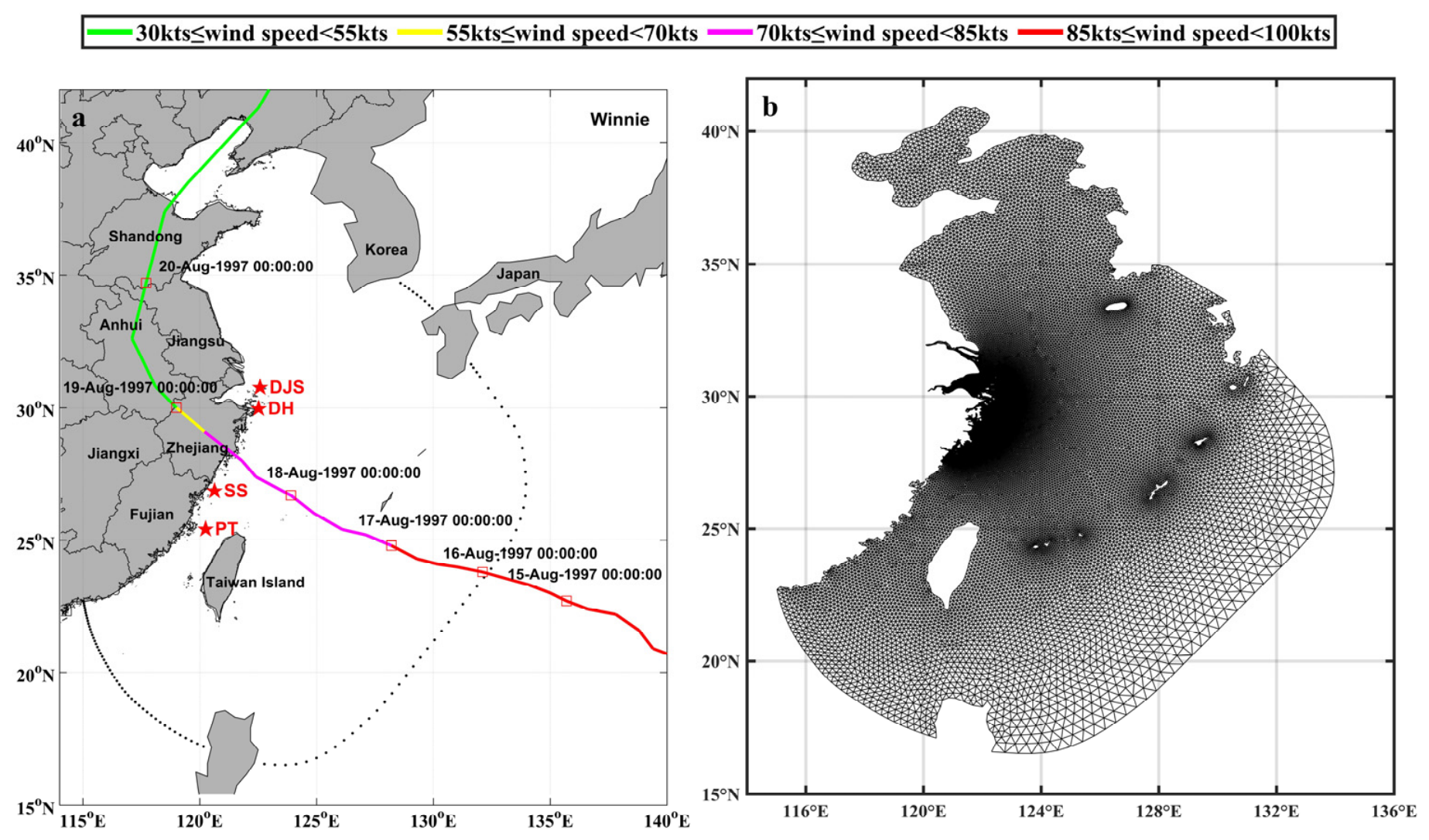
The southeastern coast of China features a highly indented and complex coastline with numerous islands, which facilitates the concentration of storm surge energy [
1,
35]. This region is characterized by large tidal ranges and strong tidal currents. When storm surges coincide with high or low tides, they often lead to severe storm surge disasters, endangering the lives and property of coastal residents. For example, Typhoon Winnie made landfall in Wenling County, Zhejiang Province, on 18 August 1997, resulting in over 5700 casualties and direct economic losses exceeding 26 billion yuan [
39]. Under the influence of global climate change, the frequency and intensity of storm surges affecting the southeastern coast of China have shown an increasing trend in recent decades [
40]. The number of typhoons making landfall, the frequency of significant storm surges, the occurrence of storm surges exceeding warning levels, and the annual extreme high-water levels have all exhibited fluctuating but rising trends [
41]. Particularly since 1990, as average temperatures have risen, this increasing trend has become more pronounced, further elevating the risk of storm surge disasters in the region [
42].
This paper investigates tide–surge nonlinear interactions along the southeastern coast of China (SCC) using Typhoon Winnie as a case study to quantify the spatial distribution of tide–surge nonlinear interaction along the SCC, identify the dominant physical mechanisms, and evaluate the sensitivity to friction, topography, and tidal characteristics. The remainder of this paper is organized as follows.
Section 2 describes the FVCOM configuration, the tide–surge coupling method, and the setup of sensitivity experiments.
Section 3 presents the results, including the spatial distribution of tide–surge nonlinear interaction and the effects of nonlinear terms, topographic slope, and astronomical tidal characteristics.
Section 4 discusses the dominant factors and underlying mechanisms. Finally,
Section 5 summarizes the main conclusions and their implications for storm surge forecasting and disaster risk assessment along China’s southeastern coast.
3. Results
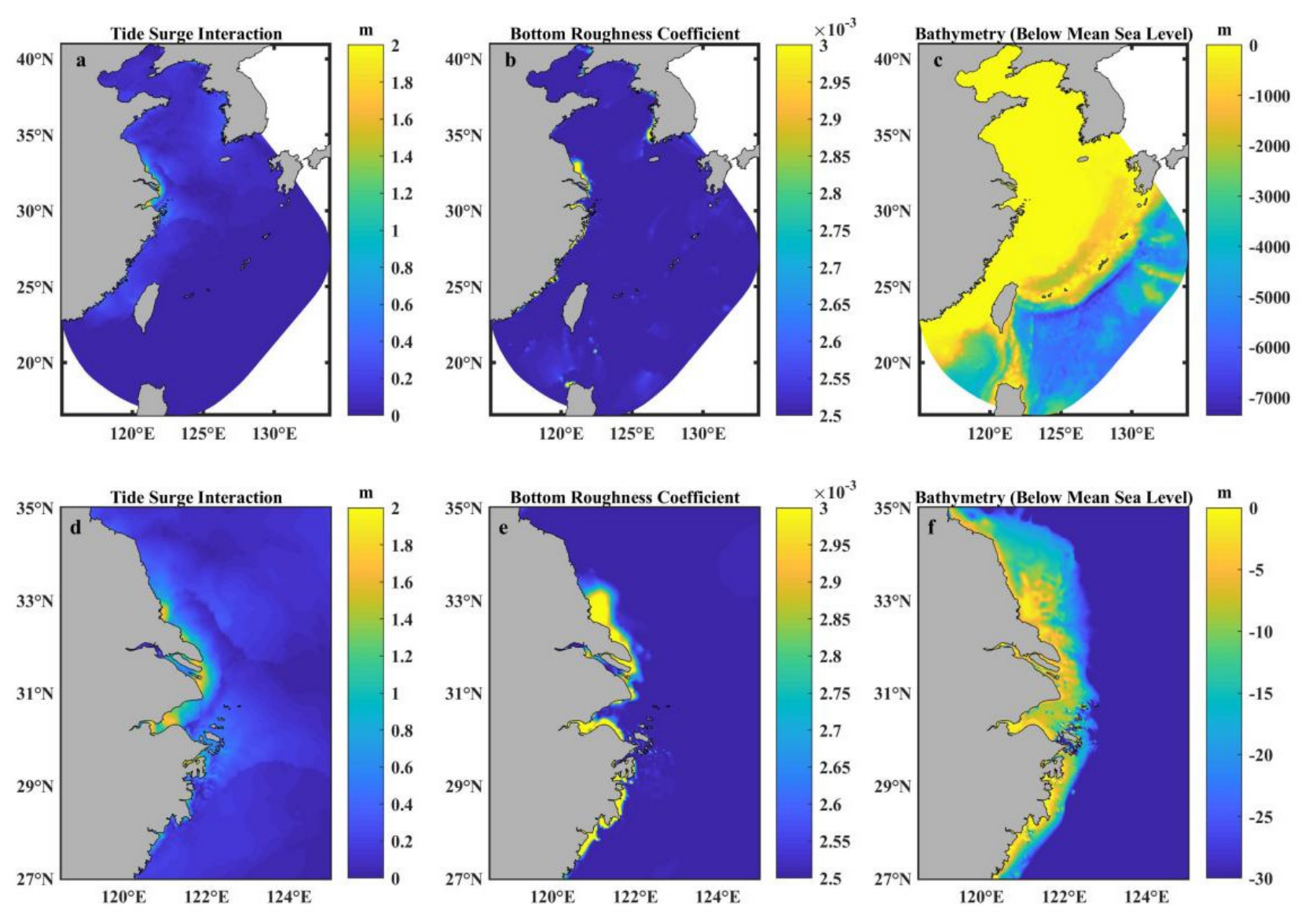
Figure 3 depicts the height distribution of tide–surge nonlinear interaction (a, d), the bottom friction coefficient (b, e), and the water depth distribution (c, f) in the tide–storm surge model. It can be observed that the magnitude of the tide–surge nonlinear interaction is related to water depth and the distance from the typhoon (see
Figure 3a), and the maximum value of the tide–surge nonlinear interaction occurs within Hangzhou Bay (
Figure 3d). Furthermore, the nonlinear interaction is more pronounced in shallow coastal areas and diminishes with increasing distance from the shore. It is also more significant in regions such as estuaries and bay mouths, and is more prominent on the northern side of the typhoon. Additionally, the magnitude of the nonlinear interaction is related to the bottom friction coefficient (see
Figure 3a–c). In areas with higher bottom friction coefficients, such as the coastal areas of Zhejiang, the inner part of Hangzhou Bay, and the coastal area of Jiangsu Province, the nonlinear interaction is also more evident, with a maximum nonlinear interaction value reaching up to 1.8 m. This underscores the necessity of considering the tide–surge nonlinear interaction when constructing storm surge models for China’s coastal waters, particularly for simulating and forecasting storm surges in Zhejiang, Jiangsu, and the Yangtze River Estuary.
3.1. Influence of Nonlinear Terms on Tide–Surge Nonlinear Interaction
To investigate the influence of quadratic bottom friction on the tide–surge nonlinear interaction, this section modifies the default quadratic bottom friction formulation to a linear expression, based on the seabed friction formulation. The linear expression is given as:
where
Czl is the linear bottom friction coefficient scheme. Zhang [
17] used a value of 0.0020 m/s for their research on tide–surge nonlinear interaction in the Taiwan Strait. In this study, the value is set to 0.0023 m/s, calculated based on the time of the extreme water level at the Dinghai Station.
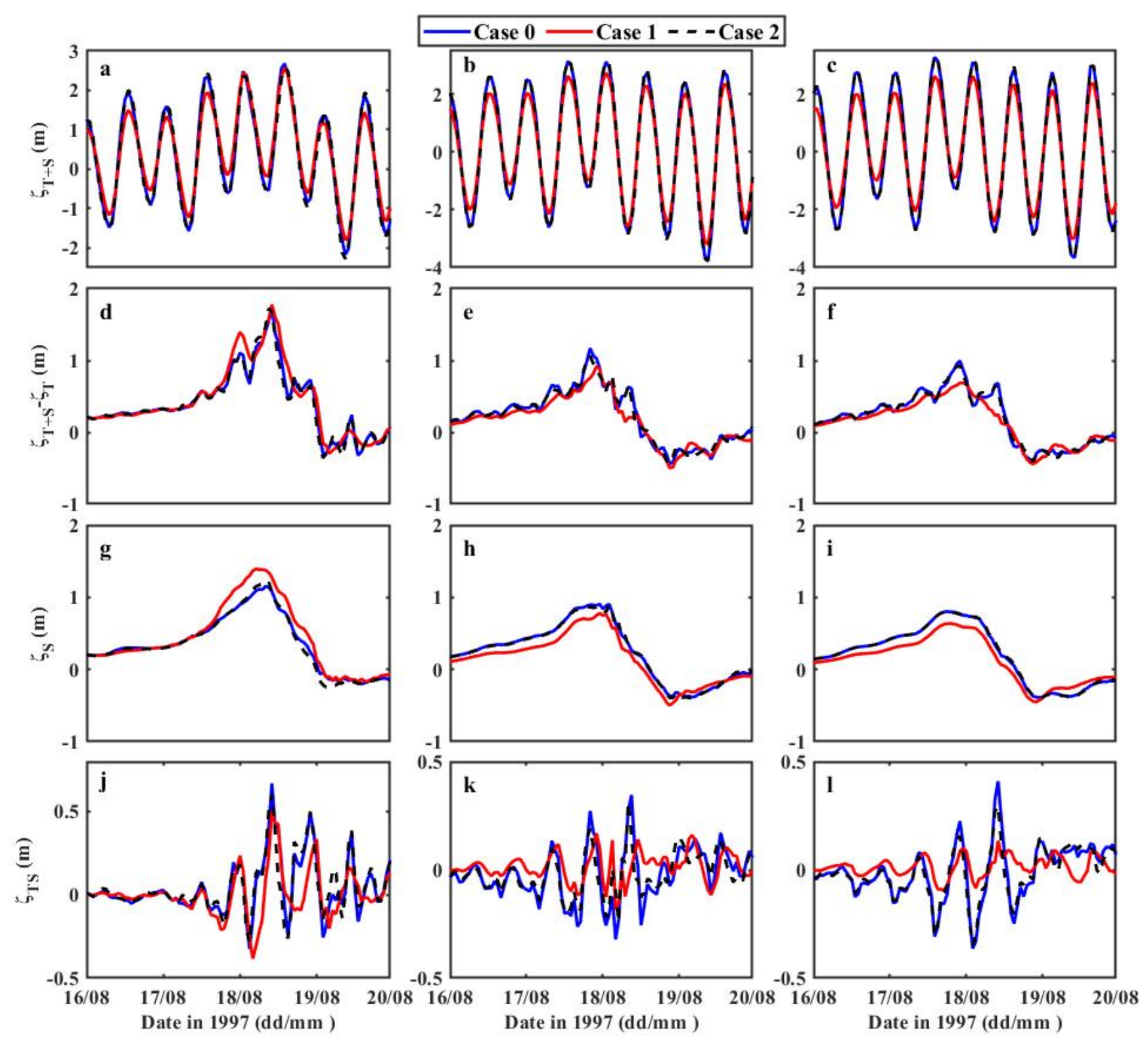
Figure 4 depicts the water level variations under the baseline experiment (Case 0), the modified bottom friction coefficient scheme (Case 1), and the scheme neglecting the advection term (Case 2). The first row shows the total water level (
ζT+S); the second row shows the surge elevation (
ζT+S-
ζT); the third row shows the water level increase driven by wind and pressure fields (
ζS); and the fourth row shows the water level increase induced by the tide–surge nonlinear interaction (
ζTS).
Additionally, this study selects Dinghai (first column of
Figure 4), Sansha (second column), and Pingtan (third column) stations to represent the northern, central, and southern parts of the study area, respectively, for analyzing the tide–surge nonlinear interaction. It can be observed that the water level curves obtained under different forcing conditions after neglecting the advection term are almost identical to those of the baseline experiment, indicating that the tide–surge nonlinear interaction is not sensitive to the advection term in the momentum equations.
However, when the bottom friction scheme is modified to a linear expression, both the water level and the height induced by the tide–surge nonlinear interaction show a significant decreasing trend (except in
Figure 4d,g). Furthermore, compared to the baseline experiment, the timing of the peak surge occurrence is delayed to varying degrees across different stations. This indicates that modifying the bottom friction to a linear scheme weakens the forcing effect of wind and pressure fields on the water level (as shown in
Figure 4h,i), thereby reducing the surge elevation. Simultaneously, it enhances the dissipative effect of bottom friction, consequently delaying the time required to reach the extreme water level.
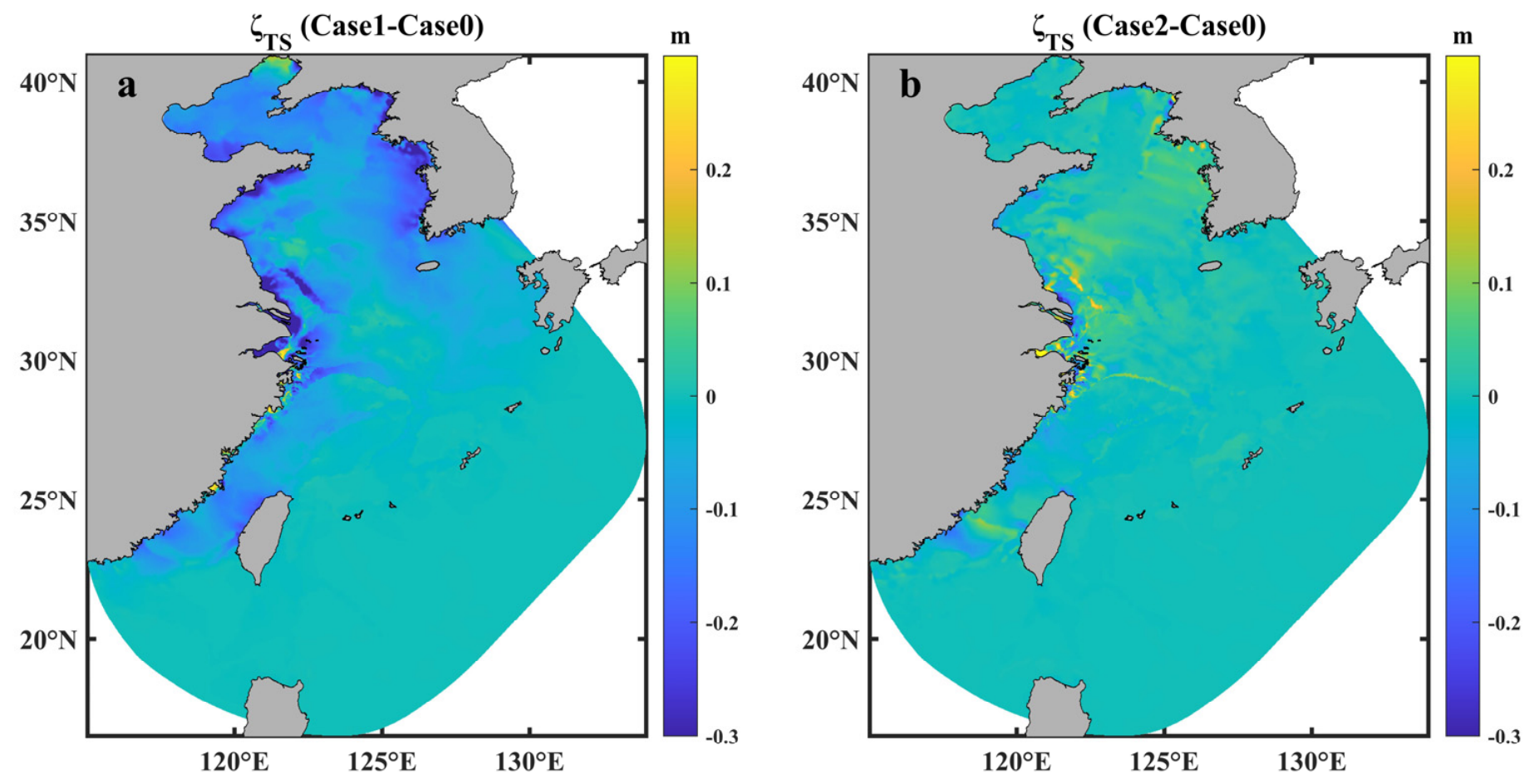
Figure 5 depicts the difference in the water level induced by tide–surge nonlinear interaction between the modified bottom friction scheme (
Figure 5a) and the scheme neglecting the advection term (
Figure 5b) compared to the baseline experiment, at the time of the maximum water level for each grid point in the computational domain. It can be observed that in the deep-water offshore areas, the influence of bottom friction on the tide–surge nonlinear interaction is minimal. However, in the nearshore areas, modifying the quadratic bottom friction scheme to a linear expression generally weakens the tide–surge nonlinear interaction. The most significant attenuation of the tide–surge nonlinear effect occurs along the coasts of Zhejiang, the Yangtze River Estuary, and Jiangsu, with a maximum reduction of up to 0.3 m. Furthermore, reducing bottom friction weakens the tide–surge nonlinear interaction, while increasing bottom friction strengthens it. The greater the bottom friction, the stronger the tide–surge nonlinear interaction.
The areas where neglecting the advection term has a relatively significant impact are observed outside the Yangtze River Estuary, in Hangzhou Bay, and the Zhoushan Islands region. This is likely due to the complex coastline topography in these areas, where the advection term plays an important role. Neglecting its effect in the momentum equations can consequently influence the results in these regions.
3.2. Influence of Topographic Slope on Tide–Surge Nonlinear Interaction
Previous studies have indicated that the shallow water effect also influences the tide–surge nonlinear interaction. This section designs three sets of experiments to investigate the tide–surge nonlinear interaction under different topographic slope conditions.
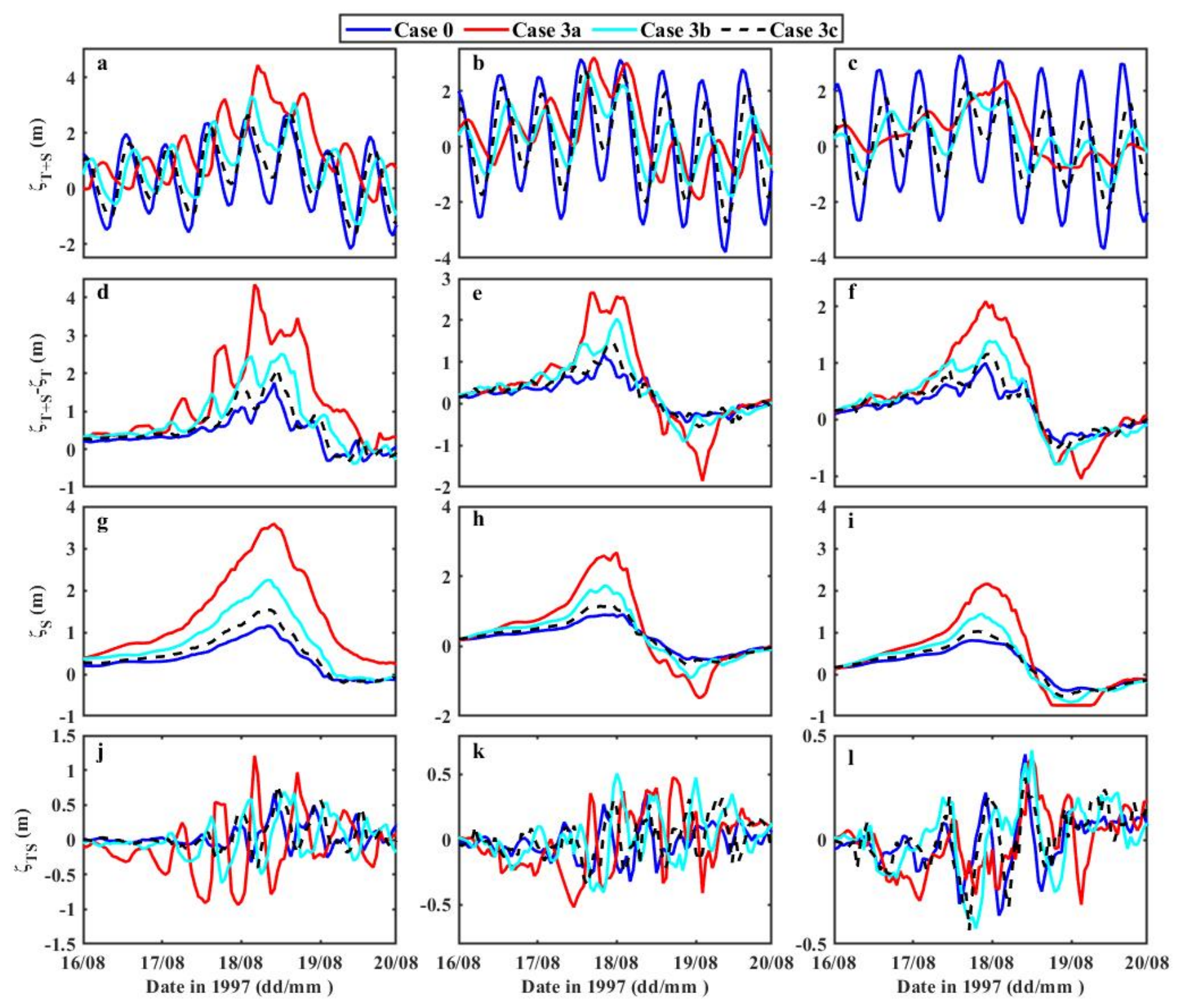
Figure 6 depicts the time series of water level and tide–surge nonlinear interaction at three stations for the baseline experiment (Case 0) and the three topographic slope experiments (Cases 3a–3c). Compared to the baseline setup, a greater reduction in water depth generally leads to a higher extreme water level (except in
Figure 6c). The tide–surge nonlinear interaction intensifies with decreasing water depth at Dinghai Station (
Figure 6j), but this trend is not significant at Sansha Station (
Figure 6h). However, at Pingtan Station (
Figure 6i), the tide–surge nonlinear interaction weakens as the topographic slope decreases. This indicates that the influence of topographic slope on the tide–surge nonlinear effect varies across different maritime areas.
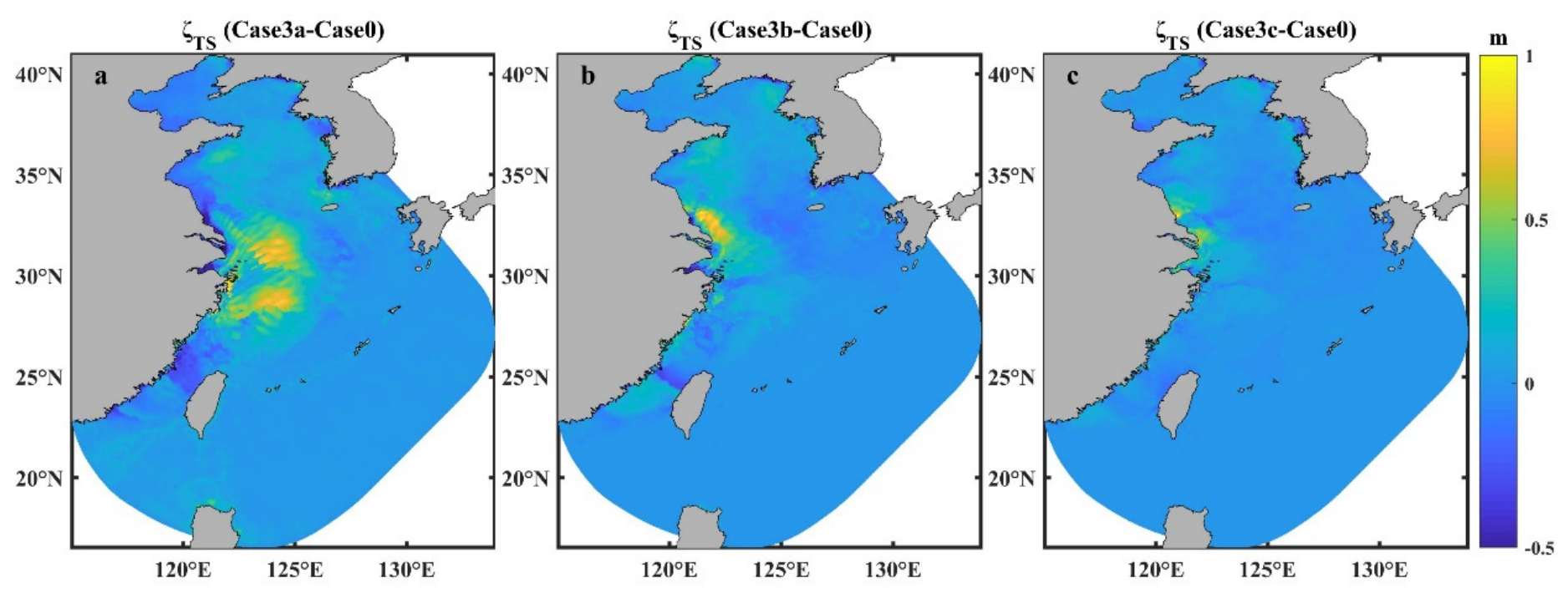
Figure 7 depicts the differences in water level induced by tide–surge nonlinear interaction between various topographic slope conditions and the baseline experiment, calculated at the time of the maximum water level for each grid cell in the computational domain. It can be observed that changes in topographic slope have minimal impact on the tide–surge nonlinear interaction in deep offshore waters. However, in shallow nearshore areas, a greater reduction in water depth leads to more pronounced water level changes induced by the tide–surge nonlinear interaction. For instance, in the Yangtze River Estuary and along the Zhejiang coast, gentler topographic slopes correspond to stronger tide–surge nonlinear interaction and greater resultant water level increase. In contrast, within the Taiwan Strait, gentler slopes result in greater attenuation of the water level induced by tide–surge nonlinear interaction, thereby leading to a smaller net water level increase.
This phenomenon is primarily influenced by the typhoon track. The Taiwan Strait is located to the left rear of typhoon Winnie’s direction of movement. Here, a gentler topographic slope reduces the maximum water level height (a decrease of ζT+S), while the wind-driven water level becomes more significant as the slope decreases (an increase of ζS). Consequently, the reduction in topographic slope in this area acts to attenuate the tide–surge nonlinear interaction.
Furthermore, within the same maritime area, the response of the tide–surge nonlinear interaction to changes in topographic slope is not monotonic. For example, in the coastal waters of Jiangsu Province, as the water depth scaling factor decreases from h × 0.75 to h × 0.25, the tide–surge nonlinear interaction in this area initially increases and then decreases. This phenomenon is likely attributable to the local dynamic environment. Specifically, the presence of the unique radial sand ridge field in this area means that reducing the topographic slope significantly alters the local hydrodynamic conditions. This, in turn, causes the tide–surge nonlinear interaction to exhibit a non-monotonic response-first increasing and then decreasing-as the topographic slope is reduced.
3.3. Influence of Astronomical Tide on Tide–Surge Nonlinear Interaction
Since the tidal process is a superposition of sinusoidal or cosinusoidal waves with different periods, its motion constitutes a continuous periodic cycle. The superposition of astronomical tides and storm surges at different times generates varying intensities of tide–surge nonlinear interaction.
To investigate the influence of astronomical tidal phase and period on the tide–surge nonlinear interaction, seven numerical experiments were designed in this study. The specific configurations of these experiments are detailed in
Table 2. Experiments 4a and 4b are used to explore the effect of different astronomical tidal phases on the tide–surge nonlinear interaction.
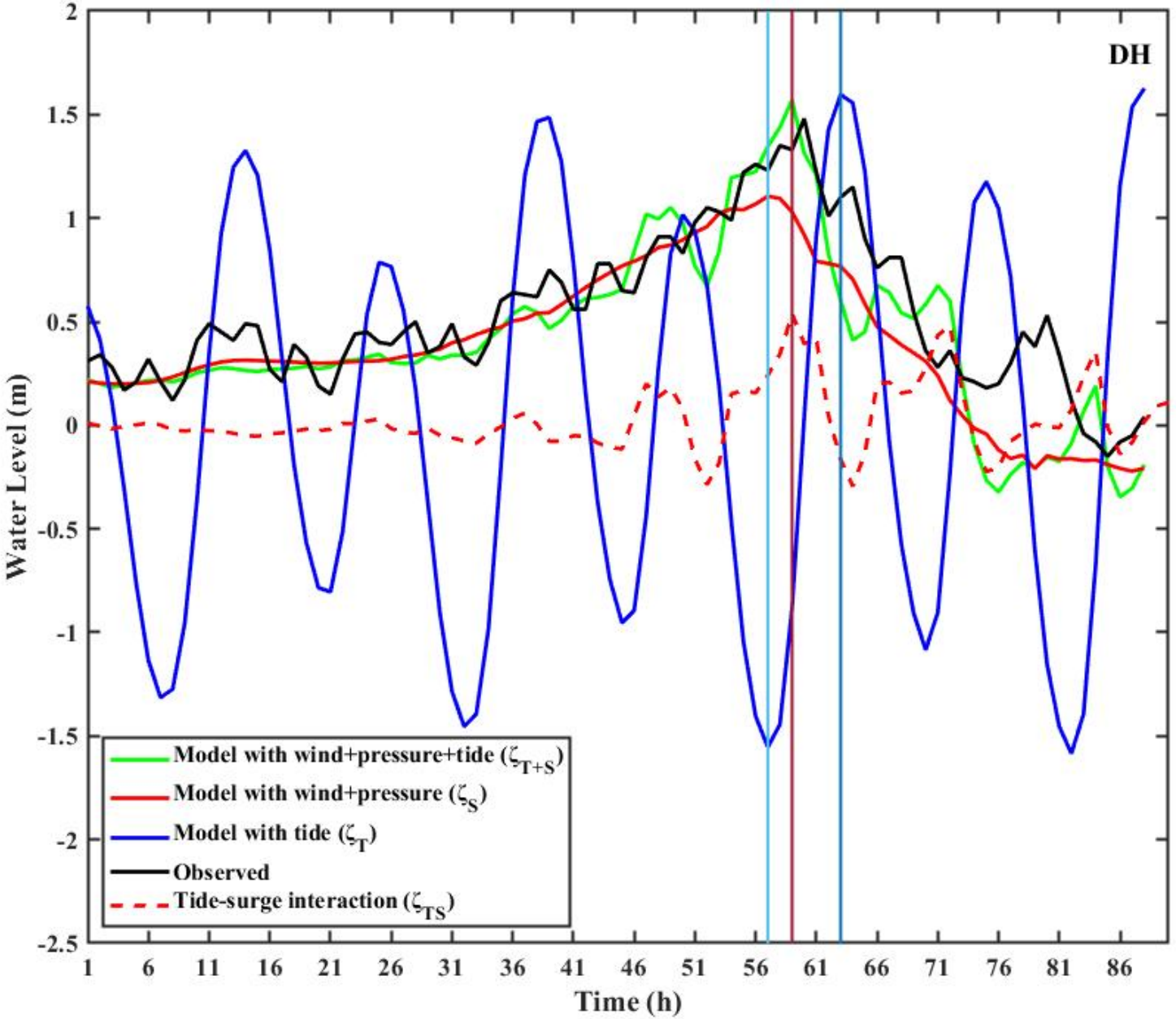
Figure 8 depicts the temporal variation in the tide–surge nonlinear interaction at Dinghai Station. The solid brown line represents the time of the extreme storm surge water level increase in Experiment 0, the solid dark green line (shifted two hours forward) indicates the adjacent astronomical low tide time, and the solid yellow line (shifted four hours backward) marks the adjacent astronomical high tide time.
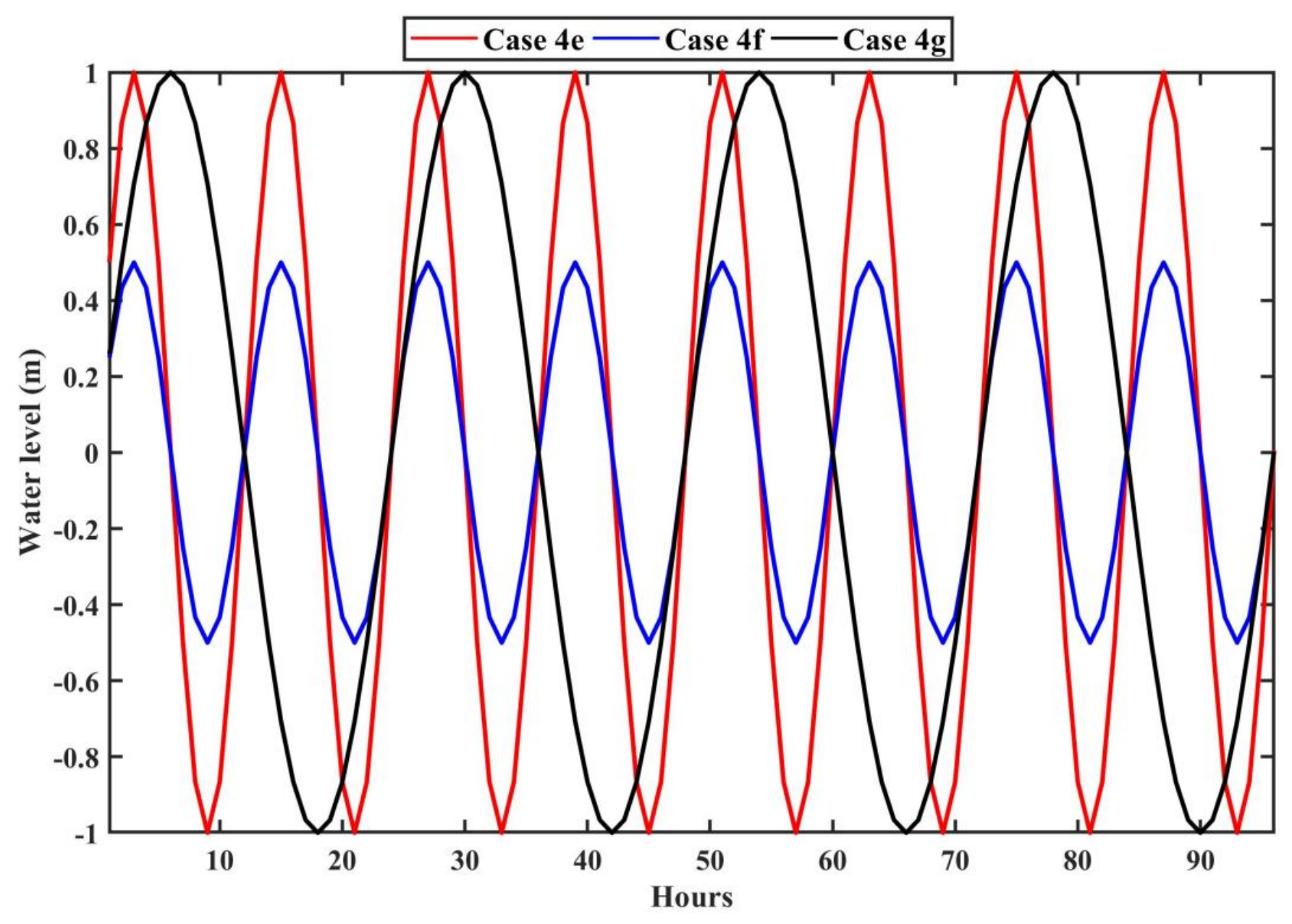
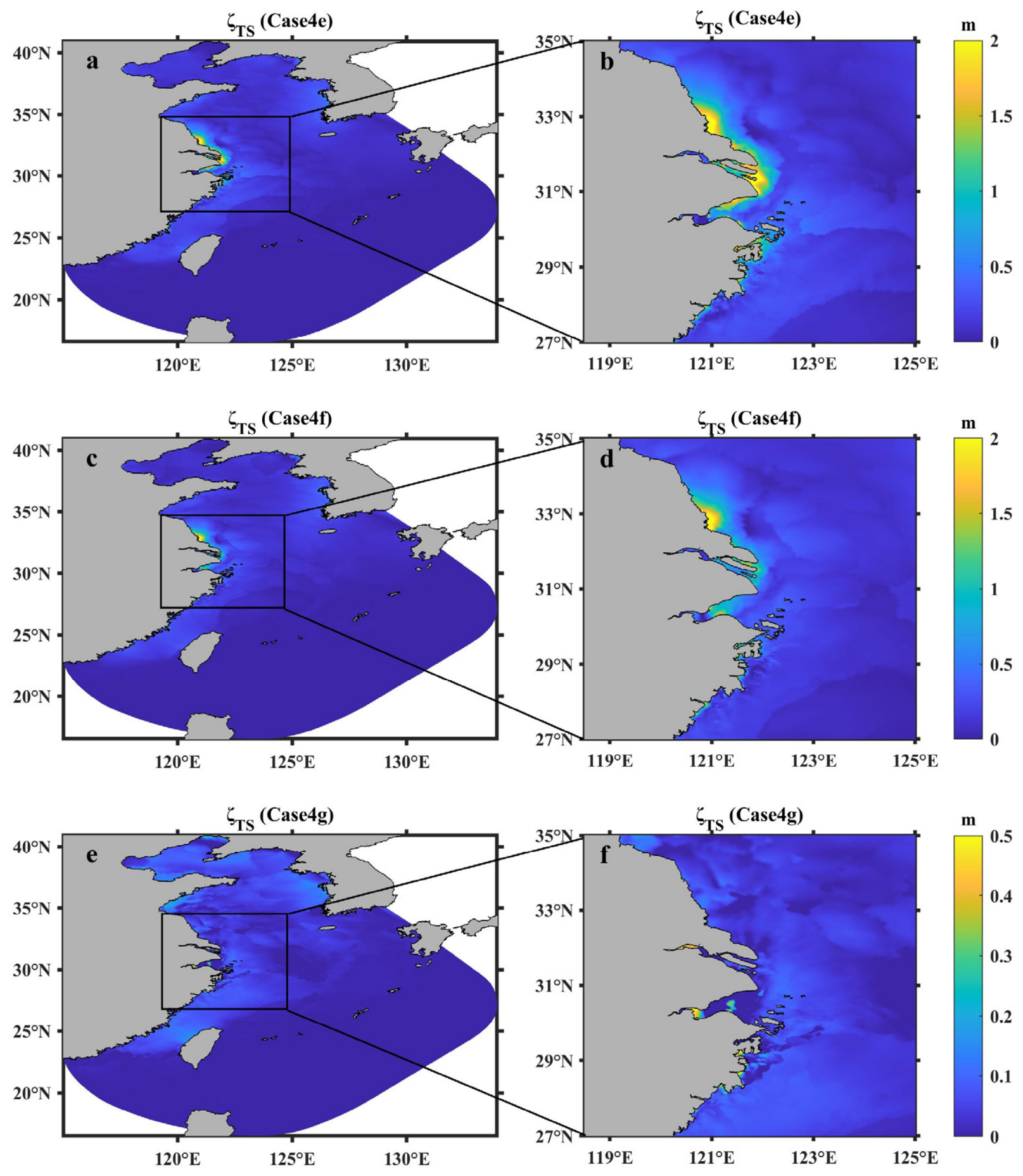
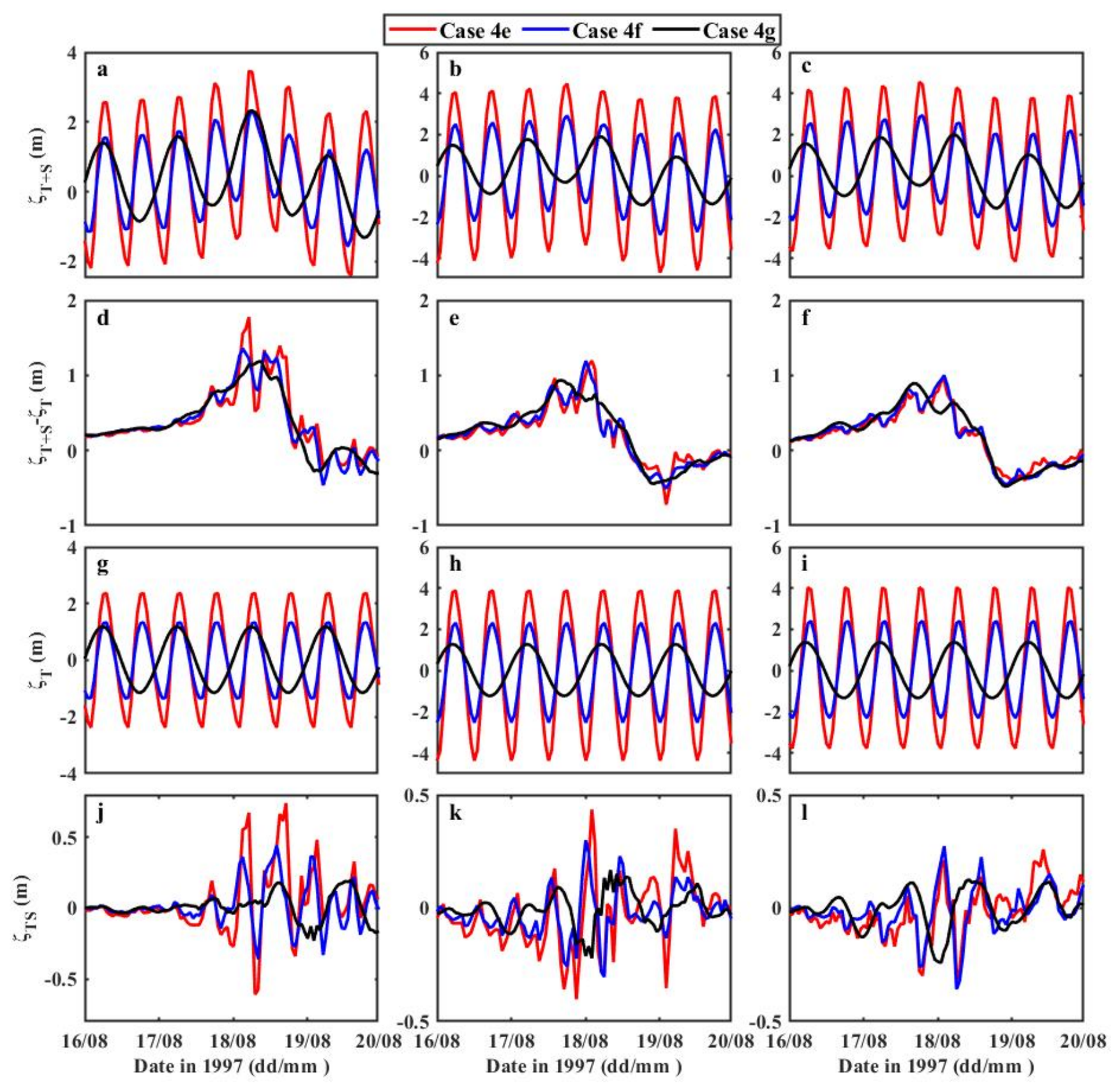
Experiments 4c and 4d were designed to investigate the influence of semi-diurnal and diurnal tidal constituents on the tide–surge nonlinear interaction. Experiments 4e–4g established idealized scenarios to examine the effects of varying tidal periods and amplitudes on the tide–surge nonlinear interaction. The corresponding formulations are given in Equations (21)–(23), and the temporal variations in the forecasted water levels are shown in
Figure 9.
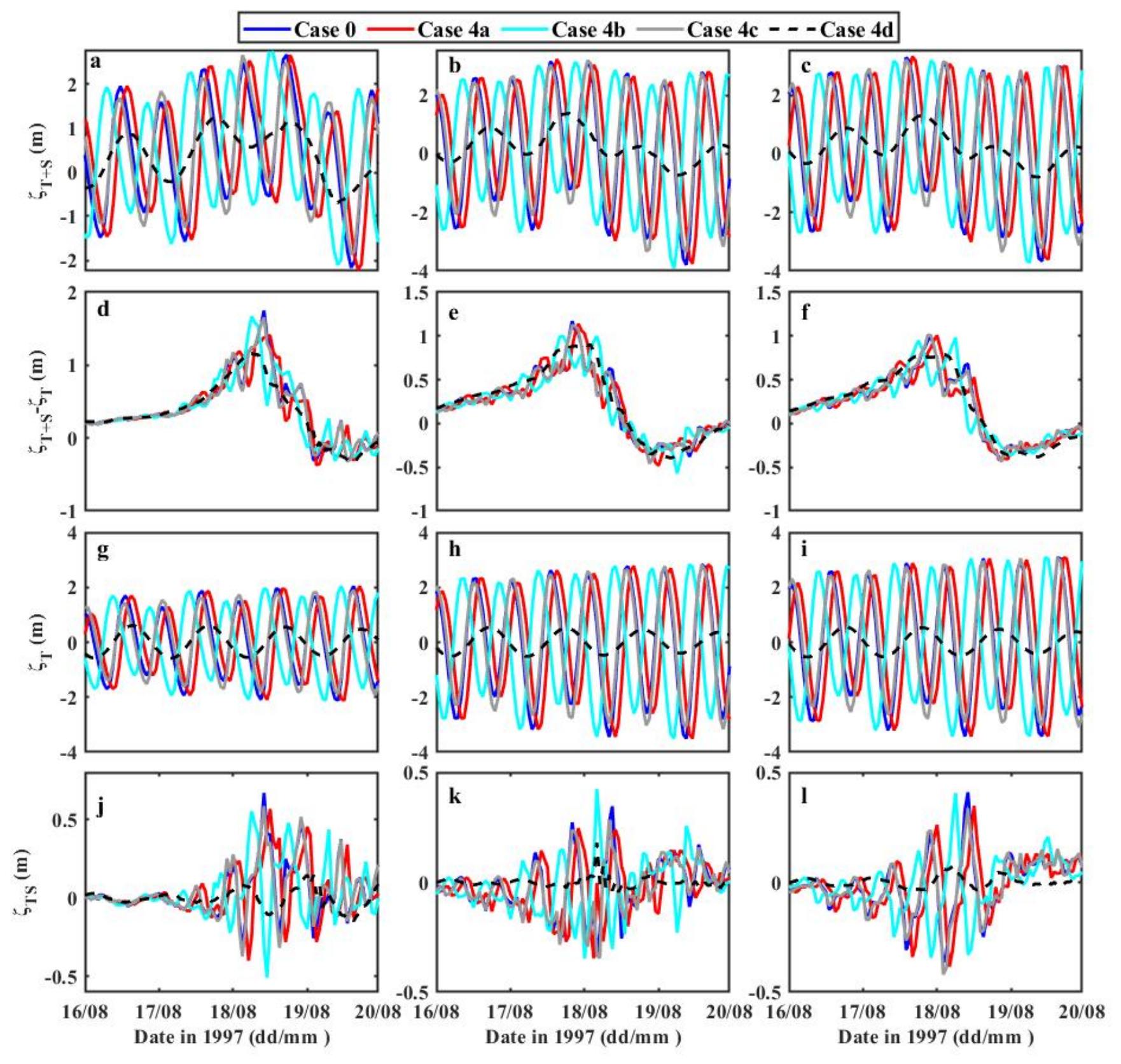
The model results are shown in
Figure 10. It can be observed that when the storm surge model is driven at the open boundary with different astronomical tidal phases (Case 4a and Case 4b), the resulting simulated total water level, surge elevation, tidal level variations, and the water level induced by tide–surge nonlinear interaction all exhibit corresponding phase shifts. Overall, the water levels and the tide–surge nonlinear interaction simulated in Experiment 4a are delayed by two hours compared to the baseline experiment, while the results from Experiment 4b are advanced by four hours relative to the baseline. This leads to opposing patterns of water level between the results of these numerical experiments and the baseline experiment. Therefore, it can be inferred that the astronomical tidal phase significantly influences surge elevation and the tide–surge nonlinear interaction.
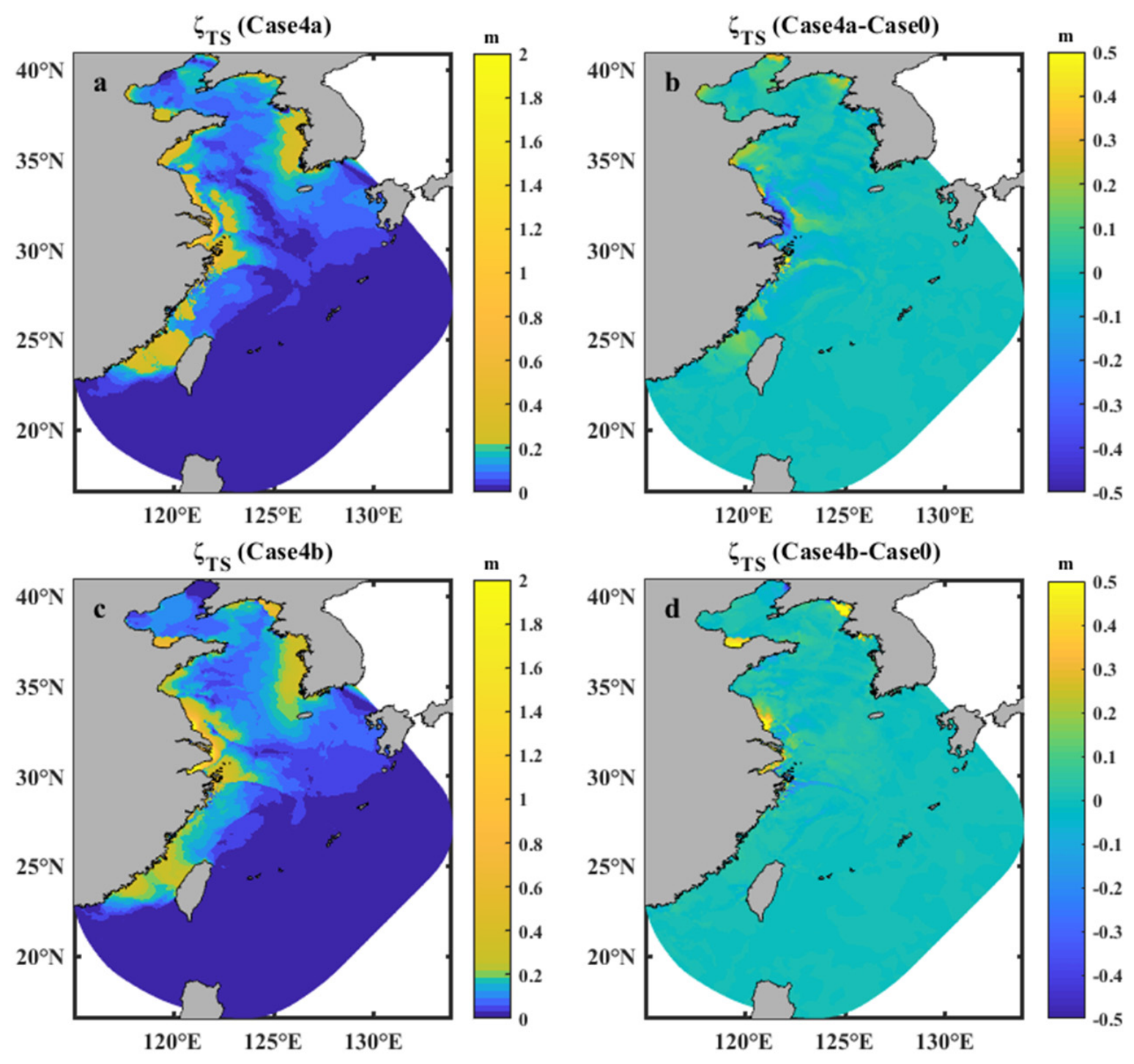
Figure 11 depicts the spatial distribution of the water level induced by tide–surge nonlinear interaction in Experiments 4a and 4b, as well as the differences in water level compared to the baseline experiment. It can be observed that the water level induced by tide–surge nonlinear interaction, when driven by both astronomical high tide and astronomical low tide conditions, exhibits a spatial pattern of higher values in shallow nearshore areas and lower values in deep-water regions. Furthermore, the water level induced by tide–surge nonlinear interaction under the astronomical low tide condition is lower than that in the baseline experiment in nearshore areas (
Figure 11b), particularly in Hangzhou Bay and the Yangtze River Estuary. In contrast, the water level increase induced by tide–surge nonlinear interaction under the astronomical high tide condition is higher than that in the baseline experiment in nearshore areas (
Figure 11d), with notable increases observed in Hangzhou Bay and along the Jiangsu coast.
As shown in
Figure 4, when the model is driven solely by wind and pressure fields, the storm surge water level time series appears relatively smooth (i.e., with minor fluctuations). However, when the tide–surge nonlinear interaction is considered and observed water level data are examined, the height of the storm surge curve often exhibits fluctuations at semi-diurnal frequencies. This indicates that the tide–surge nonlinear interaction in this region is significantly influenced by semi-diurnal tidal constituents.
To investigate the influence of semi-diurnal and diurnal tidal constituents on the tide–surge nonlinear interaction, Experiments 4c and 4d were established. The resulting temporal variations in water level and the water level induced by tide–surge nonlinear interaction at the three stations are shown in
Figure 12. It can be observed that under semi-diurnal tidal forcing (Case 4c), the total water level, surge elevation, tidal level, and the water level induced by tide–surge nonlinear interaction at all three stations are nearly identical to those in the baseline experiment. The water level values are slightly lower than those under the default settings, with no phase difference. Under diurnal tidal forcing (Case 4d), the total water level, tidal level, and the water level induced by tide–surge nonlinear interaction are significantly smaller than the results of the baseline experiment. However, regarding the surge elevation, the values simulated in this experimental group are only slightly lower than those in the baseline experiment. This indicates that, on one hand, the tidal level and the tide–surge nonlinear interaction in this region are primarily dominated by semi-diurnal constituents. On the other hand, the storm surge water level increase is mainly generated by wind and pressure field forcing, while the tide–surge nonlinear interaction serves to enhance the storm surge water level increase.
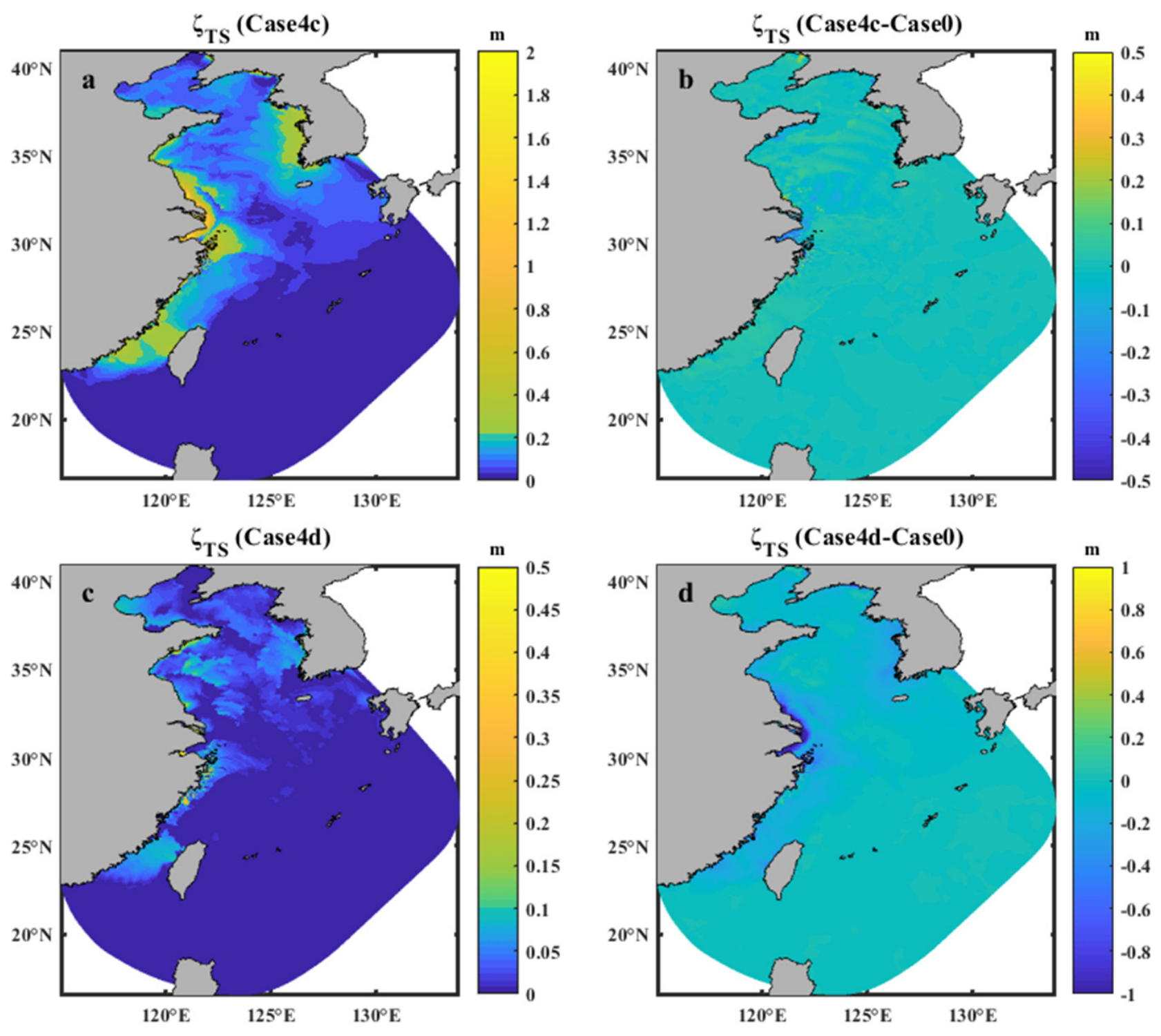
Furthermore, the spatial distribution of the water level induced by tide–surge nonlinear interaction under semi-diurnal and diurnal tidal constituent forcing is shown in
Figure 13. It can be observed that the tide–surge nonlinear interaction in this region is primarily dominated by semi-diurnal constituents, which can contribute up to 80% of the tide–surge nonlinear interaction in the coastal areas.
Additionally, Experiments 4e–4f were conducted to investigate the influence of astronomical tidal period and amplitude on the tide–surge nonlinear interaction in the study area under idealized conditions. The results are shown in
Figure 13 and
Figure 14. The findings indicate that the tide–surge nonlinear interaction in this region is primarily induced by semi-diurnal tides, while diurnal tides have a relatively minor effect. Furthermore, the most significant tide–surge nonlinear interaction occurs in the Yangtze River Estuary and the coastal waters of Jiangsu. In comparison to the tidal period, the amplitude of the astronomical tide at the open boundary has a notable impact on the tide–surge nonlinear interaction only in the Yangtze River Estuary, with limited influence in other areas.
3.4. Tide–Surge Nonlinear Interaction at Dinghai Station
Taking Dinghai Station as an example, this study calculated the maximum surge elevation under different sensitivity experiment setups for both wind + pressure field forcing and wind + pressure field + astronomical tide forcing, the time difference in reaching the extreme water level compared to the baseline experiment (Experiment 0), and the tide–surge nonlinear interaction results (
Table 3).
It can be observed that across all sensitivity experiments, the timing of the maximum surge elevation under wind + pressure field forcing remains almost consistent with the baseline experiment. In contrast, the timing under wind + pressure field + astronomical tide forcing varies across experiments. In the experiments investigating the sensitivity of nonlinear terms (Experiments 1 and 2), the water level induced by tide–surge nonlinear interaction is nearly equivalent to that in Experiment 0 (0.53 m). However, the maximum water levels simulated under both wind + pressure field forcing and wind + pressure field + astronomical tide forcing are higher than those in the baseline experiment. Consequently, the ratio of the tide–surge nonlinear interaction-induced water level to the total water level in Experiments 1 and 2 (Exp. 1: 28.0%; Exp. 2: 29.5%) is lower than that in Experiment 0 (33.7%).
Furthermore, regarding the influence of topographic slope on the tide–surge nonlinear interaction (taking Dinghai Station as an example), it can be observed that a gentler topographic slope leads to higher maximum storm-surge water levels under both wind + pressure field forcing and wind + pressure field + astronomical tide forcing. In the investigation of the influence of astronomical tide on the tide–surge nonlinear interaction, under the astronomical low tide condition (Experiment 4a), the maximum storm surge water levels under both wind + pressure field forcing and wind + pressure field + astronomical tide forcing are lower than those under the baseline experiment. However, the ratio of the tide–surge nonlinear interaction-induced water level to the total water level (40.3%) is higher than that in the baseline experiment (33.7%). This indicates that the coupling between the astronomical low tide and the storm surge enhances the tide–surge nonlinear interaction. In contrast, the results under the astronomical high tide condition (Experiment 4b) are essentially the opposite of those under the astronomical low tide condition.
When the open boundary is forced by semi-diurnal constituents (Experiments 4c–4g), the overall results (i.e., the extreme storm surge water level) are comparable to, and slightly greater than, those of the baseline experiment. In contrast, when the open boundary is forced by diurnal constituents (Experiment 4d), the maximum water level induced by tide–surge nonlinear interaction (0.07 m) is significantly lower than that in the baseline experiment. This indicates that the tide–surge nonlinear interaction at Dinghai Station is primarily dominated by semi-diurnal constituents. Furthermore, Experiments 4e-4g also demonstrate that the tide–surge nonlinear interaction at this station is mainly governed by semi-diurnal tides, and the astronomical tidal period has a greater influence on the interaction than the tidal amplitude.
4. Discussion
The results presented in
Section 3 reveal several important characteristics of tide–surge nonlinear interactions along the southeastern coast of China during Typhoon Winnie. These findings not only corroborate existing theories but also provide new insights into the regional variability and dominant controlling factors in this complex macrotidal archipelago environment.
4.1. Dominant Role of Quadratic Bottom Friction
Our sensitivity experiments demonstrate that the quadratic bottom friction term is the primary mechanism driving tide–surge nonlinear interactions in the study area, whereas the advection term plays a secondary role. This conclusion aligns with the classical findings of Prandle and Wolf [
16] in the Thames Estuary and Wolf [
15] in the North Sea, who also identified bottom friction as the leading contributor to the nonlinear interaction. However, our results differ from those of Rego and Li [
19] for Hurricane Rita, where the advection term was found to be more important, particularly during high tide. This discrepancy likely arises from differences in local hydrodynamic regimes: the southeastern coast of China is characterized by broad, shallow shelf areas and strong tidal currents, where frictional dissipation dominates over inertial effects. In contrast, the region affected by Hurricane Rita includes deeper waters and stronger surge-induced currents, making advection more significant. Thus, the relative importance of nonlinear terms is site-dependent, and our findings emphasize that for shallow, high-friction coastal waters such as Hangzhou Bay and the Yangtze River Estuary, accurate parameterization of bottom friction is paramount.
Based on our quantitative sensitivity analysis across 12 experiments, the factors controlling tide–surge nonlinear interaction along the southeastern China coast can be ranked in order of decreasing importance as follows: (1) quadratic bottom friction—the single most important factor, contributing 33.7% of total water level at Dinghai Station and up to 1.8 m of additional water level elevation in the Yangtze River Estuary and Hangzhou Bay; (2) semi-diurnal tidal constituents-accounting for approximately 80% of the total nonlinear interaction, with diurnal constituents contributing less than 0.1 m; (3) astronomical tidal phase-modulating the interaction ratio by up to 20% between low and high tide conditions at the time of typhoon landfall; (4) topographic slope-exhibiting a non-monotonic, region-specific response that is strongly modulated by local geomorphology and typhoon track position; (5) advection term-a secondary contributor, locally significant (up to 0.1–0.15 m) only in areas with complex coastline geometry such as the Zhoushan Islands region. This ranking provides practical guidance for model configuration: ensuring accurate quadratic friction parameterization and correct semi-diurnal tidal boundary forcing are the two highest-priority requirements for operational storm surge forecasting systems in this region.
These findings align with results from other modeling platforms. Studies using ADCIRC have also demonstrated the primacy of bottom friction in tide–surge coupling: Xie et al. [
23] found that friction parameterization was the dominant factor governing surge-tide interaction in the Gulf of Maine, and Feng et al. [
36] confirmed that bottom friction accounted for the majority of nonlinear effects along the entire China coast using an ADCIRC-based framework. Using the SCHISM model, Zhang et al. [
24] reported that in the Taiwan Strait, quadratic bottom friction contributed approximately 60–70% of the total nonlinear interaction signal during typhoons Soudelor and Dujuan, a result consistent with our finding of friction dominance, though our estimated contribution is higher (up to 80%) due to the shallower shelf waters along the Zhejiang coast. Similarly, Delft3D-based studies by Hu et al. [
31] documented the overwhelming importance of friction-induced nonlinearity in the Pearl River Estuary. The consistency of friction dominance across modeling platforms (FVCOM, ADCIRC, SCHISM, and Delft3D) reinforces the robustness of this conclusion and underscores the necessity of using quadratic friction formulations in all coupled tide–surge models for the coastal waters of China.
Replacing the quadratic friction scheme with a linear formulation substantially weakened the interaction intensity and delayed the peak surge occurrence by up to 3 h at Dinghai Station (
Table 3). This delay reflects the reduced dissipative effect of linear friction at high flow velocities, which alters the phase relationship between tidal and surge components. The spatial distribution of the friction effect (
Figure 5a) shows that the most pronounced attenuation (up to 0.3 m) occurs precisely in the shallow nearshore zones where bottom friction is naturally high. This underscores the necessity of using a quadratic, rather than linear, friction law in coupled tide–surge models for this region.
4.2. Spatial Variability and Topographic Control
The tide–surge nonlinear interaction exhibits strong spatial heterogeneity, with maximum contributions exceeding 1.8 m in Hangzhou Bay, the Yangtze River Estuary, and the Jiangsu coast. These areas share common features: shallow water depths (<20 m), complex coastlines, and high bottom friction coefficients (
Figure 3). The interaction diminishes rapidly offshore, consistent with the theoretical solution derived by Wolf [
15] (Equation (16)), which predicts that the nonlinear term scales inversely with water depth (h). Our sensitivity experiments on topographic slope (Exp 3a–3c) further reveal that the response of the interaction to water depth reduction is not monotonic in all regions. In the Jiangsu radial sand ridge field, for instance, the interaction first increased and then decreased as the depth scaling factor changed from 0.75 to 0.25. This non-monotonic behavior likely results from the complex local bathymetry: an excessive reduction in water depth can alter the tidal wave propagation pattern, modify the phase speed, and even shift the region of maximum frictional dissipation. Such a finding highlights the need for high-resolution bathymetric data and local calibration when applying tide–surge models to geomorphologically complex areas.
Interestingly, the Taiwan Strait exhibited a different response: a gentler topographic slope led to a net reduction in the tide–surge interaction. This can be attributed to the typhoon track—the strait lies to the left rear of Winnie’s path, where wind setup is relatively weak. Reducing water depth in this area actually decreased the total water level while increasing the wind-driven component, resulting in a diminished nonlinear interaction. This illustrates that the effect of topography is modulated by the specific meteorological forcing pattern, a nuance that should be considered in regional storm surge forecasting.
4.3. Semi-Diurnal Dominance and Phase Sensitivity
Our experiments with different tidal constituents (Exp 4c–4g) provide clear evidence that semi-diurnal tides (M
2, S
2, N
2, K
2) dominate the tide–surge nonlinear interaction along the southeastern coast of China, contributing up to 80% of the total nonlinear effect in coastal areas (
Figure 11). In contrast, diurnal constituents (K
1, O
1, P
1, Q
1) generate a negligible interaction (<0.1 m) even when their amplitudes are set to full values (Exp 4g). This result is consistent with the spectral characteristics of the region: the M
2 tide is the dominant constituent in the East China Sea, with amplitudes exceeding 1 m in Hangzhou Bay and the Yangtze River Estuary. The strong semi-diurnal signal creates a rapid oscillatory motion that interacts efficiently with the slowly varying storm surge through the quadratic friction term. Diurnal tides, having longer periods and generally smaller velocities, produce much weaker frictional modulation.
The phase of the astronomical tide is another critical factor. At Dinghai Station, the interaction was enhanced during astronomical low tide (Exp 4a), with the ratio of nonlinear water level to total water level reaching 40.3% compared to 33.7% in the baseline experiment. This counter-intuitive finding—that low tide can amplify the nonlinear effect—can be explained by the depth-dependence of bottom friction: at low tide, water depth is shallower, so the same bottom friction coefficient produces a larger decelerating force on the flow, leading to stronger tidal-surge modulation. Conversely, during high tide (Exp 4b), the deeper water reduces frictional coupling, slightly decreasing the interaction ratio (33.1%). This phase sensitivity implies that the timing of a typhoon’s landfall relative to the tidal cycle is not only important for the peak water level but also for the nonlinear interaction itself. Forecast systems should therefore consider not just the tidal level but also the tidal phase when issuing warnings.
Between period and amplitude, our idealized experiments (Exp 4e–4g) demonstrate that the tidal period exerts a much stronger control than amplitude. Halving the semi-diurnal amplitude (Exp 4f) reduced the interaction from 0.67 m to 0.36 m at Dinghai, whereas switching from semi-diurnal to diurnal period with full amplitude (Exp 4g) nearly eliminated the interaction (0.05 m). This indicates that the oscillatory frequency of the tide is more important than its magnitude in generating nonlinear interactions, a point that has received less attention in previous studies.
This finding—that tidal frequency matters more than amplitude—adds a new dimension to existing knowledge and has implications beyond our study area. For instance, in the North Sea, Horsburgh and Wilson [
6] demonstrated that the phase relationship between tide and surge governs the nonlinear modulation, but their analysis did not separately quantify the effects of period versus amplitude. Our results suggest that models operating in diurnal-dominated regimes (e.g., the Gulf of Mexico) may require fundamentally different friction coupling strategies than those in semi-diurnal regimes. The SCHISM-based studies of Zhang et al. [
24] in the Taiwan Strait also noted semi-diurnal dominance, corroborating our findings with an independent modeling framework and suggesting this is a robust feature of the northwestern Pacific marginal seas.
4.4. Generalizability, Limitations, and Future Work
The results presented in this study are derived from a single typhoon event (Typhoon Winnie, 1997), which naturally raises questions about the generalizability of the findings. We argue that the dominant physical mechanisms identified—quadratic bottom friction control, semi-diurnal tide dominance, and shallow-water amplification of nonlinear interaction—are expected to be robust across different typhoons affecting the southeastern China coast. This robustness stems from the fact that these mechanisms are primarily governed by local factors that are relatively invariant across storm events: the regional bathymetry (broad, shallow continental shelf), the tidal regime (semi-diurnal dominant with M2 amplitudes exceeding 1 m in Hangzhou Bay), and the bottom sediment characteristics that control friction coefficients.
However, the quantitative magnitude of the tide–surge nonlinear interaction (up to 1.8 m in this study) should be considered storm-specific. Several typhoon characteristics would modulate the interaction intensity: (1) Typhoon track: A southerly track passing through the Taiwan Strait would produce a different spatial pattern compared to Winnie’s northerly track north of Taiwan; (2) Typhoon intensity: Weaker typhoons would generate smaller wind-driven surges, reducing the total nonlinear interaction magnitude proportionally; (3) Translation speed: Faster-moving typhoons produce shorter-duration surge events with less time for nonlinear coupling to develop; (4) Landfall timing relative to tidal phase: As demonstrated in sensitivity experiments Exp 4a and 4b, the interaction magnitude can vary by up to 20% depending on whether landfall coincides with high or low tide.
Several additional limitations should be acknowledged. The model does not include wave–current interactions, which could modulate bottom friction through enhanced wave-induced bottom stress in very shallow waters (<10 m). Wave setup, estimated at 0.2–0.3 m in similar coastal environments [
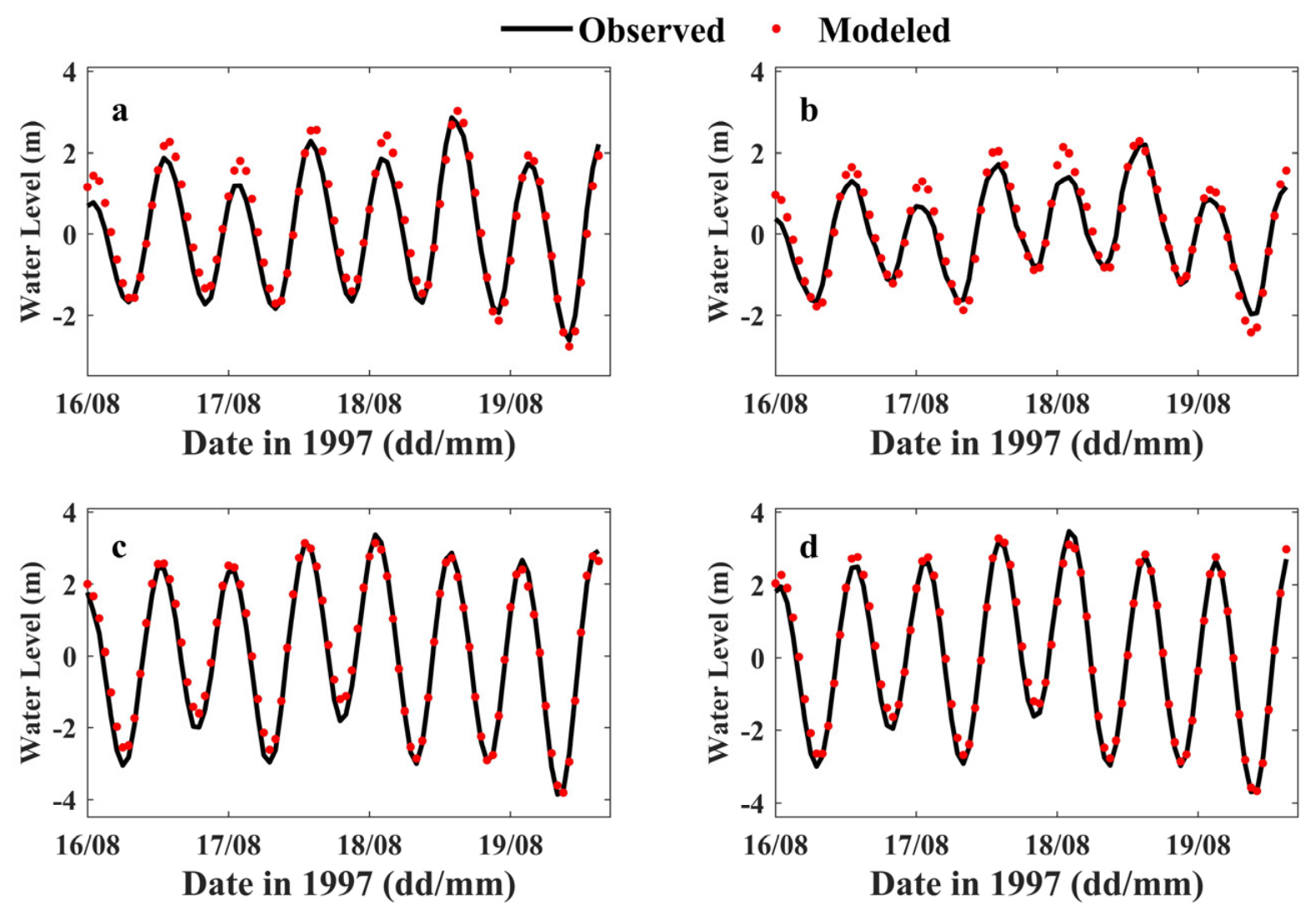
27], would contribute additively to the total water level but could also nonlinearly interact with the tide–surge coupling. The studies of the effects of meteorological products (NCEP-CFSR, CCMP, ERAInterim, and ERA5) on the modeling of storm surges in the East China Sea have been conducted; the NCEP-CFSR wind field presents better performance than the other three meteorological forcing (CCMP, ERAInterim, and ERA5) during typhoon Chan-hom-induced storm surges [
45]. The relatively coarse spatial resolution of NCEP-CFSR (0.25° × 0.25°) may not fully resolve the inner core structure of the typhoon wind field, particularly the radius of maximum wind (RMW). Furthermore, the 6-hour temporal resolution may smooth out short-duration wind fluctuations that could affect surge dynamics. The validation is limited to four tide gauge stations due to data availability constraints; denser observational coverage, particularly in the Jiangsu radial sand ridge area and within Hangzhou Bay, where the model predicts the strongest interactions, would strengthen confidence in the spatial patterns of nonlinear interaction.
Future work should prioritize (1) a systematic multi-storm analysis encompassing typhoons with diverse tracks, intensities, and translation speeds to establish statistical relationships between storm characteristics and nonlinear interaction magnitude; (2) development of a fully coupled FVCOM-SWAVE model to quantify wave-induced modifications to tide–surge coupling; (3) blending the NCEP-CFSR background field with parametric typhoon wind models (e.g., the Holland model) to better resolve the inner-core wind structure; and (4) deployment of additional tide gauge stations in data-sparse areas to improve model validation coverage along the southeastern China coast.
5. Conclusions
Based on the FVCOM hydrodynamic model, a tide–surge coupled model induced by typhoon Winnie was constructed to explore the effects of tide–surge interaction on storm surges along the southeastern coast of China. The main conclusions are as follows:
(1) The quadratic bottom friction term is identified as the primary mechanism controlling tide–surge interactions in the study area, far outweighing the influence of the advection term. Replacing the quadratic scheme with a linear friction formulation substantially weakens the interaction intensity and delays the occurrence of extreme water levels, highlighting the need for accurate friction parameterization in coastal storm surge models.
(2) The nonlinear interaction exhibits strong spatial variability, with maximum contributions (exceeding 1.8 m) concentrated in shallow, high-friction nearshore regions such as Hangzhou Bay, the Yangtze River Estuary, and the Jiangsu coast. In contrast, the interaction is negligible in deep offshore waters. The effect of topographic slope is non-monotonic and region-specific, particularly in areas like the radial sand ridge field of Jiangsu, indicating that local geomorphology must be resolved in models.
(3) The tide–surge nonlinear interaction is overwhelmingly driven by semi-diurnal tides. Experiments forced only with diurnal constituents produce negligible interaction (less than 0.1 m). This semi-diurnal dominance is also reflected in the oscillatory patterns of water level time series, implying that accurate representation of semi-diurnal tides is essential for reliable forecasting.
(4) The phase of the astronomical tide significantly modulates the interaction: at some stations, low tide conditions enhance the nonlinear effect, altering both peak surge magnitude and timing. Between period and amplitude, the tidal period (semi-diurnal vs. diurnal) is the more critical factor, while amplitude variations produce secondary effects. This suggests that the timing and rhythmic nature of tides are more important than absolute tidal range for generating nonlinear interactions.
Collectively, these results provide quantitative insights into the mechanisms and controlling factors of tide–surge interactions in a complex macrotidal archipelago environment. They offer practical guidance for improving storm surge forecasting and early warning systems along the southeastern coast of China, particularly by emphasizing the need for coupled tide–surge models with refined bottom friction schemes and accurate semi-diurnal tidal forcing.