Article

Vertical Distribution of Microplastics in a Deep European Lake During Thermal Stratification

by
George Kehayias
*,
Aris E. Giannakas
and
Achilleas Kechagias
Department of Food Science and Technology, University of Patras, Seferi 2, 30100 Agrinio, Greece
*
Author to whom correspondence should be addressed.
Water 2026, 18(12), 1465; https://doi.org/10.3390/w18121465 (registering DOI)
Submission received: 21 May 2026 / Revised: 8 June 2026 / Accepted: 11 June 2026 / Published: 14 June 2026
(This article belongs to the Section Water Quality and Contamination)

Abstract

Little is known about the vertical distribution of microplastics (MPs) in deep stratified lakes. This study investigates the MPs in the large and deep Lake Trichonis during the thermal stratification period, using two nets of different porosity (50 μm and 200 μm) in three depth strata. Fibers dominated over fragments with an average abundance of 10.63 ± 1.00 items m−3 and 3.10 ± 0.52 items m−3 respectively in the samples of the 50 μm net in the entire water column, while the respective values for the 200 μm net were 1.4 and 7.4 times greater. Fibers had the highest abundance within the thermocline, and most of them were blue with a length 1–2 mm. There were only abundance differences between the two nets and no qualitative disparities concerning color, size, shape and polymer types. There was a strong positive correlation between the abundance of fibers and the adults of the dominant copepod Eudiaptomus drieschi, which also accumulated within the thermocline. Considering that the adults of E. drieschi are among the preferred prey of Atherina boyeri, the most important commercial fish, certain issues arise concerning possible fiber bioaccumulation on the food web. The study highlights the importance of investigating MPs in connection with biotic elements.

1. Introduction

Microplastics (MPs), commonly defined as synthetic polymer particles less than 5 mm in diameter, have emerged as ubiquitous environmental contaminants of global concern as they are found across land, water, and air environments [1]. These particles originate from a wide array of anthropogenic activities and enter freshwater systems through multiple, often interconnected, pathways. The distribution of MPs in freshwater environments is directly related to land use types, with contamination primarily concentrated in areas of intense human activity, including agricultural, transport, and urban land [2]. As freshwater environments have great ecological and economical value and are also crucial pathways for MPs to transfer from land to sea, research on MPs in freshwater environments is growing and has yielded important insights, although it remains less extensive compared to studies focused on marine environments [3].
The majority of the limnetic microplastic studies have focused exclusively on surface waters [4,5,6], but this methodological preference—while providing valuable baseline data—offers an inherently two-dimensional perspective on MP dynamics [7]. MPs are not confined to the surface layer; their vertical distribution is governed by a complex interplay of polymer density, particle morphology, biofouling, hydrodynamic processes, and biological interactions [8]. Denser polymers (e.g., polyester, polyvinyl chloride) may sink rapidly, while initially buoyant particles (e.g., polyethylene, polypropylene) can undergo vertical transport through biofilm formation and aggregation with organic matter [9]. Consequently, surface monitoring alone likely underestimates total MP inventory and this knowledge gap is particularly pronounced in deep lakes, where the water column reaches tens or even hundreds of meters, and where vertical gradients in physical and biological parameters are most pronounced [10]. Thus, vertically stratified sampling in deep lakes provides better insights into the distribution and fate of the MPs within the aquatic ecosystem.
The need for depth-resolved investigations is further recognized in lakes with thermal stratification, a phenomenon that characterizes temperate lakes during spring and summer. In these lakes, the development of a thermocline—a sharp temperature gradient separating the warm, well-mixed epilimnion from the cold, stagnant hypolimnion—profoundly influences the vertical distribution and transport of MPs [11]. The thermocline may act as a physical barrier, potentially trapping buoyant or neutrally buoyant MPs within the epilimnion [12]. Understanding how thermal stratification modulates microplastic vertical distribution is therefore essential for understanding their ecological implications in temperate lakes.
Among the biological components most vulnerable to microplastic contamination is zooplankton. As primary consumers occupying a critical trophic interface between phytoplankton and higher consumers (fish, invertebrates), zooplankton organisms are uniquely susceptible to microplastic ingestion with limited ability to discriminate between prey items and synthetic particles [13]. Laboratory studies have demonstrated that microplastic ingestion by zooplankton can lead to reduced feeding rates, diminished growth and reproduction, energy depletion, and altered behavior [14]. Moreover, MPs may serve as vectors for adsorbed contaminants and leach additive chemicals, introducing additional toxicological stressors [15].
The vertical distribution of zooplankton in lakes is strongly influenced by thermal stratification, light penetration, predator avoidance, and food availability [16]. Many zooplankton taxa—particularly cladocerans and copepods—exhibit diel vertical migration (DVM), ascending to surface waters at night to feed and descending to deeper, darker waters during the day to avoid visual predators [17]. This behavior, combined with seasonal changes in vertical distribution, creates dynamic spatial overlap between zooplankton and MPs throughout the water column [18]. However, simultaneous depth-resolved assessments of both microplastic and zooplankton vertical distributions remain exceptionally rare, limiting our ability to establish causal links between these variables.
Lake Trichonis is the largest and among the deepest (57 m) natural Greek lakes, being thermally stratified from May to October, with a winter turnover [19]. To date, only one study has examined microplastic pollution in Lake Trichonis, providing baseline data on MP abundance in the surface and in the entire 0–25 m water column using a 200 μm plankton net [20]. However, critical knowledge gaps persist, as no study has systematically investigated the influence of thermal stratification on microplastic vertical distribution in the lake, nor have any attempts been made to concurrently sample MPs and zooplankton across depth strata to explore their potential interactions. Furthermore, the effect of mesh size on MP recovery efficiency has not been evaluated for this system, despite growing recognition that finer mesh nets (e.g., 50 μm) retain substantially more particles than coarser meshes (e.g., 200 μm), which may underestimate MP abundance [21].
Therefore, the present study aims to address these critical knowledge gaps by investigating the vertical distribution of MPs in Lake Trichonis in relation to thermal stratification and zooplankton vertical distribution using two nets with different mesh sizes (50 μm and 200 μm). This investigation attempts to test the hypothesis that the thermal stratification could affect the vertical distribution of MPs, which in turn might be related to the zooplankton of the lake, implying potential interactions. Specifically, the objectives of this study are: (a) to investigate the vertical distribution of MPs in terms of abundance, size, color, and polymer type, and the effect of thermal stratification; (b) to compare the qualitative and quantitative characteristics of MPs collected using the two plankton nets with different mesh sizes, thereby assessing the influence of mesh size on MP recovery; (c) to examine the vertical distribution of zooplankton in the lake and explore its potential relationship with microplastic abundance and characteristics; and (d) to evaluate the possible environmental implications of microplastic distribution on the ecological status of Lake Trichonis. By addressing these objectives, this study seeks to provide a comprehensive assessment of microplastic pollution in a deep European lake and to contribute to the development of standardized, depth-integrated monitoring protocols for freshwater ecosystems.

2. Materials and Methods

2.1. The Study Area

The present study was conducted in Lake Trichonis which is an oligo- to mesotrophic ecosystem [22], with a surface area of 98.6 km2 and a catchment area of 421 km2. The lake is part of the European Natura 2000 network of protected areas and has a rich ichthyological fauna which includes some endemic species, and a dominant population of Atherina boyeri Risso, 1810, which accounts for the target species in the local fishery [23]. Zooplankton is a very important component of the lake’s ecosystem, as it constitutes the exclusive prey of A. boyeri. Lake Trichonis is close to the city of Agrinio to the north-west, inhabited by nearly 80,000 residents, while around the lake area there are 23 villages, with an overall population of about 20,000 residents, with most of these villages situated in the western part. In the surrounding agricultural area, there are no heavy industries, except for some oil-mills, some livestock farming and cheese dairy units.

2.2. Sampling

Samplings were carried out on 29 August 2025 at three stations (A, B, C) with depths of nearly 40 m (Figure 1). Samples were taken with two conical plankton nets of 200 μm and 50 μm, which were manufactured to be closing nets with the addition of a second rope and a releasing trigger [24]. The 200 μm net had an opening of 50 cm in diameter and a length of 160 cm, while the 50 μm net had a diameter of 40 cm and a length of 100 cm. Vertical hauls were conducted at three depth intervals accounting for the upper layer (0–15 m depth), the thermocline (15–22 m) and the deeper layer (22–35 m). The nets were towed by hand at a speed of approximately 0.5 m/sec. All samples were taken in the morning. The nets were comprehensively rinsed with surface water before and after sampling. The cod-end contents were transferred into clean 250 mL glass jars and borax-buffered formaldehyde (CARLO ERBA, Val de Reuil, France) was added to produce a 4% solution for the preservation of the sample. The water transparency was measured in each station with a Secchi disk (diameter 30 cm), and temperature and oxygen concentration profiles were taken using a HANNA HI98194 Multiparameter (Hanna Instruments Ltd., Bedfordshire, UK).

2.3. Quality Assurance/Quality Control

In the laboratory, the samples were washed with distilled water through a small conical sieve (50 μm mesh size) to remove the formaldehyde, prior to their examination, which was conducted in glass Petri dishes using an Optika SLX-3 stereoscope (OPTIKA S.r.l., Bergamo, Italy). In order to limit laboratory contamination risks, all the materials used for storing and sorting samples and measuring MPs were thoroughly cleaned and kept covered. The laboratory staff always wore cotton lab coats and nitrile gloves and samples were uncovered only during microscopic investigation. To estimate and correct for airborne fibers in the laboratory, three Petri dishes with distilled water were left uncovered during the examination processes and the average numbers of fibers found were deducted from the respective numbers of fibers in the samples.

2.4. Laboratory Measurements

Under the stereoscope, all the particles in the Petri dishes that resemble MPs (fibers and fragments) were removed and placed into glass jars containing 30% H2O2 (Merck KGaA, Darmstadt, Germany) for 72 h at room temperature for the digestion of possible organic matter in their surface. In cases of aggregating or overlapping fibers, each of them was untangled in a separate Petri dish. Measurements of the length of fibers (as chord length vs. curved length) and the width of fragments were conducted and their colors were registered. All the fragments were photographed using a microscope eyepiece camera Optika CB-10 (OPTIKA S.r.l., Bergamo, Italy), at a maximum magnification of 90×. The total volume of water filtered in each haul was used to calculate the abundance of MPs, which was expressed as items per cubic meter (items m−3). To improve visual discrimination of transparent plastic fibers from other fiber-like organic material, a needle with heated tip was used to press the fiber, expecting notable deformations. The melting test was also used in cases of questionable fragments [20]. The identification procedures were performed by a single investigator, and the detection limit was set to 0.1 mm.
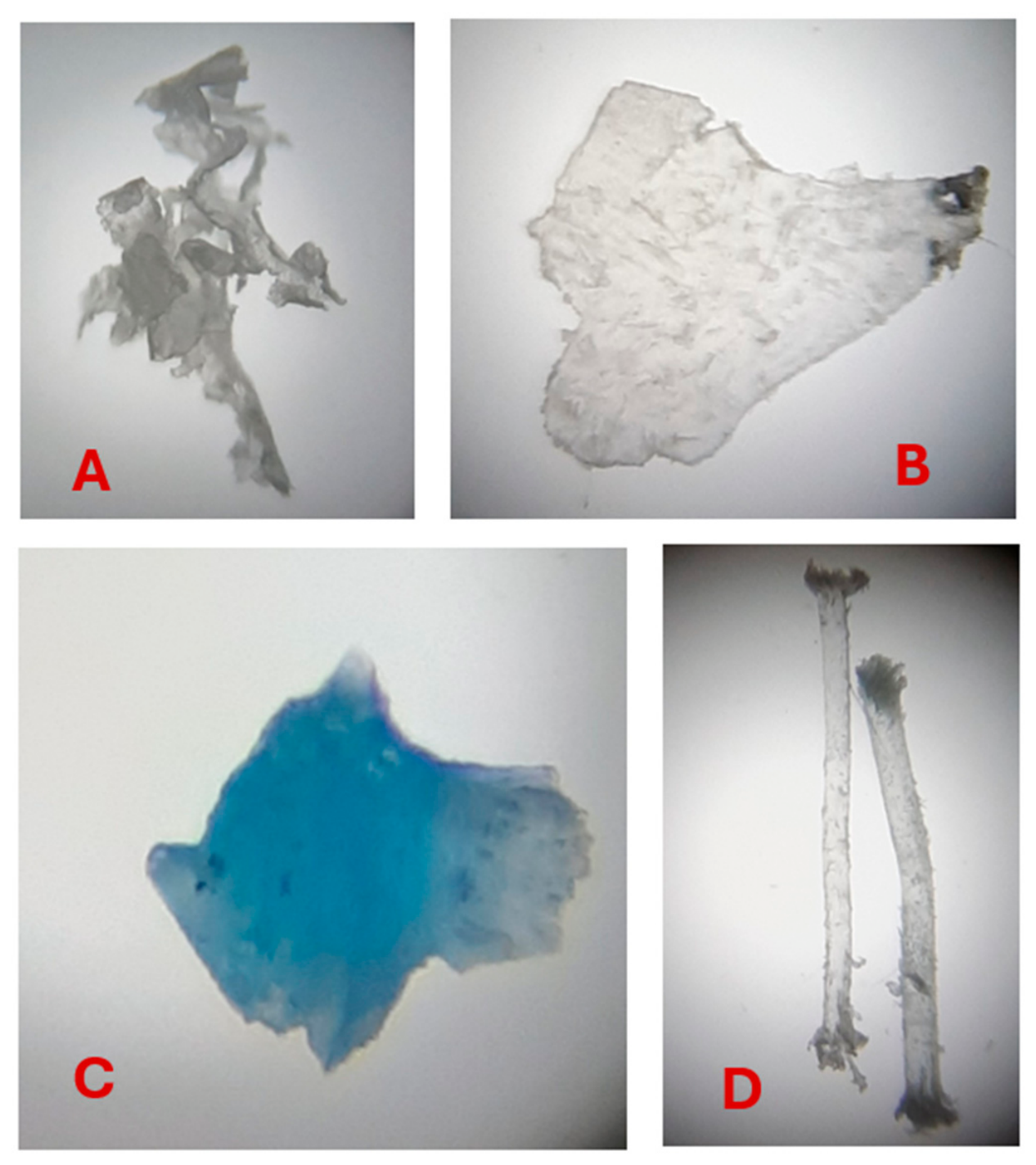
Fragments were distinguished in four morphotypes [20], as follows (Figure 2): (1) ‘soft flattened’: slender fragment with flat and soft surface (Figure 2A); (2) ‘hard flattened’: slender fragment with flat and hard surface (Figure 2B); (3) ‘hard rounded’: round-shaped fragment with smooth or rough surface (Figure 2C); (4) ‘cable-like’: cylindrical lengthy fragment with smooth or rough surface (Figure 2D).
Fourier-Transform Infrared spectroscopy (FTIR) analysis was conducted using a SHIMADZU IRSpirit-X Spectrophotometer (Shimadzu Europa GmbH, Duisburg, Germany) with a QATR-S single-reflection ATR accessory. All measures were performed between the range of 400 and 4000 cm−1, with a 45 scans per spectra capture, with a resolution of 4 cm−1. A background scan on atmospheric air was conducted prior to the measurement of the samples. The individual spectrums were manually compared using a self-produced library database, by matching major and minor transmittance peaks, with an accuracy of ±12 cm−1, with a level of certainty up to 70% [25].
Analysis of the zooplankton community in the samples of the two nets was also performed. The mean depth in the vertical distributions of the MPs and the zooplankton species, as well as the mean length of the fibers and the mean area of the fragments, was calculated as follows:
x ¯ =   f i   ×   m i f i
where x ¯ = mean depth (or length, or area), fi = frequency of the i-th class of depth (or length, or area), and mi = midpoint of the i-th class of depth (or length, or area) calculated as: mi = (lower class limit + upper class limit)/2.
The non-parametric Mann–Whitney test (U-test) or/and the Kruskal–Wallis test were used to test for differences among the mean depths of the fibers and fragments and the mean depths of the zooplankton species. The same tests were also used to investigate differences in the mean fibers’ length and fragments’ area, as well as differences concerning either MPs or the zooplankton densities between the two nets and among the three sampling stations and the three depth layers. Multiple regression analysis between the mean abundance of the microplastic categories (fibers and fragments) and zooplankton species was applied. All the above statistical analyses were performed with an IBM SPSS 29.0 (IBM, Chicago, IL, USA) at the 0.05 level of significance.

3. Results

3.1. Abiotic Elements

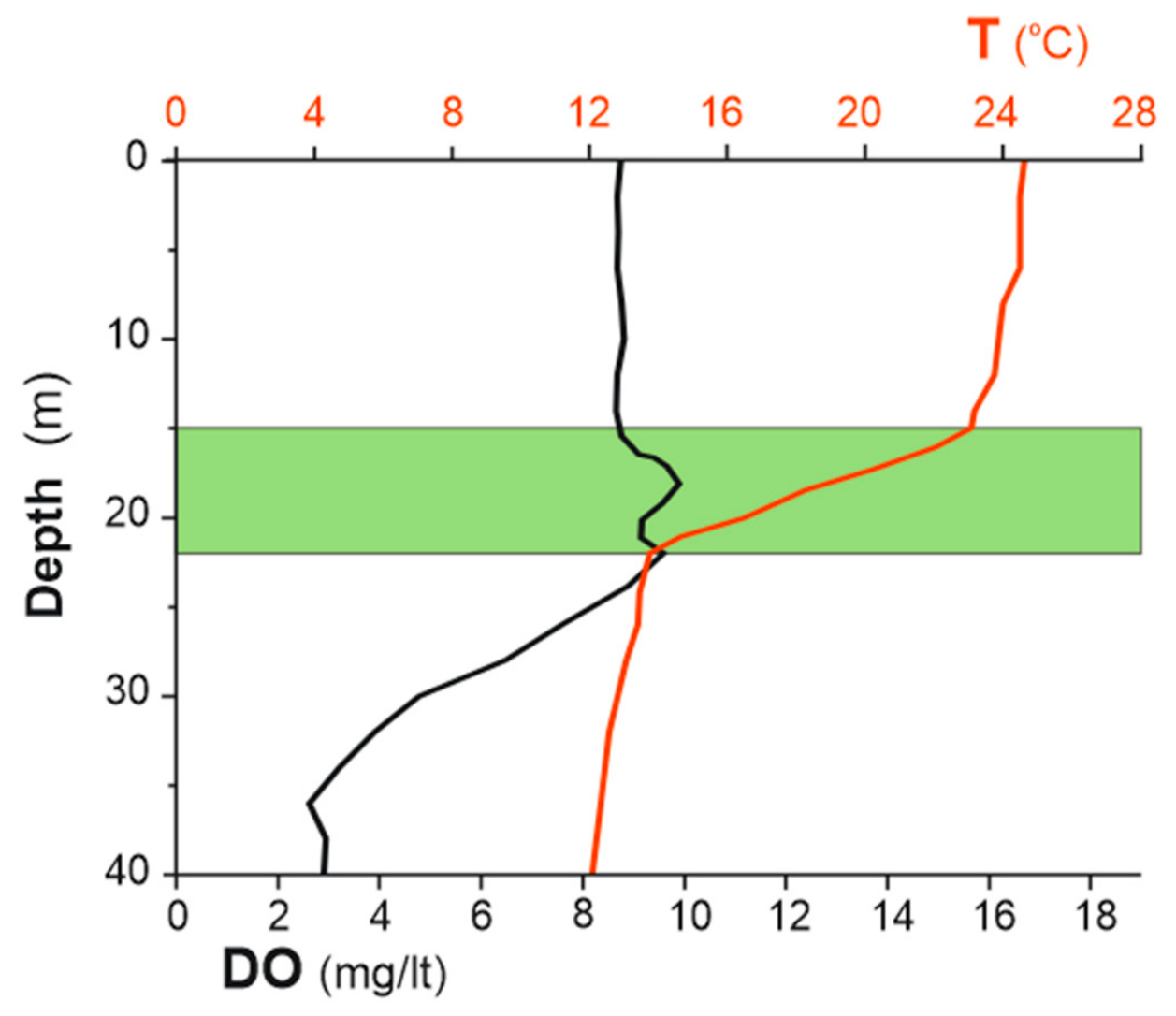
The water transparency in Lake Trichonis reached almost 10 m, without substantial difference among the three sampling stations. The vertical distribution of the water temperature was responsible for the development of a thermocline between 15 and 22 m (Figure 3).
Temperature ranged between 24.3 °C in the surface to 12.1 °C at 40 m. The dissolved oxygen ranged from 8.7 mg/L in the surface to 2.8 mg/L at 40 m, showing an increase within the thermocline layer, where it reached its maximum value of 9.9 mg/L. The high water transparency of the lake resulted in a Light Compensation Depth (LCD) of about 25 m, which meant that the light could have reached the thermocline resulting in high photosynthetic activity in this layer, which in turn was responsible for the increase in the dissolved oxygen.

3.2. Abundance of Fibers and Fragments

The total number of 48 samples from the two nets in the three stations revealed the presence of MPs in all of them, either in the form of fibers or/and fragments. The fibers prevailed by a ratio of 7:1 to fragments, reaching a total number of 977 while the respective value for the fragments was 144. There was no substantial difference in the total number of fibers between the two nets, with 551 found in the finer net (50 μm) and 426 in the coarser net (200 μm). However, the fragments were considerably more in the former than in the latter net (116 and 28, respectively).
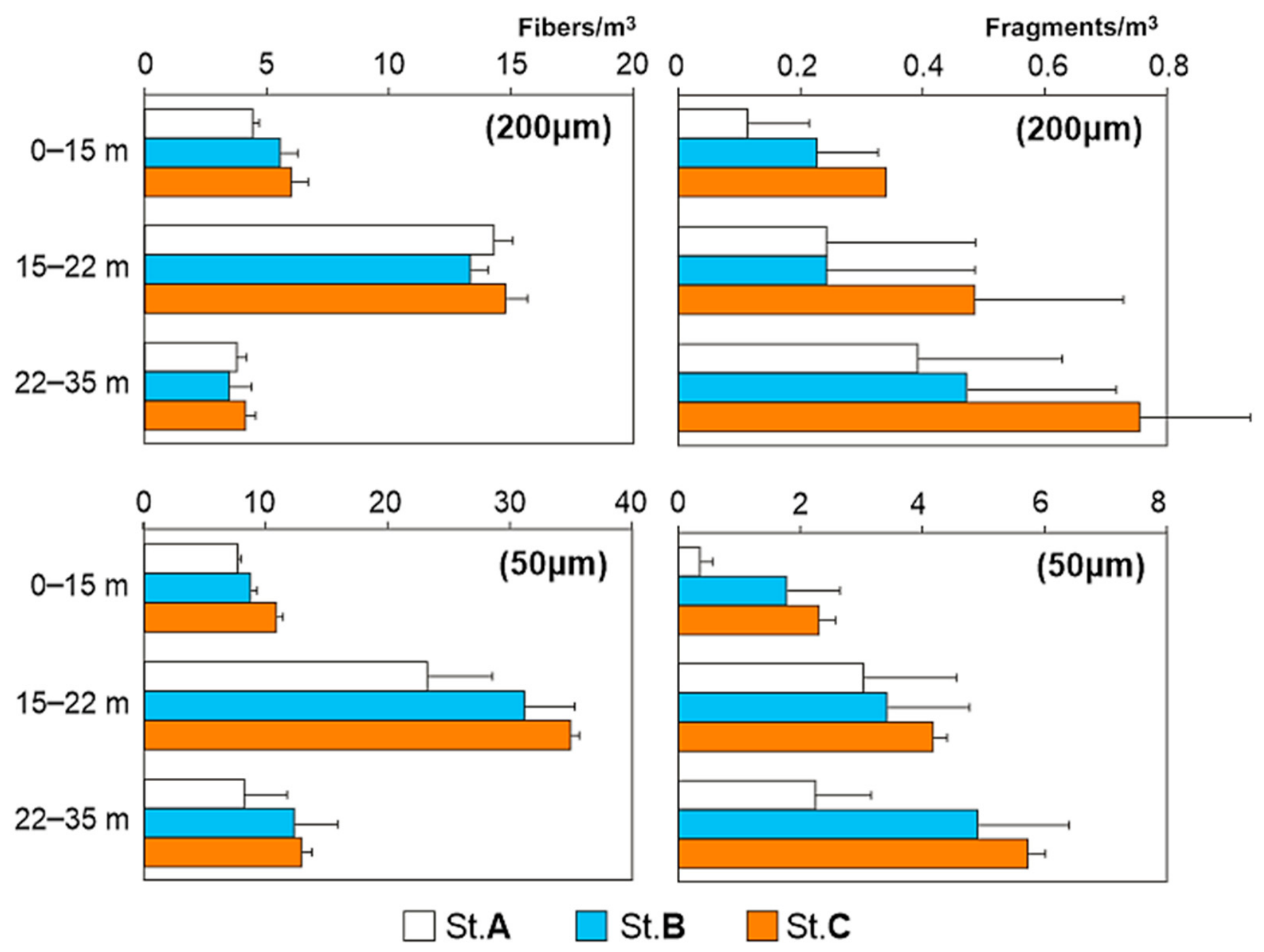
The average abundance of the fibers found within the column of 0–35 m of the three stations using the 50 μm net was 10.63 items m−3 (standard error SE = ± 1.00 items m−3), while for the 200 μm net the average abundance was 7.84 ± 0.32 items m−3. The respective values for the fragments were 3.10 ± 0.52 items m−3 and 0.42 ± 0.05 items m−3. There were statistically significant abundance differences between the two nets in each of the three vertical layers (U-test, p < 0.001). The average abundance of the fibers in the samples taken by the 50 μm net was 1.4 times greater than that of the 200 μm net, while the respective value for the fragments was 7.4.
Although station C showed the greatest abundances (Figure 4), there were no statistically significant differences in the abundance values among the three replicates in all the samples taken from both nets and among the three sampling stations, either for the fibers or the fragments (Kruskal–Wallis test, p > 0.05). In contrast, there were statistically significant differences in the abundance of the fibers among the three vertical layers in the samples taken from both nets (Kruskal–Wallis test, p < 0.001), with the thermocline (15–22 m layer) having the greatest values (Figure 4). Although there was also a statistically significant difference among the three layers in the abundance of the fragments recovered from the 50 μm net (Kruskal–Wallis test, p = 0.030), such a difference was not found in the case of the 200 μm net, probably due to the small number of fragments. However, the results of both nets showed a similar increase in the fragment’s abundance with depth, leading to the highest values in the 22–35 m layer (Figure 4).

3.3. Color, Size, Shape, and Type of MPs

Nine colors were found in the case of fibers and eight in the case of fragments. Blue was the most frequent color among the fibers in almost all stations and depths with an average proportion of 36.0% and 41.6% in the samples taken from the 50 μm and 200 μm nets, respectively (Figure S1).
Black fibers followed in the case of the 50 μm net accounting for 28.9%, and transparent in the case of the 200 μm net (28.8%). Purple accounted for 7.1% and 5.2% in the samples from the 50 μm and 200 μm nets, respectively. The proportions of the remaining colors were less than 1.0%, while no white and yellow fibers were found in the samples from the 200 μm net. Generally, there were no substantial differences in the color’s proportions among the three vertical layers. Contrary to the fibers, the transparent fragments clearly prevailed in both nets, while purple and brown colors were absent from all the samples. Among the other colors black, white and blue accounted for small percentages, while red, black and yellow were absent among the small numbers of fragments recovered from the 200 μm net (Figure S2).
The length of the fibers found in both nets fluctuated between 0.1 and 9.6 mm, with the class size of 1–2 mm being numerically the most important in the three vertical layers, accounting on average for 43.2% in the 50 μm net and 36.8% in the 200 μm net. Accordingly, the smaller size class of 0.1–1 mm accounted for 25.3% in the 50 μm net and 24.3% in the 200 μm net, and the 2–3 mm size class for 14.5% and 21.3%, respectively (Figure S3).
Using the number of fibers of each size class in the three vertical layers, the mean lengths for each sample were calculated and compared. These comparisons showed that there were no statistically significant differences between the three sampling stations (Kruskal–Wallis test, p > 0.05) and between the two nets (U-test, p > 0.05). In contrast, there were significant differences in the mean length of the fibers recovered from the samples of both nets in the three depth layers (Kruskal–Wallis test, p < 0.001), with greater lengths in the surface 0–15 m layer and lower in the deeper layer (22–35 m).
The measurements of the fragments’ dimensions were used to calculate their area as mm2 and to investigate possible differences between sampling stations and depth layers. The fragments varied between 0.01 mm2 and 10.0 mm2 (Figure S4). There was a strong variation in the area of the fragments, especially in the case of the 200 μm net, which had the lowest number of observations. The fragments in the samples of the 50 μm net were smaller than of the 200 μm, with most of them (64.8%) having an area smaller than 0.1 mm2, instead of 22.8%, respectively. There was no substantial size difference among the fragments found among the three vertical layers (Figure S4).
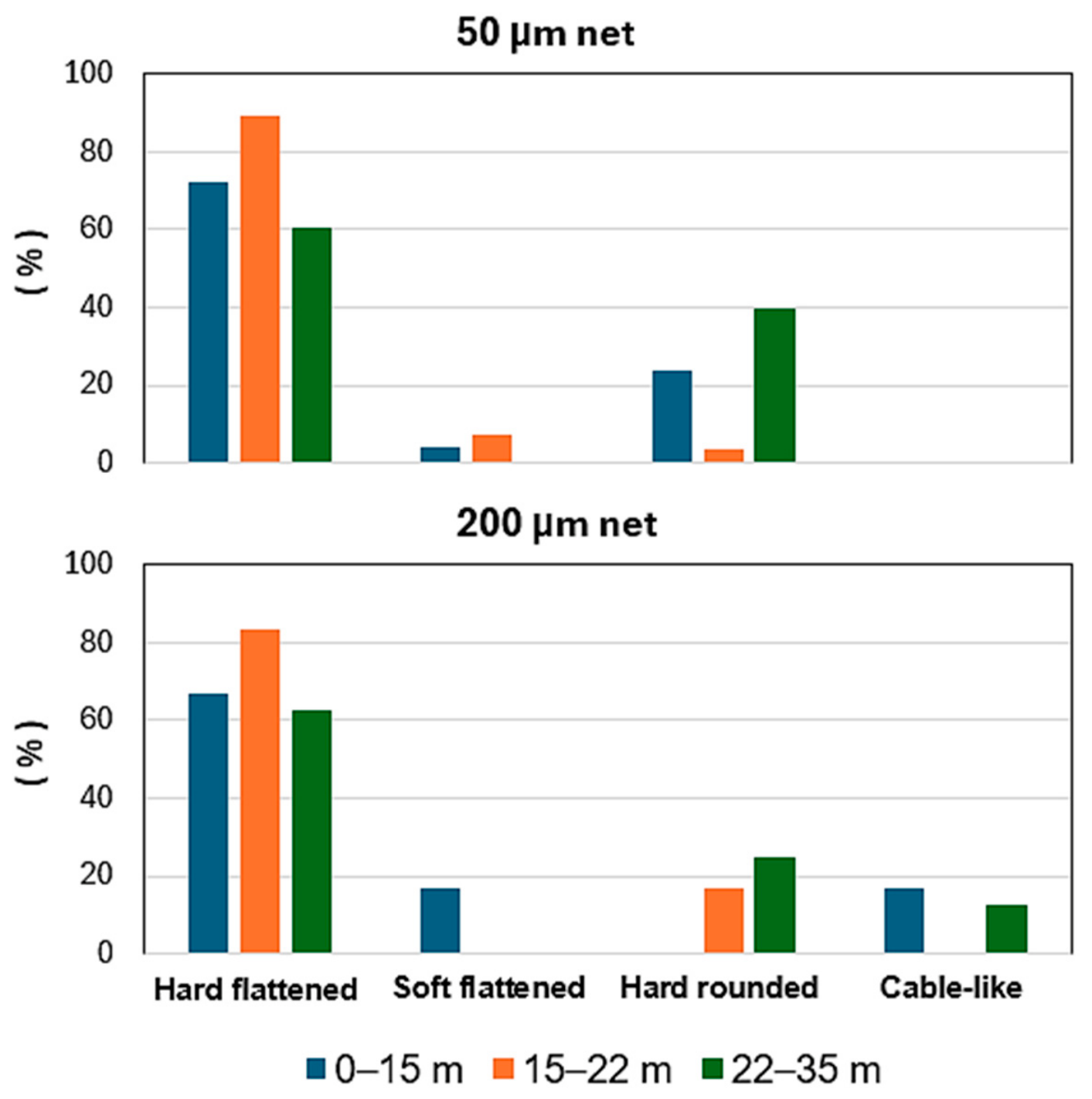
The greatest proportions among the four morphotypes had the ‘hard flattened’ morphotype in the three sampling layers, 0–15 m, 15–22 m and 22–35 m, in the 50 μm net (72.0%, 89.3% and 60.3%, respectively), and in the 200 μm net (66.7%, 83.3% and 62.5%, respectively). Fragments of the ‘hard rounded’ morphotype were second and accounted for 24.0%, 3.4% and 39.7% in the three layers from the samples of the 50 μm net, while being absent in the samples from the 200 μm net in the 0–15 m layer, accounting for 16.7% and 25.0% in the other two layers (15–22 m and 22–35 m). The ‘soft flattened’ and ‘cable-like’ morphotypes were found sporadically and in low numbers in the samples of both nets (Figure 5).
The FTIR analysis revealed the presence of six types of MPs (Figure S5). PET (polyethylene terephthalate) was the dominant type considering the total number of MPs recovered from all the samples, accounting for 92.9% among the fibers, and 50.9% among the fragments. Polyurethane (PU) and polyamide (PA) were the other two types of fibers identified, accounting for 5.5% and 1.6%. In the case of fragments, polyethylene (PE) accounted for 28.7%, followed by PA (12.0%) and ethylene vinyl alcohol copolymer (EVOH) accounted for 5.6%, while PU and polyester–cotton (40–60%) blend for 1.9% and 0.9%, respectively (Table 1).
In the vertical axis, the PET fibers showed an increase in their proportions with increasing depth, while PU was found only in the surface 0–15 m layer and the thermocline (15–22 m), with greater proportions in the former layer (Table 1). The vertical distribution of the PA fibers showed a decreasing trend with depth, being present in the surface layer and the thermocline in the samples from the 50 μm net, and in all depth intervals in the samples of the 200 μm net. PET and PE fragments were present in all depth layers with almost equal proportions, except in the samples of the 200 μm net, where no PE fragments were found in the surface 0–15 m layer. PU fragments were present only in the surface layer and this was also the case for the few cotton–polymer (60–40%) fragments. PA fragments were found in the surface layer and in the thermocline, while EVOH fragments were present only in the two deeper layers (Table 1).

3.4. The Zooplankton Community

The zooplankton analysis revealed the presence of the adult and copepodites of the calanoid Eudiaptomus drieschi (Poppe & Mrazek, 1895) and the cyclopoid species Macrocyclops albidus (Jurine, 1820) along with naupliar stages of these copepods that were not identified to species. The cladoceran Diaphanosoma orghidani (Negrea, 1982) and the larvae of the mussel Dreissena blanci (Westerlund, 1890) were also identified, as well as various Rotifera that were not identified to species level and counted as a group (Table 2).
Overall, the calanoid E. drieschi was the dominant species in both nets and accounted for 49.2% in the samples of the 50 μm net and 75.9% in the 200 μm net. However, as was expected, the copepod nauplii were too small to be retained in the 200 μm net and that is why they were found only in the 50 μm net. The adults of E. drieschi had a considerable proportion in the population reaching on average 48.4% in the 50 μm net and 34.5% in the 200 μm net. In contrast, the adults and copepodites of M. albidus accounted for 0.6% and 0.7% respectively in the 50 μm net and 1.0% and 0.9% in the 200 μm net. D. orghidani was second in abundance in the zooplankton community in the samples of the 200 μm net accounting for 19.8%, while in the samples of the 50 μm net the average proportion was 11.8%. The larvae of D. blanci were scarce in the samples of the 200 μm net but had a considerable presence in the 50 μm net (11.4%), while the Rotifera were found only in this net and accounted for 13.2%. There were no statistically significant differences in the abundance of any of the zooplankton species found between the three sampling stations (Kruskal–Wallis test, p > 0.05).
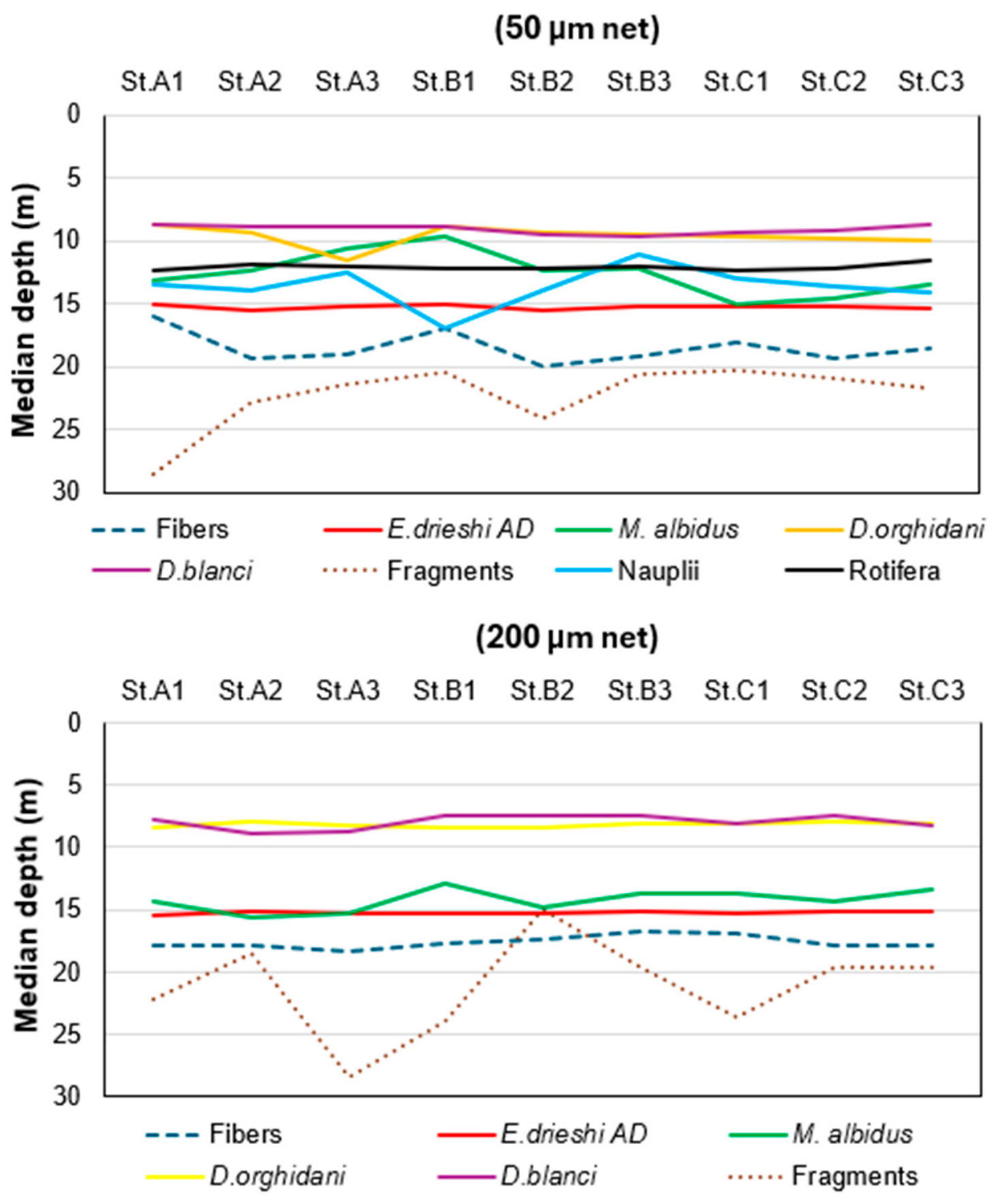
Utilizing the calculations of the mean depth, differences in the vertical distribution of zooplankton organisms appeared, with D. blanci and D. orghidani having the shallower distribution, followed deeper by the Rotifera, the copepod nauplii and M. albidus, while E. drieschi (and especially its adults) had the deepest distribution (Figure 6). For comparison reasons, Figure 6 also shows the vertical distribution of the mean depths of the fibers and fragments found in the three replicates in each sampling station. In this depiction it is clearly seen that the mean depth of the fibers in all sampling stations of both nets was closer to the respective mean depth of the adults of E. drieschi, while it was too remote for D. blanci and D. orghidani.

3.5. Correlation with Zooplankton

Multiple regression analysis was applied between the abundance of the fibers and fragments and the abundance of the zooplankton species/groups found in the samples from the two nets (50 μm and 200 μm). The results identified at least four zooplankton taxa that presented significant correlations mainly with the abundance of the fibers, which were the dominant form of MPs in the samples (Table 3). The adults of the calanoid copepod E. drieschi showed positive significant correlation with the fibers of both nets, with greater value in the case of the 200 μm net. The larvae of D. blanci also showed a weaker positive correlation with the fibers in the samples of the 50 μm net, while the cladoceran D. orghidani showed weak negative correlation with the fibers of the 200 μm net, as well as with the fragments of both nets. Finally, there was a strong negative correlation of the Rotifera with the fibers in the 50 μm net (Table 3).

4. Discussion

The present study provides elements of the abundance and the vertical distribution of MPs in the largest Greek lake, Lake Trichonis, during the period of summer stratification. Generally, abundance comparisons of MPs in aquatic environments are problematic due to the lack of a uniform sampling methodology [26]. In particular, in the case of the volume-reduced sampling, where a filtering device like a net or a sieve is used, there is a great variation in the porosity of the nets that can range from 20 μm [27] to 500 μm [28], with mesh sizes of 300–335 μm being the most common [4,26]. However, when using large mesh sizes, a serious underestimation of the MP abundance should be expected, considering that a net of 100 μm mesh can collect 2.5 times more particles compared to 333 μm and 10 times more than a 500 μm mesh size [21]. To get over this problem, nets with two different porosities, 50 μm and 200 μm, were used in the present investigation. Moreover, sampling replication in the three stations permitted the testing of possible differences in the MP abundance between the two nets. The results showed that the average abundance of the fibers in the 50 μm net was 1.4 times higher than that of the 200 μm net, while the fragments’ abundance was 7.4 times higher in the 50 μm net. This is in general accordance with the reports of Lindeque et al. [21], although there were no reports comparing the MPs’ abundance between a 50 μm and a 200 μm net. Karaban et al. [29] reported that surprisingly there were no substantial differences between a net of 20 μm porosity and 200 μm porosity, and attributed these to clogging as sampling was conducted in a eutrophic lake. This seems to also apply to mesotrophic and eutrophic freshwater environments [30]. Shi et al. [31], using pumps with mesh sizes of 50 μm and 500 μm, found that fibers had a two-magnitude-higher abundance in the former pump than in the latter, which is probably attributed to the floating debris encountered during sampling and the shallower sampling depth, as well as smaller sampling volume. On the other hand, Lake Trichonis is an oligo- to mesotrophic ecosystem [22] with clear waters and there were no clogging incidents during sampling, since there were no signs of obstructive material in the gauze of the net and even in the gauze of the cod-end in any of the two nets (50 μm and 200 μm). However, the ratio of the abundance of fibers between the 50 μm and 200 μm nets (1.4×) was far too low compared with the 7.4× of the fragments. One explanation may involve the shape of the two MP categories. When a net is being towed for some distance in the water, it filters and traps not only MPs but various organisms that constitute zooplankton and phytoplankton (in the case of the 50 μm net). All these organisms gradually concentrate on the gauze and the cod-end of the net. In this case, the elongate shape of the fibers may cause them to become entangled in this biological material and retained almost equally effectively in both nets. In this case, the large difference in fragments (7.4×) arises because most of them were 50–200 μm and lack the fibrous morphology needed for entanglement, thus escaping only from the coarse net (200 μm). Ma et al. [32] found that fibers may also entangle on external body components of crustaceans like the cladoceran Daphnia magna resembling the action of a manufactured “hook and loop”. In any case, the 50 μm net seems to fit better for the sampling of MPs in oligotrophic aquatic ecosystems, providing more accurate abundance estimations for the fibers and especially the fragments, without the risk of clogging problems.
The present data of the abundance of the MPs can be partially compared with the results of the recent study of microplastic pollution conducted in this lake in September 2024 using volume-reduced sampling with a 200 μm plankton net [20]. In this latter study, there was no sampling replication and only one vertical sample was taken in the water column 0–25 m in each of three stations, which were not the same as in the present study. The similarities between the two studies lie in the dominance of the fibers over fragments in the samples and the absence of differences in the horizontal distribution concerning the three sampling stations. Fibers have been reported as the dominant shape of MPs in most of the lakes worldwide [4,12,26,33], though in a few studies fragments exceeded fibers [34,35,36]. The abundance comparisons among the three stations showed that there were no horizontal differences in the microplastic pollution in the lake. It must be pointed out that station C was closer to the western coast and was probably affected by the most populated areas being in the west of the lake. This could explain why this station had the greatest abundance values for both fibers and fragments in the two nets. However, no statistically significant horizontal differences were found in the abundance of all the zooplankton species recovered from the samples. The explanation for this fairly homogenous distribution of the MPs in the lake may lie in the horizontal mixing of the water and the absence of significant point-sources of pollution. Lake Trichonis is characterized by strong hydrological homogeneity along the horizontal axis [37], while this was probably the reason for the absence of horizontal differences in the distribution of zooplankton species reported in a previous study conducted in this lake [22].
On the other hand, a comparison between the present study and the study of Kehayias et al. [20] showed that there was a substantial decrease in the abundance of the fibers, while the fragments’ abundance was slightly higher in the present study. Generally, temporal variations are often expected in lake ecosystems due to complex underlying processes. One possible explanation may involve the variation in weather conditions between the two years and especially the severe drought of the last year. Indeed, the prolonged drought of 2025 led to reduced flow or even complete drying of streams that discharge into the lake. Similar phenomena have been observed in other lake systems, where the wet season is associated with increased microplastic inputs via surface runoff and river discharge [38]. In another study Oni et al. [39], investigating the MPs in a tropical lake, found that the wet season had different and usually more complex microplastic composition compared to the dry season, indicating increased sources (e.g., runoff). Furthermore, rainfall itself has been shown to be a significant source of MPs, particularly fibers, in lakes [40]. Consequently, the absence of rainfall and the drastic reduction in water inflows from the small rivers and streams around Lake Trichonis during the drought likely limited the introduction of new fibers into the system, leading to the lower abundance recorded.
Six types of MPs were identified in the present study, with polyethylene terephthalate (PET) being the dominant type among the fibers, as was also found by Kehayias et al. [20] in the same area; it is among the most common polymers reported in various studies of microplastic pollution in aquatic environments [5,6,41,42,43,44]. In comparison with the previous study of Kehayias et al. [20] three additional types of polymers were found, polyurethane (PU), ethylene vinyl alcohol copolymer (EVOH) and polyester–cotton (40–60%) blend, while polypropylene (PP) was not found. Most of the polymer types are expected in this lake where the main activities are fisheries and agriculture around it. Also, there is no heavy industry in the surrounding area and thus one of the main entries of these pollutants comes probably from wastewater effluents [45].
The collection of vertically stratified samples, in which the MPs’ abundance, type, and other characteristics were recorded during summer, provided interesting insights of their vertical distribution in the prolonged stratification period. The results pointed out a well-defined picture for the fibers with their maximum abundance being found within the thermocline. Similar were the findings of Nayebi et al. [7] who reported that, during the warm season in Hamilton Harbour (Canada), the thermocline zone had a higher MP concentration than either the surface or bottom layers, indicating the important impact of thermal stratification on MP distribution and that the thermocline acts as a barrier, trapping MPs and inhibiting vertical mixing [7]. Tikhonova et al. [12] reported that, in samples collected in Lake Ladoga under conditions of thermocline formation, the highest numbers of MPs were observed in this layer and in the surface layer. In contrast, Zhang et al. [46] found the highest MP abundance in the hypolimnion of Tankeng Reservoir (China); however, fragments and films (instead of fibers) were the most frequently occurring particle morphotype. The accumulation of MPs, and especially fibers, in the thermocline may be attributed to density trapping, meaning that as particles sink and reach the thermocline, the sharp increase in water density acts as a physical barrier that slows or stops further submersion, causing them to accumulate there. This could explain the presence of less dense polymers like PU only in the surface layer and sporadically in the thermocline, while the denser PET particles are distributed in all depths. However, the specific density of MP particles may be influenced by biofilm formation on their surface [47] which increases their density and causes them to sink, until they become trapped in the thermocline. Due to their high aspect ratio (length to diameter), fibers sink more slowly than fragments and this could explain the highest abundance values of the fragments in the deepest water layer of the lake. However, hydrodynamic mechanisms like currents and internal waves within the lake can concentrate particles at specific depths, including in the thermocline, while the drivers of MP deposition could be biological-to-abiotic transitions, which are influenced by algae and metals [46].
The length of the fibers and the size of fragments varied considerably, with most of the fibers being within the class size of 1–2 mm, while most of the fragments had an area of less than 0.05 mm2, being usually smaller than 0.3 mm. These results are in accordance with the previous investigation in Lake Trichonis [20], and with the global trend towards the dominance of MPs smaller than 1 mm, and often even smaller than 0.5 mm [5], although the smallest size of MPs is strongly related to the sampling methods [33]. The small size of MPs may facilitate their ingestion by aquatic organisms as they mimic prey, leading to their accumulation through the trophic chain and increasing their environmental footprint [48]. The present results showed that the size of the fibers was depth-dependent, with greater mean lengths in the surface layer and lower in the deeper layer. There are only a few studies confirming that the size of microplastic particles tends to decrease with increasing depth [5,10,49], while in other reports no strong vertical size gradient of either fibers or fragments was found [42,50]. The decrease in particle size with depth results from the combined action of physicochemical and biological processes, such as biofouling and fragmentation. Smaller MPs have a higher surface-area-to-volume ratio, making them more susceptible to colonization by microorganisms (bacteria, algae). This biofouling increases particle density, causing even initially buoyant polymers (e.g., PU, PE) to sink and this process is faster for smaller particles. In addition, MPs undergo continuous breakdown due to UV radiation, mechanical abrasion, and chemical degradation. Fragmentation generates progressively smaller particles over time. The smallest particles found at depth are often more aged and weathered, indicating longer environmental residence [9].
There were no differences in the colors of the fibers and fragments found in the three sampling layers. Blue was the dominant color of the fibers, followed by black or transparent in the case of the 50 μm or the 200 μm net. These findings are in general accordance with the previous investigation into Lake Trichonis [20]. Blue and transparent fibers are the most reported colors in lake MPs [5,6,34] with the prevalence of the blue color being attributed to physical factors [51]. The color of MPs may be an important parameter in the environmental effects of MPs, considering that it can act as a cue to fish that may mistake MPs for prey. There are several reports showing that blue fibers were the predominant microplastic found in the diet of freshwater fishes [52,53,54]. Transparent fragments prevailed in the samples of the 50 μm net and 200 μm net, which is in accordance with Kehayias et al. [20], especially for the surface samples.
Microplastic pollution exercises a severe effect upon the biota in aquatic environments mainly through ingestion by several species [48], among which is zooplankton, being at the first level of the lacustrine trophic web. Crustaceous zooplankton, especially copepods and cladocerans, can ingest MPs directly or indirectly through contaminated phytoplankton. Laboratory experiments showed that Daphnia spp., copepods and Rotifera are highly sensitive towards MPs, especially considering several secondary endpoints such as motility, morphology, reproduction, pulsation, digestion processes and oxidative stress [55,56,57]. There are also several studies pointing out the importance of the transfer via one trophic level (mesozooplankton) to the advanced level (macrozooplankton) in the food web [15], as well as to higher levels, like fish. Depending on their diet, fish are classified as primary consumers (phytoplankton eaters), secondary consumers (zooplankton eaters), or apex predators. Primary and secondary consumers primarily ingest MPs directly, while apex predators consume them indirectly through prey [48]. Fibers are the most common form of MPs found in fish, particularly in gut tissues, with juvenile and larval fish also showing microplastic presence [58,59,60].
Although there is a vast bibliography on the effects of MPs on zooplankton, there is only one study reporting the relation of zooplankton abundance with that of the MPs [61]. This study found that marine zooplankton and especially copepods showed a strong positive relation with the fibers found in the same samples and this was attributed to the particular hydrodynamics of the area. To the best of our knowledge, the present study is the first attempt to achieve an interrelation of zooplankton and MPs in an inland ecosystem. As was found, fibers were strongly related to the adults of the dominant copepod of the lake, E. drieschi, but not related to the dominant cladoceran D. orghidani and Rotifera. The explanation of this lies in the degree of similarity in their vertical distributions. Fibers and the adults of E. drieschi were both accumulated within the thermocline, while D. orghidani and Rotifera were distributed shallower. The present study of the vertical distribution of the zooplankton in Lake Trichonis is in accordance with the findings of Doulka & Kehayias [24] who showed that the adults of E. drieschi tend to remain within the thermocline layer during the day, probably to reduce the foraging potential of the main zooplanktonic predator of the lake, Atherina boyeri. Indeed, this small fish is the dominant species in the fish community and is strictly zooplanktivorous, foraging as a visual predator and showing great prey selectivity for the adults of E. drieschi [23]. The combination of the above findings with information coming from the bibliography may be used to build a hypothetic scenario concerning the fate of MPs in this lake. According to this scenario: (1) The fibers, which constitute the majority of the MPs, accumulate in the thermocline. (2) Most of them are blue, which is the color usually ingested by fish. (3) The adults of E. drieschi also accumulate in the thermocline during day hours and probably graze in this layer, where phytoplankton are present, owing to the peak oxygen in this layer. (4) The coexistence of the adult copepods with fibers may result in their direct or indirect ingestion. (5) A. boyeri, preying on copepods and selecting the adults in this layer, may also ingest fibers directly or indirectly. (6) A. boyeri accounts for the most important catch of the fishery in this lake and is caught for human consumption. Although the above scenario establishes a possibly direct trophic transfer pathway connecting physical stratification patterns to ecological impacts on the food web, it has also certain limitations. The correlation of fibers with the adults of E. drieschi represents simply a “co-occurrence” and confirmation of ingestion requires further analysis (e.g., gut content analysis). Moreover, the temporal limitation of sampling only in the morning may not have revealed the actual role of E. drieschi, considering the existence of diel vertical migration in zooplankton. Thus, this scenario is only speculative and should be framed as a research hypothesis for future studies. Additionally, a holistic investigation into the spatial and temporal distribution of MPs in the water should be conducted, as well as for critical members of the trophic chain such as the zooplankton and the fishes of the lake.

5. Conclusions

The present study is an attempt to further investigate the presence of MPs in the large and deep Lake Trichonis during the thermal stratification period. For this reason, two nets of different mesh sizes were used in order to give a comparative picture of the quantitative and qualitative characteristics of microplastic pollution. The results showed the dominance of fibers over fragments as expected compared to the previous study, while there was a decrease in the fibers’ abundance that was possibly due to the drought of the previous year, which resulted in limited inputs of MPs from the streams around the lake. The comparison of the two nets showed that there were only quantitative differences concerning the abundance estimates of fibers and especially fragments, while there were no qualitative disparities as far as the characteristics of MPs (color, size, shape and type of polymers) are concerned. In this case, the 50 μm net seems to fit better for the sampling of MPs in oligotrophic aquatic ecosystems, providing more accurate abundance estimations for the fibers and especially for the fragments, without the risk of clogging problems. Fibers presented their highest abundance within the thermocline, which probably acted as a density barrier to sinking in the deeper layer where fragments accumulated. There was a strong indication that the vertical distribution of MPs was affected by the type of polymers considering their specific density, although this may be affected by biofouling. Most of the fibers found were blue and were small enough to be possibly eligible for ingestion by fish. The investigation of the zooplankton in the samples revealed that the adults of the dominant copepod E. drieschi presented similar vertical distribution with the fibers and tended to accumulate within the thermocline. This coexistence may pose certain ecological concerns as the adults of E. drieschi are among the preferred prey of A. boyeri, which is the dominant zooplanktivorous fish in the lake and is the main target of the local fisheries. The combination of these findings may result in a scenario according to which fibers that accumulated in the thermocline, along with the adults of E. drieschi, may be ingested directly or indirectly by A. boyeri and thus transferred to higher trophic levels, ending in human consumption. However, the verification of this hypothesis needs further future investigation. Finally, given the present findings and the significant ecological value of this lake ecosystem, management must enforce watershed regulations and upgrade wastewater treatment, while active monitoring should include seasonal sampling. This should be coupled with public awareness campaigns through signage, workshops, and school programs, complemented by measures such as banning single-use plastics, installing floating capture devices at tributary inlets, and organizing shoreline cleanups.

Supplementary Materials

The following supporting information can be downloaded at: https://www.mdpi.com/article/10.3390/w18121465/s1. Table S1. The numbers of the microplastic fibers and fragments recovered from the three sampling stations (A, B, C) and the three vertical layers (0–15 m, 15–22 m and 22–35 m) in Lake Trichonis. Table S2. The numbers of fibers of each of the nine colors, as recovered from the samples of the two nets (50 μm and 200 μm) in the three stations (A, B, C) in Lake Trichonis. Table S3. The numbers of fragments of each of the nine colors, as recovered from the samples of the two nets (50 μm and 200 μm) in the three stations (A, B, C) in Lake Trichonis. Table S4. The length of the fibers recovered from the samples of the two nets (50 μm and 200 μm) in the three stations (A, B, C) in Lake Trichonis. Table S5. The area of the fragments recovered from the samples of the two nets (50 μm and 200 μm) in the three stations (A, B, C) in Lake Trichonis. Table S6. Raw data concerning the different morphotypes of fragments found in the samples of the two nets (50 μm and 200 μm) in the three stations (A, B, C) in Lake Trichonis. Figure S1. The average percentage (%) distribution of the nine colors among the fibers recovered from the samples of the two nets (50 μm and 200 μm) in the three stations in Lake Trichonis. The colors of the bars represent the actual color of the fibers with gray representing transparent. Figure S2. The average percentage (%) distribution of the eight colors among the fragments recovered from the samples of the two nets (50 μm and 200 μm) in the three stations in Lake Trichonis. The colors of the bars represent the actual color of the fibers, with gray representing transparent. Figure S3. Average length (mm) distribution of the fibers recovered from the samples of the two nets (50 μm and 200 μm) in the three stations in Lake Trichonis. Figure S4. Size class distribution (%) of the areas (in mm2) covered by the microplastic fragments found in the samples of the two nets (50 μm and 200 μm) in the three stations in Lake Trichonis. Figure S5. Representative FT-IR spectra of the measured polymer microplastics. (a) Ethylene vinyl alcohol copolymer (EVOH), (b) polyamide (PA), (c) polyethylene (PE), (d) polyurethane (PU), (e) polyethylene terephthalate (PET) and (f) polyester–cotton blend (40–60%).

Author Contributions

The individual contributions of the authors are as follows. G.K.: Conceptualization, supervision, investigation, validation, writing—review and editing; A.K.: investigation, methodology, data curation, writing—original draft preparation; A.E.G.: data curation and writing—review and editing. All authors have read and agreed to the published version of the manuscript.

Funding

This research received no external funding.

Data Availability Statement

The original contributions presented in this study are included in the article and Supplementary Materials. Further inquiries can be directed to the corresponding author.

Conflicts of Interest

The authors declare no conflicts of interest.

Abbreviations

The following abbreviations are used in this manuscript:
MPMicroplastic
PETPolyethylene terephthalate
PUPolyurethane
PEPolyethylene
FT-IRFourier transform infrared
EVOHEthylene vinyl alcohol copolymer
PAPolyamide
DVMDiel vertical migration

References

  1. Akanyange, S.N.; Zhang, Y.; Zhao, X.; Adom-Asamoah, G.; Ature, A.-R.A.; Anning, C.; Tianpeng, C.; Zhao, H.; Lyu, X.; Crittenden, J.C. A Holistic Assessment of Microplastic Ubiquitousness: Pathway for Source Identification in the Environment. Sustain. Prod. Consum. 2022, 33, 113–145. [Google Scholar] [CrossRef]
  2. He, H.; Cai, S.; Chen, S.; Li, Q.; Wan, P.; Ye, R.; Zeng, X.; Yao, B.; Ji, Y.; Cao, T.; et al. Spatial and Temporal Distribution Characteristics and Potential Sources of Microplastic Pollution in China’s Freshwater Environments. Water 2024, 16, 1270. [Google Scholar] [CrossRef]
  3. Veerendra, G.T.N.; Dey, S.; Phani Manoj, A.V.; Dolla, T.; Swarup Kumar, J.N.V.R. Current Status and Challenges of Water Pollution: A Jeopardy on Inland and Marine Ecosystems. Sustain. Chem. Clim. Action 2026, 8, 100203. [Google Scholar] [CrossRef]
  4. Liang, S.; Liu, J.; Bao, M.; Fan, Y.; Kong, M. Microplastics in Lakes: Distribution Patterns and Influencing Factors. J. Hazard. Mater. 2025, 493, 138339. [Google Scholar] [CrossRef]
  5. Chen, D.; Wang, P.; Liu, S.; Wang, R.; Wu, Y.; Zhu, A.-X.; Deng, C. Global Patterns of Lake Microplastic Pollution: Insights from Regional Human Development Levels. Sci. Total Environ. 2024, 954, 176620. [Google Scholar] [CrossRef] [PubMed]
  6. Pan, T.; Liao, H.; Yang, F.; Sun, F.; Guo, Y.; Yang, H.; Feng, D.; Zhou, X.; Wang, Q. Review of Microplastics in Lakes: Sources, Distribution Characteristics, and Environmental Effects. Carbon Res. 2023, 2, 25. [Google Scholar] [CrossRef]
  7. Nayebi, B.; Valipour, R.; Depew, D.; Pulicharla, R.; Kaur Brar, S.; Karimpour, S. Seasonal and In-Depth Distribution of Anthropogenic Microparticles in Hamilton Harbour. ACS EST Water 2025, 5, 3155–3165. [Google Scholar] [CrossRef]
  8. Kaiser, D.; Kowalski, N.; Waniek, J.J. Effects of Biofouling on the Sinking Behavior of Microplastics. Environ. Res. Lett. 2017, 12, 124003. [Google Scholar] [CrossRef]
  9. Kowalski, N.; Reichardt, A.M.; Waniek, J.J. Sinking Rates of Microplastics and Potential Implications of Their Alteration by Physical, Biological, and Chemical Factors. Mar. Pollut. Bull. 2016, 109, 310–319. [Google Scholar] [CrossRef] [PubMed]
  10. Rotta, F.; Capelli, C.; Marchini, A.; Leoni, B.; Lo Bue, G.; Musa, M.; Riccardi, M.P.; Lepori, F. Beyond the Surface—Microplastic Hotspots in the Water Column of a Top Plastic-Polluted Deep Lake. J. Great Lakes Res. 2026, 52, 102740. [Google Scholar] [CrossRef]
  11. Gunaalan, K.; Nielsen, T.G.; Rodríguez Torres, R.; Lorenz, C.; Vianello, A.; Andersen, C.A.; Vollertsen, J.; Almeda, R. Is Zooplankton an Entry Point of Microplastics into the Marine Food Web? Environ. Sci. Technol. 2023, 57, 11643–11655. [Google Scholar] [CrossRef]
  12. Tikhonova, D.A.; Karetnikov, S.G.; Ivanova, E.V.; Shalunova, E.P. The Vertical Distribution of Microplastics in the Water Column of Lake Ladoga. Water Resour. 2024, 51, 146–153. [Google Scholar] [CrossRef]
  13. Cole, M.; Lindeque, P.; Fileman, E.; Halsband, C.; Goodhead, R.; Moger, J.; Galloway, T.S. Microplastic Ingestion by Zooplankton. Environ. Sci. Technol. 2013, 47, 6646–6655. [Google Scholar] [CrossRef]
  14. Botterell, Z.L.R.; Beaumont, N.; Dorrington, T.; Steinke, M.; Thompson, R.C.; Lindeque, P.K. Bioavailability and Effects of Microplastics on Marine Zooplankton: A Review. Environ. Pollut. 2019, 245, 98–110. [Google Scholar] [CrossRef]
  15. Lawrence, J.; Santolini, C.; Binda, G.; Carnati, S.; Boldrocchi, G.; Pozzi, A.; Bettinetti, R. Freshwater Lacustrine Zooplankton and Microplastic: An Issue to Be Still Explored. Toxics 2023, 11, 1017. [Google Scholar] [CrossRef]
  16. Vezhnavets, V.V.; Zhurauliou, M.D.; Yermolaeva, N.I.; Burmistrova, O.S.; Zarubina, E.Y. Zooplankton and Its Vertical Structure in Pelagic Lake Teletskoye. Inland Water Biol. 2025, 18, 753–767. [Google Scholar] [CrossRef]
  17. Barth, A.; Johnson, R.; Stone, J. Size and Transparency Influence Diel Vertical Migration Patterns in Copepods. Limnol. Oceanogr. 2023, 68, 2749–2758. [Google Scholar] [CrossRef]
  18. Richon, C.; Gorgues, T.; Paul-Pont, I.; Maes, C. Zooplankton Exposure to Microplastics at Global Scale: Influence of Vertical Distribution and Seasonality. Front. Mar. Sci. 2022, 9, 947309. [Google Scholar] [CrossRef]
  19. Skoulikidis, N.T.; Bertahas, I.; Koussouris, T. The Environmental State of Freshwater Resources in Greece (Rivers and Lakes). Environ. Geol. 1998, 36, 1–17. [Google Scholar] [CrossRef]
  20. Kehayias, G.; Kanellopoulou, P.; Kechagias, A.; Giannakas, A.E.; Salmas, C.E.; Maimaris, T.N.; Karakassides, M.A. Comparative Distribution of Microplastics in Different Inland Aquatic Ecosystems. Water 2025, 17, 3432. [Google Scholar] [CrossRef]
  21. Lindeque, P.K.; Cole, M.; Coppock, R.L.; Lewis, C.N.; Miller, R.Z.; Watts, A.J.R.; Wilson-McNeal, A.; Wright, S.L.; Galloway, T.S. Are We Underestimating Microplastic Abundance in the Marine Environment? A Comparison of Microplastic Capture with Nets of Different Mesh-Size. Environ. Pollut. 2020, 265, 114721. [Google Scholar] [CrossRef]
  22. Doulka, E.; Kehayias, G. Spatial and Temporal Distribution of Zooplankton in Lake Trichonis (Greece). J. Nat. Hist. 2008, 42, 575–595. [Google Scholar] [CrossRef]
  23. Doulka, E.; Kehayias, G.; Chalkia, E.; Leonardos, I.D. Feeding Strategies of Atherina Boyeri (Risso 1810) in a Freshwater Ecosystem. J. Appl. Ichthyol. 2013, 29, 200–207. [Google Scholar] [CrossRef]
  24. Doulka, E.; Kehayias, G. Seasonal Vertical Distribution and Diel Migration of Zooplankton in a Temperate Stratified Lake. Biologia 2011, 66, 308–319. [Google Scholar] [CrossRef]
  25. Koutsikos, N.; Koi, A.M.; Zeri, C.; Tsangaris, C.; Dimitriou, E.; Kalantzi, O.-I. Exploring Microplastic Pollution in a Mediterranean River: The Role of Introduced Species as Bioindicators. Heliyon 2023, 9, e15069. [Google Scholar] [CrossRef] [PubMed]
  26. Zhao, B.; Richardson, R.E.; You, F. Microplastics Monitoring in Freshwater Systems: A Review of Global Efforts, Knowledge Gaps, and Research Priorities. J. Hazard. Mater. 2024, 477, 135329. [Google Scholar] [CrossRef] [PubMed]
  27. Bharath K, M.; S, S.; Srinivasalu, S.; Natesan, U.; Ayyamperumal, R.; Kalam, N.S.; Anbalagan, S.; Sujatha, K.; Alagarasan, C. Microplastics as an Emerging Threat to the Freshwater Ecosystems of Veeranam Lake in South India: A Multidimensional Approach. Chemosphere 2021, 264, 128502. [Google Scholar] [CrossRef]
  28. Celis-Hernandez, O.; Ávila, E.; Rendón-von Osten, J.; Briceño-Vera, E.A.; Borges-Ramírez, M.M.; Gómez-Ponce, A.M.; Capparelli, V.M. Environmental Risk of Microplastics in a Mexican Coastal Lagoon Ecosystem: Anthropogenic Inputs and Its Possible Human Food Risk. Sci. Total Environ. 2023, 879, 163095. [Google Scholar] [CrossRef]
  29. Karaban, K.; Poniatowska, A.; Kaliszewicz, A.; Winczek, M.; Ilieva-Makulec, K.; Romanowski, J. The Determination of Microplastic Contamination in Freshwater Environments Using Sampling Methods—A Case Study. J. Water Land Dev. 2023, 57, 140–146. [Google Scholar] [CrossRef]
  30. Tavşanoğlu, Ü.N.; Başaran Kankılıç, G.; Akca, G.; Çırak, T.; Erdoğan, Ş. Microplastics in a Dam Lake in Turkey: Type, Mesh Size Effect, and Bacterial Biofilm Communities. Environ. Sci. Pollut. Res. 2020, 27, 45688–45698. [Google Scholar] [CrossRef]
  31. Shi, H.; Wang, X.; Zhu, L.; Li, D. Comprehensive Comparison of Various Microplastic Sampling Methods in Sea Water: Implications for Data Compilation. Water 2023, 15, 1035. [Google Scholar] [CrossRef]
  32. Ma, C.; Shi, H.; Slaveykova, V.I. Entanglement of Daphnia Magna by Fibrous Microplastics through “Hook and Loop” Action. Environ. Sci. Technol. Lett. 2024, 11, 433–437. [Google Scholar] [CrossRef]
  33. Malla-Pradhan, R.; Pradhan, B.L.; Phoungthong, K.; Joshi, T.P. Microplastic in Freshwater Environment: A Review on Techniques and Abundance for Microplastic Detection in Lake Water. Trends Sci. 2023, 20, 5202. [Google Scholar] [CrossRef]
  34. Pol, W.; Stasińska, E.; Żmijewska, A.; Więcko, A.; Zieliński, P. Litter per Liter—Lakes’ Morphology and Shoreline Urbanization Index as Factors of Microplastic Pollution: Study of 30 Lakes in NE Poland. Sci. Total Environ. 2023, 881, 163426. [Google Scholar] [CrossRef]
  35. Tamminga, M.; Fischer, E.K. Microplastics in a Deep, Dimictic Lake of the North German Plain with Special Regard to Vertical Distribution Patterns. Environ. Pollut. 2020, 267, 115507. [Google Scholar] [CrossRef]
  36. Malygina, N.; Mitrofanova, E.; Kuryatnikova, N.; Biryukov, R.; Zolotov, D.; Pershin, D.; Chernykh, D. Microplastic Pollution in the Surface Waters from Plain and Mountainous Lakes in Siberia, Russia. Water 2021, 13, 2287. [Google Scholar] [CrossRef]
  37. Zacharias, I.; Dimitriou, E.; Koussouris, T. Integrated Water Management Scenarios for Wetland Protection: Application in Trichonis Lake. Environ. Model. Softw. 2005, 20, 177–185. [Google Scholar] [CrossRef]
  38. Wu, X.; Liu, H.; Guo, X.; Zhang, Z.; Zhang, J.; Huang, X. Microplastic Distribution and Migration in Soil, Water and Sediments in Caohai Lake under the Different Hydrological Periods, Southwest China. Sci. Total Environ. 2023, 865, 161292. [Google Scholar] [CrossRef]
  39. Oni, B.A.; Ayeni, A.O.; Agboola, O.; Oguntade, T.; Obanla, O. Comparing Microplastics Contaminants in (Dry and Raining) Seasons for Ox- Bow Lake in Yenagoa, Nigeria. Ecotoxicol. Environ. Saf. 2020, 198, 110656. [Google Scholar] [CrossRef]
  40. Xiong, X.; Tappenbeck, T.H.; Wu, C.; Elser, J.J. Microplastics in Flathead Lake, a Large Oligotrophic Mountain Lake in the USA. Environ. Pollut. 2022, 306, 119445. [Google Scholar] [CrossRef]
  41. Salmas, C.; Alexopoulos, K.; Papanikolaou, I.; Vasileiou, E.; Perraki, M. Microplastics Identification in Remote Aquatic Environments Using Raman Spectroscopy: A Case Study for Mt. Tymfi’s Alpine Lake. J. Raman Spectrosc. 2025, 56, 1315–1328. [Google Scholar] [CrossRef]
  42. Lenaker, P.L.; Baldwin, A.K.; Corsi, S.R.; Mason, S.A.; Reneau, P.C.; Scott, J.W. Vertical Distribution of Microplastics in the Water Column and Surficial Sediment from the Milwaukee River Basin to Lake Michigan. Environ. Sci. Technol. 2019, 53, 12227–12237. [Google Scholar] [CrossRef]
  43. Padha, S.; Kumar, R.; Dhar, A.; Sharma, P. Microplastic Pollution in Mountain Terrains and Foothills: A Review on Source, Extraction, and Distribution of Microplastics in Remote Areas. Environ. Res. 2022, 207, 112232. [Google Scholar] [CrossRef] [PubMed]
  44. Jolaosho, T.L.; Rasaq, M.F.; Omotoye, E.V.; Araomo, O.V.; Adekoya, O.S.; Abolaji, O.Y.; Hungbo, J.J. Microplastics in Freshwater and Marine Ecosystems: Occurrence, Characterization, Sources, Distribution Dynamics, Fate, Transport Processes, Potential Mitigation Strategies, and Policy Interventions. Ecotoxicol. Environ. Saf. 2025, 294, 118036. [Google Scholar] [CrossRef] [PubMed]
  45. Anagha, P.L.; Viji, N.V.; Devika, D.; Ramasamy, E.V. Distribution and Abundance of Microplastics in the Water Column of Vembanad Lake–A Ramsar Site in Kerala, India. Mar. Pollut. Bull. 2023, 194, 115433. [Google Scholar] [CrossRef] [PubMed]
  46. Zhang, M.; Xu, D.; Liu, L.; Wei, Y.; Gao, B. Vertical Differentiation of Microplastics Influenced by Thermal Stratification in a Deep Reservoir. Environ. Sci. Technol. 2023, 57, 6999–7008. [Google Scholar] [CrossRef]
  47. Wang, J.; Guo, X.; Xue, J. Biofilm-Developed Microplastics As Vectors of Pollutants in Aquatic Environments. Environ. Sci. Technol. 2021, 55, 12780–12790. [Google Scholar] [CrossRef]
  48. Swain, P.R.; Parida, P.K.; Majhi, P.J.; Behera, B.K.; Das, B.K. Microplastics as Emerging Contaminants: Challenges in Inland Aquatic Food Web. Water 2025, 17, 201. [Google Scholar] [CrossRef]
  49. Dai, Z.; Zhang, H.; Zhou, Q.; Tian, Y.; Chen, T.; Tu, C.; Fu, C.; Luo, Y. Occurrence of Microplastics in the Water Column and Sediment in an Inland Sea Affected by Intensive Anthropogenic Activities. Environ. Pollut. 2018, 242, 1557–1565. [Google Scholar] [CrossRef]
  50. Tamminga, M.; Hengstmann, E.; Deuke, A.-K.; Fischer, E.K. Microplastic Concentrations, Characteristics, and Fluxes in Water Bodies of the Tollense Catchment, Germany, with Regard to Different Sampling Systems. Environ. Sci. Pollut. Res. 2022, 29, 11345–11358. [Google Scholar] [CrossRef]
  51. Zhao, X.; Wang, J.; Yee Leung, K.M.; Wu, F. Color: An Important but Overlooked Factor for Plastic Photoaging and Microplastic Formation. Environ. Sci. Technol. 2022, 56, 9161–9163. [Google Scholar] [CrossRef]
  52. Miranda, L.M.; Da Silva, T.C.; Pimentel, A.A.; Do Rosário Ramos, K.; Da Silva, L.M.A.; Souza, A.C.F.; De Souza Gama, C. Intake of Microplastics by Fishes in a Floodplain Lake of the Curiaú River (Macapá, Amapá, Brazil). Aquat. Sci. 2025, 87, 77. [Google Scholar] [CrossRef]
  53. Rojas-Luna, R.A.; Oquendo-Ruiz, L.; García-Alzate, C.A.; Arana, V.A.; García-Alzate, R.; Trilleras, J. Methods to Characterize Microplastics: Case Study on Freshwater Fishes from a Tropical Lagoon in Colombia. Environ. Sci. Pollut. Res. 2024, 31, 64171–64184. [Google Scholar] [CrossRef]
  54. Erdoğan, Ş. Microplastic Contamination in Freshwater Fish: First Insights from Gelingüllü Reservoir (Türkiye). Water Air Soil Pollut. 2025, 236, 386. [Google Scholar] [CrossRef]
  55. Chen, X.; Chen, X.; Zhao, Y.; Zhou, H.; Xiong, X.; Wu, C. Effects of Microplastic Biofilms on Nutrient Cycling in Simulated Freshwater Systems. Sci. Total Environ. 2020, 719, 137276. [Google Scholar] [CrossRef]
  56. Thi, D.D.; Miranda, A.; Trestrail, C.; De Souza, H.; Dinh, K.V.; Nugegoda, D. Antagonistic Effects of Copper and Microplastics in Single and Binary Mixtures on Development and Reproduction in the Freshwater Cladoceran Daphnia Carinata. Environ. Technol. Innov. 2021, 24, 102045. [Google Scholar] [CrossRef]
  57. Xin, X.; Chen, B.; Yang, M.; Gao, S.; Wang, H.; Gu, W.; Li, X.; Zhang, B. A Critical Review on the Interaction of Polymer Particles and Co-Existing Contaminants: Adsorption Mechanism, Exposure Factors, Effects on Plankton Species. J. Hazard. Mater. 2023, 445, 130463. [Google Scholar] [CrossRef] [PubMed]
  58. Pazos, R.S.; Maiztegui, T.; Colautti, D.C.; Paracampo, A.H.; Gómez, N. Microplastics in Gut Contents of Coastal Freshwater Fish from Río de La Plata Estuary. Mar. Pollut. Bull. 2017, 122, 85–90. [Google Scholar] [CrossRef] [PubMed]
  59. McNeish, R.E.; Kim, L.H.; Barrett, H.A.; Mason, S.A.; Kelly, J.J.; Hoellein, T.J. Microplastic in Riverine Fish Is Connected to Species Traits. Sci. Rep. 2018, 8, 11639. [Google Scholar] [CrossRef]
  60. Azevedo-Santos, V.M.; Gonçalves, G.R.L.; Manoel, P.S.; Andrade, M.C.; Lima, F.P.; Pelicice, F.M. Plastic Ingestion by Fish: A Global Assessment. Environ. Pollut. 2019, 255, 112994. [Google Scholar] [CrossRef] [PubMed]
  61. Vasilopoulou, G.; Kehayias, G.; Kletou, D.; Kleitou, P.; Triantafyllidis, V.; Zotos, A.; Antoniadis, K.; Rousou, M.; Papadopoulos, V.; Polykarpou, P.; et al. Microplastics Investigation Using Zooplankton Samples from the Coasts of Cyprus (Eastern Mediterranean). Water 2021, 13, 2272. [Google Scholar] [CrossRef]
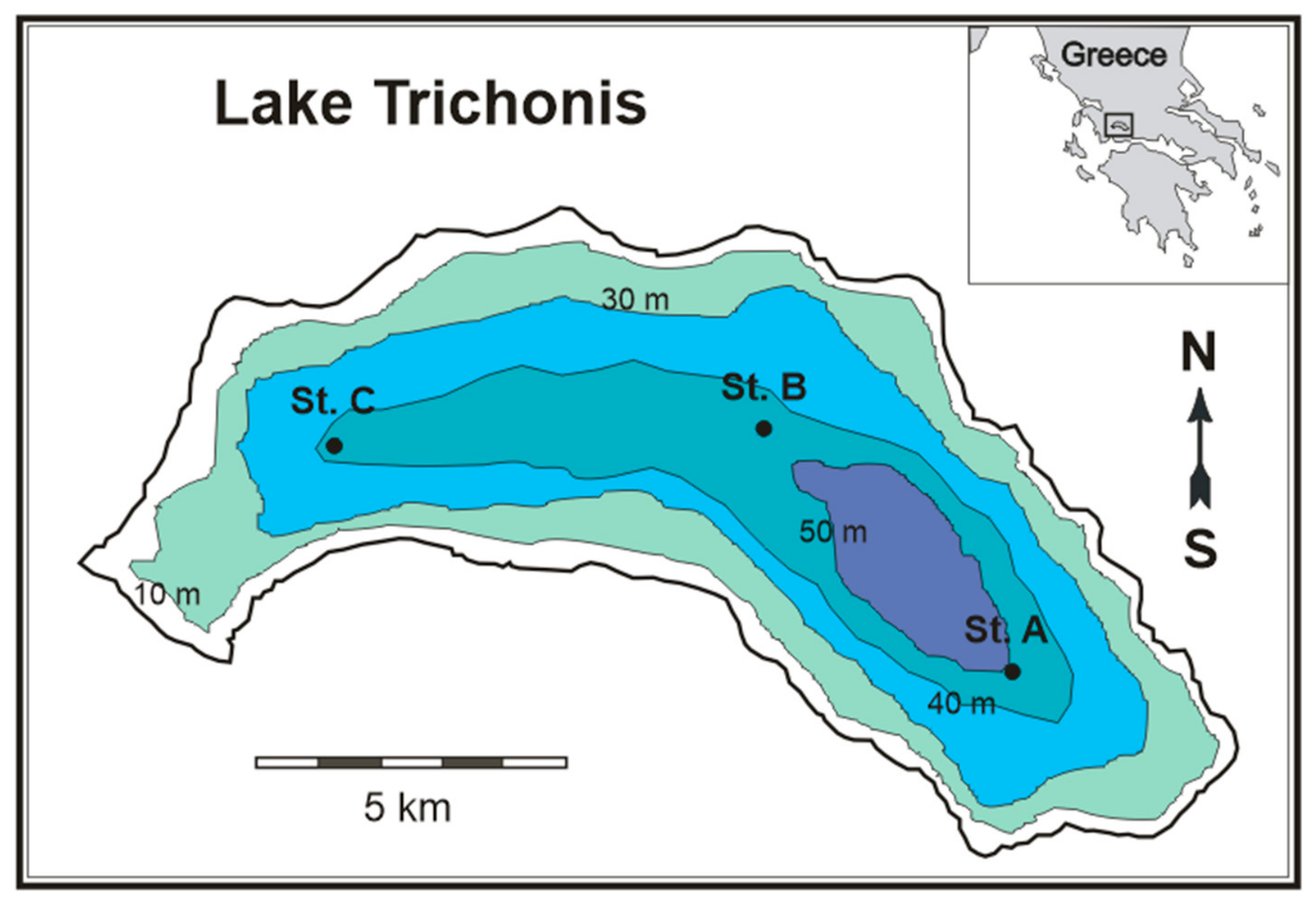
Figure 1. The map of Lake Trichonis with the three sampling stations.
Water 18 01465 g001
Figure 2. Typical photos of microplastic fragments that belong to the four morphotypes. (A) ‘soft flattened’, (B) ‘hard flattened’, (C) ‘hard rounded’ and (D) ‘cable-like’.
Water 18 01465 g002
Figure 3. The average vertical profiles of temperature (red line) and dissolved oxygen (black line) in the three sampling stations in Lake Trichonis. The green area accounts for the thermocline layer.
Water 18 01465 g003
Figure 4. The average abundance (items m−3) ± standard error (as horizontal line in each bar) of the microplastic fibers and fragments recovered from the three vertical layers (0–15 m, 15–22 m and 22–35 m) in each of the three sampling stations (A, B, C) in Lake Trichonis.
Water 18 01465 g004
Figure 5. Average proportions (%) of the different morphotypes of fragments found in the samples of each vertical layer taken by the 50 μm and 200 μm nets in the three sampling stations in Lake Trichonis.
Water 18 01465 g005
Figure 6. Vertical distribution of the mean depths of the fibers and fragments, along with the zooplankton species/groups found in all the samples taken by the 50 μm and 200 μm nets in the three replicates (1, 2 and 3) in each sampling station in Lake Trichonis.
Water 18 01465 g006
Table 1. The average proportions (%) of the six types of MPs found in the samples from the two nets (50 μm and 200 μm) in each of the three depth layers in Lake Trichonis.
Fibers Fragments
MP TypesDepth50 μm200 μm50 μm200 μm
Polyethylene terephthalate PET0–15 m89.183.242.950.0
15–22 m97.993.956.555.6
22–35 m100.097.054.540.0
Polyamide (nylon) PA0–15 m2.20.07.133.3
15–22 m1.43.54.333.3
22–35 m0.03.09.120.0
Polyethylene PE0–15 m0.00.035.70.0
15–22 m0.00.039.111.1
22–35 m0.00.034.110.0
Polyurethane PU 0–15 m8.816.814.30.0
15–22 m0.72.60.00.0
22–35 m0.00.00.00.0
Ethylene Vinyl Alcohol copolymer EVOH 0–15 m0.00.00.00.0
15–22 m0.00.08.70.0
22–35 m0.00.02.330.0
Polyester–Cotton blend (40–60%) 0–15 m0.00.00.016.7
15–22 m0.00.00.00.0
22–35 m0.00.00.00.0
Table 2. The abundance (items m−3) of the zooplankton species/groups found in the samples from the two nets (50 μm and 200 μm) in the three stations and the three depth layers in Lake Trichonis.
(50 μm) (200 μm)
SpeciesDepthSt. ASt. BSt. CSt. ASt. BSt. C
0–15 m3497.43410.84192.22139.12349.82521.9
E. drieschi (AD)15–22 m7891.77870.99242.84883.45227.75625.4
22–35 m146.2101.8195.276.099.793.7
0–15 m4716.04034.64265.34584.24984.95221.2
E. drieschi (COP)15–22 m7402.68145.210,023.18577.110,756.09107.2
22–35 m100.1171.3168.3118.6254.3108.8
0–15 m164.6147.0158.577.999.4117.5
M. albidus (AD)15–22 m134.2127.4257.2247.6142.7162.8
22–35 m0.00.00.00.00.00.0
0–15 m170.6259.4174.7112.695.2122.1
M. albidus (COP)15–22 m116.6105.3310.3190.1126.2172.8
22–35 m0.00.00.00.00.00.0
0–15 m3409.32413.84357.20.06.90.0
Copepod nauplii15–22 m2151.21472.51912.00.00.00.0
22–35 m523.1685.71157.00.00.00.0
0–15 m3835.45165.85522.15154.65387.15781.6
D. orghidani15–22 m827.0935.41437.3340.4412.2291.1
22–35 m11.213.721.74.06.62.6
0–15 m3602.55229.66238.0206.863.6206.2
D. blanci15–22 m463.4993.7972.112.00.08.2
22–35 m8.321.637.83.90.00.0
0–15 m3662.14027.64444.30.00.00.0
Rotifera15–22 m2436.12598.02659.20.00.00.0
22–35 m76.5143.5205.90.00.00.0
0–15 m18,177.120,507.024,928.57613.17902.68631.8
Total zooplankton15–22 m13,886.013,975.816,533.85426.05766.26097.5
22–35 m765.3966.21617.783.9106.396.3
Table 3. Multiple regression analysis between the abundance of the fibers and fragments in the samples from the two nets (50 μm and 200 μm) in the three stations and the three depth layers with the zooplankton species/groups found in these samples (ns accounts for “not significant” and indicates insignificant correlation).
ParameterFibers (50 μm)Fibers (200 μm)Fragments (50 μm)Fragments (200 μm)
F. drieschi (AD)0.786 **0.927 **nsns
F. drieschi (COP)nsnsnsns
F. drieschi (TOTAL)nsnsnsns
M. albidus (AD)nsnsnsns
M. albidus (COP)nsnsnsns
M. albidus (TOTAL)nsnsnsns
Copepoda (TOTAL)nsnsnsns
Copepod naupliinsnsnsns
D. orghidanins−0.301 **−0.501 **−0.403 *
D. blanci0.760 *nsnsns
Rotifera−0.535 **nsnsns
r20.8530.9500.2510.163
d.f.10101010
Note(s): (*): Correlation is significant at the 0.05 level. (**): Correlation is significant at the 0.01 level. d.f.: degrees of freedom.
Disclaimer/Publisher’s Note: The statements, opinions and data contained in all publications are solely those of the individual author(s) and contributor(s) and not of MDPI and/or the editor(s). MDPI and/or the editor(s) disclaim responsibility for any injury to people or property resulting from any ideas, methods, instructions or products referred to in the content.