1. Introduction
Climate change is defined as changes in the statistical characteristics of temperature, precipitation, and other climate variables occurring over decades and longer time scales, and it arises because of both natural processes and human-induced activities [
1,
2]. These long-term changes directly affect the hydrological cycle, causing significant variations in stream flow regimes, the temporal distribution of water resources, and the frequency of extreme hydraulic events such as floods and droughts [
3,
4]. In snow-fed and high-altitude basins in particular, changes in snow accumulation and melting processes due to rising temperatures play a decisive role in flow rate and seasonal flow patterns [
5,
6].
In recent years, numerous studies have been conducted to reveal the effects of climate change on hydrological systems, and in these studies, precipitation, temperature, and streamflow data have been examined using various trend analysis methods [
7,
8,
9,
10]. Classical nonparametric tests such as Mann–Kendall, Spearman Rho, and Theil–Sen are commonly used to determine general and monotonic trends in hydrometeorological time series [
11,
12]. However, these methods mostly reveal long-term general trends; they do not sufficiently reflect hydrologically critical processes such as seasonal asymmetries, non-monotonic behaviors, and monthly transitions [
13,
14].
To overcome these limitations, innovative methods such as Şen-Innovative Trend Analysis and Innovative Polygon Trend Analysis have been developed in recent years, enabling a more detailed evaluation of hydroclimatic variables [
13,
15,
16]. These methods have the potential to reveal non-monotonic trends, seasonal transitions, and monthly variations that classical tests cannot detect, and offer significant advantages in understanding hydrological responses, especially in basins sensitive to snowmelt [
17,
18].
A review of the existing literature reveals that a large portion of trend analysis studies focus on large-scale basins, mostly consider hydroclimatic variables independently, and fail to holistically evaluate seasonal and temporal dynamics in snow-fed sub-basins [
19,
20,
21]. Furthermore, changes in the magnitude and timing of maximum flow throughout the year due to climate change are critical for understanding snowmelt-based flow processes, yet have been addressed only to a limited extent in many studies [
22,
23]. This situation points to a significant scientific gap for snow-fed downstream basins within transboundary river systems.
Despite the large number of hydroclimatic trend studies available in the literature, several important research gaps remain, particularly for snow-fed sub-basins characterized by strong seasonal hydrological variability. Most previous studies have primarily focused on monotonic long-term trends using conventional statistical approaches, while limited attention has been given to the combined evaluation of seasonal asymmetries, non-monotonic behaviors, temporal regime shifts, and runoff predictability within a unified framework. In addition, hydroclimatic responses in snow-fed tributaries of transboundary river systems such as the Euphrates Basin remain insufficiently investigated. Therefore, this study aims to address these gaps by integrating classical trend analyses, innovative trend methods, temporal regime-based analysis, and machine learning approaches to comprehensively evaluate hydroclimatic change dynamics in the Göynük Stream Basin.
In this study, multiple trend analysis methods were used together to holistically reveal the behavior of trends in hydroclimatic variables across different time scales. Classical nonparametric methods such as Mann–Kendall, Spearman Rho, and Theil–Sen have been applied to determine the direction and magnitude of general and monotonic trends in hydrometeorological time series and to obtain results comparable to the literature [
11,
12,
24]. However, since these methods can only reflect hydrologically critical processes such as seasonal asymmetries, non-monotonic behaviors, and monthly transitions to a limited extent, innovative approaches such as Şen-Innovative Trend Analysis and Innovative Polygon Trend Analysis have also been included in the analysis [
13,
25,
26]. Innovative methods offer the advantage of revealing structural changes in streamflow, precipitation, and temperature variables on seasonal and monthly scales, especially in basins sensitive to snowmelt [
16,
27]. In this approach, findings from different methods are not considered as conflicting results, but rather as indicators that complementarily explain long-term trends, seasonal distribution, and monthly transitions of hydroclimatic change across different time scales. Within this framework, the study aims to reveal the hydroclimatic effects of climate change in the Göynük Stream Basin, a snow-fed sub-basin connected to the Euphrates River system; to determine the annual and seasonal trends in flow, precipitation, and temperature data; to examine the spatial variability of these trends across the basin using geographic information systems; and to evaluate the hydrological responses related to snowmelt by analyzing the changes in maximum flow magnitude and the timing of these flows.
2. Study Area and Data
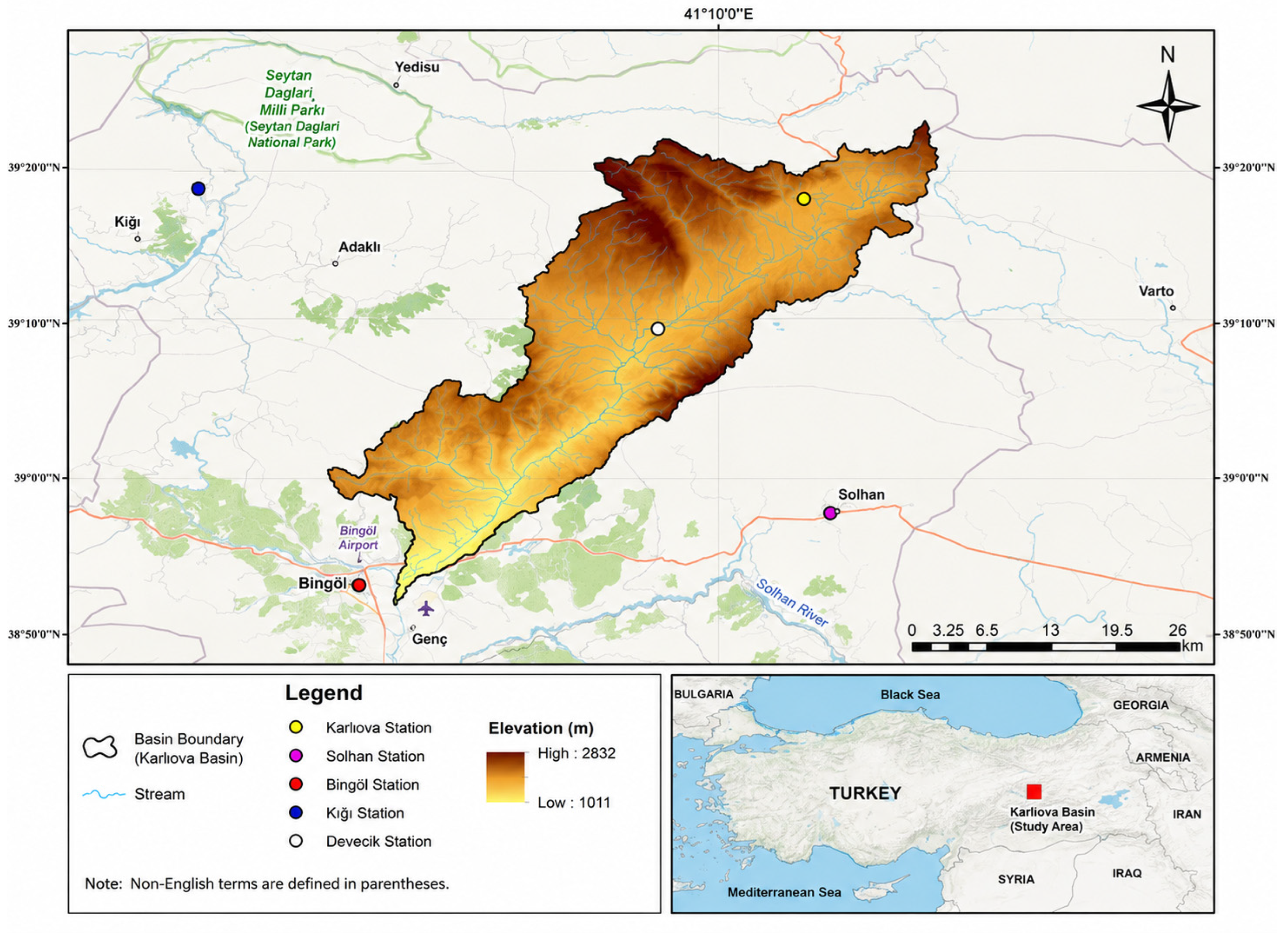
The selected study area is the Göynük Stream Basin. This basin originates within the boundaries of Karlıova District of Bingöl Province and subsequently converges with the Çapakçur Stream, which also originates from Bingöl Province, in the Ekinyolu region. From this confluence point, the stream is thereafter referred to as the Bingöl Stream, which ultimately discharges into the Murat River (the largest tributary of the Euphrates River) near the Genç District of Bingöl (
Figure 1). The basin delineated using the ArcGIS software 10.5, one of the commonly used GIS platforms, is shown in
Figure 1. Its spatial extent begins in Karlıova District; the Kiğı District is located to the northwest, the Solhan District to the southeast, and the Bingöl provincial center lies to the southwest of the basin. The geographic and hydrometeorological characteristics of the observation stations used in this study are presented in
Table 1.
There are four meteorological stations operating within the basin, namely: Karlıova Station (No. 18177), Bingöl Central Station (No. 17273), Solhan Station (No. 17776), and Kiğı Station (No. 17276), which collectively provide the hydrometeorological data used in the study.
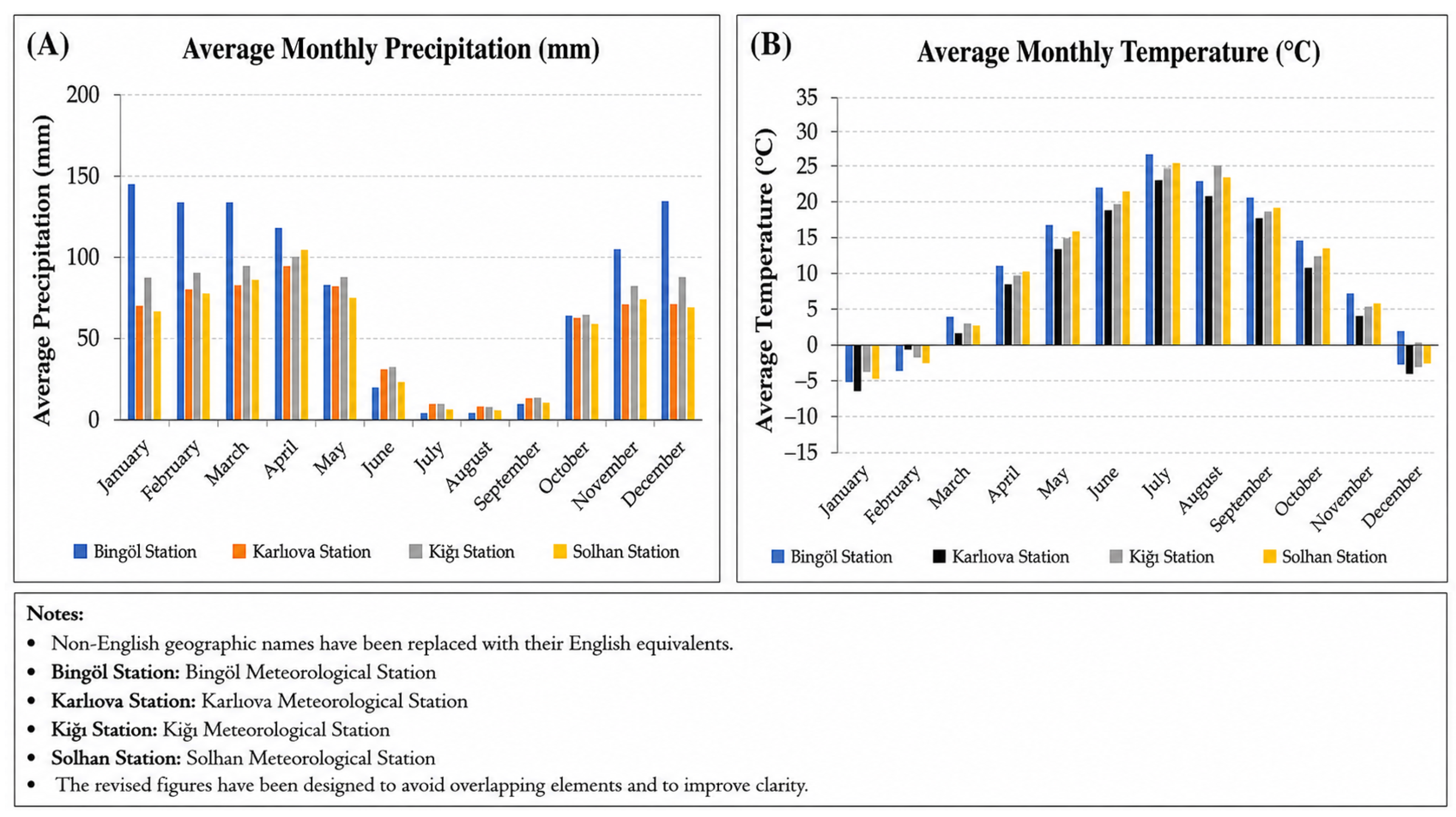
Göynük Stream, which originates from the Karlıova District, located at an elevation of approximately 1940 m, where the annual number of snow-covered days reaches 141, exhibits a predominantly northeast–southwest flow direction. Among the regions located within the boundaries of the river basin, Bingöl city center represents the warmest area. Considering the four meteorological stations, which record mean temperatures ranging between −10 °C and 25 °C, the highest temperatures occur during July and August, whereas the lowest temperatures are observed in December and January.
According to the climatological records of the Bingöl station, the months with the highest precipitation in Bingöl city center are December, January, February, and March, while July and August correspond to the period with minimal precipitation. Based on the data obtained from the four stations in the study area, Bingöl city center receives the greatest amount of precipitation, followed respectively by Kiğı, Solhan, and Karlıova districts. A similar ranking is evident for temperature, with Bingöl city center exhibiting the highest average temperatures, followed by Kiğı, Solhan, and Karlıova (
Figure 2).
Overall, the basin is characterized by low precipitation during the warmest months and low temperatures during periods of high precipitation.
3. Methods
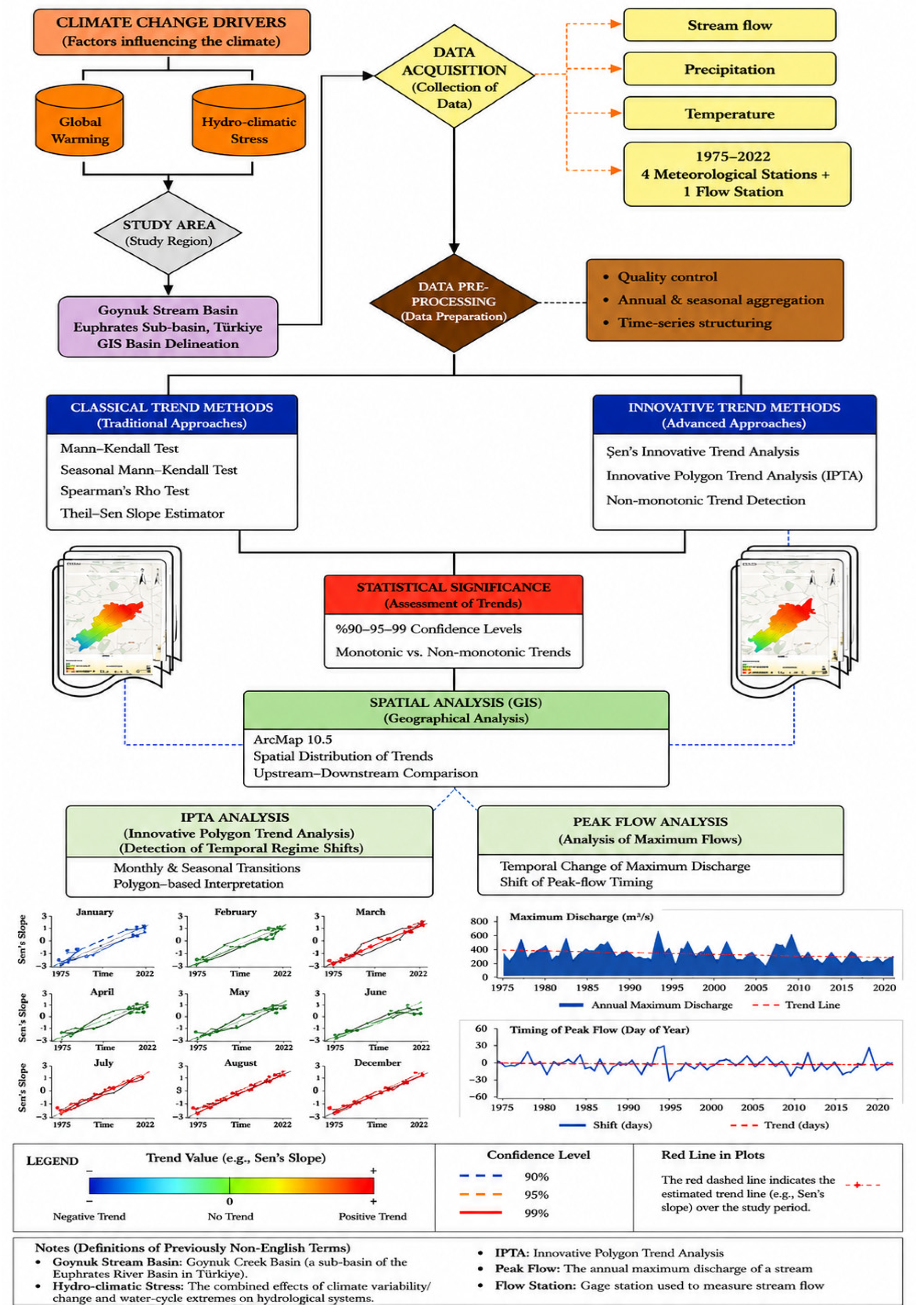
This study aims to reveal the temporal and spatial reflections of hydroclimatic effects caused by climate change on river flow regimes using a holistic approach. Within this scope, the Göynük Stream Basin, one of the subsystems of the Euphrates Basin in Turkiye, was selected as the study area, and the basin boundaries were determined using GIS-based methods. The analysis used precipitation, temperature, and streamflow observation data from the period 1975–2022; the data underwent quality control, temporal scaling, and annual-seasonal decomposition processes. To determine trends in hydroclimatic variables, classical trend tests such as Mann–Kendall, Seasonal Mann–Kendall, Spearman Rho, and Theil–Sen slope were applied together with innovative methods such as Sen-Innovative Trend Analysis and Innovative Polygon Trend Analysis. The obtained trends were evaluated for statistical significance at different confidence levels, and monotonic and non-monotonic trend behaviors were analyzed comparatively. In addition, the spatial distribution of trends within the basin was examined in a GIS environment; upstream-downstream basin relationships and spatial heterogeneity were revealed. In the final stage of the study, the effects of climate change on the flood regime were interpreted from a holistic perspective, particularly by evaluating the temporal variation in maximum flow values and possible shifts in peak flow timing (
Figure 3).
In trend analyses of hydroclimatic time series, the selection of statistical significance levels is critical for evaluating the reliability of the results. Previous studies have shown that 1%, 5%, and 10% significance levels are commonly used in trend analyses of hydro-meteorological and climatic variables, and these levels are considered standard thresholds for identifying strong and moderate trends [
28,
29,
30].
However, high natural variability in hydroclimatic series, short observation periods, and complex climatic conditions specific to mountainous or semi-arid basins can make it difficult to statistically represent trend signals at traditional levels of significance. Therefore, some studies suggest that the 20% significance level should be considered not as strong statistical evidence, but as an exploratory indicator of weak or emerging trends [
31,
32,
33]. Similarly, it is noted that results at the 20% level in hydroclimatic trend studies should be interpreted cautiously and that such trends may be strengthened with longer data sets in the future [
33].
In this study, the commonly accepted significance levels of 1%, 5%, and 10% in the literature were used as the primary criteria for determining statistically reliable trends. The 20% significance level was used solely to indicate weak trends that are not yet statistically strong but may have potential hydrological significance, and the results were interpreted within this framework. Throughout this study, the term “air temperature” denotes near-surface atmospheric temperature measurements obtained from meteorological stations, while “streamflow” and “precipitation” respectively refer to observed river discharge and atmospheric precipitation records used in the hydroclimatic analyses.
All statistical analyses and trend tests, including Mann–Kendall, Seasonal Mann–Kendall, Spearman Rho, Theil–Sen slope estimator, Şen-Innovative Trend Analysis (ITA), Innovative Polygon Trend Analysis (IPTA), and RAPS analyses, were performed using MATLAB R2023a (MathWorks Inc., Natick, MA, USA). Geographic Information System (GIS)-based spatial analyses and basin delineation were conducted using ArcGIS 10.5 (Esri, Redlands, CA, USA).
3.1. Şen-Innovative Trend Analysis (ITA)
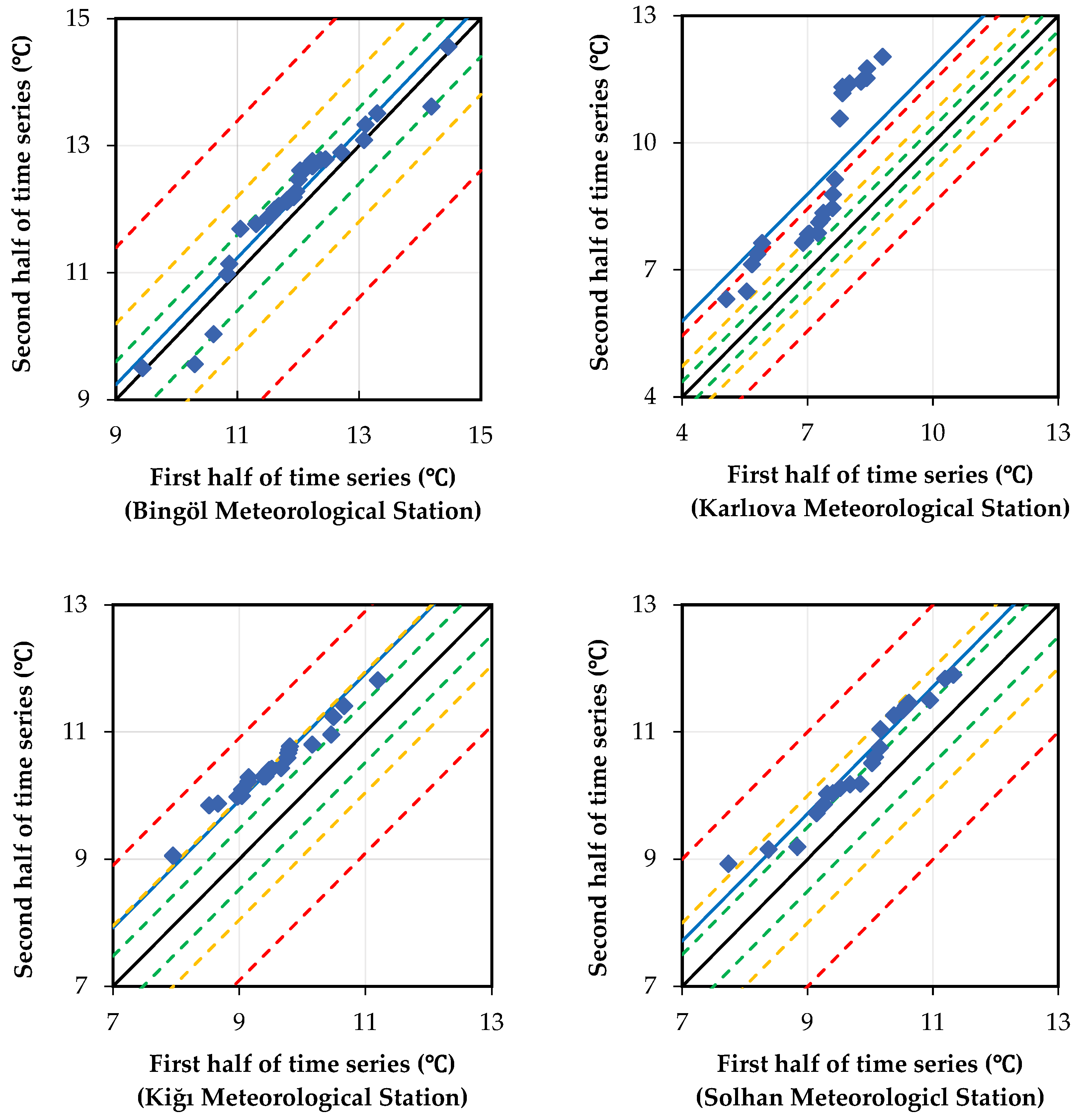
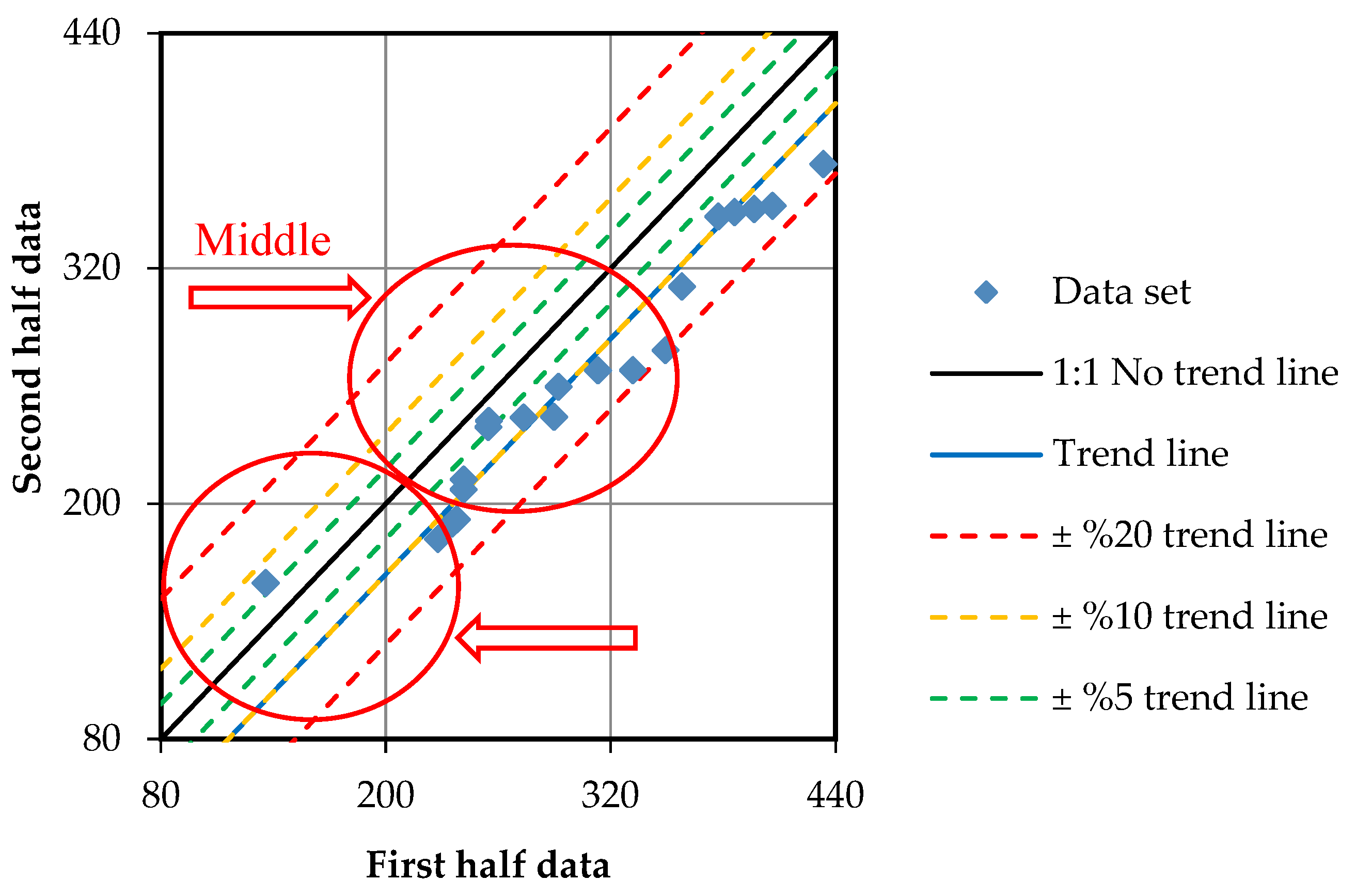
Şen-Innovative trend method is among the new methods added to the literature. In this method, the data taken in the entire observation range are first divided into two sub-series of equal length. The two sub-series obtained are then sorted from smallest to largest within themselves. The first half of the main time series is plotted on the x-axis and the second half on the y-axis, as seen in
Figure 4.
If the scatter points obtained from these listed series are concentrated on the 1:1 No Trend line, it is stated that there is no trend in the data range examined. If all the scattering points are above or below the 1:1 line, it is said that there is a monotonic (single regular) increasing or decreasing trend. If the scatter points are below (above) the 1:1 line at low values and above (below) at maximum values, this is interpreted as a non-monotonic (very regular) increasing (decreasing) trend. In this study, the magnitude of the trend was examined in percentage slices. The deviations from the no-trend curve in percentages were interpreted, respectively, and the significance range of the trend was determined. Additionally, Alashan (2020) developed some formulas to compare the Sen-ITA method with a critical value like other nonparametric tests [
26]. It has been stated that the Sen-ITA test should have a critical value that is dependent on the data set instead of comparing it with numerical values that have certain acceptances, such as the Mann–Kendall test. Therefore, for each data set studied, there is a critical test value that is compatible with the data set [
26]. The critical values compatible with the data set are obtained by using Equations (1)–(3), namely the standard deviation (
of the trend value. The trend deviation (
value in Equation (3) is multiplied by values such as 1.65, 1.96 and 2.58, and critical trend values (
are obtained with Equations (4)–(6) at 90, 95 and 99% significance levels.
3.2. Innovative Polygon Trend Analysis (IPTA)
Innovative Polygon Trend Analysis (IPTA) is included in non-parametric tests and was developed to avoid the difficulties arising from the use of these methods. This method determines not only the trend in the given series but also the transitivity between two time series of the original hydro-meteorological data through polygon lines, facilitating numerical interpretations [
15]. This method is particularly useful in detecting seasonal transitions. The method also provides the opportunity to visually examine seasonal changes. The method transforms the scatter distribution consisting of the averages of the first and second time series into a polygon. Like the Sen-ITA method, the area below the 1:1 no trend line indicates a decreasing trend, while the area above it indicates an increasing trend. The method has 12 monthly transitions, such as December–January, January–February, and February–March. Then, seasonal length and transition are calculated. Equations (7) and (8) are used to calculate seasonal transition length and seasonal transition slope. Unlike conventional seasonal trend analyses, which mainly evaluate the existence and statistical significance of monotonic seasonal trends, IPTA provides additional information regarding intra-seasonal transitions, directional variability, and temporal continuity between consecutive months. The polygon-based structure of IPTA enables the visualization of seasonal transition dynamics and facilitates the identification of non-monotonic hydroclimatic behaviors that may remain undetected using standard seasonal statistical approaches. This capability is particularly important in snow-fed basins where hydroclimatic responses are strongly influenced by seasonal snow accumulation and snowmelt timing.
In these equations,
and
represent the consecutive monthly averages of the second half series, while
and
represent the consecutive monthly averages of the first half series.
3.3. Mann–Kendall
The Mann–Kendall test is a nonparametric trend analysis test widely used in the literature [
34]. The biggest advantage of this test compared to parametric tests is that the statistical distribution of the data variables does not affect the trend result. Therefore, in this method, what is important is the temporal order of the data sizes rather than the numerical size of the variables.
Prior to the Mann–Kendall and Seasonal Mann–Kendall analyses, the hydroclimatic time series were evaluated for serial autocorrelation effects, particularly lag-1 autocorrelation, since autocorrelation may influence the significance of trend detection in nonparametric tests. The autocorrelation structure of the series was examined in MATLAB R2023a, and no statistically significant autocorrelation requiring pre-whitening treatment was detected at the 95% confidence level. Therefore, the original time series was used directly in the trend analyses.
3.3.1. Mann–Kendall Test
Since the Mann–Kendall test is based on the principle of calculating the correlation value, it is known as the Kendall correlation statistic [
34]. The working principle of this test, from the data range
are listed in order of time. In this test
is for
(
) number of ordered pairs P,
for
the number of pairs is defined as M.
the Kendall correlation coefficient τ is calculated as given in Equation (9):
The value in this equation varies between −1 and +1. When the number of data is greater than 10, the variance and expected value of S are calculated with the formula given in Equation (10):
It represents the number of observations with equal t values specified in Equation (11). ∑t in the equation represents the sum of the equal observations. If there are no dependent variables in the application, Equation (12) is used instead of Equation (11). If the number of data used in the study is greater than 10, Equation (13) is applied to calculate the standard Normal z variable.
The significance of the trend values is expressed by comparing the calculated z value with the critical z values of 1.65, 1.96 and 2.58, which are accepted according to the 90%, 95% and 99% significance levels selected in the study.
3.3.2. Seasonal Mann–Kendall Test
The seasonal Mann–Kendall test is an application of the Mann–Kendall test used to determine seasonal shift [
35,
36]. In this study, four seasons were used. For the application of the seasonal Mann–Kendall test, the temperature, precipitation and flow parameters measured in the basin were applied separately for four seasons. While one trend value was found in the annual Mann–Kendall test, four values were calculated in the seasonal Mann–Kendall test. W shown in
Table 2 is the matrix of all seasonal data in n years at a station. The subscript “.” represents the average and m is the number of seasons, which equals 4. The expression of the terms in Equation (6) is as follows. j shows the average of currents in jth season over n years. i shows the average of currents in four seasons of the year,
represents the data value in the jth season in the ith year.
In this method, after the determination of seasonal values, the subsequent process steps are identical to those applied in the Mann–Kendall test.
3.4. Spearman Rho Method
The Spearman Rho test is an analysis method used to determine the degree of correlation between two data sets [
12]. The expression
is considered as an order statistic and is determined by sorting the data sets from largest to smallest and vice versa. The Spearman Rho test statistic (
) is calculated with the relation given in Equation (14).
The trend parameter (z) depends on the
parameter calculated with the relation in Equation (15).
If the z value calculated in Equation (13) is smaller than , as in the Mann–Kendall test, it shows that there is no significant trend expression, and if it is larger, it shows that there is a significant trend expression. In this method, as in the Mann–Kendall test, 90%, 95% and 99% confidence intervals were studied. Where is the Spearman rank correlation coefficient and n is the number of observations. If the absolute value of the calculated Z statistic exceeds the critical value, the null hypothesis of no trend is rejected.
3.5. Theil Sen Method
The Theil-Sen slope method is used to determine the magnitude of the slope between given time intervals [
24]. The trend slope is expressed with the symbol β and its valid equation is given in 16. The Theil-Sen slope and linear regression trend analysis method, unlike the Mann–Kendall and Şen_ITA methods, does not use a critical value. This nonparametric method, called the Theil-Sen approach (TSA), is used by many researchers to measure the slope of the trend. The Theil-Sen approximation (TSA) provides more robust slope estimates than the least squares method [
24,
37]. TSA also focuses on the median value for outliers and extreme values and is stated to be competitive with the least squares method even for normally distributed data in time series [
38]. In this study, as in the Mann–Kendall test, 90%, 95% and 99% confidence intervals were used.
The Theil–Sen slope values provide the magnitude and direction of temporal changes in hydroclimatic variables. Positive slope values indicate increasing trends over time, whereas negative slope values represent decreasing trends. The magnitude of the slope reflects the rate of change per unit time (e.g., m3/s/year for streamflow, mm/year for precipitation, and °C/year for temperature), thereby enabling a practical interpretation of the intensity of hydroclimatic changes within the basin.
The methods used in this study were not employed to directly validate each other, but rather to enable the evaluation of hydroclimatic trends under different statistical assumptions. Each method approaches the direction, magnitude, and statistical significance of trends from different perspectives, thus providing a complementary framework in hydroclimatic analysis [
28,
31,
32].
Method validation was not carried out in the classical sense of model calibration or error analysis, but rather by evaluating the consistency between methods. In this context, the direction, significance level, and spatial distribution of trends obtained using different methods were compared; results showing agreement between methods were interpreted as more reliable trends. The literature indicates that a similar approach is widely used in hydroclimatic trend studies [
29,
39]. This comparative assessment helps to reduce the potential uncertainties of results based on a single methodology, contributing to a more robust and reliable interpretation of trends.
3.6. Rescaled Adjusted Partial Sums (RAPS) Method
In addition to the classical and innovative trend analysis methods, the Rescaled Adjusted Partial Sums (RAPS) method was applied to the original annual hydroclimatic time series to evaluate hidden temporal variability, persistent hydroclimatic periods, and possible regime shifts that may not be fully represented by averaged or seasonal trend structures. The RAPS method is widely used in hydrology and environmental sciences for detecting structural changes, irregular fluctuations, and temporal transitions within time series data [
40,
41].
Unlike conventional monotonic trend tests, the RAPS approach enables the visual interpretation of cumulative deviations from the long-term mean and facilitates the identification of wet/dry or warm/cold sub-periods within hydroclimatic records. The method has been successfully applied in studies related to river flow regimes, groundwater quality, wastewater monitoring, and hydrogeological assessments [
42,
43,
44,
45,
46].
The RAPS values were calculated using the following equation:
where Yt represents the observed value at time t, Y is the long-term mean of the series, and Sy denotes the standard deviation of the corresponding time series. Positive cumulative deviations indicate periods characterized by above-average conditions, whereas negative deviations reflect below-average conditions. Abrupt changes in slope and prolonged positive or negative phases may indicate possible hydroclimatic regime shifts and temporal persistence within the analyzed series [
41].
In this study, the RAPS method was applied to the original annual streamflow, precipitation, and temperature series in order to complement the results obtained from the Mann–Kendall, Şen-ITA, IPTA, Spearman Rho, and Theil–Sen analyses and to provide additional insight into the temporal structure of hydroclimatic change within the Göynük Stream Basin.
4. Results
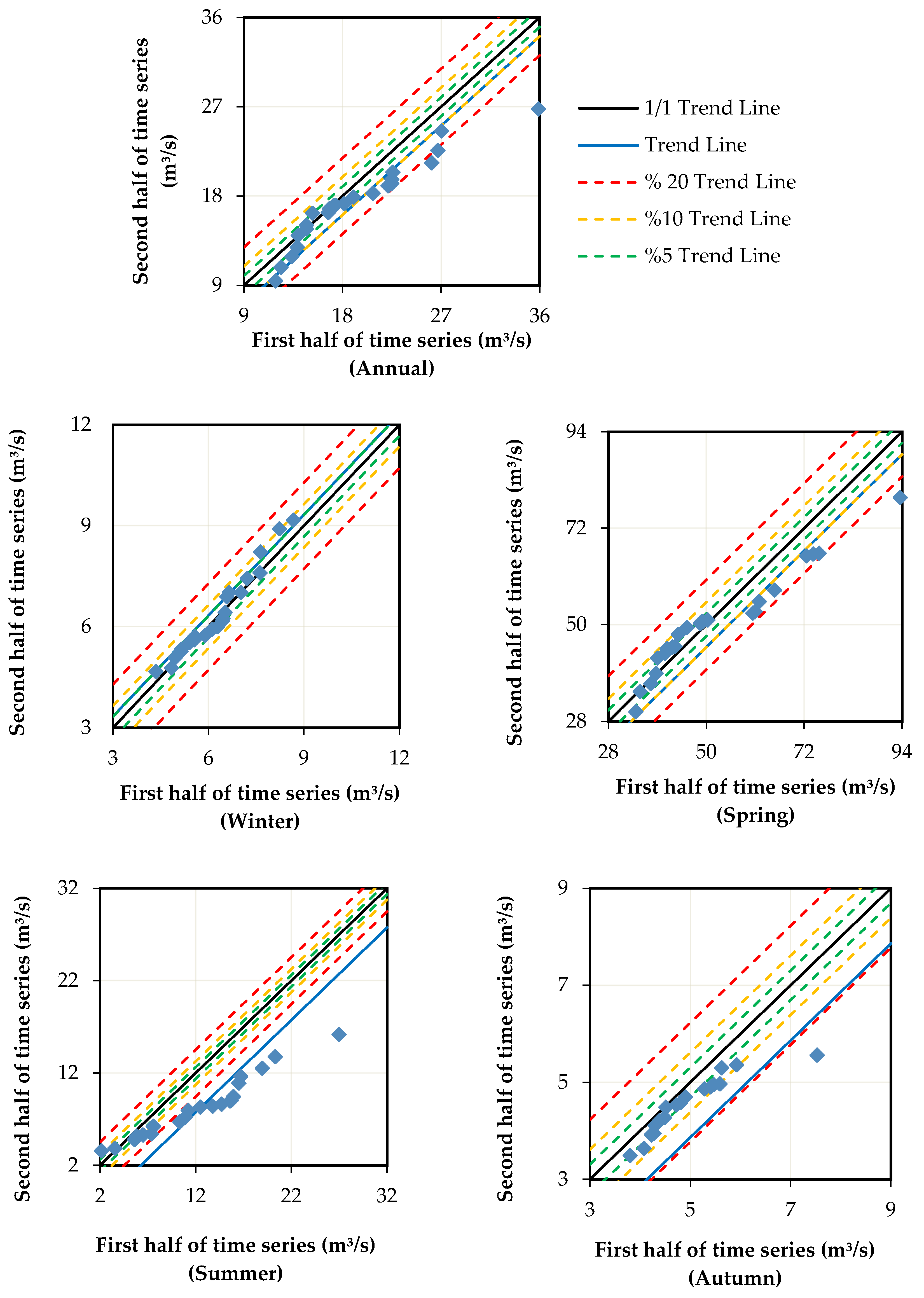
When the flow values of the river in the application area are examined using the Şen-ITA test, a decreasing trend is detected in the annual data. The annual trend value was calculated as 9.37%. Like the annual results, decreasing trends were also identified in the spring, summer, and autumn seasons, with corresponding magnitudes of 4.09%, 3.64%, and 18.57%, respectively. In contrast to these seasons, winter exhibits an increasing trend. In winter, the data from the last 24 years (1994–2017) indicate an increase of 5.13% relative to the first 24 years (1975–1998) (
Figure 4).
When the seasonal values of the Şen-ITA test were evaluated, significant changes were identified in the autumn and summer seasons. A decrease in flow values at the 99% significance level is observed in both seasons. Although there is an upward tendency in winter values, this increase does not reach statistical significance (
Figure 5).
The flow values were examined using four different trend detection methods (Mann–Kendall, Sen-ITA, Theil–Sen, and Spearman’s Rho), utilizing 48 years of data. When the Şen-ITA test findings are examined, trend values with statistical significance at the 95% level were detected in the autumn and summer seasons, while no significant trend values were observed in the other two seasons and the annual data. In the Mann–Kendall Test, significant values were found in the autumn and summer months, with a notable decrease in flow observed, particularly in the summer months, compared to previous years. Similar results align with the Spearman Rho test findings. In the Theil–Sen method, a significant decreasing trend was identified solely in the summer season. Across all four methods, an increasing flow rate in the winter season has been consistently noted in recent years. Contrary to the increase in winter values, a decreasing trend is observed in the other three seasonal and annual flow values. The decreasing flow trend in this stream is particularly pronounced in the autumn and summer months (
Table 3). The observed decrease in streamflow is primarily associated with hydroclimatic changes, including increasing air temperatures, decreasing precipitation patterns, and earlier snowmelt processes within the basin. Significant anthropogenic influences such as major dams, intensive industrial activities, inter-basin water transfers, or large-scale hydraulic regulations are not present in the Göynük Stream Basin. Therefore, the detected long-term streamflow reductions are predominantly climate-driven.
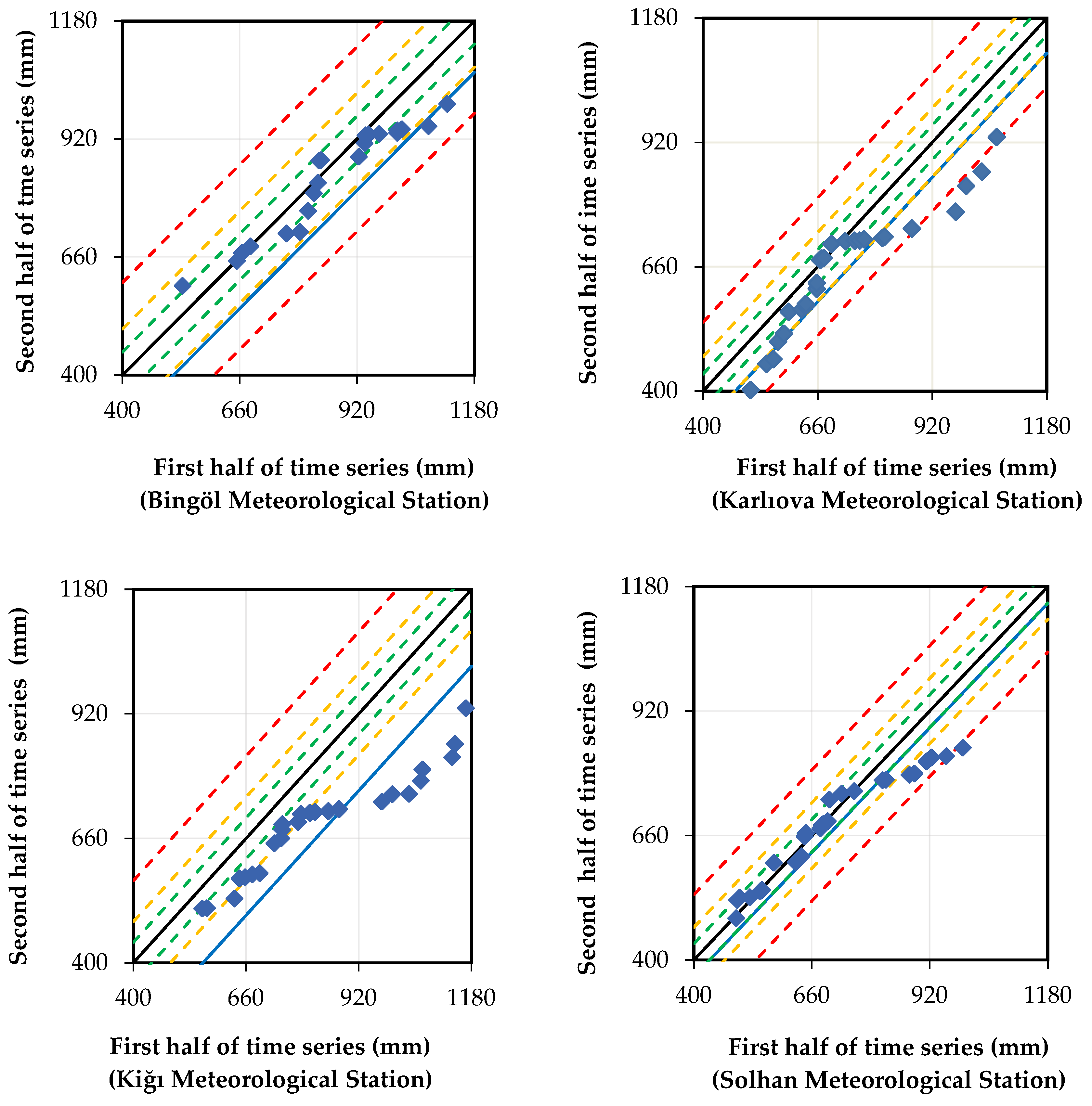
There are 4 different stations within the basin area. It is very difficult to determine how much of the stream is fed by the area where these stations are located. For this reason, it is found in the 4 stations within this basin area. In these examinations, it is observed that there is a decrease in the total annual precipitation values in all 4 stations. While this decreasing trend is above 10% at Bingöl, Karlıova and Kığı stations, it is observed to be in the range of 5–10% at Solhan station. In addition, since variable situations occur in the minimum, median and maximum values at the stations, a multi-regular trend graph is formed. (
Figure 6.) Seasonal changes in precipitation values were also examined with the Şen-ITA method. According to the findings of this method, it was determined that there was a decrease at a significance level of 90% in the spring season of Kığı district.
Precipitation values were examined with 4 different methods, 4 different locations, 4 different seasons and 5 different data values, including annual values. In the Şen-ITA test findings, a significant decrease is observed only in the Spring season and at the Kığı station, while decreases are observed in other seasons and stations, but these values remain below significant values. When the Mann–Kendall test findings are examined, significant changes occur in Karlıova and Kığı in the autumn season, in Karlıova in the winter season, in all stations in the spring season and only in the Kığı station in the summer season. According to the Mann–Kendall test, precipitation values in the basin appear to be decreasing in all stations and seasons. In the Theil-Sen and Şen-ITA methods, an increasing trend was observed in Bingöl and Solhan stations in the summer season, whereas a decreasing trend was observed in all other stations and seasons. Spearman’s Rho test also reveals similar findings to other tests. In this test, it is seen that there is a serious decreasing trend in Karlıova station in the winter season and in Kiğı station in the spring and summer seasons (
Table 4).
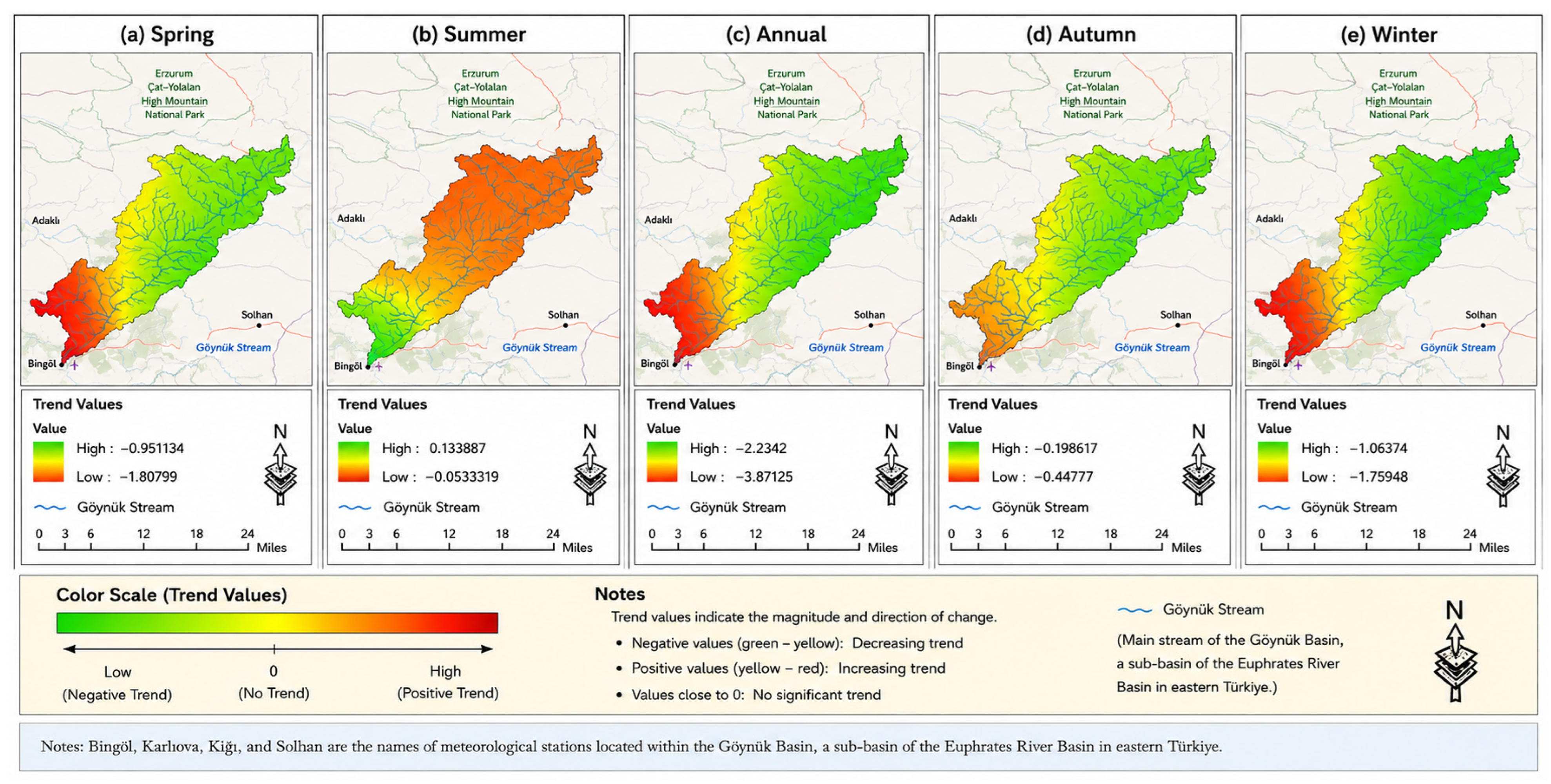
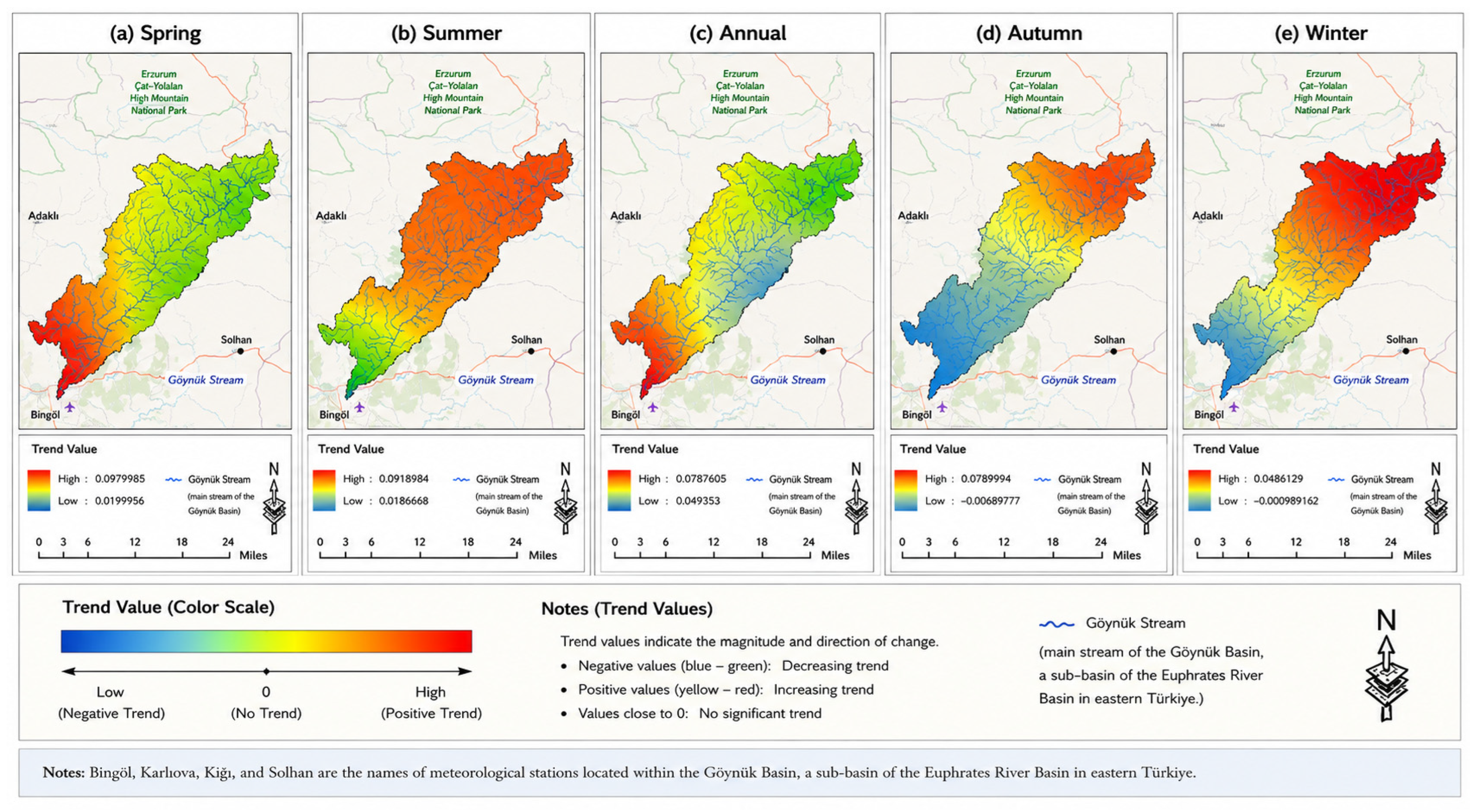
Since there are 4 stations in the feeding basin of the river selected as the area and different temperature values occur at these stations, the basin-based change was examined with the ArcMap 10.5 program, which is Şen-ITA’s contribution margin saving information systems software. 4 seasonal and 1 annual change graphs were created. It is seen that there is a decreasing trend in all borders of the basin in seasons other than summer and this trend is higher in the downstream region of the basin (
Figure 7a–c,e). Although there is a decreasing trend in precipitation in the downstream part of the basin in the summer months, there is an increasing trend in precipitation in the upstream part, and it is possible to examine the situations at different points of the basin on the map (
Figure 7d).
When the annual average air temperature data were evaluated using the Şen-ITA method, a strong increasing trend exceeding 20% was detected at Karlıova station, while moderate increasing trends between 10% and 20% were observed at Solhan and Kiğı stations. In contrast, Bingöl station exhibited a relatively weaker annual increasing trend below 5% (
Figure 8). Seasonal analyses, however, revealed that statistically significant warming trends become more pronounced during winter and spring periods at several stations. Therefore, although the annual warming magnitude differs spatially across the basin, seasonal analyses indicate a consistent regional warming tendency, particularly during cold-season conditions. Seasonal changes in temperature values were examined using the Şen-ITA method. When the findings of this method are examined, a 90% decrease in significance is seen in the Bingöl central station data in the autumn season, a 99% increase in significance is seen in the Bingöl and Kığı stations and a 95% increase in significance is seen in the Solhan station in the winter season. When the findings of this method are examined, a 90% decrease in significance is seen in the Bingöl central station data in the autumn season, a 99% increase in significance is seen in the Bingöl and Kığı stations and a 95% increase in significance is seen in the Solhan station in the winter season. In the summer season, there was an increase in the significant values of 99% at Karlıova station and 95% at Solhan station. No significant values were reached in the remaining data.
Temperature values, as in precipitation values, were examined at 4 different stations with 4 different seasonal and annual situations and 4 trend methods. When the Şen-ITA test findings are examined, a significant trend is observed in Bingöl and Karlıova (90%) in annual values. A significant trend is observed in the autumn season (90%). Significant trends are observed in the winter season at Bingöl and Kığı stations (99%). In the spring season, a significant trend is observed at Bingöl station (99%) and Karlıova station (90%). While there is a significant trend at Karlıova station (99%) in summer, significant trends are observed at other stations. In the Mann–Kendall test, an increase at the 95% significance level is seen in the Karlıova region in the autumn season, while in the winter season, Bingöl (80%), Karlıova (90%) and Kığı (95%), the increases in other regions remain below the significance level. In the spring season, there was a 90% significance level increase in Karlıova and Solhan regions. In the summer season, there was a 95% significance level increase in 2 stations, a 90% significance level increase in 1 station and an 80% significance level increase in one station. While increases were observed in all stations and regions in the Theil-Sen method, some of these increases were significant, while others were below significant levels. Although the Spearman-Rho test shows similar findings to the Mann–Kendall test, it reveals more significance in determining the trend significance level (
Table 5).
The trend findings in the average temperature values found with the Şen-ITA test were examined with maps of the distribution in the basin. Although the temperature trend increases towards the upstream part of the basin in the autumn season, the increasing trend in annual and other seasonal values reaches higher values in the downstream part of the basin (
Figure 9).
The increasing temperature trends detected in the Göynük Stream Basin are consistent with the findings of previous regional climate studies conducted in Eastern Anatolia and the Euphrates Basin. Several studies have reported significant warming trends, particularly during winter and spring seasons, associated with regional climate change and accelerated snowmelt processes in high-altitude basins. Similar temperature increases have also been observed across different parts of Türkiye, where rising air temperatures have been linked to shifts in hydrological regimes, reduced snow storage, and earlier runoff timing. Therefore, the results obtained in this study support the broader regional evidence of ongoing hydroclimatic warming trends.
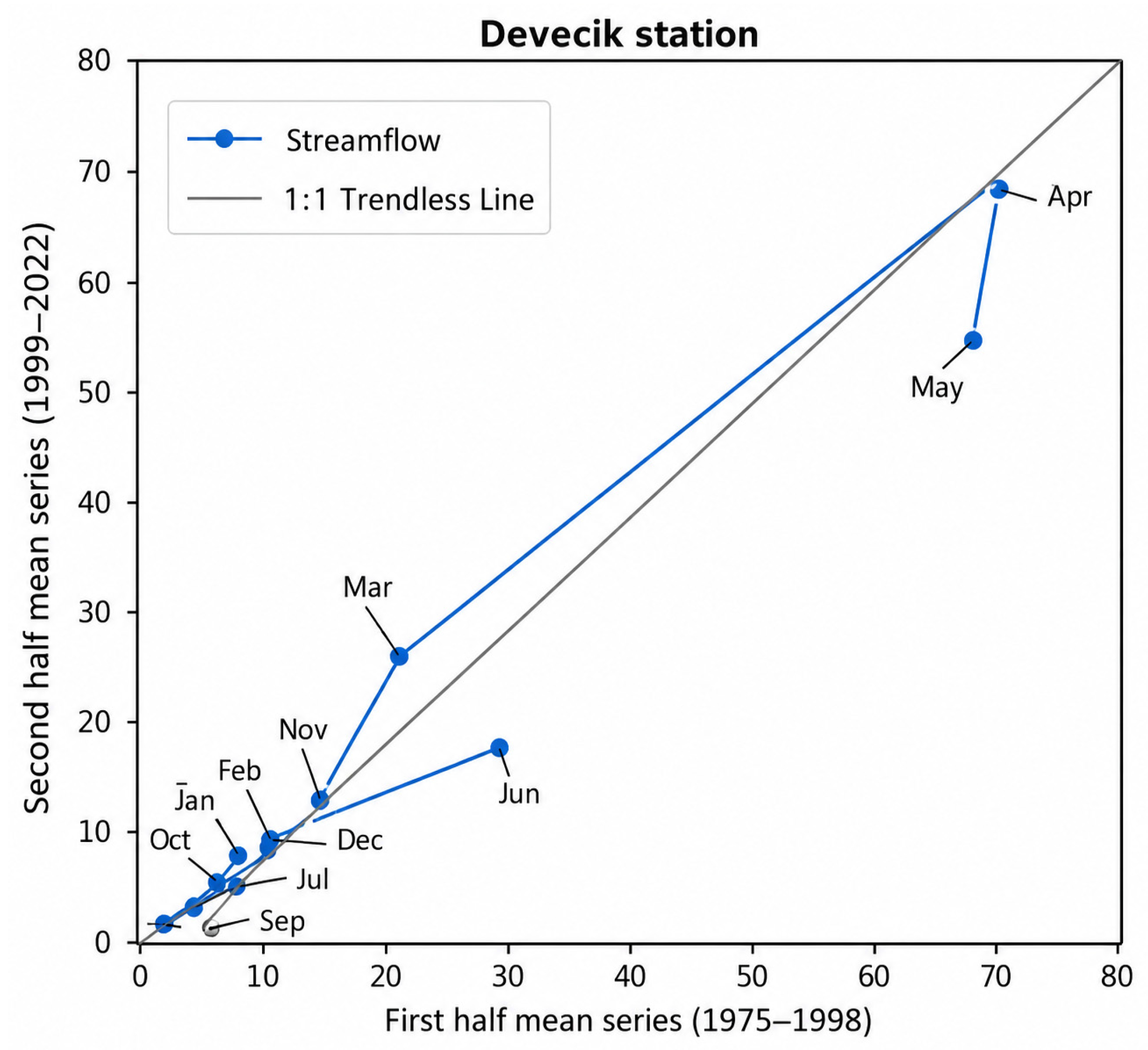
It has been observed that there are annual and seasonal changes in some of the applied methods. In the study, to examine the monthly changes in flow, precipitation and temperature values because of climate change, the innovative polygon trend test (IPTA), which has been newly added to the literature and is successful in interpreting and meaning, was applied to examine the monthly transition of changes. An increase in flow values was observed only in March. A significant decrease was observed in May and June according to the IPTA method. No significant change was observed in the remaining months (
Figure 10).
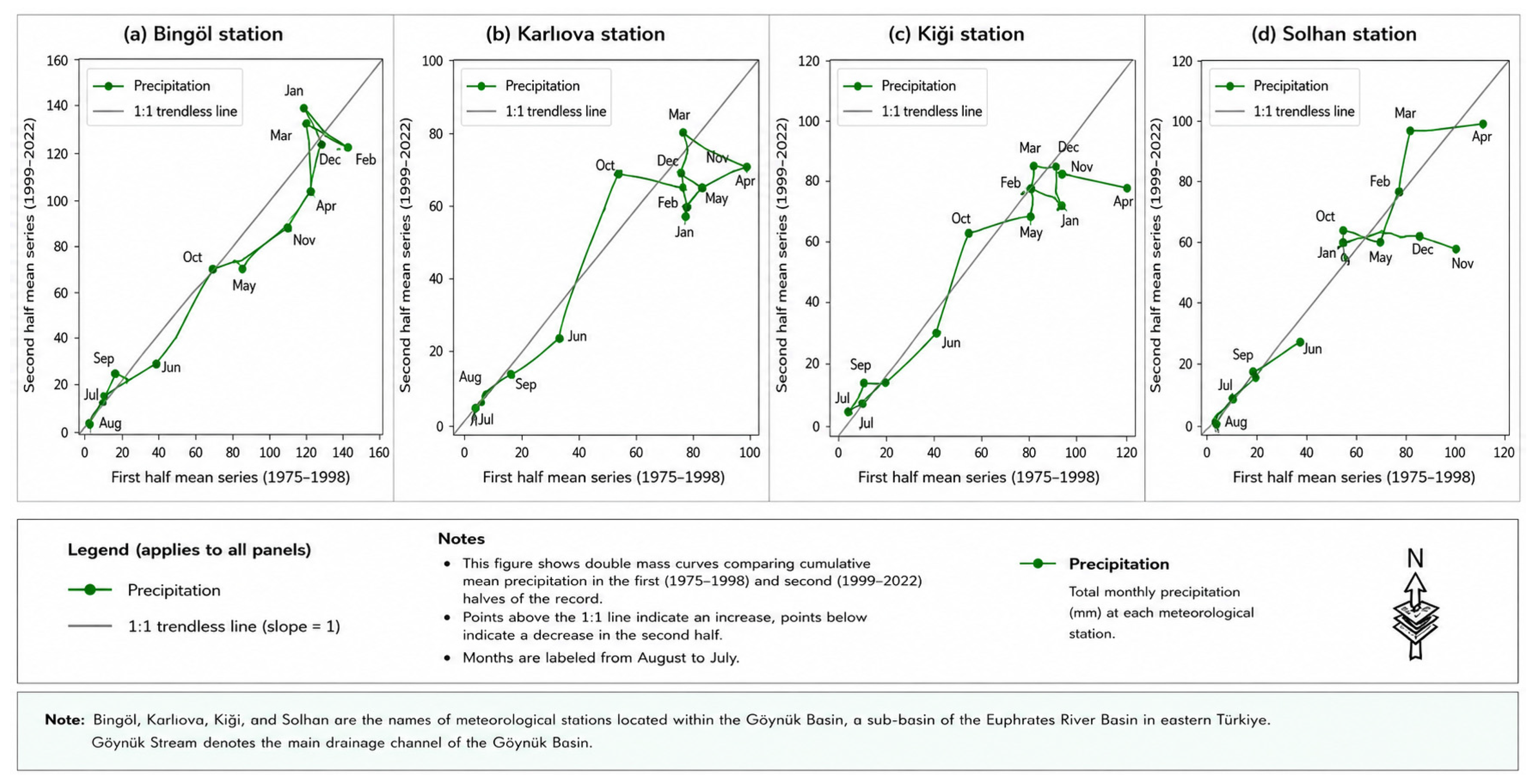
The IPTA method was used to examine monthly changes in precipitation values based on data obtained from stations located in 4 regions affecting the basin. According to the IPTA findings of the Bingöl station data, an increasing trend was detected in January and March and a decreasing trend was detected in February, April, May and November. At Karlıova station, an increase is observed in August, October and March and a decrease is observed in January, February, April, May, June and October. At Kigi station, an increasing trend was detected in March, and a decreasing trend was detected in January, April, May and June. At Solhan station, an increasing trend in March and a decreasing trend in May, June, November and December were detected. In the IPTA findings of the precipitation values of these four stations, an increase in precipitation values was detected in March (
Figure 11).
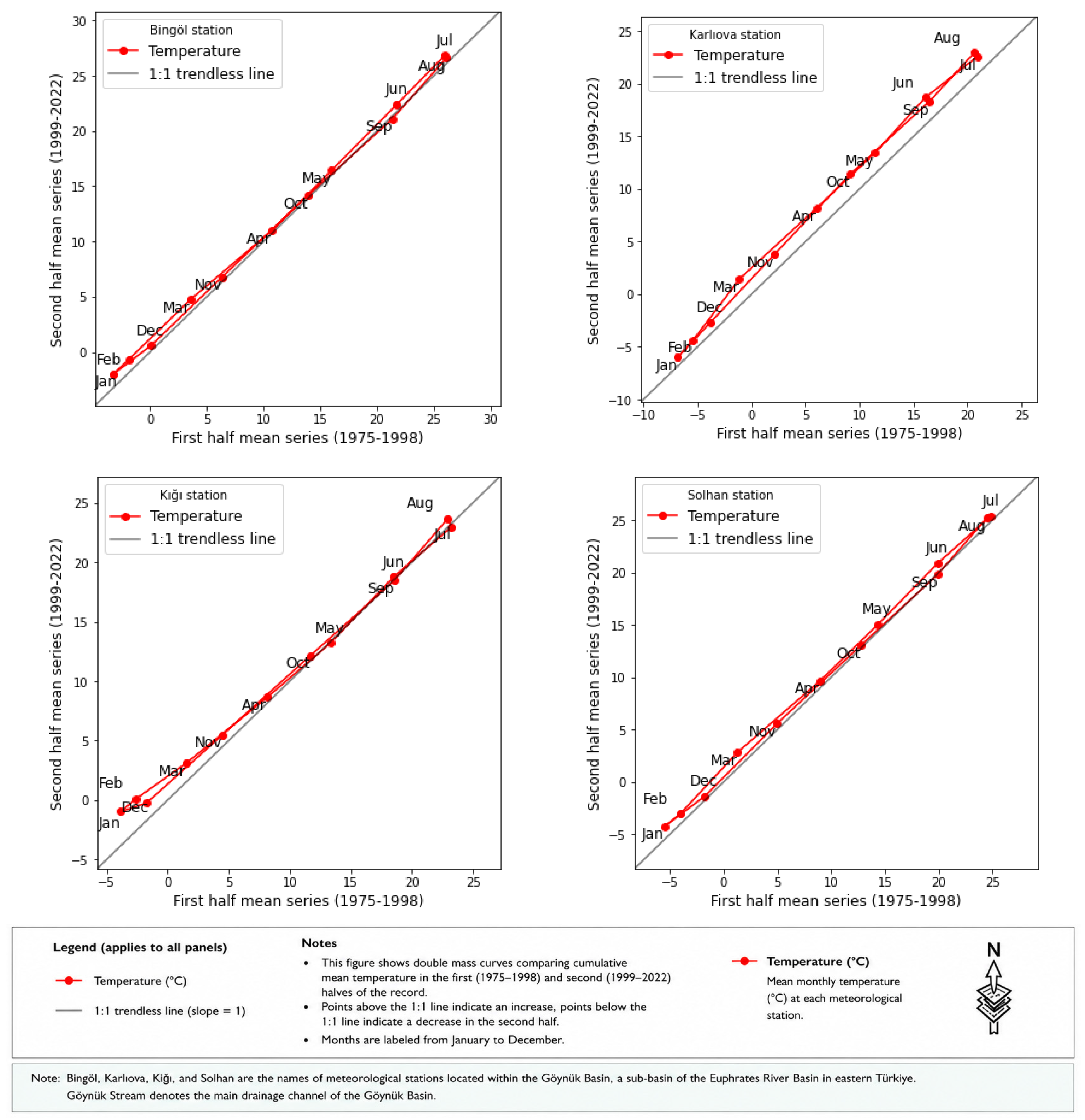
The IPTA test was also applied to temperature values taken from four stations. According to the IPTA application of Bingöl station precipitation values, no significant temperature change was observed in this basin. It is seen that the temperature values at Karlıova station tend to increase in all months. There is an increasing trend in temperature values at Kığı and Solhan stations, and according to the Kığı station data, this increasing trend is higher, especially in December, January and February, compared to other months. At all four stations, the increasing trend in temperature increases in March is higher than in other months (
Figure 12).
5. Discussion
Upon examining the seasonal findings of the Mann–Kendall test, a seasonal result of −1.866 was revealed in the flow data. According to this value, a seasonal shift in the flow value is indicated. The seasonal Mann–Kendall test results for precipitation values were found to be −1.25 at Bingöl station, −3.23 at Karlıova station, −0.167 at Solhan station, and −3.361 at Kığı station. A significant seasonal shift in precipitation values is observed in the Karlıova and Kığı regions. When the temperature data are examined, test results of 1.836 at Bingöl station, 5.681 at Karlıova station, 2.691 at Solhan station, and 3.581 at Kığı station are revealed. For relative humidity values, the seasonal Mann–Kendall test results are −4.099 at Bingöl station, −0.763 at Karlıova station, and 0.516 at Solhan station.
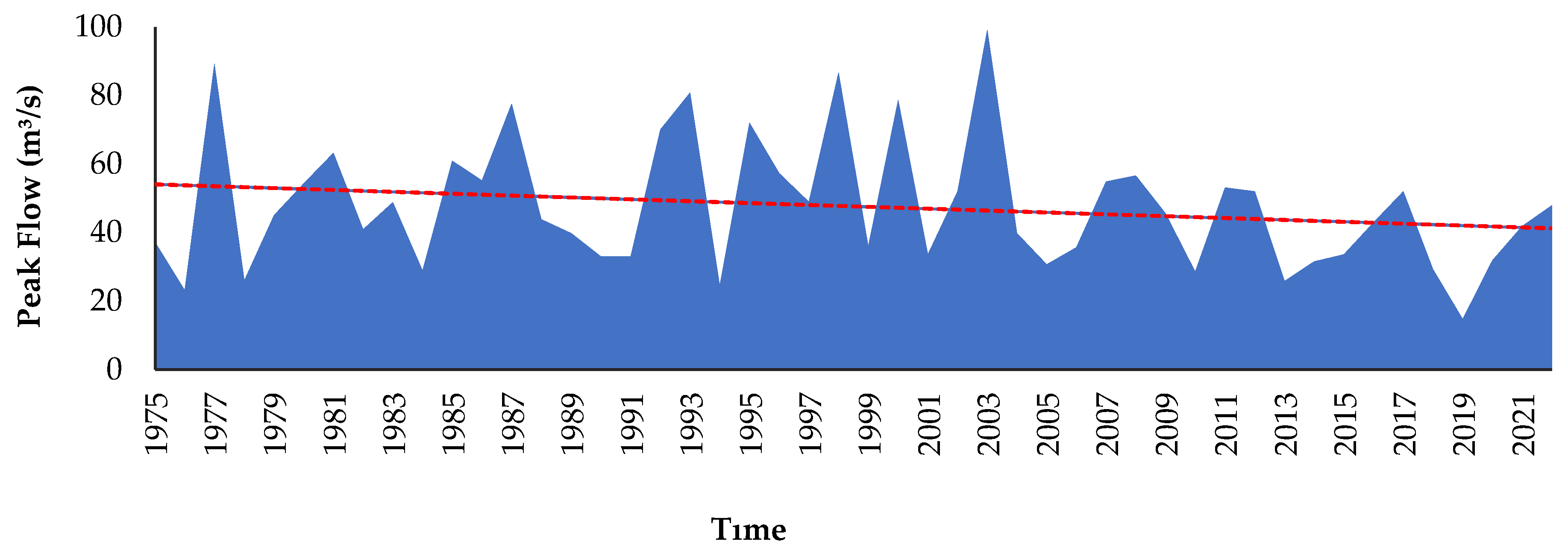
This study demonstrates, through the application of various methods, that there is a decreasing trend in the flow potential of the Göynük River attributable to climate change. The annual maximum flow rates of the Göynük Stream from 1975 to 2022 are illustrated in the change graph. As a result of the study, it was revealed that these maximum flow rates tend to decrease under the influence of climate change, with the slope value of this decrease being −0.2726 m
3/s/year. Consequently, the study indicates a decrease in both the general annual flow rate of the stream and its maximum flow rate (
Figure 13).
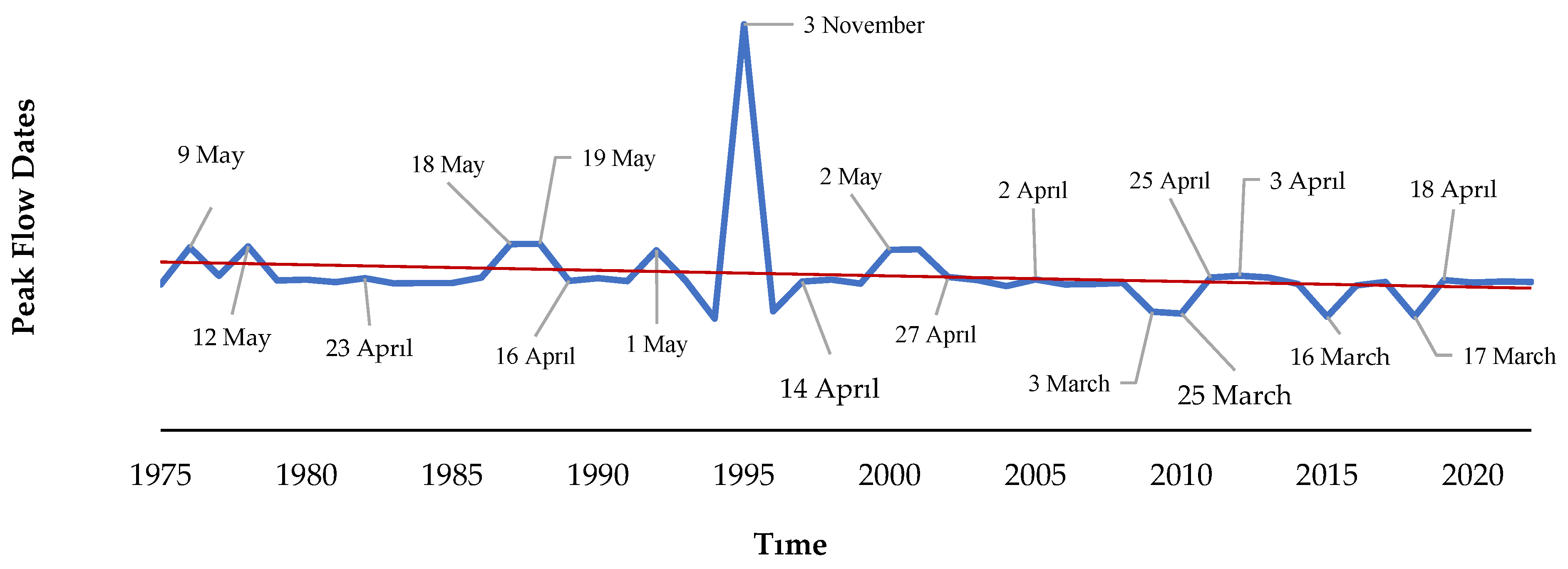
It was examined in which month and day of the year the Göynük River had peak flow from 1975 to 2022. It is observed that from 1975 to 1985, the maximum flow occurred in mid-May, and then between 1985 and 2005, the maximum flow occurred in early May and even in late April. In early 2005, it is seen that the maximum flow rates decreased to the beginning of April again, and as we approach the present day, the maximum flow rates mostly occur at the end of March. The slope of the graph formed by these flow values was found to be −0.0156 m
3/s/year, and this finding revealed that the period in which the maximum flow rate was experienced tended to occur earlier than the earlier periods. When the seasonal effects of climate change on the river basin were previously examined, it was observed that there was an increasing flow trend in the river in January, February and March, which are considered the winter season. Later, it was stated that this increasing trend, especially in March, was due to the decrease in precipitation in the basin due to the effect of climate change, but the temperature values tended to increase significantly in this month and considering the characteristics of the basin, it could cause serious snow melting in the basin in this month. Again, the peak flow rate occurring in the early April and late March periods also provided a result that supports the previous findings (
Figure 14).
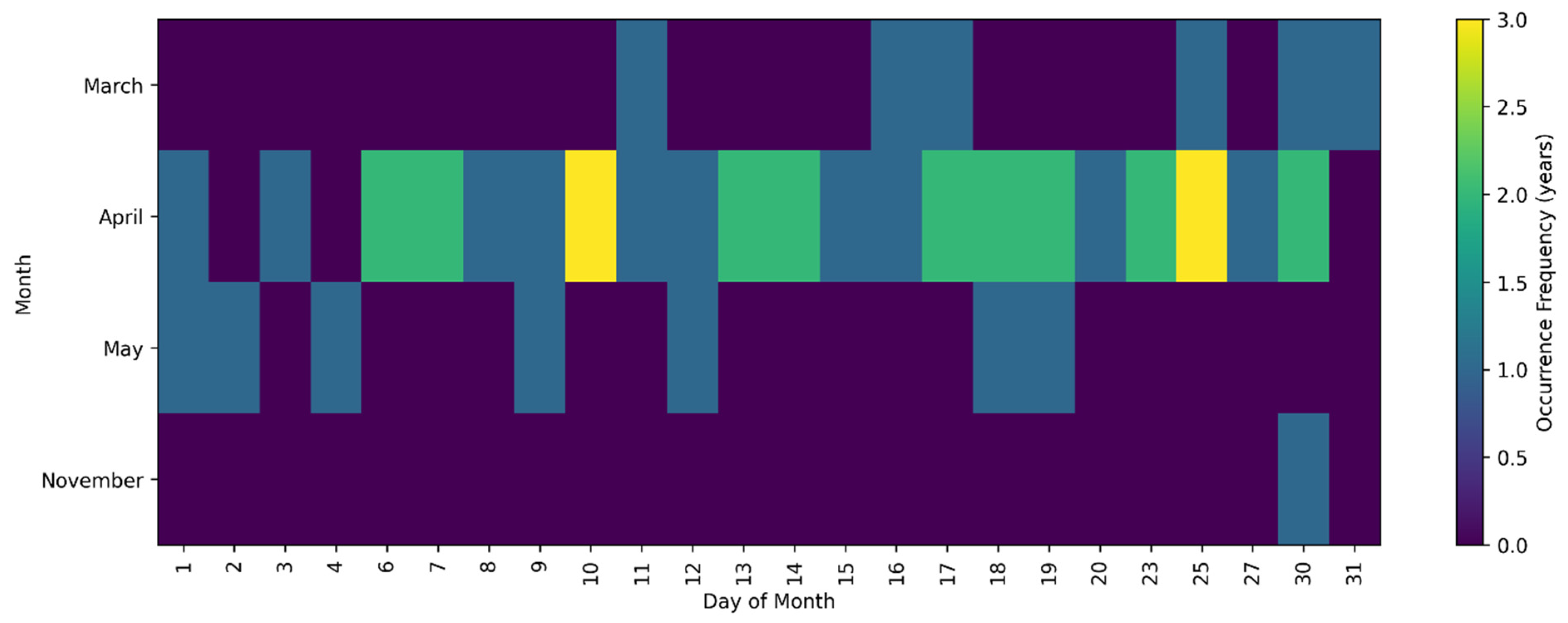
The heatmap reveals a clear seasonal concentration of annual peak flow events, with the majority occurring in April. Within this month, peak flows predominantly gather between the 10th and 25th days, indicating a consistent intra-month timing pattern. March events are less frequent and more dispersed, while May peak flows occur sporadically. The isolated late-autumn peak observed in November represents an anomalous event likely associated with rainfall-driven conditions rather than snowmelt processes. Overall, the observed distribution suggests that annual peak flows in the basin are strongly controlled by spring snowmelt dynamics, with limited contribution from other seasons (
Figure 15).
The findings of this study indicate that the hydrological regime in the Göynük Stream Basin is gradually transforming into a more temperature-controlled structure due to climate change. The observed decrease in annual streamflow and precipitation values can be attributed to increased evaporation and evapotranspiration losses resulting from rising air temperatures. The reductions in flow, particularly noticeable during the summer and autumn months, highlight the suppressive effect of elevated temperatures on water availability. These results are consistent with previous studies reporting similar trends in snow-fed basins [
3,
44].
In contrast, limited increases in flow observed at some stations during winter and early spring are associated with an earlier onset of snowmelt processes. The shift in peak flows from mid-May in the past to late March–early April in recent years clearly demonstrates the impact of climate change on the timing of snowmelt-based flow patterns. This finding aligns with the literature highlighting early peak flows, particularly in mountainous and snow-fed basins, which are a key indicator of climate change [
23,
45,
46].
The underlying mechanism driving the relationship between increasing temperature, earlier snowmelt, and reduced runoff can be understood through the hydrological functioning of snow-fed basins. In such basins, rising temperatures accelerate snowmelt and advance its timing, reducing the snowpack’s role as a seasonal water storage reservoir. This shift causes earlier streamflow peaks, increased evapotranspiration, reduced soil moisture and groundwater recharge, and diminished baseflow contributions. Consequently, water availability decreases during late spring and summer, leading to reduced runoff and greater vulnerability of snow-dependent water resources to climate warming.
The combined use of classical and innovative trend analysis methods has allowed for a clearer interpretation of the behavior of hydroclimatic change across different time scales. While classical methods reveal long-term general trends, innovative approaches such as ITA and IPTA have enhanced the understanding of processes particularly sensitive to snowmelt by capturing non-monotonic behaviors and monthly transitions [
13,
26]. In this respect, the study not only describes its results but also discusses them within a comparative and causal framework, in relation to hydroclimatic changes reported in the literature.
To further support these findings and to evaluate the temporal structure of the original hydroclimatic records beyond average and seasonal trend representations, the RAPS method was additionally applied to the annual streamflow, temperature, and precipitation series. The RAPS results provided additional insight into hidden fluctuations, persistent wet/dry and warm/cold periods, and possible hydroclimatic regime shifts within the basin.
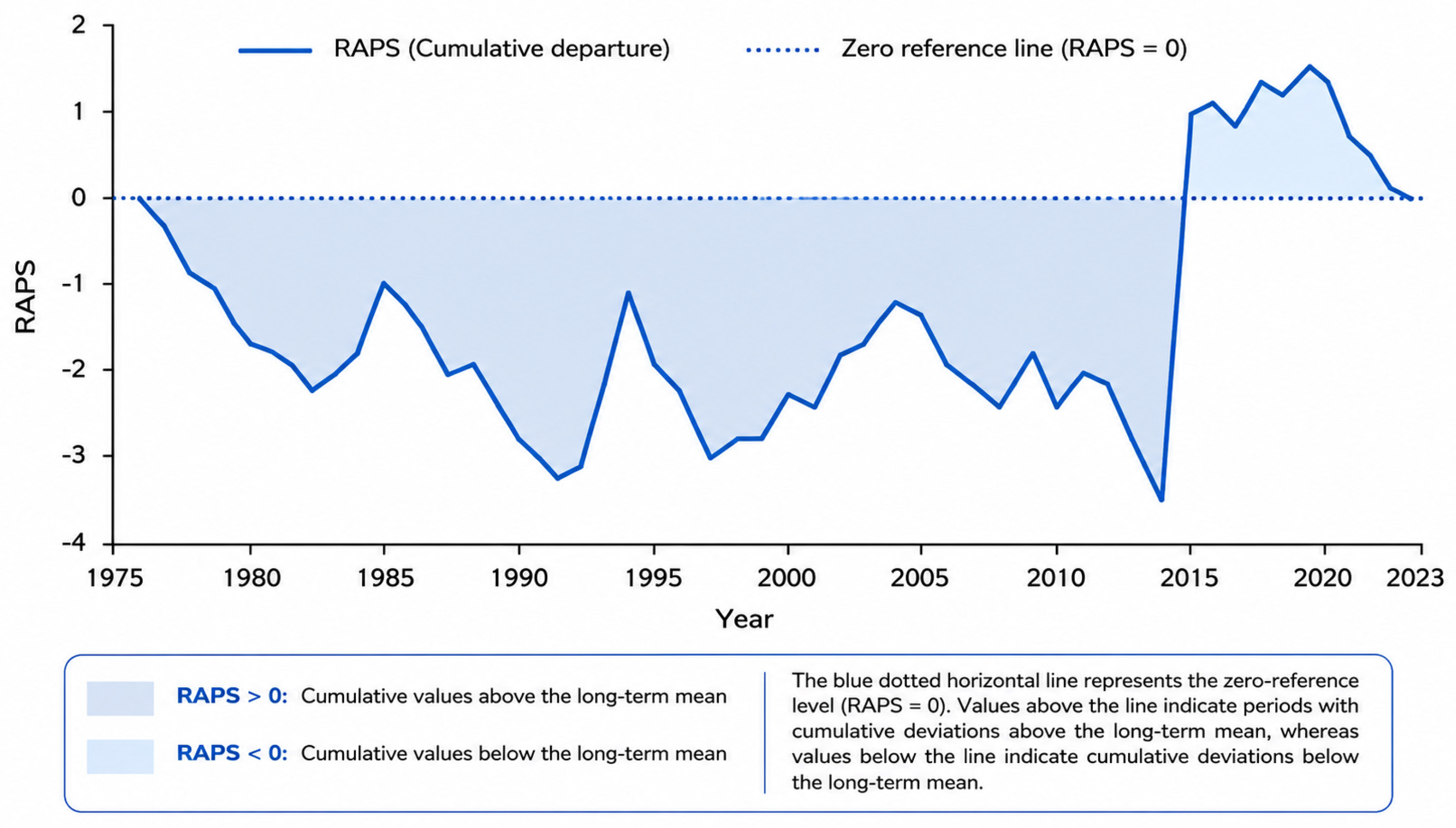
The RAPS analysis of the original annual streamflow series revealed distinct temporal fluctuations and possible hydroclimatic regime shifts throughout the observation period. Positive cumulative deviations during earlier years indicate periods characterized by above-average streamflow conditions, whereas the pronounced downward tendency observed in the later years reflects persistent below-average flow conditions. In particular, the transition occurring after the late 1990s and early 2000s suggests a significant alteration in basin hydrology. The decreasing phase identified in the series is consistent with the negative streamflow trends detected by the Mann–Kendall, Şen-ITA, IPTA, and Theil–Sen analyses, indicating that climate change has substantially affected runoff generation and seasonal flow dynamics within the basin (
Figure 16).
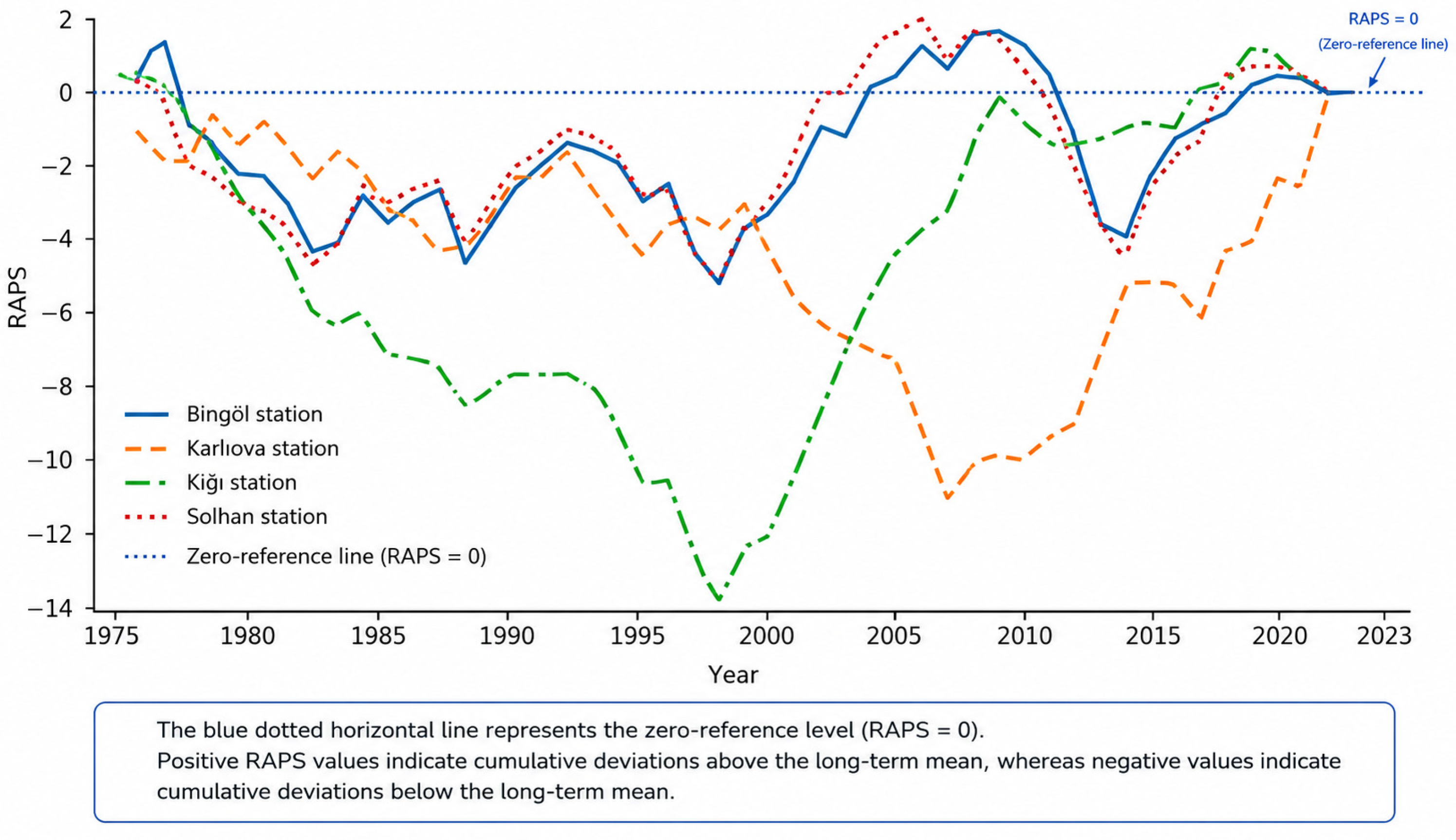
The RAPS analysis of the original annual temperature series obtained from the meteorological stations located within the basin demonstrates a clear and persistent warming tendency across all stations. Cumulative deviations increasingly shift toward positive values in recent decades, indicating sustained above-average temperature conditions. The warming signal becomes particularly evident after the early 2000s, suggesting an acceleration of regional temperature increases associated with climate change impacts. Among the stations, Karlıova and Kiğı exhibit stronger positive deviations compared to the other stations, implying that high-altitude continental climatic conditions may intensify warming responses. These findings strongly support the increasing temperature trends identified through both classical and innovative trend analysis methods (
Figure 17).
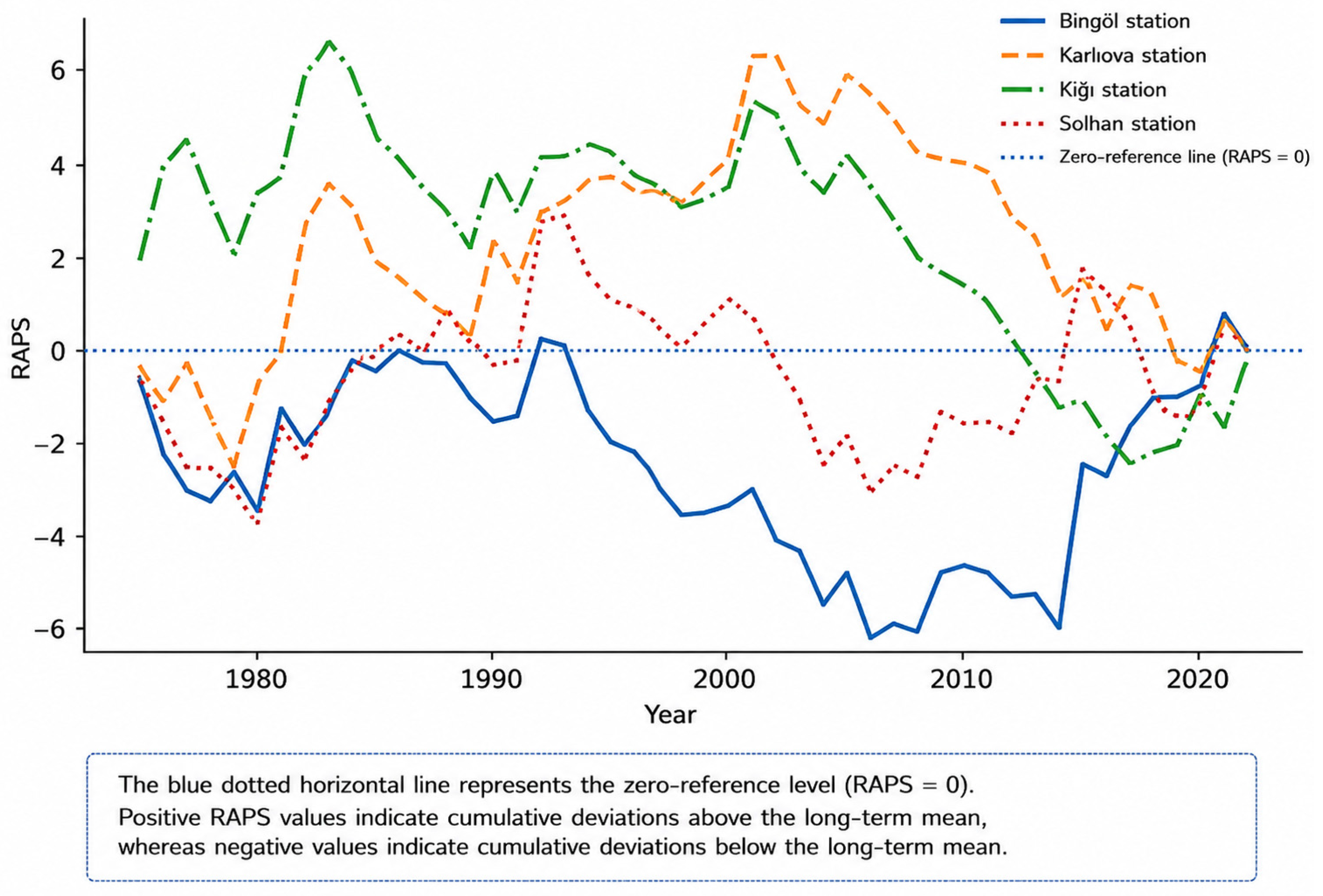
The RAPS analysis of the original annual precipitation series indicates a more oscillatory and irregular temporal structure compared to streamflow and temperature variables. Alternating positive and negative cumulative deviations dominate the precipitation records, indicating the absence of a uniform monotonic trend throughout the observation period. Nevertheless, prolonged negative phases are evident in several stations during recent decades, reflecting persistent below-average precipitation conditions. The differing behaviors among stations also indicate considerable spatial heterogeneity in precipitation dynamics across the basin, likely associated with topographic and local climatic variability. Overall, the RAPS findings support the decreasing precipitation tendencies obtained from the Mann–Kendall, Şen-ITA, IPTA, and Theil–Sen analyses while additionally revealing hidden temporal variability within the original precipitation series (
Figure 18).
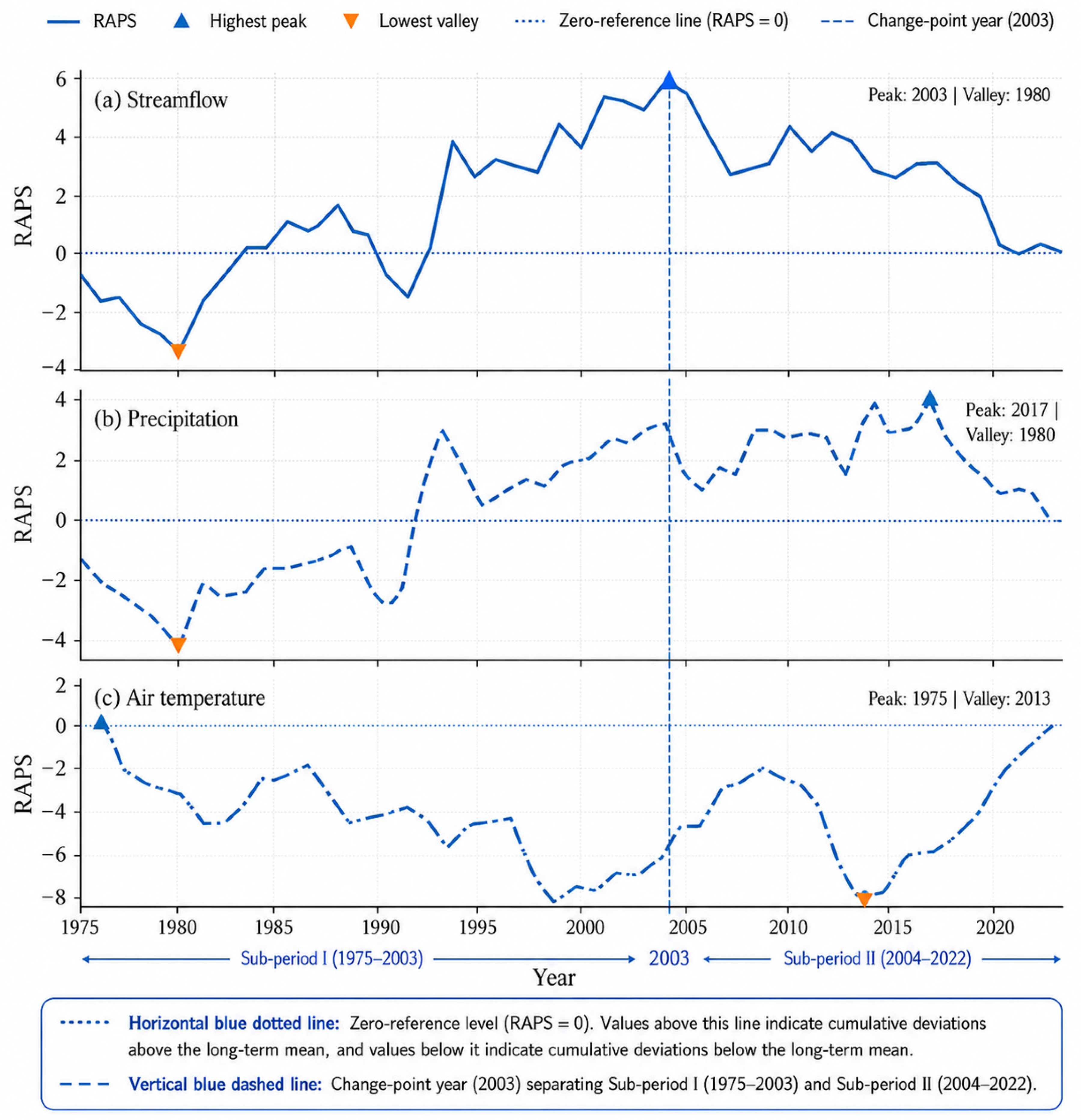
To further investigate the temporal variability of hydroclimatic conditions, the RAPS method was applied to the annual series of streamflow, precipitation, and air temperature (
Figure 19). The RAPS curves revealed distinct regime shifts during the study period, indicating persistent hydroclimatic sub-periods. The streamflow series reached its highest positive RAPS peak in 2003, suggesting a major transition point in basin hydrology. Based on this turning point, the study period was divided into two sub-periods: 1975–2003 and 2004–2022. The first period was characterized by relatively wetter conditions, with higher average streamflow (19.22 m
3/s) and precipitation (786.1 mm), whereas the second period exhibited lower streamflow (16.70 m
3/s) and precipitation (710.6 mm), accompanied by an increase in mean air temperature from 9.75 °C to 10.68 °C. These findings indicate a shift from a relatively humid hydroclimatic regime toward warmer and drier conditions after 2003. The consistency between the RAPS-based sub-periods and the trend analysis results further supports the interpretation that the observed hydroclimatic changes are primarily driven by climate variability and ongoing climate change.
Machine Learning Method
This study innovates by synergistically integrating trend analysis and machine learning for snow-fed basins, addressing complex non-linearities missed by single-method approaches. Unlike studies that solely use monotonic trend detection [
47,
48,
49], our multi-faceted assessment (ITA, IPTA, RAPS and ML) offers a comprehensive diagnosis of hydroclimatic variability, including regime shifts and seasonal asymmetries.
Machine learning is one of the promising methods to predict monthly runoff at Göynük Stream using meteorological observations from neighboring stations (Bingöl, Karlıova, Kiğı and Solhan). To achieve this, monthly temperature and precipitation data from the four stations were employed as explanatory variables, while runoff observations at Station E served as the target variable. The analysis covered the period from 1975 to 2022 and was conducted at a monthly temporal resolution.
The input feature set consisted of monthly precipitation and temperature measurements from stations Bingöl, Karlıova, Kiğı and Solhan, along with the month index to represent seasonal variability. Notably, historical runoff values were not included as input features. This modeling choice was made deliberately to prevent data leakage and to ensure that the predictive performance of the model relied exclusively on meteorological and temporal information rather than on autoregressive dependencies.
To rigorously analyze the hydroclimatic variability in the Göynük Stream Basin, a time-series-aware cross-validation strategy was employed for model training and testing. This approach deliberately avoids random data splitting, thereby preserving the temporal dependencies inherent in the data and mitigating the significant risk of data leakage. The 5-fold cross-validation procedure resulted in a standard deviation of 0.09, indicating robust and consistent model performance.
Furthermore, a comprehensive parameter sensitivity analysis was conducted to ascertain the influence of various hydroclimatic variables. The results indicate that the temperature at stations Bingöl and Karlıova are the most significant predictors in our models. Conversely, features derived from station Solhan exhibited the least predictive power. Across the ensemble of models, temperature demonstrated a more substantial influence on streamflow compared to precipitation. Significantly, the temporal variables, specifically the continuous time variable and the month number, were identified as the most effective predictors overall, underscoring the pronounced seasonal and secular trends governing the basin’s hydrology.
The machine learning framework of Hist Gradient Boosting Regressor was adopted to capture the nonlinear relationships between climate variables and runoff. The dataset was divided into training and testing subsets using multiple train–test split ratios, including 90/10, 85/15, 80/20, 75/25, and 70/30. For each split configuration, the model was trained on the training subset and subsequently evaluated on the testing subset, which comprised time periods not encountered during the training phase. This approach enabled an assessment of the model’s generalization capability under different data availability scenarios.
Feature importance was evaluated using permutation importance. The results show that the seasonal variable of month was the most influential predictor of runoff, underscoring the strong seasonal pattern inherent in runoff processes. This aligns with hydrological expectations, as runoff commonly varies with seasonal precipitation, snowmelt, and evapotranspiration dynamics.
The second most important predictor was temperature at Station Solhan, indicating a notable climatic or spatial connection between this station and the runoff behavior of Göynük Stream. Temperature influences runoff through effects on evapotranspiration, soil moisture, and snowmelt, which is likely to explain its high importance. Temperatures at Stations Karlıova, Kiğı, and Bingöl also contributed to the model, though to a lesser extent.
Among precipitation variables, precipitation at Station Solhan exhibited the highest importance, followed by Stations Karlıova and Kiğı. evaluations show, climate variables at Station Bingöl showed slightly negative importance, suggesting it added little predictive value since this station is located downstream of Göynük Stream near the exit point of the catchment.
Overall, the findings indicate that seasonality and temperature exert a stronger influence on runoff prediction than same-month precipitation. This may reflect both the dominant seasonal structure of runoff and the possibility that precipitation effects occur with temporal delays rather than within the same month.
Model performance was evaluated using four widely adopted statistical metrics: Mean Absolute Error (MAE), Root Mean Square Error (RMSE), Root Mean Square Error (NRMSE) and the coefficient of determination (R
2). The results indicate that model performance varied across the different split ratios. Among the evaluated configurations, the 75/25 train–test split yielded the best overall performance, characterized by the lowest error values (MAE = 2.60 m
3/s, RMSE = 5.45 m
3/s, NRMSE = 4.11%) and the highest explanatory power (R
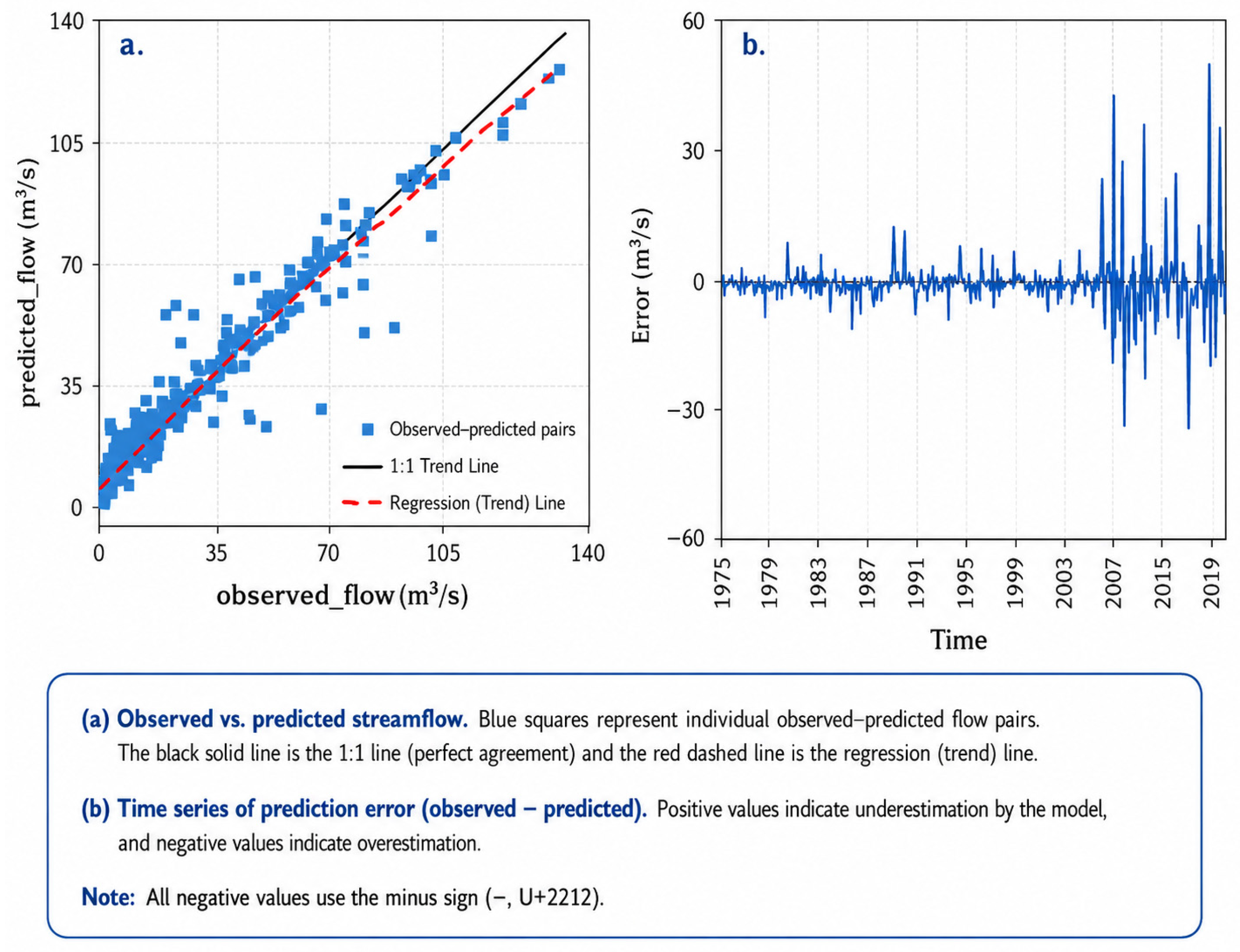
2 = 0.951). These findings suggest that the selected machine learning approach is capable of effectively learning the underlying relationship between temperature, precipitation, and runoff (
Figure 20a).
Figure 20b presents the time series of the predicted flow errors. During the first period of the record (1975–2010), the error magnitudes remain consistently small, indicating robust model performance across most of the historical range. This behavior is supported by the overall accuracy metrics for this period: MAE = 1.41 m
3/s, RMSE = 2.18 m
3/s, NRMSE = 1.65%, and R
2 = 0.993. Such results suggest that the ML model captures the dominant precipitation–temperature–runoff relationships under relatively stable climatic conditions.
In contrast, for the last period (2011–2022), the error values increase substantially. The corresponding performance indicators degrade to MAE = 6.17 m3/s, RMSE = 10.22 m3/s, NRMSE = 10.65%, and R2 = 0.772. This deterioration implies that recent hydrological variability is less well explained by the learned relationships, likely reflecting non-stationarity in the climate–runoff system. In particular, the observed increase in errors is consistent with the effects of climate change on the linkage between climate drivers and streamflow, potentially due to shifts in precipitation regime, temperature-driven processes (e.g., snowmelt and evapotranspiration), or changes in catchment response.
This marked difference in error behavior between the two sub-periods highlights the importance of temporal consistency in hydrological ML applications. While the model performs very well during earlier years, its predictive reliability diminishes under later climatic conditions, suggesting that additional features or time-varying calibration may be required to better represent recent regime shifts.
6. Conclusions
This study comprehensively evaluated the hydroclimatic impacts of climate change on the Göynük Stream Basin, a snow-fed tributary of the Euphrates River Basin, using long-term streamflow, precipitation, and air temperature records covering the 1975–2022 period. Classical trend analysis methods (Mann–Kendall, Seasonal Mann–Kendall, Spearman Rho, and Theil–Sen), innovative approaches (Şen-Innovative Trend Analysis and Innovative Polygon Trend Analysis), temporal variability analysis (RAPS), and machine learning techniques were integrated within a unified framework to investigate both hydroclimatic variability and runoff predictability.
The results generally indicated decreasing tendencies in annual and seasonal streamflow values, particularly during summer and autumn periods, while winter flows exhibited a slight increasing tendency. In addition, the timing of annual peak flows shifted from mid-May toward late March and early April, indicating earlier snowmelt processes associated with increasing temperatures. Precipitation generally exhibited decreasing tendencies across the basin, whereas air temperature records demonstrated consistent warming trends, especially during winter and spring seasons. These findings suggest that the Göynük Stream Basin may be increasingly affected by hydroclimatic changes associated with changing climate conditions.
The combined use of innovative and conventional trend analysis methods contributed to a more detailed interpretation of hydroclimatic variability compared to relying solely on traditional monotonic trend tests. IPTA and Şen-ITA enabled the identification of seasonal transitions, directional variability, and non-monotonic hydroclimatic behaviors that are difficult to detect using standard seasonal statistical approaches.
The machine learning analysis showed good monthly runoff prediction performance using hydroclimatic and seasonal variables. However, the reduction in predictive performance after 2011 may indicate increasing hydroclimatic non-stationarity within the basin, potentially associated with climate-related hydrological changes.
The observed decrease in streamflow appears to be largely associated with increasing air temperatures, decreasing precipitation patterns, and earlier snowmelt timing. Since the Göynük Stream Basin does not contain major hydraulic interventions such as large dams, intensive industrial activities, or inter-basin water transfer systems, anthropogenic alterations of the natural flow regime are considered limited.
The findings of this study may also provide useful insights for regional water resources management and climate adaptation strategies. The observed reductions in summer and autumn streamflow, together with earlier snowmelt-driven peak flows, indicate the necessity for adaptive reservoir operation policies and improved seasonal water storage planning. Increasing hydroclimatic variability may contribute to irrigation water stress during dry periods, highlighting the potential importance of sustainable irrigation management practices and efficient water allocation strategies. Furthermore, the detected shifts in flow timing and hydroclimatic conditions may support the development of updated flood mitigation strategies and early warning systems, particularly in snow-fed sub-basins sensitive to rapid snowmelt processes. Therefore, the results obtained in this study may contribute to long-term climate adaptation planning and integrated watershed management within the Euphrates River Basin and similar snow-fed basins.
Future studies may further improve hydroclimatic assessments by incorporating climate model projections, land surface dynamics, snow cover observations, and physically based hydrological modeling approaches to better quantify future hydrological responses under different climate scenarios.