Article

The Impact of Surface Water Organic Matter Characteristics on Coagulation Efficiency

by
Anna Solipiwko-Pieścik
1,
Małgorzata Wolska
1,*,
Małgorzata Kabsch-Korbutowicz
1 and
Halina Urbańska-Kozłowska
2
1
Department of Environmental Engineering, Wroclaw University of Science and Technology, 50-370 Wrocław, Poland
2
Municipal Water and Sewage Company in Wroclaw, 50-421 Wrocław, Poland
*
Author to whom correspondence should be addressed.
Water 2026, 18(12), 1427; https://doi.org/10.3390/w18121427
Submission received: 14 May 2026 / Revised: 26 May 2026 / Accepted: 4 June 2026 / Published: 10 June 2026

Highlights

  • High-molecular-weight organic fractions (>2.0 kDa) showed the highest coagula-tion removal efficiency
  • UV254 absorbance and color at 410 nm proved effective surrogate parameters for process monitoring
  • Organic matter characteristics strongly influenced coagulant demand and treat-ment performance
  • Spectrophotometric measurements enabled optimization of coagulation and re-duction in treatment costs

Abstract

This study investigates the influence of organic matter properties in surface waters on the efficiency of single- and two-stage coagulation processes in drinking water treatment plants. The research was conducted at three treatment plants supplied by different surface water sources over a 15-month monitoring period. The analyzed parameters included total and dissolved organic carbon (TOC and DOC), biodegradable dissolved organic carbon (BDOC), water color, UV absorbance, zeta potential, and molecular weight distribution of organic substances. The results showed that coagulation efficiency depends strongly on both the concentration and the molecular characteristics of organic matter. The highest removal efficiency was observed for high-molecular-weight fractions (>2.0 kDa), mainly humic substances, whereas low-molecular-weight compounds were removed less effectively. The study also demonstrated that surrogate spectrophotometric parameters, particularly UV254 absorbance and color at 410 nm, can be used to monitor and optimize the coagulation process. Given the increasing frequency of extreme climate events and rapid shifts in raw water quality, optimizing single- and two-stage coagulation configurations has become an urgent operational necessity. This work provides a novel direct linkage between simple spectrophotometric indexes and precise chromatographic molecular ranges, delivering an immediate, high-impact predictive tool for real-time dosage optimization in water treatment engineering.

1. Introduction

The coagulation process is one of the fundamental processes used worldwide in the treatment of surface water; therefore, its optimization and efficiency have been the subject of numerous studies for several decades [1,2]. Coagulants used in water treatment, typically aluminium or iron salts, enable the removal of organic substances with high molecular weight [3]. It has been shown by Sillanpää et al. [4] that substances with molecular weights greater than 30 kDa, mainly humic substances, are removed most effectively during coagulation. However, the organic matter present in natural waters is often characterized by significantly lower molecular weights and, consequently, lower susceptibility to removal in the coagulation process. The removal of organic substances with lower molecular weights is particularly important because increasing numbers of anthropogenic contaminants with smaller molecular weights and occurring at lower concentrations are present in raw waters used for drinking water production [5].
As demonstrated by Vieno et al. [6], pharmaceuticals can be removed during the coagulation process using aluminum sulfate as a coagulant, while the reduction in pesticide concentrations reported in the study by Thuy et al. [7] reached 30–60% when polyaluminum chloride (PACl) was used. In general, micropollutants are removed during coagulation mainly through co-precipitation or adsorption onto the surface of post-coagulation flocs [8,9].
The different removal efficiencies observed for particular groups of contaminants during coagulation result from the properties of the organic matter present in water as well as from the overall level of contamination [10,11,12]. However, in the context of climate change and the resulting increase in the variability of the composition of surface waters used for drinking water supply, maximizing the removal of organic substances during coagulation has become a priority.
The effectiveness of the coagulation process depends on a number of physicochemical factors related both to the properties of raw water and to the operational conditions of the treatment process. Among the most important parameters influencing coagulation efficiency are pH, alkalinity, temperature, type and dose of coagulant, mixing conditions, and the presence of competing ions or organic compounds in the water matrix [2,3]. The hydrolysis of metal coagulants and the formation of metal hydroxide precipitates strongly depend on water pH and alkalinity. Optimal pH conditions ensure the formation of flocs with high adsorption capacity and good settling properties, which directly affects the efficiency of organic matter removal [2].
The characteristics of natural organic matter also play a crucial role in determining coagulation performance. Hydrophobic fractions of organic matter with high aromatic content are generally removed more efficiently than hydrophilic compounds with low molecular weight [3,10]. Therefore, variations in the composition of organic matter may significantly affect the required coagulant dosage and the overall efficiency of the treatment process. Seasonal changes in raw water quality, including fluctuations in dissolved organic carbon (DOC) concentration and molecular weight distribution, may also influence the effectiveness of coagulation and require continuous adjustment of operational parameters [13].
In recent years, numerous studies have focused on improving coagulation efficiency through process optimization. Optimization strategies include the selection of appropriate coagulant types, adjustment of coagulant doses, control of pH conditions, and the use of coagulant aids such as polymers or natural bio-coagulants. Pre-hydrolyzed coagulants such as polyaluminum chloride have been reported to provide improved removal of organic matter and better floc formation compared with conventional aluminum salts under certain conditions [2,14]. Additionally, composite coagulants and modified coagulant formulations have been investigated to enhance the removal of humic substances and other dissolved organic compounds [15].
Recent studies have also highlighted the potential of alternative coagulants and bio-based materials in water treatment. Bio-coagulants derived from natural sources such as plant extracts or biopolymers have been proposed as environmentally friendly alternatives to traditional metal salts. Although their application in large-scale drinking water treatment is still under investigation, several studies have demonstrated promising results in terms of turbidity and organic matter removal [14].
Another important aspect of coagulation optimization is the development of reliable monitoring and control methods that allow operators of water treatment plants to evaluate process performance and adjust operational parameters in response to changes in raw water quality. Advanced analytical techniques can provide detailed information on the composition of natural organic matter, but their application in routine monitoring is limited due to high costs and analytical complexity. For this reason, increasing attention has been given to the use of simple spectrophotometric parameters, such as UV absorbance at 254 nm or specific UV absorbance (SUVA), which may serve as practical indicators of organic matter characteristics and treatment efficiency [3,10].
Furthermore, the optimization of coagulation processes is becoming increasingly important due to the growing presence of emerging contaminants in aquatic environments. Recent studies indicate that conventional coagulation processes may contribute to the partial removal of micropollutants such as pesticides, pharmaceuticals, and per- and polyfluoroalkyl substances (PFAS), although the removal efficiency depends strongly on the properties of the compounds and treatment conditions [12]. Therefore, improving coagulation performance may also support the reduction in these contaminants in drinking water treatment systems.
Furthermore, it is important to develop tools that allow the evaluation of the correctness of the process performance and the prediction of treatment efficiency. Currently, there is insufficient information on the possibility of assessing changes in the content of organic matter fractions on the basis of routine water quality analyses performed by water supply companies.
Therefore, it was justified to conduct research under real operating conditions in water treatment plants treating surface waters characterized by different levels of organic contamination and different properties. The primary novelty of this study lies in establishing a direct, statistically validated numerical bridge between industrial surrogate parameters (UV254 absorbance and Color 410) and precise size-exclusion chromatographic ranges under different industrial coagulation schemes (single- vs. two-stage). This provides an actionable framework to predict real-time chemical demand and fraction removal under highly dynamic climate conditions.
The objectives of the study were:
  • to determine the relationships between changes in water quality parameters during coagulation,
  • to assess the feasibility of using routine spectrophotometric measurements to evaluate the course of the coagulation process,
  • determining the relationships between changes in water quality parameters during coagulation that enable the prediction of required coagulant doses, and thus the optimization of its consumption and the reduction in water treatment costs.

2. Materials and Methods

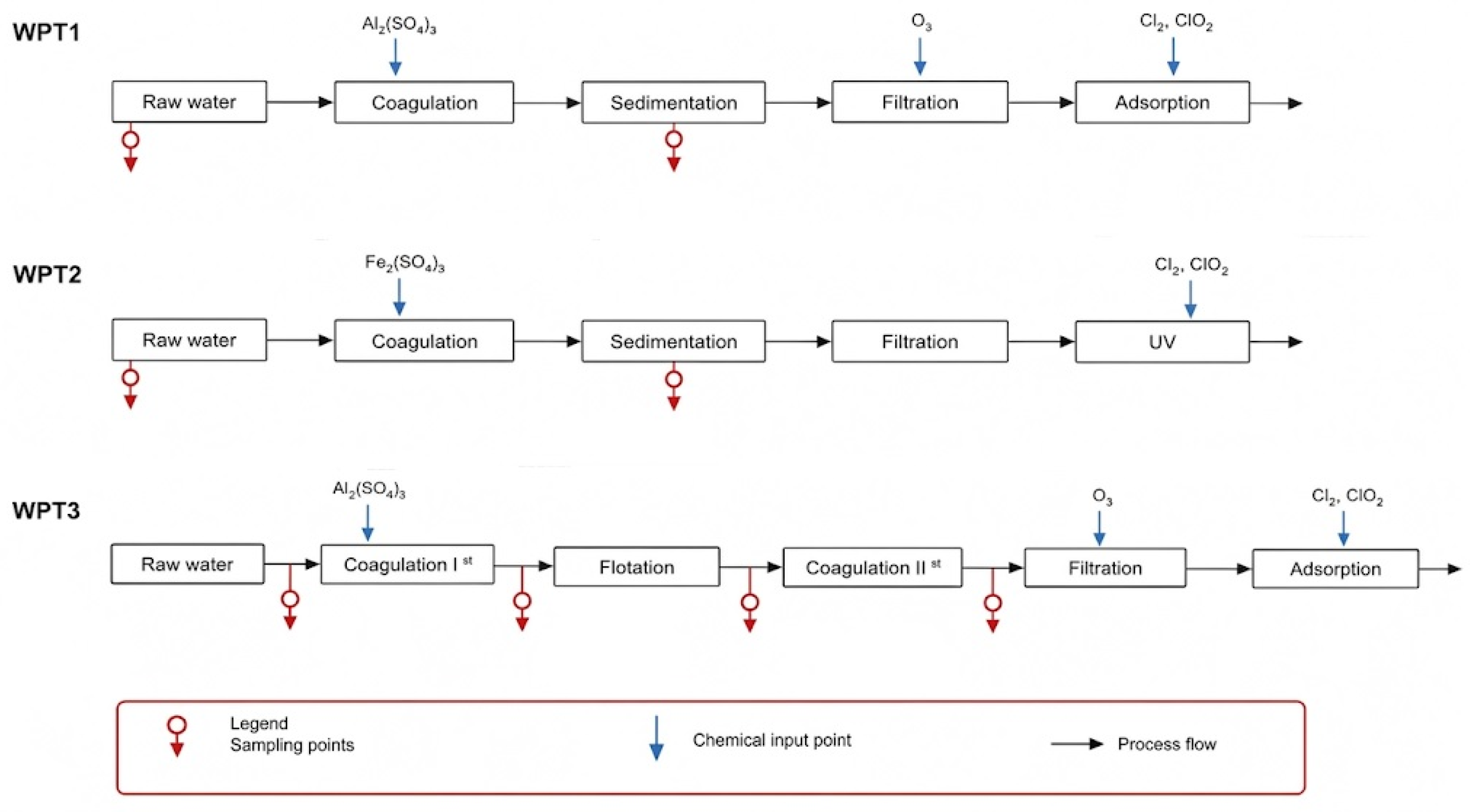
The studies were conducted at three surface water treatment plants, the first two of which draw water from rivers (WTP1 and WTP2), and the third from a lake (WTP3). These plants are located as follows: WTP1 in southwestern Poland, WTP2 in western Poland, and WTP3 in central Poland. The water treatment technological systems at these plants are presented in Figure 1.
The parameters for the coagulation process combined with sedimentation/flotation are summarized in Table 1.
The research was carried out over 15 months, which allowed the assessment of the impact of seasonal variability on the course of the coagulation process combined with sedimentation/flotation, as well as the influence of the variability of organic matter properties present in the raw waters on the efficiency of this process. Samples were collected once a month, and analyses of each water quality parameter (for each sample) were performed in triplicate.
The study focused on samples of raw water and post-coagulation water. In the case of WTP3, the water after the first stage of coagulation served as the feed water for the second coagulation stage.
In all water samples, the following parameters were analyzed: total and dissolved organic carbon (TOC and DOC), biodegradable dissolved organic carbon (BDOC), water color at wavelengths of 350 nm and 410 nm, UV absorbance at 254 nm and 272 nm, zeta potential, and particle size distribution using the size-exclusion chromatography method. Color intensity and UV absorbance were measured using a 5 cm optical path cuvette and a Shimadzu UV-1800 spectrophotometer (Kyoto, Japan). TOC and DOC analyses were performed using high-temperature oxidation with a Shimadzu TOC analyzer (Kyato, Japan). Biodegradable dissolved organic carbon concentration was determined as the difference in DOC concentration between water samples before and after 5 days of incubation, inoculated with microorganisms characteristic of the given region. Water samples were inoculated with a mixture of bacteria characteristic of the given water source. The samples were incubated at 20 °C. The concentration of biodegradable dissolved organic carbon (BDOC) was determined using a modified Van der Kooij method, without intermediate measurement of oxygen concentration.
The molecular weight distribution was measured by the chromatographic method using an UltiMate 3000 Dionex (Germering, Germany) liquid chromatograph equipped with a DAD detector. Results were analyzed at a detection wavelength of 254 nm. Shodex OHpak SB-803 HQ polymer columns (Kawasaki, Japan) with a particle size of 13 μm and dimensions of 8 × 300 mm were used, along with a Shodex OHpak SB-G 6B pre-column (Kawasaki, Japan) with a particle size of 10 μm and dimensions of 6 × 50 mm. The analysis was performed under the following conditions: column and pre-column temperatures of 35 °C; sodium acetate mobile phase—10 mM, adjusted to pH = 7.0 with acetic acid (filtered through a 0.2 μm membrane filter); injection volume of 100 μL; flow rate of 0.5 mL/min; analysis time of 35 min. Backwash samples were filtered using injection filters with a pore size of 0.45 μm. Calibration was performed using sodium polystyrene sulfonate (PSS, American Polymer Standards Corporation) with molecular weights of 891; 1600; 3420; 7420; 15,650; and 29,500 Da. The relationship between particle size as a function of retention time and concentration (g/m3) was then determined for individual particle size ranges (2.3–2.5 kDa, 2.0–2.3 kDa, 1.3–1.5 kDa, 0.7–0.9 kDa, <0.1 kDa).
Zeta potential was measured using a Malvern Zetasizer Nano series analyzer (Malvern, UK).
Statistical significance was verified at a confidence level of alpha = 0.05 (p < 0.05). All data are reported with Standard Deviation (SD).

3. Results

3.1. Properties of Raw Waters

The raw water sources exhibited seasonal fluctuations in organic matter content (TOC) and diverged significantly in their overall levels of organic pollution. The ranges of the analyzed water quality parameters for each source are presented in Table 2. The lowest content of organic substances was observed in the water from WTP1, while the values for the other two sources were more similar to each other; however, the water from WTP2 contained a higher amount of organic substances.
All raw waters were characterized by similar pH values (Table 2), and variations in this parameter did not affect coagulation efficiency, as confirmed by coagulant manufacturers’ data and previous studies on coagulation performance [4].
In contrast, temperature variations resulting from the duration of the study influenced the coagulation process, particularly the rate and extent of coagulant hydrolysis. In each of the analyzed treatment plants, the impact of temperature was minimized by adjusting the coagulant dose (applying an excess of coagulant). This approach resulted directly from the operational experience of the water utilities.
In all analyzed waters, the dissolved form of organic substances dominated, accounting on average for 90.6%, 87.9%, 89.9%, and 90.3% for WTP1, WTP2, the first stage of WTP3, and the second stage of WTP3, respectively. Similarly, the share of the biodegradable fraction in dissolved organic carbon in all analyzed waters fell within ranges commonly observed in waters worldwide [16], amounting to 16.2–22.0%. This indicates that the proportions of dissolved and biodegradable forms in the analyzed waters were comparable, while the organic substances present differed in both quantity and properties. According to literature data, these differences significantly influence the coagulation process [3,10,13].
Differences in the properties of organic substances in the particular waters are reflected in the specific UV absorbance (SUVA) values, with the lowest values observed in the water from WTP1 (Table 2). Values below 3 m2/g, observed in most water samples, indicate a low susceptibility of particles present in the water to coagulation [1]. The highest coagulation efficiency is reported for SUVA values above 4 m2/g [17], which were not observed in any of the raw waters studied. The highest SUVA values were found in the water from WTP2, which also had the highest TOC concentration.
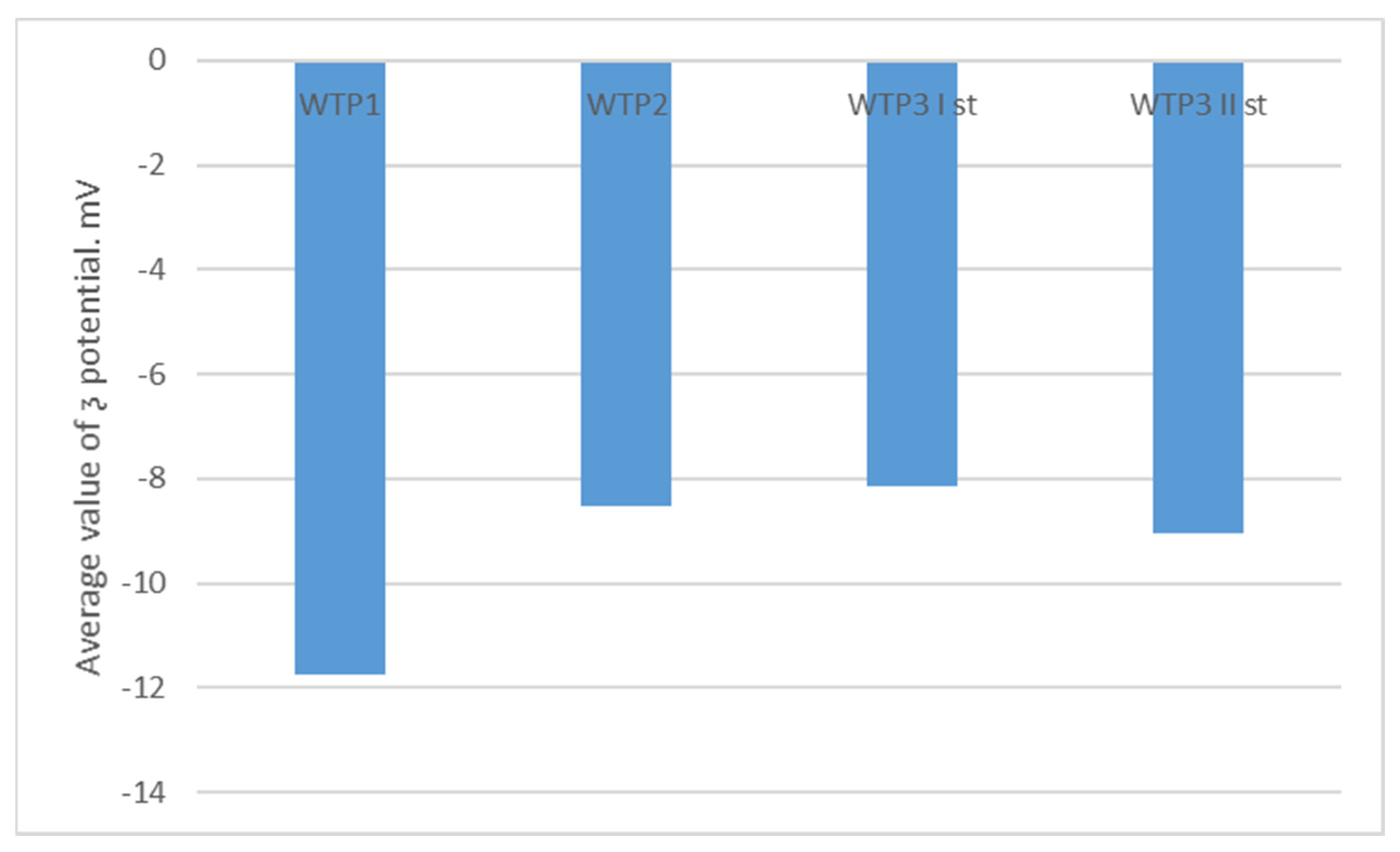
Similarly, zeta potential (ζ) values for water from WTP1 indicated the greatest stability of colloids present in this water. In contrast, waters from WTP2 and WTP3 had comparable ζ values, reflecting lower colloidal stability, which in turn may suggest a lower required coagulant dose (Figure 2) [18]. As demonstrated by Song et al., zeta potential influences the applied coagulant dose, and consequently, the effectiveness of the coagulation process [19].
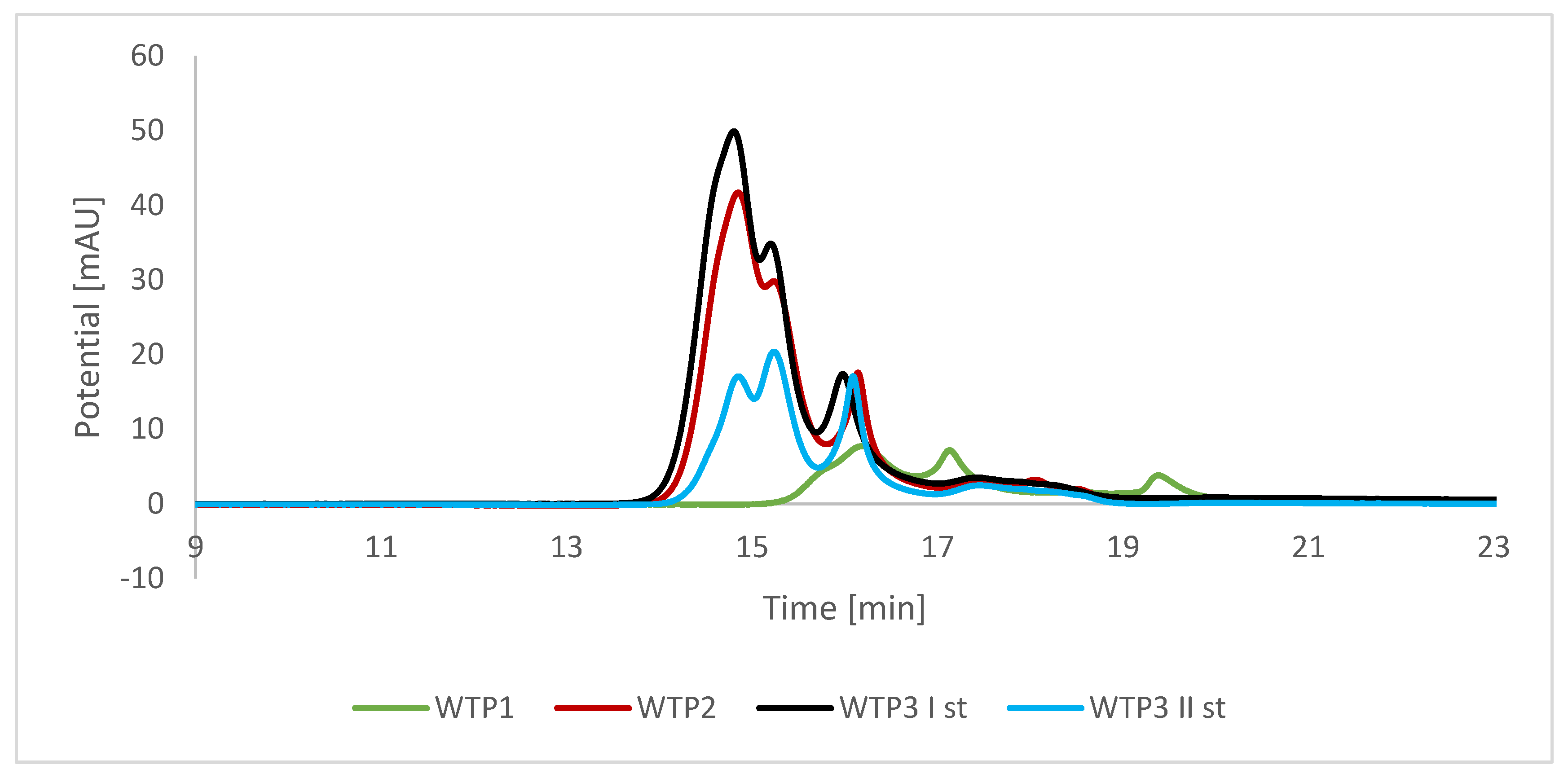
The analyzed raw waters contained organic substances of varying molecular weights and origins. In the water from WTP1, particles with a molecular weight up to 2.3 kDa were detected (Table 2), whereas in the other two waters, particles with higher molecular weights (up to 2.5 kDa) were observed. According to Jarvis et al. [20], particles with higher molecular weights are more effectively removed during the coagulation process, which indicates a greater susceptibility of the waters from WTP2 and WTP3 I st to treatment by coagulation. The water from WTP2 exhibited the greatest particle size diversity, while the water from WTP3 did not contain particles with a molecular weight ≤0.9 kDa (Figure 3).
It should be noted that the water subjected to the second stage of coagulation at WTP3 is characterized by the highest content of substances with a molecular weight of 2.0–2.3 kDa, unlike the raw water, where the dominant fraction was 2.3–2.5 kDa.
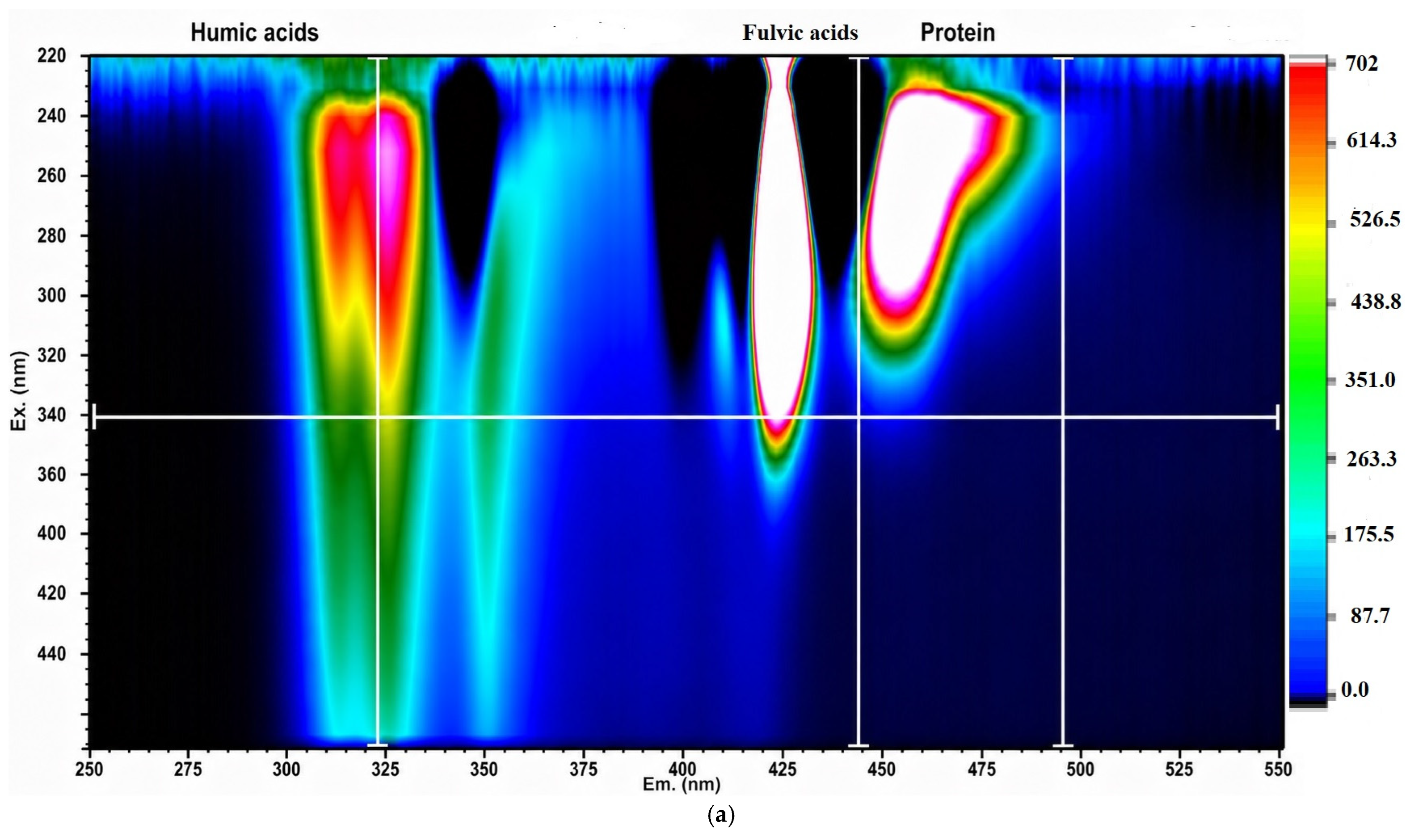
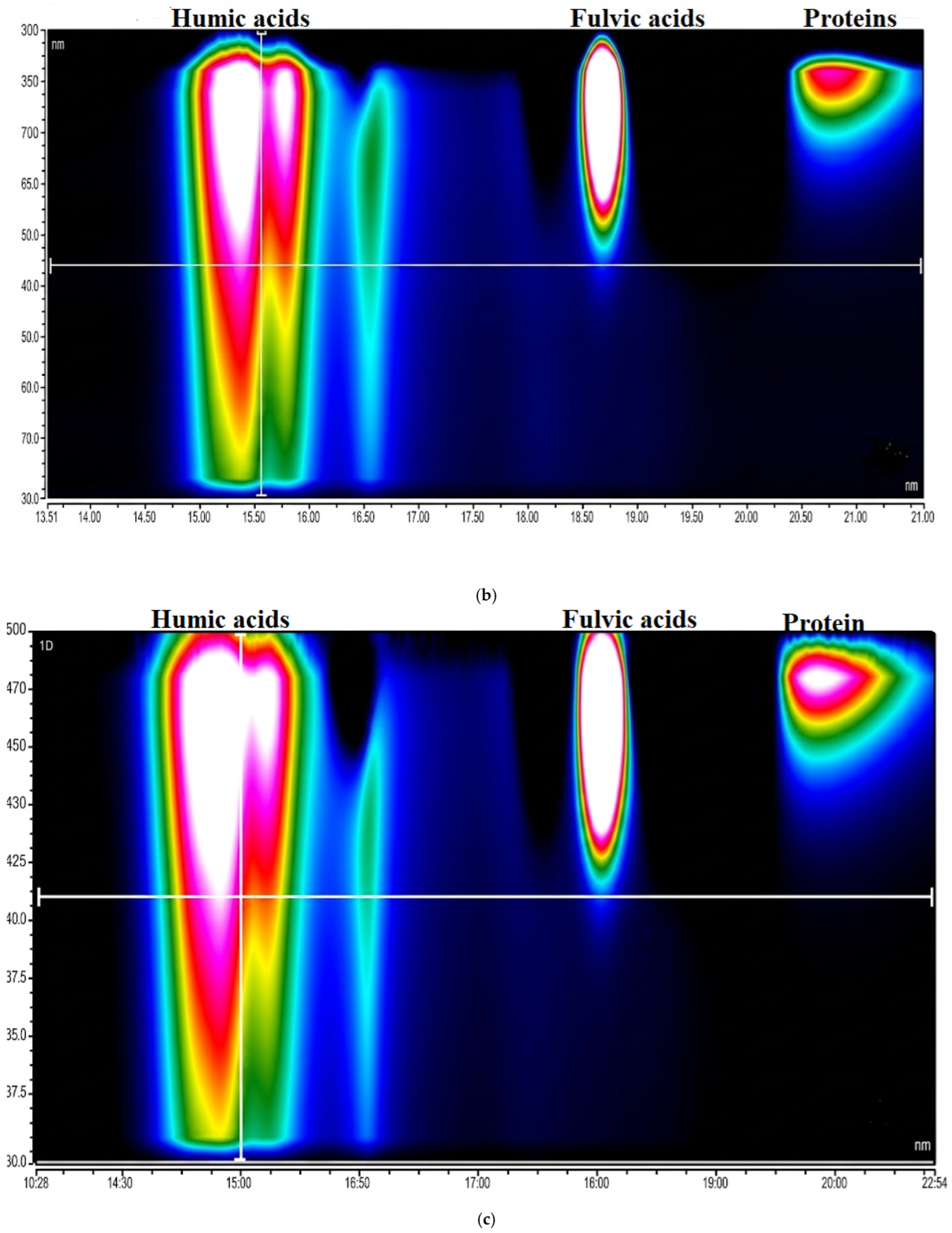
The raw waters also exhibited different properties and origins of organic substances, as evidenced by the comparison of the 3D spectra (Figure 4).
In the water from WTP1, the majority of organic substances were fulvic acids and proteins, which are characterized by lower molecular weights (<1–3 kDa) [12,21] and are less susceptible to removal during the coagulation process (removal efficiency often below 30%) [22]. In contrast, in the waters treated at the other two plants, humic acids predominated, which are very efficiently removed during coagulation. Krupińska [23] demonstrated that humic acids are removed by aluminum sulfate coagulation at over 90%, whereas when polyaluminum chloride is used, the removal efficiency exceeds 97% [24].
Regardless of the level of contamination in the raw waters and the type of organic substances present, a correlation was observed between the color at 340 nm and UV absorbance at 254 nm, as well as between the color at 410 nm and UV absorbance at 272 nm. The values of these parameters also reflect the content of organic substances with specific molecular weights, as indicated by the linear correlations observed at a confidence level of 0.05 (Table 3).
The observed relationships make it possible to determine the type and size of particles present in water as well as to assess their susceptibility to coagulation.
Moreover, it is possible to optimize the consumption of reagents used in water treatment based on the level of raw water contamination. Optimizing the applied reagent doses helps, on the one hand, to reduce risks associated with secondary water pollution, and on the other hand, to minimize water treatment costs.

3.2. Coagulation Efficiency

As a result of the coagulation process, a decrease in the content of organic substances was observed, with the dissolved fraction being dominant (Table 4), particularly substances with the highest molecular weights. No consistent trend was observed in the changes in biodegradable dissolved organic carbon (BDOC). Its decrease is most likely related to the adsorption of low-molecular-weight particles onto the surface of larger particles. This mechanism was confirmed by Sillanpää et al. [4]. In contrast, the increase in BDOC content observed in individual water samples should be considered an analytical error.
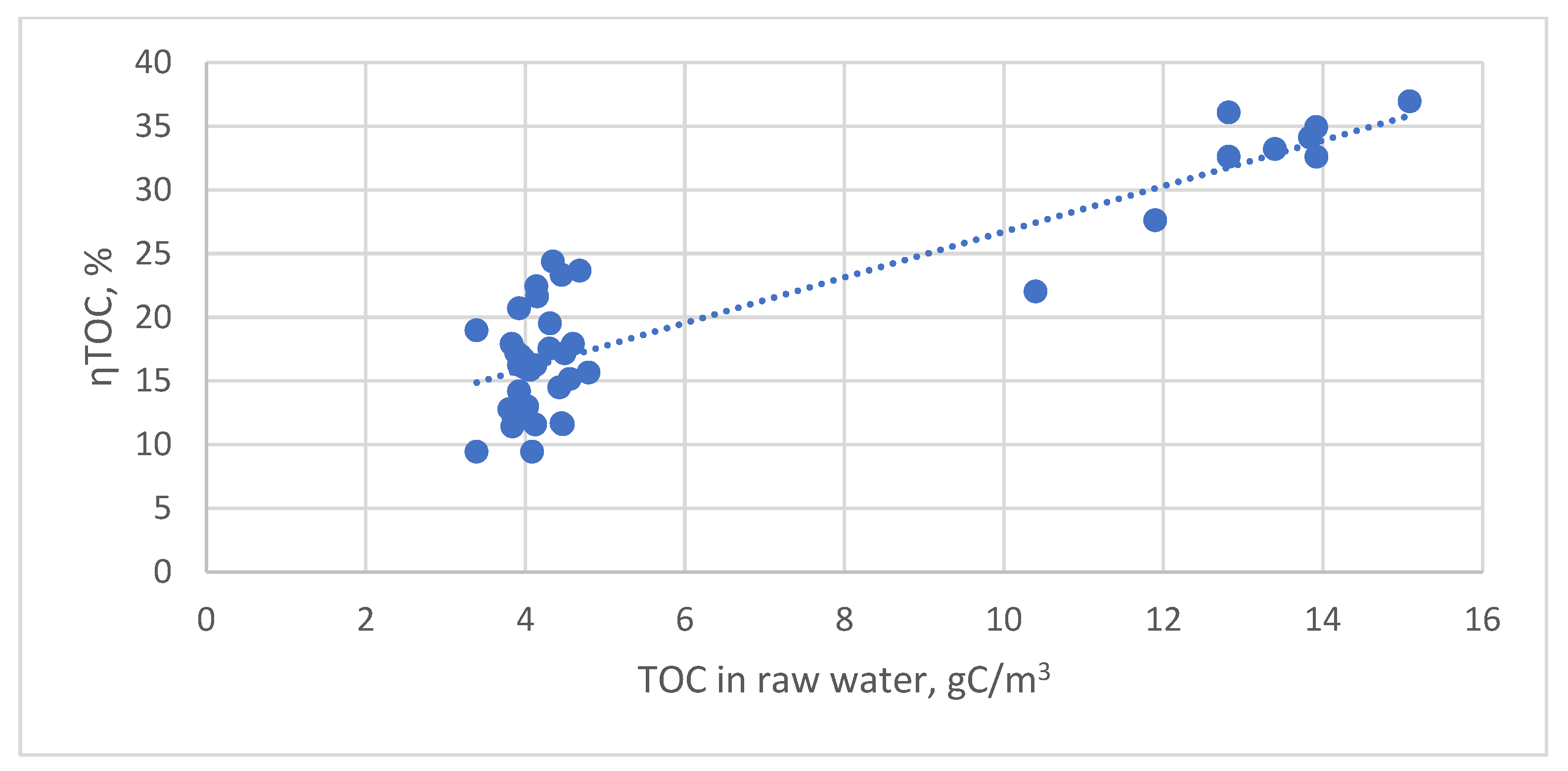
The efficiency of total organic carbon (TOC) removal was proportional to its concentration in raw water (Figure 5). An exception to this relationship was observed for the second stage of the coagulation process at WTP3, which was associated with the removal of most high-molecular-weight substances during the first stage of coagulation.
In each technological system, the applied coagulant dose increased with the level of water contamination; however, this correlation was not consistently significant across all three systems. This is related to the differing properties of the organic substances present in the raw water and the variation in their molecular weight distributions. Matilainen et al. [25] demonstrated that the removal of high-molecular-weight humic substances requires a lower coagulant dose than the removal of lower-molecular-weight substances, such as fulvic acids [12]. Additionally, Sillanpää [21] showed that the removal of organic substances requires higher coagulant doses when using iron salts compared to aluminum salts [17].
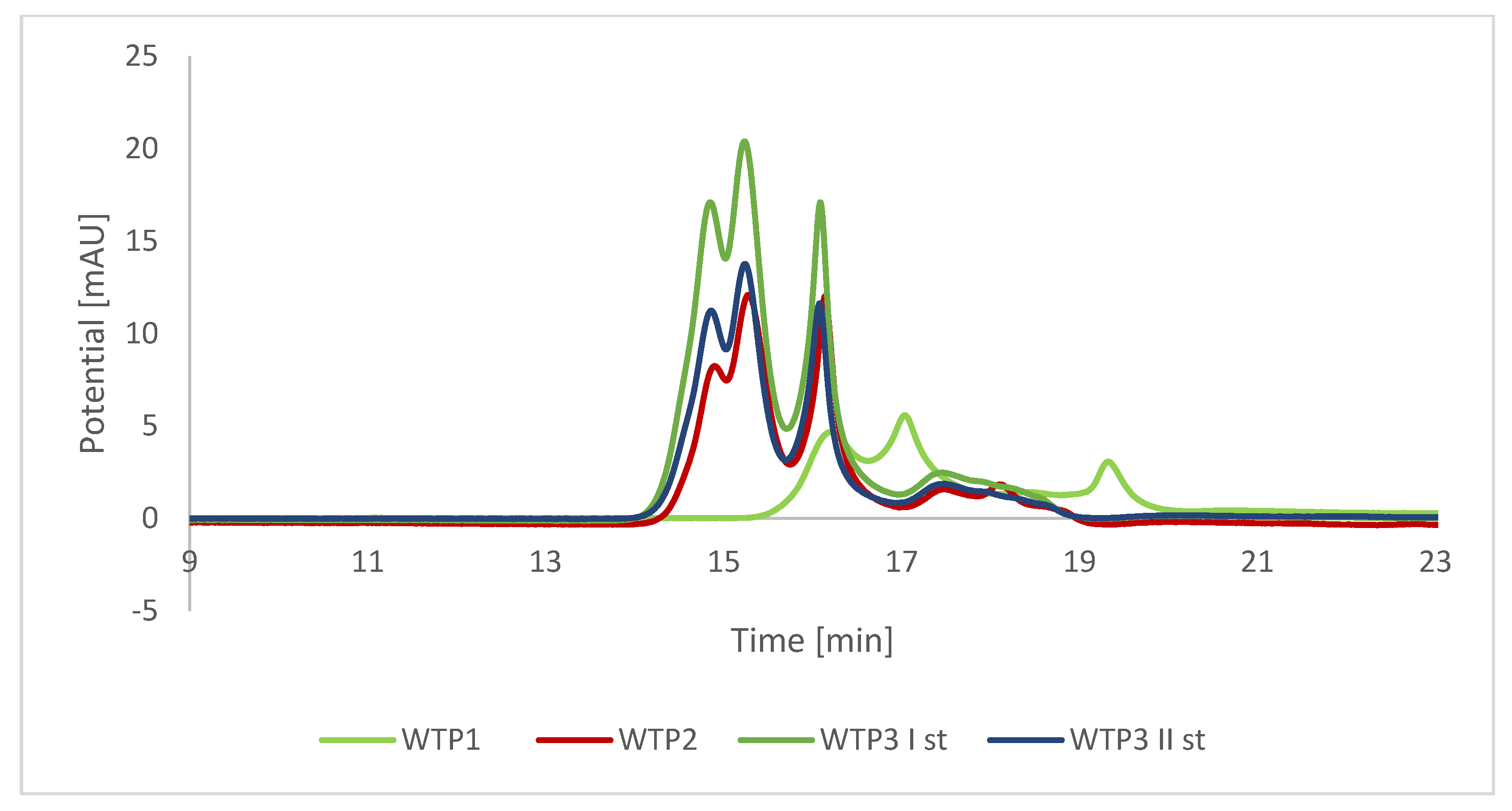
It should be noted that the use of iron salts contributes less to the destabilization of colloids present in water than aluminium salts [20] as a result, the smallest change in ζ potential was observed in the water from WTP2 during coagulation. The highest removal efficiency was observed for fractions with the largest molecular weights (Table 4), predominantly humic substances. This was further validated by the particle size distribution (Figure 6) of the coagulated waters.
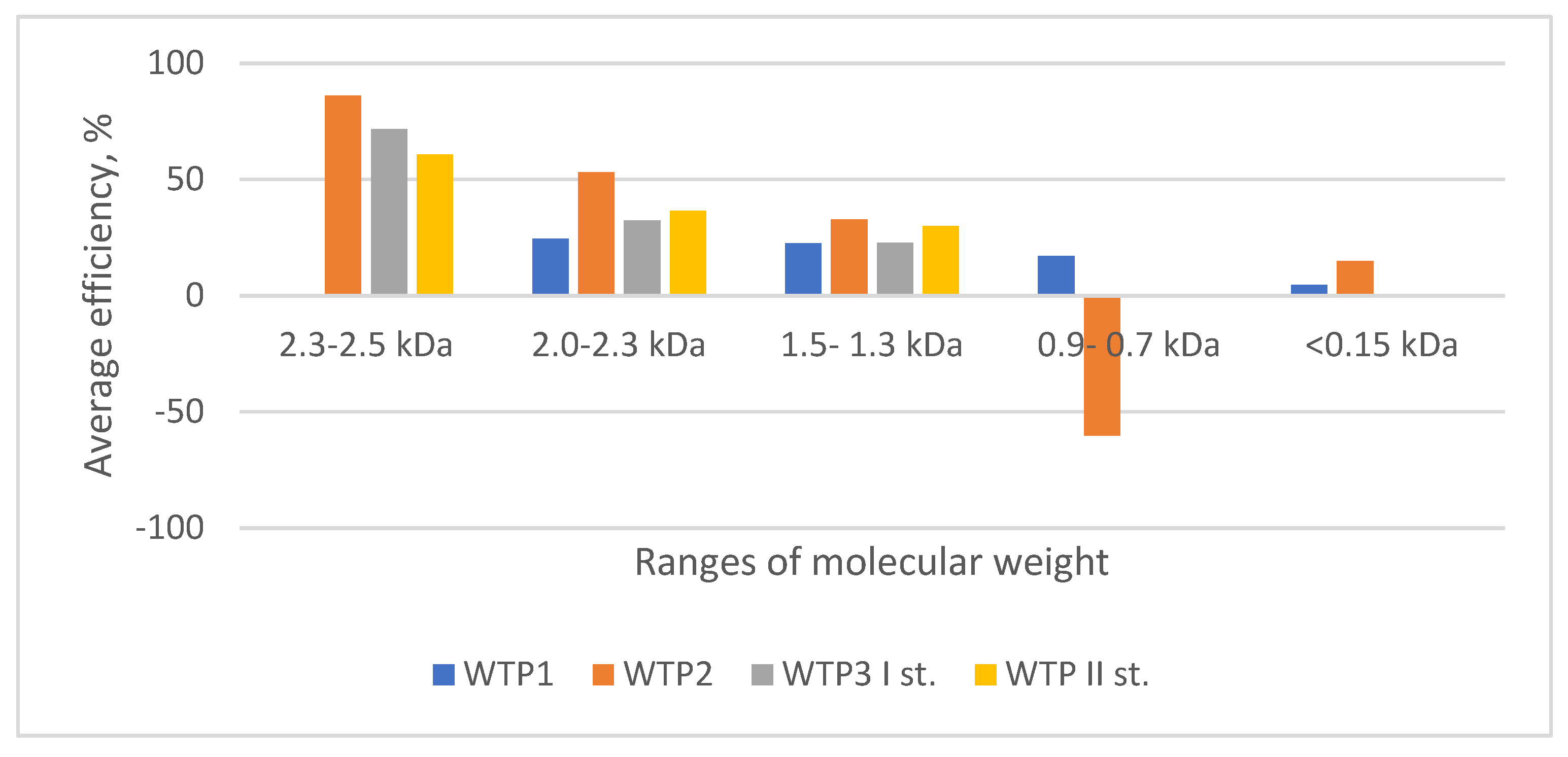
Due to the differences in particle size distribution in the water subjected to the first and second stages of coagulation at WTP3, the efficiency of the second stage was lower, resulting from the significantly reduced amount of high-molecular-weight substances remaining after the first stage of process. Consequently, in waters containing particles with molecular weights of 2.3–2.5 kDa, the removal efficiency of organic substances was highest, and the average removal efficiency for substances of a given molecular weight decreased as the molecular weight of the substances decreased (Figure 7).
The lowest coagulation efficiency was observed for water treated at WTP1, which resulted from the smallest molecular weights of the particles present and the lowest TOC content in the raw water. In all waters, during coagulation, humic acids were removed to the greatest extent, fulvic acids to a lesser extent, and proteins were not removed in this process. Similar relationships were reported by Gumińska and Kłos [25] and Matilainen et al. [3].
It should be noted that, in technological practice, it is important to optimize the process based on routine, rapid analyses. This is particularly important during periods of sudden deterioration in raw water quality, which, due to climate change, occurs increasingly often regardless of the region of the world. Such changes in the composition of surface waters are observed during intense rainfall, floodwater flows, or uncontrolled wastewater discharges [26,27].
The UV254 absorbance values, and especially their changes, indicate the removal of large hydrophobic particles, primarily those with the highest molecular weights of 2.0–2.3 kDa (Table 5). Measurement of UV254 absorbance is used to determine the level of active aromatic forms contained in NOM, as well as their presence in different fractions of dissolved organic matter. This is particularly significant, as these active regions of molecules can react with chlorine or oxygen during oxidation processes [27].
Therefore, monitoring these parameters before and after the process not only reflects its effectiveness but also indicates changes in the content of particles with the highest molecular weight. They also indicate the level of contamination in the water directed to the next unit process, and, most importantly, allow determination of changes in the aromaticity of organic substances, and thus their susceptibility to subsequent unit processes, primarily chemical oxidation and the potential formation of disinfection by-products [18,28].
At the same time, for all three water treatment systems, a correlation was observed between the efficiency of removing color at 410 nm and particles with molecular weights of 2.0–2.3 kDa.
The observed correlations between the removal efficiency and variations in organic contamination indicators enable coagulation process optimization, irrespective of raw water characteristics. These relationships remain statistically significant even for the second stage of coagulation, confirming their potential for real-time process monitoring.
The determined relationships indicate the possibility of optimizing the efficiency of the coagulation process based on UV254 absorbance measurements, including real-time monitoring. This, in turn, enables continuous adjustment of the applied reagent doses. Consequently, this may lead to reduced coagulant consumption and lower water treatment costs. Maximizing the efficiency of organic matter removal in the coagulation process will contribute to reducing the formation of disinfection by-products [29], as well as decreasing disinfectant doses—thereby lowering costs and reducing health risks associated with drinking water consumption.

4. Conclusions

The conducted studies led to the following conclusions:
  • Coagulation efficiency primarily depends on the TOC content in the raw waters and increases with higher values of this parameter. Furthermore, the presence of high-molecular-weight fractions affects the achieved removal of all fractions of organic matter. The absence of particles with molecular weights of 2.3–2.5 kDa in water from WTP1 was a key factor contributing to the lowest overall organic matter removal efficiency observed among the studied systems.
  • The efficiency of removing high-molecular-weight organic substances (>2.0 kDa) can be monitored and optimized using UV254 absorbance and color at 410 nm as surrogate parameters, and with molecular weights in the range of 1.3–1.5 kDa, monitoring and optimization should be based on UV272 absorbance and color at 340 nm.
  • Regardless of the properties of organic substances present in the water undergoing coagulation, humic substances are preferentially removed, whereas fulvic acids are removed to a much lesser extent.
  • The second stage of coagulation requires higher specific coagulant dosages (gAl/gC), which results from the presence of particles with lower molecular weights that are significantly less susceptible to coagulation.
  • While the coagulant type did not alter the fundamental relationships observed, achieving comparable efficiency with iron-based coagulants required significantly higher dosages than with aluminum salts.

Author Contributions

Conceptualization, A.S.-P., M.W. and M.K.-K.; methodology, A.S.-P. and H.U.-K.; validation, M.W., M.K.-K. and H.U.-K.; formal analysis, M.K.-K.; investigation, A.S.-P., M.W., M.K.-K. and H.U.-K.; writing—A.S.-P. and M.W.; writing—review and editing, M.K.-K. and H.U.-K.; visualization, M.W. and A.S.-P.; supervision, M.K.-K. All authors have read and agreed to the published version of the manuscript.

Funding

This research received no external funding.

Data Availability Statement

The original contributions presented in this study are included in the article. Further inquiries can be directed to the corresponding author.

Conflicts of Interest

The article is the result of collaboration between Municipal Water and Sewage Company and Wrocław University of Science and Technology. Author Halina Urbańska-Kozłowska was employed by the Municipal Water and Sewage Company. The remaining authors declare that the research was conducted in the absence of any commercial or financial relationships that could be construed as a potential conflict of interest.

References

  1. Edzwald, J.K. Water Quality and Treatment: A Handbook on Drinking Water; AWWA, McGraw-Hill: New York, NY, USA, 2011. Available online: https://hero.epa.gov/reference/2772990/ (accessed on 3 June 2026).
  2. Duan, J.; Gregory, J. Coagulation by hydrolysing metal salts. Adv. Colloid Interface Sci. 2003, 100–102, 475–502. [Google Scholar] [CrossRef]
  3. Matilainen, A.; Vepsäläinen, M.; Sillanpää, M. Natural organic matter removal by coagulation during drinking water treatment. Adv. Colloid Interface Sci. 2010, 159, 189–197. [Google Scholar] [CrossRef] [PubMed]
  4. Sillanpää, M.; Ncibi, M.C.; Matilainen, A.; Vepsäläinen, M. Removal of natural organic matter in drinking water treatment by coagulation: A comprehensive review. Chemosphere 2018, 190, 54–71. [Google Scholar] [CrossRef] [PubMed]
  5. Schwarzenbach, R.P.; Escher, B.I.; Fenner, K.; Hofstetter, T.B.; Johnson, C.A.; von Gunten, U.; Wehrli, B. The challenge of micropollutants in aquatic systems. Science 2006, 313, 1072–1077. [Google Scholar] [CrossRef]
  6. Vieno, N.M.; Härkki, H.; Tuhkanen, T.; Kronberg, L. Occurrence of pharmaceuticals in river water and their elimination in a pilot-scale drinking water treatment plant. Environ. Sci. Technol. 2007, 41, 5077–5084. [Google Scholar] [CrossRef] [PubMed]
  7. Akinnawo, S.O. Adsorptive removal of pesticides from wastewater using conventional and framework materials. Desalination Water Treat. 2025, 321, 100905. [Google Scholar] [CrossRef]
  8. Westerhoff, P.; Yoon, Y.; Snyder, S.; Wert, E. Fate of Endocrine-Disruptor, Pharmaceutical, and Personal Care Product Chemicals during Simulated Drinking Water Treatment Processes. Environ. Sci. Technol. 2005, 39, 6649–6663. [Google Scholar] [CrossRef]
  9. Snyder, S.A.; Adham, S.; Redding, A.M.; Cannon, F.S.; DeCarolis, J.; Oppenheimer, J.; Wert, E.C.; Yoon, Y. Role of membranes and activated carbon in the removal of endocrine disruptors and pharmaceuticals. Desalination 2007, 202, 156–181. [Google Scholar] [CrossRef]
  10. Nissinen, T.K.; Miettinen, I.T.; Martikainen, P.J.; Vartiainen, T. Molecular size distribution of natural organic matter in raw and drinking waters. Chemosphere 2001, 45, 865–873. [Google Scholar] [CrossRef]
  11. Knap-Bałdyga, A.; Żubrowska-Sudoł, M. Natural organic matter removal in surface water treatment via coagulation. Current Issues, Potential Solutions, and New Findings. Sustainability 2023, 15, 13853. [Google Scholar] [CrossRef]
  12. Łukasiewicz, E. Coagulation–sedimentation in water and wastewater treatment: Removal of pesticides, pharmaceuticals, PFAS, and natural organic matter. Water 2025, 17, 3048. [Google Scholar] [CrossRef]
  13. Andersson, A.; Powers, L.; Harir, M.; Gonsior, M.; Hertkorn, N.; Schmitt-Kopplin, P.; Kylin, H.; Hellström, D.; Pettersson, Ä.; Bastviken, D. Molecular level seasonality of dissolved organic matter in freshwater and its impact on drinking water treatment. Environ. Sci. Water Res. Technol. 2024, 10, 1964–1981. [Google Scholar] [CrossRef]
  14. Baatache, O.; Benalia, A.; Derbal, K.; Khalfaoui, A.; Pizzi, A. Optimized coagulation flocculation of drinking water using pine cone-based bio-coagulants: A comparative study of different extracts. Water 2025, 17, 1793. [Google Scholar] [CrossRef]
  15. Maaghloud, F.E.; Elfoulani, A.A.; Abdou, A.; Chafi, M.; El Hakmaoui, A.; Elmakssoudi, A.; Eddine, J.J.; Akssira, M.; Dakir, M. Improvement of humic acid (HA) removal using a new inorganic–organic composite coagulant: α-costic acid as a modifier of polyaluminum chloride properties. Anal. Sci. 2024, 40, 29–36. [Google Scholar] [CrossRef]
  16. Rosińska, A. Emerging Pollutants Challenges for Water and Wastewater Management; Wydawnictwo Politechniki Częstochowskiej: Częstochowa, Poland, 2022. [Google Scholar]
  17. Hailu, A.; Sishu, F.K. Application of enhanced coagulation in drinking water treatment to reduce NOM: A major DBP precursor. Water Supply 2025, 25, 303–314. [Google Scholar] [CrossRef]
  18. A.P. Instruments. Zeta Potential Monitoring as a Key Element in Controlling the Coagulation Process in Water Treatment; Technical Report; A.P. Instruments: Warsaw, Poland, 2023. [Google Scholar]
  19. Song, Q.; Graham, N.; Tang, Y.; Siddique, M.S.; Kimura, K.; Yu, W. The role of medium molecular weight organics on reducing disinfection by-products and fouling prevention in nanofiltration. Water Res. 2022, 215, 118263. [Google Scholar] [CrossRef]
  20. Jarvis, P.; Jefferson, B.; Parsons, S.A. Floc structural characteristics using conventional coagulation for a high DOC, low alkalinity surface water source. Water Res. 2006, 40, 2727–2737. [Google Scholar] [CrossRef]
  21. Sillanpää, M. Natural Organic Matter in Water: Characterization and Treatment Methods, 2nd ed.; Elsevier: Amsterdam, The Netherlands, 2024. [Google Scholar]
  22. Zafar, R.; Lee, Y.K.; Bibi, M.; Hur, J. Potential impacts of microplastic-derived dissolved organic matter in water and wastewater treatment systems: A critical review and future research needs. Crit. Rev. Environ. Sci. Technol. 2026, 56, 654–678. [Google Scholar] [CrossRef]
  23. Krupińska, I. Podstawy Teoretyczne i Praktyczne Oczyszczania Wód Podziemnych; Monografie Komitetu Inżynierii Środowiska PAN: Warszawa, Poland, 2012. [Google Scholar]
  24. Krupińska, I. Wpływ wybranych czynników na skuteczność usuwania związków próchnicznych z wody w procesie koagulacji. Ochr. Środ. 2012, 34, 21–26. [Google Scholar]
  25. Gumińska, J.; Kłos, M. Wykorzystanie parametrów barwy i absorbancji UV do oceny efektywności oczyszczania wody. Ochr. Środ. 2012, 34, 23–27. [Google Scholar]
  26. Delpla, I.; Jung, A.V.; Baures, E.; Clement, M.; Thomas, O. Impacts of climate change on surface water quality in relation to drinking water production. Environ. Int. 2021, 35, 1225–1233. [Google Scholar] [CrossRef]
  27. Zularisam, A.S.; Ismail, A.F.; Salim, R. Behaviors of natural organic matter in membrane filtration and coagulation. Desalination 2006, 194, 211–231. [Google Scholar] [CrossRef]
  28. Tak, S.; Vellanki, B.P.; Ahuja, S. A Review on Disinfection and Disinfection Byproducts; Chapter 6; ACS Publications: Washington, DC, USA, 2020. [Google Scholar] [CrossRef]
  29. He, H.; Sun, N.; Li, L.; Ai, J.; Zhou, H.; Yang, X.; Zhang, W. Effects of dissolved organic matter removal and molecular transformation in different water treatment processes on formation of disinfection byproducts. Water Res. 2023, 245, 120626. [Google Scholar] [CrossRef]
Figure 1. Water treatment systems and sampling points in every WTPs.
Water 18 01427 g001
Figure 2. Average value of ƺ potential in raw water.
Water 18 01427 g002
Figure 3. Molecular weight distribution in raw waters.
Water 18 01427 g003
Figure 4. Properties of organic compounds in raw waters: (a) WTP1, (b) WTP2, (c) WTP3 Ist.
Water 18 01427 g004aWater 18 01427 g004b
Figure 5. Correlation between TOC concentration in raw water and its removal efficiency (WTP3 II st not included).
Water 18 01427 g005
Figure 6. Particle molecular weight distribution in water after coagulation and sedimentation.
Water 18 01427 g006
Figure 7. Average removal efficiency of organic fractions by molecular weight.
Water 18 01427 g007
Table 1. Coagulation parameters.
ParameterWTP1WTP2WTP3 I stWTP3 II st
Coagulant typeAl2(SO4)3Fe2(SO4)3Al2(SO4)3Al2(SO4)3
Coagulant dose, gAl/m3; gFe/m32.1–5.458.6–75.94.8–6.13.4–4.2
Sedimentation/flotation time; h8–113–40.56–8
Table 2. Ranges of water quality parameters in fresh waters.
ParameterUnitWTP1WTP2WTP3
I stII st
MinMaxSDMinMaxSDMinMaxSDMinMaxSD
pH-7.08.00.17.17.80.17.67.90.16.77.00.1
TOCgC/m33.394.790.3112.8015.100.9310.4013.402.128.118.950.52
DOCgC/m32.904.530.4411.1013.300.909.5511.801.597.447.950.38
Color410gPt/m38.316.92.640.474.07.940.453.89.411.814.00.7
Color340gPt/m36.111.31.238.853.05.228.339.47.811.612.60.7
BDOCgC/m30.301.390.292.002.760.351.992.160.121.572.200.51
UV254m−17.1711.701.1333.5051.706.8633.5044.707.9115.5017.301.34
UV272m−15.819.610.9529.0041.805.3727.0035.906.2912.6014.201.14
ƺ potentialmV−14.20−10.200.95−9.08−8.060.53−8.66−7.660.71−9.78−8.270.07
2.3–2.5 kDamg/m30.00.0-61.9132.826.571.3132.843.523.331.86.3
2.3–2.0 kDamg/m31.24.30.934.256.49.738.657.613.427.736.77.2
1.5–1.3 kDamg/m31.95.80.817.928.84.728.239.47.922.829.25.3
0.9–0.7 kDamg/m30.43.60.10.81.60.300-00-
<0.15 kDamg/m30.10.50.40.71.90.600-00-
SUVAm2/g1.903.61-3.193.88-3.513.79-2.082.18-
Table 3. Correlations among raw water quality parameters.
RelationshipsRα
Color340 = 0.9796 × UV254 − 1.3690.990.05
Color410 = 0.5773 × UV272 + 1.02830.990.05
UV254 = 1.343 × (2.0–2.5 kDa) − 39.7360.990.05
Color340 = 4.2389 × (2.0–2.5 kDa) − 32.5410.970.05
UV272 = 0.8941 × (1.3–1.5 kDa) − 3.08680.940.05
Color410 = 0.4979 × (1.3–1.5 kDa) − 1.73980.900.05
Table 4. Coagulation efficiency ranges (%).
ParameterWTP1WTP2WTP3
I stII st
MinMaxMinMaxMinMaxMinMax
TOC9.424.432.637.022.033.213.513.6
DOC3.324.030.136.122.132.616.217.7
Color41024.542.667.073.565.378.145.146.3
Color34020.337.066.273.259.068.038.642.8
BDOC−40.955.621.739.7−2.0 **21.1−19.1 **−18.2 **
UV25416.6100.063.769.653.761.326.630.3
UV27216.632.564.169.153.360.430.935.0
ƺ potential13.446.4−8.6 **9.9−12.9 **−8.0 **−9.7 **6.2
2.3–2.5 kDa 82.588.967.376.036.876.0
2.3–2.0 kDa6.656.940.463.328.236.228.250.5
1.5–1.3 kDa2.155.017.845.419.225.919.248.3
0.9–0.7 kDa−5.7 **80.2−121.9 **−23.8 ******
<0.15 kDa−11.5 **45.8−24.6 **71.6****
SUVA5.321.545.152.440.642.612.415.3
Notes: * no data, ** “−”—decrease.
Table 5. Correlation between in water quality parameters during the coagulation process.
CorrelationRα
ΔUV254 = 0.86 × Δ2.0–2.3 kDa − 1.760.9730.05
ΔUV272 = 0.38 × Δ1.3–1.5 kDa + 0.040.9650.05
ΔB410 = 0.56 × Δ2.0–2.3 kDa − 1.720.9670.05
ΔB340 = 0.29 × Δ1.3–1.5 kDa + 0.060.9540.05
ηColor410 = 1.7461 × ηTOC + 9.87820.860.05
ηColor340 = 1.8294 × ηTOC + 3.70390.890.05
ηUV254 = 1.9504 × ηTOC − 3.88920.940.05
ηUV272 = 1.8826 × ηTOC − 2.23960.920.05
Notes: Δ denotes the difference in the parameter value before and after the process, and η represents the removal efficiency (%) of the parameter during coagulation.
Disclaimer/Publisher’s Note: The statements, opinions and data contained in all publications are solely those of the individual author(s) and contributor(s) and not of MDPI and/or the editor(s). MDPI and/or the editor(s) disclaim responsibility for any injury to people or property resulting from any ideas, methods, instructions or products referred to in the content.