Analysis of Tunnel Leakage Hazards and Ecological Environment Response Under Spatial Variability Using Random Fields and PINNs



Abstract
1. Introduction
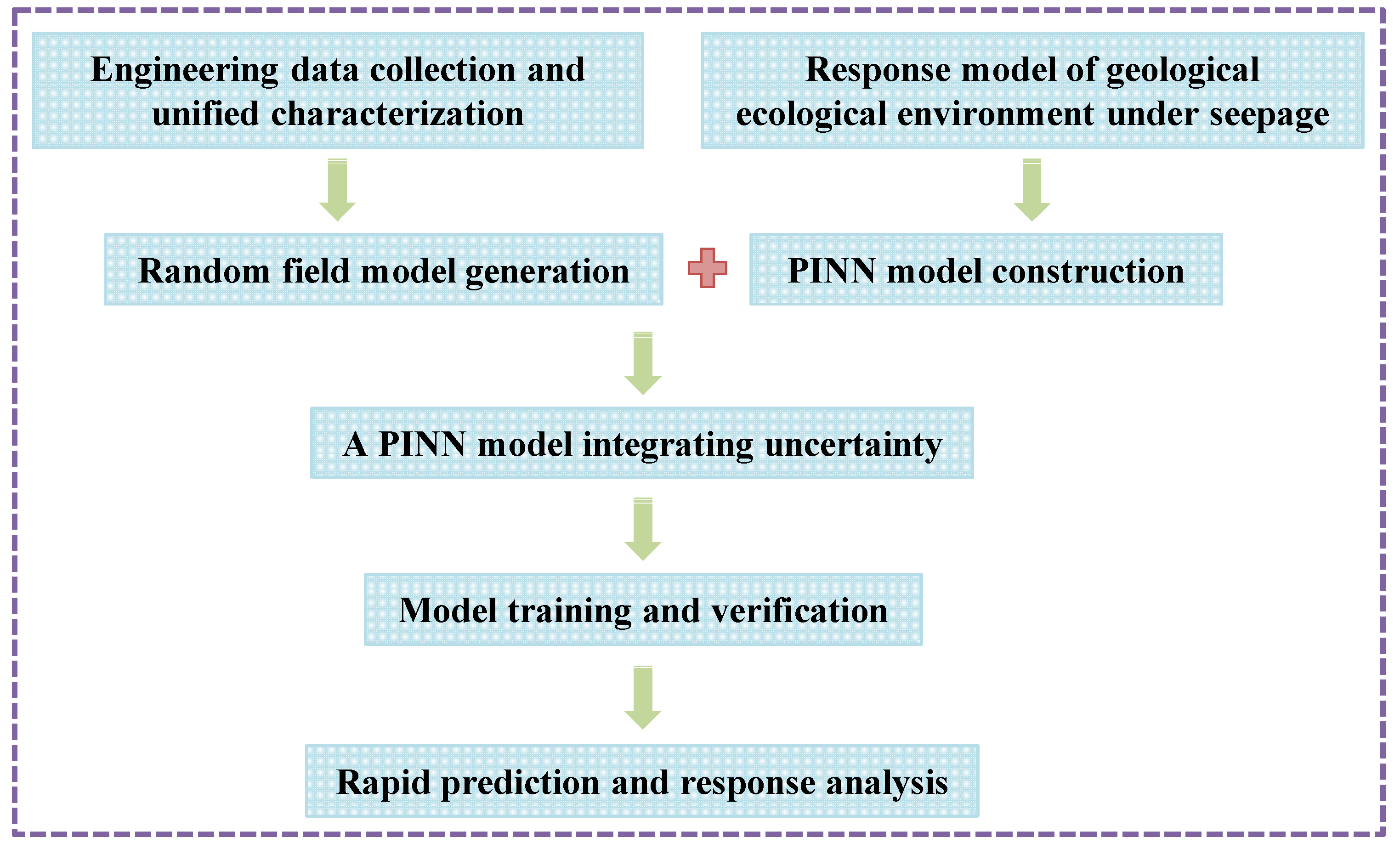
2. Methodology
2.1. Unified Characterization of Uncertainty in Multi-Source Parameters
2.1.1. Fundamental Theory of Random Fields
2.1.2. Random Field Discretization Based on K-L Expansion
2.1.3. Coupled Characterization of Multi-Parameter Random Fields
2.2. Theoretical Model of Geo-Ecological Environment Response to Tunnel Seepage
2.2.1. Governing Equation of Unsaturated–Saturated Seepage
2.2.2. Governing Equations of Seepage–Stress Coupling
2.2.3. Coupled Model of Geo-Ecological Environment Response
- (a)
- Groundwater Depth Response Equation:
- (b)
- Vegetation Coverage Response Equation:
- (c)
- Soil Physicochemical Property Response Equation:
2.2.4. Coupled Boundary Conditions Under Random Field
- (a)
- Hydraulic head boundary: ;
- (b)
- Flow rate boundary: ;
- (c)
- Displacement boundary: ;
- (d)
- Ecological boundary: .
2.3. PINN-Based Prediction Model for Geo-Ecological Environment Response
2.3.1. Basic Principles of PINN
- (a)
- Physics loss: , is the residual of the physical governing equation;
- (b)
- Boundary loss: ;
- (c)
- Initial loss: ;
- (d)
- Data loss: .
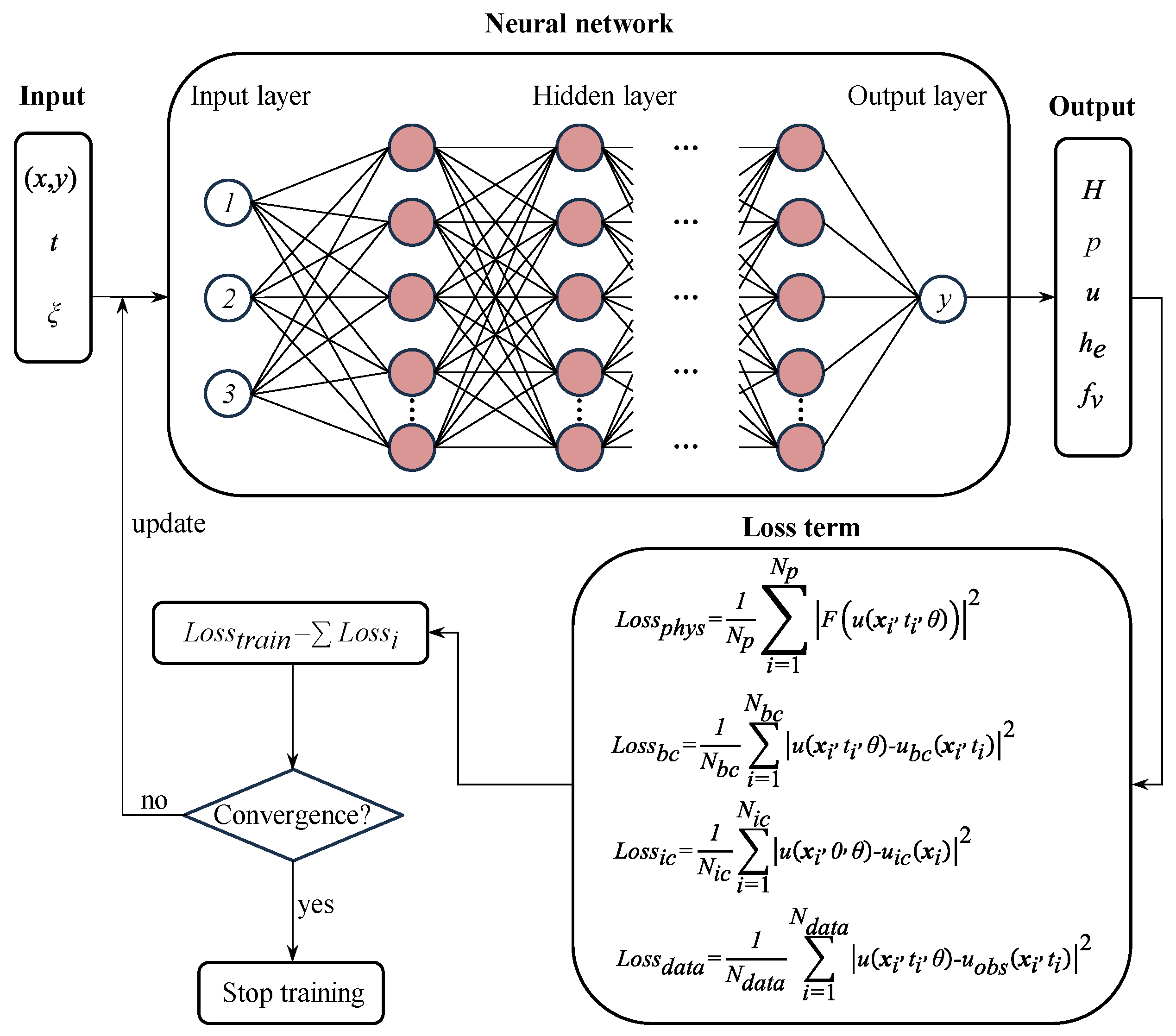
2.3.2. PINN Architecture Fused with Uncertainty
- (a)
- Input layer: spatial coordinates , time t, and random field random variable ;
- (b)
- Hidden layer: 8 fully connected layers with 128 neurons per layer, using the Tanh activation function (to ensure infinite differentiability);
- (c)
- Output layer: multi-field response variables such as hydraulic head H, pore water pressure p, displacement u, groundwater depth he, and vegetation coverage fv;
- (d)
- Loss layer: embedding the random field coupling governing equations, boundary conditions, and initial conditions to construct the uncertainty-aware physics loss function.
2.3.3. Model Training and Validation Process
- (a)
- Input layer: Collect hydrogeological parameters of actual engineering tunnels (permeability coefficient, porosity, correlation length, etc.) to construct a parameter random field; generate training data, including spatial–temporal random variable sampling points, boundary/initial conditions, and field monitoring data; perform data normalization to map input and output data to the interval [−1, 1] to improve training stability.
- (b)
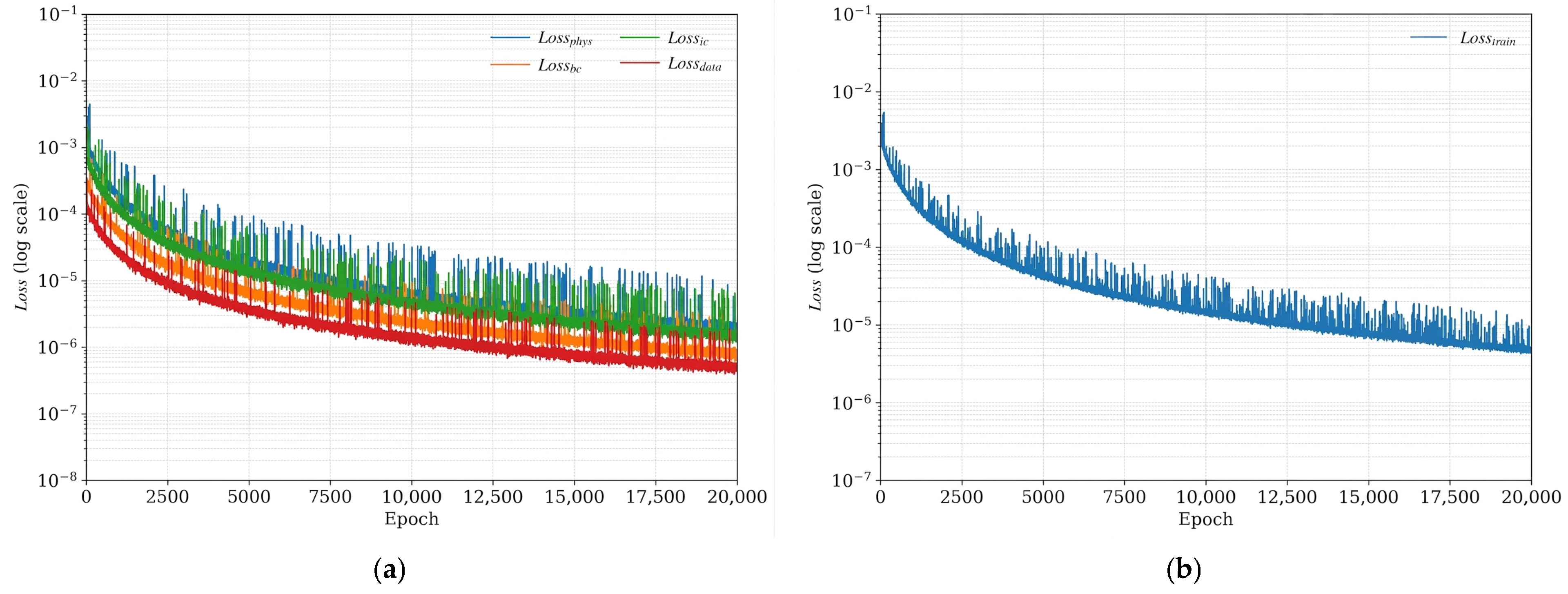
- Network training: Initialize network parameters θ, set learning rate lr = 10−4 and number of epochs = 20,000; compute the residual of the governing equation using automatic differentiation and update the loss function; minimize the loss via the Adam optimization algorithm, with an early stopping strategy to prevent overfitting. The PINN model was implemented in Python version 3.14.5 (Python Software Foundation, Wilmington, DE, USA). Data preprocessing, model training, automatic differentiation, and statistical evaluation were all performed in the Python environment.
- (c)
- Model validation: Evaluate prediction accuracy using mean squared error (MSE), coefficient of determination (R2), and mean absolute error (MAE); verify uncertainty by comparing the predicted statistical characteristics of the response field with simulation results; compare the predicted results with field monitoring data of actual engineering tunnels (water inflow, groundwater level, vegetation coverage) to verify engineering applicability.
3. Results Analysis
3.1. Project Overview and Calculation Parameters
3.2. Random Field Generation Results
3.3. Response Results of Seepage Field for Tunnel Water Seepage
3.4. Geo-Ecological Environment Response Results
3.5. PINN Model Prediction Results
3.6. Multi-Case Comparative Analysis
4. Discussion
4.1. Influence Mechanism of Random Field on Tunnel Seepage–Geological–Ecological Response
4.2. Advantages and Applicability of the Coupled PINN Model
4.3. Engineering Application Value and Limitations
4.4. Future Research Directions
5. Conclusions
- (1)
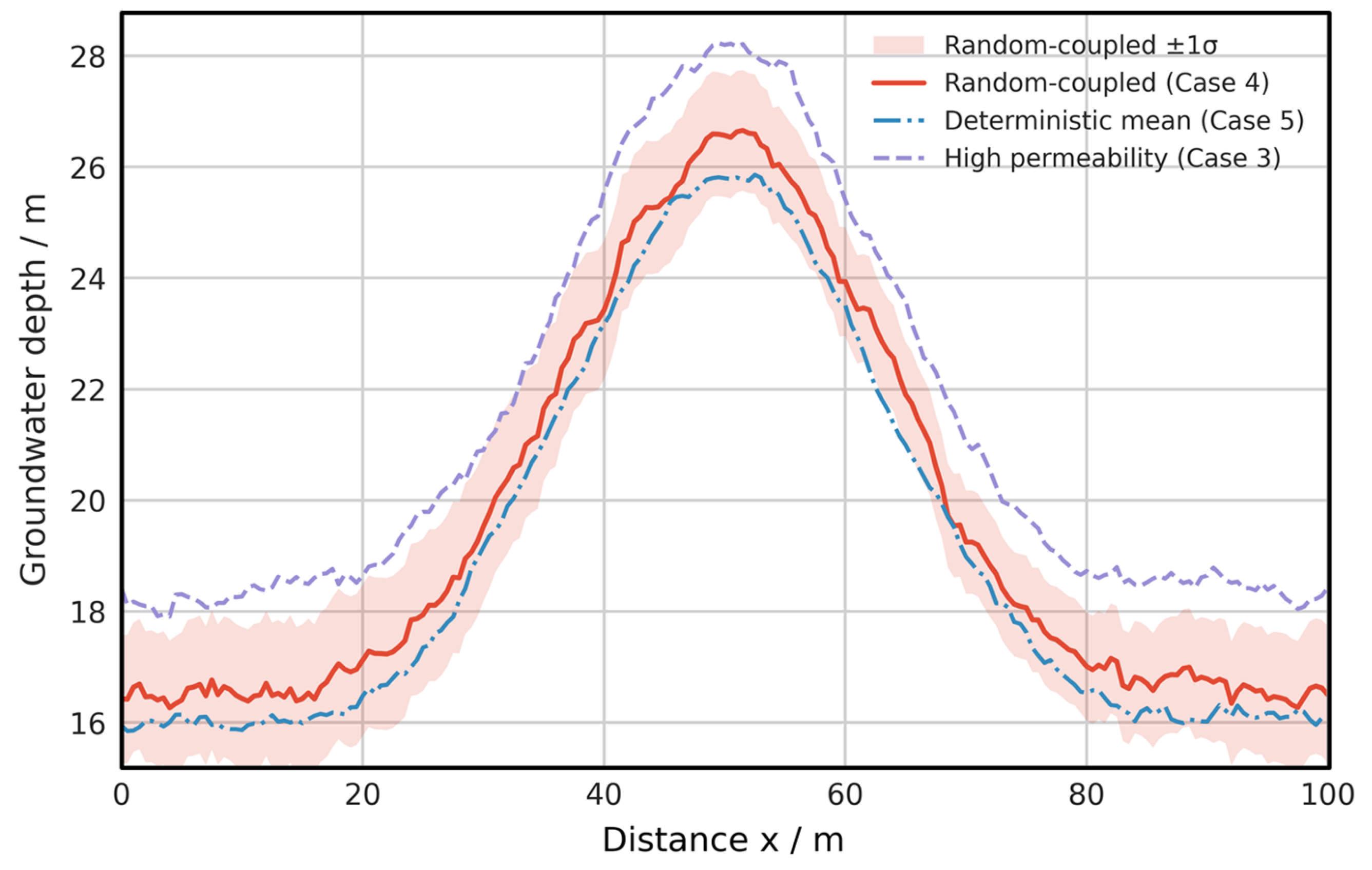
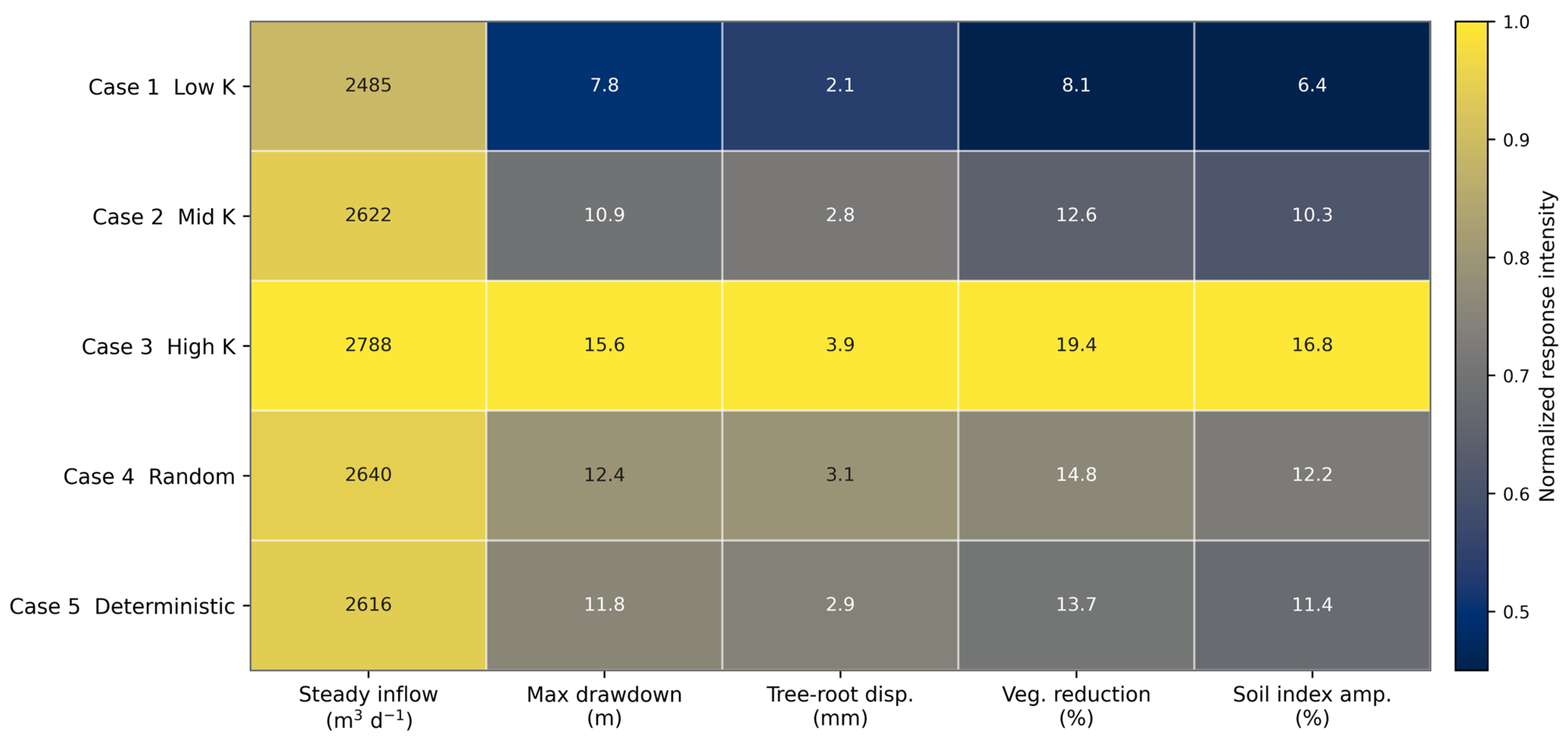
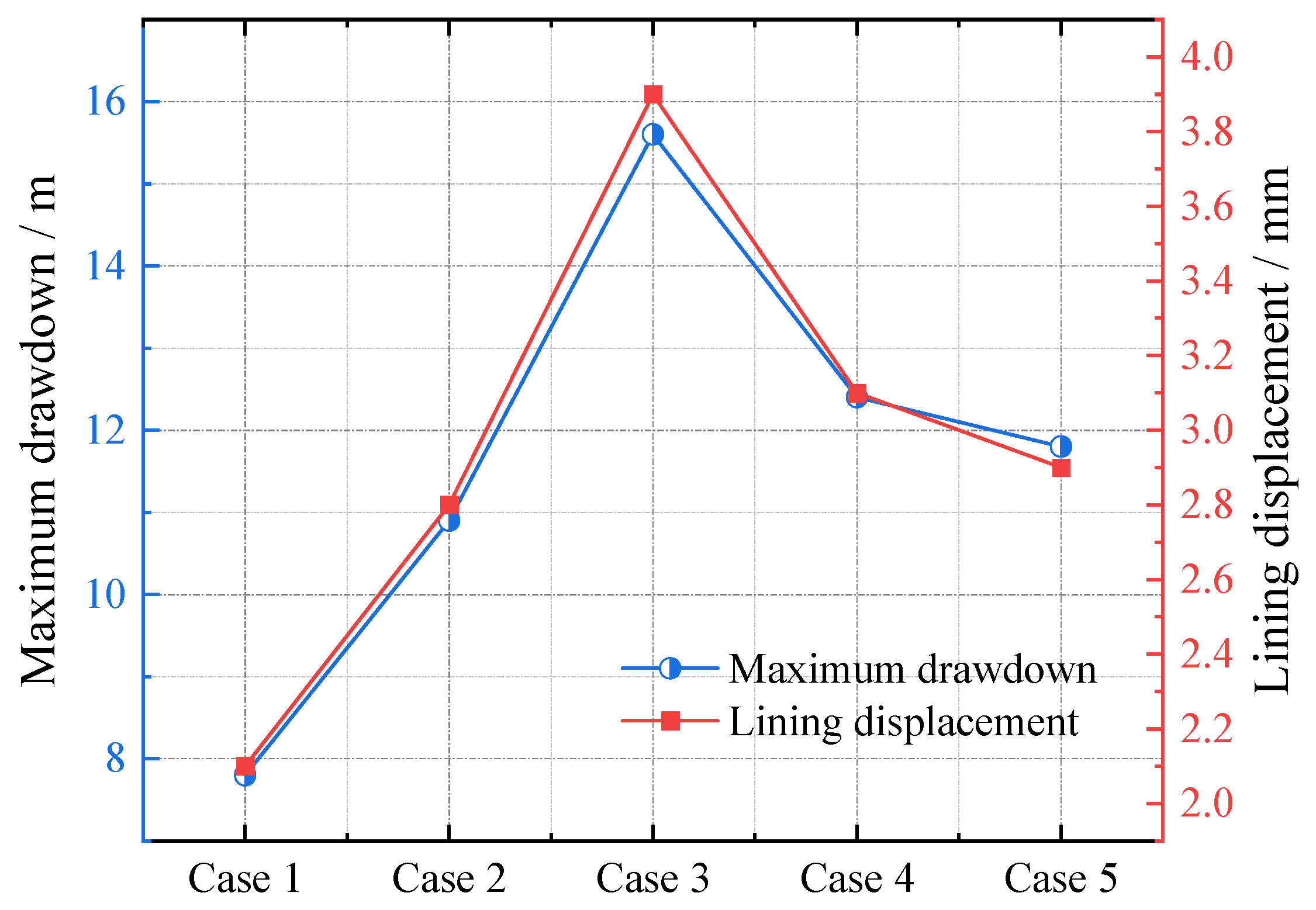
- Spatial variability plays a dominant role in controlling seepage behavior. Compared with deterministic models, the random-field case consistently produces higher seepage intensity and stronger spatial heterogeneity of groundwater drawdown, with localized responses significantly exceeding the mean-field predictions.
- (2)
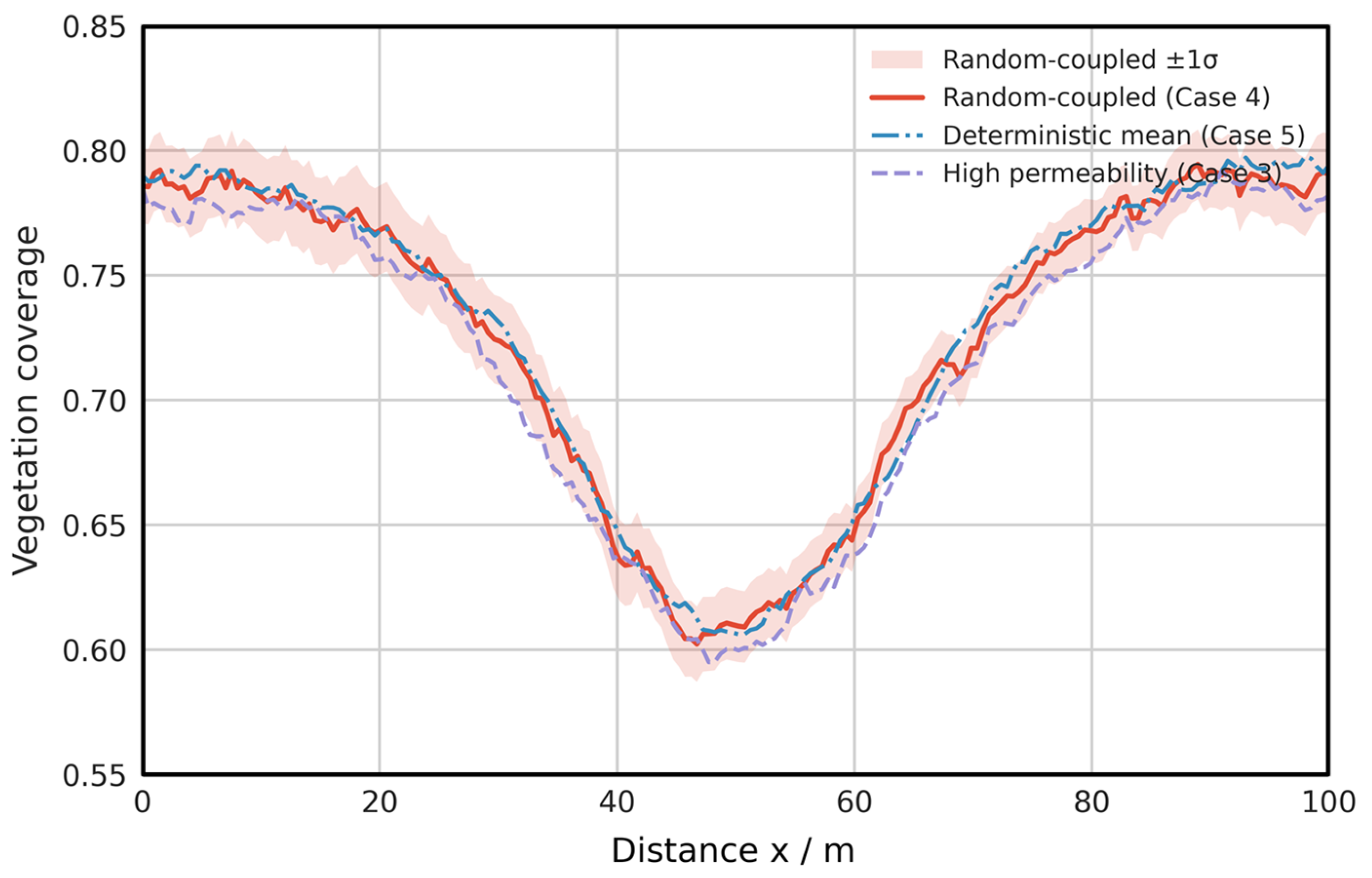
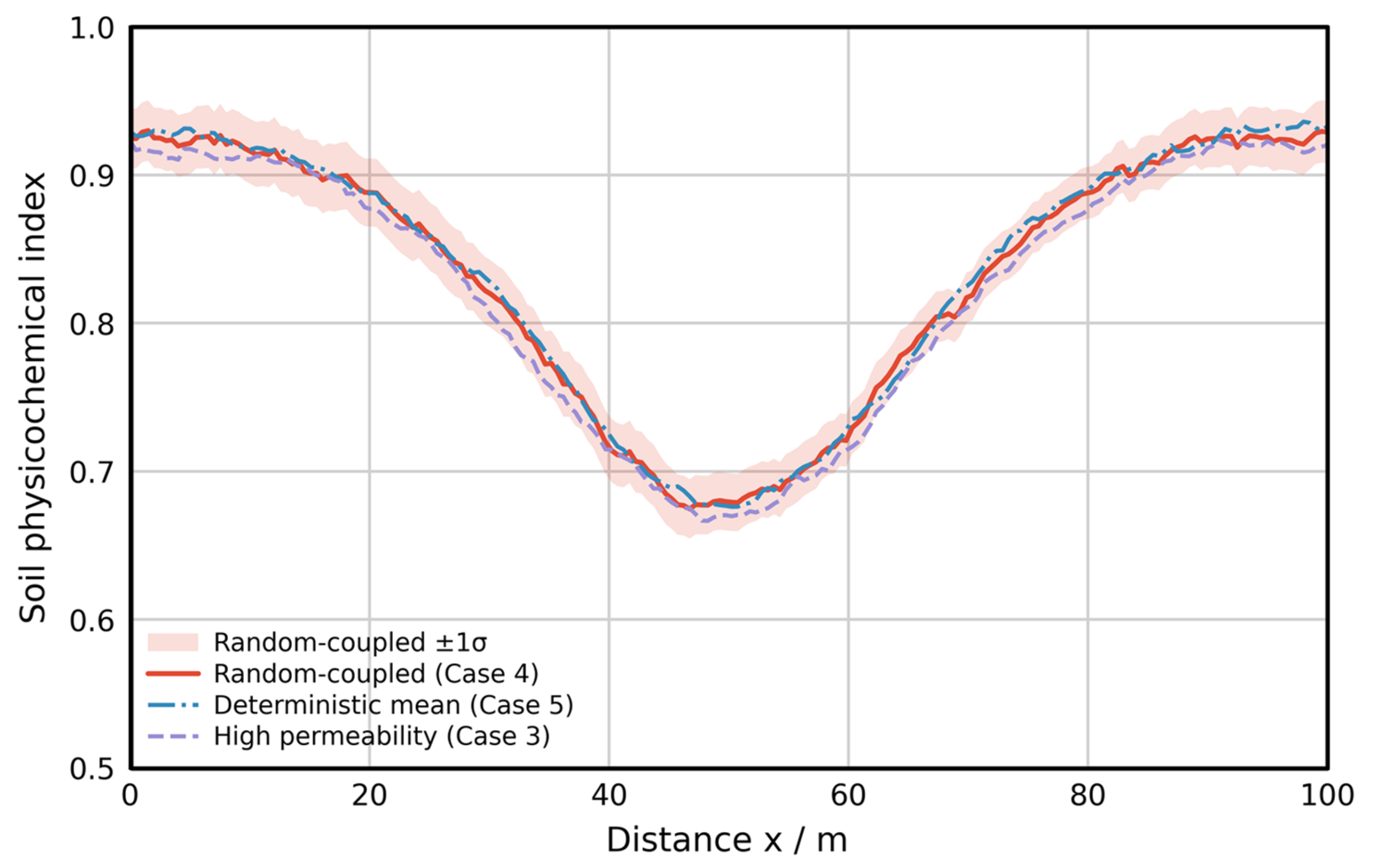
- Tunnel-induced seepage leads to a coupled response of groundwater, soil, and vegetation. Groundwater depletion is accompanied by coordinated changes in soil properties and vegetation coverage, showing a clear propagation from subsurface hydrological variation to surface ecological response.
- (3)
- Parameter uncertainty amplifies eco-environmental impacts. Under stochastic conditions, the predicted groundwater drawdown, vegetation reduction, and soil deterioration are consistently greater than those obtained from deterministic simulations, indicating a systematic underestimation of risk when spatial variability is neglected.
- (4)
- The proposed stochastic PINN framework provides accurate and efficient prediction of multi-field responses. The model achieves high prediction accuracy while maintaining computational efficiency, and captures the statistical characteristics of system responses under uncertainty.
Author Contributions
Funding
Data Availability Statement
Acknowledgments
Conflicts of Interest
References
- Liu, Z.; Gu, X.; Hong, R. Fire protection and evacuation analysis in underground interchange tunnels by integrating BIM and numerical simulation. Fire 2023, 6, 139. [Google Scholar] [CrossRef]
- Xu, H.; Li, X.; Gokdemir, C. Modeling and assessing the impact of tunnel drainage on terrestrial vegetation. Tunn. Undergr. Space Technol. 2021, 116, 104097. [Google Scholar] [CrossRef]
- Gokdemir, C.; Rubin, Y.; Li, X.; Xu, H. A vulnerability assessment method to evaluate the impact of tunnel drainage on terrestrial vegetation under various atmospheric and climatic conditions. Adv. Water Resour. 2021, 147, 103796. [Google Scholar] [CrossRef]
- Gokdemir, C.; Rui, Y.; Rubin, Y.; Li, X. A framework for assessing tunnel drainage-induced impact on terrestrial vegetation. Tunn. Undergr. Space Technol. 2023, 132, 104917. [Google Scholar] [CrossRef]
- Liu, Z.; Gu, X.; Kwan, M.-P.; Cui, B. Integrated ultrasonic testing and numerical simulation for damage detection in steel bridge deck pavements. Eng. Struct. 2026, 355, 122421. [Google Scholar] [CrossRef]
- Zheng, X.; Yang, Z.; Wang, S.; Chen, Y.-F.; Hu, R.; Zhao, X.-J.; Wu, X.-L.; Yang, X.-L. Evaluation of hydrogeological impact of tunnel engineering in a karst aquifer by coupled discrete-continuum numerical simulations. J. Hydrol. 2021, 597, 125765. [Google Scholar] [CrossRef]
- Lv, Y.; Jiang, J.; Chen, L.; Hu, W.; Jiang, Y. Elaborate simulation and predication of the tunnel drainage effect on karst groundwater field and discharge based on Visual MODFLOW. J. Hydrol. 2022, 612, 128023. [Google Scholar] [CrossRef]
- Liu, J.; Li, X. Analytical solution for estimating groundwater inflow into lined tunnels considering waterproofing and drainage systems. Bull. Eng. Geol. Environ. 2021, 80, 6827–6839. [Google Scholar] [CrossRef]
- Zhang, W.; Liu, M.; Bian, K.; Cong, P.-T.; Yuan, W.-H. Modelling the hydro-mechanical behaviour of high-pressure tunnel with emphasis on the interaction between lining and rock mass. Comput. Geotech. 2021, 139, 104382. [Google Scholar] [CrossRef]
- Song, F.; Rodriguez-Dono, A.; Olivella, S. Hydro-mechanical modelling and analysis of multi-stage tunnel excavations using a smoothed excavation method. Comput. Geotech. 2021, 135, 104150. [Google Scholar] [CrossRef]
- Wang, C.; Liu, X.; Song, D.; Wang, E.; Yan, G.; Zhou, R. Three-dimensional hydro-mechanical coupling numerical simulation of shield-driven cross-river twin tunnels: A case study. Undergr. Space 2024, 16, 106–125. [Google Scholar] [CrossRef]
- Zhang, W.; Han, L.; Gu, X.; Wang, L.; Chen, F.; Liu, H. Tunneling and deep excavations in spatially variable soil and rock masses: A short review. Undergr. Space 2022, 7, 380–407. [Google Scholar] [CrossRef]
- Li, T.; Gong, W.; Tang, H. Three-dimensional stochastic geological modeling for probabilistic stability analysis of a circular tunnel face. Tunn. Undergr. Space Technol. 2021, 118, 104190. [Google Scholar] [CrossRef]
- Xie, P.; Luo, H.; Chen, K.; Yang, Z. Random field-based tunneling information modeling framework for probabilistic safety assessment of shield tunnels. J. Civ. Eng. Manag. 2023, 29, 741–756. [Google Scholar] [CrossRef]
- Li, T.; Pan, Q.; Shen, Z.; Gong, W. Probabilistic stability analysis of a tunnel face in spatially random hoek–brown rock masses with a multi-tangent method. Rock Mech. Rock Eng. 2022, 55, 3545–3561. [Google Scholar] [CrossRef]
- Guayacán-Carrillo, L.-M.; Sulem, J.; Ghabezloo, S. Main insights from 2D/3D poroelastic analysis of tunnel excavation in low permeability anisotropic ground. Comput. Geotech. 2021, 130, 103935. [Google Scholar] [CrossRef]
- Dall’Alba, V.; Neven, A.; de Rooij, R.; Filipponi, M.; Renard, P. Probabilistic estimation of tunnel inflow from a karstic conduit network. Eng. Geol. 2023, 312, 106950. [Google Scholar] [CrossRef]
- Zhou, J.; Zhang, Y.; Li, C.; Yong, W.; Qiu, Y.; Du, K.; Wang, S. Enhancing the performance of tunnel water inflow prediction using random forest optimized by grey wolf optimizer. Earth Sci. Inform. 2023, 16, 2405–2420. [Google Scholar] [CrossRef]
- Bai, Y.; Wu, Z.; Huang, T.; Peng, D. A dynamic modeling approach to predict water inflow during karst tunnel excavation. Water 2022, 14, 2380. [Google Scholar] [CrossRef]
- Chen, Z.; Zhang, H.; Shen, Q.; Chen, Z.; Wang, K.; Chen, C. Groundwater flow impact in complex karst regions considering tunnel construction conditions: A case study of the new construction project at xls tunnel. Water 2025, 17, 2383. [Google Scholar] [CrossRef]
- Glanville, K.; Sheldon, F.; Butler, D.; Capon, S. Effects and significance of groundwater for vegetation: A systematic review. Sci. Total Environ. 2023, 875, 162577. [Google Scholar] [CrossRef]
- Hernandez, J.O. Ecophysiological effects of groundwater drawdown on phreatophytes: Research trends during the last three decades. Land 2022, 11, 2061. [Google Scholar] [CrossRef]
- Song, G.; Huang, J.-t.; Ning, B.-h.; Wang, J.-w.; Zeng, L. Effects of groundwater level on vegetation in the arid area of western China. China Geol. 2021, 4, 527–535. [Google Scholar] [CrossRef]
- Yin, L.-h.; Xu, D.-d.; Jia, W.-h.; Zhang, X.-x.; Zhang, J. Responses of phreatophyte transpiration to falling water table in hyper-arid and arid regions, Northwest China. China Geol. 2021, 4, 410–420. [Google Scholar] [CrossRef]
- Qiu, Y.; Wang, D.; Yu, X.; Jia, G.; Li, H. Effects of groundwater table decline on vegetation in groundwater-dependent ecosystems. Forests 2023, 14, 2326. [Google Scholar] [CrossRef]
- Cui, G.; Liu, Y.; Li, X.; Wang, S.; Qu, X.; Wang, L.; Tong, S.; Zhang, M.; Li, X.; Zhang, W. Impacts of groundwater storage variability on soil salinization in a semi-arid agricultural plain. Geoderma 2025, 454, 117162. [Google Scholar] [CrossRef]
- Wu, H.; Bai, J.; Li, J.; Liu, R.; Zhao, J.; Ma, X. The relationships between vegetation changes and groundwater table depths for woody plants in the sangong river basin, northwest china. Remote Sens. 2025, 17, 937. [Google Scholar] [CrossRef]
- Liu, Z.; Yeoh, J.K.; Gu, X.; Dong, Q.; Chen, Y.; Wu, W.; Wang, L.; Wang, D. Automatic pixel-level detection of vertical cracks in asphalt pavement based on GPR investigation and improved mask R-CNN. Autom. Constr. 2023, 146, 104689. [Google Scholar] [CrossRef]
- Secci, D.; Godoy, V.A.; Gómez-Hernández, J.J. Physics-informed neural networks for solving transient unconfined groundwater flow. Comput. Geosci. 2024, 182, 105494. [Google Scholar] [CrossRef]
- Shadab, M.A.; Luo, D.; Hiatt, E.; Shen, Y.; Hesse, M.A. Investigating steady unconfined groundwater flow using physics informed neural networks. Adv. Water Resour. 2023, 177, 104445. [Google Scholar] [CrossRef]
- Ali, A.S.A.; Jazaei, F.; Clement, T.P.; Waldron, B. Physics-informed neural networks in groundwater flow modeling: Advantages and future directions. Groundw. Sustain. Dev. 2024, 25, 101172. [Google Scholar] [CrossRef]
- Cui, B.; Wang, H. Coupled prediction of viscoelastic properties of asphalt mixtures using a multi-task physics-constrained neural network. Adv. Eng. Inform. 2026, 72, 104437. [Google Scholar] [CrossRef]
- Cui, B.; Wang, H. Compatibility analysis of waste polymer recycling in asphalt binder using molecular descriptor and graph neural network. Resour. Conserv. Recycl. 2025, 212, 107950. [Google Scholar] [CrossRef]
- Lei, K.; Cui, B.; Zhang, M.; Mao, R.; Du, Y.; Gu, X.; Liu, Z. Intelligent prediction of pavement structural degradation using a multimodel ensemble learning approach. Struct. Control Health Monit. 2026, 2026, 6132295. [Google Scholar] [CrossRef]
- Cui, B.; Wang, H. Intelligent design of low-carbon asphalt mixtures with enhanced cracking and rutting resistance. Sustain. Mater. Technol. 2026, 48, e02019. [Google Scholar] [CrossRef]
- Cui, B.; Wang, H. Optimization of risk-based and cost-minimized maintenance strategy for corroded pipeline using reinforcement learning. Reliab. Eng. Syst. Saf. 2026, 276, 112929. [Google Scholar] [CrossRef]
- Cui, B.; Wang, H. Predicting asphalt pavement deterioration under climate change uncertainty using bayesian neural network. IEEE Trans. Intell. Transp. Syst. 2025, 26, 785–797. [Google Scholar] [CrossRef]







| Indicator | Training Set | Validation Set | Description |
|---|---|---|---|
| MSE | 6.4 × 10⁻⁴ | 8.7 × 10⁻⁴ | Output targets: groundwater depth, vegetation coverage, soil physicochemical index. |
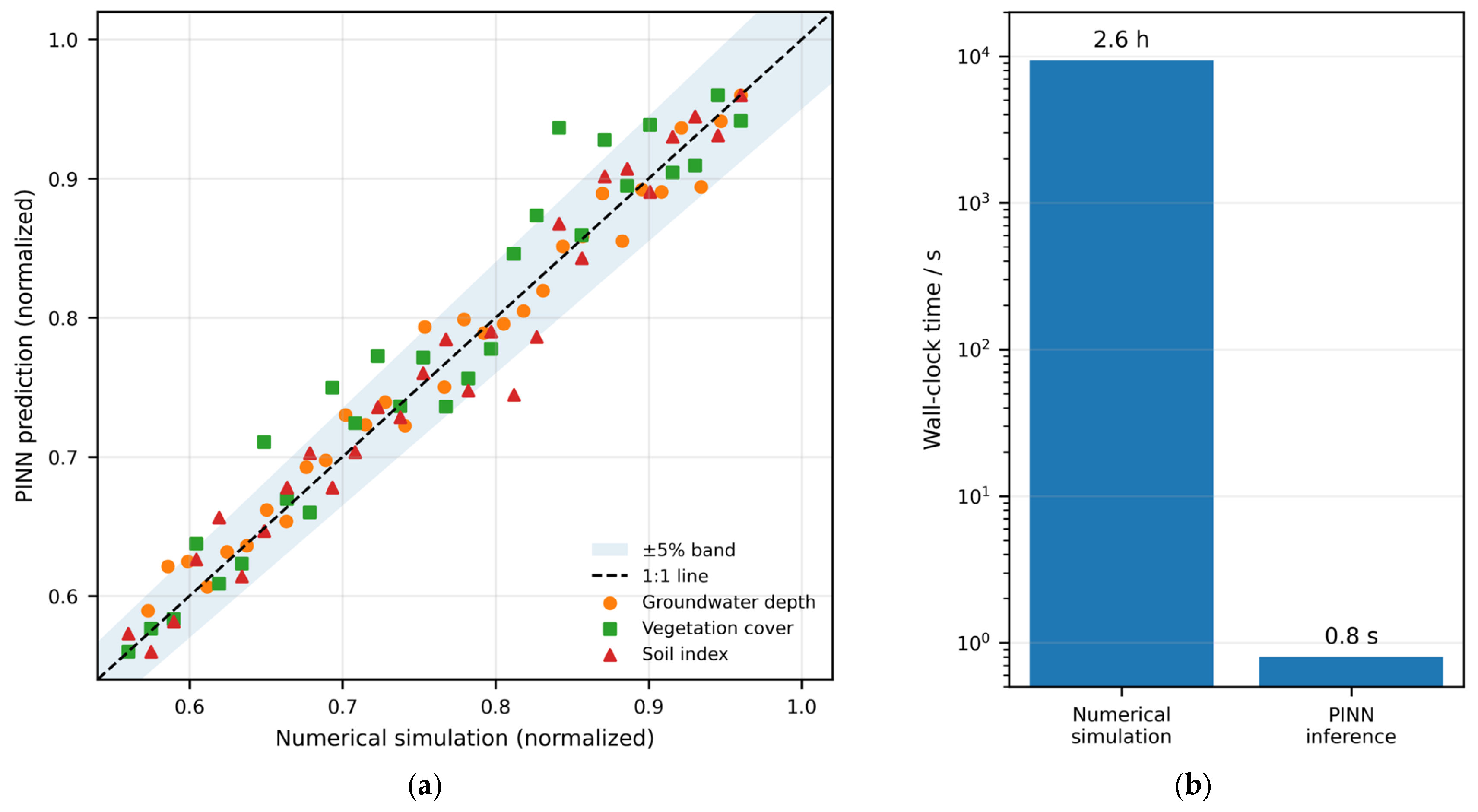
| MAE | 0.0158 | 0.0196 | Numerical simulation for a single case takes approximately 2.6 h, while PINN inference takes only about 0.8 s |
| R2 | 0.9860 | 0.9780 | The validation set samples generally fall near the 1:1 line and within the ±5% error band. |
| 95% confidence interval coverage rate | 92.3% | 91.1% | It is suitable for rapid screening and uncertainty quantification of random field cases. |
| Case | Steady-State Water Inflow/(m3/d) | Maximum Drawdown/m | Lining Displacement/mm | Vegetation Coverage Reduction/% | Soil Index Reduction/% |
|---|---|---|---|---|---|
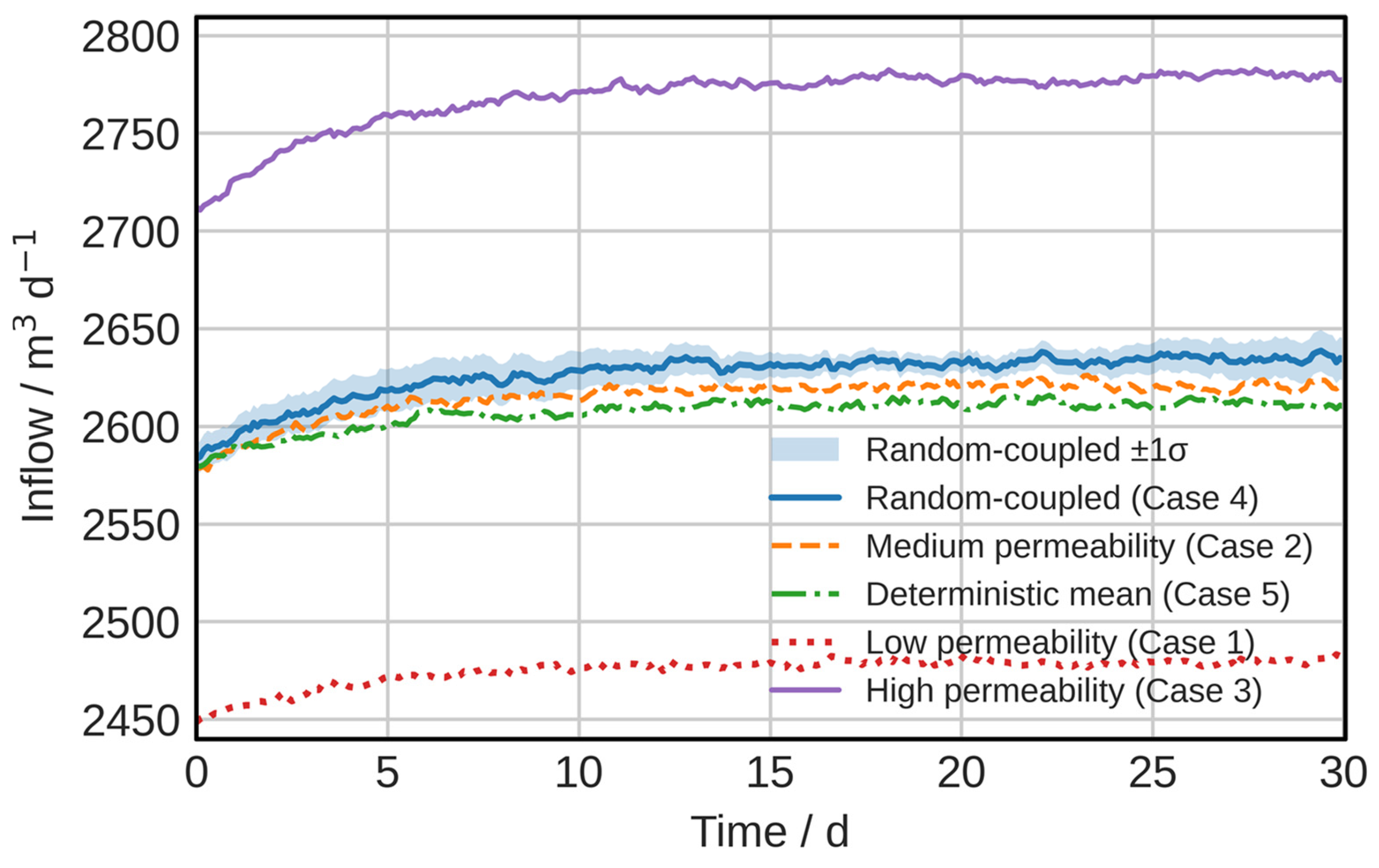
| Case 1: Low permeability | 2485 | 7.8 | 2.1 | 8.1 | 6.4 |
| Case 2: Medium permeability | 2622 | 10.9 | 2.8 | 12.6 | 10.3 |
| Case 3: High permeability | 2788 | 15.6 | 3.9 | 19.4 | 16.8 |
| Case 4: Random field coupling | 2640 | 12.4 | 3.1 | 14.8 | 12.2 |
| Case 5: Deterministic comparison | 2616 | 11.8 | 2.9 | 13.7 | 11.4 |
Disclaimer/Publisher’s Note: The statements, opinions and data contained in all publications are solely those of the individual author(s) and contributor(s) and not of MDPI and/or the editor(s). MDPI and/or the editor(s) disclaim responsibility for any injury to people or property resulting from any ideas, methods, instructions or products referred to in the content. |
© 2026 by the authors. Licensee MDPI, Basel, Switzerland. This article is an open access article distributed under the terms and conditions of the Creative Commons Attribution (CC BY) license.
Share and Cite
Wang, B.; Pei, X.; Liu, Z. Analysis of Tunnel Leakage Hazards and Ecological Environment Response Under Spatial Variability Using Random Fields and PINNs. Water 2026, 18, 1424. https://doi.org/10.3390/w18121424
Wang B, Pei X, Liu Z. Analysis of Tunnel Leakage Hazards and Ecological Environment Response Under Spatial Variability Using Random Fields and PINNs. Water. 2026; 18(12):1424. https://doi.org/10.3390/w18121424
Chicago/Turabian StyleWang, Buyun, Xiaofang Pei, and Zhen Liu. 2026. "Analysis of Tunnel Leakage Hazards and Ecological Environment Response Under Spatial Variability Using Random Fields and PINNs" Water 18, no. 12: 1424. https://doi.org/10.3390/w18121424
APA StyleWang, B., Pei, X., & Liu, Z. (2026). Analysis of Tunnel Leakage Hazards and Ecological Environment Response Under Spatial Variability Using Random Fields and PINNs. Water, 18(12), 1424. https://doi.org/10.3390/w18121424