Article

High-Iodine Groundwater in the Lower Kuitun River in Xinjiang: Evidence from Stable-Carbon-Isotope Characteristics

1
College of Resources and Environment, Xinjiang Agricultural University, Urumqi 830052, China
2
China Energy Engineering Group Xinjiang Electric Power Design Institute Co., Ltd., Urumqi 830002, China
*
Author to whom correspondence should be addressed.
These authors contributed equally to this work.
Water 2026, 18(12), 1409; https://doi.org/10.3390/w18121409 (registering DOI)
Submission received: 11 April 2026 / Revised: 2 June 2026 / Accepted: 4 June 2026 / Published: 9 June 2026
(This article belongs to the Section Hydrogeology)

Abstract

Microbial degradation of organic matter is a key driver of iodine enrichment in groundwater. Using stable carbon isotopes (δ13C-DIC and δ13C-DOC), this study investigates the role of microbial processes and organic matter biodegradation in the formation of high-iodine groundwater downstream of the Kuitun River, China. The groundwater is weakly alkaline and reducing, with Cl and Na+ as the dominant ions, and is mainly slightly saline. I concentrations range from 51.66 to 552.79 µg/L (mean 177.68 µg/L), with 61.54% of samples classified as high-iodine water. Dissolved inorganic carbon (DIC, 22.97–100.85 mg/L, dominated by HCO3) originates primarily from microbial degradation of organic matter and silicate weathering. Dissolved organic carbon (DOC, 2.01–4.22 mg/L) is mainly derived from C3 plants. In this reducing, organic-rich aquifer, microbial decomposition of organic matter and reductive dissolution of iron minerals are the primary hydrobiogeochemical processes that release solid-phase iodine into groundwater. The high-iodine groundwater in the study area follows a burial–dissolution genesis model.

1. Introduction

Iodine (I) is a trace element that largely impacts on human health. The iodine content in groundwater directly enters the drinking water of residential homes. An adequate iodine supply is necessary for normal functioning of the human thyroid gland but an iodine deficiency or excess can lead to serious metabolic disorders [1]. Since the 20th century, iodine contents in regional groundwater have increased worldwide and have become a public health threat, attracting the interest of various researchers [2,3,4]. The Chinese government has classified the limits of high-iodine groundwater according to the national standard ‘Delineation of Highly Iodised Water Sources and Highly Iodised Disease Areas’ and the industry standard ‘Delineation of Iodine-Deficient Areas and Iodine-Adequate Areas’. Specifically, groundwater is categorised into lowly iodised groundwater (I < 100 µg/L) and highly iodised groundwater (I ≥ 100 µg/L).
High-iodine groundwater is distributed in numerous countries, including Denmark, Switzerland, Chile, Argentina, Canada, Japan and China [5,6,7,8,9,10]. Extremely high groundwater iodine concentrations have been observed in the coastal areas of Japan, reaching 34,000 µg/L at maximum [8]. High groundwater iodine contents have also been identified in several provinces and cities in China, including the eastern coastal regions (Hebei, Tianjin, Shandong, Fujian and Jiangsu), central regions (Henan, Shanxi and Anhui) and northwestern inland regions (Xinjiang, Shaanxi and Inner Mongolia) [11,12]. These areas are primarily located in arid to semi-arid inland basins (e.g., Datong Basin, Taiyuan Basin, Hetao Plain and Tarim Basin) or in coastal regions (such as the North China Plain and the Huaihe River Plain) [13,14,15,16,17,18]. The iodine content of groundwater in the North China Plain ranges from 1.51 to 1106 µg/L, and approximately 48.2% of the sampling sites exhibited groundwater iodine concentrations exceeding China’s recommended drinking water standard of 150 µg/L [19]. In the Datong Basin, the groundwater iodine content varies from 14.4 to 2180 µg/L and exceeds 100 µg/L in approximately 44.8% of the groundwater samples collected from this area, mainly within the groundwater discharge area in the centre of the basin [20]. In the downstream area of the Kuitun River in Xinjiang, the groundwater iodine content ranges from 13.96 to 574.85 µg/L, with 38.46% of groundwater samples classified as high-iodine groundwater and a gradual south-to-north increase in overall groundwater iodine concentration [21]. High-iodine occurrences have been observed in aquifers from the eastern coastal regions of China to the central basins and plains, extending to the arid inland basins in the northwest. The causes of high iodine in groundwater vary in different regions.
In addition to the prevailing pH, redox environments and water–rock interactions, organic carbon and microorganisms influence the transformation, transport and release of iodine species in hydric soils/sediments, enriching the groundwater iodine through complex hydrologic–biogeochemical processes [22]. The formation of high-iodine groundwater is largely driven by microbially mediated reductive dissolution of organic matter and iron oxides [23], which utilises dissolved organic carbon (DOC) as the primary carbon and energy source, thereby affecting the redox reactions and transformation of elements to some extent [24,25,26,27]. The source of organic carbon in groundwater can be determined from the isotopic composition of DOC (δ13CDOC), which reflects the metabolic activities of microbes. Meanwhile, the source of dissolved inorganic carbon (DIC), an important product of microbial organic matter degradation, can be determined from the stable-isotope composition of DIC (δ13CDIC) in groundwater. The δ13CDOC and δ13CDIC values reveal the microbial degradation process of organic matter in groundwater [28]. Carbon isotopes in groundwater systems are the main distinguishers of organic matter sources and indicators of microbial organic matter metabolism [29]. Therefore, the stable carbon isotopes in groundwater can characterise the process by which microbes degrade organic matter and the impact of this process on iodine enrichment.
Research on high-iodine groundwater has primarily focused on the North China Plain and the Datong Basin in central China; comparatively few studies have investigated the arid inland basins of northwest China. Downstream of the Kuitun River in Xinjiang is the primary distribution area of high-iodine groundwater in the arid inland basin of northwest China. Unlike other regions, in which the high-iodine groundwater is buried in the phreatic or shallow confined aquifers, the groundwater in this region is largely distributed in the deep confined aquifers. According to previous studies, 73% of the high-iodine groundwater in the downstream area of the Kuitun River is buried between 170 and 200 m (in the deep confined aquifers). Iodine enrichment in the groundwater, mainly affected by the reductive dissolution of iron oxides in the aquifer and by competitive adsorption between HCO3 and I, is facilitated in weakly alkaline reducing environments, deep sediment layers and sluggish groundwater flow conditions [30]. Iodine strongly adsorbs to organic matter in groundwater, which donates nutrients and electrons for microbial activity. Reducing conditions enhance the metabolic activity of anaerobic microorganisms. As the organic matter is degraded, iodine-complexed organic matter is released into the groundwater [31]. Therefore, studying the microbial-mediated degradation of organic matter is important for understanding iodine enrichment in groundwater, but the role of organic matter biodegradation in groundwater iodine enrichment in our study area remains unclear. Consequently, this study analyses the deep confined groundwater in the downstream area of the Kuitun River. Based on the hydrochemical characteristics of groundwater and stable carbon isotope analysis, we identify the microorganism-mediated degradation process of organic matter and the influence of this process on iodine enrichment in the high-iodine groundwater. This study will advance our understanding of the genesis mechanism of high-iodine groundwater in Kuitun, Xinjiang, providing theoretical guidance for the protection and effective use of groundwater. Our results demonstrate that these processes follow a burial–dissolution genesis model, providing the first stable carbon isotope evidence for microbial-mediated iodine mobilisation in an arid inland basin of northwest China.

2. Materials and Methods

2.1. Study Area

The study area is located in the Kuitun River Basin, which occupies the middle section of the Tianshan Mountains and the southwestern part of the Jungar Basin in Xinjiang, China (Figure 1). This basin segment lies deep within the interior of the Eurasian continent and experiences a temperate continental arid desert climate. The long-term average temperature is relatively low (7.3 °C), the annual average precipitation is 165 mm and the evaporation rate (up to 2080 mm annually) largely exceeds the precipitation [32].
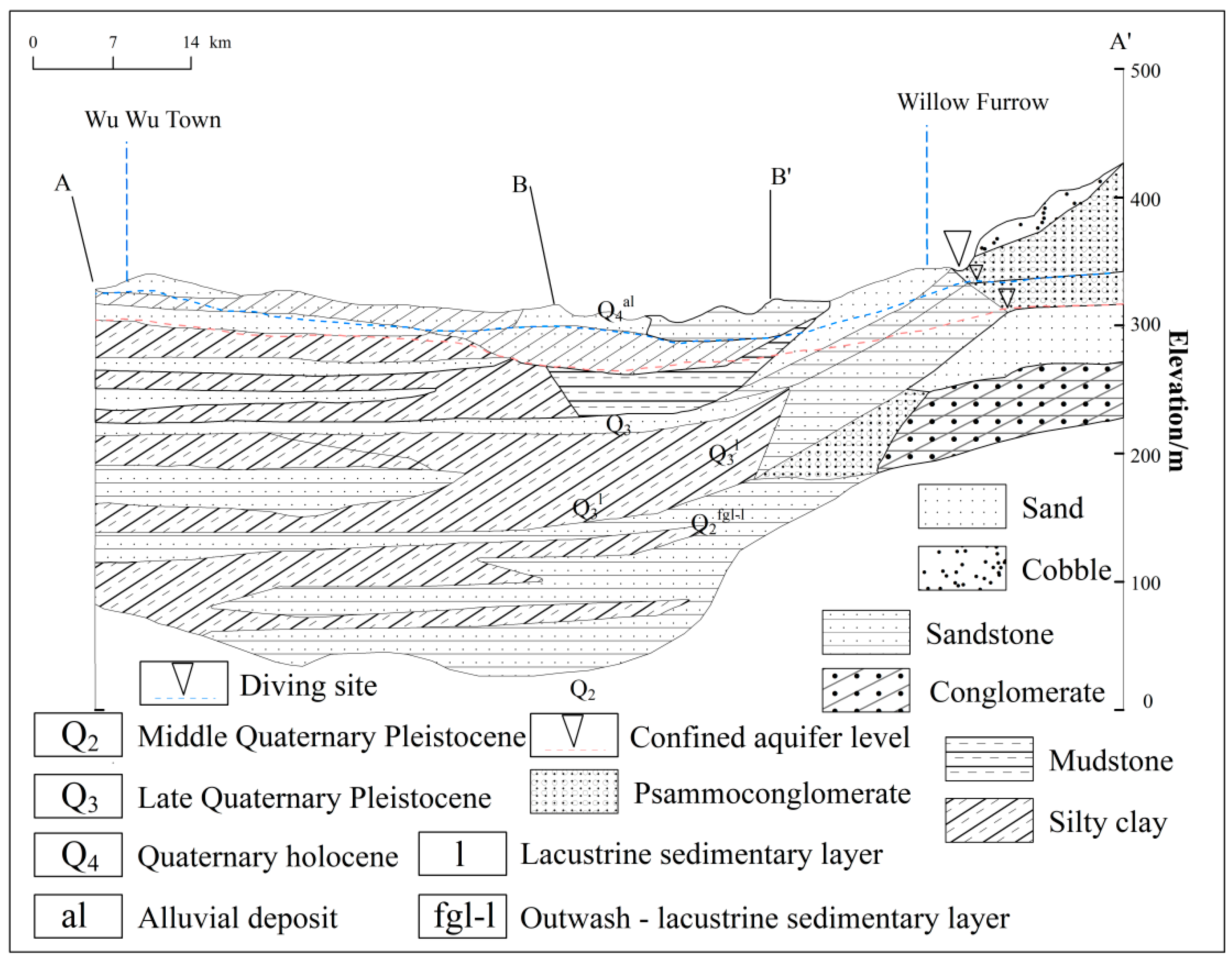
The downstream area of the Kuitun River is relatively sluggish, flat and low-lying, with stagnant groundwater runoff and strong evaporation. Therefore, the area behaves as a groundwater discharge area. Its geomorphology is mainly alluvial fine-soil plains and alluvial lake plains. The aquifer structure is multi-layered and confined, comprising an upper phreatic aquifer and lower confined aquifers. The phreatic aquifer is generally less than 10 m deep and 10–30 m thick. The burial depth of the confined aquifers exceeds 30 m, and the associated water level gradually increases from south to north. In the downstream plain area, the groundwater receives lateral recharge from the Jotun Ailisheng Desert, the alluvial plains of the Beishan Mountains, and the impacted fine-soil plain of the Kuitun River, along with vertical recharge from agricultural irrigation water and rainfall infiltration. The lateral runoff recharge is the most important horizontal source of pressurised water in the middle and deep parts of the downstream plains area, whereas vertical infiltration recharge mainly feeds the phreatic aquifers. During the Quaternary period, the Kuitun region consistently remained at the centre of the sedimentary zone, resulting in the formation of thick sedimentary layers primarily comprising mud and clay. The Quaternary formations are widely distributed across the plain area, with outcrops of alluvial, aeolian, lacustrine, or composite origins underlain by buried lacustrine and glacial–lacustrine deposits in the hinterland. The aquifer in the downstream area exhibits a multi-layered structured lithology comprising sub-sandy loam, gravelly loam, fine sand and sandy gravel (from top to bottom), with localised occurrences of weakly permeable sub-clay layers [21]. The hydrogeologic profile of the downstream area is shown in Figure 2.

2.2. Sample Collection and Pretreatment

High-iodine groundwater in the Kuitun area is known to be concentrated in the downstream region of the Kuitun River [21,33]. Therefore, the present study analyses samples collected from 13 groundwater wells of the Kuitun area in July 2023. The well depths ranged from 90 to 200 m. Twelve of the 13 groups were collected from wells with depths of 100 m or deeper, which are primarily used for agricultural irrigation. The remaining group was collected from household wells with depths of less than 100 m, which provide domestic water supply and yard irrigation. From the aquifer structure downstream of the Kuitun River, it was inferred that all groundwater was sourced from deep confined aquifers. Prior to sample collection, the well probe was cleaned and the sampling bottles were rinsed three times with clear groundwater. After collection, the bottles were sealed and labelled for classification. For cation analyses (major and trace elements), the samples were acidified to pH < 2 with appropriate amounts of superior-purity concentrated nitric acid and stored away from light. The anion and isotope contents were determined in filtered water samples directly after collection. All water samples were collected in the bottle without bubbles and stored at 4 °C. The depth, latitude and longitude of each groundwater sampling point were recorded on-site and the pH and Eh of the groundwater samples were measured immediately after collection using a multi-parameter portable instrument (HI 8424, Hanna Instruments, Nusfalu, Romania).

2.3. Groundwater Chemical Analysis

2.3.1. Conventional Chemical Indicators of Water

The cations in the groundwater were analysed using flame atomic absorption spectrophotometry according to the Chinese national standard for groundwater quality analysis methods (DZ/T 0064-2021) [34]. The detection limit of all cations (Na+, K+, Ca2+ and Mg2+) was 0.1 mg/L. The HCO3 and CO32− anions were determined through dual-indicator-neutralisation titration and Cl was determined through silver-nitrate titration. The detection limit of both titration methods was 1 mg/L. SO42− was determined using barium-chloride titration with a detection limit of 5 mg/L. The total dissolved solids (TDS) value was obtained by summing the concentrations of Na+, K+, Ca2+, Mg2+, HCO3, CO32−, Cl and SO42− [35]. The Fe content was determined using an atomic absorption spectrophotometer (TAS-990, Beijing Purkinje General Instrument Co., Ltd., Beijing, China). The groundwater I content was determined via the iodide starch spectrophotometric method using a T6 New Century UV-Visible spectrophotometer, as described in the groundwater quality analysis method (DZ/T 0064-2021). The detection limit was set to 10 µg/L and the measurement range was 10–500 µg/L. Groundwater samples with I contents exceeding this measurement range were diluted before analysis.

2.3.2. Stable Carbon Isotopes

The DIC, δ13CDIC, DOC and δ13CDOC values in the groundwater samples were determined using an isotope ratio mass spectrometer (ISOPRIME100, Elementar UK Ltd., Stockport, UK) and a total organic carbon analyser (ISO TOC CUBE, Chengdu Baihui Biotechnology Co., Ltd., Chengdu, China). For DIC and δ13CDIC analyses, eight drops of anhydrous phosphoric acid were added to a 12 mL headspace vial, which was then sealed with a cap. Each sealed vial was evacuated with an automatic sample-introduction needle for 300 s under helium gas (flow rate = 100 mL/min; purity > 99.999%). This process aimed to eliminate the influence of residual air in the sample vial on the measured carbon isotope ratio [36,37]. After the evacuation process, 0.2 mL of the groundwater sample was added to the vial, centrifuged at 4000 r/min for 2 min and then sampled with an automatic sampler. The CO2 was separated from the gas mixture (high-purity helium and CO2) using a gas chromatography column at 75 °C and injected into a Delta V detector for analysis. Upon bombardment with high-energy electron beams, the gas was ionised into gaseous ions with different mass-to-charge ratios (m/z 44–46). These ions were separated in a magnetic field and converted into electrical signals by a receiver for determining the carbon isotope ratio [38].
Determination of DOC and δ13CDOC: Forty-millilitre transparent glass sample bottles were washed three times with ultrapure water and then placed in a muffle furnace at 500 °C, where they were incinerated for 6 h to remove organic carbon. Approximately 15 mL of a water sample was passed through a 0.45 μm membrane filter into the prepared sample bottle. Next, the pH of the sample was adjusted to 2.0 with dropwise addition of high-purity concentrated hydrochloric acid solution. After ultrasonic agitation for 15 min, the sample was analysed using a total organic carbon analyser combined with a stable-isotope mass spectrometer [39]. During the experiment, the flow rate of helium gas was set to 100 mL/min and the temperatures of the oxidation and reduction tubes were set to 850 °C and 600 °C, respectively. The adsorption and desorption temperatures of the CO2 adsorption column were both set to 230 °C while the working temperature of the infrared detector was 40 °C. The voltage of the stable-isotope mass spectrometer ion source was set according to the manufacturer’s specifications.

2.3.3. Quality Control

Quality control procedures followed the Chinese national standard for groundwater quality analysis (DZ/T 0064-2021). Field blanks and laboratory method blanks were analysed every 10 samples; all blank measurements were below the respective detection limits for all analytes (major ions, trace elements, and stable carbon isotopes). Duplicate analyses were performed on 10% of the samples; the relative percent deviations were <5% for major ions (Na+, K+, Ca2+, Mg2+, Cl, SO42−, HCO3, CO32−) and <10% for trace elements (Fe, I).
The charge balance error (CBE) was calculated for each groundwater sample using the following formula: CBE (%) = [Σ(cations) − Σ(anions)]/[Σ(cations) + Σ(anions)] × 100. All samples had CBE within ±5%, indicating acceptable analytical precision. For stable carbon isotopes (δ13C-DIC and δ13C-DOC), repeated analyses of laboratory internal standards (n = 3) gave standard deviations of <0.2‰, which is within the typical instrumental precision reported for isotope ratio mass spectrometry. Certified reference materials for iodine species and carbon isotopes were not available in this study; however, regular calibration and internal standards were used to ensure data reliability.

3. Results

3.1. Hydrochemical Characteristics of the Groundwater

Table 1 presents the statistics of the groundwater chemical indicators in the downstream area of Kuitun River. The groundwater was weakly alkaline to alkaline and existed in a reducing environment, as evidenced by the negative Eh values of all samples. The dominant cation in the groundwater was Na+, followed by Ca2+, Mg2+ and K+. The dominant anion was Cl, followed by SO42−, HCO3 and CO32−. The coefficients of variation of the Mg2+ and Cl concentrations exceeded 1.0, indicating that the concentrations of both ions varied among the groundwater samples. In terms of TDS, the 13 groups were divisible into fresh water (TDS < 1000 mg/L; four groups), slightly saline water (1000–3000 mg/L; six groups), and moderately saline water (3000–10,000 mg/L; three groups), accounting for 30.77%, 46.15% and 23.08% of all samples, respectively. The groundwater was dominated by brackish water. Referring to Shukarev’s classification method, eight groundwater hydrochemical types were identified in the study area [40]. The main hydrochemical types were sulphate types: SO4·Cl–Na (23.08%), SO4·Cl–Na·Ca (23.08%) and SO4·C–Na·Mg (15.38%), along with a bicarbonate hydrochemical type accounting for 15.38% of all types.
Consulting the relevant regulations of the Chinese national standard ‘Delineation of Highly Iodised Water Sources and Highly Iodised Disease Areas’ and the industry standard ‘Delineation of Iodine Deficient Areas and Iodine-Adequate Areas’, the groundwater samples in the study area were classified based on their iodine contents: low-iodine water (I < 100 µg/L), high-iodine water (100 ≤ I concentration ≤ 300 µg/L) and ultra-high-iodine water (I > 300 µg/L). The low-iodine water (five groups) accounted for 38.46% of the groundwater samples, whereas the high- and ultra-high-iodine waters (six and two groups, respectively) comprised 46.15% and 15.39% of the groundwater samples, respectively. In total, 61.54% of the groundwater samples were characterised as high-iodine groundwaters with I concentrations above 100 µg/L. China’s Groundwater Quality Standard (GB/T 14848-2017) [41] recognises five categories of groundwater with different concentration limits of iodide as a toxicological indicator: Class I or II (I ≤ 40 µg/L), Class III (40 µg/L < I ≤ 80 µg/L), Class IV (80 µg/L < I ≤ 500 µg/L) and Class V (I > 500 µg/L). In the study area, 2, 12 and 1 sample groups were identified as Class III, Class IV and Class V groundwater, respectively, assuming iodide as the sole groundwater-classification indicator. Consequently, most of the groundwater in the study area was classified as Class IV and Class I and Class II groundwaters were absent.

3.2. Characterisation of DIC and DOC in Groundwater Samples

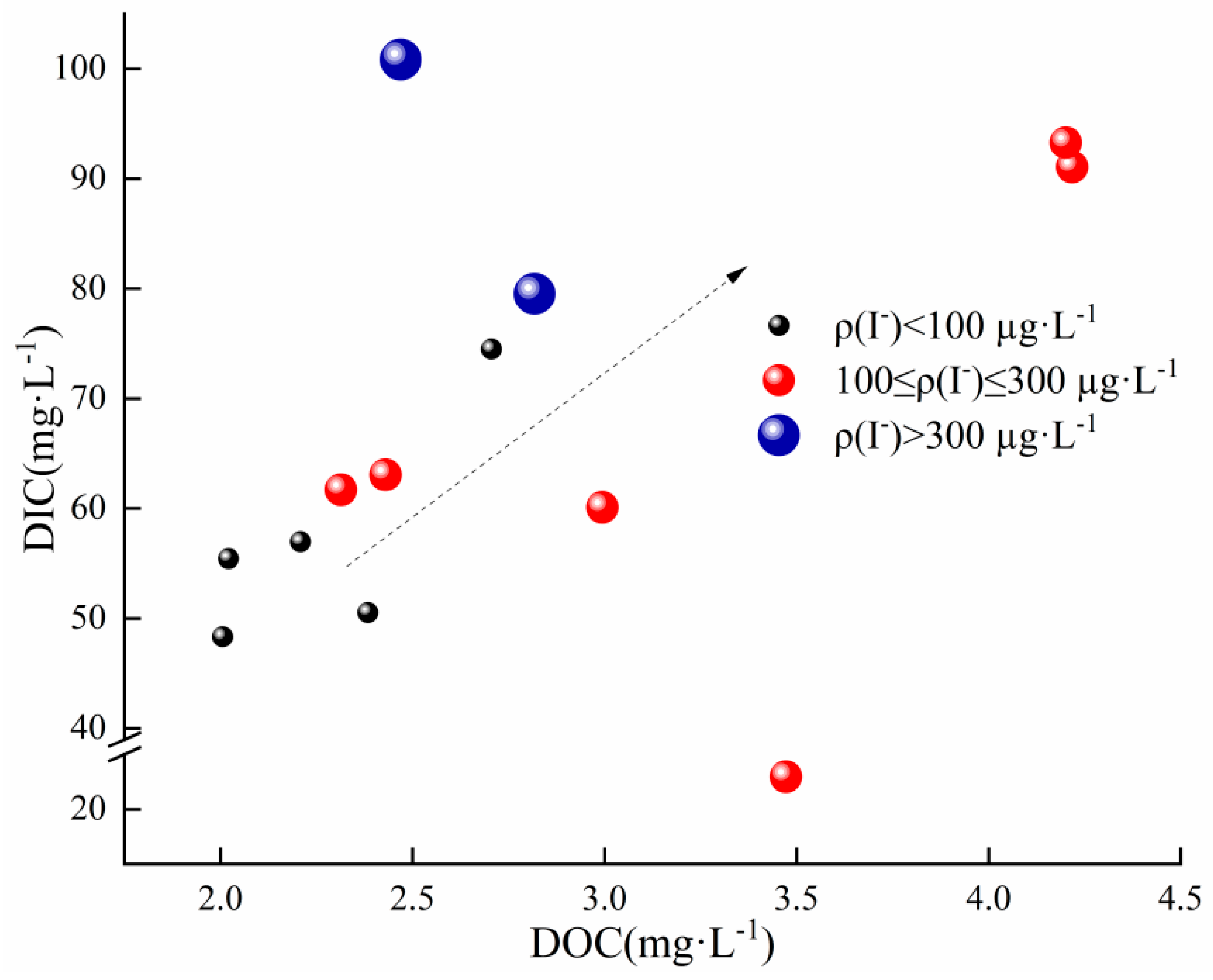
Figure 3 plots the DIC–DOC relations of the different classes of groundwater in the study area. The DIC concentration ranged from 22.97 to 100.85 mg/L, averaging 66.04 mg/L. DIC in the water bodies primarily exists in three forms, HCO3, H2CO3 and CO32−, with the specific form depending on the water pH. Within the pH range of the evaluated groundwater (7.79 to 9.34), the dominant DIC form was HCO3. Meanwhile, the DOC concentration ranged from 2.01 to 4.22 mg/L, averaging 2.79 mg/L. Thurman identified an average DOC concentration of approximately 5 mg/L in natural water bodies [42]. However, discharge of domestic sewage and industrial wastewater can substantially raise this value. In the groundwater of the present study area, the DOC concentration ranged from 2.01 to 4.22 mg/L, indicating an absence of anthropogenic pollution. The DIC and DOC concentration ranges were 48.34 to 74.50 mg/L (average 57.16 mg/L) and 2.01 to 2.70 mg/L (average 2.26 mg/L), respectively, in low-iodine groundwater and 22.97 to 100.85 mg/L (average 71.58 mg/L) and 2.31 to 4.22 mg/L (average 3.11 mg/L) in high-iodine groundwater. Both the average DIC and DOC concentrations were lower in low-iodine groundwater than in high-iodine groundwater.

3.3. Characteristics of Stable C Isotopes in Groundwater

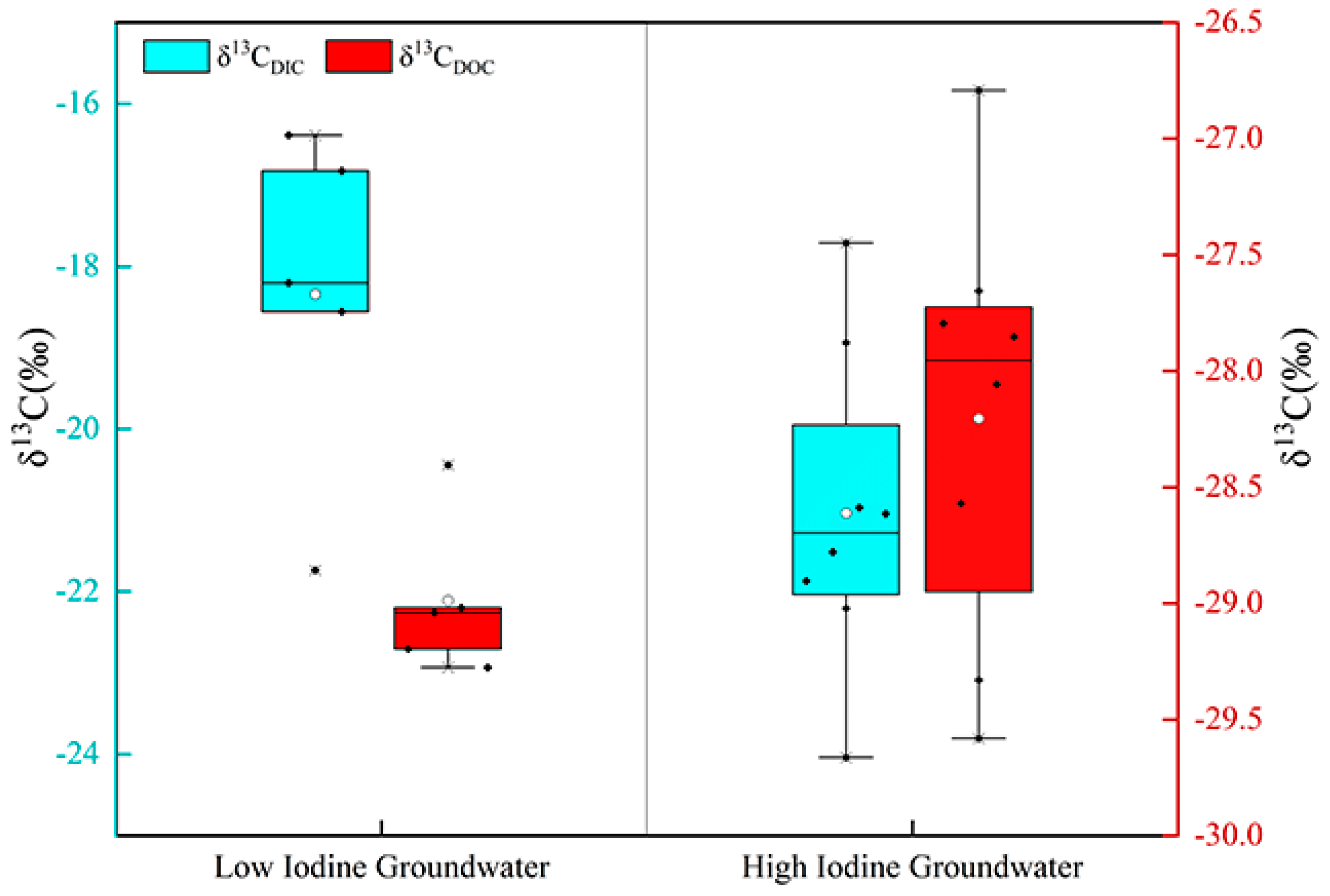
Figure 4 compares the δ13CDIC and δ13CDOC values in the low-iodine and high-iodine groundwaters of the study area. Overall, the δ13CDIC values ranged from −24.04‰ to −16.39‰, averaging −20.00‰. In the low-iodine groundwater, δ13CDIC ranged from −21.74‰ to −16.39‰ with an average of −18.34‰, but in the high-iodine groundwater, the range expanded from −24.04‰ to −17.71‰ with an average of −21.04‰. The δ13CDIC was considerably more depleted in the high-iodine groundwater than in the low-iodine groundwater. Meanwhile, the δ13CDOC values of the groundwater ranged from −29.58‰ to −26.79‰, averaging −28.51‰. The δ13CDOC ranged from −29.28‰ to −28.41‰ (average −28.99‰) in the low-iodine groundwater and from −29.58‰ to −26.79‰ (average −28.20‰) in the high-iodine groundwater. The δ13CDOC values were higher and wider-ranging in the high-iodine groundwater than in the low-iodine groundwater.

4. Discussion

4.1. Source Analysis of DIC and DOC in Groundwater Samples

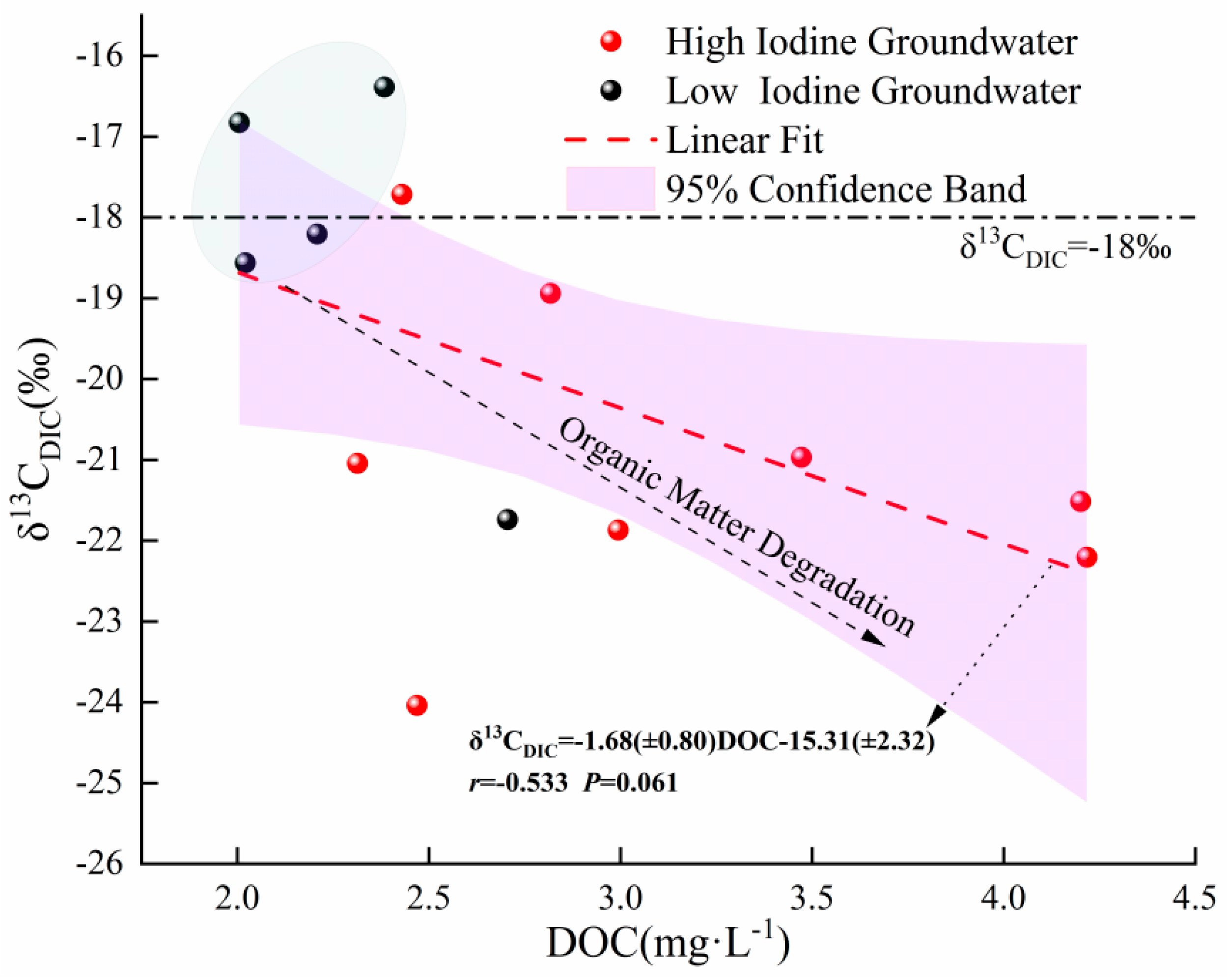
Groundwater DIC is mainly derived from atmospheric CO2, metabolic decomposition of organic matter, and the weathering dissolution of carbonate and silicate minerals in the aquifer [43,44,45]. Different DIC sources exhibit distinct characteristic ranges of carbon isotopes [46]. For instance, waters with multiple potential sources of HCO3 are characterised by [HCO3]/[Ca2+ + Mg2+] ratios below 2.0 [47]. Approximately 77% of the groundwater samples in the present study area satisfied this condition, indicating multi-source contributions to the groundwater DIC. Meanwhile, the burial depth of the groundwater was 90–200 m, indicating that the groundwater was confined and little affected by CO2 in the air. DIC originating from carbonate rock dissolution typically raises the δ13C value (to δ13CDIC = −11‰) [48,49]. Smaller δ13CDIC values (<−11‰) indicate substantial influences of other processes. In groundwater influenced by weathering of silicate minerals, the typical HCO3 carbon isotope value is δ13CDIC = −17‰ [50,51]. The δ13CDIC values of the low-iodine, high-iodine and ultra-high-iodine groundwater samples (−17.71‰, −16.83‰ and −16.39‰, respectively) were within the range of δ13CDIC values attributable to silicate mineral weathering. Comparing these results with those of previous studies on the influence of hydrogeochemical processes on iodine enrichment in the lower reaches of the Kuitun River [21], rock weathering in the study area is dominated by silicate weathering and dissolution, which partially source the DIC in the groundwater. When microbes preferentially degrade the lighter 12C organic matter in an aquifer, the products are enriched in lighter 12C components and the 13C is fractionated while the reactants are enriched in larger 13C components [52]. Consequently, the microbial degradation of organic matter tends to reduce the δ13CDIC values from those of weathering dissolution of silicate minerals and carbonate rocks. Depleted δ13C-DIC values after biological organic matter degradation have been reported in previous studies [53]. The δ13C values of DIC released by microbial decomposition of organic matter range from −25‰ to −18‰ [54]. Given the potential co-existence of multiple DIC sources in the aquifer system (carbonate weathering, silicate weathering, and microbial organic matter degradation), a quantitative mixing model would ideally be used to calculate their respective contributions. However, precise endmember δ13C-DIC values are site-specific and require extensive local data. With the current sample set (n = 13) and without locally determined endmember values, a full three-endmember calculation would introduce large uncertainties. Instead, we qualitatively assess the dominant sources. The δ13C-DIC values of the groundwater (most depleted down to −24.04‰) are largely within or more depleted than the range expected from silicate weathering alone (≈−17‰), suggesting an additional input from microbial organic matter decomposition. Carbonate dissolution typically produces δ13C-DIC between −11‰ and −5‰, which is less depleted than most of our samples (excluding the ultra-high-iodine groups), implying a subordinate role in the confined reducing environment. These qualitative assignments are consistent with other hydrogeochemical evidence (high DOC, Fe–I correlation, negative Eh). Future work with a larger dataset and site-specific endmember values should apply a quantitative mixing model.
DOC sourced from different carbon sources exhibit characteristic δ13C behaviours. For instance, the δ13C values in soil humus are related to regional vegetation types. The δ13CDOC values of C3 plants (such as trees, wheat and cotton) range between −35‰ and −20‰, whereas those of C4 plants (such as maize, sorghum and sugarcane) range from −19‰ to −8‰ [55]. The δ13CDOC values of crassulacean acid metabolism (CAM) plants fall within the 22 to 10 range [56]. The isotopic composition of CAM plants typically falls between those of C3 and C4 plants. In the groundwater of the present study, as shown in Figure 5, the δ13CDOC values were distributed within those of C3 plants and those of C4 and CAM plants. The Kuitun region experienced many geological activities during the Quaternary, including a vertical uplift process that varied the surface vegetation and has occupied the centre of the depositional zones during various stages, forming a deep sedimentary layer dominated mainly by mud, clayey soil and humus [57,58]. Meanwhile, the surface vegetation in the study area was mainly covered by cotton and trees. The deep sedimentary layer and aquifer conditions formed during the long period of geological movement and surface evolution; consequently, the groundwater DOC was mainly derived from C3 plants.

4.2. Stable Carbon Isotope Characteristics Favouring Iodine Enrichment

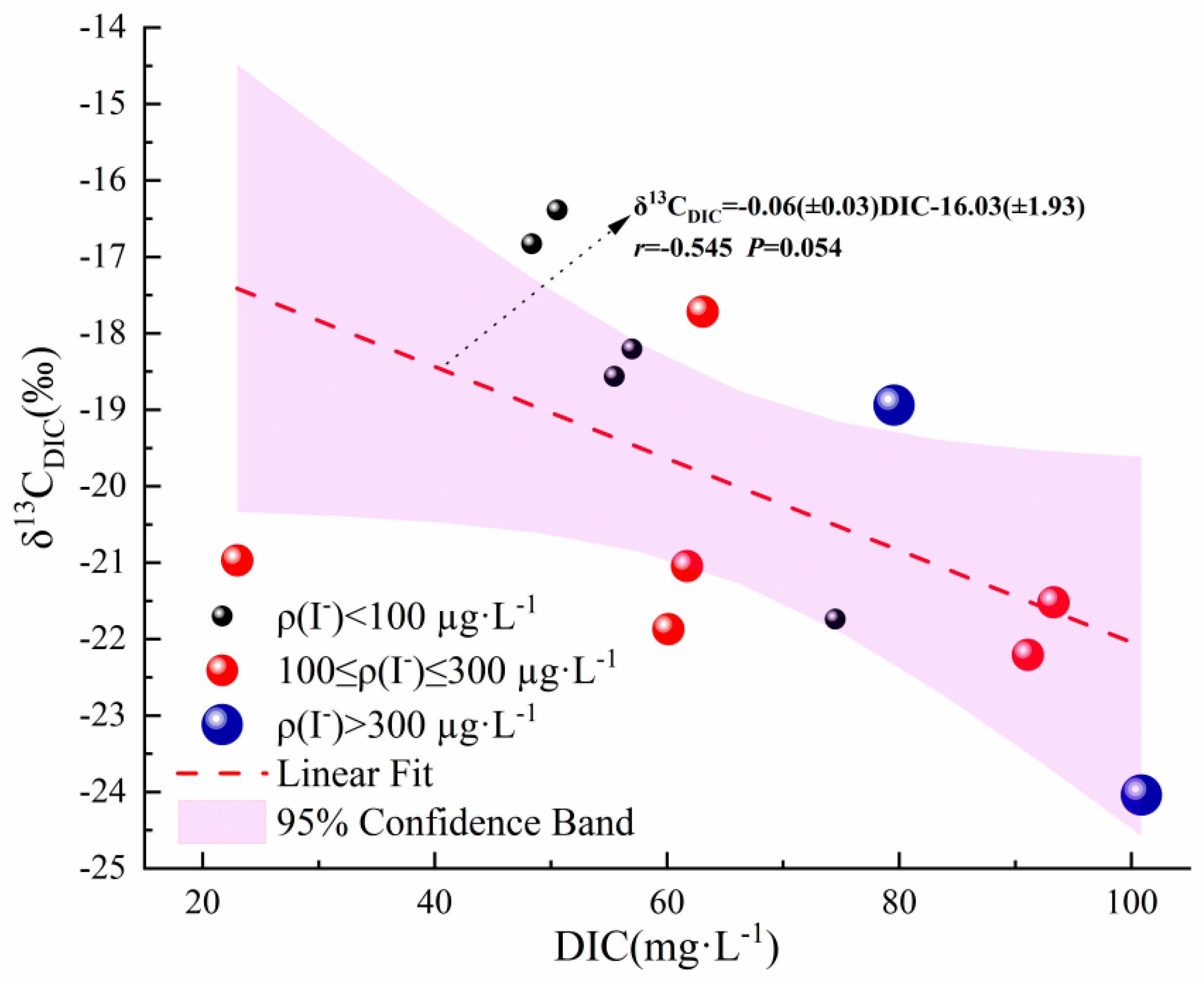
Figure 6 plots the relation between δ13CDIC and DIC in the groundwater of the present study. The δ13C~DIC~ values showed a negative correlation with DIC (r = −0.545, p = 0.054). However, this correlation did not reach statistical significance at the 0.05 level (p = 0.054) and should therefore be interpreted as a suggestive trend rather than definitive evidence. In reducing groundwater environments, a more depleted δ13C~DIC~ value is often interpreted as evidence of enhanced microbial degradation of organic matter, because microorganisms preferentially utilise the lighter 12C isotope, thereby producing DIC with lower δ13C values and increasing the DIC concentration. However, other processes such as abiotic oxidation of organic matter could also produce more negative δ13C~DIC~ values under certain conditions. Given the overall reducing conditions, high DOC content, and the significant negative correlation between δ13C~DIC~ and I concentration observed in this study, microbial degradation is considered the dominant process controlling δ13C~DIC~ in the study area. The DIC in the groundwater was dominated by HCO3, indicating that microbially degraded organic matter is an important source of HCO3 in the groundwater DIC.
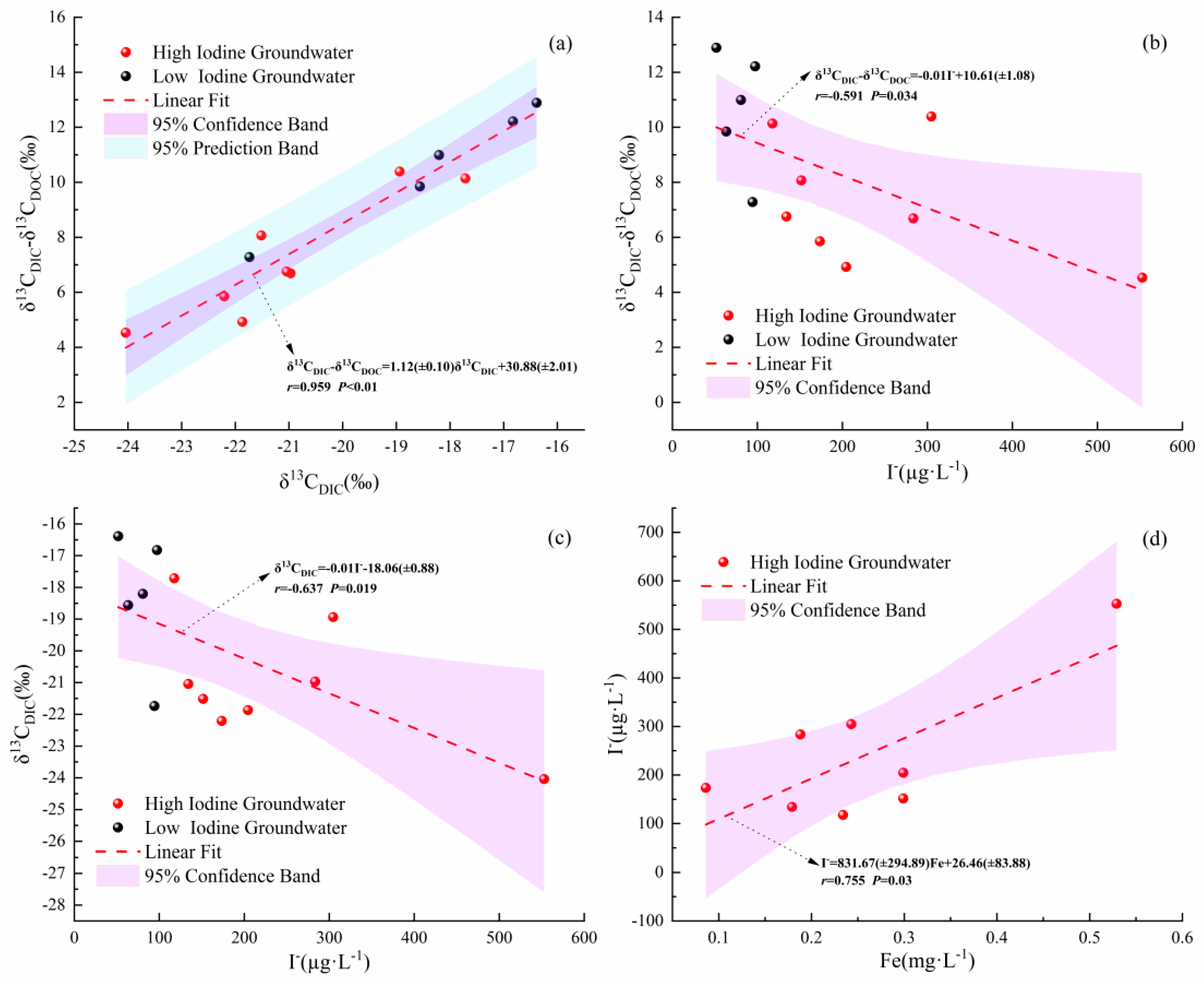
The difference between δ13CDIC and δ13CDOC in the groundwater of the study area was highly significantly positively correlated with δ13CDIC (r = 0.959, p < 0.01; see Figure 7a), suggesting that the δ13CDIC in groundwater reduces with increasing contribution of organic matter degradation to DIC and increasing DIC production. Oxidative decomposition of DOC plays a role in this process. When the δ13CDIC − δ13CDOC value is large, the DIC in the groundwater is mainly sourced from dissolution of carbonate rocks and silicate; on the contrary, a small δ13CDIC − δ13CDOC indicates that inorganic carbon is mainly produced by oxidative decomposition of organic matter and that microbial action is strengthened. The difference δ13CDIC − δ13CDOC in the groundwater was significantly negatively correlated with I concentration (r = −0.591, p = 0.034; Figure 7b), indicating that as the DIC produced by microbial degradation of organic matter increases, the δ13CDIC reduces while the I concentration increases. Meanwhile, the δ13CDIC value in the groundwater was significantly negatively correlated with I concentration (r = −0.637, p = 0.019; Figure 7c), and the high-iodine groundwater was mainly distributed at the lower side of Figure 7c. As the δ13CDIC values became more depleted overall, the microbial activity strengthened and the I concentration increased, suggesting that microbial degradation of organic matter enriches the iodide content in groundwater. Numerous studies have shown that organic matter and iron oxide minerals are the main iodine carriers in sediments [59,60]. In the study area, the groundwater exists in a reduced state and anaerobic microorganisms utilise the organic matter in sediments as a carbon source. During the decomposition process, the iodine adsorbed on the surface of organic matter is released into the aquifer, increasing the iodine concentration in the groundwater. Simultaneously, microbial action continuously suppresses the δ13CDIC of the groundwater (Figure 7c). Reductive dissolution of iron oxide minerals is another important cause of high-iodine groundwater. Using Fe(III) oxides/hydroxides as electron acceptors, microorganisms can reduce Fe(III) to Fe(II) while oxidising aquifer organic matter, leading to migration of the iodine adsorbed on the surfaces of minerals such as iron oxides and release of that iodine into groundwater [61]. The I concentration showed a positive correlation with Fe content in the high-iodine groundwater (Spearman’s ρ = 0.755, n = 8, p = 0.03; Figure 7d). However, because this correlation is based on only eight samples, it should be interpreted cautiously, as a single outlier could potentially affect the result. The consistently negative Eh values (Table 1) and high DOC content indicate overall reducing conditions, which are favourable for the reductive dissolution of iron oxide minerals. However, Fe(II) was not measured in this study. Therefore, the positive I–Fe correlation is consistent with but does not prove the reductive dissolution of Fe oxides as the mechanism for iodine release. Direct confirmation would require future Fe speciation and microbial analyses.
In addition to stable carbon isotopes, optical characterisation of dissolved organic matter (DOM) has been conducted in the same study area by Wang et al. using three-dimensional fluorescence spectroscopy combined with parallel factor analysis (PARAFAC) [62]. Their results showed that groundwater DOM is dominated by a humic-like component (microbial reduced quinones, C3, 54.12%), followed by tryptophan-like (C2, 18.74%) and a terrestrial humic-like component (C1, 2.78%). The fluorescence index (FI) ranged from 1.2 to 1.52 (mean 1.36), indicating a predominantly terrestrial source of DOM, which is consistent with the δ13C-DOC values (−29.58‰ to −26.79‰) and further supports that the organic matter in the aquifer is mainly derived from C3 plants. Moreover, the presence of the tryptophan-like component (C2) suggests that the DOM is bioavailable and can serve as an electron donor for microbial respiration, which is essential for the reductive dissolution of Fe oxides and the subsequent release of iodine into groundwater.

4.3. Formation Mechanism of Groundwater with High Iodine Content

Poor-quality groundwater is a natural culmination of water–rock interactions during natural cycles. High-iodine groundwater is poor-quality groundwater arising from complex hydrological and biogeochemical processes during long periods [23]. The genesis mode of this type—burial–dissolution, evaporation–concentration, compaction–release, or leaching–enrichment—depends on the environment and hydrogeological conditions [29]. Iodine transport and enrichment are controlled by biotic and abiotic hydrogeochemical processes. Iodine concentrations in the groundwater of Denmark, mainly contributed by brackish water, can reach 500 µg/L [63]. The iodine concentrations in the groundwater of Chile are as high as 6096 µg/L owing to nitrate-rich sedimentary formations [64]. Groundwater in the coastal regions of Japan contains exceptionally high concentrations of iodine (up to 34,000 µg/L), linked to iodine-rich brines formed by local geological activity [22]. Elevated groundwater iodine concentrations in countries such as Denmark, Chile and Japan are associated with the hydrogeological conditions of the aquifers. Microbial activity is an important contributor of iodine enrichment in groundwater [65]. In reducing groundwater environments, iron-reducing bacteria utilise lactic acid as an electron-accepting substance during oxidation and the Fe-mineral phase in aquifer sediments as a reduction receptor. The release of adsorbed iodine as I ions into the groundwater is the main formation mechanism of high-iodine groundwater in the Datong Basin, China. In the present study area, the deep confined setting (90–200 m) and the absence of extremely high TDS (>10,000 mg/L) in most samples argue against evaporation–concentration, which typically occur in shallow, arid-region aquifers and produce Cl dominant brine. Compaction–release of pore water from clay layers may occur in overpressured basins, but the maximum I concentration in Kuitun is only 553 µg/L (well below the >1000 µg/L often associated with this process), and no overpressure features have been documented. Leaching–enrichment would require dissolution of evaporite minerals, but the aquifer lithology (dominated by mud, clay, and fine sand) contains no reported evaporite layers, and no high Cl/Br ratios were observed. Instead, the consistent negative δ13C-DIC values (down to −24.04‰) and the positive I–Fe correlation (Spearman’s ρ = 0.755, p = 0.03) point strongly to microbially mediated processes. These features are fully consistent with the burial–dissolution genesis model [23], which is characterised by thick, fine-grained, organic-rich sedimentary sequences, reducing conditions that promote microbial activity, and the reductive dissolution of iron minerals releasing adsorbed iodine into groundwater. In this study, the groundwater is reduced and the iodine adsorbed on the surfaces of organic matter and iron oxides is released and migrates into the groundwater, forming high-iodine groundwater with the participation of microorganisms. This mechanism is consistent with the genesis model of poor-quality groundwater, i.e., the burial–dissolution type [23]. Specifically, microbial activity and reductive dissolution of iron minerals primarily drive the migration and release of solid-phase iodine into groundwater. The high-iodine groundwater in the study area has long been situated in a stable reducing environment. High-iodine groundwater is concentrated within the deep layer of confined water at burial depths of 110–200 m. Strong microbial activities increase both the I and Fe concentrations. The microbial decomposition of organic matter and the reductive dissolution of iron minerals are the main hydrobiogeochemical processes leading to the release of solid-phase iodine in the aquifer and its migration into the groundwater of the Kuitun River Basin. Under the hydrogeological conditions of the study area (Figure 2), the deep sedimentary layers dominated by muddy and clayey materials are rich in organic matter, implying that burial–dissolution is the genesis mode of high-iodine groundwater in the study area. The burial–dissolution model developed here may be applicable to other arid inland basins with thick, fine-grained, organic-rich Quaternary sequences (e.g., Tarim Basin, Junggar Basin), though local hydrogeochemical conditions should be evaluated.

4.4. Comparative Analysis of the Stable Carbon Isotope Signature and I Concentration in Groundwater Samples from Different Regions

The δ13C values differ in different carbon sources, leading to changes in groundwater DIC and its δ13C value. Therefore, by investigating the δ13C change rule of groundwater DIC, we can analyse the main sources of groundwater DIC and reveal the chemical evolution law of the groundwater. Table 2 lists the δ13C values and I concentrations of the groundwater DIC in different regions. Sracek and Hirata [66] studied the hydrochemical evolution of groundwater in the Guarani aquifer in the State of São Paulo, Brazil. Utilising the δ13CDIC values along with the concentrations of the major ions, hydrogen isotopes and oxygen isotopes in the groundwater, they inferred that calcite dissolution and cation exchange occur in the groundwater under closed-system conditions. Rueedi et al. [67] derived the relation between pH and the DIC and δ13CDIC values from groundwater carbon-isotope signatures, depth to groundwater, partial pressure of CO2, pH and the concentrations of relevant ionic fractions. They determined that the groundwater DICs in three cities of the United Kingdom are mainly sourced from soil CO2, dolomite dissolution and human effluent. They also identified the evolutionary pathways of DIC: calcite-dissolution evolution and gypsum-dissolution evolution under closed-system conditions as well as evolution of calcite-isotope dissolution. Moeller et al. [68] analysed the variability of groundwater δ13CDIC values in the northern German Basin. They showed that limestone dissolution in open and closed systems, primarily manifesting as calcite and dolomite dissolution, controls the chemical evolution of groundwater at the study site. Using stable carbon isotopes, Porowska [50] determined the sources of DIC in groundwater around the Otwock landfill site in Poland. They reported that the concentration and isotopic composition of the groundwater DIC mainly originate from organic matter decomposition in the aquifer sediments and the dissolution of carbonates under natural conditions. In contrast, groundwater contamination by leachate depends on the degradation of organic matter in aquifer sediments and the biodegradation of organic matter stored in landfill sites. Zhu et al. [69] reported that DIC arises from dissolution of carbonate rocks in the groundwater of Datong Basin, whereas microbial activity considerably influences the DIC sources in the runoff and excretion zones. Zhou [27] found that the DICs in the piedmont and transition zone are mainly influenced by carbonate rock leaching and atmospheric-precipitation recharge, with minor contributions from microbial activity in certain transition-zone groundwaters, however, the influence of microbial activity on groundwater DIC increases in the plain area. Li et al. [14] found that chemical weathering of aluminosilicate minerals dominantly affects the δ13CDIC values of groundwater in the North China Plain aquifer. Yuan et al. [70] reported that microbial oxidation of organic matter and dissolution of carbonate rocks primarily source the groundwater DIC on the Jianghan Plain. For a more quantitative comparison, the [HCO3]/[Ca2+ + Mg2+] equivalent ratio in our study area averages 0.12, which is substantially lower than values reported for carbonate-dominated aquifers (typically >0.8) and also lower than those of the Datong Basin (0.5–0.8) and the North China Plain (0.4–0.7). This confirms that carbonate dissolution plays a subordinate role in the confined, reducing aquifer of the Kuitun region, consistent with the depleted δ13C-DIC values. The δ13CDIC values of groundwater in their study area ranged from −24.04‰ to −16.39‰. The DIC was mainly influenced by microbial degradation of organic matter and partial weathering dissolution of silicate minerals. The overall groundwater δ13CDIC values are smaller than in other areas (Table 2), suggesting that other areas are more enriched in 13C. The groundwaters in different regions receive DIC from different sources and exhibit different characteristic ranges of their δ13CDIC values. The combined effects of various reactions in a groundwater system critically affect the DIC composition and δ13C values of the system.
On the Hetao Plain, the range of groundwater δ13CDOC values is similar to that in the present study (−22.9‰ to −19.20‰ vs. −29.58‰ to −26.79‰) but the average δ13CDOC is higher. The factors influencing the δ13CDOC depend on the types of endogenous and exogenous organic matters in the aquifer. The δ13CDOC values vary widely on the Jianghan Plain (−28.5‰ to −19.60‰). The Hetao Plain, Jianghan Plain and Kuitun River Basin in Xinjiang are located on the alluvial plain of the northern Yellow River, the middle reaches of the Yangtze River and the northwest arid inland basin, respectively. The soil organic carbon, vegetation types and groundwater organic matter vary across different regions. Soil organic carbon is an exogenous carbon source that can enter shallow or deep groundwater during rainfall or irrigation infiltration, thereby changing the groundwater DOC and δ13CDOC values. For instance, the groundwater in the Hetao and Jianghan plains is buried at a shallow depth (15 m). Prolonged geological activity can bury surface vegetation within the aquifer, changing the DOC and δ13CDOC by amounts that depend on vegetation type. Owing to differences in external organic matter (soil organic carbon) and endogenous organic matter, the δ13CDOC values in groundwater will vary across different regions. High-iodine groundwater in the present study area was mainly distributed below a burial depth of 90 m, representing deep confined aquifers rather than the shallow groundwater distribution in the Datong Basin, Hetao Plain and Jianghan Plain. In reducing groundwater environments where microbial activity on organic matter is strong, the microbes preferentially utilise 12C, lowering the δ13CDIC value in the resulting degradation-product DIC. Overall, the groundwater δ13CDIC values were smaller in the study area than in the other four high-iodine groundwater distribution zones in China. It was hypothesised that strong microbial activity occurs in the downstream area of the Kuitun River in Xinjiang.

5. Conclusions

Using stable carbon isotope technology, this study investigated the influence of organic matter degradation on iodine enrichment under the action of microorganisms. The formation mechanism of high-iodine groundwater in this region was also explored. The following conclusions were drawn from the study.
  • The I concentration in the groundwater of the study area ranged from 51.66 to 552.79 µg/L (average 177.68 µg/L) and the percentages of low-iodine water, high-iodine water and ultra-high-iodine water were 38.46%, 46.15% and 15.39%, respectively. The groundwater was reductive and weakly alkaline, and the dominant anion and cation were Cl and Na+, respectively. The groundwater was dominated by brackish water (46.15%) and the main hydrochemical type was sulphate. According to the ‘Groundwater Quality Standards of China’, the groundwater was mainly classified as Class IV; Class I and Class II groundwater were absent.
  • The groundwater DIC and DOC concentrations in the study area ranged from 22.97 to 100.85 mg/L and from 2.01 to 4.22 mg/L, respectively, the δ13CDIC values ranged from −24.04‰ to −16.39‰ and the δ13CDOC values ranged from −29.58‰ to −26.79‰. The ranges and means of the δ13CDIC values were significantly more depleted in high-iodine groundwater than in low-iodine groundwater. Groundwater DIC was primarily affected by microbial degradation of organic matter and by weathering and dissolution of silicate minerals, with HCO3 being the dominant anion. The DOC was mainly derived from C3 plants.
  • In reducing aquifer environments with abundant organic matter, the primary hydrobiogeochemical processes leading to the release of solid-phase iodine in the aquifer and its migration into the groundwater were identified as microbial involvement in the decomposition of organic matter and the reductive dissolution of iron minerals. A burial–dissolution genesis model explains the high-iodine groundwater.
This study is based on 13 groundwater samples collected from deep confined aquifers in the study area. While the sample size is modest, these 13 wells represent all accessible deep confined wells in the downstream Kuitun River region, covering the entire spatial extent of the high-iodine groundwater zone. Despite the limited number, statistically significant correlations (e.g., between δ13C-DIC and I, r = −0.637, p = 0.019) were observed, indicating that the dataset captures underlying hydrobiogeochemical processes. Nevertheless, a larger dataset would improve spatial representativeness and allow more robust statistical analysis. Future work should expand the sampling network across the entire basin and include seasonal monitoring. Additionally, iodine speciation (e.g., IO3, organo-I) and total iodine were not determined in this study, because our analytical method (iodide–starch spectrophotometry) only measures I. Therefore, we cannot distinguish between redox transformation of iodine species versus simple desorption/mobilisation, nor can we confirm whether I represents the dominant aqueous iodine species. Future work should include complete iodine speciation analysis (e.g., IC-ICP-MS) to better constrain the mobilisation mechanisms. Furthermore, the potential impacts of agricultural return flow and groundwater pumping were not assessed in this study. Future investigations should evaluate these anthropogenic factors to better understand their roles in iodine mobilisation.
The findings suggest that, in similar arid inland basins, high-iodine groundwater is likely to occur in deep confined aquifers with reducing conditions and high DOC. Monitoring strategies should therefore target redox interfaces and organic-rich layers. For drinking water supply, wells should ideally be screened in shallower, more oxidising aquifers where iodine concentrations are lower. Where high-iodine water must be used, treatment options such as anion exchange or iodide-specific adsorbents may be considered.

Author Contributions

Conceptualisation, B.C. and Y.L.; methodology, B.C. and L.D.; software, B.C. and J.H.; validation, B.C.; formal analysis, B.C., J.H. and L.D.; investigation, B.C., Y.L. and L.D.; resources, Y.L.; data curation, B.C. and L.D.; writing—original draft preparation, B.C. and J.H.; writing—review and editing, B.C., J.H., Y.L., L.D., Q.Z., X.X., X.L., E.Y., R.S. and J.B.; visualisation, B.C. and J.H.; supervision, Y.L.; project administration, Y.L.; funding acquisition, Y.L. All authors have read and agreed to the published version of the manuscript.

Funding

This research was funded by the National Natural Science Foundation of China, grant number 41761097.

Data Availability Statement

The original contributions presented in this study are included in the article. Further inquiries can be directed to the corresponding author.

Acknowledgments

We would like to acknowledge the editor and the anonymous reviewers for their constructive comments and suggestions.

Conflicts of Interest

Author Bo Chao was employed by China Energy Engineering Group Xinjiang Electric Power Design Institute Co., Ltd. The remaining authors declare that the research was conducted in the absence of any commercial or financial relationships that could be construed as a potential conflict of interest.

References

  1. Sun, D.; Codling, K.; Chang, S.; Zhang, S.; Shen, H.; Su, X.; Chen, Z.; Scherpbier, R.; Yan, J. Eliminating Iodine Deficiency in China: Achievements. Chall. Glob. Implic. Nutr. 2017, 9, 361. [Google Scholar] [CrossRef]
  2. Guo, H.; Zhang, Z.; Cheng, G.; Li, W.; Li, T.; Jiao, J.J. Groundwater-Derived Land Subsidence in the North China Plain. Environ. Earth Sci. 2015, 74, 1415–1427. [Google Scholar] [CrossRef]
  3. Kassim, I.A.; Moloney, G.; Busili, A.; Nur, A.Y.; Paron, P.; Jooste, P.; Gadain, H.; Seal, A.J. Iodine Intake in Somalia Is Excessive and Associated with the Source of Household Drinking Water. J. Nutr. 2014, 144, 375–381. [Google Scholar] [CrossRef] [PubMed]
  4. Voutchkova, D.D.; Ernstsen, V.; Hansen, B.; Sørensen, B.L.; Zhang, C.; Kristiansen, S.M. Assessment of Spatial Variation in Drinking Water Iodine and Its Implications for Dietary Intake: A New Conceptual Model for Denmark. Sci. Total Environ. 2014, 493, 432–444. [Google Scholar] [CrossRef]
  5. Álvarez, F.; Reich, M.; Snyder, G.; Pérez-Fodich, A.; Muramatsu, Y.; Daniele, L.; Fehn, U. Iodine Budget in Surface Waters from Atacama: Natural and Anthropogenic Iodine Sources Revealed by Halogen Geochemistry and Iodine-129 Isotopes. Appl. Geochem. 2016, 68, 53–63. [Google Scholar] [CrossRef]
  6. Li, J.; Wang, Y.; Guo, W.; Xie, X.; Zhang, L.; Liu, Y.; Kong, S. Iodine Mobilization in Groundwater System at Datong Basin, China: Evidence from Hydrochemistry and Fluorescence Characteristics. Sci. Total Environ. 2014, 468, 738–745. [Google Scholar] [CrossRef]
  7. Pearce, E.N.; Andersson, M.; Zimmermann, M.B. Global Iodine Nutrition: Where Do We Stand in 2013? Thyroid 2013, 23, 523–528. [Google Scholar] [CrossRef]
  8. Togo, Y.S.; Takahashi, Y.; Amano, Y.; Matsuzaki, H.; Suzuki, Y.; Terada, Y.; Muramatsu, Y.; Ito, K.; Iwatsuki, T. Age and Speciation of Iodine in Groundwater and Mudstones of the Horonobe Area, Hokkaido, Japan: Implications for the Origin and Migration of Iodine during Basin Evolution. Geochim. Cosmochim. Acta 2016, 191, 165–186. [Google Scholar] [CrossRef]
  9. Voutchkova, D.D.; Kristiansen, S.M.; Hansen, B.; Ernstsen, V.; Sørensen, B.L.; Esbensen, K.H. Iodine Concentrations in Danish Groundwater: Historical Data Assessment 1933–2011. Environ. Geochem. Health 2014, 36, 1151–1164. [Google Scholar] [CrossRef]
  10. Voutchkova, D.D.; Ernstsen, V.; Kristiansen, S.M.; Hansen, B. Iodine in Major Danish Aquifers. Environ. Earth Sci. 2017, 76, 447. [Google Scholar] [CrossRef]
  11. Ma, R.; Yan, M.; Han, P.; Wang, T.; Li, B.; Zhou, S.; Zheng, T.; Hu, T.; Borthwick, A.G.; Zheng, C.; et al. Deficiency and Excess of Groundwater Iodine and Their Health Associations. Nat. Commun. 2022, 13, 7354. [Google Scholar] [CrossRef]
  12. Wang, Y.; Li, J.; Xie, X. Genesis and Occurrence of High Iodine Groundwater. Earth Sci. Front. 2022, 29, 1–10. [Google Scholar] [CrossRef]
  13. Alvarez, F.; Reich, M.; Pérez-Fodich, A.; Snyder, G.; Muramatsu, Y.; Vargas, G.; Fehn, U. Sources, Sinks and Long-Term Cycling of Iodine in the Hyperarid Atacama Continental Margin. Geochim. Cosmochim. Acta 2015, 161, 50–70. [Google Scholar] [CrossRef]
  14. Li, Z.; Cao, W.; Ren, Y.; Pan, D.; Wang, S.; Zhi, C. Enrichment Mechanisms for the Co-Occurrence of Arsenic-Fluoride-Iodine in the Groundwater in Different Sedimentary Environments of the Hetao Basin, China. Sci. Total Environ. 2022, 839, 156184. [Google Scholar] [CrossRef]
  15. Sun, Y.; Zhou, J.; Liang, X.; Zhou, Y.; Zeng, Y.; Lin, L. Distribution and Genesis of Shallow High-Iodine Groundwater in Southern Margin of Tarim Basin: A Case Study of Plain Area in Minfeng County, Xinjiang. Earth Sci. 2021, 46, 2999–3011. [Google Scholar] [CrossRef]
  16. Tang, Q.; Xu, Q.; Zhang, F.; Huang, Y.; Liu, J.; Wang, X.; Yang, Y.; Liu, X. Geochemistry of Iodine-Rich Groundwater in the Taiyuan Basin of Central Shanxi Province, North China. J. Geochem. Explor. 2013, 135, 117–123. [Google Scholar] [CrossRef]
  17. Xue, J.; Deng, Y.; Luo, Y.; Du, Y.; Yang, Y.; Cheng, Y.; Xie, X.; Gan, Y.; Wang, Y. Unraveling the Impact of Iron Oxides-Organic Matter Complexes on Iodine Mobilization in Alluvial-Lacustrine Aquifers from Central Yangtze River Basin. Sci. Total Environ. 2022, 814, 151930. [Google Scholar] [CrossRef] [PubMed]
  18. Zhang, E.; Wang, Y.; Qian, Y.; Ma, T.; Zhang, D.; Zhan, H.; Zhang, Z.; Fei, Y.; Wang, S. Iodine in Groundwater of the North China Plain: Spatial Patterns and Hydrogeochemical Processes of Enrichment. J. Geochem. Explor. 2013, 135, 40–53. [Google Scholar] [CrossRef]
  19. Li, J.; Qian, K.; Yang, Y.; Xie, X. Iodine Speciation and Its Potential Influence on Iodine Enrichment in Groundwater from North China Plain. Procedia Earth Planet. Sci. 2017, 17, 312–315. [Google Scholar] [CrossRef]
  20. Li, J.; Wang, Y.; Xie, X.; DePaolo, D.J. Effects of Water-Sediment Interaction and Irrigation Practices on Iodine Enrichment in Shallow Groundwater. J. Hydrol. 2016, 543, 293–304. [Google Scholar] [CrossRef]
  21. Chao, B.; Luo, Y.; Dong, L.; Zheng, Y.; Song, Z.; Wang, M.; Liu, C. Characterizing the Spatial Distribution of Iodine and Analyzing Its Influential Factors in a Typical Groundwater Area with High Arsenic Content in Xinjiang. Acta Sci. Circumstantiae 2024, 44, 156–167. [Google Scholar] [CrossRef]
  22. Ye, M.; Zhang, W.; Zhao, S.; Zhang, J.; Li, Y.; Pan, H.; Jiang, Z.; Li, J.; Xie, X. Coupled Transformation Pathways of Iron Minerals and Natural Organic Matter Related to Iodine Mobilization in Alluvial-Lacustrine Aquifer. J. Hazard. Mater. 2024, 480, 135944. [Google Scholar] [CrossRef]
  23. Wang, Y.; Li, J.; Ma, T.; Xie, X.; Deng, Y.; Gan, Y. Genesis of Geogenic Contaminated Groundwater: As, F and I. Crit. Rev. Environ. Sci. Technol. 2021, 51, 2895–2933. [Google Scholar] [CrossRef]
  24. Yu, K.; Gan, Y.; Zhou, A.; Han, L.; Liu, Y. A Persulfate Oxidation Method for Stable Isotope Analysis of Dissolved Organic Carbon and the Influence of Inorganic Ions on the Results. Int. J. Mass Spectrom. 2015, 392, 63–68. [Google Scholar] [CrossRef]
  25. Yu, K.; Gan, Y.; Zhou, A.; Liu, C.; Duan, Y.; Han, L.; Zhang, Y. Organic Carbon Sources and Controlling Processes on Aquifer Arsenic Cycling in the Jianghan Plain, Central China. Chemosphere 2018, 208, 773–781. [Google Scholar] [CrossRef]
  26. Xie, X.; Wang, Y.; Ellis, A.; Li, J.; Su, C.; Duan, M. Multiple Isotope (O, S and C) Approach Elucidates the Enrichment of Arsenic in the Groundwater from the Datong Basin, Northern China. J. Hydrol. 2013, 498, 103–112. [Google Scholar] [CrossRef]
  27. Zhou, Y.; Guo, H.; Zhang, Z.; Lu, H.; Jia, Y.; Cao, Y. Characteristics and Implication of Stable Carbon Isotope in High Arsenic Groundwater Systems in the Northwest Hetao Basin, Inner Mongolia, China. J. Asian Earth Sci. 2018, 163, 70–79. [Google Scholar] [CrossRef]
  28. Zhang, Y.; Gan, Y.; Yu, K.; Han, L. Fractionation of Carbon Isotopes of Dissolved Organic Matter Adsorbed to Goethite in the Presence of Arsenic to Study the Origin of DOM in Groundwater. Environ. Geochem. Health 2021, 43, 1225–1238. [Google Scholar] [CrossRef]
  29. Xue, X.; Li, J.; Xie, X.; Wang, Y.; Tian, X.; Chi, X.; Wang, Y. Effects of Depositional Environment and Organic Matter Degradation on the Enrichment and Mobilization of Iodine in the Groundwater of the North China Plain. Sci. Total Environ. 2019, 686, 50–62. [Google Scholar] [CrossRef] [PubMed]
  30. Xu, Y.; Deng, Y.; Du, Y.; Xue, J.; Yuan, X.; Luo, Y.; Xie, X.; Wang, Y. Novel Insight into Iodine Enrichment in Alluvial-Lacustrine Aquifers: Evidence from Stable Carbon and Iron Isotopes. J. Hydrol. 2023, 617, 128940. [Google Scholar] [CrossRef]
  31. Li, J.; Zhou, H.; Wang, Y.; Xie, X.; Qian, K. Sorption and Speciation of Iodine in Groundwater System: The Roles of Organic Matter and Organic-Mineral Complexes. J. Contam. Hydrol. 2017, 201, 39–47. [Google Scholar] [CrossRef]
  32. Qiao, C.; Wang, Y.; Liu, Y.; Li, J.; Zhang, H.; Lu, J. Study of Water Resources Optimal Operation Model of Multireservoir: A Case Study of Kuitun River Basin in Northwestern China. Wirel. Commun. Mob. Comput. 2022, 2022, 17. [Google Scholar] [CrossRef]
  33. Wang, L.F.; Wang, H.M.; Lin, F.F.; Sun, X.Z.; Xu, X.F.; Su, M.Y.; Lin, J.; Feng, Z.Y.; Fan, X.Q. A Preliminary Investigation of Endemic Iodine Goiter on the Inclined Plain in Front of the Tian-Shan Mountains in Kuitun-Usum Area. Chin. Med. J. 1986, 99, 673–678. [Google Scholar]
  34. DZ/T 0064-2021; Methods for Analysis of Groundwater Quality. Standards Press of China: Beijing, China, 2021.
  35. Dai, S. Environmental Chemistry; Higher Education Press: Beijing, China, 2006. [Google Scholar]
  36. Atekwana, E.A.; Krishnamurthy, R.V. Seasonal Variations of Dissolved Inorganic Carbon and δ13C of Surface Waters: Application of a Modified Gas Evolution Technique. J. Hydrol. 1998, 205, 265–278. [Google Scholar] [CrossRef]
  37. Wassenaar, L.; Aravena, R.; Fritz, P. The Geochemistry and Evolution of Natural Organic Solutes in Groundwater. Radiocarbon 1989, 31, 865–876. [Google Scholar] [CrossRef][Green Version]
  38. Sharp, Z. Principles of Stable Isotope Geochemistry; Pearson Education: Upper Saddle River, NJ, USA, 2007. [Google Scholar]
  39. Kirkels, F.M.S.A.; Cerli, C.; Federherr, E.; Gao, J.; Kalbitz, K. A Novel High-Temperature Combustion Based System for Stable Isotope Analysis of Dissolved Organic Carbon in Aqueous Samples. II: Optimization and Assessment of Analytical Performance. Rapid Commun. Mass Spectrom. 2014, 28, 2574–2586. [Google Scholar] [CrossRef] [PubMed]
  40. Fuchu, Z.; Bin, W.; Fan, G.; Mingliang, D.; Liantong, X. Hydrochemical Characteristics of Groundwater and Evaluation of Water Quality in Arid Area of Northwest China: A Case Study in the Plain Area of Kuitun River Basin. Arab. J. Geosci. 2021, 14, 2079. [Google Scholar] [CrossRef]
  41. GB/T 14848-2017; Standard for Groundwater Quality. Standards Press of China: Beijing, China, 2017.
  42. Thurman, E.M. Organic Geochemistry of Natural Waters; Springer: Berlin/Heidelberg, Germany, 2012; Volume 2. [Google Scholar]
  43. Barth, J.A.; Cronin, A.A.; Dunlop, J.; Kalin, R.M. Influence of Carbonates on the Riverine Carbon Cycle in an Anthropogenically Dominated Catchment Basin: Evidence from Major Elements and Stable Carbon Isotopes in the Lagan River (N. Ireland). Chem. Geol. 2003, 200, 203–216. [Google Scholar] [CrossRef]
  44. Yang, C.; Telmer, K.; Veizer, J. Chemical Dynamics of the “St. Lawrence” Riverine System: δD(H2O), δ18O(H2O), δ13C(DIC), δ34S(sulfate), and Dissolved 87Sr/86Sr. Geochim. Cosmochim. Acta 1996, 60, 851–866. [Google Scholar] [CrossRef]
  45. Zhou, Y. Biogeochemical Processes in High Arsenic Groundwater in the Northwestern Hetao Basin, Inner Mongolia: Evidences from Hydrogeochemistry and Stable Isotopes. Ph.D. Thesis, China University of Geosciences, Beijing, China, 2018. [Google Scholar]
  46. Li, J.; Jiang, Z.; Xie, X.; Wang, Y. Mechanisms of Iodine Enrichment in the Pore-Water of Fluvial/Lacustrine Aquifer Systems: Insight from Stable Carbon Isotopes and Batch Experiments. J. Hydrol. 2022, 613, 128334. [Google Scholar] [CrossRef]
  47. Song, C.; Wang, G.; Mao, T.; Huang, K.; Sun, X.; Hu, Z.; Chang, R.; Chen, X.; Raymond, P.A. Spatiotemporal Variability and Sources of DIC in Permafrost Catchments of the Yangtze River Source Region: Insights from Stable Carbon Isotope and Water Chemistry. Water Resour. Res. 2020, 56, e2019WR025343. [Google Scholar] [CrossRef]
  48. Clark, I.D.; Fritz, P. Environmental Isotopes in Hydrogeology; CRC Press: Boca Raton, FL, USA, 2013. [Google Scholar]
  49. Jin, L.; Ogrinc, N.; Yesavage, T.; Hasenmueller, E.A.; Ma, L.; Sullivan, P.L.; Kaye, J.; Duffy, C.; Brantley, S.L. The CO2 Consumption Potential during Gray Shale Weathering: Insights from the Evolution of Carbon Isotopes in the Susquehanna Shale Hills Critical Zone Observatory. Geochim. Cosmochim. Acta 2014, 142, 260–280. [Google Scholar] [CrossRef]
  50. Porowska, D. Determination of the Origin of Dissolved Inorganic Carbon in Groundwater around a Reclaimed Landfill in Otwock Using Stable Carbon Isotopes. Waste Manag. 2015, 39, 216–225. [Google Scholar] [CrossRef]
  51. Zhang, D.; Liu, C.; Wang, F.; Zhao, Z. Inorganic Carbon Cycling in Subsurface Environment Influenced by Agricultural Activities. China Environ. Sci. 2015, 35, 3359–3370. [Google Scholar] [CrossRef]
  52. Chao, B.; Luo, Y.; Wang, X. Stable Carbon Isotope Signatures of High Arsenic Groundwater and Their Indicative Significance in Kuitun Area of Xinjiang. Environ. Chem. 2024, 43, 1–10. [Google Scholar] [CrossRef]
  53. Schulte, P.; van Geldern, R.; Freitag, H.; Karim, A.; Négrel, P.; Petelet-Giraud, E.; Probst, A.; Probst, J.; Telmer, K.; Veizer, J.; et al. Applications of Stable Water and Carbon Isotopes in Watershed Research: Weathering, Carbon Cycling, and Water Balances. Earth-Sci. Rev. 2011, 109, 20–31. [Google Scholar] [CrossRef]
  54. Truesdell, A.; Hulston, J. Chapter 5—Isotopic Evidence on Environments of Geothermal Systems. In Handbook of Environmental Isotope Geochemistry; Elsevier: Amsterdam, The Netherlands, 1980; Volume 3, pp. 179–226. [Google Scholar]
  55. Brookman, T.H.; Ambrose, S.H. Kangaroo Tooth Enamel Oxygen and Carbon Isotope Variation on a Latitudinal Transect in Southern Australia: Implications for Palaeoenvironmental Reconstruction. Oecologia 2013, 171, 403–416. [Google Scholar] [CrossRef] [PubMed]
  56. Hedges, J.I.; Keil, R.G.; Benner, R. What Happens to Terrestrial Organic Matter in the Ocean? Org. Geochem. 1997, 27, 195–212. [Google Scholar] [CrossRef]
  57. Hong, L. A Preliminary Study on the Disease and Formation Environment of High Fluorine and Arsenic Water in Chepaizi Area, North of Kuitun, Xinjiang. Xinjiang Environ. Prot. 1983, 5, 22–28. [Google Scholar]
  58. Luo, Y.; Li, J.; Jiang, P.; Xing, Y. Distribution, Classification and Cause Analysis of Geogenic High-Arsenic Groundwater in Kuitun, Xinjiang. Acta Sci. Circumstantiae 2017, 37, 2897–2903. [Google Scholar] [CrossRef]
  59. Dai, J.L.; Zhang, M.; Hu, Q.H.; Huang, Y.Z.; Wang, R.Q.; Zhu, Y.G. Adsorption and Desorption of Iodine by Various Chinese Soils: II. Iodide and Iodate. Geoderma 2009, 153, 130–135. [Google Scholar] [CrossRef]
  60. Hansen, V.; Roos, P.; Aldahan, A.; Hou, X.; Possnert, G. Partition of Iodine (129I and 127I) Isotopes in Soils and Marine Sediments. J. Environ. Radioact. 2011, 102, 1096–1104. [Google Scholar] [CrossRef]
  61. Tao, Y.; Du, Y.; Deng, Y.; Huang, Y.; Leng, Z.; Ma, T.; Wang, Y. Carbon and Iron Isotope Approach Elucidates the Enrichment of Geogenic Phosphorus in Alluvial-Lacustrine Sedimentary Aquifers. J. Hydrol. 2022, 607, 127517. [Google Scholar] [CrossRef]
  62. Wang, X.; Luo, Y.; Deng, W.; Zhipeng, D. Three-Dimensional Fluorescence Characteristics of Dissolved Organic Matter in High-Arsenic Groundwater in the Kuitun Area, Xinjiang. China Environ. Sci. 2020, 40, 4974–4981. [Google Scholar] [CrossRef]
  63. Li, J.; Zhao, S.; Jiang, Z.; Xie, X.; Deng, Y.; Shi, L.; Kappler, A.; Van Cappellen, P.; Wang, Y. Spatial Distribution and Formation Mechanisms of High-Iodine Groundwater throughout China. Earth-Sci. Rev. 2025, 265, 105134. [Google Scholar] [CrossRef]
  64. Li, J.; Fang, W.; Li, C.; Cui, M.; Qian, L.; Jiang, Z.; Jiang, Y.; Shi, L.; Xie, X.; Guo, H.; et al. Dissimilatory Iodate-Reducing Microorganisms Contribute to the Enrichment of Iodine in Groundwater. Environ. Sci. Technol. 2024, 58, 19255–19265. [Google Scholar] [CrossRef] [PubMed]
  65. Amachi, S. Microbial Contribution to Global Iodine Cycling: Volatilization, Accumulation, Reduction, Oxidation, and Sorption of Iodine. Microbes Environ. 2008, 23, 269–276. [Google Scholar] [CrossRef]
  66. Sracek, O.; Hirata, R. Geochemical and Stable Isotopic Evolution of the Guarani Aquifer System in the State of São Paulo, Brazil. Hydrogeol. J. 2002, 10, 643–655. [Google Scholar] [CrossRef]
  67. Rueedi, J.; Cronin, A.A.; Taylor, R.G.; Morris, B.L. Tracing Sources of Carbon in Urban Groundwater Using δ13C(TDIC) Ratios. Environ. Geol. 2007, 52, 541–557. [Google Scholar] [CrossRef]
  68. Moeller, P.; Weise, S.M.; Tesmer, M.; Dulski, P.; Pekdeger, A.; Bayer, U.; Magri, F. Salinization of Groundwater in the North German Basin: Results from Conjoint Investigation of Major, Trace Element and Multi-Isotope Distribution. Int. J. Earth Sci. 2008, 97, 1057–1073. [Google Scholar] [CrossRef]
  69. Zhu, C.; Li, J.; Xie, X. Carbon and Sulfur Isotopic Features and Their Implications for Iodine Mobilization in Groundwater System at Datong Basin, Northern China. Earth Sci. 2021, 46, 4480–4491. [Google Scholar] [CrossRef]
  70. Yuan, X.; Deng, Y.; Du, Y. Characteristics of Stable Carbon Isotopes and Its Implications on Arsenic Enrichment in Shallow Groundwater of the Jianghan Plain. Bull. Geol. Sci. Technol. 2020, 39, 156–163. [Google Scholar] [CrossRef]
  71. Fan, R.; Deng, Y.; Xue, J. Predicting the Spatial Distribution of Geogenic Iodine-Contaminated Groundwater of Jianghan Plain Based on Extreme Gradient Boost Model. Saf. Environ. Eng. 2022, 29, 70–77. [Google Scholar] [CrossRef]
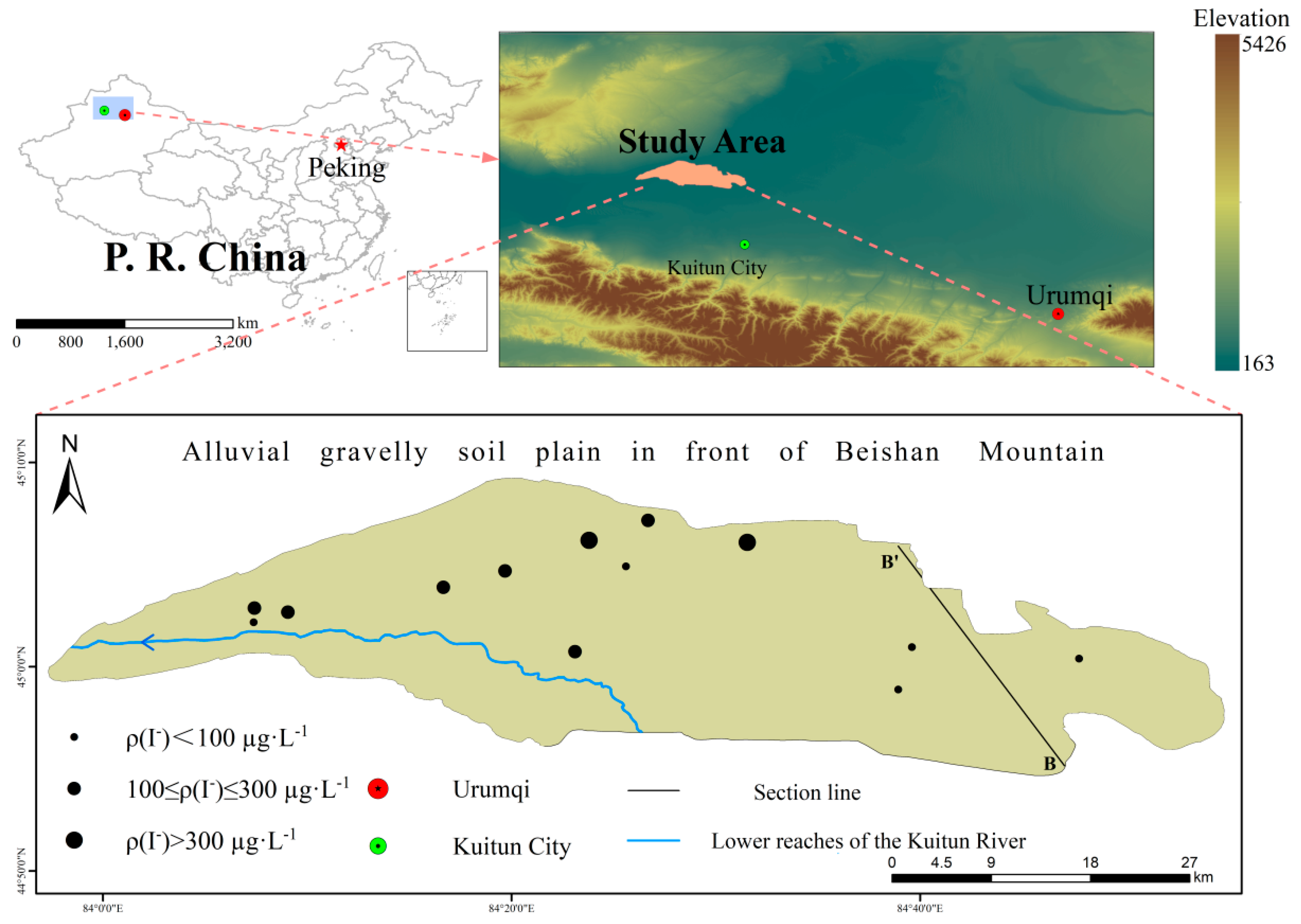
Figure 1. Map of the study area and sampling-point distribution in the research area. Note: ρ(I) denotes the concentration of iodine ions in groundwater.
Water 18 01409 g001
Figure 2. Regional hydrogeologic profile of the Kuitun River downstream area.
Water 18 01409 g002
Figure 3. Relation between dissolved inorganic carbon (DIC) and dissolved organic carbon (DOC) in the groundwater of the study area.
Water 18 01409 g003
Figure 4. Comparison of δ13CDIC and δ13CDOC values in the groundwater of the present study.
Water 18 01409 g004
Figure 5. Relation between δ13CDIC and DOC in the groundwater of the study area.
Water 18 01409 g005
Figure 6. Relation between δ13CDIC and DIC in the groundwater of the study area.
Water 18 01409 g006
Figure 7. Difference in δ13CDIC − δ13CDOC versus δ13CDIC (a) and I concentration in groundwater (b); δ13CDIC versus I concentration (c) and Fe concentration in high-iodine groundwater (d).
Water 18 01409 g007
Table 1. Statistics of the characteristic parameters of the groundwater hydrochemistry index.
IndexMinMaxMeanMedianCoefficient of Variation
pH7.799.348.438.120.07
Eh (mV)−101.40−17.20−52.53−31.30−0.64
K+ (mg/L)1.0110.245.275.100.64
Na+ (mg/L)78.061516.77553.00487.740.85
Ca2+ (mg/L)28.71537.63205.17187.310.83
Mg2+ (mg/L)1.45659.55145.9387.451.32
Cl (mg/L)38.203121.17878.10367.591.18
SO42− (mg/L)179.671323.33666.50651.890.64
HCO3 (mg/L)79.43229.94165.00156.820.24
CO32− (mg/L)3.6218.5010.239.130.39
TDS (mg/L)475.756834.642629.212103.610.78
Fe (mg/L)0.090.530.260.260.43
I (µg/L)51.66552.79177.68134.240.77
Table 2. Range of δ13CDIC and δ13CDOC values, I concentrations and depths in groundwater in different regions.
CountryStudy Areaδ13CDIC (‰)δ13CDOC (‰)I (μg/L)Depth (m)Aquifer Type
Brazil [66]Guarani, São Paulo State−19.00–−5.20---Semi-confined to confined
(unconfined in recharge area)
Britain [67]British Midlands−20.05–2.96--8.24–76.28Permo-Triassic sandstone aquifer
(alternating confined/
unconfined conditions)
Germany [68]North German Basin−22.70–−3.70--86–1616Shallow unconfined (freshwater)
to deep confined (saline) separated
by clay aquitards
Poland [50]Suburb of Otwock−20.60–3.60---Mainly unconfined,
locally semi-confined
China [14,45,68,71]Kuitun, Xinjiang−24.04–−16.39−29.58–−26.7951.66–552.7990–200Deep confined
Datong Basin−16.93–−7.36-14.40–1030.0016–75Unconfined to confined
Hetao Plain−11.80–−5.34−22.90–−19.2031.84–1289.5715–80Mainly unconfined,
locally semi-confined
North China Plain−11.42–−5.95-4–217510–860Shallow unconfined +
deep confined
Jianghan Plain−18.50–−3.28−28.50–−19.602–160015–40Shallow unconfined +
middle confined; deep confined
Disclaimer/Publisher’s Note: The statements, opinions and data contained in all publications are solely those of the individual author(s) and contributor(s) and not of MDPI and/or the editor(s). MDPI and/or the editor(s) disclaim responsibility for any injury to people or property resulting from any ideas, methods, instructions or products referred to in the content.