Article

Spatial and Temporal Patterns of Macrozoobenthic Communities Around Offshore Gas Structures in the Adriatic Sea

1
IRBIM-CNR Institute for Marine Biological Resources and Biotechnology, Largo Fiera della Pesca 2, 60125 Ancona, Italy
2
NBFC National Biodiversity Future Center, Piazza Marina 61, 90133 Palermo, Italy
*
Author to whom correspondence should be addressed.
Water 2026, 18(12), 1408; https://doi.org/10.3390/w18121408 (registering DOI)
Submission received: 20 March 2026 / Revised: 3 June 2026 / Accepted: 6 June 2026 / Published: 9 June 2026

Abstract

Spatial and temporal variability of macrozoobenthic communities were investigated around three offshore gas structures with different architecture (a subsea well-site, a four-leg platform, and a one-leg platform) in the NW Adriatic Sea. Four post-installation surveys (two per year over two years) were conducted by sampling sediments at increasing distances from each structure (approximately 0, 30, 60, 120 and 1000 m from the structure edge). A total of 233, 271 and 260 taxa were recorded around Structures A, B and C, respectively, with polychaetes representing the dominant taxonomic group at all sites. Across all structures, community composition showed significant variability both among surveys and along the distance gradient. Near-structure stations (0–60 m) most frequently accounted for spatial dissimilarities, whereas communities at 120 and 1000 m were generally more similar. Early surveys around the well-site and the four-leg platform were characterised by low diversity and high dominance of the opportunistic polychaete Ditrupa arietina, suggesting a short-term disturbance related to installation. Post-installation trajectories differed among structures: community descriptors stabilized faster around the subsea well-site, while changes near the platforms extended for at least two years. At the one-leg and four-leg platforms, the progressive development of a bivalve mound (specimens of Mytilus galloprovincialis and/or Neopycnodonte cochlear fell from the submerged parts of the platforms) coincided with increased abundance, species richness and occurrence of hard-bottom associated taxa at 0 m stations. Overall, the results indicate that offshore gas structures can locally influence macrozoobenthic assemblages by modifying habitat heterogeneity and promoting site-specific community responses. Although based on post-installation observations only, this study provides site-specific evidence useful for future decommissioning planning in soft-bottom shelf areas.

1. Introduction

The Adriatic Sea exhibits eutrophic waters and is affected by a range of multiple, often synergistic, human-induced pressures. These include intense coastal development characterized by high urban density, harbours and marinas, as well as coastal protection measures, tourism, fisheries and aquaculture. In addition, the Italian sector hosts one of the highest concentrations of offshore infrastructures in the Mediterranean basin, with more than 120 gas platforms [1,2] and an extensive network of around 300 pipelines extending for a total length of approximately 2300 km [3].
Offshore oil and gas platforms represent a major category of large-scale anthropogenic structures in the marine environment [4,5], and their number has strongly increased in recent decades, driven by the exploitation and research of not-renewable resources. Beyond their primary function, these structures are increasingly recognized for their contribution to ecosystem services [6,7] introducing hard substrates in predominantly soft-bottom shelf areas. This novel physical support allows the settlement of fouling organisms, such as bivalves, serpulid polychaetes and ascidians, and promotes the development of associated reef-like assemblages. By adding vertical relief and structural complexity, offshore platforms modify near-bed hydrodynamics, sedimentation processes and trophic pathways, often functioning as artificial reefs (“rig-to-reefs”) that can locally alter biodiversity patterns and ecosystem processes [8,9,10,11,12]. In some cases, these artificial habitats have been reported to support high secondary production and biomass, comparable to or exceeding that of natural reefs [13]. Offshore installations may also enhance ecological connectivity by acting as stepping stones for benthic and pelagic organisms across otherwise fragmented habitats [14,15]. However, installation and drilling activities can induce short- to medium-term disturbances in adjacent soft-bottom communities through sediment resuspension, organic enrichment and contaminant release, potentially leading to reduced diversity and altered ecosystem functioning in near-field areas [16,17,18]. These contrasting roles, as sources of disturbance and as habitat-forming structures, highlight the need for site-specific assessments of their ecological footprint.
In the Mediterranean Sea, one of the most anthropogenically impacted marine regions globally [19], the ecological implications of offshore infrastructures must be interpreted within a context of cumulative pressures. In the Adriatic Sea, where a high density of gas platforms co-occurs with intense fisheries, marine traffic, coastal development and riverine inputs, it is particularly important to understand how structural characteristics and local environmental conditions influence benthic responses.
Benthic organisms are commonly used to assess the ecological effects of offshore platforms on the surrounding environment. Among them, infaunal polychaetes (particularly opportunistic deposit-feeders such as Capitella capitata), sensitive bivalve mollusks (e.g., Abra alba, Nucula nitidosa), and crustaceans such as amphipods (Ampelisca spp.) are often identified as the most responsive taxa, showing clear changes in abundance, diversity, and community composition in relation to disturbance [20,21,22]. These organisms are widely considered reliable indicators of environmental quality due to their relatively sedentary nature, long life spans, ability to integrate stressors over time, and the coexistence of species with different sensitivities and tolerances. In addition, benthic communities play a central role in benthic–pelagic coupling by processing organic matter and regulating nutrient fluxes between sediments and the overlying water through bioturbation and remineralisation processes [23,24]. Following disturbance, the recovery of benthic assemblages is often reported as fast, typically within months to few years [8,25]. However, the magnitude and duration of platform-related effects are governed by complex interactions among environmental conditions, the characteristics of the structure (dimension, height, material, complexity), and the nature and intensity of the disturbance [26,27].
As numerous offshore installations approach the end of their operational life, decommissioning decisions have become a key management challenge [28,29]. Recent studies e.g., refs. [30,31] highlight that removal options may have contrasting ecological consequences, ranging from habitat loss to potential benefits if structures are partially retained under rigs-to-reefs scenarios. Therefore, robust, site-specific assessments of spatial footprint, temporal recovery, and structural complexity effects are essential to support environmentally sound decommissioning strategies [1,32,33].
The present study provides a site-specific assessment of the spatial distribution and temporal variability of macrozoobenthic communities around three offshore gas structures with contrasting architecture (one subsea well-site, one four-leg platform, and one one-leg platform) using the far-field station (1000 m) as a local reference at each structure. Specifically, we investigated whether macrozoobenthic abundance, diversity, and community composition differ with distance from offshore structures across four post-installation surveys. This approach aims to assess whether the presence of the structures is associated with spatial or temporal changes in the surrounding macrozoobenthic community.

2. Materials and Methods

2.1. Study Area and Sampling Design

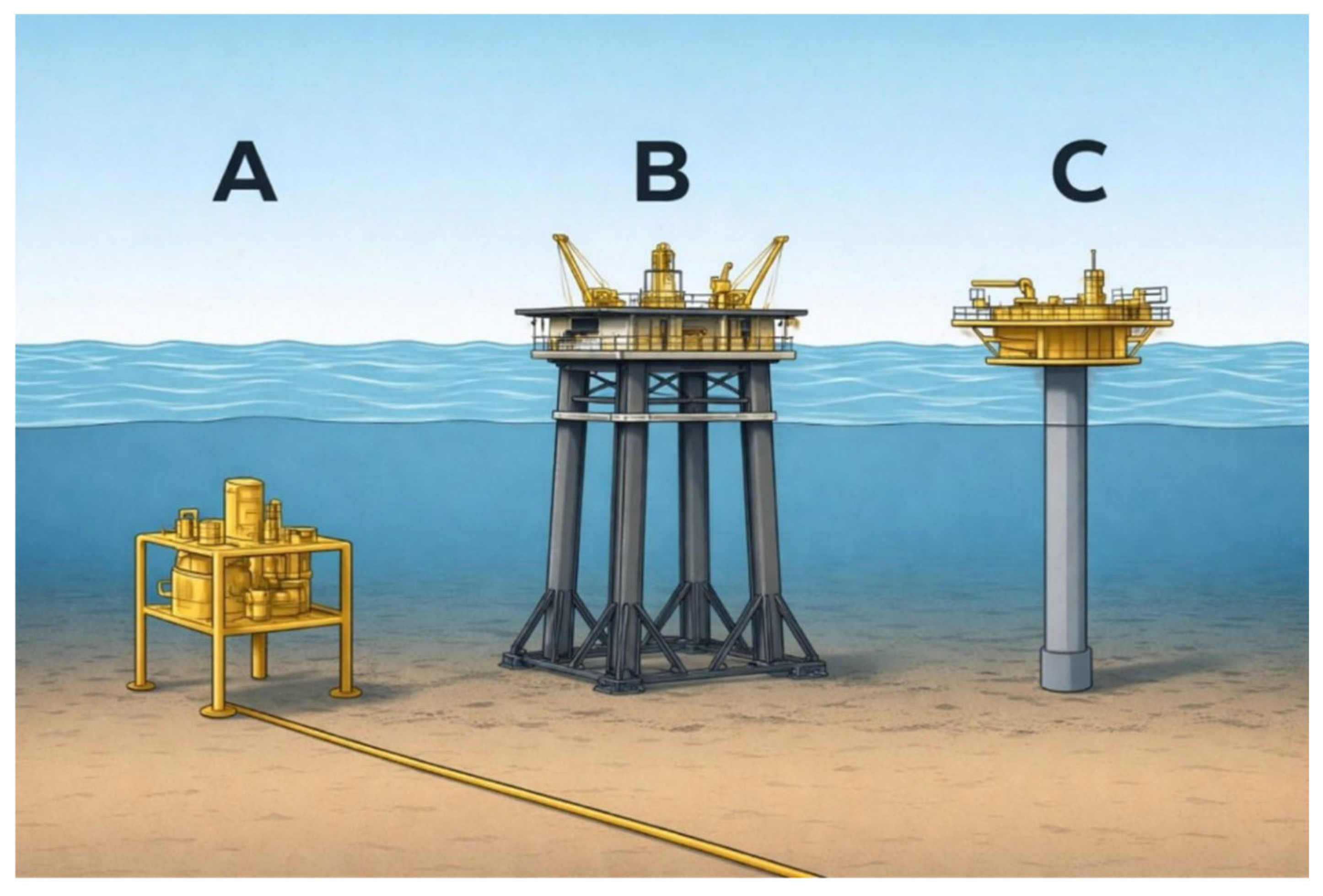
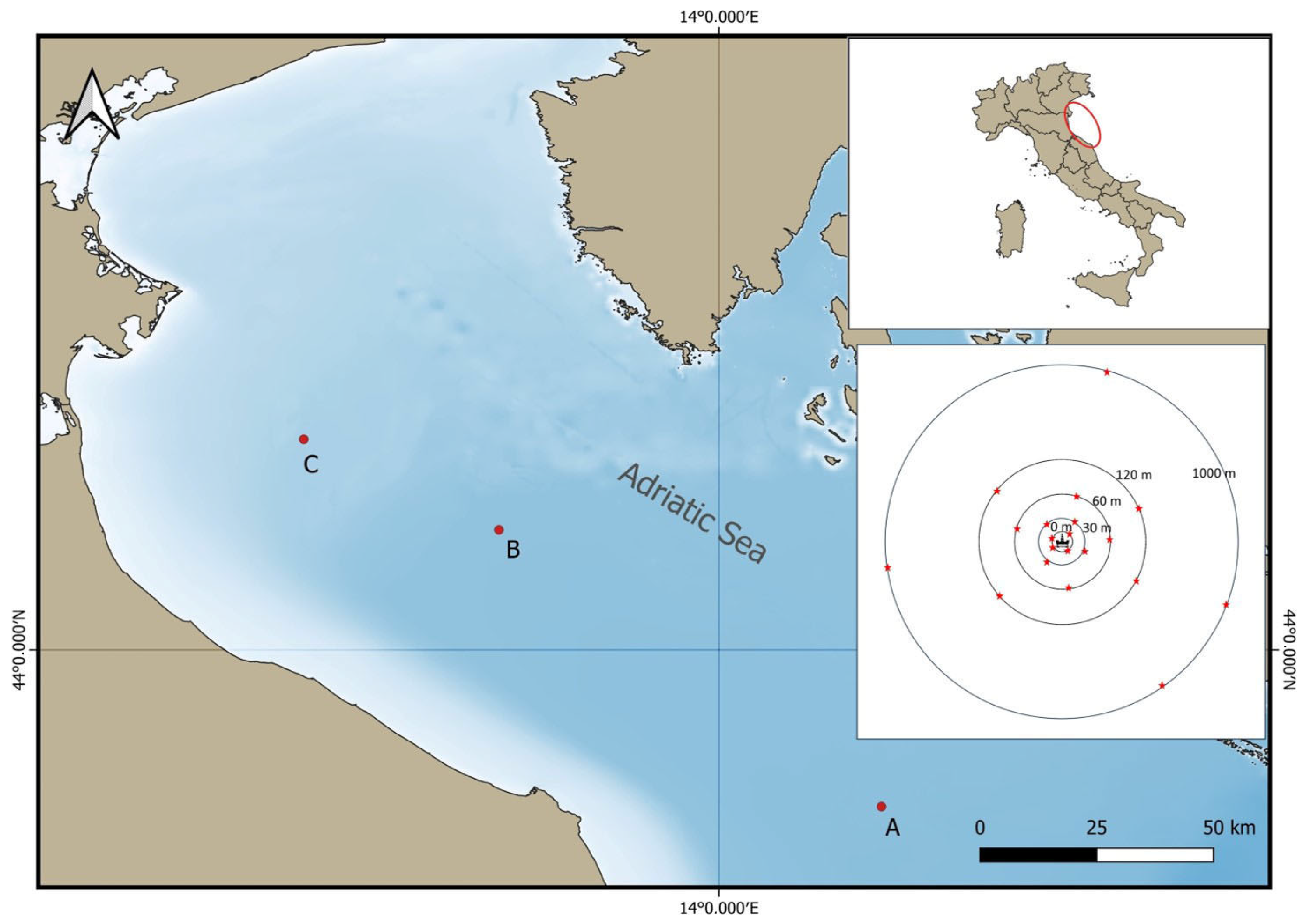
The study was conducted in the Italian sector of the north-central Adriatic Sea (Figure 1). Three offshore gas structures with different architecture were surveyed over a two-year period, starting immediately after deployment (four surveys in total; two surveys per year in summer and winter): a subsea production system (Structure A), a four-leg platform (Structure B), and a one-leg platform (Structure C; Figure 2; Table 1). The three areas differ in depth, sediment characteristics, and hydrodynamic conditions, reflecting the environmental heterogeneity of the region.
Figure 2 was generated using the AI tools Gemini 3 (Google) and Chat GPT (GPT-5.3). The final illustration was created by processing an original image through specific prompts and the resulting output was reviewed and validated by the authors.
Structure A is located 56 km offshore Ancona (central Adriatic Sea) at 80 m water depth on a predominantly sandy seabed (sand > 70%) [34,35]. It consists of two well sites positioned 6.5 m apart (centre-to-centre) within a protective structure extending up to 5 m above the seabed. Its construction was carried out over a period of approximately 10 months in an area characterized by variable currents that influence the spatial distribution of sediments.
Structure B is a four-leg platform located 59 km offshore Pesaro (northern Adriatic Sea) at 60 m water depth. It consists of a fixed steel structure supported by a jacket substructure composed of four vertical tubular legs interconnected by horizontal and diagonal braces. The jacket is anchored to the seabed by steel piles driven through the legs, providing stability and resistance to wave, current, and wind loads. The above-water structure (topside) measures approximately 21 × 30 m and rises about 41 m above sea level. The seabed is characterized by offshore relict sands, with sand accounting for more than 80% of the sediment composition [35]. The site is influenced by the Western Adriatic current, but it can be episodically affected by strong near-bottom hydrodynamics driven by dense shelf-water outflows formed in the northern Adriatic during winter, which can modify sediment redistribution [36]. In addition, the upper water column (10–20 m) can be affected by strong northerly Bora winds, which may alter surface currents and sea-surface temperature. The construction of Structure B took place over approximately 16 months.
Structure C is a one-leg platform located 46 km offshore Cervia (northern Adriatic Sea), at a water depth of 42 m, on a sandy–muddy bottom (sand content of about 55–60%) [37]. It consists of a single steel tubular pile driven into the seabed supporting a simplified monopod structure and a topside deck measuring approximately 18 × 15 m and rising about 21 m above sea level. This platform is installed farther north than the other two structures in a zone strongly influenced by Po River inputs; it is characterized by variable currents, modulated by both meteorological and hydrodynamic processes, which can affect biogeochemical properties and the spatial distribution of sediments. For Structure C, the installation phase lasted approximately 10 months.
The gradient sampling design [38] was adopted to describe spatial variation in relation to distance from each structure. This approach has been adopted in previous studies in the Adriatic Sea e.g., [3,8,35,39,40,41,42]. For each structure and during each survey, four sampling stations were randomly selected at approximately 5 m from the edge (hereafter referred to as 0 m), and at 30, 60, 120 and 1000 m. At each station, six samples were collected using a Van Veen grab (capacity 13 L; surface area 0.095 m2) for a total of 24 samples for each selected distance. The overall 480 biological samples (120 samples, 4 surveys) for each structure were sieved on board through a 0.5 mm mesh and all organisms retained were fixed in 5% buffered formalin and preserved in 70% ethanol. In the laboratory, macrofauna was sorted under a stereomicroscope and a binocular microscope and all organisms were identified to species level whenever possible, counted and weighed. Their taxonomic classification was performed using standardized nomenclature according to the World Register of Marine Species [43]. The taxonomic composition of the assemblages was described by reporting species-level data, including the relative contribution (%) of each species based on abundance, across distances and surveys for each structure. Species were grouped into major taxonomic categories (e.g., polychaetes, mollusks) to facilitate interpretation.

2.2. Data Analysis

The null hypothesis of the study was that abundance (N; number of individuals m−2), species richness (S), Shannon-Wiener Diversity index (H′) [44], and Simpson index (λ) [45], as well as macrozoobenthic community composition, do not differ among distances from the structure and sampling surveys. To test this hypothesis in the univariate context, two-way ANOVAs were performed separately for each structure, with distance (five levels) and survey (four levels) as fixed factors. In case of significant interactions among factors, one-way ANOVAs were used to test the effect of distance within each survey. Prior to performing ANOVAs, normality and homogeneity of variances were evaluated using the Kolmogorov-Smirnov and Bartlett tests, respectively [46].
Spatial and temporal changes in community composition were assessed using permutational multivariate analysis (PERMANOVA) implemented in PRIMER v6 (6.1.11) and PERMANOVA+ add-on [47,48]. Prior to multivariate analysis, species abundance data were square-root transformed to reduce the influence of dominant taxa and increase the contribution of less abundant species. Afterwards, Bray-Curtis similarity matrix was calculated. For each structure, multivariate patterns of variation among survey and distance were tested using two-way PERMANOVA; significant terms were further explored using pair-wise comparisons. Similarity percentage analysis (SIMPER) [49,50] was applied to identify the taxa contributing most to dissimilarity between and similarity within distance and survey groups. The significance level was set at p < 0.05.

3. Results

3.1. Structure A

A total of 233 macrozoobenthic taxa was recorded at the Structure A (Table S1). Polychaetes represented the most diverse group (88 species), followed by mollusks (57), crustaceans (55), and echinoderms (12).
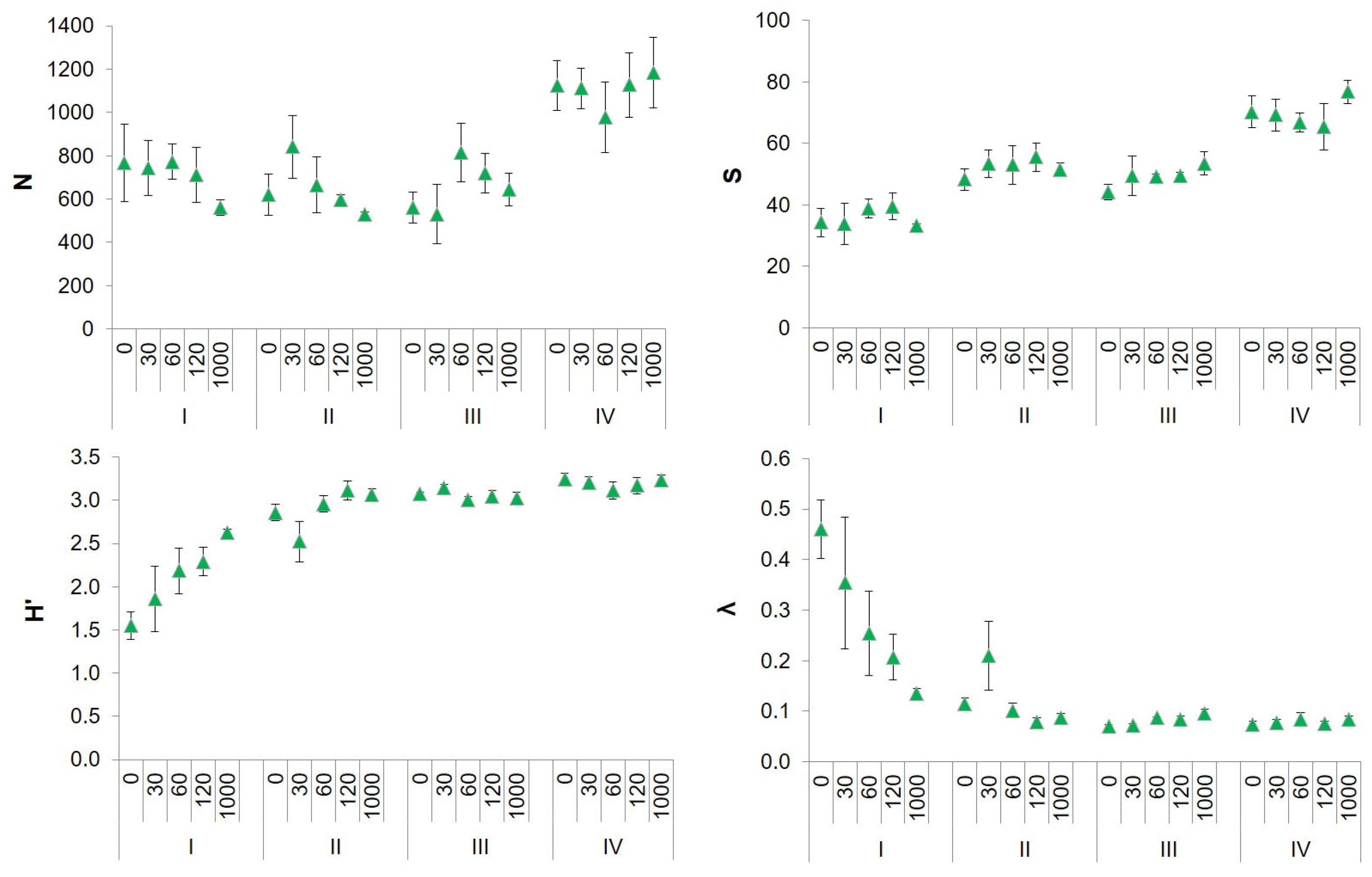
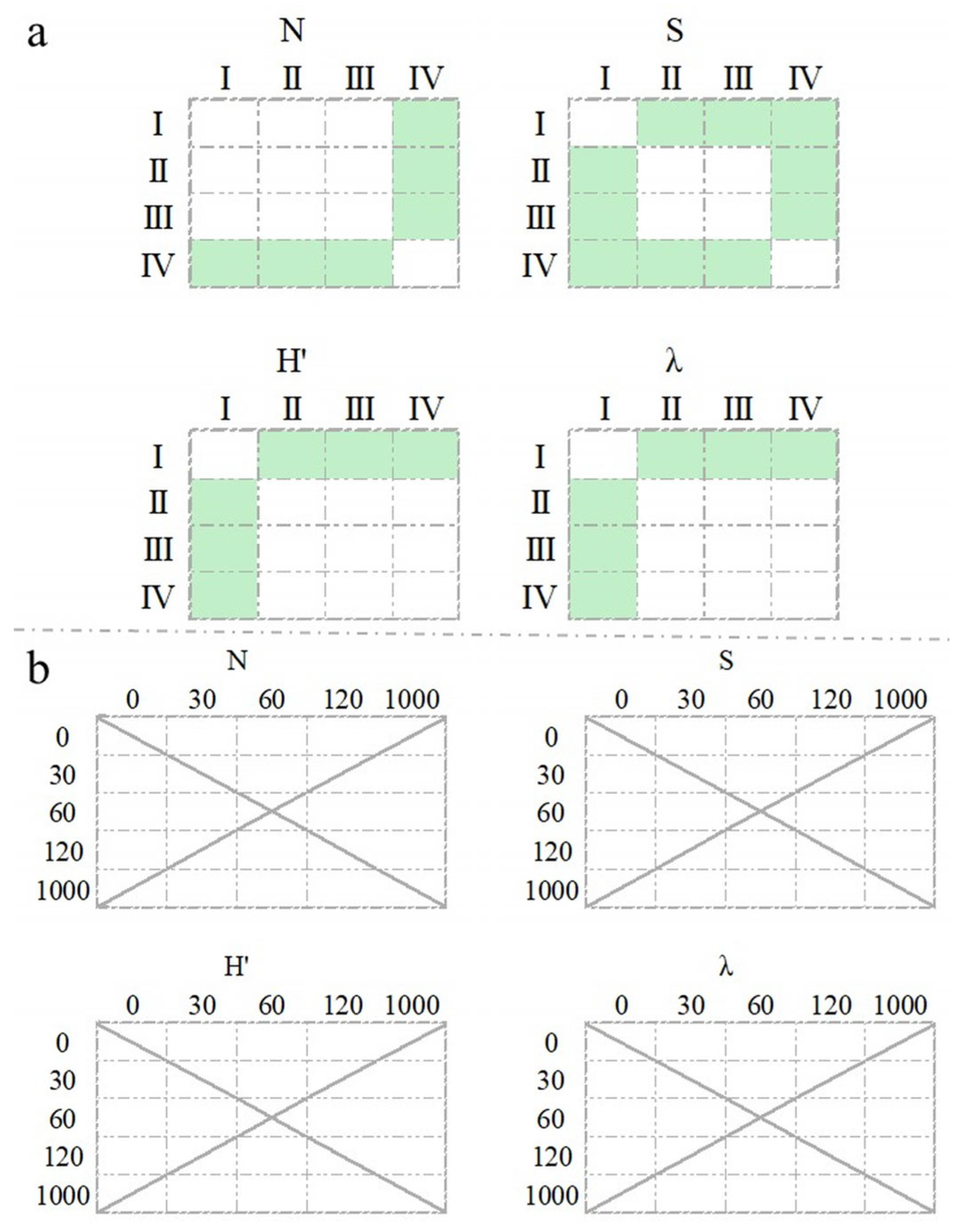
N and S differed significantly among surveys, whereas no significant differences were detected among distances within each survey (Figure 3; Table A1). Tukey’s post-hoc tests indicated that N and S during the fourth survey were significantly higher than in all other sampling periods (p < 0.05; Figure A1). In addition, S showed significant differences between the first and following surveys (p < 0.05), with higher values observed in all subsequent ones (Figure A1).
H′ and λ indices varied significantly among sampling sites, which was also reflected in a significant interaction survey × distance (Table A1). During the first sampling period the lowest H′ value was recorded at 0 m (1.54 ± 0.16) and the highest at 1000 m (2.63 ± 0.04; Figure 3). Pairwise comparisons indicated significant differences for 0 m vs. 120 m and 1000 m, and for 1000 m vs. 30 m and 120 m. The highest λ value occurred at 0 m (0.46 ± 0.06), significantly higher than at 1000 m (0.14 ± 0.01; Figure 3), mainly due to the strong dominance of the polychaete Ditrupa arietina (O. F. Müller, 1776) at 0 m.
Both H′ and λ indices varied significantly between the first survey and all the subsequent ones (p < 0.05; Figure A1). Overall, macrozoobenthic assemblages in the first survey were less diversified and more strongly dominated by a few taxa (e.g., D. arietina).
PERMANOVA highlighted significant differences in macrozoobenthic community composition among both distance and survey for Structure A (Table 2). Pair-wise tests indicated that communities at 0 m and 30 m differed significantly from those at 120 m and 1000 m, and that zoobenthic assemblages at 60 m differed from those at 1000 m.
SIMPER analysis showed the highest dissimilarity (49%) between communities at 0 m and 1000 m (Table S2). Such dissimilarity can mostly be explained by the high abundance of D. arietina and the low density of other taxa (e.g., Paradiopatra calliopae Arvantidis & Koukouras, 1997, Paraonidae nd and Nothria conchylega (Sars, 1835)) at 0 m. Species turnover over time peaked (58%) between the first and the last sampling event (Table S2).

3.2. Structure B

A total of 271 taxa was found around Structure B, with polychaetes (86) representing the most diversified group, followed by crustaceans (75), mollusks (74), and echinoderms (13; Table S3). The community mostly consisted of taxa typical of muddy and sandy habitats; however, from the third survey onwards, some hard-bottom species (mainly the mussel Mytilus galloprovincialis Lamarck, 1819 and the serpulid polychaetes) were also recorded close to the platform.
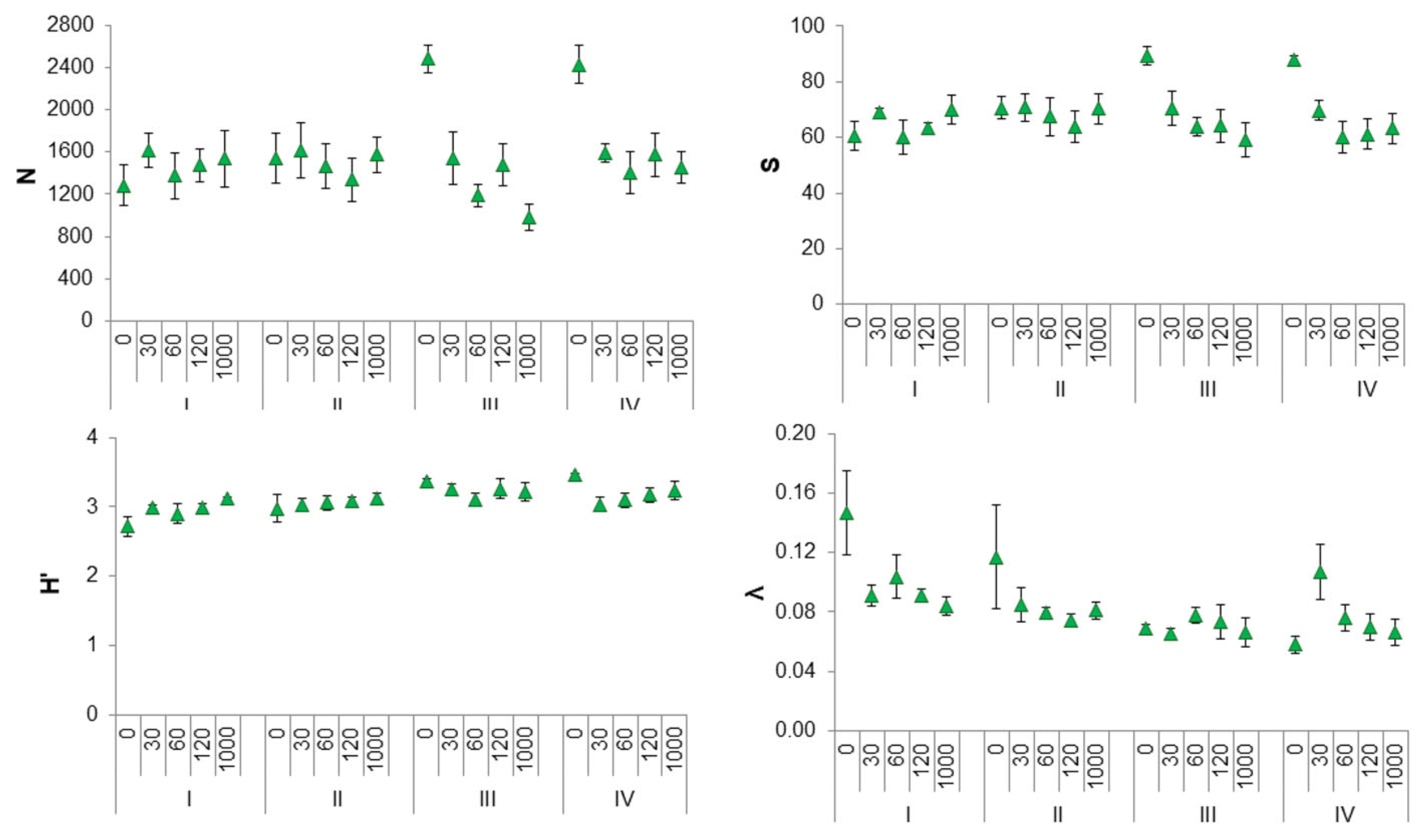
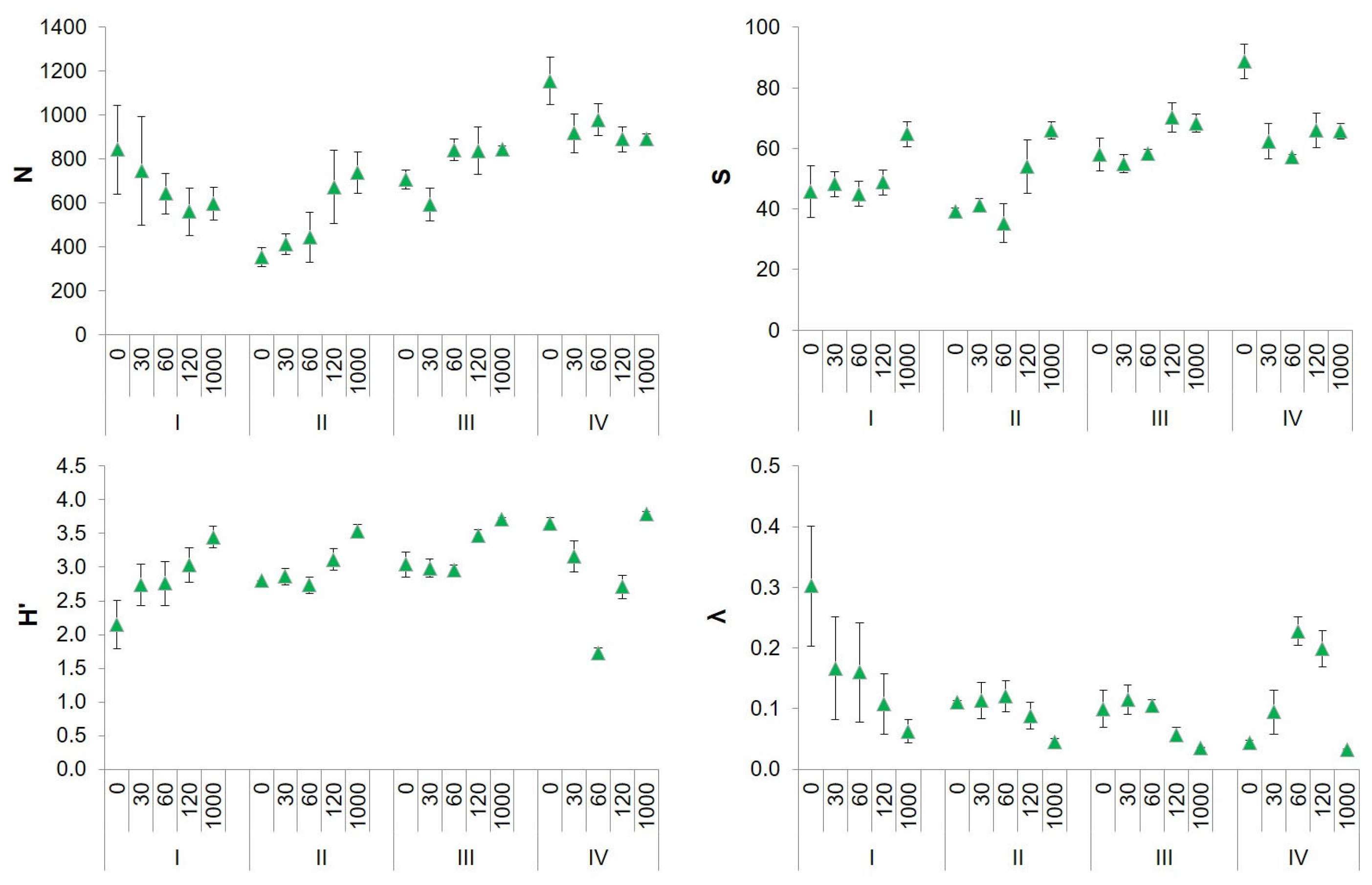
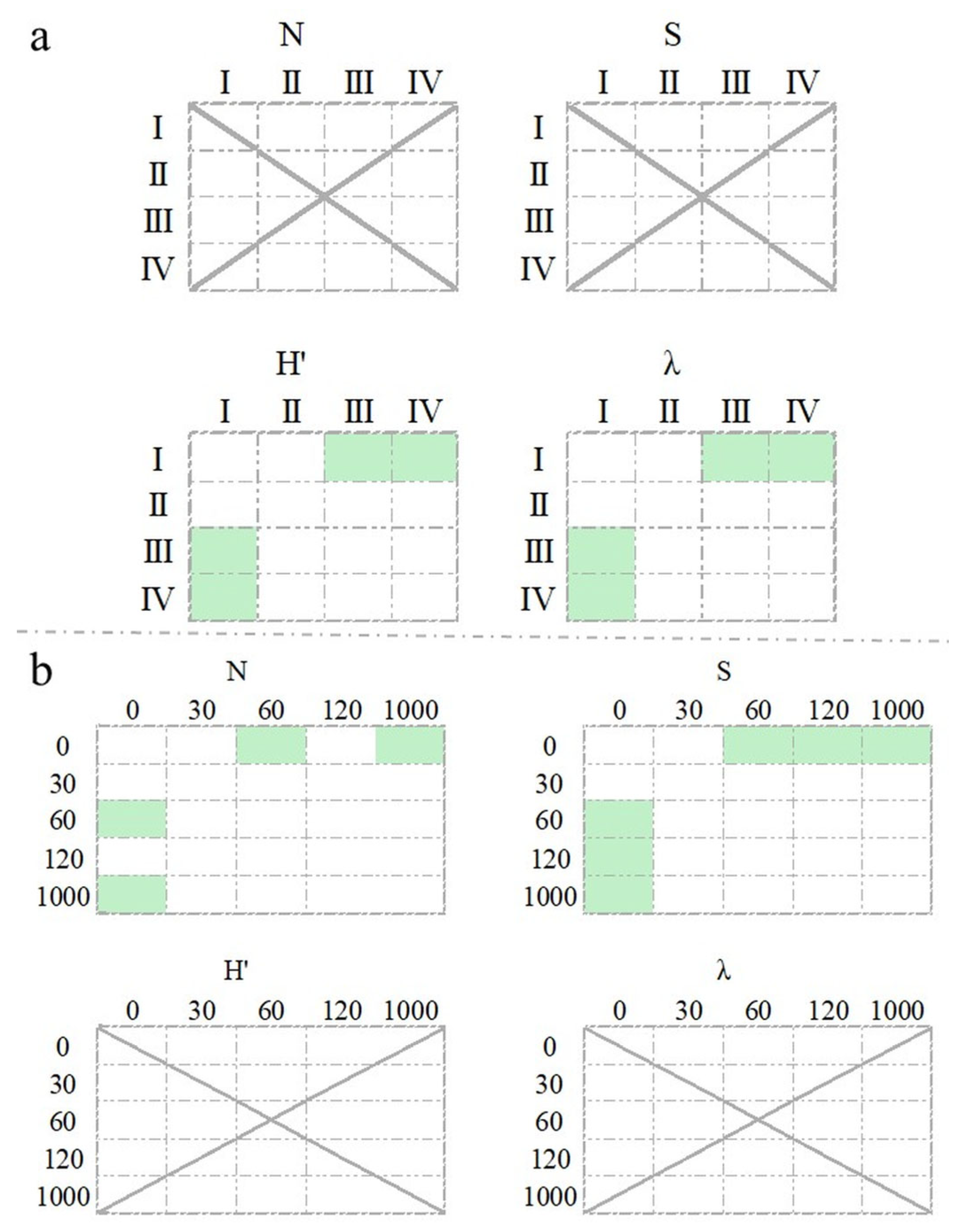
N differed significantly among surveys (Figure 4; Table A2), whereas no significant differences were detected among distances. Tukey’s post-hoc test indicated significant differences (p < 0.05) between the last survey and all previous surveys (Figure A2).
S showed a pattern similar to that observed for N, with the exception of the first survey (Figure 4). Significant effects were evidenced for both survey and distance, but not for their interaction (Table A2). In the first survey, the highest value was recorded at 1000 m (64.8 ± 4.2), even though it did not differ significantly from the other distances. During the second survey, S differed only between 60 m and 1000 m, with higher values at the latter. No significant differences among distance were detected in the third survey. During the fourth sampling event, the highest value was registered at 0 m (88.7 ± 5.7), resulting statistically different in respect to 30 m (62.3 ± 5.8), 60 m (57.0 ± 1.1) and 1000 m (65.7 ± 2.5).
Both H′ and λ showed survey-specific spatial patterns, with a significant survey × Distance interaction (Figure 4; Table A2). For H′, no significant differences among distances were detected in the first two surveys, while in the third sampling period the highest value was recorded at 1000 m, significant different from 0, 30 and 60 m. In the fourth survey, H′ was highest at 1000 m (3.79 ± 0.03) and lowest at 60 m (1.72 ± 0.08), with significant differences between these and most other distance pairs.
Within each survey, λ generally mirrored the pattern observed for H′. No significant differences among distances were detected in the first two surveys; in the third survey, 0 m and 30 m differed significantly from 1000 m. In the fourth survey, λ was highest at 60 m and lowest at 1000 m, with significant differences among most distances (Figure 4; Table A2; Figure A2).
PERMANOVA indicated significant effects of distance, survey and their interaction at Structure B (Table 3), suggesting a potential effect of the four-leg platform on the spatial and temporal variation of macrozoobenthic communities. Pair-wise test revealed a different spatial pattern at each sampling survey (Table 3).
SIMPER analysis showed the highest dissimilarity between 0 m and 1000 m sites (63%; Table S4). The exclusive presence of some taxa and/or the higher abundance of others at 0 m (e.g., the mollusk Falcidens gutturosus (Kowalevsky, 1901), the polychaetes Capitella capitata (Fabricius, 1780), Ampharete acutifrons (Grube, 1860) and Owenia fusiformis (Delle Chiaje, 1844)) were the major contributors to this dissimilarity. On temporal scale, the highest dissimilarity (55%) was found between the first and the last survey, while the lowest one (51%) occurred between the first and the second survey (Table S4).

3.3. Structure C

A total of 260 taxa was recorded at Structure C, with polychaetes representing the most abundant group (88 taxa), followed by mollusks (74), crustaceans (66), and echinoderms (14; Table S5). The community mostly consisted of taxa typical of muddy and sandy soft bottoms. However, as for Structure B, close to the platform some hard-bottom species were also observed, especially mollusks (e.g., M. galloprovincialis and Neopycnodonte cochlear (Poli, 1795)), crustaceans (e.g., Pilumnus hirtellus (Linnaeus, 1761), P. spinifer H. Milne Edwards, 1834 and Galathea spp.) and polychaetes (e.g., Hydroides norvegica Gunnerus, 1768, Spirobranchus triqueter (Linnaeus, 1758)). The occurrence of these taxa increased from the third survey onwards.
N and S displayed survey-specific spatial trends, resulting in a significant survey × distance interaction (Figure 5; Table A3). For both indices no significant differences among distances were observed in the two first surveys (p > 0.05). In contrast, during the third and fourth sampling periods, higher values were recorded at 0 m compared to the furthest sites (p < 0.05), with the exception of 30 m). In particular, in the last two surveys the mean abundance at 0 m was approximately double that those measured at the other distances.
H′ did not show differences within the factor distance (Figure 5; Table A3), but increased from the third survey onwards, with significant differences between the first and the last two samplings (Figure A3). Finally, λ displayed a significant effect of survey and a significant survey × distance interaction (Figure 5; Table A3). Considering survey within each distance, significantly higher λ values were recorded only at 0 m during the first survey compared with the last two ones.
PERMANOVA indicated significant differences within factor survey, distance and their interactions (Table 4), suggesting a potential effect of the platform on the spatial and temporal variations of macrozoobenthic communities. Pair-wise comparisons revealed that 0 m sites differed from 1000 m in the first survey and became significantly different from all the other distances in the last two sampling periods, whereas no significant differences were detected among the other distances (Table 4).
SIMPER analysis showed the highest dissimilarities between 0 m sites and all other distances (Table S6). The exclusive presence and/or higher abundance of some taxa (e.g., the bivalves Anomia ephippium Linnaeus, 1758 and Kurtiella bidentata (Montagu, 1803), and the polychaetes Sternaspis scutata (Ranzani, 1817) and Prionospio cirrifera Wirén, 1883) at 0 m were major contributors to these dissimilarities (Table S6).

4. Discussion

The ecological role of offshore gas platforms in the Adriatic Sea is particularly relevant in light of the growing need for decommissioning decisions, as many installations dating back to the early 1960s are nearing the end of their productive life [1,37]. In predominantly soft-bottom settings, these structures function as artificial hard substrates, increasing local habitat heterogeneity both through their physical presence and through the accumulation of biogenic material on the seabed [51,52,53,54,55]. As a result, they can support fouling communities and associated mobile fauna, with potentially important effects on benthic ecosystem structure and functioning. This highlights the need for science-based evidence on the spatial footprint and recovery trajectories of platform-related ecological changes to support informed environmental management [16,56].
This study investigated the spatial and temporal variability of macrozoobenthic communities surrounding three offshore gas structures (one subsea well-site, one four-leg platform and one one-leg platform) in the Adriatic Sea. Both univariate and multivariate analyses highlighted spatial patterns and temporal changes in macrozoobenthic communities around structures with different architectural complexity. These patterns suggest that differences in community stock and composition among the three installations might be related, at least in part, to structural characteristics (e.g., size and shape). Nevertheless, given the different geographic settings, local environmental conditions are also likely to contribute to the observed variability.
During the first survey carried out just after the structures’ installation, a low-diversity assemblage was recorded close to the well-site, as well as near the four-leg platform. In both cases, sediments close to the structures were dominated by the polychaete Ditrupa arietina. This species is widely distributed across Mediterranean soft-bottom habitats, ranges from 0 to 150 m and is commonly considered a pioneer taxon that can increase in abundance during the development of transitional communities after environmental changes, such as dredging operations [57]. Pérès and Picard [58] also associated D. arietina with unstable soft sediments. Altogether, these observations suggest that the dominance of D. arietina during the early phase of the study may be linked to installation-related disturbance, supporting previous evidence that installation activities can substantially affect recipient benthic habitats [8,59,60,61,62].
From the second survey onward at the well-site, community descriptors (N, S, H′ and λ) became more homogeneous among distances and generally increased (or decreased in the case of λ) towards the last survey. In contrast, close to the four-leg platform, slightly higher abundance and species richness values were evident only during the fourth survey. These results suggest that changes in macrozoobenthic communities following installation may occur faster around subsea well-site structures (months) than around larger platform typologies (≥2 years), potentially reflecting differences in the dimensions of the structures and the intensity/modality of installation and drilling activities. Similar recovery times have been reported for other Adriatic platforms at comparable depths [8,59].
At the one-leg platform, the timing and trajectory of change differed from those observed at the other installations. Signs of an early, installation-related impact on macrozoobenthos were not evident, and the community descriptors remained relatively homogeneous among distances during the first two surveys. From the third survey onwards, however, abundance and species richness increased at 0 m.
The pattern observed at both four- and one-leg platforms coincided with the development of a mussel/oyster mound (mainly Mytilus galloprovincialis and Neopycnodonte cochlear) generated by the fall of individuals from the submerged parts of the structures. Similar development of extensive fouling communities associated with offshore extraction platforms has been documented both in the Adriatic Sea and in other marine regions worldwide [8,39,40,63,64,65,66,67], confirming the role of these structures as suitable substrates for the establishment of complex hard-substrate associated communities. The development of such mussel mound can facilitate the establishment of diverse assemblages including both soft- and hard-bottom taxa (e.g., decapods Pilumnus hirtellus, Pilumnus spinifer and Galathea spp.; bivalves Hiatella arctica (Linnaeus, 1767) and Anomia ephippium; and polychaetes Hydroides spp. and Spirobranchus triqueter). These results align with those reported from other seas around the world e.g., [68,69], indicating that the offshore platforms may locally modify macrozoobenthic community structure and diversity.
Some ecological effects observed near platforms resemble those associated with natural habitat-forming structures, such as seagrass meadows, kelp forests and coral reefs, which introduce three-dimensional structure into otherwise homogeneous environments. Despite differences in origin and scale, such erected structures are widely recognized for their role as ecosystem engineers, as they increase habitat complexity, alter local hydrodynamics, and facilitate the colonization and persistence of a variety of associated invertebrate taxa [70,71,72]. Corroborating this, offshore platforms located in the “Area Barbare” (northern Adriatic Sea), a designated Zone of Biological Protection established by Italian legislation [73], have been shown to function as spawning and nursery grounds for commercially important fish species.
However, apparent increases in macrozoobenthic abundance and biodiversity should be interpreted cautiously: they may reflect localized attraction or concentration processes and/or organic enrichment. In the Adriatic Sea, sedimentary organic matter analyses around offshore gas structures suggest limited spatial gradients in trophic status [35], supporting the need to interpret benthic responses in the context of multiple, interacting mechanisms.
Overall, the present study confirms that geographic setting and ecological context can modulate both the magnitude and the timing of platform-related effects and post-installation resilience, as observed in previous Adriatic case studies e.g., [8,74]. From a management perspective, our findings provide useful insights to support fisheries management and marine spatial planning by improving the understanding of how offshore structures influence benthic ecosystems over time. They indicate that structural complexity, defined by size and shape, can differentially affect both the spatial extent of benthic changes and the time required to reach a more diverse and stable community. Although the present dataset is spatially and temporally limited, it highlights that platform effects are not uniform and can vary substantially among structures and settings, underscoring the importance of site-specific assessments in decision-making.


Supplementary Materials

The following supporting information can be downloaded at: https://www.mdpi.com/article/10.3390/w18121408/s1, Table S1: Species list and percentage dominance (%) across surveys (I, II, III and IV) and distances (0, 30, 60, 120, and 1000 m) for Structure A. Percentage dominance was calculated for each species relative to the total abundance recorded at each survey–distance combination. Table S2: Summary of SIMPER analysis for Structure A; Average abundances (Avg_ab) and % contribution (Contr_%) to the average similarity are given for each species within distance and survey groups. Only species reaching the cumulative contribution of ~50% are reported. % average dissimilarities (Avg_dis_%) between distance and survey groups are also pointed out. Table S3: Species list and percentage dominance (%) across surveys (I, II, III and IV) and distances (0, 30, 60, 120, and 1000 m) for Structure B. Percentage dominance was calculated for each species relative to the total abundance recorded at each survey–distance combination. Table S4: Summary of SIMPER analysis for Structure B; Average abundances (Avg_ab) and % contribution (Contr_%) to the average similarity are given for each species within distance groups and survey groups. Only species reaching the cumulative contribution of ~50% are reported. % average dissimilarities (Avg_dis_%) between distance and survey groups are also pointed out. Table S5: Species list and percentage dominance (%) across surveys (I, II, III and IV) and distances (0, 30, 60, 120, and 1000 m) for Structure C. Percentage dominance was calculated for each species relative to the total abundance recorded at each survey–distance combination. Table S6: Summary of SIMPER analysis for Structure C; Average abundances (Avg_ab) and % contribution (Contr_%) to the average similarity are given for each species within distance groups and survey groups. Only species reaching the cumulative contribution of ~50% are reported. % average dissimilarities (Avg_dis_%) between distance and survey groups are also pointed out.

Author Contributions

Conceptualization, E.P.; formal analysis, E.P.; data collection, E.P., P.S. and A.S. (Angela Santelli); writing—original draft preparation, E.P.; writing—review and editing, E.P., A.S. (Angela Santelli), A.S. (Alessandra Spagnolo), P.S., D.D. and K.D.S.; funding acquisition, A.S. (Alessandra Spagnolo). All authors have read and agreed to the published version of the manuscript.

Funding

The research is carried out with the financial support of ENI S.p.A.—UPSTREAM DICS.

Data Availability Statement

The data presented in this study are available on request from the corresponding author due to ownership (private company) and dissemination restrictions.

Acknowledgments

The authors would like to dedicate this work to the memory of our colleague Gianna Fabi; her expertise and assistance were greatly appreciated during the development of this work. We appreciate the help of the crew of the RV Tecnopesca II, that was employed in sampling operations and of many members of the “Benthos Laboratory” of CNR-IRBIM during taxonomic analyses. During the preparation of this manuscript, the author used Gemini, Google (version 3) and ChatGPT (GPT-5.3) to create Figure 2. The authors have reviewed the output and take full responsibility for the content of this publication.

Conflicts of Interest

The authors declare no conflicts of interest.

Appendix A

Table A1. Results of two-way ANOVA performed on the mean values of N (abundance), S (Species richness), H′ (Shannon Diversity index) and λ (Simpson index) for each site across the four surveys conducted at Structure A. * = significant (p < 0.05); ** = highly significant (p < 0.01). d.f. = degree freedom; MS = Mean sum of squares; F = Fisher value; Su = survey; Di = distance.
Sourced.f.N S
MSFpMSFp
Su30.24311.0260.000 **0.27537.0920.000 **
Di40.0210.9700.4300.0040.5630.691
Su × Di120.0472.1360.2700.0050.7050.740
Sourced.f.H′ λ
MSFpMSFp
Su30.16934.5680.000 **1.04155.3190.000 **
Di40.0142.8770.030 *0.0542.8950.029 *
Su × Di120.0102.0160.038 *0.0643.3940.001 **
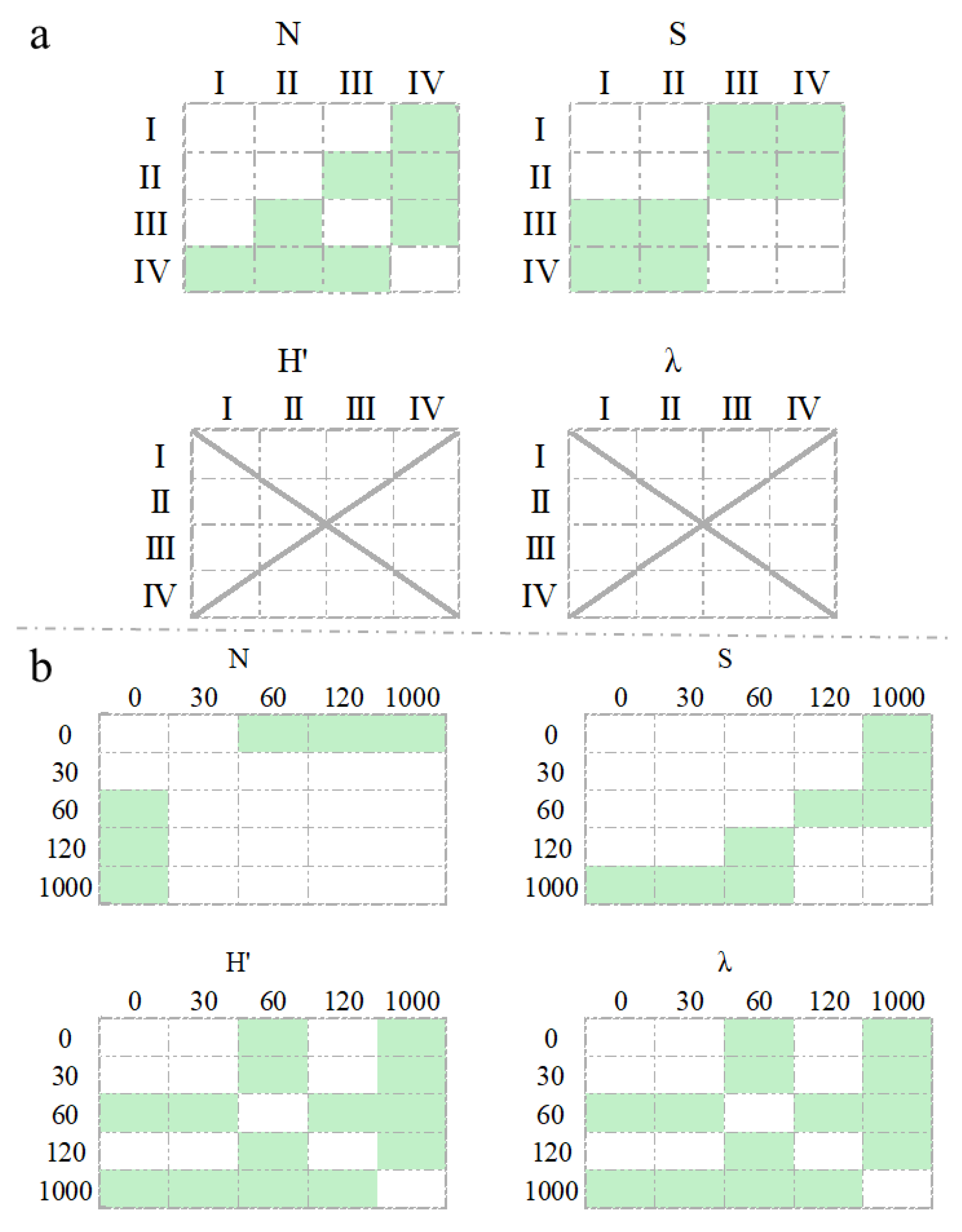
Figure A1. Summary of univariate statistical analyses for each index calculated for Structure A, grouped by (a) survey and (b) distance. Statistically significant differences are highlighted in green.
Water 18 01408 g0a1
Table A2. Results of two-way ANOVA performed on the mean values of N (abundance), S (Species richness), H′ (Shannon Diversity index) and λ (Simpson index) for each site across the four surveys conducted at Structure B. * = significant (p < 0.05); ** = highly significant (p < 0.01). d.f. = degree freedom; MS = Mean sum of squares; F = Fisher value; Su = survey; Di = distance.
Sourced.f.N S
MSFpMSFp
Su30.2598.6120.000 **0.10612.1740.000 **
Di40.0170.5770.6810.0414.6860.003 **
Su × Di120.0260.8580.5930.0141.5700.133
Sourced.f.H′ λ
MSFpMSFp
Su30.0153.1210.034 *0.1172.3070.088
Di40.0469.3930.000 **0.59411.6930.000 **
Su × Di120.0173.4830.001 **0.1943.8120.000 **
Figure A2. Summary of univariate statistical analyses for each index calculated for Structure B, grouped by (a) survey and (b) distance. Statistically significant differences are highlighted in green.
Water 18 01408 g0a2
Table A3. Results of two-way ANOVA performed on the mean values of N (abundance), S (Species richness), H′ (Shannon Diversity index) and λ (Simpson index) for each site across the four surveys conducted at Structure C. * = significant (p < 0.05); ** = highly significant (p < 0.01). d.f. = degree freedom; MS = Mean sum of squares; F = Fisher value; Su = survey; Di = distance.
Sourced.f.N S
MSFpMSFp
Su30.0171.2560.2980.0051.1820.324
Di40.0544.1250.005 **0.0194.2140.005 **
Su × Di120.0302.2990.017 *0.0092.0070.039 *
Sourced.f.H′ λ
MSFpMSFp
Su30.0088.3660.000 **0.1018.9820.000 **
Di40.0010.9320.4520.0171.5040.212
Su × Di120.0011.5600.1290.0221.9880.041 *
Figure A3. Summary of univariate statistical analyses for each index calculated for Structure C, grouped by (a) survey and (b) distance. Statistically significant differences are highlighted in green.
Water 18 01408 g0a3

References

  1. Colaleo, G.; Nardo, F.; Azzellino, A.; Vicinanza, D. Decommissioning of offshore platforms in Adriatic Sea: The total removal option from a life cycle assessment perspective. Energies 2022, 15, 9325. [Google Scholar] [CrossRef]
  2. UNMIG-MASE. Elenco Delle Piattaforme Marine e Strutture Assimilabili. Available online: https://unmig.mase.gov.it/wp-content/uploads/dati/piattaforme/piattaforme.pdf (accessed on 11 March 2026).
  3. Spagnolo, A.; Punzo, E.; Santelli, A.; Scarcella, G.; Strafella, P.; Grati, F.; Fabi, G. Offshore platforms: Comparison of five benthic indicators for assessing the macrozoobenthic stress levels. Mar. Pollut. Bull. 2014, 82, 55–65. [Google Scholar] [CrossRef]
  4. Friedlander, A.M.; Ballesteros, E.; Fay, M.; Sala, E. Marine communities on oil platforms in Gabon, West Africa: High biodiversity oases in a low biodiversity environment. PLoS ONE 2014, 9, e103709. [Google Scholar] [CrossRef]
  5. Amaechi, C.; Reda, A.; Butler, H.O.; Ja’e, I.A.; An, C. Review on fixed and floating offshore structures. Part I: Types of platforms with some applications. J. Mar. Sci. Eng. 2022, 10, 1074. [Google Scholar] [CrossRef]
  6. van Elden, S.; Meeuwig, J.J.; Hobbs, R.J.; Hemmi, J.M. Offshore oil and gas platforms as novel ecosystems: A global perspective. Front. Mar. Sci. 2019, 6, 548. [Google Scholar] [CrossRef]
  7. Gates, A.R.; Jones, D.O.B. Ecological role of offshore structures. Nat. Sustain. 2024, 7, 383–384. [Google Scholar] [CrossRef]
  8. Manoukian, S.; Spagnolo, A.; Scarcella, G.; Punzo, E.; Angelini, R.; Fabi, G. Effects of two offshore gas platforms on soft-bottom benthic communities (northwestern Adriatic Sea, Italy). Mar. Environ. Res. 2010, 70, 402–410. [Google Scholar] [CrossRef]
  9. Scarcella, G.; Grati, F.; Fabi, G. Temporal and spatial variation of the fish assemblage around a gas platform in the Northern Adriatic Sea, Italy. Turk. J. Fish. Aquat. Sci. 2011, 11, 433–444. [Google Scholar] [CrossRef] [PubMed]
  10. Gomiero, A.; Spagnolo, A.; De Biasi, A.; Kozinkova, L.; Polidori, P.; Punzo, E.; Santelli, A.; Strafella, P.; Girasole, M.; Dinarelli, S.; et al. Development of an integrated chemical, biological and ecological approach for impact assessment of Mediterranean off shore gas platforms. Chem. Ecol. 2013, 29, 620–634. [Google Scholar] [CrossRef]
  11. van der Stap, T.; Coolen, J.W.P.; Lindeboom, H.J. Marine fouling assemblages on offshore gas platforms in the Southern North Sea: Effects of depth and distance from shore on biodiversity. PLoS ONE 2016, 11, e0146324. [Google Scholar] [CrossRef] [PubMed]
  12. Love, M.S.; Claisse, J.T.; Roeper, A. An analysis of the fish assemblages around 23 oil and gas platforms off California with comparisons with natural habitats. Bull. Mar. Sci. 2019, 95, 477–514. [Google Scholar] [CrossRef]
  13. Birt, M.; McLean, D.; Case, M.; Jaworski, S.; Speed, C.W.; Pigas, D.; Driessen, D.; Fullwood, L.; Harvey, E.; Vaughan, B.; et al. Contribution of offshore platforms and surrounding habitats to fish production in the Bass Strait, south-east Australia. Cont. Shelf Res. 2024, 274, 105209. [Google Scholar] [CrossRef]
  14. Coolen, J.W.P.; Boon, A.R.; Crooijmans, R.; van Pelt, H.; Kleissen, F.; Gerla, D.; Beermann, J.; Birchenough, S.N.R.; Becking, L.E.; Luttikhuizen, P.C. Marine stepping-stones: Connectivity of Mytilus edulis populations between offshore energy installations. Mol. Ecol. 2020, 29, 686–703. [Google Scholar] [CrossRef]
  15. Fowler, A.M.; Jørgensen, A.M.; Coolen, J.W.P.; Jones, D.O.B.; Svendsen, J.C.; Brabant, R.; Rumes, B.; Degraer, S. The ecology of infrastructure decommissioning in the North Sea: What we need to know and how to achieve it. ICES J. Mar. Sci. 2020, 77, 1109–1126. [Google Scholar] [CrossRef]
  16. Cordes, E.E.; Jones, D.O.B.; Schlacher, T.A.; Amon, D.J.; Bernardino, A.F.; Brooke, S.; Carney, R.; DeLeo, D.M.; Dunlop, K.M.; Escobar-Briones, E.G.; et al. Environmental impacts of the deep-water oil and gas industry: A review to guide management strategies. Front. Environ. Sci. 2016, 4, 58. [Google Scholar] [CrossRef]
  17. Chen, Z.; Cameron, T.C.; Couce, E.; Garcia, C.; Hicks, N.; Thomas, G.E.; Thompson, M.S.A.; Whitby, C.; O’Gorman, E.J. Oil and gas platforms degrade benthic invertebrate diversity and alter ecosystem functioning. Sci. Total Environ. 2024, 929, 172536. [Google Scholar] [CrossRef] [PubMed]
  18. Beyer, J.; Ellingsen, K.E.; Yoccoz, N.G.; Buhl-Mortensen, P.; Bakke, T. Environmental effects monitoring of offshore oil and gas activities on the Norwegian continental shelf: A review. Mar. Environ. Res. 2025, 209, 107166. [Google Scholar] [CrossRef]
  19. Piroddi, C.; Colloca, F.; Tsikliras, A.C. The living marine resources in the Mediterranean Sea Large Marine Ecosystem. Environ. Dev. 2020, 36, 100555. [Google Scholar] [CrossRef] [PubMed]
  20. Trannum, H.C.; Nilsson, H.C.; Schaanning, M.T.; Øxnevad, S. Effects of sedimentation from water-based drill cuttings and natural sediment on benthic macrofaunal community structure and ecosystem processes. J. Exp. Mar. Biol. Ecol. 2010, 383, 111–121. [Google Scholar] [CrossRef]
  21. Borja, A.; Franco, J.; Pérez, V. A Marine Biotic index to establish the ecological quality of soft-bottom benthos within european estuarine and coastal environments. Mar. Pollut. Bull. 2000, 40, 1100–1114. [Google Scholar] [CrossRef]
  22. Gómez Gesteira, J.L.; Dauvin, J.C. Amphipods are good bioindicators of the impact of oil spills on soft-bottom macrobenthic communities. Mar. Pollut. Bull. 2000, 40, 1017–1027. [Google Scholar] [CrossRef]
  23. Rodil, I.F.; Lucena-Moya, P.; Tamelander, T.; Norko, J.; Norkko, A. Seasonal variability in benthic-pelagic coupling: Quantifying organic matter inputs to the seafloor and benthic macrofauna using a multi-marker approach. Front. Mar. Sci. 2020, 7, 404. [Google Scholar] [CrossRef]
  24. Gammal, J.; Järnström, M.; Norkko, J.; Bonsdorff, E.; Norkko, A. Seasonal variation in the role of benthic macrofauna communities for ecosystem functioning in shallow coastal soft-sediment habitats. Estuaries Coast 2025, 48, 62. [Google Scholar] [CrossRef]
  25. Oak, T.G. Oil and Gas Exploration and Production Activities in Areas with Defined Benthic Conservation Objectives: A Review of Potential Impacts and Mitigation Measures; Canadian Science Advisory Secretariat (CSAS): Ottawa, ON, USA, 2020. Available online: https://publications.gc.ca/collections/collection_2020/mpo-dfo/fs70-5/Fs70-5-2020-040-eng.pdf (accessed on 3 March 2026).
  26. Trabucco, B.; Maggi, C.; Manfra, L.; Nonnis, O.; Di Mento, R.; Mannozzi, M.; Virno Lamberti, C.; Cicero, A.M.; Gabellini, M. Monitoring of impacts of offshore platforms in the Adriatic Sea (Italy). In Advances in Natural Gas Technology; Al-Megren, H., Ed.; InTech: Hong Kong, China, 2012; pp. 285–300. [Google Scholar] [CrossRef]
  27. Lynam, C.P.; Garcia, C.; Chen, Z.; Thomas, G.E.; Hicks, N.; Bolam, S.G.; Russell, D.J.F. Ecological recovery of benthic fauna from contamination near oil and gas platforms. Mar. Pollut. Bull. 2025, 221, 118470. [Google Scholar] [CrossRef]
  28. Lemasson, A.J.; Someerfield, P.J.; Schratzberger, M.; McNeill, C.L.; Nunes, J.; Pascoe, C.; Watson, S.C.L.; Thompson, M.S.A.; Couce, E.; Knights, A.M. Evidence for the effects of decommissioning man-made structures on marine ecosystems globally: A systematic map. Environ. Evid. 2022, 11, 35. [Google Scholar] [CrossRef]
  29. Saeed, A.; Parnun, B. Repurposing oil and gas infrastructure as artificial reefs—A global perspective. Aust. Energy Prod. J. 2024, 64, S516–S519. [Google Scholar] [CrossRef]
  30. Fortune, I.S.; Paterson, D.M. Ecological best practice in decommissioning: A review of scientific research. ICES J. Mar. Sci. 2020, 77, 1079–1109. [Google Scholar] [CrossRef]
  31. Knights, A.M.; Lemasson, A.J.; Firth, L.B.; Beaumont, N.; Birchenough, F.; Claisse, J.; Coolen, J.W.P.; Copping, A.; De Dominicis, M.; Degraer, S.; et al. To what extent can decommissioning options for marine artificial structures move us toward environmental targets? J. Environ. Manag. 2024, 350, 119644. [Google Scholar] [CrossRef]
  32. Macreadie, P.I.; Fowler, A.M.; Booth, D.J. Rigs-to-reefs: Will the deep sea benefit from artificial habitat? Front Ecol. Environ. 2011, 9, 455–461. [Google Scholar] [CrossRef]
  33. Fowler, A.M.; Macreadie, P.I.; Jones, D.O.B.; Booth, D.J. A multi-criteria decision approach to decommissioning of offshore oil and gas infrastructure. Ocean Coast. Manag. 2014, 87, 20–29. [Google Scholar] [CrossRef]
  34. Punzo, E. Ecological Effects of Offshore Artificial Structures at Sea on Macrobenthic and Fish Assemblages (NW Adriatic Sea). Ph.D. Thesis, Università Politecnica delle Marche, Ancona, Italy, 2016. [Google Scholar]
  35. Punzo, E.; Bianchelli, S.; Pusceddu, A.; Salvalaggio, V.; Santelli, A.; Strafella, P.; Fabi, G. Quantity and biochemical composition of sedimentary organic matter around offshore gas extraction platforms of the Adriatic Sea. Chem. Ecol. 2017, 33, 61–75. [Google Scholar] [CrossRef]
  36. Foglini, F.; Campiani, E.; Trincardi, F. The reshaping of the South West Adriatic Margin by cascading of dense shelf waters. Mar. Geol. 2016, 375, 64–81. [Google Scholar] [CrossRef]
  37. Spagnolo, A.; Cuicchi, C.; De Biasi, A.M.; Ferra, C.; Montagnini, L.; Punzo, E.; Salvalaggio, V.; Santelli, A.; Strafella, P.; Fabi, G. Effects of the installation of offshore pipelines on macrozoobenthic communities (northern and central Adriatic Sea). Mar. Pollut. Bull. 2019, 138, 534–544. [Google Scholar] [CrossRef] [PubMed]
  38. Ellis, J.I.; Schneider, D.C. Evaluation of a gradient sampling design for environmental impact assessment. Environ. Monit. Assess. 1997, 48, 157–172. [Google Scholar] [CrossRef]
  39. Spagnolo, A.; Ausili, S.; Fabi, G.; Manoukian, S.; Puletti, M. Realizzazione di una piattaforma estrattiva offshore: Effetti sul macrozoobenthos di fondo mobile. Biol. Mar. Mediterr. 2006, 13, 60–61. [Google Scholar]
  40. Spagnolo, A.; Manoukian, S.; Punzo, E.; Fabi, G.; Puletti, M.; Tavolini, E. Impact of two off-shore gas platforms on the surrounding benthic communities (Western Adriatic Sea, Italy). In Proceedings of the 9th Offshore Mediterranean Conference (OMC), Ravenna, Italy, 25–27 March 2009; p. 13. [Google Scholar]
  41. Fabi, G.; Manoukian, S.; Spagnolo, A. Impact of an open-sea suspended mussel culture on macrobenthic community (Western Adriatic Sea). Aquaculture 2009, 289, 54–63. [Google Scholar] [CrossRef]
  42. Punzo, E.; Strafella, P.; Scarcella, G.; Spagnolo, A.; De Biasi, A.M.; Fabi, G. Trophic structure of polychaetes around an offshore gas platform. Mar. Pollut. Bull. 2015, 99, 119–125. [Google Scholar] [CrossRef]
  43. Ahyong, S.; Boyko, C.B.; Bernot, J.; Brandão, S.N.; Daly, M.; De Grave, S.; de Voogd, N.J.; Gofas, S.; Hernandez, F.; Mees, J.; et al. World Register of Marine Species. 2026. Available online: https://www.marinespecies.org (accessed on 6 March 2026).
  44. Shannon, C.E. A Mathematical Theory of Communication. Bell Syst. Tech. J. 1948, 27, 379–423. [Google Scholar] [CrossRef]
  45. Simpson, H.E. Measurement of diversity. Nature 1949, 163, 688. [Google Scholar] [CrossRef]
  46. Lindman, H.R. Analysis of variance in experimental design. In Springer Texts in Statistics; Springer: New York, NY, USA, 1992; p. 531. [Google Scholar]
  47. Clarke, K.R.; Gorley, R.N. PRIMER v6: User Manual/Tutorial; PRIMER-E: Plymouth, UK, 2006. [Google Scholar]
  48. Anderson, M.J.; Gorley, R.N.; Clarke, K.R. PERMANOVA+ for PRIMER: Guide to Software and Statistical Methods; PRIMER-E: Plymouth, UK, 2008. [Google Scholar]
  49. Clarke, K.R. Non-parametric multivariate analyses of changes in community structure. Aust. J. Ecol. 1993, 18, 117–143. [Google Scholar] [CrossRef]
  50. Clarke, K.R.; Warwick, R.M. Change in Marine Communities: An Approach to Statistical Analysis and Interpretation; Plymouth Marine Laboratory: Plymouth, UK, 2001. [Google Scholar]
  51. Fabi, G.; Grati, F.; Lucchetti, A. Evolution of the fish assemblage around a gas platform in the northern Adriatic sea. ICES J. Mar. Sci. 2002, 59, 309–315. [Google Scholar] [CrossRef]
  52. Fabi, G.; Grati, F.; Puletti, M.; Scarcella, G. Effects on fish community induced by installation of two gas platforms in the Adriatic Sea. Mar. Ecol. Prog. Ser. 2004, 273, 187–194. [Google Scholar] [CrossRef]
  53. Claisse, J.T.; Pondella, D.J.; Love, M.; Zahn, L.A.; Williams, C.M.; Williams, J.P.; Bull, A.S. Oil platforms off California are among the most productive marine fish habitats globally. Proc. Natl. Acad. Sci. USA 2014, 111, 15462–15467. [Google Scholar] [CrossRef]
  54. Consoli, P.; Mangano, M.C.; Sarà, G.; Romeo, T.; Andaloro, F. The influence of habitat complexity on fish assemblages associated with extractive platforms in the central Mediterranean Sea. Adv. Oceanogr. Limnol. 2018, 9, 59–67. [Google Scholar] [CrossRef]
  55. Kingma, E.M.; ter Hofstede, R.; Kardinaal, E.; Bakker, R.; Bittner, O.; van der Weide, B.; Coolen, J.W.P. Guardians of the seabed: Nature-inclusive design of scour protection in offshore wind farms enhances benthic diversity. J. Sea Res. 2024, 199, 102502. [Google Scholar] [CrossRef]
  56. Sommer, B.; Fowler, A.M.; Macreadie, P.I.; Palandro, D.A.; Aziz, A.C.; Booth, D.J. Decommissioning of offshore oil and gas structures—Environmental opportunities and challenges. Sci. Total Environ. 2019, 658, 973–981. [Google Scholar] [CrossRef]
  57. Sardà, R.; Pinedo, S.; Grémare, A.; Taboada, S. Changes in the dynamics of shallow sandy-bottom assemblages due to sand extraction in the Catalan Western Mediterranean Sea. ICES J. Mar. Sci. 2000, 57, 1446–1453. [Google Scholar] [CrossRef]
  58. Pérès, J.M.; Picard, J. Nouveau Manuel de Bionomie benthique de la Mer Mediterranée. Rec. Trav. Stat. Mar. Endoume 1964, 31, 3–137. [Google Scholar]
  59. Punzo, E.; Gomiero, A.; Tassetti, A.N.; Strafella, P.; Santelli, A.; Salvalaggio, V.; Spagnolo, A.; Scarcella, G.; De Biasi, A.M.; Kozinkova, L.; et al. Environmental impact of offshore gas activities on the benthic environment: A case study. Environ. Manag. 2017, 60, 340–356. [Google Scholar] [CrossRef] [PubMed]
  60. Manfra, L.; Maggi, C. An approach integrating chemistry and toxicity for monitoring the offshore platform impacts. In Advances in Natural Gas Technology; Al-Megren, H., Ed.; InTech: Hong Kong, China, 2012; pp. 271–284. [Google Scholar] [CrossRef][Green Version]
  61. Elbisy, M.S. Environmental management of offshore gas platforms in Abu Qir Bay, Egypt. KSCE J. Civ. Eng. 2016, 20, 1228–1241. [Google Scholar] [CrossRef]
  62. Fortune, I.S.; Madgett, A.S.; Scarborough Bull, A.; Hicks, N.; Love, M.S.; Paterson, D.M. Haven or hell? A perspective on the ecology of offshore oil and gas platforms. PLoS Sustain. Transform. 2024, 3, e0000104. [Google Scholar] [CrossRef]
  63. Fabi, G.; Da Ros, L.; De Biasi, A.M.; Manoukian, S.; Nasci, C.; Puletti, M.; Punzo, E.; Spagnolo, A. Environmental impact of gas platforms in the Northern Adriatic Sea: A case study. Rapp. Comm. int. Mer. Médit. 2007, 38, 471. [Google Scholar]
  64. Trabucco, B.; Bacci, T.; Marusso, V.; Lomiri, S.; Vani, D.; Marzialetti, S.; Cicero, A.M.; Di Mento, R.M.; De Biasi, A.M.; Gabellini, M.; et al. Study of the macrofauna surrounding off-shore platforms in the Central Adriatic Sea. Biol. Mar. Mediterr. 2008, 15, 141–143. [Google Scholar]
  65. Gomiero, A.; De Biasi, A.M.; Da Ros, L.; Nasci, C.; Spagnolo, A.; Fabi, G. A multidisciplinary approach to evaluate the environmental impact of off-shore gas platforms in the western Adriatic Sea. Chem. Ecol. 2011, 27, 1–13. [Google Scholar] [CrossRef]
  66. Bergmark, P.; Jorgensen, D. Lophelia pertusa conservation in the North Sea using obsolete offshore structures as artificial reefs. Mar. Ecol. Prog. Ser. 2014, 516, 275–280. [Google Scholar] [CrossRef]
  67. Todd, V.L.G.; Susini, I.; Williamson, L.D.; Todd, I.B.; McLean, D.L.; Macreadie, P.I. Characterizing the second wave of fish and invertebrate colonization of an offshore petroleum platform. ICES J. Mar. Sci. 2021, 78, 1131–1145. [Google Scholar] [CrossRef]
  68. Bomkamp, R.E.; Page, H.M.; Dugan, J.E. Role of food subsidies and habitat structure in influencing benthic communities of shell mounds at sites of existing and former offshore oil platforms. Mar. Biol. 2004, 146, 201–211. [Google Scholar] [CrossRef]
  69. Neira, F.J. Summer and winter plankton fish assemblages around offshore oil and gas platforms in south-eastern Australia. Estuar. Coast. Shelf Sci. 2005, 63, 589–604. [Google Scholar] [CrossRef]
  70. Borthagaray, A.I.; Carranza, A. Mussels as ecosystem engineers: Their contribution to species richness in a rocky littoral community. Acta Oecol. 2007, 31, 243–250. [Google Scholar] [CrossRef]
  71. Cerrano, C.; Danovaro, R.; Gambi, C.; Pusceddu, A.; Riva, A.; Schiaparelli, S. Gold coral (Savalia savaglia) and gorgonian forests enhance benthic biodiversity and ecosystem functioning in the mesophotic zone. Biodivers. Conserv. 2010, 19, 153–167. [Google Scholar] [CrossRef]
  72. Arribas, L.P.; Donnarumma, L.; Palomo, M.G.; Scrosati, R.A. Intertidal mussels as ecosystem engineers: Their associated invertebrate biodiversity under contrasting wave exposures. Mar. Biodivers. 2014, 44, 203–211. [Google Scholar] [CrossRef]
  73. Ministero delle Politiche Agricole e Forestali. Decreto 16 marzo 2004. Istituzione di una Zona di Tutela Biologica Denominata “Area Barbare”, Gazzetta Ufficiale della Repubblica Italiana, N. 77, 1 April 2004, Italy. Available online: https://www.gazzettaufficiale.it (accessed on 11 March 2026).
  74. Terlizzi, A.; Bevilacqua, S.; Scuderi, D.; Fiorentino, D.; Guarnieri, G.; Giangrande, A.; Licciano, M.; Felline, S.; Fraschetti, S. Effects of offshore platforms on softbottom macro-benthic assemblages: A case study in a Mediterranean gas field. Mar. Pollut. Bull. 2008, 56, 1303–1309. [Google Scholar] [CrossRef]
Figure 1. Location of the investigated structures (A, B, and C). A scheme of the sampling strategy is also reported (not to scale). Red stars indicate the sampling sites randomly selected.
Water 18 01408 g001
Figure 2. Schematic representation of the three structures placed on the sediment (A): subsea production system; (B): four-leg platform; (C): one-leg platform). Not to scale. Image generated using artificial intelligence tools (Gemini 3 and ChatGPT 5.3) and reviewed by the authors.
Water 18 01408 g002
Figure 3. Mean values of univariate indices describing macrozoobenthic communities at increasing distance from Structure A across the four surveys (I–IV). N: abundance (number of individuals m−2); S: Species richness; H′: Shannon Diversity index; λ: Simpson index. Error bars refer to standard errors (n = 24).
Water 18 01408 g003
Figure 4. Mean values of univariate indices describing macrozoobenthic communities at increasing distance from Structure B during the four surveys (I–IV). N: abundance (number of individuals m−2); S: Species richness; H′: Shannon Diversity index; λ: Simpson index. Error bars refer to standard errors (n = 24).
Water 18 01408 g004
Figure 5. Mean values of univariate indices describing macrozoobenthic communities at increasing distance from Structure C during the four surveys (I–IV). N: abundance (number of individuals m−2); S: species richness; H′: Shannon Diversity index; λ: Simpson index. Error bars refer to standard errors (n = 24).
Water 18 01408 g005
Table 1. Geographic coordinates of the three sampling structures and timing of the four survey campaigns.
StructureCoordinatesSampling Period
I SurveyII SurveyIII SurveyIV Survey
Structure A43°34′43.22″ N, 14°26′15.36″ EMarch 2011August 2011March 2012August 2012
Structure B44°19′21.78″ N, 13°24′24.90″ EAugust 2010March 2011August 2011March 2012
Structure C44°33′94.48″ N, 12°52′90.20″ EDecember 2011June 2012December 2012June 2013
Table 2. Outcomes of two-way PERMANOVA and pairwise comparisons assessing differences in macrozoobenthic assemblages at increasing distances from Structure A across four surveys. ** = highly significant (p < 0.01). Su = survey; Di = distance.
Sourced.f.MSPseudo-Fp (Perm)Perms
Su35261.35.72990.001 **999
Di41209.31.31710.002 **999
Di × Su12991.261.07960.055993
Residual60918.21
Total79
Pair-wise tests for term Di
0 m ≠ 120 m; 1000 m30 m ≠ 120 m; 1000 m60 m ≠ 1000 m
Table 3. Outcomes of two-way PERMANOVA and pairwise comparisons assessing differences in macrozoobenthic assemblages at increasing distances from Structure B across four surveys. ** = highly significant (p < 0.01). Su = survey; Di = distance.
Sourced.f.MSPseudo-Fp (Perm)Perms
Su32479.73.39310.001 **999
Di42749.63.76250.001 **997
Di × Su121077.41.47430.001 **990
Residual60717.75
Total79
Pair-wise tests for term Su × Di
I SuII Su III SuIV Su
0 m ≠ 60 m; 120 m; 1000 m0 m ≠ 120 m; 1000 m0 m ≠ 60 m; 120 m; 1000 m0 m ≠ 120 m; 1000 m
1000 m ≠ 30 m; 60 m; 120 m30 m ≠ 120 m; 1000 m
60 m ≠ 120 m
Table 4. Outcomes of two-way PERMANOVA and pairwise comparisons assessing differences in macrozoobenthic assemblages at increasing distances from Structure C across four surveys. ** = highly significant (p < 0.01). Su = survey; Di = distance.
Source d.f.MSPseudo-Fp (Perm)Perms
Su32825.54.70810.001 **996
Di421353.55750.001 **996
Su × Di 12842.641.40410.001 **994
Residual 60600.13
Total 79
Pair-wise tests for term Su × Di
I Su II SuIII Su IV Su
0 m ≠ 1000 m 0 m ≠ 120 m; 1000 m0 m ≠ 30 m; 60 m; 120 m; 1000 m 0 m ≠ 30 m; 60 m; 120 m; 1000 m
Disclaimer/Publisher’s Note: The statements, opinions and data contained in all publications are solely those of the individual author(s) and contributor(s) and not of MDPI and/or the editor(s). MDPI and/or the editor(s) disclaim responsibility for any injury to people or property resulting from any ideas, methods, instructions or products referred to in the content.