1. Introduction
The Adriatic Sea exhibits eutrophic waters and is affected by a range of multiple, often synergistic, human-induced pressures. These include intense coastal development characterized by high urban density, harbours and marinas, as well as coastal protection measures, tourism, fisheries and aquaculture. In addition, the Italian sector hosts one of the highest concentrations of offshore infrastructures in the Mediterranean basin, with more than 120 gas platforms [
1,
2] and an extensive network of around 300 pipelines extending for a total length of approximately 2300 km [
3].
Offshore oil and gas platforms represent a major category of large-scale anthropogenic structures in the marine environment [
4,
5], and their number has strongly increased in recent decades, driven by the exploitation and research of not-renewable resources. Beyond their primary function, these structures are increasingly recognized for their contribution to ecosystem services [
6,
7] introducing hard substrates in predominantly soft-bottom shelf areas. This novel physical support allows the settlement of fouling organisms, such as bivalves, serpulid polychaetes and ascidians, and promotes the development of associated reef-like assemblages. By adding vertical relief and structural complexity, offshore platforms modify near-bed hydrodynamics, sedimentation processes and trophic pathways, often functioning as artificial reefs (“rig-to-reefs”) that can locally alter biodiversity patterns and ecosystem processes [
8,
9,
10,
11,
12]. In some cases, these artificial habitats have been reported to support high secondary production and biomass, comparable to or exceeding that of natural reefs [
13]. Offshore installations may also enhance ecological connectivity by acting as stepping stones for benthic and pelagic organisms across otherwise fragmented habitats [
14,
15]. However, installation and drilling activities can induce short- to medium-term disturbances in adjacent soft-bottom communities through sediment resuspension, organic enrichment and contaminant release, potentially leading to reduced diversity and altered ecosystem functioning in near-field areas [
16,
17,
18]. These contrasting roles, as sources of disturbance and as habitat-forming structures, highlight the need for site-specific assessments of their ecological footprint.
In the Mediterranean Sea, one of the most anthropogenically impacted marine regions globally [
19], the ecological implications of offshore infrastructures must be interpreted within a context of cumulative pressures. In the Adriatic Sea, where a high density of gas platforms co-occurs with intense fisheries, marine traffic, coastal development and riverine inputs, it is particularly important to understand how structural characteristics and local environmental conditions influence benthic responses.
Benthic organisms are commonly used to assess the ecological effects of offshore platforms on the surrounding environment. Among them, infaunal polychaetes (particularly opportunistic deposit-feeders such as
Capitella capitata), sensitive bivalve mollusks (e.g.,
Abra alba,
Nucula nitidosa), and crustaceans such as amphipods (
Ampelisca spp.) are often identified as the most responsive taxa, showing clear changes in abundance, diversity, and community composition in relation to disturbance [
20,
21,
22]. These organisms are widely considered reliable indicators of environmental quality due to their relatively sedentary nature, long life spans, ability to integrate stressors over time, and the coexistence of species with different sensitivities and tolerances. In addition, benthic communities play a central role in benthic–pelagic coupling by processing organic matter and regulating nutrient fluxes between sediments and the overlying water through bioturbation and remineralisation processes [
23,
24]. Following disturbance, the recovery of benthic assemblages is often reported as fast, typically within months to few years [
8,
25]. However, the magnitude and duration of platform-related effects are governed by complex interactions among environmental conditions, the characteristics of the structure (dimension, height, material, complexity), and the nature and intensity of the disturbance [
26,
27].
As numerous offshore installations approach the end of their operational life, decommissioning decisions have become a key management challenge [
28,
29]. Recent studies e.g., refs. [
30,
31] highlight that removal options may have contrasting ecological consequences, ranging from habitat loss to potential benefits if structures are partially retained under rigs-to-reefs scenarios. Therefore, robust, site-specific assessments of spatial footprint, temporal recovery, and structural complexity effects are essential to support environmentally sound decommissioning strategies [
1,
32,
33].
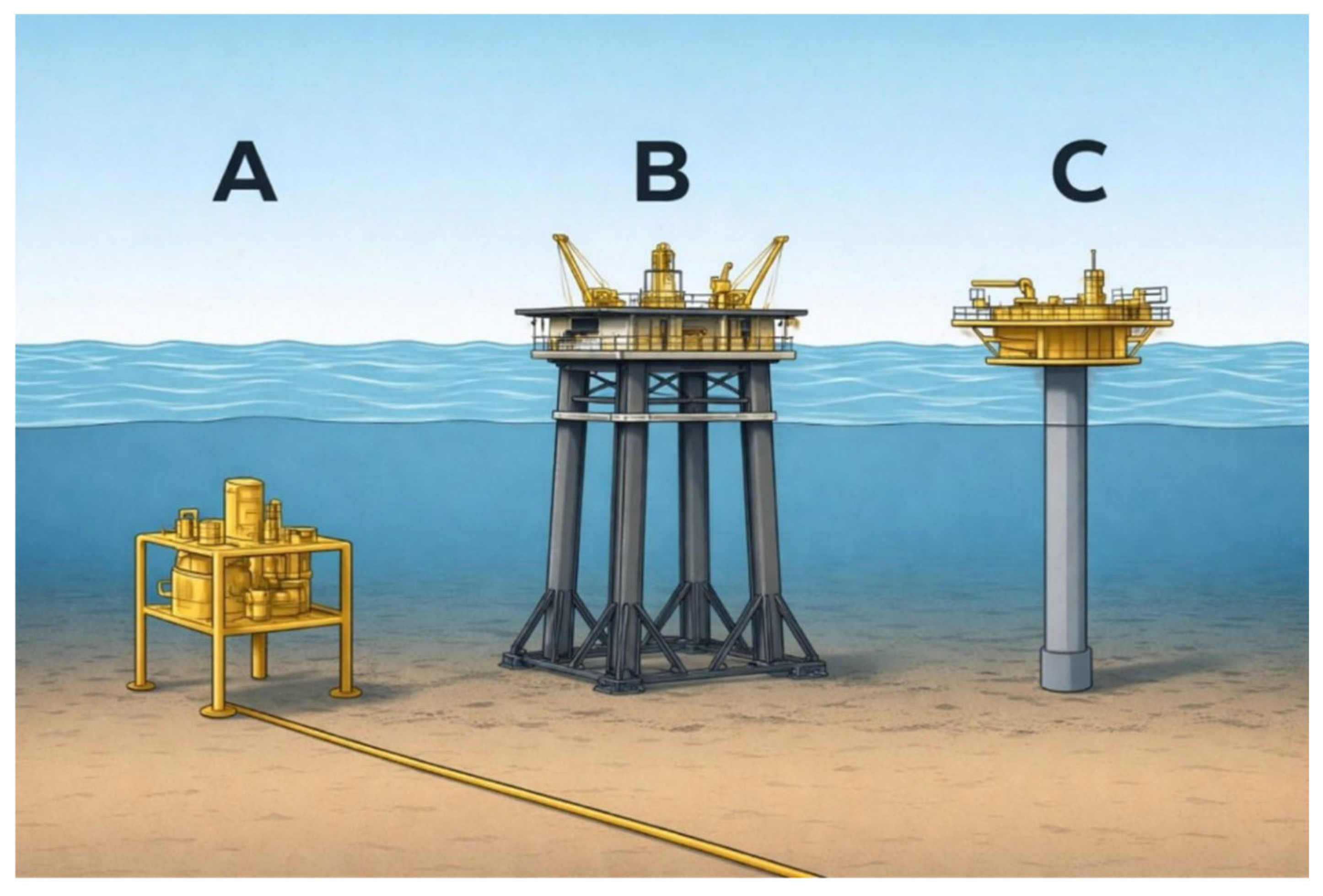
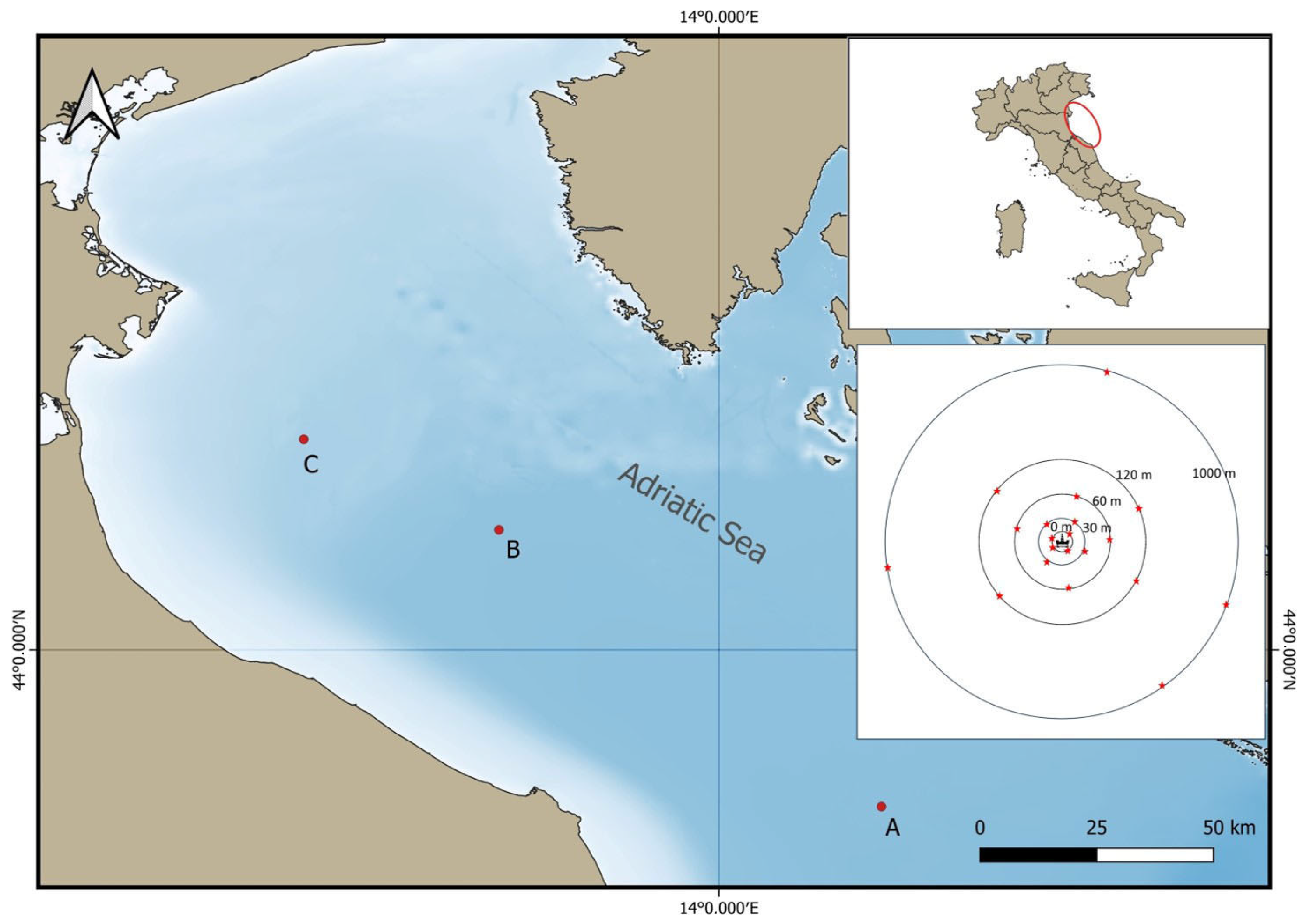
The present study provides a site-specific assessment of the spatial distribution and temporal variability of macrozoobenthic communities around three offshore gas structures with contrasting architecture (one subsea well-site, one four-leg platform, and one one-leg platform) using the far-field station (1000 m) as a local reference at each structure. Specifically, we investigated whether macrozoobenthic abundance, diversity, and community composition differ with distance from offshore structures across four post-installation surveys. This approach aims to assess whether the presence of the structures is associated with spatial or temporal changes in the surrounding macrozoobenthic community.
4. Discussion
The ecological role of offshore gas platforms in the Adriatic Sea is particularly relevant in light of the growing need for decommissioning decisions, as many installations dating back to the early 1960s are nearing the end of their productive life [
1,
37]. In predominantly soft-bottom settings, these structures function as artificial hard substrates, increasing local habitat heterogeneity both through their physical presence and through the accumulation of biogenic material on the seabed [
51,
52,
53,
54,
55]. As a result, they can support fouling communities and associated mobile fauna, with potentially important effects on benthic ecosystem structure and functioning. This highlights the need for science-based evidence on the spatial footprint and recovery trajectories of platform-related ecological changes to support informed environmental management [
16,
56].
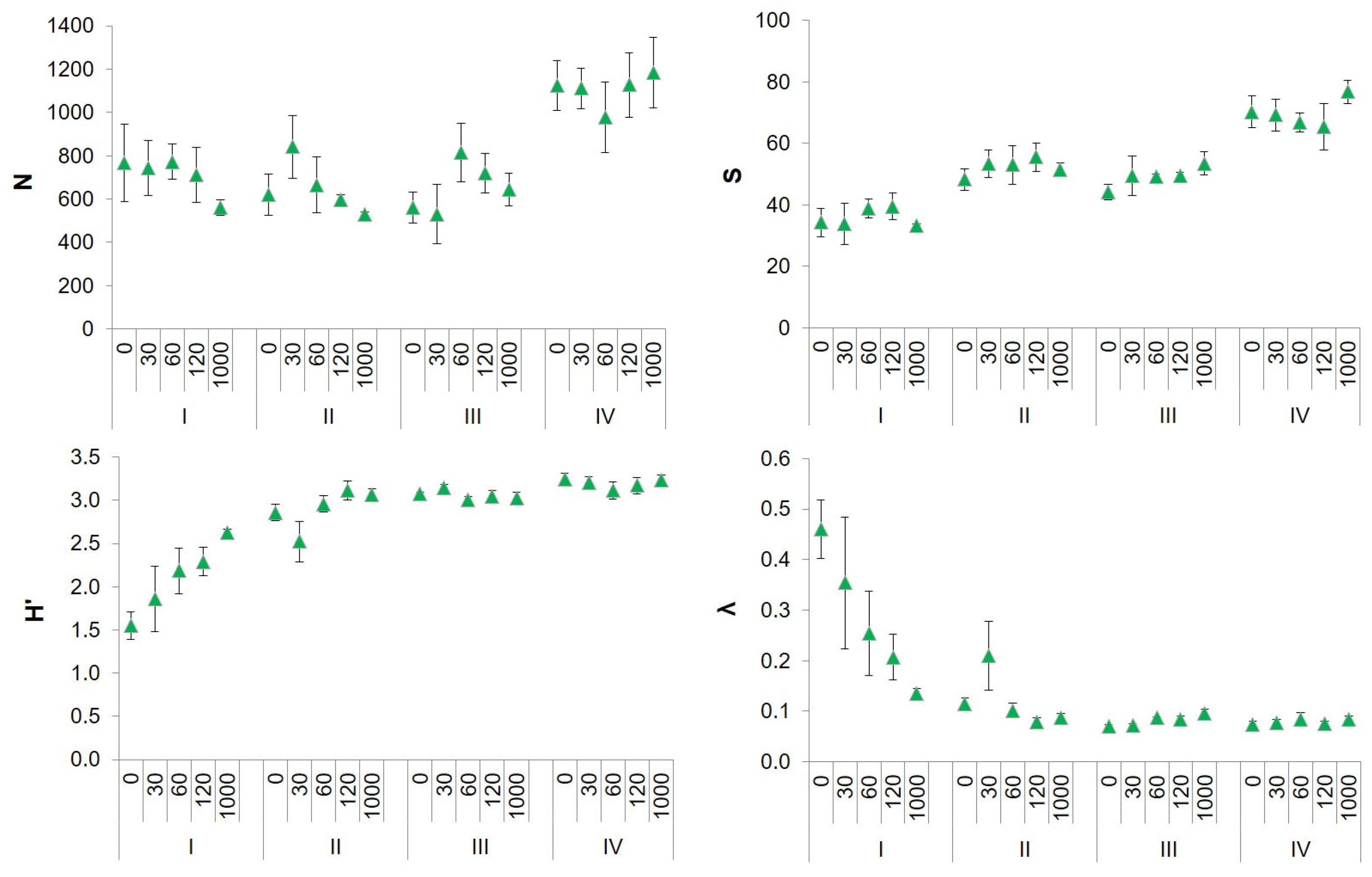
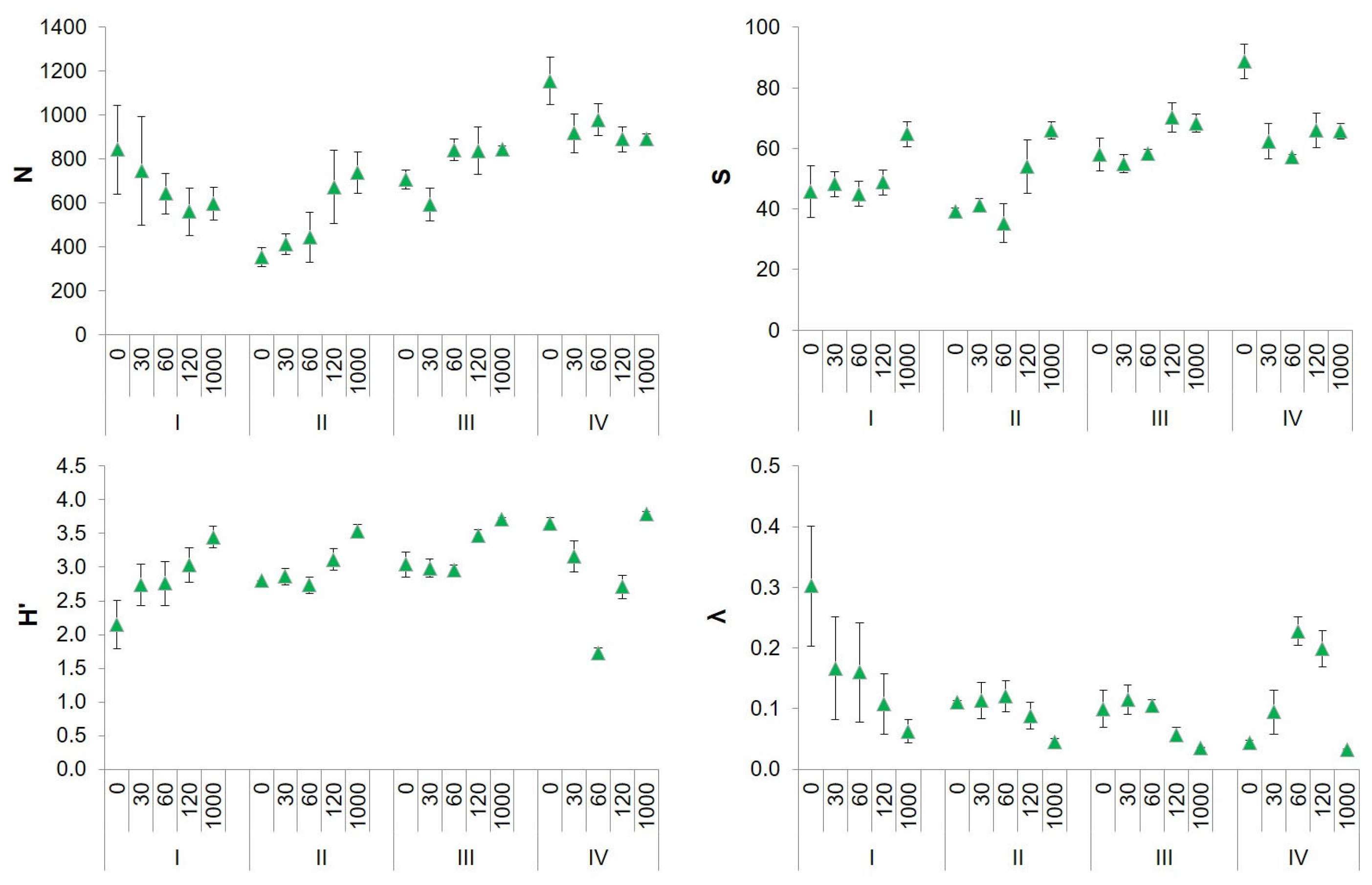
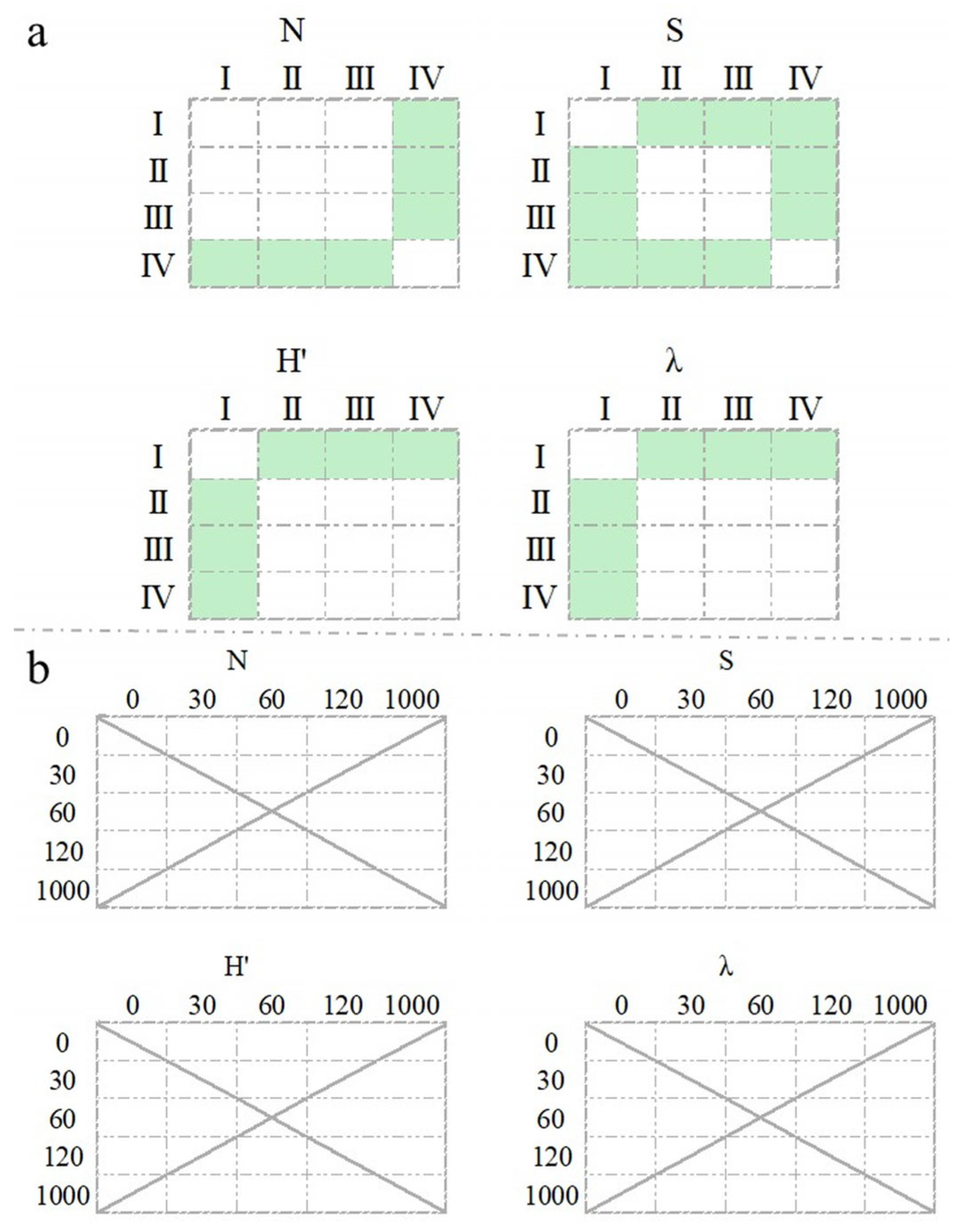
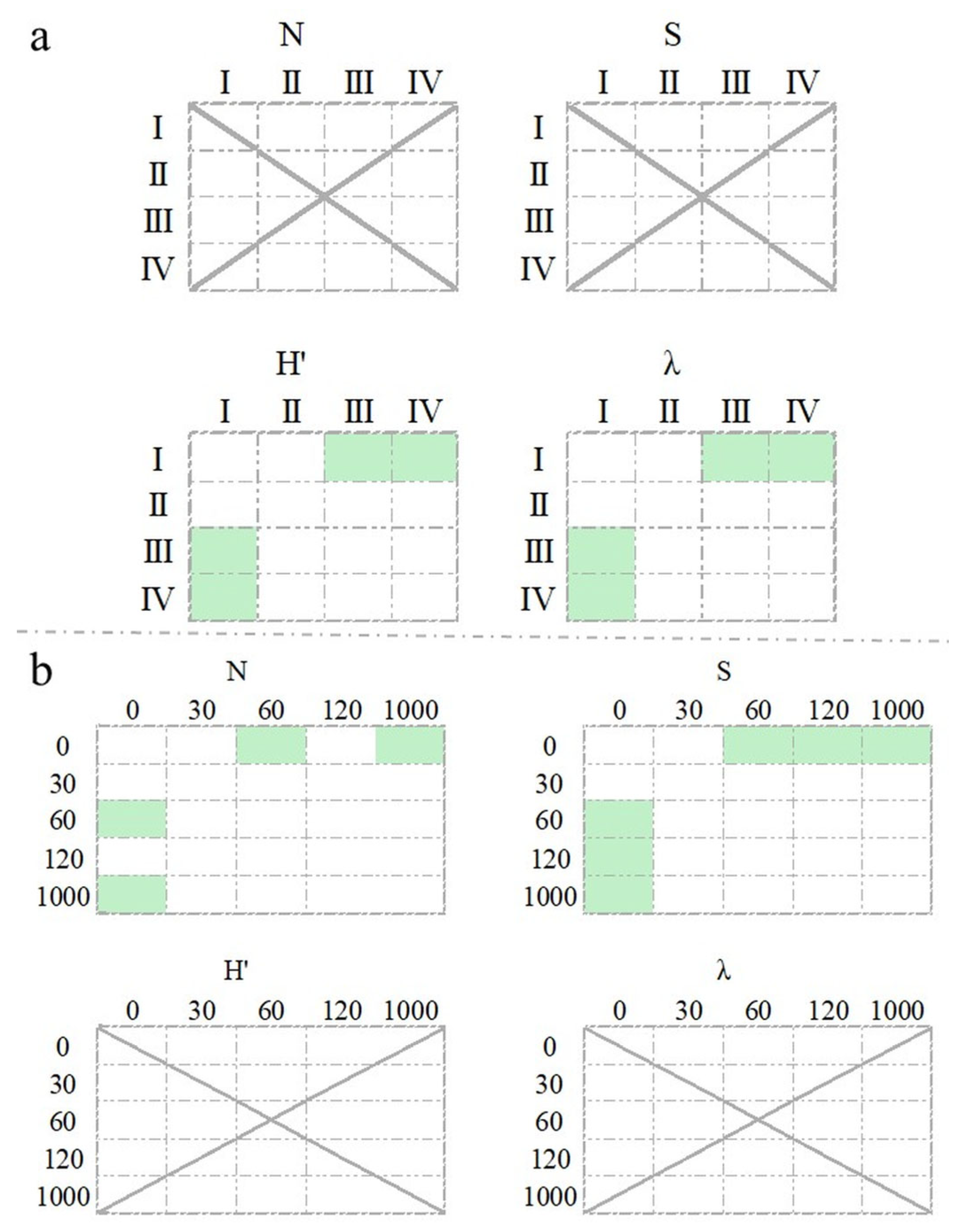
This study investigated the spatial and temporal variability of macrozoobenthic communities surrounding three offshore gas structures (one subsea well-site, one four-leg platform and one one-leg platform) in the Adriatic Sea. Both univariate and multivariate analyses highlighted spatial patterns and temporal changes in macrozoobenthic communities around structures with different architectural complexity. These patterns suggest that differences in community stock and composition among the three installations might be related, at least in part, to structural characteristics (e.g., size and shape). Nevertheless, given the different geographic settings, local environmental conditions are also likely to contribute to the observed variability.
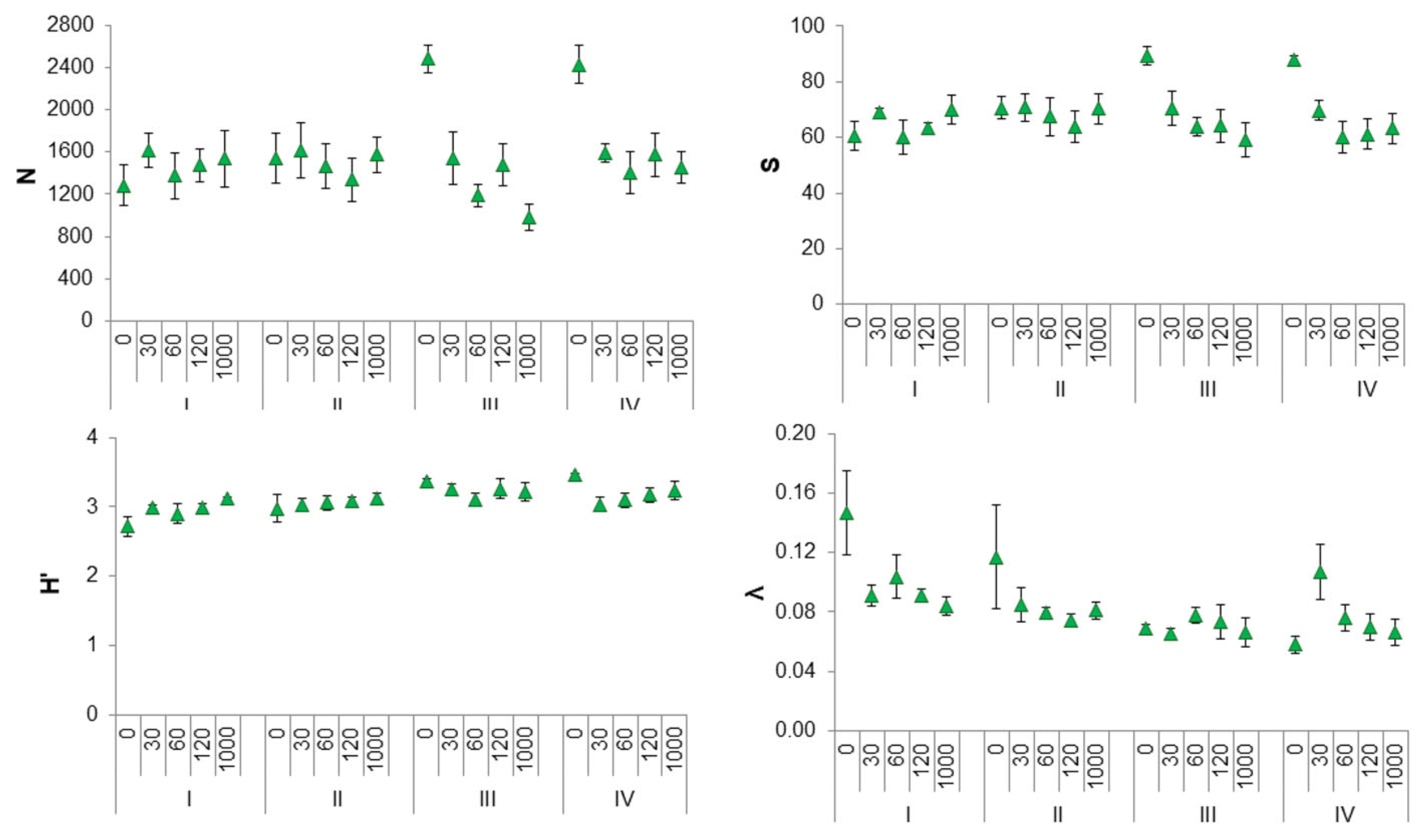
During the first survey carried out just after the structures’ installation, a low-diversity assemblage was recorded close to the well-site, as well as near the four-leg platform. In both cases, sediments close to the structures were dominated by the polychaete
Ditrupa arietina. This species is widely distributed across Mediterranean soft-bottom habitats, ranges from 0 to 150 m and is commonly considered a pioneer taxon that can increase in abundance during the development of transitional communities after environmental changes, such as dredging operations [
57]. Pérès and Picard [
58] also associated
D. arietina with unstable soft sediments. Altogether, these observations suggest that the dominance of
D. arietina during the early phase of the study may be linked to installation-related disturbance, supporting previous evidence that installation activities can substantially affect recipient benthic habitats [
8,
59,
60,
61,
62].
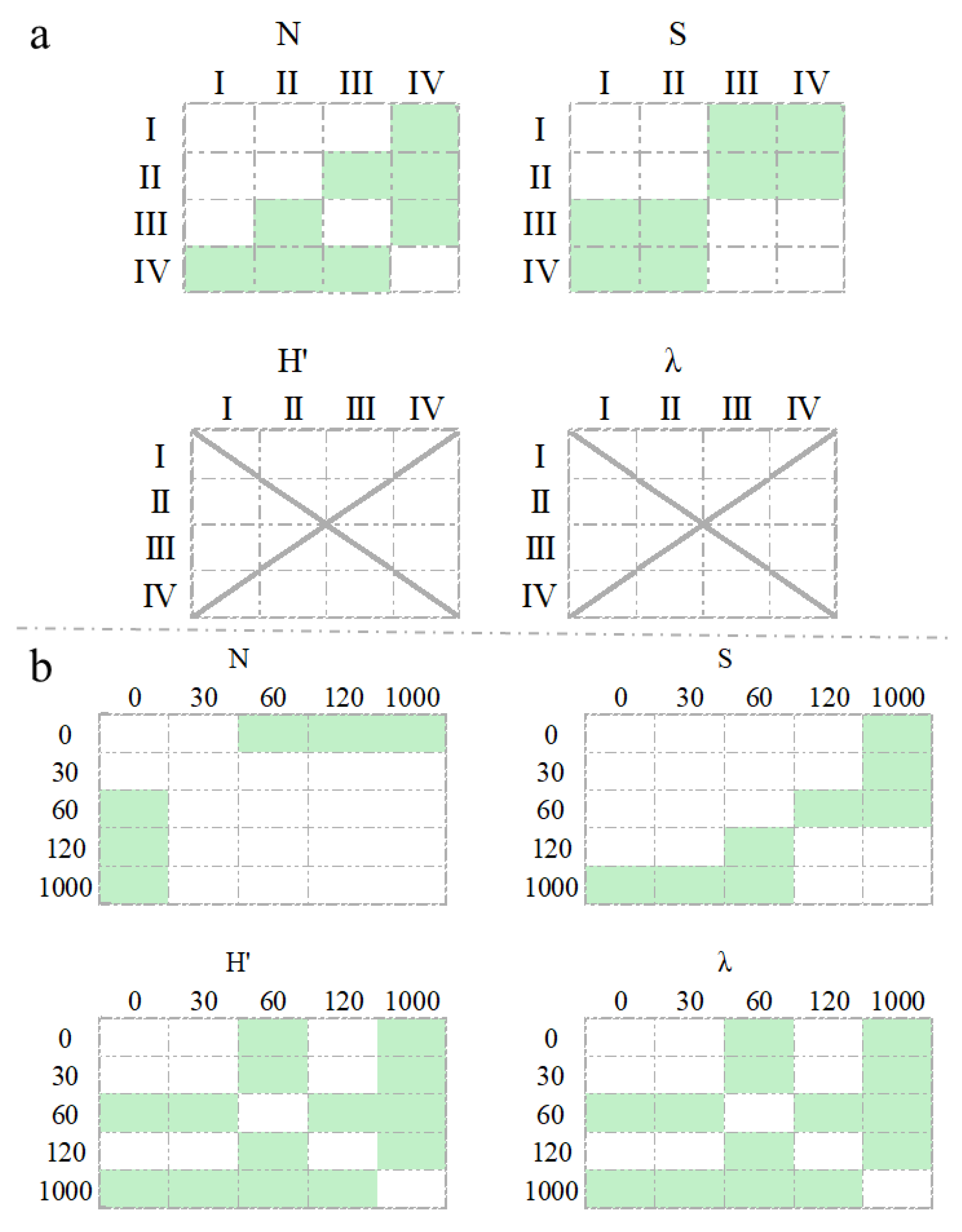
From the second survey onward at the well-site, community descriptors (N, S, H′ and λ) became more homogeneous among distances and generally increased (or decreased in the case of λ) towards the last survey. In contrast, close to the four-leg platform, slightly higher abundance and species richness values were evident only during the fourth survey. These results suggest that changes in macrozoobenthic communities following installation may occur faster around subsea well-site structures (months) than around larger platform typologies (≥2 years), potentially reflecting differences in the dimensions of the structures and the intensity/modality of installation and drilling activities. Similar recovery times have been reported for other Adriatic platforms at comparable depths [
8,
59].
At the one-leg platform, the timing and trajectory of change differed from those observed at the other installations. Signs of an early, installation-related impact on macrozoobenthos were not evident, and the community descriptors remained relatively homogeneous among distances during the first two surveys. From the third survey onwards, however, abundance and species richness increased at 0 m.
The pattern observed at both four- and one-leg platforms coincided with the development of a mussel/oyster mound (mainly
Mytilus galloprovincialis and
Neopycnodonte cochlear) generated by the fall of individuals from the submerged parts of the structures. Similar development of extensive fouling communities associated with offshore extraction platforms has been documented both in the Adriatic Sea and in other marine regions worldwide [
8,
39,
40,
63,
64,
65,
66,
67], confirming the role of these structures as suitable substrates for the establishment of complex hard-substrate associated communities. The development of such mussel mound can facilitate the establishment of diverse assemblages including both soft- and hard-bottom taxa (e.g., decapods
Pilumnus hirtellus,
Pilumnus spinifer and
Galathea spp.; bivalves
Hiatella arctica (Linnaeus, 1767) and
Anomia ephippium; and polychaetes
Hydroides spp. and
Spirobranchus triqueter). These results align with those reported from other seas around the world e.g., [
68,
69], indicating that the offshore platforms may locally modify macrozoobenthic community structure and diversity.
Some ecological effects observed near platforms resemble those associated with natural habitat-forming structures, such as seagrass meadows, kelp forests and coral reefs, which introduce three-dimensional structure into otherwise homogeneous environments. Despite differences in origin and scale, such erected structures are widely recognized for their role as ecosystem engineers, as they increase habitat complexity, alter local hydrodynamics, and facilitate the colonization and persistence of a variety of associated invertebrate taxa [
70,
71,
72]. Corroborating this, offshore platforms located in the “Area Barbare” (northern Adriatic Sea), a designated Zone of Biological Protection established by Italian legislation [
73], have been shown to function as spawning and nursery grounds for commercially important fish species.
However, apparent increases in macrozoobenthic abundance and biodiversity should be interpreted cautiously: they may reflect localized attraction or concentration processes and/or organic enrichment. In the Adriatic Sea, sedimentary organic matter analyses around offshore gas structures suggest limited spatial gradients in trophic status [
35], supporting the need to interpret benthic responses in the context of multiple, interacting mechanisms.
Overall, the present study confirms that geographic setting and ecological context can modulate both the magnitude and the timing of platform-related effects and post-installation resilience, as observed in previous Adriatic case studies e.g., [
8,
74]. From a management perspective, our findings provide useful insights to support fisheries management and marine spatial planning by improving the understanding of how offshore structures influence benthic ecosystems over time. They indicate that structural complexity, defined by size and shape, can differentially affect both the spatial extent of benthic changes and the time required to reach a more diverse and stable community. Although the present dataset is spatially and temporally limited, it highlights that platform effects are not uniform and can vary substantially among structures and settings, underscoring the importance of site-specific assessments in decision-making.




 ,
,