Article

Effects of Temperature and Organic Loading Rates on the Performance of an Anaerobic Sequencing Batch Reactor (ASBR) Treating High-Strength Food Waste Wastewater

1
College of Engineering, China Agricultural University, Beijing 100083, China
2
Key Laboratory of Clean Production and Utilization of Renewable Energy, Ministry of Agriculture, Beijing 100083, China
*
Authors to whom correspondence should be addressed.
Water 2026, 18(11), 1313; https://doi.org/10.3390/w18111313
Submission received: 29 April 2026 / Revised: 20 May 2026 / Accepted: 27 May 2026 / Published: 29 May 2026

Abstract

In 2024, China generated approximately 130 million tons of food waste. This study focuses on food wastewater characterized by exceptionally high organic strength (chemical oxygen demand (COD) > 80 g·L−1, total suspended solids (TSS) > 20 g·L−1) content. Conventional continuous stirred tank reactors (CSTRs) inherently couple hydraulic retention time (HRT) and sludge retention time (SRT), making them prone to microbial washout under high organic loading. To overcome this limitation, this study employed two anaerobic sequencing batch reactors (ASBRs) for treating such high-strength food wastewater. This study systematically evaluated the impacts of temperature (mesophilic: 37 °C and thermophilic: 55 °C) and organic loading rate (OLR) on fermentation performance. Under stable operation (OLR = 5.6 kgCOD·m−3·d−1; HRT = 16 days), the mesophilic ASBR achieved a specific methane yield of 307 mL CH4·gCODremoved−1, an average COD removal efficiency of 81%, and a volatile fatty acids-to-total alkalinity (VFA/TA) ratio of 0.2, indicating robust process stability. In contrast, the thermophilic ASBR exhibited a VFA/TA ratio of 0.5, signaling incipient acidification. Microbial community analysis revealed significantly higher bacterial and archaeal alpha diversity in the mesophilic system. Notably, Methanothrix—a versatile acetoclastic methanogen—dominated the mesophilic archaeal community (66.65%), conferring functional redundancy and resilience against organic shock loads. By contrast, the thermophilic system was overwhelmingly dominated by the hydrogenotrophic Methanothermobacter (99.28%), resulting in low functional diversity and structural fragility. Compared with a benchmark mesophilic CSTR (specific methane yield: 276 mL CH4·gCODremoved−1; COD removal efficiency: 70.6%), the mesophilic ASBR improved methane yield by 11%, COD removal efficiency by 15%, and operational stability (VFA/TA = 0.2 vs. 0.6). This work addresses a gap in ASBR applications for high-strength food wastewater treatment and provides experimental validation of the performance, stability, and scalability of mesophilic ASBRs. The proposed process represents a technically feasible, resource-efficient, and operationally robust solution for the valorization of organic wastewater with COD > 80 g·L−1 and TSS > 20 g·L−1.

1. Introduction

The rapid acceleration of urbanization in China has driven a steady annual increase in municipal solid waste (MSW) generation. In 2022, the national MSW collection volume reached 244 million tons, rising further to approximately 254 million tons in 2023. Among MSW components, food waste constitutes over 40% by weight, rendering it both the largest and most challenging fraction for urban waste management systems [1]. In 2024 alone, China generated 130 million tons of food waste annually, while its aggregate daily treatment capacity remained below 100,000 tons, highlighting a severe structural mismatch between generation volume and processing infrastructure.
Food waste is inherently characterized by high moisture content, elevated organic matter concentration, substantial lipid content, and pronounced susceptibility to microbial fermentation [2]. Without timely, efficient collection and appropriate disposal, it undergoes rapid spoilage during storage, transportation, and pre-treatment staging—thereby generating secondary environmental hazards, including leachate contamination, greenhouse gas emissions (notably CH4 and N2O), and persistent malodorous compounds [3]. Consequently, developing robust, scalable, and operationally stable treatment strategies for food waste has emerged as a critical research priority at the intersection of environmental sustainability and circular bioenergy development.
Current resource-oriented treatment technologies primarily encompass aerobic composting and anaerobic digestion. While aerobic composting yields stabilized organic amendments, its end products face constraints such as limited agronomic application due to nutrient imbalance and potential heavy metal accumulation risks. In contrast, anaerobic digestion simultaneously achieves volume reduction in organic substrates and energy recovery via biogas—making it widely recognized as a technologically mature and environmentally favorable pathway for food waste valorization [3]. In China, the continuous stirred tank reactor (CSTR) configuration remains the dominant engineering platform for large-scale food waste digestion. Given the persistent and widening gap between food waste generation and treatment capacity, advancing rapid, reliable, and high-rate digestion processes is not only scientifically urgent but also of immediate practical significance.
However, shortening the hydraulic retention time (HRT) in conventional CSTRs leads to washout of activated sludge with the effluent, resulting in substantial loss of functional biomass. This compromises both system start-up kinetics and resilience to organic loading shocks; for readily biodegradable substrates such as food wastewater, it further heightens susceptibility to volatile fatty acid (VFA) accumulation and subsequent acidification. This is the fundamental reason underlying the engineering practice of setting HRT to 30 days. Moreover, when applied to high-strength organic wastewaters like food wastewater, traditional CSTRs typically yield effluents with elevated concentrations of chemical oxygen demand (COD) [4], total solids (TS), and volatile solids (VS) [5], reflecting incomplete substrate degradation and insufficient biodegradability. Consequently, such systems struggle to meet the operational requirements of efficiency, rapidity, and long-term stability [6]. This limitation stems fundamentally from the inherent inability of the CSTR configuration to decouple HRT from solid retention time (SRT): without physical or hydraulic SRT extension, anaerobic microorganisms, particularly slow-growing methanogens, cannot be retained adequately, leading to low biomass concentration, prolonged start-up periods, and suboptimal energy conversion efficiency [6]. Thus, poor effluent quality combined with excessively long HRTs severely constrains the CSTR’s suitability for rapid, high-rate fermentation of food wastewater.
The upflow anaerobic sludge blanket (UASB) and anaerobic sequencing batch reactor (ASBR) can achieve separation of SRT and HRT to achieve shorter HRT. However, UASB performs well when the total suspended solids (TSS) concentration is below 1.5 g L−1. When TSS is too high, its fermentation performance significantly decreases [7]. Ángel treated municipal wastewater in a UASB reactor with an influent TSS of 0.3 g L−1 and achieved a maximum TSS removal efficiency of 90% [8]. Akinori treated water hyacinth juice in a UASB reactor with a TSS of 1.1 g L−1 (up to 1.5 g L−1) and obtained a TSS removal efficiency of 76% [9]. An increase in TSS reduces the fermentation performance of the UASB reactor. Since the TSS of food wastewater is as high as 22.80 g L−1, volatile suspended solids (VSS) is as high as 18.30 g L−1, UASB is not suitable for its treatment.
In contrast, the ASBR demonstrates good adaptability in treating high-suspended-solid and low-concentration organic wastewater due to its advantages of a high aspect ratio, good solid–liquid separation efficiency, simple operation, low cost, and flexible operation mode [10]. In one operating cycle, the ASBR comprises four phases: feeding, reaction, settling, and decanting. Among the four phases of the ASBR, the settling phase is where the separation of HRT and SRT is achieved. Through sedimentation, the activated sludge and undegraded suspended solids are settled. This increases the SRT and the retention time of TSS. Consequently, microbial retention is achieved, and the organic matter degradation efficiency is enhanced. In addition, microbial retention enables rapid system start-up and improves the system’s ability to withstand organic loading rate (OLR) shocks.
However, ASBR is currently commonly used for treating low-concentration wastewater, and the COD of fermentation feedstocks is generally below 25 g/L, such as cheese wastewater [11] and biodiesel wastewater [12]. In this study, the COD of the food waste was as high as 95 g/L. Concerning ASBRs, systematic studies on their performance in treating high-strength food wastewater remain relatively limited, particularly regarding the effects of temperature and OLR. Temperature affects the gas production performance, organic matter degradation efficiency, and system stability. Generally, high temperatures achieve higher gas production and better degradation efficiency [13]. For anaerobic fermentation of high-concentration organic matter, high-temperature fermentation usually enhances system performance [14], but it may also reduce system stability. OLR reflects the organic matter concentration in the feed. When the OLR is too high, the system must handle more organic matter per unit time. This increases the generation rate of volatile fatty acids (VFAs). If methanogens cannot consume these VFAs in time, acidification may occur, leading to system instability [15]. Therefore, selecting appropriate temperature and OLR is crucial for stable system operation and improved fermentation performance.
In this study, untreated high-strength food wastewater was employed as the sole substrate. ASBRs were operated under two temperature regimes (mesophilic: 35 °C; thermophilic: 55 °C) and three OLR levels. The biogas production performance, organic matter removal efficiency, and system stability were systematically investigated to elucidate the effects of temperature and OLR on the fermentation performance of the ASBR. This work addresses a gap in ASBR application for high-strength organic wastewaters and advances the feasibility of rapid, stable, and energy-positive treatment of food wastewater.

2. Materials and Methods

2.1. Materials

The substrate for the anaerobic fermentation experiment was food wastewater. It is from the liquid phase obtained after screening, crushing, three-phase centrifugation, and degreasing of food waste. It was taken from a food waste treatment company in Tianjin, China. The inoculum was taken from the anaerobic fermentation effluent of a mesophilic anaerobic fermentation reactor in a large-scale sewage treatment plant biogas project in Beijing, China. Key physicochemical characteristics of both substrate and inoculum are summarized in Table 1.

2.2. Experimental Setup

This experiment employed the ASBR process for anaerobic fermentation treatment of food wastewater. And the traditional CSTR process was used for mesophilic fermentation of food wastewater to compare its performance with the mesophilic ASBR process.
The ASBR had a total volume of 10 L, an effective volume of 8 L, and a height-to-diameter ratio of 5:1. A schematic diagram of its structure is shown in Figure 1. During operation, continuous feeding and discharging were achieved using bottom feeding and top overflow. The reaction temperature was precisely controlled by a recirculating water bath system. The produced biogas was collected using gas bags, and the methane content of the biogas was determined by gas chromatography, while the biogas volume was measured using a gas flow meter.
The CSTR had a total volume of 10 L and an effective volume of 8 L. A recirculating water bath was used for heating to maintain the reactor temperature. Biogas was collected using gas bags, and the methane content and biogas volume were determined by gas chromatography and a gas flow meter, respectively.

2.3. Experimental Design

The two ASBRs were operated under mesophilic (37 °C) and thermophilic (55 °C) conditions, respectively. The feed and discharge cycle of the system was 1 day. Feeding and decanting took 1 h, reaction lasted 21 h, and settling took 2 h.
The entire operation was divided into four stages. In the startup stage, the OLR was 2.6 kgCOD m−3 d−1. The reactor was started with full sludge, and the food wastewater was diluted, which served two purposes. First, it enabled rapid startup. It could accelerate the achievement of fermentation effectiveness and sludge stabilization. It also prevented acidification. Second, dilution allowed investigation of the system’s fermentation performance under low-concentration operation. The subsequent experiments could proceed only if the treatment of low-concentration food wastewater met the requirements. This approach avoided startup failure or poor fermentation performance. Subsequently, the system entered the medium-loading stage (by increasing the TS), high-loading stage (by decreasing the HRT), and recovery stage (by increasing the HRT). At each stage, after the reactor parameters had stabilized. The operation continued for two to three additional HRTs to evaluate the stable operation and fermentation performance. When the reactor experienced VFAs accumulation or system acidification, measures such as base addition and sludge inoculation were taken to restore methanogen activity and achieve stable fermentation. Then the OLR was returned to a level close to that of the medium-loading stage. Specific operating parameters are shown in Table 2. The HRT in this experiment was longer than that of traditional ASBRs. Because this study focused on high-strength food wastewater, with a COD far higher than that of traditional ASBR treatment targets.
The results showed that the mesophilic ASBR exhibited good fermentation performance and higher stability at an OLR of 5.2~5.6 kgCOD m−3 d−1. Based on this, the CSTR system was started with low-loading full sludge at an OLR of 3.0 kgCOD m−3 d−1 under mesophilic conditions to ensure stable startup and avoid system acidification. After the system stabilized, the OLR was increased to the same parameter level as the ASBR (OLR = 5.6 kgCOD m−3 d−1, HRT = 16 days, TS = 6.2%) for comparative analysis with the mesophilic ASBR fermentation system. After the system reached steady state, the OLR was increased by reducing the HRT. When the OLR reached 8.3 kgCOD m−3 d−1 (HRT = 12 days, TS = 6.2%), acidification occurred in the CSTR system. During the subsequent recovery phase, the HRT was increased to 16 days, correspondingly decreasing the OLR to 5.6 kgCOD m−3 d−1. The fermentation performance was evaluated during the recovery phase, and the results are presented in Table 3. The feed and discharge cycle of the CSTR was 1 day.

2.4. Analytical Methods

TS and VS were measured using the drying method and the ignition method. TSS and VSS were determined after filtration using the drying method and the ignition method. TS, VS, TSS and VSS followed the APHA Standard Methods 2540 [16]. COD and soluble chemical oxygen demand (SCOD) were measured after digestion using Lianhua reagent kits and a digester (HACH DRB200, Hach, USA) at a wavelength of 610 nm (according to HJ 828-2017) [17]. The pH value was measured using a Mettler-Toledo acidity meter (FE 20, Mettler toledo, Switzerland) [18]. According to APHA 5560, VFAs were determined by Agilent 7890B GC System (Agilent, Santa Clara, CA, USA) [19]. The volatile fatty acid/total alkalinity (VFA/TA) ratio was determined by titration with 0.05 mol L−1 dilute sulfuric acid [20]. Biogas yield was measured using a wet gas flow meter LML-2 (Beijing Jinzhi, Beijing, China). Methane content was determined using gas chromatography (SHIMADZU GC-2010, Shimadzu, Japan) following ASTM D1946 [21]. The bacterial and archaeal community structures were analyzed using high-throughput 16S rRNA sequencing technology. Samples of the microbial community were collected during the recovery stage of ASBR.
This study employed Origin 2024 SR1 (version number: V10.10.178) software to process and plot graphs, and applied IBM SPSS Statistics 27 (version number: V27.0.1.0) software to conduct variance analysis on the experimental data.

3. Results and Discussion

3.1. Methanogenic Performance

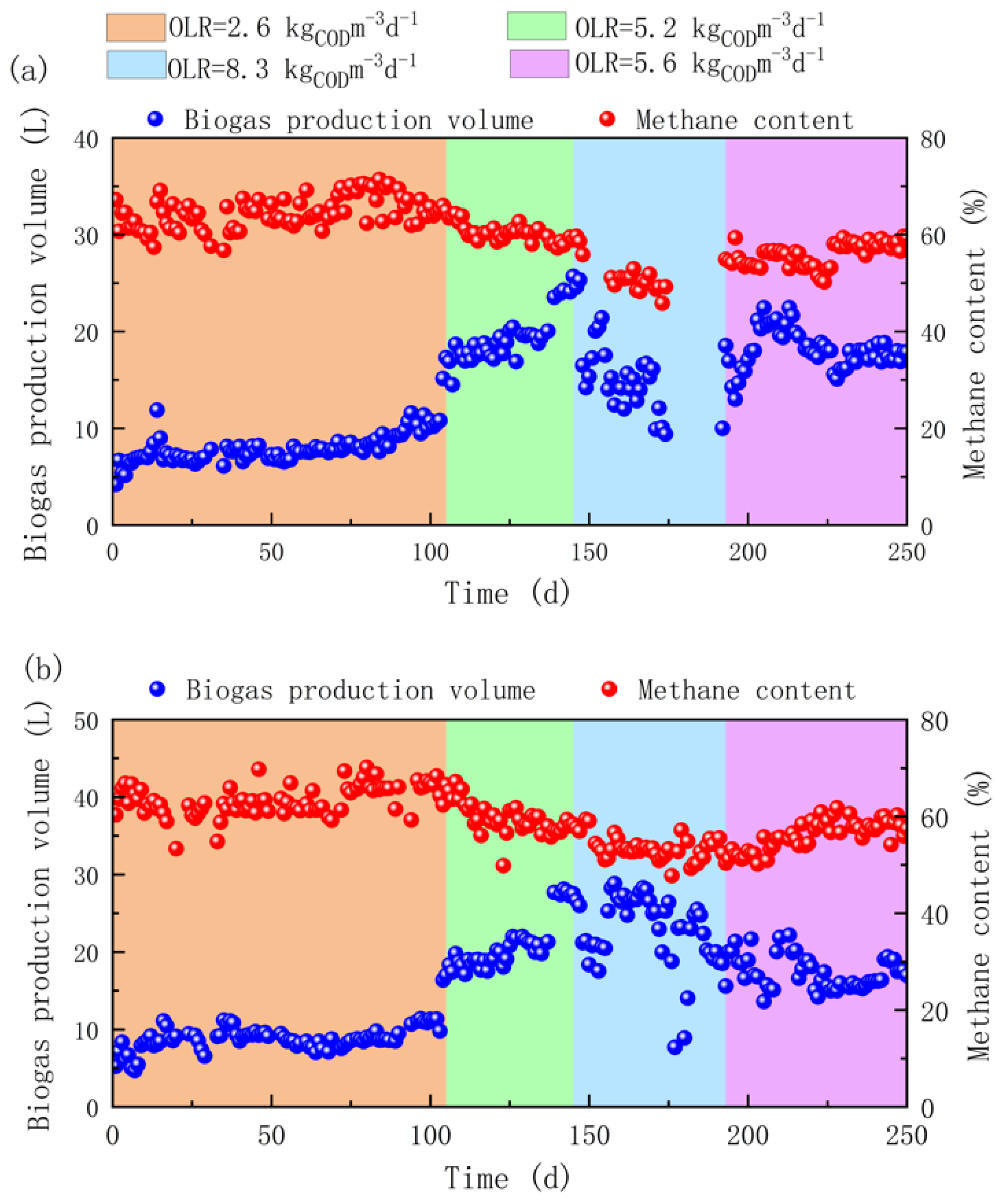
Figure 2a,b shows the trends in daily biogas production and methane content. During the startup stage, both biogas production and methane content fluctuated considerably. This was because the sludge was not fully acclimated. The acid degradation rate within the fermentation system was lower than the acid production rate, causing system fluctuations. The thermophilic fermentation system exhibited smaller fluctuations. Possibly because the high temperature promoted the decomposition of macromolecular organic substances and resulted in higher hydrolytic and acidogenic efficiency [22], allowing the thermophilic system to adapt to the food waste substrate more quickly [23]. As the system operated, the methanogenic efficiency of the sludge improved, and the fermentation system stabilized.
During the medium-loading stage, the specific methane production rates of the mesophilic and thermophilic systems were 320 mL CH4 gCODremoved−1 and 347 mL CH4 gCODremoved−1, respectively. The methane production rate of the thermophilic system was 8.4% higher than that of the mesophilic system. The mesophilic ASBR system achieved a methane production rate 16–26% higher than that of the mesophilic CSTR treating food wastewater under the same conditions, which was 276 mL CH4 gCODremoved−1. Using an ASBR, Mekonnen et al. reported a methane yield of 170 mL CH4 gCODremoved−1 under a low organic loading rate (OLR = 1.03 kgCOD m−3 d−1) [24], which is markedly lower than the methanogenic performance achieved in this study. This discrepancy likely arises from the fact that such a low OLR hinders rapid startup and fails to provide sufficient nutrients for microorganisms. During the medium-loading stage, the methanogenic performance agreed with Bi’s study, and the high-temperature system achieved better methane production [25].
During the high-loading stage with an OLR of 8.3 kgCOD m−3 d−1, biogas production initially increased in both the mesophilic and thermophilic systems when the OLR was first raised. However, as the reaction proceeded, biogas production declined, and methane content decreased simultaneously. This was because the food wastewater itself had a high organic acid content and low pH. The increase in OLR led to a high acid content in the feed, and the rate of H2 production and acidogenesis was lower than the consumption rate by methanogens. The imbalance led to rapid accumulation of organic acids and a sharp drop in pH inside the reactor, resulting in system acidification and inhibition of biogas production [26]. To mitigate the acidification issue, the pH of the food wastewater was adjusted to around 7 by adding alkali [27]. After operating for a certain period, the mesophilic fermentation system experienced increasingly severe acidification and eventually ceased biogas production. The acidification problem in the thermophilic fermentation system was alleviated, but biogas production fluctuated significantly and showed an overall declining trend. The experimental results indicated that both the mesophilic and thermophilic fermentation systems could not adapt to high-loading operation, and ASBR operation under high-loading conditions for biogas production is not recommended.
During the recovery stage, after supplementing with anaerobic sludge and reducing the OLR to 5.6 kgCOD m−3 d−1, the fermentation system returned to a stable operating state. The specific methane production rates under stable conditions for the mesophilic and thermophilic fermentation systems were 307 mL CH4 gCODremoved−1 and 306 mL CH4 gCODremoved−1, respectively. Compared with the medium-loading stage the biogas production rate of the mesophilic and the thermophilic fermentation system during the recovery stage was lower than that during the medium-loading stage. A possible reason is that the acidification conditions altered the microbial community structure of the system, reducing the abundance of methanogens and decreasing the metabolic efficiency of organic acids and H2, thereby reducing methanogenic efficiency [28]. The mesophilic ASBR process achieved 11% higher methane production than the mesophilic CSTR process. In the recovery stage, the methanogenic performance differed from BI’s study [25], the mesophilic and thermophilic systems showed no obvious difference in gas production. This likely resulted from acidification, which increased the abundance of hydrolytic acidifying bacteria and consequently reduced the efficiency of the methanogenic community.

3.2. Performance of the Organics Degradation

3.2.1. Performance of COD Degradation

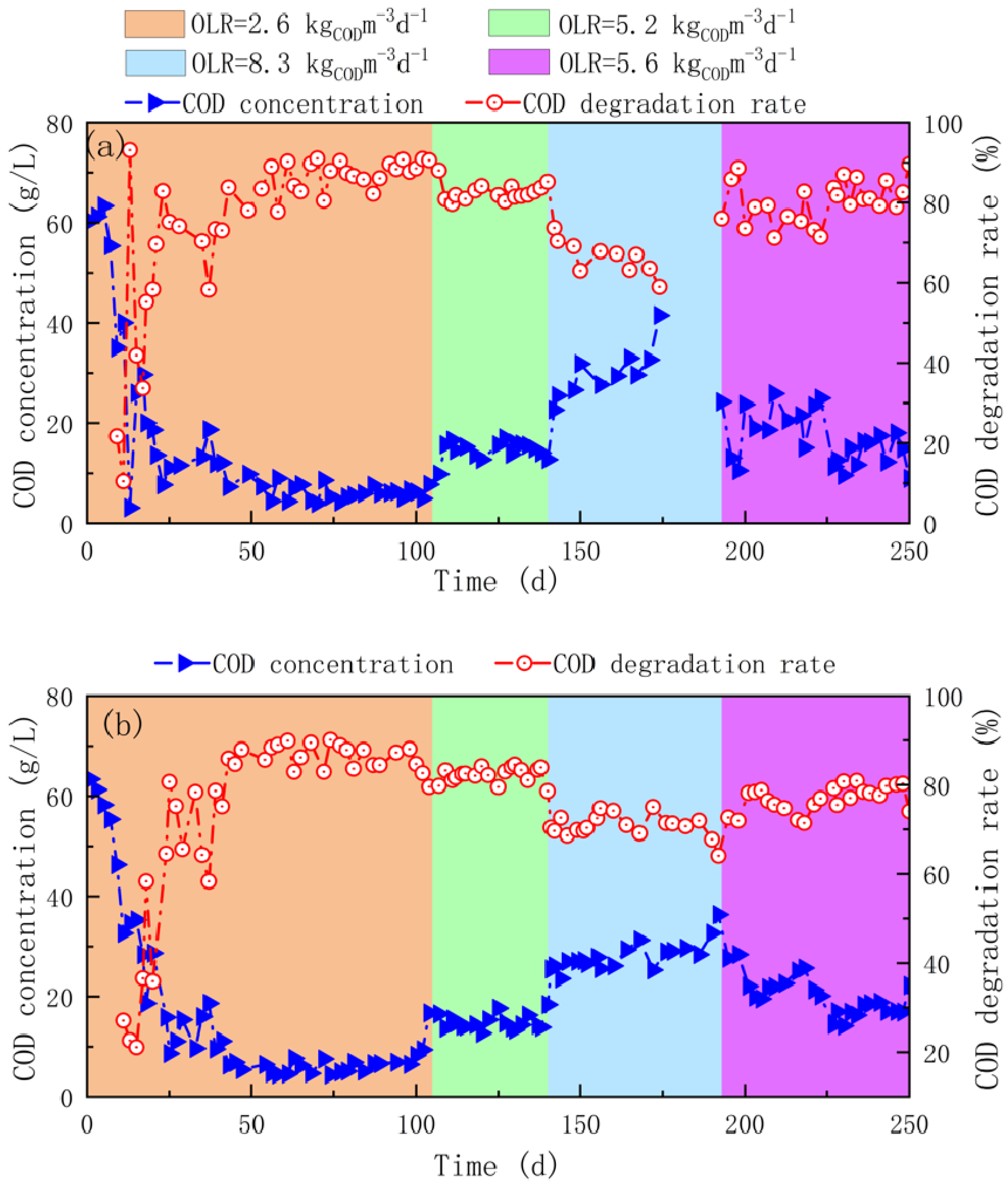
Figure 3 shows the COD concentration and COD degradation efficiency of the ASBR fermentation effluent during the treatment of food wastewater under mesophilic and thermophilic conditions. The COD removal efficiency during the startup stage reached 86%, indicating good organic matter degradation. After the OLR was increased to 5.2 kgCOD m−3 d−1, the average COD of the effluent from the mesophilic and thermophilic fermentation systems was less than 16.5 g L−1, with a COD degradation efficiency of 82%. The SCOD concentration of the mesophilic system was 2.34 g L−1, while that of the thermophilic system was 5.24 g L−1. The SCOD removal efficiency of the mesophilic system (95.68%) was significantly higher than that of the thermophilic system (90.32%). The higher SCOD concentration in the thermophilic system was attributed to the high temperature promoting the conversion of large organic molecules into smaller organic compounds [22], while the thermophilic conditions also facilitated rapid utilization of small organic molecules by microorganisms [29], achieving rapid conversion of COD to SCOD, resulting in a higher SCOD concentration. Pereira et al. treated biodiesel wastewater using an ASBR. When the OLR was below 5.1 kgCOD m−3 d−1, they achieved COD removal efficiencies ranging from 41% to 57% [12]. In contrast, the present study attained COD removal rates exceeding 80%. This discrepancy may be attributed to the higher biodegradability of food wastewater and the lower abundance of inhibitory substances in its feedstock.
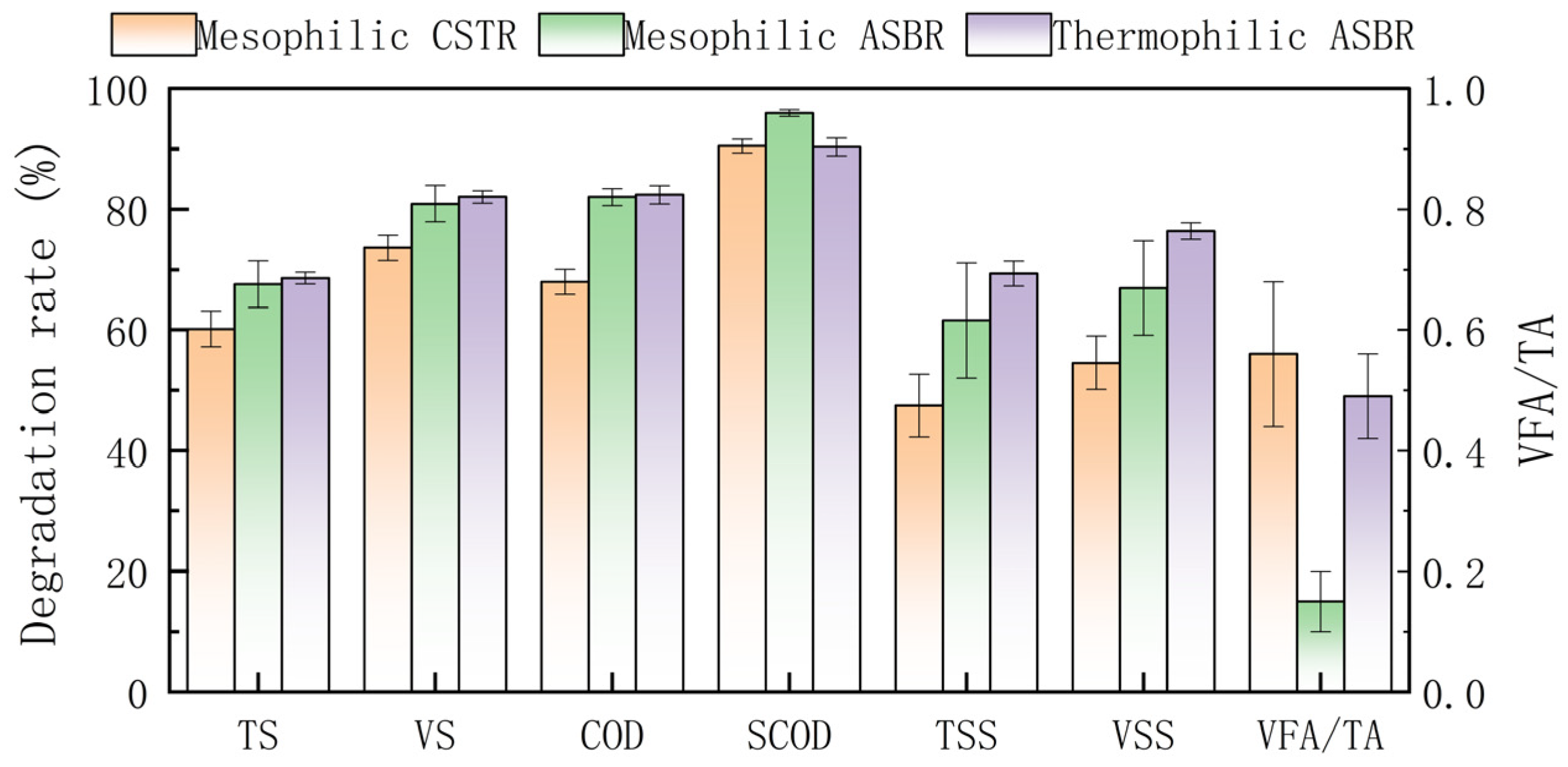
Figure 4 compares the organic matter degradation efficiency of different fermentation systems under stable fermentation conditions. The COD and SCOD removal efficiencies of the mesophilic ASBR system were significantly higher than those of the mesophilic CSTR system (70.56% and 90.60%, respectively). This result indicates that the settling phase of the ASBR system achieved effective separation of HRT and SRT, leading to higher COD degradation performance.
When the OLR was 8.3 kgCOD m−3 d−1, acidification occurred, resulting in high effluent COD concentrations and low COD removal efficiencies in both the mesophilic and thermophilic systems. The maximum COD exceeded 40 g L−1, the lowest COD removal efficiency was below 50%, and the maximum SCOD/COD ratio exceeded 50%. This was attributed to the excessively high OLR. Such an OLR increased the amount of organic matter to be treated per unit time. Consequently, a severe imbalance occurred between hydrolysis/acidogenesis and methanogenesis. This imbalance led to substantial accumulation of VFAs and a significant rise in SCOD concentration, ultimately resulting in system acidification [30]. In the study by Pereira et al., the OLR was increased to 9.6 kgCOD m−3 d−1. Under this condition, their COD removal efficiency rapidly declined to less than 20% [12]. This finding is consistent with the results of the present study. Under high OLR conditions, COD degradation efficiency decreases sharply, indicating that such a process is no longer suitable for the treatment of organic waste.
During the recovery stage, after the OLR was reduced back to the medium-loading level and other operating conditions were maintained, the system initially experienced some fluctuations. COD concentration and removal efficiency were maintained at approximately 19 g L−1 and 77%, respectively. The SCOD removal efficiencies of the mesophilic and thermophilic systems recovered to 95.98% and 86.84%, respectively. A slight decrease in removal efficiency was observed after acidification, mainly because the acidification stage led to an increased abundance of hydrolytic and acidogenic bacteria, enhancing hydrolysis and acidogenesis efficiency, while methanogenic efficiency decreased [31].

3.2.2. Performance of TS Degradation

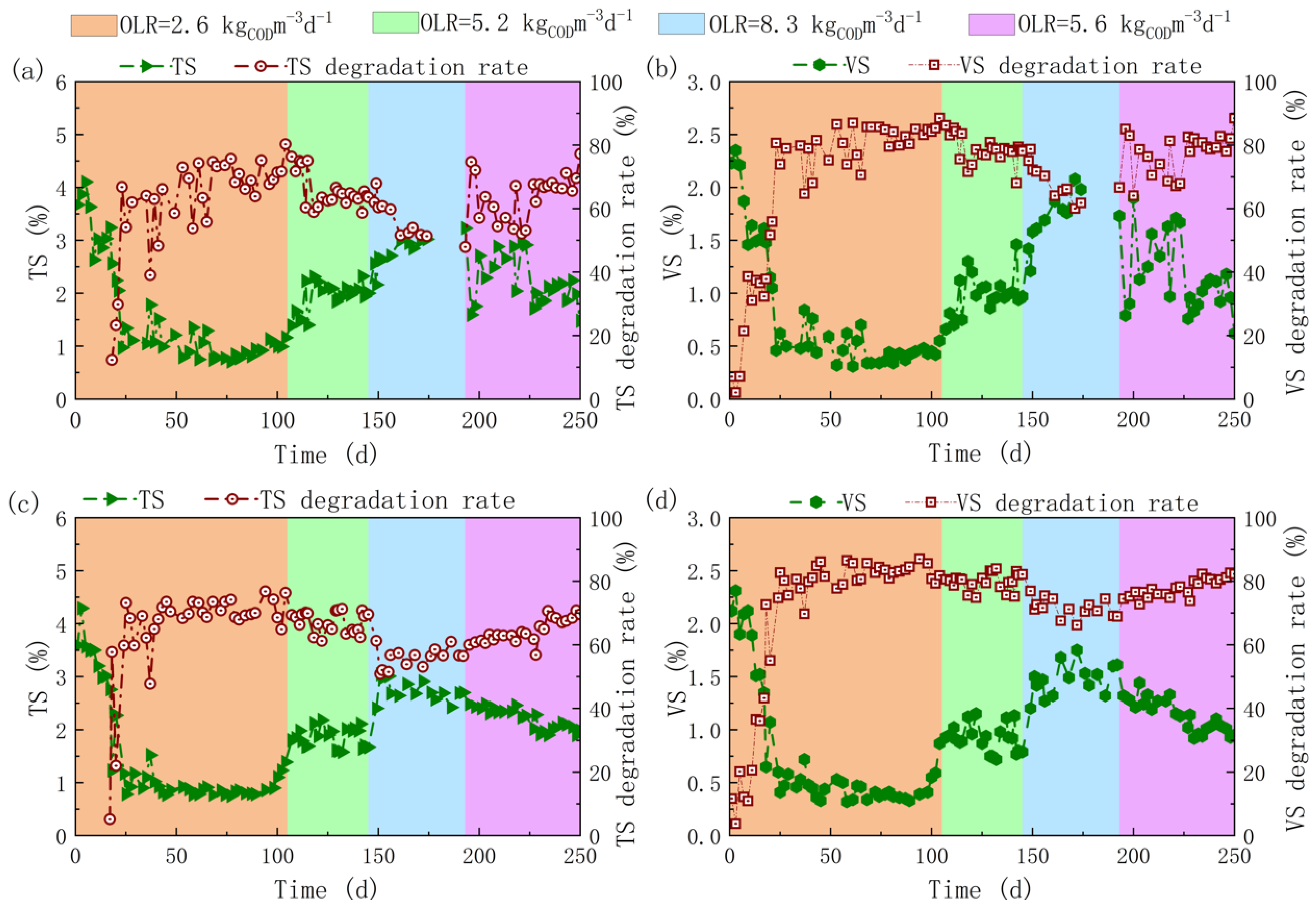
Figure 5 shows the TS, VS, and their corresponding removal efficiencies in the ASBR fermentation effluent during the treatment of food wastewater under mesophilic and thermophilic conditions. When the OLR was 5.2 kgCOD m−3 d−1, the effluent TS and VS concentrations of the mesophilic fermentation system were 2.0% and 1.0%, respectively, while those of the thermophilic fermentation system were 1.9% and 0.9%, respectively. The TS and VS removal efficiencies of both the mesophilic and thermophilic systems remained above 65% and 79%, respectively, significantly outperforming the mesophilic CSTR fermentation system under the same OLR level (60.13% and 74.73%). It indicates that the settling function of the ASBR facilitates the retention of microorganisms and organic matter. When the OLR was 8.3 kgCOD m−3 d−1, acidification led to increased effluent TS and VS concentrations and decreased TS and VS removal efficiencies, with the minimum TS removal efficiency falling below 50%. During the stable period of the recovery stage, the effluent TS removal efficiency of the mesophilic and thermophilic fermentation systems recovered to above 65%, and the VS removal efficiency recovered to above 80%.

3.2.3. Performance of TSS Degradation

Table 4 shows the TSS and VSS degradation rate of different fermentation systems under medium-loading and recovery conditions. Under medium-loading and recovery stage, the thermophilic system achieved higher TSS and VSS removal efficiencies, which can be attributed to the enhanced hydrolysis and acidification of organic matter under high-temperature conditions [29], leading to greater TSS and VSS degradation. During the recovery stage, the TSS degradation rate VSS degradation rate were slightly higher than those observed during the medium-loading stage, indicating that acidification altered the microbial community structure of the system, with a relatively higher abundance of hydrolytic and acidogenic bacteria, leading to improved organic matter degradation efficiency [31]. Since organic matter in food wastewater exists primarily in the TSS form, the degradation efficiency of organic matter consequently increased. Under high-loading operation, both TSS and VSS removal efficiencies decreased, because the methanogenic performance of the system declined, resulting in less utilization of organic matter and more residual organic matter remaining in the reactor.

3.3. Stability Performance of the ASBR

3.3.1. Variation in Effluent VFAs

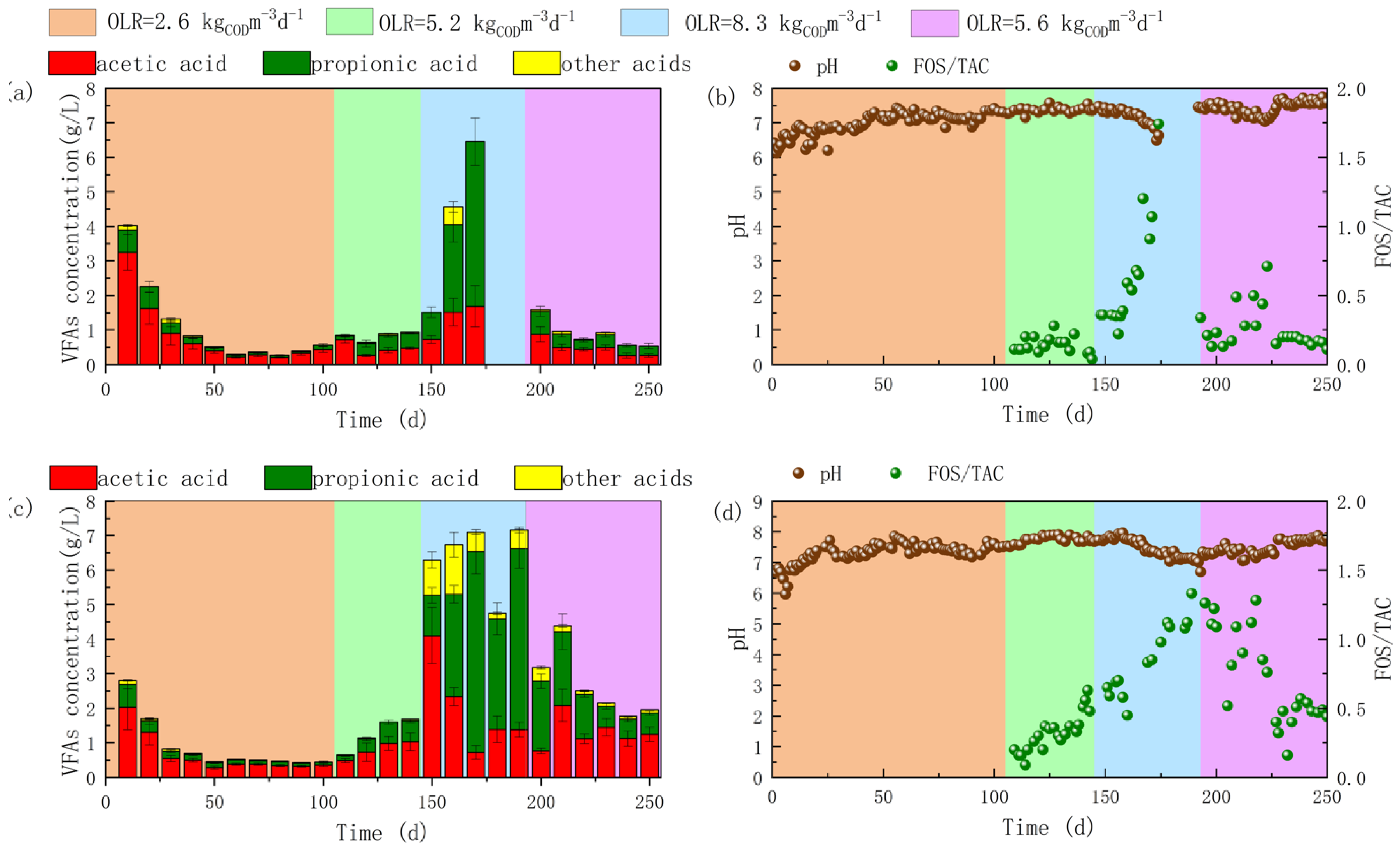
Figure 6a,c shows the variations in VFAs in the fermentation effluent of mesophilic and thermophilic food wastewater treatment, respectively. When the OLR was 5.2 kgCOD m−3 d−1, the VFAs concentrations in the mesophilic and thermophilic fermentation systems were 0.93 g L−1 and 1.68 g L−1, respectively. The thermophilic system had a higher organic acid concentration, with a lower proportion of propionate. However, the concentrations of acetate and propionate were 1.05 g L−1 and 0.63 g L−1, respectively, both below the inhibitory concentration of acetate (1.6 g L−1) [32] and the inhibitory concentration of propionate (0.9 g L−1) [33]. Nevertheless, the higher organic acid concentration under thermophilic conditions suggests that loading fluctuations could lead to rapid VFAs accumulation and inhibition of biogas production. In the mesophilic system, methane is primarily produced from acetate [34], with a faster acetate degradation rate [35]. Jiang et al. [36] showed that in anaerobic fermentation systems, propionate can be further degraded into acetate and H2, which are then utilized by methanogens. Syntrophic consortia oxidize acetate to H2 and CO2, which are subsequently utilized by the dominant methanogens (hydrogenotrophic methanogens) in the thermophilic fermentation system [34], resulting in a faster propionate degradation rate and a lower proportion of propionate in the thermophilic system.
When the OLR was 8.3 kgCOD m−3 d−1, acidification occurred due to excessive OLR. Increased OLR leads to an increase in the concentrations of organic matter and VFAs. The elevated VFAs subsequently inhibit the activity of VFAs-oxidizing bacteria, thereby reducing the metabolic efficiency of VFAs [37]. In the mesophilic fermentation system, organic acids accumulated continuously, and adjustment measures (adjusting feed pH and reducing feed volume) failed to alleviate the acidification. In the thermophilic fermentation system, adjustment measures alleviated acidification to some extent, but the organic acid concentration remained persistently high (exceeding 7 g L−1), and continuous propionate accumulation inhibited biogas production. From day 170 to day 190 of thermophilic system operation, feed pH adjustment and feed reduction were implemented, which alleviated acidification to a certain degree. However, upon returning to the high-loading level, VFAs accumulation reappeared. These results indicate that under high VFAs levels, the thermophilic system could still produce biogas through adjustment measures, likely because the thermophilic conditions provided better tolerance to VFAs [35]. However, the fermentation state was unstable, and feedstock pretreatment would increase costs. During the recovery stage, VFAs returned to medium-loading levels and remained stable. The VFAs concentration in the mesophilic fermentation system was consistently lower than that in the thermophilic system, indicating that the mesophilic system exhibited better stability.
Hu et al. treated food wastewater using a CSTR. When the OLR was below 4.6 kgCOD m−3 d−1, the system VFAs concentration remained no higher than 0.5 g L−1. However, once the OLR exceeded 4.6 kgCOD m−3 d−1, the VFAs content increased, indicating a trend toward acidification. Moreover, VFAs in the thermophilic system were generally higher than those in the mesophilic system [38]. This finding is largely consistent with the results of the present study. Under an OLR below 5.6 kgCOD m−3 d−1, VFAs remained relatively stable, and the thermophilic system exhibited higher VFAs concentrations. The difference lies in that at an OLR of 5.6 kgCOD m−3 d−1, the mesophilic system could still maintain stable operation, whereas the thermophilic system showed excessively high VFAs levels, already posing a risk of acidification.

3.3.2. Changes in Effluent pH and the VFA/TA Ratio

Figure 6b,d shows the trends of pH and VFA/TA in the effluent of mesophilic and thermophilic food wastewater treatment, respectively. In anaerobic fermentation, methanogens can adapt to a pH range of 6.8~8.0. When the pH is too low, methanogenic activity is inhibited, leading to reduced biogas production and lower methane content [39]. The pH was low at the initial startup stage but gradually increased and remained relatively stable as the reaction proceeded. The experimental results showed that the pH recovered faster in the thermophilic fermentation system. During the stable operation stage, the reactor pH remained between 7.2 and 8.0, which is within the adaptive range of methanogens. When the OLR was 8.3 kgCOD m−3 d−1, acidification occurred, causing a significant drop in pH. The lowest pH in the mesophilic fermentation system was 6.5, accompanied by a substantial decrease in biogas production and methane content. The lowest pH in the thermophilic fermentation system was below 7.0. Subsequently, by reducing the OLR and supplementing anaerobic sludge, the pH recovered to the adaptive range of methanogens.
VFA/TA is an important indicator for assessing the stability of a fermentation system. When VFA/TA < 0.4, the system has strong buffering capacity; when 0.4 < VFA/TA < 0.8, the system has limited buffering capacity and is at risk of acidification; and when VFA/TA > 0.8, the system is on the verge of acidification [40]. At an OLR of 5.2 kgCOD m−3 d−1, the mesophilic fermentation system had a VFA/TA below 0.3, indicating strong buffering capacity, while the thermophilic fermentation system had a VFA/TA of 0.4~0.6, indicating a risk of acidification. This finding is consistent with the VFAs analysis, confirming that the mesophilic system had a lower VFA/TA, stronger buffering capacity, and better system stability. Compared with the CSTR process under the same conditions (VFA/TA = 0.6), the mesophilic ASBR demonstrated superior stability in treating food wastewater. At an OLR of 8.3 kgCOD m−3 d−1, due to organic acid accumulation, the VFA/TA of both the mesophilic and thermophilic fermentation systems continuously increased, and methanogenic activity decreased. When the OLR was restored to 5.6 kgCOD m−3 d−1, the VFA/TA of both the mesophilic and thermophilic systems returned to medium-loading levels. The mesophilic system exhibited strong buffering capacity and better stability, while the thermophilic system still presented a risk of acidification.

3.4. Microbial Community Structure

3.4.1. Diversity of Microorganisms

Alpha diversity analysis reveals differences in the richness and diversity of microbial community structures under different fermentation conditions. The Chao index reflects the richness of the community structure; a larger Chao 1 value indicates a richer community structure [41]. The Shannon index is positively correlated with community diversity, while the Simpson index is negatively correlated with community diversity. Phylogenetic diversity (PD) is a diversity index calculated based on microbial phylogenetic trees. A low PD value indicates that most microorganisms in the system belong to a few closely related groups, suggesting potential functional redundancy, whereas a high PD value indicates that the microorganisms originate from more diverse lineages, implying greater functional diversity and better system stability. The results of the diversity index analysis for anaerobic systems with different parameters are shown in Table 5. According to the data, the richness, species diversity, and phylogenetic diversity of the ASBR mesophilic system (AM) were significantly higher than those of the ASBR thermophilic system (AT), and this pattern was consistent for both bacterial and archaeal domains. Greater system richness, species diversity, and functional diversity correspond to better system stability and environmental adaptability. The results indicate that the AM exhibited better stability and environmental adaptability. The Coverage index values for all samples exceeded 0.999, indicating that the sequencing depth covered more than 99.9% of the microorganisms in the samples, ensuring the reliability of the subsequent community structure analysis.

3.4.2. Structure of the Bacterial Community

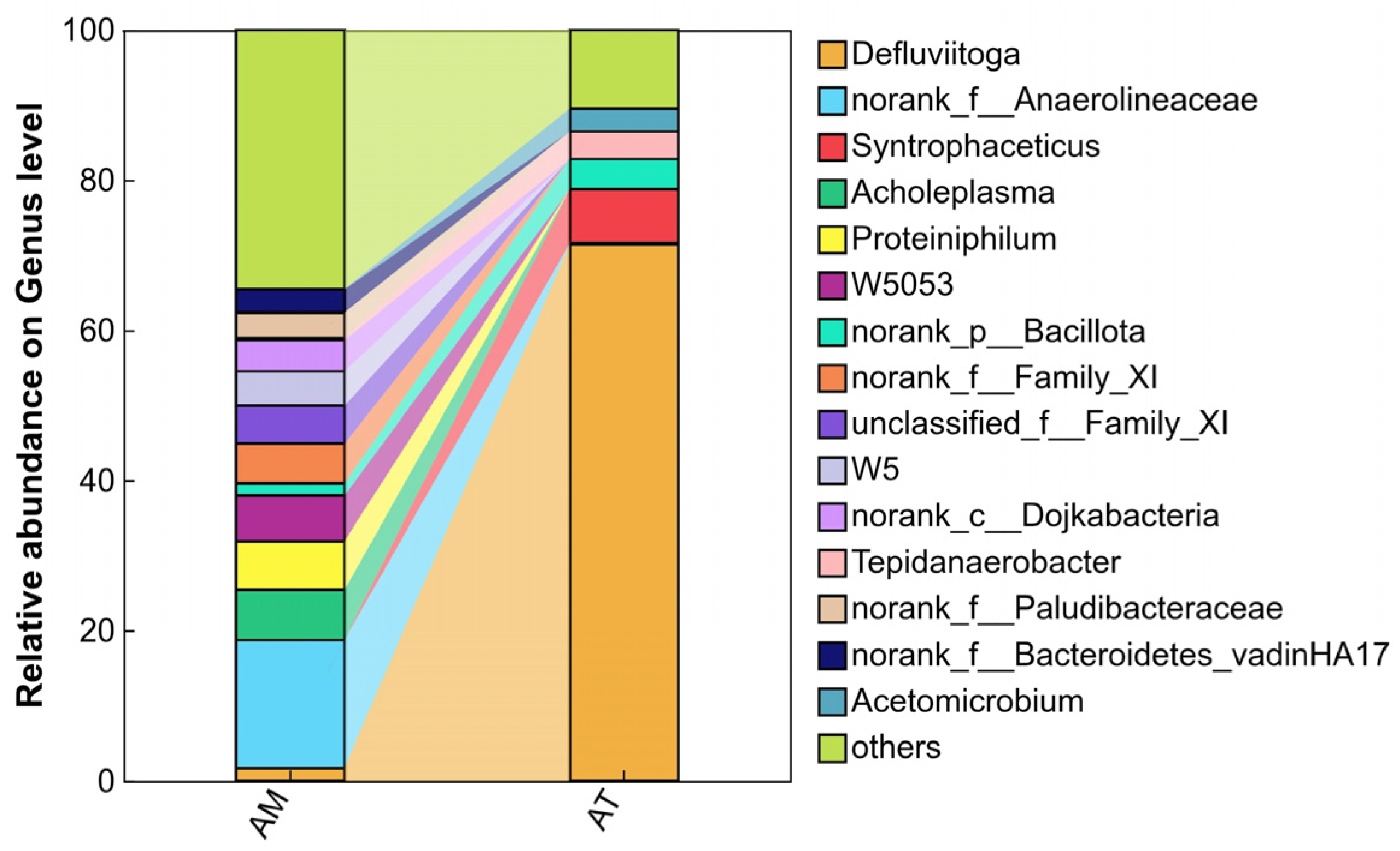
Figure 7 shows the bacterial community structure at the genus level in the ASBR fermentation system. In the AM, a total of 10 bacterial genera had abundances exceeding 3%. Norank_f_Anaerolineaceae (17.02%) is primarily involved in the degradation of carbohydrates and proteins during anaerobic fermentation, producing volatile fatty acids such as acetate, as well as H2 [42], enabling Syntrophy with methanogens; it represents the main organic-degrading bacterial group in the AM. Acholeplasma (6.66%) secretes extracellular hydrolases that promote the hydrolysis of food wastewater into small molecular substances. Proteiniphilum (6.50%) is mainly involved in the hydrolysis and acidification of proteins. Strains W5053 (6.06%) and W5 (4.58%) contain multiple genera and have complex functions, including the ability to degrade cellulose and polysaccharides into simple small-molecule sugars [43]. Norank_f_Family_XI (5.31%), unclassified_f_Family_XI (5.03%) and norank_f_Bacteroidetes_vadinHA17 (3.09%) function to metabolize amino acids into short-chain fatty acids. Norank_c_Dojkabacteria (4.18%) utilizes carbohydrates and produces short-chain fatty acids. Norank_f_Paludibacteraceae (3.39%) degrades macromolecular organic compounds such as cellulose and proteins, generating short-chain fatty acids. In summary, the high-abundance bacterial taxa in the AM form a complete metabolic network encompassing macromolecular hydrolysis, acidogenesis, and hydrogen production. The resulting acetate, H2, and various short-chain fatty acids not only provide substrates for methanogens but also demonstrate the system’s high potential for efficient synergistic organic matter degradation and energy conversion.
In the AT, only five bacterial genera had abundances exceeding 3%: Defluviitoga (71.45%), Syntrophaceticus (7.19%), norank_p_Bacillota (4.01%), Tepidanaerobacter (3.70%), and Acetomicrobium (3.06%). Defluviitoga primarily participates in the degradation of complex organic compounds [44], producing acetate, ethanol, H2, and other substances through multiple metabolic pathways. Some of these metabolites can be directly utilized by methanogens under thermophilic conditions. Defluviitoga had the highest abundance in the AT, dominating the hydrolysis and acidification stages, which is attributed to the acclimation to food wastewater under thermophilic conditions, enabling efficient hydrolysis and acidification of the substrate. Syntrophaceticus and Tepidanaerobacter can oxidize acetate, propionate, and other compounds to produce formate, H2, and CO2 [45], with the products being directly utilized by methanogens. Acetomicrobium degrades small molecules such as glucose, producing acetate and H2. Defluviitoga, norank_p_Bacillota, and Acetomicrobium primarily degrade organic matter into organic acids, which are then utilized by methanogens through the synergistic action of Syntrophaceticus and Tepidanaerobacter.
The microbial diversity and richness observed in this study differ from those reported by Yan et al. In their study, diversity under thermophilic conditions remained at a relatively high level [46]. This is likely because the short operating period following the temperature shift prevented complete microbial acclimation. In contrast, the thermophilic reactor in this study has been operated under stable thermophilic conditions over a long-term period.
The results show that the final products in the AM are short-chain fatty acids for methanogen utilization, whereas in the AT the final products are H2 and CO2. The species richness and diversity of the AM are significantly higher than those of the AT. Greater species diversity and microbial functional diversity enable better adaptation to different fermentation substrates and improved resistance to OLR shocks.

3.4.3. Structure of the Archaeal Community

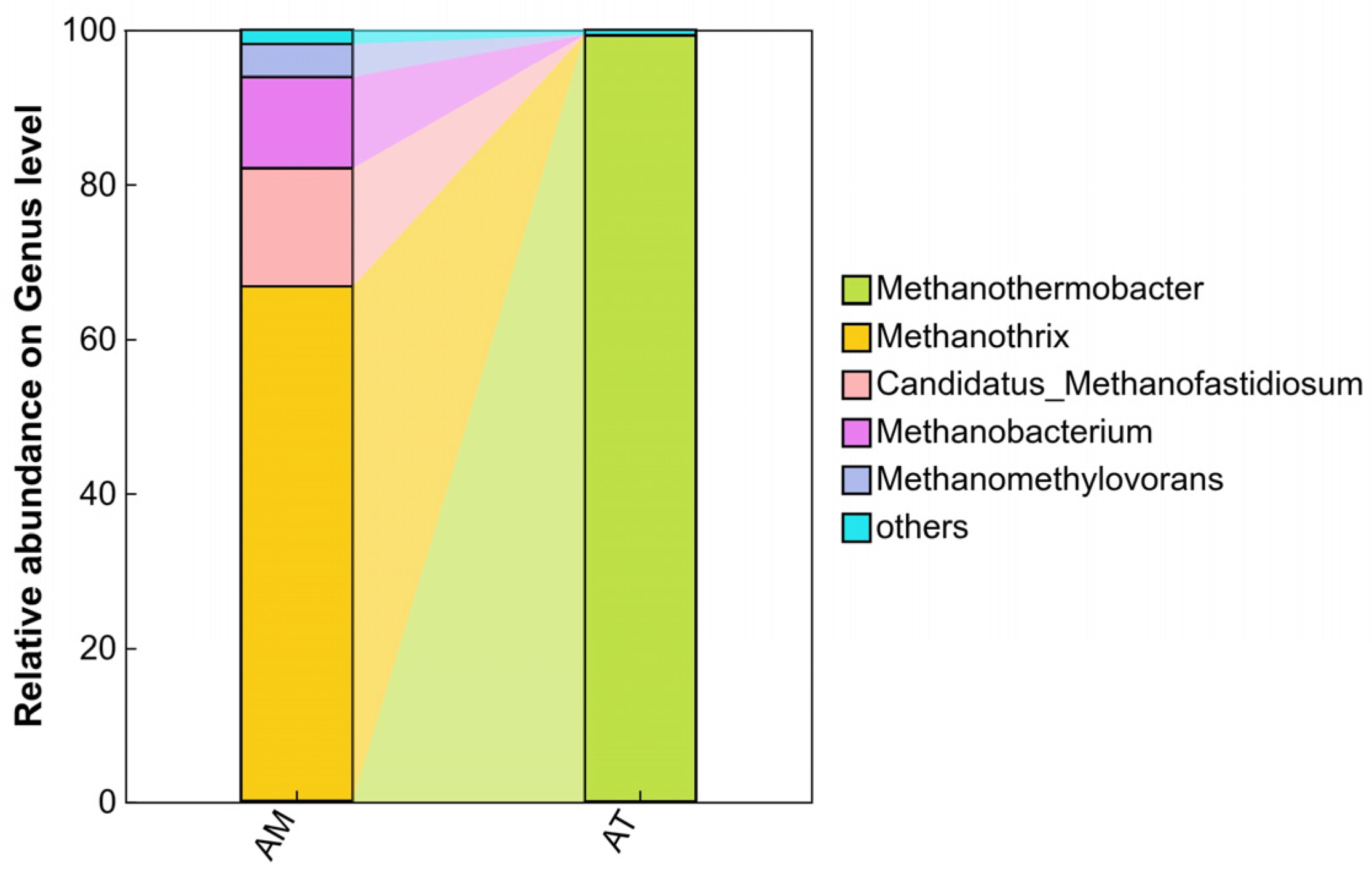
The archaeal community structure at the genus level in the ASBR fermentation system is shown in Figure 8. In the AM, the main methanogenic genera were Methanothrix (66.65%), Methanobacterium (11.85%), Candidatus Methanofastidiosum (15.29%), and Methanomethylovorans (4.25%). Methanothrix is an acetotrophic methanogen that utilizes acetate for methanogenesis and has a high affinity for acetate, typically thriving in systems with low acetate concentrations [47]. The core metabolic pathway of Methanobacterium is the typical hydrogenotrophic methanogenesis pathway. Candidatus Methanofastidiosum employs a hydrogen-dependent methylotrophic methanogenesis pathway, metabolically using H2 to reduce methyl compounds (such as methanol) to methane [48]. Methanomethylovorans is an obligate methylotrophic methanogen that utilizes compounds such as methanol and methylamines in the system, reducing their methyl groups to produce CH4. Unlike Candidatus Methanofastidiosum, it uses methyl-coenzyme reductase to reduce methyl groups rather than H2 [48]. These results indicate that the methanogenic community in the AM exhibits high species and functional diversity. The main methanogenic pathway is acetoclastic. Hydrogenotrophic and methylotrophic pathways also exist, expanding the range of utilizable substrates. This diversity avoids reliance on a single pathway, enhances the system’s adaptability to substrate fluctuations and OLR shocks, and ensures stable system operation. In the thermophilic environment, the dominant methanogenic genus was Methanothermobacter, with an abundance of 99.28%, representing a very simple community structure. It produces CH4 from H2 and CO2 [49] and lives in syntrophy with syntrophic acetate-oxidizing bacteria and thermophilic syntrophic bacteria within the bacterial domain.
The methanogenic metabolism differs significantly between the AM and AT. The AM is dominated by acetoclastic methanogenesis (Methanothrix at 66.65%), while also possessing hydrogenotrophic, hydrogen-dependent methylotrophic, and obligate methylotrophic pathways. This high species and functional diversity, broad substrate utilization range, and strong resistance to OLR shocks and fluctuations contribute to stable system operation. In contrast, the AT is overwhelmingly dominated by the hydrogenotrophic genus Methanothermobacter (99.28%), with a simple community structure that relies solely on H2 and CO2 for methanogenesis, making it prone to volatile fatty acid accumulation and resulting in poor system stability and adaptability. In conclusion, the diversity of methanogens is key to ensuring the robust operation of anaerobic fermentation systems.
The methanogenic metabolic pathways in this study are generally consistent with those reported by Yan. Specifically, under mesophilic and thermophilic conditions, the dominant methanogenic pathways are acetoclastic and hydrogenotrophic methanogenesis, respectively [46].

4. Conclusions

This study systematically compared mesophilic (37 °C) and thermophilic (55 °C) anaerobic sequencing batch reactors (ASBRs) treating high-strength food wastewater. Under stable conditions (OLR = 5.6 kgCOD·m−3·d−1, HRT = 16 d), the mesophilic ASBR achieved a specific methane yield of 307 mL CH4 gCODremoved−1, an average COD removal efficiency of 81%, and a VFA/TA ratio of 0.2, whereas the thermophilic ASBR exhibited a VFA/TA of 0.5, indicating a clear risk of acidification. For practical application, the mesophilic ASBR operated at an OLR of 5.2–5.6 kgCOD·m−3·d−1 and an HRT of 16 days is recommended, as it provides stable fermentation, high organic matter degradation, and superior resistance to loading shocks. Compared with the mesophilic CSTR under identical conditions, the mesophilic ASBR increased the specific methane production rate by 11% and COD removal efficiency by 15%, while showing far better stability (VFA/TA 0.2 vs. 0.6). This process offers a feasible, efficient, and stable technological pathway for the resource-oriented treatment of high-strength organic wastewater (COD > 80 g·L−1, TSS > 20 g·L−1).
A limitation of this study is that it did not monitor the dynamic changes in microbial community structure across different operational stages. Therefore, the successional patterns of microbial populations in response to varying OLRs and operating times remain unclear, which restricts a deeper understanding of system response mechanisms and stability control. Future research could integrate real-time online monitoring with high-throughput sequencing technologies to track the dynamic evolution of microbial communities. Such an approach will enable more precise control of operating conditions. Moreover, researchers can combine kinetic models with machine learning methods to build predictive and regulatory models for ASBR systems. This strategy would further enhance conversion efficiency and treatment speed while maintaining system stability, ultimately enabling efficient, rapid, and intelligent treatment of high-strength organic wastewater.

Author Contributions

Conceptualization, J.G. and X.M.; methodology, X.W. and R.L.; software, X.M.; validation, X.M. and X.W.; resources, P.C. and J.G.; data curation, X.M. and J.G.; writing—original draft preparation, X.M. and P.C.; writing—review and editing, X.M. and J.G.; visualization, X.M. and P.C.; supervision, J.G. and Q.W.; project administration, J.G. All authors have read and agreed to the published version of the manuscript.

Funding

This research was funded by Beijing Municipal Science and Technology Commission, Zhongguancun Science and Technology Park Management Committee (grant number: Z251100007125043).

Data Availability Statement

The original contributions presented in this study are included in the article. Further inquiries can be directed to the corresponding authors.

Acknowledgments

I am greatly indebted to Mohamed S. Gaballah and Yonghui Zheng for their thoughtful revisions and insightful writing guidance. Their careful reading of the manuscript, constructive criticism, and ongoing advice on clarity and organization have been instrumental in improving this paper.

Conflicts of Interest

The authors declare no conflicts of interest.

Abbreviations

The following abbreviations are used in this manuscript:
MSWMunicipal solid waste
CSTRContinuous stirred tank reactor
HRTHydraulic retention time
CODChemical oxygen demand
SCODSoluble chemical oxygen demand
TSTotal solids
VSVolatile solids
SRTSolid retention time
UASBUpflow anaerobic sludge blanket
ASBRAnaerobic sequencing batch reactor
TSSTotal suspended solids
VSSVolatile suspended solids
OLROrganic loading rate
TATotal alkalinity
VFAVolatile fatty acid
PDPhylogenetic diversity
AMASBR mesophilic system
ATASBR thermophilic system

References

  1. Zhang, F. Effect of Modified Magnetic Biochar on Moderately Thermophilic Anaerobic Digestion of Food Waste. Master’s Thesis, Zhejiang University, Hangzhou, China, 2024. [Google Scholar]
  2. Zhang, B.; Fan, F.; Guo, C.; Yu, M.; Zhao, M.; Song, Y.; Li, Y. Evaluation of Maturity and Odor Emissions in the Process of Combined Composting of Kitchen Waste and Garden Waste. Appl. Sci. 2021, 11, 5500. [Google Scholar] [CrossRef]
  3. Prepilková, V.; Poništ, J.; Schwarz, M.; Samešová, D. Challenges and Opportunities for Kitchen Waste Treatment—A Review. Environ. Rev. 2023, 31, 632–642. [Google Scholar] [CrossRef]
  4. Gong, Y.; Zhan, O.; Wu, H.; Tian, Q.; Du, R.; Wu, D. Research on anaerobic fermentation and microbial community succession of food waste at intermediate temperatures. Environ. Eng. 2025, 43, 258–266. [Google Scholar] [CrossRef]
  5. Li, Y.; Zhang, Z.; Qiao, W. Characterization of Organic Matter Decomposition in Continuous Anaerobic Digestion of High-Solid Pig Manure. Adv. New Renew. Energy 2025, 13, 527–534. [Google Scholar]
  6. Shah, S.V.; Yadav Lamba, B.; Tiwari, A.K.; Chen, W.-H. Sustainable Biogas Production via Anaerobic Digestion with Focus on CSTR Technology: A Review. J. Taiwan Inst. Chem. Eng. 2024, 162, 105575. [Google Scholar] [CrossRef]
  7. Khan, A.A.; Mehrotra, I.; Kazmi, A.A. Sludge Profiling at Varied Organic Loadings and Performance Evaluation of UASB Reactor Treating Sewage. Biosyst. Eng. 2015, 131, 32–40. [Google Scholar] [CrossRef]
  8. Santiago-Díaz, Á.L.; García-Albortante, J.; Salazar-Peláez, M.L. UASB-Septic Tank as an Alternative for Decentralized Wastewater Treatment in Mexico. Environ. Technol. 2019, 40, 1780–1792. [Google Scholar] [CrossRef]
  9. Fujita, A.; Sekine, M.; Kishi, M.; Toda, T. Combined Activated Sludge and Sand Filtration for Purification of UASB Effluent with High Suspended Solids from Water Hyacinth Juice. Biochem. Eng. J. 2025, 213, 109540. [Google Scholar] [CrossRef]
  10. Eslami, H.; Hashemi, H.; Fallahzadeh, R.A.; Khosravi, R.; Fard, R.F.; Ebrahimi, A.A. Effect of Organic Loading Rates on Biogas Production and Anaerobic Biodegradation of Composting Leachate in the Anaerobic Series Bioreactors. Ecol. Eng. 2018, 110, 165–171. [Google Scholar] [CrossRef]
  11. Atasoy, M.; Eyice, O.; Cetecioglu, Z. A Comprehensive Study of Volatile Fatty Acids Production from Batch Reactor to Anaerobic Sequencing Batch Reactor by Using Cheese Processing Wastewater. Bioresour. Technol. 2020, 311, 123529. [Google Scholar] [CrossRef]
  12. Pereira, E.; Borges, A.; Da Silva, G. Effect of the Progressive Increase of Organic Loading Rate in an Anaerobic Sequencing Batch Reactor for Biodiesel Wastewater Treatment. Water 2022, 14, 223. [Google Scholar] [CrossRef]
  13. Bi, S.; Guo, L.; Wang, H.; Yu, X.; Wei, F.; Lei, L.; Zhao, C.; Wang, Y. Performance of Mesophilic and Thermophilic Anaerobic Digestion of Food Waste at Varying Organic Loading Rate: Methane Production, Pathogens Reduction, and Dominant Microbial Community Dynamics. Renew. Energy 2025, 239, 122094. [Google Scholar] [CrossRef]
  14. Córdova-Rodríguez, D.D.; Sánchez-Goycochea, N.A. Temperature as a Conditional Regulator of Methanogenesis in Biogas Production: A Systematic Review. Environ. Eng. Res. 2026, 31, 250606. [Google Scholar] [CrossRef]
  15. Su, Y.-M.; Zhang, Y.; Wang, P.; Yan, C.-H.; Wu, Y.-F.; Wang, X.C.; Chen, R.; Li, Y.-Y.; Xing, B.-S. Organic Shock Loads of Different Intensity and a Recovery Strategy for Co-Digestion with Waste Activated Sludge and Food Waste in a Continuous Anaerobic Dynamic Membrane Bioreactor: Reactor Stability, Filtration Characteristics, and Microbial Community. Energy 2025, 336, 138536. [Google Scholar] [CrossRef]
  16. 2540 Solids. In Standard Methods for the Examination of Water and Wastewater; American Public Health Association: Washington, DC, USA, 2017.
  17. HJ 828-2017; Water Quality Determination of the Chemical Oxygen Demand Dichromate Method. Ministry of Environmental Protection of the People’s Republic of China: Beijing, China, 2017.
  18. Li, Y.; Jiang, M.; Dong, R.; Qiao, W. Long-Term Operation Process Effect on Thermophilic Anaerobic Digestion of Food Waste at High Organic Load Rate. Adv. New Renew. Energy 2023, 11, 100–105. [Google Scholar]
  19. 5560 Organic and Volatile Acids. In Standard Methods for the Examination of Water and Wastewater; American Public Health Association: Washington, DC, USA, 2017.
  20. Wang, C.; Nakakoji, S.; Ng, T.C.A.; Zhu, P.; Tsukada, R.; Tatara, M.; Ng, H.Y. Acclimatizing Waste Activated Sludge in a Thermophilic Anaerobic Fixed-Bed Biofilm Reactor to Maximize Biogas Production for Food Waste Treatment at High Organic Loading Rates. Water Res. 2023, 242, 120299. [Google Scholar] [CrossRef]
  21. ASTM D1946-90(2019); Standard Practice for Analysis of Reformed Gas by Gas Chromatography. ASTM International: West Conshohocken, PA, USA, 2019. [CrossRef]
  22. Zhang, W.; Shi, J.; Xu, X.; Li, X. Effect of thermal pre-treatment on lactic acid production from the anaerobic fermentation of food waste and landfill leachate. Chem. Ind. Eng. Prog. 2025, 44, 4241–4250. [Google Scholar] [CrossRef]
  23. Ullah, I.; Ayari, M.A.; Talhami, M.; Das, P.; Al-Ejji, M.; Benzarti, S.; Hawari, A.H. Effect of Co-Digestion Ratios and Temperature on Biomethane Production in Anaerobic Co-Digestion of Cheese Whey and Tomato Waste. Fermentation 2025, 11, 659. [Google Scholar] [CrossRef]
  24. Mekonnen, A.; Leta, S.; Njau, K.N. Anaerobic Treatment of Tannery Wastewater Using ASBR for Methane Recovery and Greenhouse Gas Emission Mitigation. J. Water Process Eng. 2017, 19, 231–238. [Google Scholar] [CrossRef]
  25. Bi, S.; Wang, C.; Wang, H.; Du, Y.; Yu, X.; Wang, Y. Comparison of Mesophilic and Thermophilic Anaerobic Digestion of Food Waste: Focusing on Methanogenic Performance and Pathogens Removal. Renew. Energy 2024, 233, 121184. [Google Scholar] [CrossRef]
  26. Jiraprasertwong, A.; Maitriwong, K.; Chavadej, S. Production of Biogas from Cassava Wastewater Using a Three-Stage Upflow Anaerobic Sludge Blanket (UASB) Reactor. Renew. Energy 2019, 130, 191–205. [Google Scholar] [CrossRef]
  27. Chen, X. Study on the effect of feed loading adjustment on anaerobic fermentation acidification and recovery of kitchen waste. Environ. Sanit. Eng. 2025, 33, 27–34. [Google Scholar] [CrossRef]
  28. Goux, X.; Calusinska, M.; Lemaigre, S.; Marynowska, M.; Klocke, M.; Udelhoven, T.; Benizri, E.; Delfosse, P. Microbial Community Dynamics in Replicate Anaerobic Digesters Exposed Sequentially to Increasing Organic Loading Rate, Acidosis, and Process Recovery. Biotechnol. Biofuels 2015, 8, 122. [Google Scholar] [CrossRef]
  29. Chen, H.; Chang, S. Impact of Temperatures on Microbial Community Structures of Sewage Sludge Biological Hydrolysis. Bioresour. Technol. 2017, 245, 502–510. [Google Scholar] [CrossRef]
  30. Jojoa-Unigarro, G.D.; González-Martínez, S. OFMSW Fermentation with Different Inocula and Its Effects on Methane Production. Waste Biomass Valor 2023, 14, 1461–1476. [Google Scholar] [CrossRef]
  31. Li, L.; He, Q.; Ma, Y.; Wang, X.; Peng, X. A Mesophilic Anaerobic Digester for Treating Food Waste: Process Stability and Microbial Community Analysis Using Pyrosequencing. Microb. Cell Fact. 2016, 15, 65. [Google Scholar] [CrossRef] [PubMed]
  32. Xiao, K.K.; Guo, C.H.; Zhou, Y.; Maspolim, Y.; Wang, J.Y.; Ng, W.J. Acetic Acid Inhibition on Methanogens in a Two-Phase Anaerobic Process. Biochem. Eng. J. 2013, 75, 1–7. [Google Scholar] [CrossRef]
  33. Wang, Y.; Zhang, Y.; Wang, J.; Meng, L. Effects of Volatile Fatty Acid Concentrations on Methane Yield and Methanogenic Bacteria. Biomass Bioenergy 2009, 33, 848–853. [Google Scholar] [CrossRef]
  34. Kim, E.; Lee, J.; Han, G.; Hwang, S. Comprehensive Analysis of Microbial Communities in Full-Scale Mesophilic and Thermophilic Anaerobic Digesters Treating Food Waste-Recycling Wastewater. Bioresour. Technol. 2018, 259, 442–450. [Google Scholar] [CrossRef]
  35. Qiao, W.; Jiang, M.; Zhao, J.; Wandera, S.M.; Dong, R. Methanogenesis kinetics of anaerobic digestion of acetate and propionate at mesophilic and thermophilic conditions. Trans. Chin. Soc. Agric. Eng. 2018, 34, 234–238. [Google Scholar]
  36. Jiang, T.; Hao Ngo, H.; Sun, M.; Zhang, C.; Zhang, S.; Shi, Z.; Luo, G. Metagenomic Insights into the Enhanced Methane Production by Hydrochar at Varied Propionate Concentrations. Chem. Eng. J. 2024, 498, 155013. [Google Scholar] [CrossRef]
  37. Piao, C.; Wang, Z.; Zhao, K.; Du, M.; Wang, K. Bioaugmentation versus pH Adjustment in High-Load Food Waste Anaerobic Digestion: Divergent Microbial Responses and Methanogenesis Regulation. Fermentation 2025, 11, 702. [Google Scholar] [CrossRef]
  38. Hu, Y.; Ma, H.; Wu, J.; Kobayashi, T.; Xu, K.-Q. Performance Comparison of CSTR and CSFBR in Anaerobic Co-Digestion of Food Waste with Grease Trap Waste. Energies 2022, 15, 8929. [Google Scholar] [CrossRef]
  39. Chen, Y.; Cheng, J.J.; Creamer, K.S. Inhibition of Anaerobic Digestion Process: A Review. Bioresour. Technol. 2008, 99, 4044–4064. [Google Scholar] [CrossRef]
  40. Guo, J.; Dong, R.; Cheng, H.; Clemens, J.; Pang, C. Effect of temperature and organic loading rates on anaerobic digestion of pig manure. Trans. Chin. Soc. Agric. Eng. 2011, 27, 217–222. [Google Scholar]
  41. Browning, B.D.; Kirkland, A.E.; Perica, M.I.; Engevik, M.A.; Alekseyenko, A.V.; Squeglia, L.M. Preliminary Associations between Brain Metabolites and Oral Microbiome Profiles during Adolescence. Sci. Rep. 2025, 15, 27141. [Google Scholar] [CrossRef]
  42. Yamada, T.; Sekiguchi, Y.; Hanada, S.; Imachi, H.; Ohashi, A.; Harada, H.; Kamagata, Y. Anaerolinea Thermolimosa Sp. Nov., Levilinea Saccharolytica Gen. Nov., Sp. Nov. and Leptolinea Tardivitalis Gen. Nov., Sp. Nov., Novel Filamentous Anaerobes, and Description of the New Classes Anaerolineae Classis Nov. and Caldilineae Classis Nov. in the Bacterial Phylum Chloroflexi. Int. J. Syst. Evol. Microbiol. 2006, 56, 1331–1340. [Google Scholar] [CrossRef]
  43. Luo, W.; Tian, H.; Tan, W.; Tan, Q. Effect of Hydrothermal-Acid Pretreatment on Methane Yield and Microbial Community in Anaerobic Digestion of Rice Straw. Bioresour. Technol. 2024, 402, 130765. [Google Scholar] [CrossRef]
  44. Maus, I.; Cibis, K.G.; Bremges, A.; Stolze, Y.; Wibberg, D.; Tomazetto, G.; Blom, J.; Sczyrba, A.; König, H.; Pühler, A.; et al. Genomic Characterization of Defluviitoga Tunisiensis L3, a Key Hydrolytic Bacterium in a Thermophilic Biogas Plant and Its Abundance as Determined by Metagenome Fragment Recruitment. J. Biotechnol. 2016, 232, 50–60. [Google Scholar] [CrossRef]
  45. Westerholm, M.; Roos, S.; Schnürer, A. Syntrophaceticus Schinkii Gen. Nov., Sp. Nov., an Anaerobic, Syntrophic Acetate-Oxidizing Bacterium Isolated from a Mesophilic Anaerobic Filter: Syntrophaceticus Schinkii Gen. Nov., Sp. Nov. FEMS Microbiol. Lett. 2010, 309, 100–104. [Google Scholar] [CrossRef]
  46. Yan, X.; Deng, P.; Ding, T.; Zhang, Z.; Li, X.; Wu, Z. Effect of Temperature on Anaerobic Fermentation of Poplar Ethanol Wastewater: Performance and Microbial Communities. ACS Omega 2023, 8, 5486–5496. [Google Scholar] [CrossRef] [PubMed]
  47. Zhou, J.; Li, M. Energy Metabolism and Extracellular Electron Transfer of Methanosarcina and Methanothrix. Biotechnol. Bull. 2026, 42, 17–29. [Google Scholar] [CrossRef]
  48. Söllinger, A.; Urich, T. Methylotrophic Methanogens Everywhere—Physiology and Ecology of Novel Players in Global Methane Cycling. Biochem. Soc. Trans. 2019, 47, 1895–1907. [Google Scholar] [CrossRef]
  49. Diender, M.; Pereira, R.; Wessels, H.J.C.T.; Stams, A.J.M.; Sousa, D.Z. Proteomic Analysis of the Hydrogen and Carbon Monoxide Metabolism of Methanothermobacter Marburgensis. Front. Microbiol. 2016, 7, 1049. [Google Scholar] [CrossRef] [PubMed]
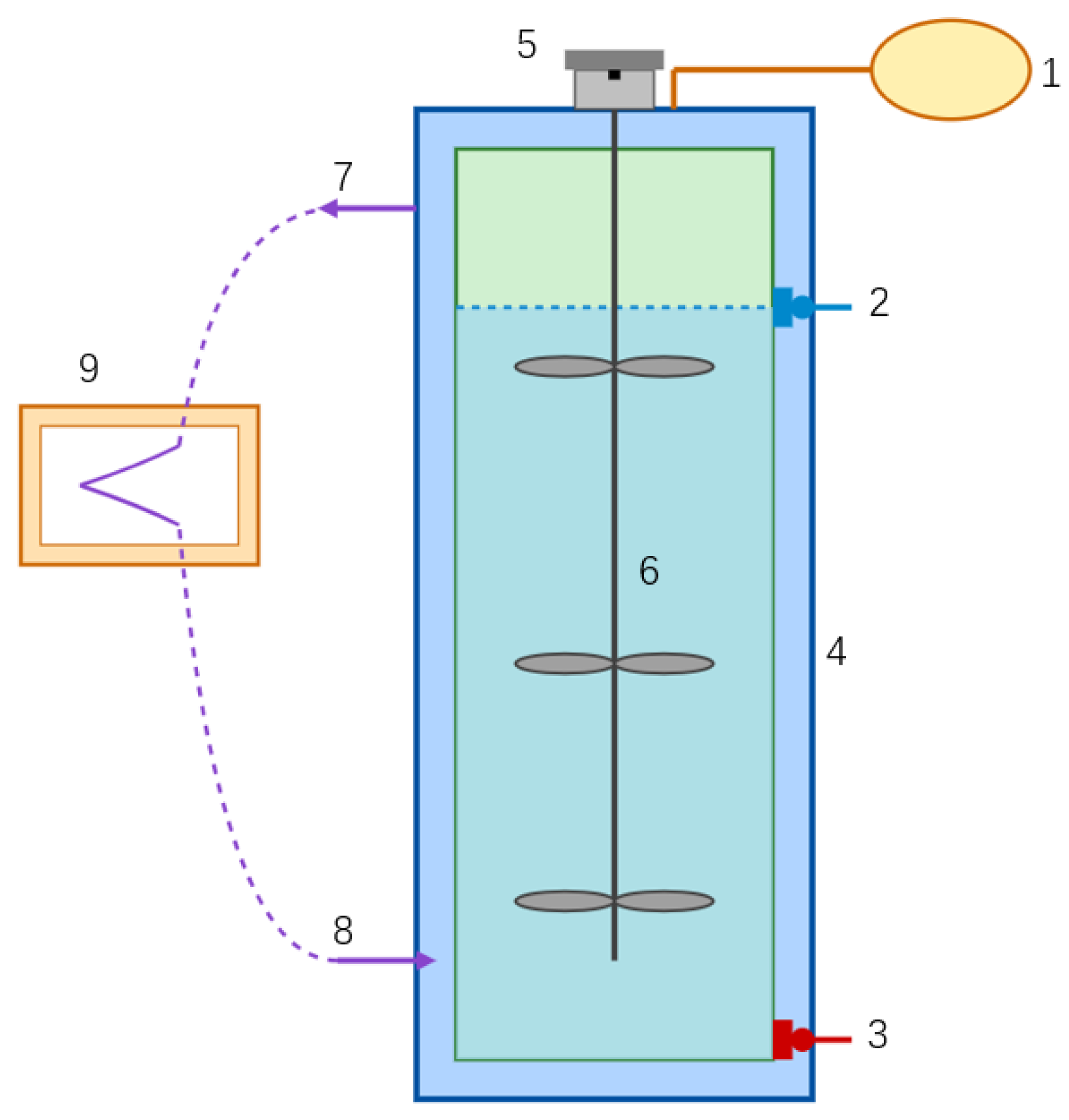
Figure 1. ASBR anaerobic fermentation device. 1—Air bag; 2—Discharge port; 3—Feed port; 4—ASBR body; 5—Motor; 6—Stirrer; 7—Circulating water bath outlet; 8—Circulating water bath inlet; 9—Circulating water bath heating device.
Water 18 01313 g001
Figure 2. Daily biogas production and methane content from ASBR fermentation of food wastewater. (a) Mesophilic conditions; (b) Thermophilic conditions.
Water 18 01313 g002
Figure 3. COD concentration and its degradation rate in the effluent from ASBR fermentation of food wastewater. (a) Mesophilic conditions; (b) Thermophilic conditions.
Water 18 01313 g003
Figure 4. Organic matter degradation performance of digestate and VFA/TA from different fermentation systems under recovery stage.
Water 18 01313 g004
Figure 5. Variations in TS, VS, and their degradation rates in the effluent from ASBR fermentation of food wastewater. (a) TS and its degradation rate under mesophilic conditions; (b) VS and its degradation rate under mesophilic conditions; (c) TS and its degradation rate under thermophilic conditions; (d) VS and its degradation rate under thermophilic conditions.
Water 18 01313 g005
Figure 6. Variations in VFAs, pH, and VFA/TA in the effluent from ASBR fermentation of food wastewater. (a) VFAs concentration under mesophilic conditions; (b) Variations in pH and VFA/TA under mesophilic conditions; (c) VFAs concentration under thermophilic conditions; (d) Variations in pH and VFA/TA under thermophilic conditions.
Water 18 01313 g006
Figure 7. Relative abundance on genus level within the bacterial domain under recovery stage.
Water 18 01313 g007
Figure 8. Relative abundance on genus level within the archaeal domain under recovery stage.
Water 18 01313 g008
Table 1. Physical and chemical properties of food wastewater and activated sludge.
ParametersUnitsFood WastewaterActivated Sludge
TS%6.20 ± 0.315.98 ± 0.26
VS%5.15 ± 0.653.13 ± 0.18
pH-3.70 ± 0.527.61 ± 0.21
CODg L−195.86 ± 15.0875.25 ± 5.96
SCODg L−153.67 ± 6.83n.a.
VFAsg L−115.02 ± 1.10n.a.
TSSg L−122.80 ± 2.24n.a.
VSSg L−118.30 ± 1.85n.a.
Note(s): n.a. means not available; SCOD: soluble chemical oxygen demand.
Table 2. Experimental parameters for anaerobic fermentation of food wastewater using ASBR.
StatusStageHRTs (d)TS (%)Duration (d)OLR (kg m−3 d−1)
MesophilyStartup162.9 ± 0.2105 (1–104 d)2.6 ± 0.3
Medium loading165.7 ± 0.241 (105–145 d)5.2 ± 0.4
High loading126.2 ± 0.429 (146–174 d)8.3 ± 1.1
Recovery166.2 ± 0.358 (193–250 d)5.6 ± 0.6
ThermophilyStartup162.9 ± 0.2105 (1–104 d)2.6 ± 0.3
Medium loading165.7 ± 0.241 (105–145 d)5.2 ± 0.4
High loading126.2 ± 0.447 (146–192 d)8.3 ± 1.1
Recovery166.2 ± 0.358 (193–250 d)5.6 ± 0.6
Table 3. Experimental parameters and results of mesophilic CSTR anaerobic fermentation of food wastewater under recovery stage.
Experimental ParametersExperimental Results
OLR (kgCOD m−3·d−1)5.6 ± 0.6Specific methane yield (mL gCODremoved−1)276 ± 24
TS (%)6.2 ± 0.3TS degradation rate (%)60 ± 4
HRT (d)16COD degradation rate (%)71 ± 4
Temperature (°C)37 ± 1VFA/TA0.6 ± 0.1
Table 4. TSS and VSS degradation rate of different fermentation systems during the medium-loading and recovery phases.
SystemTSS Degradation Rate (%)VSS Degradation Rate (%)
Medium LoadingRecoveryMedium LoadingRecovery
Mesophilic CSTR47.46 ± 5.2251.78 ± 4.0654.55 ± 4.4257.68 ± 3.75
Mesophilic ASBR47.45 ± 8.4361.06 ± 9.5555.45 ± 7.1166.93 ± 7.82
Thermophilic ASBR56.93 ± 9.2069.36 ± 2.0762.93 ± 6.6276.38 ± 1.38
Table 5. Results of microbial diversity indices from ASBR fermentation of food wastewater under recovery stage.
DomainSamplesChao 1ShannonSimpsonPDCoverage
BacteriaAM2863.970.0426.401.00
AT1301.560.5112.501.00
ArchaeaAM281.130.484.741.00
AT40.040.990.701.00
Disclaimer/Publisher’s Note: The statements, opinions and data contained in all publications are solely those of the individual author(s) and contributor(s) and not of MDPI and/or the editor(s). MDPI and/or the editor(s) disclaim responsibility for any injury to people or property resulting from any ideas, methods, instructions or products referred to in the content.