1. Introduction
The uncontrolled discharge of agricultural wastewater, often rich in nitrogen and phosphorus compounds, has become a critical driver of eutrophication and harmful algal blooms (HABs) in freshwater ecosystems. These processes result in oxygen depletion, biodiversity loss, and water quality deterioration, posing serious environmental and public health threats [
1,
2].
Among the microalgae commonly detected in agricultural effluents,
Chlorella spp. is of particular concern due to its rapid growth rate, high resistance to environmental stressors, and strong capacity to assimilate excess nutrients. These characteristics make it both a reliable bioindicator of contamination and an active contributor to eutrophication processes [
3,
4]. Furthermore, several
Chlorella strains have been linked to the production of cyanotoxins, including microcystins, which can accumulate along the food chain and pose significant risks to human health [
5]. Its frequent occurrence in agricultural discharges, combined with its metabolic versatility, supports its selection as the target organism for removal in this study.
Although conventional flocculants such as alum and ferric chloride are widely used in water treatment, their application is limited by several drawbacks, including high operational costs, potential toxicity, and the generation of chemically contaminated sludge [
6]. In response, bioflocculants have gained attention for their biodegradability and lower toxicity compared to synthetic flocculants [
7]. Recent research has investigated a variety of natural sources, including chitosan, plant-derived residues, and microbial exopolysaccharides; however, their production often involves complex processing steps or high resource demands, which restrict large-scale applicability [
6,
8,
9].
Despite their advantages, bioflocculants also present several challenges compared with conventional chemical flocculants. In some cases, higher dosages or longer settling times may be required to reach similar removal efficiencies. In addition, their performance may be influenced by operational parameters such as pH, temperature, and biomass concentration. Furthermore, challenges associated with large-scale production and process stability remain important considerations for their broader industrial implementation [
10,
11].
Eggshell waste has emerged as a particularly promising raw material for bioflocculant development due to its abundance as a by-product of the poultry industry. Eggshells consist primarily of calcium carbonate (approximately 94% CaCO
3), along with smaller fractions of magnesium carbonate, calcium phosphate, type X collagen, sulfated polysaccharides, and proteins. This composition confers a favorable adsorption capacity and effective charge-neutralization properties [
12,
13,
14]. Moreover, the active calcium species can be efficiently extracted using dilute hydrochloric acid (HCl), which increases the solubility of mineral-bound compounds through the following reaction:
The process involves acid-mediated dissolution of calcium carbonate, thereby releasing soluble calcium ions. The recovered calcium species later participate in the flocculation process. Subsequently, during the flocculation stage, the system pH is raised to alkaline conditions, which promotes destabilization of negatively charged
Chlorella cells and enhances aggregation. Under these conditions, the deprotonation of functional groups on
Chlorella spp., including amino, carboxyl, phosphate, and hydroxyl moieties, alters the surface charge balance and reduces electrostatic repulsion between cells. Calcium ions present in the system contribute to charging neutralization and cation-bridging interactions, facilitating the formation of larger, staler flocs. As a result, cell–cell interactions are strengthened, promoting aggregation, improving sedimentation, and enhancing the simultaneous removal of biomass and dissolved nutrients [
11].
Several authors have reported the preliminary flocculation potential of this material under fixed or single-variable experimental conditions [
15,
16]. However, most previous studies have not addressed comprehensive multivariate optimization, and only a limited number have evaluated its combined effectiveness in both microalgal biomass harvesting and nutrient removal.
In this context, the present study proposes a novel, integrated approach based on the two-level factorial design (2ᵏ with center points) to optimize the operational parameters for Chlorella spp. removal using eggshell-derived bioflocculants. Variables such as temperature, pH, flocculant dosage, and initial biomass concentration are statistically analyzed for their individual and interactive effects on removal efficiency.
Although previous studies have examined the use of eggshell-derived bioflocculants, many of them have relied on One-Factor-at-a-Time (OFAT) experimental approaches [
17]. While this methodology is suitable for preliminary screening, it does not allow the simultaneous evaluation of interactions among variables. In water treatment processes, system performance is typically controlled by multiple interdependent factors, including pH, temperature, biomass concentration, and flocculant dosage. Under such conditions, multivariate strategies become particularly valuable for identifying optimal operating conditions with greater experimental efficiency [
18,
19]. To overcome these limitations, the present study applies a factorial experimental design with center points, which enables systematic assessment of both main effects and interaction terms while reducing the total number of experimental runs. This approach supports robust prediction of removal performance while minimizing experimental workload.
Beyond the optimization of Chlorella spp. removal, this study also examines the broader bioremediation potential of the eggshell-derived bioflocculant by evaluating reductions in chemical oxygen demand (COD), nitrates, phosphates, and coliform bacteria. This integrated assessment provides a more comprehensive perspective on overall improvements in water quality. By combining principles of green chemistry, waste valorization, and statistically guided process optimization, the present work contributes to developing low-cost, environmentally responsible approaches to agricultural wastewater treatment, aligned with the objectives of the circular bioeconomy.
2. Materials and Methods
2.1. Axenic Cultivation of Chlorella spp.
The Chlorella spp. used in this study were grown in agricultural wastewater to simulate conditions typically encountered in real-world applications. Surface water samples were collected from Laguna de San Pablo-Ibarra, located in northeastern Quito, Ecuador. The pure cultivation of Chlorella spp. was carried out in photobioreactors using a selective culture medium consisting of NaNO3 (25 g/L), MgSO4·7H2O (7.5 g/L), NaCl (2.5 g/L), and K2HPO4 (7.5 g/L). All reagents used in this medium were analytical grade and used without further purification. The medium was prepared by dissolving 10 mL of the solution in 1 L of sterile distilled water and sterilized by autoclaving at 121 °C.
Aeration was maintained at a constant flow rate of 4 vvm. Illumination was provided by a 6500 K LED light source operating at 120 V and 150 mA. The initial pH of the medium was adjusted to 6.8 and maintained under a room temperature of 18.5–20 °C. Growth was monitored for 15 days by measuring optical density (OD) at 688 nm using a UV-Vis spectrophotometer (OPTIZEN QX, Mecasys Co., Ltd., Daejeon, Republic of Korea). This wavelength lies within the characteristic absorption range of chlorophyll a (approximately 660–690 nm), the primary photosynthetic pigment in
Chlorella spp., and is commonly employed for biomass estimation. Measurements in this spectral region provide a reliable proxy for cell concentration while minimizing interference from other cellular components [
20].
A cell number was quantified using a Neubauer chamber (0.100 mm
2–0.0025 mm
2 grid area). Dilution factor (1:10) and counting across five squares per replicate. Cell density was calculated and expressed as cells mL
−1 [
19].
2.2. Wastewater Preparation
To simulate realistic wastewater conditions, organic chicken compost was selected as the nutrient source. The compost was initially sieved manually using a 1 mm mesh to remove coarse particles and improve sample homogeneity. Subsequently, 2 g of the sieved material were mixed with 600 mL of tap water and stirred at 300 rpm for 24 h to promote nutrient release. The resulting suspension was then filtered under vacuum through a 0.45 μm membrane to reduce the microbial load while preserving soluble nutrients. Thermal sterilization was intentionally avoided to prevent alterations to the natural composition of the organic matter [
17].
A final solution was prepared by mixing 300 mL of the filtered compost extract with 300 mL of tap water, adjusting the pH to 3.5 using 0.5 mol/L HCl. Subsequently, 100 mL of the pre-cultivated
Chlorella spp. Suspension was added to this solution to initiate growth under eutrophic conditions [
20,
21].
2.3. Eggshell Bioflocculant Preparation
Eggshells used in this study were collected from a single poultry farm to ensure consistency of the raw material. The shells were thoroughly washed with distilled water and subsequently dried at 102 °C for 60 min using a laboratory drying oven. After drying, the shells were manually crushed into a fine powder using a mortar and pestle. The resulting eggshell powder was stored in hermetically sealed vials at room temperature (18.5–20 °C) until further use.
To prepare the bioflocculant solutions, eggshell powder (100 mg, 55 mg, and 10 mg) was individually mixed with 10 mL of 0.5 mol L−1 hydrochloric acid and stirred continuously at 600 rpm for 30 min to promote dissolution of calcium carbonate from the eggshell matrix. The filtrates were then diluted to a final volume of 100 mL with distilled water, yielding bioflocculant solutions with final concentrations of 1000 mg L−1, 550 mg L−1, and 100 mg L−1, based on the initial mass of eggshell material used.
2.4. Flocculation-Sedimentation Assay
The flocculation experiments were conducted in 250 mL beakers containing 100 mL of the Chlorella spp. suspension, to which 9 mL of the eggshell-derived bioflocculant solution was added. The mixture was gently stirred manually for 1 min to initiate flocculation and ensure preliminary dispersion. Subsequently, the suspension pH was adjusted to the target range of 8.5–10.0 using 0.5 mol L−1 NaOH and verified with a calibrated pH meter.
Flocculation tests were then performed using a digital jar-test apparatus (SF4 Digital Flocculator, MTOPS). The stirring corresponded to the lowest operating temperature range (50 rpm). This low-speed agitation was intentionally selected to promote homogeneous dispersion and prevent shear forces that could disrupt floc formation.
To ensure that the system remained within biologically tolerable conditions, pH was measured before and after adding the eggshell-derived bioflocculant. Measurements were obtained for each biomass level tested (Initial optical density (OD688) values of 2.0 and 3.0) at the three target pH levels of 8.5, 9.5, and 10.0. The initial pH adjustment was carried out prior to the flocculation step using 0.5 mol L−1 NaOH, and final pH values were recorded after 360 min of sedimentation with a calibrated digital pH meter to ±0.01.
The flocculation contact time was fixed at 360 min based on preliminary experiments showing that this duration yielded consistent, reproducible sedimentation of
Chlorella spp. biomass. Shorter contact times led to incomplete floc formation, whereas longer settling periods did not yield further improvements in sedimentation performance. The selected time frame is consistent with previous studies on bioflocculants derived from natural materials for microalgal harvesting, which reported that settling periods of 4 to 6 h enhance sedimentation efficiency and ensure effective clarification [
21].
Shorter contact times resulted in incomplete floc formation, whereas longer settling periods did not produce further improvements in sedimentation performance. The selected time frame is in agreement with previous studies on bioflocculants derived from natural materials for microalgal harvesting, which have reported that settling periods ranging from 4 to 6 h enhance sedimentation efficiency and ensure effective clarification [
20].
The system was observed at 60-min intervals to record changes in optical density (OD) using the OPTIZEN UV/VIS QX spectrophotometer. The removal efficiency was calculated by comparing the initial and final OD measurements of the treated samples. The removal efficiency of
Chlorella spp. was calculated using the following Equation (2):
where
is the optical density of the sample measured at time 0, and
is the optical density of the sample recorded at time t. A graph of optical density vs. time was presented for each of the experiments [
20].
The selected flocculant concentrations of 100, 550, and 1000 mg L−1 were determined based on preliminary experiments and values reported in the literature for calcium-based or shell-derived bioflocculants. The lowest concentration tested (100 mg L−1) represents the minimum effective dose, whereas the highest concentration (1000 mg L−1) approaches saturation conditions. An intermediate level of 550 mg L−1 was included to examine potential non-linear responses and to support optimization of material usage. Together, these concentration levels allow evaluation of removal efficiency across a broad operational range.
2.5. Design of Experiment (DOE) and Statistical Analysis
A non-replicated two-level factorial experimental design (2
k) with center points was employed to evaluate the influence of four key variables: temperature (A), pH (B), bioflocculant concentration (C), and the optical density (OD) of the
Chlorella spp. suspension (D). This design enabled the systematic assessment of both main effects and interaction terms while minimizing the total number of experimental runs. Each factor was examined at low (−1) and high (+1) levels, with additional center points (0) included to detect potential curvature in the response surface (
Table 1).
The design of experiments (DOE) framework was applied to optimize the flocculation process by maximizing
Chlorella spp. removal efficiency while reducing experimental effort and cost. The experimental design followed the methodology described by Montgomery for non-replicated factorial experiments, incorporating center points to estimate experimental error and detect curvature in the response surface. This approach enables efficient screening of significant factors while reducing the number of experimental runs required [
22].
Statistical analyses, including analysis of variance (ANOVA), regression modeling, and significance testing, were conducted using Design-Expert® software (version 13). Model adequacy and reliability were evaluated based on the coefficient of determination (R2), adjusted R2, and predicted R2 (PRESS), confirming the suitability of the proposed model. Statistical significance was evaluated at a 95% confidence level (p < 0.05).
The experimental ranges were selected based on literature reports and environmental relevance. Acid conditions were not considered because they are known to reduce microalgal removal efficiency, whereas alkaline conditions favor charge neutralization and particle aggregation [
12,
21].
Experimental variability of the model was estimated from the residual error; the central points were incorporated to assess variability and potential curvature in the response, rather than to obtain an independent estimate of pure experimental error. Achieving the exact target temperature, pH, and initial optical density under laboratory conditions is constrained by instrumental precision and environmental fluctuations; therefore, experiments were conducted at the closest attainable setpoints. The resulting deviations were kept within a controlled, measurable range and are reflected in the model residuals. Consequently, factors related to variability are implicitly captured within the error term without compromising the reliability of the statistical analysis. Statistical evaluation was performed using analysis of variance (ANOVA).
2.6. Water Quality Characterization After Bioflocculant Exposure
The quality of the treated wastewater was evaluated by measuring nitrate, phosphate, chemical oxygen demand (COD), and coliform bacteria. These parameters were selected to assess the broader environmental performance of the bioflocculation process. Nitrate concentrations were determined using the HACH NitraVer
®5 reagent method (cadmium reduction method) with a detection range of 0–30 mg L
−1, while phosphate concentrations were measured using the HACH PhosVer
® 3 reagent method (ascorbic acid method), with a detection range of 0–2.5 mg L
−1. Both nutrients were analyzed with an OPTIZEN UV/VIS QX spectrophotometer. COD was quantified using the high-range DR/2010 method, which covers a concentration range of 0–1500 mg L
−1, at a wavelength of 620 nm [
23].
Coliform bacteria were detected using MacConkey agar as the culture medium. Samples were incubated under controlled laboratory conditions. After incubation, bacterial counts were quantified using the colony-forming unit (CFU) method following standard microbiological procedures for water quality analysis [
24].
3. Results
3.1. Chlorella spp. Growth and pH Behavior During Cultivation in Wastewater
The cultivation of
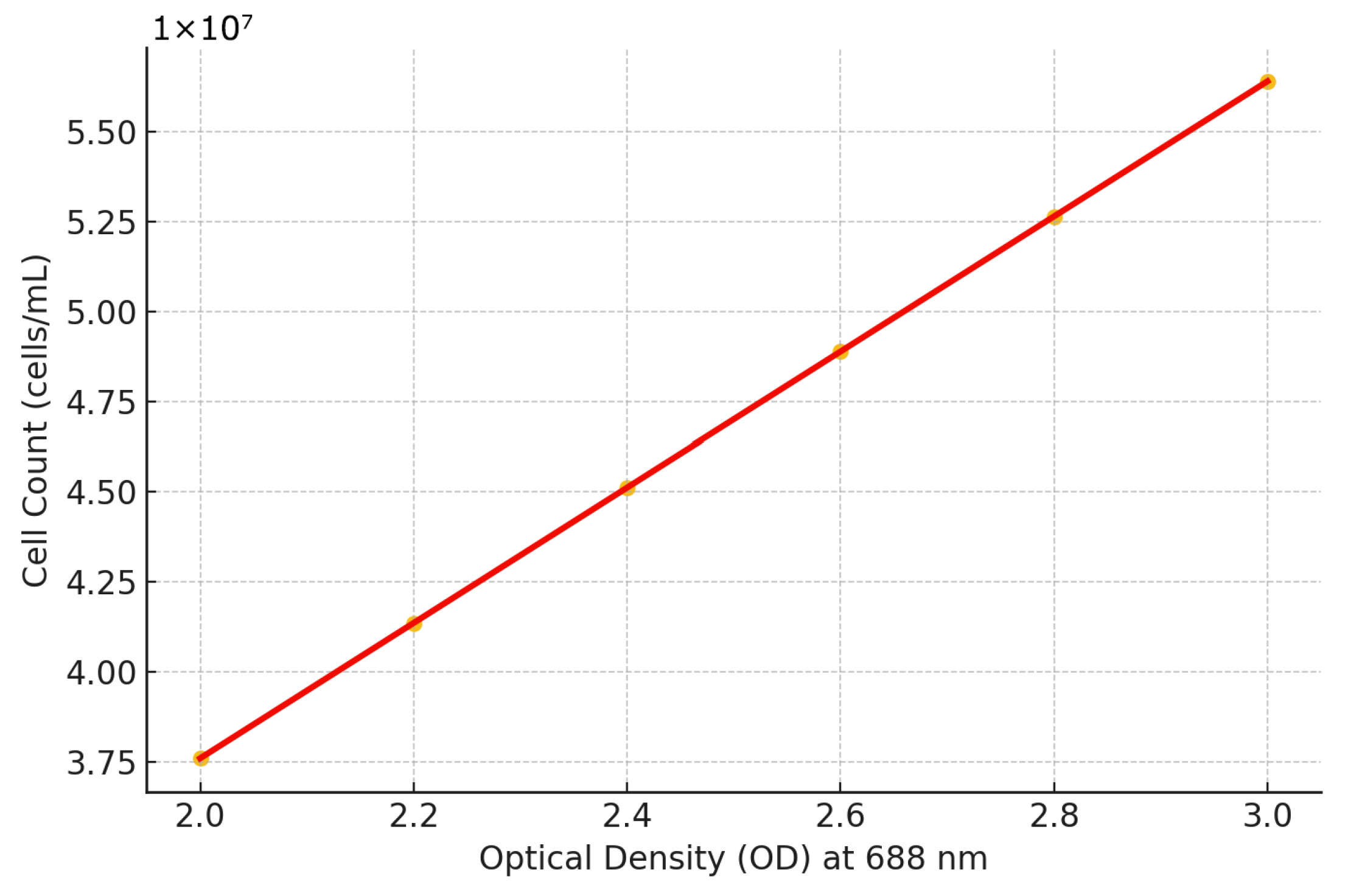
Chlorella spp. in photobioreactors (PBRs) using nutrient-enriched chicken compost wastewater resulted in a gradual increase in optical density (OD) over the cultivation period. The microalgal culture reached the exponential growth phase after 9–10 days of cultivation under experimental conditions. At this stage, the biomass concentration reached an optical density (OD) of 2.0 ± 0.2, equivalent to 3.76 × 10
7 cells mL
−1. By day 15, the system stabilized at an OD of 3.0 ± 0.1, corresponding to a cell density of 5.93 × 10
7 cells mL
−1, which was subsequently used to define the inoculum conditions for the flocculation experiments (
Figure 1). The linear relationship between optical density and cell concentration enabled monitoring of microalgal proliferation under wastewater cultivation conditions.
These growth profiles confirm that compost-derived wastewater provides a nutrient-rich environment that sustains high-density microalgal growth, effectively reproducing the eutrophic conditions commonly observed in agricultural effluent.
3.2. Model Fitting and Statistical Significance
Table 2 presents the experimental matrix of the two-level factorial design with center points, and the corresponding removal rate of
Chlorella spp. The table summarizes all experimental runs performed in this study, allowing direct comparison between operating conditions and observed responses. Central point replicates were included to evaluate experimental reproducibility and assess potential curvature in the response.
The experimental results obtained from the factorial design are summarized in
Table 3 and
Table 4.
Statistical analysis through ANOVA and regression modeling demonstrated strong model performance, with a high coefficient of determination (R2 = 0.97), indicating that the selected factors and their interactions adequately explain the variability in removal efficiency.
The Shapiro–Wilk test confirmed the normality of the residuals, while the lack-of-fit test was not statistically significant (F = 5.60, p = 0.0929), supporting the adequacy of the linear model. Moreover, the curvature term was not significant (F = 1.10, p = 0.3207), suggesting that the system response is linear within the tested experimental domain and that no higher-order polynomial terms are required.
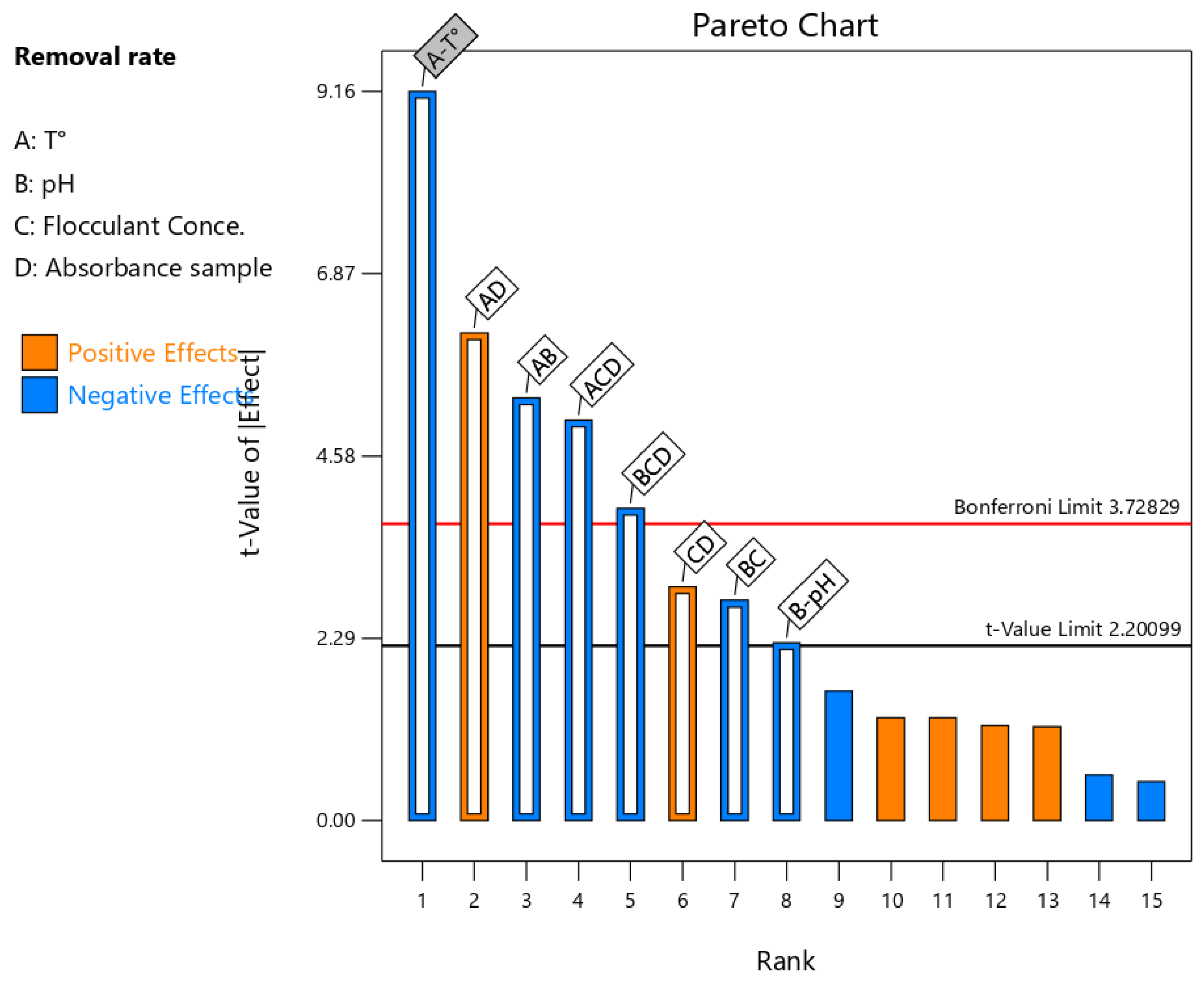
In addition to the main effects, several interaction terms were statistically significant, indicating synergistic relationships among the variables evaluated. In particular, the interaction between temperature and pH (AB) showed a strong effect on the response (F = 34.60, p = 0.0002). Significant interactions were also observed for temperature and Initial optical density (OD688) (AD) and (BC), as well as for the three-factor interaction involving temperature, flocculant concentration, and Initial optical density (OD688) (ACD). These findings highlight the multivariate nature of the flocculation process and underscore the importance of considering the combined effects of parameters when optimizing treatment conditions.
This behavior is further illustrated by the Pareto chart of standardized effects (
Figure 2), which confirms the dominant influence of temperature and Initial optical density (OD
688) on removal efficiency. Among the interaction terms, temperature–Initial optical density (OD
688) (AD) and temperature–pH (AB) ranked among the most influential, supporting their relevance and retention in the regression model. In contrast, the four-factor interaction (ABCD) was not statistically significant, indicating that including higher-order interactions does not improve model performance.
In parallel, pH monitoring throughout the cultivation and flocculation stages revealed a high degree of stability. As summarized in
Table 5, the adjusted pH values remained essentially constant throughout the experiment, with variations of less than ±0.1 pH units in most cases. This behavior indicates the system’s effective buffering capacity and supports the operational robustness of the selected treatment conditions.
The ANOVA results indicate that temperature was the most influential factor affecting removal efficiency (F = 102.95, p < 0.0001). In contrast, flocculant concentration and initial optical density did not exhibit statistically significant individual effects within the evaluated experimental range (p > 0.05). However, several interaction terms involving these variables were statistically significant, indicating that their influence on flocculation performance occurs primarily through combined effects rather than isolated contributions.
Overall, these results confirm the statistical robustness and predictive capability of the reduced model and demonstrate the effectiveness of the factorial design in identifying the most relevant operational parameters for practical wastewater treatment applications. The final regression model, expressed in coded variables, is presented in Equation (3).
where:
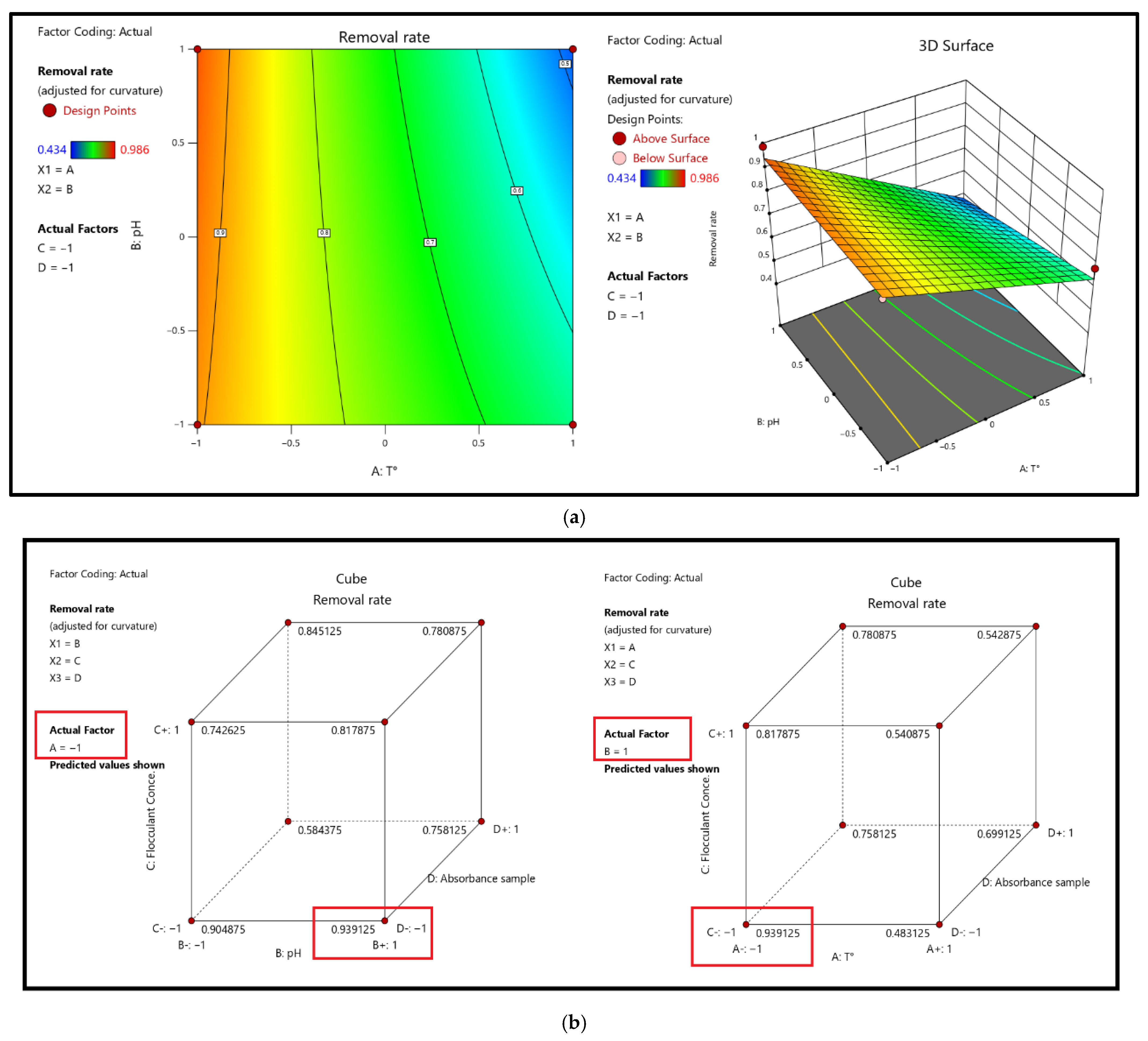
The statistical results are further supported by the response surface analysis shown in
Figure 3, which describes the combined effect of temperature (A) and pH (B) on the removal efficiency of
Chlorella spp. Both the contour and three-dimensional surface plots indicate that removal efficiency is favored at lower temperatures and higher pH values, confirming a synergistic interaction between these two operational variables. At low temperatures, changes in pH had a clear effect on flocculation performance, with higher pH values leading to improved removal efficiency. This behavior indicates that alkaline conditions favor microalgal destabilization, most likely by reducing surface charge and promoting calcium-related precipitation processes. In contrast, as temperature increased, removal efficiency gradually decreased, suggesting that higher thermal conditions negatively affect floc formation. These results emphasize the need to carefully control temperature to maintain stable and effective flocculation.
To further examine higher-order interactions,
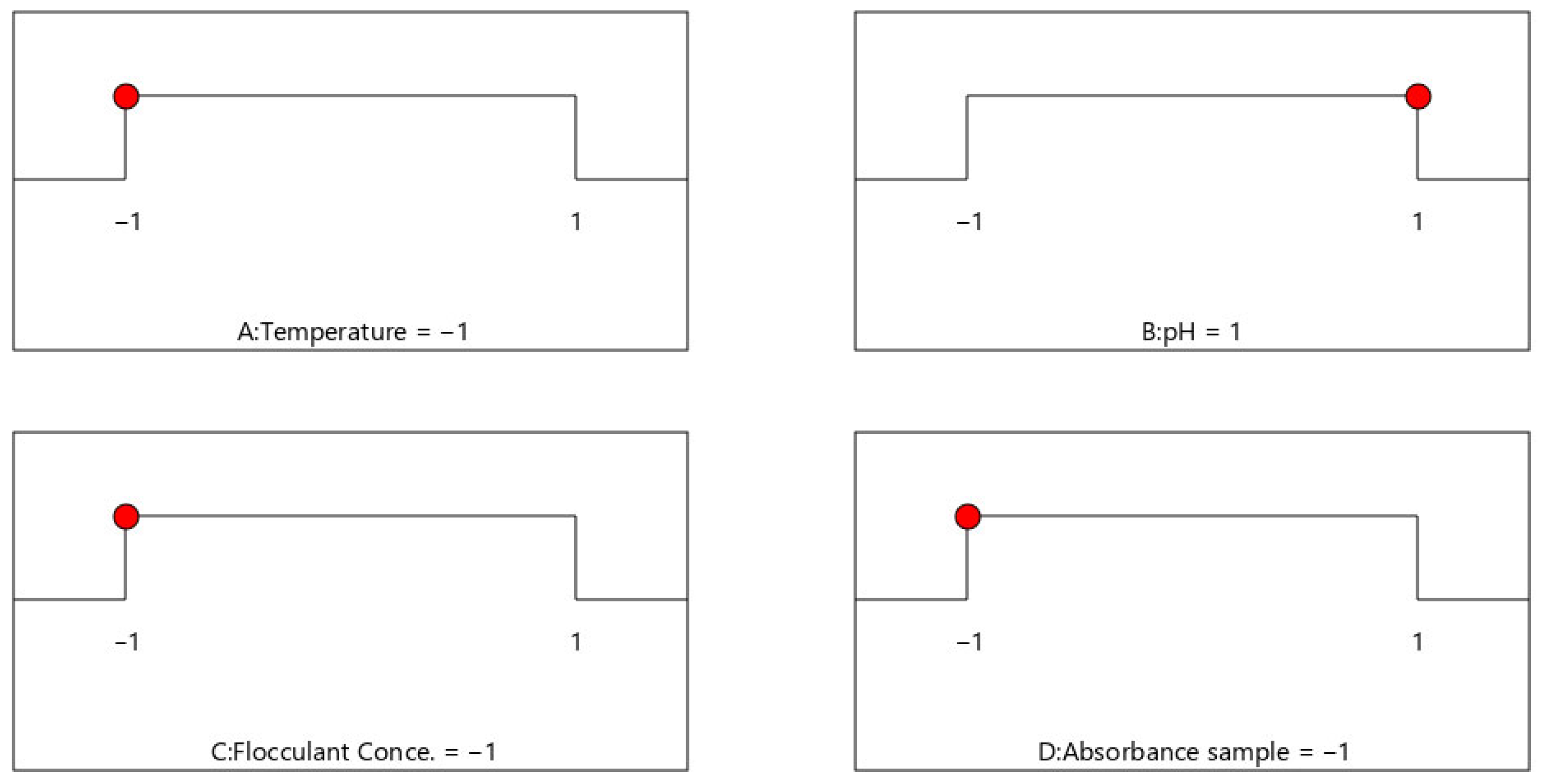
Figure 3 also presents cube plots illustrating three-factor effects on biomass removal. When temperature (A) is fixed at its low level (−1), the combined influence of pH (B), bioflocculant concentration (C), and initial optical density (OD
688) (D) results in the highest removal efficiency (0.94), indicating a strong cooperative effect under mild thermal conditions. In contrast, when pH (B) is maintained at a high level (+1), the maximum removal efficiency decreases to approximately 0.78, even under comparable settings for the remaining variables. This behavior highlights the context-dependent nature of multivariate interactions and demonstrates that optimal performance arises from balanced parameter combinations rather than isolated adjustments to individual factors. Overall, the combined response surface and cube plot analyses provide clear visual support for the model’s predictive reliability and its applicability to optimizing biomass recovery under realistic wastewater treatment conditions.
3.3. Optimization of Bioflocculant Dosage and Flocculation Conditions
Maximum removal efficiency (94%) was obtained at a temperature of 18.5 °C, pH 10, a bioflocculant concentration of 100 mg L−1, and an initial sample optical density of 2.0 ± 0.2, corresponding to an estimated biomass of 3.76 × 10⁷ cells mL−1. Under these conditions, flocculation was efficient and reproducible, defining the optimal operating window for biomass removal.
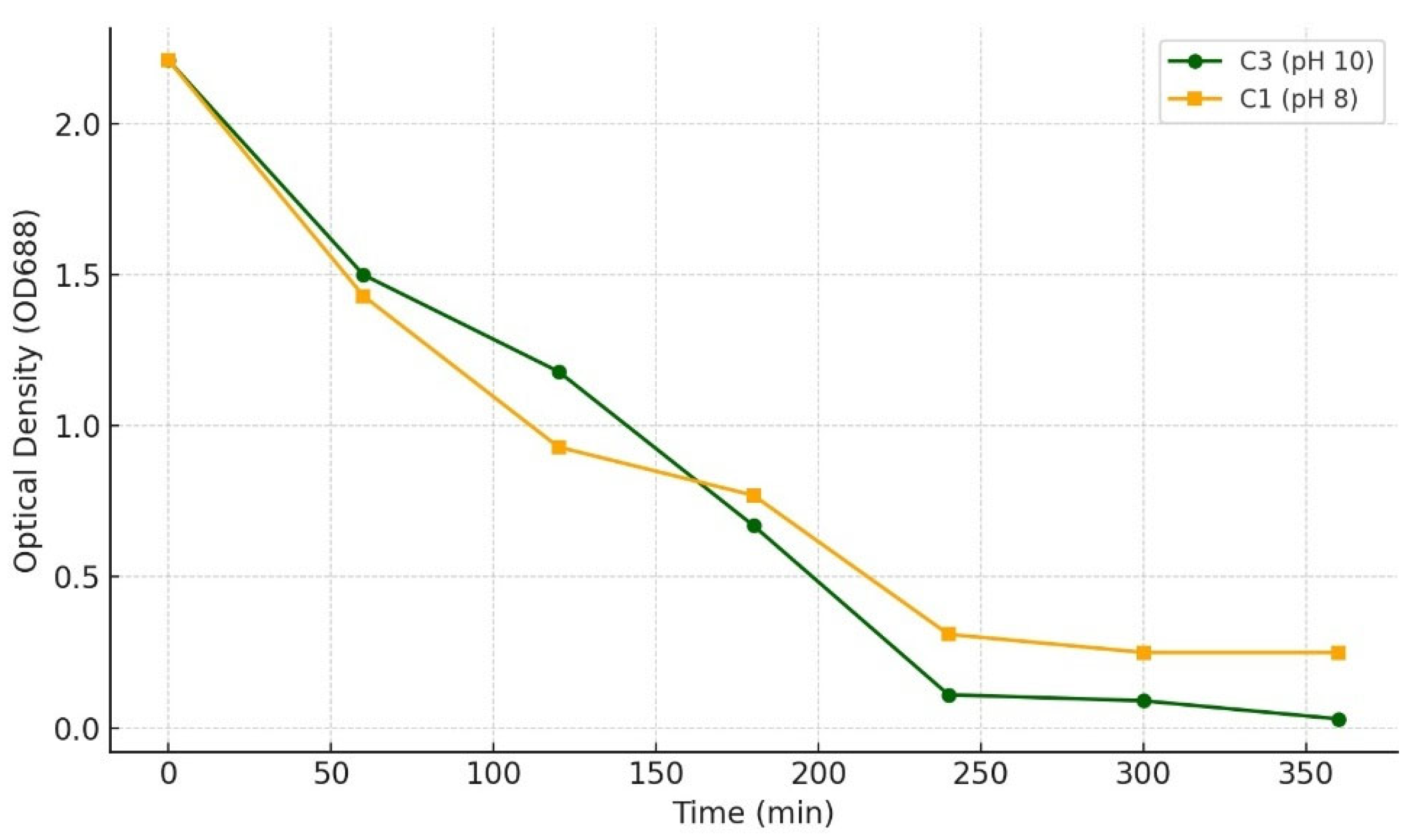
When biomass concentration increased, a higher bioflocculant dosage (1000 mg L
−1) was necessary to achieve comparable removal efficiencies. In contrast, the intermediate concentration tested (550 mg L
−1) did not yield statistically significant improvements, indicating non-linear dose–response behavior and suggesting a practical upper limit for efficient material use (
Figure 4).
Under most effective parameters, the system showed rapid clarification and effective biomass aggregation. This behavior is consistent with calcium-ion-driven charge destabilization and is enhanced under alkaline conditions, which facilitate surface charge reduction on microalgal cells.
3.4. Visual and Analytical Confirmation of Flocculation
Under the highest removal efficiency observed (18.5 °C, pH 10, and 100 mg L
−1 of bioflocculant), a clear decrease in optical density was observed, accompanied by visible sedimentation of the microalgal biomass. As shown in
Figure 5, the control corresponds to the untreated culture (OD = 2.0 ± 0.2; 3.76 × 10
7 cells mL
−1), whereas the final state represents the suspension after 360 min of settling. The noticeable reduction in turbidity and the formation of compact flocs indicate that the eggshell-derived bioflocculant effectively promoted biomass aggregation and sedimentation under these conditions.
3.5. Contaminant Removal and Water Quality Enhancement
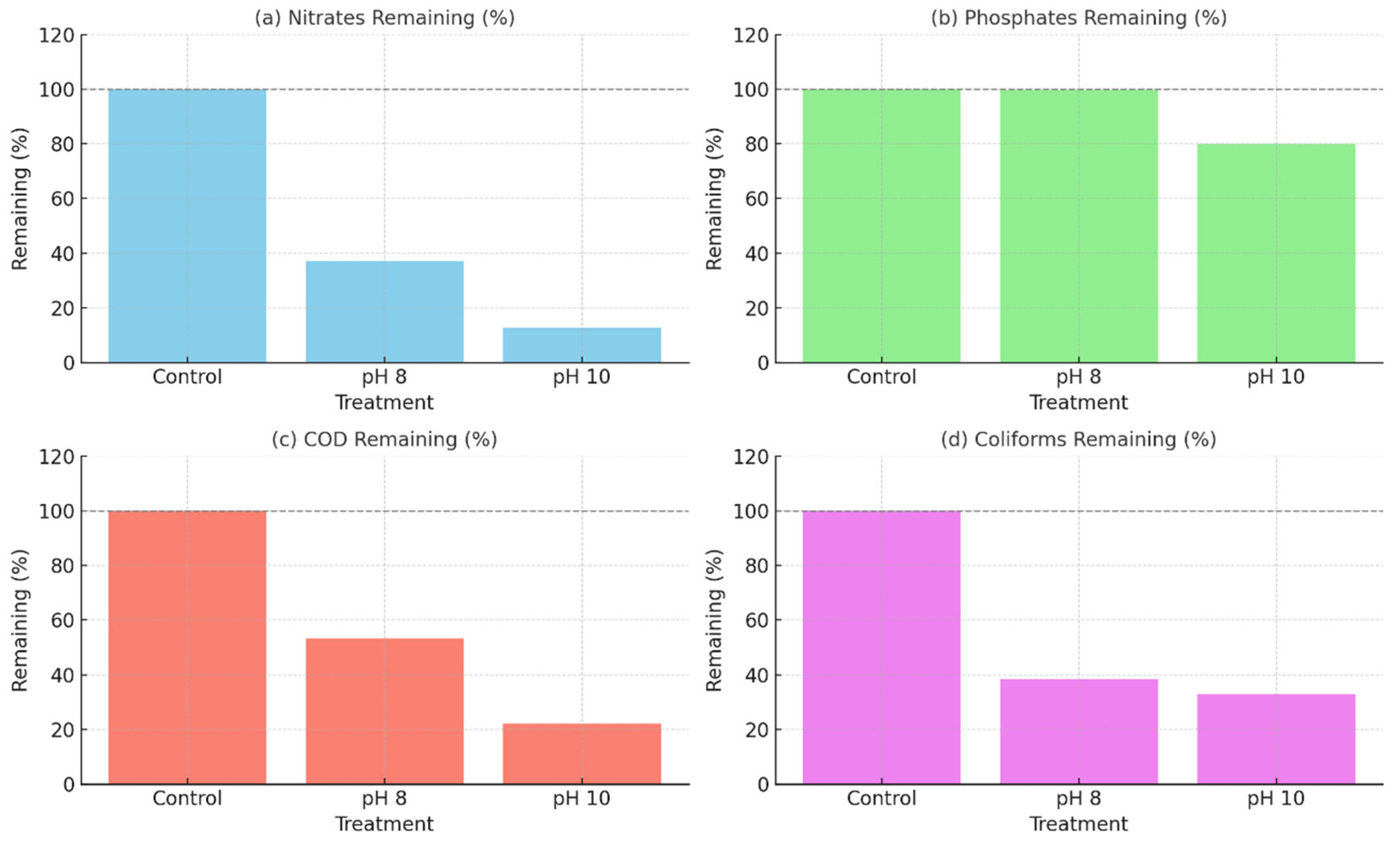
Water quality analysis of the treated samples showed clear reductions in several key contaminants under the optimized conditions (100 mg L
−1 bioflocculant, pH 10, Initial optical density (OD
688) 2.0 ± 0.2). Nitrate concentration decreased from 398.01 to 50.3 mg L
−1, phosphate from 5.12 to 4.1 mg L
−1, COD from 1041 to 231 mg L
−1, and coliform counts from 7.80 × 10
5 to 2.56 × 10
5 CFU mL
−1, as summarized in
Table 6. These results indicate that the flocculation process contributed not only to biomass removal but also to an overall improvement in water quality (
Figure 6). A detailed interpretation of these trends, together with a visual assessment of treated samples, is provided in the following section.
4. Discussion
The flocculation behavior observed in this study results from the combined effects of surface charge interactions and calcium-mediated aggregation, which are strongly influenced by pH, temperature, and biomass concentration. The eggshell-derived bioflocculant, mainly composed of calcium carbonate with minor organic components, acted as an effective destabilizing agent for
Chlorella spp. Suspensions, promoting aggregation and subsequent sedimentation under suitable operating conditions. Similar behavior has been reported for calcium-rich bioflocculants derived from shell waste, where divalent ions play a central role in microalga destabilization and aggregation processes [
25].
At lower pH values, algal surface groups remain largely protonated, while calcium species are more readily released from the eggshell matrix. As the system shifts toward alkaline conditions, deprotonation of functional groups on the algal surface, including carboxyl and phosphate moieties, reduces electrostatic repulsion between cells. Under these conditions, the available calcium ions interact with negatively charged sites on the cell surface, favoring aggregation through charge neutralization and ionic bridging. This combination of effects explains the improved floc formation and settling performance observed at higher pH values [
11,
19,
25]. Comparable observations have been reported in studies on bioflocculant of Chlorella vulgaris, where alkaline conditions enhanced aggregation efficiency due to increased ionic bridging between algal cells and flocculant polymers [
20].
These physicochemical mechanisms are supported by both experimental measurements and direct visual observations. Under the optimized conditions tested (18.5 °C, 100 mg L
−1 bioflocculant, pH 10), dense microalgal aggregates formed and settled rapidly, producing visibly clarified supernatants. As shown in
Figure 6, the untreated control maintained a turbid green appearance, whereas the treated sample exhibited a marked reduction in suspended solids and pigments. Similar rapid settling behavior has been documented for calcium-based bioflocculants applied to microalgal harvesting, where the formation of dense aggregates significantly enhances biomass recovery efficiency [
25].
These visual changes are consistent with the quantitative results. As presented in
Figure 6, treatment at pH 10 achieved the highest removal efficiencies among the conditions evaluated, including an 87% reduction in nitrate concentration, a 78% decrease in COD, and an almost complete removal of coliform bacteria (approximately 99.6%). Together, these outcomes indicate that the eggshell-derived material functions not only as a biomass flocculant but also contributes to the reduction in dissolved nutrients and microbial load. Comparable reductions in nutrient concentration have been reported in wastewater treatment studies involving microalgae flocculation, where the simultaneous removal of biomass and associated contaminants is attributed to the adsorption and cosettling of dissolved compounds within the formed flocs.
The reduction In coliform bacteria observed under the highest biomass removal treatment may be explained by the coagulation-flocculation mechanism promoted by the eggshell-derived bioflocculant. During floc formation, microbial cells can become entrapped within the aggregated particles and subsequently removed from the water column through sedimentation. In addition, bacterial cells may adsorb onto the surface of the flocs, which further facilitates their removal during settling. The experiments were conducted at ambient temperature (~18.5 °C), which corresponds to the natural laboratory conditions rather than a controlled thermal treatment. Therefore, the observed decrease in coliforms is primarily attributed to physical removal via flocculation and settling, despite the relatively high nutrient load in the wastewater. Temperature was identified as a relevant factor influencing flocculation performance. At higher temperatures (34.3–50 °C), a noticeable decline in removal efficiency was observed, suggesting that thermal conditions can compromise the stability of the flocculant system. This behavior may be associated with temperature-induced changes in the structure of organic components or in the solubility and availability of ionic species within the eggshell-derived matrix. Comparable trends have been reported for polymer-based flocculants, in which elevated temperatures reduce the intermolecular interactions required for the formation and maintenance of stable floc [
5,
26].
From a methodological perspective, the optimization strategy adopted in this study differs from the traditional one-factor-at-a-time (OFAT) approaches commonly used in flocculation studies. Instead, a factorial experimental design with central points was employed to evaluate the combined effects of the main operation variables. This approach enables the identification of interaction effects and improves the robustness of the optimization process. Similar design of experiment strategies have been successfully applied in microalgal flocculation studies, including the shell waste bioflocculation for biodiesel-related biomass harvesting, highlighting the scientific validity of multivariate experimental designs in the development of efficient bioflocculation processes [
20].
The statistical evaluation confirms the robustness of the proposed model. Analysis of variance yielded a high coefficient of determination (R
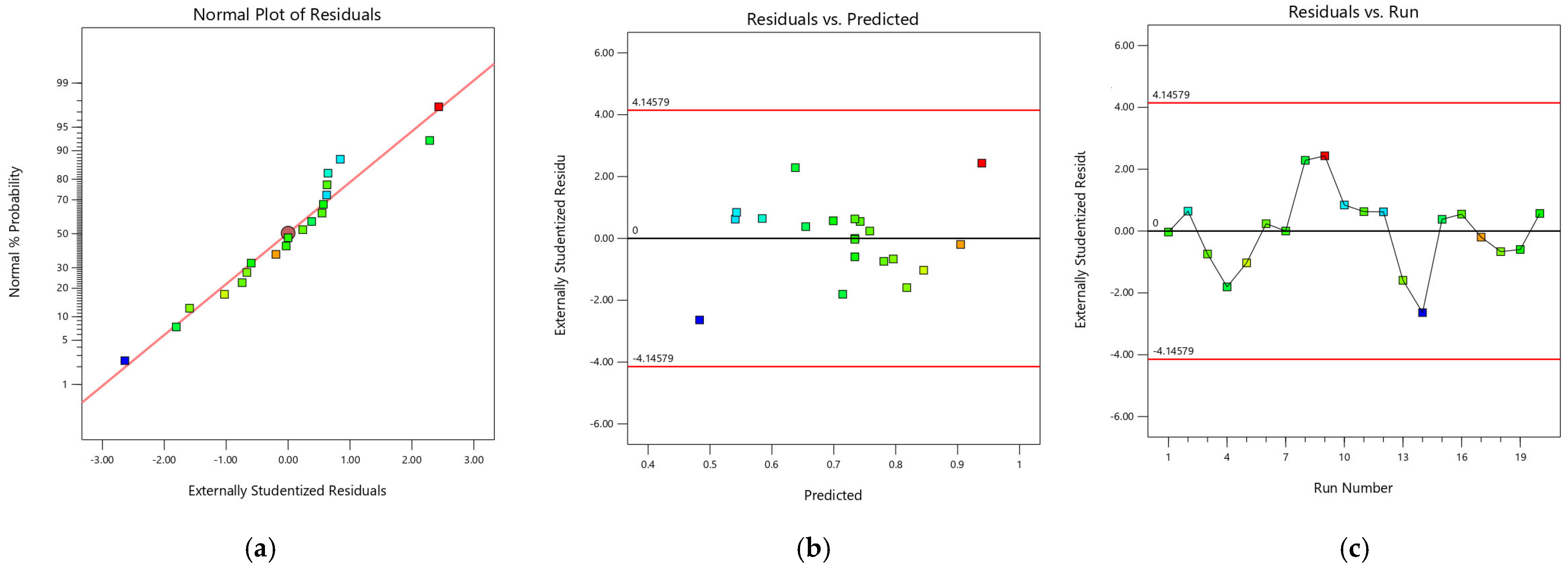
2 = 0.97), while the lack-of-fit test was not statistically significant, indicating that the linear model adequately describes the system response. This conclusion is reinforced by the diagnostic plots, including the normal probability plot of residuals, residuals versus predicted values, and residuals versus run order (
Figure 7). In all cases, residuals exhibited an approximately normal distribution, were randomly dispersed around zero, and showed no systematic patterns related to factor levels.
From a wider position, the integration of eggshell-derived bioflocculants with a controlled experimental design provides a practical framework for the development of low-cost wastewater treatment solutions. In addition to effective microalgal removal, the process achieved substantial reductions in nutrient concentrations and microbial indicators, highlighting its potential as a multifunctional and biofriendly treatment strategy.
5. Conclusions
This study shows that an eggshell-derived bioflocculant can effectively remove Chlorella spp. and associated contaminants from agricultural wastewater when operating conditions are optimized. Using a factorial design, maximum removal performance was obtained at pH 10, 18.5 °C, a bioflocculant dosage of 100 mg L−1, and an initial algal density of approximately 3.76 × 10⁷ cells mL−1, achieving a maximum biomass removal efficiency of 094. This set of operational parameters was essential to maximize flocculation performance and demonstrates the process’s potential as a strategy for mitigating nutrient, organic, and microbial contamination in agricultural wastewater.
In addition to biomass harvesting, the process led to notable reductions in nitrates (87%), COD (78%), phosphates (21%), and coliform bacteria (99.6%), indicating that the eggshell-based material contributes simultaneously to solid removal and water quality improvement. These results highlight the practical value of calcium carbonate-rich waste as a multifunctional treatment agent within a single flocculation step.
Future work should further characterize the material by quantifying calcium release at different dosage levels, for example, using complexometric titration with EDTA or ICP-OES. Such characterization would support improved process control and dosage selection under applied conditions. Also, it could include determining the zeta potential and point of zero charge of the bioflocculant to further elucidate electrostatic interactions. Overall, the findings support the potential of eggshell-derived bioflocculants as a low-cost and resource-efficient option for wastewater treatment systems.