Review

Review of Progress on Application of Functional Ceramic Membranes in Maricultural Wastewater Treatment

1
School of Marine Science and Technology, Harbin Institute of Technology at Weihai, Weihai 264209, China
2
Tianrun (Shandong) Ecological Environment Technology Corporation Ltd., Weihai 264209, China
3
School of Material Science and Engineering, Wuhan University of Technology, Wuhan 430070, China
*
Authors to whom correspondence should be addressed.
Water 2026, 18(11), 1266; https://doi.org/10.3390/w18111266 (registering DOI)
Submission received: 22 April 2026 / Revised: 14 May 2026 / Accepted: 18 May 2026 / Published: 23 May 2026
(This article belongs to the Special Issue Urban Water Pollution Control: Theory and Technology, 2nd Edition)

Abstract

The rapid development of the aquaculture industry has led to increasing discharges of hypersaline and nutrient-enriched maricultural wastewater. Functional ceramic membranes have garnered significant advantages due to their exceptional chemical stability and high tailorability through surface and interface engineering. This research reviewed recent advances including the functionalization of ceramic membranes and hybrid systems coupled with advanced oxidation processes (AOPs) for enhancing degradations of nutrients and organics in maricultural wastewater treatment. Catalytic ceramic membranes enhanced removal of micropollutants including antibiotics and heavy metals. This review further systematically classified categorization of established functional ceramic membranes and synthesizes cutting-edge modification approaches for membrane fouling mitigation. Finally, this review evaluated the application prospects, challenges for scaled implementation, and proposed future research directions of functional ceramic membranes in the treatment of maricultural wastewater.

1. Introduction

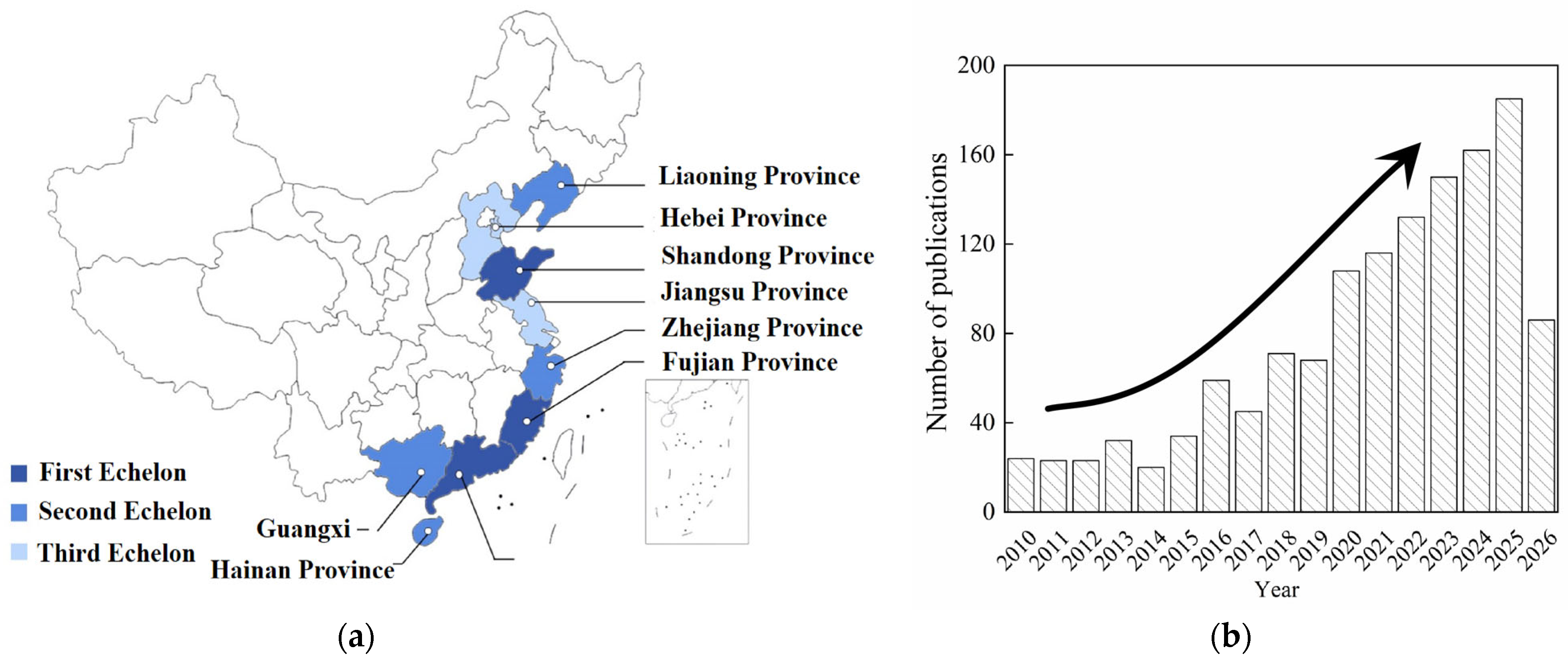
Due to overfishing, habitat loss and climate change leading to a decline in wild fisheries, mariculture has rapidly expanded to meet the growing global demand for seafood [1]. Mariculture contributed approximately 30% of global aquaculture production and served as a vital source of high-quality protein for human consumption [2]. The maricultural areas in China are highly concentrated, mainly located in coastal provinces such as Shandong, Guangdong and Fujian province (Figure 1a). This led to the generation of a large amount of maricultural wastewater, with a significant amount of nitrogen and phosphorus being discharged into the marine ecosystem [3]. This caused excessive algal growth, which depleted dissolved oxygen in the water and posed a threat to marine life. The accumulation of waste also degraded water quality, leading to increased incidence of fish diseases and greater reliance on antibiotics. Chemicals such as antibiotics, antifouling agents, and disinfectants often accumulated in sediments and aquatic organisms, thereby increasing the risks of antimicrobial resistance and pollutant bioaccumulation [4]. Furthermore, industrial runoff introduced pesticides and heavy metals into maricultural areas, impacting the quality and safety of farmed seafood. Maricultural wastewater typically exhibited salinities as high as 30–40‰ and contains antibiotics such as tetracycline (TC), trimethoprim (TMP), and sulfamethoxazole (SMX), as well as heavy metals including Pb2+, Cu2+, and Cd2+ [5], imposing multiple stresses on microorganisms. This resulted in conventional bioprocesses exhibiting low removal efficiency, poor operational stability, low resistance to shock loading, and high sludge loss rates in the actual treatment process [6].
Currently, both ceramic and polymeric membranes are widely employed for wastewater treatment [7]. Polymeric membranes dominated the membrane market due to advantages such as low production costs and ease of processing. However, polymeric membranes suffered from poor chemical and mechanical stability, low fouling resistance, and weak tolerance to hypersalinity, which greatly restricted their long-term application in maricultural wastewater treatment [8]. Compared to polymeric membranes, ceramic membranes exhibited a relatively narrow pore size distribution and high porosity, contributing to their excellent separation performance and higher flux. Meanwhile, ceramic membranes possessed outstanding thermal, chemical and mechanical stability, longer service life, improved hydrophilicity, and better antifouling capacity [9]. Ceramic membranes could be used in extreme environments, and they have wide application prospects in wastewater treatment. The number of publications addressing the treatment of maricultural wastewater via ceramic membrane technology has increased substantially in the past fifteen years (Figure 1b). These journals published only 24 articles in 2010; however, over 130 articles have been published since 2022, underscoring the growing academic and practical importance of this research area [10]. Nevertheless, the high-salinity challenges limiting the application of ceramic membranes in maricultural wastewater treatment remain to be further explored.

2. AOPs Coupled with Functional Ceramic Membranes

AOPs have been identified as one of the most attractive and effective methods of removing pollutants from water [1]. AOPs generated highly reactive radicals with strong oxidation capacity and non-selectivity, enabling efficient degradation of refractory organics. These methods combined traditional physicochemical and biological processes, and were included in the maricultural wastewater treatment procedure due to their excellent oxidation capabilities and ability to improve the biochemical properties of pollutants (Table 1 and Table 2) [11]. However, limitations included short radical lifetimes, incomplete mineralization, potential toxic intermediates, and low efficiency under real water matrices [12]. Ozone activation, electrocatalysis, photocatalysis, and Fenton reactions represented typical AOPs, where catalysts and oxidant, light, electric stimulation promote radical generation [12]. Catalytically enhanced ozonation is a green and advanced oxidation technology. Owing to its high efficiency, rapid reactivity, and minimal secondary pollution, this approach has been extensively investigated and developed by researchers [13]. Photocatalytic materials produced electron–hole pairs and ROS to mineralize pollutants while mitigating membrane fouling via antibacterial and hydrophilic effects [14]. When coupled with functional ceramic membranes, AOPs achieved synergistic separation and in situ oxidation, significantly improving pollutant removal and antifouling performance [15].

2.1. O3 Catalytic Ceramic Membrane

Ozone catalytic technology was widely used in water treatment. It helped remove organic pollutants from wastewater, kill germs, and purify drinking water [31]. This stems from ozone’s potent oxidizing properties, which enabled the oxidation and decomposition of most organic pollutants in water, thereby achieving a degree of water purification [1]. The excessive use of antibiotics in maricultural wastewater posed a serious threat to both the environment and human health. Ozone efficiently removed antibiotics from maricultural wastewater, achieving complete elimination of oxytetracycline (OTC), and trimethoprim (TMP) within thirty minutes. Removal rates for sulfadimethoxine (SDM) consistently exceeded 68% [32].
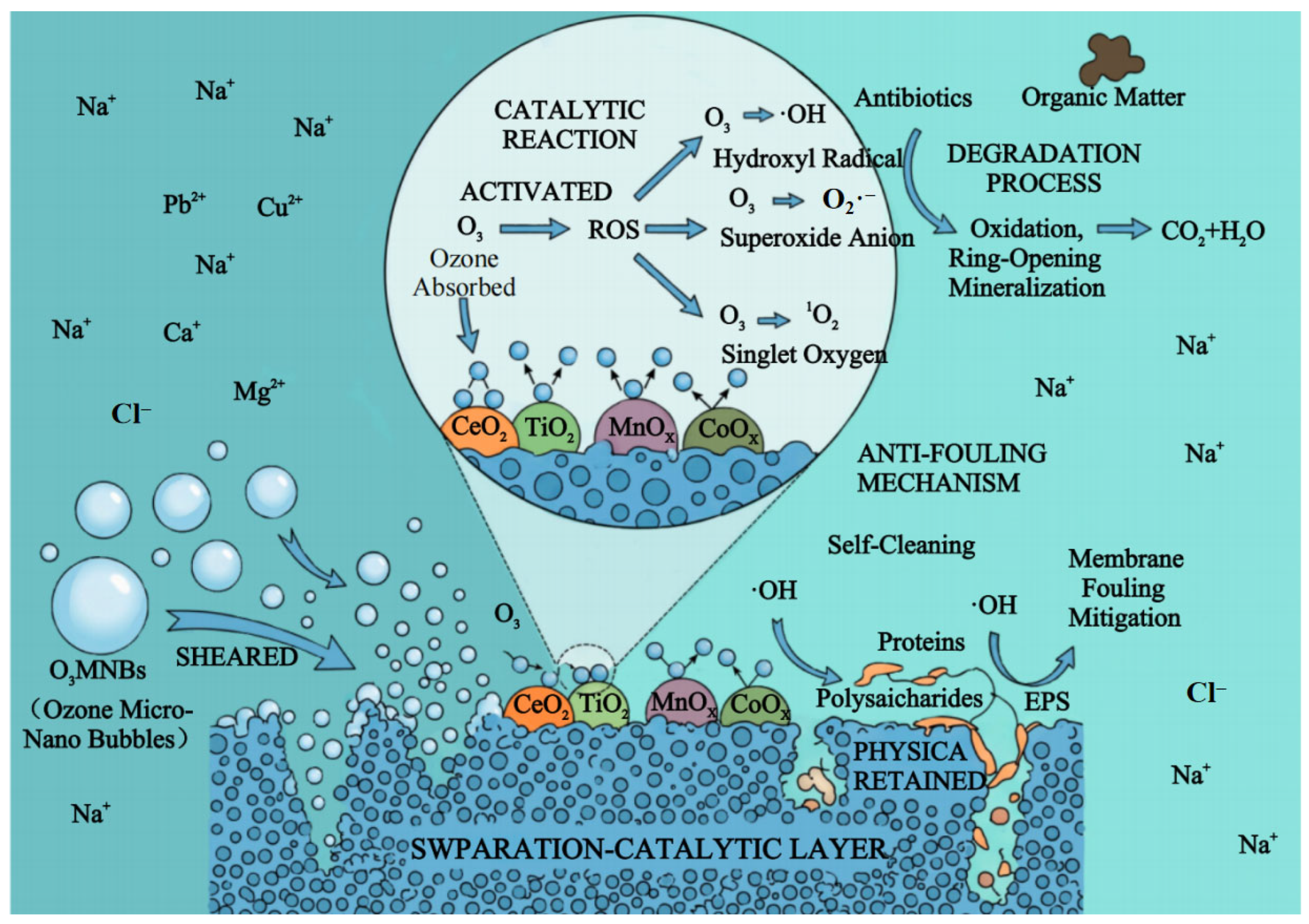
In recent years, research trends integrating ozone with ceramic membranes have grown significantly [7]. The coupling mechanism of ozone with catalytic ceramic membranes involved synergistic effects of mass transfer enhancement, in situ radical generation, and membrane separation [33]. The presence of CM induced a shear effect on ozone bubbles, effectively reducing their size and enhancing interfacial and intra liquid mass transfer [34]. Smaller bubble dimensions significantly increased ozone residence time within the system, promoting more complete contact between ozone and pollutants. Making the bubbles smaller helped more ozone move into the water. It also raised the amount of ozone dissolved in the water [35]. Hence, pollutants broke down more efficiently. Reducing ozone bubble diameter enhanced mass transfer, elevating transfer efficiency from 47% to 120%. Catalysts can also be incorporated into CM during the ozone oxidation process. The loaded catalysts (e.g., MnOx, CoOx, CeO2, TiO2) provided abundant surface hydroxyl groups and oxygen vacancies, which promote ozone decomposition to generate highly reactive ·OH, O2, and 1O2 [12] (Figure 2). During this reaction, these radicals rapidly attacked and mineralized antibiotics, humic acids, and organic pollutants [1]. Meanwhile, the ceramic membrane achieved physical retention of suspended solids, colloids, and microbes. The in situ oxidation degraded foulants such as proteins, polysaccharides, and EPS, thereby mitigating membrane fouling and stabilizing permeate flux [36]. In hypersaline wastewater, catalytic ozonation exhibited distinct salt-resistance mechanisms. Negatively charged catalysts (Mn2O3, Fe3O4) repel Cl via electrostatic interactions to protect aqueous ·OH. The CuO/MnO2 system generated surface-bound ·OH, avoiding radical quenching by Cl-. However, CuO-based catalysts are salt-intolerant [37]. All catalysts suffered deactivation during long-term operation due to active component loss or surface fouling. Co-DAC with Co2N6 sites promotes bridge-like ozone adsorption and homolytic cleavage, generating selective Co(IV)=O instead of quenching-prone ·OH. This system showed superior Cl- tolerance and 162-fold higher efficiency in a flow-through membrane reactor for high-salinity wastewater decontamination [38].

2.2. TiO2-Catalyzed Photocatalytic Ceramic Membrane

The photocatalyst used TiO2 as one of the main materials in the photocatalytic ceramic membranes for treating maricultural wastewater [39]. Owing to its relatively low bandgap of 3.20 eV [40], TiO2 generates electron–hole pairs under UV irradiation: electrons excited to the conduction band reduce O2 to superoxide radicals, while holes in the valence band oxidize H2O to hydroxyl radicals (·OH) [41]. These radicals rapidly attacked and degraded harmful organic pollutants (such as dyes, proteins, and hydrocarbons), ultimately converting them into harmless H2O and CO2 [42]. The preparation methods were also relatively flexible and straightforward, typically involving sol–gel, hydrothermal, and electrospinning processes [42]. The porous structure of ceramic membranes also facilitated the increased contact area between the pollutants and the photocatalyst. Due to the photodegradation effect of photocatalytic ceramic membranes on pollutants, these membranes could incorporate larger pores compared to conventional ceramic membranes enhancing water permeability, without compromising pollutant removal efficiency [40]. A common challenge with ceramic membranes in water and wastewater treatment was rapid and severe fouling on the membrane surface, which significantly reduced membrane flux. In photocatalytic ceramic membranes, photocatalysis broke down organic pollutants into smaller pieces. This reduced the buildup of dirt on the membrane surface. It also helped keep the water flow higher and more stable during operation. TiO2 ceramic membranes exhibited superior mechanical, thermal, and chemical stability due to their inherent ceramic properties [43]. They remained stable under intense ultraviolet radiation, temperature fluctuations, and extreme pH conditions, exhibiting a significantly longer service life compared to polymeric membranes [44]. Despite the superior performance of TiO2 ceramic membranes, it was noteworthy that existing literature reviews on TiO2 photocatalytic ceramic membranes remain limited, with no systematic, in-depth thematic review having emerged [45]. This might be due to the multidimensional nature of research within the ceramic membrane field, making the integration of existing advances challenging [46].

2.3. Electrochemical Ceramic Membrane for Maricultural Wastewater

Electrochemical oxidation, as an efficient advanced oxidation process (AOP), achieved the degradation of recalcitrant organic pollutants via highly reactive species (e.g., ·OH, O3, and ClO) generated on electrode surfaces [47]. This process could also disinfect water and remove algae. These functions worked well with the filtering and separating abilities of ceramic membranes. In the treatment of maricultural wastewater, this coupled process enhanced pollutant removal efficiency, which also mitigated membrane fouling through electrochemical action [48]. The coupling of electrochemical oxidation with ceramic membranes achieved maricultural wastewater purification primarily through the synergistic oxidation–degradation–retention–separation mechanism. Under an electric field, direct oxidation happened at the anode. This broke down organic pollutants stuck to the electrode, like leftover proteins, antibiotics, or toxins from fish farming [49]. Meanwhile, the electrolysis of water generated ·OH, which was another way to oxidize pollutants. The oxidation reduction potential of ·OH produced by electrolyzing water was as high as 2.8 V. These free radicals non selectively broke the chemical bonds of organic pollutants, degrading them into smaller organic molecules, even CO2 and H2O, thereby reducing the chemical oxygen demand (COD) and toxicity of wastewater [50]. Furthermore, ceramic membranes, with their nanoscale pore structure and excellent retention properties, efficiently capture suspended particulates (such as uneaten feed, fecal matter, and algal cells), colloidal substances, and intermediate products generated during electrochemical oxidation, thereby further enhancing effluent quality. Concurrently, electrochemical oxidation exhibited significant synergistic effects in controlling membrane fouling [51]. It degraded organic pollutants adsorbed on the ceramic membrane surface and within its pores, reducing the formation of organic fouling layers. Microbubbles (e.g., O2, H2) generated at the electrode surface under the electric field act as a scrubbing agent on the membrane surface, weakening the adhesion of pollutants to the membrane. For high-salinity maricultural wastewater, electrolytes (e.g., Cl) generated species like ClO at the anode, enhancing both disinfection efficacy and inhibiting biofilm growth on membrane surfaces, thereby extending ceramic membrane operational lifetimes [52]. Furthermore, ceramic membranes’ retention capability concentrated pollutants within the effluent, increasing their concentration at electrode surfaces and consequently boosting electrochemical oxidation reaction efficiency. Electrochemical oxidation coupled with ceramic membranes exhibited several critical limitations for practical application, particularly in high-salinity maricultural wastewater. High chloride concentrations triggered the formation of carcinogenic disinfection byproducts (THM, HAA) and endocrine-disrupting perchlorate (ClO4) at the anode [53]. The system suffered from dual energy consumption from electrochemical reactions and membrane filtration, along with poor stability including electrode corrosion, cathode scaling, and radical-induced membrane degradation [54]. Mass-transferred limitations in membrane pores further exacerbated membrane fouling and byproduct generation [55]. Future research should prioritize byproduct control strategies, development of integrated electrocatalytic ceramic membranes, long-term stability enhancement, and comprehensive ecological toxicity assessment of treated effluents.

3. Conductive Ceramic Membranes (CCMs) for Maricultural Wastewater Treatment

Conductive membranes primarily comprise conductive polymer membranes and CCMs. Conductive organic polymer membranes exhibited great hydrophobicity and low chemical stability, significantly impacting the efficiency and long-term sustainability of wastewater purification processes [56]. In comparison, CCMs possessed excellent chemical and thermal stability, favorable antimicrobial performance and outstanding durability, rendering them one of the most promising candidates for conductive membrane fabrication [57,58]. CCMs demonstrated superior electrocatalytic performance compared to conductive polymer membranes, owing to their composition primarily from metal oxides such as Ti, Sn, and Sb oxides. Within water treatment research, CCMs had primarily focused on removing organic pollutants, attributed to their unique electrochemical advanced oxidation capabilities.
Currently, multiple preparation methods exist for CCMs, chiefly vacuum filtration, surface coating, chemical vapor deposition, sol–gel techniques, and magnetron sputtering. Different preparations influenced CCM surface morphology, conductivity, and electrocatalytic properties, thereby modulating mass transfer efficiency, energy consumption, and self-cleaning capabilities [58]. CCMs could be combined with diverse materials, such as carbon-based material-loaded CCMs (C-CCMs). Carbon-based materials contained sp2 carbon atoms that hybridized with out-of-plane π-π electrons, conferring high electrical conductivity and catalytic activity. However, the low oxidation potential and poor electrochemical stability of C-CCMs diminished their conductivity, thereby compromising their fouling resistance. SnO2-loaded CCMs or other semiconductor-loaded CCMs (S-CCMs) are primarily prepared via sol–gel, impregnation, and spray pyrolysis methods [59,60]. Metal-loaded CCMs (M-CCMs), primarily utilizing metals such as Ti and Ir, were fabricated via electron beam deposition and magnetron sputtering. M-CCMs exhibited outstanding electrocatalytic performance with charge transfer impedances ranging from 7.6 to 21.9 Ω [61]. However, unlike inert metal coatings, the metallic layers of M-CCMs were prone to oxidation and corrosion when employed as anodes. Furthermore, techniques such as electron beam deposition and magnetron sputtering remained challenging to implement widely due to their high cost.
CCMs have been extensively investigated for maricultural wastewater treatment, showing significant superiority in the degradation and removal of antibiotics. A single-pass four-stage Ti4O7 reactive electrochemical ceramic membrane (Ti4O7 REM) system could remove 94–97% of trace antibiotics from surface water and maricultural wastewater in 30 s at ultralow energy consumption [55]. The electrocatalytic graphene oxide/polypyrrole ceramic membrane (GO/PPy CM) peroxydisulfate (PDS) filtration system achieved satisfactory cephalexin (CLX) removal and membrane fouling control after modification of the 1O2 generation pathway. During maricultural wastewater treatment, the GO/PPy CM system achieves a CLX removal efficiency of 84% and a permeate flux enhancement of 13%, with SO42− concentration fluctuations maintained below 8% [62]. Collectively, these results verified that CCMs enable highly efficient removal, making them a promising candidate for practical maricultural wastewater treatment.

4. AOPs Coupled with Catalytic Ceramic Membranes for Pollutant Removal

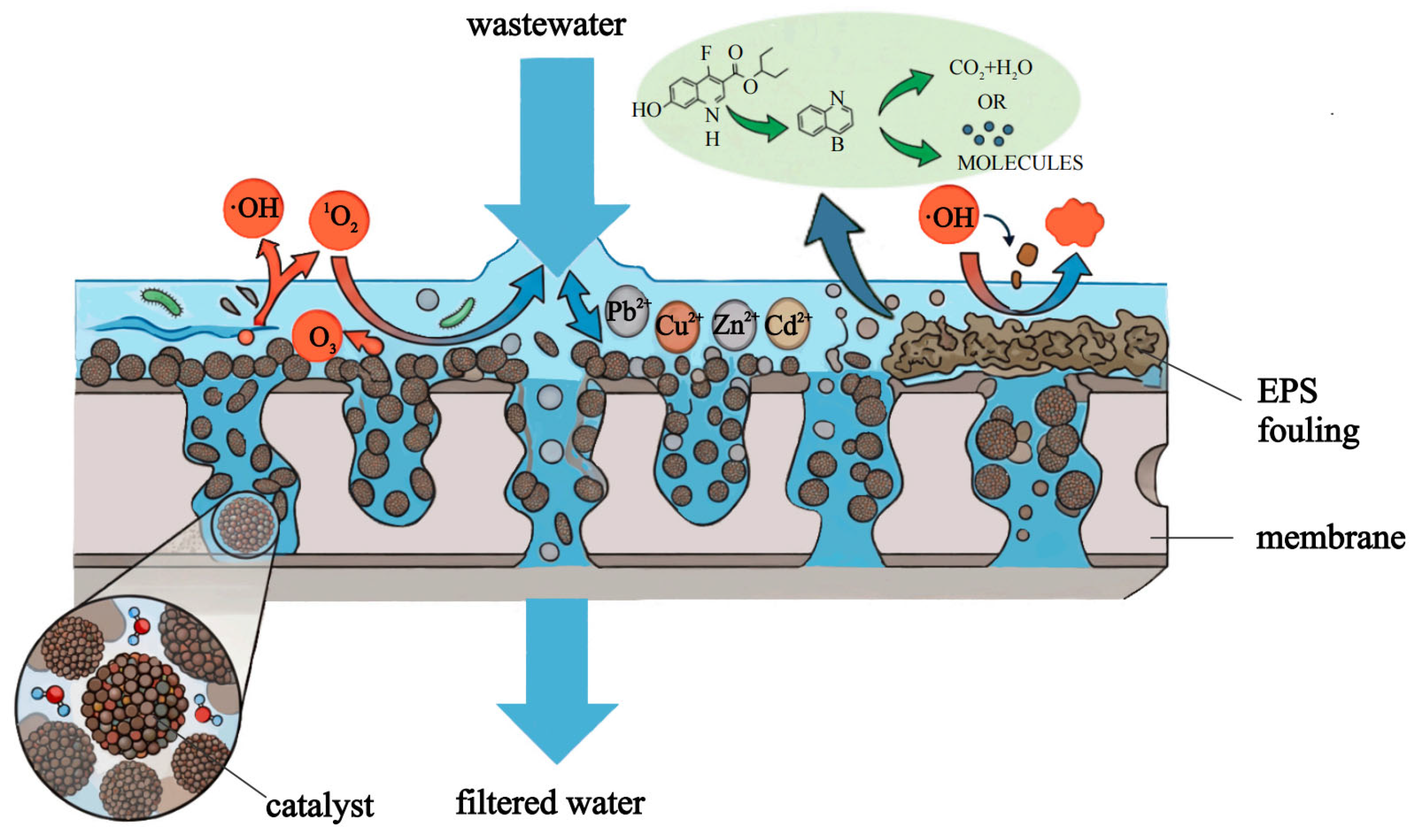
Compared to physical membrane separation processes, AOPs as chemical processes offered rapid degradation and rates. They utilized generated reactive species, such as hydroxyl radicals, to decompose organic compounds [13,63]. With the assistance of catalysts, this technology enabled faster removal of organic pollutants in wastewater; nevertheless, several challenges remain unresolved. The catalysts typically employed are powdered, prone to undesirable agglomeration that reduces specific surface area and active reaction sites. Furthermore, post treatment steps were required to recover catalysts after reactions [22]. AOPs could degrade antibiotics or convert them to small-molecule substances, which could alleviate the inhibitive effect of antibiotics on microorganisms, and enhance their biodegradability and the removal rate [64]. In recent years, emerging pollutants represented by antibiotics in wastewater had attracted widespread attention due to their persistent, biotoxic, and bioaccumulative characteristics. The application of catalytic ceramic membranes in organic pollutant removal represented an emerging technology within wastewater treatment [65]. Research indicated that integrating catalytic oxidation with ceramic membrane filtration achieves synergistic effects between chemical reactions and physical separation [66]. By immobilizing catalysts on the membrane surface and pore interfaces, active catalyst particles could be well confined within the membrane framework. This approach prevented catalyst agglomeration while providing additional active sites to enhance organic removal efficiency [67]. Moreover, the membrane process facilitated the delivery of more reactants to active sites, thereby enhancing mass transfer efficiency. Additionally, the effectiveness of catalysts within the membrane eliminates the need for additional separation steps during catalyst recovery post-reaction [23]. Furthermore, the active substances generated during the process can degrade fouling materials, thereby improving the membrane’s antifouling and self-cleaning capabilities [67] (Figure 3).
Ciprofloxacin (CIP) is a prototype fluoroquinolone antibiotic; an optimized Ce@SiC membrane with ozonation could achieve 94.3% CIP degradation efficiency within 60 min [68]. A photo-Fenton ceramic membrane (PF-CM) with nano hematite (α-Fe2O3) achieved a TC removal rate of up to 82% even when TC concentrations were below 20 mg/L [69]. Heavy metals could be removed from water by adsorption through ceramic membranes. Pb, Cu, Zn, and Cd can be efficiently adsorbed by ceramic membranes with added dolomite, achieving adsorption rates of 99.12%, 99.82%, 85.62%, and 65.94%, respectively [70].

5. Ceramic Membrane Fouling and Ozone Membra ne Cleaning

5.1. Membrane Fouling Caused by High Salinity

Ceramic membranes are susceptible to both inorganic and organic fouling during filtration. High-salinity environments could cause both temporary and permanent reductions in chemical oxygen demand removal efficiency, potentially related to soluble microbial product (SMP) concentrations and specific oxygen consumption rates within halophilic microbial communities. The impact of high-salinity environments increased SMP, extracellular polymeric substances (EPSs), zeta potential, and endogenous respiration in the treated solution, while decreasing relative hydrophobicity, the EPSp/EPSc ratio, and exogenous respiration. This led to a significant increase in transmembrane pressure (TMP) and fouling rate, accompanied by a substantial reduction in the pure water flux of the membrane [71]. The occurrence of membrane fouling was also influenced by membrane surface characteristics and operating conditions. Contaminated membranes were cleaned using physical backwashing, with fouling as reversible or irreversible based on the membrane recovery rate. Reversible fouling typically arose from inorganic contaminants and could be addressed through hydraulic backwashing to restore membrane flux [72]. However, frequent hydraulic backwashing reduces water production efficiency and increases energy consumption. Consequently, understanding contaminant characteristics is essential for developing targeted fouling control strategies. Irreversible fouling requires a combination of hydraulic backwashing and chemical cleaning processes for effective removal. Irreversible membrane fouling is generally caused by organic, inorganic, biological, or mixed contaminants. High-salinity environments accelerated the conversion of reversible fouling to irreversible fouling on ceramic membranes. This represents one of the major challenges requiring resolution in membrane separation processes. Currently, electrochemical self-cleaning processes are considered an effective alternative to chemical cleaning for removing irreversible membrane fouling. During membrane filtration, the membrane acting as a conductor was connected to a power source, enabling in situ electrochemical reactions to occur on the membrane surface and within the pores [58]. In high-salinity environments, abundant inorganic ions readily precipitated as crystalline deposits on catalyst surfaces, occluding mesopores and masking Lewis acid sites essential for ozone activation [73]. This physical blockage reduced specific surface area by up to 37% and impeded electron transfer, causing progressive deactivation and reduced pollutant removal [74]. Concurrently, excessive anions competed with organics for adsorption and scavenge hydroxyl radicals, further diminishing oxidative capacity [74]. Over prolonged operation, tightly bound inorganic layers accumulated irreversibly, causing structural deterioration and carbon deposition that cannot be fully recovered by backflushing, ultimately compromising long-term catalytic stability.

5.2. Ceramic Membrane Cleaning via O3 Nanobubbles

During maricultural wastewater treatment using ceramic membranes, membrane fouling undergoes sequential evolution from initial pore blocking by small organic molecules, to gel-layer formation dominated by proteins, polysaccharides and humic substances, and finally to composite biofouling coupled with inorganic precipitation [75]. Strong synergistic interactions occurred among proteins, polysaccharides, humic-like dissolved organic matter and biofilms, which collectively enhanced foulant adhesion, accelerated pore clogging, and promoted the formation of compact gel layers [76]. By regulating surface properties, introducing advanced oxidation, applying electric stimulation or intelligent monitoring, the thermodynamic affinity and adhesion strength between foulants and membrane surfaces could be weakened, and the kinetic rates of pore blocking, foulant aggregation and gel-layer compaction could be effectively reduced, leading to mitigated fouling and stabilized long-term filtration performance [77]. In recent years, there has been an increasing number of methods for mitigating membrane fouling (Table 3). Conventional ozone treatment technologies require extended contact times and higher energy consumption to ensure effective mass transfer and oxidation efficiency, leading to suboptimal O3 utilization. Emerging micro and nanobubble (MNBs) technologies addressed this limitation by enhancing O3 utilization [78]. Microbubbles (MBs) and nanobubbles (NBs), with diameters ranging from tens of nanometers to tens of micrometers, possessed significantly larger specific interfacial areas and slower ascent rates than conventional millimetric bubbles. This facilitated more efficient transfer of O3 from the gas phase to the liquid phase. Consequently, integrated water treatment technologies combining micronano bubble and ozone systems have garnered significant attention [79]. Ozone micronano bubble technology has yet to be applied to ceramic membrane CIP cleaning. Previous studies confirmed that microbubble technology effectively disrupted the structure of fouling layers on membrane surfaces, thereby reducing fouling adhesion. Hydroxyl radicals (·OH) generated during microbubble collapse can restore the permeate flux of humic acid-fouled ceramic membranes to their initial state. Smaller ozone micronano bubbles could get deep into the fouling layers on ceramic membranes. These radicals further break up the fouling structure. Compared to sodium hypochlorite CIP cleaning, ozone’s superior cleaning efficacy significantly reduces cleaning duration, positioning it as a more economical solution. Consequently, compared to direct O3 injection, ozone micronano bubble technology offered higher cleaning efficiency and greater application potential for ceramic membrane CIP cleaning. During ceramic membrane flushing, employing ozone micronano bubble backwashing reduced the frequency of chemical cleaning and chemical detergent usage, thereby extending membrane service life [80]. This process eliminates nearly all viable bacteria and most protein and polysaccharide substances from the membrane surface. However, while disrupting microbial cell structures to inactivate them, this process also releases DNA, enhancing its covalent bonding with the ceramic membrane. Microbubble technology injects high-concentration ozone into membrane pores, generating abundant hydroxyl radicals under alumina catalysis. These radicals oxidatively decomposed macromolecules adhering to the ceramic membrane surface and within pores into smaller molecules, thereby achieving degradation and removal of macromolecular substances. Concurrently, the electrostatic repulsion and hydrophobic effects generated by MNB more effectively strip the filter cake layer, facilitating the release of particulate and macromolecular contaminants trapped within the membrane pores [80]. O3 MNB backwashing technology offers an alternative or reduced chemical cleaning solution for ceramic membranes experiencing severe fouling. This method is simple to operate and presents greater environmental advantages compared to traditional chemical cleaning.

6. Challenges and Future Research Directions

Making ceramic membranes requires materials to be heated at high temperatures with the application of precise coatings. This makes ceramic membranes much more expensive to produce than polymer membranes. This limits their large-scale application in water treatment. Functionalization modifications can only mitigate fouling to a certain extent. Despite remarkable advances in functional ceramic membranes for maricultural wastewater treatment, critical bottlenecks still exist, including: 1. Atomic-level design of salt-tolerant catalytic ceramic membranes and clarification of catalyst deactivation mechanisms; 2. Confined reaction kinetics and interfacial synergistic mechanisms in AOP-membrane coupling systems; 3. In situ identification and intelligent prevention/control of composite membrane fouling under hypersaline conditions; 4. Source tracing, ecotoxicity assessment, and control strategies of degradation byproducts; 5. Low-cost and scalable preparation technologies as well as full life cycle assessment.

7. Conclusions

This research examines the progress made regarding AOPs coupled with functional ceramic membranes in maricultural wastewater treatment. Compared to traditional biological methods, AOP-coupled functional ceramic membranes show advantages including excellent chemical interfacial properties, antifouling capability, and outstanding performance in maricultural wastewater treatment processes. Surface functionalization and coupling with advanced oxidation processes including ozone catalysis, photocatalysis, and electrocatalysis ceramic membranes achieved synergistic effects between chemical reactions and physical separation. This achieved efficient removal of antibiotics, heavy metals, and organic pollutants from aquaculture wastewater while mitigating membrane fouling. Therefore, functional ceramic membranes have emerged as a cutting-edge technology for organic pollutant removal, presenting extraordinary opportunities for maricultural wastewater treatment applications.

Author Contributions

Conceptualization, G.Z. and H.D.; methodology, H.Y. and Q.L.; validation, H.Y., Q.L. and Z.L.; formal analysis, H.Y. and X.W.; investigation, H.Y. and K.Z.; resources, Z.L.; data curation, H.Y.; writing—original draft preparation, H.Y.; writing—review and editing, G.Z. and H.D.; visualization, H.T.; supervision, Y.J. and G.Z.; project administration, B.X. and G.Z.; funding acquisition, B.X., H.D. and G.Z. All authors have read and agreed to the published version of the manuscript.

Funding

The Innovation Ability Improvement Project of Science and Technology Small and Medium-sized Enterprises of Shandong Province under Grant (No. 2025TSGCCZZB0743) and the Taishan Industrial Experts Program.

Data Availability Statement

No new data were created or analyzed in this study.

Conflicts of Interest

Author Guoyu Zhang was employed by the company Tianrun (Shandong) Ecological Environment Technology Corporation Ltd. The remaining authors declare that the research was conducted in the absence of any commercial or financial relationships that could be construed as potential conflicts of interest.

References

  1. Li, S.L.; Zhu, T.T.; Ji, W.L.; Wu, Z.X.; Ren, T.; Zhang, S.H.; Wei, Y.B. Catalytic ceramic membranes with ozonation for wastewater treatment: Preparations, mechanisms and applications. Chem. Eng. J. 2024, 501, 157689. [Google Scholar] [CrossRef]
  2. Xin, H.R.; Chen, S.H.; Li, X.; Chen, Z.Y.; Fan, Q.J.; Luo, H.P.; Liu, G.L.; Mai, W.J. High-level chloramphenicol degradation in mariculture wastewater via cathodic nitro-reduction in a single-chamber bioelectrochemical system. Water Res. 2026, 291, 125174. [Google Scholar] [CrossRef]
  3. Lin, B.C.; Hu, T.Q.; Xu, Z.H.; Ke, Y.Q.; Zhang, L.; Zheng, J.J.; Ma, J.X. Stratified biofilm structure of MABR enabling efficient ammonia removal from aquaculture medicated bath wastewater. Water Res. 2025, 277, 123326. [Google Scholar] [CrossRef]
  4. Yang, N.; Wang, L.S.; Ji, Y.H.; Feng, Y.Y.; Wang, B.Y.; Shi, L.; Xue, L.H.; He, S.Y.; Ling, C.; Feng, Y.F.; et al. Closing the phosphorus loop: Turning aquaculture wastewater into slow-release fertilizer with an amine-modified wood fiber. Chem. Eng. J. 2026, 528, 172217. [Google Scholar] [CrossRef]
  5. Liu, Y.Z.; Gao, C.F.; Liu, L.F.; Li, Y.H.; Guo, X.J. A photovoltaic powered ocean-based electrochemical system produces highly oxidizing active substances for simultaneous removal of antibiotics and heavy metals from mariculture wastewater. Water Res. 2025, 286, 124177. [Google Scholar] [CrossRef]
  6. Xia, Z.A.; Ng, H.Y.; Hu, J.Y.; Bae, S. Enhanced sulfamethoxazole removal by co-substrate supplementation in membrane-aerated biofilm photoreactor treating mariculture wastewater: Multi-omics insights into performance, microbial mechanisms and antibiotic resistance genes. Water Res. 2025, 285, 124073. [Google Scholar] [CrossRef]
  7. He, Z.M.; Ong, J.H.; Bao, Y.P.; Hu, X. Chemocatalytic ceramic membranes for removing organic pollutants in wastewater: A review. J. Environ. Chem. Eng. 2023, 11, 109548. [Google Scholar] [CrossRef]
  8. Santhamoorthy, M.; Asaithambi, P.; Perumal, I.; Elangovan, N.; Natarajan, P.; Lin, M.C.; Kim, S.C.; Kumarasamy, K.; Phan, T.T.V. A comprehensive review of the functionalized polymer composite membranes in wastewater treatment. J. Environ. Chem. Eng. 2025, 13, 117735. [Google Scholar] [CrossRef]
  9. Yang, Y.L.; Li, H.; Fu, W.Y.; Hu, Z.W.; Yang, R.Q.; Xu, H.; Chang, Q.B.; Wang, Q.K.; Wang, Y.Q.; Chen, X.X.; et al. Large-scale deployment of single-atom catalysts via cross-scale confinement in ceramic membranes for advanced water treatment. Nat. Water 2025, 3, 1281–1290. [Google Scholar] [CrossRef]
  10. Zhang, X.Y.; Jiang, H.T.; Ma, Z.X.; Han, Y.H.; Wang, J.L.; Xu, D.L.; Zhang, H.; Niu, H.M.; Li, G.B.; Liang, H. Zirconium-embedded ceramic membrane catalyzed moderate ozonation: Dual-function synergy for simultaneous control of algal odorants and membrane fouling in water treatment. Water Res. 2025, 282, 123742. [Google Scholar] [CrossRef]
  11. Yao, G.L.; Zhou, X.F.; Gao, H.P.; Liu, T.C.; Zhang, Y.L.; Chen, J.B. Peracetic acid-driven advanced oxidation processes for wastewater treatment: Demystifying organic radicals and non-radical species. Crit. Rev. Environ. Sci. Technol. 2025, 55, 1124–1147. [Google Scholar] [CrossRef]
  12. Moharrami, M.; Maleh, M.S.; Omidkhah, M.R. A review on catalytic ceramic membranes for pharmaceutical wastewater treatment: Integration with advanced oxidation processes. J. Water Process. Eng. 2025, 78, 108726. [Google Scholar] [CrossRef]
  13. Mansas, C.; Mendret, J.; Brosillon, S.; Ayral, A. Coupling catalytic ozonation and membrane separation: A review. Sep. Purif. Technol. 2020, 236, 116221. [Google Scholar] [CrossRef]
  14. Li, C.; Sun, W.J.; Lu, Z.D.; Ao, X.W.; Li, S.M.; Wang, Z.B.; Qi, F.; Ismailova, O. Contribution of filtration and photocatalysis to DOM removal and fouling mechanism during in-situ UV-LED photocatalytic ceramic membrane process. Water Res. 2022, 226, 119298. [Google Scholar] [CrossRef]
  15. Luo, X.S.; Yu, S.; Xu, D.L.; Ding, J.W.; Zhu, X.W.; Xing, J.J.; Wu, T.; Zheng, X.; Aminabhavi, T.M.; Cheng, X.X.; et al. Isoporous catalytic ceramic membranes for ultrafast contaminants elimination through boosting confined radicals. Chem. Eng. J. 2023, 455, 140872. [Google Scholar] [CrossRef]
  16. Zhu, Y.Q.; Chen, S.; Quan, X.; Zhang, Y.B.; Gao, C.; Feng, Y.J. Hierarchical porous ceramic membrane with energetic ozonation capability for enhancing water treatment. J. Membr. Sci. 2013, 431, 197–204. [Google Scholar] [CrossRef]
  17. Guo, Y.; Xu, B.B.; Qi, F. A novel ceramic membrane coated with MnO2-Co3O4 nanoparticles catalytic ozonation for benzophenone-3 degradation in aqueous solution: Fabrication, characterization and performance. Chem. Eng. J. 2016, 287, 381–389. [Google Scholar] [CrossRef]
  18. Byun, S.; Davies, S.H.; Alpatova, A.L.; Corneal, L.M.; Baumann, M.J.; Tarabara, V.V.; Masten, S.J. Mn oxide coated catalytic membranes for a hybrid ozonation-membrane filtration: Comparison of Ti, Fe and Mn oxide coated membranes for water quality. Water Res. 2011, 45, 163–170. [Google Scholar] [CrossRef]
  19. Lee, W.J.; Bao, Y.P.; Hu, X.; Lim, T.T. Hybrid catalytic ozonation-membrane filtration process with CeOx and MnOx impregnated catalytic ceramic membranes for micropollutants degradation. Chem. Eng. J. 2019, 378, 121670. [Google Scholar] [CrossRef]
  20. Mansas, C.; Atfane-Karfane, L.; Petit, E.; Mendret, J.; Brosillon, S.; Ayral, A. Functionalized ceramic nanofilter for wastewater treatment by coupling membrane separation and catalytic ozonation. J. Environ. Chem. Eng. 2020, 8, 104043. [Google Scholar] [CrossRef]
  21. He, Y.; Wang, L.J.; Chen, Z.; Huang, X.; Wang, X.M.; Zhang, X.Y.; Wen, X.H. Novel catalytic ceramic membranes anchored with MnMe oxide and their catalytic ozonation performance towards atrazine degradation. J. Membr. Sci. 2022, 648, 120362. [Google Scholar] [CrossRef]
  22. Bao, Y.P.; Lim, T.T.; Wang, R.; Webster, R.D.; Hu, X. Urea-assisted one-step synthesis of cobalt ferrite impregnated ceramic membrane for sulfamethoxazole degradation via peroxymonosulfate activation. Chem. Eng. J. 2018, 343, 737–747. [Google Scholar] [CrossRef]
  23. Bao, Y.P.; Oh, W.D.; Lim, T.T.; Wang, R.; Webster, R.D.; Hu, X. Surface-nucleated heterogeneous growth of zeolitic imidazolate framework—A unique precursor towards catalytic ceramic membranes: Synthesis, characterization and organics degradation. Chem. Eng. J. 2018, 353, 69–79. [Google Scholar] [CrossRef]
  24. Bao, Y.P.; Tay, Y.S.; Lim, T.T.; Wang, R.; Webster, R.D.; Hu, X. Polyacrylonitrile (PAN)-induced carbon membrane with in-situ encapsulated cobalt crystal for hybrid peroxymonosulfate oxidation-filtration process: Preparation, characterization and performance evaluation. Chem. Eng. J. 2019, 373, 425–436. [Google Scholar] [CrossRef]
  25. Bao, Y.P.; Lee, W.J.; Lim, T.T.; Wang, R.; Hu, X. Pore-functionalized ceramic membrane with isotropically impregnated cobalt oxide for sulfamethoxazole degradation and membrane fouling elimination: Synergistic effect between catalytic oxidation and membrane separation. Appl. Catal. B-Environ. 2019, 254, 37–46. [Google Scholar] [CrossRef]
  26. Wang, S.X.; Tian, J.Y.; Wang, Q.; Xia, F.; Gao, S.S.; Shi, W.X.; Cui, F.Y. Development of CuO coated ceramic hollow fiber membrane for peroxymonosulfate activation: A highly efficient singlet oxygen-dominated oxidation process for bisphenol a degradation. Appl. Catal. B-Environ. Energy 2019, 256, 117783. [Google Scholar] [CrossRef]
  27. Zhao, Y.M.; Lu, D.W.; Xu, C.B.; Zhong, J.Y.; Chen, M.S.; Xu, S.; Cao, Y.; Zhao, Q.; Yang, M.; Ma, J. Synergistic oxidation-filtration process analysis of catalytic CuFe2O4-Tailored ceramic membrane filtration via peroxymonosulfate activation for humic acid treatment. Water Res. 2020, 171, 115387. [Google Scholar] [CrossRef]
  28. Fan, Y.; Zhou, Y.; Feng, Y.; Wang, P.; Li, X.Y.; Shih, K.M. Fabrication of reactive flat-sheet ceramic membranes for oxidative degradation of ofloxacin by peroxymonosulfate. J. Membr. Sci. 2020, 611, 118302. [Google Scholar] [CrossRef]
  29. Plakas, K.V.; Mantza, A.; Sklari, S.D.; Zaspalis, V.T.; Karabelas, A.J. Heterogeneous Fenton-like oxidation of pharmaceutical diclofenac by a catalytic iron-oxide ceramic microfiltration membrane. Chem. Eng. J. 2019, 373, 700–708. [Google Scholar] [CrossRef]
  30. Wang, X.Q.; Dou, L.Y.; Yang, L.; Yu, J.Y.; Ding, B. Hierarchical structured MnO2@SiO2 nanofibrous membranes with superb flexibility and enhanced catalytic performance. J. Hazard. Mater. 2017, 324, 203–212. [Google Scholar] [CrossRef]
  31. Wang, R.Y.; Wu, S.; Zhang, G.; Zhu, K.; Lan, H.C.; Qu, J.H.; Liu, H.J. Electrochemical system with moderate ozone generation and catalytic enhancement for efficient organic wastewater treatment. Water Res. 2025, 287, 124363. [Google Scholar] [CrossRef]
  32. Gorito, A.M.; Ribeiro, A.R.L.; Rodrigues, P.; Pereira, M.F.R.; Guimaraes, L.; Almeida, C.M.R.; Silva, A.M.T. Antibiotics removal from aquaculture effluents by ozonation: Chemical and toxicity descriptors. Water Res. 2022, 218, 118497. [Google Scholar] [CrossRef]
  33. Macsek, T.; Krzeminski, P.; Umar, M.; Halesová, T.; Tomesová, D.; Novotny, M.; Hlavínek, P. Long-term application of ozonation for removal of pharmaceuticals from wastewater treatment plant effluent: Effectiveness, control strategies, ecotoxicity. J. Hazard. Mater. 2025, 489, 137703. [Google Scholar] [CrossRef]
  34. Zhang, M.; Wang, J.L.; Wang, Y.R.; Zhang, W.X.; Guo, Z.G.; Xu, D.L.; Tang, X.B.; Bai, L.M.; Liang, H. Direct electron transfer for catalytic ozonation with Mn3Al2(SiO4)3 ceramic membranes to achieve rapid water purification. Water Res. 2026, 291, 125147. [Google Scholar] [CrossRef]
  35. Zhang, M.; Xu, D.L.; Liu, P.; Wang, Y.R.; Yang, J.X.; Ma, X.B.; Wang, H.; Bai, L.M.; Liang, H. Unveiling the density of active sites and spatial confinement mechanism of catalytic ozonation by Fe2O3-Al2O3 ceramic membranes for water purification. Water Res. 2025, 284, 123963. [Google Scholar] [CrossRef]
  36. Kim, T.; Lee, H.Y.H.; Kim, C.M.; Jang, A. Elucidating the relation between residual oxidants formation behavior and quinolone antibiotic removal efficiency on catalytic ozonation in seawater-based aquaculture wastewater. J. Clean. Prod. 2023, 426, 138779. [Google Scholar] [CrossRef]
  37. Dai, Y.H.; Liu, F.Q.; Dai, Z.H.; Miao, W.; Dong, H.Y.; Lo, I.M.C.; Guan, X.H. Mechanistic Insights into Salt Resistance of Commercial Ozone Catalysts for Hypersaline Wastewater Decontamination. Environ. Sci. Technol. 2025, 59, 20772–20780. [Google Scholar] [CrossRef] [PubMed]
  38. Dai, Y.H.; Dong, H.Y.; Liu, F.Q.; Gao, C.Y.; Chen, W.; Wang, X.L.; Yang, D.Y.; Duan, X.G.; Guan, X.H. Selective Generation of Co(IV)-Oxo Species in Catalytic Ozonation Process for Effective Decontamination of High-Salinity Wastewater. Environ. Sci. Technol. 2025, 59, 27763–27773. [Google Scholar] [CrossRef] [PubMed]
  39. Zou, M.; Tan, C.; Yang, H.; Kuang, D.N.; Nie, Z.X.; Zhou, H. Facile preparation of recyclable and flexible BiOBr@TiO2/PU-SF composite porous membrane for efficient photocatalytic degradation of mineral flotation wastewater. J. Water Process Eng. 2022, 50, 103127. [Google Scholar] [CrossRef]
  40. Xu, N.; Wang, W.; Zhu, Z.J.; Hu, C.Y.; Liu, B.J. Recent developments in photocatalytic water treatment technology with MXene material: A review. Chem. Eng. J. Adv. 2023, 12, 100418. [Google Scholar] [CrossRef]
  41. Yang, W.J.; Liu, W.L.; Song, Y.B.; Wang, Y.Y.; Yun, Y.B.; Liu, G.C.; Li, C.; Mao, J.M.; Liu, J.; Li, M.; et al. A NH2-UiO-66-TiO2/Al2O3 hollow ceramic membrane with an enhanced photocatalytic oxidation performance of NO. J. Environ. Chem. Eng. 2025, 13, 115648. [Google Scholar] [CrossRef]
  42. Ding, L.M.; Zhou, Z.W.; Liu, C.J.; Yang, Y.L.; Li, X.; Ren, J.W.; Chang, H.Q. Ultrafiltration membrane fouling mitigation mechanism induced by algal and natural organic matters: Dependence of photocatalysis pre-oxidation degree and membrane properties. Water Res. 2025, 286, 124199. [Google Scholar] [CrossRef] [PubMed]
  43. Guo, H.L.; Zhao, S.F.; Wu, X.X.; Qi, H. Fabrication and characterization of TiO2/ZrO2 ceramic membranes for nanofiltration. Microporous Mesoporous Mater. 2018, 260, 125–131. [Google Scholar] [CrossRef]
  44. Kouzi, Y.; Elidrissi, Z.C.; Essate, A.; Beqqour, D.; Achiou, B.; Younssi, S.A.; Rabiller-Baudry, M.; Bouhria, M.; Ouammou, M. Tailored rGO-TiO2-pPD low-cost ceramic membrane for dye wastewater filtration: A synergistic strategy of GO reduction, intercalation and crosslinking. Sep. Purif. Technol. 2025, 378, 134643. [Google Scholar] [CrossRef]
  45. Wang, Y.T.; Chang, T.L.; Chuang, T.H.; Jhong, Y.Z.; Hsu, C.Y. Analysis of photocatalytic characteristics and mechanical properties of TiO2 thin films. J. Mater. Sci.-Mater. Electron. 2025, 36, 1076. [Google Scholar] [CrossRef]
  46. Kirk, C.H.; Wang, P.K.; Chong, C.Y.D.; Zhao, Q.; Sun, J.G.; Wang, J.H. TiO2 photocatalytic ceramic membranes for water and wastewater treatment: Technical readiness and pathway ahead. J. Mater. Sci. Technol. 2024, 183, 152–164. [Google Scholar] [CrossRef]
  47. Song, W.; Fang, Y.N.; Fang, H.Z.; Gu, D.M.; Dua, X.; Xu, S.; Fu, C.X.; Zhou, Y.; Wang, Z.H. Degradation of sulfamethazine in coastal aquaculture tailwater by Na2S2O4@iron-electrode electrooxidation combined with ceramic membrane process. Environ. Pollut. 2024, 357, 124405. [Google Scholar] [CrossRef]
  48. Yang, Y.C.; Fukuda, H.; Ma, D.N.; Zhang, Y.L.; Lee, J. Revealing Wetting Patterns of Porous Hydrophobic Membranes for Desalination Using Electrochemical Impedance Spectroscopy. Environ. Sci. Technol. 2025, 59, 14728–14738. [Google Scholar] [CrossRef]
  49. Wang, S.L.; Pei, S.Z.; Zhang, J.N.; Huang, J.Q.; You, S.J. Flow-through electrochemical removal of benzotriazole by electroactive ceramic membrane. Water Res. 2022, 218, 118454. [Google Scholar] [CrossRef]
  50. Santos, G.O.S.; Dória, A.R.; Vasconcelos, V.M.; Sáez, C.; Rodrigo, M.A.; Eguiluz, K.I.B.; Salazar-Banda, G.R. Enhancement of wastewater treatment using novel laser-made Ti/SnO2-Sb anodes with improved electrocatalytic properties. Chemosphere 2020, 259, 127475. [Google Scholar] [CrossRef]
  51. Hua, L.K.; Cao, H.; Ma, Q.Q.; Shi, X.N.; Zhang, X.Z.; Zhang, W. Microalgae Filtration Using an Electrochemically Reactive Ceramic Membrane: Filtration Performances, Fouling Kinetics, and Foulant Layer Characteristics. Environ. Sci. Technol. 2020, 54, 2012–2021. [Google Scholar] [CrossRef]
  52. Li, Y.; Yi, Q.Y.; Wang, D.B.; Wu, Z.C.; Wang, Z.W. Efficient treatment of landfill leachate using an electrochemical ceramic membrane filtration system: Chlorine-mediated oxidation. Chem. Eng. J. 2022, 450, 138102. [Google Scholar] [CrossRef]
  53. Yang, Y. Recent advances in the electrochemical oxidation water treatment: Spotlight on byproduct control. Front. Environ. Sci. Eng. 2020, 14, 85. [Google Scholar] [CrossRef]
  54. Yang, K.C.; He, Z. Formation and control of oxidation byproducts in electrochemical wastewater treatment: A review. Chem. Eng. J. 2024, 499, 156160. [Google Scholar] [CrossRef]
  55. Yang, K.; Lin, H.; Feng, X.W.; Jiang, J.; Ma, J.X.; Yang, Z.F. Energy-efficient removal of trace antibiotics from low-conductivity water using a Ti4O7 reactive electrochemical ceramic membrane: Matrix effects and implications for byproduct formation. Water Res. 2022, 224, 119047. [Google Scholar] [CrossRef] [PubMed]
  56. Dong, Y.C.; Wu, H.; Yang, F.L.; Gray, S. Cost and efficiency perspectives of ceramic membranes for water treatment. Water Res. 2022, 220, 118629. [Google Scholar] [CrossRef]
  57. Ng, T.C.A.; Lyu, Z.; Gu, Q.L.; Zhang, L.; Poh, W.; Zhang, Z.X.; Wang, J.H.; Ng, H.Y. Effect of Gradient Profile in Ceramic Membranes on Filtration Characteristics: Implications for Membrane Development. J. Membr. Sci. 2020, 595, 117576, Correction in J. Membr. Sci. 2022, 645, 120190. https://doi.org/10.1016/j.memsci.2021.120190. [Google Scholar] [CrossRef]
  58. Gu, Q.L.; Ng, T.C.A.; Bao, Y.P.; Ng, H.Y.; Tan, S.C.; Wang, J. Developing better ceramic membranes for water and wastewater Treatment: Where microstructure integrates with chemistry and functionalities. Chem. Eng. J. 2022, 428, 130456. [Google Scholar] [CrossRef]
  59. Lin, Z.W.; Liu, L.; Zhang, C.H.; Su, P.D.; Zhang, X.X.; Li, X.Z.; Jiao, Y.N. Emerging conductive ceramic membranes for water purification and membrane fouling mitigation. Chem. Eng. J. 2024, 493, 152474. [Google Scholar] [CrossRef]
  60. Tang, J.W.; Zhang, C.H.; Quan, B.X.; Tang, Y.H.; Zhang, Y.Z.; Su, C.; Zhao, G.F. Electrocoagulation coupled with conductive ceramic membrane filtration for wastewater treatment: Toward membrane modification, characterization, and application. Water Res. 2022, 220, 118612. [Google Scholar] [CrossRef]
  61. Yang, K.; Lin, H.; Jiang, J.; Ma, J.X.; Yang, Z.F. Enhanced electrochemical oxidation of tetracycline and atrazine on SnO2 reactive electrochemical membranes by low-toxic bismuth, cerium doping. Sep. Purif. Technol. 2022, 297, 121453. [Google Scholar] [CrossRef]
  62. Xie, B.H.; Li, Q.H.; Gong, W.J.; Zhao, J.; Li, Z.P.; Zhu, J.; Zhang, J.P.; Zhao, S.Y.; Li, W.Y.; Zhang, G.Y. Electrocatalytic graphene oxide/polypyrrole ceramic membrane for singlet oxygen activation of PDS: Cephalexin degradation and fouling control in mariculture wastewater. Sep. Purif. Technol. 2026, 382, 135881. [Google Scholar] [CrossRef]
  63. Miklos, D.B.; Remy, C.; Jekel, M.; Linden, K.G.; Drewes, J.E.; Hübner, U. Evaluation of advanced oxidation processes for water and wastewater treatment—A critical review. Water Res. 2018, 139, 118–131. [Google Scholar] [CrossRef] [PubMed]
  64. Lyu, H.; Zhang, X.H.; Bai, C.Y.; Ren, Y.M.; Zheng, T.; Wang, X.D.; Peng, W.; Jin, H.Z.; Colombo, P. Coupled advanced oxidation process systems for enhanced degradation of antibiotics: A review. Sep. Purif. Technol. 2026, 382, 135602. [Google Scholar] [CrossRef]
  65. Xu, J.X.; Feng, H.J.; Ye, L.; Fan, Y.H.; Ding, D.N.; Zhu, L.; Chen, R.Y.; Ding, Y.C.; Xia, Y.J. Performance and potential mechanisms for reactive electrochemical ceramic membrane system to inhibit resistance transmission in antibiotic-resistant contaminated wastewater: From a microbial perspective. Process Saf. Environ. Prot. 2024, 192, 887–895. [Google Scholar] [CrossRef]
  66. Han, L.W.; Liu, J.; Li, F.; Zhao, Y.Y.; Guo, X.F.; Wang, S.Z.; Ji, Z.Y. CoMn-MOF-74 coated ceramic membranes for catalytic ozonation of azo dye in wastewater by membrane dispersion—Membrane catalysis process. J. Environ. Chem. Eng. 2025, 13, 116612. [Google Scholar] [CrossRef]
  67. Bao, Y.P.; Lee, W.J.; Wang, P.H.; Xing, J.J.; Liang, Y.N.; Lim, T.T.; Hu, X. A novel molybdenum-based nanocrystal decorated ceramic membrane for organics degradation via catalytic wet air oxidation (CWAO) at ambient conditions. Catal. Today 2021, 364, 276–284. [Google Scholar] [CrossRef]
  68. Li, S.L.; Zheng, W.J.; Ji, W.L.; Shi, Y.F.; Ren, T.; Zhang, S.H.; Wei, X.; Wei, Y.B. Engineering of catalytic Ce@SiC ceramic membranes with ozonation for efficient antibiotic degradation. Desalination 2026, 623, 119815. [Google Scholar] [CrossRef]
  69. Yan, C.Q.; Cheng, Z.L.; Wei, J.; Xu, Q.; Zhang, X.; Wei, Z.J. Efficient degradation of antibiotics by photo-Fenton reactive ceramic membrane with high flux by a facile spraying method under visible LED light. J. Clean. Prod. 2022, 366, 132849. [Google Scholar] [CrossRef]
  70. Bat-Amgalan, M.; Kano, N.; Miyamoto, N.; Kim, H.J.; Yunden, G. Fabrication and Properties of Adsorptive Ceramic Membrane Made from Kaolin with Addition of Dolomite for Removal of Metal Ions in a Multielement Aqueous System. ACS Omega 2024, 9, 43068–43080. [Google Scholar] [CrossRef]
  71. Wu, X.T.; Sun, Y.B.; Chen, X.; Wang, J.Y.; Heng, S.L.; Wang, J.D.; Jing, X.Y.; Gao, Y.J.; Liu, Z.B.; Lu, X.Q.; et al. Unraveling synergistic mechanisms of bioelectrocatalytic methane enhancement and membrane fouling alleviation via composite anodic membrane assembly in anaerobic bioreactor treating purified terephthalic acid wastewater. J. Hazard. Mater. 2025, 499, 140289. [Google Scholar] [CrossRef]
  72. Zhang, Z.H.; Liu, Y.; Zhao, B.; Li, J.J.; Wang, L.; Ma, C. Reduction of long-term irreversible membrane fouling: A comparison of integrated and separated processes of MIEX and UF. J. Membr. Sci. 2020, 616, 118567. [Google Scholar] [CrossRef]
  73. Oliveira, A.S.; Cordero-Lanzac, T.; Baeza, J.A.; Calvo, L.; Rodriguez, J.J.; Gilarranz, M.A. Continuous aqueous phase reforming of wastewater streams: A catalyst deactivation study. Fuel 2021, 305, 121506. [Google Scholar] [CrossRef]
  74. He, C.; Zhang, Z.G.; Han, J.X.; Gong, C.H.; Zhang, J.; Wang, L.L.; He, P.R.; Shan, Y.; Zhang, X. Advanced treatment of high-salinity wastewater by catalytic ozonation with pilot- and full-scale systems and the effects of Cu2+ in original wastewater on catalyst activity. Chemosphere 2023, 311, 136971. [Google Scholar] [CrossRef]
  75. Zhou, T.; Guo, J.; Zhang, S.J.; Liu, Y.R.; Yin, G.S.; Wu, W.J.; Wang, Y.F.; Peng, Y.Z. Metabolic products comparison in autotrophic and heterotrophic nitrogen removal: Insights into membrane fouling. Water Res. 2025, 282, 123619. [Google Scholar] [CrossRef]
  76. Niu, C.X.; Shi, W.; Li, Z.Y.; Qiu, Z.W.; Guo, Y.; Wang, Z.W. Development of Electroactive Biofiltration Dynamic Membrane for Enhanced Wastewater Treatment and Fouling Mitigation: Unraveling the Growth Equilibrium Mechanisms of Fouling Layer. Engineering 2025, 50, 60–71. [Google Scholar] [CrossRef]
  77. Lai, Y.Z.; Xiao, K.; Tian, Y.C.; Xing, M.; Ding, H.J.; Tan, J.H.; Zhang, J.S.; Peng, Z.G.; Fan, Y.; Lu, X.W.; et al. Intelligent fouling monitoring in membrane-based wastewater treatment. Nat. Sustain. 2026, 9, 533–543. [Google Scholar] [CrossRef]
  78. Mo, J.C.; Lin, T.; Liu, W.; Zhang, Z.B.; Yan, Y. Cleaning efficiency and mechanism of ozone micro-nano-bubbles on ceramic membrane fouling. Sep. Purif. Technol. 2024, 331, 125698. [Google Scholar] [CrossRef]
  79. Hashimoto, K.; Kubota, N.; Okuda, T.; Nakai, S.; Nishijima, W.; Motoshige, H. Reduction of ozone dosage by using ozone in ultrafine bubbles to reduce sludge volume. Chemosphere 2021, 274, 129922. [Google Scholar] [CrossRef]
  80. Liu, W.; Lin, T.; Yan, X.S. Ceramic membrane fouling caused by recycling biological activated carbon filter backwash water: Effective backwash with ozone micro-nano bubbles. Water Res. 2025, 275, 123219. [Google Scholar] [CrossRef]
  81. Al-Hasani, M.; Doan, H.; Zhu, N.; Abdelrasoul, A. Optimal intermittent ultrasound-assisted ultrafiltration for membrane fouling remediation. Sep. Purif. Technol. 2022, 303, 122249. [Google Scholar] [CrossRef]
  82. Chun, Y.; Hua, T.; Anantharaman, A.; Chew, J.W.; Cai, N.; Benjamin, M.; Wang, R. Organic matter removal from a membrane bioreactor effluent for reverse osmosis fouling mitigation by microgranular adsorptive filtration system. Desalination 2021, 506, 115016. [Google Scholar] [CrossRef]
  83. Xiao, X.; Tang, Y.M.; Han, J.; Bao, Y.B.; Su, X.M.; Dong, F.; Xu, L.; Chen, C.J.; Fu, H.L.; Sun, F.Q. Enhancing operational stability and pollutants removal in dynamic membrane bioreactors via granular activated carbon for landfill leachate treatment. J. Membr. Sci. 2025, 736, 124726. [Google Scholar] [CrossRef]
  84. Zhu, J.J.; Xu, W.; Yang, Y.W.; Su, X.M.; Xiao, X.; Dong, F.; Fu, H.L.; Chen, C.J.; Chen, J.R.; Sun, F.Q. Quorum quenching driven microbial community to biofouling control in membrane bioreactor for landfill leachate treatment. J. Membr. Sci. 2025, 722, 123899. [Google Scholar] [CrossRef]
Figure 1. (a) Distribution of aquaculture regions in China, based on the distribution of China’s aquaculture industry. (b) Publications on AOPs coupled with functional ceramic membrane technology for maricultural wastewater treatment over the past 15 years (this data comes from Web of Science and is accurate as of May 2026).
Water 18 01266 g001
Figure 2. Schematic of O3 catalytic ceramic membranes in maricultural wastewater treatment.
Water 18 01266 g002
Figure 3. Schematic of ceramic membranes in maricultural wastewater treatment.
Water 18 01266 g003
Table 1. Summary of recent studies of ozone CM application in pollutant removal for maricultural wastewater treatment.
SystemOxidantCatalystPollutantOptimal Performance Indicators
Ozone catalysisOzoneCerium oxide–titanium oxideTetracycline (TC); humic acid (HA)Removal rate: 85% in 4 h for TC; 70% in 4 h for HA [7].
Titanium oxide–manganese oxideAnilineRemoval rate: 100% in 6 h for aniline [16].
Manganese oxide–cobalt oxideBenzophenone-3 (BP-3)Removal rate: 92.0% in 30 min [17].
Manganese oxide;
iron oxide
Trihalomethane (THM) precursor; haloacetic acid (HAA) precursorRemoval efficiency: 39% for THM precursor;
55% for HAA precursor [18].
Manganese oxideSodium alginate (SA)Removal efficiency: 64.0% for SA [7].
Cerium oxide; manganese oxideBisphenol A (BPA)Removal rate:
100% in 1 h for BPA [19].
Iron oxidepara-Chlorobenzoic acid (p-CBA)Degradation rate: 96% in 2.5 h [20].
Manganese oxide–iron oxideAtrazine (ATZ)Removal rate: 99.99% in 40 min [21].
Table 2. Summary of recent studies of CPOCM and F/CWPOCM application in pollutant removal for maricultural wastewater treatment.
SystemOxidantCatalystPollutantOptimal Performance Indicators
Catalytic persulfate oxidation ceramic membrane (CPOCM)Potassium
peroxymonosulfate
Cobalt ferriteSulfamethoxazole (SMX)Removal efficiency: nearly 100%
Mineralization efficiency: around 20% [22].
Cobalt oxideSulfamethoxazole (SMX)Removal rate: > 90% in 90 min [23].
Nitrogen-doped carbon–cobalt; nitrogen-doped carbonSulfamethoxazole (SMX); humid acid (HA)Removal rate: 99.3% in 60 min for SMX; around 100% in 150 min for HA [24].
Cobalt oxideSulfamethoxazole (SMX); humid acid (HA)Removal efficiency: 55% for SMX; nearly 100% for HA [25].
Copper oxideBisphenol A (BPA)Removal rate: 96.3% in 30 min [26].
Copper ferriteHumic acid (HA)Removal efficiency: around 80.1% [27].
Cobalt ferriteOfloxacin (OFX)Removal rate: nearly 100% in 20 min [28].
Copper oxideBisphenol A (BPA)Degradation rate: 96.3% in 30 min [26].
Fenton/catalytic wet peroxide oxidation ceramic membrane (F/CWPOCM)Hydrogen peroxideIron oxideDiclofenac (DCF)Removal rate: 65.1% in 24 h [29].
Manganese oxideMethylene blue (MB)Degradation efficiency: 76% [30].
Table 3. Common methods for mitigating membrane fouling.
MethodSpecific MethodsActive IngredientMechanism of Action
Physical methodsFilter backwashOzoneMNB provides a considerable number of gas interfaces for adsorption of HOC, and disrupts the biofilm by vibrating to provide shear force [80].
Intermittent ultrasound-assisted ultrafiltrationUltrasoundGenerate cavitation microbubbles with controllable properties to directly break down or strip away the contaminant layer and unclog membrane pores through mechanical effects [81].
Membrane Surface ModificationMicrogranular adsorptive filtration systemHeated aluminum oxide particlesHAOPs were attributed to better removal of polysaccharide-like materials and/or phosphorus (which appeared to suppress biofouling) [82].
ElectrocatalysisROS, RCSROS-mediated oxidation mitigates the blockage of macromolecular organic pollutants and reduces the thickness of the fouling layer; RCS is mainly used through dehydrogenation, electron transfer, and chlorination on unsaturated bonds, achieving self-cleaning processes [61].
Chemical methodsChemical cleaningSP-NaOHAlkali hydrolysis breaks the bond between contaminants and the membrane, causing the contaminant layer to dissociate and the organic macromolecules to undergo deep degradation [81].
Dynamic membrane bioreactorGAC-mediated dynamic membrane filtrationGranular activated carbon (GAC)GAC promotes sludge aggregation to form a thicker yet more permeable dynamic membrane. Concurrently, it adsorbs colloids, reduces EPS secretion, and suppresses EPS-producing bacteria, thereby enriching nitrifiers and organic degraders while enhancing autotrophic nitrogen removal and mitigating biofouling [83].
Quorum quenchingQQ bead-entrapped bacteria in MBR (QQ-MBR)Brucella sp. ZJ1 (producing acylase and lactonase)QQ bacteria degrade AHL quorum sensing signals via acylase and lactonase to disrupt microbial communication, downregulate QS/EPS genes, reduce EPS (PS/PN) by 27–41%, suppress biofilm maturation, and extend membrane filtration cycles by 3–10-fold [84].
Disclaimer/Publisher’s Note: The statements, opinions and data contained in all publications are solely those of the individual author(s) and contributor(s) and not of MDPI and/or the editor(s). MDPI and/or the editor(s) disclaim responsibility for any injury to people or property resulting from any ideas, methods, instructions or products referred to in the content.