Article

Degradation of Sulfamethoxazole in Soil by Peroxydisulfate Activated with Biochar-Supported Sulfidated Nanoscale Zero-Valent Iron: Effect of Soil Organic Matter

College of Environment and Safety Engineering, Qingdao University of Science and Technology, Qingdao 266042, China
*
Author to whom correspondence should be addressed.
Water 2026, 18(10), 1234; https://doi.org/10.3390/w18101234
Submission received: 12 April 2026 / Revised: 13 May 2026 / Accepted: 15 May 2026 / Published: 20 May 2026

Abstract

To improve the removal efficiency of sulfamethoxazole (SMX) in soil and to elucidate the role of soil organic matter (SOM) in peroxydisulfate (PDS)-based in situ chemical oxidation, a biochar-supported sulfidated nanoscale zero-valent iron (BC@S-nZVI)-activated PDS system was constructed in this study. The removal behavior and removal mechanisms of SMX were systematically compared between aqueous and soil systems, and the regulatory role of SOM was further clarified. Characterization results showed that BC@S-nZVI was successfully constructed with a composite interface consisting of a biochar support framework, an Fe0 core, and surface Fe-S structures. Under the optimized conditions, the BC@S-nZVI/PDS system achieved 92.9% removal of SMX within 120 min in the aqueous system, which was significantly higher than that of the nZVI/PDS and BC/PDS systems. In the soil system, the removal efficiency of SMX reached 74.4% within 120 min, and further increased to 91.3% after targeted removal of SOM. Results from radical quenching experiments, electron paramagnetic resonance (EPR) spectroscopy, and chemical probe tests demonstrated that OH and SO4•− were the dominant reactive species driving SMX degradation in the aqueous system, while 1O2 played an auxiliary role. In contrast, in the soil system, SOM, acting as a natural reductive component, competitively consumed OH and SO4•−, thereby markedly suppressing the radical oxidation pathway. Compared with these radical species, 1O2 exhibited stronger resistance to background interference and became the key reactive species responsible for the sustained transformation of SMX in soil. These findings demonstrate that the BC@S-nZVI/PDS system has considerable potential for the remediation of antibiotic-contaminated soils and reveal a mechanistic shift from radical-dominated to non-radical-dominated pathways under the interference of soil organic components.

1. Introduction

In recent years, the excessive use of antibiotics in medicine, livestock production, and aquaculture has led to their frequent occurrence in natural environments, making them one of the emerging contaminants of global concern. Sulfamethoxazole (SMX), a typical broad-spectrum antibacterial agent, is incompletely metabolized by organisms, and substantial amounts of the parent compound enter agricultural soils via fecal discharge and wastewater irrigation, thereby altering its environmental fate in farmland soils and forming hard-to-extract bound residues [1]. Residual SMX in soil can not only exert toxic effects on plants and soil microbial communities, but also induce the enrichment and dissemination of antibiotic resistance genes (ARGs), posing substantial risks to ecosystem safety and human health [2,3]. Therefore, the development of efficient and environmentally friendly technologies for remediating antibiotic-contaminated soils is urgently needed.
Various approaches have been explored for the removal of SMX from environmental media, including physical adsorption [4], biodegradation [5], and conventional chemical treatment [6]. For example, Ismaila Olalekan Saheed et al. [4] reported that SMX in water could be adsorbed by a magnetic spore powder-cellulose triacetate membrane, with an adsorption efficiency of up to 83%. He et al. [5] employed a specialized microbial consortium and achieved complete degradation of SMX in sludge. Mupindu P. et al. [6] investigated SMX degradation in marine wastewater using aerobic denitrification and obtained nearly complete removal. However, the practical application of these methods in real soil systems is often constrained by limited reaction efficiency, strong matrix interference, or poor adaptability to complex environmental conditions. In this context, persulfate-based advanced oxidation processes (AOPs) have attracted increasing attention because of their strong oxidation capacity and good applicability in heterogeneous environmental matrices.
AOPs based on persulfates, including peroxymonosulfate (PMS) and peroxydisulfate (PDS), are considered among the most promising technologies for in situ chemical oxidation (ISCO) of contaminated soils and groundwater because of their strong oxidation capacity, relatively long lifetime in porous media, and broad pH applicability [7]. However, the reactivity of PDS under ambient conditions is relatively limited, and activation is typically required through heat, light, alkali, or transition metals to generate highly reactive oxidizing species such as sulfate radicals (SO4•−) and hydroxyl radicals (OH) [8,9]. Among various catalytic materials, nanoscale zero-valent iron (nZVI) has been widely employed in PDS activation systems because of its strong reducing capacity, abundant surface-active sites, and ability to continuously release Fe(II) [10,11,12]. Nevertheless, bare nZVI is prone to aggregation, and its surface can readily form dense oxide/hydroxide layers in environmental media, leading to a decrease in active sites, hindered electron transfer, and shortened catalytic lifetime, thereby limiting its practical application [10,11,12].
To overcome these limitations, loading nZVI onto biochar (BC) has been regarded as an effective strategy. Biochar possesses a well-developed pore structure, large specific surface area, and abundant surface functional groups, which can improve the dispersion of nZVI, mitigate particle aggregation, and enhance the synergistic removal of pollutants through adsorption enrichment and promoted interfacial electron transfer [13,14]. In recent years, sulfidated nanoscale zero-valent iron (S-nZVI) has attracted increasing attention. Sulfidation treatment generally forms an FeSx shell on the Fe0 surface, which can suppress the ineffective reaction of Fe0 with water or dissolved oxygen to some extent, alleviate material passivation, and promote Fe(III)/Fe(II) cycling and electron transfer, thereby enhancing pollutant removal performance [15,16,17]. In fact, Li et al. [18] reported that the removal efficiency of SMX by BC@S-nZVI in pure aqueous solution reached approximately 98% within 60 min, demonstrating the high catalytic potential of this material in persulfate-based oxidation systems. On this basis, constructing a biochar-supported sulfidated nanoscale zero-valent iron (BC@S-nZVI) system is expected to integrate the structural advantages of the biochar support with the high reactivity of S-nZVI, showing considerable potential for environmental remediation.
Although the activation of PDS by BC or iron-based materials for degrading aqueous pollutants has been extensively studied, the reaction behavior and mechanism in real soil systems are far more complex than those in water. Intrinsic active components in the soil matrix, such as natural iron-bearing minerals and soil organic matter (SOM), profoundly influence the activation pathways of PDS as well as the generation and transformation of reactive oxygen species (ROS). Previous studies have shown that soil iron minerals can promote the in situ activation of PDS, whereas SOM plays a complex dual role: it may accelerate Fe(III)/Fe(II) cycling and thus promote the formation of reactive species, but it may also suppress pollutant removal by competitively consuming oxidants and quenching radicals [19,20]. In addition, under certain conditions, interactions between catalytic material surfaces and soil components may induce non-radical pathways, such as singlet oxygen (1O2) generation or surface electron transfer, thereby sustaining pollutant transformation under the interference of complex matrices [20,21,22]. Despite these advances, systematic studies are still lacking on how SOM exerts its dual role during pollutant removal in actual soils treated by BC@S-nZVI-activated PDS, and how it drives the evolution and shift between radical- and non-radical-dominated mechanisms.
Therefore, in this study, BC@S-nZVI was synthesized, and a BC@S-nZVI/PDS system was constructed, with the typical antibiotic SMX selected as the target pollutant, to systematically evaluate its degradation performance and reaction mechanisms in both aqueous and soil systems. The specific objectives were as follows: (1) to synthesize and characterize BC@S-nZVI, evaluate its performance for SMX removal via PDS activation, and compare the removal behavior in aqueous and soil systems; (2) to identify the dominant reactive species responsible for SMX transformation in different systems by combining radical quenching experiments with electron paramagnetic resonance (EPR) analysis; and (3) to elucidate the regulatory role of SOM in the PDS activation process and in the shift between radical and non-radical pathways through comparative experiments involving the removal and reintroduction of SOM. This study provides new material and mechanistic insights for the in situ chemical remediation of antibiotic-contaminated soils and contributes to a deeper understanding of the evolution of advanced oxidation processes in complex soil matrices.

2. Materials and Methods

2.1. Chemicals and Materials

SMX (C10H11N3O3S, purity ≥ 98.0%), PDS (Na2S2O8, purity ≥ 99.0%), humic acid (HA, purity > 90%), benzoic acid (BA, purity > 99.5%), potassium borohydride (KBH4, purity ≥ 97.0%), ferric chloride hexahydrate (FeCl3·6H2O, purity ≥ 99.0%), and sodium dithionite (Na2S2O4, purity ≥ 90%) were purchased from Shanghai Macklin Biochemical Co., Ltd. (Shanghai, China) HPLC-grade methanol (MeOH, ≥99.8%), as well as analytical-grade ethanol (EtOH, ≥99.7%), tert-butanol (TBA, ≥99.0%), furfuryl alcohol (FFA, ≥98.0%), and ascorbic acid (AA, ≥99.0%), were obtained from Sinopharm Chemical Reagent Co., Ltd. (Shanghai, China) 2,2,6,6-Tetramethyl-4-piperidinol (TEMP) and 5,5-dimethyl-1-pyrroline N-oxide (DMPO) were purchased from Dojindo Laboratories (Kumamoto, Japan). Ultrapure water (18.2 MΩ·cm) was used for preparing all solutions. Corn straw used for biochar production was collected from a rural area in Zibo, Shandong Province, China.

2.2. Preparation of the Catalyst

Corn straw-derived biochar (BC) was prepared according to a reported method [23]. After removal of surface impurities, the corn straw was thoroughly washed with deionized water and dried to constant weight in a forced-air oven at 80 °C. The dried material was then crushed and sieved through a 100-mesh screen. An appropriate amount of pretreated corn straw was placed in a quartz boat and transferred into a tube furnace, where it was pyrolyzed under an N2 atmosphere at 800 °C for 1 h with a heating rate of 10 °C/min, followed by natural cooling to room temperature. The resulting BC was washed with dilute hydrochloric acid to remove ash and residual metal impurities, then repeatedly rinsed with ultrapure water until the washings became neutral, and finally dried for subsequent use.
BC@S-nZVI was synthesized by a modified liquid-phase reduction-in situ sulfidation method based on previous studies [23,24]. Briefly, 1.25 g of BC was dispersed in 80 mL of EtOH by ultrasonication for 30 min and then transferred into a 250 mL three-neck flask. Subsequently, 20 mL of FeCl3·6H2O solution (0.23 M) was added and mixed thoroughly. The suspension was mechanically stirred under N2 for 60 min to remove dissolved oxygen. Thereafter, 50 mL of KBH4 solution (0.48 M) was slowly added dropwise, and the reaction mixture was stirred for another 20 min to complete the reduction of Fe0. A predetermined amount of Na2S2O4 solution was then slowly introduced for surface sulfidation, followed by continued stirring for 30 min. After reaction, the suspension was aged at 25 °C for 3 h. The solids were collected by vacuum filtration, washed three times with EtOH, and vacuum-dried in a freeze dryer for 6 h to obtain black BC@S-nZVI composites.

2.3. Soil Collection, Pretreatment, and Preparation of Contaminated Soil

The soil used in this study was collected from an uncontaminated farmland in Zibo, Shandong Province, China, at a depth of 0–20 cm. After removal of plant residues and stones, the soil was air-dried at room temperature, ground, and passed through a 60-mesh sieve. The properties of the soil are listed in Table 1. The total organic carbon (TOC) content of the soil was determined to be 30.26 g/kg. To confirm that the soil had not been previously contaminated with SMX, the original soil was pre-screened before the experiment. The results showed that the SMX concentration was below the detection limit, indicating that no detectable SMX contamination was present in the original soil.
SMX-contaminated soil was prepared according to a reported procedure [25]. Briefly, 10 mg of SMX was dissolved in an appropriate amount of MeOH and uniformly sprayed onto 1 kg of soil to obtain an initial concentration of 10 mg/kg. After thorough mixing, the soil was placed in a fume hood to allow MeOH evaporation. The contaminated soil was then aged in the dark at room temperature (25 °C) for at least two weeks to simulate the binding process of pollutants in the environment. After aging, the soil was dried again, sieved through a 60-mesh screen, stored in amber glass bottles, and kept at 4 °C in the dark.
To investigate the role of SOM in PDS activation and SMX removal, SOM was removed by H2O2 oxidation [26] to obtain a sample representing the mineral fraction of soil (organic-matter-free mineral fraction, MF0). Briefly, 30% H2O2 solution was added dropwise to the soil, and the mixture was heated in a water bath at 78 °C for approximately 8 h until no bubbles were observed. In addition, quartz sand (QS) was used as an inert control for the mineral fraction. The procedures for SMX contamination of MF0 and QS were identical to those described above for natural soil.

2.4. Degradation Experiments in Aqueous and Soil Systems

Aqueous-phase reactions were carried out in 250 mL serum bottles. Each reaction system consisted of 50 mL of SMX solution and 50 mL of reaction solution containing the catalyst and/or oxidant. Unless otherwise specified, the initial reaction conditions were as follows: [SMX] = 10 mg/L, [BC@S-nZVI] = 250 mg/L, [PDS] = 1.0 mM, initial pH = 7.0, and T = 30 °C. The reactions were conducted in a thermostatic shaker at 250 rpm. At predetermined time intervals, samples were withdrawn and immediately quenched with MeOH. The samples were then filtered through a 0.22 μm nylon membrane, and the SMX concentration was determined by high-performance liquid chromatography coupled with a UV detector (HPLC-UV, Thermo Vanquish Core, Waltham, MA, USA) [25]. The HPLC operating conditions are as follows: the mobile phase consisted of methanol and 0.01 M acetic acid (v/v = 40:60); the flow rate was 0.7 mL·min−1; the detection wavelength was set at 274 nm; the injection volume was 10 μL; and the C18 column temperature was maintained at 30 °C. SMX was quantified using an external standard calibration method. Briefly, a series of SMX standard solutions covering the expected sample concentration range was analyzed under the same HPLC-UV conditions, and the calibration curve was established by plotting the SMX peak area against the corresponding standard concentration. The SMX concentrations in aqueous samples were calculated according to the calibration equation. In adsorption control experiments, PDS was not added, while all other conditions were the same as those in the removal experiments. The effects of catalyst type, BC@S-nZVI dosage, PDS concentration, initial pH, and reaction temperature on SMX removal were systematically investigated.
Soil-phase reactions were performed in 50 mL centrifuge tubes. Each tube contained 5.0 g of SMX-contaminated soil and 5.0 mL of reaction solution, corresponding to a water-to-soil ratio of 1:1 (w/v). Unless otherwise specified, the initial reaction conditions were [SMX] = 10 mg/kg, [BC@S-nZVI] = 1.0 g/L, [PDS] = 1.0 mmol/L, and T = 25 °C. The reactions were conducted in a thermostatic shaker at 250 rpm. At predetermined time points, 5 mL of MeOH was added to quench the reaction and extract residual SMX from the soil. The mixture was then vortexed for 1 min and centrifuged at 8000 rpm for 5 min, and the supernatant was collected. The MeOH extraction was repeated three times using the same procedure. The combined supernatants were filtered through a 0.22 μm nylon membrane and analyzed for SMX by HPLC-UV under the same chromatographic conditions described above. The concentration of SMX in the combined extract was quantified using the external standard calibration curve. The residual SMX concentration in soil was then calculated based on the measured SMX concentration in the extract, the total extraction volume, and the dry soil mass. In the soil system, the effects of the PDS-to-BC@S-nZVI ratio and their combined dosages on SMX removal were mainly investigated.
Using the same experimental procedures, SMX degradation in MF0 and QS was further examined, and the effect of adding different concentrations of exogenous HA (0–30 mg/kg) to MF0 on SMX removal was also evaluated. All experiments were performed in triplicate.

2.5. Radical Quenching Experiments, EPR Identification, and Chemical Probe Tests

To identify ROS in the reaction systems, quenching experiments were performed in both aqueous and soil systems. In the aqueous system, EtOH was used as a common quencher for OH and SO4•−, TBA as a quencher for OH, and FFA as a quencher for 1O2 [22,25]. In the soil system, AA was further introduced as a total ROS quencher [22,25]. The concentrations of the quenchers were set as follows: in the aqueous system, EtOH, TBA, and FFA were used at 250 mM, 250 mM, and 5 mM, respectively; in the soil system, AA, FFA, EtOH, and TBA were used at 20 mM, 0.1 M, 1 M, and 1 M, respectively. Except for the addition of quenchers, all other reaction conditions were identical to those of the corresponding standard removal experiments.
EPR spectroscopy was employed for in situ detection of ROS in aqueous and soil slurry systems. DMPO was used as the spin-trapping agent for OH, SO4•− and O2•−, while TEMP was used as the spin-trapping agent for 1O2 [25,27]. For each measurement, 0.9 mL of reaction solution (or soil suspension) was rapidly mixed with 0.1 mL of spin-trapping agent, and filtration and EPR measurements were completed as quickly as possible to minimize the loss of short-lived reactive species during detection.
To further verify the dynamic generation of 1O2 and OH in the soil system, chemical probe tests were performed [20,21,25]. FFA was used as a probe for 1O2, and its removal was used to indirectly quantify 1O2 generation. BA was used as a probe for OH. BA reacts with OH to form p-hydroxybenzoic acid (p-HBA), and the generation of ·OH was evaluated by measuring the accumulation of p-HBA using HPLC. Probe experiments were conducted in blank soil systems without SMX to avoid interference from ROS consumption by the target pollutant.

2.6. Material Characterization

The morphology of the materials was observed by scanning electron microscopy (SEM, Sigma 500, Carl Zeiss, Jena, Germany) and transmission electron microscopy (TEM, JEM-2100, JEOL, Tokyo, Japan). Their crystal structures were characterized by X-ray diffraction (XRD, D8 Advance, Bruker, Karlsruhe, Germany). Surface elemental composition and chemical valence states were analyzed by X-ray photoelectron spectroscopy (XPS, ESCALAB QXi, Thermo Fisher Scientific, Waltham, MA, USA).

3. Results and Discussion

3.1. Morphological and Structural Characterization of the Catalyst

To clarify the morphology, phase composition, and surface chemical states of BC@S-nZVI, the material was characterized by SEM, TEM, XRD, and XPS.
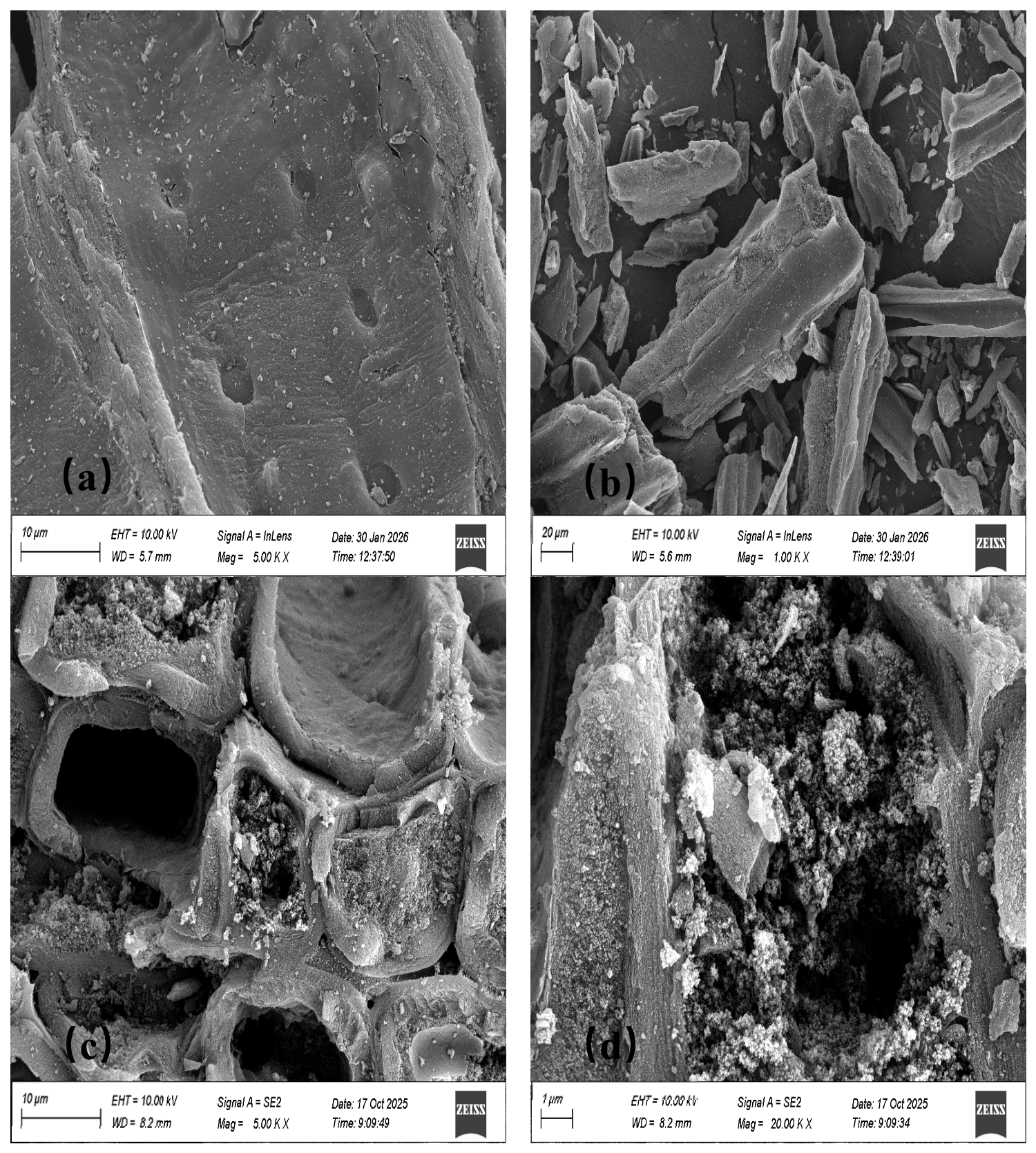
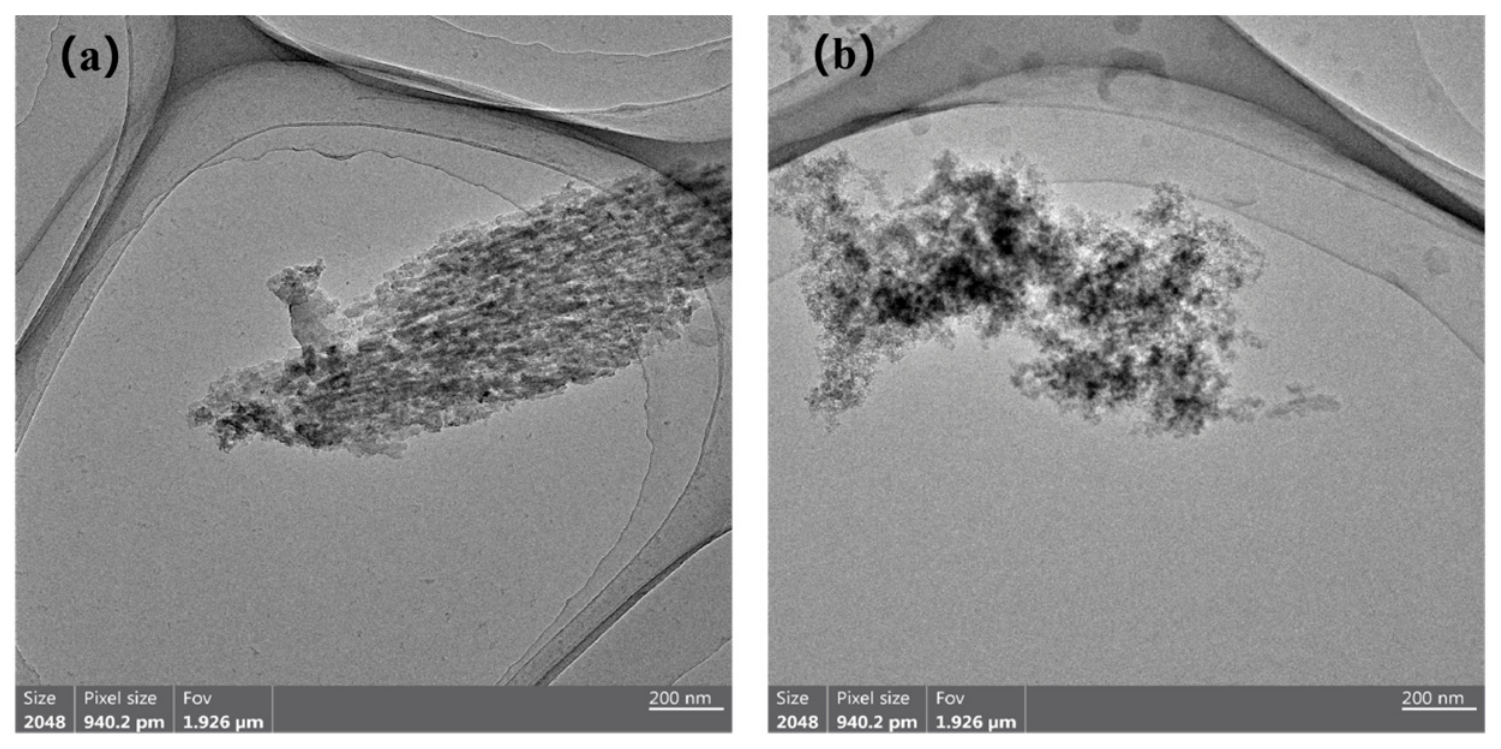
As shown in Figure 1, the BC exhibited a rough and wrinkled surface with layered structural features (Figure 1a,b), which could provide anchoring sites for iron-based particles. After loading S-nZVI, a large number of particulate species were observed on the BC surface, and the surface roughness increased markedly (Figure 1c,d), indicating morphological changes after loading. The TEM images further corroborate this result. As shown in Figure 2a, pristine BC exhibited a typical lamellar structure with a relatively thin and transparent matrix. In contrast, after S-nZVI loading, numerous dark particulate aggregates were distributed on the BC matrix and in the interlayer regions (Figure 2b), further confirming the successful immobilization of iron-based particles on the biochar support. The specific chemical composition and valence states of these loaded species were further identified by XRD and XPS.
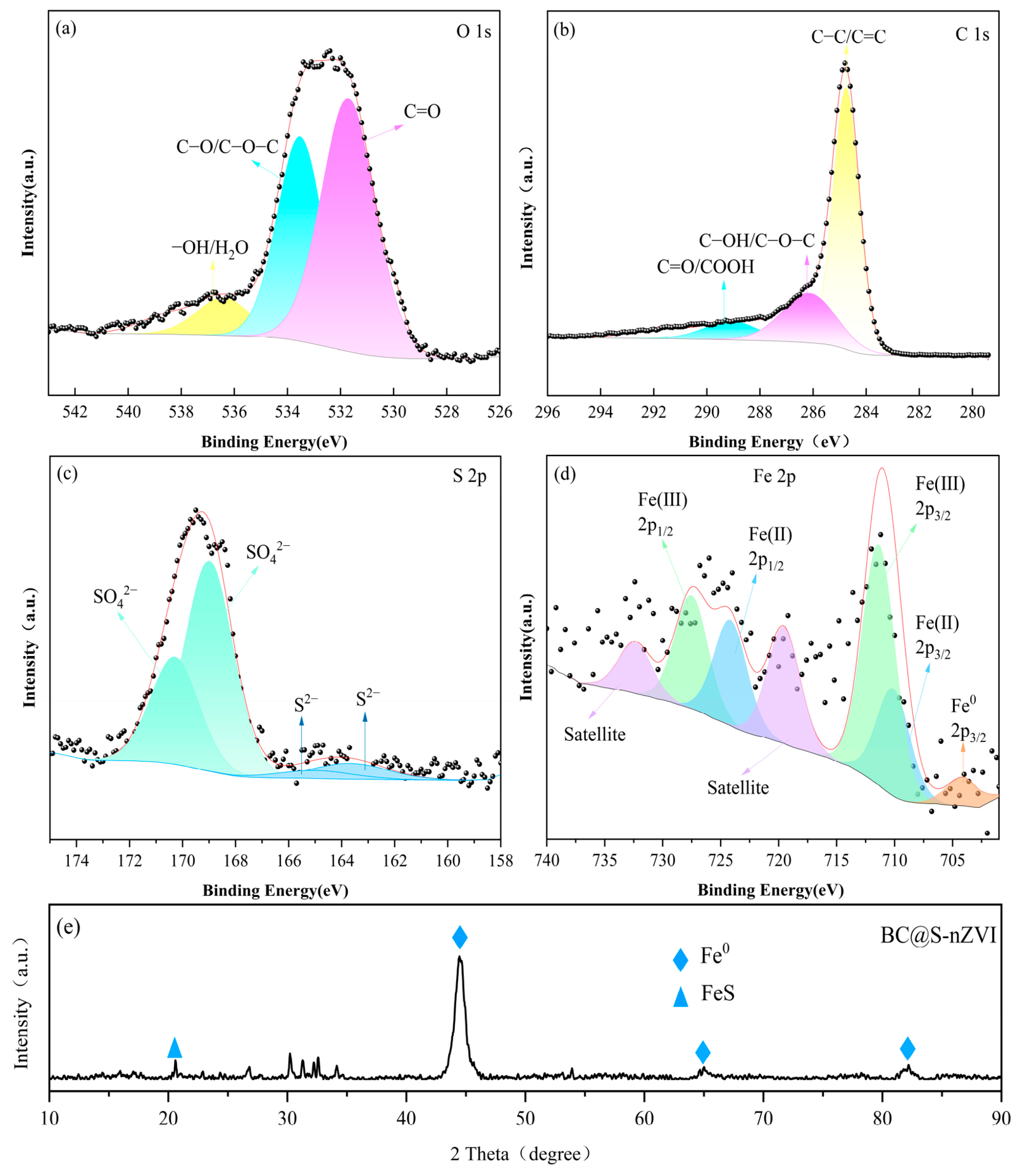
XPS results showed that the surface of BC@S-nZVI mainly contained C, O, S, and Fe. As shown in Figure 3a,b, the O 1s and C 1s spectra exhibited characteristic peaks assigned to C=O, C-O/C-O-C, -OH/H2O, and C-C/C=C [24]. The specific binding energy values of the identified peaks are summarized in Table 2. These results indicate that the BC surface possessed both an aromatic carbon framework and a certain amount of oxygen-containing functional groups. These features are beneficial for anchoring iron-based particles and facilitating interfacial electron transfer.
In the S 2p spectrum (Figure 3c), the doublet in the low binding energy region could be assigned to S2− [23], indicating the formation of Fe-S structures on the material surface, whereas the peak in the higher binding energy region could be attributed to SO42− [23], suggesting that part of the surface sulfur species had undergone oxidation. These results indicate that sulfidation generated a composite sulfur layer containing both reduced and oxidized sulfur species on the material surface, implying relatively active interfacial redox transformation capability.
The Fe 2p spectrum (Figure 3d) showed a characteristic Fe0 signal at approximately 705 eV [28], indicating that the zero-valent iron core was retained in the material. The deconvoluted peaks and their satellite peaks in the range of 710–730 eV corresponded to Fe(II) and Fe(III) species [28], demonstrating the formation of a multiphase interface composed of Fe0, Fe(II), and Fe(III) on the material surface.
The XRD results further supported the above analyses. As shown in Figure 3e, the diffraction peaks at 2θ = 44.7°, 65.0°, and 82.3° could be assigned to Fe0 [29], indicating that the material retained a well-defined zero-valent iron crystalline phase. In addition to these major Fe0 reflections, several weak diffraction peaks were observed in the range of 20–40°, suggesting the presence of minor secondary phases. These weak peaks can be mainly attributed to iron sulfide phases and iron oxide-related phases formed during the sulfidation process and subsequent partial surface oxidation. Among them, the weak peak at approximately 20.3° can be assigned to FeS, while the signals near 30–34° were tentatively assigned to Fe7S8 and FeS2 [29,30]. Meanwhile, some weak overlapping reflections in this region may also originate from small amounts of iron oxide phases, which is consistent with the XPS results showing the coexistence of Fe(II) and Fe(III) species on the catalyst surface. The low intensity of these reflections suggests that such phases were present in relatively small amounts or with low crystallinity. Overall, BC@S-nZVI was successfully constructed with a composite interface consisting of a biochar support framework, a Fe0 core, and surface Fe-S structures. This structural feature is expected to enhance material stability and interfacial electron transfer, thereby providing a structural basis for subsequent PDS activation.

3.2. Performance and Mechanism of SMX Removal by BC@S-nZVI-Activated PDS in the Aqueous System

3.2.1. Comparison of Catalytic Removal Performance and Optimization of Reaction Conditions

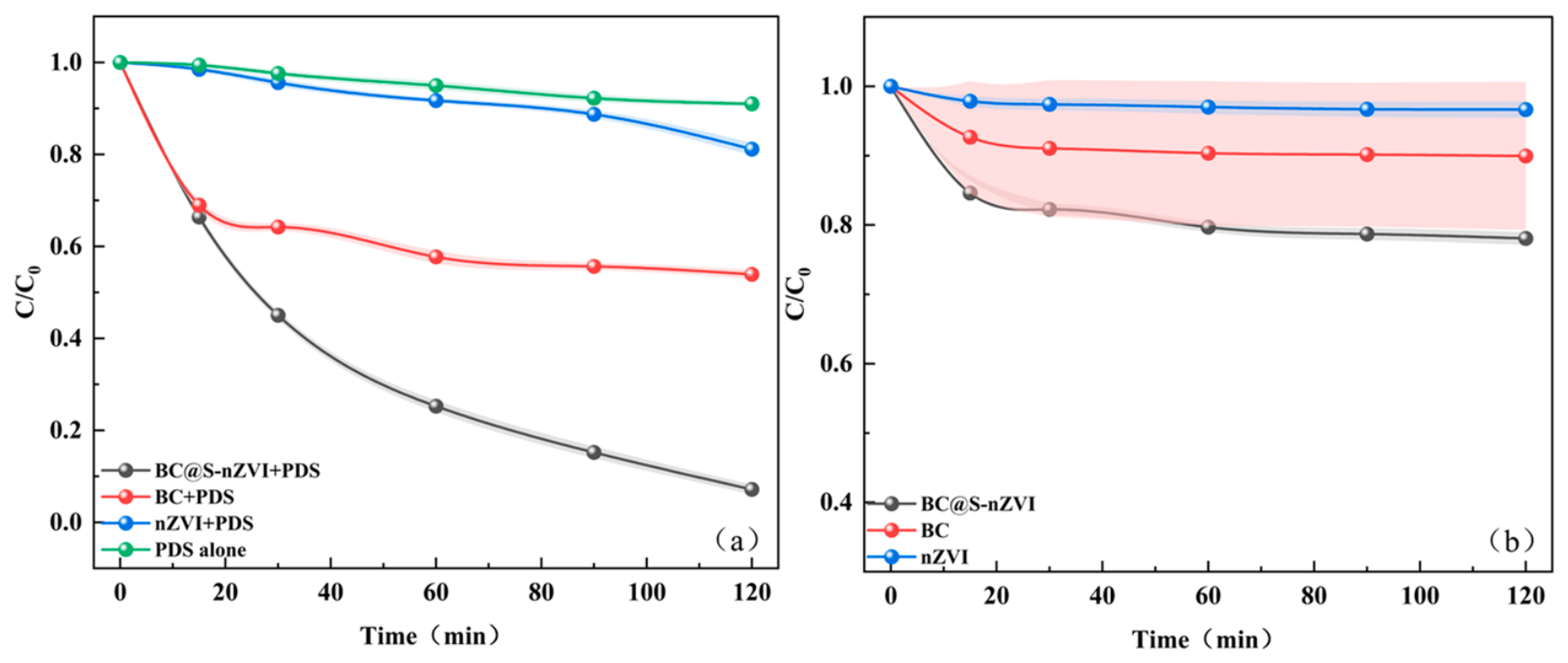
In the aqueous system, the removal and adsorption performances of different materials toward SMX were systematically investigated. As shown in Figure 4a, the PDS-only system exhibited negligible SMX removal, indicating that the self-activation of PDS was weak under neutral conditions. In contrast, the BC@S-nZVI/PDS system exhibited the fastest reaction kinetics and the highest removal efficiency, achieving 92.9% SMX removal within 120 min, which was significantly higher than those of the BC/PDS (46.1%) and nZVI/PDS (18.9%) systems. These results indicate that biochar loading and sulfidation modification exert a significant synergistic effect on PDS activation. The superiority of the BC@S-nZVI/PDS system can mainly be attributed to the following factors: BC improves the dispersion of iron particles and increases the interfacial contact area; the FeSx shell suppresses the ineffective corrosion of Fe0, thereby enhancing electron utilization efficiency; and the oxygen-containing functional groups and defect structures on the BC surface facilitate PDS adsorption/activation and interfacial electron transfer [23,24,31].
The dark adsorption experiments (Figure 4b) showed that BC, nZVI, and BC@S-nZVI all exhibited some adsorption capacity toward SMX, but their adsorption contributions were much lower than the total removal achieved by the BC@S-nZVI/PDS system. This indicates that the efficient removal of SMX mainly originated from the synergistic catalytic oxidation between the material and PDS rather than from simple physical adsorption. After loading S-nZVI, the adsorption capacity of the material was slightly enhanced compared with BC alone, which may be related to the increased surface roughness, changes in specific surface area, and the introduction of sulfur-/oxygen-containing sites. Overall, however, adsorption mainly served as an auxiliary process by enriching pollutants and promoting their migration to active interfaces, whereas the oxidation process driven by PDS activation remained the key factor determining SMX removal efficiency.
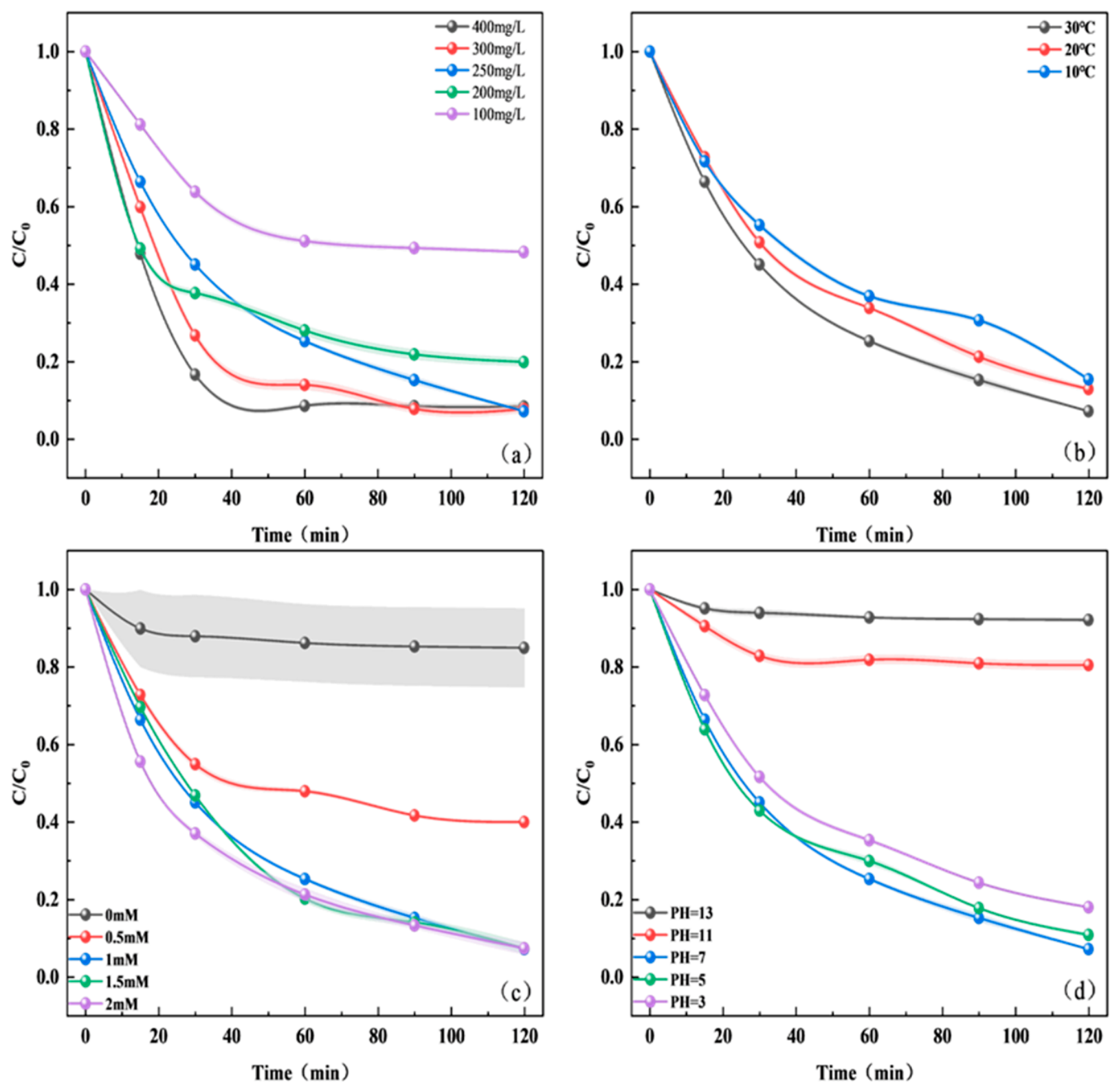
The effects of catalyst dosage, PDS concentration, initial pH, and temperature on SMX removal were further evaluated, and the results are shown in Figure 5. As the catalyst dosage increased from 100 to 400 mg/L, the SMX removal efficiency increased markedly, indicating that an increase in active sites favored PDS activation. A further increase in catalyst dosage resulted in only limited improvement, suggesting that the system gradually became constrained by oxidant concentration or mass transfer. Therefore, 250 mg/L was considered an appropriate catalyst dosage.
When the PDS concentration increased from 0.5 to 1.0 mM, the SMX removal efficiency was significantly enhanced. However, further increasing the PDS concentration to 1.5–2.0 mM produced only a marginal improvement. This may be attributed to side reactions between excess PDS and the reactive species already generated in the system, which reduced the effective oxidation efficiency [24,25]. These results indicate that an appropriate PDS dosage is critical for maintaining efficient system operation.
An increase in temperature promoted SMX removal to some extent, but the overall effect was relatively limited, indicating that the system already possessed high reactivity under ambient conditions. By comparison, the initial pH exerted a more pronounced influence: SMX removal proceeded rapidly under acidic to neutral conditions, whereas it was markedly inhibited under strongly alkaline conditions. This may be attributed to the easier precipitation or passivation of Fe species at high pH, which hinders Fe redox cycling, as well as to the more pronounced non-target decomposition of PDS and its derived reactive species under alkaline conditions [23,25,32].

3.2.2. Identification of Reactive Species and Reaction Mechanism in the Aqueous System

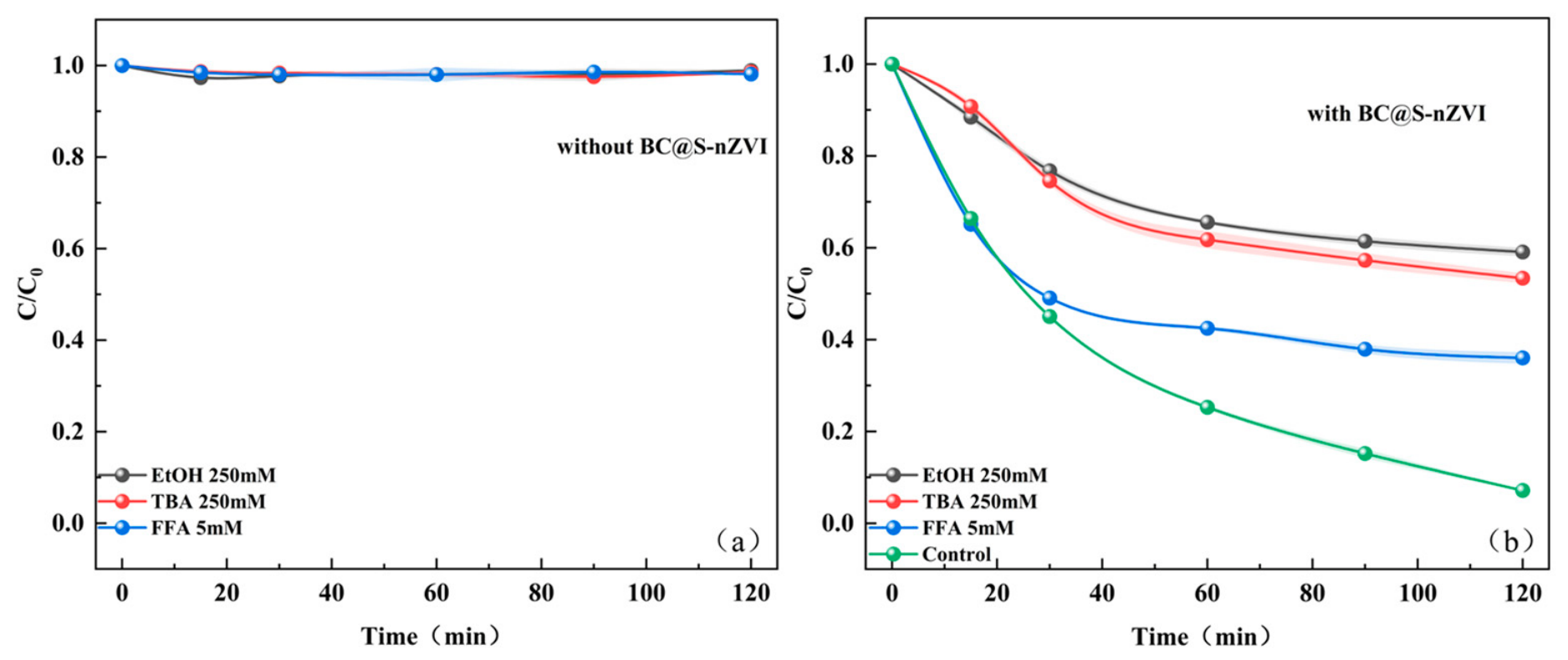
To identify the major ROS responsible for SMX removal in the aqueous system, radical quenching experiments were performed. As shown in Figure 6a, in the absence of a catalyst, the concentration of SMX remained nearly unchanged when only quenchers and PDS were added, indicating that the quenchers themselves did not directly activate PDS and could therefore be used for subsequent identification of reactive species. In the BC@S-nZVI/PDS system (Figure 6b), both EtOH and TBA significantly inhibited SMX removal, with EtOH showing a stronger inhibitory effect than TBA. Within 120 min, the SMX removal efficiencies decreased to 41.0% and 46.7%, respectively, both of which were markedly lower than that of the control group (92.9%). Because EtOH can quench both OH and SO4•−, whereas TBA primarily quenches OH, these results indicate that both OH and SO4•− were generated in the system and that the radical pathway played a dominant role in SMX removal. After the addition of FFA, the SMX removal efficiency decreased to 64.0%. The inhibitory effect of FFA was weaker than that of EtOH and TBA, suggesting that 1O2 also participated in the reaction, although its contribution was relatively limited. Overall, SMX removal in the aqueous system mainly followed a multi-reactive-species mechanism dominated by OH and SO4•−, with the auxiliary participation of 1O2.
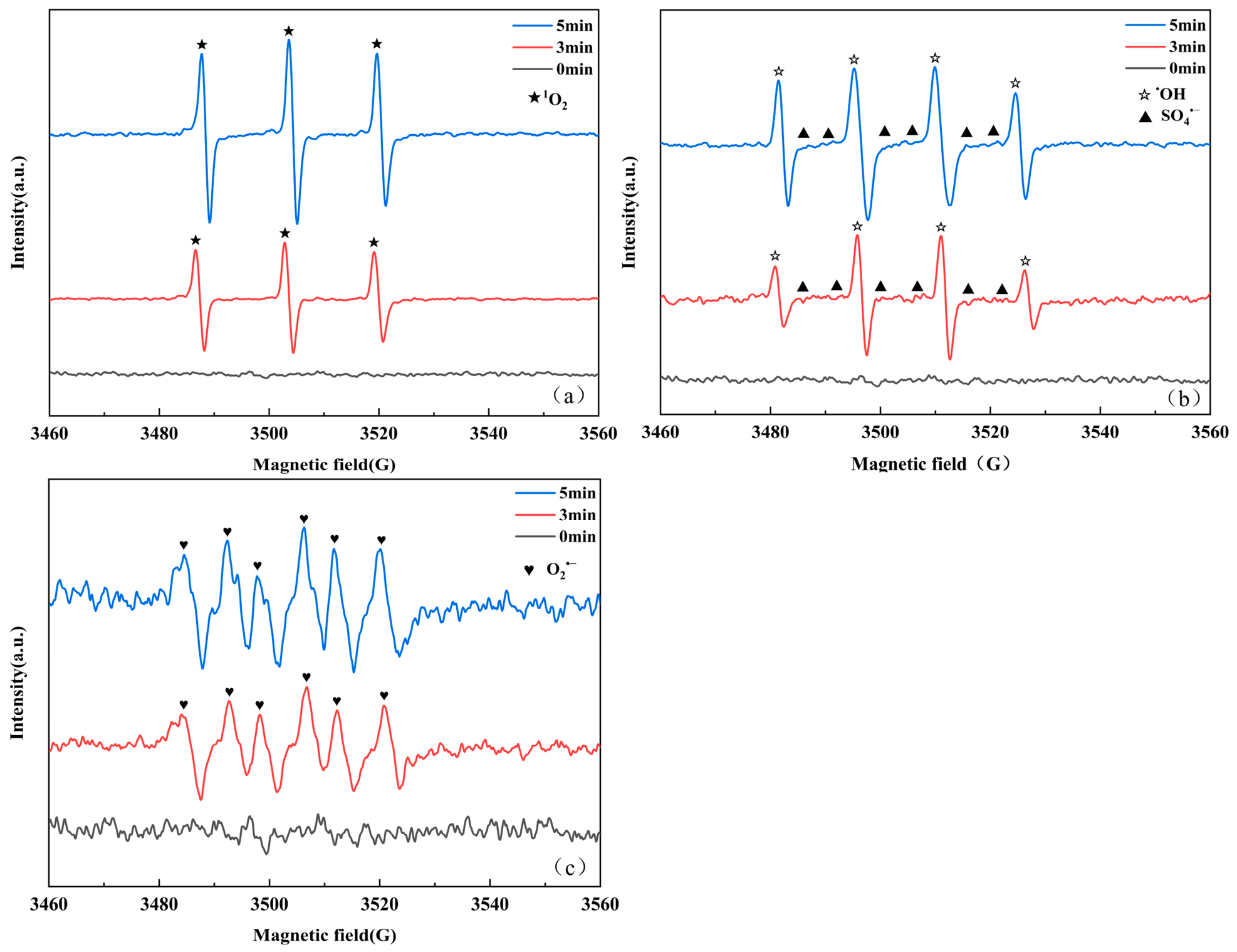
The EPR results provided direct evidence for the above interpretation (Figure 7). Using DMPO as the spin-trapping agent, a typical four-line DMPO-OH signal (1:2:2:1) was detected in the BC@S-nZVI/PDS system, confirming the generation of OH [25]. When TEMP was used as the trapping agent, a characteristic three-line TEMPO signal with an intensity ratio of 1:1:1 was observed, indicating the presence of 1O2 [25]. It should be noted that the transient nature of the DMPO-SO4 and its rapid conversion to DMPO-OH in aqueous solution often leads to the predominance of the DMPO-OH signal, which does not exclude the involvement of SO4•− [21,24]. Based on the combined results of quenching experiments and EPR analysis, it can be inferred that the activation of PDS by BC@S-nZVI for SMX removal in the aqueous system did not proceed via a single pathway, but rather through a multiple-reaction network dominated by radical oxidation with the cooperation of non-radical pathways. In this network, Fe0/Fe(II) donates electrons to PDS to generate SO4•−, which is subsequently transformed into OH to drive pollutant removal [14,23,32]. Meanwhile, graphitized carbon defects, oxygen-containing functional groups on the biochar surface, and the FeSx shell may promote interfacial electron transfer and induce the generation of 1O2, thereby further enhancing pollutant removal [14,23,32].

3.3. Removal Behavior and Mechanistic Shift in SMX in Real Soil Systems

3.3.1. Effects of the PDS-to-BC@S-nZVI Ratio and Dosage on Soil Remediation Performance

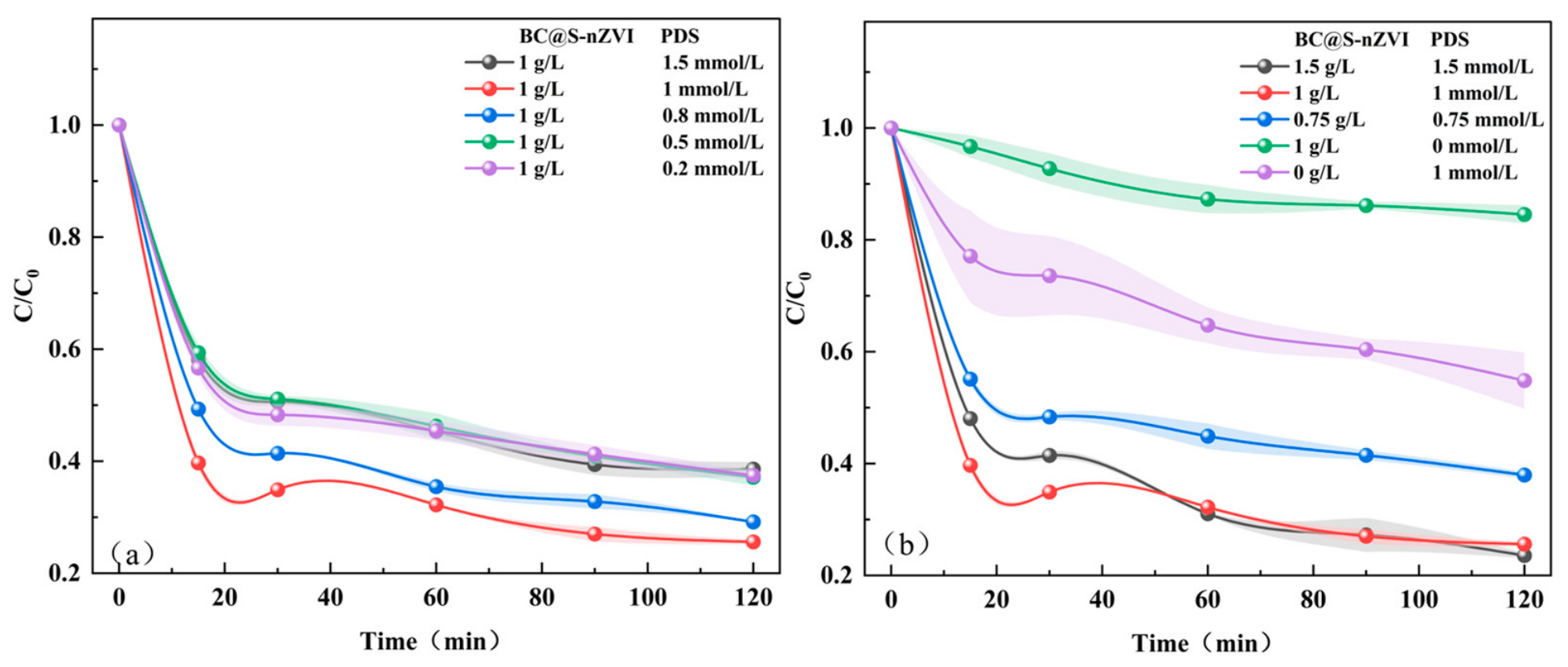
In the soil system, the dosage ratio of PDS (mM) to BC@S-nZVI (g/L) had a significant effect on SMX removal. As shown in Figure 8a, at a fixed BC@S-nZVI dosage of 1 g/L, the removal efficiency of SMX gradually increased as the PDS concentration was raised from 0.2 to 1.0 mM, reaching 74.4% at 120 min. However, when the PDS concentration was further increased to 1.5 mM, the removal efficiency declined. This result indicates that, in the complex soil matrix, an appropriate increase in oxidant concentration facilitates the generation of reactive species and thereby enhances SMX removal. In contrast, excessive PDS may not only saturate the active sites on the catalyst surface but also induce radical self-scavenging effects [25]. In addition, overloading the oxidant may intensify competitive reactions with reductive background components in soil as well as its non-target decomposition, leading to ineffective consumption of a large fraction of the available oxidative equivalents and thus reducing the overall remediation efficiency of the system [25,32]. Based on these results, a PDS-to-BC@S-nZVI dosage ratio of 1:1 was selected as the optimal condition for subsequent experiments. Moreover, compared with the aqueous system, both the optimal removal efficiency and reaction rate in soil were lower, reflecting the combined constraints imposed by mass-transfer limitation, non-target oxidant consumption, and reactive-species quenching in real soils.
Figure 8b further compares the removal performance under different combined dosages and single-component conditions. When only PDS (1.0 mM) was added, the removal efficiency of SMX in soil reached approximately 45.2% within 120 min, which was much higher than that obtained with PDS alone in the aqueous system (9.0%, Figure 4a). This result indicates that soil is not an inert medium and that its intrinsic components can participate in PDS activation. This observation is consistent with recent findings that intrinsic soil minerals and organic matter are capable of self-activating persulfates [20,21,22]. In contrast, when only BC@S-nZVI (1.0 g/L) was added, the removal efficiency of SMX was only 15.4%, indicating that the catalyst alone had limited ability to remove the pollutant in the absence of PDS. Upon the combined addition of BC@S-nZVI and PDS at the optimal ratio of 1:1, the removal efficiencies increased to 62.1% (0.75 g/L–0.75 mM), 74.4% (1.0 g/L–1.0 mM), and 76.5% (1.5 g/L–1.5 mM), respectively. When the dosage was further increased from 1.0 g/L–1.0 mM to 1.5 g/L–1.5 mM, only a marginal improvement was observed, suggesting that the system gradually approached a balance between effective activation and matrix scavenging, and that further increasing the dosage could not markedly improve remediation performance. Therefore, optimization of remediation conditions in soil cannot simply follow aqueous-phase conditions, but should instead take into account the oxidant demand and the distribution of reactive sites in the soil matrix. Accordingly, 1 g/L BC@S-nZVI and 1 mM PDS were selected as the appropriate reaction conditions for subsequent experiments.

3.3.2. Removal Mechanism of SMX in the Soil System

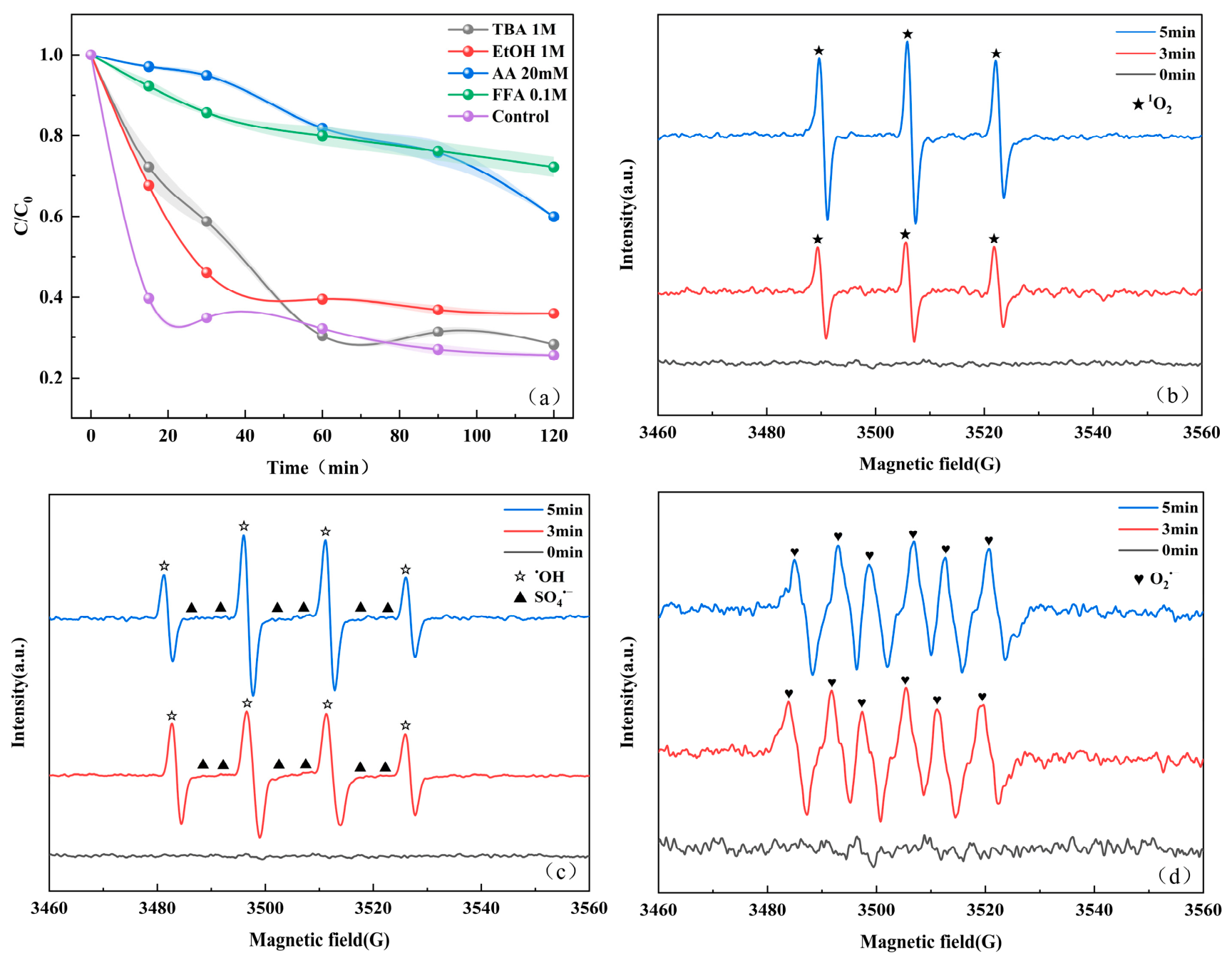
To elucidate the removal mechanism of SMX in the soil system, ROS quenching and EPR analyses were performed. As shown in Figure 9a, after the addition of the total ROS quencher AA, the SMX removal efficiency within 120 min decreased significantly by 34.4%, confirming that ROS-driven advanced oxidation was the primary mechanism for SMX removal in this system. However, the quenching results for specific ROS were markedly different from those observed in the aqueous system. After the addition of FFA, the SMX removal efficiency decreased sharply by 46.6%, whereas the inhibitory effects of EtOH and TBA were very limited. Combined with the characteristic signals of 1O2, OH, SO4•− and O2•− simultaneously detected in the EPR spectra (Figure 9b–d), these results indicate that although multiple ROS coexisted in the complex soil matrix, the dominant reactive species responsible for SMX removal shifted markedly from freely diffusing radicals (OH and SO4•−) in the aqueous phase to the non-radical species 1O2.
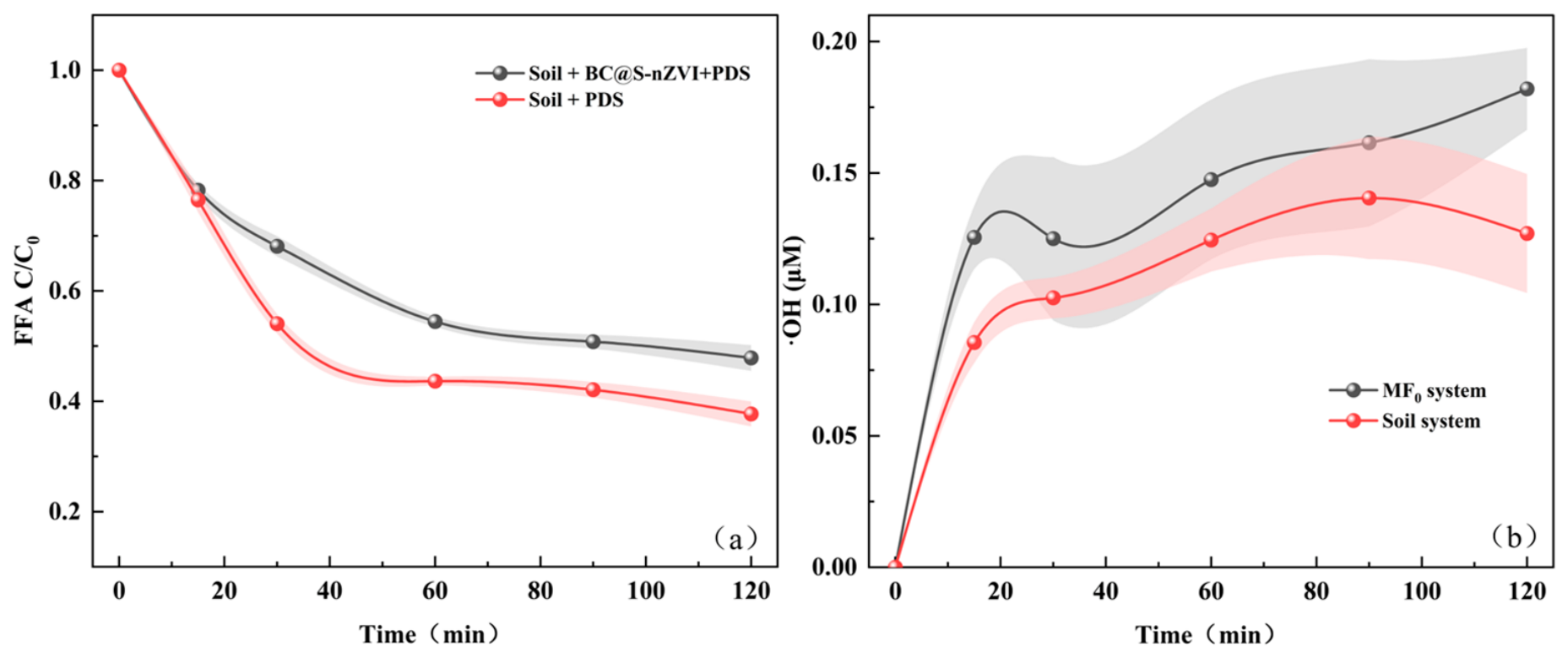
To further investigate the dynamic evolution of ROS in the soil BC@S-nZVI/PDS system, FFA and BA were used as probes for 1O2 and OH, respectively, and in situ quantitative monitoring was conducted in pollutant-free soil systems. As shown in Figure 10, FFA was continuously consumed, indicating that 1O2 could be generated steadily throughout the entire reaction period. In contrast, the accumulated concentration of OH increased rapidly during the initial stage and then gradually leveled off, suggesting that although OH was produced in the system, its sustained accumulation capacity was limited. Moreover, comparison between the normal soil and the organic matter-removed MF0 system showed that the presence of SOM reduced the accumulated concentration of OH. These results demonstrate that soil matrix components, particularly SOM, competitively consume highly oxidative radicals and thereby fundamentally suppress the effective accumulation of OH.
Taken together, these results indicate that the actual contributions of different reactive species to pollutant removal are restructured in the soil system. Highly reactive OH and SO4•− are readily quenched non-selectively by background organic matter or mineral surfaces in soil, and their extremely short lifetimes and limited diffusion distances restrict their long-range oxidation capability [26,32]. In contrast, the non-radical species 1O2, with its longer lifetime, stronger resistance to matrix interference, and higher selectivity toward electron-rich organic compounds such as SMX, is more likely to participate continuously in SMX transformation [25,33]. Therefore, the removal of SMX in soil by the BC@S-nZVI/PDS system should be understood as a process involving multiple ROS, but with a dominant pathway shifted from radical oxidation to 1O2-dominated non-radical oxidation, in which SOM serves as a key factor regulating this mechanistic transition.

3.3.3. Regulatory Role of SOM in PDS Activation and SMX Removal

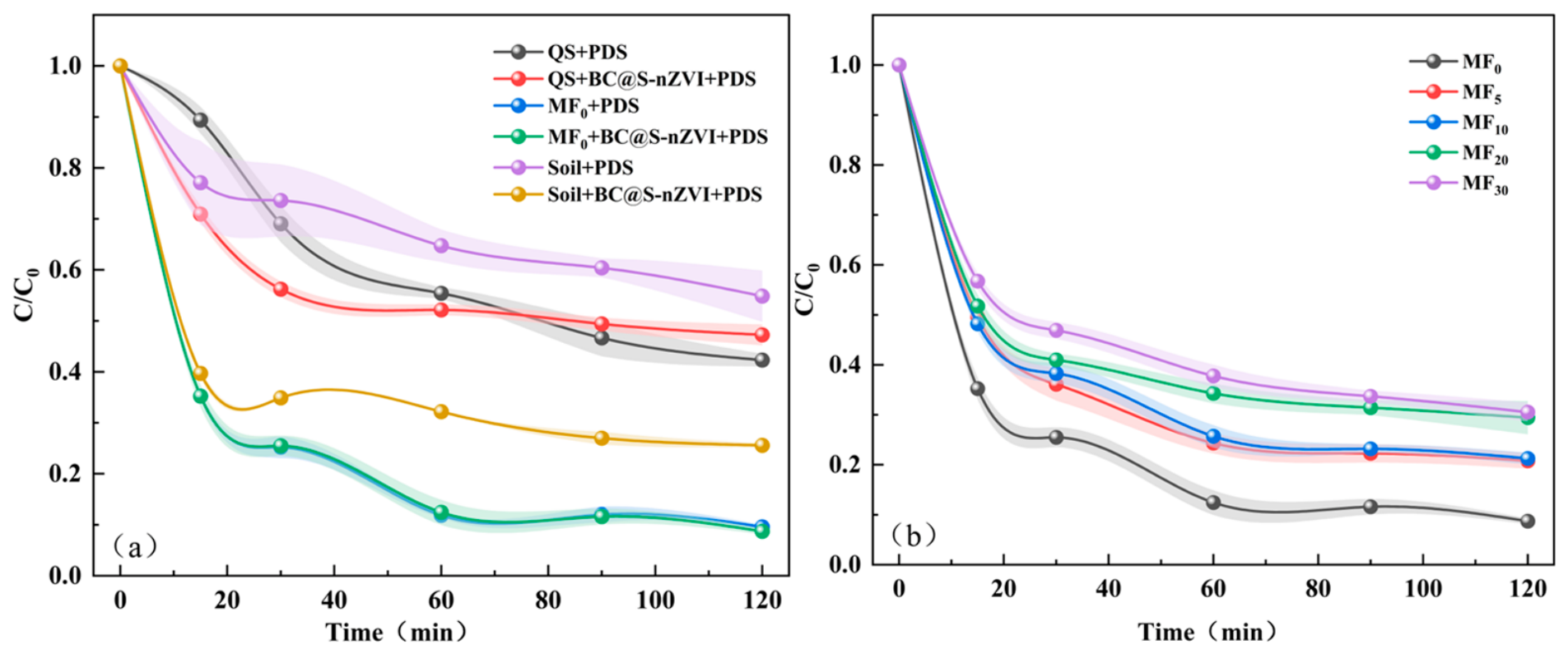
To clarify the mechanistic role of SOM, the removal behavior of SMX was compared in quartz sand (QS), MF0, and natural soil systems. As shown in Figure 11a, in the MF0 system, the SMX removal efficiency exceeded 90% within 120 min regardless of whether BC@S-nZVI was added, which was significantly higher than those observed in natural soil (45.2% and 74.4%). In contrast, the QS system, which contained almost no active mineral components, exhibited the lowest removal efficiencies (57.7% and 52.8%). These results indicate that intrinsic soil minerals possess the potential to spontaneously activate PDS, whereas this in situ catalytic process is strongly masked and modulated by SOM in natural soils [22,34]. The removal of SOM in MF0 not only exposed previously blocked mineral active sites but also directly demonstrated the pronounced inhibitory effect of natural SOM on the remediation process.
Although redox-active moieties in SOM, such as quinone and phenolic hydroxyl groups, may theoretically facilitate electron transfer and induce ROS generation [26,35], their inhibitory effect was more dominant under the soil conditions investigated in this study. This inhibition may arise through several pathways [20,22,25]: SOM competes with SMX for highly reactive radicals such as OH and SO4•−; it adsorbs onto catalyst or mineral surfaces and blocks the contact between PDS and active sites; and it accelerates the non-target decomposition of PDS, thereby reducing the effective oxidative equivalents available in the system. As a consequence, radical removal pathways are strongly suppressed in natural soil, which in turn drives the system toward a non-radical oxidation pathway dominated by 1O2, a reactive species less susceptible to matrix interference.
To further quantify the influence of SOM content on removal behavior, different concentrations of humic acid (HA) were reintroduced into MF0 (Figure 11b). The results showed a continuous decline in SMX removal efficiency with increasing HA concentration. When 5 g/kg HA was added, the removal efficiency within 120 min decreased from 91.3% to 79.2%; when the HA concentration increased to 30 g/kg, the removal efficiency further dropped to 69.5%. This clear dose–response relationship confirms the strong inhibitory effect of organic matter on PDS activation and SMX removal. Combined with the probe and quenching results discussed above, these findings suggest that the introduction of HA not only reduces the effective concentrations of OH and SO4•−, but also alters the transformation pathways of ROS and the interfacial reaction processes in soil, thereby weakening the overall remediation capability of the BC@S-nZVI/PDS system toward SMX.

4. Conclusions

In this study, a biochar-supported sulfidated nanoscale zero-valent iron composite (BC@S-nZVI) was successfully synthesized, and its performance and mechanism for PDS activation toward the removal of the typical antibiotic SMX in both aqueous and real soil systems were systematically evaluated. The main conclusions are as follows:
(1) An efficient catalytic material with a multi-component composite interface was successfully constructed. SEM, XRD, and XPS characterization results showed that the material possessed a composite interface composed of a biochar support framework, a Fe0 core, and surface Fe-S structures. This architecture not only improved the stability of the material but also facilitated interfacial electron transfer, thereby providing a favorable structural basis for subsequent PDS activation.
(2) BC@S-nZVI could efficiently activate PDS and achieve rapid removal of SMX. Under the optimized conditions, the SMX removal efficiency exceeded 90% within 120 min in the aqueous system and exceeded 70% in the soil system, indicating that this system has strong oxidative removal capability and promising potential for environmental applications.
(3) The dominant reaction pathways differed significantly between the aqueous and soil systems. In the aqueous system, OH and SO4•− were the primary reactive species responsible for SMX removal, while 1O2 played an auxiliary role. In contrast, in the soil system, the relative contributions of 1O2 and surface-mediated oxidation were markedly enhanced, indicating a strong dependence of the reaction process on the environmental matrix.
(4) SOM was a key factor influencing the remediation behavior of the BC@S-nZVI/PDS system. Under the conditions of this study, SOM overall inhibited SMX removal by competitively consuming PDS and quenching reactive species. Therefore, in practical soil remediation, the dosages of oxidant and catalyst should be optimized according to SOM content to improve pollutant removal efficiency and enhance oxidant utilization.

Author Contributions

Z.Z.: Writing—original draft, Writing—review and editing, Investigation, Conceptualization, Methodology, Data curation, Validation, Visualization, Formal analysis. G.L.: Investigation, Methodology, Validation. Y.L.: Conceptualization, Validation, Formal analysis. Q.L.: Validation, Formal analysis. J.J.: Methodology, Validation. J.B.: Methodology, Formal analysis. Z.K.: Methodology, Validation. W.L.: Writing—review and editing, Conceptualization, Methodology, Funding Acquisition, Project Administration, Supervision. All authors have read and agreed to the published version of the manuscript.

Funding

This work was supported by the National Natural Science Foundation of China (41907364) and the Major Scientific and Technological Innovation Project of Shandong Province (2021CXGC011206).

Data Availability Statement

The original contributions presented in this study are included in the article. Further inquiries can be directed to the corresponding author.

Acknowledgments

The authors appreciate the constructive comments and suggestions from the editors and reviewers, which helped improve the quality of the manuscript.

Conflicts of Interest

The authors declare that they have no known competing financial interests or personal relationships that could have appeared to influence the work reported in this paper.

References

  1. Wu, X.; Sun, F.; Cao, S.; Wang, Q.; Wang, L.; Wang, S.; He, Y.; Kolvenbach, B.A.; Corvini, P.F.X.; Ji, R. Maize (Zea mays L.) plants alter the fate and accumulate nonextractable residues of sulfamethoxazole in farmland soil. Environ. Sci. Technol. 2024, 58, 9292–9302. [Google Scholar] [CrossRef]
  2. Katsivelou, E.; Perruchon, C.; Karas, P.A.; Sarantidou, A.; Pappa, E.; Katsoula, A.; Ligda, P.; Sotiraki, S.; Martin-Laurent, F.; Vasileiadis, S.; et al. Accelerated dissipation, soil microbial toxicity and dispersal of antimicrobial resistance in soils repeatedly exposed to tiamulin, tilmicosin and sulfamethoxazole. Sci. Total Environ. 2023, 893, 164817. [Google Scholar] [CrossRef] [PubMed]
  3. Zhang, W.; Gu, L.; Yan, W.; Zhao, D.; Liu, J. Acetochlor and sulfamethoxazole co-selection alter soil microbial nitrogen metabolism and resistome in agroecosystem. Environ. Res. 2026, 292, 123688. [Google Scholar] [CrossRef]
  4. Saheed, I.O.; Ying, L.R.; Yaacob, S.F.F.S.; Hanafiah, M.A.K.M.; Latip, A.F.A.; Suah, F.B.M. Adsorption of sulfamethoxazole in an aqueous environment onto a novel magnetic sporopollenin–cellulose triacetate. Int. J. Biol. Macromol. 2025, 296, 139787. [Google Scholar] [CrossRef] [PubMed]
  5. He, Y.; Liu, L.; Wang, Q.; Dong, X.; Huang, J.; Jia, X.; Peng, X. Bio-degraded of sulfamethoxazole by microbial consortia without addition nutrients: Mineralization, nitrogen removal, and proteomic characterization. J. Hazard. Mater. 2024, 466, 133558. [Google Scholar] [CrossRef]
  6. Mupindu, P.; Zhao, Y.G.; Wang, X.; Hu, Y. Effect of sulfamethoxazole on nitrate removal by simultaneous heterotrophic aerobic denitrification. Water Environ. Res. 2022, 94, e10716. [Google Scholar] [CrossRef]
  7. Tsitonaki, A.; Petri, B.; Crimi, M.; Mosbæk, H.; Siegrist, R.L.; Bjerg, P.L. In Situ Chemical Oxidation of Contaminated Soil and Groundwater Using Persulfate: A Review. Crit. Rev. Environ. Sci. Technol. 2010, 40, 55–91. [Google Scholar] [CrossRef]
  8. Ma, Y.; Chen, X.; Tang, J.; Deng, Z.; Zeng, C.; Zhang, Z. An in-situ electrogenerated persulfate and its activation by functionalized sludge biochar for efficient degradation of sulfamethoxazole. J. Clean. Prod. 2023, 423, 138768. [Google Scholar] [CrossRef]
  9. Wacławek, S.; Lutze, H.; Grübel, K.; Padil, V.; Černík, M.; Dionysiou, D. Chemistry of persulfates in water and wastewater treatment: A review. Chem. Eng. J. 2017, 330, 44–62. [Google Scholar] [CrossRef]
  10. Zhou, Z.; Ma, J.; Liu, X.; Lin, C.; Sun, K.; Zhang, H.; Li, X.; Fan, G. Activation of peroxydisulfate by nanoscale zero-valent iron for sulfamethoxazole removal in agricultural soil: Effect, mechanism and ecotoxicity. Chemosphere 2019, 223, 196–203. [Google Scholar] [CrossRef] [PubMed]
  11. Xue, C.; Luo, Y.; Peng, Y.; Zhou, L.; Zheng, J.; Zhang, K.; Fang, Z. Activation of peroxydisulfate by zero valent iron-carbon composites prepared by carbothermal reduction: Enhanced non-radical and radical synergies. Environ. Pollut. 2024, 356, 124321. [Google Scholar] [CrossRef]
  12. Fan, X.; Lin, Q.; Zheng, J.; Fu, H.; Xu, K.; Liu, Y.; Ma, Y.; He, J. Peroxydisulfate activation by nano zero-valent iron graphitized carbon materials for ciprofloxacin removal: Effects and mechanism. J. Hazard. Mater. 2022, 437, 129392. [Google Scholar] [CrossRef]
  13. Zhang, H.; Cao, Q.; Zhang, K.; Xie, L.; Xu, K.; Qin, Y.; Zhang, L.; Chai, X. Boron-doped biochar-nano loaded zero-valent iron to activate persulfate for the degradation of oxytetracycline. J. Environ. Chem. Eng. 2023, 11, 111502. [Google Scholar] [CrossRef]
  14. Zeng, Y.; Li, T.; Ding, Y.; Fang, G.; Wang, X.; Ye, B.; Ge, L.; Gao, J.; Wang, Y.; Zhou, D. Biochar-supported nano-scale zerovalent iron activated persulfate for remediation of aromatic hydrocarbon-contaminated soil: An in-situ pilot-scale study. Biochar 2022, 4, 64. [Google Scholar] [CrossRef]
  15. Gao, J.; Han, D.; Xu, Y.; Liu, Y.; Shang, J. Persulfate activation by sulfide-modified nanoscale iron supported by biochar (S-nZVI/BC) for degradation of ciprofloxacin. Sep. Purif. Technol. 2020, 235, 116202. [Google Scholar] [CrossRef]
  16. Ding, Y.; Li, M.; Zhang, Q.; Zhang, Y.; Xia, Z.; Liu, X.; Wu, N.; Peng, J. Sulfidized state and formation: Enhancement of nanoscale zero-valent iron on biochar (S-nZVI/BC) in activating peroxymonosulfate for Acid Red 73 degradation. J. Environ. Chem. Eng. 2023, 11, 110114. [Google Scholar] [CrossRef]
  17. Yu, X.; Jin, X.; Wang, N.; Yu, Y.; Zhu, X.; Chen, M.; Zhong, Y.; Sun, J.; Zhu, L. Transformation of sulfamethoxazole by sulfidated nanoscale zerovalent iron activated persulfate: Mechanism and risk assessment using environmental metabolomics. J. Hazard. Mater. 2022, 428, 128244. [Google Scholar] [CrossRef]
  18. Li, M.; Zhang, T.; Wang, J.; Xiao, X.; Zeng, X.; Hu, C.; Zou, X.; Hui, W.; Zheng, Y. Biochar supporting and sulfidation synergistically affect reactivity of nanoscale zerovalent iron towards sulfamethoxazole. Chem. Eng. J. 2025, 505, 159087. [Google Scholar] [CrossRef]
  19. Chen, K.; Liang, J.; Xu, X.; Zhao, L.; Qiu, H.; Wang, X.; Cao, X. Roles of soil active constituents in the degradation of sulfamethoxazole by biochar/persulfate: Contrasting effects of iron minerals and organic matter. Sci. Total Environ. 2023, 853, 158532. [Google Scholar] [CrossRef]
  20. Cheng, S.; Liang, J.; Cheng, Z.; Zhang, J.; Hu, L.; Huang, W.; Gui, X.; Ren, Z.; Xu, X.; Cao, X. Persulfate activation by inherent soil constituents for sulfamethoxazole degradation: Synergistic roles of iron minerals and organic matter. Chem. Eng. J. 2025, 517, 164357. [Google Scholar] [CrossRef]
  21. Liang, J.; Duan, X.; Xu, X.; Zhang, Z.; Zhang, J.; Zhao, L.; Qiu, H.; Cao, X. Critical functions of soil components for in situ persulfate oxidation of sulfamethoxazole: Inherent Fe(II) minerals-coordinated nonradical pathway. Environ. Sci. Technol. 2024, 58, 915–924. [Google Scholar] [CrossRef]
  22. Chen, Y.; Yan, C.; Zhang, Y.; Qiu, L.; Nie, M. Natural soil as the peroxymonosulfate activator for efficient remediation and detoxification of bisphenol A: Nonradical-dominated mechanism and the change of soil properties. Chem. Eng. J. 2024, 491, 152043. [Google Scholar] [CrossRef]
  23. Jiang, Q.; Jiang, S.; Li, H.; Zhang, R.; Jiang, Z.; Zhang, Y. A stable biochar supported S-nZVI to activate persulfate for effective dichlorination of atrazine. Chem. Eng. J. 2022, 431, 133937. [Google Scholar] [CrossRef]
  24. Sun, Y.; Jiang, Q.; Song, J.; Hu, L.; Yan, Z.; Zhang, J.; Liu, R.; Yan, J. Degradation of 4-chloroaniline in sulfidated nanoscale zero-valent iron loaded on biochar activated persulfate system: Batch and column experiments. Sep. Purif. Technol. 2025, 370, 133102. [Google Scholar] [CrossRef]
  25. Zhao, R.; Wang, T.; Wang, Z.; Cheng, W.; Li, L.; Wang, Y.; Xie, X. Activation of peroxymonosulfate with natural pyrite-biochar composite for sulfamethoxazole degradation in soil: Organic matter effects and free radical conversion. J. Hazard. Mater. 2024, 469, 133895. [Google Scholar] [CrossRef]
  26. Dou, J.; Su, X.; Wu, J.; Li, S.; Dai, H.; Liu, M.; Tang, Y.; Lu, Z.; Xu, J.; He, Y. Peroxydisulfate-driven reductive dechlorination as affected by soil constituents: Free radical formation and conversion. Environ. Sci. Technol. 2024, 58, 8065–8075. [Google Scholar] [CrossRef] [PubMed]
  27. Tang, X.; Guo, J.; Gao, Y.; Zhen, K.; Sun, H.; Wang, C. Efficient remediation of the field soil contaminated with PAHs by amorphous porous iron material activated peroxymonosulfate. Chemosphere 2023, 327, 138516. [Google Scholar] [CrossRef]
  28. Song, P.; Xu, H.; Sun, S.; Xiong, W.; Yang, Z. Remediation of arsenic-spiked soil by biochar-loaded nanoscale zero-valent iron: Performance, mechanism, and microbial response. J. Clean. Prod. 2022, 380, 134985. [Google Scholar] [CrossRef]
  29. Cheng, Q.; Li, Q.; Huang, X.; Li, X.; Wang, Y.; Liu, W.; Lin, Z. The high efficient Sb(III) removal by cauliflower like amorphous nanoscale zero-valent iron (A-nZVI). J. Hazard. Mater. 2022, 436, 129056. [Google Scholar] [CrossRef]
  30. Bingham, S.D.; McCormick, A.V.; Penn, R.L. Sulfide Immobilization: Investigating the Impact of a Protective Sulfide-Bearing Layer Formed by Siderite (FeCO3). ACS Earth Space Chem. 2023, 7, 1247–1257. [Google Scholar] [CrossRef]
  31. Wen, Y.; Liu, L.; He, D.; Wu, J.; Yang, W.; Li, S.; Wang, S.; Su, L.; Zhou, Z.; Zhou, Z.; et al. Highly graphitized biochar as nonmetallic catalyst to activate peroxymonosulfate for persistent quinclorac removal in soil through both free and non-free radical pathways. Chem. Eng. J. 2024, 480, 148082. [Google Scholar] [CrossRef]
  32. Zhang, X.; Hu, W.; Hou, J.; Zhang, S.; Cai, T.; Cheng, L.; Zhang, Q. Efficient sulfamethoxazole degradation via staged PMS activation on magnetic pyrite-biochar: Enhanced mineralization and mechanism. J. Environ. Manag. 2026, 402, 129061. [Google Scholar] [CrossRef] [PubMed]
  33. Wang, Q.; Guo, X.; Gu, A.; Lian, H.; Zou, J. Non-radical oxidation of TBBPA and TBBPS in soil using Fe and Cu co-doped sulfurized carbon nitride: A comparative study of peroxymonosulfate and peroxydisulfate activation. Environ. Sci.-Nano 2025, 12, 4684–4699. [Google Scholar] [CrossRef]
  34. Dong, X.; Feng, R.; Yang, X.; Jiang, Y.; Chen, L.; Chen, L.; Jiang, C.; Cai, T. Complexation and reduction of soil iron minerals by natural polyphenols enhance persulfate activation for the remediation of triphenyl phosphate (TPHP)-contaminated soil. Chem. Eng. J. 2022, 435, 134610. [Google Scholar] [CrossRef]
  35. Zhang, R.; Nie, M.; Zhang, Y.; Wang, X.; Peng, X.; Chen, X.; Yan, C. Dual effects of organic matter in the remediation of acetaminophen-contaminated soil by peroxymonosulfate. Chem. Eng. J. 2025, 522, 166967. [Google Scholar] [CrossRef]
Figure 1. Scanning electron microscopy (SEM) images of BC@S-nZVI ((a,b): corn straw-derived biochar; (c,d): sulfidated zero-valent iron particles supported on biochar).
Water 18 01234 g001
Figure 2. (a) Transmission electron microscopy (TEM) image of BC, (b) TEM image of BC@S-nZVI.
Water 18 01234 g002
Figure 3. X-ray photoelectron spectroscopy (XPS) spectra (ad) and X-ray diffraction (XRD) pattern of BC@S-nZVI (e).
Water 18 01234 g003
Figure 4. Effects of catalyst type on the removal (a) and adsorption (b) efficiencies of SMX in the aqueous system. Experimental conditions: [SMX] = 10 mg/L, [catalyst] = 250 mg/L, [PDS] = 1.0 mM, initial pH = 7.0, and T = 25 °C.
Water 18 01234 g004
Figure 5. Effects of BC@S-nZVI dosage (a), reaction temperature (b), PDS dosage (c), and initial pH (d) on SMX removal in the aqueous system. Unless otherwise specified, the experimental conditions were [SMX] = 10 mg/L, [BC@S-nZVI] = 250 mg/L, [PDS] = 1.0 mM, initial pH = 7.0, and T = 25 °C.
Water 18 01234 g005
Figure 6. Effects of different quenchers on SMX removal in the aqueous system: (a) PDS-only system without catalyst and (b) BC@S-nZVI/PDS system. Experimental conditions: [SMX] = 10 mg/L, [BC@S-nZVI] = 0 or 250 mg/L, [PDS] = 1.0 mM, initial pH = 7.0, and T = 25 °C.
Water 18 01234 g006
Figure 7. EPR spectra of reactive oxygen species generated in the BC@S-nZVI/PDS aqueous system: (a) 1O2; (b) OH and SO4•−; and (c) O2•−.
Water 18 01234 g007
Figure 8. Effects of PDS and BC@S-nZVI dosage conditions on SMX removal in soil: (a) effect of different PDS concentrations (0.2, 0.5, 0.8, 1.0, and 1.5 mM/L) on SMX removal at a fixed BC@S-nZVI dosage of 1.0 g/L; (b) SMX removal under different combined dosages of PDS and BC@S-nZVI [with a concentration ratio of 1:1; 1.5 mM–1.5 g/L, 1.0 mM–1.0 g/L, and 0.75 mM–0.75 g/L], as well as under PDS-only (1.0 mM) and BC@S-nZVI-only (1.0 g/L) conditions. Experimental conditions: SMX = 10 mg/kg, water-to-soil ratio = 1:1, T = 25 °C.
Water 18 01234 g008
Figure 9. Identification of reactive species in the soil BC@S-nZVI/PDS system: (a) effects of different ROS quenchers on SMX removal and (bd) EPR identification of reactive species in the system. Experimental conditions: [BC@S-nZVI] = 1.0 g/L, [PDS] = 1.0 mmol/L, [SMX] = 10 mg/kg, water-to-soil ratio = 1:1, and T = 25 °C.
Water 18 01234 g009
Figure 10. Characterization of 1O2 and OH generation in soil systems: (a) FFA removal curves in the BC@S-nZVI/PDS system and the PDS-only system; (b) OH generation in normal soil and soil organic matter-removed soil (MF0). Experimental conditions: (a) [BC@S-nZVI]= 1.0 g/L, [PDS] = 1.0 mM, [FFA] = 50 μM, T = 25 °C; (b) [BC@S-nZVI] = 1.0 g/L, [PDS] = 1.0 mM, [BA] = 10 mM, T = 25 °C.
Water 18 01234 g010
Figure 11. Effects of soil components on SMX removal: (a) removal behavior of SMX in QS, MF0, and normal soil systems; (b) effect of exogenous humic acid (HA) dosage on SMX removal in soil.
Water 18 01234 g011
Table 1. Properties of farmland soil.
Soil TypeFe (g kg−1)Mn (g kg−1)Mg (g kg−1)Ca (g kg−1)SOM (g kg−1)
farmland soil33.630.755.149.3130.26
Table 2. Specific binding energy values of identified peaks in X-ray photoelectron spectroscopy.
ElementPeak AttributionCharacteristic Binding Energy Range (eV)
O 1s-OH/H2O536.0–538.0
C-O/C-O-C532.0–534.0
C=O530.0–532.0
C 1sC-C/C=C284.0–285.0
C-OH/C-O-C286.0–287.0
C=O/COOH288.0–290.0
S 2pSO42−168.0–170.0
S 2pS2−162.0–164.0
Fe 2pFe0706.0–707.0
Fe (II)710.0–712.0, 723.0–725.0
Fe (III)713.0–715.0, 726.0–728.0
Satellite≈718.0, ≈730.0
Disclaimer/Publisher’s Note: The statements, opinions and data contained in all publications are solely those of the individual author(s) and contributor(s) and not of MDPI and/or the editor(s). MDPI and/or the editor(s) disclaim responsibility for any injury to people or property resulting from any ideas, methods, instructions or products referred to in the content.