Sustainable β-Cyclodextrin Modified Sawdust Biochar for Enhanced Organic Pollutant Removal in Circular Water Treatment

 , , and
Abstract
1. Introduction
1.1. Background
1.2. Theoretical Rationale
2. Materials and Methods
2.1. Materials
2.2. Sample Preparation
2.3. Modification Protocols
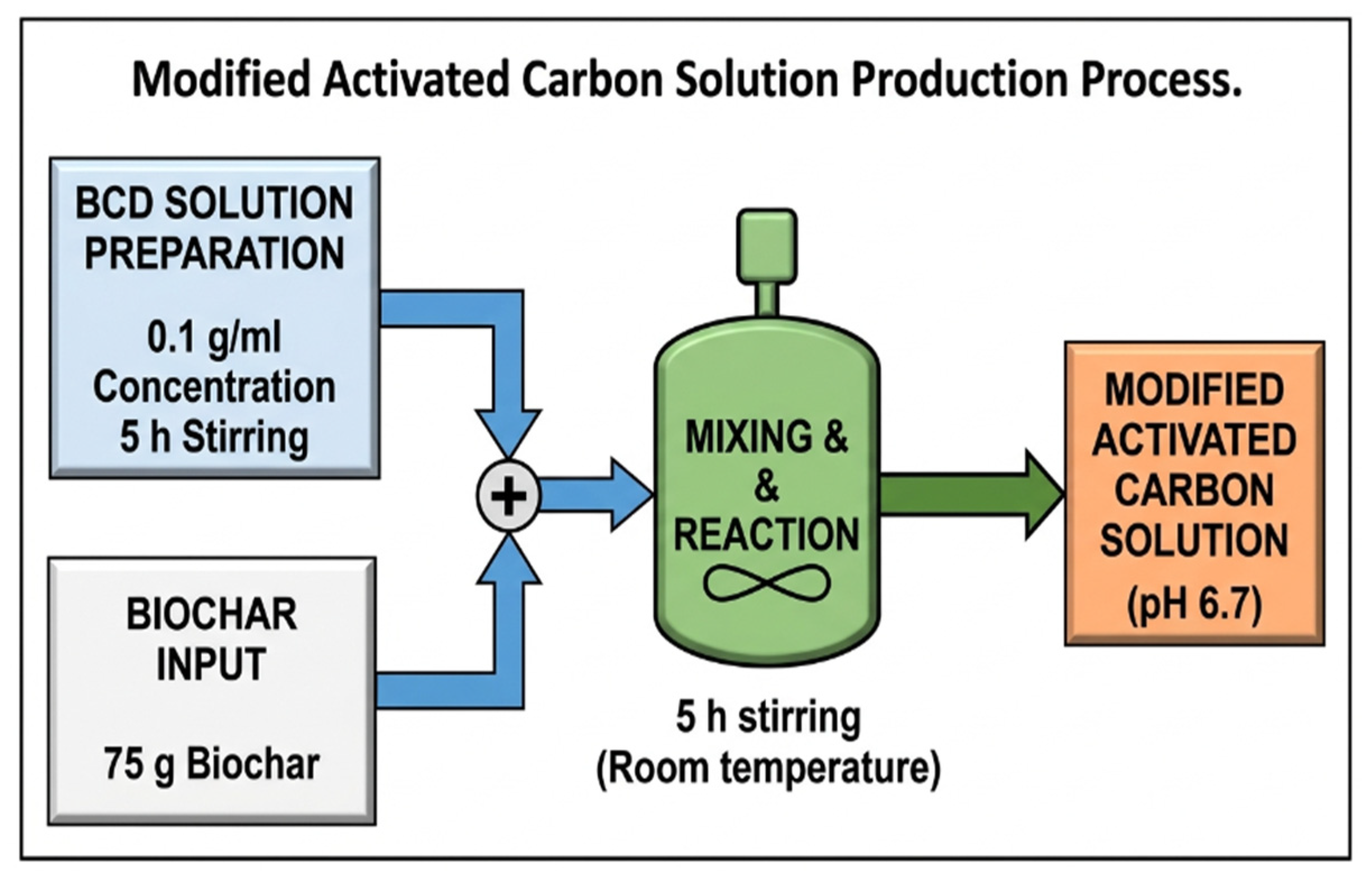
- Solution Preparation: 150 g of BCD was dissolved in 1500 mL of distilled water, maintaining a 1:10 BCD-to-water ratio (0.1 g/mL concentration). This solution was stirred for 6 h using an IKA RH basic magnetic stirrer (IKA England Ltd., Oxford, UK) until no suspended solids were visible, confirming total dissolution.
- Grafting: 75 g of biochar was then introduced into the BCD solution, establishing a 2:1 BCD-to-biochar ratio. The mixture was stirred continuously for an additional 5 h.
- Neutralization and Drying: The initial pH of the BCD–biochar solution was measured at 7.9. The samples were then filtered and rinsed repeatedly with deionized water using a BUCHI V-300 Vacuum Pump (Buchi Corporation, New Castle, DE, USA) until the pH reached a neutral range of 6.5–7.0. Finally, the modified adsorbents were dried in a Memmert UF 30 oven at 105 °C for 5 h. The weight of modified activated carbon after drying was measured as 188.7 g.
2.4. Experimental Replication
2.5. Biochar Functionalization and Grafting Efficiency
2.6. Characterization of Samples and Experimental Design
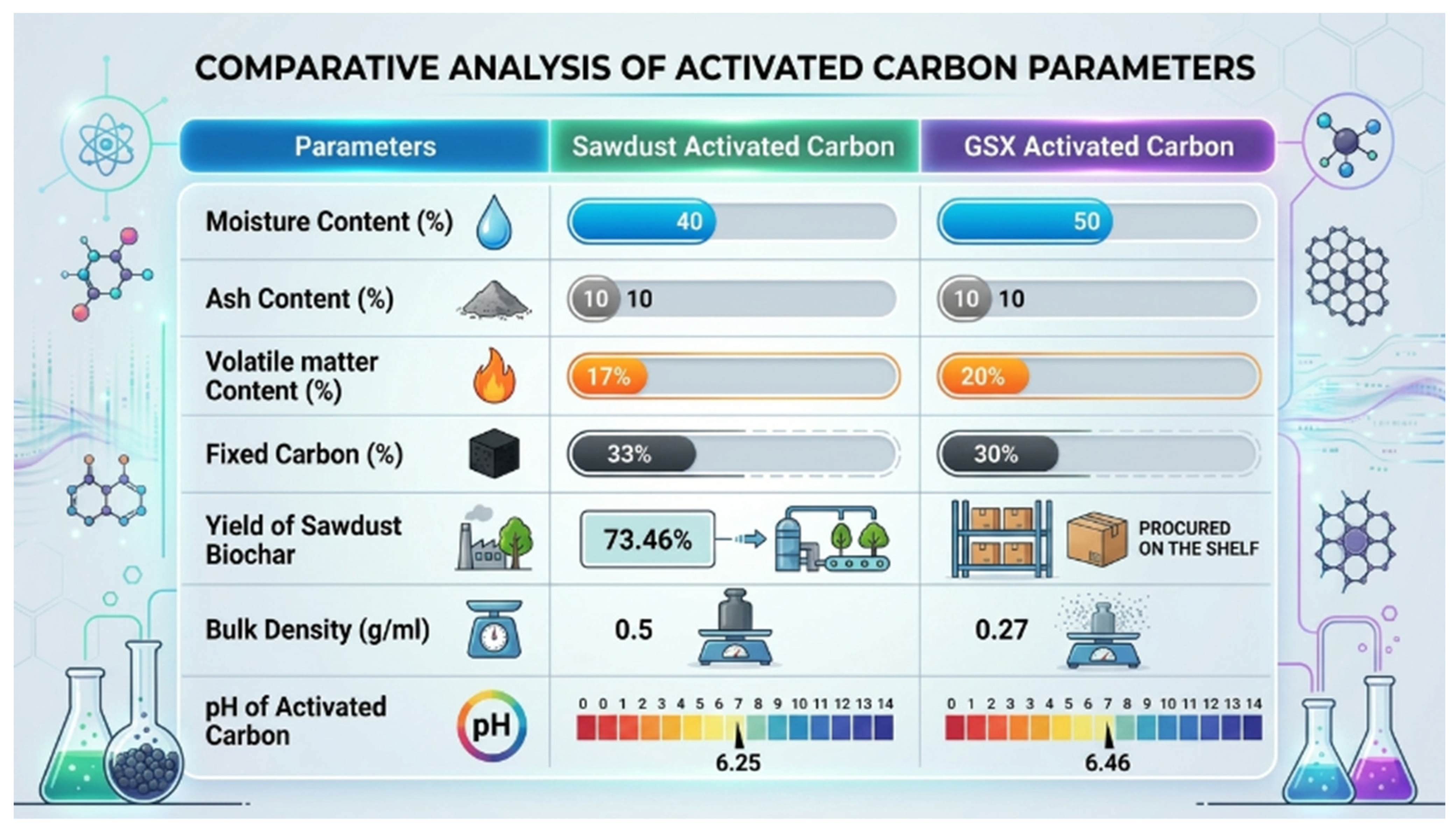
- Proximate Analysis: Proximate analysis of both Sawdust-Activated Carbon and GSX-Activated Carbon was conducted following standard ASTM methods. The moisture content was determined using ASTM D2867-23 [20], Ash content using ASTM D2866-11 [21], and Volatile Matter Content using ASTM D5832-98 [22]. The pH was determined following ASTM D3838-23 [23]. The fixed carbon content was calculated by subtracting the percentages of moisture, volatile matter, and ash content from 100. Finally, the bulk density was determined using the method developed by Wang and Kinsella [24].
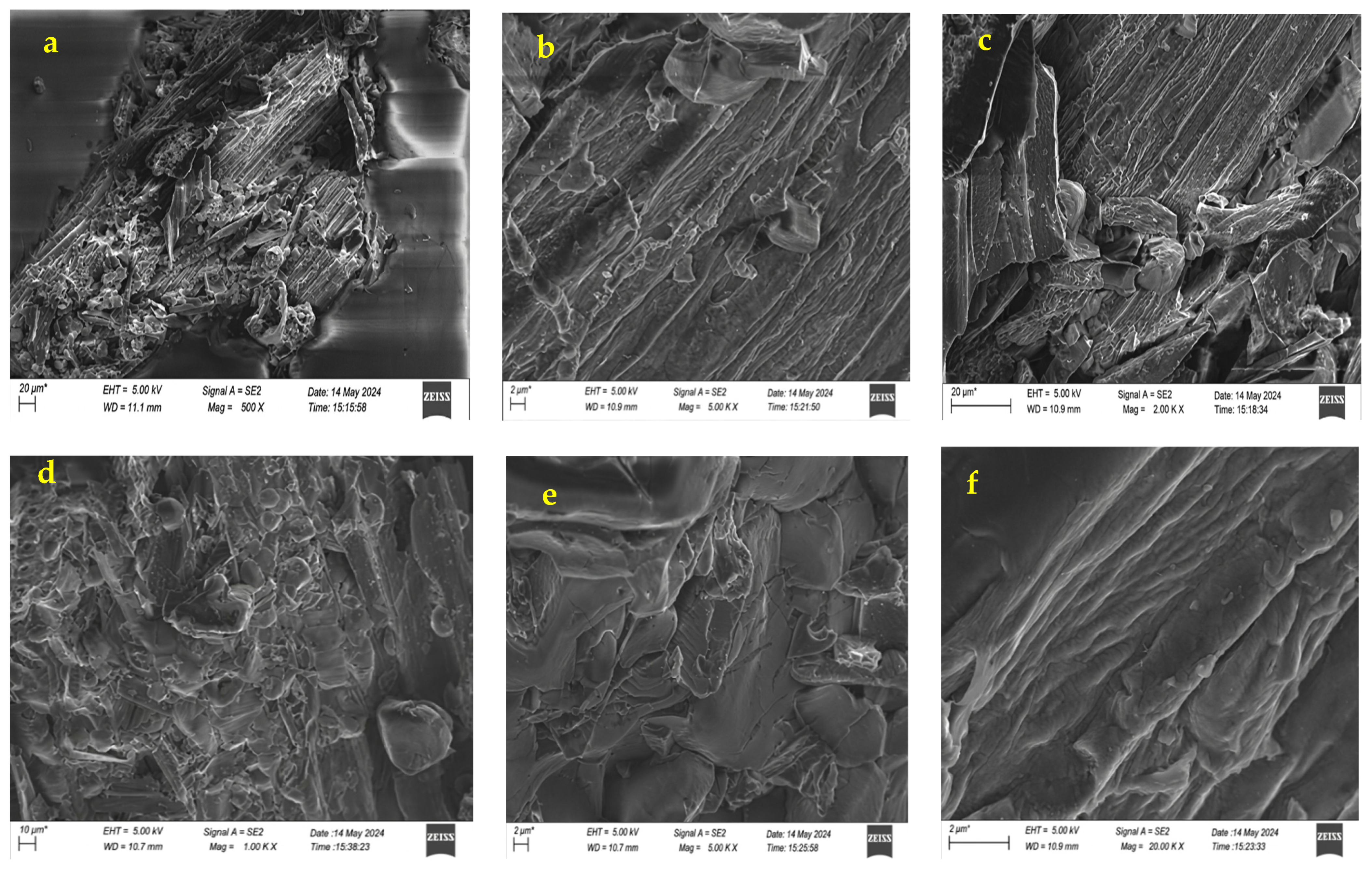
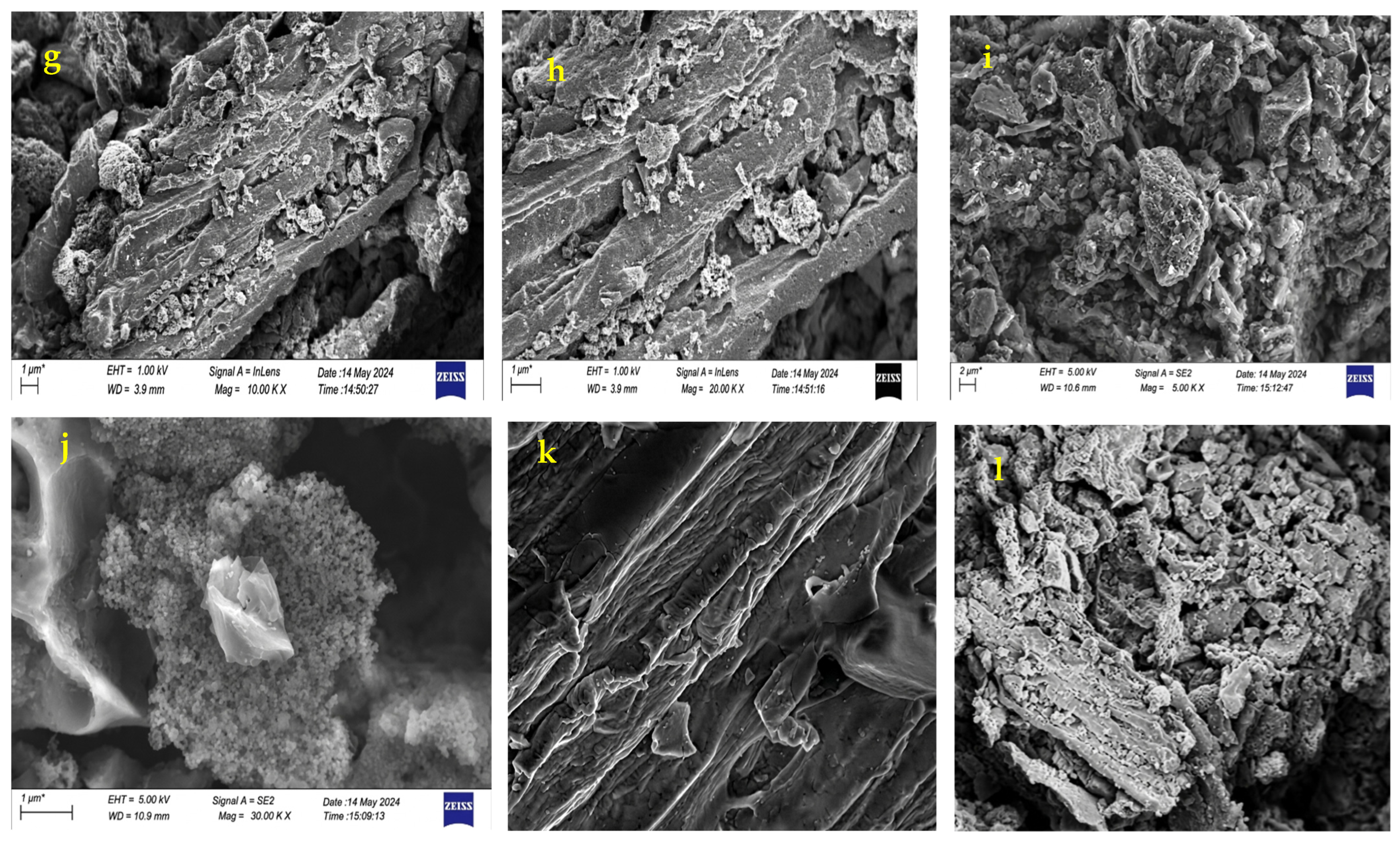
- Morphological Analysis: Performed using a Zeiss SUPRA 55-VP FEGSEM (Zeiss Group, Oberkochen, Germany) to examine the remnants of fibrous cell structures and surface uniformity. Lower magnifications were employed to examine the remnants of fibrous cell structures and ensure surface uniformity across the bulk material. Higher magnifications were used to resolve the internal architecture, including macropores (>50 nm) and the textured nature of the pore walls where mesopores (2–50 nm) facilitate molecular diffusion. The magnification was systematically adjusted to confirm the presence of high surface area features and irregularly shaped particles derived from the original wood precursors.
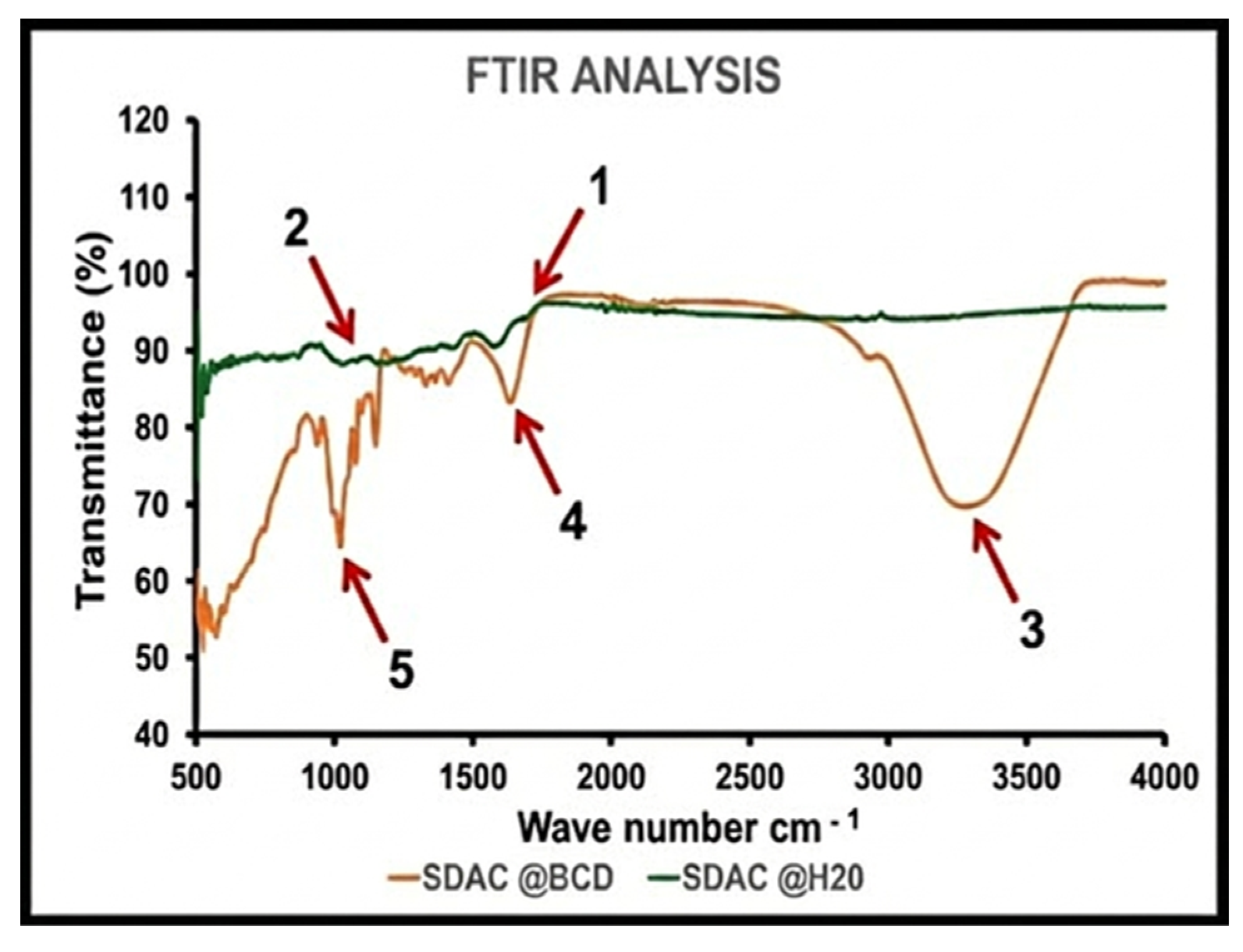
- Surface Chemistry: Evaluated via Fourier-transform infrared spectroscopy using a Nicolet iS50R (Thermo-Fisher Scientific Ltd., UK) to identify functional groups, and X-ray photoelectron spectroscopy using a Kratos Axis Ultra DLD (Kratos Analytical Ltd., Manchester, UK). to analyze binding energy intensities and elemental composition (C, O, N, and S).
2.7. Surface Area Estimation Using MB Adsorption
- SBET is the BET-specific surface area (m2/g)
- qm is the monolayer capacity (mol/g)
- NA is Avogadro’s number (6.022 × 10²³ mol−1)
- AMB is the cross-sectional area of the adsorbate molecule (1.30 × 10⁻¹⁸ m2)
2.8. Batch Equilibrium Adsorption Experiment
2.9. Data Reproducibility
2.10. Figure and Graphical Development
3. Results and Discussion
3.1. Yield and Efficiency of Activated Carbon Samples
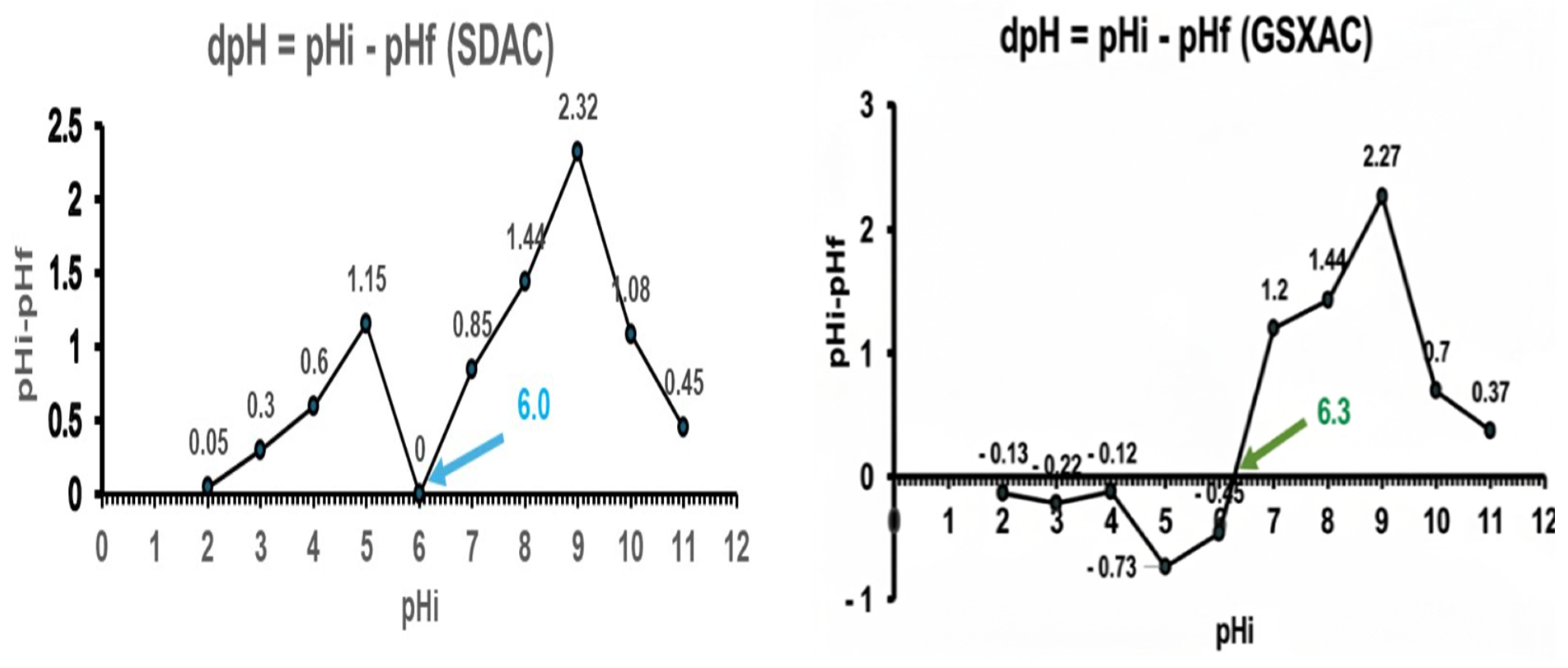
3.2. Point of Zero Charge (PZC) Results
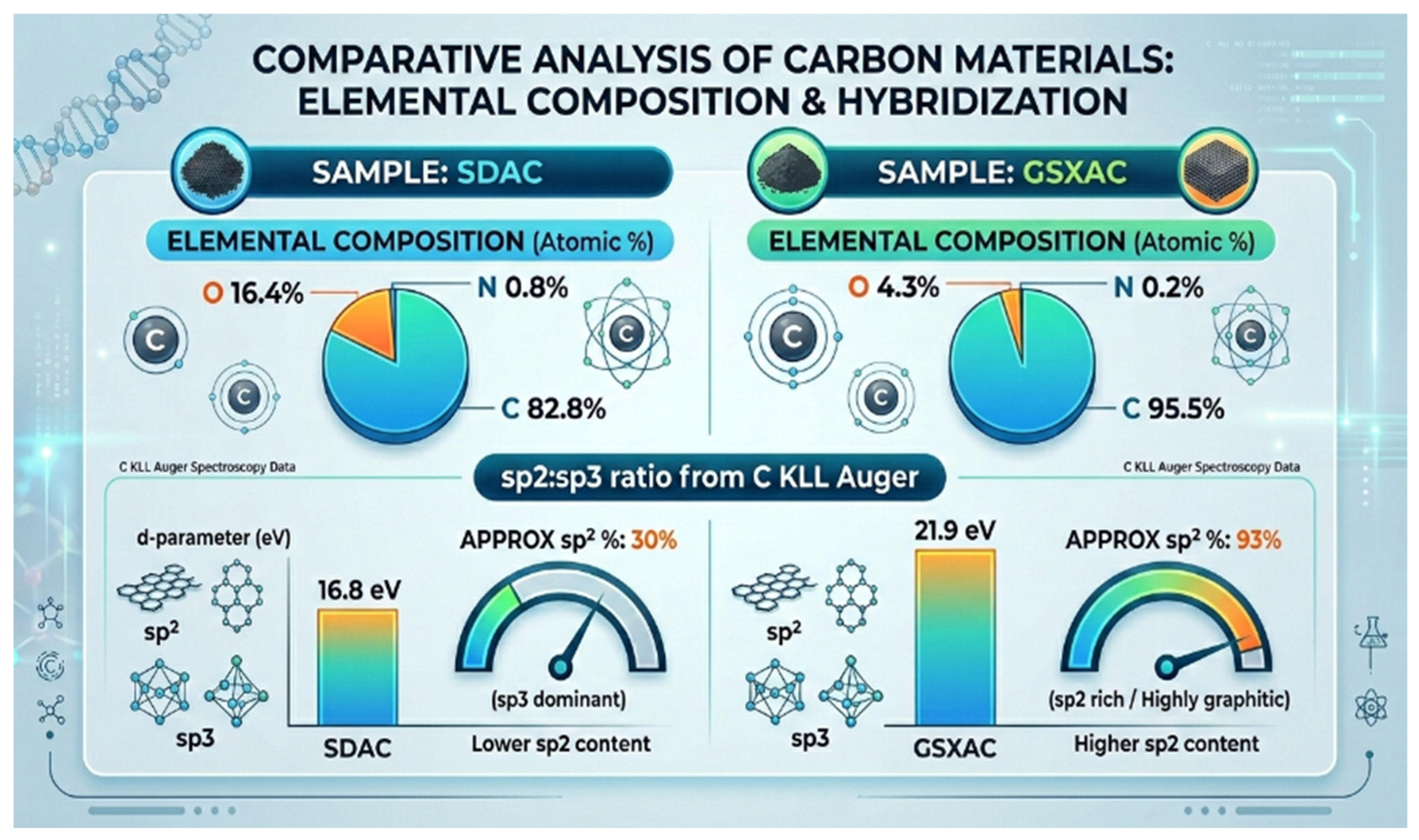
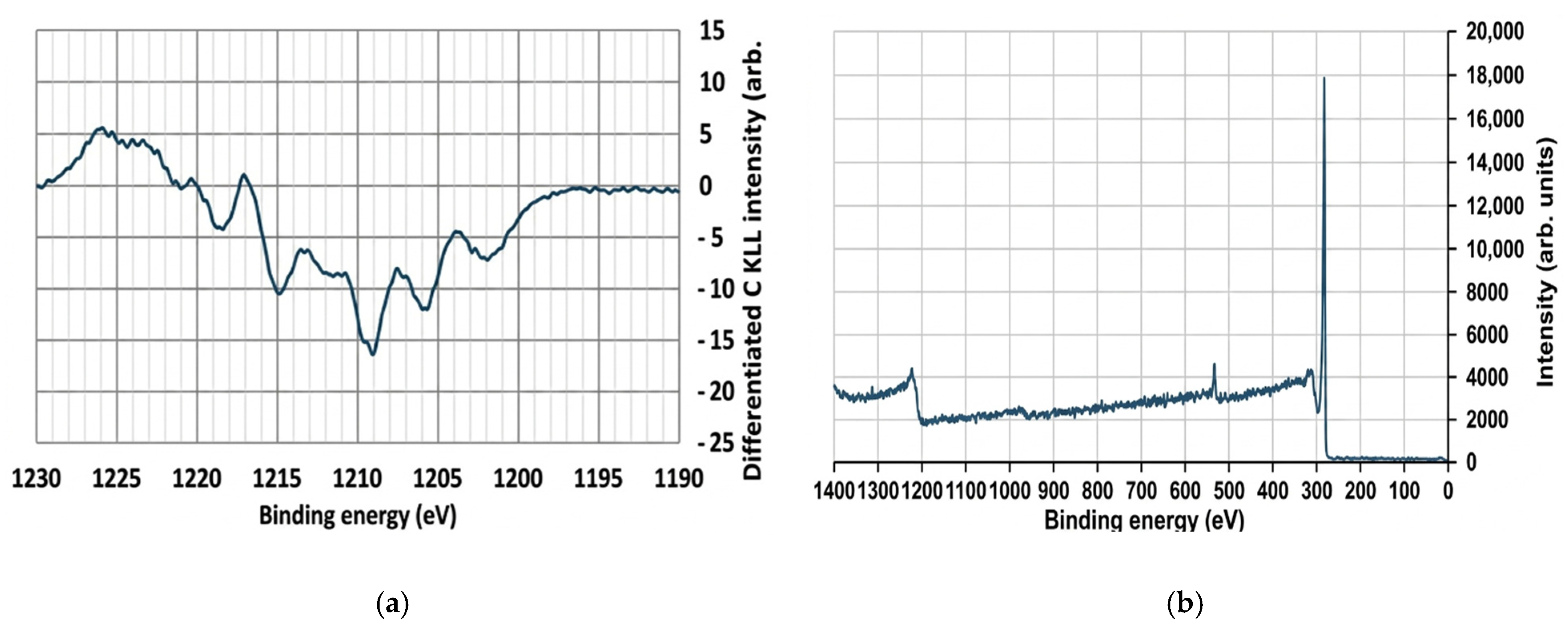
3.3. XPS Analysis of Activated Carbon Samples
3.4. Scanning Electron Microscopy (SEM) Results of Activated Carbon Samples
3.5. Fourier Transform Infrared Spectroscopy (FTIR) Results of Activated Carbon Samples
- O-H Stretching Vibrations: This broad peak indicates hydroxyl groups from alcohols, phenols, and carboxylic acids. Hydroxyl groups can enhance MB adsorption via hydrogen bonding [59].
- Aromatic C=C Stretching Vibrations: These peaks are associated with aromatic rings in the activated carbon structure, enabling interaction with MB through π–π interactions [36].
- C-O, C-N, and C-H Stretching Vibrations: The presence of C-O stretching vibrations suggests oxygen-containing functional groups like alcohols, ethers, or carboxylic acids. C-N stretching vibrations indicate nitrogen-containing functional groups, potentially arising from the raw material or activation process. C-H stretching vibrations indicate aliphatic or aromatic C-H bonds [35].
3.6. Brunauer–Emmett–Teller Spectroscopy (BET) Surface Area (SBET) and Its Impact on Adsorption Performance
- is the BET surface area (m2/g)
- is the maximum monolayer adsorption capacity (mol/g) determined from the Langmuir isotherm model
- is Avogadro’s number (6.022 × 10²³ molecules/mol)
- is the cross-sectional area of a methylene blue molecule (1.30 × 10⁻¹⁸ m2)
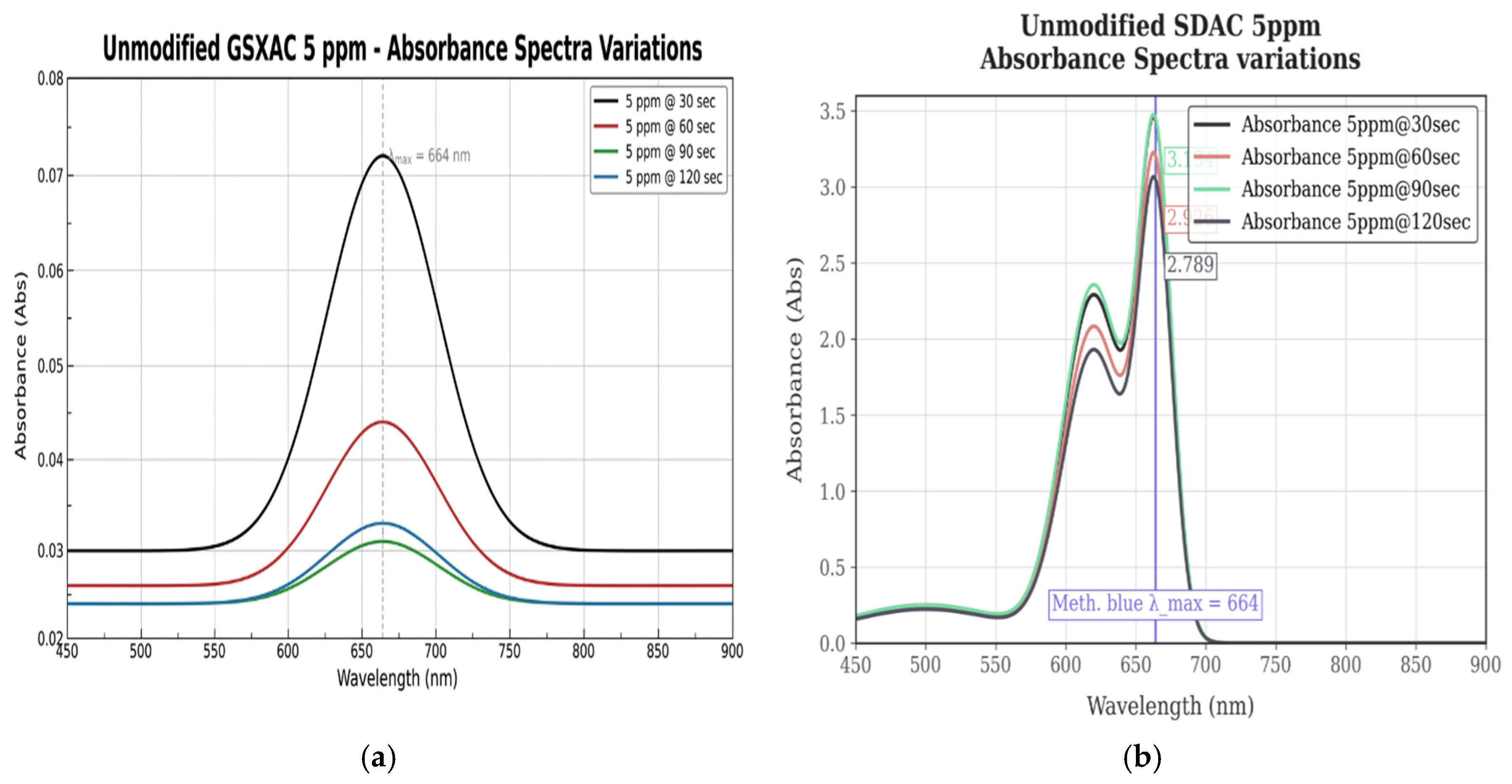
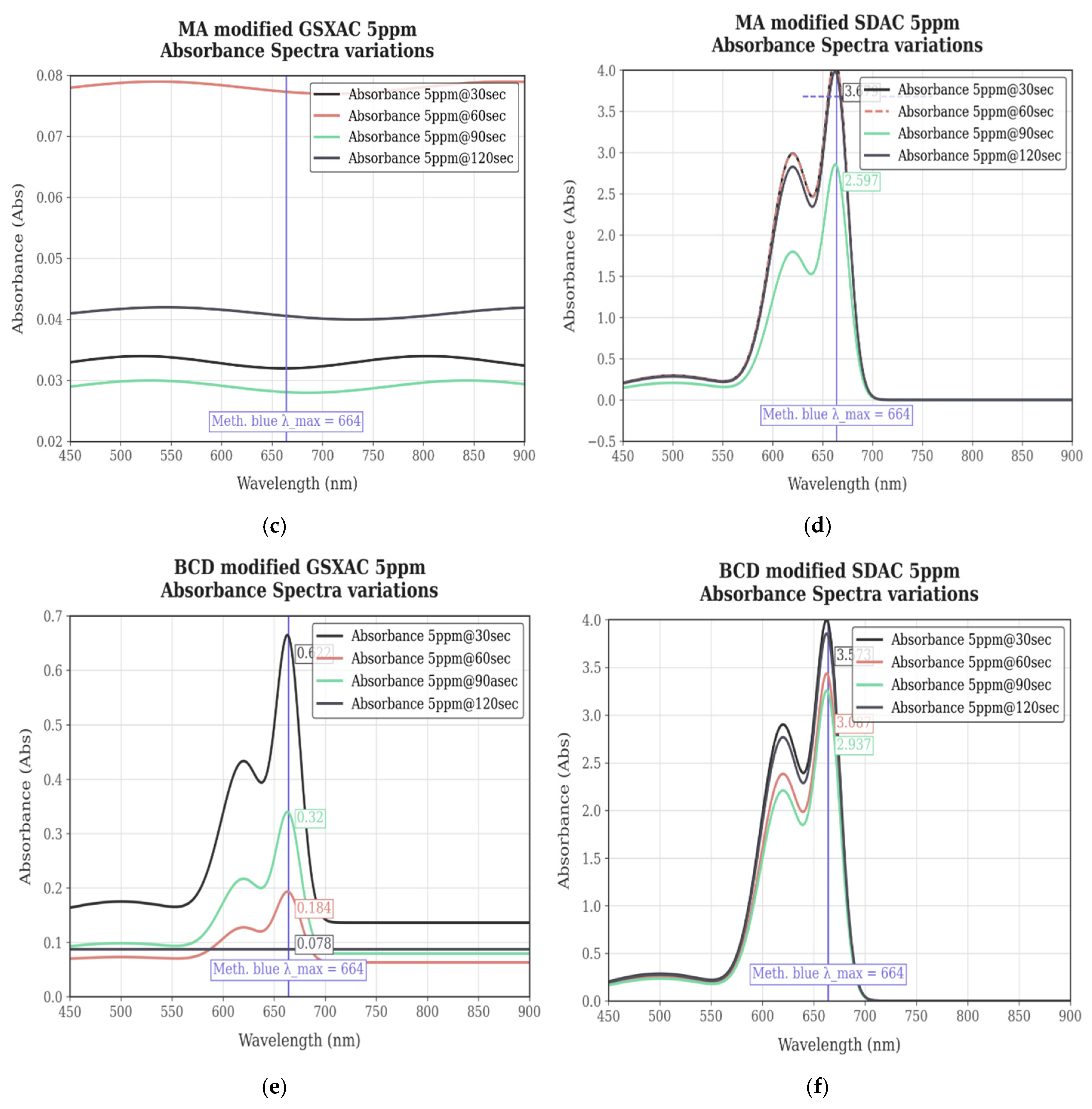
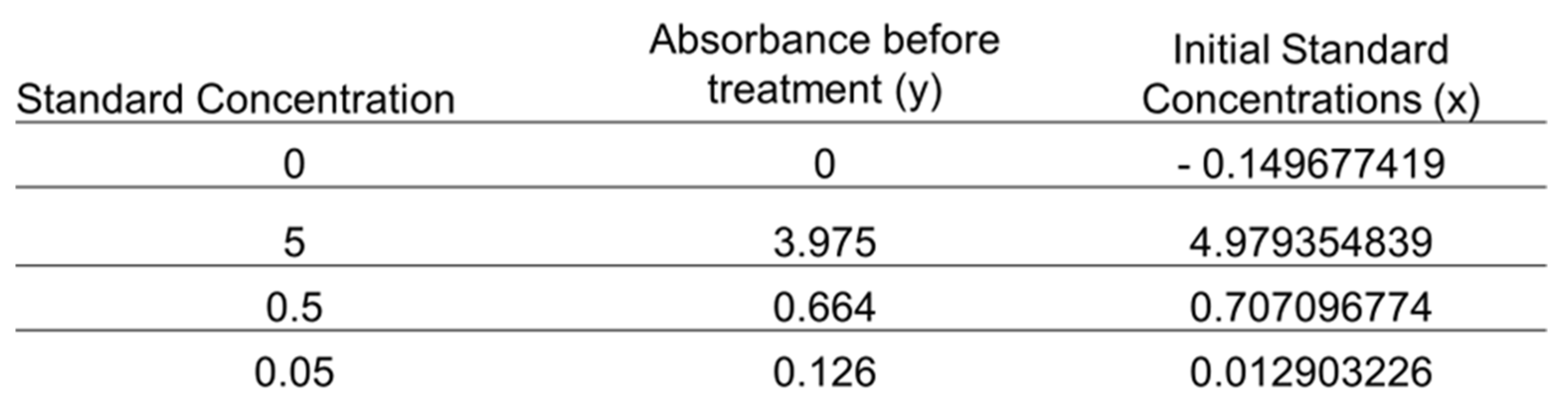
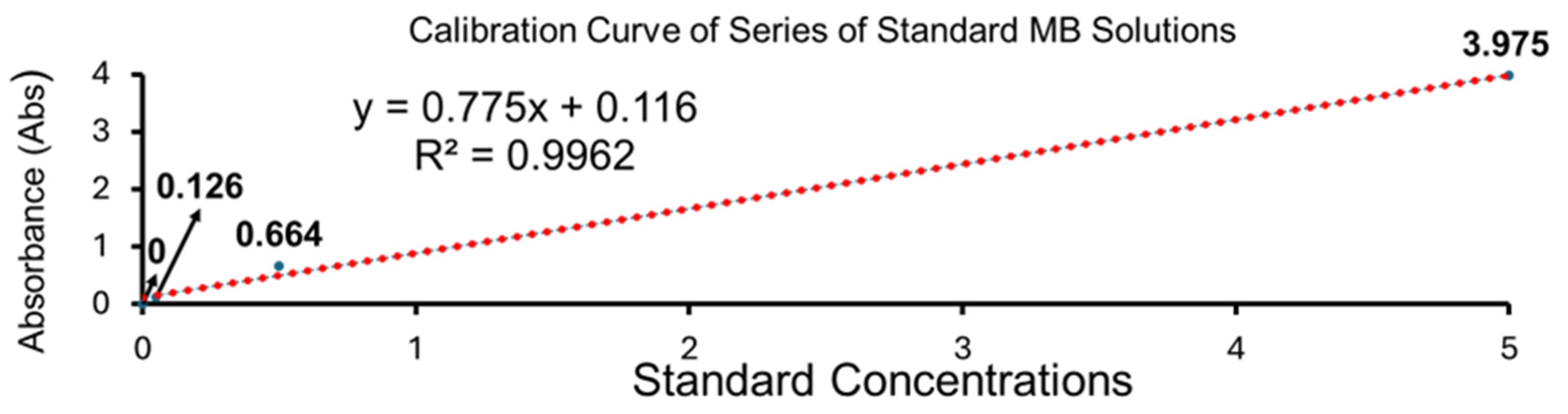
3.7. Absorbance Spectra Variations
3.7.1. Effect of the Shape of the Spectra
3.7.2. Effect of Operating Parameters
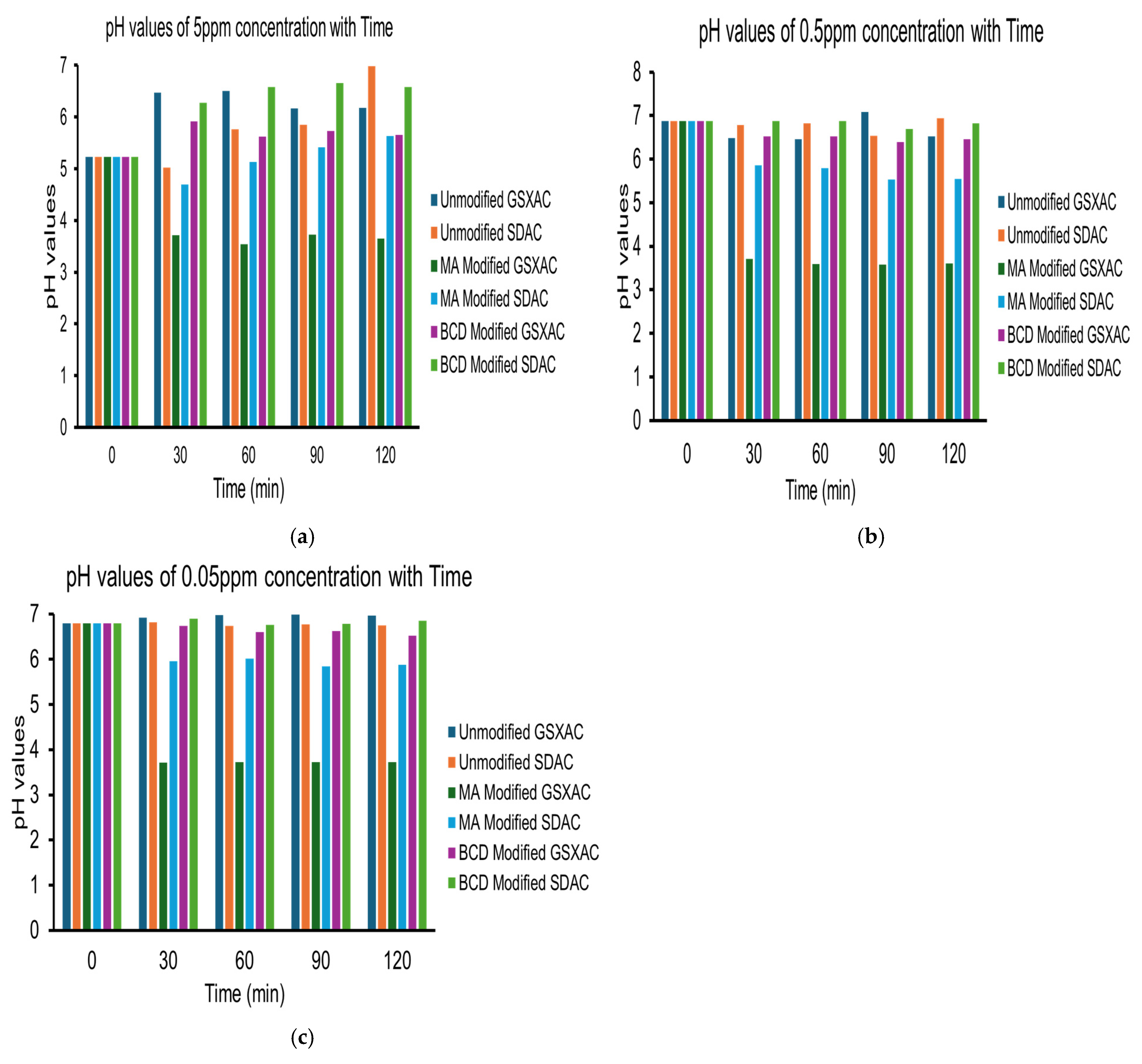
3.7.3. Effects of Variations in pH Values of Concentrations
3.8. Comparison of Equilibrium Adsorption Performance
3.8.1. To Calculate the Adsorption Capacity per Time (qt)
- qt—adsorption capacity at time (mg/g)
- Co—initial concentration (mg/L)
- Ct—final concentration (mg/L)
- m—mass of adsorbent (g)
- V—volume of solution
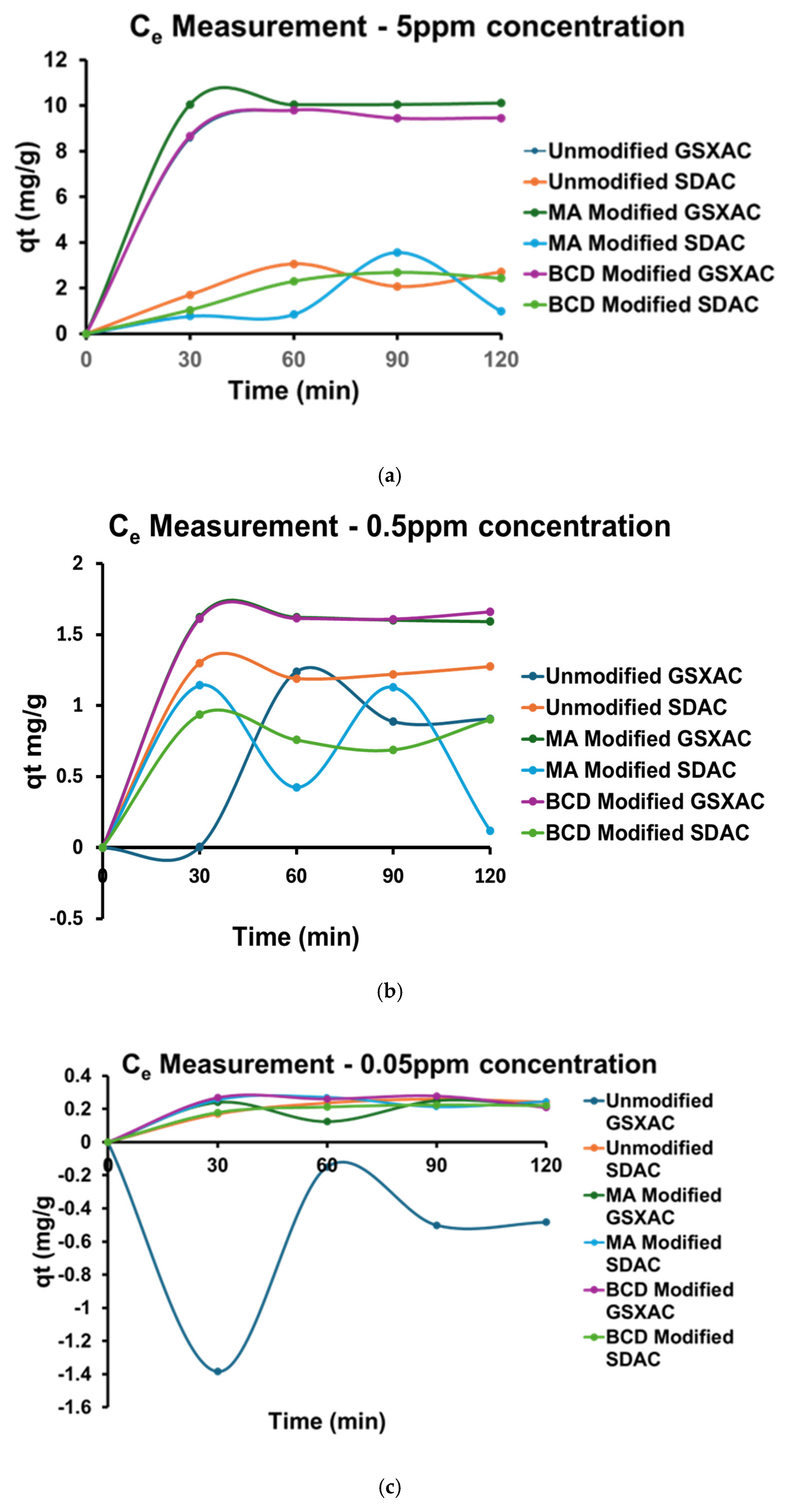
3.8.2. Measurement of qt Against Time Plot
3.9. Mechanistic Insights
3.9.1. Equilibrium Studies
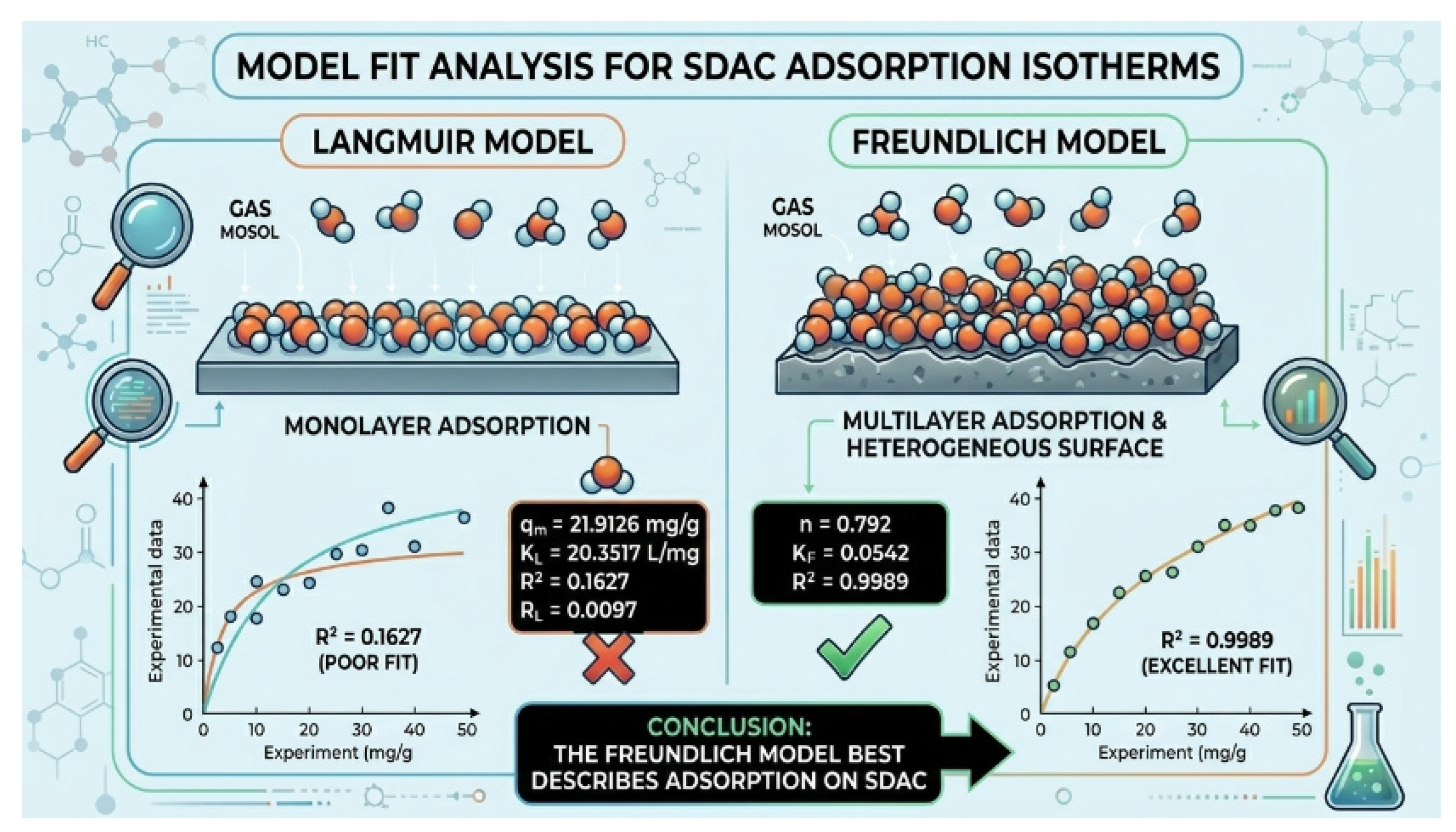
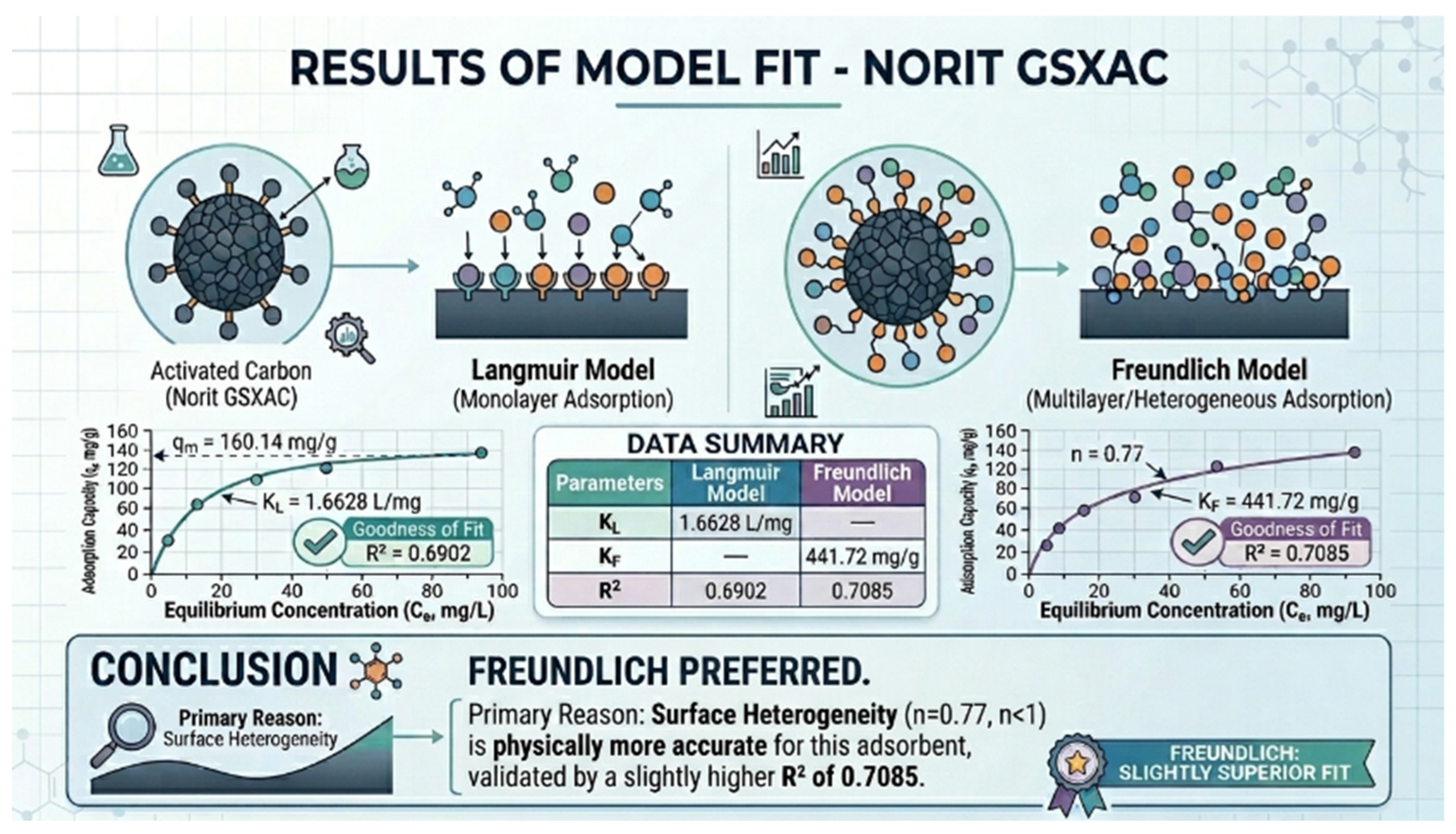
- The Langmuir isotherm model (SDAC and GSXAC)
- The Separation Factor
- The Freundlich isotherm model (SDAC)
3.9.2. Kinetic Studies
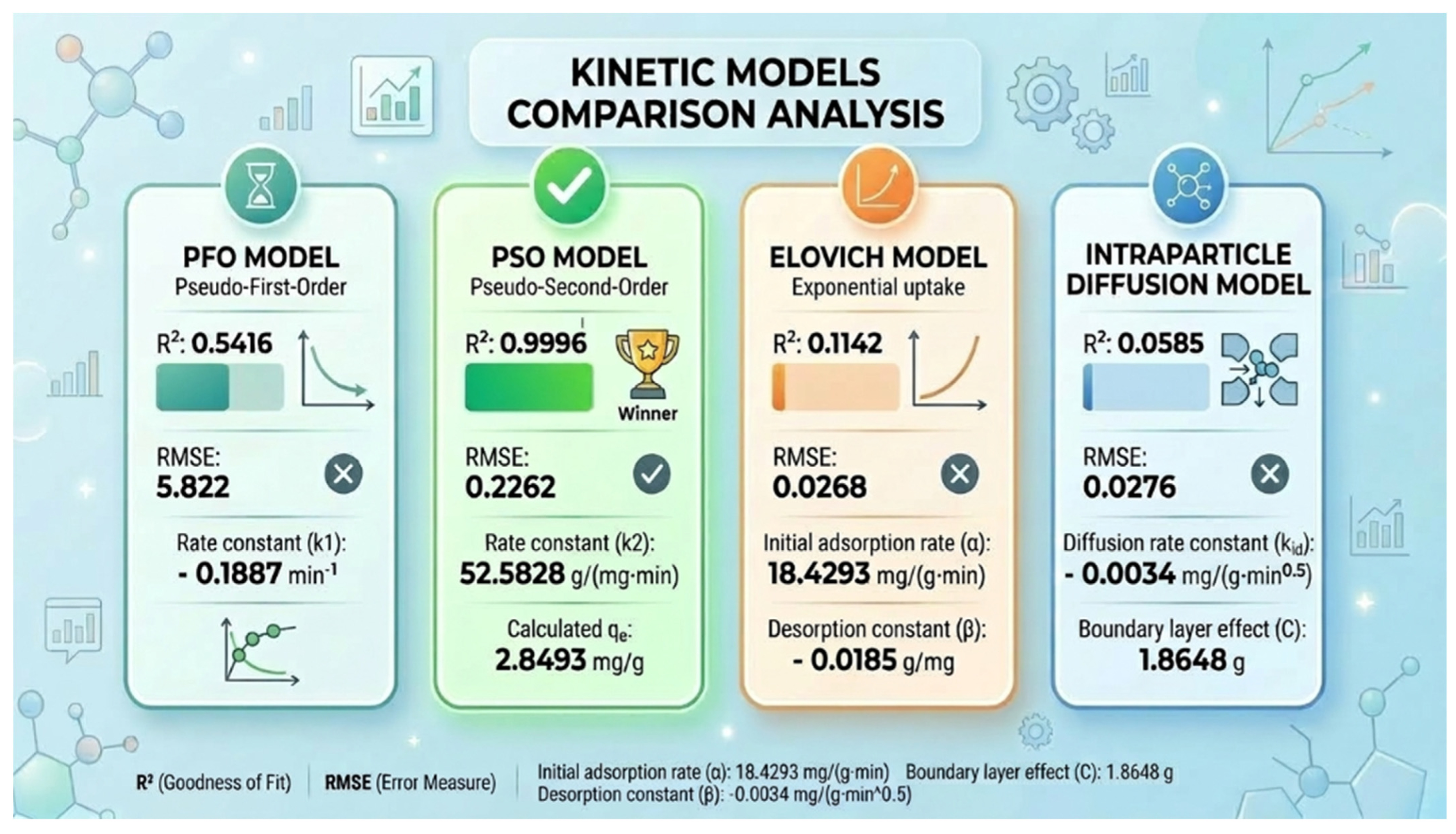
- The Pseudo-First-Order Model
- qt is the amount of adsorbate adsorbed at time t
- qe is the equilibrium adsorption capacity
- k1 is the rate constant
- Elovich Model
- q is the amount of adsorption (mg/g)
- t is the adsorption time (min)
- α is the initial adsorption rate (mg/g min)
- β is the desorption constant (g/mg)
- The Intraparticle Diffusion Model
- qt represents the amount of adsorbate adsorbed at time t.
- kid is the intraparticle diffusion rate constant.
- t is time.
- C is a constant related to the boundary layer effect.
- The Pseudo-Second-Order Model
- High Coefficient of Determination (R2): The R2 value of 0.9996 indicates that approximately 99.96% of the variance in the adsorption process is explained by the PSO model. This high degree of correlation suggests that the model is highly reliable in predicting the adsorption behavior of the system.
- Low Root Mean Square Error: The RMSE of 0.2262 signifies the magnitude of the difference between the values predicted by a model and the values observed. A low RMSE indicates that the model’s predictions are, on average, very close to the actual data, suggesting a high level of accuracy.
- Adsorption Mechanism: A high R2 value in the PSO model typically suggests that the adsorption process is chemisorption. Chemisorption involves stronger chemical bonds between the adsorbate and the adsorbent surface, leading to the formation of a monolayer of adsorbate on the adsorbent surface. In contrast, physisorption involves weaker van der Waals forces, which leads to the formation of multilayers of adsorbate on the adsorbent surface. The higher the value of R2, the better the goodness of fit.
- Heterogeneous Surface: The Freundlich isotherm does not assume a uniform adsorption energy or a finite number of adsorption sites. Instead, it assumes that the adsorption energy decreases exponentially as the degree of saturation of the adsorbent increases. This is often the case in real-world adsorption processes, where the adsorbent surface is heterogeneous and the adsorbate molecules interact with each other. Different types of functional groups such as hydroxyl, carboxyl, or amine groups may be present, which could interact chemically with the adsorbate. Additionally, the pore structure of the SDAC sample could contribute to the heterogeneity of the surface, as the adsorbate molecules may experience different degrees of confinement and interaction within the pores.
3.10. Adsorption Mechanisms and Thermodynamic Considerations
3.11. Effect of Temperature
3.12. Conclusions
Author Contributions
Funding
Data Availability Statement
Acknowledgments
Conflicts of Interest
References
- Adeniyi, A.; Jimoh, M. Decontamination Potential of UV-C Radiation in Water Treatment Systems: Targeting Microbial Inactivation. Water 2024, 16, 2725. [Google Scholar] [CrossRef]
- UNICEF. Progress on Household Drinking Water, Sanitation and Hygiene 2000–2022: Special Focus on Gender; World Health Organization (WHO): Geneva, Switzerland; United Nations Children’s Fund (UNICEF): New York, NY, USA, 2023. [Google Scholar]
- Allaoui, I.; Et-Tanteny, R.; Barhdadi, I.; Elmourabit, M.; Arfoy, B.; Draoui, Y.; Hadri, M.; Draoui, K. Development and Characterization of Pyrolyzed Sodium Alginate–Montmorillonite Composite for Efficient Adsorption of Emerging Pharmaceuticals: Experimental and Theoretical Insights. Ceramics 2025, 8, 60. [Google Scholar] [CrossRef]
- Morales-Paredes, C.A.; Rodríguez-Díaz, J.M.; Boluda-Botella, N. Pharmaceutical compounds used in the COVID-19 pandemic: A review of their presence in water and treatment techniques for their elimination. Sci. Total Environ. 2022, 814, 152691. [Google Scholar] [CrossRef] [PubMed]
- Saravanan, A.; Senthil Kumar, P.; Jeevanantham, S.; Karishma, S.; Tajsabreen, B.; Yaashikaa, P.R.; Reshma, B. Effective water/wastewater treatment methodologies for toxic pollutants removal: Processes and applications towards sustainable development. Chemosphere 2021, 280, 130595. [Google Scholar] [CrossRef]
- Ahmad, A.; Ghazi, Z.A.; Saeed, M.; Ilyas, M.; Ahmad, R.; Khattaka, A.M.; Iqbal, A. A comparative study of the removal of Cr(vi) from synthetic solution using natural biosorbents. New J. Chem. 2017, 41, 10799–10807. [Google Scholar] [CrossRef]
- Zamora-Ledezma, C.; Negrete-Bolagay, D.; Figueroa, F.; Zamora-Ledezma, E.; Ni, M.; Alexis, F.; Guerrero, V.H. Heavy metal water pollution: A fresh look about hazards, novel and conventional remediation methods. Environ. Technol. Innov. 2021, 22, 101504. [Google Scholar] [CrossRef]
- Adeniyi, A.O. A Comparative Review of the Traditional and Modern Methods of Water Treatment. J. Adv. Biol. Biotechnol. 2020, 23, 44–51. [Google Scholar] [CrossRef]
- Obayomi, K.S.; Lau, S.Y.; Akubuo-Casmir, D.; Yahya, M.D.; Auta, M.; Bari, A.S.M.F.; Oluwadiya, A.E.; Obayomi, O.V.; Rahman, M.M. Adsorption of endocrine disruptive congo red onto biosynthesized silver nanoparticles loaded on Hildegardia barteri activated carbon. J. Mol. Liq. 2022, 352, 118735. [Google Scholar] [CrossRef]
- Nebrida, A.; Rodolfo, J.S. Biochar-Based Water Treatment System For Sawmill, Villaverde, Nueva Vizcaya. Res. Sq. 2024; preprint. [CrossRef]
- Adedeji, O.M.; Russack, J.S.; Molnar, L.A.; Bauer, S.K. Co-Hydrothermal Liquefaction of Sewage Sludge and Beverage Waste for High-Quality Bio-energy Production. Fuel 2022, 324, 124757. [Google Scholar] [CrossRef]
- Barquilha, C.E.R.; Braga, M.C.B. Adsorption of organic and inorganic pollutants onto biochars: Challenges, operating conditions, and mechanisms. Bioresour. Technol. Rep. 2021, 15, 100728. [Google Scholar] [CrossRef]
- Murtaza, G.; Ahmed, Z.; Dai, D.-Q.; Iqbal, R.; Bawazeer, S.; Usman, M.; Rizwan, M.; Iqbal, J.; Akram, M.I.; Althubiani, A.S.; et al. A review of mechanism and adsorption capacities of biochar-based engineered composites for removing aquatic pollutants from contaminated water. Front. Environ. Sci. 2022, 10, 1035865. [Google Scholar] [CrossRef]
- Dong, M.; He, L.; Jiang, M.; Zhu, Y.; Wang, J.; Gustave, W.; Wang, S.; Deng, Y.; Zhang, X.; Wang, Z. Biochar for the Removal of Emerging Pollutants from Aquatic Systems: A Review. Int. J. Environ. Res. Public Health 2023, 20, 1679. [Google Scholar] [CrossRef] [PubMed]
- Sulaiman, N.S.; Zaini, M.A.A.; Arsad, A. Evaluation of dyes removal by beta-cyclodextrin adsorbent. Mater. Today Proc. 2021, 39, 907–910. [Google Scholar] [CrossRef]
- Amran, F.; Zaini, M.A.A. Beta-cyclodextrin adsorbents to remove water pollutants—A commentary. Front. Chem. Sci. Eng. 2022, 16, 1407–1423. [Google Scholar] [CrossRef]
- Zhou, R.; Zhang, M.; Shao, S. Optimization of target biochar for the adsorption of target heavy metal ion. Sci. Rep. 2022, 12, 13662. [Google Scholar] [CrossRef] [PubMed]
- Liu, S.; Shen, C.; Wang, Y.; Huang, Y.; Hu, X.; Li, B.; Karnowo, K.; Zhou, J.; Zhang, S.; Zhang, H. The Optimization Parameters of Activated Biochar Derived from Pine Pyrolysis: Application in Methylene Blue Adsorption. Res. Sq. 2021; preprint.
- Li, R.; Wu, Y.; Lou, X.; Li, H.; Cheng, J.; Shen, B.; Qin, L. Porous Biochar Materials for Sustainable Water Treatment: Synthesis, Modification, and Application. Water 2023, 15, 395. [Google Scholar] [CrossRef]
- ASTM D2867-23; Standard Test Methods for Moisture in Activated Carbon. Advancing Standards Transforming Markets (ASTM) International: West Conshohocken, PA, USA, 2023.
- ASTM D2866-11; Standard Test Method for Total Ash Content of Activated Carbon. Advancing Standards Transforming Markets (ASTM) International: West Conshohocken, PA, USA, 2025.
- ASTM D5832-98; Standard Test Method for Volatile Matter Content of Activated Carbon Samples. Advancing Standards Transforming Markets (ASTM) International: West Conshohocken, PA, USA, 2021.
- ASTM D3838-23; Standard Test Method for pH of Activated Carbon. Advancing Standards Transforming Markets (ASTM) International: West Conshohocken, PA, USA, 2024.
- Wang, J.C.; Kinsella, J.E. Functional properties of alfalfa leaf protein: Foaming. J. Food Sci. 2006, 41, 498–501. [Google Scholar] [CrossRef]
- Ali, R.; Aslam, Z.; Shawabkeh, R.A.; Asghar, A.; Hussein, I.A. BET, FTIR, and RAMAN characterizations of activated carbon from wasteoil fly ash. Turk. J. Chem. 2020, 44, 279–295. [Google Scholar] [CrossRef]
- Kondor, A.; Santmarti, A.; Mautner, A.; Williams, D.; Bismarck, A.; Lee, K.Y. On the BET Surface Area of Nanocellulose Determined Using Volumetric, Gravimetric and Chromatographic Adsorption Methods. Front. Chem. Eng. 2021, 3, 738995. [Google Scholar] [CrossRef]
- Vo, A.T.; Nguyen, V.P.; Ouakouak, A.; Nieva, A.; Doma, B.T., Jr.; Tran, H.N.; Chao, H.-P. Efficient Removal of Cr(VI) from Water by Biochar and Activated Carbon Prepared through Hydrothermal Carbonization and Pyrolysis: Adsorption-Coupled Reduction Mechanism. Water 2019, 11, 1164. [Google Scholar] [CrossRef]
- Adekunle, A.A.; Familusi, A.O.; Badejo, A.A.; Adeosun, O.J.; Arogundade, S.A. Characterisation of activated charcoal, sawdust charcoal and rice husk charcoal as adsorbents in water treatment. Analecta Tech. Szeged. 2020, 14, 19–25. [Google Scholar] [CrossRef]
- Ilić, M. Surface functional groups and degree of carbonization of selected chars from different processes and feedstock. PLoS ONE 2022, 17, e0277365. [Google Scholar] [CrossRef] [PubMed]
- Qiu, M.; Liu, L.; Ling, Q.; Cai, Y.; Yu, S.; Wang, S.; Fu, D.; Hu, B.; Wang, X. Biochar for the removal of contaminants from soil and water: A review. Biochar 2022, 4, 19. [Google Scholar] [CrossRef]
- Xie, J.; Lin, R.; Liang, Z.; Zhao, Z.; Yang, C.; Cui, F. Effect of cations on the enhanced adsorption of cationic dye in Fe3O4-loaded biochar and mechanism. J. Environ. Chem. Eng. 2021, 9, 105744. [Google Scholar] [CrossRef]
- Maphuhla, N.G.; Oyedeji, O.O. Exploring the Efficacy of Methylated Gamma-Cyclodextrin (M-γ-CD) in the Removal of Heavy Metals in Soil Systems. Appl. Sci. 2025, 15, 2028. [Google Scholar] [CrossRef]
- Bülbül, A.; Delibaş, A.; Coşkun, R. Development and characterization of activated charcoal adsorbent derived from oak for efficient removal of methylene blue: Functionality vs. surface area. Biomass Convers. Biorefin. 2025, 15, 23227–23242. [Google Scholar] [CrossRef]
- Zhu, C.; Huang, K.; Xue, M.; Zhang, Y.; Wang, J.; Liu, L. Effect of MgCl2 Loading on the Yield and Performance of Cabbage-Based Biochar. Bioengineering 2023, 10, 836. [Google Scholar] [CrossRef] [PubMed]
- Santos, R.K.S.; Nascimento, B.F.; de Araújo, C.M.B.; Cavalcanti, J.V.F.L.; Bruckmann, F.S.; Rhoden, C.R.B.; Dotto, G.L.; Oliveira, M.L.S.; Silva, L.F.O.; Sobrinho, M.A.M. Removal of chloroquine from the aqueous solution by adsorption onto açaí-based biochars: Kinetics, thermodynamics, and phytotoxicity. J. Mol. Liq. 2023, 383, 122162. [Google Scholar] [CrossRef]
- Zhao, F.; Fang, S.; Gao, Y.; Bi, J. Removal of aqueous pharmaceuticals by magnetically functionalized Zr-MOFs: Adsorption Kinetics, Isotherms, and regeneration. J. Colloid Interface Sci. 2022, 615, 876–886. [Google Scholar] [CrossRef] [PubMed]
- Xin, Y.; Bai, Y.; Wu, X.; Zhang, D.; Ao, W.; Fang, M.; Huang, Z.; Yao, Y. Adsorption Performance of Modified Graphite from Synthetic Dyes Solutions. Materials 2024, 17, 4349. [Google Scholar] [CrossRef]
- Smith, S.C.; Rodrigues, D.F. Carbon-based nanomaterials for removal of chemical and biological contaminants from water: A review of mechanisms and applications. Carbon 2015, 91, 122–143. [Google Scholar] [CrossRef]
- Murphy, O.P.; Vashishtha, M.; Palanisamy, P.; Kumar, K.V. A Review on the Adsorption Isotherms and Design Calculations for the Optimization of Adsorbent Mass and Contact Time. ACS Omega 2023, 8, 17407–17430. [Google Scholar] [CrossRef]
- Ratchagar, V.; Muralidharan, M.; Silambarasan, M.; Jagannathan, K.; Kamaraj, P.; Subbiah, S.K.; Vivekanand, P.A.; Periyasami, G.; Rahaman, M.; Karthikeyan, P.; et al. Coprecipitation Methodology Synthesis of Cobalt-Oxide Nanomaterials Influenced by pH Conditions: Opportunities in Optoelectronic Applications. Int. J. Photoenergy 2023, 2023, 2493231. [Google Scholar] [CrossRef]
- Jha, M.K.; Joshi, S.; Sharma, R.K.; Kim, A.A.; Pant, B.; Park, M.; Pant, H.R. Surface Modified Activated Carbons: Sustainable Bio-Based Materials for Environmental Remediation. Nanomaterials 2021, 11, 3140. [Google Scholar] [CrossRef]
- Wulandari, N.N.; Rustamaji, H.; Fibarzy, W.U.; Prakoso, T.; Rizkiana, J.; Devianto, H.; Widiatmoko, P.; Nurdin, I. Production of activated carbon from palm empty fruit bunch as supercapacitor electrode material. IOP Conf. Ser. Mater. Sci. Eng. 2021, 1143, 12004. [Google Scholar] [CrossRef]
- Del Sole, R.; Fogel, A.A.; Somin, V.A.; Vasapollo, G.; Mergola, L. Evaluation of Effective Composite Biosorbents Based on Wood Sawdust and Natural Clay for Heavy Metals Removal from Water. Materials 2023, 16, 5322. [Google Scholar] [CrossRef] [PubMed]
- Wang, J.; Yang, F. Preparation of 2-hydroxypropyl-β-cyclodextrin polymers crosslinked by poly(acrylic acid) for efficient removal of ibuprofen. Mater. Lett. 2021, 284, 128882. [Google Scholar] [CrossRef]
- Izquierdo, S.; Pacheco, N.; Durán-Valle, C.J.; López-Coca, I.M. From Waste to Resource: Utilizing Sweet Chestnut Waste to Produce Hydrothermal Carbon for Water Decontamination. C 2023, 9, 57. [Google Scholar] [CrossRef]
- Niu, Y.; Yu, W.; Yang, S.; Wan, Q. Understanding the relationship between pore size, surface charge density, and Cu2+ adsorption in mesoporous silica. Sci. Rep. 2024, 14, 13521. [Google Scholar] [CrossRef]
- Kwiatkowski, M. An analysis of the textural properties of activated carbons obtained from biomass via the LBET, NLDFT and QSDFT methods. Sci. Rep. 2024, 14, 26472. [Google Scholar] [CrossRef]
- Marzeddu, S.; Décima, M.A.; Camilli, L.; Bracciale, M.P.; Genova, V.; Paglia, L.; Marra, F.; Damizia, M.; Stoller, M.; Chiavola, A.; et al. Physical-Chemical Characterization of Different Carbon-Based Sorbents for Environmental Applications. Materials 2022, 15, 7162. [Google Scholar] [CrossRef]
- Ahmed, A.S.; Alsultan, M.; Hameed, R.T.; Assim, Y.F.; Swiegers, G.F. High Surface Area Activated Charcoal for Water Purification. J. Compos. Sci. 2022, 6, 311. [Google Scholar] [CrossRef]
- Saha, D.; Orkoulas, G.; Bates, D. One-Step Synthesis of Sulfur-Doped Nanoporous Carbons from Lignin with Ultra-High Surface Area, Sulfur Content and CO2 Adsorption Capacity. Materials 2023, 16, 455. [Google Scholar] [CrossRef]
- Alwan, N.T.; Tarish, A.L.; Yaqoob, S.J.; Bajaj, M.; Zaitsev, I. Enhancing energy efficiency in buildings using sawdust-based insulation in hot arid climates. Sci. Rep. 2025, 15, 8349. [Google Scholar] [CrossRef]
- Rodríguez-Vila, A.; Selwyn-Smith, H.; Enunwa, L.; Smail, I.; Covelo, E.F.; Sizmur, T. Predicting Cu and Zn sorption capacity of biochar from feedstock C/N ratio and pyrolysis temperature. Environ. Sci. Pollut. Res. 2018, 25, 7730–7739. [Google Scholar] [CrossRef]
- de la Rosa, A.J.M.; Paneque, M.; Miller, A.Z.; Knicker, H. Relating physical and chemical properties of four different biochars and their application rate to biomass production of Lolium perenne on a Calcic Cambisol during a pot experiment of 79days. Sci. Total Environ. 2014, 499, 175–184. [Google Scholar] [CrossRef]
- Hu, E.; Shang, S.; Wang, N.; Nan, X.; Zhong, S.; Yuan, Z. Influence of the pyrolytic temperature and feedstock on the characteristics and naphthalene adsorption of crop straw-derived biochars. Bioresources 2019, 14, 2885–2902. [Google Scholar] [CrossRef]
- Kazeem, T.S.; Lateef, S.A.; Ganiyu, S.A.; Qamaruddin, M.Q.M.; Tanimu, A.T.A.; Sulaiman, K.O.; Jillani, S.M.S.; Alhooshani, K.A.K. Aluminium-modified activated carbon as efficient adsorbent for cleaning of cationic dye in wastewater. J. Clean. Prod. 2018, 205, 303–312. [Google Scholar] [CrossRef]
- Fathi, A.; Asgari, E.; Danafar, H.; Salehabadi, H.; Fazli, M.M. A comprehensive study on methylene blue removal via polymer and protein nanoparticle adsorbents. Sci. Rep. 2024, 14, 29434. [Google Scholar] [CrossRef] [PubMed]
- Liu, F.; Teng, S.; Song, R.; Wang, S. Adsorption of methylene blue on anaerobic granular sludge: Effect of functional groups. Desalination 2010, 263, 11–17. [Google Scholar] [CrossRef]
- Sarker, N.C.; Badsha, M.A.R.; Hillukka, G.; Holter, B.; Kjelland, M.; Hossain, K. Pyrolyzed Biochar from Agricultural Byproducts: Synthesis, Characterization, and Application in Water Pollutants Removal. Processes 2025, 13, 1358. [Google Scholar] [CrossRef]
- Ogungbenro, A.E.; Quang, D.V.; Al-Ali, K.A.; Vega, L.F.; Abu-Zahra, M.R.M. Synthesis and characterization of activated carbon from biomass date seeds for carbon dioxide adsorption. J. Environ. Chem. Eng. 2020, 8, 104257. [Google Scholar] [CrossRef]
- Nagalakshmi, T.V.; Emmanuel, K.A.; Babu, C.S.; Chakrapani, C.; Divakar, P.P. Preparation of Mesoporous Activated Carbon from Jackfruit PPI-1 Waste and Development of Different Surface Functional Groups. Int. Lett. Chem. Phys. Astron. 2015, 54, 189–200. [Google Scholar] [CrossRef][Green Version]
- León, A.; Reuquen, P.; Garín, C.; Segura, R.; Vargas, P.; Zapata, P.; Orihuela, P.A. FTIR and Raman Characterization of TiO2 Nanoparticles Coated with Polyethylene Glycol as Carrier for 2-Methoxyestradiol. Appl. Sci. 2017, 7, 49. [Google Scholar] [CrossRef]
- Wormell, P.; Rodger, A. Absorbance Spectroscopy: Spectral Artifacts and Other Sources of Error. In Encyclopedia of Biophysics; Springer: Berlin/Heidelberg, Germany, 2013; pp. 26–29. [Google Scholar] [CrossRef]
- Alsharif, M.A. Understanding Adsorption: Theories, Techniques, and Applications. In Adsorption–Fundamental Mechanisms and Applications [Working Title]; IntechOpen: London, UK, 2025. [Google Scholar] [CrossRef]
- Oshina, I.; Spigulis, J. Beer–Lambert law for optical tissue diagnostics: Current state of the art and the main limitations. J. Biomed. Opt. 2021, 26, 100901. [Google Scholar] [CrossRef]
- Attala, K.; Elsonbaty, A. Advanced eco-friendly UV spectrophotometric approach for resolving overlapped spectral signals of antihypertensive agents in their binary and tertiary pharmaceutical dosage form. Spectrochim. Acta Part A Mol. Biomol. Spectrosc. 2021, 258, 119855. [Google Scholar] [CrossRef]
- Ouellette, M.; Mathault, J.; Niyonambaza, S.D.; Miled, A.; Boisselier, E. Electrochemical Detection of Dopamine Based on Functionalized Electrodes. Coatings 2019, 9, 496. [Google Scholar] [CrossRef]
- Tran, K.; Nguyen, P.; Dang, T.; Ton, T. The Impacts of the High-Quality Workplace Relationships on Job Performance: A Perspective on Staff Nurses in Vietnam. Behav. Sci. 2018, 8, 109. [Google Scholar] [CrossRef]
- Santos, E.R.; Vendrami, J.A.; Duarte, A.C.; Júnior, E.C.B.; Onmori, R.K.; Hui, W.S. Assembly of UV-Ozone Reactor to Combat of Coronavirus and Other Pathogenic Microorganisms. Rev. Bras. Apl. Vácuo 2021, 40, e1521. [Google Scholar] [CrossRef]
- Mallampati, R.; Xuanjun, L.; Adin, A.; Valiyaveettil, S. Fruit Peels as Efficient Renewable Adsorbents for Removal of Dissolved Heavy Metals and Dyes from Water. ACS Sustain. Chem. Eng. 2015, 3, 1117–1124. [Google Scholar] [CrossRef]
- Patiha; Heraldy, E.; Hidayat, Y.; Firdaus, M. The langmuir isotherm adsorption equation: The monolayer approach. IOP Conf. Ser. Mater. Sci. Eng. 2016, 107, 12067. [Google Scholar] [CrossRef]
- Ayawei, N.; Ebelegi, A.N.; Wankasi, D. Modelling and Interpretation of Adsorption Isotherms. J. Chem. 2017, 2017, 3039817. [Google Scholar] [CrossRef]
- Skic, K.; Adamczuk, A.; Gryta, A.; Boguta, P.; Tóth, T.; Jozefaciuk, G. Surface areas and adsorption energies of biochars estimated from nitrogen and water vapour adsorption isotherms. Sci. Rep. 2024, 14, 30362. [Google Scholar] [CrossRef] [PubMed]
- Shikuku, V.O.; Mishra, T. Adsorption isotherm modeling for methylene blue removal onto magnetic kaolinite clay: A comparison of two-parameter isotherms. Appl. Water Sci. 2021, 11, 103. [Google Scholar] [CrossRef]
- Tran, H.N. Differences between Chemical Reaction Kinetics and Adsorption Kinetics: Fundamentals and Discussion. J. Tech. Educ. Sci. 2022, 17, 33–47. [Google Scholar] [CrossRef]
- Fang, D.; Zhuang, X.; Huang, L.; Zhang, Q.; Shen, Q.; Jiang, L.; Xu, X.; Ji, F. Developing the new kinetics model based on the adsorption process: From fitting to comparison and prediction. Sci. Total Environ. 2020, 725, 138490. [Google Scholar] [CrossRef]
- Wei, F.; Jin, S.; Yao, C.; Wang, T.; Zhu, S.; Ma, Y.; Qiao, H.; Shan, L.; Wang, R.; Lian, X.; et al. Revealing the Combined Effect of Active Sites and Intra-Particle Diffusion on Adsorption Mechanism of Methylene Blue on Activated Red-Pulp Pomelo Peel Biochar. Molecules 2023, 28, 4426. [Google Scholar] [CrossRef] [PubMed]
- Tan, K.L.; Hameed, B.H. Insight into the adsorption kinetics models for the removal of contaminants from aqueous solutions. J. Taiwan Inst. Chem. Eng. 2017, 74, 25–48. [Google Scholar] [CrossRef]
- Ozelcaglayan, E.D.; Parker, W.J. β-Cyclodextrin functionalized adsorbents for removal of organic micropollutants from water. Chemosphere 2023, 320, 137964. [Google Scholar] [CrossRef] [PubMed]





| S/No. | Activated Carbon Sample | Dilution Samples per Time |
|---|---|---|
| 1 | Sawdust Unmodified (SU) | SU5PPM@30, SU5PPM@60, SU5PPM@90 AND SU5PPM@120 |
| SU0.5PPM@30, SU0.5PPM@60, SU0.5PPM@90 and SU0.5PPM@120 | ||
| SU0.05PPM@30, SU0.05PPM@60 SU0.05PPM@90 and SU0.05PPM@120. | ||
| 2 | Sawdust beta-Cyclodextrin Modified (SB) | SB5PPM@30, SB5PPM@60, SB5PPM@90 and SB5PPM@120 |
| SB0.5PPM@30, SB0.5PPM@60, SB0.5PPM@90 and SB0.5PPM@120 | ||
| SB0.05PPM@30, SB0.05PPM@60 SB0.05PPM@90 and SB0.05PPM@120. | ||
| 3 | Sawdust Malonic Acid Modified (SM) | SM5PPM@30, SM5PPM@60 and SM5PPM@90 and SM5PPM@120 |
| SM0.5PPM@30, SM0.5PPM@60, SM0.5PPM@90 and SM0.5PPM@120 | ||
| SM0.05PPM@30, SM0.05PPM@60, SM0.05PPM@90 and SM0.05PPM@120. | ||
| 4 | GSXAC Unmodified (GU) | GU5PPM@30, GU5PPM@60, GU5PPM@90 and GU5PPM@120 |
| GU0.5PPM@30, GU0.5PPM@60, GU0.5PPM@90 and GU0.5PPM@120 | ||
| GU0.05PPM@30, GU0.05PPM@60, GU0.05PPM@90 and GU0.05PPM@120. | ||
| 5 | GSXAC beta-Cyclodextrin Modified (GB) | GB5PPM@30, GB5PPM@60, GB5PPM@90 and GB5PPM@120 |
| GB0.5PPM@30, GB0.5PPM@60 GB0.5PPM@90 and GB0.5PPM@120 | ||
| GB0.05PPM@30, GB0.05PPM@60, GB0.05PPM@90 and GB0.05PPM@120 | ||
| 6 | GSXAC Malonic Acid Modified (GM) | GM5PPM@30, GM5PPM@60, GM5PPM@90 and GM5PPM@120 |
| GM0.5PPM@30, GM0.5PPM@60, GM0.5PPM@90 and GM0.5PPM@120 | ||
| GM0.05PPM@30, GM0.05PPM@60, GM0.05PPM@90 and GM0.05PPM@120 |
| Activated Carbon Sample | Calculated BET Surface Area (m2/g) |
|---|---|
| β-CD-modified Sawdust Activated Carbon | 438.36 |
| β-CD-modified Norit GSX Activated Carbon | 1223.79 |
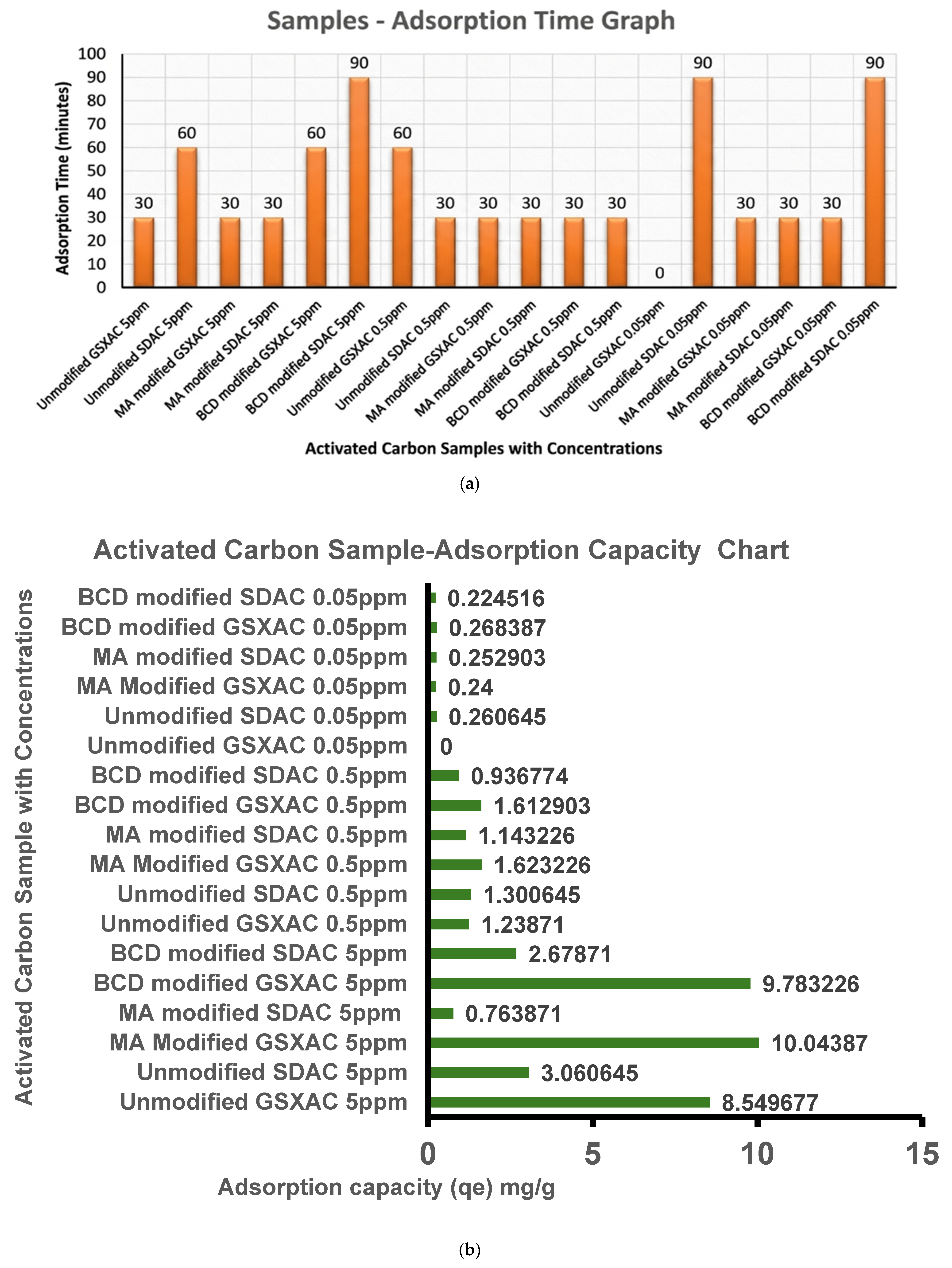
| Adsorption Capacities at Maximum Time of Adsorption for 5 ppm, 0.5 ppm, and 0.05 ppm | |||
|---|---|---|---|
| Activated Carbon Sample | Concentration | qt (mg/g) | Time (min) |
| Unmodified GSXAC | 5 ppm | 8.549677 | 30 |
| Unmodified SDAC | 5 ppm | 3.060645 | 60 |
| MA-modified GSXAC | 5 ppm | 10.04387 | 30 |
| MA-modified SDAC | 5 ppm | 0.763871 | 30 |
| β-CD-modified GSXAC | 5 ppm | 9.783226 | 60 |
| β-CD-modified SDAC | 5 ppm | 2.67871 | 90 |
| Unmodified GSXAC | 0.5 ppm | 1.23871 | 60 |
| Unmodified SDAC | 0.5 ppm | 1.300645 | 30 |
| MA-modified GSXAC | 0.5 ppm | 1.623226 | 30 |
| MA-modified SDAC | 0.5 ppm | 1.143226 | 30 |
| β-CD-modified GSXAC | 0.5 ppm | 1.612903 | 30 |
| β-CD-modified SDAC | 0.5 ppm | 0.936774 | 30 |
| Unmodified GSXAC | 0.05 ppm | 0 | 0 |
| Unmodified SDAC | 0.05 ppm | 0.260645 | 90 |
| MA-modified GSXAC | 0.05 ppm | 0.24 | 30 |
| MA-modified SDAC | 0.05 ppm | 0.252903 | 30 |
| β-CD-modified GSXAC | 0.05 ppm | 0.268387 | 30 |
| β-CD-modified SDAC | 0.05 ppm | 0.224516 | 90 |
Disclaimer/Publisher’s Note: The statements, opinions and data contained in all publications are solely those of the individual author(s) and contributor(s) and not of MDPI and/or the editor(s). MDPI and/or the editor(s) disclaim responsibility for any injury to people or property resulting from any ideas, methods, instructions or products referred to in the content. |
© 2026 by the authors. Licensee MDPI, Basel, Switzerland. This article is an open access article distributed under the terms and conditions of the Creative Commons Attribution (CC BY) license.
Share and Cite
Adeniyi, A.O.; Jimoh, M.O.; Macintyre, M.; Kolawole, O.M.; Hammed, T.B.; Abiona, O.M. Sustainable β-Cyclodextrin Modified Sawdust Biochar for Enhanced Organic Pollutant Removal in Circular Water Treatment. Water 2026, 18, 1225. https://doi.org/10.3390/w18101225
Adeniyi AO, Jimoh MO, Macintyre M, Kolawole OM, Hammed TB, Abiona OM. Sustainable β-Cyclodextrin Modified Sawdust Biochar for Enhanced Organic Pollutant Removal in Circular Water Treatment. Water. 2026; 18(10):1225. https://doi.org/10.3390/w18101225
Chicago/Turabian StyleAdeniyi, Abayomi Olusegun, Modupe Olufunmilayo Jimoh, Mairi Macintyre, Olatunji Matthew Kolawole, Taiwo Babatunde Hammed, and Olalekan Moses Abiona. 2026. "Sustainable β-Cyclodextrin Modified Sawdust Biochar for Enhanced Organic Pollutant Removal in Circular Water Treatment" Water 18, no. 10: 1225. https://doi.org/10.3390/w18101225
APA StyleAdeniyi, A. O., Jimoh, M. O., Macintyre, M., Kolawole, O. M., Hammed, T. B., & Abiona, O. M. (2026). Sustainable β-Cyclodextrin Modified Sawdust Biochar for Enhanced Organic Pollutant Removal in Circular Water Treatment. Water, 18(10), 1225. https://doi.org/10.3390/w18101225