Article

Sustainable β-Cyclodextrin Modified Sawdust Biochar for Enhanced Organic Pollutant Removal in Circular Water Treatment


by
Abayomi Olusegun Adeniyi
1,*,
Modupe Olufunmilayo Jimoh
1,*,
Mairi Macintyre
2,
Olatunji Matthew Kolawole
3,
Taiwo Babatunde Hammed
4 and
Olalekan Moses Abiona
5
1
School of Engineering, University of Warwick, Coventry CV4 7AL, UK
2
Warwick Manufacturing Group, University of Warwick, Coventry CV4 7AL, UK
3
Department of Public Health, Warwick Medical School, University of Warwick, Coventry CV4 7AL, UK
4
Department of Environmental Health Studies, University of Ibadan, Ibadan 200001, Nigeria
5
Department of Mechanical Engineering, Osun State College of Technology, Esa-Oke 1011, Nigeria
*
Authors to whom correspondence should be addressed.
Water 2026, 18(10), 1225; https://doi.org/10.3390/w18101225
Submission received: 25 March 2026 / Revised: 8 May 2026 / Accepted: 12 May 2026 / Published: 19 May 2026
(This article belongs to the Special Issue Emerging Contaminants in the Water Environment)

Abstract

This study evaluates β-cyclodextrin (β-CD) and malonic acid functionalized pine sawdust biochar for organic pollutant removal, benchmarking efficacy against commercial Norit GSX activated carbon for sustainable water treatment. Characterization revealed that β-CD modification successfully developed porous structures, with Sawdust Activated Carbon (SDAC) and Norit GSX Activated Carbon (GSXAC) achieving Brunauer–Emmett–Teller (BET) surface areas of 438.36 m2/g and 1223.79 m2/g, respectively. Adsorption kinetics and isotherm studies demonstrated the superiority of β-CD-modified materials over traditional acid-functionalized variants. The adsorption kinetics were exceptionally well-described by the Pseudo-Second-Order model R2 > 0.99, indicating that the process is governed by chemical interactions rather than simple physical attachment. In contrast, the Pseudo-First-Order and Elovich models provided poor descriptions of the system (R2 = 0.54 and 0.11, respectively). An isotherm analysis further confirmed the heterogeneous nature of the SDAC surface, with the Freundlich model exhibiting an excellent fit (R2 > 0.99) and an n value of 0.79. For GSXAC, the Freundlich model also outperformed the Langmuir model, yielding a KF of 441.72 mg/g and n = 0.77, reflecting high adsorption intensity on a heterogeneous surface. The comparative advantage of β-CD is in line with its unique truncated cone structure, which is consistent with guest–host inclusion complex formation, multi-modal hydrogen bonding, and enhanced pH resilience. These findings validate β-CD-modified sawdust-derived adsorbents as potential, sustainable, high-capacity alternatives to industrial-grade carbons.

1. Introduction

1.1. Background

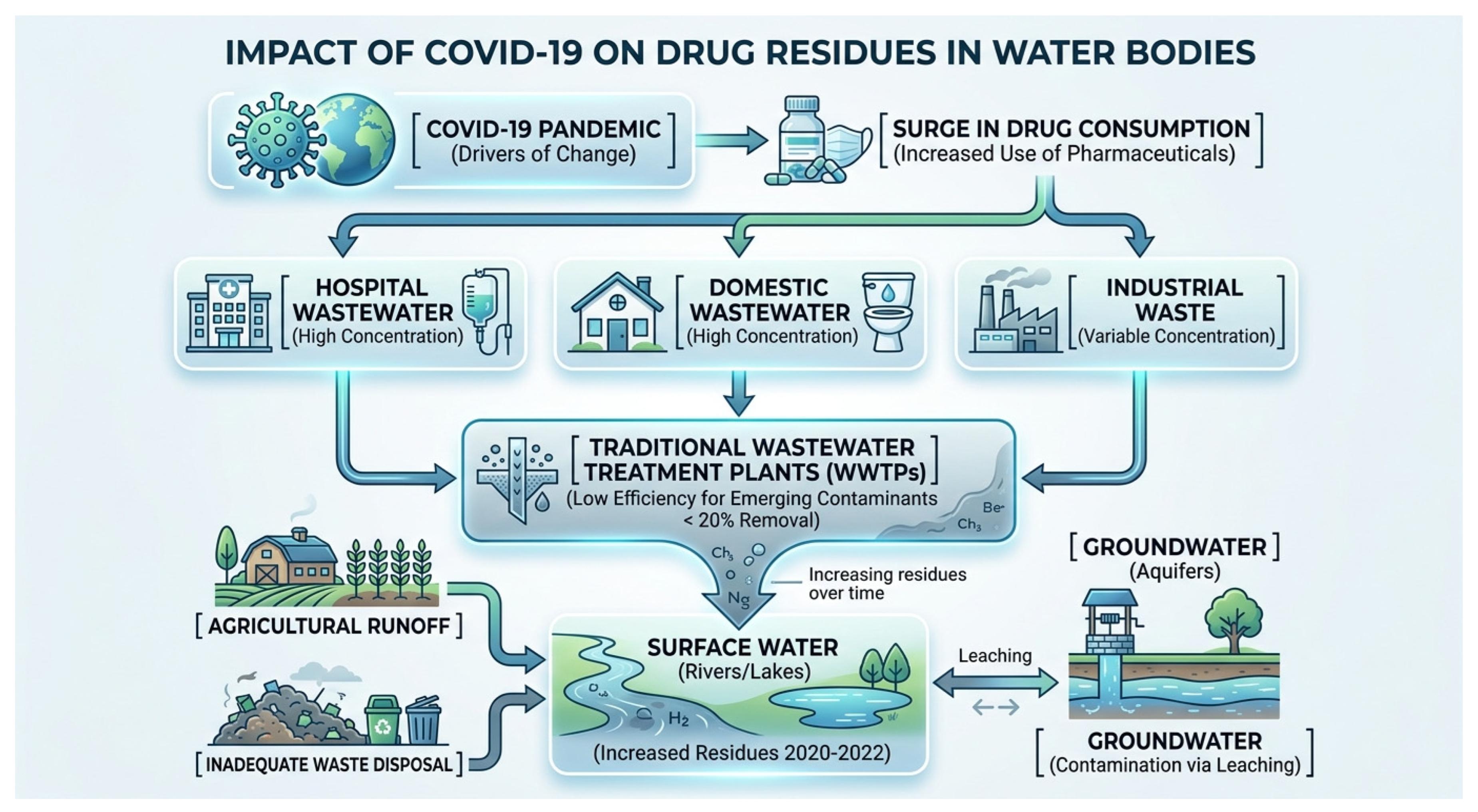
Despite global efforts, approximately one-third of the population lacks access to safely managed drinking water, with millions consuming water contaminated by industrial surfactants, hormones, heavy metals, and pharmaceutical residues [1,2]. A significant contemporary challenge is the surge in pharmaceutical consumption, which has led to a dramatic heightening of drug residues in aquatic ecosystems [3]. As noted by Morales-Paredes et al., [4] this issue was particularly exacerbated during the COVID-19 pandemic, where increased global pharmaceutical use resulted in elevated drug levels in water bodies due to insufficient removal by conventional systems (Figure 1).
The persistence of emerging contaminants is largely due to the inadequacy of conventional water treatment processes [5]. While technologies like membrane filtration and ion exchange are efficient, they are often too complex or costly to be operated at the household level, where the direct impact of pollution is most felt [6,7,8]. These contaminants pose severe risks to aquatic life and human health by disrupting endocrine systems and promoting the development of antibiotic-resistant bacteria [9].
Biochar has emerged as a sustainable and cost-effective adsorbent, yet its practical application is frequently limited by a low adsorption capacity and lack of selectivity for specific pollutants [10,11]. This limitation stems from the inherent variability in biochar properties, which often lack the specific surface functional groups required for the efficient removal of targeted pharmaceutical molecules [12]. Therefore, there is a critical requirement to develop novel modification techniques (tailoring surface chemistry and pore structure) to improve the binding affinity for these pollutants [13,14]. While advanced adsorbents like metal–organic frameworks offer high capacities, their production costs and environmental footprints are significant. In contrast, this modification strategy seeks to upcycle lignocellulosic waste into a circular solution, offering removal efficiencies of up to 90% at a fraction of the cost. Therefore, this study utilizes pine sawdust as a low-cost, abundant waste material for biochar production, aligning with circular economy principles and waste valorization. Utilizing forestry by-products provides an environmentally friendly solution to global water scarcity issues. The resulting sawdust-derived activated carbon is then modified with β-cyclodextrin (β-CD) and compared against traditional malonic acid modifications and commercial Norit GSX activated carbon to establish its relative efficacy.

1.2. Theoretical Rationale

The theoretical justification for selecting β-cyclodextrin (β-CD) as a modifying agent focuses on strategically addressing the inherent performance limitations and site variability of raw lignocellulosic waste [15]. This study tests the hypothesis that the hydrophobic cavity of -cyclodextrin, when grafted onto a sawdust biochar matrix, will preferentially capture methylene blue through host–guest interactions, overcoming the site variability found in unmodified biochar. By functionalizing the sawdust matrix, these modifications are hypothesized to optimize pore size distributions, transforming agricultural by-products into a structured adsorbent with enhanced surface functionality for better molecular access [16]. Furthermore, β-CD modification can intensify hydrogen bonding and Van der Waals forces, leading to quicker and stronger chemisorptive interactions that raise both the equilibrium capacity (qe) and the adsorption rate. While previous studies have proposed these benefits, further experimental evidence is required to validate these specific mechanisms and ensure the long-term stability and reusability of these materials in real-world circular water treatment scenarios [17,18]. The primary objective of this work is to validate a low-cost, circular-economy-driven synthesis of β-CD-modified sawdust biochar. Its novelty lies in the integration of agricultural waste upcycling to create a viable framework for pharmaceutical decontamination in resource-limited infrastructures.

2. Materials and Methods

2.1. Materials

The primary precursor used in this study was pine sawdust, along with distilled water, malonic acid (Reagent Plus, 99%), and methylene blue solution. Additional materials included β-cyclodextrin and Hellma absorption cuvettes (Merck Life Science Ltd., Dorset, UK), and Norit GSX Carbon powder (VWR International Ltd., Lutterworth, UK). The methylene blue stock solution was prepared at 0.05% wt per 100 mL. Other materials and equipment included a UV-vis spectrometer (Thermo-Fisher Scientific, Loughborough, UK), standard laboratory glassware, filter papers, a Jenway 3505 pH meter (Scientific Laboratory Supplies Ltd., Fairham, UK), a KS 130 Basic orbital shaker, graduated pipettes and cylinders, and aluminum foil.

2.2. Sample Preparation

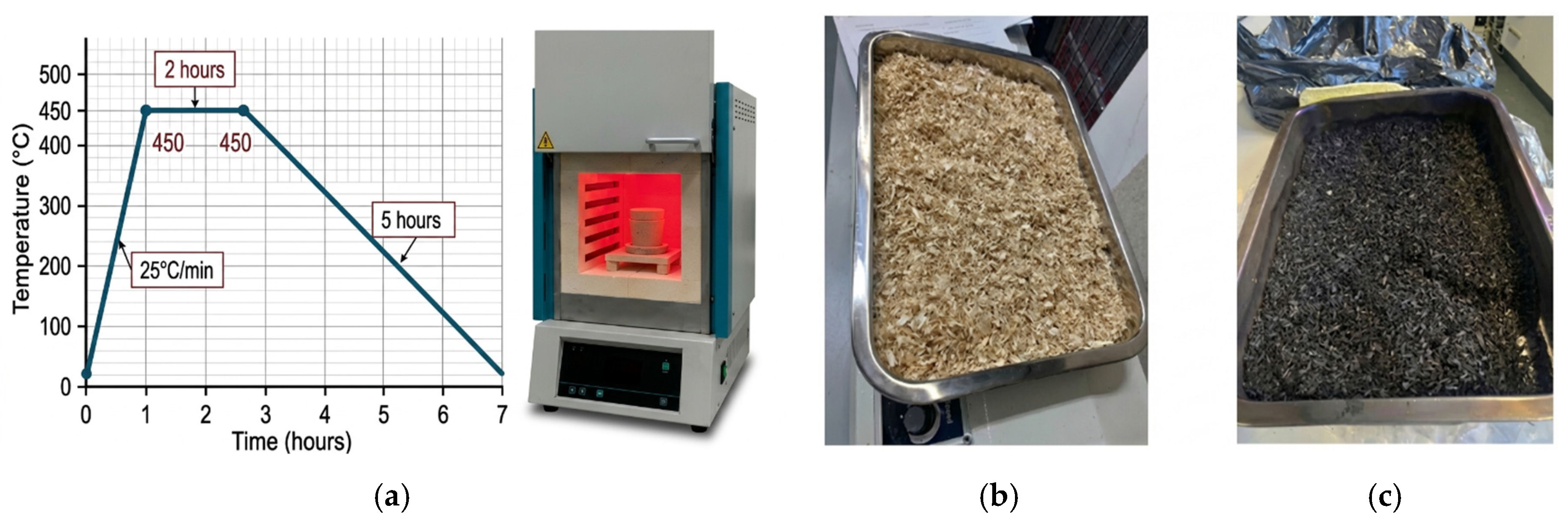
The initial preparation involved weighing 500 g of raw sawdust using a Sartorius 1403 MP scale (Sartorius Ltd., Surrey, UK). This material was loaded into an oven tray and placed within a Eurotherm 3508 Muffle Furnace (Eurotherm Ltd, Chesterfield, MO, USA) for thermal conversion. The pyrolysis process (Figure 2) was meticulously controlled, with the furnace programmed to ramp at a rate of 25 °C/min until reaching a dwell temperature of 450 °C. The carbonization was maintained at this temperature for a duration of 2 h under a protective Argon environment with a consistent flow rate of 5 mL/min [19]. Upon completion of the pyrolysis process, the furnace was deactivated to allow the carbonized residue to undergo in-situ cooling within the Eurotherm chamber. The material remained in the furnace until reaching a stabilized ambient temperature of 23 °C, ensuring thermal equilibrium before retrieval and subsequent gravimetric analysis. The process successfully achieved a final char mass of 367 g from the initial 500 g load. This results in a high percentage yield of 73%, corresponding to a production efficiency of 0.73 g of biochar per 1 g of raw sawdust.

2.3. Modification Protocols

To enhance the adsorptive properties of the generated biochar, a systematic modification was performed using three distinct agents: β-cyclodextrin, malonic acid, and distilled water (serving as an unmodified control). These protocols were applied consistently to both the sawdust-derived activated carbon and the commercial Norit GSX activated carbon to ensure comparative integrity.
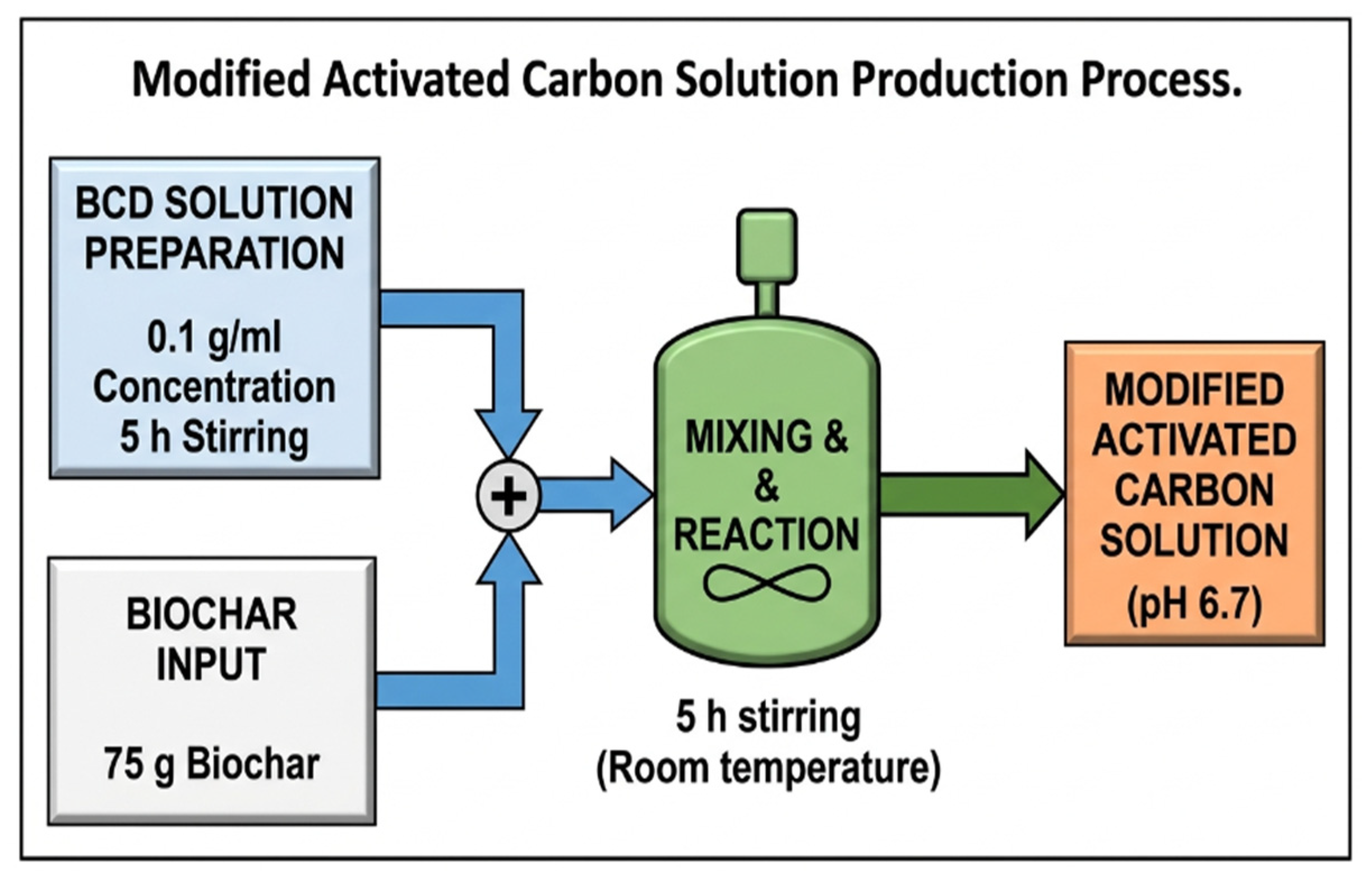
The modification procedure (Figure 3) involved the following steps:
  • Solution Preparation: 150 g of BCD was dissolved in 1500 mL of distilled water, maintaining a 1:10 BCD-to-water ratio (0.1 g/mL concentration). This solution was stirred for 6 h using an IKA RH basic magnetic stirrer (IKA England Ltd., Oxford, UK) until no suspended solids were visible, confirming total dissolution.
  • Grafting: 75 g of biochar was then introduced into the BCD solution, establishing a 2:1 BCD-to-biochar ratio. The mixture was stirred continuously for an additional 5 h.
  • Neutralization and Drying: The initial pH of the BCD–biochar solution was measured at 7.9. The samples were then filtered and rinsed repeatedly with deionized water using a BUCHI V-300 Vacuum Pump (Buchi Corporation, New Castle, DE, USA) until the pH reached a neutral range of 6.5–7.0. Finally, the modified adsorbents were dried in a Memmert UF 30 oven at 105 °C for 5 h. The weight of modified activated carbon after drying was measured as 188.7 g.

2.4. Experimental Replication

To ensure experimental consistency and facilitate a comparative performance evaluation, both sawdust-derived and commercial activated carbons were functionalized using β-cyclodextrin (β-CD), malonic acid, and deionized water, yielding a total of six distinct adsorbent variants. Notably, the malonic acid modification strictly followed the same modification protocol as the β-cyclodextrin grafting (described in Section 2.3) to maintain procedural uniformity across the sample set. All synthesis procedures were executed at a stabilized room temperature of 23 °C using standardized agitation speeds and contact intervals. Following functionalization, each sample was rinsed extensively with deionized water until reaching a neutral pH range of 6.5–7.0, ensuring the complete removal of non-grafted surface residues and unreacted species. Overall, the study produced six distinct activated carbon samples categorized by their precursor and specific modification agent. The sawdust-derived variants included BCD Modified Sawdust-Activated Carbon (SDAC@BCD), Malonic Acid Modified Sawdust-Activated Carbon (SDAC@MA), and Unmodified Sawdust-Activated Carbon (SDAC@H2O). These were evaluated alongside their commercial counterparts, namely BCD Modified GSX-Activated Carbon (GSXAC@BCD), Malonic Acid Modified GSX-Activated Carbon (GSXAC@MA), and Unmodified GSX-Activated Carbon (GSXAC@H2O).

2.5. Biochar Functionalization and Grafting Efficiency

The chemical modification of the raw biochar resulted in a substantial mass increase from an initial 75 g to a final 188.7 g. This gain is a direct indicator of the successful grafting of β-cyclodextrin and the cross-linking agent onto the biochar matrix. Based on a modification protocol utilizing a 2:1 BCD-to-biochar ratio (150 g of β-CD for 75 g of biochar), the resulting mass indicates that approximately 113.7 g of the modifier was incorporated, yielding a high grafting efficiency of 75.8%.
To ensure the removal of unreacted reagents or physically adsorbed residuals, a rigorous rinsing procedure was implemented using deionized water and a vacuum pump until the filtrate achieved a stable neutral pH (6.5–7.0). This neutralization confirms that acidic cross-linkers and non-bonded BCD molecules were effectively eliminated prior to the final drying stage. Consequently, the observed mass gain serves as a quantitative validation of the successful functionalization of the biochar, establishing the necessary molecular architecture for the formation of the host–guest inclusion complexes that drive the material’s enhanced performance in organic pollutant removal.

2.6. Characterization of Samples and Experimental Design

Comprehensive characterization was conducted to correlate physical structures with adsorption efficacy:
  • Proximate Analysis: Proximate analysis of both Sawdust-Activated Carbon and GSX-Activated Carbon was conducted following standard ASTM methods. The moisture content was determined using ASTM D2867-23 [20], Ash content using ASTM D2866-11 [21], and Volatile Matter Content using ASTM D5832-98 [22]. The pH was determined following ASTM D3838-23 [23]. The fixed carbon content was calculated by subtracting the percentages of moisture, volatile matter, and ash content from 100. Finally, the bulk density was determined using the method developed by Wang and Kinsella [24].
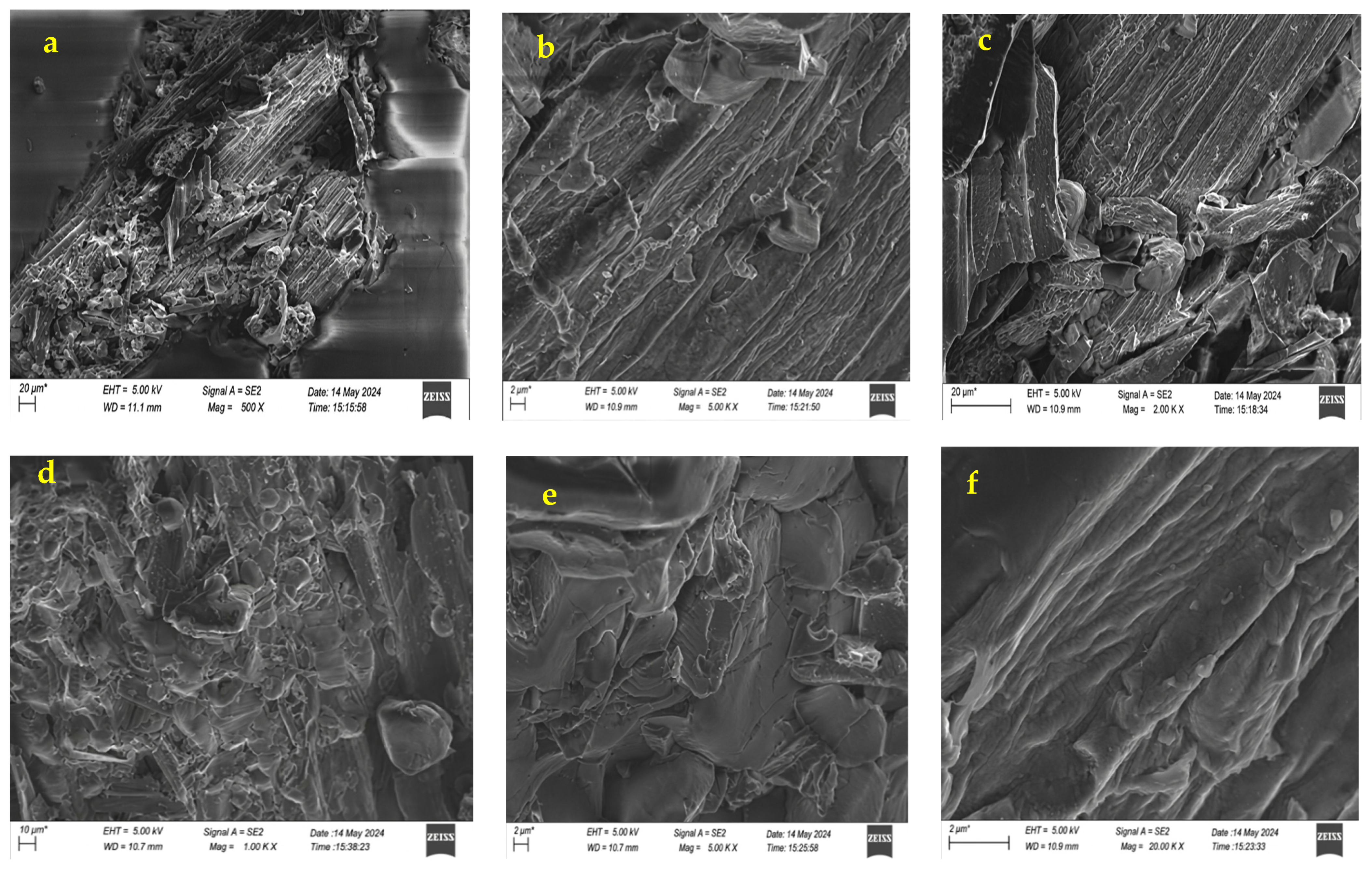
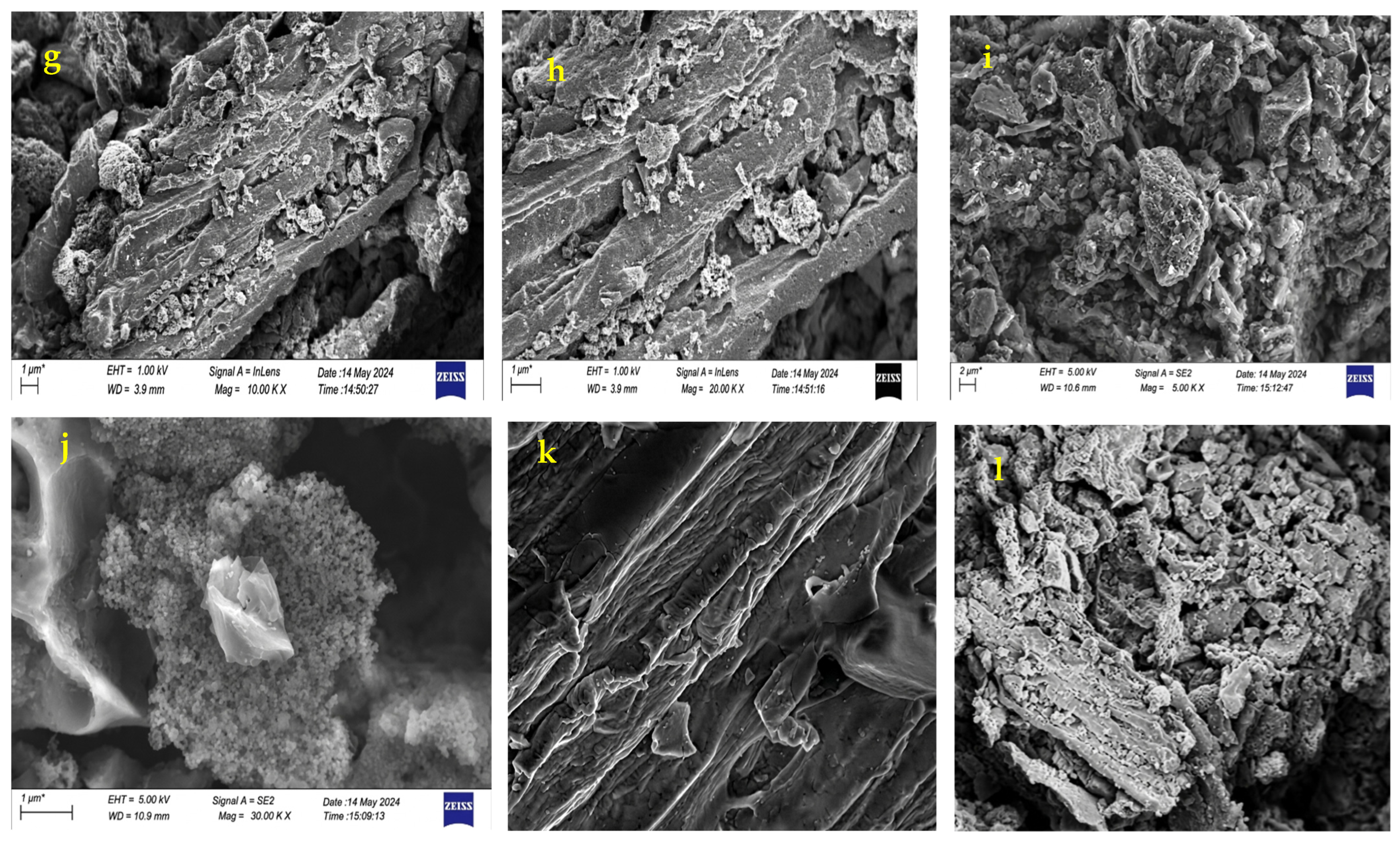
  • Morphological Analysis: Performed using a Zeiss SUPRA 55-VP FEGSEM (Zeiss Group, Oberkochen, Germany) to examine the remnants of fibrous cell structures and surface uniformity. Lower magnifications were employed to examine the remnants of fibrous cell structures and ensure surface uniformity across the bulk material. Higher magnifications were used to resolve the internal architecture, including macropores (>50 nm) and the textured nature of the pore walls where mesopores (2–50 nm) facilitate molecular diffusion. The magnification was systematically adjusted to confirm the presence of high surface area features and irregularly shaped particles derived from the original wood precursors.
  • Surface Chemistry: Evaluated via Fourier-transform infrared spectroscopy using a Nicolet iS50R (Thermo-Fisher Scientific Ltd., UK) to identify functional groups, and X-ray photoelectron spectroscopy using a Kratos Axis Ultra DLD (Kratos Analytical Ltd., Manchester, UK). to analyze binding energy intensities and elemental composition (C, O, N, and S).

2.7. Surface Area Estimation Using MB Adsorption

The SBET equation is commonly used to estimate the specific surface area of materials, including activated carbon. This equation relates the BET-specific surface area to the monolayer capacity, Avogadro’s number, and the cross-sectional area of the adsorbate molecule [25].
The equation used is:
SBET = qm × NA × AMB
where:
  • SBET is the BET-specific surface area (m2/g)
  • qm is the monolayer capacity (mol/g)
  • NA is Avogadro’s number (6.022 × 10²³ mol−1)
  • AMB is the cross-sectional area of the adsorbate molecule (1.30 × 10⁻¹⁸ m2)
In this methodology, spectroscopic data were collected for both regular samples and those treated with a β-cyclodextrin (BCD) at various time points (0, 30, 60, 90, and 120 min). The absorbance spectrum was then analyzed to estimate the adsorption capacity of the treated sample. The monolayer capacity (qm) represented the amount of adsorbate (methylene blue) required to form a single layer of molecules on the surface of the material. Avogadro’s number (NA) was a constant value of approximately 6.022 × 10²³ mol−1. The cross-sectional area of the adsorbate molecule AMB was the area occupied by a single molecule of the adsorbate on the surface, with a typical value of 1.30 × 10⁻¹⁸ m2 [26]. By determining the monolayer capacity from the adsorption isotherm and using the known values for Avogadro’s number and the adsorbate’s cross-sectional area, the BET-specific surface area (SBET) was calculated. This value is typically expressed in units of square meters per gram (m2/g) and provides an estimate of the total surface area available for adsorption according to [27].

2.8. Batch Equilibrium Adsorption Experiment

A 500 ppm (0.0016 mol/L) methylene blue stock solution was prepared as the basis for the experimental design, with all flasks wrapped in aluminum foil to prevent photodegradation. Using a 1:10 ratio and the dilution formula, the stock was systematically reduced through four stages of serial dilution. This procedure produced final concentrations of 5 ppm, 0.5 ppm, and 0.05 ppm, which were specifically chosen to ensure optimal light transmittance for accurate UV-Vis spectroscopy measurements. To maintain experimental reliability, each solution was thoroughly mixed by 20 inversions, and pH was recorded over time to monitor any changes in the aqueous environment. The analytical procedure involved calibrating a UV-Vis spectrometer with deionized water blanks across a 450–900 nm range to establish a precise baseline for methylene blue maximum absorbance (λmax) measurements. In the batch equilibrium experiments, 0.2 g of each dried activated carbon variant, including unmodified malonic acid and β-CD modified samples, was agitated in MB solutions at a 5 ppm concentration. Performance was then tracked by recording absorbance and pH at 30-, 60-, 90-, and 120-min intervals across multiple dilution levels to construct a comprehensive profile of adsorption capacity and efficiency. A summary of the dilutions is presented in Table 1 below.

2.9. Data Reproducibility

All adsorption and characterization experiments were performed in triplicate (n = 3), and results are reported as the mean (+/−) standard deviation.

2.10. Figure and Graphical Development

The graphical representations and pictorial presentations included in this study were developed starting from original sketches based on raw experimental data collected during the research process. These sketches were refined and enhanced using generative AI features embedded within the CorelDRAW Graphics Suite 2026 v26.x drawing tool. These features were utilized specifically for aesthetic enhancement, layout optimization, and visual clarity of the author-generated content. No figures were synthesized from external prompts or AI-hallucinated data, and the final visual interpretations were strictly supervised and validated by the authors to ensure scientific accuracy.

3. Results and Discussion

3.1. Yield and Efficiency of Activated Carbon Samples

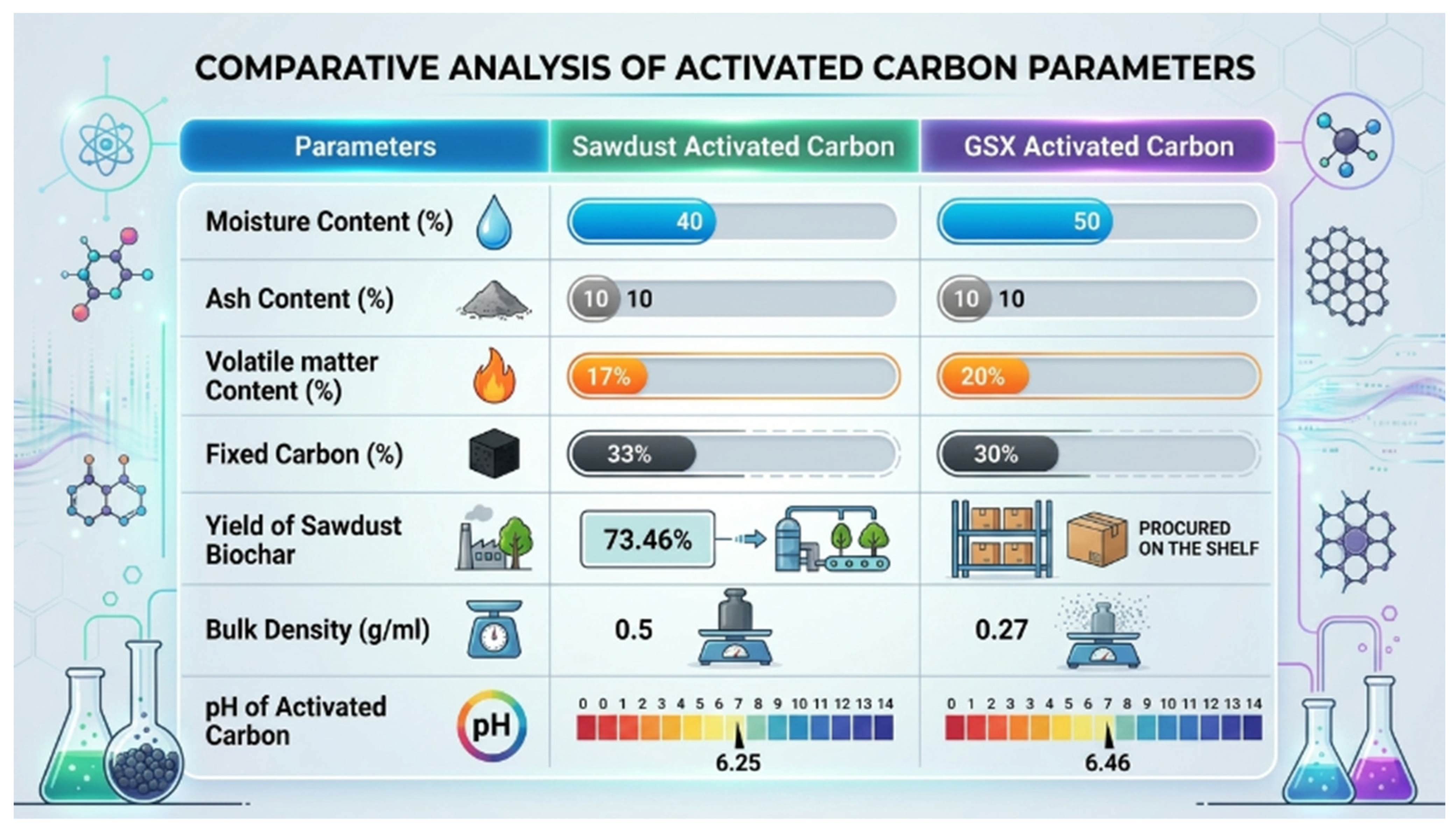
Figure 4 presents the proximate analysis of Sawdust-Derived Activated Carbon (SDAC) and Norit GSX Activated Carbon (GSXAC), revealing critical differences in their physical compositions. A proximate analysis of the adsorbents reveals that SDAC (40%) and GSXAC (50%) possess high moisture levels, which can occupy critical pore volumes and diminish available adsorption sites. Consequently, a lower moisture content is recommended for future experimental optimization to prevent the occupation of pores by water molecules. Both materials exhibit a stable 10% ash content, which is advantageous for maintaining a high degree of purity and preventing unwanted pH fluctuations or the introduction of competing ions that could interfere with the ionic form of methylene blue. Regarding chemical composition, GSXAC has a higher volatile matter content (20%) due to its peat-based origins, whereas SDAC displays a higher fixed carbon content [28]. This greater carbon availability facilitates both chemisorption and physisorption processes, positioning sawdust as a superior candidate for adsorption capacity and structural durability. Furthermore, the proximate analysis revealed that SDAC possesses a higher fixed carbon content than GSXAC, which not only provides more available carbon surfaces for chemisorption and physisorption but also enhances the material’s durability.

3.2. Point of Zero Charge (PZC) Results

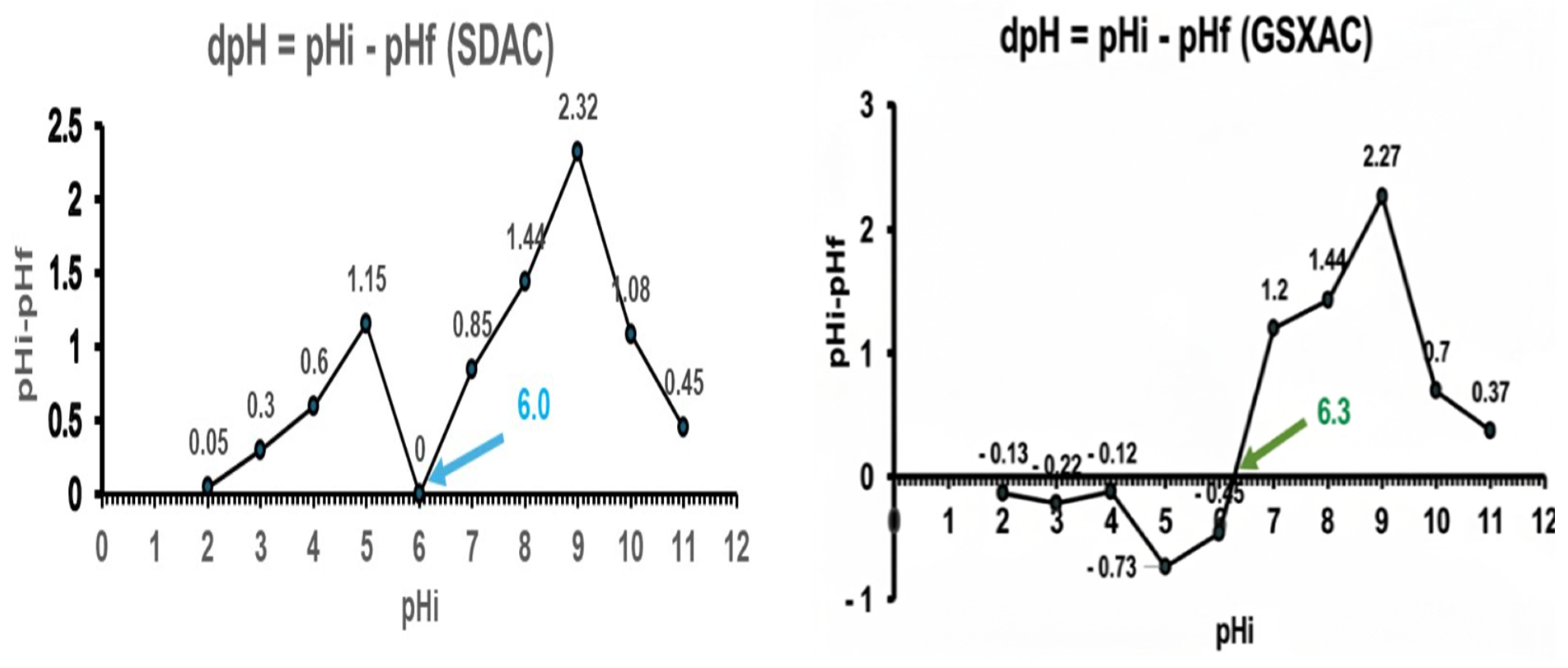
The Point of Zero Charge is defined as the specific pH level at which the net electrical charge on an adsorbent’s surface is neutral [29]. As noted in the research by Qiu et al. [30] establishing the PZC is fundamental to identifying the surface charge characteristics of -cyclodextrin modified biochar. When the solution pH is lower than the PZC, the biochar surface becomes positively charged, whereas it develops a negative charge at pH levels exceeding the PZC. Consequently, the PZC is a critical factor for process optimization, as the electrostatic interactions between the biochar surface and methylene blue molecules are directly influenced by these pH-dependent charge states [31]. The Point of Zero Charge values for β-CD-modified SDAC (6.0) and GSXAC (6.3) (Figure 5) are essential for elucidating the adsorption mechanisms of methylene blue.
As discussed by Maphuhla and Oyedeji [32], modifying activated carbon with β-CD introduces variables that influence both electrostatic interactions and supplementary bonding pathways. Specifically, at pH levels exceeding these PZC thresholds, the adsorbent surface carries a net negative charge due to deprotonation, significantly enhancing the electrostatic attraction of positively charged MB molecules. Conversely, below the PZC, surface functional groups undergo protonation, resulting in a positive charge that may hinder cationic adsorption [33].
β-CD further modulates these properties by forming guest–host inclusion complexes, which can augment adsorption capacity in alkaline conditions by modifying surface accessibility and charge characteristics [34]. This reflects a synergistic relationship where the macrocycle provides selective inclusion and hydrogen bonding sites via its exterior hydroxyl groups, while the activated carbon offers the substantial surface area and porous framework necessary for additional capture. Although these hydroxyl groups can undergo protonation or deprotonation based on pH, their primary role is providing the stabilization sites for hydrogen bonding [35]. While PZC values of 6.0 and 6.3 indicate high effectiveness in moderately alkaline environments, the optimal pH for adsorption remains contingent upon the specific conditions of the system [36]. Collectively, these interactions ensure that the cumulative adsorption capacity of the modified carbons surpasses the performance of their individual components.

3.3. XPS Analysis of Activated Carbon Samples

An XPS analysis of biochar provides a detailed profile of its chemical structure by distinguishing between sp2 hybridized carbon, which represents aromatic graphitic domains, and sp3 carbon, which denotes aliphatic or disordered structures. The ratio of these signals serves as a primary indicator of structural maturity; for instance, a high sp2 content facilitates strong π–π interactions with contaminants. Complementing this, the C:O ratio tracks the degree of carbonization and thermal stability. While high ratios signify stable, carbon-rich surfaces, lower ratios reveal a high density of carboxyl and hydroxyl functional groups. These oxygen-containing groups are essential for the adsorption process, as they enhance pollutant removal through both electrostatic attraction and hydrogen bonding.
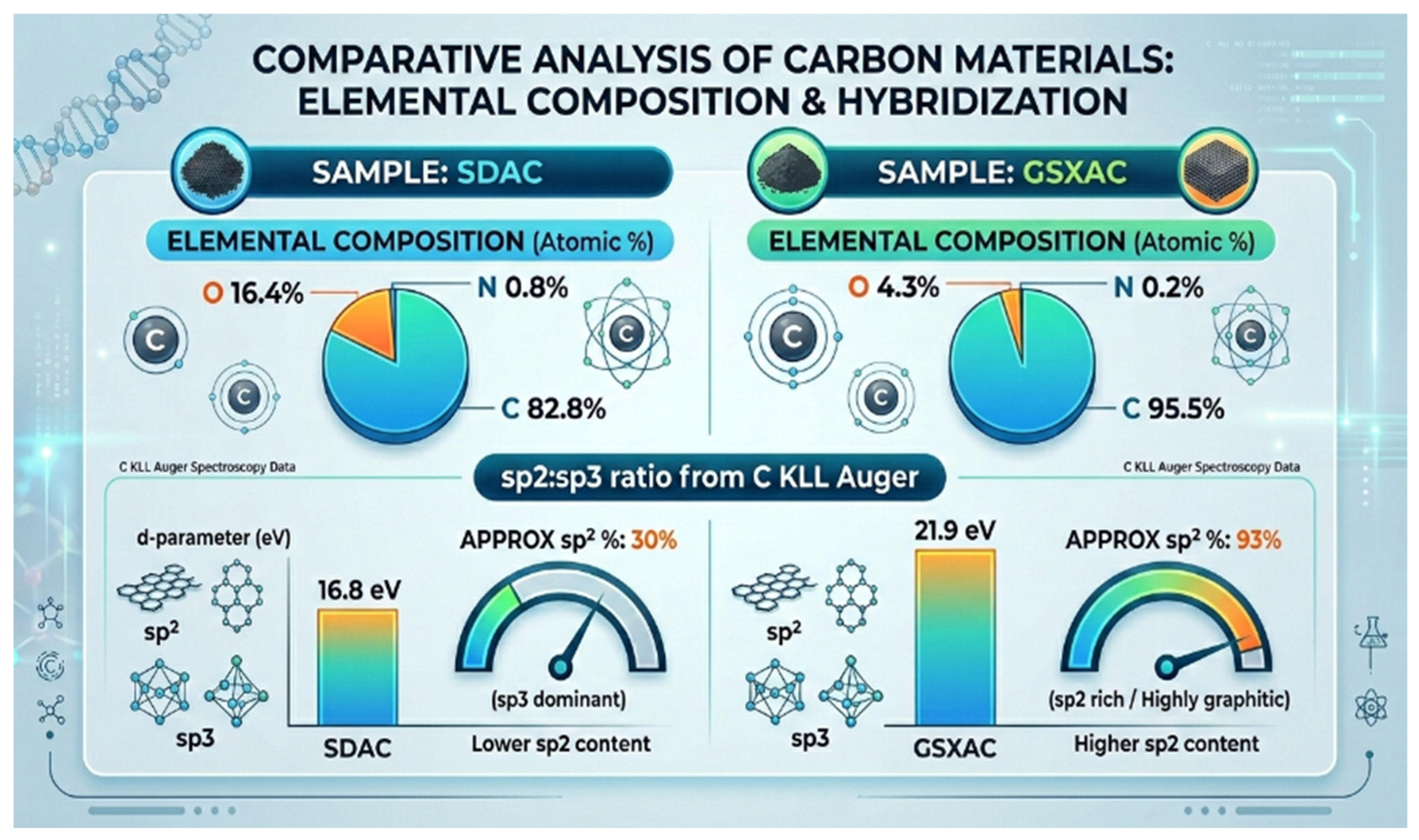
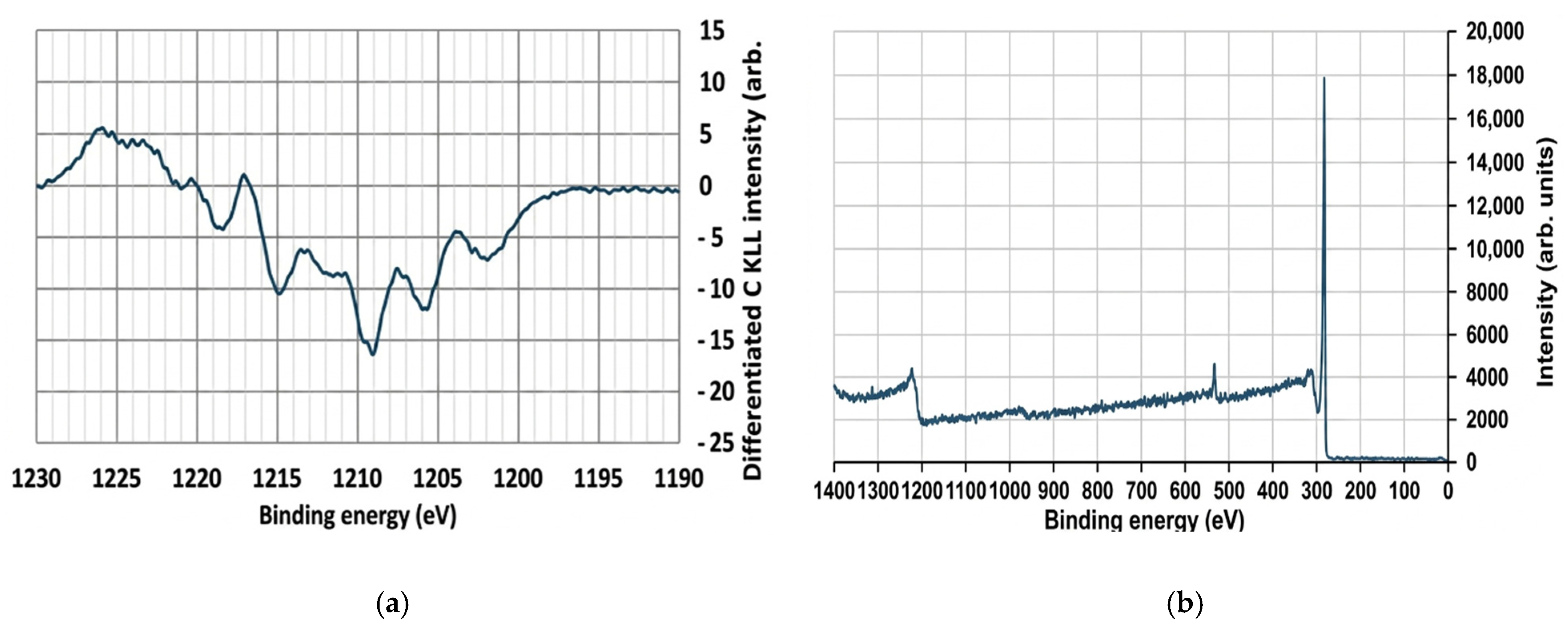
As described in Figure 6 and Figure 7a,b, the sp2, sp3 carbon signal and C:O ratios exhibit significant differences between sawdust-derived and GSX-derived activated carbons. The higher sp2 and sp3 ratio in GSXAC suggests a prevalence of graphitic domains essential for π–π interactions with methylene blue [37,38]. Modification with β-CD introduces supplementary hydroxyl groups, elevating oxygen content and reducing the C:O ratio [39,40]. A high binding energy in the GSXAC O 1s region further indicates interactions between surface oxygen and external species like contaminants or sodium [41].
Both samples’ substantial carbon content provides basic sites for π–π and hydrophobic interactions, correlating with developed internal pore structures and high surface areas. Elevated oxygen levels in SDAC signal a higher concentration of polar functional groups (including carboxylic, phenolic, and lactonic groups), which enhance electrostatic attraction and position SDAC favorably for MB removal [42]. Additionally, the 0.8% nitrogen content in SDAC introduces basic sites such as pyridinic, pyrrolic, and quaternary functionalities that attract cationic dyes, further improving capacity [43].
XPS analysis reveals that GSXAC possesses 93% sp2 interactions and provides numerous adsorption sites within its mesoporous and microporous framework [37]. While β-CD modification can optimize adsorption under alkaline conditions [44], its influence on pore structure and efficiency must be carefully evaluated. Ultimately, although commercial GSXAC remains an established performance benchmark, SDAC demonstrates a high optimization potential to reach similar industrial standards [35].

3.4. Scanning Electron Microscopy (SEM) Results of Activated Carbon Samples

SEM micrographs (Figure 8a–f) of β-CD-modified Sawdust Activated Carbon reveal varying degrees of surface roughness, which is a direct consequence of the high surface area required for effective interaction with adsorbate molecules [45]. The architecture consists of both micropores (<2 nm) for small molecule trapping and mesopores (2–50 nm), which facilitate the diffusion of larger species into the internal structure, collectively enhancing adsorption capacity [46].
The irregularly shaped particles derived from the original wood pieces significantly affect packing density and contact time in packed bed systems; typically, longer contact times lead to increased efficiency by maximizing interactions with available sites [39]. Furthermore, remnants of fibrous cell structures from the precursor pine wood influence overall porosity and create additional diffusion pathways [18,47].
In contrast, micrographs of Norit GSX Activated Carbon (Figure 8g–l) show a high-grade material with a highly developed and more uniform pore structure [48]. This structural uniformity provides superior performance predictability and consistent adsorption kinetics compared with SDAC, where raw material variability often results in a heterogeneous product [49,50]. However, SDAC offers a sustainable and cost-effective alternative that, if optimized, could be preferred for applications demanding high precision and reliability [51].

3.5. Fourier Transform Infrared Spectroscopy (FTIR) Results of Activated Carbon Samples

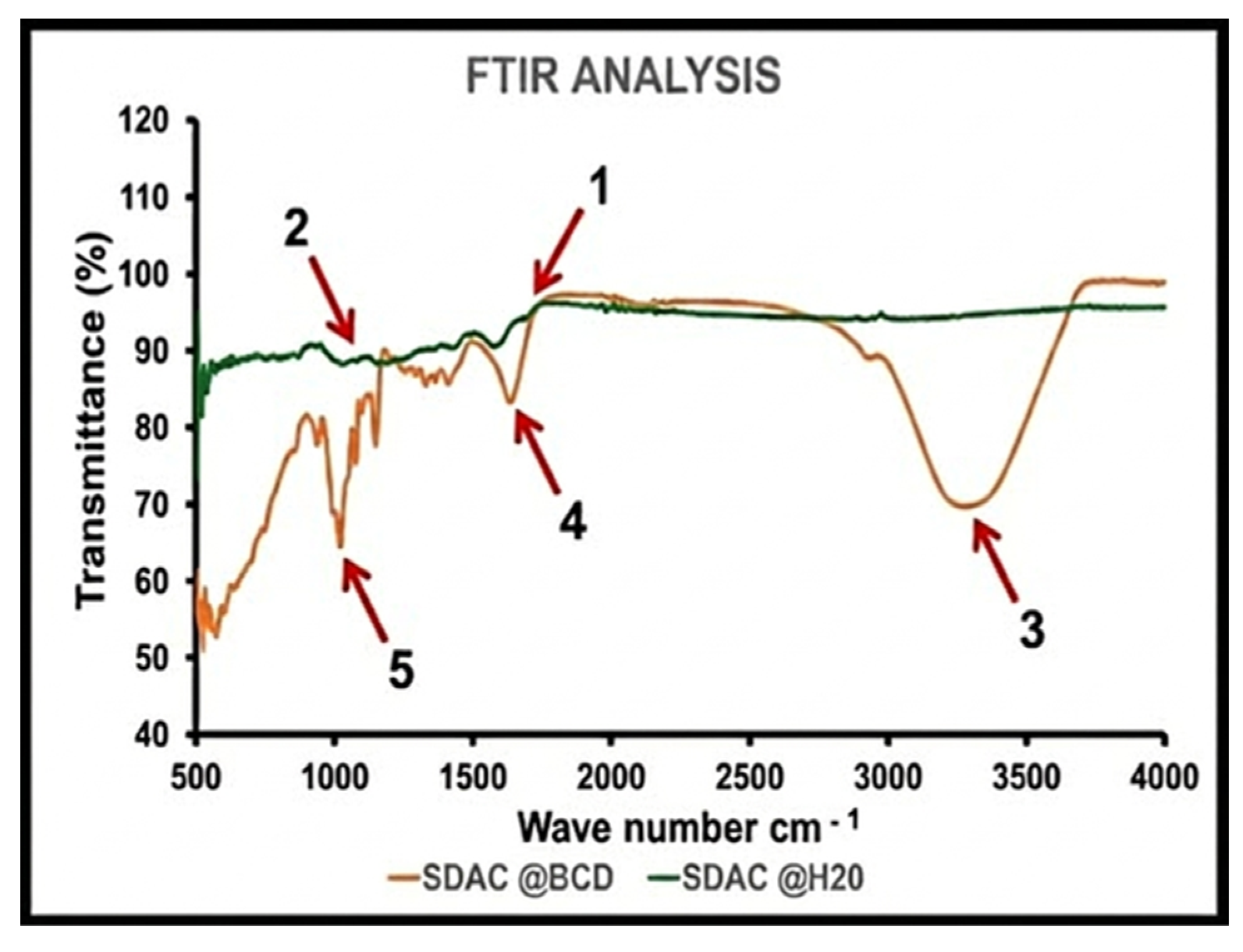
The unmodified SDAC (SDAC@H2O) in Figure 9 exhibits two major peaks (1 and 2) in the FTIR spectrum at wavelengths ranging from 2000 to 1500 cm−1, in line with the aromatic C=C vibrations, and a minor peak between 1200 and 900 cm−1, associated with stretching vibrations of C-O, C-N, and possibly some C-H. According to Hu et al., Rodriguez et al., and Arranz et al., [52,53,54], the 2000 to 1500 cm−1 region identifies the aromatic backbone of biochar, primarily through C=C stretching vibrations and aromatic C=O groups. This region confirms the development of stable graphitic domains and structural maturity. Conversely, minor peaks from 1200 to 900 cm−1 signify the fingerprint region for single bonds, specifically C-O stretching in carboxyls or phenols, C-N in amines, and C-H vibrations. Together, these signals characterize the balance between aromatic stability and reactive surface functionalization, which is essential for effective pollutant adsorption.
These regions can interact with MB through π–π interactions, where the delocalized π electrons in the aromatic rings of the activated carbon interact with the π electrons in the MB molecule [36].
This is a significant mechanism for the adsorption of aromatic compounds onto carbonaceous materials [38]. The C-O stretching vibrations suggest the presence of oxygen-containing functional groups such as alcohols, ethers, or carboxylic acids. These groups can enhance MB adsorption through hydrogen bonding, where hydroxyl groups (-OH) can form hydrogen bonds with MB molecules [36]. Electrostatic interactions also play a role, as carboxylic acid groups (-COOH) can become negatively charged at certain pH levels, enhancing the adsorption of the cationic MB dye through electrostatic attraction [55]. The presence of C-N bonds indicates nitrogen-containing functional groups, arising from the raw sawdust. These groups can also contribute to MB adsorption, with nitrogen-containing groups acting as basic sites, attracting the positively charged MB molecules. If amine groups are present, they can become protonated and positively charged under acidic conditions, potentially leading to electrostatic repulsion of MB, but they can also participate in hydrogen bonding [56]. C-H stretching vibrations indicate aliphatic or aromatic C-H bonds. While generally less reactive, they can contribute to the hydrophobic character of the activated carbon surface, influencing MB adsorption [35]. The overall adsorption capacity of SDAC for MB is influenced by the interplay of these functional groups and the specific surface properties of the material. The relative abundance and accessibility of these functional groups determine the extent to which each mechanism contributes to the overall adsorption process. It is worth noting that carboxyl and amino groups have been identified as crucial moieties involved in the binding process, as blocking these functional groups can significantly decrease the adsorption capacity [57].
The β-CD-modified Sawdust activated carbon (SDAC@BCD) exhibits three prominent peaks (3, 4, and 5) in the FTIR spectrum. These peaks are observed at wavelengths of 3500–3000 cm−1, 2000–1500 cm−1, and 1200–900 cm−1, corresponding to the stretching vibrations of –OH, aromatic C=C, and C-O, C-N, and C-H groups, respectively. While minor peaks occur below 900 cm−1, the mid-IR region is particularly informative for β-CD-modified activated carbon, as it is where typical organic functional groups absorb. The far-IR region provides less detailed information regarding β-CD modification, unless heavy atoms or complex structural modifications are present [58].
  • O-H Stretching Vibrations: This broad peak indicates hydroxyl groups from alcohols, phenols, and carboxylic acids. Hydroxyl groups can enhance MB adsorption via hydrogen bonding [59].
  • Aromatic C=C Stretching Vibrations: These peaks are associated with aromatic rings in the activated carbon structure, enabling interaction with MB through π–π interactions [36].
  • C-O, C-N, and C-H Stretching Vibrations: The presence of C-O stretching vibrations suggests oxygen-containing functional groups like alcohols, ethers, or carboxylic acids. C-N stretching vibrations indicate nitrogen-containing functional groups, potentially arising from the raw material or activation process. C-H stretching vibrations indicate aliphatic or aromatic C-H bonds [35].
Modification with β-CD introduces additional functional groups that influence MB adsorption. β-CD molecules possess a structure with hydroxyl groups on the outer surface, which can form hydrogen bonds with MB molecules. The hydrophobic cavity of β-CD can also encapsulate MB, further enhancing adsorption capacity. Overall, these functional groups enhance MB adsorption onto the modified activated carbon [55,60,61].

3.6. Brunauer–Emmett–Teller Spectroscopy (BET) Surface Area (SBET) and Its Impact on Adsorption Performance

The specific surface area (SBET) of the adsorbents was determined via the methylene blue adsorption method, utilizing the Langmuir monolayer capacity (qm) and the known cross-sectional area of the MB molecule (1.30 × 10⁻¹⁸ m2). While gas-phase nitrogen adsorption remains the conventional standard, the MB method was employed here to provide a more functionally relevant wet surface area metric that accounts for the accessibility of the pores within an aqueous medium. This approach is particularly advantageous for evaluating materials intended for organic pollutant removal, as MB serves as a molecular mimic for target contaminants, ensuring that the calculated area reflects the effective capacity of the modified biochar matrix. Furthermore, the method is a validated, cost-effective alternative that has shown a reliable correlation with standard BET protocols for characterized carbonaceous materials.
The BET surface area was estimated using the following equation:
S B E T = q m × N A × A M B
where:
  • S B E T is the BET surface area (m2/g)
  • q m is the maximum monolayer adsorption capacity (mol/g) determined from the Langmuir isotherm model
  • N A is Avogadro’s number (6.022 × 10²³ molecules/mol)
  • A M B is the cross-sectional area of a methylene blue molecule (1.30 × 10⁻¹⁸ m2)
As detailed in Table 2, the β-CD-modified Norit GSX Activated Carbon demonstrated a substantial BET surface area of 1223.79 m2/g. Such a value is a characteristic of highly porous activated carbons, suggesting that their activation processes were effective in developing an extensive network of internal pores. This translates directly to an excellent potential for MB adsorption, as there are abundant sites for the dye molecules to bind. This high surface area is a primary determinant for superior adsorption performance, supporting the general principle that a larger accessible surface leads to a higher adsorption capacity.
The β-CD-modified Sawdust Activated Carbon, with a BET surface area of 438.36 m2/g, demonstrates a distinct porosity characteristic when compared with commercially produced counterparts like Norit GSX Activated Carbon (1223.79 m2/g). This difference in surface area may be connected with the synthesis conditions employed for the β-CD-modified sawdust, which was intentionally optimized for a tailored pore structure that prioritizes adsorption efficiency for methylene blue rather than maximizing the total surface area [49]. Despite possessing a comparatively lower BET surface area, a value of 438.36 m2/g still classifies the β-CD-modified Sawdust Activated Carbon as a highly porous material suitable for a wide range of adsorption applications. This surface area value suggests a substantial density of active sites, making it a viable and potentially economical adsorbent for pollutant removal.

3.7. Absorbance Spectra Variations

3.7.1. Effect of the Shape of the Spectra

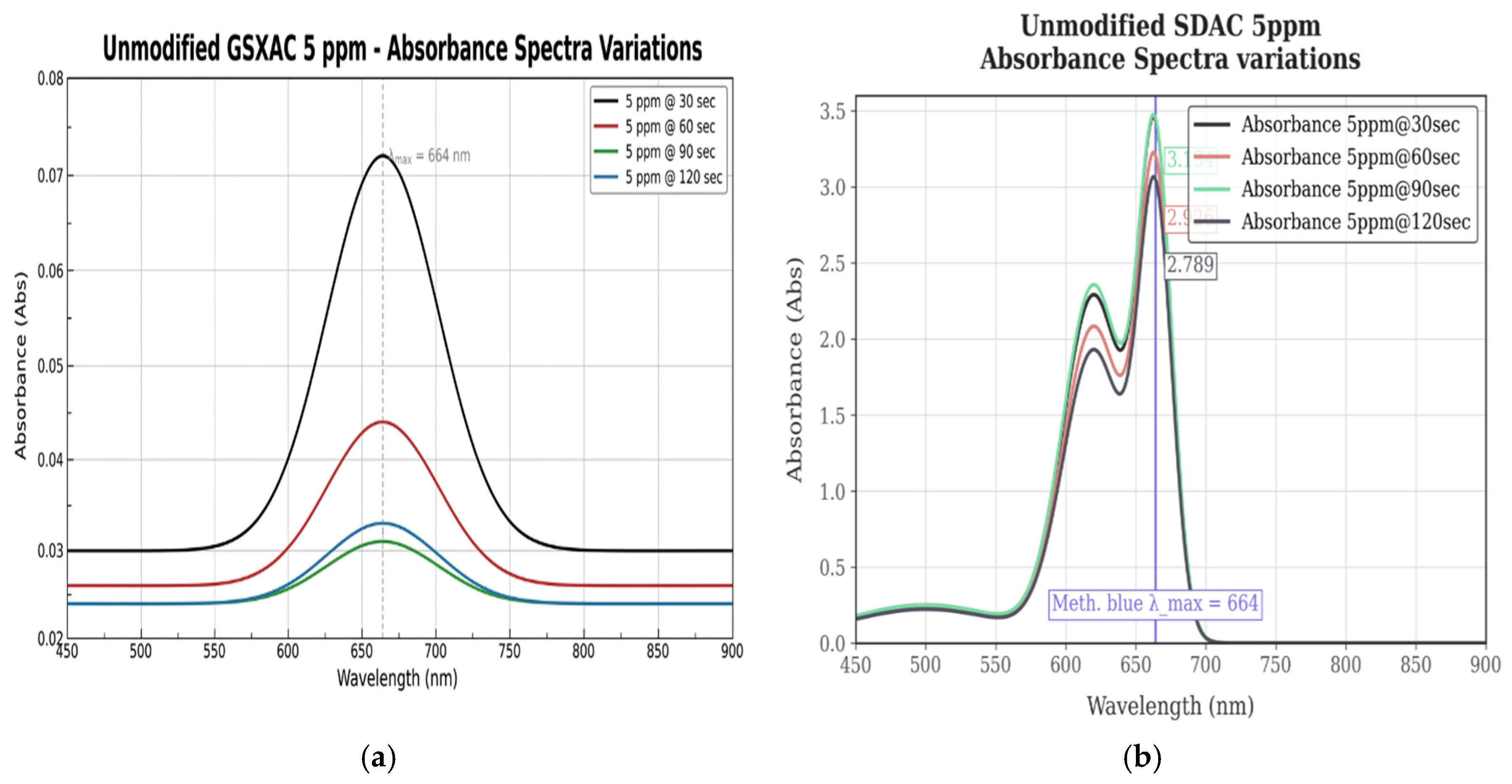
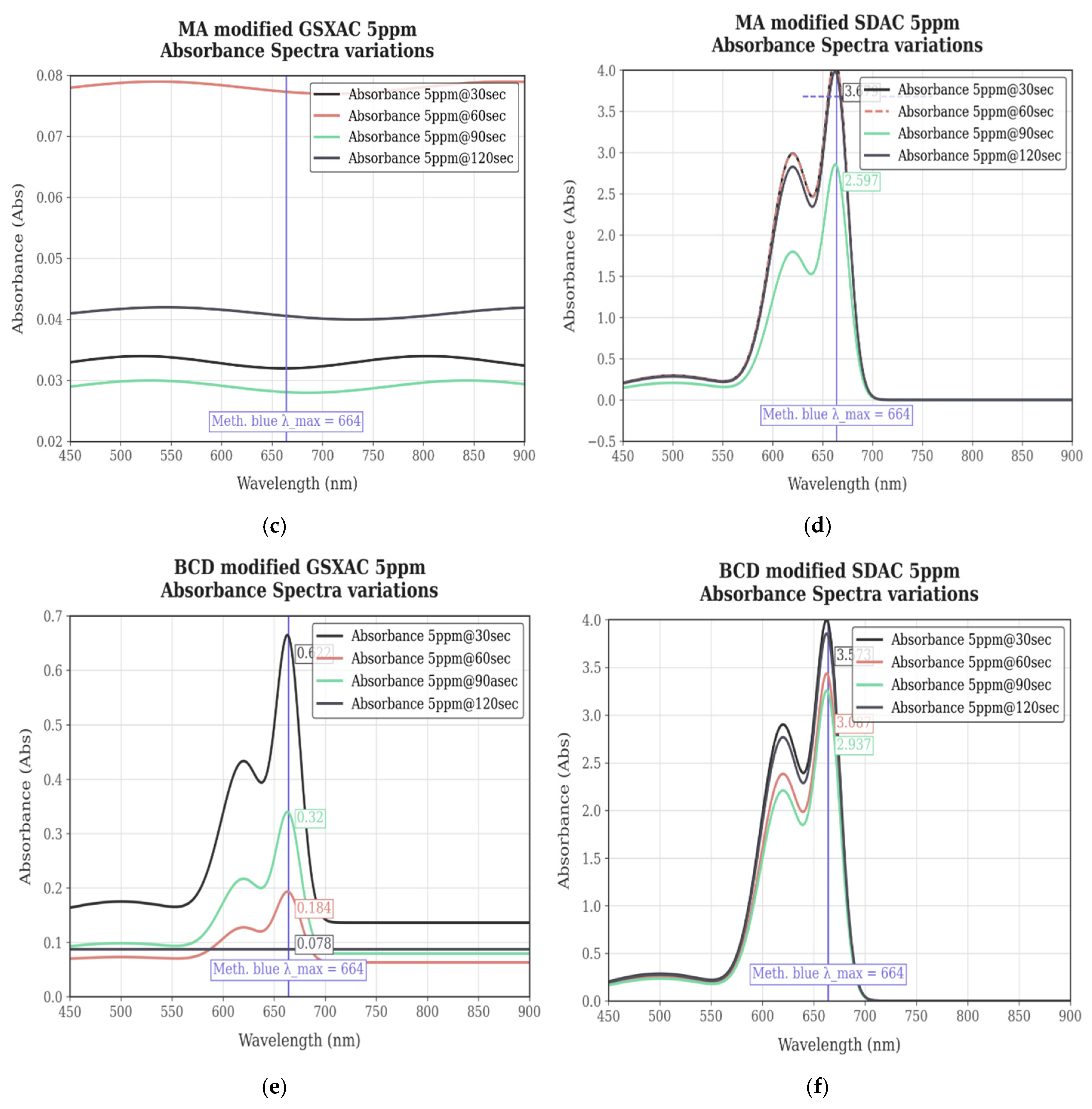
The analysis of methylene blue absorbance spectra (Figure 10a–f) provides significant insight into the dye–carbon interaction mechanism. Most GSXAC samples, including unmodified, malonic acid-modified, and β-CD-modified variants (excepting β-CD-GSXAC@5ppm), exhibit broad and asymmetrical peaks.
This spectral broadening indicates a highly heterogeneous environment characterized by a diverse distribution of molecular interactions, varying pore sizes, and surface functionalities. XPS results further suggest that residual sodium in GSXAC contributes to these varied interaction modes, resulting in non-uniform spectral features [62].
In contrast, all SDAC variants (whether unmodified, MA-modified, or BCD-grafted) demonstrate narrow and symmetrical peaks. Such symmetrical profiles signal a more homogeneous adsorption environment with uniform interactions across the carbon surface. This consistency suggests that MB molecules preferentially bind to specific site types with a reduced tendency for dye aggregation. Consequently, SDAC offers a more distinct and predictable adsorption signature compared with the multifaceted, heterogeneous interactions observed in commercial GSXAC [63].

3.7.2. Effect of Operating Parameters

The spectral analysis of methylene blue reveals that increasing concentrations up to 5 ppm proportionally enhance the absorbance intensity due to a higher molecular density in the light path. However, elevated concentrations also trigger spectral broadening through dye aggregation and a plateau effect, representing the saturation of the Beer–Lambert Law, particularly in GSXAC samples [64]. The interaction with water, a strong polar solvent, facilitates hydrogen bonding that alters the dye’s vibrational structure and broadens absorption bands (an effect augmented by increased hydrogen ions from malonic acid modification). Furthermore, observed shifts in the maximum absorbance wavelength (λmax) for MA-modified GSXAC@5ppm and 60 min are likely due to the protonation or deprotonation of nitrogen atoms. These chemical states, verified by an XPS analysis, highlight how surface chemistry and environmental factors like pH and contact time collectively influence the electronic and optical properties of the adsorption system [65].

3.7.3. Effects of Variations in pH Values of Concentrations

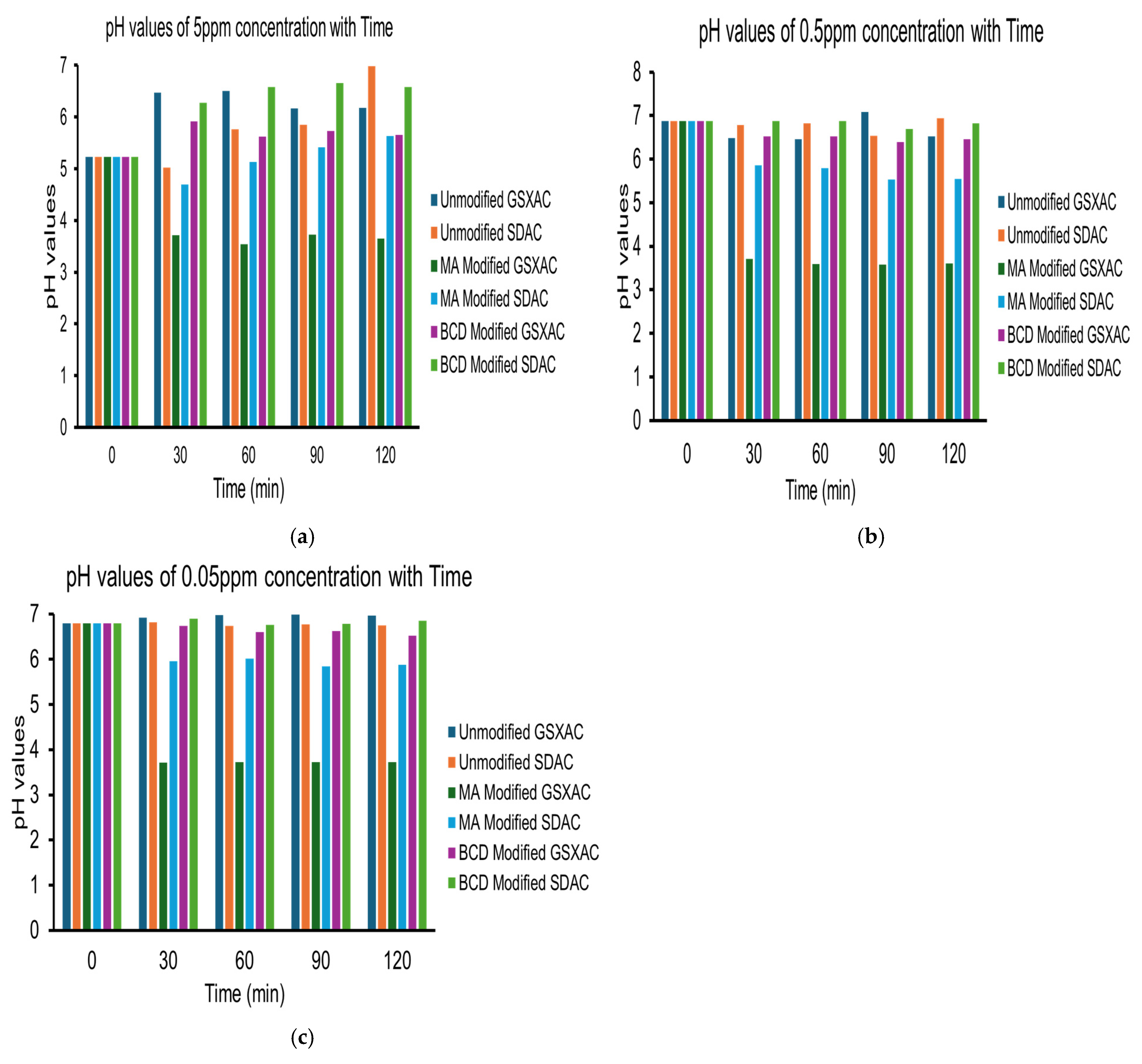
The charts in Figure 11a–c show the variations in the pH values of MB concentrations measured per specific time of 0, 30, 60, 90, and 120 min.
Fluctuations in the pH of methylene blue solution were observed over time during its interaction with activated carbon. This could be aided by the presence of various functional groups on the surface of activated carbon, such as -OH, aromatic C=C, and C-O, C-N, and C-H as indicated by FT-IR analysis. These groups can ionize or deionize based on the pH of the solution, thereby releasing or accepting hydrogen ions (H+) and consequently altering the pH. When MB binds to the activated carbon’s surface, changes in both the dye protonation state and functional group states may lead to the release or uptake of H+ ions in the solution, resulting in a change in pH [66]. Activated carbon preferably adsorbs certain ions (e.g., OH over Cl), which influences both pH balance and chemical structure alterations for MB under different conditions leading to either binding or releasing H+ ions [34].
The impact of these fluctuations is evident especially with malonic acid-modified samples where at low acidic pH levels it decreases cationic species’ adsorption due to positive nature reactions but specific interactions like those involving β-CD may still be facilitated if there is compatibility of the β-CD cavity fit into the MB molecules. In neutral conditions (6.5–7), as recorded with some β-CD-modified samples, favorable conditions exist for the adsorption of cationic dyes like MB because less charged surfaces enable better attraction between dye molecules and carbon [15]. At high alkaline condition levels, the negatively charged surface enhances electrostatic attraction between MB cations, allowing increased potential for absorption, but very high alkalinity might result in precipitation decreasing its concentration. Overall, a more stable PH level is achieved through β-CD-modified SDAC sample when compared with two other sample solutions [67].

3.8. Comparison of Equilibrium Adsorption Performance

3.8.1. To Calculate the Adsorption Capacity per Time (qt)

q t = ( C o C t ) × V / m
where,
  • qt—adsorption capacity at time (mg/g)
  • Co—initial concentration (mg/L)
  • Ct—final concentration (mg/L)
  • m—mass of adsorbent (g)
  • V—volume of solution
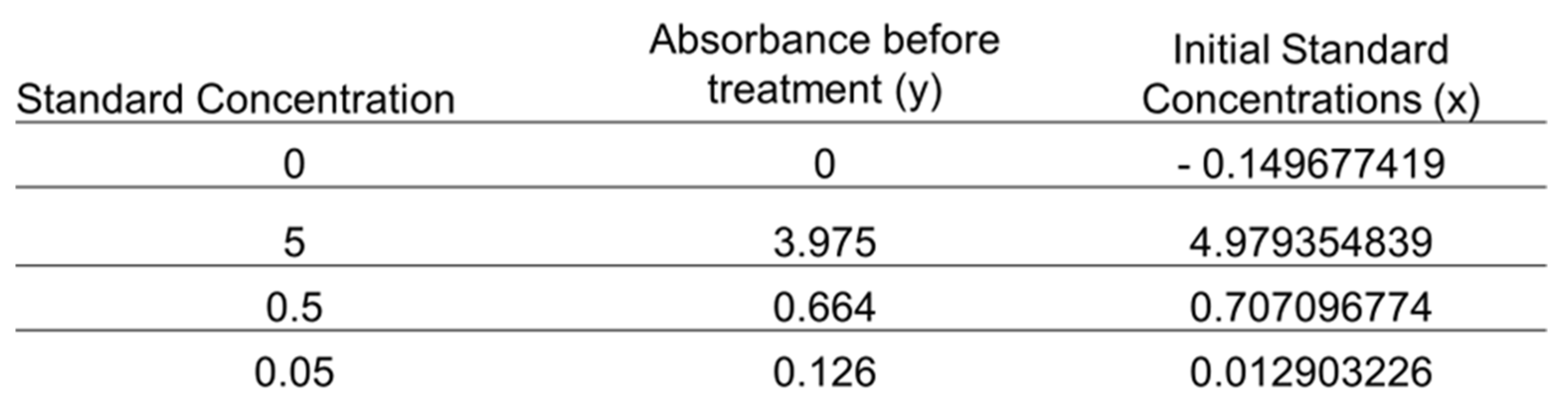
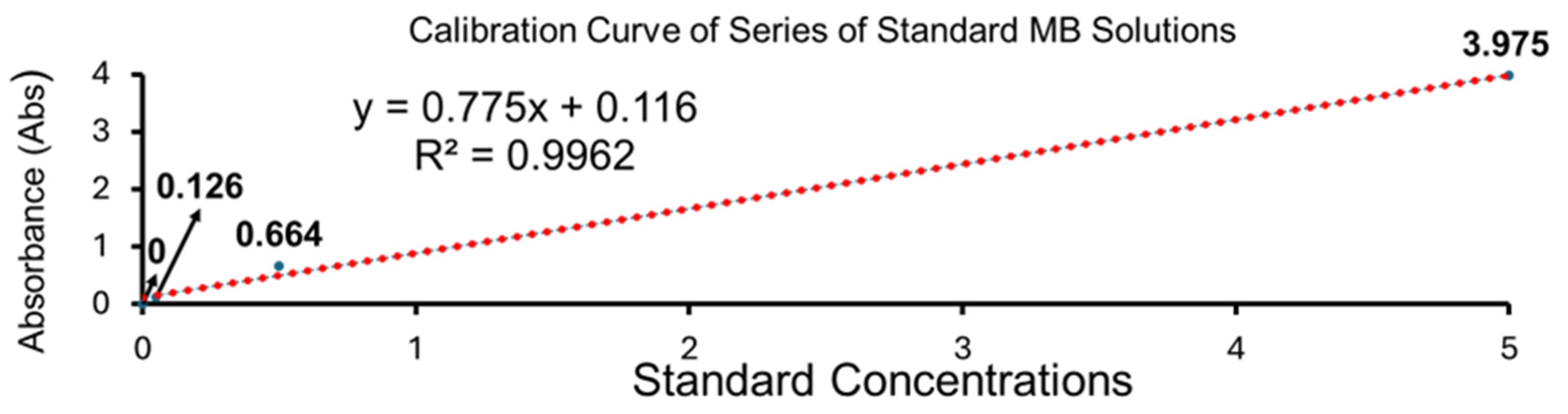
The experiment evaluated the adsorption capacity of activated carbon samples for removing methylene blue from drinking water, employing UV-Vis spectrometry and serial dilution techniques. Spectrophotometric analysis determined the initial and final concentrations of methylene blue in solutions after adsorption. Standard solutions of methylene blue with known concentrations were first prepared. Their absorbances were measured using a UV-Vis spectrophotometer at methylene blue’s maximum absorption wavelength (λmax) of 664 nm. A calibration curve (Figure 12), plotting absorbance against concentration, enabled the quantification of methylene blue in unknown samples based on measured absorbance. Before activated carbon treatment, the initial methylene blue solution’s absorbance was measured at, and its concentration determined from, the calibration curve.

3.8.2. Measurement of qt Against Time Plot

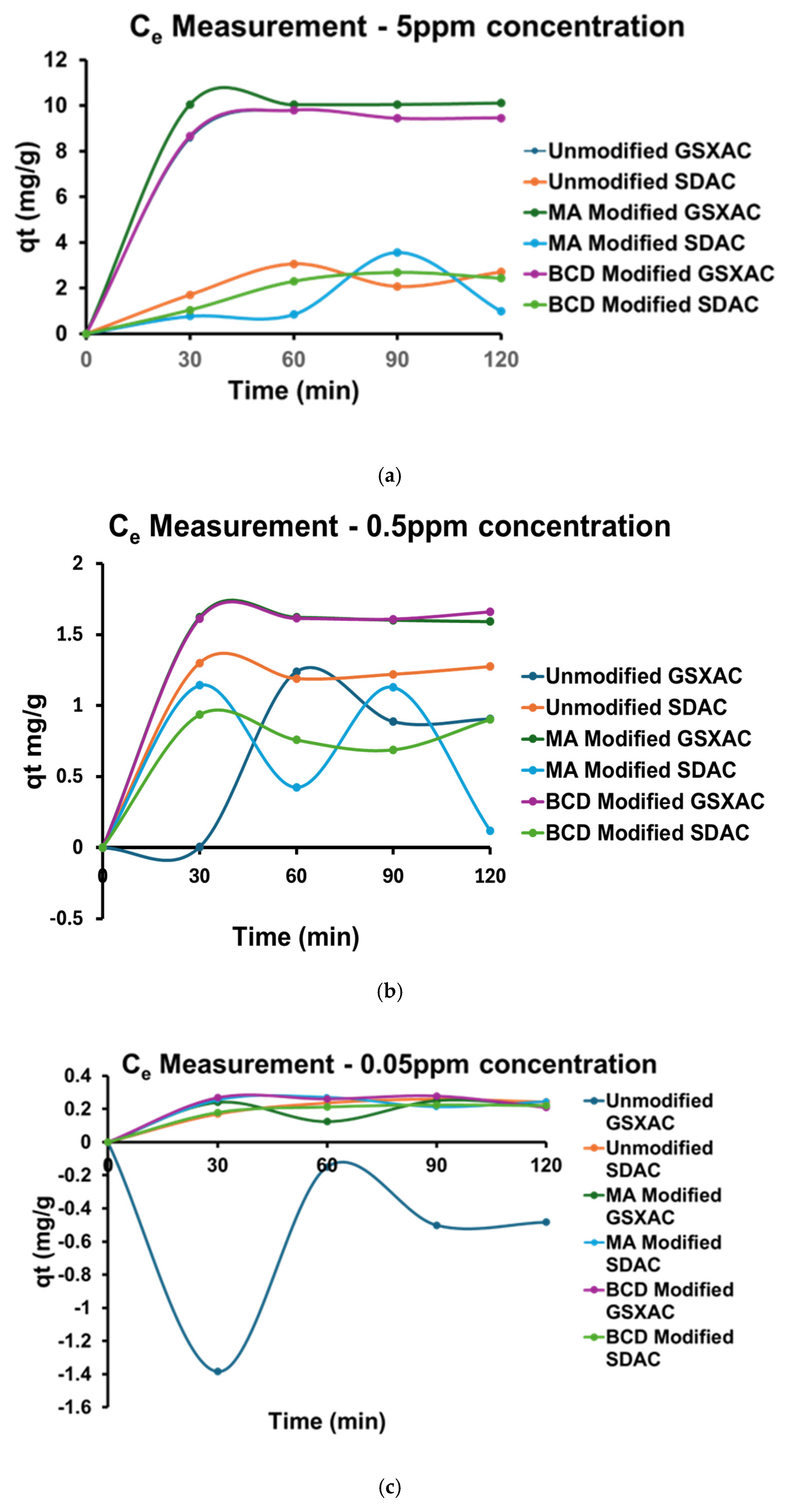
Monitoring qt against time allows for the determination of adsorption rates by fitting experimental data to models such as Pseudo-First-Order or Pseudo-Second Order [39]. Table 3, and Figure 13 and Figure 14 show the behavior of the adsorption capacity at time (qt) and the equilibrium adsorption capacity (qe) for each concentration of MB in solution.
In adsorption science, the equilibrium concentration (Ce) of methylene blue serves as a primary indicator of dye affinity; high Ce suggests saturation or low affinity, while low Ce reflects highly effective removal [35]. The equilibrium adsorption capacity, qe, quantifies the amount adsorbed at a specific temperature and initial concentration, while qt represents the quantity adsorbed at any given time t, which is essential for kinetic analysis [55]. The capacity is determined via the mass balance equation qe = (Co − Ce) × V/m, where Co is the initial concentration, V is the solution volume, and m is the adsorbent mass.
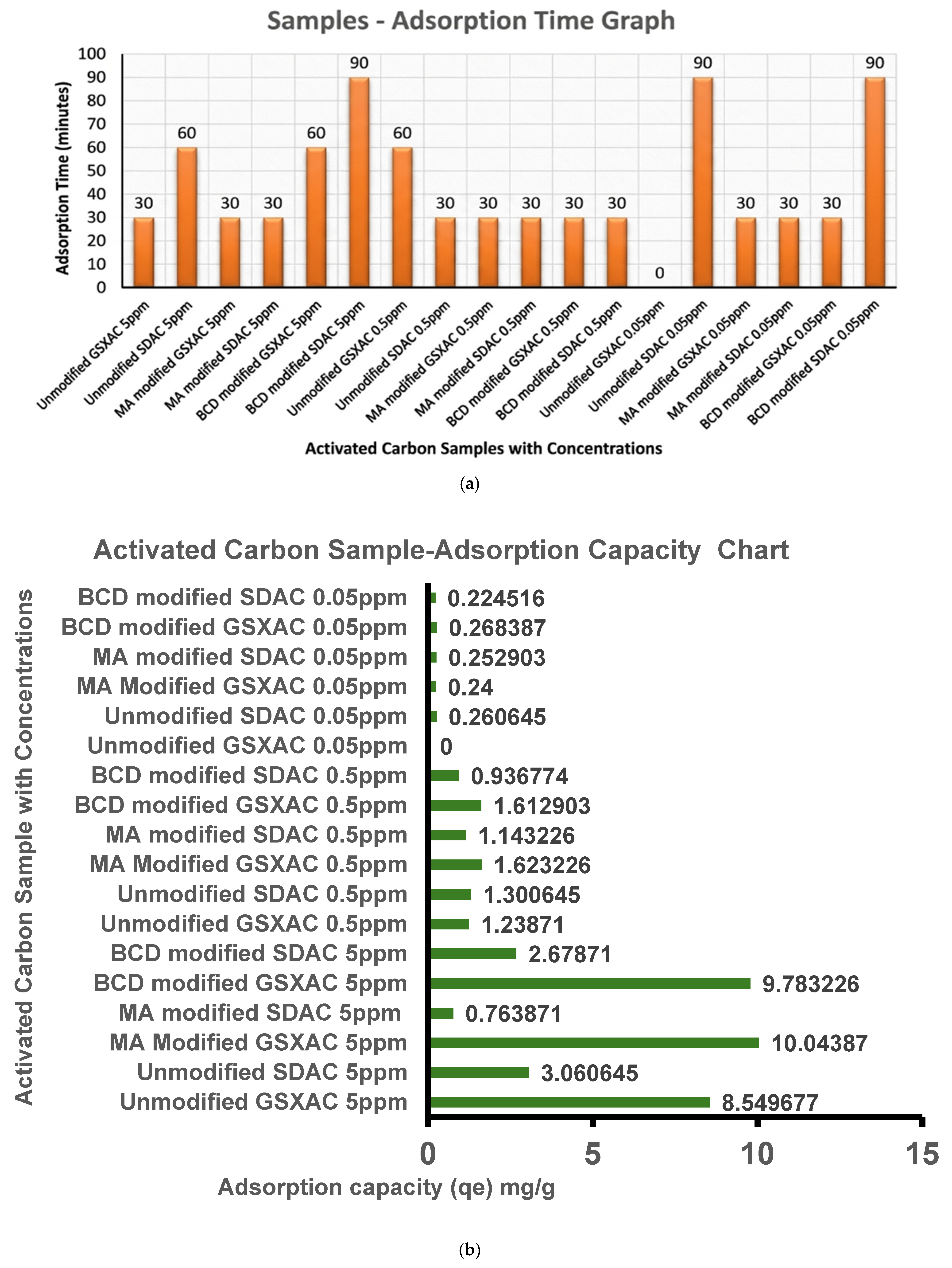
A quick look at the adsorption performance of the activated carbon samples (as presented in Table 3, Figure 13a–c and Figure 14a,b shows that GSXAC-based adsorbents performed significantly across most conditions: the highest adsorption capacity was obtained by MA-modified GSXAC at 5 ppm, with an adsorption capacity qe of 10.04387 mg/g at 30 min, followed by β-CD-modified GSXAC with 9.783226 mg/g at 60 min and unmodified GSXAC with 8.549677 mg/g at 30 min while the SDAC samples recorded lower capacities. This trend is supported by Table 2, where β-CD-modified Norit GSX activated carbon exhibited a much higher BET surface area (1223.79 m2/g) than β-CD-modified sawdust activated carbon (438.36 m2/g), suggesting that the higher porosity and surface area of GSXAC contributed to its superior methylene blue uptake.
However, while the initial glance at high-concentration data might suggest a preference for GSXAC-based materials, a deeper narrative emerges when we examine the long-term, continuous adsorption performance of sawdust-derived activated carbon samples. The true strength of the SDAC family lies in its sustained activity and its remarkable reliability at the lower, more realistic pollutant concentrations often found in environmental drinking water sources. A critical highlight of the SDAC performance is its behavior at the intermediate concentration of 0.5 ppm. In this balanced environment, unmodified SDAC outperformed its unmodified GSXAC counterpart, recording a capacity of 1.300645 mg/g compared with 1.23871 mg/g. This indicates that the sawdust-derived structure possesses an inherent architectural advantage for capturing pharmaceutical contaminants at these concentrations. It suggests a material that is not only effective but naturally optimized for steady pollutant removal.
This reliability becomes even more pronounced at the trace concentration of 0.05 ppm. At this level, where the driving force for adsorption is at its weakest, unmodified GSXAC failed entirely, showing a measurable adsorption of 0 mg/g. In stark contrast, the SDAC samples remained highly active and effective. Unmodified SDAC achieved a significant capacity of 0.260645 mg/g, while the malonic acid-modified version reached 0.252903 mg/g. These results prove that SDAC is a far more dependable choice for removing the final traces of dye that other materials simply cannot capture. The adsorption data over the 90-min study further reinforces the narrative of SDAC as a low but progressive performer. While many GSXAC samples reached their maximum capacity prematurely at just 30 min and then plateaued, several SDAC samples demonstrated continuous, productive uptake for much longer. For instance, unmodified SDAC and β-CD-modified SDAC at 0.05 ppm only reached their peak capacity at the 90-min mark. This continuous adsorption profile is often more desirable in real-world filtration systems, as it indicates a material that does not saturate instantly but provides a consistent and prolonged service life. The modification is justified by several critical advantages that make the material more effective for real-world circular water treatment. While unmodified commercial carbons (like GSXAC) failed completely to adsorb pollutants at very low concentrations (0.05 ppm), the SDAC samples remained “highly active and effective”. The β-CD modification makes the biochar a “far more dependable choice” for capturing the final traces of contaminants that other materials simply cannot capture. Also, β-CD-modified SDAC demonstrated continuous, productive uptake for much longer durations (reaching peak capacity at the 90-min mark). This suggests a material that is “naturally optimized for steady pollutant removal”. β-CD modification also significantly revitalizes carbon surfaces, particularly at trace concentrations where unmodified GSXAC initially shows no activity (0 mg/g). By functionalizing GSXAC, β-CD boosts its capacity to 0.268387 mg/g at 0.05 ppm. This benefit arises from β-CD’s unique hydrophobic core, which captures pollutants through inclusion complexes, and its hydrophilic exterior that promotes hydrogen bonding. For other materials like SDAC, β-CD modification ensures the reliable removal of trace contaminants (0.224516 mg/g), proving essential for targeting pollutants that standard surfaces cannot easily bind.
Summarily, although SDAC possesses a lower BET surface area of 438.36 m2/g compared with the high 1223.79 m2/g of GSXAC (as previously mentioned in Table 2), it achieves highly competitive results at low concentrations. This suggests that the available surface area in SDAC is of a quality that is better suited to the size of the pharmaceutical contaminant molecule, allowing for improved performance. Ultimately, the SDAC samples represent a well-engineered solution for sustainable water treatment. Their ability to maintain continuous adsorption over a full 90-min window, coupled with their superior performance at low concentrations where other materials fail, makes them a superior material for long-term purification tasks. For a system designed for endurance and reliability at realistic trace levels, the sawdust-derived carbons offer a compelling and high-performing alternative.

3.9. Mechanistic Insights

3.9.1. Equilibrium Studies

  • The Langmuir isotherm model (SDAC and GSXAC)
The Langmuir isotherm model was applied via non-linear regression to experimental data for methylene blue adsorption onto β-CD-modified Sawdust and Norit GSX Activated Carbon. This model assumes a monolayer adsorption process on a homogeneous surface with a finite number of identical sites where no interaction between adsorbed molecules occurs [68]. It is particularly effective for systems dominated by electrostatic interactions [69].
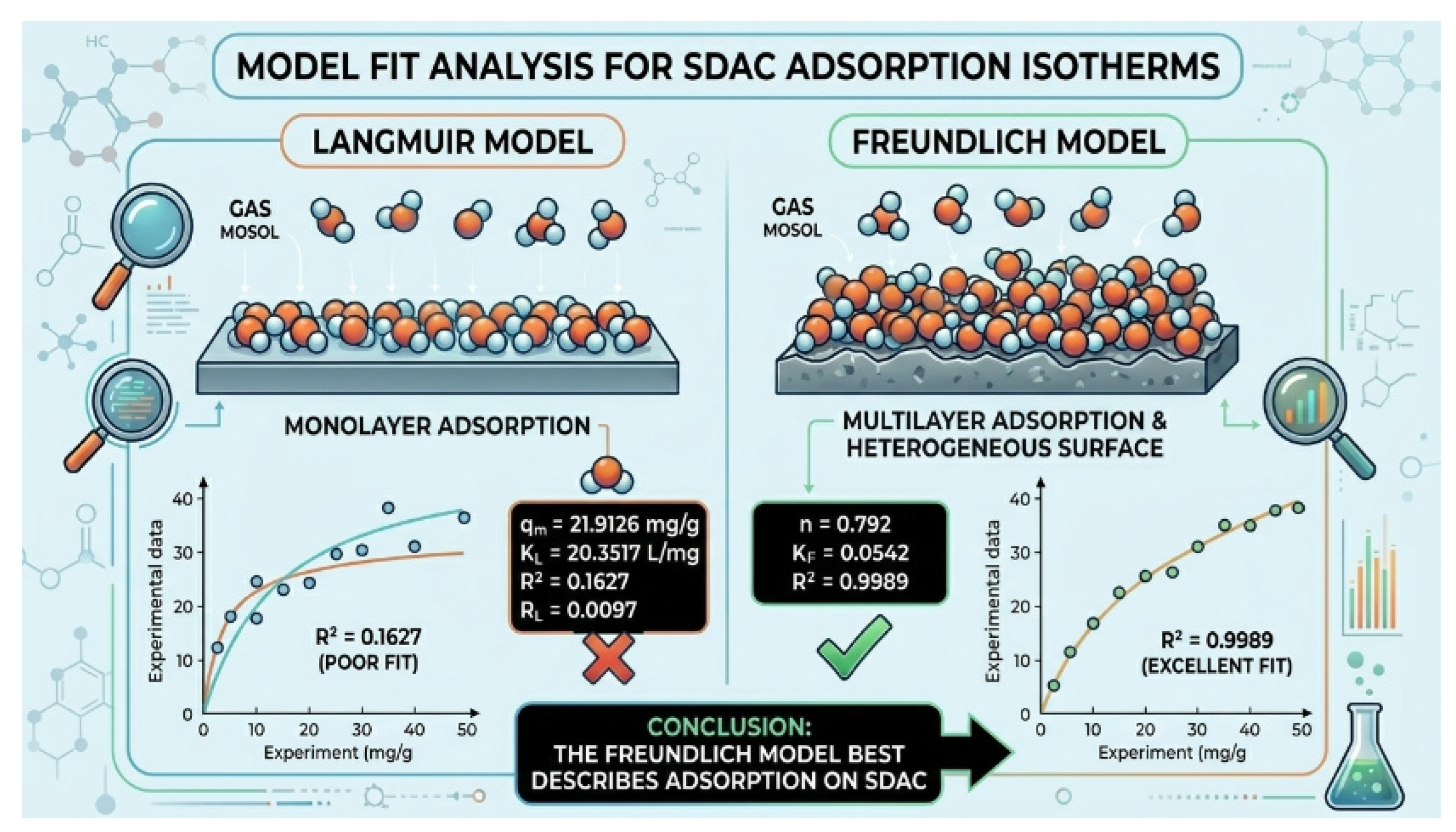
The Langmuir isotherm analysis for the SDAC sample (Figure 15) reveals a maximum adsorption capacity (qm) of 21.9126 mg/g, representing the theoretical limit for a complete monolayer on the surface. The Langmuir constant (KL) of 20.3517 L/mg reflects a relatively strong binding affinity, suggesting that the SDAC effectively attracts and holds the pharmaceutical molecules. However, the low R2 value of 0.1627 indicates a poor model fit, suggesting the Langmuir model does not accurately describe the adsorption behavior under these conditions. This discrepancy could be due to several factors: the potential heterogeneity of the SDAC surface, the occurrence of multilayer adsorption rather than a single layer, or significant interactions between the adsorbed molecules themselves. Consequently, these deviations from the Langmuir model’s basic assumptions explain its inability to precisely match the experimental data.
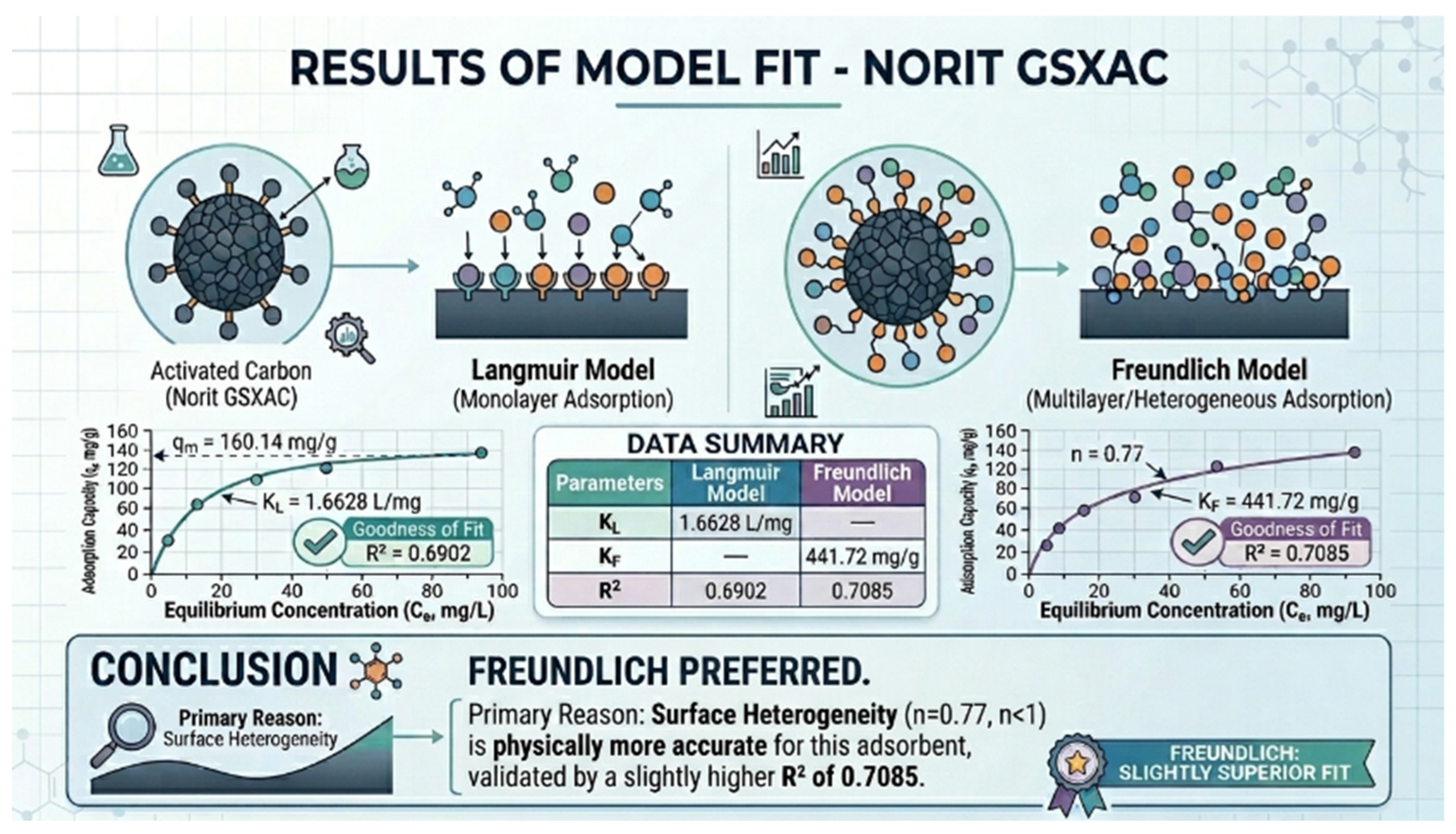
In the case of Norit GSX Activated Carbon (Figure 16), the analysis yielded a maximum adsorption capacity (qm) of 160.14 mg/g, representing the theoretical limit for contaminant removal under specific experimental conditions. This high value indicates that the modified adsorbent is highly effective for water purification. The Langmuir constant (KL) was determined to be 1.6628 L/mg, reflecting a strong binding affinity and a favorable adsorption process where MB molecules are preferentially held on the carbon surface rather than remaining in the aqueous phase.
While the R2 value of 0.6902 suggests that the Langmuir model explains approximately 69.02% of the experimental variance, it is considered a reasonably good fit for describing the system’s behavior. However, the results suggest that exploring alternative isotherm models or adjusting experimental parameters could further refine the understanding of the adsorption mechanism. Overall, these findings validate the potential of β-CD-modified GSXAC as a robust material for targeted pollutant removal.
  • The Separation Factor
The separation factor (RL), also known as the equilibrium parameter, is a dimensionless constant used to predict the favorability of an adsorption process. It is calculated using the Langmuir isotherm equation: RL = 1/(1 + KL Co), where Co represents the initial concentration of the adsorbate and KL is the Langmuir constant related to the affinity between the adsorbate and adsorbent [70]. The value of RL defines four specific conditions: RL = 0 signifies irreversible adsorption when k is very large; RL = 1 indicates linear adsorption when k = 0; and RL > 1 represents unfavorable adsorption or desorption occurring when k is [71]. The dimensionless separation factor (RL) serves as a critical indicator of isotherm shape and adsorption favorability. For the SDAC sample, the calculated value is 0.0097, which falls within the favorable range (0 < R < 1). While this value is numerically close to zero (suggesting a shift toward irreversible adsorption), it should be interpreted as evidence of an exceptionally strong affinity between the SDAC surface and the adsorbate. This high-affinity profile confirms the material’s efficacy in sequestering organic contaminants even at low equilibrium concentrations, mirroring the performance characteristics seen in premium commercial benchmarks.
  • The Freundlich isotherm model (SDAC)
The Freundlich isotherm analysis for the SDAC sample (Figure 15) provides essential insights into surface heterogeneity and adsorption capacity. With an n value of 0.79215976 (n < 1), the model indicates favorable adsorption conditions, suggesting that the process is most efficient at lower adsorbate concentrations [72]. This fractional value identifies the SDAC surface as heterogeneous, possessing a wide distribution of adsorption energies. Additionally, the Kf value of 0.05425828 indicates a relatively modest adsorption capacity under specific experimental conditions.
The Freundlich model demonstrates an excellent statistical fit with a high R2 of 0.9989, lending significant credibility to its descriptive power [73]. In contrast, the Langmuir model exhibited a poor fit (R2 = 0.1627), failing to meet its assumptions of surface homogeneity and monolayer adsorption. The superiority of the Freundlich model suggests that the SDAC surface is inherently heterogeneous, likely due to varied functional groups (such as hydroxyl, carboxyl, or amine) and complex pore structures that offer different degrees of molecular confinement and interaction. Ultimately, the Freundlich isotherm successfully captures the multi-site interaction behavior of the SDAC sample.
The Freundlich isotherm model analysis for the Norit GSXAC sample (Figure 16) provides a robust description of its adsorption behavior on heterogeneous surfaces. The analysis yielded an adsorption intensity (n) of 0.77, a Freundlich constant (KF) of 441.72 mg/g, and a coefficient of determination (R2) of 0.7085. The values of 0.7085 and 0.6902 for the Langmuir model are numerically close, indicating that both models provide a comparable, albeit moderate, fit to the experimental data. However, an n value less than 1 is a key physical indicator of surface heterogeneity, suggesting that the adsorption sites on the modified GSXAC surface have varying affinities. This aligns with the material’s complex characterization, which includes a diverse distribution of pore sizes and various functional groups (such as hydroxyl, carboxyl, and amine) that offer different degrees of molecular interaction. Consequently, while both models suggest a non-ideal fit, the Freundlich model is preferred as it more accurately reflects the non-uniform energy distribution and multi-site interaction behavior inherent to the adsorbent’s surface.
Unlike the Langmuir model’s assumption of a homogeneous surface with uniform energy, the empirical Freundlich model posits an exponential decrease in adsorption energy relative to surface saturation. It accounts for an infinite number of adsorption sites and non-ideal multilayer adsorption, which are common in real-world scenarios where adsorbate molecules interact with one another. The high KF value further confirms that Norit GSXAC possesses a good adsorption capacity for target contaminants.

3.9.2. Kinetic Studies

Kinetic studies are crucial for understanding the rate and mechanism of adsorption processes. These studies involve monitoring the change in adsorbate concentration over time to determine the rate-limiting steps and the factors influencing the adsorption kinetics. Investigating Pseudo-First-Order, Pseudo-Second-Order, Elovich, and intra-particle diffusion models is essential to comprehensively describe the adsorption behavior [74].
  • The Pseudo-First-Order Model
The Pseudo-First-Order model (Figure 17) assumes that the rate of adsorption is proportional to the number of unoccupied sites on the adsorbent surface. This model is often applicable in the initial stages of adsorption when the number of available sites is abundant. However, it may not accurately represent the entire adsorption process, especially when the surface becomes saturated [75].
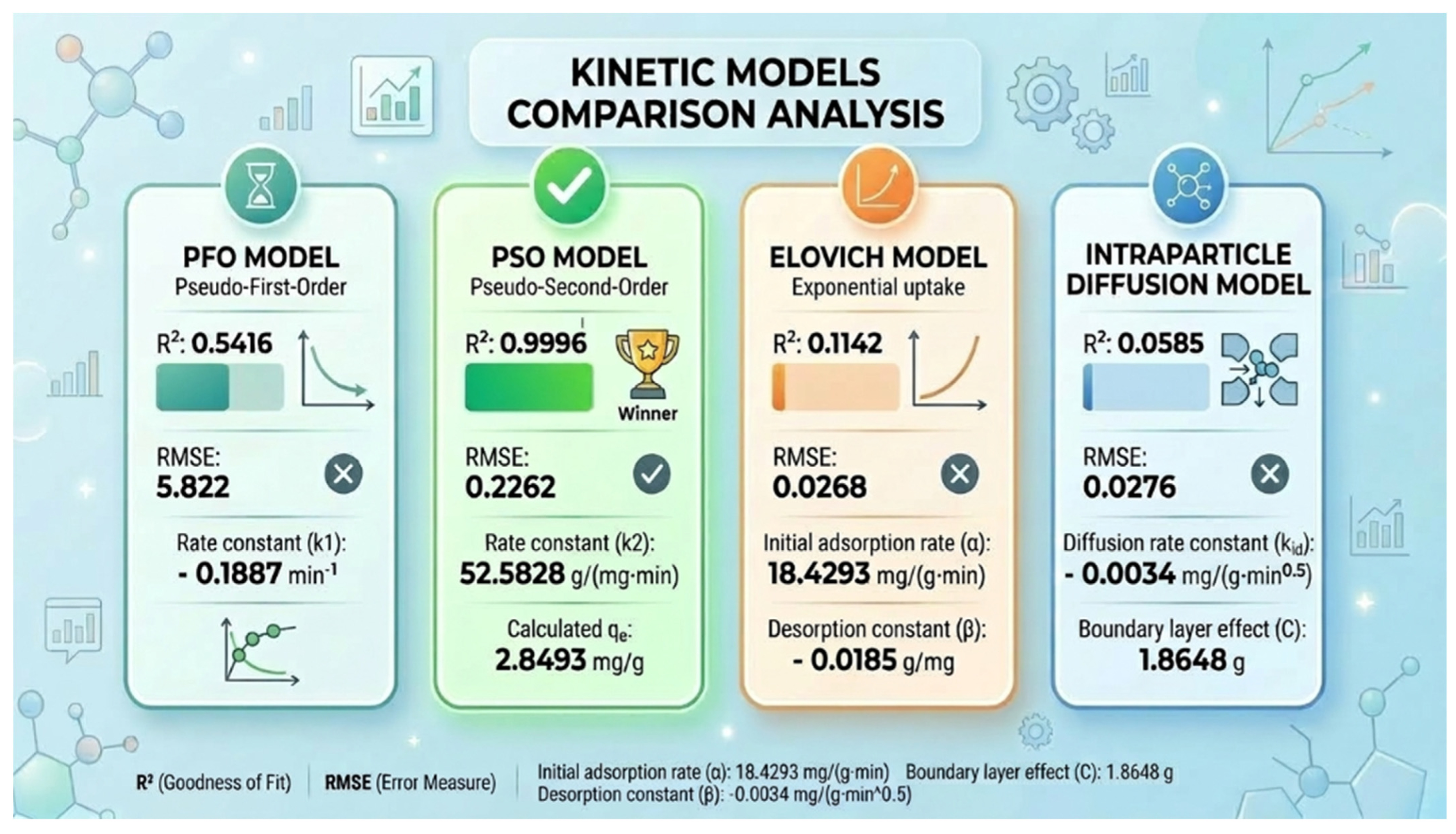
The Pseudo-First-Order model’s poor fit, evidenced by an R2 of 0.5416, an RMSE of 5.8220, and a rate constant (k1) of − 0.1887 min−1, signifies substantial deviations from the model’s fundamental assumptions.
The PFO model is represented by the equation:
q t = q e   ( 1 e k 1 t )
where:
  • qt is the amount of adsorbate adsorbed at time t
  • qe is the equilibrium adsorption capacity
  • k1 is the rate constant
The Pseudo-First-Order model’s failure to accurately describe the adsorption process for the SDAC sample is highlighted by an R2 value of 0.5416 and a high RMSE of 5.8220. This model incorrectly assumes that adsorption is driven by physisorption on a homogeneous surface without molecular interactions, which contradicts the inherently heterogeneous nature of the SDAC surface. Furthermore, PFO fails to account for the decreasing availability of active sites and the subsequent rate reduction as the system nears equilibrium and surface saturation occurs.
The presence of functional groups like hydroxyl, carboxyl, and amine on the SDAC surface creates varying affinities that the PFO model ignores. Instead, the Pseudo-Second-Order model is more effective as it assumes chemical adsorption (involving electron sharing or exchange) is the rate-limiting step. This heterogeneity is further confirmed by the Freundlich model, which indicates that adsorption is influenced by interactions between the adsorbate molecules. Ultimately, the PFO model’s poor statistical fit and negative rate constant stem from oversimplified assumptions that ignore the complexities of chemical interactions and site availability.
  • Elovich Model
The Elovich model (Figure 17) is another kinetic model that is often used to describe chemisorption processes on heterogeneous surfaces. Like the Freundlich isotherm, the Elovich model assumes that the activation energy for adsorption increases linearly with surface coverage. This model is particularly useful for describing adsorption processes where the rate of adsorption decreases exponentially with time, which is often observed in chemisorption on heterogeneous surfaces. The Elovich model could provide additional insights into the adsorption kinetics by accounting for the increasing activation energy as adsorption proceeds [36].
The Elovich model is represented by the equation:
q t = 1 β l n α β + 1 β l n ( t )
where:
  • q is the amount of adsorption (mg/g)
  • t is the adsorption time (min)
  • α is the initial adsorption rate (mg/g min)
  • β is the desorption constant (g/mg)
The Elovich model analysis for the SDAC sample demonstrates an exceedingly poor statistical fit, characterized by an R2 of 0.1142 and an RMSE of 0.0268. This low coefficient of determination indicates that the model explains only 11.42% of the variability in the adsorption process, suggesting that unmodeled factors or alternative mechanisms play a dominant role. The determined parameters include an initial adsorption rate (α) of 18.4293 mg/(g·min) and a desorption constant (β) of −0.0185 g/mg. Crucially, the negative β value is physically implausible, as it should be positive to represent the rate of molecules leaving the surface; a negative value invalidates the model’s fundamental assumptions for this system.
The failure of the Elovich model likely stems from its core assumption that activation energy for adsorption increases linearly with surface coverage. For the SDAC sample, this relationship does not hold, potentially due to a complex distribution of sites with varying activation energies or the influence of mass transfer limitations. While the Elovich model assumes an exponential decrease in adsorption rate over time, factors like specific chemical interactions may dominate the kinetics instead. Unlike the Langmuir model, the Freundlich isotherm accounts for such complexities by assuming adsorption energy decreases exponentially as saturation increases. Ultimately, the Elovich model’s simplified assumptions fail to capture the complex activation energy landscape and adsorbate–adsorbent interactions inherent to the SDAC system.
  • The Intraparticle Diffusion Model
Based on Fick’s second law, the IPD model (Figure 17) assumes that intraparticle diffusion is the primary rate-limiting step. However, this assumption fails if external mass transfer or surface reaction kinetics are slower. The model further posits an exponential decrease in the diffusion rate over time, which may not accurately represent systems dominated by mass transfer limitations or specific chemical interactions [76].
The intraparticle model equation is as follows:
q t = k i d t + C
where,
  • qt represents the amount of adsorbate adsorbed at time t.
  • kid is the intraparticle diffusion rate constant.
  • t is time.
  • C is a constant related to the boundary layer effect.
The analysis of the Intraparticle Diffusion model for the SDAC sample (Figure 17) reveals an exceptionally poor fit, evidenced by an R2 value of 0.0585 and an RMSE of 0.0276. With a diffusion rate constant (Kid) of −0.0034 mg/(g·min0.5) and a boundary layer effect (C) of 2.8648 mg/g, the model is deemed unsuitable for characterizing the adsorption kinetics in this scenario. The extremely low R2 value indicates that the model explains only a tiny fraction of the process variability, while the RMSE confirms a significant lack of fit despite its small absolute value.
Mechanistically, the model describes adsorbate transport from the bulk solution through a thin boundary layer (a fluid film surrounding the adsorbent) to the external surface and then into the pores. Resistance within this boundary layer often results in lower adsorbate concentrations compared with the bulk solution. A boundary layer concentration of 2.8648 mg/g influences the driving force for diffusion, while a higher concentration typically enhances the gradient and initial adsorption rate, and excessive build-up can disrupt the model’s linearity if internal diffusion is slow [77].
Ultimately, the IPD model’s failure suggests it cannot adequately describe molecular behavior within the SDAC pores. In contrast, the empirical Freundlich model provides a better fit by accounting for surface heterogeneity and adsorbate interactions, assuming that adsorption energy decreases exponentially as the adsorbent reaches saturation.
  • The Pseudo-Second-Order Model
The Pseudo-Second-Order model equation is as follows:
q t = k 2   q e 2   t 1 + k 2   q e 2   t
Lastly from Figure 17, the Pseudo-Second-Order model’s excellent fit (R2 = 0.9996, RMSE = 0.2262, rate constant k2 = 52.5828 g/(mg·min), and calculated qe = 2.8493 mg/g) strongly suggests that the adsorption process is governed by chemical interactions between the SDAC sample and the adsorbate. Given that the SDAC sample has a heterogeneous surface, as revealed by the Freundlich isotherm, different types of functional groups such as hydroxyl, carboxyl, or amine groups may be present, which could interact chemically with the adsorbate [78].
  • High Coefficient of Determination (R2): The R2 value of 0.9996 indicates that approximately 99.96% of the variance in the adsorption process is explained by the PSO model. This high degree of correlation suggests that the model is highly reliable in predicting the adsorption behavior of the system.
  • Low Root Mean Square Error: The RMSE of 0.2262 signifies the magnitude of the difference between the values predicted by a model and the values observed. A low RMSE indicates that the model’s predictions are, on average, very close to the actual data, suggesting a high level of accuracy.
  • Adsorption Mechanism: A high R2 value in the PSO model typically suggests that the adsorption process is chemisorption. Chemisorption involves stronger chemical bonds between the adsorbate and the adsorbent surface, leading to the formation of a monolayer of adsorbate on the adsorbent surface. In contrast, physisorption involves weaker van der Waals forces, which leads to the formation of multilayers of adsorbate on the adsorbent surface. The higher the value of R2, the better the goodness of fit.
  • Heterogeneous Surface: The Freundlich isotherm does not assume a uniform adsorption energy or a finite number of adsorption sites. Instead, it assumes that the adsorption energy decreases exponentially as the degree of saturation of the adsorbent increases. This is often the case in real-world adsorption processes, where the adsorbent surface is heterogeneous and the adsorbate molecules interact with each other. Different types of functional groups such as hydroxyl, carboxyl, or amine groups may be present, which could interact chemically with the adsorbate. Additionally, the pore structure of the SDAC sample could contribute to the heterogeneity of the surface, as the adsorbate molecules may experience different degrees of confinement and interaction within the pores.

3.10. Adsorption Mechanisms and Thermodynamic Considerations

The adsorption process in this study is characterized by a high coefficient of determination for the Pseudo-Second-Order model (R2 = 0.9989), which serves as a robust statistical indicator that chemical bonding, rather than physical attraction, is the rate-limiting step. This kinetic profile assumes that the adsorption rate is governed by chemical interactions involving electron sharing or exchange between the pollutant molecules and the adsorbent’s functional groups.
The chemisorptive nature of the system is further substantiated by the following thermodynamic and structural insights:
The convergence of near-perfect statistical fits to the PSO model, high binding affinity constants, and the presence of specific surface functional groups provide a robust scientific basis for concluding that the adsorption of pollutants onto the modified biochar is predominantly chemisorptive.
Thermodynamic Affinity and Irreversibility: The calculated separation factor (RL) for the SDAC sample is 0.0097, a value numerically approaching zero. In adsorption thermodynamics, such a low value indicates a high-affinity process that borders on irreversibility, a hallmark of chemisorption where interaction energies significantly exceed those of standard physisorption. This strong binding is further evidenced by the Langmuir constant (KL) of 20.3517 L/mg, reflecting an exceptionally potent molecular attraction between the modified biochar surface and the adsorbate.
Surface Chemistry and Heterogeneity: Characterization of the SDAC surface confirms the presence of active chemical sites, specifically hydroxyl, carboxyl, and amine groups. These functional groups facilitate the formation of specific chemical bonds or host–guest inclusion complexes that drive the removal process. While the Freundlich isotherm fit (R2 = 0.9989) suggests a heterogeneous surface with a wide distribution of adsorption energies, the Elovich model further supports the chemisorptive mechanism by accounting for activation energies that increase as active sites are progressively occupied.
Broader Research Context: As this study is an integral component of an ongoing research program, these results establish the fundamental kinetic and equilibrium benchmarks at laboratory temperatures. Comprehensive thermodynamic parameters (ΔG, ΔH, ΔS) and the formal derivation of activation energy via the Arrhenius equation are targeted for the optimization and pharmaceutical-residue phases of this research. This phased approach is designed to fully map the energy dynamics of these host–guest inclusion complexes as the work scales toward the remediation of pharmaceutical contaminants like chloroquine.

3.11. Effect of Temperature

All batch adsorption experiments were carried out at a controlled laboratory room temperature to ensure a consistent environmental baseline for the comparative analysis of the adsorbents. While temperature variation was not within the scope of this primary investigation, the fixed-temperature data provided substantial mechanistic insights. Specifically, the adherence of the data to the Pseudo-Second-Order kinetic model and the Elovich equation confirms that the process is predominantly governed by chemisorption. Furthermore, the separation factor (RL) of 0.0097 for the SDAC sample reflects a highly favorable and high-affinity interaction under these ambient conditions. More comprehensive thermodynamic evaluations, including the determination of enthalpy (ΔH), entropy (ΔS), and activation energy (Eo), are part of the ongoing optimization phase of this research program, which aims to further characterize the host–guest inclusion complexes across varying thermal gradients.

3.12. Conclusions

To conclude, the evidence demonstrates that β-cyclodextrin (β-CD) serves as a superior modification agent, effectively overcoming the functional limitations that are inherent in traditional acid treatments. Unlike conventional malonic acid modification, which depends primarily on increasing surface acidity to facilitate electrostatic attraction, the introduction of β-CD establishes a more versatile and robust framework for adsorption. This advantage is derived from its unique truncated cone structure, which enables host–guest inclusion complex formation, a mechanism that is essential for capturing trace-level pollutants. A clear illustration of this is found in unmodified Norit GSX Activated Carbon, which showed no measurable removal (0 mg/g) at 0.05 ppm; however, β-CD modification revitalized its surface, increasing its capacity to 0.268387 mg/g. The efficacy of β-CD is further highlighted by its impact on sawdust-derived activated carbon. Although SDAC has a significantly lower BET surface area (438.36 m2/g) compared with GSXAC (1223.79 m2/g), the β-CD-modified version exhibited exceptional reliability at trace concentrations, reaching a capacity of 0.224516 mg/g. These findings suggest that the natural pore architecture of sawdust is particularly well-suited for capturing pharmaceutical-sized molecules when functionalized with β-CD. This is supported by kinetic data, where β-CD-modified SDAC achieved a near-perfect fit to the Pseudo-Second-Order model, confirming that the process is driven by stable chemical interactions rather than simple physical trapping. The superior fit of the Langmuir and PSO models (R2 = 0.9996) strongly implies a chemisorptive mechanism, likely facilitated by host–guest inclusion within the β-CD cavities.
Beyond capacity, the β-CD-modified framework offers enhanced environmental resilience, including superior pH stability and a multi-modal interaction profile involving Van der Waals forces and hydrogen bonding. In contrast to many industrial-grade carbons that reach premature saturation, β-CD-modified SDAC maintains a steady, continuous adsorption profile over a 90-min period. This sustained endurance makes it an ideal candidate for real-world filtration applications. Ultimately, these results validate β-CD-functionalized biochar as a sustainable, high-precision alternative to standard industrial adsorbents, aligning perfectly with the principles of a circular water treatment economy.

Author Contributions

Conceptualization, A.O.A.; methodology, A.O.A.; software, A.O.A.; validation, A.O.A. and M.O.J.; formal analysis, A.O.A.; investigation, A.O.A.; resources, A.O.A., M.O.J. and M.M.; data curation, A.O.A. and M.O.J.; writing—original draft preparation, A.O.A.; writing—review and editing, A.O.A., M.O.J., M.M., O.M.K., T.B.H. and O.M.A.; visualization, A.O.A., M.O.J., M.M. and O.M.K.; supervision, M.O.J., M.M. and O.M.K.; project administration, A.O.A. and M.O.J.; funding acquisition, A.O.A. and M.O.J. All authors have read and agreed to the published version of the manuscript.

Funding

The APC was funded by the Open Access funding, Library Research Support, University of Warwick.

Data Availability Statement

The original contributions presented in the study are included in the article; further inquiries can be directed to the corresponding authors.

Acknowledgments

The researcher is a PhD student in the School of Engineering, University of Warwick, at the time of this study. The contributions from Modupe Jimoh, Mairi MacIntyre, Olatunji Kolawole, Taiwo Hammed, and Olalekan Abiona are appreciated. The authors acknowledge the use of CorelDRAW Graphics Suite 2026 and its integrated generative AI features in the preparation of the manuscript’s visual materials. These AI-assisted tools were employed solely to assist in the pictorial presentation of original sketches derived from raw research data. The authors confirm that the research findings and data interpretation are entirely their own work and take full responsibility for the integrity and accuracy of the final images presented in this article. Furthermore, the authors attest that all images and figures in this manuscript are not AI-generated in their entirety. All graphical content is based on original sketches and diagrams derived from raw experimental data. Generative AI features embedded within the authors’ drawing tools (CorelDRAW Graphics Suite 2026) were used solely to assist in the pictorial presentation and aesthetic refinement of some of the original works, and the authors take full responsibility for the integrity of the final content.

Conflicts of Interest

The authors declare no conflicts of interest.

References

  1. Adeniyi, A.; Jimoh, M. Decontamination Potential of UV-C Radiation in Water Treatment Systems: Targeting Microbial Inactivation. Water 2024, 16, 2725. [Google Scholar] [CrossRef]
  2. UNICEF. Progress on Household Drinking Water, Sanitation and Hygiene 2000–2022: Special Focus on Gender; World Health Organization (WHO): Geneva, Switzerland; United Nations Children’s Fund (UNICEF): New York, NY, USA, 2023. [Google Scholar]
  3. Allaoui, I.; Et-Tanteny, R.; Barhdadi, I.; Elmourabit, M.; Arfoy, B.; Draoui, Y.; Hadri, M.; Draoui, K. Development and Characterization of Pyrolyzed Sodium Alginate–Montmorillonite Composite for Efficient Adsorption of Emerging Pharmaceuticals: Experimental and Theoretical Insights. Ceramics 2025, 8, 60. [Google Scholar] [CrossRef]
  4. Morales-Paredes, C.A.; Rodríguez-Díaz, J.M.; Boluda-Botella, N. Pharmaceutical compounds used in the COVID-19 pandemic: A review of their presence in water and treatment techniques for their elimination. Sci. Total Environ. 2022, 814, 152691. [Google Scholar] [CrossRef] [PubMed]
  5. Saravanan, A.; Senthil Kumar, P.; Jeevanantham, S.; Karishma, S.; Tajsabreen, B.; Yaashikaa, P.R.; Reshma, B. Effective water/wastewater treatment methodologies for toxic pollutants removal: Processes and applications towards sustainable development. Chemosphere 2021, 280, 130595. [Google Scholar] [CrossRef]
  6. Ahmad, A.; Ghazi, Z.A.; Saeed, M.; Ilyas, M.; Ahmad, R.; Khattaka, A.M.; Iqbal, A. A comparative study of the removal of Cr(vi) from synthetic solution using natural biosorbents. New J. Chem. 2017, 41, 10799–10807. [Google Scholar] [CrossRef]
  7. Zamora-Ledezma, C.; Negrete-Bolagay, D.; Figueroa, F.; Zamora-Ledezma, E.; Ni, M.; Alexis, F.; Guerrero, V.H. Heavy metal water pollution: A fresh look about hazards, novel and conventional remediation methods. Environ. Technol. Innov. 2021, 22, 101504. [Google Scholar] [CrossRef]
  8. Adeniyi, A.O. A Comparative Review of the Traditional and Modern Methods of Water Treatment. J. Adv. Biol. Biotechnol. 2020, 23, 44–51. [Google Scholar] [CrossRef]
  9. Obayomi, K.S.; Lau, S.Y.; Akubuo-Casmir, D.; Yahya, M.D.; Auta, M.; Bari, A.S.M.F.; Oluwadiya, A.E.; Obayomi, O.V.; Rahman, M.M. Adsorption of endocrine disruptive congo red onto biosynthesized silver nanoparticles loaded on Hildegardia barteri activated carbon. J. Mol. Liq. 2022, 352, 118735. [Google Scholar] [CrossRef]
  10. Nebrida, A.; Rodolfo, J.S. Biochar-Based Water Treatment System For Sawmill, Villaverde, Nueva Vizcaya. Res. Sq. 2024; preprint. [CrossRef]
  11. Adedeji, O.M.; Russack, J.S.; Molnar, L.A.; Bauer, S.K. Co-Hydrothermal Liquefaction of Sewage Sludge and Beverage Waste for High-Quality Bio-energy Production. Fuel 2022, 324, 124757. [Google Scholar] [CrossRef]
  12. Barquilha, C.E.R.; Braga, M.C.B. Adsorption of organic and inorganic pollutants onto biochars: Challenges, operating conditions, and mechanisms. Bioresour. Technol. Rep. 2021, 15, 100728. [Google Scholar] [CrossRef]
  13. Murtaza, G.; Ahmed, Z.; Dai, D.-Q.; Iqbal, R.; Bawazeer, S.; Usman, M.; Rizwan, M.; Iqbal, J.; Akram, M.I.; Althubiani, A.S.; et al. A review of mechanism and adsorption capacities of biochar-based engineered composites for removing aquatic pollutants from contaminated water. Front. Environ. Sci. 2022, 10, 1035865. [Google Scholar] [CrossRef]
  14. Dong, M.; He, L.; Jiang, M.; Zhu, Y.; Wang, J.; Gustave, W.; Wang, S.; Deng, Y.; Zhang, X.; Wang, Z. Biochar for the Removal of Emerging Pollutants from Aquatic Systems: A Review. Int. J. Environ. Res. Public Health 2023, 20, 1679. [Google Scholar] [CrossRef] [PubMed]
  15. Sulaiman, N.S.; Zaini, M.A.A.; Arsad, A. Evaluation of dyes removal by beta-cyclodextrin adsorbent. Mater. Today Proc. 2021, 39, 907–910. [Google Scholar] [CrossRef]
  16. Amran, F.; Zaini, M.A.A. Beta-cyclodextrin adsorbents to remove water pollutants—A commentary. Front. Chem. Sci. Eng. 2022, 16, 1407–1423. [Google Scholar] [CrossRef]
  17. Zhou, R.; Zhang, M.; Shao, S. Optimization of target biochar for the adsorption of target heavy metal ion. Sci. Rep. 2022, 12, 13662. [Google Scholar] [CrossRef] [PubMed]
  18. Liu, S.; Shen, C.; Wang, Y.; Huang, Y.; Hu, X.; Li, B.; Karnowo, K.; Zhou, J.; Zhang, S.; Zhang, H. The Optimization Parameters of Activated Biochar Derived from Pine Pyrolysis: Application in Methylene Blue Adsorption. Res. Sq. 2021; preprint.
  19. Li, R.; Wu, Y.; Lou, X.; Li, H.; Cheng, J.; Shen, B.; Qin, L. Porous Biochar Materials for Sustainable Water Treatment: Synthesis, Modification, and Application. Water 2023, 15, 395. [Google Scholar] [CrossRef]
  20. ASTM D2867-23; Standard Test Methods for Moisture in Activated Carbon. Advancing Standards Transforming Markets (ASTM) International: West Conshohocken, PA, USA, 2023.
  21. ASTM D2866-11; Standard Test Method for Total Ash Content of Activated Carbon. Advancing Standards Transforming Markets (ASTM) International: West Conshohocken, PA, USA, 2025.
  22. ASTM D5832-98; Standard Test Method for Volatile Matter Content of Activated Carbon Samples. Advancing Standards Transforming Markets (ASTM) International: West Conshohocken, PA, USA, 2021.
  23. ASTM D3838-23; Standard Test Method for pH of Activated Carbon. Advancing Standards Transforming Markets (ASTM) International: West Conshohocken, PA, USA, 2024.
  24. Wang, J.C.; Kinsella, J.E. Functional properties of alfalfa leaf protein: Foaming. J. Food Sci. 2006, 41, 498–501. [Google Scholar] [CrossRef]
  25. Ali, R.; Aslam, Z.; Shawabkeh, R.A.; Asghar, A.; Hussein, I.A. BET, FTIR, and RAMAN characterizations of activated carbon from wasteoil fly ash. Turk. J. Chem. 2020, 44, 279–295. [Google Scholar] [CrossRef]
  26. Kondor, A.; Santmarti, A.; Mautner, A.; Williams, D.; Bismarck, A.; Lee, K.Y. On the BET Surface Area of Nanocellulose Determined Using Volumetric, Gravimetric and Chromatographic Adsorption Methods. Front. Chem. Eng. 2021, 3, 738995. [Google Scholar] [CrossRef]
  27. Vo, A.T.; Nguyen, V.P.; Ouakouak, A.; Nieva, A.; Doma, B.T., Jr.; Tran, H.N.; Chao, H.-P. Efficient Removal of Cr(VI) from Water by Biochar and Activated Carbon Prepared through Hydrothermal Carbonization and Pyrolysis: Adsorption-Coupled Reduction Mechanism. Water 2019, 11, 1164. [Google Scholar] [CrossRef]
  28. Adekunle, A.A.; Familusi, A.O.; Badejo, A.A.; Adeosun, O.J.; Arogundade, S.A. Characterisation of activated charcoal, sawdust charcoal and rice husk charcoal as adsorbents in water treatment. Analecta Tech. Szeged. 2020, 14, 19–25. [Google Scholar] [CrossRef]
  29. Ilić, M. Surface functional groups and degree of carbonization of selected chars from different processes and feedstock. PLoS ONE 2022, 17, e0277365. [Google Scholar] [CrossRef] [PubMed]
  30. Qiu, M.; Liu, L.; Ling, Q.; Cai, Y.; Yu, S.; Wang, S.; Fu, D.; Hu, B.; Wang, X. Biochar for the removal of contaminants from soil and water: A review. Biochar 2022, 4, 19. [Google Scholar] [CrossRef]
  31. Xie, J.; Lin, R.; Liang, Z.; Zhao, Z.; Yang, C.; Cui, F. Effect of cations on the enhanced adsorption of cationic dye in Fe3O4-loaded biochar and mechanism. J. Environ. Chem. Eng. 2021, 9, 105744. [Google Scholar] [CrossRef]
  32. Maphuhla, N.G.; Oyedeji, O.O. Exploring the Efficacy of Methylated Gamma-Cyclodextrin (M-γ-CD) in the Removal of Heavy Metals in Soil Systems. Appl. Sci. 2025, 15, 2028. [Google Scholar] [CrossRef]
  33. Bülbül, A.; Delibaş, A.; Coşkun, R. Development and characterization of activated charcoal adsorbent derived from oak for efficient removal of methylene blue: Functionality vs. surface area. Biomass Convers. Biorefin. 2025, 15, 23227–23242. [Google Scholar] [CrossRef]
  34. Zhu, C.; Huang, K.; Xue, M.; Zhang, Y.; Wang, J.; Liu, L. Effect of MgCl2 Loading on the Yield and Performance of Cabbage-Based Biochar. Bioengineering 2023, 10, 836. [Google Scholar] [CrossRef] [PubMed]
  35. Santos, R.K.S.; Nascimento, B.F.; de Araújo, C.M.B.; Cavalcanti, J.V.F.L.; Bruckmann, F.S.; Rhoden, C.R.B.; Dotto, G.L.; Oliveira, M.L.S.; Silva, L.F.O.; Sobrinho, M.A.M. Removal of chloroquine from the aqueous solution by adsorption onto açaí-based biochars: Kinetics, thermodynamics, and phytotoxicity. J. Mol. Liq. 2023, 383, 122162. [Google Scholar] [CrossRef]
  36. Zhao, F.; Fang, S.; Gao, Y.; Bi, J. Removal of aqueous pharmaceuticals by magnetically functionalized Zr-MOFs: Adsorption Kinetics, Isotherms, and regeneration. J. Colloid Interface Sci. 2022, 615, 876–886. [Google Scholar] [CrossRef] [PubMed]
  37. Xin, Y.; Bai, Y.; Wu, X.; Zhang, D.; Ao, W.; Fang, M.; Huang, Z.; Yao, Y. Adsorption Performance of Modified Graphite from Synthetic Dyes Solutions. Materials 2024, 17, 4349. [Google Scholar] [CrossRef]
  38. Smith, S.C.; Rodrigues, D.F. Carbon-based nanomaterials for removal of chemical and biological contaminants from water: A review of mechanisms and applications. Carbon 2015, 91, 122–143. [Google Scholar] [CrossRef]
  39. Murphy, O.P.; Vashishtha, M.; Palanisamy, P.; Kumar, K.V. A Review on the Adsorption Isotherms and Design Calculations for the Optimization of Adsorbent Mass and Contact Time. ACS Omega 2023, 8, 17407–17430. [Google Scholar] [CrossRef]
  40. Ratchagar, V.; Muralidharan, M.; Silambarasan, M.; Jagannathan, K.; Kamaraj, P.; Subbiah, S.K.; Vivekanand, P.A.; Periyasami, G.; Rahaman, M.; Karthikeyan, P.; et al. Coprecipitation Methodology Synthesis of Cobalt-Oxide Nanomaterials Influenced by pH Conditions: Opportunities in Optoelectronic Applications. Int. J. Photoenergy 2023, 2023, 2493231. [Google Scholar] [CrossRef]
  41. Jha, M.K.; Joshi, S.; Sharma, R.K.; Kim, A.A.; Pant, B.; Park, M.; Pant, H.R. Surface Modified Activated Carbons: Sustainable Bio-Based Materials for Environmental Remediation. Nanomaterials 2021, 11, 3140. [Google Scholar] [CrossRef]
  42. Wulandari, N.N.; Rustamaji, H.; Fibarzy, W.U.; Prakoso, T.; Rizkiana, J.; Devianto, H.; Widiatmoko, P.; Nurdin, I. Production of activated carbon from palm empty fruit bunch as supercapacitor electrode material. IOP Conf. Ser. Mater. Sci. Eng. 2021, 1143, 12004. [Google Scholar] [CrossRef]
  43. Del Sole, R.; Fogel, A.A.; Somin, V.A.; Vasapollo, G.; Mergola, L. Evaluation of Effective Composite Biosorbents Based on Wood Sawdust and Natural Clay for Heavy Metals Removal from Water. Materials 2023, 16, 5322. [Google Scholar] [CrossRef] [PubMed]
  44. Wang, J.; Yang, F. Preparation of 2-hydroxypropyl-β-cyclodextrin polymers crosslinked by poly(acrylic acid) for efficient removal of ibuprofen. Mater. Lett. 2021, 284, 128882. [Google Scholar] [CrossRef]
  45. Izquierdo, S.; Pacheco, N.; Durán-Valle, C.J.; López-Coca, I.M. From Waste to Resource: Utilizing Sweet Chestnut Waste to Produce Hydrothermal Carbon for Water Decontamination. C 2023, 9, 57. [Google Scholar] [CrossRef]
  46. Niu, Y.; Yu, W.; Yang, S.; Wan, Q. Understanding the relationship between pore size, surface charge density, and Cu2+ adsorption in mesoporous silica. Sci. Rep. 2024, 14, 13521. [Google Scholar] [CrossRef]
  47. Kwiatkowski, M. An analysis of the textural properties of activated carbons obtained from biomass via the LBET, NLDFT and QSDFT methods. Sci. Rep. 2024, 14, 26472. [Google Scholar] [CrossRef]
  48. Marzeddu, S.; Décima, M.A.; Camilli, L.; Bracciale, M.P.; Genova, V.; Paglia, L.; Marra, F.; Damizia, M.; Stoller, M.; Chiavola, A.; et al. Physical-Chemical Characterization of Different Carbon-Based Sorbents for Environmental Applications. Materials 2022, 15, 7162. [Google Scholar] [CrossRef]
  49. Ahmed, A.S.; Alsultan, M.; Hameed, R.T.; Assim, Y.F.; Swiegers, G.F. High Surface Area Activated Charcoal for Water Purification. J. Compos. Sci. 2022, 6, 311. [Google Scholar] [CrossRef]
  50. Saha, D.; Orkoulas, G.; Bates, D. One-Step Synthesis of Sulfur-Doped Nanoporous Carbons from Lignin with Ultra-High Surface Area, Sulfur Content and CO2 Adsorption Capacity. Materials 2023, 16, 455. [Google Scholar] [CrossRef]
  51. Alwan, N.T.; Tarish, A.L.; Yaqoob, S.J.; Bajaj, M.; Zaitsev, I. Enhancing energy efficiency in buildings using sawdust-based insulation in hot arid climates. Sci. Rep. 2025, 15, 8349. [Google Scholar] [CrossRef]
  52. Rodríguez-Vila, A.; Selwyn-Smith, H.; Enunwa, L.; Smail, I.; Covelo, E.F.; Sizmur, T. Predicting Cu and Zn sorption capacity of biochar from feedstock C/N ratio and pyrolysis temperature. Environ. Sci. Pollut. Res. 2018, 25, 7730–7739. [Google Scholar] [CrossRef]
  53. de la Rosa, A.J.M.; Paneque, M.; Miller, A.Z.; Knicker, H. Relating physical and chemical properties of four different biochars and their application rate to biomass production of Lolium perenne on a Calcic Cambisol during a pot experiment of 79days. Sci. Total Environ. 2014, 499, 175–184. [Google Scholar] [CrossRef]
  54. Hu, E.; Shang, S.; Wang, N.; Nan, X.; Zhong, S.; Yuan, Z. Influence of the pyrolytic temperature and feedstock on the characteristics and naphthalene adsorption of crop straw-derived biochars. Bioresources 2019, 14, 2885–2902. [Google Scholar] [CrossRef]
  55. Kazeem, T.S.; Lateef, S.A.; Ganiyu, S.A.; Qamaruddin, M.Q.M.; Tanimu, A.T.A.; Sulaiman, K.O.; Jillani, S.M.S.; Alhooshani, K.A.K. Aluminium-modified activated carbon as efficient adsorbent for cleaning of cationic dye in wastewater. J. Clean. Prod. 2018, 205, 303–312. [Google Scholar] [CrossRef]
  56. Fathi, A.; Asgari, E.; Danafar, H.; Salehabadi, H.; Fazli, M.M. A comprehensive study on methylene blue removal via polymer and protein nanoparticle adsorbents. Sci. Rep. 2024, 14, 29434. [Google Scholar] [CrossRef] [PubMed]
  57. Liu, F.; Teng, S.; Song, R.; Wang, S. Adsorption of methylene blue on anaerobic granular sludge: Effect of functional groups. Desalination 2010, 263, 11–17. [Google Scholar] [CrossRef]
  58. Sarker, N.C.; Badsha, M.A.R.; Hillukka, G.; Holter, B.; Kjelland, M.; Hossain, K. Pyrolyzed Biochar from Agricultural Byproducts: Synthesis, Characterization, and Application in Water Pollutants Removal. Processes 2025, 13, 1358. [Google Scholar] [CrossRef]
  59. Ogungbenro, A.E.; Quang, D.V.; Al-Ali, K.A.; Vega, L.F.; Abu-Zahra, M.R.M. Synthesis and characterization of activated carbon from biomass date seeds for carbon dioxide adsorption. J. Environ. Chem. Eng. 2020, 8, 104257. [Google Scholar] [CrossRef]
  60. Nagalakshmi, T.V.; Emmanuel, K.A.; Babu, C.S.; Chakrapani, C.; Divakar, P.P. Preparation of Mesoporous Activated Carbon from Jackfruit PPI-1 Waste and Development of Different Surface Functional Groups. Int. Lett. Chem. Phys. Astron. 2015, 54, 189–200. [Google Scholar] [CrossRef][Green Version]
  61. León, A.; Reuquen, P.; Garín, C.; Segura, R.; Vargas, P.; Zapata, P.; Orihuela, P.A. FTIR and Raman Characterization of TiO2 Nanoparticles Coated with Polyethylene Glycol as Carrier for 2-Methoxyestradiol. Appl. Sci. 2017, 7, 49. [Google Scholar] [CrossRef]
  62. Wormell, P.; Rodger, A. Absorbance Spectroscopy: Spectral Artifacts and Other Sources of Error. In Encyclopedia of Biophysics; Springer: Berlin/Heidelberg, Germany, 2013; pp. 26–29. [Google Scholar] [CrossRef]
  63. Alsharif, M.A. Understanding Adsorption: Theories, Techniques, and Applications. In Adsorption–Fundamental Mechanisms and Applications [Working Title]; IntechOpen: London, UK, 2025. [Google Scholar] [CrossRef]
  64. Oshina, I.; Spigulis, J. Beer–Lambert law for optical tissue diagnostics: Current state of the art and the main limitations. J. Biomed. Opt. 2021, 26, 100901. [Google Scholar] [CrossRef]
  65. Attala, K.; Elsonbaty, A. Advanced eco-friendly UV spectrophotometric approach for resolving overlapped spectral signals of antihypertensive agents in their binary and tertiary pharmaceutical dosage form. Spectrochim. Acta Part A Mol. Biomol. Spectrosc. 2021, 258, 119855. [Google Scholar] [CrossRef]
  66. Ouellette, M.; Mathault, J.; Niyonambaza, S.D.; Miled, A.; Boisselier, E. Electrochemical Detection of Dopamine Based on Functionalized Electrodes. Coatings 2019, 9, 496. [Google Scholar] [CrossRef]
  67. Tran, K.; Nguyen, P.; Dang, T.; Ton, T. The Impacts of the High-Quality Workplace Relationships on Job Performance: A Perspective on Staff Nurses in Vietnam. Behav. Sci. 2018, 8, 109. [Google Scholar] [CrossRef]
  68. Santos, E.R.; Vendrami, J.A.; Duarte, A.C.; Júnior, E.C.B.; Onmori, R.K.; Hui, W.S. Assembly of UV-Ozone Reactor to Combat of Coronavirus and Other Pathogenic Microorganisms. Rev. Bras. Apl. Vácuo 2021, 40, e1521. [Google Scholar] [CrossRef]
  69. Mallampati, R.; Xuanjun, L.; Adin, A.; Valiyaveettil, S. Fruit Peels as Efficient Renewable Adsorbents for Removal of Dissolved Heavy Metals and Dyes from Water. ACS Sustain. Chem. Eng. 2015, 3, 1117–1124. [Google Scholar] [CrossRef]
  70. Patiha; Heraldy, E.; Hidayat, Y.; Firdaus, M. The langmuir isotherm adsorption equation: The monolayer approach. IOP Conf. Ser. Mater. Sci. Eng. 2016, 107, 12067. [Google Scholar] [CrossRef]
  71. Ayawei, N.; Ebelegi, A.N.; Wankasi, D. Modelling and Interpretation of Adsorption Isotherms. J. Chem. 2017, 2017, 3039817. [Google Scholar] [CrossRef]
  72. Skic, K.; Adamczuk, A.; Gryta, A.; Boguta, P.; Tóth, T.; Jozefaciuk, G. Surface areas and adsorption energies of biochars estimated from nitrogen and water vapour adsorption isotherms. Sci. Rep. 2024, 14, 30362. [Google Scholar] [CrossRef] [PubMed]
  73. Shikuku, V.O.; Mishra, T. Adsorption isotherm modeling for methylene blue removal onto magnetic kaolinite clay: A comparison of two-parameter isotherms. Appl. Water Sci. 2021, 11, 103. [Google Scholar] [CrossRef]
  74. Tran, H.N. Differences between Chemical Reaction Kinetics and Adsorption Kinetics: Fundamentals and Discussion. J. Tech. Educ. Sci. 2022, 17, 33–47. [Google Scholar] [CrossRef]
  75. Fang, D.; Zhuang, X.; Huang, L.; Zhang, Q.; Shen, Q.; Jiang, L.; Xu, X.; Ji, F. Developing the new kinetics model based on the adsorption process: From fitting to comparison and prediction. Sci. Total Environ. 2020, 725, 138490. [Google Scholar] [CrossRef]
  76. Wei, F.; Jin, S.; Yao, C.; Wang, T.; Zhu, S.; Ma, Y.; Qiao, H.; Shan, L.; Wang, R.; Lian, X.; et al. Revealing the Combined Effect of Active Sites and Intra-Particle Diffusion on Adsorption Mechanism of Methylene Blue on Activated Red-Pulp Pomelo Peel Biochar. Molecules 2023, 28, 4426. [Google Scholar] [CrossRef] [PubMed]
  77. Tan, K.L.; Hameed, B.H. Insight into the adsorption kinetics models for the removal of contaminants from aqueous solutions. J. Taiwan Inst. Chem. Eng. 2017, 74, 25–48. [Google Scholar] [CrossRef]
  78. Ozelcaglayan, E.D.; Parker, W.J. β-Cyclodextrin functionalized adsorbents for removal of organic micropollutants from water. Chemosphere 2023, 320, 137964. [Google Scholar] [CrossRef] [PubMed]
Figure 1. Schematic illustration of the global distribution of pharmaceutical residues in surface and groundwater, highlighting the impact of the COVID-19 pandemic on drug levels.
Water 18 01225 g001
Figure 2. (a) Temperature–time relationship during the pyrolysis of sawdust in the Muffle Furnace. (b) Sawdust before pyrolysis. (c) Sawdust after pyrolysis.
Water 18 01225 g002
Figure 3. Flow chart showing the modified activated carbon production process.
Water 18 01225 g003
Figure 4. Figure showing the proximate analysis results for SDAC and GSXAC, detailing moisture, ash, and yield percentages.
Water 18 01225 g004
Figure 5. Chart showing the Point of Zero Charge (PZC) values of SDAC and GSXAC.
Water 18 01225 g005
Figure 6. Figure showing the elemental composition of SDAC and GSXAC.
Water 18 01225 g006
Figure 7. (a,b) Binding energy intensity graphs for Sawdust Activated Carbon (SDAC).
Water 18 01225 g007
Figure 8. (af): Images showing SEM results of Sawdust Activated carbon. (gl): Images showing SEM results of Norit GSX Activated carbon. The inclusion of the asterisk (*) adjacent to the scale bar signifies a software-generated approximation.
Water 18 01225 g008aWater 18 01225 g008b
Figure 9. Chart showing the FTIR result of SDAC before and after β-CD modification.
Water 18 01225 g009
Figure 10. (af): Absorbance spectra variations of activated carbon samples.
Water 18 01225 g010aWater 18 01225 g010b
Figure 11. (ac): Charts showing the variations in the pH values of 5 ppm, 0.5 ppm, and 0.05 ppm concentration solutions per time.
Water 18 01225 g011
Figure 12. Calibration curve calculations.
Water 18 01225 g012aWater 18 01225 g012b
Figure 13. (ac) Stacked chart of qt against time for (a) 5 ppm, (b) 0.5 ppm, and (c) 0.05 ppm concentrations of MB in solution measured at 0–120 min.
Water 18 01225 g013
Figure 14. (a) Chart showing Samples—Adsorption Time Graph. (b) Chart showing Samples—Adsorption Capacity Graph.
Water 18 01225 g014
Figure 15. Result of the Langmuir and Freundlich adsorption Isotherm Model for β-CD-modified SDAC.
Water 18 01225 g015
Figure 16. Result of the Langmuir and Freundlich adsorption Isotherm Model for β-CD-modified GSXAC.
Water 18 01225 g016
Figure 17. Result of comparison of the kinetic adsorption isotherm model for β-CD modified SDAC and GSXAC.
Water 18 01225 g017
Table 1. A summary of dilution samples per time.
S/No.Activated Carbon SampleDilution Samples per Time
1Sawdust Unmodified (SU)SU5PPM@30, SU5PPM@60, SU5PPM@90 AND SU5PPM@120
SU0.5PPM@30, SU0.5PPM@60, SU0.5PPM@90 and SU0.5PPM@120
SU0.05PPM@30, SU0.05PPM@60 SU0.05PPM@90 and SU0.05PPM@120.
2Sawdust beta-Cyclodextrin Modified (SB)SB5PPM@30, SB5PPM@60, SB5PPM@90 and SB5PPM@120
SB0.5PPM@30, SB0.5PPM@60, SB0.5PPM@90 and SB0.5PPM@120
SB0.05PPM@30, SB0.05PPM@60 SB0.05PPM@90 and SB0.05PPM@120.
3Sawdust Malonic Acid Modified (SM)SM5PPM@30, SM5PPM@60 and SM5PPM@90 and SM5PPM@120
SM0.5PPM@30, SM0.5PPM@60, SM0.5PPM@90 and SM0.5PPM@120
SM0.05PPM@30, SM0.05PPM@60, SM0.05PPM@90 and SM0.05PPM@120.
4GSXAC Unmodified (GU)GU5PPM@30, GU5PPM@60, GU5PPM@90 and GU5PPM@120
GU0.5PPM@30, GU0.5PPM@60, GU0.5PPM@90 and GU0.5PPM@120
GU0.05PPM@30, GU0.05PPM@60, GU0.05PPM@90 and GU0.05PPM@120.
5GSXAC beta-Cyclodextrin Modified (GB)GB5PPM@30, GB5PPM@60, GB5PPM@90 and GB5PPM@120
GB0.5PPM@30, GB0.5PPM@60 GB0.5PPM@90 and GB0.5PPM@120
GB0.05PPM@30, GB0.05PPM@60, GB0.05PPM@90 and GB0.05PPM@120
6GSXAC Malonic Acid Modified (GM)GM5PPM@30, GM5PPM@60, GM5PPM@90 and GM5PPM@120
GM0.5PPM@30, GM0.5PPM@60, GM0.5PPM@90 and GM0.5PPM@120
GM0.05PPM@30, GM0.05PPM@60, GM0.05PPM@90 and GM0.05PPM@120
Table 2. Table showing the values of the calculated BET surface area of AC samples.
Activated Carbon SampleCalculated BET Surface Area (m2/g)
β-CD-modified Sawdust Activated Carbon438.36
β-CD-modified Norit GSX Activated Carbon1223.79
Table 3. Table showing the summary of adsorption capacity with time.
Adsorption Capacities at Maximum Time of Adsorption for 5 ppm, 0.5 ppm, and 0.05 ppm
Activated Carbon SampleConcentrationqt (mg/g)Time (min)
Unmodified GSXAC5 ppm8.54967730
Unmodified SDAC5 ppm3.06064560
MA-modified GSXAC5 ppm10.0438730
MA-modified SDAC5 ppm0.76387130
β-CD-modified GSXAC5 ppm9.78322660
β-CD-modified SDAC5 ppm2.6787190
Unmodified GSXAC0.5 ppm1.2387160
Unmodified SDAC0.5 ppm1.30064530
MA-modified GSXAC0.5 ppm1.62322630
MA-modified SDAC0.5 ppm1.14322630
β-CD-modified GSXAC0.5 ppm1.61290330
β-CD-modified SDAC0.5 ppm0.93677430
Unmodified GSXAC0.05 ppm00
Unmodified SDAC0.05 ppm0.26064590
MA-modified GSXAC0.05 ppm0.2430
MA-modified SDAC0.05 ppm0.25290330
β-CD-modified GSXAC0.05 ppm0.26838730
β-CD-modified SDAC0.05 ppm0.22451690
Disclaimer/Publisher’s Note: The statements, opinions and data contained in all publications are solely those of the individual author(s) and contributor(s) and not of MDPI and/or the editor(s). MDPI and/or the editor(s) disclaim responsibility for any injury to people or property resulting from any ideas, methods, instructions or products referred to in the content.