Article

Enhancing Salmonid Reproduction in a Natural River System: A Case Study of the Ina River (Baltic Sea Catchment)


by
Adam Tański
1,*,
Adam Brysiewicz
2,
Agata Korzelecka-Orkisz
1,
Beata Więcaszek
1,
Małgorzata Bonisławska
3 and
Krzysztof Formicki
1
1
Department of Hydrobiology, Ichthyology and Biotechnology of Reproduction, West Pomeranian University of Technology, ul. Królewicza Kazimierza 4, 71-550 Szczecin, Poland
2
Institute of Technology and Life Sciences—National Research Institute, Falenty, 3 Hrabska Avenue, 05-090 Raszyn, Poland
3
Department of Aquatic Bioengineering and Aquaculture, West Pomeranian University of Technology, ul. Królewicza Kazimierza 4, 71-550 Szczecin, Poland
*
Author to whom correspondence should be addressed.
Water 2026, 18(10), 1204; https://doi.org/10.3390/w18101204 (registering DOI)
Submission received: 2 April 2026 / Revised: 4 May 2026 / Accepted: 11 May 2026 / Published: 16 May 2026
(This article belongs to the Section Biodiversity and Functionality of Aquatic Ecosystems)

Abstract

Salmonid fish only reproduce in habitats that meet specific environmental requirements, including appropriate gravel–cobble substrate, suitable flow velocity, and adequate oxygenation. Long-term drainage practices and river channel regulation have led to substantial alterations of river systems, particularly affecting bed structure. The aim of this study was to assess habitat conditions in the Ina river catchment and to restore spawning grounds for salmon and sea trout through the construction of artificial redds, as well as to evaluate the effectiveness of these measures over subsequent years. The number of fish nests recorded prior to the implementation of the restoration project in 2011 was significantly lower (3 ± 1, mean ± SD) compared to post-restoration periods in 2013 (23 ± 11) and 2015 (21 ± 14). Spawning nests were predominantly located in areas characterized by high flow velocity and elevated water conductivity, hardness, and alkalinity. During the spawning migrations in 2013–2015, a total of 4593 individuals were recorded using a fish scanner. Despite a gradual decline in water levels from pre-restoration to post-restoration periods, the number of nests remained consistently high. The results indicate that ongoing environmental and climatic changes necessitate continued efforts to improve spawning conditions for anadromous salmonids. Currently (2024–2025), the potential for natural reproduction in the Ina River catchment remains comparable to the study period (89 redds), largely determined by the availability of gravel habitats and river discharge enabling upstream migration.

1. Introduction

Salmonid fish, specifically Atlantic salmon (Salmo salar L.) and sea trout (Salmo trutta m. trutta L.), are among the most economically and ecologically valuable species. These anadromous species spend the early years of their lives in rivers and streams, migrating to the sea after smoltification to feed and grow, before returning to their natal rivers to spawn [1,2,3,4,5].
Human activities such as the construction of dams, weirs, and high water barriers have limited or prevented the upstream migration of fish to optimal spawning, incubation, and juvenile growth habitats. Additionally, water quality deterioration and improper drainage practices have altered riverbed structures, while intensive fishing pressure has significantly reduced the populations of these valuable fish species [6,7].
One form of conservation and restoration of these species is the construction of fish ladders which facilitate migration, particularly upstream [8]. However, these structures often have design flaws that limit or prevent fish passage, or they are improperly located relative to salmonid migratory routes. Supporting fish migratory pathways with minimal harm (e.g., body abrasions) requires ongoing improvements in construction to accommodate environmental and hydrological changes [9].
In Poland, salmon and sea trout are found in small numbers in the coastal rivers of the Baltic Sea, as well as in the Vistula and Oder rivers and their tributaries [10]. The last naturally reproducing salmon were observed in the Drawa river (Oder system) in the 1980s. Since 1995, both salmon and sea trout have been included in a restoration program involving the reintroduction of these species to rivers where they historically occurred [11]. This program has gradually rebuilt their populations, with sea trout now relatively common in rivers, while salmon remain rare [11].
The restoration program follows a globally accepted method for supporting the reproduction of migratory salmonids, involving the collection of gametes from spawning adults, fertilization of eggs, incubation in hatcheries, and reintroduction of larvae and juveniles into natural environments to sustain population levels [12,13,14]. Although effective, this method has several shortcomings. Collecting broodstock involves capturing them, where they are held until sufficient numbers are gathered for artificial spawning. Fish often sustain injuries during capture and holding, and the mechanical handling during artificial spawning can damage internal organs, leading to disease and death [15]. Stress associated with these processes affects the condition of broodstock and the quality of gametes [16]. Improper handling can damage eggs, thus increasing embryo mortality.
Fertilized eggs are transported to hatcheries. The limited genetic pool used during artificial spawning, due to the asynchronous return of males and females, poses another risk. Hatchery incubation lacks natural selection pressures, with practices such as regular feeding and pharmaceutical additives creating fish poorly adapted to natural environments.
Alternative methods for supporting natural salmonid reproduction, initially developed in the United States and Scandinavia and now increasingly used worldwide [17,18,19,20,21], including in Poland [22,23,24], involve constructing artificial spawning grounds in selected natural streams.
Salmon and sea trout meticulously select spawning sites based on substrate type and the velocity and type of water flow [25,26,27]. Unfortunately, changes in river catchments, particularly from intensified agriculture and landscape alterations, have heavily silted tributary networks and main rivers, and upper river sections lack the gravel–cobble substrate necessary for redd building [28]. River infrastructure development has further restricted access to spawning grounds [29].
The Ina river, historically home to anadromous fish, including salmonids, has been heavily altered by human activities, losing its natural spawning habitat [30]. By the late 20th century, intense anthropogenic pressure, such as improper industrial discharge and riverbed deepening, drastically reduced spawning fish numbers. Fortunately, recent improvements in water quality have returned it to satisfactory levels [31].
Current migratory fish populations in the Ina river are sustained only through regular restocking, which has the previously described limitations. The natural salmon and sea trout populations cannot recover due to the lack of suitable spawning substrates. The Ina river’s characteristics make it an ideal model for studies and efforts to restore and strengthen the natural salmon and sea trout populations through natural reproduction.
This study aims to (1) assess the conditions for salmon and sea trout reproduction, including a detailed characterization of the natural environment in the Ina river watershed, with particular attention to stream morphology and granulometry, water flow analysis, chemical and physical water parameters, and migratory fish monitoring; (2) significantly improve the conditions for natural reproduction of self-sustaining salmon and sea trout populations by creating spawning grounds; (3) analyze the spawning efficiency across the watershed after constructing the spawning grounds.

2. Materials and Methods

2.1. Study Area

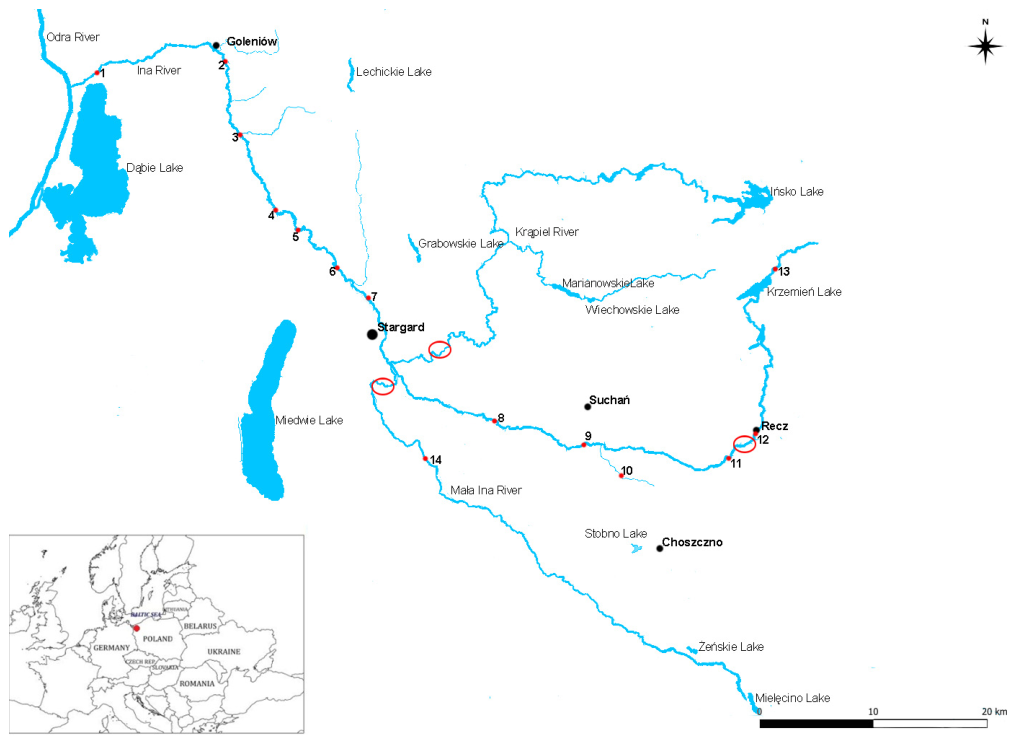
The Ina river, situated in the Baltic Sea basin, is a second-order right tributary of the Oder river, into which it flows at the village of Inoujście (53.534173° N, 14.635871° E). The Ina spans 126 km in length, with a catchment area of 2151 km2. Its largest tributaries include Krąpiel, Mała Ina, Stobnica with Wardynka, Reczyca, and Wiśniówka (Figure 1). In addition, smaller tributaries flow into the Ina, such as the Pęzinka, Sławęcinka, and Małka. At the project’s inception, the Ina was only partially a typical river of the grayling and trout region. Nevertheless, due to its connection to the Baltic Sea via the Oder, it has long been a migration destination for valuable salmonid species such as salmon and sea trout during the autumn season. Currently, the ecological state of the Ina is the focus of active improvement efforts, significantly bolstered by actions undertaken within this project. Increased knowledge of the river’s potential and threats allows for targeted interventions in well-selected sections, particularly those promising for the recovery of robust, naturally reproducing migratory fish populations and their accompanying species.
The Ina river basin includes agricultural, forested, and urbanized areas. In the 1980s, the river was subjected to intense anthropogenic pressure. Numerous drainage works eliminated oxbow lakes and shortened, deepened, and regulated the river channel. The Ina river basin hosts numerous (28) hydrotechnical barriers that impede fish migration. The first such structure is located at the 57 km mark of the Ina’s main course. Some of these hydrotechnical installations hinder fish from reaching the upper tributaries of the basin, especially in the main course of the Ina: the weirs in Żukowo, Piasecznik, Recz, and in the main tributary, the Krąpiel river, at the Święte and Pęzino outlets.

2.2. Characterization of the Ina River Basin Environment

During the initial field monitoring, 14 strategic measurement points (stations) were identified. At these locations, water samples were collected for hydrochemical analysis, water flow rates were measured, and the quality of the riverbed substrate was assessed (Figure 1).

2.2.1. Sampling Methods

Water samples were collected from the central part of each station in accordance with standards, at the same locations where substrate structure studies were conducted. During sampling, water temperature, pH, and electrolytic conductivity were measured. The collected samples were analyzed for water quality following the methodologies outlined below (Table 1).
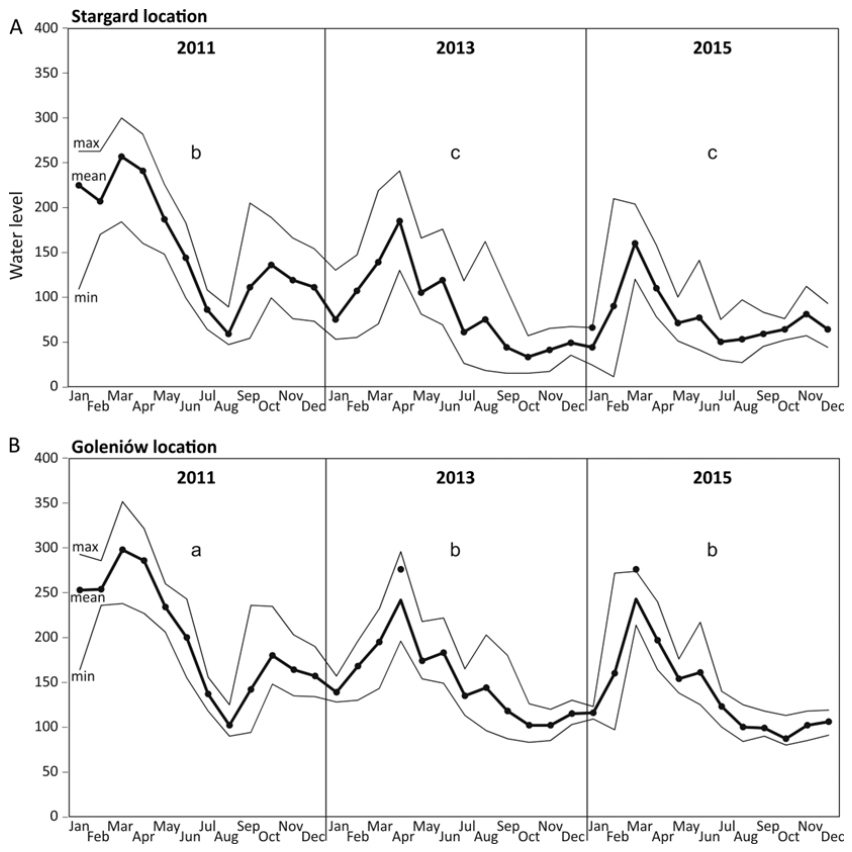
Additionally, water flows at designated points in the Ina river were measured using a hydrometric current meter (SEBA Hydrometrie type F1, SEBA Hydrometrie GmbH & Co. KG., Kaufbeuren, Germany). Water levels in the river were estimated based on average monthly measurements conducted by the Institute of Meteorology and Water Management—National Research Institute (IMWM-NRI) at two representative stations on the Ina river (Stargard and Goleniów).

2.2.2. Analysis of Riverbed Substrate

To assess the granulometry of the riverbed, sediment samples were collected from designated points at each measurement station. Samples were taken using a core sampler (KC Denmark Kajak system), which allows for the collection of samples with undisturbed substrate structure. At each research station, samples were taken from three locations: 1 m from the bank, 3 m from the bank, and the center of the river channel. Individual sediment samples were placed separately in tightly sealed containers and transported to the laboratory at the Department of Hydrobiology, Ichthyology, and Reproduction Biotechnology at the West Pomeranian University of Technology in Szczecin. There, after drying, the samples were separated into fractions using a laboratory shaker (MULTISERW-Morek LPzE-2e type, Marcyporęba, Poland) equipped with a system of 5 sieves.
The device allowed for the separation of substrate fractions with the following grain sizes: below 100 µm; from 100 µm to 1 mm; from 1 mm to 5 mm; from 5 mm to 10 mm; and from 10 mm to 20 mm. In coarser fractions (<20 mm), individual grains from each sample were measured.
Each sample, weighing 5 kg, was placed in the upper compartment of the shaker and sieving took 15 min. After drying and sieving the substrate samples, all fractions were weighed and their percentage composition was determined. The separated fractions were weighed using a laboratory scale (RADWAG PS 6001.X2) with an accuracy of 0.1 g.
The energy parameters of the stream at the surveyed stations were analyzed by measuring the flow velocity and the river channel parameters. This methodology allowed for the optimal selection of gravel–cobble mix granulation to maximize spawning success while ensuring the durability of the constructed spawning grounds.

2.3. Monitoring of Autumn Salmonid Migrations

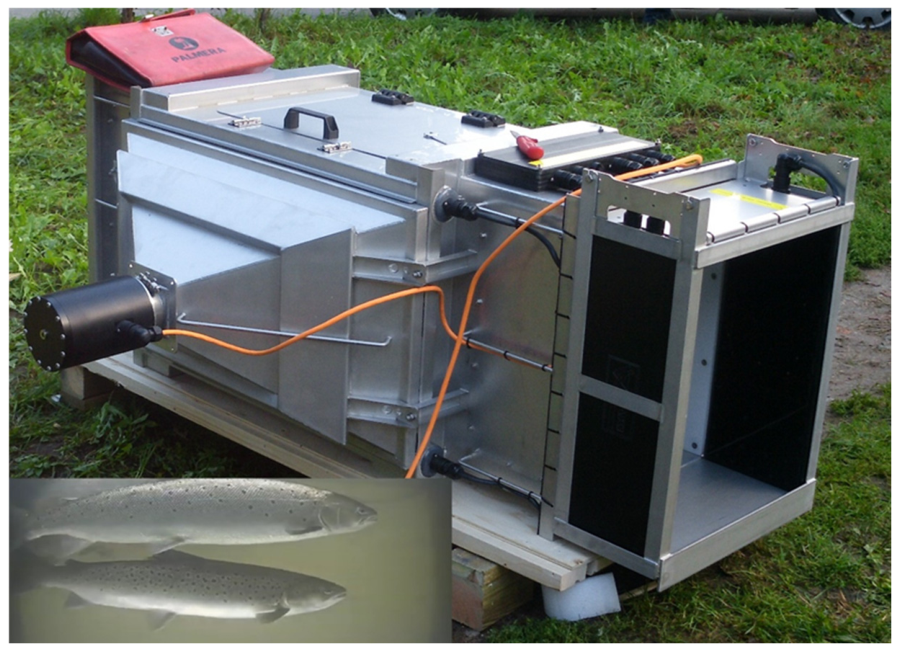
In the fish pass chamber of the weir located at the 56th kilometer of the Ina river, the first weir impeding upstream migration in the catchment, a scanner with a camera (Riverwatcher VAKI Aquaculture Systems Ltd., Kópavogur, Iceland) was installed (Figure 2).
The device recorded fish by capturing their size, date, and time of passage through the fish pass. The image recording allowed for the later identification of species. The de-vice documented every fish passing through the scanner, both at night and during the day, presenting its outline and total body length (cm). Thanks to the control unit, information from the scanner was transmitted to a computer for further analysis.

2.4. Monitoring of Redds

To determine the number of redds built by salmonid fish, two teams (one on each side of the river) moved along each bank of the stream in the Ina river basin from the river’s mouth to its source after the spawning season (January–March) had concluded. In deeper sections of the stream, monitoring was conducted from a boat. Upon locating a redd, its GPS coordinates were recorded on a map, and the redd’s length and width were measured. If other redds were found within a 10-m radius, the area was marked on the map as a spawning region.
Based on previous research by Dębowski et al. [22], redds with a diameter up to 60 cm were identified as brown trout redds, those between 60 and 180 cm as sea trout redds, and redds larger than 180 cm as salmon redds.

2.5. Preparation of Substrate for Creating New Fish Spawning Grounds

The spawning ground projects in the Ina river were developed by the Bureau of Design and Implementation of Environmental Investments “Środowisko,” based on detailed river monitoring, including hydrological and environmental parameters studied in 2012 during the salmonid migration months. The prepared technical documentation considered the requirements of salmonid fish, which are necessary for the fish to spawn in a particular part of the river. Based on the results, three locations were selected for future spawning ground construction: the first in the Sławęcinka River (53°15′08.6″ N 15°20′00.8″ E), the second in the Reczyca River (53°15′23.7″ N 15°20′43.7″ E), and the third in the upper section of the Ina River below the town of Recz (53°15′31.5″ N 15°32′07.6″ E).
Creating spawning grounds involved replacing the existing substrate in the river (sand with silt) with a gravel–cobble substrate in the following proportions: 64–200 mm cobbles (10%), 32–64 mm very coarse gravel (35%), 16–32 mm coarse gravel (25%), 8–16 mm medium gravel (20%), and 4–8 mm fine gravel (10%).
Stones with a diameter of 400–600 mm placed upstream of the spawning grounds were intended to modulate the water stream to adjust the flow velocity. At an average water level, these stones were completely submerged. Another element of the spawning grounds were barriers (ridges) made of 150–200 mm cobbles. Gravel, with a volume of 2.7–3 m3, was distributed in the river in patches, creating small riffles, with the crest elevation not higher than the lowest water level in the river. The depths between the upper part of the gravel patch and the river’s water level ranged from 30 to 50 cm. Directly downstream of the spawning grounds, to prevent substrate movement, stones with diameters of 300–400 mm were arranged to form an interlocking “mesh” of stones.

2.6. Data Analysis

Environmental variables (standardized) were subjected to Principal Component Analyses (PCA) (separate for riverbed characteristics and chemical parameters, due to different sampling intervals) to reduce the number of variables. Then, ANOVAs were conducted on the obtained Principal Components (two for bed characteristics, four for chemical parameters) with year (for bed characteristics analysis) or year and season (for chemical parameter analysis) as within-subject factors. Water level (minimum, maximum, and mean monthly values) was analyzed separately using an ANOVA with year as a within-subject factor and location as a between-subject factor.
To examine the effect of year and environmental factors on the number of redds, we used a Generalized Linear Model (Poisson distribution, log link function) with year as a categorical factor and the Principal Components obtained from the PCA as continuous covariates. We only included data for locations where redds were counted and chemical data for autumn and winter when fish entered the river and built redds. The model was simplified by removing non-significant terms.
Significant ANOVA effects were further explored using sequential Bonferroni-corrected Fisher LSD tests as a post-hoc procedure.

3. Results

3.1. Analysis of Environmental Conditions in the Ina River

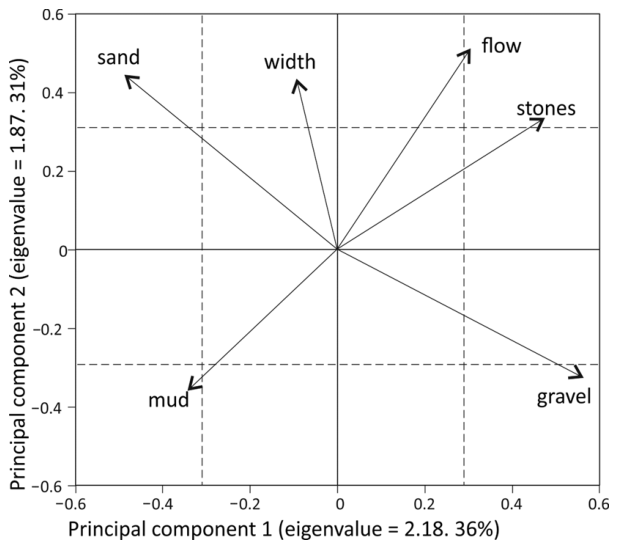
The PCA conducted on riverbed characteristics resulted in two principal components that together explained 67% of the dataset’s variability (Figure 3). Component 1 showed a positive correlation with the presence of coarse substrata (gravel and stones) and water flow, while it was negatively correlated with the presence of mud and sand. Component 2 was positively correlated with water flow, bed width, and the presence of sand and stones, but negatively associated with the presence of mud and gravel.
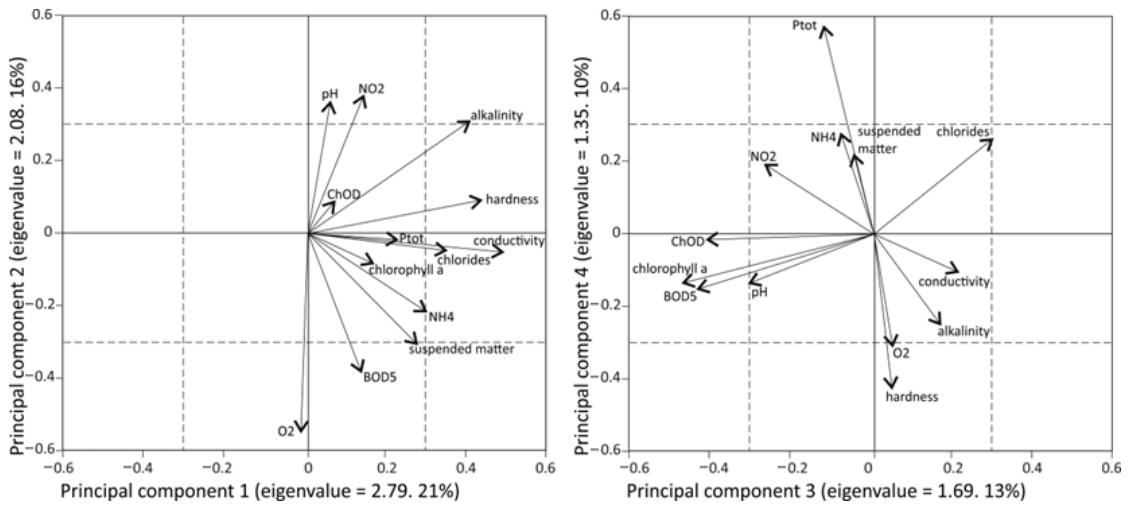
The PCA conducted on water chemical parameters identified four principal components, explaining 60% of the total variance in the data (Figure 4). Component 1 was positively correlated with water conductivity, hardness, alkalinity, and the concentrations of chlorides and ammonium. Component 2 was positively associated with the concentrations of nitrites, water pH, and alkalinity, and negatively related to oxygen concentration, biological oxygen demand, and suspended matter. Component 3 showed a positive correlation with chloride concentration and negative associations with chlorophyll a concentration, biological and chemical oxygen demands, and water pH. Component 4 was positively correlated with total phosphorus concentration and negatively correlated with water hardness and oxygen concentration. These principal components, representing sets of correlated environmental variables, were compared across years and seasons using ANOVAs.
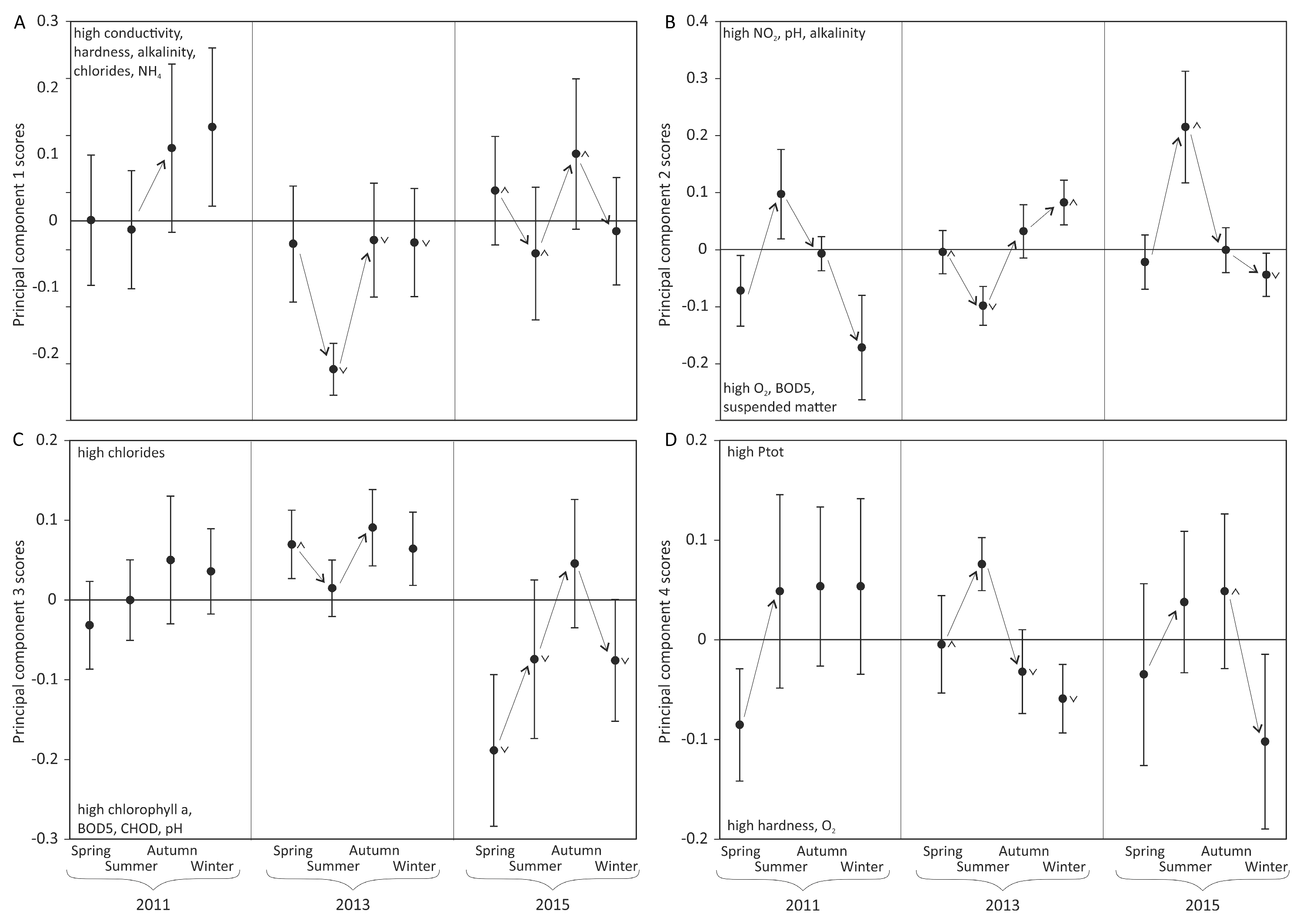
The analysis of the two components related to riverbed characteristics showed no significant effect of the sampling year on these variables (Table 2A). In contrast, all four components based on chemical parameters of water were influenced by interactions between sampling year and season (Table 2B).
PC2 values were higher in spring and winter but lower in summer of 2013. In 2015, PC2 values increased in summer but decreased in winter compared to 2013 (Figure 5B). Overall, the seasonal differences in 2013 (maximum in summer, minimum in winter) were the opposite to those observed in 2011 and 2015 (maximum in winter, minimum in summer).
PC3 values increased from 2011 to 2013 in spring and then decreased in 2015 across spring, summer, and winter (Figure 5C). In 2013, summer PC values were the lowest. In 2015, they gradually increased from spring to autumn and then decreased in winter.
PC4 values increased from 2011 to 2013 in spring but decreased in autumn and winter (Figure 5D). In 2015, PC4 values increased in autumn compared to 2013.
Spring PC4 values were consistently lower than summer values. Decreases were also observed between summer and autumn (2013) and between autumn and winter (2015).
Water level variables (mean, minimum, and maximum) differed between locations, being higher in Goleniów, and varied among years, with levels being higher in 2011 than in subsequent years (Table 2C, Figure 6).

3.2. Salmonid Redds

The results presented in this subsection represent the number of nests for all spawning grounds (Sławęcinka, Reczyca, and the upper Ina River). Furthermore, all nests located belonged to sea trout. The number of redds in 2011 (mean ± SD: 3 ± 1) was significantly lower than in 2013 (23 ± 11) and 2015 (21 ± 14) (Table 3). Additionally, the number of redds showed a positive correlation with both principal components related to riverbed characteristics and with principal component 1 based on chemical parameters. This indicates that redds were predominantly found in areas with high water flow, as well as elevated values of water conductivity, hardness, and alkalinity.

3.3. Monitoring of Salmonid Fish Migrations

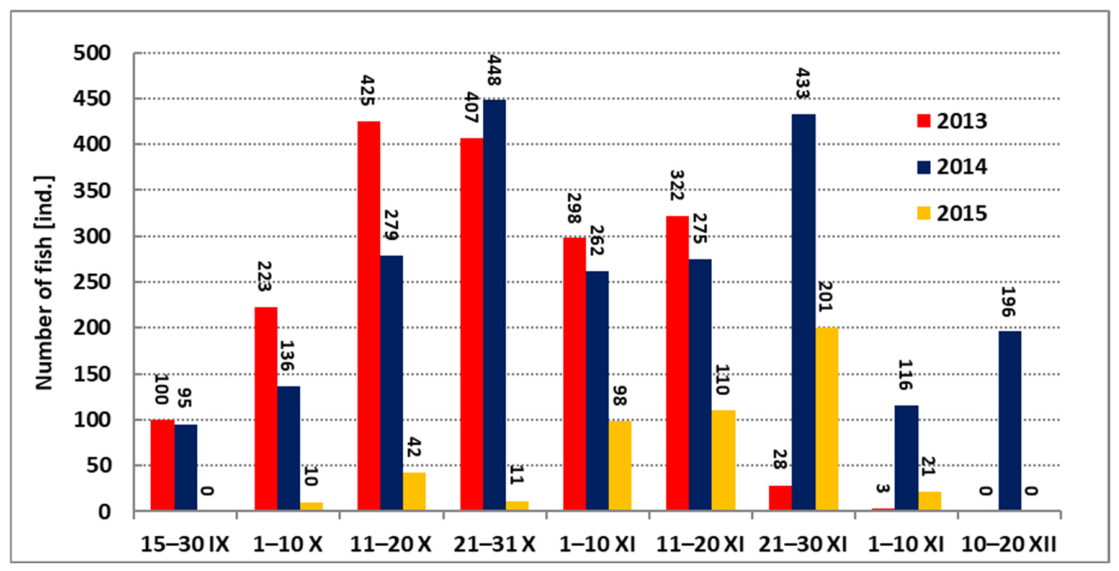
During the autumn spawning migrations of salmonid fish to the upper reaches of the Ina river basin from 2013 to 2015, a total of 4593 fish were recorded passing through the fish pass in Stargard using a scanner. In 2013, 1806 fish were registered, including 4 salmon and 1802 sea trout. In 2014, 2240 fish were recorded, including 3 salmon and 2237 sea trout. In 2015, 493 sea trout were noted (Figure 7).
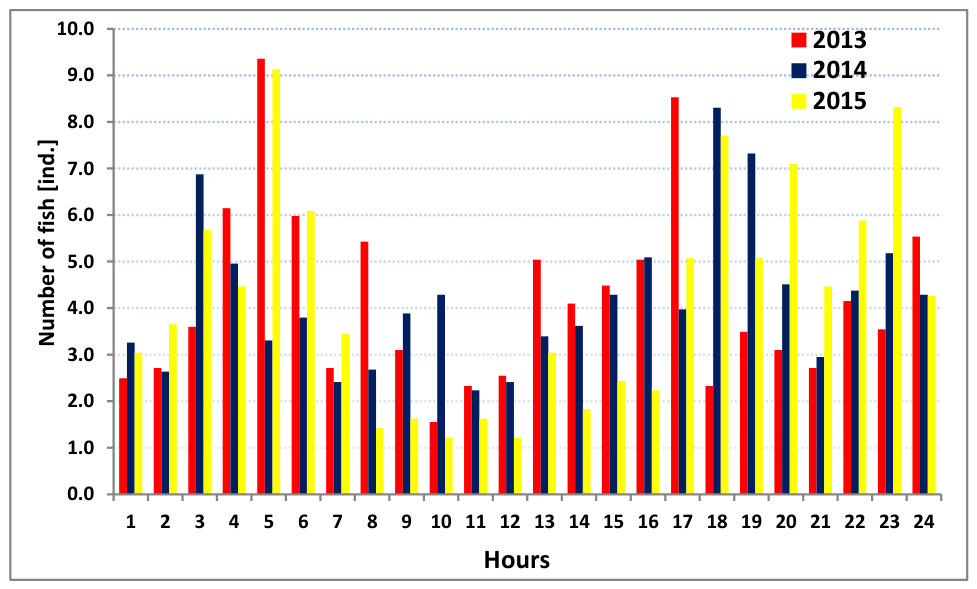
Analyzing the daily migration cycle of fish, it was found that the largest numbers of migrating fish occurred between 3:00 and 6:00 and between 17:00 and 24:00 (Figure 8).
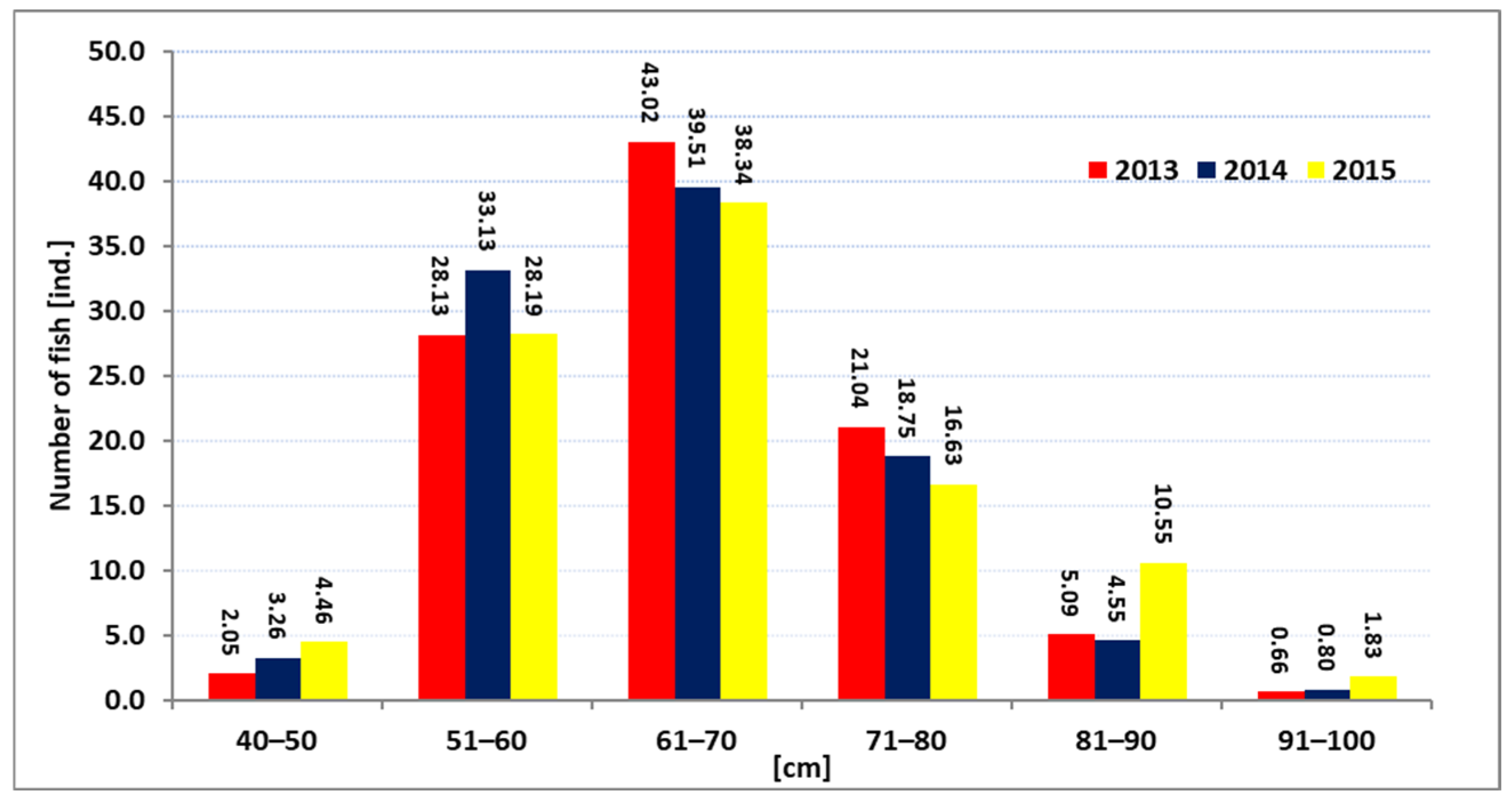
Considering the size ranges of the fish, it was found that most migrating individuals were in the length range (total length, LT) of 61–70 cm (Figure 9). The fewest migrating fish were in the size range of 91–100 cm.
The table below presents the number of sea trout redds at individual locations across the entire Ina River catchment (Table 4).

3.4. Redds in Newly Established Spawning Ground Sections

In the Sławęcinka river, before the construction of spawning grounds, studies conducted from 2004 to 2007 recorded 3 to 5 redds. After the spawning ground was established in 2013, sea trout built 22 spawning mounds that year, 11 redds in 2014, and 10 redds in 2015. Similarly, in another tributary of the Ina river, Reczyca, where spawning grounds were constructed, up to 5 redds were recorded in the years preceding the construction. From 2013 onward, the number of redds increased, with 14 redds in 2013, 16 redds in 2014, and 12 redds in 2015.
In the upper reaches of the Ina river, below Recz, no redds were found from 2005 to 2007. However, in 2013, one redd was identified, and in 2014, on the newly established spawning ground, sea trout built 8 redds. The following year, in 2015, fish built 11 redds on this spawning ground.

4. Discussion

The salmon restoration project in European waters, in addition to restocking streams, includes efforts to improve environmental conditions that allow spawning fish to reach the upper parts of rivers by clearing streams and constructing fish passes [33,34,35]. When restoring habitats, hydrotechnical structures play a significant role in disrupting the migration of anadromous fish [7]. Numerous studies confirm that fish passes are only a temporary solution and should be part of a broader environmental management strategy [36]. Research on fish passes in Brazil indicates that the system favors fish with certain morphological and physiological profiles, which can significantly impact fish populations and imply artificial selective pressure [37]. Considering this and the effectiveness of fish passes, alongside the systematic lowering of groundwater levels, the critical factor is the water level in the river, especially around the fish pass area.
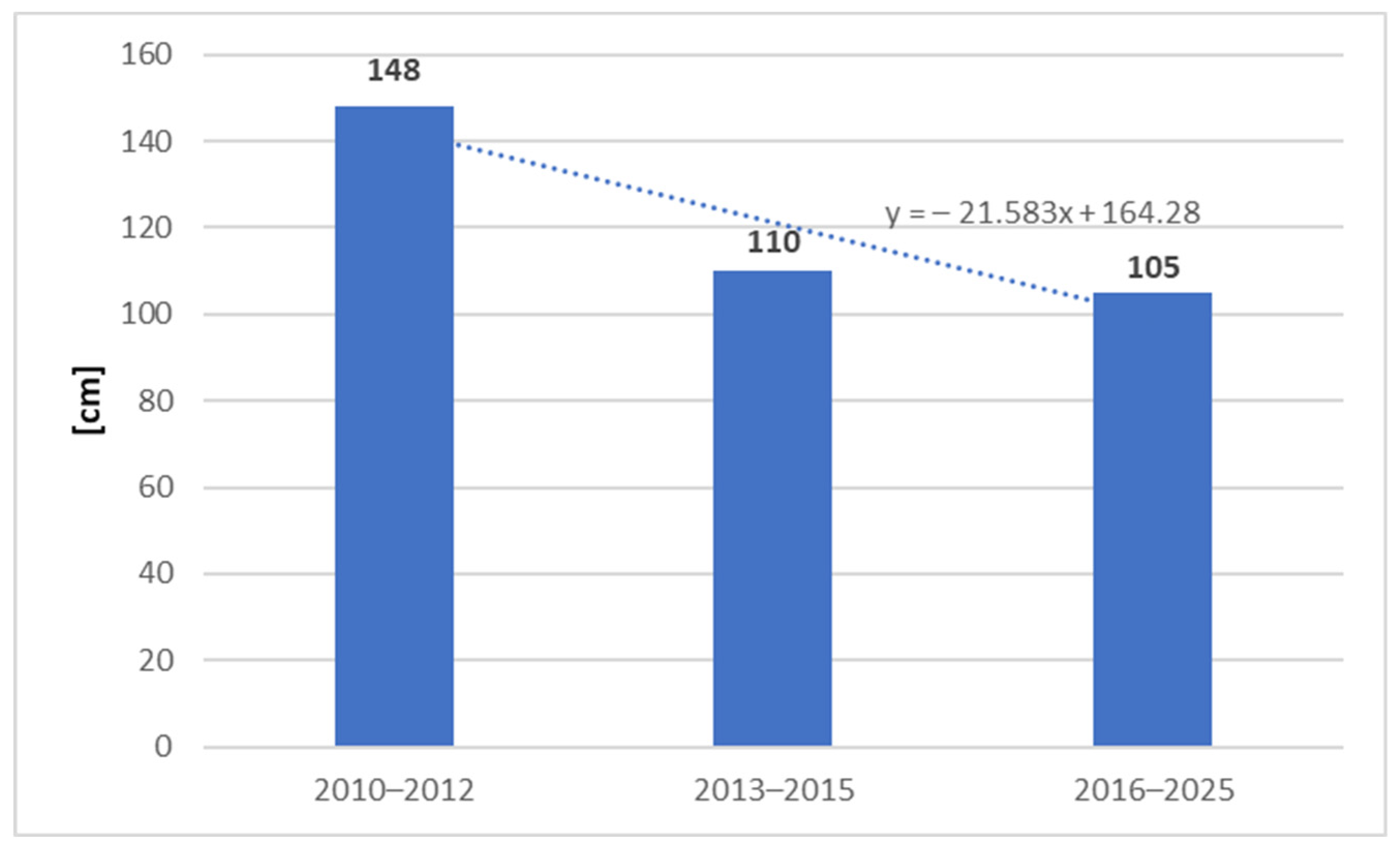
In the Ina river, water levels were monitored before and after the project implementation using two water gauges. The results showed a significant decrease in water levels over the past 15 years (Figure 10).
Despite the average water levels in the Ina river being higher between 2011 and 2013 before the project implementation (data from IMWM-NRI) and a systematic decline in water levels since then, the number of redds built remained higher after the hydraulic works (creation of spawning grounds) than before their establishment.
Modern techniques such as hydroacoustic transmitters [38], rotary screw traps [39], and the Vaki-Riverwatcher are currently used to assess salmonid fish migration. The Vaki-Riverwatcher registers the day and time of passage, fish silhouette, height, direction of movement (upstream/downstream), speed of the fish, and water temperature [40,41]. Telemetry is now an innovative and essential method for identifying issues related to salmonid fish migration [42].
Studies conducted using VAKI devices can monitor fish migration and serve as an element in assessing the reproductive potential of a given stream. These results should be used to verify stocking practices to avoid restocking areas where fish from natural spawning are already thriving, thereby preventing additional competition for food.
High water flow and nighttime hours favor salmonid fish migration, as confirmed by studies conducted by Aldvén et al. [38] using hydroacoustic transmitters. Our research also reflected this, with the highest number of fish passing through the scanner in Stargard during evening and nighttime hours.
Comparing the migration of hatchery-raised salmon with those from natural spawning showed that naturally spawning individuals exhibited a greater migration range, while hatchery salmon primarily inhabited lower river sections, 50 to 70 km from the sea [43]. The restoration of salmon in Polish rivers has been ongoing for many years [11,44]. Despite many successes, a persistent issue is the lower adaptation of hatchery-produced fish to the natural environment compared to wild fish. Jonsson & Jonsson [45] report that hatchery-reared juveniles are more susceptible to predation than naturally hatched river fish. They also struggle to adapt to natural environments due to foraging difficulties and environmental changes [46].
Our preliminary research results in the Ina river basin indicate the effectiveness of restoring natural spawning sites and show great potential for further refinement and application in other rivers in Poland and Europe, particularly where salmonid fish once thrived but are now absent [30,47,48].
The advantages of this method include the quality of offspring subjected to natural selection from the moment of fertilization. The juveniles find optimal growth locations independently, and spawning pairs that survive contribute to the future breeding stock [25]. Another significant benefit of natural spawning is the broader genetic pool, as fish select mates from the entire accessible catchment, unlike artificial spawning where fertilization is limited to a few males [49]. Additionally, creating spawning grounds for natural salmonid reproduction provides an environmental benefit, serving as excellent spring spawning habitats for other species such as lampreys, sculpins, and brown trout.
The fraction of the spawning substrate is significant as it retains water above, creating micro-dams, and the resulting riffles promote water oxygenation (unpublished own research). The quality of the riverbed is crucial for proper early ontogenetic development. Continuous drainage works have often led to substrates dominated by sandy–silty fractions, resulting in a lack of natural environmental diversity. The absence of gravel-stone structures decreases the survival chances of juveniles and prevents spawners from building redds. Research indicates that salmon and sea trout prefer gravel substrates with a granulation of 16–64 mm for spawning [27]. Too fine gravel, especially when mixed with sandy or silty substrates, creates lethal conditions. Another cause of reduced natural spawning success is the silting of spawning grounds, which deposits fine organic matter and sand on gravel beds, impairing water flow dynamics and thus oxygen conditions [50]. This is confirmed by our study in the Ina river basin, where PCA statistical analysis highlighted the importance of coarse substrate (gravel and stones) for fish reproduction.
For the reproduction of particularly sensitive fish such as salmonids, water quality and river hydrographic parameters are also crucial. This study on the Ina river did not find a significant increase in nutrient concentrations. However, the waters in the spawning areas were characterized by high specific conductivity, hardness, and alkalinity. No relationship was found between these parameters and the oxygen content in the water. The dynamics and seasonal changes in water oxygenation and temperature in rivers depend on land use in the catchment area [51]. The reproductive success of fish in the Ina indicates that the current oxygenation levels are adequate.
PCA statistical analysis showed that water flow and river channel width significantly influenced fish migration to spawning grounds. Comparing salmonid spawning activity, sea trout respond more slowly to changes in river flow and can spawn even at lower flow rates, unlike salmon [52].
In addition to the speed and volume of flowing water, the water level in the river channel also significantly affected fish migration to spawning grounds. Over the years of the study, the water level in the Ina river significantly decreased, leading to fewer fish migrating to the river to spawn (in 2015), as recorded by the scanner at the fish pass. Despite the reduced number of fish in the river, the number of constructed redds remained significant—92 redds. Long-term observations showed that although fewer fish, the number of redds built by migrating fish remained at a similar level. In Sławęcinka, fish created 8 redds in 2016, 25 redds in 2017, 11 redds in 2018, 9 redds in 2021, and 6 redds in 2022. In Reczyca, sea trout built 14 redds in 2016, 32 redds in 2017, 11 redds in 2018, 12 redds in 2021, and 7 redds in 2022. An exception was 2017, with 170 redds in tributaries and the main river, significantly more than in other years. This was due to exceptionally high water levels throughout the watershed for the entire hydrological year. The last monitoring of sea trout redds in the Ina River basin in 2024–2025 averaged 89 redds.
The decline in water levels is mainly associated with climate changes observed worldwide. Climate change directly or indirectly affects the natural environment, resulting in hydrological changes in catchments [53]. Climate warming and watercourse regulation impact the thermal and oxygenation conditions of rivers and flow rates in river systems, thus disrupting salmonid migration [54,55]. This is a critical problem for migratory fish species with complex biology, which utilize rivers for reproduction. Salmonids are key migratory species that enhance ecosystem biodiversity and regional attractiveness. Therefore, a comprehensive understanding of the impact of environmental stressors on the reproductive success of these fish species is crucial for ensuring population stability amid ongoing climate changes.
In recent decades, a significant decline in runoff has been observed in the Ina River catchment, which is primarily associated with rising air temperatures and intensified evapotranspiration processes [56]. These patterns are consistent with broader changes observed in the Odra River basin, where climate change alters the hydrological regime by affecting precipitation, river discharge, and water resources of ecosystems [57].

5. Conclusions

In our opinion, supporting the natural reproduction of migratory salmonids is consistent with responsible biodiversity management. Currently, due to ongoing environmental changes resulting from hydraulic development, lower water levels, river channel regulation, and pollution, supporting natural reproduction should, in many cases, be implemented in parallel with stocking.
Using the example of the coastal Ina River basin, we conclude that restoring gravel and rock habitats in the river has a positive and long-term effect on maintaining potential natural breeding sites for lithophilous fish. In light of these dynamic environmental changes, this requires constant monitoring and supplementation with fish stocking from within the catchment area. Such measures are consistent with increasingly widespread efforts to counteract the effects of human pressure and to maintain natural retention, and should be implemented throughout the entire Baltic Sea basin where salmonid populations occur.

Author Contributions

Conceptualization, A.T., A.K.-O. and K.F.; methodology, A.T., A.B., A.K.-O., M.B. and K.F.; software, A.T., A.B., A.K.-O., B.W. and K.F.; validation, A.T. and A.B.; formal analysis, A.T. and A.K.-O.; investigation, A.T., A.B., A.K.-O., M.B. and K.F.; resources, A.T., A.B., A.K.-O., M.B. and K.F.; data curation, A.T., A.B., A.K.-O., M.B. and K.F.; writing—original draft preparation, A.T., A.B., A.K.-O. and K.F.; writing—review and editing, A.T. and A.B.; visualization, A.T., A.B., A.K.-O. and K.F.; supervision, A.T., A.B. and K.F.; project administration, A.K.-O.; funding acquisition, K.F. All authors have read and agreed to the published version of the manuscript.

Funding

This study was carried out within the framework of the project “Supporting the natural reproduction of migratory salmonid fish (sea trout and salmon) in the Lower Oder River basin and the Szczecin Lagoon, based on environmentally friendly measures including the construction of spawning grounds, biological and environmental monitoring, and the project’s role in the socio-economic development and restructuring of the region”, implemented under the funding agreement No. 00010-61720-OR1600006/12.

Data Availability Statement

The original contributions presented in this study are included in the article. Further inquiries can be directed to the corresponding author.

Acknowledgments

We would like to thank Institute of Meteorology and Water Management—National Research Institute for providing data on water levels and flows in the Ina River. We also sincerely thank the staff of the Polish Angling Association (Szczecin District) for their substantive support and assistance in conducting field research.

Conflicts of Interest

The authors declare no conflicts of interest.

References

  1. Olsén, H.; Petersson, E.; Ragnarsson, B.; Lundqvist, H.; Järvi, T. Downstream migration in Atlantic salmon (Salmo salar) smolt sibling groups. Can. J. Fish. Aquat. Sci. 2011, 61, 328–331. [Google Scholar] [CrossRef]
  2. Kacem, A.; Baglinière, J.-L.; Meunier, F.J. Resorption of scales in Atlantic salmon (Salmo salar) during its anadromous migration: A quantitative study. Cybium 2013, 37, 199–206. [Google Scholar]
  3. Berdahl, A.; Westley, P.A.H.; Quinn, T.P. Social interactions shape the timing of spawning migrations in an anadromous fish. Anim. Behav. 2017, 126, 221–229. [Google Scholar] [CrossRef]
  4. Lothian, A.J.; Newton, M.; Barry, J.; Walters, M.; Miller, R.C.; Adams, C.E. Migration pathways, speed and mortality of Atlantic salmon (Salmo salar) smolts in a Scottish river and the near-shore coastal marine environment. Ecol. Freshw. Fish. 2017, 27, 549–558. [Google Scholar] [CrossRef]
  5. Lejk, A.M.; Hliwa, P. Reproductive parameters of wild and hatchery-reared sea trout (Salmo trutta m. trutta L.) females from the Łeba River (southern Baltic Sea). J. Fish Biol. 2026, 1–10. [Google Scholar] [CrossRef]
  6. Štefunková, Z.; Macura, V.; Doláková, G.; Majorošová, M. Evaluation of the hydro-ecological quality of the aquatic habitat of the Váh River. J. Water Land Dev. 2020, 46, 209–215. [Google Scholar] [CrossRef]
  7. Tentelier, C.; Piou, C. Obstacles to migration constrain nest distribution of Atlantic salmon. Ecol. Freshw. Fish. 2011, 20, 400–408. [Google Scholar] [CrossRef]
  8. Juanes, F.; Gephard, S.; De La Hoz, J.; Moran, P.; Dopico, E.; Horreo, J.L.; Garcia-Vazquez, E. Restoration of native Atlantic salmon runs in northern Spain: Do costs outweigh benefits? Knowl. Manag. Aquat. Ecosyst. 2012, 402, 22. [Google Scholar] [CrossRef]
  9. Lennox, R.J.; Birnie-Gauvin, K.; Bate, C.; Cooke, S.J.; Haraldstad, T.; Berhe, S.; Penney, H.D.; Bangley, C.W.; Vollset, K.W.; Piczak, M.L. Marine Fish Passage—Underappreciated Threats to Connectivity Within the Marine Environment. Mar. Ecol. 2025, 46, e12859. [Google Scholar] [CrossRef]
  10. Radtke, G.; Bernaś, R. Temperature tolerance of European fish species based on thermal maxima in southern Baltic Sea-basin streams. Ecol. Indic. 2025, 170, 113107. [Google Scholar] [CrossRef]
  11. Bartel, R.; Pelczarski, W.; Kardela, J.; Nadolna-Ałtyn, K.; Lejk, A.M. Restytucja łososia i troci w wodach Polski: Przegląd i kalendarium działań. In 95-Lecie Morskiego Instytutu Rybackiego: Aktualne Tematy Badań Naukowych Chapter: TOM I—Zasoby Ryb i Rybołówstwo; Morski Instytut Rybacki—Państwowy Instytut Badawczy: Gdynia, Poland, 2016; pp. 69–80. [Google Scholar]
  12. Kesminas, V.; Virbickas, T.; Repečka, R. The Present State of Salmon (Salmo salar L.) in Lithuania. Acta Zool. Litu. 2003, 13, 176–187. [Google Scholar] [CrossRef]
  13. Aprahamian, M.W.; Martin Smith, K.; McGinnity, P.; McKelveye, S.; Taylor, J. Restocking of salmonids—Opportunities and limitations. Fish. Res. 2003, 62, 211–227. [Google Scholar] [CrossRef]
  14. Saavedra-Nieves, P.; Crujeiras, R.M.; Vieira-Lanero, R.; Caballero, P.; Cobo, F. Assessing the effect of recovery programs for salmon (Salmo salar Linnaeus, 1758) at its Southern limit in Europe: Application of segmented regression models to long-term data from the Ulla River. Limnetica 2021, 40, 189–203. [Google Scholar] [CrossRef]
  15. Bass, A.; Hinch, S.G.; Casselman, M.T.; Bett, N.N.; Burnett, N.J.; Middleton, C.T.; Patterson, D.A. Visible Gill-Net Injuries Predict Migration and Spawning Failure in Adult Sockeye Salmon. Trans. Am. Fish. Soc. 2018, 147, 1085–1099. [Google Scholar] [CrossRef]
  16. Gomułka, P. Rola wylęgarni w łańcuchu szerzenia się chorób zakaźnych. In Innowacyjne Metody w Rozrodzie i Wylęgarnictwie Ryb—Materiały Szkoleniowe; Szczerbowski, A., Łuczyński, M.J., Szkudlarek, M., Eds.; Wyd. IRŚ: Olsztyn, Poland, 2008; pp. 33–40. [Google Scholar]
  17. Barlaup, B.; Moen, V. Planting of salmonid eggs for stock enhancement—A review of the most commonly used methods. Nord. J. Fresh. Res. 2001, 75, 7–19. [Google Scholar]
  18. Rubin, J.-F.; Glimsäter, C.; Jarvi, T. Characteristics and rehabilitation of the spawning habitats of the sea trout, Salmo trutta, in Gotland (Sweden). Fish. Manag. Ecol. 2004, 11, 15–22. [Google Scholar] [CrossRef]
  19. Zimmer, M.P.; Power, M. Brown trout spawning habitat selection preferences and redd characteristics in the Credit River, Ontario. J. Fish Biol. 2006, 68, 1333–1346. [Google Scholar] [CrossRef]
  20. Barlaup, B.; Gabrielsen, S.; Skoglund, H.; Wiers, T. Addition of spawning gravel—A means to restore spawning habitat of Atlantic salmon (Salmo salar L.) and anadromous and resident brown trout (Salmo trutta L.) in regulated rivers. River Res. Appl. 2008, 24, 543–550. [Google Scholar] [CrossRef]
  21. Palm, D.; Lepori, F.; Brännäs, E. Influence of habitat restoration on post-emergence displacement of brown trout (Salmo trutta L.): A case study in a northern Swedish stream. River Res. Appl. 2010, 26, 742–750. [Google Scholar] [CrossRef]
  22. Dębowski, P.; Bernaś, R.; Radtke, G.; Skóra, M.E. Stan Populacji Troci Wędrownej (Salmo trutta m. Trutta) i Łososia (Salmo salar) w Dorzeczu Słupi i Możliwości Optymalizacji Tarła Tych Gatunków; Wydawnictwo IRSI: Olsztyn, Poland, 2008. [Google Scholar]
  23. Dębowski, P. The largest Baltic population of sea trout (Salmo trutta L.): Its decline, restoration attempts, and current status. Fish. Aquat. Life. 2018, 26, 81–100. [Google Scholar] [CrossRef]
  24. Bernaś, R.; Dębowski, P.; Bartel, R.; Radtke, G.; Miller, M.; Skóra, M. Occurrence of juvenile salmon, Salmo salar L., from natural spawning in the Słupia River (northern Poland). Arch. Pol. Fish. 2009, 17, 317–321. [Google Scholar] [CrossRef]
  25. Crisp, D.T.; Carling, P.A. Observations on siting, dimensions and structure of salmonid redds. J. Fish Biol. 1989, 34, 119–134. [Google Scholar] [CrossRef]
  26. Beard, T.D.; Carline, R.F. Influence of spawning and other stream habitat features on spatial variability of wild brown trout. Trans. Am. Fish. Soc. 1991, 120, 711–722. [Google Scholar] [CrossRef]
  27. Louhi, P.; Mäki-Petäys, A.; Erkinaro, J. Spawning habitat of Atlantic Salmon and brown trout: General criteria and intragravel factors. River Res. Appl. 2008, 24, 330–339. [Google Scholar] [CrossRef]
  28. Nika, N.; Virbickas, T.; Kontautas, A. Spawning site selection and redd gravel characteristics of sea trout Salmo trutta in the lowland streams of Lithuania. Oceanol. Hydrobiol. Stud. 2011, 40, 46–56. [Google Scholar] [CrossRef]
  29. Rivinoja, P.; McKinnell, S.; Lundqvist, H. Hindrances to upstream migration of atlantic salmon (Salmo salar) in a northern Swedish river caused by a hydroelectric power-station. River Res. Appl. 2001, 17, 101–115. [Google Scholar] [CrossRef]
  30. Tański, A.; Bonisławska, M.; Szulc, J.; Brysiewicz, A.; Formicki, K. Zasadność budowy tarlisk dla ryb wędrownych ryb łososiowatych zlewni rzeki Iny na tle badań środowiskowych. Część I—Rzeka Ina. Woda-Sr.-Obsz. Wiej. 2011, 11, 253–268. [Google Scholar]
  31. Nędzarek, A.; Bonisławska, M.; Tórz, A.; Gajek, A.; Socha, M.; Harasimiuk, F.B. Water quality in the central reach of the Ina River (Western Pomerania, Poland). Pol. J. Environ. Stud. 2015, 24, 207–214. [Google Scholar] [CrossRef]
  32. APHA. Standard Methods for Examination of Water and Wastewater, 20th ed.; American Public Health Association: Washington, DC, USA, 1999; p. 1325. ISBN 0875532357. [Google Scholar]
  33. Mokwa, M. Przepławki dla ryb na stopniach regulacyjnych potoków górskich. Infrastrukt. Ekol. Teren. Wiej. 2007, 4, 279–287. [Google Scholar]
  34. Lenders, H.; Chamuleau, T.; Hendriks, A.; Lauwerier, R.; Leuven, R.; Verberk, W. Historical rise of waterpower initiated the collapse of salmon stocks. Sci. Rep. 2016, 6, 29269. [Google Scholar] [CrossRef]
  35. Wierzbicki, M. Problematyka przywrócenia migracji ryb przez obiekty hydrotechniczne w korytach rzecznych. Landf. Anal. 2013, 24, 107–113. [Google Scholar] [CrossRef]
  36. Celestino, L.F.; Sanz-Ronda, F.J.; Miranda, L.E.; Cavicchioli Makrakis, M.; Dias, J.H.P.; Makrakis, S. Bidirectional connectivity via fish ladders in a large Neotropical river: Response to a comment. River Res. Appl. 2020, 36, 1377–1381. [Google Scholar] [CrossRef]
  37. Volpato, G.L.; Barreto, R.E.; Marcondes, A.L.; Andrade, M.; Paula Sueliand de Barros, F.; Magali, F. Fish ladders select fish traits on migration-still a growing problem for natural fish populations. Mar. Freshw. Behav. Physiol. 2009, 42, 307–313. [Google Scholar] [CrossRef]
  38. Aldvén, D.; Hedger, R.; Økland, F.; Rivinoja, P.; Höjesjö, J. Migration speed, routes, and mortality rates of anadromous brown trout Salmo trutta during outward migration through a complex coastal habitat. Mar. Ecol. Prog. Ser. 2015, 541, 151–163. [Google Scholar] [CrossRef]
  39. Lundqvist, H.; Leonardsson, K.; Carlsson, U.; Larsson, S.; Nilsson, J.; Östergren, J.; Karlsson, L.; Rivinoja, P.; Serrano, I.; Palm, D.; et al. Monitoring Juvenile Atlantic Salmon and Sea Trout in the River Sävarån, Northern Sweden. In Conservation Monitoring in Freshwater Habitats; Hurford, C., Schneider, M., Cowx, I., Eds.; Springer: Dordrecht, The Netherlands, 2010; pp. 207–218. [Google Scholar] [CrossRef]
  40. García-Vega, A.; Sanz-Ronda, F.C.; Fuentes-Pérez, J.F. Seasonal and daily upstream movements of brown trout Salmo trutta in an Iberian regulated river. Knowl. Manag. Aquat. Ecosyst. 2017, 418, 9. [Google Scholar] [CrossRef]
  41. Haas, C.; Thumser, P.; Mockenhaupt, B.; Schletterer, M. Das System Vaki-Riverwatcher als Mög-lichkeit für ein Langzeitmonitoring von Fisch-Migration in Fischaufstiegsanlagen. Wasserwirtschaft 2018, 108, 41–48. [Google Scholar] [CrossRef]
  42. Holmsten, A. The Impact of Abiotic Factors on Daily Spawning Migration of Atlantic salmon (Salmo salar) in Two North Swedish Rivers. Master’s Thesis, Swedish University of Agricultural Sciences, Uppsala, Sweden, 2015; p. 36. Available online: http://stud.epsilon.slu.se (accessed on 10 February 2026).
  43. Moe, K.; Næsje, T.F.; Haugen, T.O.; Ulvan, E.M.; Aronsen, T.; Sandnes, T.; Thorstad, E.B. Area use and movement patterns of wild and escaped farmed Atlantic salmon before and during spawning in a large Norwegian river. Aquac. Environ. Interact. 2016, 8, 77–88. [Google Scholar] [CrossRef]
  44. Kaczmarczyk, D.; Bernaœ, R.; Nitkiewicz, A.; Gadomska, M.; Fopp-Bayat, D. Genetic characteristics of Atlantic salmon (Salmo salar) stocking material released into Polish rivers. Fish. Aquat. Life 2023, 31, 171–185. [Google Scholar] [CrossRef]
  45. Jonsson, B.; Jonsson, N. Restoration and enhancement of salmonid populations and habitats with special reference to Atlantic salmon. In Challenges for Diadromous Fishes in a Dynamic Global Environment, American Fisheries Society Symposium; American Fisheries Society: Bethesda, MD, USA, 2009; Volume 69, pp. 497–535. [Google Scholar] [CrossRef]
  46. Różyński, M.; Demska-Zakęś, K.; Różyński, R.; Formiski, K.; Zakęś, Z. Effects of functional feeds on hematological and biochemical indicators of juvenile sea trout (Salmo trutta m. trutta L.). Fish. Aquat. Life. 2021, 29, 124–134. [Google Scholar] [CrossRef]
  47. Tański, A.; Bonisławska, M.; Brysiewicz, A.; Korzelecka-Orkisz, A.; Formicki, K.; Wesołowski, P. Zasadność budowy tarlisk dla wędrownych ryb łososiowatych w zlewni Iny na tle badań środowiskowych. Część III—Pozostałe dopływy Iny. Woda-Sr.-Obsz. Wiej. 2013, 13, 129–144. [Google Scholar]
  48. ICES. Baltic Salmon and Trout Assessment Working Group (WGBAST); ICES Scientific Reports; ICES: Copenhagen, Denmark, 2020; Volume 2. [Google Scholar]
  49. Bernaś, R.; Wąs-Barcz, A.; Święcki, W.; Dębowski, P.; Radtke, G.; Tański, A.; Korzelecka-Orkisz, A.; Formicki, K. Brown trout in Oder estuary tributaries: Genetic structure, stocking, and admixture. J. Appl. Genet. 2025, 66, 183–193. [Google Scholar] [CrossRef]
  50. Dumas, J.; Marty, S. A new method to evaluate egg-to-fry survival in salmonids, trials with Atlantic salmon. J. Fish Biol. 2006, 68, 284–304. [Google Scholar] [CrossRef]
  51. Aristarkhova, E.O.; Fedoniuk, T.P.; Romanchuk, L.D.; Latushynskyi, S.V.; Kot, I.V. Features of the surface water oxygen regime in the Ukrainian Polesie Region. J. Water Land Dev. 2021, 49, 104–110. [Google Scholar] [CrossRef]
  52. Vollset, K.W.; Skoglund, H.; Wiers, T.; Barlaup, B.T. Effects of hydropeaking on the spawning behaviour of Atlantic salmon Salmo salar and brown trout Salmo trutta. J. Fish Biol. 2016, 88, 2236–2250. [Google Scholar] [CrossRef] [PubMed]
  53. Kovalenko, P.; Rokochinskiy, A.; Volk, P.; Turcheniuk, V.; Frolenkova, N.; Tykhenko, R. Evaluation of ecological and economic efficiency of investment in water management and land reclamation projects. J. Water Land Dev. 2021, 48, 81–87. [Google Scholar] [CrossRef]
  54. Fenkes, M.; Shiels, H.A.; Fitzpatrick, J.L.; Nudds, R.L. The potential impacts of migratory difficulty, including warmer waters and altered flow conditions, on the reproductive success of salmonid fishes. Comp. Biochem. Physiol. A Mol. Integr. Physiol. 2016, 193, 11–21. [Google Scholar] [CrossRef]
  55. Morita, K. Earlier migration timing of salmonids: An adaptation to climate change or maladaptation to the fishery? Can. J. Fish. Aquat. Sci. 2018, 76, 475–479. [Google Scholar] [CrossRef]
  56. Świątek, M.; Walczakiewicz, S. Changes in specific runoff in river catchments of western Pomerania versus climate change. Geogr. Pol. 2022, 95, 25–52. [Google Scholar] [CrossRef]
  57. O’Keeffe, J.; Marcinkowski, P.; Utratna, M.; Piniewski, M.; Kardel, I.; Kundzewicz, Z.W.; Okruszko, T. Modelling Climate Change’s Impact on the Hydrology of Natura 2000 Wetland Habitats in the Vistula and Odra River Basins in Poland. Water 2019, 11, 2191. [Google Scholar] [CrossRef]
Figure 1. The Ina river and its tributaries—the numbers indicate measurement stations. The locations of spawning ground construction are marked with red circles.
Water 18 01204 g001
Figure 2. The scanner and camera for fish recording—Riverwatcher VAKI.
Water 18 01204 g002
Figure 3. Principal components identified by the PCA analysis of riverbed characteristics. Dashed lines indicate loadings with absolute values greater than 0.3, highlighting the most correlated variables with each component.
Water 18 01204 g003
Figure 4. Principal components identified by the PCA analysis of water chemical parameters. Dashed lines indicate loadings with absolute values greater than 0.3, highlighting the most correlated variables with each component.
Water 18 01204 g004
Figure 5. Mean scores of principal components (±SD) based on chemical characteristics of water in particular years and seasons: (A) Principal Component 1(positive correlation with water conductivity, hardness, alkalinity, concentrations of chlorides and ammonium), (B) Principal Component 2 (positive correlation with concentrations of nitrites, water pH, alkalinity, negative correlation with oxygen concentration, biological oxygen demand, suspended matter), (C) Principal Component 3 (positive correlation with chloride concentration, negative correlation with chlorophyll a concentration, biological and chemical oxygen demands, water pH), (D) Principal Component 4 (positive correlation with total phosphorus concentration, negative correlation with water hardness and oxygen concentration). Significant changes between consecutive seasons are indicated by inclined arrows, while significant changes between consecutive years are shown by vertical arrowheads (pointing down for a reduction and up for an increase relative to the previous year, respectively).
Water 18 01204 g005
Figure 6. Water level changes in consecutive years and months at the Stargard (A) and Goleniów (B) locations. The same lowercase letters indicate non-significant differences between specific years and locations.
Water 18 01204 g006
Figure 7. Number of migratory salmonid fish passing through the fish pass in Stargard during the spawning migration seasons of 2013–2015.
Water 18 01204 g007
Figure 8. Hours of migration for migratory salmonid fish passing through the fish pass in Stargard during the spawning migration seasons of 2013–2015.
Water 18 01204 g008
Figure 9. Size ranges of sea trout migrating for spawning in the 2013–2015 seasons.
Water 18 01204 g009
Figure 10. Average water levels in the Ina river in 2010–2025.
Water 18 01204 g010
Table 1. Methods for analyzing water quality parameters in the Ina river [32].
ParameterMethodUnits
pHpH-meter with thermometer, produced by Elmetron CP-103 Zabrze, PolandpH
Total suspended solids (TSS)Standard Method 2540mg dm−3
Electrolytic conductivityConductometer produced by Elmetron CC-101
Zabrze, Poland
µS cm−1
Dissolved oxygen (DO)Standard Method 4500 OmgO2 dm−3
Biochemical oxygen demand (BOD5)Standard Method 5210 BmgO2 dm−3
Chemical oxygen demand (CODCr)Standard Method 5220mgO2 dm−3
Nitrite-nitrogenStandard Method 4500-NO2mg dm−3 (as N-NO2)
Total ammonia nitrogenStandard Method 4500 Fmg dm−3 (as N-NH4+)
Total phosphorus (TP)Standard Method 4500 Pmg dm−3 (as P)
Total alkalinityStandard Method 2320mgCaCO3 dm−3
Total hardnessStandard Method 2340 CmgCO32− dm−3
Chloride ionsStandard Method 4500-ClmgCl dm−3
Chlorophyll aStandard Method 10,200 Hmg m−3
Table 2. General Linear Models to test the effects of year (river bed features) or year and season (chemical parameters of water) on principal components related to particular abiotic parameters (see Table 1 for details).
AnalysisVariableEffectdfFp
A. Bed featuresPC1Year2, 281.00.379
PC2Year2, 270.50.623
B. Chemical parametersPC1Year2, 8164.90.001
Season 3, 4945.1<0.001
Interaction6, 4411.0<0.001
PC2Year2, 6622.2<0.001
Season 3, 4530.6<0.001
Interaction6, 4362.1<0.001
PC3Year2, 7458.9<0.001
Season 3, 5520.7<0.001
Interaction6, 417.9<0.001
PC4Year2, 744.30.018
Season 3, 5030.1<0.001
Interaction6, 4021.9<0.001
C. Water levelMean Year2, 5011.0<0.001
Site1, 5622.4<0.001
Interaction2, 500.20.790
MinYear2, 5010.0<0.001
Site1, 5846.1<0.001
Interaction2, 500.30.761
MaxYear2, 4610.0<0.001
Site1, 6410.9<0.001
Interaction2, 460.10.940
Table 3. Generalized Linear Model (Poisson distribution, log link function) to test the effect of year (categorical variable) and abiotic parameters represented by principal components (see Table 1) (continuous covariates) on the number of fish nests. Only significant components are shown. B coefficients are regression coefficients for particular components (positive values indicate positive relationships with the nest number).
dfFpB
Year2, 371.50.014
Bed features PC11, 3>1000>0.0010.93
Bed features PC21, 3>1000>0.00110.20
Chemical parameters PC11, 3166.70.0064.56
Table 4. Number of sea trout redds in the Ina River catchment in 2013–2015.
Location201320142015
Ina435646
Krąpiel1498
Pęzinka573
Stobnica200
Wardynka112
Reczyca141612
Sławęcinka221110
Małka757
Wiśniówka664
Total11411192
Disclaimer/Publisher’s Note: The statements, opinions and data contained in all publications are solely those of the individual author(s) and contributor(s) and not of MDPI and/or the editor(s). MDPI and/or the editor(s) disclaim responsibility for any injury to people or property resulting from any ideas, methods, instructions or products referred to in the content.