


Abstract
To overcome the rapid expansion of the drawdown cone, severe inter-well interference, and high operating costs caused by independent geothermal well operation, this study investigated the coordinated optimal scheduling of geothermal water extraction. Fifteen geothermal production wells in the main urban area of Kaifeng City were selected as the study case. The intake intervals of these wells are located at depths of 1020 to 1330 m. Based on the exploitable yield of the geothermal reservoir, user water demand, and well layout, a management model for coordinated scheduling was developed. Design drawdown, water demand, and heating capacity were used as constraints. The objectives were to minimize operating cost, nodal drawdown, and drawdown interference between wells. The results from several optimization algorithms show that the improved Cheetah Optimization Algorithm converged faster and produced more consistent solutions. Compared with the preoptimization scheme, the optimized scheme reduced total operating cost by 31.64%, total drawdown in the study area by 69.5%, and the sum of inter-well drawdown interference by 34.7%. This study provides useful support for selecting efficient optimization algorithms and offers a basis for the scientific development, utilization, and protection of geothermal water resources.
1. Introduction
Under the background of the “dual-carbon” goals, China urgently needs to establish a low-carbon, clean, and diversified modern energy system, including renewable energy sources such as wind, solar, and geothermal energy [1]. Among these resources, geothermal energy has attracted increasing attention due to its high energy utilization efficiency and stable energy supply characteristics [2]. China ranks among the leading countries worldwide in the scale of direct geothermal utilization [3]. By 2020, the total proven geothermal resources accounted for approximately 8% of the global total, which is equivalent to more than 400 billion tons of standard coal [4]. However, in recent years, the lack of scientific planning in geothermal resource exploitation in some regions has led to a series of problems. In particular, during the joint operation of multiple geothermal wells, the extraction rates have not been properly regulated, resulting in superposition effects in the subsurface geothermal reservoir pressure field and consequently affecting the stability of the groundwater flow field. Such pressure field variations can disturb the local flow regime and lead to a decline in the discharge capacity of individual wells, thereby reducing the extraction efficiency of geothermal water. Therefore, research on the optimal scheduling of deep geothermal water extraction well systems is valuable for improving the benefits of geothermal water extraction systems. It also helps reduce negative hydrological geological effects on the environment and achieve efficient development and long-term utilization of geothermal resources [5].
With the rapid development of computer science, numerical simulation methods have shown significant advantages in groundwater simulation, analysis, and prediction. At present, the most commonly used regional groundwater numerical simulation software mainly includes GMS and MODFLOW based on the finite difference method, as well as FELOW based on the finite element method. Omar et al. [6] selected the Ganges region in Varanasi, India, as the study area and constructed a three-dimensional groundwater flow numerical model using GMS to evaluate groundwater resources and flow conditions, thereby providing a scientific basis for regional groundwater resource management. Mohammed et al. [7] used existing statistical data to simulate groundwater level fluctuations in the Songor Plain using the GMS model and evaluated model accuracy through calibration and validation stages. Their work significantly assisted researchers in using high-precision artificial intelligence to predict groundwater-level variations in both dry and wet years. Zhao et al. [8] based on the groundwater occurrence patterns of the Wulan Basin and combined with exploration results and planned water source exploitation layouts, established a groundwater numerical model using the Visual MODFLOW (version 2015.1) platform to further analyze the hydrogeological conditions and groundwater resource potential of the basin. Qi et al. [9] employed the Visual MODFLOW numerical simulation software to evaluate groundwater resources and allowable exploitation in the Qaidam Basin, thereby maintaining the healthy ecological development of lakes and wetlands within the basin and supporting regional socioeconomic development. Peng et al. [10] used Groundwater Vistas (version 6.0) software to predict groundwater drawdown and variations in water resources under different runoff conditions at a proposed water source site, providing predictions that support the ecological and geological stability of the Qinghai Lake basin.
Multi-objective optimization of groundwater extraction scheduling has become a major research focus in the field of water resources. Through the rational application of various extraction engineering measures and regulation strategies, groundwater withdrawal can be scientifically regulated, controlled, and allocated in both time and space. This process plays an important role in guiding the sustainable development and utilization of water resources and is crucial for achieving multiple objectives such as water supply security, ecological protection, and economic benefits. Tabari et al. [11] established a simulation optimization model for the Bandargaz-Nokandeh coastal groundwater system in northern Iran, taking the minimization of total groundwater level decline and the maximization of pumping rates as objective functions. The model combined the GMS numerical model with the Non-dominated Sorting Genetic Algorithm II for multi-objective evolutionary optimization. The results showed that, after optimization, the area of the aquifer affected by groundwater level drawdown was reduced by 29.54%, providing useful guidance for groundwater extraction from other aquifers. Song et al. [12] constructed a multi-objective water allocation optimization model with the average water shortage rate, total pumping capacity of pumping stations, and the standard deviation of water shortage rate in receiving areas as objective functions. The model was solved using the Non-dominated Sorting Genetic Algorithm II and optimized using the entropy weight method, providing decision support for the operation and management of the Hanjiang to Huaihe Water Diversion Project in Henan Province. Li et al. [13] established a multi-objective water resource allocation model with the objectives of minimizing total water shortage, reducing chemical oxygen demand emissions, and maximizing net water supply benefits. An improved particle swarm optimization algorithm was applied to study water resource allocation in Yangquan City, Shanxi Province, providing a scientific reference for water allocation planning in other regions experiencing severe water shortages. Wang et al. [14] developed a multi-objective water allocation optimization model for the receiving areas of the northern extension emergency water diversion project, using water shortage and water transfer cost as objective functions and solving the model based on the Non-dominated Sorting Genetic Algorithm II. Among the seven optimized allocation schemes, the water supply guarantee rate exceeded the planned value of 38%, significantly improving water supply reliability while ensuring economic efficiency in water transfer costs.
Existing studies on the evaluation of groundwater exploitable resources and their optimal allocation have contributed significantly to improving water resource utilization. However, relatively few studies have simultaneously addressed the three integrated objectives of minimizing operating cost, minimizing water level drawdown at each node, and minimizing drawdown interference among wells while meeting water demand requirements. In this study, geothermal wells with intake depths ranging from 1020 m to 1330 m in the main urban area of Kaifeng City were selected as the research objects. Based on the relationship between geothermal well extraction rates and water level drawdown established by the hydrodynamic field model, an optimization control model for the joint operation of multiple geothermal wells was developed. The gray wolf optimization algorithm, genetic algorithm, Cheetah Optimization Algorithm, and an improved Cheetah Optimization Algorithm were applied for comparative analysis. The results demonstrate the accuracy and reliability of the proposed algorithm and provide guidance for the coordinated optimization scheduling of deep geothermal water production wells.
2. Overview of the Study Area
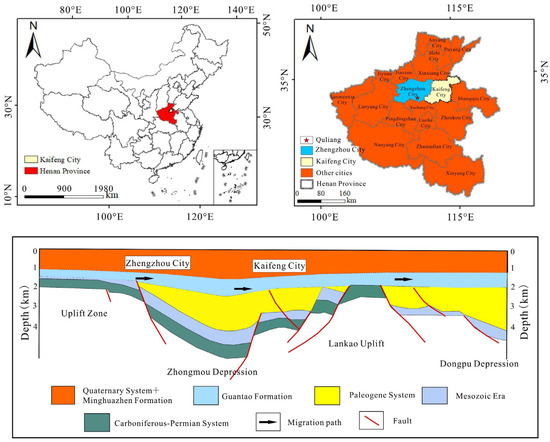
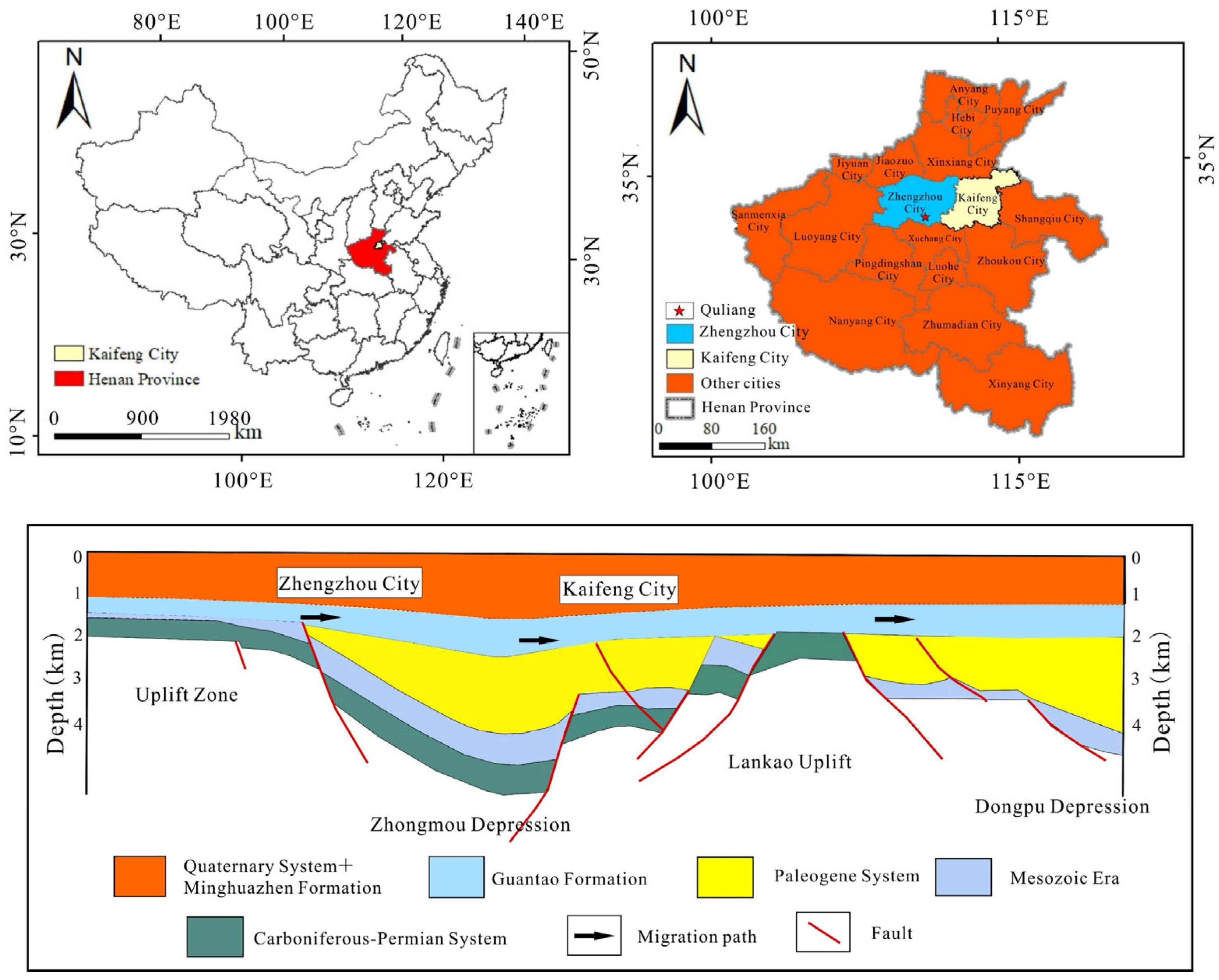
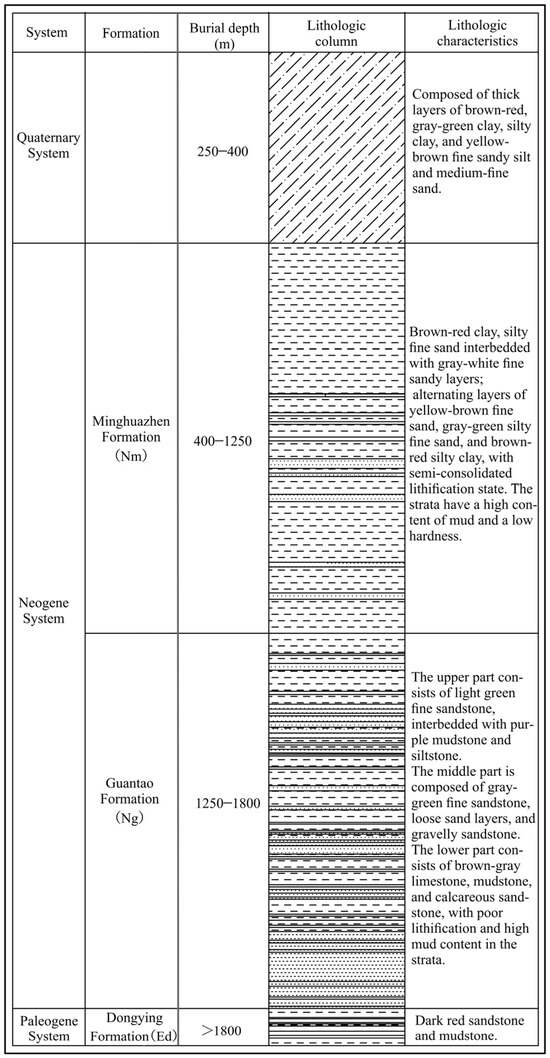
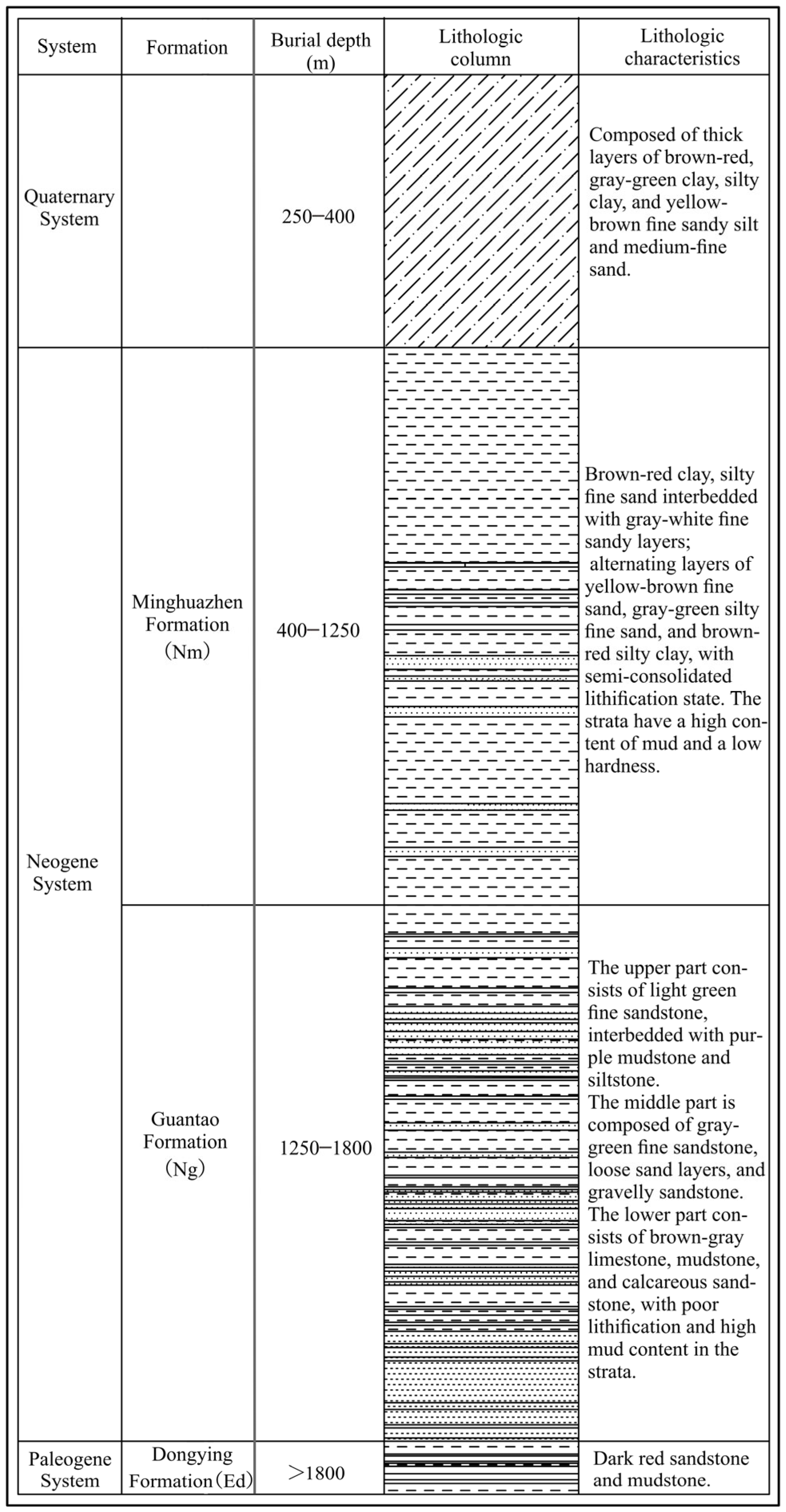
Influenced by factors such as lithology, geological structure, hydrogeological conditions, and the regional geothermal field [15], geothermal water with temperatures exceeding 25 °C occurs within rock strata deeper than 300 m in Kaifeng City, China (Figure 1) [16]. The average geothermal gradient in the study area is approximately 3.46 °C per 100 m. Economically exploitable geothermal water is mainly stored in the fine sand, medium sand, and silty fine sandstone formations of the Minghuazhen Formation and the Guantao Formation of the Neogene (Figure 2).
Figure 1.
Location map of Kaifeng City.
Figure 2.
Schematic columnar diagram of Kaifeng City’s rock formations.
Existing research results indicate that the geothermal water recharge sources in Kaifeng City are located in the exposed Minghuazhen Formation and Guantao Formation strata in the western valley of the main urban area of Zhengzhou, more than 70 km away [17]. Due to weak recharge and slow runoff, long-term exploitation will lead to a rapid decline in geothermal water levels and induce problems such as ground subsidence. Therefore, Kaifeng City has currently suspended geothermal water extraction at depths of less than 1000 m.
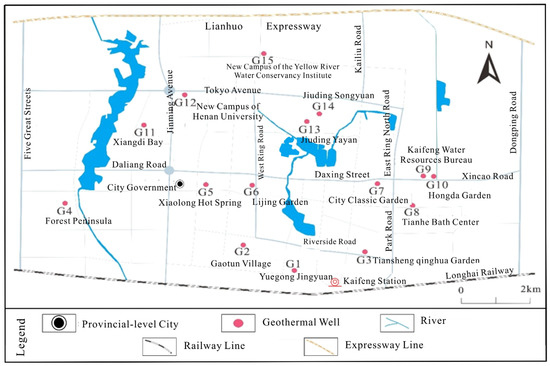
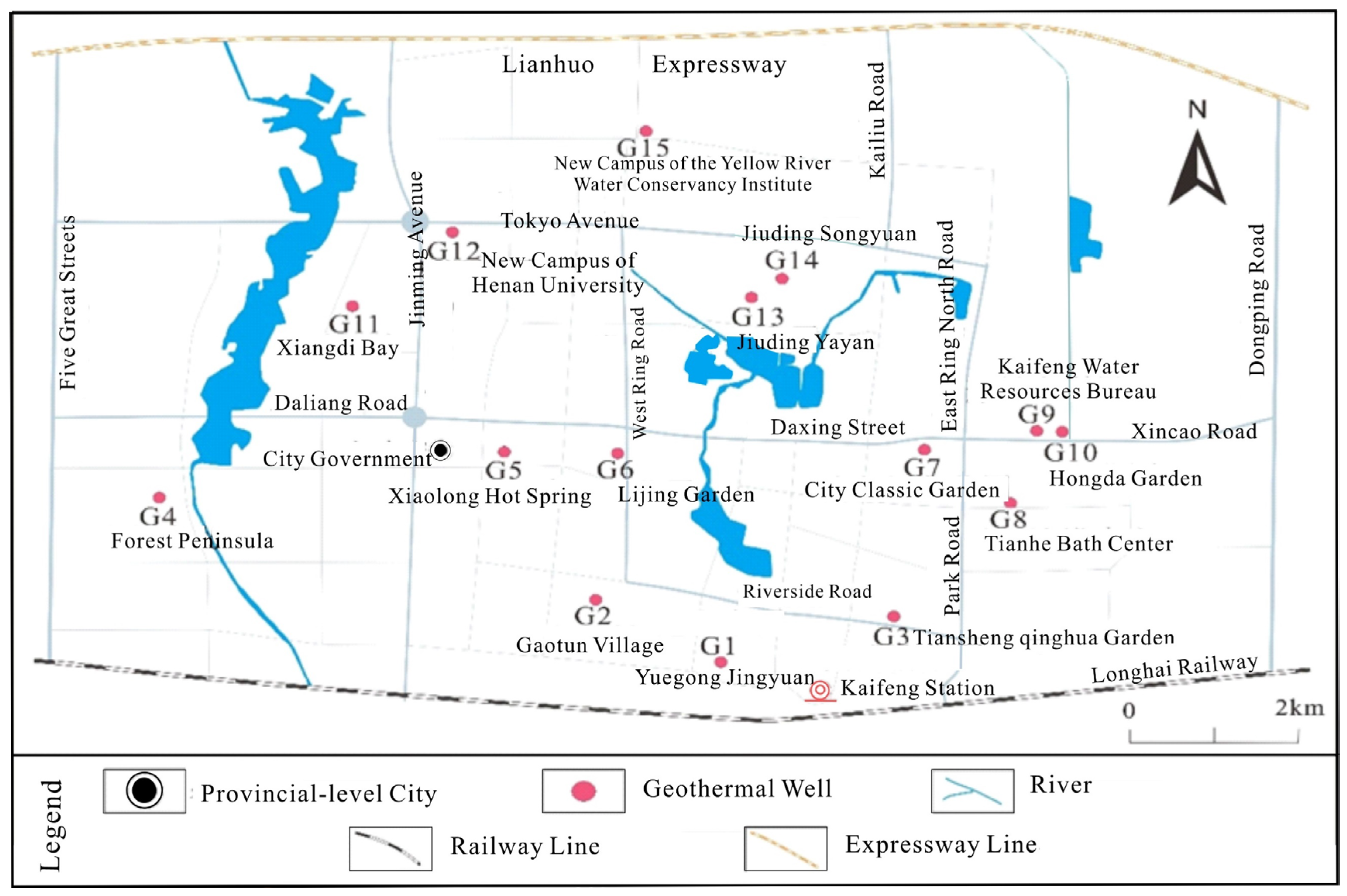
The main urban area of Kaifeng City covers 112 km2. Currently, there are 15 geothermal wells with production intervals buried at depths of 1020 to 1330 m (Table 1 and Figure 3). This stratigraphic interval corresponds to the Neogene Minghuazhen Formation and Guantao Formation. It has become a key target for resource utilization and management due to its stable reservoir thickness and effective confining capacity, especially following the comprehensive prohibition of shallow geothermal water extraction at depths of less than 1000 m. However, most of these 15 wells currently operate independently under an on-demand water supply model. This operational approach has resulted in several issues, including a rapid decline in geothermal water levels, a swift expansion of the drawdown cone area, and significant inter-well interference. To fully leverage the benefits of this valuable geothermal water resource while mitigating its environmental impacts, optimizing the regulation of the geothermal water extraction system is urgently needed [18].
Table 1.
Geothermal well parameters.
Figure 3.
Schematic diagram of geothermal well locations.
3. Optimization Control Model
3.1. Objective Function
Reducing the joint operation costs of geothermal wells is essential. It is important to minimize mutual interference between wells. Achieving the lowest possible drawdown of the geothermal water table in the study area is also crucial. These measures will maximize the benefits of geothermal water development while avoiding environmental hydrogeological issues. Therefore, the objective function for optimizing the regulation of Kaifeng City’s urban geothermal water extraction system is as follows:
- (1)
- Minimum operating costs
To reduce operating costs for multiple geothermal wells within the same thermal reservoir, the operating costs should be kept as low as possible:
where F1 is the operating cost of geothermal wells during the management years (yuan); r is the discount rate (discount rate); C1 (i,kt), C2 (i,kt) are the operating costs of extracting the unit of geothermal water during the non-heating and heating periods in the kt-th year (yuan/m3); Q1 (i,kt), Q2 (i, kt) are the amounts of geothermal water extracted from the i-th well during the non-heating and heating periods in the kt year (m3); MK is the number of years for optimizing the management period; NQ is the number of geothermal wells;
The operating cost C required to extract a unit volume of geothermal water is
where f denotes the electricity price, yuan/kWh; H denotes the geothermal water burial depth (m); η is the pump efficiency.
- (2)
- Minimizing the sum of the water level drop at nodes
Under the condition of meeting the geothermal water demand, the minimum depth drop of the geothermal water level in the whole region is realized:
where F2 denotes the sum of water level drop depths at each node at the end of the management period (m); NM denotes the total number of dissected nodes in the management area; D1(j, kt), D2(j, kt) denote the values of water level drop depths (m) at the j-th node at the end of the heating period and at the end of the non-heating period of the kt-th year, respectively.
The drawdown value at the node under geothermal water extraction conditions can be calculated based on a mathematical model of the hydrodynamic field.
- (3)
- Minimizing interference value of water level drop between wells
To fully utilize the engineering benefits of the 15 geothermal wells, inter-well interference should be minimized:
where F3 is the sum of water level drop depth impact values between geothermal wells at the end of the management year (m); D1′ (i, j, kt), D2′ (i, j, kt) denote the water level drop depth impact values (m) from the extraction at well i on well j at the end of the heating and non-heating periods of the kt-th year, where i ≠ j.
3.2. Constraint Conditions
- (1)
- Water Balance
The total water supply from geothermal wells during the management period shall meet user demand, with the daily supply from a single well not exceeding its permitted extraction volume:
where Q1 (i, kt), Q2 (i, kt) are the extraction volumes of the i-th well during the heating and non-heating periods in the kt year, respectively (m3); QP1 (kt), QP2 (kt) are the geothermal water demands during the heating and non-heating periods in the kt-th year (m3), as shown in Table 1; NQ is the number of geothermal wells in the 1020–1330 m geothermal reservoir in the main urban area of Kaifeng City; Q1,max (i,kt) and Q2,max (i, kt) denote the maximum permitted extraction volumes of the i-th well during the heating season and non-heating season in year kt, respectively (m3), as shown in Table 1.
- (2)
- Heat Balance
During the management period, the heat extracted from geothermal wells should be less than the heat supply from the geothermal heat flow value:
where Qheat collection denotes the heat extracted from a geothermal well (kcal/h); Qwater collection is the amount of hot water extracted from a geothermal well (m3/h); ρw is the density of geothermal water, taken as 1000 kg/m3; Cw is the specific heat of geothermal water, taken as 1.0 kcal/(kg·°C); T is the temperature of water at the wellhead (°C); T0 is the temperature of the constant thermostatic zone (°C); Qheat supply denotes the amount of heat supplied within the influence range of a geothermal well (mw); M denotes the influence area of a geothermal well (m2); q is the value of geothermal heat flow (mw/m2), as shown in Table 1.
- (3)
- Water level drop depth
The water level drawdown at each subdivided node at the end of the management period shall not exceed the geothermal water design allowable drawdown:
where h(j), hp(j) are the management of the end of the year at the j-th point of the depth of the water level and the design of the allowable depth of drop (m); MK is the number of years for optimizing the management period.
4. Hydrodynamic Field Mathematical Simulation
4.1. Mathematical Model
Drilling data indicate that the thickness of the 1020–1330 m geothermal reservoir in the main urban area of Kaifeng is stable, the top and bottom aquitards have good impermeability, and the top and bottom plates are basically horizontal. The hydrogeological conceptual model can be simplified as a heterogeneous, anisotropic, three-dimensional unsteady flow model. Under natural conditions, geothermal water flows from the southwest to the northeast. The surrounding boundaries are generalized as second-type boundaries. The corresponding mathematical model is as follows:
where H0 denotes the initial hydraulic head of the groundwater (m); Kxx, Kyy, Kz denote the permeability coefficients in the x, y, and z principal axes directions, respectively (m/d); ε is the strength of the source-sink term (m/d); Ss denotes the specific storage of the confined aquifer (1/m); q is the flow rate per unit area across the second type of boundary, m3/(d·m2); Ω denotes the seepage region; Г2 is the flow boundary; n denotes the outward normal direction at the boundary Г2.
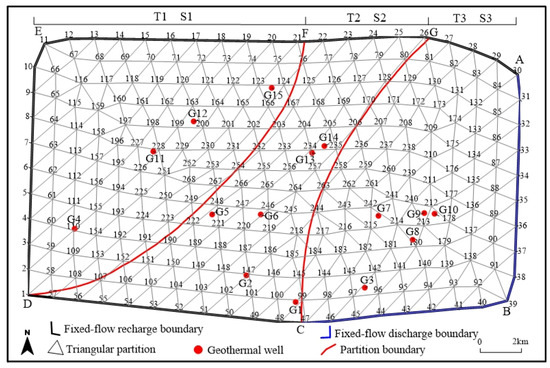
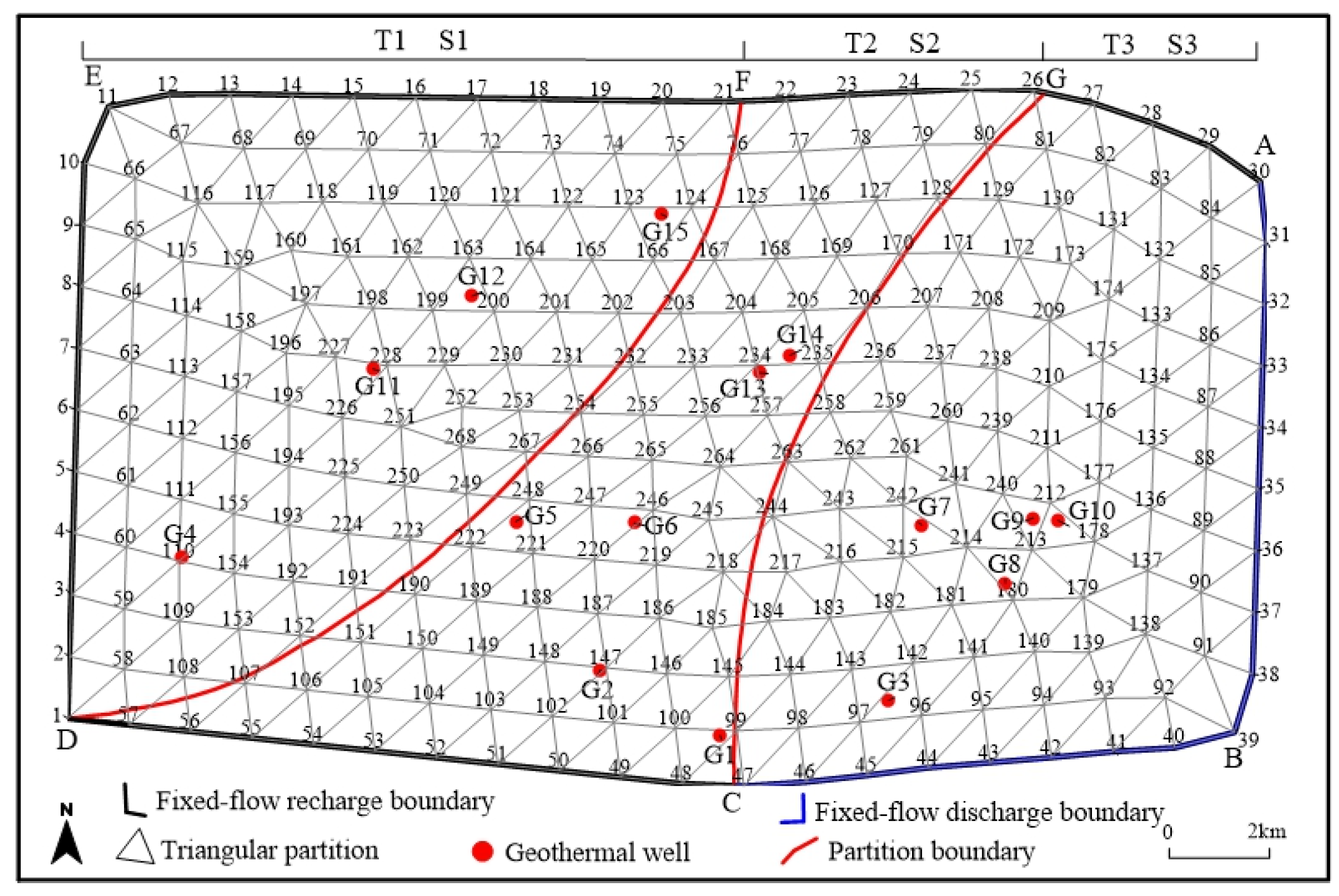
Based on the characteristics of geothermal water flow, the CDEFGA segment in the study area represents a constant-flow recharge boundary, while the ABC segment constitutes a constant-flow discharge boundary (Figure 4). The study area was divided into three parameter zones. This division is due to variations in stratigraphic structure, lithology, and hydraulic properties across different regions. The zones were based on initial parameter values and spatial lithological variations. The parameter ranges for each zone are detailed in Table 2.
Figure 4.
Division of the study area and distribution of nodes.
Table 2.
Range of variation in geologic parameters of water level in different subzones.
4.2. Temporal and Spatial Discretization
4.2.1. Spatial Discretization
In the process of numerical simulation solving using the GMS (version 10.8) software, based on the characteristics of the 1020~1330 m thermal reservoir in the main urban area of Kaifeng City and the layout of geothermal wells [19,20], the study area of 112 km2 was divided into 477 triangular elements, with a total of 268 nodes, including 211 internal nodes and 57 type II boundary nodes (Figure 4).
4.2.2. Time Discretization
According to the extraction characteristics and utilization patterns of geothermal water, the simulation period was discretized on an annual basis into a heating period and a non-heating period. The heating period extends from November 15 to March 15 of the following year, with a total duration of 120 days, while the non-heating period lasts from 16 March to 14 November, totaling 245 days.
The simulation period of the geothermal groundwater flow field spans from April 2018 to April 2023. Within this period, the calibration period covers April 2018 to April 2021, and the validation period extends from April 2021 to April 2023.
4.3. Model Identification and Validation
4.3.1. Model Identification
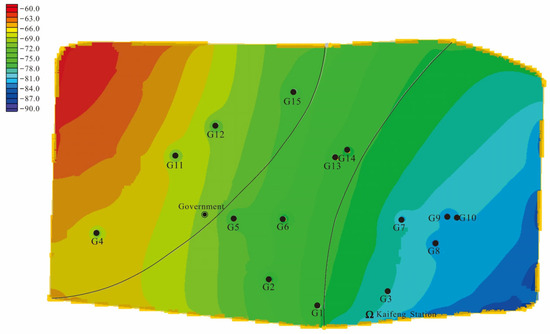
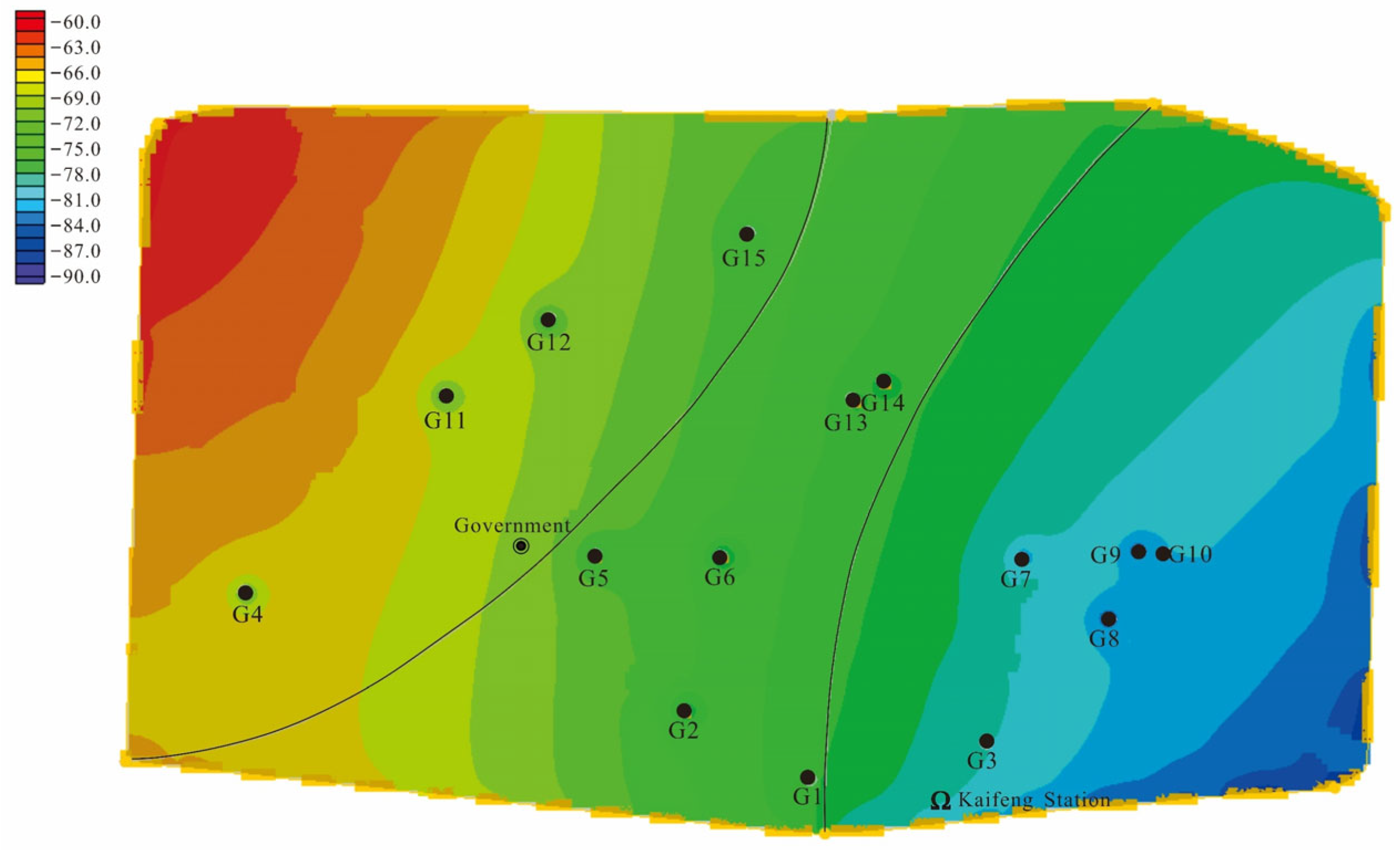
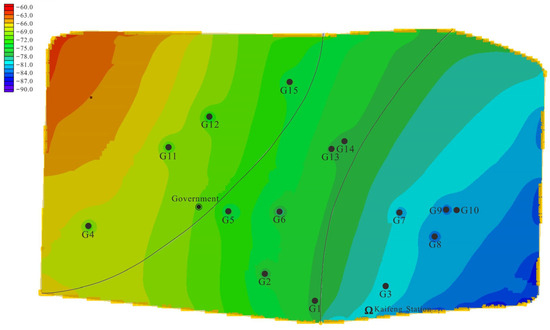
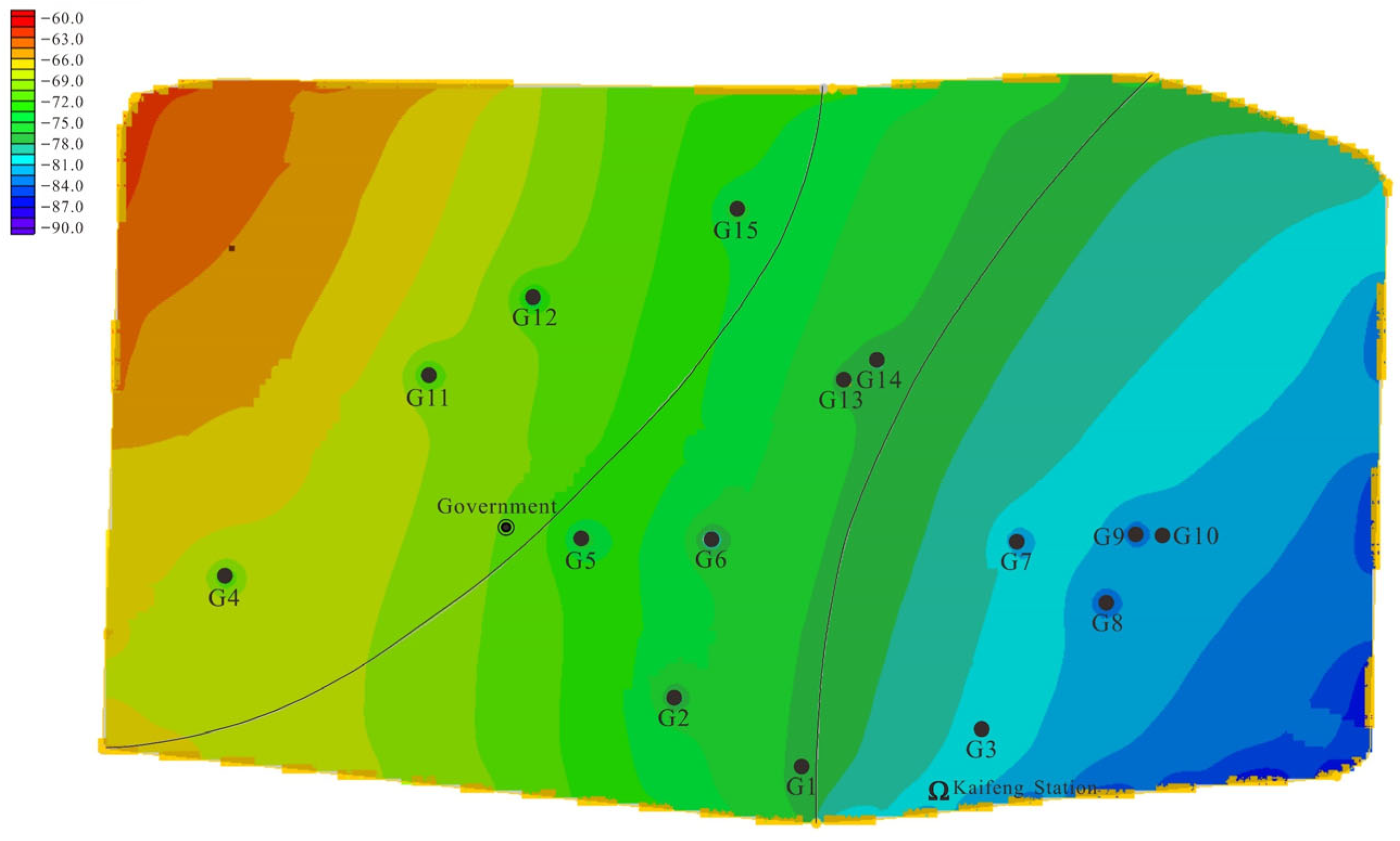
Based on the pumping test data of geothermal wells and existing research results, the mathematical model was repeatedly adjusted within the given ranges of hydrogeological parameters to achieve good agreement between the simulated and observed groundwater levels [15]. The measured groundwater level field and the simulated groundwater flow field for the entire study area are shown in Figure 5 and Figure 6, respectively, while the simulated hydrogeological parameters are summarized in Table 3.
Figure 5.
Measured water level flow field on 15 April 2022.
Figure 6.
Simulated water level flow field for 15 April 2022.
Table 3.
Geological parameter values of water levels in different zones.
4.3.2. Model Validation
Parameter validation was conducted using water level observation data from 15 geothermal wells. The coefficient of determination [21] and the Nash efficiency coefficient [22] were selected for quantitative assessment, with the calculation formulas as follows:
where Hs denotes the simulated water level (m); Hm is the measured water level (m); Havgm is the average of the measured data (m); Havgs is the average of the simulated data (m); n denotes the number of observations, in count.
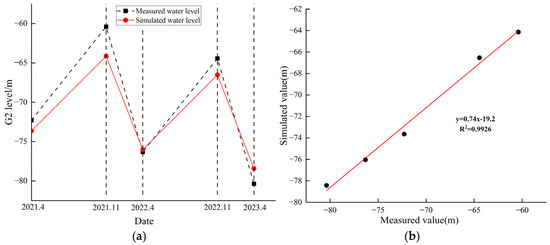
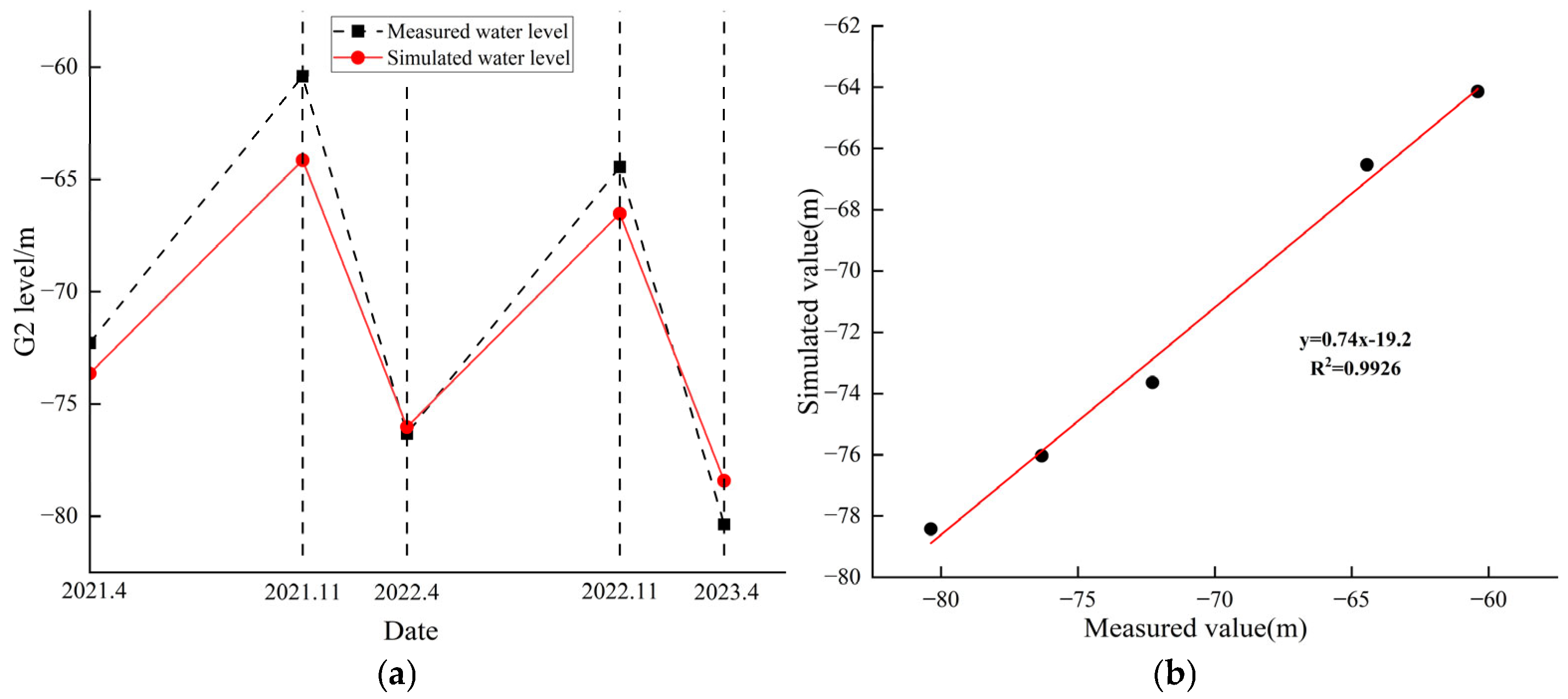
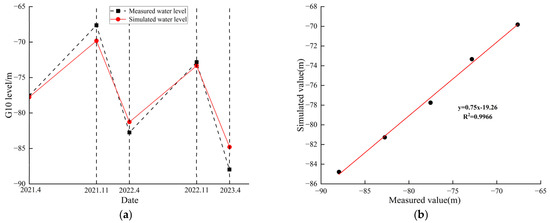
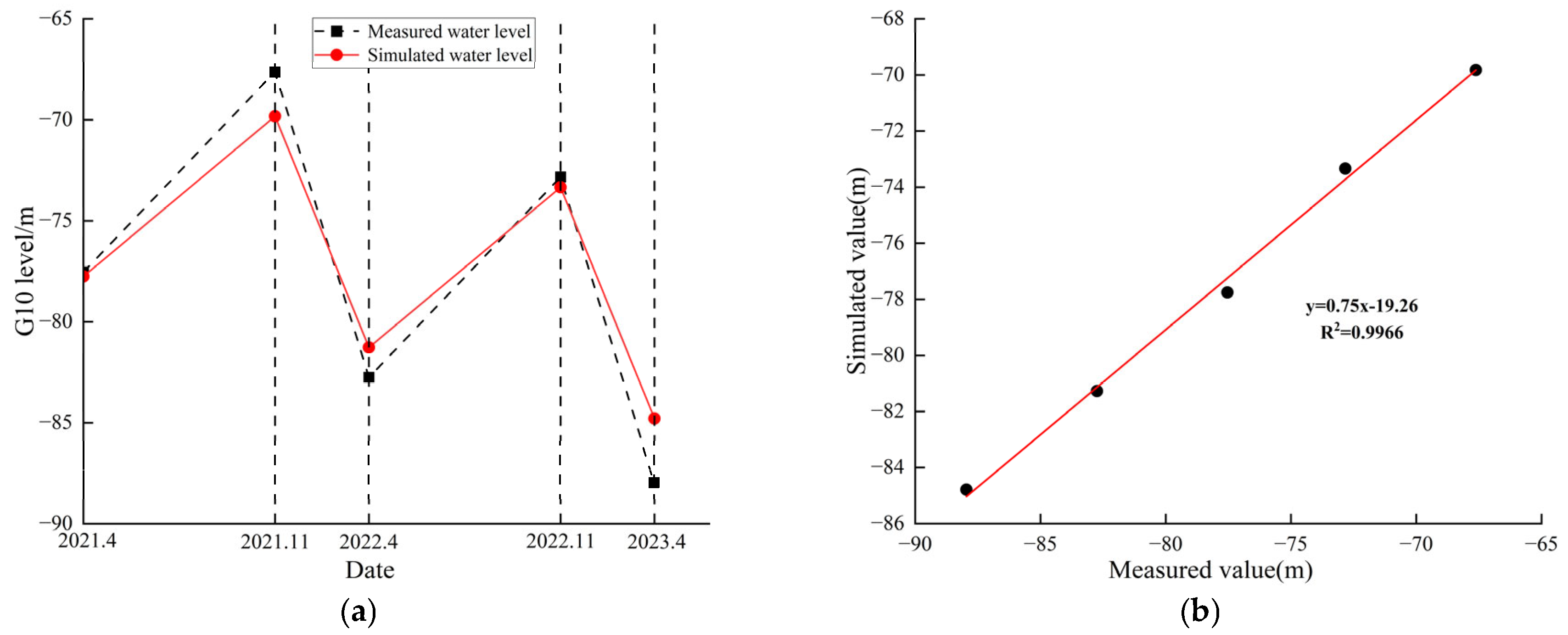
The evaluation of groundwater fitting (Table 4) shows that both metrics exceed 0.7. The minimum R2 value is 0.8967, while the maximum is 0.9998. For the Nash–Sutcliffe efficiency (Ens), the minimum value is 0.7846, and the maximum is 0.9490. These results indicate that the groundwater model demonstrates a high degree of fit. Based on the optimized hydrogeological parameters, the study randomly selected two geothermal wells, G2 and G10, to construct the model fitting curves (Figure 7 and Figure 8), and the simulated values were compared with the measured data to verify the reliability and accuracy of the model.
Table 4.
Groundwater fitting evaluation of 1020–1330 m thermal reservoirs.
Figure 7.
Comparison and correlation of simulated values of G2 water level.
Figure 8.
Comparison and correlation of simulated values of G10 water levels.
5. Optimization and Control of Geothermal Water Extraction
5.1. Cheetah Algorithm and Improvement
5.1.1. Traditional Cheetah Algorithm
The Cheetah Optimizer (CO) is a novel swarm intelligence optimization algorithm inspired by the hunting behavior of cheetahs in nature [23]. The algorithm draws its inspiration from the predatory strategies of cheetah populations. By simulating the hunting process of cheetahs, the optimization procedure is divided into three distinct stages: searching for prey, sitting and waiting for prey, and attacking the prey [24]. In the optimization framework, the problem to be optimized is regarded as the prey, while the search strategy and physiological characteristics of cheetahs are incorporated to solve practical optimization problems in an efficient, accurate, and rapid manner [25].
- (1)
- Search strategy
Cheetahs search for prey in two ways: either by full range scanning over an area or by active search. During the hunt, depending on the condition of the prey, the coverage of the area and the cheetah’s own condition, the cheetah may choose a chain of these two search modes. The expression for its position update is
where and are the next and current positions of the i-th (i = 1,2, ··,n) cheetah in the j-th (j = 1,2, ··,d) dimension, respectively; t is the current search time; T is the maximum number of iterations; denotes the randomization parameter of the i-th cheetah in the j-th dimension; denotes the update step size of the i-th cheetah in the j-th dimension, which can be set as 0.001 × t/T [26].
- (2)
- Sit and wait strategy
During the search process, cheetahs not only actively move in the search space to look for prey, but may also adopt a strategy of temporarily remaining still to wait for a more favorable hunting opportunity. The expression of this strategy is
The meanings of the parameters are the same as described above.
- (3)
- Attack strategy
When the prey moves, the cheetah not only relies on high-speed pursuit, but also flexibly adjusts its position according to the direction of the prey’s escape in order to occupy the best hunting position. The expression of this strategy is
where B denotes the prey; denotes the current position of the prey in the j-th row; and are the turning factor and the interaction factor, respectively, associated with the cheetah i in the j-th row, where is a random number, equal to ; and is a standard normal distribution random number.
5.1.2. Improved Cheetah Algorithm
- (1)
- Search strategy improvement
In the scanning search strategy of the Cheetah Optimization Algorithm, each cheetah updates its position based on its own position at the previous moment. On this basis, the original position update strategy (Equation (14)) is optimized and adjusted to construct a new position update strategy:
where is the position of the leader in the population at the t-th time interval, and its rt is modified as
where r1 and r2 are random values drawn from a normal distribution.
The improved search strategy in this paper is to update the location of each cheetah in the leader’s neighborhood, increasing the diversity of understanding and improving the global search capability.
- (2)
- Attack strategy improvement
During the optimization process, the interaction factor is used to characterize the positional relationship between neighboring cheetahs, but in reality, cheetahs generally attack prey according to the prey’s position. Therefore, the improved attack strategy can adjust its position in real time according to the movement trajectory of the prey by dynamically updating the position of the cheetah, and its improved interaction factor can be expressed as follows:
The improved attack strategy helps to speed up the convergence of the algorithm so that it can approach the optimal solution faster, and also improves the optimization performance so that the algorithm has higher stability and accuracy in solving complex optimization problems.
- (3)
- Random parameter improvement
The randomization parameters of the attack strategy are adjusted by introducing an exponentially decreasing coefficient ri,j based on the cosine function for dynamic optimization. During the iterative operation, as the number of iterations increases, both the cosine function and the exponential function exhibit a gradual decrease. This decrease causes the randomization parameter to decline correspondingly with each iteration. As a result, the outcomes move progressively closer to the optimal solution throughout the operational process. This not only minimizes the likelihood of overlooking the optimal solution but also enhances the optimization search capability, allowing for more effective convergence toward the best possible results.
where λ is a constant, taken as 0.05.
- (4)
- Algorithm Process
The optimization steps for improving the Cheetah Algorithm are as follows:
Step 1: Set parameters such as population size, number of generations, and search time to determine the search range and execution duration of the algorithm. Generate the initial velocity and initial position of each individual to ensure that the population individuals are reasonably distributed within the specified d-dimensional search space.
Step 2: Simulate the cheetah’s hunting process, calculate the potential position for the next step based on the current speed and position, evaluate the fitness of the individual, and adjust its movement state.
Step 3: Combine search results to dynamically optimize the speed and position of candidate solutions to adapt to environmental changes and improve the efficiency of the algorithm.
Step 4: Individuals optimize the quality of the solution by exchanging information with each other and adjusting their positions in combination with the prey movement state, and optimize the quality of the solution in continuous iteration, while the fitness calculation is carried out for the new generation of individuals to bring them closer to the optimal solution.
Step 5: Determine if the condition is met. If not, return to continue optimizing; otherwise, output the result.
5.2. Multi-Algorithm Accuracy Comparison
In this study, a multi-objective Cheetah Optimization Algorithm was implemented in the MATLAB (version R2023a) programming environment. To present the final optimal solution more clearly, and with reference to previous studies [27,28], the weights of the objective functions F1, F2, and F3 were set to 0.3, 0.4, and 0.3, respectively. To verify the effectiveness of the improved Cheetah Optimization Algorithm, it was compared with the gray wolf optimization algorithm, the genetic algorithm, and the original Cheetah Optimization Algorithm.
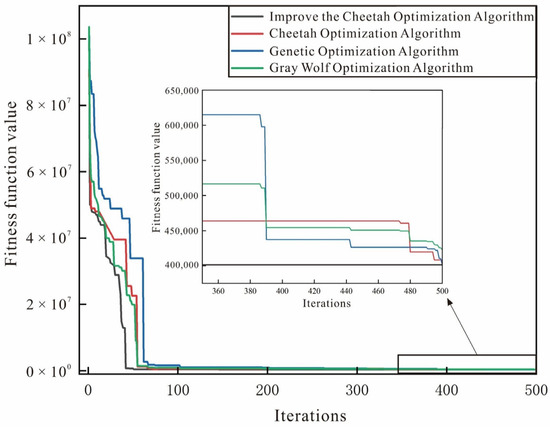
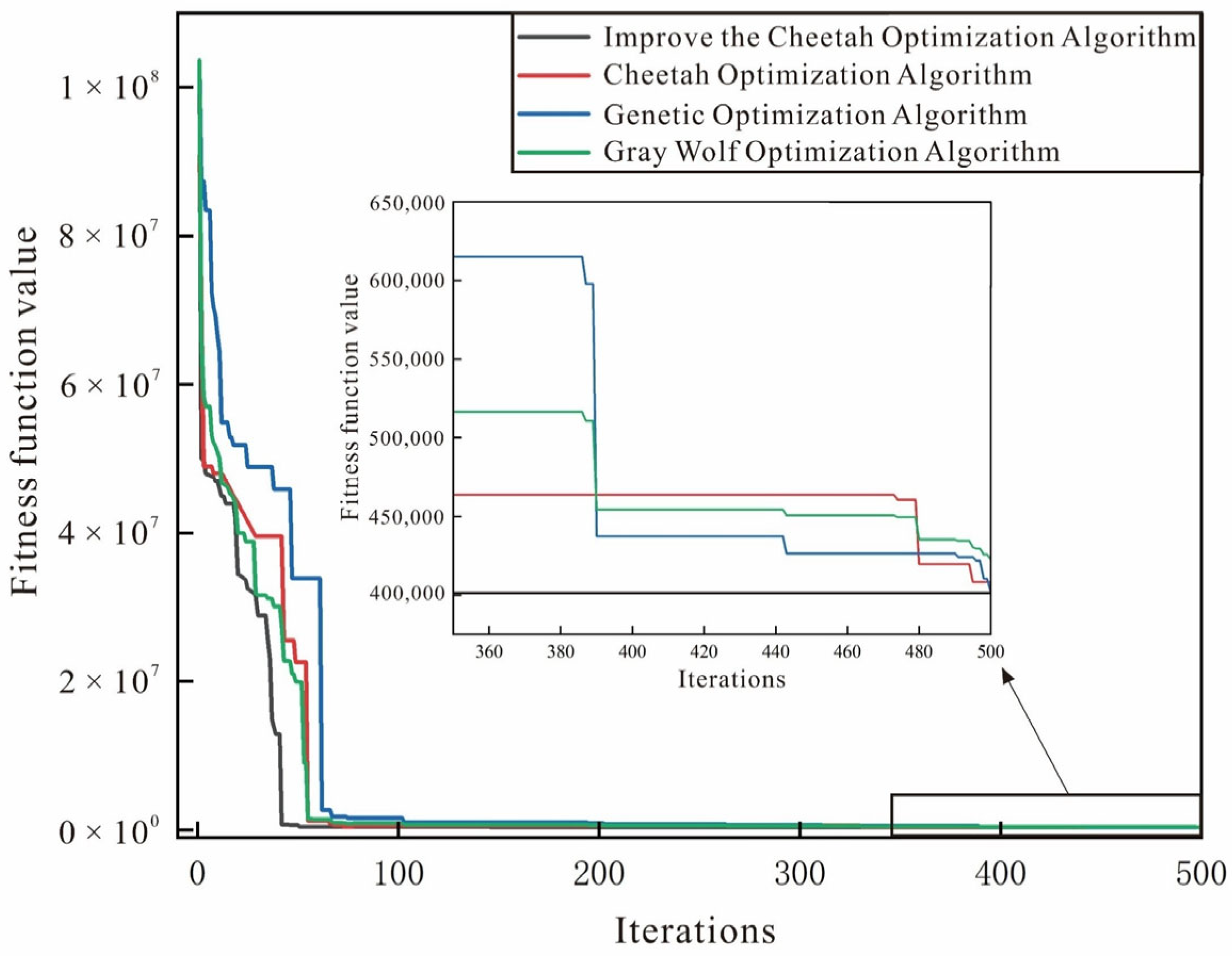
Figure 9 shows the convergence curves of different optimization algorithms when solving the joint optimization scheduling problem for multiple geothermal extraction wells. The maximum number of iterations was set to 500, and each algorithm was run ten times. The results are summarized in Table 5. The optimization process indicates that the convergence fitness values of all algorithms gradually decreased with the increase in iteration number. However, compared with the other optimization algorithms, the improved Cheetah Optimization Algorithm exhibited a significantly faster convergence rate during the early iterations, enabling it to approach the optimal solution within a shorter time. In addition, the improved Cheetah Optimization Algorithm produced the smallest mean square deviation among the algorithms tested, indicating stronger solution consistency. Overall, the improved Cheetah Optimization Algorithm outperformed the other algorithms.
Figure 9.
Convergence curves of different algorithms.
Table 5.
Calculation of the algorithm’s fitness function.
6. Discussion and Conclusions
6.1. Discussion
The comparison of geothermal water extraction volume before and after optimization management is shown in Table 6, and the comparison of objective function values is shown in Table 7. The operating cost of 15 geothermal wells in the study area decreased from 214,820.85 yuan to 146,853.27 yuan, a reduction of 31.64%, indicating a significant reduction in costs.
Table 6.
Comparison of geothermal well production preoptimization and postoptimization.
Table 7.
Comparison of objective function values preoptimization and postoptimization.
As shown in Table 7, compared with the conditions before optimization management, the total water level drawdown at the 268 nodes decreased from 538.7 m to 164.2 m, corresponding to a change rate of −69.5 percent. Meanwhile, the total drawdown interference among geothermal wells decreased from 1368.9 m to 893.7 m, with a change rate of −34.7%. These results indicate that the trend of groundwater level decline was significantly slowed, demonstrating that the optimization management produced a positive effect in suppressing water level decline.
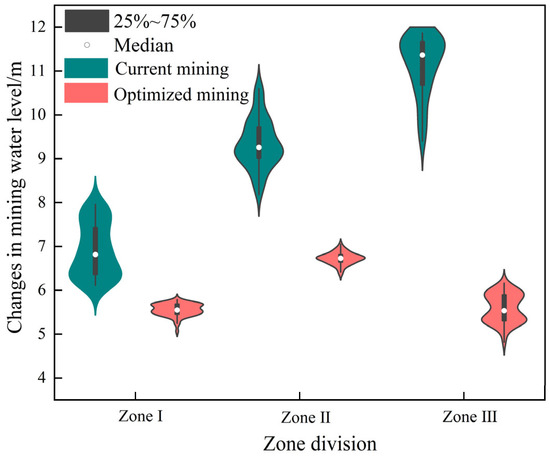
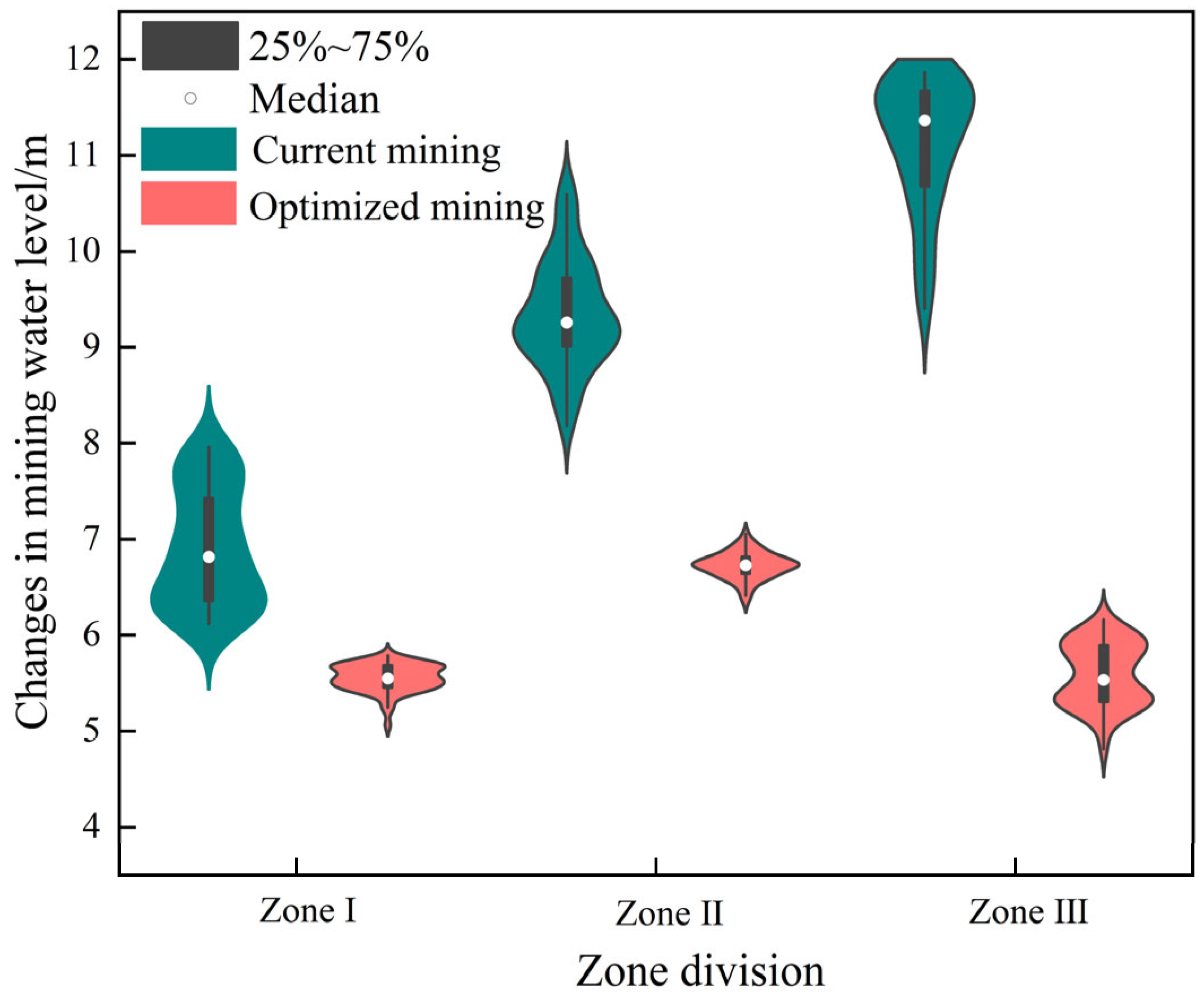
The mean and variance of water level drawdown at the nodes in the three zones of the study area were calculated, and the corresponding violin plots are shown in Figure 10. These plots provide a clearer comparison of the changes in water level drawdown in each zone before and after optimization. After optimization, water level drawdown generally decreased in all zones compared with the preoptimization condition. This reduction was especially pronounced in Zone III, where water level drawdown decreased from 11.14 m before optimization to 5.59 m after optimization, corresponding to a change rate of 49.82%. This marked improvement indicates that optimized regulation of the geothermal water extraction system can extend the service life of geothermal wells under the same design drawdown and prolong the geothermal water supply period. Therefore, optimization and regulation of the geothermal water extraction system are of great importance for the efficient utilization and scientific protection of geothermal resources.
Figure 10.
Violin plot of water level changes in each subdivision.
6.2. Conclusions
- (1)
- Taking the minimum operating cost of geothermal wells, the minimum sum of water level drawdown at each node, and the minimum drawdown interference among wells as objective functions, and considering the design water level drawdown and the satisfaction of water and heat demand as constraints, a coordinated optimization scheduling management model for geothermal water extraction wells was established. This model provides support for the rational development, utilization, and scientific protection of geothermal water resources.
- (2)
- A hydrogeological conceptual model and mathematical model of the geothermal reservoir at depths of 1020–1330 m in the main urban area of Kaifeng City were constructed. Based on GMS numerical simulation technology and combined with long term dynamic monitoring data of geothermal water levels, model calibration and validation were completed. The model provides a scientific basis for further analysis of the migration and flow behavior of deeply buried geothermal water.
- (3)
- Focusing on the search strategy, attack strategy, and random parameters, the traditional Cheetah Optimization Algorithm was improved to enable it to solve multi-objective constrained optimization problems. Through effectiveness tests using multiple algorithms, the improved Cheetah Optimization Algorithm demonstrated superior performance in both convergence speed and solution accuracy. Based on this improvement, a multi-objective optimal allocation method for geothermal water exploitation was developed, providing a new approach for the scientific management and efficient development of geothermal resources.
- (4)
- The optimization results show a total water level drawdown of 69.5% at the partitioned nodes. The total water level drawdown among geothermal wells decreased by 34.7%. The rate of water level drawdown in Zones I, II, and III decreased by 19.53%, 28.04%, and 49.82%, respectively. In addition, the total operating cost of geothermal wells decreased by 31.64 percent. These results are of significant importance for ensuring the sustainable development and utilization of deep geothermal water resources.
Author Contributions
Z.Y.: Methodology, Writing—Original Draft; Y.P.: Methodology, Writing—Review and Editing; W.J.: Writing—Review and Editing; Q.W.: Data Curation, Supervision; J.H.: Data Curation; Y.Q.: Supervision, Project Administration; X.D.: Visualization; X.W.: Validation, Writing—Review and Editing. All authors have read and agreed to the published version of the manuscript.
Funding
This work was supported by the Key Research and Development Project of Henan Province (no. 251111322300), the National Natural Science Foundation of China (no. 41972254), and the Innovative Scientific and the Scientific Research Project of Henan Yudi Science and Technology Group Co., Ltd. (no. 2026-32).
Data Availability Statement
The original contributions presented in this study are included in the article. Further inquiries can be directed to the corresponding author.
Conflicts of Interest
Authors Zhijia Yu, Qi Wang and Jianggen He were employed by The Second Institute of Resources and Environment Investigation of Henan Province Co., Ltd. All authors declare that the research was conducted in the absence of any commercial or financial relationships that could be construed as a potential conflict of interest.
References
- Ma, J.; Yang, J.; Yi, F.; Ren, J.; Lv, L.; Cui, A. Numerical research on the heat transfer model and performance of deep borehole heat exchangers combined with geothermal wells. Appl. Therm. Eng. 2022, 214, 118728. [Google Scholar] [CrossRef] [Scilit]
- Wang, G.; Lu, C. Progress of geothermal resources extraction and utilization technology driven by carbon neutral target. Geol. Resour. 2022, 31, 341+412–425. [Google Scholar] [CrossRef]
- Sun, H.; Mao, X.; Wu, C.; Guo, D.; Wang, H.; Sun, S.; Zhang, Y.; Luo, L. Geothermal resources exploration and development technology and development direction. Earth Sci. Front. 2024, 31, 400–411. [Google Scholar] [CrossRef]
- Li, W.; Kong, X.; Yuan, L.; Gao, J.; Shen, P.; Feng, H.; Hao, W.; He, Y. General situation and suggestions of development and utilization of geothermal resources in China. China Min. Mag. 2020, 29, 22–26. [Google Scholar] [CrossRef]
- Winn, C.; Dobson, P.; Ulrich, C.; Kneafsey, T.; Lowry, T.; Akerley, J.; Delwiche, B.; Samuel, A.; Bauer, S. Context and mitigation of lost circulation during geothermal drilling in diverse geologic settings. Geothermics 2022, 108, 102630. [Google Scholar] [CrossRef] [Scilit]
- Omar, P.; Gaur, S.; Dwivedi, S.; Dikshit, P. A modular Three-Dimensional cenario-Based numerical modelling of groundwater flow. Water Resour. Manag. 2020, 34, 1913–1932. [Google Scholar] [CrossRef] [Scilit]
- Mohammed, K.; Shabanlou, S.; Rajabi, A.; Yosefvand, F.; Izadbakhsh, M. Prediction of groundwater level fluctuations using artificial intelligence-based models and GMS. Appl. Water Sci. 2023, 13, 54. [Google Scholar] [CrossRef] [Scilit]
- Zhao, Z.; Chen, H.; Qin, G.; Qi, Z. Groundwater Resources Evaluation and Exploration Potential Analysis in Wulan Basin, Qinghai. Water Resour. Prot. 2021, 37, 60–66. [Google Scholar] [CrossRef]
- Qi, Z.; Xiao, Y.; Wang, S.; Zhang, G.; Chen, L. Numerical simulation of groundwater flow and evaluation of groundwater resources in the Gasikule Lake Basin, Western Margin of the Qaidam Basin. J. Salt Lake Res. 2024, 32, 57–65. [Google Scholar] [CrossRef]
- Peng, H.; Wang, Z.; Luo, Y.; Yuan, Y.; Wang, W. Evaluation of extractable groundwater resources in Buha River Basin based on groundwater numerical simulation. Geoscience 2023, 37, 943–953. [Google Scholar] [CrossRef]
- Tabari, M.; Abyar, M. Development a Novel Integrated Distributed Multi-objective Simulation-optimization Model for Coastal Aquifers Management Using NSGA-II and GMS Models. Water Resour. Manag. 2022, 36, 75–102. [Google Scholar] [CrossRef] [Scilit]
- Song, Z.; Liu, Y.; Jiang, S.; Jiang, H.; Fang, J.; Chen, Z.; Wang, Y.; Wang, D. Multi-objective water optimal dispatching of the Yangtze-to-Huaihe River water diversion project (Henan section). South North Water Transf. Water Sci. Technol. 2024, 22, 39–47. [Google Scholar] [CrossRef]
- Li, Z.; Zhao, X.; Li, J.; Li, Y. Research on optimal allocation of water resources in Yangquan city based on improved particle swarm optimization. J. North China Univ. Water Resour. Electr. Power 2024, 45, 15–21. [Google Scholar] [CrossRef]
- Wang, X.; Ma, Y.; Wang, L.; Tian, F.; Yuan, X. Multi-objective optimization allocation of water resources for the emergency project of the South-to-North Water Transfers Project based on NSGA-II. South North Water Transf. Water Sci. Technol. 2024, 22, 84–93. [Google Scholar]
- Ping, Y. Optimization and Scheduling of Deep Geothermal Water Multi-Well Joint Mining System in Kaifeng City. Master’s Thesis, Henan Polytechnic University, Jiaozuo, China, 2025. [Google Scholar]
- He, T.; Du, L.; Tan, X.; Liu, J.; Luo, L.; Zhang, H.; Li, H. Genetic Model and Development Potential of the Guantao Formation Sandstone Geothermal System in the Zhongmu Sag, Kaifeng Depression. Geoscience 2024, 38, 1557–1570. [Google Scholar] [CrossRef]
- Wang, X.; Wang, Z.; Jia, J.; Liu, X.; Tian, G.; Ruan, C. Quantitative evaluation of sustainable development ability of deep buried geothermal water coupled with key index factors. Energy Sources Part A Recovery Util. Environ. Eff. 2021, 43, 8483–8500. [Google Scholar] [CrossRef] [Scilit]
- Lv, J.; Xiong, L.; Ma, J.; Yu, K.; Cui, W.; Zhang, Z.; Yan, Z. Mechanism of Floor Failure During Coordinated and Sustainable Extraction of Coal and Geothermal Resources in Deep Mines: A Case Study. Sustainability 2025, 17, 10341. [Google Scholar] [CrossRef] [Scilit]
- Nan, J.; Liu, N.; Wang, X.; Xie, G.; Yin, P.; Yang, Y. Characteristics and formation mechanism of bauxite reservoirs of Taiyuan Formation in Longdong area, Ordos Basin. Nat. Gas Geosci. 2022, 33, 288–296. [Google Scholar] [CrossRef]
- Cao, D.; Jim, W.; Li, H.; Li, X.; Liu, D.; Wei, Y. Tectonic setting and risk zoning of dynamic geologic disasters in coal mines in China. J. China Coal Soc. 2020, 45, 2376–2388. [Google Scholar] [CrossRef]
- Liu, T.; Liu, W.; Yang, F.; Zhang, H.; Yin, D.; Jiao, Y.; Zhang, M.; Zhang, Q. Research on Estimating Peanut Biomass Using UAV Hyperspectral Imaging and Machine Learning Algorithm. J. China Agric. Univ. 2025, 30, 206–217. [Google Scholar]
- Jiang, C.; Zhang, H.; Xu, X.; Sun, Y. Hydrological modeling and forecasting of semi-arid watersheds based on similarity cluster analysis. Water Resour. Power 2024, 42, 1–5. [Google Scholar] [CrossRef]
- Akbari, M.A.; Zare, M.; Azizipanah-abarghooee, R.; Mirjalili, S.; Deriche, M. The cheetah optimizer: A nature-inspired metaheuristic algorithm for large-scale optimization problems. Sci. Rep. 2022, 12, 10953. [Google Scholar] [CrossRef] [Scilit] [PubMed]
- Fathy, A.; Bouaouda, A.; Hashim, F. A novel modified Cheetah Optimizer for designing fractional-order PID-LFC placed in multi-interconnected system with renewable generation units. Sustain. Comput. Inform. Syst. 2024, 43, 101011. [Google Scholar] [CrossRef] [Scilit]
- Yao, L.; Zhao, X.; Wu, W.; Wu, X.; Chen, P. Application of CO in optimal allocation of water resources. China Rural Water Hydropower 2024, 1, 135–141. [Google Scholar] [CrossRef]
- Wu, C.; Huang, H.; Jia, R.; Yang, L.; Wang, H.; Gao, T. Point cloud clustering of road obstacles based on improved DBSCAN algorithm. J. Nanjing Univ. Nat. Sci. 2025, 61, 738–751. [Google Scholar] [CrossRef]
- Song, J.; Li, C.; She, H.; Cai, Q. Multi-objective constraint optimization design of rocket projectile self-ejection based on multi-population differential evolutionary algorithm. J. Aerosp. Power 2023, 38, 1516–1524. [Google Scholar] [CrossRef]
- Xiong, L.; Zhang, Z.; Wan, Z.; Zhang, Y.; Wang, Z.; Lv, J. Optimization of Grouting Material Mixture Ratio Based on Multi-Objective Optimization and Multi-Attribute Decision-Making. Sustainability 2022, 14, 399. [Google Scholar] [CrossRef] [Scilit]

Disclaimer/Publisher’s Note: The statements, opinions and data contained in all publications are solely those of the individual author(s) and contributor(s) and not of MDPI and/or the editor(s). MDPI and/or the editor(s) disclaim responsibility for any injury to people or property resulting from any ideas, methods, instructions or products referred to in the content. |
© 2026 by the authors. Licensee MDPI, Basel, Switzerland. This article is an open access article distributed under the terms and conditions of the Creative Commons Attribution (CC BY) license.