Application of Vertical-Array Lateral Scanning in Seepage Detection of Urban Levees with Adjacent Underground Spaces

Abstract
1. Introduction
- (1)
- Geometric constraints of observation space: Traditional geophysical surveys typically arrange survey lines on open areas such as levee crests or slopes and adopt a top-down “half-space” detection mode. In urban levee sections, however, the crest and the top of adjacent underground spaces are often obstructed by buildings or green belts, making it impossible to deploy continuous survey lines. As a result, conventional methods face the dilemma of having “no place to measure.”
- (2)
- Coupling difficulties on hardened surfaces: Underground spaces adjacent to levees are mostly supported by vertical concrete retaining walls. On high-resistivity hardened surfaces such as concrete, the steel spike electrodes required by conventional resistivity methods cannot be driven in, resulting in excessively high contact resistance, insufficient injected current, and a severe reduction in data signal-to-noise ratio.
- (3)
- Detection blind zones at interfaces: The interface between underground structures and levee soils is a weak zone of levees and also a high-incidence area for contact seepage. This interface is usually vertical to the ground surface, and its lateral extent is often smaller than its vertical extent. When conventional surface-based methods are used, current lines or electromagnetic waves mainly propagate downward along stratification, making it difficult to capture the lateral heterogeneity of the interface. This geometric “misalignment” causes interface-related hazards to become blind zones in existing detection systems.
2. Materials and Methods
2.1. Geophysical Methods and Principles
2.1.1. Ground-Penetrating Radar (GPR)
2.1.2. Electrical Resistivity Tomography (ERT)
2.1.3. Coupling Mechanism of Seepage and Geophysical Responses
2.2. Lateral Scanning Method
2.2.1. Lateral Scanning on Vertical Surfaces
2.2.2. Electrode Coupling Technique on Hardened Surfaces
2.2.3. Ground-Penetrating Radar (GPR) Sidewall Detection Technique
2.2.4. Data Processing and Analysis
3. Results
3.1. Construction of the Geological Conceptual Model
3.1.1. Geometric Model
3.1.2. Model Parameters
3.2. Analysis of Forward Modeling Results
3.2.1. Resistivity Response Characteristics
3.2.2. Radar Wavefield Characteristics
4. Case Study
4.1. Study Area Overview
4.2. Detection Results and Interpretation
4.2.1. Analysis of Array Resistivity Survey Results
4.2.2. Analysis of Ground-Penetrating Radar Survey Results
4.3. Integrated Interpretation and Validation
5. Conclusions
- (1)
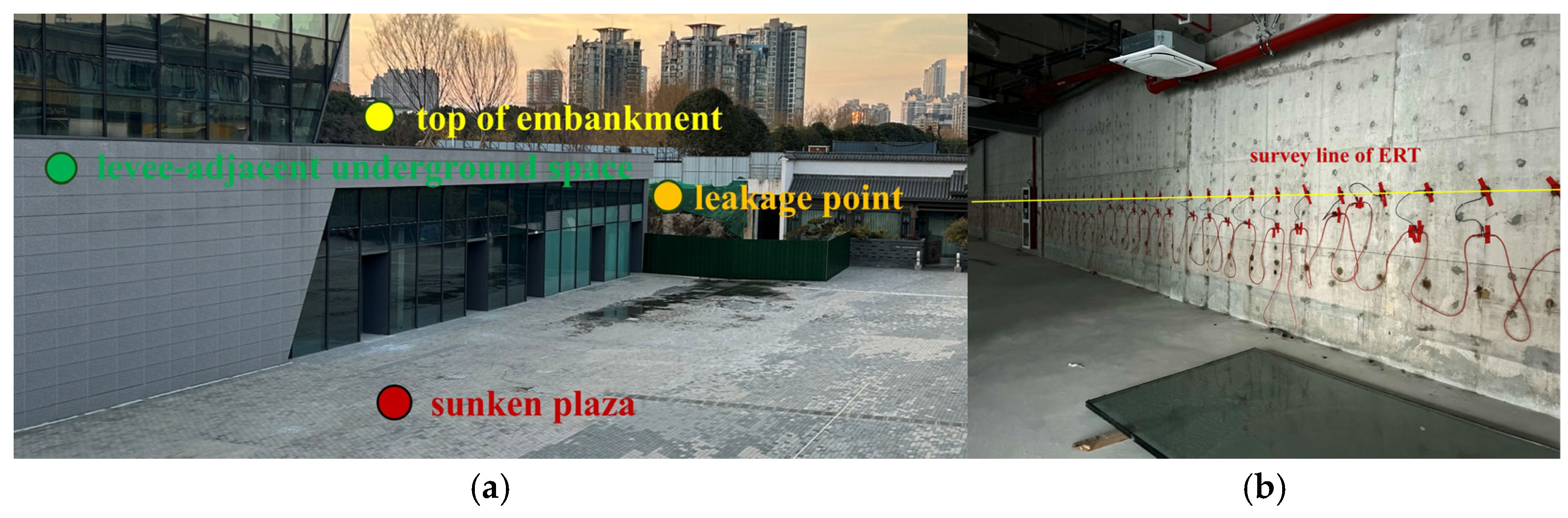
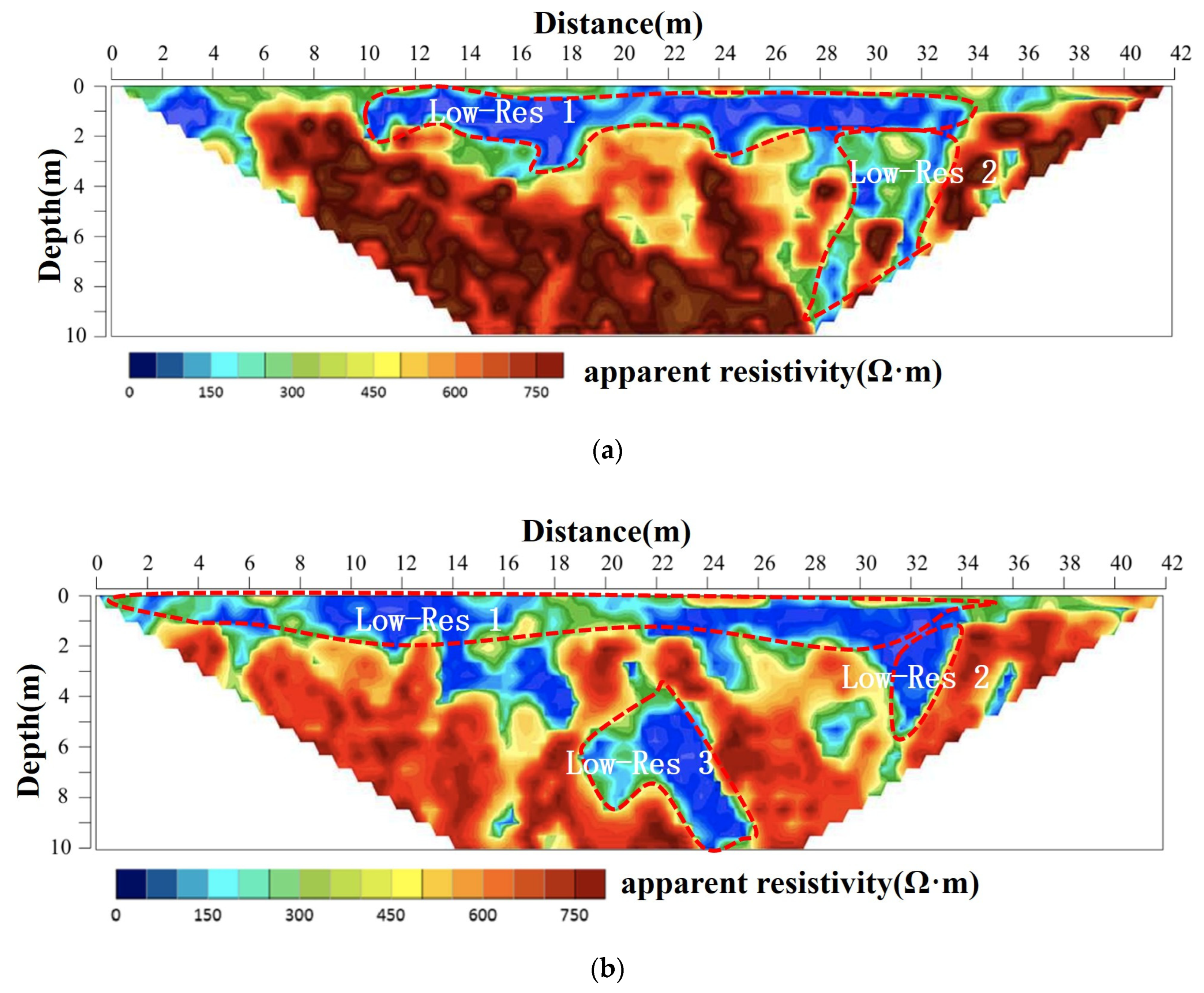
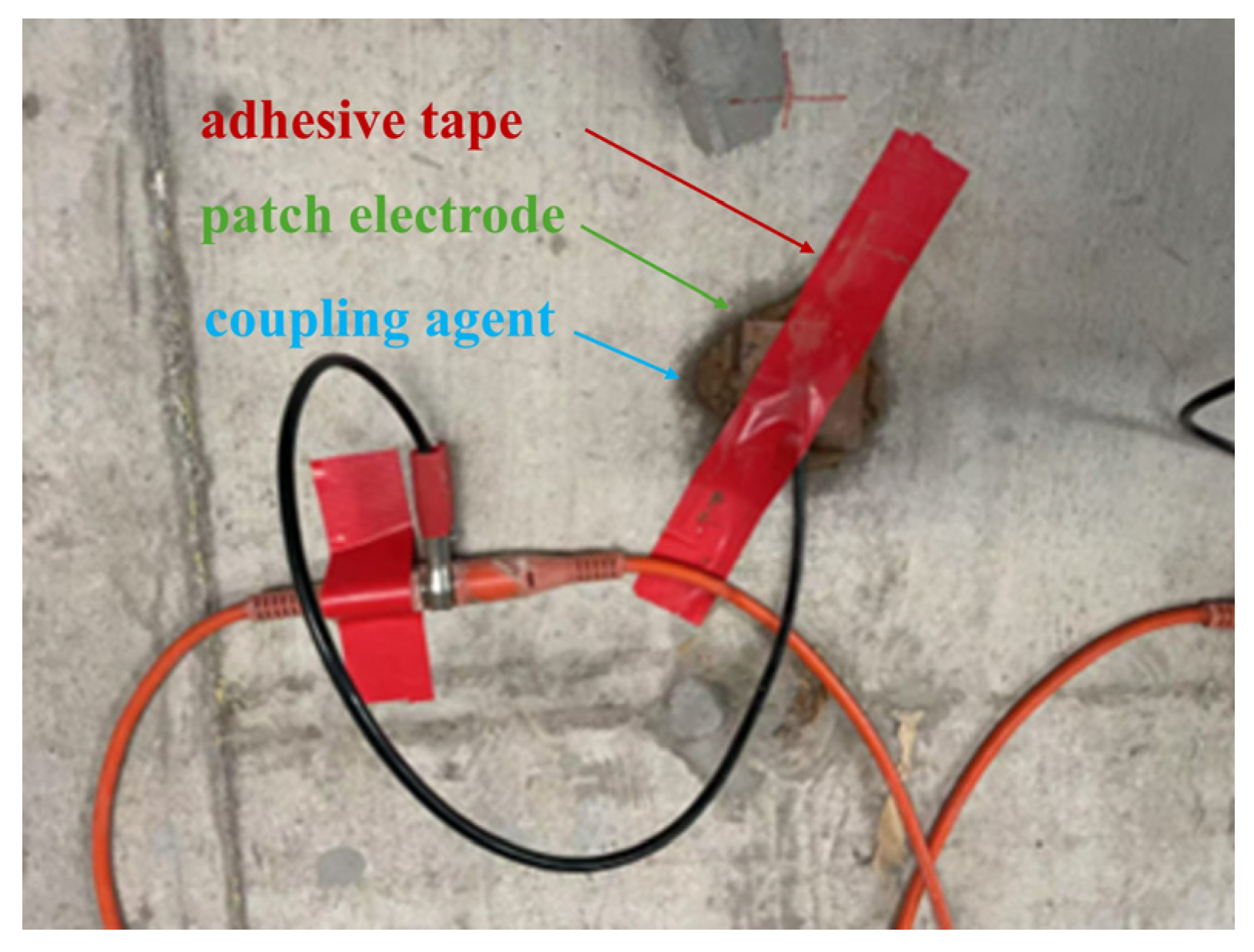
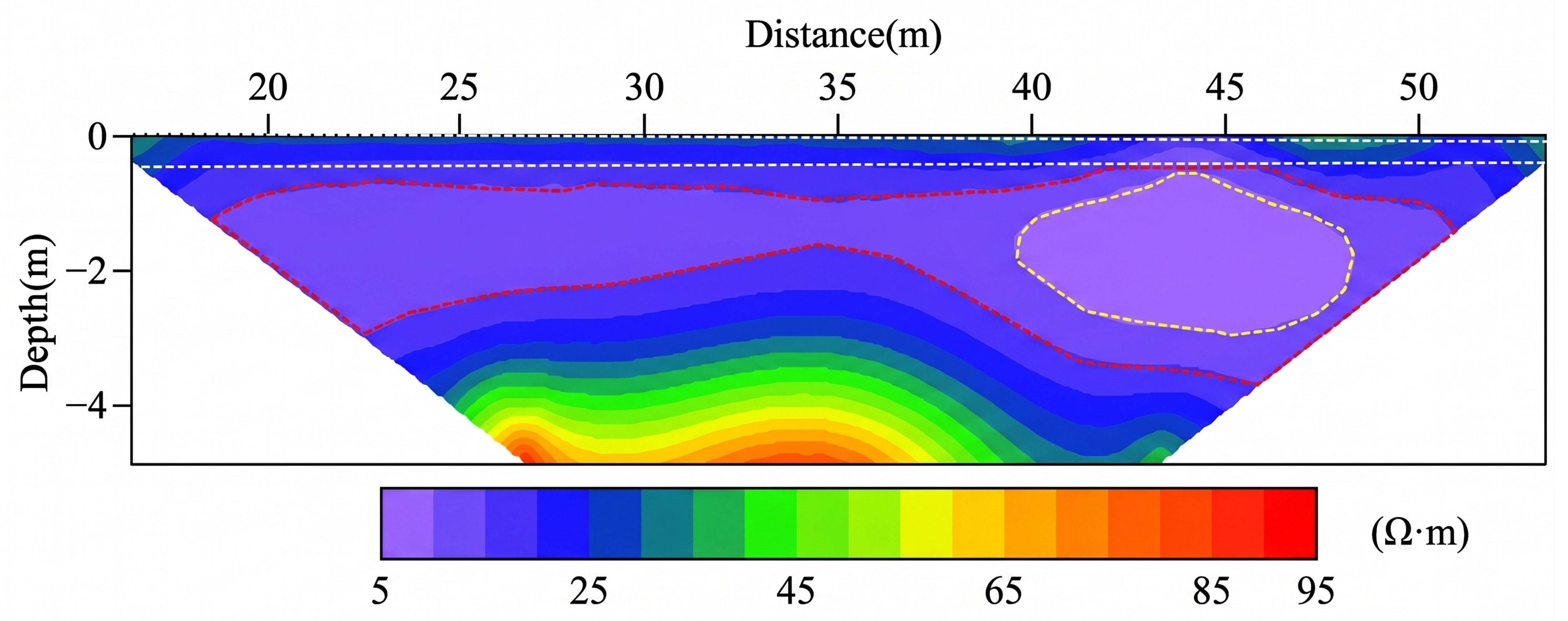
- The vertical-array lateral scanning detection method proposed in this study effectively overcomes the spatial constraints of “no accessible ground surface for surveying” commonly encountered in urban levee-adjacent environments. By introducing patch-type electrodes in combination with high-conductivity coupling agents, the technical challenges associated with current injection and excessive contact resistance on hardened concrete wall surfaces were successfully resolved. Stable current injection and high signal-to-noise ratio data acquisition for the array resistivity method on vertical hardened surfaces were achieved. Field applications demonstrate that this method can penetrate high-resistivity concrete walls and obtain clear electrical resistivity images of the soil structure behind the wall, confirming the engineering feasibility of shifting the observation surface from a horizontal ground plane to a vertical wall surface.
- (2)
- Comparative analysis of numerical simulations and field measurements indicates that concrete walls are expressed as relatively high-resistivity zones rather than extremely high-resistivity bands. Contact-type seepage is characterized by a layered low-resistivity zone immediately behind the wall, while deep seepage channels manifest as vertically continuous low-resistivity anomalies extending toward the waterside.
- (3)
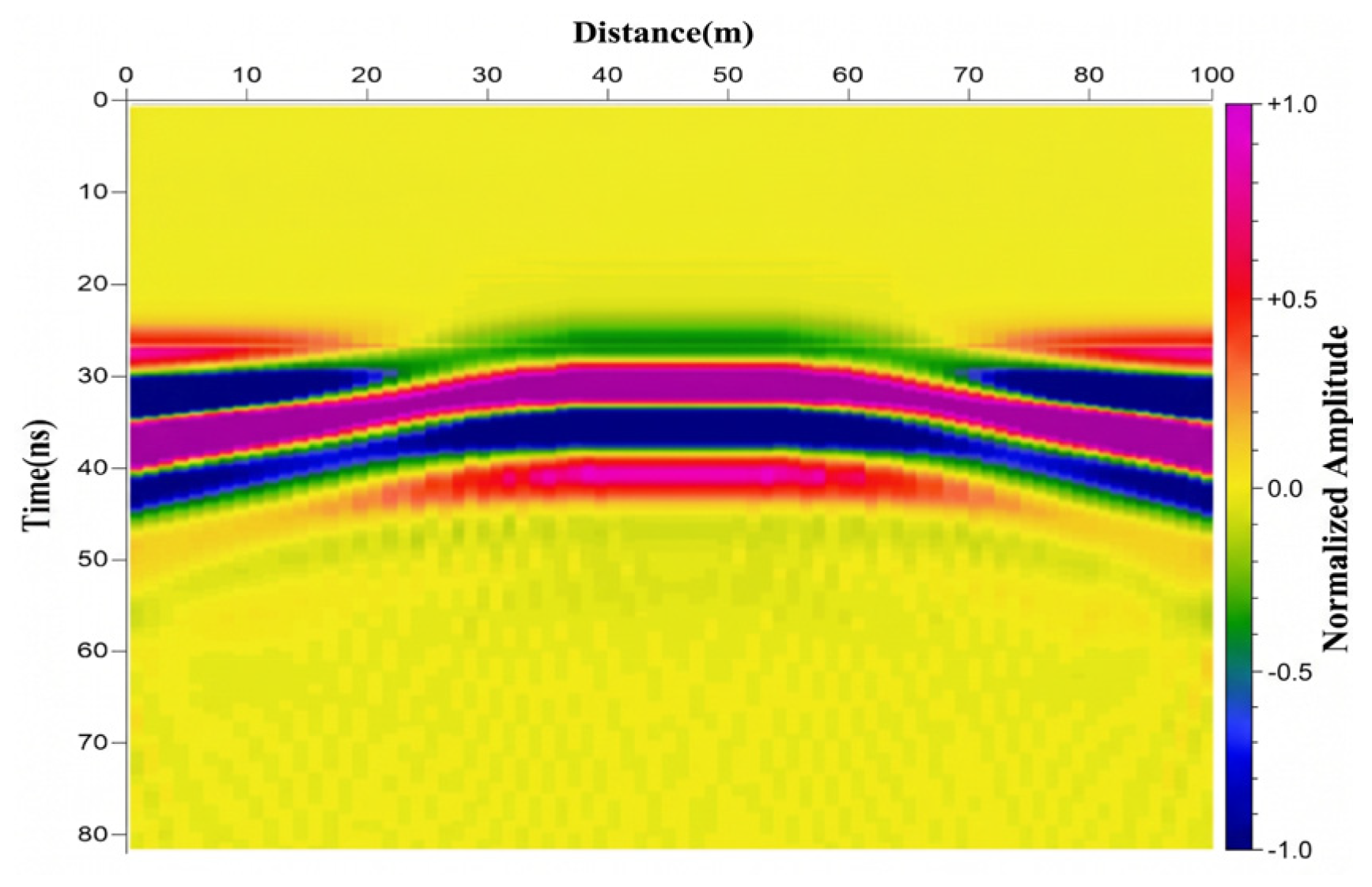
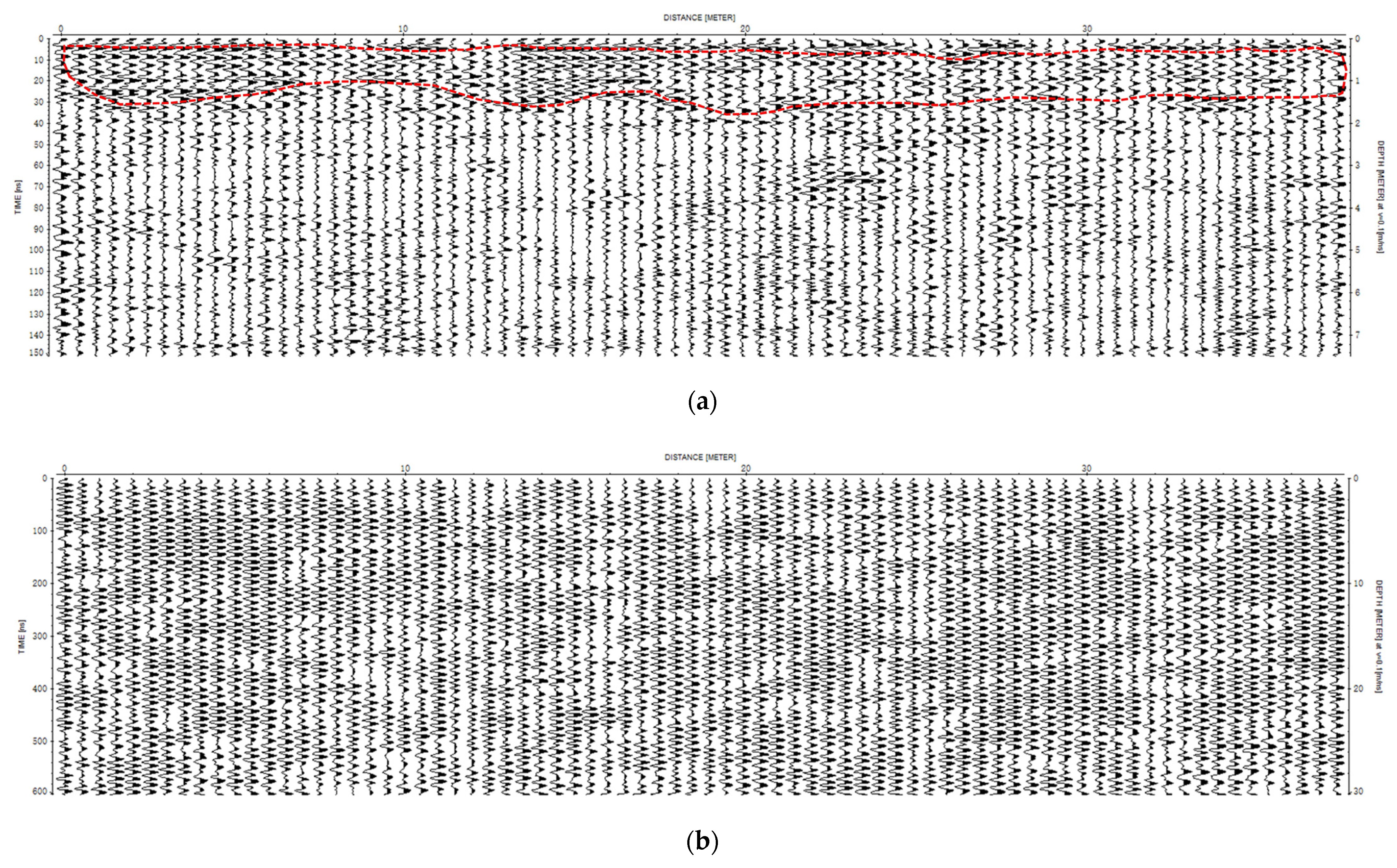
- The results from the ground-penetrating radar and array resistivity surveys demonstrate the inherent limitations of using a single geophysical method in levee-adjacent environments. As GPR cannot effectively image deep seepage channels because of strong signal attenuation in shallow water-rich and high-conductivity zones behind the wall, the effective imaging depth of GPR is mainly limited to 2–3 m in this levee site condition. Below the depth of 3 m, the electromagnetic signal amplitude decays significantly, and the reflected wave energy is too weak to distinguish the spatial morphology of deep seepage channels accurately. This limitation should be fully considered in practical applications. By contrast, ERT remains sensitive to deep seepage pathways and compensates for the GPR blind zone, highlighting the necessity of the combined ERT–GPR strategy for reliable hazard identification.
- (4)
- Despite its demonstrated effectiveness, the proposed vertical-array lateral scanning method has certain applicability boundaries and technical limitations. The efficacy of GPR may be significantly reduced in highly conductive environments (such as highly saturated clay or saline soils) due to severe electromagnetic wave attenuation, or when facing strong signal scattering caused by dense steel rebar networks within the concrete retaining walls. Meanwhile, ERT inversion inherently exhibits non-uniqueness and ambiguity, particularly when delineating complex three-dimensional seepage geometries using two-dimensional profiles, or when operating under strong urban stray current interference. Therefore, a comprehensive hazard assessment should always integrate these complementary geophysical methods with local hydrogeological data and physical borehole validations.
Author Contributions
Funding
Data Availability Statement
Conflicts of Interest
References
- Office of the Leading Group for the First National Comprehensive Risk Census of Natural Disasters; State Council of the People’s Republic of China. The 8th Bulletin of the First National Comprehensive Risk Census of Natural Disasters; Office of the National Census Leading Group: Beijing, China, 2024. [Google Scholar]
- Zhou, X.B.; Zhou, J.P.; Du, X.H.; Li, S.Y. Study on Dam Risk Classification in China. Water Sci. Technol.-Water Supply 2015, 15, 483–489. [Google Scholar] [CrossRef]
- He, X.Y.; Wang, Z.Y.; Huang, J.C. Temporal and Spatial Distribution of Dam Failure Events in China. Int. J. Sediment Res. 2008, 23, 398–405. [Google Scholar] [CrossRef]
- General Institute of Water Resources and Hydropower Planning and Design; Ministry of Water Resources. Levee Engineering Handbook; China Water & Power Press: Beijing, China, 2018; pp. 421–423. [Google Scholar]
- Georgic, W.; Klaiber, H.A. A Flood of Construction: The Role of Levees in Urban Floodplain Development. Land Econ. 2022, 98, 78–97. [Google Scholar] [CrossRef]
- Daksiya, V.; Mandapaka, P.V.; Lo, E.Y.M. Effect of Climate Change and Urbanisation on Flood Protection Decision-Making. J. Flood Risk Manag. 2021, 14, e12681. [Google Scholar] [CrossRef]
- USACE. Safety of Dams–Policy and Procedures; U.S. Army Corps of Engineers: Washington, DC, USA, 2015. [Google Scholar]
- Binley, A.; Hubbard, S.S.; Huisman, J.A.; Revil, A.; Robinson, D.A.; Singha, K.; Slater, L.D. The emergence of hydrogeophysics for improved understanding of subsurface processes over multiple scales. Water Resour. Res. 2015, 51, 3837–3866. [Google Scholar] [CrossRef] [PubMed]
- Cardarelli, E.; Cercato, M.; De Donno, G. Characterization of an earth-filled dam through the combined use of electrical resistivity tomography, P- and SH-wave seismic tomography and surface wave data. J. Appl. Geophys. 2014, 106, 87–95. [Google Scholar] [CrossRef]
- Demirci, S.; Yigit, E.; Eskidemir, I.H.; Ozdemir, C. Ground penetrating radar imaging of water leaks from buried pipes based on back-projection method. Ndt E Int. 2012, 47, 35–42. [Google Scholar] [CrossRef]
- Cataldo, A.; Persico, R.; Leucci, G.; De Benedetto, E.; Cannazza, G.; Matera, L.; De Giorgi, L. Time domain reflectometry, ground penetrating radar and electrical resistivity tomography: A comparative analysis of alternative approaches for leak detection in underground pipes. Ndt E Int. 2014, 62, 14–28. [Google Scholar] [CrossRef]
- Adetokunbo, P.; Ismail, A.; Mewafy, F.; Sanuade, O. Geophysical Characterization and Seepage Detection of the Chimney Rock Dam Embankment Near Salina, Oklahoma. Water 2024, 16, 1224. [Google Scholar] [CrossRef]
- Yan, Y.; Yan, Y.; Zhao, G.; Zhou, Y.; Wang, Z. Combined ERT and GPR Data for Subsurface Characterization of Weathered Hilly Slope: A Case Study in Zhejiang Province, Southeast China. Sustainability 2022, 14, 7616. [Google Scholar] [CrossRef]
- Busato, L.; Boaga, J.; Peruzzo, L.; Himi, M.; Cola, S.; Bersan, S.; Cassiani, G. Combined Geophysical Surveys for the Characterization of a Reconstructed River Embankment. Eng. Geol. 2016, 211, 74–84. [Google Scholar] [CrossRef]
- White, A.; Wilkinson, P.; Boyd, J.; Wookey, J.; Kendall, J.M.; Binley, A.; Grosse, T.; Chambers, J. Combined Electrical Resistivity Tomography and Ground Penetrating Radar to Map Eurasian Badger (Meles meles) Burrows in Clay-Rich Flood Embankments (Levees). Eng. Geol. 2023, 323, 107198. [Google Scholar] [CrossRef]
- Miao, C.; Borthwick, A.G.L.; Liu, H.; Liu, J. China’s Policy on Dams at the Crossroads: Removal or Further Construction? Water 2015, 7, 2349–2357. [Google Scholar] [CrossRef]
- Jian, J.; Lu, J.; Guo, Q.; Wang, J.; Sun, L.; Mao, D.; Wang, Y. Characterization and Quantification of Dam Seepage Based on Resistivity and Geological Information. Water 2024, 16, 2410. [Google Scholar] [CrossRef]
- Wang, Y.; Wang, B.; Chai, L.; Qian, W. Embankment Project Monitoring Using the Time-Lapse Transient Electromagnetic Method: Numerical Simulation and Field Applications. Water 2025, 17, 1341. [Google Scholar] [CrossRef]
- Wei, K.; Zhang, H.; Zhao, X.; Zhu, S.; Shang, Z.; Liu, Y. Leakage channel detection in dams based on integrated geophysical methods. J. Appl. Geophys. 2025, 237, 105703. [Google Scholar] [CrossRef]
- Sjödahl, P.; Dahlin, T.; Johansson, S. Embankment dam seepage evaluation from resistivity monitoring data. Near Surf. Geophys. 2009, 7, 463–474. [Google Scholar] [CrossRef]
- Di Prinzio, M.; Bittelli, M.; Castellarin, A.; Pisa, P.R. Application of GPR to the monitoring of river embankments. J. Appl. Geophys. 2010, 71, 53–61. [Google Scholar] [CrossRef]
- Golebiowski, T.; Piwakowski, B.; Cwiklik, M. Application of Complex Geophysical Methods for the Detection of Unconsolidated Zones in Flood Dikes. Remote Sens. 2022, 14, 538. [Google Scholar] [CrossRef]
- Golebiowski, T.; Piwakowski, B.; Cwiklik, M. Application of the GPR and ERT methods for non-invasive examination of a flood dike. In Proceedings of the 9th Scientific-Technical Conference on E-mobility, Sustainable Materials and Technologies (MATBUD), Cracow, Poland, 19–21 October 2020. [Google Scholar]
- Athanasiou, E.N.; Tsourlos, P.I.; Vargemezis, G.N.; Papazachos, C.B.; Tsokas, G.N. Non-destructive DC resistivity surveying using flat-base electrodes. Near Surf. Geophys. 2007, 5, 263–272. [Google Scholar] [CrossRef]




| Category | Parameter | Specification |
|---|---|---|
| Electrode | material | pure copper patch |
| dimensions | 5 cm×5 cm | |
| Coupling Medium | clay fraction | ≥30% |
| water content | 40~50% approaching liquid limit | |
| application thickness | 2~5 mm | |
| NaCl dosage | 5~3% by mass of cohesive soil | |
| effective survey time window | 2~4 h | |
| QC Indicators | contact resistance | 0.8~4.5 kΩ |
| data rejection criteria | negative apparent resistivity, RMS error ≥ 5%, or I < 10 mA |
| Material Type | Geometric Characteristics | Resistivity | Relative Permittivity | Geophysical Characteristics |
|---|---|---|---|---|
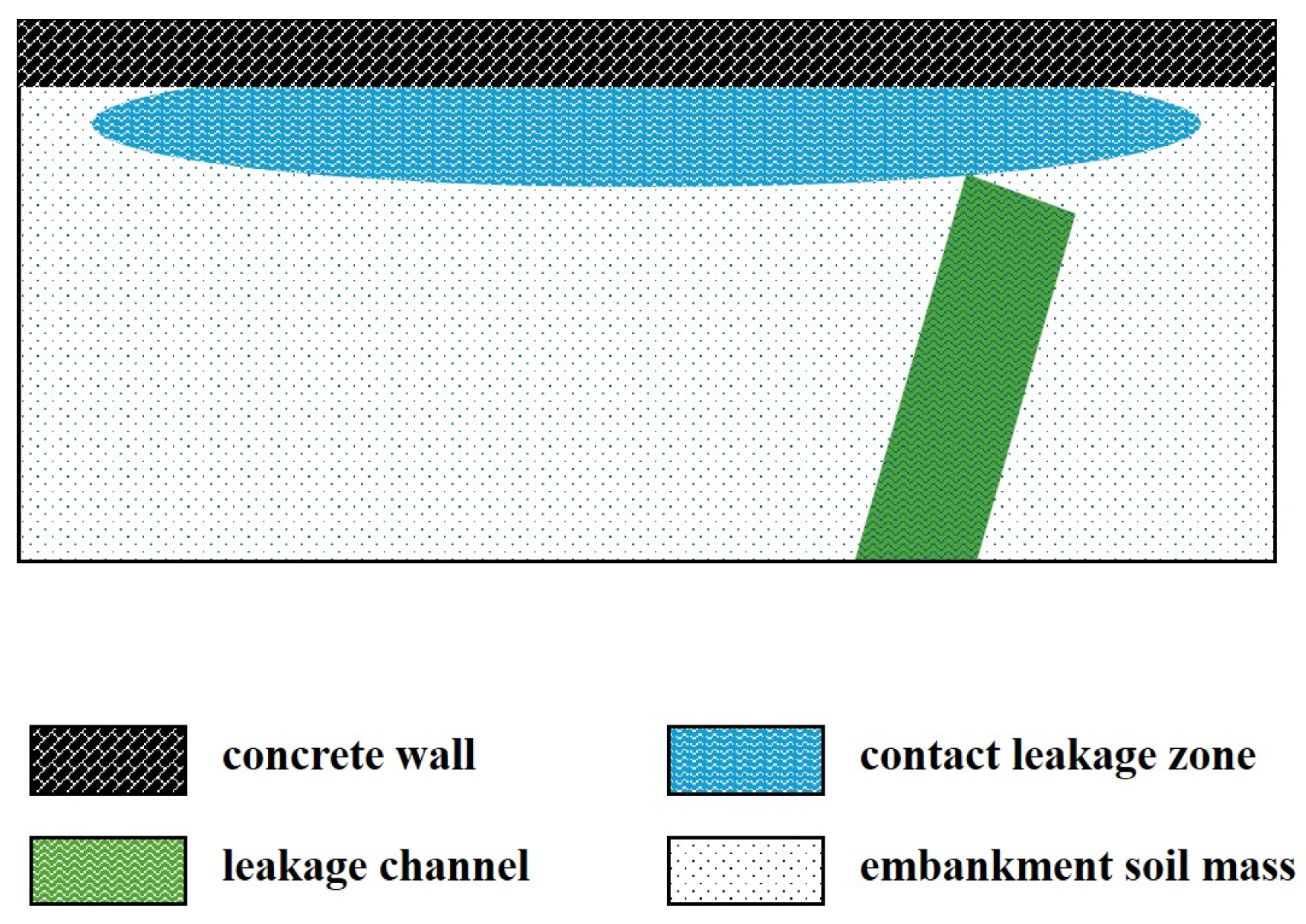
| Concrete layer | top rectangle | 10,000 | 3 | extremely high resistivity, low permittivity, dense hardened layer |
| Contact seepage | flat strip | 10 | 20 | low resistivity, medium-high permittivity, high water content |
| Leakage channel | inclined rectangle | 1 | 30 | extremely low resistivity, high permittivity, near-saturated |
| Background soil | / | 20 | 15 | medium-low resistivity, unsaturated soil |
Disclaimer/Publisher’s Note: The statements, opinions and data contained in all publications are solely those of the individual author(s) and contributor(s) and not of MDPI and/or the editor(s). MDPI and/or the editor(s) disclaim responsibility for any injury to people or property resulting from any ideas, methods, instructions or products referred to in the content. |
© 2026 by the authors. Licensee MDPI, Basel, Switzerland. This article is an open access article distributed under the terms and conditions of the Creative Commons Attribution (CC BY) license.
Share and Cite
Cheng, X.; Tong, J.; Wang, M.; Xu, Y.; Wan, S.; Rao, K. Application of Vertical-Array Lateral Scanning in Seepage Detection of Urban Levees with Adjacent Underground Spaces. Water 2026, 18, 1140. https://doi.org/10.3390/w18101140
Cheng X, Tong J, Wang M, Xu Y, Wan S, Rao K. Application of Vertical-Array Lateral Scanning in Seepage Detection of Urban Levees with Adjacent Underground Spaces. Water. 2026; 18(10):1140. https://doi.org/10.3390/w18101140
Chicago/Turabian StyleCheng, Xiaodong, Jian Tong, Maomei Wang, Yi Xu, Sicheng Wan, and Kaiyong Rao. 2026. "Application of Vertical-Array Lateral Scanning in Seepage Detection of Urban Levees with Adjacent Underground Spaces" Water 18, no. 10: 1140. https://doi.org/10.3390/w18101140
APA StyleCheng, X., Tong, J., Wang, M., Xu, Y., Wan, S., & Rao, K. (2026). Application of Vertical-Array Lateral Scanning in Seepage Detection of Urban Levees with Adjacent Underground Spaces. Water, 18(10), 1140. https://doi.org/10.3390/w18101140