
Article

Application of a Parsimonious Phosphorus Model (SimplyP) to Two Hydrologically Contrasting Agricultural Catchments


1
Asset Management & Sustainability, Uisce Éireann, 24-26 Talbot Street, 1 Dublin, Ireland
2
Agricultural Catchments Programme, Department of Environment, Soils and Landuse, Teagasc, Johnstown Castle, Y35 Y521 Wexford, Ireland
3
Department of Environment, Soils and Landuse, Teagasc, Johnstown Castle, Y35 Y521 Wexford, Ireland
4
Norwegian Institute for Water Research, Økernveien 94, 0579 Oslo, Norway
*
Author to whom correspondence should be addressed.
Water 2026, 18(1), 6; https://doi.org/10.3390/w18010006
Submission received: 16 September 2025 / Revised: 12 December 2025 / Accepted: 14 December 2025 / Published: 19 December 2025
(This article belongs to the Special Issue New Technologies for Hydrological Forecasting and Modeling)

Abstract

Understanding how water-quality models perform across different hydrological and biogeochemical contexts is essential for managing nutrient losses in agricultural catchments. This study evaluated SimplyP, a parsimonious phosphorus model, adapted to better represent Irish agricultural catchments and implemented within the flexible Mobius2 framework. Long-term, high-frequency monitoring data from the Agricultural Catchments Programme (ACP) were used for two sites: Ballycanew, a grassland catchment dominated by surface runoff, and Castledockrell, an arable, groundwater-driven catchment. Model calibration and validation were performed for streamflow (Q), suspended sediment (SS), and multiple phosphorus (P) fractions, with performance assessed using Kling–Gupta efficiency (KGE). In Ballycanew, the model reproduced Q, SS, and total P load well, with weaker agreement for total reactive phosphorus (TRP), likely reflecting unaccounted point sources during low flows. In Castledockrell, performance was moderate for Q and SS, but TRP and other P fractions were not adequately captured, highlighting the need for more detailed representation of subsurface P pathways in groundwater-dominated systems. Overall, SimplyP is well-suited to surface-runoff-dominated catchments with conventional phosphorus mobilisation. Its flexible implementation in Mobius2 allows relatively straightforward modifications, such as including groundwater-mediated P processes, to extend applicability to more complex systems. High-resolution ACP datasets were crucial for identifying model strengths and limitations, supporting refinement for improved nutrient management across diverse agricultural landscapes.

1. Introduction

Phosphorus (P) losses from agricultural land are well-recognised to place pressure on water quality, contributing to eutrophication and ecosystem degradation [1,2]. These losses arise from fertiliser and manure applications and are influenced by management practices, climate, and the behaviour of P in soils and waters [3]. Despite mitigation efforts, reducing diffuse P export remains challenging, highlighting the need for tools to assess catchment responses and inform management.
Phosphorus transport through catchments is highly catchment-specific, with soils, topography, land use, farming practices, and hydrology all influencing the risk and timing of export [4,5,6,7]. Understanding these system-specific dynamics is critical for devising effective management strategies. Hydrological models provide a practical means to explore catchment responses to scenarios evaluating changes in management or climate, particularly as catchments face pressure from climate change and tighter nutrient-reduction targets under policies such as the EU Water Framework Directive [8,9].
A range of approaches exists for modelling phosphorus pollution, from empirical methods to detailed process-based catchment models. The latter represent the transfer of pollutants through different flow and contaminant transport pathways using a combination of empirical and theoretical equations [10]. Process-based models, such as SWAT [11] and INCA-P [12,13], are commonly applied to evaluate agricultural management or climate scenarios, but their high data and parameterisation requirements can limit applicability in data-sparse settings. Moreover, dynamic catchment-scale models often struggle to accurately predict phosphorus export, even when streamflow performance is satisfactory [14,15]. Limitations arise from insufficient data, complex model structures, unsuitable calibration, and conceptual uncertainties, which are often interrelated. Adding nutrients to streamflow introduces additional complexity, which leads to increased predictive uncertainty [14].
Parsimonious models offer an alternative by retaining key hydrological and nutrient processes while requiring fewer inputs. SimplyP is one such model, incorporating hydrology, sediment, and phosphorus dynamics in a simplified INCA-based framework. Comparisons with INCA-P in a Scottish agricultural catchment have shown comparable performance in both calibration and validation [16]. Implemented in the Mobius2 framework [17], SimplyP can be customised to specific catchments, although its performance across diverse hydro-chemical settings remains to be established. Similar approaches, such as TOPCAT-NP and CRAFT, employ simplified representations of nutrient transport processes in runoff and subsurface pathways [18,19].
This study evaluates SimplyP in two agriculturally dominated Irish catchments with contrasting hydrology, physical characteristics, and nutrient risk profiles: Ballycanew and Castledockrell. Both catchments have been monitored under the Agricultural Catchments Programme (ACP) for over a decade, providing high-resolution hydrology, sediment, and nutrient data. Extensive prior research has established a detailed understanding of these systems, allowing a robust assessment of SimplyP’s ability to represent key hydrological and phosphorus export processes in catchments with differing flow pathways (surface runoff vs. groundwater) and land use (grassland vs. arable).
The objectives of this study are to determine whether SimplyP can (1) reproduce discharge, suspended sediment, and phosphorus dynamics, including storm-driven transport; (2) capture low-flow phosphorus concentrations; and (3) estimate total phosphorus export. These evaluations provide insights into the model’s suitability for scenario analyses and help identify the types of catchments where its current structure is appropriate or where further adaptations may be needed.

2. Materials and Methods

2.1. Site Description

This study focuses on two agricultural catchments in County Wexford, southeastern Ireland: Ballycanew and Castledockrell (Figure 1). Although geographically close, the catchments differ in soils, drainage, and farming practices, leading to contrasting hydrology and phosphorus export risk. Both are part of the Agricultural Catchments Programme (ACP), providing high-resolution hydrological and water-quality data and extensive prior research.
Ballycanew (11.9 km2) is dominated by grassland (77%) used primarily for dairy. Soils are mainly poorly drained Gleys (74%), promoting quick flow and surface/near-surface runoff, with higher areas of freely drained Cambisols supporting spring barley. Organic P inputs from livestock average 12.5 kg ha−1 yr−1. Recent intensification has increased stocking rates, elevating the risk of sediment-bound P losses during wet conditions [20,21].
Castledockrell (11.2 km2) is mainly arable (72%), with crops including spring and winter barley, winter wheat, and some oilseed rape. Soils are largely free-draining Cambisols (80%) overlying siltstone and slate bedrock. Groundwater-dominated flow is typical, though winter storms on saturated soils can generate significant surface runoff. Organic P inputs from livestock are relatively low (7.5 kg ha−1 yr−1), with additional P from fertilisation. Legacy soil P means the catchment can be vulnerable to losses during very wet periods, especially when soils are bare or saturated [20,22].

2.2. Data

Meteorological data were collected from automated weather stations located in central lowland areas of each catchment. Stations recorded rainfall, air and soil temperature, relative humidity, solar radiation, wind speed, and wind direction at 10 min intervals.
Discharge was derived from stage-discharge relationships for Corbett flat-V non-standard weirs using the velocity-area method with an OTT Acoustic Doppler Current metre. Water levels were recorded every 10 min with vented-pressure loggers in stilling wells and converted to discharge using the established rating curves.
Catchment outlets were equipped with bankside phosphorus analysers [23] measuring total phosphorus (TP) and total molybdate-reactive phosphorus (TRP) in unfiltered water at sub-hourly intervals. Particulate phosphorus (PP) was calculated as TP − TRP. All time series were aggregated to daily means or totals as appropriate for modelling.

2.3. SimplyP Model

SimplyP is a parsimonious catchment-scale phosphorus model that captures key hydrological and P export processes with relatively few parameters. Its simplified structure contrasts with more complex models such as HYPE, SWAT, and INCA-P, reducing data and computational demands. The model is spatially semi-distributed, with catchments divided into sub-catchments and land use classes. It is designed for agricultural settings, with land use categorised as arable, improved grassland, or semi-natural.
The model requires daily precipitation, air temperature, and potential evapotranspiration (PET), along with any additional calibration data. Outputs include daily streamflow, suspended sediment, particulate phosphorus, total dissolved phosphorus, and total phosphorus. The original model estimates soluble reactive phosphorus (SRP) as a fixed fraction of TDP; here we extended it to include particulate reactive phosphorus (PRP) to compare with high-frequency TRP data. SS, PP, TRP, and TP are output as loads and concentrations, alongside internal hydrological and biogeochemical processes.
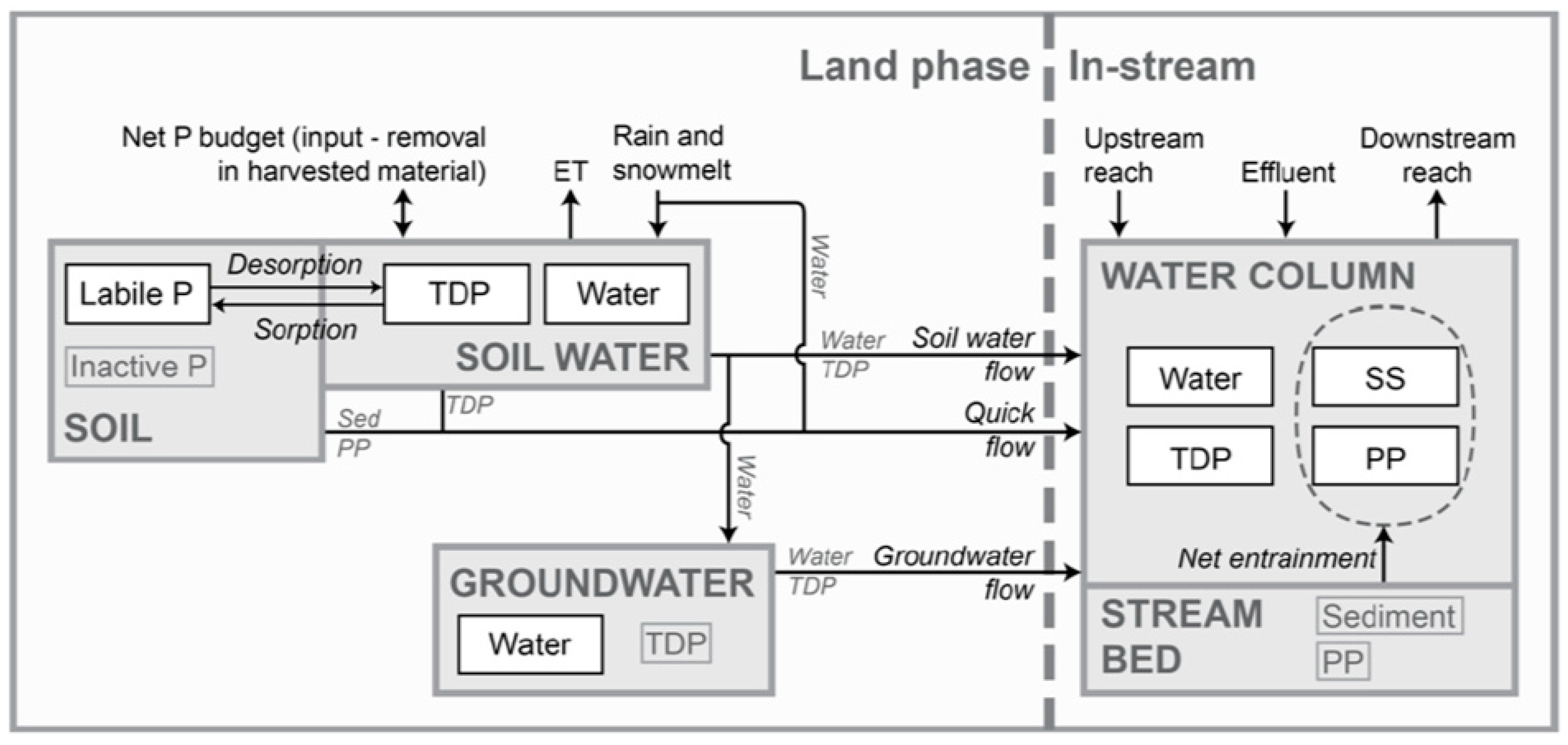
A full description of the conceptual structure is in Jackson-Blake et al. [16], with updates and bug fixes in the Mobius2 repository (https://nivanorge.github.io/Mobius2/, (accessed on 24 September 2024). Figure 2 shows the model layout.
While the model’s simplicity supports efficient calibration and interpretation, it also introduces limitations. Some processes, such as detailed in-stream biogeochemistry or complex sediment–phosphorus interactions, are treated more generically than in complex models. SimplyP is therefore best suited for catchment-scale assessments focusing on broad patterns and dominant processes rather than fine-scale mechanisms.

2.4. Parameters

We used a customised version of SimplyP, adding three parameters to better represent the study catchments. For streamflow, the original constant f_quick (proportion of soil flow routed through quick flow) was replaced with two parameters: a quick flow rate inflexion point (mm/day) and quick flow dryness limit (dimensionless), improving peak flow predictions. For phosphorus, one parameter splits particulate P into reactive and unreactive fractions to match high-frequency TRP observations.

2.5. Model Calibration

Calibration used the global optimisation algorithm from the Dlib C++ library within Mobius2 [24], which performs a global search to identify the optimal parameter set by alternating between global exploration and local refinement. Calibration proceeded stepwise using wide parameter ranges to explore feasible values for Q, SS, PP, TRP, and TP (load and concentration for all except Q). A final simultaneous calibration was then performed for all components using the constrained ranges from the stepwise phase.
Kling–Gupta Efficiency (KGE) was used as the primary objective function [25], as it evaluates bias, variability, and correlation simultaneously. Performance was also assessed using other metrics (e.g., NSE, bias, average concentrations) and visual inspection of internal model stores. Calibration was conducted for hydrologic years 2010–2016 (HY2010 starts 1 October 2009), with 2017–2020 used for validation.

3. Results

3.1. Ballycanew

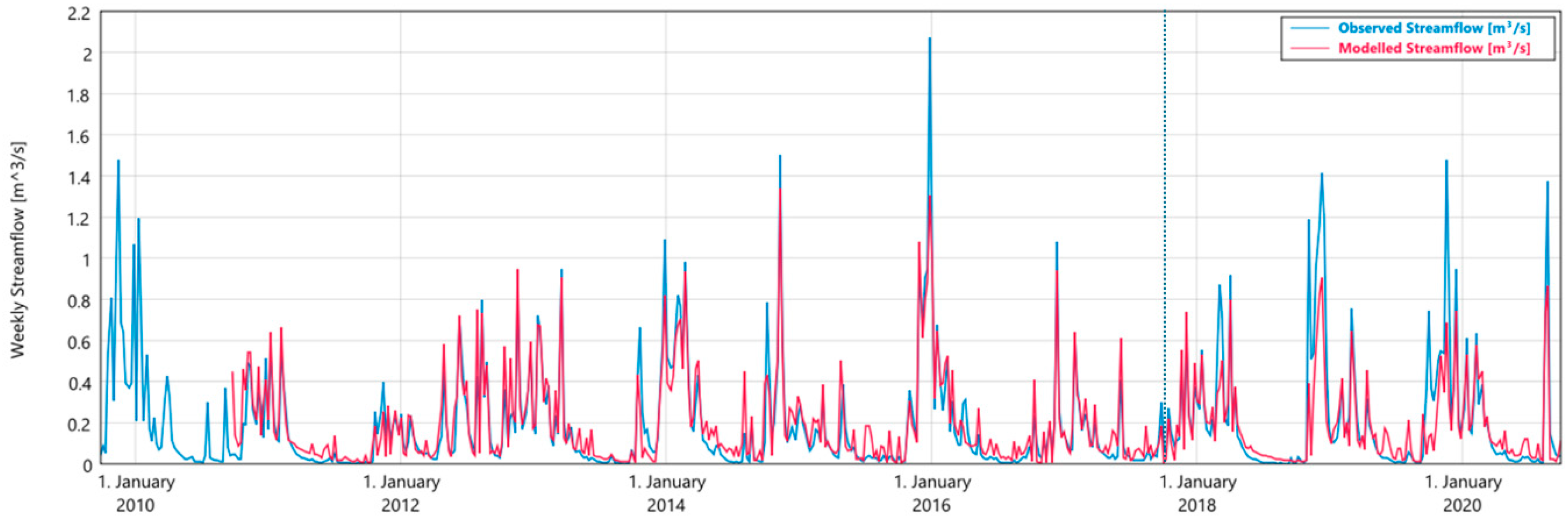
Figure 3 shows the weekly aggregated streamflow fit for the Ballycanew catchment. Model performance is generally strong, with observed dynamics captured across a wide range of conditions. The gap at the start of the record reflects missing rainfall data, which prevented simulation during that period. The main systematic misfit is the underestimation of peak flows. This is partly attributable to the choice of KGE as the optimisation metric, which weights overall correlation, variability, and bias more evenly than peak-focused metrics such as NSE. As a result, the calibration favours realistic seasonal flow patterns and total volumes over precise replication of short-duration storm peaks. Some structural limitations in the quickflow representation may also contribute, as peak generation in the catchment is strongly influenced by poorly drained soils and rapid overland pathways that are difficult to approximate with a parsimonious model. Although this bias could potentially affect storm-driven SS and PP mobilisation, later results show that the sediment and phosphorus components still match observed patterns reasonably well.
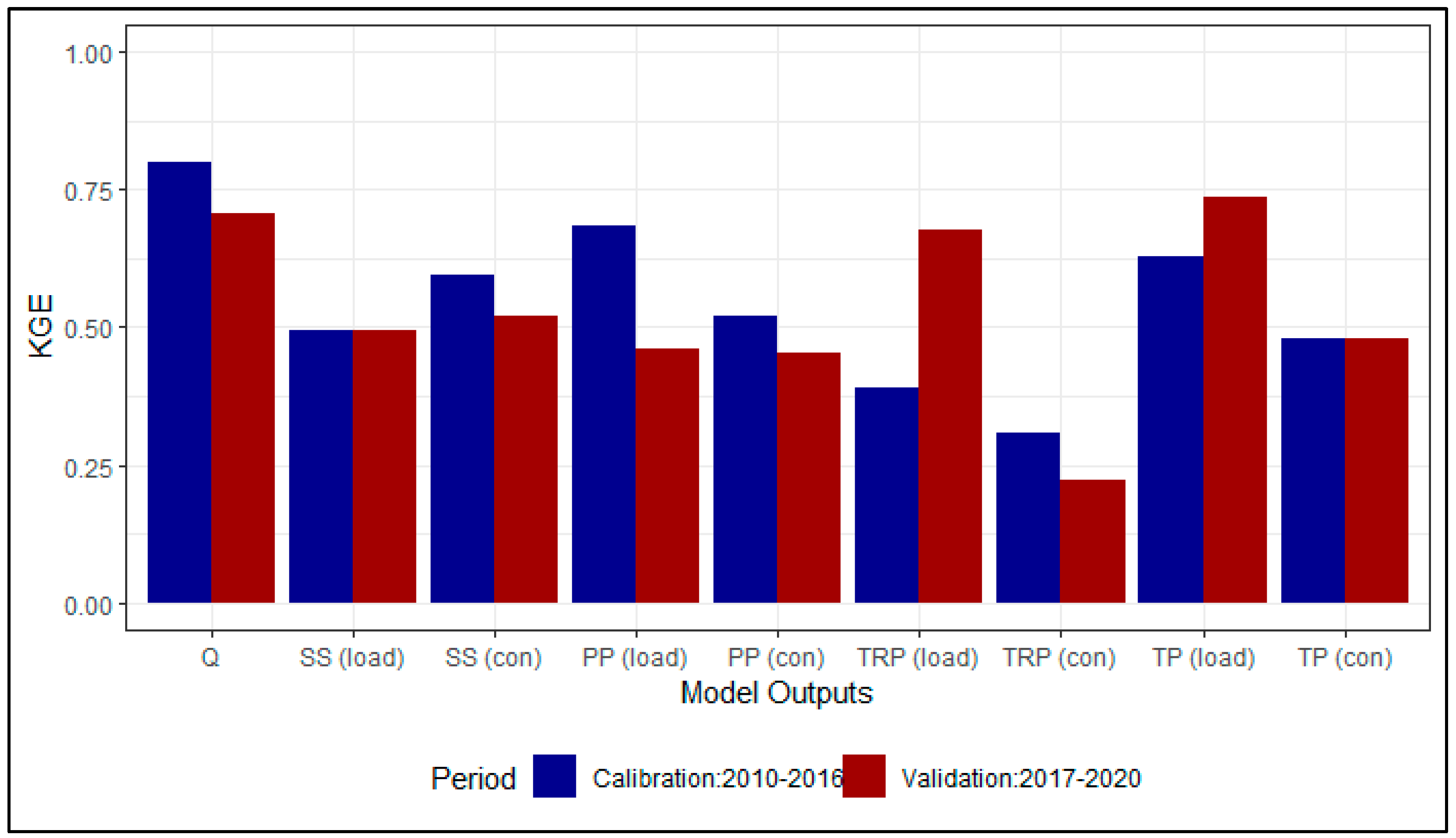
Figure 4 summarises the KGE performance for Ballycanew during the calibration (2010–2016) and validation (2017–2020) periods, with detailed metrics for all components provided in Table A1. Overall, validation performance was slightly lower or broadly similar to calibration, showing that the parameter sets generalised reasonably well. Two components, TRP load and TP load, actually performed better in validation. This may be due to the high-flow periods in validation better matching the dominant mobilisation processes represented in the model, reducing sensitivity to short-term peaks that the structure cannot fully capture.
Streamflow (Q) was reproduced most accurately, followed by PP and TP loads, while TRP concentrations were the most difficult to capture. This is expected in a parsimonious model: TRP responds strongly to rapid biogeochemical and hydrological changes, such as near-stream mobilisation or in-stream processing during storms, that are not explicitly represented. In contrast, PP and TP loads are closely linked to flow and sediment, which the model represents more reliably.
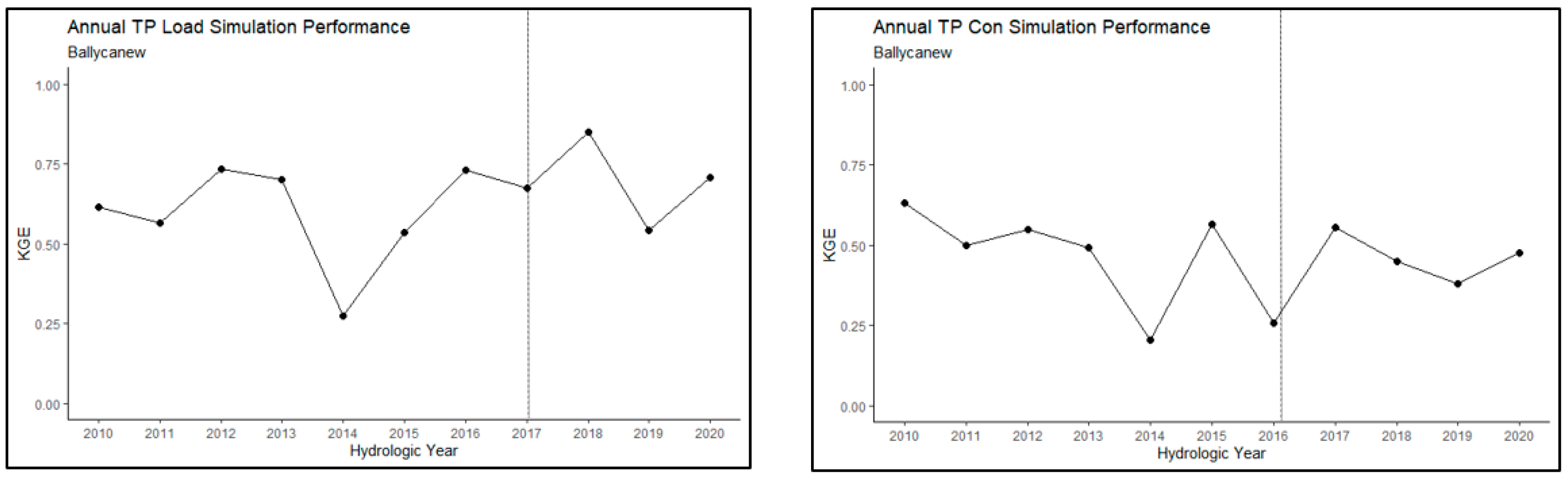
Figure 5 shows how SimplyP performed for total phosphorus (TP) loads and concentrations in Ballycanew each year. TP loads were fairly consistent, though 2014 saw a drop in accuracy. TP concentrations were stable overall, but 2014 and 2016 showed noticeable declines. These dips may reflect short-term hydrological or biogeochemical events, like storms or rapid near-stream P mobilisation, that the simplified model does not fully capture.
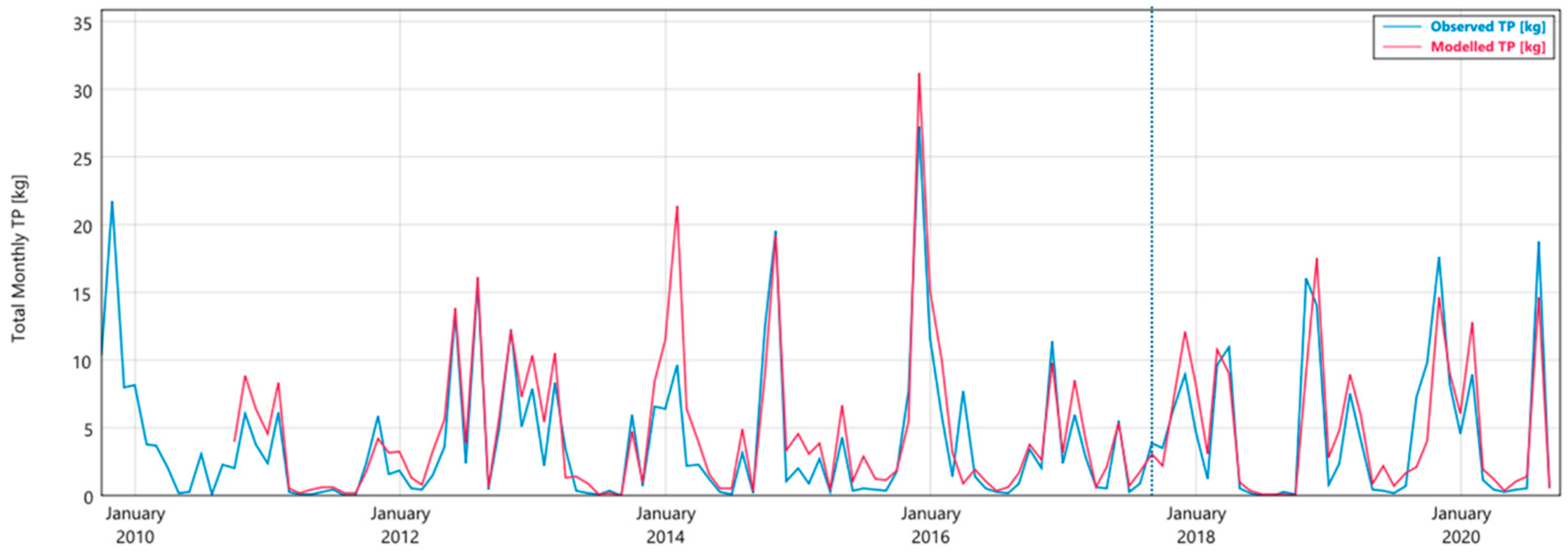
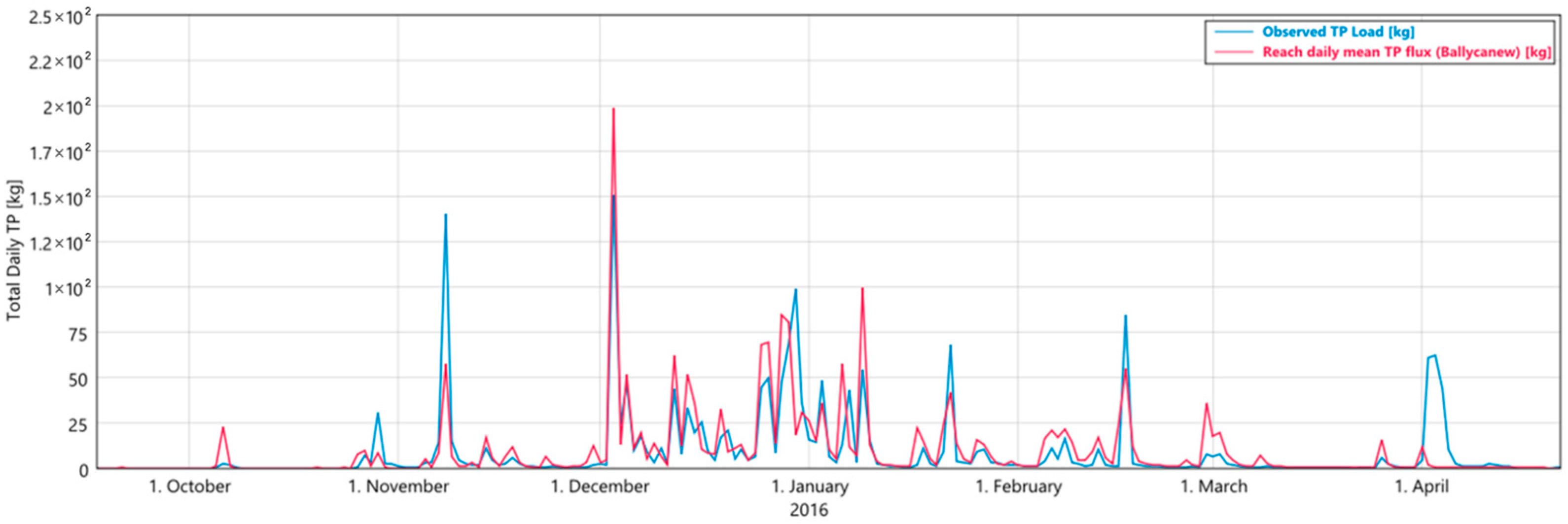
Figure 6 shows the monthly TP loads for Ballycanew. Missing modelled loads at the start reflect gaps in precipitation data. Overall, the model captures low to moderate loads well, but discrepancies appear in the high-load range. Figure 7 shows a representative daily time series from 2015 to 2016, highlighting a tendency for the model to underestimate peak TP loads and overestimate lower to moderate loads. These misfits likely reflect rapid, short-term mobilisation events or localised storm-driven processes that the simplified model structure cannot fully represent.
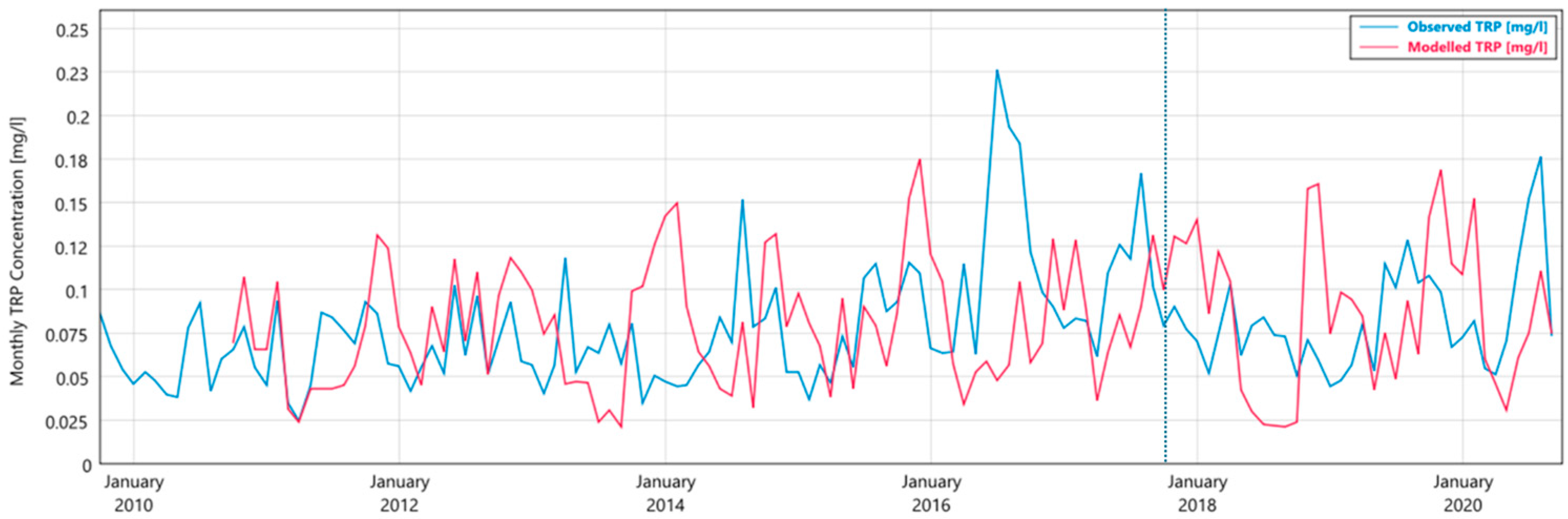
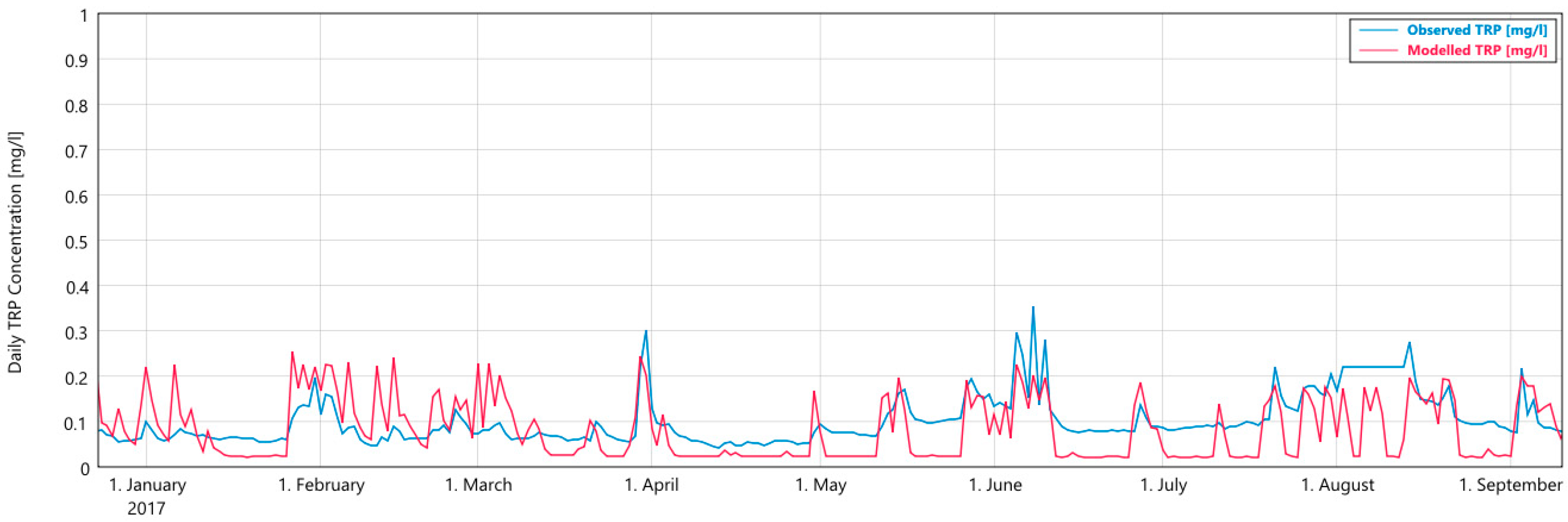
Figure 8 shows monthly TRP concentrations for Ballycanew. Missing modelled values at the start reflect gaps in precipitation data. The model captures the general magnitude of TRP but shows timing discrepancies for peak concentrations, contributing to the relatively low KGE values. Figure 9 presents a representative daily time series from 2017. Here, the model struggles to reproduce the persistent baseload of TRP, tends to overestimate short-term spikes outside summer, and underestimates during baseflow periods. Summer peaks align with likely nutrient application events.
These misfits likely arise because the model assumes no point-source inputs and fixes groundwater TRP at 0.03 mg L−1, based on monitoring data. Consequently, baseflow TRP is under-predicted, and the calibration routine compensates by overestimating higher flows to optimise KGE. This suggests an important TRP input during baseflow that is not fully captured in the available monitoring data.

3.2. Castledockrell

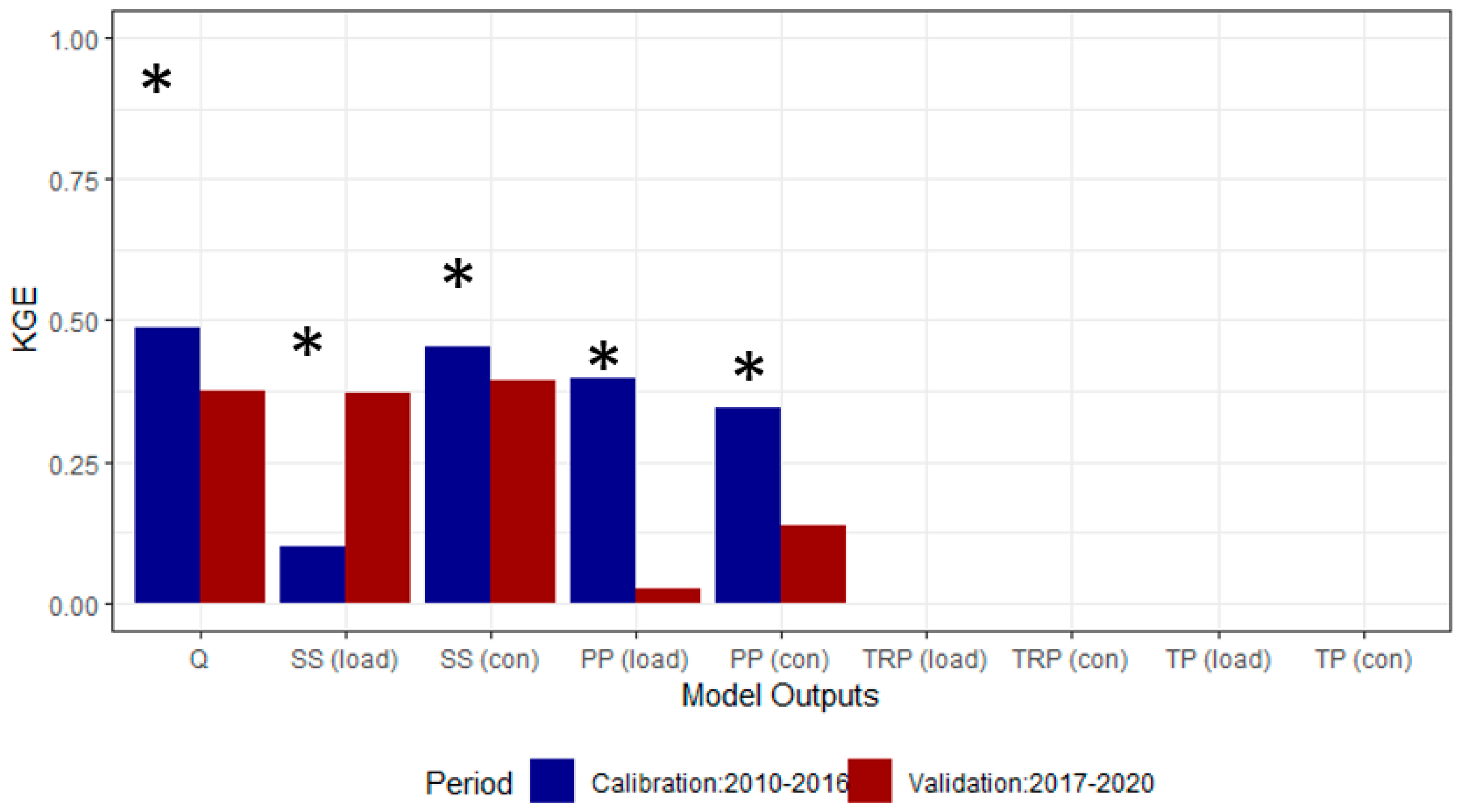
Figure 10 shows KGE performance in Castledockrell during calibration (2010–2016) and validation (2017–2020), with detailed metrics in Table A2. The model performed well for Q and SS (concentration) in both periods, but SS (load), PP (load), and PP (concentration) showed greater variability, either declining from calibration to validation (PP) or improving during validation (SS loads).
Including TRP and TP in calibration reduced performance across all other components. Asterisks in Figure 10 indicate maximum performance achieved when TRP and TP were excluded, showing that no parameter set was identified that could simultaneously capture Q, SS, PP, and TRP. SimplyP represents groundwater phosphorus, but the site’s groundwater-driven hydrology and dynamic baseflow TRP could not be fully reproduced. Expanding phosphorus parameter ranges improved TRP performance only by exceeding physically plausible values, suggesting a structural limitation.
These results suggest that unaccounted point sources and simplified subsurface phosphorus representation force the model to overcompensate during high flows. While SimplyP reliably simulates streamflow, sediment, and particulate phosphorus, further structural adaptation would likely be needed to reproduce TRP and TP dynamics in groundwater-dominated catchments.

4. Discussion

4.1. Overall Model Assessment

The performance of SimplyP differed between the two catchments, reflecting the influence of hydrological pathways and catchment characteristics on phosphorus dynamics. In Ballycanew, the model captured streamflow, suspended sediment (SS), particulate phosphorus (PP), and total phosphorus (TP) loads well, though reactive phosphorus (TRP) concentrations were less accurately reproduced. In contrast, performance in Castledockrell was lower overall, particularly for TRP and TP, which limited the ability to simultaneously reproduce all components. Excluding TRP from calibration in Castledockrell improved model performance for the other components, demonstrating that the model structure is capable of representing primary processes accurately, even in catchments with more complex groundwater-driven hydrology.

4.2. Strengths of SimplyP

SimplyP performs well for variables closely linked to surface runoff, such as SS, PP, and TP, as well as for streamflow (Q). In both catchments, the model was able to capture the overall dynamics of flow and sediment transport, reflecting the suitability of its hydrologic representation for a range of catchment conditions. Ballycanew, with predominantly surface-flow pathways, demonstrates the model’s ability to reproduce high-flow mobilisation of P and sediment. Even in Castledockrell, which is groundwater-dominated, surface-flow contributions during high-intensity events were captured effectively, illustrating that SimplyP can represent episodic runoff-driven fluxes across differing hydrological regimes.

4.3. Limitations in TRP Modelling

TRP dynamics were the primary limitation of SimplyP in both catchments. In Ballycanew, the model underestimates the sustained baseflow TRP due to the absence of explicit representation of small, unknown point sources and potential underestimation of groundwater contributions. While the model reproduces the magnitude of observed TRP peaks reasonably well, misalignment in timing reflects these unrepresented inputs. Importantly, this discrepancy provides insight into unmeasured P sources, and the reach effluent parameter could be used in future applications if data on point-source loadings are available.
In Castledockrell, TRP modelling fails to reconcile observed concentrations and loads with the parameter sets that produce acceptable fits for streamflow, SS, and PP. This reflects structural limitations in representing subsurface phosphorus dynamics; groundwater-driven baseflow contributes a sustained reactive phosphorus load that does not appear to be sufficiently resolved in the current model structure. Attempts to improve TRP simulation by expanding calibration ranges compromised physical plausibility, indicating a missing mechanistic element. A potential solution is the inclusion of a simple decay term for TRP in groundwater, which could be implemented within the flexible Mobius2 framework to better represent subsurface processing in groundwater-dominated catchments.

4.4. Model Complexity and Data Availability

Agricultural catchments present challenges for modelling due to heterogeneous soils, land management, and weather-driven variability. In many catchments, limited data availability restricts the development and validation of models, particularly for phosphorus dynamics, where monthly monitoring often fails to capture key events or peak flows. High-resolution, continuous datasets, such as those used in this study, are critical for robust testing of model structure, ensuring that poor performance reflects structural limitations rather than insufficient calibration data. The availability of detailed observations at these sites allowed identification of structural constraints, specifically the underrepresentation of groundwater TRP dynamics and the potential influence of unmeasured point sources, that might not have been apparent in lower-resolution datasets.

4.5. Implications for Applications and Future Work

SimplyP is well-suited for catchments where surface runoff dominates phosphorus and sediment transport. Its parsimonious structure allows for efficient calibration and reasonable simulation of streamflow and sediment-linked P components. However, in groundwater-dominated systems, limitations in TRP representation highlight the need for structural adaptations. Incorporating subsurface decay processes and accounting for unmonitored point sources would improve generalizability and applicability. Future applications in such settings should explore these adjustments, and the use of high-resolution monitoring data will remain essential for assessing model reliability and parameter plausibility.

5. Conclusions

The SimplyP model provides robust simulations of streamflow, suspended sediment, and phosphorus in catchments where surface runoff dominates, as illustrated by its performance in Ballycanew. In this context, the model successfully reproduces overall catchment-scale fluxes and total phosphorus load exports, making it suitable for applications such as assessing the impact of different management or climate scenarios on P dynamics. Mismatches in TRP concentrations during low-flow periods likely reflect the influence of small, unmonitored point sources, which the model can accommodate if data on these inputs are available. This highlights the model’s potential to provide insight into gaps in catchment monitoring and areas where additional data could improve predictions.
In groundwater-dominated catchments like Castledockrell, performance for TRP and TP is more limited under the current model formulation, reflecting the more complex subsurface pathways that influence P transport. However, SimplyP’s flexible structure allows relatively straightforward modifications, such as a decay term for TRP in groundwater or incorporating additional baseflow sources, which could improve model applicability to these systems. The availability of high-resolution data in this study was essential for diagnosing these limitations and confirming where structural adjustments are most valuable. Overall, SimplyP demonstrates that a parsimonious model, when paired with detailed data, can provide meaningful insights into catchment-scale phosphorus dynamics while remaining adaptable for further refinement.

Author Contributions

Conceptualization, D.H., P.-E.M., R.A., O.Z. and J.G.; methodology, D.H. and L.J.-B.; software, L.J.-B. and M.N.; formal analysis, D.H., L.J.-B. and R.A.; data curation, P.-E.M.; writing—original draft preparation, D.H.; writing—review and editing, P.-E.M., R.A., G.E., L.J.-B. and O.Z.; visualisation, M.N. and G.E.; All authors have read and agreed to the published version of the manuscript.

Funding

This research carried out by the Agricultural Catchments Programme (ACP) at Teagasc, funded by the Irish Department of Agriculture, Food and the Marine.

Data Availability Statement

The data used in this research is the property of the Agricultural Catchments Programme (ACP) at Teagasc.

Acknowledgments

We thank Simon Leach for providing GIS data for the catchments and Una Cullen for managing the ACP database. We are grateful to Phil Haygarth for valuable discussions and conceptual input.

Conflicts of Interest

The authors declare no conflicts of interest.

Abbreviations

The following abbreviations are used in this manuscript:
ACPAgricultural Catchments Programme
HYhydrologic year
KGEKling–Gupta efficiency
NO3nitrate
NSENash–Sutcliffe efficiency
Pphosphorus
PETpotential evapotranspiration
PPparticulate phosphorus
PRPparticulate reactive phosphorus
Qstreamflow
SRPsoluble reactive phosphorus
SSsuspended sediment
TDPtotal dissolved phosphorus
TPtotal phosphorus
TRPtotal molybdate-reactive phosphorus

Appendix A

The following tables summarise performance metrics for the SimplyP model in Ballycanew and Castledockrell. Reported metrics include Kling-Gupta Efficiency (KGE), Nash-Sutcliffe Efficiency (NSE), log-transformed NSE, bias, mean absolute error (MAE), root mean square error (RMSE), coefficient of determination (r2), Index of Agreement, and Spearman’s rank correlation. Results are provided for streamflow (Q), suspended sediment (SS), and phosphorus fractions (particulate P (PP), total reactive P (TRP), and total P (TP)) as both loads and concentrations. Calibration and validation periods are shown separately.
Table A1. Model Performance in Ballycanew.
Obj. FunctionQ (m3/s)SS Load (kg/d)SS Con (mg/L)PP Load (kg/d)PP Con (mg/L)TRP Load (kg/d)TRP Con (mg/L)TP Load (kg/d)TP Con (mg/L)
CalValCalValCalValCalValCalValCalValCalValCalValCalVal
KGE0.800.710.500.490.590.520.680.460.520.450.390.680.310.220.630.740.480.48
NSE0.590.490.470.490.560.440.630.490.320.270.100.41−0.52−0.650.520.52−0.25−0.15
Log NSE0.600.520.61nan0.280.38nannannan−1.83nannan−1.15−2.65nannan−0.60−1.26
Mean Error (bias)−0.010.02385.16347.64−0.150.500.470.830.010.01−0.97−0.140.000.01−1.160.11−0.020.00
MAE0.100.11666.39633.736.176.081.241.520.020.021.771.700.050.052.923.070.070.07
RMSE0.230.283275.702651.2012.5214.864.555.520.040.045.185.160.070.068.769.800.100.09
r20.660.520.520.510.560.440.640.500.410.400.530.480.100.140.650.550.250.30
Idx. of agr.0.900.840.740.780.830.750.880.810.770.750.820.820.560.610.890.850.690.73
Spearman’s RCC0.800.760.800.770.640.750.790.770.360.370.820.800.300.270.820.810.390.38
Data Points255714612478145125221461254413932557146125441424254814612544139625571461
Table A2. Model Performance in Castledockrell.
Obj. FunctionQ (m3/s)SS Load (kg/d)SS Con (mg/L)PP Load (kg/d)PP Con (mg/L)TRP Load (kg/d)TRP Con (mg/L)TP Load (kg/d)TP Con (mg/L)
CalValCalValCalValCalValCalValCalValCalValCalValCalVal
KGE0.490.370.100.370.450.390.400.020.340.14−1.65−2.03−0.56−0.65−0.18−0.44−0.38−0.29
NSE0.19−0.070.160.040.390.150.29−0.930.23−0.10−10.06−31.66−5.91−1.420.28−2.83−3.64−1.04
Log NSE0.150.150.42nan0.310.44nannannannan−0.84nan−2.96nan−0.25nan−2.35−1.79
Mean Error (bias)0.020.02355.4062.280.960.620.330.060.010.01−1.08−0.94−0.04−0.03−1.32−1.34−0.06−0.05
MAE0.140.13471.53228.523.553.670.730.610.010.021.130.980.040.041.811.540.070.06
RMSE0.230.215520.301518.5012.0515.126.413.630.020.053.282.820.060.066.835.830.090.09
r20.270.150.220.210.410.200.290.320.400.150.440.420.020.010.440.480.240.17
Idx. of agr.0.690.590.350.630.690.600.630.670.780.570.480.330.320.300.790.640.520.55
Spearman’s RCC0.490.540.580.690.520.700.590.650.130.380.750.74−0.18−0.200.750.770.020.08
Data Points255714362552143825521461254313722543139525431385254314082548137425431397

References

  1. Carpenter, S.R. Eutrophication of Aquatic Ecosystems: Bistability and Soil Phosphorus. Proc. Natl. Acad. Sci. USA 2005, 102, 10002–10005. [Google Scholar] [CrossRef] [PubMed]
  2. Vero, S.E.; Fenton, O. Agricultural Pressures on Inland Waters. In Encyclopedia of Inland Waters, 2nd ed.; Mehner, T., Tockner, K., Eds.; Elsevier: Oxford, UK, 2022; pp. 47–57. ISBN 978-0-12-822041-2. [Google Scholar]
  3. Leinweber, P.; Bathmann, U.; Buczko, U.; Douhaire, C.; Eichler-Löbermann, B.; Frossard, E.; Ekardt, F.; Jarvie, H.; Krämer, I.; Kabbe, C.; et al. Handling the Phosphorus Paradox in Agriculture and Natural Ecosystems: Scarcity, Necessity, and Burden of P. Ambio 2018, 47, 3–19. [Google Scholar] [CrossRef]
  4. Mellander, P.-E.; Lynch, M.B.; Galloway, J.; Žurovec, O.; McCormack, M.; O’Neill, M.; Hawtree, D.; Burgess, E. Benchmarking a Decade of Holistic Agro-Environmental Studies within the Agricultural Catchments Programme. Ir. J. Agric. Food Res. 2022, 61, 201–217. [Google Scholar] [CrossRef]
  5. Haygarth, P.M.; Condron, L.M.; Heathwaite, A.L.; Turner, B.L.; Harris, G.P. The Phosphorus Transfer Continuum: Linking Source to Impact with an Interdisciplinary and Multi-Scaled Approach. Sci. Total Environ. 2005, 344, 5–14. [Google Scholar] [CrossRef]
  6. Vero, S.E.; Doody, D. Applying the Nutrient Transfer Continuum Framework to Phosphorus and Nitrogen Losses from Livestock Farmyards to Watercourses. J. Environ. Qual. 2021, 50, 1290–1302. [Google Scholar] [CrossRef]
  7. Gascuel-Odoux, C.; Fovet, O.; Faucheux, M.; Salmon-Monviola, J.; Strohmenger, L. How to Assess Water Quality Change in Temperate Headwater Catchments of Western Europe under Climate Change: Examples and Perspectives. Comptes Rendus. Geosci. 2023, 355, 399–409. [Google Scholar] [CrossRef]
  8. Yuan, L.; Sinshaw, T.; Forshay, K.J. Review of Watershed-Scale Water Quality and Nonpoint Source Pollution Models. Geosciences 2020, 10, 25. [Google Scholar] [CrossRef]
  9. Ockenden, M.C.; Hollaway, M.J.; Beven, K.J.; Collins, A.L.; Evans, R.; Falloon, P.D.; Forber, K.J.; Hiscock, K.M.; Kahana, R.; Macleod, C.J.A.; et al. Major Agricultural Changes Required to Mitigate Phosphorus Losses under Climate Change. Nat. Commun. 2017, 8, 161. [Google Scholar] [CrossRef]
  10. Fu, B.; Merritt, W.S.; Croke, B.F.W.; Weber, T.R.; Jakeman, A.J. A Review of Catchment-Scale Water Quality and Erosion Models and a Synthesis of Future Prospects. Environ. Model. Softw. 2019, 114, 75–97. [Google Scholar] [CrossRef]
  11. Arnold, J.G.; Srinivasan, R.; Muttiah, R.S.; Williams, J.R. Large Area Modeling and Assessment Part I: Model Development. JAWRA J. Am. Water Resour. Assoc. 1998, 34, 73–89. [Google Scholar] [CrossRef]
  12. Jackson-Blake, L.A.; Wade, A.J.; Futter, M.N.; Butterfield, D.; Couture, R.-M.; Cox, B.A.; Crossman, J.; Ekholm, P.; Halliday, S.J.; Jin, L.; et al. The INtegrated CAtchment Model of Phosphorus Dynamics (INCA-P): Description and Demonstration of New Model Structure and Equations. Environ. Model. Softw. 2016, 83, 356–386. [Google Scholar] [CrossRef]
  13. Wade, A.J.; Whitehead, P.G.; Butterfield, D. The Integrated Catchments Model of Phosphorus Dynamics (INCA-P), a New Approach for Multiple Source Assessment in Heterogeneous River Systems: Model Structure and Equations. Hydrol. Earth Syst. Sci. 2002, 6, 583–606. [Google Scholar] [CrossRef]
  14. Wellen, C.; Kamran-Disfani, A.-R.; Arhonditsis, G.B. Evaluation of the Current State of Distributed Watershed Nutrient Water Quality Modeling. Environ. Sci. Technol. 2015, 49, 3278–3290. [Google Scholar] [CrossRef] [PubMed]
  15. Jackson-Blake, L.A.; Dunn, S.M.; Helliwell, R.C.; Skeffington, R.A.; Stutter, M.I.; Wade, A.J. How Well Can We Model Stream Phosphorus Concentrations in Agricultural Catchments? Environ. Model. Softw. 2015, 64, 31–46. [Google Scholar] [CrossRef]
  16. Jackson-Blake, L.A.; Sample, J.E.; Wade, A.J.; Helliwell, R.C.; Skeffington, R.A. Are Our Dynamic Water Quality Models Too Complex? A Comparison of a New Parsimonious Phosphorus Model, SimplyP, and INCA-P. Water Resour. Res. 2017, 53, 5382–5399. [Google Scholar] [CrossRef]
  17. Norling, M.D.; Jackson-Blake, L.A.; Calidonio, J.-L.G.; Sample, J.E. Rapid Development of Fast and Flexible Environmental Models: The Mobius Framework v1.0. Geosci. Model Dev. 2021, 14, 1885–1897. [Google Scholar] [CrossRef]
  18. Quinn, P.F.; Hewett, C.J.M.; Dayawansa, N.D.K. TOPCAT-NP: A Minimum Information Requirement Model for Simulation of Flow and Nutrient Transport from Agricultural Systems. Hydrol. Process. 2008, 22, 2565–2580. [Google Scholar] [CrossRef]
  19. Adams, R.; Quinn, P.F.; Perks, M.; Barber, N.J.; Jonczyk, J.; Owen, G.J. Simulating High Frequency Water Quality Monitoring Data Using a Catchment Runoff Attenuation Flux Tool (CRAFT). Sci. Total Environ. 2016, 572, 1622–1635. [Google Scholar] [CrossRef]
  20. Mellander, P.-E.; Jordan, P. Charting a Perfect Storm of Water Quality Pressures. Sci. Total Environ. 2021, 787, 147576. [Google Scholar] [CrossRef]
  21. Mellander, P.-E.; Jordan, P.; Shore, M.; Melland, A.R.; Shortle, G. Flow Paths and Phosphorus Transfer Pathways in Two Agricultural Streams with Contrasting Flow Controls. Hydrol. Process. 2015, 29, 3504–3518. [Google Scholar] [CrossRef]
  22. Mellander, P.-E.; Jordan, P.; Shore, M.; McDonald, N.T.; Wall, D.P.; Shortle, G.; Daly, K. Identifying Contrasting Influences and Surface Water Signals for Specific Groundwater Phosphorus Vulnerability. Sci. Total Environ. 2016, 541, 292–302. [Google Scholar] [CrossRef]
  23. Jordan, P.; Cassidy, R.; Macintosh, K.A.; Arnscheidt, J. Field and Laboratory Tests of Flow-Proportional Passive Samplers for Determining Average Phosphorus and Nitrogen Concentration in Rivers. Environ. Sci. Technol. 2013, 47, 2331–2338. [Google Scholar] [CrossRef] [PubMed]
  24. King, D.E. Dlib-Ml: A Machine Learning Toolkit. J. Mach. Learn. Res. 2009, 10, 1755–1758. [Google Scholar]
  25. Gupta, H.V.; Kling, H.; Yilmaz, K.K.; Martinez, G.F. Decomposition of the Mean Squared Error and NSE Performance Criteria: Implications for Improving Hydrological Modelling. J. Hydrol. 2009, 377, 80–91. [Google Scholar] [CrossRef]
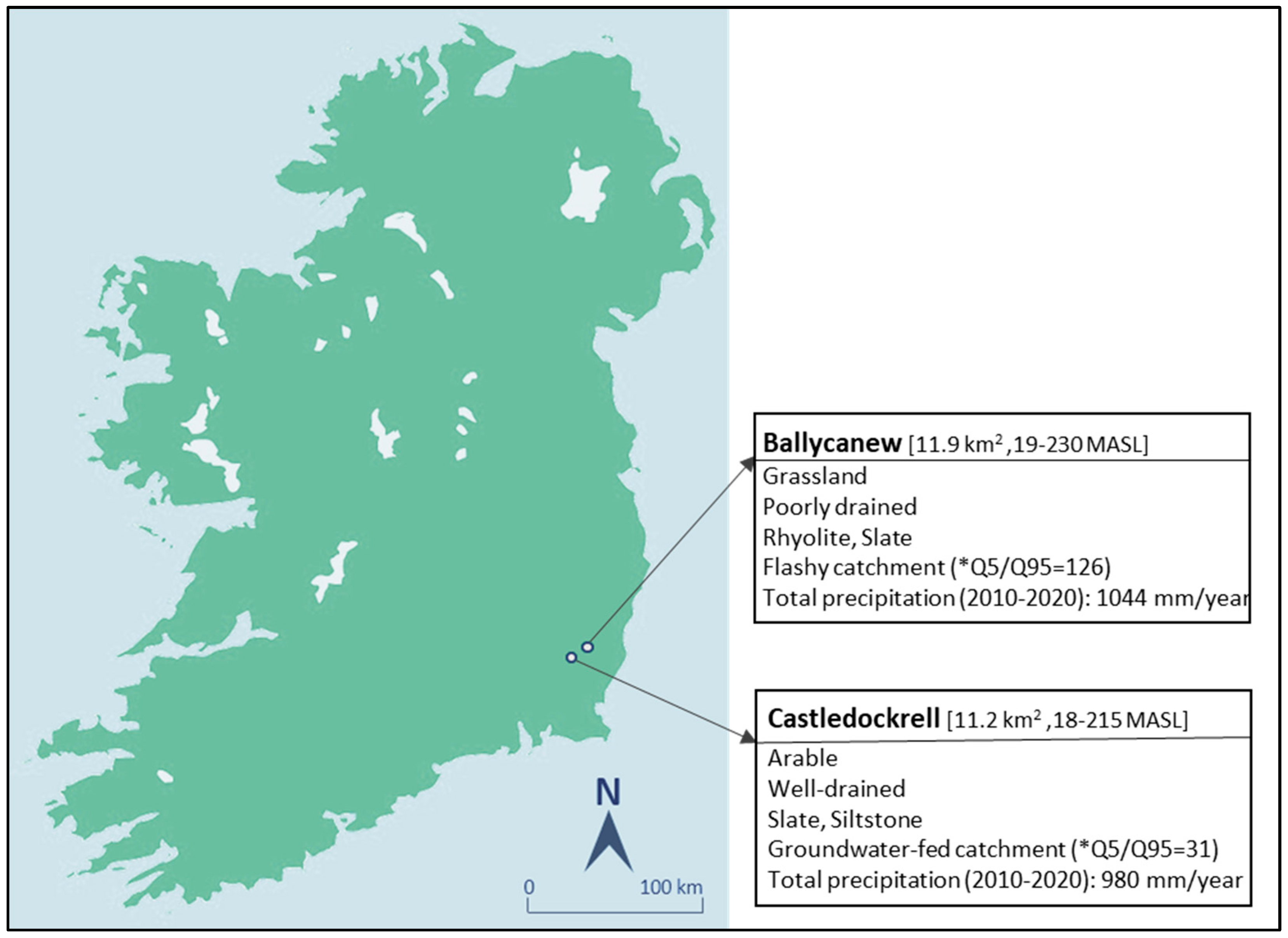
Figure 1. Locations of the study catchments and their dominant land use, drainage status, geology, and average annual total precipitation of 2010–2020. * Q5/Q95 used as an indicator or hydrologic flashiness.
Water 18 00006 g001
Figure 2. Conceptual layout of the SimplyP model.
Water 18 00006 g002
Figure 3. Ballycanew weekly time-step streamflow over the whole period (1 October 2009 to 30 September 2020), the vertical line indicates the separation of the calibration and validation periods.
Water 18 00006 g003
Figure 4. Model performance in Ballycanew for Q (streamflow), SS (suspended sediment), PP (particulate phosphorus), TRP (total reactive phosphorus), and TP (total phosphorus).
Water 18 00006 g004
Figure 5. Model performance on total phosphorus (TP) loads and concentrations on a year-by-year basis (the calibration and validation periods are separated by the vertical line at HY 2017).
Water 18 00006 g005
Figure 6. Ballycanew monthly time-step TP loads over the whole period (1 October 2009 to 30 September 2020), the vertical line indicates the separation of the calibration and validation periods.
Water 18 00006 g006
Figure 7. Subset of daily time-step TP loads in Ballycanew during calendar year 2015/2016, illustrating the fit between modelled and observed concentrations.
Water 18 00006 g007
Figure 8. Ballycanew monthly time-step TRP concentration over the whole period (1 October 2009 to 30 September 2020), the vertical line indicates the separation of the calibration and validation periods.
Water 18 00006 g008
Figure 9. Subset of daily time-step TRP concentrations in Ballycanew during calendar year 2017, illustrating the fit between modelled and observed concentrations.
Water 18 00006 g009
Figure 10. Model performance in Castledockrell across the components of Q (streamflow), SS (suspended sediment), PP (particulate phosphorus), TRP (total reactive phosphorus), and TP (total phosphorus). Asterisks indicate maximum model performance achieved in calibration when TRP and TP components were excluded from calibration.
Water 18 00006 g010
Disclaimer/Publisher’s Note: The statements, opinions and data contained in all publications are solely those of the individual author(s) and contributor(s) and not of MDPI and/or the editor(s). MDPI and/or the editor(s) disclaim responsibility for any injury to people or property resulting from any ideas, methods, instructions or products referred to in the content.