


Abstract
In recent years, the increasing frequency of intense rainfall events has led to a surge in landslide occurrences, posing severe threats to human safety and ecological integrity. This study utilizes the Universal Distinct Element Code (UDEC) for discrete element numerical simulations, combined with field observation-based mechanism analysis, to examine the primary drivers of landslide formation: rainfall and underground mining. Focusing on the Zengziyan landslide in Chongqing as a case study, the research investigates the underlying instability mechanisms. The findings indicate that mining activities primarily compromise slope stability by modifying rock structures, diminishing supporting forces, and creating goaf areas. Notably, these goaf zones generate an overhanging effect on the overlying rock mass, promoting crack initiation and the propagation of structural planes. Under rainfall conditions, groundwater infiltration and elevated pore water pressure exert a more substantial destabilizing influence, markedly accelerating rock mass sliding and collapse. The analysis reveals that rainfall predominantly governs landslide initiation and evolution, particularly during the triggering and rapid acceleration phases of slope instability. The outcomes of this research offer valuable insights for post-mining slope management and monitoring, as well as for developing landslide early warning systems in rainy conditions.
1. Introduction
In recent years, due to the frequent occurrence of heavy rainfall, geological disasters have shown a tendency of high frequency and widespread occurrence [1,2]. The Southwest region of China, in particular, has become a major hotspot for landslide occurrences [3,4]. According to statistics, in 2024, Chongqing City experienced a total of 284 geological disasters, including 162 landslides, of which over 90% were rainfall-induced landslides [5]. Meanwhile, the occurrence of landslides is also closely related to human activities [6]. Huang [7] provided a detailed introduction to large-scale landslides in China since the 20th century and their formation mechanisms. It was found that approximately 70% of mountainous landslides are associated with human activity, with mining being the most typical example [8].
Regarding studies on the impact of rainfall on landslides, Chen et al. [9] used GeoStudio software, version 2018 R2, to simulate the slope safety factor under various parameter conditions and obtained 363 data sets. The XGBoost-PSO-SVR model was employed to train simulation results and construct a predictive model for landslide occurrence probability. Li et al. [10] applied the discrete element method (DEM) to study the displacement and stress variation rules of overlying strata during the transition from open-pit to underground mining, under variable rainfall conditions. Liang et al. [11] analyzed the seepage behavior of expansive soil slopes and introduced the fluid-solid coupling theory. Their study concluded that rainfall gradually leads to soil saturation, increasing the pore water pressure. According to the effective stress principle, the shear strength of the soil decreases. Teng [12] conducted numerical studies using deep displacement monitoring and GeoStudio finite element analysis. The results indicated that long-term influence of fracture water can cause the rock-soil layer to become slurry-like, softened, and gradually form weak sliding zones, eventually leading to the development of through-going fractures and landslide disasters.
In terms of the impact of mining on landslides, Li et al. [13] used FLAC3D 6.0 numerical simulations to analyze the instability mechanism of steeply dipping rock slopes caused by underground mining. Their findings showed that underground mining leads to expansion of joints and fractures, and the overlying rock mass undergoes an “overhanging effect,” ultimately causing the loss of support, rapid deformation, structural plane connection, and overturning failure. Wang et al. [14] conducted finite element numerical analysis and field monitoring to study ground subsidence induced by underground mining. Their results indicated that as mining proceeds deeper into the ore body, vertical displacement increases gradually. This results in the deformation of rock layers, the occurrence of landslides on the surface, the appearance of subsidence holes, and surface collapse. Wei et al. [15] used PFC2D 5.0 simulation to analyze the formation of fractures in the overlying rock strata during mining operations and conducted an in-depth study of the internal landslide body. Based on the monitoring of internal fractures, they concluded that the mining-induced landslide process can be divided into four stages: a steady development stage, a slow development stage, a rapid development stage, and a termination stage.
For reverse-dipping thick-bedded rock slopes, conventional models typically rely on continuous medium approaches [16,17] (FLAC3D 6.0, GeoStudio 23.1), which struggle to accurately capture the progressive fragmentation process of the rock mass above mining voids-from a continuous state to block fracturing and finally toppling and collapse [18,19].
Numerical modeling has proven essential in elucidating such complex mechanisms. Discrete element methods (DEM), including UDEC 7.0 and 3DEC 9.0, have demonstrated high effectiveness in simulating non-continuous behaviors in layered slopes, such as joint opening, sliding, and block detachment [20,21]. Although previous studies have individually examined the impacts of rainfall and mining on slope stability, the majority of them treat these two factors as independent external loads, thereby failing to adequately elucidate the strong synergistic mechanisms between them. In this study, we focus on a steep rock slope at Zengzi Rock, Chongqing, which is subject to both mining and rainfall influences. Using the UDEC method, we conduct systematic simulations under six typical scenarios to quantitatively distinguish and reveal the dual-stage mechanism: the mining-induced “structural pre-damage effect” and the rainfall-induced “triggering and accelerating effect.” The findings provide a practical and operable technical pathway for the prevention and control of similar high-steep rock slopes in Southwest China’s mining regions prior to and during potential slope failures [22,23].
2. Engineering Background
2.1. Engineering Geology
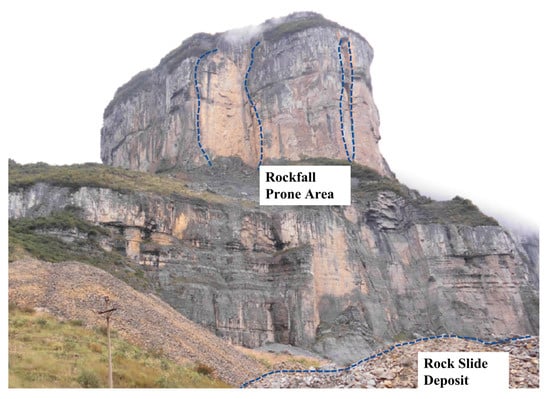
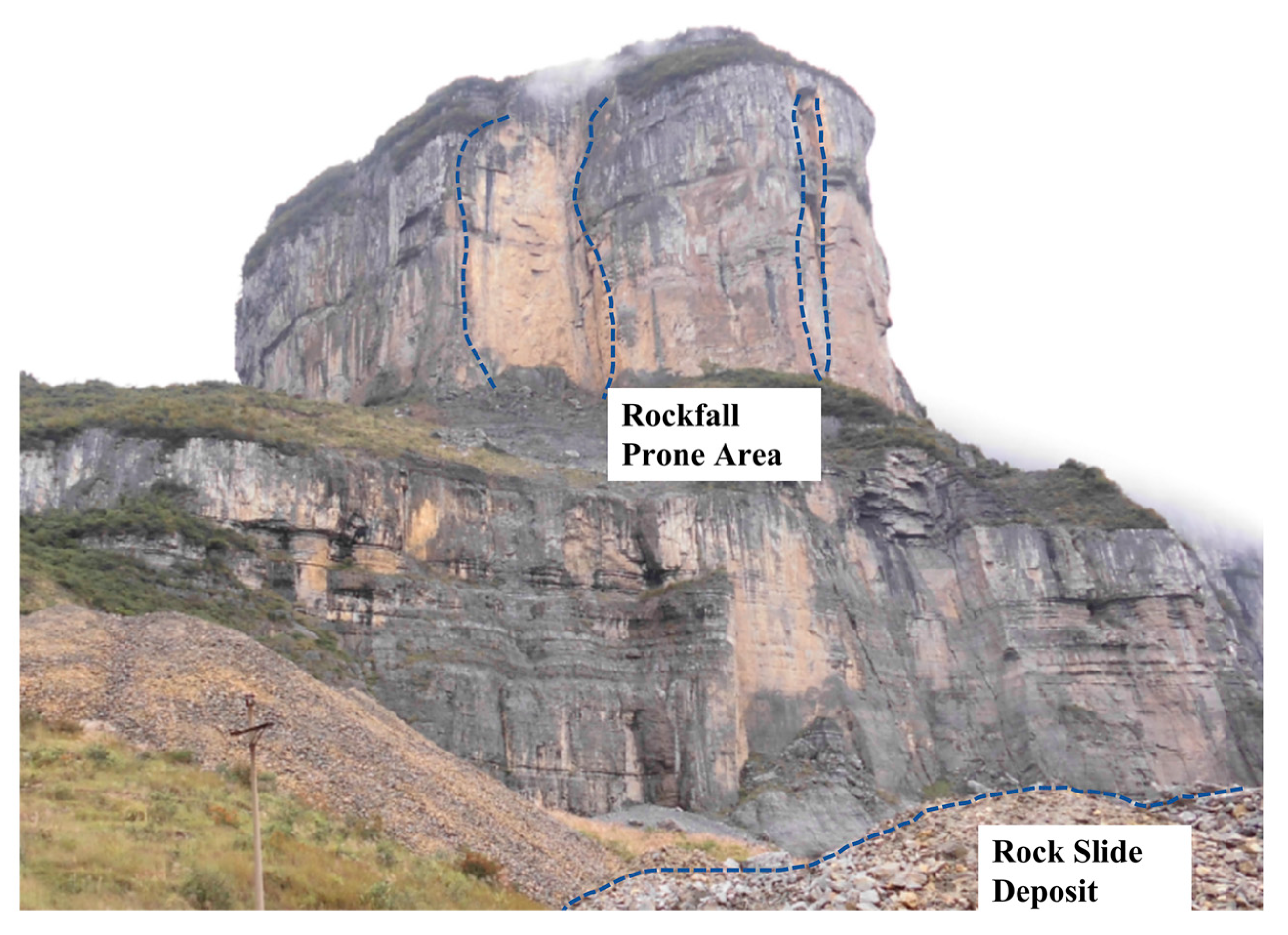
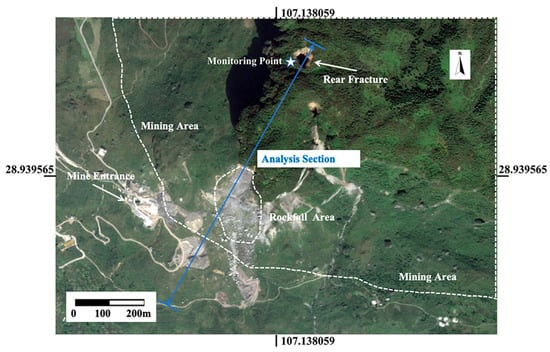
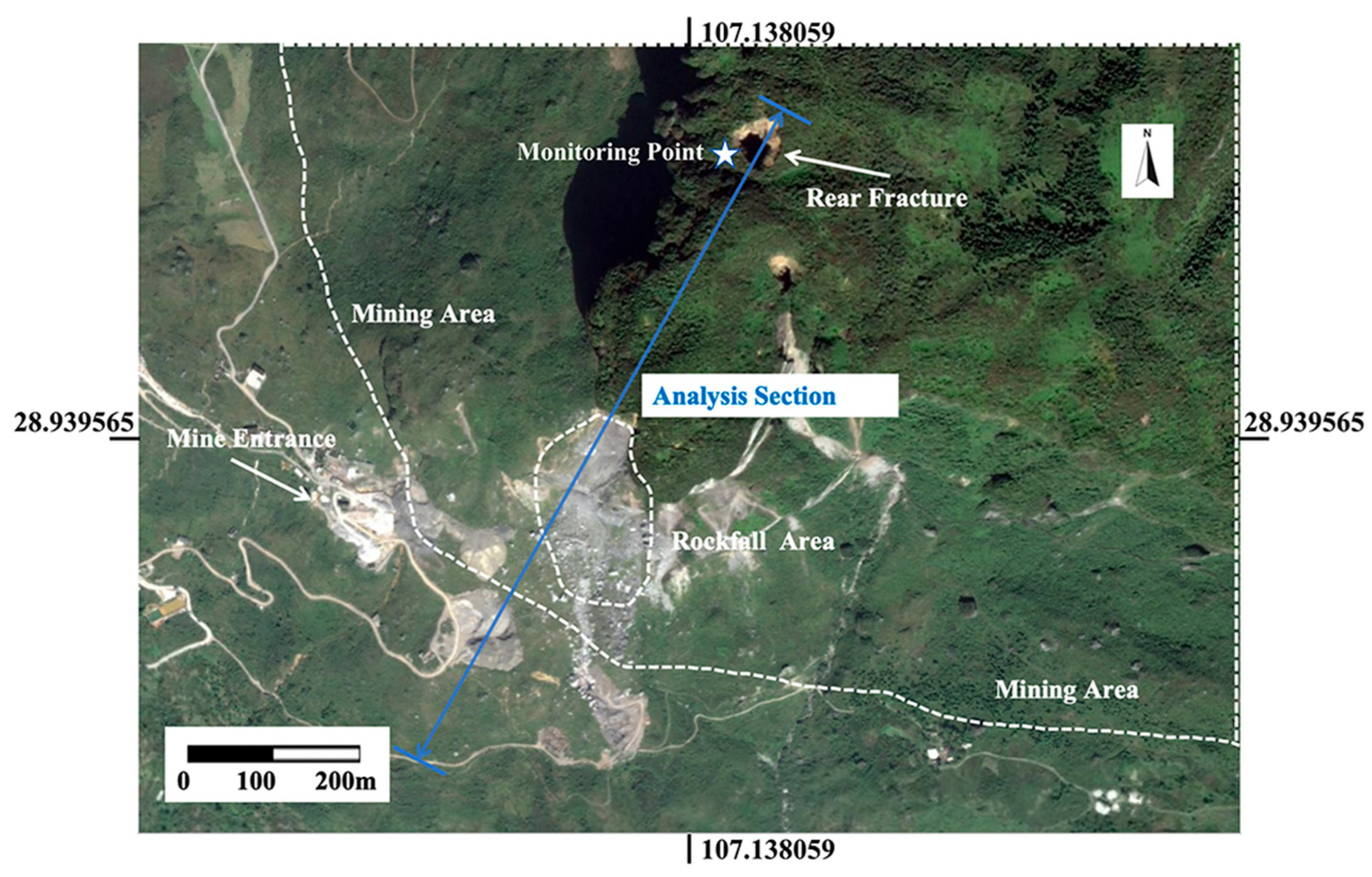
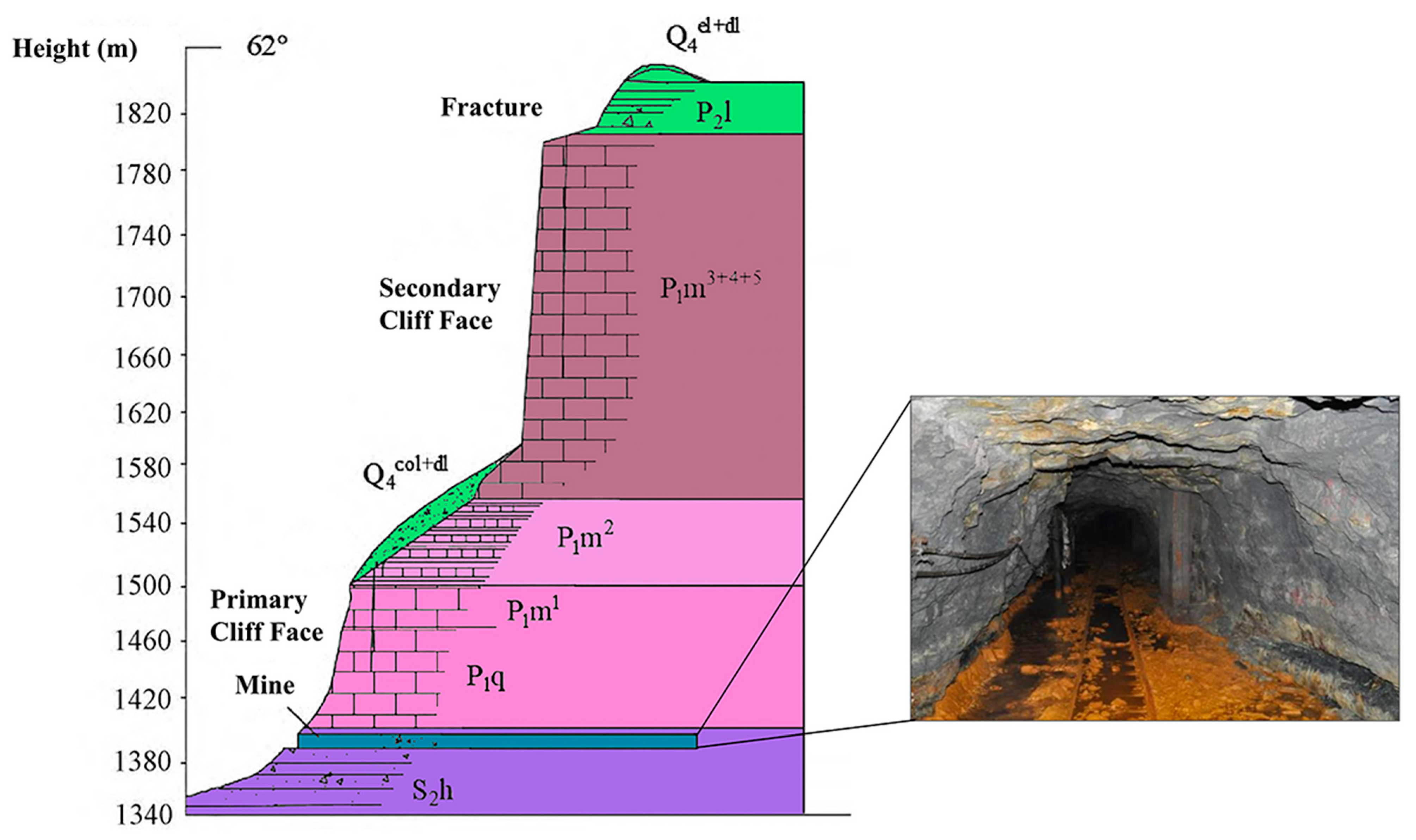
The Zengziyan rock mass is located to the east of the Nanchuan Jinfoshan Aluminum Mine Factory, and the Guanyin Cave is situated to the north-west of Toudu Town. The overall shape of the hazardous rock zone is irregularly distributed in a reverse “L” shape, mainly composed of two levels of steep cliffs. According to previous studies and surface investigations, the exposed strata in the study area include Quaternary colluvial and debris flow deposits (Q4col + dl), residual colluvial and alluvial deposits (Q4el + dl), artificial fill soil (Q4ml), and alluvial and fluvioglacial deposits (Q4al + pl), as well as the upper member of the Permian Changxing Formation (P2C), the Longtan Formation (P2l), the lower member of the Miao Kou Formation (P1m), the Qixia Formation (P1q), the Liangshan Formation (P1l), and the Middle Ordovician Hanjiate Group (S2h). The rock types are mainly limestone, shale, and bauxite (Figure 1 and Figure 2).
Figure 1.
Zengziyan high-steep slope landform.
Figure 2.
Planar layout of Zengziyan.
The thickness of limestone in the study area accounts for 85% of the total stratum thickness. According to previous literature, the strata in the study area have been classified as aquifers, aquitards, and permeable layers. As shown in the table, the main aquifers in the area are the Ordovician and Silurian limestone formations, while the main aquitards are the Middle Silurian sandy shale.
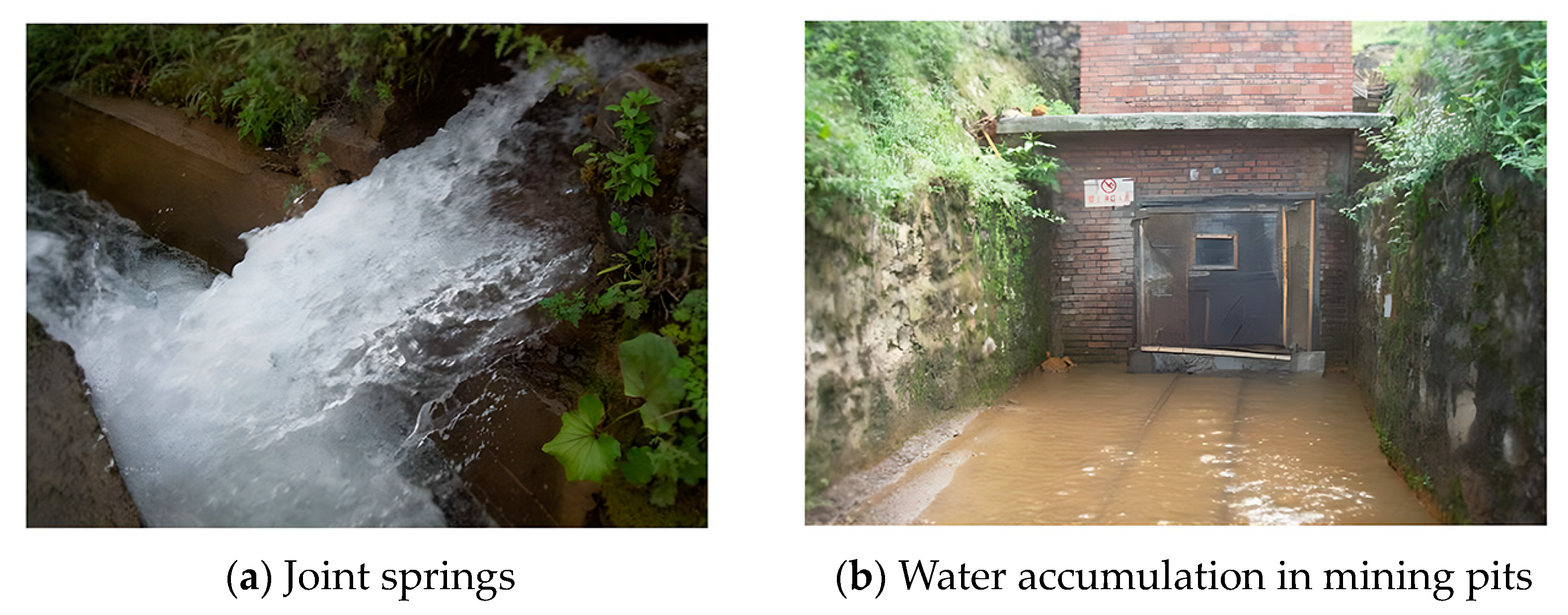
The strata in the study area have gentle dip angles, and the terrain is deeply cut. The area lies in the southern discharge zone of the Jinshan Mountain hydrogeological unit. The surface hydrological network is poorly developed, and atmospheric precipitation is the only source of groundwater recharge. During the rainy season or after heavy rainfall, part of the precipitation flows into streams and gullies, discharging at the base of steep cliffs. Another part infiltrates into the ground through joints, fractures, sinkholes, and swallow holes. Upon encountering the fourth member of the Longtan Formation (sand and shale), the water flow is blocked and then flows laterally along inter-layer joints and fractures, discharging as spring points or spring groups at the lower part or base of the fifth member of the Longtan Formation. During the short surface flow path, part of the water continues to discharge, while another portion infiltrates into the limestone of the third member of the Longtan Formation through joints and fractures, flowing briefly underground. Then it encounters the sand and shale of the second member of the Longtan Formation and is blocked again, discharging as contact springs to the surface, or accumulating in old coal workings and discharging to the surface. Some water flows further to the southern steep cliff area and discharges as large karst springs, joint springs, or outlets of underground rivers at the top of the bauxite ore layer or the base of the Qixia Formation (Figure 3).
Figure 3.
Karst spring and groundwater discharge from the mine pit.
The Jinshanfeng National Atmospheric Background Station is situated at an altitude of 1973 m, with an annual average temperature of 8.3 °C and a record minimum temperature of −14.4 °C. Journal data indicate that the high-altitude station of Jinshanfeng has an average temperature of 8.2 °C, whereas the western slope recorded an annual average temperature of 11.72 °C in 2019. These differences are primarily due to variations in altitude. The temperature exhibits a significant vertical gradient, with a lapse rate of 0.53 °C per 100 m on the western slope, and both average maximum and minimum temperatures decrease linearly with increasing elevation. Precipitation also varies significantly with elevation, with the upper part of the mountain recording a long-term average annual precipitation of 1434.5 mm, and the entire protected area having an annual precipitation of approximately 1431 mm. In contrast, lower parts of the mountain and surrounding areas at lower elevations experience less rainfall. For example, the region between 750 and 1200 m has an annual rainfall of 1185 mm, and the Daliutown area on the eastern foot of the mountain, with average elevation above 900 m, has an annual average rainfall of about 1100 mm. Additionally, the overall average annual precipitation of Jinshanfeng is approximately 1395.5 mm, with the highest recorded annual rainfall being 1643.1 mm and the lowest recorded year at 957.7 mm.
2.2. Human Engineering Activities
The study area’s Zengziyan cliff area has been mining for laterite ore of the Lower Permian Liangshan Formation (P1l) since 1983. The mine has an annual production capacity of 90,000 tons, and mining operations are entirely conducted through underground extraction. Due to continuous mining activities over the years, most of the area beneath the current Zengziyan and its cliff base has been completely mined out (Figure 4).
Figure 4.
Excavated tunnels of Zengziyan.
3. Methods
3.1. Numerical Model
The main reason for selecting UDEC 7.00 (Universal Distinct Element Code) for numerical simulation is as follows: The research object is a high-steep slope composed of thick-bedded carbonate rock, where the rock mass is segmented by multiple steeply dipping structural planes. After the goaf is formed, the overlying rock mass exhibits distinct block discretization and significant large deformation characteristics. As a two-dimensional distinct element code, UDEC is inherently well-suited for modeling non-continuous large displacement behaviors such as block movement, separation, toppling, and collapse in jointed rock slopes. It can explicitly simulate the opening, sliding, and contact–separation processes of structural planes, which are precisely the non-continuous deformation mechanisms that continuum-based methods (such as FLAC3D and finite element methods) find difficult to accurately capture. Although continuum methods typically provide greater computational efficiency, they fail to realistically capture the progressive transition of the rock mass above the goaf from a continuous to a discontinuous state. As such, they were not employed in this study. While UDEC also possesses certain limitations, such as the neglect of micro-scale fractures and the simplification of coupled seepage–mechanical interactions, it was ultimately selected for the simulation due to the fact that the observed landslide follows a two-stage failure mechanism, first characterized by tension cracking at the rear, followed by a rapid sliding movement from the front [24,25,26,27,28,29,30].
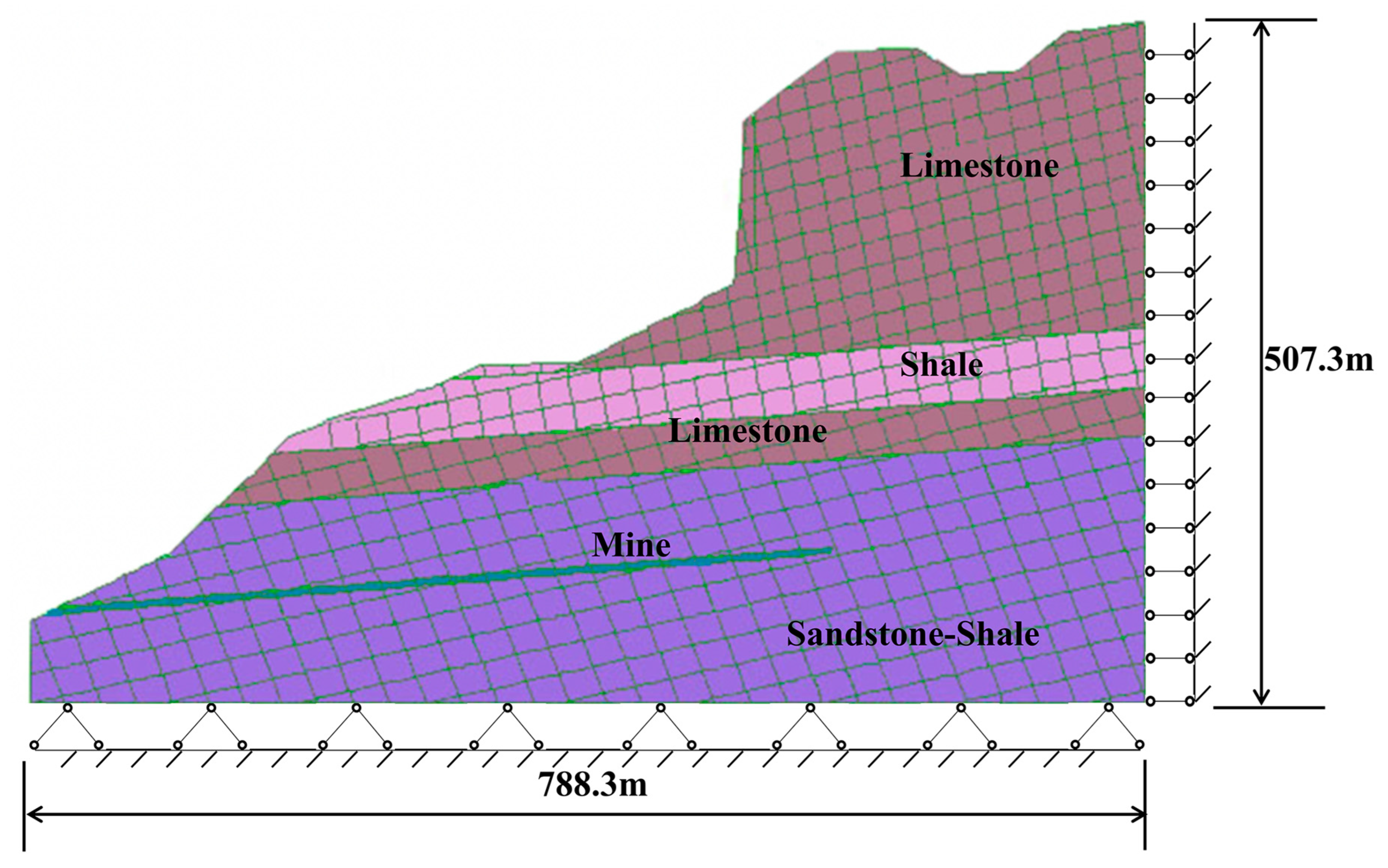
The model is 788.3 m wide and 507.3 m high. The mining layer adopts the pre-controlled roof pillar method, with a mine shaft height of 5 m, a length of 560 m, and is set along the strike and dip of the ore body. The mining block dimensions are established based on actual conditions, with a scale ratio of 1:1. The rock mass includes limestone, shale, sand-shale, and bauxite. Since the overburden layer is relatively thin, its influence on this study is minimal, and it is not modeled as a separate layer. The grid density for limestone is 16 m, for shale it is 18 m, for sand-shale it is set to 20 m, and for the mine shaft it is 5 m. The coordinate system for the model is defined with the x-axis pointing from the slope base to the sliding surface, and the y-axis vertical upward. A constraint is applied on the right side of the computational domain in the x-direction, while the bottom boundary has displacement constraints in both x and y directions. The surface is set as a free boundary. After completing the mesh division, the model consists of 2044 nodes and 1930 elements (Figure 5). The rock layer block elements adopt the Mohr-Coulomb constitutive model [31,32].
Figure 5.
Zengziyan UDEC numerical model.
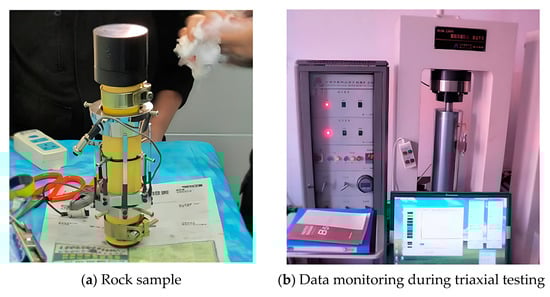
The following assumptions are adopted in the discrete element modeling. The ore body and surrounding rock are considered as isotropic materials [33]. Fine fractures within the ore body and rock mass are temporarily ignored, with their effects incorporated into the mechanical properties of the rock. Under rainfall conditions, the elastic modulus and internal friction angle of the rock mass will change, and this effect is simulated by reducing the corresponding parameters [34,35,36,37]. The geotechnical mechanical parameters were determined through geomechanical laboratory experiments (Figure 6). Detailed parameters are listed in Table 1 and Table 2. Additionally, since the influence of groundwater is minimal, the hydraulic effects are not considered in this simulation. The shape of the mined-out areas varies, and it is difficult to accurately model highly complex mined-out zones in numerical simulations. Therefore, this simulation simplifies the mined-out area.
Figure 6.
Geotechnical experiments.
Table 1.
Mechanical parameter values for rock mass numerical simulation.
Table 2.
Mechanical parameter values for slope joint numerical simulation.
3.2. Monitoring Point Layout and Simulation Scenarios
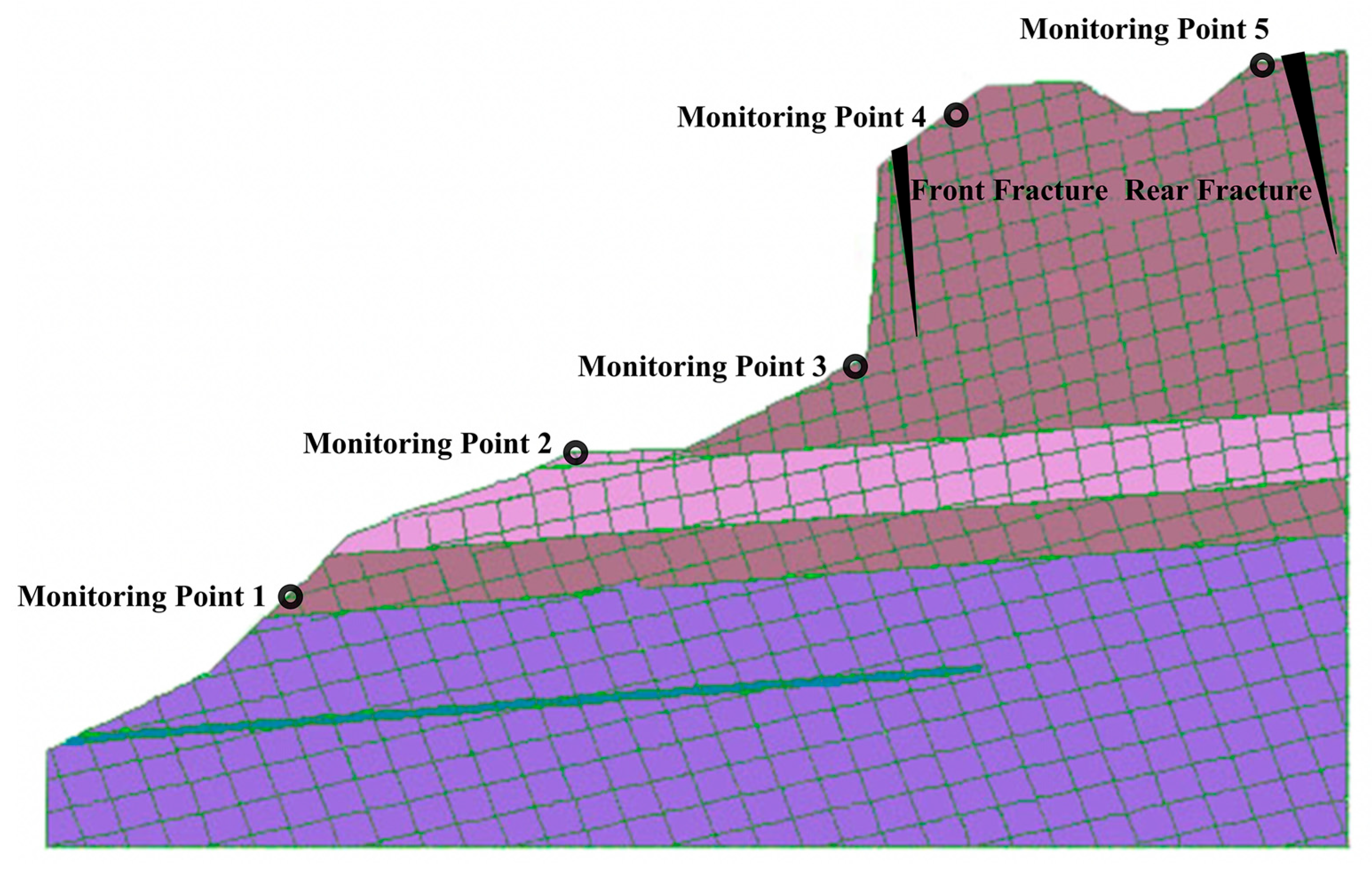
The calculation model for simulating excavation and rainfall is referenced in the following figure, with a total of 5 monitoring points set up, extending sequentially from the top of the mine shaft to the area of developed fractures at the back of the slope.
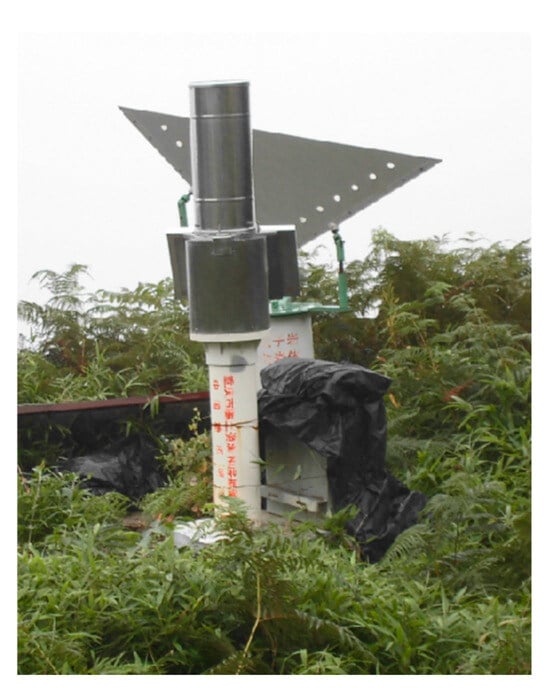
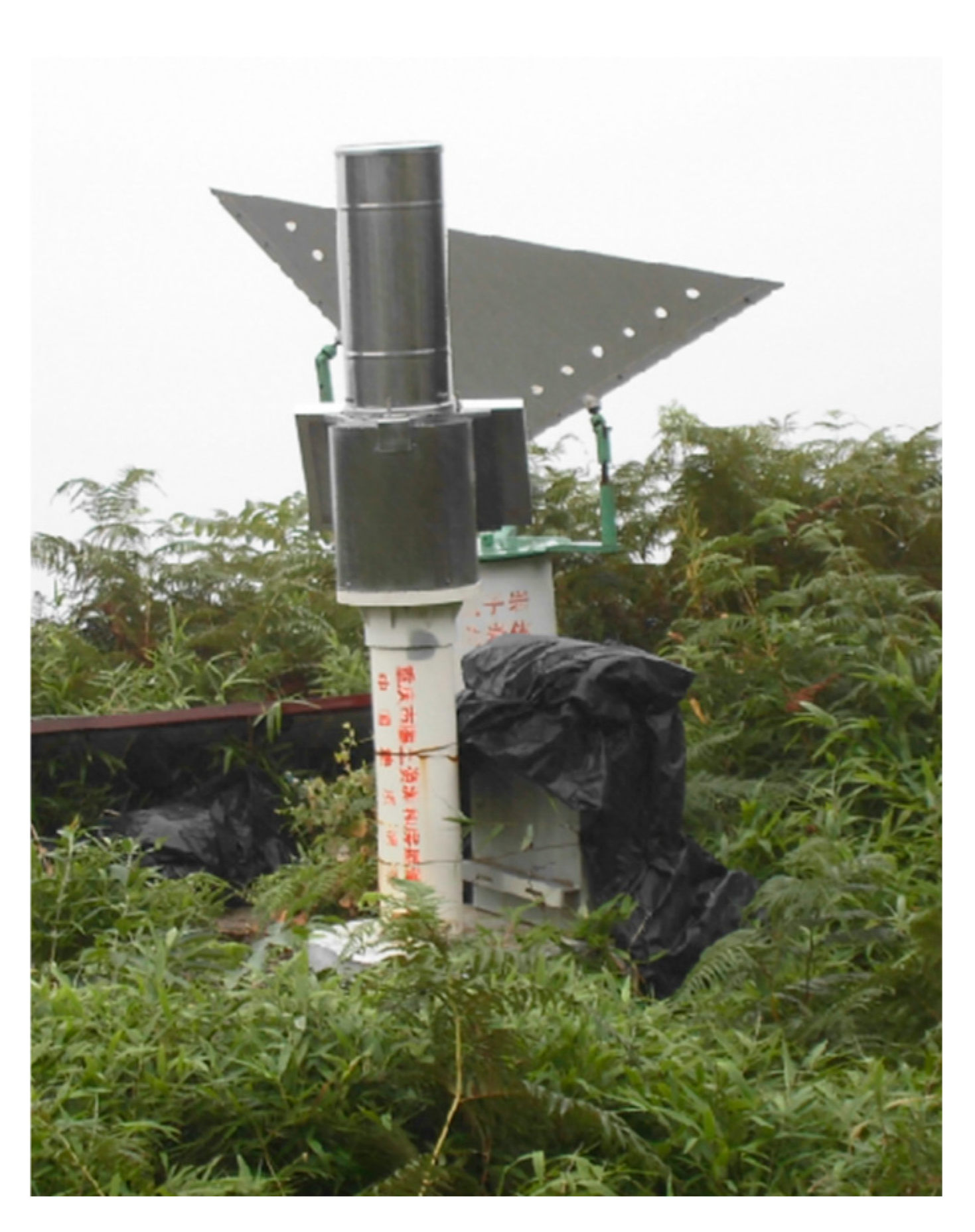
Monitoring points 1 and 2 are located directly above the roof of the goaf area, used to capture the bending subsidence of the “cantilever beam” structure. Point 3 is situated in the stress concentration zone at the edge of the goaf area. Points 4 and 5 are located near the front and back faults respectively, used to capture tensile-shear composite failure. Initially, based on field survey results (Figure 7) and numerical simulation outcomes, these five points were selected as key monitoring points.
Figure 7.
Zengziyan landslide field monitoring point.
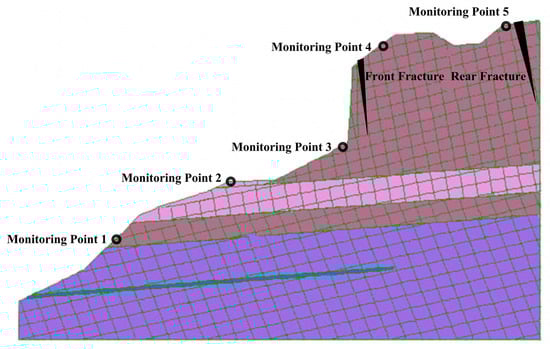
Based on field monitoring observations, it was found that Zengziyan has two major fractures in front and behind the slope. Therefore, two fractures are simulated at the front and back ends of the cross-sectional model (Figure 8).
Figure 8.
Displacement monitoring points and crack monitoring points.
To describe the influence of different scenarios on slope displacement, displacement contribution rates are used based on the calculated results under various conditions [38]. The calculation method for the displacement contribution rates is as follows:
Displacement excavation contribution rate = (Displacement under full excavation with rainfall − Displacement under partial excavation with rainfall)/(Displacement under full excavation with rainfall − Displacement under no rainfall and no excavation)
Displacement rainfall contribution rate = 1 − Displacement excavation contribution rate
In order to study the impact of both rainfall and excavation on the displacement of the landslide mass and internal stress distribution, a total of six simulation scenarios were designed, as follows: No rainfall, no excavation; No rainfall, partial excavation; No rainfall, full excavation; Rainfall, no excavation; Rainfall, partial excavation; Rainfall, full excavation.
By comparing the monitoring data and stress cloud diagrams under different scenarios, the contribution values of the excavation and rainfall processes on the landslide are analyzed. In particular, to monitor the degree of change in the front and back fractures at the top of the slope under the six scenarios, the width of the fractures at the slope top is recorded, enabling further analysis of the deformation mechanism. In this process, only the effects of rainfall and excavation on the landslide are considered, and the impacts of earthquakes and other human factors are not included.
4. Results
4.1. Analysis of Slope Displacement
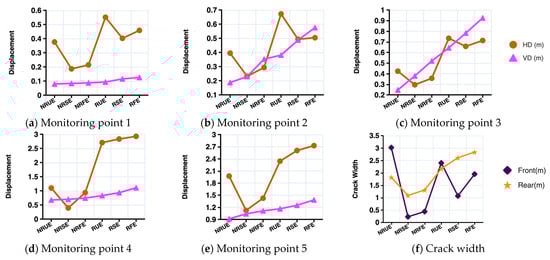
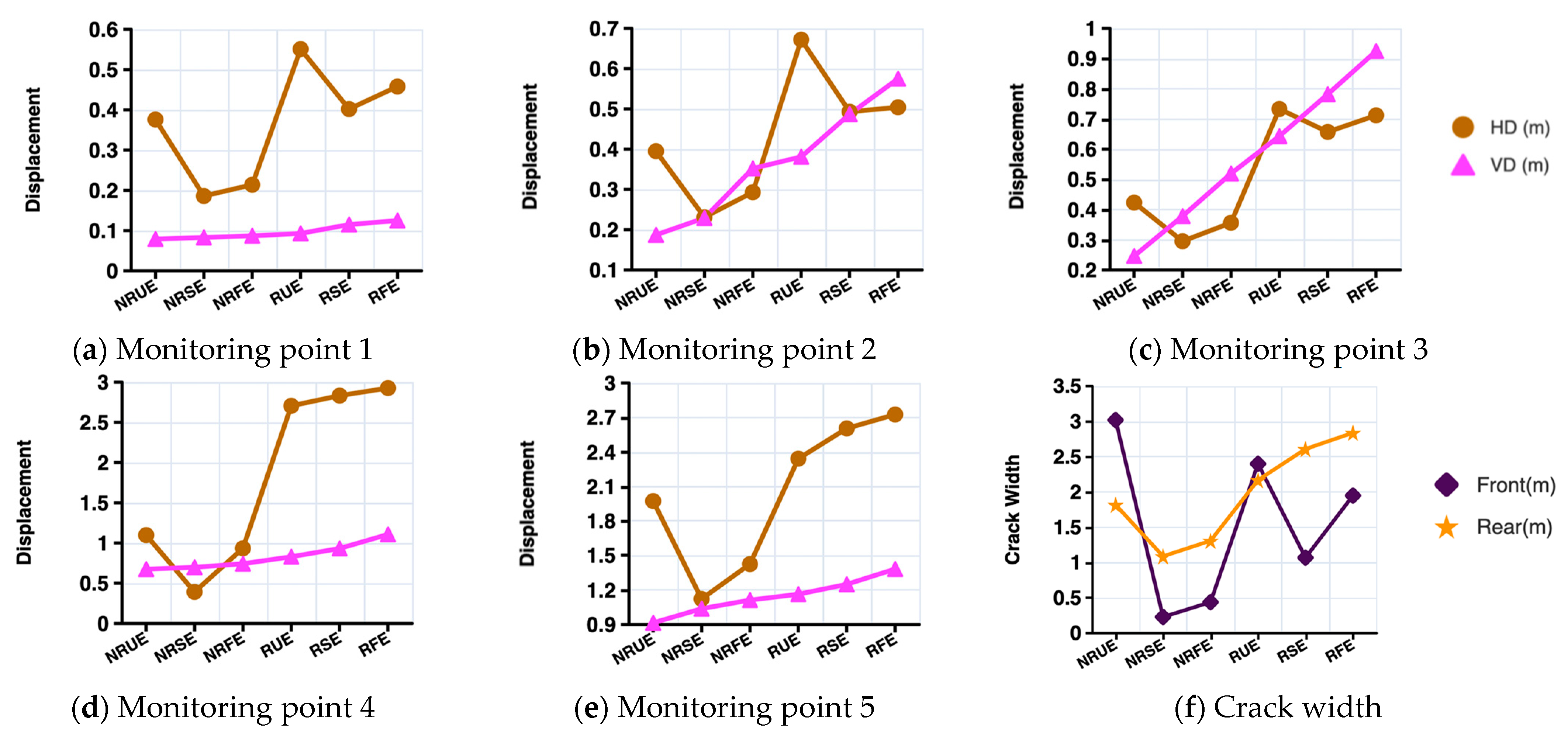
Based on the aforementioned parameters, the numerical calculation results provide horizontal and vertical displacements at each monitoring point (Figure 9).
Figure 9.
Displacement diagram of monitoring points and cracks.
The abbreviations used in this paper are defined as follows:
- NRUE—Nonrainfall Unexcavated; NRSE—Nonrainfall Semi-excavated;
- NRFE—Nonrainfall Fully Excavated; RUE—Rainfall Unexcavated;
- RSE—Rainfall Semi-excavated; RFE—Rainfall Fully Excavated;
The fracture width is calculated based on the final coordinates of two points above the fracture, determining the actual distance. The specific calculation results are detailed in Figure 9.
Horizontal displacement data, as shown in Figure 9, indicates that at monitoring points 1, 2, and 3, the horizontal displacement values are relatively small, all below 0.5 m. Under the influence of excavation, the horizontal displacement shows a decreasing trend, with a reduction of 20% to 30%. However, under rainfall conditions, the increase in horizontal displacement is significant, with a growth rate of 40% to 120%.
Monitoring points 4 and 5 are the main areas where the landslide occurs. The maximum horizontal displacement in these areas can reach up to 2 to 3 m. In the non-rainfall condition, both the half-excavation and full-excavation processes have a clear inhibitory effect on the horizontal displacement of the upper hazardous rock mass. The reduction during half-excavation is as high as 50% to 60%, while during full excavation, it reaches 10% to 30%. However, under rainfall, the horizontal displacement for all conditions (non-excavated, half-excavated, and full-excavated) is approximately 2.4 to 3.0 m. Therefore, rainfall plays a dominant role in the deformation process. Interestingly, the horizontal displacement during full excavation is even greater than that during the non-excavated condition. Hence, during the landslide process, the contribution rate of excavation to horizontal displacement is 0.28, and that of rainfall is 0.72.
Vertical displacement data, as shown in Figure 9, reveals that the main difference between vertical and horizontal displacements lies in the fact that vertical displacement exhibits a linear growth trend under all kinds of working conditions. Compared to horizontal displacement, vertical displacement values are generally smaller. At monitoring point 1, the deformation does not exceed 0.2 m, and its change is not significant under any condition. Monitoring points 2 and 3 show similar deformation characteristics, with noticeable increases during excavation. Monitoring points 4 and 5 exhibit significantly larger vertical displacements compared to the lower areas, reaching 1.1 to 1.3 m. However, it is different from Figure 9, where monitoring point 4 had a larger displacement than monitoring point 5. In Figure 8, the displacement at monitoring point 5 is greater than that at monitoring point 4. Therefore, in the landslide process, the horizontal displacement of the front area of the hazardous rock mass is larger than that of the rear area, while the vertical displacement of the rear area is greater than that of the front area. However, since the horizontal displacement of the landslide soil is much larger than the vertical displacement, the total displacement at monitoring point 4 is still greater than that at monitoring point 5.
In summary, during the landslide process, the contribution rate of excavation to vertical displacement is 0.56, and that of rainfall is 0.44.
From the data in Figure 9, it can be seen that during the non-rainfall period, the width of the rear cracks of the upper hazardous rock mass changes only slightly, remaining within the range of 1 m to 2 m. However, as the deep rock mass is excavated, the crack widths tend to decrease. This trend is not linear; during the half-excavation process, the widths of the rear cracks reach their minimum, and the reduction compared to the non-excavation period can be as high as 40%. In contrast, the crack width increases by 17% due to full excavation.
However, under non-rainfall conditions, the excavation of the deep rock mass has a significant impact on the width of the front cracks. According to the data analysis, the width of the front cracks after deep excavation is only one-fifteenth of that in the non-excavated state. The difference between half-excitation and non-excitation is not significant, implying that, during the non-rainfall period, the deep excavation of the rock mass has a clear inhibitory effect on the development of the front cracks, while also partially inhibiting the development of the rear cracks.
During the rainfall process, the widths of the rear cracks of the hazardous rock mass increase significantly compared to the non-excavated state, with the growth rate ranging from 20% to 140%. This increase is most evident during the half-excavation process. Meanwhile, the front cracks decrease in width when the rock is in its non-excavated state, with a reduction of up to 20%, but they increase substantially during the half-excavation and full excavation stages, with growth values of 365% and 710%, respectively.
From the subsequent analysis of displacement in different parts of the slope, it can be observed that the reduction of cracks in the non-excavated state does not indicate an inhibitory effect on crack development, as rainfall has a clear influence on the increase of displacement in the upper slope soil. However, the rainfall process promotes the development of cracks in the upper hazardous rock mass.
4.2. Analysis of Maximum Principal Stress
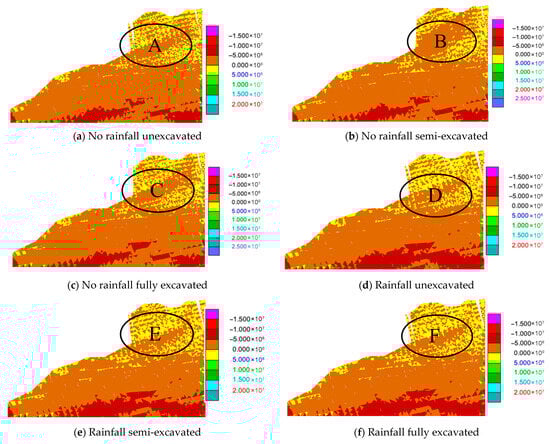
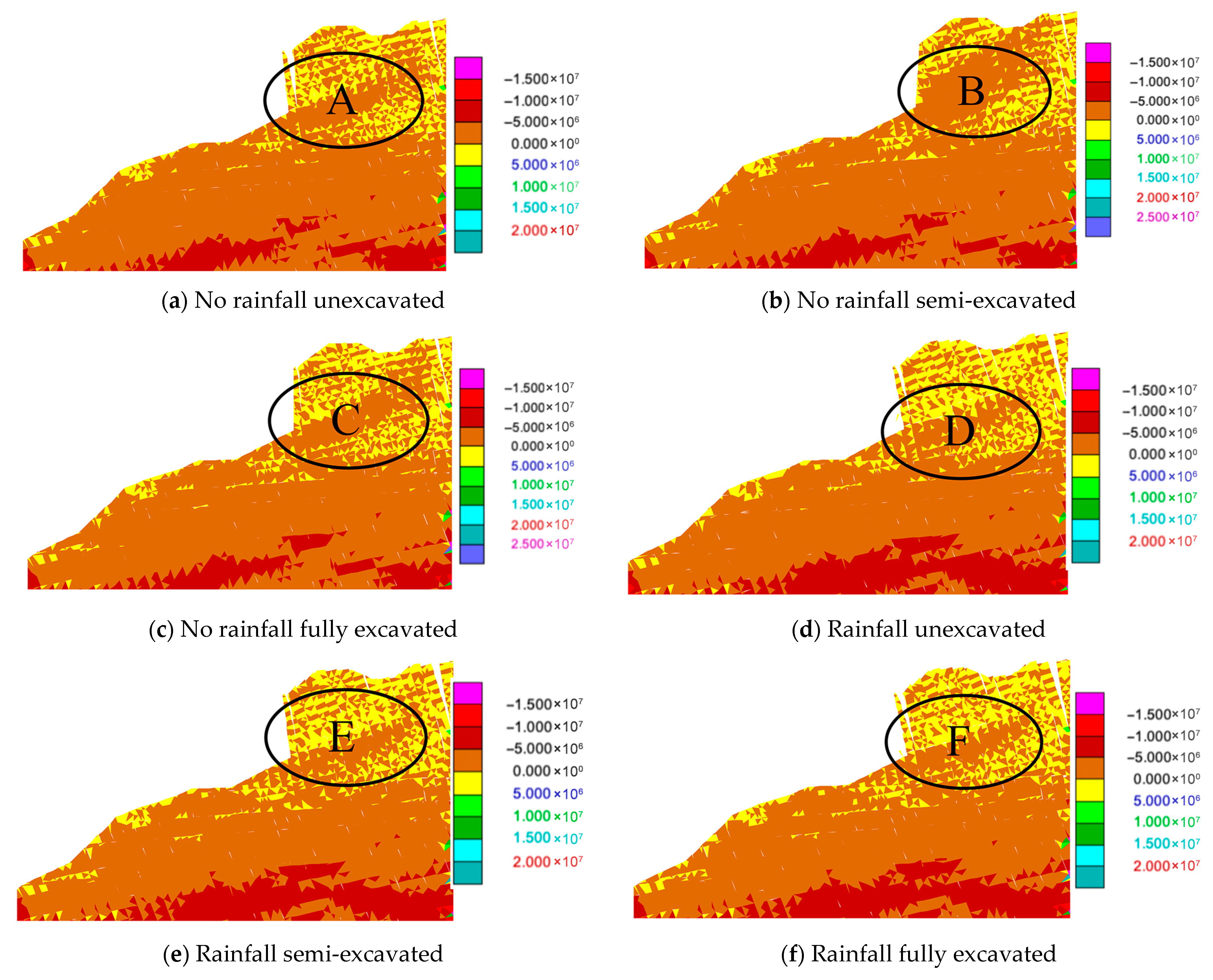
Based on the known parameters, relevant calculations were performed to obtain the distribution of the maximum principal stress in the slope under the six different working conditions. To monitor the changes in the maximum principal stress throughout the landslide area under different conditions, six observation zones (A, B, C, D, E, F) were established.
From the analysis of the maximum principal stress diagram, it can be observed that the green areas represent compressive stress, which is greater than the compressive stress in the yellow areas. The area sizes of regions B > C > A indicate that the rock and soil mass at the top of the slope has a greater tendency to move under non-rainfall and non-excavation conditions. Therefore, when mining tunnels are excavated below the slope, the movement tendency of the upper rock and soil mass is reduced. However, during full excavation, this inhibitory effect weakens, suggesting that partial excavation can effectively reduce the movement tendency of the upper rock mass.
From Figure 10d–f, under rainy conditions, the three stress cloud diagrams are highly similar, with the compressive stress zone dramatically shrinking and almost uniformly distributed. This suggests that once rainfall occurs, the “inhibiting residual” effects caused by different degrees of mining are immediately eliminated, and pore water pressure rapidly takes over as the dominant factor.
Figure 10.
Cloud map of maximum principal stress distribution in the slope.
Mining acts as the controlling preconditioning factor for instability. It gradually destroys the compressive arch in the slope mass, forming a cantilever beam-like stress state, and leads the slope from stable to metastable conditions. On the other hand, rainfall is the determining triggering factor and can quickly push a highly fragile slope to full-scale instability within days. The two factors are not parallel in their roles, but instead represent a typical two-stage mechanism: mining dominates the incubation stage, while rainfall dominates the triggering stage.
4.3. Analysis of Minimum Principal Stress
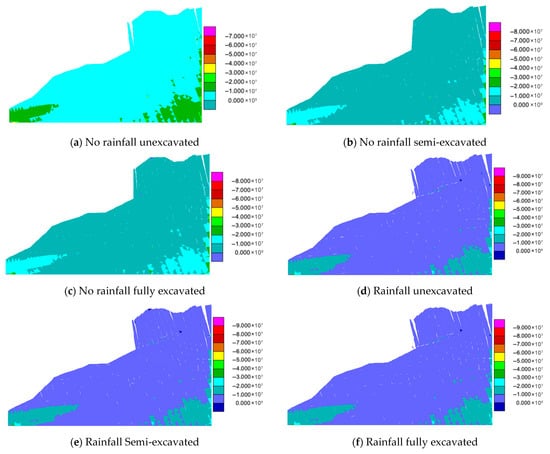
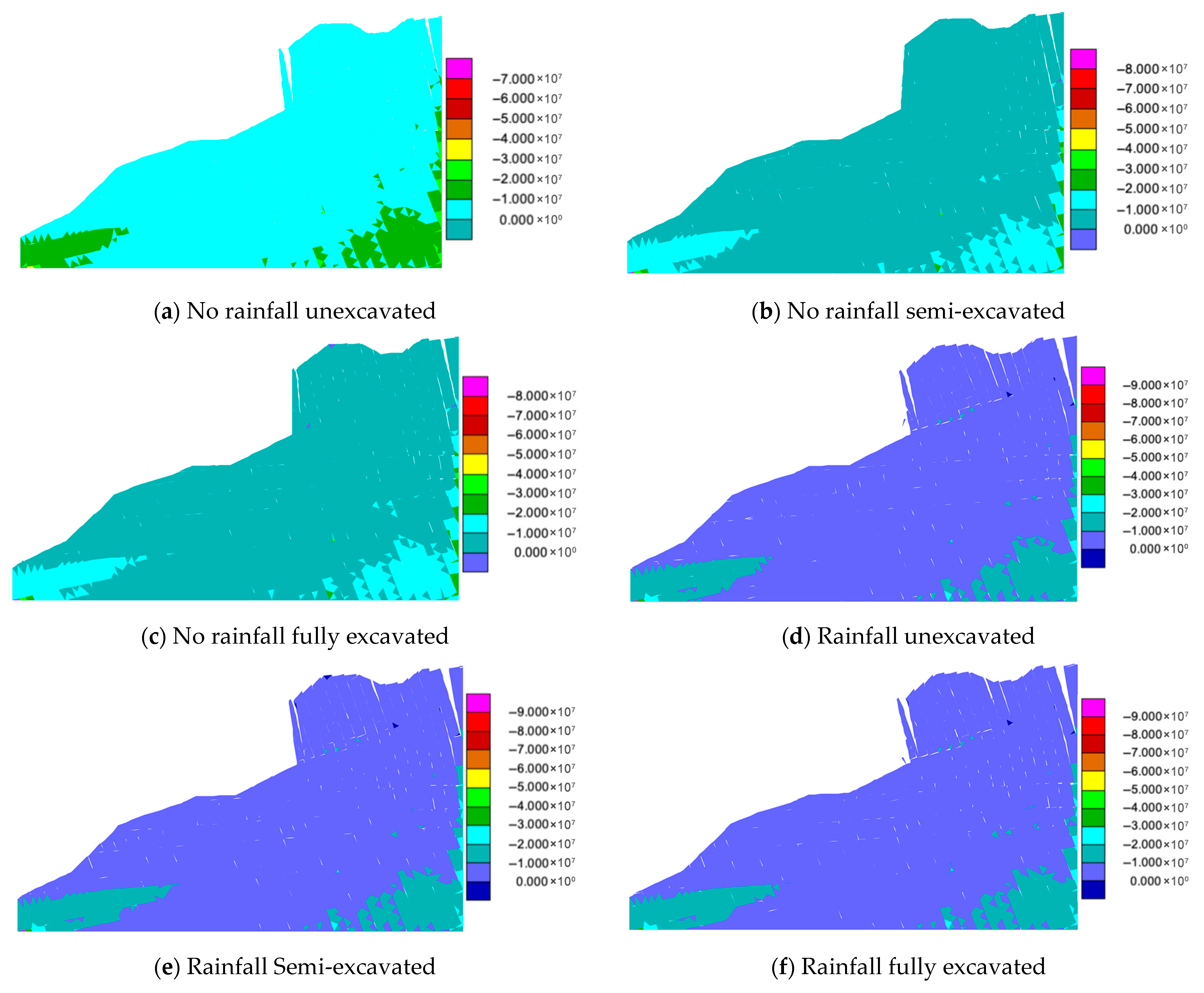
Based on the known parameters, relevant calculations were performed to obtain the distribution of the minimum principal stress in the slope rock and soil mass under the six different working conditions.
From Figure 11a–c, it can be observed that the closer the minimum principal stress is to zero, the more likely the stress state is to approach tensile stress. Specifically, the minimum principal stress in Figure 11b is greater than that in Figure 11c, and the minimum principal stress in Figure 11c is greater than that in Figure 11a. Therefore, the movement tendency under the non-excavated condition is greater than that under the full excavation condition, and the movement tendency under the full excavation condition is greater than that under the half excavation condition.
Figure 11.
Cloud map of minimum principal stress distribution in the slope.
This further indicates that when an underground mining tunnel is excavated below the slope, it can reduce the movement tendency of the upper rock and soil mass. However, during the full excavation process, the ability to inhibit movement weakens, suggesting that partial excavation is more effective in reducing the movement tendency of the upper rock mass. Furthermore, based on the color distribution pattern of the boundary rock and soil mass, it can be seen that the stress state below the slope also exhibits a similar tendency of movement.
From Figure 11d–f, it can be noted that the deep blue regions represent the locations where tensile stress reaches the critical point. The number of deep blue points in Figure 11e is higher than those in Figure 11d,f. This suggests that land sliding and collapse phenomena have already occurred in the non-excavated and full excavation conditions. Moreover, the color in Figure 11e is darker than that in Figure 11f, which in turn is darker than that in Figure 11d. This implies that the half-extraction condition reduces the generation of fractures in the upper rock mass, thereby decreasing the permeation pressure, and consequently reducing the minimum principal stress.
Therefore, the tensile stress critical point can serve as one of the criteria for predicting landslides or collapses. In practical slope monitoring, the change in stress monitoring points can provide early warning signals for the potential occurrence of collapse or landslide.
5. Discussion
5.1. Mechanism Analysis of Instability of High Steep Slope Under Rainfall
- (1)
- Relationship between Rainfall and Rock Mass in Danger
Atmospheric precipitation has a significant impact on rock mass in danger. Sudden deformation of such rock masses often occurs after heavy rainfall during the rainy season [39]. Statistics indicate that more than 70% of rock mass collapses happen during the rainy season. Water infiltration through surface fractures causes a noticeable change in the physical and mechanical properties of the structural planes of the rock mass. The water in the fractures, along with its flow, generates uplift forces and static and dynamic water pressures, which are detrimental to the stability of the rock mass in danger. The static pressure of water exerts a water-splitting effect on the fractures, while the movement of water removes fine particles and softens the filling material in the structural planes, greatly reducing the shear strength of these planes. This often leads to catastrophic consequences for the stability of the rock mass. In mountainous areas, there is a popular saying: “heavy rain causes big collapse, light rain causes small collapse, and no rain means no collapse”. Although this saying is not a scientific summary of the relationship between rainfall and rock mass in danger, it reflects the close connection between them. A large amount of field investigation data [40] shows that the instability and collapse of rock mass in danger are closely related to rainfall. The longer the duration of continuous rainfall and the stronger the intensity of the heavy rain, the more frequent the occurrence of rock mass collapse in danger.
- (2)
- Relationship between Groundwater and Rock Mass in Danger
When groundwater emerges on the slope or on a natural slope, it indicates that there are connected joints and fractures in the slope (or slope) rock mass, which receive water supply from distant sources. The joints and fractures extend far. If groundwater emerges in a linear pattern on the slope or at the toe, it suggests the presence of extended water-conducting structural planes dipping outward from the slope. In such cases, the stability of the slope is poor, and collapse of rock mass in danger is likely to occur [41]. The longer the outflow path, and the closer it is to the toe, the larger the scale of the rock mass in danger.
- (3)
- Fracture Water Pressure
Based on studies and analyses of the damage and extension of the main controlling structural planes under natural conditions, continuous heavy rainfall, and seismic conditions [42], the results show that rainfall is the most sensitive factor threatening the stability of rock mass in danger. Under heavy rainfall conditions, the tensile stress caused by fracture propagation increases sharply, and the coupled damage-fracture mechanism, which is closely related to the stress intensity factor, also increases rapidly. This indicates the importance of fracture water pressure in the development of rock mass in danger and explains why rock mass collapses often occur during the rainy season.
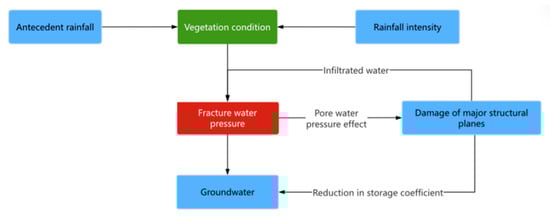
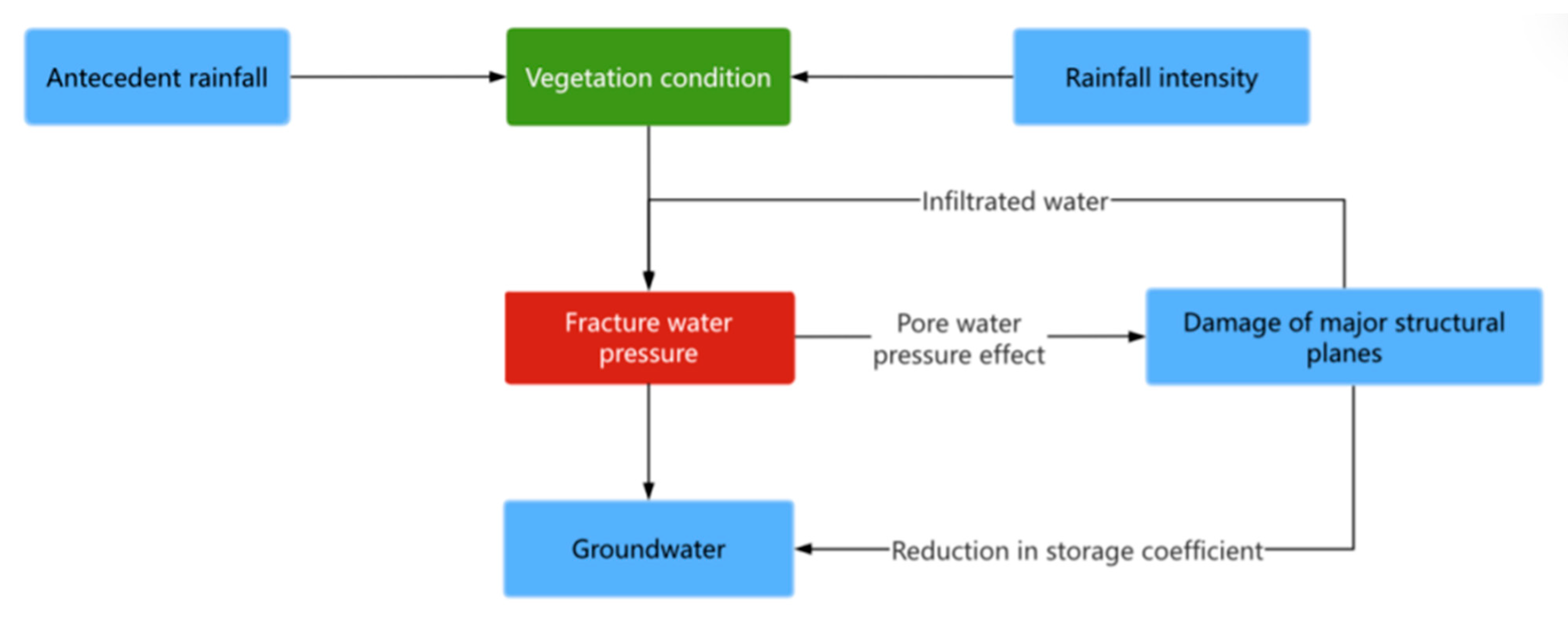
Rainfall generates unfavorable fracture water pressure, which is the main external factor for the damage and extension of the main controlling structural planes in rock mass in danger. The greater the fracture water pressure, the more severe the damage and extension of the main controlling structural planes of the rock mass, and the larger the fracture width and length become. When there is a sufficient external water source, the fracture water pressure increases further. The coupled analysis process of fracture water pressure is shown in Figure 12.
Figure 12.
Coupled analysis process of fractured water pressure.
5.2. Mechanism Analysis of Instability of High Steep Slope Under Mining Activities
Mining is the most important and direct cause of ground subsidence, leading to cracking and instability of the mountain body [43,44,45]. After underground mining operations, the original stress balance state of the rock mass surrounding the mining area is disrupted, resulting in the formation of large-scale goaf zones at the base of the hazardous rock mass. Due to intermittent mining activities, the internal stresses in the mountain mass continuously change and adjust, causing movement, deformation, and damage of the rock strata. This ultimately leads to uneven subsidence throughout the entire hazardous rock mass [46].
When the mining area expands to a certain extent, the movement initiated near the workings can propagate to the surface, causing surface deformation and subsidence, as well as potential collapse of the hazardous rock mass [47]. The deformation and destruction of rock masses tend to follow the weakest structural planes, often along existing fractures or faults, leading to displacement, shearing, and the continued development and expansion of cracks [48].
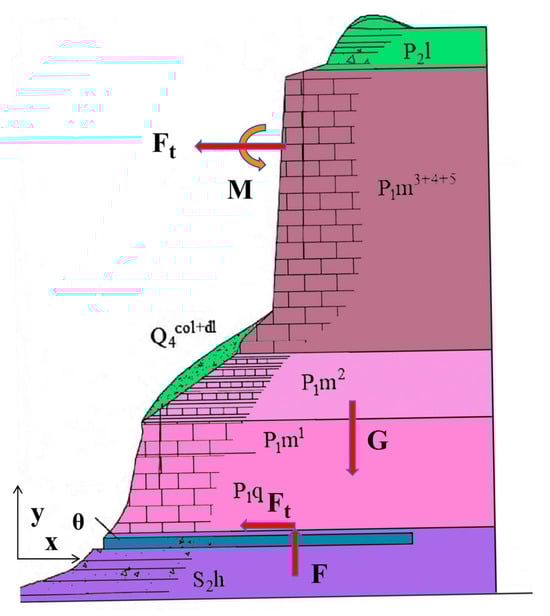
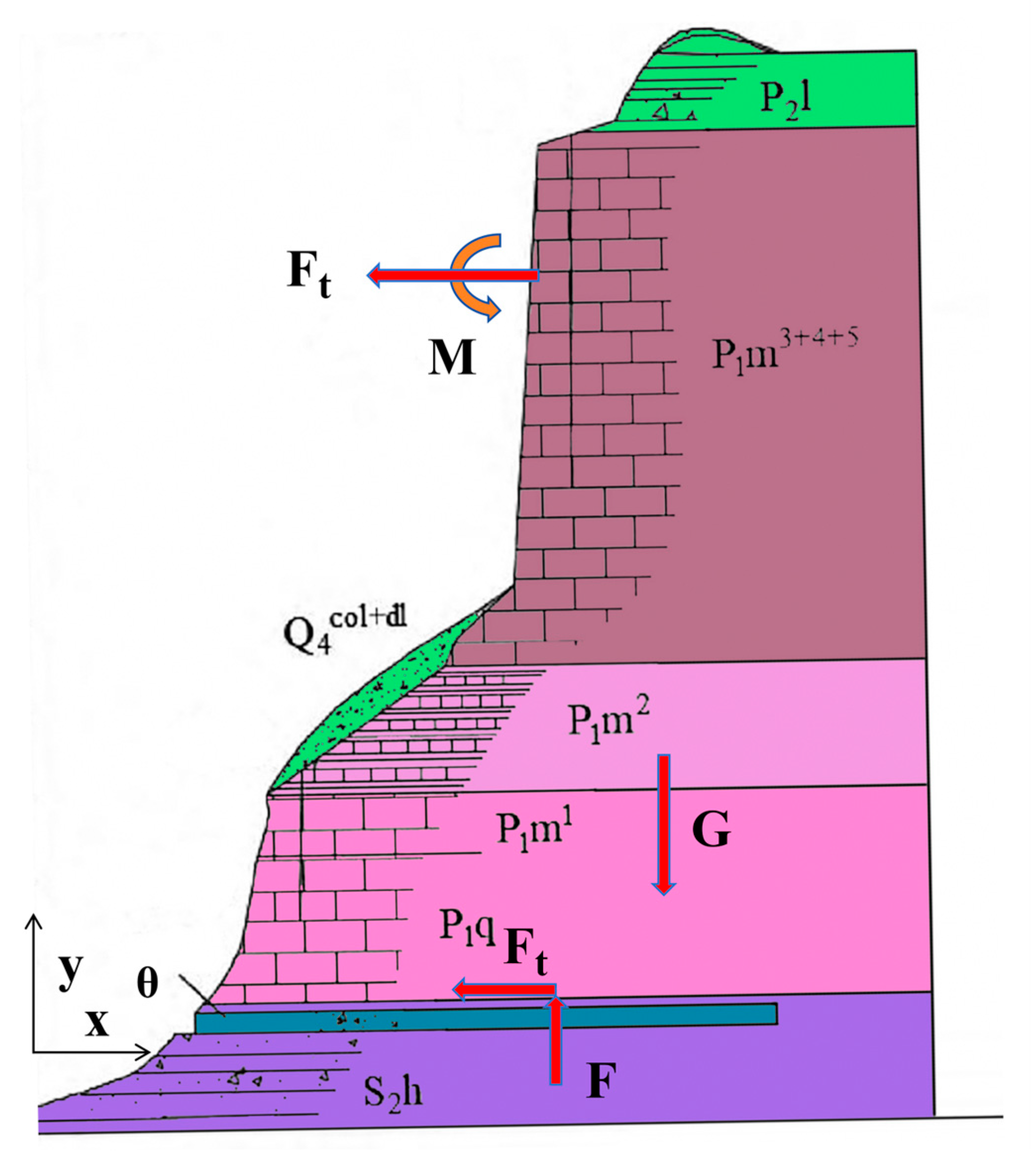
Due to the fact that the roof of the coal seam is mainly composed of a large, thick limestone layer, which is hard and intact, difficult to collapse, and not easily bend or settle, the supporting effect of the pillars left in place is relatively weak. Therefore, when the extent of the mining operation reaches a certain level in the strike and dip directions, the overlying rock mass becomes subject to a condition resembling that of a cantilever beam, as illustrated by the force analysis in Figure 13.
Figure 13.
The force model of rock mass in a cantilever beam state.
The equilibrium equation for the stability of the hazardous rock mass is as Equations (1)–(3).
In the Equations (1)–(3), represents the self-weight of the rock mass, is the reaction force from the retained roof, is the tensile force at the fracture of the rock mass, is the bending moment experienced at the fracture of the rock mass, and is the friction force on the roof surface, where denotes the static friction coefficient.
Given the geometric shape, size, and unit weight of the rock mass, the values of , can be easily obtained from the above three equations. Based on the relationship between internal forces and stresses, the value of stress (Equations (4) and (5)) can be derived accordingly.
Therefore, the total tensile stress (Equation (6)) on the structural plane:
For the rock mass to remain stable, according to the strength theory, the following condition must be satisfied . Otherwise, the rock mass will become unstable.
5.3. Limitations and Prospects
(1) Numerical analysis serves as an effective method for studying landslide deformation. It can more accurately simulate the fundamental characteristics of landslide occurrences in the study area. However, it is evident that there are inherent differences between the numerical model and real-world conditions. Natural factors such as measurement errors, rainfall intensity, and seepage through pores can significantly affect the simulation results. Additionally, due to the varying excavation shapes at different sections in underground mining, along with the real-time and dynamic nature of external conditions such as rainfall and seepage, the established model can only reasonably summarize the number of working faces and the specific mining times, but cannot fully represent the spatially variable excavation patterns or the temporally changing hydrological parameters.
On the other hand, since the collapse process itself is highly complex and involves multiple interacting mechanisms, the model can only focus on typical cross-sections and key collapse locations for numerical simulation. Overall, by comparing numerical simulation data with theoretical analysis, the accuracy of the landslide numerical model can be better validated, thereby enabling more effective simulation of landslide problems caused by rainfall and underground mining. However, limitations in current approaches—such as reduced model resolution and insufficient inclusion of dynamic external factors—remain significant challenges for precise prediction and prevention.
(2) The impact of mining on landslides is a dynamic process that involves the interaction between excavation activities, stress redistribution, and hydrological variations. In order to gain a more comprehensive understanding and analysis of the combined effects of mining and rainfall on landslide initiation and development, the next phase of research should include the integration of dynamic modeling components into the analysis framework. This would allow for the study of dynamic factors such as blasting and seismic events, which play a critical role in triggering slope instability and failure.
Furthermore, the development and propagation of fractures are the direct causes leading to landslide formation. The fracture evolution process is closely related to dynamic factors in mining, such as blasting and seismic disturbances. Therefore, to more deeply investigate the landslide generation mechanism, it is essential to incorporate these dynamic factors into the model. Future research can aim to integrate advanced numerical methods that consider dynamic boundary conditions, coupled hydro-mechanical modeling, and time-dependent simulation techniques, in order to enhance the predictive capability of the model.
In summary, while the current numerical model provides significant insights into landslide mechanisms under mining and rainfall conditions, the inclusion of dynamic factors and improved geological fidelity will be crucial for future studies in this field.
(3) The theoretically proposed criterion of “continuous tension zone at the back edge” in this study is practically challenging to verify through direct in-situ installation of traditional stress meters, due to issues such as high cost, low survival rate, and poor coupling efficiency.
To overcome these limitations, two indirect and proven feasible monitoring approaches have been developed and applied in engineering practice for high-steep reverse-dipping rock slopes, both nationally and internationally. These approaches are suitable for direct deployment on the Zengzi Rock Slope, as follows:
Multi-point fiber optic crack meters (FBG) have been successfully utilized in projects such as the YuanYang–Luchun Highway and other dangerous rock bodies, capable of real-time detection of micro-crack opening as small as 0.01 mm at the back edge. The cost is approximately 30,000 to 50,000 RMB per monitoring point, and these sensors typically have a survival rate exceeding 5 years in field conditions [49].
The integration of InSAR and UAV oblique photogrammetry allows for the rapid identification of potential tensile stress concentration zones when surface deformation rates exceed 5 mm/month or show accelerating trends, especially when combined with high-resolution Digital Orthophoto Maps (DOMs). This technique is particularly useful for large-scale deformation screening and offers spatially detailed insights into the evolution of ground deformation [50].
6. Conclusions
Through numerical simulation analysis under the conditions of rainfall and mining roadway excavation, combined with field observation studies, the following conclusions are drawn regarding the instability mechanism of high steep slopes under mining influence:
- (1)
- Through the analysis of the combined effects of mining and rainfall on steep rock slopes, in the initial stage, mining activities cause localized stress redistribution in the rock mass, leading to the formation of fractures and resulting in localized softening and deformation of the rock. Under the influence of rainfall, the water pressure within the cracks increases continuously, wetting the rock mass and reducing its shear strength. Ultimately, under the combined effects of these two factors, the landslide mass enters the failure stage.
- (2)
- In the deformation and instability process of steep rock slopes, both mining activities and rainfall play important roles, but their impact mechanisms are significantly different. According to the results of numerical simulations, the increase in crack width and displacement during rainfall is much greater than that during excavation. Therefore, in the process of landslide formation and development, mining mainly contributes to the initial stage of the landslide, while rainfall dominates the triggering stage and the rapid development phase.
Author Contributions
Conceptualization, K.N. and Z.-Q.L.; methodology, K.N.; software, K.N.; validation, K.N. and Z.-Q.L.; formal analysis, K.N. and Z.-Q.L.; resources, K.N.; data curation, K.N.; writing—original draft preparation, K.N.; writing—review and editing, K.N. and Z.-Q.L.; supervision, Z.-Q.L.; funding acquisition, K.N. All authors have read and agreed to the published version of the manuscript.
Funding
This research was funded by Geological survey project of China Geological Survey (1212011220140).
Data Availability Statement
The original contributions presented in this study are included in the article. Further inquiries can be directed to the corresponding author.
Acknowledgments
The authors thank the editor for the efforts made for the publication of this article and the reviewers for their valuable comments and revision suggestions, which helped improve the quality of the manuscript.
Conflicts of Interest
The authors declare no conflicts of interest.
References
- Zhou, J.; Tang, M.; Xu, Q.; Wu, H.; Wang, X. An early warning model for rainfall-induced landslides in Chongqing based on rainfall threshold. Mt. Res. 2022, 40, 847–858. [Google Scholar]
- Huang, G.; Huang, G.; Du, Y.; Tu, R.; Han, J.; Wan, L. A low-cost real-time monitoring system for landslide deformation based on BeiDou cloud. J. Eng. Geol. 2018, 26, 1008–1016. [Google Scholar]
- Li, Y.; Meng, H.; Dong, Y.; Hu, S.E. Main types and characterisitics of geo-hazard in China—Based on the results of geo-hazard survey in 290 counties. J. Geol. Disasters Prev. China 2004, 15, 32–37. [Google Scholar]
- Xu, Q.; Huang, R.; Yin, Y.; Hou, S.; Dong, X.; Fan, X.; Tang, M. The Jiweishan landslide of June 5, 2009 in Wulong, Chongqing: Characteristics and failure mechanism. J. Eng. Geol. 2009, 17, 433–444. [Google Scholar]
- Zeng, D.; Sun, W.; Zhang, Z.; Hu, M.; Yu, S.; Chen, P.; Hu, L.; Zhu, T. Patterns of landslide development and their correlation with rainfall in Chongqing during 2024 flood season. Bull. Soil Water Conserv. 2025, 45. [Google Scholar] [CrossRef]
- He, K.; Yin, Y.; Feng, Z.; Li, B. Analysis of characteristics and stability for Zengziyan—Eryayan unstable rocks belt in Nanchuan county Chongqing. Chin. J. Geol. Hazard Control 2015, 26, 16–22. [Google Scholar]
- Huang, R. Large-scale landslides and their sliding mechanisms in China since the 20th century. Chin. J. Rock Mech. Eng. 2007, 26, 433–454. [Google Scholar]
- Liu, Y.; Cai, Y.; Zhang, K.; Yang, X.; Wang, L. Influence of deformation parameters of backfill body on slope stability after transition from open-pit to underground. Min. Metall. Eng. 2019, 39, 1–4. [Google Scholar]
- Chen, Z.; Dai, Z.; Guo, L.; Fang, W. Stability Analysis of Recent Failed Red Clay Landslides Influenced by Cracks and Rainfall Based on the XGBoost-PSO-SVR Model. Water 2025, 17, 1920. [Google Scholar] [CrossRef] [Scilit]
- Li, Q.; Wang, Y.; Hou, D.; Jiang, S.; Gong, B.; Li, X. Simulating the Failure Mechanism of High-Slope Angles Under Rainfall-Mining Coupling Using MatDEM. Water 2025, 17, 414. [Google Scholar] [CrossRef] [Scilit]
- Liang, S.; Zhang, R.; Yang, C.; Qing, M. Analysis of seepage in expansive soil slopes based on fluid-solid coupling. Highw. Automot. Appl. 2023, 75–80. [Google Scholar] [CrossRef]
- Teng, H. Study on the Instability Mechanism of Under-construction Highway Slopes under Rainfall Conditions. Railw. Constr. Technol. 2025, 106–110. [Google Scholar] [CrossRef]
- Li, B.; Wang, G.; Feng, Z.; Wang, W.P. Failure mechanism of steeply inclined rock slopes induced by underground mining. Chin. J. Rock Mech. Eng. 2015, 34, 1148–1161. [Google Scholar]
- Wang, D.; Li, X.; Li, C.; Liu, Z. Mechanism of Surface Subsidence Induced by Underground Mining. Min. Metall. Eng. 2020, 40, 16–21. [Google Scholar]
- Wei, Y.; Wang, F.; Ren, Q. Numerical simulation of surface subsidence caused by underground mining using discrete element software PFC2D. Min. Metall. Eng. 2023, 43, 30–34. [Google Scholar]
- Zhuang, Y.; Hu, X.; He, W.; Shen, D.; Zhu, Y. Stability Analysis of a Rocky Slope with a Weak Interbedded Layer under Rainfall Infiltration Conditions. Water 2024, 16, 604. [Google Scholar] [CrossRef] [Scilit]
- Chen, G.; Cai, P.; Zhan, J.; Yang, Y.; Yao, Z.; Yu, Z. Deformation Patterns and Failure Mechanisms of Soft-Hard-Interbedded Anti-Inclined Layered Rock Slope in Wolong Open-Pit Coal Mine. Appl. Sci. 2024, 14, 3082. [Google Scholar] [CrossRef] [Scilit]
- Ma, J.; Zhang, J.; Song, Y.; Feng, Z.; Tian, J.; Gu, J.; Li, X. Failure Mechanism of Sandy Soil Slopes Under High-Angle Normal Bedrock-Fault Dislocation: Physical Model Tests. Appl. Sci. 2025, 15, 1950. [Google Scholar] [CrossRef] [Scilit]
- Li, X.; Li, Q.; Hu, Y.; Teng, L.; Yang, S. Evolution Characteristics of Mining Fissures in Overlying Strata of Stope After Converting from Open-Pit to Underground. Arab. J. Geosci. 2021, 14, 2795. [Google Scholar] [CrossRef] [Scilit]
- Li, Y.; Yao, A.; Gong, Y. Deformation and Failure Mechanism of a Massive Ancient Anti-Dip River-Damming Landslide in the Upper Jinsha River. Sustainability 2022, 14, 13048. [Google Scholar] [CrossRef] [Scilit]
- Cai, J.; Wang, J.; Li, Z.; Kong, Y.; Zhang, L.; Qi, G. Study on Deformation Characteristics of Toppling Failure of Anti-Dip Rock Slopes Under Different Soft and Hard Rock Conditions. Front. Earth Sci. 2024, 12, 1339169. [Google Scholar] [CrossRef] [Scilit]
- Tao, Z.; Zhang, H.; Zhu, C.; Hao, Z.; Zhang, X.; Hu, X. Design and operation of App-based intelligent landslide monitoring system: The case of Three Gorges Reservoir Region. Geomat. Nat. Hazards Risk 2019, 10, 1209–1226. [Google Scholar] [CrossRef] [Scilit]
- Chen, Z. Analysis of Rock Slope Stability: Principles, Methods, and Procedures; China Water Power and Hydropower Press: Beijing, China, 2005; pp. 65–75. [Google Scholar]
- Itasca Consulting Group. UDEC User’s Guide, 6th ed.; Itasca Consulting Group: Minneapolis, MN, USA, 2014; pp. 25–30. [Google Scholar]
- Cai, M. Rock Mechanics and Engineering; Science Press: Beijing, China, 2002; pp. 105–114. [Google Scholar]
- Cundall, P.A.; Strack, O.D.L. A discrete numerical model for granular assemblies. Geotechnique 1979, 29, 47–65. [Google Scholar] [CrossRef] [Scilit]
- Shen, H.; Guo, M.; Wang, S.; Ge, X.R. Vector sum method for slope stability analysis based on discrete elements. Rock Soil Mech. 2016, 37, 592–600. [Google Scholar]
- He, S.; Li, Y.; Aydin, A. A comparative study of UDEC simulations of an unsupported rock tunnel. Tunn. Undergr. Space Technol. 2018, 72, 242–249. [Google Scholar] [CrossRef] [Scilit]
- Shi, G. Numerical Manifold Method and Discontinuous Deformation Analysis; Pei, J., Translator; Tsinghua University Press: Beijing, China, 1997; pp. 35–42. [Google Scholar]
- Kang, J.; Wang, J. Analysis of the mechanical model of overburden rock strata and the conditions for fracture failure due to mining. J. China Coal Soc. 2002, 27, 16–20. [Google Scholar]
- Wang, H.; Li, S.; Zhang, Q.; Li, Y.; Guo, X. Development of new similarity materials for geomechanical model tests. Chin. J. Rock Mech. Eng. 2006, 25, 1842–1847. [Google Scholar]
- Ning, Y.; Xu, W.; Zheng, W. Application in complicated high slope with strength reduction method based on discrete element method. Rock Soil Mech. 2007, 28, 569–574. [Google Scholar]
- Dawson, E.M.; Roth, W.H. Drescher A Slope stability analysis by strength reduction. Geotechnique 1999, 49, 835–840. [Google Scholar] [CrossRef] [Scilit]
- Cai, Z. Research on Early Warning Criteria for Soil Landslide Induced by Typhoon Rain Based on Monitoring Data. Master’s Thesis, Fuzhou University, Fuzhou, China, 2015; pp. 48–53. [Google Scholar]
- Lei, Y.; Wang, S. Stability analysis of jointed rock slope by strength reduction method based on UDEC. Rock Soil Mech. 2006, 27, 1693–1698. [Google Scholar]
- Zhao, S.; Zheng, Y.; Shi, W.; Wang, J.L. Analysis on safety factor of slope by strength reduction FEM. Chin. J. Geotech. Eng. 2002, 24, 343–346. [Google Scholar]
- Liu, L.; Shang, J.; Li, W.; Wang, X.; Gao, L. Investigation of stress and deformation characteristics of a geotextile tubes dam understrength reduction via discrete element method. J. N. China Univ. Water Resour. Electr. Power (Nat. Sci. Ed.) 2021, 42, 83–91. [Google Scholar]
- Chaves, H.M.L.; Montalvão, M.T.L.; Fonseca, M.R.S. Mapping Wet Areas and Drainage Networks of Data-Scarce Catchments Using Topographic Attributes. Water 2025, 17, 2298. [Google Scholar] [CrossRef] [Scilit]
- Fu, H.; Zeng, L.; Wang, G.; Jiang, Z.M.; Yang, Q.X. Stability analysis of soft rock slopes under rainfall infiltration conditions. Rock Soil Mech. 2012, 33, 2359–2365. [Google Scholar]
- Zhou, Z.; Wang, H.; Fu, H.; Liu, B.C. Influences of rainfall infiltration on stability of accumulation slope by in-situ monitoring test. J. Cent. S. Univ. Technol. 2009, 16, 297–302. [Google Scholar] [CrossRef] [Scilit]
- Liu, L.; Yin, K. Analysis of the infiltration mechanism of precipitation in rainfall-induced landslides. Rock Soil Mech. 2008, 29, 1061–1066. [Google Scholar]
- Yin, Y. Mechanism of apparent dip slide of inclined bedding rockslide a case study of Jiweishan rockslide in Wulong, Chongqing. Chin. J. Rock Mech. Eng. 2010, 29, 217–226. [Google Scholar]
- Hoek, E. Progressive caving induced by mining an inclined orebody. Trans. Inst. Min. Metall. 1974, 83, 133–139. [Google Scholar]
- Feng, Z.; Li, B.; He, K. Rock collapse mechanism on highsteep slope failure in sub-horizontal thick-bedded mountains. J. Geomech. 2014, 20, 123–131. [Google Scholar]
- Wang, J. Studies on several theoretical and technical problems related to subsidence during coal mining. Mine Surv. 2003, 3, 1–5. [Google Scholar]
- Miao, X.; Chen, R.; Pu, H.; Guo, W. Analysis of the failure and collapse characteristics of key strata in thick overburden during mining. Chin. J. Rock Mech. Eng. 2005, 24, 1289–1295. [Google Scholar]
- Liang, M.; Wang, C. Prediction of subsidence in thick loess-covered mountainous areas during mining. Coal Geol. Explor. 2001, 29, 44–47. [Google Scholar]
- Liu, S.; Dong, J.; Xu, G.; Cai, Z. Engineering impact of underground faults on overlying soil layers of different soil types. Chin. J. Rock Mech. Eng. 2005, 24, 1868–1874. [Google Scholar]
- Li, C.; Wei, L.; Xu, Q.; Li, H.; Wang, J. Structural Detection and Stability Monitoring of Deep Strata on a Slope Using High-Density Resistivity Method and FBG Strain Sensors. Appl. Sci. 2024, 14, 3272. [Google Scholar] [CrossRef] [Scilit]
- Nikolakopoulos, K.G.; Kyriou, A.; Koukouvelas, I.K.; Tomaras, N.; Lyros, E. UAV, GNSS, and InSAR Data Analyses for Landslide Monitoring in a Mountainous Village in Western Greece. Remote Sens. 2023, 15, 2870. [Google Scholar] [CrossRef] [Scilit]



Disclaimer/Publisher’s Note: The statements, opinions and data contained in all publications are solely those of the individual author(s) and contributor(s) and not of MDPI and/or the editor(s). MDPI and/or the editor(s) disclaim responsibility for any injury to people or property resulting from any ideas, methods, instructions or products referred to in the content. |
© 2025 by the authors. Licensee MDPI, Basel, Switzerland. This article is an open access article distributed under the terms and conditions of the Creative Commons Attribution (CC BY) license.