1. Point Source Pollution: Today’s Issue, Tomorrow’s Crisis?
Improving water quality in the densely populated Dutch delta is challenging [
1]. Meeting the European Union (EU) cornerstone objectives—as established by article 4 of the Water Framework Directive (WFD)—for a “good” status in 2027 for surface and ground water bodies is by no means assured [
2]. The 2024 Mid-Term Evaluation indicates that the Netherlands remain significantly off-track, as only a small percentage of water bodies are projected to achieve both the required ecological and chemical standards by 2027, the already extended deadline [
3]. Since the inception of the WFD in 2000, progress has been made [
4], but only about 1% of Dutch surface waters meet all WFD criteria, with most water bodies rated “moderate” to “poor” regarding their ecological status and rated “failing to achieve good” regarding their chemical status [
2]. Even though these numbers must be put into perspective (surface water bodies are, for example, only considered to have a “good” chemical status if all substances do not exceed the environmental quality standards established), more action is needed. Lagging water quality can be attributed to multiple factors but industrial point source discharges are seen as one of the issue’s main culprits [
5].
The Netherlands have been previously praised for its success in reducing point source discharges [
6]. However, progress has stalled in recent years [
5]. Under headlines like “Claessen Tank Cleaning is dumping litres of carcinogenic substances into the Meuse River”, popular media have begun reporting on how environmental regulations protecting surface waters are being violated by industrial discharges. The criticism is stark: authorities have responded with leniency, inaction and a lack of discipline. Despite being aware of permit violations, for too long, they issued only benign warnings rather than moving towards imposing penalties or ordering closures when necessary [
7].
Against this backdrop, the question can be raised as to whether the Claessen case represents an anomaly or instead a general trend in the governance of point source pollution (PSP) in the Netherlands. However, the governance of PSP—and in particular, the permitting, supervision and enforcement (PSE) process in the Netherlands—has received very scant academic attention. This neglect is particularly striking given the impending 2027 deadlines for the WFD objectives. After this date, member states are no longer allowed to postpone the deadline of meeting a good ecological and chemical status on the grounds of disproportionate costs or for reasons of technical feasibility (other exemptions may be invoked, but that is beyond the scope of this paper). Our paper seeks to narrow the above-mentioned knowledge gap. More specifically, the paper aims to obtain insight into the quality of governance processes [
8,
9,
10] concerning the PSE of point sources discharges.
In order to meet this aim, we first review the literature on good governance, clarify relevant regulations and synthesize the findings of this review into a framework for assessing permitting, supervision and enforcement practices. Subsequently, in
Section 3, we explain why we have chosen the PSE governance practice concerning the discharges of Sitech (the wastewater operator for Chemelot’s industrial complex in Limburg) as a case study, as well as our data collection and analysis. Following this, we present our assessment results and clarify what strengths and weaknesses were identified in the case. Next, we discuss the generalizability of our case study results and refer to the more systemic issues we identified. We conclude the paper with some recommendations for future research and policymaking.
2. Towards a Framework for Assessing the Governance of Point Source Discharges
The literature reveals several good governance principles. We first discuss them, and based on a review of relevant documents, refine them into criteria for assessing the governance of the PSE of point source discharges (see
Table 1).
The concept of good governance, introduced by the World Bank in 1989 and later adopted by the UN, originated from development discourse [
8,
11]. It has since been integrated into various policy areas and embraced by policymakers [
12]. In recent decades, academic interest in good governance has grown significantly. The concept diverges from traditional assessment models by emphasizing the importance of non-hierarchical policymaking approaches and principles like accountability and transparency [
13]. However, the definition and interpretation of good governance remain context-dependent [
14] and have therefore resulted in a proliferation of diverse principles in the academic literature. Against this backdrop, Lockwood [
9] streamlined these principles into a comprehensive good governance framework. While initially applied to assess terrestrial resource management, this framework has been adapted to different environmental governance contexts (e.g., [
15,
16]). This study adopts Lockwood’s [
9] key principles of legitimacy, transparency, accountability, inclusiveness and resilience and supplements it with governance effectiveness. The latter principle is added since it is often used in policy evaluation [
10].
Different interpretations of governance effectiveness can be found in the literature [
17,
18,
19,
20,
21]. Some argue effectiveness relates to the capacity of policies and actors to address problems and achieve goals [
22], while others define it as the extent to which an organization meets predetermined objectives [
23]. The latter view is more prevalent, with effectiveness often seen as the degree to which environmental policies achieve intended improvements [
20,
24,
25]. Yet, high goal-attainment effectiveness, as seen in industrial pollution control, does not always solve the initial problem [
17]. Wuijts [
26] therefore distinguishes between legal effectiveness, focusing on whether governance meets legal objectives, and ecological effectiveness, which emphasizes achieving a healthy ecosystem where native species thrive.
Legitimacy is essential for the ethical acceptability of governance [
13,
27] and refers to the acceptance and justification of political authority [
28]. Challenges to legitimacy often arise from tensions between general and particular interests, particularly in environmental regulations [
29,
30]. Legitimacy encompasses two key aspects: (1) the entitlement and generation of authority [
13] and (2) stakeholders’ acceptance of policy outcomes [
28]. Lockwood [
13] and others [
28,
31] emphasize that legitimacy requires governing actors to demonstrate commitment and responsibility, as it is not automatically granted through legal or democratic frameworks but depends on stakeholder acceptance and performance. Thus, legitimacy is defined by (1) legal or democratically mandated authority and (2) stakeholders freely accepting the governing body’s authority [
13].
Scholars argue that transparency is crucial for (1) evaluating the legal, ethical and rational basis of decisions [
13]; (2) understanding motivations [
32] and (3) comprehending government actions [
13]. Transparency implies that stakeholders have access to relevant information about decision makers, the way decisions were reached and the reasons for the decisions made [
13]. It juxtaposes secrecy with deliberate information disclosure [
33,
34]. In the context of point source pollution regulation, Rohmana et al. [
35] demonstrate that government transparency enhances accountability across industrial and governmental sectors. Clear reporting about progress made is pivotal. The way information is presented matters, especially for people unfamiliar with a topic who need clear and easy-to-understand language [
13].
Bovens [
36] (p. 450) argues that accountability refers to “a relationship between an actor and a forum in which the actor is obliged to explain and justify its behaviour, in which the forum can ask questions and pass judgement, and the actor can face consequences” (see also [
37,
38]). Jordana et al. [
39] refine this by making a distinction between upward, downward and horizontal accountability [
40]. Lockwood [
13] also adopts this approach and further operationalizes it by stating that ideally the governing body (1) has clearly defined roles and responsibilities; (2) is accountable to its constituency (“downward” accountability); (3) is accountable to higher authorities (“upward” accountability); (4) demonstrates acceptance of its responsibilities and, finally, (5) ensures that the levels at which power is exercised match the scale of associated rights, needs, issues and values.
Inclusiveness refers to opportunities for all stakeholders to participate in and influence decision-making, which is rooted in the ethical principle that everyone has an equal right to contribute to matters affecting them [
13]. Inclusiveness involves providing participation opportunities, creating structures that enable meaningful contributions, ensuring that voices are heard, seeking diverse inputs and recognizing varied perspectives [
41]. Inclusiveness is vital for governance success, as it integrates local knowledge, enhances decision acceptance and improves implementation, boosting both effectiveness and legitimacy [
42,
43]. Lockwood [
13] adds to this that inclusiveness plays a role in managing competing interests and mediating conflicts. Lockwood points out the importance of active engagement of marginalized and disadvantaged groups.
Finally, resilience refers to institutional adaptability, requiring authorities to (i) take an intentional approach to managing change (meaning it is not only reactive, but also proactive) and (ii) maintain flexible processes to respond to shifting conditions [
13]. This adaptability is grounded in “bounded rationality,” acknowledging that knowledge about today’s and tomorrow’s knowledge about socio-ecological systems will always be incomplete. Organizations that are strategic, forward-looking and innovative can therefore better anticipate changes, reduce surprises and adapt to community needs. Effective self-reflexivity [
44] is essential, enabling organizations to learn through ongoing assessments, supervision and reviews, improving decisions and adapting plans based on new information. Although legal frameworks can have adaptive features, it should be noted that they are inherently less resilient due to their focus on stability and predictability, which can create rigidity and hinder rapid adaptation to emerging challenges [
26,
45].
In order to refine and contextualize these six good governance principles, we analyzed European and Dutch legal frameworks relevant to the PSE of point source discharges. The WFD prohibits the deterioration of the water bodies falling under its scope (the larger bodies) and obligates member states to improve the quality of those waters. The Priority Substances Directive (2013/39/EU) (a daughter directive of the WFD) specifies water quality standards for (groups of) harmful substances. The WFD objectives are nowadays (since 2024) implemented in the Dutch Environment and Planning Act (Dutch: Omgevingswet (which integrated (among other laws) the former Water Act) and the Decree on the Quality of the Living Environment (Dutch: Besluit Kwaliteit Leefomgeving, BKL)).
According to the Decree on the Quality of the Living Environment, a proposed point source discharge may in principle not cause deterioration of a receiving WFD surface water body or hinder the achievement of a “good status”. When assessing point source discharges, water management programs (Dutch: water (beheer) programma’s), which entail measures to reach the WFD objectives, must be considered.
The Decree further aims to achieve compliance of point source discharges with the WFD’s obligations and (national) standards by taking into account the use of European and Dutch information documents. The latter consist of a General Method of Assessing Discharges (Dutch: Algemene Beoordelingsmethodiek, ABM) and an immission test, for which a Handbook has been developed.
The General Assessment Method must be followed to classify substances or mixtures that are present in a discharge by their water objectionability (Dutch: waterbezwaarlijkheid). The latter is based on intrinsic (eco)toxicological properties such as bioaccumulation and persistence. This classification determines the required level of remediation effort to be undertaken (Dutch: saneringsinspanning), such as substitution or treatment. Subsequently, a best available techniques (BAT) assessment is required to ensure that emissions are further minimized at the source. BAT refers to the most effective treatment techniques that are technically and economically feasible for a particular sector. When selecting appropriate treatment techniques, a competent authority is obliged to consider the best available techniques included in the so-called (European) BAT conclusions. These conclusions are addressed in the BAT reference documents (BREFs). However, the above assessments do not indicate whether the emissions remaining after application of the BAT are acceptable for the receiving water body. The Handbook addresses this. It is used to determine, based on different parameters, whether the remaining discharge will result in water quality standard exceedance or in a deterioration of the quality of the receiving water body. The Handbook is a method to assess whether the remaining discharges are compatible with the WFD objectives. Deviations are permitted only if duly justified, regardless of the fact that the proposed activity may not cause deterioration or hinder the achievement of a “good status” in the receiving surface water bodies [
46].
Our analysis of the above-mentioned European and Dutch documents resulted in a refinement of the criteria for assessing the effectiveness principle. In criterion 1 we refer to the relevant regulations.
3. Materials and Methods
In order to obtain a better understanding of the governance quality of PSE processes in the Netherlands, we applied the good governance criteria mentioned in
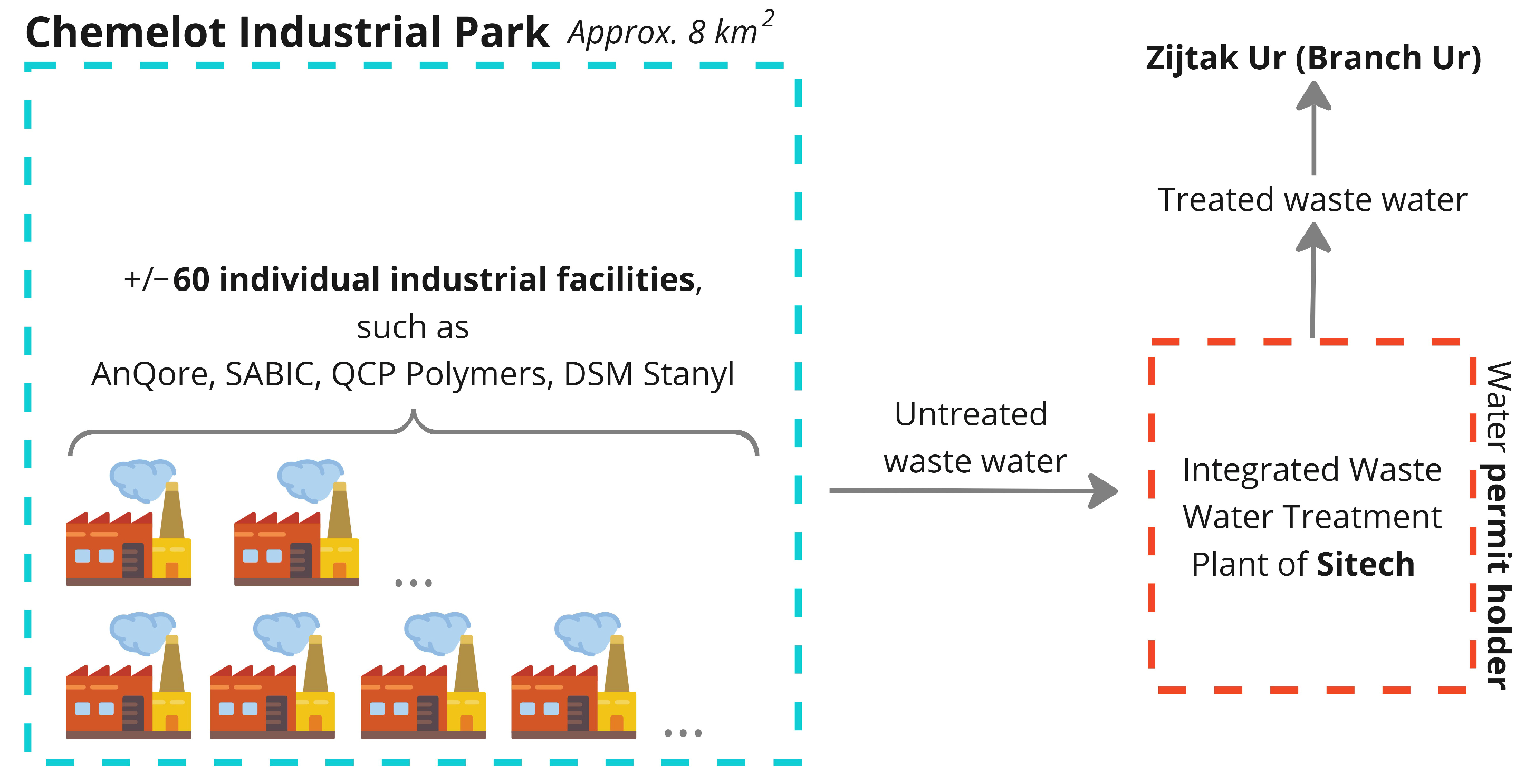
Table 1 to an assessment of the permitting processes concerning the discharges of Sitech’s integrated wastewater plant. In January 2024, Sitech changed its name into Circle Infra Partners, but for the sake of uniformity and readability, we retain the name Sitech. This plant treats wastewater from Chemelot industrial complex in Geleen, the Netherlands. Chemelot is one of the largest industrial complexes in Europe and the largest in the Netherlands, housing about 60 industrial facilities particularly known for its polymer production (i.e., plastics) [
47].
Figure 1 presents a schematization of Chemelot industrial park and the Sitech integrated wastewater treatment plant. The plant discharges its effluents into the Ur, a branch of the Border Meuse (Dutch: Grensmaas), the section of the Meuse River that forms the border with Flanders. The Border Meuse is not only a resource for multiple drinking water utilities, but also a nature reserve. The Border Meuse qualifies as a WFD surface water body.
The granting of a discharge permit to Sitech by the Limburg Regional Water Authority in 2020 [
48] received considerable media attention in regional and national newspapers. Several stakeholders were involved in the permitting process. Key (1st-tier) stakeholders, participating in so called Mutual Gains Approach (MGA) meetings, included Chemelot (Sitech), the Regional Water Authority Limburg, the Public Works Department of the Ministry of Infrastructure and Water Management (Rijkswaterstaat) and the Drinking Water Companies Limburg, Evides and Dunea. Second-tier stakeholders included The Flemish Waterway, the Nature and Environment Foundation Limburg, Environmental Service South Limburg as well as the municipalities Stein and Sittard-Geleen. Given the significance of the permitted discharges and the societal and ecological importance of the receiving water, the case can be considered a critical case which could offer insights that have a wider relevance for the governance of point source discharges in the Netherlands.
In order to obtain insights into the quality of the PSE process, we studied relevant documents and conducted sixteen semi-structured interviews with key stakeholders involved in the PSE process and some experts. All participants were chosen for their work experience and/or expertise directly related to the permit.
Table 2 shows that all 1st-tier stakeholders were represented in our sample. We only interviewed one 2nd-tier stakeholder, since our interviewees revealed that their actual involvement in the PSE process was very limited. We therefore did not expect them to be able to share detailed insights with us. Following Utrecht University research guidelines [
25], participants signed a consent form beforehand. To uphold participant anonymity, detailed role descriptions were omitted from
Table 2. Interview topics and questions were derived from
Table 1’s good governance criteria. Interviews, lasting 30–70 min, were conducted either online via Microsoft Teams or in-person. The interviews took place during the first half of 2024. All interviews were recorded, transcribed and anonymized. A two-stage coding process [
49] was applied using Atlas.ti (version 24.0.0): (1) initial line-by-line coding to categorize data segments and (2) focused coding to identify recurring and significant themes. The approach was both deductive (guided by the assessment framework) and inductive (allowing themes to emerge organically). We synthesized our findings and used a traffic light system to indicate to what degree the PSE process meets our good governance criteria (green = fully met, red = not met and yellow = partially met).
5. Discussion
In this paper, we aimed to obtain insights into the quality of the PSE processes concerning point source discharges in the Netherlands. This was performed by developing an assessment framework consisting of 6 good governance principles which were specified into 18 criteria. We applied this framework in a case study in which we assessed the granting of a discharge permit to Sitech—the wastewater operator for Chemelot’s industrial complex in Limburg. Our assessment indicates that, in this case, not all our good governance criteria were met. Overall the process has a high score on the resilience and transparency principles, but several challenges remain, especially those related to effectiveness and inclusiveness. A question can be raised regarding to what extent our case study insights are generalizable for PSE processes in the Netherlands as a whole and what more systemic governance issues can be identified based on our analysis. To what extent are the flaws our stakeholders revealed systemic issues? Since our interviewees were most critical about the effectiveness and the inclusiveness of the PSE process, we will discuss the challenges identified for meeting these criteria.
Whilst in our case study, the PSE process proved to be “unique” (in the sense that it was heavily prioritized by the relevant authorities), it did reveal systemic-level challenges that may impact effectiveness.
The use of outdated BAT conclusions can hinder the process of innovation and improving water quality. The consequences of using outdated BAT conclusions are also recognized outside the field of point source discharges [
63]. However, authorities are reluctant to impose stricter or other requirements because this may expose them to legal proceedings.
A general concern is that permits may pose a threat to fulfilling the WFD objectives. Under the WFD, water authorities must reject an application if discharge is incompatible with the WFD objectives, as the non-deterioration principle and the improvement objectives are a binding constraint on all permitting decisions since
Bund v. Germany was presented before the European Court of Justice [
64]. In mandatory assessments of compliance, Dutch water authorities must consider the General Assessment Method and the Handbook. As stated before, the Handbook is a method to assess whether the remaining discharges (after applying the BATs) are compatible with set water quality standards, with deviations permitted only if duly justified, regardless of the fact that the proposed activity may not cause deterioration or hinder the achievement of a “good status” in the affected surface water bodies [
46]. Our interviewees revealed that, in our case, the General Assessment Method and the Handbook were considered. However, the question remains as to whether this was performed correctly, especially for the substances for which the immission test was postponed. It is also not totally clear to what extent the discharge allowed can hinder the achievement of “a good status” in the receiving surface water body, and if it can, how the achievement of a “good status” can nevertheless be ensured. More in-depth legal research is needed to better substantiate both points. It is possible that this evaluation will reveal that additional measures must be taken.
The possibility of taking additional measures during the permit period is in line with the current Dutch national legal framework that seems to allow, when well-substantiated, changing (or even revoking) existing permits for point source discharges when this is necessary to achieve the WFD objectives. However, as also stated in the 2024 opinion on Sitech’s permit [
59], the extent to which intervention is possible is not yet clear. More research is needed to determine the limits of this possibility.
In our case the permit was granted for a period of seven years. The WFD, however, does not explicitly stipulate that permits for point source discharges can only be granted for a (certain) fixed period. The WFD only requires permits for point source discharges to be reviewed “regularly”, thus not forbidding a system in which permits are granted for an indefinite period, as long as these permits are reviewed regularly and can be revised if necessary. Last year, in 2024, the European Commission started an infringement procedure against the Netherlands for non-compliance with the WFD because permits for point source discharges (and also for abstractions) can be granted for an unlimited period and periodic review is not always required and/or carried out in a timely manner. For discharges (and abstractions) falling under general rules, the same applies. Options for aligning Dutch law with the WFD on this point are being investigated.
Our interviewees revealed that, in our case licensing, was not hindered by capacity issues. However, this is not a general phenomenon. When it comes to capacity and development, other research shows that not all water authorities in the Netherlands have sufficient capacity (or have only recently gained sufficient capacity) for licensing, supervision and enforcement of permits [
65].
The second principle to discuss concerns
inclusiveness [
13]. It is important to note that inclusiveness is not about “congruence” or “consensus”, nor is it about selectively choosing whose inputs to consider during the process: it is about allowing for friction between stakeholders so that diverse perspectives can be openly debated, leading to more robust and comprehensive decision-making [
13]. Our findings revealed that, according to the interviews, environmental NGOs were structurally sidelined. In our case, the Water Authority seems to have adopted a minimal participation approach, with a focus on procedural efficiency. This approach proved counterproductive and undermined good governance: the exclusion of key actors, nature organizations in particular, from
meaningful involvement directly fuelled public protests (notably by Extinction Rebellion) that the Authority must navigate. What may appear as a “transparency paradox”, greater permit transparency generating public opposition, can be better understood as a consequence of inadequate earlier-stage stakeholder inclusion [
66]. The latter seems to be a systemic issue.
The concept of good governance has been widely applied in policy frameworks [
16], but it has not yet been systematically applied in the context of PSE processes. This paper has reduced this knowledge gap, but it has some limitations in terms of conceptualization and the methods applied. Our analysis is mainly based on stakeholder perceptions, supplemented by an analysis of documents (including minutes of meetings) to which we have made references. However, a more in-depth legal analysis could have had an additional value as it could have led to a more refined assessment framework. In this way stakeholders could have been confronted with more specific legal requirements which could have revealed more in-depth findings. Moreover, a more detailed explanation of the way the WFD objectives were assessed (and their alignment with the ABM, including the quality of the immission tests performed) would have had an added value as well not only for the quality of our case study but also since it might have revealed more fundamental knowledge-related challenges that implementing agencies have to deal with in improving surface water quality. Future research on the governance quality of PSE processes could address these limitations. This can also be achieved in comparative studies in which more PSE processes will be assessed with the aim of finding more robust patterns and challenges in the ways in which the Netherlands deals with point source discharges.