

Next Article in Journal
Adsorption of Phosphonates to Iron- or Aluminum-Based Flocculants in Wastewater Treatment
Previous Article in Journal
Assessing Rating Curves in River Gauging Stations for Computing Design Extreme Events for Several Return Periods
Previous Article in Special Issue
Distribution of 210Pb and 210Po and Particulate Organic Carbon (POC) Fluxes in the Northwestern Pacific Ocean in Summer 2024
error_outline You can access the new MDPI.com website here. Explore and share your feedback with us.
 
 
Article

Assessment of Atmospheric Acidifying Pollutant Trends and Their Potential Impact on Aquatic Carbon Stability in a Semi-Arid Basin: The Case of Konya

1
Geomatic Engineering Department, Faculty of Engineering and Natural Sciences, Gümüşhane University, Gümüşhane 29100, Türkiye
2
Civil Engineering Department, Faculty of Engineering and Natural Sciences, KTO Karatay University, Konya 42020, Türkiye
*
Author to whom correspondence should be addressed.
Water 2026, 18(1), 118; https://doi.org/10.3390/w18010118
Submission received: 1 December 2025 / Revised: 17 December 2025 / Accepted: 22 December 2025 / Published: 3 January 2026
(This article belongs to the Special Issue Research on the Carbon and Water Cycle in Aquatic Ecosystems)

Abstract

The behavior of the carbon cycle within the Land-Ocean Aquatic Continuum (LOAC) is shaped not only by aquatic processes but also by chemical interactions occurring at the atmosphere–water interface. In particular, the transport of acid rain precursors such as SO2 and NOx to surface waters via deposition can alter the water’s pH balance, thereby affecting Dissolved Inorganic Carbon (DIC) fractions and CO2 emission potential. In this study, air quality measurements from three monitoring stations (Bosna, Karatay, and Meram) in Konya province of Türkiye, along with precipitation and temperature data from a representative meteorological station for the period 2021–2023, were analyzed using the Mann–Kendall Trend Test. Additionally, seasonal pH values of groundwater were examined, and their trends were compared with those of the other variables. The findings reveal striking differences on a station basis. At the Bosna station, while NO (Z = 10.80), NO2 (Z = 9.47), and NOx (Z = 10.04) showed strong increasing trends, O3 decreased significantly (Z = −15.14). At the Karatay station, significant increasing trends were detected for CO (Z = 10.01), PM10 (Z = 8.59), SO2 (Z = 5.55), and NOx (Z = 2.44), whereas O3 exhibited a negative trend (Z = −6.54). At the Meram station, a significant decrease was observed in CO (Z = −11.63), while NO2 showed an increasing trend (Z = 3.03). Analysis of meteorological series indicated no significant trend in precipitation (Z = −0.04), but a distinct increase in temperature (Z = 2.90, p < 0.01). These findings suggest that the increasing NOx load in the Konya atmosphere accelerates O3 consumption and, combined with rising temperatures, creates a potential for change in the carbon chemistry of aquatic systems. The results demonstrate that atmospheric pollutant trends constitute an indirect but significant pressure factor on the aquatic carbon cycle in semi-arid regions and highlight the necessity of integrating atmospheric processes into carbon budget analyses within the scope of LOAC.

1. Introduction

The carbon cycle and the water cycle are among the fundamental components of the physical, chemical, and biological processes that constitute the Earth system, and the interaction between these two cycles directly determines ecosystem functioning, climate system stability, and environmental sustainability. Carbon, which is continuously exchanged among the atmosphere, hydrosphere, lithosphere, and biosphere, is transported and transformed across terrestrial and aquatic systems in various forms (CO2, dissolved inorganic carbon, dissolved organic carbon, and particulate organic carbon). Precipitation, evaporation, surface runoff, and groundwater movement are among the main hydro-meteorological factors governing the spatial distribution, transformation rates, and retention capacity of carbon [1,2].
Precipitation is not merely a climatic parameter representing the amount of water falling from the atmosphere to the Earth’s surface, but also a primary driving mechanism regulating carbon circulation at the basin scale. Variations in precipitation amount and regime directly influence soil moisture, surface runoff, groundwater chemistry, and evaporation processes, thereby restructuring the balance of carbon among the atmosphere, terrestrial ecosystems, and aquatic environments. Particularly in semi-arid and arid regions, a decrease in precipitation may lead to weakened vegetation cover, reduced biological productivity, and accelerated decomposition of organic matter, consequently enhancing atmospheric CO2 emissions. In contrast, during wet periods, increased runoff and erosion promote the transport of carbon in dissolved and particulate forms into rivers, generating an intense carbon flux from terrestrial systems to aquatic environments. These processes not only determine the amount of carbon but also control its form and spatial distribution, resulting in a dynamic and complex carbon balance at the basin scale [3,4].
Processes such as water level fluctuations, sediment transport, and water–sediment interactions are among the key mechanisms governing the behavior of dissolved and particulate carbon in natural environments. In lentic water bodies such as reservoirs, lakes, and wetlands, water level variations may induce the remobilization, release, or transport of substances retained in sediments into the water column. Such internal biochemical processes affect not only nutrients but also elemental cycles at broader scales, including carbon. In this context, a study conducted in dam reservoirs demonstrated that water level fluctuations significantly influence the release potential of sediment-derived phosphorus, highlighting the controlling role of hydrological variables in biogeochemical cycles [5]. These findings indicate that changes in hydrological regimes represent not only hydraulic alterations but also exert strong control over both surface and subsurface bio-geochemical systems. This perspective suggests that similar effects may also apply to other elemental cycles, including carbon.
Recent studies indicate that changes in precipitation affect not only hydrological processes but also carbon transformation pathways, carbon burial, and inter-ecosystem transport. For example, a global-scale analysis revealed that precipitation variability (both increases and decreases) exerts asymmetric and strong effects on ecosystem carbon sequestration [6]. Another local-scale study showed that sediment transport and dissolved organic carbon (DOC) mobility are strongly controlled by hydro-meteorological regimes and topographic characteristics, demonstrating that the amount of carbon delivered to aquatic systems is shaped not only by surface runoff but also by groundwater flow, climate variability, and land properties [7].
A long-term, high-resolution study conducted in a headwater catchment at northern latitudes in 2024 demonstrated that seasonal and annual dissolved organic carbon (DOC) transport processes undergo dramatic changes in response to shifts in precipitation and discharge regimes, thereby clearly revealing the influence of climate–hydrology variability on carbon transport dynamics [8].
Gas emission measurements conducted in inland waters (lakes, reservoirs, and rivers) during the 2024–2025 period showed that hydrological regimes—namely water level, mixing conditions, and surface characteristics—play a decisive role in CO2 and methane (CH4) emissions. The results indicated a substantial decline in carbon uptake during dry periods, whereas stabilized hydrological conditions enhanced carbon retention and transport [9].
Analysis of long-term data (1997–2020) from an estuarine system revealed a continuous increase in dissolved inorganic carbon (DIC) concentrations associated with declining water quality and intensified drought stress. This finding suggests that changes in hydrological regimes—coupled with degradation in water quality and altered flow conditions—can lead to shifts in both carbon form transformation and transport [10]. These results demonstrate that, when long-term hydro-climatic changes in aquatic systems are evaluated together with precipitation regime variability in terrestrial ecosystems, complementary insights can be obtained for understanding regional carbon cycle dynamics.
Changes in aquatic systems and precipitation-driven processes in terrestrial environments are tightly interconnected. In semi-arid regions, reduced precipitation results in decreased biological productivity, diminished carbon sequestration capacity, and increased soil respiration-driven carbon emissions, whereas in basins receiving intense rainfall, rapid fluvial export of carbon becomes a dominant process [11,12].
In regions such as Türkiye, located within a semi-arid climatic belt, diverse land-use patterns and climate–topography interactions render carbon cycle processes more sensitive [13]. Even small-scale hydrological changes in these regions can lead to substantial impacts on ecosystem stability [14,15]. Prolonged droughts reduce soil carbon storage, weaken vegetation cover, and intensify carbon exchange with the atmosphere. Conversely, short-duration extreme rainfall events accelerate carbon export through surface runoff, thereby disrupting basin-scale carbon balance [16]. The Konya Closed Basin, the largest endorheic basin in Türkiye, represents one of the most sensitive regions where water–carbon cycle interactions are intensely observed due to its semi-arid climate conditions, limited water resources, and increasing anthropogenic pressures [17]. In recent years, escalating drought events, declining groundwater levels, and intensified agricultural activities have imposed significant stress on the hydrological system, indirectly affecting carbon cycle processes. Changes in land-use, agricultural irrigation practices, and climate-driven variability have increasingly complicated the balance between carbon sources and sinks in the basin.
Groundwater level declines in the basin have been systematically documented using groundwater drought indices [18]. Moreover, excessive groundwater abstraction for irrigation has led to insufficient aquifer recharge and a declining water table [19]. Changes in groundwater quality parameters such as pH, sodium, and bicarbonate concentrations have also been observed [20]. These conditions exert substantial pressure on the hydrological system and directly influence organic carbon dynamics and water–carbon interactions.
The primary motivation of this study is to highlight that increasing atmospheric pollutant loads in semi-arid regions exert not only direct impacts on air quality but also indirect influences on aquatic carbon dynamics. In contrast to the conventional approach that treats atmospheric and aquatic processes as separate domains, this study employs the Land–Ocean Aquatic Continuum (LOAC) framework to assess their coupled behavior within an integrated eco-hydrological perspective. Using temporal trend analyses for the Konya region, a representative semi-arid basin characterized by limited precipitation, urban-industrial pressures, and fragile hydrological balance, the study investigates, for the first time at the regional scale, the relationship between NOx accumulation and ozone depletion within the context of the Dissolved Inorganic Carbon (DIC) balance. Konya’s combination of hydro-climatic vulnerability and high anthropogenic emission density makes it a suitable testbed for exploring air–water interactions in carbon cycling.

2. Materials and Method

The study was conducted in the Konya Closed Basin (KCB), which is one of the largest endorheic (hydrologically closed) basins in Central Anatolia, Turkey. The KCB covers an area of approximately 54,000 km2 and acts as a massive receptor for both natural and anthropogenic fluxes due to its lack of drainage to the ocean [21]. This “closed” characteristic makes the basin particularly sensitive to the accumulation of pollutants and biogeochemical cycling, as inputs from atmospheric deposition and surface runoff are retained within the terminal lakes and wetlands, directly influencing the regional carbon budget and water [22,23]. The climate of the region is classified as semi-arid continental (Köppen climate classification: BSk), characterized by hot, dry summers and cold, snowy winters. The region receives low annual precipitation (averaging ~320 mm/year), most of which occurs during winter and spring [24,25]. This hydrological regime is critical for the study; the limited precipitation concentrates dissolved organic and inorganic carbon (DOC/DIC) in aquatic systems, while the seasonal “wet deposition” pulses (rain/snow) play a pivotal role in transporting atmospheric acidifying agents (SO2, NOx) into surface waters [26].
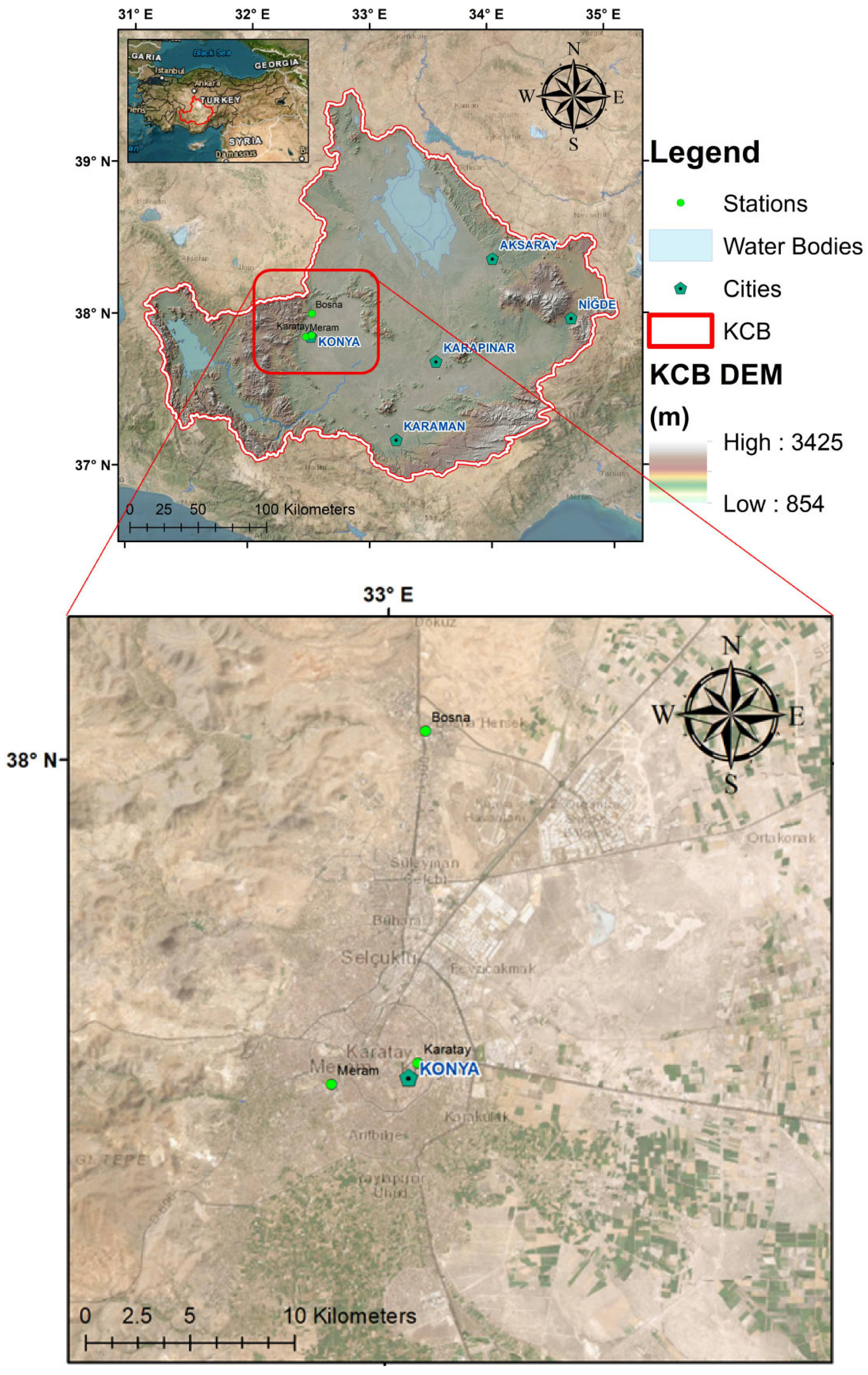
Konya also hosts one of the largest urban populations in the basin, with the provincial population increasing from 2.25 million in 2020 to 2.33 million in 2024. This steady demographic growth intensifies urban emissions through increased traffic volume, residential heating demand, industrial activity, and overall energy consumption. The concentration of more than one million people in the metropolitan core amplifies atmospheric pollutant loading (NOx, SO2, PM), which because of the basin’s endorheic nature, tends to accumulate and exert prolonged influence on surface waters and carbon cycling [27]. To capture the spatial heterogeneity of atmospheric deposition and its potential impact on the aquatic continuum, three monitoring stations with distinct urban characteristics were selected (Figure 1).
The specific locations and characteristics of these stations are detailed in Table 1.
Meram Station (Semi-Urban/Residential): Located in a region with higher vegetation density and residential heating activity.
Karatay Station (Urban Center): Represents the dense city center with mixed traffic and residential emissions.
Selçuklu (Bosna) Station (University/Traffic): Located in the northern expansion zone, characterized by student population density and proximity to main transportation arteries.
Hourly air quality data (Table 2) were obtained from the Konya Metropolitan Municipality Open Data Portal (https://acikveri.konya.bel.tr/ (accessed on 25 May 2025)) [28]. The dataset spans a three-year period from 1 January 2021 to 31 December 2023. While historical data prior to 2021 were unavailable, this recent dataset provides a robust basis for assessing post-pandemic recovery trends and current atmospheric pressures on the ecosystem.
The monitoring dataset included key atmospheric pollutants, Particulate Matter (PM10), Sulfur Dioxide (SO2), Nitrogen Oxides (NO, NO2, NOx), Carbon Monoxide (CO), and Ozone (O3). In order to assess the atmospheric drivers influencing aquatic conditions along the Land-to-Ocean Aquatic Continuum (LOAC), additional meteorological variables (daily temperature and precipitation) were obtained from the Turkish State Meteorological Service (MGM). Seasonal surface water pH measurements were also incorporated into the analysis, which were provided by the General Directorate of State Hydraulic Works (DSİ) for the beginning and end of each hydrological season. Hourly atmospheric data were aggregated to daily averages to minimize diurnal fluctuations and to emphasize hydrologically relevant seasonal patterns. The descriptive statistics of all variables used in this study are summarized in Table 2. These data are official DSİ monitoring records obtained from groundwater observation wells. Samples are collected twice per year (pre-season and post-season) for water-quality parameters and analyzed in accredited laboratories; additionally, pH is checked in situ during sampling for quality control.
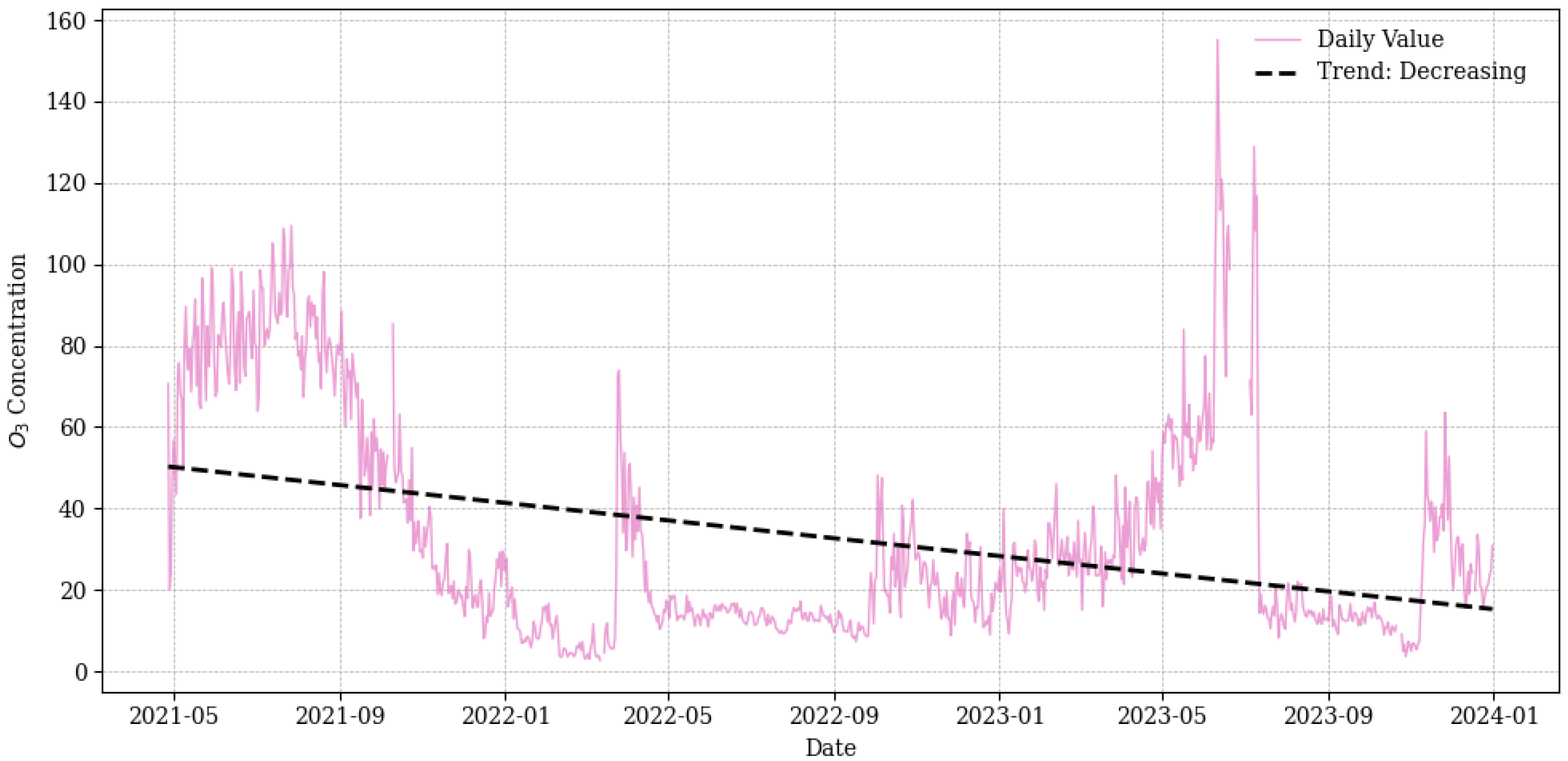
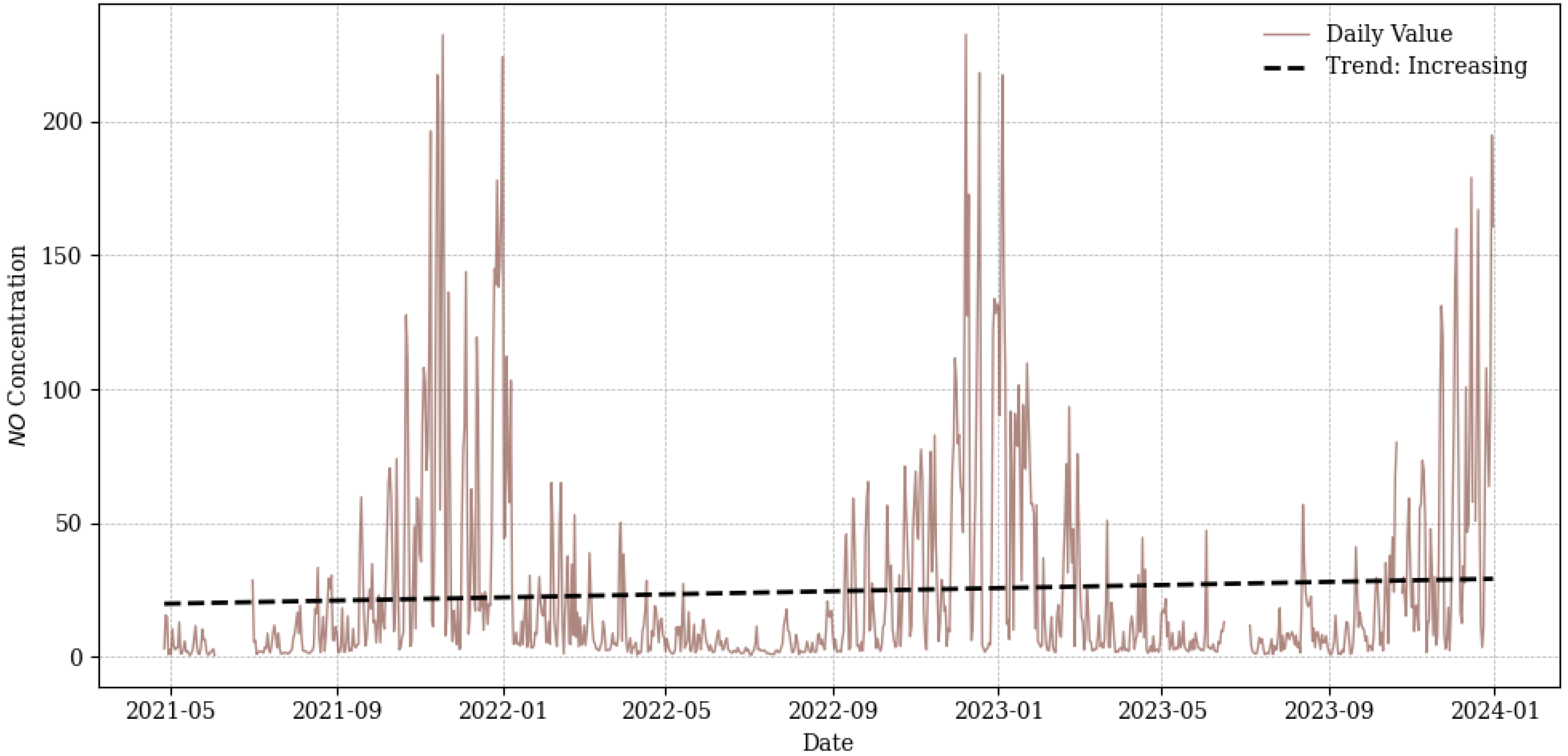
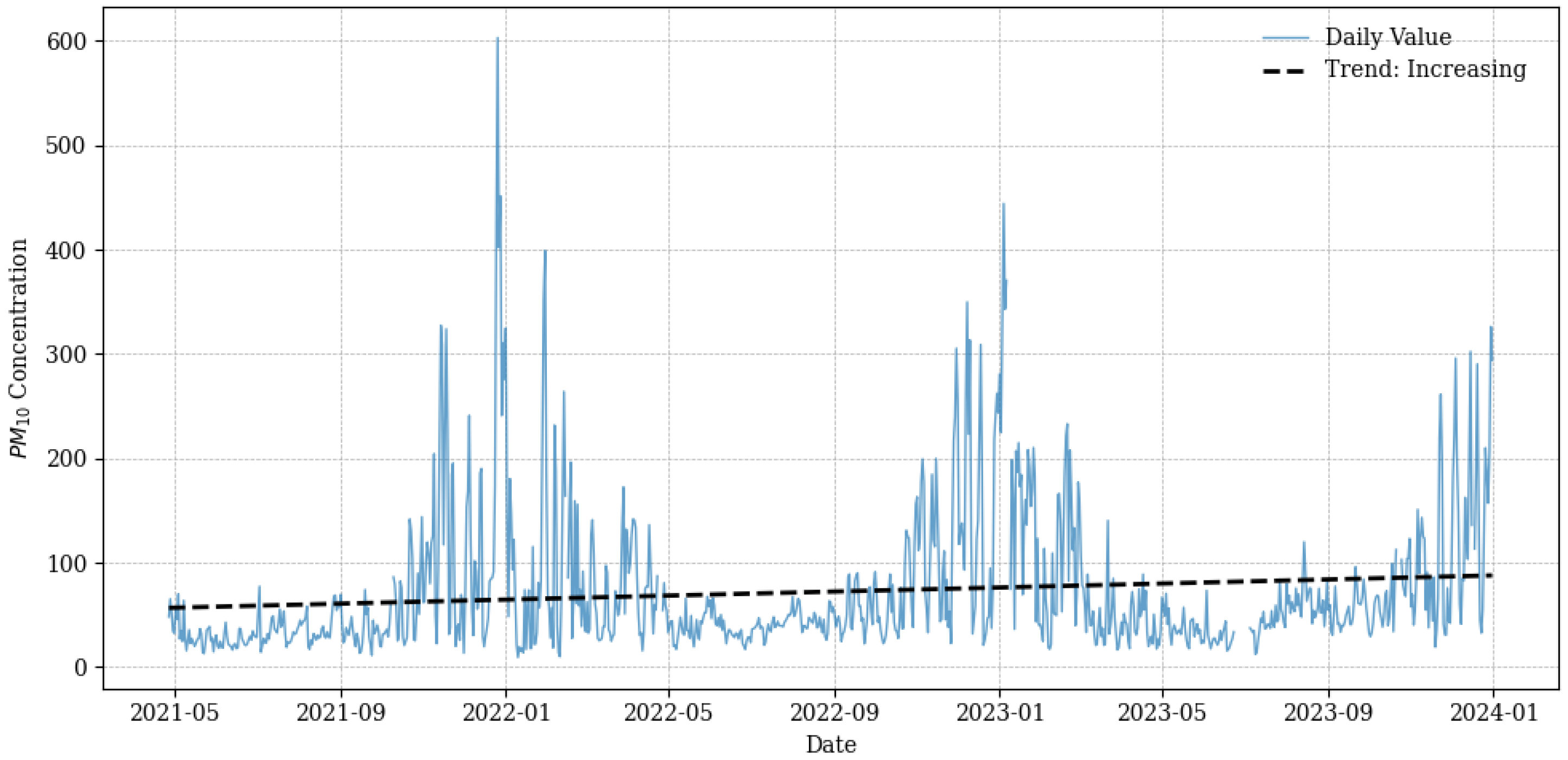
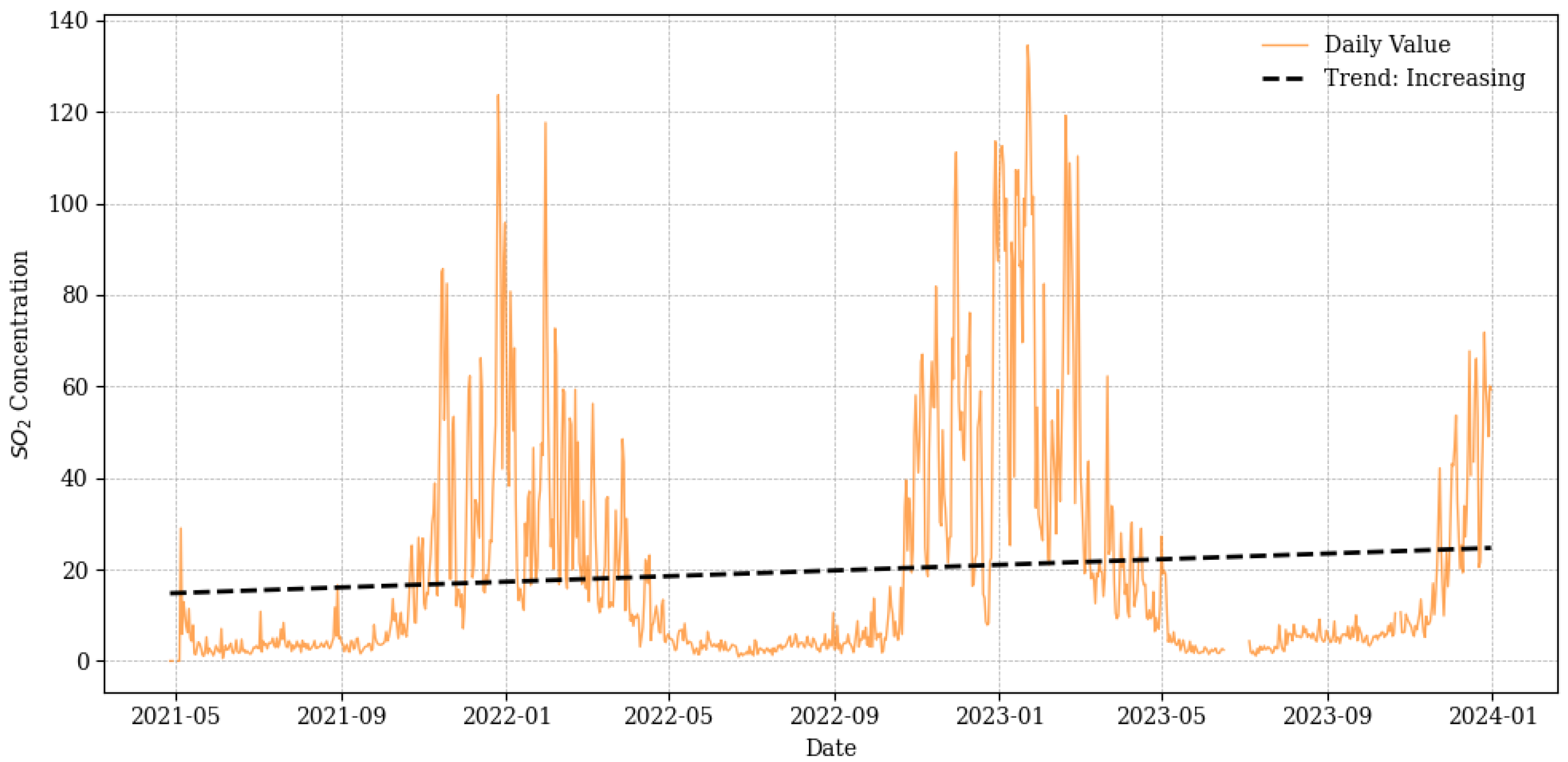
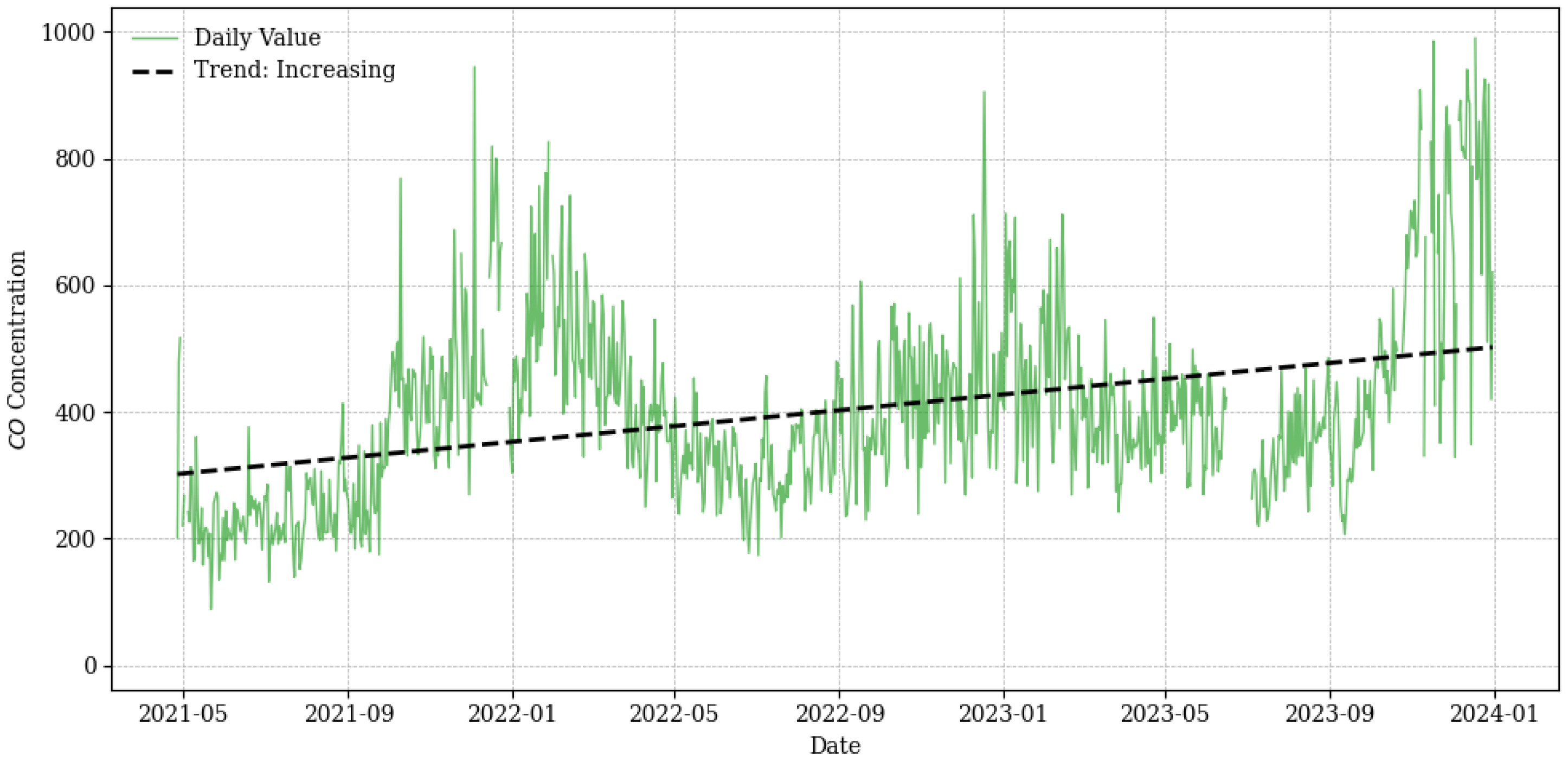
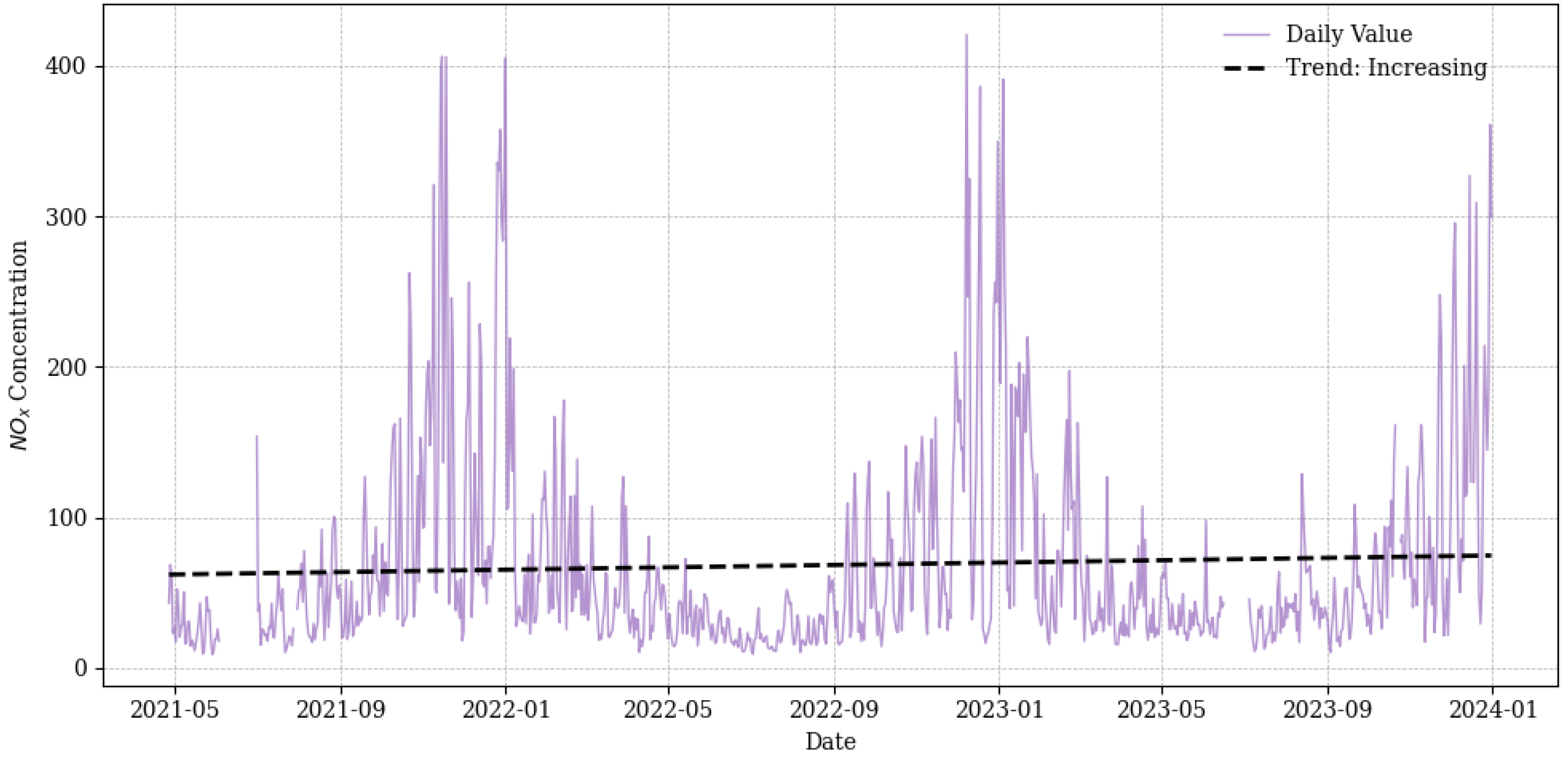
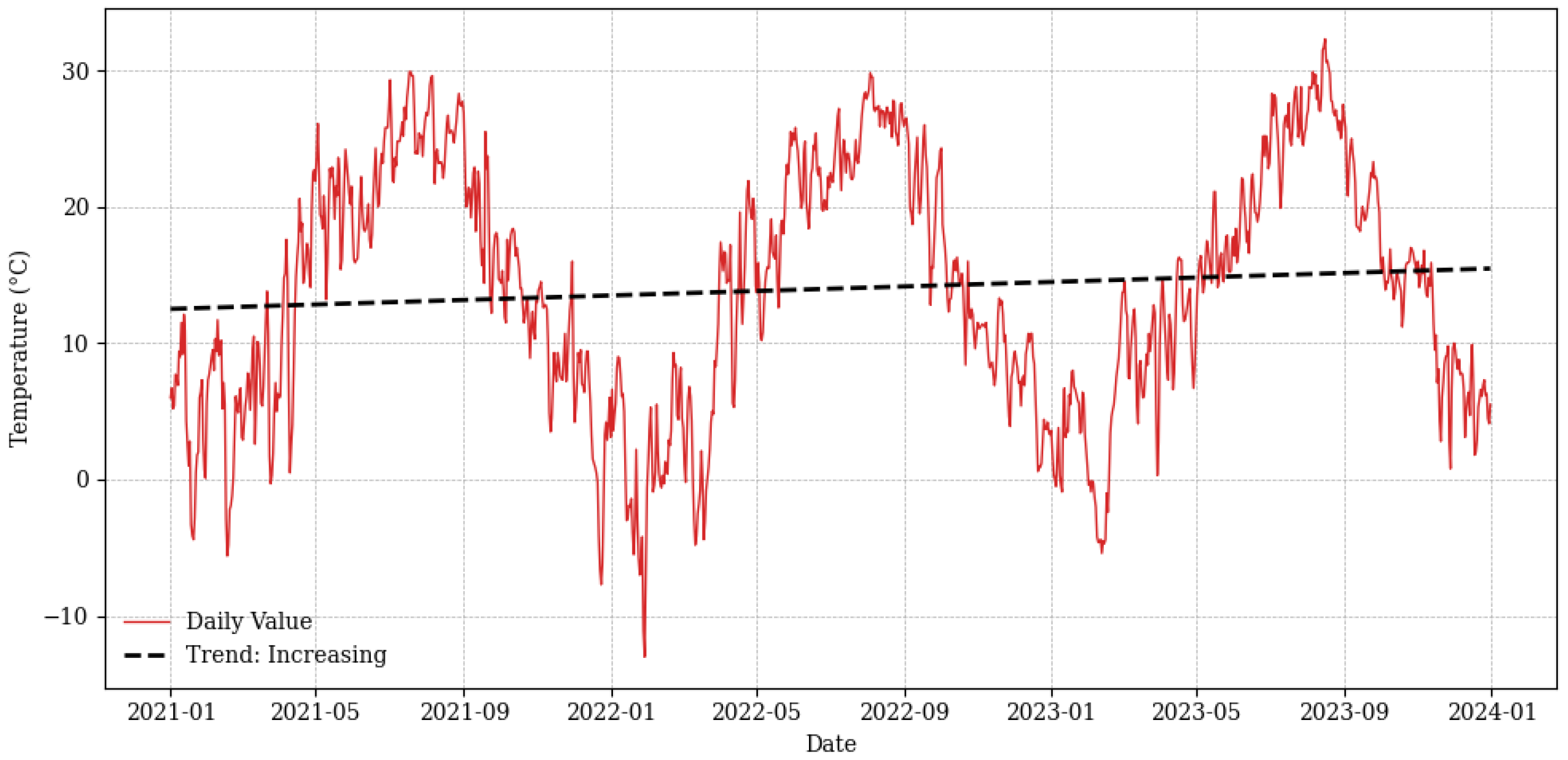
Table 2 reveals distinct spatial differences in pollutant concentrations across the monitoring stations. Karatay stands out as the most polluted location, exhibiting markedly high levels of PM10, SO2, CO and nitrogen oxides. The extremely wide PM10 range (9–603 mg/m3) and elevated CO and NO values point to intense urban activity, traffic density, and mixed industrial–residential emissions. In contrast, the Bosna station reflects a comparatively cleaner urban–residential environment, with lower averages and narrower ranges for PM10, SO2, and NOx species. Meram represents an intermediate condition, where CO and NOx levels are notably high, suggesting combined influences of local traffic, heating activities, and limited air circulation. Meteorological data obtained from the Konya station indicate a wide thermal amplitude (−13 to 32 °C) and low mean daily precipitation, consistent with the semi-arid climate of Central Anatolia. These meteorological conditions directly affect pollutant accumulation, dispersion, and chemical transformations. The statistical patterns in Table 2 highlight the heterogeneity of emission sources in Konya. The representative time-series plots for the Karatay station, illustrating the temporal dynamics of key pollutants and meteorological variables, are provided in Figure 2, Figure 3, Figure 4, Figure 5, Figure 6 and Figure 7.
The time-series plots for the Karatay station (Figure 2, Figure 3, Figure 4, Figure 5, Figure 6 and Figure 7) reveal clear seasonal patterns and distinct long-term tendencies across pollutants. O3 exhibits a noticeable decreasing trend, likely driven by enhanced NO titration, while primary combustion-related pollutants such as NO, PM10, SO2 and CO show increasing trajectories throughout 2021–2023, with pronounced winter peaks linked to residential heating and reduced atmospheric dispersion. NOx also displays recurrent winter spikes, although its overall trend remains statistically nonsignificant due to high variability. Collectively, these trends indicate a gradual intensification of combustion emissions in the urban basin and a shift toward more NOx-dominated atmospheric chemistry in the Karatay region. The temporal variations in temperature and precipitation, which provide the meteorological context for pollutant dynamics, are presented in Figure 8 and Figure 9.
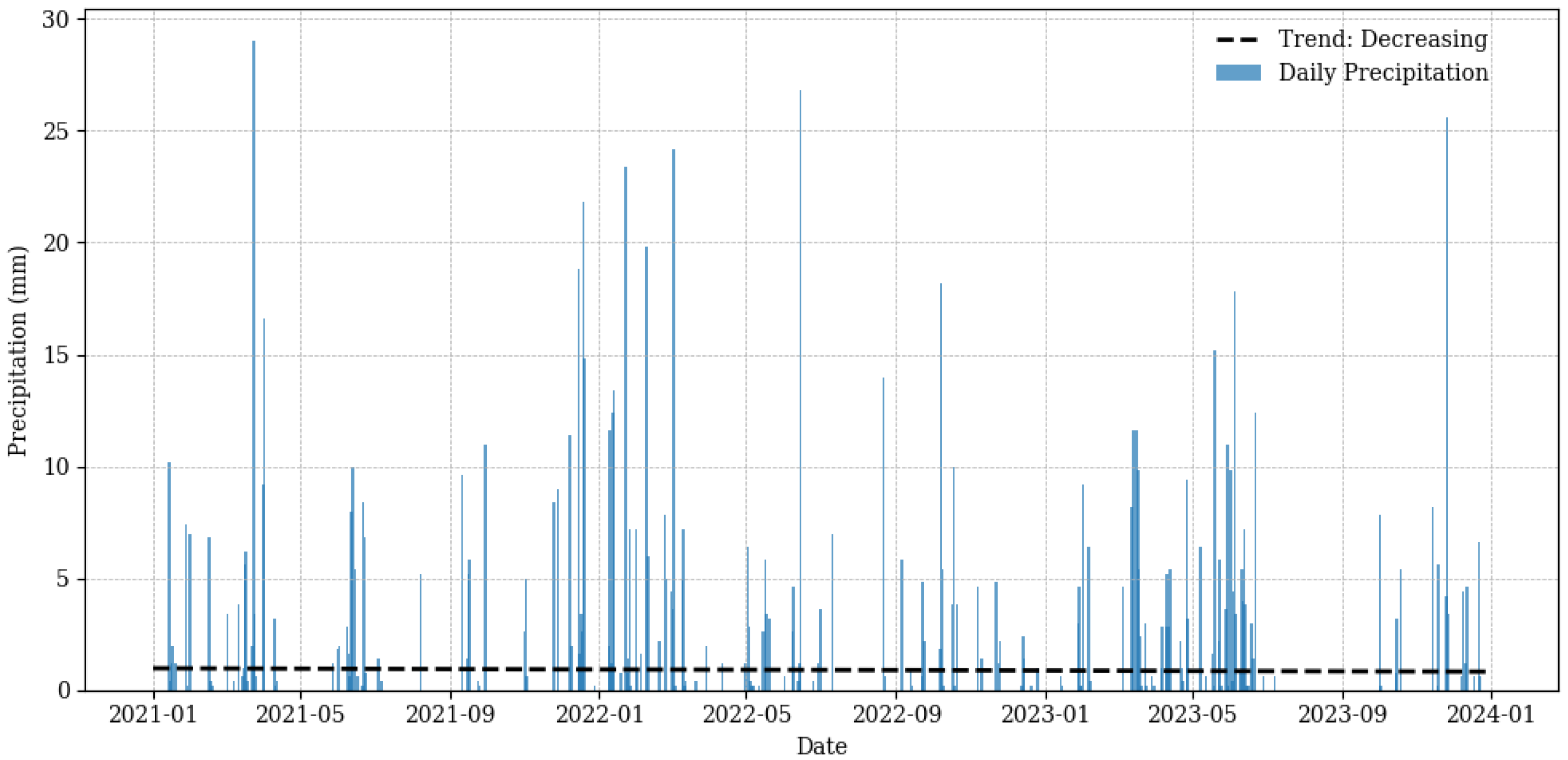
Figure 8 and Figure 9 depict the daily temporal evolution of temperature and precipitation in the study area from 2021 to 2023. Precipitation exhibits a highly sporadic pattern characterized by short-duration, high-intensity events interspersed with prolonged dry periods. Although the linear trend suggests a slight decrease in precipitation, it is not statistically significant due to substantial inter-daily variability. Conversely, temperature displays a robust seasonal cycle superimposed by a statistically significant increasing trend, indicative of regional warming. From an ecohydrological perspective, these patterns are critical; the intermittent rainfall implies that atmospheric pollutants likely accumulate during dry spells (dry deposition) and are flushed into aquatic systems via pulsed wet deposition events (washout effect), while the rising temperatures may further accelerate reaction kinetics and alter gas solubility within the water column.

Mann-Kendall

The Mann–Kendall (MK) test is one of the most widely used methods for trend analysis in hydrological and meteorological time series, particularly because of its rank-based, non-parametric structure, which makes it suitable for datasets that do not satisfy the assumption of normal distribution. It has been effectively applied worldwide to detect trends in long-term precipitation, temperature, water, and air quality parameters, and it is recommended by the World Meteorological Organization (WMO) as an appropriate method for identifying trends in publicly available and free meteorological datasets [29,30]. Unlike parametric tests, the MK test is not affected by outliers (local maxima and minima) and evaluates the ordinal relationship among independent observations in a dataset. The null hypothesis (H0) states that the time series consists of independent observations and does not exhibit any monotonic trend, whereas the alternative hypothesis (H1) assumes the presence of a statistically significant increasing or decreasing trend in the series [31]. This property makes the MK test a powerful tool, particularly for identifying seasonal and long-term behavior in parameters related to climate change, precipitation regime variability, and the carbon cycle [32,33]. The core component of the MK test is the S statistic, which is calculated by comparing all possible pairs of observations in the dataset. If a subsequent observation is greater than the preceding value, S is increased by one; if it is smaller, S is decreased by one. Thus, S represents the net difference between the number of positive and negative changes in the series. The S statistic, which is the fundamental parameter of the MK test, is given in Equation (1) [34,35].
S = i = 1 n 1 j = i + 1 n s i g n ( X j X i )
where Xi and Xj are random variables (divided the given time series X into two variable sets, as X1, X2, …, Xi, and Xi + 1, Xi + 2,…, Xj), Equation (2).
S i g n X j X i = + 1   i f   X j X i > 0   0   i f   X j X i = 0     1   i f   X j X i < 0
The variance of S, VAR(S), is given Equation (3).
V A R S = n n 1 2 n + 5 p = 1 m t p t p 1 ( 2 t p + 5 ) 18
The standard test statistic ZS is calculated Equation (4).
Z S = S 1 V A R ( S )       f o r   S > 0 0       f o r   S = 0 S + 1 V A R ( S )         f o r   S < 0
where n is the number of data points, m is the number of unique values, and tp is the frequency of the pth value. If |Z| is greater than Zα/2, where α represents the chosen significance level (α = 10% at the 90% confidence level with Z0.05 = 1.65; α = 5% at the 95% confidence level with Z0.025 = 1.96; α = 1% at the 99% confidence level with Z0.005 = 2.58), then the null hypothesis is invalid implying that the trend is significant. A positive value of Z indicates an increasing trend, and a negative value indicates a decreasing trend [36].

3. Results

The results of the Mann–Kendall (MK) trend analysis and their statistical significance levels, conducted on three different air quality monitoring stations (Bosna, Karatay, and Meram) located within the Konya Basin, along with regional meteorological parameters during the study period (2021–2023), are presented in detail in Table 3. Descriptive statistics indicate pronounced spatial variability across stations, with Karatay showing the highest pollutant burden, Bosna reflecting a comparatively cleaner profile, and Meram presenting intermediate conditions. The daily time-series plots (Figure 2, Figure 3, Figure 4, Figure 5, Figure 6 and Figure 7) display clear seasonality, with wintertime peaks for primary pollutants (NO, PM10, SO2, CO) and a decreasing tendency in O3 consistent with enhanced NO titration. Meteorological series (Figure 8 and Figure 9) show highly episodic precipitation alongside a statistically significant warming signal, providing context for pollutant accumulation during dry periods and pulsed washout during rainfall events. The findings reveal a dynamic atmospheric structure that varies according to the characteristic features of the stations and types of pollutants yet holds the potential to exert cumulative pressure on aquatic ecosystems.
An examination of Table 3 reveals that the Bosna Station is under particularly intense pressure from nitrogen-based pollutants. The high and positive Z-values calculated for Nitric Oxide (NO, Z = 10.80), Nitrogen Dioxide (NO2, Z = 9.47), and total Nitrogen Oxides (NOx, Z = 10.04) indicate a statistically significant (p < 0.05) and strong upward trend. This systematic increase in atmospheric NOx load is considered a major external source that enhances the risk of eutrophication in surface waters through atmospheric nitrogen deposition. In contrast, a remarkably sharp and statistically significant decreasing trend was observed in Ozone (O3) concentrations (Z = −15.14). This inverse relationship between rising NOx levels and declining O3 concentrations suggests the dominance of a strong ‘NO titration effect’ (NO + O3 → NO2 + O2) in the environment, which suppresses the photochemical oxidation capacity due to pollutant accumulation. Additionally, the significant increase in particulate matter (PM10) levels (Z = 6.59) indicates a continuing risk of particulate transport into the water column via dry deposition.
The Karatay Station presents critical findings regarding the carbon and sulfur cycles (Table 3). In particular, the very strong upward trend observed in Carbon Monoxide (CO) concentrations (Z = 10.01) is noteworthy in the context of the aquatic carbon cycle, which is the focus of this study. The concurrent increase in CO and PM10 (Z = 8.59) suggests a strengthening over time of the dry deposition mechanism that facilitates both inorganic and organic carbon input from the atmosphere to surface waters. Furthermore, concentrations of Sulfur Dioxide (SO2), which has the potential to contribute to acidification in aquatic ecosystems, also exhibited a significant upward trend at this station (Z = 5.55). Similarly to the Bosna Station, ozone (O3) levels at Karatay showed a statistically significant decline (Z = −6.54), confirming that primary pollutants (NOx, CO) are suppressing the formation of the secondary pollutant O3 across the region.
The results from the Meram Station (Table 3) indicate a distinct atmospheric profile compared to the other two stations. A statistically significant and pronounced decreasing trend was observed in Carbon Monoxide (CO) concentrations (Z = −11.63). This may be associated with local-scale changes in traffic density or improvements aimed at reducing emissions. However, the increasing trend in Nitrogen Dioxide (NO2) levels (Z = 3.03) suggests that the area is not entirely free from the pressures of urbanization. For the SO2, NO, and NOx parameters, no statistically significant trends were detected at the Meram Station.
To evaluate the impact of regional climate on atmospheric processes, meteorological data were analyzed (Table 3). The daily precipitation series did not exhibit any statistically significant trend (Z ≈ −0.04). This stability and irregularity in the precipitation regime suggest that the accumulation of atmospheric pollutants—particularly NOx, CO, and PM10, which show increasing trends—is not transferred to aquatic environments through continuous input, but rather through episodic and sudden rainfall events, referred to as ‘shock loading’. On the other hand, the statistically significant positive trend identified in temperature data (Z = 2.90) clearly indicates a warming signal in the region. While rising temperatures would typically be expected to promote ozone formation under normal conditions, the observed decline in ozone levels across the stations indicates that the chemical suppression caused by anthropogenic emissions (NOx) outweighs the effects of climatic warming.
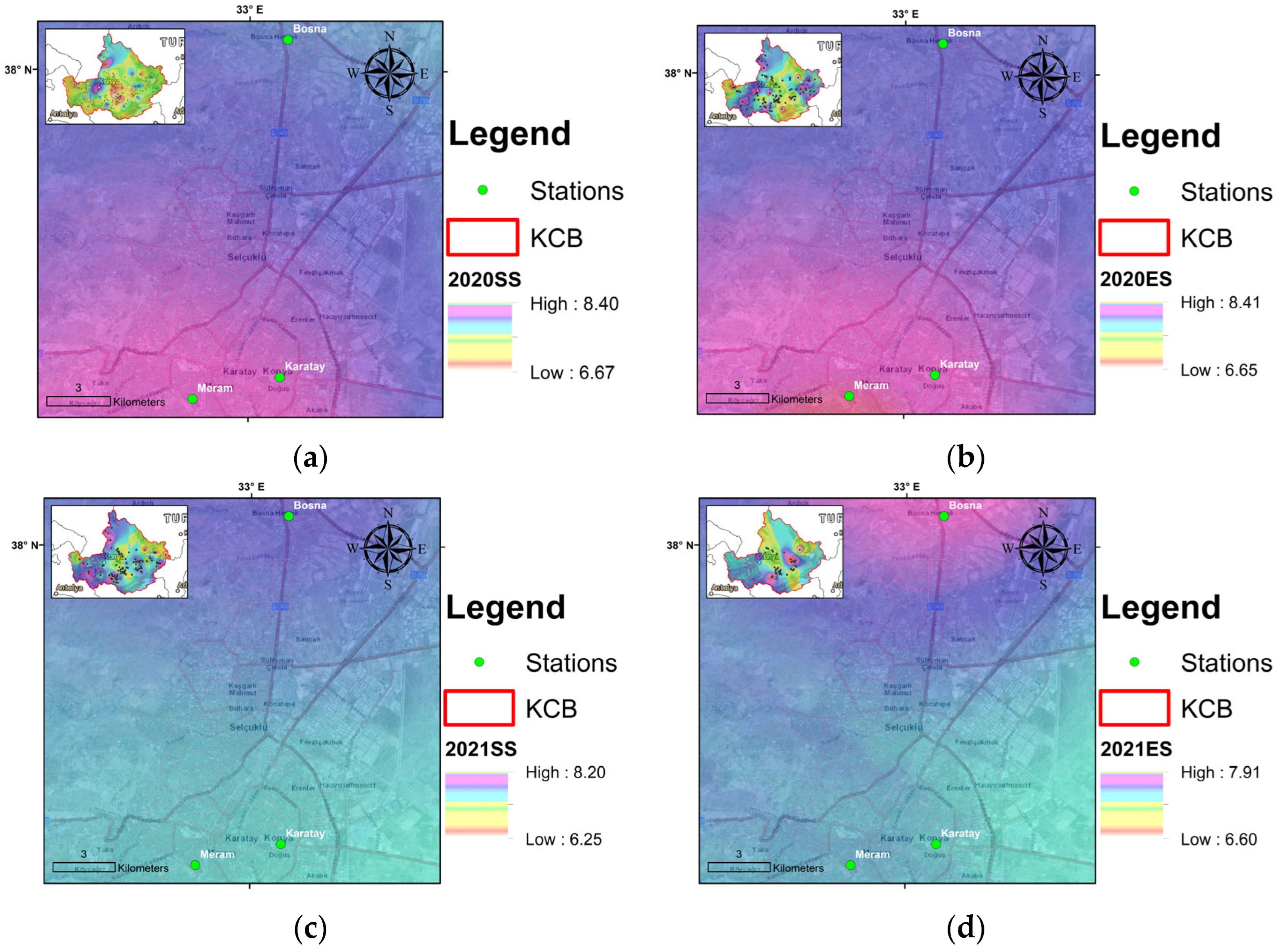
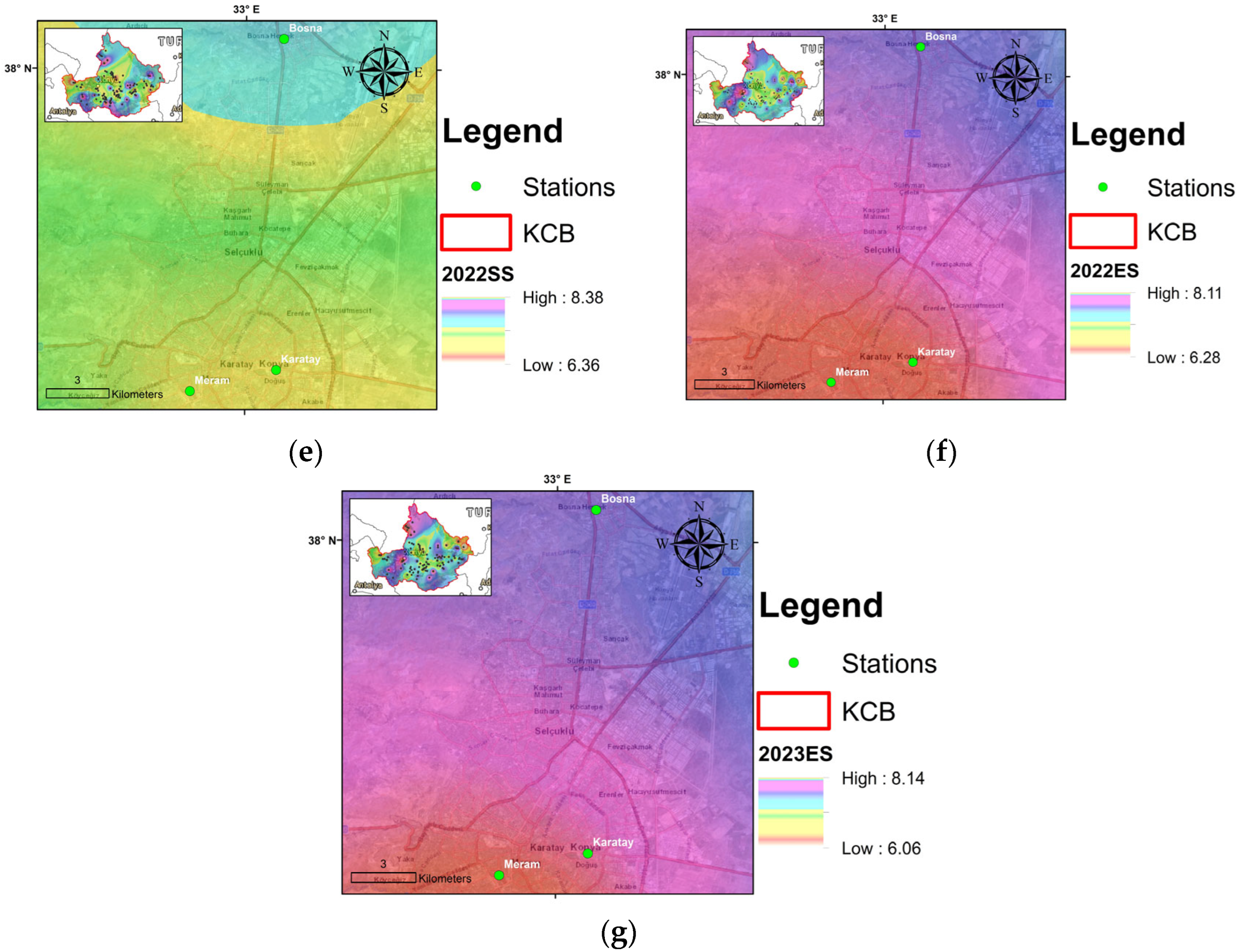
To assess the potential impacts of these atmospheric trends on the aquatic environment, interpolation maps for the years 2020 and 2023 were generated using pre-season and post-season pH measurements from groundwater observation wells representing the study area. These spatial distribution maps, presented in Figure 10, aim to visually demonstrate the possible effects of atmospheric pollutant load trends on the chemical dynamics of groundwater.
Spatial and temporal variations in the acid-base balance of the aquatic ecosystem within the study area were examined using the ‘Start of Season’ (SS) and ‘End of Season’ (ES) pH distribution maps produced for the years 2020–2023 (Figure 10). These maps reflect the cumulative impacts of atmospheric pollutant trends—such as increasing NOx, SO2, and CO—and meteorological drivers (warming and irregular precipitation), as statistically identified in Section 3. A distinct difference is observed between the SS and ES periods: while SS maps, representing spring and early summer, exhibit a more homogeneous and stable pH distribution, the ES maps, corresponding to the autumn period, reveal more pronounced regional variations. This shift can be explained by the replacement of the dilution effect from winter and spring precipitation with increased evaporation during the summer months. The significant warming trend (Z = 2.90) identified in Table 3 contributes to evaporative concentration, reducing water volume and increasing the concentration of dissolved ions, thereby triggering a more heterogeneous chemical profile by the end of the season. Notably, in the ES maps for 2021 and 2023, more intense pH variation patterns are observed in water surfaces near urban and industrial emission sources (primarily within the influence zones of the Karatay and Bosna stations). This visual evidence aligns closely with the strong increasing trends in NOx (Z = 10.04) and SO2 identified through the Mann–Kendall analysis. Theoretically, these acidic gases can react with atmospheric moisture or deposit via dry deposition, leading to a reduction in water alkalinity. Although the groundwater in the Konya Basin possesses a high buffering capacity due to its geological structure, the color changes and expanding ‘hotspots’ on the maps indicate that the continuous atmospheric proton (H+) loading is increasingly challenging the inorganic carbon equilibrium (HCO3 → CO2 + H2O) of the water. An interannual comparison reveals that the pH distribution patterns have become increasingly complex from 2020 to 2023. This trend is not only a result of meteorological drought but also reflects the cumulative impact of atmospheric pollutant load. The increase in CO and PM10 concentrations highlighted in Section 3 enhances the input of allochthonous (externally sourced) carbon and particulates into surface waters, while the irregular precipitation regime facilitates their transfer through pulsed inputs. In conclusion, Figure 10 visually demonstrates that the combined pressure of atmospheric acidification and climate-induced warming is driving a chemical transformation in the aquatic ecosystem, posing a risk of shifting it from a carbon dioxide (CO2) sink to a potential source.

4. Discussion

In this study, the non-parametric Mann–Kendall (MK) Trend Test was applied to detect significant temporal changes in atmospheric pollutant concentrations. The MK test is widely recommended for the analysis of hydroclimatic and atmospheric time series due to its robustness against non-normally distributed data and outliers, which are common characteristics in environmental datasets [37,38,39]. The MK analysis results (Table 3) revealed that primary pollutants—particularly NOx and CO—exhibit a statistically significant increasing trend within the study area. This upward trend, observed at urban stations (Bosna and Karatay) with Z-values of ZNOx = 10.04 and ZCO = 10.01, is directly associated with the rapid population growth and unregulated urbanization process in the Konya Basin. According to data from the Turkish Statistical Institute (TÜİK), the region’s population has increased by 10.5% over the past decade, leading to a rise in both the number of vehicles in traffic and residential heating demand [40]. Similar studies in the literature confirm that increasing population density in urban areas leads to the dominance of atmospheric loads of nitrogen oxides from mobile sources (exhaust emissions) and carbon compounds from fossil fuel consumption, resulting in adverse effects on human health [41,42]. Therefore, the positive trends identified in this study reflect not only meteorological changes but also the increasing intensity of anthropogenic emissions.
Another notable finding of the study is that, despite the increase in primary pollutants, the levels of ozone (O3)—a secondary pollutant—exhibited a statistically significant and strong decreasing trend (Z = −15.14). This decline should not be interpreted as an improvement in air quality; on the contrary, it is explained by the ‘NO titration effect’ (NO + O3 → NO2 + O2), whereby elevated concentrations of NOx in the environment chemically deplete ozone [43]. Similarly, Barten et al. (2020) reported that increased NOx levels in densely urbanized areas suppress ozone accumulation, characterizing a NOx-saturated regime [44]. This indicates that the oxidation capacity of the atmosphere over Konya has changed, and that the photochemical cycle is being modified by anthropogenic emissions.
The most critical eco-hydrological contribution of this study is the spatial identification of the ‘fingerprints’ of deteriorating air quality on groundwater chemistry, as demonstrated through spatial analysis (Figure 10). The heterogeneity and acidification hotspots observed in the pH maps—particularly during the ES periods—are interpreted as the result of two opposing mechanisms operating simultaneously:
  • Acidification Pressure: The increase in NOx and SO2 concentrations, as demonstrated by the MK analysis, elevates the potential for atmospheric acid deposition. When these acidic precursors reach the water surface via wet (precipitation) or dry (dust) deposition, they tend to reduce pH levels by depleting the natural alkalinity of the water, particularly its bicarbonate buffering capacity [45].
  • Evaporative Concentration: Simultaneously, the significant increasing trend in temperature (Z = 2.90) accelerates evaporation, leading to higher concentrations of dissolved salts in the water and promoting a more basic (alkaline) chemical character.
However, the increasing prominence of pH variation patterns in areas near emission sources indicates that atmospheric loading is beginning to overwhelm the buffering capacity. This process is of critical importance to the aquatic carbon cycle. As is well known, a decline in pH disrupts the Dissolved Inorganic Carbon (DIC) balance by promoting the conversion of bicarbonate (HCO3) into free carbon dioxide (CO2) [44].
H+ + HCO3 ↔ H2O + CO2
According to this chemical equilibrium, anthropogenic air pollution in Konya poses the risk of transforming regional water bodies from carbon sinks, systems that absorb atmospheric CO2, into sources that release CO2 back into the atmosphere. While this study presents significant findings at the regional scale, it is not without limitations. Due to challenges in data acquisition, the analysis period was limited to 2021–2023, which restricted the ability to fully isolate the effects of longer-term (decadal) climate variability. Additionally, the lack of PM10 data at the Meram station and occasional data gaps on certain days may introduce uncertainty into the time series analysis. Nevertheless, the Mann–Kendall test’s tolerance for missing data has provided reliable results in determining the overall direction of trends. The groundwater pH was used as a basin-scale indicator of background hydrochemical conditions and potential sensitivity to acidification. Although deposition fluxes were not measured directly, the spatial pH pattern provides context for interpreting the temporal trend directions of atmospheric acid-precursor pollutants and their possible implications for aquatic acidification risk. A limitation of this study is that trend detection was based on the Mann–Kendall test, and atmospheric deposition loads were not quantified; therefore, the interpretations are primarily framed using concentration trend directions. Future work will include a comparative assessment with additional trend methods (e.g., linear trend analysis, Şen’s innovative trend analysis, Sen’s slope, and other non-parametric approaches) and will estimate and validate deposition fluxes using appropriate meteorological inputs and dedicated deposition measurements to further verify the robustness of the findings.

5. Conclusions

This study provides a comprehensive assessment of the potential hydrochemical impacts of atmospheric pollutant trends and meteorological drivers on the aquatic ecosystem within the Konya Basin, a rapidly urbanizing region located in a semi-arid climate zone. The key findings derived from the analysis are as follows:
Transformation of Atmospheric Chemistry: Mann–Kendall analysis results confirmed statistically significant and strong increasing trends in primary pollutants (NOx, CO, PM10, and SO2), particularly at the Bosna and Karatay stations, where urban density is highest. In contrast, the pronounced decline in ozone (O3) concentrations indicates that the region’s photochemical regime is NOx-saturated, meaning that elevated nitrogen oxide emissions are chemically depleting ozone through titration.
Meteorological Forcing and Climate Signal: No statistically significant trend was observed in the precipitation regime during the study period; however, the irregular and episodic nature of rainfall continues to pose a risk for the pulsed wet deposition of accumulated atmospheric pollutants into aquatic environments. More critically, the significant upward trend detected in temperature series represents a clear signal of regional climate change. This warming intensifies evaporation rates within aquatic systems (evaporative concentration) and reduces gas solubility, thereby exerting physical stress on water chemistry.
Air–Water Interaction and the Carbon Cycle: The most original contribution of this study lies in revealing the “invisible” pressure of atmospheric pollution on the aquatic carbon cycle. The increasing load of acidic gases (NOx and SO2), when deposited onto surface waters via atmospheric pathways, has the potential to alter pH dynamics and disrupt the Dissolved Inorganic Carbon (DIC) balance. The spatial heterogeneity and acidification hotspots observed in the pH maps—particularly during end-of-season periods—indicate that atmospheric inputs are beginning to challenge the natural buffering capacity of the water. This process poses a significant risk of shifting aquatic ecosystems from functioning as carbon sinks to becoming net sources of CO2 emissions to the atmosphere.
Management within the LOAC Framework: In conclusion, the accumulation of pollutants in the Konya atmosphere is not merely an air quality issue but represents an external pressure mechanism that threatens carbon stability along the Land–Ocean–Aquatic Continuum (LOAC). Future water management strategies should adopt integrated Air–Water Basin Management models that account not only for the hydrological budget but also for the impacts of atmospheric nitrogen and sulfur deposition on aquatic biogeochemistry.

Author Contributions

Conceptualization, A.U.T. and V.D.; methodology, A.U.T. and V.D.; software, A.U.T. and V.D.; formal analysis, A.U.T. and V.D.; investigation, A.U.T. and V.D.; writing—original draft preparation, A.U.T. and V.D.; writing—review and editing, A.U.T. and V.D.; All authors have read and agreed to the published version of the manuscript.

Funding

This research received no external funding.

Data Availability Statement

The atmospheric pollutant data (PM10, SO2, CO, NO, NO2, NOx, O3) used in this study were obtained from the Turkish Ministry of Environment, Urbanization and Climate Change air quality monitoring network (https://sim.csb.gov.tr/ (accessed on 1 December 2025)). Meteorological variables (temperature and precipitation) were retrieved from the Turkish State Meteorological Service (MGM) (https://www.mgm.gov.tr/), and seasonal surface water pH measurements were provided by the General Directorate of State Hydraulic Works (DSİ) (https://www.dsi.gov.tr/). Due to institutional data access regulations, these datasets are not publicly available; however, they can be obtained upon reasonable request and with permission from the respective agencies.

Acknowledgments

The authors would like to express their sincere gratitude to KTO Karatay University and its Colab Laboratory, Gümüşhane University, Turkish State Meteorological Service (MGM) and the DSİ 4th Regional Directorate (Konya) for providing administrative, technical, and data support throughout this study. Their contributions greatly facilitated hydrological data acquisition, computational processing, and analytical workflows. The authors would like to thank the Scientific Research Projects Coordination Unit of KTO Karatay University, Turkey under project number of (Project no: 10092429). During the preparation of this manuscript, the authors used OpenAI’s ChatGPT (5.2) and Google Gemini (3) for language proofreading, clarity enhancement, and editorial refinement. All scientific components of this manuscript—including the conceptual framework, data organization, analyses, interpretations, figures, and conclusions—were entirely developed by the authors. The authors have reviewed and edited the output and take full responsibility for the content of this publication.

Conflicts of Interest

The authors declare no conflicts of interest.

Abbreviations

The following abbreviations are used in this manuscript:
CH4Methane
CO2Carbon dioxide
DICDissolved Inorganic Carbon
DOCDissolved Organic Carbon
DSİGeneral Directorate of State Hydraulic Works
ESEnd of Season
H0H0—Null hypothesis
H1H1—Alternative hypothesis
KBBKonya Metropolitan Municipality
KCBKonya Closed Basin
LOACLand–Ocean Aquatic Continuum
MGMTurkish State Meteorological Service
MKMann–Kendall test
NONitric oxide
NO2Nitrogen dioxide
NOxNitrogen oxides
O3Ozone
POCParticulate Organic Carbon
PM10Particulate matter (≤10 µm)
SS—Mann–Kendall test statistic
SO2Sulfur dioxide
SSStart of Season
TÜİKTurkish Statistical Institute
WMOWorld Meteorological Organization

References

  1. Jia, J.; Dungait, J.A.J.; Lu, Y.; Cui, T.; Yu, G.; Gao, Y. Inland Water Metabolic Carbon Processes and Associated Biological Mechanisms That Drive Carbon Source-Sink Instability. Innov. Geosci. 2023, 1, 100035. [Google Scholar] [CrossRef]
  2. Chaiwino, W.; Chaisee, K.; Oonariya, C.; Wongsaijai, B. Analysis of Long-Term Rainfall Trend and Extreme in Upper Northern Thailand. Sci. Rep. 2025, 15, 33380. [Google Scholar] [CrossRef]
  3. Xiao, J.; Lin, Y.; He, X.; He, Z.; Kong, X. Drought Exerted a Stronger Controlling Effect on Soil Carbon Release than Moisturizing in a Global Meta-Analysis. Forests 2023, 14, 1957. [Google Scholar] [CrossRef]
  4. Chai, H.; Ma, J.; Zhang, J.; Li, J.; Meng, B.; Wang, C.; Pan, D.; Li, J.; Sun, W.; Zhou, X. Nonlinear Responses of Ecosystem Carbon Fluxes to Precipitation Change in a Semiarid Grassland. Front. Plant Sci. 2025, 16, 1519879. [Google Scholar] [CrossRef]
  5. Han, C.; Dai, T.; Tian, Z.; Tang, Y.; Wu, H.; Wang, Y.; Wang, Z. Source Identification and Release Potential of Soil Phosphorus in the Water-Level Fluctuation Zone of Large Reservoirs: A Case Study of the Three Gorges Reservoir, China. Water 2025, 17, 611. [Google Scholar] [CrossRef]
  6. Dai, L.; Yang, Y.; Wang, X.; Yang, G.; Liang, M.; Hu, Z. Positive Asymmetric Responses Indicate Larger Carbon Sink with Increase in Precipitation Variability in Global Terrestrial Ecosystems. Innov. Geosci. 2024, 2, 100060. [Google Scholar] [CrossRef]
  7. Emmerton, C.A.; Orwin, J.F.; Buendia, C.; Christensen, M.R.; Graydon, J.A.; Jackson, B.; Murray, E.; Neufeld, S.; Newton, B.W.; Ozipko, R.; et al. Hydrometeorology and Landscapes Control Sediment and Dissolved Organic Carbon Mobility across a Diverse and Changing Glacier-Sourced River Basin. Hydrol. Earth Syst. Sci. 2025, 29, 5515–5533. [Google Scholar] [CrossRef]
  8. Croghan, D.; Ala-Aho, P.; Welker, J.; Mustonen, K.; Khamis, K.; Hannah, D.M.; Vuorenmaa, J.; Kløve, B.; Marttila, H. Seasonal and Interannual Dissolved Organic Carbon Transport Process Dynamics in a Subarctic Headwater Catchment Revealed by High-Resolution Measurements. Hydrol. Earth Syst. Sci. 2024, 28, 1055–1070. [Google Scholar] [CrossRef]
  9. Alfadhel, I.; Peralta-Maraver, I.; Reche, I.; Sánchez-Cañete, E.P.; Aranda-Barranco, S.; Rodríguez-Velasco, E.; Kowalski, A.S.; Serrano-Ortiz, P. Drought Conditions Disrupt Atmospheric Carbon Uptake in a Mediterranean Saline Lake. Biogeosciences 2024, 21, 5117–5129. [Google Scholar] [CrossRef]
  10. Rewrie, L.C.V.; Baschek, B.; van Beusekom, J.E.E.; Körtzinger, A.; Ollesch, G.; Voynova, Y.G. Recent Inorganic Carbon Increase in a Temperate Estuary Driven by Water Quality Improvement and Enhanced by Droughts. Biogeosciences 2023, 20, 4931–4947. [Google Scholar] [CrossRef]
  11. Hein, C.J.; Usman, M.; Eglinton, T.I.; Haghipour, N.; Galy, V.V. Millennial-Scale Hydroclimate Control of Tropical Soil Carbon Storage. Nature 2020, 581, 63–66. [Google Scholar] [CrossRef]
  12. Du, L.; Luo, Y.; Zhang, J.; Shen, Y.; Zhang, J.; Tian, R.; Shao, W.; Xu, Z. Reduction in Precipitation Amount, Precipitation Events, and Nitrogen Addition Change Ecosystem Carbon Fluxes Differently in a Semi-Arid Grassland. Sci. Total Environ. 2024, 927, 172276. [Google Scholar] [CrossRef]
  13. Wahab, L.M.; Kim, S.L.; Berhe, A.A. Carbon and Nitrogen Dynamics in Subsoils after 20 Years of Added Precipitation in a Mediterranean Grassland. Biogeosciences 2025, 22, 3915–3930. [Google Scholar] [CrossRef]
  14. Göl, C.; Mevruk, S. Assessing Amount of Soil Organic Carbon and Some Soil Properties under Different Land Uses in a Semi-Arid Region of Northern Türkiye. Turk. J. For. 2022, 23, 268–277. [Google Scholar] [CrossRef]
  15. Semercioğlu, T.Ş.; Bayram, C.A.; Buyuk, G.; Akca, E.; Kalkanci, N. The Effect of Altitude on Soil Organic Carbon Content in Semi- Arid Mediterranean Climate. Int. J. Agric. Environ. Food Sci. 2023, 7, 192–196. [Google Scholar] [CrossRef]
  16. Delgado-Balbuena, J.; Loescher, H.W.; Aguirre-Gutiérrez, C.A.; Alfaro-Reyna, T.; Pineda-Martínez, L.F.; Vargas, R.; Arredondo, T. Dynamics of Short-Term Ecosystem Carbon Fluxes Induced by Precipitation Events in a Semiarid Grassland. Biogeosciences 2023, 20, 2369–2385. [Google Scholar] [CrossRef]
  17. Demir, V.; Keskin, A.Ü. Water Level Change of Lakes and Sinkholes in Central Turkey under Anthropogenic Effects. Theor. Appl. Clim. 2020, 142, 929–943. [Google Scholar] [CrossRef]
  18. Kartal, V.; Nones, M. Assessment of Meteorological, Hydrological and Groundwater Drought in the Konya Closed Basin, Türkiye. Environ. Earth Sci. 2024, 83, 285. [Google Scholar] [CrossRef]
  19. Orhan, O.; Haghshenas Haghighi, M.; Demir, V.; Gökkaya, E.; Gutiérrez, F.; Al-Halbouni, D. Spatial and Temporal Patterns of Land Subsidence and Sinkhole Occurrence in the Konya Endorheic Basin, Turkey. Geosciences 2024, 14, 5. [Google Scholar] [CrossRef]
  20. Küçük, K. Investigation of Some Chemical Properties of Groundwater Using Geostatistical Methods: A Case Study of the Konya Closed Basin. Master’s Thesis, KTO Karatay University, Konya, Türkiye, 2025. [Google Scholar]
  21. Orhan, O.; Yakar, M.; Ekercin, S. An Application on Sinkhole Susceptibility Mapping by Integrating Remote Sensing and Geographic Information Systems. Arab. J. Geosci. 2020, 13, 886. [Google Scholar] [CrossRef]
  22. Göktaş, H.E.; Dağlı, Z. A View to Drought with NDVI and Machine Learning: Konya Closed Basin. Turkish J. Remote Sens. 2022, 4, 75–86. [Google Scholar] [CrossRef]
  23. Demir, V. Deep Learning-Based Multi-Source Precipitation Forecasting in Arid Regions Using Different Optimizations: A Case Study from Konya, Turkey. Forecasting 2025, 7, 60. [Google Scholar] [CrossRef]
  24. Zengin, M.; Gökmen, F.; Yazıcı, M.A.; Gezgin, S. Effects of Potassium, Magnesium, and Sulphur Containing Fertilizers on Yield and Quality of Sugar Beets (Beta Vulgaris L.). Turkish J. Agric. For. Vol. 2009, 33, 495–502. [Google Scholar] [CrossRef]
  25. Ministry Türkiye’s Climate According to Köppen Climate Classification. Available online: https://www.mgm.gov.tr/FILES/iklim/iklim_siniflandirmalari/koppen.pdf (accessed on 4 August 2025).
  26. Li, X.; Wang, J.; Yin, W.; Xu, J.; Xiao, H.; Zhao, H.; Shi, Y.; Wang, L.; Hao, R.; Li, H.; et al. Hydrologic Regime Determines Catchment-Scale Dissolved Carbon Export Patterns. Water Resour. Res. 2025, 61, e2024WR038221. [Google Scholar] [CrossRef]
  27. Konya Konya Nufusu 1990. Available online: http://www.konya.gov.tr/kurumlar/konya.gov.tr/dosyalar/listeler/NUFUS_VERILERI.pdf (accessed on 9 April 2025).
  28. KBB Açık Veri Portalı. Available online: https://acikveri.konya.bel.tr (accessed on 25 May 2025).
  29. Wang, S.; Wan, Z.H. Water Quality Trends Based on Mann-Kendall Test and Rescaled Extreme Difference Analysis: A Case Study of Shanxi Reservoir, China. Appl. Ecol. Environ. Res. 2023, 21, 2793–2803. [Google Scholar] [CrossRef]
  30. Tona, A.U.; Demir, V.; Maraş, E.E.; Keskin, A.Ü. Samsun Air Quality Parameters Analysis and Trend Analysis. In Proceedings of the 6th International GAP Engineering Conference—GAP2018, Şanlıurfa, Türkiye, 24–25 November 2018; pp. 131–139. [Google Scholar]
  31. Yagbasan, O.; Demir, V.; Yazicigil, H. Trend Analyses of Meteorological Variables and Lake Levels for Two Shallow Lakes in Central Turkey. Water 2020, 12, 414. [Google Scholar] [CrossRef]
  32. Shah, S.A.; Kiran, M. Mann-Kendall Test: Trend Analysis of Temperature, Rainfall, and Discharge of Ghotki Feeder Canal in District Ghotki, Sindh, Pakistan. Environ. Eco. Sci. 2021, 5, 137–142. [Google Scholar] [CrossRef]
  33. Nguyen, H.M.; Ouillon, S.; Vu, V.D. Sea Level Variation and Trend Analysis by Comparing Mann–Kendall Test and Innovative Trend Analysis in Front of the Red River Delta, Vietnam (1961–2020). Water 2022, 14, 1709. [Google Scholar] [CrossRef]
  34. Hu, M.; Sayama, T.; Try, S.; Takara, K.; Tanaka, K. Trend Analysis of Hydroclimatic Variables in the Kamo River Basin, Japan. Water 2019, 11, 1782. [Google Scholar] [CrossRef]
  35. Demir, V. Trend Analysis of Lakes and Sinkholes in the Konya Closed Basin, in Turkey. Nat. Hazards 2022, 112, 2873–2912. [Google Scholar] [CrossRef]
  36. Zeynel, M. Time Series Analyses of Climatic Parameters of Ardahan. Turkish Geogr. Rev. 2018, 37–43. [Google Scholar] [CrossRef]
  37. Kendall, M.G. Rank Correlation Methods; Oxford University Press: New York, NY, USA, 1975. [Google Scholar]
  38. Mann, H.B. Non-Parametric Test Against Trend. Econometrica 1945, 13, 245–259. [Google Scholar] [CrossRef]
  39. Gilbert, R.O. Statistical Methods for Environmental Pollution Monitoring; John Wiley & Sons: Hoboken, NJ, USA, 1987; ISBN 0471288780. [Google Scholar]
  40. URL Konya Nüfusu. Available online: https://www.nufusu.com/il/konya-nufusu (accessed on 9 May 2025).
  41. Dündar, A.O.; Kolay, A. Evaluation of Road Transportation in Terms of Environmental Sustainability and Calculation of Konya Province Greenhouse Gas Emission. Acad. Rev. Econ. Adm. Sci. 2021, 14, 317–334. [Google Scholar] [CrossRef]
  42. Gurjar, B.R.; Jain, A.; Sharma, A.; Agarwal, A.; Gupta, P.; Nagpure, A.S.; Lelieveld, J. Human Health Risks in Megacities Due to Air Pollution. Atmos. Environ. 2010, 44, 4606–4613. [Google Scholar] [CrossRef]
  43. Sillman, S. Chapter 12 The Relation between Ozone, NOx and Hydrocarbons in Urban and Polluted Rural Environments. Dev. Environ. Sci. 2002, 1, 339–385. [Google Scholar]
  44. Barten, J.G.M.; Ganzeveld, L.N.; Visser, A.J.; Jiménez, R.; Krol, M.C. Evaluation of Nitrogen Oxides (NOx) Sources and Sinks and Ozone Production in Colombia and Surrounding Areas. Atmos. Chem. Phys. 2020, 20, 9441–9458. [Google Scholar] [CrossRef]
  45. Driscoll, C.T.; Driscoll, K.M.; Mitchell, M.J.; Raynal, D.J. Effects of Acidic Deposition on Forest and Aquatic Ecosystems in New York State. Environ. Pollut. 2003, 123, 327–336. [Google Scholar] [CrossRef]
Figure 1. The study area and observation station locations.
Water 18 00118 g001
Figure 2. O3 daily time series and linear trend.
Water 18 00118 g002
Figure 3. NO daily time series and linear trend.
Water 18 00118 g003
Figure 4. PM10 daily time series and linear trend.
Water 18 00118 g004
Figure 5. SO2 daily time series and linear trend.
Water 18 00118 g005
Figure 6. CO daily time series and linear trend.
Water 18 00118 g006
Figure 7. NOX daily time series and linear trend.
Water 18 00118 g007
Figure 8. Daily temperature observations and the corresponding linear trend.
Water 18 00118 g008
Figure 9. Daily precipitation observations and the corresponding linear trend.
Water 18 00118 g009
Figure 10. Spatial distribution of groundwater pH for the study area obtained from observation wells for (a) 2020—Start of Season, (b) 2020—End of Season, (c) 2021—Start of Season, (d) 2021—End of Season, (e) 2022—Start of Season, (f) 2022—End of Season, (g) 2023—End of Season.
Water 18 00118 g010aWater 18 00118 g010b
Table 1. The geographical coordinates and characteristics of monitoring stations.
Station NameLatitude (°N)Longitude (°E)Site Characteristic
Meram37.86332.486Residential, Green Areas, Solid Fuel Heating
Karatay37.86832.513Urban Core, High Population Density
Bosna38.01632.529Heavy Traffic, Institutional (University)
Konya Met.37.86832.470Meteorological station number 17,245 in the Meram region
Table 2. Descriptive statistics of atmospheric pollutants and meteorological variables.
StationParameterMean ± SDMinMax
KaratayPM10 (mg/m3)72.01 ± 69.169.16603.14
SO2 (mg/m3)19.69 ± 25.390134.54
CO (µg/m3)400.65 ± 151.3910.85990.05
O3 (mg/m3)68.52 ± 68.559.13420.67
NO (mg/m3)24.48 ± 37.890.5232.59
O3 (mg/m3)32.97 ± 26.972.67155.17
BosnaPM10 (mg/m3)40.18 ± 29.872.61209.55
SO2 (mg/m3)9.14 ± 5.270.9665.4
NO2 (µg/m3)28.79 ± 22.296.32149.7
NOx (µg/m3)38.89 ± 37.787.16241.55
NO (mg/m3)9.89 ± 15.460.74103.58
O3 (mg/m3)42.13 ± 25.733.68115.86
MeramSO2 (mg/m3)14.41 ± 15.900.34164.14
CO (µg/m3)531.05 ± 166.7510.09993.36
NO2 (µg/m3)41.40 ± 19.7611.9137.79
NOx (µg/m3)64.75 ± 48.9413.85355.4
NO (mg/m3)23.41 ± 33.760.17256.02
Konya Met.Temperature (°C)13.99 ± 9.02−1332.3
Precipitation (mm)0.90 ± 2.99029
Table 3. Mann–Kendall trend analysis results for atmospheric pollutants and meteorological variables.
StationParameterNdaysSZTrend (α = 5%)
BosnaNO (mg/m3)26415,48510.80Increasing
NO2 (mg/m3)26513,6539.47Increasing
NOx (mg/m3)26414,40310.04Increasing
O3 (mg/m3)629−79,716−15.14Decreasing
PM10 (mg/m3)62134,0126.59Increasing
SO2 (mg/m3)61575471.48No significant trend
KaratayCO (µg/m3)62051,59810.01Increasing
NO (µg/m3)91428,9843.14Increasing
NOx (µg/m3)90122,0532.44Increasing
O3 (µg/m3)919−60,745−6.54Decreasing
PM10 (µg/m3)93581,9638.59Increasing
SO2 (µg/m3)94153,4875.55Increasing
MeramCO (µg/m3)778−84,205−11.63Decreasing
NO (µg/m3)66849670.86No significant trend
NO2 (µg/m3)66817,4453.03Increasing
NOx (µg/m3)66810,9451.90No significant trend
SO2 (µg/m3)74975841.11No significant trend
Konya Met.Rain (mm)1094−0.037−0.04No significant trend
Temp (°C)10942.8982.90Increasing
Disclaimer/Publisher’s Note: The statements, opinions and data contained in all publications are solely those of the individual author(s) and contributor(s) and not of MDPI and/or the editor(s). MDPI and/or the editor(s) disclaim responsibility for any injury to people or property resulting from any ideas, methods, instructions or products referred to in the content.