Review

The Role of Spatial Planning in Landscape-Based Groundwater Recharge: A Systematic Literature Review


Landscape Architecture Section Department of Urbanism, Faculty of Architecture and Built Environment, TU Delft, 2628 CD Delft, The Netherlands
*
Author to whom correspondence should be addressed.
Water 2025, 17(6), 862; https://doi.org/10.3390/w17060862
Submission received: 17 February 2025 / Revised: 10 March 2025 / Accepted: 12 March 2025 / Published: 17 March 2025

Abstract

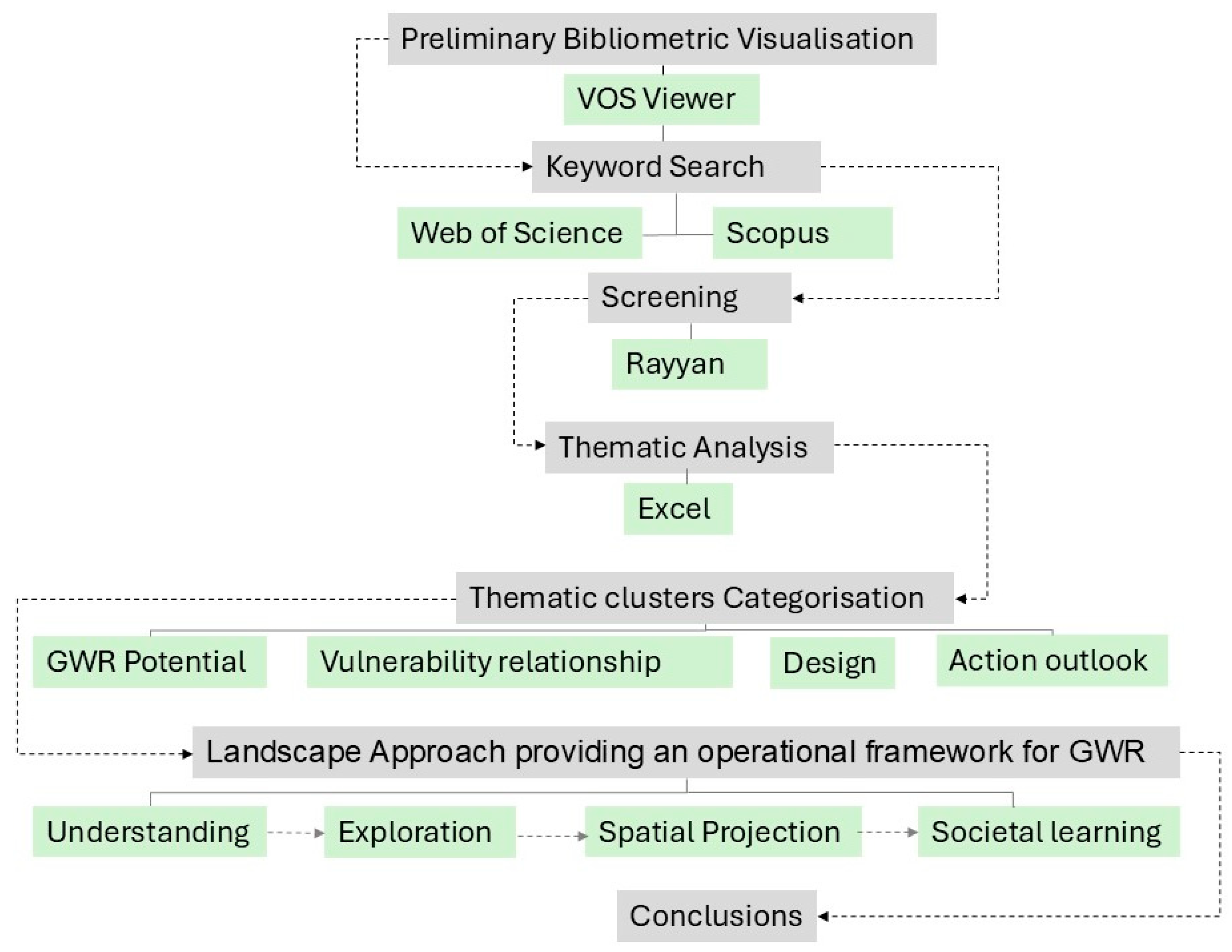
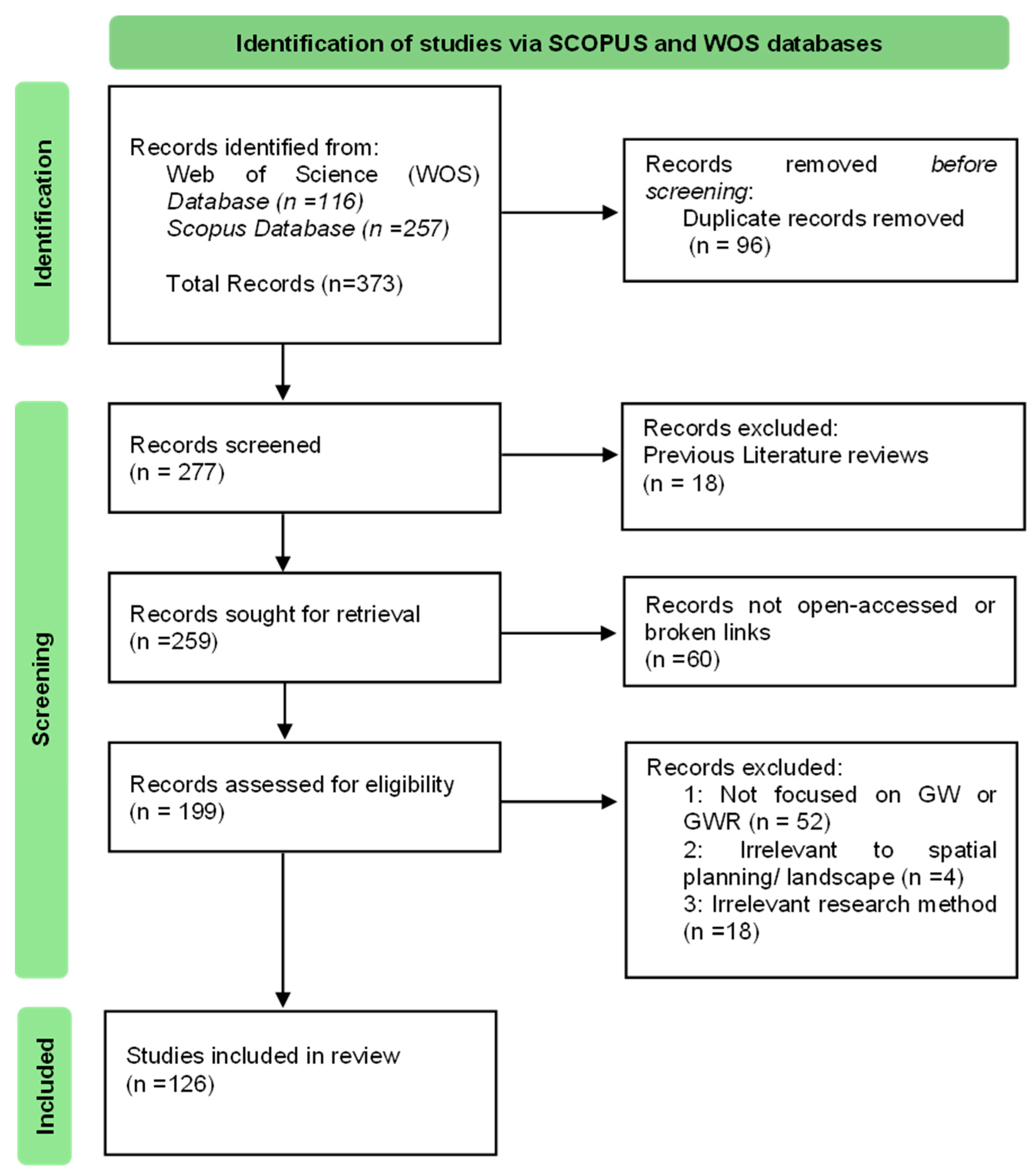
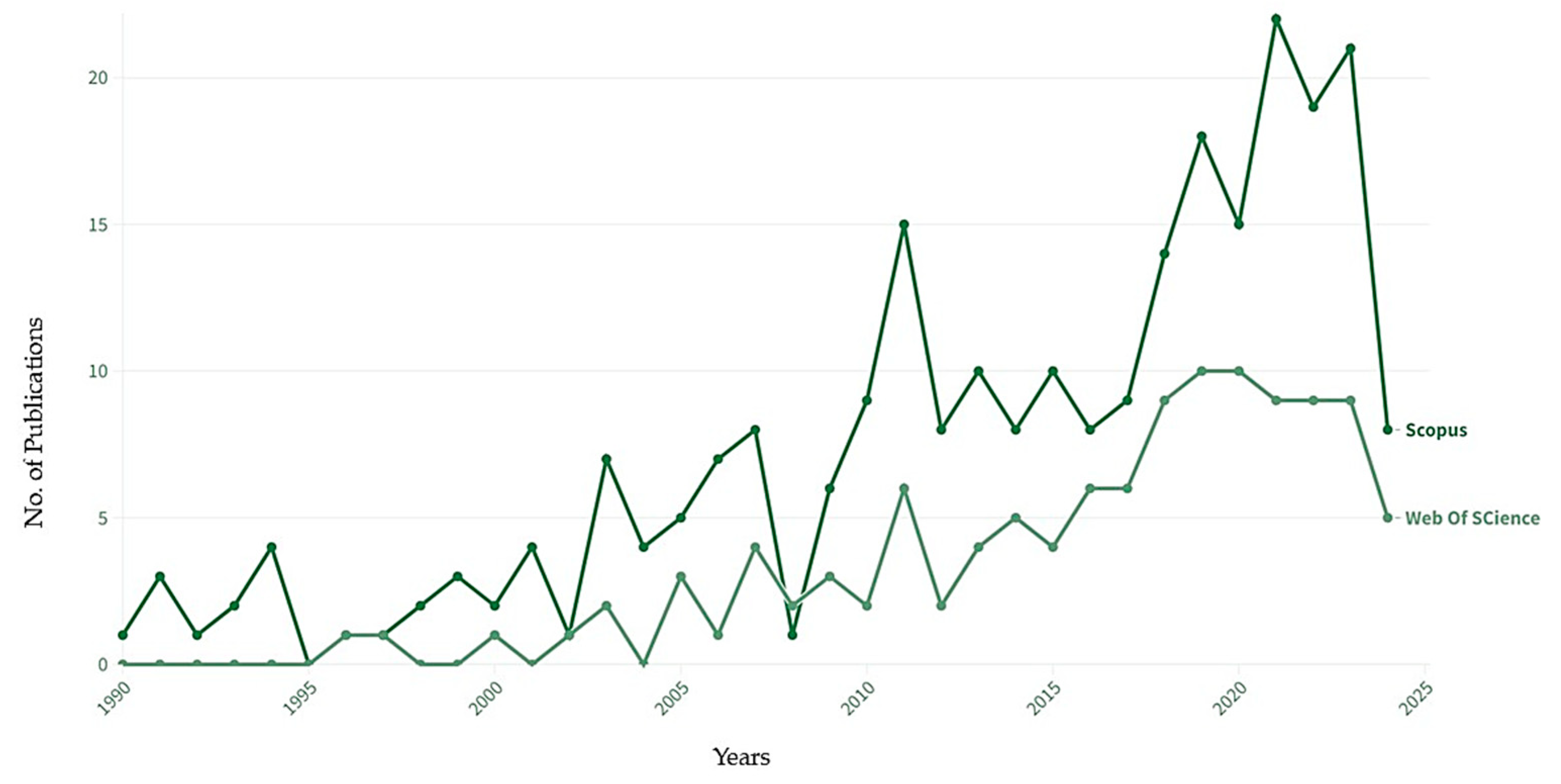
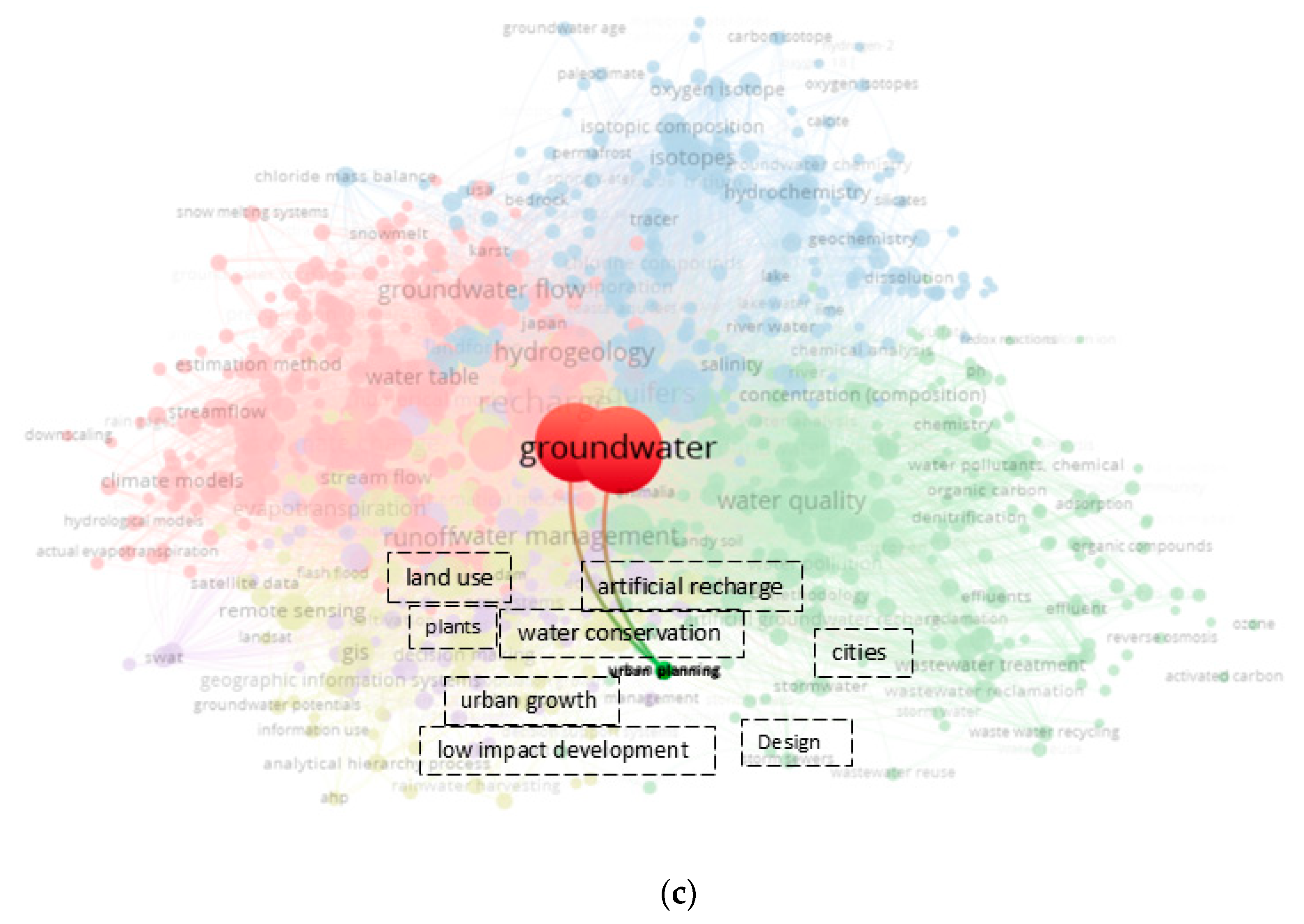
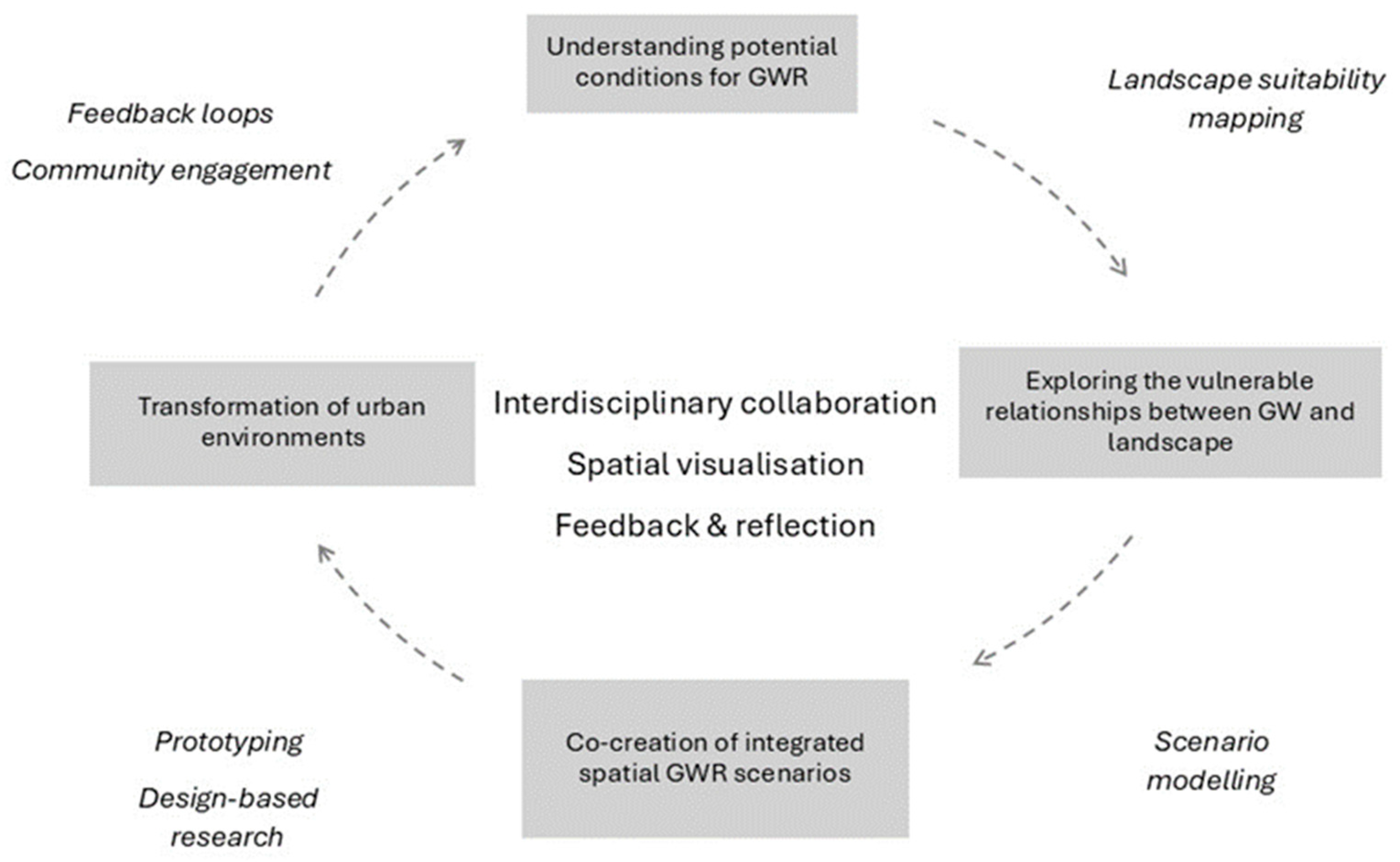
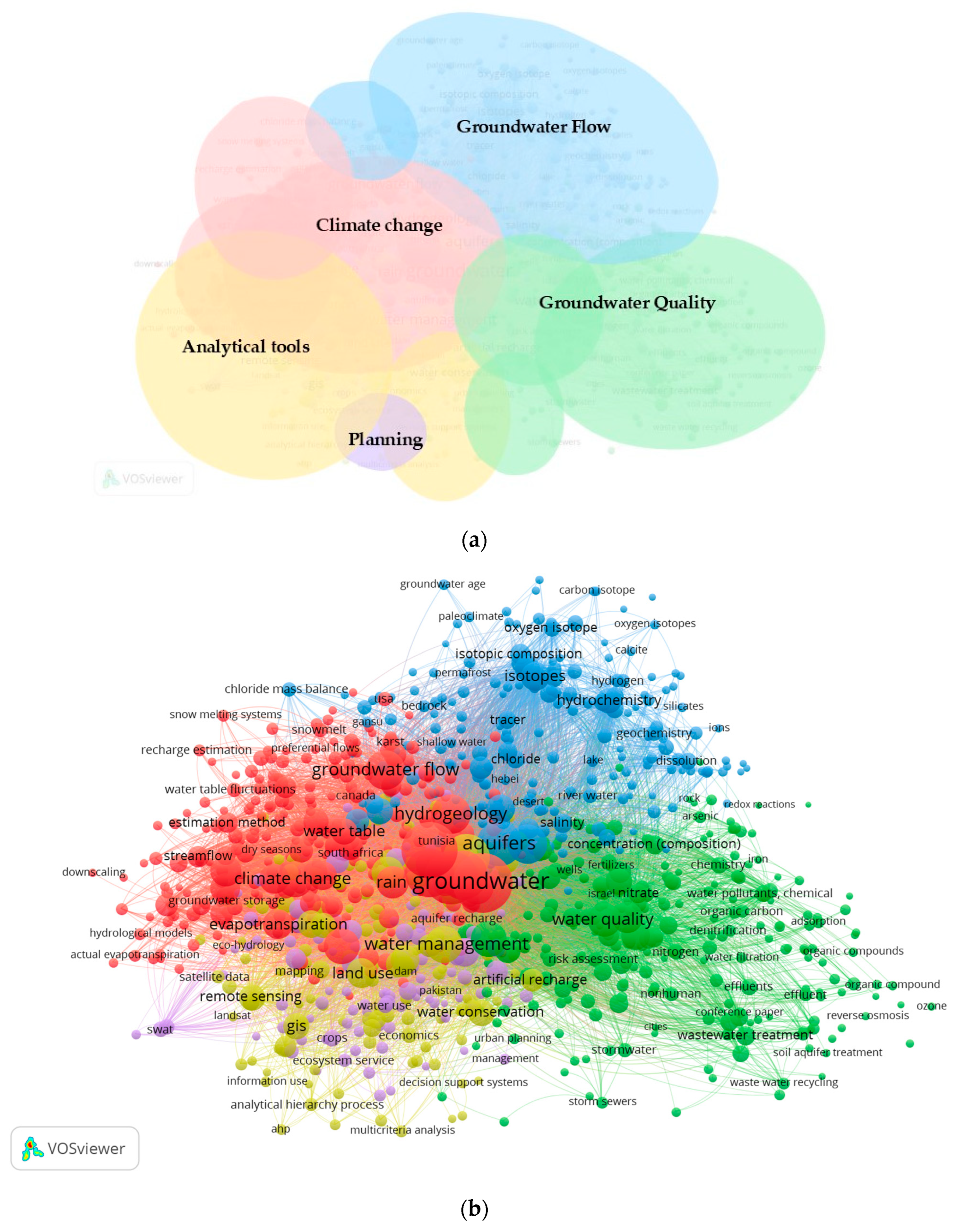
Groundwater is a vital resource for ecosystems, with its recharge process influenced by climate change and urbanization. The transformation of natural and urban landscapes and the over-extraction of groundwater contribute to its depletion and degradation. Groundwater recharge and management are intricately linked to land use and the landscape. Despite this close connection, spatially integrating groundwater recharge strategies in the landscape context remains underexplored. This systematic review synthesizes state-of-the-art research at the intersection of spatial planning, landscapes, and groundwater recharge. We employed a combination of bibliometric visualization and thematic analysis and reviewed 126 studies published between 1990 and April 2024 from the Scopus and Web of Science databases. Based on their objectives and outcomes, we found four prominent themes in these clusters: groundwater recharge potential studies, groundwater vulnerability studies, design-based studies, and participatory studies. When organized iteratively, these clusters can become potential building blocks of a framework for a landscape-based groundwater recharge approach. With interdisciplinary collaboration, spatial visualization and mapping, a co-creative design, and a feedback mechanism at its core, this approach can enhance stakeholder communication and translate highly specialized technical knowledge into adaptive, actionable insights. This study also highlights that including spatial design can help develop landscape-based groundwater recharge for long-term sustainable regional development.
Keywords: groundwater recharge; landscape-based groundwater recharge; spatial planning and groundwater recharge; land use and groundwater recharge; interdisciplinary collaboration groundwater recharge; landscape-based groundwater recharge; spatial planning and groundwater recharge; land use and groundwater recharge; interdisciplinary collaboration