Article

Multi-Scale Experiments and Mechanistic Insights into Hydro-Physical Properties of Saturated Deep-Sea Sediments in the South China Sea


1
College of Civil Engineering, Hunan University of Science and Technology, Xiangtan 411201, China
2
Hunan Province Key Laboratory of Geotechnical Engineering Stability Control and Health Monitoring, Hunan University of Science and Technology, Xiangtan 411201, China
3
National-Local Joint Engineering Laboratory of Marine Mineral Resources Exploration Equipment and Safety Technology, Hunan University of Science and Technology, Xiangtan 411201, China
*
Authors to whom correspondence should be addressed.
Water 2025, 17(24), 3581; https://doi.org/10.3390/w17243581
Submission received: 4 November 2025 / Revised: 9 December 2025 / Accepted: 10 December 2025 / Published: 17 December 2025
(This article belongs to the Special Issue Advances in Water Related Geotechnical Engineering)

Abstract

Deep-sea-resource development and marine engineering represent cutting-edge global research priorities. As a typical deep-sea region in the Western Pacific, the physical–mechanical properties of the South China Sea’s deep-sea sediments have critical implications for regional and global deep-sea engineering design and the safety assessments of resource exploitation. However, due to extreme environmental conditions and sampling technology limitations, studies on the mechanical behavior and microstructural control mechanisms of sediments in complex marine environments exceeding 2000 m in depth remain insufficient worldwide, hindering precise engineering design and risk management. This study systematically investigates the physical–mechanical properties, microstructure, and mechanical behavior of intact sediments acquired at a depth of 2060 m in the South China Sea. Through physical property tests, scanning electron microscopy (SEM), energy-dispersive X-ray spectroscopy (EDX), X-ray diffraction (XRD), one-dimensional consolidation, and triaxial shear tests, combined with comparisons with nearshore soft soils and other deep-sea sediments, we acquired the following results: The sediments primarily consist of muscovite, quartz, and calcite. Triaxial shear tests revealed initial dilation followed by shear consolidation, reaching critical conditions with an effective cohesion of 19.58 kPa and an effective internal friction angle of 27.32°. One-dimensional consolidation tests indicated a short principal consolidation time, wherein the consolidation coefficient first decreased under loading before slowly increasing, while the secondary consolidation coefficient stabilized after vertical pressure exceeded 400 kPa. The research results not only provide a direct reference for designing deep-sea engineering projects in the South China Sea, calculating the penetration resistance of deep-sea drilling rigs, and predicting the foundation settlement of offshore wind power but also furnish typical cases and key data support for the study of the mechanical properties of global deep-sea high-organic-matter sediments and engineering applications.

1. Introduction

The South China Sea, a pivotal deep-sea strategic zone in the western Pacific, is endowed with abundant resources including oil and gas, polymetallic minerals, deep-sea organisms, and marine energy. It stands as a key arena for global deep-sea resource development and geopolitical competition [1]. As deep-sea exploration expands into ultra-deep waters and deep-sea domains, cutting-edge research in marine and geotechnical engineering now focuses on deep-sea infrastructure projects such as deepwater oil and gas drilling platform foundations, seabed mineral extraction equipment, and submarine pipeline installation [2]. However, the deep-sea sediments in the South China Sea are in a long-term extreme environment of high pressure, low temperature and weak disturbance, and their physical and mechanical properties, such as high water content, high porosity, low shear strength, strong rheological and thixotropic properties, are significantly different from those of the sediments in the land and offshore [3,4]. Critical scientific aspects like microstructural evolution mechanisms and constitutive behavior relationships require urgent clarification. These challenges not only pose significant obstacles to advancing deep-sea engineering safety and sustainable resource development but also underscore the critical need for deepening fundamental theoretical research on deep-sea sediments.
Scholars have conducted comprehensive research on the fundamental mechanical properties, mineral composition, and microstructure of deep-sea soft soils in various marine areas through integrated geotechnical and microscopic testing methods. Zhu Kunjie et al. [5] performed in-depth analysis of engineering geological characteristics and genesis of sediments in the southern Mariana Trench. Jiang Mingjing [6,7], Liu [8], and Chen Cong et al. [9] investigated mechanical properties and microstructure of undisturbed soils in the South China Sea, revealing significant correlations between failure point stress values of seabed sediment samples and factors such as moisture content and wet density. Their study also demonstrated that deep-sea sediments exhibit mechanical properties similar to semi-brittle clay. Li Jiaping [10] and Ren Yubin et al. [11] investigated rheological characteristics of typical deep-sea soft clay in the South China Sea, noting that all deep-sea soft clay samples across Chinese waters exhibit thixotropic strength recovery. Experimental analysis revealed close relationships between undrained shear strength, yield stress, apparent viscosity, temperature, and moisture content. Liu [12], Jiao [13], and Wang Yilin et al. [14] conducted dynamic shear tests on ultra-soft deep-sea soils, finding that compared to conventional clay, these soils show faster attenuation of G/Gmax-γ curves with less sensitivity to plasticity index. Their damping ratio remains generally high and increases rapidly with shear strain, significantly affecting cumulative dynamic response during undrained tests. Sun Anyuan [15] and Liu et al. [16] investigated the effects of temperature rise and ultra-high static pore pressure on soil undrained shear strength, pore pressure development patterns, and critical cyclic stress ratios. In regard to engineering. T.Quoc Anh et al. [17] validated the influence of sediment permeability on earthquake-induced submarine landslide mechanisms via CFD-MPM-coupled centrifuge testing and analytical analysis. Their findings revealed that soil shear strength and critical cyclic stress ratios significantly decrease with increasing temperature, establishing a relationship between stress, moisture content, and activity. While existing research in the South China Sea has accumulated some insights, most studies focus on shallow or conventional deep-sea areas. Systematic studies targeting ultra-deep-sea regions above 2000 m and seabed depths below 200 m remain scarce [18,19]. Therefore, it is of great theoretical and engineering significance to study the physical and mechanical properties and microstructure of deep-sea sediments in the South China Sea.
This study conducted a series of multi-scale experiments and mechanism investigations on the physical–mechanical properties and microstructure of sediments in the South China Sea at depths exceeding 200 m below the seabed and 2060 m above the water surface. The research encompassed fundamental physicochemical property testing, electron microscopy scanning, EDX energy dispersive spectroscopy analysis, one-dimensional consolidation tests, and conventional undrained triaxial tests, aiming to analyze the microstructure, compression behavior, and triaxial shear characteristics of deep-sea sediments in the South China Sea. The study focused on comparing sediments from different survey sites and contrasted them with nearshore soft soils. Through multidimensional analytical methods, the unique mechanical properties of deep-sea soft soils were revealed, providing critical theoretical foundations and data support for deep-sea engineering geological assessments, structural design optimization, and enhanced stability of deep-sea resource development equipment.

2. Materials and Methods

2.1. Sample Collection

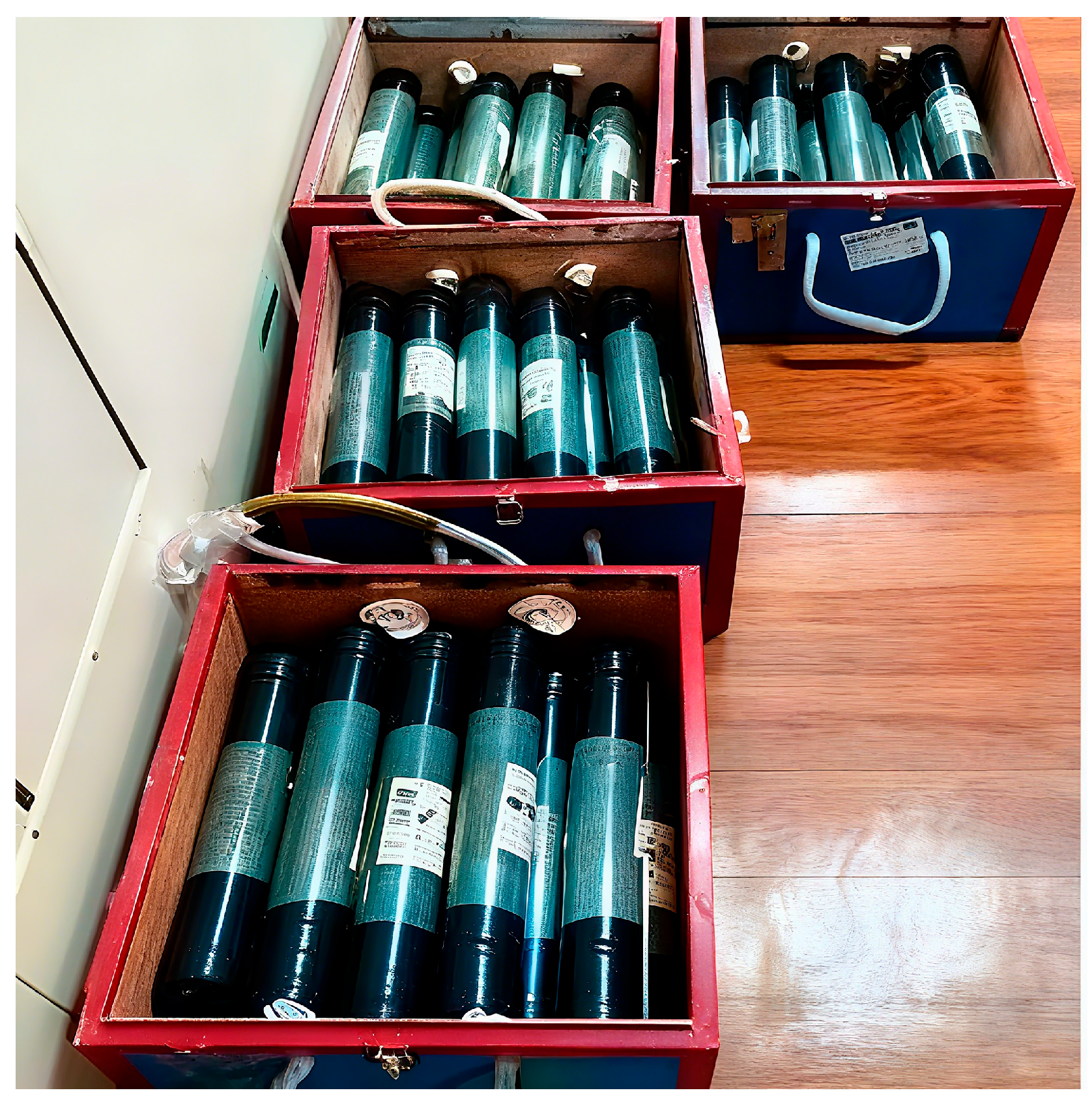
The deep-sea sediment samples used in this study were collected from a specific area in the South China Sea. As shown in Figure 1, drilling was conducted aboard the Ocean Geology II research vessel, achieving a 100–200 m borehole at a water depth of 2060 m. The “Hai niu” drilling system, independently developed by the Hunan University of Science and Technology, utilizes two core technologies: full-hole pressure-retaining wireline coring with great-hole-depth remote control and direct full-length sealing of core barrels for pressure retention. This system constitutes China’s first deep-sea drilling rig capable of great-depth pressure-retaining coring. Its operational specifications include a maximum working depth of 4500 m; a full-hole pressure-retaining coring depth of 234 m; a core diameter of 45 mm; and a drilling assembly comprising one 3.7 m long drilling tool, 77 pieces of 3 m long drill pipes, and 78 pieces of 3.7 m long pressure-retaining core barrels [20]. In 2021, this groundbreaking piece of equipment achieved a remarkable feat by drilling 231 m in the South China Sea at a depth of over 2000 m, breaking the world record for deepest seabed drilling. It stands as the world’s first deep-sea submersible capable of exceeding 200 m in drilling depth while maintaining full-hole pressure-controlled core extraction throughout operations. In this study, a total of 32 deep-sea sediment samples were collected. These samples were sediment specimens uniformly distributed around the deep-sea rig. The collection and basic characteristics of deep-sea sediment samples are presented in Table 1 below. Following sample collection, the sediments underwent sealed waterproof treatment. They were then carefully transported to the laboratory and stored in a low-temperature, high-humidity environment. However, due to the unique characteristics of deep-sea environments, sampling processes inevitably disrupt the original structures of sediment samples, causing changes in pore water pressure and alterations in particle arrangement. Even when sealed waterproof storage and low-temperature, high-humidity preservation measures are employed, transportation jolts and minor temperature/humidity fluctuations still affect the physical–mechanical properties of sediment samples, potentially compromising the accuracy of subsequent test results. To ensure valid experimental outcomes were obtained, we employed reconstructed deep-sea sediment samples from the South China Sea for testing.

2.2. Hydro-Physical Properties and Mechanical Tests

To comprehensively determine the fundamental physical and mechanical parameters of deep-sea sediments in the South China Sea, we first precisely determined the sediment samples’ natural density using the ring knife method after reshaping. Subsequently, particle relative density was measured through the pycnometer method. Key physical parameters, including the porosity ratio and saturation, were further calculated based on moisture content data obtained via drying methods. Using a combined liquid–plastic limit tester, we made detailed measurements of the liquid and plastic limits to determine the sediment’s plasticity and liquidity indices. Finally, to accurately assess particle gradation characteristics, we employed a combined approach of sieve analysis and hydrometer testing. While sieve analysis is suitable for classifying larger particles, hydrometer testing is primarily used for investigating the sedimentation properties of fine particles. This dual methodology ensures comprehensive coverage of sediment characteristics across different size ranges. In order to determine the organic matter content in sediment samples, the potassium dichromate volumetric method–oil bath heating method was used. To ensure reliable and accurate test results were acquired throughout the entire trial, each experimental group was assigned three parallel samples to minimize the impact of random errors. The final results were obtained by averaging the data from these parallel samples, with strict verification and elimination of abnormal values. This rigorous approach guaranteed that all the findings accurately reflect the actual physical and mechanical properties of the sediment samples.

2.3. Microstructural Testing

We employed Feinova’s Phenom ProX sixth-generation scanning electron microscope (SEM) (Phenom Scientific Instrument (Shanghai) Co., Ltd., Shanghai, China) and energy dispersive spectroscopy (EDS) system, operated at a voltage of 15 kV with a current of 10mA and configured in Backscattered Electron Diffraction (BSD-FULL) mode. The deposited material’s microstructure was analyzed by rubbing the prepared sediment samples to increase their conductivity for observation. Representative regions were selected for examination under three magnification levels: low (500×), medium (2000×), and high (5000×). Images captured at these magnifications documented particle morphology, arrangement patterns, pore distribution characteristics, and the presence of cementitious material. Using specialized image analysis software, the system processed SEM images to quantify microstructural parameters, including equivalent diameter, roundness index, and sorting coefficient, while calculating key metrics such as the pore area ratio, average pore diameter, and pore distribution frequency.

2.4. X-Ray Diffraction Test

Panalytical’s Aries (manufactured in Almerlo, The Netherlands) 600 W powder X-ray diffractometer was employed for deep-sea-sediment analysis. The parameters of the instrument included a voltage of 40 kV, a current of 15 mA, 600 W of power, copper target Kα radiation, 2θ angles ranging from 5° to 70°, a scan speed of 5°/min, and a step size of 0.022°. To improve the accuracy of clay mineral identification and semi-quantitative analysis in sediments, pretreatment was conducted on prepared thin sections prior to testing. The methods included natural air drying, 24 h ethylene glycol saturation, and 2 h high-temperature heating at 490 °C [21]. By cross-referencing with the ICDD-PDF database, the diffraction peak positions and relative intensities of each mineral phase were determined, enabling subsequent calculation of the content ratios of major minerals.

2.5. EDX Energy-Dispersive Spectroscopy

Using Fenner’s Phenom ProX 6th-generation scanning electron microscope and integrated EDS system (manufactured in Almerlo, The Netherlands), we conducted a comprehensive EDS spectroscopic analysis on deep-sea sediment samples. The experimental parameters were as follows: a voltage of 15 kV, a current of 10 mA, and BSD-MAP energy-dispersive mode. Within the designated sample observation areas, spectral analysis was performed to identify the compositions of elements and quantify their relative concentrations. Prior to testing, gold spraying was applied to the sample surfaces to increase their conductivity and ensure stable, accurate spectral data would be obtained. During the analysis, representative microareas were scanned in both point and area modes to document elemental distribution patterns. Particular attention was paid to variations in major rock-forming elements (silicon, aluminum, iron, calcium, and magnesium) and soluble salt ions (potassium and sodium); clay mineral characteristics (e.g., titanium and manganese) and trace heavy metals were also detected. Statistical analysis of the spectral data revealed the atomic and mass percentage distributions of the elements. Combined with X-ray diffraction results, this approach further elucidated the correlation between sediment material composition and mineral content.

2.6. Triaxial Shear Test

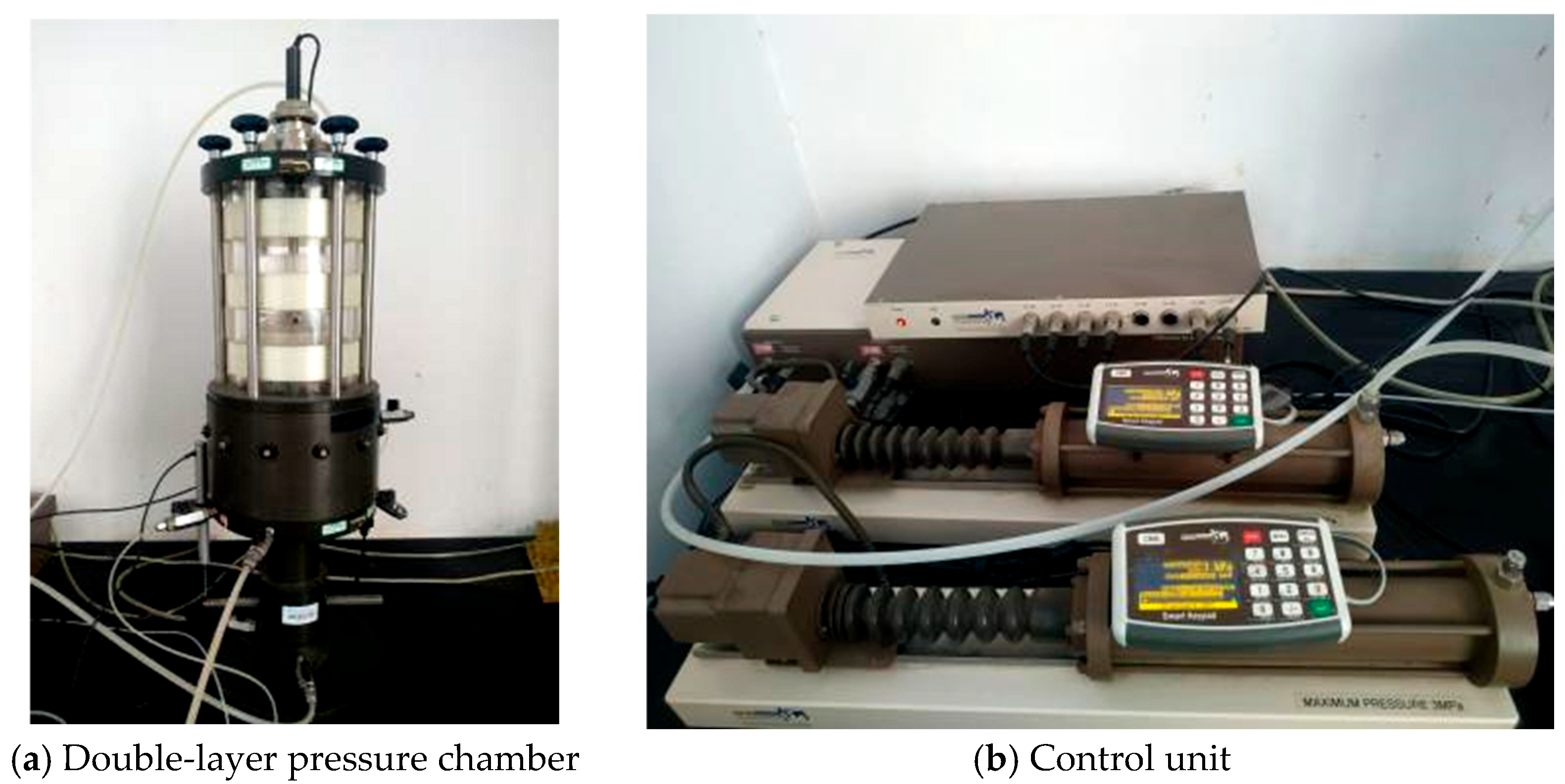
A consolidated undrained triaxial shear test was carried out on the deep-sea sediments from the South China Sea using a GDS stress path triaxial instrument. The test equipment used is shown in Figure 2.
Samples obtained from the deep-sea sediments collected at a depth of 2060 m were placed in a drying oven and dried at 70 °C for 24 h. The sediment samples were then crushed and sieved through a 0.05 mm mesh. The sieved sediments were processed into sediment, with their original moisture content (103%) maintained, and poured into molds to air-dry. When the dried samples reached a state where no significant deformation occurred upon standing, cylindrical specimens measuring 76 mm in height and 38 mm in diameter were cut and placed in sample containers. After sample preparation, the deep-sea sediment was saturated by placing the sediment samples into a saturation chamber. The chamber was sealed with a lid, and the suction pump activated. When the vacuum gauge reached −101.325 kPa (negative atmospheric pressure), the pipe clamp was slightly opened to allow clear water to flow into the chamber through the inlet pipe. Once fully submerged, the pumping was stopped, and the chamber remained undisturbed for 24 h to allow atmospheric pressure to complete the saturation process.
After a sample has become saturated, installation should be initiated immediately. The process must strictly follow geotechnical testing protocols. The specific procedures include removing the saturated sample from its holder, wrapping it with a rubber membrane, and placing it within the triaxial chamber’s dual-pressure chambers. Subsequently, both the inner and outer chambers are sequentially covered while tightening the screw rod to complete installation of the deep-sea sediment samples. The testing process consists of two phases: First, the instrument automatically executes backpressure saturation by setting the chamber’s confining pressure, backpressure, and saturation duration to 100 kPa, 90 kPa, and 3 h, respectively. Once backpressure saturation has been achieved, isotropic consolidation must be conducted under the set confining pressure until drainage volume stabilizes below 1 mm3/min (indicating consolidation completion). After consolidation, maintaining constant confining pressure enables non-drainage shear through valve operation. Axial displacement must be reset to zero prior to shear initiation, marking the start of the shear phase. According to the experimental protocol, corresponding steps can be selected with varying confining pressures for effective shear testing [22].
During the triaxial consolidation test, seabed sediment samples were subjected to triaxial consolidation (CU) compression tests under confining pressures σ 3 of 50 kPa, 100 kPa, and 150 kPa. As the test progressed, the sediment samples gradually compressed under axial pressure, with increasing axial stress–strain until structural failure occurred and the principal stress difference stabilized. The resulting relationship curves between principal stress difference and axial strain were obtained for the deep-sea sediment samples under confining pressures of 50 kPa, 100 kPa, and 150 kPa.

2.7. One-Dimensional Consolidation Compression Test

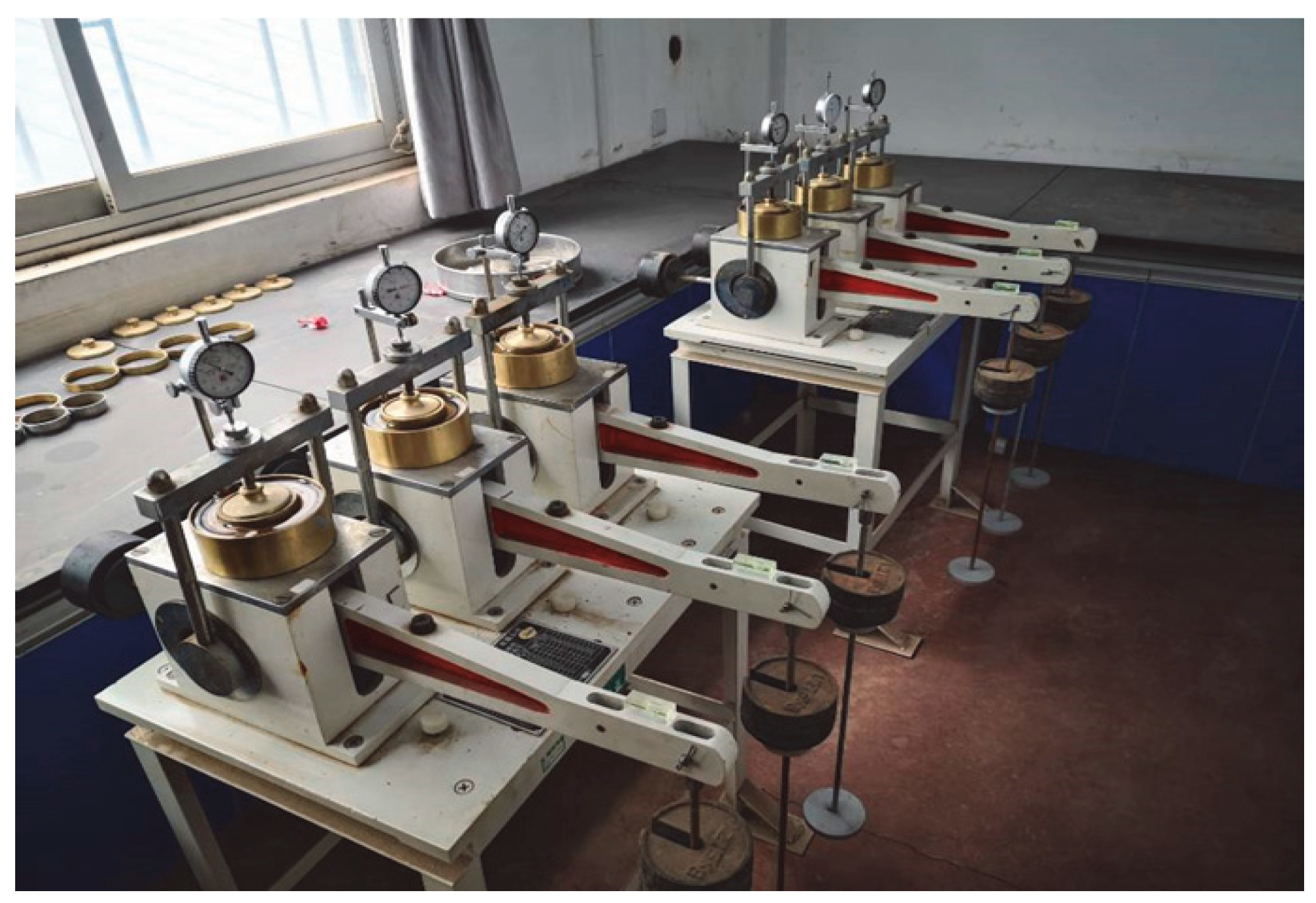
High-pressure consolidation tests were conducted using a WG-type single-lever triple-high-pressure consolidation apparatus for deep-sea-sediment saturated sediment samples, as shown in Figure 3. The sediment samples were prepared according to the required moisture density and compacted using a TYS-50 soil compactor before testing was conducted. Prior to testing, a 1 kPa preloading pressure was applied to ensure proper contact between the sample and all instrument components. After the readings were stabilized, the gauge was readjusted to zero. After the first loading step, water was immediately poured into the chamber, filling it to capacity. During testing, settlement rates and consolidation coefficients were simultaneously measured. The loading sequence included 12.5 kPa, 25 kPa, 50 kPa, 100 kPa, 200 kPa, 400 kPa, 800 kPa, and 1600 kPa. We ensured each loading level achieved stability before proceeding to the next. Experimental parameters were set as detailed in Table 2. Three parallel tests were conducted, with average values serving as final results, followed by error analysis. Temperature was strictly maintained at 20 ± 2 °C to prevent ambient fluctuations from influencing sediment compression characteristics. By recording the final settlement under different loading conditions, pore ratio–efficient stress curves (e-logp curves) were plotted. Key consolidation parameters, including compression coefficients, the modulus of compression, and consolidation coefficients, were calculated based on curve characteristics, enabling an analysis of compression deformation patterns and consolidation behavior in deep-sea sediments under high-stress conditions.

3. Results

3.1. Basic Physical and Mechanical Properties

In accordance with geotechnical testing protocols, the fundamental physical and mechanical properties of the sediment samples were measured. The physicochemical characteristics of the deep-sea sediment samples used in this study are presented in Table 3, while their liquid limits and particle size distributions are shown in Table 4. These data indicate that the deep-sea sediments exhibit a high water content, high porosity, low density, and high saturation. The sediments comprise 1.45% gravel, 20.17% silt, and 78.38% clay particles. Based on engineering classification standards for sediment materials, these samples constitute High-Liquid-Limit Clayey Soil (CH).

3.2. Results of the Microstructural Experiment

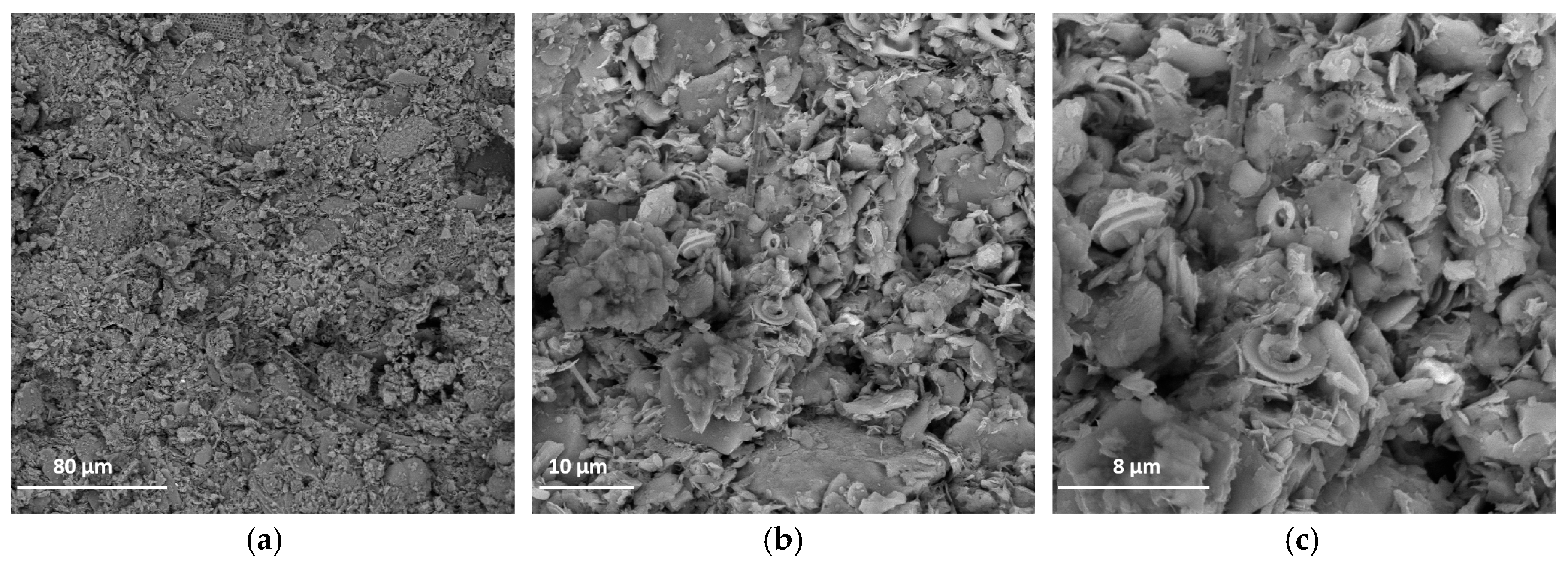
Figure 4 presents scanning electron microscopy (SEM) images of deep-sea sediments, revealing a highly porous microstructure predominantly composed of clay minerals, silt particles, and microbial fragments, with abundant biological remains embedded within the sediment matrix. The sediment structure was characterized by flocculent aggregates in which silt and clay particles formed an interconnected framework. At 1000× magnification (Figure 4a), the sediment displayed loose particle arrangements with irregular pores of varying sizes, including locally developed interconnected pore networks. At 5000× magnification (Figure 4b), individual particles appeared as flaky, plate-like, or angular shapes with rough surfaces and distinct pitted textures. These particles were connected through weak cementitious materials or via face-to-face and edge-to-face contact. Under 10,000× magnification (Figure 4c), microcracks and micropores were present within particles, along with needle-like or flocculent clay mineral aggregates filling the pores. These microstructural features directly influenced the physical–mechanical properties of deep-sea sediments, such as compressibility, permeability, and strength. Moreover, the presence of an incomplete dense flocculation structure along with abundant shell fragments and porous diatom skeletons contributes to the overall low density, high water content, and high porosity of the sediments.
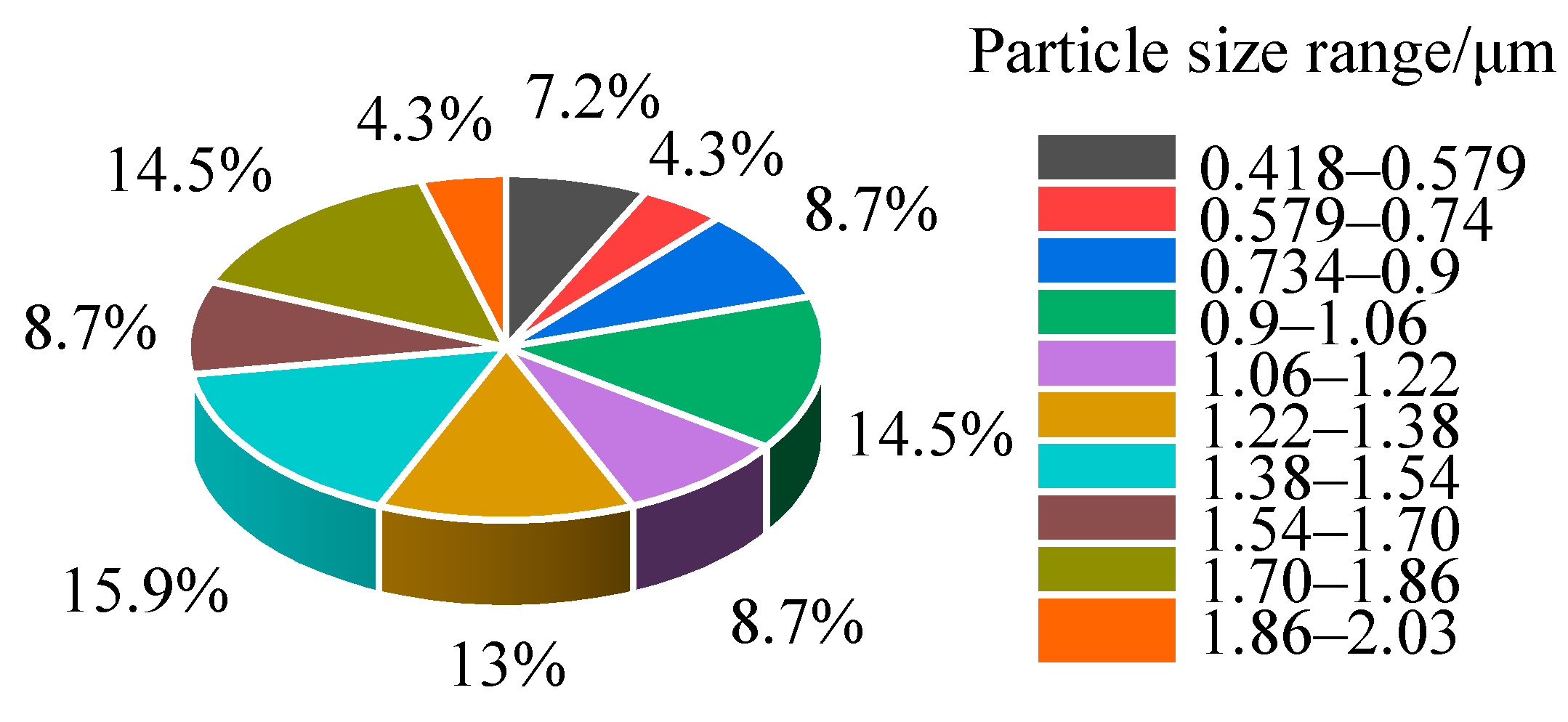
Statistical analysis of the morphology of the sediment samples revealed pore size distribution characteristics, as shown in Figure 5. These data indicate that there is significant dispersion in pore size, predominantly falling within the 0.4~2.0 μm range. This variation primarily stems from abundant biological residues and the reconstituted nature of the sediment samples, where particle redistribution and pore structure remodeling during reshaping processes resulted in a multi-peak pore size distribution. Notably, the pore size distribution curve displays distinct peaks at approximately 0.6 μm, 1.0 μm, and 1.5 μm, highlighting the complex pore typology in deep-sea sediments. Computational analysis yielded an average pore size of 0.92 μm and a porosity of 42.3%, with these microstructural parameters showing strong correlations with macroscopic physical properties such as a high water content and a large pore-to-volume ratio. These findings provide a microscopic framework for understanding the engineering mechanics behavior of deep-sea sediments.

3.3. X-Ray Diffraction Analysis

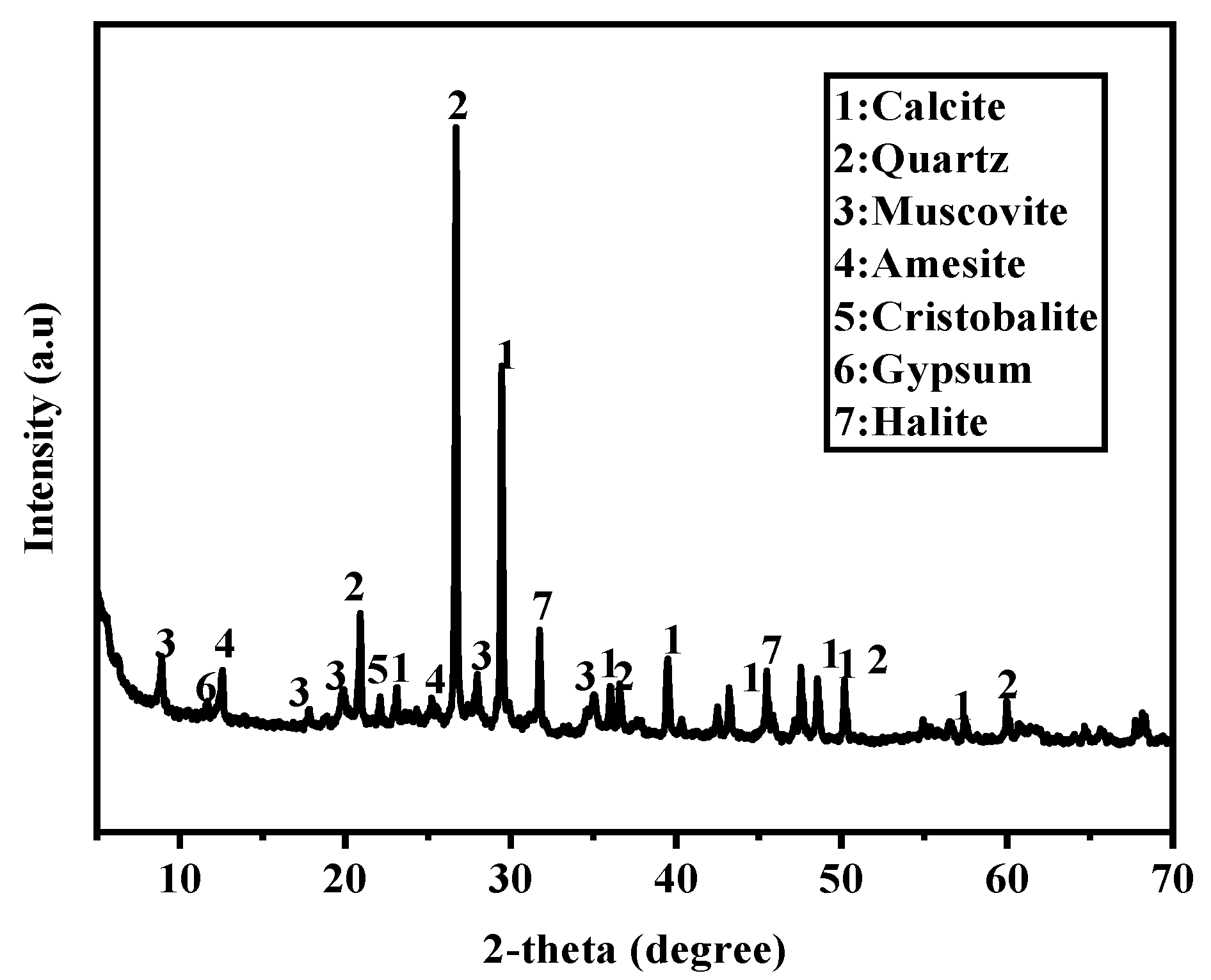
The X-ray diffraction analysis of the tested sediment samples yielded a diffraction pattern as shown in Figure 6. Comparative analysis using the ICDD-PDF database revealed the presence of calcite, quartz, muscovite, amesite, cristobalite, gypsum, and halite within this sedimentary material.

3.4. EDX Energy Spectrum Analysis

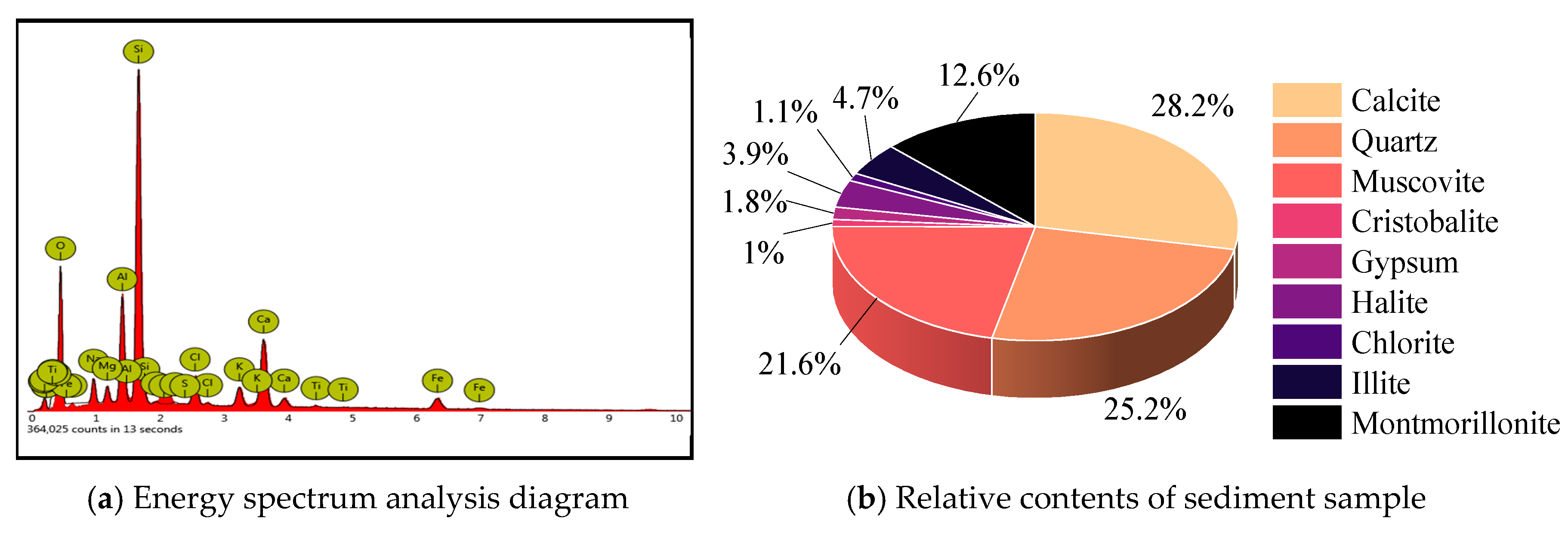
The energy dispersive X-ray (EDX) spectroscopy analysis of sediment samples yields the spectral results shown in Figure 7a. The deep-sea sediments primarily consist of oxygen (32.00%), silicon (24.84%), and calcium (10.80%) as dominant components, collectively accounting for 67.64% of the total composition. Secondary elements include carbon (8.32%) and aluminum (7.63%), supplemented by trace elements such as phosphorus (0.26%) and titanium (0.34%). These data demonstrate a tripartite control pattern governed by terrestrial clastic materials, biogenic processes, and marine chemical influences. The elevated concentrations of silicon, aluminum, and titanium indicate significant impact from continental weathering products. The calcium enrichment likely originates from calcareous bioclastic deposits.
The relative content of various phases in the deep-sea sediment samples was calculated using EDX-ray emission analysis (elemental composition) and XRD refinement algorithm, as shown in Figure 7b. The clay minerals in deep-sea sediments are primarily montmorillonite (12.6%), illite (4.65%), and minor chlorite (1.1%). The clastic minerals are dominated by albite (31.6%), with quartz (25.19%) and calcite (28.23%) being the most abundant. Gypsum (1.76%) and rock salt (3.87%) are present in trace amounts. Table 5 presents comparative analysis of phase compositions between this deep-sea sediment and other sediment samples (which are all remolded soil samples). Significant differences are observed: the northeastern South China Sea sediments contain illite, chlorite, montmorillonite, and kaolinite as primary clay minerals without detritus; marine soft soils in the literature studies exhibit complex but low-abundance clay mineral assemblages, predominantly composed of quartz-based detritus; whereas lacustrine plain soft soils mainly consist of illite and chlorite, with detritus containing quartz, potassium feldspar, and sodium albite. These findings demonstrate that feldspar minerals remain well-preserved due to short-distance transportation under continental depositional-lacustrine environments, while clay mineral assemblages are controlled by continental weathering crust input.

3.5. Results of the Triaxial Shear Test

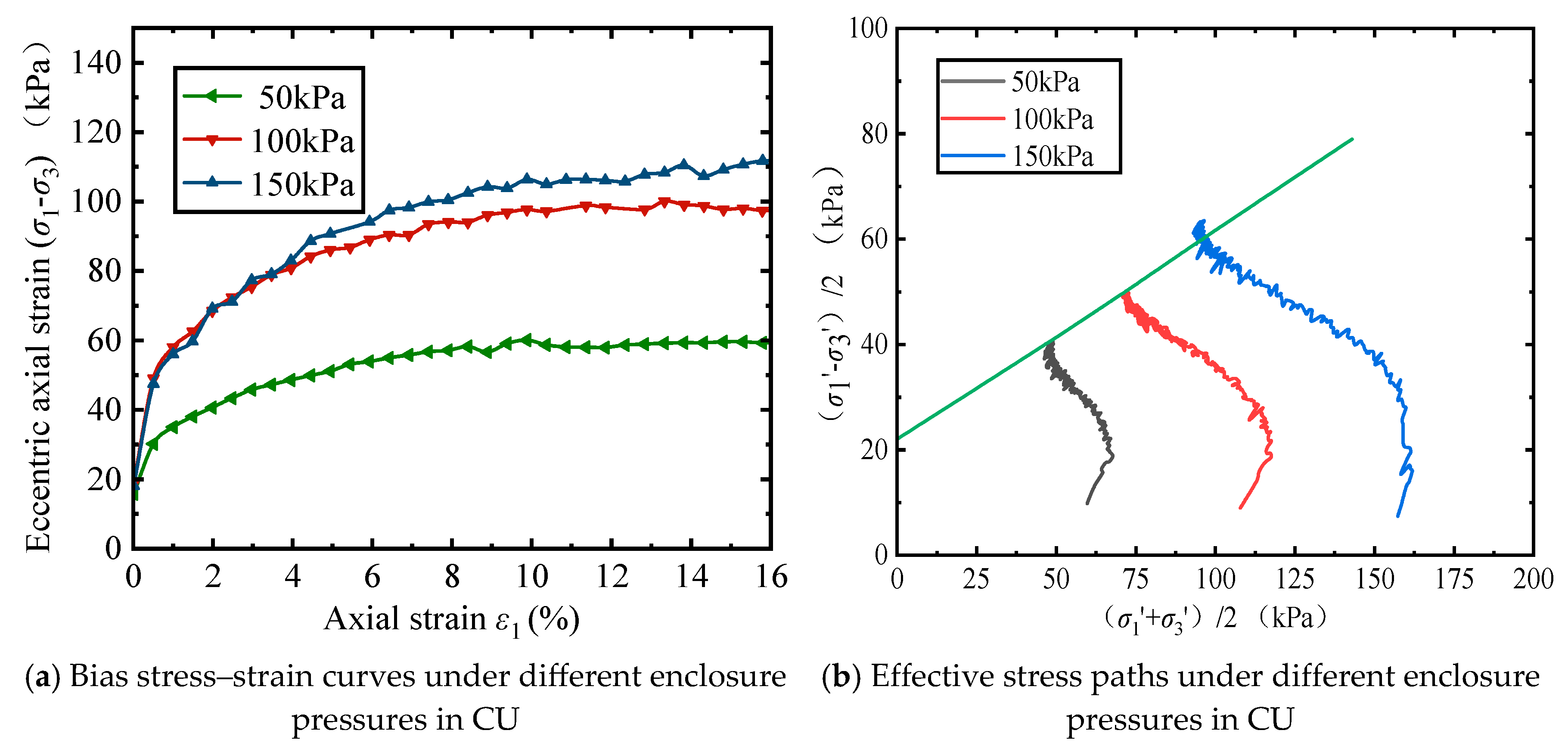
Based on triaxial shear test data obtained under different confining pressures, the eccentric stress–strain curves of CU specimens at various confining pressures were plotted, as shown in Figure 8a. The results indicate that with increasing shear, eccentric stress first rises and then stabilizes under different confining pressures, demonstrating strain-hardening characteristics. Effective stress paths were plotted using the average effective stress ( ( σ 1 + σ 3 ) / 2 u ) (as x-axis) and ( ( σ 1 σ 3 ) / 2 ) (as y-axis), as illustrated in Figure 8b. The initial shear stage featured sediment swelling, while further shearing led to compaction until critical conditions were reached. By plotting the total stress–moisture and the effective stress–moisture curves, we found that the following values for the sediment samples: total cohesion c = 22.77 kPa, total internal friction angle φ = 11.02°, effective cohesion c′ = 19.58 kPa, and effective internal friction angle φ′ = 27.32°.
As shown in Table 6, comparing the shear strength indicators of soft soils from different sea areas, we explicitly distinguish between remolded sediment samples and undisturbed sediment samples for targeted analysis: for undisturbed sediment samples, this study’s sample yields an effective cohesion (c′) of 19.58 kPa and an effective internal friction angle (φ′) of 27.32°, the undisturbed sample from the Northern SCS has a c′ of 12.75 kPa and φ′ of 25.34°, and the undisturbed samples from the Western Sahara Trough have c′ ranging from 1.33 to 3.50 kPa and φ′ from 20.0 to 27.2°; notably, the undisturbed samples from the South China Sea (SCS) in this study and the Northern SCS exhibit relatively higher c′ values compared to the Western Sahara Trough’s undisturbed samples, while their φ′ values remain within a comparable range (25.20–27.32°); for remolded sediment samples, the remolded sample from the Northeastern SCS shows a significantly lower c′ of 1.99 kPa but a much higher φ′ of 38.2° compared to undisturbed SCS samples; for the undisturbed SCS samples, this relatively high c′ and stable φ′ may be attributed to the high organic content and biological residues in these sediments, where the presence of organic matter enhances particle bonding thereby increasing sediment cohesion, the porous structure formed by biological residues and their flocculent arrangement restrict particle sliding maintaining the internal friction angle at levels similar to those of other marine soft soils, and the high content of layered minerals like muscovite may also contribute as their lamellar structures could undergo limited sliding under stress potentially preventing significant increases in effective internal friction; further analysis of the test results under varying confining pressures revealed that peak normal stress gradually increases with pressure elevation, indicating that the deep-sea sediments can withstand greater shear loads under more intense confining conditions, demonstrating that their mechanical properties are significantly influenced by stress levels.

3.6. Results of One-Dimensional Consolidation Tests

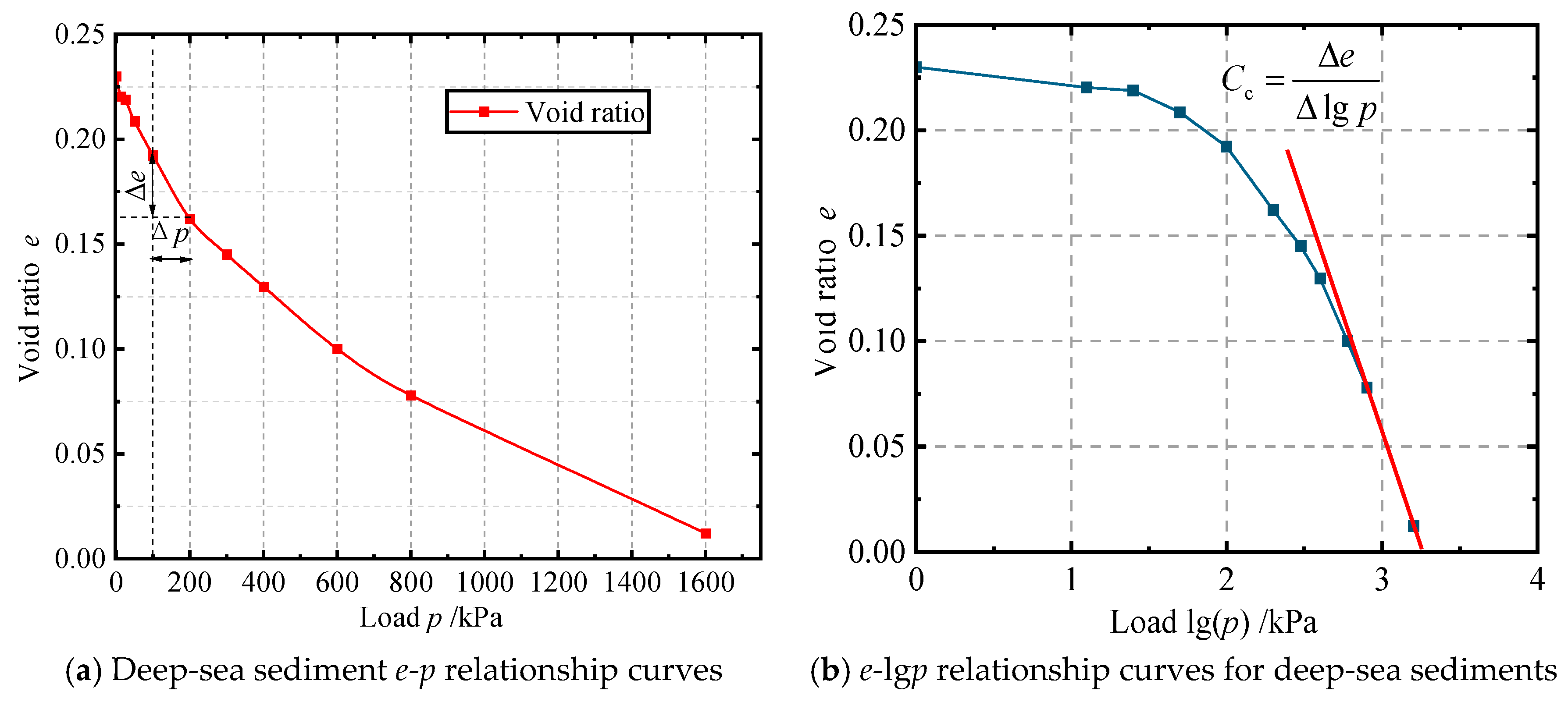
Through one-dimensional consolidation tests, the porosity variation curves of this deep-sea sediment under different vertical pressure conditions were obtained, as shown in Figure 9a. Within the p = 100–200 kPa range, the sediment’s compression coefficient a = 0.302 MPa−1, compressibility modulus Es,1-2 = 4.07 MPa, and volume compression coefficient mv = 0.246 MPa−1 were determined, confirming that it is a medium-compressibility sediment. The e-lgp relationship curve for the deep-sea sediment was further plotted, as illustrated in Figure 9b. Based on the slope of the linear segment of the e-lgp curve, the sediment’s compression index Cc was determined to be 0.2189.
Comparing compression parameters between unconsolidated and remolded soft soils across different regions (as shown in Table 7) revealed that the remolded sediment exhibits significantly lower compression coefficients than other unconsolidated soils while exhibiting a higher compression modulus and a lower compression index compared to the original sediment samples. Notably, the deep-sea sediment samples tested in this study exhibit relatively higher compression coefficients than terrestrial soft soils, a phenomenon closely linked to their unique in situ environment and microstructural characteristics, as revealed by one-dimensional consolidation tests. Firstly, the prolonged exposure to high hydrostatic pressure in deep-sea environments (2060 m depth) results in a metastable sediment structure that is highly susceptible to disturbance during sampling and remolding. This structural disruption triggers particle rearrangement and pore structure degradation, as evidenced by the initial decrease in consolidation coefficient (Cv) from 0.8 × 10⁻⁷ to 0.5 × 10⁻⁷ m2/s under low vertical stress in consolidation tests, which reflects reduced permeability due to compromised interparticle bonding and pore network connectivity. Additionally, the long sedimentation history of deep-sea sediments alters the composition and stability of cementation materials compared to terrestrial soft soils: unlike the robust clay-mineral or organic cementation in terrestrial soils, deep-sea sediments rely more on weak biogenic and chemical cementation, which are easily fractured under external stress, further enhancing compressibility.
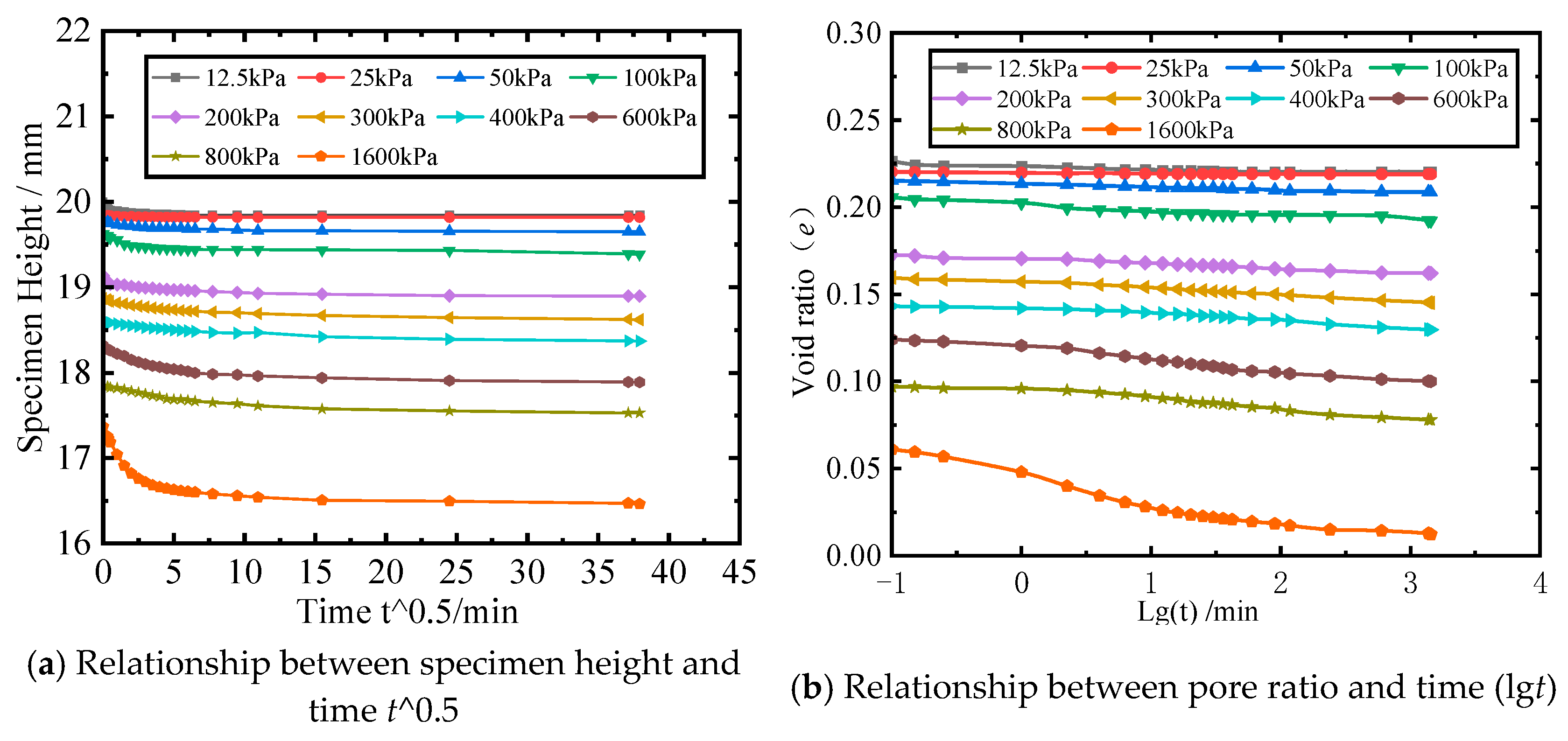
The relationship between specimen height and the square root of time (t0.5) spent under different vertical pressures is plotted in Figure 10a. In this experiment, since we used remolded sediment specimens, which underwent compaction and preloading, the total deformation under loading was limited, with a cumulative deformation of 3.54 mm. At vertical pressures below 25 kPa, specimen deformation was negligible. During the initial loading phase under equivalent vertical pressure, significant deformation occurred, gradually stabilizing over time. As vertical pressure increased, the deformation exhibited an initial increase, followed by a decrease and a subsequent re-increase. Specifically, under vertical pressures below 25 kPa, height deformation was minimal; when vertical pressure exceeded the structural yield stress range (50–200 kPa), deformation markedly increased during the initial phase of each loading increment. With further increases in vertical pressure (200–400 kPa), deformation stabilized, showing reduced sensitivity to stress increments. At pressures between 600 and 1600 kPa, secondary structural failure induced renewed deformation during initial loading, reaching peak deformation at 1600 kPa. Figure 10b illustrates the relationships between applied loads, void ratio, and logarithmic time (lgt) under varying vertical pressures. At lower pressures, the void ratio variations mirrored the height change trends, with both exhibiting minimal alterations.
The consolidation coefficient (Cv) for deep-sea sediments was determined using the time square-root method (Equation (1)):
C v = 0.848   H 2 t 90
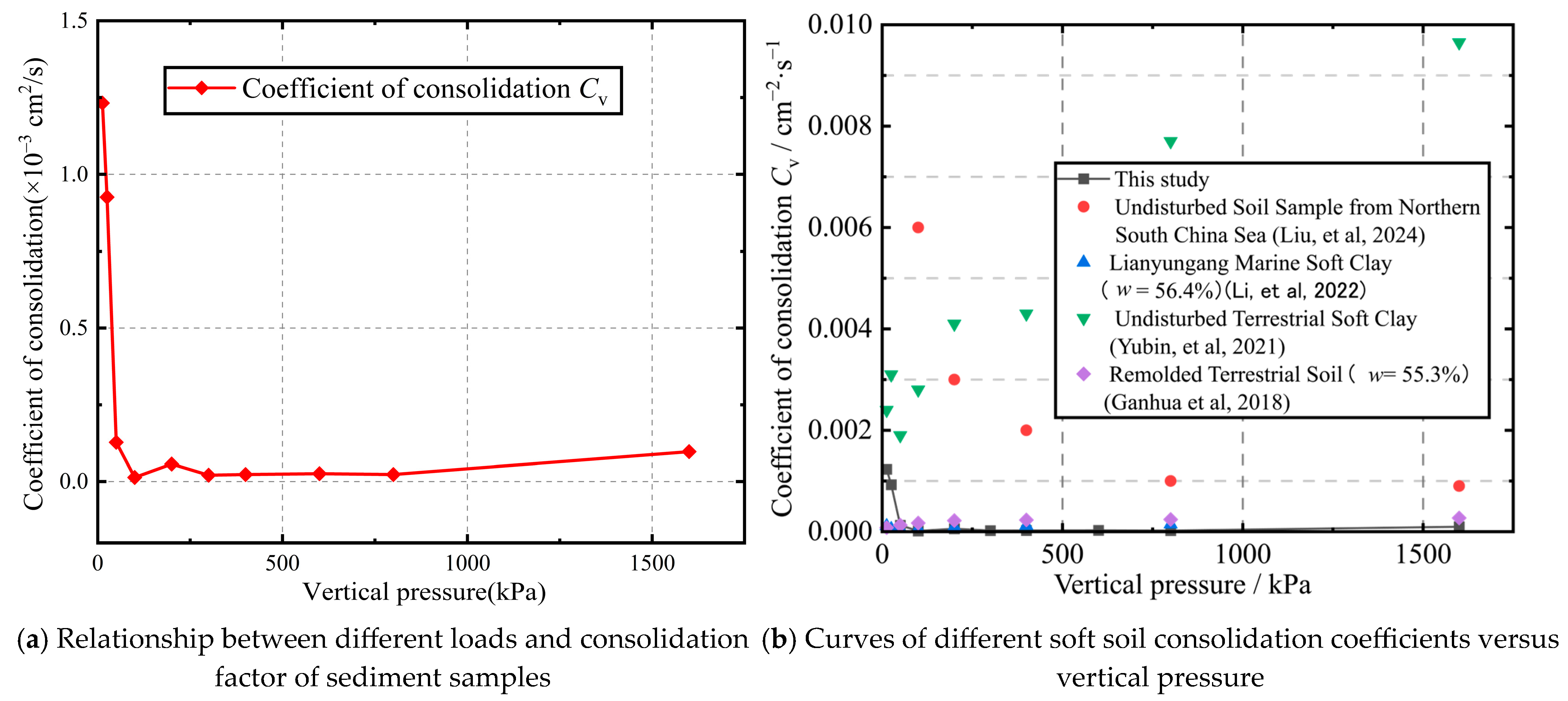
where H represents the maximum drainage distance of the specimen, in mm, defined as half the average of the initial and final heights under a given pressure, and t90 denotes the time required for the sediment specimen to achieve 90% consolidation. As illustrated in Figure 11a, the consolidation coefficient Cv of the deep-sea sediments under varying loads exhibits a trend characterized by an initial decrease, stabilization, and a subsequent increase. Figure 11a indicates that the primary consolidation phase of the sediment is relatively short-lived. When vertical pressures exceeded the structural yield stress threshold, significant deformation occurred in the sediment specimen. Under different loading conditions, the variations in Cv demonstrate an initial decline followed by a gradual rise. Specifically, at lower vertical pressures (below a critical threshold), Cv decreases with an increase in load, whereas beyond this threshold, Cv transitions to exhibiting a slow upward trend. Notably, at substantially higher vertical pressures, a marked increase in Cv was observed, signaling secondary structural failure within the sediment matrix due to progressive disruption of its internal framework.
As shown in Figure 11b, a comparison of consolidation coefficients between various undisturbed soils and remolded soft clays reveals distinct pressure-dependent behavioral trends [10,11,12,28]. Specifically, the consolidation coefficients of undisturbed soils from the remolded terrestrial soils from the northern South China Sea and those in this experimental study decrease with an increasing load. In contrast, Tianjin soft clay exhibits an initial decrease in its consolidation coefficient followed by an increase under similar conditions. Additionally, the remolded specimens demonstrate significantly lower consolidation coefficients than undisturbed soils, primarily due to preliminary compaction during sample preparation, which tightly links their consolidation behavior to the compactness achieved during remolding.
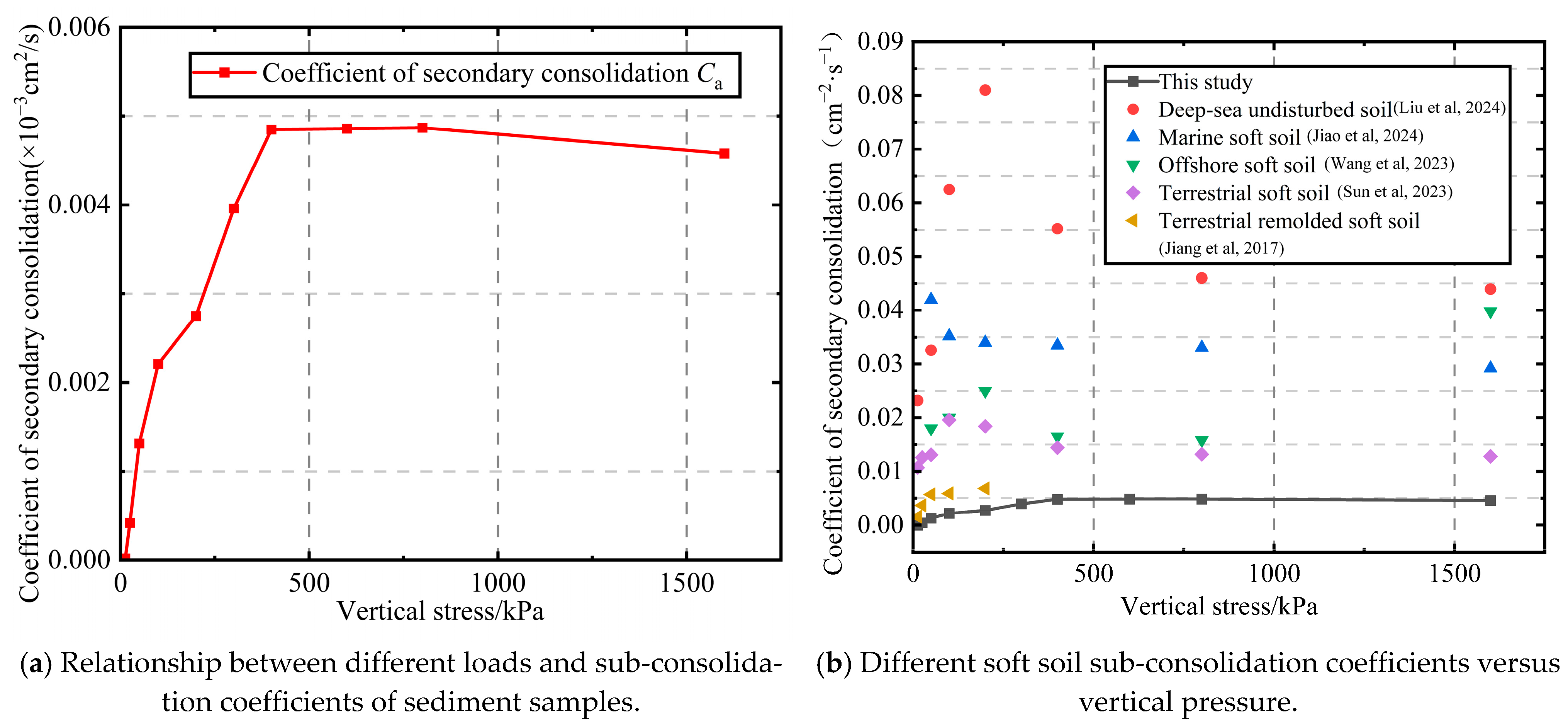
Further calculation of the secondary consolidation coefficient (Ca) for deep-sea sediments was performed using Equation (2):
C a = e 2 e 1 lg t 1 lg t 2
Here, t1 denotes the time taken to complete primary consolidation, and t2 represents the time corresponding to the secondary consolidation settlement. The secondary consolidation coefficient (Ca) of the deep-sea sediments under varying loads, as shown in Figure 12a, exhibits a trend of an initial increase, stabilization, and an eventual slight decline with rising vertical pressure. This coefficient demonstrates a distinct behavioral pattern characterized by a marked increase at lower pressure ranges, stabilization within intermediate pressure ranges, and a marginal reduction at higher pressure ranges. Specifically, Ca undergoes a rapid rise when vertical pressures are within lower thresholds, stabilizes as pressures transition into intermediate levels, and shows a gradual decline under significantly elevated pressures. Notably, this trend reflects the evolving creep mechanisms and structural adjustments within the sediment matrix under progressive loading conditions.
A comparative analysis of the secondary consolidation coefficients between the intact and reconstituted soft soils was conducted; the results are presented in Figure 12b [6,12,13,14,15]. Analysis of the data in the figure reveals that the secondary consolidation coefficients of the different soil samples initially increased with an increase in load before showing a downward trend (the trends for marine soft soil and terrestrial reconstituted soft soil are less distinct because of a lack of data). Except for deep-sea unsaturated sediment, the other soil samples exhibited stabilized secondary consolidation coefficients under high loading conditions with minimal variation. Compared to unsaturated soil, the secondary consolidation coefficients of the reconstituted soil samples were significantly lower. This is primarily because the reconstituted soil samples underwent pre-compaction during preparation. As a result, the deep-sea sediment samples used in this experiment demonstrated the lowest secondary consolidation coefficients among all the soft soils analyzed.

4. Discussion

4.1. Geological Background’s Influence on Sediment Characteristics

The South China Sea deep-sea sediments we studied exhibit three key characteristics, namely, a high water content (103.2%), high porosity (2.69), and low density (1.41 g/cm3)—all of which are features closely associated with the depositional environment of the northern continental slope [29]. Influenced by monsoon circulation and submarine currents, this region receives relatively limited terrestrial sediment input while maintaining vigorous biological productivity. These combined factors result in substantial accumulation of organic matter (e.g., diatom fragments and biogenic remains) within the sediments, ultimately forming a loose flocculent structure [30]. The results of our XRD analysis of the deep-sea sediments reveal that they are primarily composed of calcite, quartz, muscovite and other components found in the sediment—in sharp contrast to the sediments of the northeast South China Sea [31,32]. Phased composition analysis indicated that the high muscovite and quartz content likely stems from long-distance transport of eroded materials from the South China continental margin, while the calcite formation is associated with calcium biogenic deposits below the compensation depth of deep-sea carbonate deposits. Additionally, the low-energy depositional environment reduces particle sorting and compaction processes, preserving the porous structures of biological remains and directly contributing to their high porosity and low density.

4.2. Rationality of Experimental Method and Reliability Analysis of the Results

4.2.1. Basis for Selecting Reshaped Sediment Samples

While reshaped soil samples have certain limitations, they still have significant research value. We employed reshaped soil instead of undisturbed soil for two main reasons: First, regarding sampling disturbance issues, although the “Hai niu” (Seahorse) core-drilling system can maintain pore water pressure, it still creates shear disturbance zones during drill penetration. By standardizing preparation through drying, sieving, and rehydration, reshaped sediment eliminates disturbance variations, ensuring experimental reproducibility. Second, in deep-sea engineering projects like submarine pipeline laying [33] and artificial-island construction [34], sediment disturbance reshaping is commonly required. Experimental results obtained using reshaped soil better reflect the mechanical behavior of “disturbed foundations” encountered in real-world engineering scenarios.

4.2.2. Mechanism Linking Microstructure to Macroscopic Mechanical Behavior

Based on the above analysis, we propose a chain mechanism hypothesis corresponding to “biogenic origin–mineral composition–structural characteristics–mechanical properties”: Firstly, the SEM results indicate that diatom fragments and bioclastic shells in deep-sea sediments form rigid support structures within soil masses (Figure 4). Their pore networks (with an average pore size of 0.92 μm, as shown in Figure 4) provide pathways for pore water drainage, explaining the short consolidation time (Figure 10). Additionally, the flaky structure of muscovite forms flocculent aggregates through face–edge contact, while calcite particles fill pores, collectively enhancing interparticle friction resistance and bringing the effective internal friction angle (27.32°) close to terrestrial compact sandy soil levels. Finally, the high C content in deep-sea sediments may enhance particle aggregation through organic matter cementation, consistent with the result indicating that effective cohesion (19.58 kPa) for this soil exceeds that of other deep-sea soft soils [5,7,9].

4.2.3. Differences with Other Deep-Sea Sediments

The effective cohesion (19.58 kPa) and internal friction angle (27.32°) of the sediments in this study were significantly higher than those in the Xisha Trough (c′ = 1.33~3.5 kPa, φ′ = 20–27.2°) and the northeastern South China Sea (c′ = 1.99kPa, φ′ = 38.2°). Based on the results of our experiments, the core mechanisms are characterized as follows: From a mineral composition perspective, the flaky structure of muscovite forms a skeletal support through “edge–face contact,” while angular quartz particles enhance frictional engagement. Regarding biogenic cementation effects, diatom fragments and organic matter lead to weak cementation within pores. During the initial shear stages, the process involves shear dilation, which transitions into shear contraction with structural failure later, demonstrating fundamental differences from the loose-clay-dominant structure of the Xisha Trough [25], where structural rigidity prevents significant shear contraction in the early stages. The compressibility parameters noted show that the compression index (0.35) of these deep-sea sediments is lower than that for sediments from the Mariana Trench (0.52) and Japan Trench (0.48); this is due to the skeletal role of quartz particles and the filling effect of calcite.
Meanwhile, compared to offshore marine soft soils (compressibility coefficient 2.28~3.57 MPa−1), the sediments in this study exhibit lower compressibility, primarily due to prolonged high-pressure conditions. During deposition, deep-sea sediments undergo gradual self-weight consolidation, resulting in more compacted sediment particles. The standardized compaction treatment applied to the reshaped sediment samples further reduces porosity, enhancing structural stability. The consolidation coefficient (1.2 × 10⁻⁷ to 3.5 × 10⁻⁷ m2/s) exceeds that of unconsolidated sediment on the northern slope of the South China Sea [6] (0.8 × 10⁻⁷ to 2.1 × 10⁻⁷ m2/s), mainly attributed to efficient drainage channels formed by biogenic pore networks. Furthermore, the secondary consolidation coefficient (0.0021–0.0035) is significantly lower than control samples, reflecting the differential mechanical response mechanisms of deep-sea sediments under varying depositional environments, which are associated with their dense structures developed through prolonged high-pressure conditions and the presence of hard mineral particles.

4.3. Microscopic Mechanism Analysis of Mechanical Properties of the Deep-Sea Sediments

4.3.1. Granular Scale Mechanism of the Shear–Thrust to Shear–Shrink Transition

The “initial hardening followed by stabilization” characteristic exhibited in the principal stress difference–strain curves during the triaxial tests fundamentally reflects the dynamic evolution of sediment particle contact patterns and microstructure. This phenomenon has three distinct stages: In the initial shear–expansion phase (axial strain < 3%), rigid skeletal structures formed by biogenic residues (e.g., diatom shells and Radiolaria shells) are the dominant interactions. Inter-particle contact primarily occurs through “point-to-point contact”, where skeletal expansion under shear forces increases pore volume, resulting in positive bulk strain. As loading continues, axial strain enters the shear-compression phase (3–15%), during which biogenic skeletal structures fracture. Flaky muscovite particles undergo “plane-to-plane sliding” due to stress, leading to denser particle arrangements and reduced pore volume, thereby making bulk strain values negative. When axial strain exceeds 15%, the sediment enters a critical state where particle alignment stabilizes and principal stress difference peaks. Notably, the measured effective internal friction angle (27.32°) in this stage closely matches the intrinsic range of quartz minerals (26–30°), confirming that quartz particles play a dominant role in determining sediment friction strength [35,36].

4.3.2. Consolidation Characteristics: Pore Water–Mineral Interactions

Regarding consolidation coefficient variations, the “L-shaped” pattern observed in the South China Sea deep-sea sediments (i.e., an initial decrease followed by a slight increase) differs markedly from Tianjin’s unconsolidated soft soil [37]. This distinction primarily stems from the sediment’s progressive failure process under loading—transitioning from structural yielding into secondary failure—whereas the latter is governed by water absorption and drainage contraction of clay minerals. In terms of secondary consolidation characteristics, the sediment’s secondary consolidation coefficient (0.0021–0.0035) is lower than that of terrestrial reconstituted soft soil [38], because of South China Sea sediments’ higher organic stability and cementation levels, which reduce long-term creep displacement of particles under sustained loads. These differences indicate that the mechanical properties of deep-sea sediments are influenced not only by fundamental physical factors but also by regional geological conditions, mineral composition, and biological activities. Therefore, targeted evaluation of these differential mechanisms is required in cross-regional deep-sea engineering design.
In the one-dimensional consolidation tests, the consolidation coefficient (Cv) exhibited a “first decrease, then increase” pattern with an increase in load (with 200 kPa being the critical inflection point), fundamentally reflecting the synergistic interaction between pore water’s chemical environment and sediment particle surface electrical properties. During the low-load stage (<200 kPa), Na+ ions in pore water (EDX analysis revealed a Na content of 1.2% by mass) readily adsorb onto clay particles through electrostatic attraction, forming a diffuse double-layer structure. This creates repulsive forces that significantly hinder particle aggregation and compaction, leading to reduced permeability. The consolidation coefficient gradually decreases from an initial value of 0.8 × 10⁻⁷ m2/s to 0.5 × 10⁻⁷ m2/s. When loading exceeds 200 kPa, entering the high-load phase, external pressure overcomes the double-layer repulsion, compressing its thickness. Adsorbed Na+ ions dissociate and re-enter pore water, where they combine with Cl ions (4.3% by mass of sodium chloride) to form an electrolyte solution. This reduces pore water viscosity, enhancing permeability and causing the consolidation coefficient to slowly recover to 1.2 × 10⁻⁷ m2/s. This mechanism validates the chemical changes in pore water caused by double-layer compression and ion dissociation [39].

4.4. Engineering Application Value and Limitations

4.4.1. Practical Engineering Guidance Significance

Based on the mechanical properties of the South China Sea deep-sea sediments, engineering applications require targeted optimization of design schemes:
For deep-sea drilling rig design, the high effective internal friction angle (27.32°) indicates that significant inter-particle friction resistance must be overcome during penetration. This necessitates optimizing drill bit tooth configurations (e.g., increasing the contact area between cutting edges and particles) to reduce cutting torque requirements [40]. Regarding wind turbine foundation settlement prediction, the short principal consolidation time (less than 24 h) suggests that total foundation settlement is primarily controlled by secondary consolidation deformation. A staged loading construction plan should be adopted, utilizing the characteristic of stabilized secondary consolidation coefficients after vertical pressure exceeds 400 kPa (Figure 11 and Figure 12) to minimize long-term settlement contributions from secondary consolidation stages. In submarine pipeline laying, the combination of low sediment density (1.41 g/cm3) and high water content (103.2%) increases floating risks [41]. By integrating shear-softening characteristics revealed through triaxial shear tests (volume shrinkage occurs after axial strain > 5%), a composite fixation scheme combining “weight blocks + trench filling” can be implemented. This utilizes trench constraints and weight blocks synergistically to ensure pipeline burial depth ≥ 1.5 times pipe diameter, guaranteeing long-term service stability of submarine pipelines.

4.4.2. Limitations of the Study

This study has three limitations. First, the spatiotemporal representativeness of the sample is limited. The experiment was conducted solely using reshaped sediment samples from a single station (2060 m depth) in the South China Sea. Although standardized preparation eliminated variations caused by sampling disturbance, it failed to account for geological environmental differences across various sedimentary units in the South China Sea. As a result, it failed to reflect the influence of regional characteristics, such as material supply, sedimentation rates, and biological productivity, on the mechanical properties of sediments, leading to restricted regional applicability of the conclusions. While the “Hai Niu” deep-sea drilling rig can collect undisturbed sediment samples, transportation and experimental preparation inevitably cause structural disturbances to these samples. This may lead to discrepancies between the mechanical properties of disturbed samples and their natural in situ conditions in deep-sea environments, making it challenging for this study to accurately reflect the true mechanical behavior of marine sediments under natural conditions. Therefore, all experiments in this study utilize reshaped sediment samples. Although these samples undergo processes like drying, sieving, and rehydration during preparation—eliminating sampling-induced disturbances—they also alter the original natural structure of sediments. Notably, this disrupts biogenic pore networks and native particle bonding, potentially causing systematic deviations between reshaped sediment parameters and their natural counterparts. For instance, the disintegration of agglomerates formed by organic matter bonding under natural conditions during reshaping may result in measured effective cohesion values lower than their in situ true values. Second, research on dynamic load response mechanisms remains insufficient. While this study primarily focuses on mechanical properties under static loads, the impact of common dynamic loads in deep-sea engineering—such as wave circulation loads, seismic wave loads, and vibration loads from equipment operations—on sediment strength degradation and pore water pressure accumulation has not been addressed. In real-world engineering scenarios, submarine pipelines endure periodic dynamic loads from prolonged ocean current erosion, which may induce cyclic softening or liquefaction of sediments. However, the triaxial shear tests conducted in this study only employed monotonic loading conditions, failing to reveal hysteresis characteristics under dynamic loads or cumulative plastic deformation patterns. Consequently, the long-term stability mechanisms of sediments subjected to dynamic loads remain unexplained. Finally, this study has not yet addressed the long-term rheological characteristics of deep-sea sediments. The absence of triaxial creep tests to investigate creep deformation characteristics (such as the long-term evolution process of submarine landslides) makes it challenging to elucidate deformation patterns of foundations during prolonged service in deep-sea engineering projects.
Given the limitations of previous studies, future research should prioritize addressing the following key issues:
  • Expand the spatiotemporal representativeness of samples to enhance the authenticity and regional applicability of experimental sediment samples. This can be achieved by establishing sampling points across different sedimentary units and water-depth gradients in the South China Sea and systematically collecting undisturbed sediment samples to improve the spatial generalizability of research conclusions.
  • Strengthen the research on the dynamic load response mechanism, reveal the laws of strength deterioration and stability in engineering scenarios, conduct various types of dynamic load tests, and simulate deep-sea engineering load scenarios.
  • Conduct long-term rheological property research, design triaxial creep tests, and simulate the long-term load conditions of deep-sea engineering.

5. Conclusions

In this study, we comprehensively investigated the physicochemical properties, microstructure, triaxial shear characteristics, and one-dimensional compression behavior of deep-sea sediments from the South China Sea through laboratory tests. The findings are summarized below:
  • The deep-sea sediment has high water content, low density and high porosity, which belongs to the high liquid limit clay. It is mainly composed of clay minerals, silt particles, microbial debris and biological remains. The sediment is predominantly composed of muscovite, quartz, and calcite.
  • Consolidated undrained (CU) tests yielded the total strength parameters of cohesion (c = 22.77 kPa) and the internal friction angle (φ = 11.02°), with effective strength parameters of c′ = 19.58 kPa and φ′ = 27.32°. During CU triaxial testing, the sediment initially exhibited dilative behavior upon shearing, transitioning to contractive behavior with continued deformation until a critical state was reached. Under various confining pressures, deviator stress exhibited strain-hardening characteristics, initially increasing and then stabilizing with principal strain ε1 development.
  • One-dimensional consolidation tests indicated relatively small overall deformation under loading. The specimens showed negligible deformation and short primary consolidation duration under low-stress levels. When vertical pressure exceeded structural yield stress, significant deformation occurred. Classified as moderately compressible soil, this sediment’s consolidation coefficient exhibited an initial decrease followed by a gradual increase with loading, while the secondary consolidation coefficient showed a marked increase and then stabilization with vertical pressure elevation, and finally decreases slightly. Compared with other soft soils, both the consolidation and secondary consolidation coefficients of this deep-sea sediment displayed lower values.

Author Contributions

Methodology, X.H. and W.H.; Resources, G.L.; Data curation, Z.W. and X.X.; Writing—original draft, Y.F.; Supervision, B.C.; Project administration, Q.C. and S.L. All authors have read and agreed to the published version of the manuscript.

Funding

This research was funded by the National Natural Science Foundation of China, grant number No. 52478341, the Natural Science Foundation of Hunan Province, grant number No. 2025JJ30022, and the Postgraduate Scientific Research Innovation Project of Hunan Province, grant number No. CX20240089.

Data Availability Statement

The original contributions presented in this study are included in the article. Further inquiries can be directed to the corresponding authors.

Conflicts of Interest

The authors declare no conflicts of interest.

References

  1. Aguzzi, J.; Chatzievangelou, D.; Marini, S.; Fanelli, E.; Danovaro, R.; Flögel, S.; Lebris, N.; Juanes, F.; De Leo, F.C.; Del Rio, J.; et al. New High-Tech Flexible Networks for the Monitoring of Deep-Sea Ecosystems. Environ. Sci. Technol. 2019, 53, 6616–6631. [Google Scholar] [CrossRef]
  2. Jamil, M.; Siddiqui, N.A.; Usman, M.; Wahid, A.; Umar, M.; Ahmed, N.; Ul Haq, I.; El-Ghali, M.A.K.; Imran, O.S.; Rahman, A.H.A.; et al. Facies analysis and distribution of Late Palaeogene deep-water massive sandstones in submarine-fan lobes, NW Borneo. Geol. J. 2022, 57, 4489–4507. [Google Scholar] [CrossRef]
  3. Wu, F.; Liu, Z.; Wang, J.; Wang, X.; Zhang, C.; Ai, S.; Li, J.; Wang, X. Research on aquatic microcosm: Bibliometric analysis, toxicity comparison and model prediction. J. Hazard. Mater. 2024, 469, 134078. [Google Scholar] [CrossRef] [PubMed]
  4. Diesing, M. Deep-sea sediments of the global ocean. Earth Syst. Sci. Data Discuss. 2020, 2020, 3367–3381. [Google Scholar] [CrossRef]
  5. Zhu, K.; He, S.; Chen, F.; Liao, Z.; Wang, J.; Deng, X. Engineering geological characteristics and genesisof the sediments from the southern Mariana Trench. J. Geol. 2015, 39, 251–257. (In Chinese) [Google Scholar]
  6. Jiang, M.J.; Li, Z.Y.; Huang, H.P.; Liu, J. Experimental study on microstructure and mechanical properties ofseabed soft soil from South China Sea. Chin. J. Geotech. Eng. 2017, 39, 17–20. (In Chinese) [Google Scholar]
  7. Jiang, M.J.; Liu, A.S.; Li, G.S. Macro- and micro-characteristics and mechanical properties of deep-seasediment from South China Sea. Chin. J. Geotech. Eng. 2023, 45, 618–626. (In Chinese) [Google Scholar]
  8. Liu, A.; Kwok, C.; Li, W.; Jiang, M. Strain rate effects on intact deep-sea sediments under different confining pressures and overconsolidation ratios. Eng. Geol. 2023, 327, 107357. [Google Scholar] [CrossRef]
  9. Chen, C.; Long, J.J.; Li, G.X. Experimental study on mechanical propertiesof seafloor sediments of deep South China Sea. Ocean Eng. 2015, 33, 108–114. (In Chinese) [Google Scholar]
  10. Li, J.; Kechao, Z.; Xuan, Z.; Yanli, C.; Li, Y.; WenBo, M. Rheological properties of REY-rich deepsea sediments. Rock Soil Mech. 2022, 43, 348–356. (In Chinese) [Google Scholar]
  11. Yubin, R.; Qing, Y.; Yin, W.; Shaoli, Y. Experimental study on thixotropic characteristic and microstructural evolution of representative deep-sea soft clay. J. Eng. Geol. 2021, 29, 1295–1302. (In Chinese) [Google Scholar]
  12. Liu, M.; Lin, Y.; Qi, F.; Xu, J. Characterizing the sediment dynamics through in-situ measurements in the abyssal Manila Trench, northeast South China Sea. Mar. Geol. 2024, 476, 107372. [Google Scholar] [CrossRef]
  13. Jiao, H.; Guo, X.; Fan, N.; Wu, H.; Nian, T. An undrained dynamic strain-pore pressure model for deep-water soft clays from the South China Sea. Front. Mar. Sci. 2024, 11, 1377474. [Google Scholar] [CrossRef]
  14. Wang, Y.L.; Duan, G.-J.; Li, H.-L.; Zhao, F.-C. Dynamic shear modulus and damping ratio of deep-sea ultra-soft soil. Rock Soil Mech. 2023, 44, 3261–3271. (In Chinese) [Google Scholar]
  15. Sun, A.; Ren, Y.; Yang, G.; Yu, L.; Kong, G.; Wang, N.; Yang, Q. Ultrahigh static pore pressure effects on the undrained shear behavior of deep-sea cohesive soil. Appl. Ocean Res. 2023, 130, 103404. [Google Scholar] [CrossRef]
  16. Liu, J.; Li, S.; Duan, G. Steady rheological behavior and unified strength model for reconstituted deep-sea sediments. Eng. Geol. 2023, 316, 107058. [Google Scholar] [CrossRef]
  17. Tran, Q.A.; Sørlie, E.; Grimstad, G.; Eiksund, G.; Takahashi, H.; Sassa, S. Influence of sediment permeability in seismic-induced submarine landslide mechanism: CFD-MPM validation with centrifuge tests and analysis. Comput. Geotech. 2024, 174, 106588. [Google Scholar] [CrossRef]
  18. Zhang, F.; Chen, X.; Wei, J.; Zhang, Y.; Xu, W.; Li, H. Experimental investigation of the inhibition of deep-sea mining sediment plumes by polyaluminum chloride. Int. J. Min. Sci. Technol. 2024, 34, 91–104. [Google Scholar] [CrossRef]
  19. Gazis, I.-Z.; de Stigter, H.; Mohrmann, J.; Heger, K.; Diaz, M.; Gillard, B.; Baeye, M.; Veloso-Alarcón, M.E.; Purkiani, K.; Haeckel, M.; et al. Monitoring benthic plumes, sediment redeposition and seafloor imprints caused by deep-sea polymetallic nodule mining. Nat. Commun. 2025, 16, 1229. [Google Scholar] [CrossRef]
  20. Wan, B.P.F.; Jin, Y.; Peng, Y.; Liu, D. Drilling Technology Status and Development Trends of Deep-sea Seafloor Drill. J. Mech. Eng. 2024, 60, 385–402. (In Chinese) [Google Scholar]
  21. Li, Y.; Liu, Z.; Zhao, Y.; Li, X.; He, Z. The Impact of Pre-treatment Processes on Semi-quantitative Analysis of Clay Minerals in Sediments. Quat. Res. 2014, 34, 635–644. (In Chinese) [Google Scholar]
  22. Zhang, Z.-T.; Liu, A.; Zhou, P.; Zhao, C.; Deng, X.-J.; Zhang, C.; Huang, W. Evolution of particle crushing of coal gangue coarse-grained subgrade filler using large-scale triaxial compression. Case Stud. Constr. Mater. 2025, 23, e05334. [Google Scholar] [CrossRef]
  23. Song, J.; Fang, J.; Gong, W.; Tang, Q. The material composition and bindingwater characteristics of marine softsoils in Shenzhen. Acta Sci. Nat. Univ. Sunyatseni 2023, 62, 57–63. (In Chinese) [Google Scholar]
  24. He, J.; Luo, F.; Yang, H.; Yu, Z. Research on physical and mechanicalproperties of soft soil in Huama LakeBasin, Ezhou City. Express Water Resour. Hydropower Inf. 2024, 45, 70–74. (In Chinese) [Google Scholar]
  25. Wentao, L.; Yaohong, S.; Xuhui, Z.; Ningfeng, Z.; Jiangping, Y.; Haijun, H.E. Geeotechnical features of theseabed soils in the east of xishatrough and the mechanicalproperties of gas hydrate-bearing fine deposits. Mar. Geol. Quat. Geol. 2014, 34, 39–47. (In Chinese) [Google Scholar]
  26. Tian, Q.C.G.; Wang, W.; Shl, Z.; Llu, H. Experimental Study on the Mechanical Properties of Natural Soft Soils AlongCoast Area of Fujian Province. J. Water Resour. Archit. Eng. 2023, 21, 78–84. (In Chinese) [Google Scholar]
  27. Hong, Z.-S.; Yin, J.; Cui, Y.-J. Compression behaviour of reconstituted soils at high initial water contents. Géotechnique 2010, 60, 691–700. [Google Scholar] [CrossRef]
  28. Wang, G.; Qiu, C.; Xu, B.; Liu, R.; Sun, H. Experimental study on remolded yield pressure and compression characteristics of remolded soil. Port Eng. Technol. 2018, 55, 110–115. (In Chinese) [Google Scholar]
  29. Hui, G.; Li, S.; Guo, L.; Wang, P.; Liu, B.; Wang, G.; Li, X.; Somerville, I. A review of geohazards on the northern continental margin of the South China Sea. Earth Sci. Rev. 2021, 220, 103733. [Google Scholar] [CrossRef]
  30. Li, G.; Wang, J.; Meng, X.; Hua, Q.; Kan, G.; Liu, C. Seafloor Sediment Acoustic Properties on the Continental Slope in the Northwestern South China Sea. J. Mar. Sci. Eng. 2024, 12, 545. [Google Scholar] [CrossRef]
  31. Fan, C.; Xia, S.; Cao, J.; Zhao, F.; Wan, K. Seismic constraints on a remnant Mesozoic forearc basin in the northeastern South China Sea. Gondwana Res. 2022, 102, 77–94. [Google Scholar] [CrossRef]
  32. Chen, K.T.; Hsu, S.K.; Lin, A.T.S.; Su, C.C.; Babonneau, N.; Ratzov, G.; Lallemand, S.; Huang, P.-C.; Lin, L.-K.; Lin, H.-S.; et al. Changes in marine sedimentation patterns in the northeastern South China Sea in the past 35,000 years. Commun. Earth Environ. 2024, 5, 420. [Google Scholar] [CrossRef]
  33. Karabaić, D.; Kršulja, M.; Maričić, S.; Liverić, L. The Optimization of a Subsea Pipeline Installation Configuration Using a Genetic Algorithm. J. Mar. Sci. Eng. 2024, 12, 156. [Google Scholar] [CrossRef]
  34. Ge, L.; Chen, H.; Chen, S.; Liu, H. Experimental Study on Wave Current Characteristics and Stability of the Junction of Artificial Island and Subsea Tunnel. J. Mar. Sci. Eng. 2022, 10, 1525. [Google Scholar] [CrossRef]
  35. Li, Y.; Li, Y.; Guo, Z.; Xu, Q. Durability of MICP-reinforced calcareous sand in marine environments: Laboratory and field experimental study. Biogeotechnics 2023, 1, 100018. [Google Scholar] [CrossRef]
  36. Zhang, X.; Wang, H.; Wang, Y.; Wang, J.; Cao, J.; Zhang, G. Improved methods, properties, applications and prospects of microbial induced carbonate precipitation (MICP) treated soil: A review. Biogeotechnics 2025, 3, 100123. [Google Scholar] [CrossRef]
  37. Zhang, Z.; Wang, C.; Zhang, Z. One-dimensional consolidation creep characteristics of Tianjin muddy silty clay. China Water Transp. 2024, 14, 216–217+303. (In Chinese) [Google Scholar]
  38. Xiang-Yu, S.; Fei, H.; Jian-Xiang, G.; Lian-Fei, K.; Guo-Qing, Z.; Xiu-Zhong, Z. A preliminary study of characteristics of secondary consolidation ofremolded clay at high pressure. Rock Soil Mech. 2018, 39, 2387–2394. (In Chinese) [Google Scholar]
  39. Ji, Q.; An, X.; Liu, H.; Guo, L.; Qu, J. Electric Double-Layer Effects Induce Separation of Aqueous Metal Ions. ACS Nano 2015, 9, 10922–10930. [Google Scholar] [CrossRef]
  40. Li, X.; Xiong, L.; Xie, W.; Gao, K.; Shao, Y.; Chen, Y.; Yu, Y.; Kou, B.; Lu, Q.; Zeng, J.; et al. Design and experimental study of core bit for hard rock drilling in deep-sea. J. Mar. Sci. Eng. 2023, 11, 306. [Google Scholar] [CrossRef]
  41. Du, F.; Li, C.; Wang, W. Development of subsea pipeline buckling, corrosion and leakage monitoring. J. Mar. Sci. Eng. 2023, 11, 188. [Google Scholar] [CrossRef]
Figure 1. Deep-sea sediment samples sealed in core barrels following collection by the “Hai niu” pressure-retaining drilling rig.
Water 17 03581 g001
Figure 2. GDS control system and double pressure chamber.
Water 17 03581 g002
Figure 3. WG Single Lever Triple High Pressure Consolidator.
Water 17 03581 g003
Figure 4. SEM images of deep-sea sediments at different magnifications: (a) 1000×, (b) 5000×, and (c) 10,000×.
Water 17 03581 g004
Figure 5. Sample pore size statistics.
Water 17 03581 g005
Figure 6. X-ray diffraction test results and main mineral composition analysis.
Water 17 03581 g006
Figure 7. Mineral composition of deep-sea sediments.
Water 17 03581 g007
Figure 8. Path of stress–strain and effective stress under different confining pressures in CU.
Water 17 03581 g008
Figure 9. Compression characteristic curve of deep-sea sediments.
Water 17 03581 g009
Figure 10. Sediment sample height and pore ratio curve under different pressure.
Water 17 03581 g010
Figure 11. Comparative analysis of consolidation coefficient of deep sea sediments [10,11,12,28].
Water 17 03581 g011
Figure 12. Comparative analysis of sub-consolidation coefficients of deep sea sediments [6,12,13,14,15].
Water 17 03581 g012
Table 1. Description of sediment samples collection and basic characteristics of deep-sea sediments in South China Sea.
Sampling AreaAcquisition EquipmentDepth of Water Sampled/mBorehole Depth/mThe Number of Sediment SamplesTurbulence of Sediment Samples
An area in the northern South China SeaThe “Hai niu” drilling system206023132 tubesMinor disturbance
Table 2. Test parameters.
Specimen Area/cm2Specimen Height/cmInitial Water Content/%Loading Duration Per Stage/h Loading Path/kPa
30227.82412.5, 25, 50, 100, 200, 300, 400, 600, 800, 1600
Table 3. Basic material properties of the deep-sea sediment.
Water Depth h1/mSub-Seabed Depth
h2/m
Water Content
Ω/%
Natural Density
ρ/g·cm−3
Specific Gravity
Gs
Void Ratio
e
Dry Density
Ρd/g·cm−3
Degree of Saturation
Sr/%
206020-50103.21.412.552.690.5297.64
Table 4. Limit water contents and grain-size distribution.
Plastic Limit ωL/%Liquid Limit ωP/%Plasticity Index IPOrganic Content Soil ClassificationGravelSilt (0.075~0.05 mm)Clay (<0.05 mm)
27.9753.9529.983.7%CH1.45%72.86%27.14%
Table 5. Comparative analysis of the relative content of different soft soil phases.
Sample LocationThis StudyNortheastern South China Sea (Remolded Sediment Sample) [6]Marine-Deposited Soft Soil (Remolded Sediment Sample) [23]Soft Soil in Alluvial-Lacustrine Plain (Remolded Sediment Sample) [24]
Water Depth h/m20601187-2
Soil ClassificationCHMH--
Muscovite29.607.350
Montmorillonite4.62410.020
Illite4.65433.1835
Kaolinite0132.530
Chlorite1.1206.7725
Quartz25.19067.8325
Orthoclase002.310
K-Feldspar00015
Albite00010
Calcite28.23000
Gypsum1.76000
Halite3.87000
Cristobalite1.0000
Table 6. Indicators of shear strength of soft soils in different sea areas.
Sample LocationWater Depth h /mTest TypeTotal Cohesion c /kPaTotal Internal Friction Angle/°Effective Cohesion c′/kPaEffective Internal Friction Angle φ′/°
This study2060CU22.7711.0219.5827.32
Northeastern SCS (Remolded sediment sample) [6]1187CU3.4532.21.9938.2
Northern SCS (Unsanctified sediment samples) [7]1552CU8.3312.2512.7525.34
CD19.8423.8916.9225.20
Western Sahara Trough eastern (Unsanctified sediment samples) [24]400–2500CU2.33–4.5010.78–14.571.33–3.5020.0–27.2
Table 7. Comparison of different soft soil compression index.
Sample LocationSampling Depth h/mCompression Coefficient a1-2 /MPa−1Compression Modulus Es,1-2/MPaCompression Index Cc
This study (Remolded sediment sample)Subaqueous 20600.3024.070.107
Northeastern SCS (Undisturbed sediment) [6]Subaqueous 11871.88–1.900.610–0.630
Eastern Xisha Trough (Undisturbed soil) [25]Subaqueous 400–25002.28–3.571.16–1.64
Fujian terrestrial soil (Undisturbed sediment) [26]Subsurface 291.021.960.34
Kemen clay (Remolded soil sample) [27] 0.22–0.49
Disclaimer/Publisher’s Note: The statements, opinions and data contained in all publications are solely those of the individual author(s) and contributor(s) and not of MDPI and/or the editor(s). MDPI and/or the editor(s) disclaim responsibility for any injury to people or property resulting from any ideas, methods, instructions or products referred to in the content.