Article

Hydrochemical Characteristics and Nitrate Health Risk Assessment in a Shallow Aquifer: Insights from a Typical Low-Mountainous Region


1
Langfang Integrated Natural Resources Survey Center, China Geological Survey, Langfang 065000, China
2
Innovation Base for Natural Resources Monitoring Technology in the Lower Reaches of Yongding River, Geological Society of China, Langfang 065000, China
*
Authors to whom correspondence should be addressed.
Water 2025, 17(24), 3516; https://doi.org/10.3390/w17243516
Submission received: 22 October 2025 / Revised: 4 December 2025 / Accepted: 10 December 2025 / Published: 12 December 2025

Abstract

Wolong Town, Pingquan City, is located in a typical low-mountainous area of northern China, where groundwater is a crucial drinking water resource, thus, investigating groundwater’s hydrochemical characteristics and assessing nitrate-related health risks are vital for protecting, developing, and utilizing water resources. In this study, 66 groundwater samples were collected and analyzed for physicochemical parameters and major ion concentrations. Results showed that the groundwater in Wolong Town was weakly alkaline (average pH = 7.6), and classified as fresh water with TDS ranging from 90.0 to 900 mg/L. The dominant hydrochemical type was identified as HCO3-Ca2+. Hydrochemical evolution was jointly regulated by natural water-rock interaction, anthropogenic nitrogen input, and environmental redox differentiation. Among these, water-rock interaction was the primary driver, where the hydrochemical composition was mainly shaped by the dissolution of halite, calcite, dolomite, and gypsum, coupled with cation exchange. Nitrate was the primary groundwater pollutant, with concentrations varying from 0.94 to 259 mg/L; elevation, soil type, and population density were key drivers influencing nitrate distribution. Health risk assessment indicated that nitrate posed significantly higher non-carcinogenic risks to infants and children than to adults, and long-term consumption of groundwater with excessive nitrate might induce adverse health effects. This study enhances understanding of shallow groundwater’s hydrochemical evolution and nitrate contamination-related health risks, thereby providing theoretical support for the sustainable development, utilization, and quality protection of groundwater resources in semi-arid low-mountainous areas.

1. Introduction

In arid and semi-arid regions, groundwater serves as an irreplaceable water resource for human survival [1,2], with its quality and sustainability directly tied to public health and safety, as well as the long-term development of regional economies [3]. Compared with surface water, groundwater exhibits greater stability in both quantity and quality, and is inherently less susceptible to anthropogenic disturbances [4]. However, against the backdrop of intensifying human activities and the continuous expansion of industrial and agricultural production, critical issues such as groundwater overexploitation and contamination have become increasingly pronounced. These anthropogenic pressures pose a severe threat to the sustainable utilization of groundwater resources [5,6]. Research on groundwater hydrochemistry plays a pivotal role in deciphering the mechanisms governing groundwater formation and evolution, evaluating its quality status, and clarifying its interactive relationships with the surrounding environment—ultimately providing a scientific basis for ensuring the rationality, safety, and sustainability of water resource development. The formation and evolution of groundwater hydrochemical characteristics are synergistically driven by geological processes and anthropogenic activities [7,8]. Under natural conditions, water-rock interaction is a core factor shaping groundwater hydrochemical properties [9,10], chemical processes including mineral dissolution and ion exchange directly regulate the chemical composition and physical properties of groundwater. With the accelerated pace of urbanization, anthropogenic activities have further disrupted the natural ion balance of groundwater, significantly altering its hydrogeochemical processes and chemical characteristics [11]. Concurrently, this disruption has led to elevated concentrations of toxic and hazardous substances in groundwater, among which nitrate pollution has emerged as a globally widespread environmental challenge [12,13].
In China, groundwater nitrate pollution has likewise garnered widespread academic and societal attention. Empirical studies have demonstrated that since the turn of the 21st century, the national average concentration of nitrate in China’s groundwater has risen by 29% [14]—a trend that signals a gradual deterioration of groundwater quality. Furthermore, results from national-scale groundwater monitoring programs reveal that nitrate was detected in 96% of groundwater samples, with 28% of these samples exceeding the maximum contaminant level (MCL) for nitrate established by the World Health Organization (WHO) [15]. This high detection rate and exceedance ratio underscore the pervasiveness and severity of nitrate pollution in China’s groundwater systems. Groundwater nitrate contamination primarily originates from multiple anthropogenic sources, which can be categorized into point-source and non-point-source pollution. Point-source pollution includes discharges from dry latrines, inefficient wastewater treatment systems, and intensive livestock farming operations, while non-point-source pollution arises from the application of chemical fertilizers and pesticides, manure spreading in agricultural fields, and atmospheric nitrogen deposition [16,17]. Among these various pollution pathways, excessive nitrogen application in agricultural activities—such as overuse of nitrogen-based fertilizers to boost crop yields—has been identified as the dominant contributor to regional groundwater nitrate pollution [12]. This is particularly concerning in agriculturally intensive regions, where repeated and unregulated nitrogen input creates a continuous risk of nitrate leaching into shallow aquifers.
Groundwater nitrate contamination poses substantial and multifaceted risks to human health. Biologically, approximately 5% of ingested nitrate is converted by bacteria in the digestive system into nitrite, which further forms N-nitrosamines and N-nitrosamides—compounds known to induce birth defects and carcinogenesis [15,18]. Epidemiological studies have further corroborated these health hazards, reporting that direct consumption of groundwater with elevated nitrate concentrations is associated with distinct adverse outcomes: it increases the incidence of methemoglobinemia (commonly referred to as “blue baby syndrome,” which primarily affects infants) and elevates the long-term risk of developing esophageal, lymphatic, and gastric cancers in adult populations [19]. To quantitatively evaluate the magnitude of such health threats, the Human Health Risk Assessment (HHRA) model has been widely adopted as a standardized tool in groundwater pollution research [20]. For instance, Yu et al. [21] applied this model to assess nitrate-related health risks in rural groundwater systems of Yantai, China. Their findings indicated that high nitrate levels in the study area likely stemmed from the synergistic effects of agricultural fertilizer application and regional geological conditions, with calculated risk values exceeding safety thresholds for both adolescent and adult populations. Similarly, Zhai et al. [22] utilized the HHRA model to estimate potential nitrate health risks in the Songnen Plain (northeastern China), highlighting significant disparities in risk exposure across demographic groups—specifically, minors and rural residents were identified as high-vulnerability populations requiring prioritized attention from academia and policymakers. In this context, systematic characterization of groundwater nitrate concentrations and quantitative assessment of their associated health risks are not only critical for advancing scientific understanding of pollution impacts but also serve to provide evidence-based support for decision-makers in formulating targeted groundwater resource protection and risk mitigation strategies [23,24,25].
Wolong Town, Pingquan City, lies in northeastern Hebei Province. Geographically, it is part of the low mountain and hilly region in the eastern segment of the Yanshan Mountains [26,27]. Given the town’s scarce surface water resources, groundwater acts as the primary water supply for domestic use, agricultural irrigation, and industrial production. Compared with plain areas [28,29], the shallow mountainous region encompassing Wolong Town is defined by rolling terrain and extensively developed bedrock fractures. Its hydrochemical evolution is governed by “water-rock interaction”, with pollution risks primarily stemming from “point source pollution”—such as mining wastewater and sewage from small-scale livestock farms—characterized by a limited contamination range but high pollutant concentrations. A review of existing literature reveals that prior research in this region has primarily focused on discrete topics, including surface water-groundwater interaction [30], spatiotemporal variations in groundwater quality, mining-induced heavy metal pollution, and associated health risk assessments [31,32,33]. However, critical research gaps remain: few studies have systematically integrated investigations of groundwater hydrochemical characteristics, their evolutionary mechanisms, nitrate pollution patterns, and comprehensive health risk assessments. This lack of integration has impeded a holistic understanding of how groundwater systems respond to natural and anthropogenic pressures. To address these gaps, this study employs an integrated methodological framework, combining traditional hydrochemical analysis, the GeoDetector tool, and a multi-population health risk assessment model. By establishing a logical research chain—“pollution source identification → driving factor quantification → health risk evaluation → management strategy formulation”—this study aims to fill the existing knowledge gap and provide comprehensive insights into the groundwater environment of Wolong Town.

2. Materials and Methods

2.1. Study Area

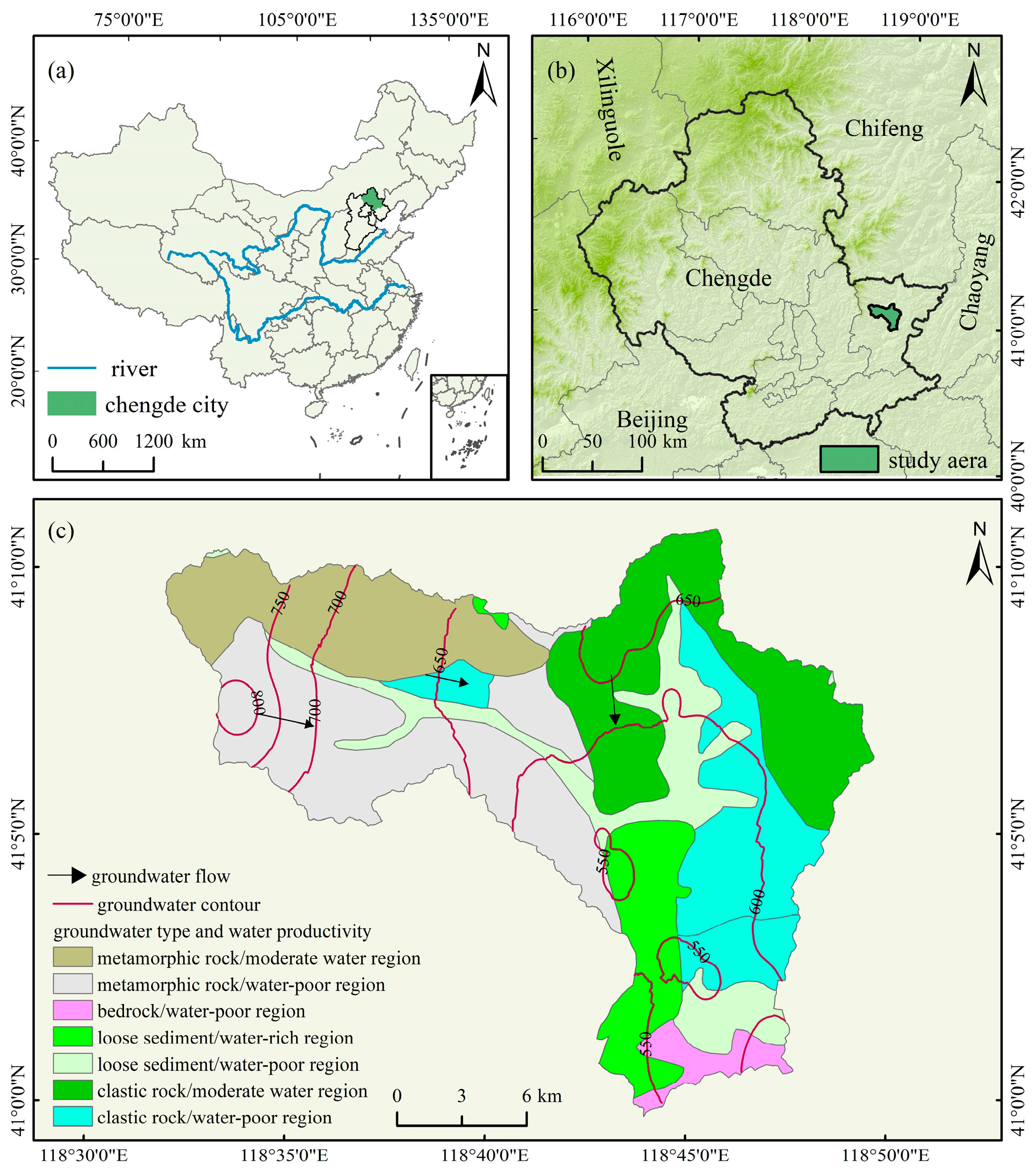
Wolong Town, administered by Pingquan City, is geographically situated between 118°32′27″ E–118°50′07″ E longitude and 40°59′48″ N–41°10′50″ N latitude, with a total area of 230.23 km2, as shown in Figure 1. Climatically, the town features a temperate continental monsoon climate, characterized by distinct seasonal variations. Its annual precipitation ranges from 300 mm to 800 mm, while the annual potential evaporation reaches approximately 1800 mm. Tectonically, the town lies at the junction of the Yanshan Fold Belt (North China Platform) and the Inner Mongolia Axis-a geological setting that exerts a fundamental control on its geological and hydrogeological conditions. Topographically, Wolong Town exhibits a “west-high, east-low” slope, with elevations ranging from 700 m to 920 m (maximum relative relief of 220 m), and belongs to a low-mountain landform. The Pu River, the largest river in the area, flows from north to south through several villages, with a total length of 5.8 km. Regarding mineral resources, proven underground deposits include iron, gold, and silica, among which iron ore is the primary exploited resource—boasting geological reserves of 280 million tons and recoverable reserves of 150 million tons. Iron ore mining activities are concentrated in the vicinity of Niangniaomiao Village in the western part of the town.
Groundwater in the study area is predominantly classified into two types: unconsolidated rock pore water and bedrock fissure water, forming a hydrogeological pattern characterized by “water-rich valleys and water-scarce highlands.” The sandy gravel aquifer in the Puhe River Valley, with a thickness of 5–15 m, exhibits the highest water yield potential among all aquifer types. In contrast, the Mesozoic volcanic rock fissure aquifer in the central part of the town has uneven permeability, which is primarily controlled by the degree of rock weathering. Karst fissure water is only locally developed in the Paleozoic limestone formations in the northern region, with a limited spatial distribution. Groundwater flow in the study area follows two main directions: east-to-west and north-to-south. Atmospheric precipitation infiltration and lateral infiltration from the Puhe River dominate the recharge sources. Discharge pathways primarily include artificial pumping (for domestic, agricultural, and industrial use) and natural spring overflow. Monitoring wells in the area typically have a depth of 15–30 m, and the depth of the groundwater level ranges from 1.2 to 6.0 m.

2.2. Sample Collection and Laboratory Analysis

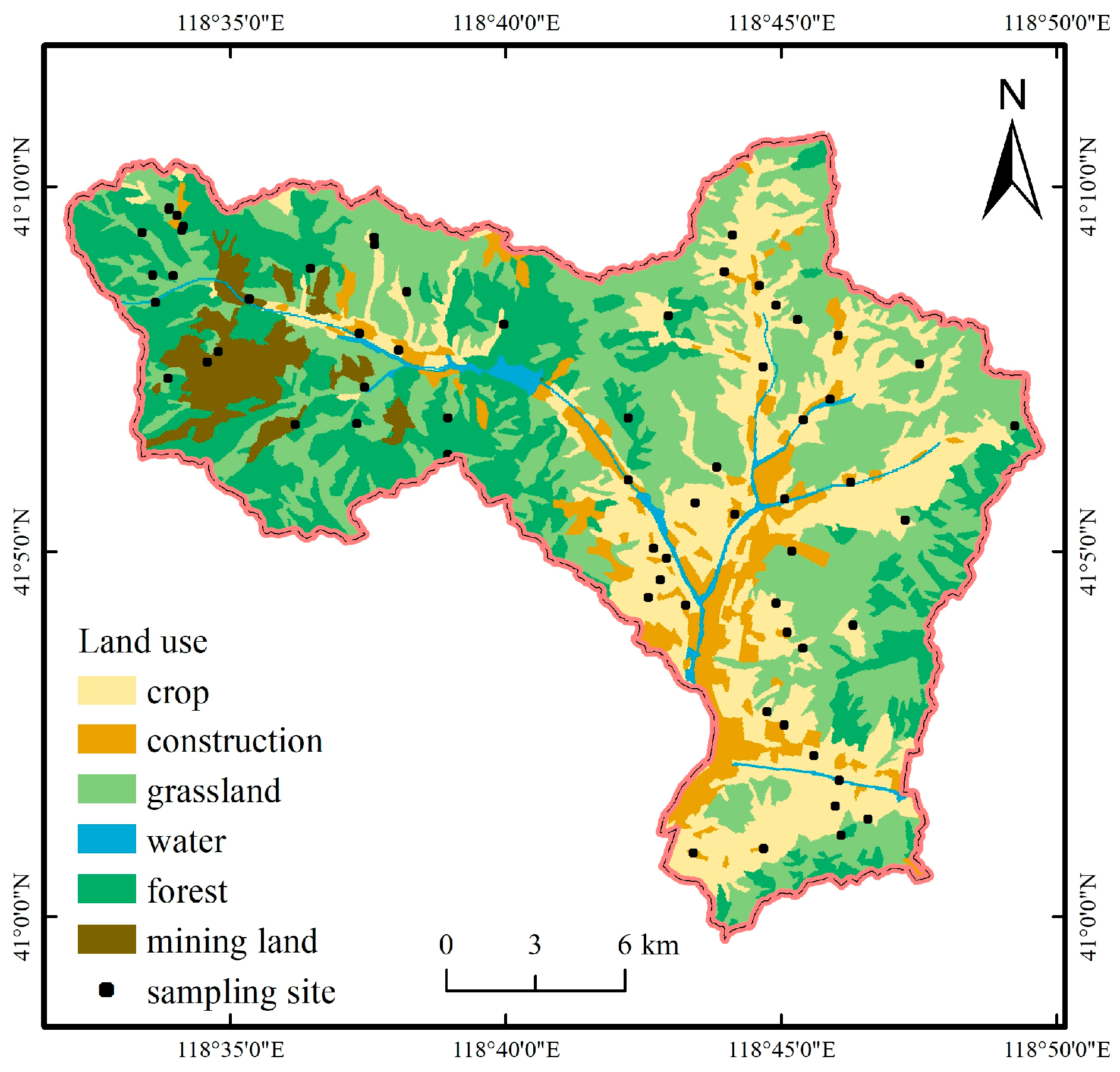
A total of 66 shallow groundwater samples (as shown in Figure 2) were collected from domestic and agricultural wells in Wolong Town between May to September 2022. All sample collection procedures strictly adhered to the Technical Specifications for Environmental Monitoring of Groundwater (HJ 164–2020) to guarantee data reliability. Prior to sampling, each well was pumped for 15–20 min to flush stagnant water in the wellbore and tubing, ensuring that the collected samples accurately reflected the in situ groundwater chemistry. Polyethylene sampling bottles (pre-rinsed with deionized water) were then thoroughly rinsed 3 times with the groundwater to be sampled to minimize cross-contamination. Samples were preserved differently based on the target parameters to prevent chemical transformation during storage. For the determination of cations (Na+, K+, Ca2+, Mg2+), concentrated nitric acid (analytical grade) was added to acidify the samples to pH 1–2, after which the samples were sealed in polyethylene bottles. For anions (Cl, SO42−, HCO3, CO32−, NO3, NO2), samples were stored in polyethylene bottles in their original state without any chemical addition, to avoid altering the anion balance. For ammonia nitrogen (NH3–N) analysis, concentrated sulfuric acid (analytical grade) was added to adjust the sample pH to <2, followed by sealing in polyethylene bottles to inhibit microbial decomposition of nitrogenous compounds. All preserved samples were immediately stored in a portable refrigerator at 4 °C and transported to the Laboratory of the Fourth Geological Brigade, Hebei Bureau of Geology and Mineral Exploration and Development on the same day of collection, ensuring that no more than 24 h elapsed between sampling and analysis—consistent with the quality control requirements for groundwater chemical analysis.
All groundwater chemical analyses were performed in strict accordance with the analytical protocols specified in China’s Groundwater Quality Standard (GB/T 14848-2017) [34] to ensure consistency with national technical norms. pH was determined using a calibrated pH meter (PHS-25, Shanghai Precision Scientific Instrument Co., Ltd., Shanghai, China). TDS was measured via the standard gravimetric method (WZB-175, Shanghai Precision Scientific Instrument Co., Ltd., Shanghai, China). Cations (Na+, K+, Ca2+, Mg2+) were analyzed using inductively coupled plasma optical emission spectroscopy (iCAP 6300, Thermo Fisher, Waltham, MA, USA). Cl, SO42−, HCO3 and CO32− were determined by Titration. Nitrogen species (NH3-N, NO3, NO2) were measured using a UV-visible spectrophotometer (UV-1240, Shimadzu, Kyoto, Japan). Quality control was ensured by analyzing blank samples, parallel samples, and certified reference materials; the relative standard deviation (RSD) of parallel samples was <5%, meeting analytical requirements.

2.3. Data Analysis

SPSS 19.0 software was used to conduct descriptive statistical analysis (e.g., mean, standard deviation, coefficient of variation) on groundwater hydrochemical parameters, and to explore correlations between key ions. PCA was also performed using SPSS 19.0 to reduce the dimensionality of 13 hydrochemical indicators. Prior to analysis, data were standardized to eliminate the influence of different units. The Kaiser-Meyer-Olkin (KMO) test and Bartlett’s Test of Sphericity were used to verify the suitability of PCA, and varimax rotation was applied to enhance the interpretability of extracted principal components. Origin 2023 software was used to generate graphical tools for deciphering the dominant hydrogeochemical processes controlling groundwater evolution, including Piper Trilinear Diagram, Gibbs Diagrams, Ion Ratio Plots and Chlor-Alkaline Indices (CAI). The GeoDetector tool was applied to quantify the explanatory power of potential factors on the spatial heterogeneity of groundwater nitrate concentrations. Six influencing factors were selected based on regional characteristics. The explanatory power was represented by the q-value (range: 0–1), where a higher q-value indicates a stronger control of the factor on nitrate spatial distribution. Additionally, the interactive detection module of GeoDetector was used to analyze the combined effects of different factor pairs (e.g., population density × soil type) on nitrate concentrations. ArcGIS 10.7 software was used to generate Hydrogeological map, sampling site Map, spatial distribution maps of groundwater hydrochemical parameters (e.g., TDS, NO3, NH3-N) and nitrate health risk indices. The inverse distance weighting (IDW) interpolation method was adopted for spatial interpolation, as it is well-suited for datasets with unevenly distributed sampling points (e.g., dense points in the central valley, sparse points in high-elevation areas). This approach enabled the clear visualization of spatial patterns and hotspots of groundwater chemical properties and pollution risks.

2.4. Health Risk Assessment

The US Environmental Protection Agency (USEPA) HHRA model [35,36] was used to evaluate the non-carcinogenic health risks of nitrate via two exposure pathways: drinking water ingestion and dermal contact.

2.4.1. Core Formulas

The non-carcinogenic risk index (HI) is defined as the ratio of chronic daily intake (ICD) to the reference dose (DRf):
HI = I CD D Rf
where
HI < 1: Risk is within the acceptable range; no significant adverse health effects are expected;
HI ≥ 1: Risk exceeds the acceptable threshold; adverse health effects may occur with long-term exposure.
Total ICD is the sum of ingestion ICD (ICDI) and dermal contact ICD (ICDD):
I CD = I CDI + I CDD
where
I CDI = C × IR × ABS × EF × ED BW × AT
I CDD = C × SA × Kp × EV × EF × ED × CF BW × AT
In the formulas, the definitions of each parameter are as follows:
C: Measured concentration of nitrate in groundwater (mg/L);
IR: Daily drinking water intake rate (L/d);
ABS: Gastrointestinal absorption coefficient, whose value is correlated with pollutant concentration;
EF: Exposure frequency, referring to the annual cumulative exposure duration (d/a);
ED: Exposure duration, representing the number of years during which the substance is ingested by the human body (a);
BW: Average body weight of residents (kg);
AT: Average exposure time, denoting the average duration over which exposure occurs (d);
SA: Skin contact surface area (cm2);
Kp: Skin permeability coefficient of the pollutant (cm/h);
EV: Daily bathing frequency (times/d);
CF: Conversion factor (L/cm3).

2.4.2. Parameter Definition and Values

Parameters were determined based on USEPA guidelines [37] and regional characteristics (Table 1). The DRf for nitrate was 1.6 mg/(kg·d) [20].

3. Results and Discussion

3.1. Groundwater Hydrochemical Composition Analysis

3.1.1. Statistical Characteristics of Hydrochemical Parameters

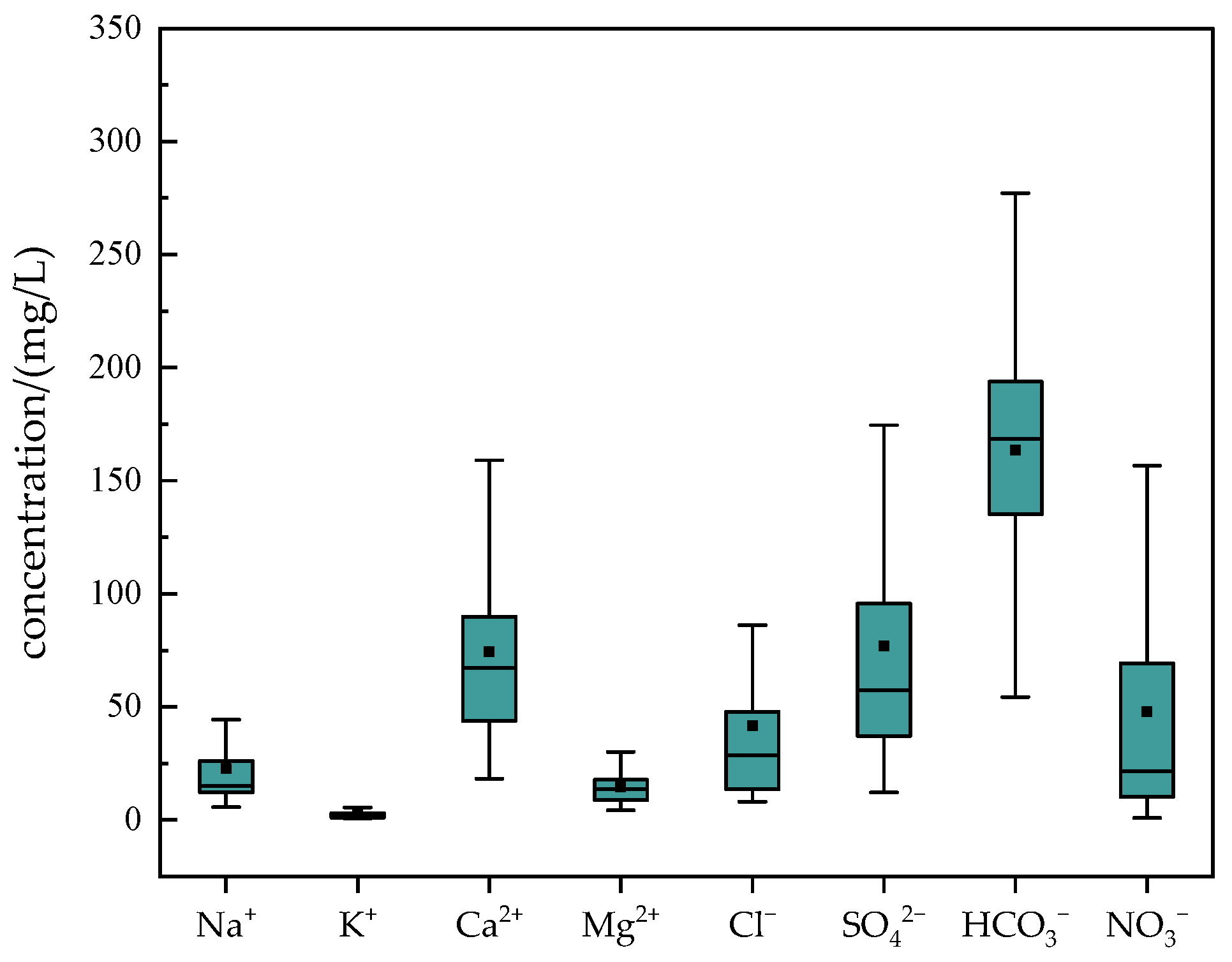
To characterize the hydrochemical properties of groundwater in the study area, descriptive statistical analysis was performed on all measured hydrochemical indicators, with results summarized in Table 2 and visualized in Figure 3. The analysis shows that the pH values of groundwater range from 7.0 to 8.4, with a mean value of 7.6, indicating that the groundwater is overall weakly alkaline, which is consistent with the typical pH range of groundwater in carbonate-dominated low mountain-hill regions. The TDS concentrations vary from 90.0 to 900 mg/L, with an average of 371 mg/L. According to the classification standard for groundwater salinity (TDS < 1000 mg/L = fresh water), the groundwater in the study area is categorized as fresh water, suitable for most domestic and agricultural uses. As illustrated in the hydrochemical component statistics (Table 2) and boxplots (Figure 3), the order of mean mass concentrations of cations in groundwater is Ca2+ > Na+ > Mg2+ > K+, while the order of anions is HCO3 > SO42− > NO3 > Cl. Among major cations: Ca2+ and Na+ are the dominant species, with average concentrations of 74.5 mg/L and 22.6 mg/L, respectively. The high Ca2+ concentration is likely attributed to the dissolution of carbonate minerals (e.g., calcite, dolomite) in the underlying strata, while Na+ may originate from both silicate weathering (e.g., albite) and minor anthropogenic inputs. Among major anions: HCO3 is the absolute dominant anion, with an average concentration of 164 mg/L—significantly higher than that of SO42− (79.4 mg/L) and Cl (39.5 mg/L). This dominance of HCO3 further supports the influence of carbonate dissolution on groundwater hydrochemistry, as HCO3 is the primary product of calcite and dolomite dissolution.
Spatial variability of hydrochemical parameters was evaluated using the coefficient of variation (CV), where CV < 50% indicates weak variability, 50% ≤ CV < 100% indicates strong variability, and CV ≥ 100% indicates extremely strong variability [39]. pH and HCO3 exhibit relatively low CV values (4.1% and 33.8%, respectively), reflecting their uniform spatial distribution. This is likely because pH is primarily regulated by stable carbonate buffering systems, and HCO3 is widely produced by regional carbonate weathering—processes that are spatially consistent across the study area. Most indicators, including TDS, Ca2+, Mg2+, SO42−, Na+, K+, and Cl, have CV values ranging from 50% to 90%. This strong variability suggests that the hydrogeochemical processes controlling these ions (e.g., evaporation-concentration in arid valleys, lithological leaching in heterogeneous bedrock, and localized anthropogenic inputs) are spatially heterogeneous. CO32−, NO3, NH3-N, and NO2 exhibit CV values exceeding 100%. Such extreme variability is typically associated with local point-source pollution [40]—for example, NO3 hotspots may correspond to areas with intensive agricultural fertilization or domestic sewage discharge, while NH3-N accumulation may be linked to localized reducing environments (e.g., stagnant groundwater zones).

3.1.2. Groundwater Hydrochemical Types

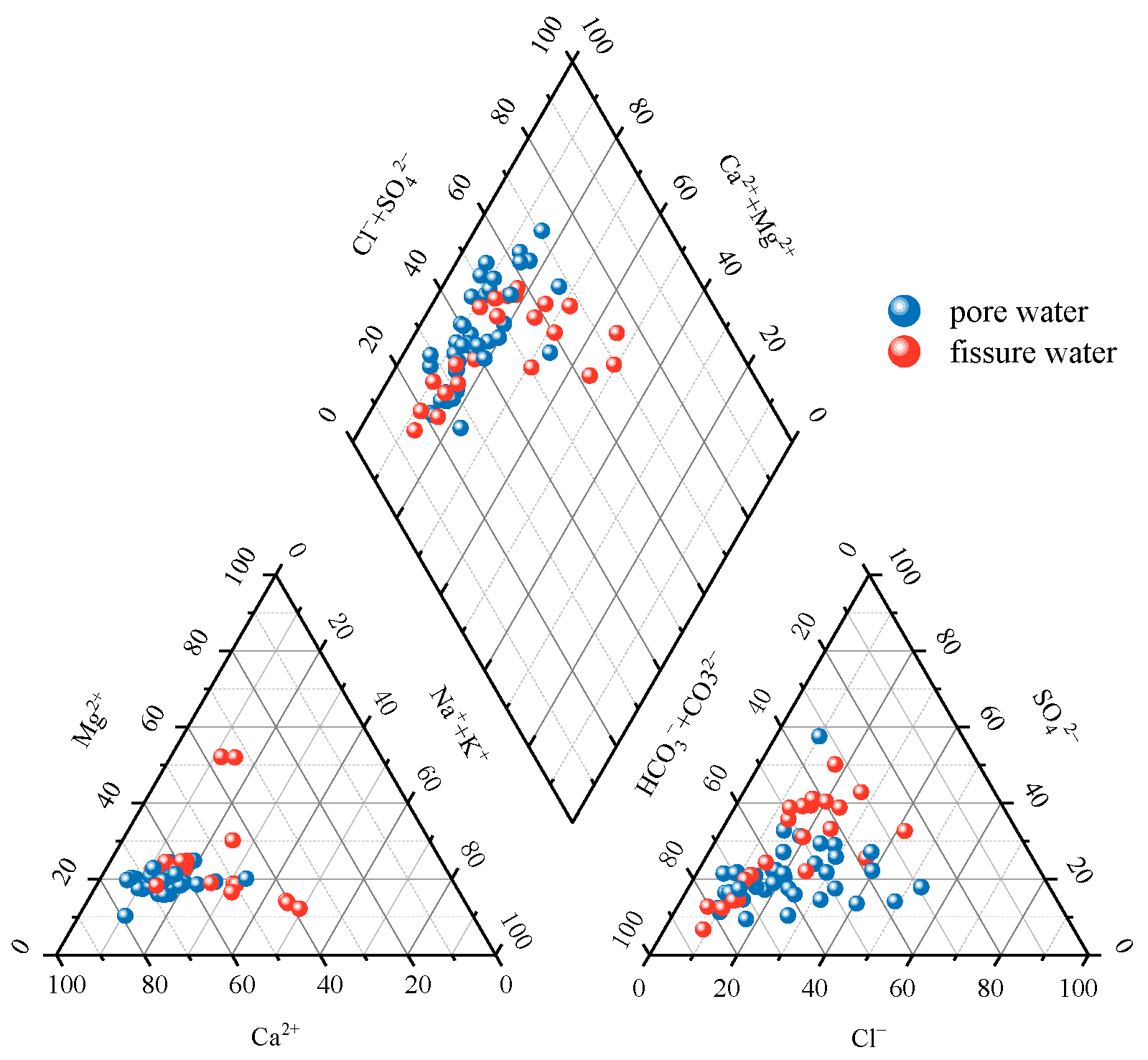
To systematically classify groundwater hydrochemical types and clarify the dominant ion assembly characteristics in the study area, a Piper trilinear diagram was constructed [41], as shown in Figure 4. Samples of Bedrock fissure water are predominantly clustered in the HCO3-Ca2+ zone of the Piper diagram. This type is typically formed in relatively closed hydrogeological environments, where carbonate dissolution (e.g., calcite (CaCO3) and dolomite (CaMg(CO3)2)) is the dominant process. The weak hydraulic connectivity of fissure aquifers limits the mixing of groundwater with external ion sources, further consolidating the dominance of HCO3 and Ca2+. Most pore water samples also fall into the HCO3-Ca2+ type, consistent with the regional carbonate weathering background. However, a subset of pore water samples shows elevated concentrations of Cl and SO42−, leading to the formation of mixed types: HCO3·SO42−-Ca2+ and HCO3·Cl-Ca2+.
The distinct hydrochemical characteristics between pore water and fissure water, as well as the formation of mixed types in pore water, are primarily driven by differences in aquifer properties and human activity impacts. Pore water is distributed in the unconsolidated deposits of the Puhe River valley, featuring extensive spatial coverage and active recharge (e.g., infiltration from precipitation and river water). Compared to fissure water, pore water has stronger hydraulic conductivity and more frequent interactions with the unsaturated zone, making it more susceptible to external ion inputs. The presence of preferential flow paths (e.g., macropores in agricultural soils) and bedrock fractures in the pore water zone creates rapid migration channels for surface pollutants [42]. For instance, Cl enrichment may originate from domestic sewage discharge or livestock manure leaching, while elevated SO42− could be attributed to agricultural fertilizer application (e.g., ammonium sulfate) or minor seepage from iron ore mining waste residues. These anthropogenic inputs alter the original anion balance of pore water, leading to the emergence of mixed hydrochemical types.

3.2. Correlation Analysis and Principal Component Analysis

3.2.1. Correlation Analysis

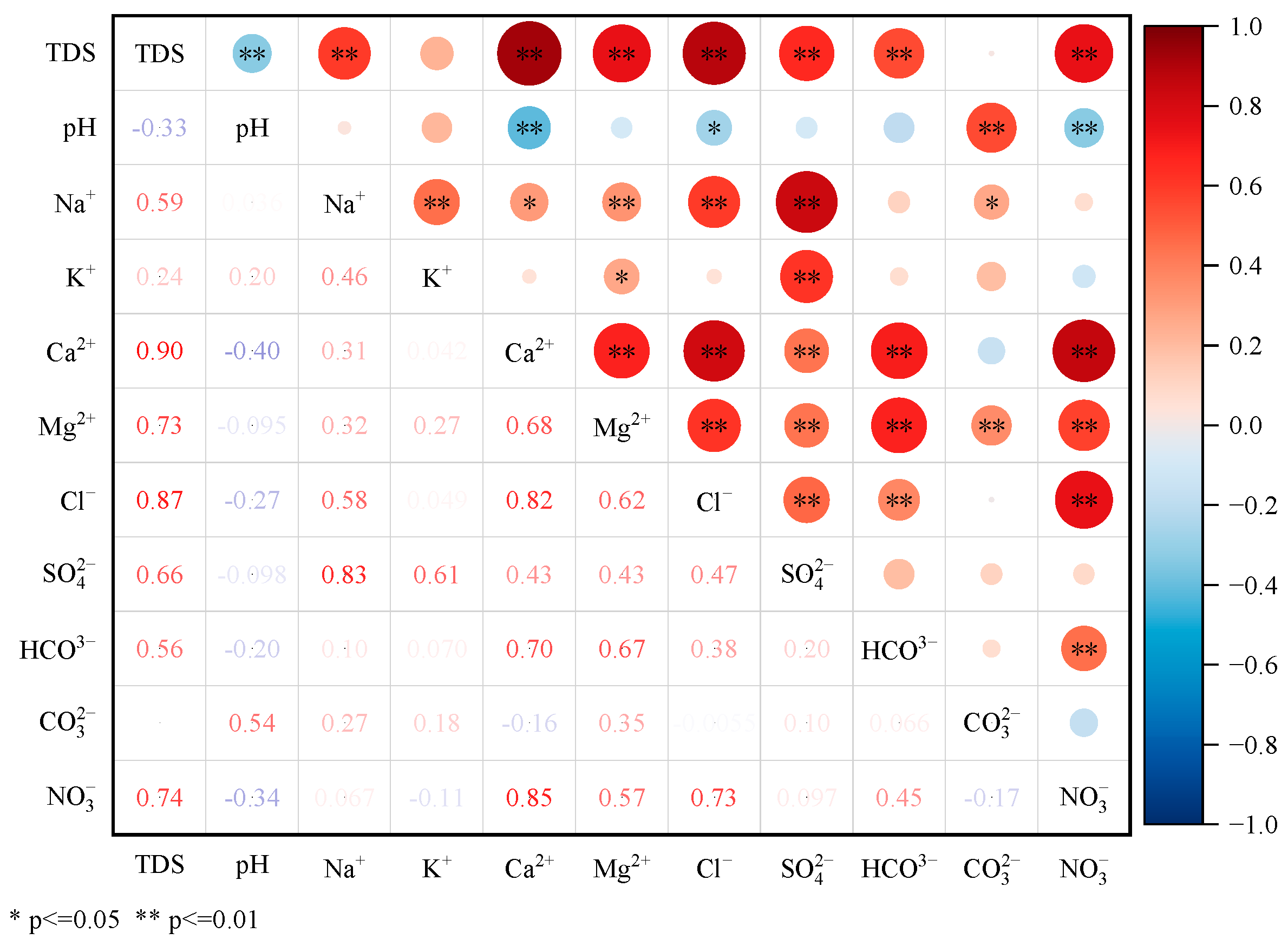
In hydrogeochemical research, correlation analysis serves as a widely employed methodological approach. Specifically, correlation analysis of hydrochemical components enables the revelation of correlations among different hydrochemical constituents in aqueous systems, while also facilitating the identification of similarities and disparities in their provenances [43,44]. In this study, 11 components including TDS, pH, Na+, K+, Ca2+, Mg2+, Cl, SO42−, HCO3, CO32−, NO3- were selected for correlation analysis, as shown in Figure 5. The results indicate that TDS was significantly positively correlated with Na+, Ca2+, Mg2+, Cl, SO42−, HCO3, and NO3 (p < 0.01, r = 0.57–0.90), indicating these ions are the primary contributors to groundwater mineralization. pH was negatively correlated with most cations (r = −0.12–0.35), suggesting slightly acidic environments may promote the dissolution of carbonate and silicate minerals (releasing Ca2+ and Mg2+).
Ca2+ and HCO3 (r = 0.70), Mg2+ and HCO3 (r = 0.67) were significantly positively correlated, indicating carbonate weathering are major sources of these ions. Na+ and SO42− were positively correlated (r = 0.52), potentially from albite (NaAlSi3O8) weathering or gypsum (CaSO4·2H2O) dissolution. However, the correlation between Ca2+ and SO42− is weaker, suggesting that the weathering of albite (NaAlSi3O8) may play a dominant role. Cl exhibits strong positive correlations with Ca2+ (0.82) and Mg2+ (0.62), which may be related to the dissolution of rock salt (NaCl) and calcium/magnesium chloride minerals, or influenced by lateral recharge of chlorine-bearing groundwater.
A significant positive correlation is observed between Na+ and SO42−, which may originate from the dissolution of feldspar (e.g., albite) or gypsum (CaSO4·2H2O). In contrast, the correlation between Ca2+ and SO42− is relatively weak, implying that the weathering of albite (NaAlSi3O8) might exert a dominant control. Chloride ions (Cl) demonstrate strong positive correlations with Ca2+ (correlation coefficient: 0.82) and Mg2+ (correlation coefficient: 0.62), which may be caused by leaching processes—such as the weathering of silicates, carbonate rocks, halite, and other minerals.
Nitrate (NO3) exhibited a strongly positive correlation with calcium ions (Ca2+) (correlation coefficient, r = 0.85) and chloride ions (Cl) (r = 0.73). Furthermore, NO3 showed a strong correlation with total dissolved solids (TDS) (r = 0.74), and this correlation magnitude is far higher than the natural background level. This observation suggests that nitrate in the groundwater is predominantly of anthropogenic origin (e.g., nitrogenous fertilizers, livestock manure), with the concomitant infiltration of associated Ca2+ and Cl into the groundwater system through soil leaching processes.

3.2.2. Principal Component Analysis

Principal Component Analysis (PCA) is a multivariate statistical dimensionality reduction technique that transforms a set of potentially correlated original variables into a smaller set of uncorrelated comprehensive variables (termed “principal components”). To enhance the interpretability of these components, varimax rotation—a orthogonal rotation method that maximizes the variance of factor loadings across variables—was applied to derive distinct factor variables [45,46]. In this study, PCA was performed using SPSS software on 13 groundwater hydrochemical indicators (including pH, TDS, major cations/anions, and nitrogen species). Prior to analysis, all data were standardized (z-score normalization) to eliminate the influence of differing units and magnitude disparities among indicators. Two statistical tests were conducted to verify the suitability of the dataset for PCA. The KMO index was calculated as 0.62. According to Kaiser’s criterion, a KMO value between 0.6 and 0.7 indicates a “marginally suitable” dataset for factor analysis, confirming that the indicators have sufficient common variance to support dimensionality reduction. Bartlett’s Test of Sphericity yielded a significance value (p-value) of <0.05 (approaching 0), which demonstrates that the hydrochemical indicators are significantly correlated, further validating the appropriateness of PCA.
Based on the eigenvalue > 1 criterion (a widely accepted threshold for principal component extraction), 4 principal factors (F1–F4) were extracted from the rotated factor loading matrix (Table 3). The cumulative variance contribution rate of these 4 factors reached 76.702%, meaning they collectively explain 76.702% of the total variance in the original 13 indicators. This high cumulative contribution rate indicates that the extracted principal factors effectively capture the majority of information embedded in the original dataset, justifying the use of PCA for simplifying the complex hydrochemical dataset while retaining key information.
F1 accounts for 39.737% of the total variance, making it the primary driver of groundwater hydrochemical characteristics. It exhibits strong positive loadings on total dissolved solids (TDS, 0.962)—a core indicator of groundwater mineralization—and major ions including Ca2+ (0.911), Cl (0.870), and Mg2+ (0.807), as well as a significant positive loading on NO3 (0.725). The high loadings of Ca2+, Mg2+, and TDS indicate that natural water-rock interaction (e.g., dissolution of calcite (CaCO3), dolomite (CaMg(CO3)2), and halite (NaCl)) is a key process regulating ion enrichment [47]. The strong correlation with NO3 (a typical anthropogenic indicator) suggests the co-influence of anthropogenic nitrogen inputs, such as agricultural fertilizer leaching and domestic sewage infiltration [48]. Collectively, F1 reflects the synergistic effect of “natural mineral dissolution + anthropogenic nitrogen input,” directly determining the overall mineralization level and ion accumulation intensity of groundwater.
F2 explains 17.901% of the variance, characterized by high positive loadings on pH (0.631), K+ (0.654), and CO32− (0.658), and negative loadings on Ca2+ (−0.349) and NO3 (−0.511). The positive loadings of pH and CO32− indicate that F2 is closely related to groundwater alkalinity, which is primarily regulated by carbonate buffering systems. The negative loading of Ca2+ implies cation exchange processes (e.g., Na+/K+ displacing adsorbed Ca2+ on mineral surfaces), while the negative correlation between NO3 and pH suggests that NO3 is more prone to accumulation in weakly acidic environments—this is because acidic conditions inhibit microbial denitrification (a process that consumes NO3) [49]. Thus, F2 primarily reflects the spatial differentiation of groundwater alkalinity and the regulatory role of cation exchange in ion balance.
F3 contributes 11.185% of the variance, with positive loadings on CO32− (0.544) and NO2 (0.484) and a negative loading on SO42− (−0.454). This indicates that F3 represents the coupled effect of nitrogen transformation (NO2 accumulation) and anion differentiation under weakly reducing hydrogeochemical conditions. F4 accounts for 7.879% of the variance, with strong positive correlations only with NH3-N (0.463) and NO2 (0.753)—both intermediate products of reduced nitrogen, representing the enrichment characteristics of intermediate products of reduced nitrogen.
Synthesizing the interpretation of F1–F4, the hydrochemical evolution of groundwater in the study area is jointly regulated by three core processes: natural water-rock interaction—anthropogenic nitrogen input—environmental redox differentiation. This “triple synergy” mechanism comprehensively explains the spatial variability of groundwater hydrochemical characteristics in the study area.

3.3. Natural Controls on Groundwater Hydrochemistry

3.3.1. Gibbs Diagram Analysis

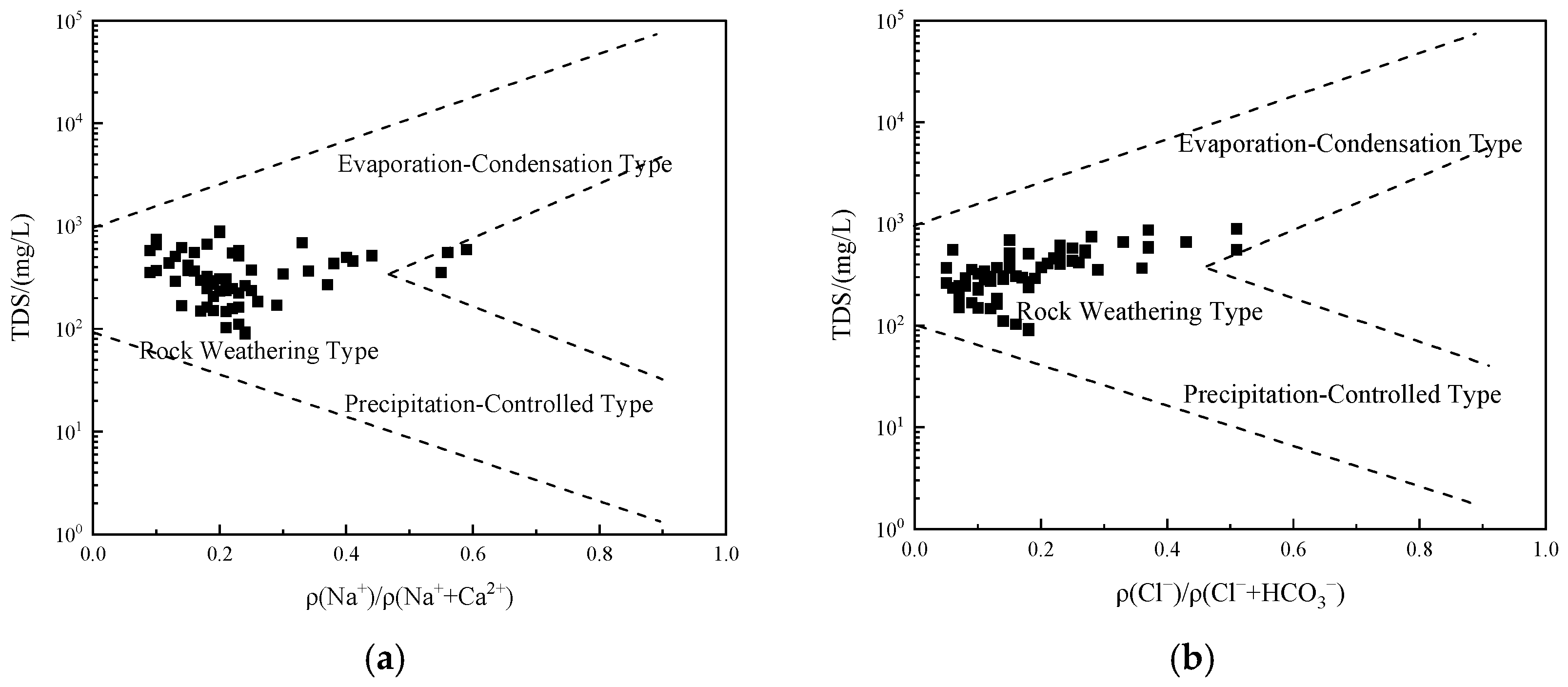
Gibbs diagrams are commonly used to distinguish the influences of atmospheric precipitation, rock weathering, and evaporation-concentration on groundwater chemistry [50,51]. By utilizing the relationships between cation concentration ratios, anion concentration ratios, and total dissolved solids (TDS), Gibbs diagrams macroscopically reflect the controlling factors of major ions. Based on the distribution of data points, they can indicate three genetic types: evaporation-concentration type, rock weathering type, and precipitation-controlled type [52,53]. As shown in Figure 6, most groundwater samples in the study area are distributed in the rock weathering zone, indicating that water-rock interaction is the main mechanism for the formation of groundwater hydrochemical types. A small number of sampling points fall in the evaporation-concentration zone, suggesting that groundwater in the study area is affected by evaporation-concentration. However, Gibbs diagrams can only analyze the impacts of natural processes on groundwater; anthropogenic processes should be evaluated through other methods.

3.3.2. Ion Ratio Analysis

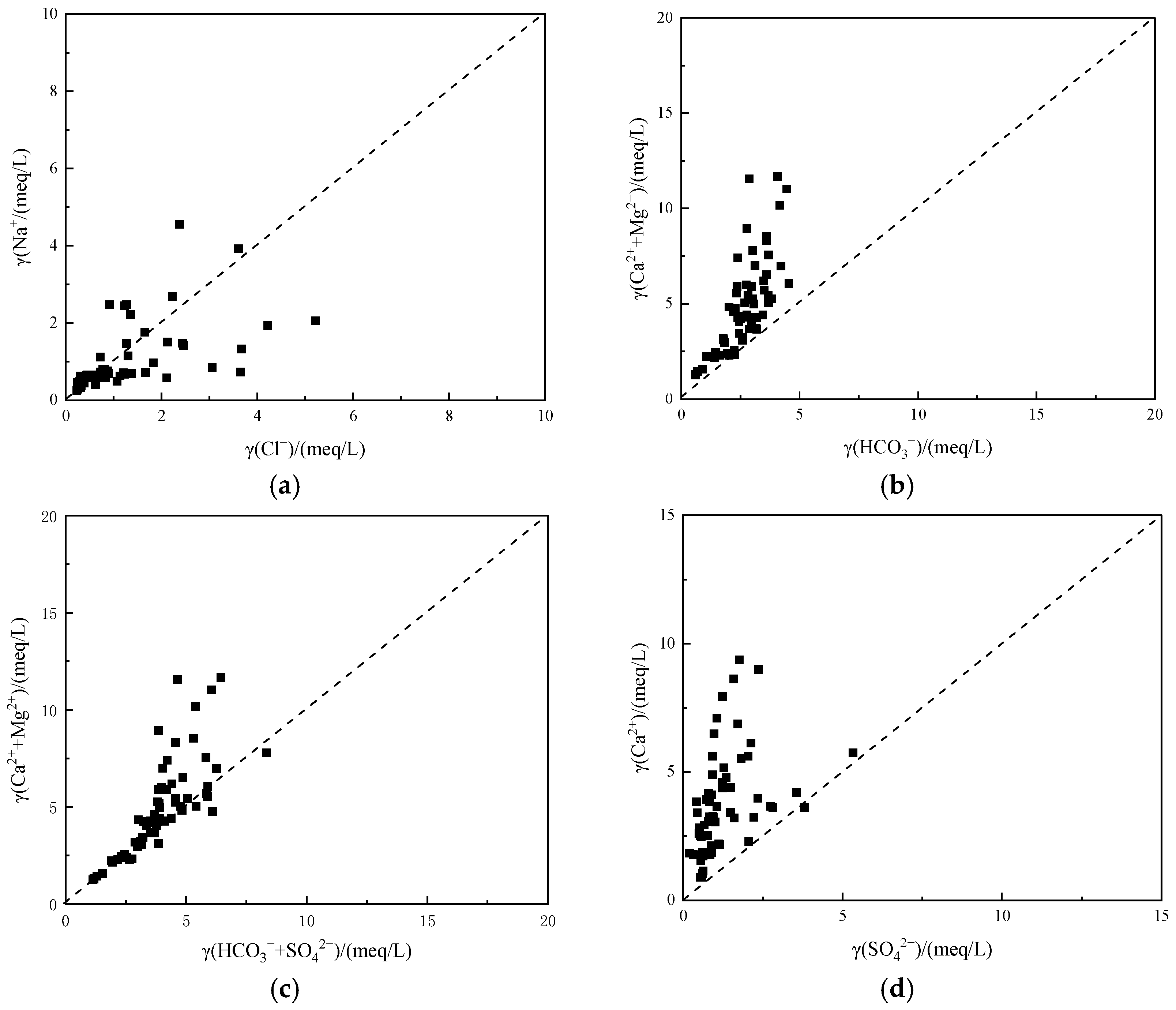
The application of ion ratio relationships enables the identification of sources of major ions and facilitates further analysis of the hydrochemical evolution processes of groundwater [41,53]. The natural sources of chloride ions (Cl) and sodium ions (Na+) in groundwater are primarily derived from the dissolution of halite (NaCl) in sedimentary rocks. Theoretically, the dissolution of halite releases equimolar amounts of Na+ and Cl, which implies a molar ratio of γ(Na+)/γ(Cl) = 1 [50,54]. As illustrated in Figure 7a, a weak positive correlation is observed between γ(Na+) and γ(Cl) in the groundwater samples collected from the study area. For some samples, the γ(Na+)/γ(Cl) ratio falls above the 1:1 reference line, indicating that the excess Na+ may be sourced from the weathering of silicate minerals. For other samples, the γ(Na+)/γ(Cl) ratio lies below the 1:1 reference line, suggesting that the excess Cl could be ascribed to anthropogenic pollution of the groundwater [55].
Under natural conditions, the dissolution of carbonate minerals produces a molar ratio of γ(Ca2+ + Mg2+)/γ(HCO3) equal to 1. As illustrated in Figure 7b, the majority of samples in the study area exhibit a significant positive correlation between HCO3 and Ca2+ + Mg2+, with the γ(Ca2+ + Mg2+)/γ(HCO3) ratio lying above the 1:1 reference line. Specifically, the γ(HCO3) concentration ranges from 0 to 6 meq/L, while the γ(Ca2+ + Mg2+) concentration ranges from 0 to 12 meq/L. This observation indicates that carbonate weathering serves as the primary source of ions in groundwater. In addition to carbonate dissolution, Ca2+ and Mg2+ may also be derived from other sources (e.g., sulfate mineral dissolution) [28].
The ratio γ(Ca2+ + Mg2+)/γ(HCO3 + SO42−) can be used to identify the sources of Ca2+ and Mg2+. As shown in Figure 7c, most samples are distributed near the 1:1 line, indicating that Ca2+ and Mg2+ are mainly derived from the dissolution of calcite, dolomite, and gypsum, and there is a synergistic effect between carbonate and sulfate weathering [56]. This is also confirmed by Figure 7d: all γ(Ca2+)/γ(SO42−) ratios of groundwater samples lie above the 1:1 line, which suggests that gypsum dissolution is not the only source of Ca2+, and Ca2+ is simultaneously dominated by carbonate dissolution.

3.3.3. Chlor-Alkaline Index (CAI)

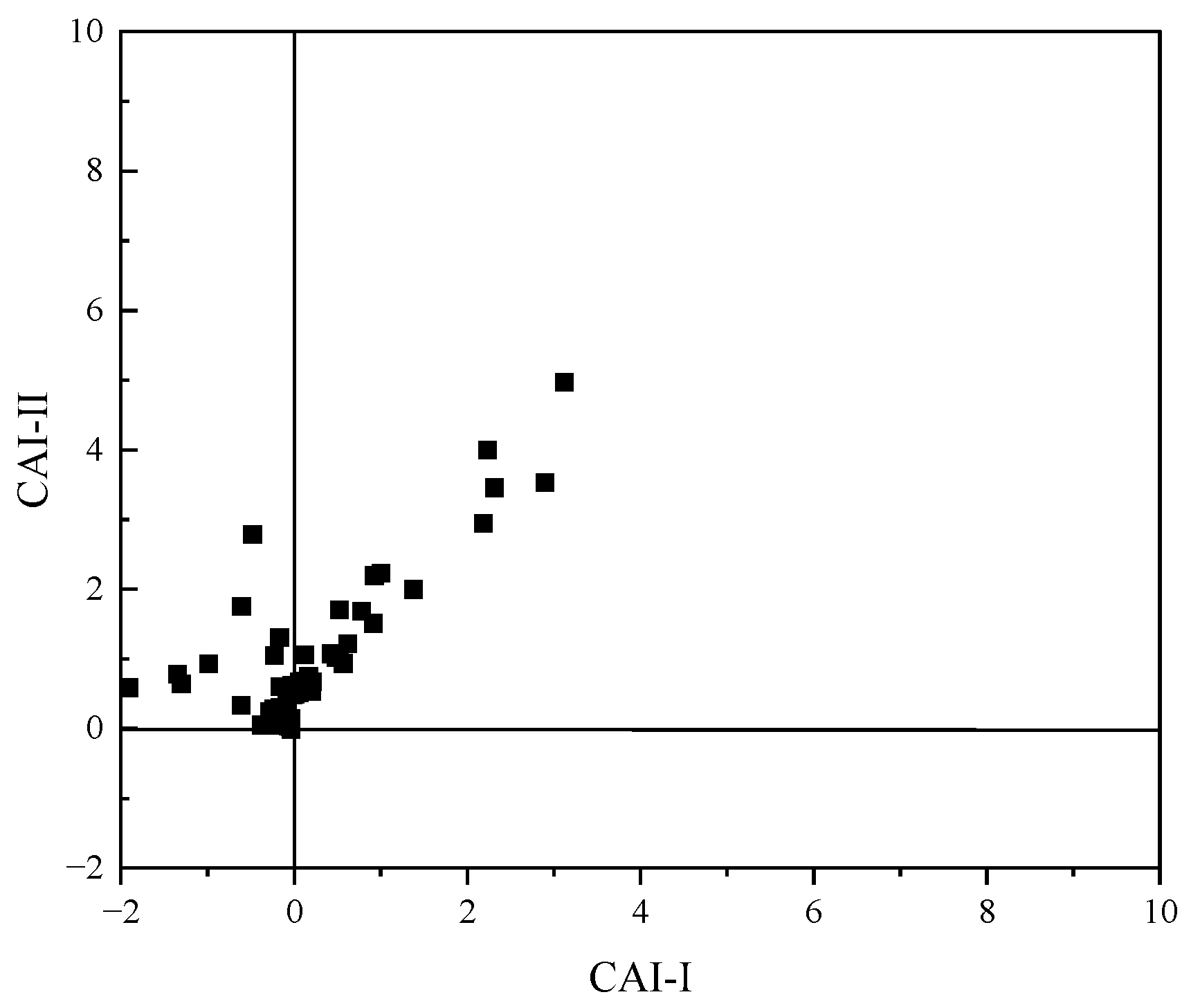
The Chloride-Alkalinity Index (CAI) is a critical method for investigating cation exchange processes [57]. When both CAI-I and CAI-II values are greater than 0, it indicates that Na+ and K+ in the aqueous system exchange with Ca2+ and Mg2+ adsorbed on the surfaces of rock and soil phases, releasing the latter into the water and resulting in a reverse ion exchange reaction. Conversely, if both values are less than 0, it signifies that Ca2+ and Mg2+ in groundwater displace Na+ and K+ in the aqueous medium, undergoing a forward ion exchange reaction [58]. The larger the absolute value of the CAI, the stronger the ion exchange intensity. As depicted in Figure 8, 40.6% of the groundwater samples fall within the range where both CAI values are greater than 0, implying an elevated Na+ content in groundwater. This elevation induces a reverse cation exchange adsorption effect, which displaces Ca2+ and Mg2+ in the aqueous medium. Notably, the sampling points where this reverse cation exchange adsorption occurs are primarily concentrated in the central region with intensive anthropogenic activities. This observation indicates that anthropogenic activities contribute to the increase in groundwater Na+ concentration, thereby triggering the reverse cation exchange adsorption effect.

3.4. Anthropogenic Controls on Groundwater Hydrochemistry

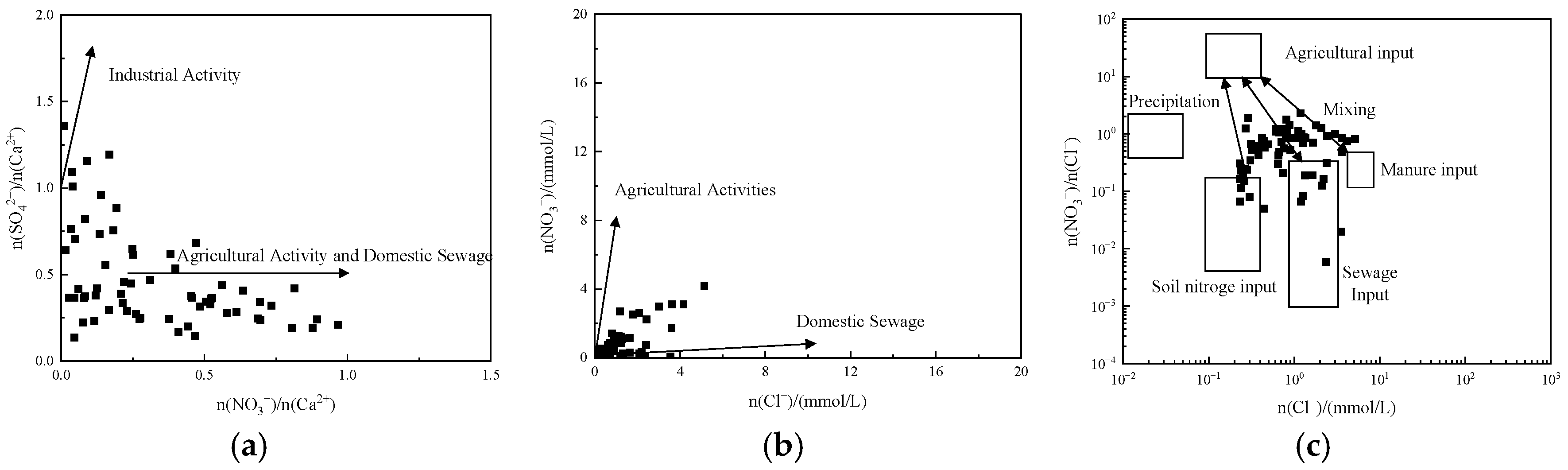
In the study area, the characteristics of water samples dominated by nitrate underscore the significant impact of anthropogenic factors on groundwater chemical properties [59]. To further elucidate how anthropogenic activities influence groundwater chemical characteristics, this study focuses on analyzing nitrate (NO3), chloride (Cl), and sulfate (SO42−)—components sensitive to anthropogenic disturbances. As a stable constituent in natural aquatic systems, Cl concentration varies solely through mixing with other chloride-containing sources, rendering it an effective tracer for sewage or fecal pollution, as well as dilution effects [60,61]. Similarly, SO42− and NO3 can act as indicators for industrial emissions and agricultural/livestock activities, respectively [51,62]. As illustrated in Figure 9a, the molar ratios of n(NO3/Ca2+) and n(SO42−/Ca2+) in most groundwater samples are consistent with the impacts of agricultural wastewater and domestic sewage, while a small subset of samples is additionally affected by industrial activities. Figure 9b further confirms that groundwater quality in this region is influenced by both agricultural wastewater and domestic sewage. As shown in Figure 9c, in addition to the natural soil nitrogen content, the nitrate content in the study area’s groundwater is significantly affected by inputs from domestic sewage and manure. This finding confirms that agricultural activities, domestic sewage discharge, and manure emissions are the primary driving factors of groundwater pollution.

3.5. Factors for Controlling Nitrate and Health Risk Assessment

3.5.1. Spatial Distribution of Nitrate

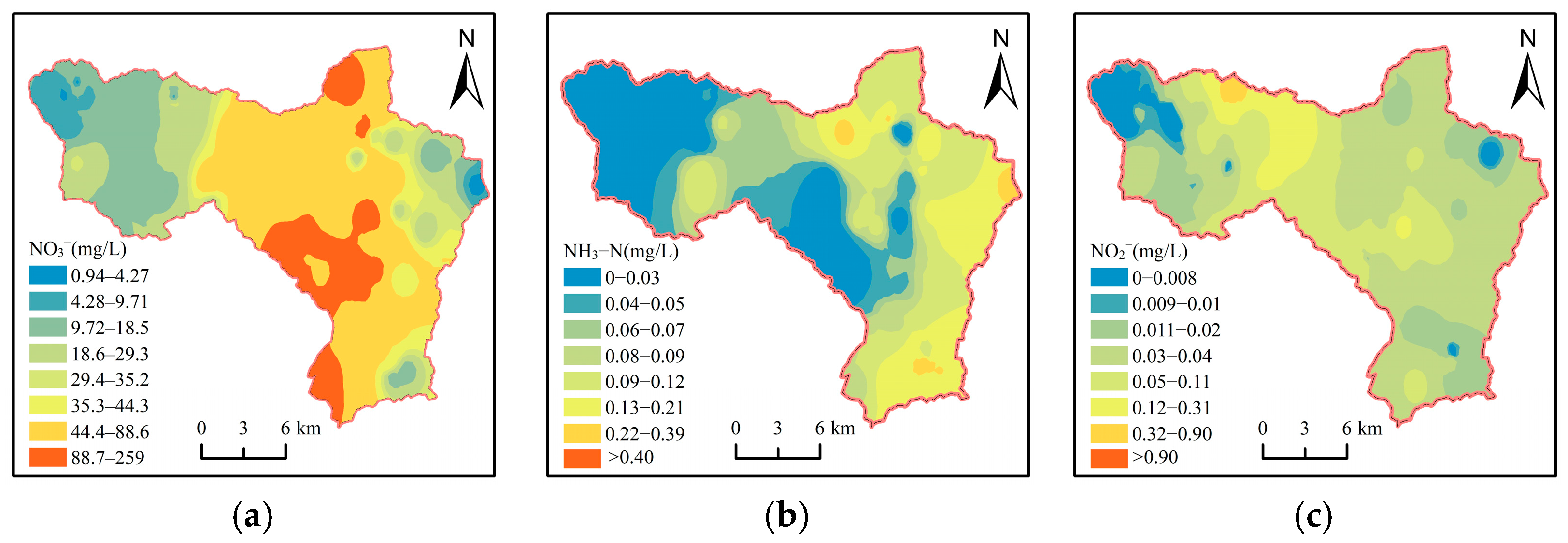
Groundwater monitoring results showed that the NO3 concentration ranged from 0.94 to 259 mg/L, with an average of 47.8 mg/L. Among the samples, 37.8% exceeded the limit specified in the National Standard for Drinking Water Quality (GB 5749–2002) [63]—the limit for nitrate nitrogen (NO3-N) is 10 mg/L, which is equivalent to a nitrate (NO3) concentration limit of 44.3 mg/L. The maximum concentration at a single site exceeded the limit by 5.85 times, indicating that some groundwater in the study area is no longer suitable for direct drinking. In terms of spatial distribution (Figure 10), groundwater with high NO3 concentrations is mainly concentrated in the central river valley area, where population density is high and human activities are frequent; concentrations are lower in the high-elevation areas in the east and west. Previous studies have shown that excessive nitrate in groundwater is common in areas with intensive human activities, especially agricultural regions [64]. The concentrations of NO2 and NH3-N in the study area’s groundwater are relatively low, and neither exceeds the limits specified in GB 5749–2002. Notably, the spatial distribution trend of NH3-N concentration is the exact opposite of that of NO3: it is lower in the central river valley area and higher in the eastern area. This discrepancy may be attributed to the varying redox conditions of groundwater. Under oxidizing conditions, NH3-N is oxidized to NO3; under reducing conditions; however, the concentration of NH3-N tends to be higher.

3.5.2. Controlling Factors of Nitrate Evolution

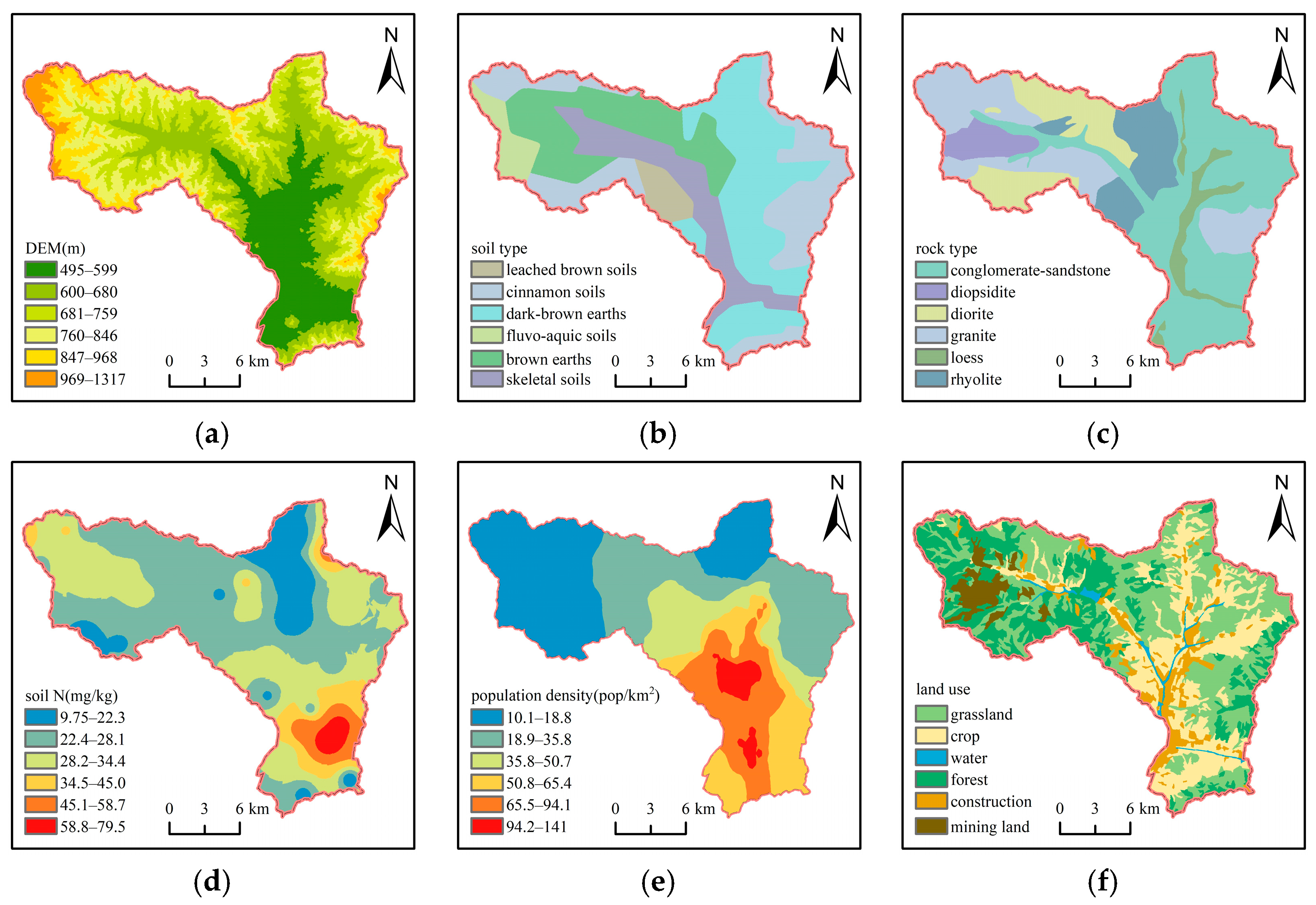
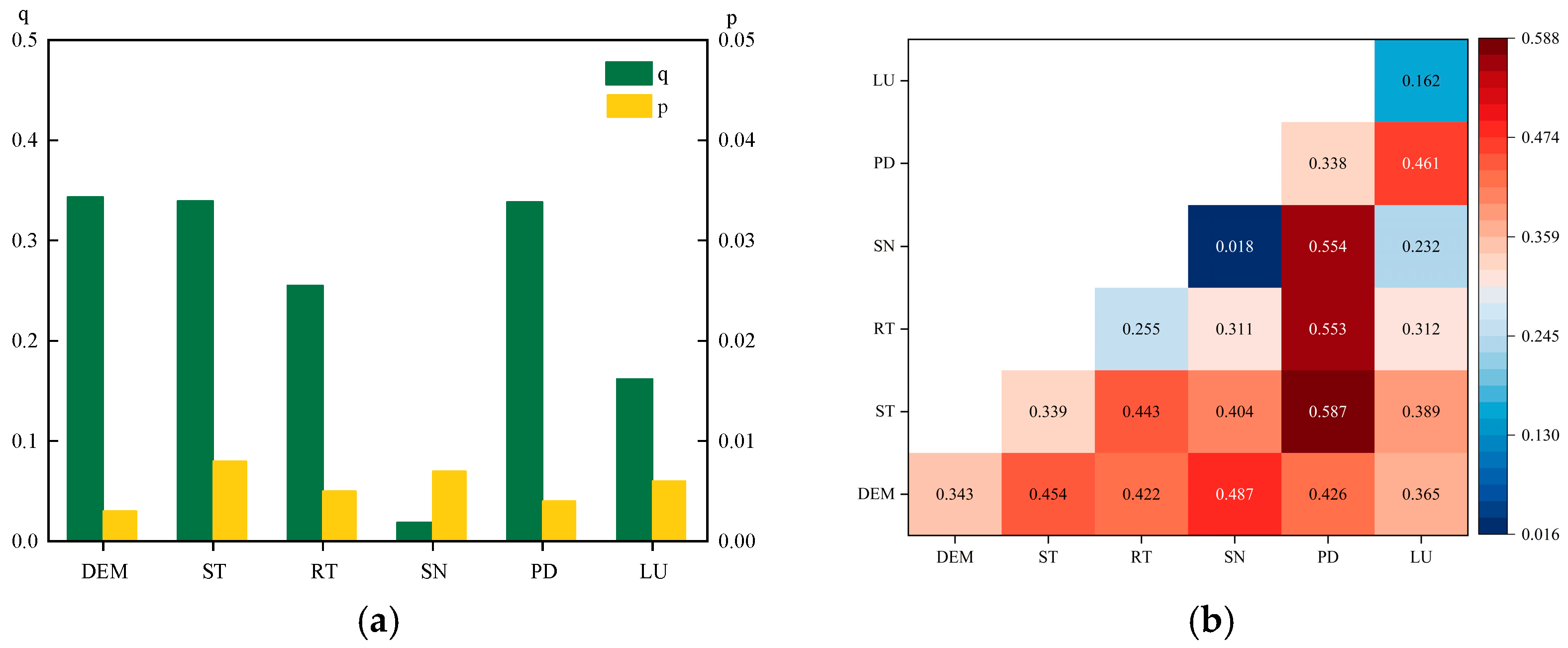
GeoDetector, a statistical tool, is designed to clarify the underlying causes of spatial heterogeneity in survey data [65]. Asnakew Mulualem Tegegne et al. [66] applied GeoDetector to identify the primary factors influencing groundwater degradation in the Gunaibey Basin, Ethiopia. In this study, six factors were selected as potential controlling factors for the evolution of nitrate content in groundwater: elevation (DEM), soil type (ST), rock type (RT), soil nitrogen content (SN), population density (PD), and land use type (LU), as shown in Figure 11. The results showed that the significance levels (p-values) of all influencing factors were less than 0.01, indicating statistical significance. The relative explanatory power (q-values) of each factor is presented in Figure 10, ranked in descending order as follows: elevation > soil type > population density > rock type > land use type > soil nitrogen content. Among these, elevation, soil type, and population density were the primary driving factors, followed by rock type and land use type, while soil nitrogen content had a relatively minor impact on the evolution of nitrate content. The interactive detector was used to explore the combined explanatory impact of various factors on nitrate content, as shown in Figure 12. Notably, population density interacted with soil type, rock type, and soil nitrogen content, exhibiting high interaction intensities with q-values of 0.587, 0.552, and 0.554, respectively. This suggests that the intensification of human activities—such as excessive fertilization, irrigation practices, and the discharge of sewage and manure [67,68]—in combination with soil type and rock type, constitutes a significant driving force for nitrate evolution. Although soil nitrogen content alone has little impact on groundwater nitrate levels, when combined with the effects of human activities, it can exert a considerable influence.

3.5.3. Health Risk Assessment of Nitrate

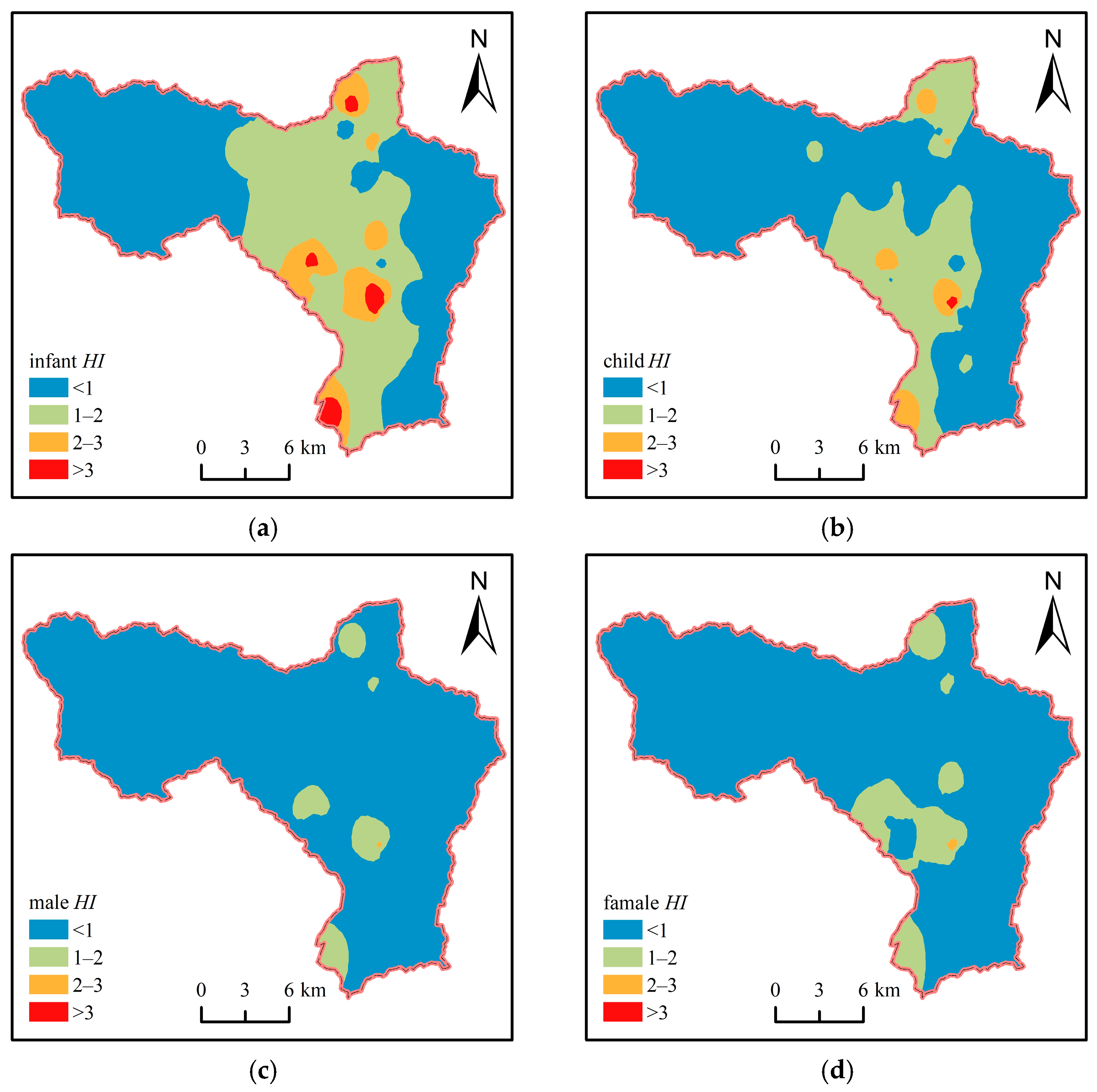
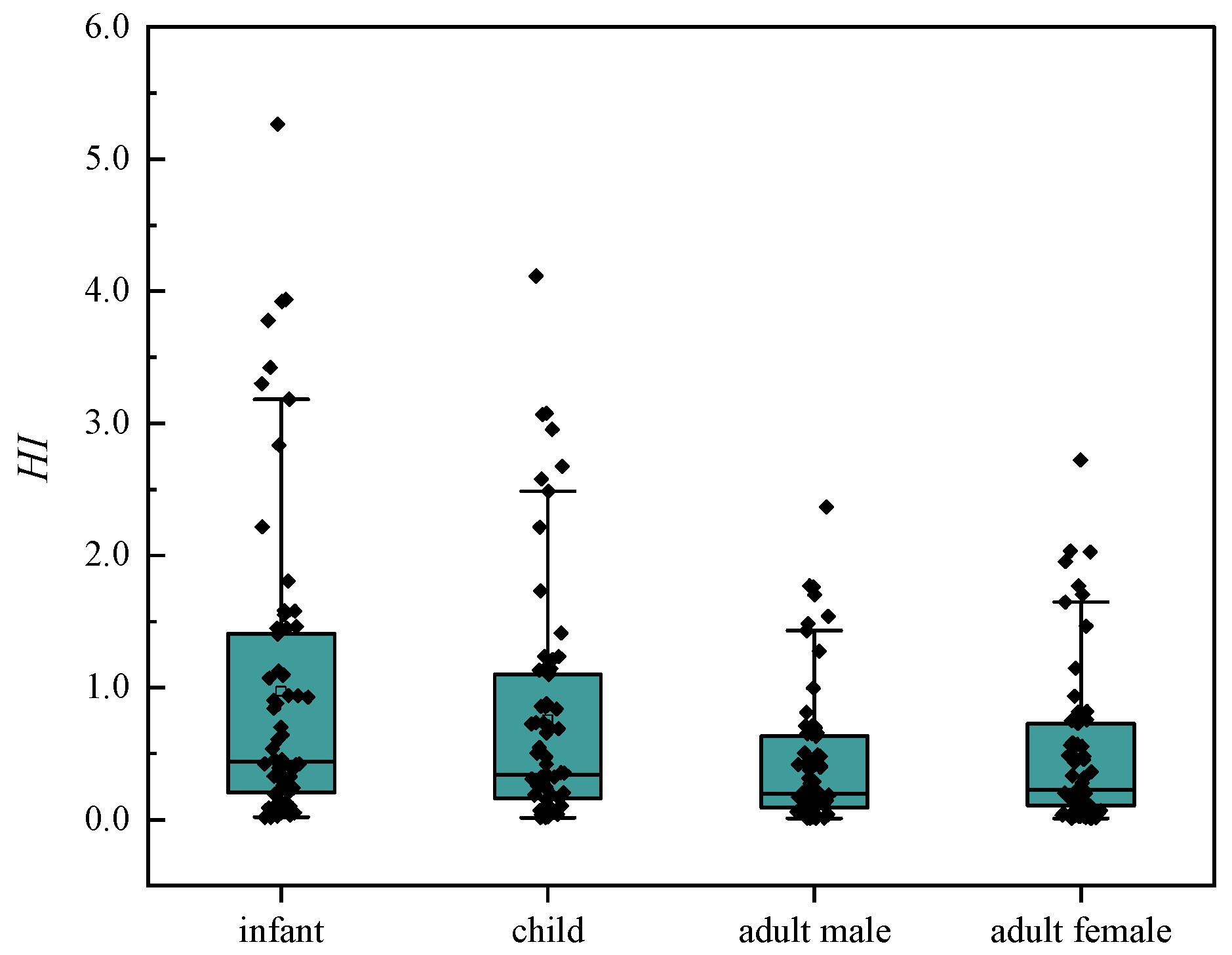
Based on the nitrate concentrations in the groundwater of the study area, the non-carcinogenic health risk index (HI) was calculated for four population groups: infants, children, adult males, and adult females, as shown in Figure 13. According to the risk assessment criteria, an HI value less than 1 indicates that the potential health risk associated with groundwater exposure is at an acceptable level, whereas an HI value greater than 1 signifies an unacceptable level of risk [37]. The calculation results revealed the following: for infants, HI values ranged from 0.019 to 5.26 with a mean of 0.971, and among the 66 groundwater samples, 21 exhibited HI values exceeding 1, corresponding to an exceedance rate of 31.82%; for children, HI values varied from 0.015 to 4.11 with an average of 0.759, and seventeen out of the 66 samples had HI values above 1, resulting in an exceedance rate of 25.76%; for adult males, HI values spanned from 0.009 to 2.37 with a mean of 0.436, and eight samples (12.12% of the total) showed HI values exceeding the threshold of 1; for adult females, HI values ranged from 0.010 to 2.72 with an average of 0.502, and nine samples exceeded the HI = 1 threshold, representing an exceedance rate of 13.64%, with detailed information presented in Figure 12. From the perspective of exposure pathways, the exposure risk via drinking water is 2 to 3 orders of magnitude higher than that via dermal contact, rendering drinking water the primary exposure pathway. The contribution of dermal contact to overall risk is relatively negligible, generally not exceeding 0.06. In terms of population-specific distribution, significant disparities in risk levels were observed across different groups in the study area. The hierarchy of health risks follows the order: infants > children > adult females > adult males, which is consistent with findings from previous studies [21,22,69].
Regarding the spatial distribution of HI values (Figure 14), groundwater in the central valley region of the study area exhibits high nitrate concentrations, with risk coefficients exceeding the acceptable threshold. This indicates that this portion of groundwater is unsuitable for direct human consumption, as long-term unprocessed consumption would pose substantial health risks. In contrast, groundwater in the high-altitude areas of the east and west has lower nitrate concentrations, and the associated health risks fall within the acceptable range, making these areas suitable as drinking water sources. Therefore, it is recommended to mitigate human health risks by optimizing water source selection for centralized water supply or enhancing water treatment processes [38,70].

4. Conclusions

The shallow groundwater in Wolong Town is weakly alkaline (pH: 7.0–8.4) and fresh (TDS: 90.0–900 mg/L), with cation concentrations following the order Ca2+ > Na+ > Mg2+ > K+ and anion concentrations following HCO3 > SO42− > NO3 > Cl. The dominant hydrochemical type is HCO3-Ca2+. The hydrochemical evolution of groundwater in the study area is jointly regulated by natural water-rock interaction—anthropogenic nitrogen input—environmental redox differentiation. Water-rock interaction is the primary process controlling groundwater hydrochemistry, with contributions from calcite, dolomite, halite, and gypsum dissolution, as well as cation exchange. Anthropogenic activities (agricultural fertilization, domestic sewage) further alter hydrochemical composition, particularly by increasing nitrate concentrations.
Overall, 37.8% of groundwater samples exceeded the GB 5749–2002 nitrate limit, with high-nitrate areas concentrated in the central valley (intensive human activities). Agricultural nitrogen input, domestic sewage, and livestock manure are the primary sources of nitrate pollution. Elevation, soil type, and population density are the key controlling factors of nitrate spatial distribution. The non-carcinogenic health risks of nitrate are highest for infants and children (31.82% and 25.76% of samples exceed HI = 1, respectively), with drinking water ingestion being the dominant exposure pathway. Long-term consumption of high-nitrate groundwater may pose adverse health effects.
To mitigate health risks, we recommend: optimizing centralized water supply (prioritizing high-elevation low-nitrate groundwater); enhancing water treatment (e.g., biological denitrification) for high-nitrate groundwater; reducing agricultural nitrogen input (promoting precision fertilization) in the central valley. Future research in this study area could focus on refined identification of nitrate sources using multi-tracer techniques; exploration of nitrate migration and transformation mechanisms in complex aquifer systems; development of targeted nitrate pollution control and remediation strategies; integration of long-term monitoring and predictive modeling.

Author Contributions

Conceptualization, X.L. and J.S. (Jiaxin Song); Methodology, X.L. and J.S. (Jiaxin Song); Software, J.S. (Jiaxin Song) and X.N.; Validation, S.H. and J.W.; Formal analysis, X.L., W.L. and S.H.; Investigation, X.L., W.L. and J.W.; Resources, J.L. and X.N.; Data curation, W.L. and J.S. (Jingtao Shi); Writing—original draft, X.L. and W.L.; Writing—review and editing, J.S. (Jiaxin Song) and J.L.; Visualization, J.S. (Jingtao Shi) and X.N.; Supervision, J.S. (Jingtao Shi) and J.W.; Project administration, X.L. and J.L.; Funding acquisition, J.L. and S.H. All authors have read and agreed to the published version of the manuscript.

Funding

This research was funded by the Geological Survey Projects of the China Geological Survey (Grant Nos. DD20251300106 and DD20230701103), Yanzhao Shanshui Science and Innovation Fund of Langfang Integrated Natural Resources Survey Center, China Geological Survey (No. YZSSJJ202401-001), Open Funding Project of the Key Laboratory of Groundwater Sciences and Engineering, Ministry of Natural Resources (No. SK202301-4), Science and Technology Innovation Foundation of Comprehensive Survey&Command Center for Natural Resources (No. KC20240003).

Data Availability Statement

The original contributions presented in this study are included in the article. Further inquiries can be directed to the corresponding authors.

Acknowledgments

The authors would like to express sincere gratitude to the staff of “Pingquan Municipal Bureau of Water Resources” for their assistance in field sampling and data collection. Special thanks are also extended to the anonymous reviewers and editors of Water for their valuable comments and suggestions, which significantly improved the quality of this manuscript. Additionally, the authors appreciate the technical support provided by “Laboratory of the Fourth Geological Brigade, Hebei Bureau of Geology and Mineral Exploration and Development” during sample analysis.

Conflicts of Interest

The authors declare no conflicts of interest.

References

  1. Ling, Z.; Shu, L.; Wang, D.; Yin, X.; Lu, C.; Liu, B. Characteristics of groundwater drought and its propagation dynamics with meteorological drought in the Sanjiang Plain, China: Irrigated versus nonirrigated areas. J. Hydrol. Reg. Stud. 2024, 54, 101911. [Google Scholar] [CrossRef]
  2. Wang, W.; Zhang, Z.; Yin, L.; Duan, L.; Huang, J. Topical Collection: Groundwater recharge and discharge in arid and semi-arid areas of China. Hydrogeol. J. 2021, 29, 521–524. [Google Scholar] [CrossRef]
  3. Everest, T.; Özcan, H. Applying multivariate statistics for identification of groundwater resources and qualities in NW Turkey. Environ. Monit. Assess. 2019, 191, 47. [Google Scholar] [CrossRef] [PubMed]
  4. Li, C.; Gao, Z.; Chen, H.; Wang, J.; Liu, J.; Li, C.; Teng, Y.; Liu, C.; Xu, C. Hydrochemical analysis and quality assessment of groundwater in southeast North China Plain using hydrochemical, entropy-weight water quality index, and GIS techniques. Environ. Earth Sci. 2021, 80, 523. [Google Scholar] [CrossRef]
  5. Li, J.; Shi, Z.; Wang, G.; Liu, F. Evaluating Spatiotemporal Variations of Groundwater Quality in Northeast Beijing by Self-Organizing Map. Water 2020, 12, 1382. [Google Scholar] [CrossRef]
  6. Abbasnia, A.; Yousefi, N.; Mahvi, A.H.; Nabizadeh, R.; Radfard, M.; Yousefi, M.; Alimohammadi, M. Evaluation of groundwater quality using water quality index and its suitability for assessing water for drinking and irrigation purposes: Case study of Sistan and Baluchistan province (Iran). Hum. Ecol. Risk Assess. Int. J. 2019, 25, 988–1005. [Google Scholar] [CrossRef]
  7. Xing, L.; Guo, H.; Zhan, Y. Groundwater hydrochemical characteristics and processes along flow paths in the North China Plain. J. Asian Earth Sci. 2013, 70, 250–264. [Google Scholar] [CrossRef]
  8. Liu, H.; Song, Y.; Li, Y.-C.; Wei, W.; Zhao, G.-H.; Wang, X.-D.; Huang, J.-M. Hydrochemical characteristics and control factors of shallow groundwater in Anqing section of the Yangtze River Basin. Huan Jing Ke Xue 2024, 45, 1525–1538. [Google Scholar]
  9. Liu, Z.; Fang, Y.; Hu, H.; Wang, W. Variation and reason analysis of groundwater hydrochemical characteristics in Beiluhe Basin, Qinghai–Tibet Plateau during a freezing–thawing period. J. Water Clim. Change 2022, 13, 2799–2816. [Google Scholar] [CrossRef]
  10. Wang, P.; Zhang, W.; Zhu, Y.; Liu, Y.; Li, Y.; Cao, S.; Hao, Q.; Liu, S.; Kong, X.; Han, Z. Evolution of groundwater hydrochemical characteristics and formation mechanism during groundwater recharge: A case study in the Hutuo River alluvial–pluvial fan, North China Plain. Sci. Total Environ. 2024, 915, 170159. [Google Scholar] [CrossRef]
  11. Sheng, D.; Meng, X.; Wen, X.; Wu, J.; Yu, H.; Wu, M.; Zhou, T. Hydrochemical characteristics, quality and health risk assessment of nitrate enriched coastal groundwater in northern China. J. Clean. Prod. 2023, 403, 136872. [Google Scholar] [CrossRef]
  12. Bijay-Singh; Craswell, E. Fertilizers and nitrate pollution of surface and ground water: An increasingly pervasive global problem. SN Appl. Sci. 2021, 3, 518. [Google Scholar] [CrossRef]
  13. Nolan, B.T.; Hitt, K.J. Vulnerability of Shallow Groundwater and Drinking-Water Wells to Nitrate in the United States. Environ. Sci. Technol. 2006, 40, 7834. [Google Scholar] [CrossRef]
  14. Xu, X.; Zou, Y.; Pan, H.; Zhang, R.; Gu, B. Safeguarding Groundwater Nitrate within Regional Boundaries in China. Environ. Sci. Technol. 2025, 59, 467–477. [Google Scholar] [CrossRef]
  15. Gu, B.; Ge, Y.; Chang, S.X.; Luo, W.; Chang, J. Nitrate in groundwater of China: Sources and driving forces. Glob. Environ. Change 2013, 23, 1112–1121. [Google Scholar] [CrossRef]
  16. Chen, J.; Tang, C.; Sakura, Y.; Yu, J.; Fukushima, Y. Nitrate pollution from agriculture in different hydrogeological zones of the regional groundwater flow system in the North China Plain. Hydrogeol. J. 2005, 13, 481–492. [Google Scholar] [CrossRef]
  17. Almasri, M.N. Nitrate contamination of groundwater: A conceptual management framework. Environ. Impact Assess. Rev. 2007, 27, 220–242. [Google Scholar] [CrossRef]
  18. Davidson, E.A.; David, M.B.; Galloway, J.N.; Goodale, R.H.C.L.; Ward, M.H. Excess Nitrogen in the U.S. Environment: Trends, Risks, and Solutions; Issues in Ecology; United States Geological Survey: Reston, VA, USA, 2012.
  19. Liu, G.D.; Wu, W.L.; Zhang, J. Regional differentiation of non-point source pollution of agriculture-derived nitrate nitrogen in groundwater in northern China. Agric. Ecosyst. Environ. 2005, 107, 211–220. [Google Scholar] [CrossRef]
  20. Shi, H.; Du, Y.; Xiong, Y.; Deng, Y.; Li, Q. Source-oriented health risk assessment of groundwater nitrate by using EMMTE coupled with HHRA model. Sci. Total Environ. 2024, 934, 173283. [Google Scholar] [CrossRef]
  21. Yu, G.; Wang, J.; Liu, L.; Li, Y.; Zhang, Y.; Wang, S. The analysis of groundwater nitrate pollution and health risk assessment in rural areas of Yantai, China. BMC Public Health 2020, 20, 437. [Google Scholar] [CrossRef]
  22. Zhai, Y.; Zhao, X.; Teng, Y.; Li, X.; Zhang, J.; Wu, J.; Zuo, R. Groundwater nitrate pollution and human health risk assessment by using HHRA model in an agricultural area, NE China. Ecotoxicol. Environ. Saf. 2017, 137, 130–142. [Google Scholar] [CrossRef]
  23. Azhdarpoor, A.; Radfard, M.; Pakdel, M.; Abbasnia, A.; Yousefi, M. Assessing fluoride and nitrate contaminants in drinking water resources and their health risk assessment in a Semiarid region of Southwest Iran. Desalination Water Treat. 2019, 149, 43–51. [Google Scholar] [CrossRef]
  24. Chen, J.; Wu, H.; Qian, H.; Gao, Y. Assessing Nitrate and Fluoride Contaminants in Drinking Water and Their Health Risk of Rural Residents Living in a Semiarid Region of Northwest China. Expo. Health 2016, 9, 183–195. [Google Scholar] [CrossRef]
  25. Zarei, M.R.; Fallahizadeh, S.; Rajabi, S.; Gharehchahi, E.; Rahimi, N.; Azhdarpoor, A. Non-carcinogenic health risk assessment and Monte Carlo simulation of nitrite, nitrate, and fluoride in drinking water of Yasuj, Iran. Int. J. Environ. Anal. Chem. 2024, 104, 6339–6357. [Google Scholar] [CrossRef]
  26. Shi, J.; Liu, J.; Hu, S.; Wang, J. Distribution Characteristics of High-background elements and Assessment of Ecological Element Activity in typical profiles of Ultramafic Rock area. Toxics 2025, 13, 558. [Google Scholar] [CrossRef]
  27. Hu, S.; Liu, W.; Liu, J.; Wang, J.; Yang, J.; Li, Z.; Tang, Z.; Wang, G.; Yu, T.C. Ecological vulnerability assessment and driving force analysis of small watersheds in Hilly Regions using sensitivity-resilience-pressure modeling. J. Groundw. Sci. Eng. 2025, 13, 209–224. [Google Scholar]
  28. Nematollahi, M.J.; Ebrahimi, P.; Ebrahimi, M. Evaluating Hydrogeochemical Processes Regulating Groundwater Quality in an Unconfined Aquifer. Environ. Process. 2016, 3, 1021–1043. [Google Scholar] [CrossRef]
  29. Nematollahi, M.J.; Ebrahimi, P.; Razmara, M.; Ghasemi, A. Hydrogeochemical investigations and groundwater quality assessment of Torbat-Zaveh plain, Khorasan Razavi, Iran. Environ. Monit. Assess. 2016, 188, 2. [Google Scholar] [CrossRef]
  30. Zhao, L.; Su, C.; Liu, W.; Xie, X. Understanding Surface Water-Groundwater Conversion Relationship and Associated Hydrogeochemistry Evolution in the Upper Reaches of Luan River Basin, North China. J. Earth Sci. 2024, 35, 1010. [Google Scholar] [CrossRef]
  31. Liu, Y.; Ma, R. Human Health Risk Assessment of Heavy Metals in Groundwater in the Luan River Catchment within the North China Plain. Geofluids 2020, 2020, 8391793. [Google Scholar] [CrossRef]
  32. Wang, J.; Zhang, H.; Liu, J.; Hu, S.; Shi, J.; Li, X.; Song, D.; Niu, X. Distribution characteristics, source identification and health risk assessment of heavy metals in surface water and groundwater: A case study in mining-affected areas. Front. Water 2025, 7, 1639009. [Google Scholar] [CrossRef]
  33. Ma, R.; Zhou, X.; Shi, J. Heavy metal contamination and health risk assessment in Critical Zone of Luan River Catchment in the North China Plain. Geochem. Explor. Environ. Anal. 2018, 18, 47–57. [Google Scholar] [CrossRef]
  34. GB/T 14848–2017; China’s Groundwater Quality Standard. Standardization Administration of China (SAC): Beijing, China, 2017.
  35. Tociu, C.; Marcu, E.; Ciobotaru, I.E.; Maria, C. Risk assessment of population exposure to nitrates/nitrites in groundwater: A case study approach. ECOTERRA–J. Environ. Res. Prot. 2016, 13, 39–45. [Google Scholar]
  36. Wang, H.; Gu, H.; Lan, S.; Wang, M.; Chi, B. Human health risk assessment and sources analysis of nitrate in shallow groundwater of the Liujiang basin, China. Hum. Ecol. Risk Assess. 2018, 24, 1515–1531. [Google Scholar] [CrossRef]
  37. Su, X.; Wang, H.; Zhang, Y. Health Risk Assessment of Nitrate Contamination in Groundwater: A Case Study of an Agricultural Area in Northeast China. Water Resour. Manag. 2013, 27, 3025–3034. [Google Scholar] [CrossRef]
  38. Zhang, Q.; Qian, H.; Xu, P.; Li, W.; Liu, R. Effect of hydrogeological conditions on groundwater nitrate pollution and human health risk assessment of nitrate in Jiaokou Irrigation District. J. Clean. Prod. 2021, 298, 126783. [Google Scholar] [CrossRef]
  39. Zhang, B.; Hu, X.; Li, B.; Wu, P.; Cai, X.; Luo, Y.; Deng, X.; Jiang, M. A Groundwater Quality Assessment Model for Water Quality Index: Combining Principal Component Analysis, Entropy Weight Method, and Coefficient of Variation Method for Dimensionality Reduction and Weight Optimization, and Its Application. Water Environ. Res. 2024, 96, 10614303. [Google Scholar] [CrossRef]
  40. Ranjan, R.K.; Ramanathan, A.; Parthasarathy, P.; Kumar, A. Hydrochemical characteristics of groundwater in the plains of Phalgu River in Gaya, Bihar, India. Arab. J. Geosci. 2013, 6, 3257–3267. [Google Scholar] [CrossRef]
  41. Liu, J.; Wang, M.; Gao, Z.; Chen, Q.; Li, F. Hydrochemical characteristics and water quality assessment of groundwater in the Yishu River basin. Acta Geophys. 2020, 68, 877–889. [Google Scholar] [CrossRef]
  42. Ma, Z.M.; Luo, Y.Y.; Fang, Y.Z.; Hou, Y.S. Hydrogeochemical Mechanism of the Petroleum Hydrocarbon Pollution in Karst Fissure Groundwater system. In Proceedings of the International Conference on Sustainable Energy and Environmental Engineering, Shenzhen, China, 28–29 December 2013. [Google Scholar]
  43. Hamzah, Z.; Aris, A.Z.; Ramli, M.F.; Juahir, H.; Sheikhy Narany, T. Groundwater quality assessment using integrated geochemical methods, multivariate statistical analysis, and geostatistical technique in shallow coastal aquifer of Terengganu, Malaysia. Arab. J. Geosci. 2017, 10, 49. [Google Scholar] [CrossRef]
  44. Kazakis, N.; Mattas, C.; Pavlou, A.; Patrikaki, O.; Voudouris, K. Multivariate statistical analysis for the assessment of groundwater quality under different hydrogeological regimes. Environ. Earth Ences 2017, 76, 349. [Google Scholar] [CrossRef]
  45. Moussaoui, T.; Derdour, A.; Abdelkarim, B.; Said, B.; Hosni, A.; Reghais, A.; De-Los-Santos, M.B. A novel comprehensive approach to soil and water conservation: Integrating morphometric analysis, WSA, PCA, and CoDA-PCA in the Naama sub-basins case study, Southwest of Algeria. Environ. Monit. Assess. 2024, 196, 1258. [Google Scholar] [CrossRef]
  46. Singh, M.C.; Satpute, S.; Prasad, V. Remote sensing and GIS-based watershed prioritization for land and water conservation planning and management. Water Sci. Technol. 2023, 88, 233–265. [Google Scholar] [CrossRef]
  47. Traore, A.; Mao, X.; Traore, A.; Yakubu, Y.; Sidibe, A.M. Multivariate Statistical Analysis of Dominating Groundwater Mineralization and Hydrochemical Evolution in Gao, Northern Mali. J. Earth Sci. 2024, 35, 1692–1703. [Google Scholar] [CrossRef]
  48. Cao, Y.; Tang, C.; Song, X.; Liu, C.; Zhang, Y. Identifying the hydrochemical characteristics of rivers and groundwater by multivariate statistical analysis in the Sanjiang Plain, China. Appl. Water Sci. 2016, 6, 169–178. [Google Scholar] [CrossRef]
  49. Dassi, L. Investigation by multivariate analysis of groundwater composition in a multilayer aquifer system from North Africa: A multi-tracer approach. Appl. Geochem. 2011, 26, 1386–1398. [Google Scholar] [CrossRef]
  50. Zhang, Y.; Xu, M.; Li, X.; Qi, J.; Zhang, Q.; Guo, J.; Yu, L.; Zhao, R. Hydrochemical Characteristics and Multivariate Statistical Analysis of Natural Water System: A Case Study in Kangding County, Southwestern China. Water 2018, 10, 80. [Google Scholar] [CrossRef]
  51. Ren, C.; Zhang, Q. Groundwater Chemical Characteristics and Controlling Factors in a Region of Northern China with Intensive Human Activity. Int. J. Environ. Res. Public Health 2020, 17, 9126. [Google Scholar] [CrossRef]
  52. Li, P.; Wu, J.; Qian, H. Hydrochemical appraisal of groundwater quality for drinking and irrigation purposes and the major influencing factors: A case study in and around Hua County, China. Arab. J. Geosci. 2016, 9, 15. [Google Scholar] [CrossRef]
  53. Singh, G.; Rishi, M.S.; Herojeet, R.; Kaur, L.; Sharma, K. Evaluation of groundwater quality and human health risks from fluoride and nitrate in semi-arid region of northern India. Environ. Geochem. Health 2020, 42, 1833–1862. [Google Scholar] [CrossRef]
  54. Liu, M.; Xiao, C.; Liang, X.; Wei, H. Response of groundwater chemical characteristics to land use types and health risk assessment of nitrate in semi-arid areas: A case study of Shuangliao City, Northeast China. Ecotoxicol. Environ. Saf. 2022, 236, 113473. [Google Scholar] [CrossRef]
  55. Liu, J.; Peng, Y.; Li, C.; Gao, Z.; Chen, S. Characterization of the hydrochemistry of water resources of the Weibei Plain, Northern China, as well as an assessment of the risk of high groundwater nitrate levels to human health—ScienceDirect. Environ. Pollut. Environ. Pollut. 2020, 268, 115947. [Google Scholar] [CrossRef]
  56. Gao, Z.; Han, C.; Xu, Y.; Zhao, Z.; Luo, Z.; Liu, J. Assessment of the water quality of groundwater in Bohai Rim and the controlling factors-a case study of northern Shandong Peninsula, north China. Environ. Pollut. 2021, 285, 117482. [Google Scholar] [CrossRef]
  57. Li, P.; Wu, J.; Qian, H. Assessment of groundwater quality for irrigation purposes and identification of hydrogeochemical evolution mechanisms in Pengyang County, China. Environ. Earth Sci. 2013, 69, 2211–2225. [Google Scholar] [CrossRef]
  58. Zhang, B.; Zhao, D.; Zhou, P.; Qu, S.; Liao, F.; Wang, G. Hydrochemical Characteristics of Groundwater and Dominant Water-Rock Interactions in the Delingha Area, Qaidam Basin, Northwest China. Int. J. Appl. Mech. 2020, 12, 836. [Google Scholar] [CrossRef]
  59. Li, M.; Wang, X.; You, J.; Wang, Y.; Zhao, M.; Sun, P.; Fu, J.; Yu, Y.; Mao, K. Hydrochemical Formation Mechanisms and Source Apportionment in Multi-Aquifer Systems of Coastal Cities: A Case Study of Qingdao City, China. Sustainability 2025, 17, 5988. [Google Scholar] [CrossRef]
  60. Ekklesia, E.; Shanahan, P.; Chua, L.H.C.; Eikaas, H.S. Associations of chemical tracers and faecal indicator bacteria in a tropical urban catchment. Water Res. 2015, 75, 270–281. [Google Scholar] [CrossRef]
  61. Yin, H.; Xie, M.; Zhang, L.; Huang, J.; Xu, Z.; Li, H.; Jiang, R.; Wang, R.; Zeng, X. Identification of sewage markers to indicate sources of contamination: Low cost options for misconnected non-stormwater source tracking in stormwater systems. Sci. Total Environ. 2019, 648, 125–134. [Google Scholar] [CrossRef]
  62. Nisi, B.; Raco, B.; Dotsika, E. Groundwater Contamination Studies by Environmental Isotopes: A review. In Threats to the Quality of Groundwater Resources; Springer: Berlin/Heidelberg, Germany, 2014. [Google Scholar]
  63. GB 5749–2002; National Standard for Drinking Water Quality. Standardization Administration of China (SAC): Beijing, China, 2002.
  64. Bouchard, D.C.; Williams, M.K.; Surampalli, R.Y. Nitrate Contamination of Groundwater: Sources and Potential Health Effects. J.-Am. Water Work. Assoc. 1992, 84, 85–90. [Google Scholar] [CrossRef]
  65. Zhu, M.; Yu, X.; Chen, K.; Tan, H.; Yuan, J. Spatiotemporal characteristics and driving factors of chemical oxygen demand emissions in China’s wastewater: An analysis based on spatial autocorrelation and geodetector. Ecol. Indicators. 2024, 166, 112308. [Google Scholar] [CrossRef]
  66. Tegegne, A.M.; Lohani, T.K.; Eshete, A.A. Potential risk assessment due to groundwater quality deterioration and quantifying the major influencing factors using geographical detectors in the Gunabay watershed of Ethiopia. Environ. Monit. Assess. 2023, 195, 753. [Google Scholar] [CrossRef] [PubMed]
  67. Alam, S.; Li, P.; Fida, M. Groundwater Nitrate Pollution Due to Excessive Use of N-Fertilizers in Rural Areas of Bangladesh: Pollution Status, Health Risk, Source Contribution, and Future Impacts. Expo. Health 2023, 16, 159–182. [Google Scholar] [CrossRef]
  68. Zhang, Z.; Liu, F.; Chen, S.; Jiang, W.; Zhang, H.; Gao, Z.; Zhang, J.; Xie, H.; Meng, Q.; Xia, Y. Hydrogeochemical and isotopic insights into groundwater evolution in the agricultural area of the Luanhe Plain. Environ. Earth Sci. 2024, 83, 593. [Google Scholar] [CrossRef]
  69. Mehdi, Q.; Mojtaba, A.; Mansoureh, F.; Abolfazl, B.; Mohadeseh, A.; Ahmad, Z. Health risk assessment of nitrate exposure in groundwater of rural areas of Gonabad and Bajestan, Iran. Environ. Earth Ences 2018, 77, 551. [Google Scholar]
  70. Ahada, C.P.S.; Surindra, S. Groundwater nitrate contamination and associated human health risk assessment in southern districts of Punjab, India. Environ. Sci. Pollut. Res. 2018, 25, 25336–25347. [Google Scholar] [CrossRef]
Figure 1. (a) Chengde city position in China; (b) The Location of Wolong Town in Chengde City; (c) Hydrogeological Map of Wolong Town.
Water 17 03516 g001
Figure 2. Sampling Site Map.
Water 17 03516 g002
Figure 3. Distribution of Physical and Chemical Characteristics of Groundwater in the Study Area.
Water 17 03516 g003
Figure 4. Piper Tri-line Diagram of Groundwater.
Water 17 03516 g004
Figure 5. Heatmap of Correlation Coefficients of Groundwater Chemical Components.
Water 17 03516 g005
Figure 6. Gibbs Diagram of Groundwater: (a) TDS vs. ρ(Na+)/ρ(Na+ + Ca2+); (b) TDS vs. ρ(Cl)/ρ(Cl + HCO3).
Water 17 03516 g006
Figure 7. Groundwater Ion Ratio: (a) γ(Na+) vs. γ(Cl); (b) γ(Ca2+ + Mg2+) vs. γ(HCO3); (c) γ(Ca2+ + Mg2+) vs. γ(HCO3 + SO42−); (d) γ(Ca2+) vs. γ(SO42−).
Water 17 03516 g007
Figure 8. Chlor-Alkaline Index Diagram.
Water 17 03516 g008
Figure 9. Anthropogenic Controls on Groundwater Hydrochemistry: (a) n(SO42−)/n(Ca2+) vs. n(NO3)/n(Ca2+); (b) n(NO3) vs. n(Cl); (c) n(NO3)/n(Cl) vs. n(Cl).
Water 17 03516 g009
Figure 10. Distribution Diagram of Nitrogen-Containing Compounds in Groundwater: (a) NO3; (b) NH3-N; (c) NO2.
Water 17 03516 g010
Figure 11. Distribution of Nitrate Influencing Factors: (a) DEM; (b) soil type; (c) rock type; (d) soil N; (e) population density; (f) land use.
Water 17 03516 g011
Figure 12. Contribution Diagram of Various Influencing Factors: (a) Single-Factor Detection Contribution Diagram; (b) Interactive Factor Detection Contribution Diagram.
Water 17 03516 g012
Figure 13. Boxplot of HI Values for Health Risk Assessment among Different Populations.
Water 17 03516 g013
Figure 14. Spatial Distribution Map of Nitrate Non-Carcinogenic Risk Index (HI): (a) infant HI; (b) child HI; (c) male HI; (d) female HI.
Water 17 03516 g014
Table 1. Parameters of Health Risk Assessment Model [22,37,38].
ParameterUnitInfantsChildrenAdult MalesAdult Females
DRf of nitrate (DRf)mg/(kg·d)1.61.61.61.6
Daily water intake (IR)L/d0.641.52.02.0
Gastrointestinal absorption (ABS)-0.50.50.50.5
Exposure frequency (EF)d/a365365365365
Exposure duration (ED)a1123030
Body weight (BW)kg103069.5560.4
Average contact time (AT)d365 × ED365 × ED365 × ED365 × ED
Skin surface area (SA)cm2500012,00016,00015,000
Skin permeability (KP)cm/h0.0010.0010.0010.001
Bathing frequency (EV)Times/d1111
Conversion factor (CF)L/cm30.0010.0010.0010.001
Table 2. Statistical summary of groundwater hydrochemical parameters.
IndicatorUnitMaximumMinimumAverageStandard DeviationCoefficient of Variation (%)
pH-8.47.07.60.314.1
TDSmg/L90090.037118750.3
Na+mg/L1055.6822.619.686.6
K+mg/L13.70.602.332.1090.0
Ca2+mg/L18718.274.539.553.0
Mg2+mg/L39.94.2414.67.4551.1
Clmg/L1478.1539.533.484.5
SO42−mg/L23612.179.451.464.8
HCO3mg/L27736.316455.333.8
CO32−mg/L20.80.001.153.52307
NO3mg/L2590.9447.857.6121
NH3-Nmg/L0.390.000.070.08115
NO2mg/L0.900.000.040.12279
Table 3. Varimax-rotated component matrix for groundwater ions.
IndicatorF1F2F3F4
pH−0.2690.6310.443−0.082
TDS0.962−0.0040.0660.193
Na+0.6180.54−0.4000.037
K+0.3190.654−0.1940.284
Ca2+0.911−0.3490.0510.020
Mg2+0.8070.1100.353−0.200
Cl0.870−0.117−0.098−0.047
SO42−0.6760.495−0.4540.08
HCO30.619−0.2010.3740.019
CO32−0.0830.6580.544−0.255
NH3-N−0.274−0.259−0.0570.463
NO2−0.0190.1230.4840.753
NO30.725−0.5110.196−0.057
Eigenvalues5.1662.3271.4541.024
Variance Contribution Rate (%)39.73717.90111.1857.879
Cumulative Contribution Rate (%)39.73757.63768.82376.702
Disclaimer/Publisher’s Note: The statements, opinions and data contained in all publications are solely those of the individual author(s) and contributor(s) and not of MDPI and/or the editor(s). MDPI and/or the editor(s) disclaim responsibility for any injury to people or property resulting from any ideas, methods, instructions or products referred to in the content.