Article

Experimental Study on Alternating Vacuum–Electroosmosis Treatment for Dredged Sludges

1
College of Geosciences and Engineering, North China University of Water Resources and Electric Power, Zhengzhou 450046, China
2
Department of Geotechnical Engineering, Tongji University, Shanghai 200092, China
3
Key Laboratory of Geotechnical and Underground Engineering of the Ministry of Education, Tongji University, Shanghai 200092, China
4
Zhumadian Flood and Drought Disaster Prevention Center, Zhumadian 463900, China
*
Author to whom correspondence should be addressed.
Water 2025, 17(24), 3499; https://doi.org/10.3390/w17243499
Submission received: 5 November 2025 / Revised: 3 December 2025 / Accepted: 8 December 2025 / Published: 10 December 2025
(This article belongs to the Special Issue Risk Assessment and Mitigation for Water Conservancy Projects)

Abstract

The utilization of treated dredged sludge as a partial replacement for natural sand and gravel in construction projects offers a promising approach to reducing the exploitation of natural resources. The conventional vacuum preloading (VP) method, while widely used for soft soil improvement, is often associated with prolonged consolidation periods and high energy consumption in its later stages. Conversely, the electroosmosis (EO) technique is effective in enhancing drainage in low-permeability soft clays but is constrained by issues including anode corrosion, high operational costs, and uneven soil reinforcement. This study presents an experimental investigation into an alternating vacuum preloading and electroosmosis method for sludge treatment based on the underlying reinforcement theory. A series of laboratory model tests was conducted using a self-made vacuum–electroosmosis alternating test device. The reinforcement efficiency was assessed through the continuous monitoring of key performance indicators during the tests, including water discharge, surface settlement, electric current, electrode corrosion, and energy consumption. Post-test evaluations of the final soil shear strength and moisture content were also performed. The test results demonstrate that the alternating vacuum–electroosmosis yielded more significant improvement than their synchronous application. Specifically, the alternating vacuum–electroosmosis increased total water discharge by 46.1%, reduced final moisture content by 20.8%, and enhanced shear strength by 35.6% relative to the synchronous mode. Furthermore, an alternating VP-EO mode was found to be particularly advantageous during the electroosmosis phases, facilitating a more stable and sustained dewatering process. In contrast, the application of vacuum preloading alone resulted in inefficient performance during the later stages, coupled with relatively high energy consumption.

1. Introduction

The treatment of dredged sediment is globally critical for preventing secondary pollution, enhancing flood control, and promoting resource utilization and ecological restoration [1,2]. In Europe, over 200 million cubic meters of sediment are dredged annually from aquatic systems [3], and untreated material poses a threat to ecosystem stability and hydraulic safety [4,5,6]. For example, sediment accumulation in Liverpool Bay, northwestern England, necessitates continual dredging to maintain navigation [7]. In China, dredged sediment volumes already exceed 1 billion cubic meters annually [8], with persistent construction activity contributing to a continued upward trend.
Dredged sludge is characterized by several distinctive properties, notably its exceptionally high water content, which frequently exceeds 100% and can sometimes surpass 200%. Despite its high water content, it holds resource potential and can be recycled for land improvement and building material production [9]. However, its large void ratio, high compressibility, and extremely low strength complicate its handling. To address these challenges, various solutions have been proposed. Some research has focused on adding flocculants to dredging sludge to induce chemical reactions that facilitate rapid water removal or consolidation [10,11,12]. Others attempted to improve the vacuum preloading technique for reinforcing ultra-soft foundations. For example, Ke et al. [13] developed an air pressurization system capable of enhancing deep reinforcement of dredging slurry, resulting in more uniform soil consolidation. Ni et al. [14] demonstrated that incorporating an optimal ratio of lime and straw (0.3% lime + 0.2% straw) significantly improves vacuum preloading efficiency. Lei et al. [15] proposed a stepwise alternating vacuum preloading technique that prevents clogging and reduces the deposition of thick sludge layers on prefabricated vertical drains (PVDs), thereby accelerating drainage consolidation. Nevertheless, dredged sludge typically contains high proportions of clay and colloidal particles, which retain substantial bound water. Since vacuum preloading can only apply limited pressure and its efficiency decreases with increasing soil depth, removing this bound water remains a significant challenge.
To enhance the treatment efficiency of the combined vacuum preloading-electroosmosis method, researchers have achieved complementary advantages through multidimensional innovations. Bian et al. [16] employed recycled concrete fine aggregates to construct a horizontal drainage layer, effectively mitigating the clogging of prefabricated vertical drains (PVDs) in the later stages, thereby maintaining high drainage efficiency and optimizing the final consolidation performance. Cui et al. [17] developed a simplified numerical model to accurately predict ground settlement during electroosmosis–vacuum preloading treatment. Addressing the challenge of drainage channel clogging, Wang et al. [18] and Cui et al. [19] utilized flocculants to induce soil particle flocculation, forming a three-dimensional drainage network that significantly improved the drainage efficiency of sludge consolidation. Sun et al. [20] innovatively applied alternating vacuum–electroosmosis loading through electric vertical drains, demonstrating synergistic enhancement effects on soil mechanical properties and microstructural characteristics. Wang et al. [21] experimentally verified that activating electroosmosis when soil consolidation reaches 60% significantly improves final consolidation effectiveness. In theoretical modeling, Zong et al. [22] derived an analytical solution for radial combined consolidation using the eigenfunction method and Bessel functions. Li et al. [23] proposed a stepped-voltage electroosmosis strategy, confirming that moderate initial voltage elevation substantially increases drainage volume. Zhou et al. [24] established a numerical model simulating the soil consolidation process under combined electroosmosis–vacuum additional preloading conditions, with experimental validation confirming its reliability. Furthermore, model experiments were conducted to verify the accuracy of the analytical solution for the vacuum–electroosmotic combined preloading consolidation theory [25,26,27].
However, the widespread engineering application of combined vacuum–electroosmosis preloading still faces significant challenges. The primary issue lies in the rapid increase in electrical resistance during the electroosmosis process, resulting from water loss and progressive desiccation cracks in the soil. This leads to a notable decline in treatment efficiency and a substantial increase in energy consumption during later stages [28,29]. In conventional combined systems, continuous gas generation at electrode surfaces creates numerous pores at the soil–electrode interface [30]. As these pores expand, the effective contact area between electrodes and soil diminishes, significantly increasing interface resistance and further reducing electroosmosis efficiency. Therefore, mitigating excessive energy consumption and decreased consolidation efficiency in the later phases of treatment represents a critical research focus.
In summary, this study innovatively proposes an improved method for dredged sludge treatment-intermittent vacuum preloading combined with electroosmosis. Unlike previous research on intermittent power sources that maintained continuous vacuum [20], the current alternating mode completely separates the two fields temporally: when the power is on, the vacuum is off, and vice versa. This method employs an alternating operation mode of vacuum preloading and electroosmosis, aiming to enhance the consolidation efficiency of dredged sludge while effectively reducing energy consumption. To accelerate drainage, two types of drainage elements are used: prefabricated metal electrode drains and conventional plastic drainage boards. Perforated metal pipes were selected due to the high contact resistance and severe potential attenuation of conventional plastic PVDs, whereas metal pipes provide uniform conductivity throughout their entire length. The experimental design incorporates continuous intermittent vacuum preloading as the control group. By adjusting the vacuum preloading and electroosmosis loading patterns, this study thoroughly investigates the optimal technical process for reinforcement effects under different operational modes. Multiple key evaluation metrics were selected for comprehensive analysis. This study allows for an objective and accurate evaluation of the advantages and limitations of various treatment schemes in managing high-moisture-content dredged sludge. Parameters such as water discharge, soil current, surface settlement, electrode corrosion, energy consumption, post-treatment moisture content, and shear strength across were compared across different test groups. The findings provide a solid theoretical foundation and practical guidance for subsequent engineering applications.

2. Materials and Methods

2.1. Materials

The test soil samples were collected from the dredging project at a specific reservoir in Zhumadian. The basic physical properties of the retrieved undisturbed soil samples were determined in accordance with the Chinese Standard for Geotechnical Testing Methods (GB/T 50123-2019) [31]. Particle size distribution was analyzed using the hydrometer method, and permeability was measured through a falling-head test. The geotechnical properties obtained from these tests are summarized in Table 1. In practical engineering applications, dredged sludge often exhibits high water content and low bearing capacity. To mitigate energy loss and address drainage failure caused by compression and impact forces on drainage pipes, perforated metal drainage pipes were selected for implementation and compared with conventional plastic drain boards. The physical configuration is illustrated in Figure 1. The perforated metal drainage pipe, made of Q235 steel, offers excellent electrical conductivity. The specifications of the plastic drain boards are provided in Table 2.

2.2. Methods

The main principle of the separate loading technique that combines vacuum preloading and electroosmosis is based on the synergistic and complimentary mechanisms of vacuum consolidation and electro-osmotic. This technology applies vacuum load and electric field load separately in stages or zones. It utilizes the vacuum preloading feature to reduce pore water pressure and improve effective stress under constant total stress, primarily draining free water from soft soil foundations and addressing quick drainage and consolidation during the high-water-content stage. When the effectiveness of vacuum action decreases with decreasing water content, electroosmosis is employed to drive the migration and discharge of free and weakly bound water within the foundation soil along the electric field (from anode to cathode), overcoming the drainage bottleneck during the low-water-content stage. The combination of these two methods enhances the dewatering efficiency and reinforcement effect of soft soil foundations.
In terms of quantitative calculation, the water discharge volume under vacuum action can be calculated based on the soil volume, degree of saturation change, and initial void ratio, using the formula:
m v = ρ V S r 1 S r 2 1 + e 1
where mv is the water discharge volume under vacuum, ρ is the density of water, V is the soil volume, Sr1 and Sr2 are the degrees of saturation before and after dewatering, respectively, and e1 is the initial void ratio. The electro-osmotic water discharge volume exhibits an exponential relationship with time, expressed as:
m e = m 0 1 e k t
where me is the electro-osmotic water discharge volume, m0 is the initial water content of the soil, and k s a constant related to electrical conductivity and current. Since the vacuum and electroosmosis actions exhibit no significant excessive coupled dewatering under the separate loading mode, the total water discharge volume can be obtained by simply superimposing the two components:
m = m v + m e
Anode corrosion represents a significant drawback of the electroosmosis method. The corrosion reaction typically involves the electrolysis of water:
Anode:
2 H 2 O 4 e 4 H + + O 2
F e F e 2 + + 2 e
Cathode:
2 H 2 O + 2 e 2 O H + H 2
Voltage U(i) and current I(i) were continuously monitored and recorded every 2 h using a high-precision DC power supply. The total energy consumption (Etotal) and the energy consumption per unit volume of discharged water (Eu) were calculated as follows [32]:
E t o t a l   =   U i   ×   I i   ×   Δ t
E u = E t o t a l   /   V t o t a l
where Etotal is the total electrical energy consumption; Δt = 2 h; Vtotal is the cumulative volume of discharged water converted to cubic meters; and Eu is the energy consumption per unit volume of discharged water.
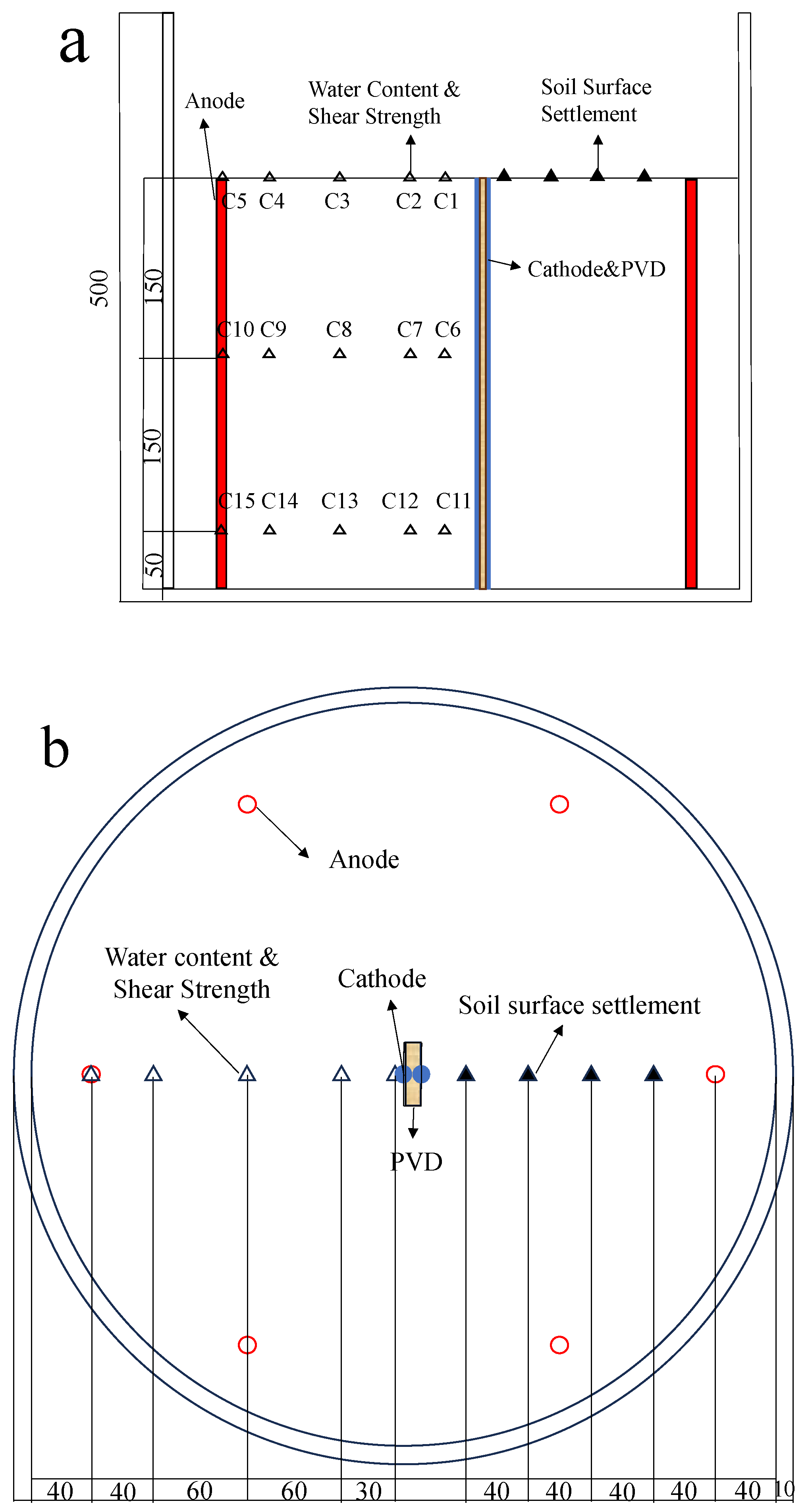
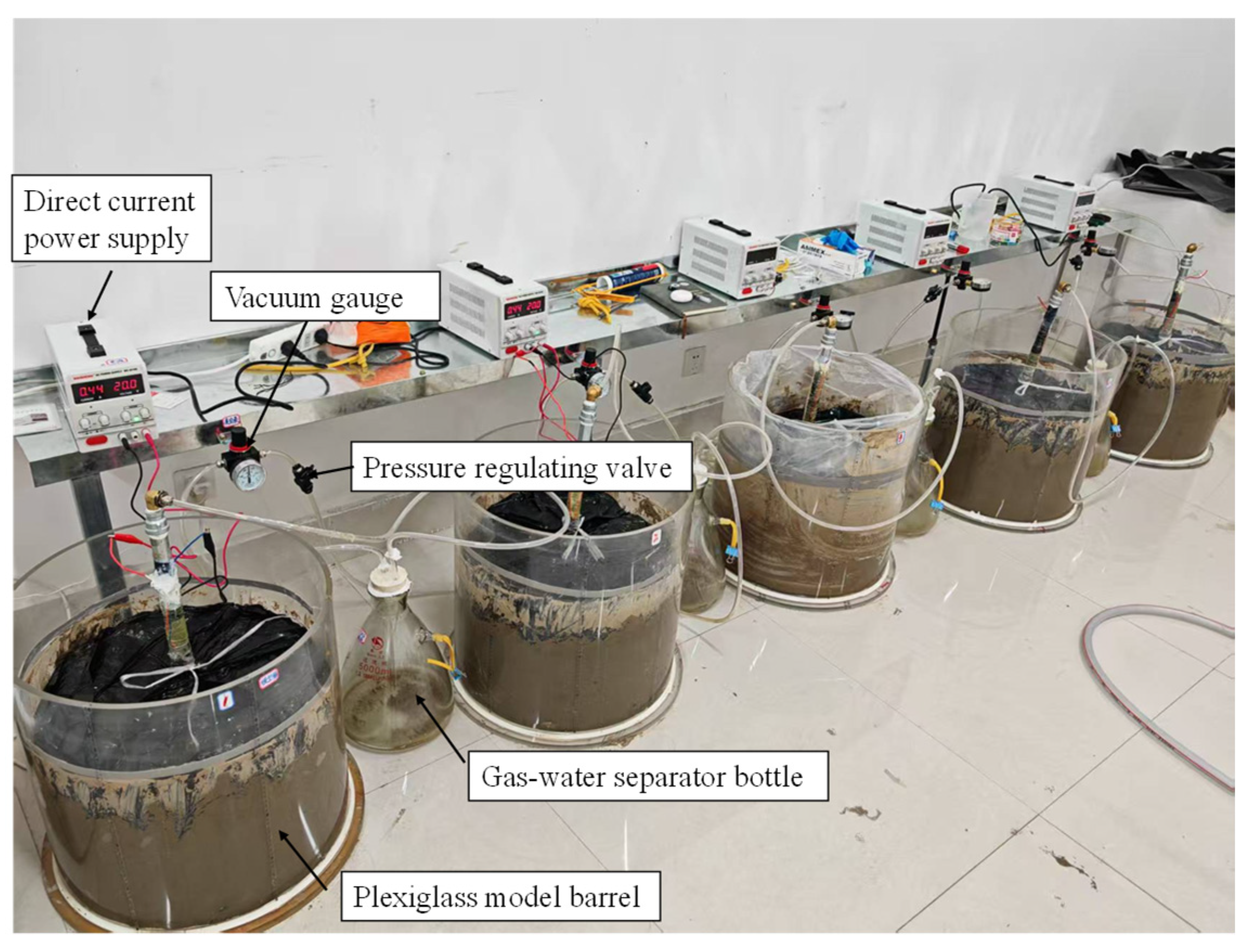
The test device is mainly composed of a vacuum system and an electroosmosis system. Figure 2 and Figure 3 illustrate the test device’s schematic diagram and physical picture, respectively. Geotextiles, sand cushions, sealing films, gas-water separation bottles, vacuum gauges, and vacuum pumps are connected via steel wire hoses. The vacuum pump used is a Xingyuan 2BV2070 water-ring vacuum pump (Henan Xingyuan Vacuum Machinery Equipment Co., Ltd., Zhengzhou, China) with a power of 2.35 kW, which is connected to a power supply through an electrical box. The electroosmosis system is composed of electrodes and a direct current (DC) power supply. Both the cathode and anode are made of steel bars each 30 cm in length, and the perforated metal drainage pipe itself serves as the cathode. The DC power supply is a Maisheng MS-3010D (Dongguan Maihao Electronic Technology Co., Ltd., Dongguan, China) regulated power supply that can deliver controlled voltage or current (up to 30 V and 10 A), respectively. It has a digital display that shows the circuit’s current and voltage. An energy metering socket from Chint (Zhejiang Chint Electric Co., Ltd., Yueqing, China) is used to monitor energy consumption during the electroosmosis process.
Before the experiment, the retrieved soil samples were dried and crushed to prepare remolded soil samples that meet the test requirements. After thorough mixing, the samples were separately placed into plexiglass model barrels (designed and manufactured by the authors). The filling height of the soil sample in each model barrel was 35 cm; after filling, the samples were left to stand for 48 h, and the same volume of separated water was drained from each group of soil samples. The experiment employed a plexiglass model barrel measuring 50 cm × 50 cm × 1 cm (height, outside diameter, and wall thickness). The vertical drainage bodies in the model barrels adopted SPB-type integral plastic drainage plates (Quwo Shenghong Construction Engineering Materials Co., Ltd., Linfen, China) with a pore size of 75 μm and perforated metal drainage pipes (designed and manufactured by the authors), respectively.
Groups T0 to T6 all use PVDs as drainage bodies or electrodes. Before inserting PVDs into the soil, the bottom ends must be sealed to prevent soil from clogging the drainage channels. With the exception of T0 (pure vacuum preloading), all other tests use cables to link the electrodes to the power supply. The layout of the vacuum drainage system for tests T0 to T6 is as follows: one end of the air pipe is connected to the drainage plate, and the other end to the gas-water separation bottle, which is further connected to the vacuum pump. It is necessary to ensure that all connection points are sealed to avoid air leakage. The vacuum pump is powered through an electrical control box, and the model box is sealed using a vacuum sealing film and an anti-seepage film. During the test, the water discharge volume and circuit current of each group were recorded at fixed time intervals, and the test is terminated when the water discharge volume stabilizes and no longer increases. After stopping the test, the power supply to both the vacuum pump and the DC power supply was first cut off, followed by the dismantling of the vacuum drainage system and circuit devices. Soil samples were then collected in layers from the model box, and the water content and shear strength of the soil at different distances from the anode were measured at the surface, middle, and bottom layers, respectively.
To thoroughly study whether loading mode in the intermittent vacuum preloading combined with electroosmosis technology yields greater sludge reinforcing effects, seven test groups were conducted. The specific experimental plan is shown in Table 3. Regarding the vacuum preloading mode, all groups followed a cyclic pattern of 12 h of pump operation followed by 12 h of shutdown. For electroosmosis treatment, a stabilized 20 V power supply was used to maintain a constant electric potential gradient of 1 V·cm−1. In vacuum level settings, groups T5 and T6 were set at 50 kPa to explore consolidation effects under low vacuum conditions, while the remaining groups were maintained at 80 kPa, as both approaches operate at or above this threshold [28]. The experimental design designated T0 as the control group, employing intermittent vacuum preloading only. The combined treatment groups were T1–T6, with T1, T3, and T5 operating with synchronous loading, and T2, T4, and T6 with alternating loading. For vertical drainage elements, groups T1 and T2 utilized perforated metal pipes, while other groups employed integral plastic drainage boards. During testing, key parameters, including water discharge, settlement, current, and energy consumption, were monitored in real-time and recorded at 2 h intervals. After 36 h, when settlement had stabilized, measurements were taken every 4 h using a steel ruler fixed at a constant height. Post-test evaluations included measurements of moisture content and shear strength at various soil locations.

3. Results

3.1. Cumulative Water Discharge

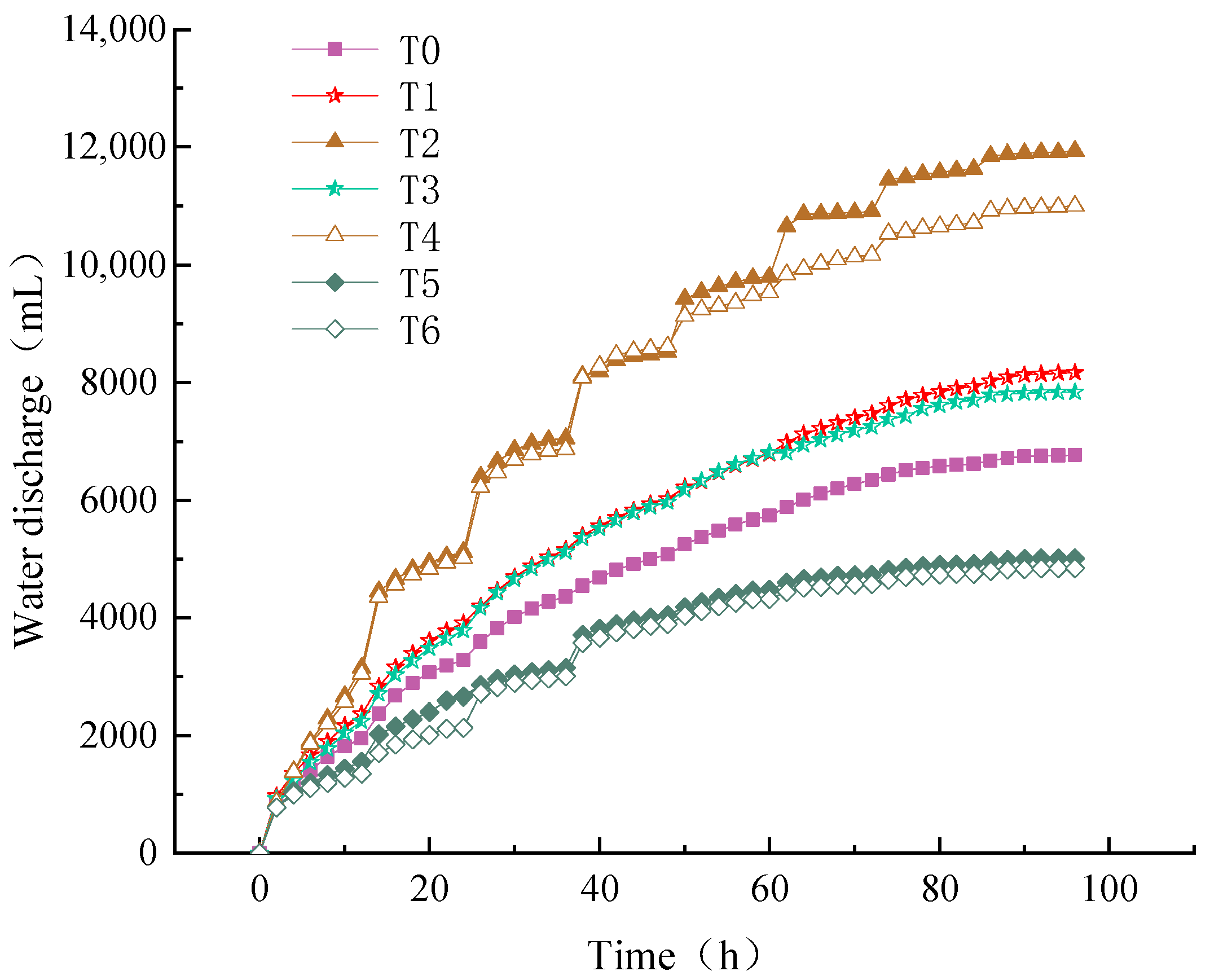
Figure 4 depicts the cumulative water discharge results for all test groups. As illustrated in Figure 4, the water discharge increased rapidly during the initial stage for all groups, then gradually slowed or stabilized as the test progressed. Group T0 exhibited relatively low drainage, with slower discharge in subsequent stages. By 48 h, 80% of the total water discharge had been achieved, indicating that the intermittent vacuum preloading reached the final drainage stage earlier.
Groups T1 and T3, which underwent synchronous vacuum and electroosmosis reinforcement, showed a consistent increase in the water drainage curve. However, the overall drainage volume was not substantial. Experimental results indicate that the synchronous application of vacuum preloading and electroosmosis fundamentally drives marked performance degradation in the synchronous loading groups during the later stages. Near the cathode (drainage body), the synergistic effect of vacuum-induced negative pressure and electroosmotic flow accelerates water migration toward the cathode. This rapid water evacuation induces rapid desaturation, saturation loss, and shrinkage-induced micro-cracking of the soil within a short period. This leads to a dramatic increase in soil–electrode contact resistance. Before 24 h of drainage, the water discharge efficiency of the integrated drainage boards was comparable to that of the perforated metal drainage pipes. However, after 60 h of drainage, the perforated metal drainage pipes began to outperform the integrated drainage boards in terms of efficiency.
The water discharge curve for groups T2 and T4, which used independent vacuum and electroosmosis reinforcement, increased progressively. This pattern occurred because the vacuum pump was turned off during the electroosmosis process, allowing pore water to accumulate at the cathode under the electric field without being discharged from the soil. When the vacuum pump was restarted, the accumulated pore water at the cathode moved toward the drainage boards and was extracted into the gas-water separation bottle under negative pressure. Consequently, within two hours after restarting the pump, there was a significant stepwise increase in water discharge. However, the magnitude of each subsequent increment gradually decreased. This reduction can be attributed to a continual decrease in soil water content, which increased soil and interfacial resistance, thereby diminishing the electroosmosis effect and gradually moderating the stepwise increase. Regardless of whether the increase was stepwise or steady, the incorporation of electroosmosis enhanced the drainage rate of the sludge.
In contrast, the drainage effects in Groups T5 and T6 were minimal, indicating that vacuum preloading and electroosmosis require a vacuum negative pressure of 80 kPa or higher to properly capitalize on their respective advantages. When the vacuum pressure is below 80 kPa, the resulting pressure difference is insufficient to discharge free water from the soil surface or large pores, making it difficult to drive pore water in fine-grained soils such as clay layers, which have higher capillary and viscous resistances. In addition, the perforated metal drainage pipes exhibited similar early-stage drainage efficiency to the integrated drainage boards. However, after 60 h of drainage, perforated metal drainage pipes began to outperform the integrated drainage boards in terms of efficiency.
As shown in Table 4, to compare the differences in water discharge under different loading modes, a one-way analysis of variance (ANOVA) was performed on the water discharge data from each experimental group. The analysis revealed significant differences in water discharge between the groups (F = 28.89, p < 0.01). Specifically, the F-value (28.89) exceeded the critical threshold (2.13), and the p-value (7.64 × 10⁻²⁸) was far below 0.01, confirming highly statistically significant. This proves reinforcement methods (e.g., synchronous vs. alternating loading) significantly impact water discharge, with alternating loading outperforming synchronous loading in terms of water discharge.
In summary, a comparison of the total water discharge across all test groups indicates that Group T2 achieved the highest output, exceeding Groups T0, T1, and T3–T6 by 76.23%, 52.19%, 46.1%, 8.49%, 138.05%, and 146.52%, respectively. This test adopted a cyclic combined mode, consisting of 12 h of vacuum pumping followed by 12 h of electroosmosis shutdown. These results demonstrate that the intermittent vacuum preloading combined with the electroosmosis, applied in an alternating reinforcement mode, significantly improves efficiency.

3.2. Surface Settlement

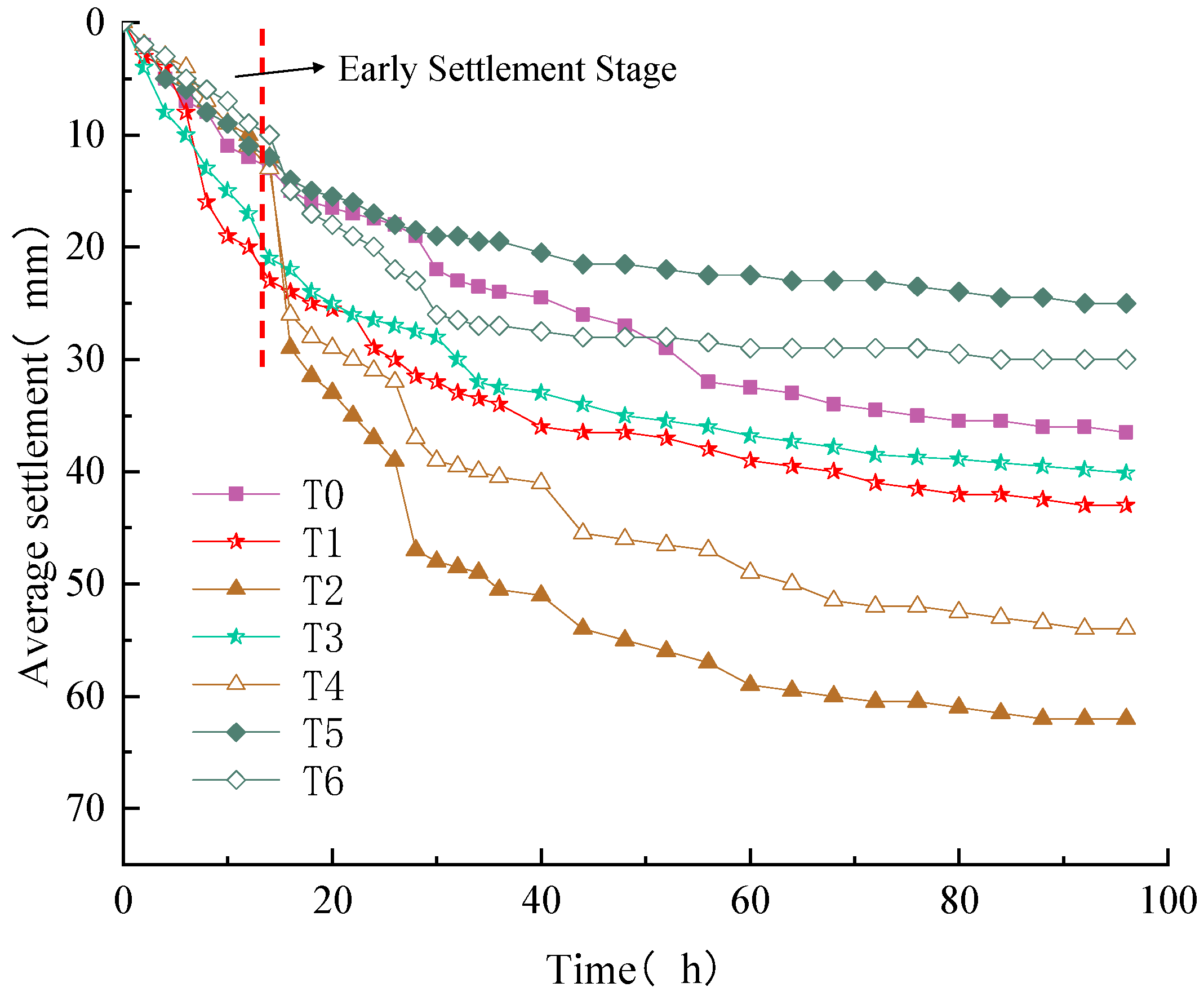
Figure 5 presents the variation curve of average surface settlement over time. As shown in the figure, the trend of average surface settlement is generally consistent with the pattern of water discharge. Following electroosmosis treatment, the surface settlement increases stepwise, although the magnitude of each change gradually diminishes and eventually stabilizes as the test progresses. In group T0, which employed vacuum preloading alone, several slight stepwise increases in settlement were observed during the early and middle stages of the test, consistent with the intermittent loading pattern. In the later stages, the rate of settlement gradually decreased and eventually stabilized. Groups T1 and T3 demonstrated superior settlement performance in the early stages compared to other groups. However, the excessive and rapid drying of the soil–electrode interface during synchronous vacuum preloading and electroosmosis significantly increases contact electrical resistance, resulting in a flattening of the settlement curve in the later stages. Settlement was not significant in groups T2 and T4 during the early stage because vacuum preloading remained the dominant treatment method. As the test progressed, two relatively substantial decreases in surface settlement were observed, following a stepwise pattern that corresponded to the timing of electroosmosis application. This indicates that the separated application of vacuum and electroosmosis is more effective for soil consolidation and settlement. Comparing Groups T5 and T6, the settlement in Group T5 was slightly lower than that in Group T6. This further suggests that the synchronous application of vacuum preloading and electroosmosis causes excessive and rapid drying of the soil–electrode interface, thereby substantially increasing contact electrical resistance and ultimately resulting in a relatively smaller final settlement. At the end of the test, the settlements of Groups T0-T6 were 36.5, 43, 65, 40.1, 54, 25, and 30 mm, respectively. The settlement in Group T2 exceeded that of the other groups by 78.08%, 51.16%, 62.09%, 20.37%, 160%, and 116.6%, respectively. These results demonstrate that asynchronous application of vacuum preloading and electroosmosis further improve dredged sludge drainage consolidation, with perforated metal drainage pipes outperforming plastic drainage pipes in terms of consolidation efficacy.

3.3. Soil Electric Current

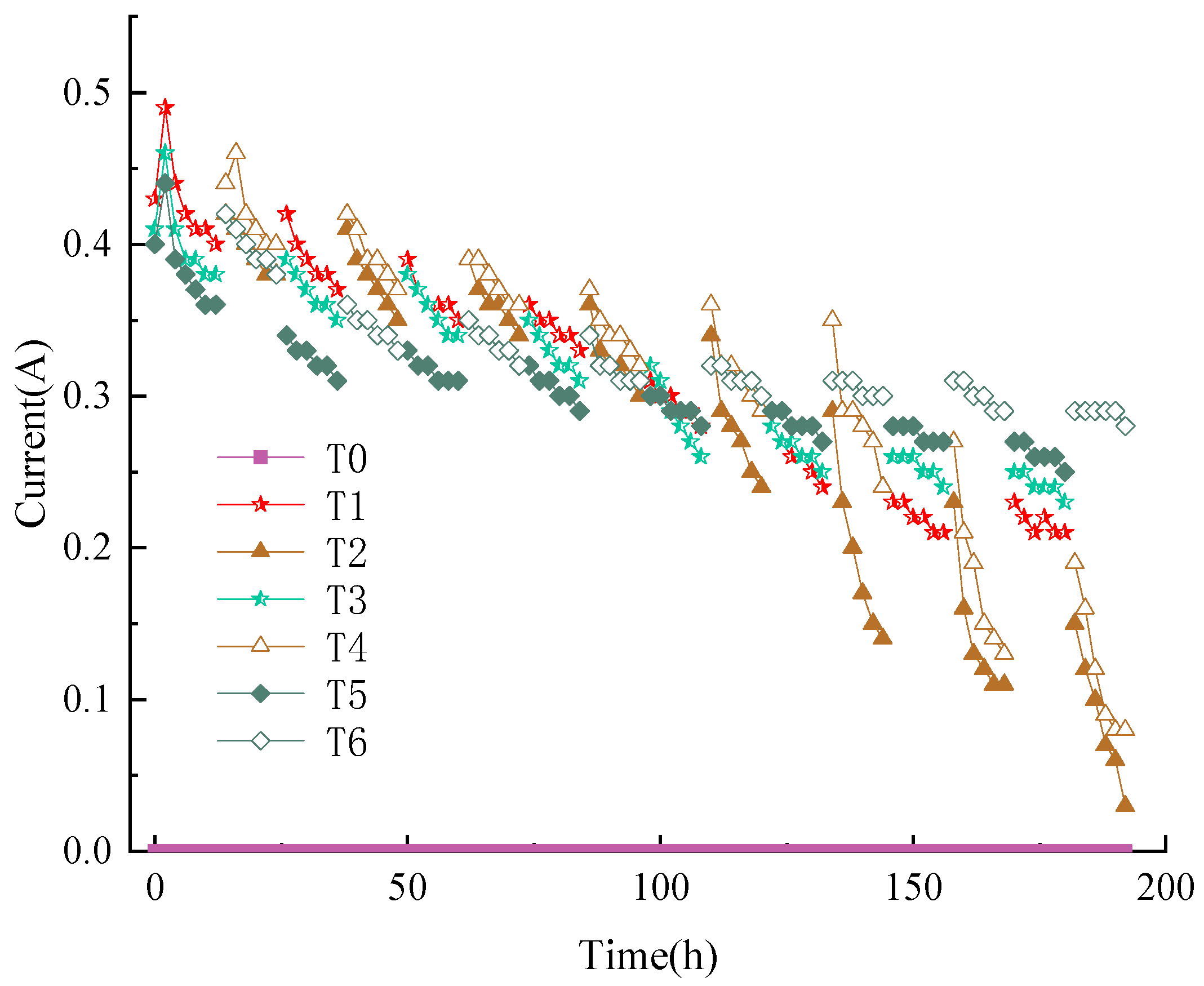
Figure 6 illustrates the variation in electric current over time. In all test groups, the current generally exhibited a gradual decay from high to low values. During the initial stages of electroosmosis, the electric current surged and then decreased due to the formation of drainage channels and the low interfacial resistance between the soil and electrodes. For groups T2 and T4, which used the asynchronous reinforcement method of alternating vacuum and electroosmosis, the electric current increased significantly after the power was reconnected compared to before power-off. This increase is attributed to the interruption of ion movement in the soil during electroosmosis when the power was off, leading to ion redistribution. However, each subsequent increase in current was generally smaller than the previous peak after reconnection. This phenomenon can be explained by several factors. On the one hand, under vacuum action, pore water in the soil was continuously discharged through the drainage boards. The reduction in pore water not only hindered the conduction path of electric current but also led to a decrease in ion concentration, thereby reducing the soil current. On the other hand, as the drainage process progressed, the soil gradually consolidated and became denser. The resulting increase in soil resistance and interfacial resistance further contributed to the decrease in current. In addition, the high voltage induced significant gas generation at the electrodes, reducing the contact area between the soil and electrodes, which further increased the interfacial resistance. These results indicate that the alternating reinforcement mode can mitigate the electric current decay in the later stages of the test, guaranteeing effective drainage throughout the experimental process.

3.4. Electrode Corrosion and Energy Consumption

From Equations (4) to (8), it can be observed that the anode undergoes oxidation reactions, producing oxygen and hydrogen ions, while the cathode generates hydrogen and hydroxide ions. The gases produced during these reactions increase the resistance between the electrodes and the soil, thereby reducing the efficiency of the electroosmosis treatment.
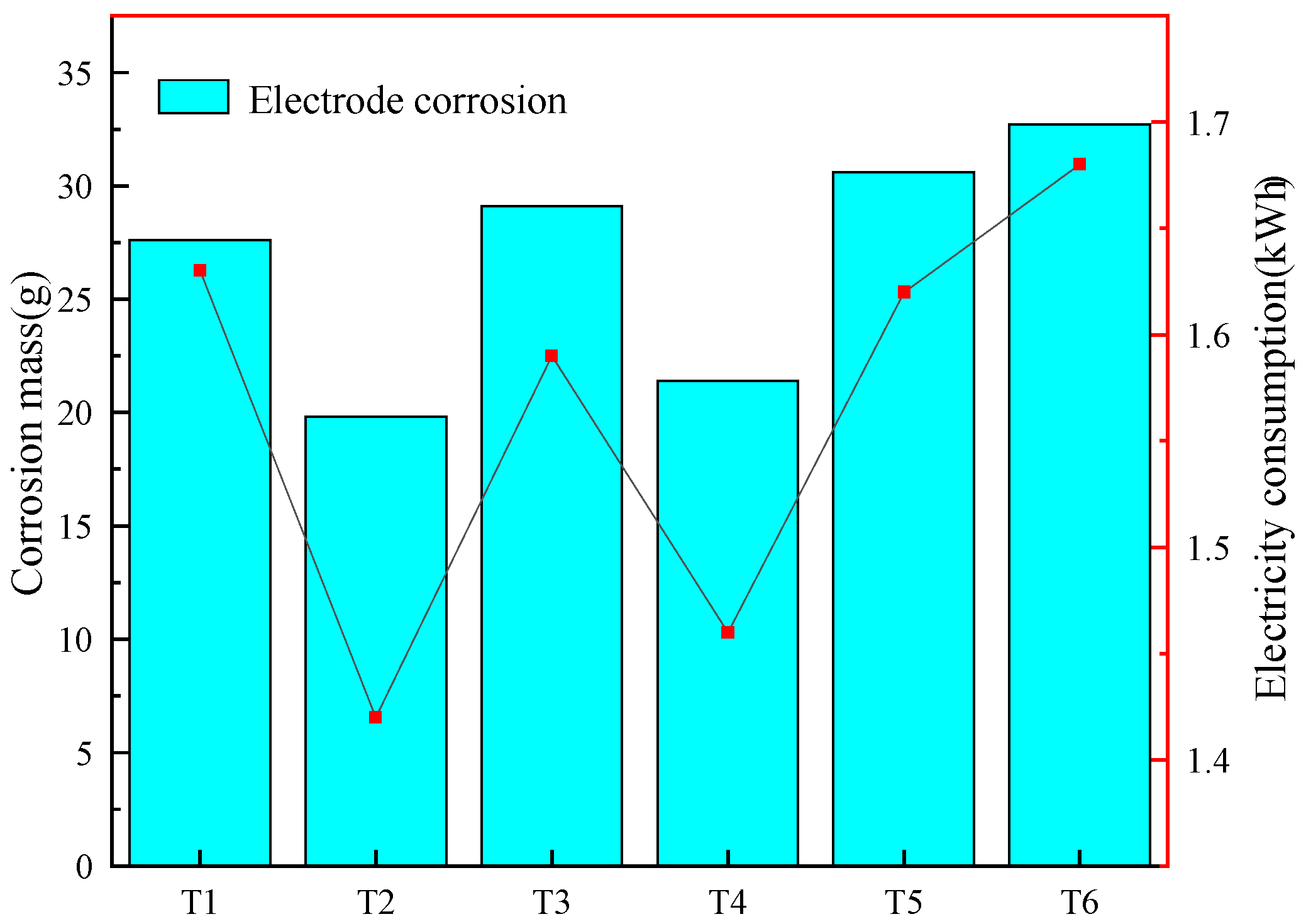
The anode mass was measured before and after the test, with the difference representing the amount of electrode corrosion. Figure 7 shows the electrode mass decrease in each test group. According to the histogram, the electrode corrosion in groups T1, T2, T3, T4, T5, and T6 was 27.6 g, 19.8 g, 29.1 g, 21.4 g, 30.6 g, and 32.7 g, respectively. Further analysis shows that the electrode corrosion in group T2 is slightly lower than that in group T4, and significantly lower than in the other experimental groups. Specifically, the electrode corrosion in group T2 was 28.26%, 31.96%, 7.48%, 35.29%, and 39.45% lower than that in groups T1, T3, T4, T5, and T6, respectively. These results indicate that using the alternating VP-EO loading mode efficiently reduces electrode corrosion. Furthermore, comparing groups T2 and T4 demonstrates that using perforated metal drainage pipes, instead of integrated plastic drainage boards, further reduces anode corrosion during the electroosmosis process. Additionally, the data trends in the figure suggest a positive correlation between energy consumption and the extent of electrode corrosion during electroosmosis, indicating that higher energy consumption leads to more severe electrode corrosion.
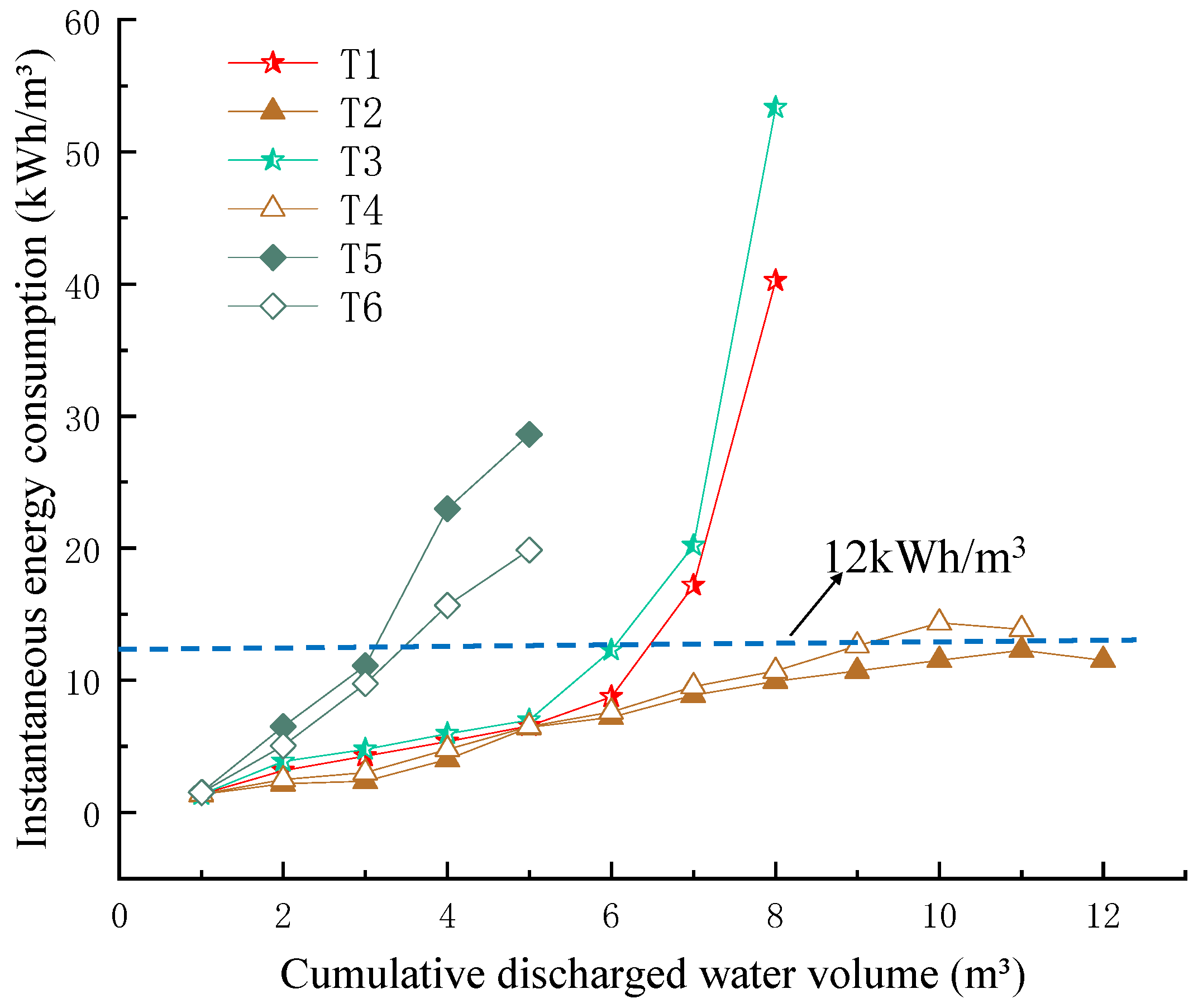
Figure 8 shows the variation in instantaneous energy consumption per unit volume of discharged water with cumulative discharged volume. In the synchronous loading groups, the instantaneous energy consumption increased sharply in the later stages, with the highest value in T3 exceeding 50 kWh/m3. In contrast, the alternating loading groups under high vacuum maintained values below 15 kWh/m3 throughout the entire test, with the T2 consistently at approximately 10 kWh/m3. The low-vacuum alternating loading group T6 showed slight fluctuations but remained lower than the synchronous group T5. These results indicate that the high-vacuum alternating mode completely eliminates the runaway energy consumption in the later stages, improving energy efficiency by more than fourfold compared to synchronous operation.

3.5. Water Content and Shear Strength

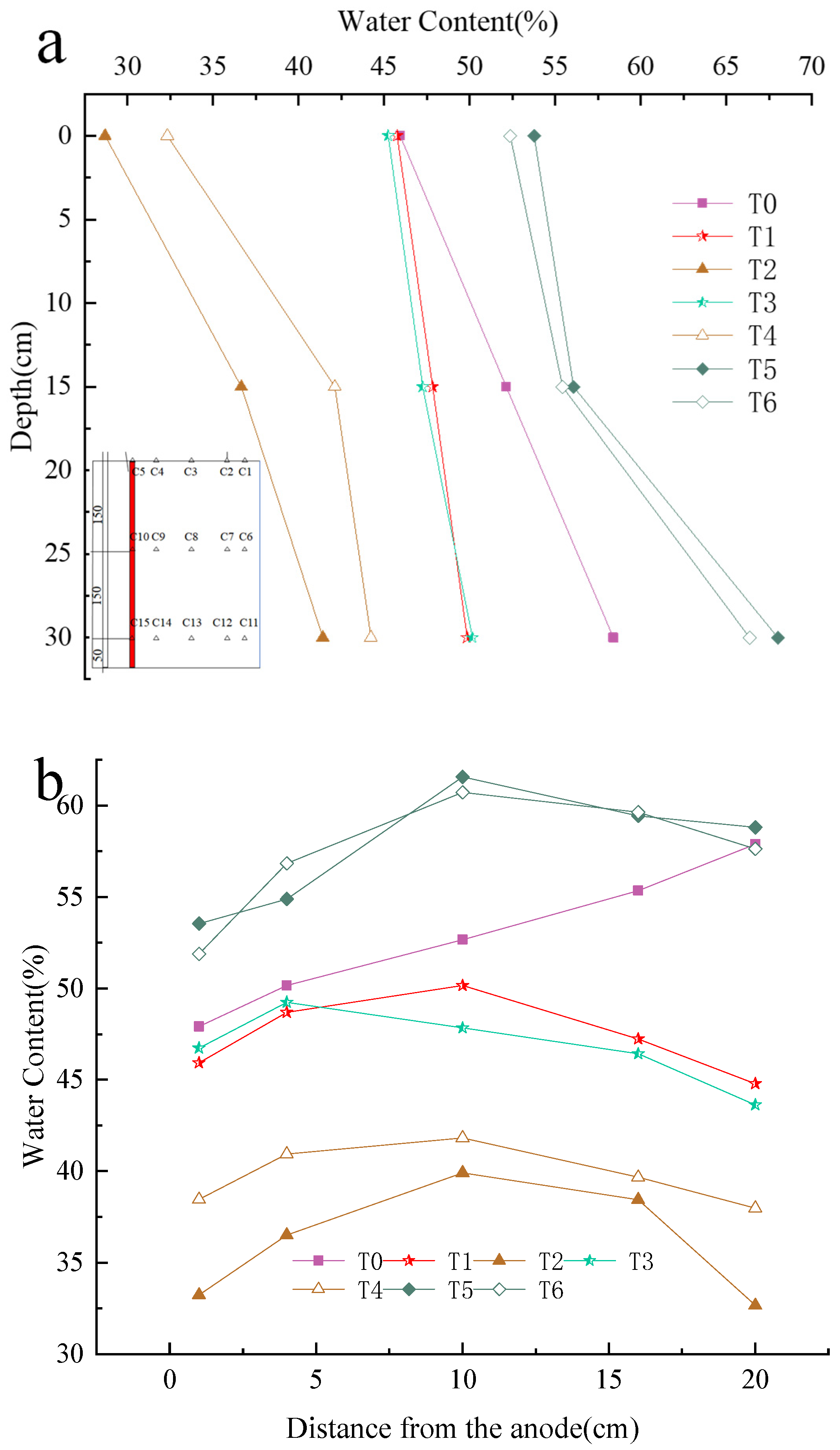
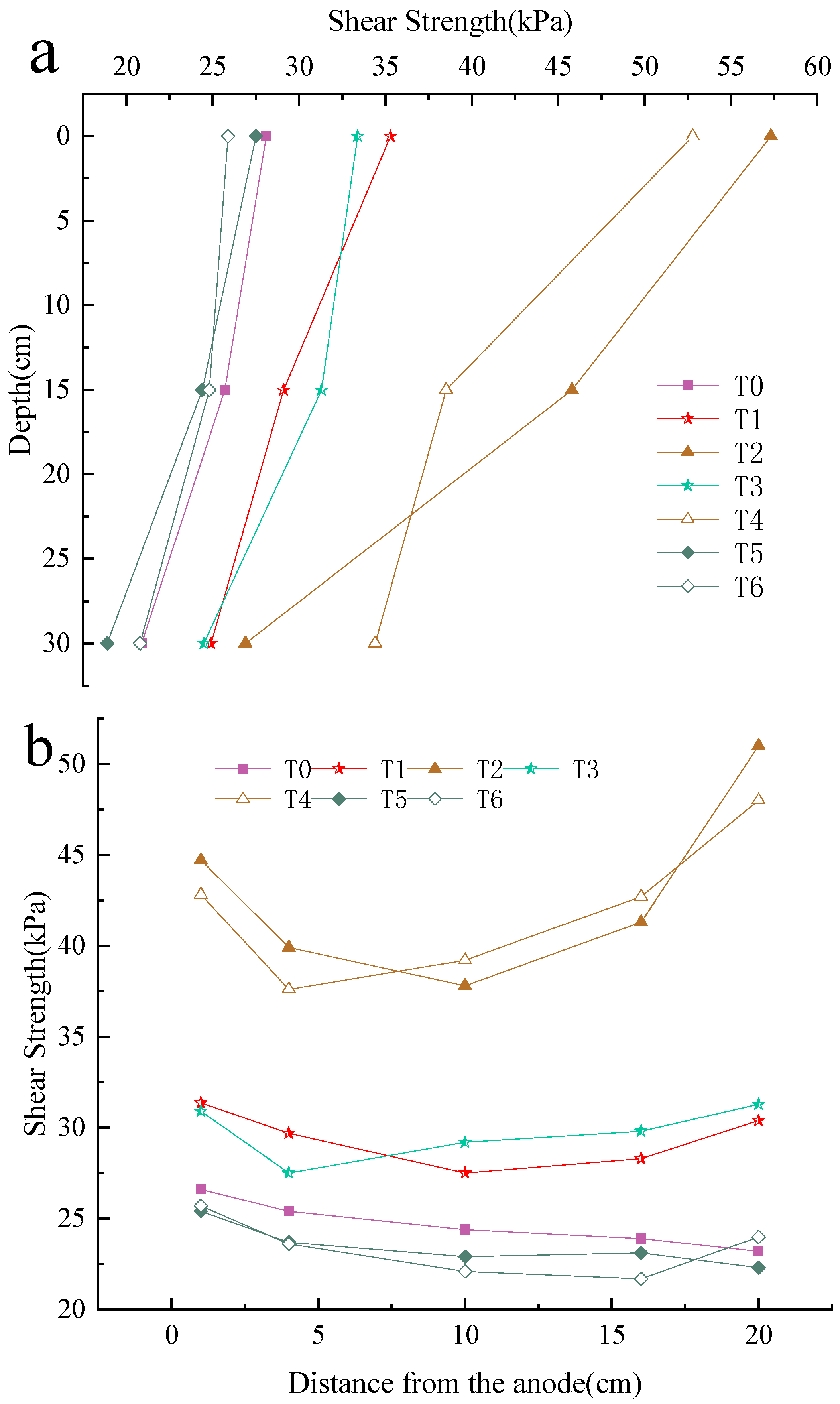
Following the experiments, soil samples were collected from various depths and distances from the anode in each test group to measure water content and shear strength. Measurement points were placed at 0 cm, 15 cm, and 30 cm from the soil surface, dividing the soil profile into three layers: surface, middle, and deep. Average values of water content and shear strength in both the horizontal and vertical directions were calculated for comparison. Figure 9 illustrates the distribution of water content along both directions.
As shown, the surface layer exhibits the lowest water content, which gradually increases with depth. Whether vacuum preloading was applied alone or in combination with electroosmosis, the reinforcement effect on the soil diminished with increasing depth. Synchronously, water content decreased as the distance to the anode decreased, with a sharp drop in water content observed near the cathode. This phenomenon occurs because, during the electroosmosis process, water in the soil migrates from the anode to the cathode under the influence of the electric field. Moreover, the higher vacuum pressure near the cathode (drainage board) enables the efficient and timely discharge of water accumulated in this region. In group T0, which was subjected to vacuum preloading alone, the soils water content decreased as the distance from the drainage board increased. This is because regions nearer the drainage board had more vacuum propagation into the soil, resulting in higher negative pore water pressure and more significant drainage effects. In contrast, for groups T1–T6, the introduction of electroosmosis altered the water content distribution pattern in the horizontal direction. Under the influence of the electric field, pore water gradually migrated toward the cathode. Groups T1 and T3, which employed synchronous vacuum and electroosmosis reinforcement, showed a more uniform distribution of water content than group T0. However, their consolidation uniformity was lower than that of group T4. Synchronous vacuum generates high hydraulic gradients, desaturating adjacent soil. This desaturation drastically increases electrical resistivity (in Figure 6), reducing electroosmotic (EO) efficiency. In contrast, the alternating mode allows soil resaturation near the cathode during the pump-off phase via EO flow, thereby maintaining conductivity.
Figure 10 presents the distribution of shear strength in the soil samples following testing, with variations in both vertical and horizontal directions. The shear strength distribution closely matches the moisture content pattern. At a depth of 15 cm, the group T2 had the maximum shear strength of 45.8 kPa, reflecting increases of 43.8%, 36.5%, 31.7%, 15.9%, 46.7%, and 45.8%, respectively, compared to groups T0, T1, T3, T4, T5, and T6. These results indicate that the alternating application of vacuum preloading and electroosmosis provides the most effective enhancement of soil strength. Comparative analysis reveals that the combined vacuum and electroosmosis technique improves total soil shear strength and compensates for the poor drainage performance observed in regions far from drainage boards when vacuum preloading is applied alone. However, substantial variations in shear strength were observed at different locations due to varying distances from the anode.
Based on the post-treatment shear strength distribution of the soil, the bearing capacity can be estimated using the following relationship [33]:
q u = C u · N c
where qu is the ultimate undrained bearing capacity; Cu is the undrained shear strength of the soil; Nc is the bearing capacity factor, whose value is referenced from literature [34], Nc = 6.
According to Equation (9), the minimum soil bearing capacities for groups T0 through T6 were 181.2, 218.4, 374.4, 213.6, 355.8, 187.2, and 171.6 kPa, respectively. The results show that the bearing capacity of group T2 increased by 106.62%, 71.43%, 75.28%, 5.23%, 100%, and 118.18% when compared to groups T0, T1, and T3 through T6, respectively, confirming that the alternating loading mode of vacuum and electroosmosis achieves superior soil reinforcement effectiveness.
As shown in Table 5, a one-way ANOVA was performed to evaluate the undrained shear strength across different experimental groups. The analysis revealed that there are significant differences between the groups (F = 20.60, p < 0.05), indicating that the reinforcement methods applied had a substantial effect on the shear strength. The calculated F-value of 20.60 significantly exceeds the critical value of 2.19, and the p-value of 1.78 × 10⁻¹⁵ strongly supports the rejection of the null hypothesis. This suggests that the differences in shear strength are not due to chance but are a direct result of the applied treatments. The results demonstrate that the alternating loading method, in particular, leads to a marked increase in shear strength compared to the synchronous loading method.

4. Discussion

This study systematically compares the reinforcement effects under different vacuum pressures (80 kPa vs. 50 kPa) and drainage board types (perforated metal drainage pipes vs. integral plastic drainage boards) under different loading conditions, with the goal of elucidating the mechanisms influencing the reinforcement process. Experimental results clearly demonstrate that the vacuum pressure level in the initial stage plays an important role in determining the ultimate reinforcement depth. The 80 kPa vacuum preloading increased early settlement and strength due to higher effective stress, but it also developed a soil skeleton with lower initial water content, denser structure, and more continuous electrical conduction channels. This optimized condition resulted in more uniform current distribution and a more fully mobilized electro-osmotic flow driving force during the second-stage electroosmosis, revealing that the synergistic effect of separate loading is a reinforcement mechanism in which preliminary treatment creates favorable working conditions for subsequent stages.
During the vacuum preloading stage, both types of drainage boards performed similarly as drainage channels, indicating that their equivalent diameters and water discharge capacities met the drainage requirements of this stage. However, as drainage boards reached the electroosmosis stage, their role changed to that of cathodes, with electrical conductivity becoming the primary performance indicator, replacing water discharge capacity. The perforated metal drainage pipes, with their low electrical resistance, ensured uniform potential distribution throughout the channel, activating electroosmotic flow across a larger region and displaying greater electroosmosis efficiency and current stability. In contrast, the plastic drainage boards suffered from potential attenuation due to their higher electrical resistance, which directly led to reduced reinforcement uniformity.
Compared to conventional synchronous vacuum preloading, the alternating vacuum–electroosmosis avoids excessive coupled dewatering. This is achieved by turning off the vacuum pump during the electroosmosis phase. Consequently, the alternating vacuum–electroosmosis maintains favorable interface saturation and low contact electrical resistance throughout the entire treatment process. This approach clearly defines the dominant function of drainage boards at different stages: during the vacuum stage, the drainage capacity requirements outlined in Hansbo’s drainage theory must be met, while during the electroosmosis stage, the electrical conductivity requirements of Ohm’s law and electroosmotic flow convergence must be met. This provides a more precise research paradigm for explaining the mechanisms of the separate loading process. Through comparison experiments, this study reveals that when employed as cathodes, perforated metal drainage pipes exhibit lower potential attenuation than plastic drainage boards—a critical limitation often overlooked in traditional synchronous loading investigations. This finding introduces a new and essential criterion for evaluating and selecting drainage boards, the key components of integrated reinforcement technology, enabling a shift in design philosophy from static to dynamic.
Additionally, post-disassembly inspection of the model test system revealed that only the synchronous loading groups (T1, T3, T5) exhibited micro-cracks (0.1–0.4 mm width, depth < 3 cm) in the anode vicinity. In contrast, the alternating loading groups (T2, T4, T6) and the vacuum-only groups showed no visible macroscopic cracks throughout the entire testing process. This experimental evidence substantiates that the alternating loading protocol effectively mitigates crack initiation and propagation by decoupling the superimposed tensile stresses generated by simultaneous negative pressure and electroosmotic dewatering. Such stress decoupling provides direct engineering validation for enhanced crack resistance in field applications.
The patterns and findings drawn from this study may be easily turned into precise technological solutions for engineering practice, offering clear guidance for optimizing the separate loading reinforcement process. First, while optimizing process parameters, highlight the notion of maximum vacuum pressure in the first stage. Under feasible engineering conditions, vacuum pressures of 80 kPa or higher should be preferred. This technique improves total reinforcing efficacy by producing an optimal initial soil skeleton, laying the foundation for improving the efficiency of the subsequent electroosmosis stage. Second, while selecting cathodes for the electroosmosis stage, electrical conductivity should be prioritized. Perforated metal drainage pipes or other low-resistance materials are recommended for reinforcing consistency and efficiency. If traditional plastic drainage boards are used, the effective reinforcement range must be evaluated due to potential attenuation, which may be mitigated by reducing the distance between cathodes.
Further research can be developed in the following aspects based on the findings of this study: (a) There is a need to systematically establish a database of electrode materials, including metals and conductive polymers, and assess their electrical conductivity, corrosion resistance, and economic efficiency to develop material selection guidelines. (b) It is also necessary to explore different materials for drainage boards. Potential directions may include developing conductive polymer composites with low electrical resistance and high resistance to electrolyte corrosion, as well as investigating novel composite materials by embedding conductive fibers or mesh structures into plastic drainage boards to establish stable conductive channels, resulting in synergistic optimization of drainage efficiency and electrical conductivity. (c) Finally, there is a need to investigate the influence of alternating loading patterns with different loading durations on the reinforcement effectiveness, focusing on the effects of varying alternating.

5. Conclusions

A series of laboratory model experiments were carried out to investigate the reinforcement efficacy of combined vacuum preloading (VP) and electroosmosis (EO) techniques under different operational strategies. The following conclusions were drawn:
(1)
Intermittent vacuum preloading (VP) alone showed suboptimal late-stage performance with high energy consumption. While synchronous VP–electroosmosis (EO) marginally improved water discharge but was less effective than alternating VP-EO, which boosted total water discharge by 46.1%. The alternating loading mode thus offers superior energy efficiency and consolidation efficacy for clayey soil reinforcement.
(2)
While the synchronous reinforcement method improved initial settlement, its long-term efficiency is limited by the excessive coupled dewatering. This causes slower settlement progression and significant electrode corrosion, making it unsuitable for extended consolidation. In contrast, the alternating method exhibited moderate initial settlement but achieved stepwise improvement with late-stage electroosmosis integration. It resulted in 44.19% higher surface settlement and superior consolidation efficiency than the synchronous reinforcement method.
(3)
The alternating loading mode induces soil ion redistribution, resulting in a post-reconnection current exceeding pre-interruption levels. Furthermore, this method mitigates terminal-stage current decay, thereby sustaining drainage efficiency throughout the consolidation process.
(4)
Compared to integral plastic drainage boards, perforated metal drainage boards exhibited enhanced efficiency in late-stage drainage and reduced anode corrosion by 39.4%. This performance improvement stems from optimized electrochemical stability and reduced polarization resistance during sustained consolidation.
The validation of the model tests demonstrate that under 80 kPa initial vacuum conditions, the alternating vacuum–electroosmotic mode integrated with perforated metal drainage pipes maintains energy consumption ≤ 15 kWh/m3 for discharged water—achieving over fourfold energy savings compared to synchronous modes. This approach effectively resolves late-stage energy runaway and macro-cracks issues. The technique provides a cost-effective, scalable, and highly efficient solution for the rapid large-scale land reclamation of dredged sludge. Although current results derive from controlled laboratory conditions, the proposed stepwise loading strategy exhibits substantial field applicability potential. Full-scale field trials (50,000–100,000 m2) are currently progressing systematically, with future validation focusing on drainage efficiency under site heterogeneity, increased drainage spacing, and long-term material durability. Additional studies are recommended to optimize alternating cycle durations and electrode configurations for site-specific performance enhancement.

Author Contributions

Conceptualization, J.W. (Jiangfeng Wang) and C.D.; methodology, J.W. (Jiangfeng Wang), C.D. and Y.Y.; investigation, C.D.; resources, X.D., S.Y., J.W. (Jifeng Wang) and P.Z.; data curation, Y.W.; writing—original draft preparation, Y.W.; writing—review and editing, C.D.; supervision, J.W. (Jiangfeng Wang); project administration, C.D. and J.W. (Jiangfeng Wang); funding acquisition, J.W. (Jifeng Wang) and Y.Y. All authors have read and agreed to the published version of the manuscript.

Funding

This research was funded by the National Natural Science Foundation of China (grant number 42172297) and the Open Fund Project of the Key Laboratory of Geotechnical and Underground Engineering of Ministry of Education, Tongji University (grant number KLE-TJGE-G2503).

Data Availability Statement

The original contributions presented in this study are included in the article. Further inquiries can be directed to the corresponding author.

Acknowledgments

The authors greatly appreciate the comments from the reviewers, whose comments helped to improve the quality of the paper.

Conflicts of Interest

The authors declare no conflicts of interest.

Abbreviations

The following abbreviations are used in this manuscript:
VPvacuum preloading
EOelectroosmosis
PVDprefabricated vertical drains
DCdirect current

References

  1. Chen, Q.; Ran, F.; Wei, Q.; Zheng, X.; Zhao, M.; Liu, S.; Wang, L.; Fan, C. A review on dewatering of dredged sediment in water bodies by flocculation processes. Water Air Soil Pollut. 2024, 235, 67. [Google Scholar] [CrossRef]
  2. Yang, Y.; Zhang, L.; Feng, J.; Zhou, X.; Xiao, Y.; Wang, Z.; Xu, D.; Gong, M. Amendment of Dredged Sediment from a Contaminated Lake and Assessment of Suitability as a Planting Medium for Urban Greening. Environ. Eng. Sci. 2024, 41, 180–189. [Google Scholar] [CrossRef]
  3. Zhang, Y.; Labianca, C.; Chen, L.; De Gisi, S.; Notarnicola, M.; Guo, B.; Sun, J.; Ding, S.; Wang, L. Sustainable ex-situ remediation of contaminated sediment: A review. Environ. Pollut. 2021, 287, 117333. [Google Scholar] [CrossRef] [PubMed]
  4. Buffon, P.; Uijttewaal, W.S.J.; Valero, D.; Franca, M.J. Evolution of Erosion and Deposition Induced by an Impinging Jet to Manage Sediment. Water Resour. Res. 2025, 61, e2024WR038657. [Google Scholar] [CrossRef]
  5. Pan, Y.; Song, D.B.; Yin, Z.Y.; Yin, J.H.; Chen, W.B. Novel Combined Grid PHD–PVD Vacuum Preloading Method for Treatment of Blow-Filled Slurry: Large-Scale Physical Model Test. J. Geotech. Geoenviron. Eng. 2025, 151, 04025090. [Google Scholar] [CrossRef]
  6. Chen, Z.-J.; Li, P.-L.; Li, A.; Yin, J.-H.; Song, D.-B. New simple method for calculating large-strain consolidation settlement of layered soft soils with horizontal drains and vacuum preloading with comparison to test data. Geotext. Geomembr. 2024, 52, 725–735. [Google Scholar] [CrossRef]
  7. Brown, J.M.; Amoudry, L.O.; Souza, A.J.; Rees, J. Fate and pathways of dredged estuarine sediment spoil in response to variable sediment size and baroclinic coastal circulation. J. Environ. Manag. 2015, 149, 209–221. [Google Scholar] [CrossRef]
  8. Yin, J.H.; Chen, W.B.; Wu, P.C.; Leung, A.Y.F.; Yin, Z.Y.; Cheung, C.K.W.; Wong, A.H.K. Field study of a sustainable land reclamation approach using dredged marine sediment improved by horizontal drains under vacuum preloading. J. Geotech. Geoenviron. Eng. 2024, 150, 04024114. [Google Scholar] [CrossRef]
  9. Chen, Z.; You, N.; Chen, C.; Chen, L.; Zhang, Z.; Xu, W.; Jia, Z.; Zhang, Y. The positive role of phosphogypsum in dredged sediment solidified with alkali-activated slag. Constr. Build. Mater. 2024, 442, 137627. [Google Scholar] [CrossRef]
  10. Xu, G.; Liu, Y.; Ni, J.; Wang, Y. Hydro-mechanical behaviour of straw fiber-reinforced cemented dredged sediment at high water content. J. Soils Sediments 2024, 24, 3530–3540. [Google Scholar] [CrossRef]
  11. Zhang, K.; Lu, H.; Li, Z. Effect of precursor element composition on compressive strength of alkali-activated dredged sediment. Case Stud. Constr. Mater. 2024, 20, e03404. [Google Scholar] [CrossRef]
  12. Deng, Y.J.; Yue, Z.X.; Wang, Z.J.; Huang, Q.; Yang, X.L. Optimization and mechanism of the novel eco-friendly additives for solidification and stabilization of dredged sediment. Environ. Sci. Pollut. Res. 2024, 31, 25964–25977. [Google Scholar] [CrossRef] [PubMed]
  13. Ke, S.; Wang, P.; Hu, X.; Geng, X.; Hai, J.; Jin, J.; Jiang, Z.; Ye, Q.; Chen, Z. Effect of the pressurized duration on improving dredged slurry with air booster vacuum preloading. Mar. Georesources Geotechnol. 2020, 38, 970–979. [Google Scholar] [CrossRef]
  14. Ni, J.; Liu, S.; Wang, Y.; Xu, G. Synergistic influence of lime and straw on dredged sludge reinforcement under vacuum preloading. Constr. Build. Mater. 2024, 421, 135642. [Google Scholar] [CrossRef]
  15. Lei, H.; Toma, A.; Bo, Y.; Wang, L.; Wu, H. Reinforcement effect of the stepped-alternating vacuum preloading method on dredged fills. Int. J. Geomech. 2024, 24, 04023272. [Google Scholar] [CrossRef]
  16. Bian, X.; Yang, H.; Liu, H.; Xu, Z.; Zhang, R. Experimental study on the improvement of sludge by vacuum preloading-stepped electroosmosis method with prefabricated horizontal drain. Geotext. Geomembr. 2024, 52, 753–761. [Google Scholar] [CrossRef]
  17. Cui, Y.; Tu, J.; Wang, X.; Diao, H.; Ge, Q. Design Method and Verification of Electroosmosis-Vacuum Preloading Method for Sand-Interlayered Soft Foundation. Adv. Civ. Eng. 2020, 2020, 1929842. [Google Scholar] [CrossRef]
  18. Wang, J.; Zhao, R.; Cai, Y.; Fu, H.; Li, X.; Hu, X. Vacuum preloading and electroosmosis consolidation of dredged slurry pre-treated with flocculants. Eng. Geol. 2018, 246, 123–130. [Google Scholar] [CrossRef]
  19. Cui, Y.; Zhang, B.; Qi, C.; Zhang, S.; Yang, X.; Min, F. Influence of composite flocculants on electrokinetic properties and electroosmotic vacuum preloading behavior of sludge. Dry. Technol. 2024, 42, 636–649. [Google Scholar] [CrossRef]
  20. Sun, Z.; Yao, K.; Yang, C.; Liang, M. Improvement of soft clay by vacuum preloading incorporated with electroosmosis using electric vertical drains. Mar. Georesources Geotechnol. 2021, 39, 1339–1349. [Google Scholar] [CrossRef]
  21. Wang, J.; Fu, H.; Liu, F.; Cai, Y.; Zhou, J. Influence of electroosmosis activation time on vacuum electroosmosis consolidation of a dredged slurry. Can. Geotech. J. 2018, 55, 147–153. [Google Scholar] [CrossRef]
  22. Zong, M.; Li, L.; Wu, W.; Zhang, Y.; Mei, G. Analytical solution for radial consolidation of combined electroosmotic, vacuum, and surcharge preloading considering smear effects. Int. J. Geomech. 2024, 24, 04024141. [Google Scholar] [CrossRef]
  23. Li, X.; Zhao, R.; Fu, H.; Wang, J.; Cai, Y.; Hu, X.; Zhou, J.; Hai, J. Slurry improvement by vacuum preloading and electroosmosis. Proc. Inst. Civ. Eng.-Geotech. Eng. 2019, 172, 145–154. [Google Scholar] [CrossRef]
  24. Zhou, Y.; Deng, A. Modelling combined electroosmosis–vacuum–surcharge preloading consolidation considering large-scale deformation. Comput. Geotech. 2019, 109, 46–57. [Google Scholar] [CrossRef]
  25. Yang, S.; Feng, J.; Qiu, C.; Wu, J. Two-dimensional consolidation theory of vacuum preloading combined with electroosmosis considering the distribution of soil voltage. Soil Mech. Found. Eng. 2020, 57, 25–34. [Google Scholar] [CrossRef]
  26. Ren, Q.; Wang, Y. Theoretical and experimental study on the consolidation of soil with continuous drainage boundary under electroosmosis–surcharge preloading. Sci. Rep. 2024, 14, 31532. [Google Scholar] [CrossRef]
  27. Shen, Y.; Qiu, C.; Li, Y.; Shi, W.; Rui, X. An analytical solution for two-dimensional vacuum preloading combined with electroosmosis consolidation using EKG electrodes. PLoS ONE 2017, 12, e0180974. [Google Scholar] [CrossRef]
  28. Liu, F.; Fu, H.; Zhou, J.; Wang, J.; Cai, Y.; Zhao, R.; Lou, X.; Jin, Y.; Yuan, W. Vacuum preloading combined with intermittent electroosmosis for dredged slurry strengthening. Geotech. Test. J. 2020, 43, 775–790. [Google Scholar] [CrossRef]
  29. Sun, Z.; Gao, M.; Yu, X. Dewatering effect of vacuum preloading incorporated with electroosmosis in different ways. Dry. Technol. 2017, 35, 38–45. [Google Scholar] [CrossRef]
  30. Liu, F.; Li, Z.; Yuan, G.; Wang, J. Experimental study on dredged slurry improvement by vacuum preloading combined with intermittent electroosmotic. J. Civ. Environ. Eng. 2021, 43, 1–9. (In Chinese) [Google Scholar] [CrossRef]
  31. GB/T 50123-2019; Standard for Geotechnical Testing Method. China Planning Press: Beijing, China, 2019.
  32. Zhang, H.; Tu, C.; He, C. Study on sustainable sludge utilization via the combination of electroosmotic vacuum preloading and polyacrylamide flocculation. Sustainability 2025, 17, 9802. [Google Scholar] [CrossRef]
  33. Davis, E.; Booker, J. The effect of increasing strength with depth on the bearing capacity of clays. Geotechnique 1973, 23, 551–563. [Google Scholar] [CrossRef]
  34. Massri, M.; Newson, T. Numerical investigation of the bearing capacity of ring foundations on inhomogeneous clay. In Proceedings of the Canadian Geotechnical Conference, Ottawa, ON, Canada, 1–4 October 2017; pp. 526–1079. [Google Scholar]
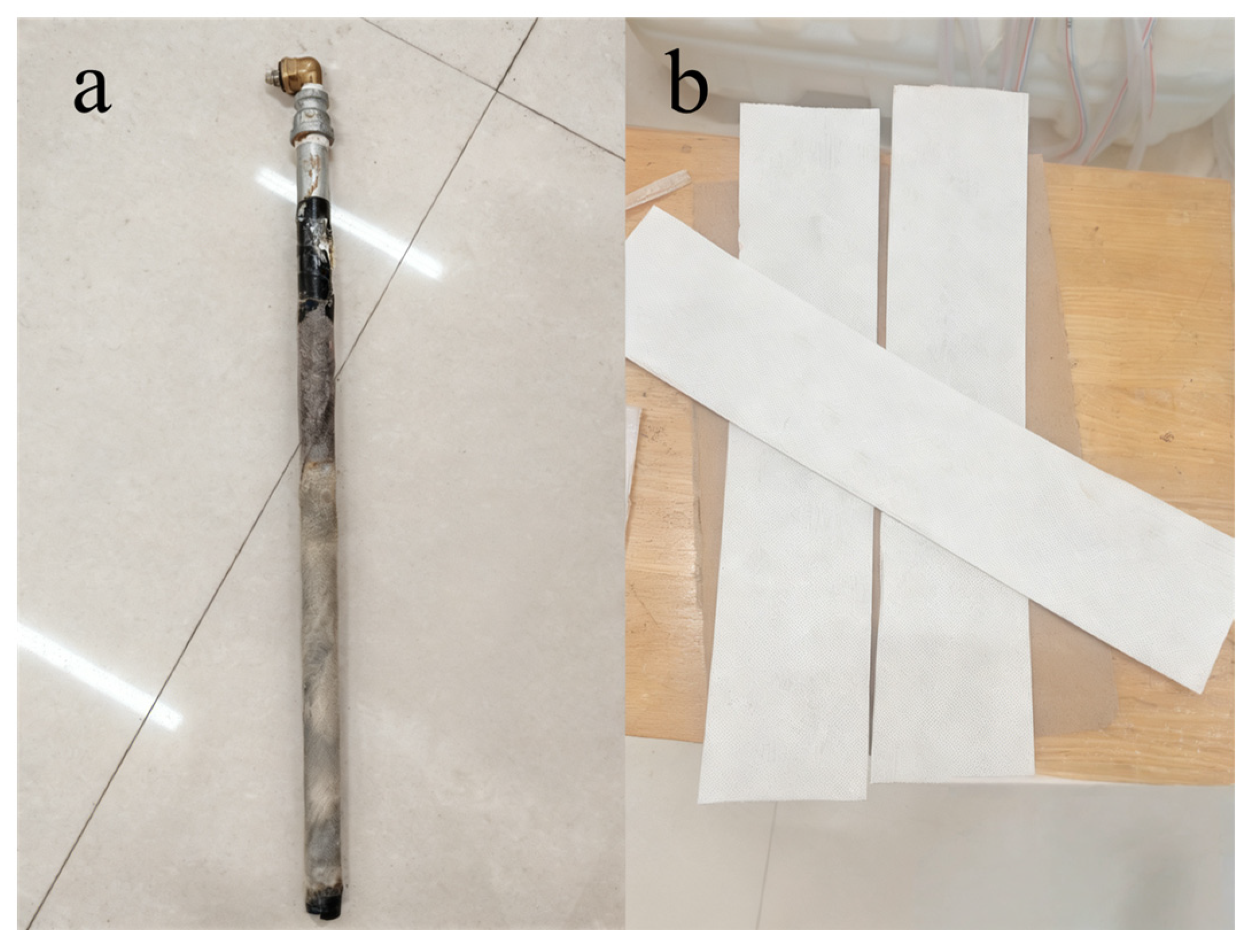
Figure 1. Vertical drains: (a) perforated metal drainage pipe; (b) plastic drainage board.
Water 17 03499 g001
Figure 2. Schematic diagram of the test model setup: (a) sectional view; (b) plan view (Unit: mm).
Water 17 03499 g002
Figure 3. Physical picture of the test model device.
Water 17 03499 g003
Figure 4. Variation in cumulative water discharge with time.
Water 17 03499 g004
Figure 5. Variation in average settlement with time.
Water 17 03499 g005
Figure 6. Variation in current intensity with time.
Water 17 03499 g006
Figure 7. Relationship between mean electrode corrosion and energy consumption.
Water 17 03499 g007
Figure 8. Variation in instantaneous energy consumption with cumulative discharged water volume.
Water 17 03499 g008
Figure 9. Post-treatment water content distribution of soil: (a) along depth direction; (b) along anode direction.
Water 17 03499 g009
Figure 10. Post-treatment shear strength distribution of soil: (a) along depth direction; (b) along anode direction.
Water 17 03499 g010
Table 1. Basic physico-mechanical parameters of soil samples.
Specific GravityHydraulic Conductivity/(cm·s−1)Water Content/%Liquid Limit/%Plastic Limit/%Particle Size Distribution/%
<0.0050.005~0.050.05~0.1
2.722.54 × 10−769.738.621.318.949.6131.49
Table 2. Technical specifications of integrated plastic drainage boards.
CategoryPerformance IndicatorsUnitRangeDescription
IntegratorThicknessmm4.0 ± 0.2/
Widthmm100 ± 3/
Failure tensile strengthkN/10 cm≥1.3Percentage elongation 10%
Water Discharge Capacitycm3/s≥25Lateral pressure 350 kPa
Filter
membrane
Dry tensile strengthN/cm≥25Percentage elongation 10%
Wet tensile strengthN/cm≥20Percentage elongation 15%, waterlogging 24 h
Hydraulic conductivitycm/s5.0 × 10−4Waterlogging 24 h
Equivalent opening sizeum75According to the O98 standard
MaterialFilter membrane//Nonwoven polyester chemicals, Hydrophilic material
Core//Olypropylene, Polyethylene
Table 3. Test scheme.
Test GroupsVoltage/VVertical Drainage BodyVacuum Degree/kPaVacuum Loading ModeElectroosmosis Mode
T0/Integrated drainage board80Turn on the pump 12 h
Turn off the pump 12 h
/
T120Perforated metal drainage pipe80Power on while turning on the pump
T22080Power on while turning off the pump
T320Integrated drainage board80Power on while turning on the pump
T42080Power on while turning off the pump
T52050Power on while turning on the pump
T62050Power on while turning off the pump
Note: All groups received identical total power-on duration of 12 h. In T1/T3/T5 power was only applied during vacuum-on periods; in T2/T4/T6 power was only applied during vacuum-off periods.
Table 4. One-way analysis of variance (ANOVA) results for water discharge under different loading modes.
SourceSum of Squares (SS)Degrees of Freedom (df)Mean Square (MS)F-Valuep-ValueF Critical (Fcrit)
Between Groups9.81 × 100861.63 × 100828.897.64 × 10−282.13
Within Groups1.90 × 10093365.66 × 1006///
Total2.89 × 1009342////
Note: F is the F-statistic of one-way ANOVA; p is the significance level (p-value); p < 0.05 indicates significant difference; p < 0.01 indicates highly significant difference. All p-values in this table are less than 0.001, meaning the differences among the seven groups are highly statistically significant.
Table 5. One-way ANOVA results for shear strength under different loading modes.
SourceSum of Squares (SS)Degrees of Freedom (df)Mean Square (MS)F-Valuep-ValueF Critical (Fcrit)
Between Groups6271.5261045.2520.61.78 × 10−152.19
Within Groups4973.279850.75///
Total11,244.79104////
Disclaimer/Publisher’s Note: The statements, opinions and data contained in all publications are solely those of the individual author(s) and contributor(s) and not of MDPI and/or the editor(s). MDPI and/or the editor(s) disclaim responsibility for any injury to people or property resulting from any ideas, methods, instructions or products referred to in the content.