Article

Enhancing Methane Production in a Sidestream Bioelectrochemical Anaerobic Digestion of Sewage Sludge: Focusing on Energy Efficiency and Tradeoffs

1
Department of Urban, Energy, and Environmental Engineering (Environmental Engineering), Chungbuk National University, Cheongju 28644, Republic of Korea
2
Department of Advanced Energy Engineering, Chosun University, Gwangju 61452, Republic of Korea
*
Author to whom correspondence should be addressed.
These authors contributed equally to this work.
Water 2025, 17(24), 3497; https://doi.org/10.3390/w17243497
Submission received: 7 November 2025 / Revised: 5 December 2025 / Accepted: 9 December 2025 / Published: 10 December 2025

Abstract

This study evaluates the energy efficiency and trade-offs of a sidestream bioelectrochemical anaerobic digestion (SBEAD) system compared to conventional anaerobic digestion (AD). Both reactors were operated in sequencing batch mode under mesophilic conditions, with a low voltage of 0.4 V applied to SBEAD. Experiments were conducted across four organic loading rates (OLRs): 2, 3, 4, and 6 kg-COD/m3/day. At OLRs of 3 kg-COD/m3/day or lower, methane production and energy efficiency were comparable between AD and SBEAD. However, at higher OLRs, SBEAD demonstrated superior methane production and overall energy recovery, while AD performance deteriorated due to acidification. Specifically, at 6 kg-COD/m3/day, SBEAD achieved an energy efficiency of 63.8 ± 3.5%, compared to 23.1 ± 12.4% for AD. A novel metric, the Methane Gain Index (MGI), was analyzed, with SBEAD achieving MGI values exceeding 50 kJ/kJ at low OLRs and reaching 585.3 kJ/kJ at high OLRs. Additionally, microbial community analysis indicated that SBEAD favored the abundance of species that enhance substrate degradation and methane production. These findings suggest that SBEAD is a scalable strategy for treating high-strength organic waste in waste-to-energy systems.

1. Introduction

Anaerobic digestion (AD) is a well-established biological process that converts organic matter into biogas, primarily composed of methane (CH4) and carbon dioxide (CO2), through microbial activity in the absence of oxygen [1]. This process is crucial for effective waste management and renewable energy recovery, as it stabilizes organic waste and generates bioenergy from various substrates, including agricultural residues, food waste, and wastewater sludge. However, the efficiency of AD is affected by several factors, including substrate characteristics, operating temperature, pH, alkalinity, carbon-to-nitrogen (C/N) ratio, and organic loading rate (OLR). These factors can result in reduced degradation efficiency and slower reaction rates, particularly when dealing with complex and resistant compounds [2]. To overcome these challenges, various physical and chemical methods have been developed. However, many of these techniques involve downsides, such as high initial investment costs, increased operating expenses, and higher energy demands [3].
Bioelectrochemical anaerobic digestion (BEAD) is an innovative technology that enhances the efficiency of organic matter degradation and CH4 production by applying a low voltage (0.2–0.6 V) to an AD reactor. In this process, organic matter is oxidized at the anode of the BEAD reactor, releasing e, H+, and CO2, which are subsequently reduced to CH4 at the cathode [4]. Previous research has highlighted the advantages of BEAD through investigations into its reaction mechanisms, shifts in microbial communities, and the suitability of electrode configurations and materials. One study demonstrated that BEAD effectively functions for both pre-treatment and post-treatment processes [5]. Another study found that BEAD accelerates CH4 production by rapidly consuming VFAs and converting H2 into CH4, even at higher OLRs [6]. Additionally, research indicated that electroactive microorganisms in the bulk solution contribute to the enhancements in CH4 production [7]. In addition to these findings, many studies have further examined BEAD under various operational conditions, offering broader insights into its mechanisms and performance [8,9,10]. These findings suggest that BEAD holds great potential to improve treatment capacity and increase CH4 production rates. However, the commercialization of BEAD faces challenges related to scaling up and cost efficiency, including issues such as electrochemical losses, dead space within the reactor, and high electrode costs. To facilitate the commercialization of BEAD, it is essential to enhance existing AD reactors and develop new systems. Nevertheless, integrating BEAD into current AD reactors requires careful consideration of factors such as operational disturbances (including fluctuations in substrate loading, temperature variations and changes in pH), long-term durability and maintainability, and the economic implications of electrode materials [11]. An engineered approach considering economic viability is important to determine the feasibility of applying this technology.
A recent study investigated the strategy of supplying voltage through a side-stream approach via sludge recirculation, demonstrating performance recovery in the practical application of BEAD [11]. The proposed side-stream bioelectrochemical anaerobic digestion (SBEAD) configuration includes electrodes installed in a separate side reactor, with the bulk liquid continuously circulated between the main and side reactors. This arrangement facilitates the electrochemical activation of the bulk solution, enhancing overall microbial activity and mass transfer while improving operational stability, maintenance access, and long-term reliability. The study confirmed that applying voltage through the auxiliary BEAD reactor to the AD reactor, particularly under optimal conditions during high-load operations, impacts AD performance recovery and alters microbial community dynamics. Moreover, it was reported that the sidestream voltage supply substantially improved AD efficiency [11]. These findings provide new insights for the practical implementation of BEAD with minimal infrastructure changes in existing AD facilities, reduced operational costs, and enhanced durability. However, both BEAD and its derivative, SBEAD, still require additional electrical energy input for voltage application. If this extra energy input can be offset by increased CH4 production, it would further strengthen their practical application and acceptance in current AD facilities. While numerous studies have documented performance improvements in BEAD systems, relatively few have examined their energy balance and overall efficiency [12,13], and there is currently no research focusing on the energy balance and efficiency of SBEAD reactors.
In this context, building on the findings of previous studies, this research aims to evaluate the energy efficiency of the SBEAD reactor, an enhanced configuration of BEAD, by directly comparing it to the AD system. The analysis focuses on both CH4 recovery and electrical energy consumption to determine whether the side-stream configuration offers a genuine net energy benefit. This assessment will help evaluate the feasibility of SBEAD as a sustainable enhancement for the treatment of organic wastes and the recovery of renewable energy.

2. Materials and Methods

2.1. Inoculum and Substrates

The inoculum used in this study was collected from a local mesophilic AD facility in Cheongju City, Korea. The substrate, solubilized sewage sludge (SS), was obtained from a wastewater treatment plant in the same city. The SS used in this study consisted of a mixture of primary sludge and waste activated sludge at a ratio of approximately 1:3. The solubilized sludge was produced through thermal hydrolysis, which was conducted at approximately 165 °C and 5–6 bar for about 30 min before being cooled to the digestion temperature. Following thermal hydrolysis, the sludge underwent additional preparation for use as the substrate. To prepare the substrate, the solubilized SS was passed through a 150 µm mesh to remove foreign materials, and it was stored at 4 °C until needed for the experiments. Before the experiments, the physicochemical characteristics of both the inoculum and the SS were analyzed, and the results are presented in Table 1.

2.2. Reactor Configuration

In this study, two types of reactors were employed: the AD reactor and the SBEAD reactor with external voltage application. A schematic representation of both reactors is shown in Figure 1. The AD reactor, which served as the control, is a cylindrical acrylic vessel with a diameter of 50 cm and a height of 60 cm, providing a total working volume of 120 L. To ensure uniform mixing and maintain consistent anaerobic conditions throughout the reactor, a mechanical impeller was installed. The SBEAD reactor consisted of a main reactor that was structurally and volumetrically identical to the AD reactor, along with an additional auxiliary reactor with a total volume of 8 L connected externally. The auxiliary reactor was rectangular in shape, constructed from acrylic, with dimensions of 80 cm × 10 cm × 10 cm. It operated in an up-flow mode, allowing liquid to flow from the lower part of the main reactor. This continuous circulation facilitated a uniform substrate flow and stable contact between the bulk liquid and the electrode surfaces. Inside the auxiliary reactor, a vertically oriented anode-cathode module was positioned parallel to the up-flow direction to maximize surface exposure and enhance mass transfer along the electrode surfaces. A grid-patterned plastic plate separated the anode and cathode to prevent short circuits and ensure uniform flow distribution. Four sets of electrodes (each measuring 60 cm × 9 cm × 1 cm) were installed within the auxiliary reactor. Type 304 austenitic stainless steel (SUS 304, JIS G 4304 [14]) electrodes were chosen for their high mechanical strength and excellent electrochemical stability. Finally, an electrical monitoring system was established by connecting a DC power supply (Model 2230-30-1 Triple Channel DC Power Supply, Keithley Instruments, Cleveland, OH, USA) to each electrode. The current was measured using a digital multimeter (Model 2701 Ethernet-Based DMM, Keithley Instruments, Cleveland, OH, USA) in series with a 1 Ω resistor on the cathode line.

2.3. Reactor Operation

The reactors were operated in sequencing batch mode under mesophilic conditions within a thermostatic room, with the OLR gradually increased. Both reactors had an effective working volume of 100 L; however, for the SBEAD reactor, this volume was divided between the main reactor (95 L) and the auxiliary reactor (5 L). The experiments were conducted in sequential stages with OLRs of 2, 3, 4, and 6 kg-COD/m3/d to assess reactor performance under different organic loading conditions. For OLRs of 2–4 kg-COD/m3/d, the reactors were operated at a hydraulic retention time (HRT) of 20 days. At the OLR of 6 kg-COD/m3/d, the influent COD concentration necessitated an increased feed rate to achieve the target loading, resulting in a shorter HRT of approximately 15 days. Each OLR stage was maintained for at least one full HRT to allow the systems to reach stable operation. The substrate, diluted with distilled water to achieve the desired OLR, was fed into the reactors once daily, with an equivalent volume of effluent withdrawn to maintain system stability. In the SBEAD reactor, a voltage of 0.4 V was applied to enhance bioelectrochemical reactions, thereby improving CH4 production efficiency. This choice of voltage was based on previous studies that demonstrated enhanced performance within the lower voltage range [4]. Additionally, a sludge circulation rate of 300 L/d was maintained between the main and auxiliary reactors to promote effective mixing and mass transfer. Detailed operational information for both reactors is presented in Table S1 (Supplementary File).

2.4. Analytical Methods

The pH of the samples was determined using a pH meter (Orion 420A+, Thermo Scientific, Waltham, MA, USA). The total chemical oxygen demand (TCOD) of the effluent from each reactor was assessed using the closed reflux and colorimetric method [15]. Biogas production was measured at 24 h intervals using a mass flow meter (KMF-20, KEMIK Corporation, Seongnam-si, Republic of Korea). The CH4 composition of the biogas was analyzed using gas chromatography (GC, Series 580, GOW-MAC, Bethlehem, PA, USA). For this analysis, samples were directly withdrawn from the gas outflow using a gas sampling bag (CEL Scientific Corp., Santa Fe Springs, CA, USA) The gas chromatography analysis was conducted with the following settings: helium was used as the carrier gas at a flow rate of 25 mL/min, the oven temperature was maintained at 80 °C, and a 1.5 m × 1/8-inch stainless steel column packed with a suitable absorbent. The equations for calculating volumetric CH4 production are included in the Supplementary Files. In the SBEAD reactor, the current was calculated from the measured voltage using Ohm’s law, where a 1 Ω resistor was connected in series on the cathode side. The current values were integrated over time to determine the total charge passed, which was subsequently used to calculate the electrical energy consumption of the reactor. Detailed information regarding the analytical methods is presented in the Supplementary File.

2.5. Electrical Efficiency Calculation

In this study, the mechanical energy consumption from pumps, mixers, and heaters was considered the fundamental operational energy for both the AD and SBEAD reactors. The total mechanical energy input was maintained at equivalent levels in both reactors. To reduce the impact of hydraulic circulation on the overall energy input, the additional energy consumption from the recirculation pump in the SBEAD reactor was offset by making slight adjustments to the mixer power in the main reactor, thereby ensuring comparable overall mechanical energy input between the two reactors. Consequently, this analysis focused on assessing how the additional electrical energy supplied by the SBEAD reactor enhanced CH4 production efficiency. For each OLR condition, all daily measurements collected throughout the entire loading period were used to calculate energy recovery efficiency and related parameters, as both reactors generally demonstrated stable operation during each stage. Thus, each OLR period was treated as representative of stable operating conditions. All reported energy recovery efficiency values are expressed as mean estimates accompanied by standard deviations. The exact number of daily measurements per period varied according to the length of the respective loading phases. Coulombic efficiency was calculated to evaluate the bioelectrochemical contribution to process performances by comparing total charge and COD removal efficiency. The detailed electrical efficiency calculation methods and equations are included in the Supplementary Files.

2.6. Microbial Community Analysis

Bulk solution samples for microbial community analysis were collected on Day 100, the final day of operation at an OLR of 3 kg-COD/m3/d. On this day, the AD reactor exhibited a pH of 7.33, a COD removal efficiency of 66.9%, daily biogas production of 68.7 L, and a CH4 content of 60.1%. In contrast, the SBEAD reactor showed a pH of 7.50, a COD removal efficiency of 72.5%, daily biogas production of 79.5 L, and a CH4 content of 63.2%. For microbiome taxonomic profiling, PCR amplicons of the phylogenetic marker gene (16S rRNA) were sequenced targeting V3-V4 regions of the 16S rRNA. Fusion primers 341F (5-TCGTCGGCAGCGTC-AGATGTGTATAAGAGACAG-CCTACGGGNGGCWGCAG-3; the underlined sequence corresponds to the primer target region) and 805R (5-GTCTCGTGGGCTCGG-AGATGTGTATAAGAGACAG-GACTACHVGGGTATCTAATCC-3′) were used. DNA was extracted from the samples using the FastDNA Spin Kit (MP Biomedicals, Seoul, Republic of Korea). The quality and quantity of the extracted DNA were evaluated using the Epoch™ Spectrometer (BioTek Instruments, Winooski, VT, USA) and agarose gel electrophoresis. The extracted DNA was then subjected to PCR amplification with fusion primers targeting the V3 and V4 regions of the 16S rRNA gene. Sequencing was carried out on the Illumina MiSeq platform (Illumina, San Diego, CA, USA) according to the manufacturer’s instructions. The detailed methodologies for taxonomic profiling followed the protocols established in our previous study [16].

3. Results and Discussion

3.1. Comparative Analysis of Process Performance and Stability

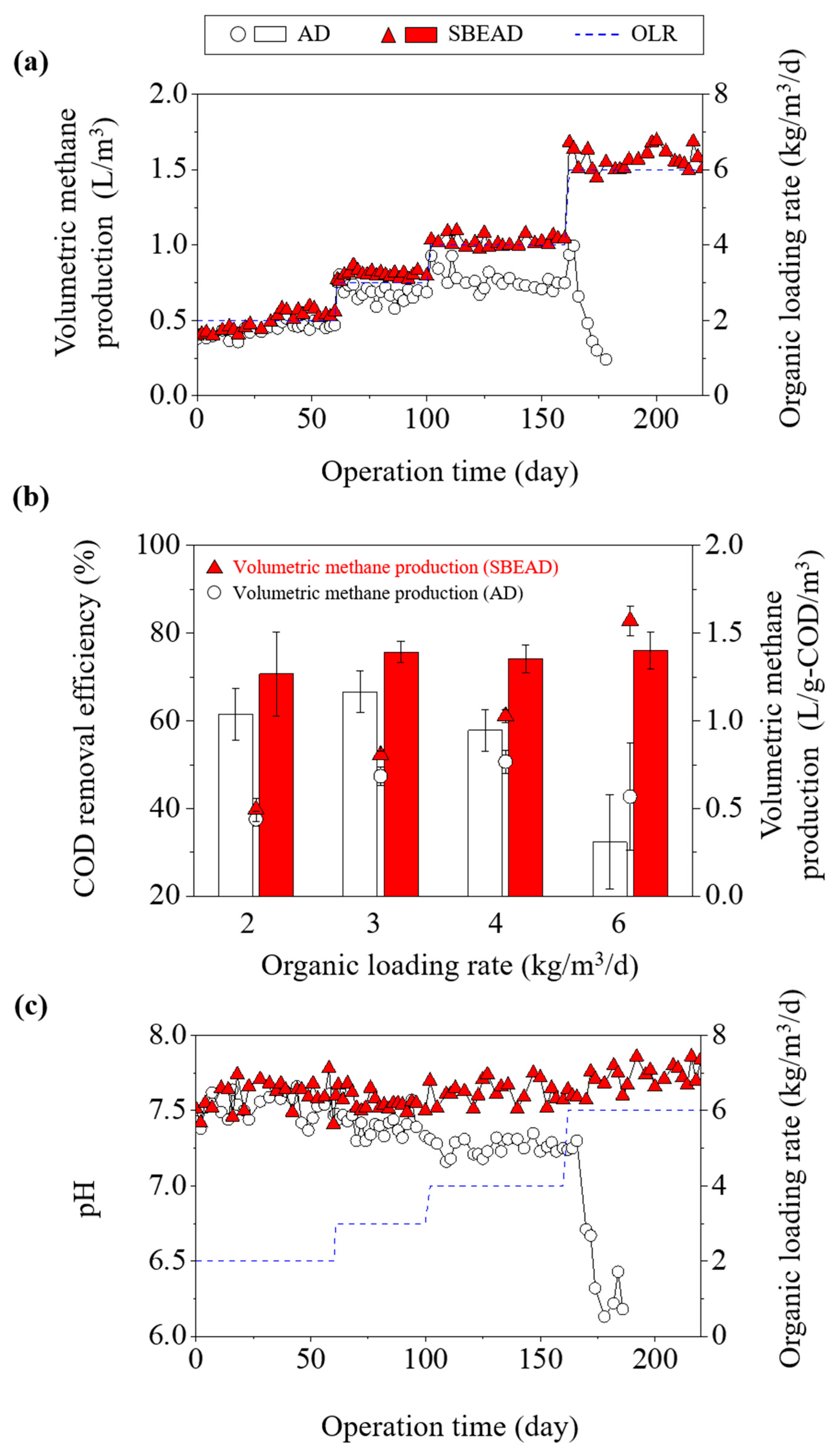
Figure 2 presents the comparative trends for pH, volumetric CH4 production, COD removal efficiency, and electrical current in both AD and SBEAD reactors across the experimental timeline and varying OLRs. During the initial operational phase, CH4 yields were comparable between AD and SBEAD reactors. However, after approximately 20 days, the SBEAD reactor began to surpass the AD reactor in CH4 productivity. Specifically, at OLRs of 2 kg/m3/d and 3 kg/m3/d, the SBEAD reactor achieved volumetric CH4 production of 0.49 ± 0.07 L/m3 and 0.81 ± 0.02 L/m3, respectively, representing increases of 11.2% and 11.7% relative to the AD reactor, which yielded 0.44 ± 0.04 L/m3 and 0.69 ± 0.05 L/m3 at the same OLRs. At these OLRs, the CH4 content of the biogas was also higher in the SBEAD reactor, with values of 62.4 ± 4.6% and 63.7 ± 3.0%, compared to 56.6 ± 8.2% and 59.5 ± 4.1% in the AD reactor, as shown in Figure S1 (Supplementary File). This improved performance is further corroborated by higher COD removal rates in the SBEAD reactor (70.7 ± 9.6% and 75.7 ± 2.4%) versus the AD (61.5 ± 5.8% and 66.6 ± 4.8%), as depicted in Figure 2b. These outcomes reflect the enhanced degradation and conversion of organic matter facilitated by bioelectrochemical stimulation [13,17].
Consistent pH values were observed throughout the experimental period in both reactors, with the AD reactor showing pH levels of 7.53 ± 0.09 and 7.40 ± 0.07, and SBEAD maintaining 7.60 ± 0.10 and 7.56 ± 0.06. Stable pH is essential for sustaining methanogenic activity and limiting inhibitory effects on the microbial community. At elevated OLRs (4 and 6 kg/m3/d), the performance divergence between the reactors became more pronounced. At an OLR of 4 kg/m3/d, the AD reactor showed only a slight increase in volumetric CH4 production (0.77 ± 0.07 L/m3). However, the magnitude of this increase was limited because the COD removal efficiency declined to 57.8 ± 4.7%, accompanied by a reduction in pH to 7.26 ± 0.05. At 6 kg/m3/d, the AD reactor showed severe process inhibition, with its volumetric CH4 production plummeting to 0.24 L/m3 and pH falling to 6.13, signaling an acidification-driven collapse of methanogenic activity [18,19]. Additionally, foaming was observed in the AD reactor at these elevated OLRs, which may have further contributed to the observed decline in performance and stability.
Conversely, the SBEAD reactor maintained stable volumetric CH4 production across all OLRs tested, achieving 1.03 ± 0.04 L/m3 at 4 kg/m3/d and increasing to 1.57 ± 0.09 L/m3 at the highest loading of 6 kg/m3/d. These differences explain the rapid performance deterioration observed in the AD reactor, where hydrolysis and acidogenesis outpaced methane formation. The AD reactor was unable to alleviate proton build-up, leading to acidification and collapse of methanogenic activity. In contrast, the improved stability and methane production in the SBEAD reactor may be attributed to the involvement of bioelectrochemical reactions, such as direct electron-mediated methanogenic pathways, hydrogen-mediated reduction, or carbon compound-driven methanogenesis. Among these, hydrogen-mediated methanogenesis is particularly critical in regulating reactor pH, as evidenced by the anodic and cathodic half-cell reactions [20,21]:
Anodic reaction:
CH 3 COO + 4 H 2 O 2 HCO 3 + 9 H + + 8 e   E = 0.28   V
Cathodic reaction:
2 H + + 2 e H 2   E = 0.42   V
Methanogenesis:
CO 2 + 4 H 2 CH 4 + 2 H 2 O

3.2. Bioelectrochemical Performance of Sidestream Bioelectrochemical Anaerobic Digestion

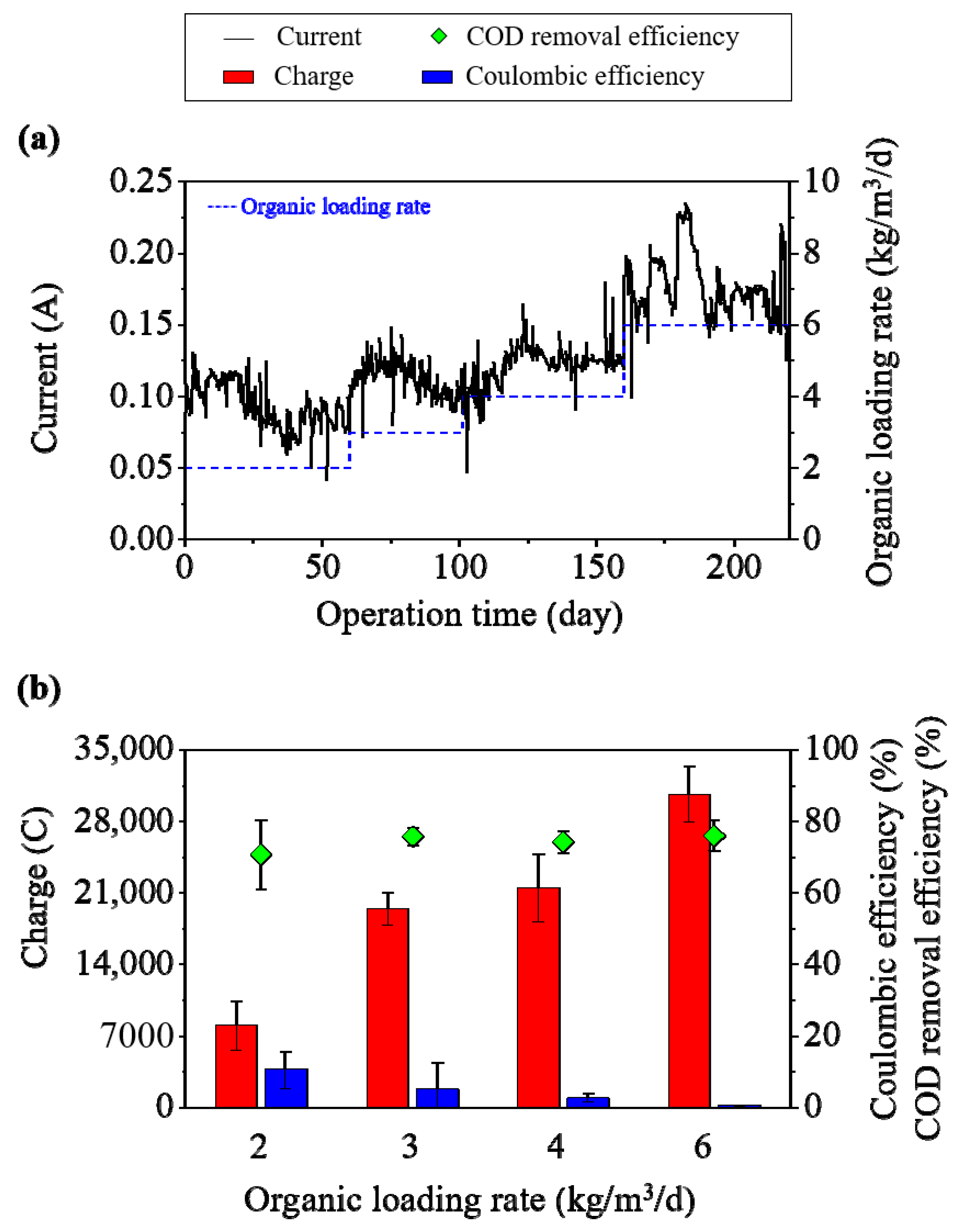
As depicted in Figure 3a, current values in the SBEAD reactor consistently rose as OLR increased, with sustained and even amplified current peaks observed above 0.15 A once OLR exceeded 4 kg/m3/d. These trends indicate robust cathodic activity and heightened electrochemical reduction of protons to hydrogen, thus facilitating hydrogenotrophic methanogenesis. This mechanism not only supports stable pH by mitigating the inhibitory effects of acid accumulation but also drives continued CH4 production under high-load conditions [6]. The observed correspondence between spikes in current and steps in OLR further illustrates that bioelectrochemical stimulation becomes increasingly vital for maintaining process efficiency and reactor stability as substrate loading rises. In summary, the integration of bioelectrochemical strategies through SBEAD demonstrates pronounced benefits in sustaining reactor stability, optimizing organic conversion, and enhancing CH4 output, especially as operational stressors intensify. Consequently, the enhanced performance observed in the SBEAD reactor is primarily attributed to bioelectrochemical stimulation rather than improvements in mass transfer resulting from the internal recirculation of bulk sludge. This bioelectrochemical effect helped maintain stable methane conversion efficiency and consequently increased volumetric methane production.
The Coulombic efficiency with total charge and COD removal efficiency at each OLR is presented in Figure 3 and Table 2. The SBEAD reactor showed stable COD removal efficiencies ranging from 70.7 ± 9.6% to 75.7 ± 2.4% during the whole operation period. Total charges generated from organic matter oxidation increased as COD input loading increased. At 6.0 kg/m3/d OLR, the charge drastically improved in the SBEAD reactor, resulting in successful process operation. However, the Coulombic efficiency showed a decreasing trend as the OLR increased. Interestingly, the overall process performance, represented by the COD removal efficiency, remained stable. This observation aligns with findings from Sleutels et al. (2011), who reported that although higher OLRs resulted in increased current generation, the proportion of electrons recovered at the electrode (i.e., Coulombic efficiency) decreased due to intensified competition with methanogenic pathways [22]. This indicates that the electrons transferred through the electrodes were utilized not primarily for methane generation but rather involved in biochemical reactions such as the reduction of H+ that contribute to maintaining overall process stability [11]. In other words, inherent process stability reduces the need for continuous SBEAD operation, as favorable biochemical conditions can be maintained within the reactor [6]. However, when suboptimal conditions arose, such as lower pH values and reduced COD removal efficiency at high OLR, electroactive microorganisms accelerated bioelectrochemical oxidation of organic matter at the anode and H+ reduction at the cathode. Despite stable COD removal at a higher OLR, a lower Coulombic efficiency might be due to limited electrode surface area in the sidestream reactor [11]. This result suggests that the effects of sidestream reactor scale, electrode area to main AD reactor volume, and intermittent operation on SBEAD application should be further studied in the next step to demonstrate a practical application strategy. Future studies should address the scalability and practicality of SBEAD technology by incorporating a detailed cost analysis and assessing long-term stability. Important factors such as electrode corrosion, passivation, and the expenses associated with electrode replacement and fouling issues need to be examined. These elements are critical for understanding the operational challenges and economic considerations that will ultimately influence the widespread adoption of SBEAD technology.

3.3. Energy Recovery Performance and Methane Amplification in Sidestream Bioelectrochemical Systems

The comparative analysis of energy recovery characteristics between the AD reactor and the SBEAD reactor is presented in Table 3. The evaluation reveals differences in both energy efficiency and CH4 amplification potential. At lower OLR (OLRs: 2–3 kg-COD/m3/d), energy recovery (measured by the ratio of WCH4/WS,rem) was similar in both reactors, indicating comparable substrate-to-methane conversion under stable operational conditions. However, as OLRs increased, the AD reactor exhibited a marked decline in energy recovery efficiency, dropping to 67.1 ± 14.9% at 6 kg-COD/m3/d (Table 3). This degradation is primarily attributed to reduced CH4 conversion efficiency rather than solely to substrate removal rates, suggesting that the metabolic processes in the AD reactor become stressed and less effective at higher organic loadings. In contrast, the SBEAD reactor consistently maintained high conversion efficiencies even at elevated OLRs, achieving 84.5 ± 1.8% and 84.2 ± 2.3% for 4 and 6 kg-COD/m3/d, respectively (Table 3). This demonstrates that SBEAD technology provides robust system stability and efficient substrate utilization, even in challenging operating environments. In a study by Song et al. (2016) using sewage sludge, energy recovery efficiencies ranged from 58.6% to 98.4% at OLRs of 1.44–5.76 kg-VS/m3/d, and the efficiencies observed in this work fall within a similar range [23].
Considering the total energy input, including both the chemical energy of the substrate and supplementary electrical energy, along with the subsequent recovery of CH4 energy, highlights the energetic advantages of the SBEAD system (Table 3). Despite the modest input from external electrical sources (WE), the SBEAD reactor achieved superior energy recovery efficiency compared to the AD reactor. In the SBEAD reactor, the applied electrical energy serves not only as an energy supplement but also as an electrochemical stimulus that supports methanogenic activity, particularly under conditions where conventional AD performance begins to decline. Although the present study does not allow for direct identification of the underlying mechanisms, the observed improvement in performance at elevated OLRs is consistent with a potential stimulatory effect, as suggested in previous studies [24,25]. This stimulatory effect enabled the SBEAD reactor to maintain stable operation even at an OLR of 6 kg-COD/m3/d, whereas the AD reactor maintained stable performance only up to 3 kg-COD/m3/d. When comparing the reactors at their respective operating conditions, 3 kg-COD/m3/d for the AD reactor and 6 kg-COD/m3/d for the SBEAD reactor, the SBEAD reactor still exhibited higher overall energy recovery efficiency (AD: 55.8 ± 4.3%, SBEAD: 63.8 ± 3.5%). This indicates that even under loading conditions that exceed the stable operating range of the conventional AD reactor, the SBEAD system can maintain stable performance while retaining its energetic advantage. When mechanical energy consumption was incorporated, the overall energy recovery efficiency of both reactors decreased, with the AD reactor showing a more pronounced decline compared to the SBEAD reactor, resulting in efficiencies of only 13.3–31.3% (Table 3). Importantly, the SBEAD reactor generated a higher and more stable CH4 yield and maintained stability at higher OLRs compared to the AD reactor. This highlights the potential of the SBEAD configuration to enhance overall energy efficiency despite the mechanical energy demands.
To quantitatively evaluate the extent of electro-stimulated performance enhancement, the Methane Gain Index (MGI) was applied as a simplified energy-balance indicator. The MGI provides a convenient expression of the methane energy gained per unit electrical energy input (WCH4,add/WE, expressed as kJ of additional CH4 produced per kJ of electrical input). Under low OLR conditions (2–3 kg-COD/m3/d), the SBEAD reactor recorded MGI values exceeding 50 kJ/kJ. This indicates that electrical input (sub-1 kJ levels) resulted in more than a 50-fold amplification of the additional CH4 energy output. This phenomenon clearly illustrates genuine catalytic amplification rather than mere energy supplementation. At higher OLRs, where conventional AD performance is hindered by reactor acidification and accumulating protons, the SBEAD reactor not only retained process stability but also achieved a pronounced surge in MGI, reaching 585.3 ± 135.7 kJ/kJ at 6 kg-COD/m3/d. Thus, the applied voltage acts as a bioelectrochemical “gate”, unlocking constrained metabolic pathways, similar to how a transistor or amplifier circuit enhances the biochemical response of the system. The MGI emerges as a critical metric for both system performance analysis and technology deployment. It facilitates the identification of optimal OLR and voltage conditions for maximizing the bioelectrochemical effect, serving as a guide for scaling strategies and economic evaluations. The superliner gains in CH4 energy recovery of the SBEAD reactor, driven by minimal electrical inputs, highlights its potential for strategic and scalable implementation. In summary, these results demonstrate that the SBEAD reactor not only outperforms conventional AD in terms of CH4 production and energy recovery, particularly at high OLRs, but also achieves this through scalable, energy-efficient amplification mechanisms.

3.4. Microbial Community

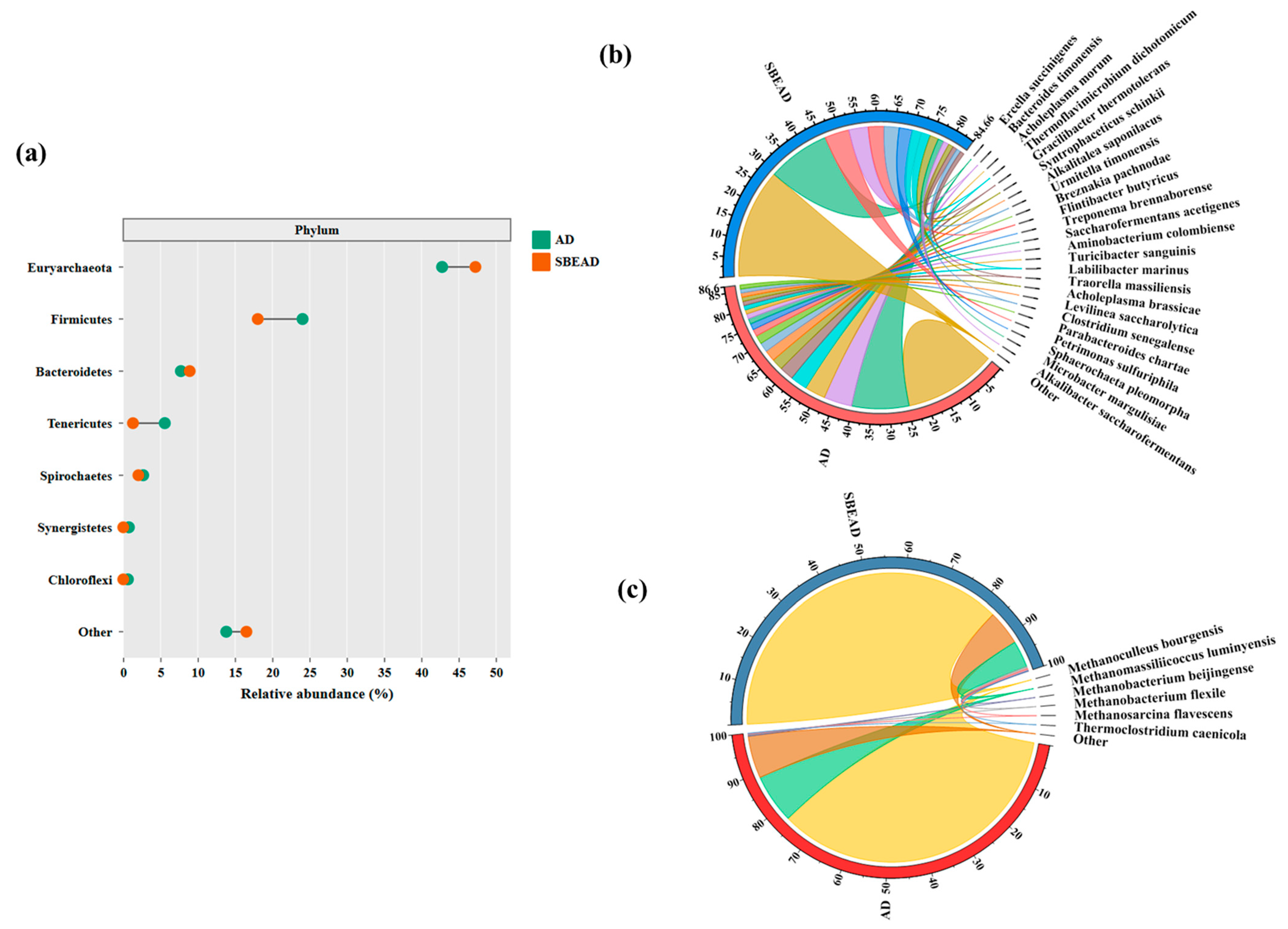
The microbial community structure in both reactors was analyzed. Figure 4a illustrates the bacterial and archaeal abundances at the phylum level. The predominant bacterial phyla observed in both AD and SBEAD reactors included Euryarchaeota (42.77% and 47.24%), Firmicutes (24.05% and 18.04%), Bacteroidetes (7.73% and 8.91%), Tenericutes (5.57% and 1.3%), Spirochaetes (2.67% and 2.03%), Synergistetes (0.75% and 0.1%), and Chloroflexi (0.62% and 0.1%), among others. Notably, Euryarchaeota was the most dominant phylum in both reactors, primarily consisting of methanogens, followed by Bacteroidetes and Firmicutes. Both Bacteroidetes and Firmicutes are essential microorganisms in AD reactors, capable of degrading a variety of compounds such as cellulose, proteins, and pectin [26]. Tenericutes were also present in both reactors, with a higher abundance in the AD reactor compared to the SBEAD reactor. Tenericutes are facultative anaerobes that can produce organic acids under anaerobic conditions, which can be utilized by aceticlastic methanogens [27]. Other phyla identified included Spirochaetes, Synergistetes, and Chloroflexi. Spirochaetes, which are Gram-negative bacteria thriving in anaerobic environments, were detected in both reactors [28]. In contrast, Synergistetes and Chloroflexi were only present in the AD reactor and absent in the SBEAD reactor. Synergistetes are microorganisms that degrade organic matter, primarily associated with the breakdown of proteins and amino acids [29]. Chloroflexi, known as ‘green non-sulfur bacteria’, consists of multicellular filamentous organisms commonly found in AD reactors [30]. Overall, both reactors exhibited a diverse abundance of phyla.

3.4.1. Bacterial Community Structure

Bacteria play a vital role in breaking down complex organic polymers and proteins into smaller molecular monomers that can be assimilated by microorganisms. Figure 4b illustrates the bacterial community structure at the species level in both the AD and SBEAD reactors. The predominant bacterial species in both reactors include Ercella succinigenes (15.38% and 16.79%), Bacteroides timonensis (7.52% and 5.2%), Acholeplasma morum (5.55% and 0%), Thermoflavimicrobium dichotomicum (4.51% and 2.45%), Gracilibacter thermotolerans (3.74% and 1.2%), Syntrophaceticus schinkii (3.07% and 1.02%), and Alkalitalea saponilacus (2.97% and 0%). Notably, Ercella succinigenes, belonging to the family Ruminococcaceae, is a succinate-producing bacterium that ferments carbohydrates and glycerol primarily into H2, succinate, and acetate. This species can also utilize sulfur and fumarate as electron acceptors [31]. Its dominance in both reactors indicates effective substrate degradation, as evidenced by the COD removal efficiency observed in both reactors. Another prominent species in both reactors was Bacteroides timonensis, a Gram-negative, strictly anaerobic bacterium from the Bacteroidetes phylum, which enhances hydrolysis and acidogenesis in AD reactors. It ferments simple organic compounds into VFAs, H2, and CO2, providing substrates for subsequent acetogenic and methanogenic microbes [32]. In contrast, Acholeplasma morum was only present in the AD reactor, and its role in the AD process is rarely reported. Thermoflavimicrobium dichotomicum, found in both reactors, is a thermoalkaliphilic actinomycete bacterium known for producing various thermostable hydrolytic enzymes, including amylases, cellulases, lipases, pectinases, and proteinase [33]. Gracilibacter thermotolerans is an obligately anaerobic thermotolerant bacterium that contributes to carbohydrate breakdown during the acidogenic phase, generating VFAs, which are essential intermediates for downstream acetogenic and methanogenic microorganisms [34]. Syntrophaceticus schinkii, present in both reactors, is a strictly anaerobic, mesophilic, syntrophic acetate-oxidizing bacterium that plays a crucial role by oxidizing acetate to H2 and CO2 in association with hydrogenotrophic methanogens. It competes for substrates with aceticlastic methanogens [35]. The presence of these bacterial species in both AD and SBEAD reactors suggests efficient substrate degradation, providing intermediates for subsequent processes. In the SBEAD reactor, species such as Petrimonas sulfuriphila, Sphaerochaeta pleomorpha, and Microbacter margulisiae were abundant. Petrimonas sulfuriphila primarily participates in the acidogenic phase, fermenting glucose and other carbohydrates to produce VFAs, H2, and CO2, which are crucial for the subsequent stages of AD [36]. Similarly, Sphaerochaeta pleomorpha is involved in the fermentation of sugars and polysaccharides, producing organic acids such as acetate, formate, and ethanol, along with H2 and CO2 [37]. Microbacter margulisiae primarily participates in acidogenesis, converting organic substrates into VFAs, particularly propionate and lactate [38]. These bacterial species were more abundant in the SBEAD reactor than in the AD reactor, which likely contributed to effective substrate degradation in the SBEAD reactor. Overall, the results indicate that various bacterial species were present in the AD reactor, while the SBEAD reactor favored the abundance of selective bacterial species, enhancing process performance and stability at higher OLR.

3.4.2. Archaeal Community Structure

Figure 4c illustrates the archaeal community structure at the species level in both the AD and SBEAD reactors. The archaeal species identified in both reactors include Methanoculleus bourgensis (76.75% and 83.69%), Methanomassiliicoccus luminyensis (12.1% and 6.58%), Methanobacterium beijingense (0.29% and 0.02%), Methanobacterium flexile (0.22% and 0.54%), and Methanosarcina flavescens (0.1% and 0.21%). Notably, Methanoculleus bourgensis exhibited a higher relative abundance in both reactors, with greater abundance in the SBEAD reactor compared to the AD reactor. This strictly anaerobic hydrogenotrophic methanogen is commonly found in AD reactors. Its increased presence in the SBEAD reactor suggests that bio-electrochemical H2 production was enhanced by H2-producing bacteria. Methanoculleus bourgensis thrives in a pH range of 6.0 to 8.0 and at a temperature of 37 °C. The second most abundant methanogenic archaeon in both reactors was Methanomassiliicoccus luminyensis, which had a higher proportion in the AD reactor compared to the SBEAD reactor. This species is a typical methylotrophic methanogen, distinct from classic hydrogenotrophic and aceticlastic methanogens. It reduces methanol and methylamine (including mono-, di-, and trimethylamine) using H2 as an electron donor to produce CH4. This metabolic pathway is ecologically important in biogas reactors and organic waste treatment, especially when non-acetate substrates are abundant. It provides a complementary route for CH4 generation in environments where methanol and methylamines are present, particularly when other pathways may be limited [39]. Other methanogenic archaea present in both reactors included Methanobacterium beijingense, Methanobacterium flexile, and Methanosarcina flavescens. Methanobacterium beijingense is a hydrogenotrophic methanogen that produces CH4 using H2 and CO2 or formate, without utilizing acetate, methanol, or methylamine. Its activity is strictly linked to the hydrogenotrophic pathway [40]. Methanobacterium flexile, another hydrogenotrophic methanogen from the genus Methanobacterium, was more abundant in the SBEAD reactor compared to the AD reactor. It utilizes H2 and CO2 to produce CH4 and thrives in the mesophilic temperature ranges typical of AD reactors [41]. Similarly, Methanosarcina flavescens was also more abundant in the SBEAD reactor than in the AD reactor. This obligatory anaerobic archaeon belongs to the genus Methanosarcina and is known for its ability to produce CH4 through multiple pathways. It can utilize a broad spectrum of substrates for methanogenesis, including acetate, methylamine, H2, and CO2. It is capable of both autotrophic growth on H2/CO2 and heterotrophic growth using methylated compounds or acetate as energy sources [42]. In other words, the voltage supplied by the side stream auxiliary reactor contributed to oxidizing organic matter and VFAs into H+, e and CO2. Then, the H2-producing bacteria rapidly converted H+ and e- into H2 by a voltage supply. The abundant H2-producing methanogens in the SBEAD reactor converted H2 into CH4 with the reduction in CO2. Overall, the results indicate that various archaeal species were abundant in both the AD and the SBEAD reactors.

4. Conclusions

This study highlights the advantages of the SBEAD system over conventional anaerobic digestion (AD) systems, particularly in terms of methane production and energy efficiency at high organic loading rates (OLRs). While both systems demonstrated comparable performance at lower OLRs, the SBEAD system exhibited exceptional stability and methane yield at elevated OLRs exceeding 6 kg-COD/m3/d, facilitated by a voltage supply of 0.4 V through electrodes positioned outside the main reactor. Additionally, the results from the Methane Gain Index (MGI) indicate that the SBEAD system can optimize additional methane recovery while incurring minimal supplementary energy costs. Notably, microbial community analysis revealed that diverse bacterial and archaeal species were present in SBEAD, which led to enhanced substrate degradation and increased methane production. This capability underscores SBEAD’s potential as a viable and energy-efficient method for large-scale waste-to-energy applications. Our findings suggest that SBEAD enhances the energy recovery potential from organic waste, aligning with sustainable waste management principles and the objectives of a circular economy. Future research focused on optimizing operational conditions and further investigating microbial community dynamics will be essential to amplify these benefits.

Supplementary Materials

The following supporting information can be downloaded at: https://www.mdpi.com/article/10.3390/w17243497/s1. Table S1. Operating periods, measurement intervals, and number of data points for each organic loading rate in the anaerobic digestion and sidestream bioelectrochemical anaerobic digestion reactors. Figure S1. Comparison of methane content between anaerobic digestion and sidestream bioelectrochemical anaerobic digestion reactor at varying organic loading rates. Table S2. Mechanical energy consumption of anaerobic digestion reactor and side stream bioelectrochemical anaerobic digestion reactor.

Author Contributions

H.Y.: conceptualization, methodology, validation, formal analysis, investigation, data curation, writing—original draft preparation, review and editing, visualization. R.K.: validation, formal analysis, data curation, writing—review and editing, visualization. H.J.: conceptualization, validation, writing—review and editing, supervision, J.P.: conceptualization, validation, writing—review and editing, supervision, project administration, funding acquisition. All authors have read and agreed to the published version of the manuscript.

Funding

This research was supported by The National Research Foundation of Korea [Grant number: RS-2022-NR075801] and conducted during the research year of Chungbuk National University in 2024.

Data Availability Statement

The original contributions presented in this study are included in the article/Supplementary Material. Further inquiries can be directed to the corresponding author.

Conflicts of Interest

The authors declare that they have no known competing financial interest or personal relationships that could have appeared to influence the work reported in this paper.

References

  1. Kadam, R.; Panwar, N. Recent advancement in biogas enrichment and its applications. Renew. Sustain. Energy Rev. 2017, 73, 892–903. [Google Scholar] [CrossRef]
  2. Kadam, R.; Jo, S.; Lee, J.; Khanthong, K.; Jang, H.; Park, J. A review on the anaerobic co-digestion of livestock manures in the context of sustainable waste management. Energies 2024, 17, 546. [Google Scholar] [CrossRef]
  3. Li, H.; Li, C.; Liu, W.; Zou, S. Optimized alkaline pretreatment of sludge before anaerobic digestion. Bioresour. Technol. 2012, 123, 189–194. [Google Scholar] [CrossRef]
  4. Park, J.-G.; Lee, B.; Park, H.-R.; Jun, H.-B. Long-term evaluation of methane production in a bio-electrochemical anaerobic digestion reactor according to the organic loading rate. Bioresour. Technol. 2019, 273, 478–486. [Google Scholar] [CrossRef]
  5. Kumar, G.; Saratale, R.G.; Kadier, A.; Sivagurunathan, P.; Zhen, G.; Kim, S.-H.; Saratale, G.D. A review on bio-electrochemical systems (BESs) for the syngas and value added biochemicals production. Chemosphere 2017, 177, 84–92. [Google Scholar] [CrossRef] [PubMed]
  6. Park, J.; Lee, B.; Shin, W.; Jo, S.; Jun, H. Application of a rotating impeller anode in a bioelectrochemical anaerobic digestion reactor for methane production from high-strength food waste. Bioresour. Technol. 2018, 259, 423–432. [Google Scholar] [CrossRef]
  7. Feng, Q.; Song, Y.-C.; Ahn, Y. Electroactive microorganisms in bulk solution contribute significantly to methane production in bioelectrochemical anaerobic reactor. Bioresour. Technol. 2018, 259, 119–127. [Google Scholar] [CrossRef]
  8. Hari, A.R.; Katuri, K.P.; Ruiz-Haddad, L.; Saikaly, P.E. Pre-enriched electrodes, bioelectrochemical processes, and biomass retention collectively enhance methane production in integrated microbial electrolysis cell-anaerobic digestion system. J. Power Sources 2025, 646, 237271. [Google Scholar] [CrossRef]
  9. Qu, Y.; Xiao, C.; Workie, E.; Zhang, J.; He, Y.; Tong, Y.W. Bioelectrochemical enhancement of methanogenic metabolism in anaerobic digestion of food waste under salt stress conditions. ACS Sustain. Chem. Eng. 2021, 9, 13526–13535. [Google Scholar] [CrossRef]
  10. Xiao, B.; Chen, X.; Han, Y.; Liu, J.; Guo, X. Bioelectrochemical enhancement of the anaerobic digestion of thermal-alkaline pretreated sludge in microbial electrolysis cells. Renew. Energy 2018, 115, 1177–1183. [Google Scholar] [CrossRef]
  11. Park, J.-G.; Lee, B.; Kwon, H.-J.; Park, H.-R.; Jun, H.-B. Effects of a novel auxiliary bio-electrochemical reactor on methane production from highly concentrated food waste in an anaerobic digestion reactor. Chemosphere 2019, 220, 403–411. [Google Scholar] [CrossRef]
  12. Beegle, J.R.; Borole, A.P. Energy production from waste: Evaluation of anaerobic digestion and bioelectrochemical systems based on energy efficiency and economic factors. Renew. Sustain. Energy Rev. 2018, 96, 343–351. [Google Scholar] [CrossRef]
  13. Chandrasekhar, K.; Raj, T.; Ramanaiah, S.; Kumar, G.; Jeon, B.-H.; Jang, M.; Kim, S.-H. Regulation and augmentation of anaerobic digestion processes via the use of bioelectrochemical systems. Bioresour. Technol. 2022, 346, 126628. [Google Scholar] [CrossRef]
  14. JIS G 4304; Hot-Rolled Stainless Steel Plate, Sheet and Strip. Japanese Standards Association: Tokyo, Japan, 2021.
  15. American Public Health Association. Standard Methods for the Examination of Water and Wastewater; American Public Health Association: Washington, DC, USA, 2017; Volume 23. [Google Scholar]
  16. Kadam, R.; Jo, S.; Khanthong, K.; Hwang, M.; Park, J. Influence of starting-up inoculated granule’s color on long-term ANAMMOX performances and microbial-enzymatical characteristics under various nitrogen loads. J. Environ. Chem. Eng. 2025, 13, 117347. [Google Scholar] [CrossRef]
  17. De Vrieze, J.; Gildemyn, S.; Arends, J.B.; Vanwonterghem, I.; Verbeken, K.; Boon, N.; Verstraete, W.; Tyson, G.W.; Hennebel, T.; Rabaey, K. Biomass retention on electrodes rather than electrical current enhances stability in anaerobic digestion. Water Res. 2014, 54, 211–221. [Google Scholar] [CrossRef] [PubMed]
  18. Dhar, H.; Kumar, P.; Kumar, S.; Mukherjee, S.; Vaidya, A.N. Effect of organic loading rate during anaerobic digestion of municipal solid waste. Bioresour. Technol. 2016, 217, 56–61. [Google Scholar] [CrossRef] [PubMed]
  19. Puthumana, A.B.; Kaparaju, P. Impact of Organic Load on Methane Yields and Kinetics during Anaerobic Digestion of Sugarcane Bagasse: Optimal Feed-to-Inoculum Ratio and Total Solids of Reactor Working Volume. Energies 2024, 17, 5083. [Google Scholar] [CrossRef]
  20. van Eerten-Jansen, M.C.; Jansen, N.C.; Plugge, C.M.; de Wilde, V.; Buisman, C.J.; ter Heijne, A. Analysis of the mechanisms of bioelectrochemical methane production by mixed cultures. J. Chem. Technol. Biotechnol. 2015, 90, 963–970. [Google Scholar] [CrossRef]
  21. Zhao, Z.; Zhang, Y.; Quan, X.; Zhao, H. Evaluation on direct interspecies electron transfer in anaerobic sludge digestion of microbial electrolysis cell. Bioresour. Technol. 2016, 200, 235–244. [Google Scholar] [CrossRef]
  22. Sleutels, T.H.; Darus, L.; Hamelers, H.V.; Buisman, C.J. Effect of operational parameters on Coulombic efficiency in bioelectrochemical systems. Bioresour. Technol. 2011, 102, 11172–11176. [Google Scholar] [CrossRef]
  23. Song, Y.-C.; Feng, Q.; Ahn, Y. Performance of the bio-electrochemical anaerobic digestion of sewage sludge at different hydraulic retention times. Energy Fuels 2016, 30, 352–359. [Google Scholar] [CrossRef]
  24. Ding, L.; Wang, Y.; Lin, H.; Van Lierop, L.; Hu, B. Facilitating solid-state anaerobic digestion of food waste via bio-electrochemical treatment. Renew. Sustain. Energy Rev. 2022, 166, 112637. [Google Scholar] [CrossRef]
  25. Qin, X.; Lu, X.; Cai, T.; Niu, C.; Han, Y.; Zhang, Z.; Zhu, X.; Zhen, G. Magnetite-enhanced bioelectrochemical stimulation for biodegradation and biomethane production of waste activated sludge. Sci. Total Environ. 2021, 789, 147859. [Google Scholar] [CrossRef]
  26. Zhou, L.; Gao, Y.; Yu, K.; Zhou, H.; De Costa, Y.G.; Yi, S.; Zhuang, W.-Q. Microbial community in in-situ waste sludge anaerobic digestion with alkalization for enhancement of nutrient recovery and energy generation. Bioresour. Technol. 2020, 295, 122277. [Google Scholar] [CrossRef]
  27. Li, L.; He, Q.; Ma, Y.; Wang, X.; Peng, X. A mesophilic anaerobic digester for treating food waste: Process stability and microbial community analysis using pyrosequencing. Microb. Cell Factories 2016, 15, 65. [Google Scholar] [CrossRef]
  28. Lee, S.-H.; Park, J.-H.; Kang, H.-J.; Lee, Y.H.; Lee, T.J.; Park, H.-D. Distribution and abundance of Spirochaetes in full-scale anaerobic digesters. Bioresour. Technol. 2013, 145, 25–32. [Google Scholar] [CrossRef]
  29. Militon, C.; Hamdi, O.; Michotey, V.; Fardeau, M.-L.; Ollivier, B.; Bouallagui, H.; Hamdi, M.; Bonin, P. Ecological significance of Synergistetes in the biological treatment of tuna cooking wastewater by an anaerobic sequencing batch reactor. Environ. Sci. Pollut. Res. 2015, 22, 18230–18238. [Google Scholar] [CrossRef]
  30. Sanz, J.L.; Rojas, P.; Morato, A.; Mendez, L.; Ballesteros, M.; González-Fernández, C. Microbial communities of biomethanization digesters fed with raw and heat pre-treated microalgae biomasses. Chemosphere 2017, 168, 1013–1021. [Google Scholar] [CrossRef] [PubMed]
  31. van Gelder, A.H.; Sousa, D.Z.; Rijpstra, W.I.C.; Damste, J.S.S.; Stams, A.J.; Sanchez-Andrea, I. Ercella succinigenes gen. nov., sp. nov., an anaerobic succinate-producing bacterium. Int. J. Syst. Evol. Microbiol. 2014, 64, 2449–2454. [Google Scholar] [CrossRef] [PubMed]
  32. Tukanghan, W.; Hupfauf, S.; Gómez-Brandón, M.; Insam, H.; Salvenmoser, W.; Prasertsan, P.; Cheirsilp, B.; O-Thong, S. Symbiotic Bacteroides and Clostridium-rich methanogenic consortium enhanced biogas production of high-solid anaerobic digestion systems. Bioresour. Technol. Rep. 2021, 14, 100685. [Google Scholar] [CrossRef]
  33. Darwesh, O.M.; Barakat, K.M.; Mattar, M.Z.; Sabae, S.Z.; Hassan, S.H. Thermoflavimicrobium dichotomicum as a novel thermoalkaliphile for production of environmental and industrial enzymes. Biointerface Res. Appl. Chem. 2020, 10, 4811–4820. [Google Scholar] [CrossRef]
  34. Lee, Y.-J.; Romanek, C.S.; Mills, G.L.; Davis, R.C.; Whitman, W.B.; Wiegel, J. Gracilibacter thermotolerans gen. nov., sp. nov., an anaerobic, thermotolerant bacterium from a constructed wetland receiving acid sulfate water. Int. J. Syst. Evol. Microbiol. 2006, 56, 2089–2093. [Google Scholar] [CrossRef]
  35. Li, C.; Hao, L.; Lü, F.; Duan, H.; Zhang, H.; He, P. Syntrophic acetate-oxidizing microbial consortia enriched from full-scale mesophilic food waste anaerobic digesters showing high biodiversity and functional redundancy. Msystems 2022, 7, e00339-22. [Google Scholar] [CrossRef]
  36. Grabowski, A.; Tindall, B.J.; Bardin, V.; Blanchet, D.; Jeanthon, C. Petrimonas sulfuriphila gen. nov., sp. nov., a mesophilic fermentative bacterium isolated from a biodegraded oil reservoir. Int. J. Syst. Evol. Microbiol. 2005, 55, 1113–1121. [Google Scholar] [CrossRef]
  37. Loughrin, J.H.; Parekh, R.R.; Agga, G.E.; Silva, P.J.; Sistani, K.R. Microbiome diversity of anaerobic digesters is enhanced by microaeration and low frequency sound. Microorganisms 2023, 11, 2349. [Google Scholar] [CrossRef]
  38. Sanchez-Andrea, I.; Sanz, J.L.; Stams, A.J. Microbacter margulisiae gen. nov., sp. nov., a propionigenic bacterium isolated from sediments of an acid rock drainage pond. Int. J. Syst. Evol. Microbiol. 2014, 64, 3936–3942. [Google Scholar] [CrossRef]
  39. Kröninger, L.; Gottschling, J.; Deppenmeier, U. Growth characteristics of Methanomassiliicoccus luminyensis and expression of methyltransferase encoding genes. Archaea 2017, 2017, 2756573. [Google Scholar] [CrossRef] [PubMed]
  40. Ma, K.; Liu, X.; Dong, X. Methanobacterium beijingense sp. nov., a novel methanogen isolated from anaerobic digesters. Int. J. Syst. Evol. Microbiol. 2005, 55, 325–329. [Google Scholar] [CrossRef] [PubMed]
  41. Zhu, J.; Liu, X.; Dong, X. Methanobacterium movens sp. nov. and Methanobacterium flexile sp. nov., isolated from lake sediment. Int. J. Syst. Evol. Microbiol. 2011, 61, 2974–2978. [Google Scholar] [CrossRef]
  42. Kern, T.; Fischer, M.A.; Deppenmeier, U.; Schmitz, R.A.; Rother, M. Methanosarcina flavescens sp. nov., a methanogenic archaeon isolated from a full-scale anaerobic digester. Int. J. Syst. Evol. Microbiol. 2016, 66, 1533–1538. [Google Scholar] [CrossRef]
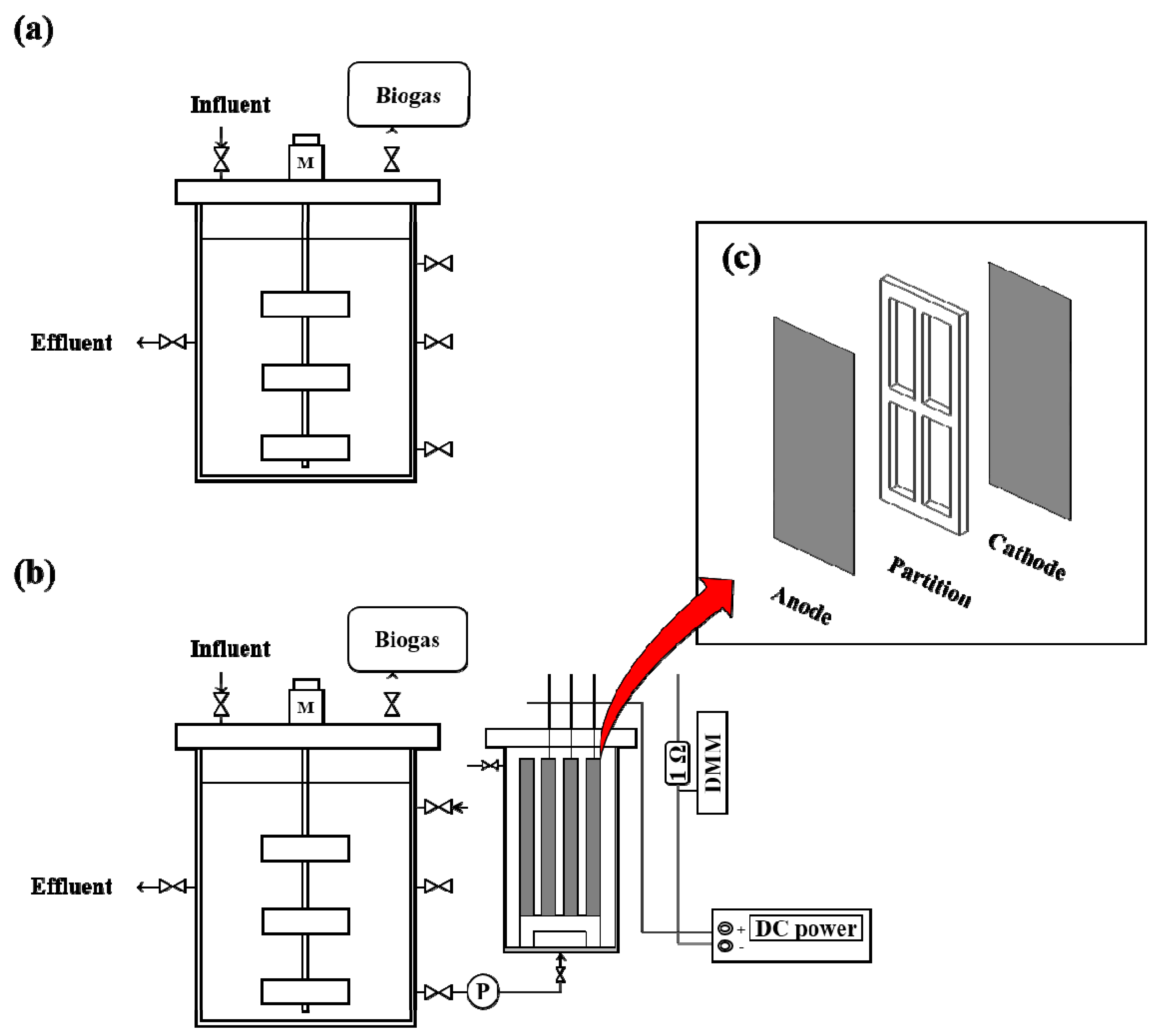
Figure 1. Schematic diagram of (a) anaerobic digestion, (b) sidestream bioelectrochemical anaerobic digestion reactor, and (c) detailed electrode stack configuration.
Water 17 03497 g001
Figure 2. Comparison of anaerobic digestion and sidestream bioelectrochemical anaerobic digestion reactor performances at varying organic loading rates ((a) volumetric methane production, (b) COD removal efficiency and volumetric methane production at each OLR, and (c) pH).
Water 17 03497 g002
Figure 3. (a) Current profile and (b) Coulombic efficiency with total charge and COD removal efficiency at each organic loading rate in the sidestream bioelectrochemical anaerobic digestion reactor.
Water 17 03497 g003
Figure 4. Relative abundance of microbial communities in anaerobic digestion and sidestream bioelectrochemical anaerobic digestion reactors. (a) Phylum-level abundance (%), (b) bacterial community (%), and (c) archaeal community (%).
Water 17 03497 g004
Table 1. Physiochemical characteristics of the inoculum and sewage sludge.
ParameterInoculumSewage Sludge
pH7.5 ± 0.36.2 ± 0.2
Alkalinity (g/L as CaCO3)9.6 ± 1.53.2 ± 0.4
TCOD (g/L)20.1 ± 2.892.4 ± 4.1
SCOD (g/L)0.7 ± 0.162.5 ± 2.3
TS (%)2.7 ± 0.3108.2 ± 0.9
VS (%)1.6 ± 0.288.4 ± 0.6
Notes: TCOD: Total chemical oxygen demand; SCOD: Soluble chemical oxygen demand; TS: Total solids; VS: Volatile solid.
Table 2. Electrochemical parameters of the sidestream bioelectrochemical anaerobic digestion reactor.
ParameterValue
Total electrode surface area (m2)0.864
Electrode surface area to working volume ratio (m2/m3)8.64
Current density (A/m2)2 kg/m3/d *34.7 ± 20.0
3 kg/m3/d93.2 ± 13.7
4 kg/m3/d151.0 ± 19.7
6 kg/m3/d219.9 ± 20.0
Coulombic Efficiency (%)2 kg/m3/d5.4 ± 5.2
3 kg/m3/d5.1 ± 7.4
4 kg/m3/d2.7 ± 1.3
6 kg/m3/d0.9 ± 0.2
Note: * Organic loading rate.
Table 3. Results of energy efficiency by organic loading rate for the anaerobic digestion and sidestream bioelectrochemical anaerobic digestion reactors.
CategoryOLR
(kg-COD/m3/d)
Energy Recovery Efficiency
(%) *
Overall Energy Recovery Efficiency
(%) **
MGI ****
(kJ/kJ)
AD287.2 ± 1.353.6 ± 5.1
(13.3 ± 5.1) ***
-
383.8 ± 0.655.8 ± 4.3
(18.5 ± 1.4) ***
-
481.0 ± 1.746.8 ± 4.0
(18.6 ± 18.6) ***
-
667.1 ± 14.823.1 ± 12.4
(3.5 ± 6.2) ***
-
SBEAD285.2 ± 1.160.1 ± 8.0
(14.9 ± 2.0) ***
62.8 ± 48.6
386.6 ± 1.965.4 ± 2.0
(21.7 ± 0.7) ***
56.4 ± 29.7
484.5 ± 1.862.5 ± 2.2
(24.9 ± 0.9) ***
114.8 ± 35.3
684.2 ± 2.363.8 ± 3.5
(31.7 ± 1.8) ***
585.3 ± 135.7
Notes: AD: Anaerobic digestion; SBEAD: Sidestream bioelectrochemical anaerobic digestion; OLR: Organic loading rate; MGI: Methane gain index. * Energy recovery efficiency: calculated based on the energy of the removed COD (WS,rem). ** Overall energy recovery efficiency: calculated based on the total COD fed to the reactor (WS). *** With mechanical energy consumption is also included in the calculation. **** MGI calculated based on additional methane production relative to AD (WCH4,add).
Disclaimer/Publisher’s Note: The statements, opinions and data contained in all publications are solely those of the individual author(s) and contributor(s) and not of MDPI and/or the editor(s). MDPI and/or the editor(s) disclaim responsibility for any injury to people or property resulting from any ideas, methods, instructions or products referred to in the content.