


Abstract
Drinking water contamination during the treatment process remains a major problem for decision-makers responsible for the collection and supply of water to recipients. This article presents measurements of 33 parameters of drinking water quality in the years 2009–2023, taken from the Dobromierz reservoir in Poland, with particular emphasis on the stages of raw water, water undergoing treatment, and utility water. The results showed that the raw water tested is contaminated microbiologically (presence of coliform bacteria), organoleptically (worse turbidity, odor, color), and chemically (increased PAHs, nitrites, benzo(α)pyrene). This indicates improper maintenance of the areas around the reservoir, i.e., agricultural areas (the existing nutrient runoff), residential areas (the lack of stringent records of cesspools and septic tanks), and roadside (improper maintenance of ditch slopes). In most cases, water at the treatment stage and at the end recipients was effectively purified (in most cases, the analyzed parameters achieved a degree of compliance with drinking water standards of at least 95%). Only for the turbidity in the network, the standards did not reach the adopted minimum level. This suggests the need to conduct systematic investment activities in order to reduce failures in the network (average system failure rate of 34%). Moreover, the statistical analysis of the results showed significant changes in the parameters between raw water and water in the water supply network and at end recipients (p < 0.05). Therefore, it is necessary to focus on protecting the quality of raw water resources for more effective treatment and ensuring human health safety.
1. Introduction
The development of clean drinking water for sustainable development and social progress remains one of the most important challenges facing contemporary generations [1]. The problem is so important because a quarter of the world’s population does not have access to basic drinking water and half of the world’s population does not have access to sanitation facilities. Integrated water resources management is the key to successfully achieving Sustainable Development Goal 6 (SDG6), i.e., clean and safe drinking water by improving water quality, improving wastewater treatment, promoting water recycling and eliminating all types of water waste [2].
Only 2.5% of the Earth’s water is freshwater, and only 0.3% is suitable for human consumption [3]. This 0.3% of the world’s freshwater is found in lakes and rivers. Lakes contain 87% of all liquid freshwater on Earth’s surface, while rivers account for only 2% [4]. In the United States, 61% of total public water withdrawals came from surface water in 2015 [5]. In Canada, surface water sources provided 89% of the total volume of drinking water produced in 2011 [6]. In Europe, more than 40% of total public water withdrawals came from surface water in 2020 [7].
Over the years, the availability of freshwater has been severely limited due to population growth, overuse, pollution and continuous abstraction [8]. Furthermore, water stress, defined as the ratio of freshwater withdrawals to total renewable freshwater resources exceeding the threshold of 25%, has increased by more than 2% in subregions in North Africa, Central Asia and West Asia [9]. Consequently, water scarcity is becoming an increasing problem for regions and countries around the world, which requires appropriate management and innovative technologies to effectively address these challenges [3,9,10].
Typically, solutions to water scarcity focus on reducing sectoral water consumption (e.g., improving water efficiency) or increasing water availability (e.g., storing water in reservoirs) [11]. The increase in human demand for water services has resulted in the construction and operation of over 1 million artificial reservoirs worldwide [12]. As a result, artificial reservoirs have reached a level of 6% to 11% of the global standing water area [13]. More than 36,000 large dams have been identified worldwide, with the largest number (about 28%) located in Asia [14]. Reservoirs are important sources of drinking water in many parts of the world [15,16]. A serious limitation in the allocation of water for human consumption from reservoirs is its deteriorating quality. The main factors deteriorating water quality in reservoirs worldwide are organic pollutants, salinity and nutrients [10,11]. Hence, water from reservoirs must be purified before use through water treatment. The process of water treatment for municipal purposes consists of its purification to the appropriate physical and chemical quality, and the water must be free from bacteria and pathogens. The quality of drinking water is regulated by legal acts, which are different for each country. The most general regulations have been established by the World Health Organization [17,18]. The basic stages of water purification for drinking water purposes are coagulation, sedimentation, filtration and disinfection. Typical water treatment processes include a combination of physical, biological and chemical processes. The selection of a water treatment system depends on the water quality. Before distribution to the network, water is treated, which allows for achieving sanitary safety and a pleasant taste. Water treatment systems and preferred technologies vary depending on the country [17,19].
A properly functioning drinking water distribution system (DWDS) should ensure not only appropriate quality parameters for water entering the water supply system, but also, and above all, for the end user [20]. To reach end users, drinking water must travel long distances from the treatment plant, undergoing complex physical, chemical, and biological reactions in contact with the internal walls of the network and the surfaces of connected devices, which causes changes in its quality. This can lead to water turbidity, discoloration, increased metal content, and exceeding drinking water bacterial standards at end users, leading to “secondary contamination” of the network [21,22,23]. The dominant forms of secondary contamination are metal release, microbial regrowth, and the formation of disinfection byproducts (DBPs). Corrosion deposits that form on the internal surfaces of metal pipes are a source of heavy metal contamination, which can be mobilized under varying water chemical composition and hydraulic conditions. Microbial regrowth is particularly evident in the presence of residual chlorine in DWDS systems. Microorganisms have the ability to adhere to pipe surfaces, resulting in the formation of biofilms that promote microbial regrowth by extracting nutrients from the water [22]. It has been established that over 90% of the microbial biomass in DWDS systems is surrounded by biofilms. These are complex aggregates consisting of various microorganisms and their extracellular polymeric substances (EPS), composed of proteins and carbohydrates, which increase the microorganisms’ resistance to external disturbances. Excessive microbial growth and biofilm accumulation lead to deterioration of water quality, manifested by undesirable turbidity, taste, and odor, as well as process malfunctions such as filter or pipe clogging and increased corrosion [23]. Therefore, disinfection is commonly used to prevent pathogen proliferation in DWDS systems, while disinfectant residues can react with natural organic matter or halogen ions in the water, resulting in the formation of DBPs. The negative effects of DBPs are mitigated by implementing various interventions at the water distribution stages, including source control, process control, and final control [22]. Counteracting the effects of secondary contamination relies mainly on flushing and cleaning methods [24].
In Poland, drinking water is taken from 11 reservoirs out of 46 existing reservoirs with the status of key reservoirs for the country’s water management [25]. One of them is the Dobromierz reservoir located in southwestern Poland, which started operating in 1986 [26]. The reservoir is a source of drinking water for over 21 thousand people [27]. The main pressure on the Dobromierz reservoir waters is the surface runoff of nutrients and the unorganized water and sewage management in the catchment area, which makes it difficult to purify water for drinking water purposes [28]. The article reviews the effects of time and space and water quality variability in the entire process of water treatment from the reservoir, starting from raw water and ending with water used by the consumer.
Scientific databases lack access to studies on the variability of drinking water quality throughout the treatment process from raw water to the final water that leaves the drinking water treatment plant and reaches the point of use. Therefore, the aim of this study is to (1) review the quality of drinking water over the years taken from the Dobromierz reservoir, during its treatment process, with a special focus on the stages of raw water, water under treatment, and utility water, and (2) identify key research needs to understand the future risk to the treatment process under conditions of spatiotemporal variability of water quality.
The results of this comprehensive study can inform water industry decision-makers, researchers and practitioners about the challenges and risks faced by water supply chains from drinking water reservoirs. This can lead to policy initiatives as a way to effectively manage drinking water resources and achieve the Sustainable Development Goals (in particular SDG 6: “clean water and sanitation”).
2. Materials and Methods
2.1. Research Area
The Dobromierz reservoir (50°54′3″ N, 16°14′45″ E) is located from southwestern Poland (Figure A1, Appendix A). It was built in 1977–1986 by dividing the mountain riverbed of the Strzegomka River, which is a left-bank tributary of the Bystrzyca River (a tributary of the Odra River). The reservoir, with an average depth of 10 m and a capacity of 10 million m3, is located in the northern part of the catchment area, in the 62nd km of the Strzegomka River. Administratively, it is located in the Dobromierz commune in the Lower Silesian Voivodeship, on the border of the Bolkowskie and Wałbrzych Foothills [29,30].
The basic structures that make up the reservoir are: an earth dam, discharge facilities–2 bottom outlets and 2 water intakes, and a surface overflow. The initial part of the reservoir (in the area of the river mouth) is characterized by shallow pond conditions. The final part of the reservoir (the deepest area at the dam, approximately 27 m) is characterized by conditions that are conducive to thermal stratification, typical for this type of lake [26]. Its main function is to supply drinking water to the town of Świebodzice. Due to the intake of drinking water, the reservoir is covered by sanitary protection zones, i.e., direct protection (covering the Dobromierz reservoir with a strip of the shoreline with an area of 0.16 km2) and indirect protection (covering the Strzegomka River catchment area with tributaries with an area of 19.21 km2) [29]. Other functions of the Dobromierz reservoir include: aliming the flows on the Strzegomka River (covering the minimum flow of 0.15 m3/s), flood protection of the areas located below the dam, electricity production and fish breeding [30].
The catchment area of the Dobromierz reservoir covers an area of 80.7 km2, and is located in the Central Sudetes mountain macroregion, with a predominance of areas with an altitude of 400–500 m above sea level. The lowest point of the catchment area is located at the Dobromierz reservoir dam (approx. 283 m above sea level). The average gradient of the catchment area is 5.2% [26,30]. The reservoir catchment area is of agricultural and forest character (52% agricultural land, 38% forest land). The main sources of pollution in the Dobromierz catchment area are municipal sewage, agriculture, roads and municipal waste [26]. The main pressures in the Dobromierz catchment area are surface runoff of fertilizers from agricultural land and municipal sewage (diffuse sources) [28,30]. The share of residents using the sewage system in the Dobromierz commune is 74.9% [31]. Sewage from urban areas is discharged to the treatment plants in Serwinów and Czernica. The problem is rural areas that are not covered by the sewage system. Sewage here is mainly collected in holding tanks and domestic sewage treatment plants [32,33].
2.2. Water Intake
The water intake is a tower intake located in the deepest part of the Dobromierz reservoir, approximately 50 m from the top of the earth dam (50°54′29″ N, 16°14′27″ E). It is connected to the mainland by a 157.7 m long communication gallery under the bottom of the reservoir. Water is drawn at a level of approximately 50 L/s, which is approximately 20% of the intake capacity. In order to draw water from the reservoir, two steel pipelines with a diameter of 500 mm were installed. Each of them has three inlets located at different heights of the tower, respectively: 19.35 m, 11.70 m and 8.25 m above the bottom of the reservoir. Such a water intake system allows water to be drawn from the reservoir from different levels, depending on the water level in the reservoir. This has a beneficial effect on water quality. The pipelines are placed on supports embedded in a reinforced concrete wall [29]. In the place where the entrance to the communication gallery is located, the direction of the pipelines changes and they run along the Strzegomka riverbed, then to the place where the distribution valves are located (the so-called valve chamber). Then the water from the reservoir is taken by the waterworks [26].
2.3. Measuring Points on the Water Supply Network
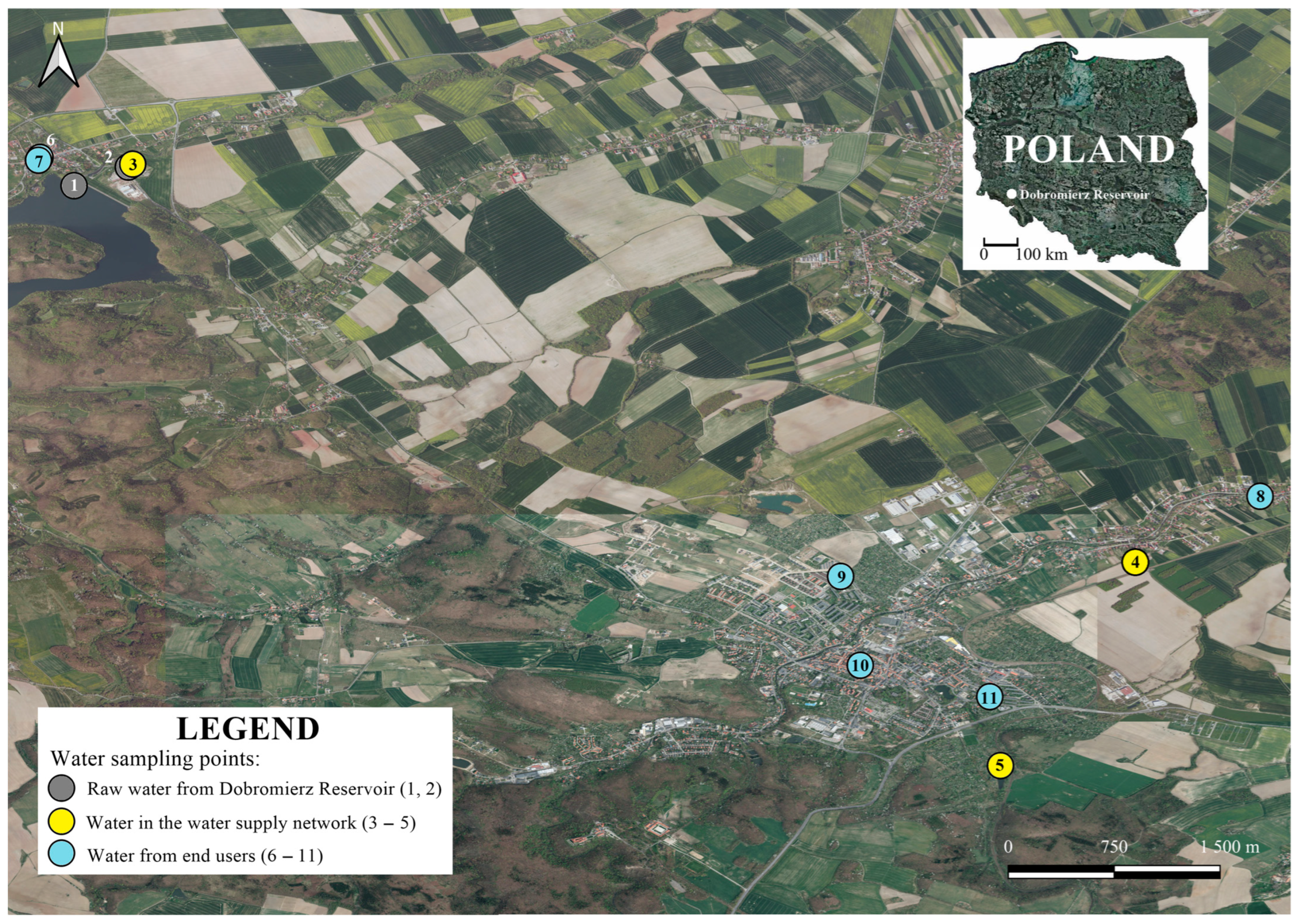
As part of the monitoring of the water supply network, 11 water quality measurement points were designated, i.e., 2 points for raw water (at the Dobromierz reservoir at the tower intake and at the Dobromierz water treatment plant–the charpal tap; points 1 and 2), 3 points at the water treatment plants: Dobromierz, Ciernie and Sportowa (hereinafter referred to as water under treatment; points 3–5) and 6 points at end recipients in Dobromierz and Świebodzice (points in the town hall building, meat plant, cultural, sports and recreation centre, vehicle inspection station and in residential buildings of housing cooperatives; points 6–11) (Figure 1).
Figure 1.
Location of water sampling points within the Dobromierz reservoir in Poland.
The first point on the map of the water treatment system is the Automatic Water Treatment Plant in Dobromierz (ATWP) [29]. This plant has been operating since 1998. The daily water production in the plant is about 4500 m3/d. Raw water from the reservoir is supplied to the ATWP, which is then subjected to treatment, and then the water is transferred by gravity to the Water Treatment Plant in Ciernie via a pipeline with a diameter of 800 mm and a length of about 10 km. There the water is additionally chlorinated. The waterworks station in Ciernie is a pumping station for the Świebodzice waterworks system, supplying water to the Ciernie district, and then, via a pressure pipeline, it supplies the Water Treatment Plant at Sportowa Street in Świebodzice, from which the water, after prior chlorination, is supplied directly to the city and to the expansion tank at Wałbrzyska Street, from which the rest of the city is supplied [26].
Water collection from the reservoir supplies 90% of Świebodzice residents. The amount of water collected in 2021 amounted to 1,325,427 m3, constituting approx. 66% of the amount specified in the water permit [33].
2.4. Water Treatment Technological Process
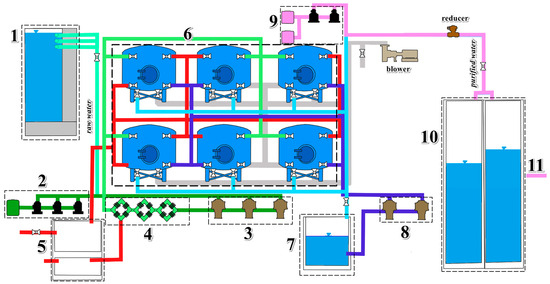
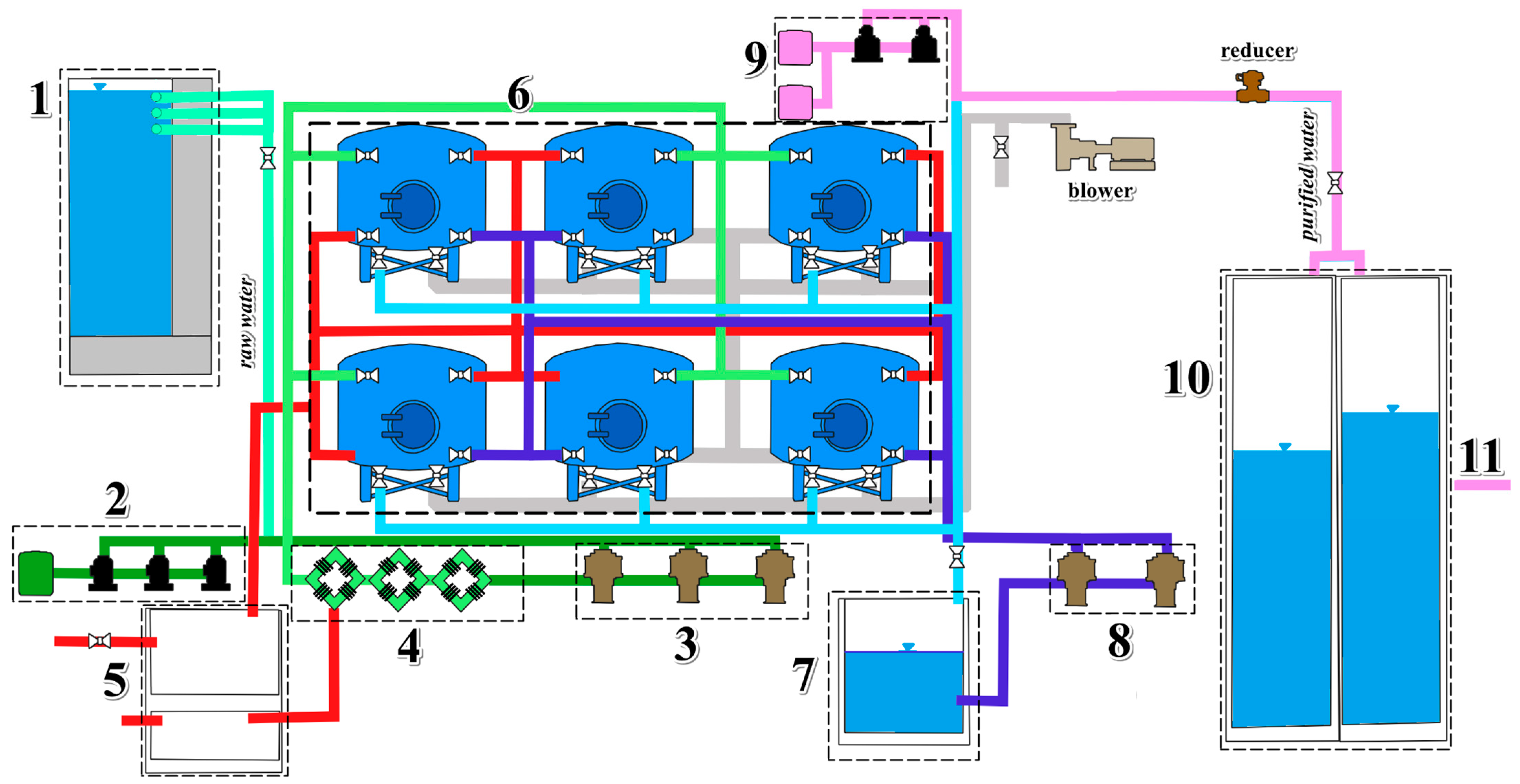
The water treatment process in the AWTP in Dobromierz (Figure 2) includes 5 stages [29], i.e.,:
Figure 2.
Flow diagram of the Dobromierz Water Treatment Plant (1—raw water intake from the Dobromierz reservoir, 2—surface coagulation with aluminium chloride hydroxide solution, 3—first-stage pumps, not in use, 4—first-stage filters; not in use, 5—flocculation (acrylamide derivative polymers; Praestol 2540), 6—second-stage filtration—rapid pressure filters, 7—clean water tank for filter rinsing, 8—rinsing pumps, 9—disinfection with sodium hypochlorite NaClO, 10—clean water storage tanks in the Ciernie Waterworks Station, 11—transmission pipeline to the Sportowa Waterworks Station in Świebodzice, with repeated NaClO disinfection before feeding into the water supply network).
- Pre-filtration—pre-filtration is performed on ARKAL membrane filters, type Star Battery System 12 × 10. This system is activated sporadically, at very high turbidity values.
- Filtration on rapid filters (gravel)—takes place on a three-layer bed in pressure filters. In 2020–2021, modernization was carried out, including the replacement of the bed with a new three-layer bed with a catalytic layer in the system (order of layers from the nozzle bottom):
- Layer I—catalytic mass G1 with granulation 0.35–1.2 mm, layer height approx. 300 mm;
- Layer II—filter sand with granulation 0.5–1.2 mm, layer height approx. 900 mm;
- Layer III—anthracite N2 with granulation 1.4–2.5 mm, layer height approx. 450 mm
- Water disinfection–takes place after the filters using a solution of approximately 15% sodium hypochlorite in a dose depending on the parameters of the raw water, including temperature, water and pH.
- Dosing of coagulant solution and flocculant to the pipeline before rapid filters (surface coagulation, flocculation)–the coagulation process is carried out using the hydrated coagulant Flokor 105b (highly polymerised aluminium hydrochloride), and the flocculation process–using the Praestol 2540 agent (polymers based on acrylamide derivatives), which are dosed directly to the pipeline before entering the water treatment plant. The coagulation process is usually started in autumn, when raw water parameters deteriorate (increased turbidity).
- Control of free chlorine content in treated water flowing by gravity through the main pipeline to the reserve-equalisation tanks on the premises of the Ciernie WTP and the Sportowa WTP in Świebodzice.
2.5. Research Parameters
The study takes into account 33 water quality parameters (data from 2009–2023) in the context of meeting their requirements for water supply purposes (initially, a selection was made and only those parameters were selected for which results were recorded in each of the distinguished groups). The basis for the assessment was the Regulation of the Minister of Health of 7 December 2017 on the quality of water intended for human consumption applicable in Poland [34]. The parameters were divided according to their characteristics and application, i.e.,: (1) parameters determining suitability for use (exceedances causing a risk to human health): microbiological and chemical; (2) indicator parameters, the parametric values of which must be met by entities involved in the supply of water to the water supply network, including water and sewage companies, i.e.,: microbiological; organoleptic and physicochemical. The list of parameters, their parametric values and determination methods is included in Table A1 in the Appendix A.
The analyses compared the results obtained at the sampling points, from the Provincial Inspectorate for Environmental Protection (WIOŚ) in Wrocław [35], the Provincial Sanitary and Epidemiological Station in Wrocław (Sanepid) [36] and the Water and Sewage Company (ZWiK) in Świebodzice [37], with the parametric values specified in the regulation (the first institution uses regulations related to the assessment of ecological status in water bodies, and the other two-those related to the assessment of drinking water quality; these two different approaches affect, among others, the water parameters taken into account in the assessment; in addition, WIOŚ collected only raw water, while Sanepid and ZWiK collected water in all three groups; the frequency of sampling and the scope of determinations depended on current needs, therefore the analyses were carried out based on three distinguished groups of points to make the conclusions as reliable as possible). The degree of compliance with the standards was determined in the division into three groups of points (raw water, water in the water supply network, end users) and the focus was on the parameters in which they were not met by at least 95%. These parameters were characterized in detail, specifying the possible causes of exceeding their values in water, as well as describing the undertaken and possible remedial measures based on the available documentation and literature. At the end of the study (Section 3.3, Section 3.4 and Section 4), an attempt was made to formulate guidelines and recommendations regarding the methods of purifying water supplied from the Dobromierz reservoir, as well as conclusions regarding the specificity of functioning of the described water supply network and development prospects, focusing on water treatment technologies.
Data were characterized using descriptive statistics (minimum, median, maximum, mean, standard deviation—SD, coefficient of variance—CV, interquartile range—IR. In addition, statistical significance was analyzed using the Kruskal–Wallis Wallis test with the post hoc Dunn test with Bonferroni correction for independent samples, expressed on a quantitative scale, with a distribution other than normal (the Lilliefors test showed a lack of normality in 76.7–83.9% of parameters, depending on the analyzed group–excluding parameters for which normality could not be determined, mainly due to their uniformity; results in Table A2, Table A3 and Table A4, Appendix A), for three research groups (1—raw water, 2—water in the water supply network, 3—water at end users), between which a comparison was made between the median (null hypothesis: no differences in medians between groups). MS Office LTSC 2021 (Microsoft, Richmond, WA, USA), OriginPro 2022b (OriginLab Corporation, Northampton, MA, USA), SPSS Statistics 26 (IBM, Armonk, NY, USA), Statistica 13 (StatSoft Polska, StatSoft, Inc., Tulsa, OK, USA), QGIS 3.34.14 (QGIS Development Team, Open Source Geospatial Foundation Project), and PhotoScape (MOOII Tech, Seoul, Republic of Korea) software was used to create tabular and graphic materials.
3. Results and Discussion
3.1. Descriptive Statistics
For the 33 analyzed water quality parameters, divided into three groups of points, a summary of basic statistics was prepared (Table A5, Table A6, Table A7 and Table A8, Appendix A). They show that in many cases the data demonstrate high variability, expressed by the coefficient of variance (CV > 50%). Such a situation occurs for raw water in the case of 20 parameters, for water in the water supply network–in 18 parameters, and for water at end recipients–in 20 parameters. In the first group, the maximum CV was noted for the parameters: coliform bacteria (522%), iron (429%), lead (410%), cyanides (349%), arsenic (287%); in the second group: Escherichia coli (985%), coliform bacteria (959%), aluminum (606%), total number of microorganisms at 22 °C (226%), cyanides (136%); in the third group: coliform bacteria (1054%), pesticides-total (223%), total number of microorganisms at 22 °C (213%), copper (157%), aluminum (138%). It should be noted, however, that taking into account the inerquartile range (IR, Q3–Q1), this variability often turns out to be small from a practical point of view and attention should also be paid to this.
The Kruskal–Wallis test (Table A9, Appendix A) showed that between groups 1 and 2 and 1 and 3 in 26 out of 33 parameters the results differed statistically significantly (for p < 0.05; exceptions in both pairs: nitrates, nitrates+nitrites, benzo(a)pyrene, polycyclic aromatic hydrocarbons), while between groups 2 and 3–only in three cases. This means that the greatest differences in parameter values existed between raw water (group 1) and the other two groups, i.e., water in the water supply network and at end users (groups 2 and 3), while between the last two groups it was a much rarer situation. Considering the effect size, it was large in 3.03% of cases (η2 > 14%), while in 31.31% it was moderate (η2 between 6% and 14%). A more detailed discussion of this variability was made in the Section 3.3.
3.2. Meeting Drinking Water Standards
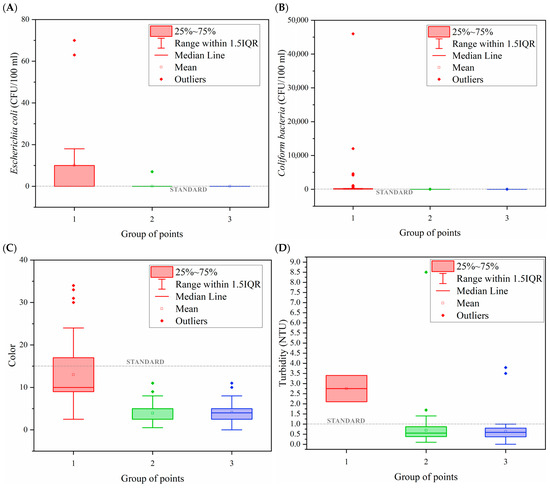
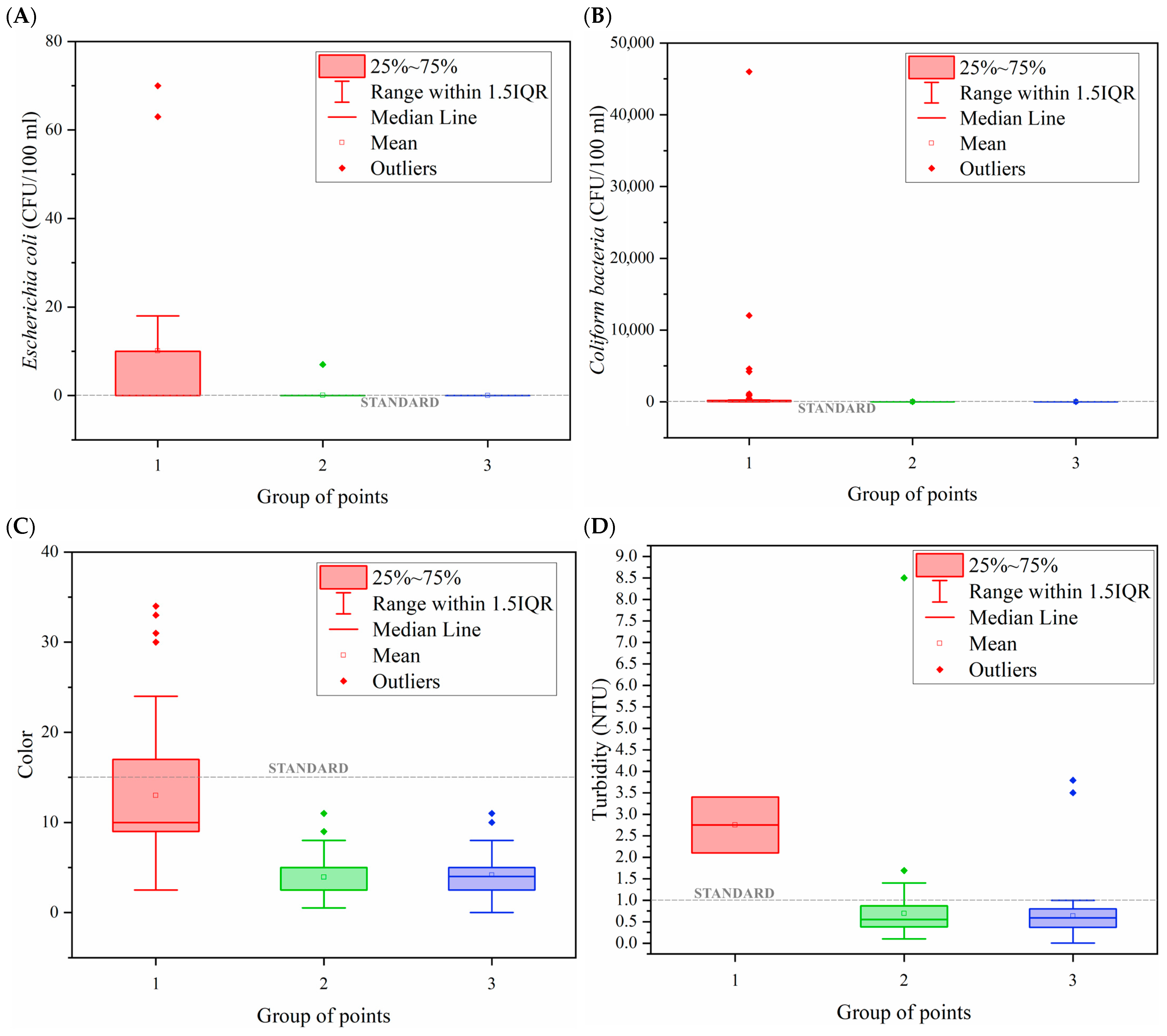
As a result of the analysis of the degree of compliance with the standards, it was shown that all parameters achieved a satisfactory degree of compliance with the standards for drinking water (minimum 95%) for end recipients. For water in the water supply network, the standards were exceeded above the adopted level only in the case of one parameter (turbidity), and for raw water-in the case of nine (in ascending order of compliance with the required parametric values: turbidity, benzene, coliform bacteria, Escherichia coli, color, odor, nitrites, polycyclic aromatic hydrocarbons, benzo(a)pyrene). The above parameters will be subject to in-depth analysis in the following sections in the context of possible causes of exceedances and taken and possible remedial actions in the context of water treatment. Based on the conducted inspections, it can be concluded that water of satisfactory quality is supplied to recipients and that usually, as it passes through the water supply network, the quality of water improves, which is expressed by the percentage of compliance with standards (exceptions: odor, aluminum, total number of microorganisms at 22 °C). A detailed summary of the results is included in Table 1. The variability of parameter values that do not meet the assumed standard level, divided into research groups, is shown in Figure 3.
Table 1.
Summary of compliance with standards for drinking water according to Polish regulations.
Figure 3.
Variability of parameter values not meeting the assumed standard level (minimum 95%) in three groups of research points (1—raw water, 2—water supply network, 3—end users) with marked drinking water quality standards: (A) Escherichia coli, (B) coliform bacteria, (C) color, (D) turbidity.
3.3. Reasons for Exceeding Standards, Remedies, Guidelines and Recommendations
Identified pollutants of raw water taken from the Dobromierz reservoir occur mainly in raw water on the largest scale. Exceedances of standards in the area of organoleptic and physicochemical parameters for the years 2009–2023 concern turbidity (mean 2.75 NTU, min. 2.1, max. 3.4 NTU), color (mean 12.98, min. 2.5, max. 34) and odor (mean 1.27, min. 1, max. 4). The deterioration of color parameters in the raw water of the Dobromierz reservoir is caused by two factors. In the summer, the color is worsened by algal blooms, which, by consuming biogenic compounds from fertilizers applied in the fields in the immediate vicinity, increase their biomass, which causes an increase in color. In autumn, the color is worsened by the runoff of suspension from forest areas located around the reservoir, i.e., plant and colloidal debris from decaying leaves of trees and shrubs [38]. Increased amounts of suspension in water (organic materials such as algae and inorganic materials such as sediment particles) pose a serious threat to the quality of water taken for water supply purposes. Algae metabolites affect the organoleptic properties of water such as taste and smell, which are very difficult to eliminate in water treatment processes [28]. This explains the exceedance of standards for smell in raw water of the Dobromierz reservoir. In the case of exceedance of standards for turbidity in raw water, the cause should be sought in the ongoing erosion of land in the vicinity of the reservoir. Research conducted by Dąbrowska et al. [28] indicates two potential areas of surface runoff directly from agricultural areas adjacent to the Dobromierz drinking water reservoir. Surface runoff from these areas occurs in the western part of the reservoir in places where the vegetation buffer is the smallest in width.
Exceedances of standards in the area of microbiological parameters were demonstrated for coliform bacteria (median 1043 CFU/100 mL), including Escherichia coli (median 10). This indicates that sewage from animal breeding and domestic sewage still penetrates into the streams (i.e., leaky septic tanks, unremoved combined sewage system from old farms) [38]. Referring to earlier studies conducted by the Water and Sewage Plant in Świebodzice in the years 2001–2008, worse parameters could be observed in the reservoir waters for odor reaching level 3 for some years, turbidity in the range of 2–5 NTU, color in the range of 15–30 [37]. Very high values were also shown in this period by microbiological contamination, i.e., coliform bacteria at a level above 2400 CFU/100 mL in 2002–2003 and Escherichia coli above 400 CFU/100 mL in 2006 [26]. The progressive year-by-year sewerage of properties in the reservoir catchment area is not sufficient to completely prevent municipal sewage from entering the reservoir waters. The problem is rural areas, which are not covered by the sewerage network. Sewage here is mainly collected in holding tanks and domestic sewage treatment plants [32].
Exceedances of standards in the area of chemical parameters concern nitrites (mean 0.859 mg/L, min. 0.021 mg/L, max. 6.78 mg/L), polycyclic aromatic hydrocarbons (mean 0.021 µg/L, min. 0.0025 µg/L, max. 0.103 µg/L) and benzo(a)pyrene (mean 0.002 µg/L, min. 1.00 × 10⁻⁴ µg/L, max. 0.0239 µg/L). The sources of substances in the reservoir waters, such as polycyclic aromatic hydrocarbons and benzo(a)pyrene, should be sought from communication routes, from where they are washed away by rainwater into roadside ditches. Most of these ditches are clogged, poorly maintained (overgrown, silted up and littered), and some of them, due to washed-out slopes, drain the above-mentioned pollutants from the road surface directly into the streams-direct tributaries of the Dobromierz reservoir [38].
Nitrites enter the reservoir waters with surface runoff [28]. Their presence in water should be attributed to soil acidification, as acidic pH slows down the nitrification process. Additionally, the lack of conditions for the development of nitrifying bacteria in the water column, due to the low content of colloidal compounds and suspensions, leaves the nitrite content at a stable level, as evidenced by the obtained research results [38].
In the case of water quality parameters in the years 2009–2023 in the water supply network, water turbidity is the biggest problem in the treatment process (water supply network: mean 0.69 NTU, min. 0.1, max. 8.5 NTU, end users: mean 0,63 NTU, min. 0.005, max. 3.79 NTU). Based on the assessments of the sanitary condition carried out by the sanitary inspection in the years 2020–2024, water from the Świebodzice water supply system periodically did not meet sanitary standards in terms of physicochemical parameters (due to excessive standards for chloroform and turbidity) and microbiological parameters (due to the presence of coliform bacteria in the water). The water supply plant implemented corrective measures to eliminate irregularities by disinfecting the water (increasing the dose of sodium hypochlorite and the degree of coagulation at the Dobromierz water treatment plant) and intensive flushing of the water supply network [39].
Based on research conducted by Płuciennik-Koropczuk et al. [20] in the water supply system of the city of Świebodzin, water parameters varied across the network. This included results in total iron content, turbidity, and color, indicating chemical instability of the water in the system. The authors demonstrated that secondary water contamination depended on both the type of network material and the distance from the water treatment plant. Higher contaminant concentrations were found in steel pipelines than in polyethylene pipelines and at points 2 km or more from the water treatment plant [20]. Wang et al. [22] also indicate that the dynamics of metal release into drinking water is inextricably linked to the materials from which the piping systems are constructed. Furthermore, both water quality and hydraulic conditions in DWDS systems significantly influence the rate and extent of metal release. Studies indicate that elevated concentrations of sulfates and chlorides can enhance the release of metals from corrosion deposits [22,40]. The use of specific corrosion inhibitors, such as orthophosphate, has been shown to be effective in limiting the release of Fe, Mn, Zn, and Pb [41]. An increase in flow velocity has been found to increase the shear stress exerted on the pipe surfaces, which can lead to the detachment of heavy metals from corrosion deposits. This phenomenon leads to the formation of a compact deposit layer, thus reducing the risk of metal release [42]. Long-term water retention promotes an anaerobic environment that favors the reduction and dissolution of corrosion products, which in turn can facilitate metal release. Empirical studies have shown that under stagnation conditions, the release of metals such as Fe, Mn, and Ni is significantly increased, with their concentrations being 2, 90, and 4 times higher, respectively, compared to flow conditions [43].
Changes in hydraulic retention time cause changes in microbial communities and their activity, which in turn influences the dynamics of microbial metabolic processes. Microbial activity can cause the release of acidic metabolites, which facilitate the corrosion of pipe substances and the subsequent release of contaminants. This process is associated with increased water turbidity and changes in odor and taste [22]. Microorganisms in biofilms are primarily rod-shaped bacteria and streptococci. Biofilm on the inner wall of polyethylene (PE) pipes consists primarily of rod-shaped bacteria, while biofilm on the inner wall of cast iron pipes consists primarily of streptococci [21]. Therefore, biofilm development poses serious hygiene problems, primarily due to their role in the spread of pathogenic microorganisms [22]. Microorganisms associated with biocorrosion of cast iron pipes include iron-oxidizing and reducing bacteria and sulfate-oxidizing and reducing bacteria. The authors’ research shows that the cavities and nodules in pipe scale accumulate nutrients and protect microorganisms from the corrosive and harmful effects of disinfectants. Pipe scale accelerates the decomposition of disinfectants, which favorably affects biofilm growth. Therefore, to effectively disinfect biofilms, it is necessary to control pipe corrosion first [21].
Deterioration of water quality in the network was mainly caused by network failures and failures of water supply devices. The failure rate of the water supply network in Świebodzice is high, the average number of failures in the period 2015–2023 was approximately 34 failures per year [31].
To improve the quality of raw water, it is recommended to limit surface runoff by breaking up the paths of pollutant transport. It is recommended to change the direction of ploughing and adopt anti-erosion cultivation practices and introduce natural cover plants. Establishing additional riverside buffer zones on concentrated paths of surface runoff will additionally stop pollution [28]. It is also necessary to collect and purify rainwater by using infiltration techniques. A remedy will be the proper maintenance of roadside ditches, the technical condition of which-washed-out slopes-causes pollutants to be discharged directly into the watercourses feeding the reservoir. In built-up areas, it is necessary to keep records of non-draining tanks and control the removal of septic tanks, which is the obligation of the commune resulting from the Act on maintaining cleanliness and order in communes [29,38].
In order to improve the quality of water in the network and at end users, it is recommended to regularly inspect the water flow conditions in the pipes, control the corrosion of the pipes in the network, and invest in replacing existing sections of water supply systems that do not meet sanitary requirements, show a high failure rate due to technical wear or the use of inappropriate materials for their construction [39].
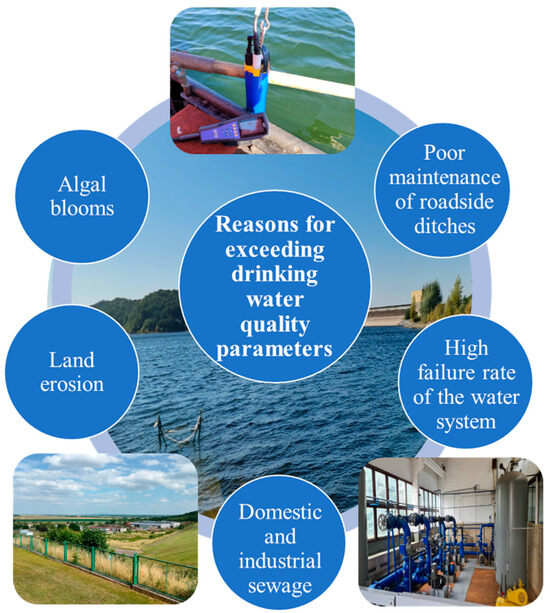
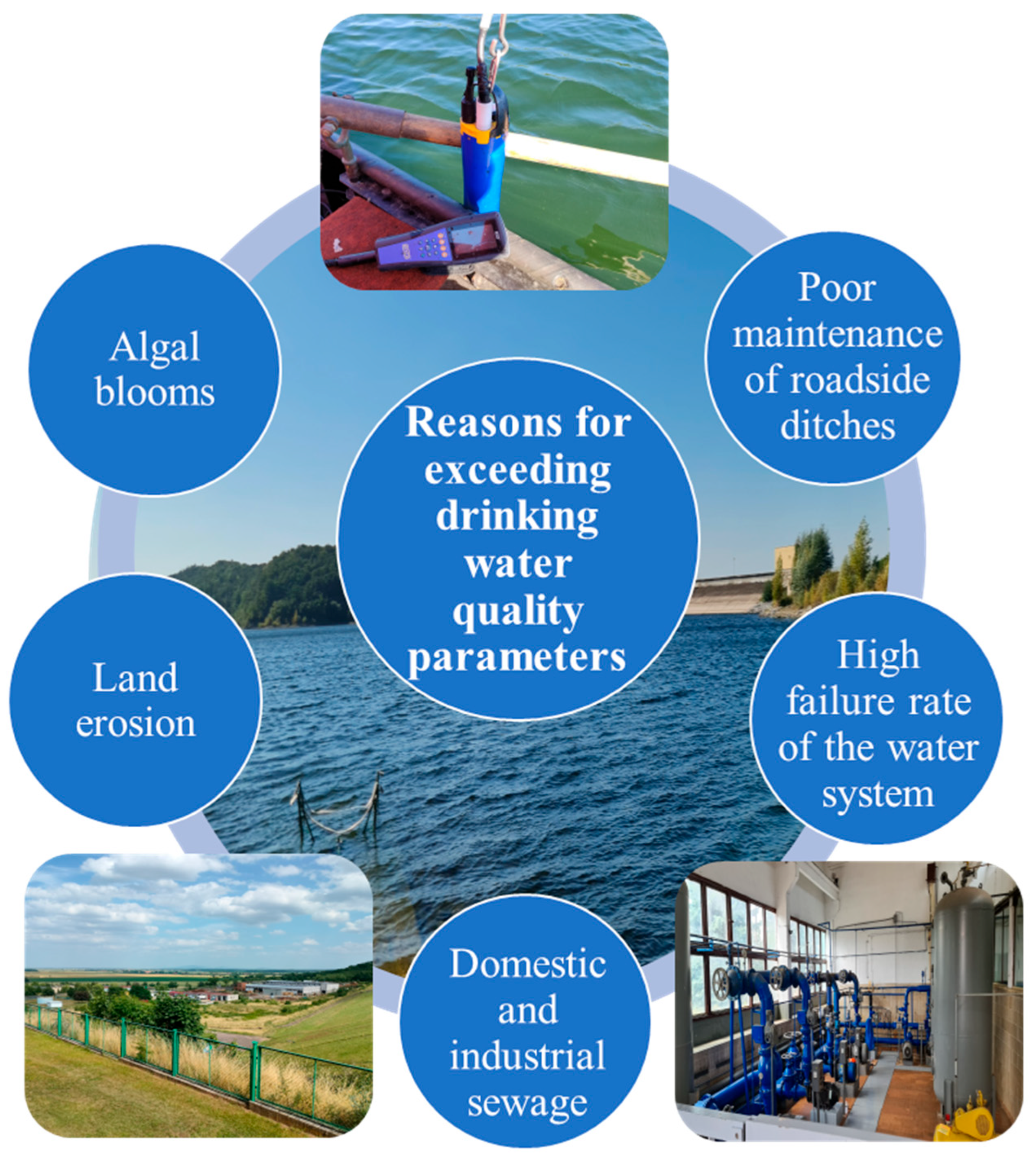
Figure 4 presents a summary of the reasons for exceeding drinking water quality standards within the Dobromierz reservoir, which were discussed above.
Figure 4.
Summary of the causes of exceeding drinking water quality parameters within the Dobromierz reservoir in Poland.
Chlorine-based disinfectants play a key role in maintaining the stability of drinking water. They demonstrate effective bactericidal activity. However, it remains difficult to control biofilm growth in cast iron pipes caused by chlorinated disinfection byproducts. Developments in new technologies demonstrate that chlorinated disinfection byproducts can be directly photochemically degraded by ultraviolet light or degraded by advanced ultraviolet-based oxidation technologies. Ultraviolet degradation technology is currently the most promising technique for removing disinfection byproducts from secondary and final water supplies. However, more comprehensive studies are needed to assess its long-term impact on water quality and public health [21,44]. In terms of cost-effectiveness, UV LEDs are still too expensive for immediate, large-scale implementation by public water utilities. However, the energy costs of UV LEDs can be offset by solar energy or micro-hydropower [45].
The quality of raw water in the Dobromierz reservoir’s distribution system aligns with international patterns of eutrophication. The influx of nutrients from the catchment area promotes phytoplankton growth, which worsens the water’s color and odor during the summer. The susceptibility of adjacent areas to erosion due to increased rainfall (mountainous areas) also contributes to deterioration of water turbidity parameters and microbiological contamination. In turn, the drinking water distribution system from the Dobromierz reservoir aligns with international patterns of secondary water pollution. This primarily concerns turbidity, which is attributed to, among other factors, steel water pipes, susceptible to corrosion. Corrosion, in turn, promotes the growth of microorganisms, whose metabolites worsen water turbidity. Biofilm formed on pipes poses a threat to drinking water quality by accelerating the breakdown of disinfectants. Outdated infrastructure will contribute to a pattern of increased system failure rates, including pipe leaks and equipment damage. Any interruption in water supply means reduced pressure and the risk of secondary water contamination.
3.4. Discussion of Results–Other Drinking Water Reservoirs and Their Problems
Clean water management includes technical activities aimed at improving the quality of raw water to meet quality standards for human consumption. The basic process of managing raw water from surface waters includes processes such as coagulation, flocculation, sedimentation, filtration and disinfection [46,47]. This basic treatment process can be expanded with modern activities depending on the water and sewage facilities operating in a given area, water conditions, including the quality of the collected raw water and the availability of technology [48]. Table 2 presents examples of water treatment processes from drinking water reservoirs around the world.
Table 2.
Water treatment processes for drinking water reservoirs around the world.
The above studies of reservoirs in various locations revealed varying raw water quality problems, as well as varying effectiveness of treatment technologies to eliminate contaminants posing a threat to human health. Based on the authors’ research, the table above distinguishes drinking water systems at risk of cyanobacteria (Vico, Cheffia), systems with microbiological problems (Yashwant Sagar, Nandoni, Klingenberg, Kleine Kinzig), and systems with elevated metal concentrations (Water Lake Nunavut, Ridracoli). The raw water in the Vico and Cheffa reservoirs is burdened with cyanobacteria and microcystins, which were treated using multi-stage treatment processes with an efficiency exceeding 90%. The water quality in the network complies with WHO requirements, indicating well-selected and stable technological processes for these reservoirs. In reservoirs where microbiological contamination of raw water occurs, classic treatment processes based primarily on flocculation, filtration, and disinfection were used. This allowed for the effective removal of the threat in German reservoirs (Klingenberg, Kleine Kinzig). In water distribution systems based on the Yashwant Sagar and Nandoni reservoirs, the treatment process does not effectively remove microbiological threats, leading to secondary network contamination. In these systems, bacterial concentrations increase between the treatment plant and consumers, indicating leaks and poor maintenance of the distribution network.
Moreover, the above studies of reservoirs have shown threats to water quality related to microbiological and chemical contamination. Most of the studies conducted on the quality of drinking water focus on microbiological parameters of water quality. In order to eliminate microbiological contamination, it is necessary to use water chlorination in the treatment process. Currently used water disinfection processes by means of disease allow to eliminate microbiological threats by 99%. If microbiological contamination appears in the network, it is most often due to a failure of the water supply system [46,50,51]. A threat to the quality of raw water in reservoirs is the increasing temperature, which has increased from 1.0 to 1.5 °C over 40 years. The increase in water temperature in reservoirs will promote the bloom of coliform bacteria, which in turn will pose a challenge to drinking water treatment processes in the future [54].
The example of the Nunavut reservoir (Canada) shows that raw water is characterized by high Fe and Mn concentrations, and the lack of water filtration causes these metals to remain at constant levels in the distribution system. Furthermore, poor quality of installation materials causes increased copper and lead concentrations in end users due to corrosion. In this case, simple water treatment by chlorination alone is not sufficient to ensure drinking water quality standards [42]. The same applies to the Erfelek reservoir (Turkey), which also struggles with elevated iron and manganese values, which, after treatment, remain at the upper limit of the permissible standard [55]. The Nunavut reservoir water, in addition to being rich in iron and manganese, is rich in natural organic matter (NOM) and exhibits low pH, low alkalinity, and high chloride-to-sulfate mass ratio (CSMR). These water characteristics contribute to corrosion of plumbing fixtures, the release of copper and lead, and the transport of metals to the tap. Lead exceeds regulatory thresholds for drinking water, particularly in communities where water is supplied through lead service lines, brass faucets, and fittings [52,56,57,58,59]. In the case of the Ridracoli reservoir, the presence of Fe and Mn is controlled by oxidation and clarification, which allows us to limit their impact on the water in the network [53].
4. Conclusions
The supply of drinking water from the Dobromierz reservoir was assessed for the period 2009–2023 in three sources, i.e., raw water, water undergoing treatment and utility water–end recipients. This study shows that the water supplied to end recipients is of good quality; all 33 analyzed parameters achieved a satisfactory degree of compliance with drinking water standards (minimum 95%). For water in the water supply network, the standards were exceeded above the adopted level only for turbidity. The worst quality is demonstrated by raw water, where exceedances of drinking water standards were shown for nine parameters, i.e., turbidity, benzene, coliform bacteria, Escherichia coli, color, odor, nitrites, polycyclic aromatic hydrocarbons and benzo(a)pyrene. Statistical analysis of the results showed significant changes in the parameters between raw water (group 1) and the other two groups, i.e., water in the water supply network and at end users (groups 2 and 3).
Proper maintenance of the areas surrounding the reservoir—both agricultural areas to limit nutrient runoff, residential areas to maintain records of septic tanks and septic tanks, and roadside areas to properly maintain ditch slopes—is essential to maintaining raw water quality within acceptable limits. In the case of network water, it is crucial to reduce the high failure rate of the Dobromierz water system through systematic investment projects of varying financial scale.
In the case of network water, it is important to regularly inspect the water flow conditions in the pipes, control the corrosion of the pipes in the network and limit the high failure rate of the Dobromierz water supply system by conducting systematic investment activities of various financial scales.
Conducting research on the quality of drinking water from surface reservoirs at different stages of the treatment process is necessary for a deeper understanding of the causes of drinking water quality variability and for taking corrective actions to ensure human health safety. Future research directions could also include analyzing the operation of other water supply systems and the technologies used by them, which use water from dam reservoirs as a leading source. Such facilities could be located in areas with different climate zones, the size of water resources per capita or the structure of water resource use for consumption. The presented study may be important both in the context of refining water treatment technologies from dam reservoirs, developing documentation and water management plans. The presented study is also important from a global perspective related to maintaining a good quantitative and qualitative state of water, e.g., in the context of sustainable development goals (especially SDG 6: “Clean water and sanitation”), the Clean Water Act in the United States or the Water Framework Directive in the European Union.
Water quality monitoring data can also be used to develop a range of models that simulate system response to pollution within artificial neural network (ANN)-based models. These models are used to predict potential pollution sources in the network. A management agent, using mobile sensor equipment, tracks the spread of pollutants after detecting a source to identify vulnerable and safe locations in the water network and communicate this information to receiving agents via water warnings [60]. Novel artificial neural network (ANN) models can integrate hydraulic flow directions and water quality monitoring data to represent the system topology and dynamics and improve prediction accuracy. Artificial intelligence (ANN)-based support tools, combined with network knowledge, offer promising support for network managers to identify the source of a potential water event [60,61]. Research on neural network models in DWDS is an important step towards replacing hydraulic models that face difficulties in model calibration, limited sensor data, and are unable to predict system states at locations that are not monitored [61].
Author Contributions
Conceptualization, M.S., M.W. and P.T.; methodology, M.S. and P.T.; software, M.S. and P.T.; validation, M.S. and P.T.; formal analysis, M.S. and P.T.; investigation, M.S., M.W. and P.T.; resources, M.S. and P.T.; data curation, M.S. and P.T.; writing—original draft preparation, M.S. and P.T.; writing—review and editing, M.W.; visualization, M.S. and P.T.; supervision, M.W. All authors have read and agreed to the published version of the manuscript.
Funding
This research received no external funding.
Data Availability Statement
The original contributions presented in this study are included in the article. Further inquiries can be directed to the corresponding author.
Acknowledgments
The authors would like to thank Regional Department of Environmental Monitoring in Wrocław–Department of Environmental Monitoring, Provincial Sanitary and Epidemiological Station in Wrocław, and Water and Sewage Company Sp. z o.o. in Świebodzice, for providing the materials used in this article. Paweł Tomczyk is grateful for the Foundation for Polish Science’s (FNP) support through funding from the START scholarship. The APC was financed by Wrocław University of Environmental and Life Sciences.
Conflicts of Interest
Author Magdalena Szewczyk was employed by the company Provincial Fund for Environmental Protection and Water Management in Opole. The remaining authors declare that the research was conducted in the absence of any commercial or financial relationships that could be construed as a potential conflict of interest.
Appendix A
Figure A1.
Location of the Dobromierz reservoir in Poland (map base: https://mapy.geoportal.gov.pl/imap/Imgp_2.html?gpmap=gp0 (accessed on 3 December 2025)).
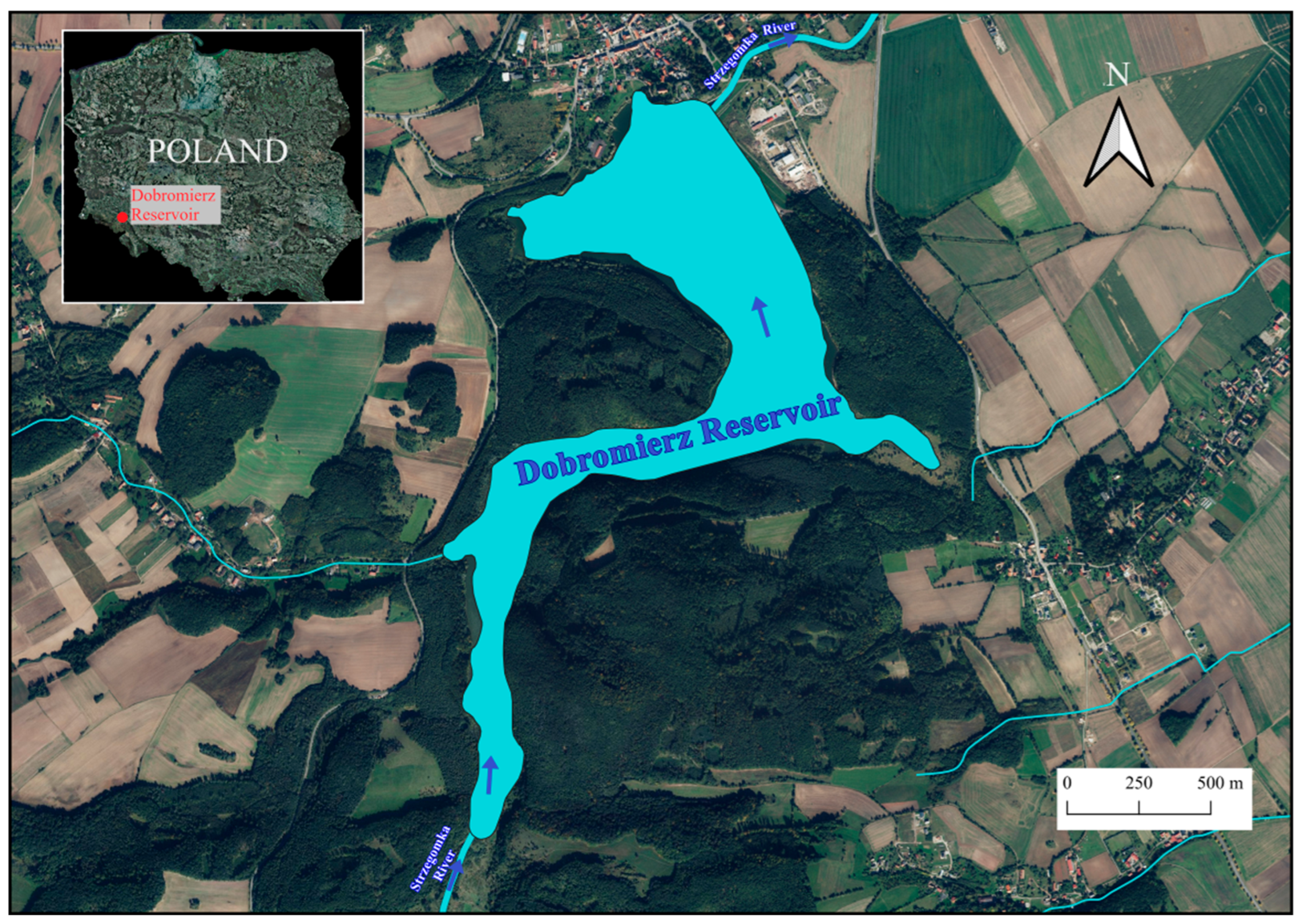
Table A1.
List of parameters of water quality intended for consumption, their parametric values and determination methods [46,47,48].
Table A2.
Results of Lilliefors normality test–raw water in the water supply system from the Dobromierz reservoir (group 1).
Table A3.
Results of the Lilliefors normality test–tap water in the water supply system from the Dobromierz reservoir (group 2).
Table A4.
Results of the Lilliefors normality test–tap water in the water supply system from the Dobromierz reservoir (group 3).
Table A5.
Basic statistics for water quality parameters assessed for compliance with drinking water standards for the water sup-ply network of the Dobromierz reservoir (Poland)–raw water (points 1 and 2).
Table A6.
Basic statistics for water quality parameters assessed for compliance with drinking water standards for the water supply network of the Dobromierz reservoir (Poland)–water in the water supply network (points 3–5).
Table A7.
Basic statistics for water quality parameters assessed for compliance with drinking water standards for the water sup-ply network of the Dobromierz reservoir (Poland)–water for end users (items 6–11).
Table A8.
Set sizes (N) for each of the analyzed parameters, divided into separate groups of points.
Table A9.
Results of the Kruskal–Wallis statistical significance test for the 33 analyzed water quality parameters in the context of comparing research groups (1—raw water, 2—water in the water supply network, 3—water at end users).
References
- Mishra, B.K.; Kumar, P.; Saraswat, C.; Chakraborty, S.; Gautam, A. Water security in a changing environment: Concept, challenges and solutions. Water 2021, 13, 490. [Google Scholar] [CrossRef] [Scilit]
- Singh, S.; Jayaram, R. Attainment of water and sanitation goals: A review and agenda for research. Sustain. Water Resour. Manag. 2022, 8, 146. [Google Scholar] [CrossRef] [Scilit] [PubMed]
- Santos, E.; Carvalho, M.; Martins, S. Sustainable water management: Understanding the socioeconomic and cultural dimensions. Sustainability 2023, 15, 13074. [Google Scholar] [CrossRef] [Scilit]
- Musie, W.; Gonfa, G. Fresh water resource, scarcity, water salinity challenges and possible remedies: A review. Heliyon 2023, 9, e18685. [Google Scholar] [CrossRef] [Scilit] [PubMed]
- Dieter, C.A.; Maupin, M.A.; Caldwell, R.R.; Harris, M.A.; Ivahnenko, T.I.; Lovelace, J.K.; Barber, N.L.; Linsey, K.S. Estimated Use of Water in the United States in 2015; Geological Survey Circular: Reston, VA, USA, 2018. [Google Scholar]
- Anderson, L.E.; DeMont, I.; Dunnington, D.D.; Bjorndahl, P.; Redden, D.J.; Brophy, M.J.; Gagnon, G.A. A review of long-term change in surface water natural organic matter concentration in the northern hemisphere and the implications for drinking water treatment. Sci. Total Environ. 2023, 858, 159699. [Google Scholar] [CrossRef] [Scilit]
- Eurostat. Annual Freshwater Abstraction by Source and Sector. Available online: https://ec.europa.eu/eurostat/databrowser/view/env_wat_abs/default/table?lang=en&category=env.env_wat.env_nwat (accessed on 27 October 2025).
- Akpan, V.E.; Omole, D.O.; Bassey, D.E. Assessing the public perceptions of treated wastewater reuse: Opportunities and implications for urban communities in developing countries. Heliyon 2020, 6, e05246. [Google Scholar] [CrossRef] [Scilit]
- Esmaeilion, F.; Ahmadi, A.; Hoseinzadeh, S.; Aliehyaei, M.; Makkeh, S.A.; Garcia, D.A. Renewable energy desalination: A sustainable approach for water scarcity in arid lands. Int. J. Sustain. Eng. 2021, 14, 1916–1942. [Google Scholar] [CrossRef] [Scilit]
- Strokal, M.; Spanier, J.E.; Kroeze, C.; A Koelmans, A.; Flörke, M.; Franssen, W.; Hofstra, N.; Langan, S.; Tang, T.; van Vliet, M.T.; et al. Global multi-pollutant modelling of water quality: Scientific challenges and future directions. Curr. Opin. Environ. Sustain. 2019, 36, 116–125. [Google Scholar] [CrossRef] [Scilit]
- Van Vliet, M.T.H. Global water scarcity including surface water quality and expansions of clean water technologies. Environ. Res. Lett. 2021, 16, 024020. [Google Scholar] [CrossRef] [Scilit]
- Hayes, N.M.; Deemer, B.R.; Corman, J.R.; Razavi, N.R.; Strock, K.E. Key differences between lakes and reservoirs modify climate signals: A case for a new conceptual model. Limnol. Oceanogr. Lett. 2017, 2, 47–62. [Google Scholar] [CrossRef] [Scilit]
- Verpoorter, C.; Kutser, T.; Seekell, D.A.; Tranvik, L.J. Global inventory of lakes based on high-resolution satellite imagery. Geophys. Res. Lett. 2014, 41, 6396–6402. [Google Scholar] [CrossRef] [Scilit]
- Zhang, A.T.; Gu, V.X. Global dam tracker: A database of more than 35,000 dams with location, catchment, and attribute information. Sci. Data 2023, 10, 111. [Google Scholar] [CrossRef] [Scilit]
- Feldbauer, J.; Kneis, D.; Hegewald, T.; Berendonk, T.U.; Petzoldt, T. Managing climate change in drinking water reservoirs: Potentials and limitations of dynamic withdrawal strategies. Environ. Sci. Eur. 2020, 32, 48. [Google Scholar] [CrossRef] [Scilit]
- Połomski, M.; Wiatkowski, M. Impounding reservoirs, benefits and risks: A review of environmental and technical aspects of construction and operation. Sustainability 2023, 15, 16020. [Google Scholar] [CrossRef] [Scilit]
- Grzegorzek, M.; Wartalska, K.; Kaźmierczak, B. Review of water treatment methods with a focus on energy consumption. Int. Commun. Heat Mass Transf. 2023, 143, 106674. [Google Scholar] [CrossRef] [Scilit]
- World Health Organization (WHO). Guidelines for Drinking-Water Quality: Fourth Edition Incorporating the First and Second Addenda; WHO: Geneva, Switzerland, 2022; ISBN 978-92-4-004506-4. [Google Scholar]
- Pakharuddin, N.H.; Fazly, M.N.; Sukari, S.H.A.; Tho, K.; Zamri, W.F.H. Water treatment process using conventional and advanced methods: A comparative study of Malaysia and selected countries. IOP Conf. Ser. Earth Environ. Sci. 2021, 880, 012017. [Google Scholar] [CrossRef] [Scilit]
- Płuciennik-Koropczuk, E.; Mossetty, J. Chemical stability of water in the water supply network-preliminary research. Civ. Environ. Eng. Rep. 2018, 28, 79–89. [Google Scholar] [CrossRef] [Scilit]
- Zhou, Q.; Bian, Z.; Yang, D.; Fu, L. Stability of Drinking Water Distribution Systems and Control of Disinfection By-Products. Toxics 2023, 11, 606. [Google Scholar] [CrossRef] [Scilit]
- Wang, Z.; Yang, X.; Fu, L.; Li, M. A review of secondary contamination of drinking water quality in distribution systems: Sources, mechanisms, and prospects. AQUA—Water Infrastruct. Ecosyst. Soc. 2025, 74, 118–141. [Google Scholar] [CrossRef] [Scilit]
- Bertelli, C.; Courtois, S.; Rosikiewicz, M.; Piriou, P.; Aeby, S.; Robert, S.; Loret, J.-F.; Greub, G. Reduced chlorine in drinking water distribution systems impacts bacterial biodiversity in biofilms. Front. Microbiol. 2018, 9, 2520. [Google Scholar] [CrossRef] [Scilit]
- Kowalski, D.; Kowalska, B.; Hołota, E.; Choma, A. Water quality correction within water distribution system. Ecol. Chem. Eng. S 2015, 22, 401–410. [Google Scholar] [CrossRef] [Scilit]
- Pieron, Ł.; Absalon, D.; Habel, M.; Matysik, M. Inventory of reservoirs of key significance for water management in Poland—Evaluation of changes in their capacity. Energies 2021, 14, 7951. [Google Scholar] [CrossRef] [Scilit]
- Cietrzewska, E.; Sroka-Nowicka, K. Projekt Stref Ochronnych Ujęcia Wody na Zbiorniku Zaporowym Dobromierz; Geotech: Wrocław, Poland, 2013. [Google Scholar]
- GUS BDL. Ludność Według Wieku i Płci; GUS: Warszawa, Poland, 2024. [Google Scholar]
- Dąbrowska, J.; Dąbek, P.B.; Lejcuś, I. Identifying surface runoff pathways for cost-effective mitigation of pollutant inputs to drinking water reservoir. Water 2018, 10, 1300. [Google Scholar] [CrossRef] [Scilit]
- Wawrzyniak, I. Operat Wodnoprawny na Usługę Wodną—Pobór Wód Powierzchniowych ze Zbiornika Dobromierz; PPD Wrotech: Wrocław, Poland, 2022. [Google Scholar]
- Szewczyk, M.; Tomczyk, P.; Wiatkowski, M. Water management on drinking water reservoirs in the aspect of climate variability: A case study of the Dobromierz dam reservoir, Poland. Sustainability 2024, 16, 6478. [Google Scholar] [CrossRef] [Scilit]
- Główny Urząd Statystyczny (GUS). Gospodarka Mieszkaniowa i Komunalna. In Rocznik Statystyczny Rzeczypospolitej Polskiej; GUS: Warszawa, Poland, 2023. [Google Scholar]
- Szewczyk, M.; Tomczyk, P.; Wiatkowski, M. Long-term water quality assessment and trophic status trends in Dobromierz, Lubachów and Sosnówka drinking water reservoirs in southwestern Poland. Sci. Rep. 2025, 15, 9804. [Google Scholar] [CrossRef] [Scilit]
- Kulikowski, S. Program Ochrony Środowiska dla Gminy Dobromierz na Lata 2022–2025 z Perspektywą do 2029 Roku; Urząd Gminy Dobromierz: Dobromierz, Poland, 2022. [Google Scholar]
- Ministry of Health (MH). Rozporządzenie Ministra Zdrowia w Sprawie Jakości Wody Przeznaczonej do Spożycia Przez Ludzi; Dziennik Ustaw, pozycja 2294, Warsaw, Poland. 2017. Available online: https://isap.sejm.gov.pl/isap.nsf/DocDetails.xsp?id=WDU20170002294 (accessed on 3 December 2025).
- WIOŚ Wrocław. Results of Water Quality Analysis for the Dobromierz Reservoir for years 2009-2023; Provincial Inspectorate of Environmental Protection: Wrocław, Poland, 2024. [Google Scholar]
- SANEPID Wrocław. Results of Water Quality Analysis for the Dobromierz Reservoir and Water Quality in the Świebodzice Water Supply Network for Years 2009–2023; Wojewódzka Stacja Sanitarno-Epidemiologiczna: Wrocław, Poland, 2024. [Google Scholar]
- ZWiK Świebodzice. Results of Water Quality Analysis for the Dobromierz Reservoir and Water Quality in the Świebodzice Water Supply Network for Years 2009–2023; ZWiK Świebodzice: Świebodzice, Poland, 2024. [Google Scholar]
- Stefpol. Projekt Strefy Ochrony Sanitarnej Zbiornika Retencyjnego Dobromierz—Część II; Stefpol: Wrocław, Poland, 1996. [Google Scholar]
- SANEPID Świdnica. Stan Sanitarny Powiatu Świdnickiego w 2024 Roku; Powiatowa Stacja Sanitarno-Epidemiologiczna: Świdnica, Poland, 2025. [Google Scholar]
- Rabeiy, R.E. Assessment and modeling of groundwater quality using WQI and GIS in upper Egypt area. Environ. Sci. Pollut. Res. 2018, 25, 30808–30817. [Google Scholar] [CrossRef] [Scilit]
- Liggett, J.E.; Gonzalez, B.C.; Lytle, D.A.; Pressman, J.G.; Dionysiou, D.D.; Lee, W.H.; Harmon, S.M.; Wahman, D.G. Applying microelectrodes to investigate aged ductile iron and copper coupon reactivity during free chlorine application. Water Res. 2024, 253, 121324. [Google Scholar] [CrossRef] [Scilit]
- Weston, S.L.; Collins, R.P.; Boxall, J.B. An experimental study of how hydraulic transients cause mobilisation of material within drinking water distribution systems. Water Res. 2021, 194, 116890. [Google Scholar] [CrossRef] [Scilit]
- Li, M.; Wang, Y.; Liu, Z.; Sha, Y.; Korshin, G.V.; Chen, Y. Metal-release potential from iron corrosion scales under stagnant and active flow, and varying water quality conditions. Water Res. 2020, 175, 115675. [Google Scholar] [CrossRef] [Scilit]
- Wdowczyk, A.; Szymańska-Pulikowska, A.; Chęcmanowski, J.; Kierzek, K.; Wiercik, P. Assessment of changes occurring in biochar/zeolite substrates used in the vegetation-activated sludge process in the treatment of leachate from landfills. Water Resour. Ind. 2025, 33, 100280. [Google Scholar] [CrossRef] [Scilit]
- Linden, K.; Hull, N.; Speight, V. Thinking outside the treatment plant: UV for water distribution system disinfection. Acc. Chem. Res. 2019, 52, 1226–1233. [Google Scholar] [CrossRef] [Scilit]
- Jurczak, T.; Jodlowski, A.; Sorlini, S.; Biasibetti, M.; Gialdini, F. Integrated Drinking water processes: Case studies. In Water Treatment for Purification from Cyanobacteria and Cyanotoxins; John Wiley & Sons Ltd: Hoboken, NJ, USA, 2020. [Google Scholar] [CrossRef] [Scilit]
- Agus, W.; Yusriani, S.; Sholihah, F.M.; Rozet, S.J.; Rekarti, E.; Kurniawan, F.R.; Baihaqi, A.F. The application of green technology in clean water treatment installation: A case study of Batuah Village. In Proceedings of the International Seminar on Business, Economics, Social Sciences and Technology; Atlantis Press: Dordrecht, The Netherlands, 2023. [Google Scholar]
- Ihsan, T.; Derosya, V. Drinking water problems in rural areas: Review of point-of-use methods to improve water quality and public health. Larhyss J. 2024, 58, 55–71. [Google Scholar]
- Khadse, G.K.; Patni, P.M.; Talkhande, A.V.; Labhasetwar, P.K. Change in drinking water quality from catchment to consumers: A case study. Sustain. Water Resour. Manag. 2016, 2, 453–460. [Google Scholar] [CrossRef] [Scilit]
- Sorlini, S.; Rondi, L.; Gomez, A.P.; Collivignarelli, C. Appropriate technologies for drinking water treatment in Mediterranean countries. Environ. Eng. Manag. J. 2015, 14, 1721–1733. [Google Scholar] [CrossRef] [Scilit]
- Luvhimbi, N.; Tshitangano, T.G.; Mabunda, J.T.; Olaniyi, F.C.; Edokpayi, J.N. Water quality assessment and evaluation of human health risk of drinking water from source to point of use at Thulamela municipality, Limpopo Province. Sci. Rep. 2022, 12, 6059. [Google Scholar] [CrossRef] [Scilit] [PubMed]
- Gora, S.L.; Trueman, B.F.; Anaviapik-Soucie, T.; Gavin, M.K.; Ontiveros, C.C.; Campbell, J.; L’Hérault, V.; Stoddart, A.K.; Gagnon, G.A. Source water characteristics and building-specific factors influence corrosion and point of use water quality in a decentralized Arctic drinking water system. Environ. Sci. Technol. 2020, 54, 2192–2201. [Google Scholar] [CrossRef] [Scilit]
- Toller, S.; Giambastiani, B.M.S.; Greggio, N.; Antonellini, M.; Vasumini, I.; Dinelli, E. Assessment of seasonal changes in water chemistry of the Ridracoli water reservoir (Italy): Implications for water management. Water 2020, 12, 581. [Google Scholar] [CrossRef] [Scilit]
- Reitter, C.; Petzoldt, H.; Korth, A.; Schwab, F.; Stange, C.; Hambsch, B.; Tiehm, A.; Lagkouvardos, I.; Gescher, J.; Hügler, M. Seasonal dynamics in the number and composition of coliform bacteria in drinking water reservoirs. Sci. Total Environ. 2021, 787, 147539. [Google Scholar] [CrossRef] [Scilit]
- Mete, B.; Karaden, G.E.; Bayram, A. Water Quality Assessment of the Erfelek Dam Lake in the Context of Drinking Water Treatment Plant, Sinop Municipality, Northern Türkiye. Karadeniz Fen Bilim. Derg. 2024, 14, 2082–2102. [Google Scholar] [CrossRef] [Scilit]
- McIlwain, B.; Park, Y.; Gagnon, G.A. Fountain autopsy to determine lead occurrence in drinking water. J. Environ. Eng. 2016, 142, 4015083. [Google Scholar] [CrossRef] [Scilit]
- Wiewiórska, I.; Lobur, M.; Vovk, M.; Makara, A.; Kowalski, Z. Analysis of the impact of changes in surface water quality on the dynamics of treatment processes in drinking water treatment technological systems. Desalination Water Treat. 2023, 315, 1–12. [Google Scholar] [CrossRef] [Scilit]
- Basta, E.; Ciuła, J. Study of the quality of surface waters in the Sącz agglomeration. J. Ecol. Eng. 2024, 25, 223–243. [Google Scholar] [CrossRef] [Scilit]
- Wiewiórska, I. The role of selected technological processes in drinking water treatment. Archit. Civ. Eng. Environ. 2023, 16, 189–200. [Google Scholar] [CrossRef] [Scilit]
- Kadinski, L.; Salcedo, C.; Boccelli, D.L.; Berglund, E.; Ostfeld, A. A Hybrid Data-Driven-Agent-Based Modelling Framework for Water Distribution Systems Contamination Response during COVID-19. Water 2022, 14, 1088. [Google Scholar] [CrossRef] [Scilit]
- Li, Z.; Liu, H.; Zhang, C.; Fu, G. Real-time water quality prediction in water distribution networks using graph neural networks with sparse monitoring data. Water Res. 2022, 250, 121018. [Google Scholar] [CrossRef] [Scilit] [PubMed]

Disclaimer/Publisher’s Note: The statements, opinions and data contained in all publications are solely those of the individual author(s) and contributor(s) and not of MDPI and/or the editor(s). MDPI and/or the editor(s) disclaim responsibility for any injury to people or property resulting from any ideas, methods, instructions or products referred to in the content. |
© 2025 by the authors. Licensee MDPI, Basel, Switzerland. This article is an open access article distributed under the terms and conditions of the Creative Commons Attribution (CC BY) license (https://creativecommons.org/licenses/by/4.0/).