


Abstract
Polyvinyl alcohol (PVA) is increasingly encountered in wastewater, yet reliable quantification and effective removal remain challenging. A colorimetric method for PVA quantification was validated, demonstrating excellent linearity and recoveries of 100.6 ± 2.8%. Limits were established at a limit of detection (LOD) of 1.28 mg/L and a limit of quantification (LOQ) of 1.8 mg/L. Accuracy was influenced by the PVA type, with errors reaching up to 42% due to variations in molecular weight and degree of hydrolyzation affecting the color complex. Consequently, polymer-specific calibration is advised. Analytical precision required strict temperature control and exact reaction times, and potential matrix interferences in wastewater should be assessed prior to application. PVA removal was evaluated using an AOP process based on hydrogen peroxide (H2O2) and UV-C irradiation. Increasing the H2O2/PVA ratio beyond 1:1 provided only marginal improvements, whereas increasing the UV-C dose was more impactful. A 1:1 H2O2/PVA ratio was sufficient even at PVA concentrations up to 5 g/L. Optimal UV-C doses were 7.5–12.5 kJ/m2; higher doses yielded only marginal additional removal. The colorimetric method was suitable for laboratory trials. A pilot-scale treatment of industrial wastewater applied microplastic agglomeration with organosilanes followed by granular activated carbon (GAC) treatment, which reduced PVA from an average of 24.2 mg/L to 7.4 mg/L, achieving ~65% removal, while microplastic removal reached 99.1%.
1. Introduction
Polyvinyl alcohol (PVA) represents a group of water-soluble synthetic polymer (WSSP) widely used across industrial sectors—including textiles, paper production, and adhesives—as well as in a variety of household products such as laundry detergent pods and dishwashing tablets [1]. The global annual PVA production exceeds 650,000 tonnes, and due to its widespread consumption and diverse applications, substantial amounts of PVA are released into wastewater systems [2]. In 2018, PVA was identified as one of the most ubiquitous pollutants in wastewater, representing a significant and growing environmental challenge [3].
The microbial biodegradability of PVA is complex and determined partially by its molecular structure, in particular the degree of hydrolysis (DH) and the molecular weight (MW) [4]. The DH has been found to impact PVA mineralization, whereby residual acetate groups (representing a lower DH) facilitate the initial penetration of water and the polymer’s breakdown into smaller chains. In general, a higher DH leads to reduced water solubility [4]. Some studies have found that PVA’s MW does not impact biodegradability, whereas other studies have found a high MW to inhibit degradation [3,5]. Overall, the highest degradation rates are found in PVA samples with a low MW and high DH, suggesting that the initial depolymerization to short chains is a critical step for microbial uptake and subsequent breakdown [6,7].
Conventional wastewater treatment plants (WWTPs) are generally ineffective at achieving complete PVA removal. Studies have found that approximately 76.7% of PVA remains undegraded after conventional treatment, with the majority discharged into the environment via sewage sludge (61%) and the aqueous effluent (15.7%) [7]. Although PVA is often considered a biodegradable polymer, it only degrades slowly and under very specific conditions that are rarely met in the environment or within WWTPs [7,8]. The biodegradability of wastewater is commonly evaluated using biodegradability indices (BIs), such as the ratio between its five-day biochemical oxygen demand (BOD5) to chemical oxygen demand (COD). A BOD5/COD ≥ 0.5 indicates the wastewater is biodegradable; however, PVA has a ratio of only 0.11. Consequently, PVA largely passes through WWTPs unaltered, leading to its accumulation in aquatic ecosystems [3].
Although studies have found the oral toxicity of PVA to be low, indirect ecological risks arise from its environmental persistence and fate through various pathways [3,9]. In particular, PVA can contribute to foam formation in low water volumes, inhibiting oxygen transfer and potentially inducing hypoxic conditions by impeding gas exchange at the water surface [10,11]. Furthermore, due to its hydrophilic nature, PVA may adsorb hazardous substances such as heavy metals or organic contaminants, thereby facilitating their bioaccumulation and transfer through aquatic food webs [10,11].
Therefore, effective wastewater management requires monitoring of PVA contamination levels and treatment performance [12]. Without accurate data, environmental risks and potential ecotoxicological impacts cannot be properly assessed [10]. In addition, the efficiency of removal technologies must be systematically controlled and quantified [5].
Given PVA’s persistence and potential adverse environmental impacts, it is critical to understand and identify effective removal technologies available for implementation at WWTPs. Common strategies include advanced oxidation processes (AOPs), membrane filtration, and improved biological treatments, each with associated pros and challenges related to efficiency, cost, and complexity, thereby influencing their feasibility for large-scale adoption.
AOPs in particular are increasingly recognized as sustainable treatment technologies for degrading organic contaminants in wastewater. Among these, the UV/H2O2 process stands out as a particularly effective approach for PVA degradation, particularly as a pre-treatment prior to biological processes, primarily due to its utilization of easily accessible reagents, operation under ambient conditions without the need for elevated temperature or pressure, and its advantage of not producing sludge or secondary waste streams that require subsequent treatment [3].
Previous studies have found an interaction between the H2O2 dosage and the influent PVA concentration in relation to the PVA degradation, with an optimal H2O2-to-PVA mass ratio of 1:1 and PVA removal efficiencies of up to 98% [13,14,15]. However, many AOPs have so far only been investigated and applied at the laboratory scale. The degradation efficiency of PVA can vary considerably depending on the wastewater characteristics and operational conditions in real-world applications, and until now, UV/H2O2 has been found to be more economically feasible for improving biological degradability (BOD/COD ratio) rather than achieving complete TOC removal [16]. In the first step, PVA chains are oxidized and split, while complete oxidative degradation ultimately leads to complete mineralization of PVA [17].
PVA removal through adsorption to silica oxides has also shown potential, with polymer size and hydrolysis percentage leading to subtle differences in patterns of adsorption [18]. Previous studies on the absorption of PVA on Fuller’s earth exhibited the formation of hydrogen bonds between the OH groups of PVA and aluminols, silanols, and carboxylate ions of the organic matter in the Fuller’s earth [19]. Adsorption onto the silanol groups of silica gels has also been described in previous PVA removal studies [20]. A similar mechanism may thus potentially bind PVA to the silanol groups of hybrid silicas, incorporating it into the formed agglomerates. An organosilane-based agglomeration method originally designed for microplastic (MP) removal together with granular activated carbon (GAC), may therefore have potential for PVA removal.
Effective process control and environmental management necessitate consistent and reliable monitoring. PVA is typically monitored in wastewater using analytical techniques such as spectrophotometry, High-Performance Liquid Chromatography (HPLC), and total organic carbon (TOC) analysis. For routine PVA monitoring, spectrophotometry (colorimetric method), is typically used, as it is simple, non-destructive, inexpensive, and can detect PVA at low concentrations. This method involves the interaction of PVA and an iodine-borate solution, which forms a blue-colored complex. By measuring the absorbance of this color at a specific wavelength, the amount of PVA can be quantified. However, this requires frequent calibration, and false positives may result from interfering starches or sugars if present in the solution [21].
The objective of this study was to develop and evaluate a photometric method for the detection of polyvinyl alcohol (PVA) in aqueous systems. The method was first tested and validated under controlled laboratory conditions to assess its accuracy and reliability.
Following this evaluation, the method was applied in laboratory-scale experiments investigating PVA removal using advanced oxidation processes (AOPs) with stock solutions prepared in demineralized water. This preliminary study was intended to enable later attempts to remove PVA from wastewater and simultaneously test the applicability of the measurement method as a case study.
In addition, the applicability of the photometric method was examined in a pilot-scale treatment system. This system employed organosilane-based agglomeration, originally designed for microplastic (MP) removal, in combination with granular activated carbon (GAC). The pilot study aimed to explore whether this treatment approach could also contribute to PVA removal.
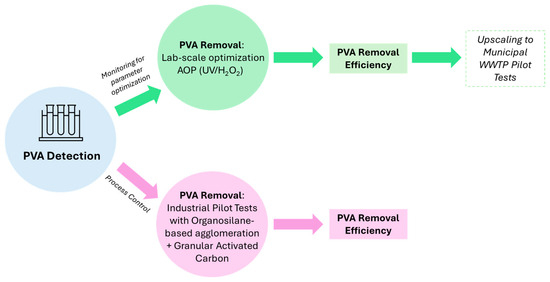
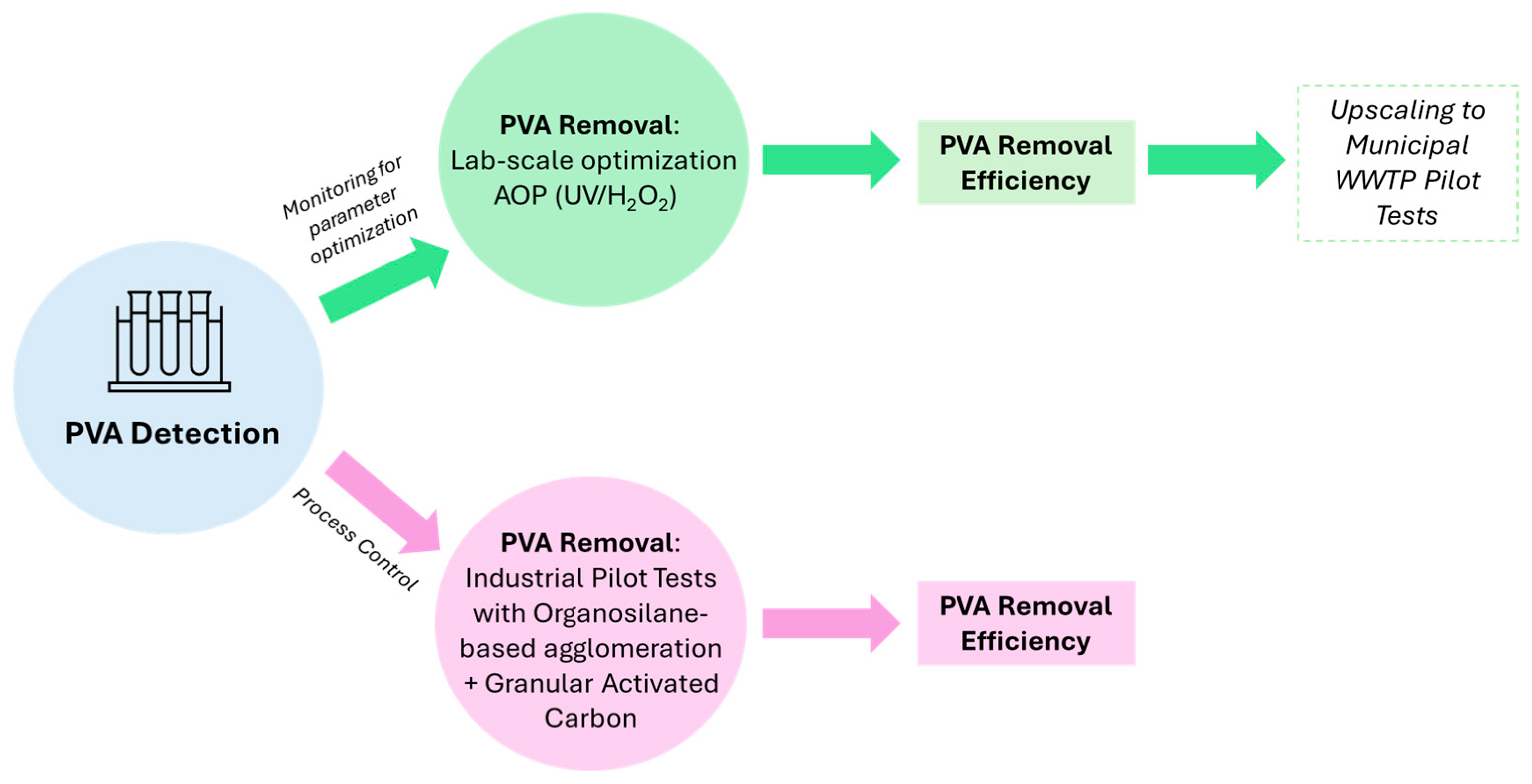
Overall, the study sought to (i) establish a robust analytical tool for monitoring PVA concentrations, (ii) apply the method to assess removal efficiencies in laboratory-scale AOP experiments, and (iii) evaluate its suitability for monitoring PVA removal in pilot-scale treatment processes that combine organosilane-based agglomeration and adsorption (Figure 1).
Figure 1.
Overview of PVA detection method validation and application in different technology environments.
2. Materials and Methods
2.1. PVA Analytics
The method is based on the work of Procházková et al. 2013, with optimized reaction times and reaction process for more reliable results [21]. It was adapted for the analysis of known and unknown water-soluble polymers and PVA [22,23].
2.1.1. Equipment and Chemicals
Spectrophotometric measurements were conducted using a Nanocolor UV/VIS II spectrophotometer (Macherey-Nagel, Düren, Germany) with a wavelength range of 190–1100 nm. Sample preparation involved a Heidolph Hei-Tec magnetic stirrer with an integrated hotplate and pt1000 temperature sensor (100–1400 rpm) (Heidolph Scientific Products GmbH, Schwabach, Germany). Measurements were performed using 10 mm Rotilabo® single-use polystyrene cuvettes (Makro type, 4.0 mL volume, dual optical windows, Carl Roth, Karlsruhe, Germany).
Analytical-grade chemicals were sourced from abcr GmbH (Karlsruhe, Germany). Lugol’s solution (CAS 12298-68-9) containing 25 g/L potassium iodide and 12.7 g/L iodine was used as the chromogenic reagent. Boric acid (CAS 10043-35-3) was prepared at a concentration of 40 g/L. WSSP solutions were freshly prepared daily. The PVA standard was Mowiol® 28-99 (CAS 9002-89-5) with a molecular weight of approximately 145,000 Da unless stated otherwise.
2.1.2. Preparation of Standard Solution
To prepare the standard solution, 1 g of PVA was added to a 1 L volumetric flask. Approximately 800 mL of VE water was introduced, followed by a magnetic stirring fish. The mixture was heated to 90 °C while stirring at 300 rpm and maintained at this temperature for 15 min to ensure complete dissolution. The solution was then cooled in a refrigerator until it reached room temperature (21 °C). After removing the stirring fish, the solution was diluted to exactly 1 L with VE water. A series of standard dilutions was subsequently prepared to span the desired measurement range.
The concentration chosen for the calibration curve were 0, 10, 20, 35, 50, 100, 200, 300, 400, and 500 mg/L. To construct the calibration curve, the series of standard solutions was prepared following the standardized sample preparation protocol.
2.1.3. Standard Protocol for Polyvinyl Alcohol Quantification in Water
Each sample was prepared by adding 2.4 mL of sample to a test tube, followed by 9 mL of boric acid solution (40 g/L) and gentle shaking. Subsequently, 1.8 mL of Lugol’s solution (25 g/L KI + 12.7 g/L I2) was added and mixed. After exactly 30 min, 3 mL of the reaction mixture was transferred into a cuvette for spectrophotometric analysis and measured at λmax.
If a sample exhibited an absorbance value greater than 3, it was diluted appropriately and remeasured.
2.1.4. Determination of Optimal Measurement Wavelength (λmax)
To determine the optimal measurement wavelength, three standard solutions were selected to represent low (A = 0–1), medium (A = 1–2), and high (A = 2–3) absorbance levels. For the standards, Mowiol® 28-99 was used at concentrations of 50 mg/L, 100 mg/L, and 200 mg/L. For other water-soluble synthetic polymers (WSSPs), preliminary measurements might be necessary to find a suitable concentration. A reagent blank was prepared using deionized water.
The samples and blanks were prepared following the standardized sample preparation protocol (Section 2.1.3).
2.1.5. Quality Assurance Measures
The described color reaction, which forms a dark-blue to deep-green complex, is influenced by various factors. It is therefore important that each step is carried out precisely and that all factors are consistent across analyses.
Temperature directly influences the reaction kinetics and must be kept constant in all measurements. All substances and solutions must also be stored at this temperature or brought to the temperature before the experiments [21]. The color complex undergoes a constant reaction and thus changes its intensity depending on the reaction time; therefore, measuring times must be followed exactly. Before preparing WSSP stock solutions, check whether they are heat-sensitive or undergo chemical transformation when heated [24,25]. Care must be taken to ensure that the reagents used are accurately weighed and that the chemical supplier is reliable, as the reaction is strongly influenced by their concentration. In UV-VIS spectrometry, an absorbance of 3 (or the maximum measurable absorbance of the used UV-VIS spectrometer) should not be exceeded; otherwise, the linear measurement range will be exceeded, distorting the calibration curve [26]. All equipment and containers used were thoroughly cleaned and composed of glass or other non-water-soluble materials to prevent contamination.
2.2. Lab-Scale Optimization of PVA Removal with an AOP (UV/H2O2)
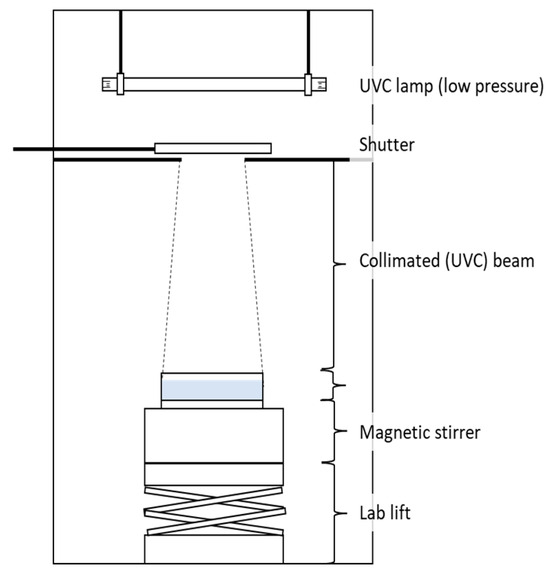
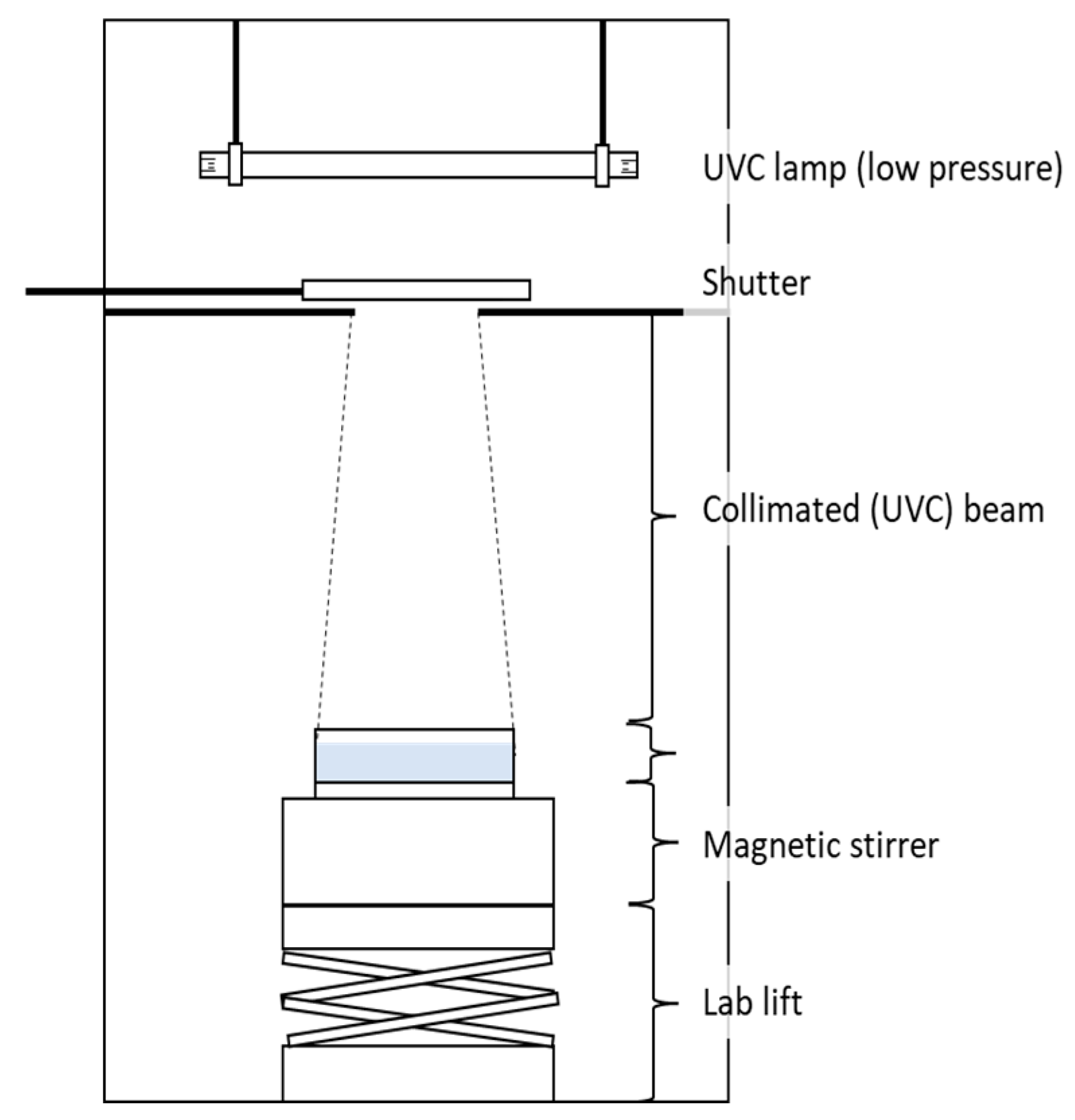
UV-C illumination was performed in a standardized collimated beam apparatus according to biodosimetric testing protocols described in NEN [NEN-EN 14897+A1] and Ö [ÖNORM M 5873-1 20010301] norms for UV biodosimetric testing (Figure 2).
Figure 2.
Schematic of collimated beam (CB) apparatus.
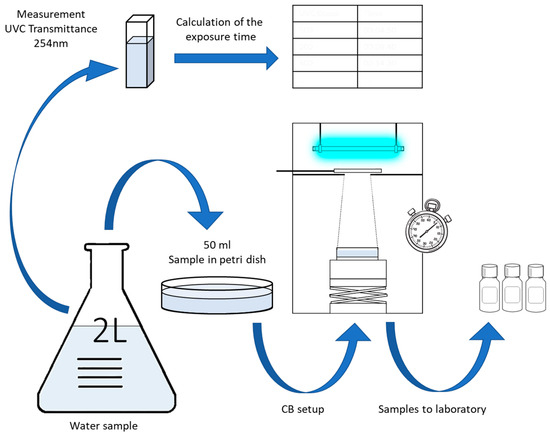
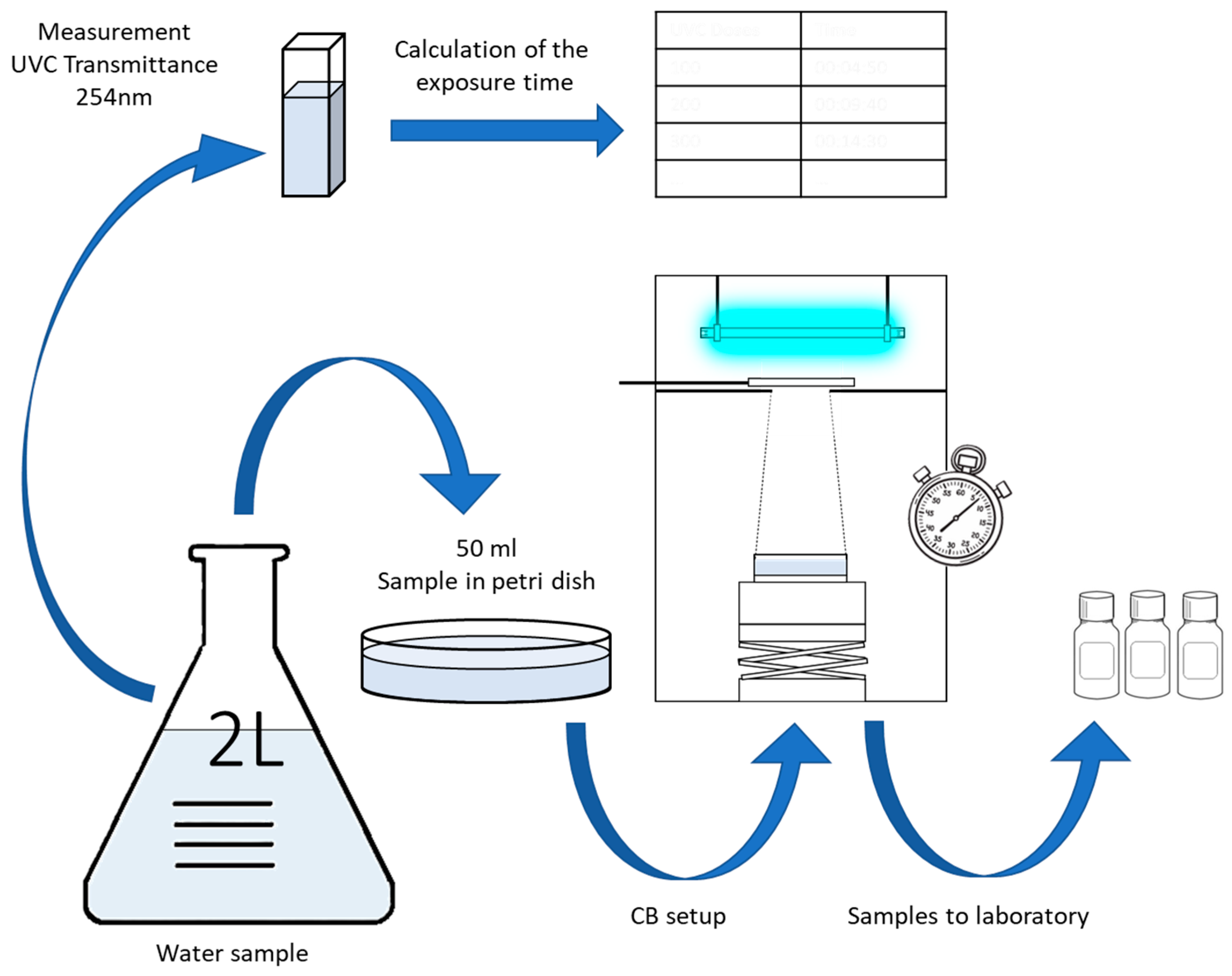
The CB apparatus contains two 75 W low-pressure UV lamps, operated singly or in pairs, a UV-C sensor with a wide-angle diffuser, calibrated for 200–310 nm, a stirring motor for homogeneous mixing, an adjustable lamp-sample distance, and 8.7 cm plastic Petri dishes (for 50 mL sample volume). Lamp stability is validated by measuring UV-C output until stabilized with a variance < 2%/15 min, then the Petri factor (light distribution over the Petri dish) is measured with the same calibrated sensor to be 0.95 (<5% variance) over the illumination surface. With these factors included, the applied UV-C dose can be precise to a variability of <1%, which is significantly lower than the dose effects measurable in the analysis of target compounds or biology. A total of 50 mL of the sample are used in the CB apparatus, and the results are sent to an external laboratory for analysis (Figure 3).
Figure 3.
Schematic of CB testing.
Based on [14,15] and previous experiments, a first set of exploratory settings for UV-C-AOP destruction was defined to be tested and further elaborated in subsequent research. The initial tests included varying UV-C-doses between 2500 and 25,000 J/m2, PVA-H2O2 ratios of 1:1, 1:5, and 1:10, PVA concentrations between 250 mg/L and 5000 mg/L, testing a direct photolysis effect whereby no H2O2 is added, and testing the direct oxidation effect in the absence of UV-C.
Samples were taken in 100 mL brown glass bottles and stored and shipped frozen until analysis.
2.3. Removal of PVA and Microplastics via Pilot-Scale GAC and Organosilane-Induced Agglomeration
The pilot plant is a mobile wastewater treatment unit, which targets the simultaneous removal of high loads of MPs and PVA by agglomeration–fixation in combination with GAC. The wastewater originates from a plastic packaging industry and is shipped in two 1 m3 IBC containers to the pilot plant.
Wasser 3.0 PE-X® is based on the “Clump & Skim” process for filter-free removal of MPs from water. The technology utilizes hybrid silica gels—silicon-based chemicals with various reactive groups. Water is placed in a reactor with a stirrer, creating a vortex. After adding abcr eco Wasser 3.0 PE-X® industrial wastewater (AB930006, abcr GmbH, Karlsruhe, Germany), agglomeration–fixation and partial PVA aggregation take place. The purified wastewater and the agglomerates formed are discharged (separation unit) and separated from each other. The purified wastewater then flows from the filtrate tank into the fixed-bed reactor with modified activated carbon (GAC) for ten minutes. The base material is Jacobi, model: AquaSorb™2000, grain size: 8 × 16 mesh. It was filled with 175 L or 77 kg of GAC.
The removal efficiency of the MP is monitored using Wasser 3.0’s standardized MP detection method by applying a novel fluorescent dye (abcr eco Wasser 3.0 detect mix MP-1, AB930015, abcr GmbH, Karlsruhe, Germany), which has been described in detail in Sturm et al. 2024 [27].
Samples were taken in 0.5 L brown glass bottles and stored cooled until analysis. Sampling was conducted at the inlet, after the belt filter, and in the GAC effluent during operation.
2.4. WSSP or PVA Removal Efficiency
To calculate the efficiency of removing a PVA or WSSP from a sample, the absorbance of the sample before and after the removal process is measured. As the ratio of absorbance to concentration is linear, halving the concentration also halves the absorbance. Instead of absorbance, the measured concentration can also be used in this calculation. The concentration in mg/L can be calculated by inputting the data in the calibration curve.
The formula for this is as follows:
If the exact concentration is to be measured, the identity of the WSSP must first be known. A calibration curve can then be created with this WSSP.
3. Results and Discussion
3.1. Validation of the Detection Method
3.1.1. Calibration Curve, Detection Limits, and Recovery Rates
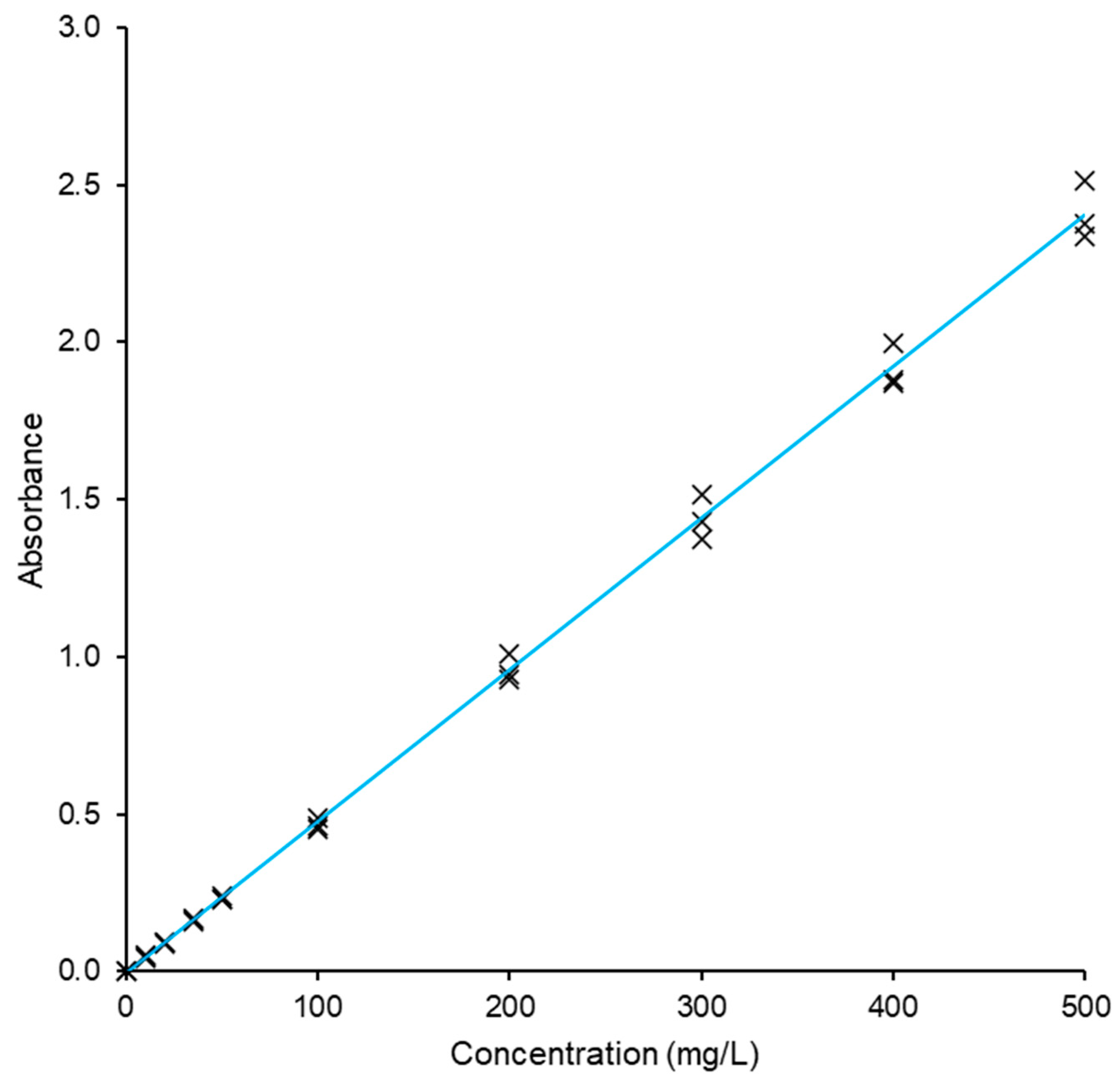
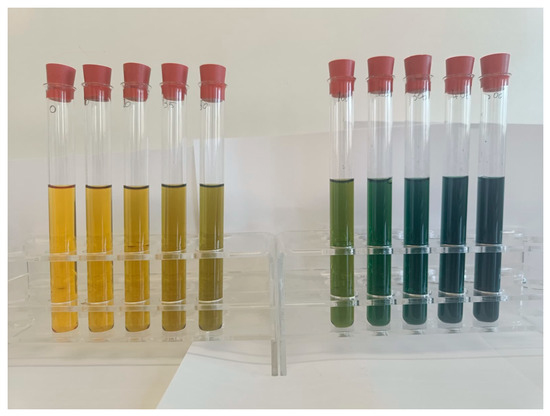
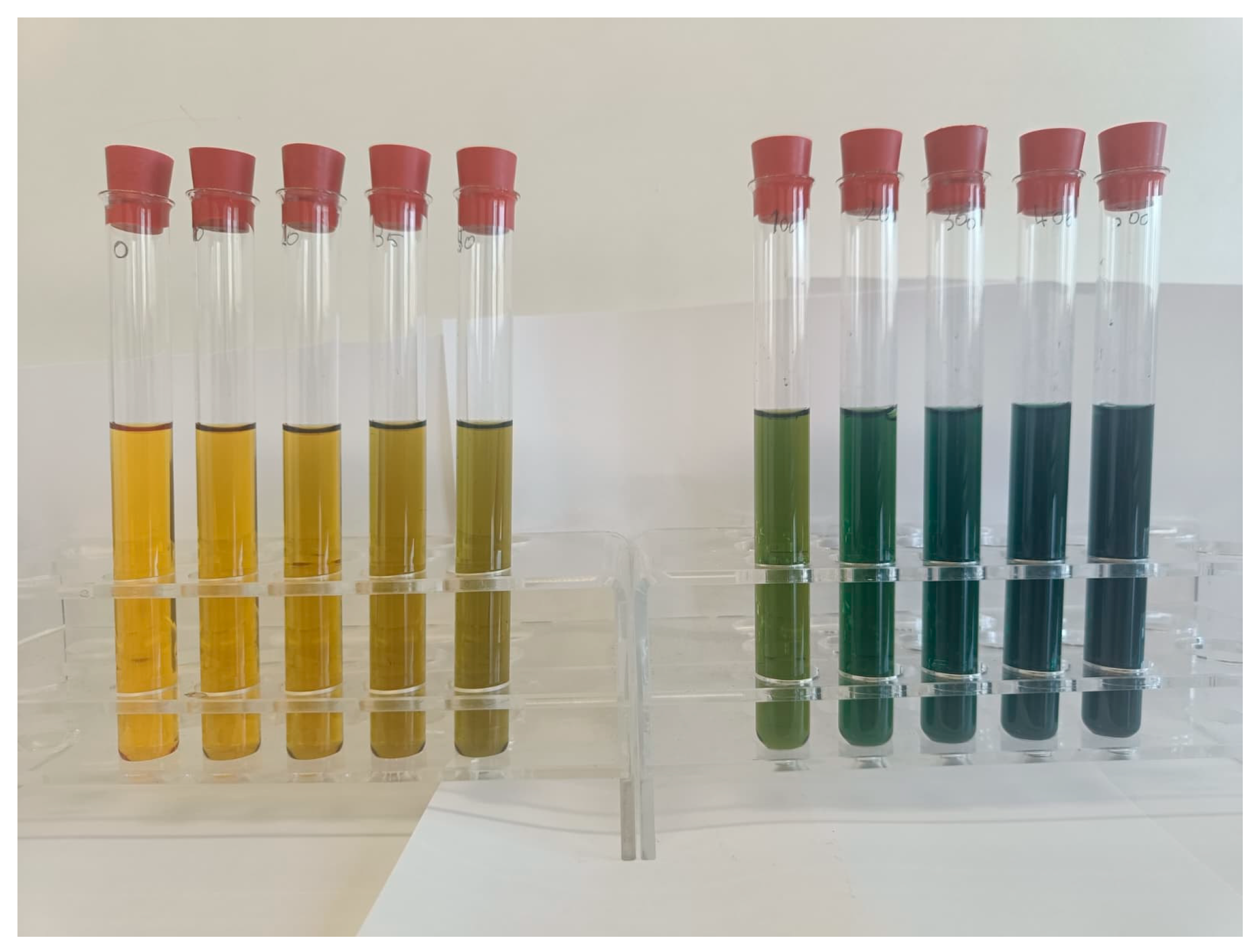
A linear calibration curve (Figure 4 and Figure 5) for PVA was obtained and described by the regression equation c(PVA) = 207.5 × A + 1, where c is expressed in mg/L and A denotes the measured absorbance signal. The calibration exhibited excellent linearity across the investigated concentration range, as evidenced by a correlation coefficient of r = 0.999 and a coefficient of determination of R2 = 0.998. The calculated limit of detection (LOD) is 1.28 mg/L and the limit of quantification (LOQ) 1.80 mg/L, determined according to the signal-to-noise approach (S/N = 3 for LOD and S/N = 10 for LOQ). These parameters confirm the reliability of the analytical procedure, ensuring its suitability for the quantitative determination of PVA for concentration ranges from 1.8 to 500 mg/L. In comparison, Procházková et al. 2013 found an LOD of 0.5 mg/L and LOQ of 1.7 mg/L for a calibration ranging from 5 to 100 mg/L Mowiol 28-99 [21]. Pritchard and Akintola 1971 could reach an LOD of 0.4 mg/L with a calibration curve ranging from 0 to 4 mg/L [28].
Figure 4.
Depiction of the colorimetric reaction process for PVA concentrations ranging from left 0 to right 500 mg/L, according to the calibration curve. With increasing concentrations the color shifts from yellow over green to blue.
The design of the calibration curve by the respective selection of standards causes high concentrations to disproportionately influence the curve. Looking at the respective recovery rates, the detection of low concentrations is reliable (Table 1). The recovery rate for 10 mg/L is 108.2 ± 9.9%, and for 20 mg/L it is 100.3 ± 2.3%. Thus, if focusing on PVA concentrations in the range of 10 mg/L or lower, a new calibration curve with concentrations adapted to the desired rage is recommended.
Table 1.
Measured recovery rates of different Mowiol® 28-99 standards. The measurements were performed in triplicates. n.d. = not determined.
The average recovery rate of 100.6 ± 2.8% demonstrates the high accuracy and precision of the analytical method. It should be noted, however, that the calibration was performed in demineralized water, which limits the ability to assess the method’s robustness in different waters or wastewaters. The most relevant interfering factors in colorimetric measurements include turbidity or discoloration of the sample and chemical interference. For example, salts, oxidizing agents, and fluctuating pH values can influence the measurement results [21,29]. Turbid samples must always be filtered before analysis [21]. Starch has been identified as an important interfering substance in the iodine-containing reagents used here.
This high precision and linearity of the calibration curve was reached by extensive preliminary tests. Quality assurance measures, including maintaining a constant temperature and accurate reaction time, are crucial factors in the colorimetric reaction process. Mixing the samples and color reagents with higher volumes in the mixing vessels instead of directly in the cuvettes also contributes to improved accuracy. In preliminary tests, there were also problems with inaccurate and inconsistent concentrations of chemicals for the color reaction from certain suppliers; thus, a reliable chemical supplier is essential for reliable longer-term test series.
Figure 5.
Calibration curve for PVA detection using Mowiol® 28-99 standards in demineralized water with concentrations ranging from 10 to 500 mg/L. Three blanks and three repetitions per concentrations were measured.
3.1.2. Comparison of PVAs with Different Molecular Weights and Hydrolyzation
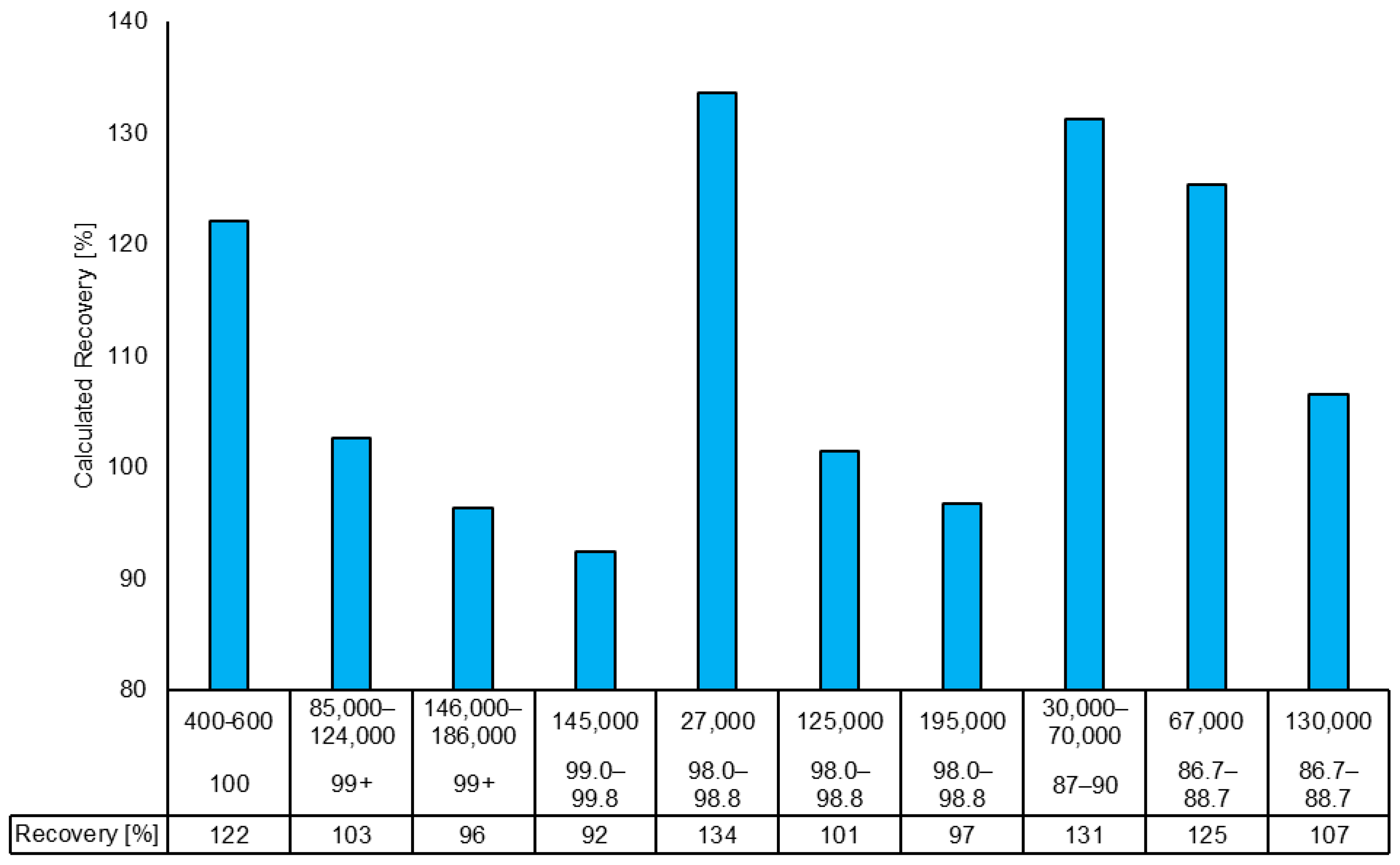
PVAs can have various molecular weights and degrees of hybridization. As in environmental samples and in industrial wastewater, PVAs can be present in mixtures. Also, it is not always known which specific PVA is contained in the water sample. Therefore, the influence of molecular weight (Mw) and degree of hydrolyzation on the colorimetric quantification process was investigated. Results are displayed in Table 2 and Figure 6.
Table 2.
Comparison of PVAs with different molecular weight (Mw) and hydrolyzation for their λmax, absrobance, and calculated recovery rates with the colorimetric detection method.
The molecular weight of the investigated PVAs ranges from 300 to 500 mol/g to 195,000 mol/g, and the hydrolyzation from 86.7–88.7% to 100%. The measured λmax ranges from 638 nm to 665 nm, while increasing molecular weight shows a tendency to reduce λmax. An increased hydrolyzation shows a tendency to reduce λmax, but the influence is weaker than that of molecular weight.
The absorbance at λmax range from 1.08 to 1.82, while the absorbance at 580 nm have a lower range from 0.89 to 1.28. This shows that measurements at λmax can increase the sensitivity of the measurement process. The data also shows that molecular weight and hydrolyzation influence the intensity of the color complex and the resulting measured absorbance.
This is also expressed in the measured concentrations and recovery rates. The measured concentrations of the 200 mg/L standards, applying the calibration curve created with Mowiol® 28-99, ranged from 185 to 267 mg/L, resulting in recovery rates ranging from 92 to 134%. Also, a tendency of reduced absorbance and measured recovery with increased molecular weight is visible. A tendency for reducing absorbance and measured recovery with increased hydrolyzation can also be seen, though less pronounced.
The experiments were performed with commercially available PVAs. To obtain a clearer statement on the influence of the degree of hydrolysis and molecular weight, the experimental design would need to be adjusted. A series of experiments would have to be set up where one parameter remains constant while the other is varied, and vice versa.
Joshi et al. 1973 found in a study investigating the formation of the iodine–PVA complex in different PVAs that higher hydrolysis leads to lower absorbance and lower λmax [30]. Macias et al. 2013 found that increasing molecular weight of PVA resulted in lower absorbance and lower λmax [29].
Nevertheless, these results show how important it is to create a specific calibration for the PVA to be detected for precise results, as the outcome of the measured concentrations varied by up to 42% for the investigated PVAs. For unknown PVAs or other water-soluble polymers, exact quantification is not possible. It is also important to note that the transformation processes of PVAs can influence the measurement results, e.g., during photo-oxidative degradation in the environment or in wastewater treatment processes.
In conclusion, the recovery rates show good precision and repeatability of the spectrophotometric detection method. Its biggest advantage is the low cost, as only a spectrophotometer, relatively cheap chemicals, and basic laboratory equipment are needed for rapid generation of results [26]. The disadvantage of the method is its low robustness against chemical deviations of different PVAs or possible matrix effects of the water or wastewater from which the sample originate, as calibration was performed in demineralized water [21,28]. Furthermore, no statement can be made about possible transformation processes of the product and its chemical structure, especially molecular weight and hydrolysis. This technique is therefore particularly suitable for rapid quantification, e.g., in process control or in long-term studies where large datasets are needed.
Figure 6.
Calculated recovery of 200 mg/L PVA standards with varying molecular weight and hydrolyzation. The standards are measured using the calibration curve of Mowiol® 28-99.
3.2. PVA Removal with AOP at Laboratory-Scale
3.2.1. Removal Trial with 250 mg/L PVA
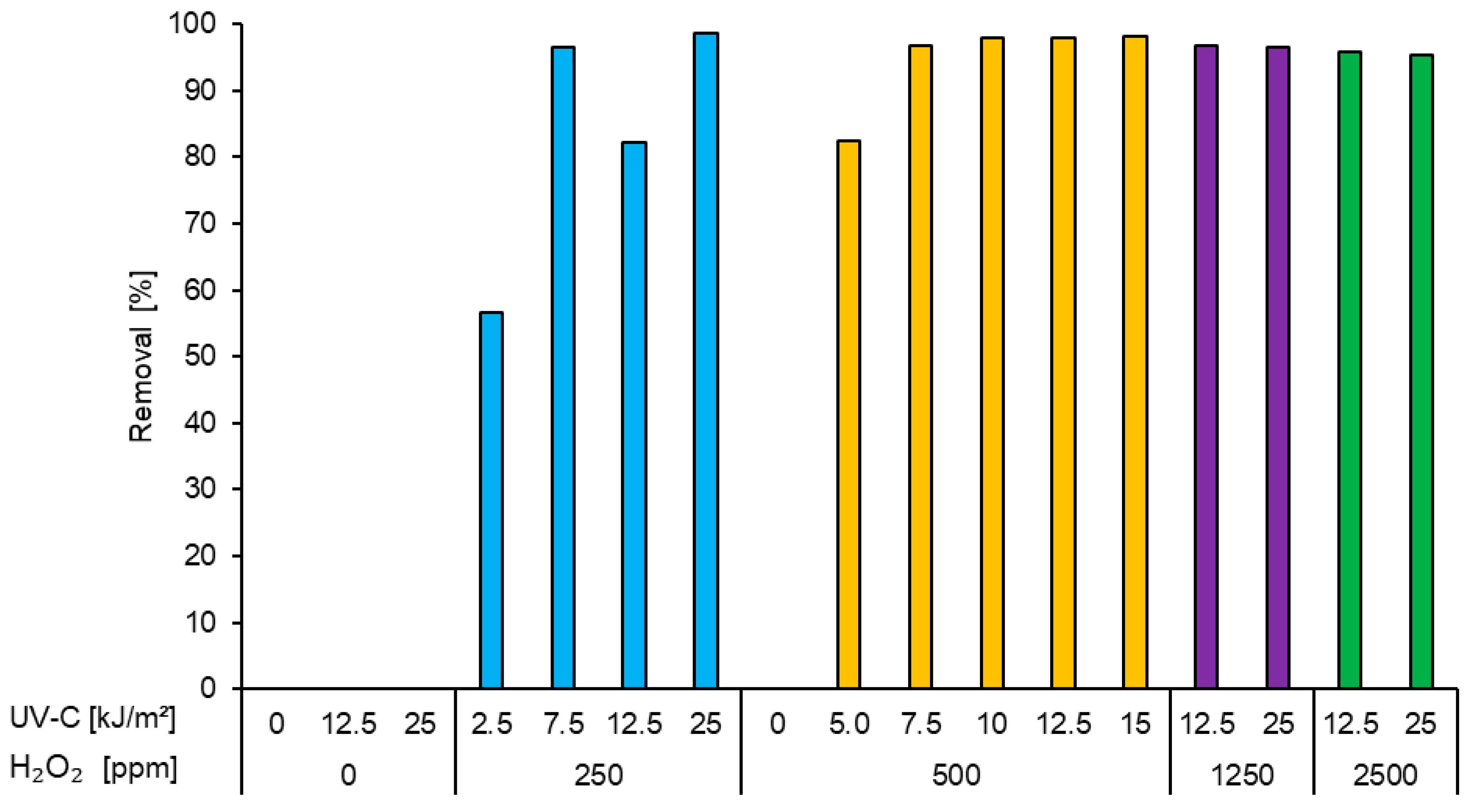
A comparison of the degradation of 250 mg/L PVA in VE water with AOP at different H2O2- and UV-C doses shows that without H2O2 no degradation occurs, even at high UV-C doses (Figure 7). This indicates that UV alone cannot degrade PVA and that the degradation is due to the hydroxyl radicals formed in the AOP process. At a dose of 500 mg/L H2O2 and no UV-C, it is also shown that there is no PVA degradation with H2O2 alone, as no hydroxy radicals can be formed without UV light.
At 250 mg/L H2O2, PVA degradation is 82% lower with a lower UV-C dose of 12.5 kJ/m2 compared to 25 kJ/m2, where the degradation reaches 98%.
At UV-C doses of 7.5 kJ/m2, a removal performance of 97% is reached at both 500 mg/L and 250 mg/L H2O2. This indicates that an H2O2 dose over 250 mg/L does not lead to a higher PVA degradation.
For the 500 mg/L H2O2 experiments, a further increase in the UV-C dose over 7.5 kJ/m2 only leads to marginal increases in removal performance of 1–2%. For the 250 ppm H2O2 experiments, 12.5 kJ/m2 reaches a PVA degradation of 82%, a 15% lower removal than the experiment at 7.5 kJ/m2. This outcome is unlikely and likely attributed to a measurement error and highlights the disadvantage of single-measurement experiments. Since this experiment represents a preliminary study in the context of wastewater applications, a simple measurement was used, with the primary aim of testing and validating the measurement method itself.
Very high H2O2 doses of 1250 mg/L and 2500 mg/L and high UV-C doses of 12.5 and 25 kJ/m2 do not lead to an increased removal performance, as they only reach removal efficiencies of 95–97%. Overall, the highest removal performance was reached at 250 mg/L H2O2 and 25 kJ/m2 with 99%.
However, to make a statistically qualified statement, further measurement repetitions would be necessary. The preliminary tests shown here clearly indicate that further attempts to optimize PVA removal using the AOP process should focus on the range between 5 and 12.5 kJ/m2 and an H2O2-to-PVA ratio of 1:1 or lower. Also, it shows that very high UV-C and H2O2 doses do not lead to complete PVA degradation.
It can also be shown that the presented detection method is suitable for use in optimizing AOP for PVA removal. It should be noted that PVA fragments with less than 12 vinyl alcohol residues cannot be detected with the photometric method, as small fragments cannot form the colored iodine complexes [31,32].
Figure 7.
Removal of 250 mg/L PVA with different doses—test run 1. Colors correspond to H2O2 doses. Blue 250 ppm, yellow 500 ppm, purple 1250 ppm, green 2500 ppm.
3.2.2. Removal Trials with 2500 mg/L PVA
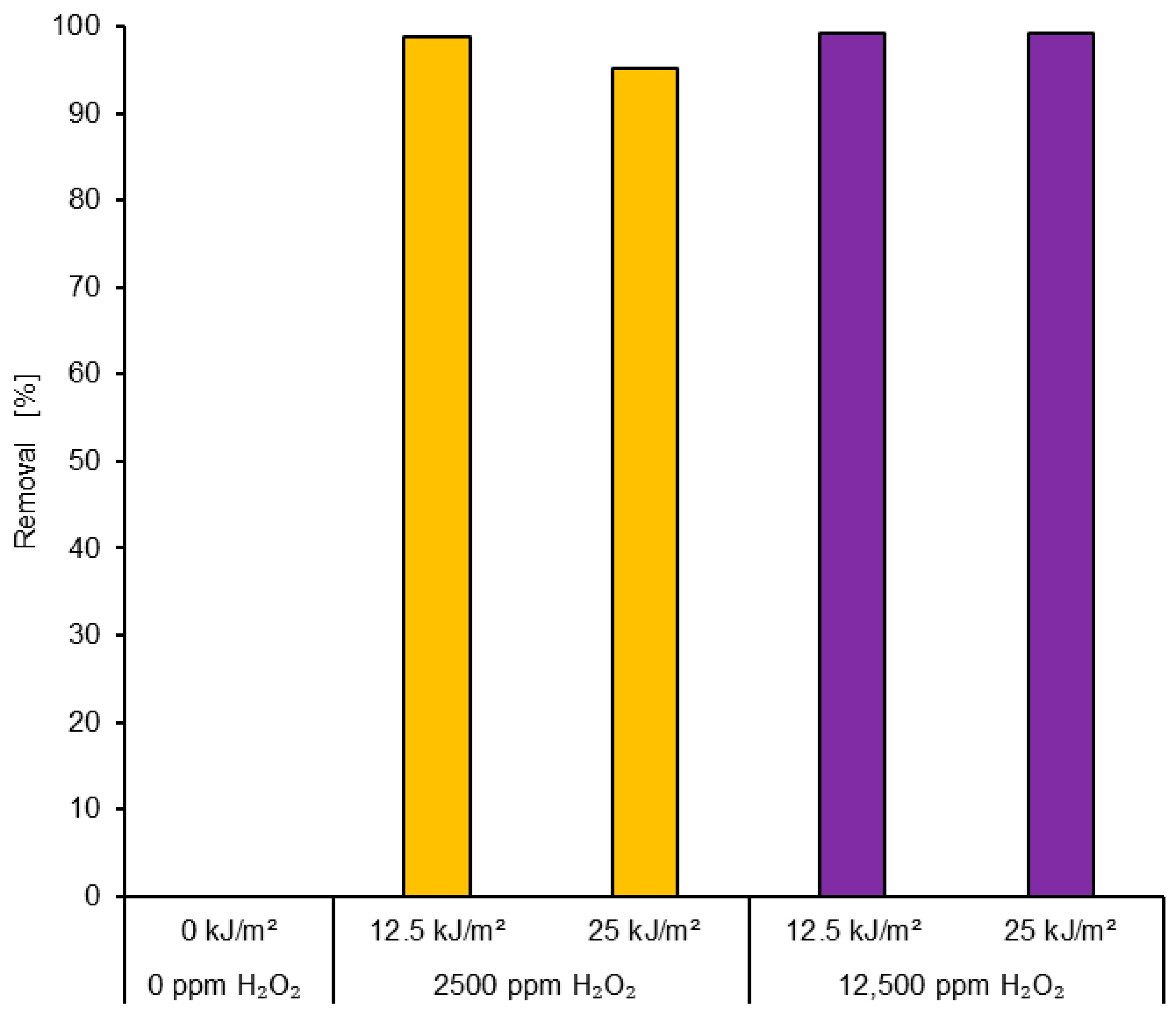
The experiments with an increased PVA concentration of 2500 mg/L, concentrations indicative of industrial wastewater, show sufficient removals of PVA with an increased H2O2 dose (Figure 8). The H2O2 dose was increased to provide enough hydroxy radicals for the increased amount of PVA in the water. Ratios of H2O2 and PVA were 1:1 and 5:1.
In all cases, sufficient removal is reached, with removal ranging from 95% (2500 mg/L H2O2 and 2500 J/m2) to 99% at the other setups. Thus, the system can also effectively remove higher concentrations of PVA. An increased H2O2-to-PVA ratio also does not show improved removal performance; a ratio of 1:1 is sufficient.
Other studies came to the same conclusion, investigating the interaction between the H2O2 dosage and the PVA concentration in the influent that affects pollutant removal, molecular weight reduction, and residual H2O2 content, resulting in an optimal H2O2 to PVA mass ratio of 1:1 in the influent stream [13,14]. In general, increased degradation with increased reaction times or UV-C doses is observed [33]. With increasing H2O2 and UV-C doses, the relative gain in removal efficiency progressively diminishes as the system approaches complete removal (≈100%), which is crucial for assessing energy and resource efficiency [33].
Figure 8.
Removal of 2500 mg/L PVA with different doses—test run 2. Colors correspond to H2O2 doses. Yellow 2500 ppm, purple 12,500 ppm.
3.2.3. Removal Trial 4000 and 5000 mg/L PVA
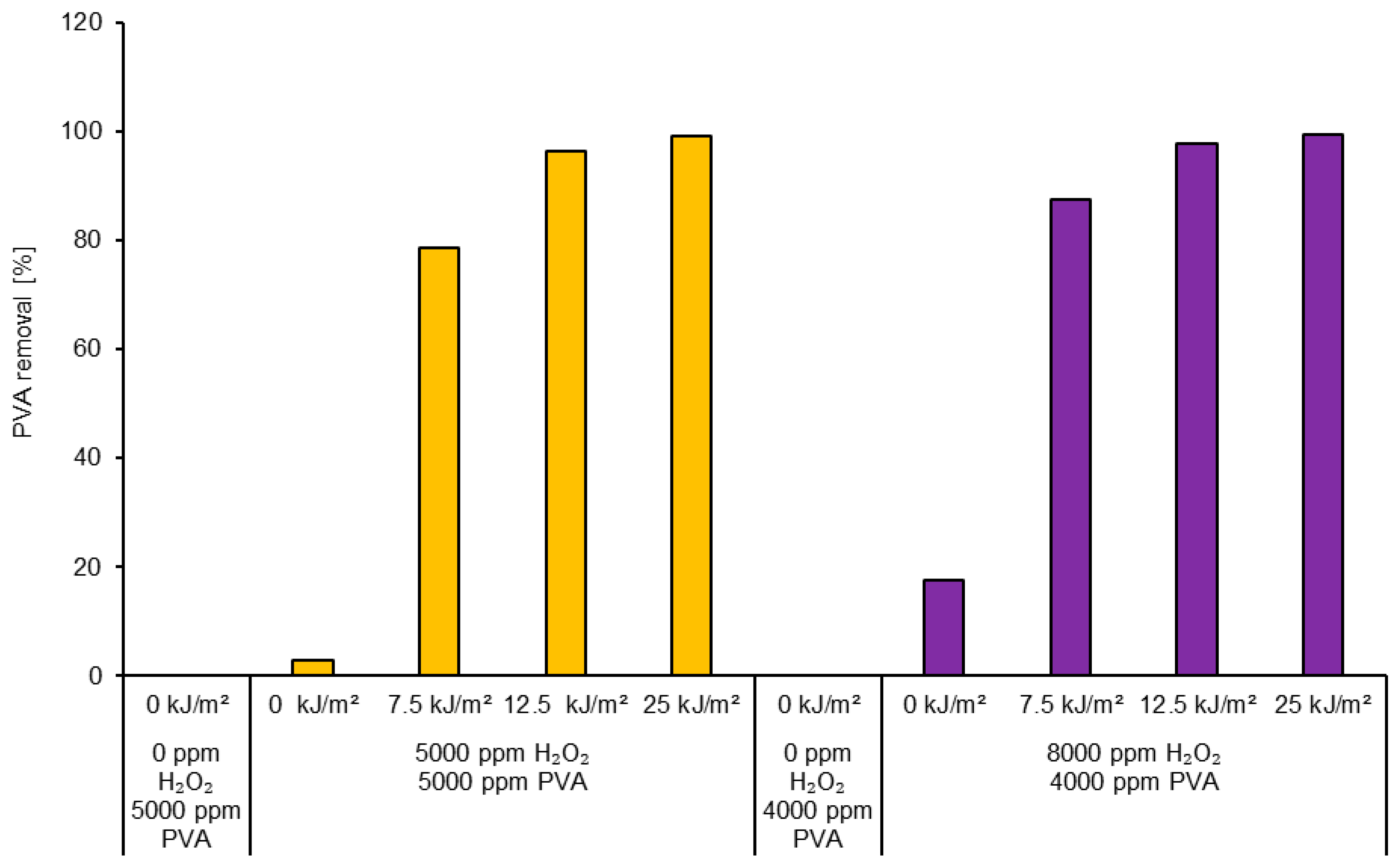
Two concentrations of PVA (5000 mg/L and 4000 mg/L) were tested with 5000 mg/L and 8000 mg/L H2O2, which represent 1:1 and 2:1 ratios for H2O2 to PVA, and UV-C doses from 0 to 25,000 J/m2 (Figure 9). It was also found that dosing H2O2 without any UV-C leads to only minor PVA removals of 3% at 5000 mg/L H2O2 and 18% at 8000 mg/L H2O2. It is notable that samples were shipped and stored at 5 °C, during which the reaction can continue.
At 7500 J/m2 increasing the H2O2 from 5000 mg/L to 8000 mg/L leads to an increase from 79% removal to 87% removal. Increasing the UV-C dose at 5000 mg/L PVA and 5000 mg/L H2O2 from 7.5 kJ/m2 to 12.5 kJ/m2 increases the removal from 79% to 96%. Therefore, an increase for the UV-C dose is more effective than increasing the H2O2 dose. A further increase in the UV dose to 25 kJ/m2 reaches 99% removal with 45 mg/L PVA remaining.
For the 4000 mg/L PVA and H2O2 experiments, the patterns are similar, as 12.5 kJ/m2 reach 98 and 25 k J/m2 reach 99% removal. With the highest dose of UV-C and H2O2 27 mg/L PVA remain in solution.
Comparing the results to the previous experiments with lower PVA concentrations of 250 ppm, the results show that if enough H2O2 is supplied for high PVA concentrations (2500–5000 mg/L), UV-C doses between 12.5 and 25 kJ/m2 seem to achieve optimal PVA degradation.
For application transfer in industrial wastewater, the setup can be adjusted to the PVA concentrations and desired removal performance, whereby the H2O2-to-PVA ratio is particularly decisive. In addition, the transmission of the wastewater must be considered, to which the UV dose must be adjusted [34].
Recent studies on AOPs for the removal of PVA from wastewater have examined several approaches, including H2O2/UV-C photolysis, persulfate/Fe2+ activation, and ozonation [5]. The H2O2/UV-C system achieved a total organic carbon reduction between 16.11 and 42.70% and a decrease in PVA molecular weight ranging from 56.7 to 95.3%, under relatively low H2O2/PVA ratios of 1/0.8 to 1/00.6 [13]. Persulfate/Fe2+ oxidation reached up to 95% removal efficiency but required elevated temperatures of 80 °C and a higher oxidant dosage with a PVA-to-persulfate ratio of 1/5 [35]. Ozonation has proven to be particularly effective, with removal efficiencies close to 100% with a PVA concentration of 20 g/L, an aqueous solution temperature of 20 °C, an ozone input rate of 18 g/h, and a 4 h reaction time [36].
Figure 9.
Removal of 5000 mg/L PVA with different doses—test run 3. Colors correspond to H2O2 doses. Yellow 5000 ppm, purple 8000 ppm.
3.3. Removal of PVA and Microplastics at Pilot-Scale
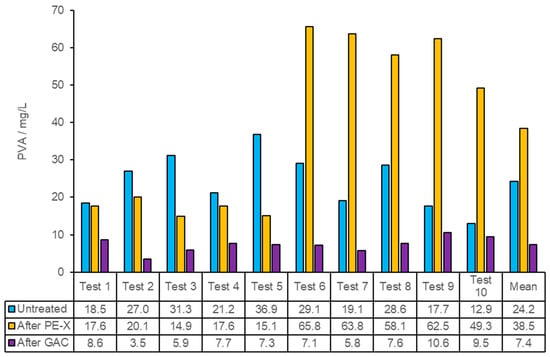
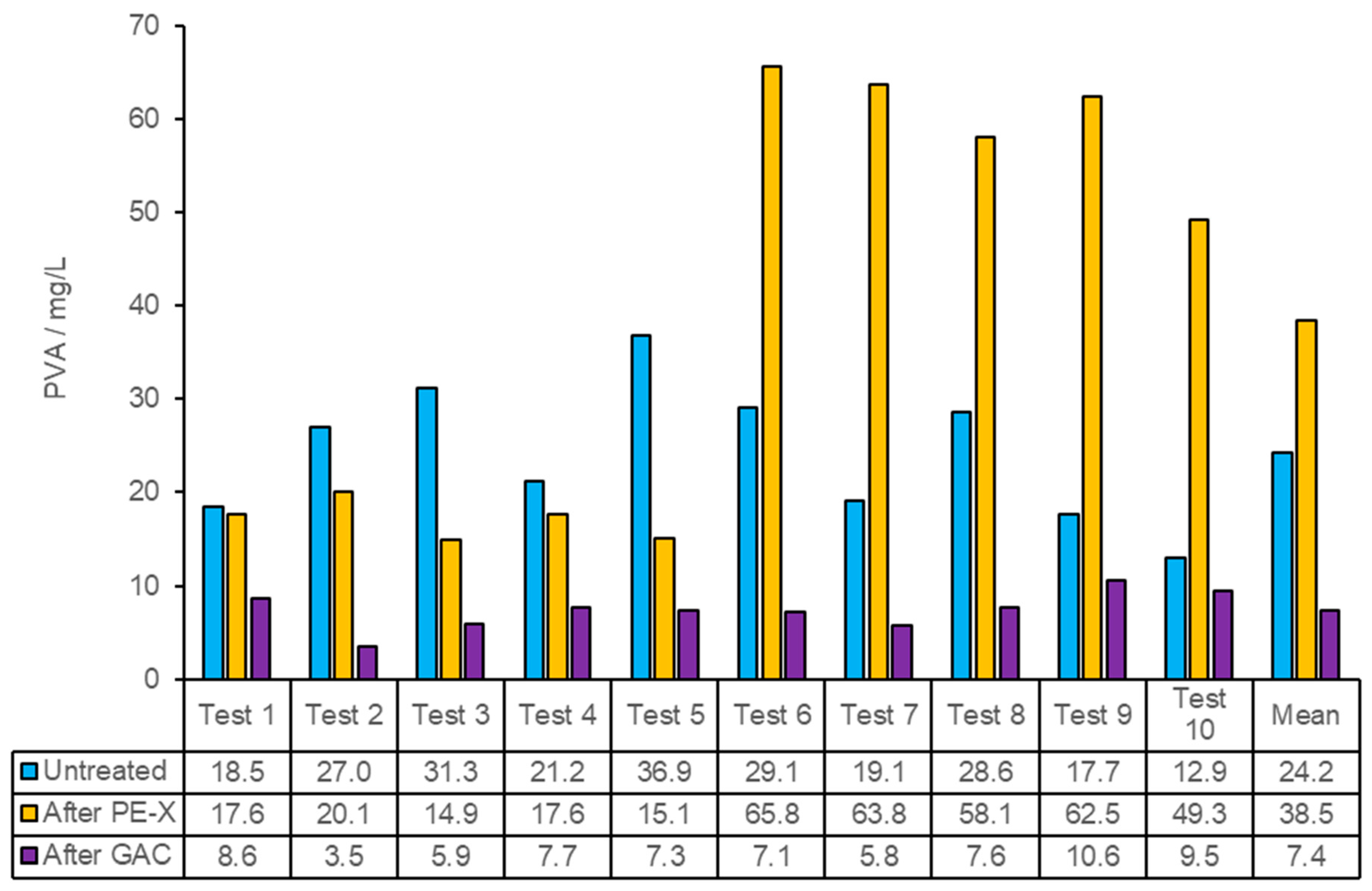
The aim of this pilot trail was treating an industrial wastewater contaminated with high levels of PVA and MP. A pilot plant using organosilane-based MP agglomeration combined with GAC was tested for this purpose. It is notable that a total of 2 m3 was delivered in two separate 1 m3 IBCs. IBC 1 was treated in test runs 1–5 and IBC 2 in test runs 6–10 (Figure 10).
Figure 10.
PVA removal in pilot trials for treating industrial wastewater with Wasser 3.0 PE-X® and GAC.
The overall process reduces the PVA contamination from an average of 24.2 mg/L to 7.4 mg/L, which is an average PVA removal of 65%. The removal performance varied from 87% in test run 2 to 26% in test run 10. This decrease is most likely due to the saturation of the GAC, which leads to reduced removal performance.
For test runs 1–5, the MP removal (Wasser 3.0 PE-X®) also reduces the PVA concentration in the water, which is most likely caused by an adsorption of the PVA into the organosilane-MP agglomerates. In test runs 6–10, which represent the second IBC of wastewater, an increase in PVA is observed. This might be caused by overdosing of the agglomeration reagent, which causes interference with the colorimetric PVA detection. Thus, the method can also be used to control the correct dosing of the agglomeration reagent in this MP removal process.
It is notable that all samples needed to be filtered before processing, as the turbidity of unfiltered samples ranged from over 1900 NTU for the untreated samples to 198 NTU for the treated samples. Further, the exact composition of the PVA or other possible water-soluble polymers in the wastewater is unknown, which is why there may be deviations in the measured concentration. Nevertheless, for the evaluation of the removal performance and process control, the detection method is well suited.
Previous studies on the absorption of PVA on Fuller’s earth and silica showed an strong interaction and sorption to silanol groups [19,20]. A similar mechanism can bind the PVA to the silanol groups of the organosilanes formed during the water-induced sol–gel process, leading to the removals found in test runs 1–5 [37]. In the sol–gel process, the reactive groups of the organosilanes are first hydrolyzed to silanol groups, which can interact with PVA. In a further reaction, they form siloxane bonds by condensation, forming solid, stable agglomerates. PVA can also adsorb to the polymer surface of the MPs, which is another mechanism for binding it into the agglomerates [38].
The use of activated carbon for PVA has also been demonstrated in scientific studies. Comparing the PVA removal to other studies, Behera et al. found a maximum PVA removal of 92% with a contact time of 30 min for an adsorbent dose of 5 g/L powdered activated carbon (PAC) at pH 6.3 and a PVA concentration of 50 mg/L [39]. Thus, in the first step of the treatment, PVA is incorporated into the hybrid silica and microplastics agglomerates; in the second step, it is removed by adsorption onto the activated carbon.
Another promising approach for PVA removal is coagulation, whereby various patents describe the use of boron salts such as borax or boric acid as coagulants [40,41]. Removals of 94 to 99% are documented. This is effective, but the use of boron salts is controversial due to concerns about their environmental impact [42]. A study using membrane filtration for PVA-containing wastewaters showed a removal of 90% [43]. For biological degradation of PVA in textile wastewater, a removal of 42% is documented [16]. An anaerobic degradation reactor could remove 83.6 to 87.5% PVA in two days.
As the MP removal performance was already evaluated in previous studies, MP was only quantified in test runs 3 and 8. MP contamination was reduced by 99.1% from an average of 829 mio. MP/L to 6.2 mio MP/L. The previous study found a reduction of 99.1% from 673 ± 183 mio MP/L to 5.8 ± 2.8 mio MP/L over a testing period of 5 weeks or 25 days, which aligns with the current results.
In summary, the presented detection method can be used for process control in the demonstrated wastewater treatment process using organosilane-based MP agglomeration and GAC treatment. It provided important insights into possible overdosing of the agglomeration reagent and on the removal performance of the GAC, which showed the beginning of saturation in the two test runs, expressed in decreasing removal performance and the need for replacement.
4. Conclusions
A straightforward colorimetric method was employed for the quantification of PVA. The technique demonstrated excellent linearity and yielded recovery rates of 100.6 ± 2.8%. The limit of detection (LOD) and limit of quantification (LOQ) were determined to be 1.28 mg/L and 1.8 mg/L, respectively. Calibration accuracy is influenced by the specific polymer used. For unknown polymers, error rates may reach up to 42%, primarily due to variations in molecular weight and degree of hydrolyzation influencing the color complex. It is advisable to apply polymer-specific calibration to ensure accurate detection. For accurate results, it is of high importance to have controlled temperatures and exact reaction times for the analytical procedure. Prior to application in wastewater analysis, potential interfering substances should be assessed and controlled.
The efficiency of PVA removal using H2O2 and UV-C irradiation was evaluated. Increasing the H2O2/PVA ratio beyond 1:1 resulted in only marginal improvements in removal efficiency, whereas increasing the UV-C dose proved more effective. A ratio of H2O2/PVA at 1:1 was sufficient for treatment, even at high PVA concentrations of up to 5 g/L. Optimal UV-C doses ranged between 7.5 and 12.5 kJ/m2, further increases in UV-C dose only marginally enhanced the removal performance. The colorimetric detection method was found to be suitable for laboratory-scale trials of PVA removal. However, it should be noted that PVA fragments containing fewer than 12 vinyl alcohol residues cannot be detected using this method.
A pilot plant setup combining MP agglomeration and PVA removal with organosilane-based agglomeration followed by GAC achieved a reduction in PVA concentration from an average of 24.2 mg/L to 7.4 mg/L, corresponding to a removal efficiency of approximately 65%. Simultaneously, microplastic removal reached 99.1%. The PVA detection method was well applicable for process control, and filtration was necessary for turbid samples. The colorimetric detection method enabled monitoring of agglomeration reagent dosing and facilitated control of GAC saturation levels during operation.
Author Contributions
Conceptualization, A.K., P.R., D.S., K.G.K. and K.S.; methodology, A.K., P.R., M.T.S., K.G.K. and K.S.; validation, M.T.S. and K.S.; formal analysis, A.K., P.R., M.T.S., K.G.K. and K.S.; investigation, P.R., A.K. and O.Z.; resources, K.S.; data curation, M.T.S., P.R. and K.S.; writing—original draft preparation, M.T.S., E.M. and K.S.; writing—review and editing, A.K., M.T.S., E.M. and K.S.; visualization, E.M. and M.T.S.; supervision, K.S.; project administration, K.S.; funding acquisition, K.S. All authors have read and agreed to the published version of the manuscript.
Funding
The authors gratefully acknowledge the financial support of the Horizon Mission project UPSTREAM (GA 101112877), co-funded by the European Union and the UK Research and Innovation. This publication reflects the views only of the author, and the European Commission cannot be held responsible for any use that may be made of the information contained therein.
Data Availability Statement
The original contributions presented in this study are included in the article. Further inquiries can be directed to the corresponding author.
Acknowledgments
The authors thank abcr GmbH, Karlsruhe, Germany, for their project-related support and the discussion of the results.
Conflicts of Interest
Authors Michael Toni Sturm, Anika Korzin, Pieter Ronsse, Erika Myers, Oleg Zernikel, Dennis Schober and Katrin Schuhen were employed by the company Wasser 3.0 gGmbH. Author Kaspar Groot Kormelinck was employed by the company Van Remmen UV Technology. All the authors declare no conflicts of interest.
Abbreviations
The following abbreviations are used in this manuscript:
| AOP | Advanced oxidation process |
| DH | Degree of hydrolyzation |
| GAC | Granular activated carbon |
| MP | Microplastics |
| MW | Molecular weight |
| PVA | Polyvinyl alcohol |
| UV-C | UV-C light |
| WSSP | Water soluble synthetic polymer |
References
- Alonso-López, O.; López-Ibáñez, S.; Beiras, R. Assessment of Toxicity and Biodegradability of Poly(vinyl alcohol)-Based Materials in Marine Water. Polymers 2021, 13, 3742. [Google Scholar] [CrossRef] [Scilit] [PubMed]
- Nigro, L.; Magni, S.; Ortenzi, M.A.; Gazzotti, S.; Della Torre, C.; Binelli, A. Are “liquid plastics” a new environmental threat? The case of polyvinyl alcohol. Aquat. Toxicol. 2022, 248, 106200. [Google Scholar] [CrossRef] [Scilit]
- Parsa, Z.; Dhib, R.; Mehrvar, M. Continuous UV/H2O2 Process: A Sustainable Wastewater Treatment Approach for Enhancing the Biodegradability of Aqueous PVA. Sustainability 2024, 16, 7060. [Google Scholar] [CrossRef] [Scilit]
- Amann, M.; Minge, O. Biodegradability of Poly(vinyl acetate) and Related Polymers. In Synthetic Biodegradable Polymers; Rieger, B., Künkel, A., Coates, G.W., Reichardt, R., Dinjus, E., Zevaco, T.A., Eds.; Springer: Berlin/Heidelberg, Germany, 2012; pp. 137–172. ISBN 978-3-642-27153-3. [Google Scholar]
- Sun, W.; Chen, L.; Wang, J. Degradation of PVA (polyvinyl alcohol) in wastewater by advanced oxidation processes. J. Adv. Oxid. Technol. 2017, 20, 20170018. [Google Scholar] [CrossRef] [Scilit]
- Fong, R.J.; Robertson, A.; Mallon, P.E.; Thompson, R.L. The Impact of Plasticizer and Degree of Hydrolysis on Free Volume of Poly(vinyl alcohol) Films. Polymers 2018, 10, 1036. [Google Scholar] [CrossRef] [Scilit] [PubMed]
- Rolsky, C.; Kelkar, V. Degradation of Polyvinyl Alcohol in US Wastewater Treatment Plants and Subsequent Nationwide Emission Estimate. Int. J. Environ. Res. Public Health 2021, 18, 6027. [Google Scholar] [CrossRef] [Scilit] [PubMed]
- Chiellini, E.; Corti, A.; D’Antone, S.; Solaro, R. Biodegradation of poly (vinyl alcohol) based materials. Prog. Polym. Sci. 2003, 28, 963–1014. [Google Scholar] [CrossRef] [Scilit]
- DeMerlis, C.C.; Schoneker, D.R. Review of the oral toxicity of polyvinyl alcohol (PVA). Food Chem. Toxicol. 2003, 41, 319–326. [Google Scholar] [CrossRef] [Scilit]
- Zeeshan, M.H.; Ruman, U.E.; He, G.; Sabir, A.; Shafiq, M.; Zubair, M. Environmental Issues Concerned with Poly (Vinyl Alcohol) (PVA) in Textile Wastewater. In Polymer Technology in Dye-containing Wastewater; Khadir, A., Muthu, S.S., Eds.; Springer Nature: Singapore, 2022; pp. 225–236. ISBN 978-981-19-1515-4. [Google Scholar]
- Khadir, A.; Muthu, S.S. (Eds.) Polymer Technology in Dye-containing Wastewater; Springer Nature: Singapore, 2022; ISBN 978-981-19-1515-4. [Google Scholar]
- McDonough, K.; Hall, M.J.; Wilcox, A.; Menzies, J.; Brill, J.; Morris, B.; Connors, K. Application of standardized methods to evaluate the environmental safety of polyvinyl alcohol disposed of down the drain. Integr. Environ. Assess. Manag. 2024, 20, 1693–1705. [Google Scholar] [CrossRef] [Scilit]
- Hamad, D.; Dhib, R.; Mehrvar, M. Photochemical Degradation of Aqueous Polyvinyl Alcohol in a Continuous UV/H2O2 Process: Experimental and Statistical Analysis. J. Polym. Environ. 2016, 24, 72–83. [Google Scholar] [CrossRef] [Scilit]
- Hamad, D.; Mehrvar, M.; Dhib, R. Experimental study of polyvinyl alcohol degradation in aqueous solution by UV/H2O2 process. Polym. Degrad. Stab. 2014, 103, 75–82. [Google Scholar] [CrossRef] [Scilit]
- Lin, C.-C.; Lee, L.-T. Degradation of polyvinyl alcohol in aqueous solutions using UV/oxidant process. J. Ind. Eng. Chem. 2015, 21, 569–574. [Google Scholar] [CrossRef] [Scilit]
- Chung, J.; Kim, S.; Choi, K.; Kim, J.-O. Degradation of polyvinyl alcohol in textile waste water by Microbacterium barkeri KCCM 10507 and Paenibacillus amylolyticus KCCM 10508. Environ. Technol. 2016, 37, 452–458. [Google Scholar] [CrossRef] [Scilit]
- Lei, L.; Hu, X.; Yue, P.L.; Bossmann, S.H.; Göb, S.; Braun, A.M. Oxidative degradation of poly vinyl alcohol by the photochemically enhanced Fenton reaction. J. Photochem. Photobiol. A Chem. 1998, 116, 159–166. [Google Scholar] [CrossRef] [Scilit]
- Schulthess, C.P.; Tokunaga, S. Adsorption Isotherms of Poly(vinyl alcohol) on Silicon Oxide. Soil Sci. Soc. Am. J. 1996, 60, 86–91. [Google Scholar] [CrossRef] [Scilit]
- Bajpai, A.K.; Vishwakarma, N. Adsorption of polyvinylalcohol onto Fuller’s earth surfaces. Colloids Surf. A Physicochem. Eng. Asp. 2003, 220, 117–130. [Google Scholar] [CrossRef] [Scilit]
- Tadros, T. Adsorption of polyvinyl alcohol on silica at various ph values and its effect on the flocculation of the dispersion. J. Colloid Interface Sci. 1978, 64, 36–47. [Google Scholar] [CrossRef] [Scilit]
- Procházková, L.; Rodríguez-Muñoz, Y.; Procházka, J.; Wanner, J. Simple spectrophotometric method for determination of polyvinylalcohol in different types of wastewater. Int. J. Environ. Anal. Chem. 2014, 94, 399–410. [Google Scholar] [CrossRef] [Scilit]
- Wasser 3.0 gGmbH. Instructions for the Quantitative Analysis of Wastewater for Water Soluble Polymers (WSSP). Available online: https://wasserdreinull.de/wp-content/uploads/W30_Manual-WSSP-Detektion-Quantitativ-EN-v3.pdf (accessed on 10 November 2025).
- Wasser 3.0 gGmbH. Instructions for the Qualitative Analysis of Wastewater for Water Soluble Polymers (WSSP). Available online: https://wasserdreinull.de/wp-content/uploads/W30_Manual-WSSP-Detektion-Qualitativ-EN-v4.pdf (accessed on 10 November 2025).
- Chen, C.; Liu, X.; Wang, J.; Guo, H.; Chen, Y.; Wang, N. Research on the Thermal Aging Mechanism of Polyvinyl Alcohol Hydrogel. Polymers 2024, 16, 2486. [Google Scholar] [CrossRef] [Scilit] [PubMed]
- Tsioptsias, C.; Fardis, D.; Ntampou, X.; Tsivintzelis, I.; Panayiotou, C. Thermal Behavior of Poly(vinyl alcohol) in the Form of Physically Crosslinked Film. Polymers 2023, 15, 1843. [Google Scholar] [CrossRef] [Scilit] [PubMed]
- Owen, T. Fundamentals of UV-Visible Spectroscopy: A Primer; Hewlett-Packard: Santa Clara, CA, USA, 1996. [Google Scholar]
- Sturm, M.T.; Myers, E.; Korzin, A.; Polierer, S.; Schober, D.; Schuhen, K. Fast Forward: Optimized Sample Preparation and Fluorescent Staining for Microplastic Detection. Microplastics 2023, 2, 334–349. [Google Scholar] [CrossRef] [Scilit]
- Pritchard, J.G.; Akintola, D.A. Complexation of polyvinyl alcohol with iodine Analytical precision and mechanism. Talanta 1972, 19, 877–888. [Google Scholar] [CrossRef] [Scilit] [PubMed]
- Macias, C.E.; Bodugoz-Senturk, H.; Muratoglu, O.K. Quantification of PVA hydrogel dissolution in water and bovine serum. Polymer 2013, 54, 724–729. [Google Scholar] [CrossRef] [Scilit]
- Joshi, D.P.; Lan-Chun-Fung, Y.L.; Pritchard, J.G. Determination of poly(vinyl alcohol) via its complex with boric acid and iodine. Anal. Chim. Acta 1979, 104, 153–160. [Google Scholar] [CrossRef] [Scilit]
- Morishima, Y.; Fujisawa, K.; Nozakura, S. Sequence Length Required for Poly(vinyl acetate)—Iodine and Poly(vinyl alcohol)—Iodine Color Reactions. Polym. J. 1978, 10, 281–285. [Google Scholar] [CrossRef] [Scilit]
- Zwick, M.M. Poly(vinyl alcohol)–iodine complexes. J. Appl. Polym. Sci. 1965, 9, 2393–2424. [Google Scholar] [CrossRef] [Scilit]
- Parsa, Z.; Dhib, R.; Mehrvar, M. pH and UVA real-time data feasibility for monitoring aqueous PVA degradation in a continuous pilot-scale UV/H2O2 photoreactor: Experimental and statistical analysis. Can. J. Chem. Eng. 2025, 103, 6056–6071. [Google Scholar] [CrossRef] [Scilit]
- Wols, B.A.; Harmsen, D.; van Remmen, T.; Beerendonk, E.F.; Hofman-Caris, C. Design aspects of UV/H2O2 reactors. Chem. Eng. Sci. 2015, 137, 712–721. [Google Scholar] [CrossRef] [Scilit]
- Oh, S.-Y.; Kim, H.-W.; Park, J.-M.; Park, H.-S.; Yoon, C. Oxidation of polyvinyl alcohol by persulfate activated with heat, Fe2+, and zero-valent iron. J. Hazard. Mater. 2009, 168, 346–351. [Google Scholar] [CrossRef] [Scilit] [PubMed]
- Zhu, G.; Zhang, F.; Jiang, P.; Ge, M. The experimental study of polyvinyl alcohol (PVA) textile material degradation by ozone oxidation process. J. Text. Inst. 2021, 112, 117–122. [Google Scholar] [CrossRef] [Scilit]
- Sturm, M.T.; Herbort, A.F.; Horn, H.; Schuhen, K. Comparative study of the influence of linear and branched alkyltrichlorosilanes on the removal efficiency of polyethylene and polypropylene-based microplastic particles from water. Environ. Sci. Pollut. Res. Int. 2020, 27, 10888–10898. [Google Scholar] [CrossRef] [Scilit]
- Tadros, T.; Vincent, B. The influence of electrolytes on the adsorption of poly(vinyl alcohol) on polystyrene particles and on the stability of the polymer-coated particles. J. Colloid Interface Sci. 1979, 72, 505–514. [Google Scholar] [CrossRef] [Scilit]
- Behera, S.K.; Kim, J.-H.; Guo, X.; Park, H.-S. Adsorption equilibrium and kinetics of polyvinyl alcohol from aqueous solution on powdered activated carbon. J. Hazard. Mater. 2008, 153, 1207–1214. [Google Scholar] [CrossRef] [Scilit] [PubMed]
- Yamagata, T.; Banno, S. Process for Separating Polyvinyl Alcohol from Its Solution. US4078129, 14 March 1978. [Google Scholar]
- Yamagata, T.; Banno, S. Process for Treating Waste Water Containing Polyvinyl Alcohol. EP054752 A1, 30 June 1982. [Google Scholar]
- Hadrup, N.; Frederiksen, M.; Sharma, A.K. Toxicity of boric acid, borax and other boron containing compounds: A review. Regul. Toxicol. Pharmacol. 2021, 121, 104873. [Google Scholar] [CrossRef] [Scilit]
- Shalaby, M.S.; Lipnizki, F.; Abdallah, H.; Shaban, A.M.; Ramadan, R.; Mansor, E.; Hosney, M.; Thomas, A.; Babu, B.M.; Rose, K.E.M.; et al. Removal of PVA from textile wastewater using modified PVDF membranes by electrospun cellulose nanofibers. Appl. Water Sci. 2025, 15, 95. [Google Scholar] [CrossRef] [Scilit]

Disclaimer/Publisher’s Note: The statements, opinions and data contained in all publications are solely those of the individual author(s) and contributor(s) and not of MDPI and/or the editor(s). MDPI and/or the editor(s) disclaim responsibility for any injury to people or property resulting from any ideas, methods, instructions or products referred to in the content. |
© 2025 by the authors. Licensee MDPI, Basel, Switzerland. This article is an open access article distributed under the terms and conditions of the Creative Commons Attribution (CC BY) license (https://creativecommons.org/licenses/by/4.0/).