Article

Comparative Distribution of Microplastics in Different Inland Aquatic Ecosystems

by
George Kehayias
1,*,
Penelope Kanellopoulou
2,
Achilleas Kechagias
1,
Aris E. Giannakas
1,
Constantinos E. Salmas
3,
Theofanis N. Maimaris
3 and
Michael A. Karakassides
3
1
Department of Food Science and Technology, University of Patras, Seferi 2, 30100 Agrinio, Greece
2
Department of Sustainable Agriculture, University of Patras, Seferi 2, 30100 Agrinio, Greece
3
Department of Materials Science and Engineering, School of Engineering, University of Ioannina, 45500 Ioannina, Greece
*
Author to whom correspondence should be addressed.
Water 2025, 17(23), 3432; https://doi.org/10.3390/w17233432
Submission received: 28 October 2025 / Revised: 24 November 2025 / Accepted: 1 December 2025 / Published: 3 December 2025
(This article belongs to the Special Issue Research on Microplastic Pollution in Water Environment)

Abstract

The widespread dispersion of microplastics (MPs) has been recognized as a pervasive and persistent environmental contaminant in worldwide freshwater ecosystems, and although relative studies have skyrocketed, there are still significant knowledge gaps in areas like southern Europe. This study assesses the microplastic pollution in seven Greek inland aquatic ecosystems which vary in morphology, trophic status, and anthropogenic pressure. Surface and vertical samples were taken with 200 μm plankton nets. MPs were present in all samples, with fibers being the dominant form, having an abundance range between 0.47 and 149.4 items/m3 with fragments between 0.08 and 9.17 items/m3. Fibers and fragments had greater abundance in the vertical than in the surface samples. There were no significant abundance differences between lakes and lagoons, and among the sampling sites in each ecosystem. Blue and transparent were the colors that prevailed, and most of the fibers and fragments were smaller than 1 mm. Four types of MPs were recorded, with PET (polyethylene terephthalate) being the most frequent. The use of the novel Relative Anthropogenic Pressure (RAP) index resulted in positive correlations between certain sociological parameters and the microplastics’ abundance, efficiently reflecting the impingement of human populations on the inland aquatic ecosystems.

1. Introduction

Plastic pollution has emerged as one of the most widespread anthropogenic environmental challenges of our planet. While their presence in marine ecosystems has been widely documented, inland waters—including rivers, lakes, reservoirs, and estuaries—are now recognized as critical and vulnerable reservoirs of microplastics (MPs), which are synthetic polymer particles under 5 mm [1]. These contaminants originate from a complex matrix of sources, broadly classified into primary MPs, intentionally manufactured as minute particles (e.g., industrial pellets and cosmetic microbeads), and secondary MPs, resulting from the environmental degradation of larger plastic debris through photochemical, mechanical, and biological processes [2]. The pathways of MPs into inland waters may include wastewater treatment plant effluents, which are a significant source of microfibers from synthetic textiles, surface runoff from urban and agricultural areas, atmospheric deposition, and direct inputs from tourism and recreational activities [3]. After their introduction into the water bodies, MPs accumulate and can be retained for decades, undergo weathering, complex cycles of sedimentation, resuspension, and burial, with their fate intricately linked to the system’s specific hydrological and ecological conditions [4]. At the same time, MPs interact with biota, thereby posing a direct threat to aquatic life and the provisioning of ecosystem services. The ecological impacts are profound and multi-faceted. Ingestion by a wide range of organisms, from planktonic filter-feeders to fish, can lead to physical blockages, false satiation, and the translocation of particles into tissues. Furthermore, MPs act as vectors for hydrophobic organic contaminants and heavy metals and can leach additive chemicals, exacerbating their toxicological potential [5].
Most of the early and ongoing research on freshwater MPs has focused predominantly on the surface water, specifically using plankton nets (e.g., manta trawls) to sample the uppermost layer (usually the first 15–30 cm). This methodological preference has provided a crucial, yet fundamentally two-dimensional, understanding of MP distribution, capturing primarily buoyant particles in the uppermost water layer [6]. However, this approach inherently fails to capture the full complexity of MP dynamics within the aquatic environment. The distribution of MPs throughout the water column is highly dynamic, influenced by seasonal thermal stratification, wind-induced mixing, plankton blooms, and the formation of biofouling communities on particle surfaces, which can alter their buoyancy and drive vertical fluxes [7]. Furthermore, dense polymers (e.g., polyester and polyvinyl chloride) and composite materials may never reach the surface. A growing body of evidence confirms that significant MP loads are found throughout the water column and in benthic sediments, often exceeding surface concentrations [8]. Ignoring the water column leads to a severe underestimation of the total MP inventory within a lake and misrepresents the exposure risk for pelagic and migratory organisms. Therefore, there is need for standardized, depth-integrated sampling protocols that capture the full vertical profile of MP contamination to accurately assess its load, fate, and ecological impact in lentic ecosystems [5].
As the field of MP research evolves from initial reconnaissance to more precise understanding, a major challenge remains in quantitatively linking MP abundance and distribution to specific causes. A significant and persistent knowledge gap involves the quantitative correlation of MP abundance with key morphometric and socioeconomic factors of the inland waters. Morphometric parameters of a water body, such as its surface area, volume, mean and maximum depth, shoreline development index, and water retention time, are likely to be critical in determining MP’s fate [9,10]. Concurrently, socioeconomic factors dictate emission pressures. Watershed-level attributes such as population density, the presence and efficiency of wastewater treatment infrastructure, land-use patterns (percentages of urban, agricultural, and natural land), and tourism intensity have been identified as key predictors of MP contamination in several contexts [10]. However, comprehensive studies that systematically analyze the interplay between a suite of morphometric and socioeconomic drivers across a range of different ecosystem types within the same geographic region are exceptionally rare. Understanding these complex correlations is fundamental for developing risk assessment frameworks, creating predictive models to identify pollution hotspots, and proposing targeted, cost-effective management and policy interventions.
Geographically, global research on freshwater MPs exhibits a pronounced bias, with extensive studies concentrated in North America, northern Europe, and East Asia. In contrast, the inland waters of southern Europe, particularly the Balkan Peninsula, remain a glaring blind spot on the global contamination map [8]. This is a critical omission, as the Mediterranean region is characterized by a confluence of high population density in coastal zones, intense seasonal tourism, and unique climatic conditions that are likely to create distinct MP emission and transport patterns. Transitional ecosystems like coastal lagoons provide numerous ecosystem services. However, despite growing concerns, the occurrence and distribution of MPs in the lagoon systems of the Mediterranean remain largely unknown [11,12]. Within this understudied region, Greece, with its rich diversity of inland aquatic ecosystems—from deep, oligotrophic lakes to shallow, eutrophic wetlands and biologically productive estuaries—represents a significant data gap. Until recently, there were not any studies on microplastic pollution in the inland water bodies of the country. In 2024, Perraki et al. [13] investigated the MP abundance and distribution in Erasinos River estuary, situated in a highly polluted and industrialized area, and Salmas et al. [14] reported data concerning MPs in a remote alpine lake. Apart from these two reports, there is no information concerning urban lakes with different characteristics. Therefore, a comprehensive, comparative assessment of MPs across a gradient of Greek lakes and estuaries, which vary in morphology, trophic status, and anthropogenic pressure, is entirely absent, leaving a fragmented understanding of the sources, sinks, and transport mechanisms specific to the Greek environment and hindering the development of effective regional mitigation policies.
Considering the critical knowledge gaps previously described, such as the scarcity of data from southern Europe and Greece, the vertical distribution of MPs, and the lack of correlation with driving factors, this study aims to provide a comprehensive and comparative assessment of microplastic pollution in a range of Greek inland aquatic ecosystems. The specific objectives are to (a) quantify and characterize the abundance, polymer types, sizes, and colors of microplastics in the surface waters and the water columns of seven distinct inland aquatic ecosystems in Greece, including both lakes and lagoons; (b) compare and contrast the distribution patterns across these different ecosystems to identify system-specific contamination signatures; and (c) investigate the relationship between microplastic abundance and a suite of key morphometric and sociological factors within the respective areas. By addressing these aims, this research will advance the regional understanding of MP pollution in southern Europe, provide a comprehensive, three-dimensional perspective on their distribution, and establish a foundational model for correlating MP contamination with its environmental and anthropogenic drivers in diverse inland waters.

2. Materials and Methods

2.1. The Study Area

The present study was conducted in five natural lakes and two coastal lagoons situated in western Greece (Figure 1). These areas have differences concerning their morphometric, trophic, and socioeconomic characteristics, as well as the main human activities (Table 1). Lake Trichonis is the largest natural lake in Greece. It is a deep and warm monomictic lake, and previous studies have classified it as oligotrophic to mesotrophic [15]. There are various surface water supplies (e.g., seasonal streams), as well as groundwater inflows (approx. 30% of the total annual water inflows), which provide an adequate quantity of water and result in a positive water balance [16]. In the surrounding area, there are 23 villages, having an overall population of about 20,000 residents, with most of them occupied with agriculture. The lake has been included in the Natura 2000 network of protected areas. Additionally, it is very rich in fish species, of which, the most economically important is Atherina boyeri Risso, 1810, exploited by professional fishing.
Lake Lysimachia is a shallow lake, which has positive water balance due to the inflow of water from the nearby Trichonis Lake, with which it is connected by a sluice gate canal. Apart from various seasonal streams entering the lake, there is also an outflow of water to Acheloos River via a canal. Until 2000, the lake was receiving the untreated sewage of the nearby city of Agrinio, thus becoming eutrophic. Nowadays, although the lake is in a better state due to the termination of incoming of urban waste [17], it continues to receive small amounts of waste from the surrounding agricultural areas.
Lake Ozeros is also a shallow lake, with an area of about 10.1 km2 and a closed drainage basin of 59 km2. The lake is supplied with water from seasonal streams that occur mainly in the east–southeast part, as well as from the Acheloos River, when it overflows, through a technical canal. The major environmental disturbance of Lake Ozeros is the receipt of agricultural drainage and waste from the nearby operating farms and villages. Fishing is conducted only by a few non-professional fishermen.
Lake Pamvotis is a shallow ancient lake in direct contact with the city of Ioannina, which has a population of 65,000 residents. Hydrologically, the lake is fed by springs and a system of sinkholes drained to three rivers and several torrents, and there is a man-controlled outflow. The intensification of human activities (urban development, industries, growth of population, livestock farming, and agriculture) dramatically affected the water quality, leading to eutrophication and depth reduction [18]. Within the lake, there is a small island inhabited by almost 200 residents. However, the island is a tourist attraction and is visited by more than 200,000 tourists every year. For their transportation, there is a fleet of 14 boats performing more than 7000 courses per year between the city and the island. There are also a few small fishing ports for several professional fishermen. Finally, the lake is used in several water sports activities, while it is often the center of national and international rowing events.
Lake Ziros is quite a small and deep lake (length: 900 m, width: 600 m, and depth: 58 m), with a mean depth of 9 m, recharged with karstic springs. The lake is considered mesotrophic, and it is fed by underground springs [19]. It is situated in the middle of a forest and is a highly protected area, being part of the Natura 2000 network. The water is used for irrigation purposes, while the only recreational activity that is allowed in this lake is canoeing.
Etoliko Lagoon is a semi-enclosed brackish basin situated in the coasts of western Greece, having a maximum depth of 27 m and a mean depth of 12 m. The basin communicates southerly with a typical shallow lagoon (Mesolonghi Lagoon) with a mean depth of about 0.5 m, which is in direct contact with the city of Mesolonghi in the south. The system receives wastewater treatment plant effluents from the Etoliko village, as well as effluents from the intensive agriculture in the neighboring area. Etoliko Lagoon receives freshwater from three main streams as well as from a pumping station, which drains the extended cultivated land of the catchment area [20]. The water column of this basin presents intense anoxic conditions, especially deeper than 7 m, where a thick layer of H2S exists which occasionally emerges, resulting in massive fish deaths. The area has a historical record of such anoxic incidents since 1881.
Amfilochia Bay is situated in the southeastern edge of the Amvrakikos Gulf, which is the largest gulf in Greece. The bay is in direct contact with the city of Amfilochia and urban waste comes into this basin by rainfall. There is a small commercial and fishing port in the bay. Considering the existing information about the entire Amvrakikos Gulf [21], the bay is also considered to be eutrophic.

2.2. Sampling

The sampling in each of the seven aquatic ecosystems was conducted horizontally and vertically using nylon nets with 200 μm porosity. Three sampling stations were selected for each area, except for Lake Ziros, where only two sampling sites were selected due to the small size of the lake. The surface (horizontal) samples were taken using a pair of nets with rectangular openings (50 × 50 cm, gauze length: 160 cm), which were adjusted at 1 m away from both sides of a small boat and placed in such a manner as to sample the highest 20 cm of surface water. The nets were hauled at a speed of 1.5 knots for a period between 10 and 20 min, regarding the trophic characteristics of each area, to avoid clogging. A Hyrdo-Bios flowmeter (HYDRO-BIOS, Kiel, Germany) was used to estimate the volume of the filtered water. To avoid clogging, the propeller of the flowmeter was always inspected to ensure that it was turning and, in the case of it slowing down, the tow was terminated. Calibration of the flowmeter was performed before each sampling survey. In the vertical sampling, a conical nylon net (50 cm diameter and 160 cm length) was hauled vertically by hand with a speed of about 0.5 m/sec from near-bottom to surface in the case of the shallow lakes, while for the deeper water bodies the maximum depth of the haul was set to 25 m (Table S2). The nets were thoroughly washed with surface water before and after horizontal and vertical sampling. After each haul, the cod end content of the net was washed into clean 250 mL glass jars, where 4% borax-buffered formaldehyde (CARLO ERBA, Val de Reuil, France) was added to preserve the zooplankton and other organic material.

2.3. Laboratory Measurements

In the laboratory, each sample was rinsed with distilled water through a small conical sieve (50 μm mesh size) to remove the formaldehyde and then it was transferred to a covered glass vessel. Each sample was examined in glass Petri dishes under an Optika SLX-3 stereoscope (OPTIKA S.r. l., Bergamo, Italy). All the plastic particles (fibers and fragments) were carefully hand-picked using laboratory tweezers and transferred to glass jars containing a solution of 30% H2O2 (Merck KGaA, Darmstadt, Germany) for at least 72 h at room temperature to digest the organic remains in their surface. Measurements of the length of the fibers and the width of each fragment found in the samples were performed. The fiber length was measured as chord length vs. curved length. All fragments were counted and classified according to their shape and color. Photos of all microplastic fragments were taken using a microscope eyepiece camera Optika CB-10 (OPTIKA S.r. l., Bergamo, Italy), at a maximum magnification of 90×. Data on the abundance of all MPs was calculated considering the total volume filtered and expressed as items per cubic meter (n/m3). Laboratory contamination risks were avoided as far as possible during the sample preparation by cleaning all the materials used for storing, sorting samples, and measuring microplastics (i.e., glass plates, steel needles, and forceps) and by working in controlled conditions, while wearing cotton lab coats and nitrile gloves. Samples were always kept covered, except during microscopic investigation. On four consecutive occasions, three Petri dishes were placed in the laboratory and left uncovered for two hours. The average number of fibers found in the Petri dishes were excluded from the counts of the fibers found in the samples regarding the respective colors and lengths.
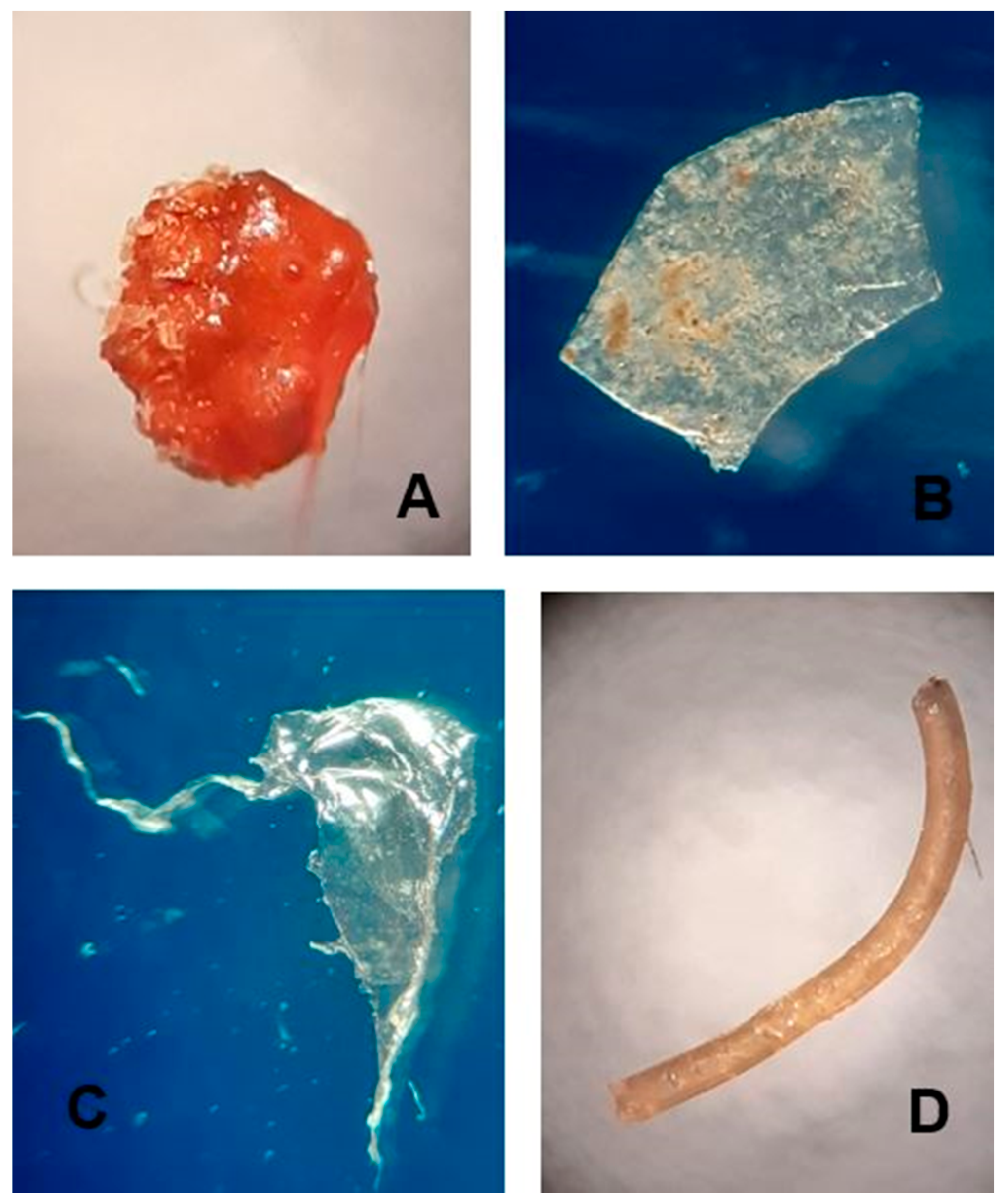
Due to the difficulty of discriminating the transparent plastic fibers from other fiber-like organic material, needles with curved tips were used to exercise pressure in the middle of the fiber, expecting a permanent deformation in the pressing spot. In cases of doubt for some fragments, a needle with candescent tip was used to perform a melting test; particles that melted when heated by touching were considered microplastics [22]. The above tests were used to identify the synthetic nature of the particles, which were then measured and counted. The microscopic identification procedures were performed by only one investigator. When aggregates of fibers or overlapping fibers were found, there was an effort to disentangle them by moving them to a separate Petri dish. The minimum measurable dimensions reached 0.1 mm, which was the detection limit. The investigation of fragments revealed four different morphotypes, as follows (Figure 2). (1) ‘hard rounded’: fragments having irregular rounded shapes, with smooth or rough surfaces (Figure 2A). (2) ‘hard flattened’: fragments having flat and hard surfaces with their thickness being proportionally too small (Figure 2B). (3) ‘soft flattened’: fragments having flat but soft surfaces with their thickness being proportionally too small (Figure 2C). (4) ‘cable-like’: fragments having cable-like shapes with much greater length than width, with soft or hard surfaces being either smooth or rough (Figure 2D).
Fourier transform infrared (FT-IR) spectra measurements of a number of microplastics that were randomly selected from the samples of all water bodies were conducted on an FT/IR-6000 JASCO (JASCO, W. Yorkshire, UK) Fourier transform spectrometer using the KBr pellet method. Transmittance spectra were obtained for a total of 64 scans between 4000 and 400 cm−1 with a spectral resolution of 4 cm−1. A background scan in air was taken prior to each measurement. Each measured individual spectrum was compared manually to a self-generated library database (i.e., spectra of reference polymer types provided by the industry), by matching major and minor transmittance peaks, with an accuracy of ±12 cm−1. The level of certainty when comparing sample spectra to that of the self-generated library database was set up to 70% [23].
Data on the microplastics’ abundance was statistically analyzed using the non-parametric Mann–Whitney (U) test or the Kruskal–Wallis test for comparisons between samples, sampling stations, and the seven aquatic ecosystems. Pearson correlation analysis between the abundance of fibers and fragments in the horizontal and the vertical samples was applied. Multiple regression analysis between the mean abundance of the microplastic categories (fibers and fragments) and other morphometric and sociological factors of the seven ecosystems was applied. The data were log(X + 1)-transformed prior to the analysis. All the above statistical analyses were performed with IBM SPSS 29.0 (IBM, Chicago, IL, USA) at the 0.05 level of significance.

3. Results

3.1. Abundance of Fibers and Fragments

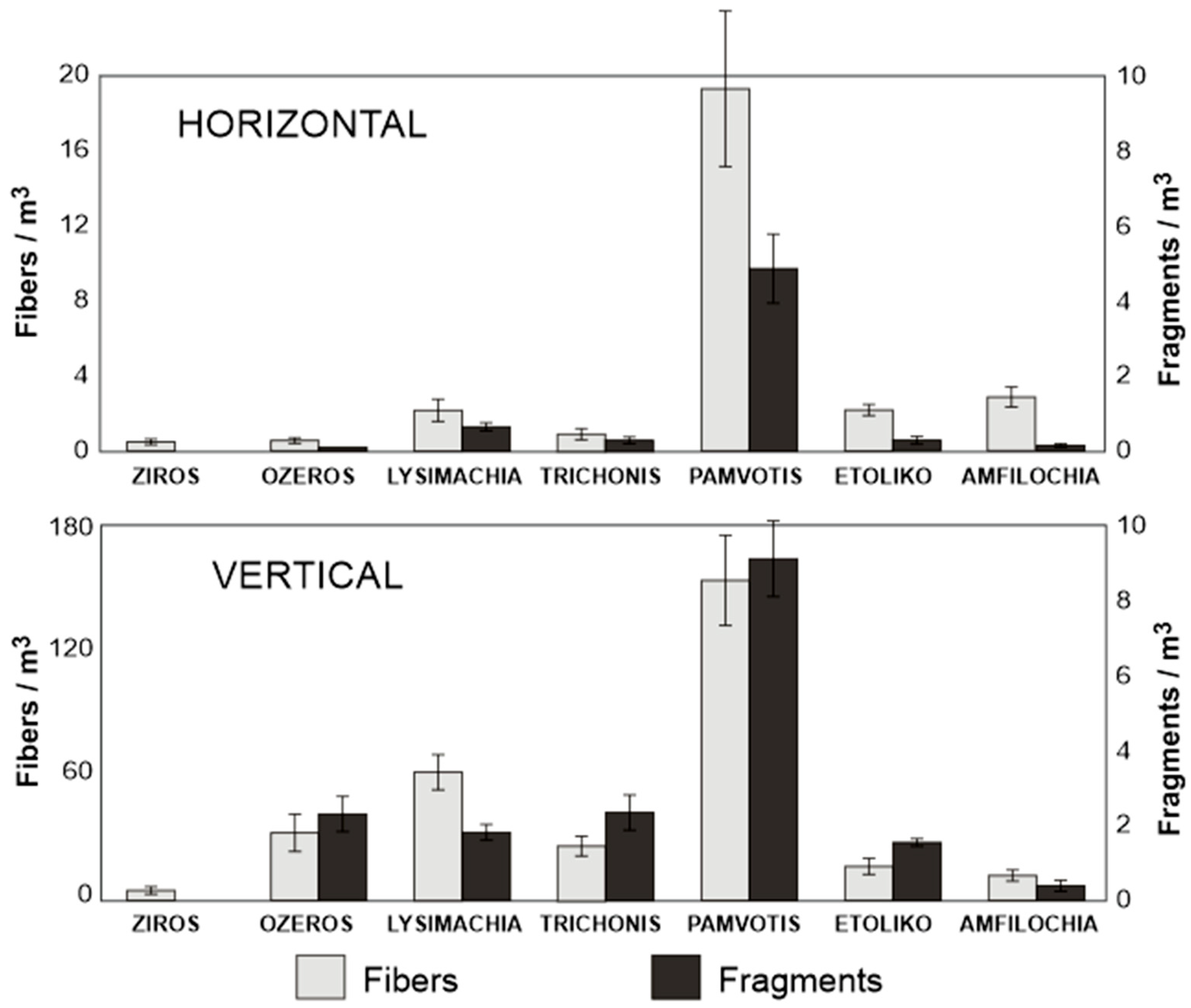
The analysis of 40 horizontal (surface) and 19 vertical samples from seven inland aquatic ecosystems of Greece revealed the presence of microplastics in all the samples, in the forms of fibers or/and fragments. The fibers outnumbered the total MPs, reaching a total number of 4428, among which, 3388 were recovered from the horizontal and 1040 from the vertical samples. The respective numbers of fragments were 747 and 78. The average abundance of the fibers found in the horizontal samples in the seven aquatic ecosystems fluctuated between 0.47 n/m3 (standard error = ±0.14 n/m3) recorded in Lake Ziros and 19.27 ± 8.61 n/m3 in Lake Pamvotis (Table S1). The respective values for the fragments were 0.08 ± 0.03 n/m3 in Lake Ozeros and 5.04 ± 1.94 n/m3 in Lake Pamvotis (Figure 3). No fragments were found in Lake Ziros, either in the horizontal or the vertical samples. Generally, the abundance of fibers and fragments was greater in the vertical samples than in the horizontal. In particular, the average abundance values of the fibers ranged between 5.14 ± 3.80 n/m3 in Lake Ziros and 149.38 ± 45.58 n/m3 in Lake Pamvotis.
The respective values for the fragments were 2.33 ± 1.06 n/m3 in Lake Ozeros and 9.17 ± 2.70 n/m3 in Lake Pamvotis (Figure 3). The abundance ratio of fibers/fragments was greater in the vertical than in the horizontal samples in all the studied areas. Specifically, the ratio of fibers/fragments in the horizontal samples fluctuated between 3.4 (Lake Lysimachia) and 17.6 (Amfilochia Bay) with an average value of 7.3 (standard error = ±2.1), in comparison to the vertical samples, where the ratio fluctuated between 8.8 (Etoliko Lagoon) and 31.4 (Lysimachia Lake) with an average value of 16.5 ± 3.0.
There were no statistically significant differences in the abundance of fibers and fragments between the five lakes and the two lagoons, either in the case of the horizontal or the vertical samples (U-test, p > 0.05). Additionally, no statistically significant differences were found between the abundance of fibers or fragments among the sampling stations in each of the seven ecosystems (Kruskal–Wallis test, p > 0.05). There were positive and statistically significant correlations between the abundance of fibers and fragments (Pearson correlation analysis), both in the horizontal (r2 = 0.781, p = 0.001) and the vertical samples, (r2 = 0.837, p = 0.001).

3.2. Color, Size, Shape, and Type of MPs

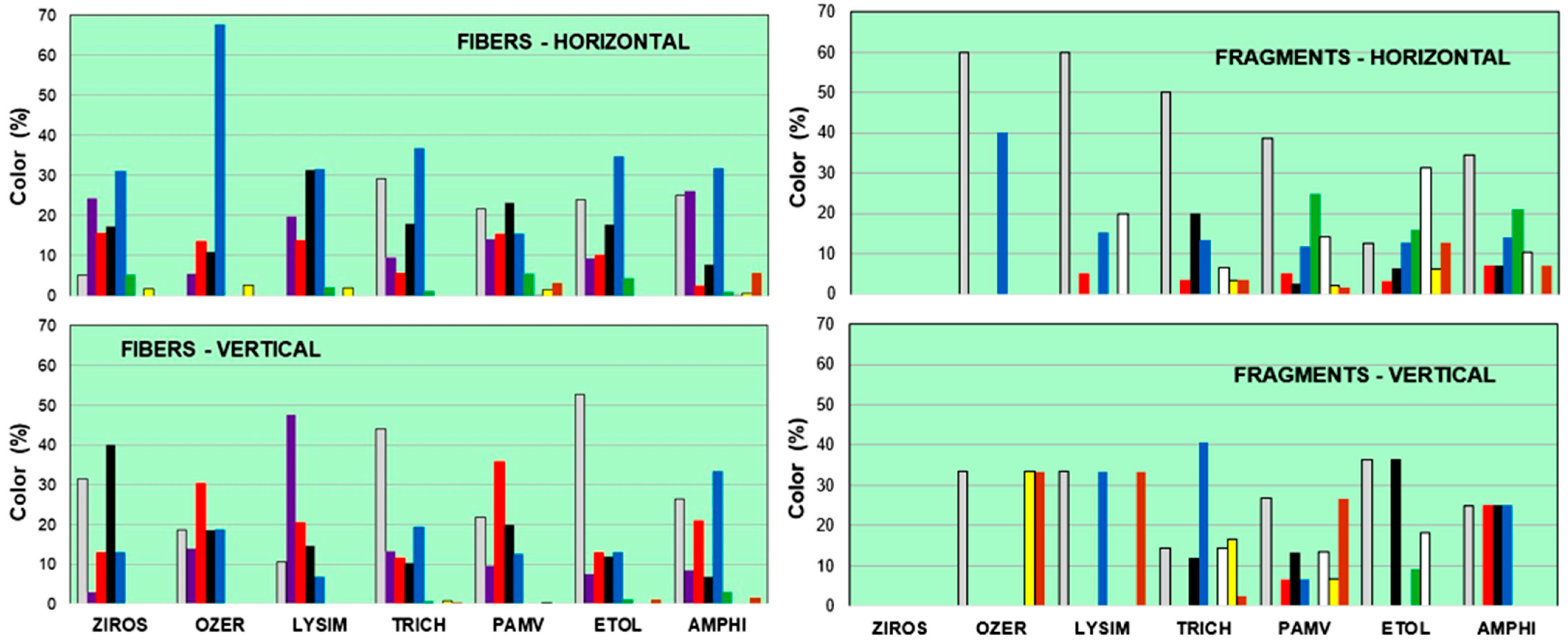
Nine colors were found in the case of fibers and fragments. Blue was the most frequent color among the fibers recovered from the horizontal samples (31.0–67.6%) and prevailed in all ecosystems except Lake Pamvotis, where black fibers accounted for 23.2% (Figure 4). In the vertical samples, the transparent fibers dominated overall in the total number (29.4%), followed by red (20.7%) and black (17.5%). However, differences were found in the color’s frequencies among the seven ecosystems (Figure 4). Transparent was the most frequent color among the fragments recovered from both the horizontal and the vertical samples (36.5% and 24.1%, respectively), followed by blue, with little differences among the seven ecosystems (Figure 4).
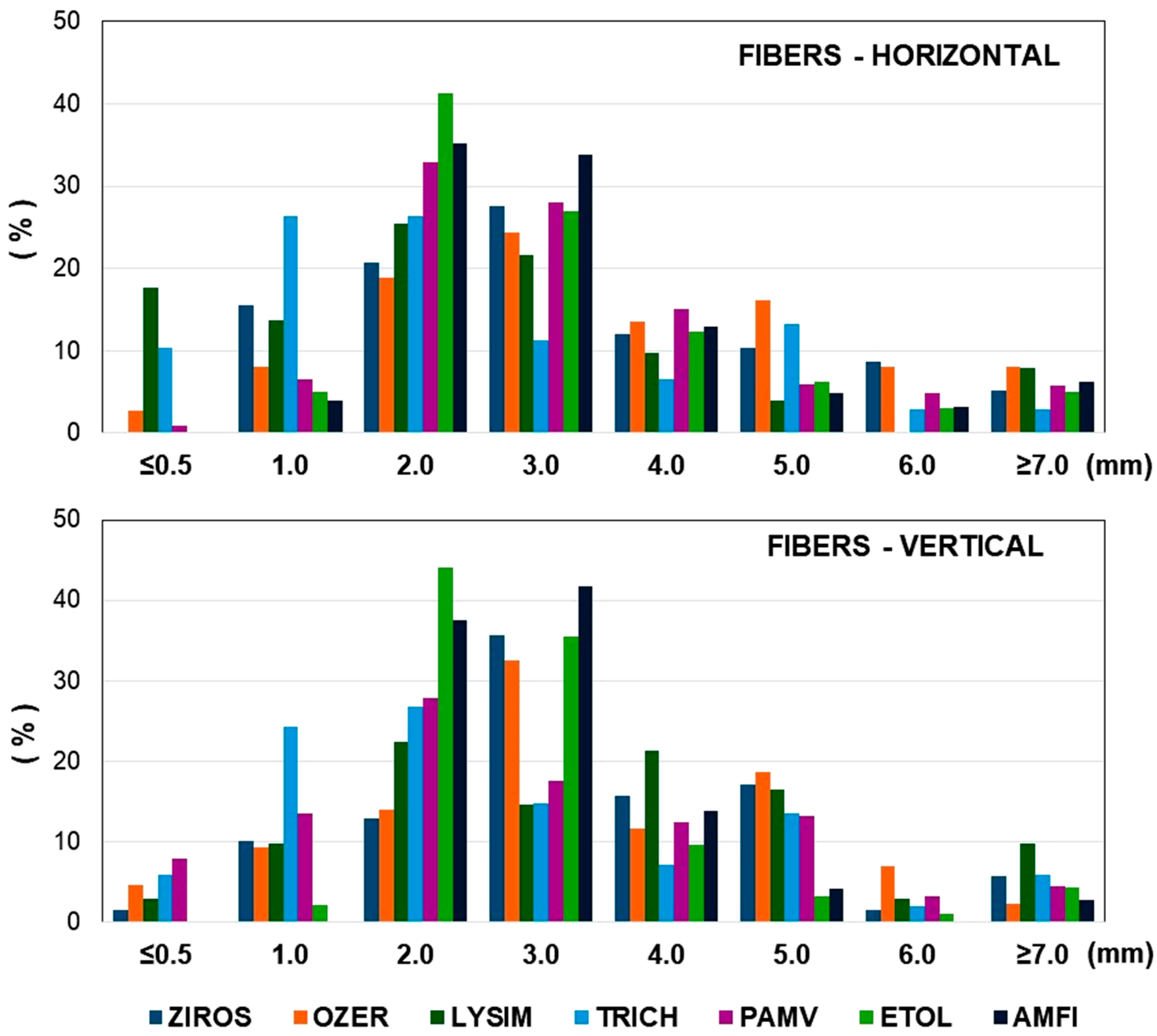
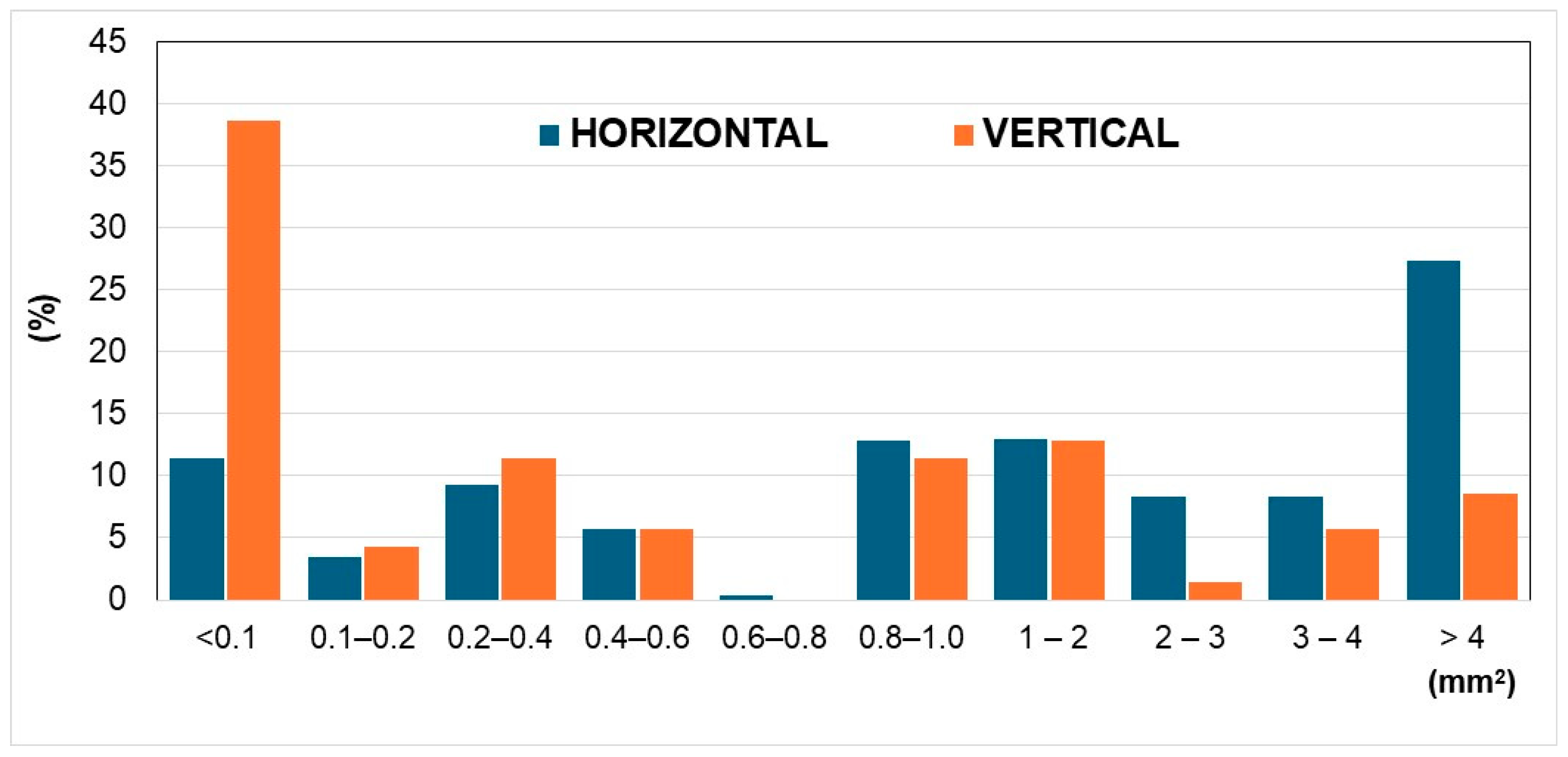
The overall length spectrum of fibers ranged between 0.3 and 15 mm, with most of them having lengths between 2 and 3 mm and accounting for 53.5% and 53.9% of their total number in the horizontal and vertical samples, respectively (Figure 5). This was a characteristic trend for most of the seven ecosystems, except for Lake Trichonis, where fibers smaller than 1 mm prevailed in all the samples (Figure 5). Utilizing the measurements of the fragments’ dimensions, their area was estimated as mm2 and is presented for all the horizontal and vertical samples in Figure 6. The results showed that the area of the fragments varied considerably, between 0.01 mm2 and 80.0 mm2. The highest proportion (27.4%) of the fragments found in the horizontal samples had an area greater than 4 mm2, while most of the fragments (38.6%) in the vertical samples had an area smaller than 0.1 mm2 (Figure 6).
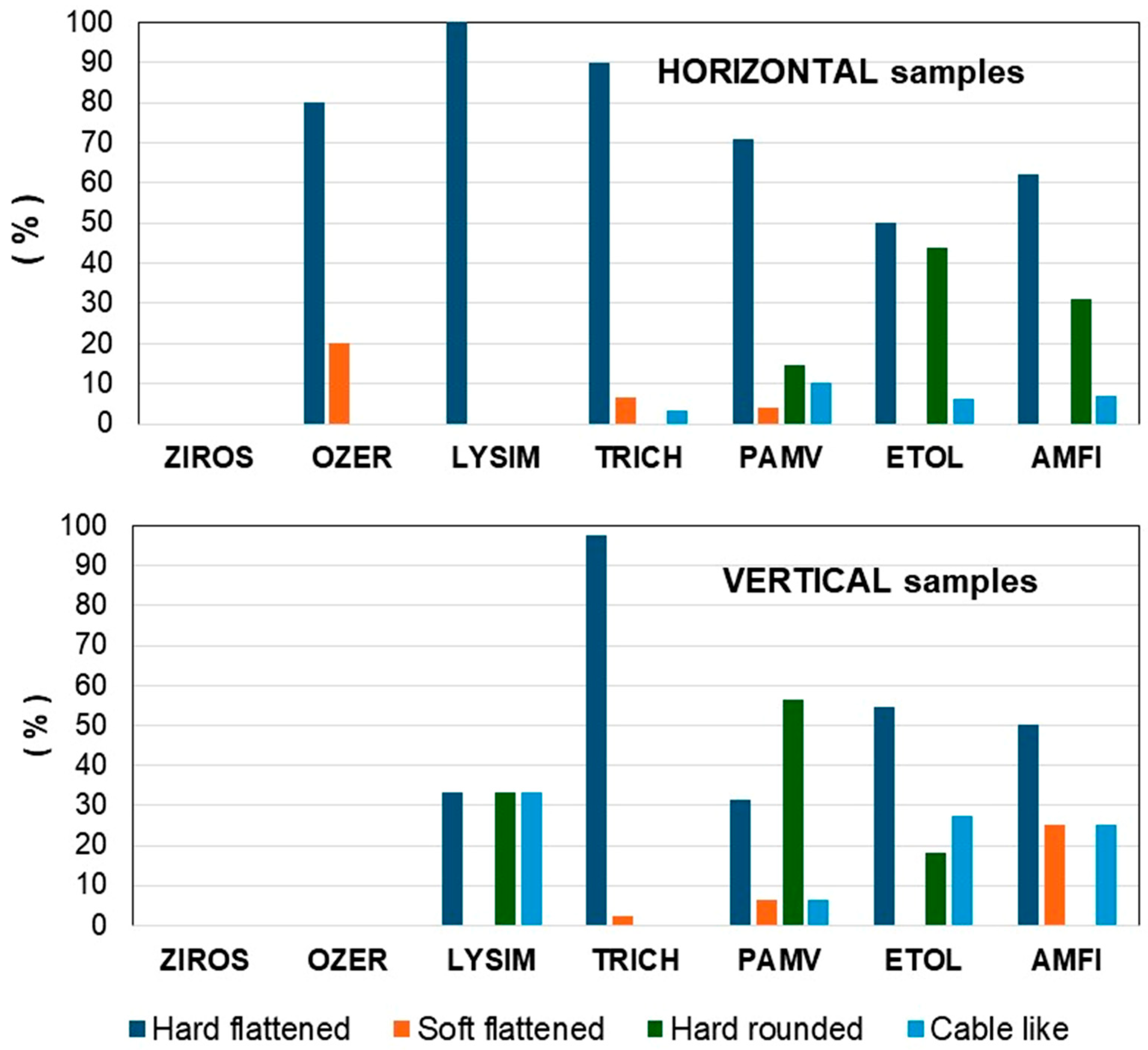
The microplastic fragments recovered from the samples varied also in their shape, grouped by four distinct morphotypes (Figure 7). Most of them had the ‘hard flattened’ morphotype (71.5% and 75.0% in the horizontal and vertical samples, respectively), followed by the ‘hard rounded’ morphotype (11.8% and 15.2%), the ‘cable-like’ morphotype (9.3% and 8.8%), and the ‘soft flattened’ morphotype, which accounted for 3.5% and 4.4%, respectively. In the case of the horizontal samples, the ‘hard flattened’ morphotype prevailed in all ecosystems, while it was the only fragment type in Lake Lysimachia. However, in the vertical samples, the ‘hard rounded’ morphotype prevailed in Lake Pamvotis (50.0%) and presented equal proportions with the ‘hard flattened’ and the ‘cable-like’ morphotypes in Lake Lysimachia (Figure 7).
A relatively small number of MPs were inspected using FT-IR (225 particles, Table S8), and although various particles from all water bodies were examined, comparisons among the seven ecosystems were not attempted. The overall analysis revealed the presence of four types of MPs. Among them, PET (polyethylene terephthalate) dominated in the form of fibers and accounted for 84.3%, while PP (polypropylene) accounted for 15.7%. In the case of fragments, PET was also the most common form (39.4%), followed by PP (33.8%), while PA (polyamide) and PVC (polyvinyl chloride) accounted for 23.9% and 2.9%, respectively (Table S8).

3.3. Correlation with Morphometrical and Sociological Factors

We attempted an investigation of the contribution of morphometrical and some sociological characteristics of the seven aquatic ecosystems to the abundance variation of microplastic pollution in the form of fibers and fragments. Among the morphometric parameters were the area, the catchment area, and the maximum depth of the aquatic ecosystem, while the distance from the closest town (DFT) and the closest town population (CTP) accounted for the sociological parameters. Considering that the population size may proportionally affect the abundance of MPs as the distance from the water body diminishes, an index called RAP (Relative Anthropogenic Pressure), that is, the fraction of the population size of the closest town (CTP) over the minimum distance from this town (DFT), is proposed. RAP was calculated using data of the population size of the closest town provided by the Hellenic Statistical Authority for the population census of 2021. In the case of towns being in contact with the water body, the minimum distance was set to 0.1 km (Table 1). The results of the multiple regression analysis between the mean abundance of the microplastic categories (fibers and fragments) in the horizontal and vertical samples with these parameters is presented in Table 2.
The results showed that parameters like the area of the aquatic ecosystems, their catchment area, and the maximum depth did not correlate significantly with the presence of any of the microplastics in all combinations (Table 2). The relative anthropogenic pressure (RAP) was the only parameter that was correlated positively with the abundance of fibers and fragments and their sum from the horizontal samples. RAP, along with the closest town population (CTP), also showed positive correlations with the abundance of the fragments from the vertical samples, and with the total sum of fibers and fragments from all the samples. The distance of the water bodies from the populated areas (DFT) was established as the minimum strait distance from the edges of the closest tow to the edges of the aquatic ecosystem measured using Google Earth Pro. The DFT revealed negative correlation only with the abundance of fibers from the vertical samples, while positive correlation was found for CTP (Table 2).

4. Discussion

One of the main problems in the studies of microplastic pollution in aquatic environments is the lack of a uniform sampling methodology [8]. Generally, there are two types of methods for collecting samples from a water body, volume-reduced sampling, where the volume of the sample is reduced using a filtering device like a net or a sieve during the process, the bulk sampling, where the whole volume of the sample is taken without reducing it. In the first method, the filtering device is equipped with a mesh that can range from 20 μm [24] to 500 μm [25], with a mesh size of 300–335 μm being the most used [3,8,12]. In this case, some investigators collected samples with neuston nets (e.g., manta nets) or other types of plankton nets, and others used pumps to collect samples from the water column and concentrated them through sieves [26]. The advantage of the volume-reduced method is that samples can be taken from extended areas both in the horizontal and vertical axis, providing more representative data of the aquatic ecosystem. Thus, in such studies, the volume of water sampled is much larger than the bulk method and usually accounts for tens of hundreds of cubic meters in comparison to liters or even mls [8]. The main disadvantage of this method is the underestimation of smaller microplastics [27]. Indeed, in most studies using volume-reduced sampling, water samples have been taken from lakes with nets of a mesh size of approximately 300 μm, which means that the microplastic abundance may be underestimated due to the restriction of mesh pore size [28]. Comparisons of the microplastic abundance acquired using mesh sizes of 100, 333, and 500 μm showed that a mesh size of 100 μm can collect 2.5 times more particles compared to 333 μm and 10 times more than a 500 μm mesh size [29]. Thus, in studies using this methodology, as in the present study, knowledge is limited to the larger microplastic fraction, and does not account for smaller particles that could be crucial in the functioning of inland aquatic ecosystems, since these small particles can be ingested by planktonic organisms [30].
On the other hand, the bulk sampling method typically uses stainless-steel buckets or glass bottles with fixed sizes to collect surface water samples with volumes usually in the range of 1 to 30 L. In this case, taking multiple replicates is highly suggested considering the limited sampling area covered and the high variability of MP spatial distribution [8]. Hence, the lack of representativeness and the high variability due to relevant small sample size are the main disadvantages of this method. Bulk sampling can be applied in all kinds of water bodies but is highly preferable in shallow areas with much vegetation, where towing a net is problematic. Malla-Pradhan et al. [27] reported that bulk sampling and volume-reduced sampling were almost equally implemented during sample collection in a number of reviewed articles. In the present study, the volume-reduced method was selected to be applied in open areas of seven inland ecosystems having very little or no vegetation. The mesh size of the nets used was 200 μm, as a compromise between the range of 100 to 333 μm so as not to “lose” much of the microplastic pollution while keeping in mind the clogging issues of the net in eutrophic areas. However, the use of this specific net porosity does not facilitate the comparison of the present results with other areas worldwide. Except for the wide variety of sampling methods, the sample processing and detection techniques of MPs, the majority of which depend heavily on visual identification, implies that errors during sampling, biases, and the elimination of some particles of specific sizes or densities are inevitable, making the comparison and interpretation of the results very difficult [2]. Given that, currently, no unified methods exist for the sampling, pre-treatment, and detection of MPs, and therefore, researchers are applying different analysis protocols in different studies, which hinders data comparability, there is an urgent need to develop common standards for microplastic sampling, sample handling, analysis, and the presentation of research results [31]. Considering the above interpretation difficulties, it must be pointed out that the density values of the microplastic fibers and fragments found in the present study are within the range of other investigations in European lakes [26] and lakes from around the world [3,10], as well as lagoons [12,32]. In comparison with other aquatic ecosystems in Greece, the present abundance values of MPs are much lower than those reported for the Erasinos River estuary situated in a highly polluted and industrialized area [13], with measurements taken by bulk water sampling. On the other hand, in the study of Salmas et al. [14], conducted in an alpine lake of Greece using a plankton net with almost the same porosity (150 μm) as of the present investigation, the authors found a total abundance of 21 fibers plus fragments per m3, which is within the range of this study.
In most of the studies concerning MPs in inland aquatic ecosystems, the sampling methodology was based on collecting samples from the water surface layers [3,10,26,33,34]. This means that the only synthetic polymers isolated from the environment were those that had a specific weight lower than that of water [35], and that, consequently, floated on surface waters. Thus, MPs having specific weights higher than that of water, and could therefore be located at greater depths, may have been disregarded [35]. Additionally, it should be considered that organisms that may potentially ingest microplastics are not restricted only to the surface, which comprises a minimal space in the entire ecosystem, and is characterized by peculiar conditions not ideal for most aquatic life. Indeed, the present investigation of microplastic pollution that was conducted not only on the surface, but in the entire water column, revealed that fibers and fragments had greater abundance in the vertical than in the surface samples. It must be pointed out, however, that the volumes of water were considerably lower in the vertical samples (between 5 and 12 times lower, as shown in Table S2), which could bias the comparisons. Moreover, the positive correlations of the MPs’ abundance among the fibers and fragments in the horizontal and the vertical samples of all aquatic ecosystems may indicate that no strong differences were detected under the present design. Usually, surface water contains higher concentrations of microplastics than the water column [3], but this does not apply to all studies. Tamminga and Fischer [36] studied a dimictic lake in Germany and reported that the concentration of fragments decreased with depth, whereas fibers did not show any trend. Yang et al. [37] studied the presence of MPs at different depths and also found that their average abundance was higher in surface water than in the middle and the bottom water samples. Driscoll et al. [38] collected water in horizontal and vertical directions of Yellowstone Lake and revealed that the average number of MPs from surface water was greater than that from vertical water. In contrast, Lenaker et al. [39] did not find significant differences between sampled depths and concluded that polymer density was the critical factor that influenced their vertical distribution. Meng et al. [34] investigated microplastics in three layers of Baiyangdian Lake and found that during the wet period, the vertical distribution of MPs was highest in the surface, followed by the sublayer and sediment layer, while during the depleted period, the abundance distribution exhibited the opposite pattern. Li et al. [40] found that the fiber fraction decreased from the topmost to the bottom while the fragment increased, which is the opposite of the present results. Factors such as vertical flow velocities in the water column, shape, specific surface area, polymer type, and biological interactions significantly influence the vertical abundance of MPs [34]. The existence of vertically stratified samples, in which the MPs’ abundance, types, and other characteristics was recorded, would have revealed the complete picture of their presence in the entire ecosystem and explain their spatial distribution. This could account for a future challenge and recommendation not only for the present ecosystems, but for worldwide aquatic basins.
Fibers were the dominant shape of MPs in the present study, which is in accordance with reports concerning most of the lakes worldwide [3,8,27]. Indeed, there are only a few studies reporting that fragments exceeded fibers [9,36,41]. Fibers are also dominant among the other MP shapes in lagoons and estuaries [11,12,32]. Microfibers generated by synthetic fabrics during daily use are currently the main source of microplastics in the environment, with discharged wastewater and precipitation being the primary sources of surface water pollution [33]. Huge quantities of microfibers are released when laundering clothing in washing machines, and these are discharged with wastewater from treatment facilities [26]. Moreover, the atmospheric transportation of fibers is one of the most important sources of pollution, especially in isolated areas [42,43]. Since fibers are present in the air, it is virtually impossible to avoid contamination of the samples completely, and consequently, this parameter cannot be ignored [44]. In the present study, a certain protocol was followed during the laboratory analyses and handling of the samples in order to avoid contamination from airborne fibers. Contamination of the samples by fibers from the net was not recorded, considering their higher thickness from the usual fibers. However, contamination of the samples during the field investigation cannot be excluded, which could have resulted in an overestimation of the fiber abundance in the samples from all aquatic ecosystems.
In most of the studies concerning microplastic pollution, the colors of the particles are recorded, and their origination is discussed. In the present investigation, blue was the predominant color among fibers and transparent was the predominant color among the fragments in the surface samples. However, in the vertical samples, the transparent fibers prevailed while there was intense variation in the colors of the fragments, probably because of their small numbers in these samples. Salmas et al. [14] reported that fibers were predominantly blue (95%), whereas fragments were mainly transparent (73%) in an alpine lake of Greece, while Perraki et al. [13] found that the microplastic particles in the form of fibers and fragments were predominantly blue in color in Erasinos River estuary (Greece). Transparent and blue fibers and fragments were the most commonly reported colors in extensive reviews on lake microplastics conducted by Pan et al. [33] and Chen et al. [10]. Pol et al. [9] reported the most frequent occurrence of blue-colored MPs in 30 lakes of Poland. The prevalence of blue color within microplastics may be due to physical factors. Given that blue plastics cannot effectively absorb UV light, they age faster in the sun, and a higher proportion of bluish microplastics is often found in the environment, especially toward the smallest sizes [45]. On the other hand, there are certain biases concerning the aging of the MPs in the water environment, and the actual color as it is interpreted by an observer. The color of microplastics is considered an important parameter which may act as a cue to the organisms that may mistake microplastics for their prey. Miranda et al. [46] investigated the diets of 14 species of freshwater fishes and found that 96% of the specimens examined had ingested fibers with the predominant colors of blue (59%) and black (33%). Rojas-Luna et al. [47] also found that blue fibers dominated the MPs found in the diet of seven species of freshwater fishes in a tropical lagoon in Colombia. Erdoğan [48] reported that the most frequently observed colors in the gills and gastrointestinal tract of three freshwater fishes from the Gelingüllü Reservoir (Türkiye) were blue and black. The colors of plastics may play key roles in plastic photoaging, microplastic formation, and the subsequent environmental effects of microplastics, and therefore the influence of color should be considered in assessing the ecological risk and toxicity of plastics in the environment [45].
The size and shape of microplastics are also highly important parameters because they can affect their ingestion by aquatic organisms. The shapes of microplastic fragments in the aquatic environment are varied, and the literature lacks cohesion regarding the morphological description of these particles [26]. In some studies, fibers may account for one of the shapes of MPs [35], while in others they constitute a different category with fragments having variability in their shapes. This lack of consistency in the nomenclature of the different morphotypes of MPs may be partially due to their source of origin, which could be varied among ecosystems from different geographical regions. Therefore, an interpretation of the present results with other studies seems pointless. Regarding the size of the MPs, the present results showed that in the seven aquatic ecosystems, most of the fibers were smaller than 1 mm, while most of the fragments had an area of less than 0.05 mm2, being usually smaller than 0.3 mm. This agrees with a consistent global trend towards the dominance of MPs smaller than 1 mm, and often even smaller than 0.5 mm [10]. This prevalence of sub-millimeter particles raises heightened ecological concerns due to their increased potential for ingestion by plankton and other small organisms, facilitating entry into the food web [4]. However, from reviewed studies it was found that the most prevalent size range of microplastic may differ greatly among studies, with the smallest size distribution and composition of microplastics precisely depending on the overall sampling methods [27].
Four types of MPs were found in the present investigation of a small portion of the particles recovered from the samples. Therefore, other MP types may have existed and remained undetected, while an interpretation of the results among the seven aquatic ecosystems was also not possible. The domination of polyethylene terephthalate (PET) among the fibers is not unexpected, since the same was reported in various studies ([14,39,43]). Additionally, several review articles report that polyethylene (PE), polypropylene (PP), and polyethylene terephthalate (PET) are the primary identified polymer types in inland aquatic ecosystems [2,10,33]. Fisheries, agricultural, and other production activities are additional sources of MPs, with fishing lines and nets, and agricultural films as the main sources of these pollutants [33]. The presence of polyamide (PA) and polypropylene (PP) indicate that they probably originate from fishing activities and wastewater effluents [49].
The concentration of MPs is not random but is strongly related to a combination of hydrological and morphometric characteristics of the aquatic ecosystems along with the socioeconomic dynamics of their watershed. Understanding these relations is crucial for predicting pollution hotspots and designing effective mitigation strategies. The seven aquatic ecosystems in this study differ in several morphometric and sociological elements, such as their surface area, catchment area, depth, trophic level, the distance from populated areas and the size of population close to them. Additionally, there is a variation in human activities within or around these areas that may be involved in their load of microplastic pollution. Generally, there were not remarkable qualitative differences among the seven water bodies, as far as the forms, types, shapes, and colors of the MPs are concerned. This qualitative homogeneity could be owing to the relatively small geographic dispersion of these ecosystems, the similar climatic conditions, the lack of heavy industrial activity close to them, and the comparable anthropogenic impingement. However, certain quantitative divergences emerged. Lake Pamvotis was the most polluted water body in the present investigation, as was expected, bearing in mind the population of the city of Ioannina in contact with the lake and other human activities like tourism, boat transportation, and water sports, which may be responsible for its contamination with microplastics. On the opposite side was Lake Ziros, being in a forest area, away from populated areas and with practically no human intervention, which showed the lowest loads of fibers and the absence of fragments entirely. Proximity to sources is a critical factor for MP pollution in inland waters. Although there are cases of remote lakes and water bodies with remarkable concentrations of MPs despite the absence of surrounding sources [14,50], the most polluted sites are associated with the input from near urban settlements or human activities [10,33]. Tanentzap et al. [51] studied 67 European lakes and found that those that were situated in urban catchments were more exposed to microplastic accumulation, since this is where there is high potential for microplastic emissions, high population density, and high waste production and wastewater discharge. In turn, lakes in forested catchments are less exposed to microplastic accumulation, as are those with high biological degradation rates thanks to resident microbial communities that facilitate the degradation of inflowing pollution.
The trophic state is the attribute explored most in lentic water bodies because it is closely related to aquatic pollution and water degradation. The correlation between eutrophication and MP concentration derives from the fact that MPs can accelerate eutrophication and that domestic sewage is one of the main sources of the particles that enter the water bodies [10]. However, Li et al. [52] investigated 18 lakes in China and found that the lake trophic state was not correlated with the microplastic abundance in surface waters. Moreover, Pol et al. [9] investigated 30 lakes in Poland and reported the lack of statistically significant differences between groups of lakes with different trophic states, which was likely due to small differences in trophic level and high regional unification. There was a gradient in the trophic state of the seven aquatic ecosystems in the present study, which, however, seems not to be directly related to the abundance of MPs. Unfortunately, there were no direct or reliable bibliographic measurements concerning the trophic state of each water body to be included in the correlation with the MPs’ abundance.
There were no considerable differences in the microplastic abundance between lakes and lagoons in the present study. Coastal lagoons are valuable conservation areas and support extensive fishing and aquaculture activities, being economically significant, but at the same time are particularly susceptible to MP pollution because of their shallow depth, limited water exchange, and elevated anthropogenic pressure [11]. Regarding different water types, the lagoons exhibit notably higher MP abundance, which can be attributed to their frequent hydraulic exchanges which inhibit MP settlement and promote resuspension, resulting in a higher abundance of MPs in the surface water [8]. Recently, El-Alfy et al. [11] and Gündoğdu et al. [12] investigated the presence of microplastics in the coastal lagoons of Egypt and Turkey, respectively, and reported much higher abundance values in comparison to this study. However, as previously mentioned, methodological differences amongst studies of MPs in coastal lagoons were a limiting factor for comparisons [32].
Generally, studies that attempt to correlate microplastic abundance with various parameters on a large geographic scale confront the intense variation in the sampling, handling, and detection methods among investigators, which can end up with questionable outcomes. On the other hand, investigations using the same methodology in a number of different aquatic ecosystems can provide more accurate and reliable results concerning the interrelation of MPs with other parameters. The present outcomes of the correlations between the abundance of fibers and fragments and morphometric and sociologic parameters reveal that the area, the catchment area, and the maximum depth of the water body are irrelevant to the microplastic load. On the other hand, the population size of towns close to the water body may play a significant role in the load of either the fragments or the fibers found in the vertical samples. In contrast, the distance from the closest town is negatively correlated to the microplastic abundance. Population and distance from residential areas are important parameters for characterizing the effects of anthropogenic activity on MP abundance. In their review, Pan et al. [33] reported that the abundance of MPs in lakes is negatively correlated with the depth and area of lakes and distance to populated areas and positively correlated with the surrounding population density. In the present study, these two parameters, population size and distance from the water body, were combined in the form of the Relative Anthropogenic Pressure (RAP), which was then correlated to microplastic abundance. The outcome was a positive correlation in almost all the combinations of samples and MP forms, especially in the horizontal samples. To our knowledge, this approach has not been used in other studies, but this index seems to correspond better to the real effect of a human population, which is expected to be proportional to the distance from the aquatic ecosystem. After all, human activities are the main if not the only sources of microplastics and directly determine their distributions in the environment, while their quantitative estimation is practically unachievable. However, these two parameters are directly measurable and easy to access, since the distance from town can be measured using Goggle Earth, and the town populations are free to access from the countries’ authorities. Therefore, the RAP index is suggested to become an additional correlation factor that would be used in other studies.

5. Conclusions

The present investigation is an attempt to provide a comprehensive, comparative assessment of the microplastic pollution across a gradient of five Greek lakes and two coastal lagoons, which vary in morphology, trophic status, and anthropogenic pressure. The results showed that MP particles were present in all samples, with the fibers being the dominant form, both in the surface and within the vertical axes of the seven aquatic ecosystems. Fibers and fragments were more abundant in the vertical than in the surface samples, pointing out the significance of investigating microplastic pollution not only on the surface but also in the vertical axis, in order to have a better insight into the distribution and fate of the MPs within the aquatic ecosystem. Methodological variation among the studies of MP abundance did not permit the direct comparison of the present abundance results with other investigations worldwide. However, comparison among the seven water bodies revealed the absence of significant differences between the lakes and the lagoons, as well as the absence of differences among the sampling sites in each ecosystem. Moreover, the positive correlations of the MP abundance among the fibers and fragments in the horizontal and the vertical samples of all aquatic ecosystems may indicate that no strong differences were detected under the present design. Blue and transparent were the colors that prevailed, while, regarding the size of the MPs, the general rule that holds true on a global scale, “smaller and fibrous,” is also applied in the present study. The correlations between the quantity of fibers and fragments and morphometric and sociologic parameters reveal that the area, the catchment area, and the maximum depth of the water body are irrelevant to the microplastic load, while the size of the population and the distance from the closest town showed positive and negative correlations, respectively. When these two last factors combined to give a novel index, such as the Relative Anthropogenic Pressure (RAP), a positive correlation in almost all the combinations of samples and MP forms, and especially in the horizontal samples, was found. Thus, we recommend the use of this index in the evaluation of microplastic abundance, as it proved to be more suitable for reflecting the impingement of human populations on the inland aquatic ecosystems.

Supplementary Materials

The following supporting information can be downloaded at: https://www.mdpi.com/article/10.3390/w17233432/s1, Table S1. The abundance (items/m3) of fibers and fragments recovered from each of the horizontal and vertical samples taken from the sampling stations of the seven water bodies. (1 and 2 are the samples from the two nets used simultaneously in the horizontal samplings). Table S2. Sampling data for the seven aquatic ecosystems of western Greece. Table S3. The numbers of fibers and their colors recovered from the horizontal and vertical samples taken from the overall sampling stations of the seven water bodies. Table S4. The numbers of fragments and their colors recovered from the horizontal and vertical samples taken from the overall sampling stations of the seven water bodies. Table S5. Raw data concerning the length size (mm) distribution of the fibers recovered from the horizontal and vertical samples taken in the seven aquatic ecosystems. Table S6. Raw data concerning the size classes distribution of the area (in mm2) covered by the microplastic fragments found in the horizontal and vertical samples taken overall in the seven aquatic ecosystems. Table S7. Raw data concerning the different morphotypes of microplastic fragments found in the horizontal and vertical samples from each of the seven aquatic ecosystems. Table S8. The results of the FT-IR analysis as numbers of particles inspected in each of the seven aquatic ecosystems in the horizontal and the vertical samples. Figure S1. The maps of the seven aquatic ecosystems with the sampling stations (no bathymetric data for Lake Ziros were available). Figure S2. Representative FT-IR spectra of the measured polymer microplastics. Transmittance spectra were normalized and translated for comparison reasons.

Author Contributions

The individual contributions of the authors are as follows. G.K.: Conceptualization, supervision, and validation, writing—review and editing; P.K.: investigation, data curation, and writing—original draft preparation; A.K.: data curation and writing—review and editing; A.E.G.: data curation and writing—review and editing; C.E.S.: methodology and writing—review and editing; T.N.M.: methodology, data curation, and writing—review and editing; M.A.K.: methodology and writing—review and editing. All authors have read and agreed to the published version of the manuscript.

Funding

This research received no external funding.

Data Availability Statement

The original contributions presented in this study are included in the article and Supplementary Materials. Further inquiries can be directed to the corresponding author.

Conflicts of Interest

The authors declare no conflicts of interest.

Abbreviations

The following abbreviations are used in this manuscript:
MPMicroplastic
PETPolyethylene terephthalate
RAPRelative Anthropogenic Pressure
PVCPolyvinyl chloride
FT-IRFourier transform infrared
PPPolypropylene
PAPolyamide
PVAPolyvinyl alcohol
CTPClosest town population
DFTDistance from town
UVUltraviolet

References

  1. Bhowmik, A.; Saha, G. Microplastics in Our Waters: Insights from a Configurative Systematic Review of Water Bodies and Drinking Water Sources. Microplastics 2025, 4, 24. [Google Scholar] [CrossRef]
  2. Jolaosho, T.L.; Rasaq, M.F.; Omotoye, E.V.; Araomo, O.V.; Adekoya, O.S.; Abolaji, O.Y.; Hungbo, J.J. Microplastics in Freshwater and Marine Ecosystems: Occurrence, Characterization, Sources, Distribution Dynamics, Fate, Transport Processes, Potential Mitigation Strategies, and Policy Interventions. Ecotoxicol. Environ. Saf. 2025, 294, 118036. [Google Scholar] [CrossRef]
  3. Liang, S.; Liu, J.; Bao, M.; Fan, Y.; Kong, M. Microplastics in Lakes: Distribution Patterns and Influencing Factors. J. Hazard. Mater. 2025, 493, 138339. [Google Scholar] [CrossRef]
  4. Swain, P.R.; Parida, P.K.; Majhi, P.J.; Behera, B.K.; Das, B.K. Microplastics as Emerging Contaminants: Challenges in Inland Aquatic Food Web. Water 2025, 17, 201. [Google Scholar] [CrossRef]
  5. Strojny, W.; Gruca-Rokosz, R.; Cieśla, M. Microplastics in Water Resources: Threats and Challenges. Appl. Sci. 2025, 15, 4118. [Google Scholar] [CrossRef]
  6. Razeghi, N.; Hamidian, A.H.; Wu, C.; Zhang, Y.; Yang, M. Microplastic Sampling Techniques in Freshwaters and Sediments: A Review. Environ. Chem. Lett. 2021, 19, 4225–4252. [Google Scholar] [CrossRef] [PubMed]
  7. Zhang, Z.; Deng, C.; Dong, L.; Liu, L.; Li, H.; Wu, J.; Ye, C. Microplastic Pollution in the Yangtze River Basin: Heterogeneity of Abundances and Characteristics in Different Environments. Environ. Pollut. 2021, 287, 117580. [Google Scholar] [CrossRef]
  8. Zhao, B.; Richardson, R.E.; You, F. Microplastics Monitoring in Freshwater Systems: A Review of Global Efforts, Knowledge Gaps, and Research Priorities. J. Hazard. Mater. 2024, 477, 135329. [Google Scholar] [CrossRef]
  9. Pol, W.; Stasińska, E.; Żmijewska, A.; Więcko, A.; Zieliński, P. Litter per Liter–Lakes’ Morphology and Shoreline Urbanization Index as Factors of Microplastic Pollution: Study of 30 Lakes in NE Poland. Sci. Total Environ. 2023, 881, 163426. [Google Scholar] [CrossRef]
  10. Chen, D.; Wang, P.; Liu, S.; Wang, R.; Wu, Y.; Zhu, A.-X.; Deng, C. Global Patterns of Lake Microplastic Pollution: Insights from Regional Human Development Levels. Sci. Total Environ. 2024, 954, 176620. [Google Scholar] [CrossRef]
  11. El-Alfy, M.A.; El-Hamid, H.T.A.; Keshta, A.E.; Elnaggar, A.A.; Darwish, D.H.; Alzeny, A.M.; Abou-Hadied, M.M.; Toubar, M.M.; Shalby, A.; Shabaka, S.H. Assessing Microplastic Pollution Vulnerability in a Protected Coastal Lagoon in the Mediterranean Coast of Egypt Using GIS Modeling. Sci. Rep. 2025, 15, 11557. [Google Scholar] [CrossRef]
  12. Gündoğdu, S.; Çevik, C.; Terzi, Y.; Gedik, K.; Büyükdeveci, F.; Öztürk, R.Ç. Microplastics in Turkish Coastal Lagoons: Unveiling the Hidden Threat to Wetland Ecosystems. Environ. Pollut. 2025, 375, 126351. [Google Scholar] [CrossRef] [PubMed]
  13. Perraki, M.; Skliros, V.; Mecaj, P.; Vasileiou, E.; Salmas, C.; Papanikolaou, I.; Stamatis, G. Identification of Microplastics Using Μ-Raman Spectroscopy in Surface and Groundwater Bodies of SE Attica, Greece. Water 2024, 16, 843. [Google Scholar] [CrossRef]
  14. Salmas, C.; Alexopoulos, K.; Papanikolaou, I.; Vasileiou, E.; Perraki, M. Microplastics Identification in Remote Aquatic Environments Using Raman Spectroscopy: A Case Study for Mt. Tymfi’s Alpine Lake. J. Raman Spectrosc. 2025, 56, 1315–1328. [Google Scholar] [CrossRef]
  15. Doulka, E.; Kehayias, G. Spatial and Temporal Distribution of Zooplankton in Lake Trichonis (Greece). J. Nat. Hist. 2008, 42, 575–595. [Google Scholar] [CrossRef]
  16. Zacharias, I.; Dimitriou, E.; Koussouris, T. Integrated Water Management Scenarios for Wetland Protection: Application in Trichonis Lake. Environ. Model. Softw. 2005, 20, 177–185. [Google Scholar] [CrossRef]
  17. Chalkia, E.; Kehayias, G. Zooplankton and Environmental Factors of a Recovering Eutrophic Lake (Lysimachia Lake, Western Greece). Biologia 2013, 68, 459–469. [Google Scholar] [CrossRef]
  18. Latinopoulos, D.; Koulouri, M.; Kagalou, I. How Historical Land Use/Land Cover Changes Affected Ecosystem Services in Lake Pamvotis, Greece. Hum. Ecol. Risk Assess. Int. J. 2021, 27, 1472–1491. [Google Scholar] [CrossRef]
  19. Kagalou, I.; Psilovikos, A. Assessment of the Typology and the Trophic Status of Two Mediterranean Lake Ecosystems in Northwestern Greece. Water Resour. 2014, 41, 335–343. [Google Scholar] [CrossRef]
  20. Gianni, A.; Str, S.; Zacharias, I. Temporal and Spatial Distribution of Physico-Chemical Parameters in an Anoxic Lagoon, Aitoliko, Greece. J. Environ. Biol. 2012, 33, 107–114. [Google Scholar] [PubMed]
  21. Kehayias, G.; Aposporis, M. Zooplankton Variation in Relation to Hydrology in an Enclosed Hypoxic Bay (Amvrakikos Gulf, Greece). Medit. Mar. Sci. 2014, 15, 554. [Google Scholar] [CrossRef]
  22. Vasilopoulou, G.; Kehayias, G.; Kletou, D.; Kleitou, P.; Triantafyllidis, V.; Zotos, A.; Antoniadis, K.; Rousou, M.; Papadopoulos, V.; Polykarpou, P.; et al. Microplastics Investigation Using Zooplankton Samples from the Coasts of Cyprus (Eastern Mediterranean). Water 2021, 13, 2272. [Google Scholar] [CrossRef]
  23. Koutsikos, N.; Koi, A.M.; Zeri, C.; Tsangaris, C.; Dimitriou, E.; Kalantzi, O.-I. Exploring Microplastic Pollution in a Mediterranean River: The Role of Introduced Species as Bioindicators. Heliyon 2023, 9, e15069. [Google Scholar] [CrossRef]
  24. Bharath, K.M.; Srinivasalu, S.; Natesan, U.; Ayyamperumal, R.; Nirmal Kalam, S.; Anbalagan, S.; Sujatha, K.; Alagarasan, C. Microplastics as an Emerging Threat to the Freshwater Ecosystems of Veeranam Lake in South India: A Multidimensional Approach. Chemosphere 2021, 264, 128502. [Google Scholar] [CrossRef]
  25. Celis-Hernandez, O.; Ávila, E.; Rendón-von Osten, J.; Briceño-Vera, E.A.; Borges-Ramírez, M.M.; Gómez-Ponce, A.M.; Capparelli, V.M. Environmental Risk of Microplastics in a Mexican Coastal Lagoon Ecosystem: Anthropogenic Inputs and Its Possible Human Food Risk. Sci. Total Environ. 2023, 879, 163095. [Google Scholar] [CrossRef]
  26. Bowszys, M. Microplastics in the waters of European lakes and their potential effect on food webs: A review. Pol. J. Nat. Sci. 2022, 37, 345. [Google Scholar] [CrossRef]
  27. Malla-Pradhan, R.; Pradhan, B.L.; Phoungthong, K.; Joshi, T.P. Microplastic in Freshwater Environment: A Review on Techniques and Abundance for Microplastic Detection in Lake Water. Trends Sci. 2023, 20, 5202. [Google Scholar] [CrossRef]
  28. Li, T.; Zhang, W.; Yu, H.; Hai, C.; Wang, Y.; Yu, S.; Tsedevdorj, S.-O. Research Status and Prospects of Microplastic Pollution in Lakes. Environ. Monit Assess 2023, 195, 485. [Google Scholar] [CrossRef] [PubMed]
  29. Lindeque, P.K.; Cole, M.; Coppock, R.L.; Lewis, C.N.; Miller, R.Z.; Watts, A.J.R.; Wilson-McNeal, A.; Wright, S.L.; Galloway, T.S. Are We Underestimating Microplastic Abundance in the Marine Environment? A Comparison of Microplastic Capture with Nets of Different Mesh-Size. Environ. Pollut. 2020, 265, 114721. [Google Scholar] [CrossRef] [PubMed]
  30. Rai, M.; Dhanker, R.; Sharma, N.; Kamakshi; Kamble, S.S.; Tiwari, A.; Du, Z.-Y.; Mohamed, H.I. Responses of Natural Plastisphere Community and Zooplankton to Microplastic Pollution: A Review on Novel Remediation Strategies. Arch. Microbiol. 2025, 207, 136. [Google Scholar] [CrossRef]
  31. Solayman, H.M.; Robby, M.D.A.; Satriaji, F.V.; Hossain, M.K.; Kang, K.; Aziz, A.A.; Shiu, R.-F.; Jiang, J.-J. Mapping Global Microplastic Pollution: Integrating Advanced Detection and Monitoring in Aquatic Ecosystems. Mar. Pollut. Bull. 2026, 222, 118685. [Google Scholar] [CrossRef]
  32. Garcés-Ordóñez, O.; Saldarriaga-Vélez, J.F.; Espinosa-Díaz, L.F.; Canals, M.; Sánchez-Vidal, A.; Thiel, M. A Systematic Review on Microplastic Pollution in Water, Sediments, and Organisms from 50 Coastal Lagoons across the Globe. Environ. Pollut. 2022, 315, 120366. [Google Scholar] [CrossRef] [PubMed]
  33. Pan, T.; Liao, H.; Yang, F.; Sun, F.; Guo, Y.; Yang, H.; Feng, D.; Zhou, X.; Wang, Q. Review of Microplastics in Lakes: Sources, Distribution Characteristics, and Environmental Effects. Carbon Res. 2023, 2, 25. [Google Scholar] [CrossRef]
  34. Meng, X.; Tian, X.; Zhao, R.; Wang, B.; Qi, J.; Zhang, W.; Li, S.; Shan, B. Spatiotemporal and Vertical Distribution Characteristics and Ecological Risks of Microplastics in Typical Shallow Lakes in Northern China. Environ. Pollut. 2025, 382, 126773. [Google Scholar] [CrossRef]
  35. Hidalgo-Ruz, V.; Gutow, L.; Thompson, R.C.; Thiel, M. Microplastics in the Marine Environment: A Review of the Methods Used for Identification and Quantification. Environ. Sci. Technol. 2012, 46, 3060–3075. [Google Scholar] [CrossRef]
  36. Tamminga, M.; Fischer, E.K. Microplastics in a Deep, Dimictic Lake of the North German Plain with Special Regard to Vertical Distribution Patterns. Environ. Pollut. 2020, 267, 115507. [Google Scholar] [CrossRef]
  37. Yang, R.; Xu, X.; Xue, Y.; Zhang, L.; Guo, J.; Wang, L.; Peng, M.; Zhang, Q.; Zhu, Y. Horizontal and Vertical Distribution of Microplastics in Gehu Lake, China. Water Supply 2022, 22, 8669–8681. [Google Scholar] [CrossRef]
  38. Driscoll, S.C.; Glassic, H.C.; Guy, C.S.; Koel, T.M. Presence of Microplastics in the Food Web of the Largest High-Elevation Lake in North America. Water 2021, 13, 264. [Google Scholar] [CrossRef]
  39. Lenaker, P.L.; Baldwin, A.K.; Corsi, S.R.; Mason, S.A.; Reneau, P.C.; Scott, J.W. Vertical Distribution of Microplastics in the Water Column and Surficial Sediment from the Milwaukee River Basin to Lake Michigan. Environ. Sci. Technol. 2019, 53, 12227–12237. [Google Scholar] [CrossRef] [PubMed]
  40. Li, J.; Liu, Y.; Chen, Q.; Cai, Y.; Liao, Y.; Liu, L.; Tang, Y. Revealing Microplastic Risks in Stratified Water Columns of the East China Sea Offshore. Water Res. 2025, 271, 122900. [Google Scholar] [CrossRef]
  41. Malygina, N.; Mitrofanova, E.; Kuryatnikova, N.; Biryukov, R.; Zolotov, D.; Pershin, D.; Chernykh, D. Microplastic Pollution in the Surface Waters from Plain and Mountainous Lakes in Siberia, Russia. Water 2021, 13, 2287. [Google Scholar] [CrossRef]
  42. Evangeliou, N.; Grythe, H.; Klimont, Z.; Heyes, C.; Eckhardt, S.; Lopez-Aparicio, S.; Stohl, A. Atmospheric Transport Is a Major Pathway of Microplastics to Remote Regions. Nat. Commun. 2020, 11, 3381. [Google Scholar] [CrossRef]
  43. Padha, S.; Kumar, R.; Dhar, A.; Sharma, P. Microplastic Pollution in Mountain Terrains and Foothills: A Review on Source, Extraction, and Distribution of Microplastics in Remote Areas. Environ. Res. 2022, 207, 112232. [Google Scholar] [CrossRef]
  44. Kaliszewicz, A.; Winczek, M.; Karaban, K.; Kurzydłowski, D.; Górska, M.; Koselak, W.; Romanowski, J. The Contamination of Inland Waters by Microplastic Fibres under Different Anthropogenic Pressure: Preliminary Study in Central Europe (Poland). Waste Manag. Res. 2020, 38, 1231–1238. [Google Scholar] [CrossRef]
  45. Zhao, X.; Wang, J.; Yee Leung, K.M.; Wu, F. Color: An Important but Overlooked Factor for Plastic Photoaging and Microplastic Formation. Environ. Sci. Technol. 2022, 56, 9161–9163. [Google Scholar] [CrossRef]
  46. Miranda, L.M.; Da Silva, T.C.; Pimentel, A.A.; Do Rosário Ramos, K.; Da Silva, L.M.A.; Souza, A.C.F.; De Souza Gama, C. Intake of Microplastics by Fishes in a Floodplain Lake of the Curiaú River (Macapá, Amapá, Brazil). Aquat. Sci. 2025, 87, 77. [Google Scholar] [CrossRef]
  47. Rojas-Luna, R.A.; Oquendo-Ruiz, L.; García-Alzate, C.A.; Arana, V.A.; García-Alzate, R.; Trilleras, J. Methods to Characterize Microplastics: Case Study on Freshwater Fishes from a Tropical Lagoon in Colombia. Environ. Sci. Pollut. Res. 2024, 31, 64171–64184. [Google Scholar] [CrossRef]
  48. Erdoğan, Ş. Microplastic Contamination in Freshwater Fish: First Insights from Gelingüllü Reservoir (Türkiye). Water Air Soil Pollut. 2025, 236, 386. [Google Scholar] [CrossRef]
  49. Anagha, P.L.; Viji, N.V.; Devika, D.; Ramasamy, E.V. Distribution and Abundance of Microplastics in the Water Column of Vembanad Lake–A Ramsar Site in Kerala, India. Mar. Pollut. Bull. 2023, 194, 115433. [Google Scholar] [CrossRef]
  50. Pastorino, P.; Anselmi, S.; Esposito, G.; Bertoli, M.; Pizzul, E.; Barceló, D.; Elia, A.C.; Dondo, A.; Prearo, M.; Renzi, M. Microplastics in Biotic and Abiotic Compartments of High-Mountain Lakes from Alps. Ecol. Indic. 2023, 150, 110215. [Google Scholar] [CrossRef]
  51. Tanentzap, A.J.; Cottingham, S.; Fonvielle, J.; Riley, I.; Walker, L.M.; Woodman, S.G.; Kontou, D.; Pichler, C.M.; Reisner, E.; Lebreton, L. Microplastics and Anthropogenic Fibre Concentrations in Lakes Reflect Surrounding Land Use. PLoS Biol. 2021, 19, e3001389. [Google Scholar] [CrossRef] [PubMed]
  52. Li, L.; Geng, S.; Wu, C.; Song, K.; Sun, F.; Visvanathan, C.; Xie, F.; Wang, Q. Microplastics Contamination in Different Trophic State Lakes along the Middle and Lower Reaches of Yangtze River Basin. Environ. Pollut. 2019, 254, 112951. [Google Scholar] [CrossRef] [PubMed]
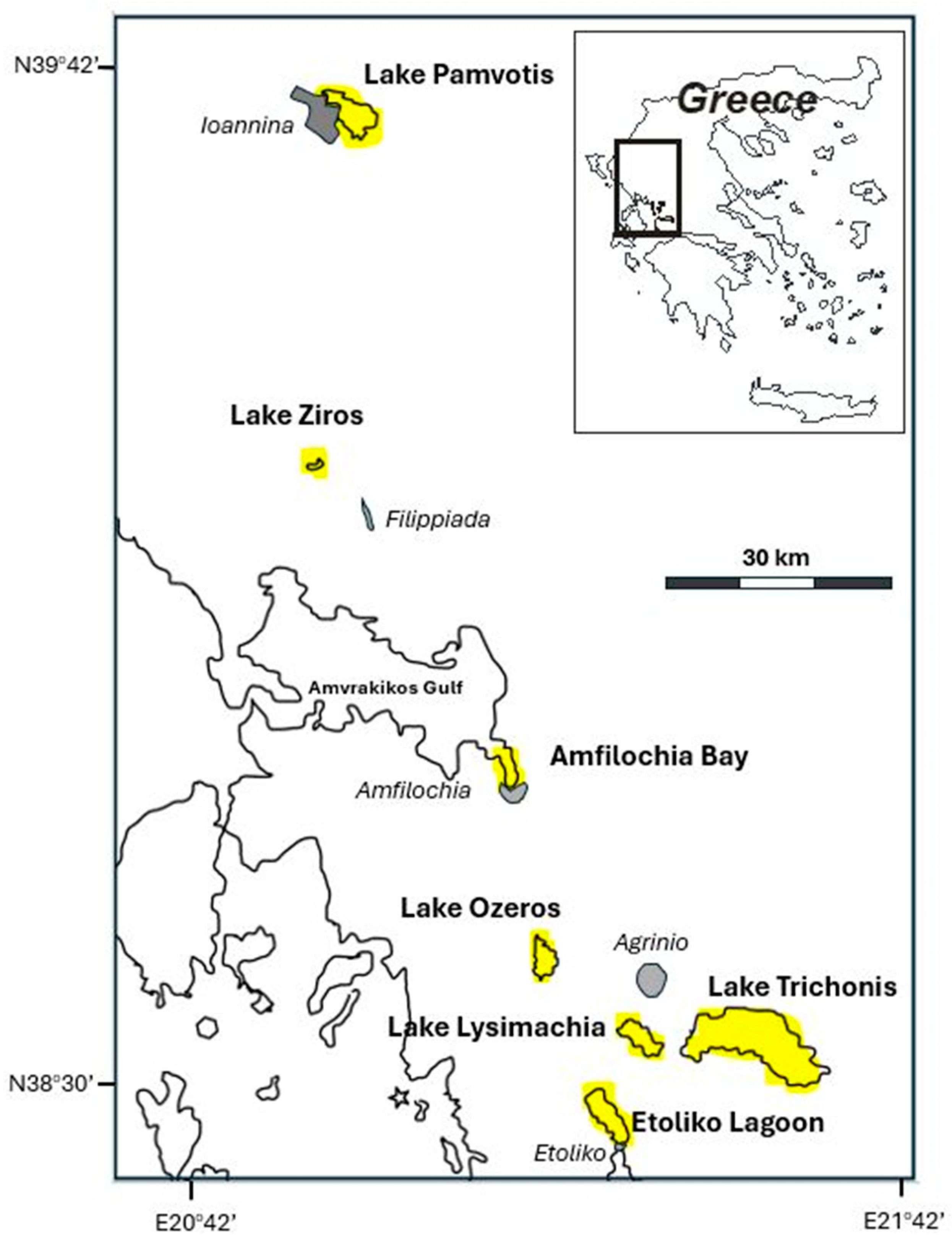
Figure 1. The map shows the seven aquatic environments (yellow) of the present study, along with the most important cities near to them (the gray area represents the relative sizes of the cities).
Water 17 03432 g001
Figure 2. Typical photos of microplastic fragments that belong to the four morphotypes. (A) ‘hard rounded’, (B) ‘hard flattened’, (C) ‘soft flattened’, and (D) ‘cable-like’.
Water 17 03432 g002
Figure 3. The average abundance, (n/m3) ± Standard Error (as vertical lines), of the microplastic fibers and fragments recovered from the horizontal (up) and vertical (down) samples taken from the seven aquatic ecosystems.
Water 17 03432 g003
Figure 4. The percentage (%) distribution of the nine colors among the fibers and fragments recovered from the horizontal and vertical samples in each of the seven aquatic ecosystems. (OZER: Lake Ozeros, LYSIM: Lake Lysimachia, TRICH: Lake Trichonis, PAMV: Lake Pamvotis, ETOL: Etoliko Lagoon, and AMFI: Amfilochia Bay). The colors of the bars represent the actual color of the MPs with grey account for the transparent.
Water 17 03432 g004
Figure 5. Length size (mm) distribution of the fibers recovered from the horizontal (up) and vertical (down) samples taken in the seven aquatic ecosystems. (OZER: Lake Ozeros, LYSIM: Lake Lysimachia, TRICH: Lake Trichonis, PAMV: Lake Pamvotis, ETOL: Etoliko Lagoon, and AMFI: Amfilochia Bay).
Water 17 03432 g005
Figure 6. Size classes distribution (%) of the areas (in mm2) covered by the microplastic fragments found in the horizontal and vertical samples, taken overall in the seven aquatic ecosystems.
Water 17 03432 g006
Figure 7. Proportions (%) of the different morphotypes of microplastic fragments found in the horizontal (up), and vertical (down) samples from each of the seven aquatic ecosystems. (OZER: Lake Ozeros, LYSIM: Lake Lysimachia, TRICH: Lake Trichonis, PAMV: Lake Pamvotis, ETOL: Etoliko Lagoon, and AMFI: Amfilochia Bay).
Water 17 03432 g007
Table 1. Morphometric and socioecological characteristics of the seven aquatic ecosystems.
Aquatic
Ecosystem
Area (km3)Catchment Area (km2)Max Depth (m)Trophic Cond. *Closest TownTown Popul. **Dist. from Town (km)Human Activities ***
ZIROS0.41.2556MFilipiada52073C
OZEROS9.5596Μ-ΕAgrinio50,69014A, F
LYSIMACHIA13.12468ΕAgrinio50,6903A, F
TRICHONIS95.840058O-ΜAgrinio50,6906A, F, WS
PAMVOTIS19.55315ΕIoannina64,8960.1A, F, WS, MW, H, WT
ETOLIKO17.025027ΕEtoliko48130.1A, F
AMFILOCHIA20.012035ΕAmfilochia42410.1F, MW, H
Notes: (*): E = eutrophic, M = mesotrophic, O = Oligotrophic. (**): Data provided by the Hellenic Statistical Authority for the population census of 2021. (***): A = agriculture, C = canoe, F = fishing, H = harbor, MW = municipal waste, WS = water sports, WT = water transportation.
Table 2. Multiple regression analysis between the abundance of the microplastics (fibers and fragments) in the horizontal and vertical samples with several parameters. (ns accounts for “not significant” and indicates insignificant correlation).
ParameterAreaCatchment AreaMax DepthClosest Town Population (CTP)Distance from Town (DFT)Relative Anthropogenic Pressure (RAP)r2d.f.
Fibres (horizontal)nsnsnsnsns0.956 **0.9145
Fragments (horizontal)nsnsnsnsns0.843 *0.7105
Fibres (vertical)nsnsns0.875 *−0.506 *ns0.9605
Fragments (vertical)nsnsns0.678 *ns0.576 *0.9155
Fibres & Fragments (horiz.)nsnsnsnsns0.956 **0.9145
Fibres & Fragments (vert.)nsnsns0.801 **ns0.453 **0.9625
Fibres & Fragmentsnsnsns0.758 **ns0.522 **0.9735
Notes: (*): Correlation is significant at the 0.05 level. (**): Correlation is significant at the 0.01 level.
Disclaimer/Publisher’s Note: The statements, opinions and data contained in all publications are solely those of the individual author(s) and contributor(s) and not of MDPI and/or the editor(s). MDPI and/or the editor(s) disclaim responsibility for any injury to people or property resulting from any ideas, methods, instructions or products referred to in the content.