Article

Optimization of the Fe0/H2O2/UV Photo-Fenton Process for Real Textile Wastewater via Response Surface Methodology


Environmental Chemistry Department, Faculty of Science, Universidad Católica de la Santísima Concepción, Alonso de Ribera 2850, Concepción 4090541, Chile
*
Author to whom correspondence should be addressed.
Water 2025, 17(23), 3427; https://doi.org/10.3390/w17233427
Submission received: 27 October 2025 / Revised: 25 November 2025 / Accepted: 27 November 2025 / Published: 2 December 2025
(This article belongs to the Section Wastewater Treatment and Reuse)

Abstract

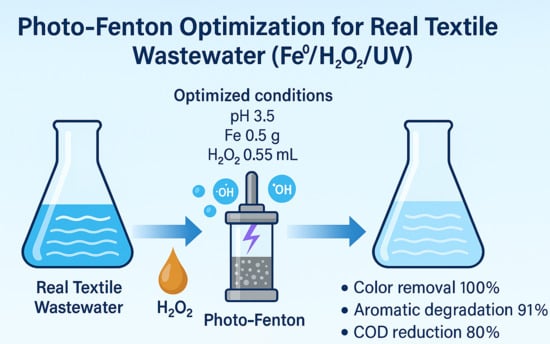
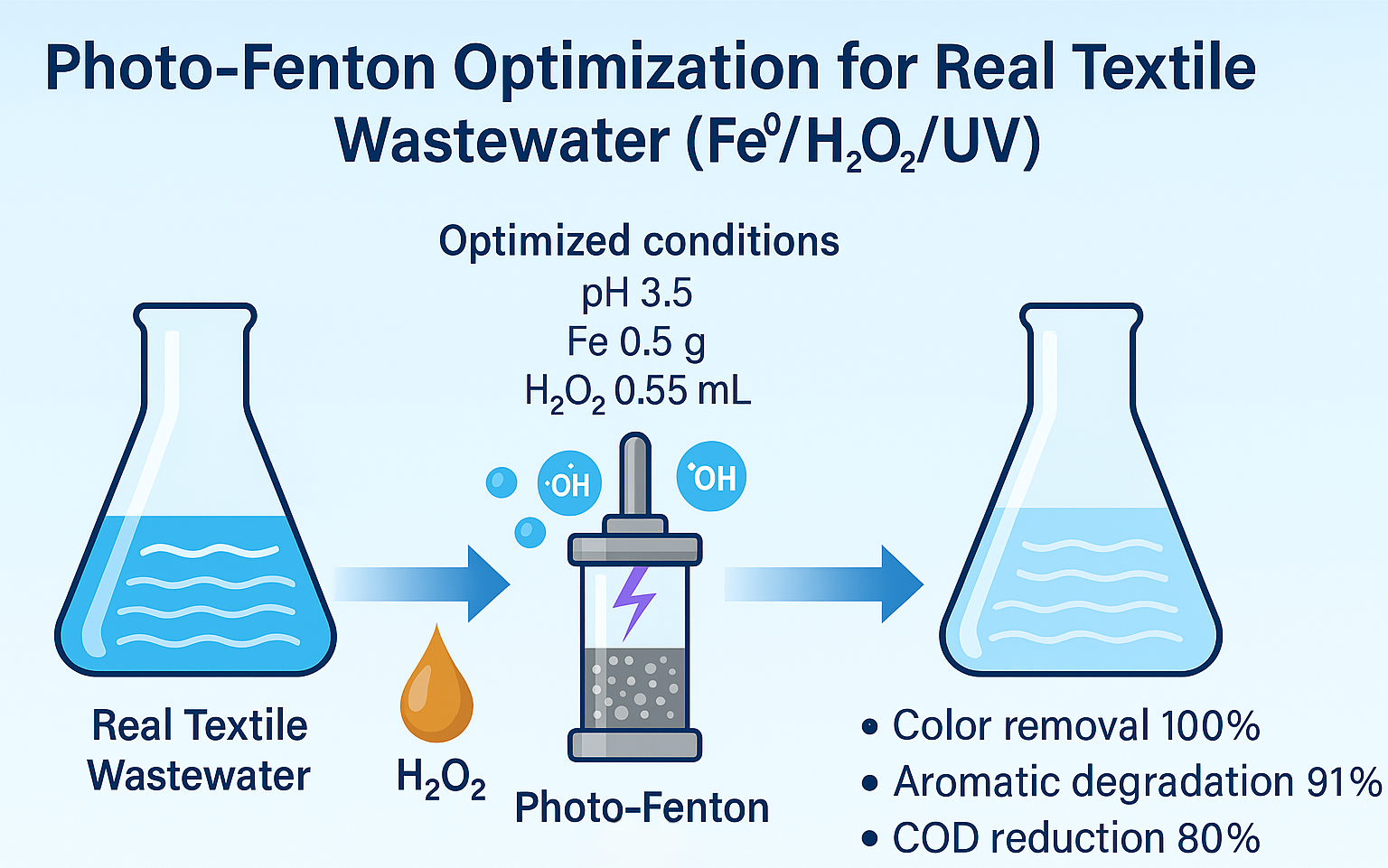
The textile industry releases effluents containing toxic contaminants such as azo dyes, which severely affect water quality and aquatic ecosystems. This study optimized the Fe0/H2O2/UV photo-Fenton process through Response Surface Methodology (RSM) using a Box–Behnken design applied to real textile wastewater. The process relies on in situ hydroxyl radicals (•OH) generation, which degrades refractory organic compounds. Under optimal conditions (pH 3.5, 0.5 g Fe0, and 0.55 mL H2O2), the system achieved complete color removal, 91% aromatic structures degradation, and an 80% COD reduction within 3 h. Statistical validation indicated an excellent model fit (R2 = 1.0; Q2 = 1.0), with strong correlation between experimental and predicted results. Spectroscopic analyses (UV–Vis and FTIR) further confirmed the cleavage of chromophoric and aromatic structures, indicating efficient pollutant degradation. Overall, the findings indicate that the Fe0/H2O2/UV system is an effective and sustainable technology for treating textile wastewater, offering strong potential for industrial-scale application.

Graphical Abstract

1. Introduction

Chemical and biological contamination in industrial wastewater has become a major environmental concern. This is driven by rising water demand and increasing freshwater scarcity under climate stress [1,2,3]. Conventional treatment systems that combine physical (e.g., screening, coagulation-flocculation, sedimentation), chemical (e.g., chlorination), and biological (e.g., activated sludge) processes often fail to degrade recalcitrant pollutants such as dyes, phenols, and surfactants. These methods primarily remove color through adsorption or precipitation rather than complete mineralization, which results in the transfer of contaminants into sludge. Inadequate sludge management may reintroduce toxic by-products into aquatic environments, and these systems also require long retention times and high operational costs [4,5,6].
To address these limitations, advanced oxidation processes (AOPs) have emerged as promising alternatives for tertiary treatment. They can generate highly reactive hydroxyl radicals (•OH) in situ, which degrade persistent organic pollutants into carbon dioxide and water [7,8,9]. AOPs such as ozonation, UV/H2O2, and TiO2 photocatalysis often achieve above 90% degradation of dyes and pharmaceuticals under laboratory conditions [10,11,12,13]. However, large-scale implementation remains limited due to energy requirements, reagent costs, and the complexity of industrial wastewater matrices. Textile effluents present an additional challenge because of their complex composition, which includes high salinity, suspended solids, surfactants, auxiliary chemicals, and mixtures of structurally diverse dyes. These components act as radical scavengers and light attenuators, significantly inhibiting hydroxyl radicals (•OH) formation. As a result, efficiencies reported for synthetic dye solutions often overestimate the performance in real wastewater. Therefore, performing optimization studies directly on real wastewater is essential to accurately assess the applicability and robustness of advanced oxidation processes.
Among these technologies, the Fenton and photo-Fenton processes are especially attractive due to their strong oxidative potential, straightforward operation, and lower costs compared to ozonation or membrane systems [14,15,16]. The classical Fenton process (Fe2+/H2O2) achieves high chemical oxygen demand (COD) removal but produces large quantities of iron sludge that require further treatment [17,18,19]. In contrast, using zero-valent iron (Fe0) provides a continuous source of Fe2+ through corrosion, enhancing hydroxyl radical generation while significantly reducing sludge formation and reagent consumption [20,21]. When combined with UV irradiation, the Fe0/H2O2/UV system accelerates radical production, improving degradation kinetics and process stability [22,23,24,25]. Zero-valent iron offers important advantages over conventional Fe2+ based Fenton systems. It provides sustained in situ Fe2+ release, reduces iron salts dosing, and minimizes ferric sludge. Its corrosion-driven regeneration cycle becomes particularly effective under UV irradiation, which promotes Fe3+ photoreduction and increases the steady-state concentration of reactive species. Despite these benefits, Fe0-assisted photo-Fenton systems have rarely been tested on real industrial effluents, presenting an opportunity to validate their practical and economic advantages under realistic conditions.
The combined application of Fe0, H2O2, and UV irradiation produces a synergistic effect that cannot be achieved by any individual component alone. Fe0 continuously supplies Fe2+, UV promotes the reduction of Fe3+ back to Fe2+ via photolytic pathways, and H2O2 serves as the oxidant precursor for •OH formation. This regeneration cycle maintains high radical availability in complex matrices and improves reaction kinetics and stability. The synergistic nature of this system makes it a promising alternative for treating real textile wastewater; however, systematic studies evaluating this combined effect are scarce.
Despite these advances, most research has been conducted using synthetic dye solutions rather than actual industrial effluents, which differ markedly in chemical complexity and pollutant interactions. Furthermore, the influence of operational parameters such as pH, Fe0 dosage, and oxidant concentration on treatment performance is highly case-specific and must be statistically optimized to ensure reproducibility and scalability. Given the strong dependence of photo-Fenton efficiency on operational variables such as pH, Fe0 dosage, and H2O2 concentration, employing a statistical optimization approach is essential. Response Surface Methodology (RSM), particularly the Box–Behnken design, provides a rigorous and efficient tool for modeling non-linear behavior and assessing interaction effects among variables. This approach reduces experimental effort while generating robust predictive models to identify optimal conditions. However, despite its advantages, RSM has been inconsistently applied to Fe0-based photo-Fenton systems treating real industrial effluents.
Although numerous studies report high degradation efficiencies in synthetic dye solutions, few have addressed the treatment of real textile wastewater under optimized conditions.

2. Materials and Methods

2.1. Experimental Systems

Untreated real textile wastewater was used to optimize the Fe0/H2O2/UV advanced oxidation process. The experiments were conducted in a cylindrical borosilicate reactor with a working volume of 500 mL. A 254 nm UV-C lamp (15 W, Philips) was placed vertically above the reactor at a distance of 5 cm, providing an average irradiance of 2.1 mW cm−2 at the liquid surface. The reactor temperature was maintained at 25 ± 1 °C. Zero-valent iron (Fe0) powder (45–150 μm, 99% purity, Sigma-Aldrich) was used as the catalyst, with a specific surface area of 1.2 m2 g−1 (BET). After each experiment, Fe0 particles were filtered, washed, dried, and not reused to avoid surface passivation and to ensure consistent catalytic activity throughout all experimental runs. Homogeneous mixing at 300 rpm was ensured using a magnetic stirrer with a PTFE-coated stirring bar. Hydrogen peroxide was added as a single initial dose (0.1–1.0 mL of 30% w/v, corresponding to 0.00098–0.0098 mol L−1), providing consistent oxidant conditions at the start of each run. Immediately after sampling, residual oxidation was quenched by adding Na2SO3 (0.01 M).
To identify the operational variables that maximize pollutant removal, a three-factor experimental design was developed using the Box–Behnken model in MODDE® v7.0.01 (Sartorius Stedim Data Analytics AB), resulting in 15 experimental runs. The studied variables were pH, Fe0 dosage, and oxidant concentration, while the reaction time was fixed at 2 h. The response variable was the percentage removal of the aromatic dye structures present in the real effluent. The design included three center points and randomized run order.
The initial characteristics of the effluent were COD = 1420 mgL−1, color = 2180 Pt-Co units, conductivity = 2.51 mS cm−1, total solids = 1050 mgL−1, Turbidity = 86 NTU, pH = 7.8.

2.2. Determination of Chemical Oxygen Demand (COD, mg L−1)

The photometric method was used for COD determination, following EPA Method 410.4 [26], Standard Methods 5220D [27], and ISO 15705 [28]. Merck cuvette tests were used within a measurement range of 25–1500 mg L−1. All determinations were performed in duplicate. The samples were digested using a Merck Spectroquant TR 420 thermoreactor (Merck KGaA, Darmstadt, Germany) at 148 °C for two hours, and COD was subsequently measured using a Merck Spectroquant NOVA 60 photometer (Merck KGaA, Darmstadt, Germany).

2.3. Sample Lyophilization

The treated effluent samples were subjected to a lyophilization process for preservation and further analysis. The samples were first frozen at low temperatures to preserve their properties, then lyophilized using a Labconco FreeZone 6.0 freeze dryer (model Freezer Dryer, −70 °C, OPERON FDU 7012, made in Republic of Korea). This equipment operates through freezing followed by water sublimation, efficiently removing moisture from the samples. As a result, the samples were transformed into a solid, water-free form, facilitating handling and ensuring the stability of the compounds for subsequent physicochemical analysis.

2.4. Infrared (IR) Spectroscopy Analysis

The lyophilized samples were analyzed using infrared spectroscopy with an Agilent Technologies Cary 630 IR spectrometer, manufactured in Malaysia. The instrument measures the absorption of infrared radiation by the samples within the range of 4000 to 400 cm−1, allowing the identification of functional groups and structural changes in the compounds after treatment.

3. Results and Discussion

Table 1 presents the experimental variables studied and the corresponding responses obtained for each treatment, expressed as the percentage of removal of the phenolic structures of the dyes present in the effluent. The Fe0/H2O2/UV advanced oxidation process demonstrated high efficiency in degrading organic pollutants in the textile effluent. Dye removal varied with experimental conditions, confirming the influence of pH, iron concentration, and hydrogen peroxide dosage on the degradation efficiency. The response variable selected for model fitting was the removal of aromatic ring structures quantified by UV–Vis absorbance. This parameter was chosen because these structures represent the most persistent fraction of textile dyes and directly correlate with color, COD, and the presence of conjugated structures highly resistant to oxidation. Previous studies have validated aromatic ring absorbance as an appropriate mechanistic and quantitative indicator of oxidative degradation in real textile effluents. Thus, its inclusion as the primary response ensures a sensitive and representative evaluation of the system’s performance.
Under optimized conditions (pH 3.5, 0.5 g Fe0, and 0.55 mL of H2O2 (0.0054 molL−1)), the system achieved over 80% aromatic structures removal, indicating that the process effectively degraded complex dye molecules. These results are consistent with the response surface obtained, where the red zone represents the region of maximum degradation.
The acidic medium enhanced catalytic activity by promoting hydroxyl radical (•OH) formation, the key oxidizing species driving the degradation of organic molecules.
Conversely, deviations from the optimal pH or excessive Fe2+ or H2O2 concentrations reduced the overall efficiency due to side reactions that generated less reactive species.
Overall, the data confirm that the Fe0/H2O2/UV system provides a synergistic effect between Fe0 and H2O2, promoting efficient degradation of persistent organic contaminants in textile wastewater.
From this matrix, the response surface was obtained, as shown in Figure 1. This surface allows the identification of the experimental variable values that achieve the highest removal of dye structures. As observed, the red region corresponds to the area of maximum removal efficiency.

3.1. Effect of pH

pH is a critical operational parameter in photo-Fenton systems, as it directly governs iron speciation, catalytic activity, and the efficiency of hydroxyl radical (•OH) generation. For this reason, pH must be experimentally evaluated rather than assumed, especially when treating real wastewater with complex and variable matrices. In our study, the response surface analysis demonstrated that a pH of 3.5 produced the highest degradation efficiency (>80%), as shown in the red region of Figure 1. This optimum is fully consistent with the well-recognized acidic range (pH 2.5–4.0) reported for Fenton and photo-Fenton processes, where Fe2+ remains soluble and highly reactive toward H2O2 decomposition. Under these conditions, •OH production is maximized, enhancing the oxidation of the diverse organic dyes present in the textile effluent. These results confirm that including pH as an experimental factor was not only appropriate but necessary to accurately model the behavior of the system and identify the true optimal conditions for a real industrial matrix.
At higher pH values, iron undergoes rapid hydrolysis and forms insoluble species such as Fe(OH)3, which significantly reduce the availability of Fe2+ and limit hydroxyl radical generation. Conversely, excessively low pH values can promote H2O2 decomposition and increase radical scavenging by excess hydrogen ions. Therefore, maintaining the system within an optimal acidic window is essential to sustaining efficient pollutant degradation in real textile wastewater [29,30,31].

3.2. Effect of Iron (Fe0)

Iron plays a central role in hydroxyl radical generation It acts as the catalytic driver of the photo-Fenton process. In the Fe0/H2O2/UV system, three synergistic pathways operate simultaneously: (i) corrosion-derived release of Fe2+ from Fe0, (ii) classical Fenton reactions between Fe2+ and H2O2, and (iii) UV-enhanced photoreduction of Fe3+ back to Fe2+. These coupled mechanisms are particularly advantageous in real wastewater matrices, where radical scavengers and light attenuation typically hinder oxidative efficiency. The integration of these pathways ensures a sustained supply of Fe2+ even under radical-quenching conditions, enhancing the stability and reactivity of the system compared with UV/H2O2 alone [32,33].
The catalytic role of iron is governed by the following reaction sequence:
Fe0 + UV → Fe2+
Fe2+ + H2O2 → Fe3+ + •OH + OH
H2O2 + UV → 2•OH
R + •OH → R(oxidized) + H2O
The experimental results confirm that iron dosage strongly influences degradation performance. Lower Fe0 concentrations, such as those in Runs 2 and 9 (Table 1), resulted in markedly lower removal efficiencies due to insufficient hydroxyl radical generation. Conversely, excessively high iron levels can promote the accumulation of Fe3+ and other less reactive intermediates, which compete with pollutants for •OH and reduce the overall efficiency of the process. These results highlight the need to optimize Fe0 dosage according to the wastewater’s characteristics and scavenging capacity.

3.3. Effect of Hydrogen Peroxide (H2O2)

Hydrogen peroxide is a key oxidant in the photo-Fenton system, serving as the primary precursor for hydroxyl radical (•OH) formation. In this study, an H2O2 dosage of 0.55 mL (0.0054 mol L−1) yielded the highest degradation efficiency, indicating that an appropriate oxidant concentration is essential to sustain effective •OH generation without promoting competing side reactions [34,35].
When the H2O2 concentration exceeded this optimal value, a decline in removal efficiency was observed. This behavior is well documented in photo-Fenton systems and results from the scavenging of •OH by excess H2O2, producing hydroperoxyl radicals (HO2•), which exhibit significantly lower oxidative potential. Such parasitic reactions not only decrease the availability of •OH but may also consume Fe2+, further limiting the catalytic cycle. These findings highlight the importance of accurate oxidant dosing to avoid oversaturation and maintain high reaction efficiency in real textile wastewater treatment [36].

3.4. Reaction Mechanism and Role of UV Irradiation in Fe2+ Regeneration

The performance of the Fe0/H2O2/UV system can be explained by the classical photo-Fenton mechanism, where hydroxyl radicals (•OH) are generated through the reaction between Fe2+ and hydrogen peroxide. In acidic medium, zero-valent iron undergoes corrosion and releases Fe2+ continuously, sustaining radical generation during the reaction. Under UV irradiation, this process is significantly enhanced because Fe3+ species formed during the Fenton cycle are photoreduced to Fe2+ through ligand-to-metal charge transfer reactions (LMCT), according to:
Fe(OH)2+ + hν → Fe2+ + •OH
This photoreduction step accelerates the Fe3+/Fe2+ redox cycle, increasing the steady-state concentration of Fe2+ available to react with H2O2. In parallel, UV light also induces the photolysis of H2O2 (H2O2 + hν → 2•OH), contributing an additional pathway for •OH formation. The combined effect of Fe0 dissolution, Fe3+ photoreduction, and H2O2 photolysis creates a strong synergistic response that is consistent with the kinetic results obtained in this study, where the Fe0/H2O2/UV system achieved faster decolorization and higher COD removal compared with the treatment performed without UV assistance. Although residual dissolved iron was not quantified in this study, iron leaching is expected to remain low under the operating conditions used. The mildly acidic pH (3.5) and the relatively short reaction time (≤3 h) typically limit the dissolution of Fe0 into the aqueous phase, while the continuous cycling between Fe2+ and Fe3+ promotes iron retention within the catalytic cycle. Therefore, the system is expected to generate only minimal soluble iron release, consistent with observations reported for Fe0-assisted photo-Fenton processes under similar conditions.
Main photo-Fenton reactions and radical pathway
(1) Iron corrosion and Fe2+ release
Fe0 + 2H+ → Fe2+ + H2
(2) Classical Fenton reaction (radical generation)
Fe2+ + H2O2 → Fe3+ + •OH + OH
(3) Photo-reduction of Fe3+ to Fe2+ (LMCT mechanism)
Fe(OH)2+ + hν → Fe2+ + •OH
(4) Photolysis of hydrogen peroxide
H2O2 + hν → 2•OH
(5) Radical chain pathway
•OH + RH → R• + H2O
R• + O2 → ROO•
H2O2 + •OH → HO2• + H2O (scavenging at high H2O2)
(6) Secondary radical species
HO2• ⇌ O2 + H+ (pH-dependent)
Overall effect: UV irradiation accelerates Fe3+ → Fe2+ cycling, sustains •OH formation, and enhances degradation kinetics.
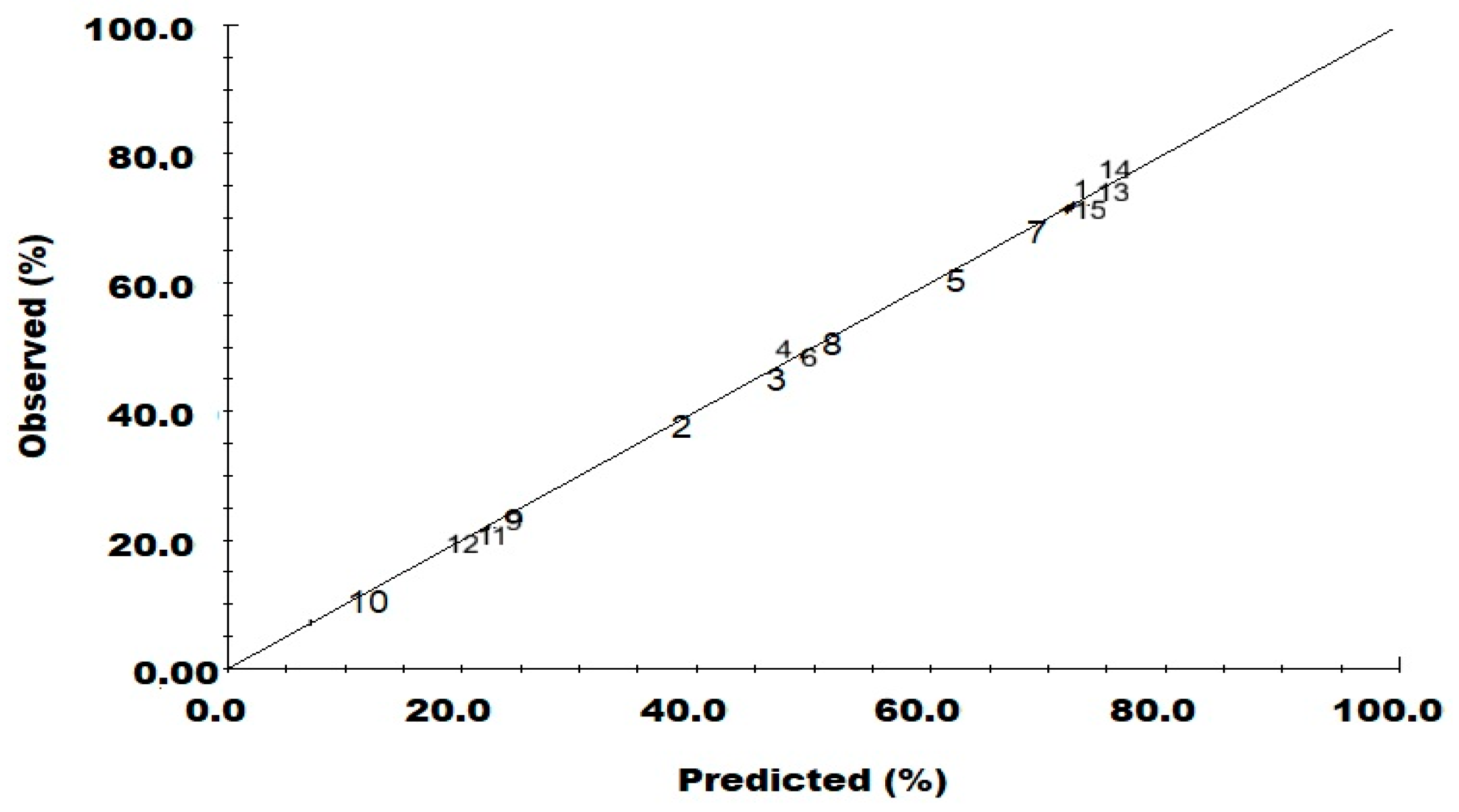
Table 2 shows the regression analysis resulted in R2 = 1.000 and Q2 = 1.000, reflecting an almost complete correspondence between predicted and experimental values. Although such values may appear unusually high in RSM models, they can also occur when the experimental design exhibits low intrinsic variability and strong curvature within the factor space. In this study, the experimental matrix generated highly consistent responses due to the well-defined effect of pH, H2O2 dose, and Fe0 concentration on aromatic ring degradation. The very low residual variance (0.00283) and the non-significant lack-of-fit test (p = 0.615) confirm that the model is not overfitted and remains statistically robust. Additionally, inclusion of three center points provided robust estimation of pure error, supporting the validity of the predictive model. For completeness and transparency, an observed vs. predicted plot is included (Figure 2), showing the excellent linearity and confirming the robustness of the fitted model.
The regression model shows extremely low residual variance and a non-significant lack of fit (p = 0.615), indicating that the model explains nearly all variability in the response without evidence of overfitting. To further confirm the robustness of the predictive model, three external validation experiments were conducted under the optimal conditions (pH 3.5, 0.5 g Fe0, 0.55 mL H2O2). The deviations between predicted and experimental values were below 3%, demonstrating strong external validity of the fitted RSM model.
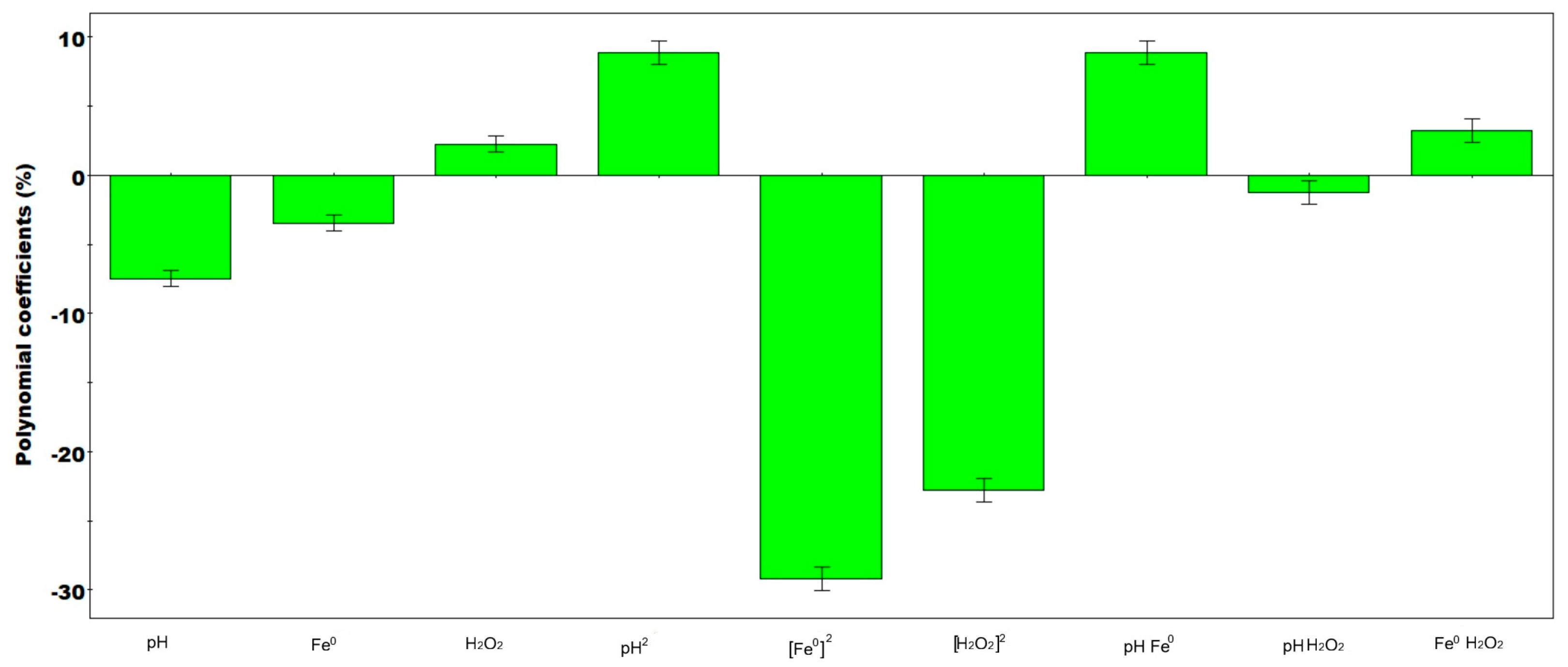
In Figure 3, the interaction among the experimental variables is shown. It can be observed that at lower (acidic) pH values, a better response is achieved, demonstrating a synergistic effect between the iron dosage and pH: lower values of both variables enhance removal efficiency up to a certain limit, as indicated by their quadratic coefficients. Likewise, as the hydrogen peroxide dosage increases, removal improves but also reaches a limit, confirming a quadratic relationship. A similar synergistic behavior is observed between iron and peroxide concentrations, emphasizing the need to balance these variables to optimize degradation performance.
Y (%) = 70.2 (±0.38) − 7.5 pH (±0.23) − 3.5 Fe0 (±0.23) + 2.25 [H2O2] (±0.23) + 8.9 [pH]2 (±0.34) − 29.2 [Fe0]2 (±0.34) − 22.8 [H2O2]2 (±0.34) + 8.9 [pH][Fe0] (±0.33) − 1.2 [pH] [H2O2] (±0.33) + 3.2 [Fe0] [H2O2] (±0.33), p ≤ 0.0001, R2 = 1.0, Q2 = 1.0
The polynomial equation shows the interaction between experimental variables, pH, Fe0, and H2O2 is a key factor determining the efficiency of the photo-Fenton system and illustrates how an acidic pH favors the availability of Fe2+, while an appropriate concentration of H2O2 enhances the generation of hydroxyl radicals (•OH). The synergy between these parameters allows for the optimization of contaminant removal, achieving high efficiency in the degradation of organic compounds.
However, the model also indicates that extreme values of these variables can be counterproductive. For instance, excessively high concentrations of iron or hydrogen peroxide can lead to the formation of inactive secondary products or induce the self-decomposition of radicals. This behavior reinforces the need to maintain the variables within an optimal range to maximize process efficiency. Figure 4 presents the degradation kinetics of the effluent obtained under the optimal conditions predicted by the model.
As shown, 88% of dye removal was achieved after 2 h of treatment, consistent with the results predicted by the experimental design. After 3 h, removal increased to 91%, with no significant improvement observed at longer reaction times. Meanwhile, the chemical oxygen demand (COD) decreased by 54% in 2 h and reached 80% in 3 h, remaining stable thereafter. In comparison, the system without iron achieved only 66% removal after 2 h of treatment, with no further degradation over time. These results confirm that the iron-assisted system is more efficient, as the presence of Fe2+ generated through UV irradiation—enhances the reaction between hydrogen peroxide and ferrous ions, producing a greater number of hydroxyl radicals (•OH) responsible for contaminant degradation. The degradation kinetics confirmed the effectiveness of the Fe0/H2O2/UV system in contaminant removal. These findings are consistent with previous studies, which reported that most removal occurs during the initial stages of treatment due to the high initial reactivity of hydroxyl radicals (•OH) [37,38].
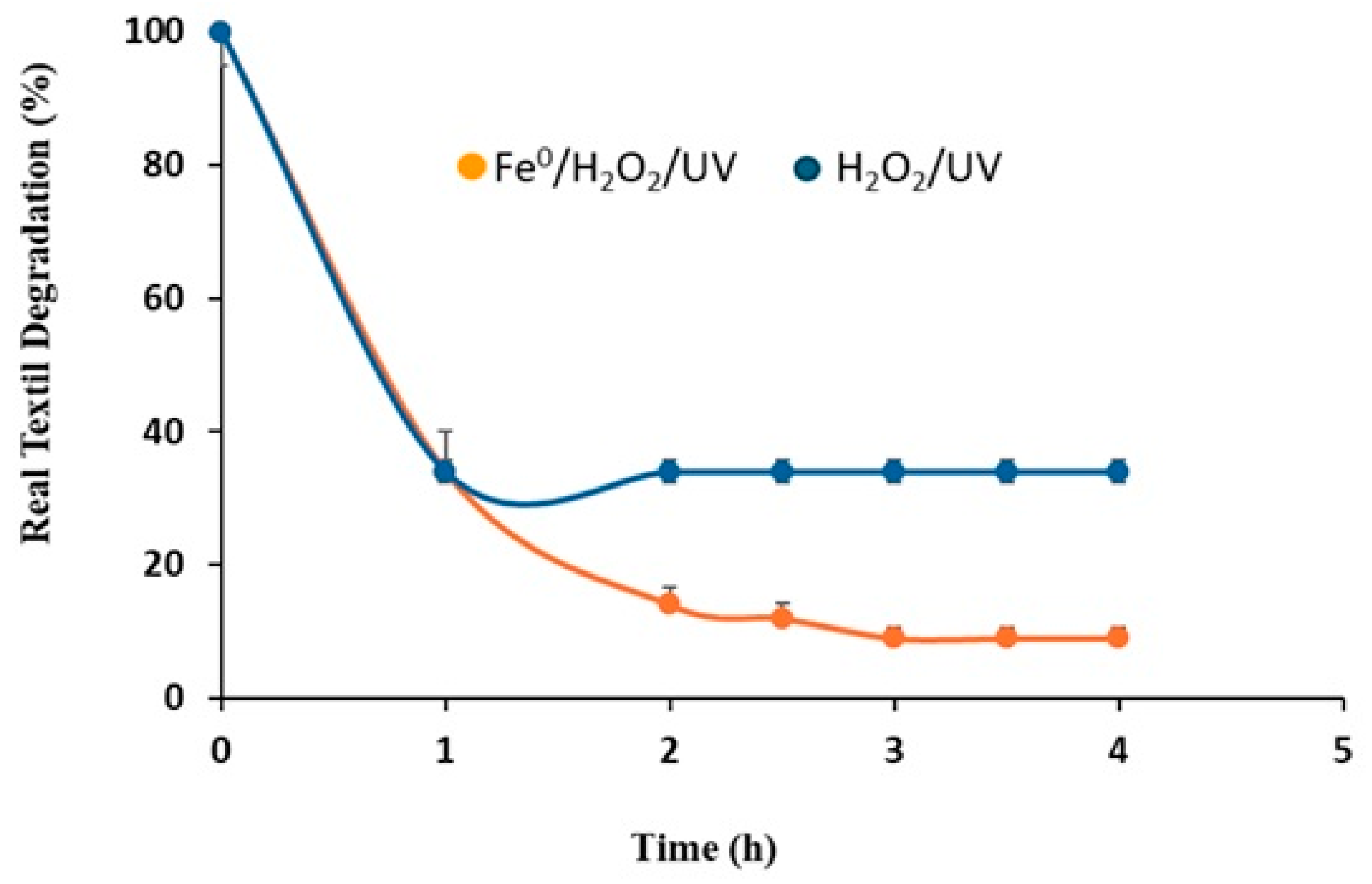
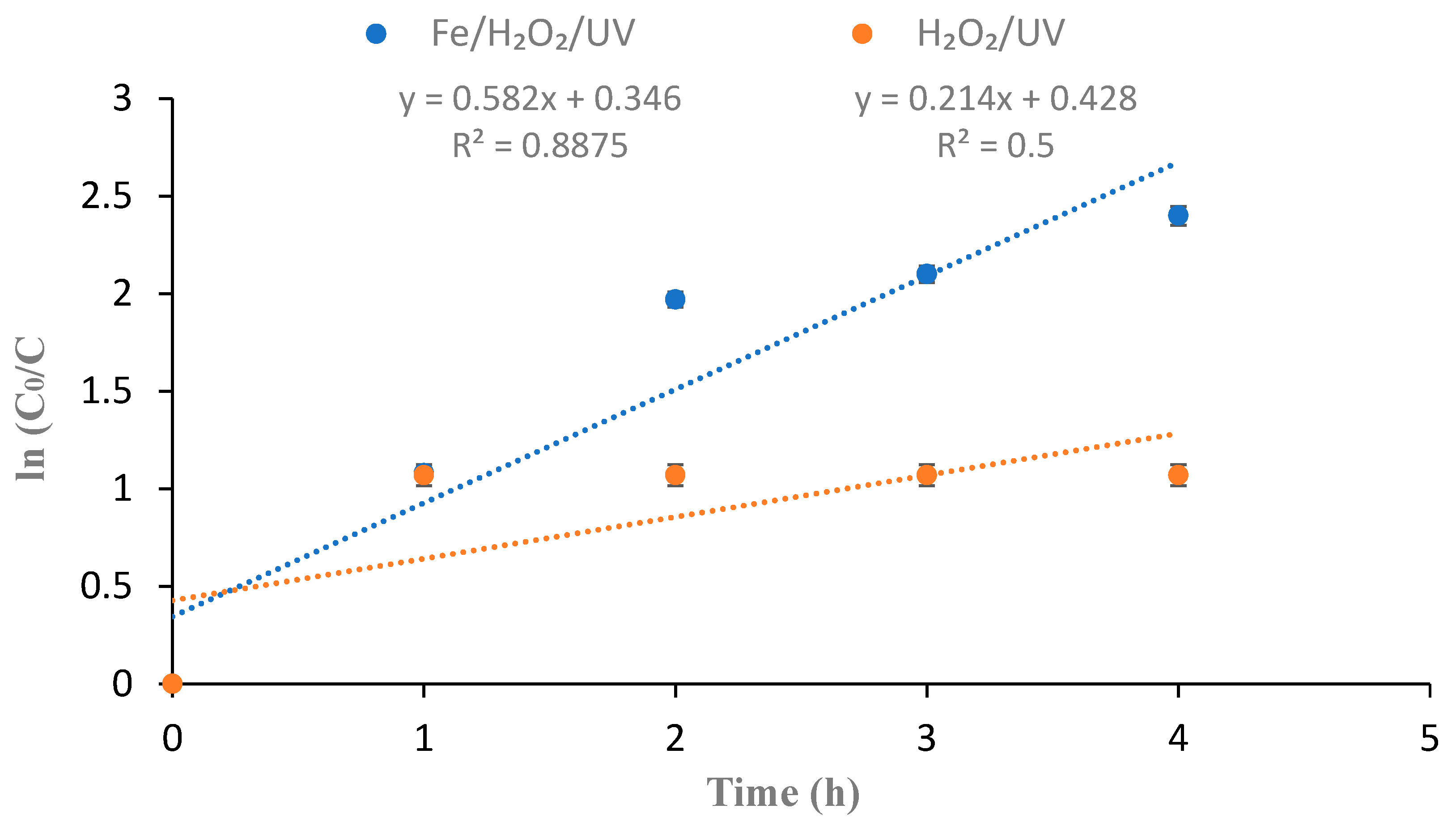
Figure 5 shows the kinetic evaluation based on ln(C0/C) versus time revealed that the Fe0/H2O2/UV system follows an apparent pseudo–first-order model, with a rate constant of 0.582 h−1 and good linearity (R2 = 0.8875). This behavior confirms the effective generation of hydroxyl radicals and the progressive degradation of organic pollutants in the real textile effluent. In contrast, the H2O2/UV system displayed nearly constant ln(C0/C) values beyond 1 h, resulting in poor linearity (R2 = 0.50) and indicating that this process does not follow pseudo–first-order kinetics. The low photolytic efficiency of H2O2 in the absence of Fe2+ and the potential formation of UV-absorbing intermediates likely limit the reaction progress. Overall, these results highlight the superior kinetic performance of the photo-Fenton process under real-matrix conditions. When compared with other advanced oxidation processes reported for real textile wastewater, the Fe0/H2O2/UV system exhibits competitive or superior performance. Reported UV/H2O2 and classical Fenton treatments typically require longer reaction times (4–6 h) or higher oxidant consumption to achieve comparable color or COD removal. In contrast, the present system reached 91% degradation of aromatic structures and 80% COD reduction within 3 h while minimizing the use of soluble iron salts and reducing sludge formation. These findings indicate that the Fe0-assisted photo-Fenton process offers a more operationally efficient and potentially cost-effective alternative for treating complex real effluents.

3.5. UV–Vis Spectral Evolution During the Degradation Process

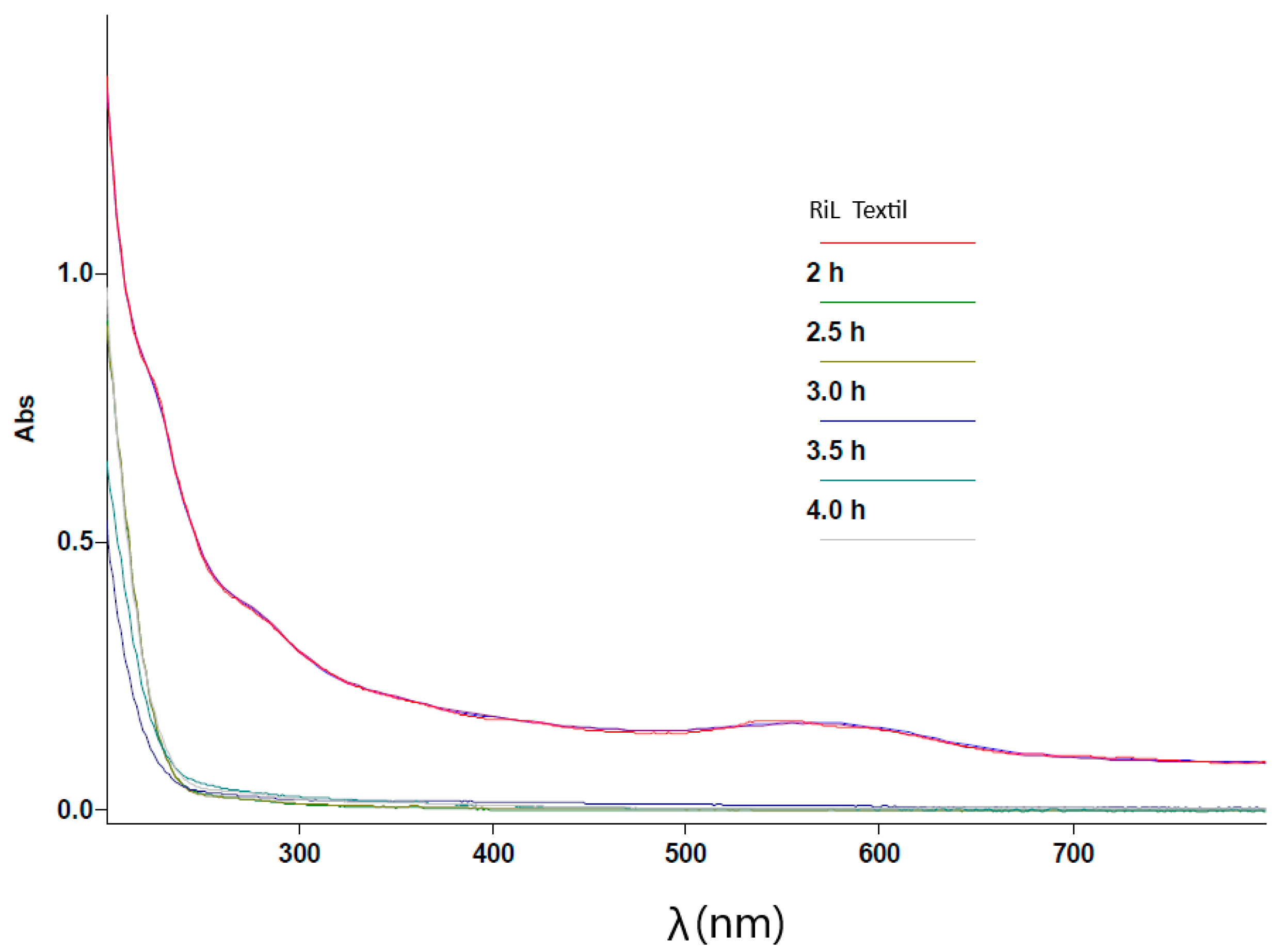
Figure 6 displays the UV–Visible absorption spectra recorded at different reaction times during the degradation kinetics. The untreated effluent exhibited prominent bands at 200 nm, 224 nm, 276 nm, and 576 nm, the latter associated with the visible coloration of the solution due to the presence of diverse textile dyes. As the reaction progressed, these peaks disappeared, reflecting degradation of chromophores and aromatic structures. After 3 h of treatment, the absorbance at 200 nm decreased by approximately 66.7%, in agreement with the substantial reduction in chemical oxygen demand (COD) observed under comparable experimental conditions. The disappearance of these bands suggests the cleavage of molecular bonds and the breakdown of dye structures, confirming the system’s capacity to eliminate complex organic pollutants. This behavior highlights the key role of hydroxyl radicals generated in the photo-Fenton mechanism in promoting dye oxidation and reducing absorbance at characteristic wavelengths [39,40].
The observed trends are consistent with findings reported in previous studies, which have shown that extended irradiation times enhance treatment efficiency through the progressive decomposition of organic pollutants into simpler intermediates. Accordingly, the attenuation of absorption bands over time can be attributed to the effective reduction in dye concentration achieved by the photo-Fenton process, leading to a notable improvement in the optical and chemical quality of the treated water. Furthermore, these results confirm that the system not only removes dyes but also facilitates the mineralization of refractory organic compounds, reinforcing the potential of the photo-Fenton process as an efficient and sustainable technology for textile wastewater treatment [41,42].

3.6. FTIR Spectral Analysis of Structural Changes After Treatment

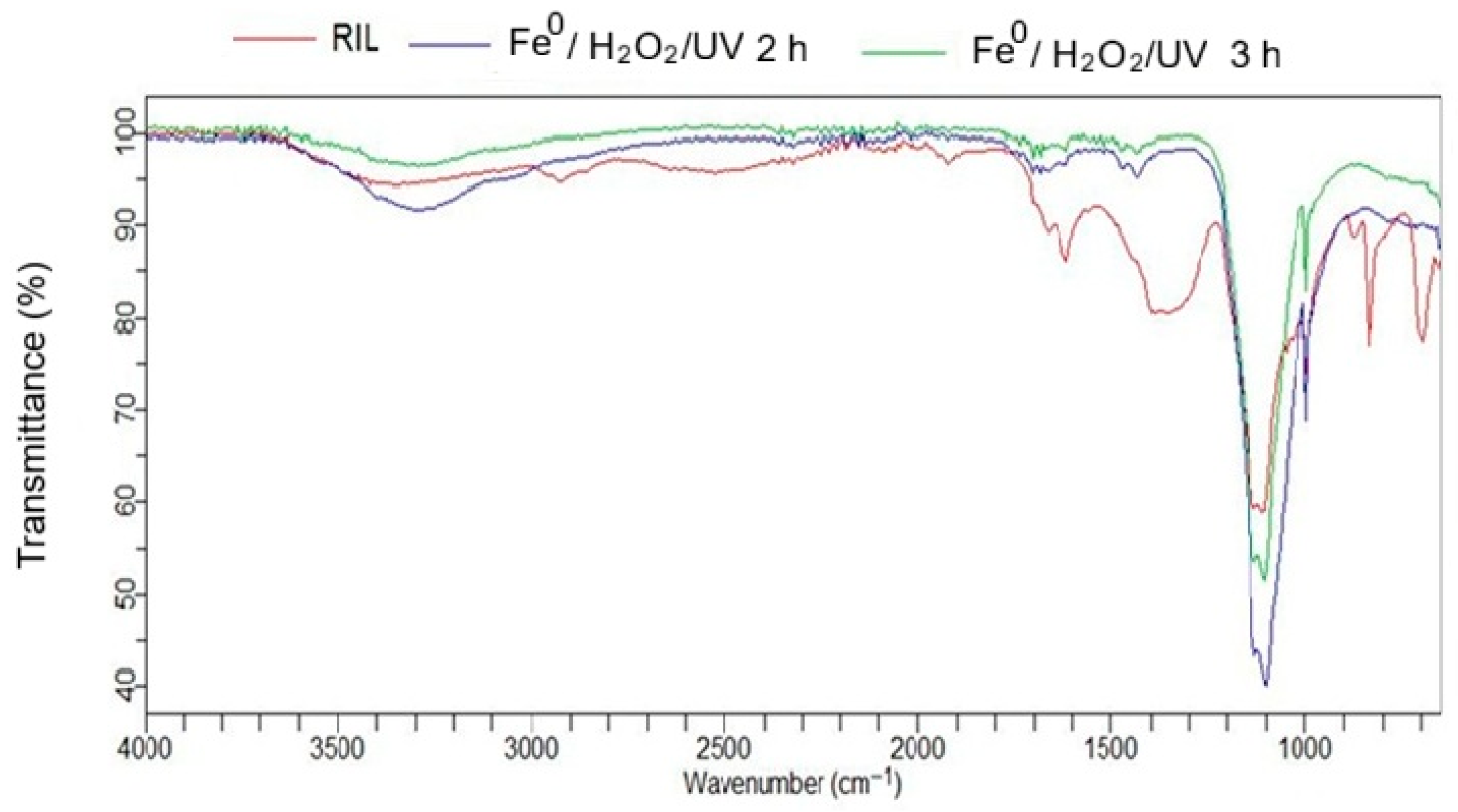
As shown in Figure 7, after treatment, the absorption bands between 1300 and 1700 cm−1 disappeared. These bands correspond to C–N bending (1281 cm−1), N–H bending (1500–1700 cm−1), and aromatic ring vibrations (1498–1573 cm−1). In contrast, the C–O stretching (∼1000 cm−1) and C–O–C asymmetric stretching (1070–848 cm−1) bands remained, indicating the persistence of certain oxygenated functional groups following oxidation. The FTIR spectra confirm the disappearance of vibrational bands associated with aromatic structures and nitrogen-containing functional groups, confirming the degradation of dye molecules originally present in the effluent. However, the persistence of oxygenated by-products suggests that oxidation was partial in some cases.
Overall, these findings demonstrate that the photo-Fenton system its ability to degrade dyes, reduce chemical oxygen demand (COD), and transform complex organic pollutants into simpler oxidation products validates its applicability as an advanced and sustainable technology for industrial wastewater remediation [43,44].

3.7. Correlation Between Molecular Structures and FTIR Spectral Features

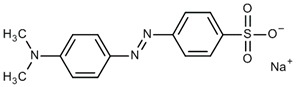
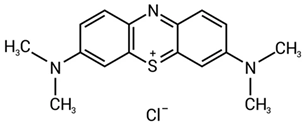
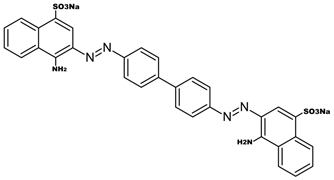
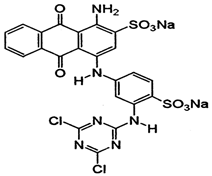
Table 3 compares representative textile dyes, highlighting their molecular structures and the characteristic functional groups associated with specific IR spectral bands. This information supports the spectral changes shown in Figure 7, where the disappearance of absorption bands between 1300 and 1700 cm−1 corresponding to C–N bending, N–H bending, and aromatic ring vibrations was observed after treatment. These spectral variations confirm the efficiency of the photo-Fenton process in degrading complex dye molecules. Meanwhile, the persistence of bands related to C–O and C–O–C stretching vibrations indicates the formation of simpler oxygenated intermediates, suggesting partial oxidation pathways and the progressive transformation of organic pollutants into less complex compounds.
UV–Vis and FTIR changes directly reflect the degradation pathways of the dye’s structures present in the real wastewater. The disappearance of the FTIR bands associated with aromatic C=C stretching, C–N bending, and N–H vibrations (1300–1700 cm−1) indicates cleavage of aromatic rings and azo/amine linkages through electrophilic attack by •OH radicals. This structural breakdown is fully consistent with the attenuation of visible-region absorbance, particularly the attenuation of the visible λmax at 576 nm and the decline of the peaks at 200–276 nm which reflects the destruction of conjugated π-systems. Overall, the Fe0/H2O2/UV system induces sequential oxidative steps: chromophore rupture, ring opening, and formation of simpler oxygenated intermediates, supporting the proposed photo-Fenton degradation mechanism. The identification of intermediate or final oxidation products (e.g., through GC–MS, TOC, or LC–MS analysis) was beyond the scope of this study. Future work should focus on characterizing these by-products to provide a more complete understanding of the mineralization pathway.

4. Conclusions

Treating textile wastewater remains challenging because synthetic dyes persist and resist conventional methods. This study demonstrates that the Fe0/H2O2/UV photo-Fenton process is an effective and sustainable technology for degrading real textile effluents. Under optimized conditions (pH 3.5, 0.5 g Fe0, and 0.55 mL H2O2 corresponding to 0.0054 mol L−1), the system achieved complete color removal, 91% degradation of aromatic dye structures, and an 80% reduction in chemical oxygen demand (COD) within 3 h. These results confirm that the in situ generation of hydroxyl radicals (•OH) promotes the oxidative breakdown of recalcitrant organic pollutants.
Although this study was conducted in a 500 mL batch reactor with the primary objective of identifying an effective Fe0 source and optimizing the Fe0/H2O2/UV operating conditions at laboratory scale, the scale-up of the process was not within the scope of this work. Future research should consider a stepwise volume increase (e.g., 1–5 L) to validate treatment performance under larger laboratory configurations and, subsequently, evaluate pilot-scale continuous systems. At these scales, additional design parameters—such as light distribution, hydrodynamics, mixing efficiency, and iron/sludge management—will need to be assessed to ensure operational feasibility and the transition toward real-scale applications.
Overall, the findings highlight both the technical efficiency and the practical relevance of the Fe0/H2O2/UV system for real industrial applications. The use of zero-valent iron provides a continuous source of Fe2+ while reducing sludge formation and chemical consumption, resulting in a cost-effective treatment pathway. Future work should focus on pilot-scale validation and the integration of comprehensive techno-economic and life-cycle assessments to support its implementation as a viable and environmentally responsible solution for textile wastewater treatment. From a practical standpoint, the reduced consumption of soluble iron salts and the lower ferric sludge generation associated with Fe0 make this approach attractive for industrial implementation. Compared with conventional Fenton and UV/H2O2 systems, the Fe0/H2O2/UV process can potentially decrease chemical costs and sludge-handling requirements, although a full techno-economic evaluation will be necessary at pilot scale.

Author Contributions

M.C.Y.: Conceptualization, methodology, writing—original draft preparation, writing—review and editing. B.P. responsible for performing the laboratory experiments as part of his thesis work. All authors have read and agreed to the published version of the manuscript.

Funding

This research was financially supported by the DIREG 11-2024 Project of Universidad Católica de la Santísima Concepción.

Data Availability Statement

The original contributions presented in this study are included in the article. Further inquiries can be directed to the corresponding author.

Acknowledgments

The author gratefully acknowledges the institutional support provided.

Conflicts of Interest

The authors declare no conflicts of interest.

References

  1. Joseph, N.; Libunao, T.; Herrmann, E.; Bartelt-Hunt, S.; Propper, C.R.; Bell, J.; Kolok, A.S. Chemical Toxicants in Water: A GeoHealth Perspective in the Context of Climate Change. Geo Health 2022, 6, e2022GH0006752022. [Google Scholar] [CrossRef]
  2. Alshamsi, A.M.O.; Tatan, B.M.; Ashoobi, N.M.S.; Mortula, M.M. Emerging pollutants of water supplies and the effect of climate change. Environ. Rev. 2023, 31, 256–277. [Google Scholar] [CrossRef]
  3. Costa, C. Biological Treatment of Water Contaminants: A New Insight. Water 2025, 17, 1628. [Google Scholar] [CrossRef]
  4. Hassan, G.; Ghaly, M.; Ahmed, G.; Mohamed, R.; El-Gawad, H.; Kowal, P.; Al-Hazmi, H.; Afify, A.A. Comprehensive Approach to Azo Dichlorotriazine Dye Treatment: Assessing the Impact of Physical, Chemical, and Biological Treatment Methods through Statistical Analysis of Experimental Data. Water 2024, 16, 1327. [Google Scholar] [CrossRef]
  5. Jamrah, A.; AL-Zghoul, T.; Al-Qodah, Z. An Extensive Analysis of Combined Processes for Landfill Leachate Treatment. Water 2024, 16, 1640. [Google Scholar] [CrossRef]
  6. Okut, N.; Hamzat, A.; Rajakaruna, A.; Asmatulu, E. Agricultural wastewater treatment and reuse technologies: A comprehensive review. J. Water Process Eng. 2025, 69, 106699. [Google Scholar] [CrossRef]
  7. Ameta, S. Advanced Oxidation Processes for Wastewater Treatment. Emerging Green Chemical Technology; Academic Press: Cambridge, MA, USA, 2018; pp. 1–12. [Google Scholar] [CrossRef]
  8. Antiñolo, L.; Pascual, J.; Muñio, M.; Poyatos, J. Effectiveness of Advanced Oxidation Processes in Wastewater Treatment: State of the Art. Water 2021, 13, 2094. [Google Scholar] [CrossRef]
  9. Saravanan, A.; Deivayanai, V.C.; Kumar, P.S.; Rangasamy, G.; Hemavathy, R.V.; Harshana, T.; Gayathri, N.; Alagumalai, K. A detailed review on advanced oxidation process in treatment of wastewater: Mechanism, challenges and future outlook. Chemosphere 2022, 308, 136524. [Google Scholar] [CrossRef]
  10. Capodaglio, A. Critical Perspective on Advanced Treatment Processes for Water and Wastewater: AOPs, ARPs, and AORPs. Appl. Sci. 2020, 10, 4549. [Google Scholar] [CrossRef]
  11. Javeed, T.; Nawaz, R.; Al-Hussain, S.; Irfan, A.; Irshad, M.; Ahmad, S.; Zaki, M. Application of Advanced Oxidation Processes for the Treatment of Color and Chemical Oxygen Demand of Pulp and Paper Wastewater. Water 2023, 15, 1347. [Google Scholar] [CrossRef]
  12. Kaswan, V.; Kaur, H. A comparative study of advanced oxidation processes for wastewater treatment. Water Pract. Technol. 2023, 18, 1233–1254. [Google Scholar] [CrossRef]
  13. Odabasi, S.U.; Buyukgungor, H. Comparative study of degradation of pharmaceutical and personal care products in wastewater by advanced oxidation processes: Fenton, UV/H2O2, UV/TiO2. Clean Soil Air Water 2024, 52, 2300204. [Google Scholar] [CrossRef]
  14. Zhang, Y.; Shaad, K.; Vollmer, D.; Ma, C. Treatment of Textile Wastewater Using Advanced Oxidation Processes—A Critical Review. Water 2021, 13, 3515. [Google Scholar] [CrossRef]
  15. Tang, L.; Zhou, S.; Li, F.; Sun, L.; Lu, H. Ozone Micronano-bubble-Enhanced Selective Degradation of Oxytetracycline from Production Wastewater: The Overlooked Singlet Oxygen Oxidation. Environ. Sci. Technol. 2023, 57, 18550–18562. [Google Scholar] [CrossRef]
  16. Jeong, G.; Kim, T.; Jeon, H.; Lee, G.; Jung, S.; Seo, S.; Jang, A. Pilot scale application of a hybrid process based on ozone and BAF process: Performance evaluation for livestock wastewater treatment in a real environment. J. Water Process Eng. 2024, 66, 105989. [Google Scholar] [CrossRef]
  17. Wypart-Pawul, A.; Neczaj, E.; Grobelak, A. Advanced oxidation processes for removal of organic micropollutants from wastewater. Desalin. Water Treat. 2023, 305, 114–128. [Google Scholar] [CrossRef]
  18. Metin, S.; Çifçi, D. Chemical industry wastewater treatment by coagulation combined with Fenton and photo-Fenton processes. J. Chem. Technol. Biotechnol. 2023, 98, 1158–1165. [Google Scholar] [CrossRef]
  19. Omar, B.M.; Zyadah, M.A.; Ali, M.Y.; El-Sonbati, M.A. Pre-treatment of composite industrial wastewater by Fenton and electro-Fenton oxidation processes. Sci. Rep. 2024, 14, 27906. [Google Scholar] [CrossRef]
  20. Liang, L.; Ji, L.; Ma, Z.; Ren, Y.; Zhou, S.; Long, X.; Cao, C. Application of Photo-Fenton-Membrane Technology in Wastewater Treatment: A Review. Membranes 2023, 13, 369. [Google Scholar] [CrossRef]
  21. Lincho, J.; Gomes, J.; Martins, R.; Domingues, E. Continuous Heterogeneous Fenton for Swine Wastewater Treatment: Converting an Industry Waste into a Wastewater Treatment Material. Water 2024, 16, 781. [Google Scholar] [CrossRef]
  22. Wu, J.; Zhang, Y.; Wang, J.; Zheng, X.; Chen, Y. Municipal wastewater reclamation and reuse using membrane-based technologies: A review. Desalin. Water Treat. 2021, 224, 65–82. [Google Scholar] [CrossRef]
  23. Dansawad, P.; Li, Y.; Li, Y.; Zhang, J.; You, S.; Li, W.; Yi, S. Machine learning toward improving the performance of membrane-based wastewater treatment: A review. Adv. Membr. 2023, 3, 100072. [Google Scholar] [CrossRef]
  24. Keskin, B.; Ersahin, M.; Ozgun, H.; Koyuncu, I. Pilot and full-scale applications of membrane processes for textile wastewater treatment: A critical review. J. Water Process Eng. 2021, 42, 102172. [Google Scholar] [CrossRef]
  25. Bethi, B.; Sonawane, S.H.; Bhanvase, B.; Sonawane, S.S. Textile Industry Wastewater Treatment by Cavitation Combined with Fenton and Ceramic Nanofiltration Membrane. Chem. Engin. Process-Process Intensif. 2021, 168, 108540. [Google Scholar] [CrossRef]
  26. EPA Method 410.4; The Determination of Chemical Oxygen Demand by Semi-Automated Colorimetry. U.S. Environmental Protection Agency: Cincinnati, OH, USA, 1993.
  27. US EPA Standard Methods 5220 D; Standard Methods for the Examination of Water and Wastewater Chemical Oxygen Demand (COD). American Public Health Association/American Water Works Association/Water Environment Federation: Washington, DC, USA, 1999.
  28. ISO 15705:2002; Water quality Determination of the Chemical Oxygen Demand Index (ST-COD) Small-Scale Sealed-Tube Method. International Organization for Standardization (ISO): Geneva, Switzerland, 2002.
  29. Çalık, Ç.; Çifçi, D. Comparison of kinetics and costs of Fenton and photo-Fenton processes used for the treatment of a textile industry wastewater. J. Environ. Manag. 2022, 304, 114234. [Google Scholar] [CrossRef]
  30. Mohapatra, T.; Ghosh, P. Photo-Fenton remediation of textile wastewater in fluidized-bed reactor using modified laterite: Hydrodynamic study and effect of operating parameters. Chem. Eng. J. 2023, 473, 145324. [Google Scholar] [CrossRef]
  31. Atmaca, K. Comparative Investigation of COD and Color Removal from Real Textile Wastewater by Electro-Fenton and Photo-Electro-Fenton Methods: The Effect of Operational Parameters and Cost Analysis. Int. J. Chem. Eng. 2025, 2025, 9248366. [Google Scholar] [CrossRef]
  32. Tuncer, N.; Sönmez, G. Removal of COD and Color from Textile Wastewater by the Fenton and UV/H2O2 Oxidation Processes and Optimization. Water Air Soil Pollut. 2023, 234, 70. [Google Scholar] [CrossRef]
  33. Ramos, M.; Santana, C.; Velloso, C.; da Silva, A.; Magalhães, F.; Aguiar, A. A review on the treatment of textile industry effluents through Fenton processes. Process Saf. Environ. 2021, 155, 366–386. [Google Scholar] [CrossRef]
  34. Nawaz, M.; Fida, S.; Javed, T.; Numan, F.; Choudhary, L.; Saleem, M.; Pervez, S. Removal of NOVACRON® red C-4B reactive dye from textile industry wastewater by the UV/H2O2-assisted advanced oxidation process. Water Pract. Technol. 2024, 19, 3794–3807. [Google Scholar] [CrossRef]
  35. Bezerra, K.; Fiaschitello, T.; Labuto, G.; Freeman, H.; Fragoso, W.; da Costa, S.; da Costa, A. Reuse of water from real reactive monochromic and trichromic wastewater for new cotton dyes after efficient treatment using H2O2 catalyzed by UV light. J. Environ. Chem. Eng. 2021, 9, 105731. [Google Scholar] [CrossRef]
  36. Meurs, E.; Morshed, M.N.; Kahoush, M.; Kadi, N. Study on Fenton-based discoloration of reactive-dyed waste cotton prior to textile recycling. Sci. Rep. 2024, 14, 24536. [Google Scholar] [CrossRef]
  37. Tanveer, R.; Yasar, A.; Nizami, A.; Tabinda, A. Integration of physical and advanced oxidation processes for treatment and reuse of textile dye-bath effluents with minimum area footprint. J. Clean. Prod. 2023, 383, 135366. [Google Scholar] [CrossRef]
  38. Tripathi, M.; Singh, S.; Pathak, S.; Kasaudhan, J.; Mishra, A.; Bala, S.; Garg, D.; Singh, R.; Singh, P.; Kumar, P.; et al. Recent Strategies for the Remediation of Textile Dyes from Wastewater: A Systematic Review. Toxics 2023, 11, 940. [Google Scholar] [CrossRef] [PubMed]
  39. Kadioglu, E.N.; Öztürk, H.; Eroglu, H.A.; Akbal, F.; Kuleyin, A.; Özkaraova, E.B. Artificial neural network modeling of Fenton-based advanced oxidation processes for recycling of textile wastewater. J. Ind. Eng. Chem. 2024, 136, 542–553. [Google Scholar] [CrossRef]
  40. Sobczak, M.; Bujnowicz, S.; Bilinska, L. Fenton and electro-Fenton treatment for industrial textile wastewater recycling. Comparison of by-products removal, biodegradability, toxicity, and re-dyeing. Water Resour. Ind. 2024, 31, 100256. [Google Scholar] [CrossRef]
  41. Thampraphaphon, B.; Phosri, C.; Pisutpaisal, N.; Thamvithayakorn, P.; Chotelersak, K.; Sarp, S.; Suwannasai, N. High Potential Decolourisation of Textile Dyes from Wastewater by Manganese Peroxidase Production of Newly Immobilised Trametes hirsuta PW17-41 and FTIR Analysis. Microorganisms 2022, 10, 992. [Google Scholar] [CrossRef]
  42. Mamand, D.; Muhammad, D.; Aziz, S.; Hama, P.; Al-Asbahi, B.; Ahmed, A.; Hassan, J. Enhanced optical properties of chitosan polymer doped with orange peel dye investigated via UV–Vis and FTIR analysis. Sci. Rep. 2025, 15, 3232. [Google Scholar] [CrossRef]
  43. Mia, S.; Yao, P.; Zhu, X.; Lei, X.; Xing, T.; Chena, G. Degradation of textile dyes from aqueous solution using tea-polyphenol/Fe loaded waste silk fabrics as Fenton-like catalysts. RSC Adv. 2021, 14, 8290–8305. [Google Scholar] [CrossRef]
  44. Abdelhafez, T.; Radwan, E.; Sayed, G.; Khatib, E.; Nasr, M.; Gabry, L. Removal of acid and basic dyes from textile wastewater using modified acrylic fibres waste as an efficient adsorbent. Sci. Rep. 2025, 15, 23825. [Google Scholar] [CrossRef]
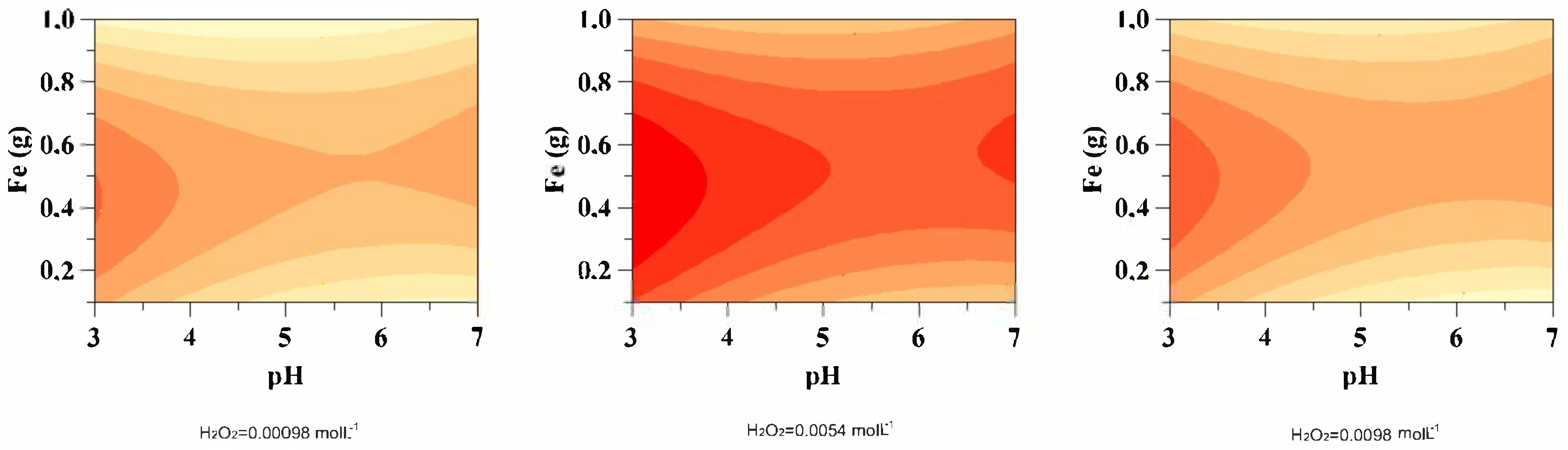
Figure 1. Response surface for the degradation of a real textile wastewater using the Fe0/H2O2/UV system.
Water 17 03427 g001
Figure 2. Correlation plot between experimental and predicted values (R2 = 1.0, Q2 =1.0). Numbers indicated above each point correspond to the experiment number (N), representing each individual run.
Water 17 03427 g002
Figure 3. Influence of experimental variables on the response in the degradation of textile wastewater.
Water 17 03427 g003
Figure 4. Degradation kinetics of real textile wastewater using the Fe0/H2O2/UV system.
Water 17 03427 g004
Figure 5. Pseudo-first-order kinetic plot for the degradation of real textile wastewater under Fe0/H2O2/UV and H2O2/UV systems.
Water 17 03427 g005
Figure 6. Scan spectrum of the degradation kinetics of textile wastewater.
Water 17 03427 g006
Figure 7. FTIR spectrum of the textile effluent before and after treatment.
Water 17 03427 g007
Table 1. Experimental matrix with the observed response for each experiment at a constant time of 2 h.
Experiment NameRun OrderpHFe0 (g)H2O2 (mL)Aromatic Ring Removing (%)
1133 (−1)0.1 (−1)0.55 (0)70.1
227 (+1)0.1 (−1)0.55 (0)37.3
373 (−1)1.0 (+1)0.55 (0)44.7
4127 (+1)1.0 (+1)0.55 (0)47.4
563 (−1)0.55 (0)0.1 (−1)59.9
6147 (+1)0.55 (0)0.1 (−1)47.4
7153 (−1)0.55 (0)1.0 (+1)67.5
847 (+1)0.55 (0)1.0 (+1)50.2
9105 (0)0.1 (−1)0.1 (−1)22.6
1015 (0)1.0 (+1)0.1 (−1)10.0
1195 (0)0.1 (−1)1.0 (+1)20.0
12115 (0)1.0 (+1)1.0 (+1)20.3
1355 (0)0.55 (0)0.55 (0)70.1
1435 (0)0.55 (0)0.55 (0)70.5
1585 (0)0.55 (0)0.55 (0)70.0
Table 2. Analysis of variance (ANOVA) for the response surface model.
SourceDFSSMS (Variance)F-Valuep-ValueSD
Total1553,201.503546.77---
Constant148,997.6048,997.60---
Total Corrected144203.94300.282--17.3286
Regression94203.93467.103164,8740.00021.6126
Residual50.01416540.00283308--0.0532267
Lack of Fit30.007499240.002499750.7499790.6150.0499975
Pure Error20.006666180.00333309--0.0577329
Notes: Model summary: N = 15, R2 = 1.000, Adjusted R2 = 1.000, Q2 = 1.000, RSD = 0.0532. Condition number = 4.2385.
Table 3. Spectroscopic characteristics of common textile dyes and their relationship with the IR bands detected in the RIL.
DyeMolecular StructureIR Bands (cm−1)Reference
methyl orangeWater 17 03427 i0011600–1500 (C=C aromatic)[41,43,44]
1450–1400 (C-N)
1380–1360 (CH3)
methylene blueWater 17 03427 i0021600–1500 (C=C aromatic)[41,43,44]
1300–1200 (C-N)
1400–1380 (CH3)
Congo RedWater 17 03427 i0031600–1500 (C=C aromatic)[41,43,44]
1400–1300 (N=N)
1200–1100 (S=O)
Reactive Black 5Water 17 03427 i0041600–1500 (C=C aromatic)[41,43,44]
1200–1100 (S=O)
1050–950 (C=C)
Disclaimer/Publisher’s Note: The statements, opinions and data contained in all publications are solely those of the individual author(s) and contributor(s) and not of MDPI and/or the editor(s). MDPI and/or the editor(s) disclaim responsibility for any injury to people or property resulting from any ideas, methods, instructions or products referred to in the content.