Article

Passive Water Intake Screen to Reduce Entrainment of Debris and Aquatic Organisms Under Various Hydraulic Flow Conditions

by
Agata Pawłowska-Salach
*,
Michał Zielina
and
Karol Kaczmarski
Faculty of Environmental Engineering and Energy, Cracow University of Technology, 24 Warszawska St., 31-155 Cracow, Poland
*
Author to whom correspondence should be addressed.
Water 2025, 17(23), 3424; https://doi.org/10.3390/w17233424
Submission received: 21 October 2025 / Revised: 26 November 2025 / Accepted: 28 November 2025 / Published: 2 December 2025

Abstract

In order to minimize problems associated with the operation of surface water intakes, passive wedge-wire screens are increasingly being used. Deflectors of special design are placed inside the intake heads to reduce local maximum inlet velocities and to ensure a uniform velocity distribution over their surface. The use of computer software based on Computational Fluid Dynamics (CFD) methods enabled simulations and optimization of the intake head design. Subsequently, a series of laboratory tests was conducted. Several scenarios were considered, varying the flow rates in the hydraulic flume and taking into account both the presence and absence of the deflector. Velocities around the intake head were measured, and the amount of particles in the water attracted to the head surface under the analyzed conditions was assessed. The results confirm the clear effect of the deflector on the velocity distribution. Its use originates reduced velocities near the head surface, as well as a smaller amount of debris deposited on the screen, while maintaining efficiency. At the same time, lower inlet velocities close to the head surface reduce the risk of entrainment and potential injury or mortality of young fish, fry, and eggs.

1. Introduction

Due to the constantly increasing demand for water for domestic purposes and the need to obtain it in a reliable and environmentally safe manner, passive wedge-wire screens are becoming increasingly popular. The use of traditional surface water intake structures is associated with operational problems, including the entrainment of contaminants suspended in and floating on the water surface, the uptake of bottom sediments, as well as issues related to ice and snow phenomena [1,2]. The use of passive wedge-wire screens allows these operational problems to be eliminated or significantly reduced.
In various types of water intake systems—including hydropower facilities, river intakes, pump stations, canal inlets, and fish-protection intakes—non-uniform velocity distribution is a common hydraulic challenge. Such irregularities often arise from inflow curvature, turbulence, geometric asymmetry, flow separation or the formation of vortical structures. These effects may lead to increased energy losses, cavitation, contamination of the intake, reduced filtration efficiency, and operational problems related to fish entrainment or impingement. To mitigate such issues, a wide range of flow-conditioning devices is employed in practice. Typical solutions include baffles, perforated plates, guide vanes, flow strainers, and intake racks with optimized bar orientation, all intended to reduce velocity gradients, suppress vortex formation, and prevent sediment or debris accumulation in the vicinity of the intake.
Submerged wedge-wire intake screens represent an important group of flow-conditioning and screening structures used in these applications. Depending on site-specific requirements, several configurations are available, including cylindrical, conical, half-barrel, T-intake screen, box-type, flat panel, and Coanda-type. Despite their geometric variability, wedge-wire screens share several common advantages. Their large filtration area enables low approach velocities, while the wedge-wire profile allows for high open-area ratios, often reaching 50–70%. The wedge-shaped geometry also contributes to self-cleaning behavior and low clogging tendency, which in turn reduces hydraulic head losses. In addition, these screens are regarded as fish-friendly due to the favorable hydraulic environment they create.
For cylindrical wedge-wire screens connected to a suction pump, a significant concern is the potential for highly non-uniform inlet velocity distribution, strongly influenced by the distance and orientation relative to the pump intake. Under such conditions, the incorporation of internal flow-conditioning elements is justified to improve flow uniformity and reduce particle entrainment. This hydraulic issue forms the principal motivation for the research presented in this article.
Internal deflectors function by establishing a more uniform pressure distribution inside the cylindrical screen and preventing the formation of localized suction zones. Consequently, the inlet velocities become more evenly distributed along the full circumference and length of the screen. In the absence of such deflectors, the flow commonly concentrates in a strong suction zone near the intake pipe opening, whereas the opposite side of the cylinder experiences significantly lower velocities. By increasing the effective flow path and eliminating point suction, internal deflectors stabilize the axial flow and enhance overall hydraulic performance. Various deflector types are used in practice, including single-or double-tube coaxial deflector, perforated cylindrical flow deflector or straightening vane.
In the present study, a perforated cylindrical flow deflector was analyzed. This solution performs particularly well in short cylindrical intake screens operating under moderately turbulent flow conditions, where fast installation, simple construction, and effective fish protection—specifically the reduction of impingement and entrainment risks—are important design considerations. The perforated pipe is mounted inside the cylindrical screen and contains a distributed pattern of holes that introduces a controlled hydraulic resistance. As water passes through the wedge-wire surface and flows toward the intake pipe, the deflector redistributes and equalizes the internal flow, preventing channeling and the formation of preferential flow paths. As a result, a more uniform approach velocity is achieved across the entire outer surface of the wedge-wire screen.
Passive wedge wire screens are constructed of non-plugging wedge wires of special shape with smooth slots. The small inlet slot dimensions, typically 1–10 mm, prevent the intake of particles larger than the slot width and ensure low inlet velocities, thereby reducing impingement and entrainment of debris. In addition to protecting intake equipment (e.g., pumps, turbines), the protection of ichthyofauna in the vicinity of the water intake is also an important consideration. According to current regulations contained in the Habitats Directive [3] and the Water Framework Directive [4], European Union member states are obligated to protect water resources, including ichthyofauna. Hence, the use of passive wedge-wire screens is considered one of the best available technologies [5]. The issue of protecting fish and fry is currently widely discussed and addressed in numerous studies and scientific publications. Many papers evaluate the conditions necessary to prevent fish from entering water intakes [6]. The selection of structural elements of the intake is based on hydraulic and biological requirements that ensure effective fish movement away from the zone of influence of the water intake [7].
In addition to water intakes for potable and industrial purposes, flood-control and hydropower projects also aim to minimize their ecological footprint, with particular emphasis on river connectivity and fish friendliness [8,9,10,11,12]. The widespread use of these heads is confirmed by the fact that they are also used as a drain for washing sand filters in water and wastewater treatment plants or for collecting fish faeces from the tank outlet water [13].
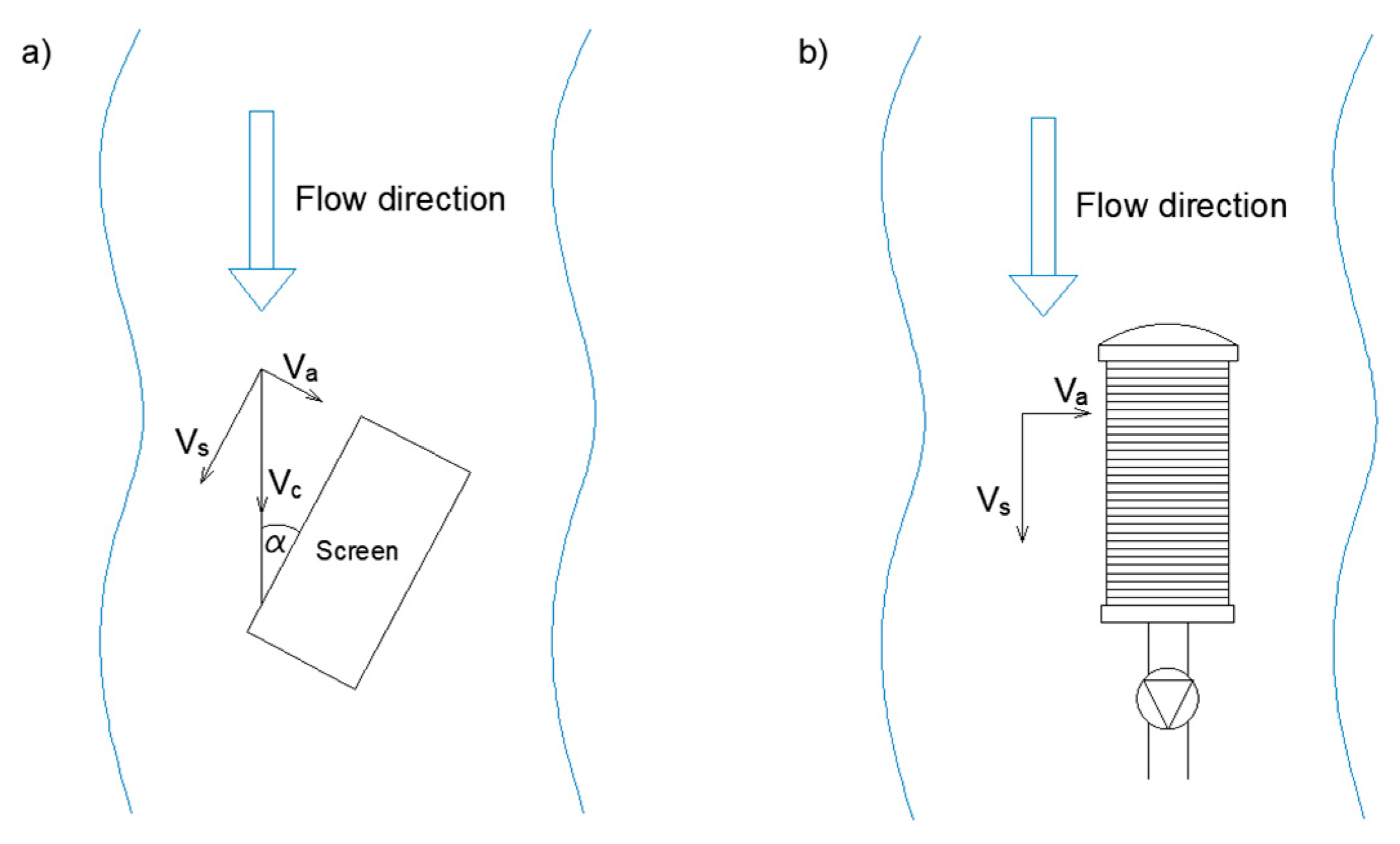
Whether pollutants and fish and fry will be attracted to the screen surface is determined by the vector of water velocity flowing toward the head Vc (channel velocity). It can be expressed in terms of two components: the approach velocity vector Va directed perpendicular to the screen surface, and the sweeping velocity vector Vs oriented parallel to the screen surface. The orientation of the vector Vc and its components Va and Vs in the vicinity of a flat screen is shown in Figure 1a. In the case of the flat screen, all velocity vectors result from the flow. For cylindrical heads in which intake is forced by a pump, the most advantageous orientation is to position the head parallel to the flow. In this configuration Vs results from the flow, whereas Va is forced by the pump (Figure 1b).
The approach velocity causes contaminants to be drawn toward the screen surface, while the sweeping velocity determines their removal from it. Thus, the orientation of the screen relative to the watercourse flow is crucial. It is recommended that the intake be installed as parallel to the flow as possible in order to achieve the highest possible value of the sweeping-velocity component. Studies on the influence of approach velocity and mesh size are discussed in [14].
Locating a passive screen system in a dead-end channel leads to improper operation. Ambient water currents minimize the accumulation of debris and interactions with aquatic organisms [15]. In addition, during screen backwashing, the absence of ambient currents may cause debris to once again impinge on the screen surface or accumulate as deposits on the channel bottom. Experimental results have shown that passive screens can protect most species when ambient velocities (channel velocities) are equal to or greater than the through-slot velocities [15].
According to the guidelines [16], depending on the ratio of these velocity vectors, the degree of attraction to the screen can be considered high when Vs/Va < 5, moderate when 5 < Vs/Va < 10, and very low when Vs/Va > 15. According to U.S. recommendations [16] the sweeping velocity should be at least equal to the approach velocity; under such conditions, the angle α between the screen surface and the flow does not exceed 45°. In some states, regulations require that the sweeping velocity be twice the approach velocity, which means the angle α of the screen installed should not exceed 26° [16,17].
The performed analyses referred to guidelines for maximum allowable approach and inlet velocities. The inlet velocity is understood as the velocity measured at the wedge-wire screen slots. According to U.S. guidelines, the maximum approach velocity Va measured at a distance of 3 inches (~7.6 cm) from the head surface should not exceed 0.06 m/s for fry less than 60 mm in length and 0.12 m/s for larger specimens (i.e., greater than 60 mm). If the screen is equipped with a cleaning system, the permissible velocities are higher and should not exceed 0.12 m/s and 0.24 m/s, respectively [17,18].
According to British guidelines, the maximum allowable velocity at a distance of 30 cm from the screen surface should not exceed 0.15 m/s [19]. New Zealand guidelines, on the other hand, specify the velocity limit based on fish size: the velocity, expressed in m/s, should not be greater than four times the length (in millimetres) of the smallest fish residing near the intake [20]. As for the inlet velocity Vin in the intake screen slots, U.S. guidelines specify a maximum value of 0.15 m/s [16]. Canadian guidelines vary the allowable Vin depending on the locomotion mode of the fish. For intakes with a capacity of less than 125 dm3/s, they recommend a value of 0.11 m/s for “trout-type” fish, which move primarily using their hindquarters, and 0.038 m/s for “eel-type” fish, which move with their entire bodies [16].
Juvenile eels, due to their small size and limited swimming ability, are particularly vulnerable to impingement and entrainment. Therefore, suitably small apertures are required, in addition to evenly distributed inlet velocities around the screens. Empirical studies on the effect of screen mesh size on the risk of eel injury have shown that eels measuring 100–150 mm are excluded by 2-mm mesh screens, while those measuring 60–80 mm are excluded by 1-mm mesh screens [11]. However, this does not completely eliminate the risk of impingement and injury.
In 2009, the UK government introduced eel regulations [21], which specifically require measures to ensure the safe passage of eels—both upstream and downstream—past hazardous intakes, through the use of eel culverts, screens, and bypasses. The UK Environment Agency indicates that the key requirements for excluding juvenile fish and fry are an approach velocity of less than 0.15 m/s and a screen mesh size of less than 3 mm [22].
The purpose of the study was first to numerically simulate the hydraulic performance of a wedge-wire water intake screen installed in a river current or water channel using CFD tools. Since full-scale and laboratory experiments are significantly time-consuming, CFD simulation appears to be a suitable tool for designing and analysing the performance of wedge-wire screens under various conditions [23]. Calculations were carried out for different water-flow velocities in the channel (sweeping velocity). Based on these calculations, the dimensions of the intake head and the deflector were selected so that the approach-velocity values over the entire screen surface were as uniform as possible. A laboratory model of the designed intake screen was then constructed, and experiments were performed to verify the results of the numerical simulations. Computational Fluid Dynamics (CFD) techniques are recognized as advanced tools that provide detailed flow analysis at prototype scale. This approach is gaining increasing importance in the modelling of various hydraulic structures [24,25,26]. However, despite the many advantages of CFD techniques, they require several assumptions and theoretical simplifications, so calibration and validation using physical models remain necessary [27,28].
In addition to evaluating the water-flow velocity vectors under different intake-head configurations, the experiments also assessed the proportion of suspended particles that would be attracted to the screen surface or drawn into the intake head, and the proportion that would continue downstream, depending on the flow rate in the hydraulic channel and the type of deflector used.
The initial stage of the research on the wedge-wire screen was conducted under conditions without flow in the hydraulic channel. This setup represents water-intake operation in reservoirs or bays characterized by low flow velocities. In such cases, the absence of sweeping velocity does not support the transport of fry or small floating particles outside the zone of influence of the intake head. The results confirmed the effectiveness of the intake head and demonstrated the influence of interchangeable deflectors with different aperture sizes on the velocity distribution in the vicinity of the head. These detailed results are presented in [29]. The present paper, however, focuses on surface water intakes from flowing water bodies. Under these conditions, the effect of seeping velocity on screen flushing is significant. To simulate conditions similar to those encountered in such intakes, particularly those drawing water from rivers, a controlled flow was generated in the hydraulic channel and adjusted to achieve average velocities typically observed in natural watercourses. The first part of the experimental research described in [29] examined the impact of the intake on ichthyofauna, whereas the present study concentrates on the attraction of debris in the water. To complement the velocity distribution results reported in the first part of this article, experiments with granulates were conducted to provide a visual representation of debris accumulation on the screen surface.
The aim of this study is to conduct an in-depth analysis of a slotted water-intake head characterized by low, uniformly distributed inflow velocities across its entire surface while maintaining a sufficiently high intake capacity. The intake head is designed to mitigate operational problems associated with the entrainment of ichthyofauna, debris, frazil ice, and bedload transported in the captured water. The objective is to determine the approach-velocity distribution around the intake head and to verify, under laboratory conditions, whether suspended particles in the water are attracted to the head, and to what extent they are drawn toward it. To date, there has been a lack of combined detailed experimental measurements and numerical analyses of this type of solution in the literature. Furthermore, the novelty of this study lies in the use of a deflector in combination with custom-designed perforations, where both the spatial arrangement and the sizes of the holes are proposed by the authors based on the literature review and preliminary calculations.

2. Materials and Methods

2.1. Mathematical Model

A mathematical model based on Computational Fluid Dynamics (CFD) was used to describe the analyzed system. CFD is a branch of fluid mechanics that employs numerical methods to analyze and solve problems related to fluid flow; consequently, it is widely applied in environmental engineering and other fields. Detailed analyses of water intake structures using fluid dynamics modeling are presented in publications [30,31].
A recent study applied both ANSYS Fluent and OpenFOAM to model a Tyrolean intake, assessing flow capacity and uniformity across the bar racks, and demonstrating the usefulness of CFD for optimizing intake geometry [32].
However, there is a lack of studies in the available literature describing the validation of CFD models for wedge-wire screens. In recent years, however, a considerable number of publications have appeared that discuss CFD modelling and validation for Coanda-type wedge screens [33,34], as well as for classical transverse bottom intake racks with circular bars [35]. In most of these studies, URANS (Unsteady Reynolds-Averaged Navier–Stokes) turbulence models were used.
In the case of CFD modelling of Coanda screens, very good agreement between the numerical results and experimental measurements was obtained when using the k-ω SST turbulence model [33,34,35]. This is not surprising, since this model performs very well for near-wall flows with strong curvature, flow separation, and vortex structures. The model is computationally inexpensive but sensitive to mesh quality. Therefore, it was recommended specifically for regions with potential flow separation on Coanda screens.
The standard k-ε model also generally performed well [34,36]. In most cases, the error did not exceed 5%. In the study by [36], a comparison was made between three URANS turbulence models: standard k-ε, RNG k-ε (Re-Normalization Group), and k-ω SST (Shear-Stress Transport), along with validation against experimental measurements for bottom intake racks with circular bars. The numerical results were very similar to each other and close to the experimental data. For most measurement points, the differences between the computations and the experiment did not exceed 5%.
In many cases, the simulations were performed using ANSYS Fluent(2021 R2 and 2020 R1) [33,35] or ANSYS CFX(v2023 R1 and v.18.0) [34,36], and more recently also FLOW-3D(v.12) [34]. The Lagrangian particle tracking method has also been used with the commercial solver STAR-CCM+ [37]. In that case, the trajectories and collisions of small spherical and cylindrical particles predicted by the CFD simulations were found to agree well with the experimental observations.
Importantly, the use of the hydraulic resistance criterion at the design stage of underground water intakes can significantly reduce the cost of well construction [38]; for this reason, numerical methods are increasingly applied in this field.
The discretization and numerical solution of the partial differential equations describing the flow allow for the approximate determination of flow parameters, such as velocity [39,40,41]. The modeling of fluid motion is based on the principles of conservation of mass and momentum, which are expressed as follows:
Equation of conservation of mass [42,43]:
ρ t + ρ v = 0
where:
  • ρ —density of the fluid,
  • v —velocity vector.
Equation of conservation of momentum:
ρ d v d t = ρ f + P
where:
  • ρ —density of the fluid,
  • u —velocity vector,
  • f —vector of mass forces,
  • P —stress tensor matrix.
By making certain simplifications and assuming that water behaves as an incompressible fluid of constant density and exhibits a linear stress–strain rate relationship, with a constant viscosity coefficient µ, the Navier–Stokes equations and the continuity equation can be formulated in the following form:
v t + v T v = 1 ρ p + v v + f
v = 0
The most common approach is to find the solution of the time-averaged Navier-Stokes equations, the so-called RANS–Reynolds-Averaged Navier-Stokes equations.
The two-equation k-ε model was used in the simulations, which allows the dynamic turbulent viscosity coefficient to be determined. For this purpose, in addition to the momentum and energy conservation equations, additional equations for the turbulence kinetic energy k and the turbulence kinetic energy dispersion velocity ε are introduced.
The kinetic energy k is expressed:
ρ k t + ρ k v i x i = x j µ + μ t σ k k x j + G k + G b ρ ε Y M + S k
while the turbulence kinetic energy dispersion velocity ε:
ρ ε t + ρ ε v i x i = x j µ + μ t σ ε ε x j + C 1 ε ε k G k + C 3 ε G b C 2 ε ρ ε 2 k + S ε
where:
  • k —kinetic energy,
  • ρ —density of the fluid,
  • v i —velocity component in corresponding direction,
  • μ t dynamic turbulent viscosity index,
  • G k —coefficient of turbulence kinetic energy generation due to averaging of velocity gradients,
  • G b —coefficient of turbulence kinetic energy generation due to buoyancy,
  • Y M —coefficient representing the contribution of turbulent dilation to the rate of energy dissipation,
  • S k , S ε —additional coefficients that can be defined,
  • ε —turbulence kinetic energy dissipation rate.
The constants in the above formulas are:
  • σ k = 1
  • σ ε = 1.3
  • C 1 ε = 1.44
  • C 2 ε = 1.92
  • C μ = 0.09
Turbulent viscosity, which completes the description of energy dissipation, is expressed by the formula:
μ t = ρ C μ k 2 ε
Numerical investigations were performed in ANSYS Fluent 19.1 software. After loading a properly prepared geometric model, generating a mesh and introducing boundary conditions, flow simulations were performed in the hydraulic channel.

2.2. Laboratory Bench

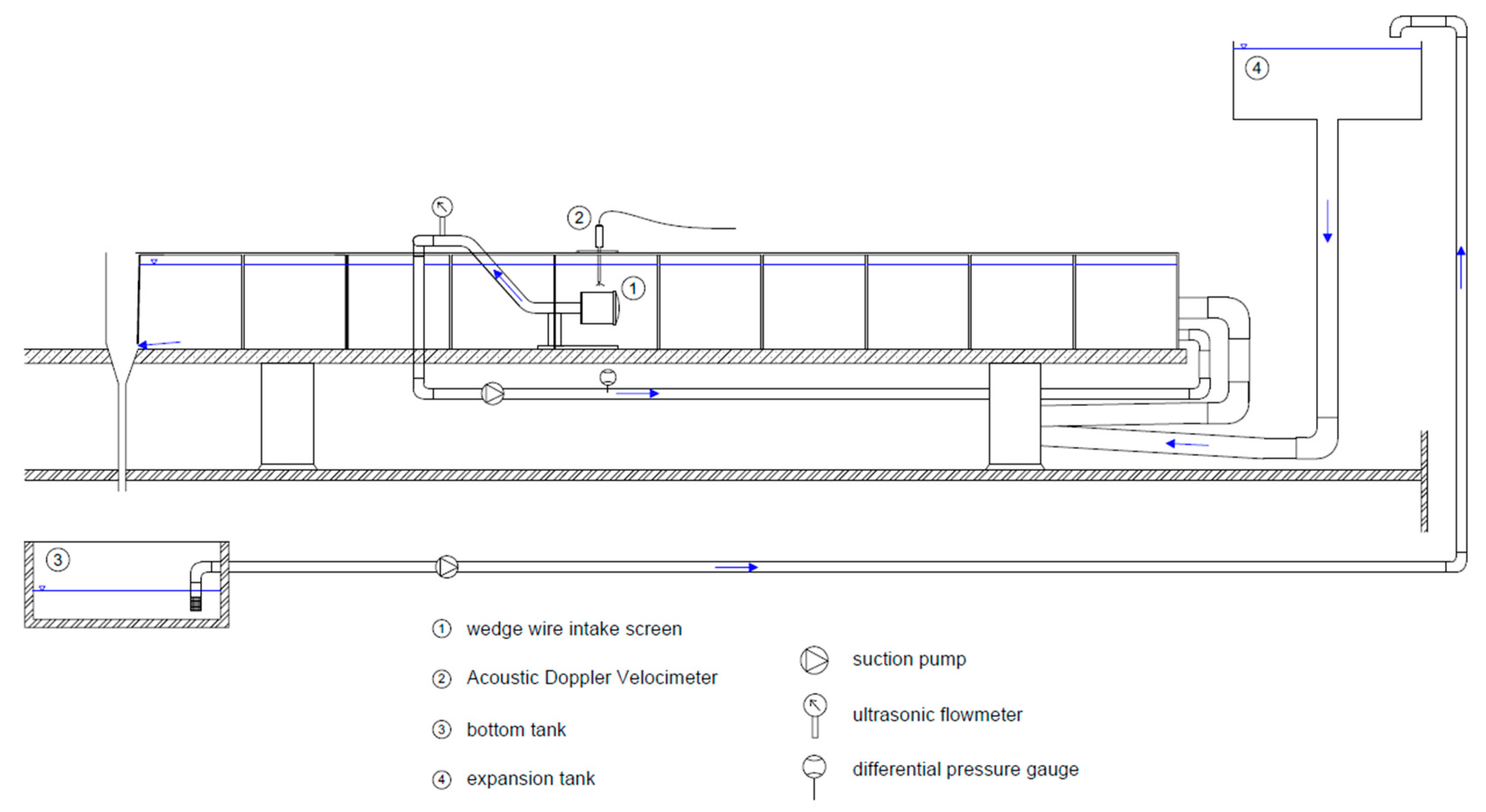
Laboratory tests were conducted in a hydraulic channel measuring 12 m in length, 0.5 m in width, and 0.6 m in depth, filled with water. The wedge-wire screen was installed inside the channel, approximately 20 cm above the bottom and 20 cm below the water surface. A circulating pump system allowed water to be drawn through the intake head and pumped back to the beginning of the hydraulic channel. Water collected in an expansion tank flowed by gravity to the hydraulic channel and then to a bottom tank, from which it was pumped back to the expansion tank. Flow was regulated using a butterfly valve equipped with an electromagnetic flow meter. The laboratory bench is shown in Figure 2.

2.3. Model of the Screen and a Deflector Placed Inside

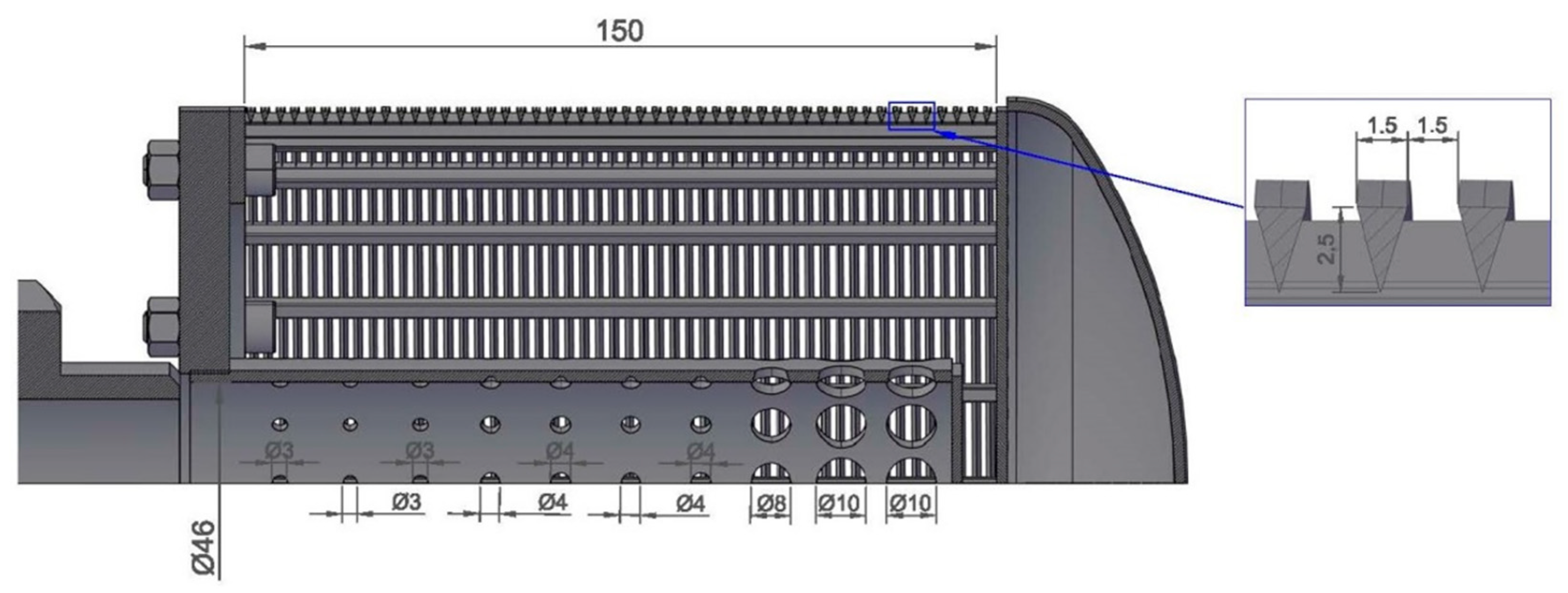
The 150-mm-diameter stainless steel head model consists of a 150-mm-long outer section formed by a helically coiled wedge wire. The wedge wire features a special design in which the filter slot, created by the wider part of the profile, is located on the outside of the pipe, while the narrower part is on the inside, so that the flow passes from a larger clearance toward a smaller one (Figure 3). This design minimizes slot clogging and facilitates cleaning. A local vacuum is created inside the screen, drawing in very fine debris that enters the slots, while larger particles either flow downstream or settle on the screen surface.
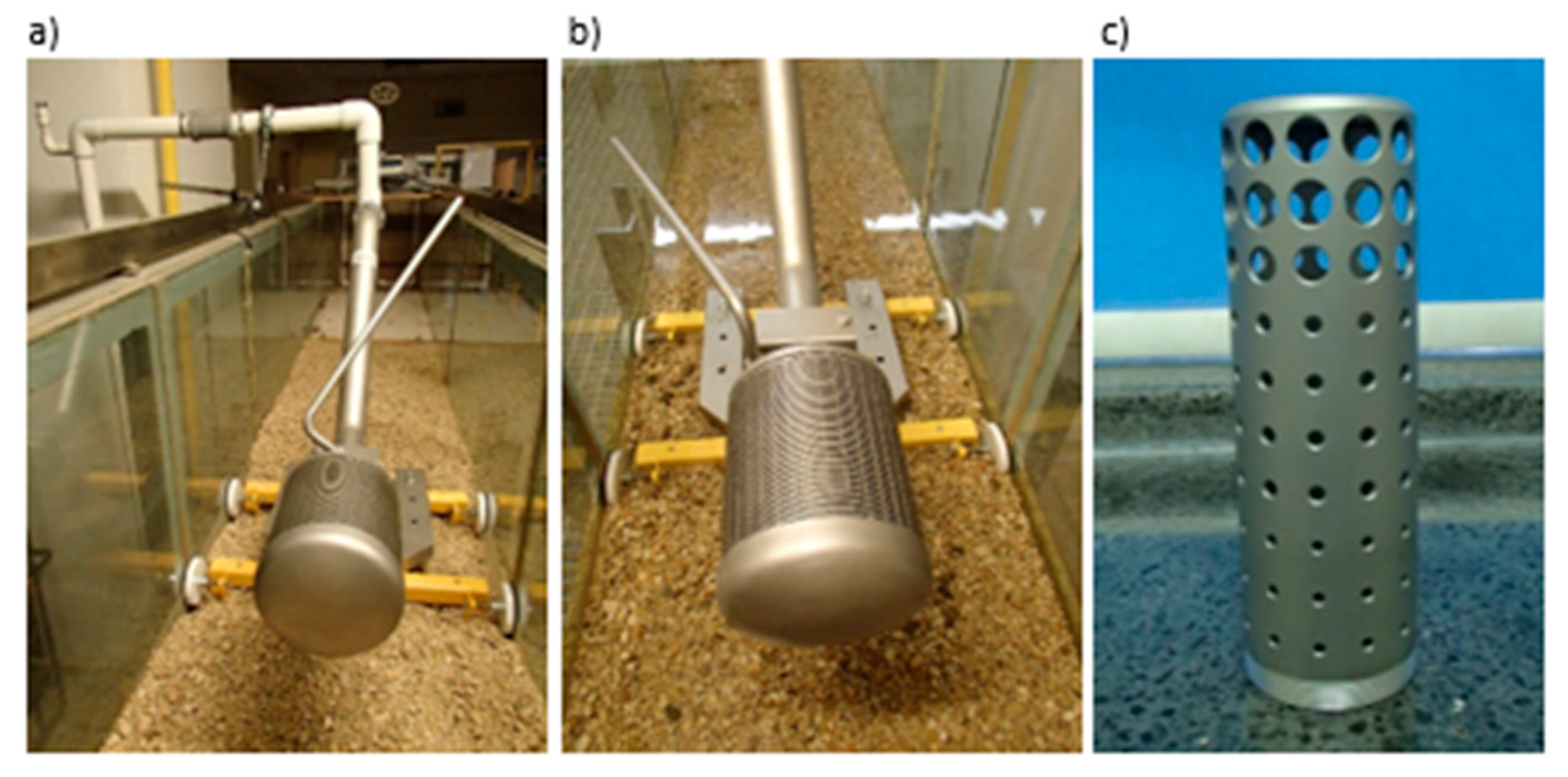
The internal part of the head model (Figure 4a,b) consisted of a removable deflector. It was cylindrical in shape, with an outer diameter of 50 mm and an inner diameter of 46 mm, and featured circular perforations. The hole sizes decreased toward the inlet pipe, where the captured water was discharged; their diameters were 3 mm, 3 mm, 3 mm, 4 mm, 4 mm, 4 mm, 4 mm, 8 mm, 10 mm, and 10 mm, respectively. The degree of perforation of this deflector is approximately 12%. The deflector is shown in Figure 4c.

2.4. Measuring Instrumentation

A 0.75 kW SWIMMEY 24 Nocchi pump(Venturina Terme, Italy) was used to generate the suction flow of water through the intake head and return it to the hydraulic channel. Under laboratory conditions, the pump achieved a capacity of 16.5 m3/h.
The pump was equipped with a filter, which proved useful when testing the entrainment of suspended particles into the head, i.e., measurements performed in the absence of the deflector and the external wedge-wire screen.
To control the volume of water drawn by the head during the experiments, readings were taken from a Micronics Portaflow 330 ultrasonic flow meter (Micronics, Bucks, UK) installed on the suction line.
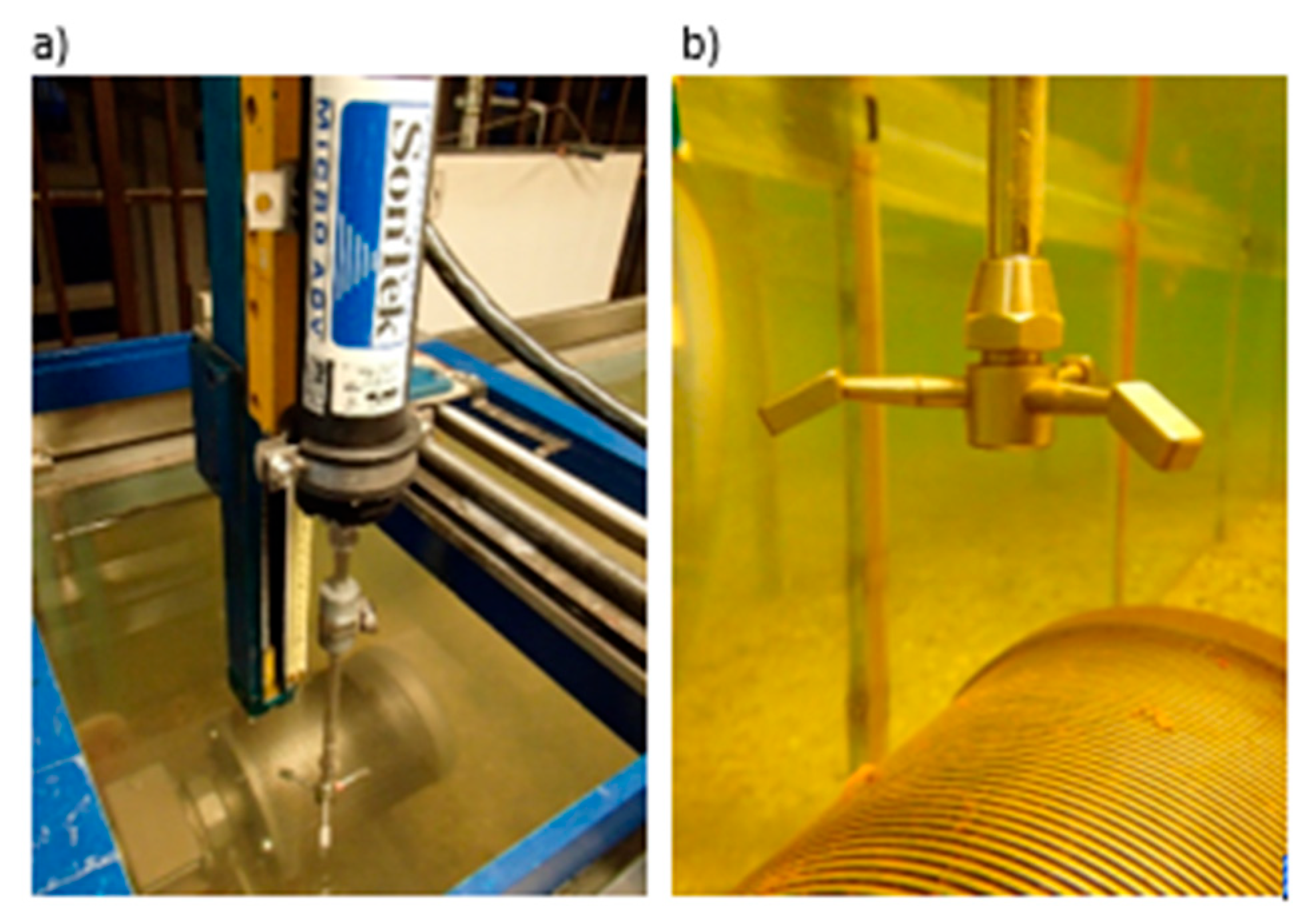
A 16 MHz Micro ADV acoustic Doppler velocity meter from YSI/SonTek (San Diego, CA, USA) (Figure 5) was used to measure the velocity distribution in the vicinity of the screen. The device was mounted on a movable tripod, allowing measurements at the selected points. This single-point meter measures the three components of velocity. The probe consists of a centrally located transmitter and three receivers mounted on the arms. The transmitter generates an acoustic wave that propagates through the water, while the receivers detect signals reflected from particles (suspended solids or biological material) in the water. The intersection of the axes of the three receivers determines the position of the measuring cell. During the experiments, a sampling frequency of 20 Hz was used. The duration of each measurement was approximately 45 s, providing about 900 readings per measuring point.

2.5. Location of Measuring Points

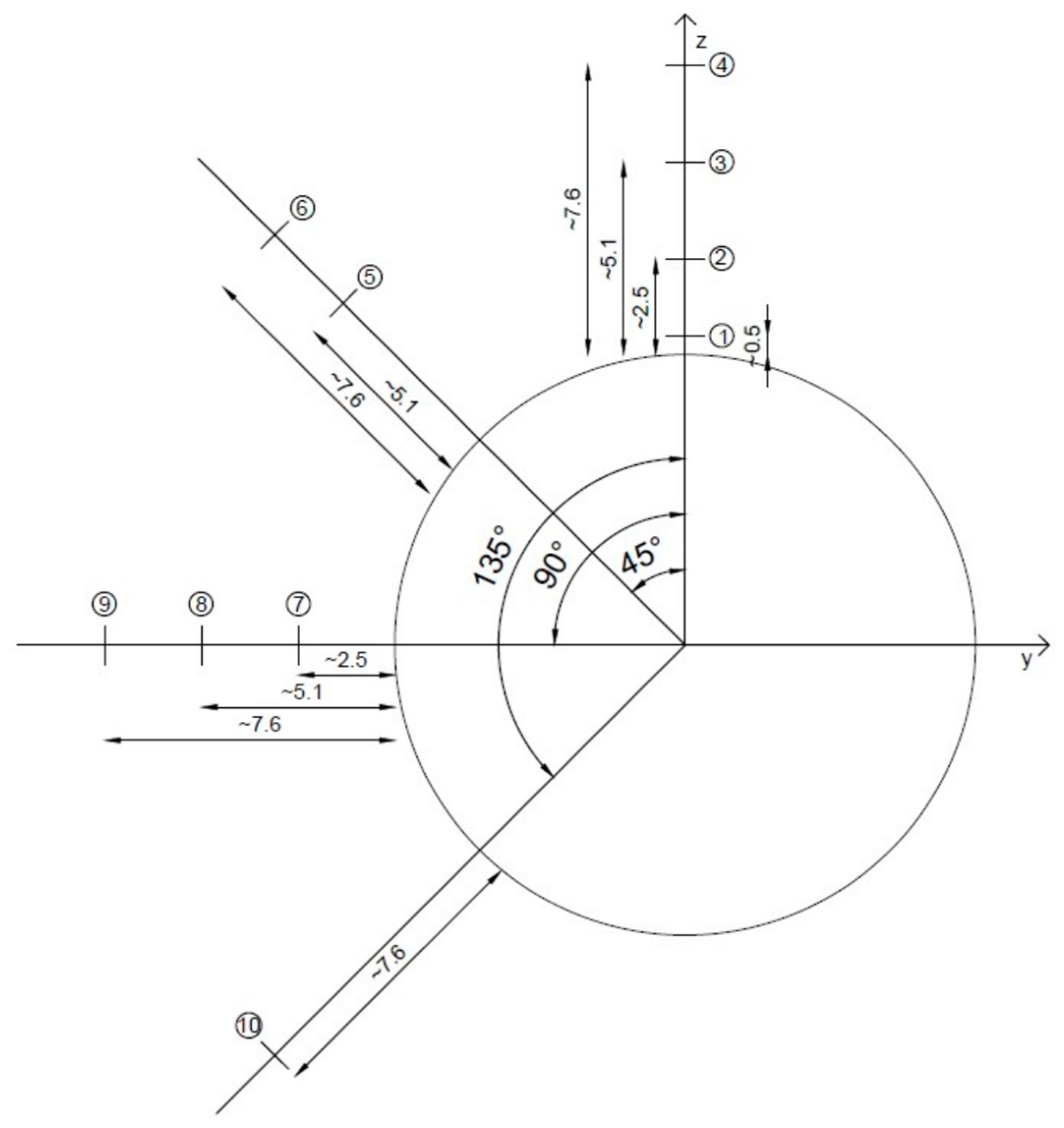
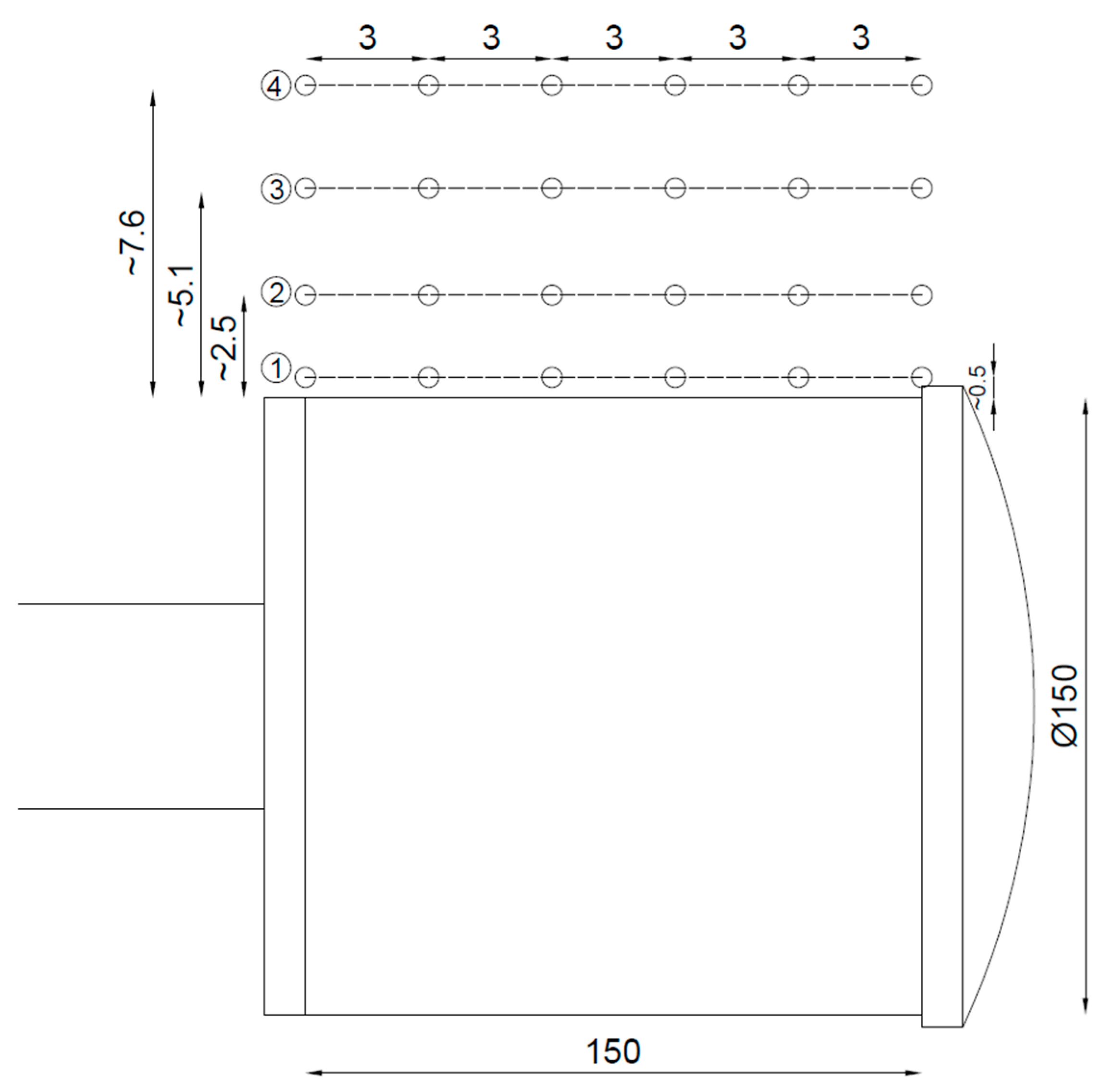
Measurements of local velocities were carried out at dozens of points near the screen, with their selection dictated by technical feasibility. The closest possible measurement relative to the head surface was taken at a distance of 0.5 cm. In contrast, a distance of 7.6 cm (approximately 3 inches) corresponds to the location for which maximum allowable velocities are specified in many guidelines.
In Figure 6, points 1 to 10 indicate the measurement lines along the head. Measurements were taken every 3 cm along each line. For tests without the deflector, above the head (at an angle of 0° from vertical), measurements were taken at distances of 0.5 cm, 2.5 cm and 7.6 cm. Due to the design of the flowmeter, measurements at an angle of 45° were conducted only at distances of 5.1 cm and 7.6 cm; at 90°, at distances of 2.5 cm, 5.1 cm, and 7.6 cm; and at 135°, at a distance of 7.6 cm. For the tests conducted with the deflector, above the screen (at an angle of 0° from the vertical), additional measurements were taken at a distance of 5.1 cm from the screen surface.
An example of the distribution of measurement points above the head (at an angle of 0° from vertical) along measurement lines 1, 2, 3 and 4 is shown in Figure 7.
During measurements at each analyzed point, the components of the velocity flowing into the intake head were recorded. The normal component (approach velocity), defined as the velocity perpendicular to the head surface, was analyzed. The value at each point was determined as the arithmetic mean of approximately 900 readings obtained from the device.

2.6. Experimental Tests with Granulate

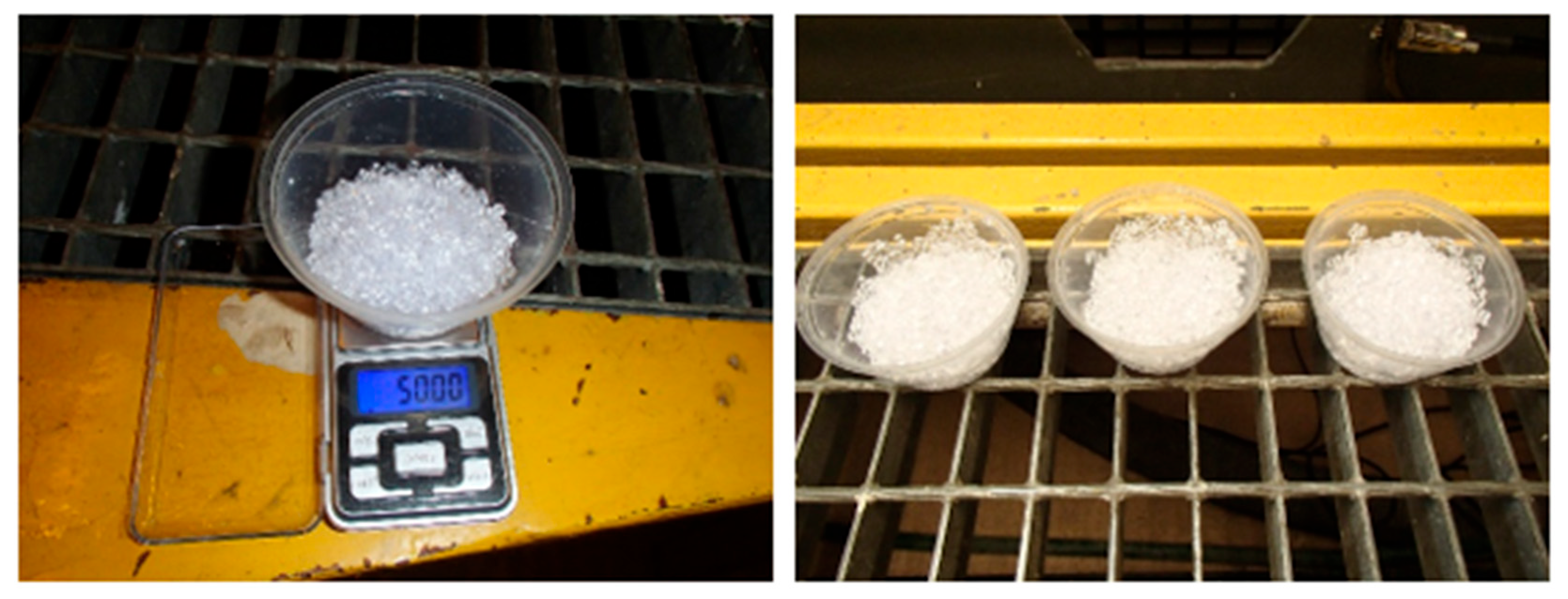
To investigate the effect of water velocity in the hydraulic flume on the amount of debris attracted to or drawn into the screen surface, tests were conducted using polystyrene granules. The GPPS (general purpose polystyrene) used is a polymer obtained by polymerizing styrene. The material is in the form of cylindrical granules with diameters ranging from 2.5 to 6 mm and a density of 1.05–1.07 g/cm3, allowing them to remain suspended in water. The granule size, comparable to that of fish eggs, provides a suitable simulation and reflects conditions in natural watercourses. An electronic precision scale with an accuracy of 0.01 g and a maximum capacity of 200 g was used to measure the weight of the granules (Figure 8).

3. Results and Discussion

3.1. Numerical Simulations

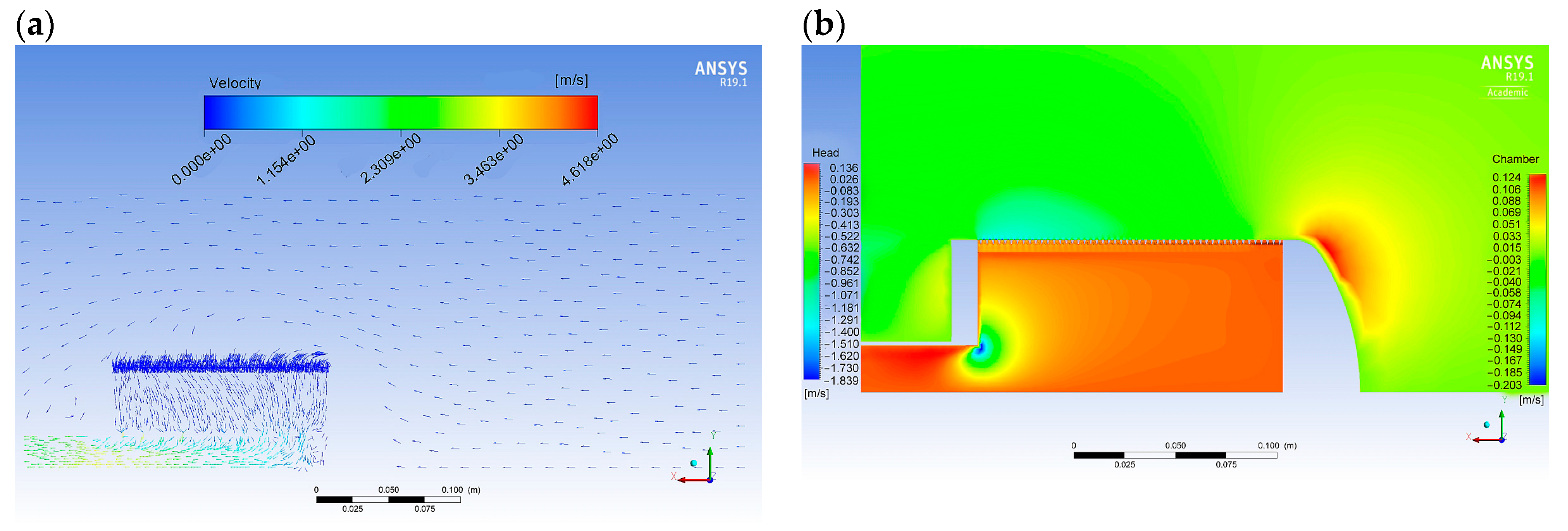
Numerical simulations allowed for the selection of the dimensions of the intake head and the internal deflector, as well as for the graphical representation of the resulting velocity distributions under various operating conditions. Figure 9a,b show the distribution of the normal components of the velocity vector during flow in a hydraulic flume at 113 m3/h, in the absence of a deflector inside the wedge-wire screen.
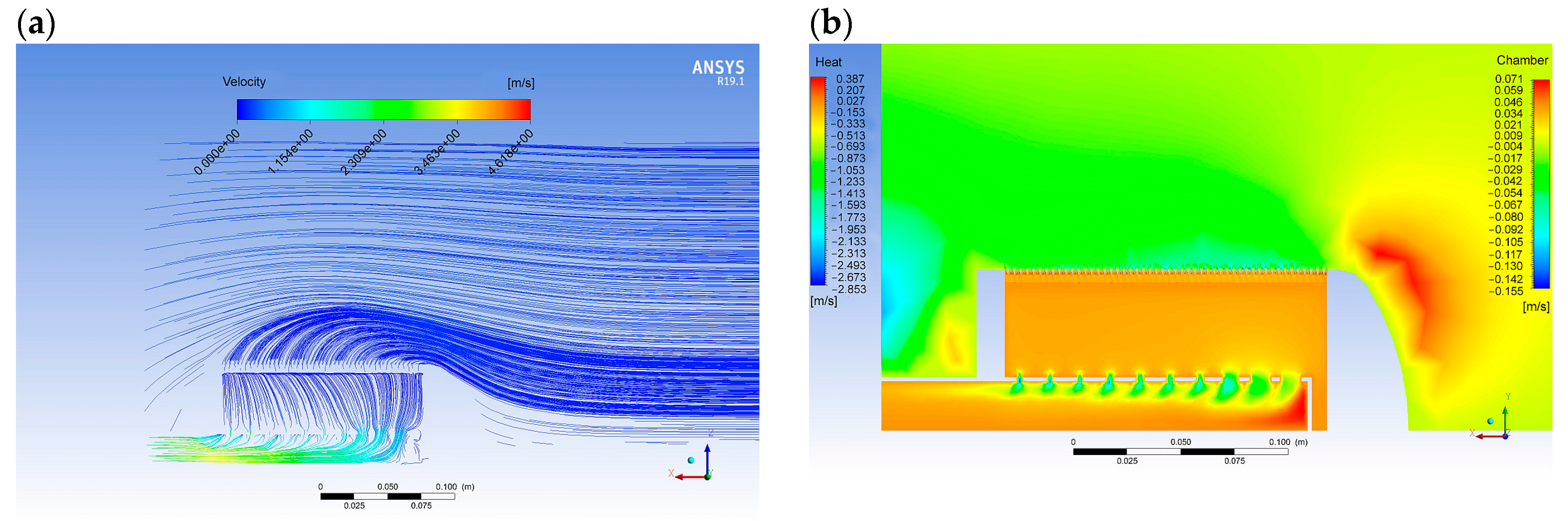
Similar simulations were performed for the case in which the deflector was installed inside the screen. The results are presented in Figure 10.
For detailed analysis, velocity values obtained from the numerical simulations were extracted at the points corresponding to those used in the laboratory measurements. A summary of the values obtained from both the laboratory measurements and the numerical simulations is presented later in the article.

3.2. Approach Velocity Tests Without the Wedge Wire Screen

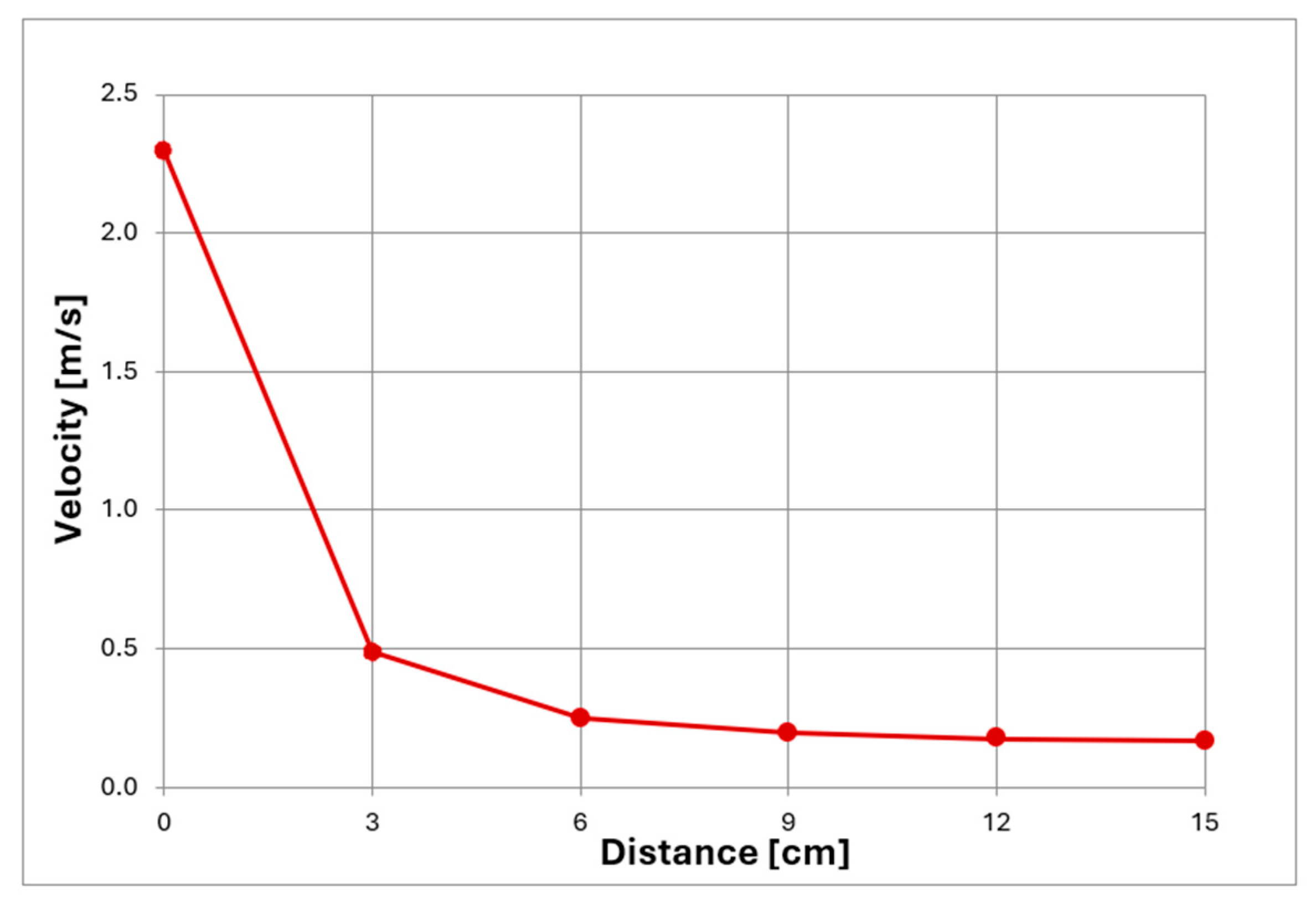
Initial laboratory tests were carried out with only the suction pipe in the hydraulic flume, without the wedge wire screen installed. The flow rate in the hydraulic flume was 113 m3/h, and the water suction was forced by a circulating pump operating at an average rate of 275 dm3/min. Measurements were taken along the axis of the suction pipe at distances ranging from 0 to 15 cm from the inlet surface. The results are shown in Figure 11.
The velocity at the inlet of the suction pipe (point 0 on the graph) was 2.3 m/s, more than 10 times higher than the velocity allowed by the standards described in Chapter 1. At a distance of 3 cm from the inlet, the velocity decreased to 0.49 m/s, while at 7.5 cm it was approximately 0.25 m/s. This value is more than twice the safe value for fish reported in the literature and more than four times the safe value for smaller individuals (fry). As observed, the velocity continues to decrease with distance from the inlet, reaching 0.16 m/s at 15 cm. However, the velocity at this point remains higher than the allowable critical value.
In summary, for a submerged intake terminated by a pipe without an installed screen, high inlet velocities can be expected in its immediate vicinity, which may cause operational problems, including threats to ichthyofauna.

3.3. Studies of Velocity Distributions at a Hydraulic Flume Flow of 113 m3/h

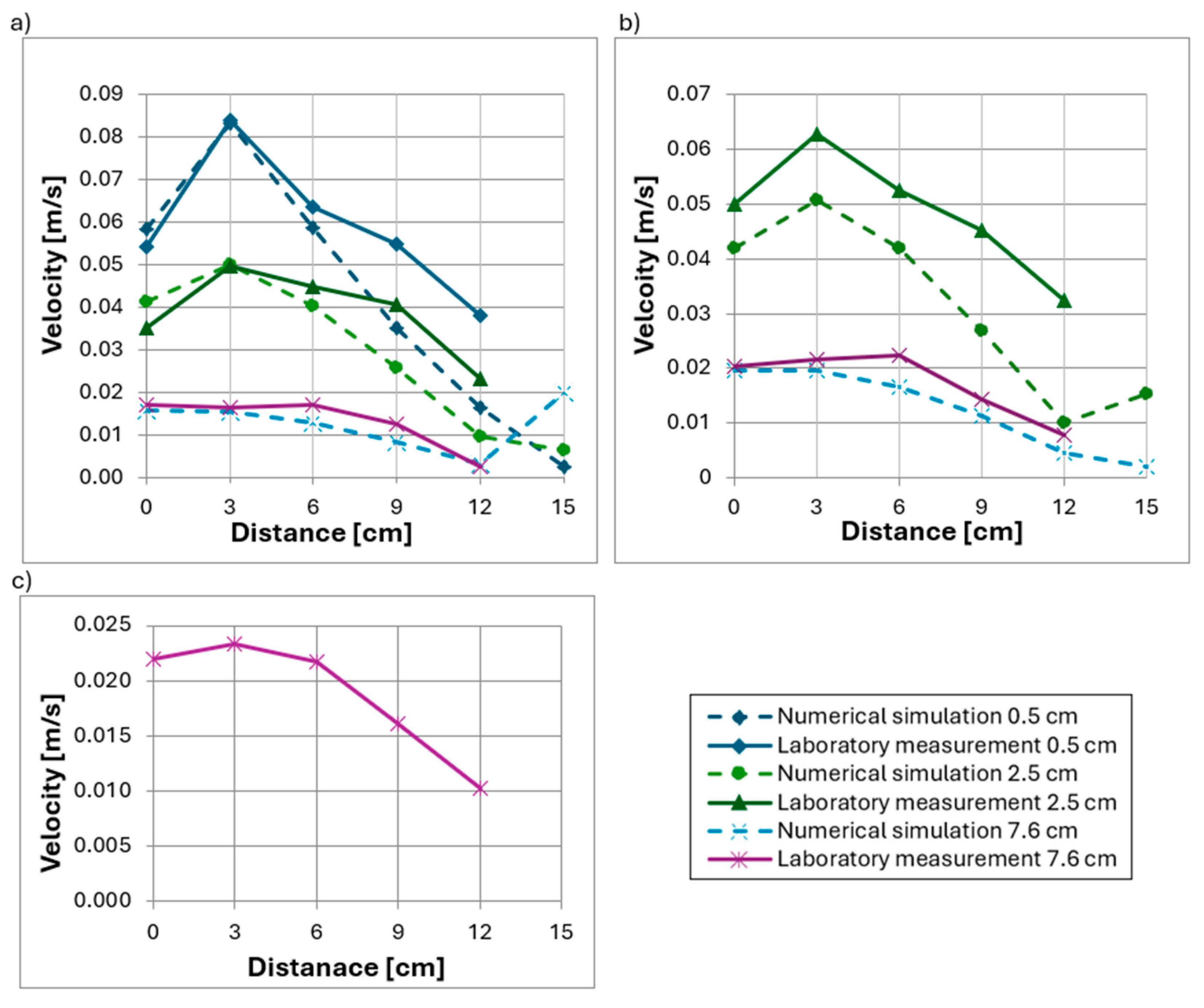
Another series of numerical and laboratory tests involved the wedge-wire screen (without an internal deflector) placed in a hydraulic channel with a flow of 113 m3/h, corresponding to an average flow velocity of 0.13 m/s. The average values of the normal component of the velocity vector at the analyzed points are shown in Figure 12.
The results of the laboratory tests are similar to the values obtained at the analyzed points during the numerical simulations. Particularly small differences, on the order of a few percent, were observed near the suction pipe inlet. On the inflow side, the differences are larger; however, the overall trend of velocity changes is preserved.
For all analyzed points arranged at different angles from the vertical in the cross-section, the value of the normal component of the velocity vector decreased with increasing distance from the head surface.
Analysis along the measurement lines, i.e., in the longitudinal section of the head, shows that higher velocity values were obtained near the inlet side of the suction pipe. This is most pronounced at the closest distance above the head surface, 0.5 cm (Figure 12a). After reaching a maximum value at 3 cm from the suction pipe inlet—0.084 m/s in the laboratory tests and 0.083 m/s in the numerical simulations—the velocities decreased to less than 0.04 m/s at 12 cm (laboratory tests) and 0.002 m/s at 15 cm (numerical simulation).
For the laboratory measurements, the graph in Figure 12 does not show the average value of the normal component at 15 cm from the suction pipe inlet, as the determined average was negative. In measurements at an angle of 45° from the vertical (Figure 12b), negative values were also obtained at 9 cm and 12 cm from the suction pipe inlet. This indicates vortex formation at the analyzed points, where part of the water was not drawn into the screen. Vectors with negative values—i.e., directed opposite to the flow toward the inside of the head—were not analyzed, as they correspond to the offset of possible particles and ichthyofauna, rather than their attraction to the screen surface, which is the parameter defined by standards.
Comparison of the obtained velocity values with those allowed by American standards indicates that the use of the wedge-wire screen alone (without an internal deflector) suggests a low risk to ichthyofauna, since the velocities measured at a distance of 7.6 cm from the head surface are several times lower than those reported in the guideline. It is important to highlight, however, that this conclusion relies exclusively on hydraulic criteria.
It should be noted that even the highest value of the normal velocity near the head, measured at 3 cm from the suction pipe inlet (0.08 m/s), is more than 25 times lower than the velocity at the suction pipe inlet without a mounted head, which was 2.3 m/s.
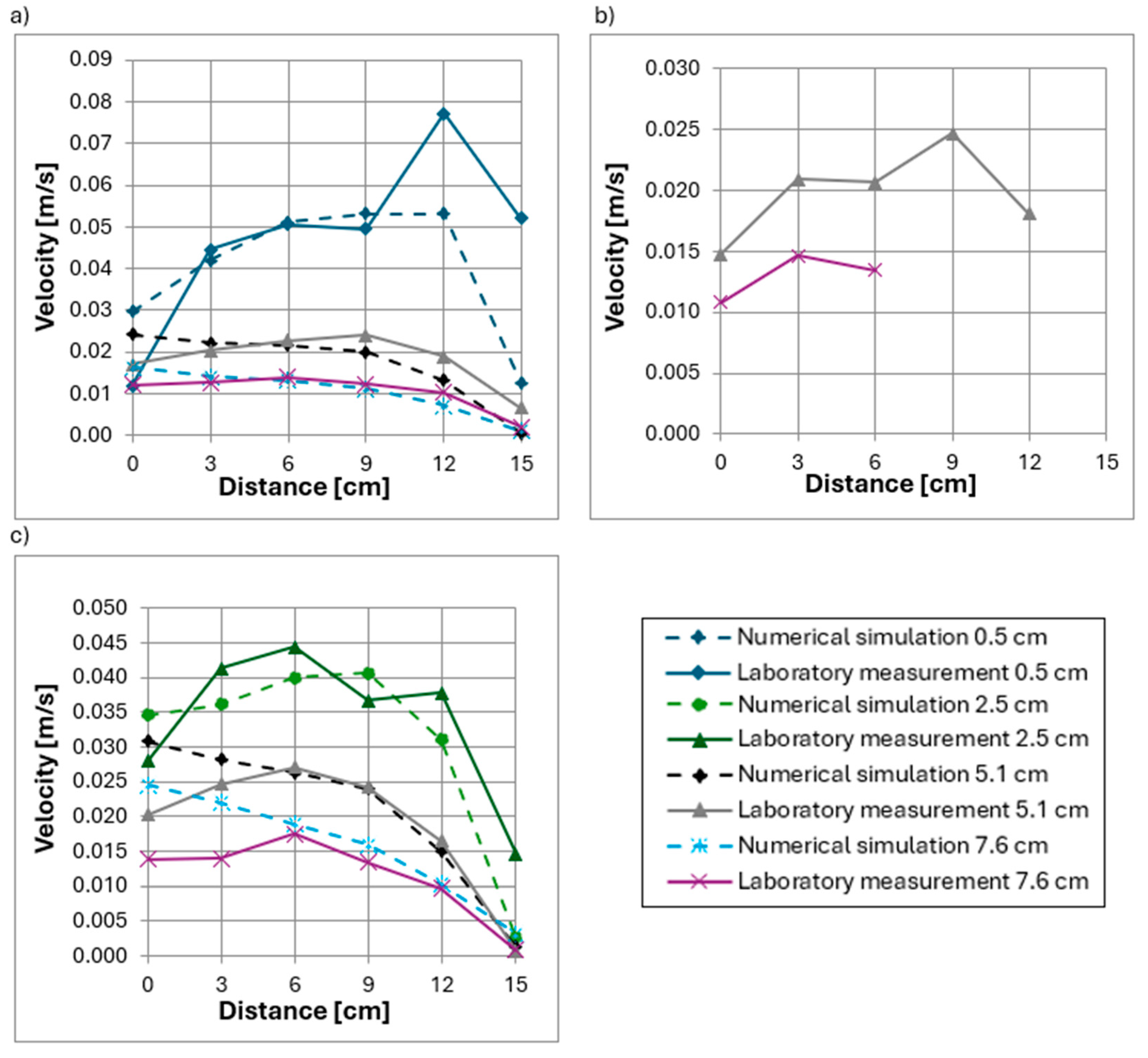
The next series of tests involved the installation of a deflector inside the screen (Figure 13) to equalize the velocity distribution near the head. As in the case without the deflector, the normal component of the velocity vector decreased with increasing distance from the head surface. The exception is the velocity measured at the point immediately at the suction pipe inlet (Figure 13a), which can be explained by turbulence caused by the head design and the impeded inflow at the measurement point closest to the suction pipe.
The results of measurements taken along the line at an angle of 135° indicated that the curve closely resembled that observed in the results of experiments conducted without the deflector, with only slightly lower velocities.
As can be seen, the velocity distribution differs from the situation without the deflector. The maximum velocity values were reached at a distance of 6 cm or more from the suction pipe inlet, rather than at 3 cm as in the case without the deflector.
At a distance of 0.5 cm above the head surface, the use of the deflector caused a 4.5-fold reduction in the normal velocity near the suction pipe inlet. However, at the measurement point 12 cm from the suction pipe inlet, the deflector caused a twofold increase in velocity, reaching a maximum of 0.077 m/s. This laboratory measurement deviates significantly from the value obtained in the numerical simulation (0.053 m/s), which indicates a more homogeneous velocity distribution.
Comparison of the laboratory test results and numerical simulations (Figure 12 and Figure 13) shows that significant differences occur only at distances of 12 cm and 15 cm from the suction pipe inlet, amounting to more than 30% and 70%, respectively. As described earlier, turbulence occurred at these points on the inflow side, which can be considered a justification for this discrepancy.
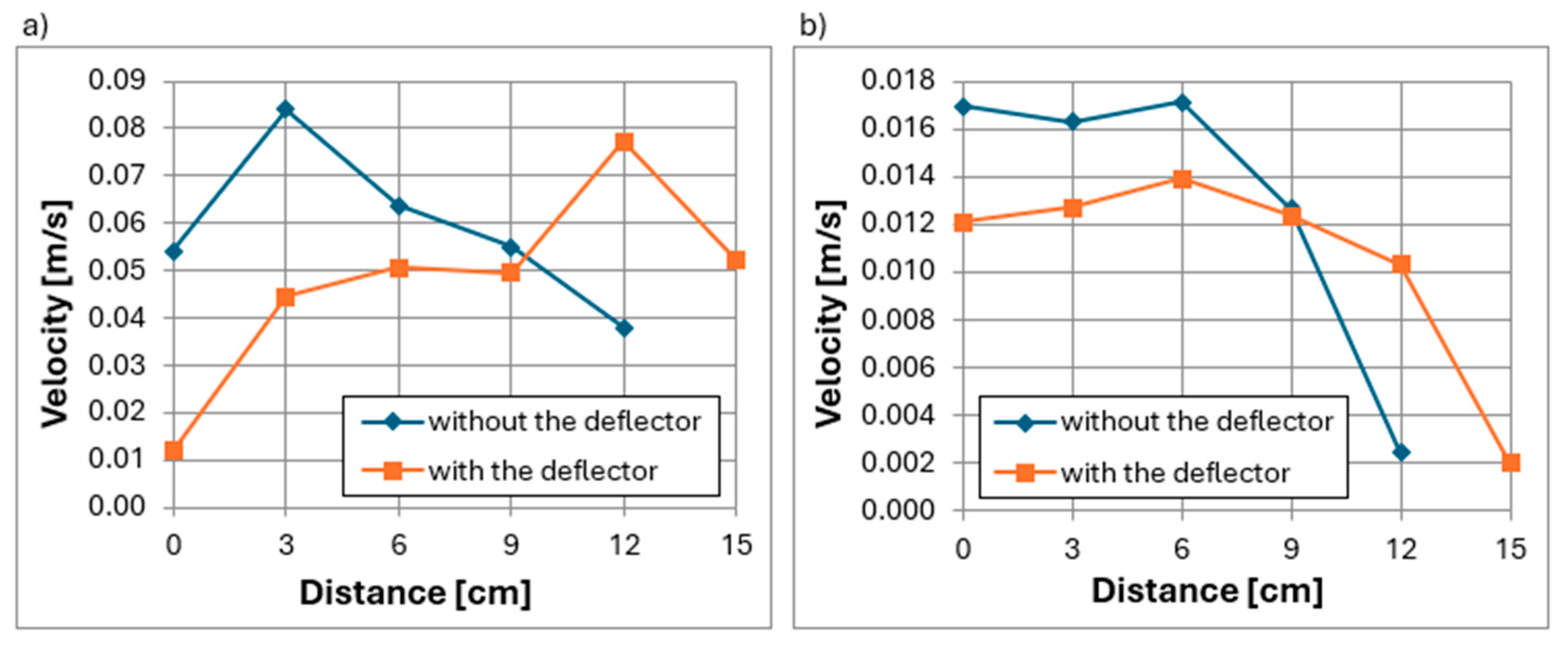
A summary of the normal component values obtained in the laboratory tests for the extreme measurement points—i.e., the closest and farthest from the head, with and without the deflector—is shown in Figure 14. Based on this, it can be concluded that the use of a deflector reduced the local maximum values of the normal velocity component at the suction pipe inlet, while increasing them on the side of water inflow in the hydraulic channel.

3.4. Studies of Velocity Distributions at a Hydraulic Flume Flow of 226 m3/h

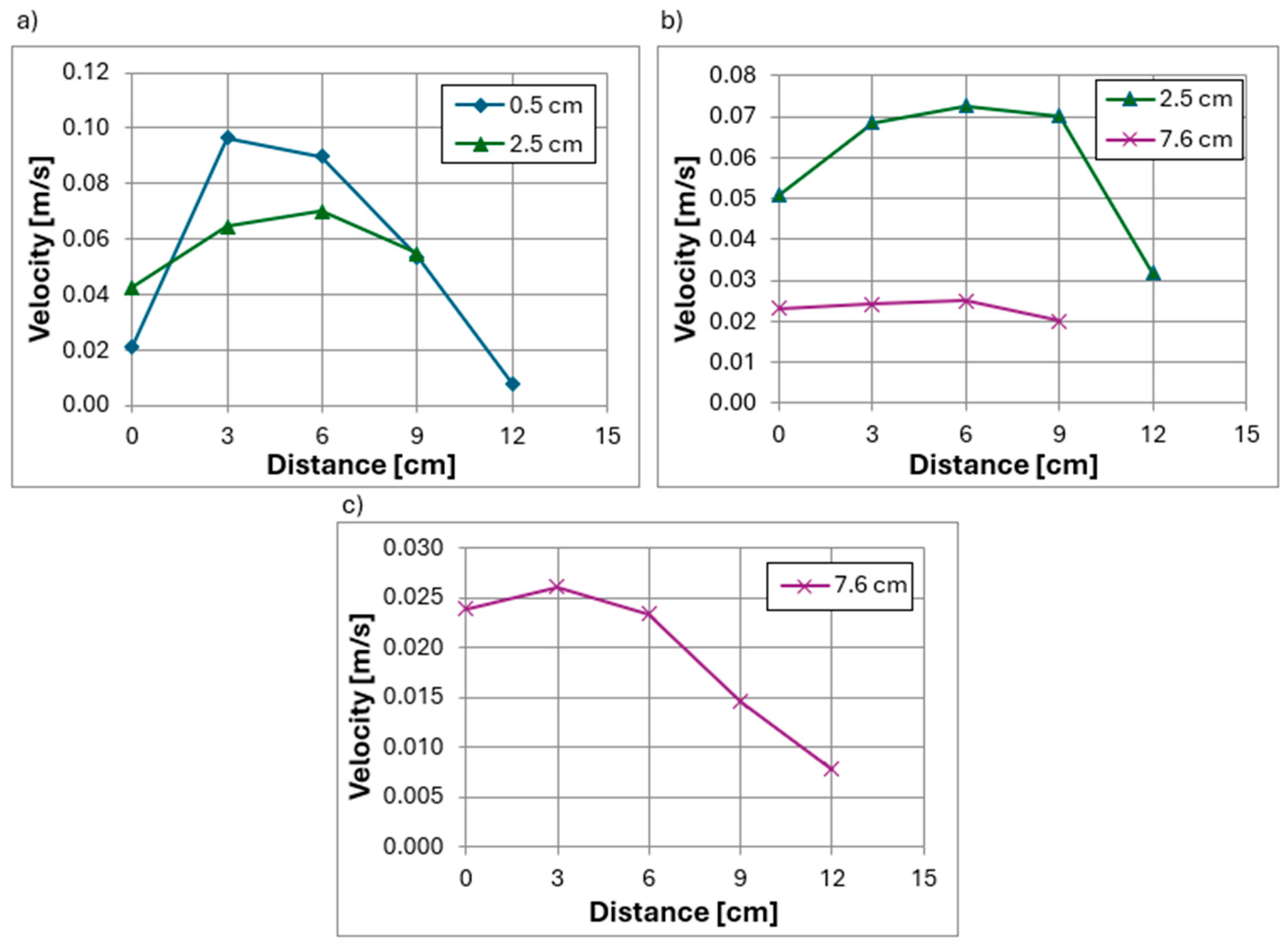
The next series of tests involved the use of a head under higher flow conditions in the hydraulic flume, i.e., 226 m3/h, corresponding to an average water velocity of 0.25 m/s. The results of the laboratory tests without a deflector are shown in Figure 15, while those with a deflector are shown in Figure 16.
As observed, in the absence of a deflector, the highest values of the normal velocity component were recorded at a distance of 3 cm from the suction pipe inlet, both at 0.5 cm above the head and at 7.6 cm along the measurement line at an angle of 135° from the vertical, similar to the situation with the lower flow of 113 m3/h.
The increased flow in the hydraulic flume resulted in the formation of vortices near the head. This is evident from the unmarked velocity values at the following measurement points: 12 cm and 15 cm from the suction pipe at 2.5 cm and 15 cm above the head (Figure 15a); 12 cm and 15 cm at 7.6 cm and 15 cm at 2.5 cm along the measurement line at 90° (Figure 15b); and 15 cm at 7.6 cm along the measurement line at 135° (Figure 15c).
For all measurements along the measurement line at an angle of 45° as well as for the measurement line at an angle of 0° at a distance of 7.6 cm, negative values of the normal components were obtained, indicating the opposite direction of the velocity vectors than towards the head.
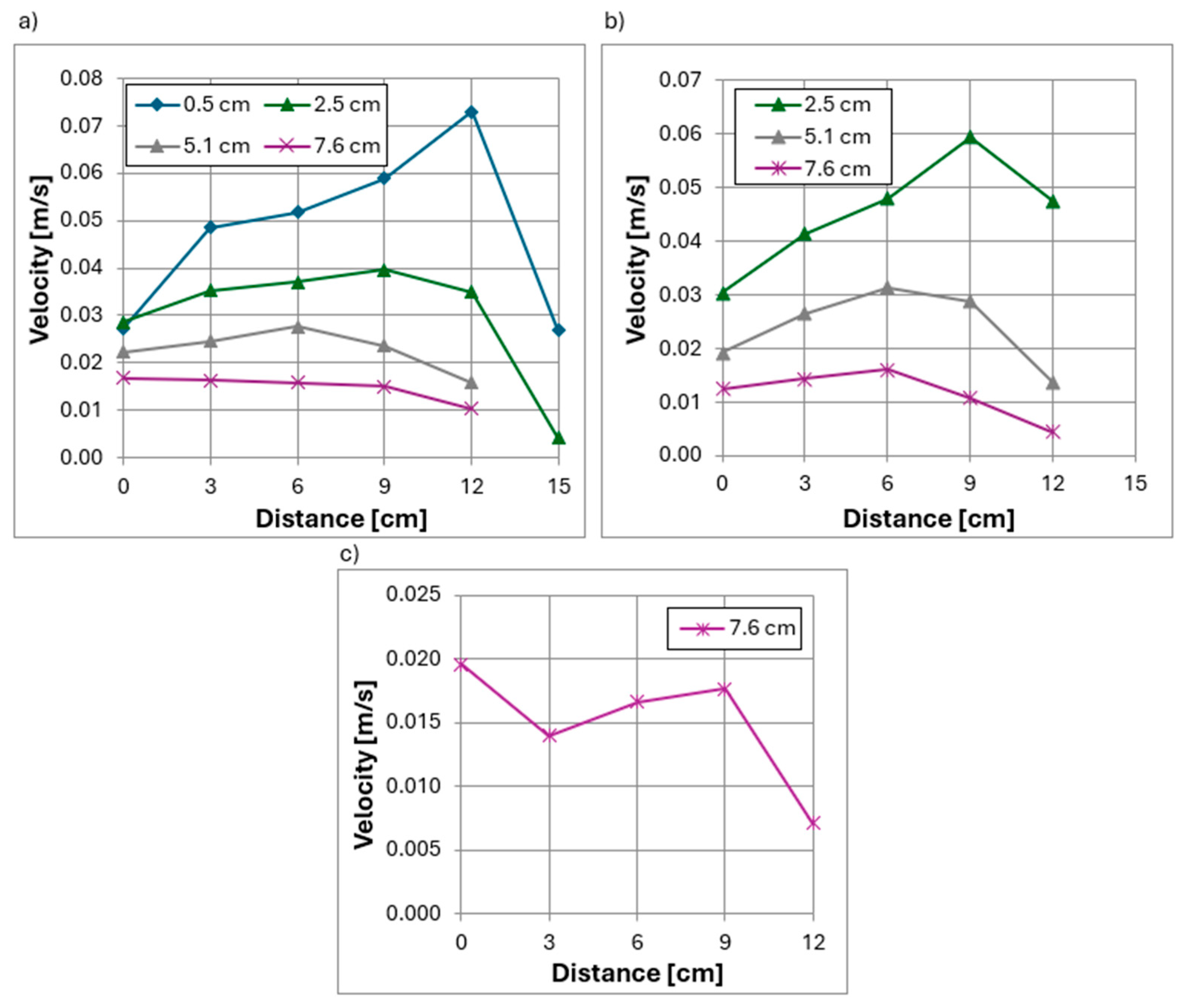
The final series of measurements involved the use of a deflector at a flow rate of 226 m3/h. Similar to the tests at 113 m3/h, the deflector shifted the maximum values of the normal velocity away from the water inflow, farther from the suction pipe inlet. The highest velocity in this series was 0.073 m/s, recorded closest to the head surface at 0° from the vertical, at a distance of 12 cm from the suction pipe inlet (Figure 16a).

3.5. Analysis of Velocity Vector Component Ratios

To study the effect of water velocity in the hydraulic channel on the velocities determining contaminant attraction, the ratio of the sweeping velocity vector Vs to the approach velocity vector Va was determined.
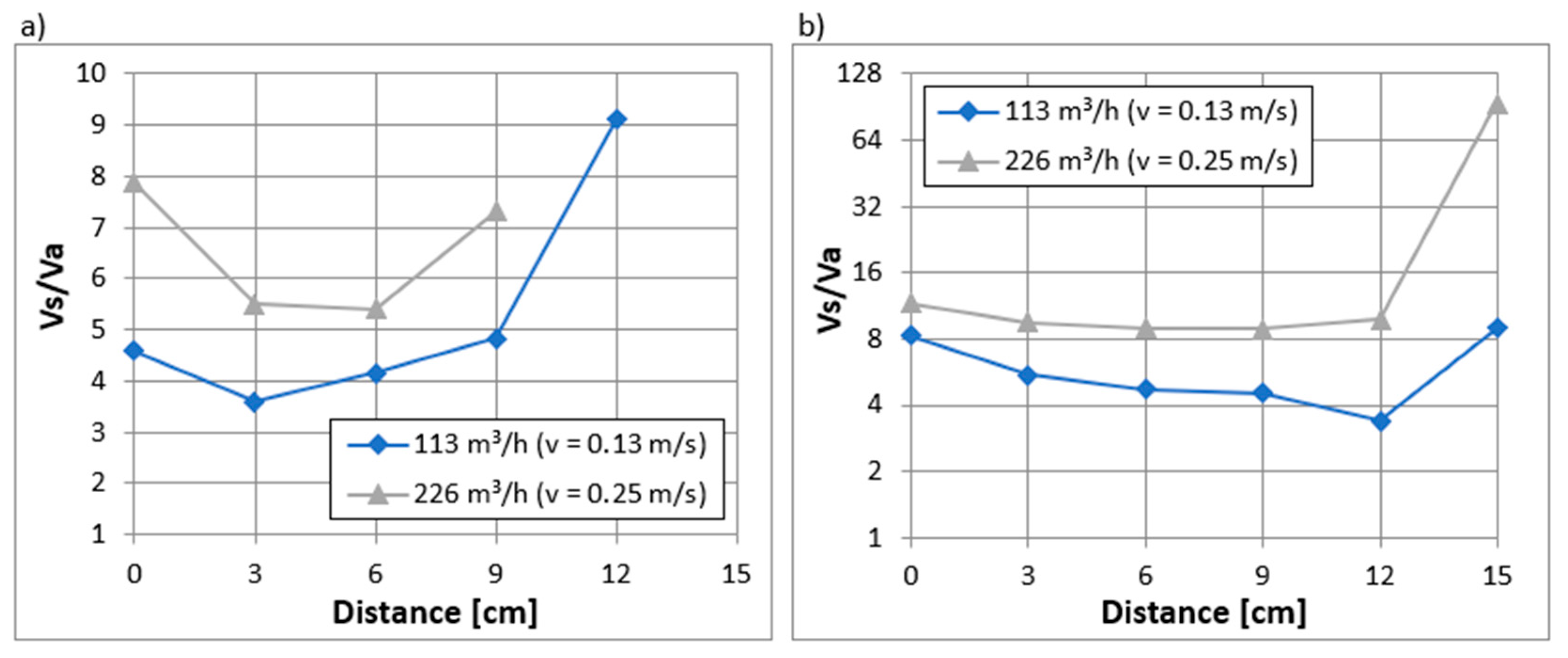
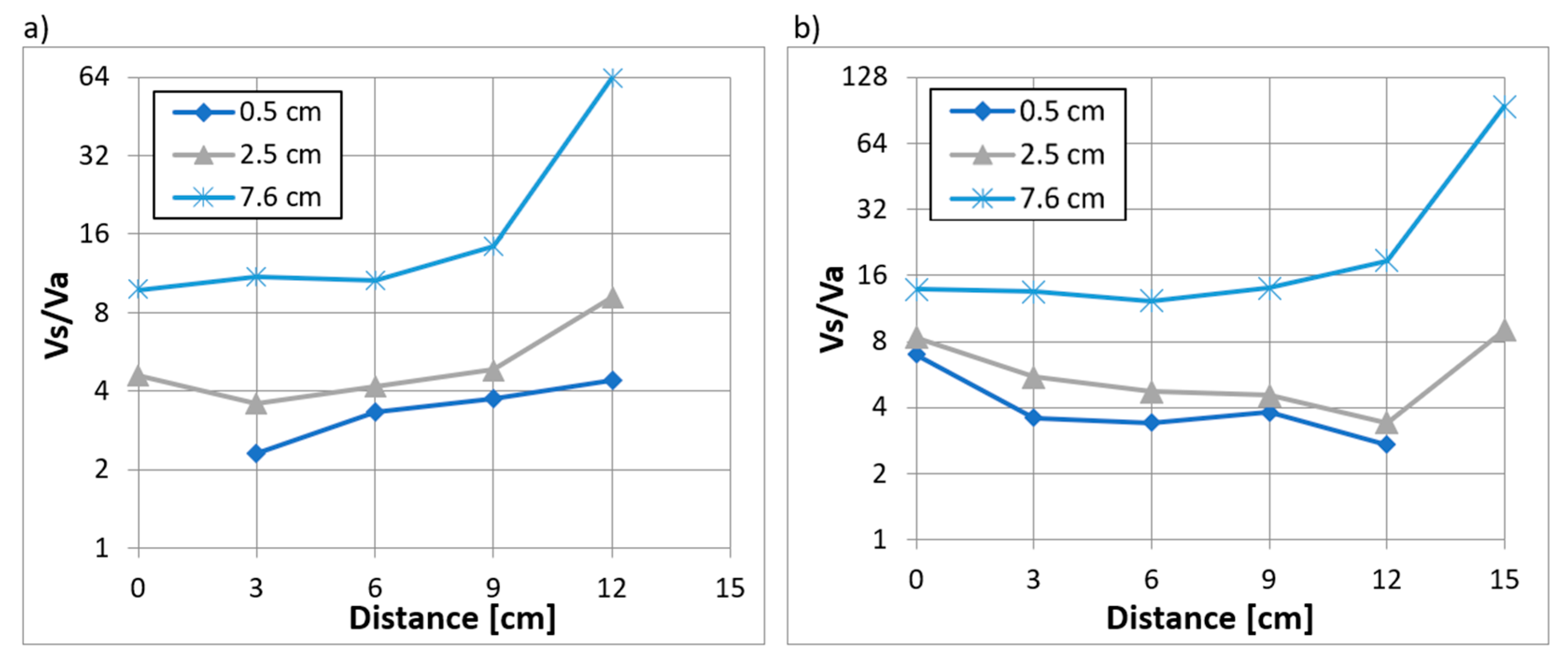
As shown in Figure 17, both in the absence of a deflector (Figure 17a) and with its use (Figure 17b), the Vs/Va ratio increases with distance from the head surface, indicating a lower degree of contaminant attraction. Analysis along the head surface shows that at the same distances (0.5 cm, 2.5 cm, and 7.6 cm), the ratio remained at a similar level. The only deviations occurred at the extreme points—i.e., at the suction pipe inlet and on the inflow side of the head (15 cm from the suction pipe inlet). As mentioned in Section 3.2, vortex formation occurred at these points. Similar distributions of the Vs/Va ratio were observed when the flow in the hydraulic channel was increased to 226 m3/h.
To illustrate the effect of water velocity in the hydraulic flume on the distribution of velocities affecting contaminant attraction, the Vs/Va ratio at a distance of 2.5 cm above the head was compared (Figure 18). As shown, increasing the water flow in the hydraulic flume from 113 m3/h to 226 m3/h, corresponding to average flow velocities of 0.13 m/s and 0.25 m/s, respectively, resulted in an approximately 1.5-fold increase in the Vs/Va ratio at 2.5 cm from the head surface for the case without a deflector and nearly a twofold increase for the case with a deflector. In this analysis, the only deviation occurred at the point 15 cm from the suction pipe inlet, where a very small value of the normal velocity component was obtained, indicating unsteady conditions at this location.

3.6. Effect of the Deflector on Maximum Velocities

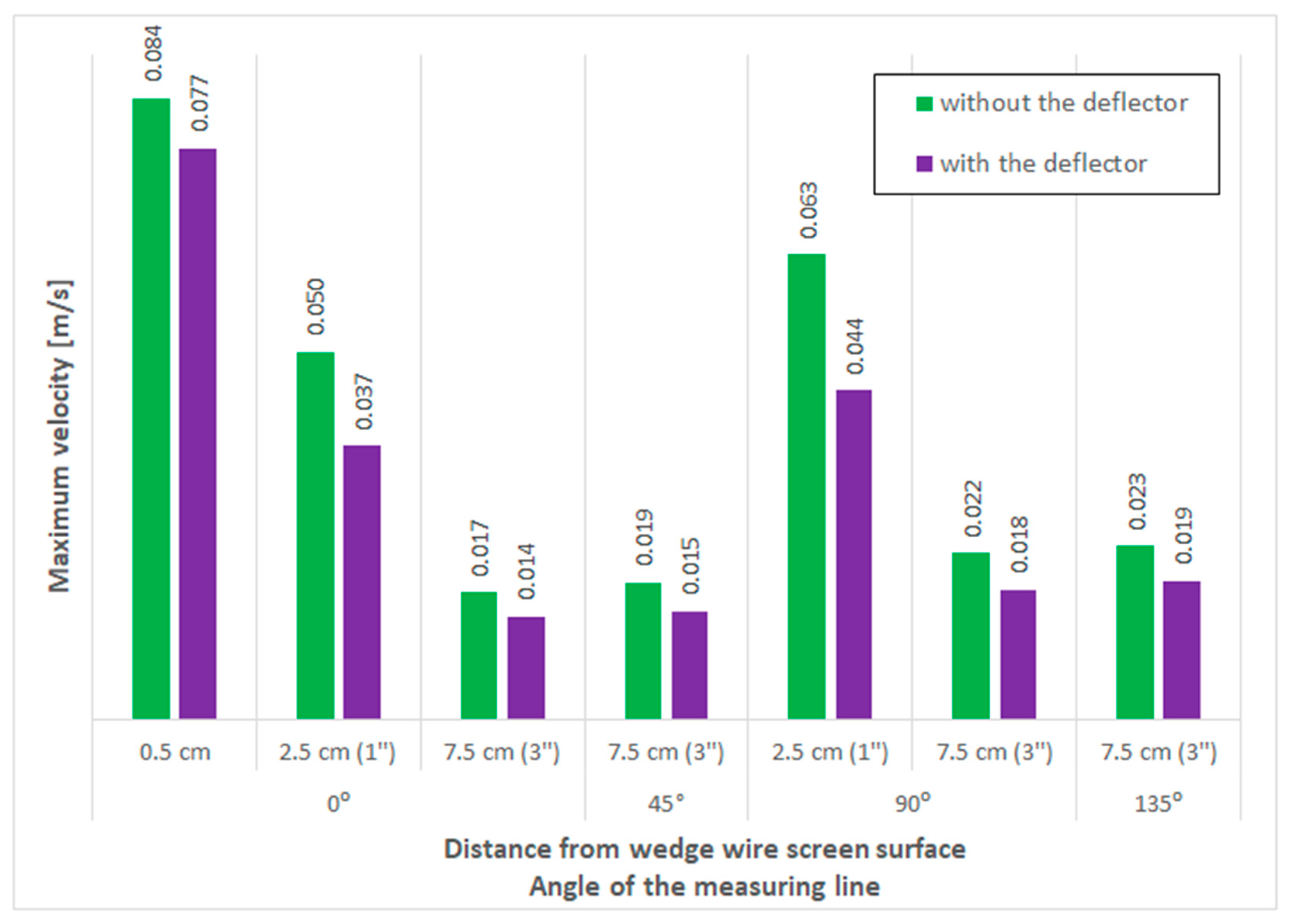
The purpose of the deflector is to equalize the velocity distribution and reduce local maximum velocities. Figure 19 summarizes the maximum velocities (Vmax) obtained in longitudinal cross-sections of the head at different distances from the screen surface and at various angles in the cross-section. As shown, the use of the deflector reduced maximum velocities both near the head surface, at 0.5 cm, and further away, at 7.5 cm.

3.7. Tests of Particle Attraction to the Screen Surface

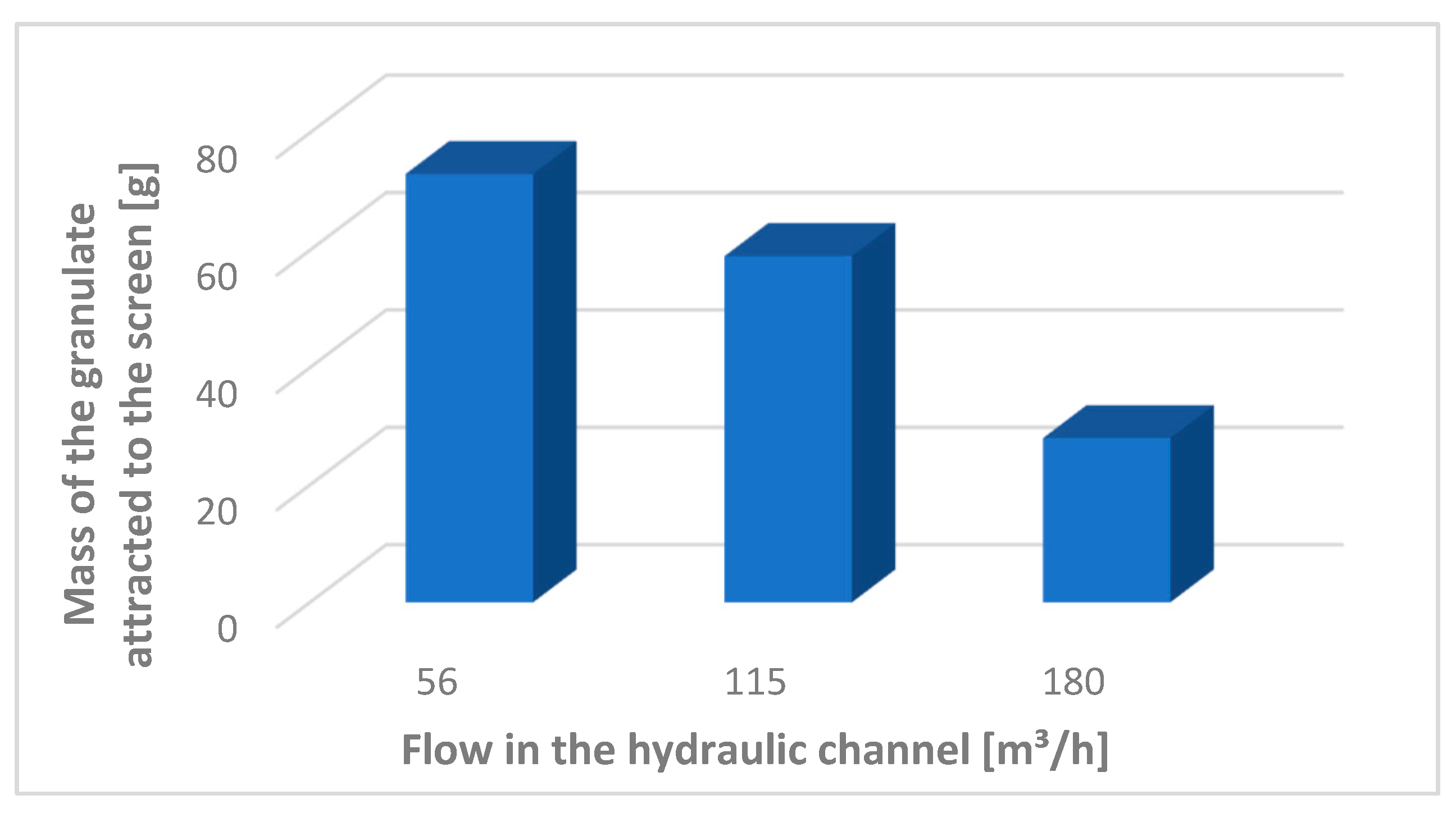
During the experimental tests, three samples of polystyrene pellets, each weighing 50 g, were placed in the hydraulic flume. Each experiment was conducted three times. The first part of the tests was conducted with the head without the deflector installed, at flow rates of 56, 115, and 180 m3/h, corresponding to average velocities in the hydraulic flume of 0.06, 0.13, and 0.2 m/s, respectively. The resulting average mass of granular material attracted to the head surface in these cases is shown in Figure 20.
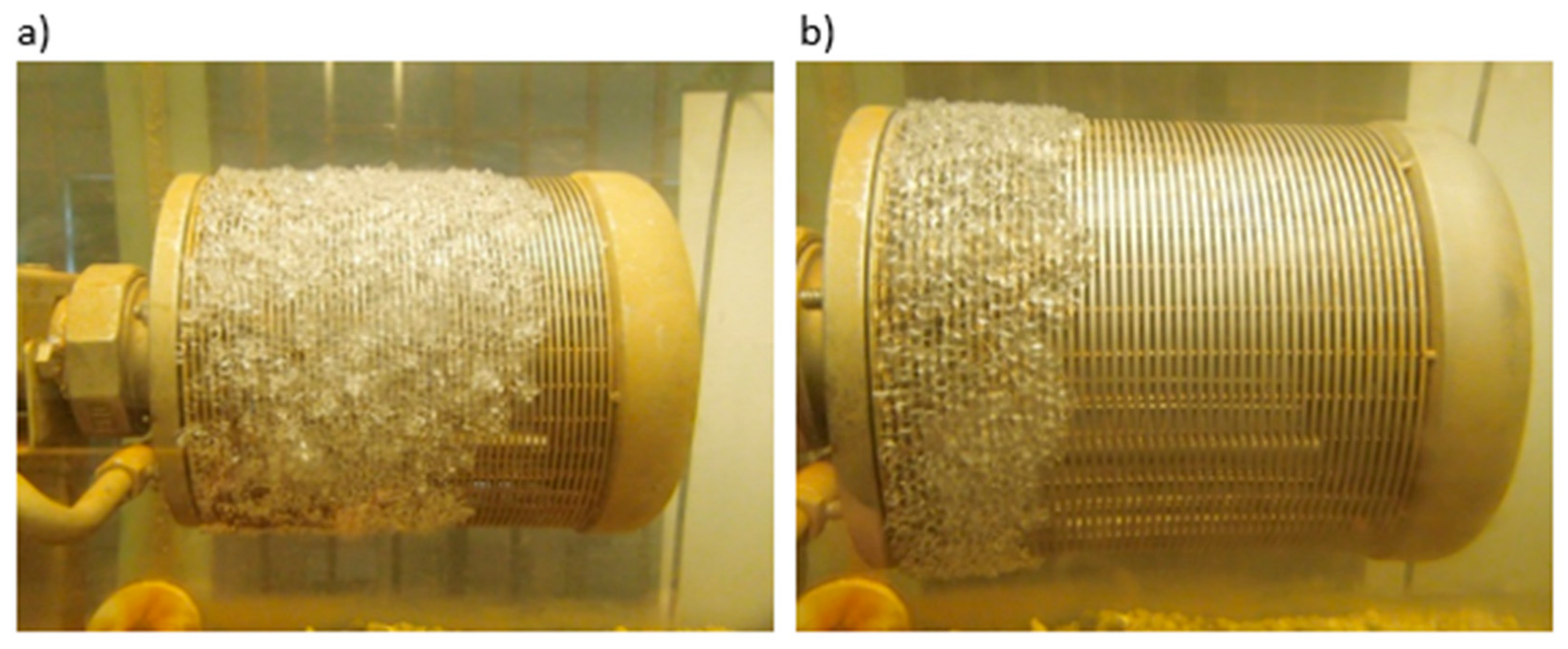
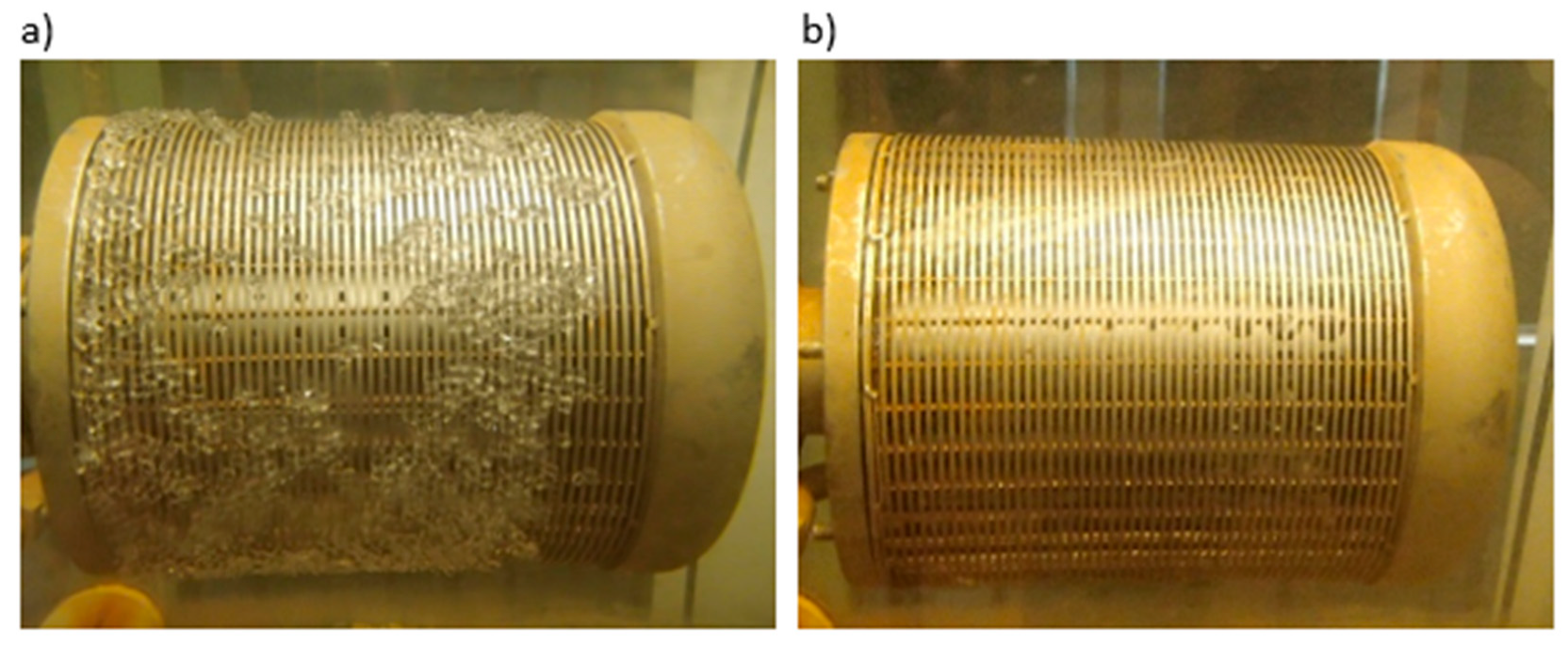
As shown, increasing the flow rate in the hydraulic flume resulted in a decrease in the amount of granules attracted to the head surface. At a flow rate of 56 m3/h, the mass of deposited granules was 73 g; at 115 m3/h and 180 m3/h, it was 59 g and 28 g, respectively. Figure 21a,b show the screen after testing with granule samples at flow rates of 56 m3/h and 180 m3/h, respectively.
In summary, at higher flow rates, the flume velocity—i.e., the component of the velocity vector parallel to the head surface, which governs the sweeping and removal of contaminants that may settle on it—increases. Consequently, the influence of the approach velocity, understood as the normal component of the velocity vector that determines the degree of contaminant attraction to the screen surface, becomes much smaller.
For the same flow rates in the hydraulic flume, tests were conducted with the head equipped with a deflector. At flow rates of 115 m3/h and 180 m3/h, the use of the deflector prevented any granules from being deposited on the head surface. At the lowest flow rate of 56 m3/h, the mass of deposited granules was 47 g, approximately 35% less than the mass deposited under the same conditions without the deflector.
Also noteworthy, in the tests without the deflector, it was observed that granular particles accumulated on the inlet side of the suction pipe (Figure 21). This confirms the results obtained from the velocity distribution measurements, which showed that in the absence of the deflector, the highest inflow velocities occurred near this part of the head.
In contrast, when using a head equipped with a deflector, the polystyrene granules were evenly distributed across the head surface at low flow rates (Figure 22a), and at higher flow rates in the hydraulic flume, they did not settle on the surface at all (Figure 22b), confirming the proper operation of the deflector.
The final part of the study with polystyrene granules was carried out at a hydraulic flume flow rate of 115 m3/h without the wedge wire screen installed, with water drawn through an unprotected suction pipe. Similarly, three samples of granules weighing 50 g each were added to the water. The mass of granules entering the pipe was 52 g, comparable to the value obtained at the same flow rate with a wedge wire screen but without a deflector installed inside (59 g).

4. Conclusions

The results of the numerical simulations and experimental studies enabled a detailed analysis of velocity distributions around the wedge wire water intake screen model at different water flow rates in the flume. The beneficial effect of equipping the screen with a deflector was demonstrated, showing a reduction in maximum velocities at the water intake, which can cause operational difficulties and pose a threat to ichthyofauna.
Analysis of the results obtained has led to the following conclusions:
  • The inlet velocity into the suction pipe without the use of the wedge wire screen was 2.3 m/s and was more than 10 times higher than the maximum permissible values specified in the American and Canadian guidelines.
  • In the absence of a deflector installed inside the head, the highest velocity values were obtained close to the suction pipe inlet, while the lowest values were observed on the water inflow side. In contrast, the use of a deflector at both 113 m3/h and 226 m3/h flow rates shifted the maximum normal velocity values toward the inflow side, farther from the suction pipe inlet.
  • The use of the deflector resulted in lower local maximum velocity values in longitudinal sections of the head at different distances from the screen surface and at various cross-sectional angles. Due to the higher local velocities on the inflow side with the deflector, it would be reasonable to design and test a deflector with less varied hole sizes.
  • Increasing the flow in the hydraulic flume did not significantly alter the shape of the velocity distribution curves around the head. However, laboratory measurements more frequently showed points where the normal velocity vector was reversed, indicating unsteady flow conditions and vortex formation around the head.
  • The increased flow also led to a higher ratio of the sweeping velocity vector to the approach velocity vector, thereby reducing the degree of contaminant attraction to the screen surface.
  • Numerical simulations performed using computational fluid dynamics (CFD) produced velocity values similar to those obtained in laboratory tests. Differences were approximately 20%, which, given the analyzed velocities expressed in m/s, corresponds to differences on the order of thousandths and is therefore negligible.
  • Particle attraction tests using polystyrene confirmed the proper functioning of the deflector. Its use resulted in uniform particle deposition on the screen surface and, importantly, significantly reduced the amount of particles attracted. At a flow rate of 56 m3/h, corresponding to an average velocity of 0.06 m/s, the deflector reduced the mass of particles attracted to the head surface by more than 35%. At higher flow rates of 115 m3/h (average velocity 0.13 m/s) and 180 m3/h (average velocity 0.2 m/s), no particles were attracted to the screen surface.
  • The polystyrene tests also demonstrated the effect of hydraulic flume velocity. In the absence of a deflector, increasing the average flow velocity from 0.06 m/s (56 m3/h) to 0.2 m/s (180 m3/h) resulted in a reduction in the mass of attracted granules by almost 62%.
In summary, the results of the laboratory tests largely coincide with those obtained from numerical simulations, confirming the correctness of both the experimental procedures and the subsequent data analysis. Detailed examination of the CFD simulations supports conclusions analogous to those from the experimental studies, particularly regarding the distribution of normal velocity components, critical locations with the highest velocities, and the effect of the deflector in reducing local velocity peaks.
The validity of the applied CFD model for a cylindrical wedge-wire screen equipped with an internal perforated deflector conditions was demonstrated, serving as a reliable validation of the adopted hydraulic model for this type of intake and flow scenario.
This research advances the current understanding of submerged wedge-wire intakes by quantitatively demonstrating the effect of an internal perforated deflector on flow equalization in a cylindrical screen under channel-flow conditions. It also highlights the practical benefits of incorporating such a deflector, which promotes a more uniform flow distribution across the screen and reduces localized high-velocity zones that may cause operational challenges and increase risks to fish. Stabilizing the approach flow improves overall hydraulic performance while minimizing particle entrainment and impingement risks. These findings underscore the importance of incorporating internal deflectors in the design of cylindrical wedge-wire intake screens, providing guidance for optimizing both operational efficiency and ecological safety.

Author Contributions

Conceptualization: M.Z. and A.P.-S.; methodology: A.P.-S. and M.Z.; validation: M.Z. and A.P.-S.; software K.K. and A.P.-S.; data curation: A.P.-S. and K.K.; formal analysis: A.P.-S., M.Z. and K.K.; investigation: A.P.-S. and M.Z.; resources: M.Z., A.P.-S., and K.K.; writing—original draft preparation: A.P.-S.; writing—review and editing: A.P.-S. and M.Z.; visualization: A.P.-S. and K.K.; supervision: M.Z.; project administration: M.Z.; funding acquisition: M.Z. and A.P.-S. All authors have read and agreed to the published version of the manuscript.

Funding

This research received no external funding.

Data Availability Statement

The original contributions presented in this study are included in the article. Further inquiries can be directed to the corresponding author.

Conflicts of Interest

The authors declare no conflicts of interest.

References

  1. Szpak, D.; Tchórzewska-Cieślak, B.; Stręk, M. A new method of obtaining water from water storage tanks in a crisis situation using renewable energy. Energies 2014, 17, 874. [Google Scholar] [CrossRef]
  2. Albayrak, I.; Arnold, R.; Demiral, D.; Maddahi, M.; Boes, R. Field monitoring and modelling of sediment transport, hydraulics and hydroabrasion at Sediment Bypass Tunnels. J. Hydro-Environ. Res. 2024, 55, 1–19. [Google Scholar] [CrossRef]
  3. The Council of the European Communities. Council Directive 92/43/EEC on the Conservation of Natural Habitats and of Wild Fauna and Flora, Official Journal of the European Communities. 1992. Available online: https://eur-lex.europa.eu/eli/dir/1992/43/oj/eng (accessed on 19 September 2025).
  4. The European Parliament and The Council of The European Union. Directive 2000/60/EC of the European Parliament and of the Council of 23 October 2000 Establishing a Framework for Community Action in the Field of Water Policy, Official Journal of the European Communities. 2000. Available online: https://eur-lex.europa.eu/homepage.html (accessed on 19 September 2025).
  5. Environmental Protection Agency. National Pollutant Discharge Elimination System—Final Regulations to Establish Requirements for Cooling Water Intake Structures at Existing Facilities and Amend Requirements at Phase I Facilities. Fed. Regist. 2014, 79, 158. [Google Scholar]
  6. Mikheev, P.; Suleyman, A.; Mutalibov, Z. On the use of fish protection structures in the conditions of water intake buckets. Prirodoobustrojstvo 2022, 4, 90–95. [Google Scholar] [CrossRef]
  7. Benin, D.M.; Mikheev, P.A.; Borovskoy, V.P. Optimization principles for inlet portal designs of gravity fish outlets of fish protection structures of water intake facilities. Nexo Rev. Científica 2022, 35, 345–355. [Google Scholar] [CrossRef]
  8. Geist, J. Editorial: Green or red: Challenges for fish and freshwater biodiversity conservation related to hydropower. Aquat. Conserv. Mar. Freshw. Ecosyst. 2021, 31, 1551–1558. [Google Scholar] [CrossRef]
  9. Funk, N.; Knott, J.; Pander, J.; Geist, J. Fish behavior at the horizontal screen of a novel shaft hydropower plant. River Res. Appl. 2024, 40, 1219–1230. [Google Scholar] [CrossRef]
  10. Ren, W.; Wei, J.; Xie, Q.; Miao, B.; Wang, L. Experimental and Numerical Investigations of Hydraulics in Water Intake with Stop-Log Gate. Water 2020, 12, 1788. [Google Scholar] [CrossRef]
  11. Carter, L.J.; Collier, S.J.; Thomas, R.E.; Norman, J.; Wright, R.M.; Bolland, J.D. The influence of passive wedge-wire screen aperture and flow velocity on juvenile European eel exclusion, impingement and passage. Ecol. Eng. 2023, 192, 106972. [Google Scholar] [CrossRef]
  12. Huang, B.; Zhu, D.; Shao, W.; Fu, J.; Rui, J. Forebay hydraulics and fish entrainment risk assessment upstream of a high dam in China. J. Hydro Environ. Res. 2015, 9, 91–103. [Google Scholar] [CrossRef]
  13. Shomorin, G.O.; Storebakken, T.; Kraugerud, O.F.; Overland, M.; Hansen, B.R.; Hansen, J.O. Evaluation of wedge wire screen as a new tool for faeces collection in digestibility assessment in fish: The impact of nutrient leaching on apparent digestibility of nitrogen, carbon and sulphur from fishmeal, soybean meal and rapeseed meal-based diets in rainbow trout (Oncorhynchus mykiss). Aquaculture 2019, 504, 81–87. [Google Scholar] [CrossRef]
  14. Boys, C.A.; Robinson, W.; Baumgartner, L.J.; Rampano, B.; Lowry, M. Influence of approach velocity and mesh size on the entrainment and contact of a Lowland river fish assemblage at a screened irrigation pump. PLoS ONE 2013, 8, e67026. [Google Scholar] [CrossRef]
  15. Missimer, T.M.; Hogan, T.W.; Pankratz, T. Passive Screen Intakes: Design Construction Operation Environmental Impacts. In Intakes and Outfalls for Seawater Reverse-Osmosis Desalination Facilities; Environmental Science and Engineering; Missimer, T., Jones, B., Maliva, R., Eds.; Springer: Cham, Switzerland, 2015; pp. 79–104. [Google Scholar]
  16. Burgi, P.; Christensen, R.; Glickman, A.; Johnson, P.; Mefford, B. Fish Protection at Water Diversions: A Guide for Planning and Designing Fish Exclusion Facilities; Department of the Interior Bureau of Reclamation Denver: Denver, CO, USA, 2006. [Google Scholar]
  17. Nordlund, B. Designing Fish Screens for Fish Protection at Water Diversions; National Marine Fisheries Service: Lacey, WA, USA, 2008. [Google Scholar]
  18. National Marine Fisheries Service Southwest Region, Portland, Oregon, 1996. Juvenile Fish Screen Criteria for Pump Intakes. Available online: https://media.fisheries.noaa.gov/dam-migration/fish_screen_criteria_for_pumped_water_intakes.pdf (accessed on 19 February 2025).
  19. Turnpenny, A.W.H.; Horsfield, R.A. International Fish Screening Techniques; WIT PRESS: Southhampton, UK, 2014. [Google Scholar]
  20. Jamieson, D.; Bonnett, M.; Jellyman, D.; Unwin, M. Fish Screening: Good Practice Guidelines for Canterbury, NIWA Client Report CHC 2007-092; National Institute of Water Atmospheric Research Ltd.: Christchurch, New Zealand, 2007. [Google Scholar]
  21. SI 2009/3344; Eels (England and Wales) Regulations. The Secretary of State in Relation to England and the Welsh Ministers: London, UK, 2009.
  22. Environment Agency. Screening at intakes and outfalls: Measures to protect eel. In The Eel Manual—GEHO0411BTQD-E-E; Environment Agency: London, UK, 2015. [Google Scholar]
  23. Zielina, M.; Pawłowska, A.; Kowalska-Polok, A. Numerical analysis of cylindrical wedge-wire screen operation. In Advances and Trends in Engineering Sciences and Technologies II; Ali, M., Platko, P., Eds.; CRC Press: Boca Raton, FL, USA, 2017; pp. 709–714. [Google Scholar]
  24. Chanson, H. Hydraulics of aerated flows: Qui pro quo? J. Hydraul. Res. 2013, 51, 223–243. [Google Scholar] [CrossRef]
  25. Chanson, H. Turbulent air–water flows in hydraulic structures: Dynamic similarity and scale effects. Environ. Fluid Mech. 2009, 9, 125–142. [Google Scholar] [CrossRef]
  26. Zima, P.; Sawicki, J. Numerical analysis of the influence of 2D dispersion parameters on the spread of pollutants in the coastal zone. Water 2024, 16, 3637. [Google Scholar] [CrossRef]
  27. Blocken, B.; Gualtieri, C. Ten iterative steps for model development and evaluation applied to Computational Fluid Dynamics for Environmental Fluid Mechanics. Environ. Model. Softw. 2012, 33, 1–22. [Google Scholar] [CrossRef]
  28. Macián-Pérez, J.; García-Bartual, R.; Huber, B.; Bayon, A.; Valles-Morán, F. Analysis of the Flow in a Typified USBR II Stilling Basin through a Numerical and Physical Modeling Approach. Water 2020, 12, 227. [Google Scholar] [CrossRef]
  29. Zielina, M.; Pawłowska-Salach, A.; Kaczmarski, K. Hydraulic analysis of a passive wedge wire water intake screen for ichthyofauna protection. Appl. Sci. 2023, 13, 12970. [Google Scholar] [CrossRef]
  30. Lipin, A.; Sepahvand, A.; Rustamova, N. Hydraulic Calculations of a Telescopic Water Intake. Slovak J. Civ. Eng. 2023, 31, 61–69. [Google Scholar] [CrossRef]
  31. Wilsnack, M. An Application of Computational Fluid Dynamics to the Hydraulic Analysis of a Water Intake Tower. J. Water Manag. Model. 2022, 30, C494. [Google Scholar] [CrossRef]
  32. Bor, A.; Szabo-Meszaros, M.; Vereide, K.; Lia, L. Application of Three-Dimensional CFD Model to Determination of the Capacity of Existing Tyrolean Intake. Water 2024, 16, 737. [Google Scholar] [CrossRef]
  33. Senfter, T.; Berger, M.; Schweiberer, M.; Knitel, S.; Pillei, M. An Experimentally Validated CFD Code to Design Coandă Effect Screen Structures. Appl. Sci. 2023, 13, 5762. [Google Scholar] [CrossRef]
  34. Carrillo, J.M.; García, J.T.; Guachamín-Paladines, K.; Ros Bernal, A.; Castillo, L.G. Testing a smoothed-particle hydrodynamics (SPH) code to solve the hydrodynamics of a bottom intake Coanda screen. In Proceedings of the 10th International Symposium on Hydraulic Structures, Zurich, Switzerland, 17–19 June 2024; ETH Zurich: Zurich, Switzerland, 2024. [Google Scholar] [CrossRef]
  35. Carrión-Coronel, E.; Ortiz, P.; Nanía, L. Physical Experimentation and 2D-CFD Parametric Study of Flow through Transverse Bottom Racks. Water 2022, 14, 955. [Google Scholar] [CrossRef]
  36. Carrillo, J.M.; García, J.T.; Castillo, L.G. Experimental and Numerical Modelling of Bottom Intake Racks with Circular Bars. Water 2018, 10, 605. [Google Scholar] [CrossRef]
  37. Mater, B.D.; Coutant, C.C.; Ham, K.D.; Perkins, W.A.; Christ, J.F.; Anderson, D.M.; Singh, R.K.; Rahrooh, A.A.; Tarufelli, B.L.; Mueller, R.P. Making a Deal with the Devilfish: Biometric-Informed Screening Technology CRADA—514 (Final Report); Pacific Northwest National Laboratory: Richland, WA, USA, 2022. [Google Scholar]
  38. Akulshin, A.A.; Bredikhina, N.V.; Akulshin, A.n.A.; Aksenteva, I.Y.; Ermakova, N.P. Development of Filters with Minimal Hydraulic Resistance for Underground Water Intakes. Civ. Eng. J. 2020, 6, 919–927. [Google Scholar] [CrossRef]
  39. Rennels, D.C.; Hudson, H.M. Pipe Flow: A Practical and Comprehensive Guide; John Wiley & Sons, Inc.: Hoboken, NJ, USA, 2012. [Google Scholar]
  40. Chen, G.; Xiong, Q.; Morris, P.J.; Paterson, E.G.; Sergeev, A.; Wang, Y.C. OpenFOAM for Computational Fluid Dynamics. Not. Am. Math. Soc. 2014, 61, 354–363. [Google Scholar] [CrossRef]
  41. Barbosa, J.R.; Camacho, R.G.R. The Boundary Element Method Applied to Incompressible Viscous Fluid Flow. J. Braz. Soc. Mech. Sci. Eng. 2005, 27, 456–461. [Google Scholar] [CrossRef]
  42. Szymkiewicz, R. Mathematical Modeling of Flows in Rivers and Canals; Scientific Publishing PWN: Warsaw, Poland, 2000. [Google Scholar]
  43. Jeżowiecka-Kabsch, K.; Szewczyk, H. Fluid Mechanics; Publishing House of Wroclaw University of Technology: Wroclaw, Poland, 2001. [Google Scholar]
Figure 1. Components of the water stream flow velocity vector in the vicinity of (a) a flat screen (b) a cylindrical screen with a pump installed to induce the flow.
Water 17 03424 g001
Figure 2. Schematic of laboratory station with the wedge wire screen model [29].
Water 17 03424 g002
Figure 3. A fragment of a cross-section of the screen model with an enlarged fragment of the profile of the wedge wire [29].
Water 17 03424 g003
Figure 4. (a,b) The model of the screen in the hydraulic trough, (c) internal deflector.
Water 17 03424 g004
Figure 5. Acoustic Doppler Velocimeter installed above wedge wire screen (a) from above the water surface and (b) in close-up.
Water 17 03424 g005
Figure 6. Location of measurement points in the cross-section of the screen [29].
Water 17 03424 g006
Figure 7. Location of measurement points in the longitudinal section of the screen [29].
Water 17 03424 g007
Figure 8. Granulate samples of 50 g used in the laboratory tests.
Water 17 03424 g008
Figure 9. Distribution of (a) velocities, (b) normal velocities in vertical cross-section in the screen axis without deflector installed inside the screen at a flow rate of 113 m3/h in the hydraulic channel obtained in numerical simulation.
Water 17 03424 g009
Figure 10. Distribution of (a) flow streamlines, (b) normal velocities in vertical cross-section in the screen axis with the deflector installed inside the screen at a flow rate of 113 m3/h in the hydraulic channel obtained in numerical simulation.
Water 17 03424 g010
Figure 11. Distribution of normal velocities on the inlet surface of suction pipe depending on the distance from this surface.
Water 17 03424 g011
Figure 12. Distribution of normal velocities along the length of the cylindrical wedge wire screen (from 0 to 15 cm) at different distances from the surface of the screen (0.5; 2.5; 7.6 cm) at an angle in the cross-section of (a) 0°, (b) 90°, (c) 135° from the vertical without deflector installed inside the screen obtained in laboratory tests and numerical simulations at a flow rate of 113 m3/h in the hydraulic channel.
Water 17 03424 g012
Figure 13. Distribution of normal velocities along the length of the cylindrical wedge wire screen (from 0 to 15 cm) at different distances from the surface of the screen (0.5; 2.5; 5.1; 7.6 cm) at an angle in the cross-section of (a) 0°, (b) 45°, (c) 90° from the vertical with the deflector installed inside the screen obtained in laboratory tests and numerical simulations at a flow rate of 113 m3/h in the hydraulic channel.
Water 17 03424 g013
Figure 14. Distributions of normal velocities along the cylindrical screen at 0° (above the screen) with no deflector and with deflector at a distance of (a) 0.5 cm; (b) 7.6 cm from the screen surface obtained in laboratory tests at a flow rate of 113 m3/h in the hydraulic channel.
Water 17 03424 g014
Figure 15. Distribution of normal velocities along the length of the cylindrical wedge wire screen (from 0 to 15 cm) at different distances from the surface of the screen (0.5; 2.5; 7.6 cm) at an angle in the cross-section of (a) 0°, (b) 90°, (c) 135° from the vertical without the deflector installed inside the screen obtained in laboratory tests at a flow rate of 226 m3/h in the hydraulic channel.
Water 17 03424 g015
Figure 16. Distribution of normal velocities along the length of the cylindrical wedge wire screen (from 0 to 15 cm) at different distances from the surface of the screen (0.5; 2.5; 7.6 cm) at an angle in the cross-section of (a) 0°, (b) 90°, (c) 135° from the vertical with the deflector installed inside the screen obtained in laboratory tests at a flow rate of 226 m3/h in the hydraulic channel.
Water 17 03424 g016
Figure 17. Distribution of ratios of sweeping velocity Vs to approach velocity Va along the length of the cylindrical wedge wire screen (from 0 to 15 cm) at different distances from the surface of the screen (0.5; 2.5; 7.6 cm) at 0° angle from the vertical in the cross-section (a) without the deflector (b) with the deflector installed inside the screen obtained at a flow rate of 113 m3/h in the hydraulic channel.
Water 17 03424 g017
Figure 18. Distribution of ratios of sweeping velocity Vs to approach velocity Va along the length of the cylindrical wedge wire screen (from 0 to 15 cm) at distance from the surface of the screen of 2.5 cm at an angle in the cross-section of 0° from the vertical obtained at different flow rate in the hydraulic channel (a) without the deflector (b) with the deflector installed inside the screen.
Water 17 03424 g018
Figure 19. Maximum velocities in cross sections along the screen at 0° (above the screen), 45°, 90° and 135° at 0.5 cm, 2.5 cm, 5.1 cm and 7.6 cm from the screen surface without the deflector and with the installed inside the screen obtained at a flow rate of 113 m3/h in the hydraulic channel.
Water 17 03424 g019
Figure 20. Granular mass depending on the flow in the hydraulic channel in the absence of the deflector.
Water 17 03424 g020
Figure 21. Granulate deposited on the surface of the screen at a flow of (a) 56 m3/h (b) 180 m3/h in a hydraulic trough without the deflector.
Water 17 03424 g021
Figure 22. Granulate deposited on the surface of the screen at a flow of (a) 56 m3/h (b) 180 m3/h in a hydraulic trough with the deflector installed inside the screen.
Water 17 03424 g022
Disclaimer/Publisher’s Note: The statements, opinions and data contained in all publications are solely those of the individual author(s) and contributor(s) and not of MDPI and/or the editor(s). MDPI and/or the editor(s) disclaim responsibility for any injury to people or property resulting from any ideas, methods, instructions or products referred to in the content.